

Jean de Waurin's Chronicle of England Volume 6 Books 3-6: The Wars of the Roses
Jean de Waurin was a French Chronicler, from the Artois region, who was born around 1400, and died around 1474. Waurin’s Chronicle of England, Volume 6, covering the period 1450 to 1471, from which we have selected and translated Chapters relating to the Wars of the Roses, provides a vivid, original, contemporary description of key events some of which he witnessed first-hand, some of which he was told by the key people involved with whom Waurin had a personal relationship.
Available at Amazon in eBook and Paperback format.
11 Sep is in September.
1297 Battle of Stirling Bridge
1535 Sweating Sickness Outbreak
On 11th September 1069 Archbishop Ealdred died.
On 11th September 1161 Melisende Queen of Jerusalem (age 56) died. Her son Baldwin (age 31) succeeded King Jerusalem.
On 11th September 1261 King Magnus VI of Norway (age 23) and Estridsen (age 17) were married. She the daughter of King Eric IV of Denmark and Jutta of Saxony (age 38). He the son of King Haakon IV of Norway (age 57).
On 11th September 1279 Archbishop Robert Kilwardby died.
On 11th September 1297 the combined forces of Andrew Moray and William Wallace defeated the forces of John Warenne 6th Earl of Surrey (age 66) near Stirling Bridge. After around half the English had crossed the narrow bridge the Scots attacked subjecting the English to a significant defeat.
John of Fordun's Chronicle. 11th September 1297. 99. Battle of Stirling Bridge
In the year 1297, the fame of William Wallace was spread all abroad, and, at length, reached the ears of the king of England; for the loss brought upon his people was crying out. As the king, however, was intent upon many troublesome matters elsewhere, he sent his treasurer, named Hugh of Clissingham, with a large force to repress this William's boldness, and to bring the kingdom of Scotland under his sway. When, therefore, he heard of this man's arrival, the aforesaid William, then busy besieging the English who were in Dundee Castle, straightway intrusted the care and charge of the siege of the castle to the burgesses of that town, on pain of loss of life and limb, and, with his army, marched on, with all haste, towards Strivelyn (Stirling), to meet this Hugh. A battle was then fought, on the 11th of September, near Strivelyn (Stirling), at the bridge over the Forth. Hugh of Clissingham was killed, and all his army put to flight: some of them were slain with the sword, others taken, others drowned in the waters. But, through God, they were all overcome; and the aforesaid William gained a happy victory, with no little praise. Of the nobles, on his side, the noble Andrew of Moray alone, the father of Andrew, fell wounded.
Chronicle of William Rishanger. Battle of Stirling
Meanwhile, not long after [11th September 1297] in the same year, the Scots, when they heard the news that King Edward had entered Flanders with bare hand and small company, and then into France, despairing of his return, rashly, and more than usual, for the second time made an attack upon the English. At Stirling Bridge, they suddenly assaulted the Earl Warenne, whom Edward, king of England, had appointed guardian of Scotland; and with the earl, because of urgent necessity, taking to flight with his men, they slew Sir Hugh de Cressingham, treasurer deputed in Scotland, and some others, nearly a hundred, whom they had captured there, knowing that they had no obstacle, since the king was absent, at that time delaying in Flanders. Then four English earls, moving in close array, pressed on against the Scots, advancing through a narrow place, not knowing what tricks the cunning enemy had prepared. But when they began to pass by, the Scots suddenly rushed out, catching them off guard and unprepared, and broke into their ranks. Yet the English, although taken by surprise and thrown into disorder, at last reformed their companies, regained their strength, and resisted manfully. In the end, the Scots, unable to withstand the encounter with the English, quickly abandoned the field and fled, using the aid of the hills, and hid themselves in the density of the woods.
Bellum de Strivelyin.
Interea, non multum post in eodem anno, Scoti, audito nuncio, quod Rex Edwardus cum nuda manu et parvo comitatu Flandriam intrasset, deinde in Galliam, desperati sui reditus, incunctanter, et plus solito, jam secundo irruere in Anglicanos priesumpserunt. Ad pontem de Strivelin, Comiti Warenniw, quem constituerat Edwardus, Rex Anglite, Custodem Scotiw, de eis improviso, dederunt insultum; et Comite, cum suis, propter urgentem necessitatem in fugam converso, Dominum Hugonem de Cressingham, Thesaurarium deputatum in Scotia, et quosdam alios, fere usque ad centum, ibidem captos, interemerunt; scientes se non habere obstaculum, ratione absentize Regis, tunc in Flandria moram trahentis. Denique quatuor Comites Angliæ, densata caterva, incedentes impetum Scotorum, per strictum locum incedentes, nescii quos dolos versuti hostes instituerant; cum vero preieterire incepissent, egressi ex improviso Scoti ipsos, nihil tale preemeditantes, occupaverunt, et penetraverunt. At illi, tametsi ex improviso occupati et dissipati fuissent, tandem tamen resociatis catervis, resumptis viribus, viriliter resistunt. Tandem Scoti, congressus Anglicanorum ferre non valentes, ocius campum relinquentes, fugam inierunt; usi montium auxilio, in nemorum densilitate delituerunt.
Lanercost Chronicle. 11th September 1297. When this had been done and the greater part of the army had been dismissed, the Steward brought them to the bridge of Stirling, where on the other side of the water the army of Scotland was posted. They [the Scots] allowed as many of the English to cross the bridge as they could hope to overcome, and then, having blocked the bridge1, they slaughtered all who had crossed over, among whom perished the Treasurer of England, Hugh de Cressingham, of whose skin William Wallace caused a broad strip to be taken from the head to the heel, to make therewith a baldrick for his sword1. The Earl of Warenne escaped with difficulty and with a small following, so hotly did the enemy pursue them. After this the Scots entered Berwick and put to death the few English that they found therein; for the town was then without walls, and might be taken as easily by English or Scots coming in force. The castle of the town, however, was not surrendered on this occasion.
Note 1. Ponte obturato i.e. with the bridge blocked.
Note 2. Other writers say the skin was cut up into horse-girths.
Chronicle of Walter of Guisborough. [11th September 1297] When the enemy [Scots] saw that so many of our men had already crossed the bridge, more than they believed they could overcome, they descended from the hill and, sending their spearmen, seized the foot of the bridge. From that moment, no passage or retreat was possible; many, in trying to flee, were thrown from the bridge and drowned. As the Scots came down from the hill, Sir Marmaduke de Tweng said to his companions, "Is it time, brothers, for us to ride against them?" When they responded that it was, they spurred their horses and charged. Some of the Scots fell, and nearly all their cavalry turned in flight. While they pursued the fleeing enemy, one of our men said to Sir Marmaduke, "My lord, we have been deceived, our troops are not following, and the royal and earl's banners are not to be seen." Looking back, they saw many of our men and the royal standard-bearers lying slain. They said, "The bridge is now closed to us; we've been cut off from our army. It would be better to entrust ourselves to the peril of the water, if we might possibly cross it, than to be cut down attempting to break through enemy lines, it is now difficult, indeed impossible, for us to pass through the Scots." But that most valiant Marmaduke said, "Surely, my dear friends, it will never be said of me that I drowned myself freely. Far be it from you also! Follow me, and I will carve a path through the midst of them to the bridge." Spurring his warhorse, he charged into the enemy, cutting them down to the left and right with his sword, and passed through them unharmed. A wide path opened for those who followed him, for he was mighty in strength and of great stature. While fighting bravely, his nephew, wounded and stunned, his horse slain but still on foot, cried out, "My lord, save me!" Marmaduke replied, "Climb up behind me. I cannot," the youth said, "for my strength has failed." Then one of Marmaduke's squires, dismounting, lifted the young man onto his own horse and said to his lord, "I will follow you wherever you go." He followed him to the bridge, and both were saved. Having seized the bridge by the strength of his arms, all those who remained behind perished, about a hundred knights and nearly five thousand foot soldiers, including three hundred Welsh who, although they had taken many lives, were finally overcome. Some survivors swam across the river, and one knight made it over on his fully armed horse, though with difficulty. That day, among the Scots' lance-bearers, fell Lord Hugh de Cressingham, treasurer of the king, rector of the church of Rudby, and chief justice in the assizes of York. Although he held prebends in many churches and had the care of many souls, he never put on spiritual armour or wore a chasuble, but donned helmet and mail, in which he fell. He who had once terrified many with the sword of his tongue in courts of law was finally slain by the sword of rebels. The Scots flayed him and divided his skin into small pieces among themselves, not as relics, but in mockery. For he was exceedingly fat and handsome. They called him not the king's treasurer, but his "traitor", and this was more accurate than they knew. For he led many astray that day, and he himself was misled, being fickle, slippery, arrogant, and wholly given to greed.
In the first engagement of our forces with the Scots, the Seneschal of Scotland and the Earl of Lennox, who had previously come peacefully, when they saw our men falling in battle, immediately withdrew to their own troops who were lying in wait in the woods near the marshes. Witnessing the outcome of that shameful affair, they came out to meet our fleeing soldiers and slaughtered many of them individually at the marshes, carrying off much spoil and carts laden with supplies; for the carts and pack animals could not easily be withdrawn by those fleeing through the lakes and marshes. Our commander, who had remained on this side of the bridge the entire time, upon the return of Sir Marmaduke with his men, ordered the bridge to be broken and burned. He entrusted custody of the castle of Stirling to the aforementioned Sir Marmaduke, promising him faithfully, on oath, that within the first ten weeks he would return to support him with a strong force. However, he did not fulfil what he had promised. Forgetful of his old age, he set out to Berwick with such haste that the charger he had been riding, stabled among the Friars Minor, did not taste any feed. Then he departed to join the king's son in the southern regions, leaving the country utterly desolate. This disaster took place on the third day before the Ides of September [11th September 1297], a Wednesday, in the year of grace above mentioned.
Cumque vidissent hostes tot jam evenisse quot superare potuerant, ut credebant, mox descenderunt de monte, et missis viris lanceariis occupaverunt pedem pontis, ita quod extunc nulli patebat transitus vel regressus, sed in revertendo sicut et in festinando super pontem præcipitati sunt multi et submersi. Descendentibus itaque Scotis de monte, dixit dominus Marmeducus consociis suis, "Estne tempus, fratres, ut equitemus ad eos?" Quibus respondentibus quod sic, mox stimulatis equis mutuo congressi sunt, et corruentibus quibusdam ex Scotis, cæteri equestres quasi omnes in fugam versi sunt. Quos cum insequerentur fugientes sic dixit unus ex nostris domino Marmeduco, "Domine mi, decepti sumus; non enim sequuntur nostri, et vexilla regis et comitis non comparent." Ad hæc respicientes retro, viderunt multos ex nostris et vexillarios regis et comitis corruisse, dixeruntque, "Præclusa est jam nobis via ad pontem, et a populo nostro intercepti sumus; melius est ergo ut credamus nos aquæ periculo, si forte transire possimus, quam hostium cuneos penetrantes quasi pro nihilo corruamus: difficilis immo impossibilis jam factus est nobis transitus per medium Scotorum." Ad hæc ille strenuissimus Marmeducus: "Certe, carissimi, nunquam dicetur de me quod gratis me submerserim; absit et hoc a vobis, sed sequimini me, et per medium eorum vobis viam faciam usque ad pontem; stimulatoque dextrario, mox irruit in hostes, et nunc hos nunc illos cædens gladio per medium transivit illæsus; patuitque via magna sequentibus eum, erat enim fortis robore et staturæ proceræ. Cumque ita strenue militaret, nepos illius vulneratus et attonitus, equo suo interfecto, sed stans tamen pedes, clamavit ad eum: "Domine mi, salva me." ille, "Ascende," inquit, "post me. Non possum; defecit enim robur meum." Moxque consocius ejus, armiger ejusdem domini Marmeduci, descendens de equo suo, eum ascendere fecit, et dixit domino suo, "Sequar te domine quocunque ieris;" et secutus est eum usque ad pontem, et uterque eorum salvatus est. Apprehenso itaque ponte per fortitudinem strenue militantis, omnes extunc quotquot ibi remanserant corruerunt, numero armatorum fere centum et peditum quasi quinque millia, inter quos trecenti Wallenses cum multos vita privaverant tandem quidam ex eis qui remanserant aquam natando transierunt. Unus etiam miles ex nostris cum difficultate aquam transiit in equo armato. Corruit eodem die inter Scotos lancearios prænominatus ille thesaurarius domini regis dominus Hugo de Cressyngham, rector Hugh de ecclesiæ de Ruddeby et capitalis justitiarius in is slain. assisis Eborum, qui cum esset præbendarius in multis ecclesiis, et multarum haberet curam animarum, nunquam tamen arma spiritualia vel casulam induit, sed galeam et loricam in quibus corruit. Et qui gladio linguæ suæ multos olim exterruerat in judiciis multis, gladio tandem perversorum occisus est; quem excoriantes Scoti diviserunt inter se pellem ipsius in modicas partes, non quidem ad reliquias sed in contumelias; erat enim pulcher et grassus nimis vocaveruntque eum non thesaurarium sed trayturarium regis, et verius hoc quam credebant; multos enim seduxit in die hac, sed et ipse seductus est qui erat levis et lubricus, elatus superbia et avaritiæ deditus.
In primo congressu nostrorum cum Scotis, senescallus Scotia et comes de Levenax, qui prius pacifice venerant, cum vidissent nostros corruisse confestim recesserunt ad suos qui in silvis latitabant juxta polles; qui nefandæ rei videntes eventum, egressi sunt obviam nostris, et multos particulariter fugientes peremerunt ibidem ad polles, asportantes spolia multa et quadrigas onustas abducentes; non enim poterant quadrigæ vel summarii a fugientibus abduci de facili in lacubus et mariscis. Comes vero noster citra pontem semper existens, reverso domino Marmeduco cum suis, præcepit pontem frangi et comburi, et commissa custodia ejusdem castri de Stryvelyn prædicto domino Marmeduco, promisit ei fideliter data fide quod infra primas decem ebdomadas veniret in ejus auxilium cum manu forti; non tamen adimplevit quod promisit. Oblitusque senectutis suæ profectus est apud Berewyk cum festinatione tanta quod dextrarius in quo sederat in stabulo fratrum Minorum positus nusquam pabulum gustavit. Deinde processit ad filium regis in partes australes, et reliquit patriam penitus desolatam. Facta fuit confusio hæc III idus Septembris, scilicet feria quarta, anno gratiæ supradicto.

The True Chronicles of Jean le Bel Volume 1 Chapters 1-60 1307-1342
The True Chronicles of Jean le Bel offer one of the most vivid and immediate accounts of 14th-century Europe, written by a knight who lived through the events he describes, and experienced some of them first hand. Covering the early decades of the Hundred Years’ War, this remarkable chronicle follows the campaigns of Edward III of England, the politics of France and the Low Countries, and the shifting alliances that shaped medieval warfare. Unlike later historians, Jean le Bel writes with a strong sense of eyewitness authenticity, drawing on personal experience and the testimony of fellow soldiers. His narrative captures not only battles and sieges, but also the realities of military life, diplomacy, and the ideals of chivalry that governed noble society. A key source for Jean Froissart, Le Bel’s chronicle stands on its own as a compelling and insightful work, at once historical record and literary achievement. This translation builds on the 1905 edition published in French by Jules Viard, adding extensive translations from other sources Rymer's Fœdera, the Chronicles of Adam Murimuth, William Nangis, Walter of Guisborough, a Bourgeois of Valenciennes, Geoffrey le Baker of Swinbroke and Richard Lescot to enrich the original text and Viard's notes.
Available at Amazon in eBook and Paperback format.
Scalacronica. 11th September 1297. And the following winter, the said William Wallace burnt all Northumberland. The Earl of Warenne (age 66), who was Keeper of Scotland for the King of England, being in the south1, turned towards Scotland; where at the bridge of Stirling he was defeated by William Wallace, who, being at hand in order of battle2, allowed so many of the English as he pleased to cross over the said bridge, and, at the right moment3, attacked them, caused the bridge to be broken, where many of the English perished, with Hugh de Cressingham, the King's Treasurer; and it was said that the Scots caused him to be flayed, and in token of hatred made girths of his skin. The Earl of Warenne took flight to Berwick. William Wallace, to whom the Scots adhered, immediately after this discomfiture, followed4 the said Earl of Warenne in great force, and skirting Berwick, arrived on Hutton Moor in order of battle; but perceiving the English arrayed to oppose him, he came no nearer to Berwick, but retired and bivouacked in Duns Park5.
Note 1. Warenne, or Surrey, which was his principal title, had been recalled on 18th August for service with King Edward on the Continent, and Sir Brian Fitz Alan was appointed Keeper of Scotland in his place. But Sir Brian having raised a difficulty about his salary (£1128 8s.), the Prince of Wales wrote on 7th Sept., 1298, requiring Surrey to remain at his post. (See Stevenson's Documents illustrative of the History of Scotland, ii. 230.)
Note 2. En batailA soun point. i.e., in force or in order of battle; used in both senses.
Note 3. A soun point. i.e.
Note 4. Suyst, misprinted fuyst in Maitland Club Ed.
Note 5. Not Duns Park on Whitadder, but in a place which then bore that name a little to the north of Berwick.
In June 1348 the The Black Death arrived in England. The first of many occurrences. It is estimated to have killed between 25 to 60 percent of the population of around six million. The outbreak lasted through 1349 recurring in 1362, 1369 and regularly thereafter until its last significant outbreak in The Great Plague of 1666.
On 11th September 1349 Bonne Luxemburg Queen Consort France 1315-1349 (age 34) died of plague in Maubisson, Pontoise.
On 11th September 1364 Metx was born to Metx (age 18) and Sophie Württemberg Duchess Lorraine (age 21). He married 6th February 1393 his fourth cousin once removed Wittelsbach and had issue.
On 11th September 1476 Savoy was born to Savoy (age 38) and Capet (age 37). Coefficient of inbreeding 3.25%. She married 16th February 1488 her third cousin once removed Charles Valois Orléans Count Angoulême and had issue.
On 11th September 1478 Frederick IV King Naples (age 26) and Savoy (age 23) were married. She the daughter of Savoy and Capet (deceased). He the son of Ferdinand I King Naples (age 55) and Isabella Clermont Queen Consort Naples. They were fourth cousins.
On 11th September 1498 Edward Stafford 2nd Earl Wiltshire (age 28) entertained King Henry VII of England and Ireland (age 41) at Drayton House, Northamptonshire [Map].


After 11th September 1504. All Saints Church, Turvey [Map]. Monument to John Mordaunt (deceased) and Latimer (deceased).
Fluted Period. Angels Supporting Pillow. Dress Folds at Feet. Misericorde. Tassets. Crespine Headress. Lancastrian Esses Collar with Big Esses. Screaming Man crest, possibly Saracen's Head Crest. Harpur and Moorecock of Burton on Trent. Dogs chewing at her dress. Some uncertainty about the attribution. Dogs chewing at her dress with Studded Collar. Swirling Tail. Chunky Lions Mane.
Latimer: Before 1479 John Greene and she were married. Around 1450 she was born to Latimer and Joan Hody at Duntish, Dorset. Before 1475 John Mordaunt and she were married. The date somewhat unreliable. Her first husband John Greene is supposed to have died in 1483 which makes the date of her marriage to John Mordaunt and the birth of her sons by him unreliable? On 1st September 1504 Latimer died at Turvey, Bedfordshire. She was buried at All Saints Church, Turvey [Map].


Letters and Papers Foreign and Domestic Henry VIII 1535. 11th September 1535. R. O. 341. John Gostwyk to Cromwell.
This day I received your letter on horseback going home, and have delivered the three merchants the 20s. as the King's reward, as I am not to break the sum that came from York. As to your marvel that I have not received from the archbishop of Canterbury and the abbot of Westminster the money due to the King, I cannot see how I shall get it till next term. The Abbot's money is not yet due. On my return I shall quicken the Archbishop and other debtors with sharp letters, as you command, to pay up instantly. Concerning the killing and bestowing of your stag in the duke of Suffolk's park, I have already advertised you. By the Lord Mayor's certificate which I send you will see that the plague increases. London, Saturday, 11 Sept. Signed.
P. 1. Add.: Secretary. Endd.
Holinshed's Chronicle [1525-1582]. [11th September 1547]. The next daie being sundaie the eleuenth of September, somewhat before noone, the armie remooued, & marching along the Forth side toward Lieth about three of the clocke in the after noone pitched their field, a pricke shot on this side that towne on the southeast halfe, somewhat shadowed from Edenburgh by a hill, but yet the most part of it laie within the full sight and shot of the castell there, and in distance somewhat aboue a quarter of a mile. The lord marshall, and the most part of the horssemen wer [...] bestowed and lodged in the towne of Lieth. The dukes grace, the lord lieutenant, and the rest of the armie in the campe. On tuesdaie the thirteenth of September, the smaller vessels of the English flée [...] burned Kinkorne, and a towne or two standing on the north shore of the Forth against Lieth.
In the after noone the dukes grace rowed vp the Forth a six or seuen miles westward, as it runneth into the land, and tooke in his waie an Iland there called saint Cooms ins, which lieth foure miles beyond Lieth, and a good waie neerer the north shore than the south, yet not within a mile of the néerest. It is but halfe a mile about, and had in it an abbeie, but the moonks were gone: fresh water inough, and store of conies, and is so naturallie strong, that but by one waie it can be entred; the plot whereof the lord protector considering, did quicklie cast to haue it kept, whereby all traffike of merchandize, all commodities else comming by the Forth into their land, and vtterlie the whole vse of the Forth it selfe, with all the hauens upon it, should quite be taken from them.
Tudor Tracts Chapter 4. Sunday the 11th of September [1547]. In the morning, a great sort [company] of us rode to the place of onset, where our men lay slain: and, what by gentlemen for their friends, and servants for their masters, all of them that were known to be ours were buried.
In the meantime, the Master and Officers of the Ordnance, did very diligently get together all the Scottish ordnance: which, because it lay in sundry places, they could not in [bring in] all overnight. And these were in number, a thirty pieces: whereof one culverin, three sakers, and nine smaller pieces were of brass; and of iron, seventeen pieces more, mounted on carriages.
These things thus done. Somewhat afore noon, our camp raised. We marched along the Frith side, straight towards Leith; and approaching nigh the same about three o'clock in the afternoon, we pight [pitched] our field [i.e., the camp] a prick shot on this side the town, being on the south-east half, somewhat shadowed from Edinburgh by a hill [Calton Hill], but the most of it lying within the full sight and shot of the Castle there, and in distance somewhat above a quarter of a mile.
My Lord's Grace, guarded but with a small company, was come to Leith well-nigh half an hour before the army; which he found all desolate of resistance, or anybody else. There were in the haven that runneth unto the midst of the town, a thirteen vessels of divers sorts. Somewhat of oade, wines, wainscot, and salt were found in the town: but as but little of that, so nothing else of value. For how much of other things as could well be carried, the inhabitants, overnight, had packed away with them.
My Lord Marshal and most of our horsemen were bestowed and lodged in the town. My Lord's Grace, my Lord Lieutenant, and the rest of the army in the camp.
The Gentleman's Magazine 1850 March. Blount's answer is dated from Cumnor on the 11th September [1560], and contains the following interesting narrative:
The same night I came from Windsor I lay at Abingdon all that night, and because I was desirous to hear what new: went abroad in the country, at my sappe I called for mine host, and asked hin what news was thereabout, taking upor me I was going into Gloucestershire. He said, there was fallen a great misfortune within three or four miles of the town; he said, my Lord Robert Dudley's wife [Amy Robsart (deceased)] was dead, and I axed how; and he said, by misfortune, as he heard, by a fall from a pair of stairs. I asked him by what chance; he said; he knew not. I axed him what was his judgment, and the judgment of the people; he said, some were disposed to say well and some evil. What is your judgmient? said I. By my troth, said he, I judge it a misfortune because it chanced in that honest gentleman's house; his great honesty, said he doth much cut (?) the evil thoughts of the people. My think, said I, that some of her people that waited upon her should somewhat say to this. No, sir, said he but little; for it was said that they wer all here at the fair, and none left with her. How might that chance? said I. Ther, said he, it is said how that she rose that day very early, and commanded all her sort to go [to] the fair, and would suffer none to tarry at home; and thereof is much judged. And truly, my lord, I did first learn of Bowes, as I met him coming towards your lordship, of his own being that day, and of all the rest of ther being, who affirmed that she would not that day suffer one of her own sort to tarry at home, and was so earnest to have them gone to the fair, that with any of her own sort that made reason of tarrying at home she was very angry, and came to Mrs. Odingstells (?), the widow that liveth with Anthony Forster, who refused that day to go to the fair, and was very angry with her also, because she said if was no day for gentlewomen to go in, bul said the morrow was much better, and then she would go. Whereunto my lady answered and said, that she might choose and go at her pleasure, but all hers should go; and was very angry. They asked whe should keep her company if all they went. She said Mrs. Owen should keep he company at dinner. The same tale doth Pirto (?), who doth dearly love her, confirm. Certainly, my lord, as little while as I have been here, I have heard diver tales of her that maketh me judge her to be a strange woman of mind. In askin of Pirto what she might think of the matter, either chance or villany, she said by her faith she doth judge very chance and neither done by man nor by herself. For herself, she said, she was a good virtuous gentlewoman, and daily would pray upon her knees; and divers time she saith that she had heard her pray to God to deliver her from desperation. Then, said I, she might have an evil toy (?) in her mind. No, good, Mr. Blount said Pirto, do not judge so of my words if you should so gather, I am sorry I said so much. My lord, it is most strange that this chance should fall upon you. It passeth the judgment of any man to say how it is; but truly the tales I do hear of her maketh me to think she had a strange mind in her; as I will tell you at my coming. (i. 402.)


Diary of Anne Clifford. 11th September 1616. Upon the 11th Mr Sandford went to London by whom I sent a very earnest letter to my Lord (age 27) that I might come up to London1.
Note 1. Upon the 18th died my Lady Margaret's old Beagle.
On 11th September 1627 General John Burgh (age 45) was killed in action during the siege of the citadel of St. Martin, on the Île de Rhé.
Diary of Isabella Twysden 1645. the 11 of Sep 1645 Prince Rupert (age 25) delivered up bristoll on treaty to Sr Tho: farfax (age 33) for the parlement.


Between 3rd September 1649 and 11th September 1649, Drogheda [Map], under the command of the Royalist Arthur Aston (age 59), was besieged by the Parliamentary army commanded by Oliver Cromwell (age 50).
On 11th September 1649 Oliver Cromwell had a letter delivered to Sir Arthur Aston, which proposed his Aston's surrender; Aston refused.
At 5:00 PM Cromwell ordered simultaneous assaults on the southern and eastern breaches in the walls of Drogheda.
At the southern breach, the defenders counterattacked. The death of their commander, Colonel Wall, caused them to fall back, allowing further Parliamentary reinforcements to be funnelled into the breach. In the fighting at the walls some 150 Parliamentarian troops, including Colonel Castle, were killed.
After the death of Colonel Wall with more and more Parliamentary soldiers streaming into the breaches, the Royalist resistance at the walls collapsed.
In Cromwell's words, "In the heat of the action, I forbade them [his soldiers] to spare any that were in arms in the town...and, that night they put to the sword about two thousand men".
The execution of Royalists constinued as and when they were discovered.
Around one hundred Royalists were discovered in St Peter's Church - Cromwell ordered the church and those inside to be burned.
Arthur Aston was killed.
On 11th September 1656 Oldenburg was born to Frederick III King of Denmark (age 47) and Sophie Amalie Hanover Queen Consort Denmark (age 28). She married 6th May 1680 Charles XI King Sweden and had issue.
Henrici Quinti, Angliæ Regis, Gesta, is a first-hand account of the Agincourt Campaign, and subsequent events to his death in 1422. The author of the first part was a Chaplain in King Henry's retinue who was present from King Henry's departure at Southampton in 1415, at the siege of Harfleur, the battle of Agincourt, and the celebrations on King Henry's return to London. The second part, by another writer, relates the events that took place including the negotiations at Troye, Henry's marriage and his death in 1422.
Available at Amazon in eBook and Paperback format.
Samuel Pepys' Diary. 11th September 1660. At Sir W. Batten's (age 59) with Sir W. Pen (age 39) we drank our morning draft, and from thence for an hour in the office and dispatch a little business. Dined at Sir W. Batten's, and by this time I see that we are like to have a very good correspondence and neighbourhood, but chargeable. All the afternoon at home looking over my carpenters. At night I called Thos. Hater out of the office to my house to sit and talk with me. After he was gone I caused the girl to wash the wainscot of our parlour, which she did very well, which caused my wife and I good sport. Up to my chamber to read a little, and wrote my Diary for three or four days past. The Duke of York did go to-day by break of day to the Downs. The Duke of Gloucester (age 20) ill. The House of Parliament was to adjourn to-day. I know not yet whether it be done or no. To bed.


Samuel Pepys' Diary. 11th September 1667. But here come Mr. Moore, and sat and discoursed with me of publique matters: the sum of which is, that he do doubt that there is more at the bottom than the removal of the Chancellor (age 58); that is, he do verily believe that the King (age 37) do resolve to declare the Duke of Monmouth (age 18) legitimate, and that we shall soon see it. This I do not think the Duke of York (age 33) will endure without blows; but his poverty, and being lessened by having the Chancellor fallen and Sir W. Coventry (age 39) gone from him, will disable him from being able to do any thing almost, he being himself almost lost in the esteem of people; and will be more and more, unless my Chancellor, who is already begun to be pitied by some people, and to be better thought of than was expected, do recover himself in Parliament. He would seem to fear that this difference about the Crowne (if there be nothing else) will undo us. He do say that, that is very true; that my Lord [Chancellor] did lately make some stop of some grants of £2000 a-year to my Lord Grandison (age 50), which was only in his name, for the use of my Baroness Castlemaine's (age 26) children; and that this did incense her, and she did speak very scornful words, and sent a scornful message to him about it.
On 11th September 1674 Habsburg was born to Leopold Habsburg Spain I Holy Roman Emperor (age 34) and Habsburg (age 21). She died three months later on 21st December 1674. Coefficient of inbreeding 5.35%.


On 11th September 1675 Henry Fitzroy 1st Duke Grafton (age 11) was created 1st Duke Grafton by King Charles II of England Scotland and Ireland (age 45). Isabella Bennet Duchess Grafton (age 7) by marriage Duchess Grafton.


On 11th September 1679 Metx was born to Metx (age 36) at Palace of Innsbruck, Innsbruck. He married 13th October 1698 his fifth cousin once removed Capet, daughter of Philip Bourbon I Duke Orléans and Wittelsbach, and had issue.
On 11th September 1709 at the Battle of Maplaquet Colonel Edmund Revett and Murray (age 25) were killed.
Avebury by William Stukeley. 11th September 1724. Nor is this a slight matter; for if knowledge be a valuable thing, if it be the highest ornament and felicity to the human mind; the most divine part of all knowledge is to know somewhat of the nature of the deity. This knowledge the Druids assuredly attempted to come at, and obtained, as we gather from the different kinds of their temples; and when we have described them, we shall beg leave to resume this argument, and briefly to discourse on it again, as being the chief and ultimate purpose of all antique inquiries.
On 11th September 1725 Seymour was born to Algernon Seymour 7th Duke of Somerset (age 40) and Frances Thynne Duchess Somerset (age 26).


On 11th September 1783 Murray was born to John Murray 4th Duke Atholl (age 27). He died aged eleven in 1795.
On 11th September 1843 Georges Clairin was born.
On 11th September 1856 Oldenburg (age 27) and Adelheid Hohenlohe Langenburg Duchess Schleswig Holstein Sonderburg Augustenburg were married. She by marriage Duchess Schleswig Holstein Sonderburg Augustenburg. He the son of Oldenburg (age 58) and Louise Sophie Danneskiold Samsøe Duchess Schleswig Holstein Sonderburg Augustenburg.
On 11th September 1880 Capet was born to Alfonso XII King Spain (age 22) and Maria Christina of Austria Queen Consort Spain (age 22). Coefficient of inbreeding 3.57%.
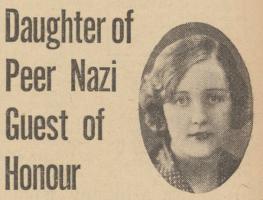
11th September 1935. Daily Mirror. 'Daughter [Unity Valkyrie Mitford (age 21)] of Peer Nazi Guest of Honour.'

Chronicle of a Bourgeois of Valenciennes
Récits d’un bourgeois de Valenciennes aka The Chronicle of a Bourgeois of Valenciennes is a vivid 14th-century vernacular chronicle written by an anonymous urban chronicler from Valenciennes in the County of Hainaut. It survives in a manuscript that describes local and regional history from about 1253 to 1366, blending chronology, narrative episodes, and eyewitness-style accounts of political, military, and social events in medieval France, Flanders, and the Low Countries. The work begins with a chronological framework of events affecting Valenciennes and its region under rulers such as King Philip VI of France and the shifting allegiances of local nobility. It includes accounts of conflicts, sieges, diplomatic manoeuvres, and the impact of broader struggles like the Hundred Years’ War on urban life in Hainaut. Written from the perspective of a burgher (bourgeois) rather than a monastery or royal court, the chronicle offers a rare lay viewpoint on high politics and warfare, reflecting how merchants, townspeople, and civic institutions experienced the turbulence of the 13th and 14th centuries. Its narrative style combines straightforward reporting of events with moral and civic observations, making it a valuable source for readers interested in medieval urban society, regional politics, and the lived experience of war and governance in pre-modern Europe.
Available at Amazon in eBook and Paperback format.
On 8th September 1945 Manners (age 77) committed suicide by jumping in front of a train at Crowborough Railway Station Crowborough East Sussex.
The Liverpool Echo reported on the 11th September 1945: "A fully loaded six-chambered revolver was found on the body of a man believed to be Lord Cecil Manners, it wa stated at the inquest at Cromborough (Sussex), to-day. The man was killed by a train at Crowborough Station on Saturday. Detective-Constable Gray said he found an identity card on the body with the name Cecil R. J. Manners. A visiting card bore the name of Lord Cecil Manners, Tunbridge Wells. The coroner said he was satisfied that the man was Lord Cecil Manners. He recorded a verdict of "Death by decapitation by throwing himself in front of a train while the balance of mind was disturbed."
On 11th September 1318 Eleanor Plantagenet Countess Arundel and Surrey was born to Henry Plantagenet 3rd Earl of Leicester 3rd Earl Lancaster (age 37) and Maud Chaworth (age 36). She a great granddaughter of King Henry III of England. She married (1) 6th November 1330 her fourth cousin Brienne, son of Henry Beaumont Earl Buchan and Comyn, and had issue (2) 5th April 1345 her half third cousin Richard Fitzalan 3rd or 10th Earl of Arundel 8th Earl of Surrey, son of Edmund Fitzalan 2nd or 9th Earl of Arundel and Anjou aka Plantagenet, and had issue.
On 11th September 1364 Metx was born to Metx (age 18) and Sophie Württemberg Duchess Lorraine (age 21). He married 6th February 1393 his fourth cousin once removed Wittelsbach and had issue.
On 11th September 1476 Savoy was born to Savoy (age 38) and Capet (age 37). Coefficient of inbreeding 3.25%. She married 16th February 1488 her third cousin once removed Charles Valois Orléans Count Angoulême and had issue.
On 11th September 1652 Hesse was born to Hesse (age 23) and Hohenzollern (age 29). She died aged less than one years old.
On 11th September 1656 Oldenburg was born to Frederick III King of Denmark (age 47) and Sophie Amalie Hanover Queen Consort Denmark (age 28). She married 6th May 1680 Charles XI King Sweden and had issue.
On 11th September 1674 Habsburg was born to Leopold Habsburg Spain I Holy Roman Emperor (age 34) and Habsburg (age 21). She died three months later on 21st December 1674. Coefficient of inbreeding 5.35%.
On 11th September 1679 Metx was born to Metx (age 36) at Palace of Innsbruck, Innsbruck. He married 13th October 1698 his fifth cousin once removed Capet, daughter of Philip Bourbon I Duke Orléans and Wittelsbach, and had issue.
On 11th September 1725 Seymour was born to Algernon Seymour 7th Duke of Somerset (age 40) and Frances Thynne Duchess Somerset (age 26).
Annals of the six Kings of England by Nicholas Trivet
Translation of the Annals of the Six Kings of England by that traces the rise and rule of the Angevin aka Plantagenet dynasty from the mid-12th to early 14th century. Written by the Dominican scholar Nicholas Trivet, the work offers a vivid account of English history from the reign of King Stephen through to the death of King Edward I, blending political narrative with moral reflection. Covering the reigns of six monarchs—from Stephen to Edward I—the chronicle explores royal authority, rebellion, war, and the shifting balance between crown, church, and nobility. Trivet provides detailed insight into defining moments such as baronial conflicts, Anglo-French rivalry, and the consolidation of royal power under Edward I, whose reign he describes with particular immediacy. The Annals combines careful year-by-year reporting with thoughtful interpretation, presenting history not merely as a sequence of events but as a moral and political lesson. Ideal for readers interested in medieval history, kingship, and the origins of the English state, this chronicle remains a valuable and accessible window into the turbulent world of the Plantagenet kings.
Available at Amazon in eBook and Paperback format.

On 11th September 1738 William Craven 6th Baron Craven was born to Craven. He married 30th May 1767 Berkeley, daughter of Berkeley and Elizabeth Drax Countess Berkeley and Nugent, and had issue.
On 11th September 1739 Hugh Carleton 1st Viscount Carleton was born. He married (1) 2nd August 1766 Elizabeth Mercer of Dublin (2) 1795 Mary Buckley Mathew of Dorset.
On 11th September 1747 Hesse was born to Frederick Hesse-Kassel (age 27) and Hanover (age 24). He a grandson of King George II of Great Britain and Ireland.
On 11th September 1755 Dillon was born to Dillon (age 50) and Lee (age 31). She a great x 2 granddaughter of King Charles II of England Scotland and Ireland. She married 7th July 1777 Browne of Mohaliffe and Kenmare in County Kerry.

On 11th September 1757 North was born to Frederick North 2nd Earl Guildford (age 25) and Speke (age 17). He married (1) 30th September 1785 his fifth cousin once removed Hobart, daughter of Hobart and Albinia Bertie Countess Buckinghamshire, and had issue (2) 28th February 1796 Susan Coutts Countess Guildford and had issue.
On 11th September 1773 Bagot was born to William Bagot 1st Baron Bagot (age 45) and St John. He married (1) 30th May 1799 Stewart, daughter of Stewart and Anne Warren Baroness Southampton (2) 17th February 1807 his second cousin once removed Legge, daughter of George Legge 3rd Earl Dartmouth and Finch, and had issue.
On 11th September 1783 Murray was born to John Murray 4th Duke Atholl (age 27). He died aged eleven in 1795.
On 11th September 1785 Townshend was born to George Townshend 1st Marquess Townshend (age 61) and Anne Montgomery Marchioness Townshend (age 33).


Jean de Waurin's Chronicle of England Volume 6 Books 3-6: The Wars of the Roses
Jean de Waurin was a French Chronicler, from the Artois region, who was born around 1400, and died around 1474. Waurin’s Chronicle of England, Volume 6, covering the period 1450 to 1471, from which we have selected and translated Chapters relating to the Wars of the Roses, provides a vivid, original, contemporary description of key events some of which he witnessed first-hand, some of which he was told by the key people involved with whom Waurin had a personal relationship.
Available at Amazon in eBook and Paperback format.
On 11th September 1834 Chichester was born to Edward Chichester 4th Marquess Donegal (age 35) and Amelia Ogrady Marchioness County Donegal.

On 11th September 1836 Rice was born to George Rice Trevor 4th Baron Dynevor (age 41) and Stewart. She married 1862 Pakenham, son of Thomas Pakenham 2nd Earl Longford and Pyndar aka Lygon, and had issue.
On 11th September 1843 Georges Clairin was born.
On 11th September 1862 Byng was born to George Byng 2nd Earl Strafford (age 56) and Cavendish (age 41).

On 11th September 1862 Cecilia Nina Cavendish-Bentinck Countess of Strathmore and Kinghorne was born to Bentinck (age 44) and Burnaby (age 29) at Belgravia. She married 16th July 1881 Claude Bowes-Lyon 14th Earl Strathmore and Kinghorne, son of Lyon and Smith of Riverhall, and had issue.
Adam Murimuth's Continuation and Robert of Avesbury’s 'The Wonderful Deeds of King Edward III'
This volume brings together two of the most important contemporary chronicles for the reign of Edward III and the opening phases of the Hundred Years’ War. Written in Latin by English clerical observers, these texts provide a vivid and authoritative window into the political, diplomatic, and military history of fourteenth-century England and its continental ambitions. Adam Murimuth Continuatio's Chronicarum continues an earlier chronicle into the mid-fourteenth century, offering concise but valuable notices on royal policy, foreign relations, and ecclesiastical affairs. Its annalistic structure makes it especially useful for establishing chronology and tracing the development of events year by year. Complementing it, Robert of Avesbury’s De gestis mirabilibus regis Edwardi tertii is a rich documentary chronicle preserving letters, treaties, and official records alongside narrative passages. It is an indispensable source for understanding Edward III’s claim to the French crown, the conduct of war, and the mechanisms of medieval diplomacy. Together, these works offer scholars, students, and enthusiasts a reliable and unembellished account of a transformative period in English and European history. Essential for anyone interested in medieval chronicles, the Hundred Years’ War, or the reign of Edward III.
Available at Amazon in eBook and Paperback format.
On 11th September 1873 Claude Champion de Crespigny was born to Claude Champion de Crespigny 4th Baronet (age 26) and Louisa Margaret McKerrall.
On 11th September 1880 Capet was born to Alfonso XII King Spain (age 22) and Maria Christina of Austria Queen Consort Spain (age 22). Coefficient of inbreeding 3.57%.
On 11th September 1883 Paulett was born to William Henry Paulett 6th Earl Paulett (age 55) and Rosa Melville Countess Poulett. He married 1908 Sylvia Storey Countess Poulett and had issue.
On 11th September 1896 Rutherforth was born to Rutherforth (age 43) and Anna Adele Coronn. He married 10th February 1930 Helen Diana Bridgeman, daughter of Bridgeman and Margaret Cecilia Bruce Countess Bradford, and had issue.
On 11th September 1909 Roberts aka Coke was born to Roberts aka Coke (age 27).

On 11th September 1917 Jessica Lucy Freeman-Mitford was born to Mitford (age 39) and Sydney Bowles (age 37).
On 11th September 1918 John Alwyne Pelly 6th Baronet was born to Harold Alwyne Pelly 5th Baronet (age 25).
On 11th September 1937 Rutherforth was born to Rutherforth (age 41) and Helen Diana Bridgeman (age 30).


Chronicle of a Bourgeois of Valenciennes
Récits d’un bourgeois de Valenciennes aka The Chronicle of a Bourgeois of Valenciennes is a vivid 14th-century vernacular chronicle written by an anonymous urban chronicler from Valenciennes in the County of Hainaut. It survives in a manuscript that describes local and regional history from about 1253 to 1366, blending chronology, narrative episodes, and eyewitness-style accounts of political, military, and social events in medieval France, Flanders, and the Low Countries. The work begins with a chronological framework of events affecting Valenciennes and its region under rulers such as King Philip VI of France and the shifting allegiances of local nobility. It includes accounts of conflicts, sieges, diplomatic manoeuvres, and the impact of broader struggles like the Hundred Years’ War on urban life in Hainaut. Written from the perspective of a burgher (bourgeois) rather than a monastery or royal court, the chronicle offers a rare lay viewpoint on high politics and warfare, reflecting how merchants, townspeople, and civic institutions experienced the turbulence of the 13th and 14th centuries. Its narrative style combines straightforward reporting of events with moral and civic observations, making it a valuable source for readers interested in medieval urban society, regional politics, and the lived experience of war and governance in pre-modern Europe.
Available at Amazon in eBook and Paperback format.
On 11th September 1261 King Magnus VI of Norway (age 23) and Estridsen (age 17) were married. She the daughter of King Eric IV of Denmark and Jutta of Saxony (age 38). He the son of King Haakon IV of Norway (age 57).
On 11th September 1478 Frederick IV King Naples (age 26) and Savoy (age 23) were married. She the daughter of Savoy and Capet (deceased). He the son of Ferdinand I King Naples (age 55) and Isabella Clermont Queen Consort Naples. They were fourth cousins.
On 11th September 1705 Legh (age 21) and Mary Holbech Baroness Leigh were married.
On 11th September 1735 Edward Dering 5th Baronet (age 30) and Mary Fotherby Lady Dering were married at St Anne's Church, Soho [Map].

On 11th September 1761 Arthur Chichester 1st Marquess Donegal (age 22) and Douglas (age 23) were married. She by marriage Countess Donegal. She the daughter of James Hamilton 5th Duke Hamilton 2nd Duke Brandon and Spencer (age 51).
On 11th September 1768 George Bowyer 5th and 1st Baronet (age 28) and Margaret Price were married. No issue.
On 11th September 1856 Oldenburg (age 27) and Adelheid Hohenlohe Langenburg Duchess Schleswig Holstein Sonderburg Augustenburg were married. She by marriage Duchess Schleswig Holstein Sonderburg Augustenburg. He the son of Oldenburg (age 58) and Louise Sophie Danneskiold Samsøe Duchess Schleswig Holstein Sonderburg Augustenburg.
On 11th September 1069 Archbishop Ealdred died.
On 11th September 1161 Melisende Queen of Jerusalem (age 56) died. Her son Baldwin (age 31) succeeded King Jerusalem.
Adam Murimuth's Continuation and Robert of Avesbury’s 'The Wonderful Deeds of King Edward III'
This volume brings together two of the most important contemporary chronicles for the reign of Edward III and the opening phases of the Hundred Years’ War. Written in Latin by English clerical observers, these texts provide a vivid and authoritative window into the political, diplomatic, and military history of fourteenth-century England and its continental ambitions. Adam Murimuth Continuatio's Chronicarum continues an earlier chronicle into the mid-fourteenth century, offering concise but valuable notices on royal policy, foreign relations, and ecclesiastical affairs. Its annalistic structure makes it especially useful for establishing chronology and tracing the development of events year by year. Complementing it, Robert of Avesbury’s De gestis mirabilibus regis Edwardi tertii is a rich documentary chronicle preserving letters, treaties, and official records alongside narrative passages. It is an indispensable source for understanding Edward III’s claim to the French crown, the conduct of war, and the mechanisms of medieval diplomacy. Together, these works offer scholars, students, and enthusiasts a reliable and unembellished account of a transformative period in English and European history. Essential for anyone interested in medieval chronicles, the Hundred Years’ War, or the reign of Edward III.
Available at Amazon in eBook and Paperback format.
On 11th September 1188 Daubigny died.
On 11th September 1279 Archbishop Robert Kilwardby died.
On 11th September 1623 Hamilton (age 38) died.

On 11th September 1677 William Crofts 1st Baron Crofts (age 66) died. Baron Crofts of Saxham extinct.
On 11th September 1679 Sebright (age 34) died. His son Edward (age 11) succeeded 3rd Baronet Sebright of Besford in Worcestershire.
On 11th September 1680 Perceval (age 24) died. His brother John (age 20) succeeded 3rd Baronet Perceval of Kanturk in County Cork.
On 4th September 1717 Henry Bendish 4th Baronet (age 43) died. He was buried at St Mary's Church, Steeple Bumstead on 11th September 1717. Baronet Bendish of Steeple Bumstead in Essex extinct.
On 11th September 1748 Maynard (age 80) died.
On 11th September 1768 Trevelyan (age 60) died. His son John (age 33) succeeded 4th Baronet Trevelyan of Nettlecombe.

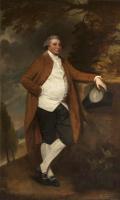
On 11th September 1783 Shelley (age 53) died. His son John (age 11) succeeded 6th Baronet Shelley of Mitchelgrove in Sussex.
On 11th September 1785 Reynolds (age 51) died. His brother Francis (age 46) succeeded 3rd Baron Ducie.
On 11th September 1810 Baring (age 70) died. His son Thomas (age 38) succeeded 2nd Baronet Baring of Larkbeer in Devon. Mary Ursula Sealy Lady Baring (age 36) by marriage Lady Baring of Larkbeer in Devon.
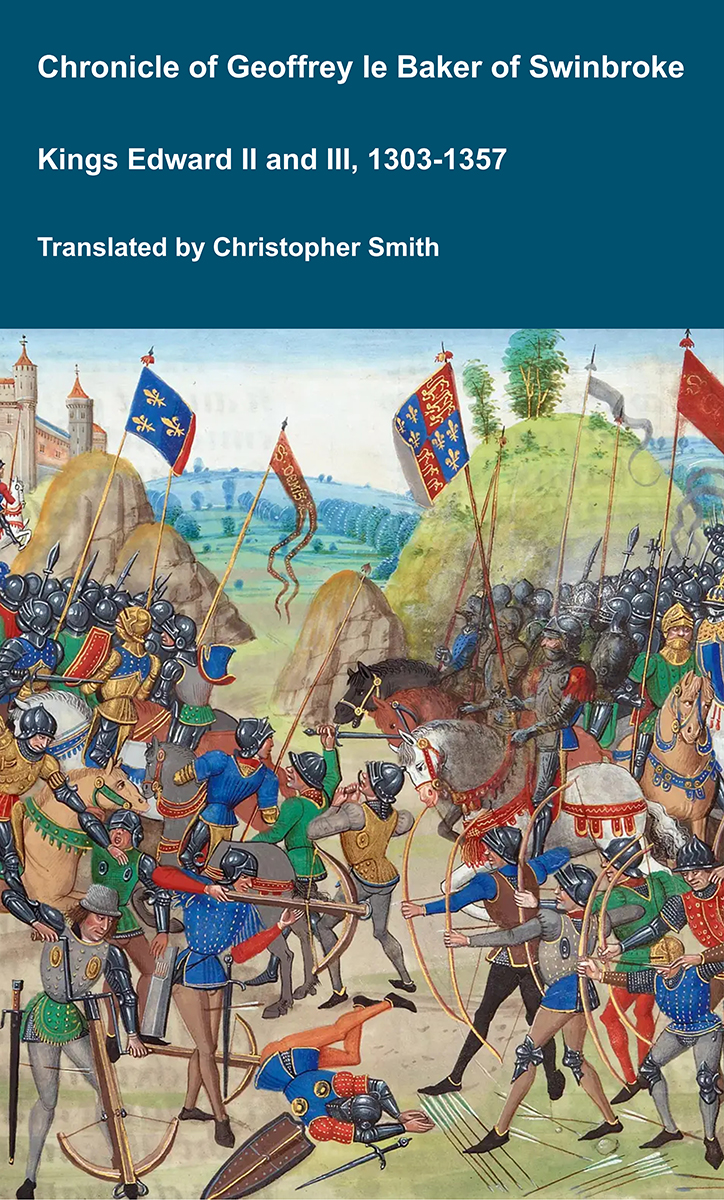
Chronicle of Geoffrey le Baker of Swinbroke
Baker was a secular clerk from Swinbroke, now Swinbrook, an Oxfordshire village two miles east of Burford. His Chronicle describes the events of the period 1303-1356: Gaveston, Bannockburn, Boroughbridge, the murder of King Edward II, the Scottish Wars, Sluys, Crécy, the Black Death, Winchelsea and Poitiers. To quote Herbert Bruce 'it possesses a vigorous and characteristic style, and its value for particular events between 1303 and 1356 has been recognised by its editor and by subsequent writers'. The book provides remarkable detail about the events it describes. Baker's text has been augmented with hundreds of notes, including extracts from other contemporary chronicles, such as the Annales Londonienses, Annales Paulini, Murimuth, Lanercost, Avesbury, Guisborough and Froissart to enrich the reader's understanding. The translation takes as its source the 'Chronicon Galfridi le Baker de Swynebroke' published in 1889, edited by Edward Maunde Thompson.
Available at Amazon in eBook and Paperback format.

On 11th September 1827 Nicholas Ward 2nd Viscount Bangor (age 76) died unmarried. His nephew Edward (age 37) succeeded 3rd Viscount Bangor of Castleward in County Downe.
On 11th September 1845 Stewart (age 54) died.
On 11th September 1858 Sarah Dunn-Gardner Marchioness Townshend died.

On 11th September 1869 Emily Lamb Countess Cowper (age 82) died.
On 11th September 1879 Wrey (age 90) died. His half brother Henry (age 82) succeeded 9th Baronet Wrey of Trebitch in Cornwall.
On 11th September 1892 Arthur Algernon Capell 6th Earl Essex (age 89) died. His grandson George (age 34) succeeded 7th Earl Essex, 8th Baron Capell Hadham.
On 11th September 1921 Hesse (age 67) died. His son George (age 28) succeeded 2nd Marquess Milford Haven. Nadejda Mikhailovna Torby Marchioness Milford Haven (age 25) by marriage Marchioness Milford Haven.

On 11th September 1928 Edward Ward 1st Baronet (age 74) died. His son Edward (age 46) succeeded 2nd Baronet Ward of Wilbraham Place in Chelsea.
On 11th September 1933 Sebright (age 77) died. His nephew Giles (age 36) succeeded 13th Baronet Sebright of Besford in Worcestershire.
On 11th September 1961 Heathcote (age 93) died. His half brother Leonard (age 76) succeeded 10th Baronet Heathcote of Hursley in Hampshire.
The True Chronicles of Jean le Bel Volume 1 Chapters 1-60 1307-1342
The True Chronicles of Jean le Bel offer one of the most vivid and immediate accounts of 14th-century Europe, written by a knight who lived through the events he describes, and experienced some of them first hand. Covering the early decades of the Hundred Years’ War, this remarkable chronicle follows the campaigns of Edward III of England, the politics of France and the Low Countries, and the shifting alliances that shaped medieval warfare. Unlike later historians, Jean le Bel writes with a strong sense of eyewitness authenticity, drawing on personal experience and the testimony of fellow soldiers. His narrative captures not only battles and sieges, but also the realities of military life, diplomacy, and the ideals of chivalry that governed noble society. A key source for Jean Froissart, Le Bel’s chronicle stands on its own as a compelling and insightful work, at once historical record and literary achievement. This translation builds on the 1905 edition published in French by Jules Viard, adding extensive translations from other sources Rymer's Fœdera, the Chronicles of Adam Murimuth, William Nangis, Walter of Guisborough, a Bourgeois of Valenciennes, Geoffrey le Baker of Swinbroke and Richard Lescot to enrich the original text and Viard's notes.
Available at Amazon in eBook and Paperback format.
On 11th September 1963 Bertie (age 75) died. His first cousin Richard (age 32) succeeded 14th Earl Lindsey, 9th Earl Abingdon, 13th Baron Norreys of Rycote.
On 11th September 2001 Herbert (age 77) died. His son George (age 44) succeeded 8th Earl Carnarvon, 8th Baron Porchester of Highclere in Hampshire.
