

Rector is in Lords Spritual England.
In 1466 Bishop Oliver King [aged 34] was appointed Rector of Broughton, Hampshire.
On 30th January 1505 Thomas Larke [aged 15] was appointed Rector of St Ethelburga's Church Bishopgate [Map]. Hr resigned in 1542.
On 12th February 1530 Bishop Henry Morgan was appointed Rector of Walwyn's Castle [Map].
In 1533 Archbishop Hugh Curwen [aged 33] was appointed Rector of Ferriby.
On 8th January 1538 Dean Hugh Weston [aged 33] was elected Rector of Lincoln College, Oxford University.
On 15th September 1541 Dean Hugh Weston [aged 36] was collated Rector of St Nicholas Olave [Map].
On 19th September 1544 Dean Hugh Weston [aged 39] was collated Rector of St Botolph's without Bishopgate.
On 9th May 1550 Bishop John Harley was appointed Rector of Upton-upon-Severn, Worcestershire [Map]
In 1551 Bishop William Overton [aged 26] was appointed Rector of St Mary's Church Balcombe.
On 30th September 1551 Bishop John Harley was appointed Rector of Maiden Bradley, Wiltshire.
On 18th November 1641 John Palmer [aged 29] was appointed Rector of the Church of St Mary Magdalene, Ecton [Map] which position he held for life.
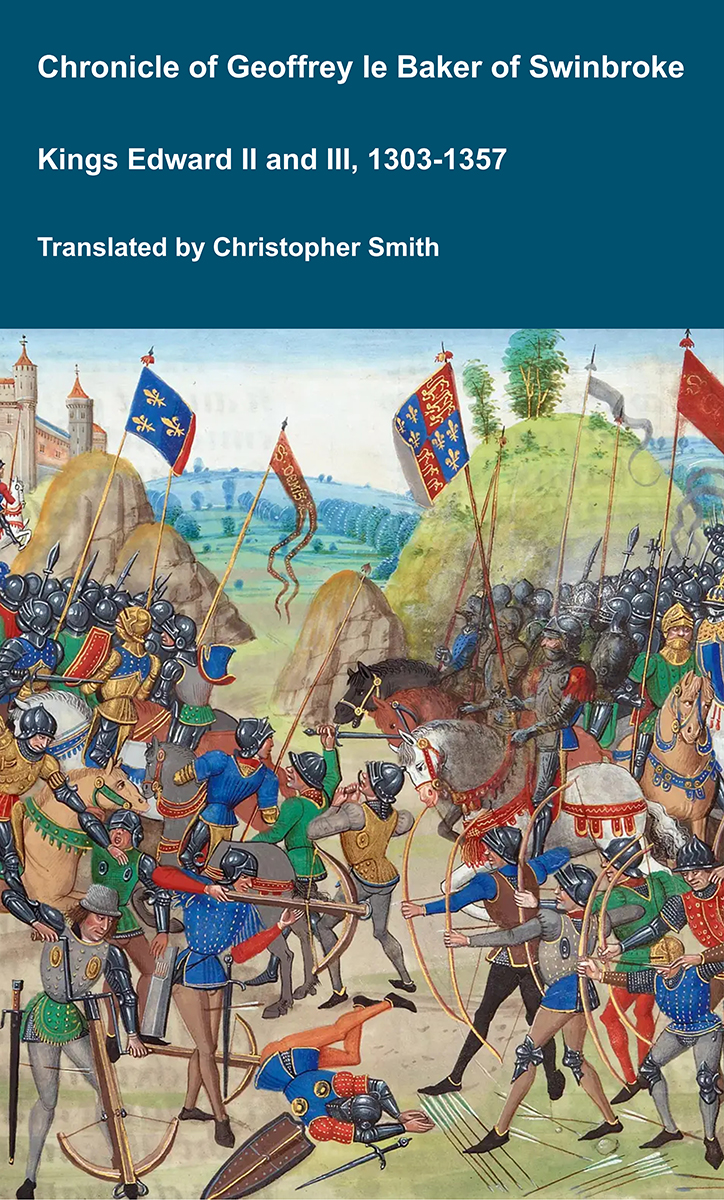
Chronicle of Geoffrey le Baker of Swinbroke
Baker was a secular clerk from Swinbroke, now Swinbrook, an Oxfordshire village two miles east of Burford. His Chronicle describes the events of the period 1303-1356: Gaveston, Bannockburn, Boroughbridge, the murder of King Edward II, the Scottish Wars, Sluys, Crécy, the Black Death, Winchelsea and Poitiers. To quote Herbert Bruce 'it possesses a vigorous and characteristic style, and its value for particular events between 1303 and 1356 has been recognised by its editor and by subsequent writers'. The book provides remarkable detail about the events it describes. Baker's text has been augmented with hundreds of notes, including extracts from other contemporary chronicles, such as the Annales Londonienses, Annales Paulini, Murimuth, Lanercost, Avesbury, Guisborough and Froissart to enrich the reader's understanding. The translation takes as its source the 'Chronicon Galfridi le Baker de Swynebroke' published in 1889, edited by Edward Maunde Thompson.
Available at Amazon in eBook and Paperback format.
On 17th April 1657 Daniel Milles was appointed Rector of St Olave's Church [Map].
In 1670 Bishop Thomas Sprat [aged 35] was appointed Rector of Uffington Church, Stamford.
On 10th January 1674 Dr Henry Dove was appointed Rector of St Bride's Church, Fleet Street which post he held for the rest of his life.
In 1680 John Palmer [aged 25] was appointed Rector of the Church of St Mary Magdalene, Ecton [Map] which position he held for life.

In 1693 Archbishop William Wake [aged 35] was appointed Rector of St James' Church, Piccadilly.
In 1720 Thomas Palmer was appointed Rector of the Church of St Mary Magdalene, Ecton [Map] which position he held for life.
In 1745 Dean Edward Townshend [aged 25] became Rector of St Mary's Church, Pulham St Mary.
In 1748 Dean Edward Townshend [aged 28] became Rector of Church of St Nicholas, Oakley.
In 1774 Bishop Reginald Courtenay [aged 32] was appointed Rector at St George's Church, Hanover Square.
In 1776 Archdeacon Anthony Hamilton [aged 37] became Rector of Much Hadham, Hertfordshire.
Before 1799 Stebbing Shaw was appointed Rector of St Peter's Church, Hartshorne [Map].
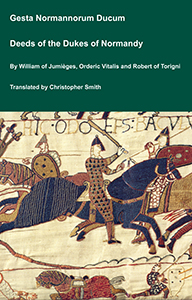
The Deeds of the Dukes of Normandy
The Gesta Normannorum Ducum [The Deeds of the Dukes of Normandy] is a landmark medieval chronicle tracing the rise and fall of the Norman dynasty from its early roots through the pivotal events surrounding the Norman Conquest of England. Originally penned in Latin by the monk William of Jumièges shortly before 1060 and later expanded at the behest of William the Conqueror, the work chronicles the deeds, politics, battles, and leadership of the Norman dukes, especially William’s own claim to the English throne. The narrative combines earlier historical sources with firsthand information and oral testimony to present an authoritative account of Normandy’s transformation from a Viking settlement into one of medieval Europe’s most powerful realms. William’s history emphasizes the legitimacy, military prowess, and governance of the Norman line, framing their expansion, including the conquest of England, as both divinely sanctioned and noble in purpose. Later chroniclers such as Orderic Vitalis and Robert of Torigni continued the history, extending the coverage into the 12th century, providing broader context on ducal rule and its impact. Today this classic work remains a foundational source for understanding Norman identity, medieval statesmanship, and the historical forces that reshaped England and Western Europe between 800AD and 1100AD.
Available at Amazon in eBook and Paperback format.
On 27th April 1799 Stebbing Shaw [aged 37] succeeded his father as Rector of St Peter's Church, Hartshorne [Map].
In 1803 Reverend Robert Hodgson [aged 29] was appointed Rector of St George's Church, Hanover Square which position he remained until his death.

In 1837 Bishop James Bowstead [aged 36] was appointed Rector of All Saints Church, Rettendon.
In 1842 Reginald Courtenay Bishop [aged 29] was appointed Rector at Thornton Watlass, Hambleton.
Before 1853 Thomas Noel [aged 78] was appointed Rector of Kirkby Mallory, Leicestershire.
In 1898 Archdeacon Henry Armstrong Hall [aged 44] was appointed Rector of Church of St Oswald, Methley [Map].
Hugh Willoughby was appointed Rector at St Leonard's Church, Wollaton [Map].
In 1486 Richard Bulkeley was appointed Rector Cheadle.
In 1525 John Bulkeley was appointed Rector Cheadle.
In 1859 Francis Edmund Cecil Byng 5th Earl Strafford [aged 23] was appointed Rector Little Casterton Rutland.
The Deeds of the Dukes of Normandy
The Gesta Normannorum Ducum [The Deeds of the Dukes of Normandy] is a landmark medieval chronicle tracing the rise and fall of the Norman dynasty from its early roots through the pivotal events surrounding the Norman Conquest of England. Originally penned in Latin by the monk William of Jumièges shortly before 1060 and later expanded at the behest of William the Conqueror, the work chronicles the deeds, politics, battles, and leadership of the Norman dukes, especially William’s own claim to the English throne. The narrative combines earlier historical sources with firsthand information and oral testimony to present an authoritative account of Normandy’s transformation from a Viking settlement into one of medieval Europe’s most powerful realms. William’s history emphasizes the legitimacy, military prowess, and governance of the Norman line, framing their expansion, including the conquest of England, as both divinely sanctioned and noble in purpose. Later chroniclers such as Orderic Vitalis and Robert of Torigni continued the history, extending the coverage into the 12th century, providing broader context on ducal rule and its impact. Today this classic work remains a foundational source for understanding Norman identity, medieval statesmanship, and the historical forces that reshaped England and Western Europe between 800AD and 1100AD.
Available at Amazon in eBook and Paperback format.
In 1534 Bishop Richard Sampson was appointed Rector of Hackney.