


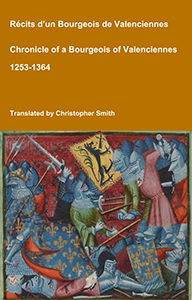
Chronicle of a Bourgeois of Valenciennes
Récits d’un bourgeois de Valenciennes aka The Chronicle of a Bourgeois of Valenciennes is a vivid 14th-century vernacular chronicle written by an anonymous urban chronicler from Valenciennes in the County of Hainaut. It survives in a manuscript that describes local and regional history from about 1253 to 1366, blending chronology, narrative episodes, and eyewitness-style accounts of political, military, and social events in medieval France, Flanders, and the Low Countries. The work begins with a chronological framework of events affecting Valenciennes and its region under rulers such as King Philip VI of France and the shifting allegiances of local nobility. It includes accounts of conflicts, sieges, diplomatic manoeuvres, and the impact of broader struggles like the Hundred Years’ War on urban life in Hainaut. Written from the perspective of a burgher (bourgeois) rather than a monastery or royal court, the chronicle offers a rare lay viewpoint on high politics and warfare, reflecting how merchants, townspeople, and civic institutions experienced the turbulence of the 13th and 14th centuries. Its narrative style combines straightforward reporting of events with moral and civic observations, making it a valuable source for readers interested in medieval urban society, regional politics, and the lived experience of war and governance in pre-modern Europe.
Available at Amazon in eBook and Paperback format.
On 28th January 1308 [his father] King Edward II of England and [his mother] Isabella of France Queen Consort England were married at Boulogne sur Mer. She the daughter of [his grandfather] King Philip IV of France and [his grandmother] Joan Blois I Queen Navarre. He the son of King Edward I of England and Eleanor of Castile Queen Consort England.
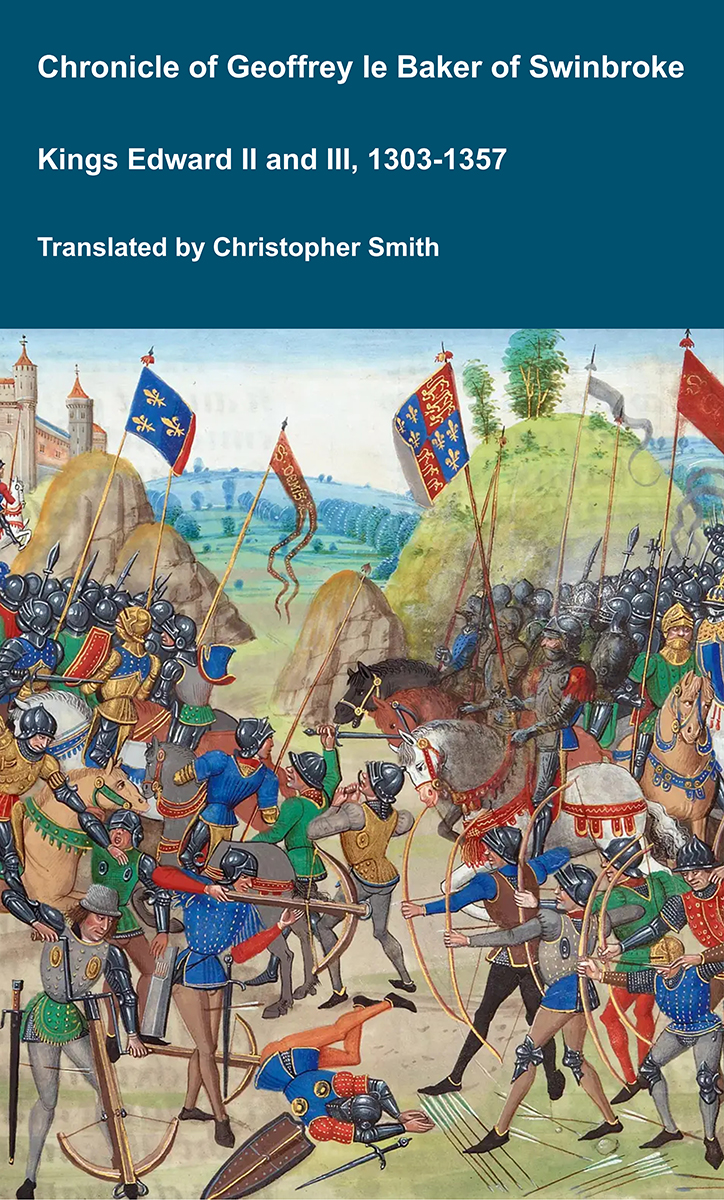 Chronicle of Geoffrey le Baker of Swinbroke. In the year of Christ 1312, the sixth year of Edward II, on the feast day of Saint Brice the Confessor [13th November 1312], there was born to the king at Windsor by Queen Isabella a magnificent victor over the French, a conqueror of the Scots, a rightful heir to the royal bloodline of both England and France, who in his time would be called Edward III after the Conquest. In this year, due to the joy of his son's birth and the love he bore for his queen, whom he cherished deeply and tenderly, the king concealed the grief he felt over the death of Peter, being uncertain in his own judgment and unsure to whom he could safely entrust his secret counsels or even his life in times of peril. Many were thus distanced, whether openly or secretly, from his friendship due to Peter's death. Consequently, the king, neglecting arms, sometimes indulged in genuine pleasures, at other times in feigned distractions. Meanwhile, as the nobles of the realm were preoccupied with enacting a timely punishment for Peter's death, Robert de Bruce seized almost all the castles and fortresses of Scotland, removing or executing the wardens who had been appointed by the king and his father.
Anno Christi MCCCXIJ, Edwardi secundi anno VJ, die sancti Bricii confessoris, apud Wyndesore natus est regi ex Isabella regina magnificus Gallorum triumfator, Scotorum consternator, rectilineari propagacione de sanguine regali Anglie et Francie utriusque regni heres futurus, suo tempore vocatus tercius Edwardus post conquestum. Hoc anno leticia nati filii et regine quam nimium dilexit et tenerrime confovit, ne quidquam molestie eii inferret, rex dissimulavit quam moleste gessit mortem Petri, ancipite quoque sua providencia, nescia cuius fidei sui concilia secreta aut vitam in periculis posset commendare amicabiliter; a cuius amicicia manifeste vel occulte Petri interitus sequestravit multos. Ipso propterea, armis neclectis, vacante solaciis quandoque veris nonnunquam simulatis, regni quoque proceribus in necem Petri oportune infligendam ocupatis, Robertus de Bruys fere omnia castra atque fortalicia Scocie adquisivit, et custodes deputatos per regem et ipsius patrem amovit vel peremit.
On 13th November 1312 King Edward III of England was born to [his father] King Edward II of England and [his mother] Isabella of France Queen Consort England at Windsor Castle. He was christened on 17th November 1312 with Archbishop Walter Reynolds being one of his godfathers.
On 24th June 1314 the Scottish army of King Robert the Bruce I of Scotland including, James "Black" Douglas, heavily defeated the English army led by [his father] King Edward II of England at the Battle of Bannockburn.
Gilbert de Clare 8th Earl Gloucester 7th Earl Hertford was killed. Earl Gloucester, Earl Hertford extinct.
John Comyn 4th Lord Baddenoch, Robert Felton 1st Baron Felton and William Vesci were killed.
William Marshal 1st Baron Marshal was killed. John Marshal 2nd Baron Marshal succeeded 2nd Baron Marshal.
Robert Clifford 1st Baron Clifford was killed. Roger Clifford 2nd Baron Clifford succeeded 2nd Baron de Clifford.
John Lovell 2nd Baron Lovel was killed. John Lovell 3rd Baron Lovel succeeded 3rd Baron Lovel of Titchmarsh.
Henry Bohun was killed by King Robert the Bruce I of Scotland. He was buried in Llanthony Secunda Priory, Gloucestershire.
Walter Fauconberg 2nd Baron Fauconberg possilby died although his death is also reported as being on 31 Dec 1318.
Bartholomew Badlesmere 1st Baron Badlesmere, Humphrey Bohun 4th Earl Hereford 3rd Earl Essex, Goronwy ap Tudur Hen Tudor, Henry Beaumont Earl Buchan, Aymer de Valence 2nd Earl Pembroke and Robert Umfraville 8th Earl Angus fought.
Pain Tiptoft 1st Baron Tibetot was killed. John Tiptoft 2nd Baron Tibetot succeeded 2nd Baron Tibetot.
John Montfort 2nd Baron Montfort was killed. Peter Montfort 3rd Baron Montfort succeeded 3rd Baron Montfort.
Thomas Grey undertook a suicidal charge that contributed to the English defeat and subsequently blemished his career.
William Latimer 2nd Baron Latimer of Corby was captured.
Michael Poynings was killed.
 Become a Member via our Buy Me a Coffee page to read more.
On 12th August 1315 Guy Beauchamp 10th Earl Warwick died. Possibly poisoned - see Thomas Walsingham. He was buried at Bordesley Abbey, Worcestershire. Thomas Beauchamp 11th Earl Warwick succeeded 11th Earl Warwick. Given his young age Thomas Beauchamp 11th Earl Warwick became a ward of [his father] King Edward II of England until 1326.
On 19th April 1319 Thomas Beauchamp 11th Earl Warwick and Katherine Mortimer Countess Warwick were married. She by marriage Countess Warwick. An arranged marriage although not clear who arranged it or whose ward Thomas Beauchamp 11th Earl Warwick was (his father Guy Beauchamp 10th Earl Warwick had died four years before) - possibly by King Edward II of England as a means of securing the Welsh March. The Beauchamp family established, the Mortimer family aspirational. The marriage took place after Roger Mortimer 1st Earl March had returned from his tenure as Lord Lieutenant of Ireland and before he rebelled against King Edward II of England in opposition to Hugh "Younger" Despencer 1st Baron Despencer. She the daughter of Roger Mortimer 1st Earl March and Joan Geneville Baroness Mortimer 2nd Baroness Geneville. He the son of Guy Beauchamp 10th Earl Warwick and Alice Tosny Countess Warwick.
In or before May 1322 John Giffard 2nd Baron Giffard Brimpsfield was executed by [his father] King Edward II of England. Baron Giffard Brimpsfield forfeit.
On 19th May 1322 [his uncle] Charles IV King France I King Navarre and Blanche of Burgundy Queen Consort France marriage annulled as a consequence of her adultery. In 1313 [his mother] Isabella of France Queen Consort England gave gifts of coin-purses to her sisters-in-law Blanche of Burgundy Queen Consort France and Margaret of Burgundy Queen Consort France. The coin-purses were subsequently seen by Isabella to be in the possession of the Norman knights Gautier and Philippe d'Aunay. When Isabella visited her father [his grandfather] King Philip IV of France again in 1314 she informed him she suspected the two sisters to be having affairs with the two knights. The two knights were arrested, confessed to adultery under torture, and were executed. The two women were sentenced to life imprisonment at Château Gaillard. Margaret's husband Louis X King France I Navarre became King in Nov 1314 whilst she was in prison; she became Queen of France by marriage. Somewhat conveniently she died five months later. Blanche of Burgundy Queen Consort France remained in prison until her husband Charles IV King France I King Navarre became King in 1322 at which time he had their marriage annulled.
On 25th January 1327 [his father] King Edward II of England abdicated King of England. King Edward III of England succeeded III King of England.
On 1st February 1327 King Edward III of England was crowned III King of England at Westminster Abbey by Archbishop Walter Reynolds.
On 4th August 1327, during the night, James "Black" Douglas ambushed Edward III's camp at Stanhope Park Weardale. Douglas reached Edward III's collapsed tent nearly capturing the English King.
On 21st September 1327 [his father] King Edward II of England was murdered at Berkeley Castle. There is speculation as to the manner of his death, and as to whether he died at all. Some believe he may have lived the rest of his life in Europe - see Publications de la Société Archéologique de Montpellier 1877: Fieschi Letter.
On 24th January 1328 King Edward III of England and Philippa of Hainault were married at York Minster by Archbishop William Melton. She by marriage Queen Consort England. She was crowned the same day. She the daughter of William of Avesnes I Count Hainaut III Count Avesnes III Count Holland II Count Zeeland and Joan Valois Countess Zeeland Holland Avesnes and Hainaut. He the son of King Edward II of England and Isabella of France Queen Consort England.
The marriage was the quid pro quo for her father William of Avesnes I Count Hainaut III Count Avesnes III Count Holland II Count Zeeland having supported his mother Isabella of France Queen Consort England and Roger Mortimer 1st Earl March returning to England to usurp the throne of Edward's father King Edward II of England.
On 17th March 1328 Robert the Bruce signed the Treaty of Edinburgh Northampton bringing to an end the First Scottish War of Independence. The English Parliament signed at Northampton on 03 May 1328. The terms of the Treaty included:
Scotland to pay England £100,000 sterling,
The Kingdom of Scotland as fully independent,
Robert the Bruce, and his heirs and successors, as the rightful rulers of Scotland, and.
The border between Scotland and England as that recognised under the reign of Alexander III (1249-1286).
The Treaty lasted four years only being regarded by the English nobility as humiliating; the work of Edward's mother Isabella of France Queen Consort England and Roger Mortimer 1st Earl March rather than King Edward. Two years after King Edward commenced his personal reign he commenced the Second War of Scottish Independence in Aug 1332.
On 31st May 1328 the Mortimer family leveraged their new status at a lavish ceremony that celebrated the marriages of two of Roger Mortimer's daughters at Hereford.
Edward Plantagenet and Beatrice Mortimer were married. She the daughter of Roger Mortimer 1st Earl March and Joan Geneville Baroness Mortimer 2nd Baroness Geneville. He the son of Thomas of Brotherton 1st Earl Norfolk and Alice Hales Countess Norfolk.
Laurence Hastings 1st Earl Pembroke and Agnes Mortimer Countess of Pembroke were married. She the daughter of Roger Mortimer 1st Earl March and Joan Geneville Baroness Mortimer 2nd Baroness Geneville. He the son of John Hastings 2nd Baron Hastings 14th Baron Abergavenny and Juliana Leybourne Countess Huntingdon.
King Edward III of England and his mother Isabella of France Queen Consort England attended as well as Roger Mortimer 1st Earl March.
On 17th July 1328 [his brother-in-law] King David II of Scotland and [his sister] Joan of the Tower Queen Consort Scotland were married at Berwick-upon-Tweed, Northumberland. She the daughter of [his father] King Edward II of England and [his mother] Isabella of France Queen Consort England. He the son of King Robert the Bruce I of Scotland and Elizabeth Burgh Queen Consort Scotland.
In 1329 Bartholomew "The Elder" Burghesh 1st Baron Burghesh was sent to King Philip IV of France to explain the reasons for the delay in King Edward III rendering of his homage.
On 7th June 1329 King Robert the Bruce I of Scotland died at Cardross Manor, Argyll. He was buried at Dunfermline Abbey. [his brother-in-law] King David II of Scotland succeeded II King Scotland. [his sister] Joan of the Tower Queen Consort Scotland by marriage Queen Consort Scotland.
In 1330 [his brother] John of Eltham 1st Earl Cornwall was created 1st Earl Cornwall.
On 19th March 1330 the King's uncle Edmund of Woodstock 1st Earl Kent was beheaded at Winchester Castle. Earl Kent forfeit. Edmund had been convicted of plotting against the court believing his brother King Edward II was still alive. It later emerged the plot had been created by Roger Mortimer 1st Earl March to entrap Edmund. King Edward III of England was unable to show leniency risking complicity in the plot. He was buried at Westminster Abbey.
See
Geoffrey le Baker of Swinbroke, 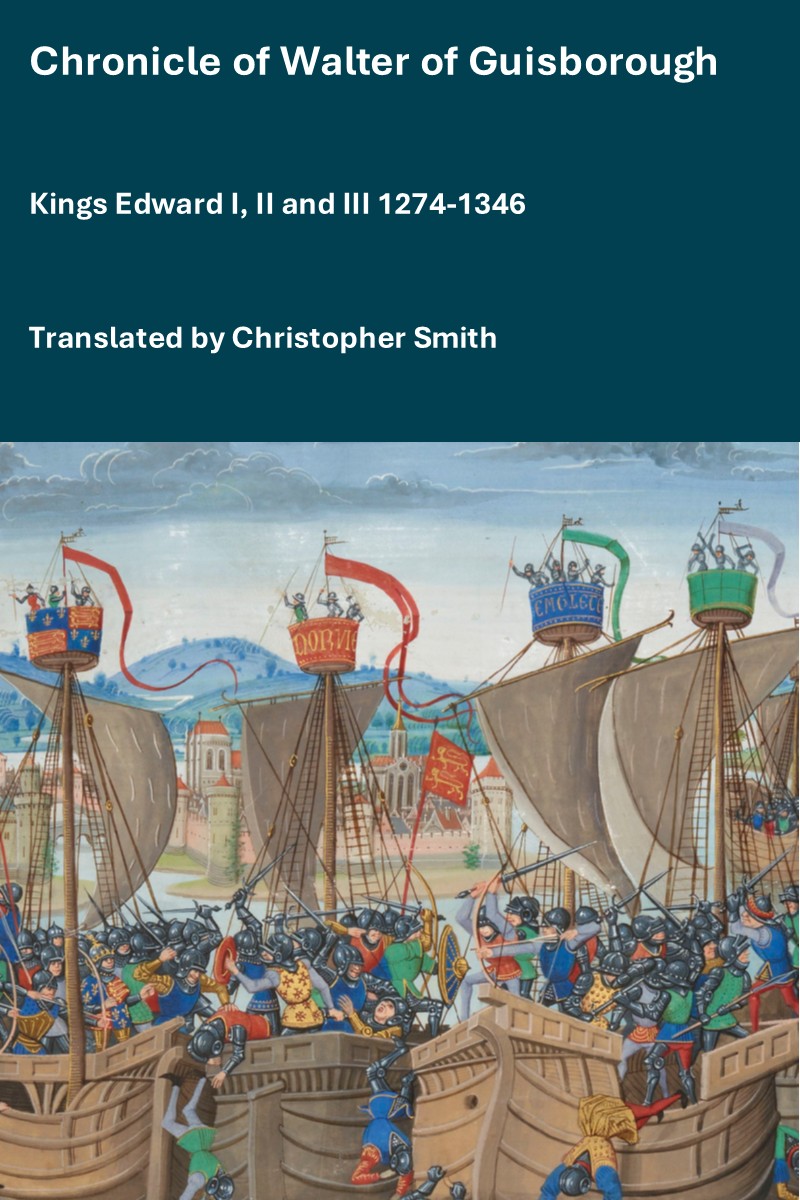 Walter of Guisborough, Knighton 2555, Murimuth and Parliament Rolls.
On 15th June 1330 [his son] Edward "Black Prince" was born to King Edward III of England and [his wife] Philippa of Hainaut Queen Consort England at Woodstock Palace, Oxfordshire. He married 10th October 1361 Joan "Fair Maid of Kent" Princess Wales, daughter of Edmund of Woodstock 1st Earl Kent and Margaret Wake Countess Kent, and had issue.
On 19th October 1330 John Neville 1299-1335, William Eland, William Bohun 1st Earl of Northampton, William Clinton 1st Earl Huntingdon and William Montagu 1st Earl Salisbury, friends of King Edward III of England secretly entered Nottingham Castle through tunnels, met with King Edward III of England, and arrested Roger Mortimer 1st Earl March and his son Geoffrey Mortimer in the presence of [his mother] Isabella of France Queen Consort England.
On 29th November 1330 Roger Mortimer 1st Earl March was hanged, drawn and quartered at Tyburn accused of assuming royal power and of various other high misdemeanours. His body hung at the gallows for two days and nights. He was buried at Christ Church, Greyfriars. [his mother] Isabella of France Queen Consort England subsequently requested his burial at Wigmore Abbey and, after firstly refusing, King Edward III of England allowed his remains to be removed to Wigmore Abbey. Earl March, Baron Mortimer of Wigmore forfeit.
In May 1332 [his brother-in-law] Reginald "Black" I Duke Guelders and [his sister] Eleanor of Woodstock Plantagenet were married at Nijmegen. She by marriage Countess Guelders. His second marriage; he had four daughters from his first marriage. He subsequently sent her from court to Deventer Abbey in 1336 under the pretext that she had leprosy. He subsequently tried to annul the marriage but she contested the annulment by proving she wasn't a leper. The difference in their ages was 23 years. She the daughter of [his father] King Edward II of England and [his mother] Isabella of France Queen Consort England. He the son of Reginald I Count Guelders and Margaret Dampierre Countess Guelders.
On 14th May 1332 King Edward III of England spent Easter at the House of the Friars Preachers, Stamford, and paid fifty marks to the friars for damages done by the royal household.
On 16th June 1332 [his daughter] Isabella Countess Bedford and Soissons was born to King Edward III of England and [his wife] Philippa of Hainaut Queen Consort England at Woodstock Palace, Oxfordshire. She married 27th July 1365 Enguerrand de Coucy 1st Earl Bedford 1st Count Soissons and had issue.
On 19th July 1333 King Edward III of England defeated the Scots army at the Battle of Halidon Hill near Berwick-upon-Tweed, Northumberland. [his brother] John of Eltham 1st Earl Cornwall commanded.
English archers, just as at the Battle of Dupplin Moor one year previously, had a significant impact on the massed ranks of Scottish schiltrons. Edward's army included: [his uncle] Thomas of Brotherton 1st Earl Norfolk, who commanded the right wing, Hugh Courtenay 1st or 9th Earl Devon, Robert Pierrepont, Hugh Courtenay 2nd or 10th Earl Devon, Henry Beaumont Earl Buchan and John Sully. One of the few English casualties was John Neville who was killed.
The Scottish army included [his brother-in-law] King David II of Scotland. Alexander Bruce, Alan Stewart, James Stewart, John Stewart, William Douglas 1st Earl Atholl, Archibald Douglas who were all killed.
Hugh 4th Earl Ross was killed. William 5th Earl Ross succeeded 5th Earl Ross.
Malcolm Lennox 2nd Earl Lennox was killed. Domhnall Lennox Earl Lennox succeeded Earl Lennox.
Kenneth de Moravia Sutherland 4th Earl Sutherland was killed. William de Moravia Sutherland 5th Earl Sutherland succeeded 5th Earl Sutherland. Johanna Menteith Countess Sutherland by marriage Countess Sutherland.
On 19th December 1333 [his daughter] Joan Plantagenet was born to King Edward III of England and [his wife] Philippa of Hainaut Queen Consort England at Tower of London.
In 1334 [his brother-in-law] William Hainaut II Count Hainaut and Joanna Reginar Duchess Brabant were married. She the daughter of John Brabant III Duke Brabant and Marie Évreux Duchess of Brabant. He the son of [his father-in-law] William of Avesnes I Count Hainaut III Count Avesnes III Count Holland II Count Zeeland and [his mother-in-law] Joan Valois Countess Zeeland Holland Avesnes and Hainaut.
In 1335 King Edward III of England was at House of the Friars Preachers, Stamford and on several occasions gave the friars pittances.
On 30th November 1335 David III Strathbogie 11th Earl Atholl was killed during the Battle of Culblean. David IV Strathbogie 12th Earl Atholl succeeded 12th Earl Atholl, 3rd Baron Strabolgi.
Whilst small the battle had a significant impact insofar as it brought an end to the campaign of King Edward III of England also ending the aspirations to the Scottish throne of King Edward I of Scotland.
Before 6th July 1336 Ralph Stafford 1st Earl Stafford abducted Margaret Audley Countess Stafford. She being the heir of the very wealthy Hugh Audley 1st Earl Gloucester; considerably more wealthy than Ralph. King Edward III of England was sympathetic despite the complaint of her father since Ralph had been one of King Edward III's key supporters during the plot to arrest Roger Mortimer 1st Earl March. Margaret's father was subsequently created Earl as a quid pro quo.
On 30th September 1336 [his brother] John of Eltham 1st Earl Cornwall died at Perth. Earl Cornwall extinct. He was buried at the east side of the doorway to the Chapel of St Edmund, Westminster Abbey. His monument comprises a head of the statue encircled by a coronet of large and small leaves, remarkable for being the earliest specimen of the kind. The details of plate-armour, surcoat, gorget, coroneted helmet, with other accessories, give great antiquarian interest to this work. It was formerly surmounted by a canopy, of which, however, no traces are now visible.
In January 1337 King Edward III of England created a number of new Earldom's probably in preparation for his forthcoming war against France...
William Montagu 1st Earl Salisbury was created 1st Earl Salisbury. Catherine Grandison Countess of Salisbury by marriage Countess Salisbury.
William Bohun 1st Earl of Northampton was created 1st Earl of Northampton. Elizabeth Badlesmere Countess Northampton by marriage Countess of Northampton.
Hugh Audley 1st Earl Gloucester was created 1st Earl Gloucester probably as compensation for his daughter Margaret Audley Countess Stafford having been abducted by Ralph Stafford 1st Earl Stafford.
Robert Ufford 1st Earl Suffolk was created 1st Earl Suffolk. Margaret Norwich Countess Suffolk by marriage Countess Suffolk.
On 16th February 1337 [his son] William of Hatfield was born to King Edward III of England and [his wife] Philippa of Hainaut Queen Consort England at Hatfield. He died shortly afterwards around 3rd March 1337. He was buried at York Minster where there is a monument to him in the north aisle.
On 7th June 1337 [his father-in-law] William of Avesnes I Count Hainaut III Count Avesnes III Count Holland II Count Zeeland died. [his brother-in-law] William Hainaut II Count Hainaut succeeded II Count Hainault. Joanna Reginar Duchess Brabant by marriage Countess Hainault.
On 23rd September 1338 a French fleet attacked an English fleet unloading cargo at Walcheren. Five large and powerful English cogs, including Edward III's flagships the Cog Edward and the Christopher were captured. The captured crews were executed and the ships added to the French fleet.
On 29th November 1338 [his son] Lionel of Antwerp 1st Duke of Clarence was born to King Edward III of England and [his wife] Philippa of Hainaut Queen Consort England at Antwerp. He married (1) 1352 Elizabeth Burgh Duchess of Clarence, daughter of William Donn Burgh 3rd Earl of Ulster and Maud Plantagenet Countess Ulster, and had issue (2) June 1368 Violante Visconti.
In 1340 [his daughter] Blanche of the Tower was born to King Edward III of England and [his wife] Philippa of Hainaut Queen Consort England at the Tower of London. she died the same year and was buried at the east side of the door to the Chapel of St Edmund, Westminster Abbey.
On 6th March 1340 [his son] John of Gaunt 1st Duke Lancaster was born to King Edward III of England and [his wife] Philippa of Hainaut Queen Consort England at the Prinsenhof Palace in Ghent aka Gaunt. He married (1) Blanche Duchess of Lancaster, daughter of Henry of Grosmont 1st Duke Lancaster and Isabel Beaumont Duchess Lancaster, and had issue (2) 21st September 1371 Constance of Castile Duchess of Lancaster and had issue (3) 13th January 1396 Katherine Swynford aka Roet Duchess Lancaster and had issue.
On 24th June 1340 King Edward III of England attacked the French fleet at anchor during the Battle of Sluys capturing more than 200 ships, killing around 18000 French. The English force included John Beauchamp 1st Baron Beauchamp Warwick, William Bohun 1st Earl of Northampton, Henry Scrope 1st Baron Scrope of Masham, William Latimer 4th Baron Latimer of Corby, John Lisle 2nd Baron Lisle, Ralph Stafford 1st Earl Stafford, Henry of Grosmont 1st Duke Lancaster, Walter Manny 1st Baron Manny, Hugh Despencer 1st Baron Despencer and Richard Pembridge.
Thomas Monthermer 2nd Baron Monthermer died from wounds. Margaret Monthermer Baroness Montagu 3rd Baroness Monthermer succeeded 3rd Baroness Monthermer.
On 5th June 1341 [his son] Edmund of Langley 1st Duke of York was born to King Edward III of England and [his wife] Philippa of Hainaut Queen Consort England at King's Langley, Hertfordshire. He married (1) 11th July 1372 Isabella of Castile Duchess York and had issue (2) 4th November 1393 Joan Holland Duchess York, daughter of Thomas Holland 2nd Earl Kent and Alice Fitzalan Countess Kent.
On 23rd April 1344 King Edward III of England created the Order of the Garter. The date nominal as there are different accounts; some sources say 1348.
1 [his son] Edward "Black Prince".
2 Henry of Grosmont 1st Duke Lancaster.
3 Thomas Beauchamp 11th Earl Warwick.
4 Jean Grailly.
5 Ralph Stafford 1st Earl Stafford.
6 William Montagu 2nd Earl Salisbury.
7 Roger Mortimer 2nd Earl March.
9 Bartholomew "The Younger" Burghesh 2nd Baron Burghesh.
10 John Beauchamp 1st Baron Beauchamp Warwick.
11 John Mohun 2nd Baron Mohun of Dunster.
12 Hugh Courtenay.
13 Thomas Holland 1st Earl Kent.
15 Richard Fitzsimon.
16 Miles Stapleton.
17 Thomas Wale.
18 Hugh Wrottesley.
19 Neil Loring.
20 John Chandos.
21 James Audley.
22 Otho Holland.
23 Henry Eam.
24 Sanchet Abrichecourt.
Become a Member via our Buy Me a Coffee page to read more.
On 23rd April 1344. The date somewhat unclear; it may have been before. King Edward III of England formed the Order of the Garter. The first reliable record occurs in autumn of 1348 when the King's wardrobe account shows Garter habits being issued. The Order may have been formed before then with some traditions such as the mantle, and the garter and motto, possibly being introduced later. The Garter refers to an event at Wark Castle, Northumberland at which King Edward III of England picked up the Countess of Salisbury's fallen garter and saying to the crowd "Honi soit qui mal y pense" ie Shame on him who thinks badly of it, or possibly, he brings shame on himself who thinks badly of it. The Countess of Salisbury could refer to his future daughter-in-law Joan "Fair Maid of Kent" Princess Wales or her former mother-in-law Catherine Grandison Countess of Salisbury. The event has also been described as taking place at Calais.


On 10th October 1344 [his daughter] Mary Plantagenet Duchess Brittany was born to King Edward III of England and [his wife] Philippa of Hainaut Queen Consort England at Bishop Waltham's Palace, Hampshire. She married 3rd July 1361 John Montfort V Duke Brittany.
After 22nd September 1345 Henry Plantagenet 3rd Earl of Leicester 3rd Earl Lancaster was buried at Church of the Annunciation of our Lady of the Newark, or possibly the Hospital Chapel, at a ceremony attended by King Edward III of England and his wife Philippa of Hainaut Queen Consort England. His son Henry of Grosmont 1st Duke Lancaster subsequently had his remains moved to St Mary de Castro Leicester, Leicestershire.
On 26th September 1345 [his brother-in-law] William Hainaut II Count Hainaut was killed at the Battle of Warns. [his sister-in-law] Margaret Hainaut Holy Roman Empress succeeded II Countess Hainault. Louis Wittelsbach IV Holy Roman Emperor by marriage Count Hainault.
On 12th July 1346 King Edward III of England landed at La Hogue with army of around 10,000 men including John Lisle 2nd Baron Lisle.
On 20th July 1346 [his daughter] Margaret Plantagenet Countess of Pembroke was born to King Edward III of England and [his wife] Philippa of Hainaut Queen Consort England at Windsor Castle. She married John Hastings 2nd Earl Pembroke, son of Laurence Hastings 1st Earl Pembroke and Agnes Mortimer Countess of Pembroke.
On 26th August 1346 the army of King Edward III of England defeated the French army at the Battle of Crécy. The English army was commanded by King Edward III of England, his son Edward "Black Prince", Thomas Beauchamp 11th Earl Warwick, William Bohun 1st Earl of Northampton and John Beauchamp 1st Baron Beauchamp Warwick.
The English army was included: Bishop Thomas of Hatfield, Hugh Despencer 1st Baron Despencer, Bernard Brocas, Thomas Felton, James Audley, Robert Bourchier 1st Baron Bourchier, Bartholomew "The Elder" Burghesh 1st Baron Burghesh, Bartholomew "The Younger" Burghesh 2nd Baron Burghesh, Reginald Cobham 1st Baron Cobham, John Darcy 1st Baron Darcy of Knayth, Robert Ferrers 3rd Baron Ferrers of Chartley, Richard Scrope 1st Baron Scrope of Bolton, William Scrope, Stephen Scrope, William Latimer 4th Baron Latimer of Corby, John Lisle 2nd Baron Lisle, Gerard Lisle 1st Baron Lisle, Nicholas Longford, Edward Montagu 1st Baron Montagu, Walter Paveley 4th Baron Burghesh, Michael Poynings 1st Baron Poynings, Robert Ufford 1st Earl Suffolk, John de Vere 7th Earl of Oxford, Thomas West, John Willoughby 2nd Baron Willoughby, John Wingfield, Henry Percy 11th and 3rd Baron Percy, Hugh Courtenay 2nd or 10th Earl Devon (possibly), Walter "Elder" Devereux, John Devereux, Enion Sais Brecon, John Chandos, Richard Pembridge and John Sully.
The French army suffered significant casualties. King Philip "Fortunate" VI of France was wounded. William de Coucy and his son Enguerrand 6th Lord de Coucy and were killed.
Charles II Count Alençon was killed. Charles Valois Archbishop of Lyons succeeded Count Alençon.
Louis Chatillon II Count Blois I Count Chatillon was killed. Louis Chatillon III Count Blois Count Soissons succeeded III Count Blois.
Louis Dampierre II Count Nevers I Count Flanders was killed. Louis of Male III Count Nevers II Count Flanders succeeded III Count Nevers, II Count Flanders.
King John I of Bohemia was killed. Charles IV King Bohemia Holy Roman Emperor Luxemburg succeeded IV King Bohemia, Holy Roman Emperor Luxemburg. Blanche Valois Holy Roman Empress Luxemburg by marriage Holy Roman Empress Luxemburg.
Rudolph "Valiant" Metz I Duke Lorraine was killed. John Metz I Duke Lorraine succeeded I Duke Lorraine.
Jean IV de Harcourt was killed.
On 3rd September 1346 King Edward III of England commenced the Siege of Calais. It lasted eleven months with Calais eventually surrendering on 3rd August 1347.
In 1347 [his son] Thomas of Windsor was born to King Edward III of England and [his wife] Philippa of Hainaut Queen Consort England. In 1348 he died.
On 22nd February 1347 John Graham Earl Menteith was condemned to be executed as a traitor. The sentence was carried out on the 28th February 1347 when John Graham Earl Menteith was hanged, drawn and quartered by direct orders of King Edward I to whom he had previously sworn fealty.
Bourgeois de Valenciennes. It happened that while the King of England was holding the siege before Calais, Louis, Count of Flanders, by the counsel and with the consent of his good towns, came into Flanders as lord of the country. He was received on condition that he should govern and rule them according to the usages and customs of the good Count Guy, his predecessor. The great and the small did him great honour, as was fitting, and as to their rightful and true lord. He remained in the land graciously and courteously, and followed the counsel of his people and of his good towns, who instructed him in sound policies. He remained in this state from Martinmas through the winter until after Easter, when the good men of Flanders, wishing to secure the best outcome, proposed and arranged the marriage between him and the eldest daughter of the King of England, so that they might be stronger in the land. They worked so effectively that they brought him to the King of England before Calais, and all ill will was pardoned on both sides. By the will of the said count, the marriage was agreed between Count Louis of Flanders and Isabel, eldest daughter of King Edward of England, and they were betrothed without any deceit. The betrothal was performed by the Abbot of the Dunes at Bergues in Flanders, in the church of the abbey of Saint-Winoc. Present at the betrothal were the king and queen, the Marquis of Jülich, the Earl of Warwick, the Duke of Guelders and the duchess, and many others, on the Wednesday after Mid-Lent, in the year of grace 13461. The agreements on both sides were settled, and a great feast was held. Afterwards, the Count of Flanders returned to the town of Male in Flanders. Meanwhile, while the King of England was at Bergues-Saint-Winoc, twenty ships laden with supplies came into the harbour of Calais, which greatly pleased those within the town.
Il advint qu'entandis que le roy d'Engleterre tenoit siège devant Callais, que Loys, conte de Flandres, par le conseil de ses bonnes villes et leur volenté, vint dedens Flandres, comme seigneur du pays, et fut rechups par ainsy qu'il les debvoit tenir et mener aux us et aux coustumes du bon conte Guion, son antécesseur. Sy luy firent grant honneur les grans et les petis, sycomme droit estoit, et comme à leur droiturier et vrai seigneur, et demeura au pays bellement et courtoisement, et crut le conseil de ses gens et de ses bonnes villes qui luy ensaingnoient les bons poins. Et fut en cel estât de le Saint-Martin en yver jusques après Pasques, que les bonnes gens de Flandres, pour le mieulx fait que laissiet, luy acointèrent et pourcachèrent le mariage de luy et de l'aisnée fille du roy d'Engleterre, par quoy ils fussent plus fors au pays. Et tant fisrent qu'ils l'emmenèrent au roy d'Engleterre devant Callais, et tous mautalens fussent pardonnes les ungs aux aultres, et que, par la volenté dudit conte, mariage se fist entre le conte Loys de Flandres et de Ysabel, aisnëe fille du roy Édouart d'Engleterre, et furent fianchiés sans nulle maise fraude. Sy les fiança l'abbé des Dunes à Bergues en Flandres, en l'église de l'abbaye Saint-Winoch, et furent au fianchier le roy et la royne, le marquis de Jullers, le conte de Wervich, le duc de Guéries et la ducesse et pluseurs aultres, le merquedy après le my-quaresme, l'an de grâce mil CCC et XLVI et furent les convenances de l'une partye et de l'autre prinses, et y fist-on grant feste; puis s'en râla le conte de Flandres en la ville de Malle en Flandres. Et entandis que le roy d'Engleterre estoit à Bergues-Saint-Winoch, vindrent au havre de Callais XX nefs chargies de pourvéances, dont ceulx de Callais furent moult aises.
Note 1. The betrothal of the Count of Flanders was celebrated on 13th March 1347. The marriage contract had been signed at Dunkirk ten days earlier. Edward III granted as dowry to his daughter the county of Ponthieu and the town of Montreuil, or twenty-five thousand livres in land revenue. Numerous documents relating to the negotiations that took place at that time between the King of England and the Count of Flanders have been preserved. The marriage didn't take place. He fled to France where he quickly married, on 1st July 1347, Margaret of Brabant, daughter of the French King's ally John, Duke of Brabant; see next History.
Become a Member via our Buy Me a Coffee page to read more.
In 1348 [his son] William of Windsor was born to King Edward III of England and [his wife] Philippa of Hainaut Queen Consort England. In 1348 he died. He was buried at the east side of the door to the Chapel of St Edmund, Westminster Abbey.
On 2nd September 1348 [his daughter] Joan Plantagenet died on her way to marry Peter of Castile. She was buried at Bayonne Cathedral.
In 23rd April 1349 King Edward III of England created new Garter Knights:
26th William Fitzwarin. The date may be earlier.
27th. Robert Ufford.
On 29th August 1350 the English fleet defeated a Castilian fleet at Winchelsea during the Battle of Winchelsea. Around twenty Castilian ships were captured; several were sunk. For the English King Edward III of England and his son Edward "Black Prince", James Audley, Henry Scrope 1st Baron Scrope of Masham, Henry of Grosmont 1st Duke Lancaster and John Sully fought.
In 1351 Henry of Grosmont 1st Duke Lancaster was created 1st Duke Lancaster by King Edward III of England. Isabel Beaumont Duchess Lancaster by marriage Duchess Lancaster.
[his son] Lionel of Antwerp 1st Duke of Clarence was created 1st Earl of Ulster.
John of Gaunt 1st Duke Lancaster was created 1st Earl Richmond.
Ralph Stafford 1st Earl Stafford was created 1st Earl Stafford.
In 1352 Lionel of Antwerp 1st Duke of Clarence and Elizabeth Burgh Duchess of Clarence were married. He by marriage Earl of Ulster. She was the sole heir of her father and brought the de Burgh inheritance of the lands of Ulster to the marriage. As a consequence of their earlier betrothal he had been called Earl Ulster since 1347. She the daughter of William Donn Burgh 3rd Earl of Ulster and Maud Plantagenet Countess Ulster. He the son of King Edward III of England and Philippa of Hainaut Queen Consort England.
In 1352 [his brother-in-law] John "Sans Terre" Artois 1st Count of Eu was created 1st Count Eu.
On 11th July 1352 [his brother-in-law] John "Sans Terre" Artois 1st Count of Eu and Isabeau Melun Countess Eu were married. She by marriage Countess Eu. She the daughter of John Melun 1st Count Tancarville. He the son of Robert III Artois and [his mother-in-law] Joan Valois Countess Zeeland Holland Avesnes and Hainaut.
In 1353 King Edward III of England granted the income from the rents and profits of the lands of the Forest of Dean to Flaxby Abbey.
Around September 1353 King Edward III of England visited St Mary Magdalene's Church, Leintwardine and laid a cloth of gold at the feet of the statue of the Virgin Mary.
On 7th January 1355 [his son] Thomas of Woodstock 1st Duke of Gloucester was born to King Edward III of England and [his wife] Philippa of Hainaut Queen Consort England at Woodstock Palace, Oxfordshire. He married 1374 Eleanor Bohun Duchess Gloucester, daughter of Humphrey Bohun 7th Earl Hereford 6th Earl Essex 2nd Earl of Northampton and Joan Fitzalan Countess Essex, Hereford and Northampton, and had issue.
On 22nd April 1355 [his sister] Eleanor of Woodstock Plantagenet died. She was buried at Deventer Abbey.
On 20th January 1356 King Edward I of Scotland surrendered his claim to the Scottish throne to King Edward III of England in the presence of William Latimer 4th Baron Latimer of Corby in exchange for an English pension.
In 1357 William Jülich V Duke Jülich was created I Duke Guelders. [his sister-in-law] Joanna Hainaut Duchess Guelders by marriage Duchess Guelders.
Archaeologia Volume 35 1853 XXXIII. On the 26th of October [his mother] she entertained the King and [his son] Prince of Wales in her own house in London; and we have recorded a gift of thirteen shillings and four pence to four minstrels who played in their presence.
Archaeologia Volume 35 1853 XXXIII. On the 20th of March [1358], the King comes to supper.
Archaeologia Volume 35 1853 XXXIII. On the 29th, being still at Shene, Isabella is visited by Edward III., the Lady Isabella ( the King's eldest daughter ), and the Earl of March, who sup with her.
Archaeologia Volume 35 1853 XXXIII. The following visits, during her [[his mother] Isabella of France Queen Consort England] stay in London, are recorded. On the 30th of April, the Countess of Warren to supper. On the 1st of May, the Countess of Pembroke to dinner; and the King after dinner. On the 2nd of May, the Countesses of Warren and Pembroke to dinner; and the King, the [his son] Prince of Wales, the Earl of March, and others, after dinner. On the 3rd of May, the Countess of Pembroke and the Maréchal D'Audenham to dinner; and the Earl of Arundel, "et plures magnates Franciæ1," after dinner. On the 4th, the Count of Tancarville to dinner. On the 5th, the Countesses of Warren and Pembroke and the Maréchal D'Audenham again to dinner; and the Chancellor of England and many French noblemen after dinner. On the 6th the Chief Justice and the Barons of the Exchequer to dinner. On the four following days, the Countesses of Warren, Kent, and Pembroke dine with the Queen; and on the last of the four Sir John de Wynewyk comes to supper. On the 11th, [his wife] Queen Philippa appears to have dined with Isabella, but the entry is partially obliterated; the Earl Marshal and other noblemen came after dinner. On the 12th, the Countess of Pembroke dined, and the Cardinals ( of Périgord and St. Vitalis ), the Archbishop of Sens, and some French noblemen came after dinner. On Sunday the 13th, the Countess of Warren and others from London, as it is expressed, dined; and the King of France, the Chancellor of England, and others, visited the Queen after dinner.
Note 1. and several magnates of France.
On 22nd August 1358 [his mother] Isabella of France Queen Consort England died at Hertford Castle; see Archaeologia Vol. 35 XXXIII. She was buried in Christ Church, Greyfriars.
The funeral was performed by Archbishop Simon Islip. She was buried in the mantle she had worn at her wedding and at her request, [his father] Edward's heart, placed into a casket thirty years before, was interred with her.
Archaeologia Volume 35 1853 XXXIII. On the 21st [Aug 1358] the Countess of Warren arrived at the Castle, and remained during the following day, to attend at the death-bed of [his mother] Queen Isabella, who expired on the 22nd of August. Sir John de Wynewyk also supped at the castle on the day of the Queen's death.
Respecting Isabella's death, she is stated by chroniclers to have sunk, in the course of a single day, under the effect of a too powerful medicine, administered at her own desire. From several entries however in this account, it would appear that she had been in a state requiring medical treatment for some time previous to her decease.
As early as the 15th of February a payment had been made to a messenger going on three several occasions to London, for divers medicines for the Queen, and for the hire of a horse for Master Lawrence, the physician; and again for another journey by night to London. On the same day a second payment was made to the same messenger for two other journeys by night to London, and two to St. Alban's, to procure medicines for the Queen. On the 1st of August a payment was made to Nicholas Thomasyn apothecary, of London, for divers spices and ointment supplied for the Queen's use. On the 12th of August messengers were paid for several night journeys to London for medicines. On the 20th of August, two days only before the Queen's death, payment was made to a messenger who had been sent to London to fetch Master Simon de Bredon "ad videndum statum Reginæ1." Increased alarm for the Queen's health is now visible, for by a payment made on the 24th of August, two days after her death, it appears that a messenger had been sent to Canterbury "cum maxima festinatione2" with letters of the Queen, to bring Master Lawrence, the physician, to see the Queen's state. And another entry occurs of a payment made on the 12th of September to Master Lawrence, of forty shillings, for attendance on the Queen and the Queen of Scotland, at Hertford, for an entire month. Finally an allowance is made to the accountant, on the 6th of December, in terms which, as they are somewhat obscure, I prefer to quote in the original words, "Magistro Johanni Gateneys, de dono, in precio xv. florenorum de xl. denariis, sibi liberatorum in vita Reginæ, ad decoquend' cum medicinis pro corpore Reginæ3, l. s."
It is evident that the body of the Queen remained in the chapel of the Castle until the 23rd of November, as a payment is made to fourteen poor persons for watching the Queen's corpse there, day and night, from Saturday the 25th of August to that date, each of them receiving two pence daily, besides his food. The body was probably removed from Hertford Castle on the 24th of November, as we find, by the continuation of the Account of the expenses of the household, that on the 22nd and 23rd the Bishop of Lincoln, the Abbot of Waltham (? ), the Prior of Coventry, and "plures extranei4" were there for the performance of a solemn mass in the chapel; and the daily expenditure on those days, and on the 24th, rises from the average of six pounds to fifteen and twenty-five pounds. Moreover, from the 25th to the 28th of November the household is in London, after which it returns again to Hertford. The statement, therefore, of chroniclers that the Queen's funeral took place on the 27th is confirmed. She was interred in the choir of the church of the Grey Friars, within Newgate, now Christ Church, the Archbishop of Canterbury officiating, and the King himself being present at the ceremony. Just twenty-eight years before, on nearly the same day, the body of her paramour Mortimer was consigned to its grave in the same building
Note 1. "to see the state of the Queen".
Note 2. "with the greatest haste".
Note 3. "to see the state of the Queen's Master John Gateneys, of the gift, at the price of xv. 40 florins denarii, which had been delivered to him during the Queen's lifetime, to be decoctioned together with the medicines for the Queen's body".
Note 4. "many strangers".
Become a Member via our Buy Me a Coffee page to read more.
In May 1359 King Edward III of England and his son Edward "Black Prince" took part in a tournament in London. For the amusement of the citizens both Edwards and their friends dressed as the mayor and aldermen of London. The tournament possibly in celebration of the two Royal marriages of his children John of Gaunt 1st Duke Lancaster and Margaret Plantagenet Countess of Pembroke on 19th May 1359.
On 19th May 1359, or thereabouts, a double-royal wedding celebration took place at Reading Abbey, Berkshire whereby two children of King Edward III of England were married:
John of Gaunt 1st Duke Lancaster and Blanche Duchess of Lancaster were married. She by marriage Countess Richmond. She the daughter of Henry of Grosmont 1st Duke Lancaster and Isabel Beaumont Duchess Lancaster. He the son of King Edward III of England and Philippa of Hainaut Queen Consort England.
John Hastings 2nd Earl Pembroke and Margaret Plantagenet Countess of Pembroke were married. At the time John Hastings 2nd Earl Pembroke was a ward of King Edward III of England who would enjoy the benefit of the substantial revenue of the Earldom of Pembroke until John came of age nine years later in 1368. She died two or so years later probably of plague. She the daughter of King Edward III of England and Philippa of Hainaut Queen Consort England. He the son of Laurence Hastings 1st Earl Pembroke and Agnes Mortimer Countess of Pembroke.
In 1360 King Edward III of England created new Garter Knights:
31st Thomas Ughtred 1st Baron Ughtred.
32nd Walter Manny 1st Baron Manny.
33rd Frank Hale.
34th Thomas Ufford.
On 13th April 1360 a freak weather event known as Black Monday Hailstorm occurred as the army of King Edward III of England were camped outside Chartres. Thomas Beauchamp 11th Earl Warwick, William Bohun 1st Earl of Northampton, Henry of Grosmont 1st Duke Lancaster, [his son] Edward "Black Prince" and Walter Mauny were present. Around one thousand English were killed, with up to six thousand horses. King Edward III of England believed the event to be an Act of God and proceeded to negotiate with the French resulting in the Treaty of Brétigny.
On 28th April 1360 Guy Beauchamp died from injuries received during the Black Monday Hailstorm.
On 8th May 1360 King Edward III of England and King John "The Good" II of France, and their eldest sons Edward "Black Prince" and the future King Charles V of France, ratified the Treaty of Brétigny at Calais. Louis Valois Anjou I Duke Anjou and John Valois 1st Duke Berry were given as hostages.
Philip "Bold" Valois II Duke Burgundy was ransomed. The treaty confirmed lands held by King Edward III of England including Aquitaine.
King John "The Good" II of France was ransomed for three million écus being released after the payment of the first third.
Bishop William of Wykeham was present.
The Treaty was signed on 24th October 1360 at Calais.
In 1361 King Edward III of England created three of his sons as Garter Knights...
35th Lionel of Antwerp 1st Duke of Clarence.
36th John of Gaunt 1st Duke Lancaster.
In January 1361 Edward III and John II of France jointly petitioned Pope Innocent VI, to make Bishop William of Wykeham a canon at Lincoln Cathedral.
Around 3rd July 1361 [his son-in-law] John Montfort V Duke Brittany and Mary Plantagenet Duchess Brittany were married. She the daughter of King Edward III of England and Philippa of Hainaut Queen Consort England.
In September 1361 [his daughter] Mary Plantagenet Duchess Brittany died.
On 10th October 1361 Edward "Black Prince" and Joan "Fair Maid of Kent" Princess Wales were married at Windsor Castle. She by marriage Princess of Wales. His first wife, her second (or third depending on how you count them) husband. She had four children already. They had known each other since childhood. Thirty-one and thirty-three respectively. A curious choice for the heir to the throne; foreign princesses were usual. They were married nearly fifteen years and had two children. She the daughter of Edmund of Woodstock 1st Earl Kent and Margaret Wake Countess Kent. He the son of King Edward III of England and Philippa of Hainaut Queen Consort England.
On 25th December 1361 [his daughter] Margaret Plantagenet Countess of Pembroke died probably of plague. She was buried at Abingdon Abbey.
On 7th September 1362 [his sister] Joan of the Tower Queen Consort Scotland died of plague at Hertford Castle. She was buried at either Christ Church, Greyfriars or Greyfriars Church Farringdon Within.
On 13th November 1362, his fiftieth birthday, King Edward III of England created two sons as Dukes...
Lionel of Antwerp 1st Duke of Clarence was created 1st Duke Clarence. Elizabeth Burgh Duchess of Clarence by marriage Duchess Clarence.
John of Gaunt 1st Duke Lancaster was created 1st Duke Lancaster. Blanche Duchess of Lancaster by marriage Duchess Lancaster.
On 28th May 1363 John Harrington 2nd Baron Harington died at Gleaston Castle. Robert Harrington 3rd Baron Harington succeeded 3rd Baron Harington. Given his young age Robert Harrington 3rd Baron Harington became a ward of King Edward III of England who granted his wardship to his daughter Isabella Countess Bedford and Soissons and her husband Enguerrand de Coucy 1st Earl Bedford 1st Count Soissons.
On 27th July 1365 [his son-in-law] Enguerrand de Coucy 1st Earl Bedford 1st Count Soissons and Isabella Countess Bedford and Soissons were married at Windsor Castle. She the daughter of King Edward III of England and Philippa of Hainaut Queen Consort England.
On 23rd April 1366 King Edward III of England created new Garter Knights:
42nd [his son-in-law] Enguerrand de Coucy 1st Earl Bedford 1st Count Soissons.
43rd Henry Percy 1st Earl of Northumberland.


In 1368 King Edward III of England created new Garter Knights:
44th Ralph Basset 3rd Baron Basset Drayton.
45th Richard Pembridge.
In June 1368 Lionel of Antwerp 1st Duke of Clarence and Violante Visconti were married in the Church of Santa Maria Maggiore, Milan. The wedding festivities were lavish and ostentatious. The banquet, held outside, included 30 courses of meat and fish presented fully gilded. Between the courses the guests were given gifts such as suits of armour, bolts of cloth, war horses, arms, and hunting dogs. Among the guests were Geoffrey Chaucer, Petrarch, Jean Froissart and John Hawkwood. He the son of King Edward III of England and Philippa of Hainaut Queen Consort England.
On 7th October 1368 [his son] Lionel of Antwerp 1st Duke of Clarence died from poisoning at Alba. Duke Clarence extinct. [his granddaughter] Philippa Plantagenet Countess March 2nd Countess Ulster succeeded 2nd Countess of Ulster. He was buried at the St Pietro Ciel d'Oro Church, Pavia.
There was strong speculation he had been poisoned by his [his daughter-in-law] wife's father.
In 1369 [his sister-in-law] Margaret Hainaut Holy Roman Empress died.
On 23rd April 1369 King Edward III of England created new Garter Knights
46th John Neville 3rd Baron Neville of Raby.
47th Robert Dampierre.
48th [his former son-in-law] John Hastings 2nd Earl Pembroke. Some sources say 1370 but that would be inconsistent with the numbering?
49th Thomas Grandison 4th Baron Grandison.
50th Guy de Bryan. Possibly on 31st December 1369?.
From 27th June 1369 to 1371 Bishop Thomas de Brantingham was appointed Lord Treasurer to King Edward III of England.
On 15th August 1369 [his wife] Philippa of Hainaut Queen Consort England died at Windsor Castle. Her husband King Edward III of England and youngest son Thomas of Woodstock 1st Duke of Gloucester were present. She was given a state funeral six months later on 9th January 1370 at which she was interred at on the northeast side of the Chapel of St Edward the Confessor, Westminster Abbey. Her alabaster effigy was executed by sculptor Jean de Liège.
On 21st September 1371 John of Gaunt 1st Duke Lancaster and Constance of Castile Duchess of Lancaster were married at Roquefort, Landes. She by marriage Duchess Lancaster. His younger brother Edmund of Langley 1st Duke of York married Constance's sister in July 1372. An example of Marriage of Two Sets of Siblings. She the illegitmate daughter of Peter "Cruel" I King Castile and Maria Padilla. He the son of King Edward III of England and Philippa of Hainaut Queen Consort England.
On 11th July 1372 Edmund of Langley 1st Duke of York and Isabella of Castile Duchess York were married at Wallingford, Oxfordshire. She by marriage Countess Cambridge. She being the younger sister of Constance who had married Edmund's older brother John of Gaunt 1st Duke Lancaster a year before. An example of Marriage of Two Sets of Siblings. She the illegitmate daughter of Peter "Cruel" I King Castile and Maria Padilla. He the son of King Edward III of England and Philippa of Hainaut Queen Consort England.
In 1373 King Edward III of England created two new Garter Knights:
52nd Alan Buxhull.
In 1374 Thomas of Woodstock 1st Duke of Gloucester and Eleanor Bohun Duchess Gloucester were married. She the daughter of Humphrey Bohun 7th Earl Hereford 6th Earl Essex 2nd Earl of Northampton and Joan Fitzalan Countess Essex, Hereford and Northampton. He the son of King Edward III of England and Philippa of Hainaut Queen Consort England.
On 23rd April 1376 King Edward III of England created a number of new Garter Knights..
54th [his former son-in-law] John Montfort V Duke Brittany.
55th Thomas Banastre.
56th William Ufford 2nd Earl Suffolk.
57th Hugh Stafford 2nd Earl Stafford.
58th Thomas Holland 2nd Earl Kent. He the son of [his daughter-in-law] Joan "Fair Maid of Kent" Princess Wales whose second husband was Edward III's son Edward "Black Prince".
59th Thomas Percy 1st Earl of Worcester was appointed 59th. He the son of Mary Plantagenet Baroness Percy daughter of Henry Plantagenet 3rd Earl of Leicester 3rd Earl Lancaster who was the first cousin of Edward III's father King Edward II of England.
Become a Member via our Buy Me a Coffee page to read more.
On 8th June 1376 [his son] Edward "Black Prince" died of dysentery at Westminster Palace. He was buried in Canterbury Cathedral. [his grandson] Richard succeeded as heir to his grandfather King Edward III of England who died a year later.


On 23rd April 1377 King Edward III of England1 created three new Garter Knights:
61st [his grandson] Richard of Gloucester (the future Richard III).
62nd Henry Bolingbroke (the future Henry IV).
63rd John Burley.
Note 1. We should note that King Edward III at this time was gravely ill dying two months later. His son John of Gaunt 1st Duke Lancaster was effectively in power.
On 21st June 1377 King Edward III of England died of a stroke at Sheen Palace. He was buried in the Chapel of St Edward the Confessor, Westminster Abbey. [his grandson] King Richard II of England succeeded II King of England.
Chronicle of Adam of Usk [~1352-1430]. Our gracious king Edward departing this life on the eve A.D. 1377. of the Nativity of Saint John Baptist1, in the fifty-second year of his reign, [his grandson] Richard, son of Edward, prince of Wales, the eldest son of king Edward—a boy of eleven years, and fair among men as another Absalom—came to the throne, and was crowned at Westminster on Saint Kenelm's day2.
Note 1. This date is not correct. Edward III died on the Sunday next before the feast of the Nativity of St. John the Baptist, the 21st of June, 1877, not on the eve of the feast, the 23rd of the month; and in the fifty-first, not the fifty-second, year of his reign.
Note 2. More correctly, the eve of St. Kenelm, the 16th July.
Archaeologia Volume 22 Section XVI. Of the Kings death, and such thyngs as happened about hys departure.
But whylst the kynge had yet the use of hys tongue, the often named harlot was still syttyng by hym, mutch lyke a dogg that wayted gredely to take, or els snatch whatsoever his master wold throw under the boorde, so shee with greedy chapps, wyde gapyng, & uncomely grynnynge, still wayted if any comodyty by chaunce fell to the kynge, not content with the multitude of possessions & great welthe where with the dotyng kynge had dayly enryched her, but ever trusted that the ryver Jordan wold flow into her mouthe; namely, that after the kynge, the possession of the whoole kyngdome wold fall out to her content & obay her alone, as well for feare of the kynge as for her greate ryches, wher in she trusted more then in God; by these, & such lyke occasyons, she tooke from the kynge what so she colde snatch or catch out of his hands, & hyndered hym lest he should recompence such poore servants as had long served hym (as then it did become a kyng to do), but what thanks she gave hym for his desertes towards her I have already wrytten, for she dyd nothynge that becomed a woman of her condytion, but wrought still accordynge to her own nature & disposytion. The kynge thus beinge at the point of deathe, was left not only of her but of [blank in MS.] the knyghtes & squyres who had served hym, alured more with hys gyfts then with love, and remayned almost without a comforter; a comforter I count hym that wold consult somewhat about the health of his soule. Amongst a thousand there was only present at that time a certayn preyst named [blank in MS.] who was careful for his salvation; this man, lamentyng the kyngs myserye, and inwardly touched with grefe of hart, for that amongst so many counsaylors which he had, there was none which wold saye unto hym the wordes of lyfe, came boldly unto hym and admonyshed hym to lyft up the eyes, as well of his body as his hart, unto God, and with sygnes to aske hym mercy, whose majestye he well knew he had greavouslye offended. The kynge then presently lystened to the advyse of the preyst, & allthough he had a lyttle before wanted the use of his voyce, yet then takyng strengthe to hym without help, semed to speake what was in his mynde, & then, what for weakenes of his body, contrytion of his hart, and sobbyng, his voyce and speache fayled, and scarce halfe pronouncyng this word "Jesu," he with this last word made an end of his speache; and I thynk God gave hym power to pronounce it, lest any should beleve he wanted Gods mercy who was ever mercyfull to his subjects: for it is godly to beleve that he obtayned mercye; because, althoughe he was seduced, or rather overcome with certayn vyces, yet the affection of his gentle mynd, his great innocence which he used synce his mothers womb, his mercy and aboundant contrytion before his death, were accounted to hym for health or salvation, & that he was contryte, appered evydently the day before his death, ffor when the harlot scarce worthy to be named, wold, as she was wont, have whyspered in his ear, perhaps eyther with her forme or flattery to please hym, he sodaynly, contrary to her expectation, refused her embrasyngs, & sayd it is nothyng that thou dost, & it is to no purpose thou goest about, & with disdayn, as it is thought of her person, & wery or repentyng his former lyfe, with syghyng he wrong his syde, and turned hymself cleane from her. Besydes, he shewed other sygnes or tokens of penytent devotion, for when the foresayd preyst was desyrous to be certyfyed of his contrytion, he gave hym these admonytions: You know, sayeth he, lovyng lord, that often & without cause you have vexed your naturall and leyge people, vyolatyng not only the laws of God but your own also, to the observation whereof at your coronation with publyke othe you bound yourself, & where you ought to have geven to every man his due or ryght, you became a regarder of persons, and have not done justyce betwyxt man and Aske mercy, therefor, of the mercyfull Lorde, & because your voyce fayleth, lyft up your eyes unto the Lord, that we maye see you bothe penytent & askyng mercye: presently he lyft up bothe his eyes & his hands to heaven, drawynge syghes as it were from the bottom of his hart no doubt sygnes of his repentance. Then the preyst admonyshed hym that, for as mutch as he had uniustly punyshed his servaunts, he wold repent hym, & show the aforesayed sygnes: whyche devoutly he dyd. And agayne he sayth, because it is certayn that many men have grevously trespassed agaynst you, & for that you have hated them, remit [or forgive] with all your hart such as have offended you, & receyve them into your full favour agayne, as you wold your selfe fynd favour and grace at God's hand. Then stretchyng forth his hand, declared that from his hart he freely forgave them. Then the preyst brought unto hym the crucyfyx. This, sayth he, is the image of our Lord Jesus, who vouchsafed to suffer for us, that he myght brynge us to his glorye, worshyp it, and pray that Chryst maye for his passyon sake receyve your repentance, & lovyngly forgeve all your synes. By and by he tooke the crosse in his hands, and with teares & syghyng he put it to his mouthe, devoutly worshyppyng & kyssyng the same, and within a lyttle whyle after he yelded his spyryte unto God.s
Note s. The beautiful and pathetic lines of Gray, describing the funeral couch of this "mighty Victor," will occur to every reader. Barnes labours to shew the great improbability of this barbarous desertion of the king in his last moments, though, in homelier phrase than was afterwards used by the poet, he admits that "it is very usual, and ever will be, for the court to fall away from the setting sun, and to turn towards the East." The story, however, as related by Walsingham, as well as in the Chronicle before us, cannot now be refuted, though we may reasonably hope that the strong party feeling of the writers may have exaggerated its painful details. It should be observed that the conduct of Alice Perrers on this occasion did not form one of the charges contained in the articles of impeachment brought against her in Parliament on the 22d of December following.
Become a Member via our Buy Me a Coffee page to read more.
Effigy of King Edward III. King Edward III of England
SURNAMED of Windsor, was the eldest son of Edward the Second by Isabella of France, and was born at the Castle of Windsor on the 13th of November, 1312. In a Parliament assembled at York in 1322, he was created Prince of Wales and Duke of Aquitaine. On the formal deposition of his father, he ascended the throne of England on the 25th of January, 1326, being then about fourteen years of age, and was on the 1st of February following girt with the sword of knighthood by his cousin Henry Earl of Lancaster, and crowned at Westminster by Walter Reynolds, Archbishop of Canterbury. The Parliament appointed twelve guardians for the King during his nonage, consisting of five Bishops, two Earls, and five Baronsa.
In May 1406 [his grandson] Richard of Conisbrough 1st Earl Cambridge and [his granddaughter-in-law] Anne Mortimer were married. The marriage apparently took place in secret possibly because she was a descendant of King Edward III of England although she wasn't at the time Heir to the Throne of England although their issue would become so. She died five years later. The suspected false paternity has no effect on the claim of the House of York since it is Richard's wife Ann Mortimer who passes claim to her children. She the daughter of [his great grandson] Roger Mortimer 4th Earl March 3rd Earl of Ulster and Eleanor Holland Countess March and Ulster. He the son of Edmund of Langley 1st Duke of York and Isabella of Castile Duchess York.
Effigy of Sir Guy Bryan. DURING the reigns of Edward III and [his grandson] Richard II no one appears to have been more actively or variously engaged than Sir Guy Bryan. He first presents himself to notice, 23rd Edward III. 1349, at the Battle of Calais, in which he bore the king's standard, when tor his gallant carriage with that trust he had granted him two hundred marks per annum, tor life, and, some time after, farther rewards. In 1354, he was one of the Embassadors sent with Henry, duke of Lancaster, to Rome. The year following in an expedition with the king against the French, he was made a Banneret. In 1359 he was again active in the French wars, and, two years after, revisited Rome on important business. In 1369 and 1370 he was Admiral of the king's fleet against France. Forty-fifth of Edward III. 1371, he was employed in the Scotish wars, and about this time received, as a reward for his important services, the Order of the Garter.
