

In 1276 Thomas Dagworth 1st Baron Dagworth was born at Bradwell Juxta Coggleshall, Essex [Map].
In 1327 James Butler 1st Earl Ormonde [aged 22] and [his future wife] Eleanor Bohun Countess Ormonde [aged 22] were married. She the daughter of Humphrey Bohun 4th Earl Hereford 3rd Earl Essex and Princess Elizabeth of Rhuddlan Countess Essex, Hereford and Holland. He the son of Edmund Butler 1st Earl Carrick. They were fourth cousins. She a granddaughter of King Edward I of England.
In 1328 James Butler 1st Earl Ormonde [aged 23] was created 1st Earl Ormonde. [his future wife] Eleanor Bohun Countess Ormonde [aged 23] by marriage Countess Ormonde.
In 1343 Thomas Dagworth 1st Baron Dagworth [aged 67] and Eleanor Bohun Countess Ormonde [aged 38] were married. The difference in their ages was 28 years. She the daughter of Humphrey Bohun 4th Earl Hereford 3rd Earl Essex and Princess Elizabeth of Rhuddlan Countess Essex, Hereford and Holland.
In 1346 [his step-daughter] Eleanor Butler [aged 16] died.
On 15th May 1346 [his step-son] James Butler 2nd Earl Ormonde [aged 14] and Elizabeth Darcy Countess Ormonde [aged 14] were married at Ormond, County Tipperary. She by marriage Countess Ormonde. She the daughter of John Darcy 1st Baron Darcy of Knayth [aged 66] and Joan Burgh Countess Kildare [aged 46]. He the son of James Butler 1st Earl Ormonde and [his wife] Eleanor Bohun Countess Ormonde [aged 41]. They were third cousins. He a great grandson of King Edward I of England.
On 26th August 1346 the army of King Edward III of England [aged 33] defeated the French army at the Battle of Crécy. The English army was commanded by King Edward III of England, his son Edward "Black Prince" [aged 16], Thomas Beauchamp 11th Earl Warwick [aged 33], [his brother-in-law] William Bohun 1st Earl of Northampton [aged 36] and John Beauchamp 1st Baron Beauchamp Warwick [aged 30].
The English army was included: Bishop Thomas of Hatfield [aged 36], Hugh Despencer 1st Baron Despencer [aged 38], Bernard Brocas [aged 16], Thomas Felton [aged 16], James Audley [aged 28], Robert Bourchier 1st Baron Bourchier, Bartholomew "The Elder" Burghesh 1st Baron Burghesh [aged 59], Bartholomew "The Younger" Burghesh 2nd Baron Burghesh [aged 18], Reginald Cobham 1st Baron Cobham [aged 51], John Darcy 1st Baron Darcy of Knayth [aged 66], Robert Ferrers 3rd Baron Ferrers of Chartley [aged 37], Richard Scrope 1st Baron Scrope of Bolton [aged 19], William Scrope [aged 21], Stephen Scrope [aged 21], William Latimer 4th Baron Latimer of Corby [aged 16], John Lisle 2nd Baron Lisle [aged 28], Gerard Lisle 1st Baron Lisle [aged 42], Nicholas Longford [aged 61], Edward Montagu 1st Baron Montagu, Walter Paveley 4th Baron Burghesh [aged 27], Michael Poynings 1st Baron Poynings [aged 28], Robert Ufford 1st Earl Suffolk [aged 48], John de Vere 7th Earl of Oxford [aged 34], Thomas West [aged 34], John Willoughby 2nd Baron Willoughby [aged 43], John Wingfield [aged 26], Henry Percy 11th and 3rd Baron Percy [aged 25], Hugh Courtenay 2nd or 10th Earl Devon [aged 43] (possibly), Walter "Elder" Devereux [aged 37], John Devereux [aged 44], Enion Sais Brecon, John Chandos [aged 26], Richard Pembridge [aged 26] and John Sully [aged 63].
The French army suffered significant casualties. King Philip "Fortunate" VI of France [aged 52] was wounded. William de Coucy [aged 60] and his son Enguerrand 6th Lord de Coucy [aged 33] and were killed.
Charles II Count Alençon [aged 49] was killed. His son Charles [aged 9] succeeded Count Alençon.
Louis Chatillon II Count Blois I Count Chatillon was killed. His son Louis succeeded III Count Blois.
Louis Dampierre II Count Nevers I Count Flanders [aged 42] was killed. His son Louis [aged 15] succeeded III Count Nevers, II Count Flanders.
King John I of Bohemia [aged 50] was killed. His son Charles [aged 30] succeeded IV King Bohemia, Holy Roman Emperor Luxemburg. Blanche Valois Holy Roman Empress Luxembourg [aged 29] by marriage Holy Roman Empress Luxemburg.
Rudolph "Valiant" Metz I Duke Lorraine [aged 26] was killed. His son John succeeded I Duke Lorraine.
Jean IV de Harcourt [aged 39] was killed.
On 20th June 1347 Charles of Blois Duke Brittany [aged 28] was captured by Thomas Dagworth 1st Baron Dagworth [aged 71] at La Roche Derrien.
After 20th June 1347 Thomas Dagworth 1st Baron Dagworth [aged 71] was created 1st Baron Dagworth. [his wife] Eleanor Bohun Countess Ormonde [aged 42] by marriage Baroness Dagworth.
Patent Rolls. 6th November 1348. Sandwich. Inspeximus and confirmation to Thomas de Daggeworth [aged 72], Eleanor [aged 44], his wife, sister of William de Bohun [aged 38], earl of Northampton and constable of England, and the heirs of Thomas, of a charter (in French) of the earl, dated at London, 1 September, 1348, granting to them the castles, lordships, manors, isles, towns, lands and rents, with the chaces, parks, warrens, meadows, pastures, mills, waters, stanks, stews, rivers, fisheries, seccherif», customs, services, rights, profits and other things, knights* fees and advowsons of churches to the same pertaining, late of the lord of Lyons in the parts of Lyoims, Crondon, Cornewaile, Grey and elsewhere in the duchy of Brittany, which John de Mountfort, late duke of JJrittany, gave to the grantor, and which came into the hands of the duke hy the forfeiture of the said lord, to hold to them and the heirs of Thomas of John son and heir of John de Mountfort, now duke of Brittany and his heirs. By p.s.
Patent Rolls. 26th May 1349. Woodstock. Thomas de Dagworth [aged 73] and Eleanor [aged 44], his wife, staying in Brittany, have letters nominating Wiilliam de Bromleye, clerk, and Peter Mercer, vicar of the church of Yoghill, as their attorneys in Ireland for two years. William de Newenham received the attorneys.
Patent Rolls. 27th November 1349. Westminster. Whereas the king by letters patent lately granted to Eleanor la Botillere [aged 45] late the wife of James le Botiller, earl of Ormond, the farm which the alien prior of Wylmynton has to render to him for his priory during the war with France, Thomas de Daggeworth [aged 73], who has married the said countess, and the countess have made petition to him showing that they cannot obtain due payment of such farm because Tidemann de Limbergh now holds land pertaining to the priory for 86l. [?]s. [?]. to be rendered to the king yearly during the war: the king has granted, therefore, that they shall have the said rent by the hands of Tidemann for such time as the priory remain in the king's hands, if Eleanor sunrive so long, provided always that so much of the yearly payment which the prior used to render to them out of his said farm be withdrawn in the same form. By p.s.
Vacated because surrendered and otherwise in the Patent Roll of the twentyfourth year.
Mandate in pursuance to the said Tidemann.
Vacated because surrendered and nothing was done herein.
Patent Rolls. 5th May 1350. Westminster. Inspeximus and confirmation of letters patent (in French) of Thomas de Dagworth [aged 74], warden and lieutenant of the king and of John, duke of Brittany, in the parts of Brittany, dated at Henbon, 7 April, 1346, granting to the lady of Cluiscon, until repeal by his said lords or himself, all the levies and emoluments of la peritesse of Chyver, as well in fee as in demesne, with le chaser de tuor chacer, with all their appurtenances, to hold of the said lords by allegiance, to maintain her estate. By K. & C
Bentleys Miscellany Volume 45. III. Before the Castle of Aurai stout Daggeworth1 had been slain,
Worsted in a rude encounter with the Barons of Bretaigne;
But his death, as ye shall hear anon, proved a loss and not a gain.
For while he ruled within Aurai no tiller of the soil,
Nor any peaceful citizen the English mote despoil.
But when he fell, Pembroke2 arose, a chief with iron hand,
Who Daggeworth's treat broke straightway, and ravaged all the land.
"Now by Saint Thomas!" Pembroke swore, "avenged shall Daggeworth be!
Such ingrate knaves as these to spare were sinful clemency."
And well he kept his ruthless vow, for when he took Ploërmel,
Small mercy did he show to those within his power who fell.
Sore wasted he the country round, until that happy day
When Beaumanoir, the Baron good, to Ploërmel took his way;
From Josselin Castle did he come to aid the hapless folk
Who groaned, unpitied unrelieved, 'neath Pembroke's cruel yoke.
As Beaumanoir and his esquires the English camp drew nigh,
Full many a captive they beheld lamenting dolefully.
For some they saw chained hand and foot — some by the thumbs were tied, -
Together linked by twos and threes — torment on every side.
Note 1. "Sir Thomas Daggeworth [aged 74]" (styled Dagorne in the Lay) "was appointed Commander in Brittany, by writ of privy seal, dated Reading, January 10.1347."—Fœdera. Daggeworth commanded the Castle of Aurai for the Countess of Montfort. His defeat and death are thus described by Froissart. "In the beginning of August in the year 1350, Raoul de Cahours and many other knights and squires, to the number of one hundred men-at-arms, or thereabouts, combated with the commander for the King of England in Brittany, called Sir Thomas Daggeworth, before the Castle of Aurai. Sir Thomas and all his men were slain, to the amount of about one hundred men-at-arms."
Note 2. Sir Robert Pembroke. The author of the Lay calls him Bomeboure, and the French chroniclers write the name indifferently Bembro and Brandebourg. Ormerod, in his Memoir of Sir Hugh Calverley [aged 26], referring to the Combat of the Thirty, states that "the English commander at Ploërmel is supposed to have been Sir Richard Greenacre, of Merlay."
Chronicle of Henry Knighton. In the year of grace 1351, a two-year tithe was granted to the king. Lord Thomas de Dagworth [aged 75], a noble knight, was killed through French treachery. A three-year fifteenth and a three-year tithe were also granted to the king. The town of Guînes was captured by John of Lancaster. Matilda, daughter of the noble Duke of Lancaster, Henry, was betrothed to William, Duke of Zeeland. The Duke of Lancaster departed from Calais toward Boulogne, and set fire to all the suburbs of the town up to the walls, and burned all the ships in the port. From there, he went to Staple and plundered the town; likewise he plundered Alnet, and took many treasures and many prisoners. From there, he marched toward Thérouanne, and seized what was in the town. The villagers fled into the church and defended it, wounding many of the English. In the end, after gaining the victory, he returned with a vast amount of livestock as plunder beyond counting.
Anno gratis MCCCLI concessa est regi decima biennalis. Dominus Thomas de Dagworthe nobilis miles peremptus est per fraudem Francorum. Concessa est regi quintadecima triennalis et decima triennalis. Captum est Gynes per Johannem de Bancastre. Matildis filia nobilis ducis Lancastriæ Henrici desponsata est Willelmo duci de Selande. Dux Lancastriæ transiit de Calesia versus Boloniam, et succendit igni omnia suburbia ville usque ad muros, et igne cremavit omnes naves in portu, et exinde transiit apud Staples et prædatus est villam; similiter et Alnett prædatus est, et cepit multos thesauros et multos prisonarios, et exinde tendit iter suum versus Trowan et rapuit quæ in villa erant, villani fugerunt ad ecclesiam et defenderunt eam et vulneraverunt multos de Anglis. Tandem potitus victoria rediit cum præda magna de bestiis absque numero.
In 1351 Thomas Dagworth 1st Baron Dagworth [aged 75] was killed. His son Nicholas succeeded 2nd Baron Dagworth.
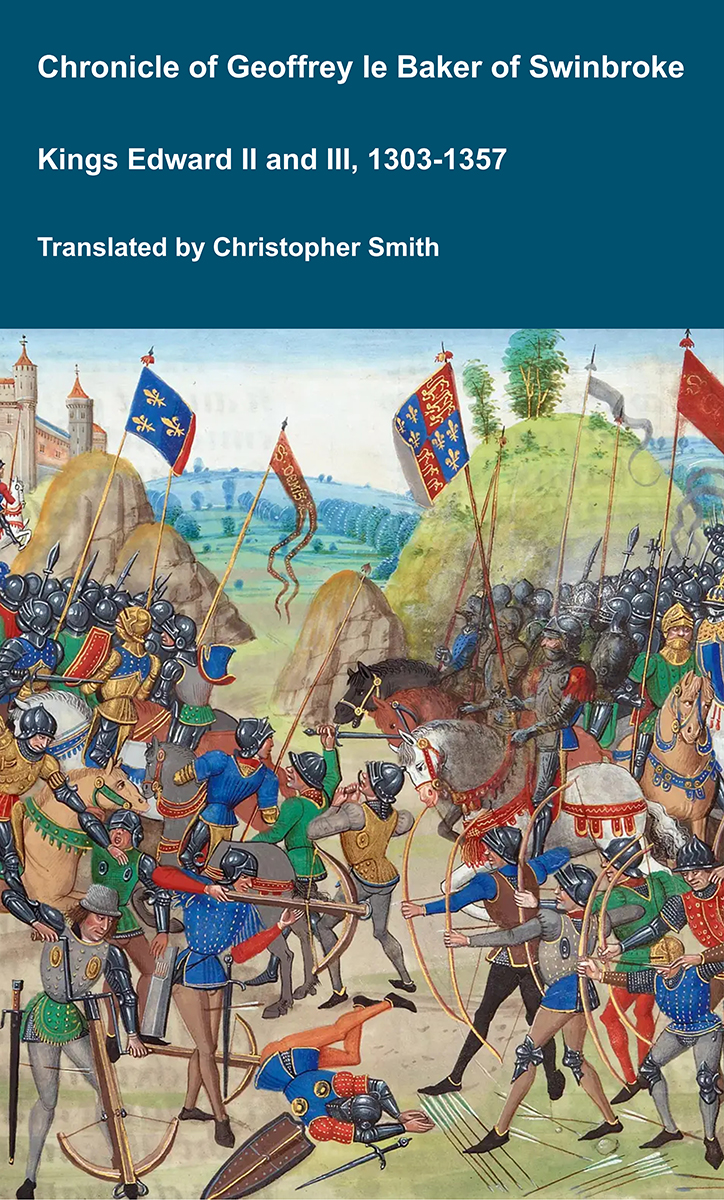 Chronicle of Geoffrey le Baker of Swinbroke. While the king was occupied with such matters, the French entered the Breton marches and, despite the general truces, ambushed near the castle of Fougères, under the leadership of Raoul de Cahors,1 a knight but the son of a shoemaker. With only a few men, they openly seized plunder, provoking Sir Thomas Dagworth, a most valiant knight and captain of the duchy, to come to the defence of the land. He, with only sixteen armed men, confronted the raiders, but was suddenly surrounded by the ambushers. He and his small band bravely fought back, reportedly killing more than three hundred of the enemy, as observed by lookouts from the castle. Finally, after receiving five quarrels from crossbows in his exposed face, and refusing to surrender to the shoemaker's son, with all his men fallen, he fought on, blinded by a heavy lance to the eyes, killing or wounding many of the enemy and for a long time preventing them from approaching. At last, overwhelmed by a mass of armed men and pierced through the body by a sword, his noble soul departed indignantly, worthy of a public crown along with the other defenders and authors of the deed.
Rege talibus intendente, Gallici intrarunt marchiam Britannic et, non obstantibus treugis generalibus, circa castrum de Phanes, inboscati sub ducatu Radulphi de Caux, militis set filii sabatoris, cum paucis pupplice predas capientes, dominum Thomam Dagworthe, militem probatissimum et ducatus capitaneum, ad rescutacionem patrie provocarunt. Qui cum sedecim armatis dumtaxat predonibus occurrens, ab inboscatis subito circumvallatus, multos et, ut retulerunt de castro speculantes, amplius quam trecentos cum suis constanter sibi astantibus effudit. Tandem, post quinque quarellos in facie nuda fixos a balistis, nolens se reddere filio sabatoris, set omnibus suis prostratis, cum lancea grossa oculis privatus, hostes aut occidit aut vulneravit, aut accedere diu non permittens, fasse armatorum finaliter obrutus, a corpore gladio confosso nobilis anima indignata recessit, cum defensoribus et auctoribus rei pupplice laureanda.
Note 1. Raoul de Cahors, who, after being lieutenant of Poitou and receiving various benefits in Edward's service, turned traitor and went over to the French; and, as an earnest of his repentance, slew his old comrade Dagworth in the manner described. By a deed of the 4th January 1350, he undertook to hand over to the French the towns of Vannes, Brest, Quimper, and other places in Brittany (Lettenhove's Froissart 18.334). The attack on Dagworth took place near Auray, in the month of August. Dagworth was a gallant soldier, who pushed his fortunes with his sword and was appointed the king's lieutenant in Brittany on the 10th January 1347. It does not appear what authority Baker had for calling Raoul de Cahors the son of a cobbler; in any case, he was a mere adventurer.
In 1363 [his former wife] Eleanor Bohun Countess Ormonde [aged 58] died.
Chronicle of Geoffrey le Baker of Swinbroke. In the year of Christ 1348, the 22nd year of the king's reign, after the lord king had returned to England, David, King of the Scots, and Lord Charles of Blois were brought to the Tower of London,1 Charles having recently been captured in Brittany at Easter after great and perilous battles by Lord Thomas Dagworth. They both remained in England for many years awaiting ransom. Likewise, Lord James [William] Douglas,2 captured at the Battle of Durham and brought to London with the King of Scots, returned to the king's peace, having sworn him loyalty. But afterward, while peacefully returning to the border, William Douglas treacherously rode up behind him while he was out hunting and murdered him.
Anno Christi MCCCXLVIII, regis anno XXII, domino rege in Angliam reverse, adducti sunt ad turrim Londoniarum David rex Scotorum et dominus Karolus de Bloys, ad Pascha nuper in Britannia post magnos et periculosos conflictus per dominum Thomam Dagworthe captus; qui postea per multos annos manserunt in Anglia redimendi. Item, dominus lacobus Douglas, in bello Dunelmie captus, Londonias cum rege Scotorum adductus, rediit ad pacem regis, iurata sibi fidelitate; quem postea in marchiam pacifice reversum Willelmus Dowglas venacioni invitatum prodiciose equitans a tergo interfecit.
Note 1. David Bruce had been a prisoner in the Tower since the 1st January 1347. Rymer's Fœdera 3.99. Charles of Blois was captured at the battle of Roche-Derien, 20th June 1347.
Note 2. William Douglas, here wrongly called James, the knight of Liddesdale, made his peace with, and engaged to serve, Edward; and was set free on the 17th July 1352. Rymer's Fœdera 3.246. The next year he was murdered, when hunting in Ettrick Forest, by his kinsman William, afterwards earl Douglas.
[his son] Nicholas Dagworth 2nd Baron Dagworth was born to Thomas Dagworth 1st Baron Dagworth and Eleanor Bohun Countess Ormonde. He a great grandson of King Edward I of England.