

Paternal Family Tree: Luckyn aka Grimston
On 28th July 1774 [his father] James Grimston 3rd Viscount Grimston [aged 27] and [his mother] Harriet Walter Viscountess Grimston [aged 18] were married. She by marriage Viscountess Grimston.
On 26th September 1775 James Grimston was born to James Grimston 3rd Viscount Grimston [aged 28] and Harriet Walter Viscountess Grimston [aged 19].
On 7th November 1786 [his mother] Harriet Walter Viscountess Grimston [aged 30] died.
In 1807 James Grimston Baron Verulam [aged 31] and Charlotte Jenkinson were married. She the daughter of Charles Jenkinson 1st Earl Liverpool [aged 77].
On 17th December 1808 Charles Jenkinson 1st Earl Liverpool [aged 79] died. His son Robert [aged 38] succeeded 2nd Earl Liverpool, 2nd Baron Hawkesbury of Hawkesbury in Gloucestershire, 8th Baronet Jenkinson of Walcot in Oxfordshire and of Hawkesbury in Gloucestershire. Louisa Theodosia Hervey Countess Liverpool [aged 41] by marriage Countess Liverpool.

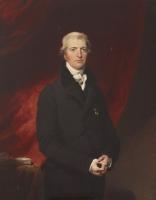
On 30th December 1808 [his father] James Grimston 3rd Viscount Grimston [aged 61] died. His son James [aged 33] succeeded 4th Viscount Grimston, 2nd Baron Verulam of Gorhambury in Hertfordshire, 8th Baronet Grimston of Little Waltham in Essex. [his wife] Charlotte Jenkinson Countess Verulam by marriage Baroness Verulam of Gorhambury in Hertfordshire.
On 22nd February 1809 [his son] James Walter Grimston 2nd Earl Verulam was born to James Walter Grimston 1st Earl Verulam [aged 33] and [his wife] Charlotte Jenkinson Countess Verulam. He married 12th September 1844 Elizabeth Joanna Weyland Countess Verulam and had issue.
On 18th April 1810 Katherine Grimston Countess Clarendon was born to James Walter Grimston 1st Earl Verulam [aged 34] and [his wife] Charlotte Jenkinson Countess Verulam. She married 1. 1834 John Foster Barham 2. 3rd July 1839 George William Villiers 4th Earl Clarendon and had issue.
On 19th July 1810 [his brother-in-law] Charles Jenkinson 3rd Earl Liverpool [aged 26] and Julia Evelyn Medley Shuckburgh-Evelyn were married. He the son of [his father-in-law] Charles Jenkinson 1st Earl Liverpool and Catherine Bishopp Countess Liverpool [aged 65].
On 11th May 1812 Spencer Perceval [aged 49] was assassinated at House of Commons. Robert Jenkinson 2nd Earl Liverpool [aged 41] was appointed Prime Minister.
At 5:15 pm, on the evening of 11 May 1812, Perceval was on his way to attend the inquiry into the Orders in Council. As he entered the lobby of the House of Commons, a man stepped forward, drew a pistol and shot him in the chest. The assassin, John Bellingham, was a merchant who believed he had been unjustly imprisoned in Russia and was entitled to compensation from the government, but all his petitions had been rejected.
Perceval left a widow and twelve children aged between three and twenty. Parliament voted to settle £50,000 on Perceval's children, with additional annuities for his widow and eldest son.
On 18th May 1812 John Bellingham was hanged at Newgate Prison, London [Map]. René Martin Pillet says...
This unfortunate man had presented several memorials, and had repeatedly demanded audience, but they had given him no answer. Driven to despair, he presented himself at the door of the house of commons, waited for the prime minister, Mr. Percival, and shot him. He was seized, confessed the crime, was tried, condemned to be hung, and executed a few days after. At the time of execution an immense crowd filled the public square, and these expressions were heard on every side: Farewell poor man, you owe satisfaction to the offended laws of your country, but God bless you! you have rendered an important service to your country, you have taught ministers that they should do justice, and grant audience when it is asked of them.
A subscription was opened for the widow and children, and a handsome sum was raised. Their fortune was ten times greater than they could ever have expected in any other situation.
On 2nd August 1812 [his son] Edward Harbottle Grimston was born to James Walter Grimston 1st Earl Verulam [aged 36] and [his wife] Charlotte Jenkinson Countess Verulam.
In August 1813 [his son] Henry Luckyn Grimston was born to James Walter Grimston 1st Earl Verulam [aged 37] and [his wife] Charlotte Jenkinson Countess Verulam. He died aged less than one years old.
In 1814 [his son] Henry Luckyn Grimston died.
The London Gazette 17066. Whitehall, September 30, 1815.
His Royal, Highness the Prince Regent has been pleased, in the name and on the behalf of His Majesty, to grant the Dignities of Earl and Marquess of the United Kingdom of Great Britain and Ireland to the Right Honourable George James Earl of Cholmondeley [aged 66], and the heirs male of his body lawfully begotten, by the names, stiles, and titles of Earl of Rocksavage, in the county palatine of Chester, and Marquess Cholmondeley. [Note. Georgina Charlotte Bertie Marchioness Cholmondeley [aged 54] by marriage Marchioness Cholmondeley.]
His Royal Highness the Prince Regent has also been pleased, in the name and on the behalf of His Majesty, to grant the dignities of Viscount and Earl of the United Kingdom of Great Britain and Ireland, to the Right Honourable James Walter [aged 40], Viscount Grimston, of that part of the United Kingdom called Ireland, and Baron Verulam of Gorhambury, in the county of Hertford, and the heirs male of his body lawfully begotten, by the names, stiles, and titles of Viscount Grimston and Earl Verulam.
His Royal Highness has also been pleased, in the name and on the behalf of His Majesty, to grant the dignities of Baron and Earl of the United Kingdom of Great Britain and Ireland, to the Right Honourable Charles Viscount Whitworth [aged 63], Knight Grand Cross of the Most Honourable Military Order of the Bath, His Majesty's Lieutenant-General and General Governor of Ireland, and the heirs male of his body lawfully begotten, by the names, stiles, and titles of Baron Adbaston, in the county of Stafford, and Earl Whitworth.
His Royal Highness has also been pleased, in the name and on the behalf of His Majesty, to grant the dignities of Viscount and Earl of the United Kingdom of Great Britain and Ireland, to the Right Honourable John Lord Brownlow [aged 36], and the heirs male of his body lawfully begotten, by the names, stiles, and titles of Viscount Alford, of Alford in the county of Lincoln, and Earl Brownlow.
His Royal Highness has also been pleased, in the name and on the behalf of His Majesty, to grant the dignity of Earl of the United Kingdom of Great Britain and Ireland, to the Right Honourable John Craggs Lord Eliot [aged 54], and the heirs male of his body lawfully begotten, by the name, stile, and title of Earl of Saint Germains, in the county of Cornwall.
His Royal Highness the Prince Regent has also been pleased, in the name and on the behalf of His Majesty, to grant the dignities of Viscount and Earl of the United Kingdom of Great Britain and Ireland, to the Right Honourable John Lord Boringdon [aged 43], and the heirs male of his body lawfully begotten, by the name, stiles, and titles of Viscount Boringdon, of North Malton, in the County of Devon, and Earl Morley, of Morley in the said county.
His Royal Highness bas also been pleased, in the name and on behalf of His Majesty, to grant the dignities of Viscount and Earl of the United Kingdom of Great Britain and Ireland, to the Right Honourable Orlando Baron Bradford [aged 53], and the heirs mile of his body lawfully begotten, by the names, stiles, and titles of Viscount Newport, in the county of Salop, and Earl of Bradford, in the said, county. [Note. Lucy Elizabeth Byng Countess Bradford [aged 48] by marriage Countess Bradford.]
His Royal Highness has also been pleased, in the name and on the behalf of His Majesty, to grant the dignities of Viscount and Earl of the United Kingdom of Great Britain and Ireland, to the Right Honourable William Baron Beauchamp [aged 68], of Powyke, and the heirs male of his body lawfully begotten, by the names, stiles, and titles of Viscount Elmley, in the county of Worcester, and Earl of Beauchamp. [Catherine Denn Countess Beauchamp by marriage Countess Beauchamp.]
His Royal Highness has also been pleased, in the name and on behalf of His Majesty to grant the dignity of a Viscount of the United Kingdom of Great Britain and Ireland, to the Right Honourable Alan Hyde Lord Gardner [aged 45], Vice-Admiral of the White Squadron of his Majesty's fleet, by the name, stile, and title of Viscount Gardner. [Note. He died before the patent had passed the Great Seal so the patent was null and void.]


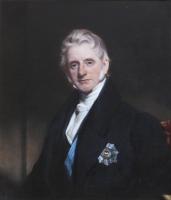


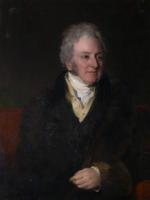
On 14th February 1816 [his daughter] Emily Mary Grimston Countess Craven was born to James Walter Grimston 1st Earl Verulam [aged 40] and [his wife] Charlotte Jenkinson Countess Verulam. She married 5th September 1835 William Craven 2nd Earl Craven, son of William Craven 1st Earl Craven and Louisa Brunton Countess Craven, and had issue.
On 18th September 1818 [his son] Robert Grimston was born to James Walter Grimston 1st Earl Verulam [aged 42] and [his wife] Charlotte Jenkinson Countess Verulam.
On 3rd October 1818 [his son] Charles Grimston was born to James Walter Grimston 1st Earl Verulam [aged 43] and [his wife] Charlotte Jenkinson Countess Verulam.
On 29th July 1821 [his daughter] Mary Augusta Frederica Grimston was born to James Walter Grimston 1st Earl Verulam [aged 45] and [his wife] Charlotte Jenkinson Countess Verulam. She married 30th October 1840 Jacob Pleydell-Bouverie 4th Earl Radnor, son of William Pleydell-Bouverie 3rd Earl Radnor and Judith St John-Mildmay Countess Radnor, and had issue.
On 22nd September 1822 Robert Jenkinson 2nd Earl Liverpool [aged 52] and Mary Chester Countess of Liverpool [aged 45] were married. She by marriage Countess Liverpool. He the son of [his father-in-law] Charles Jenkinson 1st Earl Liverpool and Amelia Watts.
On 8th December 1822 [his son] Francis Sylvester Grimston was born to James Walter Grimston 1st Earl Verulam [aged 47] and [his wife] Charlotte Jenkinson Countess Verulam at Gorhambury House, Hertfordshire [Map].
On 17th January 1825 [his daughter] Jane Frederica Harriet Mary Grimston was born to James Walter Grimston 1st Earl Verulam [aged 49] and [his wife] Charlotte Jenkinson Countess Verulam.
On 4th December 1828 Robert Jenkinson 2nd Earl Liverpool [aged 58] died. His half brother Charles [aged 44] succeeded 3rd Earl Liverpool, 3rd Baron Hawkesbury of Hawkesbury in Gloucestershire, 9th Baronet Jenkinson of Walcot in Oxfordshire and of Hawkesbury in Gloucestershire.

Greville Memoirs. 13th January 1832. Last night Frederick Lamb [aged 49] told me that Lord Grey had sent word to Melbourne of what Wharncliffe [aged 55] had said to Sir Herbert Taylor, and Lord Grey assumed the tenour of Wharncliffe's language to have been merely an advice to the King not to make Peers, whereas all I suggested to him was to explain to the King that the creation was not necessary for the reasons which have been assigned to his Majesty by his Ministers, viz., the intention of all who voted against the second reading last year to vote against it this. In the meantime the dispute has been going on in the Cabinet, time has been gained, and several incidents have made a sort of cumulative impression. There is a petition to the King, got up by Lord Verulam [aged 56] and Lord Salisbury, which is in fact a moderate Reform manifesto. It has been numerously signed, and Verulam is going to Brighton to present it. I have been labouring to persuade him to make up his mind to vote for the second reading, and to tell the King that such is his intention, which he has promised me he will. When I had obtained this promise from him I wrote word to Lady Cowper [aged 44], telling her at the same time that Lord Harris (I had heard) would vote for the second reading, and this letter she imparted to Melbourne, who stated the fact in the Cabinet, where it made a considerable impression. All such circumstances serve to supply arms to the moderate party.
Greville Memoirs. 15th January 1832. This morning Frederick Lamb [aged 49] showed me a letter he had got from Melbourne to this effect: 'that they had resolved to make no Peers at all at present; that to make a few would be regarded as a menace, and be as bad as if they made a great many; but that as many as would be necessary to carry the Bill would be made, if it was eventually found that it must be so;' he added 'it only remained for people to come forward and declare their intention of supporting the second reading.' This is certainly a great victory, and I do believe mainly attributable to our exertions, to the spirit we have infused into Melbourne himself, and the use we have made of Wharncliffe [aged 55] and Verulam [aged 56], and the different little circumstances we have brought to bear upon the discussion. What now remains is the most difficult, but I shall do all I can to engage Peers to take a moderate determination and to declare it. Lamb told me that the King has an aversion to making a few Peers, that he has said he would rather make twenty-five than five, that whatever he must make he should like to make at once, and not to have to return to it. Anyhow, time is gained, and a victory for the moment.
Greville Memoirs. 14th February 1832. In the evening I got a message from Palmerston to beg I would call on him, which I did at the Foreign Office yesterday. He is infinitely more alert than Melbourne, and more satisfactory to talk to, because he enters with more warmth and more detail into the subject. He began by referring to the list of Peers likely to vote for the second reading, which I showed to him. At the same time I told him that though he might make use of the information generally as far as expressing his own belief that Lord Harrowby would have a sufficient following, he must not produce the list or quote the names, for, in fact, not one of them had given any authority to be so counted; that he must be aware there were persons who would be glad to mar our projects, and they could not more effectually do so than by conveying to these Peers the use that had been made of their names. To all this he agreed entirely. He then talked of the expediency of a declaration from Lord Harrowby, and how desirable it was that it should be made soon, and be supported by as many as could be induced to come forward; that Lord Grey had said to him very lately that he really believed he should be obliged to create Peers. I said that my persuasion was that it would be quite unnecessary to do so to carry the second reading; that nothing was required but confidence in Lord Harrowby, and that his character and his conduct on this occasion entitled him to expect it from them; that if they were sincere in their desire to avoid this measure they would trust to his exertions; that I knew very well the efforts that were made to force this measure on Lord Grey; that it was in furtherance of this that Duncombe's3 ridiculous affair in the House of Commons had been got up, which had been such a complete failure; but that I could not believe Lord Grey would suffer himself to be bullied into it by such despicable means, and by the clamour of such men as Duncombe and O'Connell, urged on by friends of his own. He said this was very true, but the fact was they could not risk the rejection of the Bill again; that he knew from a variety of communications that an explosion would inevitably follow its being thrown out on the second reading; that he had had letters from Scotland and other places, and had no doubt that such would be the case. I said that he would find it very difficult to persuade our friends of this, and it appeared to me as clear as possible that the feeling for the Bill and the excitement had subsided; that they might be to a certain degree renewed by its rejection, but no man could doubt that modifications in it, which would have been impossible a few months ago, would now be easy; that if it was not for that unfortunate declaration of Lord Grey, by which he might consider himself bound, he might safely consent to such changes as would make the adjustment of the question no difficult matter; that with regard to the rejection of the Bill, whatever excitement it might produce, it was evident the Government had an immediate remedy; they had only to prorogue Parliament for a week and make their Peers, and they would then have an excellent pretext—indeed, so good a one that it was inconceivable to me that they should hesitate for a moment in adopting that course. This he did not deny. I then told him of the several conversations between Lord Harrowby and Lords Grey and Lansdowne, and mine with Lord Grey; that Lord Harrowby protested against Lord Grey's availing himself of any disunion among the Opposition (produced by his support of the second reading) to carry those points, to resist which would be the sole object of Lord Harrowby in seceding from his party; and that Lord Grey had said he could not make a sham resistance. Palmerston said, 'We have brought in a Bill which we have made as good as we can; it is for you to propose any alterations you wish to make in it, and if you can beat us, well and good. There are indeed certain things which, if carried against us, would be so fatal to the principle of the Bill that Lord Grey would not consider it worth carrying if so amended; but on other details he is ready to submit, if they should be carried against him.' I said that would not do, that I must refer him to the early negotiations and the disposition which was then expressed to act upon a principle of mutual concession; that when Lord Harrowby and his friends were prepared to concede to its fullest extent the principle of disfranchisement (though they might propose alterations in a few particulars), they had a right to expect that the Government should surrender without fighting some of those equivalents or compensations which they should look for in the alterations or additions they might propose. He said that 'while Lord Harrowby was afraid that Ministers might avail themselves of his weakness to carry their details, they were afraid lest Lord Harrowby and his friends should unite with the ultra-Tories to beat them in Committee on some of the essential clauses of the Bill.' I replied, then it was fear for fear, and under the circumstances the best thing was an understanding that each party should act towards the other in a spirit of good faith, and without taking any accidental advantage that might accrue either way. We then discussed the possibility of an agreement upon the details, and he enquired what they would require. I told him that they would require an alteration of Schedule B to exclude the town voters from county representation, perhaps to vary the franchise, and some other things, with regard to which I could not speak positively at the moment. He said he thought some alteration might be made in Schedule B, particularly in giving all the towns double members, by cutting off the lower ones that had one; that it was intended no man should have a vote for town and county on the same qualification, and he believed there were very few who would possess the double right. That I said would make it more easy to give up, and it was a thing the others laid great stress upon. He seemed to think it might be done. As to the £10, he said he had at first been disposed to consider it too low, but he had changed his mind, and now doubted if it would not turn out to be too high. We then talked of the metropolitan members, to which I said undoubtedly they wished to strike them off, but they knew very well the Government desired it equally. We agreed that I should get from Lord Harrowby specifically what he would require, and he would give me in return what concessions the Government would probably be disposed to make; that these should be communicated merely as the private opinions of individuals, and not as formal proposals; and we should try and blend them together into some feasible compromise.
Note 3. Duncombe brought forward a petition from six men at Barnet complaining that they had been entrapped into signing Lord Verulam's [aged 56] and Lord Salisbury's address to the King. The object was to produce a discussion about the Peers. It totally failed, but it was got up with an openness that was indecent by Durham and that crew, who were all (Durham, Sefton, Mulgrave, Dover) under the gallery to hear it. The thing was ridiculed by Peel, fell flat upon the House, and excited disgust and contempt out of it.
In 1834 [his son-in-law] John Foster Barham and Katherine Grimston Countess Clarendon [aged 23] were married. She the daughter of James Walter Grimston 1st Earl Verulam [aged 58] and Charlotte Jenkinson Countess Verulam.
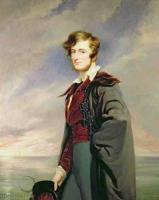
On 5th September 1835 William Craven 2nd Earl Craven [aged 26] and Emily Mary Grimston Countess Craven [aged 19] were married. She by marriage Countess Craven in Yorkshire. She the daughter of James Walter Grimston 1st Earl Verulam [aged 59] and Charlotte Jenkinson Countess Verulam. He the son of William Craven 1st Earl Craven and Louisa Brunton Countess Craven [aged 50].
On 20th November 1837 Francis Vernon-Harcourt [aged 36] and [his wife] Charlotte Jenkinson Countess Verulam were married. She the daughter of [his father-in-law] Charles Jenkinson 1st Earl Liverpool. He the son of Archbishop Edward Venables-Vernon-Harcourt [aged 80] and Anne Leveson-Gower.
On 3rd July 1839 George William Villiers 4th Earl Clarendon [aged 39] and Katherine Grimston Countess Clarendon [aged 29] were married. She by marriage Countess Clarendon. She the daughter of James Walter Grimston 1st Earl Verulam [aged 63] and Charlotte Jenkinson Countess Verulam.

On 30th October 1840 [his son-in-law] Jacob Pleydell-Bouverie 4th Earl Radnor [aged 25] and Mary Augusta Frederica Grimston [aged 19] were married. She the daughter of James Walter Grimston 1st Earl Verulam [aged 65] and Charlotte Jenkinson Countess Verulam. He the son of William Pleydell-Bouverie 3rd Earl Radnor [aged 61] and Judith St John-Mildmay Countess Radnor [aged 50].
On 12th September 1844 James Walter Grimston 2nd Earl Verulam [aged 35] and Elizabeth Joanna Weyland Countess Verulam [aged 19] were married. He the son of James Walter Grimston 1st Earl Verulam [aged 68] and Charlotte Jenkinson Countess Verulam.
On 17th November 1845 James Walter Grimston 1st Earl Verulam [aged 70] died. His son James [aged 36] succeeded 2nd Earl Verulam, 2nd Viscount Grimston, 5th Viscount Grimston, 3rd Baron Verulam of Gorhambury in Hertfordshire, 9th Baronet Grimston of Little Waltham in Essex. Elizabeth Joanna Weyland Countess Verulam [aged 20] by marriage Countess Verulam.
In 1863 [his former wife] Charlotte Jenkinson Countess Verulam died.
Great x 4 Grandfather: William Luckyn 1st Baronet
Great x 3 Grandfather: Capell Luckyn 2nd Baronet
Great x 4 Grandmother: Mildren Capel
Great x 2 Grandfather: William Luckyn 3rd Baronet
Great x 4 Grandfather: Harbottle Grimston 2nd Baronet
Great x 3 Grandmother: Mary Grimston
Great x 4 Grandmother: Mary Croke
Great x 1 Grandfather: William Grimston 1st Viscount Grimston
Grandfather: James Grimston 2nd Viscount Grimston
James Walter Grimston 1st Earl Verulam 
Grandfather: Edward Walter
Mother: Harriet Walter Viscountess Grimston