

Paternal Family Tree: Bigod
In 1243 [his father] Hugh Bigod Justicar [aged 32] and [his mother] Joan Stuteville [aged 27] were married. He the son of [his grandfather] Hugh Bigod 3rd Earl Norfolk and [his grandmother] Maud Marshal Countess Norfolk and Surrey [aged 49].
Around 1245 Roger Bigod 5th Earl Norfolk was born to Hugh Bigod Justicar [aged 34] and Joan Stuteville [aged 29].
In 1260 Hugh Despencer [aged 36] and [his future wife] Aline Basset [aged 39] were married.
In 1266 [his father] Hugh Bigod Justicar [aged 55] died.
In 1270 [his uncle] Roger Bigod 4th Earl Norfolk [aged 61] died. His nephew Roger [aged 25] succeeded 5th Earl Norfolk.
On 29th October 1271 Roger Bigod 5th Earl Norfolk [aged 26] and Aline Basset [aged 50] were married. She the widow of Hugh Despencer. The difference in their ages was 24 years; she, unusually, being older than him.
Before January 1273 Thomas Furnival 1st Baron Furnivall [aged 13] and [his step-daughter] Joan Despencer Baroness Furnivall [aged 15] were married.
On 6th April 1276 [his mother] Joan Stuteville [aged 60] died.
On 11th April 1281 [his wife] Aline Basset [aged 60] died.
In 1290 Roger Bigod 5th Earl Norfolk [aged 45] and Alice Hainaut Countess Norfolk were married. She by marriage Countess Norfolk. She the daughter of John of Avesnes II Count Hainaut II Count Holland [aged 43] and Philippa Luxembourg Countess Hainaut and Holland [aged 38]. They were half fifth cousin once removed. She a great x 4 granddaughter of King Stephen I England.
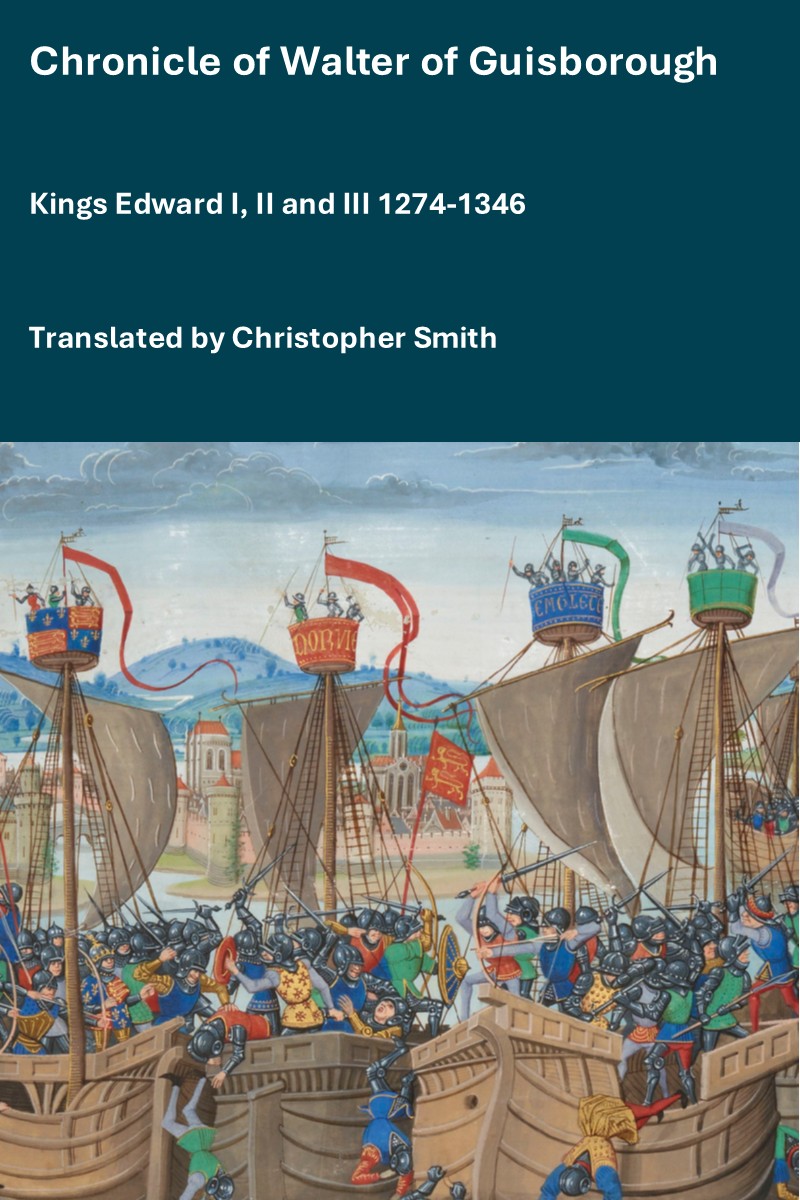 Chronicle of Walter of Guisborough. On the feast of Saint Matthias the Apostle [24th February 1297] of that same year, the king held his parliament at Salisbury, having summoned the nobles of the realm, but excluding the clergy. There, the king requested that certain of the magnates cross over to Gascony. But each of them began to excuse himself. The king, growing indignant, threatened some of them, either that they should go, or that he would give their lands to others who were willing to go in their place. At these words, many were scandalized, and a schism began to arise among them. The Earl of Hereford [aged 48] and the Earl Marshal [aged 52] likewise excused themselves, saying that they would gladly fulfil their hereditary offices by going with the king himself. When the Earl Marshal was urged again to go, he replied: "Willingly, O king, I will go with you, preceding your face in the vanguard, as pertains to me by hereditary right." To which the king answered, "You shall go even without me, along with others." But the earl said, "I am not bound, nor is it my will, O king, to undertake the journey without you." Then the king, enraged, burst out with these words, it is said: "By God, earl, you shall either go or hang." And he replied, "By the same oath, O king, I shall neither go nor hang." Without taking leave, he departed, and the council was thereby dissolved for the time being. At once, these two earls, Hereford and Marshal, gathered many magnates to their cause, along with more than thirty selected bannerets, forming a large opposition force. They were reckoned to have 1,500 mounted and fully equipped men ready for war. The king began to fear them, though he concealed it outwardly. The earls, returning to their own lands, refused to allow the king's officials to take wool, hides, or anything extraordinary, nor to levy any demands against the will of the people. Indeed, they forbade the king's agents to enter their lands under pain of death or dismemberment, and they prepared themselves for resistance.
In festo sancti Mathiæ apostoli ejusdem anni, convocatis optimatibus regni absque clero, tenuit rex parliamentum suum apud Salesbire, ubi parliament rogavit quosdam magnatum ut in Vasconiam transfretarent, et cœperunt singuli se excusare. Indignatusque rex, comminabatur quibusdam eorum vel quod irent vel quod terras eorum daret aliis qui ire vellent. Et in hoc verbo scandalizati sunt multi, et schisma cœpit oriri inter eos. Comes etiam Herefordensis et comes marescallus excusaverunt se, dicentes quod officia sua quæ sibi jure hæreditario competebant facerent libenter, eundo cum ipso rege. Iterataque prece rogatus est comes marescallus, ut iret. Et ait, "Libenter tecum vadam, O rex, præcedendo faciem tuam in acie prima, sicut mihi competit hæreditario jure." Et rex, "Etiam sine me ibis cum aliis." At ille, "Non teneor, nec est meæ voluntatis, O rex, sine te iter arripere." Et iratus rex prorupit in hæc verba, ut dicitur, "Per Deum, comes, aut ibis aut pendebis." Et ille, "Per idem juramentum, O rex, nec ibo nec pendebo." Et, licentia non accepta, recessit, dissolutumque est consilium quoad diem hanc. Confestim vero duo comites isti Herefordensis et marescallus, associatis sibi multis magnatibus et plusquam raise an triginta banerettis electis, creverunt in populum opposition to multum, numeratique sunt in equis armatis mille quingenti viri expediti ad bellum; et cœpit eos timere rex, dissimulavit tamen. Illi autem profecti in terras suas noluerunt permittere ministros regis nec lanas, nec coria, nec extraordinarium quicquam capere, aut aliquid exigere ab invitis; quinimmo interdixerunt eis ingressum in terras suas sub pœna capitis et membrorum, et se ad resistendum præparabant.
On 22nd July 1298 King Edward I of England [aged 59] defeated the Scottish army led by William Wallace during the 22nd July 1298 Battle of Falkirk at Falkirk [Map] using archers to firstly attack the Scottish shiltrons with the heavy cavalry with infantry completing the defeat.
John de Graham [aged 31] and John Stewart of Bonkyll [aged 52] were killed.
The English were described in the Falkirk Roll that lists 111 men with their armorials including:
Guy Beauchamp 10th Earl Warwick [aged 26].
Walter Beauchamp [aged 55].
Roger Bigod 5th Earl Norfolk [aged 53].
Humphrey Bohun 3rd Earl Hereford 2nd Earl Essex [aged 49].
Robert Clifford 1st Baron Clifford [aged 24].
[his former step-son] Hugh "Elder" Despencer 1st Earl Winchester [aged 37].
William Ferrers 1st Baron Ferrers of Groby [aged 26].
Thomas Berkeley 6th and 1st Baron Berkeley [aged 52].
Maurice Berkeley 7th and 2nd Baron Berkeley [aged 27].
Henry Grey 1st Baron Grey of Codnor [aged 43].
Reginald Grey 1st Baron Grey of Wilton [aged 58].
John Grey 2nd Baron Grey of Wilton [aged 30].
John Mohun 1st Baron Dunster [aged 29].
Simon Montagu 1st Baron Montagu [aged 48].
William Ros 1st Baron Ros Helmsley [aged 43].
John Segrave 2nd Baron Segrave [aged 42].
Nicholas Segrave [aged 42].
Robert de Vere 6th Earl of Oxford [aged 41].
Alan Zouche 1st Baron Zouche Ashby [aged 30].
Thomas Plantagenet 2nd Earl of Leicester, 2nd Earl Lancaster, Earl of Salisbury and Lincoln [aged 20].
Henry Plantagenet 3rd Earl of Leicester 3rd Earl Lancaster [aged 17].
[his uncle] John Warenne 6th Earl of Surrey [aged 67].
Henry Percy 9th and 1st Baron Percy [aged 25].
Hugh Courtenay 1st or 9th Earl Devon [aged 21].
Richard Fitzalan 1st or 8th Earl of Arundel [aged 31].
Henry Beaumont Earl Buchan [aged 19].
John II Duke Brittany [aged 59].
Philip Darcy [aged 40].
Robert Fitzroger.
Robert Fitzwalter 1st Baron Fitzwalter [aged 51], or possiby a Roger Fitzwalter?.
Aymer de Valence 2nd Earl Pembroke [aged 23].
John Wake 1st Baron Wake of Liddell [aged 30], and.
Henry Lacy 4th Earl Lincoln, Earl Salisbury [aged 47].
William Scrope [aged 53] was knighted.
John Moels 1st Baron Moels [aged 29] fought.
John Lovell 1st Baron Lovel [aged 44] fought.
The History of William Marshal was commissioned by his son shortly after William’s death in 1219 to celebrate the Marshal’s remarkable life; it is an authentic, contemporary voice. The manuscript was discovered in 1861 by French historian Paul Meyer. Meyer published the manuscript in its original Anglo-French in 1891 in two books. This book is a line by line translation of the first of Meyer’s books; lines 1-10152. Book 1 of the History begins in 1139 and ends in 1194. It describes the events of the Anarchy, the role of William’s father John, John’s marriages, William’s childhood, his role as a hostage at the siege of Newbury, his injury and imprisonment in Poitou where he met Eleanor of Aquitaine and his life as a knight errant. It continues with the accusation against him of an improper relationship with Margaret, wife of Henry the Young King, his exile, and return, the death of Henry the Young King, the rebellion of Richard, the future King Richard I, war with France, the death of King Henry II, and the capture of King Richard, and the rebellion of John, the future King John. It ends with the release of King Richard and the death of John Marshal.
Available at Amazon in eBook and Paperback format.
On 18th October 1298 Robert Artois II Count Artois [aged 48] and [his sister-in-law] Margaret Hainaut Countess Artois were married. She by marriage Countess Artois. She the daughter of [his father-in-law] John of Avesnes II Count Hainaut II Count Holland [aged 51] and [his mother-in-law] Philippa Luxembourg Countess Hainaut and Holland [aged 46]. He the son of Robert Capet Count of Artois and Matilda Reginar Countess Saint Pol. They were second cousin once removed. He a great x 2 grandson of King Henry "Curtmantle" II of England. She a great x 4 granddaughter of King Stephen I England.
Before 9th March 1301 seven Earls and 96 Barons signed a letter to the Pope refuting the Pope's claim that Scotland was subject to the Pope's feudal overlordship. The letter was never sent. Those who signed include: [his uncle] John Warenne 6th Earl of Surrey [aged 70], Thomas Plantagenet 2nd Earl of Leicester, 2nd Earl Lancaster, Earl of Salisbury and Lincoln [aged 23], Ralph Monthermer 1st Earl of Gloucester and Hertford [aged 31], Humphrey Bohun 4th Earl Hereford 3rd Earl Essex [aged 25], Roger Bigod 5th Earl Norfolk [aged 56], Richard Fitzalan 1st or 8th Earl of Arundel [aged 34], Guy Beauchamp 10th Earl Warwick [aged 29], Aymer de Valence 2nd Earl Pembroke [aged 26], William Leybourne 1st Baron Leybourne [aged 59], Henry Plantagenet 3rd Earl of Leicester 3rd Earl Lancaster [aged 20], William Latimer 1st Baron Latimer of Corby [aged 58], Edmund Hastings, John Hastings 2nd Baron Hastings 14th Baron Abergavenny [aged 14], Edmund Mortimer 2nd Baron Mortimer of Wigmore [aged 50], Fulk Fitzwarin 2nd Baron Fitzwarin [aged 16], Henry Percy 9th and 1st Baron Percy [aged 27], Robert Fitzwalter 1st Baron Fitzwalter [aged 54], John Beauchamp 1st Baron Beauchamp Somerset [aged 26], William de Braose 2nd Baron de Braose 10th Baron Bramber [aged 41], John Botetort 1st Baron Botetort [aged 36], Reginald Grey 1st Baron Grey of Wilton [aged 61], John Moels 1st Baron Moels [aged 32], Thomas Berkeley 6th and 1st Baron Berkeley [aged 55], Robert de Vere 5th Earl of Oxford, John Strange 1st Baron Strange Knockin [aged 48], Thomas Multon 1st Baron Multon [aged 25], Robert Clifford 1st Baron Clifford [aged 26], Walter Beauchamp [aged 58], Alan Zouche 1st Baron Zouche Ashby [aged 33], John Segrave 2nd Baron Segrave [aged 45], William Ferrers 1st Baron Ferrers of Groby [aged 29], Simon Montagu 1st Baron Montagu [aged 51], Piers Mauley, Ralph Neville 1st Baron Neville of Raby [aged 38], John Mohun 1st Baron Dunster [aged 32], Roger Scales 1st Baron Scales, Thomas Furnival 1st Baron Furnivall [aged 41], Hugh Bardolf 1st Baron Bardolf [aged 41], Gilbert Talbot 1st Baron Talbot [aged 24], William Deincourt 2nd Baron Deincourt, Edmund Stafford 1st Baron Stafford [aged 28], Walter Fauconberg 1st Baron Fauconberg [aged 81].
Chronicle of Walter of Guisborough. In the same year [1302], Earl Marshal Roger [aged 57], who had spent much during the time when he supported the side against the king, was asked by his brother John [aged 52], who held many churches and was very wealthy, to repay the money which he had borrowed from him. The earl said: "Why do you demand your money back, brother? You well know that I have no son, nor any other heir except you; there is no need for you to trouble me, since all that I have is yours, and after my death you will be my successor." His brother replied: "What is your inheritance to me? I do not care. Give me back my money." And the earl answered: "And1 if I do as you urge, it will indeed be to your loss and to the loss of our heirs." So, angry, he went to the king and gave him the earldom and all his lands, on the condition that the king would re-grant them to him for the term of his life, and moreover give him a thousand marks' worth of land for life, and free him from all his debts. The king did as had been agreed, and fulfilled all.
Eodem anno comes marescallus Rogerus, qui multa exhauserat tempore quo fovebat partem contra regem, requisitus erat a fratre suo Johanne, qui multarum erat rector ecclesiarum et pecuniosus valde, ut pecuniam quam sibi mutuaverat restitueret ei. Qui ait, "Quare pecuniam repetis, frater? bene nosti quod filium non habeo, nec alium hæredem præter te, non oportet ut mihi molestus sis, cum omnia mea tua sunt, et post mortem mihi successor eris." Et respondit frater: "Quid ad me de hæreditate tua? Non curo. Redde mihi pecuniam meam." Et comes: "Et quo ita vis faciam quod hortaris, in damnum quidem tuum et hæredum nostrorum." Perrexitque iratus ad regem, et dedit ei comitatum et omnes terras suas, sub tali quidem pacto quod refeffaret eum de eisdem ad terminum vitæ suæ, et insuper daret ei mille marcatas terræ pro vita sua, et eum ejiceret ab omni ære alieno: fecitque rex quod convenerat, et adimplevit omnia.
Note 1. The deed of surrender of the honour and office of Earl Marshal is dated on the 12th of April, 1302. Rot. Claus. 30 Edward I m. 14, d. They were restored to him on the 12th of July following. Cart. 30 Edward I n. 24.
In 1304 [his brother-in-law] John Beaumont Count Soissons [aged 16] by marriage Count Soissons.
On 22nd August 1304 [his father-in-law] John of Avesnes II Count Hainaut II Count Holland [aged 57] died. His son [his brother-in-law] William [aged 18] succeeded I Count Hainaut.
On 19th May 1305 [his brother-in-law] William of Avesnes I Count Hainaut III Count Avesnes III Count Holland II Count Zeeland [aged 19] and Joan Valois Countess Zeeland Holland Avesnes and Hainaut [aged 11] were married. She by marriage Countess Zeeland, Countess Holland, Countess Avesnes, Countess Hainaut. She the daughter of Charles Valois I Count Valois [aged 35] and Margaret Capet Countess Valois. He the son of [his father-in-law] John of Avesnes II Count Hainaut II Count Holland and [his mother-in-law] Philippa Luxembourg Countess Hainaut and Holland [aged 53]. They were fourth cousin once removed. He a great x 4 grandson of King Stephen I England. She a great x 4 granddaughter of King Henry "Curtmantle" II of England.
Before 12th December 1306 Roger Bigod 5th Earl Norfolk [aged 61] died. Earl Norfolk extinct. In 1302 Roger Bigod 5th Earl Norfolk had surrendered his Earldom to King Edward I [aged 67] and was recreated Earl Norfolk with the remainder "to the heirs of his body" effectively disinheriting his brother John Bigod having fallen out over the repayment of a loan - see Chronicle of Walter of Guisborough.
Close Rolls Edward II 1307-1313. 9th February 1308 King Edward II of England [aged 23]. Dover, Kent [Map]. To Alice, late wife of Roger Bigod, Earl of Norfolk and Marshall of England. Order to meet the king at Dover, Kent [Map] on his return from France with his consort about Sunday next after the Feast of the Purification of St Mary. Witnessed by Piers Gaveston 1st Earl Cornwall [aged 24].
The like to:
Elizabeth, Countess of Hereford and Essex [aged 25].
Henry de Lancastre [aged 27].
Robert de Monte Alto.
Almaric de Sancto Amando[Ibid].
To R Archbishop of Canterbury [aged 63]. Order to attend the king's coronaion on Sunday next after the feast of St Valentine [14 Feb] at Westminster [Map], to execute what pertains to his office.
To the Sheriff of Surrey. Order to proclaim in market towns, etc., that no knight, esquire, or other shall, under pain of forfeiture, pressure to tourney or make jousts or bordices (torneare, justos seu burdseicas facere), or otherwise go armed at Croydon, Surrey [Map] or elsewhere before the king's coronation.
On 26th October 1317 [his former wife] Alice Hainaut Countess Norfolk died.
 Bourgeois de Valenciennes. The third daughter was named Mahaut [Alice]1, and she had as her husband the Earl Marshal of England.
La tierche fille eult nom Mehault et eult à mary le conte mareschal d’Engleterre.
Note 1. Mahaut aka Alice of Avesnes, died 1317, married Roger Bigod, 5th Earl of Norfolk. When Ansel Marshal, youngest of five sons of the great knight William Marshal, died in 1245 the male line of the Marshal family became extinct. The hereditary title Earl Marshal descended to Roger Bigod, 4th Earl of Norfolk, son of Maud Marshal, eldest daughter of William Marshal. When Roger died in 1269 the title was inherited by his son Roger, 5th Earl of Norfolk.
Kings Wessex: Great x 12 Grand Son of King Edward "Elder" of the Anglo Saxons
Kings France: Great x 8 Grand Son of Hugh I King of the Franks
Kings Duke Aquitaine: Great x 12 Grand Son of Ranulf I Duke Aquitaine
Great x 3 Grandfather: Roger Bigod 
Great x 2 Grandfather: Hugh Bigod 1st Earl Norfolk
Great x 4 Grandfather: Robert de Todeni
Great x 3 Grandmother: Adelisa Todeni
Great x 1 Grandfather: Roger Bigod 2nd Earl Norfolk
Great x 4 Grandfather: Aubrey I de Vere 
Great x 3 Grandfather: Aubrey II de Vere
Great x 4 Grandmother: Beatrice Unknown
Great x 2 Grandmother: Juliana de Vere
Great x 4 Grandfather: Gilbert de Clare 
Great x 3 Grandmother: Adelize de Clare
Great x 4 Grandmother: Adeliza Clermont
Grandfather: Hugh Bigod 3rd Earl Norfolk 6 x Great Grandson of Hugh I King of the Franks
Great x 4 Grandfather: Raoul Tosny 
Great x 3 Grandfather: Roger Tosny 7 x Great Grandson of King Edward "Elder" of the Anglo Saxons
Great x 4 Grandmother: Adelise Northumbria 6 x Great Granddaughter of King Edward "Elder" of the Anglo Saxons
Great x 2 Grandfather: Ralph Tosny 8 x Great Grandson of King Edward "Elder" of the Anglo Saxons
Great x 3 Grandmother: Ida aka Gertrude Hainaut
Great x 1 Grandmother: Ida Tosny Countess Norfolk 5 x Great Granddaughter of Hugh I King of the Franks
Great x 4 Grandfather: Robert Beaumont 1st Earl of Leicester Count Meulan 
Great x 3 Grandfather: Robert Beaumont 2nd Earl of Leicester 3 x Great Grandson of Hugh I King of the Franks
Great x 4 Grandmother: Elizabeth Capet Countess Leicester, Meulan and Surrey  2 x Great Granddaughter of Hugh I King of the Franks
Great x 2 Grandmother: Margaret Beaumont 4 x Great Granddaughter of Hugh I King of the Franks
Great x 4 Grandfather: Raoul Gael
Great x 3 Grandmother: Amice Gael Countess Leicester
father: Hugh Bigod Justicar 7 x Great Grandson of Hugh I King of the Franks
Great x 3 Grandfather: Gilbert Giffard 
Great x 2 Grandfather: John Fitzgilbert
Great x 1 Grandfather: William Marshal 1st Earl Pembroke
Great x 4 Grandfather: Edward of Salisbury 1st Baron Trowbridge 1st Baron Chitterne
Great x 3 Grandfather: Walter of Salisbury 2nd Baron Chitterne
Great x 2 Grandmother: Sybil of Salisbury
Great x 3 Grandmother: Sybilla Chaworth Baroness Chitterne 
Grandmother: Maud Marshal Countess Norfolk and Surrey 6 x Great Granddaughter of Hugh I King of the Franks
Great x 4 Grandfather: Gilbert de Clare
Great x 3 Grandfather: Gilbert de Clare 1st Earl Pembroke
Great x 4 Grandmother: Adeliza Clermont
Great x 2 Grandfather: Richard "Strongbow" Clare 2nd Earl Pembroke 4 x Great Grandson of Hugh I King of the Franks
Great x 4 Grandfather: Robert Beaumont 1st Earl of Leicester Count Meulan
Great x 3 Grandmother: Isabel Beaumont Countess Pembroke 3 x Great Granddaughter of Hugh I King of the Franks
Great x 4 Grandmother: Elizabeth Capet Countess Leicester, Meulan and Surrey 2 x Great Granddaughter of Hugh I King of the Franks
Great x 1 Grandmother: Isabel Clare Countess Pembroke 5 x Great Granddaughter of Hugh I King of the Franks
Great x 3 Grandfather: Diarmait Macmurrough
Great x 2 Grandmother: Aoife ni Diarmait Macmurrough Countess Pembroke and Buckingham
Roger Bigod 5th Earl Norfolk 8 x Great Grandson of Hugh I King of the Franks
Grandfather: Nicholas Stuteville
mother: Joan Stuteville