

Around 1124 Raynald of Châtillon was born to Hervé II Lord of Donzy.
In 1136 Raymond Poitiers [aged 21] and [his future wife] Princess Constance of Antioch [aged 8] were married. He by marriage Prince Antioch. He the son of William "Troubadour" Poitiers IX Duke Aquitaine and Philippa Rouerge Duchess Aquitaine. They were third cousin once removed.
Before May 1153 Raynald of Châtillon [aged 29] and Princess Constance of Antioch [aged 25] were married.
Around 1154 [his daughter] Agnes of Antioch was born to Raynald of Châtillon [aged 30] and [his wife] Princess Constance of Antioch [aged 26]. She married 1168 King Béla III of Hungary and had issue.
The Chronicle of Matthew of Edessa. [145] After all this the sultan went to his throne, consulting with his grandees at court about the establishment of friendship with the Franks and the Armenians. After they had accepted the sultan['s proposals], he again sent his loyal [envoys] to Jerusalem, to Antioch, and to T'oros to make inviolable the treaty of friendship which both sides wanted. This [move] was not due to any inclination [for peace] in the heart of the sultan. Indeed, what could Christ and Belial have in common? Rather, the reason was as follows. It concerned [Nur ad-Din], the son of Zengi, who was lord of Aleppo [g413] and was his brother-in-law, [that is, he was] married to Sultan Kilij-Arslan's sister. Following the death of Sultan Masud, he scorned his son who had been seated on the throne of his father's realm, and tyrannized over the country's Christians, violating the borders established by Sultan Masud. He seized what he could, [including] the impregnable Aintab (Ant'ap') and P'arzman and all the [nearby] villages. Sultan Kilij-Arslan many times wrote to his in-law: "Do not work injustice. Return my lands which my father had established as a border between us." However, [Nur ad-Din] did not want to listen and was more arrogant and insulting to this brave people than to the ruler of Persia. While such great uncertainly was confusing the king of Jerusalem and Reginald [aged 33] (E"r'aghan), lord of Antioch, God [intervened]. [God], Whose power and strength is greater than Heaven [itself] and Who does not totally ignore the rod which He uses against sinners when the righteous are in despair, [acted] suddenly from His most pure and just laws. God issued the command and struck [Nur ad-Din] with a severe and very painful ailment. None of the doctors, assembled from all the wise folk, was able to find a cure. Rather, day by day, the wrath of God intensified against him. For it was [Nur ad-Din] who once had been allied with Count Joscelin by treaty and a great sworn oath of friendship [but Nur ad-Din betrayed him] in a manner so merciless and inhuman that it had never been heard of anywhere in past times. [Nur ad-Din] did not capture his friend [Joscelin] in warfare, but [imprisoned him] through the plots of others. He kept him in chains for nine months, and then blinded the eyes of this glorious man who had been invincible in many battles and was lord of many lands. Blessings and thanks and praise [should be] on the lips of everyone for the goodly and most holy judgments of God.
The Chronicle of Matthew of Edessa. [150] In this year [1161] the lord and prince of Antioch, who was named Sir Reginald [aged 37], came in autumn and descended into the Tluk' country [going] as far as the fortress of the kat'oghikos, known as Tsov. He spread around, raiding the surrounding country, looting and capturing the Turkmens he found there. He had with him a thousand troops composed of cavalry, mule drivers, and infantry.
It happened that Majd ad-Din, Nur ad-Din's second [in command] previously had assembled 10,000 men and put them into an ambuscade in front. Then he came fully prepared against [Reginald's forces] capturing or killing all of them. He captured the prince, too, the lord of Antioch and thirty horsemen. He killed four hundred people that day and then turned back in great joy and delight and entered Aleppo, bringing the captives with him. He led the prince into Aleppo, with many insults and curses. Then [Majd ad-Din] sent news of these glad tidings to Nur ad-Din. [The latter] at the time was in Damascus, gathering many cavalry to battle against the king of Jerusalem. When [Nur ad-Din] heard about this, he turned to looting and took captive all the territory as far as Tripoli, bringing this [booty] to Aleppo. Then again he went against Harim, but was unable to accomplish much because of the abundance of rain. He also was fearful of the king of Jerusalem since, at the time, [the king] himself had come to Antioch, along with T'oros, the son of R'uben, and other troops of the Romans. As soon as the king went back to Jerusalem and all the others [had departed], each to his own place, Nur ad-Din went and took the impregnable fortress of Artsxan. With a [false] oath he took the city, then demolished and ruined it, taking captive the remaining Christians. He brought them to Aleppo.
In 1161 or 1162 Manuel Komnenos [aged 42] and [his step-daughter] Maria of Antioch [aged 16] were married. The difference in their ages was 26 years.
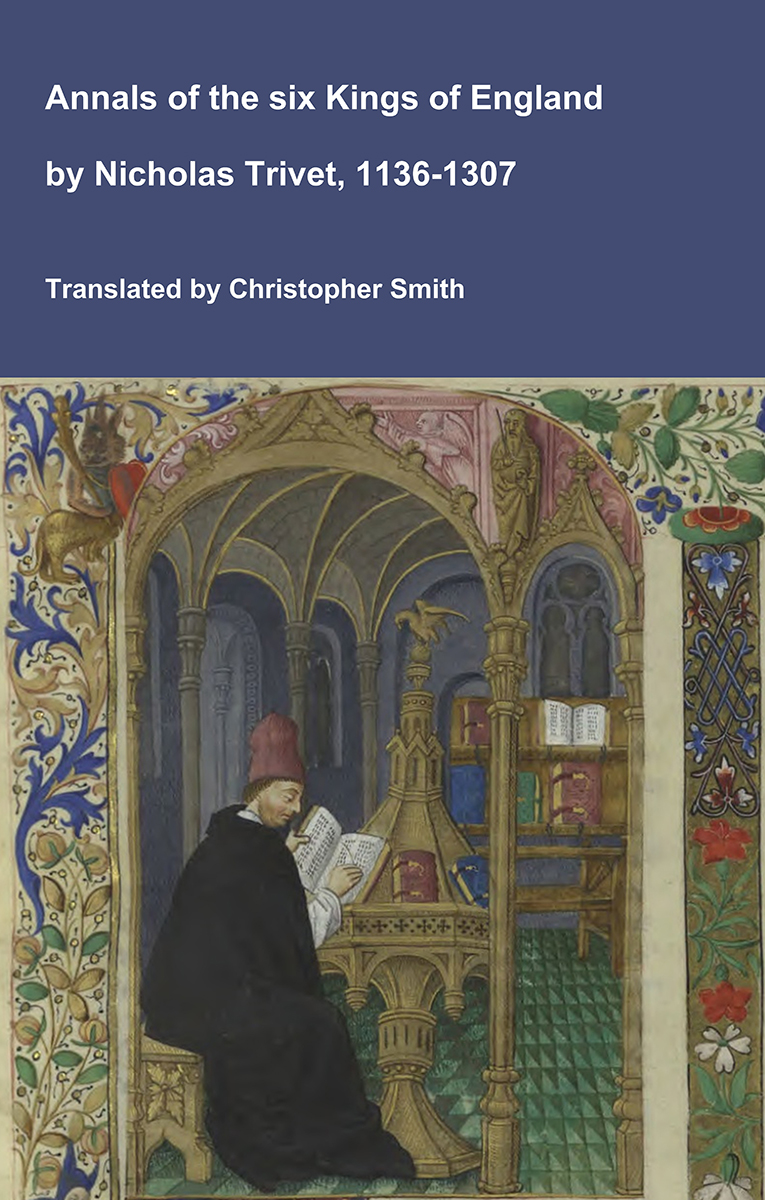 Annals of Six Kings of England by Nicholas Trivet. 1162. Geoffrey of Mayenne restored to Henry, king of the English, three castles which his father had held after the death of Henry I, formerly king of England, namely Gorron, Ambrières, and Neufchâtel on the River Colmont. Count Robert of Bassaville, rebelling against William, king of Sicily, and having many supporters in Apulia, brought the greater part of the maritime cities over to his side. Emperor Frederick captured the city of Milan, which he had besieged for three years and which was now afflicted by famine; and, preserving the cathedral and some other buildings, he destroyed it. While the dispute between the emperor and Pope Alexander continued because of the schism of Octavian, whom Frederick supported and kept with him, Pope Alexander, trusting in the kings of the Franks and the English, set out by sea and around Easter reached the regions on this side of the mountains, and at Montpellier in Provence he was received with due honour. The people of these regions, especially the Aquitanians, were afflicted by pestilence and famine. Raynald of Châtillon [aged 38], prince of Antioch, when he incautiously entered the lands of the Saracens, was captured by them, many of those who were with him being killed. His stepson Bohemond III then became prince of Antioch, while his stepfather Raynald was still held in captivity.
1162. GALFRIDUS de Meduana reddit Henrico regi Anglorum tria castella, quæ pater ejus tenuerat post mortem Henrici primi, quondam regis Angliæ, scilicet Goram, Amberias, et Novum Castrum super fluvium Colunc. Comes Robertus de Basevilla, adversus Willelmum Siciliæ regem rebellans, in Apulia multos habens coadjutores, majorem partem maritimarum sibi conciliat civitatum. Imperator Fredericus civitatem Medio lanum, quam triennio obsederat, necessitate famis afflictam cepit; et, reservatis matrice ecclesia aliisque quibusdam, destruxit. Discordia inter imperatorem et Alexandrum papam durante propter schisma Octaviani, quem Fredericus fovens secum habebat, Alexander papa, de regibus Francorum et Anglorum confidens, marina expeditione ad Cismontanos circa Pascha pervenit, et apud Montem Pessulanum in Provincia honorificentia debita est susceptus. Cismontani, et maxime Aquitani, mortalitate affliguntur et fame. Rainaldus de Castellione, princeps Antiochiæ, dum incaute terras Agarenorum intrat, captus est ab eis; multis de his, qui cum eo erant, occisis. Privignus etiam Raynaldi Boamundus tertius fit princeps Antiochiæ, vitrico suo adhuc in captivitate detento.
In 1163 [his wife] Princess Constance of Antioch [aged 35] died. Her son [his step-son] Prince [aged 15] succeeded Prince Antioch.
Annals of the six Kings of England by Nicholas Trivet
Translation of the Annals of the Six Kings of England by that traces the rise and rule of the Angevin aka Plantagenet dynasty from the mid-12th to early 14th century. Written by the Dominican scholar Nicholas Trivet, the work offers a vivid account of English history from the reign of King Stephen through to the death of King Edward I, blending political narrative with moral reflection. Covering the reigns of six monarchs—from Stephen to Edward I—the chronicle explores royal authority, rebellion, war, and the shifting balance between crown, church, and nobility. Trivet provides detailed insight into defining moments such as baronial conflicts, Anglo-French rivalry, and the consolidation of royal power under Edward I, whose reign he describes with particular immediacy. The Annals combines careful year-by-year reporting with thoughtful interpretation, presenting history not merely as a sequence of events but as a moral and political lesson. Ideal for readers interested in medieval history, kingship, and the origins of the English state, this chronicle remains a valuable and accessible window into the turbulent world of the Plantagenet kings.
Available at Amazon in eBook and Paperback format.
Around 1168 [his son-in-law] King Béla III of Hungary [aged 20] and [his daughter] Agnes of Antioch [aged 14] were married.
Around 1184 [his daughter] Agnes of Antioch [aged 30] died.
On 4th July 1187 the Battle of Hattin took place on 4 July 1187, between the Crusader states of the Levant and the forces of the Ayyubid sultan Saladin. The Muslim armies captured or killed the majority of the Crusader forces resulting in the Muslims once again becoming the pre-eminent military power in the Holy Land, re-capturing Jerusalem and most of the other Crusader-held cities and castles.
Raynald of Châtillon [aged 63] was captured during the battle and personally beheaded by Saladin after he refused to convert to Islam.
Blanche Capet Queen Consort Aragon [1]
Violant Árpád Queen Consort Aragon [1]
Ottokar "Iron King" II King Bohemia [1]
Charles Martel King Hungary [1]
King Philip "Fortunate" VI of France [1]
Philippa of Hainaut Queen Consort England [1]
Margaret Hainaut Holy Roman Empress [1]
Eleanor of Sicily Queen Consort Aragon [1]
Isabella Valois Queen Consort England [1]
Catherine of Valois Queen Consort England [1]
Charles "Victorious" VII King France [1]
Margaret of Anjou Queen Consort England [1]
Christina Queen Consort Denmark Norway and Sweden [2]
Anne of Cleves Queen Consort England [1]
Mary of Guise Queen Consort Scotland [2]
Maximilian Habsburg Spain II Holy Roman Emperor [1]
Louise Lorraine Queen Consort France [2]
Maximilian "The Great" Wittelsbach I Duke Bavaria I Elector Bavaria [9]
Maria Anna Wittelsbach Holy Roman Empress [9]
Electress Louise Juliana of the Palatine Rhine [2]
Ferdinand of Spain II Holy Roman Emperor [6]
Margaret of Austria Queen Consort Spain [6]
Anna of Austria Holy Roman Empress [7]
Elisabeth Bourbon Queen Consort Spain [1]
Henrietta Maria Bourbon Queen Consort England [1]
John George Wettin Elector Saxony [2]
Frederick William "Great Elector" Hohenzollern Elector Brandenburg [2]
Eleonora Gonzaga Queen Consort Bohemia [13]
Maria Leopoldine Habsburg Spain Queen Consort Bohemia [6]
Hedwig Eleonora Queen Consort Sweden [2]
Marie Françoise Élisabeth of Savoy Queen Consort of Portugal [6]
Charlotte Amalie Hesse-Kassel Queen Consort Denmark and Norway [2]
Victor Amadeus King Sardinia [8]
Louise of Mecklenburg Güstrow Queen Consort Denmark and Norway [2]
Maria Anna Neuburg Queen Consort Spain [4]
Joseph I Holy Roman Emperor [4]
Charles Habsburg Spain VI Holy Roman Emperor [4]
Francis I Holy Roman Emperor [4]
Adolph Frederick King Sweden [2]
Elisabeth Therese Lorraine Queen Consort Sardinia [4]
King George III of Great Britain and Ireland [8]
Charlotte Mecklenburg Strelitz Queen Consort England [6]
Caroline Matilda Hanover Queen Consort Denmark and Norway [8]
Marie Sophie Hesse-Kassel Queen Consort Denmark and Norway [6]
Caroline of Brunswick Queen Consort England [8]
Frederick William III King Prussia [2]
Frederica Mecklenburg Strelitz Queen Consort Hanover [8]
Queen Fredrika Dorotea Vilhelmina [4]
King Christian I of Norway and VIII of Denmark [14]
Frederick William IV King Prussia [8]
Caroline Amalie Oldenburg Queen Norway [2]
Frederick VII King of Denmark [22]
Queen Louise Hesse-Kassel of Denmark [20]
King Christian IX of Denmark [9]
Queen Victoria of the United Kingdom [16]
Queen Sophia of Sweden and Norway [15]
Victoria Empress Germany Queen Consort Prussia [46]
King Edward VII of the United Kingdom [46]
Maria Christina of Austria Queen Consort Spain [6]
Victoria Mary Teck Queen Consort England [12]
Frederick Charles I King Finland [20]
Constantine I King Greece [11]
Alexandrine Mecklenburg-Schwerin Queen Consort Denmark [33]
Victoria Eugénie Mountbatten Queen Consort Spain [52]
Louise Mountbatten Queen Consort Sweden [58]
Ingrid Bernadotte Queen Consort Denmark [54]
Philip Mountbatten Duke Edinburgh [69]
Sophia Glücksburg Queen Consort Spain [2]
Constantine II King Hellenes [2]
Carl XVI King Sweden [111]