

On 9th October 1840 Simeon Solomon was born to Michael Meyer Solomon.
In December 1854 Henry Holiday [aged 15] entered the Royal Academy Schools as a probationer. His fellow students included Simeon Solomon [aged 14], Albert Moore [aged 13], William Blake Richmond [aged 12], William De Morgan [aged 15], Frederick Walker, and Marcus Stone [aged 14].


On 24th April 1856 Simeon Solomon [aged 15] was admitted to the Royal Academy Schools, having been proposed by the Victorian painter Augustus Egg, R.A.

1857. Simeon Solomon [aged 16]. "Sappho and Erinna in a garden at Mytilene ".
Around 1857 Simeon Solomon [aged 16] was introduced by Dante Gabriel Rossetti [aged 28] to members of the Pre-Raphaelite Brotherhood including Algernon Charles Swinburne [aged 19] and Edward Coley Burne-Jones 1st Baronet [aged 23].
The Diary of George Price Boyce 1855-1857. 7th April 1857. Went to Solomon's [aged 33]. He has a grand picture, "Waiting for the Verdict." Saw some remarkable designs by his young brother (Simeon [aged 16]) showing much Rossetti-like feeling.
In 1858 Simeon Solomon [aged 17] exhibited at the Royal Academy.
The Diary of George Price Boyce 1858. 13th February 1858. February 13. Miss Cooke came to sit for me. Little Simeon Solomon [aged 17] called and stayed a long while and jawed and bored us considerably. Burges came up and I introduced them.
The Diary of George Price Boyce 1858. 19th February 1858. February 19. [his brother] Solomon's [aged 34] weekly re-union. Tea and fish, wine and cake. Much interested with a book of sketches by young Simeon [aged 17].

1859. Simeon Solomon [aged 18]. Self-Portrait.

1859. Simeon Solomon [aged 18]. "Mrs. Fanny Eaton [aged 23]".

1859 to 1863. Simeon Solomon [aged 18]. "Dante's First Meeting with Beatrice".

1859. Simeon Solomon [aged 18]. "Babylon hath been a golden cup". Pen and ink. One of the illustrations for the "Bible Gallery", a hundred-print collection of engravings conceived by the brothers Dalziel in 1859. This drawing depicts the Jewish King David and the maiden, Abishag, looking concerned and androgynous, and illustrates a passage in Jeremiah lamentating the Jewish people's captivity by the kingdom of Babylon: 'Babylon hath been a golden cup in the hand of God, which hath made all the earth drunken: the nations have drunken of her wine, therefore all the nations are mad.' The drawing was considered too risque for the Bible Gallery, and was exhibited separately at the French Gallery Winter Exhibition in 1859. Source.
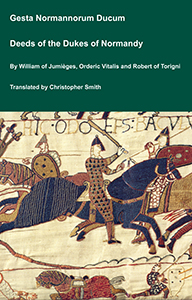
The Deeds of the Dukes of Normandy
The Gesta Normannorum Ducum [The Deeds of the Dukes of Normandy] is a landmark medieval chronicle tracing the rise and fall of the Norman dynasty from its early roots through the pivotal events surrounding the Norman Conquest of England. Originally penned in Latin by the monk William of Jumièges shortly before 1060 and later expanded at the behest of William the Conqueror, the work chronicles the deeds, politics, battles, and leadership of the Norman dukes, especially William’s own claim to the English throne. The narrative combines earlier historical sources with firsthand information and oral testimony to present an authoritative account of Normandy’s transformation from a Viking settlement into one of medieval Europe’s most powerful realms. William’s history emphasizes the legitimacy, military prowess, and governance of the Norman line, framing their expansion, including the conquest of England, as both divinely sanctioned and noble in purpose. Later chroniclers such as Orderic Vitalis and Robert of Torigni continued the history, extending the coverage into the 12th century, providing broader context on ducal rule and its impact. Today this classic work remains a foundational source for understanding Norman identity, medieval statesmanship, and the historical forces that reshaped England and Western Europe between 800AD and 1100AD.
Available at Amazon in eBook and Paperback format.
The Diary of George Price Boyce 1859. 3rd January 1859. Took Simeon Solomon [aged 18] to the Hogarth to see the works exhibited. Rossetti [aged 30] has a beautiful solemn purple drawing of Mary in the house of John. As Simeon said, "The impression of intense, thoughtful repose after the strife and excitement of the previous years is most impressive." R. also sent my little "Caper Nimbly" drawing, but has changed the subject into a "Borgia," and made the old grey-haired man into a Pope.
The Diary of George Price Boyce 1859. 30th April 1859. Found Simeon Solomon [aged 18] and Poynter [aged 23] in Burges' room and appropriated (by leave) a caricature by Simeon of Morris and his wife.


1860. Simeon Solomon [aged 19]. "The Mother of Moses". Model Fanny Entwhistle aka Eaton [aged 24].
On 10th May 1860 [his brother] Abraham Solomon [aged 37] and [his sister-in-law] Ella Hart were married.

1862. Simeon Solomon [aged 21]. "Ruth and Boaz".
On 19th December 1862 [his brother] Abraham Solomon [aged 39] died.

1863. Simeon Solomon [aged 22]. "The Deacon".

1864. Simeon Solomon [aged 23]. "A priestess of Diana offering Poppies".
The Diary of George Price Boyce 1864. 21st November 1864. November 21. Nelly Smith called. She was not looking well. Has been sitting to Simeon Solomon [aged 24], Poynter, Stanhopé, Jones, Pinwell, and a man of the name of Linton? Sent 12 sketches and studies for Winter Exhibition at O.W.C. Gallery.

1865. Simeon Solomon [aged 24]. "In the Temple of Venus".
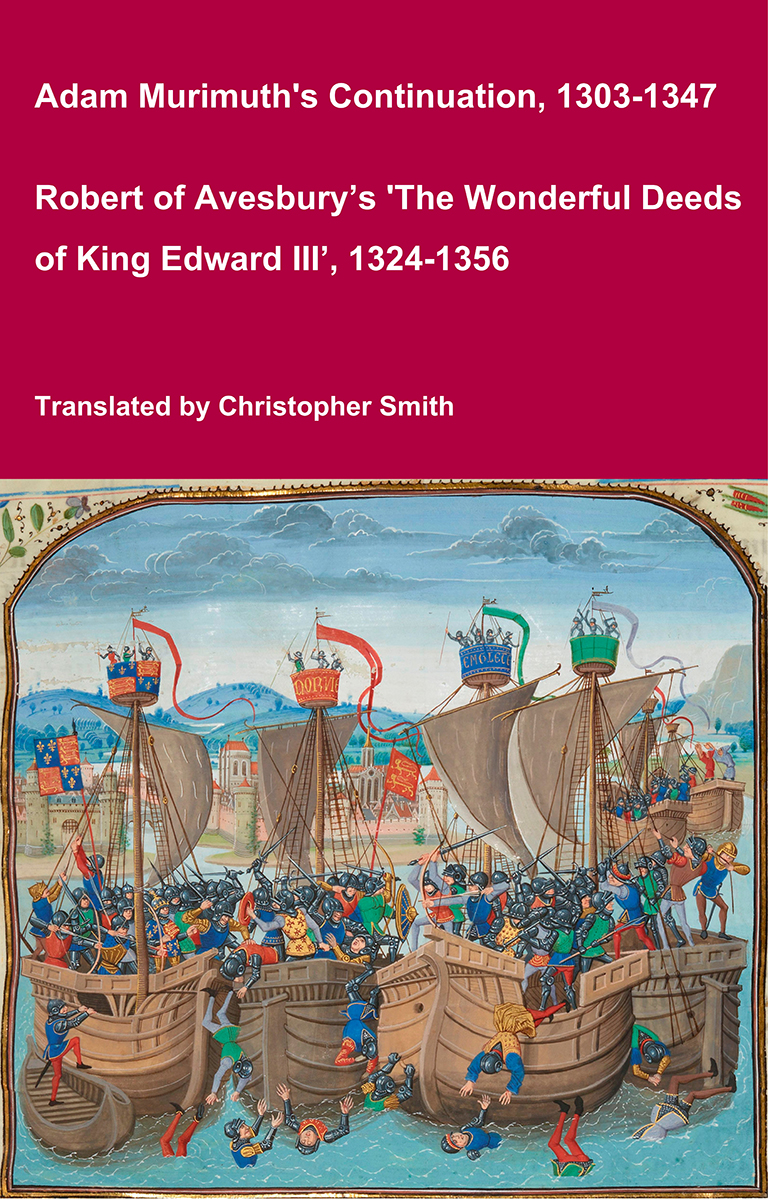
Adam Murimuth's Continuation and Robert of Avesbury’s 'The Wonderful Deeds of King Edward III'
This volume brings together two of the most important contemporary chronicles for the reign of Edward III and the opening phases of the Hundred Years’ War. Written in Latin by English clerical observers, these texts provide a vivid and authoritative window into the political, diplomatic, and military history of fourteenth-century England and its continental ambitions. Adam Murimuth Continuatio's Chronicarum continues an earlier chronicle into the mid-fourteenth century, offering concise but valuable notices on royal policy, foreign relations, and ecclesiastical affairs. Its annalistic structure makes it especially useful for establishing chronology and tracing the development of events year by year. Complementing it, Robert of Avesbury’s De gestis mirabilibus regis Edwardi tertii is a rich documentary chronicle preserving letters, treaties, and official records alongside narrative passages. It is an indispensable source for understanding Edward III’s claim to the French crown, the conduct of war, and the mechanisms of medieval diplomacy. Together, these works offer scholars, students, and enthusiasts a reliable and unembellished account of a transformative period in English and European history. Essential for anyone interested in medieval chronicles, the Hundred Years’ War, or the reign of Edward III.
Available at Amazon in eBook and Paperback format.

1865. Simeon Solomon [aged 24]. "Habet". Model top right probably Fanny Eaton [aged 29]".

1865. Simeon Solomon [aged 24]. "Coptic Baptismal Procession".

1866. Simeon Solomon [aged 25]. "Damon and Aglae".

1866. Frederick Hollyer [aged 27]. Photograph of Simeon Solomon [aged 25].
The Diary of George Price Boyce 1866. 8th April 1866 (Sunday). To Fred Leighton's [aged 35] to breakfast, meeting there Gabriel [aged 37] and Wm. Rossetti [aged 36] and Simeon Solomon [aged 25]. L. excessively jolly and interesting. Has a large picture, young Greek girls in procession to sacrifice to Diana the first large picture1 he has painted.
Note 1. See The Syracusan Bride leading Wild Animals in Procession to the Temple of Diana.


1868. Simeon Solomon [aged 27]. "Sappho and Erinna in a Garden at Mytilene".

1868. Simeon Solomon [aged 27]. "A Prelude by Bach".
The Diary of George Price Boyce 1868. 8th November 1868. November 8 (Sunday). Dined at Club, Simeon Solomon [aged 28] there. He. introduced me to Mr. Oscar Browning. Billiards. Cooper said that there was a report that the young lady who threw herself off London Bridge a few days ago and was drowned, was no other than poor Ellen Terry [aged 21] (Mrs. G. F. Watts) and that it was after a quarrel with her sister about her continuing on the stage.


1869. Simeon Solomon [aged 28]. "Pastoral Lovers".

1871. Simeon Solomon [aged 30]. "Rabbi Carrying the Law".

1873. Simeon Solomon [aged 32]. "Night".
Abbot John Whethamstede’s Chronicle of the Abbey of St Albans
Abbot John Whethamstede's Register aka Chronicle of his second term at the Abbey of St Albans, 1451-1461, is a remarkable text that describes his first-hand experience of the beginning of the Wars of the Roses including the First and Second Battles of St Albans, 1455 and 1461, respectively, their cause, and their consequences, not least on the Abbey itself. His text also includes Loveday, Blore Heath, Northampton, the Act of Accord, Wakefield, and Towton, and ends with the Coronation of King Edward IV. In addition to the events of the Wars of the Roses, Abbot John, or his scribes who wrote the Chronicle, include details in the life of the Abbey such as charters, letters, land exchanges, visits by legates, and disputes, which provide a rich insight into the day-to-day life of the Abbey, and the challenges faced by its Abbot.
Available at Amazon in eBook and Paperback format.
On the on the 11th February 1873, at the age of thirty-two and at the height of his artistic career, Solomon [aged 32] was arrested with George Roberts, a sixty-year-old illiterate stableman in a public urinal, by police constable William Mitchell, around the corner from Marylebone Lane Police Station, in Stratford Place Mews, off Oxford Street. On the following day magistrate, Lieutenant L. T. D'Eyncourt, of the Marylebone Police Court, read the charge that both men had "unlawfully attempt feloniously to commit the abominable crime of buggery". Roberts protested that it was a false charge and when prompted, Solomon acquiesced that it was "equally so" with him. Despite their protests, both men were found guilty of attempted sodomy, but after his six week detainment in the Clerkenwell House of Detention, the artist was subsequently released to the care of his cousin Myer Salaman on a surety of £100, and the promise that he behaved himself.

1874. Simeon Solomon [aged 33]. "A Hebrew Girl".

1874. Simeon Solomon [aged 33]. "A Bishop of the Eastern Church".

1880. Simeon Solomon [aged 39]. "Doubt".
In 1884 Simeon Solomon [aged 43] was admitted to the St Gile's Workshouse, Bloomsbury [Map].

1884. Simeon Solomon [aged 43]. "The Annunciation".

Around 1888. Simeon Solomon [aged 47]. "Study of a Youth".

1892. Simeon Solomon [aged 51]. "Night and her Child Sleep".

1893. Simeon Solomon [aged 52]. "In the Summer Twilight".
Jean de Waurin's Chronicle of England Volume 6 Books 3-6: The Wars of the Roses
Jean de Waurin was a French Chronicler, from the Artois region, who was born around 1400, and died around 1474. Waurin’s Chronicle of England, Volume 6, covering the period 1450 to 1471, from which we have selected and translated Chapters relating to the Wars of the Roses, provides a vivid, original, contemporary description of key events some of which he witnessed first-hand, some of which he was told by the key people involved with whom Waurin had a personal relationship.
Available at Amazon in eBook and Paperback format.

1895. Simeon Solomon [aged 54]. "The Forsaken Ariadne".

1896. Frederick Hollyer [aged 57]. Photograph of Simeon Solomon [aged 55].

1896. Simeon Solomon [aged 55]. "Orpheus".

1896. Simeon Solomon [aged 55]. "Mater Christi Alma".

1903. Simeon Solomon [aged 62]. "The Boy John".

Before 1905. Simeon Solomon [aged 64]. "The Knight of the Lord's Passion".

Before 1905. Simeon Solomon [aged 64]. "Sleep Gentle Sleep".
On 14th August 1905 Simeon Solomon [aged 64] died in the dining-room of St Gile's Workshouse, Bloomsbury [Map] from complications brought on by alcoholism. He was buried at Willesden Cemetery.
"Inquest." The Times, 18 August 1905:
Mr. Walter Schroder held an inquest at St. Giles's Coroner's Court yesterday regarding the death of Simeon Solomon, aged 63, bachelor, an oil-painter, who was described as of the pre-Raphaelite school and at one time an associate of Rossetti and Burne-Jones. Solomon, according to his cousin, Mr. G. J. Nathan, of late years had led an intemperate and irregular life. The witness last saw him alive in May, when he gave him an outfit of clothes and money. He also gave him a commission for a drawing which was never executed. People highly placed in society would have liked him to paint pictures for them, but he could not be relied on to execute any commission. Other evidence showed that Solomon had been "off and on" an inmate of St. Giles's Workhouse during the past five years. On Wednesday, May 24 last, after the visit to his cousin, he was found lying on the footpath in Great Turnstile, High Holborn. He complained of illness and was conveyed to King's College Hospital, whence he was transferred to St. Giles's Workhouse. He was then suffering from bronchitis and alcoholism. He remained in the house, and on Monday morning last suddenly expired in the dining hall from, as Dr. A. C. Allen, the medical officer testified, heart failure consequent on aortic disease of that organ and other ailments. The jury returned a verdict accordingly. It was stated that a picture by the deceased recently sold at Christie's realised 250 guineas and that in former days several of his paintings were exhibited at the Royal Academy.