

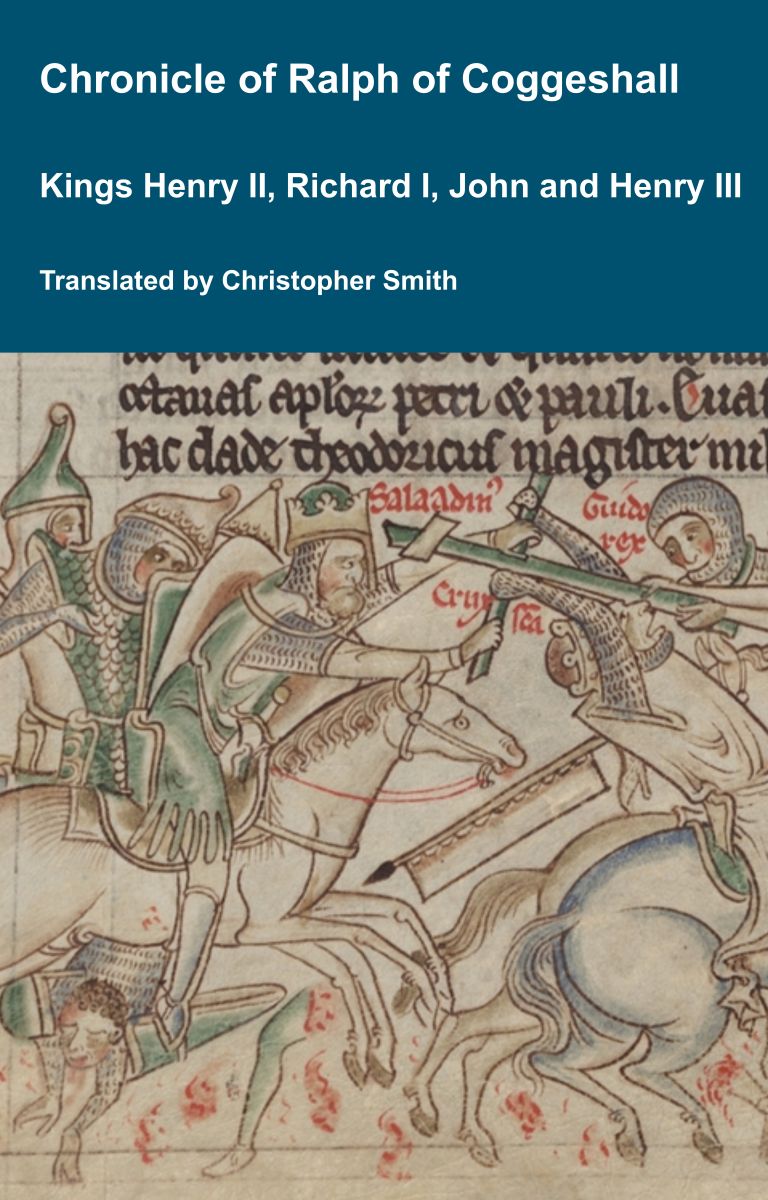
Chronicle of Abbot Ralph of Coggeshall
The Chronicle of Abbot Ralph of Coggeshall (Chronicon Anglicanum) is an indispensable medieval history that brings to life centuries of English and European affairs through the eyes of a learned Cistercian monk. Ralph of Coggeshall, abbot of the Abbey of Coggeshall in Essex in the early 13th century, continued and expanded his community’s chronicle, documenting events from the Norman Conquest of 1066 into the tumultuous reign of King Henry III. Blending eyewitness testimony, careful compilation, and the monastic commitment to record-keeping, this chronicle offers a rare narrative of political intrigue, royal power struggles, and social upheaval in England and beyond. Ralph’s work captures the reigns of pivotal figures such as Richard I and King John, providing invaluable insights into their characters, decisions, and the forces that shaped medieval rule. More than a simple annal, Chronicon Anglicanum conveys the texture of medieval life and governance, making it a rich source for scholars and readers fascinated by English history, monastic authorship, and the shaping of the medieval world.
Available at Amazon in eBook and Paperback format.
On 16th September 1607 Princess Mary Stewart [aged 2] died of pneumonia at the Stanwell Park Stanwell, Surrey home of Thomas Knyvet 1st Baron Knyvet [aged 62] in whose care she had been placed. As soon as Mary died, the Earl of Worcester [aged 57], the Earl of Leicester [aged 43] and the Earl of Totnes [aged 52] went to Hampton Court Palace [Map], to inform the Queen [aged 32] of her daughter's death. Seeing the three men before her, Queen Anne realized what had happened and spared the men the task of telling her.


On 9th April 1626 Francis Bacon 1st Viscount St Alban [aged 65] died of pneumonia. He was buried at St Paul's Walden Bury, Hertfordshire. Viscount St Alban and Baron Verulam extinct.


In 1643 Edward Fitton 2nd Baronet [aged 40] died of consumption at the Siege of Bristol without surviving issue. He was buried at the Church of St James, Gawsworth [Map]. Baronet Fitton of Gawsworth Hall extinct.
Originally a canopied monument what remains of the canopy is fixed to the wall. His daughter Margaret Fitton who predeceased him kneeling.
The inscription: Sacred to Memory. Among his most noble ancestors, Sir Edward Fitton of Gawsworth, Baronet, lies here, himself the greatest of them all. He at once completed and fulfilled the ancient house of the Fittons: the last, and yet in a sense the first, so the fates willed it. For he set the final crown upon the old glory of his lineage, gathering in himself alone all the virtues and praises of his forebears: grace, strength, and brilliance of body; honesty, faith, and uprightness of soul. This was his particular distinction: though nurtured in the lap of peace, he thundered more powerfully than any when engulfed in the fury of war, never having before known the field of Mars, he bore arms with unmatched brilliance. He was knighted as military tribune by King Charles I (that most blessed martyr), and remained a loyal companion through the king's dangers and distresses, bringing welcome support with no small forces. At Edgehill, on that bloody day, he served as commander of the royal artillery, with his cannons shaking the rebel ranks more than all others. Then at Banbury, Brentford, Reading, and in many other places, he served bravely with his fellow Cheshire men, never without praise or victory. Finally, at Bristol, but alas, though the city was captured and he was triumphant, he fell!
He married two wives. Both most excellent. The first was Jane, daughter of Sir John Trevor, knight, of Denbighshire, by whom he had one daughter, who, alas, was taken away in infancy. The second, second to none, was Felicia [aged 23], daughter of Ralph Sneyd, esquire, of Staffordshire, whom he left behind sorrowing, for their union was childless. He died at Bristol in the month of August, in the same year in which he was born: 1643, at the age of 43. There, in the Church of St Peter, his faithful heart, mind, and tender organs rest in a fragile urn. The remainder of his ashes, first deposited at Oxford due to the disturbances of war, after twenty years were at last, undamaged, untouched, moved here to Gawsworth, to the bosom of his most beloved home, according to his will. He named as his heir the Baron of Brandon, son of his sister. O posterity, celebrate his memory!
M.S. Inter nobilissimos majores ipse maximus D. Eduardus Fytton de Gawsworth, baronettus, heic situs est, qui antiquiss. Fyttonor' gentem clausit simul atq; implevit, ultimus primusq', sic fata voluere; nempe ut vetusto stirpis splendori coronidem sūmam imponeret, in se uno omnium virtutes atq; præconia congessit, decus, robur, fulgorem corporis, candorem, fidem, probitatem animi; hoc sibi proprium habuit, quod pacis gremio lactatus, belli furiis implicitus nemo grandius intonuit, nec rem Martis prius inexpertam præclarius gessit; a Carolo (beatiss. martyre) trib. mil. insignitus illius angustiis periculisq ; fidus comes adhæsit, nec spernendis copiis auxilium gratum tulit, primum ad Edghill, ubi die cruento tormentis regiis præfectus: omnibus magis tormentis rebelles tūrmas concussit, dein ad Banburiam, Brainford, Redding, atq: alibi sæpius, nunquam sine laude et lauro cum Cestriensibus suis fortissime meruit, demum Bristolliæ, sed urbe capta, atq; triumphans, Heu occidit!
Uxores duxit duas. lectissimas utrasq : primam Janam, fil D Joh. Trevor, in comit. Denbigh militis, e qua filiolam unicam sed imature ereptam suscepit; alteram, sed nulli secundam, Feliciam, filiam D Rad. Sneyd in agro Stafford, armig quam tristiorem, quia improlem, reliquit. Denatus Bristolliæ mense Aug, quo et natus An° D. MDCXLIII, ætat XLIIL ibi fidum cor, cerebrum, et mollia viscera in B Petri templo fragili urna conduntur; reliquus cinis Oxon. primo ob bellicas turbas depositus, inde demum post XX annos intercepedinem infractus, illæsus, heic in Gawsworthe su dilectiss sinu prout voluit, requiescit, Baronis de Brandon, Sororis filii, quem heredem instituit, Celebrate posteri.
Edward Fitton 2nd Baronet: In 1603 he was born to Edward Fitton 1st Baronet and Anne Barratt. Before 1631 Edward Fitton 2nd Baronet and Jane Trevor were married. After 1638 Edward Fitton 2nd Baronet and Felicia Sneyd were married.
Margaret Fitton: Around 1631 she was born to Edward Fitton 2nd Baronet and Jane Trevor. In 1638 Margaret Fitton died.


On 13th February 1662 Princess Elizabeth Stewart Queen Bohemia [aged 65] died of pneumonia shortly after midnight. She was buried at Westminster Abbey [Map].


On 8th March 1702 King William III of England, Scotland and Ireland [aged 51] died of Pneumonia at Kensington Palace. His demise was the direct result of a fall from his horse, named Sorrel, which stumbled on a molehill causing King William to fall and break his collarbone. For many years afterwards, Jacobites would raise their glasses and toast "the little gentleman in the black velvet waistcoat". His first cousin Anne [aged 37] succeeded I Queen England Scotland and Ireland. She, Anne, being the sister of his wife Mary Stewart II Queen England Scotland and Ireland.


On 30th October 1735 Edmund Sheffield 2nd Duke of Buckingham and Normanby [aged 19] died of consumption at Rome, Italy [Map] unmarried and without issue. Duke of Buckingham and Normanby, Earl Mulgrave and Baron Sheffield of Butterwick in Lincolnshire extinct.
On 2nd July 1738 Robert Bankes Jenkinson 4th Baronet [aged 51] died of consumption. His son Robert [aged 17] succeeded 5th Baronet Jenkinson of Walcot in Oxfordshire and of Hawkesbury in Gloucestershire.
On 9th October 1785 John Cullum 6th Baronet [aged 52] died of consumption. His brother Thomas [aged 43] succeeded 7th Baronet Cullum of Hastede in Suffolk.
On 7th July 1800 Captain John Granville [aged 21] died of rapid consumption at Hot Wells, Bristol. He was buried at St Peter's Church, Ellastone on 19th July 1800. His nephew Court D'Ewes aka Granville [aged 21] inherited Calwich Abbey, Staffordshire [Map] and changed his surname from D'Ewes to Granville.
Underneath this Stone In the Family Vault Lies Interred the Body of John Granville, only son of John and Harriett Granville of Calwich and late Captain in the Staffordshire Regiment of Militia who was suddenly cut off in the Prime of his Life, to the inexpressible Grief of his Parents and Sorrow of All who knew him July the 7th 1800 in the 21st Year of his Age. In the same vault are deposited the remains of their infant daughter. Also the remains of the above named Harriet Joan Granville Died at Calwich 25th March 1825, aged 71.
Captain John Granville: Around 1779 he was born to Reverend John D'Ewes aka Granville and Harriet de la Bere.
Court D'Ewes aka Granville: In 1779 he was born to Bernard D'Ewes. In 1848 Court D'Ewes aka Granville died.


On 5th June 1807 Charles Gough-Calthorpe 2nd Baron Calthorpe [aged 21] died of consumption unmarried at Flushing, Cornwall. His brother George [aged 19] succeeded 3rd Baron Calthorpe of Calthorpe in Norfolk, 4th Gough-Calthorpe of Edgbaston in Warwickshire.
On 3rd September 1820 Charlotte Elizabeth Digby [aged 42] died of rapid consumption. Monument in Worcester Cathedral [Map] sculpted by Francis Leggatt Chantrey [aged 39] in 1825.
Charlotte Elizabeth Digby: On 7th August 1778 she was born. In 1802 she was appointed Maid of Honour to Charlotte Mecklenburg Strelitz Queen Consort England. On 3rd January 1802 William Digby and she were married. Memorials of Francis Chantrey RA in Hallamshire and Elsewhere Part V London Life and Works. To 1825 belongs the figure of Mrs. Digby, in marble, seated on a couch, in Worcester Cathedral [Map]; and a similar one of Mrs. Boulton, in the church of Great Tew, Oxfordshire [Map].


The Deeds of the Dukes of Normandy
The Gesta Normannorum Ducum [The Deeds of the Dukes of Normandy] is a landmark medieval chronicle tracing the rise and fall of the Norman dynasty from its early roots through the pivotal events surrounding the Norman Conquest of England. Originally penned in Latin by the monk William of Jumièges shortly before 1060 and later expanded at the behest of William the Conqueror, the work chronicles the deeds, politics, battles, and leadership of the Norman dukes, especially William’s own claim to the English throne. The narrative combines earlier historical sources with firsthand information and oral testimony to present an authoritative account of Normandy’s transformation from a Viking settlement into one of medieval Europe’s most powerful realms. William’s history emphasizes the legitimacy, military prowess, and governance of the Norman line, framing their expansion, including the conquest of England, as both divinely sanctioned and noble in purpose. Later chroniclers such as Orderic Vitalis and Robert of Torigni continued the history, extending the coverage into the 12th century, providing broader context on ducal rule and its impact. Today this classic work remains a foundational source for understanding Norman identity, medieval statesmanship, and the historical forces that reshaped England and Western Europe between 800AD and 1100AD.
Available at Amazon in eBook and Paperback format.
On 30th April 1841 Christiana Bacon [aged 34] died of consumption. She was buried at St Thomas' Church, Exeter.

Before 6th March 1871 Mary Leslie died of consumption.
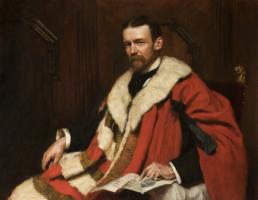
On 19th June 1890 Harry Grey 8th Earl Stamford 4th Earl Warrington [aged 78] died of pneumonia without legitimate male issue. He was buried in St. John's Cemetery, Wynberg. His nephew William [aged 40] succeeded 9th Earl Stamford, 11th Baron Grey of Groby.
On 11th April 1891 John Kelley Halswelle [aged 59] died of pneumonia in Paris.
On 15th May 1891 Edwin Longsden Long [aged 61] died of pneumonia resulting from influenza at his home, "Kelston" in Netherhall Gardens, Hampstead. He was buried in West Hampstead Cemetery. His will, signed on the day of his death, was the subject of a lawsuit, to which his relatives were parties, but the matter in dispute was amicably settled.
On 14th January 1892 Prince Albert Victor "Eddy" Windsor [aged 28] died of pneumonia at Sandringham House, Norfolk.


On 27th May 1900 Captain Ralph Nevile Fane [aged 30] died of pneumonia at Wynberg where he was buried.
On 11th April 1902 Frances Bastard [aged 74] died of pneumonia.

On 27th November 1907 Cyril Flower 1st Baron Battersea [aged 64] died of pneumonia. Baron Battersea of Battersea in London and of Overstrand in Norfolk extinct.

On 24th March 1908 Spencer Cavendish 8th Duke Devonshire [aged 74] died of pneumonia at Hotel Metropol. His nephew Victor [aged 39] succeeded 9th Duke Devonshire, 12th Earl Devonshire, 4th Earl Burlington, 12th Baron Cavendish Hardwick. On 28th March 1908 he was buried in the Cavendish Plot, St Peter's Church, Edensor [Map].

The History of William Marshal was commissioned by his son shortly after William’s death in 1219 to celebrate the Marshal’s remarkable life; it is an authentic, contemporary voice. The manuscript was discovered in 1861 by French historian Paul Meyer. Meyer published the manuscript in its original Anglo-French in 1891 in two books. This book is a line by line translation of the first of Meyer’s books; lines 1-10152. Book 1 of the History begins in 1139 and ends in 1194. It describes the events of the Anarchy, the role of William’s father John, John’s marriages, William’s childhood, his role as a hostage at the siege of Newbury, his injury and imprisonment in Poitou where he met Eleanor of Aquitaine and his life as a knight errant. It continues with the accusation against him of an improper relationship with Margaret, wife of Henry the Young King, his exile, and return, the death of Henry the Young King, the rebellion of Richard, the future King Richard I, war with France, the death of King Henry II, and the capture of King Richard, and the rebellion of John, the future King John. It ends with the release of King Richard and the death of John Marshal.
Available at Amazon in eBook and Paperback format.
On 5th April 1908 Ronald Henry Fulke Greville [aged 43] died of pneumonia without issue following an operation, predeceasing his own father.
On 1st October 1914 Alfred Jerome Vassalli [aged 33] died of pneumonia contracted while in camp at Slough (or possibly of wounds) at the King Edward VII Hospital, Windsor. He was buried at St Michael's Church, Muncaster [Map]. He was Corporal with the 2nd King Edward's Horse.
On 8th January 1915 Charles Chetwynd-Talbot [aged 32] died of pneumonia. He was buried at St Mary the Virgin Church, Ingestre [Map]. Monument sculpted by Countess Feodora Gleichen [aged 53].
Charles Chetwynd-Talbot: On 8th September 1882 he was born to Charles Chetwynd-Talbot 20th Earl of Shrewsbury 5th Earl Talbot and Ellen Palmer Morewood Countess Shrewsbury Waterford Talbot. On 23rd April 1904 Charles Chetwynd-Talbot and Winifred Contance Hester Paget were married. He the son of Charles Chetwynd-Talbot 20th Earl of Shrewsbury 5th Earl Talbot and Ellen Palmer Morewood Countess Shrewsbury Waterford Talbot.


On 10th August 1920 Kathleen Lucille Payne-Gallwey [aged 36] died of consumption contracted in Greece during the Revelution of 1917.
On 29th December 1922 Kenelm Charles [aged 21] died of pneumonia unmarried. His brother Mark [aged 19] succeeded 6th Earl of Cottenham, 6th Viscount Crowhurst of Crowhurst in Surrey, 6th Baron Cottenham of Cottenham in Cambridgshire, 8th Baronet Pepys of Wimpole Street, 9th Baronet Pepys of Brook Street.
On 23rd June 1923 Brigadier-General Alington Bewicke-Copley [aged 68] died of pneumonia at Sprotbrough Hall.
On 22nd November 1926 Francis Pelham 7th Earl Chichester [aged 21] died of pneumonia unmarried at Stanmer Park Falmer Brighton. His brother John [aged 14] succeeded 8th Earl Chichester, 9th Baron Pelham of Stanmer in Sussex and 13th Baronet Pelham of Laughton.
On 4th August 1929 Geoffrey Scott [aged 45] died of pneumonia.

On 3rd January 1934 Victor Albert Francis Spencer 1st Viscount Churchill [aged 69] died of pneumonia. His son Victor [aged 44] succeeded 2nd Viscount Churchill of Rolleston in Leicestershire, 4th Baron Churchill Wychwood in Oxfordshire.

On 7th July 1935 Oliver Russell 2nd Baron Ampthill [aged 66] died of pneumonia. His son John [aged 38] succeeded 3rd Baron Ampthill of Ampthill in Bedfordshire. Christabel Hulme Hart Baroness Ampthill by marriage Baroness Ampthill of Ampthill in Bedfordshire.
On 22nd April 1940 John Henry Montagu Manners 9th Duke Rutland [aged 53] died of pneumonia at Belvoir Castle [Map]. His son Charles [aged 20] succeeded 10th Duke Rutland, 10th Marquess Grandby, 18th Earl of Rutland, 10th Baron Manners of Haddon in Derbyshire, 4th Baron Roos of Belvoir in Leicestershire.
On 17th September 1940 Napier Sturt 3rd Baron Alington [aged 43] died of pneumonia in Cairo, Egypt whilst on active service. He was buried at the New British Protestant Cemetery, Cairo. Baron Alington extinct.