

Or is in Field.
 Wrottesley Arms. Or, three piles sable, a canton ermine. Source.
 Lisle Arms. Or a fess between two chevrons sable. Source.
 Aragon Arms. Or, four pallets gules. Source.
 Lowther Arms. Or, six annulets sable, three, two, one. Source.
 Bigod Arms. Or a cross gules. Source.
 Manners Arms. Or, two fess azure a chief gules.
 Bugge Arms. Or fretty azure. Source.
 Mohun Arms. Or a cross engrailed sable.
 Butler Arms. Or, a chief indented azure. Source.
 Monson Arms. Or two chevronels gules. Source.
Chronicle of Walter of Guisborough
A canon regular of the Augustinian Guisborough Priory, Yorkshire, formerly known as The Chronicle of Walter of Hemingburgh, describes the period from 1066 to 1346. Before 1274 the Chronicle is based on other works. Thereafter, the Chronicle is original, and a remarkable source for the events of the time. This book provides a translation of the Chronicle from that date. The Latin source for our translation is the 1849 work edited by Hans Claude Hamilton. Hamilton, in his preface, says: 'In the present work we behold perhaps one of the finest samples of our early chronicles, both as regards the value of the events recorded, and the correctness with which they are detailed; Nor will the pleasing style of composition be lightly passed over by those capable of seeing reflected from it the tokens of a vigorous and cultivated mind, and a favourable specimen of the learning and taste of the age in which it was framed.'
Available at Amazon in eBook and Paperback format.
 Camden Arms. Or, a fess engrailed between six crosses crosslet fitchy sable. Source.
 Monthermer Arms. Or, an eagle displayed vert beaked and membered gules. Source.
 Chicheley Arms. Or, a chevron between three cinquefoils gules. Source.
 Morrison Arms. Or, on a chief gules three chaplets of the first. Source.
 Constable Arms. Or three bars. Source.
 Nelson Arms. Or, a cross flory sable a bendlet gules. Source.
 Daubeney Arms. Or, two chevrons gules three griffin's heads. Source.
 Fanshawe Arms. Or a chevron between three fleur de lys sable. Source.
 Percy Arms. Or, a lion rampant azure. Source.
 Fitzwalter Arms. Or, a fess gules between two chevrons of the last. Source.
 Portman Arms. Or, a fleur-de-lis azure. Source.
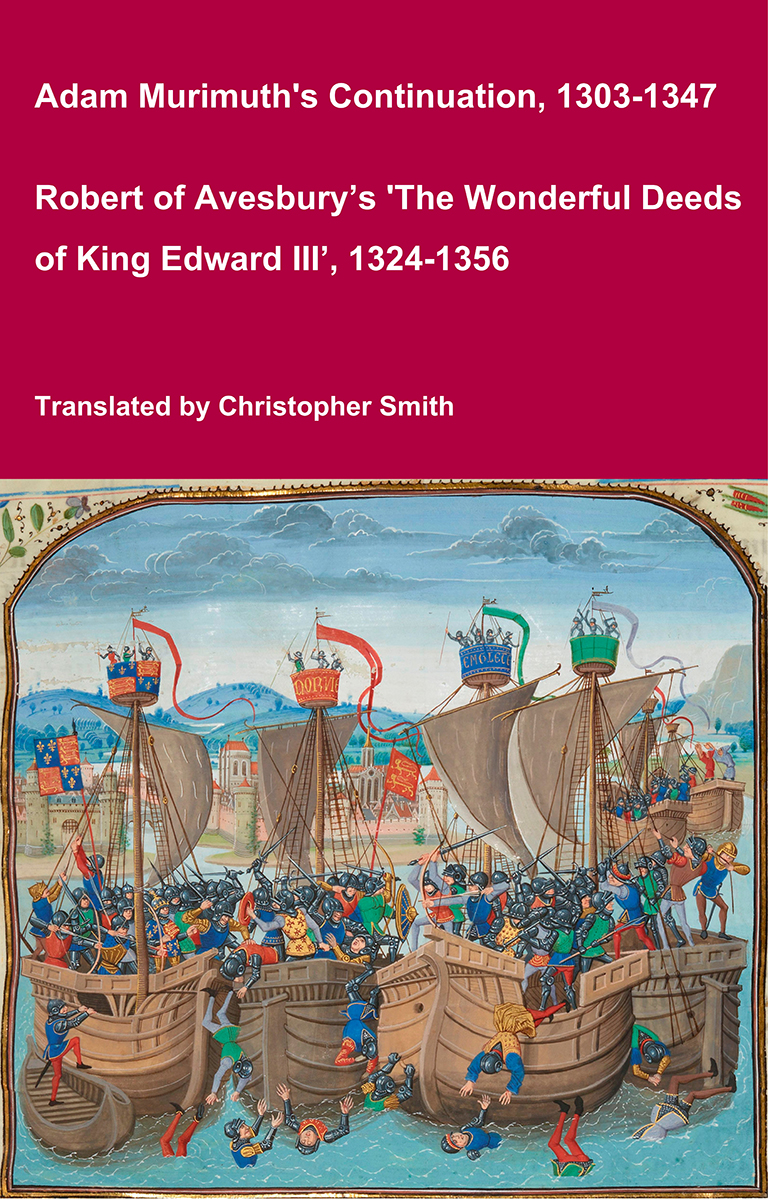
Adam Murimuth's Continuation and Robert of Avesbury’s 'The Wonderful Deeds of King Edward III'
This volume brings together two of the most important contemporary chronicles for the reign of Edward III and the opening phases of the Hundred Years’ War. Written in Latin by English clerical observers, these texts provide a vivid and authoritative window into the political, diplomatic, and military history of fourteenth-century England and its continental ambitions. Adam Murimuth Continuatio's Chronicarum continues an earlier chronicle into the mid-fourteenth century, offering concise but valuable notices on royal policy, foreign relations, and ecclesiastical affairs. Its annalistic structure makes it especially useful for establishing chronology and tracing the development of events year by year. Complementing it, Robert of Avesbury’s De gestis mirabilibus regis Edwardi tertii is a rich documentary chronicle preserving letters, treaties, and official records alongside narrative passages. It is an indispensable source for understanding Edward III’s claim to the French crown, the conduct of war, and the mechanisms of medieval diplomacy. Together, these works offer scholars, students, and enthusiasts a reliable and unembellished account of a transformative period in English and European history. Essential for anyone interested in medieval chronicles, the Hundred Years’ War, or the reign of Edward III.
Available at Amazon in eBook and Paperback format.
 Graham Arms. Or an a chief sable three escallops argent. Source.
 Powys Arms. Or, a lion gules armed and langued azure. Source.
 Harding Arms. Or, a bend azure three martlets argent.
 Preston Arms. Or, a chief sable three crescents or.
 Hornby Arms. Or, two chevronels between three bugle-horns sable stringed gules on a chief of the second as many eagle's legs erased of the first. Source.
 Redvers Arms. Or, a lion rampant azure. Source.
 Lacy Arms. Or, a lion rampant purpure. Source.
 Rolle Arms. Or, a fess dancetté between three billets azure each charged with a lion rampant of the first three bezants. Source.
 Bayning Arms. Or two bars sable on each as many escallops of the first. Source.
 Scott Arms. Or, on a bend azure a mullet of six points between two crescents of the field. Source.

The True Chronicles of Jean le Bel Volume 1 Chapters 1-60 1307-1342
The True Chronicles of Jean le Bel offer one of the most vivid and immediate accounts of 14th-century Europe, written by a knight who lived through the events he describes, and experienced some of them first hand. Covering the early decades of the Hundred Years’ War, this remarkable chronicle follows the campaigns of Edward III of England, the politics of France and the Low Countries, and the shifting alliances that shaped medieval warfare. Unlike later historians, Jean le Bel writes with a strong sense of eyewitness authenticity, drawing on personal experience and the testimony of fellow soldiers. His narrative captures not only battles and sieges, but also the realities of military life, diplomacy, and the ideals of chivalry that governed noble society. A key source for Jean Froissart, Le Bel’s chronicle stands on its own as a compelling and insightful work, at once historical record and literary achievement. This translation builds on the 1905 edition published in French by Jules Viard, adding extensive translations from other sources Rymer's Fœdera, the Chronicles of Adam Murimuth, William Nangis, Walter of Guisborough, a Bourgeois of Valenciennes, Geoffrey le Baker of Swinbroke and Richard Lescot to enrich the original text and Viard's notes.
Available at Amazon in eBook and Paperback format.
 Burgh Arms. Or a cross gules. Source.
NO IMAGE. Or, on a pile gules between six fleur de lys azure three lions of England. Augmentation of honour granted to Edward Seymour 1st Duke of Somerset when his sister Queen Jane Seymour married King Henry VIII of England and Ireland. Source.


 Carew Arms. Or, three lions passant in pale sable. Source.
 Sidney Arms. Or, a pheon azure.
 Courtenay Arms. Or, three torteaux. Source.
 Stafford Arms. Or, a chevron gules.
 Dunkeld Arms. Or a lion rampant gules armed and langued azure a double tressure flory counter-flory gules.
 Stewart Arms. Or a fess chequy. Source.
 Stewart Royal Arms. Or a lion rampant gules armed and langued azure within a double tressure flory counter-flory of the second.
 Harsick Arms. Or, a chief indented sable.
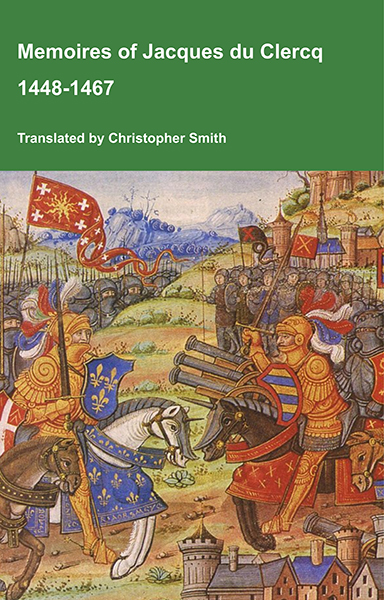
This is a translation of the 'Memoires of Jacques du Clercq', published in 1823 in two volumes, edited by Frederic, Baron de Reissenberg. In his introduction Reissenberg writes: 'Jacques du Clercq tells us that he was born in 1424, and that he was a licentiate in law and a counsellor to Philip the Good, Duke of Burgundy, in the castellany of Douai, Lille, and Orchies. It appears that he established his residence at Arras. In 1446, he married the daughter of Baldwin de la Lacherie, a gentleman who lived in Lille. We read in the fifth book of his Memoirs that his father, also named Jacques du Clercq, had married a lady of the Le Camelin family, from Compiègne. His ancestors, always attached to the counts of Flanders, had constantly served them, whether in their councils or in their armies.' The Memoires cover a period of nineteen years beginning in in 1448, ending in in 1467. It appears that the author had intended to extend the Memoirs beyond that date; no doubt illness or death prevented him from carrying out this plan. As Reissenberg writes the 'merit of this work lies in the simplicity of its narrative, in its tone of good faith, and in a certain air of frankness which naturally wins the reader’s confidence.' Du Clercq ranges from events of national and international importance, including events of the Wars of the Roses in England, to simple, everyday local events such as marriages, robberies, murders, trials and deaths, including that of his own father in Book 5; one of his last entries.
Available at Amazon in eBook and Paperback format.
 Lathom Arms. Or, on a chief indented azure three plates. Source.
 Vavasour Arms. Or, a fess dancetté sable. Source.
NO IMAGE. Or, a chief indented azure, a crescent for difference. Source.
 Verdun Arms. Or, a fret gules.
 Vesci Arms. Or, a Cross sable. Source.
NO IMAGE. Or, three chevrons sable. Source.
 Wake Arms. Or, two bars gules in chief three torteaux. Source.
 Ferneley Arms. Or, on a bend vert three buck's heads caboshed argent.
 La Marck Arms. Or, a fess chequered argent and gules. Source.
Adam Murimuth's Continuation and Robert of Avesbury’s 'The Wonderful Deeds of King Edward III'
This volume brings together two of the most important contemporary chronicles for the reign of Edward III and the opening phases of the Hundred Years’ War. Written in Latin by English clerical observers, these texts provide a vivid and authoritative window into the political, diplomatic, and military history of fourteenth-century England and its continental ambitions. Adam Murimuth Continuatio's Chronicarum continues an earlier chronicle into the mid-fourteenth century, offering concise but valuable notices on royal policy, foreign relations, and ecclesiastical affairs. Its annalistic structure makes it especially useful for establishing chronology and tracing the development of events year by year. Complementing it, Robert of Avesbury’s De gestis mirabilibus regis Edwardi tertii is a rich documentary chronicle preserving letters, treaties, and official records alongside narrative passages. It is an indispensable source for understanding Edward III’s claim to the French crown, the conduct of war, and the mechanisms of medieval diplomacy. Together, these works offer scholars, students, and enthusiasts a reliable and unembellished account of a transformative period in English and European history. Essential for anyone interested in medieval chronicles, the Hundred Years’ War, or the reign of Edward III.
Available at Amazon in eBook and Paperback format.
 Clare Arms. Or three chevrons gules. Source.
 Walpole Arms. Or a fess between two chevrons sable three cross crosslets of the field. Source.
 Willoughby Arms. Or fretty azure. Source.
 Brownlow Arms. Or an escutcheon within an orle of martlets sable. Source


.svg)


_arms#/media/File:Butler_arms.svg)


#/media/File:MorrisonArms.PNG)

#/media/File:Arms_Nelson_(of_Mawdesley,_Lancs).svg)
.svg)


.svg)


.svg)


#/media/File:Butler_arms_(Earl_of_Carrick).svg)


.svg)


