Paternal Family Tree: Ivrea
On 2nd June 1423 Ferdinand I King Naples was born illegitimately to Alfonso V King Aragon [aged 27] and Giralda Carlino.
On 30th May 1445 Ferdinand I King Naples [aged 21] and Isabella Clermont Queen Consort Naples [aged 21] were married. He the illegitmate son of Alfonso V King Aragon [aged 49] and Giralda Carlino.
On 4th November 1448 [his son] Alfonso II King Naples was born to Ferdinand I King Naples [aged 25] and Isabella Clermont Queen Consort Naples [aged 24] at Naples [Map]. He married 10th October 1465 Ippolita Maria Sforza, daughter of Francesco Sforza I Duke Milan and Bianca Maria Visconti, and had issue.
On 22nd June 1450 [his son] Eleanor Trastámara was born to Ferdinand I King Naples [aged 27] and Isabella Clermont Queen Consort Naples [aged 26].
On 19th April 1452 [his son] Frederick IV King Naples was born to Ferdinand I King Naples [aged 28] and Isabella Clermont Queen Consort Naples [aged 28]. He married 1. 11th September 1478 his fourth cousin Anne of Savoy, daughter of Amadeus "Happy" Savoy IX Duke Savoy and Yolande Valois Duchess Savoy, and had issue 2. 28th November 1487 his first cousin once removed Isabella del Balzo Queen Consort of Naples and had issue.
On 25th June 1456 [his son] John Trastámara was born to Ferdinand I King Naples [aged 33] and Isabella Clermont Queen Consort Naples [aged 32].
Around October 1457 [his son] Beatrice Trastámara was born to Ferdinand I King Naples [aged 34] and Isabella Clermont Queen Consort Naples [aged 33].
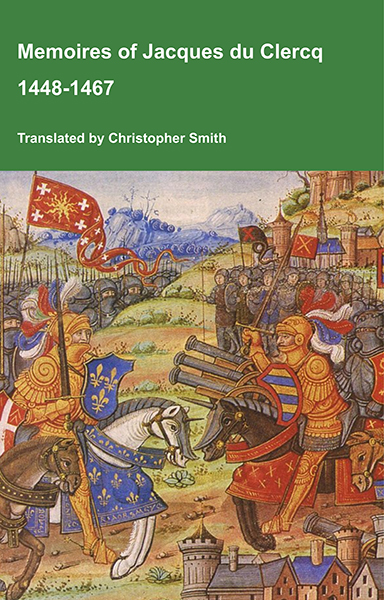
Memoires Jacques du Clercq. Around the feast of Saint John the Baptist [24th June], in the year 1458, in the city of Naples, Alfonso [aged 62], King of Aragon, King of Sicily, King of Naples, and lord of many other lands, and the richest king, as was said, that had been for a long time before him, ended his days and died a natural death. He left the kingdom of Naples with its dependencies, and likewise that of Sicily, to a bastard son he had, named Ferrand [aged 35]. And moreover he left to him, as was reported to Pope Calixtus, sixty thousand florins of gold, amounting to six million in gold, without counting his chapel, which was said to be the richest in the world, which he left to him with his jewels and treasury, valued, as was said, at more than a million. The said Alfonso, among many great vessels he had caused to be made for fighting at sea, had built a ship that was held to be the largest in the world; for it was so great that it could scarcely go to sea, and it was always kept in the port of Naples. A little before the king's death, this ship had been put out to sea; and at the very hour that King Alfonso died, it was brought back into the port of Naples, and upon arriving it struck the seabed so that it split apart, and broke the main mast, which was so large that five men could not have encircled it with their arms; and when it fell, the mast shattered the ship into more than a thousand pieces, and made such a great sound and noise that all in Naples and the surrounding region thought the land would collapse, as had happened in some places about two years before, as has been said above. Likewise, in the hall of King Alfonso, which was very beautiful and richly painted, there was a tabernacle above the seat where the king sat, gilded with fine gold and bearing painted arms and crowns; this tabernacle, eight days after the king's death, at the very hour he had died, broke together with its arms and crown, and fell down from above his seat. The said Alfonso, King of Aragon, was reputed a very bold and valiant man in war and otherwise, and very wise by natural sense, as he had well shown, for he had acquired most of the lands and kingdoms he held by force of arms and by the sword; and he also held, as was said, by force a part of the patrimony of the Church of Rome, although the pope did not make war upon him, the reason being, as was said, that he was so powerful and feared that no one dared to move against him. And although he was far from the lands of Philip of Burgundy, nevertheless the said king and duke were allied and companions in arms; the king bore the duke's order, which was the Golden Fleece, and the duke bore the king's order, which was a white band; and although they had never seen one another, they loved one another greatly, as was said. After his death, Pope Calixtus, although during Alfonso's lifetime he had agreed that his son should succeed to the kingdom of Naples, caused a revoking bull to be proclaimed, by which he expelled the bastard from the kingdom, not wishing him to succeed his father, and excommunicated him and his adherents, and all those who would give him aid or support, saying that the kingdom belonged to him, since Alfonso had no legitimate children. But after the death of Pope Calixtus, who died soon after the said king, Pope Pius received the bastard in homage for the kingdom of Naples, and it was said that the bastard had given a great sum of gold to Pope Pius.
ENVIRON le jour St Jehan Baptiste, mil iiija lviij, en la ville de Naples, Alphonse, roy d'Arragon, roy de Cecile, roy de Naples, et sieur de plusieurs aultres terres, et le plus riche roy, comme on disoit, qui avoit esté grand temps devant lui, cloist son dernier jour et mourut de mort naturelle, et laissa le royaume de Naples avecq les dependances, et illecq de Cecile, a ung fils bastard qu'il avoit nommé Ferrand; et avecq ce lui laissa, comme on certifia au St pere de Rome Calixte, six fois x mille florins d'or, qui font six millions d'or, sans sa chapelle qui estoit la plus riche du monde, laquelle il lui laissa avec ses joyaulx et sa credence qui valloient, comme on disoit, plus d'ung million; lequel Alphonse, entre aultres plusieurs grands vaisseaulx qu'il avoit fait faire pour combattre sur mer, avoit fait faire une navire, que on tenoit la plus grande du monde, car elle estoit sy grande que a grande peine pooit aller en mer, et estoit toujours au port de Naples; laquelle nef ung peu devant la mort du roy, on l'avoit mise en mer, et a ceste propre heure que icelluy roy Alphonse mourut, on ramena icelle nef au port de Naples, et a l'arrivée toucha au fond du gravier de la mer, tellement qu'elle se fendit, et rompit l'arbre du moilon, qui estoit de telle grosseur que cinq hommes ne l'eussent sceu embrasser aulx bras, et au cheoir ledit arbre rompit la nave en plus de mille pieches, et feit sy grand son et grande noise, que chacun de Naples et d'entour cuidoit que le pays deubt fondre, comme il avoit fait en aulcuns lieux environ deux ans devant, comme cy devant est dit. Et pareillement en la salle dudit roy Alphonse, qui estoit moult belle et richement peinctrée, en laquelle salle, il y avoit ung tabernacle dessus le siege ou le roy se seoit, lequel estoit doré d'or fin, et y estoient peinctes les armes et courronnées, icelluy tabernacle, huict jours après la mort dudit roy, a telle heure propre que le roy rendit l'ame, rompit avecq ses armes et sa courronne, et cheit de dessus son siege. Icelluy Alphonse, roy d'Arragon, estoit reputé très hardy et valliant homme de son corps en guerre et aultrement, et très sage de sens naturel, et bien le avoit monstré, car il avoit acquis la plus grande part des pays et royaume qu'il tenoit par forche d'armes et a l'espée; et sy tenoit, comme on disoit, par forche une partie du patrimoine de l'eglise de Rome, combien que le pape ne lui livroit la guerre, et estoit la cause, comme on disoit, qu'il 1 estoit sy fort et redoubté que nul ne se osoit mouvoir contre lui; et ja fust ce vray qu'il estoit bien loing des pays de Philippe de Bourgogne, toutesfois estoient alliés et compagnons d'armes lesdits roy et duc ensemble, et portoit le roy l'ordre du duc, qui estoit la Toison d'or, et le duc portoit l'ordre du roy, qui estoit une bande blanche; et combien qu'ils n'euissent oncques veu l'ung l'aultre, sy s'entre aimoient ils très fort, comme on disoit. Après la mort duquel, le pape Calixte, combien qu'il euist, durant la vie dudit Alphonse, accordé que son fils succedat au royaume de Naples, feit publier une bulle revocatoire par laquelle il chassoit le bastard du royaume, non voullant qu'il succedat a son père le roy, et excommunia le bastard et ses adherants, et touts ceulx qui lui presteroient ayde ne confort, et disoit le pape que le royaume lui appartenoit, puisqu'il n'avoit nuls enfants legitimes; mais après la mort du pape Calixte, qui mourut assés tost après ledit roy, le pape Pius receupt le bastard en hommaige du royaume de Naples, et disoit on que le bastard avoit donné grande somme d'or audit pape Pius.
On 27th June 1458 [his father] Alfonso V King Aragon [aged 62] died. His son Ferdinand [aged 35] succeeded I King Naples. Isabella Clermont Queen Consort Naples [aged 34] by marriage Queen Consort Naples. His brother [his uncle] John [aged 59] succeeded II King Aragon.
In 1463 King Edward IV of England [aged 20] appointed new Garter Knights:
192nd Ferdinand I King Naples [aged 39].
193rd Galeard Durefort [aged 33].
194th John Scrope 5th Baron Scrope of Bolton [aged 25].
195th Francesco Sforza I Duke Milan [aged 61].
196th James Douglas 9th Earl Douglas 3rd Earl Avondale [aged 37].
197th Robert Harcourt [aged 52].
On 10th October 1465 Alfonso II King Naples [aged 16] and Ippolita Maria Sforza [aged 19] were married at Milan. She the daughter of Francesco Sforza I Duke Milan [aged 64] and Bianca Maria Visconti [aged 40]. He the son of Ferdinand I King Naples [aged 42] and Isabella Clermont Queen Consort Naples.
Annals of the six Kings of England by Nicholas Trivet
Translation of the Annals of the Six Kings of England by that traces the rise and rule of the Angevin aka Plantagenet dynasty from the mid-12th to early 14th century. Written by the Dominican scholar Nicholas Trivet, the work offers a vivid account of English history from the reign of King Stephen through to the death of King Edward I, blending political narrative with moral reflection. Covering the reigns of six monarchs—from Stephen to Edward I—the chronicle explores royal authority, rebellion, war, and the shifting balance between crown, church, and nobility. Trivet provides detailed insight into defining moments such as baronial conflicts, Anglo-French rivalry, and the consolidation of royal power under Edward I, whose reign he describes with particular immediacy. The Annals combines careful year-by-year reporting with thoughtful interpretation, presenting history not merely as a sequence of events but as a moral and political lesson. Ideal for readers interested in medieval history, kingship, and the origins of the English state, this chronicle remains a valuable and accessible window into the turbulent world of the Plantagenet kings.
Available at Amazon in eBook and Paperback format.
On 14th September 1476 Ferdinand I King Naples [aged 53] and Joanna of Aragon Queen Consort Naples [aged 22] were married. She by marriage Queen Consort Naples. The difference in their ages was 30 years. She the daughter of John II King Aragon [aged 78] and Juana Enríquez Queen Consort Aragon. He the illegitmate son of Alfonso V King Aragon and Giralda Carlino. They were first cousins.
On 11th September 1478 Frederick IV King Naples [aged 26] and Anne of Savoy [aged 23] were married. She the daughter of Amadeus "Happy" Savoy IX Duke Savoy and Yolande Valois Duchess Savoy [deceased]. He the son of Ferdinand I King Naples [aged 55] and Isabella Clermont Queen Consort Naples. They were fourth cousins.
On 15th April 1479 [his granddaughter-in-law] Joanna Trastámara Queen Consort Naples was born to Ferdinand I King Naples [aged 55] and Joanna of Aragon Queen Consort Naples [aged 25]. Coefficient of inbreeding 7.30%. She married 1496 her nephew Ferdinand II King Naples.
In 1480 [his son] Charles Trastámara was born to Ferdinand I King Naples [aged 56] and Joanna of Aragon Queen Consort Naples [aged 26]. Coefficient of inbreeding 7.30%. He died aged six in 1486.
On 17th October 1485 [his son] John Trastámara [aged 29] died.
In 1486 [his son] Charles Trastámara [aged 6] died.
On 26th October 1486 [his son] Francis Trastámara died.
On On 28th November 1487 Frederick IV King Naples [aged 35] and Isabella del Balzo Queen Consort of Naples [aged 22] were married. He the son of Ferdinand I King Naples [aged 64] and Isabella Clermont Queen Consort Naples. They were first cousin once removed.
On 11th October 1493 [his son] Eleanor Trastámara [aged 43] died.
On 25th January 1494 Ferdinand I King Naples [aged 70] died. His son Alfonso [aged 45] succeeded II King Naples.
Chronicle of a Bourgeois of Valenciennes
Récits d’un bourgeois de Valenciennes aka The Chronicle of a Bourgeois of Valenciennes is a vivid 14th-century vernacular chronicle written by an anonymous urban chronicler from Valenciennes in the County of Hainaut. It survives in a manuscript that describes local and regional history from about 1253 to 1366, blending chronology, narrative episodes, and eyewitness-style accounts of political, military, and social events in medieval France, Flanders, and the Low Countries. The work begins with a chronological framework of events affecting Valenciennes and its region under rulers such as King Philip VI of France and the shifting allegiances of local nobility. It includes accounts of conflicts, sieges, diplomatic manoeuvres, and the impact of broader struggles like the Hundred Years’ War on urban life in Hainaut. Written from the perspective of a burgher (bourgeois) rather than a monastery or royal court, the chronicle offers a rare lay viewpoint on high politics and warfare, reflecting how merchants, townspeople, and civic institutions experienced the turbulence of the 13th and 14th centuries. Its narrative style combines straightforward reporting of events with moral and civic observations, making it a valuable source for readers interested in medieval urban society, regional politics, and the lived experience of war and governance in pre-modern Europe.
Available at Amazon in eBook and Paperback format.
[his son] Francis Trastámara was born to Ferdinand I King Naples and Isabella Clermont Queen Consort Naples.
Chronicle of Edward Hall [1496-1548]. And so Charles, being furnished with men, of arms, horsemen, footmen, navy, and aid of some Italians, passed through Italy by Rome and without any great labour won the city of Naples [Map]. When he had obtained this victory: in his return being assailed with the Venetians at the town of Fornovo, he had a great dangerous victory. And so like a conqueror, with great triumph returned into his realm and country. After him Louis the 12th being Kinge, when he found opportunity and saw the gap open, invaded the Italians again, and recovered again the realm of Naples, which Frecleryck the son of King Alphonse, not long before had gotten from the French nation: and after that he subdued and conquered the whole duchy of Milan. Albeit not long after (fortune turning her wheel) he lost both the Kingdom of Naples, and the fair city and duchy of Milan both together. And so the Frenchmen warring upon the Italians had no better success in their conquests, then their parents and predecessors heretofore have been accustomed. For undoubtedly, as many places as they vexed and sacked with murder and spoiling, so many or more in conclusion they did ennoble and decorate with their blood and slaughter. Which small recompense little profited and less relieved, such as before were robbed and spoiled of all their goods, substance and riches. After this the Spaniards arrived in Italy, and their putting to flight the Frenchmen, obtained the possession of the realms of Naples and Sicily, the which they possess and enjoy at this hour. And at length a certain nation of Germany, called the Swytsers, called to be partakers of the spoil of Italy, wane certain towns there, which they possess and enjoy at this present time.
Chronicle of Edward Hall [1496-1548]. When King Henry was returned into England, he first of all things elected into the Society of Sainct George, vulgarly called the Order of the Garter, Alphose duke of Calabria son, according to his desire which Alphonse was son and heir to Ferdinand King of Naples,and after King of the same realm, until he was overcome by King Charles. And after, the King sent Christopher Urswick, Ambassador with the garter, collar, mantel, and other habiliments appertaining to the companions of the said noble order. Which Ambassador arriving at Napels [Map], delivered to the duke the whole habile, with all the ceremonies and due circumstances thereunto belonging which duke very reverently received it, and with more reverence requested himself with the same in a solemn presence, thinking that by this apparel and investiture, he was made a friend and companion in order with the King of England, whose friendship obtained, he feared nothing the assaults or invasions of his enemies. And this was the cause that he desired so much to be companion of that noble order, firmly believing that the King of England sovereign of that order, should be aider and maintainer of him against the French King, whom he knew would passe the mountains and make war on him. But this custom of assistance in orders was, either never begun, or before clearly abolished: For in our time there have bene many noble men of Italy, companions as well of the Golden Fleece in Burgundy, as of the order of Saint Michael in France, that have bene banished and profligate from their natural country, and yet have not been aided by the sovereign nor companions of the same order. For surely the statutes and ordinances of all the said orders do not oblige and bind them to that case, but in certain points. After this the duke dismissed the Ambassador, rewarding him most princely.
Kings Wessex: Great x 13 Grand Son of King Edmund "Ironside" I of England
Kings Godwinson: Great x 12 Grand Son of King Harold II of England
Kings England: Great x 8 Grand Son of King Henry "Curtmantle" II of England
Kings Scotland: Great x 11 Grand Son of King Malcolm III of Scotland
Kings France: Great x 6 Grand Son of King Louis IX of France
Kings Duke Aquitaine: Great x 17 Grand Son of Ranulf I Duke Aquitaine
Kings Spain: Great x 8 Grand Son of Alfonso VII King Castile VII King Leon
Great x 4 Grandfather: Ferdinand IV King Castile IV King Leon
3 x Great Grandson of Alfonso II King Aragon
Great x 3 Grandfather: Alfonso "Avenger" XI King Castile
4 x Great Grandson of Alfonso II King Aragon
Great x 4 Grandmother: Constance Burgundy Queen Consort Castile Queen Consort Leon
3 x Great Granddaughter of King Henry "Curtmantle" II of England
Great x 2 Grandfather: Henry "Fratricide" II King Castile
5 x Great Grandson of Alfonso II King Aragon
Great x 3 Grandmother: Eleanor Guzman
Great x 1 Grandfather: John I King Castile
3 x Great Grandson of King Louis IX of France
Great x 4 Grandfather: Manuel Ivrea
2 x Great Grandson of Alfonso VII King Castile VII King Leon
Great x 3 Grandfather: Juan Manuel Prince of Villena
3 x Great Grandson of Alfonso VII King Castile VII King Leon
Great x 4 Grandmother: Beatrice Savoy 14 x Great Granddaughter of Charles "Charlemagne aka Great" King of the Franks King Lombardy Holy Roman Emperor
Great x 2 Grandmother: Juana Manuel Queen of Castile
2 x Great Granddaughter of King Louis IX of France
Great x 4 Grandfather: Ferdinando de la Cerda
Grandson of King Louis IX of France
Great x 3 Grandmother: Blanca de la Cerda y Lara
Great Granddaughter of King Louis IX of France
Great x 4 Grandmother: Juana "La Palomilla" Núñez de Lara 3 x Great Granddaughter of Alfonso II King Aragon
Grandfather: Ferdinand I King Aragon
4 x Great Grandson of King Louis IX of France
Great x 4 Grandfather: James "The Just" II King Aragon
2 x Great Grandson of Alfonso II King Aragon
Great x 3 Grandfather: Alfonso IV King Aragon
2 x Great Grandson of King Louis VIII of France
Great x 4 Grandmother: Blanche Capet Queen Consort Aragon
Great Granddaughter of King Louis VIII of France
Great x 2 Grandfather: Peter IV King Aragon
3 x Great Grandson of King Louis VIII of France
Great x 3 Grandmother: Teresa Enteca Queen Consort Aragon
Great x 1 Grandmother: Eleanor Barcelona Queen Consort Castile
4 x Great Granddaughter of King Louis VIII of France
Great x 4 Grandfather: Frederick III King Sicily
2 x Great Grandson of Alfonso II King Aragon
Great x 3 Grandfather: Peter II King Sicily
2 x Great Grandson of King Louis VIII of France
Great x 4 Grandmother: Eleanor Capet
Great Granddaughter of King Louis VIII of France
Great x 2 Grandmother: Eleanor of Sicily Queen Consort Aragon
3 x Great Granddaughter of King Louis VIII of France
Father: Alfonso V King Aragon
5 x Great Grandson of King Louis IX of France
Great x 4 Grandfather: Sancho IV King Castile IV King Leon
2 x Great Grandson of Alfonso II King Aragon
Great x 3 Grandfather: Ferdinand IV King Castile IV King Leon
3 x Great Grandson of Alfonso II King Aragon
Great x 4 Grandmother: Maria Molina Queen Consort Castile Queen Consort Leon
Great x 2 Grandfather: Alfonso "Avenger" XI King Castile
4 x Great Grandson of Alfonso II King Aragon
Great x 4 Grandfather: Denis I King Portugal
2 x Great Grandson of King Henry "Curtmantle" II of England
Great x 3 Grandmother: Constance Burgundy Queen Consort Castile Queen Consort Leon
3 x Great Granddaughter of King Henry "Curtmantle" II of England
Great x 4 Grandmother: Elisabeth Barcelona Queen Consort Portugal
2 x Great Granddaughter of Alfonso II King Aragon
Great x 1 Grandfather: Sancho Alfonso Ivrea
5 x Great Grandson of Alfonso II King Aragon
Great x 2 Grandmother: Eleanor Guzman
Grandmother: Eleanor of Alberquerque Queen Consort Aragon
6 x Great Granddaughter of Alfonso II King Aragon
Great x 4 Grandfather: Denis I King Portugal
2 x Great Grandson of King Henry "Curtmantle" II of England
Great x 3 Grandfather: Alfonso "Brave" IV King Portugal
3 x Great Grandson of King Henry "Curtmantle" II of England
Great x 4 Grandmother: Elisabeth Barcelona Queen Consort Portugal
2 x Great Granddaughter of Alfonso II King Aragon
Great x 2 Grandfather: Peter I King Portugal
4 x Great Grandson of King Henry "Curtmantle" II of England
Great x 4 Grandfather: Sancho IV King Castile IV King Leon
2 x Great Grandson of Alfonso II King Aragon
Great x 3 Grandmother: Beatrice Ivrea Queen Consort Portugal
3 x Great Granddaughter of Alfonso II King Aragon
Great x 4 Grandmother: Maria Molina Queen Consort Castile Queen Consort Leon
Great x 1 Grandmother: Beatrice Burgundy
5 x Great Granddaughter of King Henry "Curtmantle" II of England
Great x 3 Grandfather: Pedro Fernández de Castro
Great x 2 Grandmother: Inês Castro
Ferdinand I King Naples
6 x Great Grandson of King Louis IX of France
Mother: Giralda Carlino