Drowned is in Accident.
25th November 1120-Sinking of The White Ship
1379 Sinking of John Arundel's Fleet
1545 Battle of the Solent and the Sinking of the Mary Rose
1682 Sinking of the Gloucester
1685 Execution of the Wigtown Martyrs
On 13th January 47BC Ptolemy XIII Theos Philopator 61BC 47BC drowned in the River Nile following, or during the course of, the Battle of the Nile.
In 872 Gwgon King Seisyllwg drowned.
In 933 Edwin the Ætheling was drowned at sea. The circumstances of his death are unclear. Some sources say a storm caused the ship to sink, some say his brother King Æthelstan I of England sent him to sea in a leaky boat.
On 2nd October 939 the Battle of Ardanach was fought between the followers and the opponents of King Otto I of Germany. Gilbert I Duke Lorraine drowned in the Rhine
In 1030 Jarl Haakon Sigurdsson drowned at sea.
On 25th November 1120 the White Ship left Barfleur in north-west Normandy, with a party of young Normans. King Henry I "Beauclerc" England had left earlier on another ship. A mile out the White Ship foundered on a submerged rock. William Adelin Duke Normandy, his half-siblings Richard Fitzroy and Matilda Fitzroy Countess Perche, William Bigod, Lucia Mahaut Blois Countess Chester, brothers Geoffrey Aigle and Engenulf Aigle, half-brothers Richard Avranches 2nd Earl Chester and Ottiwel Avranches, brothers Ivo Grandesmil and William Grandesmil and Geoffrey Ridel were all drowned.
On 10th June 1190 Frederick "Barbarossa" Hohenstaufen I Holy Roman Emperor drowned in the Saleph River whilst on the journey of pilgrimage to Jerusalem. Henry Hohenstaufen VI Holy Roman Emperor succeeded VI Holy Roman Emperor and King Italy.
On 14th May 1264 the army of Simon de Montfort 6th Earl of Leicester 1st Earl Chester including Gilbert "Red Earl" Clare 7th Earl Gloucester 6th Earl Hertford, Henry Hastings and Nicholas Segrave 1st Baron Segrave defeated the army of King Henry III of England during the Battle of Lewes at Lewes.
King Henry III of England, his son, the future, King Edward I of England, Humphrey Bohun 2nd Earl Hereford 1st Earl Essex, Richard of Cornwall 1st Earl Cornwall, John "Red" Comyn 1st Lord Baddenoch, Philip Marmion 5th Baron Marmion and John Giffard 1st Baron Giffard Brimpsfield were captured. John Warenne 6th Earl of Surrey, John Balliol, Robert Bruce 5th Lord Annandale, Roger Leybourne and William de Valence 1st Earl Pembroke fought for the King. Guy Lusignan was killed. Fulk IV Fitzwarin drowned. Bishop Walter de Cantelupe was present and blessed the Montfort army before the battle.
In July 1268 Maurice Fitzgerald 3rd Lord Offaly drowned in the Irish Sea whilst crossing from England to Ireland. Maurice Fitzgerald 4th Lord Offaly succeeded 4th Lord Offaly. Emmeline Longespée Baroness Offaly by marriage Lord Offaly.
On 21st December 1281 Hartmann Habsburg drowned.
After 1282 Edmund de Lacy drowned in the Well at Denbigh Castle. The date based on his father havbing been granted the Lordship of Denbigh in 1282.
On 6th November 1282 the English forces attempted to cross the Menai Straits to invade Gwynedd without waiting for the arrival of Edward's larger force. The battle was a rout. Roger Clifford drowned. The brothers William Burnell and Philip Burnell were killed.
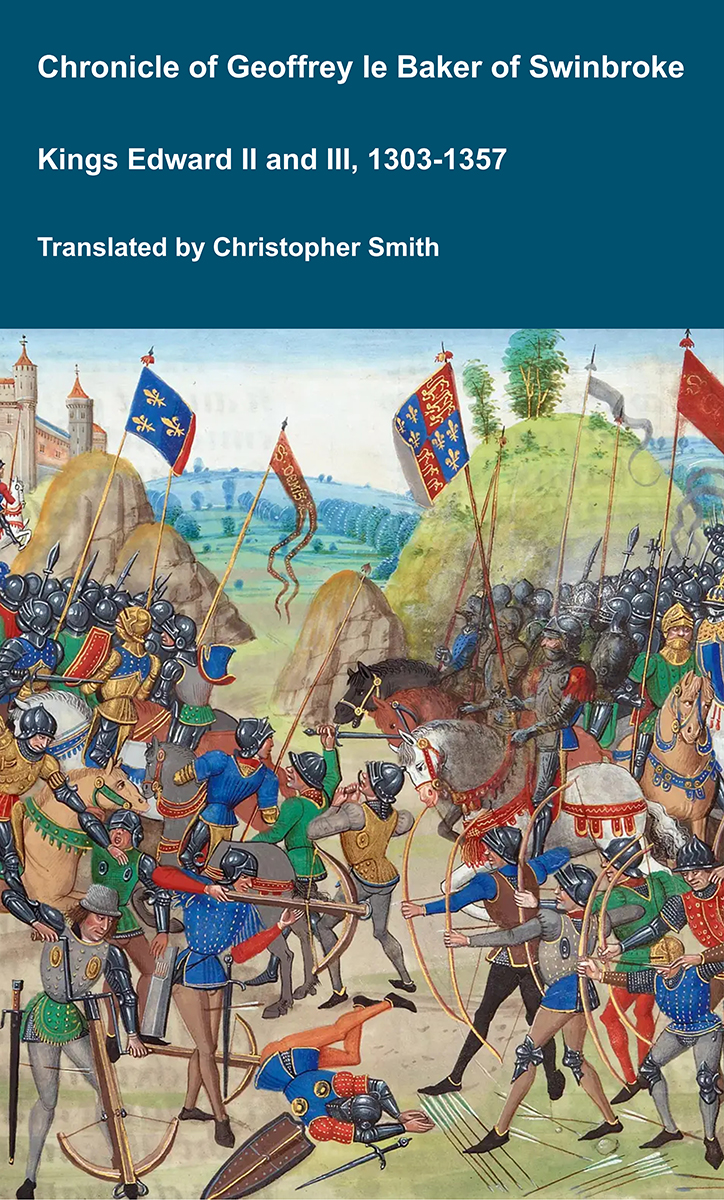
Around 11th November 1334 Edward Bohun drowned; see
Chronicle of Geoffrey le Baker of Swinbroke
In January 1362 Thomas Manny drowned in a well at Deptford, Kent.
On 5th November 1376 or 5th December 1376 John Arundell was drowned on the journey to Brittany. See Adam of Usk.
On 16th December 1379 John Fitzalan 1st Baron Arundel Baron Maltravers drowned. He was buried at Lewes Priory. John Fitzalan Baron Maltravers 2nd Baron Arundel succeeded 2nd Baron Arundel.
The Chronica Majora reports "... that during the panic of the storm, Sir John murdered those of his men who refused to make for shore for fear of being shipwrecked upon the rocks. Subsequently, after safely arriving on an island off the Irish coast, Sir John and his boat captain were swept back into the sea and drowned".
Thomas Banastre drowned.
On 25th November 1431 Walter Fitzwalter 7th Baron Fitzwalter drowned at sea in a storm whilst returning from France.
Elizabeth Fitzwalter Baroness Dinham 8th Baroness Fitzwalter succeeded 8th Baroness Fitzwalter. Note. Chronicle of Gregory 1432 states 24th November 1432 or, more specifically, "on Syn Kateryn ys eve" - St Katherine's feast day is 25 Nov.
In September 1475 Henry Holland 3rd Duke Exeter drowned on his return from France having probably been thrown over-board on the orders of King Edward IV of England.
In 1504 Edmund Knyvet drowned.
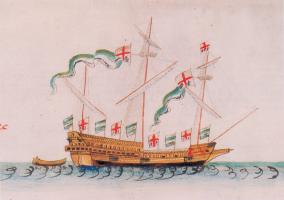
On 19th July 1545 during the Battle of the Solent the Mary Rose sank. Roger Grenville and George Carew drowned.
On 21st August 1557 Admiral John Clere drowned with around ninety of his men whilst attempting to storm the Bishop's Palace, Kirkwall.
In March 1585 Robert Douglas Master of Morton and Laurence Oliphant Master of Oliphant drowned. They had been exiled for his part in the Raid of Ruthven. The ship in which they were travelling was lost at sea.
On 8th September 1589 Jane Kennedy drowned when crossing the River Forth when the boat in which she was travelling between Burntisland and Leith. capsized.
In May 1592 Thomas "The Navigator" Cavendish drowned; lost at sea.
In August 1597 Walter St John drowned at Castle Cornet, Guernsey.
In April 1599 William Fitzgerald 13th Earl of Kildare drowned. Gerald Fitzgerald 14th Earl of Kildare succeeded 14th Earl Kildare. Elizabeth Nugent Countess Kildare by marriage Countess Kildare.
On 3rd December 1614 brothers John Sheffield, Edmund Sheffield and Philip Sheffield were drowned whilst attempting to cross the flooded River Ouse at the Whitgift Ferry, East Yorkshire.
On 15th December 1619 Thomas Butler Viscount Thurles drowned accidentally at Skerries, Anglesey having been sent to England to answer charges of having garissoned Kilkenny Castle, Kilkenny, County Kilkenny.
On 28th April 1625 Henry Montagu drowned after having fallen into a pond swelled by heavy rain. Some sources, including the local guidebook, say he was chasing an orange. He was buried at All Saints Church, Barnwell.
On 28th October 1628 Richard Preston 1st Earl Desmond was drowned whilst travelling between Dublin and Holyhead, Anglesey.
On 1st January 1629 Frederick Henry Palatinate Simmern drowned. He was on his way to Amsterdam to see the captured Spanish treasure fleet there and drowned crossing the Haarlemmermeer.
On 20th February 1640 Essex Devereux drowned when attempting to cross the River Teme with a friend. He was buried at St Edburga's Church, Leigh.
In 1641 Charles Berkeley drowned.
In 1648 Philip Mainwaring drowned.
The Battle of St Neots on 10th July 1648 was a skirmish during the Second English Civil War at St Neots in Cambridgeshire. A Royalist force led by Henry Rich 1st Earl Holland, who was captured, and Colonel John Dalbier, who was killed, was defeated by a hundred veteran troops from the New Model Army, commanded by Colonel Adrian Scrope.
Kenelm Digby drowned whilst attempting to cross the River Great Ouse.
In September 1652 Peyton Carteret and Prince Maurice of the Palatinate drowned in the Virgin Islands Caribbean when HMS Defiance sank.
In 1655 James Hamilton 3rd Baron Hamilton of Strabane drowned in the River Mourne near Strabane. George Hamilton 4th Baron Hamilton of Strabane succeeded 4th Baron Hamilton of Strabane.
On 5th December 1657 John Reynolds was drowned when the ship on which he was sailing was wrecked on the Goodwin Sands when travelling to England from Mardyke Fort; see Archives of Venice and State Papers Commwealth, page 213. By his will, which was disputed, Reynolds left the manor of Carrick to his brother Robert, and his other lands in England and Ireland to James Calthorpe, the husband of his sister Dorothy. On 20th July 1659 the House of Commons declared the will valid, and ordered Robert Reynolds to be given possession of Carrick
On 15th December 1657 Richard Clifton drowned.
In 1658 Nathaniel Dummer drowned when playing alone in a canoe.
Before 1st February 1664 Robert Bowyer drowned.
On 21st November 1664 Theophilus Wray drowned. He was buried at Winteringham, Lincolnshire.
On 5th June 1669 Robert Brooke drowned at Avignon whilst bathing in the River Rhône.
In December 1672 Charles Stewart 6th Duke Lennox 3rd Duke Richmond drowned at Elsinor. Duke Lennox, Duke Richmond, Earl March, Earl Lichfield. Baron Stuart extinct. Katherine Stewart succeeded 7th Baroness Clifton of Leighton Bromswold in Huntingdonshire.
On 25th March 1675 Edward Brabazon 2nd Earl Meath drowned whilst travelling from Ireland to England. William Brabazon 3rd Earl Meath succeeded 3rd Earl Meath, 4th Baron Ardee.
In September 1678 Humphrey Ferrers drowned in the River Trent.
On 6th May 1682 The Gloucester sank during a strong gale when it struck a sandbank twenty-eight miles off Great Yarmouth, Norfolk on a journey from Portsmouth to Edinburgh. Of the estimated 330 people on board it is believed between 130 and 250 sailors and passengers perished.
The Duke of York [the future King James II] and John Churchill 1st Duke of Marlborough were rescued in the ship's boat.
Robert Ker 3rd Earl Roxburghe drowned. Robert Ker 4th Earl Roxburghe succeeded 4th Earl Roxburghe.
John Hope of Hopetoun drowned. He gave up his seat in a lifeboat to the future King James II of England Scotland and Ireland for which his son was rewarded with an Earldom twenty-one years later when he came of age.
Richard Hill drowned.
The pilot James Ayres was blamed for the disaster. The Duke of York wished him to be hanged immediately. He was court-martialled and imprisoned.
On 11th May 1685, despite the reprieves Margaret Wilson and Margaret McLachlan were drowned at Wigtown, Wigtownshire on the orders of Robert Grierson 1st Baronet, for refusing to swear an oath declaring James II and VII as head of the church.
On 9th November 1689, possibly 5th December 1690 Thomas Howard drowned whilst travelling from England to France. He was due to be attainted by process of outlawry, but since he died before his outlawry was formally pronounced, his brother, Henry Howard 7th Duke of Norfolk, argued that the attainder was erroneous and secured a writ of error to reverse it.
In 1693 Admiral Francis Wheler drowned off Gibraltar.
In August 1702 James Howard drowned.
On 22nd October 1707 Rear-Admiral Cloudesley Shovell drowned.
In 1710 John Foley drowned.
On 25th April 1721 James Herbert drowned having fallen off a footbridge near his home whilst out walking. He is known to have suffered from apoplexy; his most recent occurrence being five days prior to his death.
On 27th January 1735 Reverend Robert Dymoke of Grebby Hall in Lincolnshire drowned in the Chequer Well, Lincoln. He was buried at Lincoln Cathedral.
Reverend Robert Dymoke of Grebby Hall in Lincolnshire: On or before 17th October 1699, the date he was baptised, he was born to Robert Dymoke of Scremby in Lincolnshire.
On 5th November 1743 Erasmus Philipps 5th Baronet drowned in the River Avon after his horse was frightened by pigs. He was unmarried. John Philipps 6th Baronet succeeded 6th Baronet Philips of Picton Castle.
In 1744 Archibald Hamilton drowned.
After 1751 George Rodney Brydges drowned in a stream in his garden.
On 18th December 1755 John Hamilton drowned in Portsmouth Harbour. He had returned from his first command following his marriage to Harriet Craggs. Despite the weather being stormy he set out in a small boat for shore. The boat was overturned throwing all nine men into the rough water. Some of the men caught hold of the bottom of the upturned boat and waited for help to come from shore. Hamilton, confident in his swimming skills, swam around in the water – reportedly for twenty minutes – "exhorting the men to resignation in case they could not save themselves and, at the same time, encouraging them to exert their strength to preserve life". Along with two of his men, the Captain drowned before help arrived. One newspaper reported that, "The Loss of this Hon. Gentleman is great, he being much esteem'd for his Naval Abilities and exemplary Piety, (having Divine Service perform'd twice a Day at Sea to the Ship's Company) to whom he was a Father; his whole Behaviour was uniform and shew'd both the Christian and Gentleman." Hamilton's portmanteau was retrieved from the water by his footman (one of the six rescued men) and carried to shore. A "Gentleman" at Portsmouth set out immediately for London, with said portmanteau, to inform Harriot "in the discreetest manner possible" of her husband's death.
On 13th November 1760 George Tollemache drowned on a voyage to Lisbon after falling from the mizzen topmast head of HMS Modeste.
On 16th December 1776 William Tollemache drowned when HMS Repulse sank in a hurricane off Bermuda.
On 16th September 1777 Simon Harcourt 1st Earl Harcourt drowned in a well at Nuneham House, Oxfordshire whilst trying to rescue his dog. George Harcourt 2nd Earl Harcourt succeeded 2nd Earl Harcourt of Stanton Harcourt, 3rd Viscount Harcourt of Stanton Harcourt in Oxfordshire. Elizabeth Venables-Vernon Countess Harcourt by marriage Countess Harcourt of Stanton Harcourt.
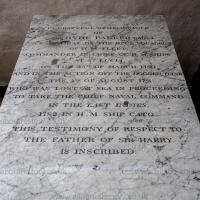
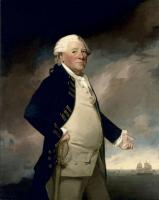
After 10th July 1782 Vice-Admiral Hyde Parker 5th Baronet was lost at sea in proceeding to take the Chief Naval Command in the East Indies. Harry Parker 6th Baronet succeeded 6th Baronet Parker of Melford Hall in Suffolk. Monument at
Vice-Admiral Hyde Parker 5th Baronet: On 1st February 1714 he was born to Reverend Hyde Parker. On 10th July 1782 Reverend Henry Parker 4th Baronet died unmarried. Vice-Admiral Hyde Parker 5th Baronet succeeded 5th Baronet Parker of Melford Hall in Suffolk.
Harry Parker 6th Baronet: In 1735 he was born to Vice-Admiral Hyde Parker 5th Baronet. In 1775 he and Bridget Cresswell were married. In 1786 Harry Parker 6th Baronet bought Melford Hall, Long Melford.
On 17th September 1783 Richard Eyre Cox drowned at his home in Dunmanwy County Cork. During an afternoon boating on a nearby pond. He was accidentally knocked out by an oar and subsequently drowned.
In 1788 Gerald Fitzgerald drowned.
In October 1793 George Samuel Browne 8th Viscount Montagu was drowned whilst trying to ride the Rhine Falls, Schaffhausen with his friend Charles Sedley Burdett with whom he was travelling. Given the Rhine Falls is 150 feet wide and 75 feet high, attempting to ride the falls in a fishing boat was not one of George's best ideas. Reverend Mark Browne 9th Viscount Montagu succeeded 9th Viscount Montagu.
On 29th June 1794 George Waldegrave 5th Earl Waldegrave drowned whilst swimming in the River Thames near Eton. John James Waldegrave 6th Earl Waldegrave succeeded 6th Earl Waldegrave, 7th Baron Waldegrave Chewton Somerset, 10th Baronet Waldegrave of Hever Castle.
On 14th September 1803 Henry Fitzgerald drowned at sea at Civitavecchia.
In January 1804 Captain Henry Reveley Mitford drowned during the 1804 Sinking of York.
On 26th January 1805 Captain William Henry Ricketts aka Jervis drowned at Brest when the four-oared gig in which he and Captain Patrick Campbell of the Doris had set off to attend Vice-Admiral Sir Charles Cotton aboard his flagship San Josef capsized. Campbell survived by clinging to an oar, but Jervis died despite the valiant efforts of his coxswain who stayed with his captain until he could no longer save him.
On 4th April 1808 Philip Yorke drowned in a storm off Memel in a ship called the Agatha of Lübeck.
On 12th September 1808 Charles Herbert drowned in Gijon Harbour whilst a volunteer in the Peninsular War. His widow survived him, without remarrying, sixty-eight years.
On 22nd January 1809 Edward William Waldegrave drowned at sea off Falmouth, Cornwall.
In 1810 John Ashburnham was drowned whilst returning from Portugal.
In 1812 Henry Adam Lennox drowned.
In 1812 Thomas Wybergh aka Lawson drowned off the coast of Madeira.
On 7th July 1815 two sons of William Stephen Poyntz and Elizabeth Mary Brownedrowned at Bognor Regis, West Sussex.
On 8th July 1822 Percy Bysshe Shelley drowned. He was returning on the Don Juan with Edward Williams from a meeting at Livorno with Leigh Hunt and Byron to make arrangements for a new journal, The Liberal. The boat was sunk is a storm. Shelley's badly decomposed body washed ashore at Viareggio ten days later and was identified by Trelawny from the clothing and a copy of Keats's Lamia in a jacket pocket. On 16th August 1822 his body was cremated on a beach near Viareggio and the ashes were buried in the Protestant Cemetery of Rome. The cremation was attended by George "Lord Byron" 6th Baron Byron. His wife Mary Godwin aka Shelley did not attend.
On 8th January 1826 Vere Fane drowned when the brig of war Algernine sank off Hydra in the Grecian Archipelago with the loss of all on board.
In 1828 William Pitt Canning drowned at Madeira.
On 23rd January 1831 Horace Beckford aka Pitt-Rivers 3rd Baron Rivers drowned himself in The Serpentine, Hyde Park having reneged on a pledge to never play cards again. George Pitt-Rivers 4th Baron Rivers succeeded 4th Baron Rivers of Sudeley Castle in Gloucestershire.
On 5th May 1831 Admiral Joseph Sydney Yorke drowned when the boat in which he was travelling was hit by lightning. He was buried at St Andrew's Church, Wimpole.
Large grey marble panel with achievement of arms, descriptive tablet with naval trophies and emblems, and a female mourner, all in white marble.

In March 1841 Fitzroy George Charles Gordon-Lennox drowned when the SS President was lost at sea with all 136 on board drowned.
On 8th July 1841 Thomas Peregrine Courtenay drowned at Torquay, Devon.
On 27th April 1842 Clement Royds drowned in the River Mersey. He was working at the time with his twin brother Henry in the offices of their uncles, Molyneux Taylor, merchants. He had joined a boat club, and one day he and his cousin Alfred Littledale with three others were taking a four across the river. It was a rough day and they were swamped. They turned the boat over, thinking they could cling better to it that way, but only the two holding on to the bow and stern were saved. Clement was last seen lying across the boat, but was washed off. His mother in a letter to her son Tom is Australia said:
"His body was found a fortnight after the calamity, he was not disfigured at all and his hair looked so beautiful in full curl all over his head, and his dress so nice. His grandfather's ring was in his pocket, which I am going to send you, as a remembrance of your Grandfather and more especially of your poor brother's untimely fate, and when you look at it, think should he have been cut off in an unprepared state, what his agonies of mind must have been, as well as his body when he found he was about to face his Maker, and let it be a warning to you."
He was buried at St Mary's Church, Walton-on-the-Hill, the burial place of the Molyneux family, and there is a window in Brereton church "To the glory of God, and in memory of Clement Royds, died April 27th 1842 aged 20 years".
In 1843 James Marlay drowned. He was buried at St Mary's Church Twickenham, Richmond.
On 11th March 1844 Edward Nicolls, a naval officer in command of the HMS Dwarf, drowned in the Shannon estuary while rescuing people in distress. His wife of two months Mary Ellen Peacock, who was with Edward aboard the vessel, had encouraged him to undertake the rescue attempt in which he lost his life. She was pregnant at the time of her husband's death.
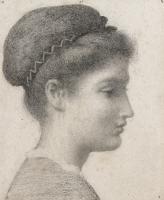
On 10th November 1845 Charlotte Lucy Beatrix Egerton drowned in Rostherne Mere, Tatton the evening before her wedding day, or possibly died after a short illness. Her death certificate states "Bronchitis and exhaustion after 12 days" - information provided by CB Newham.
On 16th March 1862 Henry Matthew Burrell drowned in the Bay of Melbourne during a squall. Memorial window at the Chapel of St John the Evangelist, Bolton.
On 27th January 1870 George Hamilton-Gordon 6th Earl Aberdeen drowned. Travelling from Boston to Melbourne on the Hera, Lord Aberdeen was washed overboard during a violent storm and drowned. John Hamilton-Gordon 1st Marquess of Aberdeen and Temair succeeded 7th Earl Aberdeen.
On 7th September 1870 Lewis Gordon drowned being lost at sea on board the Captain.
On 31st January 1880 HMS Atlanta, serving as a training ship, set sail from the Royal Naval Dockyard in Bermuda for Falmouth, England. It was presumed that she sank in a powerful storm which crossed her route a couple of weeks after she sailed. The search for evidence of her fate attracted worldwide attention, and the Admiralty received more than 150 telegrams and 200 personal calls from anxious friends and relatives after it was announced that the ship was missing, and possibly lost.
Philip Ernest Fisher was presumed drowned.
On 12th February 1892 Harold Lewis Henry Everard ffolkes was drowned whilst attempting to rescue a friend at King's Weir Oxford. Memorial in the Church of St Mary, Hillington.
Harold Lewis Henry Everard ffolkes: he was born to Reverend Henry Edward Browne ffolkes.
On 25th May 1894 John Rogers 9th Baronet drowned in a lake. He was unmarried. He was buried at St Michael's Church, Cornwood. Reverend Edward Rogers 10th Baronet succeeded 10th Baronet Rogers of Wisdome in Devon.
On 7th November 1901 Frank Alexander Garforth drowned while in command of the guardship H.M.S. Hotspur at Bermuda. He was found to have fallen into the sea, but "no evidence exists to shew how he got there." He was buried at the Royal Naval Cemetery, Ireland Island, Sandys Parish, Bermuda.
On 1st December 1911 Henry de la Poer Beresford 6th Marquess Waterford drowned. John Beresford 7th Marquess of Waterford succeeded 7th Marquess Waterford.
Report from an unknown newspaper: "With much regret we have to record the death, under tragic circumstances, of the Marquis of Waterford. For some time past he had been staying at his Irish seat at Curraghmore, and it is believed that it was a desire to have a look at his pack of hounds before returning to dinner that led to his being drowned in the river which flows through the demesne. The Curraghmore pack is one of the finest in Ireland, and the Marquis took an extraordinarily interest in keeping it at its best. Only a few weeks ago he was amongst the exhibitors at the Clonmel Hunt Puppy Show, one of the three shows of the kind held in the country, and his puppies carried off every prize except one. On Friday he enjoyed a capital day's hunting in the Curraghmore district, and returned home in excellent health and spirits. Towards evening he went for a walk to a part of the estate where some forestry experiments are being carried out. This was two miles distance from Curraghmore House. It was then four o'clock. Darkness fell soon afterwards, and there was a heavy fog during the earlier part of the night. It is believed that on his way home Lord Waterford visited the kennels. After leaving them he would have had to cross a small tributary of the Suir known as the Clodagh. Ordinarily it is but a shallow stream running through the estate, but after the recent rains it was much swollen. At the spot where the body was found on Saturday morning there were, it is stated, four feet of water. The bottom of the river at that point is filled with boulders. It is surmised that, while crossing, or about to cross, the Clodagh, Lord Waterford slipped and fell head foremost into the stream, his head striking the stones at the bottom and rendering him unconscious. When the dinner-hour passed and he had not returned, messengers from Curraghmore House were sent to look for him. Later others joined in the search, until a large number of the house staff and some of the tenantry were engaged in making a thorough search of the estate. Nothing, however, was discovered, although the search parties remained out all night. On Saturday morning a huntsman, crossing the little bridge near the kennels, saw the body on the stones at the bottom of the stream. Assistance was obtained, and it was taken out and carried to Curraghmore House, where medical examination showed that death had taken place several hours previously. On Saturday evening an enquiry into the circumstances of the death was held by the Deputy-Coroner for the County of Waterford, Mr J. Murphy, J. P. This served to throw some light on the manner in which the late Marquis came by his death. It was proved that it was dark when he reached the spot at which the body was found. A footmark on the steep riverbank showed that he had wandered slightly from the beaten track, that he must have fallen down the bank, and have been rendered unconscious. Lady Waterford, who was in London, at once prepared to start for Curraghmore on receipt of the news of her bereavement. Her ladyship left London shortly after seven o'clock in the evening. Sympathetic reference to the sad event was made yesterday in several churches in the district. The funeral will take place at Curraghmore on Wednesday. Full military honours will be accorded. A special memoir of the late Marquis will be found on page 9."
On 15th April 1912 Tyrell William Cavendish drowned during the Sinking of the Titanic. His wife Julia Florence Siegel and her maid Ellen survived the disaster. She later recalled: "I was in the second boat. My husband kissed me and bade me remain in the boat, declaring he was all right. There was no light, but the sky was clear. Bright skies illuminated the scene of the disaster. Just as the lifeboat was lowered I again kissed my husband. He assured me he would rather stay on the boat, thinking he would be safe... As the boat reached the water there were twenty-three women in the boat and two men to guide and row her. Many of us women implored men on the upper deck to come to our succour, but most of them said they could not row. One man there was about to get in the boat, but a sailor, after questioning him threw him aside. A Canadian, who stated that he could row turned to a group of men on the deck who were watching the proceedings and said: 'I can row, but if there is room for one more let it be a woman.'"

On 7th May 1915 German submarine U-20 hit the Lustitania with a torpedo on at 14:10, 20km off the Old Head of Kinsale, Ireland, leading to her sinking about 18 minutes later. There were 763 survivors out of the 1,960 people on board.
Alfred Gwynne Vanderbilt presumed drowned. He was seen giving his lifejacket to a young woman and her child despite his not being able to swim.
On 30th December 1915 the SS Persia was torpedoed near Crete without warning by the German U-boat U-38, commanded by Max Valentiner. It sank in five to ten minutes, killing 343 of the 519 aboard.
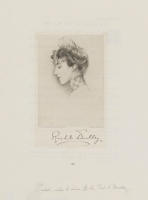
John Douglas-Scott-Montagu 2nd Baron Montagu of Beaulieu survived. His mistress Eleanor Thornton drowned.
On 10th October 1918 Alexandra Phyllis Hamilton drowned whilst travelling from Dún Laoghaire, County Dublin to Holyhead, Anglesey aboard the mailboat RMS Leinster that was torpedoed and sunk by German submarine UB-123.
On 26th June 1920 Rachel Anne Gurney Countess Dudley drowned at Screebe House, Connemara. She had left the house alone to swim in the sea-lake from which her body was later recovered.
On 10th July 1921 William Craven 4th Earl Craven drowned having fallen overboard during Cowes Week. His body washed ashore two days later. William Craven 5th Earl Craven succeeded 5th Earl Craven in Yorkshire, 5th Viscount Uffington, 11th Baron Craven of Hamstead Marshall in Berkshire. Mary Williamina George Countess Craven by marriage Countess Craven in Yorkshire.
On 17th June 1947 Francis Christopher Fane drowned when taking his ex-Admiralty motor yacht Aarla, originally the Hecate, from Kyles, Bute to Lowestoft for a refit. There was an explosion onboard which caused the loss with all hands near Ailsa Craig. His body was never recovered. A board of inquiry later found the vessel to have been unseaworthy and ordered to pay £300 costs.
James Hyde drowned.
Around Robert Allgood drowned whilst at Eton College in the River Thames.