1400-1414 Epiphany Rising and Rebellions Against Henry IV is in 15th Century Events.
Around April 1400 the newly crowned King Henry IV of England [aged 32] created a number of new Garter Knights, including his children, to replace those of who had been executed during the Epiphany Rising.
95th John Lancaster 1st Duke Bedford [aged 10].
96th Humphrey Lancaster 1st Duke Gloucester [aged 9].
97th Thomas Fitzalan 10th Earl of Surrey 5th or 12th Earl of Arundel [aged 18].
98th Thomas Beaufort 1st Duke Exeter [aged 23].
On 2nd March 1401 William Sawtry aka Salter was burned at the stake for heresy at Smithfield [Map]. He was the first follower of Lollardy to die for his beliefs.
Annals of Kings Richard II and Henry IV. In this Parliament, at the request of the Commons, the statute1 concerning the Lollards was issued, so that wherever they were discovered preaching their corrupt doctrine, they should be seized and handed over to the bishop of the diocese. And if they presumed to defend their opinions stubbornly, they should be degraded and committed to secular judgment. Accordingly, a certain man2, a priest by rank, but execrable in conduct and doctrine, was captured while Parliament was still in session and was presented to the Archbishop of Canterbury. When he was questioned about his doctrine, since he steadfastly asserted his opinions and held the archiepiscopal authority in little regard, the archbishop ordered him to be taken into custody, in case he might perhaps decide to draw back. But when there was no hope of his correction, the archbishop, having summoned men from all orders, publicly degraded him. To him the wretch replied with the greatest arrogance: "Now," he said, "your malice is complete. What further harm will you be able to inflict on me?" "I," said the archbishop, "commit you to secular judgment." And he said to the knight marshal: "Take him yourselves, so that he may be punished according to your law." He was led to Smithfield and there, with many looking on, was burned.
In hoc Parliamento, ad instantiam communitatis, editum est Statutum de Lollardis, ut ubicunque deprehenderentur suam pravam dogmatizare doctrinam, caperentur, et Episcopo diœcesano traderentur; et si præsumerent opiniones defendere pertinaciter, degraderentur, et committerentur judicio sæculari Unde quidam, sacerdos gradu, sed moribus execrabilis, et doctrina, durante adhuc Parliamento, captus est, et Archiepiscopo Cantuariensi est præsentatus. Qui interrogatus de doctrina sua, cum constanter assereret opiniones suas, et auctoritatem Archiepiscopalem parvipenderet, jussit eum in custodiam recipi, si forte resilire decerneret. Sed cum nulla spes esset correctionis suæ, Archiepiscopus accitum ab omnibus ordinibus publice degradavit. Cui ganeo, cum superbia summa, respondit,— "Jam," inquit, "consummata est malitia tua. Quid ultra damni poteris inferre mihi?" — "Ego," inquit Archiepiscopus, "committo te judicio sæculari," et militi marescallo dixit, —"Accipite eum vos, ut secundum legem vestran puniatur." Qui ductus est ad Smythefeld, et ibidem, multis spectantibus, est combustus.
Note 1. On 10th March 1401 King Henry IV's Royal Assent was given to "De heretico comburendo", by which heretics were to be burned at the stake in reaction to the Lollard movement. The request "... the said church would be injured or gravely oppressed or even perturbed by certain perverse doctrines, or wicked, heretical or erroneous opinions; nevertheless, various perfidious and perverse people of a certain new sect, believing damnable things of the said faith, the sacrament of the church, and its authority, rashly usurping the office of preacher, contrary to divine and ecclesiastical law, perversely and maliciously preach and teach these days, publicly and secretly, under simulation of the colour of sanctity, various new doctrines and wicked, heretical and erroneous opinions, contrary to this same faith and the holy decrees of the sacrosanct church..." The answer: "and they shall cause these same persons to be publicly burnt in a high place; and may punishment of this sort strike fear into the minds of others."
Note 2. The first person to be burned at the stake for Lollardy was William Sawtry aka Salter on 2nd March 1401.
On 10th March 1401. Henry IV's [aged 33] Royal Assent was given to "De heretico comburendo", by which heretics were to be burned at the stake in reaction to the Lollard movement.
The request "... the said church would be injured or gravely oppressed or even perturbed by certain perverse doctrines, or wicked, heretical or erroneous opinions; nevertheless, various perfidious and perverse people of a certain new sect, believing damnable things of the said faith, the sacrament of the church, and its authority, rashly usurping the office of preacher, contrary to divine and ecclesiastical law, perversely and maliciously preach and teach these days, publicly and secretly, under simulation of the colour of sanctity, various new doctrines and wicked, heretical and erroneous opinions, contrary to this same faith and the holy decrees of the sacrosanct church ..."
The answer: "and they shall cause these same persons to be publicly burnt in a high place; and may punishment of this sort strike fear into the minds of others."
On 2nd March 1401 William Sawtrey was the first heretic to be burned although his burning pre-dated the statute.
On 22nd June 1402 Owain Glyndŵr Prince Wales [aged 43] defeated the army of Edmund Mortimer [aged 25] at Knighton, Radnorshire [Map], who was captured, at the Battle of Bryn Glas.
King Henry IV of England [aged 35] made no attempt to ransom Mortimer and, consequently, Mortimer changed his allegiance, and subsequently married Owain's daughter.
Walter Devereux [aged 41] died from wounds.
Annals of Kings Richard II and Henry IV. At the same time, Owain Glyndŵr, with a band of Welshmen, intending his accustomed raids, provoked almost all the knighthood of Herefordshire and the neighbouring counties to arms. Therefore the knights and esquires, under the leadership of Edmund Mortimer [aged 25]1, went out to meet Owain, namely the strongest men of the region, who feared nothing more than the flight of the Welsh. But alas, through treachery, those who had hastened to conquer were unexpectedly defeated [on 22nd June 1402], their own archers turning their hands against their own side and killing those with whom they ought to have stood. And so more than eleven hundred of our men were killed there, and Edmund Mortimer was captured, along with certain other knights, shield-bearers, and valets, whose names we do not have. There a crime unheard of for ages was perpetrated. For after the battle the Welsh women came to the bodies of the slain and, cutting off their genitals, placed the private member in each man’s mouth, with the testicles hanging between the teeth over the chin, and pressed their severed noses into their buttocks. Nor did they allow the bodies of the dead to be committed to burial without payment and a heavy ransom. There were some who asserted that Edmund Mortimer had not been captured unwillingly, but by agreement and premeditated treachery. Their opinion was afterwards strengthened by Edmund’s own sufficiently infamous association with Owain, as will appear below.
Per idem tempus, Owenus Glendor, cum turba Cambrensium, assuetis intendens irruptionibus, pene totam militiam Herefordensis et Comitatuum provocavit ad arma. Exiverunt ergo, Duce Edmundo de Mortuo Mari, milites et armigeri Oweno in obviam; valentiores, videlicet, regionis, qui nihil majus metuebant quam Cambrorum fugam. Sed proh dolorproditione mediante, qui vicisse properaverant, insperato victi sunt, propriis sagittariis in suos manus vertentibus, et occidentibus cum quibus stare debuissent. Sicque perempti sunt ibidem plures quam mille centum de nostratibus, et Edmundus Mortymer captus est, cum quibusdam aliis militibus et seutiferis, atque valectis, quorum nomina [non] tenemus. Ibique perpetratum est facinus, a sæculis inauditum: nam fœminæ Wallencium, post conflictum, accesserunt ad corpora peremptorum, et, abscindentes membra genitalia, in ore cujuslibet posuerunt membrum pudendum, inter dentes testiculis dependentibus, supra mentum; et nasos abscissos presserunt in culis eorundem, Nec passæ sunt corpora mortuorum sepulturæ commendari, sine pretio, gravique redemptione, Extiterunt qui asserebant Edmundum Mortimer non invitum fuisse captum, sed ex condicto, præmeditataque proditione. Quoruma sseveravit opinionem ipsius expost Edmundi cum Oweno satis infamis conversatio, ut inferius patebit.
Note 1. Edmund Mortimer, 1376-1409, younger son of Edmund Mortimer, 3rd Earl of March, and Philippa, daughter of Lionel of Antwerp, son of King Edward III.
On 22nd June 1402 George Dunbar 10th Earl March [aged 64] commanded a force of around 200 men from the Berwick garrison who defeated a Scottish army of around 400 men at Nisbet. Patrick "Younger" of Hailes Hepburn [aged 50] was killed. John Cockburn, Thomas Haliburton, John Haliburton and Robert Lawedre were captured.
Annals of Kings Richard II and Henry IV. At that time the Scots, applying themselves to their customary robberies, entered the West March with an armed force. When they had taken plunder, done many evils, and planned to return, they were surrounded and defeated1 by the Bishop of Carlisle and other faithful and worthy men of the country, who had appointed as their leader, in the name of captain, the son of Lord Thomas Percy, who had died in Spain, and who was the son of Lord Henry Percy, Earl of Northumberland. The Scots were overcome and for the most part captured.
Eo tempore, Scoti, consuetis dantes operam latrociniis, cum armata manu Westmarchiam intraverunt; qui cum prædas egissent, multaque mala fecissent, et rediisse disposuissent, per Episcopum Karleolensem, [et] alios fideles et probos patriæ, qui sibi constituerant, ducis nomine, filium Domini Thomæ Perey, qui obierat in Hispania, (qui fuit filius Domini Henrici Percy, Comitis Northumbriæ), cireumventi sunt, et superati, et ex maxima parte captivati.
Note 1. The Battle of Nesbit Moor was fought on 22nd June 1402 twenty kilometres west of Berwick-upon-Tweed. Scotichronicon: "After the departure from Scotland of the Earl of March, as was said before, the English, joined by Scots who were intimate with that earl and knew very well the weakness and secrets of our land, inflicted many evils on Scotland. To repel their malice from the opposite side, since at that time the earldom of March and the inhabitants of the March favoured the said earl, their native lord, the magnates and nobles of Lothian, with the counsel and support of the Earl of Douglas, who at that time occupied the castle of Dunbar together with the earldom, agreed among themselves that certain of the greater men of the country, the principal lords, should each in turn make an expedition, gather an army, and attack England with hostile assaults. One of them, in his turn, would take command and take upon himself the name of the raid. The others would also assist him and obey him as captain. Therefore, before the others, the noble and warlike man Lord John Haliburton of Dirleton began, and manfully proceeded with his companions into England at the appointed time, plundering and setting fires, and returned safely to his own country with his men. Next, the second raid was led by a high-spirited knight and warlike champion, Patrick Hepburn of Hailes the younger, his father being left at home because of his very great age, since he was eighty years old and more. He conducted himself in every respect praiseworthily in England, but because he was of a lofty spirit and desired the name of his prowess to be spread abroad, he remained there, against the counsel of his fellow knights, one full day longer than was proper or had been appointed. Meanwhile, therefore, the said Earl of March, with warriors and with the power of the Earl of Northumberland, strongly reinforced by his own Scots, came upon our Scots at Nesbit Moor in the March, on 22 June in the year of the Lord 1402. There they fought fiercely on both sides until the less worthy part was assigned to the English. But at last Lord George Dunbar, son and heir of the said earl, arrived with thirty horses, each carrying two riders. Unexpectedly and recently arriving, they charged into our men, who were worn out by the earlier battle and fatigue, and easily obtained victory over them. There the noble captain Patrick Hepburn aforesaid was immediately killed, together with many worthy men, many of whom, being wounded, died afterwards. Others, restored by the skill of physicians, eventually recovered. There were captured in that place famous knights, namely John and Thomas Haliburton, Robert Lauder of the Bass, John and William Cockburn, with many worthy esquires, and almost the flower of the knighthood of a great part of Lothian. Lords John and Thomas Haliburton, after giving hostages and reaching home, died of dysentery."
Scotichronicon Book 15 Chapter 13. The Battle of Nesbit Moor
After the departure from Scotland of the Earl of March, as was said before, the English, joined by Scots who were intimate with that earl and knew very well the weakness and secrets of our land, inflicted many evils on Scotland. To repel their malice from the opposite side, since at that time the earldom of March and the inhabitants of the March favoured the said earl, their native lord, the magnates and nobles of Lothian, with the counsel and support of the Earl of Douglas, who at that time occupied the castle of Dunbar together with the earldom, agreed among themselves that certain of the greater men of the country, the principal lords, should each in turn make an expedition, gather an army, and attack England with hostile assaults. One of them, in his turn, would take command and take upon himself the name of the raid. The others would also assist him and obey him as captain. Therefore, before the others, the noble and warlike man Lord John Haliburton of Dirleton began, and manfully proceeded with his companions into England at the appointed time, plundering and setting fires, and returned safely to his own country with his men. Next, the second raid was led by a high-spirited knight and warlike champion, Patrick Hepburn of Hailes the younger, his father being left at home because of his very great age, since he was eighty years old and more. He conducted himself in every respect praiseworthily in England, but because he was of a lofty spirit and desired the name of his prowess to be spread abroad, he remained there, against the counsel of his fellow knights, one full day longer than was proper or had been appointed. Meanwhile, therefore, the said Earl of March, with warriors and with the power of the Earl of Northumberland, strongly reinforced by his own Scots, came upon our Scots at Nesbit Moor in the March, on 22 June in the year of the Lord 1402. There they fought fiercely on both sides until the less worthy part was assigned to the English. But at last Lord George Dunbar, son and heir of the said earl, arrived with thirty horses, each carrying two riders. Unexpectedly and recently arriving, they charged into our men, who were worn out by the earlier battle and fatigue, and easily obtained victory over them. There the noble captain Patrick Hepburn aforesaid was immediately killed, together with many worthy men, many of whom, being wounded, died afterwards. Others, restored by the skill of physicians, eventually recovered. There were captured in that place famous knights, namely John and Thomas Haliburton, Robert Lauder of the Bass, John and William Cockburn, with many worthy esquires, and almost the flower of the knighthood of a great part of Lothian. Lords John and Thomas Haliburton, after giving hostages and reaching home, died of dysentery.
Post recessum comitis Marchie de Scocia ut premittitur Anglici Scotis familiaribus [ipsius] comitis qui infirmitatem et secreta terre nostre peroptime cognoscentes associati [multa] mala Scocie intulerunt. Ad quorum maliciam ex adverso propulsandam‘ quia pro tunc comitatus Marchie et inhabitatores [Marcie] favebant dicto comiti domino suo nativo, proceres et nobiles Laudonie de consilio [et]? supportacione comitis de Douglas qui pro tunc occupabat castrum de Dunbar cum [comitatu] inter se condixerunt ut certi de majoribus patrie principaliores domini singillatim expedicionem facerent et exercitum congregarent ac Angliam hostibus assultibus impugnarent. Quorum unus pro sua vice preesset, et nomen equitatus sibi sumeret. Cui eciam ceteri assisterent et sibi tamquam capitaneo obedirent. Incepit igitur ante alios nobilis et bellicosus vir dominus Johannes de Haliburton de Drilton et viriliter cum sociis ad terminum prefinitum in Angliam spoliando et conflagraciones faciendo processit, et salvus cum suis repatriavit. Consequenter secundo equitatui prefuit miles magnanimus et athleta bellicosus, Patricius de Hepburne de Halez junior, patre pre nimia senectute utpote octogenario et ultra domi relicto. Qui laudabiliter se per omnia habuit in Anglia; sed et quia alti cordis erat cupiens nomen sue. probitatis dilatari, contra consilium suorum commilitonum moratus est ibidem ulterius quam oportuit vel diffinitum fuerat per unum diem naturalem. Unde interim dictus comes Marchie cum belligeris et potestate comitis Northumbrie cum suis Scotis satis fortiter munitus pervenit nostros Scotos apud Nesbitmore in Marcia (xxii die junii anno domini m. cccc. [ii]) ubi acriter hinc inde conflixerunt donec indecentior pars Anglis deputata est. Sed tandem superveniens dominus Georgius de Dunbar filius et heres dicti comitis in xxx equis habentes [sic] singuli duos sessores, qui recenter ex insperato in nostros irruentes pre priore pugna et fatigacione contritos victoriam de facili de ipsis optinuere. Ubi statim interfectus fuit capitaneus nobilis Patricius de Hepburn premissus cum multis valentibus viris, quorum multi vulnerati postea moriuntur. Alii arte medicorum relevati tandem convaluerunt. Capti sunt enim ibi incliti milites videlicet Johannes et Thomas Haliburton, Robertus Lawedre de le Bass, Johannes et Willelmus Cokburn cum multis valentibus armigeris et quasi flos milicie magne partis Laudonie. Domini Johannes et Thomas Haliburton obsidibus datis postquam domi pervenerunt in profluvio ventris occubuerunt. Eodem anno fundata est capella Beate Marie Virginis solemniter voltata contigue ad partem australem chori monasterialis ecclesie Sancti Columbe de insula Emonia per industriam dominorum Richardi de Aberdouer prioris et Thome Crawford canonicorum eiusdem.
On 14th September 1402 Henry Percy 1st Earl of Northumberland [aged 60] and his son Henry "Hotspur" Percy [aged 38] lay in wait at Homildon Hill, Northumberland [Map] for the Scots to return from their laying waste to Northumberland. The Battle of Homildon Hill was a victory for the English forces whose longbowmen decimated the Scottish schiltrons. Henry Fitzhugh 3rd Baron Fitzhugh [aged 44] fought for the English.
John Swinton was killed.
Thomas Dunbar 2nd Earl of Moray [aged 31] and Henry Sinclair 2nd Earl Orkney [aged 27] were captured.
Archibald Douglas 1st Duke Touraine [aged 30] was wounded. King Henry IV of England [aged 35] forbade the ransoming of Scottish prisoners so that he could concentrate on the Welsh. By doing so he created a rift with the Percy family who subsequently defected to Owain ap Gruffudd Glyndŵr [aged 43].
William Stewart of Jedworth and Teviotdale [aged 46] was executed by Henry "Hotspur" Percy having been captured.
John Stewart 1st of Dalswinton and Garlies [aged 32] fought at the Battle of Homildon Hill.

The History of William Marshal was commissioned by his son shortly after William’s death in 1219 to celebrate the Marshal’s remarkable life; it is an authentic, contemporary voice. The manuscript was discovered in 1861 by French historian Paul Meyer. Meyer published the manuscript in its original Anglo-French in 1891 in two books. This book is a line by line translation of the first of Meyer’s books; lines 1-10152. Book 1 of the History begins in 1139 and ends in 1194. It describes the events of the Anarchy, the role of William’s father John, John’s marriages, William’s childhood, his role as a hostage at the siege of Newbury, his injury and imprisonment in Poitou where he met Eleanor of Aquitaine and his life as a knight errant. It continues with the accusation against him of an improper relationship with Margaret, wife of Henry the Young King, his exile, and return, the death of Henry the Young King, the rebellion of Richard, the future King Richard I, war with France, the death of King Henry II, and the capture of King Richard, and the rebellion of John, the future King John. It ends with the release of King Richard and the death of John Marshal.
Available at Amazon in eBook and Paperback format.
Annals of Kings Richard II and Henry IV. When morning came, the Scots, thinking that they had left the earl behind them, hurried with all speed, so that the English might not come upon them and seize them. But while they avoided Scylla, they fell into Charybdis, for those whom they had believed they had escaped, they saw drawn up in fine order against them. It was therefore necessary for them to halt and take a place for battle1. They chose a hill near the place into which our men had come. Our men, seeing that they had taken a hill, likewise took another hill, and so a valley separated the two sides. It was a very fine sight to behold, on one side the English, very well armed, with their archers, on the other the Scots with their bowmen, trusting in the protection of their armour, whose equipment shone like silver as the shafts of the sun struck it. Meanwhile there was returning from foraging a band of five hundred archers, who had gone out that night to bring in provisions. Seeing both armies standing on the hills with their banners unfurled, and finding themselves suddenly between them, they immediately sent out from among themselves a certain number of archers, to shoot against the Scottish formation and provoke them to come down. Some of the Scots came down and forced the archers who had been sent out to retreat. But when our men had multiplied, the Scottish bowmen, who had seemed to be pressing forward, were forced to turn their backs. Nor did the Scottish bowmen lack courage, for they too tried with all their strength to shoot their arrows against our men. Yet when they felt the heaviness, and the rainstorm, as it were, of arrows from our side, they fled. The Earl of Douglas, seeing the flight of his men, and not wishing to appear a deserter from the battle, took up his lance and came down impetuously with a company of his men, trusting in his own armour and that of his companions, and tried to rush upon the archers. Seeing this, the archers shot as they retreated, so heavily that they completely pierced the armed men, bored through helmets, pierced swords, split lances, and easily struck through every kind of armour. Douglas himself confessed to five wounds, notwithstanding his very secure and very costly armour. The rest of the Scots, who had not yet come down from the hill, turned back and prepared themselves for flight. Those who had engaged hand to hand with the archers, as stated above, were either captured by them or killed. Among them, the Earl of Douglas was captured. Those who escaped death were for the most part captured in flight. Many also who, in hurrying to flee, had got ahead of their companions, when they came to the River Tweed, not knowing the fords, were drowned by the force of the current, to the number, as is asserted, of five hundred. In all things, blessed be God, who gave us victory, not by the hand of nobles and lords, but through the agency of poor men and servants. For there was no lord, knight, or esquire among them all who moved a foot against the Scots until they had been broken by the archers, as I have said.
Mane facto, putantes Scoti Comitem a tergo liquisse, sub omni festinatione! cucurrerunt, ita ne Angli supervenirent et eos apprehenderent. Sed dum vitant Scyllam, incidunt in Charybdim; nam quos fugisse crediderant, vident pulchre disposuisse acies contra illos. Oportuit igitur subsistere, et capere locum pugnæ; elegerunt ergo montem proximum loco in quem nostrates concesserant. Nostri vero, videntes cepisse montem, capiunt et ipsi alium montem; et ita vallis separabat utrosque. Eratque cernere pulchrum valde spectandum, hinc Anglos armatos peroptime, cum suis arcitenentibus, illine Scotos, cum suis sagittariis, armorum tutela fidentibus, quorum armatura ad instar argenti, repercussis solis spiculis, resplendebat. Interea regrediebatur a perambulatione turba sagittariorum quingentorum, qui nocte illa pro victualibus egressi fuerant comportandis; qui videntes utrumque exercitum, vexillis explicatis, stantem in montibus, et se repente convenisse inter eosdem, confestim emittunt de semetipsis certum numerum arcitenentium, qui sagittarent contra Scotorum cuneum, et provocarent ad descensum. Extiterunt e Scotis qui descenderent, et missos retrocedere cogerent arcitenentes; sed multiplicatis nostris, sagittarii Scoti, qui premere videbantur, terga dare coguntur. Nec defuit Scoticis sagittariis animositas, quia et ipsi sua spicula in nostros [conabantur] emittere toto nisu. Qui tamen, ut senserunt gravitatem, et velut imbriferam tempestatem sagittarum nostræ partis, fugerunt. Comes Duglas, cernens suorum fugam, ne desertor belli videretur extitisse, accepta lancea, cum turba suorum impetuose descendit, confisus in armatura propria, compliciumque suorum, et super arcitenentes irruere nitebatur. Quod videntes sagittarii, retrocedendo sagittabant tam graviter, ut ipsos armatos omnino penetrarent, cassides terebrarent, gladios perforarent, lanceas finderent, et omnem armaturam eviter transverberarent. Ipse quoque Duglas quinque vulneribus est confessus, non obstante securissima vel sumptuosissima armatura. Reliqui de Scotis, qui nondum de monte descenderant, conversi sunt retrorsum, et ad fugam se præparaverunt. Qui cum sagittariis manus inseruerant, ut præfertur, vel capti sunt ab eisdem, vel occisi: inter quos, Comes Duglas captus est. Qui vero de morte fugerunt, ex magna parte fugiendo capti fuerunt. Plurimi quoque![qui] festinando fugientes socios præcesserunt, cum ad amnem de Twede pervenissent, nescientes vada, rapacitate gurgitis sunt submersi, ad numerum, ut asseritur, quingentorum; per omnia! [Deus] benedictus, qui dedit nobis victoriam, non in manu procerum et dominorum, sed mediatione pauperum ac servorum! neque enim fuit omnibus dominus, miles, aut scutifer, qui pedem movit adversus [Scotos], donee contriti fuissent a sagittariis, ut prædixi.
Note 1. The Battle of Homildon Hill was fought on 14th September 1402 just north of Wooler in the Glendale Valley in Northumberland. Scotichronicon: "The new earl of Douglas [the second Archibald] who had custody then of the castles of Edinburgh and Dunbar and who was the king's son-in-law wished to seek revenge on the English for the slaughter of Scots at Nisbet. He approached the governor of Scotland, the duke of Albany, for his help in strengthening his army, because he said it was [only] with the duke's advice [and backing] that he would be willing to go to England. The duke gave him his eldest son Sir Murdoch with an augmented force of knights and brave men. He therefore assembled a large army in the same year to the number of 10,000 fighting men, including the earls of Angus and Moray as well as the master of Fife (the governor's son), and entering England they plundered it as far as Newcastle. As they returned Sir Henry Percy the younger [otherwise Hotspur] with Sir George de Dunbar earl of March and a large army reached Milfield before them. [The master of Fife and] the earl of Douglas climbed to some rising ground called Humbleton where they waited for the arrival of the English. As they stood on the plain facing the Scots, the English were impatient to attack them on Percy's order; but the earl of March reined Percy back, saying that he should not move, but should send archers who could easily penetrate the Scots as targets for their arrows and defeat and capture them. It turned out in just this way, for the English bowmen, advancing towards the Scots, smothered them with arrows and made them bristly like a hedgehog, transfixing the hands and arms of the Scots to their own lances. By means of this very harsh rain of arrows they made some duck, they wounded others, and killed many. Observing this a brave knight called Sir John Swinton shouted out in a harsh voice as if he were a crier saying: 'Illustrious comrades! Who has bewitched you today that you do not behave in your usual worthy manner? Why do you not join in hand-to-hand battle nor as men take heart to attack enemies who are in a hurry to destroy you with their flying arrows as if you were little fallow-deer or young mules in pens? Those who are willing should go down with me and we shall move among our enemies in the Lord's name, either to save our lives in so doing or at least to fall as knights with honour.' On hearing this the most famous and valiant Adam de Gordon of that Ilk who indeed for a long time had cultivated mortal enmity against the said lord of Swinton following the death of stalwart men-at-arms from both sides in various fights, knelt down before him to ask pardon from him in particular (as the most worthy knight in arms in the whole of Britain, as he claimed) so that he might be girded as a knight by the hands of the same Sir John. This was done, and a band of a hundred respected knights followed these leaders who had thus been reconciled. They contended intrepidly with a thousand Englishmen; and that whole Scottish group fell dead, though not without a great slaughter of English. It was assuredly believed and it was sworn on oath by some Englishmen, as I have heard, that if the other Scots who had stood on Humbleton Hill had fallen on them with like vigour, either the English would have fled, or the Scots would have achieved victory over them. The following knights fell there: John de Swinton, Adam de Gordon, John Livingstone of Callendar, Alexander Ramsay of Dalhousie, Walter de Sinclair, Roger de Gordon and Walter Scott, with very many other valiant squires whose deaths were as harmful for the kingdom as they were lamentable and grievous."
Scotichronicon Book 15 Chapter 14. The Battle of Homildon Hill
On 7th February 1403 King Henry IV of England [aged 35] and Joanna of Navarre Queen Consort England [aged 33] were married at Winchester, Hampshire [Map]. His third marriage, her second. She had eight children with her first husband but, despite ten years of marriage, none with Henry. She the daughter of Charles "Bad" II King Navarre and Joan Valois Queen Consort Navarre. He the son of John of Gaunt 1st Duke Lancaster and Blanche Duchess of Lancaster. They were third cousins. He a grandson of King Edward III of England. She a great x 4 granddaughter of King Henry III of England.
On 26th February 1403 Joanna of Navarre Queen Consort England [aged 33] was crowned Queen Consort England at Westminster Abbey.
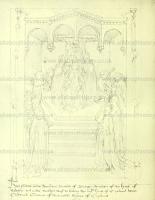
Beauchamp Pageant. [26th February 1403] 4. Here sheweshowe Dan Jone Duches of Breteyn [aged 33] doughter of the Kyng of Navern. and newe wedded wif to henry the iiijth [aged 35] kyng of Englond was Crowned Quene of this noble Reame of Englond.
Note. On the 7th February 1403 King Henry IV married at Winchester, Joan, daughter of Charles the Bad, King of Navarre, and widow of John IV Duke of Brittany (by whom she had eight children), and on the 26th of the same month she was crowned Queen in the Abbey Church of Westminster. The picture shows the Queen sitting on a canopied chair, with a tester of the impaled arms of England and Navarre, set upon a hexagonal stage of six steps. She is vested in a long gown or tunic and mantle with tasselled cords, and has her hair "decently let down about her shoulders" in accordance with the rubric.1 In her left hand she holds the sceptre with the cross and in her right the rod.2 The crown, which is arched over, is being placed upon her head by the Archbishop, who stands on her right, assisted by the Abbot of Westminster, who stands on her left. Both are mitred, and the Archbishop is in mass vestments, but the Abbot in a cope over, apparently, an albe and grey amess. Behind the Archbishop, on the floor, stand two clerks in surplices and grey amesses, one of whom bears the Archbishop's cross. Two other clerks in amesses, one carrying his crosier, likewise stand on the floor behind the Abbot. On this same side also stand four of the Queen's ladies, in long gowns and mantles with coronets over their unbound hair. Opposite them is a group of peers, bareheaded and in their robes, the foremost being the Earl Marshal with his rod. The ceremony is conventionally shown as taking place within a canopied recess flanked by buttresses.
Note 1. "Laxatos circa humeros decenter habens crines." i.e. "Having hair loosened around the shoulders in a proper manner." Liber Regalis.
Note 2. According to Liber Regalis the sceptre should be in the right hand and the rod in the left, and they were not delivered until after the crowning.
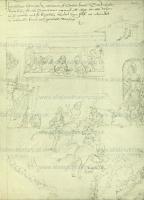
Beauchamp Pageant. [After 26th February 1403] 5. Here shewes howe atte Coronacion of Quene Jane Erle Richard [aged 21] Kepte Justes for the Quenes part ageynst alle other commers Where he so notably and so knyghtly behaved hym self: as redounded to his noble fame and perpetuell worship.
Note. This plate shows a joust with the barrier or tilt on the occasion of the marriage of Henry IV with Joan of Navarre Duchess of Brittany. At the top are seen the King and Queen with their court. On the left hand in a gallery stands the master of the joust, to whom an attendant is bringing spears with their coronels or triple pointed heads, to be used in the encounter and first to be inspected as to their being of equal size etc. On the right is one of the jousters armed except for his head, and waiting his turn to ride against the Earl. In the middle is the Earl, his helmet surmounted with the crest of the bear and ragged staff, and he has just broken his lance on the manteatu d'armes of his opponent. Both the jousters are accompanied by their squires, on this occasion on horseback. The Earl's squire has on his back his master's badge, the ragged staff. Another opponent is seen armed and helmed, to whom an attendant is giving his lance1. In the foreground are the stands for spectators, some of whom are availing themselves of a tree to get a good view, while some others are quarrelling for possession of fragments of previously broken spears. The tilt or barrier is of planks and about 4 to 5 feet high.
Note 1. In Strutt's drawing the lance is wrongly shown as between the reader and the crest of the jouster.
Annals of Kings Richard II and Henry IV. After the octave of Epiphany [13th January], Parliament was begun in London, in which many things were said, but few were enacted for the common advantage, although it lasted for twelve weeks. In this Parliament, the Earl of Northumberland was restored to his former dignity and to all his goods, movable and immovable, so that he and his heirs might enjoy them forever. And yet the things which the king had given him, namely the kingdom of Man, and so on, the king took back, granting him, as stated above, those things which had previously been his by hereditary right.
Post Octavas Epiphaniæ, fuit inchoatum Parliamentum Londoniis, in quo plura locuta sunt, pauca fuere statuta pro communi commodo, licet per duodecim hebdomadas perdurasset. In hoc Parliamento, Comes Northumbriæ restitutus est dignitati pristinæ, et omnibus bonis suis, mobilibus et immobilibus; ut eisdem gaudent in perpetuum, et hæredes sui. Et tamen quæ Rex sibi donaverat, seilicet, regnum Euboniæ, etc, Rex recepit, concedens sibi, ut præfertur, quæ sua de jure hæreditario perante fuerant.
In April 1404 or May 1404 local forces defeated a French raid on the port of Dartmouth, South Devon, taking a number of prisoners and killing the French commander, William du Chastel [aged 40].
In April 1404 or May 1404 William du Chastel [aged 40] was killed at the Battle of Blackpool Sands.
Annals of Kings Richard II and Henry IV. This Lord du Chastel [aged 40] himself experienced, for, while in the boldness of his mind he thought no one equal to himself, when he landed at Dartmouth he was overwhelmed by countrymen and killed by those whom he held in the greatest contempt. And thus from him
"Avenging Rhamnusia [Nemesis] exacted deserved punishments."
for the common people, or rustics, who lived nearby, when they had seen a great fleet lying at anchor for many days before the harbour of Dartmouth, judging, as was true, that enemies were present, flowed together by night to the town, to prevent the enemy from landing. But Lord du Chastel and those who were with him, supposing that the town lacked defenders, because they saw no one busily preparing resistance, leapt from the ships after six days. But it turned out otherwise than they hoped. For immediately three valets met Lord du Chastel, who had leapt out first, and when they wished to hinder his advance, they were killed by him, one after another, in a short time. Made bolder by this success, he tried to go forward, signalling to his men to follow. Many therefore followed, set in order by the example of their leader, and strove to reach dry land. But those of the country people who had already been lying hidden steadfastly burst out and met the adversaries with swords and clubs and other instruments of countrymen. From this it happened that Lord du Chastel, who was going ahead of the rest, was struck down before the rest. And because a multitude of Bretons had now landed and could not easily return, saying with certainty that their heads were now at stake, they tried to defend themselves with fierce spirit. But the glorious equipment of the enemy, their most costly clothing, and their shining armour prepared the minds and strength of our common people. Each man thought himself blessed if he could kill or plunder one of them. Women too, skilled in throwing with slings, struck down armed men who wished to advance with hard blows. It came about that the enemy were laid low no less by stones than by swords. Yet they did not once deign to surrender, but, raised up again by themselves or by their own men, delighted in defending themselves again, until, wearied and deprived of strength, they fell a second time. Nor was there, as is said, any one of them who submitted while he stood upright, but, thrown to the ground, they were forced to surrender. Many were killed by the rustics because they did not understand their language, although they had offered great sums for ransom. But the rustics, interpreting one thing for another, thought that those who were anxiously begging for life were making threats. On that day, namely the fifteenth day of the month of April, three lords and twenty knights were captured by the common people, besides those who were killed, very many esquires and valets, whose number we believe to have been great from the number of noble captives. For there were captured there the nobles, the Lord of Matignon, the Viscount of Faou, and the Lord of Jaille. The knights were Lord William de Launay, Lord Salomon de Kergué, Lord John de Quélenec, Lord John de Lognevez, Lord Alan de Cotigny, Lord Henry de Parc, Lord de Barrac’h, Lord James d’Avaugour, Lord John La Vache, Lord Hericot de Haye, Lord Pez de Fou, Lord Baw de Hale, Lord John Coëtmen, Lord Payen de Gaudin, Lord William de Saint-Maudez, Lord de Harcourt, Lord John Dartynge, Lord Wtradus de Gwyde, Lord Philip Quélenec, Lord William de Moulinblot, Lord Robert Reche, and Lord Ralph de Romillé. All these men of gentle birth and nobles, praise be to God, happened on that day to be captured by the common people. And God destroyed the arrogance of the proud on that day, who thought that no forces could have resisted them. And he gave to all future ages a fearful example, when so many free-born men were captured by commoners, so many nobles by ignoble men, so many lords or magnates by rustics of lower fortune, by the right of war. And he made servants command lords, and lead them bound wherever they pleased, like cattle.
Hæc expertus est ipse Dominus de Castellis, qui, dum putat in mentis audacia neminem sibi parem, dum apud Dortemouthe terram scandit, a ruralibus est oppressus, et hiis quos maxime habebat despectui interfectus. Atque sic ab eodem
"Exegit dignas ultrix Rhamnusia pœnas;"
siquidem plebani, sive rustici, qui prope morabantur, cum vidissent classem magnam per multos [dies] anchorare coram portu de Dortemouth, rati, prout erat, hostes adesse, noctibus confluxerunt ad villam, ut ascensum hostium prohiberent. Dominus vero de Castellis, et qui cum eo erant, augurati villam defensore carere, quia neminem videre sollicitum ad præparandum resistentiam, post sex dies navibus exsiliere. Sed aliter evenit quam sperabant; quia confestim occurrerunt Domino de Castellis, qui primus exsilierat, tres valetti; qui cum impedire vellent progressum suum, perempti sunt ab eo, unus post alium, brevi hora. Quo successu effectus audacior, progredi conabatur, suis innuens, ut sequerentur. Secuti sunt ergo plurimi, ducis exemplo compositi, et aridam contingere decertabant. Qui vero jamdudum de patriotis delituerant, constanter irrumpentes occurrunt adversariis cum gladiis et fustibus, et instrumentis aliis ruricolarum. Unde contigit ut Dominus de Castellis, qui præcedebat cæteros, præ cæteris sterneretur; et quia jam multitudo Britonum terram scanderat, nec facile reverti poterant, dicentes pro certo quod jam pro capitibus agebatur, animo feroci se defendere tentaverunt. Sed nostris vulgaribus animum paravere, et vires, gloriosus apparatus hostium, pretiosissimus amictus, et fulgens armatura. Reputabat se quisque beatum, si peremisse, vel prædasse, potuisset aliquem ex eisdem. Mulieres quoque, doctæ fundis jacere, armatos, volentes progredi, duris ictibus prosternebant: factum est autem, ut hostes minus lapidibus quam gladiis sternerentur. Nec tamen semel se dignabantur reddere, sed per se, vel per suos, relevati iterum se defendere delectabantur, donee lassati viribus destituerentur, et caderent iterato. Nec fuit, ut fertur, eorum aliquis, qui se submisit, dum stetit erectus, sed solo prostrati se reddere cogebantur. Plures à Tusticis occidebantur, eo quod ignorabant eorum linguam, quanquam grandes pro redemptione summas obtulissent. Sed rustici, alia pro aliis interpretantes, putabant eos comminari, qui pro vita sollicite supplicabant. Capti sunt eo die, scilicet, quinto-decimo die mensis Aprilis a communibus tres domini et viginti milites; præter eos qui perempti sunt, scutiferos et valettos plurimos, quorum numerum magnum fuisse credimus, per numerum nobilium captivorum. Nam capti sunt ibidem proceres, Dominus de Matynham, Vicecomes de Fow, et Dominus de Jaylly; milites vero, Dominus Willelmus de Lawne, Dominus Salamon de Kerge, Dominus Johannes de Kelevek, Dominus Johannes de Lognewiche, Dominus Alanus de Cotyny, Dominus Henricus de Park, Dominus de Barraght, Dominus Jacobus Dawerge, Dominus Johannes Laweche, Dominus Hericot de Hay, Dominus Peys de Fok, Dominus Baw de Hale, Dominus Johannes Coymys, Dominus Paganus de Gawdene, Dominus Willelmus de Syntymak, Dominus de Harecourt, Dominus Johannes Dartynge, Dominus Wtradus de Gwyde, Dominus Philippus Kelenek, Dominus Willelmus de Molinblos, Dominus Robertus Reche, Dominus Radulfus de Romyle. Hos omnes generosos et nobiles contigit eo die, Deo laudes, a communibus captivari; pessumdeditque Deus arrogantiam superborum die illo, qui putabant nullas vires illis resistere potuisse; deditque videri cunctis futuris sæculis experimentum formidabile, dum tot ingenui a plebanis, tot nobiles ab ignobilibus, tot domini, sive proceres, ab inferioris fortunæ rusticis, jure bellico caperentur; fecitque servos imperare dominis, et eos vinctos, quocunque liberet, abducere, velut pecudes.
Annals of Kings Richard II and Henry IV. About the end of May, the Captain of Calais, the Earl of Somerset, having conducted successful operations in France and brought captives and plunder back to Calais, put to sea with fighting men in order to prepare for battle against enemies who were reported to be approaching. When the men of Dover and Sandwich learned of his intention, they hastened to join him. Before long they sighted the enemy, who considered themselves strong enough to fear no opposing force. When the two sides came close enough to engage, it was discovered that the ships were Spanish, but were carrying French and Scottish enemies together with their goods. They were therefore asked peacefully to surrender the Frenchmen and Scots, along with their merchandise, after which the Spaniards would be allowed to return home unharmed with all their own possessions. Encouraged by the number of their fighting men, however, they defied the English with insults and laughter. Taking this badly, our men began to fight, and the outcome remained uncertain for almost two hours. At last, with God’s favour, victory fell to our side. Seventeen ships were captured, in which a great abundance of wine was found, together with a large number of prisoners.
Circa finem mensis Maii, Capitaneus Calesiæe, Comes de Somerset, rebus prospere gestis in terra Franciæ, captivisque conductis, et præda, Calesiam, commisit se pelago, cum viris bellicis, ut hostibus, qui nunciabantur adesse, bella pararet. Cujus propositum cognoscentes, viri de Doveria et Sandwico accurrerunt ei. Nec longum quin hostes conspiciunt; qui et ipsi satis fortes se putabant, ita ut nullius occursum adversarii vererentur. Cum perventum fuisset ut manus consererent, compertum est Hispanos esse, sed hostes Gallicos et Scotos, ac eorum bona, vehere. Quapropter requisiti sunt pacifice ut Gallos et Scotos, eorumque merces, exponerent, et indemnes in propria, cum rebus suis omnibus, permitterentur abire. Sed animati bellatorum numero, nostrates cum dedecore diffiduciaverunt, et cachinno. Quod nostri dure ferentes, pugnare cœæperunt; fuitque anceps belli fortuna pene per duas horas. Tandem victoria, Deo favente, cessit nostris. Captæ sunt igitur naves decem et septem; in quibus abundantia vini reperta, et captivorum copia intercepta.
William of Worcester's Chronicle of England
William of Worcester, born around 1415, and died around 1482 was secretary to John Fastolf, the renowned soldier of the Hundred Years War, during which time he collected documents, letters, and wrote a record of events. Following their return to England in 1440 William was witness to major events. Twice in his chronicle he uses the first person: 1. when writing about the murder of Thomas, 7th Baron Scales, in 1460, he writes '… and I saw him lying naked in the cemetery near the porch of the church of St. Mary Overie in Southwark …' and 2. describing King Edward IV's entry into London in 1461 he writes '… proclaimed that all the people themselves were to recognize and acknowledge Edward as king. I was present and heard this, and immediately went down with them into the city'. William’s Chronicle is rich in detail. It is the source of much information about the Wars of the Roses, including the term 'Diabolical Marriage' to describe the marriage of Queen Elizabeth Woodville’s brother John’s marriage to Katherine, Dowager Duchess of Norfolk, he aged twenty, she sixty-five or more, and the story about a paper crown being placed in mockery on the severed head of Richard, 3rd Duke of York.
Available at Amazon in eBook and Paperback format.
Annals of Kings Richard II and Henry IV. On the feast of St Faith the Virgin [6th October 1404], Parliament was convened at Coventry under writs of a new form, directing that no knights or citizens should be elected who possessed any knowledge of the law of the realm, but only men who were entirely unlearned. For this reason, the Parliament afterwards deservedly acquired the name "the Unlearned Parliament". Indeed, the knights of Parliament, laymen both in faith and in learning, and less wise than pagans or any other heathens, devoted themselves each day to a single objective, namely, how they might despoil the patrimony of Christ and seize the temporal possessions formerly granted to the Church by holy men and kings. The prelates were distressed by these proceedings, although they treated the persistence of the petitioners with contempt. Most distressed of all was the Archbishop of Canterbury, whose particular duty it was to safeguard not only the Christian character of the kingdom, but also the liberties of all its churches. When he saw that sons of the Church had become her enemies, and that the faithlessness of these men had gained the support even of certain nobles, he was troubled on every side. Fearing that in his time the Church might be reduced to servitude and deprived of her liberty, in a manner hitherto without precedent, he laboured in his sorrow, washed his bed each night and watered his couch with tears, awaiting the grace of divine consolation, for he foresaw that human remedies were powerless against these dangers. The Father of mercies and God of all consolation, who permits no one to be tried beyond his strength, inspired him to suspend or soothe such great sorrows for a time by reading the Scriptures. Taking up a book, he happened first upon the Life of St Edmund, formerly Archbishop of Canterbury, who had been afflicted by similar anxieties in his own day. He came to the passage in which the blessed Edmund had caused a private seal to be made for himself, engraved with the martyrdom of St Thomas, Archbishop of Canterbury and glorious martyr, and bearing this inscription around its edge:
"Let my death teach Edmund not to fear."
Thus, by looking upon this image, Edmund was to be reminded not to fear the threats of wicked men, but, following Thomas’s example, joyfully to desire to suffer death for justice. The Archbishop eagerly accepted this as an omen and immediately felt such strength arise within him that he no longer feared any threats, or even death, but was ready to offer himself to a thousand deaths, were that possible and necessity required it, for the bride of Christ. Remembering also that a threefold cord is not easily broken, he drew to his cause not only his fellow archbishop of York, but all the suffragan bishops and prelates, together with certain temporal lords whose hearts God had touched. The most effective among them was Lord Edward1, the new Duke of York, whose wisdom and authority carried the greatest weight in the conduct of the kingdom’s affairs.
Die Sanctæ Fidis, Virginis, coactum est Parliamentum Coventreiam, sed sub brevi novi tenoris, ne, videlicet, eligerentur milites, sive cives, qui gustassent aliquid de jure regni, sed omnino illiterati. Quamobrem merito postea Parliamentum prædictum sortitum est nomen "Parliamenti Iliterati" Nempe milites Parliamentales, tam fide quam doctrina laici, et minus sapientes quam pagani vel quicunque ethnici, vacabant cotidie ad conclusionem unicam; quo pacto diripere patrimonium possent Christi, et auferrent temporalia, æ sanctis viris eb regibus ecclesiasticis præconcessa. Angebantur in hiis prælati, parvipendentes petitorum pertinaciam; sed maxime Dominus Cantuariensis, ad quem spectabat præcipue non solum regni Christianitas, sed et omnium ecclesiarum immunitas, contuenda. Qui ut vidit ex filiis hostes factos Ecclesiæ, et eorum infidelitati favorem etiam quorundam procerum accessisse, angustiabatur undique: metuens ne in diebus suis ancillaretur Ecclesia, et privaretur libertate sua, exemplo hactenus improviso, laboravit proinde in gemitu suo, et lavit per singulas noctes lectum suum, et lacrymis stratum suum rigavit, expectans divinæ consolationis gratiam, quia præspexit pericula esse hiis rebus humana. Et Pater misericordiarum et Deus totius consolationis, qui neminem supra vires tentari permittit, ejus menti infudit spiritum, ut tantas tristitias lectione Scripturarum ad tempus suspenderet, vel deliniret; acceptoque codice, forte primo se obtulit Vita Sancti Edmundi, quondam Cantuariensis Archiepiscopi, qui in diebus suis simili sollicitudine vexabatur; pervenitque ad locum quo Beatus Edmundus sigillum privatum sibi fecerat fabricari, in quo passio Sancti Thomzæ, Cantuariensis Archiepiscopi, et Martyris gloriosi, sculpta fuit, et ita in gyro scriptum,—
"Edmundum doceat mors mea, ne timeat;"
ut hoc, videlicet, inspecto speculo, Edmundus minas perversorum hominum non formidaret, sed ejus exemplo mortem subire pro justitia alacris affectaret. Accepit ardenter hoc omen, et illico sensit intra se factam virtutem tantam, ut jam non minas ullas aut mortem metueret, sed pro sponsa Christi præsto foret semet offerre mille mortibus, si foret possibile, et necessitas sic dictaret. Sed et ipse, non immemor quia funiculus triplex difficile rumperetur, attraxit in vota sua non solum [confratrem] suum, Eboracensem Archiepiscopum, sed et cunctos suffraganeos et prælatos, et quosdam temporales Dominos, quorum corda Deus tetigerat; inter quos efficacissimus fuit Dominus Edwardus, novus Dux Eboraci, cujus prudentia et auetoritate regni negotia quam maxime tractabantur.
Note 1. Edward [aged 31], son of Edmund of Langley, succeeded his father as Duke of York in 1402.
On 5th May 1405 Richard Grey 1st or 4th Baron Grey of Codnor [aged 34] and Dafydd Gam Brecon [aged 25] decisively defeated the Welsh army at the Battle of Pwll Melyn aka Usk. Gruffudd ab Owain Glyndŵr Mathrafal [aged 30] was captured. Tudur ap Gruffudd Lord Gwyddelwern [aged 48] was killed. The Welsh lost around 1500 men with 300 prisoners being beheaded following the battle. The battle marked the beginning of the end of Owain Glyndŵr's [aged 46] revolt.
Annals of Kings Richard II and Henry IV. In that year, on Ash Wednesday [4th March], a great slaughter of the Welsh took place. On 5th May, in another battle fought at Usk between the Welsh and the English retainers of the Prince, a son1 of Owain Glyndŵr was captured, while fifteen hundred men on the rebel side were either taken prisoner or killed.
Later, around the feast of St Dunstan [19th May 1405], Owain Glyndŵr’s chancellor was captured in battle, and many of the Welsh were killed. In the same year, John Hanmer, Glyndŵr’s son-in-law, was also captured in battle. They were all taken to London and imprisoned in the Tower.
Eo anno, Die Cinerum, facta est magna strages Wallensium, et quinto die mensis Maii, altero facto conflictu, apud Usk, inter Wallicos et Anglicos, familiares Domini Principis, captus est filius Oweni Glendor, captis cum eo, vel peremptis, mille quingentis de parte rebellium.
Expost, circa festum Sancti Dunstani, captus est in bello Cancellarius Oweni Glendor, multis ex Wallensibus interemptis. Et eodem anno captus est Johannes Hanmere, gener ejus, in bello: qui omnes ducti sunt Londonias, et in Turri clausi.
Note 1. Gruffudd ab Owain [aged 30], 1375-1412. He died seven years later in the Tower of London. Owain's brother Tudur ap Gruffudd [aged 48] was killed in the battle. Compare with the account by Adam of Usk who places the battle in March although the text notes he may have been confused with the battle at Grosmont on 11th March: "On the feast of Saint Gregory [12th March] Griffith, eldest son of Owen, with a great following made assault, in an evil hour for himself, on the castle of Usk [Map], which had been put into some condition for defence, and wherein at that time were the lord Grey, of Codnor, sir John Greyndour, and many other soldiers of the king. For those same lords, sallying forth manfully took him captive, and pursuing his men even to the hill-country of Higher Gwent, through the river Usk, there slew with fire and the edge of the sword many of them, and above all the abbot of Llanthony, and they crushed them without ceasing, driving them through the monks wood, where the said Griffith was taken. And their captives, to the number of three hundred, they beheaded in front of the same castle near Ponfald; and certain prisoners of more noble birth they brought, along with the same Griffith, to the king. The which Griffith, being held in captivity for six years, at last in the Tower of London was cut off by a pestilence. And from that time forth in those parts the fortunes of Owen waned." Thomas of Otterbourne's 'Chronica Regum Angliae' places the battle on the 15th March which is consistent with Adam of Usk.
Chronicle of Adam of Usk [~1352-1430]. On the feast of Saint Gregory [12th March]1 Griffith, eldest son of Owen, with a great following made assault, in an evil hour for himself, on the castle of Usk [Map], which had been put into some condition for defence, and wherein at that time were the lord Grey, of Codnor, sir John Greyndour, and many other soldiers of the king. For those same lords, sallying forth manfully [on 5th May 1405], took him captive, and pursuing his men even to the hill-country of Higher Gwent, through the river Usk, there slew with fire and the edge of the sword many of them, and above all the abbot of Llanthony, and they crushed them without ceasing, driving them through the monks wood, where the said Griffith was taken. And their captives, to the number of three hundred, they beheaded in front of the same castle near Ponfald; and certain prisoners of more noble birth they brought, along with the same Griffith, to the king. The which Griffith, being held in captivity for six years, at last in the Tower of London was cut off by a pestilence. And from that time forth in those parts the fortunes of Owen waned.
Note 1. This defeat of Glendower’s followers took place at "Pwl-Melyn mountain near Usk." Owen’s brother Tudor was slain. It followed immediately on the defeat at Grosmont of 11th March, 1405. Adam’s date is a little too early: perhaps he has confused the dates of the two battles. The Annals of Kings Richard II and Henry IV, gives the date as the 5th May. Otterbourne, 251, on the other hand, places the battle as early as the 15th March. See Wylie, Henry the Fourth, ij. 171 ; Kingsford, Henry V., 52. lies about a mile and a half north-west of Usk.
Annals of Kings Richard II and Henry IV. On 12 May [1405], around midnight, the Count of Saint-Pol came unexpectedly with a large army and various siege engines to besiege the Castle of Marck1. For three days he kept those within under constant pressure with repeated assaults and attacks. On the third day, however, after midday, the Calais garrison suddenly arrived, forced the besiegers to raise the siege, and engaged them in battle. Fifteen knights were killed there, while more than nine hundred men-at-arms and esquires, whose identities were well known, were either captured or slain. The Count of Saint-Pol fled disgracefully, abandoning his standard, his pennon and all the furnishings of his chamber. He also deserted his entire army, earning a reputation for cowardice and for abandoning his fellow soldiers. Four standards and fifteen pennons were captured that day, together with the standard, pennon and coat of arms of the Count himself. The names of the more distinguished prisoners were as follows: the Lord of Warineres, the Lord of Vynellis, the Lord of Nayellis, Sir J. Hungest, Captain of Boulogne, Sir Lionel d’Arreys, Captain of Gravelines, Sir Peter Rasser, Captain of Ardres, Hanord Camberciarde, Captain of Thérouanne, Boyd Sanon, Captain of Montorie, John Sanon, Captain of Lisbe, Stephen Bek, Captain of Ralingham, and the Bastard of Bournonville, Captain of Bourbourg.
Duodecimo die mensis Maii, cirea noctis medium, Comes Sancti Pauli venit inopinate, cum grandi exercitu et præparamentis variis, ad obsidendum Castrum de Merk, fatigavitque interius obsessos incessanter per triduum, continuis insultibus et impetitionibus; sed die tertia, post meridiem, repente supervenientes stipendiarii Calesienses, dissolvi fecerunt obsidionem, et conflixerunt cum obsessoribus, et interfecerunt ibidem quindecim milites, captis hominibus de armis et armigeris, et occisis, de quibus habetur bona notitia, amplius quam nongentis, Comes vero Sancti Pauli fugit turpiter, vexillum suum et pennonam, et totum cameræ: suæ supellectilem, ibi deserens, et totum exercitum suum, cum nota vecordiæ, desertorisque militiæ, derelinquens. Capta sunt ibi die illa vexilla quatuor, pennonæ quin: denæ; una cum vexillo, et pennona, et armorum tunica, Comitis supradicti. Nomina vero nobiliorum captivorum sunt ista, — Dominus de Warineres, Dominus de Vynellis Dominus de Nayellis, Dominus J. Hungest, Capitaneus Boloniæ, Dominus Lyonellus Darreys, Capitaneus de Gravelyng, Dominus Petrus Rasser, Cupitaneus de Arde, Hanord Camberciarde, Capitaneus de Tyrewan, Boyd Sanon, Capitaneus de Montorie, Johannes Sanon, Capitaneus de Lisbe, Stevene Bek, Capitaneus de Ralingham, Bastard de Bornevyle, Capitaneus de Bourburgh.
Note 1. The Castle of Marck is around six kilometres east of Calais. It was built after the English capture of Calais in 1347.
On 25th December 1406 Henry III King Castile [aged 27] died. His son John [aged 1] succeeded II King Castile.
On 24th January 1407 Edmund Holland 4th Earl Kent [aged 23] and Lucia Visconti Countess Kent [aged 27] were married at Southwark Cathedral [Map]. She by marriage Countess Kent. He was killed eighteen month's later at the Battle of Île de Bréhat. He the son of Thomas Holland 2nd Earl Kent and Alice Fitzalan Countess Kent [aged 57].
Pakington's Chronicle [-1390]. [24th January 1407] In the VIII Yere of King Henry Dame Luce [Lucia Visconti Countess Kent [aged 27]], the Dukes of Milaine Syster, cam to London, and there was weddid to Edmunde Holand [aged 23] Erle of Kent in the Priory of S. Mary Overeys [Map], and the Fest was kept in the Bishop of Winchester's Place.
Chronicle of Gregory. 24th January 1407. Ande that year the Erle of Kent [aged 23] weddyd the Erlys daughter [aged 27] of Mylayne, at Synt Mary Overeys in Sowtheworke [Map], the xiiij day of Juylle..
Note. Other sources say 24 Jan 1407?
On 23rd November 1407 Louis Valois I Duke Orléans [aged 35] was murdered on the orders of John "Fearless" Valois Duke Burgundy [aged 36] at Paris [Map]. His son Charles [aged 12] succeeded Duke Orléans.
The Deeds of the Dukes of Normandy
The Gesta Normannorum Ducum [The Deeds of the Dukes of Normandy] is a landmark medieval chronicle tracing the rise and fall of the Norman dynasty from its early roots through the pivotal events surrounding the Norman Conquest of England. Originally penned in Latin by the monk William of Jumièges shortly before 1060 and later expanded at the behest of William the Conqueror, the work chronicles the deeds, politics, battles, and leadership of the Norman dukes, especially William’s own claim to the English throne. The narrative combines earlier historical sources with firsthand information and oral testimony to present an authoritative account of Normandy’s transformation from a Viking settlement into one of medieval Europe’s most powerful realms. William’s history emphasizes the legitimacy, military prowess, and governance of the Norman line, framing their expansion, including the conquest of England, as both divinely sanctioned and noble in purpose. Later chroniclers such as Orderic Vitalis and Robert of Torigni continued the history, extending the coverage into the 12th century, providing broader context on ducal rule and its impact. Today this classic work remains a foundational source for understanding Norman identity, medieval statesmanship, and the historical forces that reshaped England and Western Europe between 800AD and 1100AD.
Available at Amazon in eBook and Paperback format.
In January 1409 Edmund Mortimer [aged 32] died at Harlech Castle [Map] during the Siege of Harlech Castle.
On 15th September 1408 Edmund Holland 4th Earl Kent [aged 24] was killed at Île de Bréhat. He was buried in Bourne Abbey, Lincolnshire [Map]. Earl Kent extinct. Baron Holand, Baron Wake of Liddell abeyant. See Walsingham.
Chronicle of Gregory. 1408. Alle so the same year the Erle of Kentt [aged 23] was slayne at the castelle of Bryake whythe a stone.
Walsingham Chronica Majora. [15th September 1408] Lord Thomas [aged 24], Earl of Kent, while besieging the castle of Briaut in Brittany, was struck in the head by a bolt from a crossbow. Nevertheless, he captured the castle and completely destroyed it; but not long afterwards, when his brain had become putrid, he met his death.
Dominus Thomas Comes Canciæ, dum obsidet castrum de Briaut in Britannia, spiculo balistæ vulneratus in capite, cepit tamen castrum et destruxit funditus; nec multo post, putrefacto cerebro, mortem incurrit.
Chronicle of Gregory. 1409. Ande that year was the grette playe at Skynners Welle in London. Ande that year there were grete justys in Smethefylde by twyne the Erle of Somersett [aged 36] and the Synyschalle of Henowde [Hainaut], and Syr John Corwayle and Syr Rycharde of Arundelle, and the son of Syr John Chenye, and othyr Fraynysche men dede the dedys of armys there.
On 20th March 1413 King Henry IV of England [aged 45] died in the Jerusalem Chamber, Cheyneygates, Westminster Abbey [Map] in Westminster Abbey confirming a prophesy that he would die in Jerusalem. His son Henry [aged 26] succeeded V King of England. His sons King Henry V of England and Humphrey Lancaster 1st Duke Gloucester [aged 22] were present. He was buried in the Chancel of Canterbury Cathedral [Map].
Chronicle of Gregory. 20th March 1413. Ande that same year the kyng [aged 45] dyde at Westemyster, the XX day of Marche, the year of our lord Ml CCCC and xij; and he is byryde at Cauntyrbury [Map] be-syde the schryne.
Chronicle of Robert Fabyan [-1512]. 20th March 1413. At length, whan he was comynto himselfe, natknowynge where he was, freyned of suche as then were aboute hym, what place that was; the which shewyd to hym, that it belongyd unto ye abbot of Westmynster; and for he felte hymself so syke, he comaunded to aske if that chambre had any specyall name; whereunto it was answeryd, that it was named Iherusalem. Than sayd the kynge, "louynge be to the Fader of heuen, for nowe I knowe I shall dye in this chambre, accordyng to ye prophecye of me beforesayd, that I shulde dye in Jerusalem: and so after he made hymself redy, & dyed shortly after, upon ye day of seynt Cuthbert, or ye. xx. day of Marche, when he had reygned. xiii. yeres. v. monthes, &. xxi. dayes, leuynge after hym. iiii. sones, that is to meane Henry that was kyng, Thomas that was duke of Orleaunce [Clarence], lohn duke of Bedforde, and Humfrey duke of Glouceter, [and the v. was named Henry, ryche cardynall of Wynchester,] and ii. doughters, that one beynge quene of Demnarke, and that other duchesse of Barre, as before is shewyd.
Whanne kynge Henry was deed, he was conveyed by water unto Feversham, and from thens by lande unto Caunterbury, and there enteryd by the shryne of seynt Thomas. [To the foresayd Henry, the riche cardynall, kynge Henry had or begat, ii. other sonnes upon dame Katheryne Swynford, as before is shewyd in the viii. yere of Richarde ye seconde, whiche were named as there is expressyd.]
Annales of England by John Stow. 20th March 1413. The King his father drawing to his ende, after due thankes given, and supplications made to God, gave his benedicton to the Prince his sonne, and so yelded to God his spirit, the xx of March, which was then midlent Sunday. Anno 1412 [1413] after the account of the Church of England, the yéere of his age 46, when he had raigned 13 years, five moneths lacking 10 Dayes. His body was conveyed by water to Feversham, and from thence by land to Canterburp, and there buried by the Lady Mary his first wife, in the monastery of Christs Church, under a pillar in the North Ile. This King Henry, with Thomas Arundell Archbishop of Canterbury had béen great benefactor to this Church, in building a good part of the body thereof anewe. he had issues by Mary daughter to Humfrey Bohune Earle of Hereford and Nortbampton, Henry that succéeded him, Thomas Duke of Clarence, John duke of Bedtord, Humfrey Duke of Glocester, Blanch Dutchess of Bauere, and Philip Queene of Denmarke; for by Joan his second wife be had no issue.
Holinshed's Chronicle [1525-1582]. 20th March 1413. With that he [King Henry IV] turned himselfe in his bed, and shortlie after departed to God in a chamber of the abbats of Westminster called Ierusalem, the twentith daie of March, in the yeare 1413, and in the yeare of his age 46, when he had reigned thirteene yeares, fiue moneths and od daies, in great perplexitie and little pleasure [or fourtéene yeares, as some haue noted, who name not the disease whereof he died, but refer it to sicknesse absolutelie, whereby his time of departure did approach and fetch him out of the world: as Ch. Okl. saith, whose words may serue as a funerall epigramme in memoriall of the said king Henrie:
Henricus quartus his septem rexerat annos
Anglorum gentem summa cum laude & amore,
Iàmq; senescenti fatalis terminus æui
Ingruerat, morbus fatalem accerserat horam1.
We find, that he was taken with his last sickenesse, while he was making his praiers at saint Edwards shrine, there as it were to take his leaue, and so to procéed foorth on his iournie: he was so suddenlie and greeuouslie taken, that such as were about him, feared least he would haue died presentlie, wherfore to reléeue him (if it were possible) they bare him into a chamber that was next at hand, belonging to the abbat of Westminster, where they laid him on a pallet before the fire, and vsed all remedies to reuiue him. At length, he recouered his spéech, and vnderstanding and perceiving himselfe in a strange place which he knew not, he willed to know if the chamber had anie particular name, whereunto answer was made, that it was called Ierusalem. Then said the king; "Lauds be giuen to the father of heauen, for now I know that I shall die heere in this chamber, according to the prophesie of me declared, that I should depart this life in Jerusalem."
Note 1. Henry IV had ruled the English nation for seven years
With great praise and love from his people.
But now, as he grew old, the fated end of his life approached,
And illness had summoned his final hour.
Adam Murimuth's Continuation and Robert of Avesbury’s 'The Wonderful Deeds of King Edward III'
This volume brings together two of the most important contemporary chronicles for the reign of Edward III and the opening phases of the Hundred Years’ War. Written in Latin by English clerical observers, these texts provide a vivid and authoritative window into the political, diplomatic, and military history of fourteenth-century England and its continental ambitions. Adam Murimuth Continuatio's Chronicarum continues an earlier chronicle into the mid-fourteenth century, offering concise but valuable notices on royal policy, foreign relations, and ecclesiastical affairs. Its annalistic structure makes it especially useful for establishing chronology and tracing the development of events year by year. Complementing it, Robert of Avesbury’s De gestis mirabilibus regis Edwardi tertii is a rich documentary chronicle preserving letters, treaties, and official records alongside narrative passages. It is an indispensable source for understanding Edward III’s claim to the French crown, the conduct of war, and the mechanisms of medieval diplomacy. Together, these works offer scholars, students, and enthusiasts a reliable and unembellished account of a transformative period in English and European history. Essential for anyone interested in medieval chronicles, the Hundred Years’ War, or the reign of Edward III.
Available at Amazon in eBook and Paperback format.
On 9th April 1413 King Henry V of England [aged 26] was crowned V King of England by Archbishop Thomas Fitzalan aka Arundel [aged 60] at Westminster Abbey [Map]. Duke Lancaster merged with the Crown.
Richard Beauchamp 13th Earl Warwick [aged 31] was appointed Lord High Steward. Henry Fitzhugh 3rd Baron Fitzhugh [aged 55] was appointed Constable of England.
Chronicle of Gregory. 1413. Thes ben the namys of Mayrys of London and of the Sherevys of the same for-said cytte in the tyme of Kyng Harry the v [aged 26], that was crownyd the ix day of Aprylle at Westemyster, the year of our lord MlCCCC xiij. And it was apon Passyon Sonday, and that was a full wete day of rayne.
Deeds of King Henry V. 9th April 1413. The Most Serene Prince, King of England and France, and Lord of Ireland, Henry the Fifth, after the conquest, was crowned at Westminster on the ninth day of the month of April, on the Lord's Day, in the Passion of the Lord, in the year of the Incarnation 1413. When he began to reign as a young man but with the maturity of an old man, as a true chosen of God, he diligently sought to embrace with all devotion those things which could regard the honour of God, the expansion of the Church, the liberation of the homeland, and the peace and tranquility of the kingdoms, especially the two kingdoms of England and France, which are more closely connected and united, having afflicted each other with internal wars for a long time, not without great and deplorable shedding of human blood.
Serenissimus princeps Rex Angliæ et Franciæ et Dominus Hiberniæ, Henricus quintus post conquestum, coronatus est apud Westmonasterium, nono die mensis Aprilis, Dominica, in passione Domini, ab incarnatione ejusdem MCCCCXIII. Cum regnare cœpisset ætate juvenis sed maturitate senex, ut verus electus Dei, quæ sursum sunt sapiens, ea studuit omni devotione complecti, quæ honorem Dei, ampliationem ecclesiæ, patriæ liberationem, ac pacem et tranquillitatem regnorum respicere poterant, et præsertim duorum regnorum Angliæ et Franciæ, ut magis cohærentium et conjunctorum, quæ à diuturnis flebilibus temporibus, non sine magnâ et deplorandâ effusione cruoris humani, præliis intestinis se invicèm affecerunt.
On 16th May 1414 King Henry V of England [aged 27] created Dukedoms for his two brothers:
Humphrey Lancaster 1st Duke Gloucester [aged 23] was created 1st Duke Gloucester, 1st Earl Pembroke.
John Lancaster 1st Duke Bedford [aged 24] was created 1st Duke Bedford, 1st Earl Kendal.
In May 1414 the Fire and Faggot Parliament at Greyfriars Priory, Leicester [Map]. Walter Hungerford 1st Baron Hungerford [aged 35] was appointed Speaker of the House of Commons. It was named for the Suppression of Heresy Act which called for burning the Lollards with bundles of sticks known as faggots.