

17 Aug is in August.
1469 Murder of Humphrey Stafford, Earl of Devon
1510 Execution of Richard Empson and Edmund Dudley
1553 Trial and Execution of Lady Jane Grey's Supporters
1661 Creation of Baronets and Peerages by Charles II Post Coronation
On 17th August 1153 William Plantagenet IX Count Poitiers was born to King Henry "Curtmantle" II of England [aged 20] and Eleanor of Aquitaine Queen Consort Franks and England [aged 31] at Poitiers [Map]. He died aged two in 1156.
On 17th August 1153 King Stephen's eldest son Eustace Blois IV Count Boulogne [aged 23] died at Bury St Edmunds [Map]. Probably from food poisoning, possibly murdered for having sacked the Abbey. His brother William [aged 16] succeeded I Count Boulogne.
 Chronicle of Jean le Bel Volume 1. On the next day they took counsel and decided that they would fight the Flemings. So they went out from their lodgings and drew up their battle lines with great deliberation; the Flemings did likewise on their side, though they did not have as many foot soldiers as the Brabançons, nor even a quarter as many men-at-arms. When the lines were drawn up on both sides and the Brabançons found themselves facing the Flemings, they believed they would easily defeat them. But when it came to closing with the enemy, the communes of Louvain and Brussels turned to flight without striking a blow. When the lords saw this, they were utterly dismayed and likewise fled, and did not cease fleeing until they reached the town of Brussels1. The duke fled to Louvain, the Count of Loo to his own lands, each as best he could. When the Flemings saw what was happening, they followed them step by step, still in good order, as far as the gate of Brussels, and they could easily have entered if they had wished, for no one defended it. They lodged that day and most of the night in the suburbs. The Count of Flanders and many others quartered themselves in the tents the lords had left in the field. There was ample gain for anyone who wished it, for none of the Brabançon lords carried away anything except what he wore on his body; they left behind tents, armour, provisions, and all their baggage. The duchess herself, who was at Coudenberg2, fled alone, and did not cease riding, with only a single chambermaid and one servant, until she reached Binche.
A l'endemain, ilz eurent conseil qu'ilz se combateroient aux Flamens, si se trairent hors de leurs loges et firent leurs batailles, par grand advis, aussy firent les Flamens à l'encontre, qui n'avoient pas tant de gens de pié d'assez comme les gens de pié des Brabanchons, ne la quarte partie de gens d'armes. Quant les batailles furent rengies d'unc part et d'aultre, et les Brabanchons se troverent par devers les Flamens, ilz les cuidoient bien desconfire, Quant ce vint à l'assembler aux Flamens, les communes de Louvaing et de Bruxelle tournerrent en fuite, sans cop ferir, et quant les seigneurs veirent la maniere, ilz furent tous esbaubis et tournerrent aussy tous en fuite et ne cesserrent de fuir tant qu'ilz furent à la ville de Bruxelle!. Le duc s'enfui à Louvaing, le conte de Los jusques en son pays, qui mielx mielx. Quant les Flamens veirent la maniere, ilz les suivirent pas à pas, tous arrengiez jusques à la porte de Bruxelle, et fussent ens entré legierement, s'ilz eussent voulu, car nul ne les en gardoit. Si se logerrent es fausbours celluy jour et la nuit la plus grande partie. Le conte de Flandres et pluseurs aultres se logerrent es tentes des seigneurs qu'ilz avoient lessé sur les champs. Là, gaigna assez qui gaagnier voulut, car nul des seigneurs des Brabanchons n'enporta aultre chose que ce qu'il avoit sur son corps, ains lesserrent tentes, harnas, pourveances et tout leur bagage. La duchesse, mesmement, laquelle estoit à Codeberghe, s'enfuy toute seule, et ne fina de chevaucher, à tout une seule chamberiere et ung seul varlet, jusques à Binch.
Note 1. Jean le Bel is here recounting the Battle of Scheut, which took place on 17th August 1356 and delivered Brabant into the hands of the Count of Flanders.
1. C'est de la bataille de Scheut que Jean le Bel fait le récit; elle eut lieu le 17 août 1356 et livra le Brabant au comte de Flandre. (De Dynter, Chronique des ducs de Brabant, t. III, p. 25 et 26. Cf. Kervyn de Lettenhove, Histoire de Flandre, t. II, p. 380, et Pirenne, Histoire de Belgique, t. II, p. 170.)
Note 2. Palace of the duke at Brussels.
2. Palais du duc à Bruxelles.

On 17th August 1390 Guy de Bryan [aged 71] died. Monument at Tewkesbury Abbey [Map]. Alabaster with, unusually, a portrait rather than a generic face. Early Plate Bascinet Period. He was buried at St James' Church, Slapton.
On 17th August 1424 the English forces led by John Lancaster 1st Duke Bedford [aged 35] inflicted a significant defeat on the French and Scottish army at the Battle of Verneuil; a second Agincourt. For the English Edmund Hungerford [aged 15], Ralph Longford [aged 23], John "Old Talbot" Talbot 1st Earl of Shrewsbury [aged 41] and Richard Waller [aged 29] fought.
On the French and Scottish side Pierre Valois, Archibald Douglas 1st Duke Touraine [aged 52], his son James Douglas, William Seton Master of Seton [aged 34], Alexander Home of Home and Dunglas [aged 56] were killed
John Stewart 2nd Earl Buchan [aged 43] was killed. His brother Robert [aged 39] de jure Earl Ross and Earl Buchan although he didn't claim the title since both titles had reverted to the Crown.
Jean Poton Xaintrailles [aged 34] fought.
 Chronicle of England by Jean de Waurin. 17th August 1424. Now then to return to our narrative, the duke of Bedford and his princes seeing their enemies who were there quietly waiting for them all arranged in one body rode a little forward; then when they were near enough in the opinion of the leaders of the expedition, it was ordered on the part of the lord regent, upon pain of death, that every one should dismount, and that all archers should be furnished with sharpened stakes to set before them, according to the English fashion when it should come to the attack and conflict, which command was accomplished as it was ordered; then it was proclaimed on the part of the king of France and England that all the horses should be coupled and fastened together, with the pages and varlets on their backs, and the waggons somewhat toward the flank, notwithstanding that there were scarcely any except those which were loaded with victuals, and some little artillery; and there were appointed to guard the baggage and horses two thousand archers, in order that their army might not be attacked in the rear or thrown into any confusion; then after these regulations were thus made, the English, raising a great shout, began to march and go forward in good order, the archers on the two wings. And on the other side the French, who had been aware since the evening before that they would be fought on the morrow, when the day had come and they knew in truth that the English were drawing near them, whom they perceived from afar by the dust raised by the men and horses; and also were assured thereof by their spies and skirmishers, whom they had on the plains; immediately and without delay put themselves in order for fighting without forming vanguard or rearguard, but placed themselves all together in one large body, except that they appointed a certain number of horsemen, the greater part of whom were Lombards and the others Gascons, whose guides and leaders were Le Borgne Quaquetan, sir Theaulde de Valpergue, and some other Gascon captains, such as La Hire, Pothon, and others, and this for the purpose of dashing into their enemies in the rear, either right through them or otherwise, so as to their greatest advantage they might be able to do them damage; and the rest, all on foot, arranged themselves, as has been said, in a single body; then they began to march very proudly against their enemies, their lances lowered; which attitude being seen by the English, they rushed very vigorously upon them. At the onset there was a great noise and great shouting with tumultuous sounds of the trumpets and clarions; the one side cried, "Saint Denis!" and the others "Saint George!" And so horrible was the shouting that there was no man so brave or confident that he was not in fear of death; they began to strike with axes and to thrust with lances, then they put their hands to their swords, with which they gave each other great blows and deadly strokes; the archers of England and the Scots who were with the French began to shoot one against the other so murderously that it was a horror to look upon them, for they carried death to those whom they struck with full force. After the shooting, the opponents attacked each other very furiously, hand to hand; and this battle was on a Thursday, the seventeenth day of August, commencing about two hours after noon. But you should know that before the attack many new knights were made, both on the one side and on the other, who valiantly approved themselves that day. Many a capture and many a rescue was made there, and many a drop of blood shed, which was a great horror and irreparable pity to see Christian people so destroy one another, for during this pitiable and deadly battle mercy had no place there, so much did the parties hate each other: the blood of the slain stretched upon the ground, and that of the wounded, ran in great streams about the field. This battle lasted about three-quarters of an hour, very terrible and sanguinary, and it was not then in the memory of man to have seen two parties so mighty for such a space of time in like manner fight without being able to perceive to whom the loss or victory would turn. Thus the two parties fought with all their might, each striving to conquer his enemy. The French, who as I have said had been appointed before the battle to remain on horseback to attack the English in the rear, or in flank, in order to break their ranks and to throw them into disorder, came to attack at this part, thinking to enter there without resistance, making a very great uproar, but they found there barriers and opposition, that is to say, the waggons and the horses of their enemies coupled together by the halters and by the tails, and they also found there two thousand stalwart archers, who received them vigorously and put them to flight; and the said French made there no other profit than to snatch up what they were able to take, such as some baggage and horses, killing the pages and varlets who were mounted on them and guarded them. Just at this time the battle was very fell and bloody, so that there was no one who did not try to the utmost his valour and his strength; and I the author know truly that that day the earl of Salisbury sustained the greatest brunt, notwithstanding that he wavered greatly and had very much to do to maintain his position, and certainly if it had not been for the skill and great valour and conduct of his single person in the midst of the valiant men who fought under his banner after his example very vigorously, there is no doubt that the matter, which was in great uncertainty, would have gone very badly for the English, for never in all this war did the French fight more valiantly. Elsewhere, the duke of Bedford, as I hear related, for I could not see or comprehend the whole since I was sufficiently occupied in defending myself, did that day wonderful feats of arms, and killed many a man, for with an axe which he held in his two hands he reached no one whom he did not punish,since he was large in body and stout in limb, wise and brave in arms; but he was very greatly harassed by the Scots, especially by the earl of Douglas and his troop, insomuch that one knew not what to think nor to imagine how the affair would terminate, for the French, who had more men by one-half than the English, fought only to conquer; and they applied themselves vigorously to the work, and I believe truly that if it had not been for the misfortune and ill adventure which was about to happen to them, the English would not have been able to withstand them or to endure so long; but according to what I can understand, and I have also since heard many of this opinion about it, the two thousand English archers, who as was said had repulsed the French cavalry whose chief was Le Borgne Kaquetan a Lombard knight, when they saw their enemies flee, gathered strength, and were a great cause of the victory; for seeing the conflict so decided, they, fresh and new as they were, raising a wonderful shout, came wheeling round and put themselves in the front before their army, where at their coming they began to inflict great chastisement on the French, who were much wearied with fighting, wherefore, much amazed at this new incident, they began a little to lose heart and to fall back; and on the contrary the English seeing that now was the time for it, exerted themselves, all at once recovering strength, and fought so well that in many places they broke through the line of the French with this onslaught, and thrust themselves in, crying aloud, "Saint George!" beginning to kill and cruelly put to death all those whom they were able to overtake, without having any pity; which thing was not done without great effusion of blood. Then the French began to be dismayed, losing altogether the hope of victory which a little while before they thought was in their hands, but each one of them sought a place where he could save himself, taking flight as best he might, and abandoning the rest; some drew towards the town and others took the fields; and the English, who pursued them with great difficulty, put to death especially those who took the road towards the town, for the French, who were within, would not open the gate for the fear they had lest the English, their enemies, should enter in with the fugitives; so there were many of them who threw themselves into the moats to save themselves, where there was a great slaughter of those who were striving to put themselves in safety. Finally, the English pursued the French so, that they obtained the complete victory on that day and gained the battle, but not without great effusion of their own blood. And it was known for certain by the officers of arms, heralds, pursuivants and other persons worthy of credence that there died there of the French party more than six thousand men, and the greater part men distinguished in arms, of whom there were a great number of Scots; and about two hundred [were] prisoners; and of the English party there died about sixteen hundred combatants, as well of the nation of England as of Normandy, the principal captains of whom were named, the one Dudley, and the other Charlton. And on the side of the French there were slain of men of note the following, that is to say, John count of Aumale son to the count of Harcourt; the count of Tonnoirre; the count of Ventadour; the earl of Douglas, a Scot, and sir James, his son; the earl of Buchan, who at that time was constable of France for king Charles; the count of Maroy; the old lord of Graville; the lord of Montenay; sir Anthony de Beausault and Hugh de Beausault, his brother, and the sire de Belloy, with one of his brothers; the lord of Mauny; the lord of Combrest; the lord of Fontenay; the lord of Brimeu; the lord of Thumble; the lord of Pressy in Dosme; the lord of Marche; the lord of Ramibelle in Languedoc; sir Walter Lindsay; sir Giles de Gamaches; Geoffrey de Mallestrem; James Douglas; sir Charles de Booini; sir John de Bretasse; Giles Martel; the younger Harpedaine; sir Brunet d'Auvergne; sir Ralph de la Treille; Guy de Fourchonniere; sir Pothard de Vyane; sir John Murat; the lord of Bertois; sir Charles de Gerasmes; Dragon de La Salle; the lord of Romboulet; the bastard of Langlam, the viscount of Narbonne who, lying dead among the others, by order and command of the duke of Bedford was taken and quartered, and his body hanged on the gibbet, for the treason that he had done in having been consenting to, and one of the actors in putting to death duke John of Burgundy, deceased; there died moreover Mondet de Narbonne; sir Francis de Gaugeaulz; sir Robert de Loirre; sir Louis de Troyes; the lord of Fourigny; Morant de la Motte; sir Carlot d'Amenat and Robinet, his brother; Peter de Courcelles; sir Andrew de la Greseille; sir Andrew de Clermont; Gabriel du Boscage; sir Tristran Coignon; Collinet Le Visconte; William Remon; sir Louis de Champaigne; Peron Du Lupel; sire Louis de Braquemont; the lord of Tygnonville; the lord of Rochebaron; sir Philip de la Tour; sir Antisselin de la Tour, and many others whose names I know not. And now, since I have spoken of the dead on the side of the French, I will mention a part of the prisoners who were taken in this battle, at least the principal ones: first, the duke of Alençon the bastard of Alençon; the lord of La Fayette; the lord of Homet; sir Peter de Herison; sir Louis de Wancourt; the lord of Guitry; Rogelet Treset; Hugh de Saint Marc; Yvon du Puch, and many other noble men.
Chronicle of Enguerrand de Monstrelet [1400-1453]. When the duke of Bedford had gained the town and castle of Ivry, he appointed a knight of Wales, renowned in arms, governor, with a sufficient garrison to defend them. He detached the earl of Suffolk in pursuit of the French, who had advanced to within three leagues for its relief, and went with the rest of his army to Evreux. He there received intelligence that the French had won Yerneuil by stratagem, and were with their whole force within it. He instantly dislodged, and marched for Yerneuil; but the French, having had information thereof, made all haste to prepare for his reception, and drew their men up in battle array without the town, ready for the combat. They only formed one grand division, without any advanced guard, — and ordered the Lombards, with others, to remain on horseback, xuider the command of the borgne Oamwan, du Rousin, Poton, and La Hire, to break the ranks of the enemy on their flanks and rear. The grand battalion of the French was on foot, — which being observed by the duke of Bedford, he ordered his army to be formed in the same manner, without any vanguard, and not having any party on horseback. The archers were posted in front, each having a sharp-pointed stake stuck in the ground before him; and the stoutest of these men were placed at the two ends of the battalion, by way of wings. Behind the men-at-arms were the pages, the horses, and such as were unfit for the combat. The archers tied the horses together by their collar pieces and tails, that the enemy might not surprise and carry them off. The duke of Bedford ordered two thousand archers to guard them and the baggage.
17th August 1424. Very many new knights were now created on both sides; and when all was ready, these two powerful armies met in battle, about three o'clock in the afternoon, on the 16th [17th] day of August. The English, as usual, set up a grand shout as they advanced, which alarmed the French much; and the conflict raged with the utmost violence for three quarters of an hour; and it was not in the memory of man that such armies had been so long and warmly engaged without victory declaring for either of them. That division of the French which had been ordered to remain mounted to attack the rear of the English, while the combat was going on, came to the horses and baggage of the enemy, but could make no impression from the resistance of the guard of archers: they however seized some of the cavalry and baggage, with which they fled, leaving their army fighting on foot. The archers, then, finding themselves thus disembarrassed from the enemy, vrere fresh to join their companions in the front, which they did with loud shouts.
The French now began to fail; and the English, with great bravery, broke through their ranks in many places, and, taking advantage of their success, obtained the victory, but not without much effusion of blood on both sides; for it was afterward known by the kings-at arms, heralds, poursuivants, and from other persons worthy of belief, that there were slain of the French, and left on the field of battle, from four to five thousand, great part of whom were Scotsmen, and two hundred made prisoners.
On the part of the English sixteen hundred were killed, as well from England as from Normandy, — the 'principal persons of whom were two captains of the name of Dudley and Charleton. The following is a list of those of name who fell on the side of the French: — Jean count d'Aumale, the son of the count de Harcourt, the count de Tonnerre, the count de Ventadour, the earl of Douglas1, sir James Douglas his son, the earl of Buchan, at that time constable to king Charles, the earl of Murray, the lord de Graville the elder, the lord de Montenay, sir Anthony Beausault, Hugh de Beausault his brother, the lord de Belloy2 and his brother, the lord de Mauny, the lord de Combrest, the lord de Fontenay, the lord de Bruneil, the lord de Tumblet, the lord de Poissy. From Dauphiny, the lord de Mathe, the lord de Rambelle. From Languedoc and Scotland, sir Walter Lindsay, sir Gilles de Gamaches3, Godfrey de Malestroit, James Douglas, sir Charles de Boin, sir John de Vretassc, sir Gilles MarteL the son of Harpedame, sir Brunet d'Auvergne, sir Raoul de la Treille, Guy de Fourchonivere, sir Pochart de Vienne, sir John de Murat, the lord de Vertois, sir Charles de Gerammes, Dragon de la Salle, the lord de Rambouillet, the bastard de Langlan, the viscount de Narbonne, whose body, when found on the field, was quartered, and hung on a gibbet, because he had been an accomplice in the murder of the late duke of Burgundy; the lord de Guictry4, sir Francis de Gangeaux, sir Robert de Laire, sir Louis de Teyr, the lord de Foregny, Moraut de la Mothe, sir Charles d'Anibal and his brother Robinet d'Anibal, Pierre de Courreillcs, sir Aymery de Gresille, Andrew de Clermont, sir Tristan Coignon, Colinet de Vicomte, Guillaume Rem on, sir Louis de Champagne, Peron de Lippes, sir Louis de Bracquemont, the lord de Thionville, the lord de Rochebaron, sir Philip de la Tour, and Anselin de la Tour.
The principal prisoners were, the duke d'Alen9on, the bastard d'Alençon, the lord de la Fayette, the lord de Hormit, sir Pierre Herrison, sir Louis de Vaiicoiirt, Roger Brousset, Hucliet de St. Mare, and Yvon du Puys; but there were numbers of others whose names I cannot remember. When the duke of Bedford had gained this important victory at Yerneuil, he assembled his princes and captains around him, and with great humility, with uplifted hands and eyes, he returned thanks to the Creator for the great success he had given him. The dead were then stripped, and whatever was valuable taken away.
Note 1. Archibald, earl of Douglas, father-in-law to the earl of Buchan. Made duke of Touraine, and lieutenant-general of France, in order to give him precedence over his son-in-law the constable.
Note 2. Peter, lord of Bellay, &c., third son of Hugh VII who was killed at Azincourt.
Note 3. John de Renault, lord of Boismenard, father of Joachim de Ronault, marshal Gamaches, and son of Giles, lord of Boismenard, was killed at this battle.
Note 4. Charles de Chaumont en Vexin, son to William lord de Guictry, before mentionedde
Chronicle of Edward Hall [1496-1548]. 17th August 1424. This army royal approched within, ii. miles of Yury and sent. xl. light horsmen to view and espy both the nomber and conduit of the Englishmen. These spyes came very nere to the siege and wer espied and chased to their companions againe, and declared all what they had seen and perceiued. The duke of Alanson seyng that he could not gette any auantage of the Englishemen (although the Dolphyn had geven hym in straight commaundement to fight with the-regent) whether his heart fayled or he thought to wayte a more fortunate season for his purpose and enterprise, retired backe with his whole army to the toune of Vernoyle in Perche whiche belonged to the kyng of England, & sent word to the garison of that toune that they had discomfited & slaine al the Englishe army and that the regent with a small nomber by swyftnes of his horse had saued him selfe. The inhabitantes of Vernoyle geuyng to light credit to the Frenche fablers, received the duke of Alanson with al his army into the toune & submitted themselues to him. Whiche toune he desyred to have of the gift of the dolphin as his owne inheritance & lawful patrimony. Now approched the day of rescous of Yury, which was the day of our Lady the Assumpcion, at which day no rescous appeared to sir Gerrard de la Pallier captain of the castle, whiche beyng in dispayre of all ayde and comforte, presented the keys to the duke of Bedford [aged 35] & shewed him a letter signed & sealed with the handes of xviii. great lordes which the day before promised to geue the duke battaile and to dissolue the siege and raise the assault: Well sayd the duke, if their heartes would have serued, their puissaunce was sufficient ones to have profered or to have performed this faithful promise. But syth they disdaine to seke me, God and saint George willyng I shal not desist to folowe the tractes of their horses tyl one part of vs be by battail overthrowen: and so he gaue a safe conduyte to the capitaine and other which wold depart, but many of the Britons within the castle of Yury seyng the faint heartes and the false promises of the flatteryng Frenchmen submitted them selues to the lorde regent and sware to be true to the kyng and him, whom he gentely accepted and put them in wages. Then he furnished the castle and toune with a newe garrison, and incotinent he sent the earle of Suffolke with. vi. C. [600] horses to espy wher the Frenchemen were lodged, whiche passed by Dampeuile, and came to Bretnel wher he beared newes that the Frenchmen had taken Vernoile in Perche & were there yet abidyng, wherof with all diligent celerite he sent worde to the duke of Bedford, which not mindyng to lese his long desired pray set forward in great hast toward his enemies. The Frenchmen hearyng of his comyng set their people in array and made all one maine battaile without forwarder rereward, & appointed certaine Lubardes and horsmen to breake the array of the Englishemen either behynd or at the sides, wherof was capitaine sir Stephyn Venoylcs called the hire. The duke of Bedford not ignorant howe to ordre his men, made likewise oneentier battaile & suffered no man to be on horsebacke, and set the archers (every one hauyng a sharpe stake) bothe in the front of the battaile and on the sydes like wynges, and behvnd the battaile were the pages with the chariottes and cariages, and all the horses were tyed together either with the reines of their bridles or by the tayles, to thentent that their enemies should not sodainely surprise or disturbe them on the backe behynd: and for to defend the carriages wer appointed two thousand archers. The Frenchmen at the fyrst sight remembryng how often times in piched feldes they had bene overcome and vanquished of the Englishe nacion, began somewhat to feare, but when they sawe no remedy but to fight, they toke good courage to the and set softely forwarde. In whiche marchyng the Duke of Alaunson, sittyng on horsebacke saied to his capitaines.
Liber Pluscardensis Chapter 129. 17th August 1424. With the French war thus arranged, the English also organized themselves into three similar battle lines: in the first was the Earl of Salisbury, in the second Duke John of Bedford [aged 35], and in the third were the French, Burgundians, and foreigners. The Scots first attacked the vanguard of the English, where the Earl of Salisbury was, inflicted great slaughter on them, and astonishingly repelled them by capturing some, killing others, and dispersing others, forcing them to flee up to the second line or battle formation. Seeing this, the Lombards, Alemanni, and Gascons, who were armed both on horseback and in body, all being cavalrymen and unwilling to dismount, thinking that the victory was leaning towards the French, began to charge over the baggage behind the rearguard; because they were arranged like a flying wing, to come to the aid of others in times of need. And indeed, in the first assault, they charged the English archers and breaking their formation, with others coming upon them, made a way to enter; and proceeding to plunder afterwards, because of their fear, others turned to flight and regrouped at the battle of Duke Bedford. Thus, the English lords, reinvigorated by their arrival, calling for a new battle, gathered together into one mass and charged into the battle lines of the French and Scots, returning to those among them, as has been said before, who were wickedly divided and in their battle exposed.
Gallicorum bello sic ordinato, Anglici in tribus similiter aciebus bellicis se ordinaverunt: in quarum prima erat comes de Salisbery, in secunda dux Johannes Bedfordise, in tercia Gallici, Burgundienses et extranei. Scoti autem primo in wangardiam Anglorum, ubi erat comes de Salisbery, irruerunt, maximam stragem in eos fecerunt, ac de eisdem quosdam prsecip[it]ando, quosdam occidendo, quosdam fugando, mirabiliter repulserunt, et ad fugam compulserunt usque ad secundum bellum sive aciem belli. Quod videntes Longobardi et Allemanii et Gasconici, qui erant armati tam in equis quam in corporibus, qui omnes equestres erant, nolentes in pedibus discendere, putantes victoriam Gallicis cedere, super baggacium cœperunt infundere post reregardiam; quia ipsi tanquam ala volans, ad succurrendum in tempore necessitatis aliis, ordinati erant. Et de facto in primo impetu super Anglorum architenentes irruerunt, et eorum ordinem dirumpentes, aliis supervenientibus, locum intrandi fecerunt; et ad spolia postea procedentes, ob eorem timorem alii in fugam conversi ad bellum ducis Bedfordise se recolligentes ju[n]xerunt. Et sic domini Anglorum eorum adventu reanimati, ad novum bellum proclamantes, in unam massam congregati sunt, et in aciem belli Francorum et Scotorum irruerunt, revertentes qui inter eos, ut præmissum est, nequiter divisi erant et in eorum bellum fenestrati.
Polydore Vergil [1470-1555]. 17th August 1424. 5. At this time Charles [aged 21] was staying at Tours, and aware of this business from the start, did not appear to be much concerned. Rather, relying partly on the nature of the place, and partly on the strength of his followers, he only gathered sufficient forces to fight the enemy on equal terms. Therefore, when he had assembled a larger army, he sent Duke John of Alençon [aged 15] to assist his subjects, and he ordered him not to shrink from a battle, should the situation require it. The Duke departed quickly, and before approaching the place he learned of the castle's surrender, and then, obliged by necessity to change his route, he went to Verneuil and stormed it, killing a goodly part of the English garrison. And he was soon given this town, defended by great works, because he had long insisted it should be part of his domain. When this was reported to Bedford [aged 35], with no hesitation he marched to Verneuil in battle array, and in the same way approached the enemy camp. For a very little while the French were terrified by their enemies' approach, and debated what should be done. Almost all were of the opinion that they should wait in the camp until the enemy's intention was clearer. For they were mindful of all the times they had previously been defeated whenever they engaged the English, and so were not unwilling to delay coming to blows. But when they saw the enemy battle-line drawing closer and closer, their spirits surged and, howling and chanting as was their habit, they took up arms and stationed themselves before the camp. The battle was begun with missiles, but they immediately abandoned these and came together, drawing their swords and running at each other with a great shout. They fought strenuously and continually, and on such even terms that one could not easily tell which way the battle was inclining, with many men falling on both sides. Their outcries were similar, as also the manner of their fighting. Wherever danger threatened the most. there they more earnestly strove to resist and repel, and so the fight dragged on for more than four hours, and the outcome was still uncertain. Meanwhile the Duke of Alençon did not desist in both beseeching and exhorting his soldiers not to flag, nor to allow the enemy, now falling back, to conquer. And Bedford himself also went around everywhere, exhorted, renewed the fight at every point. And when in the end he appreciated that the French were exhausted by their effort and heat (for it is the nature of the French, that they cannot tolerate the effort of a long battle, because for the sake of inspiring fear they expend more of their strength at the beginning of a fight, but cannot maintain it thereafter) and were pressing less than usual, then at length he attacked the enemy with might and main, and those who followed him assaulted with such an onslaught that they first budged the enemy from his place, and then drove them headlong. In that battle 5,000 Frenchmen died, together with Buchan [aged 43] the Marshal of France and the Scotsman John Stuart [aged 44], whom I have shown above to have come in aid of Charles, and more than ten French captains About 200 were captured, including Duke John of Alençon. On the English side 2,000 died, partly foot and partly horse. This defeat was suffered by the French in the year of human salvation 1424, the third year of Henry's reign.
A Brief Latin Chronicle. 17th August 1424. However, in the year —— of this king, there was a battle at Verneuil in Perche between John, Duke of Bedford [aged 35], regent of France, and the French and Scots. With the said duke were the Earl of Salisbury [aged 36], the Earl of Suffolk [aged 27], Lord Willoughby, Lord Scales, Lord Poynings, and William Oldhall with the retinue of the Duke of Exeter, then infirm. In this battle on the French side, the Duke of Alençon was captured; the bastard of Alençon, the Count of Nevers, and the Count of Marle were indeed killed. On the Scottish side, Archibald, Earl of Douglas [aged 52], the Earl of Buchan [aged 43], the Earl of Mar, the Earl of Moray, James Douglas, son of the said earl, Sir Alexander Lindsay; William Douglas of Drumlanrig, Matthew Pork, Hugh Orth, knights, and many others, both French and Scots, were killed in that battle and in the flight, to the number of 7,000 and more. Later, in the ditches of the said town, it is said, 4,000 were found drowned. And for all these things, always give thanks to God.
Anno autem —— hujus regis fuit prelium apud Vernoll in Perche inter Johannem ducem Bedfordie regentem Francie et Francos ac Scottos. Ubi cum dicto duce fuerunt Comes Sarum, Comes Southfok, deminus Wylughby, dominus Scales, dominus Ponynges, Willelmus Oldale cum retinencia ducis Exonie tunc infirmi. Et in dicto bello ex parte Francorum captus est dux de Launson[..]; occisi vero sunt ibidem bastardus de Launson, Comes de Navern et Comes de Marrebon[..]. Ex parte autem Scottorum perempti sunt Archibaldus Comes de Douglasse, Comes de Boghan, Comes de Marre, Comes de Murrey, Jacobus Douglas filius dicti comitis, Alexander Lyndesey miles; Willelmus Douglas de Danlanryk, Matheus Pork, Hugo Orth, milites, et alii quam plures, tam de Francis quam de Scottis in ipso bello et fuga ad numerum vij ml et ultra. Postea vero in foveis dicte ville inventa sunt, ut dicitur, iiij ml submersa. Et super his omnibus semper Deo gratias.
On 17th August 1424 Archibald Douglas 2nd Duke Touraine [aged 34] succeeded 2nd Duke Touraine, 2nd Earl Wigtown, 5th Lord Douglas, 2nd Lord Annandale, 2nd Lord Galloway, 2nd Lord Bothwell.
The History of William Marshal was commissioned by his son shortly after William’s death in 1219 to celebrate the Marshal’s remarkable life; it is an authentic, contemporary voice. The manuscript was discovered in 1861 by French historian Paul Meyer. Meyer published the manuscript in its original Anglo-French in 1891 in two books. This book is a line by line translation of the first of Meyer’s books; lines 1-10152. Book 1 of the History begins in 1139 and ends in 1194. It describes the events of the Anarchy, the role of William’s father John, John’s marriages, William’s childhood, his role as a hostage at the siege of Newbury, his injury and imprisonment in Poitou where he met Eleanor of Aquitaine and his life as a knight errant. It continues with the accusation against him of an improper relationship with Margaret, wife of Henry the Young King, his exile, and return, the death of Henry the Young King, the rebellion of Richard, the future King Richard I, war with France, the death of King Henry II, and the capture of King Richard, and the rebellion of John, the future King John. It ends with the release of King Richard and the death of John Marshal.
Available at Amazon in eBook and Paperback format.
 Memoires Jacques du Clercq. On Thursday, the 17th day of the month of August [1449], the siege was laid before Vernon on the Seine by the Counts of Dunois, of Eu, and of Saint-Pol, and others of their companies. The town was a very strong place, and had a strong castle and another small one on the bridge, called Vernonnet, whose captain was the son of the Count of Ormond of Ireland, who had for its defence two hundred and forty fighting men, valiant soldiers. These promised to surrender the place on the following Saturday, at prime, if they were not relieved before that day; and as they were not relieved within that time, for the other English did not dare to weaken Rouen, they surrendered the town to the French and departed with their persons and goods safe, and those of the town remained peacefully without losing anything. A few days later, the captain of Gournay, named Guillaume Cuveron, an Englishman, surrendered the town of Gournay to the Counts of Eu and of Saint-Pol, according to certain terms and agreements made between them. Then the King of France departed from Verneuil and came to Évreux, greatly accompanied, where he was honourably received by the inhabitants of the town, crying 'Noël,' with the streets hung with tapestries as at Verneuil; and he stayed there one night, and the next day departed to go to Louviers, where he was likewise received with great joy. At that time, the English of the town and castle of Essay went to fish at a pond fairly near the said town; this came to the knowledge of the Duke of Alençon, who went there secretly and captured them, and then brought them before the town of Essay, which they caused to be surrendered to him.
LE joeudy xvije jour du mois d'aoust, fust mis le siege devant Vernon sur Saine, par les comtcs de Dunois, d'Eu et de St PoI, et aultres de leurs compagnies, laquelle ville estoit moult bonne place, et y avoit ung fort, chastel et ung aultre petit sur le pont, nommé Vernonnet, dont estoit capitaine le fils du comte d'Ormont, d'lrlande, qui avoit pour la garde deux cens et xl combattants, valliants gens, lesquels promeirent rendre la place le samedy ensuivant, a heures de primes, en cas qu'ils ne fuissent secourus endedans ce jour; dedans lequel jour ne feurent secourus, pour ce que les aultres Anglois n'osoient desgarnir Rouan, pour laquelle cause rendirent la ville aulx Franchois, et s'en allerent leurs corps et biens saulfs, et demourerent ceulx de la ville paisiblement sans rien perdre. Aulcuns jours aprés, le capitaine de Gournay, nommé Guillaume Cuveron, anglois, rendit la ville de Gournay aulx comtes d'Eu et de St PoI, parmy certain traictié et appoinctement faicts entre eulx, puis se partist le roy de Franche de Vernoeul, et s'en vint a Evreulx, grandement accompagnié, ou il fust honnorablement receu des habitants de la ville, en criant Noél, et les rues tendues, comme a Vernoeul, et la coucha une nuict, et le lendemain se partist pour aller a Louviers, ou il fust semblablement receu a grande joye: en ce temps lei Anglois des ville et chastel d'Essay allerent pescher a ung estang assés pres de ladite ville; sy vint a la cognoissance du duc d'Allenchon, lequel y alla secretement et les print, et puis les mena devant la ville d'Essay, laquelle ils lui feirent rendre.
Memoires Jacques du Clercq. On the 17th day of August, the marshal and other men of war set out early from the camp to scout the country; and about seven o'clock, the lord of Moreuil and others in charge of the artillery caused a gunner from Namur to be struck dead by a shot from those of the town, while he was adjusting a piece. Provisions were dear, and a loaf worth two parisis cost two gros, and other victuals accordingly; and for fodder for the horses one had to go three or four leagues. That day the count lodged with the Friars Minor, a stone's throw from the gate, and the Duke of Burgundy came from Namur to Bouvignes. After the engines had been set up, as has been said, those of the town were summoned to surrender at the duke's will, to which they answered that they had no desire to do so; and continuing in their vile speech, they uttered many insults against the duke and his son, more than ever before. For at every hour they said to the duke's men: "Who has summoned this old fool your duke to come here and die? Has he lived so long only to come and die so shamefully? And your count Charlot, why does he come here to die? He saw at Montlhéry how the noble King of France fought, who will come to aid us and will not fail us, for he has promised it; ill fortune ever brought him here, he has too young a beak; those of the city of Liège will soon drive him off shamefully". Many other vile words, too long to recount, they spoke day by day. And more than this, before the siege was laid, those of Bouvignes sent them a letter by a messenger, urging them that before the duke laid siege they should surrender or make such terms as would satisfy him; but in defiance of them and of the duke they had the messenger beheaded. Those of Bouvignes then sent an innocent boy into the town, bearing a letter according to the law of the city, warning them to come to terms with the duke before he arrived, so that neither those of Dinant nor those of Bouvignes should be consumed or destroyed by men-at-arms; but they put this innocent child to death in defiance of them and of the duke, and it was said they had him dismembered. They also committed a great mockery before the siege was laid; for, knowing that it was about to begin, they went in great number near Bouvignes, and above a deep ditch full of foul water and toads they placed a boat, upon which they set an effigy of the Duke of Burgundy, armed in his colours, and cried out to those of Bouvignes: "Here is the siege of the great toad, your duke". Many other shameful acts they committed in defiance of the duke and his son, of which the duke and his son were informed; wherefore they declared that if they should take or conquer the town, they would utterly ruin and destroy it, and would sow it with salt and iron, as was done in ancient times when a city was destroyed, and so it came to pass.
Le xviije jour d'aoust, le marissal et aultres gens de guerre se partirent matin de l'ost pour descouvrir pays; et environ sept heures, le sieur de Moreul et aultres commis a l'artillerie feirent cheminer le bombardier tué du traict de ceulx de la ville en coeullant une vergue, lequel estoit de Namur. Vivres feurent chiers, et y valloit ung pain de deux parisis, deux gros, et vivres ensuivant; et pour les chevaulx failloit aller trois ou quatre lieues; et ce jour s'alla logier le comte aulx Freres Mineurs a ung jet de pierre près de la porte, et sy vint le duc de Bourgogne, de Namur a Bonnynes. Après les engins, comme dit est., affustés, on somma a ceulx de la ville qu'ils se rendissent a la vollonté du duc, a quoy ils respondirent qu'ils n'en avoient talent; et en continuant leurs villains parliers, disoient moult de villenies du comte et de son fils, et plus que oncques ne avoient fait: car, d'heure en heure disoient aulx gens du duc: "Qui a mandé ce vieil monnart vostre duc, de cy venir mourir, at il tant vescu pour cy venir mourir sy villainement, et vostre comte Charlotel, que fait il cy venir mourir, il veoit au Mont-leHery combattre le noble roy de Franche, qui nous viendra secourir, et ne nous fauldra point, car il le nous a promis, a malle heure y vint il oncques, il a le becque trop josne; ceulx de la cité de Liege le deslogeront brief villainement". Plusieurs aultres villaines parolles, qui trop longues seroient a racompter, disoient de jour en jour, et qui plus est, ains que le siege y fust mis, ceulx de Bonnynes leur envoyerent une lettre par ung messagier, eulx priant que ains que le duc mist le siege ils se rendissent a lui, ou feissent tant qu'il fust content d'eulx; lesquels au despit d'eulx et du duc ils feirent descapiter le messagier; ceulx de Bonnynes encoires envoyerent un enfant innocent en la ville, portant une lettre a la loix de la ville, eulx admonestant que ains que le duc venist, feissent leur traictié vers lui, adfin que eulx de Dynant, ne eulx de Bonnynes ne feussent des gendarmes mangiés ne destruits; mais ils feirent mourir icelluy enfant innocent au despit d'eulx et du duc, et disoit on qu'ils le feirent desmembrer. Ils feirent encoires une grande desrision ains que le siege y fust mis: sçachant que on le y venoit mectre, carils allerent en grand nombre assés près de Bonnynes, et par desseure une fosse parfonde d'eauwe orde et pleine de crapaulx, meirent ung vau, sur lequel ils assirent la pourtraicture du duc de Bourgogne, armoyé desdites armes, et cryoient a ceulx de Bonnynes: "Voicy le siege du grand crapaulx vostre duc;" maintes aultres choses villaines feirent au despit du duc et de son fils, desquelles le ducet son fils feurent advertys; pourquoy le duc et son fils dirent, s'ils la prenoient ou pouvoient conquerre, ils la gasteroient et destruiroient du tout, et y feroient semer sel et fer, comme anchiennement on faisoit quant on destruisoit une ville, et ainsy en fust fait.
On 17th August 1469 Humphrey Stafford 1st Earl Devon [aged 30], having escaped after the Battle of Edgecote Moor, was captured and executed by a mob at Bridgwater, Somerset [Map]. He was buried at Glastonbury Abbey [Map]. Earl Devon, Baron Stafford of Southwick forfeit.
Warkworth's Chronicle [1461-1474]. [17th August 1469] And at that same tyme was Stafford [aged 30], that was Earl of Devynschyre but half a yere, take at Bryggewatere by the comons ther in Somersettschyre, and ther ryghte behedede.
Chronicle of Edward Hall [1496-1548]. [17th August 1469] When king Edward was advertised of this unfortunate chances, he wrote in all haste to the Sheriffs of Somerset and Devon, that if they could by any mean take the lord Stafford of Southwick [aged 30], that they upon pain of their lives, should without delay put him in execution, which accordingly to the kynges commandment, after long exploration made, found him hid in a village in Brentmarche [Map], called.... where he was taken & brought to Bridgwater [Map], & there cut shorter by the head.
Holinshed's Chronicle [1525-1582]. [17th August 1469] The king advertised of these mischances, wrote to the shiriffes of Summersetshire, and Devonshire, that if they might by anie meanes take the lord Stafford of Southwike [aged 30], they should without delaie put him to death. Hereupon search was made for him, till at length he was found in a village within Brentmarch, and after brought to Bridgewater where he was beheaded.

On 17th August 1473 Richard of Shrewsbury 1st Duke of York was born to King Edward IV of England [aged 31] and Elizabeth Woodville Queen Consort England [aged 36] at Westminster Palace [Map]. He married 15th January 1478 his second cousin once removed Anne Mowbray 8th Countess Norfolk, daughter of John Mowbray 4th Duke of Norfolk and Elizabeth Talbot Duchess Norfolk. He died aged nine in 1483.
The Wardrobe Accounts of King Edward IV. [17th August 1481]. To the righte highe and right myghty Prince Edward [aged 10] by the grace of God Prince of Wales Duke of Cornwayle and Erie of Chester, the firstbigoten son of oure said Souverayn Lorde Kyng Edward the iiijthe, to have of the yift of oure said Souverain Lorde the Kyng, v yerdes of white cloth of golde tisshue for a gowne, by vertue of a warrant undre the Kinges signet and signe manuelle bering date the xvij day of August in the xxti yere of the inooste noble reigne of our said Souverain Lorde the Kyng unto the said Piers Courteys for the deliveree of the said clothe of gold directe,
White clothe of gold tisshue, v yerdes.
The Wardrobe Accounts of King Edward IV. [17th August 1481]. To the right high and myghty Prince the Duke of York [aged 8], son unto oure said Souverain Lorde the Kyng, to have of the yift of his highnesse and goode grace, v yerdes of purpulle velvet for a gowne; v yerdes of grene velvet for a gowne; iiij yerdes di' of grene damask for a gowne; a yerde di' of grene satyn; ij yerdes di' of tawny sarsinet, and v yerdes of white cloth of gold for a gowne, by vertue of a warrant uudre the Kinges signet and signe manuelle bering date the xvij day of August in the xxti yere of the moost noble reigne of oure said Souveraiu Lorde the Kyng unto the saide Piers Courteys for the deliveree of the said stuff direct,
Velvet, x yerdes purpulle and grene; damask, iiij yerdes di' grene; satyne, a yerde di' grene; sarsinet, ij yerdes di' tawny; tisshue cloth of golde, v yerdes white.
On 17th August 1486 Charles Lorraine was born to René Lorraine II Duke Lorraine Duke of Bar [aged 35] and Philippa Egmont Duchess of Bar Duchess Lorraine [aged 19].
On 17th August 1497 Thomas Howard 2nd Duke of Norfolk [aged 54] and Agnes Tilney Duchess Norfolk [aged 20] were married some four months after the death of his first wife. She by marriage Countess Surrey. She, Agnes, was a first cousin of his former wife Elizabeth Tilney Countess of Surrey for which he was given dispensation on 17th August 1497. The difference in their ages was 34 years. He the son of John Howard 1st Duke of Norfolk and Katherine Moleyns.
On 17th August 1510 Edmund Dudley [aged 48] and Richard Empson [aged 60] were beheaded at Tower Hill [Map] for constructive treason for having carried out King Henry VII's rigorous and arbitrary system of taxation. The new King King Henry VIII of England and Ireland [aged 19] attempting to distance himself from his father's policies.


Wriothesley's Chronicle [1508-1562]. 1510. This yeare, in August, Sir Richard Empson [aged 60]d and Edmund Dudley [aged 48] were beheaded at the Tower Hill [Map].e
Two heretiques burned in Smithfield on St. Luke's day.
Note d. In MS. incorrectly written Sir Thomas Empson, which mistake is also made by Arnold.
Note e. In MS. this and the preceding entry have been accidentally transposed.
Chronicle of Geoffrey le Baker of Swinbroke
Baker was a secular clerk from Swinbroke, now Swinbrook, an Oxfordshire village two miles east of Burford. His Chronicle describes the events of the period 1303-1356: Gaveston, Bannockburn, Boroughbridge, the murder of King Edward II, the Scottish Wars, Sluys, Crécy, the Black Death, Winchelsea and Poitiers. To quote Herbert Bruce 'it possesses a vigorous and characteristic style, and its value for particular events between 1303 and 1356 has been recognised by its editor and by subsequent writers'. The book provides remarkable detail about the events it describes. Baker's text has been augmented with hundreds of notes, including extracts from other contemporary chronicles, such as the Annales Londonienses, Annales Paulini, Murimuth, Lanercost, Avesbury, Guisborough and Froissart to enrich the reader's understanding. The translation takes as its source the 'Chronicon Galfridi le Baker de Swynebroke' published in 1889, edited by Edward Maunde Thompson.
Available at Amazon in eBook and Paperback format.

In 1539 John Bell was appointed Bishop of Worcester. On 17th August 1539 he he was consecrated by Archbishop Thomas Cranmer [aged 49].
On 17th August 1553 Charles 3rd Duke Savoy [aged 66] died. His son Emmanuel [aged 25] succeeded Duke Savoy.
Henry Machyn's Diary. 17th August 1553. The xvij day of August was mad a grett skaffold in Westmynster hall agaynst the morow, for the duke of Northumberland [aged 49] commyng to be raynyd, with odur, as the marqwes of Northamton [aged 41] and the yerle of Warwyke [aged 26].


Wriothesley's Chronicle [1508-1562]. 17th August 1554. The 17 of Augusta the King [aged 27] and Queen [aged 38] came by water from Richmond in the after noone, and landed at my Lord Chancellors stayers in St. Marye Overies, and there had a banquett in the Lord Chauncellors [aged 71] howsse [Map], and then passed throughe the parke to the howse at St. Georges, of which Sir John Gage, Lord Chamberlayne to the Queene [aged 74], had the keepinge, and there lay that night and dyned there the next daye.
Note a. The authorities differ widely as to this date. The Grey Friars' Chronicle (p. 91 ) says: "They came not unto London tyll it was the 18th day of Angnst, and then came hothe unto the place in Sothwarke, and lay there that nyght, and the 19th day came into London." And Stow (p. 625): "The 11 of August, the King and Queene remooued to Richmond, from thence by water to Southwarke, &c. And the next day, heing the 12 of August, they rode through Southwarke oner the bridge, and so through London, &c." While Baker's Chronicle reads: "The eleventh of August they remoued to Richmond, the seven-and-twentieth to Suffolk Place in Southwark, and the next day to London," &c. (p. 342).


On 17th August 1648 John Hay 1st Marquess Tweeddale [aged 23] for the Royalist army at Walton en le Dale, Preston during the 1648 Battle of Preston.
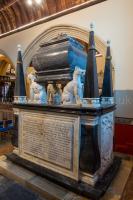
On 17th August 1654 Henry Bourchier 5th Earl Bath [deceased] was buried at St Peter's Church, Tawstock [Map]. Inscription:
Here lies Lord Henry Bourchier, Earl of Bath, who, with a long lineage and numerous descendants, sprang from the most ancient and noble families of Bourchier and FitzWarren. By hereditary right and the title of kinship, he assumed the arms of Woodstock, Bohun, Say, Mandeville, Bruse, Badlesmere, Clare, Montchensey, Cornehill, Windsor, Peverell, Clifford, Gifford, Martin, Mohun, Tracy, Cogan, Dinham, Courtney, Rivers, Stourton, Hangford, and other renowned families, intertwining their natal arms with his own heraldic shield, which he embraces and displays to posterity on this marble. Enough said, Reader; you now at last have a brief series of his nativities, where you may behold the splendor of his lineage and the loftiness of his ancestry. If indeed you should also consider his virtues and the furnishings of his soul, consult his name, which is more enduring than bronze, more lasting than marble, or any eulogy or epitaph finally and conspicuously displayed.
Sacred to Eternity: Stop, Traveler. Beneath this tombstone, in this marble sarcophagus, Henry, Earl of Bath, has laid down the mortal remains of his flesh, the envy of his present age and the sorrow of future generations. A man distinguished by venerable birthright and a lineage of the most noble stock not less conspicuous. Observe with what furnishings of fortune he was endowed; nor did his great soul abound less in virtues. He was refined by various solid literatures, and yet with a pleasant charm of polite elegance, he was generous and open. To the needy, who lacked essentials, he was a support and pillar; to the academics, nearly crushed by the barbarity of these times, he was a support and stabilizer. To friends, he was a paragon of expansive courtesy; to foes, indeed, a specimen of kindly compensation; towards all others, obliging and humble, only towards himself, he was stern; towards the King he was a symbol of unbroken, albeit calamitous, loyalty, and again towards him, a constant follower of untainted piety. But alas, while we shadow such great icons of virtue with our meager stylus, lamented widely by pious souls and attended by angels, from this earthly dust he was raised to the heavenly heights. In memory of whom (lest it decay by neglect and the ravages of time), this monument, a token of her affection, was placed by Rachel [aged 41], the grieving Countess, who was the daughter to Francis, Earl of Westmorland, son and heir of Thomas Fane, Knight, by Mary his wife, daughter and heiress of Henry Neville, Lord Abergavenny. Her mother was Mary, daughter and heiress to Anthony Mildmay, Knight, by Grace, daughter and co-heiress of Henry Sherington, Knight. October 1659.
HIC SITUS EST DOM: HENRICUS BOURGCHIER COMES BATHONIENSIS: Qui longa Propagine, et numeroso Stemmate, a uetustissimus iuxta ac nobilissimis Familijs, de BOURGCHIER et FITZWARREN, effluxit Et Iure haeredit ario ac Titulo Cognationis ascita sibi Insignia de WOODSTOCK, BOHUN, SAY, MANDEVILLE, BRUSE, BADLESMER, CLARE, MONTCHENSEY, CORNEHILL, WINDSOR, PEVERELL, CLIFFORD, GIFFORD, MARTIN, MOHUN, TRACY, COGAN, DINHAM, COURTNEY, RIVERS, STOURTON, HANGFORD reliquareum celebris Notae Familiarum, Arma Natalitia, cum proprijs Insignibus, intertexta ac circumfusa, Scuto suo Gentilitio complectitur, et Posteris Marmore hoc insculpta exhibet. Satis est, Lector; habes iam tandem compendiosam suorum Natatium Seriem, ubi Generis Splendorem, et Prosapiae Suae Sublimitatem spectes. Si vero Virtutes, et Animi Supeflectilem lustraueris, Nomem Suum Ære perennius, Marmore diuturnius aut quouis Eulogio uel Epitaphio conspectius tandem aliquando consulas.
Æternitati Sacrum Siste Viator Sub hoc Tumulo hue Sistro Marmoreo Deposuit Exuuias Carnis Henricus Comes Bathoniensis Paefentis faeculi liuor, et venturae Posteritatis luctus: Vir venerandi Natalibus quam apprime insignis Et prolixa nobilissimi stemmatis Prosapia mon minus Conspicuus Videas qua supellectile Fortunae suit stipatus; Ne minus virtutum Peculio grandis Animus exuberauit Varia solidioris literaturae limatura suit excultus, Et taman blando Comtae Elegantiae lenocinio facilis et effisus Egenis sua Inopia vacissantibus suit subsidium et Columen Academicis ingruente huium Temporis Barbarie pene fractis, Fulcrus et Statumen, Amicis suit diffusae urbanitatis, Inimicis uero Benignae, Compensationis Specimen; In omnes alios pronus et demissus, solum in Seipsum grauis; Erga Regem erat infractae licet Calamitossae Fidelitatis Symbolum, Ac denuo erga peum intemeratae Pietatis assiduus Assecta. sed eheu dum tantos Virtutum Iconismos umbratili stylo Calamistramus, Plorantibus passim pijs et stipantibus Angelis A Terrestri hoc Puluere, in caeleste Fastigium euectus est. In cuius Memoriam (ne situ et Ærugine Tabeiceret) Hoc Monumentus Affectus sui Tesseram, RACHEL, Comitissa Lugens possuit who was Da: to Francis Ea: of Westmerland sone & heire of Tho: Fane KT by Mary his wife Da: & heire of Hen: Nevill LD Abergaveney. Her Mother was Mary Da: & heire to Anthony Mildmay KT by Grace Da: & Choheire of Hen: Sherington KT Octo: 1659
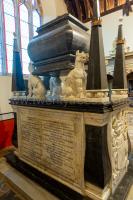
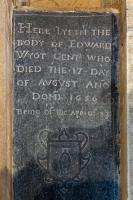
After 17th August 1656 Edward Wyot was buried at St Peter's Church, Tawstock [Map].
In August 1661 King Charles II of England Scotland and Ireland [aged 31] created new Baronetcies and Peerages...
2nd August 1661 Thomas Carew 1st Baronet [aged 29] was created 1st Baronet Carew of Haccombe in Devon.
4th August 1661 John Chichester 1st Baronet [aged 38] was created 1st Baronet Chichester of Raleigh in Devon.
7th August 1661 Mark Milbanke 1st Baronet [aged 23] was created 1st Baronet Milbanke of Halnaby in Yorkshire. Elizabeth Acklom Lady Milbanke by marriage Lady Milbanke of Halnaby in Yorkshire.
17th August 1661 William Boyd 1st Earl Kilmarnock [aged 15] was created 1st Earl Kilmarnock.


Samuel Pepys' Diary. 17th August 1661. So he and I to the Wardrobe to dinner, and after dinner Captain Ferrers and I to the Opera, and saw "The Witts" again, which I like exceedingly. The Queen of Bohemia [aged 64] was here, brought by my Lord Craven [aged 53].


Samuel Pepys' Diary. 17th August 1664. Thence to White Hall, and after long staying there was no Committee of the Fishery as was expected. Here I walked long with Mr. Pierce, who tells me the King [aged 34] do still sup every night with my Baroness Castlemayne [aged 23], who he believes has lately slunk a great belly away, for from very big she is come to be down again.


Samuel Pepys' Diary. 17th August 1664. Thence to my Lady Sandwich [aged 39], where by agreement my wife dined, and after talking with her I carried my wife to Mr. Pierce's and left her there, and so to Captain Cooke's [aged 48], but he was not at home, but I there spoke with my boy Tom Edwards, and directed him to go to Mr. Townsend (with whom I was in the morning) to have measure taken of his clothes to be made him there out of the Wardrobe, which will be so done, and then I think he will come to me.
Samuel Pepys' Diary. 17th August 1666. So to dinner, and thence abroad with my wife, leaving her at Unthanke's; I to White Hall, waiting at the Council door till it rose, and there spoke with Sir W. Coventry [aged 38], who and I do much fear our Victuallers, they having missed the fleete in their going. But Sir W. Coventry says it is not our fault, but theirs, if they have not left ships to secure them. This he spoke in a chagrin sort of way, methought. After a little more discourse of several businesses, I away homeward, having in the gallery the good fortune to see Mrs. Stewart [aged 19], who is grown a little too tall, but is a woman of most excellent features. The narrative of the late expedition in burning the ships is in print, and makes it a great thing, and I hope it is so.


John Evelyn's Diary. 17th August 1666. Dined with the Lord Chancellor [aged 57], whom I entreated to visit the Hospital of the Savoy, and reduce it (after the great abuse that had been continued) to its original institution for the benefit of the poor, which he promised to do.


Samuel Pepys' Diary. 17th August 1668. Up, and by water to White Hall, and so to St. James's, and thence with Mr. Wren [aged 39] by appointment in his coach to Hampstead, to speak with the Atturney-general [aged 70], whom we met in the fields, by his old route and house; and after a little talk about our business of Ackeworth, went and saw the Lord Wotton's [aged 25] house and garden, which is wonderfull fine: too good for the house the gardens are, being, indeed, the most noble that ever I saw, and brave orange and lemon trees.
The History of William Marshal was commissioned by his son shortly after William’s death in 1219 to celebrate the Marshal’s remarkable life; it is an authentic, contemporary voice. The manuscript was discovered in 1861 by French historian Paul Meyer. Meyer published the manuscript in its original Anglo-French in 1891 in two books. This book is a line by line translation of the first of Meyer’s books; lines 1-10152. Book 1 of the History begins in 1139 and ends in 1194. It describes the events of the Anarchy, the role of William’s father John, John’s marriages, William’s childhood, his role as a hostage at the siege of Newbury, his injury and imprisonment in Poitou where he met Eleanor of Aquitaine and his life as a knight errant. It continues with the accusation against him of an improper relationship with Margaret, wife of Henry the Young King, his exile, and return, the death of Henry the Young King, the rebellion of Richard, the future King Richard I, war with France, the death of King Henry II, and the capture of King Richard, and the rebellion of John, the future King John. It ends with the release of King Richard and the death of John Marshal.
Available at Amazon in eBook and Paperback format.
On 17th August 1701 Henry Fitzroy was born to Charles Fitzroy 1st Duke Southampton 2nd Duke Cleveland [aged 39] and Anne Pulteney Duchess Southampton Duchess of Cleveland [aged 37]. He a grandson of King Charles II of England Scotland and Ireland. He died aged seven in 1709.

On 17th August 1734 Elizabeth Shirley [aged 30] died in childbirth following the premature birth of her daughter Elizabeth as a result of the shock caused by a violent flash of lightning.
On 17th August 1755 Antoine 8th Duke Gramont was born to Antoine 7th Duke Gramont [aged 33]. He married 16th April 1780 Aglae de Polignac "Guichette" Duchess Gramont, daughter of Jules 1st Duke of Polignac and Yolande Martine Gabrielle Polastron Duchess Gramont, and had issue.

On 17th August 1755 Thomas Stothard was born. His parent's only child.
On 17th August 1785 William Woods Howard was born illegitimately to Charles Howard 11th Duke of Norfolk [aged 39].


On 17th August 1786 Frederick "The Great" I King Prussia [aged 74] died. His nephew Frederick [aged 41] succeeded II King Prussia.
On 17th August 1786 Marie Luise Victoria Saxe Coburg Gotha Duchess Kent and Strathearn was born to Francis Saxe Coburg Gotha I Duke Saxe Coburg Gotha [aged 36] and Augusta Reuss Duchess Saxe Coburg Gotha [aged 29] at Coburg. She married 29th May 1818 her third cousin once removed Edward Augustus Hanover 1st Duke Kent and Strathearn, son of King George III of Great Britain and Ireland and Charlotte Mecklenburg Strelitz Queen Consort England, and had issue.


On 17th August 1796 Anne Elizabeth Montagu Scott was born to Charles Scott 4th Duke Buccleuch 6th Duke Queensberry [aged 24] and Harriet Katherine Townshend Duchess Buccleuch Duchess Queensbury [aged 22]. Coefficient of inbreeding 1.60%.
On 17th August 1797 George William Frederick Osborne 6th Duke Leeds [aged 22] and Charlotte Townshend Duchess Leeds [aged 21] were married. She by marriage Baroness Darcy of Knayth, Baroness Conyers. She the daughter of George Townshend 1st Marquess Townshend [aged 73] and Anne Montgomery Marchioness Townshend [aged 45]. He the son of Francis Osborne 5th Duke Leeds [aged 46] and Amelia Darcy 12th Baroness Darcy 9th Baroness Conyers. They were sixth cousins. He a great x 5 grandson of King James I of England and Ireland and VI of Scotland.
On 17th August 1808 the Battle of Roliça an Anglo-Portuguese army under Sir Arthur Wellesley defeated an outnumbered Imperial French division under General of Division Henri François Delaborde, near the village of Roliça in Portugal.
General Henry Fane [aged 29] commanded.
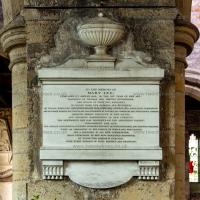
On 17th August 1812 Mary Hutchinson [aged 78] died. She was buried at St Mary's Church, Staindrop [Map].
Mary Hutchinson: Around 1734 she was born to Thomas Hutchinson of Staindrop in County Durham and Tabitha m Hutchinson. In 1769 John Lee and she were married.

On 17th August 1855 Evelyn Campbell was born to George Douglas Campbell 8th Duke Argyll [aged 32] and Elizabeth Georgiana Leveson-Gower Duchess Argyll.

After 17th August 1867. St Mary the Virgin Church, Ingestre [Map]. Grave of Mary Beech, nurse to the family of Henry John Chetwynd-Talbot 3rd Earl Talbot 18th Earl of Shrewsbury [aged 63] for thirty-seven years.
The History of William Marshal was commissioned by his son shortly after William’s death in 1219 to celebrate the Marshal’s remarkable life; it is an authentic, contemporary voice. The manuscript was discovered in 1861 by French historian Paul Meyer. Meyer published the manuscript in its original Anglo-French in 1891 in two books. This book is a line by line translation of the first of Meyer’s books; lines 1-10152. Book 1 of the History begins in 1139 and ends in 1194. It describes the events of the Anarchy, the role of William’s father John, John’s marriages, William’s childhood, his role as a hostage at the siege of Newbury, his injury and imprisonment in Poitou where he met Eleanor of Aquitaine and his life as a knight errant. It continues with the accusation against him of an improper relationship with Margaret, wife of Henry the Young King, his exile, and return, the death of Henry the Young King, the rebellion of Richard, the future King Richard I, war with France, the death of King Henry II, and the capture of King Richard, and the rebellion of John, the future King John. It ends with the release of King Richard and the death of John Marshal.
Available at Amazon in eBook and Paperback format.

Henry Chaplin A Memoir: 2 Family and Social Life Part II. 17th [Aug 1876]. I feel as if I had been away from you 6 months at least, and the boredom of Homburg begins to be very depressing already. And yet there are a good many people here too. I went out for a prowl just to see who was here, and to order my dinner. Every one at Homburg dines at the Cursaal—like an enormous Café, where I must say, as a rule, it is very well done Having settled that important matter I took the dogs and myself out for a walk, which I hope has done us a great deal of good. Vic was horribly sick, I believe, and all over the house In the evening I found a whole lot of friends after dinner hearing the band on the terrace, and among them your friend Terese Duchess of something [Colonna], but whose name I always forget. We renewed our acquaintance at once. She said that you were the dearest, sweetest, nicest, kindest, best, and oldest friend she'd got in the world. We became friends from that moment. She then further informed me that I was the luckiest man in the world, with which perhaps it will surprise you to hear that I agreed We ended with a good deal of chaff about Dot, whom she evidently does not regard with the same affectionate feelings that we do. Ah! Lord— There he is growling again! Never mind, we flatter ourselves, Dot and I, that we are perfectly able to hold our own against a dozen Tereses or a dozen any one else; and he takes the waters with me the first time to-morrow, when I do trust he will be on his good behaviour with Rank and Fashion, for here, in these rooms, if I must tell the truth, he lives in a state of perpetual growl. One has to go through the form here of seeing the doctor before you begin taking the water, but yesterday, when he came here, Dot fairly frightened him out of the room, while I like a brute was bursting with laughter at seeing him bowing gracefully backwards out of the door—"You hev alway two dog in your room, eh?" was his exclamation, "Then I will see you pleas in one ozer room," and so Dot remained complete master of the situation, and he won't have intrusive Germans in here at any price. On Saturday your friend the Duchess Terese proposes to organise a party for the Frankfurt races and has asked me to go with them, which I shall do, the party consisting besides of the Duchess of Cleveland [aged 57] and daughter, Lady Mary Primrose [aged 31], the poor blind Grand Duke [of Baden], and some half-dozen others. This place is stagnation and dulness itself. Society chiefly consists at this moment at instead Homburg of very respectable English families... of the certainly mixed, but as I thought highly amusing collection, one used to meet here years ago.

After 17th August 1899. Monument to John Savile 4th Earl Mexborough [deceased] at Church of St Oswald, Methley [Map] erected by his son John Henry Savile 6th Earl Mexborough [aged 31].
John Henry Savile 6th Earl Mexborough: In 1868 he was born to John Savile 4th Earl Mexborough and Agnes Louisa Elizabeth Raphael. On 15th July 1905 John Henry Savile 6th Earl Mexborough and Margaret Eva Knatchbull-Hugessen Countess Mexborough were married. He the son of John Savile 4th Earl Mexborough and Agnes Louisa Elizabeth Raphael. On 8th June 1916 John Horace Savile 5th Earl Mexborough died. His half brother John succeeded 6th Earl Mexborough of Lifford in County Donegal. In 1945 John Henry Savile 6th Earl Mexborough died.
On 17th August 1916 Edward Henry Fiennes-Clinton [aged 30] was accidentally shot and killed by 3475 Pte Wilfred Crossley Bowler who by his "careless handling of a loaded revolver" fired a shot which hit Charles in the hip/abdomen. He was buried at Warloy-Baillon Communal Cemetery Extension, Somme, France. A court of enquiry was set up at Bonneville on 20th August 1916 its President was Captain R. Christie, into the death of Private Fiennes-Clinton and it was found that the death was an accident due to the careless handling of a loaded revolver by Private 3475 Bowler.
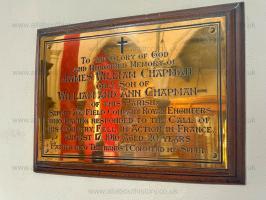
Memorial at St Michael and All Angels Church, Brimington [Map] to James William Chapman of the 73rd Field Company Royal Engineers who fell in action on 17th August 1916 aged twenty during the Battle of the Somme. He is commemorated on Thiepval Memorial.
On 17th August 1153 William Plantagenet IX Count Poitiers was born to King Henry "Curtmantle" II of England [aged 20] and Eleanor of Aquitaine Queen Consort Franks and England [aged 31] at Poitiers [Map]. He died aged two in 1156.
On 17th August 1473 Richard of Shrewsbury 1st Duke of York was born to King Edward IV of England [aged 31] and Elizabeth Woodville Queen Consort England [aged 36] at Westminster Palace [Map]. He married 15th January 1478 his second cousin once removed Anne Mowbray 8th Countess Norfolk, daughter of John Mowbray 4th Duke of Norfolk and Elizabeth Talbot Duchess Norfolk. He died aged nine in 1483.
On 17th August 1486 Charles Lorraine was born to René Lorraine II Duke Lorraine Duke of Bar [aged 35] and Philippa Egmont Duchess of Bar Duchess Lorraine [aged 19].
On 17th August 1523 Mary Gresham was born to John Gresham [aged 28] and Mary Ipswell [aged 28].
On 17th August 1684 Anne Lennard 16th Baroness Dacre of Gilsland Baroness Teynham was born to Thomas Lennard 1st Earl of Sussex [aged 30] and Anne Fitzroy Countess Sussex [aged 23]. She a granddaughter of King Charles II of England Scotland and Ireland. Coefficient of inbreeding 3.14%. She married (1) 1716 Richard Barrett Lennard and had issue (2) March 1718 her third cousin once removed Henry Roper 8th Baron Teynham, son of Christopher Roper 5th Baron Teynham and Elizabeth Browne Baroness Teynham, and had issue (3) 16th October 1725 Robert Moore, son of Henry Hamilton Moore 3rd Earl of Drogheda.
On 17th August 1696 Bishop John Thomas was born.
On 17th August 1701 Henry Fitzroy was born to Charles Fitzroy 1st Duke Southampton 2nd Duke Cleveland [aged 39] and Anne Pulteney Duchess Southampton Duchess of Cleveland [aged 37]. He a grandson of King Charles II of England Scotland and Ireland. He died aged seven in 1709.
On 17th August 1721 Mary Wallop was born to John Wallop 1st Earl Portsmouth [aged 31] and Bridget Bennet Viscountess Lymington [aged 24]. She died aged less than one years old.
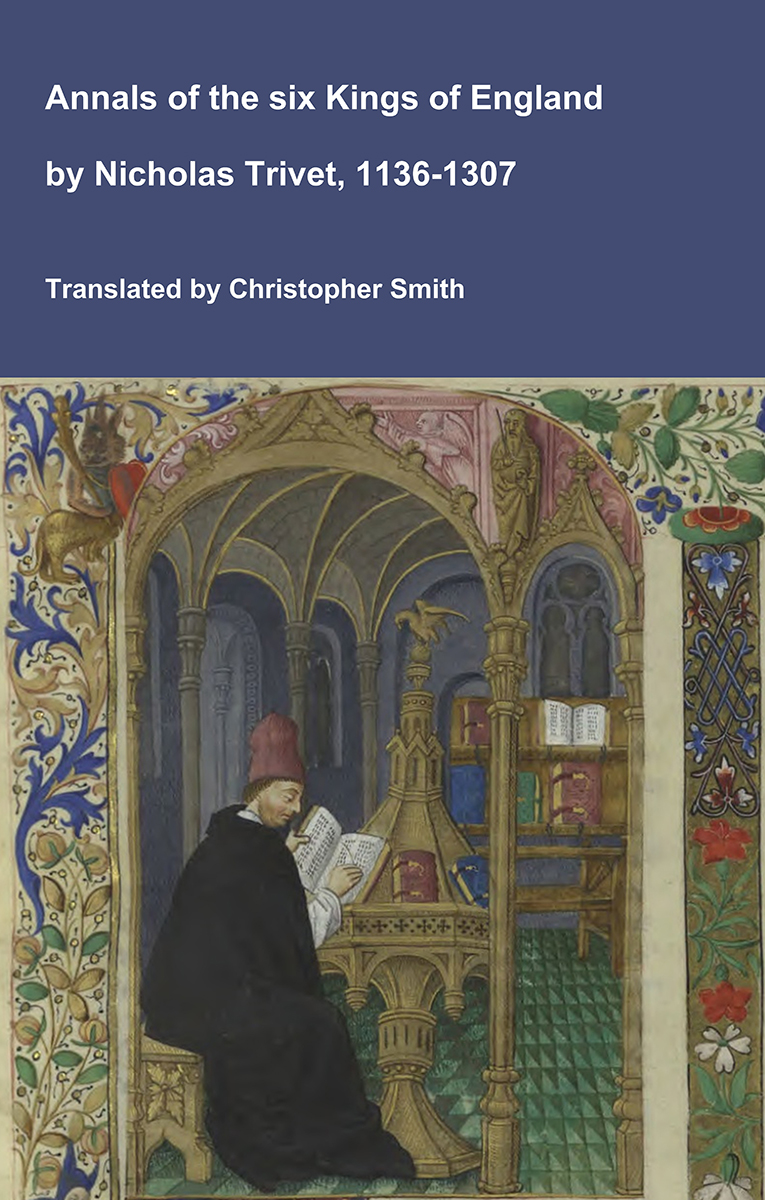
Annals of the six Kings of England by Nicholas Trivet
Translation of the Annals of the Six Kings of England by that traces the rise and rule of the Angevin aka Plantagenet dynasty from the mid-12th to early 14th century. Written by the Dominican scholar Nicholas Trivet, the work offers a vivid account of English history from the reign of King Stephen through to the death of King Edward I, blending political narrative with moral reflection. Covering the reigns of six monarchs—from Stephen to Edward I—the chronicle explores royal authority, rebellion, war, and the shifting balance between crown, church, and nobility. Trivet provides detailed insight into defining moments such as baronial conflicts, Anglo-French rivalry, and the consolidation of royal power under Edward I, whose reign he describes with particular immediacy. The Annals combines careful year-by-year reporting with thoughtful interpretation, presenting history not merely as a sequence of events but as a moral and political lesson. Ideal for readers interested in medieval history, kingship, and the origins of the English state, this chronicle remains a valuable and accessible window into the turbulent world of the Plantagenet kings.
Available at Amazon in eBook and Paperback format.
On 17th August 1723 John Hobart 2nd Earl Buckinghamshire was born to John Hobart 1st Earl Buckinghamshire [aged 29] and Judith Britiffe. He married (1) his sixth cousin Mary Anne Drury Countess Buckinghamshire, daughter of Thomas Drury 1st Baronet and Martha Tyrrell Lady Drury, and had issue (2) before 20th February 1772 Caroline Conolly Countess Buckinghamshire and had issue.


On 17th August 1755 Thomas Stothard was born. His parent's only child.
On 17th August 1755 Antoine 8th Duke Gramont was born to Antoine 7th Duke Gramont [aged 33]. He married 16th April 1780 Aglae de Polignac "Guichette" Duchess Gramont, daughter of Jules 1st Duke of Polignac and Yolande Martine Gabrielle Polastron Duchess Gramont, and had issue.
On 17th August 1765 John Hope 4th Earl Hopetoun was born to John Hope 2nd Earl Hopetoun [aged 60] and Jane Oliphant Countess Hopetoun. He married (1) 1798 Louisa Dorothea Wedderburn and had issue (2) 1798 his first cousin Elizabeth Vere Hope.
On 17th August 1777 Anna Maria Truter Lady Barrow was born to Petrus Johannes Truter [aged 29]. She married 26th August 1799 John Barrow 1st Baronet and had issue.

On 17th August 1782 Foster Cunliffe-Offley was born to Foster Cunliffe 3rd Baronet [aged 27] and Harriet Kinloch Lady Cunliffe. He married 21st April 1809 Emma Crewe, daughter of John Crewe 1st Baron Crewe and Frances Anne Greville.
On 17th August 1785 William Woods Howard was born illegitimately to Charles Howard 11th Duke of Norfolk [aged 39].
On 17th August 1786 Marie Luise Victoria Saxe Coburg Gotha Duchess Kent and Strathearn was born to Francis Saxe Coburg Gotha I Duke Saxe Coburg Gotha [aged 36] and Augusta Reuss Duchess Saxe Coburg Gotha [aged 29] at Coburg. She married 29th May 1818 her third cousin once removed Edward Augustus Hanover 1st Duke Kent and Strathearn, son of King George III of Great Britain and Ireland and Charlotte Mecklenburg Strelitz Queen Consort England, and had issue.

On 17th August 1789 George Neville-Grenville was born to Richard Griffin 2nd Baron Braybrook [aged 39] and Catherine Granville [aged 28]. He married 1816 his half second cousin once removed Charlotte Legge, daughter of George Legge 3rd Earl Dartmouth and Frances Finch Countess Dartmouth, and had issue.
On 17th August 1796 Anne Elizabeth Montagu Scott was born to Charles Scott 4th Duke Buccleuch 6th Duke Queensberry [aged 24] and Harriet Katherine Townshend Duchess Buccleuch Duchess Queensbury [aged 22]. Coefficient of inbreeding 1.60%.
Chronicle of Walter of Guisborough
A canon regular of the Augustinian Guisborough Priory, Yorkshire, formerly known as The Chronicle of Walter of Hemingburgh, describes the period from 1066 to 1346. Before 1274 the Chronicle is based on other works. Thereafter, the Chronicle is original, and a remarkable source for the events of the time. This book provides a translation of the Chronicle from that date. The Latin source for our translation is the 1849 work edited by Hans Claude Hamilton. Hamilton, in his preface, says: 'In the present work we behold perhaps one of the finest samples of our early chronicles, both as regards the value of the events recorded, and the correctness with which they are detailed; Nor will the pleasing style of composition be lightly passed over by those capable of seeing reflected from it the tokens of a vigorous and cultivated mind, and a favourable specimen of the learning and taste of the age in which it was framed.'
Available at Amazon in eBook and Paperback format.
On 17th August 1800 Harriet Emma Arundel Stewart was born illegitimately to Granville Leveson-Gower 1st Earl Granville [aged 26] and Henrietta Frances Spencer Countess Bessborough [aged 39]. She was born in secret and sent to be raised by a foster mother.


On 17th August 1807 Elizabeth Charlotte Liddell was born to Thomas Liddell 1st Baron Ravensworth [aged 32] and Maria Susannah Simpson Baroness Calthorpe [aged 34]. She married before 15th September 1841 Edward Ernest Villiers and had issue.
On 17th August 1818 Henry Edward Leigh Dryden 7th and 4th Baronet was born to Reverend Henry Dryden 3rd Baronet [aged 31].
On 17th August 1843 Adeliza Georgiana Hervey Countess Clancarty was born to Frederick Hervey 2nd Marquess of Bristol [aged 43] and Katherine Isabella Manners [aged 34]. She married 29th November 1866 Richard Trench 4th Earl of Clancarty, son of William Trench 3rd Earl of Clancarty and Sarah Juliana Butler, and had issue.


On 17th August 1844 Francis Bertie 1st Viscount Bertie Thame was born to Montagu Bertie 6th Earl of Abingdon [aged 36] and Elizabeth Lavinia Harcourt Countess Abingdon. He married 1874 Feodorowna Cecilia Wellesley Viscountess Bertie Thame, daughter of Henry Richard Charles Wellesley 1st Earl Cowley, and had issue.
On 17th August 1855 Evelyn Campbell was born to George Douglas Campbell 8th Duke Argyll [aged 32] and Elizabeth Georgiana Leveson-Gower Duchess Argyll.

On 17th August 1873 Walter FitzUryan Rice 7th Baron Dynevor was born to Arthur Rice 6th Baron Dynevor [aged 37] and Selina Lascelles [aged 32]. He married 12th October 1898 Margaret Child-Villiers Baroness Dynevor, daughter of Victor Albert George Child-Villiers 7th Earl Jersey and Margaret Elizabeth Leigh Countess Jersey, and had issue.
On 17th August 1875 Foster Hugh Egerton Cunliffe 6th Baronet was born to Robert Alfred Cunliffe 5th Baronet [aged 36] and Eleanor Sophia Leigh Lady Cunliffe [aged 27].
On 17th August 1890 Villiers Geoffrey Cæsar Hawkins 6th Baronet was born to Henry Cæsar Hawkins [aged 37].
On 17th August 1916 Antony Guy Acland 5th Baronet was born to Hubert Acland 4th Baronet [aged 26] and Lalage Mary Kathleen Acland [aged 27]. Coefficient of inbreeding 1.57%. He married (1) 13th September 1939 Avriel Ann Wingfield-Stratford Lady Acland (2) 15th July 1944 Margaret Joan Rooke Lady Acland and had issue.
Abbot John Whethamstede’s Chronicle of the Abbey of St Albans
Abbot John Whethamstede's Register aka Chronicle of his second term at the Abbey of St Albans, 1451-1461, is a remarkable text that describes his first-hand experience of the beginning of the Wars of the Roses including the First and Second Battles of St Albans, 1455 and 1461, respectively, their cause, and their consequences, not least on the Abbey itself. His text also includes Loveday, Blore Heath, Northampton, the Act of Accord, Wakefield, and Towton, and ends with the Coronation of King Edward IV. In addition to the events of the Wars of the Roses, Abbot John, or his scribes who wrote the Chronicle, include details in the life of the Abbey such as charters, letters, land exchanges, visits by legates, and disputes, which provide a rich insight into the day-to-day life of the Abbey, and the challenges faced by its Abbot.
Available at Amazon in eBook and Paperback format.
On 17th August 1934 Thomas Perceval 12th Earl of Egmont was born to Frederick George Moore Perceval 11th Earl Egmont [aged 20].
On 17th August 1958 Mark Baring 8th Baron Ashburton was born to John Francis Baring 7th Baron Ashburton [aged 29] and Susan Renwick [aged 28].
On 17th August 1970 Richard John Buckworth-Herne-Soame 13th Baronet was born to Charles John Buckworth-Herne-Soame 12th Baronet [aged 38].
On 17th August 1497 Thomas Howard 2nd Duke of Norfolk [aged 54] and Agnes Tilney Duchess Norfolk [aged 20] were married some four months after the death of his first wife. She by marriage Countess Surrey. She, Agnes, was a first cousin of his former wife Elizabeth Tilney Countess of Surrey for which he was given dispensation on 17th August 1497. The difference in their ages was 34 years. He the son of John Howard 1st Duke of Norfolk and Katherine Moleyns.
On 17th August 1561 William Ruthven 1st Earl Gowrie [aged 18] and Dorothea Stewart Countess Gowrie [aged 20] were married. They were half fifth cousins. She a great x 5 granddaughter of King Edward III of England.
On 17th August 1654 William Cholmley 2nd Baronet [aged 28] and Katherine Hotham were married.
On 17th August 1663 John Paulett 3rd Baron Paulett [aged 22] and Essex Popham Baroness Poulett [aged 21] were married.
On 17th August 1732 John Evelyn 2nd Baronet [aged 25] and Mary Boscawen [aged 26] were married. They were first cousins.
On 17th August 1736 William Lowther 2nd Baronet [aged 42] and Catherine Ramsden Lady Lowther [aged 38] were married. She by marriage Lady Lowther of Swillington in West Yorkshire. They were half third cousin once removed.
On 17th August 1769 Bysshe Shelley 1st Baronet [aged 38] and Elizabeth Jane Perry were married.
Chronicle of Walter of Guisborough
A canon regular of the Augustinian Guisborough Priory, Yorkshire, formerly known as The Chronicle of Walter of Hemingburgh, describes the period from 1066 to 1346. Before 1274 the Chronicle is based on other works. Thereafter, the Chronicle is original, and a remarkable source for the events of the time. This book provides a translation of the Chronicle from that date. The Latin source for our translation is the 1849 work edited by Hans Claude Hamilton. Hamilton, in his preface, says: 'In the present work we behold perhaps one of the finest samples of our early chronicles, both as regards the value of the events recorded, and the correctness with which they are detailed; Nor will the pleasing style of composition be lightly passed over by those capable of seeing reflected from it the tokens of a vigorous and cultivated mind, and a favourable specimen of the learning and taste of the age in which it was framed.'
Available at Amazon in eBook and Paperback format.
On 17th August 1797 George William Frederick Osborne 6th Duke Leeds [aged 22] and Charlotte Townshend Duchess Leeds [aged 21] were married. She by marriage Baroness Darcy of Knayth, Baroness Conyers. She the daughter of George Townshend 1st Marquess Townshend [aged 73] and Anne Montgomery Marchioness Townshend [aged 45]. He the son of Francis Osborne 5th Duke Leeds [aged 46] and Amelia Darcy 12th Baroness Darcy 9th Baroness Conyers. They were sixth cousins. He a great x 5 grandson of King James I of England and Ireland and VI of Scotland.
On 17th August 1807 James Whalley-Smythe-Gardiner 3rd Baronet [aged 21] and Frances Mosley Lady Whalley-Smythe-Gardiner were married. She by marriage Lady Whalley-Smythe-Gardiner of Roch Court in Hampshire.
On 17th August 1815 Admiral John Beresford 1st Baronet [aged 49] and Harriet Elizabeth Peirse Lady Beresford were married. She by marriage Lady Beresford of Bagnall in County Waterford. He the illegitmate son of George de la Poer Beresford 1st Marquess Waterford.
On 17th August 1824 Thomas Hay-Drummond 11th Earl Kinnoull [aged 39] and Louisa Burton Rowley Countess Kinnoul were married. She by marriage Countess Kinnoull. He the son of Robert Hay-Drummond 10th Earl Kinnoul and Sarah Harley Countess Kinnoul.
On 17th August 1835 Henry Bickersteth 1st Baron Langdale [aged 52] and Jane Elizabeth Harley Baroness Langdale were married at St James' Church, Paddington. She the daughter of Edward Harley 5th Earl of Oxford and Earl Mortimer [aged 62] and Jane Elizabeth Scott Countess of Oxford and Mortimer.
On 17th August 1860 Edward Bootle Wibraham 1st Earl Lathom [aged 22] and Alice Villiers Countess Lathom [aged 19] were married. She the daughter of George William Villiers 4th Earl Clarendon [aged 60] and Katherine Grimston Countess Clarendon [aged 50].
On 17th August 1886 Francis Montagu Stuart-Wortley-Mackenzie 2nd Earl of Wharncliffe [aged 30] and Ellen Gallwey Countess of Wharncliffe [aged 23] were married.
On 17th August 1153 King Stephen's eldest son Eustace Blois IV Count Boulogne [aged 23] died at Bury St Edmunds [Map]. Probably from food poisoning, possibly murdered for having sacked the Abbey. His brother William [aged 16] succeeded I Count Boulogne.
On 17th August 1424 the English forces led by John Lancaster 1st Duke Bedford [aged 35] inflicted a significant defeat on the French and Scottish army at the Battle of Verneuil; a second Agincourt. For the English Edmund Hungerford [aged 15], Ralph Longford [aged 23], John "Old Talbot" Talbot 1st Earl of Shrewsbury [aged 41] and Richard Waller [aged 29] fought.
On the French and Scottish side Pierre Valois, Archibald Douglas 1st Duke Touraine [aged 52], his son James Douglas, William Seton Master of Seton [aged 34], Alexander Home of Home and Dunglas [aged 56] were killed
John Stewart 2nd Earl Buchan [aged 43] was killed. His brother Robert [aged 39] de jure Earl Ross and Earl Buchan although he didn't claim the title since both titles had reverted to the Crown.
Jean Poton Xaintrailles [aged 34] fought.
On 17th August 1469 Humphrey Stafford 1st Earl Devon [aged 30], having escaped after the Battle of Edgecote Moor, was captured and executed by a mob at Bridgwater, Somerset [Map]. He was buried at Glastonbury Abbey [Map]. Earl Devon, Baron Stafford of Southwick forfeit.
On 17th August 1498 John Scrope 5th Baron Scrope of Bolton [aged 61] died. He was buried at Easby Abbey, Yorkshire [Map]. His son Henry [aged 30] succeeded 6th Baron Scrope of Bolton. Elizabeth Percy Baroness Scrope Bolton [aged 38] by marriage Baroness Scrope of Bolton.
On 17th August 1510 Edmund Dudley [aged 48] and Richard Empson [aged 60] were beheaded at Tower Hill [Map] for constructive treason for having carried out King Henry VII's rigorous and arbitrary system of taxation. The new King King Henry VIII of England and Ireland [aged 19] attempting to distance himself from his father's policies.
On 17th August 1545 Thomas Poynings 1st Baron Poynings [aged 33] died at Boulogne sur Mer [Map]. Baron Poynings extinct.
On 17th August 1553 Charles 3rd Duke Savoy [aged 66] died. His son Emmanuel [aged 25] succeeded Duke Savoy.
William of Worcester's Chronicle of England
William of Worcester, born around 1415, and died around 1482 was secretary to John Fastolf, the renowned soldier of the Hundred Years War, during which time he collected documents, letters, and wrote a record of events. Following their return to England in 1440 William was witness to major events. Twice in his chronicle he uses the first person: 1. when writing about the murder of Thomas, 7th Baron Scales, in 1460, he writes '… and I saw him lying naked in the cemetery near the porch of the church of St. Mary Overie in Southwark …' and 2. describing King Edward IV's entry into London in 1461 he writes '… proclaimed that all the people themselves were to recognize and acknowledge Edward as king. I was present and heard this, and immediately went down with them into the city'. William’s Chronicle is rich in detail. It is the source of much information about the Wars of the Roses, including the term 'Diabolical Marriage' to describe the marriage of Queen Elizabeth Woodville’s brother John’s marriage to Katherine, Dowager Duchess of Norfolk, he aged twenty, she sixty-five or more, and the story about a paper crown being placed in mockery on the severed head of Richard, 3rd Duke of York.
Available at Amazon in eBook and Paperback format.
On 17th August 1627 Toby Caulfeild 1st Baron Caulfeild [aged 61] died. He was buried at Christ Church Cathedral, Dublin [Map]. His nephew William [aged 40] succeeded 2nd Baron Caulfield.

On 17th August 1729 Jacob Astley 1st Baronet [aged 90] died. His son Philip [aged 62] succeeded 2nd Baronet Astley of Hill Morton.
On 17th August 1736 James Berkeley 3rd Earl Berkeley [aged 57] died. His son Augustus [aged 21] succeeded 4th Earl Berkeley, 4th Viscount Dursley, 12th Baron Berkeley.
On 17th August 1769 John Spring 6th Baronet [aged 64] died. Baronet Spring of Pakenham in Suffolk extinct.
On 17th August 1786 Frederick "The Great" I King Prussia [aged 74] died. His nephew Frederick [aged 41] succeeded II King Prussia.

On 17th August 1789 John Maitland 7th Earl Lauderdale [aged 71] died at Haltoun House, Ratho. His son James [aged 30] succeeded 8th Earl Lauderdale, 8th Viscount Maitland, 8th Viscount Lauderdale, 4th Baronet Maitland of Ravelrig in Nova Scotia. Eleanor Todd Countess Lauderdale [aged 27] by marriage Countess Lauderdale.
On 17th August 1808 George Smith aka Pauncefoot-Bromley 2nd Baronet [aged 54] died. His son Robert [aged 29] succeeded 3rd Baronet Bromley of Nottingham and East Stoke in Nottinghamshire.

On 17th August 1841 Henry Hoare 3rd Baronet [aged 79] died. His son Hugh [aged 53] succeeded 4th Baronet Hoare of Barn Elms in Surrey.
On 17th August 1857 Mary Glynne Lady Lyttelton [aged 44] died.
On 17th August 1868 William Neville 4th Earl Abergavenny [aged 76] died. His son William [aged 41] succeeded 5th Earl Abergavenny, 5th Viscount Neville, 6th Baron Abergavenny. Caroline Vanden Bempte Johnston Marchioness Abergavenny by marriage Countess Abergavenny.

Anne Boleyn. Her Life as told by Lancelot de Carle's 1536 Letter.
In 1536, two weeks after the execution of Anne Boleyn, her brother George and four others, Lancelot du Carle, wrote an extraordinary letter that described Anne's life, and her trial and execution, to which he was a witness. This book presents a new translation of that letter, with additional material from other contemporary sources such as Letters, Hall's and Wriothesley's Chronicles, the pamphlets of Wynkyn the Worde, the Memorial of George Constantyne, the Portuguese Letter and the Baga de Secrets, all of which are provided in Appendices.
Available at Amazon in eBook and Paperback format.
On 17th August 1879 John Arthur Douglas Bloomfield 1st and 2nd Baron Bloomfield [aged 76] died. Baron Bloomfield of Ciamhaltha in County Tipperary extinct, Baron Bloomfield of Ciamhaltha in County Tipperary extinct [in the Peerage of the United Kingdom].

On 17th August 1881 William Heathcote 5th Baronet [aged 80] died. His son William [aged 54] succeeded 6th Baronet Heathcote of Hursley in Hampshire.
On 17th August 1899 John Savile 4th Earl Mexborough [aged 89] died at Brighton. His son John [aged 56] succeeded 5th Earl Mexborough of Lifford in County Donegal.
On 17th August 1916 Algernon Freeman-Mitford 1st Baron Redesdale [aged 79] died. His son David [aged 38] succeeded 2nd Baron Redesdale of Redesdale in Northumberland. Sydney Bowles Baroness Redesdale [aged 36] by marriage Baroness Redesdale of Redesdale in Northumberland.
On 17th August 1922 Edward Pellew 5th Viscount Exmouth [aged 31] died. His first cousin twice removed Henry [aged 94] succeeded 6th Viscount Exmouth, 6th Baron Exmouth of Canonteign, 6th Baronet Pellew of Treverry in Cornwall. He died six months later.
On 17th August 1928 George Trevelyan 2nd Baronet [aged 90] died. His son Charles [aged 57] succeeded 3rd Baronet Trevelyan of Wallington. Mary "Molly" Katherine Bell Lady Trevelyan [aged 46] by marriage Lady Trevelyan of Wallington.


On 17th August 1931 Millicent Cox Countess Lindsey [aged 68] died.
On 17th August 1970 George Guy Bulwer Nugent 4th [aged 77] died. His son Robin [aged 45] succeeded 5th Baronet Nugent of Waddesdon in Berkshire.
On 17th August 1985 Nicholas Eden 2nd Earl Avon [aged 54] died unmarried. Earl of Avon and Viscount Eden of Royal Leamington Spa in Warwickshire extinct.
On 17th August 2005 Simon Francis Bethell Codrington 3rd Baronet [aged 82] died. His son Christopher [aged 45] succeeded 4th Baronet Codrington of Dodington.
On 17th August 2014 Nicholas Russell 6th Earl Russell [aged 45] died. His brother John [aged 42] succeeded 7th Earl Russell of Kingston Russell in Dorset.