

15 Mar is in March.
The 15 Mar is the Ides of March.
On 15th March 44, the Ides of March, Julius Ceasar was assassinated by Brutus, Cassius and several other Roman senators.
On 14th March 1190 twin boys Robert Capet and Philip Capet were born to King Philip II of France [aged 24] and Isabelle Flanders Queen Consort France [aged 19]. The eldest Robert died the same day, the youngest Philip died three days later. Their mother Isabelle Flanders Queen Consort France died from childbirth the day after the birth.
On 15th March 1275 Margaret Plantagenet Duchess Brabant was born to King Edward I of England [aged 35] and Eleanor of Castile Queen Consort England [aged 34] at Windsor Castle [Map]. She married 9th July 1290 her half third cousin twice removed John "Peaceful" Reginar II Duke Brabant, son of John Reginar I Duke Brabant and Margaret Dampierre Duchess Brabant, and had issue.
Letters. 15th March 1399. Letter XXVII. Joanna of Navarre [aged 29] afterwards Queen of Henry IV to King Richard II [aged 32].
My most dear and redoubted lord,.
I desire every day to be certified of your good estate, which our Lord grant that it may ever be as good as your heart desires and as I should wish it for myself. If it would please you to let me know of it, you would give me great rejoicings in my heart, for every time that I hear good news of you I am most perfectly glad at heart. And if to know tidings from this side would give you pleasure, when this was written my lord [aged 31], I, and our children were together in good health of our persons, thanks to our Lord, who by his grace ever grant you the same. I pray you, my dearest and most redoubted lord, that it would ever please you to have the affairs of my said lord well recommended, as well in reference to the deliverance of his lands as other things, which lands in your hands are the cause why he sends his people promptly towards you. So may it please you hereupon to provide him with your gracious remedy, in such manner that he may enjoy his said lands peaceably; even as he and I have our perfect surety and trust in you more than in any other. And let me know your good pleasure, and I will accomplish it willingly and with a good heart to my power.
My dearest and most redoubted lord, I pray the Holy Spirit that he will have you in his holy keeping.
Written at Vannes, the 15th day of March. The Duchess of Bretagne.


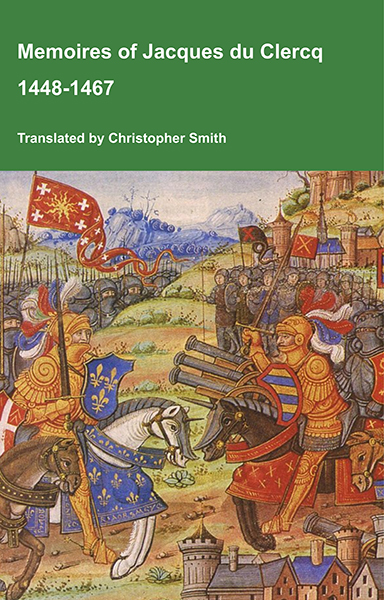 Memoires Jacques du Clercq. About eight days after Duke Philip of Burgundy had held the banquet and made the vows mentioned above, in the first week of March, the said Duke of Burgundy betrothed his only legitimate son, Charles, to Catherine, daughter of the Duke of Bourbon, his niece, daughter of his sister. To complete this marriage, he sent to Rome John, Bishop of Arras, to obtain a dispensation from our Holy Father so that the marriage might be accomplished. After this was done, the Duke of Burgundy dismissed all his household officers for a period of twenty-two months, for he expected to be away that long, at which many of his servants were astonished; for many of them had not saved enough to live without wages during that time. And on the 15th day of March [1453] following, in the said year fifty-three, the Duke of Burgundy departed from Lille with a small company, and took his road through Burgundy, and then went into Germany, intending to find the emperor there, in order to ask the Emperor of Germany and the other princes whether they would be willing to aid the Christians, and also to learn whether his people might pass through those German lands without hindrance. In those German lands he was very highly and honourably received and welcomed by many great princes; but he did not speak with the emperor. Instead, the emperor sent word to him, asking that he refrain from coming to see him, on account of a certain illness he had. Some said that the emperor feigned illness and was not truly ill, but that he did not wish to speak with the duke, fearing that if they met, the duke would press him so strongly to go against the Turks that he would not be able honourably to refuse, yet he had no intention of going, for that Emperor Frederick was not inclined to arms, but rather lived quietly with his wife and cared little for war. Nevertheless, the emperor's envoys who came to the duke arranged a meeting between them and the emperor, if it could be done, within six months, in order then to decide upon the requests that the duke had made to the emperor's ambassadors, in the emperor's name, concerning the aid he intended to give to the Christians. These things having been done, the duke departed from Germany and returned to Dijon in Burgundy, where he remained for some time.
ENVIRON huict jours après ce que le duc Philippe de Bourgogne olt fait le banquet et voeulx dessusdits, en la première semaine de mars, ledit duc de Bourgogne feit fiancer a Charles son fils legitime, et plus n'en avoit, Catherine, fille du duc de Bourbon, sa niepce, fille de sa soeur, pour lequel marriage par furnir, il envoya a Rome Jehan, evesque d'Arras, pour avoir une dispensation de nostre St Pere, pour parfaire ledit marriage; après ce fait, le duc de Bourgogne congia touts ses officiers domestiques jusques a vingt deux mois passés, qu'il esperoit estre autant dehors, de quoy plusieurs de ses serviteurs feurent esbahis; car plusieurs y en avoit qui n'avoient point tant espargné que pour vivre sans gage ledit temps durant; et le quinziesme jour de mars ensuivant, l'an dessusdit cinquante trois, le duc de Bourgogne se partist de Lisle a privée compagnie, et print son chemin par Bourgogne, et puis s'en alla es Alle magnes pour cuider trouver l'empereur illecq, adfin de sçavoir audit empereur d'Allemagne et aulx aultres princes s'ils ne voldroient point faire secours aulx chrestiens, et aussy se par lesdites Allemagnes ses gens polroient passer sans avoir encombrier, esquelles Allemagnes de plusieurs grands princes il fust moult haultement et notablement festoyé et bienvenu; mais il ne parla point a l'empereur, ains envoya l'empereur devers, mandant qu'il se desportat de venir vers lui pour certaine maladie qu'il avoit; aulcuns disoient que l'empereur feignoit estre malade, et qu'il ne l'estoit pas, mais il ne volloit pas parler audit duc, doubtant que s'il parloit, que le duc lui eust tant requis d'aller sur les Turcs, qu'il ne l'eust sceu bonnement refuser, et toute voye il n'y volloit pas aller, car icelluy empereur Frederic n'estoit pas chevallereux en armes, ains estoit tout quoy avecq sa femme, et ne ly chaloit de guerre; toute voye les messagiers d'icelluy empereur qui vindrent vers le duc prindrent journée de eulx retrouver devers le duc et l'empereur, se faire se pooit, en dedans six mois, pour lors conclure sur les requettes que le duc faisoit aulx ambassadeurs de l'empereur, au nom dudit empereur, touchant le secours qu'il avoit intention de faire aulx chrestiens. Ces choses ainsy faites, le duc s'en alla et retourna des Allemagnes et s'en vint a Digeon en Bourgogne, ou il se tint une espace de temps.
A Chronicle of London. 25th March 1458. And this yere was a grete watch in London, and al the gates kepte every nyght, and ij aldermen watchyng: and withynne a while after the kyng and lordes were accorded1, and went a procession in Paulis.
Note 1. See Ballad. A° 36 Hen. VI. The temporary reconciliation between the adherents of the King and of the Duke of York, so briefly alluded to in the text, and which is best illustrated by the following extract from a contemporary letter, served, like every other event of his times, for the exercise of Lydgate's pen; but his description of it in the following ballad is infinitely more valuable from its historical accuracy, than its poetical merit. Of this article there are two copies extant; one in the Cottonian MS. Nero A. vi. and the other in the Cottonian MS. Vespasianus B. xvi.: the latter copy has been printed, though very erroneously, and with the orthography modernized, by Mr. Sharon Turner; but the former has not been before noticed. As they differ in some places from each other, and are very short, it has been thought advisable that both transcripts should be inserted.
Extract of a Letter from John Bokking to Sir John Fastolf: Dated on the Wednesday after Mid Lent Sunday, i.e. 15 March, 1457.
Paston Letters, vol. i. p. 154.
"Lyke it your maistership to wyte, that as for tidings, the Counsell is, the fornone, at the blake Frires, for the ease of resortyng of the Lordes that ar withinne the toun; and at afternon at the white Frirers in Fletstrete, for the Lordis with owte the town; and all things shall come to a good conclusion with God is grace; for the Kyng shall come hidre this weke, and the Quene also, as some men sayn, and my Lord Buk and Stafford with hire, and muche puple. My Lord of Caunterbury takith grete peyne up on hym daily, and will write unto yow the certeynte of suche tidings as falle; and shuld have doon or this tyme, saf for that he wolde knowe an ende of the mattre."
Patent Rolls. 15th March 1464. Grant to John Walbrond, prebendary of Cerdestoke alias Cherdestoke in the cathedral of Salisbury, of a prebend within the free chapel of St. Stephen within the king's palace of Westminster, on an exchange of benefices with Robert Stillyngton [aged 44]. By K. Mandate in pursuance to the dean of the said free chapel.
Letters and Papers Foreign and Domestic Henry VIII 1518. 15th March 1518. Giust. Desp. II. 166. 4009. Sebastian Giustinian [aged 58] to the Doge.
Rode to the King at Richmond, who is in some trouble, as three of his pages have died of the plague. Was graciously received: told him the news of the Turks, from whom, his majesty said, there was nothing to fear this year, as he had received intelligence from Rhodes. Sebastian pointed out the threatening nature of their preparations. The King laughed, and said Venice was on such good terms with the Turk, she had nothing to fear. Sebastian replied, they had made terms with Selim out of necessity, and from dread of the formidable power of the Sultan. "Tell your Signory," said the King, "there is a person more formidable than the Turk, who denies he has engaged any lansknechts, and yet I know he has hired them at two crowns per man." Sebastian replied, he thought it very unlikely such a thing should have escaped the knowledge of so wise a man as the Venetian ambassador in the French court. "Upon this the King drew me nearer to him, and also took my secretary by the hand,—a gesture he repeated several times in the course of the conference,—saying, 'Shall I give you manifest proof of the deceit of this King of France?'" and then went on to insist that the forces which Francis pretended to marshal against the Turks were really intended against Italy. Sebastian combated this notion without appearing to contradict him. The King urged, "He wishes me worse than he does the devil himself; yet you see what kind of friendly language he employs towards me, in order that I may trust such deceit: but I am so prepared that, should the King of France attempt to attack me, he will find himself deceived." He then insisted on the refusal of France to do justice to his subjects; the sending of Albany into Scotland; "where he will perhaps put the King to death in like manner as his brother died, which I never intend to suffer; nor will I tolerate his presence there; and should he send him, I shall hold the said King my enemy." He then enlarged upon the love of interference on the part of Francis. Sebastian turned the conversation, endeavoring to avoid his resentment, urging that the Signory acted towards both crowns impartially. The King expressed himself satisfied, and told Sebastian he was not to detail these conversations to the ambassador in France; which, however, he intends to do. London, 15 March 1518.
On 15th March 1521 John "Babymaker" de la Marck II Duke Cleves [aged 62] died. His son John [aged 30] succeeded III Duke Cleves.
On 15th March 1530 Katherine Howard Countess Derby [aged 15] died of plague.
Chronicle of a Bourgeois of Valenciennes
Récits d’un bourgeois de Valenciennes aka The Chronicle of a Bourgeois of Valenciennes is a vivid 14th-century vernacular chronicle written by an anonymous urban chronicler from Valenciennes in the County of Hainaut. It survives in a manuscript that describes local and regional history from about 1253 to 1366, blending chronology, narrative episodes, and eyewitness-style accounts of political, military, and social events in medieval France, Flanders, and the Low Countries. The work begins with a chronological framework of events affecting Valenciennes and its region under rulers such as King Philip VI of France and the shifting allegiances of local nobility. It includes accounts of conflicts, sieges, diplomatic manoeuvres, and the impact of broader struggles like the Hundred Years’ War on urban life in Hainaut. Written from the perspective of a burgher (bourgeois) rather than a monastery or royal court, the chronicle offers a rare lay viewpoint on high politics and warfare, reflecting how merchants, townspeople, and civic institutions experienced the turbulence of the 13th and 14th centuries. Its narrative style combines straightforward reporting of events with moral and civic observations, making it a valuable source for readers interested in medieval urban society, regional politics, and the lived experience of war and governance in pre-modern Europe.
Available at Amazon in eBook and Paperback format.
Letters and Papers Foreign and Domestic Henry VIII 1533. 15th March 1533. Vienna Archives. 235. Chapuys [aged 43] to Charles V.
Since my last letters of the 8th, the King has got a priest of his to preach before him and the lady [aged 32], that all the while he had lived with the Queen he had been guilty of adultery, and that all his good subjects ought to pray God to pardon his offence, and enlighten him at once to take another lady; to which the Lords of his Council should solicit and even constrain him, without any regard to the censures or other provisions that the Pope could make, who ought not to be obeyed in this matter, commanding what was against God and reason. He said also that it would be no wonder if he took a wife of humble condition in consideration of her personal merits, like Saul and David. This was said with such vehemence and warmth that not only were the Queen's servants scandalised, but the Queen herself, who, for this and other bad symptoms that she sees here, is again compelled to implore by her letters sent herewith the aid and favour of your Majesty.


Wriothesley's Chronicle [1508-1562]. The first Soundaie of Lent preached at Paules Crosse [Map] the Bishopp of Salisberie [aged 51].a
Note a. Nicholas Shaxton, elected 22nd Febnuuy, 1586, in place of Cardinal Canipeggio» who was deprired by Act of Parliament, in 1534, for jion-residenoe.

A Treatise on Adultery. The first of these cases is that of Lady Parr [aged 26], in the 34th Hen. VIII.; and the Act1 states, "that for the last two years she had eloped from her husband, William Lord Parr [aged 31], and had not in that time ever returned to, nor had any carnal intercourse with him, but had been gotten with child by one of her adulterers, and been delivered of such child, which child being, as is notoriously known, begotten in adultery, and born during the espousals" between her and Lord Parr, "by the law of this realm is inheritable, and may pretend to inherit all, &c.;" and the Act therefore declares the said child to be a bastard.
Note 1. The Act, which is styled in the Lords' Journals, a Bill "to bar and make base and bastards the children which be, or shall be borne in adulteiy by the Lady Anne, wife of the Lord Parr," was read a first time on the 15th March 1543, bat it appears to have been altered by the Commons. — Lords' Journalls, I., 217. 223. 224. 230. 233. In the 6th Edw. VI., 1552, a Bill passed for annulling Lord Parr's (then Marquis of Northampton) marriage with Lady Anne Bourchier, and confirming his marriage with Elisabeth, daughter of Lord Cobham, and for the legitimation of the children that shall be had between them; but the Earl of Derby, the Bishops of Norwich and Carlisle, and Lord Stourton dissented. — Ibid, p. 409.418. The Statute of the 6 Edw. VI was, however, repealed in the 1st of Mary, 1555.
Wriothesley's Chronicle [1508-1562]. 15th March 1554. The xv of Marche Wyatt [aged 33], capteyn of the rebells, was arregned at Westminster and there condemned of highe treason.
And the same daye the Earle of Devonshire [aged 27] was committed agayne to the Tower [Map].


Chronicle of Greyfriars. 15th March 1554. Item the xv. day of March was commytted un-to the tower agayne the erle of Devenchere.
Henry Machyn's Diary. 15th March 1554. The xv day of Marche was raynyd at Westmynster ser Thomas Wyatt [aged 33] knyght, the captayn cheyffe [of] Kent, and cast to be hedyd and after quartered and sett up.
Note. P. 54. He lycted behind a gentleman into the court. After his surrender sir Thomas Wyatt was taken to the court riding behind sir Maurice Berkeley on horseback. Stowe, p. 621.
Henry Machyn's Diary. 15th March 1559. The xv day of March was my lade the contes of Oxford [aged 62] was browthe to the cherche at Lambeth, with ij harordes of armes, master Garter and master Clarenshux, in ther cot armurs, a-for the cors a grett baner of armes, and iiij baners of santtes, and iiij baner-rolles of armes borne a-bowtt her and iiij grett whyt branchys and ij dosen grett long stayffes torchys borne by her sarvandes in; and my lade Haward [aged 44] cheyffe morner, and money in blake, and the quwere was hangyd with lx ... with armes and raylles a-bowt with blake and armes; and the morow masse with small chere after-ward, butt evere man a ...
Henry Machyn's Diary. 15th March 1560. [The xv day preached at court] master (blank) the wyche he mad a nottabull sermon that the quen('s) [aged 26] grace gayff hym th[anks] for hys payne, butt sum men wher offendyd.


Henry Machyn's Diary. 15th March 1562. The xv day of Marche dyd pryche at the cowrt, the wyche was the v sonday and Passyon sonday, master Nowell [aged 45] the dene of Powlles, for the byshope of London master Gryndall [aged 43]; he dyd pryche be-cause the byshope was syke that day.

On 9th March 1566 at eight o'clock in the evening David Rizzio [aged 33] was murdered in the presence of the six months pregnant Mary Queen of Scots [aged 23] and her half-sister Jean Stewart Countess Argyll [aged 33] at Holyrood Palace [Map] by rebels led by Patrick Ruthven 3rd Lord Ruthven. Rizzio was dragged through the bed chamber into the adjacent Audience Chamber and stabbed an alleged 57 times. Mary's husband Henry "Lord Darnley" Stewart [aged 20] was suspected of being one of the murderers.
On 15th March 1566 Mary Queen of Scots writes to Queen Elizabeth I of England and Ireland [aged 32]:
As first hes takin our houss slane our maist [most] speciall servand in our awin [own] presence & thaireftir haldin our propper personis captive tressonneblie, quhairby [whereby] we war constrainit to escaipe straitlie about midnyght out of our palice of halliruidhouss [Map] to the place quhair [where] we ar for the present, in the grittest danger feir of our lywis & ewill [ill] estate that evir princes on earth stuid [stood] in.
We thotht to have writtin to you this letter with oure awin [own] hand, that therby ye myght have better onestand all our meaning & takin mair [more] familliarlie therewit. Bot of trewt [truth] we ar so tyrit [tired] & ewill [ill] at eass [ease], quhat [what] throw rydding of twenty millis [miles] in v [5] horis [hours] of the nyght as wit the frequent seikness & weill dispositioun be th'occasioun of our child/that we could not at this tyme as we was willing to have done…
Your richt [right] gud sister and cusignes [cousin] Marie R.
David Rizzio: Around 1533 he was born.
Jean Stewart Countess Argyll: Around 1533 she was born illegitimately to King James V of Scotland and Elizabeth Bethune. She a great granddaughter of King Henry VII of England and Ireland. In 1553 Archibald Campbell 5th Earl Argyll and she were married. She by marriage Countess Argyll. She the illegitmate daughter of King James V of Scotland and Elizabeth Bethune. He the son of Archibald Campbell 4th Earl Argyll and Helen Hamilton Countess Argyll. They were third cousins. She a great granddaughter of King Henry VII of England and Ireland. On 7th January 1588 Jean Stewart Countess Argyll died.
Patrick Ruthven 3rd Lord Ruthven: he was born to William Ruthven 2nd Lord Ruthven and Janet Halyburton Lady Dirletoun. Before 1551 Patrick Ruthven 3rd Lord Ruthven and Janet Douglas were married. She the illegitmate daughter of Archibald Douglas 6th Earl Angus. After 1551 Patrick Ruthven 3rd Lord Ruthven and Janet Stewart were married. His second marriage, her fourth. She the daughter of John Stewart 2nd Earl Atholl and Janet Campbell Countess Atholl. On 13th May 1566 Patrick Ruthven 3rd Lord Ruthven died.
On 15th March 1584 Philip Oldenburg was born to John "Younger" Oldenburg Duke Schleswig Holstein Sonderburg [aged 38] and Elisabeth of Brunswick-Grubenhagen [aged 33].
On 15th March 1613 Juan Fernández de Velasco y Tovar 5th Duke of Frías [aged 63] died. His son Bernardino [aged 4] succeeded 6th Duke of Frías.

Diary of Anne Clifford. 15th March 1617. Upon the 15th my Lord [aged 27] came down to Buckhurst and was so ill by the way that was fain to alight once or twice and go into a house. All the household were sent down from London to Knole.
On 15th March 1644 Electress Louise Juliana of the Palatine Rhine [aged 67] died.
William of Worcester's Chronicle of England
William of Worcester, born around 1415, and died around 1482 was secretary to John Fastolf, the renowned soldier of the Hundred Years War, during which time he collected documents, letters, and wrote a record of events. Following their return to England in 1440 William was witness to major events. Twice in his chronicle he uses the first person: 1. when writing about the murder of Thomas, 7th Baron Scales, in 1460, he writes '… and I saw him lying naked in the cemetery near the porch of the church of St. Mary Overie in Southwark …' and 2. describing King Edward IV's entry into London in 1461 he writes '… proclaimed that all the people themselves were to recognize and acknowledge Edward as king. I was present and heard this, and immediately went down with them into the city'. William’s Chronicle is rich in detail. It is the source of much information about the Wars of the Roses, including the term 'Diabolical Marriage' to describe the marriage of Queen Elizabeth Woodville’s brother John’s marriage to Katherine, Dowager Duchess of Norfolk, he aged twenty, she sixty-five or more, and the story about a paper crown being placed in mockery on the severed head of Richard, 3rd Duke of York.
Available at Amazon in eBook and Paperback format.
Samuel Pepys' Diary. 15th March 1665. So home to the 'Change [Map], and thence home to dinner, where my wife being gone down upon a sudden warning from my Lord Sandwich's [aged 39] daughters to the Hope with them to see "The Prince", I dined alone.


Samuel Pepys' Diary. 15th March 1666. Thence to Hales's [aged 66], where I met my wife and people; and do find the picture, above all things, a most pretty picture, and mighty like my wife; and I asked him his price: he says £14, and the truth is, I think he do deserve it.
Samuel Pepys' Diary. 15th March 1666. Lay till it was full time to rise, it being eight o'clock, and so to the office and there sat till almost three o'clock and then to dinner, and after dinner (my wife and Mercer and Mrs. Barbary being gone to Hales's [aged 66] before), I and my cozen Anthony Joyce, who come on purpose to dinner with me, and he and I to discourse of our proposition of marriage between Pall and Harman [aged 29], and upon discourse he and I to Harman's house and took him to a taverne hard by, and we to discourse of our business, and I offered £500, and he declares most ingenuously that his trade is not to be trusted on, that he however needs no money, but would have her money bestowed on her, which I like well, he saying that he would adventure 2 or £300 with her. I like him as a most good-natured, and discreet man, and, I believe, very cunning. We come to this conclusion for us to meete one another the next weeke, and then we hope to come to some end, for I did declare myself well satisfied with the match.
Samuel Pepys' Diary. 15th March 1667. Thence home and dined well, and then with my wife, set her at Unthanke's and I to Sir G. Carteret [aged 57], where talked with the ladies a while, and my Baroness Carteret [aged 65] talks nothing but sorrow and afflictions coming on us, and indeed I do fear the same. So away and met Dr. Fuller [aged 59], Bishop of Limricke, and walked an hour with him in the Court talking of newes only, and he do think that matters will be bad with us. Then to Westminster Hall [Map], and there spent an hour or two walking up and down, thinking 'para avoir' got out Doll Lane, 'sed je ne' could do it, having no opportunity 'de hazer le, ainsi lost the tota' afternoon, and so away and called my wife and home, where a little at the office, and then home to my closet to enter my journalls, and so to supper and to bed.
Samuel Pepys' Diary. 15th March 1668. So to White Hall, and there walked with this man and that man till chapel done, and, the King [aged 37] dined and then Sir Thomas Clifford [aged 37], the Comptroller, took me with him to dinner to his lodgings, where my Lord Arlington [aged 50] and a great deal of good and great company; where I very civilly used by them, and had a most excellent dinner: and good discourse of Spain, Mr. Godolphin [aged 33] being there; particularly of the removal of the bodies of all the dead Kings of Spain that could be got together, and brought to the Pantheon at the Escuriall, when it was finished, and there placed before the altar, there to lie for ever; and there was a sermon made to them upon this text, "Arida ossa, audite verbum Dei"; and a most eloquent sermon, as they say, who say they have read it.


Samuel Pepys' Diary. 15th March 1669. Up, and by water with W. Hewer [aged 27] to the Temple; and thence to the Rolls, where I made inquiry for several rolls, and was soon informed in the manner of it: and so spent the whole morning with W. Hewer, he taking little notes in short-hand, while I hired a clerk there to read to me about twelve or more several rolls which I did call for: and it was great pleasure to me to see the method wherein their rolls are kept; that when the Master of the Office, one Mr. Case, do call for them, who is a man that I have heretofore known by coming to my Lord of Sandwich's [aged 43], he did most readily turn to them.

On 15th March 1672. The Royal Declaration of Indulgence was Charles II's [aged 41] attempt to extend religious liberty to Protestant nonconformists and Roman Catholics. It was highly controversial. Sir Orlando Bridgeman [aged 66] resigned as Lord Keeper of the Great Seal because he refused to apply the Great Seal to it.


John Evelyn's Diary. 15th March 1684. At Whitehall [Map] preached Mr. Henry Godolphin [aged 35], a prebend of St. Paules, and brother to my deare friend Sydnie [aged 38], on 55 Isaiah 7. I dined at the Lord Keeper's [aged 46], and brought to him Sir John Chardin [aged 40], who shewed him his accurate draughts of his travells in Persia.
On 15th March 1687 Elizabeth Churchill Countess Bridgewater was born to John Churchill 1st Duke of Marlborough [aged 36] and Sarah Jennings Duchess of Marlborough [aged 26]. She married 9th February 1703 Scroop Egerton 1st Duke Bridgewater, son of John Egerton 3rd Earl Bridgewater and Jane Paulet Countess Bridgewater, and had issue.


On 15th March 1700 Charlotte Glücksburg was born to Frederick Louis Oldenburg I Duke Schleswig-Holstein-Sonderburg-Beck [aged 46] and Louise Charlotte Oldenburg Duchess Schleswig-Holstein-Sonderburg-Beck [aged 41]. Coefficient of inbreeding 7.82%.
On 15th March 1720 Infante Philip of Spain was born to Philippe V King Spain [aged 36] and Elisabeth Farnese Queen Consort Spain [aged 27]. He married 25th October 1739 his first cousin once removed Louise Elisabeth of France and had issue.


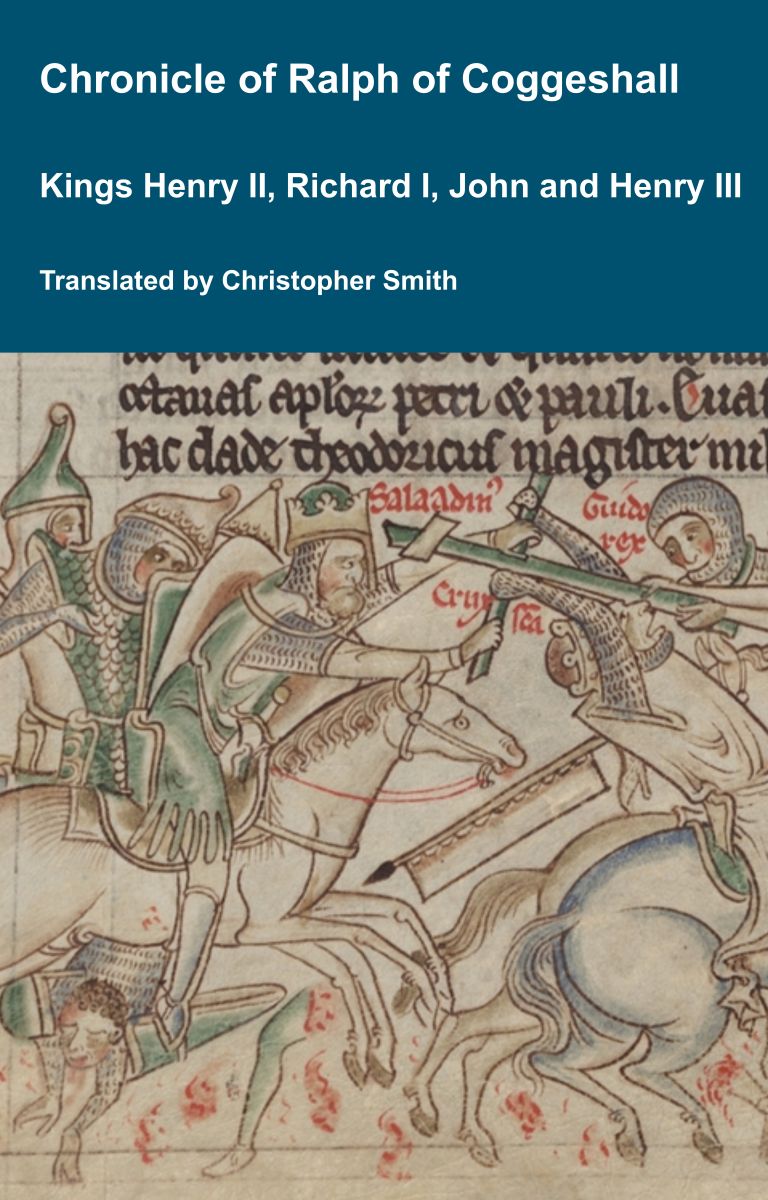
Chronicle of Abbot Ralph of Coggeshall
The Chronicle of Abbot Ralph of Coggeshall (Chronicon Anglicanum) is an indispensable medieval history that brings to life centuries of English and European affairs through the eyes of a learned Cistercian monk. Ralph of Coggeshall, abbot of the Abbey of Coggeshall in Essex in the early 13th century, continued and expanded his community’s chronicle, documenting events from the Norman Conquest of 1066 into the tumultuous reign of King Henry III. Blending eyewitness testimony, careful compilation, and the monastic commitment to record-keeping, this chronicle offers a rare narrative of political intrigue, royal power struggles, and social upheaval in England and beyond. Ralph’s work captures the reigns of pivotal figures such as Richard I and King John, providing invaluable insights into their characters, decisions, and the forces that shaped medieval rule. More than a simple annal, Chronicon Anglicanum conveys the texture of medieval life and governance, making it a rich source for scholars and readers fascinated by English history, monastic authorship, and the shaping of the medieval world.
Available at Amazon in eBook and Paperback format.
On 15th March 1721 Louise of Mecklenburg Güstrow Queen Consort Denmark and Norway [aged 53] died. The day after her funeral her husband Frederick IV King of Denmark and Norway [aged 49] married Anne Sophie Reventlow Queen Consort Denmark and Norway [aged 27] whom he had previously married bigamously.
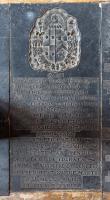
After 15th March 1728. Grave of Anne, wife of Archdeacon Thomas Howson at Lincoln Cathedral [Map].
On 15th March 1742 Peter August Oldenburg I Duke Schleswig-Holstein-Sonderburg-Beck [aged 44] and Natália Nikolaievna Golovine Duchess Schleswig-Holstein-Sonderburg-Beck were married. She by marriage Duchess Schleswig-Holstein-Sonderburg-Beck. He the son of Frederick Louis Oldenburg I Duke Schleswig-Holstein-Sonderburg-Beck and Louise Charlotte Oldenburg Duchess Schleswig-Holstein-Sonderburg-Beck.
On 15th March 1746 Charles Howard 11th Duke of Norfolk was born to Charles Howard 10th Duke of Norfolk [aged 25] and Catherine Brockholes Duchess Norfolk [aged 27]. He married (1) 1st August 1767 Marion Coppinger (2) 6th April 1771 Frances Scudamore Duchess Norfolk.


On 15th March 1751 Emily Mary Fitzgerald was born to James Fitzgerald 1st Duke Leinster [aged 29] and Emilia Mary Lennox Duchess Leinster [aged 19]. She a great x 2 granddaughter of King Charles II of England Scotland and Ireland.
On 15th March 1754 Charles Manners 4th Duke Rutland was born to John Manners Marquess of Granby [aged 33] and Frances Seymour [aged 25]. He married 26th December 1775 his half fourth cousin Mary Isabella Somerset Duchess Rutland, daughter of Charles Noel Somerset 4th Duke Beaufort and Elizabeth Berkeley Duchess Beaufort, and had issue.


Vestiges of the Antiquities of Derbyshire. On the 15th of March, 1788, a farmer, who occupied the land on Middleton Moor, known as the Garratt Piece, having occasion to burn some lime upon that ground, dug for the purpose into a tumulus [Map] [Garratts Piece Barrow [Map]], or lowe, there situate.
He began his work on the outer edge of the barrow, clearing it away as he proceeded, to the level of the natural surface. On reaching the centre, he found, lying immediately under the usual depression of the summit of the barrow, and placed upon the level of the ground, a skeleton, whose extremities were towards the east and west; near the point of the shoulder was a very extraordinary ornament of copper neatly enamelled with various colours, red being the most predominant; it is circular, and has a hook in the form of a serpent's head, probably for suspension. In addition to this, part of another ornament of similar workmanship; part of the iron umbo of a shield and a shallow basin of thin brass, much broken and crushed, were found abont the same place. (For a similar basin see Archæologia, vol. xviii, page 80.) The design visible upon the circular and enamelled ornament is precisely similar to an illuminated capital Q in the Saxon manuscript entitled, 'Textus Sancti Cuthberti,' a production of the seventh century, formerly preserved in the cathedral of Durham, but now in the Cottonian library, (Nero, D. 4.) There is a good engraving of it in Astle's 'Origin of Writing,' plate 14, a. This interesting barrow was reopened by Mr. William Bateman [aged 39], on the 19th of June, 1826, but was found to have been entirely rifled on the occasion above described.
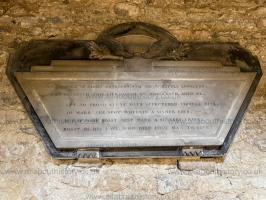
St Giles' Church, Great Longstone [Map]. 15th March 1828. Sacred to the memory of James Longsdon, Esquire, of Little Longsdon.
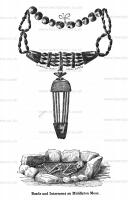
Ten Years' Digging. On the 15th of March [1848], we re-opened a barrow near the boundary of Middleton Moor, in the direction of Parcelly Hay [Note. Possibly Parsley Hay Barrow [Map]], which was unsuccessfully opened by Mr. W. Bateman on the 28th of July, 1824; nor did our researches lead to a more satisfactory result, as the entire mound seemed to have been turned over by deep ploughing by which the interments, consisting of two skeletons and a deposit of burnt bones, had been so dragged about as to present no characteristic worthy of observation. A neat whetstone was picked up amongst these ruins, and a carefully chipped leaf-shaped arrow-point of flint has since been found by ploughing across the barrow. About fifty yards South-east of the last, is another barrow of very small size, both as to diameter and height; so inconsiderable indeed are its dimensions, that it was quite overlooked in 1824. Fortunately the contents, with the exception of one skeleton that lay near the surface, had been enclosed in a cist, sunk a few inches beneath the level of the soil. As in the companion barrow, the skeleton near the top was dismembered by the plough, so that it afforded nothing worthy of notice - the original interment, however, which lay rather deeper, in a kind of rude cist or enclosure, formed by ten shapeless masses of limestone, amply repaid our labour. The persons thus interred consisted of a female in the prime of life, and a child of about four years of age; the former had been placed on the floor of the grave on her left side, with the knees drawn up; the child was placed above her, and rather behind her shoulders: they were surrounded and covered with innumerable bones of the water-vole, or rat, and near the woman was a cow's tooth, an article uniformly found with the more ancient interments. Round her neck was a necklace of variously shaped beads and other trinkets of jet and bone, curiously ornamented, upon the whole resembling those found at Cow Low [Map] in 1846, (Vestiges p. 92,) but differing from them in many details. The various pieces of this compound ornament are 420 in number, which unusual quantity is accounted for by the fact of 348 of the beads being thin laminae only; 54 are of cylindrical form, and the 18 remaining pieces are conical studs and perforated plates, the latter in some cases ornamented with punctured patterns. Altogether, the necklace is the most elaborate production of the pre-metallic period that I have seen. The skull, in perfect preservation, is beautiful in its proportions, and has been selected to appear in the Crania Britannica, as the type of the ancient British female. The femur measures 15¼ inches. The engraving represents the arrangement of the cist.
On 15th March 1849 Arthur Charles Wellesley 4th Duke Wellington was born to Charles Wellesley [aged 41] and Augusta Sophia Anne Pierrepoint. He married 24th October 1872 Kathleen Emily Bulkeley Williams Duchess Wellington and had issue.

Archaeologia Volume 38 1883 Section XXVII. On The Examination Of A Chambered Long Barrow At West Kennet [Map], Wiltshire. By John Thurnam [aged 49]. Read 15th March, 1860.
On 15th March 1863 Albrecht Christian Adolf Glücksburg was born to Friedrich Glücksburg Duke Schleswig Holstein Sonderburg Glücksburg [aged 48] and Adelheid Schasumburg Lippe Duchess Schleswig Holstein Sonderburg Glücksburg. He a great x 3 grandson of King George II of Great Britain and Ireland.

Anne Boleyn. Her Life as told by Lancelot de Carle's 1536 Letter.
In 1536, two weeks after the execution of Anne Boleyn, her brother George and four others, Lancelot du Carle, wrote an extraordinary letter that described Anne's life, and her trial and execution, to which he was a witness. This book presents a new translation of that letter, with additional material from other contemporary sources such as Letters, Hall's and Wriothesley's Chronicles, the pamphlets of Wynkyn the Worde, the Memorial of George Constantyne, the Portuguese Letter and the Baga de Secrets, all of which are provided in Appendices.
Available at Amazon in eBook and Paperback format.
On 15th March 1895 Jaqueline Mary Alva Montagu [aged 15] died of consumption.
1911 Encyclopædia Britannica. William Waynflete is probably the William Barbour who was ordained acolyte by Bishop Fleming of Lincoln on the 21st of April 1420 and subdeacon on the 21st of January 1421; and as "William Barbour," otherwise Waynflete of Spalding, was ordained deacon on the 15th of March 1421, and priest on the 21st of January 1426, with title from Spalding Priory. He may have been the William Waynflete who was admitted a scholar of the King's Hall, Cambridge, on the 6th of March 1428 (Exch. Q. R. Bdle. 346, no. 31), and was described as LL.B. when receiving letters of protection on the 15th of July 1429 (Proc. P. C. iii. 347) to enable him to accompany Robert FitzHugh, D.D., warden of the hall, on an embassy to Rome.
On 15th March 1952 Arthur Valerian Wellesley 8th Duke Wellington [aged 36] was appointed Member of the Royal Victorian Order Fourth Class.
On 15th March 1275 Margaret Plantagenet Duchess Brabant was born to King Edward I of England [aged 35] and Eleanor of Castile Queen Consort England [aged 34] at Windsor Castle [Map]. She married 9th July 1290 her half third cousin twice removed John "Peaceful" Reginar II Duke Brabant, son of John Reginar I Duke Brabant and Margaret Dampierre Duchess Brabant, and had issue.
On 15th March 1584 Philip Oldenburg was born to John "Younger" Oldenburg Duke Schleswig Holstein Sonderburg [aged 38] and Elisabeth of Brunswick-Grubenhagen [aged 33].
On 15th March 1597 Anne Cromwell was born to Edward Cromwell 3rd Baron Cromwell Oakham [aged 37] and Francis Rugge Baroness Cromwell Oakham. She married 9th May 1619 Edward Wingfield of Carnew in Wicklow and had issue.
On 15th March 1653 John Jackson 2nd Baronet was born to John Jackson 1st Baronet [aged 22] and Katherine Booth [aged 28].
On 15th March 1657 Thomas Isham 3rd Baronet was born to Justinian Isham 2nd Baronet [aged 47] and Vere Leigh Lady Isham.
On 15th March 1687 Elizabeth Churchill Countess Bridgewater was born to John Churchill 1st Duke of Marlborough [aged 36] and Sarah Jennings Duchess of Marlborough [aged 26]. She married 9th February 1703 Scroop Egerton 1st Duke Bridgewater, son of John Egerton 3rd Earl Bridgewater and Jane Paulet Countess Bridgewater, and had issue.
On 15th March 1693 William Heathcote 1st Baronet was born to Samuel Heathcote [aged 37]. He married Elizabeth Parker Lady Heathcote, daughter of Thomas Parker 1st Earl Macclesfield and Janet Carrier Countess Macclesfield, and had issue.
This is a translation of the 'Memoires of Jacques du Clercq', published in 1823 in two volumes, edited by Frederic, Baron de Reissenberg. In his introduction Reissenberg writes: 'Jacques du Clercq tells us that he was born in 1424, and that he was a licentiate in law and a counsellor to Philip the Good, Duke of Burgundy, in the castellany of Douai, Lille, and Orchies. It appears that he established his residence at Arras. In 1446, he married the daughter of Baldwin de la Lacherie, a gentleman who lived in Lille. We read in the fifth book of his Memoirs that his father, also named Jacques du Clercq, had married a lady of the Le Camelin family, from Compiègne. His ancestors, always attached to the counts of Flanders, had constantly served them, whether in their councils or in their armies.' The Memoires cover a period of nineteen years beginning in in 1448, ending in in 1467. It appears that the author had intended to extend the Memoirs beyond that date; no doubt illness or death prevented him from carrying out this plan. As Reissenberg writes the 'merit of this work lies in the simplicity of its narrative, in its tone of good faith, and in a certain air of frankness which naturally wins the reader’s confidence.' Du Clercq ranges from events of national and international importance, including events of the Wars of the Roses in England, to simple, everyday local events such as marriages, robberies, murders, trials and deaths, including that of his own father in Book 5; one of his last entries.
Available at Amazon in eBook and Paperback format.
On 15th March 1700 Charlotte Glücksburg was born to Frederick Louis Oldenburg I Duke Schleswig-Holstein-Sonderburg-Beck [aged 46] and Louise Charlotte Oldenburg Duchess Schleswig-Holstein-Sonderburg-Beck [aged 41]. Coefficient of inbreeding 7.82%.
On 15th March 1710 George Forbes 4th Earl Granard was born to George Forbes 3rd Earl Granard [aged 24] and Mary Stewart.
On 15th March 1720 Infante Philip of Spain was born to Philippe V King Spain [aged 36] and Elisabeth Farnese Queen Consort Spain [aged 27]. He married 25th October 1739 his first cousin once removed Louise Elisabeth of France and had issue.
On 15th March 1746 Charles Howard 11th Duke of Norfolk was born to Charles Howard 10th Duke of Norfolk [aged 25] and Catherine Brockholes Duchess Norfolk [aged 27]. He married (1) 1st August 1767 Marion Coppinger (2) 6th April 1771 Frances Scudamore Duchess Norfolk.
On 15th March 1751 Emily Mary Fitzgerald was born to James Fitzgerald 1st Duke Leinster [aged 29] and Emilia Mary Lennox Duchess Leinster [aged 19]. She a great x 2 granddaughter of King Charles II of England Scotland and Ireland.
On 15th March 1754 Charles Manners 4th Duke Rutland was born to John Manners Marquess of Granby [aged 33] and Frances Seymour [aged 25]. He married 26th December 1775 his half fourth cousin Mary Isabella Somerset Duchess Rutland, daughter of Charles Noel Somerset 4th Duke Beaufort and Elizabeth Berkeley Duchess Beaufort, and had issue.
On 15th March 1754 Thomas Onslow 2nd Earl Onslow was born to George Onslow 1st Earl Onslow [aged 22] and Henrietta Shelley Countess Onslow [aged 23] at Imber Court Thames Ditton, Surrey [Map]. He married 30th December 1776 Arabella Mainwaring Ellerker and had issue.
On 15th March 1762 John Lindsay was born to James Lindsay 5th Earl Balcarres [aged 70] and Anne Dalrymple Countess Balcarres [aged 35]. He married before 6th March 1826 Charlotte North, daughter of Frederick North 2nd Earl Guildford and Anne Speke Countess Guilford.
On 15th March 1776 Joan Scott Viscountess Canning was born to John "Pawky Scott" Scott. She married 8th July 1800 George Canning Prime Mininster and had issue.
On 15th March 1779 William Lamb 2nd Viscount Melbourne was born to Penistone Lamb 1st Viscount Melbourne [aged 34] and Elizabeth Milbanke Viscountess Melbourne [aged 27]. He married 1805 Caroline Ponsonby aka Lamb, daughter of Frederick Ponsonby 3rd Earl Bessborough and Henrietta Frances Spencer Countess Bessborough.


Abbot John Whethamstede’s Chronicle of the Abbey of St Albans
Abbot John Whethamstede's Register aka Chronicle of his second term at the Abbey of St Albans, 1451-1461, is a remarkable text that describes his first-hand experience of the beginning of the Wars of the Roses including the First and Second Battles of St Albans, 1455 and 1461, respectively, their cause, and their consequences, not least on the Abbey itself. His text also includes Loveday, Blore Heath, Northampton, the Act of Accord, Wakefield, and Towton, and ends with the Coronation of King Edward IV. In addition to the events of the Wars of the Roses, Abbot John, or his scribes who wrote the Chronicle, include details in the life of the Abbey such as charters, letters, land exchanges, visits by legates, and disputes, which provide a rich insight into the day-to-day life of the Abbey, and the challenges faced by its Abbot.
Available at Amazon in eBook and Paperback format.
On 15th March 1783 John Kenward Shaw 6th Baronet was born to John Gregory Shaw 5th Baronet [aged 26] and Theodosia Margaret Monson Lady Shaw [aged 20].
On 15th March 1784 Reverend Brooke Boothby was born to William Boothby 7th Baronet [aged 38]. He married 4th November 1816 Louisa Henrietta-Venables-Vernon, daughter of Henry Venables-Vernon 3rd Baron Vernon and Elizabeth Rebecca Anne Sedley, and had issue.
On 15th March 1804 Charles Grey was born to Charles Grey 2nd Earl Grey [aged 40] and Mary Elizabeth Ponsonby Countess Grey [aged 28]. He married 26th July 1836 Caroline Eliza Farquhar, daughter of Thomas Harvie Farquhar 2nd Baronet, and had issue.


On 15th March 1806 John Shelley was born to Timothy Shelley 2nd Baronet [aged 52] and Elizabeth Pilfold.
On 15th March 1819 Reverend Frederick Savile-Lumley was born illegitimately to John Lumley-Savile 8th Earl Scarborough [aged 30].
On 15th March 1847 Mary Jane Maitland Countess Meath was born to Thomas Maitland 11th Earl Lauderdale [aged 44] and Amelia Young. She married 1868 Reginald Brabazon 12th Earl of Meath, son of William Brabazon 11th Earl of Meath and Harriot Brooke Countess Meath, and had issue.
On 15th March 1849 Arthur Charles Wellesley 4th Duke Wellington was born to Charles Wellesley [aged 41] and Augusta Sophia Anne Pierrepoint. He married 24th October 1872 Kathleen Emily Bulkeley Williams Duchess Wellington and had issue.
On 15th March 1849 Francis Denys-Burton 3rd Baronet was born to George William Denys 2nd Baronet [aged 37]. He married 16th September 1890 Grace Ellen Burton Lady Denys and had issue.
On 15th March 1854 Edwyn Scudamore Stanhope 10th Earl of Chesterfield was born to Henry Edwyn Chandos Scudamore Stanhope 9th Earl of Chesterfield [aged 32] and Dorothea Hay Countess Chesterfield [aged 26]. He married 15th February 1900 Enid Edith Wilson Countess Chesterfield, daughter of Charles Henry Wilson 1st Baron Nunburnholme and Florence Jane Helen Wellesley Baroness Nunburnholme.
On 15th March 1857 Isabel Marjoribanks Marchioness of Aberdeen and Ternair was born to Dudley Marjoribanks 1st Baron Tweedmouth [aged 36] and Isabella Hogg. She married 1877 John Hamilton-Gordon 1st Marquess of Aberdeen and Temair, son of George John Hamilton-Gordon 5th Earl Aberdeen and Mary Bailie-Hamilton Countess Aberdeen, and had issue.
This is a translation of the 'Memoires of Jacques du Clercq', published in 1823 in two volumes, edited by Frederic, Baron de Reissenberg. In his introduction Reissenberg writes: 'Jacques du Clercq tells us that he was born in 1424, and that he was a licentiate in law and a counsellor to Philip the Good, Duke of Burgundy, in the castellany of Douai, Lille, and Orchies. It appears that he established his residence at Arras. In 1446, he married the daughter of Baldwin de la Lacherie, a gentleman who lived in Lille. We read in the fifth book of his Memoirs that his father, also named Jacques du Clercq, had married a lady of the Le Camelin family, from Compiègne. His ancestors, always attached to the counts of Flanders, had constantly served them, whether in their councils or in their armies.' The Memoires cover a period of nineteen years beginning in in 1448, ending in in 1467. It appears that the author had intended to extend the Memoirs beyond that date; no doubt illness or death prevented him from carrying out this plan. As Reissenberg writes the 'merit of this work lies in the simplicity of its narrative, in its tone of good faith, and in a certain air of frankness which naturally wins the reader’s confidence.' Du Clercq ranges from events of national and international importance, including events of the Wars of the Roses in England, to simple, everyday local events such as marriages, robberies, murders, trials and deaths, including that of his own father in Book 5; one of his last entries.
Available at Amazon in eBook and Paperback format.
On 15th March 1863 Albrecht Christian Adolf Glücksburg was born to Friedrich Glücksburg Duke Schleswig Holstein Sonderburg Glücksburg [aged 48] and Adelheid Schasumburg Lippe Duchess Schleswig Holstein Sonderburg Glücksburg. He a great x 3 grandson of King George II of Great Britain and Ireland.
On 15th March 1875 Geoffrey Edward Mills was born to Charles Mills 1st Baron Hillingdon [aged 44] and Louisa Isabella Lascelles Baroness Hillingdon [aged 45].
On 15th March 1896 Vernon Henry St John 6th Viscount Bolingbroke 7th Viscount St John was born to Henry St John 5th Viscount Bolingbroke 6th Viscount St John [aged 75] and Mary Emily Elizabeth Howard Viscountess Bolingbroke and St John.
On 15th March 1926 Charles Robert Rowley 8th and 7th Baronet was born to William Joshua Rowley 6th Baronet [aged 34].
On 15th March 1935 Philip Frankland-Payne-Gallwey 6th Baronet was born to Lowry Philip Payne-Gallwey [aged 43].
On 15th March 1957 Peter Forbes 10th Earl of Granard was born to John Forbes [aged 37].
On 15th March 1971 Charles James Hoare 9th Baronet was born to Timothy Edward Charles Hoare 8th Baronet [aged 36].

On 15th March 1644 John Kennedy 6th Earl Cassilis and Margaret Hay Countess Cassilis were married. She by marriage Countess Cassilis. She the daughter of William Hay 10th Earl Erroll and Anne Lyon Countess Erroll. They were second cousin once removed.
On 15th March 1742 Peter August Oldenburg I Duke Schleswig-Holstein-Sonderburg-Beck [aged 44] and Natália Nikolaievna Golovine Duchess Schleswig-Holstein-Sonderburg-Beck were married. She by marriage Duchess Schleswig-Holstein-Sonderburg-Beck. He the son of Frederick Louis Oldenburg I Duke Schleswig-Holstein-Sonderburg-Beck and Louise Charlotte Oldenburg Duchess Schleswig-Holstein-Sonderburg-Beck.

On 15th March 1827 John Hesketh Lethbridge 3rd Baronet [aged 29] and Julia Hoare were married.
Chronicle of Walter of Guisborough
A canon regular of the Augustinian Guisborough Priory, Yorkshire, formerly known as The Chronicle of Walter of Hemingburgh, describes the period from 1066 to 1346. Before 1274 the Chronicle is based on other works. Thereafter, the Chronicle is original, and a remarkable source for the events of the time. This book provides a translation of the Chronicle from that date. The Latin source for our translation is the 1849 work edited by Hans Claude Hamilton. Hamilton, in his preface, says: 'In the present work we behold perhaps one of the finest samples of our early chronicles, both as regards the value of the events recorded, and the correctness with which they are detailed; Nor will the pleasing style of composition be lightly passed over by those capable of seeing reflected from it the tokens of a vigorous and cultivated mind, and a favourable specimen of the learning and taste of the age in which it was framed.'
Available at Amazon in eBook and Paperback format.
On 14th March 1190 twin boys Robert Capet and Philip Capet were born to King Philip II of France [aged 24] and Isabelle Flanders Queen Consort France [aged 19]. The eldest Robert died the same day, the youngest Philip died three days later. Their mother Isabelle Flanders Queen Consort France died from childbirth the day after the birth.
On 15th March 1307 Bishop Richard de Swinfield died.
On 15th March 1392 Eberhard II Count of Württemberg [aged 77] died. His grandson Eberhard [aged 28] succeeded III Count of Württemberg. Antonia Visconti Countess of Württemberg [aged 38] by marriage Countess of Württemberg.
On 15th March 1521 John "Babymaker" de la Marck II Duke Cleves [aged 62] died. His son John [aged 30] succeeded III Duke Cleves.
On 15th March 1526 Charles Somerset 1st Earl of Worcester [aged 66] died. He was buried at St George's Chapel, Windsor Castle [Map]. His son Henry [aged 30] succeeded 2nd Earl Worcester.
On 15th March 1530 Katherine Howard Countess Derby [aged 15] died of plague.
On 15th March 1613 Juan Fernández de Velasco y Tovar 5th Duke of Frías [aged 63] died. His son Bernardino [aged 4] succeeded 6th Duke of Frías.
On 15th March 1617 Thomas Egerton 1st Viscount Brackley [aged 77] died. His son John [aged 38] succeeded 2nd Viscount Brackley, 2nd Baron Ellesmere. Frances Stanley Countess Bridgewater [aged 34] by marriage Viscountess Brackley.
On 15th March 1624 Theobald Dillon 1st Viscount Dillon [aged 67] died. His grandson Lucas [aged 14] succeeded 2nd Viscount Dillon of Costello Gallen in Mayo.
On 15th March 1644 Electress Louise Juliana of the Palatine Rhine [aged 67] died.
On 15th March 1674 James Fiennes 2nd Viscount Saye and Sele [aged 72] died. His nephew William [aged 33] succeeded 3rd Viscount Saye and Sele. Baron Saye and Sele abeyant between his two daughters Frances Fiennes and Elisabeth Fiennes.
Chronicle of Geoffrey le Baker of Swinbroke
Baker was a secular clerk from Swinbroke, now Swinbrook, an Oxfordshire village two miles east of Burford. His Chronicle describes the events of the period 1303-1356: Gaveston, Bannockburn, Boroughbridge, the murder of King Edward II, the Scottish Wars, Sluys, Crécy, the Black Death, Winchelsea and Poitiers. To quote Herbert Bruce 'it possesses a vigorous and characteristic style, and its value for particular events between 1303 and 1356 has been recognised by its editor and by subsequent writers'. The book provides remarkable detail about the events it describes. Baker's text has been augmented with hundreds of notes, including extracts from other contemporary chronicles, such as the Annales Londonienses, Annales Paulini, Murimuth, Lanercost, Avesbury, Guisborough and Froissart to enrich the reader's understanding. The translation takes as its source the 'Chronicon Galfridi le Baker de Swynebroke' published in 1889, edited by Edward Maunde Thompson.
Available at Amazon in eBook and Paperback format.
On 15th March 1721 Louise of Mecklenburg Güstrow Queen Consort Denmark and Norway [aged 53] died. The day after her funeral her husband Frederick IV King of Denmark and Norway [aged 49] married Anne Sophie Reventlow Queen Consort Denmark and Norway [aged 27] whom he had previously married bigamously.
On 15th March 1738 Richard Bulkeley 5th Viscount Bulkeley died without issue. His brother James succeeded 6th Viscount Bulkeley of Cashel in Tipperary.
On 15th March 1752 Thomas Lumley-Saunderson 3rd Earl Scarborough [aged 61] died. His son Richard [aged 26] succeeded 4th Earl of Scarborough, 5th Viscount Lumley, 4th Baron Lumley.
On 15th March 1786 Catherine Cochrane Countess Galloway [aged 77] died in Bath, Somerset [Map].
On 15th March 1827 Edward Bellew 6th Baronet [aged 67] died. His son Patrick [aged 29] succeeded 7th Baronet Bellew of Barmeath in Louth.
On 15th March 1851 John Brabazon 10th Earl Meath [aged 78] died. His son William [aged 47] succeeded 11th Earl Meath, 12th Baron Ardee, 2nd Baron Chaworth of Eaton Hall in Herefordshire. Harriot Brooke Countess Meath by marriage Countess Meath.
On 15th March 1851 Augustus Frederick Keppel 5th Earl Albermarle [aged 56] died at Chelsea. His brother George [aged 51] succeeded 6th Earl Albermarle, 6th Viscount Bury in Lancashire, 6th Baron Ashford of Ashford in Kent.
On 15th March 1871 Archibald Edmonstone 3rd Baronet [aged 76] died. His half brother William [aged 61] succeeded 4th Baronet Edmonstone of Duntreath in Stirlingshire.
On 15th March 1873 Mary-Ann Acton Lady Acton [aged 91] died.
On 15th March 1884 Emma Jane Parnell Countess Darnley died
Annals of the six Kings of England by Nicholas Trivet
Translation of the Annals of the Six Kings of England by that traces the rise and rule of the Angevin aka Plantagenet dynasty from the mid-12th to early 14th century. Written by the Dominican scholar Nicholas Trivet, the work offers a vivid account of English history from the reign of King Stephen through to the death of King Edward I, blending political narrative with moral reflection. Covering the reigns of six monarchs—from Stephen to Edward I—the chronicle explores royal authority, rebellion, war, and the shifting balance between crown, church, and nobility. Trivet provides detailed insight into defining moments such as baronial conflicts, Anglo-French rivalry, and the consolidation of royal power under Edward I, whose reign he describes with particular immediacy. The Annals combines careful year-by-year reporting with thoughtful interpretation, presenting history not merely as a sequence of events but as a moral and political lesson. Ideal for readers interested in medieval history, kingship, and the origins of the English state, this chronicle remains a valuable and accessible window into the turbulent world of the Plantagenet kings.
Available at Amazon in eBook and Paperback format.

On 15th March 1886 Henry Pelham 3rd Earl Chichester [aged 81] died. His son Walter [aged 47] succeeded 4th Earl Chichester, 5th Baron Pelham of Stanmer in Sussex and 9th Baronet Pelham of Laughton. Elizabeth Mary Bligh Countess Chichester by marriage Countess Chichester.
On 15th March 1887 Robert Tolver Gerard 1st Baron Gerard [aged 78] died. His son William [aged 35] succeeded 2nd Baron Gerard of Bryn in Lancashire, 14th Baronet Gerard of Bryn in Lancashire.
On 15th March 1910 Edward George Bootle Wibraham 2nd Earl Lathom [aged 45] died. His son Edward [aged 14] succeeded 3rd Earl Lathom, 4th Baron Skelmersdale in Lancashhire.
On 15th March 1913 Bishop Augustus Legge [aged 73] died.
On 15th March 1938 Arthur Dryden 9th and 6th Baronet [aged 85] died. His second cousin Noel [aged 27] succeeded 10th Baronet Dryden of Ambrosden in Oxfordshire, 7th Baronet Dryden of Canons Ashby in Northamptonshire.
On 15th March 1964 Douglas Frederick Duff-Gordon 7th Baronet [aged 71] died. His son Andrew [aged 30] succeeded 8th Baronet Duff-Gordon of Halkin in Aberdeenshire.
On 15th March 1967 Maud Frederica Elizabeth Dundas Countess Fitzwilliam [aged 89] died.
On 15th March 1978 Francis Rodd 2nd Baron Rennell [aged 82] died. His nephew Tremayne [aged 42] succeeded 3rd Baron Rennell of Rodd in Herefordshire.
