

30 Oct is in October.
Flowers of History by Roger of Wendover 1233. About this same time Hubert de Burgh [aged 63] the ex-justiciary, was taken away from the church at Devizes by some armed men, and, after being properly clad in knightly apparel, was carried into Wales, where he joined the enemies of the king about the first hour of the day on the 30th of October.
On 30th October 1272 Hugh IV Duke Burgundy [aged 59] died. His son Robert [aged 24] succeeded II Duke Burgundy.
Rymer's Fœdera Volume 1. Concerning the truce with the Scots made by the King of England at the request of the King of France.
To all those who shall see or hear these letters, Edward, by the grace of God, King of England, Lord of Ireland, and Duke of Aquitaine, greeting in God.
Know that, as the most noble prince, our dear and beloved cousin and brother, Philip, by the grace of God, King of France, has sent to us, by letters of credence sealed with his seal, his dear and faithful servants, Master Pierre de Mouncey, canon of Angers, clerk, and Sir Jean de Barres, called Piau de Chat, knight;
And that we should place trust in what they would tell us on behalf of the said King, as is contained in the said letters which they delivered to us on his behalf;
And the aforesaid Master Pierre and Sir John, by their credentials, have requested us, on behalf of the same King [of France], that we should grant a truce to those people of Scotland, with whom we are at war, at the prayer and request of the same King of France;
Wishing to obey in this matter, although it grieves us, we have granted the truce and allowed the armistice, as to a friend and amicable mediator, and not as to allies of those of Scotland, but as to one who in no way considers himself allied with them, as the aforementioned Master Pierre and Sir John told us on his behalf; and as a non-ally they requested us to grant it: for otherwise we would not have granted or given it, if he held himself in any way allied with them.
And for that said truce we have given, and promised to hold and maintain the armistice for the people of Scotland, for their persons, their supporters, and their allies, for their goods and possessions, from us, and from our supporters and allies, until the coming feast of Pentecost, in the following manner:
That each person shall hold what he holds, and may build, strengthen, cultivate, till, and do whatever he pleases with what he holds during the said truce.
And that everyone, on both sides, may go and come and trade safely, by sea and by land, from one country to another, and wherever they please, according to the laws and customs of the lands.
Thus, in all ways, they may not bring or carry into England, or into Ireland, or anywhere else within our power, any money except such as is current there, unless it be to our exchange, or unless they do not intend to put it into circulation or use it within our dominion.
Nor may they carry out of our dominion the money which is current there, nor good silver, under the penalty that has been previously ordained.
And that no one offend or do wrong to one another until the said day of Pentecost.
And this truce and this truce-bound ceasefire, in the manner described above, we promise to keep well and faithfully, and firmly to hold, for ourselves and our people, and through ourselves and our people, by sea and by land, until the said day of Pentecost.
And, in order firmly to keep and hold these things, we have caused our seneschal, Sir Walter de Beauchamp, to swear upon our soul.
In witness of all these things being loyally kept, held, and fulfilled, we have caused these open letters to be made, sealed with our seal"
Given at Dumfries, on the 30th day of the month of October, in the 28th year of our reign.
E qe chescune, d'une part & d'autre, porra aler, e venir, e marchander seurement, par mier, e par terre, d'une pays a d'autre, e la ou li plerra, selonc les leis & les usages des pays.
De treugis Scotis per Regem Angliæ ad petitionem Regis Franciæ.
A touz ceus qui ces lettres verront ou orront, Ed ward, par la grace de DEU, Roy d'Engleterre, seignur d'Irland, & ducs d'Aquitaigne, saluz en Dieu.
Sachez que, come tresnoble prince, nostre cher & ame cosin & frere, Philip, par la grace de DIEU, Roi de France, eit envoie a nous, par letters de creaunce, seales de son seal, ses ames & foiaux, mestre Pieres de Mouncey chanoigne d'Aungiers clerk, & monsire Johan de Barres dist Piau de Chat chivaler;
Et qe nous les creussiens de ceo qu'il nous diroyent de par le dit Roy, sicom est contenuz es dites lettres, qu'il nous baillerent de par li;
E li desusdites mestre Piere e monsire Johan, par leur creaunce, nous eyent requis, de par meisme celi Roy, qe nous a celes gentz d'Escoce, a qui nous avoms guerre, donissions treue, nous a la priere, e a la requeste de mesme le Roy de France;
Voillantz obeir en celle partie, ia soiet ceo q'il nous greve, avoms done la treue, e ottroie le soeffrance, come a ami & amiable compositour: & non come a alliez a ceus d'Escoce, mais come a celi qui de riens ne se tent aliez a eaux: sicome les avantditz mestre Piere e monsire Johan nous unt dist depar li: & com a non aliez nous unt requis qe nous la donissiens: que autrement ne la eussiens mie donee, ne grantee, s'il se tenist de riens alliez a eaux.
E por cela dite treue avoms done, e soffrance promis a tenir e garder as gentz d'Escoce, as persones, a lour aidauntz, & a lour alliez, a lour biens, e a lour choses, de nous, e de nos aidauntz, & de noz alliez, jusques au jour de la Pentecoste, procheinement avenir, en tieu manere;
Qe chescun tendra ce quil tent, e porra edefier, efforcier, laborer, cotiver, & fere ce qu'il li plerra, ou ce qu'il tent, durant la dite treue.
E qe chescune, d'une part & d'autre, porra aler, e venir, e marchander seurement, par mier, e par terre, d'une pays a d'autre, e la ou li plerra, selonc les leis & les usages des pays.
Issint, totes voyes, qu'il ne porront mettre, ne porter en Engleterre, ne en Irland, ne nule part aillours, en nostre poair, moneye fors tiele come y court, si ceo ne seit a nostre chaunge, ou si ensi n'est qu'il ne la voillent mettre, ne emploier en nostre poair.
Ne ne porront enporter, hors de nostre poair, la monoye que y court, ne bon argent, sur la forfeture qe en est avant ordene.
E que nul mespreigne, ne mefface les uns vers les autres, jusqes au dit jour de la Pentecost.
Et ceste treue e ceste soffrance, en la manere, qe desus est devisee, nous promettoms a garder bien & leaument, & firmement a tenir de nous, e de noz, e par nous, e par les noz, e par mer, e par terre, jusques au dit jour de la Pentecost.
Et, por ces choses firmement garder & tenir, avoms fet jurer, en l'alme de nous, monsire Gautier de Beauchamp nostre seneschal.
En tesmoignance de totes ces choses leaument garder, tenir e acomplir, nous avoms fet faire cestes lettres overtes, seallees de nostre seal.
Donees a Dumfrees, le XXX jour du moys de Octobre, l'an de nostre regne vint e octisme.
 Chronicle of Jean le Bel Volume 1. The King of Spain and his men were then fully assured of victory, and fell upon the Saracens like hungry wolves among a flock of sheep, killing as many as they could and pursuing them all day, from the hour of tierce until nightfall without resting. In like manner the other divisions fought, slaying and killing so many that no certain number was ever known; but it was said that never in battle had there been such a slaughter. Some reckoned the dead at more than one hundred thousand men, while the Christians, whether good or ill, lost no more than forty1 men. The great King of Benamarin2 and the King of Granada3 saved themselves as best they could, but the King of Tremecen [Aboemard] was taken prisoner, along with several other great lords whose names I do not know.
Le roy d'Espaigne et ses gens furent adoncques tous asseurez, et ferirent entre les Sarrasins comme les loups familleux entre ung tropeau de brebis, et en ochirrent tant qu'ilz peurent, et les chasserent tout le jour, de leure de tierce jusques à la nuit sans reposer. Et tout par semblable maniere firent les aultres batailles, et en ocirent et tuerrent tant qu'il n'en fut oncques fait certain nombre, maiz on disoit que jamaiz en bataille ne fut faicte telle occision, et les aucuns nombroient les mors à plus de cM hommes, qu'onques les crestiens n'y perdirent plus hault de XL hommes que bons que mauvaïz. Le grand roy de Benmarin et le roi de Guernade se mirent à sauveté comment que ce fust, maiz le roy de Tarmente fut pris et pluseurs aultres grands seigneurs dont je ne sçay les noms.
Note 1. This victory is that of the Battle of Río Salado, won by the Kings of Castile and Portugal over the Saracens on 30th October 1340. Edward III of England wrote a letter of congratulations to the King of Castile on 12th June 1341 (Rymer 2.1164). In the Adam Murimuth Continuation M. Thompson published the letter of an Englishman who had been present at the Battle of the Salado and who wrote to Edward on the subject, sending him a copy of a letter that Sultan Abu’l-Hasan had addressed to Benamarin:
"Right honourable and most gentle lord, please you to know that, on the day of All Saints [1st November 1340] last past, the king of Spain, in Granada, had a battle with the Saracens, and, by the grace of God, had there the fairest victory that hath been, for long time past, over the said Saracens. In which battle there were slain five Saracen kings and one hundred and fifty thousand men. And, the battle being fought, the king of Spain returned back to the tents of the king of the Bani Marin, which was chief of all the Saracens, the which king escaped and passed over the sea in a little bark; and there, in his tents, the king of Spain found a letter written in letters of gold and sealed with a seal of gold. The which letter came from the great soldan of Egypt, bidding him make the passage of the sea upon the king of Spain and upon the Christians. [And the king of Spain] which took a part of the Saracens to ransom made cne of the Saracens translate the said letter into Latin, and then was it translated into Spanish, and from Spanish into French; and it beginneth in this wise:"
"From me, the Khalifa, the lord, the noble, the soldan, great lord, wise, mighty, and puissant lord of the house of Mecca of the holy Mahomet, puissant and trusting in his highness and in his holy virtue, doing justice to high and low, and ruling over all that rule; lord of the realm of Turkey and of Persia, holder of the lands of the two holy cities, lord of the dynasty and of the dynasties of the Persian sea, comrade of the weak, believer in the holy law of Mahomet, lord of the mighty sword of Elias and of David, that slew and cut off the heads of the men of the city of Ancyra and destroyed them altogether, lord of the kingdoms of all the world from the creation downwards, and of the parts of Asia, of Africa, and of Europe, and conqueror of battles and of the hosts of the Christians and of all the kingdoms of the world: to thee, king of the Banû Marin, health and commandment in the fear of our mighty sword. We make thee to know that our wise men, Saracens, have made us to understand that thy son Pichnco, the honourable child, strong knight and nursling son of the holy Mahomet, went against the law of the Christians of the accursed law, which is cast-away and evil-fated, that know not how they live, for they believe in their soul [on him that] they call pope, and say that he is pardoner of sins; and therefore are they deceived for the belief which they hold. And for that the king of Spain, vassal as he ought of right to be held, and all the other kings in the world, that believe in that law, which are against our Saracens, that are pure, clean, and believers in the holy Mahomet and in our holy Koran, slew so holy a creature as was the child Pichaco, thy son, noble as he was, and they slew him falsely, for otherwise he could not have died in battle; and I verily believe that, for the holy belief that he had in the holy Mahomet and in our holy Koran, he is in the holy Paradise, in the embrace of the holy Mahomet, and that he feedeth on cakes, honey, butter, milk, and cheese, and that he is raised up again and liveth, and that, so holy a creature as he is, he will have sixty virgin wives in the holy Paradise. Therefore we command thee, on pain of our law, that thou rest not until all Christendom be put to shame and destroyed; and we give power to our doctors and our Knights, that they may pardon and spread abroad the holy name of those which shall go against the Christians by sea and by land, and that they have pardon for themselves and for eleven persons of their blood, each of them. So we command thee, by the fear of our mighty sword, that thou march with all the power that I have given to thee, on this side the sea and on that, and that thou attack ail the lands of the Christians, Ly sea and by land. And for those which shall die, I lift my hand in presence of our holy Koran, that within three days thereafter they shall be raised up again in the holy paradise of Mahomet, with their wives and their children, and that they shall feed on cakes, honey, butter, milk, and cheese, and that each of them shall have seven virgin wives; for which holy faith we hold to be saved those which shall be strong and of good heart. And those which shall not be able to go, and shall give of their goods, shall have this same pardon aforesaid, as if they went themselves to battle. And I bid thee, noble king, eater of the herbs and drinker of the waters beyond the sea and on this side the sea, and destroyer of Christians, that thou straightway march with all the power that I have bidden thee, and that thou go by way of Gibraltar, our happy joy, with Algeciras, the stronghold of right great virtue, and pass over the sea against the king of Spain and against the other Christians, that on none of them you have mercy or pity, but that all Christendom be destroyed. And do in such wise that all the churches which they have be straightway destroyed; and make of them stalls for the beasts, and of their altars make mangers, and of their crosses make posts whereto to tether the cattle. Little children dash against the wall; women with child rip open; of other women cut off breasts, arms, noses, and feet; and all this do in dishonour of Christendom; and so depart not thence, till thou have overcome and destroyed all Christendom from sea to sea. And we hold these deeds, if thou canst do well, to be in the guerdon of our lord Mahomet, the elect of God, which will be with thee in all thy battles, when thou shalt call apon him; for never was born so holy a man of our law, from creation downwards, from the time of the holy Mahomet, the elect of God, as thou shalt be in all thy battles."
1. Cette victoire est celle du Salado, remportée par les rois de Castille et de Portugal sur les Sarrasins le 30 octobre 1340. Édouard III écrivit au roi de Castille une lettre de félicitations le 12 juin 1341. (Rymer t. II, Ilo partie, p. 1164.) Dans l'Appendix ad Murimutk, p. 263, M: Thompson a publié la lettre d'un anglais qui avait assisté à la bataille du Salado et qui écrivit à Édouard à ce sujet, en lui envoyant copie d'une lettre que le sultan Abu'l Hassan avait adressée à Band Marin.
Note 2. The King of Benamarin i.e. the Sultain of Marinid was Abu al-Hasan Ali. He ruled the Marinid Sultanate of Morocco from 1331 to 1351 and personally led the Marinid army that crossed into Iberia to support the Emir of Granada against the Christian coalition of Castile and Portugal. After the decisive defeat at Río Salado on 30th October 1340, he retreated to North Africa.
Note 3. The King of Granada was Yusuf I of Granada. He ruled the Nasrid Emirate of Granada from 1333 to 1354.
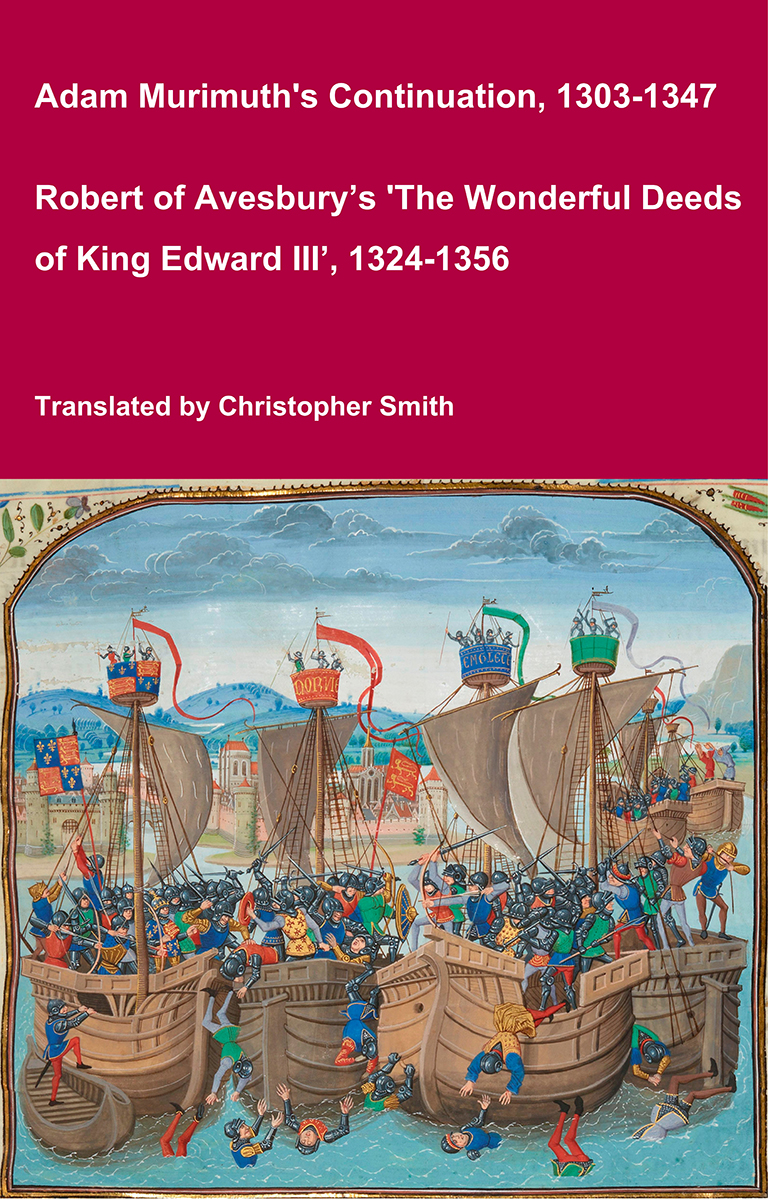 Adam Murimuth Continuation. In the year of the Lord 1342, in the first year of the pontificate of Pope Clement VI, and in the sixteenth year of the reign of Edward III of England, the king set out from Kent toward Portsmouth around the feast of Saint Michael [29th September]. There, on the Wednesday [23rd October 1342] following the feast of Saint Luke the Evangelist, he began to sail with his fleet, as described in the previous passage; and on the penultimate day of November1 he landed in Brittany near Brest.
Anno Domini millesimo CCCXLII, pontificatus Clementis sexti anno primo, regni vero regis Edwardi tertii a conquæstu XVJ setatis scribentis LXIX, circa festum sancti Michaelis, se traxit rex Anglie de Cancia versus Portesmouth, et ibi, die Mercurii proximo post festum sancti Lucæ evangeliste, cum classe sua navigare coepit, sicut supra proximo est expressum; et penultimo die Novembris applicuit in Britannia minori prope Brest.
Note. A mistake for October i.e. 30th October 1342.
On 30th October 1348 Eleanor Burgundy Queen Consort Aragon [aged 20] died of plague. See Masearo, Condes de Barcelona, Volume 2, p. 274.
Condes de Barcelona by Masearo Volume 2. From his second marriage to Doña Leonor of Portugal. Without children.
Hardly had the King been widowed by Doña Maria when he immediately arranged his second marriage with Doña Leonor [aged 20], a princess of noble qualities, daughter of King Alfonso IV and Queen Beatriz, monarchs of Portugal. Despite the significant obstacles raised by the King of Castile, an avowed enemy of the King of Aragon, in an attempt to thwart this union, the marriage nevertheless took place in the city of Barcelona, where the new queen arrived by sea on November 15 of the same year that her predecessor, Doña Maria, had died. However, the King suffered the sorrow of losing this second wife to pestilence at the end of October [30th October 1348] the following year, 1348, without her leaving any offspring. She died in the city of Teruel, where the royal couple happened to be due to the extension of the Cortes and the disputes and unrest with Castile and the supporters of the Union, which eventually led to the bloodiest of wars.
The Queen's body was later taken to Poblet and rests in the same tomb as her husband, according to Finestres.
De Segundas Nupcias Con Doña Leonor De Portugal. Sin Hijos.
Apenas enviudó el Rey de D.ª Maria contrató inmediatamente su segundo enlace con D. Leonor , princesa de altas prendas , hija de D. Alfonso IV y de D.ª Beatriz monarcas de Portugal1 , y a pesar de los grandes obstáculos que opuso el rey de Castilla , enemigo declarado del de Aragon , para frustrar este casamiento , se efectuó no obstante la union conyugal en la ciudad de Barcelona , donde llegó por mar la nueva Reina el dia 15 de noviembre del mismo año de la muerte de su antecesora D.ª Maria ; pero el Rey tuvo el disgusto de perder esta segunda esposa de pestilencia á fines de octubre del siguiente año de 1548 , sin que le dejase fruto alguno de sucesion , en la ciudad de Teruel donde se hallaban casualmente los dos esposos con motivo de la prorrogacion de córtes y de las desavenencias y disturbios con Castilla y los partidarios de la Union , que acabaron en la mas sangrienta guerra.
El cadaver de la Reina fué conducido despues á Poblet , y descansa en el mismo sepulcro que su esposo segun Finestres2.
Note 1. Real Archive , Curia 11. Pet . III.
Note 2. Hist . de Poblet , tom . 1.º , pág . 283 , y alli mismo pueden verse muchas noticias de sepulturas Reales en aquel monasterio .
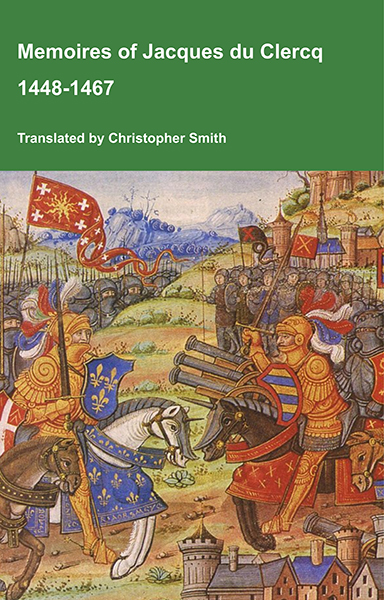 Memoires Jacques du Clercq. In the year of grace 1453, on the penultimate day of October, after the dispensation from the court of Rome had arrived, sent by command of Duke Philip of Burgundy, who had obtained it, declaring that the Pope dispensed Charles, Count of Charolais, son of Duke Philip, and granted him permission to take as wife and spouse Catherine of Bourbon, his first cousin, children of brother and sister, in the town of Lille in Flanders: the said Charles married the said Catherine of Bourbon. The duchess, his mother, was at Lille, and the duke was at Dijon in Burgundy. This marriage was carried out so hastily that the night before, Charles knew nothing of it; and it was said that he did not willingly agree to it, because she was his cousin. It was also said that the duchess his mother, and Anthony the Bastard, his brother, and others, strongly urged him to marry in England the daughter of the Duke of York, who claimed the kingdom of England. The duke, having been informed of this, and for that reason, before departing on his journey to Germany, had his son betrothed to Catherine of Bourbon, and afterward had the dispensation obtained. It was also commonly said that before the betrothal was completed, the duke, seeing that his son would gladly have withdrawn, summoned him, along with his bastard son, and, in the presence of several lords, said to him: "I have heard that you are reluctant to make the marriage I wish you to make. I do not know what moves you, except that I have been told you would gladly marry in England. I want you to know that although I have had great alliances with the English, and long ago allied myself with them to avenge my father's death, my heart and courage have never been English, and I want you to understand that. If I believed that you would do this and seek such an alliance, I would cast you out of all my lands, and you would never enjoy any lordship that I possess. And more still, if I believed that my bastard son here present, or any others, had advised you in this matter, I would have him put in a sack and drowned, and likewise all those who advised you thus. I leave it at that, as I have said". By the duke's express command, Charles lay with his wife that same night. Thereafter he loved her so much that it was a fine thing to see the good life they led in marriage; and it was truly said that for nothing would Charles have gone to any other woman than his own. For at that time it was a great pity that the sin of lust prevailed strongly, especially among princes and married people; and he was considered the most gallant companion who could deceive and seduce the most women, the more licentious he was. And this same sin of lust prevailed even more among the prelates of the Church and among all churchmen. And during the time that the duke was away from his lands, he had left the government of all his territories to his son Charles, who was then twenty years old. In that governance Charles conducted himself very well, and made himself greatly feared by enforcing justice, for above all things he wished justice to be done. There was, however, one danger, as people said: that he sometimes acted or took information without wishing to hear both sides, for which reason he was greatly feared, and people longed for the return of his father.
L'AN de grace mil quatre cent liiij, le penultiesme jour d'octobre, après ce que la dispense de cour de Rome fust venue, par le commandement du duc Philippe de Bourgogne, lequel avoit envoyé icelle dispense contenant comment le pape dispensoit Charles, comte de Charollois, fils du duc Philippe, et lui donnoit congié de prendre a femme et espouse Catherine de Bourbon, sa cousine germaine, enfans de frere et soeur, en la ville de Lille lez Flandres; icelluy Charles espousa ladite Catherine de Bourbon; la duchesse sa mere estant a Lille, et ledit duc a Digeon en Bourgogne, et fust ledit marriage sy forcement fait, que la nuict de devant ledit Charles n'en savoit riens, et, disoit on, que ledit Charles ne le faisoit point vollontiers, pour autant que c'estoit sa cousine; et aussy que la duchesse sa mere et Anthoine le bastard, son frere, et L'isle. aultres le induisoient fort a soy marrier en An gleterre a la fille du duc d'Yorc, lequel duc disoit appartenir a lui le royaume d'Angleterre, de quoy ledit duc fust adverty, et pour ceste cause ains qu'il se partist pour faire son voyage en Allemagne, il feit fiancer son fils a icelle Catherine de Bourbon, puis leur envoya querir la dispense, et me fust dit et disoit on communement encoires plus. C'est a sçavoir que ains ledit fianchage fust pourfaict, que le duc veoit bien que son fils eust volontiers recullé, que le duc manda son fils, et le bastard son fils, et presents plusieurs seigneurs, lui dit: "J'ay entendu que tu fais enuis le marriage que je veux que tu fasses, je ne sçay qui te meult, sinon que on m'a dit que tu te marrirois vollontiers en Angleterre a telle; je veux bien que tu saches que combien que j'ay eu grandes allianches aulx Anglois, et pour vengier la mort de mon pere, je me sois pieça allié a eulx, sy ne fust oncques mon coeur et mon courraige anglois, et veux bien que tu le saches; si je cuidois que tu le feis et que tu te volsisse allier, je te bou teray hors de touts mes pays, ne jamais de seigneurie que j'ay tu ne joyrois, et encoires plus, si je cuidois que mon fils bastard, que voila present, te le conseillat ne aultres, je le ferois mectre en ung sacq et noyer, et touts ceulx qui te conseilleroient de toutes ces choses. je m'en attends a ce qu'il en est, toutes voyes, comme dit ay". Par le commandement très exprès du duc, Charles coucha icelle nuict avecq sa femme, laquelle depuis il aima tant que c'estoit belle chose de la belle vie touchant marriage qu'ils menoient, et disoient pour vray, que pour rien icelluy Charles n'eust allé a aultre femme que la sienne; car lors c'estoit grande pitié que le pechié de luxure regnoit moult fort et par especial es princes et gens marriés; et estoit le plus gentil compagnon qui plus de femmes sçavoit tromper et avoir au moment, qui plus luxurieulx estoit; et mesme regnoit encoires plus icelluy pechié de luxure es preslats de l'eglise et en touts gens d'eglise. Et comme le temps durant que le duc fust hors de ses pays, ledit duc eut laissé le gouvernement de touts ses pays a Charles son fils qui estoit en l'age de vingt ans, auquel gouvernement ledit Charles se contint très bien, et se faisoit fort craindre en faisant justice, car il volloit sur toutes choses que justice fust faite; ung dangier y avoit, comme on disoit, c'estoit qu'il estoit informé et s'informoit aucune fois, sans vouloir ouyr partie, pourquoy on le doubtoit moult et desiroit on la re venue de son pere.
On 30th October 1454 Charles "Bold" Valois Duke Burgundy [aged 20] and Isabella Bourbon [aged 18] were married. She the daughter of Charles Bourbon I Duke Bourbon [aged 53] and Agnes Valois Duchess Bourbon [aged 47]. He the son of Philip "Good" Valois III Duke Burgundy [aged 58] and Isabella Aviz Duchess Burgundy [aged 57]. They were first cousins. He a great x 2 grandson of King Edward III of England. She a great x 5 granddaughter of King Edward I of England.
Patent Rolls. 30th October 1459. Farnham Royal, Buckinghamshire [Map]. Commission of array to Richard Wydevyle of Ryvers [aged 54], knight, and the sheriff of Kent in Kent, to resist Richard, duke of York [aged 48], Edward Earl of March [aged 17], Richard, Earl of Warwick [aged 30], and Richard, Earl of Salisbury [aged 59], and their accomplices, leagued in rebellion against the king and crown and allowed by certain persons having the keeping of the town and castle of Calais [Map] to enter the same contrary to the king's mandates, and now preparing to arouse congregations and insur rections in the said county; and appointment of the same to arrest all ships and other vessels late of the said Earl of Warwick and all the tackling thereof and to keep the same for the king's use. By K.
Memoires Jacques du Clercq. Also, on that same day [30th October 1460], they released and set at liberty, as has been said above, Jacotin d'Athènes, who had been taken for the said matter of Waldensianism. I do not know whether he had been subjected to torture, but he never confessed to having been at the said assemblies, and no other penalty was imposed upon him except that he should leave the bishopric of Arras for fifteen days. At that time it was said that the said Jacotin, who was a burgess of Arras, was not at all content with the outrage that had been done to him, and that after his release he said that he would not take it well against those among whom this had been done.
Item cedit jour propre, delivrerent et meirent hors de prison par elargissement, comme dessus est dit, Jacotin d'Athenes, lequel avoit esté prins pour ledit cas de vaulderie, je ne sçay s'il avoit esté mis a la torture, mais il ne confessa oncques d'avoir esté en ladite vaulderie et ne lui fust enjoint aultres choses que simplement il vuideroit de l'evesquié d'Arras xv jours durant. On disoit lors que ledit Jacotin, lequel estoit de la bourgeoisie d'Arras, n'estoit pas bien content de la villenie qu'on lui avoit fait, et dit, après sa délivrance et devant qu'il n'en prendroit pas bien a ceulx parmy qui ce avoit esté.
Memoires Jacques du Clercq. Also, on the penultimate day of October, the said vicars released and set at liberty a young woman named Belotte, who was a prostitute. This common woman, who had been taken as a Waldensian, had been subjected to torture several times and had confessed to having been at the said assemblies. It was said that she had nearly been burned when the other women were burned, and that it was only because her mitre had not been made or completed that she was not executed. Nevertheless, the said vicars released her outright, except that they banished her from the bishopric of Arras and ordered her to go on pilgrimage to Our Lady of Boulogne. This passage is striking, showing how someone who had confessed under torture and nearly been executed was ultimately spared, indicating a sharp reversal in policy.
Item le penultieme jour d'octobre lesdits vicaires elargirent et meirent hors de prison une josne femme nommée Belotte, laquelle estoit fille de joye. Ceste femme commune, laquelle avoit esté prinse comme vauldoise, avoit esté par plusieurs fois mise a la tor ture, et confessé avoir esté en ladite vaulderie. Sy disoit on qu'elle avoit esté presque ardse quand on ardit les dernieres femmes et ne tint qu'a sa mitre, qui ne fust point faite ni achevée, toutesfois lesdits vicaires la delivrerent franchement, saulf qu'ils la congierent hors l'evesquié d'Arras et lui enjoignirent d'aller a Notre Dame de Boullongne.
On 30th October 1466 Marie Valois Duchess Cleves [aged 73] died.
On 30th October 1485 King Henry VII of England and Ireland [aged 28] was crowned VII King of England by Cardinal Thomas Bourchier [aged 67] at Westminster Abbey [Map]. Earl Richmond merged with the crown. Margaret Beaufort Countess Richmond [aged 42], his mother, attended.
Robert Dymoke [aged 24] attended as the Kings' Champion.
John de Vere 13th Earl of Oxford [aged 43] carried the King's train.


Chronicle of Edward Hall [1496-1548]. 30th October 1485. After this he [King Henry VII of England and Ireland [aged 28]] with great pompe was cōueighed to Westmynster, and there the thirtye daye of Octobre was with all ceremonyes accustomed, enoynted & crouned kyng by the whole assent as well of the cōmons as of the nobilite, & was named kyng Henry the. vij. of that. name, which was in the yere of our redempcion. M. cece. Ixxxvi. Frederyke the. iij. then beynge Emperour of Almayne, Maximilian his sonne then beynge newely clected kyng of Romanes, Charles the. viij. reignyng over the Frenche nacion, & lames the iij. rulyng the realme of Scotland. Which kyngdome he obteyned & enioyed as a thyng by God elected. & prouided, and by his especiall fauoure & gracious aspecte compassed and acheved. In so muche that m& comonly reporte that. vii. C. xcvii. yeres passed, it was by a heavenly voyce reueled to Cadwalader last kyng of Brytons that his stocke and progeny should reigne in this land and beare domynion agayn: Wherupo most men were persuaded in their awne opinion that by this heauenly voyce he was prouided & ordeyned longe before to enioye and obteine this kyngdom, whiche thing kyng Henry the. vi. did also shewe before asyou have heard declared. Wherefore he beynge by right and iust tytle of temporal inheritaunce, & by prouision of deuyne purueyauce thus crouned and proclaimed kyng: First of all vsyng the antique example of the Athenienses, whiche is to perdon and put out of memory all crymes and offences before tyme agaynst hym or his lawes perpetrated or cōmitted, he called his high court of parliamét at Westmynster the. vii. daye of Nouembre for thestablishyng of all thinges aswell cGeernyng the preseruacion and maintenaֹֹֹūce of his royal person, as the admynistracion of iustice and preferment of the cōmon wealth of this realme and dominion, in the which he caused to be proclaimed that all men were perdoned, acquited & clerely discharged of all offences, peynes of death and execucions, and should be restored to their landes and moueable goodes whiche woulde submit them selfes to his clemency and by othe be obliged truly to serue and obeye bym as their sovereigne lorde, & who woulde be obstinate & refuse to returne to his parte, should be accepted and taken as a publike enemy to hym and his countrey. By reason of which proclamacion, a great nombre that came out of diverse sanctuaries and privileged places obteyned grace, forgetting clerely the diversite of faccions & voyce of partakyng. After this he began to remembre his es- peciall frendes & fautours, of whome sone he anaunced to honoure & dignite, & some he enriched with possessions & goodes, every ma according to his desert & merite. And to begvnne, laspar [aged 53] his vncle Erle of Penbrooke, he created duke of Bedforde, Thomas lorde Stanley [aged 50] he promoted to be erle of Darby, & lord Chandew of Briteine his especiall frende he made erle of Bathe, Sir Gyles Dawbeney [aged 34] was made lorde Dawbeney, Sir Robert Willoughby [aged 33] was made lord Brooke which be in their degree barons and peeres of the realme. And Edward Stafford [aged 7] eldest son to Henry late duke of Buckingham, he restored to his name dignitie and possessions, which kyng Richard did confiscate and attaynted. Beside this in this parliamēt was this notable acte assented to and concluded as foloweth.
Abbot John Whethamstede’s Chronicle of the Abbey of St Albans
Abbot John Whethamstede's Register aka Chronicle of his second term at the Abbey of St Albans, 1451-1461, is a remarkable text that describes his first-hand experience of the beginning of the Wars of the Roses including the First and Second Battles of St Albans, 1455 and 1461, respectively, their cause, and their consequences, not least on the Abbey itself. His text also includes Loveday, Blore Heath, Northampton, the Act of Accord, Wakefield, and Towton, and ends with the Coronation of King Edward IV. In addition to the events of the Wars of the Roses, Abbot John, or his scribes who wrote the Chronicle, include details in the life of the Abbey such as charters, letters, land exchanges, visits by legates, and disputes, which provide a rich insight into the day-to-day life of the Abbey, and the challenges faced by its Abbot.
Available at Amazon in eBook and Paperback format.
Grafton's Chronicle [1507-1573]. [30th October 1485]. After thys, he wyth great pompe was conueyed to Westminster, and there the thirtie King Henry the daye of October was wyth all ceremonies accustomed, annoynted and crowned Kyng by seuenth crowned the whole assent as well of the commons as of the Nobilitie, and was named king Henry the seuenth of that name, Frederike the thirde then beyng Emperour of Almayne, Maximilian hys sonne then beyng newely elected king of Romaynes, Charles the eyght reygning ouer the French nation, and Iames the thirde rulyng the realme of Scotlande. Which James the thirde kingdome he obteyned and enioyed as a thing by God elected and prouided, & by hys king of Scottes, especiall fauour and gracious aspect compassed and acheeued. In so much that men commonly reported that. 797. yeres passed, it was by a heauenly voyce reuealed to Cadwalader last king of Brytons that his stock and progeny should reigne in thys land and beare dominyon agayne: Wherevpon most men were perswaded in their awne opinion that by this heauenly voyce he was prouided and ordeyned long before to enioy and obteyne this kingdome, which thing king Henry the sixt did also shew before, as you haue heard declared. Wherefore he beyng by right and iust tytle of temporall inheritaunce, and by the prouision of deuine purueyaunce thus crowned and proclaymed king: First of all vsyng the antique example of the Athenians, which is to pardon and put out of memorie all crymes and offences before tyme agaynst hym or hys lawes perpetrated or committed, he called hys high court of Parliament at Westmynster the seuenth day of Nouember for boldeeranwest the stablyshing of all things as well concerning the preseruation and mayntenaunce of hys general pardo royall person, as the admynistration of iustice and preferment of the common welth of A parliamēt graunted. thys realme and dominion, in the which he caused to be proclaymed that all inen were pardoned acquyted and cleerely discharged of all offences, paynes of deathe and executions, and should be restored to their landes and moueable goodes, which would submit themselues to his clemencie & by othe be bound truely to serue and obey him as their souereigne Lord, & who so would be obstinate and refuse to returne to hys part, should be accepted and taken as a publike enemy to him and his Countrey. By reason of which proclamation, a great number that came out of dyuers Sanctuaries and priuileged places obteyned grace, forgettyng clerely the diuersitie of factions and voyce of partaking. After this he began to remember his especiall friends and fautors, of whom some he aduaunced to honour and dignity, and some he enriched with possessions and goodes, euery man according to his desert and merite. And to begin, Iasper his Vncle Erle of Penbrooke, he created Duke of Bedforde, Thomas Lorde Stanley he promoted to the Erle of Darby, and the Lorde Chandew of Britayne his especiall friend he made Erle of Bathe, Syr Gyles Dawbeny was made Lorde Dawbeny, syr Robert Wylloughby was made Lorde Brooke which be in their degree Barons and Peeres of the realme. And Edwarde Stafford eldest sonne to Henry late Duke of Buckyngham, he restored to his name, dignitie and possessions, which king Richard did confiscate and attainted. Beside thys, in this Parliament was this notable act assented to and concluded as foloweth.
On 30th October 1492 Anne Valois Marchioness of Montferrat was born to Rene Valois Duke Alençon [aged 38] and Margaret Lorraine Duchess Alençon [aged 29]. She married 1508 her half second cousin once removed William IX Marquis of Montferrat, son of Boniface III Marquis of Montferrat and Maria of Serbia Marchioness of Montferrat, and had issue.
On 30th October 1495 Francis Bourbon Count Vendôme and Soissons [aged 25] died. His son Charles [aged 6] succeeded Count Vendôme.
On 30th October 1535 François Valois III Duke Longueville was born to Louis Valois II Duke Longueville [aged 25] and Mary of Guise Queen Consort Scotland [aged 19].
On 30th October 1600, or early November, Robert Devereux 2nd Earl Essex [aged 34] was refused the renewal of his lucrative monopoly on Sweet Wine by Queen Elizabeth I of England and Ireland [aged 67] effectively bankrupting him.

On 30th October 1623 Christopher Wren was born.
On 30th October 1633 Bishop Nicholas Monck [aged 23] graduated Master of Arts: Oxford University at Wadham College, Oxford University.
Samuel Pepys' Diary. 30th October 1660. Within all the morning and dined at home, my mind being so troubled that I could not mind nor do anything till I spoke with the Comptroller to whom the lodgings belong. In the afternoon, to ease my mind, I went to the Cockpit [Map] all alone, and there saw a very fine play called "The Tamer Tamed;" very well acted. That being done, I went to Mr. Crew's [aged 62], where I had left my boy, and so with him and Mr. Moore (who would go a little way with me home, as he will always do) to the Hercules Pillars to drink, where we did read over the King's [aged 30] declaration in matters of religion, which is come out to-day, which is very well penned, I think to the satisfaction of most people. So home, where I am told Mr. Davis's people have broken open the bolt of my chamber door that goes upon the leads, which I went up to see and did find it so, which did still trouble me more and more. And so I sent for Griffith, and got him to search their house to see what the meaning of it might be, but can learn nothing to-night. But I am a little pleased that I have found this out. I hear nothing yet of my Lord, whether he be gone for the Queen [aged 50] from the Downs or no; but I believe he is, and that he is now upon coming back again.


Samuel Pepys' Diary. 27th October 1662. He told me what great faction there is at Court; and above all, what is whispered, that young Crofts [aged 13] is lawful son to the King [aged 32], the King being married to his mother1. How true this is, God knows; but I believe the Duke of York [aged 29] will not be fooled in this of three crowns.
Note 1. There has been much confusion as to the name and parentage of Charles's mistress. Lucy Walter was the daughter of William Walter of Roch Castle, co. Pembroke, and Mr. S. Steinman, in his "Althorp Memoirs" (privately printed, 1869), sets out her pedigree, which is a good one. Roch Castle was taken and burnt by the Parliamentary forces in 1644, and Lucy was in London in 1648, where she made the acquaintance of Colonel Algernon Sidney [aged 25]. She then fell into the possession of his brother, Colonel Robert Sidney2. In September of this same year she was taken up by Charles, Prince of Wales. Charles terminated his connection with her on October 30th, 1651, and she died in 1658, as appears by a document (administration entry in the Register of the Prerogative Court) met with by the late Colonel Chester. William Erskine, who had served Charles as cupbearer in his wanderings, and was appointed Master of the Charterhouse in December, 1677, had the care of Lucy Walter, and buried her in Paris. He declared that the King never had any intention of marrying her, and she did not deserve it. Thomas Ross, the tutor of her son, put the idea of this claim into his head, and asked Dr. Cosin to certify to a marriage. In consequence of this he was removed from his office, and Lord Crofts [aged 37] took his place (Steinman's "Althorp Memoirs"). Lucy Walter took the name of Barlow during her wanderings.
Note 2. Not clear who Colonel Robert Sidney is since Algernon Sidney didn't have a brother called Robert. Algernon's brothers were Philip Sidney 3rd Earl of Leicester [aged 43] and Henry Sidney 1st Earl Romney [aged 21].


Samuel Pepys' Diary. 30th October 1662. But, Lord! to see what a young simple fantastique coxcombe is made Deputy Governor, would make one mad; and how he called out for his night-gown of silk, only to make a show to us; and yet for half an hour I did not think he was the Deputy Governor, and so spoke not to him about the business, but waited for another man; at last I broke our business to him; and he promising his care, we parted. And Mr. Leigh and I by coach to White Hall, where I did give my Lord Sandwich [aged 37] an account of our proceedings, and some encouragement to hope for something hereafter, and so bade him good-night, and so by coach home again, where to my trouble I found that the painter had not been here to-day to do any thing, which vexes me mightily.


Abbot John Whethamstede’s Chronicle of the Abbey of St Albans
Abbot John Whethamstede's Register aka Chronicle of his second term at the Abbey of St Albans, 1451-1461, is a remarkable text that describes his first-hand experience of the beginning of the Wars of the Roses including the First and Second Battles of St Albans, 1455 and 1461, respectively, their cause, and their consequences, not least on the Abbey itself. His text also includes Loveday, Blore Heath, Northampton, the Act of Accord, Wakefield, and Towton, and ends with the Coronation of King Edward IV. In addition to the events of the Wars of the Roses, Abbot John, or his scribes who wrote the Chronicle, include details in the life of the Abbey such as charters, letters, land exchanges, visits by legates, and disputes, which provide a rich insight into the day-to-day life of the Abbey, and the challenges faced by its Abbot.
Available at Amazon in eBook and Paperback format.
Samuel Pepys' Diary. 30th October 1662. At noon when we were up comes Mr. Wade with my Lord's letter, and tells me the whole business. So we consulted for me to go first to Sir H. Bennet [aged 44], who is now with many of the Privy Counsellors at the Tower, examining of their late prisoners, to advise with him when to begin.


Samuel Pepys' Diary. 30th October 1662. So I went; and the guard at the Tower Gate, making me leave my sword at the gate, I was forced to stay so long in the ale-house hard by, till my boy run home for my cloak, that my Lord Mayor that now is, Sir John Robinson [aged 47], Lieutenant of the Tower, with all his company, was gone with their coaches to his house in Minchen Lane. So my cloak being come, I walked thither; and there, by Sir G. Carteret's [aged 52] means, did presently speak with Sir H. Bennet [aged 44], who did show and give me the King's warrant to me and Mr. Leigh, and another to himself, for the paying of £2,000 to my Lord, and other two to the discoverers. After a little discourse, dinner come in; and I dined with them. There was my Lord Mayor, my Lord Lauderdale, Mr. Secretary Morris, to whom Sir H. Bennet would give the upper hand; Sir Wm. Compton, Sir G. Carteret, and myself, and some other company, and a brave dinner.

Samuel Pepys' Diary. 30th October 1662. Could sleep but little to-night for thoughts of my business. So up by candlelight and by water to Whitehall, and so to my Lord Sandwich [aged 37], who was up in his chamber and all alone, did acquaint me with his business; which was, that our old acquaintance Mr. Wade (in Axe Yard [Map]) hath discovered to him £7,000 hid in the Tower, of which he was to have two for discovery; my Lord himself two, and the King [aged 32] the other three, when it was found; and that the King's warrant runs for me on my Lord's part, and one Mr. Lee for Sir Harry Bennet [aged 44], to demand leave of the Lieutenant of the Tower for to make search. After he had told me the whole business, I took leave and hastened to my office, expecting to be called by a letter from my Lord to set upon the business, and so there I sat with the officers all the morning.
Samuel Pepys' Diary. 30th October 1662. So our guide demands, a candle, and down into the cellars he goes, inquiring whether they were the same that Baxter1 always had. We went into several little cellars, and then went out a-doors to view, and to the Cole Harbour; but none did answer so well to the marks which was given him to find it by, as one arched vault. Where, after a great deal of council whether to set upon it now, or delay for better and more full advice, we set to it, to digging we went to almost eight o'clock at night, but could find nothing. But, however, our guides did not at all seem discouraged; for that they being confident that the money is there they look for, but having never been in the cellars, they could not be positive to the place, and therefore will inform themselves more fully now they have been there, of the party that do advise them. So locking the door after us, we left work to-night, and up to the Deputy Governor (my Lord Mayor, and Sir H. Bennet [aged 44], with the rest of the company being gone an hour before); and he do undertake to keep the key of the cellars, that none shall go down without his privity.
Note 1. Intended for John Barkstead, Lieutenant of the Tower under Cromwell. Committed to the Tower (see March 17th, 1661-62).
Samuel Pepys' Diary. 30th October 1662. After dinner, Sir H. Bennet [aged 44] did call aside the Lord Mayor and me, and did break the business to him, who did not, nor durst appear the least averse to it, but did promise all assistance forthwith to set upon it. So Mr. Lee and I to our office, and there walked till Mr. Wade and one Evett his guide did come, and W. Griffin, and a porter with his picke-axes, &c.; and so they walked along with us to the Tower, and Sir H. Bennet and my Lord Mayor did give us full power to fall to work.
Samuel Pepys' Diary. 30th October 1668. Up betimes; and Mr. Povy [aged 54] comes to even accounts with me, which we did, and then fell to other talk. He tells, in short, how the King [aged 38] is made a child of, by Buckingham [aged 40] and Arlington [aged 50], to the lessening of the Duke of York [aged 35], whom they cannot suffer to be great, for fear of my Chancellor's [aged 59] return, which, therefore, they make the King violent against. That he believes it is impossible these two great men can hold together long: or, at least, that the ambition of the former is so great, that he will endeavour to master all, and bring into play as many as he can. That Anglesey [aged 54] will not lose his place easily, but will contend in law with whoever comes to execute it. That the Duke of York, in all things but in his cod-piece, is led by the nose by his wife [aged 31]. That W. Coventry [aged 40] is now, by the Duke of York, made friends with the Duchess; and that he is often there, and waits on her. That he do believe that these present great men will break in time, and that W. Coventry will be a great man again; for he do labour to have nothing to do in matters of the State, and is so usefull to the side that he is on, that he will stand, though at present he is quite out of play. That my Baroness Castlemayne [aged 27] hates the Duke of Buckingham. That the Duke of York hath expressed himself very kind to my Lord Sandwich [aged 43], which I am mighty glad of. That we are to expect more changes if these men stand. This done, he and I to talk of my coach, and I got him to go see it, where he finds most infinite fault with it, both as to being out of fashion and heavy, with so good reason that I am mightily glad of his having corrected me in it; and so I do resolve to have one of his build, and with his advice, both in coach and horses, he being the fittest man in the world for it, and so he carried me home, and said the same to my wife. So I to the office and he away, and at noon I home to dinner, and all the afternoon late with Gibson at my chamber about my present great business, only a little in the afternoon at the office about Sir D. Gawden's accounts, and so to bed and slept heartily, my wife and I at good peace, but my heart troubled and her mind not at ease, I perceive, she against and I for the girle, to whom I have not said anything these three days, but resolve to be mighty strange in appearance to her. This night W. Batelier come and took his leave of us, he setting out for France to-morrow.

On 30th October 1668 Sophia Charlotte Hanover Queen Consort Prussia was born to Ernest Augustus Hanover Elector Brunswick-Lüneburg [aged 38] and Electress Sophia Palatinate Simmern [aged 38]. She a great granddaughter of King James I of England and Ireland and VI of Scotland. She married before 1685 her second cousin Frederick I King Prussia and had issue.
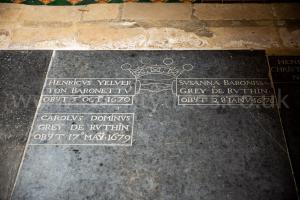
After 30th October 1670. Church of St Peter and St Paul, Easton Maudit [Map]. Monument to Henry Yelverton Baron Grey of Ruthyn [deceased] and Susan Longueville 13th Baroness Grey of Ruthyn.
Susan Longueville 13th Baroness Grey of Ruthyn: she was born to Charles Longueville 12th Baron Grey of Ruthyn and Frances Neville. On 14th June 1643 Charles Longueville 12th Baron Grey of Ruthyn died. His daughter Susan succeeded 13th Baroness Grey of Ruthyn. Before 21st August 1657 Henry Yelverton Baron Grey of Ruthyn and she were married. He by marriage Baron Grey of Ruthyn. They were fifth cousin once removed. On 28th January 1676 she died. She was buried at the Church of St Peter and St Paul, Easton Maudit [Map]. Her son Charles succeeded 14th Baron Grey of Ruthyn.
On 30th October 1683 King George II of Great Britain and Ireland was born to King George I [aged 23] and Sophia Dorothea of Celle [aged 17] at Herrenhausen Palace, Hanover, Lower Saxony. He a great x 2 grandson of King James I of England and Ireland and VI of Scotland. Coefficient of inbreeding 6.25%. He married 22nd August 1705 Caroline Hohenzollern Queen Consort England and had issue.


John Evelyn's Diary. 30th October 1683. I went to Kew to visit Sir Henry Capell [aged 45], brother to the late Earl of Essex; but he being gone to Cashiobury, after I had seen his garden and the alterations therein, I returned home. He had repaired his house, roofed his hall with a kind of cupola, and in a niche was an artificial fountain; but the room seems to me over-melancholy, yet might be much improved by having the walls well painted á fresco. The two green houses for oranges and myrtles, communicating with the rooms below, are very well contrived. There is a cupola made with pole-work between two elms at the end of a walk, which being covered by plashing the trees to them, is very pretty; for the rest there are too many fir trees in the garden.
On 30th October 1685 John Ayloffe [aged 40] was hanged, drawn and quartered at Temple Bar for his part in the Argyll's Rising.
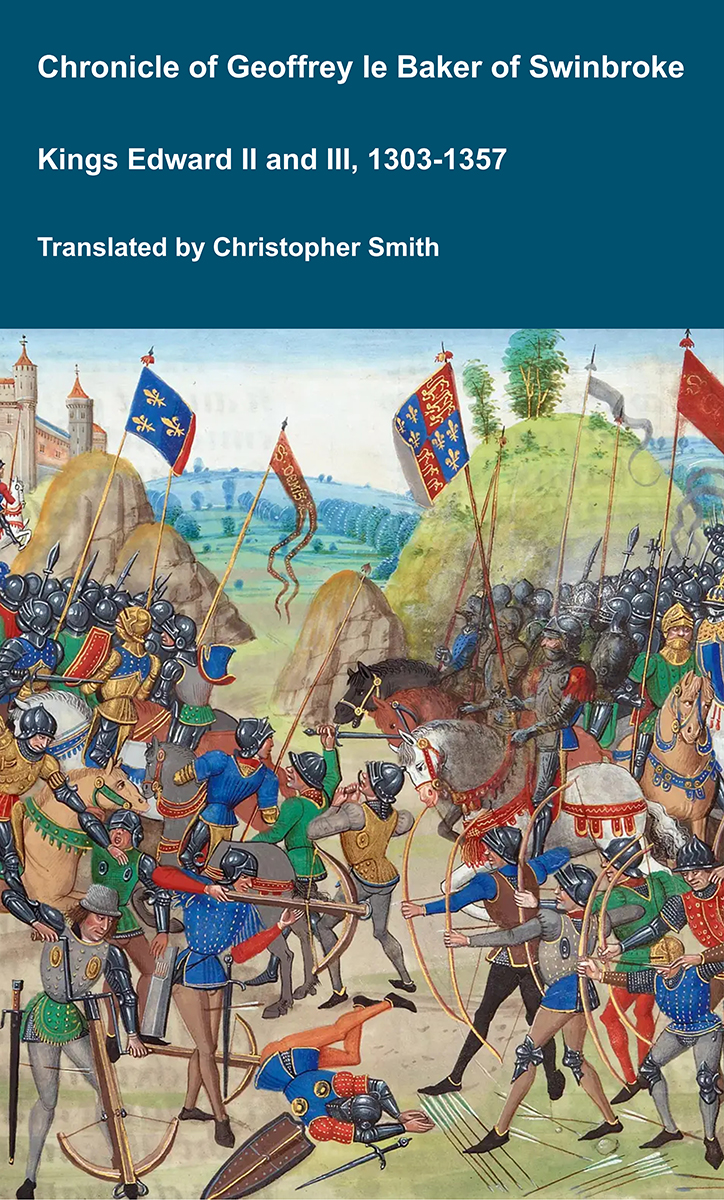
Chronicle of Geoffrey le Baker of Swinbroke
Baker was a secular clerk from Swinbroke, now Swinbrook, an Oxfordshire village two miles east of Burford. His Chronicle describes the events of the period 1303-1356: Gaveston, Bannockburn, Boroughbridge, the murder of King Edward II, the Scottish Wars, Sluys, Crécy, the Black Death, Winchelsea and Poitiers. To quote Herbert Bruce 'it possesses a vigorous and characteristic style, and its value for particular events between 1303 and 1356 has been recognised by its editor and by subsequent writers'. The book provides remarkable detail about the events it describes. Baker's text has been augmented with hundreds of notes, including extracts from other contemporary chronicles, such as the Annales Londonienses, Annales Paulini, Murimuth, Lanercost, Avesbury, Guisborough and Froissart to enrich the reader's understanding. The translation takes as its source the 'Chronicon Galfridi le Baker de Swynebroke' published in 1889, edited by Edward Maunde Thompson.
Available at Amazon in eBook and Paperback format.
John Evelyn's Diary. 30th October 1688. I dined with Lord Preston [aged 39], made Secretary of State, in the place of the Earl of Sunderland [aged 47].

John Evelyn's Diary. 30th October 1688. Visited Mr. Boyle, when came in the Duke of Hamilton [aged 53] and Earl of Burlington [aged 76]. The Duke told us many particulars of Mary Queen of Scots, and her amours with the Italian favorite, etc.
On 30th October 1696 Charlotte Saxe Coburg Saalfeld was born to John Ernest Saxe Coburg Saalfeld IV Duke Saxe Coburg Saalfeld [aged 38] and Charlotte Johanna Waldeck Wildungen Duchess Saxe Coburg Saalfeld at Saalfield. She died aged less than one years old.
On 30th October 1711 Catherine Russell Duchess Rutland [aged 35] died.
On 30th October 1735 Edmund Sheffield 2nd Duke of Buckingham and Normanby [aged 19] died of consumption at Rome, Italy [Map] unmarried and without issue. Duke of Buckingham and Normanby, Earl Mulgrave and Baron Sheffield of Butterwick in Lincolnshire extinct.

On 30th October 1741 Angelica Kauffmann was born in Chur Graubünden.
On 30th October 1809 William Cavendish-Bentinck 3rd Duke Portland [aged 71] died. His son William [aged 41] succeeded 4th Duke Portland, 5th Earl of Portland.


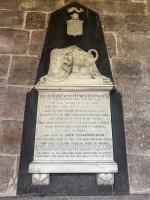
Memorial at Saint Michael and All Angels Church, Church Broughton [Map] to Lucy, daughter of Reverend John Wiliams, who died 22nd April 1839, and her brother William Lewis Williams, who died at Pleasant Valley, Davenport, Iowa, North America, on 6th August 1848, aged 21, and to their mother Jane Cullingworth, who died 30th October 1846, aged 52 years.
On 30th October 1881 William Brodie [aged 66] died at his home 9 Cambridge Street, Edinburgh [Map]. He was buried at Dean Cemetery, Edinburgh.
The London Gazette 27243. Lord Chamberlain's Office, St. James's Palace, October 30, 1900.
The Queen [aged 81] has been pleased to appoint George Richard Penn [aged 39], Earl Howe, to be one of the Lords in Waiting in Ordinary to Her Majesty, in the room of Edward Hyde, Earl of Clarendon [aged 54], resigned.

The London Gazette 28193. Whitehall, October 30, 1908. The KING, taking into His Royal consideration that upon the decease of Spencer Compton Cavendish, Duke of Devonshire, without male issue, on the twenty-fourth day of March last, the title and dignity of Duke of Devonshire devolved upon Victor Christian William Caven dish, now Duke of Devonshire, as the eldest son and heir of Edward Cavendish, commonly called Lord Edward Cavendish, whereby according to the ordinary rules of honour the brothers of the said Victor Christian William Cavendish, Duke of Devonshire, cannot enjoy the title, rank, place and precedence which would have been due to them had their father survived the said Spencer Cornpton Cavendish, Duke of Devonshire, and succeeded to the title and dignity of Duku of Devonshire, His Majesty hus been graciously pleased to ordain and declare that Richard Frederick Cavendish [aged 37], of Holker Hall, Cark in Cartmel, in the county of Lancaster, Esquire, and John Spencer Cavendish [aged 33], Esquire, Companion of the Distinguished Order, Captain, 1st Life Guards, now residing at Carlos-place, Grosvenor square, in the county of London, shall have, hold and enjoy the same title, rank, place, pre-eminence and precedence as if their late father, the said Lord Edward Cavendish had survived the said Spencer Compton Cavendish, Duke of Devonshire, and thereby succeeded to the title and dignity of Duke of Devonshire.
And to command that the said Royal order and declaration be registered in His Majesty's College of Arms
On 30th October 1914 at Zandvoorde during the he First Battle of Ypres.
Charles Pelham [aged 27] [Lord Worsley] was killed in action. His wife, Alexandra Vivian [aged 24], who did not remarry, subsequently purchased the land in the town of Zandvoorde in which he was buried. Following his re-interrment at the Town Cemetery Military Extension at Ypre in 1921, the land became the site of the Household Cavalry Memorial.
Hugh William Grosvenor [aged 30] was killed in action.
Gerald Ernest Francis Ward [aged 36] was killed in action His body was never recovered and he is commemorated at the Menin Gate.
Charles Petty-Fitzmaurice [aged 40] was killed in action.
The 1st Life Guard's war diary noted the action at Zandvoorde -[7]
Zandvoorde-Oct 30 6am Heavy bombardment of position opened. At 7.30am position was attacked by large force of infantry. This attack proved successful owing to greatly superior numbers. Regiment retired in good order about 10.00am except C Squadron on the left flank from which only about ten men got back. Remainder of Squadron missing. Also one machine gun put out of action.
Worsley was in command of the Machine Gun section of the Royal Horse Guards defending the area around Zandvoorde to the East of Ypres. They had come under overwhelming pressure and most of the unit had been withdrawn and replaced by 1st Life Guards in which Hugh Grosvenor served. However the MG section, being essential to the defence of the line was retained in the front line along with its crew, led by Lord Worsley. The events concerning the death of both men are discussed in "1914 - The Days of Hope" by Lyn McDonald. Worsley was not the image of the spit and polish of the Household Brigade. He was covered in mud and had not shaved for a week having been subject to continual attacks by the German elite troops ranged against them. He wrote home that his last shave "was all the washing I've had time for in the last ten days". The incoming Life Guards had one Machine Gun inoperative so Worsley's gun was retained as it covered a vital section of the line. His team were tired and hungry having missed out on a meal during the relief by the 1st Life Guards, who had already consumed their own rations whilst moving up to the line and could not help their brothers in arms. However a timely parcel arrived from Worsley's mother containing chocolate which was shared equally amongst the MG team. They remained in position for six days and nights in appalling weather and under attack by overwhelming numbers. Their trench was shallow, and dug on the forward slope before Zandvoorde in full view of the Germans. It was clear to Hugh Grosvenor that the position was exposed and that the Germans were massing for another attack. Grosvenor sent the following message to his HQ "There appears to be a considerable force of the enemy to my front and to my right front. They approach to within about seven hundred yards at night. Our shells have not been near them on this flank". What remained unsaid was that the German artillery certainly had the range of the British trenches and had delivered significant quantities of shellfire, clearly with little reply.
The morning of 30th November dawned as the eighth consecutive day that Worsley's MG team had spent in the line. At 06.00hrs the German barrage started and it was intense. For 90 minutes there was little that the British could do but deal with their battered trenches and their wounded. Worsley's team had to cover their vital Machine Gun with their bodies to protect it from mud and dirt - they well knew that when the shelling stopped they would need it in full working order. When the shelling stopped and the Germans advanced it was over in minutes. An official report confirmed that "the (German) attack proved successful owing to greatly superior numbers" and that the Regiment had "retired in good order". Not all had retired in good order. Hugh Grosvenor and Charles Worsley were occupied in dealing with Germans swarming over their trenches and firing on them at close range and soon it came down to hand to hand fighting. The inevitable conclusion soon came. One man retiring looked back and saw Worsley still standing, firing at the enemy about to overwhelm the trench. There was nobody left alive to tell the tale of the final moments. There were no British wounded. There were no prisoners taken. A cavalry squadron, fighting as dismounted infantry, had simply ceased to exist. By 08.30 news that the 7th Cavalry Brigade had been pushed off the Zandvoorde ridge reached 1st Corps HQ. Perhaps the Commander, General Sir Douglas Haig, took a moment to spare a thought for Worsley who was married to Haig's wife's younger sister.
There was a postscript. The German unit that captured Worsley's trench was the 1st Bavarian Jaeger Regiment and one of its officers found the bodies and on searching them for papers found that Worsley was a Lord. He ordered that any personal effects, including a gold ring should be taken from the body and returned to Worsley's family. Unfortunately the German officer was himself killed a few days later and the effects never found their way back to England. All of the British bodies were buried in a mass grave which remains unfound to this day and all are commemorated on the Menin Gate Memorial. All but one; Worsley's body was given a separate burial and via neutral Holland the German authorities passed information of its location. After the war it was located and is now buried in Ypres Town Cemetery Extension, just yards from that of another aristocratic Freemason HRH Prince Maurice of Battenberg. The land where Worsley's body was found was purchased by his wife and now is the site of the Household Division Memorial. Lyn McDonalds book includes photos of Worsley and his wife at the quayside before his embarkation to France and also his temporary grave marker.
Abbot John Whethamstede’s Chronicle of the Abbey of St Albans
Abbot John Whethamstede's Register aka Chronicle of his second term at the Abbey of St Albans, 1451-1461, is a remarkable text that describes his first-hand experience of the beginning of the Wars of the Roses including the First and Second Battles of St Albans, 1455 and 1461, respectively, their cause, and their consequences, not least on the Abbey itself. His text also includes Loveday, Blore Heath, Northampton, the Act of Accord, Wakefield, and Towton, and ends with the Coronation of King Edward IV. In addition to the events of the Wars of the Roses, Abbot John, or his scribes who wrote the Chronicle, include details in the life of the Abbey such as charters, letters, land exchanges, visits by legates, and disputes, which provide a rich insight into the day-to-day life of the Abbey, and the challenges faced by its Abbot.
Available at Amazon in eBook and Paperback format.
On 30th October 1930 James Angus Graham 7th Duke Montrose [aged 23] and Isabel Veronia Sellar Duchess Montrose were married. He the son of James Graham 6th Duke Montrose [aged 52] and Mary Louise Douglas Hamilton Duchess Montrose [aged 45].
On 30th October 1930 Princess Margaret was baptised at the Chapel Buckingham Palace by Archbishop Cosmo Gordon Lang [aged 65]. Her aunt Rose Constance Bowes-Lyon Countess Granville [aged 40] was godmother.
On 30th October 1492 Anne Valois Marchioness of Montferrat was born to Rene Valois Duke Alençon [aged 38] and Margaret Lorraine Duchess Alençon [aged 29]. She married 1508 her half second cousin once removed William IX Marquis of Montferrat, son of Boniface III Marquis of Montferrat and Maria of Serbia Marchioness of Montferrat, and had issue.
On 30th October 1535 François Valois III Duke Longueville was born to Louis Valois II Duke Longueville [aged 25] and Mary of Guise Queen Consort Scotland [aged 19].
On 30th October 1623 Christopher Wren was born.
On 30th October 1668 Sophia Charlotte Hanover Queen Consort Prussia was born to Ernest Augustus Hanover Elector Brunswick-Lüneburg [aged 38] and Electress Sophia Palatinate Simmern [aged 38]. She a great granddaughter of King James I of England and Ireland and VI of Scotland. She married before 1685 her second cousin Frederick I King Prussia and had issue.

On 30th October 1680 Richard Cust 2nd Baronet was born to Pury Cust [aged 25] and Ursula Woodcock [aged 21]. He married before 1717 Anne Brownlow Lady Cust, daughter of William Brownlow 4th Baronet and Dorothy Mason Baroness Brownlow, and had issue.
On 30th October 1683 King George II of Great Britain and Ireland was born to King George I [aged 23] and Sophia Dorothea of Celle [aged 17] at Herrenhausen Palace, Hanover, Lower Saxony. He a great x 2 grandson of King James I of England and Ireland and VI of Scotland. Coefficient of inbreeding 6.25%. He married 22nd August 1705 Caroline Hohenzollern Queen Consort England and had issue.
On 30th October 1696 Charlotte Saxe Coburg Saalfeld was born to John Ernest Saxe Coburg Saalfeld IV Duke Saxe Coburg Saalfeld [aged 38] and Charlotte Johanna Waldeck Wildungen Duchess Saxe Coburg Saalfeld at Saalfield. She died aged less than one years old.
On 30th October 1700 Cecil Bishopp 6th Baronet was born to Cecil Bishopp 5th Baronet. He married 1726 Anne Boscawen Lady Bishopp, daughter of Hugh Boscawen 1st Viscount Falmouth and Charlotte Godfrey Viscountess Falmouth, and had issue.

On 30th October 1724 John Ashburnham 2nd Earl Ashburnham was born to John Ashburnham 1st Earl Ashburnham [aged 37] and Jemima Grey Countess Ashburham [aged 25]. He married 25th June 1756 Elizabeth Crowley Countess Ashburham and had issue.
On 30th October 1735 Nicholas Lawless 1st Baron Cloncurry was born.
William of Worcester's Chronicle of England
William of Worcester, born around 1415, and died around 1482 was secretary to John Fastolf, the renowned soldier of the Hundred Years War, during which time he collected documents, letters, and wrote a record of events. Following their return to England in 1440 William was witness to major events. Twice in his chronicle he uses the first person: 1. when writing about the murder of Thomas, 7th Baron Scales, in 1460, he writes '… and I saw him lying naked in the cemetery near the porch of the church of St. Mary Overie in Southwark …' and 2. describing King Edward IV's entry into London in 1461 he writes '… proclaimed that all the people themselves were to recognize and acknowledge Edward as king. I was present and heard this, and immediately went down with them into the city'. William’s Chronicle is rich in detail. It is the source of much information about the Wars of the Roses, including the term 'Diabolical Marriage' to describe the marriage of Queen Elizabeth Woodville’s brother John’s marriage to Katherine, Dowager Duchess of Norfolk, he aged twenty, she sixty-five or more, and the story about a paper crown being placed in mockery on the severed head of Richard, 3rd Duke of York.
Available at Amazon in eBook and Paperback format.
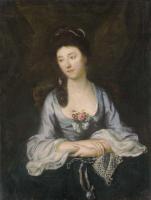
On 30th October 1737 Jane Rochfort Countess Lanesborough was born to Robert Rochfort 1st Earl of Belvedere [aged 29] and Mary Molesworth. She married 22nd June 1754 Brinsley Butler 2nd Earl Lanesborough, son of Humphrey Butler 1st Earl Lanesborough, and had issue.
On 30th October 1741 Angelica Kauffmann was born in Chur Graubünden.

On 30th October 1742 William Courtenay 8th Earl Devon was born to William Courtenay 7th Earl Devon [aged 33] and Frances Finch Countess Devon. He married 7th May 1762 Frances Clack Countess Devon and had issue.
On 30th October 1752 William Henry Bouverie was born to William Pleydell-Bouverie 1st Earl Radnor [aged 27] and Rebecca Alleyne Viscountess Folkestone [aged 27]. He married 16th August 1777 Bridget Douglas, daughter of James Douglas 14th Earl Morton and Bridget Heathcote Countess Morton, and had issue.
On 30th October 1803 Charlotte Howard was born to Kenneth Alexander Howard 1st Earl of Effingham [aged 35] and Charlotte Primrose Countess Effingham [aged 27]. Coefficient of inbreeding 3.12%.
On 30th October 1840 John Manners Yorke 7th Earl of Hardwicke was born to Charles Yorke 4th Earl of Hardwicke [aged 41] and Susan Liddell Countess Hardwicke [aged 30]. He married 1869 Edith Mary Oswald Countess of Hardwicke and had issue.
On 30th October 1845 William Arcedeckne Vanneck was born to Charles Andrew Vanneck 3rd Baron Huntingfield [aged 27].
On 30th October 1857 Charles Robert Spencer 6th Earl Spencer was born to Frederick Spencer 4th Earl Spencer [aged 59] and Adelaide Horatia Seymour-Conway Countess Spencer [aged 32]. He married 23rd July 1887 Margaret Baring Countess Spencer, daughter of Edward Baring 1st Baron Revelstoke and Louisa Emily Charlotte Bulteel Baroness Revelstoke, and had issue.

On 30th October 1860 Gerald Anthony Shaw-Lefevre-St John-Mildmay 7th Baronet was born to Henry St John-Mildmay 5th Baronet [aged 50]. He married 19th October 1892 his second cousin Isabel Emily St John-Mildmay Lady St-John-Mildmay and had issue.
On 30th October 1862 Henry Paulet 16th Marquess of Winchester was born to John Paulet 14th Marquess Winchester [aged 61] and Mary Robinson Montagu Marchioness Winchester. He married (1) 1892 Charlotte Howard (2) 1952 Bapsybanoo Pavry Marchioness of Winchester.
On 30th October 1865 Charles Abbott 4th Baron Tenterden was born to Charles Stuart Abbott 3rd Baron Tenterden [aged 30] and Penelope Smyth Baroness Tenterden [aged 25]. Coefficient of inbreeding 6.25%.
On 30th October 1872 Joan Emily Thynne Countess Cawdor was born to John Charles Thynne [aged 34]. She married 11th June 1898 her second cousin once removed Hugh Campbell 4th Earl Cawdor, son of Frederick Archibald Vaughan Campbell 3rd Earl Cawdor and Edith Georgiana Turnor Countess Cawdor, and had issue.
The Deeds of the Dukes of Normandy
The Gesta Normannorum Ducum [The Deeds of the Dukes of Normandy] is a landmark medieval chronicle tracing the rise and fall of the Norman dynasty from its early roots through the pivotal events surrounding the Norman Conquest of England. Originally penned in Latin by the monk William of Jumièges shortly before 1060 and later expanded at the behest of William the Conqueror, the work chronicles the deeds, politics, battles, and leadership of the Norman dukes, especially William’s own claim to the English throne. The narrative combines earlier historical sources with firsthand information and oral testimony to present an authoritative account of Normandy’s transformation from a Viking settlement into one of medieval Europe’s most powerful realms. William’s history emphasizes the legitimacy, military prowess, and governance of the Norman line, framing their expansion, including the conquest of England, as both divinely sanctioned and noble in purpose. Later chroniclers such as Orderic Vitalis and Robert of Torigni continued the history, extending the coverage into the 12th century, providing broader context on ducal rule and its impact. Today this classic work remains a foundational source for understanding Norman identity, medieval statesmanship, and the historical forces that reshaped England and Western Europe between 800AD and 1100AD.
Available at Amazon in eBook and Paperback format.
On 30th October 1883 Henry Edmund Fitzalan Howard 2nd Viscount Fitzalan Derwent Derby was born to Edmund Bernard Fitzalan Howard 1st Viscount Fitzalan Derwent Derby [aged 28] and Mary Caroline Bertie Viscountess Fitzalan Derwent Derby [aged 24].

On 30th October 1887 Mary Curzon Countess Howe was born to Montagu Curzon [aged 41] and Esmé Fitzroy [aged 28]. She married 28th October 1907 her half first cousin once removed Francis Curzon 5th Earl Howe, son of Richard George Penn Curzon 4th Earl Howe and Georgiana Elizabeth Spencer-Churchill Countess Howe, and had issue.
On 30th October 1890 Muriel Strutt was born to Henry Strutt 2nd Baron Belper [aged 50] and Margaret Coke Baroness Belper [aged 38]. She married 30th November 1916 Frank Haultain Hornsby.

On 30th October 1913 Richard Kay-Shuttleworth 2nd Baron Shuttleworth was born to Captain Lawrence Ughtred Kay-Shuttleworth [aged 26] and Selina Adine Bridgeman [aged 27].
On 30th October 1454 Charles "Bold" Valois Duke Burgundy [aged 20] and Isabella Bourbon [aged 18] were married. She the daughter of Charles Bourbon I Duke Bourbon [aged 53] and Agnes Valois Duchess Bourbon [aged 47]. He the son of Philip "Good" Valois III Duke Burgundy [aged 58] and Isabella Aviz Duchess Burgundy [aged 57]. They were first cousins. He a great x 2 grandson of King Edward III of England. She a great x 5 granddaughter of King Edward I of England.
On 30th October 1660 William Noel 2nd Baronet [aged 18] and Margaret Lovelace Lady Noel [aged 20] were married.
On 30th October 1714 Joseph Alston 3rd Baronet [aged 49] and Charlotte Mordaunt Lady Alston were married. She by marriage Lady Alston of Chelsea.
On 30th October 1762 William Trench 1st Earl of Clancarty [aged 21] and Anne Gardiner were married. They had nineteen children.
On 30th October 1824 George Venables-Vernon aka Warren 5th Baron Vernon [aged 21] and Isabella Caroline Ellison [aged 19] were married.


On 30th October 1840 Jacob Pleydell-Bouverie 4th Earl Radnor [aged 25] and Mary Augusta Frederica Grimston [aged 19] were married. She the daughter of James Walter Grimston 1st Earl Verulam [aged 65] and Charlotte Jenkinson Countess Verulam. He the son of William Pleydell-Bouverie 3rd Earl Radnor [aged 61] and Judith St John-Mildmay Countess Radnor [aged 50].

On 30th October 1849 George Bridgeman 2nd Earl Bradford [aged 60] and Helen Mackay Countess Bradford [aged 49] were married. She by marriage Countess Bradford. She the widow of his first wife Georgina's brother David Moncrieffe 6th Baronet. He the son of Orlando Bridgeman 1st Earl Bradford and Lucy Elizabeth Byng Countess Bradford.
On 30th October 1917 Francis Stapleton-Cotton 4th Viscount Combermere [aged 30] and Louisa Hazel Agnew Viscountess Combermere [aged 26] were married.
The Deeds of the Dukes of Normandy
The Gesta Normannorum Ducum [The Deeds of the Dukes of Normandy] is a landmark medieval chronicle tracing the rise and fall of the Norman dynasty from its early roots through the pivotal events surrounding the Norman Conquest of England. Originally penned in Latin by the monk William of Jumièges shortly before 1060 and later expanded at the behest of William the Conqueror, the work chronicles the deeds, politics, battles, and leadership of the Norman dukes, especially William’s own claim to the English throne. The narrative combines earlier historical sources with firsthand information and oral testimony to present an authoritative account of Normandy’s transformation from a Viking settlement into one of medieval Europe’s most powerful realms. William’s history emphasizes the legitimacy, military prowess, and governance of the Norman line, framing their expansion, including the conquest of England, as both divinely sanctioned and noble in purpose. Later chroniclers such as Orderic Vitalis and Robert of Torigni continued the history, extending the coverage into the 12th century, providing broader context on ducal rule and its impact. Today this classic work remains a foundational source for understanding Norman identity, medieval statesmanship, and the historical forces that reshaped England and Western Europe between 800AD and 1100AD.
Available at Amazon in eBook and Paperback format.
On 30th October 1930 James Angus Graham 7th Duke Montrose [aged 23] and Isabel Veronia Sellar Duchess Montrose were married. He the son of James Graham 6th Duke Montrose [aged 52] and Mary Louise Douglas Hamilton Duchess Montrose [aged 45].
On 30th October 1944 Edward Agar 5th Earl Normanton [aged 34] and Fiona Pratt Countess Normanton were married. She by marriage Countess Normanton. She the daughter of John Pratt 4th Marquess Camden and Joan Marion Neville Marchioness Camden [aged 67]. He the son of Sidney James Agar 4th Earl Normanton and Amy Frederica Alice Byng Countess Normanton. They were fifth cousins.
On 30th October 1946 Gerald Bridgeman 6th Earl of Bradford [aged 35] and Mary Willoughby Montgomery Countess Bradford were married. He the son of Orlando Bridgeman 5th Earl Bradford [aged 73] and Margaret Cecilia Bruce Countess Bradford [aged 64].
On 30th October 1272 Hugh IV Duke Burgundy [aged 59] died. His son Robert [aged 24] succeeded II Duke Burgundy.
On 30th October 1282 Roger Mortimer 1st Baron Mortimer of Wigmore [aged 51] died. He was buried at Wigmore Abbey [Map] where the inscription of his tombstone reads "Here lies buried, glittering with praise, Roger the pure, Roger Mortimer the second, called Lord of Wigmore by those who held him dear. While he lived all Wales feared his power, and given as a gift to him all Wales remained his. It knew his campaigns, he subjected it to torment". His son Edmund [aged 31] succeeded 2nd Baron Mortimer of Wigmore.
On 30th October 1348 Eleanor Burgundy Queen Consort Aragon [aged 20] died of plague. See Masearo, Condes de Barcelona, Volume 2, p. 274.
On 30th October 1404 William Heron 1st Baron Heron died. Baron Heron extinct.
On 30th October 1426 Anne Despencer Baroness Hastings, Marshal and Morley [aged 68] died at Norwich, Norfolk [Map].
On 30th October 1466 Marie Valois Duchess Cleves [aged 73] died.
On 30th October 1495 Francis Bourbon Count Vendôme and Soissons [aged 25] died. His son Charles [aged 6] succeeded Count Vendôme.
On 30th October 1605 George Clifford 3rd Earl of Cumberland [aged 47] died. His brother Francis [aged 46] succeeded 4th Earl of Cumberland. His daughter Anne [aged 15] succeeded 14th Baroness de Clifford.
Francis Clifford 4th Earl of Cumberland bequeathed to Anne the sum of £15,000 in lieu of the estates she was legally entitled to. She engaged in a long and complex legal battle to obtain the family estates. In 1643, when Henry Clifford 5th Earl of Cumberland [aged 14] died she regained her estates.


This is a translation of the 'Memoires of Jacques du Clercq', published in 1823 in two volumes, edited by Frederic, Baron de Reissenberg. In his introduction Reissenberg writes: 'Jacques du Clercq tells us that he was born in 1424, and that he was a licentiate in law and a counsellor to Philip the Good, Duke of Burgundy, in the castellany of Douai, Lille, and Orchies. It appears that he established his residence at Arras. In 1446, he married the daughter of Baldwin de la Lacherie, a gentleman who lived in Lille. We read in the fifth book of his Memoirs that his father, also named Jacques du Clercq, had married a lady of the Le Camelin family, from Compiègne. His ancestors, always attached to the counts of Flanders, had constantly served them, whether in their councils or in their armies.' The Memoires cover a period of nineteen years beginning in in 1448, ending in in 1467. It appears that the author had intended to extend the Memoirs beyond that date; no doubt illness or death prevented him from carrying out this plan. As Reissenberg writes the 'merit of this work lies in the simplicity of its narrative, in its tone of good faith, and in a certain air of frankness which naturally wins the reader’s confidence.' Du Clercq ranges from events of national and international importance, including events of the Wars of the Roses in England, to simple, everyday local events such as marriages, robberies, murders, trials and deaths, including that of his own father in Book 5; one of his last entries.
Available at Amazon in eBook and Paperback format.

On 30th October 1623 Philip Wodehouse 1st Baronet died. His son Thomas [aged 38] succeeded 2nd Baronet Woodhouse of Wilberhall. Blanche Carey Lady Woodhouse by marriage Lady Woodhouse of Wilberhall.
On 30th October 1624 Mary Walsingham Baroness Pelham Laughton [aged 60] died at Laughton, East Sussex.
On 30th October 1631 William Yelverton 1st Baronet [aged 73] died. His son William [aged 41] succeeded 2nd Baronet Yelverton of Rougham in Norfolk.

On 30th October 1660 James Hay 2nd Earl Carlisle [aged 48] died. Earl Carlisle, Viscount Doncaster extinct.
On 30th October 1670 Henry Yelverton Baron Grey of Ruthyn [aged 37] died. He was buried at the Church of St Peter and St Paul, Easton Maudit [Map]. His son Charles [aged 13] succeeded 3rd Baronet Yelverton of Easton Maudit in Northamptonshire.
On 30th October 1710 Drury Wray 9th Baronet [aged 77] died. His son Christopher [aged 38] succeeded 10th Baronet Wray of Glentworth in Lincolnshire.
On 30th October 1711 Catherine Russell Duchess Rutland [aged 35] died.
On 30th October 1715 Thomas Lennard 1st Earl of Sussex [aged 61] died. Earl of Sussex extinct. Baron Dacre Gilsland abeyant.
On 30th October 1726 Thomas Frankland 2nd Baronet [aged 61] died. His son Thomas [aged 41] succeeded 3rd Baronet Frankland of Thirkleby in Yorkshire. Dinah Topham Lady Thirkleby by marriage Lady Frankland of Thirkleby in Yorkshire.
On 30th October 1735 Edmund Sheffield 2nd Duke of Buckingham and Normanby [aged 19] died of consumption at Rome, Italy [Map] unmarried and without issue. Duke of Buckingham and Normanby, Earl Mulgrave and Baron Sheffield of Butterwick in Lincolnshire extinct.
Annals of the six Kings of England by Nicholas Trivet
Translation of the Annals of the Six Kings of England by that traces the rise and rule of the Angevin aka Plantagenet dynasty from the mid-12th to early 14th century. Written by the Dominican scholar Nicholas Trivet, the work offers a vivid account of English history from the reign of King Stephen through to the death of King Edward I, blending political narrative with moral reflection. Covering the reigns of six monarchs—from Stephen to Edward I—the chronicle explores royal authority, rebellion, war, and the shifting balance between crown, church, and nobility. Trivet provides detailed insight into defining moments such as baronial conflicts, Anglo-French rivalry, and the consolidation of royal power under Edward I, whose reign he describes with particular immediacy. The Annals combines careful year-by-year reporting with thoughtful interpretation, presenting history not merely as a sequence of events but as a moral and political lesson. Ideal for readers interested in medieval history, kingship, and the origins of the English state, this chronicle remains a valuable and accessible window into the turbulent world of the Plantagenet kings.
Available at Amazon in eBook and Paperback format.
On 30th October 1744 Mary Herbert Viscountess Montague [aged 83] died.


On 30th October 1761 Thomas Saunders Sebright 5th Baronet [aged 37] died. His brother John [aged 36] succeeded 6th Baronet Sebright of Besford in Worcestershire.
On 30th October 1796 Archibald Montgomerie 11th Earl Eglinton [aged 70] died at Eglinton Castle, Kilwinning. His third cousin Hugh [aged 56] succeeded 12th Earl Eglinton.


On 30th October 1803 Grace Chapple Baroness Grantley died.
On 30th October 1809 William Cavendish-Bentinck 3rd Duke Portland [aged 71] died. His son William [aged 41] succeeded 4th Duke Portland, 5th Earl of Portland.
On 30th October 1845 Henry James Montagu Scott 2nd Baron Montagu [aged 68] died. Baron Montagu of Boughton in Northamptonshire extinct.
On 30th October 1849 William Charles Keppel 4th Earl Albermarle [aged 77] died. His son Augustus [aged 55] succeeded 5th Earl Albermarle, 5th Viscount Bury in Lancashire, 5th Baron Ashford of Ashford in Kent. Frances Steer Countess Albemarle by marriage Countess Albermarle.
On 30th October 1855 Thomas Cholmondeley 1st Baron Delamere [aged 88] died. His son Hugh [aged 44] succeeded 2nd Baron Delamere of Vale Royal in Cheshire. Augusta Emily Seymour-Conway Baroness Delamere [aged 19] by marriage Baroness Delamere of Vale Royal in Cheshire.
On 30th October 1857 Clement Wolseley 5th Baronet [aged 63] died. His son John [aged 23] succeeded 6th Baronet Wolseley of Mount Wolseley in County Carlow.
On 30th October 1864 Frederick Hervey 2nd Marquess of Bristol [aged 64] died at Ickworth House Ickworth, Bury St Edmunds. His son Frederick [aged 30] succeeded 3rd Marquess of Bristol, 3rd Earl Jermyn of Horningworth in Suffolk, 7th Earl Bristol, 8th Baron Hervey of Ickworth in Suffolk. Geraldine Anson Marchioness of Bristol [aged 30] by marriage Marchioness of Bristol.


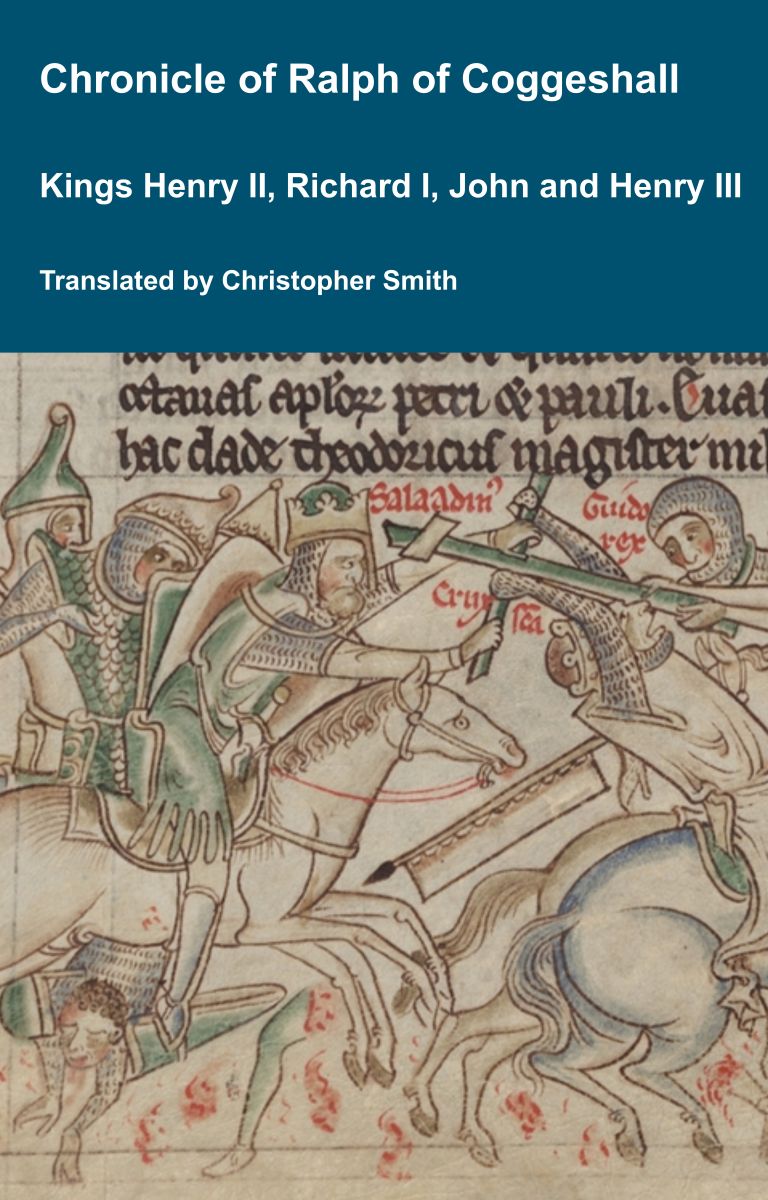
Chronicle of Abbot Ralph of Coggeshall
The Chronicle of Abbot Ralph of Coggeshall (Chronicon Anglicanum) is an indispensable medieval history that brings to life centuries of English and European affairs through the eyes of a learned Cistercian monk. Ralph of Coggeshall, abbot of the Abbey of Coggeshall in Essex in the early 13th century, continued and expanded his community’s chronicle, documenting events from the Norman Conquest of 1066 into the tumultuous reign of King Henry III. Blending eyewitness testimony, careful compilation, and the monastic commitment to record-keeping, this chronicle offers a rare narrative of political intrigue, royal power struggles, and social upheaval in England and beyond. Ralph’s work captures the reigns of pivotal figures such as Richard I and King John, providing invaluable insights into their characters, decisions, and the forces that shaped medieval rule. More than a simple annal, Chronicon Anglicanum conveys the texture of medieval life and governance, making it a rich source for scholars and readers fascinated by English history, monastic authorship, and the shaping of the medieval world.
Available at Amazon in eBook and Paperback format.
On 30th October 1874 Denis Le Marchant 1st Baronet [aged 79] died. His son Henry [aged 35] succeeded 2nd Baronet Le Marchant of Chobham Place in Surrey.
On 30th October 1881 William Brodie [aged 66] died at his home 9 Cambridge Street, Edinburgh [Map]. He was buried at Dean Cemetery, Edinburgh.
On 30th October 1899 Francis George Stapleton 8th Baronet [aged 68] died. His nephew Miles [aged 6] succeeded 9th Baronet Stapleton of Leeward Islands.
On 30th October 1920 James Roche 3rd Baron Fermoy [aged 69] died. His son Maurice [aged 35] succeeded 4th Baron Fermoy.
On 30th October 1932 Paul Methuen 3rd Baron Methuen [aged 87] died. His son Paul [aged 46] succeeded 4th Baron Methuen of Corsham in Wiltshire.
On 30th October 1956 Robert Jocelyn 8th Earl Roden [aged 73] died. His son Robert [aged 46] succeeded 9th Earl Roden