

03 Sep is in September.
1189 Coronation of King Richard I
1535 Sweating Sickness Outbreak
1627 Siege of Saint-Martin-de-Ré
1654 First Protectorate Parliament
On 3rd September 1189 King Richard "Lionheart" I of England [aged 31] was crowned I King of England by Archbishop Baldwin of Forde [aged 64] at Westminster Abbey [Map]. William Mandeville 3rd Earl Essex Count Aumale carried the Crown. The Coronation of King Richard I was marred by violence against London's Jewish population. Prior to his Coronation Richard had issued a proclamation forbidding Jews to attend. When some did a riot broke out, which spread.
Flowers of History by Roger of Wendover 1189. Of the coronation of king Richard the first,
Duke "Richard, when all the preparations for his coronation were complete, came to London, where were assembled the archbishops of Canterbury, Rouen, and Treves, by whom he had been absolved for having carried arms against his father after he had taken the cross. The archbishop of Dublin was also there, with all the bishops, earls, barons, and nobles of the kingdom. When all were assembled, he received the crown of the kingdom in the order following: First came the archbishops, bishops, abbats, and clerks, wearing their caps, preceded by the cross, the holy water, and the censers, as far as the door of the inner chamber, where they received the duke, and conducted him to the church of Westminster, as far as the high altar, in a solemn procession. In the midst of the bishops and clerks went four barons carrying candlesticks with wax candles, after whom came two earls, the first of whom carried the royal sceptre, having on its top a golden cross; the other carried the royal sceptre, having a dove on its top. Next to these came two earls with a third between them, carrying three swords with golden sheaths, taken out of the king's treasury. Behind these came six earls and barons carrying a chequer, over which were placed the royal arms and robes, whilst another earl followed them carrying aloft a golden crown. Last of all came duke Richard, having a bishop on the right hand, and a bishop on the left, and over them was held a silk awning. Proceeding to the altar, as we have said, the holy gospels were placed before him together with the relics of some of the saints, and he swore, in presence of the clergy and people that he would observe peace, honour, and reverence, all his life, towards God, the holy church and its ordinances: he swore also that he would exercise true justice towards the people committed to his charge, and abrogating all bad laws and unjust customs, if any such might be found in his dominions, would steadily observe those which were good. After this they stripped him of all his clothes except his breeches and shirt, which had been ripped apart over his shoulders to receive the unction. He was then shod with sandals interwoven with gold thread, and Baldwin archbishop of Canterbury anointed him king in three places, namely, on his head, his shoulders, and his right arm, using prayers composed for the occasion: then a consecrated linen cloth was placed on his head, over which was put a hat, and when they had again clothed him in his royal robes with the tunic and gown, the archbishop gave into his hand a sword wherewith to crush all the enemies of the church: this done, two earls placed his shoes upon his feet, and when he had received the mantle, he was adjured by the archbishop, in the name of God, not to presume to accept these honours unless his mind was steadily purposed to observe the oaths which he had made: and he answered that, with God's assistance, he would faithfully observe every thing which he had promised. Then the king taking the crown from the altar gave it to the archbishop, who placed it upon the king's head, with the sceptre in his right hand and the royal wand in his left; and so, with his crown on, he was led away by the bishops and barons, preceded by the candles, the cross, and the three swords aforesaid. When they came to the offertory of the mass, the two bishops aforesaid led him forwards and again led him back. At length, when the mass was chanted, and every thing finished in the proper manner, the two bishops aforesaid led him away with his crown on, and bearing in his right hand the sceptre, in his left the royal wand, and so they returned in procession into the choir, where the king put off his royal robes, and taking others of less weight, and a lighter crown also, he proceeded to the dinner-table, at which the archbishops, bishops, earls, and barons, with the clergy and people, were placed, each according to his rank and dignity, and feasted splendidly, so that the wine flowed along the pavement and walls of the palace. All this took place on Sunday the third [3rd September 1189] before the nones of September.1
Of the persecution of the Jews.
Many Jews were present at this coronation, contrary to the king's command; for he had caused proclamation to be made the day before, that no Jews or women should attend, on account of the magical incantations which take place sometimes at royal coronations. But the courtiers laid hands on them, although they came in secret, and when they had robbed and scourged them dreadfully, they cast them out of the church; some of them died, and others could hardly be said to have life left in them. The populace of the city hearing of this attack of the courtiers on the Jews, made a similar assault on those who remained in the city, and, after they had put to death numbers of both sexes, and razed to the ground or burned their houses, they plundered their gold and silver, their writings and valuable garments. Those of the Jews who escaped being put to death, took refuge in the tower of London, and afterwards, by taking up their residence secretly here and there among their friends, they caused others to become rich by their own losses. This persecution began in the year of their jubilee, which they call the year of remission, and it hardly ceased before the end of the year, so that what ought to have been to them a year of remission, was turned into a jubilee of confusion. On the morrow, when the king heard of the wrong that had been done them, he chose to consider it as a wrong done to himself; wherefore, he caused three of them to be apprehended, tried by the judges of his court, and hanged one of them because he had stolen something belonging to a Christian; and the other two, because they had kindled a fire in the city, by which the house of a Christian citizen had been consumed. When the English people throughout the country heard of this attack on the Jews in London, they assailed them with one consent, and made a perfect havoc of them, slaughtering their persons and plundering their goods. But on the day after the coronation, king Richard, having received homage and the oath of fidelity from the nobles, gave orders that no Jews should suffer forfeiture, but that they should live in peace throughout all the cities of England.
Note 1. Vinesauf [Itinerary Richard] agrees with Wendover in this date; which makes it probable that Gervase, who fixes it on the 11th, is in error, for the 11th of September in that year fell on a Monday.
Itinerary of King Richard I. Therefore, in that same year, after the death of his father, Richard, Count of Poitou, having settled affairs in Normandy, and after about two months had passed, crossed over into England. And on the feast of Saint Giles [1 September] he was received with a solemn procession at Westminster, and on the third day following, namely, on the feast of the ordination of Saint Gregory the Pope, which was a Sunday, he was solemnly anointed king, by the hand of Archbishop Baldwin who performed the office and ministry, with many of his suffragans assisting. He was crowned, with his brother Count John and their mother Eleanor standing by, she who, after the death of King Henry, at the command of her son Richard the future king, had been released from the custody in which she had been kept for nearly ten years. Present also were earls, barons, knights, and an innumerable multitude of people. And the kingdom was confirmed into the hand of King Richard. Thus, in the year of our Lord 1189, Richard was anointed king, namely on the third day of September [3rd September 1189], a Sunday, the dominical letter being A, in the year immediately after a leap year. Many at that time made conjectures, because in the Calendar that very day was marked as unlucky; and in truth that day was unlucky, and very bitter for the Jews of London, who on that day were destroyed. And in that same year likewise the Jews settled in various places throughout England suffered many evils. When therefore the royal dignity had been celebrated with three days of festivity in the royal palace at Westminster, King Richard, with befitting munificence, delighted all his subjects, distributing gifts beyond reckoning and measure to each according to their rank, and gladdening them by his incomparable excellence. His greatness of spirit and the gifts of his virtues had been bestowed upon him by the Ruler of the ages, gifts more fitting to ancient times, which now, in the old age of the world, with the seeds of virtue well-nigh exhausted, scarcely appear at all, and if so, only in a few, as something to be wondered at and remembered. To him belonged the valor of Hector, the magnanimity of Achilles; he was no less than Alexander, nor inferior in virtue to Roland; nay rather, surpassing them easily in many ways, as one more praiseworthy in our times. He was, as it were, another Titus…
"His right hand scattered riches."
"… and, which is most rarely found in so famous a knight, the tongue of Nestor and the prudence of Ulysses in all matters, whether for speaking or for action, rightly made him superior to others. His knowledge never shrank from the will to act vigorously, nor did his will reproach itself with a lack of knowledge. If anyone perchance should think him open to a charge of presumption, let him know that his spirit, unconquerable, impatient of injury, driven by inborn nobility to seek what was rightfully due, can not without reason be excused. His success in every undertaking made him the more distinguished, since
"Fortune favors the bold."1
Igitur eodem anno post obitum patris sui, Ricardus comes Pictavensis, ordinatis rebus in Normannia, at tanquam transactis duobus mensibus, transfretavit in Angliam, et die Sancti Ægidii receptus est cum processione solemni ad Westmonasterium, et die tertia sequenti, videlicet in die ordinationis Sancti Gregorii papæ, quæ dies fuit Dominica, solemniter unctus est in regem, ex officio manum eidem imponente, et ministerium exequente archiepiscopo Baldewino, assistentibus suffraganeis ejus plurimis; et coronatus est, circumstantibus fratre suo comite Johanne, et matre eorum Alianora, quæ post mortem regis Henrici, per mandatum filii sui Ricardi regis futuri, educta fuit a custodia in qua fuerat circiter decem annos; præsentibus etiam comitibus, et baronibus et militibus et infinita hominum multitudine; et confirmatum est regnum in manum regis Ricardi. Anno igitur Domini millesimo centesimo octogesimo nono, inunctus est Ricardus rex in regem, videlicet tertia die Septembris, in die Dominica, dominicali littera existente A, anno scilicet proximo post Bissextum. Multi multa tunc conjecturabant, eo quod dies mala super eandem diem in Kalendario annotata est; et vere dies illa mala, et valde amara fuit Judæis Londoniæ, qui eodem die destructi sunt; et in illo anno similiter Judæi, in diversis locis per Angliam constituti multa mala perpessi sunt. Dignitate itaque regali trium dierum festivitate peracta in palatio regio Westmonasterii, munificentia regem Ricardum decenti, donariis sine æstimatione et numero singulis pro dignitate distributis, subjectos omnes lætificabat, operibus suis et incomparabili præstantia. Cujus animi generositatem, et dotes virtutum priscis potius sæculis Rector sæculorum contulerat, quæ per ætatem mundi jam senescentis, lassatis veluti seminibus emedullate, parum aliquid in hoc tempore in quibusdam, et id in paucis mirandum ostentant ac memorabile. Huic autem virtus Hectoris, magnanimitas erat Achillis, nec inferior Alexandro, nec virtute minor Rolando; immo nostri temporis laudabiliores facile multifariam transcendens. Cujus, velut alterius Titi,
"Dextra sparsit opes,"
et quod in tam famoso milite perrarum esse solet, lingua Nestoris, prudentia Ulixis, in omnibus negotiis vel perorandis, vel gerendis, aliis merito reddebant excellentiorem. Cujus nec scientia strenue agendi voluntatem refugeret, nec voluntas scientiæ inopiam accusaret. Quem siquis forte præsumptionis æstimaverit arguendum, noverit ejus animum vinci nescium, injuriæ impatientem, ad jure debita repetenda, innata generositate compulsum, non inconvenienter excusari: quem ad quæque gerenda effecerat successus elegantiorem, quoniam
"Audentes fortuna juvat,"
Note 1. Virgil's Aeneid, Book 10, line 284.
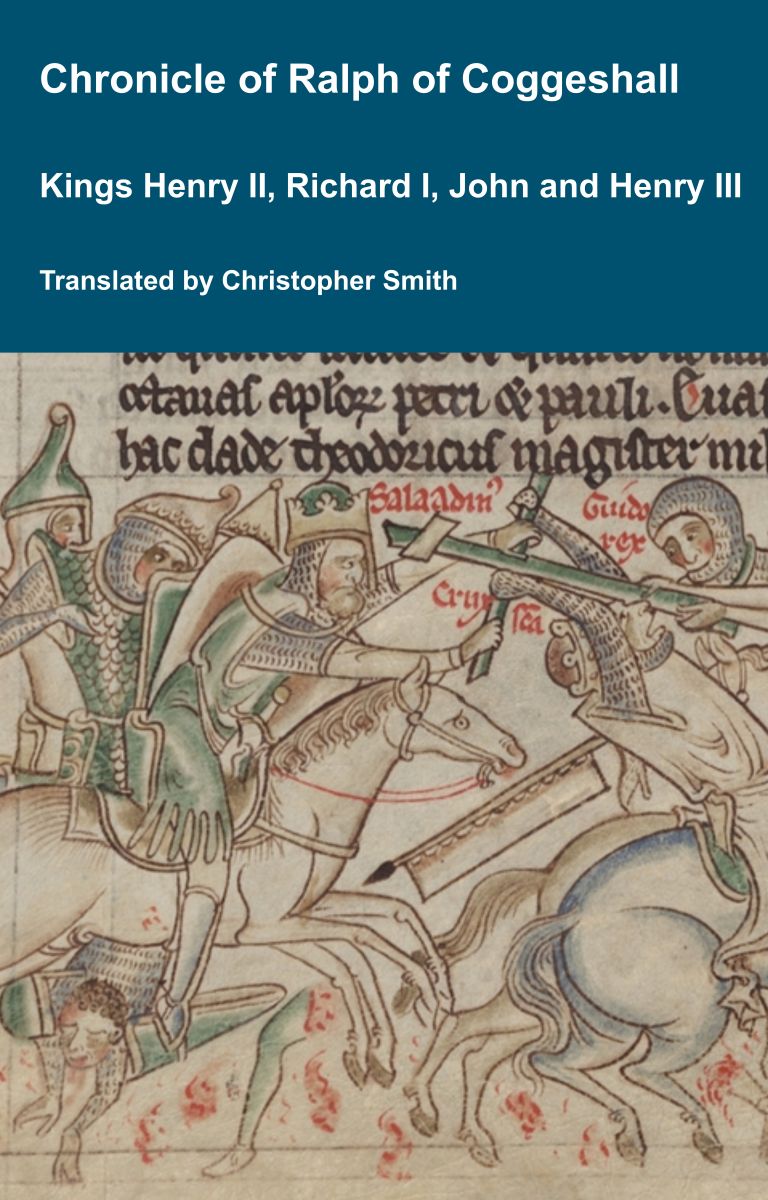 Chronicum Anglicanum by Ralph Coggeshall. But King Henry being now dead, Richard, count of Poitou, his son, succeeded him in the kingdom, in the same year, namely in the month of September, on the Sunday before the Nativity of the Blessed Mary [3rd September 1189], when he was crowned at Westminster by Baldwin, archbishop of Canterbury. At his coronation, many of the Jews dwelling in London, a quarrel having arisen between them and the Christians, were slaughtered by the Christians, and their houses, which had been built up like the palaces of kings, were burned and destroyed. This persecution of the Jews, beginning at the time of their Jubilee, in which they interpreted that some sign of divine mercy or remission of their long captivity would be granted them from heaven, could scarcely be quieted for the space of a year, neither by royal terror nor by his imperial edict, until at last, under oath and pledge, security was given by the Jews. This persecution of the Jews, which began at the very dawn of their jubilee, when they interpreted some divine sign as a promise of celestial mercy or the end of their long captivity, continued for nearly a year. Not even the fear of royal authority or an imperial edict could put an end to it, until at last the Jews were forced to provide sworn assurances as a condition for peace. Wherever the enemies of Christ were mercilessly slain by Christians, there was no safe place of refuge for them, unless they were held within royal fortresses. But even in such places, they did not escape the dangers of death.
Henrico autem rege jam defuncto, Ricardus comes Pictavinus filius ejus successit ei in regnum, eodem videlicet anno, atque in mense Septembri, Dominica ante Nativitatem beatæ Mariæ, a Baldewino Cantuariensi archiepiscopo apud Westmonasterium coronatus est. In cujus coronatione plurimi Judæorum Londoniis habitantium a Christianis, quadam inter eos dissensione suborta, trucidati sunt, atque domus eorum, quæ quasi palatia regum erectæ fuerant, concrematæ sunt atque eversæ; quæ persecutio Judæorum, in ortu jubilæi sui, in quo aliquod divinæ clementiæ signum aut diuturnæ captivitatis remissionem sibi fore cœlitus venturam interpretabantur, inchoata, vix per annum nec terrore regio, nec imperiali ejus edicto, nisi sub juratoria tandem cautione a Judæis præstita, conquiescere potuit. Ubi cumque enim inimici Christi a Christianis immisericorditer perimebantur, nec ullus subterfugii locus eis tutus aderat, nisi in castellis regiis inclusi tenerentur. Sed nec sic quidem mortis evasere pericula.
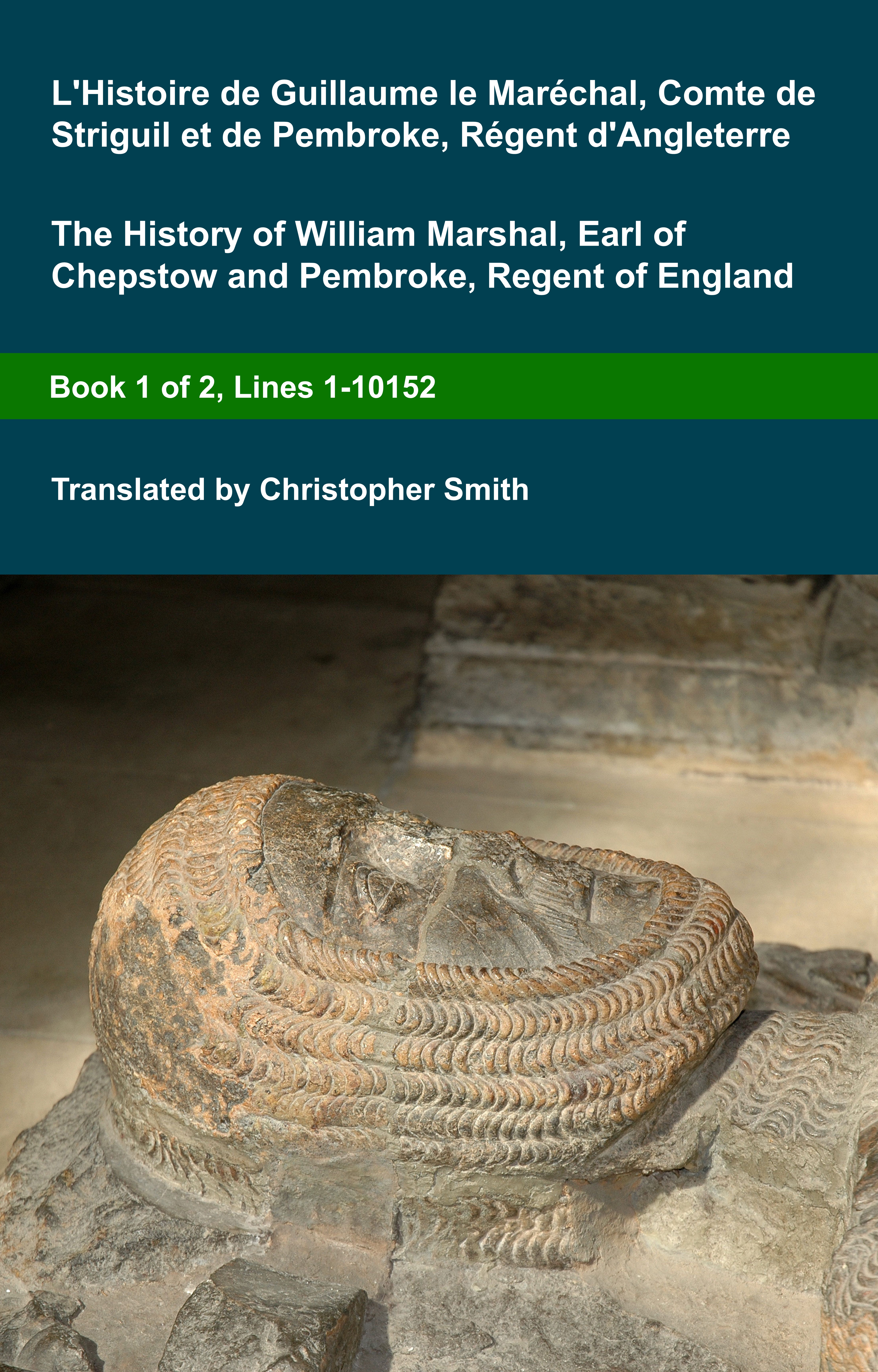 The History of William Marshal 1189 Death of King Henry II. 3rd September 1189
| Fait fu reis a l'asompcion. | He [Richard [aged 31]] was made king on the Assumption1, | |
| A molt riche procession | With a very rich procession | |
| Fu receüz dedenz Seint Pol. | He was received within Westminster Abbey2. | |
| Iloc furent tenu por fol | There were considered foolish | 9570 |
| Li Gieu, si com j'oï dire, | The Jews3, as I heard it said, | |
| Quer livré furent a martyre. | For they were delivered to martyrdom. | |
| Issi fu li reis d'Engletere | Thus was the King of England | |
| Tot I'iver apres en sa terre. | All winter thereafter in his land. |
Note 1. The Feast of the Assumption is the 15th of August. The author here is referring to the Feast of the Nativity of the Virgin Mary i.e. the 3rd of September on which day King Richard was crowned.
Note 2. The coronation on the 3rd of September took place at Westminster Abbey rather than St Paul's.
Note 3. King Richard's coronation was marred by attacks on the Jewish population in London with a number being killed. His reign saw significant and repeated attacks on the Jewish population such as the attack in York on the 17th of March 1190 in which as many as fifty were killed.
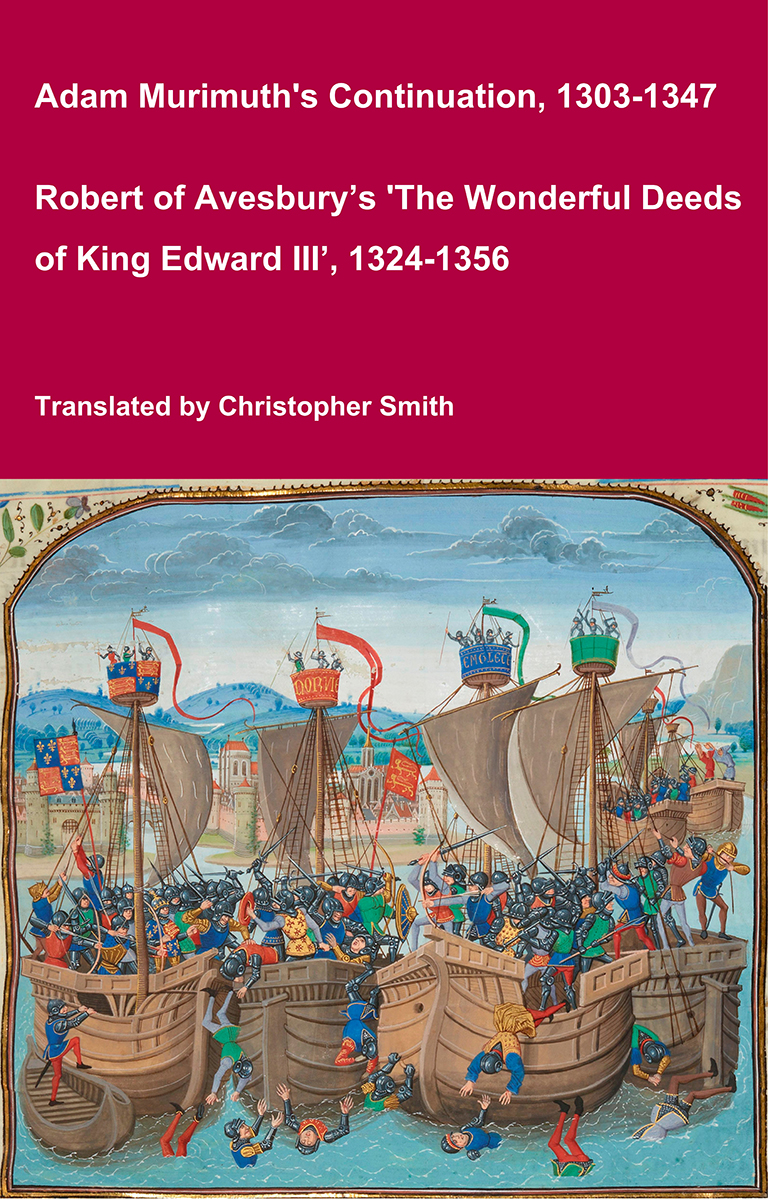 Deeds of King Edward III by Robert of Avesbury. On the third day of September, in the year of the Lord 1346, the said king of England, in the twentieth year of his reign in England and the seventh of his reign in France, came to the town of Calais and laid siege to it. He continued the siege until the third day of the following August, on which day the said town, as is described below, was surrendered to the king of England and brought under his dominion.
Tertio vero die Septembris, anno Domini millesimo CXCCXLVI dietus dominus rex Anglorum, anno regni sui Augliæ XX, regni sui Francis VIJ, venit ad villam de Caleys et obsedit eandem, suamque obsidionem continuavit usque tertium diem Augusti proximum tunc futurum; quo die dieta villa, prout continetur infra, reddita fuit domino regi Anglie ac suo imperio subjugata.
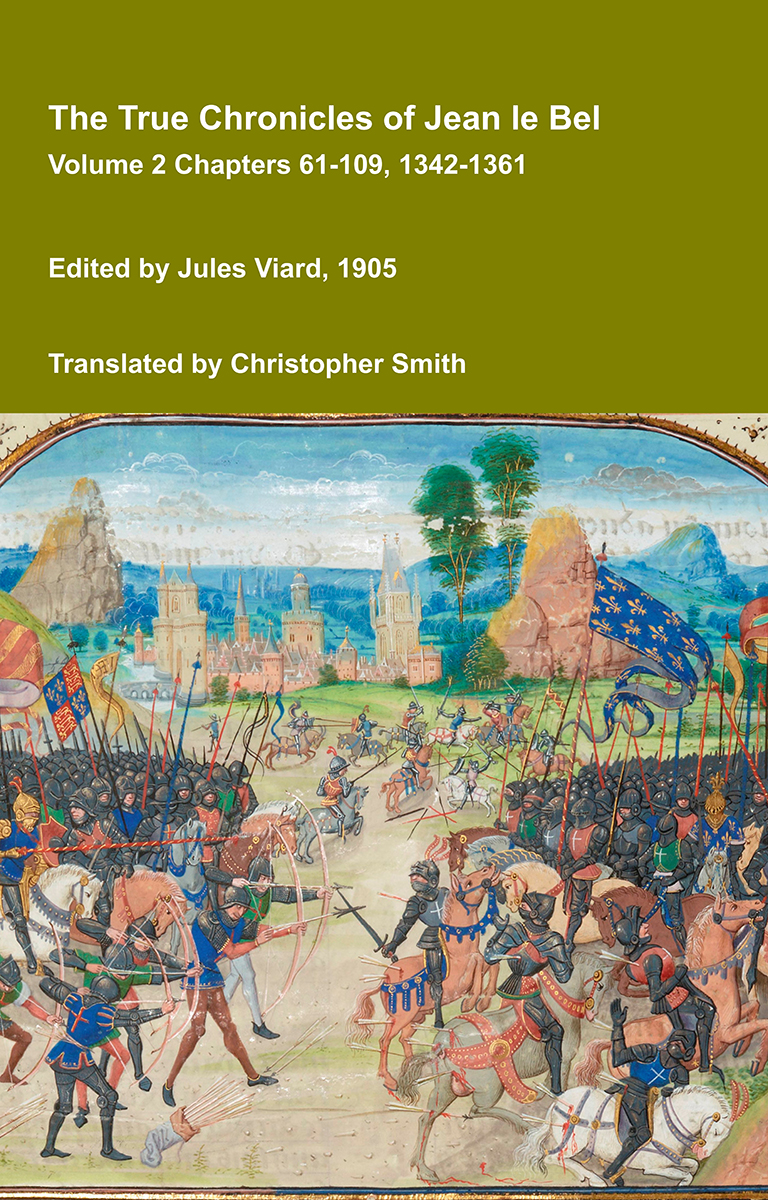 Chronicle of Jean le Bel Volume 2. Because of this strange event, the people of Liège rose to such great pride that they would not agree that year to peace or reason. Instead, they acted so that they had all the good towns and the common country on their side, and they waged war throughout that year, and things went so well for them that they could not have wished for better. They besieged the castle of Clermont1, took it, and demolished it. Afterwards, they besieged the castle of Hamal2, and likewise demolished it. After the feast of Saint John, in the year 1347, they besieged the strong castle of Argenteau, which was held from the Duke of Brabant, and demolished it. They took those inside and brought them as prisoners to Liège.
De celle sauvage aventure monterrent ceulx du Liege en si grand orgueil qu'ilz ne voulurent oncques celle année acorder à paix ne à raison; ains tant firent qu'ilz eurent toutes les bonnes villes et le commun pays de leur accord, et guerrierrent toute celle année, et si bien leur en prenoit que mielx ilz n'eussent pœu soushaydier; et assiegerrent le chastel de Clermont, si le gaagnerent et abastirent. Aprez, le chastel de Hamale?, et semblablement l'abastirent. Aprez la feste Saint Jehan qui fut l'an mil CCCXLVII, ilz assiegerrent le fort chastel d'Argentueil! que on tenoit du duc de Brabant et l'abastirent, et prirent ceulx de dedens et amenerrent en prison au Liege.
Note 1. Clermont-sur-Meuse, Belgium, province of Liège. It was on 3rd September 1346 that the rebels of Liège and Huy laid siege to the castle of Clermont. It surrendered fifteen days later; Zantfliet.
1. Clermont-sur-Meuse, Belgique, prov. de Liège, cant. de Nandrin. C'est le 3 septembre 1346 que les révoltés de Liège et de Huy mirent le siège devant le château de Clermont. 11 se rendit quinze jours après. (Zanéfliet, op. cit., col. 245.)
Note 2. This castle, which is perhaps that of Hermalle-sous-Huy, Nandrin, was taken immediately after that of Clermont; Zantfliet. Already in 1316, this castle had been destroyed by the inhabitants of Huy.
2. Ce château, qui est peut-être celui d'Hermallc-sous-Huy, cant. de Nandrin, fut pris immédiatement après celui de Clermont. (Zanéfliet, op. cit., col. 245.) Déjà, en 1316, ce château avait été détruit par les habitants de Huy. (Jean d'Outremeuse, Ly myreur des histors, éd. Bormans, &. VI, p. 225.)
On 3rd September 1346 King Edward III of England [aged 33] commenced the Siege of Calais. It lasted eleven months with Calais eventually surrendering on 3rd August 1347.
In or after 3rd September 1346 John Savile of Shelley and Golcar [aged 21] took part in the Siege of Calais.
In September 1389 the Scrope vs Grosvenor Case was brought to the Court of Chivalry. Up to that time two families, Scrope and Grosvenor, had been using the armorial  Scrope Arms: Azure, a bend or.
Several hundred witnesses were called including John of Gaunt 1st Duke Lancaster [aged 49], Geoffrey Chaucer [aged 46] and John Savile of Shelley and Golcar [aged 64].
On 3rd September 1386 Owain ap Gruffudd "Glyndŵr" Mathrafal Prince Powys [aged 27] gave evidence at the Church of John the Baptist, Chester [Map].
The Court decided in favour of Scrope.
Neither party was happy with the decision so King Richard II [aged 22] was called upon to give his personal verdict.
On 27th May 1390 he confirmed that Grosvenor could not bear the undifferenced arms.
As a consequence of the case the Grosvenor has for many years used the name Bendor for horses and nicknames.


On 3rd September 1392 Filipo Maria Visconti was born to Gian Galeazzo Visconti 1st Duke Milan [aged 40] and Caterina Visconti Duke Milan [aged 31]. Coefficient of inbreeding 6.25%. He married 1427 his second cousin once removed Marie Savoy of, daughter of Amadeus Savoy VIII Count Savoy and Mary Valois Countess Savoy.
Betrayal and Death of King Richard II. [3rd September 1399] The Duke of Lancaster went on the morrow to the Tower, with the Duke of York and the Earl of Rutland in his company; and, when there, he desired thund the Earl of Arundel to send King Richard to him. The Earl went to deliver his message; the which when the King had heard, he replied, 'Arundel, go tell Henry of Lancaster from me that I will do no such thing, and that, if he wishes to speak with me, he must come to me; otherwise I will not speak to him.' The Earl reported his answer to the Duke, upon which he and the other lords went to the King; and, for sure, none of the lords shewed any respect to the King except the Duke of Lancaster, who took off his hat and saluted him respectfully, and said to him, 'My lord, here is our cousin the Duke of Aumarle, and his father our uncle, who wish to speak with you.' To which the King answered, Cousin, they are not worthy to speak to me.' 'But have the goodness to hear them,' replied the Duke. Upon which the King uttered an oath, and York and said to his uncle of York, 'Thou villain! what wouldst base treason. thou say to me? and thou traitor of Rutland! thou art Rutland with neither worthy nor good enough to speak to me, nor to bear the name of Duke, Earl, or Knight: thou, and the villain thy father, have both of you foully betrayed me. I pray to God, and to St. John the Baptist, that cursed may be the hour wherein ye were born; by you and by your false counsel was my uncle of Gloucester put to death. Alas! that I should have ever been so fond of so false a traitor;1 for by thee the kingdom of England will be destroyed, I am convinced! The Earl of Rutland replied to the King, that in what he said he lied, and threw down his bonnet at his feet; which the King kicked two or three paces from him, and said to him, 'Traitor! I am King and thy lord, and will still continue King; and will be a greater lord than I ever was, in spite of all my enemies; and you are not fit to speak to me!' Upon this the Duke of Lancaster forbad the Earl to speak, or he would order the Constable and Marshal to lay the hand upon him till such time as he should repent. After these words the King asked the Duke of Lancaster, 'Why do you keep me so closely guarded by your men-at-arms? I wish to know if you acknowledge me as your lord and King, or what you mean to do with me?" The Duke replied, 'It is true you are my King and lord, but the council of the realm have ordered that you should be kept in confinement until the day of the meeting of Parliament.' The King again swore, and desired that the Queen his wife might come to speak to him. 'Excuse me, my lord,' replied the Duke, 'it is forbidden by the council.' Then was the King in great wrath, but he could not help himself, and said to the Duke, that he did great wrong both to him and to the Queen. The Duke replied, 'My lord, we cannot do otherwise till the Parliament meets.' The King was so enraged with this speech that he could scarce speak, and paced twenty-three steps down the room without uttering a word; and presently he broke out thus: 'O God of Paradise! O Virgin Mary! O St. John the Baptist and all the saints of Paradise, how can you suffer the great wrongs and treason which this people have committed and wish to commit against me, and my dear lady, my wife, and daughter of my dear and beloved lord and father the noble King of France, who little dreams of our miserable condition and in what danger we are placed! Now I see plainly that you are all false traitors to God, my lady, and me; this will I prove against any four of the best of you with my body, like a loyal knight as I am, and I never forfeited my knighthood.' (For it is true that my lord was all his life a good and loyal knight.) 'My grandfather, King Edward, gave me the crown before his death, God have mercy on him! and afterwards was I crowned by the consent of all the nobles, and of the whole country; and you have acknowledged me as your King these twenty-two years, how dare you use me so cruelly? I say that you behave to me like false men, and like false traitors to their lord; this will I prove, and fight four of the best of you, and there is my pledge:' saying which the King threw down his bonnet. The Duke of Lancaster fell on his knees, and besought him to be quiet till the meeting of Parliament, and there every one would bring forward his reason. 'At least, fair sirs, for God's sake let me be brought to trial, that I may give an account of my conduct, and that I may answer to all they would say against me.' Then said the Duke of Lancaster, 'My lord, be not afraid, nothing unreasonable shall be done to you.' And so he took leave of the King, and not a lord who was there durst utter a word.
Note 1. MS. Lebaud adds, 'Go to the devil, and may he carry you off!'
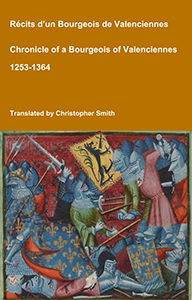
Chronicle of a Bourgeois of Valenciennes
Récits d’un bourgeois de Valenciennes aka The Chronicle of a Bourgeois of Valenciennes is a vivid 14th-century vernacular chronicle written by an anonymous urban chronicler from Valenciennes in the County of Hainaut. It survives in a manuscript that describes local and regional history from about 1253 to 1366, blending chronology, narrative episodes, and eyewitness-style accounts of political, military, and social events in medieval France, Flanders, and the Low Countries. The work begins with a chronological framework of events affecting Valenciennes and its region under rulers such as King Philip VI of France and the shifting allegiances of local nobility. It includes accounts of conflicts, sieges, diplomatic manoeuvres, and the impact of broader struggles like the Hundred Years’ War on urban life in Hainaut. Written from the perspective of a burgher (bourgeois) rather than a monastery or royal court, the chronicle offers a rare lay viewpoint on high politics and warfare, reflecting how merchants, townspeople, and civic institutions experienced the turbulence of the 13th and 14th centuries. Its narrative style combines straightforward reporting of events with moral and civic observations, making it a valuable source for readers interested in medieval urban society, regional politics, and the lived experience of war and governance in pre-modern Europe.
Available at Amazon in eBook and Paperback format.
On 3rd September 1402 Gian Galeazzo Visconti 1st Duke Milan [aged 50] died.
On 3rd September 1420 Robert Stewart 1st Duke Albany [aged 80] died at Stirling Castle [Map]. His son Murdoch [aged 58] succeeded 2nd Duke Albany. His son John [aged 39] succeeded 2nd Earl Buchan. Elizabeth Douglas Countess Buchan and Orkney by marriage Countess Buchan.
On 3rd September 1467 Eleanor Aviz Holy Roman Empress [aged 32] died.
On 3rd September 1507 Archbishop Thomas Savage [aged 58] died at Cawood, North Yorkshire [Map].
Letters and Papers Foreign and Domestic Henry VIII 1533. 3 Sept [1533]. On Sunday next the duke of Suffolk [aged 49] will be married to the daughter [Catherine Willoughby Duchess Suffolk [aged 14]] of a Spanish lady [Maria de Salinas Baroness Willoughby [aged 43]] named lady Willoughby. She was promised to his son, but he is only ten years old; and although it is not worth writing to your Majesty the novelty of the case made me mention it.
The Duke will have done a service to the ladies who can point to his example when they are reproached, as is usual, with marrying again immediately after the death of their husbands.
The King has given him, in compensation, I think, for the expence he had in the burial of his late wife [Mary Tudor, younger sister of King Henry VIII], the fruits of a vacant bishopric1, which will amount to more than 12,000 ducats. Thanks the Emperor for promising to remember him in the distribution of benefices. London, 3 Sept. 1533.
Fr., hol., pp. 5, from a modern copy.
Note 1. This must be Ely.


Letters and Papers Foreign and Domestic Henry VIII 1535. 3rd September 1535. R. O. 259. John Wylliamson to Cromwell.
On the 2nd inst. I received your letter of the 31st Aug. by Mr. Vaghan, and according to your commandment have paid him £42 15s. 8d. My mother with all your household are well. I fear your house at Hackney will not be ready in 18 days as I wrote, because of the alterations. You will have as pleasant a place as shall be a great way about London. For your place by Friars Austins, towards the street, the kitchen and scullery are raised, the gutters leaded, the roof is lathing and tiling. From the kitchen towards the Friars, the offices are rising as fast as may be. The brick work, with the windows of freestone in your hall, are ready to lay on the floor of the hall. On Saturday, the 4th inst., there will be a great pay at Hackney, Frere Austins, and at Ewhurst. Thomas Thacker says he has no money, and I dare not deliver any without knowing your pleasure, though I consider the scarcity of victuals, the poverty of the workmen, and that without your payment every 14 days they would have no food. I have delivered to Thacker, for buildings and emptions, and the charges of your household, £140, taking his bill for the same. Richard Lee, Maxwell, and I, rest not from setting forth your works at Hackney and elsewhere. The plague rages in the city, but not so much as is spoken of. Friars' Austins, 3 Sept. Signed.
P. 1. Add.: Secretary. Endd.
On 3rd September 1535 King Henry VIII of England and Ireland [aged 44] stayed at Wulf aka Wolf Hall, Wiltshire [Map] for a week as part of his summer progress. This may have been the time when his affections for Jane Seymour, whose home it was, began. See reference to "new amours" in Letter of 08 Oct 1535.


Henry Machyn's Diary. 3rd September 1557. The sam day at nyght cam commondement that evere chyrche in London, and oder contrey and shyre, to syng and make bonfeyrs for the wynnynge of Sant Qwynten; and ther was slayn my lord Hare Dudley [deceased] the yonger sone of the duke of Northumberland that was he[aded,] with mony mo, at the wynnyng of yt.
Note. P. 150. Death of lord Harry Dudley. Fourth son of John duke of Northumberland. He was condemned at the time of the ruin of his family, (see p. 48,) but pardoned by the queen. He married Margaret only daughter of lord chancellor Audley; and, leaving no issue, his widow became the second wife of Thomas fourth duke of Norfolk, and from this match descend the earls of Suffolk and Carlisle. The duke's former lady had expired just before the death of lord Henry Dudley, and their surviving partners intermarried before the end of the year. The duchess Margaret died at Norwich Jan. 9, 1563-4. (See lord Braybrooke's History of Audley End, 1836, 4to. pp. 27, 296.)
Henry Machyn's Diary. 3rd September 1562. The sam day be-gane to make rede for the good lade contes of Bedford [deceased] a grett baner of armes and vj grett baner-rolles and .. skochyons of armes of sylke, and of paper-ryalle vij doshen skochyons of armes.
Note. P. 291. Funeral of the countess of Bedford. Margaret daughter of sir John St. John of Bletsoe, and first wife of Francis second earl of Bedford. "Lady Margaret, countess of Bedford, dyed at Owborne the xxviijth of August, and was beryed the xth of September at Chenyes, in A° 1562." (MS. Harl. 897, f. 84.)

Henry Machyn's Diary. 3rd September 1562. The iij day of September cam rydyng owt of Essex from [the funeral] of the yerle of Oxford ys father [deceased] the yonge yerle of Oxford [aged 12], with vij-skore horse all in blake throughe London and Chepe and Ludgatt, and so to Tempulle bare, and so to (blank), be-twyn v and vj of the cloke at after-none.
On 12th July 1627 George Villiers 1st Duke of Buckingham [aged 34] led an English force of 100 ships and 6,000 soldiers to capture the city of Saint-Martin-de-Ré on the Île de Ré.
In August 1627 more troops, including the newly promoted Lieutenant John Felton [aged 32], arrived.
On 3rd September 1627 two thousand Irish troops arrived under Ralph Bingley [aged 57]
On 27th October 1627 a final assault was attempted; it failed because the attackers' siege ladders were shorter than the walls of the fortress.
In November 1627 George Villiers 1st Duke of Buckingham retreated and returned to England having lost thousands of his men.


On 3rd September 1634 Edward Coke [aged 82] died. Monument in Church of St Mary the Virgin, Tittleshall [Map]. Simple sarcophagus on pedestal with lying effigy. Pair of flanking Tuscan columns supporting a full entablature with putti on frieze and broken segmental pediment. Carved and painted achievement in and above tympanum flanked by four reclining figures of the Virtues on pediment extrados.
Above. Quarterly of eight:  Coke Arms, Crispin, Folkard, Sparham, Nerford, Yarmouth,
  Knightley Arms and Pawe. The crest is broken. Farrer says it was: On a chapeau Azure, turned up Ermine, an ostrich Argent, holding in its mouth a horseshoe Or. The motto reads Prudens qui Patiens.
The effigy was carved by John Hargrave, the rest of the memorial was made by Nicholas Stone [aged 47].
Below the effigy are three shields. Left Coke Arms implaling  Paston Arms. His first wife Bridget Paston. Middle Coke Arms. Right Coke Arms impaling
  Cecil Arms; his second wife Elizabeth Cecil Countess Berkshire [aged 38].
Bridget Paston: she was born to John Paston. She a great x 4 granddaughter of King Edward III of England. On 13th August 1582 Edward Coke and she were married.


Between 3rd September 1649 and 11th September 1649, Drogheda [Map], under the command of the Royalist Arthur Aston [aged 59], was besieged by the Parliamentary army commanded by Oliver Cromwell [aged 50].
On 11th September 1649 Oliver Cromwell had a letter delivered to Sir Arthur Aston, which proposed his Aston's surrender; Aston refused.
At 5:00 PM Cromwell ordered simultaneous assaults on the southern and eastern breaches in the walls of Drogheda.
At the southern breach, the defenders counterattacked. The death of their commander, Colonel Wall, caused them to fall back, allowing further Parliamentary reinforcements to be funnelled into the breach. In the fighting at the walls some 150 Parliamentarian troops, including Colonel Castle, were killed.
After the death of Colonel Wall with more and more Parliamentary soldiers streaming into the breaches, the Royalist resistance at the walls collapsed.
In Cromwell's words, "In the heat of the action, I forbade them [his soldiers] to spare any that were in arms in the town...and, that night they put to the sword about two thousand men".
The execution of Royalists constinued as and when they were discovered.
Around one hundred Royalists were discovered in St Peter's Church - Cromwell ordered the church and those inside to be burned.
Arthur Aston was killed.
3rd September 1650. The Battle of Dunbar was fought between the English New Model Army, under Oliver Cromwell and a Scottish army commanded by David Leslie, on 3 September 1650 near Dunbar, Scotland. The battle resulted in a decisive victory for the English.
The prisoners were taken to England and 3,000 were imprisoned at Durham Cathedral [Map]; many died on the march south, or in captivity.
On 3rd September 1651 at Worcester, Worcestershire [Map] the Battle of Worcester Oliver Cromwell [aged 52] commanded the Parliamentary army with Charles Howard 1st Earl Carlisle [aged 22]. In the Royalist army Francis Talbot 11th Earl of Shrewsbury [aged 28], Thomas Blagge [aged 38] and Archibald Campbell 9th Earl Argyll [aged 22] fought. Thomas Wentworth 1st Earl Cleveland [aged 60] was captured. Giles Strangeways [aged 36] provided 300 gold pieces to King Charles II of England Scotland and Ireland [aged 21] following his defeat to aid his escape.
Henry Lyttelton 2nd Baronet [aged 27] fought for the Royalists, was captured and spent 17 months imprisoned in the Tower of London [Map].
Philip Musgrave 2nd Baronet [aged 44] fought for th Royalists.


On 3rd September 1651 William Widdrington 1st Baron Widdrington [aged 41] was killed in action whilst fighting for King Charles II. His son William succeeded 2nd Baron Widdrington of Blankney in Lincolnshire.
On 3rd September 1654 William Wray 1st Baronet [aged 29] was elected MP Grimsby during the First Protectorate Parliament.
John Evelyn's Diary. Death and Funeral of Oliver Cromwell3rd September 1658. Died that arch-rebel, Oliver Cromwell [aged 59], called Protector.
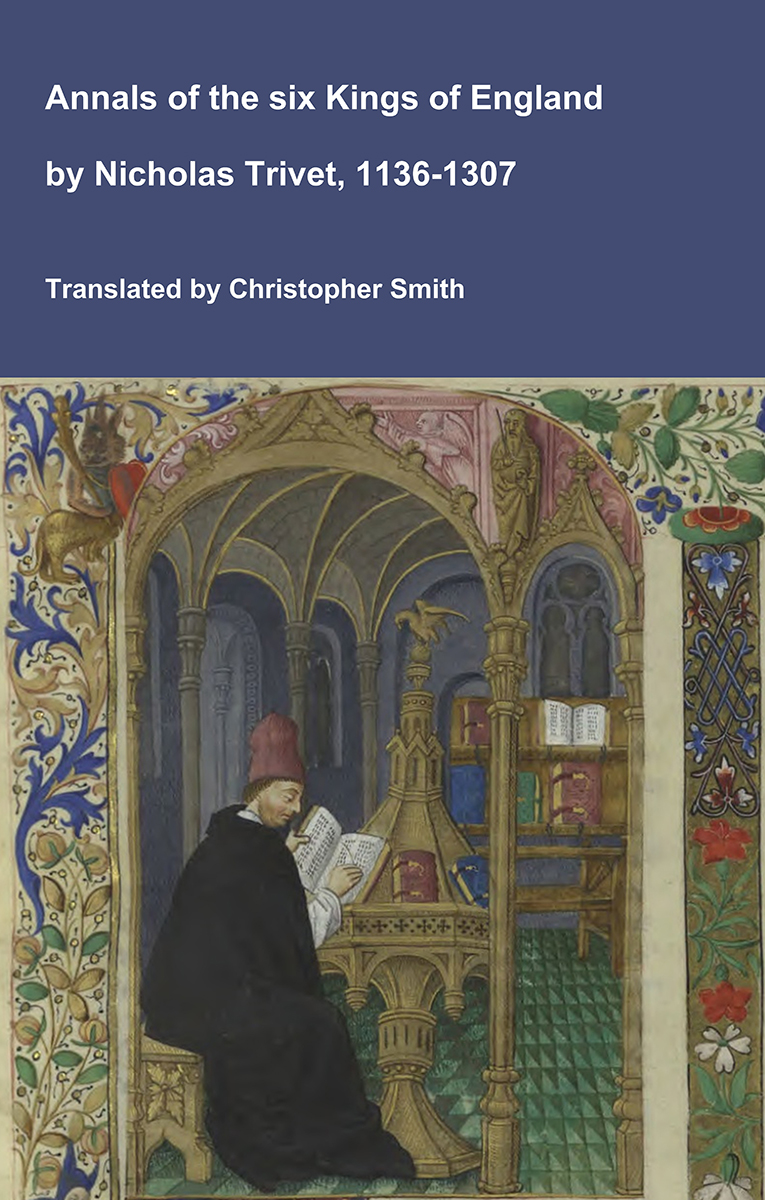
Annals of the six Kings of England by Nicholas Trivet
Translation of the Annals of the Six Kings of England by that traces the rise and rule of the Angevin aka Plantagenet dynasty from the mid-12th to early 14th century. Written by the Dominican scholar Nicholas Trivet, the work offers a vivid account of English history from the reign of King Stephen through to the death of King Edward I, blending political narrative with moral reflection. Covering the reigns of six monarchs—from Stephen to Edward I—the chronicle explores royal authority, rebellion, war, and the shifting balance between crown, church, and nobility. Trivet provides detailed insight into defining moments such as baronial conflicts, Anglo-French rivalry, and the consolidation of royal power under Edward I, whose reign he describes with particular immediacy. The Annals combines careful year-by-year reporting with thoughtful interpretation, presenting history not merely as a sequence of events but as a moral and political lesson. Ideal for readers interested in medieval history, kingship, and the origins of the English state, this chronicle remains a valuable and accessible window into the turbulent world of the Plantagenet kings.
Available at Amazon in eBook and Paperback format.

On 3rd September 1658 Oliver Cromwell [aged 59] died at Whitehall Palace [Map]. His son Richard [aged 31] succeeded Lord Protector.
On 3rd September 1660 James, Duke of York [aged 26] and Anne Hyde [aged 23] were married in secret. She by marriage Duchess York. She gave birth to their son Charles Stewart seven weeks later. She the daughter of Edward Hyde 1st Earl Clarendon [aged 51] and Frances Aylesbury Countess Clarendon [aged 43]. He the son of King Charles I of England, Scotland and Ireland and Henrietta Maria Bourbon Queen Consort England [aged 50].


Samuel Pepys' Diary. 23rd February 1661. This my birthday, 28 years. This morning Sir W. Batten [aged 60], Pen, and I did some business, and then I by water to Whitehall, having met Mr. Hartlibb [aged 61] by the way at Alderman Backwell's [aged 43]. So he did give me a glass of Rhenish wine at the Steeleyard, and so to Whitehall by water. He continues of the same bold impertinent humour that he was always of and will ever be. He told me how my Lord Chancellor [aged 52] had lately got the Duke of York [aged 27] and Duchess, and her woman, my Lord Ossory's and a Doctor, to make oath before most of the judges of the kingdom, concerning all the circumstances of their marriage. And in fine, it is confessed that they were not fully married till about a month or two before she was brought to bed; but that they were contracted long before, and time enough for the child to be legitimate1. But I do not hear that it was put to the judges to determine whether it was so or no.
Note 1. The Duke of York's marriage took place September 3rd, 1660. Anne Hyde was contracted to the Duke at Breda, November 24th, 1659.


Samuel Pepys' Diary. 3rd September 1661. Dined at home, and then with my wife to the Wardrobe, where my Lady's [aged 36] child was christened (my Lord Crew and his Lady, and my Baroness Montagu, my Lord's mother-in-law, were the witnesses), and named Katherine1 (the Queen elect's [aged 22] name); but to my and all our trouble, the Parson of the parish christened her, and did not sign the child with the sign of the cross.
Note 1. Lady Katherine Montagu, youngest daughter of Lord Sandwich [aged 36], married, first, Nicholas Bacon, eldest son and heir of Sir Nicholas Bacon, K.B., of Shrubland Hall, co. Suffolk; and, secondly, the Rev. Balthazar Gardeman. She died January 15th, 1757, at ninety-six years, four months. B.


Samuel Pepys' Diary. 3rd September 1662. In our discourse in the boat Mr. Coventry [aged 34] told us how the Fanatiques and the Presbyters, that did intend to rise about this time, did choose this day as the most auspicious to them in their endeavours against monarchy: it being fatal twice to the King [aged 32], and the day of Oliver's death1. But, blessed be God! all is likely to be quiet, I hope.
Note 1. Cromwell had considered the 3rd of September as the most fortunate day of his life, on account of his victories at Dunbar and Worcester. It was also remarkable for the great storm that occurred at the time of his death; and as being the day on which the Fire of London, in 1666, burnt with the greatest fury. B.
Samuel Pepys' Diary. 3rd September 1662. After the sale I walked to my brother's, in my way meeting with Dr. Fairbrother, of whom I enquired what news in Church matters. He tells me, what I heard confirmed since, that it was fully resolved by the King's new Council that an indulgence should be granted the Presbyters; but upon the Bishop of London's [aged 64] speech1 (who is now one of the most powerful men in England with the King [aged 32]), their minds were wholly turned. And it is said that my Lord Albemarle [aged 53] did oppose him most; but that I do believe is only in appearance. He told me also that most of the Presbyters now begin to wish they had complied, now they see that no Indulgence will be granted them, which they hoped for; and that the Bishop of London hath taken good care that places are supplied with very good and able men, which is the only thing that will keep all quiet.
Note 1. Gilbert Sheldon, born July 19th, 1598; Fellow of All Souls, Oxford, 1622; Warden, 1635; Bishop of London, 1660-63; Archbishop of Canterbury, 1663. Died November 9th, 1677.


Samuel Pepys' Diary. 3rd September 1665. Church being done, my Lord Bruncker [aged 45], Sir J. Minnes [aged 66], and I up to the Vestry at the desire of the justices of the Peace, Sir Theo. Biddulph [aged 53] and Sir W. Boreman [aged 53] and Alderman Hooker [aged 53], in order to the doing something for the keeping of the plague from growing; but Lord! to consider the madness of the people of the town, who will (because they are forbid) come in crowds along with the dead corps to see them buried; but we agreed on some orders for the prevention thereof.
On 3rd September 1665 James, Duke of York [aged 31] and Anne Hyde Duchess of York [aged 28] were married again since there first marriage had taken place in secret.

Samuel Pepys' Diary. 3rd September 1665. After dinner left them and I by water to Greenwich, Kent [Map], where much ado to be suffered to come into the towne because of the sicknesse, for fear I should come from London, till I told them who I was. So up to the church, where at the door I find Captain Cocke [aged 48] in my Lord Bruncker's [aged 45] coach, and he come out and walked with me in the church-yarde till the church was done, talking of the ill government of our Kingdom, nobody setting to heart the business of the Kingdom, but every body minding their particular profit or pleasures, the King [aged 35] himself minding nothing but his ease, and so we let things go to wracke. This arose upon considering what we shall do for money when the fleete comes in, and more if the fleete should not meet with the Dutch, which will put a disgrace upon the King's actions, so as the Parliament and Kingdom will have the less mind to give more money, besides so bad an account of the last money, we fear, will be given, not half of it being spent, as it ought to be, upon the Navy. Besides, it is said that at this day our Lord Treasurer [aged 58] cannot tell what the profit of Chimney money is, what it comes to per annum, nor looks whether that or any other part of the revenue be duly gathered as it ought; the very money that should pay the City the £200,000 they lent the King, being all gathered and in the hands of the Receiver and hath been long and yet not brought up to pay the City, whereas we are coming to borrow 4 or £500,000 more of the City, which will never be lent as is to be feared.
John Evelyn's Diary. 3rd September 1666. The fire having continued all this night (if I may call that night which was light as day for ten miles round about, after a dreadful manner), when conspiring with a fierce eastern wind in a very dry season, I went on foot to the same place; and saw the whole south part of the city burning from Cheapside [Map] to the Thames, and all along Cornhill [Map] (for it likewise kindled back against the wind as well as forward), Tower street, Fenchurch Street [Map], Gracious street, and so along to Baynard's Castle [Map], and was now taking hold of St. Paul's church [Map], to which the scaffolds contributed exceedingly. The conflagration was so universal, and the people so astonished, that, from the beginning, I know not by what despondency, or fate, they hardly stirred to quench it; so that there was nothing heard, or seen, but crying out and lamentation, running about like distracted creatures, without at all attempting to save even their goods; such a strange consternation there was upon them, so as it burned both in breadth and length, the churches, public halls, Exchange, hospitals. Monuments, and ornaments; leaping after a prodigious manner, from house to house, and street to street, at great distances one from the other. For the heat, with a long set of fair and warm weather, had even ignited the air, and prepared the materials to conceive the fire, which devoured, after an incredible manner, houses, furniture, and every thing. Here, we saw the Thames covered with goods floating, all the barges and boats laden with what some had time and courage to save, as, on the other side, the carts, etc., carrying out to the fields, which for many miles were strewn with movables of all sorts, and tents erecting to shelter both people and what goods they could get away. Oh, the miserable and calamitous spectacle! such as haply the world had not seen since the foundation of it, nor can be outdone till the universal conflagration thereof. All the sky was of a fiery aspect, like the top of a burning oven, and the light seen above forty miles round about for many nights. God grant mine eyes may never behold the like, who now saw above 10,000 houses all in one flame! The noise and cracking and thunder of the impetuous flames, the shrieking of women and children, the hurry of people, the fall of towers, houses, and churches, was like a hideous storm; and the air all about so hot and inflamed, that at the last one was not able to approach it, so that they were forced to stand still, and let the flames burn on, which they did, for near two miles in length and one in breadth. The clouds also of smoke were dismal, and reached, upon computation, near fifty miles in length. Thus, I left it this afternoon burning, a resemblance of Sodom, or the last day. It forcibly called to my mind that passage-"non enim hic habemus stabilem civitatem"; the ruins resembling the picture of Troy. London was, but is no more! Thus, I returned.
Samuel Pepys' Diary. 3rd September 1666. About four o'clock in the morning, my Lady Batten sent me a cart to carry away all my money, and plate, and best things, to Sir W. Rider's at Bednall-greene. Which I did riding myself in my night-gowne in the cart; and, Lord! to see how the streets and the highways are crowded with people running and riding, and getting of carts at any rate to fetch away things. I find Sir W. Rider tired with being called up all night, and receiving things from several friends. His house full of goods, and much of Sir W. Batten's [aged 65] and Sir W. Pen's [aged 45] I am eased at my heart to have my treasure so well secured. Then home, with much ado to find a way, nor any sleep all this night to me nor my poor wife. But then and all this day she and I, and all my people labouring to get away the rest of our things, and did get Mr. Tooker to get me a lighter to take them in, and we did carry them (myself some) over Tower Hill [Map], which was by this time full of people's goods, bringing their goods thither; and down to the lighter, which lay at next quay, above the Tower Docke. And here was my neighbour's wife, Mrs.----,with her pretty child, and some few of her things, which I did willingly give way to be saved with mine; but there was no passing with any thing through the postern, the crowd was so great. The Duke of Yorke [aged 32] of this day by the office, and spoke to us, and did ride with his guard up and down the City, to keep all quiet (he being now Generall, and having the care of all). This day, Mercer being not at home, but against her mistress's order gone to her mother's, and my wife going thither to speak with W. Hewer [aged 24], met her there, and was angry; and her mother saying that she was not a 'prentice girl, to ask leave every time she goes abroad, my wife with good reason was angry, and, when she came home, bid her be gone again. And so she went away, which troubled me, but yet less than it would, because of the condition we are in, fear of coming into in a little time of being less able to keepe one in her quality. At night lay down a little upon a quilt of W. Hewer's in the office, all my owne things being packed up or gone; and after me my poor wife did the like, we having fed upon the remains of yesterday's dinner, having no fire nor dishes, nor any opportunity of dressing any thing.

John Evelyn's Diary. 3rd September 1666. I had public prayers at home. The fire continuing, after dinner, I took coach with my wife [aged 31] and son, and went to the Bankside in Southwark, where we beheld that dismal spectacle, the whole city in dreadful flames near the waterside; all the houses from the Bridge [Map], all Thames street, and upward toward Cheapside [Map], down to the Three Cranes, were now consumed; and so returned, exceedingly astonished what would become of the rest.
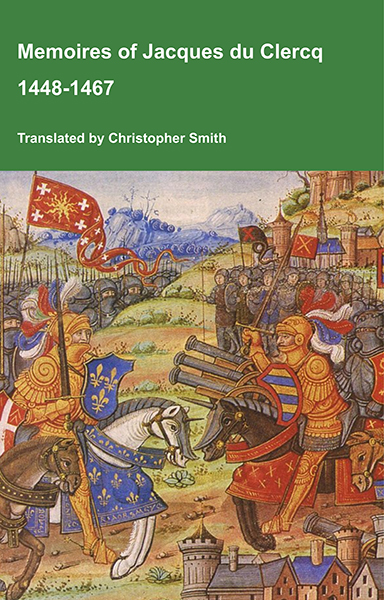
This is a translation of the 'Memoires of Jacques du Clercq', published in 1823 in two volumes, edited by Frederic, Baron de Reissenberg. In his introduction Reissenberg writes: 'Jacques du Clercq tells us that he was born in 1424, and that he was a licentiate in law and a counsellor to Philip the Good, Duke of Burgundy, in the castellany of Douai, Lille, and Orchies. It appears that he established his residence at Arras. In 1446, he married the daughter of Baldwin de la Lacherie, a gentleman who lived in Lille. We read in the fifth book of his Memoirs that his father, also named Jacques du Clercq, had married a lady of the Le Camelin family, from Compiègne. His ancestors, always attached to the counts of Flanders, had constantly served them, whether in their councils or in their armies.' The Memoires cover a period of nineteen years beginning in in 1448, ending in in 1467. It appears that the author had intended to extend the Memoirs beyond that date; no doubt illness or death prevented him from carrying out this plan. As Reissenberg writes the 'merit of this work lies in the simplicity of its narrative, in its tone of good faith, and in a certain air of frankness which naturally wins the reader’s confidence.' Du Clercq ranges from events of national and international importance, including events of the Wars of the Roses in England, to simple, everyday local events such as marriages, robberies, murders, trials and deaths, including that of his own father in Book 5; one of his last entries.
Available at Amazon in eBook and Paperback format.
Samuel Pepys' Diary. 3rd September 1667. All the morning, business at the office, dined at home, then in the afternoon set my wife down at the Exchange [Map], and I to St. James's, and there attended the Duke of York [aged 33] about the list of ships that we propose to sell: and here there attended Mr. Wren the first time, who hath not yet, I think, received the Duke of York's seal and papers. At our coming hither, we found the Duke and Duchesse [aged 30] all alone at dinner, methought melancholy; or else I thought so, from the late occasion of the Chancellor's [aged 58] fall, who, they say, however, takes it very contentedly.
John Evelyn's Diary. 3rd September 1676. Dined at Captain Graham's, where I became acquainted with Dr. Compton [aged 44] (brother to the Earl of Northampton [aged 54]), now Bishop of London, and Mr. North, son to the Lord North, brother to the Lord Chief-Justice and Clerk of the Closet, a most hopeful young man. The Bishop had once been a soldier, had also traveled in Italy, and became a most sober, grave, and excellent prelate.


On 3rd September 1678 Francis Godolphin 2nd Earl Godolphin was born to Sidney Godolphin 1st Earl Godolphin [aged 33] and Margaret Blagge [aged 26] at Whitehall Palace [Map]. His mother died six days later. He married March 1698 Henrietta Churchill 2nd Duchess of Marlborough, daughter of John Churchill 1st Duke of Marlborough and Sarah Jennings Duchess of Marlborough, and had issue.


John Evelyn's Diary. 3rd September 1678. I went to London, to dine with Mrs. Godolphin [aged 26], and found her in labor; she was brought to bed of a son, who was baptized in the chamber, by the name of Francis, the susceptors being Sir William Godolphin [aged 38] (head of the family), Mr. John Hervey [aged 62], Treasurer to the Queen, and Mrs. Boscawen [aged 35], sister to Sir William and the father [aged 33].

John Evelyn's Diary. 3rd September 1683. I went to see what had been done by the Duke of Beaufort [aged 54] on his lately purchased house at Chelsea, which I once had the selling of for the Countess of Bristol, he had made great alterations, but might have built a better house with the materials and the cost he had been at.
On 3rd September 1685 Charles Powlett 3rd Duke Bolton was born to Charles Paulet 2nd Duke Bolton [aged 24] and Frances Ramsden. He married 1713 his fifth cousin once removed Anne Vaughan Duchess Bolton, daughter of John Vaughan 3rd Earl Carbery and Anne Savile Countess Carbery.
John Evelyn's Diary. 3rd September 1699. There was in this week an eclipse of the sun, at which many were frightened by the predictions of the astrologers. I remember fifty years ago that many were so terrified by Lilly, that they dared not go out of their houses. A strange earthquake at New Batavia, in the East Indies.

On 3rd September 1727 Anna Sophie Saxe Coburg Saalfeld was born to Francis Josias Saxe Coburg Saalfeld Duke Saxe Coburg Saalfeld [aged 29] and Duchess Anna Sophie Of Saxe-Coburg-Saalfeld [aged 26] at Coburg. Coefficient of inbreeding 3.40%. She died aged one in 1728.
On 3rd September 1734 Joseph Wright of Derby was born at 28 Irongate, Derby [Map].
On 3rd September 1741 Cosmo George Gordon 3rd Duke Gordon [aged 21] and Catherine Gordon Duchess Gordon [aged 23] were married. She by marriage Duchess Gordon. She the daughter of William Gordon 2nd Earl Aberdeen [aged 62] and Susan Murray. He the son of Alexander Gordon 2nd Duke Gordon and Henrietta Mordaunt Duchess Gordon. They were fourth cousins.
On 3rd September 1780 John Francis was born.
On 3rd September 1809 Peter Mathias Van Gelder [aged 67] died in Upper George Street.
On 3rd September 1820 Charlotte Elizabeth Digby [aged 42] died of rapid consumption. Monument in Worcester Cathedral [Map] sculpted by Francis Leggatt Chantrey [aged 39] in 1825.
Charlotte Elizabeth Digby: On 7th August 1778 she was born. In 1802 she was appointed Maid of Honour to Charlotte Mecklenburg Strelitz Queen Consort England. On 3rd January 1802 William Digby and she were married. Memorials of Francis Chantrey RA in Hallamshire and Elsewhere Part V London Life and Works. To 1825 belongs the figure of Mrs. Digby, in marble, seated on a couch, in Worcester Cathedral [Map]; and a similar one of Mrs. Boulton, in the church of Great Tew, Oxfordshire [Map].


St Albans Cathedral [Map]. Ledger stone of Penelope Evans died 28th November 1778, her daughter Mary Husseydied 2nd July 1789, William Hussey died 28th January 1800 and William Wildman died 3rd September 1823.
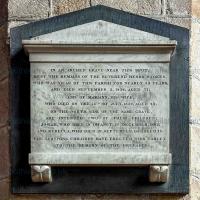
St Cuthbert's Church, Doveridge [Map]. Memorial to Reverend Henry Stokes, died 3rd September 1838, aged 77, who is buried nearby.

Anne Boleyn. Her Life as told by Lancelot de Carle's 1536 Letter.
In 1536, two weeks after the execution of Anne Boleyn, her brother George and four others, Lancelot du Carle, wrote an extraordinary letter that described Anne's life, and her trial and execution, to which he was a witness. This book presents a new translation of that letter, with additional material from other contemporary sources such as Letters, Hall's and Wriothesley's Chronicles, the pamphlets of Wynkyn the Worde, the Memorial of George Constantyne, the Portuguese Letter and the Baga de Secrets, all of which are provided in Appendices.
Available at Amazon in eBook and Paperback format.
On 3rd September 1872 Francis Heuffer [aged 27] and Catherine Emily Brown [aged 21] were married. She the illegitmate daughter of Ford Madox Brown [aged 51] and Emma Matilda Hill [aged 43].


On 3rd September 1904 James Archer [aged 81] died.
On 3rd September 1913 Jeanette Octavia Cliff [aged 55] died. She was buried at, and/or has a memorial, at St Marcella's Church, Denbigh [Map] sculpted by Albert Toft [aged 51].
Jeanette Octavia Cliff: On 17th February 1858 she was born to William Cliff. On 20th July 1892 Lieutenant-Colonel Thomas Ward and she were married. On 28th October 1902 Lieutenant-Colonel John Foster Manifold and Amy Mary Cliff were married at the Mother Church at Hawarden, Flintshire. Her sister Jeanette Octavia Cliff was a witness, as well as Walter Andrew Urquart and Augustus (Augusta?) Hodges.


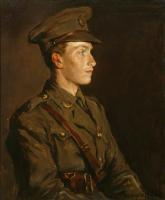
On 3rd September 1916 Alexander Forbes [aged 23] was killed in action. He is buried in Guillemont Road Cemetery
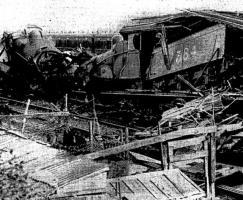
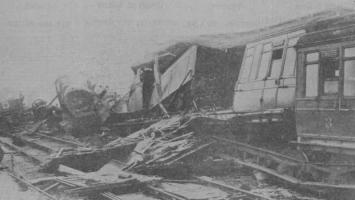
On the 3rd September 1925 an express passenger train collided with a ballast train at Hope Station [Map].
Report written by Lieut. Col. A. H. L. Mount: "In this case the 3 p.m. up express passenger train, Manchester Central to Sheffield, travelling at high speed under clear signals, collided head-on with a stationary down ballast train which had just previously been shunted from the down to the up line for the purpose of permitting a following down mineral train to pass. As a result, I regret to report that the driver and the fireman of the express, and a platelayer, one of a gang of men employed with the ballast train, succumbed shortly afterwards in hospital. One passenger was seriously injured, while nine others, the guard of the ballast train and two platelayers received minor injuries or suffered from shock. It was fortunate that the express was lightly loaded and that the brake compartment of the first coach was leading."

On 3rd September 1933 Ernald Mosley [aged 41] died. Memorial at St Mary's Church, Rolleston on Dove [Map].
Ernald Mosley: On 29th October 1891 he was born to Tonman Mosley 3rd Baronet
On 3rd September 1939 France, Great Britain, New Zealand and Australia declare war on Germany after the invasion of Poland, forming the Allied nations.
On 3rd September 1944 William Logsdail [aged 85] died.
On 3rd September 1392 Filipo Maria Visconti was born to Gian Galeazzo Visconti 1st Duke Milan [aged 40] and Caterina Visconti Duke Milan [aged 31]. Coefficient of inbreeding 6.25%. He married 1427 his second cousin once removed Marie Savoy of, daughter of Amadeus Savoy VIII Count Savoy and Mary Valois Countess Savoy.
On 3rd September 1642 Henry Winchcombe 1st Baronet was born to Henry Winchcombe. He married before 16th June 1659 Frances Howard Lady Winchcombe, daughter of Thomas Howard 3rd Earl Berkshire, and had issue.

On 3rd September 1644 Richard Newport 2nd Earl Bradford was born to Francis Newport 1st Earl Bradford [aged 24] and Diana Russell Countess Bradford. He married 20th April 1681 Mary Wilbraham Countess Bradford, daughter of Thomas Wilbraham 3rd Baronet and Elizabeth Mytton Lady Wilbrahim, and had issue.
Chronicle of Abbot Ralph of Coggeshall
The Chronicle of Abbot Ralph of Coggeshall (Chronicon Anglicanum) is an indispensable medieval history that brings to life centuries of English and European affairs through the eyes of a learned Cistercian monk. Ralph of Coggeshall, abbot of the Abbey of Coggeshall in Essex in the early 13th century, continued and expanded his community’s chronicle, documenting events from the Norman Conquest of 1066 into the tumultuous reign of King Henry III. Blending eyewitness testimony, careful compilation, and the monastic commitment to record-keeping, this chronicle offers a rare narrative of political intrigue, royal power struggles, and social upheaval in England and beyond. Ralph’s work captures the reigns of pivotal figures such as Richard I and King John, providing invaluable insights into their characters, decisions, and the forces that shaped medieval rule. More than a simple annal, Chronicon Anglicanum conveys the texture of medieval life and governance, making it a rich source for scholars and readers fascinated by English history, monastic authorship, and the shaping of the medieval world.
Available at Amazon in eBook and Paperback format.

On 3rd September 1653 Roger North was born to Dudley North 4th Baron North [aged 51] and Anne Montagu Baroness North [aged 41].
On 3rd September 1654 Jane Granville Baroness Gower was born to John Granville 1st Earl Bath [aged 26] and Jane Wyche. She married before 22nd April 1690 George Carteret 1st Baron Carteret and had issue.
On 3rd September 1678 Francis Godolphin 2nd Earl Godolphin was born to Sidney Godolphin 1st Earl Godolphin [aged 33] and Margaret Blagge [aged 26] at Whitehall Palace [Map]. His mother died six days later. He married March 1698 Henrietta Churchill 2nd Duchess of Marlborough, daughter of John Churchill 1st Duke of Marlborough and Sarah Jennings Duchess of Marlborough, and had issue.
On 3rd September 1685 Charles Powlett 3rd Duke Bolton was born to Charles Paulet 2nd Duke Bolton [aged 24] and Frances Ramsden. He married 1713 his fifth cousin once removed Anne Vaughan Duchess Bolton, daughter of John Vaughan 3rd Earl Carbery and Anne Savile Countess Carbery.
On 3rd September 1693 Charles Radclyffe Earl Newburgh was born to Edward Radclyffe 2nd Earl Derwentwater [aged 38] and Mary Tudor Countess Derwentwater [aged 19]. He a grandson of King Charles II of England Scotland and Ireland. He married 4th June 1724 his third cousin once removed Charlotte Livingstone 3rd Countess Newburgh, daughter of Charles Livingston 2nd Earl of Newburgh and Frances Brudenell Countess Newburgh, and had issue.
On 3rd September 1709 Bennet Sherard 3rd Earl Harborough was born to Philip Sherard 2nd Earl Harborough [aged 29] and Anne Pedley Countess Harborough [aged 34]. He married (1) 27th June 1748 Elizabeth Verney, daughter of Ralph Verney 1st Earl Verney (2) 2nd July 1757 Frances Noel Countess Harborough (3) 21st March 1761 Margaret Hill Countess Harborough (4) 9th October 1767 his fifth cousin once removed Elizabeth Cave Countess Harborough, daughter of Thomas Cave 5th Baronet.
On 3rd September 1727 Anna Sophie Saxe Coburg Saalfeld was born to Francis Josias Saxe Coburg Saalfeld Duke Saxe Coburg Saalfeld [aged 29] and Duchess Anna Sophie Of Saxe-Coburg-Saalfeld [aged 26] at Coburg. Coefficient of inbreeding 3.40%. She died aged one in 1728.
On 3rd September 1734 Joseph Wright of Derby was born at 28 Irongate, Derby [Map].
On 3rd September 1734 Cecil Wray 13th Baronet was born to John Wray 12th Baronet [aged 44] and Frances Norcliffe Lady Wray [aged 33]. He married before 10th January 1805 Esther Summers Lady Wray.
On 3rd September 1750 Arthur Dillon was born to Henry Dillon 11th Viscount Dillon [aged 45] and Charlotte Lee Viscountess Dillon [aged 26]. He a great x 2 grandson of King Charles II of England Scotland and Ireland.
Chronicle of a Bourgeois of Valenciennes
Récits d’un bourgeois de Valenciennes aka The Chronicle of a Bourgeois of Valenciennes is a vivid 14th-century vernacular chronicle written by an anonymous urban chronicler from Valenciennes in the County of Hainaut. It survives in a manuscript that describes local and regional history from about 1253 to 1366, blending chronology, narrative episodes, and eyewitness-style accounts of political, military, and social events in medieval France, Flanders, and the Low Countries. The work begins with a chronological framework of events affecting Valenciennes and its region under rulers such as King Philip VI of France and the shifting allegiances of local nobility. It includes accounts of conflicts, sieges, diplomatic manoeuvres, and the impact of broader struggles like the Hundred Years’ War on urban life in Hainaut. Written from the perspective of a burgher (bourgeois) rather than a monastery or royal court, the chronicle offers a rare lay viewpoint on high politics and warfare, reflecting how merchants, townspeople, and civic institutions experienced the turbulence of the 13th and 14th centuries. Its narrative style combines straightforward reporting of events with moral and civic observations, making it a valuable source for readers interested in medieval urban society, regional politics, and the lived experience of war and governance in pre-modern Europe.
Available at Amazon in eBook and Paperback format.
On 3rd September 1758 Henrietta Antonia Herbert 3rd Countess Powis was born to Henry Herbert 1st Earl Powis [aged 55] and Barbara Herbert Countess Powis [aged 23] at Oakly Park, Bromfield. She a great x 3 granddaughter of King James II of England Scotland and Ireland. She married 1784 Edward Clive 1st Earl Powis and had issue.


On 3rd September 1763 Robert Edward Petre 10th Baron Petre was born to Robert Edward Petre 9th Baron Petre [aged 21] and Anne Howard [aged 21]. He a great x 3 grandson of King Charles II of England Scotland and Ireland. He married 14th February 1786 his third cousin once removed Mary Bridget Howard Baroness Petre and had issue.
On 3rd September 1763 Reverend John Molesworth was born to John Molesworth 5th Baronet [aged 34] and Barbara St Aubyn Lady Molesworth [aged 33]. Coefficient of inbreeding 6.25%. He married 18th June 1790 his first cousin Catherine St Aubyn, daughter of John St Aubyn 4th Baronet and Elizabeth Wingfield Lady St Aubyn, and had issue.
On 3rd September 1768 Walter Blount 7th Baronet was born to Walter Blount 6th Baronet [aged 43].
On 3rd September 1769 Thomas Heathcote 4th Baronet was born to William Heathcote 3rd Baronet [aged 23] and Frances Thorpe Lady Heathcote [aged 27].
On 3rd September 1770 Vice-Admiral Courtenay Boyle was born to Edmund Boyle 7th Earl Cork [aged 27].
On 3rd September 1780 John Francis was born.
On 3rd September 1783 Anna Maria Stanhope Duchess Bedford was born to Charles Stanhope 3rd Earl of Harrington [aged 30] and Jane Fleming Countess Harrington [aged 28]. She a great x 3 granddaughter of King Charles II of England Scotland and Ireland. She married before 1st July 1809 her half fourth cousin Francis Russell 7th Duke Bedford, son of John Russell 6th Duke Bedford and Georgiana Elizabeth Byng, and had issue.


On 3rd September 1789 Robert Henley 2nd Baron Henley was born to Morton Eden 1st Baron Henley [aged 37] and Elizabeth Henley Baroness Henley. He married 1823 Harriet Peel and had issue.
On 3rd September 1817 Mary Penelope Hill was born to Arthur Blundell Sandys Trumbull Hill 3rd Marquess Downshire [aged 28] and Maria Windsor Marchioness Downshire [aged 27]. She married 2nd August 1838 Alexander Nelson Hood 1st Viscount Bridport and had issue.
On 3rd September 1818 Edmund Antrobus 3rd Baronet was born to Edmund Antrobus 2nd Baronet [aged 26]. He married 11th February 1847 Marianne Georgiana Dashwood Lady Antrobus, daughter of George Dashwood 4th Baronet and Marianne Sarah Rowley, and had issue.
On 3rd September 1826 William Henry Marsham Style 9th Baronet was born to William Style [aged 41].
This is a translation of the 'Memoires of Jacques du Clercq', published in 1823 in two volumes, edited by Frederic, Baron de Reissenberg. In his introduction Reissenberg writes: 'Jacques du Clercq tells us that he was born in 1424, and that he was a licentiate in law and a counsellor to Philip the Good, Duke of Burgundy, in the castellany of Douai, Lille, and Orchies. It appears that he established his residence at Arras. In 1446, he married the daughter of Baldwin de la Lacherie, a gentleman who lived in Lille. We read in the fifth book of his Memoirs that his father, also named Jacques du Clercq, had married a lady of the Le Camelin family, from Compiègne. His ancestors, always attached to the counts of Flanders, had constantly served them, whether in their councils or in their armies.' The Memoires cover a period of nineteen years beginning in in 1448, ending in in 1467. It appears that the author had intended to extend the Memoirs beyond that date; no doubt illness or death prevented him from carrying out this plan. As Reissenberg writes the 'merit of this work lies in the simplicity of its narrative, in its tone of good faith, and in a certain air of frankness which naturally wins the reader’s confidence.' Du Clercq ranges from events of national and international importance, including events of the Wars of the Roses in England, to simple, everyday local events such as marriages, robberies, murders, trials and deaths, including that of his own father in Book 5; one of his last entries.
Available at Amazon in eBook and Paperback format.
On 3rd September 1827 Lister Lister-Kaye was born to John Lister Lister-Kaye 2nd Baronet [aged 26]. He married 25th May 1852 his fifth cousin once removed Caroline Pepys, daughter of Charles Christopher Pepys 1st Earl of Cottenham and Charlotte Maria Wingfield, and had issue.
On 3rd September 1828 Augusta Isabella Fitzherbert Lady Alleyne was born to Henry FitzHerbert 3rd Baronet [aged 45] and Agnes Beresford Lady Fitzherbert [aged 43]. She married 11th March 1851 John Gay Newton Alleyne 3rd Baronet, son of Reynold Abel Alleyne 2nd Baronet and Rebecca Alton Lady Alleyne, and had issue.
On 3rd September 1829 Albreda Elizabeth Wentworth-Fitzwilliam Baroness Lyveden was born to Charles Wentworth-Fitzwilliam 5th and 3rd Earl Fitzwilliam [aged 43] and Mary Dundas [aged 42]. Coefficient of inbreeding 6.25%. She married 21st June 1853 Fitzpatrick Vernon 2nd Baron Lyveden, son of Robert Smith aka Vernon 1st Baron Lyveden and Emma Mary Fitzpatrick Baroness Lyveden.
On 3rd September 1835 Bridges Powell Henniker 4th Baronet was born to Augustus Brydges Henniker 3rd Baronet [aged 40] and Elizabeth Henniker-Major Lady Henniker. Coefficient of inbreeding 3.12%.
On 3rd September 1840 William Fletcher Boughey 6th Baronet was born to Thomas Fletcher Fenton Boughey 3rd Baronet [aged 31].
On 3rd September 1855 Alexander Francis Henry Campbell was born to John Frederick Vaughan Campbell 2nd Earl Cawdor [aged 38] and Sarah Mary Compton Cavendish Countess Cawdor [aged 42]. He married 3rd September 1879 Constance Pleydell-Bouverie.
On 3rd September 1858 George Neville John Fane was born to Francis William Henry Fane 12th Earl of Westmoreland [aged 32] and Adelaide Ida Curzon Howe Countess of Westmoreland [aged 23]. He died aged one in 1860.
On 3rd September 1860 Arthur Douglas Bateman Scott 5th and 4th Baronet was born to Francis Edward Scott 2nd and 3rd Baronet [aged 36].
On 3rd September 1861 Montague Peregrine Albemarle Bertie 12th Earl Lindsey was born to Montague Peregrine Bertie 11th Earl Lindsey [aged 45] and Felicia Elizabetha Welby Countess Lindsey [aged 26]. He married 12th February 1890 Millicent Cox Countess Lindsey.

On 3rd September 1863 Henry George Agar-Ellis 4th Viscount Clifden was born to Henry Agar-Ellis 3rd Viscount Clifden [aged 38] and Eliza Horatia Seymour Viscountess Clifden [aged 30].
On 3rd September 1869 Genille Cave-Browne-Cave 12th Baronet was born to Mylles Cave-Browne-Cave 11th Baronet [aged 47].
Anne Boleyn. Her Life as told by Lancelot de Carle's 1536 Letter.
In 1536, two weeks after the execution of Anne Boleyn, her brother George and four others, Lancelot du Carle, wrote an extraordinary letter that described Anne's life, and her trial and execution, to which he was a witness. This book presents a new translation of that letter, with additional material from other contemporary sources such as Letters, Hall's and Wriothesley's Chronicles, the pamphlets of Wynkyn the Worde, the Memorial of George Constantyne, the Portuguese Letter and the Baga de Secrets, all of which are provided in Appendices.
Available at Amazon in eBook and Paperback format.
On 3rd September 1870 George Whichcote 9th Baronet was born to George Whichcote 8th Baronet [aged 53] and Louisa Clagett.
On 3rd September 1872 George Frederick Lancelot Clayton-East 8th and 4th Baronet was born to Gilbert Augustus Clayton-East 7th and 3rd Baronet [aged 26].
On 3rd September 1873 Hugh Edwardes 6th and 3rd Baron Kensington was born to William Edwardes 4th and 1st Baron Kensington [aged 38].
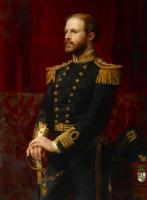
On 3rd September 1879 Eustace Broke Loraine was born to Lambton Loraine 11th Baronet [aged 40].
On 3rd September 1880 Colonel Donald Alexander Forbes was born to George Arthur Hastings Forbes 7th Earl Granard [aged 47] and Frances Mary Petre Countess Granard [aged 34].
On 3rd September 1885 Philip Reginald le Belward Grey-Egerton 14th Baronet was born to Colonel Caledon Philip Egerton [aged 38].

On 3rd September 1889 George St Vincent Harris 5th Baron Harris was born to George Canning Harris 4th Baron Harris [aged 38] and Lucy Ada Jervis Baroness Harris. He married 27th July 1918 Dorothy Mary Crookes Lady Harris and had issue.
On 3rd September 1894 Meriel Olivia Bathurst was born to Seymour Bathurst 7th Earl Bathurst [aged 30] and Lilias Margaret Frances Borthwick Countess Bathurst Sussex [aged 23]. She married Alastair Mungo Graham, son of Douglas Graham 5th Duke Montrose.
On 3rd September 1935 Walter John Hugh St John-Mildmay 13th Baronet was born to Michael Paulet St John-Mildmay 12th Baronet [aged 34].
On 3rd September 1937 Euan Geddes 3rd Baron Geddes was born to Ross Geddes 2nd Baron Geddes [aged 30].
On 3rd September 1939 Elizabeth Mary Hyde-Parker was born to William Stephan Hyde Parker 11th Baronet [aged 47]. She married 11th June 1966 Thomas Stonor 7th Baron Camoys, son of Ralph Stonor 6th Baron Camoys, and had issue.
On 3rd September 1660 James, Duke of York [aged 26] and Anne Hyde [aged 23] were married in secret. She by marriage Duchess York. She gave birth to their son Charles Stewart seven weeks later. She the daughter of Edward Hyde 1st Earl Clarendon [aged 51] and Frances Aylesbury Countess Clarendon [aged 43]. He the son of King Charles I of England, Scotland and Ireland and Henrietta Maria Bourbon Queen Consort England [aged 50].

The True Chronicles of Jean le Bel Volume 1 Chapters 1-60 1307-1342
The True Chronicles of Jean le Bel offer one of the most vivid and immediate accounts of 14th-century Europe, written by a knight who lived through the events he describes, and experienced some of them first hand. Covering the early decades of the Hundred Years’ War, this remarkable chronicle follows the campaigns of Edward III of England, the politics of France and the Low Countries, and the shifting alliances that shaped medieval warfare. Unlike later historians, Jean le Bel writes with a strong sense of eyewitness authenticity, drawing on personal experience and the testimony of fellow soldiers. His narrative captures not only battles and sieges, but also the realities of military life, diplomacy, and the ideals of chivalry that governed noble society. A key source for Jean Froissart, Le Bel’s chronicle stands on its own as a compelling and insightful work, at once historical record and literary achievement. This translation builds on the 1905 edition published in French by Jules Viard, adding extensive translations from other sources Rymer's Fœdera, the Chronicles of Adam Murimuth, William Nangis, Walter of Guisborough, a Bourgeois of Valenciennes, Geoffrey le Baker of Swinbroke and Richard Lescot to enrich the original text and Viard's notes.
Available at Amazon in eBook and Paperback format.
On 3rd September 1678 Altham Annesley 1st Baron Altham and Alicia Leigh Baroness Altham [aged 17] were married. He the son of Arthur Annesley 1st Earl Annesley [aged 64] and Elizabeth Altham Countess Anglesey [aged 58].
On 3rd September 1681 Dudley Cullum 3rd Baronet [aged 23] and Anne Berkeley Lady Cullum [aged 16] were married. She by marriage Lady Cullum of Hastede in Suffolk.
On 3rd September 1741 Cosmo George Gordon 3rd Duke Gordon [aged 21] and Catherine Gordon Duchess Gordon [aged 23] were married. She by marriage Duchess Gordon. She the daughter of William Gordon 2nd Earl Aberdeen [aged 62] and Susan Murray. He the son of Alexander Gordon 2nd Duke Gordon and Henrietta Mordaunt Duchess Gordon. They were fourth cousins.

On 3rd September 1754 George Sackville aka Germain 1st Viscount Sackville [aged 38] and Diana Sambrooke were married. He the son of Lionel Cranfield Sackville 1st Duke Dorset [aged 66] and Elizabeth Colyear Duchess Dorset [aged 65].
On 3rd September 1790 George Annesley 2nd Earl Mountnorris [aged 19] and Anne Courtenay Countess Mountnorris [aged 16] were married. She by marriage Countess Mountnorris of Mountnorris Castle in Armagh. She the daughter of William Courtenay 8th Earl Devon and Frances Clack Countess Devon. He the son of Arthur Annesley 1st Earl Mountnorris [aged 46] and Lucy Lyttelton Baronet.
On 3rd September 1847 Henry John Reuben Dawson-Damer 3rd Earl of Portarlington [aged 24] and Alexandrina Octavia Maria Vane Countess Portarlington [aged 24] were married. She by marriage Countess Portarlington. She the daughter of Charles William Vane 3rd Marquess Londonderry [aged 69] and Frances Vane Tempest Marchioness Londonderry [aged 47].
On 3rd September 1861 George Orby Wombwell 4th Baronet [aged 28] and Julia Sarah Alice Child-Villiers Lady Wombwell [aged 19] were married. She the daughter of George Child-Villiers 6th Earl Jersey and Julia Peel Countess Jersey.
On 3rd September 1872 Francis Heuffer [aged 27] and Catherine Emily Brown [aged 21] were married. She the illegitmate daughter of Ford Madox Brown [aged 51] and Emma Matilda Hill [aged 43].
On 3rd September 1874 Michael Edward Hicks-Beach 1st Earl St Aldwyn [aged 36] and Lucy Catherine Fortescue Countess St Aldwyn [aged 23] were married at St Mary Magdalene Church South Molton, Devon. She the daughter of Hugh Fortescue 3rd Earl Fortescue [aged 56] and Georgina Augusta Dawson-Damer Countess Fortescue.


On 3rd September 1914 Ralph Beckett 3rd Baron Grimthorpe [aged 23] and Mary Alice Archdale Baroness Beckett were married.
On 3rd September 1231 William Dampierre II Count Flanders [aged 35] died. His son William [aged 7] succeeded III Count Flanders.
On 3rd September 1402 Gian Galeazzo Visconti 1st Duke Milan [aged 50] died.
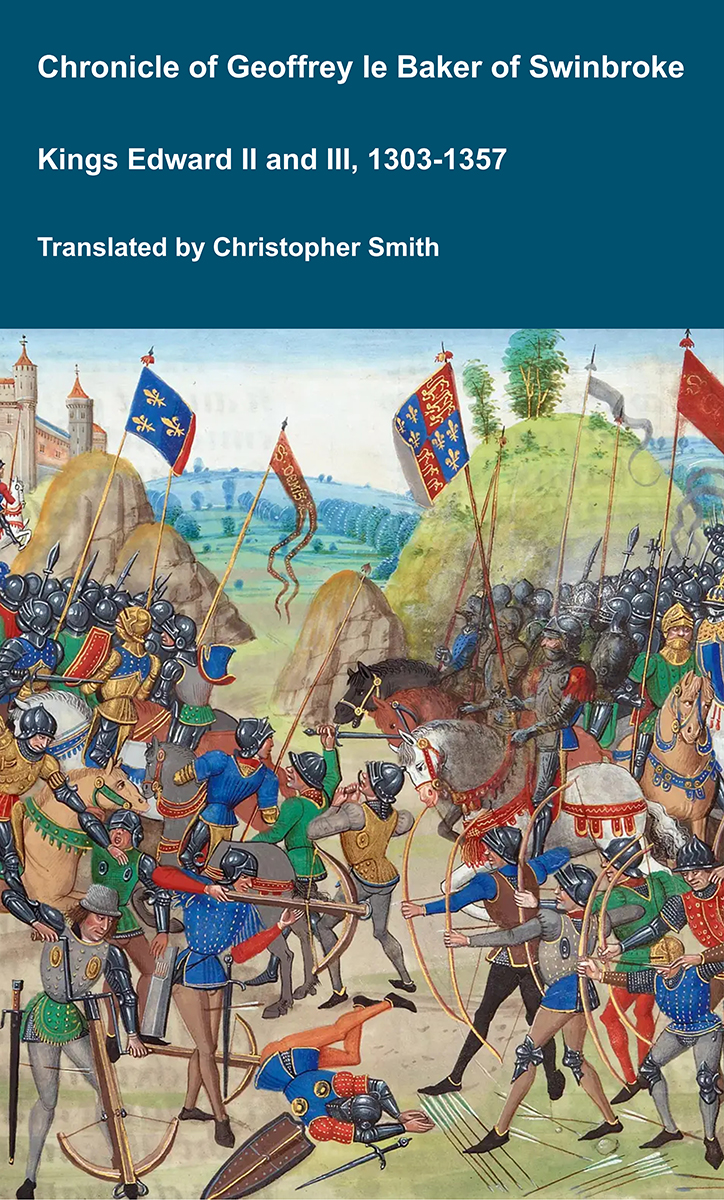
Chronicle of Geoffrey le Baker of Swinbroke
Baker was a secular clerk from Swinbroke, now Swinbrook, an Oxfordshire village two miles east of Burford. His Chronicle describes the events of the period 1303-1356: Gaveston, Bannockburn, Boroughbridge, the murder of King Edward II, the Scottish Wars, Sluys, Crécy, the Black Death, Winchelsea and Poitiers. To quote Herbert Bruce 'it possesses a vigorous and characteristic style, and its value for particular events between 1303 and 1356 has been recognised by its editor and by subsequent writers'. The book provides remarkable detail about the events it describes. Baker's text has been augmented with hundreds of notes, including extracts from other contemporary chronicles, such as the Annales Londonienses, Annales Paulini, Murimuth, Lanercost, Avesbury, Guisborough and Froissart to enrich the reader's understanding. The translation takes as its source the 'Chronicon Galfridi le Baker de Swynebroke' published in 1889, edited by Edward Maunde Thompson.
Available at Amazon in eBook and Paperback format.
On 3rd September 1419 Bishop Edmund Stafford [aged 75] died. He was buried at Exeter Cathedral [Map].
On 3rd September 1420 Robert Stewart 1st Duke Albany [aged 80] died at Stirling Castle [Map]. His son Murdoch [aged 58] succeeded 2nd Duke Albany. His son John [aged 39] succeeded 2nd Earl Buchan. Elizabeth Douglas Countess Buchan and Orkney by marriage Countess Buchan.
On 3rd September 1448 Joan Astley Baroness Grey Ruthyn [aged 82] died in Ruthyn.
On 3rd September 1467 Eleanor Aviz Holy Roman Empress [aged 32] died.
On 3rd September 1507 Archbishop Thomas Savage [aged 58] died at Cawood, North Yorkshire [Map].
On 3rd September 1513 Gerald Fitzgerald 8th Earl of Kildare [aged 57] died. His son Gerald [aged 26] succeeded 9th Earl Kildare.
On 3rd September 1587 Henry Cheney 1st Baron Cheyne [aged 47] died. He was buried at St George's Church, Toddington on 3rd September 1587. Baron Cheyne extinct. His estates were left to his widow Jane Wentworth Baroness Cheyne who subsequently bequeathed them to her nephew Thomas Wentworth 1st Earl Cleveland.
On 3rd September 1634 Edward Coke [aged 82] died. Monument in Church of St Mary the Virgin, Tittleshall [Map]. Simple sarcophagus on pedestal with lying effigy. Pair of flanking Tuscan columns supporting a full entablature with putti on frieze and broken segmental pediment. Carved and painted achievement in and above tympanum flanked by four reclining figures of the Virtues on pediment extrados.
Above. Quarterly of eight: Coke Arms, Crispin, Folkard, Sparham, Nerford, Yarmouth, Knightley Arms and Pawe. The crest is broken. Farrer says it was: On a chapeau Azure, turned up Ermine, an ostrich Argent, holding in its mouth a horseshoe Or. The motto reads Prudens qui Patiens.
The effigy was carved by John Hargrave, the rest of the memorial was made by Nicholas Stone [aged 47].
Below the effigy are three shields. Left Coke Arms implaling Paston Arms. His first wife Bridget Paston. Middle Coke Arms. Right Coke Arms impaling Cecil Arms; his second wife Elizabeth Cecil Countess Berkshire [aged 38].
Bridget Paston: she was born to John Paston. She a great x 4 granddaughter of King Edward III of England. On 13th August 1582 Edward Coke and she were married.
On 3rd September 1648 Henry Boothby 1st Baronet [aged 56] died. Baronet Boothby of Clater Cote extinct.
On 3rd September 1650 Alexander Stewart 2nd Baronet [aged 22] died. His son William succeeded 3rd Baronet Stewart of Ramelton.
Annals of the six Kings of England by Nicholas Trivet
Translation of the Annals of the Six Kings of England by that traces the rise and rule of the Angevin aka Plantagenet dynasty from the mid-12th to early 14th century. Written by the Dominican scholar Nicholas Trivet, the work offers a vivid account of English history from the reign of King Stephen through to the death of King Edward I, blending political narrative with moral reflection. Covering the reigns of six monarchs—from Stephen to Edward I—the chronicle explores royal authority, rebellion, war, and the shifting balance between crown, church, and nobility. Trivet provides detailed insight into defining moments such as baronial conflicts, Anglo-French rivalry, and the consolidation of royal power under Edward I, whose reign he describes with particular immediacy. The Annals combines careful year-by-year reporting with thoughtful interpretation, presenting history not merely as a sequence of events but as a moral and political lesson. Ideal for readers interested in medieval history, kingship, and the origins of the English state, this chronicle remains a valuable and accessible window into the turbulent world of the Plantagenet kings.
Available at Amazon in eBook and Paperback format.
On 3rd September 1651 William Widdrington 1st Baron Widdrington [aged 41] was killed in action whilst fighting for King Charles II. His son William succeeded 2nd Baron Widdrington of Blankney in Lincolnshire.
On 3rd September 1669 Mary St Leger Baroness Lexington [aged 29] died in Paris [Map].
On 3rd September 1677 Alathea Howard Viscountess Fairfax died.
On 3rd September 1721 William Glynne 2nd Baronet [aged 58] died. His brother Stephen [aged 56] succeeded 3rd Baronet Glynne of Bicester aka Bisseter in Oxfordshire.
On 3rd September 1758 Henry Howard 4th Earl Carlisle [aged 64] died. His son Frederick [aged 10] succeeded 5th Earl Carlisle.


On 3rd September 1770 Charlotte Compton 16th Baroness Ferrers Chartley 7th Baroness Compton died. Her son George [aged 17] succeeded 17th Baron Ferrers of Chartley, 8th Baron Compton of Compton in Warwickshire.
On 3rd September 1794 James Johnstone 4th Baronet [aged 68] died. His brother William [aged 64] succeeded 5th Baronet Johnstone of Westerhall in Dumfries. Frances Pulteney [aged 79] by marriage Lady Johnstone of Westerhall in Dumfries.
On 3rd September 1805 Richard Meade 2nd Earl Clanwiliam [aged 39] died. His son Richard [aged 10] succeeded 3rd Earl Clanwilliam.
On 3rd September 1809 George Coventry 6th Earl Coventry [aged 87] died. His son George [aged 51] succeeded 7th Earl Coventry. Margaret "Peggy" Pitches Countess Coventry [aged 49] by marriage Countess Coventry.


On 3rd September 1809 Peter Mathias Van Gelder [aged 67] died in Upper George Street.
On 3rd September 1820 Charlotte Elizabeth Digby [aged 42] died of rapid consumption. Monument in Worcester Cathedral [Map] sculpted by Francis Leggatt Chantrey [aged 39] in 1825.
Charlotte Elizabeth Digby: On 7th August 1778 she was born. In 1802 she was appointed Maid of Honour to Charlotte Mecklenburg Strelitz Queen Consort England. On 3rd January 1802 William Digby and she were married. Memorials of Francis Chantrey RA in Hallamshire and Elsewhere Part V London Life and Works. To 1825 belongs the figure of Mrs. Digby, in marble, seated on a couch, in Worcester Cathedral [Map]; and a similar one of Mrs. Boulton, in the church of Great Tew, Oxfordshire [Map].
On 3rd September 1847 William Nigel Gresley 9th Baronet [aged 41] died at Netherseale Hall. His son Thomas [aged 15] succeeded 10th Baronet Gresley of Drakelow in Derbyshire.
On 3rd September 1861 Ernest Augustus Edgecumbe 3rd Earl of Mount Edgcumbe [aged 64] died. His son William [aged 27] succeeded 4th Earl of Mount Edgcumbe, 5th Baron Edgcumbe. Katherine Elizabeth Hamilton Countess Mount Edgcumbe [aged 21] by marriage Countess of Mount Edgcumbe.

On 3rd September 1862 John James Smith 3rd Baronet [aged 62] died. His brother William [aged 61] succeeded 4th Baronet Smith of Sydling St Nicholas.
On 3rd September 1864 William Francis Eliott 7th Baronet [aged 72] died. His son William [aged 37] succeeded 8th Baronet Eliott of Stobs.
The True Chronicles of Jean le Bel Volume 1 Chapters 1-60 1307-1342
The True Chronicles of Jean le Bel offer one of the most vivid and immediate accounts of 14th-century Europe, written by a knight who lived through the events he describes, and experienced some of them first hand. Covering the early decades of the Hundred Years’ War, this remarkable chronicle follows the campaigns of Edward III of England, the politics of France and the Low Countries, and the shifting alliances that shaped medieval warfare. Unlike later historians, Jean le Bel writes with a strong sense of eyewitness authenticity, drawing on personal experience and the testimony of fellow soldiers. His narrative captures not only battles and sieges, but also the realities of military life, diplomacy, and the ideals of chivalry that governed noble society. A key source for Jean Froissart, Le Bel’s chronicle stands on its own as a compelling and insightful work, at once historical record and literary achievement. This translation builds on the 1905 edition published in French by Jules Viard, adding extensive translations from other sources Rymer's Fœdera, the Chronicles of Adam Murimuth, William Nangis, Walter of Guisborough, a Bourgeois of Valenciennes, Geoffrey le Baker of Swinbroke and Richard Lescot to enrich the original text and Viard's notes.
Available at Amazon in eBook and Paperback format.
On 3rd September 1866 George Edward Pocock 2nd Baronet [aged 74] died. His son George [aged 35] succeeded 3rd Baronet Pocock of Hart in County Durham and Twickenham in Middlesex. Honoria Ravenhill Lady Pocock [aged 33] by marriage Lady Pocock of Hart in County Durham and Twickenham in Middlesex.

On 3rd September 1874 Charles Marsham 3rd Earl Romney [aged 66] died. His son Charles [aged 33] succeeded 4th Earl Romney, 4th Viscount Marsham, 6th Baron Romney, 10th Baronet Marsham of Cuckston in Kent. Frances Augusta Constance Muir Rawdon-Hastings Countess Romney [aged 30] by marriage Countess Romney.
On 3rd September 1878 Frederick Martin Williams 2nd Baronet [aged 48] died. An estimated two thousand people attended his funeral at St Wenappa's Church, Gwennap. His son William [aged 18] succeeded 3rd Baronet Williams of Tregullow in Cornwall.
On 3rd September 1904 James Archer [aged 81] died.
On 3rd September 1908 Lionel Sackville-West 2nd Baron Sackville [aged 81] died. His nephew Lionel [aged 41] succeeded 3rd Baron Sackville of Knole in Kent. Victoria Sackville-West Baroness Sackville by marriage Baroness Sackville of Knole in Kent.
On 3rd September 1913 Jeanette Octavia Cliff [aged 55] died. She was buried at, and/or has a memorial, at St Marcella's Church, Denbigh [Map] sculpted by Albert Toft [aged 51].
Jeanette Octavia Cliff: On 17th February 1858 she was born to William Cliff. On 20th July 1892 Lieutenant-Colonel Thomas Ward and she were married. On 28th October 1902 Lieutenant-Colonel John Foster Manifold and Amy Mary Cliff were married at the Mother Church at Hawarden, Flintshire. Her sister Jeanette Octavia Cliff was a witness, as well as Walter Andrew Urquart and Augustus (Augusta?) Hodges.
On 3rd September 1917 Dorothy Julia "Dolly Tester" Haseley Marchioness Ailesbury [aged 56] died.
On 3rd September 1944 William Logsdail [aged 85] died.
On 3rd September 1948 Gerald Berkeley Portman 7th Viscount Portman [aged 73] died. His son Gerald [aged 45] succeeded 8th Viscount Portman, 8th Baron Portman.
On 3rd September 1960 Clarissa Madeline Tennant Baroness Tennyson [aged 64] died.
On 3rd September 1971 Roundell Palmer 3rd Earl Selborne [aged 84] died. His grandson John [aged 31] succeeded 4th Earl Selborne, 4th Viscount Wolmer of Blackmoor in Hampshire, 4th Baron Selborne of Selborne in Hampshire. Diana van Antwerp James Countess Selborne [aged 25] by marriage Countess Selborne.
On 3rd September 1972 Geoffrey Slingsby Nightingale 15th Baronet [aged 67] died. His first cousin Charles [aged 70] succeeded 16th Baronet Nightingale of Newport Pond in Essex.
On 3rd September 1976 Major Thomas William Edward Coke 5th Earl of Leicester [aged 68] died without male issue. His first cousin Anthony [aged 66] succeeded 6th Earl of Leicester.
Chronicle of Abbot Ralph of Coggeshall
The Chronicle of Abbot Ralph of Coggeshall (Chronicon Anglicanum) is an indispensable medieval history that brings to life centuries of English and European affairs through the eyes of a learned Cistercian monk. Ralph of Coggeshall, abbot of the Abbey of Coggeshall in Essex in the early 13th century, continued and expanded his community’s chronicle, documenting events from the Norman Conquest of 1066 into the tumultuous reign of King Henry III. Blending eyewitness testimony, careful compilation, and the monastic commitment to record-keeping, this chronicle offers a rare narrative of political intrigue, royal power struggles, and social upheaval in England and beyond. Ralph’s work captures the reigns of pivotal figures such as Richard I and King John, providing invaluable insights into their characters, decisions, and the forces that shaped medieval rule. More than a simple annal, Chronicon Anglicanum conveys the texture of medieval life and governance, making it a rich source for scholars and readers fascinated by English history, monastic authorship, and the shaping of the medieval world.
Available at Amazon in eBook and Paperback format.
On 3rd September 1982 Dorothy Low Viscountess Addison died.