

18 Dec is in December.
Anglo-Saxon Chronicle. [18th December 1075]. This year died the Lady Edgitha [aged 49], who was the relict of King Edward, seven nights before Christmas, at Winchester; and the king [aged 47] caused her to be brought to Westminster with great pomp; and he laid her with King Edward, her lord.
On 18th December 1075 Edith of Wessex Queen Consort England [aged 49] died.
Chronicle of Henry Knighton. By chance, as two of the divisions were passing by, they met the king at a little village ten leagues from Reims in Champagne. There the king held a great council with the Duke of Lancaster and his other magnates on the eve of Saint Andrew [29th October 1359] and on the following day. From there they took their road towards Reims in three divisions, as they had done before, yet in such a way that each could know where the others were. Nor did any of their armies suffer any adversity or loss, nor was it ever challenged by the enemy during this whole march. Everything turned out prosperously for them, except that on 26th November a certain Baldwin Bartyn came with sixty adventurous men upon the Earl of Stafford, who was lodged in a small village near the prince, and challenged him. But the earl came out, and at the first attack killed one man and threw another to the ground. Thus they were all captured or killed, and not one escaped. Baldwin himself was taken. And it should be noted that in that whole expedition none of our men perished or suffered loss, except that Lord Thomas de Morreus was struck in the body by a gun. On 18th December 1359, the king came with all his men to the town of Reims, and they took lodgings on every side of the town, and rested peacefully, doing no one harm or injury. Each lord feasted with another as though they had been on their own soil in England. On the night of the feast of Saint Thomas of Canterbury 29th December 1359, the Duke of Lancaster, the Earl of Richmond, the Earl of March, and Lord John Chandos, who was held to be the most renowned knight in those days, went out to scale the town of Cernay-en-Dormois, which was a very strong town, fortified with a double ditch and a great wall, full of towers and furnished with armed men. The next day, before they had come within a league of the town, those inside perceived them and raised the alarm against them.
Quo casualiter duæ acies transeuntes occurrerunt regi unam villulam ad X leucas de Reynes in Campania, ubi rex tenuit unum magnum concilium cum duce Lancastriæ et aliis magnatibus suis in vigilia sancti Andreæ et die sequenti, et exinde ceperunt to advance iter suum versus Reynes in tribus aciebus sicut prius fecerant, ita tamen quod singuli possent scire ubi essent et reliqui, nec aliquis exercitus eorum aliquam patiebatur adversitatem aut dispendium, nec quandoque ab adversariis acclamatus est in toto hoc itinere, sed omnia prospera eis evenerunt nisi quod unus Baldewynus Bartyn XXVJ die Novembris venit cum LX adventure viris super comitem Staffordiæ hospitatum in una parva villula prope Principem, et acclamavit eum, at ille exiens in primo insultu unum occidit et alium ad terram jecit, sicque omnes capti sunt vel occisi nec unus quidem evadit et ipse Baldewynus captus est. Et notandum quod in toto illo viagio non periit quisquam nostrorum nec damnum sustinuit præter quod dominus Thomas de Morreus percussus est medio de una gunna. XVIIJ die Decembris venit rex cum omnibus suis ad villam de Reynes et recipiebant se hospitio ex omni parte villæ, et quieverunt pacifice nulli malum aut molestiam inferentes Et fecerunt convivia unusquisque dominus cum alio acsi in proprio solo fuis:ent in Anglia. Die sancti Thomæ Cantuariensis ad noctem dux Lancastriæ, comes Richemundiæ, comes March, dominus Johannes Chandos qui nominatissimus miles his diebus habebatur, exierunt ad inscalandum villam de Cerney in Dormoys quæ erat villa fortissima duplici fosse et ingenti muro munita, plena turribus et instaurata viris armatis. In crastino antequam appropinquarent ad villam per unam leucam illi de villa perceperunt eos et eos acclamabant.
 Chronicle of Jean le Bel Volume 2. King Edward rode on until he came near Cambrai. There he found the country a little richer, and so he let his men stay there for four or five days. Then he set out on the road towards Saint-Quentin, and passed through the whole Vermandois in ordered formation, as I have described to you. He crossed the river Somme, the river Oise and the river Aisne, and came to lodge in the march of the city of Reims, namely at Saint-Thierry, Pontfaverger and thereabouts. He remained in that country from the feast of Saint Andrew1 [30th November 1359] until five weeks after Christmas, which should be counted as the year of the Incarnation 1360. It rained continually all the while, and his men were always riding here and there, wherever they thought they might gain something, such as in the county of Rethel, as far as Warcq, Mézières, Donchery and Mouzon. They lodged in the country for three or four days at a time, robbing everything and laying it waste. But King Edward had commanded, on pain of hanging, that no one should burn in a town except one house or two, so that the rest might be ransomed more profitably. His men took Attigny by force, though it was strongly fortified, and found plenty of wine inside, with which they refreshed themselves at their pleasure, and distributed some to the lords of the army. Their captain was a very valiant knight of Hainaut, named Sir Eustace d’Aubrecicourt, who was captain of all those who raided through the county of Rethel. They had taken the town of Rethel up to the castle, and the town of Le Chesne. Those who rode towards Laon and Soissons had taken the town of Cormicy up to the castle. The noble king and his children lay quietly in their camp, and did not move, and went hunting on the river every day when it pleased them. Nor did they ever keep watch by night, however far they went.
Tant chevaucha le noble [roy] Edowart qu'il vint enprez Cambray; sy y trouva le pays ung petit plus gras; pour quoy il y laissa sejourner ses gens IIII ou V jours, el puis se mist au chemin par devers Saint Quentin et passa tout le Vermendoys ordonnéement, ainsy que devisé vous ay, et passa la riviere de Somme, la riviere d'Oise, la riviere d'Ayne, et fist tant qu'il se vint logier en la marche de la cité de Rains; c'est assavoir à Saint Thierry, au Pont Favregié et là entour, et demoura en celluy pays de la feste Saint Andryeu jusques à v septmaines aprez Noël, que on debvoit compter l'an de l'incarnation mil CCCLX. El tousjours plouvoit continuellement, et tousjours chevauchoïent ses gens de costé et d'aultre, par où ilz cuidoient gaagnier, comme en la conté de Rethés, jusques à Warck', à Masieres, à Donchery, à Moison, et se logoyent ou pays par III ou III jours, et desroboyent tout et gastoient. Mais le roy Edowart avoit commandé sur la hart que nul n’ardist en une ville, fors une maison ou II, pour les aultres mielx raenchonner. Ces gens gaagnierent par force Athegny, durement renforcié, si trouverrent [à] foison vin dedens, dont ilz s’aiserrent à leur poste, et en departirent aux seigneurs de l’ost. Et en fut cappitaine ung moult vaillant chevalier de Haynau, nommé messire Eustace d’Obrechicourt, qui estoit cappitaine de tous ceulx qui couroient par la conté de Rethés; et avoient gaagnié la ville de Rethés jusques au chastel et la ville de Chayne Poullieux, et les aultres qui chevauchoient vers Laon et Soissons avoient gaagnié la ville de Cormessy jusques au chastel. Et le noble roy et ses enfans gisoient en leur ost tous coys, et ne se mouvoient, et aloient à chasse en sur (sic) riviere tous les jours, quant il leur plaisoit, ne oncques ne firent guettier par nuit, combien que loing alassent.
Note 1. Edward III arrived before Reims on 4th December 1359 and remained there until 11th January 1360. Knighton: 'By chance, as two of the divisions were passing by, they met the king at a little village ten leagues from Reims in Champagne. There the king held a great council with the Duke of Lancaster and his other magnates on the eve of Saint Andrew [29th October 1359] and on the following day. From there they took their road towards Reims in three divisions, as they had done before, yet in such a way that each could know where the others were. Nor did any of their armies suffer any adversity or loss, nor was it ever challenged by the enemy during this whole march. Everything turned out prosperously for them, except that on 26th November a certain Baldwin Bartyn came with sixty adventurous men upon the Earl of Stafford, who was lodged in a small village near the prince, and challenged him. But the earl came out, and at the first attack killed one man and threw another to the ground. Thus they were all captured or killed, and not one escaped. Baldwin himself was taken. And it should be noted that in that whole expedition none of our men perished or suffered loss, except that Lord Thomas de Morreus was struck in the body by a gun. On 18th December 1359, the king came with all his men to the town of Reims, and they took lodgings on every side of the town, and rested peacefully, doing no one harm or injury. Each lord feasted with another as though they had been on their own soil in England. On the night of the feast of Saint Thomas of Canterbury 29th December 1359, the Duke of Lancaster, the Earl of Richmond, the Earl of March, and Lord John Chandos, who was held to be the most renowned knight in those days, went out to scale the town of Cernay-en-Dormois, which was a very strong town, fortified with a double ditch and a great wall, full of towers and furnished with armed men. The next day, before they had come within a league of the town, those inside perceived them and raised the alarm against them.'
@@ 1. Édouard III arriva devant Reims le 4 décembre 1359 et resta jusqu'au 11 janvier 1360. Sur la résistance de cette ville et les opératiors de l'armée anglaise pendant ce siège, voy. Varin, Arch. adnin. de Reims, 1.U, p. 156 à 159; Moranvillé, le Siège de Reins, dans Bibl. de l'École des chartes, &. AVI, p. 90 à 98. Voy. aussi, pour l'emplacement occupé par les Anglais autour de Reims, les Grandes chroniques, t. VI, p. 165 et 166. (Cf. Knighton, op. ait., 1. 11, p. 106 à 108; Denifle, op. cit., p. 340 à 343, et le D' A. Lapierre, la Guerre de Cent ans dans l'Argonne et le Rethelois, p. 15 à 22.)
On 18th December 1374 Archbishop Alexander Neville [aged 33] was consecrated as Archbishop of York at York Minster [Map].
Chronicle of Adam of Usk [~1352-1430]. 18th December 1381. In this same year there came into England one Pileus1, cardinal priest of Saint Praxedes, to treat, on behalf of the emperor of Germany and king of Bohemia, with the council of England of and about a marriage between our king and the lady Ann [aged 15], sister of the same emperor2; who afterwards became thereby our most gracious queen, howbeit she died without issue. At his coming, this cardinal, falsely feigning himself legate a latere and as having the power of the pope, then did exercise the papal offices. And among other things he made me notary, though to no purpose, in the house of the friars preachers of London, where he was then dwelling. Thus did he gather to himself countless money, and, the treaty of marriage being settled, he departed from England with his gains, to his own condemnation; idly trusting that the pope would approve these his acts. And, after his departure, the said lady Ann was bought for a great price by our lord the king [aged 14], for she was much sought in marriage by the king of France3; and she was then sent over into England to be crowned queen.
Note 1. Pileo di Prata, bishop of Padua, and, in 1370, archbishop of Ravenna. He was one of the papal legates employed, at Bruges, in negotiating a peace between England and France, in 1375. At the papal schism, in 1378, he threw in his lot with Urban VI., by whom he was made cardinal, and was sent nuncio to Germany. In 1386, he seceded to Clement VII., who employed him in an unsuccessful attempt to break the power of Urban in Florence. But three years after, on the death of Urban, he deserted Clement for Boniface IX., who made him cardinal bishop of Tusculum. By these agile changes he got the nickname of '"Cardinalis trium Pileorum," the Cardinal of Three Hats. He was further appointed legate at Viterbo; but he exasperated the people to such a degree that they drove him out. He died in 1401.—Ciaconius, Vite Pont. Rom. ij. 637.
Note 2. Wenceslaus, or Wenzel, emperor of Germany, 1378.
Note 3. This is not stated by the other chroniclers. The idea was no doubt suggested by the intention of the king of France, Charles V., to waylay and capture her on the sea, out of hostility to England. He desisted on the remonstrance of Ann's uncle, the duke of Brabant [aged 44]. Ann landed in England on the 18th December, 1381, and was married on the 14th January, 1382. Knighton (ij. 150) says:— "dedit imperatori, ut dicebatur, pro maritagio decem mille libras, preter alias expensas in querendo eam et adducendo eam sumptibus suis propriis."
Life of Charles VI by a Monk of St Denis. And at the end of the treaty, the length of which I have briefly summarised so as not to cause weariness, there followed: "That mutual concord may remain firm in times to come, and that our subjects may remain in the beauty of peace and in true obedience toward our lord the king and toward us, for the avoidance of all dissensions, we will and ordain that the aforesaid articles be observed inviolably. Moreover, we forbid all our subjects that, on account of the said disputes, they hinder or cause to be hindered, directly or indirectly, the men of Ghent or their associates, nor that they presume in any way to injure them by word or deed with insults; and if anyone should attempt this, we will that they be punished by our officers and judges as for a criminal act, and that, after satisfaction has been made to the injured party from their goods, the remainder shall fall to our treasury. We also command that such offenders shall not be able to enjoy any refuge, but shall be seized by the ministers of justice and delivered to the ordinary judges, so that, according to the offence, the appropriate punishment may follow, as has been stated. Given at Tournai, on the eighteenth day of the month of December [1385]."
Et in calce tractatus, cujus prolixitatem summatim perstrinxi, ne fastidium generaret, sequebatur: «Ut autem mutua eoncordia futuris temporibus stabilis maneat, et ut subditi nostri manere possint sub pulcritudine pacis et vera obediencia erga dominum nostrum regem et nos, ad evitandum dissensiones quascunque, volumus et ordinamus ut articuli pretacti inviolabiliter serventur. Prohibemus insuper omnibus subditis nostris, ne occasione dictarum dissensionum impediant vel impedire faciant directe vel indirecte Gandavenses vel eorum complices, nec eos verbo vel facto, opprobriis injuriare presumant quovis modo; et si quis hoc attemptaret, volumusquod ab officiariis et judicibus nostris velud pro facto criminali puniantur, ac de bonis eorum parti lese satisfactione facta, residuum ad fiscum nostrum devolvatur. Precipimus eciam quod dicti malefactores quibuscunque diffugiis gaudere non valeant, sed a ministris justicie capiantur, judicibus ordinariis reddantur, ut secundum delictum et punicionis modus sequatur, sicut dictum est. Datum apud Tournacum, decima octava die mensis decembris.»
On 18th December 1418 Albert VI Archduke of Austria was born to Ernest "The Iron" Habsburg I Duke Austria [aged 41] and Cymburgis Masovia Duchess Austria [aged 24]. He married 1452 his fourth cousin twice removed Matilde Wittelsbach Countess of Württemberg.
On 18th December 1424 Archbishop John Stafford was appointed Bishop of Bath and Wells.
On 18th December 1439 Cardinal John Kempe [aged 59] was created Cardinal.
On 18th December 1446 Marie Montfort Duchess Alençon [aged 55] died.
 Memoires Jacques du Clercq. On the 8th day of December, in the year 1457, in the city of Tours in Touraine, there entered and arrived the embassy sent by Ladislaus, King of Hungary and Bohemia, in great and noble array, and they were of three nations: Hungary, Bohemia, and Austria. Of Hungary were the archbishop of Kalocsa and Sir Ladislaus of Polna; of Bohemia, the lord of Sternberg, Sir Ozera Zetzinges and Sir James Strop; and there were also the provost of Trier, the lord of Rodenaguet, Sir Adam of Castenoy, and twelve or thirteen other knights, and about thirty gentlemen of good household. They entered the said city in very fine order, with some seven hundred horses or thereabout, and twenty-six wagons richly harnessed with fine horses. It was a fine thing to see their entry. But before they arrived at the city, Charles, King of France, sent out to meet them a great and noble company: first the Cardinal of Constance, the Archbishop of Tours, the lord of Le Mans, and many churchmen; then came the men of the city of Tours; after them the Chancellor of France and those of the council; and last, Philip, Duke of Savoy, the Count of Foix, the Count of La Marche, the Count of Dunois, the Marquis of Saluzzo, the lord of La Tour, the great seneschal of Normandy, and all the nobility then present at Tours. When the king's people met the ambassadors, each party drew up in good order, and the Chancellor of France made them a fine and notable address. Then churchmen joined with churchmen, knights and squires with knights and squires, and thus they entered the city of Tours with great rejoicing. The King of France, Charles, his second son, the queen, and Lady Magdalene, daughter of the king, were lodged at Montils, near the said city; and the king had been ill, so that the ambassadors could not speak with him until ten days after their entry. On that day, the 18th of December, the ambassadors went to Montils, spoke with King Charles, and made their reverence and delivered the greetings of King Ladislaus, their sovereign lord. By the mouth of the said archbishop was made a fine oration in Latin, setting forth the close kinship between King Charles and King Ladislaus, and also the great love that had always existed between the kingdoms of Hungary and Bohemia and the most Christian house of France. He said to the king that nothing was so fair as peace, and that they had come to establish love between him and King Ladislaus, saying: "When peace and love shall be between you and my sovereign lord, who in the world could harm you? Your predecessors and our sovereign kings of Hungary and Bohemia have been friends and allies; we too have come for this cause. You are the pillar of Christendom, and my sovereign lord is the shield; you are the Christian house, and my sovereign lord is the wall". Among many other fine words, he concluded by asking the king for his child, namely Lady Magdalene, to be wife and spouse to the King of Hungary and Bohemia. And indeed King Ladislaus had several times previously requested the said Magdalene from King Charles, who had always replied that if he sent a notable embassy with sufficient authority for the marriage, he would willingly consider it. Therefore King Charles received the embassy, and seeing also that he could not make a better alliance for his daughter, agreed to the marriage; and persons were appointed on the king's behalf to confer with the ambassadors to arrange and conclude it. Meanwhile the princes and lords at the court of King Charles prepared to entertain the ambassadors. First began the Count of Foix, who, on the 22nd of December, gave them a very fine dinner in the city of Tours. At the high table sat all the chief members of the embassy and the Chancellor of France; at the second table, all the knights and squires of the embassy; at the third table sat Mademoiselle de Châtillon at the head, then Mademoiselle de Villeclerc, then Charles d'Angier, lord of Maine, brother of the Queen of France, then the lady of Châtillon, the lord and Count of Vendôme, Mademoiselle de Châteaubrun, the damsel of Rony, and many other ladies, knights, and squires. The embassy numbered about two hundred persons, and there was a great number of men-at-arms, heralds, trumpeters, and minstrels. In the hall did not sit the Count of Foix, the Count of La Marche, Philip son of the Duke of Savoy, the Count of Dunois, the Marquis of Saluzzo, the lord of La Tour, the great marshal of Normandy, the lord of Prie, and many other great lords, who dined in another chamber and for the most part went before the courses. The tables were served with many dishes, which I shall pass over, but I will speak somewhat of the entertainments. The first entertainment was a castle with four small towers and, in the middle, a great tower with four windows, and at each window the face of a maiden with her hair behind, so that only the face was seen; and at the top was a banner bearing the arms of King Ladislaus, and around the four small towers the arms of the chiefs of the embassy; and within the tower were six children who sang so well that it seemed as though the maidens themselves were singing. The second entertainment was a fearsome beast called a tiger, with a thick, squat body, a terrible and hideous head, and two short sharp horns; within its head was a man who made it move as if alive, and it cast fire from its mouth in a frightful manner; it was carried by four gentlemen dressed in the fashion of Bern, who danced in the manner of that country. The third entertainment was a great rock containing a fountain, with white rabbits and other things, and five little 'wild' children who came out of the rock and began to dance. The fourth entertainment was a very skillful squire who appeared to be on horseback, with false legs outside, he and his horse richly dressed and caparisoned; he made the horse prance and leap, and held in his hand a vessel of various colors from which issued many flowers; above all there was a very fine bed covered with fleurs-de-lis, which he set upon the high table so that those who wished might make vows. Two knights of the embassy did so: first, James Strop vowed that, for the love of Mademoiselle de Villeclerc, who sat nearest to him, he would never sit at table to dine or sup until he had performed deeds of arms; another knight of Hungary vowed to the ladies and to the peacock that, within a month after his return to Hungary, he would break two lances with blunted tips for the love of the damsel of Châteaubrun, and would wear only black until he had fulfilled his vow. At the end, without washing, dishes of sugared spices, what one might call comfits, were brought to the high table, fashioned very finely in the shapes of stags, hinds, boars, bears, monkeys, unicorns, lions, tigers, and other beasts, and on each dish were the arms of those served at that dinner. The officers of arms, trumpeters, and minstrels received gifts and largesse, and in addition the Count of Foix gave to the King of Arms of Hungary ten ells of velvet cloth. After grace, they began to dance, though not for long.
Le huictiesme jour de decembre, mil iiija lvij, en la ville de Tours en Tourraine, entra et arriva l'ambassade que envoyoit Lanselot, roy de Hongrie et de Behaigne, entre grandes et nobles ordonnances, et estoient de trois nations, de Hongrie, de Behaigne et d'Autriche: de Hongrie, l'archevesque Croldoffam, messire Laxilan de Polui; de Behaigne, le St Desternembourg, messire Ozeran Zetzinges et messire Jacques Strop, et sy en estoit le prevost de Tresves, le St Delrodenaguet, messire Adam de Castenoy et douze ou treize aultres chevalliers, et bien trente gentilhommes es bon hostel, lesquels entrerent en ladite ville en très belle ordonnance, et estoient bien sept cens chevaulx ou environ, et vingt six charriots bien et richement attelés de beaux chevaulx; belle chose estoit a veoir ladite entrée, mais ains qu'ils arrivassent en ladite ville, envoya Charles, roy de Franche, a l'encontre d'eulx une grande et noble compagnie: premier, le cardinal de Constance, l'archevesque de Tours, le St du Mans et plusieurs gens d'eglise, et après alloient ceulx de la ville de Tours, et après eulx le chancellier de Franche et ceulx du conseil; après estoient, qui estoit la derniere compagnie, Philippe duc de Savoye, le comte de Foix, le comte de la Marche, le comte de Dunois, le marquis de Saluces, le Sr de la Tour, le grand seneschal de Normandie et toute la suite de la noblesse, estant en la ville de Tours; et quant les gens du roy de Franche trouverent lesdits ambassadeurs, chacun se meit en belle ordonnance, et leur feit le chancellier de Francie une belle et notable proposition. Et après, se meirent les gens d'eglise avecq les gens d'eglise, les chevalliers et escuyers avecq chevalliers et escuyers, et ainsy entrerent en la ville de Tours en très grande joye: le roy de Franche, Charles, son second fils, la royne et madame Magdelaine, fille du roy de Franche, estoient logés au Motis, assés près de ladite ville, et avoit esté le roy Charles malade, et pour tant ne peurent lesdits ambassadeurs parler a lui qu'il ne fust dix jours après ladite entrée, auquel jour qui fust le dix huictiesme dudit mois de decembre, lesdits ambassadeurs feurent audit lieu de Motis et parlerent au roy Charles, et lui feirent la reverence et recommandations du roy Lanselot, leur souverain seigneur et maitre, et par la bouche du dessusdit archevesque de Croldestam fust faite une belle propositionen latin, remontrant le prochain lignaige entre ledit roy Charles et ledit roy Lanselot; aussy le grand amour que de tout temps avoit eu entre ceulx des royaumes de Hongrie et de Behaigne et la très chrestienne maison de Franche, et dit au roy, qu'il n'estoit sy belle chose que de paix; pour avoir amour entre lui et le roy Lanselot ils estoient venus, en disant au roy Charles: "Quant paix et amour sera entre toy et mon souverain seigneur, qui seroit au monde ceulx qui vous pourront nuire Tes predecesseurs et nos souverains royx de Hongrie et de Behaigne ont esté amys et alliés ensemble, encoires y sommes nous venus pour ceste cause. Tu es la colompne de la chrestienneté, et mon souverain seigneur est l'escu; tu es la chrestienne maison, et mon souverain seigneur est la muraille". Plusieurs aultres belles parolles dit au roy, en concluant, demanda et requist ledit archevesque au roy son enfant, c'est a sçavoir: dame Magdelaine pour estre femme et espouse du roy de Hongrie et de Behaigne; et est vray que le roy Lanselot avoit fait demander par avant par plusieurs fois ladite Magdelaine audit roy Charles, lequel lui avoit toujours rescript que quant il envoyeroit devers lui ambassades notables, ayant pouvoir souffisant dudit roy Lanselot pour ledit marriage, qu'il y entendroit vollontiers; pourquoy le roy Charles olt l'ambassade, et voyant aussy que mieulx ne pourroit allier sa fille, conclut d'entendre au marriage; et feurent, de par le roy, gens desputés a communiquer avecq les ambassadeurs pour pratiquer, ordonner et conclure ledit marriage; et cependant les princes et seigneurs estant en la cour du roy Charles se preparerent a festoyer les ambassadeurs, et premier commencha le comte. de Foix, lequel festoya lesdits ambassadeurs en ladite ville de Tours le xxije de decembre l'an dessusdit, et leur feit et donna un très beau disner, et feurent assis a la table touts chiefs de l'ambassade dudit roy de Hongrie et le chancellier de Franche; a la seconde table, touts les chevallie's et escuyers de ladite ambassade; a la tierche table, mademoiselle de Chastillon au haut estoit, après mademoiselle de Vileclerc, après Charles Dangier, S du Maisne, frère de la royne de Franche, après la dame de Chastillon, après le S et comte de Vendosme, après mademoiselle de Chasteau Brun, après la damoiselle de Rony et plusieurs aultres damoiselles, chevalliers et escuyers; et estoient de ladite ambassade bien deux cens, ou environ, et y avoit grand nombre de gensdarmes, heraulx et trompettes, et menestriers; en icelle salle ne feurent point assis le comte de Foix, le comte de la Marche, Philippe, fils du duc de Savoye, le comte de Dunois, le marquis de Saluces, le S de la Tour, le grand mareschal de Normandie le Sº de Prie, et plusieurs aultres grands seigneurs, lesquels disnerent en une aultre chambre, et alloient la pluspart d'eulx devant les imez: les tables feurent servies de plusieurs mez, desquels je me tairay, mais des entremez je vous parleray ung peu. Le premier entremez estoit un chasteau, ou il y avoit quatre petites tours, et au milieu une grande tour a quatre fenestres et a chacune fenestre ung visage de damoiselle, leurs cheveulx derriere, et ne voyoit on que leur visage, et sy avoit tout au plus haut une banniere des armes du roy Lanselot, et tout autour des quatre tourettes, les armes des chiefs de ladite ambassade, et dedans ladite tour avoit six enfants très bien chantants, lesquels chantoient en elle maniere qu'il sembloit que ce feussent lesdites damoiselles; le second entremez estoit une terrible beste nommée tigre; le corps gros, court et arrassé, la teste terrible et hideuse, et avoit deux cornes courtes et agues. Dedans ladite teste avoit ung homme qui la faisoit remuer, comme sy elle fust en vie, et jettoit feu par la gueule très hideusement, et fust portée par quatre gentilhommes habilliés a la mode de Bierne, et danserent a la fachon du pays; le troisiesme entresinez estoit une grande roche ou il y avoit dedans une fontaine et faisant y connins blancs et aultres, et y avoit cinq petits enfants sauvages, lesquels issirent d'icelle roche et commencherent a danser la movoisse; le quatriesme entremez fust ung très habile escuyer qui sembloit estre a cheval et avoit faulses jambes par dehors, et estoit lui et son cheval gentement vestus et housiés, et que lui advenoit a faire bandir et saillir son cheval, et tenoit en sa main ung pot de diverses couleurs, et d'icelluy pot issoient plusieurs fleurs, et par dessus tout avoit ung très beau lit bien chargié de fleurs de lis, et le assit sur la grande table adfin de vouer ceulx qui voudroient vouer. Sy vouerent deux chevalliers de ladite ambassade; premier, Jacques Strop feit veu que pour l'amour de mademoiselle de Villecler, laquelle estoit assise plus près de lui, que jamais ne seroit a table a disner et soupper, tant et jusques a ce qu'il auroit fait armes; ung chevallier de Hongrie feit voeu aulx dames et au paon, que ung mois après qu'il seroit arrivé audit pays de Hongrie, il romproit deux lances a fers a moulins pour l'amour de la damoiselle de Chateau Brun, et sy ne se vestiroit que de noir jusques a ce qu'il auroit accomply son voeu pour l'amour de ladite damoiselle, qui estoit vefve. En la fin sans laver feurent portés a la grande table, plats pleins d'espices confites, comme on diroit dragerie, très bien faites en fachon de cerfs, biches, sangliers, ours, singes, licornes, lyons, tigres et aultres bestes, et en chacun plat les armes de ceulx que on servoit a icelluy disner. Les officiers d'armes, trompettes et menestriers olrent dons et largesses, et oultre donna le comte de Foix, au roy d'armes de Hongrie, dix aulnes de drap de velour, et après graces on commencha a danser, mais ce ne fust guerres mais des entremez je vous parleray ung peu. Le premier entremez estoit un chasteau, ou il y avoit quatre petites tours, et au milieu une grande tour a quatre fenestres et a chacune fenestre ung visage de damoiselle, leurs cheveulx derriere, et ne voyoit on que leur visage, et sy avoit tout au plus haut une banniere des armes du roy Lanselot, et tout autour des quatre tourettes, les armes des chiefs de ladite ambassade, et dedans ladite tour avoit six enfants très bien chantants, lesquels chantoient en elle maniere qu'il sembloit que ce feussent lesdites damoiselles; le second entremez estoit une terrible beste nommée tigre; le corps gros, court et arrassé, la teste terrible et hideuse, et avoit deux cornes courtes et agues. Dedans ladite teste avoit ung homme qui la faisoit remuer, comme sy elle fust en vie, et jettoit feu par la gueule très hideusement, et fust portée par quatre gentilhommes habilliés a la mode de Bierne, et danserent a la fachon du pays; le troisiesme entresinez estoit une grande roche ou il y avoit dedans une fontaine et faisant y connins blancs et aultres, et y avoit cinq petits enfants sauvages, lesquels issirent d'icelle roche et commencherent a danser la movoisse; le quatriesme entremez fust ung très habile escuyer qui sembloit estre a cheval et avoit faulses jambes par dehors, et estoit lui et son cheval gentement vestus et housiés, et que lui advenoit a faire bandir et saillir son cheval, et tenoit en sa main ung pot de diverses couleurs, et d'icelluy pot issoient plusieurs fleurs, et par dessus tout avoit ung très beau lit bien chargié de fleurs de lis, et le assit sur la grande table adfin de vouer ceulx qui voudroient vouer. Sy vouerent deux chevalliers de ladite ambassade; premier, Jacques Strop feit veu que pour l'amour de mademoiselle de Villecler, laquelle estoit assise plus près de lui, que jamais ne seroit a table a disner et soupper, tant et jusques a ce qu'il auroit fait armes; ung chevallier de Hongrie feit voeu aulx dames et au paon, que ung mois après qu'il seroit arrivé audit pays de Hongrie, il romproit deux lances a fers a moulins pour l'amour de la damoiselle de Chateau Brun, et sy ne se vestiroit que de noir jusques a ce qu'il auroit accomply son voeu pour l'amour de ladite damoiselle, qui estoit vefve. En la fin sans laver feurent portés a la grande table, plats pleins d'espices confites, comme on diroit dragerie, très bien faites en fachon de cerfs, biches, sangliers, ours, singes, licornes, lyons, tigres et aultres bestes, et en chacun plat les armes de ceulx que on servoit a icelluy disner. Les officiers d'armes, trompettes et menestriers olrent dons et largesses, et oultre donna le comte de Foix, au roy d'armes de Hongrie, dix aulnes de drap de velour, et après graces on commencha a danser, mais ce ne fust guerres.
On 18th December 1495 Alfonso II King Naples [aged 47] died. His son Ferdinand [aged 26] succeeded II King Naples. Joanna Trastámara Queen Consort Naples [aged 16] by marriage Queen Consort Naples.
On 18th December 1506 Louis Amboise Bishop Albi [aged 27] was appointed Cardinal.
Abbot John Whethamstede’s Chronicle of the Abbey of St Albans
Abbot John Whethamstede's Register aka Chronicle of his second term at the Abbey of St Albans, 1451-1461, is a remarkable text that describes his first-hand experience of the beginning of the Wars of the Roses including the First and Second Battles of St Albans, 1455 and 1461, respectively, their cause, and their consequences, not least on the Abbey itself. His text also includes Loveday, Blore Heath, Northampton, the Act of Accord, Wakefield, and Towton, and ends with the Coronation of King Edward IV. In addition to the events of the Wars of the Roses, Abbot John, or his scribes who wrote the Chronicle, include details in the life of the Abbey such as charters, letters, land exchanges, visits by legates, and disputes, which provide a rich insight into the day-to-day life of the Abbey, and the challenges faced by its Abbot.
Available at Amazon in eBook and Paperback format.
On 18th December 1515 Alexander Stewart 1st Duke Ross [aged 1] died at Stirling Castle [Map].
Letters and Papers Foreign and Domestic Henry VIII 1535. 18th December 1535. R. O. 991. Thomas Broke to Lady Lisle [aged 41].
I have delivered your token to Mrs. Margery Horsman, who says she knows not the man she sent to your Ladyship, but was desired by a near friend to write in his favor. She says also the Queen [aged 34] sets much store by a pretty dog; "and her Grace delighted so much in little Purkoy, that after he was dead of a fall there durst nobody tell her Grace of it." But she values a dog more than a bitch. Mr. Smythe says it would have been no use speaking of £160 or £180, for they would not agree to more than £120, but preferred that it should go to law. Jas. Roberts is come to London this day, but I cannot meet with him. As soon as I receive the cap I will have it sent to the prioress of Winchester. My bedfellow has been three times at Mr. Judd's, but has failed to find him. London, 18 Dec.
Hol., p. 1. Add.: At Calais.


Wriothesley's Chronicle [1508-1562]. 18th December 1541. This yeare the 18th of December, beinge Sonday, Alexander Seton, a Skott borne, and chaplaine to the Duke of Suffolke [aged 57], and the parson of St. Antlins, for sedicious preachinge that they had sowed amonge the people in their sermons against firee will and good workes, by injunction of the Bishop of London, did after the beedes [prayers] of the preacher, which was Mr. Rudde, chauntry priest of Barkinge, read the submission of their erronious opinions, submittinge them whollye to the Catholicke lawes of the Church from the bottom of theyre hartes, and never more to preach or teache any erronious opinions duringe theyr lives.

Holinshed's Chronicle [1525-1582]. 18th December 1543. The eighteenth of December the archbishop of Canturburies palace at Canturburie was burnt, and therin was burnt his brother-in-law1, and other men.
Note 1. It isn't clear who is meant by this. The Archbishop of Canterbury was Archbishop Thomas Cranmer [aged 54].

Chronicle of Queen Jane and Two Years of Queen Mary 1553. 18th December 1553. The xviijth day, the lady Jane [aged 17] had the libertie of the Tower, so that she might walk in the quenes garden and on the hille; and the lorde Robert and lorde Gilford the liberty of the leds in the Bell Tower, whether they ....
Henry Machyn's Diary. 18th December 1554. The xviij day of Desember was a grett tryhumph at the court gatte, by the Kyng [aged 27] and dyvers lordes boyth English-men and Spaneards, the wyche the Kyng and his compene [were] in goodly harnes, and a-pon ther armes goodly jerkyns of bluw velvett, and hosse in-brodered with sylver and bluw sarsenett; and so thay rane on fott with spayrers [spears] and swerds at the tornay, and with dromes and flutes in whyt velvet [drawn] owt with blu sarsenett, and ther wher x aganst [the King] and ys compene, the wher xviij in odur colers.


On 18th December 1557 Archdeacon John Philpot [aged 41] was burned at the stake for being a heretic i.e. being a Protestant.
On 18th December 1574 Maria Anna Wittelsbach Holy Roman Empress was born to William Wittelsbach V Duke Bavaria [aged 26] and Renata Lorraine Duchess Bavaria [aged 30]. Coefficient of inbreeding 2.86%. She married her first cousin Ferdinand of Spain II Holy Roman Emperor and had issue.
On 18th December 1611 Georg Friedrich Oldenburg was born to Alexander Oldenburg I Duke Schleswig Holstein Sonderburg [aged 38] and Dorothea Schwarzburg Duchess Schleswig Holstein Sonderburg [aged 32].

Diary of Anne Clifford. 18th December 1616. Upon the 18th I alighted at Islington where my Lord [aged 27] who came in my Lady Witby Pole's coach which he borrowed, my Lady Effingham the widow, my Sister Beauchamp, and a great many more came to meet me so that we were in all 10 or 11 coaches and so I came to Dorset House where the Child met me in the Gallery. The house was well dressed up against I came.
Diary of Anne Clifford. 18th December 1619. The 18th my Lord [aged 30] came and supped with me in my chamber, which he had not done before since his coming from London, for I determined to keep my chamber, and did not so much as go over the threshold of the door.
This is a translation of the 'Memoires of Jacques du Clercq', published in 1823 in two volumes, edited by Frederic, Baron de Reissenberg. In his introduction Reissenberg writes: 'Jacques du Clercq tells us that he was born in 1424, and that he was a licentiate in law and a counsellor to Philip the Good, Duke of Burgundy, in the castellany of Douai, Lille, and Orchies. It appears that he established his residence at Arras. In 1446, he married the daughter of Baldwin de la Lacherie, a gentleman who lived in Lille. We read in the fifth book of his Memoirs that his father, also named Jacques du Clercq, had married a lady of the Le Camelin family, from Compiègne. His ancestors, always attached to the counts of Flanders, had constantly served them, whether in their councils or in their armies.' The Memoires cover a period of nineteen years beginning in in 1448, ending in in 1467. It appears that the author had intended to extend the Memoirs beyond that date; no doubt illness or death prevented him from carrying out this plan. As Reissenberg writes the 'merit of this work lies in the simplicity of its narrative, in its tone of good faith, and in a certain air of frankness which naturally wins the reader’s confidence.' Du Clercq ranges from events of national and international importance, including events of the Wars of the Roses in England, to simple, everyday local events such as marriages, robberies, murders, trials and deaths, including that of his own father in Book 5; one of his last entries.
Available at Amazon in eBook and Paperback format.
On 18th December 1626 Christina Queen of Sweden was born to King Gustavus Adolphus II of Sweden [aged 32].
On 18th December 1640 Archbishop William Laud [aged 67] arrested and placed in the custody of Black Rod. He was imprisoned at Tower of London [Map].


John Evelyn's Diary. 18th December 1659. Preached that famous divine, Dr. Sanderson [aged 72] (since Bishop of Lincoln), now eighty years old, on Jer. xxx. 13, concerning the evil of forsaking God.

Samuel Pepys' Diary. 18th December 1661. At the office upon business extraordinary all the morning, then to my Lady Sandwich's [aged 36] to dinner, whither my wife, who had been at the painter's [aged 55], came to me, and there dined, and there I left her, and to the Temple [Map] my brother and I to see Mrs. Turner [aged 38], who begins to be better, and so back to my Lady's, where much made of, and so home to my study till bed-time, and so to bed.
On 18th December 1662 James Douglas 2nd Duke Queensberry was born to William Douglas 1st Duke Queensberry [aged 25] and Isabel Douglas Countess Queensberry [aged 20]. He married before 1696 Mary Boyle Duchess Queensbury, daughter of Charles Boyle 3rd Baron Clifford and Jane Seymour, and had issue.
Samuel Pepys' Diary. 18th December 1663. Up, and after being ready and done several businesses with people, I took water (taking a dram of the bottle at the waterside) with a gaily, the first that ever I had yet, and down to Woolwich, Kent [Map], calling at Ham Creeke, where I met Deane [aged 30], and had a great deal of talke with him about business, and so to the Ropeyarde [Map] and Docke, discoursing several things, and so back again and did the like at Deptford, and I find that it is absolutely necessary for me to do thus once a weeke at least all the yeare round, which will do me great good, and so home with great ease and content, especially out of the content which I met with in a book I bought yesterday, being a discourse of the state of Rome under the present Pope, Alexander the 7th, it being a very excellent piece. After eating something at home, then to my office, where till night about business to dispatch. Among other people came Mr. Primate, the leather seller, in Fleete Streete, to see me, he says, coming this way; and he tells me that he is upon a proposal to the King [aged 33], whereby, by a law already in being, he will supply the King, without wrong to any man, or charge to the people in general, so much as it is now, above £200,000 per annum, and God knows what, and that the King do like the proposal, and hath directed that the Duke of Monmouth [aged 14], with their consent, be made privy, and go along with him and his fellow proposer in the business, God knows what it is; for I neither can guess nor believe there is any such thing in his head.


Samuel Pepys' Diary. 18th December 1664. Then home, and there Mr. Andrews and Hill come and we sung finely, and by and by Mr. Fuller [aged 56], the Parson, and supped with me, he and a friend of his, but my musique friends would not stay supper. At and after supper Mr. Fuller and I told many storys of apparitions and delusions thereby, and I out with my storys of Tom Mallard. He gone, I a little to my office, and then to prayers and to bed.
Samuel Pepys' Diary. 18th December 1665. So to the 'Change [Map], hoping to see them in the streete, and missing them, went back again thither and back to the 'Change [Map], but no sight of them, so went after my business again, and, though late, was sent to by Sir W. Warren (who heard where I was) to intreat me to come dine with him, hearing that I lacked a dinner, at the Pope's Head; and there with Mr. Hinton, the goldsmith, and others, very merry; but, Lord! to see how Dr. Hinton [aged 61] come in with a gallant or two from Court, and do so call "Cozen" Mr. Hinton, the goldsmith, but I that know him to be a beggar and a knave, did make great sport in my mind at it1.
Note 1. John Hinton, M.D., a strong royalist, who attended Henrietta Maria in her confinement at Exeter when she gave birth to the Princess Henrietta [aged 21]. He was knighted by Charles II, and appointed physician in ordinary to the King [aged 35] and Queen [aged 27]. His knighthood was a reward for having procured a private advance of money from his kinsman, the goldsmith, to enable the Duke of Albemarle [aged 57] to pay the army (see "Memorial to King Charles II. from Sir John Hinton, A.D. 1679", printed in Ellis's "Original Letters", 3rd series, vol. iv., p 296).


On 18th December 1665 Unamed Oldenburg was born to Ernest Günther Oldenburg I Duke Schleswig Holstein Sonderburg Augustenburg [aged 56] and Auguste Oldenburg Duchess Schleswig Holstein Sonderburg Augustenburg [aged 32]. Coefficient of inbreeding 6.27%. He died aged less than one years old.
Samuel Pepys' Diary. 18th December 1667. Up, and to my goldsmith's in the morning, to look after the providing of £60 for Mr. Moore, towards the answering of my Lord Sandwich's [aged 42] bill of exchange, he being come to be contented with my lending him £60 in part of it, which pleases me, I expecting to have been forced to answer the whole bill; and this, which I do do, I hope to secure out of the plate, which was delivered into my custody of my Lord's the other day by Mr. Cooke, and which I did get Mr. Stokes, the goldsmith, last night to weigh at my house, and there is enough to secure £100.


John Evelyn's Diary. 18th December 1684. I went with Lord Cornwallis [aged 28] to see the young gallants do their exercise, Mr. Faubert having newly rail'd in a manage, and fitted it for the academy. There were the Dukes of Norfolk [aged 29] and Northumberland [aged 18], Lord Newburgh, and a nephew of (Duras) Earle of Feversham [aged 43]. The exercises were, 1. running at the ring; 2. flinging a javelin at a Moor's head; 3. discharging a pistol at a mark; lastly, taking up a gauntlet with the point of a sword; all these perform'd in full speede. The D. of Northumberland hardly miss'd of succeeding in every one, a dozen times, as I think. The D. of Norfolk did exceeding bravely. Lords Newburgh and Duras seem'd nothing so dextrous. Here I saw the difference of what ye French call "belle homme a cheval", and "bon homme a cheval;" the Duke of Norfolk being the first, that is, rather a fine person on a horse, the Duke of Northumberland being both in perfection, namely, a graceful person and excellent rider. But the Duke of Norfolk told me he had not ben at this exercise these 12 yeares before. There were in the field ye Prince of Denmark [aged 31], and the Lord Landsdown [aged 23], sonn of ye Earle of Bath [aged 56], who had ben made a Count of ye Empire last Summer for his service before Vienna.


William of Worcester's Chronicle of England
William of Worcester, born around 1415, and died around 1482 was secretary to John Fastolf, the renowned soldier of the Hundred Years War, during which time he collected documents, letters, and wrote a record of events. Following their return to England in 1440 William was witness to major events. Twice in his chronicle he uses the first person: 1. when writing about the murder of Thomas, 7th Baron Scales, in 1460, he writes '… and I saw him lying naked in the cemetery near the porch of the church of St. Mary Overie in Southwark …' and 2. describing King Edward IV's entry into London in 1461 he writes '… proclaimed that all the people themselves were to recognize and acknowledge Edward as king. I was present and heard this, and immediately went down with them into the city'. William’s Chronicle is rich in detail. It is the source of much information about the Wars of the Roses, including the term 'Diabolical Marriage' to describe the marriage of Queen Elizabeth Woodville’s brother John’s marriage to Katherine, Dowager Duchess of Norfolk, he aged twenty, she sixty-five or more, and the story about a paper crown being placed in mockery on the severed head of Richard, 3rd Duke of York.
Available at Amazon in eBook and Paperback format.
John Evelyn's Diary. 18th December 1685. I din'd at the greate entertainment his Ma* [aged 52] gave ye Venetian Ambassadors, Sign. Zenno and Justiniani, accompanied with 10 more noble Venetians of their most illustrious families, Cornaro, Maccenigo, &c. who came to congratulate their Maties coming to ye Crowne. The dinner was most magnificent and plentifull, at four tables, with music, kettle drums, and trumpets, wcb sounded upon a whistle at every health. The banquet [desert] was 12 vast chargers pil'd up so high that those who sat one against another could hardly see each other. Of these sweetemeates, weh doubtless were some days piling up in that exquisite manner, the Ambassadors touch'd not, but leaving them to ye spectators who came out of curiosity to see the dinner, were exceedingly pleas'd to see in what a moment of time all that curious work was demolished, the comfitures voided, and the tables clear'd. Thus his Ma* entertain'd them three days, which (for the table only) cost him £600, as the Cleark of the Greene cloth (Sr Wm Bbreman [aged 73]) assur'd me. Dinner ended, I saw their procession or cavalcade to Whitehall, innumerable coaches attending. The two Ambass. had 4 coaches of their owne and 50 footemen (as I remember), besides other equipage as splendid as ye occasion would permitt, the Court being still in mourning. Thence I went to the audience wch they had in the Queene's presence chamber, the Banquetting house [Map] being full of goods and furniture till the galleries on the garden side, Council chamber, and new Chapell now in building, were finish'd. They went to their audience in those plain black gownes and caps which they constantly weare in the Citty of Venice. I was invited to have accompanied the 2 Ambassadors in their coach to supper that night, returning now to their own lodgings, as no longer at the King's expence; but being weary I excus'd myself.


John Evelyn's Diary. 18th December 1688. I saw the King [aged 55] take barge to Gravesend, Kent [Map] at twelve o'clock-a sad sight! The Prince [aged 38] comes to St. James's [Map], and fills Whitehall with Dutch guards. A Council of Peers meet about an expedient to call a Parliament; adjourn to the House of Lords. The Chancellor, Earl of Peterborough [aged 67], and divers others taken. The Earl of Sunderland [aged 47] flies; Sir Edward Hale [aged 43], Walker, and others, taken and secured.



John Evelyn's Diary. 18th December 1688. All the world go to see the Prince [aged 38] at St. James's [Map], where there is a great Court. There I saw him, and several of my acquaintance who came over with him. He is very stately, serious and reserved. The English soldiers sent out of town to disband them; not well pleased.
On 18th December 1698 Sophie Henriette Glücksburg was born to Frederick Louis Oldenburg I Duke Schleswig-Holstein-Sonderburg-Beck [aged 45] and Louise Charlotte Oldenburg Duchess Schleswig-Holstein-Sonderburg-Beck [aged 40]. Coefficient of inbreeding 7.82%.

On 18th December 1714 Philippine Élisabeth Bourbon was born to Philippe Bourbon II Duke Orléans [aged 40] and Françoise Marie Bourbon Duchess Orléans [aged 37]. She a great x 3 granddaughter of King James I of England and Ireland and VI of Scotland. Coefficient of inbreeding 7.39%.
On 18th December 1724 Louise Hanover Queen Consort Denmark and Norway was born to King George II of Great Britain and Ireland [aged 41] and Caroline Hohenzollern Queen Consort England [aged 41]. She married 11th December 1743 her third cousin once removed Frederick V King of Denmark and Norway and had issue.
On 18th December 1755 John Hamilton [aged 41] drowned in Portsmouth Harbour. He had returned from his first command following his marriage to Harriet Craggs [aged 42]. Despite the weather being stormy he set out in a small boat for shore. The boat was overturned throwing all nine men into the rough water. Some of the men caught hold of the bottom of the upturned boat and waited for help to come from shore. Hamilton, confident in his swimming skills, swam around in the water – reportedly for twenty minutes – "exhorting the men to resignation in case they could not save themselves and, at the same time, encouraging them to exert their strength to preserve life". Along with two of his men, the Captain drowned before help arrived. One newspaper reported that, "The Loss of this Hon. Gentleman is great, he being much esteem'd for his Naval Abilities and exemplary Piety, (having Divine Service perform'd twice a Day at Sea to the Ship's Company) to whom he was a Father; his whole Behaviour was uniform and shew'd both the Christian and Gentleman." Hamilton's portmanteau was retrieved from the water by his footman (one of the six rescued men) and carried to shore. A "Gentleman" at Portsmouth set out immediately for London, with said portmanteau, to inform Harriot "in the discreetest manner possible" of her husband's death.


On 18th December 1766 William Beauclerk 8th Duke St Albans was born to Aubrey Beauclerk 5th Duke St Albans [aged 26] and Catherine Ponsonby Duchess St Albans [aged 24]. He a great x 2 grandson of King Charles II of England Scotland and Ireland. He married 4th March 1799 Maria Janetta Nelthorpe Duchess St Albans and had issue.
Archaeologia Volume 7 Section XX. Remarks on the preceding Article. By Mr. Bray. In a letter to the Secretary. Read December 18, 1783.
On 18th December 1835 Frances Charlotte Lambton [aged 23] died of consumption.

On 18th December 1846 Archibald Campbell was born to George Douglas Campbell 8th Duke Argyll [aged 23] and Elizabeth Georgiana Leveson-Gower Duchess Argyll. He married Janey Callander and had issue.
The Times. 13th February 1867. DEATH OF LORD FEVERSHAM. We regret to announce the death, after a short illness, of Lord Feversham [deceased], which occurred on Monday night at his residence in Great Cumberland Street. The late William Duncombe Baron Feversham, of Dancombe Park, County York, in the Peerage of the United Kingdom, was son of Charles first Lord by his marriage with Lady Charlotte Legge, only daughter of William, second Earl of Dartmouth. He was born on the 14th of January, 1798, so that he was in his 69th year. The deceased nobleman was educted at Eton [Map], and afterwards proceeded to Christ Church, Oxford. He married l8th of December, 1823, Lady Louisa Stewart [aged 63], third daughter of George, eighth Earl of Galloway, by whom,who survives his Lordship, he leaves issue the Hon. Wiliam E. Duncombe [aged 38], M.P., and Captain the Hon. Cecil Duncombe, of the 1st Life Guards, and three daughters, the Hon Jane, married l1th of April, 1849, to the Hon. Laurence Parsons; the Hon. Gertrude [aged 39], married 27th of November 1&19, to Mr. Francis Horatio Fitzroy [aged 43]; and the Hon. Helen, married 18th of July, 1855, to Mr. William Becket Denison. Previously to his accession to the peerage on the death of his father in July, 1841, he represented Yorkshire in the House of Commons from 1826 to 1830. At the general election in 1831 he was unsuceessful candidate for the coenty, but was returned for the North Riding in the following year, which he continued to represent till 18S1. He voted against the Reforzn Bill of 1832, and was uniformly in favour of agricultural protection. He took great interest in agricultural pursuit, And was a distinguished member of the Royal Agricultural Society, of which he was one of the trustees The deceased noblemna is succeded by his eldest son, the Hon. Wiliam Ernest Duncombe, above mentioned, who was born January 28 1829, and married, August 7, 1851, Mabel Violet [aged 33], second daughter of the late Right Hon. Sir James Graham, of Netherby. He was M.P. for East Retford from February, 1852, to 1857 and elected for the North Riding of Yorkshire inI 1859, anA was also returned at the last general election After a sharp contest, being second on the poll. He is Captain of the Yorkshire Yeomianry (Hussars) Cavalry, and Lientenent Colonel of the 2d North Riding like his deceased father, he is a supporter of Lord Derby, but in favour of such a measure of Parliamentary Reforms would give no undue preponderance to any one class, but would ensure to a fair distribution of political privileges.


Adam Murimuth's Continuation and Robert of Avesbury’s 'The Wonderful Deeds of King Edward III'
This volume brings together two of the most important contemporary chronicles for the reign of Edward III and the opening phases of the Hundred Years’ War. Written in Latin by English clerical observers, these texts provide a vivid and authoritative window into the political, diplomatic, and military history of fourteenth-century England and its continental ambitions. Adam Murimuth Continuatio's Chronicarum continues an earlier chronicle into the mid-fourteenth century, offering concise but valuable notices on royal policy, foreign relations, and ecclesiastical affairs. Its annalistic structure makes it especially useful for establishing chronology and tracing the development of events year by year. Complementing it, Robert of Avesbury’s De gestis mirabilibus regis Edwardi tertii is a rich documentary chronicle preserving letters, treaties, and official records alongside narrative passages. It is an indispensable source for understanding Edward III’s claim to the French crown, the conduct of war, and the mechanisms of medieval diplomacy. Together, these works offer scholars, students, and enthusiasts a reliable and unembellished account of a transformative period in English and European history. Essential for anyone interested in medieval chronicles, the Hundred Years’ War, or the reign of Edward III.
Available at Amazon in eBook and Paperback format.
On 18th December 1879 Henry Hugh Armstead [aged 51] was elected Fellow of the Royal Academy.
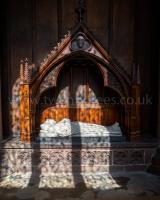
On 18th December 1882 Dean Francis Close [aged 85] died. Monument in Carlisle Cathedral [Map] sculpted by Henry Hugh Armstead [aged 54].
Dean Francis Close: On 11th July 1797 he was born in Frome, Somerset [Map]. On 24th November 1856 he was appointed Dean of Carlisle.
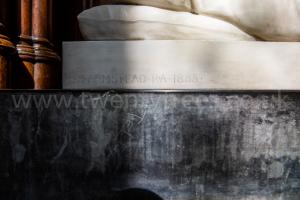

On 18th December 1914 Mary Frances Andrews [aged 68] committed suicide by jumping in front of a train. Her death was attributed to temporary insanity.
On 18th December 1925 William Hamo Thornycroft [aged 75] died. He was buried at Wolvercote Cemetery Oxford [Map].
On 18th December 1949 Albert Toft [aged 87] died.
On 18th December 1951 Percy Hamilton Seymour 18th Duke of Somerset [aged 41] and Gwendoline Collette Jane Thomas Duchess Somerset were married. He the son of Evelyn Francis Edward Seymour 17th Duke of Somerset [aged 69] and Edith Mary Parker Duchess Somerset [aged 70].
On 18th December 1276 William Zouche 1st Baron Zouche Harringworth was born to Eudo Zouche [aged 38] and Millicent Cantilupe at Harringworth, Northamptonshire [Map]. He married before 1333 his half sixth cousin Maud Lovell Baroness Zouche Harringworth, daughter of John Lovell 1st Baron Lovel and Joan Ros Baroness Lovel, and had issue.
On 18th December 1418 Albert VI Archduke of Austria was born to Ernest "The Iron" Habsburg I Duke Austria [aged 41] and Cymburgis Masovia Duchess Austria [aged 24]. He married 1452 his fourth cousin twice removed Matilde Wittelsbach Countess of Württemberg.
On 18th December 1574 Maria Anna Wittelsbach Holy Roman Empress was born to William Wittelsbach V Duke Bavaria [aged 26] and Renata Lorraine Duchess Bavaria [aged 30]. Coefficient of inbreeding 2.86%. She married her first cousin Ferdinand of Spain II Holy Roman Emperor and had issue.
On 18th December 1602 Simonds D'Ewes 1st Baronet was born to Paul d'Ewes [aged 35] and Cecilia Simonds [aged 23] at Milden, Suffolk. He married (1) 24th October 1626 Anne Clopton (2) before 1646 Elizabeth Willoughby Lady D'Ewes and Glentworth, daughter of Henry Willoughby 1st Baronet and Lettice Darcy, and had issue.
On 18th December 1611 Georg Friedrich Oldenburg was born to Alexander Oldenburg I Duke Schleswig Holstein Sonderburg [aged 38] and Dorothea Schwarzburg Duchess Schleswig Holstein Sonderburg [aged 32].
On 18th December 1622 George Booth 1st Baron Delamer was born to William Booth [aged 27] and Vere Egerton [aged 26]. He married (1) 30th November 1639 Catherine Clinton, daughter of Theophilus Clinton 4th Earl Lincoln and Bridget Fiennes Countess Lincoln, and had issue (2) before 17th April 1648 Elizabeth Grey Baroness Delamer, daughter of Henry Grey 1st Earl Stamford and Anne Cecil Countess Stamford, and had issue.


On 18th December 1626 Christina Queen of Sweden was born to King Gustavus Adolphus II of Sweden [aged 32].
Henrici Quinti, Angliæ Regis, Gesta, is a first-hand account of the Agincourt Campaign, and subsequent events to his death in 1422. The author of the first part was a Chaplain in King Henry's retinue who was present from King Henry's departure at Southampton in 1415, at the siege of Harfleur, the battle of Agincourt, and the celebrations on King Henry's return to London. The second part, by another writer, relates the events that took place including the negotiations at Troye, Henry's marriage and his death in 1422.
Available at Amazon in eBook and Paperback format.
On 18th December 1662 James Douglas 2nd Duke Queensberry was born to William Douglas 1st Duke Queensberry [aged 25] and Isabel Douglas Countess Queensberry [aged 20]. He married before 1696 Mary Boyle Duchess Queensbury, daughter of Charles Boyle 3rd Baron Clifford and Jane Seymour, and had issue.
On 18th December 1665 Unamed Oldenburg was born to Ernest Günther Oldenburg I Duke Schleswig Holstein Sonderburg Augustenburg [aged 56] and Auguste Oldenburg Duchess Schleswig Holstein Sonderburg Augustenburg [aged 32]. Coefficient of inbreeding 6.27%. He died aged less than one years old.
On 18th December 1676 Elizabeth Felton Countess Bristol was born to Thomas Felton 4th Baronet [aged 27] and Elizabeth Howard Lady Felton. She married 25th July 1695 her third cousin twice removed John Hervey 1st Earl Bristol and had issue.


On 18th December 1690 Edmund Isham 6th Baronet was born to Justinian Isham 4th Baronet [aged 32] and Elizabeth Turnor Lady Isham [aged 24]. He married (1) 17th February 1735 Elizabeth Wood Lady Isham (2) 4th May 1751 Philippa Gee Lady Isham.


On 18th December 1698 Sophie Henriette Glücksburg was born to Frederick Louis Oldenburg I Duke Schleswig-Holstein-Sonderburg-Beck [aged 45] and Louise Charlotte Oldenburg Duchess Schleswig-Holstein-Sonderburg-Beck [aged 40]. Coefficient of inbreeding 7.82%.
On 18th December 1707 Walter Calverley aka Blackett 2nd Baronet was born to Walter Calverly 1st Baronet [aged 37] and Julia Blacket Lady Calverley [aged 21]. He married 29th September 1729 his first cousin Elizabeth Orde Lady Blackett, daughter of William Blackett 2nd Baronet.
On 18th December 1714 Philippine Élisabeth Bourbon was born to Philippe Bourbon II Duke Orléans [aged 40] and Françoise Marie Bourbon Duchess Orléans [aged 37]. She a great x 3 granddaughter of King James I of England and Ireland and VI of Scotland. Coefficient of inbreeding 7.39%.
On 18th December 1719 twins William Stanhope 2nd Earl of Harrington and Thomas Stanhope were born to William Stanhope 1st Earl of Harrington [aged 36] and Anne Griffith [aged 21]. Their mother died in childbirth.
On 18th December 1724 Louise Hanover Queen Consort Denmark and Norway was born to King George II of Great Britain and Ireland [aged 41] and Caroline Hohenzollern Queen Consort England [aged 41]. She married 11th December 1743 her third cousin once removed Frederick V King of Denmark and Norway and had issue.
On 18th December 1734 John Thorold 9th Baronet was born to John Thorold 8th Baronet [aged 31] and Elizabeth Ayton Lady Thorold. He married 18th March 1771 Jane Hayford Lady Thorold and had issue.
On 18th December 1751 George O'Brien Wyndham 3rd Earl Egremont was born to Charles Wyndham 2nd Earl Egremont [aged 41] and Alicia Carpenter Countess Egremont [aged 25]. He married 1801 Elizabeth Ilive Countess Egremont and had issue.


Jean de Waurin's Chronicle of England Volume 6 Books 3-6: The Wars of the Roses
Jean de Waurin was a French Chronicler, from the Artois region, who was born around 1400, and died around 1474. Waurin’s Chronicle of England, Volume 6, covering the period 1450 to 1471, from which we have selected and translated Chapters relating to the Wars of the Roses, provides a vivid, original, contemporary description of key events some of which he witnessed first-hand, some of which he was told by the key people involved with whom Waurin had a personal relationship.
Available at Amazon in eBook and Paperback format.
On 18th December 1766 William Beauclerk 8th Duke St Albans was born to Aubrey Beauclerk 5th Duke St Albans [aged 26] and Catherine Ponsonby Duchess St Albans [aged 24]. He a great x 2 grandson of King Charles II of England Scotland and Ireland. He married 4th March 1799 Maria Janetta Nelthorpe Duchess St Albans and had issue.
On 18th December 1767 John Wallop 3rd Earl Portsmouth was born to John Wallop 2nd Earl Portsmouth [aged 25] and Urania Fellowes [aged 25]. He was identified as an unsound mind from an early age. He married (1) 19th November 1799 Grace Norton Countess Portsmouth, daughter of Fletcher Norton 1st Baron Grantley and Grace Chapple Baroness Grantley (2) 7th March 1814 Mary Anne Hanson Countess Portsmouth.
On 18th December 1788 Captain John Edmund George Parker 4th Baronet was born to Vice-Admiral Christopher Parker [aged 27] and Augusta Barbara Charlotte Byron [aged 26].
On 18th December 1796 George Orlando Gunning was born to George William Gunning 2nd Baronet [aged 33] and Elizabeth Diana Bridgeman.
On 18th December 1836 Adolphus John Spencer-Churchill Chichester was born to Edward Chichester 4th Marquess Donegal [aged 37] and Amelia Ogrady Marchioness County Donegal.

On 18th December 1844 Ughtred Kay-Shuttleworth 1st Baron Shuttleworth was born to James Phillips Kay-Shuttleworth 1st Baronet [aged 40] and Janet Shuttleworth [aged 27].
On 18th December 1846 Archibald Campbell was born to George Douglas Campbell 8th Duke Argyll [aged 23] and Elizabeth Georgiana Leveson-Gower Duchess Argyll. He married Janey Callander and had issue.
On 18th December 1847 Admiral William Alison Dyke Acland 2nd Baronet was born to Henry Wentworth Acland 1st Baronet [aged 32] and Sarah Cotton [aged 32]. He married 7th July 1887 Emily Anna Smith Lady Acland, daughter of William Henry Smith and Emily Danvers 1st Viscountess Hambleden, and had issue.
On 18th December 1848 Edith Sophia Rowley Lady Cholmeley was born to Charles Robert Rowley 4th Baronet [aged 48] and Maria Louisa Vanneck [aged 37]. She married 12th August 1874 Hugh Cholmeley 3rd Baronet, son of Montague Cholmeley 2nd Baronet and Georgiana Beauclerk Lady Cholmeley, and had issue.
On 18th December 1852 Rupert Carrington 4th Baron Carrington was born to Robert Carrington 2nd Baron Carrington [aged 56] and Charlotte Augusta Annabella Drummond Willoughby Baroness Carrington [aged 37]. He married 1891 Edith Horsefall and had issue.
On 18th December 1860 Alice Isabella Harriet Bligh was born to John Stuart Bligh 6th Earl Darnley [aged 33] and Harriet Mary Pelham Countess Darnley [aged 31].
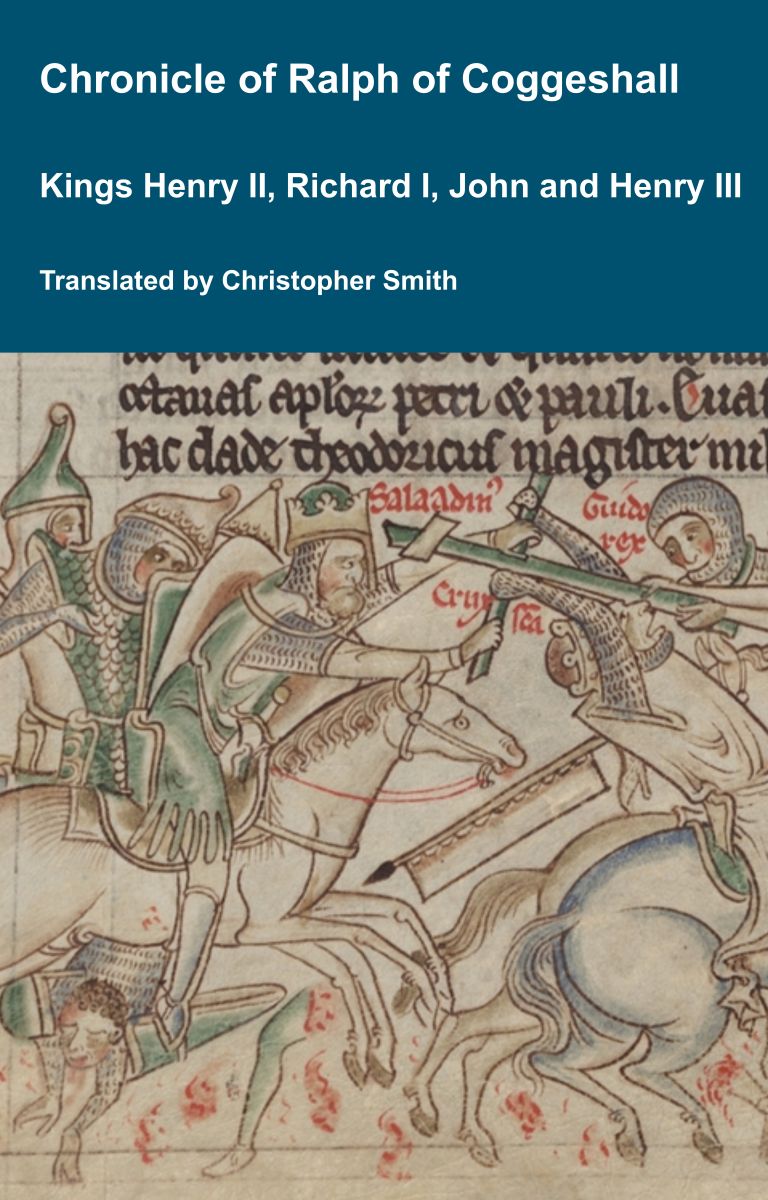
Chronicle of Abbot Ralph of Coggeshall
The Chronicle of Abbot Ralph of Coggeshall (Chronicon Anglicanum) is an indispensable medieval history that brings to life centuries of English and European affairs through the eyes of a learned Cistercian monk. Ralph of Coggeshall, abbot of the Abbey of Coggeshall in Essex in the early 13th century, continued and expanded his community’s chronicle, documenting events from the Norman Conquest of 1066 into the tumultuous reign of King Henry III. Blending eyewitness testimony, careful compilation, and the monastic commitment to record-keeping, this chronicle offers a rare narrative of political intrigue, royal power struggles, and social upheaval in England and beyond. Ralph’s work captures the reigns of pivotal figures such as Richard I and King John, providing invaluable insights into their characters, decisions, and the forces that shaped medieval rule. More than a simple annal, Chronicon Anglicanum conveys the texture of medieval life and governance, making it a rich source for scholars and readers fascinated by English history, monastic authorship, and the shaping of the medieval world.
Available at Amazon in eBook and Paperback format.
On 18th December 1872 James Edward Harris 5th Earl Malmesbury was born to Edward Harris 4th Earl Malmesbury [aged 30] and Sylvia Georgina Stewart Countess of Malmesbury. He married 27th April 1905 Dorothy Gough-Calthorpe Countess of Malmesbury, daughter of Augustus Gough-Calthorpe 6th Baron Calthorpe and Maud Augusta Louisa Duncombe, and had issue.
On 18th December 1886 Gerald Grove 3rd Baronet was born to Walter John Grove 2nd Baronet [aged 34] and Agnes Geraldine Lane Fox-Pitt Lady Grove [aged 23].

On 18th December 1895 William Pleydell-Bouverie 7th Earl of Radnor was born to Jacob Pleydell-Bouverie 6th Earl Radnor [aged 27] and Julian Eleanor Adelaide Balfour.
On 18th December 1911 Derek Keppel was born to Walter Keppel 9th Earl Albermarle [aged 29] and Judith Sydney Myee Wynn-Carington [aged 22]. He married 10th December 1940 Mary Elizabeth "Mairi" Bury Vane-Tempest-Stewart, daughter of Charles Vane-Tempest-Stewart 7th Marquess of Londonderry and Edith Chaplin Marchioness Londonderry, and had issue.


On 18th December 1936 John William Fleetwood Fuller 3rd Baronet was born to Gerard Henry Fleetwood Fuller 2nd Baronet [aged 30] and Fiona Pratt Countess Normanton.
On 18th December 1938 John Horsbrugh-Porter 4th Baronet was born to Colonel Andrew Horsbrugh-Porter 3rd Baronet [aged 31].
On 18th December 1952 Charles Chetwynd-Talbot 22nd Earl of Shrewsbury 7th Earl Talbot was born to John Chetwynd-Talbot 21st Earl of Shrewsbury 6th Earl Talbot [aged 38] and Nina Mortlock Countess Shrewsbury, Waterford and Talbot.
On 18th December 1244 Amedeo Savoy IV Count Savoy [aged 47] and Cecilia Baux Countess Savoy [aged 14] were married. She by marriage Countess Savoy. The difference in their ages was 33 years. He the son of Thomas Savoy I Count Savoy and Margaret Geneva Countess Savoy [aged 64].

On 18th December 1622 John Paulet 5th Marquess Winchester [aged 24] and Jane Savage Marchioness Winchester were married. She the daughter of Thomas Savage 1st Viscount Savage [aged 36] and Elizabeth Darcy 1st Countess Rivers [aged 41]. He the son of William Paulet 4th Marquess Winchester [aged 63] and Lucy Cecil Marchioness Winchester. They were fourth cousins.
On 18th December 1638 Henry Bourchier 5th Earl Bath [aged 51] and Rachael Fane Countess Bath and Middlesex [aged 25] were married at Church of St Bartholomew the Great. She by marriage Countess Bath, Countess Eu. The difference in their ages was 26 years. She the daughter of Francis Fane 1st Earl of Westmoreland and Mary Mildmay Countess of Westmoreland [aged 56]. They were second cousin twice removed.
On 18th December 1720 Bishop Henry Egerton [aged 31] and Elizabeth Adriana Bentinck [aged 17] were married. She the daughter of William Bentinck 1st Earl of Portland and Jane Martha Temple Countess Portland [aged 48]. He the son of John Egerton 3rd Earl Bridgewater and Jane Paulet Countess Bridgewater.
This is a translation of the 'Memoires of Jacques du Clercq', published in 1823 in two volumes, edited by Frederic, Baron de Reissenberg. In his introduction Reissenberg writes: 'Jacques du Clercq tells us that he was born in 1424, and that he was a licentiate in law and a counsellor to Philip the Good, Duke of Burgundy, in the castellany of Douai, Lille, and Orchies. It appears that he established his residence at Arras. In 1446, he married the daughter of Baldwin de la Lacherie, a gentleman who lived in Lille. We read in the fifth book of his Memoirs that his father, also named Jacques du Clercq, had married a lady of the Le Camelin family, from Compiègne. His ancestors, always attached to the counts of Flanders, had constantly served them, whether in their councils or in their armies.' The Memoires cover a period of nineteen years beginning in in 1448, ending in in 1467. It appears that the author had intended to extend the Memoirs beyond that date; no doubt illness or death prevented him from carrying out this plan. As Reissenberg writes the 'merit of this work lies in the simplicity of its narrative, in its tone of good faith, and in a certain air of frankness which naturally wins the reader’s confidence.' Du Clercq ranges from events of national and international importance, including events of the Wars of the Roses in England, to simple, everyday local events such as marriages, robberies, murders, trials and deaths, including that of his own father in Book 5; one of his last entries.
Available at Amazon in eBook and Paperback format.
On 18th December 1823 William Duncombe 2nd Baron Feversham [aged 25] and Louisa Stewart Baroness Feversham Duncombe Park [aged 19] were married. She the daughter of George Stewart 8th Earl Galloway [aged 55] and Jane Paget Countess Galloway [aged 49].
On 18th December 1856 James Molyneux Caulfeild 3rd Earl Charlemont [aged 36] and Elizabeth Jane Somerville Countess Charlemont [aged 22] were married.
On 18th December 1879 William Legge 6th Earl Dartmouth [aged 28] and Mary Coke Countess Dartmouth [aged 30] were married. She by marriage Countess Dartmouth. She the daughter of Thomas Coke 2nd Earl of Leicester [aged 56] and Juliana Whitbread Countess Leicester. He the son of William Legge 5th Earl Dartmouth [aged 56] and Augusta Finch Countess Dartmouth [aged 57]. They were half fifth cousins. She a great x 5 granddaughter of King Charles II of England Scotland and Ireland.


On 18th December 1920 Anthony St John-Mildmay 8th Baronet [aged 26] and Violet Hay-Drummond Lady St-John Mildmay [aged 23] were married.
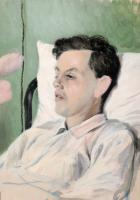
On 18th December 1945 Robert Gascoyne-Cecil 6th Marquess of Salisbury [aged 29] and Marjorie Olein Wyndham-Quin [aged 23] were married. He the son of Robert Arthur James Gascoyne-Cecil 5th Marquess Salisbury [aged 52] and Elizabeth Vere Cavendish Marchioness Salisbury [aged 50].
On 18th December 1951 Percy Hamilton Seymour 18th Duke of Somerset [aged 41] and Gwendoline Collette Jane Thomas Duchess Somerset were married. He the son of Evelyn Francis Edward Seymour 17th Duke of Somerset [aged 69] and Edith Mary Parker Duchess Somerset [aged 70].
On 18th December 1279 Bishop Richard of Gravesend died.
On 18th December 1316 Bishop Gilbert Segrave [aged 50] died.
On 18th December 1398 Maud Lucy Countess Northumberland [aged 55] died. Baron Lucy extinct.
On 18th December 1446 Marie Montfort Duchess Alençon [aged 55] died.
On 18th December 1475 Margery Berners Baroness Berners [aged 67] died.
Abbot John Whethamstede’s Chronicle of the Abbey of St Albans
Abbot John Whethamstede's Register aka Chronicle of his second term at the Abbey of St Albans, 1451-1461, is a remarkable text that describes his first-hand experience of the beginning of the Wars of the Roses including the First and Second Battles of St Albans, 1455 and 1461, respectively, their cause, and their consequences, not least on the Abbey itself. His text also includes Loveday, Blore Heath, Northampton, the Act of Accord, Wakefield, and Towton, and ends with the Coronation of King Edward IV. In addition to the events of the Wars of the Roses, Abbot John, or his scribes who wrote the Chronicle, include details in the life of the Abbey such as charters, letters, land exchanges, visits by legates, and disputes, which provide a rich insight into the day-to-day life of the Abbey, and the challenges faced by its Abbot.
Available at Amazon in eBook and Paperback format.
On 18th December 1495 Alfonso II King Naples [aged 47] died. His son Ferdinand [aged 26] succeeded II King Naples. Joanna Trastámara Queen Consort Naples [aged 16] by marriage Queen Consort Naples.
On 18th December 1515 Alexander Stewart 1st Duke Ross [aged 1] died at Stirling Castle [Map].
On 18th December 1557 Archdeacon John Philpot [aged 41] was burned at the stake for being a heretic i.e. being a Protestant.
On 18th December 1614 Moyle Finch 1st Baronet [aged 64] died. His son Theophilius [aged 41] succeeded 2nd Baronet Finch of Eastwell in Kent.
On 18th December 1646 Henry Somerset 1st Marquess Worcester [aged 69] died at Covent Garden [Map]. His son Edward [aged 44] succeeded 2nd Marquess Worcester, 6th Earl Worcester, 8th Baron Herbert of Raglan.
On 18th December 1651 William Brabazon 1st Earl Meath [aged 71] died. His son Edward [aged 41] succeeded 2nd Earl Meath, 3rd Baron Ardee. Mary Chambré Countess Meath [aged 40] by marriage Countess Meath.
On 18th December 1682 Heneage Finch 1st Earl Nottingham [aged 60] died at Great Queen Street Covent Garden. He was buried at Ravenstone, Buckinghamshire. His son Daniel [aged 35] succeeded 2nd Earl Nottingham, 2nd Baron Finch Daventry. Essex Rich Countess Nottingham [aged 30] by marriage Countess Nottingham.


On 18th December 1712 Robert Cotton 1st Baronet [aged 77] died. His son Thomas [aged 40] succeeded 2nd Baronet Cotton of Combermere in Cheshire. Philadelphia Lynch Lady Cotton [aged 37] by marriage Lady Cotton of Combermere in Cheshire.
On 18th December 1721 Paul Whichcote 2nd Baronet [aged 78] died. His son Francis [aged 29] succeeded 3rd Baronet Whichcote of the Inner Temple in the City of London. Mary Banks Lady Whichcote by marriage Lady Whichcote of the Inner Temple in the City of London.
On 18th December 1724 Nicholas L'Estrange 4th Baronet [aged 63] died. His son Thomas [aged 35] succeeded 5th Baronet Strange of Hunstanton in Norfolk. Anne Calthorpe Lady Strange by marriage Lady Strange of Hunstanton in Norfolk.
On 18th December 1734 Robert Kemp 3rd Baronet [aged 67] died at Ufford, Suffolk. His son Robert [aged 35] succeeded 4th Baronet Kemp of Gissing in Norfolk.
On 18th December 1745 Joanna Taylor Lady Wray died.
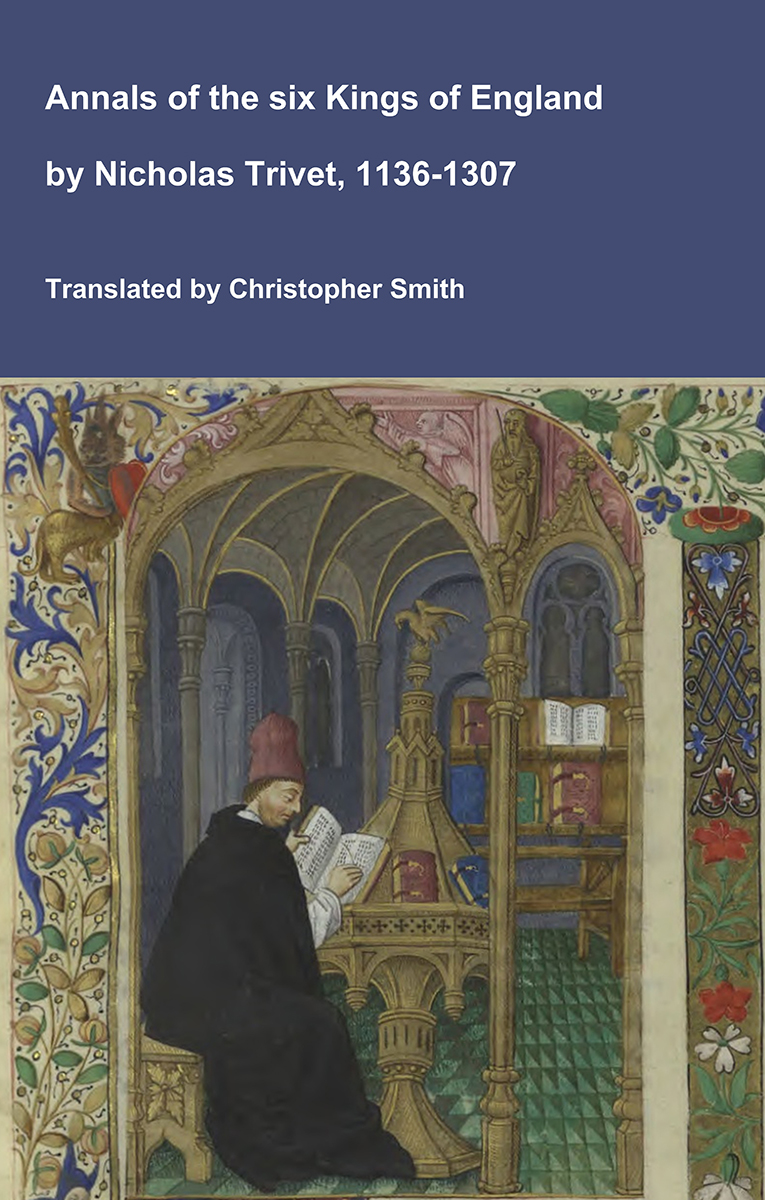
Annals of the six Kings of England by Nicholas Trivet
Translation of the Annals of the Six Kings of England by that traces the rise and rule of the Angevin aka Plantagenet dynasty from the mid-12th to early 14th century. Written by the Dominican scholar Nicholas Trivet, the work offers a vivid account of English history from the reign of King Stephen through to the death of King Edward I, blending political narrative with moral reflection. Covering the reigns of six monarchs—from Stephen to Edward I—the chronicle explores royal authority, rebellion, war, and the shifting balance between crown, church, and nobility. Trivet provides detailed insight into defining moments such as baronial conflicts, Anglo-French rivalry, and the consolidation of royal power under Edward I, whose reign he describes with particular immediacy. The Annals combines careful year-by-year reporting with thoughtful interpretation, presenting history not merely as a sequence of events but as a moral and political lesson. Ideal for readers interested in medieval history, kingship, and the origins of the English state, this chronicle remains a valuable and accessible window into the turbulent world of the Plantagenet kings.
Available at Amazon in eBook and Paperback format.
On 18th December 1760 Juliana Noel Baroness Carbery [aged 26] died.
On 18th December 1784 John Chichester 5th Baronet [aged 63] died. His son John [aged 32] succeeded 6th Baronet Chichester of Raleigh in Devon.
On 18th December 1792 David Kennedy 10th Earl Cassilis [aged 58] died unmarried. His second cousin once removed Archibald [aged 72] succeeded 11th Earl Cassilis at which time he was lviign in New York. Baronet Kennedy of Culzean in Ayrshire extinct.
On 18th December 1805 Henry St John 13th Baron St John [aged 47] died. His brother Andrew [aged 46] succeeded 14th Baron St John of Bletso, 11th Baronet St John of Woodford in Northamptonshire.
On 18th December 1823 Henry Barry 8th Earl Barrymore [aged 53] died. Earl Barrymore extinct.
On 18th December 1843 Thomas Graham 1st Baron Lynedoch [aged 97] died. Baron Lynedoch of Balgowan in Perthshire extinct.
On 18th December 1846 George Hilaro Barlow 1st Baronet [aged 83] died. His son Robert [aged 49] succeeded 2nd Baronet Barlow of Fort William in Bengal.
On 18th December 1859 Henry Fox 4th Baron Holland [aged 57] died. Baron Holland in Lincolnshire and Baron Holland of Foxley in Wiltshire extinct.
On 18th December 1868 Thomas Gresley 10th Baronet [aged 36] died. His son Robert [aged 2] succeeded 11th Baronet Gresley of Drakelow in Derbyshire.
On 18th December 1869 Agnes Georgiana Elizabeth Hay Countess Fife [aged 40] died.
Abbot John Whethamstede’s Chronicle of the Abbey of St Albans
Abbot John Whethamstede's Register aka Chronicle of his second term at the Abbey of St Albans, 1451-1461, is a remarkable text that describes his first-hand experience of the beginning of the Wars of the Roses including the First and Second Battles of St Albans, 1455 and 1461, respectively, their cause, and their consequences, not least on the Abbey itself. His text also includes Loveday, Blore Heath, Northampton, the Act of Accord, Wakefield, and Towton, and ends with the Coronation of King Edward IV. In addition to the events of the Wars of the Roses, Abbot John, or his scribes who wrote the Chronicle, include details in the life of the Abbey such as charters, letters, land exchanges, visits by legates, and disputes, which provide a rich insight into the day-to-day life of the Abbey, and the challenges faced by its Abbot.
Available at Amazon in eBook and Paperback format.
On 18th December 1882 Dean Francis Close [aged 85] died. Monument in Carlisle Cathedral [Map] sculpted by Henry Hugh Armstead [aged 54].
Dean Francis Close: On 11th July 1797 he was born in Frome, Somerset [Map]. On 24th November 1856 he was appointed Dean of Carlisle.
On 18th December 1894 Edmund Shirley 3rd Baronet [aged 68] died. His son Edmund [aged 29] succeeded 4th Baronet Lechmere of Rhyd in Worcestershire.
On 18th December 1899 Charles Bennet 6th Earl Tankerville [aged 89] died. His son George [aged 47] succeeded 7th Earl Tankerville, 8th Baron Ossulston of Ossulston in Middlesex. Leonora Sophia van Marter Countess of Tancerville by marriage Countess Tankerville.
On 18th December 1915 Robert Jocelyn 7th Earl Roden [aged 70] died. His son Robert [aged 32] succeeded 8th Earl Roden Elinor Jessie Parr Countess Roden by marriage Countess Roden.
On 18th December 1922 Carl Ferdinand Meyer 1st Baronet [aged 70] died. His son Frank [aged 36] succeeded 2nd Baronet Meyer of Shortgrove. Marjorie Seeley Lady Meyer by marriage Lady Meyer of Shortgrove.


On 18th December 1925 William Hamo Thornycroft [aged 75] died. He was buried at Wolvercote Cemetery Oxford [Map].
On 18th December 1932 Harold Arthur Lee Dillon 17th Viscount Dillon [aged 88] died. His nephew Arthur [aged 57] succeeded 18th Viscount Dillon of Costello Gallen in Mayo. Hilda Brunner Viscountess Dillon [aged 58] by marriage Viscountess Dillon of Costello Gallen in Mayo.
On 18th December 1949 Albert Toft [aged 87] died.
On 18th December 1955 Drummond Cospatric Hamilton-Spencer-Smith 5th Baronet [aged 79] died. His son Thomas [aged 38] succeeded 6th Baronet Hamilton-Spencer-Smith of Tring Park in Hertfordshire.
On 18th December 1973 George Bridges Rodney 8th Baron Rodney [aged 82] died. His son John [aged 53] succeeded 9th Baron Rodney of Rodney Stoke in Somerset.
Henrici Quinti, Angliæ Regis, Gesta, is a first-hand account of the Agincourt Campaign, and subsequent events to his death in 1422. The author of the first part was a Chaplain in King Henry's retinue who was present from King Henry's departure at Southampton in 1415, at the siege of Harfleur, the battle of Agincourt, and the celebrations on King Henry's return to London. The second part, by another writer, relates the events that took place including the negotiations at Troye, Henry's marriage and his death in 1422.
Available at Amazon in eBook and Paperback format.
On 18th December 1981 Anthony Chaplin 3rd Viscount Chaplin died. Viscount Chaplin of Saint Oswald's in Blankney in Lincolnshire extinct.
On 18th December 1991 Mark Chandos Auberon Henniker 8th Baronet [aged 85] died. His son Adrian [aged 45] succeeded 9th Baronet Henniker of Newton Hall in Essex.
On 18th December 1995 George Edward Mordaunt Milner 9th Baronet [aged 84] died. His son Timothy [aged 59] succeeded 10th Baronet Milner of Nun Appleton Hall in Yorkshire.
On 18th December 2012 William Marcus Worsley 5th Baronet [aged 87] died at Hovingham Hall. His son William [aged 56] succeeded 6th Baronet Worsley of Hovingham Hall.
On 18th December 2017 Jack Vernon 7th Baron Lyveden [aged 79] died. His son Colin [aged 50] succeeded 8th Baron Lyveden.