

26 Mar is in March.
1152 King Louis and Queen Eleanor's Annulment
1306 Coronation of Robert the Bruce
1371 Coronation of King Robert II of Scotland
1437 Assassination of King James I of Scotland
On 26th March 655 Archbishop Deusdedit was consecrated Archbishop of Canterbury by Bishop Ithamar.
Anglo-Saxon Chronicle. This year Ithamar, Bishop of Rochester, consecrated Deus-dedit to Canterbury, on the twenty-sixth day of March.
Bede. 668. There was at that time in Rome, a monk, called Theodore [aged 66], well known to Hadrian [aged 31], born at Tarsus in Cilicia, a man well instructed in worldly and Divine literature, as also in Greek and Latin; of known probity of life, and venerable for age, being sixty-six years old. Hadrian offered him to the pope to be ordained bishop, and prevailed; but upon these conditions, that he should conduct him into Britain, because he had already travelled through France twice upon several occasions, and was, therefore, better acquainted with the way, and was, moreover, sufficiently provided with men of his own; as also that being his fellow-labourer in doctrine, he might take special care that Theodore should not, according to the custom of the Greeks, introduce any thing contrary to the true faith into the church where he presided. Hadrian, being ordained subdeacon, waited four months for his hair to grow, that it might be shorn into the shape of a crown; for he had before the tonsure of St. Paul, the apostle, after the manner of the eastern people. He was ordained by Pope Vitalian, in the year of our Lord 668, on Sunday, the 26th of March, and on the 27th of May was sent with Hadrian into Britain.
On 26th March 668 Archbishop Theodore of Tarsus [aged 66] was appointed Archbishop of Canterbury in Rome, Italy [Map].
Anglo-Saxon Chronicle. 26th March 1124. All this year was the King Henry [aged 56] in Normandy. That was for the great hostility that he had with the King Louis of France [aged 42], and with the Earl of Anjou [aged 35], and most of all with his own men. Then it happened, on the day of the Annunciation of St. Mary, that the Earl Waleram of Mellent [aged 20] went from one of his castles called Belmont to another called Watteville. With him went the steward of the King of France, Amalric, and Hugh [aged 26] the son of Gervase [aged 54], and Hugh of Montfort [aged 49], and many other good knights. Then came against them the king's knights from all the castles that were thereabout, and fought with them, and put them to flight, and took the Earl Waleram, and Hugh, the son of Gervase, and Hugh of Montfort, and five and twenty other knights, and brought them to the king. And the king committed the Earl Waleram, and Hugh, the son of Gervase, to close custody in the castle at Rouen; but Hugh of Montfort he sent to England, and ordered him to be secured with strong bonds in the castle at Glocester [Map]. And of the others as many as he chose he sent north and south to his castles in captivity.
 History of the Dukes of Normandy by William of Jumieges. [26th March 1124]... At length, the foot-soldiers were drawn up for battle in the usual manner, along with the mounted archers, of whom the royal army had in that place a very great number. These were sent forward on the right flank of the enemy. Then, as is customary at the opening of battles, a shout was raised on both sides. But before the ranks of the knights had come together, the line of the Count's forces was almost broken, because the archers on the king's right, where the enemy lacked the protection of shields, shot upon them without pause. It would take too long to recount everything in detail, but as we hasten on to other matters, we will explain briefly the outcome of the affair.
... Denique catervis more pugnantium, nec non et equitibus sagittariis, quorum inibi exercitus regius maximam multitudinem habebat, in dextra parte hostium præmissis, clamor ut in initio bellorum solet fieri, utrinque attollitur. Sed antequam militum cunei jungerentur, pars comitis instantia sagittariorum, qui eam in dextris, ubi carebant. protectione clypeorum, absque intervallo sagittabant, pene defecerat. Spaciosum esset ire per singula, sed nos ad cætera festinantes rei eventum succincte enodamus.
Around 26th March 1152 Geoffrey Plantagenet Count Nantes [aged 17] attempted to abduct Eleanor of Aquitaine Queen Consort Franks and England [aged 30] from Port de Piles, Vienne where she intended to cross the River Creuse. Once again Eleanor escaped.
On 26th March 1199 King Richard "Lionheart" I of England [aged 41] was besieging Châlus Chabrol Castle. During the course of the evening King Richard "Lionheart" I of England was shot by a crossbow. Richard died on 6th April 1199. His brother John [aged 32] succeeded I King of England.
His mother Eleanor appears to have been present at his death as confirmed in a Charter by her on 21st April: 'quia dilectus noster Lucas, abjbas de Torpiniaco, affuit nobiscum infirmitati et funeri karissimi filii nostri regis, et circa eiusdem exequias pre omnibus aliis religiosis laboravit.' i.e. 'because our beloved Luke, abbot of Turpenay, was with us during the illness and at the funeral of our most dear son the king, and worked more than all other religious men in carrying out his obsequies.'  Chronicum Anglicanum by Ralph Coggeshall also mentioned that Richard 'summoned by letter his mother, who was dwelling at Fontevraud'.
There was a brother between Richard and John named Geoffrey Duke of Brittany who had a son Arthur [aged 11], who was around twelve, and a daughter Eleanor [aged 15], who was around fifteen, whose mother was Constance Penthièvre Duchess Brittany [aged 38].
King Philip II of France [aged 33] had planned for Eleanor to marry his son, probably to bring Brittany into the French Royal family, possibly to pursue a claim on England.
King Philip II of France supported Arthur's claim to the English throne. In the resulting war Arthur was captured, imprisoned and never seen again. Eleanor was captured, probably around the same time as Arthur, and imprisoned, more or less, for the remainder of her life, even after King John's death through the reign of King Henry III since she represented a threat to Henry's succession.
 Annals of Six Kings of England by Nicholas Trivet. 1199. King Richard built a notable castle at Andely [Chateau Galliard]. Hubert, the archbishop, demolished, by command of Pope Innocent III, the church founded in honour of St Thomas at Lambeth, which his predecessor Baldwin had begun. William, a Norman by birth, became bishop of London. When King Richard wished to summon a certain knight concerning the discovery of a treasure, such finds being usually claimed by princes, as though nature especially served them in this matter, the knight, fearing the king's severity, fled to the sheriff of Limoges. When the king asked that the knight be handed over, the sheriff refused. Therefore the king entered his lands and laid siege to a certain castle called Chalucet near Limoges, attacking it vigorously. On the seventh day before the Kalends of April [26th March 1199], while he was going around the castle unarmed to inspect it, he was suddenly struck in the left shoulder by a bolt from a crossbow and wounded with a deadly blow. As his condition worsened, he is said to have summoned three abbots of the Cistercian order, to whom he confessed all his sins with sobbing and tears. When he saw them astonished and uncertain how to impose or declare to him a fitting penance, he said: "That the just Judge God may be appeased, I willingly accept the punishment of purgatory for my sins until the Day of Judgment." Having no children, he appointed his brother John by his will as heir to the kingdom and to all his lands. Three parts of his treasure he granted to his nephew Otto, who had already been crowned king of the Romans; the remainder he distributed among his servants and the poor. After being afflicted with illness for eleven days, he died on the twelfth day, that is, on the eighth day before the Ides of April [6th April 1199], in the forty-second year of his age. This Richard, because of the greatness of his spirit, since he never shrank from undertaking the most difficult enterprises, was called 'Lionheart' by the English and the Normans. His death was lamented in these verses by Master Geoffrey of Vinsauf in the book which he composed on Eloquence, he laments in these verses:
1199. RICARDUS rex apud Andeliacum castrum construxit insigne. Hubertus archiepiscopus ecclesiam, in honore beati Thomæ fundatam apud Lambethe, quam prædecessor ejus Baldewinus inchoaverat, de mandato domini papæ Innocentii tertii demolitus est. Willelmus, genere Normannus, fit Londoniensis episcopus. Ricardus rex cum militem quendam super inventione thesauri convenire voluisset, quem solent sibi principes vindicare, tanquam in hoc eis singulariter natura deserviat, veritus ille severitatem regiam ad vicecomitem Lemovicensem aufugit; qui rogatus a rege ut militem redderet, cum parere neglexisset, rex terras ejus ingressus castrum quoddam, quod Caluca dicitur, juxta Lemovicas obsedit, et fortiter impugnavit. Septimo vero cal. Aprilis, dum castrum considerando circuiret inermis, subito balistæ jaculo in humero sinistro letali confoditur vulnere. Incipiens autem periclitari, tres ordinis Cisterciensis accersisse fertur abbates, quibus omnia peccata sua confessus est cum singultu et fletu. Quos cum ad injungendam sibi vel innotescendam pœnitentiam salutarem cerneret stupefactos, dixit, 'Ut placetur justus Judex Deus, pœnam purgatoriam usque ad diem judicii libens pro meis admittam delictis.' Prolem vero non habens, Joannem fratrem suum regni, ac terrarum suarum omnium, testamento suo designavit heredem. Thesauri vero sui ¹tres partes Othoni, nepoti suo, in regem Romanorum jam coronato, contulit; reliquam servientibus suis pauperibusque divisit. Tandem dierum undecim languore vexatus, die duodecimo, octavo videlicet idus Aprilis, ætatis suæ anno quadragesimo secundo, diem clausit extremum. Hic Ricardus propter magnanimitatem cordis, quia ardua quæque aggredi non refugit, Cor leonis appellatus est ab Anglicis et Normannis. Hujus mortem magister Galfridus de Vinosalvo, in libro quem de Eloquentia composuit, versibus his deplorat:
Chronicum Anglicanum by Ralph Coggeshall. Therefore, in the year of the Lord's Incarnation 1199, about the time of Lent, after a conference had been held between the two kings concerning the restoration of peace, at last a truce between them was agreed upon until a certain fixed term. Taking occasion from this, King Richard, having gained an opportunity, moved his private army during Lent against the viscount of Limoges, who, in the time of hostilities, had rebelled against the king his lord and made a pact of friendship with King Philip. Some, however, report that a certain treasure of inestimable price had been found in the land of the viscount, which the king commanded and ordered to be given to him; but when the viscount refused, it inflamed the king's anger against him all the more. And so, while he devastated the land of the viscount with fire and sword, for he knew not how to cease from arms even in that sacred season, at length he came to Châlus-Chabrol and besieged the tower, and fiercely assaulted it for three days, commanding his miners to undermine the tower and cause it to collapse once it had been undercut; which was afterward done. In that tower there were no men of knightly rank or defence, but only certain servants of the viscount, who vainly awaited help from their lord, not thinking that the king himself was present who besieged them, but supposing it to be one of the king's retainers. These the king himself, along with his crossbowmen, so assailed, while the others were undermining, that scarcely any dared appear upon the battlements of the tower or in any way attempt its defence. Yet from time to time they hurled down enormous stones from the highest battlements, which, rushing down with great force, terrified those standing around, but could by no means strike down the miners nor hinder their work, for they were protected on all sides by their customary devices. Now, when the third day was drawing to evening, on the eve of the Annunciation of Blessed Mary, the king, after dinner, unarmed save for an iron cap, confidently approached the tower with his men, and, as usual, assailed the besieged with missiles and arrows. Behold! A certain man-at-arms, who for almost the whole day before dinner had stood upon a certain battlement of the said tower, and had caught unharmed in a frying-pan all the iron missiles shot at him, and had carefully observed all the besiegers, suddenly appeared again; and bending his crossbow, he launched a bolt violently at the king, who was looking on and shouting at him, and struck the king upon his left shoulder near the neck bones1. The bolt, entering with a slanting wound, slipped downward and lodged in his left side, because the king did not bend low enough beneath the square shield that was being carried before him. For this wound, when it was inflicted, the king, ever renowned for boldness, uttered no sighs of the heart, no cry of lamentation, showed no sadness in face or gesture at that moment, lest he make his men sorrowful or fearful, or give the enemy greater courage because of the wound inflicted. Afterwards, as though he had suffered no harm, and many being ignorant of what misfortune had happened, he entered his lodging nearby, and, drawing out the wooden shaft that was fixed with the iron into his body, he broke it off; but the iron, of a hand's breadth in length, remained in his body. When therefore the king lay down in his chamber, a certain surgeon, of that accursed household of the most impious Mercardier, cut into the royal body and sorely, indeed mortally, injured it. With lamps lit in the house, he could not easily find the iron buried deep in the overly fleshy body, nor, once found by cutting, could he draw it out without great violence.
When diligent medicines and poultices had been applied, afterwards the inflicted wounds began to worsen and to blacken, and from day to day to swell all the more, and finally to threaten death, the king meanwhile being disobedient and disregarding the commands of the physicians. All his attendants were kept away from entering the chamber in which he lay, except for four of the more noble men, who were freely allowed to visit him, lest the report of his illness should more quickly be spread abroad. The king, being very uncertain about regaining health, summoned by letter his mother, who was dwelling at Fontevraud. He prepared for his end by receiving the life-giving sacrament of the Lord's Body, first making confession to one of his chaplains, although, out of reverence for so great a mystery, he is said to have refrained for nearly seven years from receiving that sacrament, because he bore mortal hatred in his heart against the king of France. He also freely forgave the man who had struck him with the fatal blow. And so, on the seventh of the Ides of April [6th April 1199] namely the eleventh day after the wound was inflicted on him, anointed with holy oil, when the day was drawing to a close, he closed his last day. His body, disembowelled, was carried to the nuns of Fontevraud, and on Palm Sunday was buried with royal honour beside his father by the bishop of Lincoln.
Igitur anno ab Incarnatione Domini MCXCIX, circa tempus quadragesimale, habito inter utrumque regem colloquio de pacis reformatione, tandem treugæ inter eos usque ad quoddam tempus præfinitum captæ sunt. Ex hac autem occasione rex Ricardus nactus opportunitatem movit privatum exercitum suum in Quadragesima contra vicecomitem Lemovicensem, qui, tempore hostilitatis, contra regem dominum suum rebellaverat, et foedus amicitiae cum rege Philippo pepigerat. Nonnulli vero referunt quod quidam thesaurus inæstimabilis pretii in terra vicecomitis sit repertus, quem rex mandat et jubet sibi dari; quo a vicecomite negato, amplius regis animositatem erga eum exacuit. Cumque terram vicecomitis ferro et flammis devastaret, utpote ab armis infra illud sacrum tempus feriari nesciens, tandem devenit apud Chali Cheperol, turrimque obsedit et atrociter per tres dies expugnavit, præcipiens fossoriis suis ut turrim subfoderent atque subfossam subruerent; quod postmodum factum est. In turri vero prædicta non erant alicujus militiæ vel defensionis viri, nisi quidam ex famulis vicecomitis, qui frustra præstolabantur auxilium domini sui, non æstimantes regem fore præsentem qui eos obsederat, sed aliquem fore ex familia regis. Hos igitur rex ipse cum arcubalistis ita aggressus est, dum cæteri circumfoderent, ut vix aliquis auderet circa propugnacula turris apparere, aut eam quolibet modo defensare. Attamen aliquoties lapides prægrandes de summis propugnaculis præcipitabant, qui magno impetu deorsum ruentes, circumastantes terrificabant, sed fossorios minime poterant prosternere nec ab incoeptis impedire, quippe qui consuetis ingeniis suis undique erant protecti. Jamque die tertia advesperascente, in crastino videlicet Annunciationis Beatæ Mariæ, cum rex, post prandium, inermis, excepto capello ferreo, cum suis ad turrim confidenter accessisset atque obsessos telis et sagittis more solito impeteret, ecce quidam armatus, qui fere per totam diem illam ante prandium in quodam propugnaculo turris prædicta astiterat, atque omnia tela ferrea sartagine opposita illæsus exceperat, omnesque obsidentes diligenter exploraverat, iterum subito adveniens tetendit arcubalistam atque quoddam quarellum violenter direxit ad regem, ipso inspiciente et acclamante, percussitque regem super humerum sinistrum juxta colli spondilia, sicque arcuato vulnere telum dilapsum est deorsum ac lateri sinistro immersum, dum rex se non satis incurvaret sub quadrato scuto quod ante eum præferebatur. Pro quo vulnere inflicto rex, audacitate semper prædicabilis, nulla cordis suspiria, nullam plangentis vocem emittebat, nullam tristitiam in vultu aut in gestu tunc ad præsens præferebat, ne suos tristes aut timidos redderet, atque inimicis de illato vulnere majorem audaciam præberet. Postea vero, quasi nil mali perpessus fuisset, pluribusque ignorantibus quid infortunii accidisset, hospitium suum, quod e vicino erat, ingreditur, lignumque ferro infixum de corpore extrahens confregit, sed ferrum, unius palmi longitudinem habens, in corpore remansit. Rege itaque in conclavi procumbente, quidam chirurgicus, ex nefanda illa familia impiissimi Marchadei, corpus regium secando, graviter, immo lætaliter, sauciavit, lucernis in domo accensis, nec potuit ferrum in corpore nimis obeso immersum leviter reperire, aut secando repertum sine magna violentia extrahere.
Appositis igitur diligenter medicaminibus et emplastris, postmodum coeperunt vulnera inflicta deteriorari et nigrescere, atque de die in diem amplius intumescere, tandemque mortem minari, rege incontinenter se habente et præcepta medicorum non curante. Arcebantur omnes sui ab introitu cubiculi in quo decumbebat, exceptis quatuor de nobilioribus, qui ad eum visitandum libere introibant, ne fama ægritudinis ejus citius per publicum divulgaretur. Rex autem de sospitate consequenda nimis incertus, matrem, quæ apud Fontem Ebraldi morabatur, literis accersivit; exitum suum vivifico sacramento Dominici corporis inunivit, confessione præmissa a quodam suo capellano, a cujus sacramenti perceptione, ob tanti mysterii reverentiam, fere per septennium, ut dicunt, abstinuerat, eo quod mortale odium erga regem Galliæ in corde gestaverat. Mortem etiam sibi illatam percussori suo libenter indulsit; sicque septimo idus Aprilis, scilicet undecimo die a vulnere sibi illato, oleo sacro inunctus, cum jam dies clauderetur, diem clausit extremum. Cujus corpus exenteratum, et apud sanctimoniales Fontis Ebraldi delatum, Dominica in Palmis, juxta patrem suum regio honore ab episcopo Lincolniensi humatum est.
Note 1. Roger Hoveden: "On the same day, as King Richard I and Mercadier (his captain of mercenaries) were riding around the castle, examining from where it would be best to attack, a certain crossbowman, named Bertran de Gourdon, shot an arrow from the castle. The bolt struck the king in the arm, inflicting a mortal wound. Though wounded, the king mounted his horse and rode back to his quarters. There, he ordered Mercadier and his entire army to continue the assault relentlessly until the castle was captured. And so it was done. Once the castle was captured, King Richard ordered that all its defenders be hanged, except for the man who had wounded him. For, as one might expect, had the king recovered, he would have sentenced him to the most disgraceful death. Then the king entrusted himself to a surgeon in Mercadier's service. When the man attempted to extract the arrowhead, he only removed the wooden shaft, leaving the iron tip embedded in the flesh. As the butcher of a surgeon carelessly cut around the king's arm, he finally managed to extract the arrowhead. Realizing he was beyond hope, King Richard bequeathed the Kingdom of England and all his other lands to his brother John. He ordered all those present to swear fealty to John and instructed that his castles be surrendered to him. He divided three-quarters of his treasure among John and Otto, his nephew and King of the Germans, and the remaining quarter was to be distributed to his knights and the poor. Then, he had Bertran de Gourdon, the crossbowman who had wounded him, brought before him and asked: 'What wrong have I done to you, that you have killed me?' To this, Bertran replied: 'You killed my father and my two brothers with your own hands, and you sought to kill me as well. Take whatever revenge you will; I will gladly suffer whatever tortures you devise, as long as you die for you have brought so much evil to the world.' Then the king ordered that he be set free and said: 'I grant you your life.' And thus, with his bonds loosened, he was allowed to depart, and the king ordered that he be given one hundred shillings of English money. However, Mercadier, without the king's knowledge, seized him and, after the king's death, had him flayed and hanged."
Ralph de Decito: "King Richard of the English, when he had reigned for nine years, six months, and nineteen days, in the duchy of Aquitaine, in the territory of Limoges, at the castle of Châlus, was struck on the seventh day before the Kalends of April [26th March 1199] by an arrow from Peter Basileus; and afterwards, on the eighth Ides of April [6th April 1199], on a Tuesday, this man destined for martial deeds closed his last day at the aforesaid castle. He was buried at Fontevraud, at the feet of his father, King Henry II."
On 26th March 1211 Sancho "Populator" I King Portugal [aged 56] died. His son Alfonso [aged 25] succeeded II King Portugal. Urraca Ivrea Queen Consort Portugal [aged 23] by marriage Queen Consort Portugal.
 Chronicle of Walter of Guisborough. In the year of our Lord 1296, on Monday in Easter week, namely, the morrow of the Annunciation of the Lord [26th March 1296], Lord John Comyn of Buchan, the Earl of Menteith, the Earl of Strathearn, the Earl of Lennox, the Earl of Ross, the Earl of Atholl, the Earl of Mar, and the son of John Comyn of Badenoch, with a large Scottish army numbering 500 armed horsemen and 40,000 foot soldiers, marched out of Annandale. They crossed the River Solway at three points, and from Arthuret, through the middle of the Forest of Nicholas, as far as Carlisle, they burned all the surrounding villages, slaughtering with the sword, or at least cutting down, everyone they could find, sparing no sex, order, or age. On Tuesday, they prepared to lay siege to the city of Carlisle from the far side of the Eden Bridge. But a number of archers came out and, for a short time, defended the bridge, taking up as many of its planks as they could. Seeing this, the armed Scots led a portion of their forces around and crossed the river at a ford below Rickergate, surrounding the city on all sides and setting fire to the suburban homes. Now at that time in the city there was a certain scout named Patrick, who had been imprisoned shortly beforehand under suspicion and held in chains in the city jail. When he heard that the Scots had arrived, he broke free from his bonds, set fire to the house where he had briefly stayed, and immediately climbed the city wall, shouting to the Scots to act bravely and take courage. Recognized by the citizens from his shouting, he was recaptured and returned to the castle prison. A few days later, he and his original guard were condemned to death, dragged, and hanged. The house he set ablaze ignited others, and with the wind blowing, the flames raged mightily. A large part of the city was burned, and many hearts failed, some crying, 'The city is taken, let us flee!' So many ran to the flames, but few to the gates. Yet the women, acting bravely, brought stones and hurled them at the attackers, and even poured hot water on them. At last, the fire was put out, and from that point on all unanimously devoted themselves to resisting the enemy, manning the walls and the gates. It happened at one gate that, while the enemy brought wood, straw, and all manner of combustible materials to burn through and force an entry, one of them, confident in his armour, clung to the gate. But one of our men, sitting above the gate on a plank, hooked him in the shoulder with an iron hook and shouted to those inside to stab him. A spear was immediately thrust at him, and he was killed. When his companions saw he was dead, they wept for him with great lamentation, for he was said to be one of the noblest men of all Galloway. On Wednesday, when the Scots saw they were gaining no ground but rather losing strength, they abandoned the siege they had begun and withdrew to Annandale, whence they had come.
Anno Domini MCCXCVI die Lunæ in ebdomada Paschæ, in crastino scilicet Annunciationis Dominicæ quia Pascha eodem anno in ipso die Annunciationis acciderat, dominus Johannes Comyn de Boughan, comes de Meneteth, comes de Strathern, comes Leuenax, comes de Rosse, comes de Asthell, comes de Mar, et ilius Johannis Comyn de Badenacgh, cum exercitu copioso Scotorum, numerato ad quingentos equites armatos et XL millia peditum, egressi sunt a Valle Anandiæ, transeuntes aquam de Sulewath per tria loca, incendentes ab Artheret et per medium forestæ Nicholay usque Carliolum omnes villas circumadjacentes, perimentes gladio vel saltem trucidantes quotquot invenire poterant, non parcentes sexui, ordini, vel ætati. Die vero Martis parabant se ad obsidionem civitatis Carliolensis ex opposito Pontis Eden, sed egressi sunt quidam sagittarii et ad tempus modicum pontem defenderunt, asportantes tabulas quas poterant. Quod videntes armati, circumduxerunt partem exercitus et aquam transierunt ad vadum sub villa Ricardina, circumvallantes civitatem ex omni parte et domos suburbanas incendio concremantes. Erat autem in civitate tunc temporis quidam explorator, Patricius nomine, qui pro manifesta suspicione paulo ante captus tenebatur in vinculis sub custodia carceris civitatis. Hic cum audisset advenisse Scotos mox vincula disrupit et domum accendit in qua paulisper manserat, statimque murum civitatis ascendens, conclamavit ad Scotos ut viriliter agerent et confortarentur. Qui cum cognosceretur a civibus in clamore suo, iterum deprehensus est et carceri castri mancipatus est, et post dies aliquot una cum custode suo primo morte damnatus est, tractus, et suspensus. Domus itaque per ipsum accensa accendit alias, et, vento flante, facta est flamma vorax in immensum, combustaque est magna pars civitatis, et dissoluta sunt corda multorum, dicentium, Capta est civitas, fugiamus! Cucurrerunt itaque ad ignem multi, et pauci ad portas civitatis. Mulieres tamen, viriliter agentes, attulerunt lapides et projecerunt in hostes, insuper et aquam calidam effuderunt. Extincto tandem igne, omnes extunc unanimiter se dederunt in hostes, et muris et portis adhæserunt. Contigit autem in una porta civitatis, dum hostes ligna, paleas, et quæque cremabilia deferrent, ut igne apposito portarum pateret ingressus, unus hostium confisus in armis, cum portæ inhæreret, quidam ex nostris, supra portam in tabulis sedentes, apposito unco ferreo comprehenderunt eum in scapula, et clamaverunt ad interiores socios ut eum perfoderent, qui statim apposita lancea transfixerunt eum, et mortuus est. Quem apprehendentes socii, vidissent mortuum, planxerunt eum planctu magno valde. Erat enim, ut dicebatur, unus de nobilioribus totius Galwaliæ. Die vero Mercurii, cum se viderent Scoti non proficere immo magis deficere, reliquerunt obsidionem inceptam, et reversi sunt in Vallem Anandiæ unde digressi sunt.
On 25th March 1306, King Robert the Bruce I of Scotland [aged 31] was crowned King Scotland at Scone Abbey [Map] by Bishop of St Andrews and Bishop Robert Wishart. Elizabeth Burgh Queen Consort Scotland [aged 22] was crowned Queen Consort Scotland. Christopher Seton [aged 28] and Bishop David de Moravia were present. He was wearing royal robes and vestments previously hidden from the English by Bishop Robert Wishart.
The following day, 26th March 1306, King Robert the Bruce I of Scotland was crowned by Isabella Countess Buchan whose family held the hereditary right to place the crown on the King's head; she had arrived too late for the coronation the day before. The right was held by her brother Duncan Fife 4th Earl Fife [aged 18] who was under-age and held by the English so she assumed the right in his place.
On 26th March 1350 Alfonso "Avenger" XI King Castile [aged 38] died of plague. His son Peter [aged 15] succeeded I King Castile.
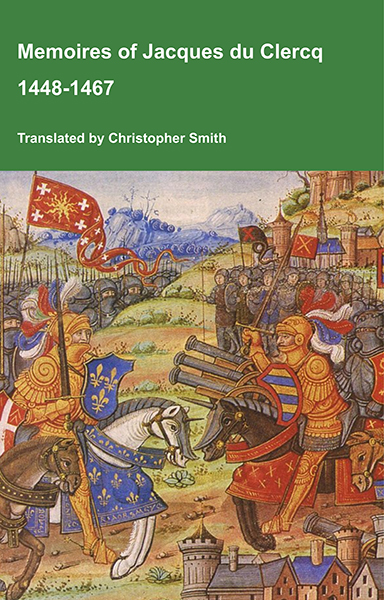
This is a translation of the 'Memoires of Jacques du Clercq', published in 1823 in two volumes, edited by Frederic, Baron de Reissenberg. In his introduction Reissenberg writes: 'Jacques du Clercq tells us that he was born in 1424, and that he was a licentiate in law and a counsellor to Philip the Good, Duke of Burgundy, in the castellany of Douai, Lille, and Orchies. It appears that he established his residence at Arras. In 1446, he married the daughter of Baldwin de la Lacherie, a gentleman who lived in Lille. We read in the fifth book of his Memoirs that his father, also named Jacques du Clercq, had married a lady of the Le Camelin family, from Compiègne. His ancestors, always attached to the counts of Flanders, had constantly served them, whether in their councils or in their armies.' The Memoires cover a period of nineteen years beginning in in 1448, ending in in 1467. It appears that the author had intended to extend the Memoirs beyond that date; no doubt illness or death prevented him from carrying out this plan. As Reissenberg writes the 'merit of this work lies in the simplicity of its narrative, in its tone of good faith, and in a certain air of frankness which naturally wins the reader’s confidence.' Du Clercq ranges from events of national and international importance, including events of the Wars of the Roses in England, to simple, everyday local events such as marriages, robberies, murders, trials and deaths, including that of his own father in Book 5; one of his last entries.
Available at Amazon in eBook and Paperback format.
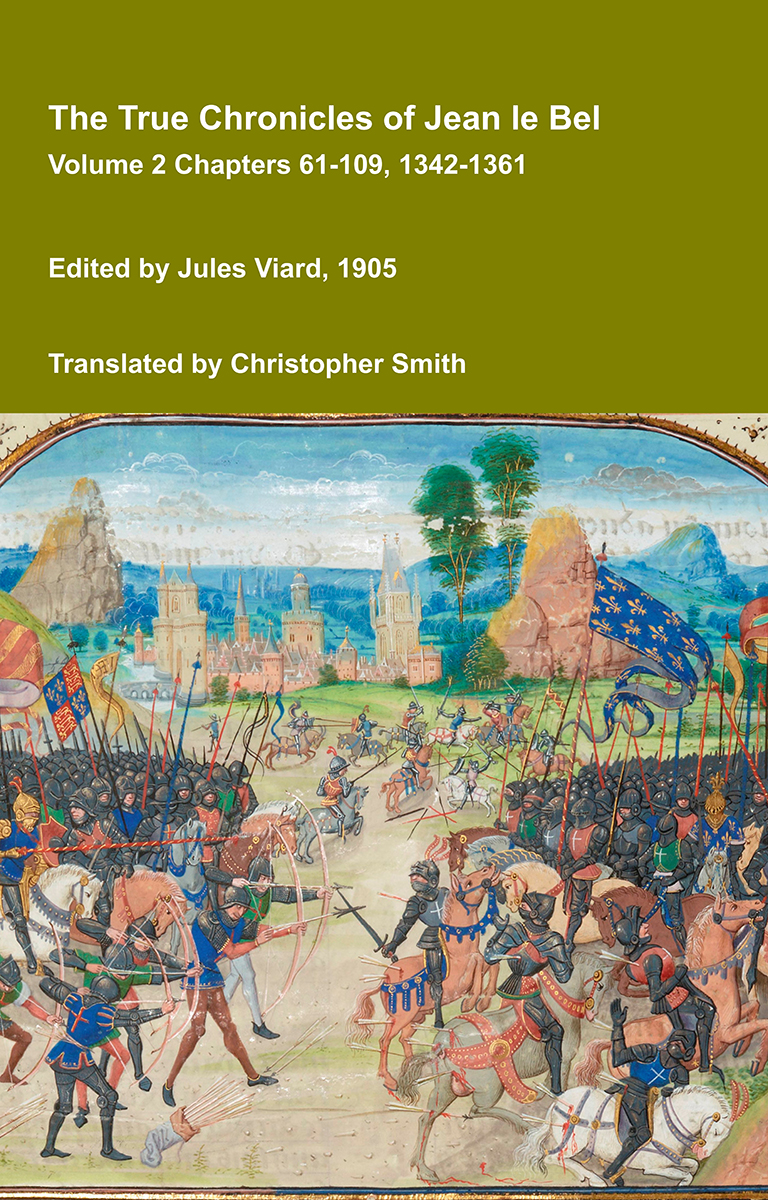 Chronicle of Jean le Bel Volume 2. I have never again heard tell or recounting of such a hateful challenge being undertaken or carried through, except this one. Therefore those who survived that battle ought to be all the more honoured, wherever they may come. This was in the year of grace 13511.
Je n'ouys oncques mais dire ne raconter que telle athayne entreprise adreschast ne alast avant fors que celle. Sy en debvroient estre plus honnouré, partout où ilz venront, ceulx qui demourerent de celle bataille. Ce fut lan de grace MCCCLI.
Note 1. This combat would have taken place not on 27th March, as stated by all the historians who have recounted it and by the inscription placed on the commemorative pyramid erected in 1823, but on Saturday 26th March 1351. This combat was fought on the territory of La Croix-Helléan, Morbihan, near the Oak of Mi-Voie, now replaced by a pyramid.
On 26th March 1351 the Combat of the Thirty was an arranged joust, or melee, between selected combatants from both sides of the conflict, fought at Guillac, a site midway between the Breton castles of Josselin and Ploërmel among 30 champions, knights, and squires on each side.
Robert Knollys [aged 26] took part.
Hugh Calverley [aged 27] fought, was captured and ransomed.
The date of the battle sometimes given as the 27th of March 1351. De la Borderie, History of Brittany, vol. III, p. 514, note 4: Up to now, all historians who have written about the Battle of the Thirty have dated it to March 27, 1351. That is also the date inscribed on the commemorative pyramid at Mi-Voie. However, this date is one day Officer According to a contemporary poem, the battle was fought on a Saturday, the eve of Laetare Sunday (Jerusalem), that is, the fourth Sunday of Lent. In 1351, Easter fell on April 17, so Laetare Sunday was March 27. Therefore, the eve of that Sunday—the day of the Battle of the Thirty—was not March 27, but March 26. See the title and conclusion of the poem, ed. Crapelet, pp. 13 and 35, and stanza 34, Crapelet p. 30.
Bentleys Miscellany Volume 45. The Combat of the Thirty from an old breton lay of the Fourteenth Century by William Harrison Ainsworth.
Chronicle of Jean le Bel Volume 2. Chapter 86. How thirty Frenchmen fought in Brittany against thirty men, both English and Germans, according to certain agreements, and how the English and Germans were defeated.
CHAPITRE LXXXVI. Comment XXX Françoys se combatirent centre XXX que Angloys que Alamans par certaines convenances en Bretaigre, et furent vaincus les Angloys et Alamans.
On 26th March 1371 King Robert II of Scotland [aged 55] was crowned King Scotland.
His son David Stewart 3rd Earl Strathearn 1st Earl Caithness [aged 15] was created 1st Earl Strathearn on the same day.
On 26th March 1402 David Stewart 1st Duke Rothesay [aged 23] starved to death.
On 26th March 1437 Walter Stewart 1st Earl Atholl 3rd Earl Caithness [aged 77] and his grandson Robert Stewart [aged 37] were hanged, drawn and quartered at Edinburgh Castle [Map] for having conspired to assassinate King James I of Scotland [deceased].
The Death of King James. [26th March 1437] Soone after this was takyn the Erle of Athetelles [aged 77], by the Erle of Angwis; and laid ynto the castell of Edenburghe to prisone. This same Erle of Athetelles was endited, arreyned, and dampned. Bot bycause of that this was nighe the fest of Pascue, the crosse was takyn adowne; and he lad to the polour yn the towne, and ther was he fast boundon, and a corone of papir put upon his hed, the which was all abowte depaynetid with jubettes, and for the more dispite and shame to hym was writyne with thes wordes, TRAITOUR, TRAITOUR, TRAITOUR. The Busshope of Urbinate, legate of owre Holy Fadir the Pope, then beyng in Scotteland, upon his ambassite, hard thare confessions. And then evyn forthwith the said Erle of Athetelles was heded; bot he went alwas to have grace and pardon, unto the tyme that the hangman had hym upon the skaffald, to be there and then hedid. For he confessid, and said that he was not yn no wyse consentyng ne assentyng to the Kynges deth; but that he knew therof long, and kepte hit counesell, bycause that Sir Robert Stuward [aged 37], that was oone of the grettest traitours, was his sonnes sonne, and therfore he told hit not to the Kyng. Bot yit nevyre the lesse when this Sir Robert wist therof and told hit to the Erle of Athetelles of the Kynges deth, he blamyd hyme sore, and defendid hym that in no wyse shuld he be consentyng to none such murdure of his Soveran Lord: weynyng veraly that nether he, ne none of all the other, the which bene rehersid afore, wold never have done that murdure yn effecte. And so the said Erle told, and confessid, at his lyvys end; and his hed, coroned with a corone of yryne, stondyng upon a spere shaft yn the myddis of Edenburghe.
The Death of King James. [After 26th March 1437] After this Sir Robert Grame, with many other traitours of his coveene, beyng in captyvyte, were ladde to the towne of Strivellen, and there were thay tourmented and put to the deth. The said Sir Robert Grame stondyng there, at the wher he was tofore enditid of treison afore the Justice and the lawe there, upon his araynment, said playnely that thay had no lawe to do hym to deth, for he said he had nat offendit, bot slayne the Kyng his dedely enmye; for by his letturs, sealed with his seale of armes, long tyme afore he had defyed the Kyng, and renouncid his legeaunce, for causes reasonables as he said. And yf thay wold do hym lawe after the statuytes of armes, thay shuld delyver hym, and let hym go qwite, bicause the Kyng wold have destruyd hym yf he had myght. And thus yn that he said he did no wrong nor synne, bot oonly that he sloughe Godes criature, his enemye. All thes reasons nether couth ne myght suffice for his excuse, the which he perceyvyd wele yn all wise of thare wirchynges. This same Sir Robert Grame, with manly hart and wele avisid, as a mane wele ynstructe yn lawe and letture, said thes wordes standyng at the bare afor the Juges, all the peple there assembled for that cause the selfe tyme. "O ye all so synfull, wreched, and mercilese Scottisshe folke, withoute prudens, and full replet of unavisid folie, I know wele that I shall nowe dye, and ma note escape youre venomous judiciall handes; for by will, and not be right ne lawe, ye have dampned my bodye to the dethe, the which God suffrethe me at this tyme to resave of you, for no desairt of this accusacion that ye condempne me ynne nowe, bot for other offences and trespas, that I yn the vayne tymes of my youth have displeasid hyme ynne. Yit doubt y nat that ye shall se the daye and the tyme, that ye shall pray my soule, for the grete good that I have done to you, and to all this reaume of Scottland, that I have thus slayne and delyveryd you of so cruell a tirant, the grettest enemye the Scottes or Scottland myghth have, consideryng his unstaunchable covetise, yn his youth, ayenst all nature, his tirannye ynmesurable, without pite or mercy to sibbe or to freme, to hie or to lawe, to poure or to riche."
Memoires Jacques du Clercq. On the 26th day of March in the year 1458, in the town of Lille in Flanders, one named Alphonse, a native of Portugal, was burned and his body reduced to ashes. He was dressed in the manner of a hermit, of rather advanced age. This Alphonse secretly led the people into false belief, saying that since Pope Saint Gregory had died, there had been no pope duly elected or consecrated, and consequently no bishops, no priests, no consecrated body of Our Lord, no marriages, nor any other sacraments. And although the said Alphonse claimed to believe in the Trinity, he did not believe in many articles of the faith, but said that he had been examined for heresy in nine bishoprics, yet God had always delivered him without harm to his body. He also said that if he were put to death, within three years there would come such great mortality, famine, and war that the land would be destroyed. The said Alphonse lived a very austere life, going barefoot, wearing a hairshirt, and always being in churches on his knees in prayer. Nevertheless, he was publicly preached against, and although he had been publicly admonished elsewhere before, he would never recant nor show any sign of faith, but said that fire lit around him could not burn him. But he lied, for as soon as the fire was set to the faggots, he was immediately burned and consumed.
LE xxvje jour de mars l'an mil iiija lviij, en la ville de Lille lez Flandres, fust ards et son corps ramené en pouldre ung nommé Alphonse, natif de Portugal, lequel estoit habillié en forme d'hermite, de assés dure age, lequel Alphonse secretement seduisoit le peuple de fausse creance, et disoit icelluy Alphonse, que puis que St Gregoire, pape, mourut, il n'y avoit eu pape duement esleu ne consacré, et par consequent nuls evesques, ne nuls prestres, ne le corps de nostre Seigneur consacré, ne marriages faits, ne nuls aultres sacrements; et combien que ledit Alphonse disoit qu'il croíoit en la Trinité, sy ne croioit il pas en plusieurs articles de la foy, ains disoit qu'il avoit esté en noeuf eveschiés repris de la foy, mais Dieu l'en avoit toujours deslivré sans peril de son corps; que se on le faisoit mourir, que dedans trois ans il adviendroit sy grande mortallité, famine et guerre, que le pays en seroit destruit; et menoit ledit Alphonse moult aspre vie, comme aller sans soulliers, vestir la chaire, et toujours estoit es eglises a genoux et en oraisons; toutesfois il fust preschié publiquement, et jasoit qu'il eust aultrefois esté preschié publiquement ailleurs, ne se vollut oncques rappeller, ne monstrer nuls signes de foy, mais disoit que feu, que on allumast entour lui ne le polroit ardoir, mais il mentit, car sitost que le feu fust boutté es fagots, il fust subitement ards et bruslé.
On 26th March 1470 John Neville 1st Marquess Montagu [aged 39] revoked his title of Earl of Northumberland so that the Earldom could be given to of the Percy family who were its traditional holders.
Henry Percy 4th Earl of Northumberland [aged 21] was restored 4th Earl of Northumberland, 7th Baron Percy of Alnwick, 15th Baron Percy of Topcliffe. Maud Herbert Countess Northumberland [aged 12] by marriage Countess of Northumberland.
A deeply unpopular move with the Neville family who had been longstanding enemies of the Percies in the North. He was created 1st Marquess Montagu instead. Possibly a consequence of the defection of Warwick the Kingmaker [aged 41] to the Lancastrian cause as evidenced by the Welles Rebellion earlier in the year.
Patent Rolls. 26th March 1470. Grant, during pleasure, to Henry Percy [aged 21], knight, of the custody of all honours, castles, lordships, manors, lands and other hereditaments and advowsons and patronages late of Henry, last earl of Northumberland, his father, in the counties of York, Cumberland, Lincoln, Leicester, Cambridge and Suffolk, the cities of London and York, the county of the city of York and the towns of Kyngeston on Hull and Newcastle on Tyne and in the king's hands by force of an act in Parliament at Westminster, 1 Edward IV, with power to collect and retain all rents, debts, services and profits due from the above to George, duke of Clarence, and Richard, earl of Warwick. By K.

On 26th March 1519 Catherine Willoughby Duchess Suffolk was christened at Parham Old Hall, Suffolk [Map].

Ellis' Letters. Sir Thomas Boleyn [aged 42] to Cardinal Wolsey [aged 46] reporting an Audience from, the Duchess of Angoulesme, March 26th 1519.
[MS. COTTON. CALIG. D. VII. fol. 105.]
[Pleasyth it youre] Grace to understand that the xxj th day of this moneth I wrote my last Lettres to your Grace, and as yesterday, which was our Lady's day, I was at Seynt Germayns, where the Quene and my Lady lyeth; but the King roode on our Ladye's even viij. leges hens, and as my Lady tellyth me it is in a dowte whether he cormyth ageyn before the Quene here be brought in bedde or nay; for she lookyth her tyme every howre. Also my Lady hath commaunded me, now while the great Master is away, that I shuld resorte to her for any thing that I shuld have to doo for the King my Master. And she hath, promysed me that she woll make me pryve of such newes as she shall here of from any place: and toold me that the King her sonne whan he departed willed her to shew me a Lettre that came now streyt out of Spayn from his Ambassadour there, and therewithall she called to her the tresourer Robertet and bad hym shewe me that Lettre, wherein was wrytten by the said Ambassador whose name is de la Roche Beauconot, that the King's Highnesse had late sent a Lettre to the King Catholique advertysyng hym how the King here had desired the King's Highnesse by his lettres to wryte to th'Ellectowrs of th'Empire in his favour, the rather to atteyn the dygnyte of th'Empire; the which the King's Highness hath refused bicause of the Amytie betwixt the Kings Grace and the King Catholique, and how the Kings Highnesse had rather that the King Catholique wer Emperowr than the King here; which Lettre he wryteth is in th'andes of the Bishop of Bourgesa oon of the great Counsell of Spayn. Whan I had redde this clawse in the Lettre sent out of Spayn, I prayed my Lady that she wold gyve noo credence to yt, and shewed her how I thought that the said Ambassador wrote this by Informacion of some maliciouse personne that wold sett discord bitwixt Princes; and that I assured her it was not trew. She toold me that she had soo perfecte trust in the Kyng my Master's honnor that she beleved, nor wold beleve, noo such thing; and no more she sayeth woll the King her sonne: sayeng that whan the King here redde the same clause in the Lettre wrytten to hym by his Ambassadour in Spayn he did but lawgh at it, and gave no credence thereto. And she saied it cowlde nat be trew, for the... the Kyng's Highnesse desyring him to wryte to th... th'Empire for hym. So that as farre as I can perceyve neyther my Lady nor the King her sonne gyve noo credence to yt. And as moch as I cowld instaunce her I have desired her not to beleve this nor noo such thing that shuld be contrary to any thing that the Kings Highnesse hath promysed or wrytten to the King her sonne. My Lady also desireth that likewise as I woll make me pryve of every thing that shall touch or arr... to the Kings Grace to th'intent I shuld advertise the Kings Highnesse and your Grace. She likewise desireth to bee advertised of any thing apperteynyng to the King her sonne. She talked with me also of the Meeting of the Kings Highnesse and the King her sonne (which she moch desireth) wherein I shewed her according to myn Instructions that if it pleased her to m... the King her sonne that he wold be content after they had mett a horsbak to repaire streyt to Calais where they myght be honourably receyved, well and easely lodged, it shuld be convenient for their estates. Whereto she aunswered that when they had oones mett, she putt noo dowtes but they shuld... well enough, sayeng that after they had ones seen togyther his Highnesse shuld desire hym to nothing but he wold gyve thereto assent. She sayeng allwaies that it shalbe more.... and triumphant to be lodged in sommer in the fields in tents and pavilions than it shuld be in any Towne. She often... b me of my Lady Princesse and of hir helth, if she hath been syck lately or not. Also Madame la Duchesse the Kings syster, the Duke of Alaunson's wief, lately hath been and yet is very sycke. When I shall have knowledge of any other Newes I shall... to your Grace of them: beseching the holy Trinite long to preserve your Grace. From Poyssy a leege from Saint Germains this xxvjth day of March.
Yowres m...
Th...
Note a. Burgos.
Note b. asked
Letters and Papers Foreign and Domestic Henry VIII 1520. 26 March. [1520] R. O. Rym. XIII. 705. 702. Francis I.
Confirmation of the arrangements made for his meeting with Henry VIII. under the Great Seal. Chatelleraut, 26 March 1519; 6 Francis I. Signed.
Latin.
R. T. 137. 2. Letters indented specifying, in accordance with the treaty of 12 March 1519, the number and rank of the lords, ladies and gentlemen to attend the King and Queen at the interview with Francis I., viz.:—
i. For the King: The cardinal of York, with 300 servants, of whom 12 shall be chaplains and 50 gentlemen, with 50 horses; one archbishop with 70 servants, of whom 5 shall be chaplains and 10 gentlemen, with 30 horses; 2 dukes, each with 70 servants, 5 to be chaplains and 10 gentlemen, with 30 horses. 1 marquis with 56 servants, 4 to be chaplains and 8 gentlemen; 26 horses. 10 earls, each with 42 servants, 3 to be chaplains and 6 gentlemen; 20 horses. 5 bishops, of whom the Bishop of Winchester shall have 56 servants, 4 to be chaplains and 8 gentlemen; 26 horses;—each of the others, 44 servants, 4 to be chaplains and 6 gentlemen; 20 horses. 20 barons, each to have 22 servants, 2 to be chaplains and 2 gentlemen; 12 horses. 4 knights of the order of St. George, each to have 22 servants, 2 to be chaplains and 2 gentlemen; 48 horses. 70 knights, each to have 12 servants, one to be a chaplain; 8 horses. Councillors of the long robe; viz., the King's secretary, the vice-Chancellor, the dean of the Chapel, and the almoner, each to have 12 servants, one a chaplain, and 8 horses. 12 King's chaplains, each with 6 servants and 3 horses. 12 serjeants-at-arms, each with 1 servant and two horses. 200 of the King's guard with 100 horses. 70 grooms of the chamber, with 150 servants and 100 horses among them; 266 officers of the house, with 216 servants and 70 horses; 205 grooms of the stable and of the armories, with 211 horses. The Earl of Essex, being Earl marshal, shall have, beside the number above stated, 130 servants and 100 light horses. Sum total of the King's company, 3,997 persons and 2,087 horses.
ii. For the Queen: 1 duchess, with 4 women, 6 servants and 12 horses; 10 Countesses, with 3 women and 4 servants, and 8 horses each; 12 baronesses, with 2 women, 3 servants and 6 horses each. 20 knights' ladies, with 1 woman, 2 servants and 4 horses each; 14 ladies, with 1 woman, 2 servants and 3 horses each; 6 ladies of the chamber, with 1 servant and 2 horses each; 1 earl, with 42 servants, 3 to be chaplains and 9 gentlemen; horses 20. 3 bishops, to have 44 servants, 4 to be chaplains and 6 gentlemen; horses 60. 4 barons, with 22 servants, 2 to be chaplains and 2 gentlemen; horses 48. 30 knights, with 12 servants, 1 to be a chaplain; horses 240; 6 chaplains with 3 servants and 2 horses each. Grooms 50, officers of the King's chamber, with 20 servants and 30 horses; officers of the King's stable 60, with 70 horses. Sum total of the Queen's company, 1,175 persons and 778 horses.
R. O. Rym. XIII. 710. 3. Names of those appointed to attend the king of England at the Congress.
Commissioners appointed to oversee those who shall accompany the king of France:—The Earl of Essex, Lord Abergavenny, Sir Edward Ponynges, Sir Rob. Wingfield. To give orders to the gentlemen:—Sir Edward Belknapp, Sir Nich. Vaux, Sir John Peche, Sir Maurice Berkeley. To give orders to the foot soldiers:—Sir Weston Browne, Sir Edward Ferrers, Sir Rob. Constable, Sir Ralph Egerton, Sir Thomas Lucy, Sir John Marney. To ride with the king of England at the embracing of the two Kings:—The Legate, archbishop of Canterbury, dukes of Buckingham and Suffolk, marquis of Dorset. Bishops:—Durham, Armagh, Ely, Chester, Rochester, Exeter, Hereford. Earls:—Stafford, Northumberland, Westmoreland [aged 22], Shrewsbury [aged 52], Worcester, Devonshire, Kent, Wiltshire, Derby, Kildare. Barons:—Maltravers, Montagu, Herbert, the grand prior of St. John of England, Roos, Fitzwalter, Hastings, Delavare, Dacres, Ferrers, Cobham, Daubeney, Lumley, Sir Henry Marney, Sir William Sandys, Th. Boleyn [aged 43], Lord Howard.
The servants of the king of England shall march next their King, preceded by the nobles and gentlemen of the Legate, who shall follow the gentlemen of the other lords. The King's guard to follow him in their accustomed places.Fr., pp. 2. Endd.
R. O. Rym. XIII. 713. 4. The names of those who will be with the French king when he meets the king of England.
The king of Navarre; dukes of Alençon, Bourbon, Vendosme and Lorraine; count of Saint Pol; prince de la Roche Suryon; count of Dreux and Rhetel, Sieur Dorval and governor of Champaigne; count of Benon, sieur de la Tremoille, first Chamberlain, admiral of Guyenne and governor of Burgundy; count of Estampes and Caravats, sieur de Boysy, grand master and governor of the Dauphin; Bonnyvet, admiral of France, Lautrec, La Palisse and Chastillon, marshals; count of Guyse, brother of the duke of Lorraine; the bastard of Savoy, count of Villars and Beaufort, governor of Provence; count de Laval; mons. de Chasteaubriant; count of Harcourt; princes of Orange and Tallemont; mons. de Nevers; mons d'Esparrox, lieutenant of Guyenne, and count of Montfort; Mess. de Lescun and Montmorency; le Grand Escuyer; counts de la Chambre, Tonnerre, Brienne, Joigny, Bremie and Mont Reuel; mons. d'Albret. The other knights of the Order.
The king's household, 200 gentlemen; St. Vallier and the grand seneschal of Normandy, captains.
400 archers of the guard, and 4 captains; 100 Swiss, De Florenges, captain; maîtres d'hôtel, pannetiers, valets, &c.; gentlemen of the council and of the finances. The other pensioners will remain in their houses.Francis will bring with him the above company, if the king of England thinks it suitable; but if not, he will diminish it.
These noblemen will only have with them about 200 horses.Fr., pp. 3. Endd.: Noblemen's names that shall accompany the French king at the meeting at Calais.
Henry Machyn's Diary. 26th March 1561. The sam day of Marche at after-none at Westmynster [was brought] from the quen('s) armere [almondry] my lade Jane Semer, with [all the quire] of the abbay, with ijC. of (the) quen('s) cowrt, the wyche she was [one] of the quen('s) mayd(s) and in grett faver, and a iiijxx morners of [men and] women, of lordes and lades, and gentylmen and gentyllwomen, all in blake, be-syd odur [other] of the quen('s) preve chambur, and she [had] a grett baner of armes bornne, and master Clarenshux [aged 51] was the harold, and master Skameler [aged 41] the nuw byshope of Peterborow dyd pryche. [She was] bered in the sam chapell [Map] wher my lade of Suffoke was.
Note. P. 254. Funeral of lady Jane Seymour. Daughter of Edward duke of Somerset, and supposed to have been destined by him to become the consort of his nephew king Edward. A Latin letter written by her (of course under the dictation of her tutor) to the Reformers Bucer and Fagius, dated at Syon, June 12, 1549, is published in the Third Series of Zurich Letters, printed for the Parker Society. She was one of queen Elizabeth's maids of honour, and shortly before her death she had taken an active part in promoting the clandestine marriage of her brother the earl of Hertford with her companion the lady Katharine Grey, a line of conduct which would certainly have brought upon her the anger of her royal mistress, had she lived until it was discovered. (See Ellis's Orig. Letters, Second Series, vol. ii. p. 272.) Her age was only nineteen. See an engraving of her monumental tablet, with the inscription, erected by "her deare brother" the earl, in Dart's Westminster Abbey, vol. i. pl. 12. In the accounts of St. Margaret's parish, Westminster, is an entry of 10s. received at her funeral.
On 19th February 1564 Marie Habsburg Spain was born to Maximilian Habsburg Spain II Holy Roman Emperor [aged 36] and Maria of Spain Holy Roman Empress [aged 35]. On 26th March 1564 she died. Coefficient of inbreeding 10.03%.



Chronicle of Walter of Guisborough
A canon regular of the Augustinian Guisborough Priory, Yorkshire, formerly known as The Chronicle of Walter of Hemingburgh, describes the period from 1066 to 1346. Before 1274 the Chronicle is based on other works. Thereafter, the Chronicle is original, and a remarkable source for the events of the time. This book provides a translation of the Chronicle from that date. The Latin source for our translation is the 1849 work edited by Hans Claude Hamilton. Hamilton, in his preface, says: 'In the present work we behold perhaps one of the finest samples of our early chronicles, both as regards the value of the events recorded, and the correctness with which they are detailed; Nor will the pleasing style of composition be lightly passed over by those capable of seeing reflected from it the tokens of a vigorous and cultivated mind, and a favourable specimen of the learning and taste of the age in which it was framed.'
Available at Amazon in eBook and Paperback format.

Diary of Anne Clifford. 26th March 1617. The 28th1 my Lord [aged 28] came here with Thomas Glenham [aged 23] from Buckhurst, he was troubled with a cough and was fain to lie in Leicester Chamber.
Note 1. A mistake for the 26th.
Diary of Anne Clifford. 26th March 1619. The 26th Good Friday after supper I fell in a great passion of weeping in my chamber, and when my Lord [aged 30] came in I told him I found my mind so troubled as I held not myself fit to receive the Communion this Easter, which all this Lent I intended to have done.
On 26th March 1662 Marie Louise Bourbon Queen Consort Spain was born to Philip Bourbon I Duke Orléans [aged 21] and Princess Henrietta Stewart Duchess Orléans [aged 17]. She a granddaughter of King Charles I of England, Scotland and Ireland. Coefficient of inbreeding 7.50%. She married November 1679 her first cousin once removed King Charles "Bewitched" II of Spain, son of Philip IV King Spain and Mariana of Austria Queen Consort Spain.


Samuel Pepys' Diary. 26th March 1663. This morning came a new cook-maid at £4 per annum, the first time I ever did give so much, but we hope it will be nothing lost by keeping a good cook. She did live last at my Lord Monk's [aged 54] house, and indeed at dinner did get what there was very prettily ready and neat for me, which did please me much.


Samuel Pepys' Diary. 26th March 1664. After dinner Sir W. Batten [aged 63] sent to speak with me, and told me that he had proffered our bill today in the House, and that it was read without any dissenters, and he fears not but will pass very well, which I shall be glad of. He told me also how Sir [Richard] Temple [aged 29] hath spoke very discontentfull words in the House about the Tryennial Bill; but it hath been read the second time to-day, and committed; and, he believes, will go on without more ado, though there are many in the House are displeased at it, though they dare not say much. But above all expectation, Mr. Prin [aged 64] is the man against it, comparing it to the idoll whose head was of gold, and his body and legs and feet of different metal. So this Bill had several degrees of calling of Parliaments, in case the King [aged 33], and then the Council, and then the Chancellor [aged 55], and then the Sheriffes, should fail to do it. He tells me also, how, upon occasion of some 'prentices being put in the pillory to-day for beating of their masters, or some such like thing, in Cheapside, a company of 'prentices came and rescued them, and pulled down the pillory; and they being set up again, did the like again. So that the Lord Mayor [aged 48] and Major Generall Browne [aged 62] was fain to come and stay there, to keep the peace; and drums, all up and down the city, was beat to raise the trained bands, for to quiett the towne, and by and by, going out with my uncle [aged 62] and aunt Wight [aged 45] by coach with my wife through Cheapside (the rest of the company after much content and mirth being broke up), we saw a trained band stand in Cheapside upon their guard. We went, much against my uncle's will, as far almost as Hyde Park, he and my aunt falling out all the way about it, which vexed me, but by this I understand my uncle more than ever I did, for he was mighty soon angry, and wished a pox take her, which I was sorry to hear. The weather I confess turning on a sudden to rain did make it very unpleasant, but yet there was no occasion in the world for his being so angry, but she bore herself very discreetly, and I must confess she proves to me much another woman than I thought her, but all was peace again presently, and so it raining very fast, we met many brave coaches coming from the Parke and so we turned and set them down at home, and so we home ourselves, and ended the day with great content to think how it hath pleased the Lord in six years time to raise me from a condition of constant and dangerous and most painfull sicknesse and low condition and poverty to a state of constant health almost, great honour and plenty, for which the Lord God of heaven make me truly thankfull.


Samuel Pepys' Diary. 26th March 1664. Up very betimes and to my office, and there read over some papers against a meeting by and by at this office of Mr. Povy [aged 50], Sir W. Rider, Creed, and Vernaty, and Mr. Gauden about my Lord Peterborough's [aged 42] accounts for Tangier [Map], wherein we proceeded a good way; but, Lord! to see how ridiculous Mr. Povy is in all he says or do; like a man not more fit for to be in such employments as he is, and particularly that of Treasurer (paying many and very great sums without the least written order) as he is to be King of England, and seems but this day, after much discourse of mine, to be sensible of that part of his folly, besides a great deal more in other things.
Samuel Pepys' Diary. 26th March 1668. Thence, by agreement, we all of us to the Blue Balls, hard by, whither Mr. Pierce also goes with us, who met us at the play, and anon comes Manuel, and his wife, and Knepp, and Harris [aged 34], who brings with him Mr. Banister [aged 38], the great master of musique; and after much difficulty in getting of musique, we to dancing, and then to a supper of some French dishes, which yet did not please me, and then to dance and sing; and mighty merry we were till about eleven or twelve at night, with mighty great content in all my company, and I did, as I love to do, enjoy myself in my pleasure as being the height of what we take pains for and can hope for in this world, and therefore to be enjoyed while we are young and capable of these joys. My wife extraordinary fine to-day, in her flower tabby suit, bought a year and more ago, before my mother's death put her into mourning, and so not worn till this day: and every body in love with it; and indeed she is very fine and handsome in it. I having paid the reckoning, which come to almost £4., we parted: my company and William Batelier, who was also with us, home in a coach, round by the Wall, where we met so many stops by the Watches, that it cost us much time and some trouble, and more money, to every Watch, to them to drink; this being encreased by the trouble the 'prentices did lately give the City, so that the Militia and Watches are very strict at this time; and we had like to have met with a stop for all night at the Constable's watch, at Mooregate, by a pragmatical Constable; but we come well home at about two in the morning, and so to bed. This noon, from Mrs. Williams's, my Lord Brouncker [aged 48] sent to Somersett House [Map] to hear how the Duchess of Richmond [aged 20] do; and word was brought him that she is pretty well, but mighty full of the smallpox, by which all do conclude she will be wholly spoiled, which is the greatest instance of the uncertainty of beauty that could be in this age; but then she hath had the benefit of it to be first married, and to have kept it so long, under the greatest temptations in the world from a King, and yet without the least imputation. This afternoon, at the play, Sir Fr. Hollis [aged 25] spoke to me as a secret, and matter of confidence in me, and friendship to Sir W. Pen [aged 46], who is now out of town, that it were well he were made acquainted that he finds in the House of Commons, which met this day, several motions made for the calling strictly again upon the Miscarriages, and particularly in the business of the Prises, and the not prosecuting of the first victory, only to give an affront to Sir W. Pen, whose going to sea this year do give them matter of great dislike. So though I do not much trouble myself for him, yet I am sorry that he should have this fall so unhappily without any fault, but rather merit of his own that made him fitter for this command than any body else, and the more for that this business of his may haply occasion their more eager pursuit against the whole body of the office.


Calendar of State Papers Charles II 26 Mar 1668. 26th March 1668. Woolwich. Ann Pett to Sam. Pepys [aged 35]. My husband [aged 47] died last Sunday, and has left me in a mean condition, having spent by losses and sickness my own estate and his, and I have 4 children and am £300. in debt. His sickness has cost, since he came to Woolwich, £700., besides what is now to pay. I intreat you to assist me in obtaining £500. due to my husband, as also money owing in the yard, and to stand my friend to the Navy Commissioners, that I may continue in my house some time longer; my husband always attended to his Majesty's service, and never looked after his own concerns. [Ibid. No. 71.]


John Evelyn's Diary. 26th March 1673. I was sworn a younger brother of the Trinity House, with my most worthy and long-acquainted noble friend, Lord Ossory [aged 38] (eldest son to the Duke of Ormond [aged 62]), Sir Richard Browne [aged 68], my father-in-law, being now Master of that Society; after which there was a great collation.


On 26th March 1675 Ernest "The Pious" Saxe Gotha I Duke Saxe Gotha [aged 73] died at Friedenstein Palace, Gotha.
This is a translation of the 'Memoires of Jacques du Clercq', published in 1823 in two volumes, edited by Frederic, Baron de Reissenberg. In his introduction Reissenberg writes: 'Jacques du Clercq tells us that he was born in 1424, and that he was a licentiate in law and a counsellor to Philip the Good, Duke of Burgundy, in the castellany of Douai, Lille, and Orchies. It appears that he established his residence at Arras. In 1446, he married the daughter of Baldwin de la Lacherie, a gentleman who lived in Lille. We read in the fifth book of his Memoirs that his father, also named Jacques du Clercq, had married a lady of the Le Camelin family, from Compiègne. His ancestors, always attached to the counts of Flanders, had constantly served them, whether in their councils or in their armies.' The Memoires cover a period of nineteen years beginning in in 1448, ending in in 1467. It appears that the author had intended to extend the Memoirs beyond that date; no doubt illness or death prevented him from carrying out this plan. As Reissenberg writes the 'merit of this work lies in the simplicity of its narrative, in its tone of good faith, and in a certain air of frankness which naturally wins the reader’s confidence.' Du Clercq ranges from events of national and international importance, including events of the Wars of the Roses in England, to simple, everyday local events such as marriages, robberies, murders, trials and deaths, including that of his own father in Book 5; one of his last entries.
Available at Amazon in eBook and Paperback format.

John Evelyn's Diary. 26th March 1675. Dr. Brideoak [aged 62] was elected Bishop of Chichester, on the translation of Dr. Gunning [aged 61] to Ely.
John Evelyn's Diary. 26th March 1685. I was invited to the funerall of Capt. Gunman [deceased], that excellent pilot and seaman, who had behav'd himselfe so valiantly in the Dutch warr. He died of a gangrene, occasion'd by his fall from the pier of Calais. This was the Captain of the yacht carrying the Duke [aged 51] (now King) to Scotland, and was accus'd for not giving timely warning when she split on the sands, where so many perish'd; but I am most confident he was no ways guilty, either of negligence or designe, as he made appeare not onely at the examination of the matter of fact, but in the Vindication he shew'd me, and which must needes give any man of reason satisfaction. He was a sober, frugal, cheerfull, and temperate man; we have few such seamen left.


On 26th March 1687 Sophia Dorothea Hanover Queen Consort Prussia was born to King George I [aged 26] and Sophia Dorothea of Celle [aged 20]. She a great x 2 granddaughter of King James I of England and Ireland and VI of Scotland. Coefficient of inbreeding 6.25%. She married 28th November 1706 her first cousin Frederick William "Soldier King" I King Prussia, son of Frederick I King Prussia and Sophia Charlotte Hanover Queen Consort Prussia, and had issue.


On 26th March 1695 James Fitzjames 1st Duke Berwick [aged 24] and Honora Burke Duchess Berwick [aged 21] were married at Saint-Germain-en-Laye, Yvelines. She by marriage Duchess Berwick. She the daughter of William Burke 7th Earl Clanricarde and Helen MacCarty Countess Clanricarde [aged 63]. He the illegitmate son of King James II of England Scotland and Ireland [aged 61] and Arabella Churchill [aged 46].
On 26th March 1797 William Brabazon 9th Earl Meath [aged 27] and Captain Robert Gore of Seaview, County Wicklow, duelled on the Hill of Cookstown near Enniskerry County Wicklow on the land of a Mr Buckley, tenant of lord Powerscourt [aged 34]. The two gentlemen stood twelve yards apart and at a little before 10am the first fire was shot and the Earl of Meath received a ball in his thigh, which ended the duel. The Earl was unable to stand and the ball could not be extracted from his thigh. The Earl died two months later.
The dispute which led up to the duel that resulted in the death of William Brabazon all stemmed from the forming of two adjoining Cavalry Corpses in North County Wicklow. One was the Bray Yeomanry Corps and the other was the Mount-kennedy Corps. The dispute revolved around the recruitment of local men of each corps and that some of men were recruited by both Corps. Gore was the commander of the Mount Kennedy Corps and the young Earl of Meath was the commander of the Bray Corps. Several messages were exchanged between the two gentlemen regarding one or two of the mentioned recruits which it seems lead to the Earl of Meath apparently charging Gore of a mis-falsehood, which the Earl apparently would not withdraw. This resulted in Gore feeling he had to defend his honour.
On 26th March 1819 Prince George Hanover 2nd Duke Cambridge was born to Adolphus Hanover 1st Duke Cambridge [aged 45] and Princess Augusta Hesse-Kassel Duchess Cambridge [aged 21] at Cambridge House, Hanover, Lower Saxony. He a grandson of King George III of Great Britain and Ireland. Coefficient of inbreeding 1.66%. He married 8th January 1847 Sarah Fairbrother and had issue.


Greville Memoirs. 26th March 1832. Ten days since I have written anything here, but en revanche I have written a pamphlet. An article appeared in the 'Quarterly,' attacking Harrowby and his friends. Wharncliffe [aged 55] was so desirous it should be answered that I undertook the job, and it comes out to-day in a 'Letter to Lockhart, in reply,' &c. I don't believe anybody read the last I wrote, but as I have published this at Ridgway's, perhaps it may have a more extensive sale. The events have been the final passing of the Bill, after three nights' debate, by a majority of 116, ended by a very fine speech from Peel, who has eminently distinguished himself through this fight. Stanley closed the debate at five o'clock in the morning, with what they say was a good and dexterous speech, but which contained a very unnecessary dissertation about the Peers. This, together with some words from Richmond and the cheerfulness of Holland, makes my mind misgive me that we shall still have them created for the Committee. The conduct of the ultra-Tories has been so bad and so silly that I cannot wish to bring them in, though I have a great desire to turn the others out. As to a moderate party, it is a mere dream, for where is the moderation? This day Lord John Russell [aged 39] brings the Bill up to the House of Lords, and much indeed depends upon what passes there. Harrowby and Wharncliffe will make their speeches, and we shall, I conclude, have the Duke and Lord Grey. I expect, and I beg his pardon if I am wrong, that the Duke will make as mischievous a speech as he can, and try to provoke declarations and pledges against the Bill. The Ministers are exceedingly anxious that Harrowby should confine himself to generalities, which I hope too, for I am certain no good can, and much harm may, be done by going into details. Grey, Holland, and Richmond all three spoke to me about it last night, and I am going to see what can be done with them. I should not fear Harrowby but that he is petulant and sour; Wharncliffe is vain, and has been excited in all this business, though with very good and very disinterested motives, but he cannot bear patiently the abuse and the ridicule with which both the extreme ends endeavour to cover him, and he is uneasy under it, and what I dread is that in making attempts to set himself right, and to clear his character with a party who will never forgive him for what he has done, and to whom whatever he says will be words cast to the winds, he will flounder, and say something which will elicit from Lord Grey some declaration that may make matters worse than ever. What I hope and trust is that the Government and our people will confine themselves to civil generalities, and pledge themselves de part et d'autre to nothing, and that they will not be provoked by taunts from any quarter to depart from that prudent course.


On 26th March 1847 Francis Russell 7th Duke Bedford [aged 58] was appointed 702nd Knight of the Garter by Queen Victoria of the United Kingdom [aged 27].
On 26th March 1849 Hubert Von Herkomer was born.
On 26th March 1856 Blanche Somerset Marchioness of Waterford was born to Henry Charles Fitzroy Somerset 8th Duke Beaufort [aged 32] and Georgiana Charlotte Curzon Howe Duchess Beaufort [aged 31]. She married 21st July 1874 her half third cousin once removed John Beresford 5th Marquess Waterford, son of John Beresford 4th Marquess Waterford and Christiana Leslie Marchioness of Waterford, and had issue.

After 26th March 1857. St Andrew's Church, Brympton d'Evercy [Map]. Memorial to Jane Huck Saunders Countess of Westmoreland [deceased].
Jane Huck Saunders Countess of Westmoreland: In 1783 she was born to Richard Huck Saunders. In 1800 John Fane 10th Earl of Westmoreland and she were married. The difference in their ages was 23 years. He the son of John Fane 9th Earl of Westmoreland and Augusta Bertie. On 26th March 1857 she died at Brympton d'Evercy, Somerset.

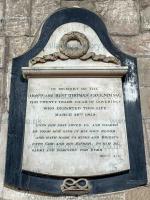
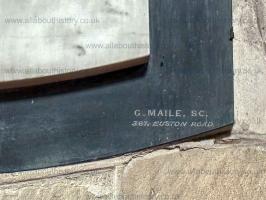
On 26th March 1859 Reverend Thomas Cavendish died. Memorial window at St Cuthbert's Church, Doveridge [Map] and monument by G Maile.
Reverend Thomas Cavendish: he was born to Richard Cavendish 2nd Baron Waterpark and Juliana Cooper Baroness Waterpark. On 4th May 1835 Reverend Thomas Cavendish and Sophia Robinson were married.

On 26th March 1863 Henry Fitzroy 5th Duke Grafton [aged 73] died at Wakefield Lodge, Pottersbury. His son William [aged 43] succeeded 6th Duke Grafton, 6th Earl Euston, 6th Viscount Ipswich, 6th Baron Sudbury, 7th Earl Arlington, 7th Viscount Thetford, 7th Baron Arlington of Arlington in Middlesex and 7th Baron Arlington of Arlington in Middlesex. Marie Anne Louise Baring Duchess Grafton [aged 30] by marriage Duchess Grafton.
On 26th March 1870 Charles De Vere Beauclerk 11th Duke St Albans was born to William Amelius Aubrey Beauclerk 10th Duke St Albans [aged 29] and Sybil Mary Grey Duchess St Albans [aged 21].
After 26th March 1888. Brinkburn Priory, Northumberland [Map]. Grave of Cadogan Hodgson Cadogan [deceased].
Cadogan Hodgson Cadogan: In 1827 he was born to William Hodgson Cadogan. On 21st December 1847 he and Isabella Mary Smith were married. On 26th March 1888 he died.
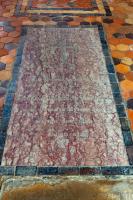
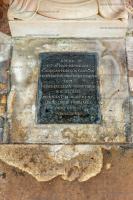
On 26th March 1889 Richard Temple-Nugent-Brydges-Chandos-Grenville 3rd Duke of Buckingham and Chandos [aged 65] died from diabetes at 2 Queen Anne Street aka Chandos House Marylebone. Duke of Buckingham and Chandos, Marquess Buckingham, Marquess of Chandos, Earl Temple, Earl Nugent extinct.
William Stephen Temple Gore-Langton 4th Earl Temple [aged 41] succeeded 4th Earl Temple of Stowe according to the special remainder in its patent. Helen Mabel Graham-Montgomery Countess Temple of Stowe by marriage Countess Temple of Stowe.
Charles Lyttelton 8th Viscount Cobham [aged 46] succeeded 8th Viscount Cobham. Mary Susan Cavendish Viscountess Cobham [aged 36] by marriage Viscountess Cobham.
Glossop War Memorial [Map] was unveiled on 26th March 1922, the same day as the identical Hadfield War Memorial. The sculptor Vernon March.
A procession of the Mayor (S. Bamforth), Lord Howard [aged 62], Lord Doverdale (Edward Partington [aged 85]), the War Memorial Committee and other officials made their way from the Town Hall to Norfolk Square at 2.30pm. Lord Howard had been asked to unveil the War Memorial. He gave a short speech stating: ""that he felt much honoured in having been asked to unveil that monument, which all of them had subscribed to, to enable it to be raised in that square." "
The Rev. W. M. Martin-Ellis, Vicar of Whitfield, then performed the dedication of the Memorial. Four buglers then played "The Last Post". This was followed by the male voice choir singing Sullivan's "Homeland" and the buglers then played "The Reveille". The ceremony ended with the singing of the National Anthem.
Wreaths were then laid by the Mayor, Mr C. Haughton (who had lost three sons in the War) deposited on behalf of ex-servicemen. There were also wreaths from Mrs Partington (the ex-Mayor), the police, Mr Dickinson (headmaster of Glossop Grammar School) and many other organisations.
The Mayor, Lord Howard, Lord Doverdale and Council Officials along with the Glossop Old Band and Glossop Choral Society left immediately after the ceremony. They were due to perform the dedication of Hadfield War Memorial at 3.30pm.
Edward Partington 1st Baron Doverdale: On 28th September 1836 he was born. The London Gazette 29924. Whitehall, January 30, 1917. The King has been pleased, by Letters Patent under the Great Seal of the United Kingdom of Great Britain and Ireland, to confer the dignity of a Baron of the said United Kingdom upon Sir Edward Partington, Knight, and the heirs male of his Body lawfully begotten, by the name, style and title of Baron Doverdale, of Westwood Park, in the county of Worcester. On 5th January 1925 Edward Partington 1st Baron Doverdale died. His son Oswald succeeded 2nd Baron Doverdale of Westwood Park in Worcestershire. Clara Isabel Murray Baroness Doverdale by marriage Baroness Doverdale of Westwood Park in Worcestershire.


Annals of the six Kings of England by Nicholas Trivet
Translation of the Annals of the Six Kings of England by that traces the rise and rule of the Angevin aka Plantagenet dynasty from the mid-12th to early 14th century. Written by the Dominican scholar Nicholas Trivet, the work offers a vivid account of English history from the reign of King Stephen through to the death of King Edward I, blending political narrative with moral reflection. Covering the reigns of six monarchs—from Stephen to Edward I—the chronicle explores royal authority, rebellion, war, and the shifting balance between crown, church, and nobility. Trivet provides detailed insight into defining moments such as baronial conflicts, Anglo-French rivalry, and the consolidation of royal power under Edward I, whose reign he describes with particular immediacy. The Annals combines careful year-by-year reporting with thoughtful interpretation, presenting history not merely as a sequence of events but as a moral and political lesson. Ideal for readers interested in medieval history, kingship, and the origins of the English state, this chronicle remains a valuable and accessible window into the turbulent world of the Plantagenet kings.
Available at Amazon in eBook and Paperback format.
On 26th March 1942 HMS Jaguar and the Greek destroyer Vasilissa Olga were escorting the tanker RFA Slavol when Slavol was torpedoed by the German submarine U-652 and set on fire. Jaguar came alongside Salvol to rescue the oiler's crew, but was then struck by two more torpedoes from U-652. Jaguar broke into three parts and quickly sank off Sidi Barrani, Egypt, with the loss of 3 officers and 190 of her crew. 8 officers and 45 crewmen were rescued by the South African naval whaler Klo.
Lieutenant-Commander Lionel Rupert Knyvet Tyrwhitt [aged 38], commander of HMS Jaguar, was killed in action.

On 26th March 1943 Emma Cavendish was born to Andrew Cavendish 11th Duke Devonshire [aged 23] and Deborah Vivien Mitford Duchess Devonshire [aged 22] She married 3rd September 1963 Tobias Tennant, son of Christopher Tennant 2nd Baron Glenconner, and had issue.
On 26th March 2015 King Richard III of England was reburied at Leicester Cathedral [Map].
On 26th March 1412 Amadeus Savoy was born to Amadeus Savoy VIII Count Savoy [aged 28] and Mary Valois Countess Savoy [aged 25]. He a great x 4 grandson of King Edward I of England. Coefficient of inbreeding 3.64%.
On 19th February 1564 Marie Habsburg Spain was born to Maximilian Habsburg Spain II Holy Roman Emperor [aged 36] and Maria of Spain Holy Roman Empress [aged 35]. On 26th March 1564 she died. Coefficient of inbreeding 10.03%.
On 26th March 1662 Mariana Barnewall was born to Henry Barnewall 2nd Viscount Barnewall and Mary Netterville.
On 26th March 1662 Marie Louise Bourbon Queen Consort Spain was born to Philip Bourbon I Duke Orléans [aged 21] and Princess Henrietta Stewart Duchess Orléans [aged 17]. She a granddaughter of King Charles I of England, Scotland and Ireland. Coefficient of inbreeding 7.50%. She married November 1679 her first cousin once removed King Charles "Bewitched" II of Spain, son of Philip IV King Spain and Mariana of Austria Queen Consort Spain.
On 26th March 1687 Sophia Dorothea Hanover Queen Consort Prussia was born to King George I [aged 26] and Sophia Dorothea of Celle [aged 20]. She a great x 2 granddaughter of King James I of England and Ireland and VI of Scotland. Coefficient of inbreeding 6.25%. She married 28th November 1706 her first cousin Frederick William "Soldier King" I King Prussia, son of Frederick I King Prussia and Sophia Charlotte Hanover Queen Consort Prussia, and had issue.
On 26th March 1703 Charles Knollys 5th Earl Banbury was born to Charles Knollys 4th Earl Banbury [aged 40] and Mary Woods [aged 19]. He was baptised on 14th April 1703 at St James' Church, Piccadilly. He married 28th December 1725 Martha Hughes and had issue.
On 26th March 1721 John Chichester 5th Baronet was born to John Chichester 4th Baronet [aged 33] and Anne Leigh. He married before 1752 Frances Chudleigh, daughter of George Chudleigh 4th Baronet and Frances Davie, and had issue.
William of Worcester's Chronicle of England
William of Worcester, born around 1415, and died around 1482 was secretary to John Fastolf, the renowned soldier of the Hundred Years War, during which time he collected documents, letters, and wrote a record of events. Following their return to England in 1440 William was witness to major events. Twice in his chronicle he uses the first person: 1. when writing about the murder of Thomas, 7th Baron Scales, in 1460, he writes '… and I saw him lying naked in the cemetery near the porch of the church of St. Mary Overie in Southwark …' and 2. describing King Edward IV's entry into London in 1461 he writes '… proclaimed that all the people themselves were to recognize and acknowledge Edward as king. I was present and heard this, and immediately went down with them into the city'. William’s Chronicle is rich in detail. It is the source of much information about the Wars of the Roses, including the term 'Diabolical Marriage' to describe the marriage of Queen Elizabeth Woodville’s brother John’s marriage to Katherine, Dowager Duchess of Norfolk, he aged twenty, she sixty-five or more, and the story about a paper crown being placed in mockery on the severed head of Richard, 3rd Duke of York.
Available at Amazon in eBook and Paperback format.
On 26th March 1735 John Thomas Stanley 6th Baronet was born to Edward Stanley 5th Baronet at Alderley Park, Cheshire [Map].
On 26th March 1752 Anna-Maria Amyand Countess Minto was born to George Amyand 1st Baronet [aged 31] and Anna Maria Korteen Lady Amyand. She married 1777 Gilbert Elliot 1st Earl Minto, son of Gilbert Elliot 3rd Baronet, and had issue.
On 26th March 1757 Henrietta Maria Phipps was born to Constantine Phipps 1st Baron Mulgrave [aged 34] and Lepell Hervey Baroness Mulgrave [aged 33]. She a great x 2 granddaughter of King James II of England Scotland and Ireland. She married 19th August 1776 her fourth cousin Charles Dillon Lee 12th Viscount Dillon, son of Henry Dillon 11th Viscount Dillon and Charlotte Lee Viscountess Dillon, and had issue.


On 26th March 1775 Caroline Eustatia Courtenay was born to William Courtenay 8th Earl Devon [aged 32] and Frances Clack Countess Devon.

On 26th March 1777 Louisa Paget was born to Henry Bayly-Paget 1st Earl Uxbridge [aged 32] and Jane Champagné Countess Uxbridge [aged 35]. She married (1) 1801 James Erskine (2) 23rd January 1842 George Murray.
On 26th March 1789 Augustus Fitzhardinge Berkeley was born illegitimately to Frederick Augustus Berkeley 5th Earl Berkeley [aged 44] and Mary Cole. He a great x 3 grandson of King Charles II of England Scotland and Ireland.
On 26th March 1803 John Lubbock 3rd Baronet was born to John Lubbock 2nd Baronet [aged 28] and Mary Entwistle. He married 1833 Harriet Hotham and had issue.
On 26th March 1818 William Grey was born to Bishop Edward Grey [aged 35] and Eliza Innes [aged 13].
On 26th March 1819 Prince George Hanover 2nd Duke Cambridge was born to Adolphus Hanover 1st Duke Cambridge [aged 45] and Princess Augusta Hesse-Kassel Duchess Cambridge [aged 21] at Cambridge House, Hanover, Lower Saxony. He a grandson of King George III of Great Britain and Ireland. Coefficient of inbreeding 1.66%. He married 8th January 1847 Sarah Fairbrother and had issue.
On 26th March 1820 Richard Godolphin Henry Hastings was born to Hans Francis Hastings 12th Earl Huntingdon [aged 40] and Frances Cobbe Countess Huntingdon.
On 26th March 1830 Francis George Manningham Boileau 2nd Baronet was born to John Peter Boileau 1st Baronet [aged 35] and Catherine Sarah Elliot-Murray-Kynynmound Lady Boileau [aged 32]. He married 2nd August 1860 Lucy Henrietta Nugent Lady Boileau, daughter of George Nugent 2nd Baronet and Maria Charlotte Ridley-Colborne Lady Nugent, and had issue.
On 26th March 1836 William Archer Amherst 3rd Earl Amherst was born to William Amherst 2nd Earl Amherst [aged 30] and Gertrude Percy Countess Amherst [aged 21] at Mayfair. He married 27th August 1862 Julia Mann Countess Amherst, daughter of James Mann 5th Earl Cornwallis.

On 26th March 1845 Henry Marsham was born to Charles Marsham 3rd Earl Romney [aged 36] and Margaret Harriet Montagu Scott Countess Romney [aged 33].

The True Chronicles of Jean le Bel Volume 1 Chapters 1-60 1307-1342
The True Chronicles of Jean le Bel offer one of the most vivid and immediate accounts of 14th-century Europe, written by a knight who lived through the events he describes, and experienced some of them first hand. Covering the early decades of the Hundred Years’ War, this remarkable chronicle follows the campaigns of Edward III of England, the politics of France and the Low Countries, and the shifting alliances that shaped medieval warfare. Unlike later historians, Jean le Bel writes with a strong sense of eyewitness authenticity, drawing on personal experience and the testimony of fellow soldiers. His narrative captures not only battles and sieges, but also the realities of military life, diplomacy, and the ideals of chivalry that governed noble society. A key source for Jean Froissart, Le Bel’s chronicle stands on its own as a compelling and insightful work, at once historical record and literary achievement. This translation builds on the 1905 edition published in French by Jules Viard, adding extensive translations from other sources Rymer's Fœdera, the Chronicles of Adam Murimuth, William Nangis, Walter of Guisborough, a Bourgeois of Valenciennes, Geoffrey le Baker of Swinbroke and Richard Lescot to enrich the original text and Viard's notes.
Available at Amazon in eBook and Paperback format.
On 26th March 1845 Robert Collier 2nd Baron Monkswell was born to Robert Collier 1st Baron Monkswell [aged 27] and Isabella Rose Baroness Monkswell [aged 30]. He married July 1873 Mary Josephine Hardcastle Baroness Monkswell and had issue.
On 26th March 1849 Hubert Von Herkomer was born.

On 26th March 1856 Harold Denison was born to Albert Conygham aka Denison 1st Baron Londesborough [aged 50] and Ursula Lucy Grace Bridgeman [aged 32]. He married 3rd August 1899 Katherine Lister and had issue.
On 26th March 1856 Blanche Somerset Marchioness of Waterford was born to Henry Charles Fitzroy Somerset 8th Duke Beaufort [aged 32] and Georgiana Charlotte Curzon Howe Duchess Beaufort [aged 31]. She married 21st July 1874 her half third cousin once removed John Beresford 5th Marquess Waterford, son of John Beresford 4th Marquess Waterford and Christiana Leslie Marchioness of Waterford, and had issue.
On 26th March 1861 Frederick Byron 10th Baron Byron was born to Frederick Byron [aged 39].
On 26th March 1870 Charles De Vere Beauclerk 11th Duke St Albans was born to William Amelius Aubrey Beauclerk 10th Duke St Albans [aged 29] and Sybil Mary Grey Duchess St Albans [aged 21].
On 26th March 1879 Constance Mary Butler was born to James Butler 3rd Marquess Ormonde [aged 34] and Elizabeth Harriet Grosvenor Marchioness Ormonde [aged 22].
On 26th March 1889 Hugh Grenville Williams 6th Baronet was born to William Grenville Williams 4th Baronet [aged 44] and Ellinor Harriet Hurt Sitwell Lady Williams.
On 26th March 1895 Dorothy Fitzroy was born to Charles Fitzroy 4th Baron Southampton [aged 27] and Hilda Mary Dundas Baroness Southampton [aged 22].
On 26th March 1900 Nigel Amyas Orde-Powlett 6th Baron Bolton was born to Lieutenant-Colonel William Orde-Powlett 5th Baron Bolton [aged 30]. He married 11th June 1928 Victoria Mary Villiers and had issue.
William of Worcester's Chronicle of England
William of Worcester, born around 1415, and died around 1482 was secretary to John Fastolf, the renowned soldier of the Hundred Years War, during which time he collected documents, letters, and wrote a record of events. Following their return to England in 1440 William was witness to major events. Twice in his chronicle he uses the first person: 1. when writing about the murder of Thomas, 7th Baron Scales, in 1460, he writes '… and I saw him lying naked in the cemetery near the porch of the church of St. Mary Overie in Southwark …' and 2. describing King Edward IV's entry into London in 1461 he writes '… proclaimed that all the people themselves were to recognize and acknowledge Edward as king. I was present and heard this, and immediately went down with them into the city'. William’s Chronicle is rich in detail. It is the source of much information about the Wars of the Roses, including the term 'Diabolical Marriage' to describe the marriage of Queen Elizabeth Woodville’s brother John’s marriage to Katherine, Dowager Duchess of Norfolk, he aged twenty, she sixty-five or more, and the story about a paper crown being placed in mockery on the severed head of Richard, 3rd Duke of York.
Available at Amazon in eBook and Paperback format.
On 26th March 1903 Alexander Burnett Ramsay 6th Baronet was born to Herbert Ramsay 5th Baronet [aged 35].

On 26th March 1905 Anthony Pleydell-Bouverie was born to Jacob Pleydell-Bouverie 6th Earl Radnor [aged 36] and Julian Eleanor Adelaide Balfour.
On 26th March 1930 Egerton "Toby" Coghill 8th Baronet was born to Ambrose Coghill 7th Baronet [aged 27].
On 26th March 1943 Emma Cavendish was born to Andrew Cavendish 11th Duke Devonshire [aged 23] and Deborah Vivien Mitford Duchess Devonshire [aged 22] She married 3rd September 1963 Tobias Tennant, son of Christopher Tennant 2nd Baron Glenconner, and had issue.
On 26th March 1635 James Douglas 2nd Earl Queensberry [aged 13] and Margaret Stewart Countess Queensberry were married. She the daughter of John Stewart 1st Earl Traquair [aged 35] and Catherine Carnegie Countess Traquair [aged 35]. He the son of William Douglas 1st Earl Queensberry [aged 53] and Isabel Kerr Countess Queensberry. They were third cousin once removed.
On 26th March 1676 Roger Cave 2nd Baronet [aged 20] and Martha Browne Lady Cave [aged 21] were married. She by marriage Lady Cave of Stanford in Northamptonshire.
On 26th March 1695 James Fitzjames 1st Duke Berwick [aged 24] and Honora Burke Duchess Berwick [aged 21] were married at Saint-Germain-en-Laye, Yvelines. She by marriage Duchess Berwick. She the daughter of William Burke 7th Earl Clanricarde and Helen MacCarty Countess Clanricarde [aged 63]. He the illegitmate son of King James II of England Scotland and Ireland [aged 61] and Arabella Churchill [aged 46].
On 26th March 1724 Robert Walpole 2nd Earl Orford [aged 23] and Margaret Rolle Countess Orford [aged 15] were married. He the son of Robert Walpole 1st Earl Orford [aged 47] and Catherine Shorter [aged 42].
On 26th March 1730 John Chaplin 2nd Baronet [aged 19] and Elizabeth Morris were married.
On 26th March 1751 George Beaumont 6th Baronet [aged 25] and Rachel Howland [aged 33] were married at St John's Church, Clerkenwell [Map].

On 26th March 1758 John Fane 9th Earl of Westmoreland [aged 29] and Augusta Bertie [aged 26] were married. He the son of Thomas Fane 8th Earl of Westmoreland [aged 57] and Elizabeth Swymmer Countess Westmoreland.
On 26th March 1796 Thomas Liddell 1st Baron Ravensworth [aged 21] and Maria Susannah Simpson Baroness Calthorpe [aged 23] were married.
On 26th March 1826 Montague Cholmeley 1st Baronet [aged 54] and Catherine Way Lady Cholmeley were married. She by marriage Lady Cholmeley of Easton in Lincolnshire.
On 26th March 1955 Thomas Cholmondeley 4th Baron Delamere [aged 54] and Diana Caldwell Baroness Delamere [aged 42] were married. She by marriage Baroness Delamere of Vale Royal in Cheshire.
On 26th March 1199 King Richard "Lionheart" I of England [aged 41] was besieging Châlus Chabrol Castle. During the course of the evening King Richard "Lionheart" I of England was shot by a crossbow. Richard died on 6th April 1199. His brother John [aged 32] succeeded I King of England.
His mother Eleanor appears to have been present at his death as confirmed in a Charter by her on 21st April: 'quia dilectus noster Lucas, abjbas de Torpiniaco, affuit nobiscum infirmitati et funeri karissimi filii nostri regis, et circa eiusdem exequias pre omnibus aliis religiosis laboravit.' i.e. 'because our beloved Luke, abbot of Turpenay, was with us during the illness and at the funeral of our most dear son the king, and worked more than all other religious men in carrying out his obsequies.' Chronicum Anglicanum by Ralph Coggeshall also mentioned that Richard 'summoned by letter his mother, who was dwelling at Fontevraud'.
There was a brother between Richard and John named Geoffrey Duke of Brittany who had a son Arthur [aged 11], who was around twelve, and a daughter Eleanor [aged 15], who was around fifteen, whose mother was Constance Penthièvre Duchess Brittany [aged 38].
King Philip II of France [aged 33] had planned for Eleanor to marry his son, probably to bring Brittany into the French Royal family, possibly to pursue a claim on England.
King Philip II of France supported Arthur's claim to the English throne. In the resulting war Arthur was captured, imprisoned and never seen again. Eleanor was captured, probably around the same time as Arthur, and imprisoned, more or less, for the remainder of her life, even after King John's death through the reign of King Henry III since she represented a threat to Henry's succession.
This is a translation of the 'Memoires of Jacques du Clercq', published in 1823 in two volumes, edited by Frederic, Baron de Reissenberg. In his introduction Reissenberg writes: 'Jacques du Clercq tells us that he was born in 1424, and that he was a licentiate in law and a counsellor to Philip the Good, Duke of Burgundy, in the castellany of Douai, Lille, and Orchies. It appears that he established his residence at Arras. In 1446, he married the daughter of Baldwin de la Lacherie, a gentleman who lived in Lille. We read in the fifth book of his Memoirs that his father, also named Jacques du Clercq, had married a lady of the Le Camelin family, from Compiègne. His ancestors, always attached to the counts of Flanders, had constantly served them, whether in their councils or in their armies.' The Memoires cover a period of nineteen years beginning in in 1448, ending in in 1467. It appears that the author had intended to extend the Memoirs beyond that date; no doubt illness or death prevented him from carrying out this plan. As Reissenberg writes the 'merit of this work lies in the simplicity of its narrative, in its tone of good faith, and in a certain air of frankness which naturally wins the reader’s confidence.' Du Clercq ranges from events of national and international importance, including events of the Wars of the Roses in England, to simple, everyday local events such as marriages, robberies, murders, trials and deaths, including that of his own father in Book 5; one of his last entries.
Available at Amazon in eBook and Paperback format.
On 26th March 1211 Sancho "Populator" I King Portugal [aged 56] died. His son Alfonso [aged 25] succeeded II King Portugal. Urraca Ivrea Queen Consort Portugal [aged 23] by marriage Queen Consort Portugal.
On 26th March 1242 William Forz 3rd Earl Albemarle died. His son William succeeded 4th Earl Albemarle 1C 1127.
On 26th March 1290 Bishop John Kirkby died. He was buried at Ely Cathedral [Map].
On 26th March 1350 Alfonso "Avenger" XI King Castile [aged 38] died of plague. His son Peter [aged 15] succeeded I King Castile.
On 26th March 1402 David Stewart 1st Duke Rothesay [aged 23] starved to death.
On 26th March 1405 Antonia Visconti Countess of Württemberg [aged 51] died.
On 26th March 1626 Nicholas Tempest 1st Baronet [aged 73] died. His son Thomas [aged 45] succeeded 2nd Baronet Tempest of Stella Hall in County Durham.
On 26th March 1631 or 26th March 1632 Margaret Greville 14th Baroness Latimer 6th Baroness Willoughby of Broke [aged 70] died. She was buried at Compton Verney Chapel [Map]. Her son Greville [aged 45] succeeded 15th Baron Latimer of Corby, 7th Baron Willoughby Broke. Catherine Southwell Baroness Latimer and Willoughby Broke [aged 38] by marriage Baroness Latimer of Corby, Baroness Willoughby Broke.
On 26th March 1647 Robert Fisher 1st Baronet [aged 68] died. His son Clement [aged 34] succeeded 2nd Baronet Fisher of Packington Magna.

On 26th March 1662 Bishop Brian Duppa [aged 73] died.
On 26th March 1675 Ernest "The Pious" Saxe Gotha I Duke Saxe Gotha [aged 73] died at Friedenstein Palace, Gotha.
On 26th March 1679 Henry Stapylton aka Stapleton 1st Baronet [aged 62] died. He was buried at St Mary's Merton, Southwark. His son Bryan [aged 21] succeeded 2nd Baronet Stapylton Stapleton of Myton in Yorkshire and inherited Myton Hall, North Yorkshire.
The True Chronicles of Jean le Bel Volume 1 Chapters 1-60 1307-1342
The True Chronicles of Jean le Bel offer one of the most vivid and immediate accounts of 14th-century Europe, written by a knight who lived through the events he describes, and experienced some of them first hand. Covering the early decades of the Hundred Years’ War, this remarkable chronicle follows the campaigns of Edward III of England, the politics of France and the Low Countries, and the shifting alliances that shaped medieval warfare. Unlike later historians, Jean le Bel writes with a strong sense of eyewitness authenticity, drawing on personal experience and the testimony of fellow soldiers. His narrative captures not only battles and sieges, but also the realities of military life, diplomacy, and the ideals of chivalry that governed noble society. A key source for Jean Froissart, Le Bel’s chronicle stands on its own as a compelling and insightful work, at once historical record and literary achievement. This translation builds on the 1905 edition published in French by Jules Viard, adding extensive translations from other sources Rymer's Fœdera, the Chronicles of Adam Murimuth, William Nangis, Walter of Guisborough, a Bourgeois of Valenciennes, Geoffrey le Baker of Swinbroke and Richard Lescot to enrich the original text and Viard's notes.
Available at Amazon in eBook and Paperback format.
On 26th March 1684 Bishop Edward Rainbowe [aged 75] died.
On 26th March 1695 George Neville 1st Baron Abergavenny [aged 29] died. Baron Abergavenny extinct..
On 26th March 1732 Hugh Clifford 3rd Baron Clifford Chudleigh [aged 31] died at Ugbrooke House Chudleigh, Devon. His son Hugh [aged 5] succeeded 4th Baron Clifford of Chudleigh in Devon.
On 26th March 1759 Alan Mason Viscount Grandison died.
On 26th March 1773 Richard Baron 8th and 7th Baronet [aged 78] died. His nephew Edmund [aged 23] succeeded 9th Baronet Bacon of Mildenhall in Suffolk and 8th Baronet Bacon of Redgrave in Suffolk.
On 26th March 1786 Catherine Cotton Countess Ferrers [aged 67] died.
On 26th March 1800 Philip Wenman 7th Viscount Wenman [aged 57] died. Viscount Wenman of Tuam and Baronet Wenman of Caswell extinct.
On 26th March 1808 Nigel Bowyer Gresley 7th Baronet [aged 55] died. His son Roger [aged 8] succeeded 8th Baronet Gresley of Drakelow in Derbyshire.
On 26th March 1823 Thomas Webb 6th Baronet [aged 44] died. His son Henry [aged 16] succeeded 7th Baronet Webb of Odstock in Wiltshire.
On 26th March 1827 Henrietta Cholmley Lady Strickland [aged 66] died.
On 26th March 1828 Charles Henry Farrington 2nd Baronet [aged 33] died unmarried. His uncle Henry [aged 49] succeeded 3rd Baronet Farrington of Blackheath in Kent.
On 26th March 1831 Manasseh Masseh Lopes 1st Baronet [aged 76] died. His nephew Ralph [aged 42] succeeded 2nd Baronet Lopes of Maristow-House in Devon.
On 26th March 1831 George Coventry 7th Earl Coventry [aged 72] died at Coventry House, Piccadilly [Map]. His son George [aged 46] succeeded 8th Earl Coventry. Mary Beauclerk Countess Coventry [aged 39] by marriage Countess Coventry.
On 26th March 1844 Charles Forster Goring 7th Baronet [aged 75] died. His son Harry [aged 42] succeeded 8th Baronet Bowyer aka Goring of Highden in Sussex.
On 26th March 1851 Gilbert Heathcote 4th Baronet [aged 77] died. His son Gilbert [aged 56] succeeded 5th Baronet Heathcote of London.
Jean de Waurin's Chronicle of England Volume 6 Books 3-6: The Wars of the Roses
Jean de Waurin was a French Chronicler, from the Artois region, who was born around 1400, and died around 1474. Waurin’s Chronicle of England, Volume 6, covering the period 1450 to 1471, from which we have selected and translated Chapters relating to the Wars of the Roses, provides a vivid, original, contemporary description of key events some of which he witnessed first-hand, some of which he was told by the key people involved with whom Waurin had a personal relationship.
Available at Amazon in eBook and Paperback format.
On 26th March 1863 Henry Fitzroy 5th Duke Grafton [aged 73] died at Wakefield Lodge, Pottersbury. His son William [aged 43] succeeded 6th Duke Grafton, 6th Earl Euston, 6th Viscount Ipswich, 6th Baron Sudbury, 7th Earl Arlington, 7th Viscount Thetford, 7th Baron Arlington of Arlington in Middlesex and 7th Baron Arlington of Arlington in Middlesex. Marie Anne Louise Baring Duchess Grafton [aged 30] by marriage Duchess Grafton.
On 26th March 1886 William Amherst 2nd Earl Amherst [aged 80] died at Montreal Park, Sevenoaks. His son William [aged 50] succeeded 3rd Earl Amherst, 4th Baron Amherst of Montreal in Kent. Julia Mann Countess Amherst by marriage Countess Amherst.
On 26th March 1889 Richard Temple-Nugent-Brydges-Chandos-Grenville 3rd Duke of Buckingham and Chandos [aged 65] died from diabetes at 2 Queen Anne Street aka Chandos House Marylebone. Duke of Buckingham and Chandos, Marquess Buckingham, Marquess of Chandos, Earl Temple, Earl Nugent extinct.
William Stephen Temple Gore-Langton 4th Earl Temple [aged 41] succeeded 4th Earl Temple of Stowe according to the special remainder in its patent. Helen Mabel Graham-Montgomery Countess Temple of Stowe by marriage Countess Temple of Stowe.
Charles Lyttelton 8th Viscount Cobham [aged 46] succeeded 8th Viscount Cobham. Mary Susan Cavendish Viscountess Cobham [aged 36] by marriage Viscountess Cobham.
On 26th March 1900 Dudley Ryder 3rd Earl of Harrowby [aged 69] died. His brother Henry [aged 63] succeeded 4th Earl of Harrowby, 5th Baron Harrowby of Harrowby in Lincolnshire.
On 26th March 1909 Georgina Sophia Pakenham Marchioness Exeter [aged 81] died.
On 26th March 1929 John Lubbock 2nd Baron Avebury [aged 70] died unmarried. His nephew John [aged 13] succeeded 3rd Baron Avebury of Avebury in Wiltshire, 6th Baronet Lubbock of Lammas in Norfolk.
On 26th March 1938 Isolda Blanche Prideaux-Brune Baroness Ravensworth [aged 73] died.
On 26th March 1960 Norman Archibald Orr-Ewing 4th Baronet [aged 79] died. His son Ronald [aged 47] succeeded 5th Baronet Orr-Ewing of Ballikinrain in Stirlingshire and Lennoxbank in Dumbartonshire. Marion Hester Cameron Lady Orr-Ewing [aged 45] by marriage Lady Orr-Ewing of Ballikinrain in Stirlingshire and Lennoxbank in Dumbartonshire.
On 26th March 1962 Patricia Burke Countess Cottenham died.
On 26th March 1999 Edward Francis North 9th Earl Guildford [aged 65] died. His son Piers [aged 28] succeeded 10th Earl Guildford, 12th Baron Guildford.
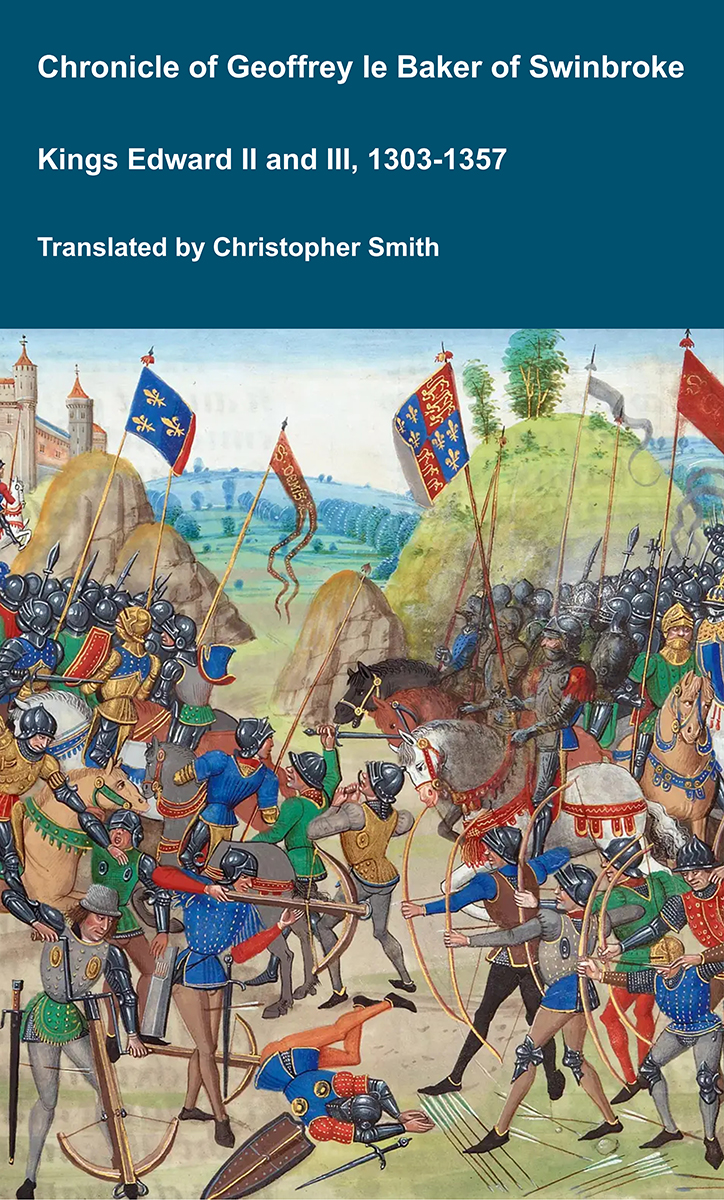
Chronicle of Geoffrey le Baker of Swinbroke
Baker was a secular clerk from Swinbroke, now Swinbrook, an Oxfordshire village two miles east of Burford. His Chronicle describes the events of the period 1303-1356: Gaveston, Bannockburn, Boroughbridge, the murder of King Edward II, the Scottish Wars, Sluys, Crécy, the Black Death, Winchelsea and Poitiers. To quote Herbert Bruce 'it possesses a vigorous and characteristic style, and its value for particular events between 1303 and 1356 has been recognised by its editor and by subsequent writers'. The book provides remarkable detail about the events it describes. Baker's text has been augmented with hundreds of notes, including extracts from other contemporary chronicles, such as the Annales Londonienses, Annales Paulini, Murimuth, Lanercost, Avesbury, Guisborough and Froissart to enrich the reader's understanding. The translation takes as its source the 'Chronicon Galfridi le Baker de Swynebroke' published in 1889, edited by Edward Maunde Thompson.
Available at Amazon in eBook and Paperback format.
On 26th March 2016 John Graham Esplen 3rd Baronet [aged 83] died. His son William [aged 49] succeeded 4th Baronet Esplen of Hardres Court in Canterbury in Kent.