

25 Aug is in August.
On 25th August 915 Reginar "Longneck" I Duke Lorraine [aged 65] died. Reginar II Reginarids II Count Hainaut [aged 23] was appointed II Count Hainaut. His son Gilbert [aged 25] succeeded I Duke Lorraine.
On 25th August 1192 Hugh III Duke Burgundy [aged 50] died. His son Odo [aged 26] succeeded III Duke Burgundy.
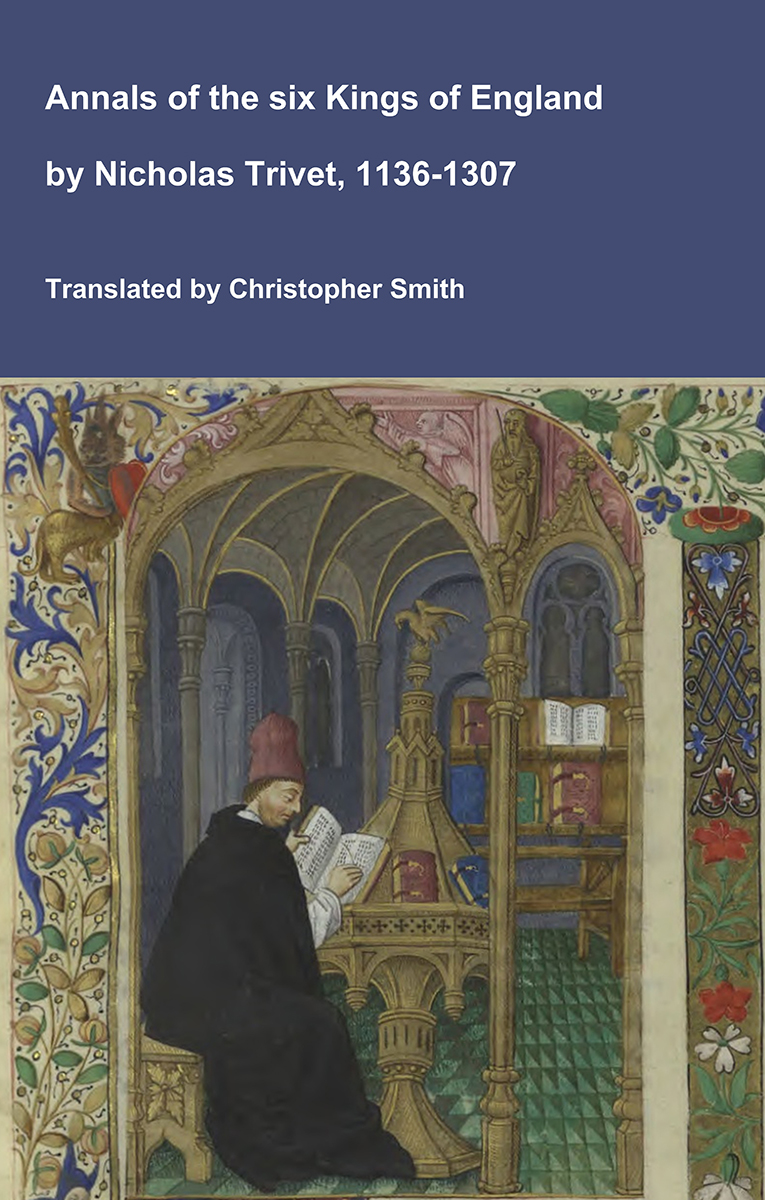 Annals of Six Kings of England by Nicholas Trivet. 1270. Edward, the son of the King of England, with his brother Edmund and many other nobles, set out on a pilgrimage to the Holy Land in the month of May. In the month of August, however, a sickness, which at that time was especially prevalent along the coasts, spread greatly through the army of the Christians. Among the leading men, first John, Count of Nevers, son of the King of France, died; afterwards the Bishop of Albano, a cardinal and legate of the Apostolic See; and finally Saint Louis, the most Christian King of France, on the day [25th August 1270] after the feast of Saint Bartholomew the Apostle, passed from the temporal kingdom to the eternal. How blessedly this king ended his life was made known by the King of Navarre to the Bishop of Tusculum by letter. For in his illness he did not cease to praise the name of God, often repeating that prayer, 'Grant, we beseech thee, O Lord, that we may despise the prosperity of the world, and fear none of its adversities.' He also prayed for the people whom he had brought with him, saying, 'Be, O Lord, the sanctifier and guardian of thy people.' And when he was drawing near to the end, he looked up to heaven, saying, 'I will enter into thy house, I will worship towards thy holy temple, and I will give thanks to thy name, O Lord.' And saying these things, he fell asleep in the Lord. His son Philip succeeded him in the kingdom.
1270. EDWARDUS filius regis Angliæ, cum Eadmundo germano suo aliisque pluribus nobilibus, iter peregrinationis in Terram Sanctam arripuit mense Maio. Mense vero Augusto infirmitas, quæ maxime illo tempore circa confinia maris viguit, in exercitu Christianorum nimis invaluit. Inter majores primo moritur Joannes comes Nivernensis, regis Francorum filius; postea episcopus Albanensis, cardinalis et apostolicæ sedis legatus; postremo beatus Lodovicus rex Francorum Christianissimus, in crastino S. Bartholomæi apostoli, a regno temporali transiit ad æternum. Quam feliciter autem rex iste terminaverit [vitam], rex Navarræ domino Tusculano per litteras intimavit. Nam in infirmitate sua laudare nomen DE1 non cessavit, illam orationem aliquotiens interserebat, 'Fac nos, quæsumus, Domine, prospera mundi despicere, et nulla ejus adversa formidare.' Orabat et pro populo quem secum adduxerat, dicens, 'Esto, Domine, plebi tuæ sanctificator et custos.' Et cum appropinquaret ad finem, suspexit in cœlum dicens, 'Introibo in domum tuam, adorabo ad templum sanctum tuum, et confitebor nomini tuo, Domine.' Et hæc dicens, obdormivit in Domino. Cui successit in regno filius ejus Philippus.
On 25th August 1270 King Louis IX of France [aged 56] died. His son Philip [aged 25] succeeded III King France: Capet. Isabella Barcelona Queen Consort France [aged 22] by marriage Queen Consort France.
Annals of Six Kings of England by Nicholas Trivet. In this year the blessed Thomas [Cantilupe], bishop of Hereford, while on the way to the papal court, was taken from this present world [at Orvetio, Italy, on 25th August 1282] and passed to the heavenly kingdom, having ruled the flock committed to him with diligent care for seven years. He was born of noble parentage and from childhood lived devoted to God. Through the pursuit of study he acquired learning, first in the liberal arts, then he taught canon law, and finally he directed the whole intention of his mind to theology. In this, having been licensed for the master’s degree, he had resolved to begin teaching under Brother Robert Kilwardby of the Order of Preachers, with whom he had been very familiar when the latter was provincial. But the matter was delayed in the meantime, because that same brother was raised to the archbishopric of Canterbury. After his consecration, when he came to Oxford, Thomas began, in the church of the Friars Preachers, to fulfil his desire. In his commendation, which is customarily given before the inception after the disputation called the Vespers of the bachelors who are to be made masters, the aforesaid archbishop declared that Thomas, whom he had long had as his confessor, had never been tainted by any mortal sin; and how great his merit was before God was shown with unquestionable certainty by the fame of his many miracles. After him, Master Richard of Swinefield, doctor of sacred theology, a man pleasant in speech and an excellent preacher, was consecrated bishop of the church of Hereford at Gloucester. In the same year, the election of Master Richard de Mora to Winchester having been annulled, Master John of Pontissara was consecrated bishop of that church by grant of the Roman curia.
Hoc anno beatus Thomas, Herefordensis episcopus, in via versus curiam de præsenti sæculo nequam ereptus ad regna migravit cœlestia, cum annis septem gregem sibi commissum sollicita cura rexisset. Hic, nobilibus ortus natalibus, a puero DEO vixit devotus. Studii autem exercitatione litterarum adquirens peritiam, primo in artibus liberalibus, deinde in jure rexit canonico; tandemque ad theologiam totam intentionem transtulit mentis suæ. In qua licentiatus ad magisterium, cum sub fratre Roberto de Kilwardeby ordinis Prædicatorum, quem dum provincialis fuerat admodum familiarem habuit, decrevisset incipere, incidit negotii dilatio medio tempore, præfato fratre assumpto ad Cantuariensis ecclesiæ præsulatum: sub quo post consecrationem ejus Oxoniæ veniente, in ecclesia fratrum Prædicatorum incepit juxta desiderii sui complementum; in cujus commendatione, quæ solet ante principium post disputationem, quæ Vesperiæ appellantur, de bachilariis. fieri magistrandis, asseruit præfaius archiepiscopus, quem dictus Thomas ab olim confessorem habuerat, nullius ipsum mortalis criminis unquam sensisse contagium; quantique. meriti fuerit apud DEUM, crebrescentium ejus miraculorum gloria indubitata fide demonstrarat. Post quem ad ecclesiam Herefordensem clericus consecratus est Gloverniæ magister Ricardus de Swynefeld, sacræ theologiæ doctor, vir jocundus in verbis, et egregius prædicator. Hoc anno, cassato electo Wintoniensi magistro Ricardo de Mora, ex dono curiæ Romanæ magister Joannes de Pontisara in ejusdem ecclesiæ episcopum consecratur.

On 25th August 1282 Bishop Thomas Cantilupe [aged 64] died in Ferento, Orvieto. Monument in the North Transept of Hereford Cathedral [Map] in the form of a shrine-pedestal and consisting of an altar-tomb and open superstructure (Plate 134), altar-tomb possibly slightly earlier than the rest, tapering on plan and re-assembled, long sides with six bays and W. end with two bays of cinque-foiled arcading on attached shafts with foliated capitals and moulded bases, spandrels carved with varying naturalistic foliage; each bay filled with figure of knight (Plate 136) with long surcoat, heater-shaped shield and feet on lions and other beasts, faces all defaced; on slab, indent of brass figure of bishop with mitre and crozier and canopy; small brass figure of St. Ethelbert now in library; superstructure with six bays on long sides and two at W. end of open trefoiled arcading resting on shafts with moulded capitals and bases, spandrels carved with naturalistic foliage and winged beasts, moulded cornice at top and plain top slab; E. end of tomb, plain and not intended to be seen, with part of carved spandrel set in it.
On 25th August 1330 James "Black" Douglas [aged 44] was killed during the Battle of Teba at Teba whilst en route to the Holy Land with the heart of King Robert the Bruce I of Scotland.
Froissart Book 1: 1307-1340. [41] It happened, soon after [25th August 1330] Sir William [James] Douglas [aged 44] had arrived there, that the King of Spain came out from the camps to move closer to his enemies. The King of Granada also came out on his side, so that one king could see the other with all his banners. And they began to draw up their battle lines, one against the other. Sir William Douglas withdrew to one of the flanks with all his company, to better carry out his task and to better show his valor. When he saw all the battle lines arranged on both sides, and saw the royal battle line stir a little, he believed they were about to engage. He, who preferred to be among the first rather than the last, spurred his horse forward and all his company with him, straight to the battle line of the King of Granada, and went to engage the enemy. He believed that the King of Spain and all his battle lines would follow him, but they did not, by which he was shamefully deceived, for they did not move at all that day. There, the noble knight Sir William Douglas and all his company were surrounded by the enemy. They performed feats of great valor, but in the end, they could not hold out, and not a single man escaped on foot, all were slain in great misfortune. This was a sorrowful and grievous loss and a great shame for the Spaniards, and they were much blamed by all who heard of it, for they could well have rescued the knight and part of his men, had they wished. Such was the fate of the adventure and journey of Sir William Douglas.
[41] Avint, assés tost apriès çou que li di messires Guillaumes de Douglas fu là venus, que li rois d'Espagne issi hors as camps, pour plus approcier ses ennemis. Li rois de Grenate issi hors ossi d'autre part, si ques li uns rois veoit l'autre à tout ses banières. Et se commencièrent à rengier leurs batailles, li un contre l'autre. Li dis messires Guillaumes de Douglas se traist à l'un des costés, à toute se route, pour miex faire se besongne, et pour miex moustrer son effort. Quant il vei toutes les batailles rengies d'une part et d'autre, et vei la bataille le roy un petit esmouvoir, il cuida que elle alast assambler. Il, qui miex voloit estre des premiers que des daarrains, feri des esporons, et toute se compagnie avoech lui, jusques à le bataille le roy de Grenate, et ala as ennemis assambler. Et pensoit ensi que li rois d'Espagne et toutes ses batailles le sievissent, mès non fisent, dont il en fu laidement deceus, car onques celi jour ne s'en esmurent. Là fu li gentilz chevaliers, messires Guillaumes de Douglas enclos, et toute se route, des ennemis. Et y fisent merveilles d'armes, mès finablement il ne peurent durer, ne onques piés n'en escapa, que tout ne fuissent occis à grant meschief. De quoi ce fu pités et damages et grant lasqueté pour les Espagnolz, et moult en furent blasmet de tous chiaus qui en oïrent parler, car bien ewissent rescous le chevalier et une partie des siens, s'il vosissent. Ensi ala de ceste aventure et dou voiage monsigneur Guillaume de Douglas.
 Chronicle of Jean le Bel Volume 1. One day, after Sir James Douglas had arrived there, it happened that the King of Spain rode out into the open country to draw nearer to his enemies. The King of Granada also came forth on his side, so that one king could see the other with all his banners, and they began to draw up their divisions against one another. The said Sir James placed himself on one side, the better to accomplish his purpose and to show his prowess. When he saw all the divisions drawn up and perceived that the king's battle moved forward a little, he believed that it was about to engage. He, who preferred always to be among the foremost rather than the last, spurred on with all his company and rode straight into the battle of the King of Granada, thinking that the king and all his divisions would follow him. But he was grievously deceived; for that day they did not advance at all. Thus Sir James and all his company were surrounded by the enemy, and not one escaped, they were all slain1, which was a great loss and grievous misfortune for the Spaniards.
Ung jours, aprez ce que messire Guillaume Douglas fut là venu, avint que le roy d'Espaigne issi hors aux champs pour plus aprocher de ses anemis. Le roy de Guernade issi d'aultre part, siques l'ung roy veist l'aultre à tout ses banieres, et si commencerrent à renger les batailles les unes contre les aultres. Ledit messire Guillaume se trahy à ung des costez pour miclx faire sa besongne et mielx monstrer son effort. Quant il vist toutes les batailles rengier et vist celle du roy ung poy esmouvoir, il cuida qu'elle alast assembler. Il qui mielx amoit estre des premiers que des derrains, feri des esperons à toute sa compaignie et ala jusques à la bataille du roy de Guernade, et pensoit bien que le roy et toutes ses batailles le syewissent, maiz il en fut lourdement decheus, car oncques ce jour ne s'esmurent; ains fut ledit messire Guillaume et toute sa compaignie enclos des anemis que oncques ung seul n'en eschappa qu'ilz ne fussent tous tuez, de quoy ce fut grand dommage et grand deffault pour les Espaignolz.
Note 1. James Douglas was killed at the Battle of Teba on 25th August 1330.
Around 25th August 1345 Henry of Grosmont, Earl of Derby [aged 35], commanded the English forces at Bergerac, Dordogne during the Battle of Bergerac. The English army including Walter Manny 1st Baron Manny [aged 35] won a decisive victory over the French with Henri Montigny captured.

Anne Boleyn. Her Life as told by Lancelot de Carle's 1536 Letter.
In 1536, two weeks after the execution of Anne Boleyn, her brother George and four others, Lancelot du Carle, wrote an extraordinary letter that described Anne's life, and her trial and execution, to which he was a witness. This book presents a new translation of that letter, with additional material from other contemporary sources such as Letters, Hall's and Wriothesley's Chronicles, the pamphlets of Wynkyn the Worde, the Memorial of George Constantyne, the Portuguese Letter and the Baga de Secrets, all of which are provided in Appendices.
Available at Amazon in eBook and Paperback format.
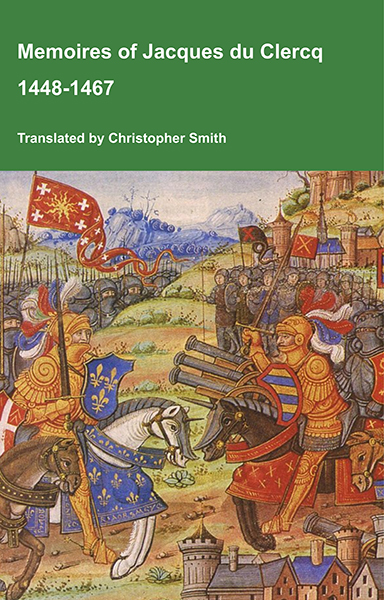 Memoires Jacques du Clercq. At this time, on the 25th day of the following August, at ten o'clock in the evening, in a tavern at Mont-Saint-Éloi, the One-Eyed Destrayelles was killed by one of his companions, named Robinet Guillemant, after drinking, and both were archers of the Count of Étampes. But they were both men full of quarrels and of ill repute, suspected of waylaying travellers, theft, and other offences, and although the authorities were well aware of their conduct and that of others, yet no justice was done. This gives good reason to suppose that God caused them to punish one another, for within two years many had slain each other in this way.
En ce temps, le xxve jour d'aoust ensuivant, dix heures du vespres, en une taverne au mont St Eloy, fust tué le Borgne Destrayelles d'ung sien compagnon, nommé Robinet Guillemant, après boire, et estoient touts deux archiers du comte d'Estampes; mais ils estoient plein de debats et mal renommé, tant d'es tre espieurs de chemins, houilliers et aultrement; et combien que justice fust assés advertie de leur vie et d'aultres, et sy n'en faisoit on quelque justice, fait assés presumer que Dieu les faisoit punir l'ung l'aultre, car puis deux ans plusieurs avoient tué l'ung l'aultre.
Memoires Jacques du Clercq. The Count of Charolais, seeing the stubborn obstinacy of those of Dinant, after all his engines had been set in place, began to fire them one after another with such force that they did not cease for three or four hours at a time. During this, those within the town did not know where to take refuge, nor could they see anything; it was like a very hell to be there, for the destruction, thunder, and storm that the artillery wrought in the town. It was said that in five or six days some seven hundred persons died within the town, though I cannot attest this. Meanwhile, the Duke of Burgundy caused two bridges to be made at Bouvignes to cross the river Meuse, after the walls and towers, which were more than nine feet thick, had been greatly damaged, and more than sixty feet of wall had been cast down. On the following Friday, eight of the most notable men of the town came under safe-conduct to the camp, hoping to obtain peace, but they achieved nothing. On the Saturday following, it was proclaimed throughout the host that all should be ready on the morrow to assault the town, and that each man should bring a faggot to fill the ditch. On the Sunday, after mass, when they thought to assault the town, the duke would not permit it, and sent word that he wished it to be yet more battered by artillery; and on the Monday the bombardment was renewed with great violence, and the town was heavily struck, for those within resisted as men in despair. When those of the town saw their city so battered that they could no longer hold it, those of the garrison withdrew and fled. The remainder, seeing that many of their people were dead, wished to surrender, saving their lives, but the duke would not accept them. That same Monday, there were thirty or thirty-two men of the count's army killed by a flame that fell into a barrel of gunpowder which had been left open when fire was set to a bombard; many were wounded, and especially a valiant knight named Sir Hugues de Mailly, lord of Boulliencourt, whose face was badly burned, though he later recovered. That same day, Monday the 25th of August, the Duke of Burgundy was informed by his nephew, the Bishop of Liège, who was at Huy, that those of the city of Liège had marched out thirty to forty thousand strong, intending to raise the siege or to give battle. The duke at once assembled his council and knights to decide what should be done, whether to raise the siege to go against them, or to leave part before Dinant to guard the artillery while the rest marched against Liège, or to await them on foot. It was then advised that, before raising the siege or marching against them, he should assault the town, and that it might be taken or at least so greatly damaged before the Liégeois arrived that they would not be able to sally forth against them. This counsel was followed, and it was ordered throughout the host that all should prepare to assault and bring their faggots. As all stood ready, about five in the evening, those of the town, fearing that they could not endure the assault without all being slain, surrendered at the duke's will, and brought the keys to the Bastard of Burgundy, who carried them to the Count of Charolais. The count would not receive them without his father's consent, and when that consent was given, he accepted them. That night the Bastard of Burgundy entered the castle of Dinant, which was delivered to him, and the Marshal of Burgundy, the lord of Moreuil, and the captain of Bouvignes entered with their men and guarded the gates. The next morning, plundering began, but the count ordered, on pain of severe punishment, that it should cease until he had arrived. He entered about midday and ordered each man to be lodged by quartermasters until he had word from his father, who had wished to enter the town but was advised not to do so, since it was his intention to destroy it; thus he did not enter. Soon after, when his will was known, and each had been assigned his quarter and lodging, plundering began again, for the count had abandoned it to each in his quarter. At first there was great disorder, and men even slew one another over the spoil, but in the end each kept to his own quarter and lodging.
Le comte de Charollois voyant la malle obstination de ceulx de Dynant, après que touts ses engins feurent dressés, sy commencherent a jetter l'ung après l'autre, par sy grande impetuosité, que ils ne cessoient trois ou quatre heures, lesquels durant, ceulx de la ville ne se sçavoient ou sauver, et ne voyoient goutte, et estoit ung droit enfer que d'y estre pour l'occision, fouldre et tempeste que les engins faisoient en la ville; et disoit on que en cinq ou six jours, y moururent bien sept cens personnes dedans la ville, ce que je ne certiffie point. Toutesfois, ce temps durant, le duc de Bourgogne feit faire deux ponts a Bonnynes pour passer la riviere de Meuse, après que les murailles et les tourres, lesquelles avoient plus de noeuf pieds d'espais, feurent fort endommagiées, et que on olt abbattu plus de soixante pieds de murailles. Le venderdy ensuivant, huict hommes des plus reseants de la ville, par saulfconduit, vindrent en l'ost pour cuíder avoir paix; mais ils ne y feirent rien. Le samedy ensuivant on feit commandement par l'ost, que chacun fust prest le lendemain pour assaillir la ville, et que chacun euist ung fagot pour emplir le fossé. Le lendemain, qui fust dimanche, après messe, comme on cuidoit assaillir la ville, le duc ne le volt souffrir, et envoya dire qu'il voulloit qu'elle fust encoires plus battue d'engins; et le lundy, on rua merveilleusement sur la ville, et fust moult fort battue, car ceulx de la ville recoient comme par desespoir. Quant ceulx de la ville veirent leur ville sy battue qu'ils ne sy polroient plus bonnement tenir, sy vuiderent ceulx de leur garnison et s'enffuirent. Le remenant, que veoient que de leurs gens y avoit grand nombre de morts, se vaudrent rendre saulfs leurs vies; mais le duc ne les volt re cepvoir. Ledit jour lundy, y olt trente ou trente deux hommes morts des gens du comte par une flammecque qui cheit en ung tournel de pouldre de canon, que on avoit oublié a clorre, quant on boutta le feu en une hombarde; plusieurs feurent blessiés, et par especial ung vaillant chevallier nommé messire Hugues de Mailly, sieur de Boulliencourt, olt tout le visage bruslé, mais il fust puis gueri. Icelluy jour de lundy xxve jour d'aoust, le duc de Bourgogne fust adverty par son nepveu, evesque de Liege, qui se tenoit en la ville de Huy, que ceulx de la cité de Liege estoient issus de trente a quarante mille hommes, en intention de venir lever le siege ou livrer bataille au duc; le duc prestement assembla son conseil et ses chevalliers pour sçavoir qu'il feroit, ou s'il leveroit le siege pour aller allencontre d'eulx, ou s'il lairoit une partie devant Dynant pour garder les engins, et l'aultre iroit contre ceulx de Liege, ou s'ils les attendroient de pied; quoy lors lui fust conseillié, que ains qu'il levat le siege ne allat contre eulx, qu'il assaillit la ville et qu'il le auroit prins ou livré grand assault, ains que ceulx de Liege feussent venus jusques a eulx, et sy ne le avoit prins, sy auroit il tellement travaillé la ville, qu'ils ne auroient pooir de sallir sur eulx, s'ils alloient contre ceulx de Liege; lequel conseil fust tenu, et fust commandé que, par l'ost, chacun se meit en poinct pour assaillir, et apportast chacun son fagot; et comme chacun estoit prest environ cinq heures du vespres, ceulx de la ville doubtant qu'ils ne polroient souffrir, sans touts mourir, ledit assault, se rendirent a la vollonté du duc, et porterent les clefs au bastard de Bourgogne, qui les porta au comte de Charollois, lequel comte ne les voullut recepvoir sans le consentement de son pere, lequel consentement eu, il les receupt, et entra ceste nuict le bastard de Bourgogne dedans le chastel de Dynant, qui lui fust deslivré; et le mareschal de Bourgogne, le Sr de Moroeul et le capitaine de Bonnynes entrerent avecq leurs gens dedans et garderent les portes, et le lendemain matin on commencha a butiner; mais le comte feit commander sur la hart que on cessat tant qu'il fust venu, lequel y entra environ midy et feit chacun loger par fourrier tant qu'il olt nouvelles de son pere, lequel olt vollonté d'entrer en la ville, mais il lui fust conseillié de non y entrer, puisque sa vollonté estoit de la destruire, sy n'y alla pas; pourquoy assés tost après que on sceut sa vollonté, et que chacun euist son quartier et logier par fourrier, on commencha a butiner, car le comte avoit tout abbandonné chacun en son quartier, et y olt au commenchement grand desroy, et tuerent l'ung l'aultre pour le butin; mais en la fin chacun garda son quartier et son logis.
On 25th August 1476 John "Cicero" Hohenzollern Elector Brandenburg [aged 21] and Margaret of Thuringia [aged 27] were married. He the son of Albert "Achilles" Elector Brandenburg [aged 61]. They were second cousin twice removed.
On 25th August 1482 Margaret of Anjou Queen Consort England [aged 52] died at Chateau Dampierre-sur-Loire, Dampierre-sur-Loire, Saumur. She was buried at Angers Cathedral [Map].
On 25th August 1540 Catherine Grey Countess Hertford was born to Henry Grey 1st Duke of Suffolk [aged 23] and Frances Brandon Duchess of Suffolk [aged 23] at Bradgate Park, Leicestershire. She a great granddaughter of King Henry VII of England and Ireland. She married (1) her fourth cousin Henry Herbert 2nd Earl Pembroke, son of William Herbert 1st Earl Pembroke and Anne Parr Countess Pembroke (2) before 25th December 1560 her sixth cousin Edward Seymour 1st Earl Hertford, son of Edward Seymour 1st Duke of Somerset and Anne Stanhope Duchess Somerset, and had issue.


On 25th August 1554 Thomas Howard 3rd Duke of Norfolk [aged 81] died at Kenninghall, Norfolk. He was buried at Church of St Michael the Archangel, Framlingham [Map]. His grandson Thomas [aged 18] succeeded 4th Duke Norfolk, 3rd Earl Surrey.


On 25th August 1573 Elizabeth Oldenburg was born to Frederick II King of Denmark [aged 39] and Sophie Mecklenburg-Schwerin Queen Consort Denmark [aged 15]. She married 19th April 1590 Henry Julius Duke of Brunswick-Lüneburg and had issue.
On 25th August 1580 the Irish forces ambushed the forces of Arthur Grey 14th Baron Grey of Wilton [aged 44] at the Battle of Glenmalure fought at Glenmalure, County Wicklow. Around 800 English soldiers, including, Peter Carew were killed.
Autobiography Simon D'Ewes. 25th August 1622. On Sunday, the 25th day of this month, preached one Mr. Claydon, (minister of Hackney, near London,) at St. Paul's Cross [Map]; and cited a story out of our Chronicles, of a Spanish sheep, brought into England in Edward the First's time, which infected most of the sheep of England with a murrain, and prayed God no more such sheep might be brought over from thence hither; at which many of his bearers cried out "Amen." So much generally did all men fear that Prince Charles should marry1 the King of Spain's [aged 17] sister [aged 16], as they ever hated that nation. He lay awhile in prison for his sermon, but was soon after set at liberty by the mediation of Sir John Ramsey [aged 42], Knt., a Scotchman, Earl of Holderness, whose chaplain he was.
Note 1. In MS. Egerton 783, is a curious paper, entitled "A Private Consideration of the intended Marriage between Charles, Prince of Woles, and Mary of Austria, Daughter of the late Phillip the Third king of Spain."It commences as follows: - "The House of Parliament should once have been blown up, and now is supposed to be broken up for the averseness of the Commons to the Spanish match, for expressing their fears of danger and loss to the kingdom, both daily confirmed and increased by the acquires of the King of Spain, and prooeedings of the Spanish action; by our treative complements with Spain, and for protesting to preserve their rights and privileges." The proposed articles of marriage are given in the same volume.


On 25th August 1654 Sophie Amalie Oldenburg was born to Ernest Günther Oldenburg I Duke Schleswig Holstein Sonderburg Augustenburg [aged 44] and Auguste Oldenburg Duchess Schleswig Holstein Sonderburg Augustenburg [aged 21]. Coefficient of inbreeding 6.27%. She died aged one in 1655.
Samuel Pepys' Diary. 25th August 1665. Up betimes to the office, and there, as well as all the afternoon, saving a little dinner time, all alone till late at night writing letters and doing business, that I may get beforehand with my business again, which hath run behind a great while, and then home to supper and to bed. This day I am told that Dr. Burnett, my physician, is this morning dead of the plague; which is strange, his man dying so long ago, and his house this month open again. Now himself dead. Poor unfortunate man!
On 25th August 1665 Charles Seymour 2nd Baron Seymour of Trowbridge [aged 44] died, possibly of plague. His son Francis [aged 7] succeeded 3rd Baron Seymour of Trowbridge.
On 25th August 1665 Alexander Burnett died of plague.
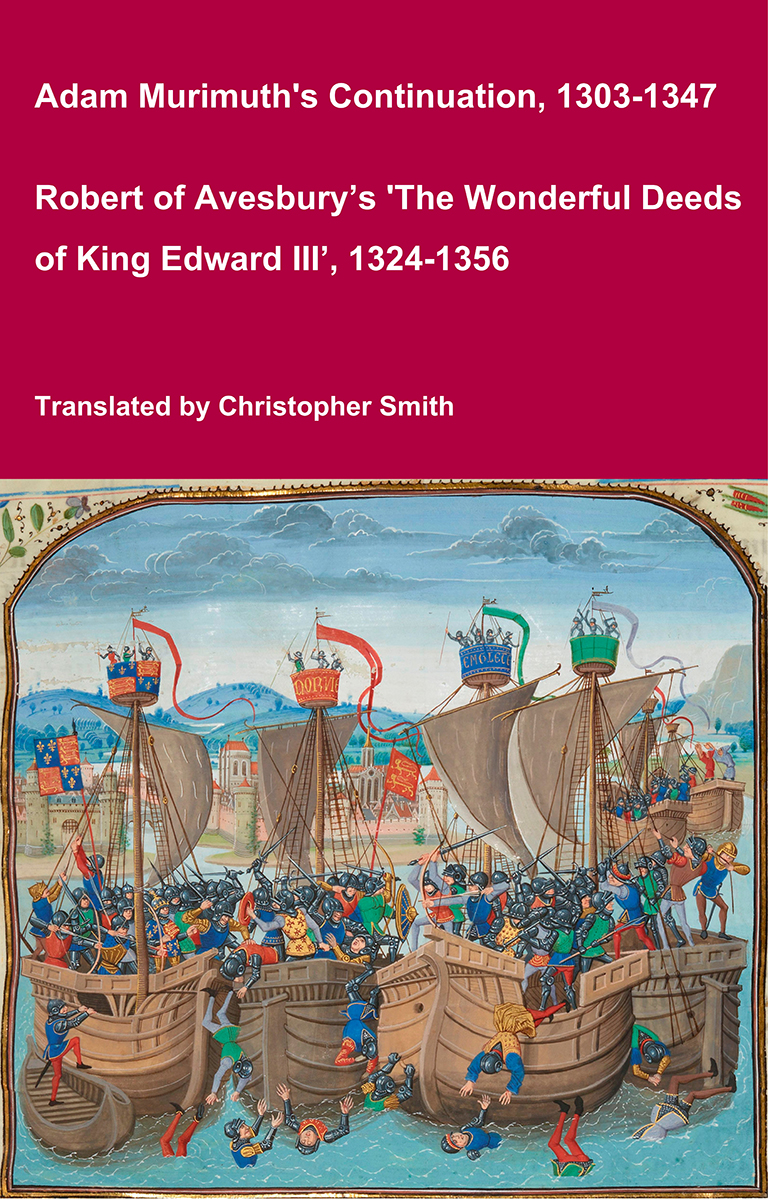
Adam Murimuth's Continuation and Robert of Avesbury’s 'The Wonderful Deeds of King Edward III'
This volume brings together two of the most important contemporary chronicles for the reign of Edward III and the opening phases of the Hundred Years’ War. Written in Latin by English clerical observers, these texts provide a vivid and authoritative window into the political, diplomatic, and military history of fourteenth-century England and its continental ambitions. Adam Murimuth Continuatio's Chronicarum continues an earlier chronicle into the mid-fourteenth century, offering concise but valuable notices on royal policy, foreign relations, and ecclesiastical affairs. Its annalistic structure makes it especially useful for establishing chronology and tracing the development of events year by year. Complementing it, Robert of Avesbury’s De gestis mirabilibus regis Edwardi tertii is a rich documentary chronicle preserving letters, treaties, and official records alongside narrative passages. It is an indispensable source for understanding Edward III’s claim to the French crown, the conduct of war, and the mechanisms of medieval diplomacy. Together, these works offer scholars, students, and enthusiasts a reliable and unembellished account of a transformative period in English and European history. Essential for anyone interested in medieval chronicles, the Hundred Years’ War, or the reign of Edward III.
Available at Amazon in eBook and Paperback format.
John Evelyn's Diary. 25th August 1666. Waited on Sir William D'Oyly [aged 52], now recovered, as it were, miraculously. In the afternoon, visited the Savoy Hospital, where I stayed to see the miserably dismembered and wounded men dressed, and gave some necessary orders. Then to my Lord Chancellor [aged 57], who had, with the Bishop of London [aged 74] and others in the commission, chosen me one of the three surveyors of the repairs of Paul's [Map], and to consider of a model for the new building, or, if it might be, repairing of the steeple, which was most decayed.


John Evelyn's Diary. 25th August 1678. I went this evening with my Lord Duke [aged 50] to Windsor, Berkshire [Map], where was a magnificent Court, it being the first time of his Majesty's [aged 48] removing thither since it was repaired.


John Evelyn's Diary. 25th August 1678. There was at Weybridge the Duchess of Norfolk [aged 35], Lord Thomas Howard [aged 21] (a worthy and virtuous gentleman, with whom my son [aged 23] was sometime bred in Arundel House [Map]), who was newly come from Rome, where he had been some time; also one of the Duke's daughters, by his first lady. My Lord [aged 50] leading me about the house made no scruple of showing me all the hiding places for the Popish priests, and where they said mass, for he was no bigoted Papist. He told me he never trusted them with any secret, and used Protestants only in all businesses of importance.


On 25th August 1688 Frederick Louis Oldenburg was born to Frederick Louis Oldenburg I Duke Schleswig-Holstein-Sonderburg-Beck [aged 35] and Louise Charlotte Oldenburg Duchess Schleswig-Holstein-Sonderburg-Beck [aged 30]. Coefficient of inbreeding 7.82%. He died aged less than one years old.
John Evelyn's Diary. 25th August 1689. Hitherto it has been a most seasonable summer. Derry aka Londonderry relieved after a brave and wonderful holding out.
On 25th August 1699 Christian V King of Denmark and Norway [aged 53] died. His son Frederick [aged 27] succeeded IV King of Denmark and Norway. Louise of Mecklenburg Güstrow Queen Consort Denmark and Norway [aged 31] by marriage Queen Consort Denmark and Norway.
On 25th August 1707 Louis I King Spain was born to Philippe V King Spain [aged 23] and Maria Luisa Savoy [aged 18]. He a great x 2 grandson of King Charles I of England, Scotland and Ireland. Coefficient of inbreeding 5.82%. He married 20th January 1722 his half first cousin once removed Louise Élisabeth Bourbon Queen Consort Spain, daughter of Philippe Bourbon II Duke Orléans and Françoise Marie Bourbon Duchess Orléans.


After 25th August 1721. All Saints Church, Hough-on-the-Hill [Map]. Grave slab of Anthony Thorold 6th Baronet [deceased].
Anthony Thorold 6th Baronet: Around 1710 he was born to William Thorold 5th Baronet. In 1720 William Thorold 5th Baronet died. His son Anthony succeeded 6th Baronet Thorold of Marston in Lincolnshire. On 25th August 1721 Anthony Thorold 6th Baronet died. His uncle John succeeded 7th Baronet Thorold of Marston in Lincolnshire.
On 25th August 1751 Sarah Cadogan Duchess Richmond [aged 45] died.
On 3rd August 1769 or 25th August 1769 James Agar [aged 55] was killed in a duel with Henry Flood [aged 37] his political rival. James, who missed with his first shot, reputedly shouted "Fire, you scoundrel!": Flood duly fired. Flood was prosecuted for murder, but was found guilty of manslaughter, and spared a prison sentence, as according to the code of the time he had acted honourably. The case, which aroused huge public interest.
Letters of Horace Walpole. To STRAFFORD [aged 49], Sunday 25 August 1771
Paris, August 25, 1771.
I HAVE passed my biennial six weeks here, my dear Lord, and am preparing to return as soon as the weather will allow me. It is some comfort to the patriot-virtue, envy, to find this climate worse than our own. There were four very hot days at the end of last month, which you know with us northern people compose a summer: it has rained half this, and for these three days there has been a deluge, a storm, and extreme cold. Yet these folks shiver in silk, and sit with their windows open till suppertime.-Indeed, firing is very dear, and nabobs very scarce. Economy and retrenchment are the words in fashion, and are founded in a little more than caprice. I have heard no instance of luxury but in Mademoiselle Guimard1, a favourite dancer, who is building a palace:2 round the salle a manger there are windows that open upon hothouses, that are to produce flowers all winter.-That is worthy of . There is a finer dancer whom Mr H[obart]3 is to transplant to London; a Mademoiselle Heinel4 or Ingle, a Fleming. She is tall, perfectly made, very handsome, and has a set of attitudes copied from the classics. She moves as gracefully slow as Pygmalion's statue5 when it was coming to life, and moves her leg round as imperceptibly as if she was dancing in the zodiac.-But she is not Virgo.
They make no more of breaking parliaments here than an English mob does of breaking windows. It is pity people are so ill-sorted. If this king and ours could cross over and figure in, Louis X V would dissolve our Parliament if Polly Jones6 did but say a word to him. They have got into such a habit of it here, that you would think a parliament was a polypus: they cut it in two, and by next morning half of it becomes a whole assembly. This has literally been the case at Besancon7. Lord and Lady Barrymore8, who are in the highest favour at Compiegne9, will be able to carry over the receipt10.
Everybody feels in their own way. My grief is to see the ruinous condition of the palaces and pictures. I was yesterday at the Louvre. Le Brun's11 noble gallery, where the battles of Alexander are, and of which he designed the ceiling, and even the shutters, bolts and locks, is in a worse condition than the old gallery at Somerset House12. It rains in upon the pictures13, though there are stores of much more valuable pieces than those of Le Brun. Heaps of glorious works by Raphael and all the great masters are piled up and equally neglected at Versailles. Their care is not less destructive in private houses. The Duke of Orléans's [aged 46]14 pictures and the Prince of Monaco's's have been cleaned, and varnished so thick that you may see your face in them; and some of them have been transported from board to cloth, bit by bit, and the seams filled up with colour; so that in ten years they will not be worth sixpence. It makes me as peevish as if I was posterity! I hope your Lordship's works will last longer than these of Louis XIV. The glories of his siecle hasten fast to their end, and little will remain but those of his authors.
I am, my dear Lord,
Your most faithful humble servant,
HOR. WALPOLE [aged 53]
Note 1. Marie-Madeleine Guimard (1743-1816), m. (1787) Jean-Etienne Despreaux (MAN N vii. 322-3, n. 16).
Note 2. The 'Temple de Terpsychore' in the Rue de la Chausee d'Antin, designed by Ledoux, sold by lottery in 1786 (MAN N vii. 323, n. 18).
Note 3. George Hobart (1731-1804), 3d E. of Buckinghamshire [aged 39], 1793. For some of his difficulties in management of the operas, see MAN N vii. 271.
Note 4. Anne-Frederique Heinel (1753-1808), born in Bayreuth; made her debut at Stuttgart, 1767, and at Paris, 1768; in London for the opera season 1771-2, 1772-3, 1774, 1776; m. (1792) Gaetano Appolino Baldassare Vestris, the famous dancer (OSSORY i. 66, n. 15).
Note 5. Galatea.
Note 6. Former mistress of Henry, D. of Cumberland (H. Bleackley, Ladies Fair and Frail, 1925, p. 152).
Note 7. The parliament of Besancon was suppressed, 5 Aug., and then reconstituted (MAN N vii. 320, n. 1). Fourteen of the old members reappeared in the new parliament (Mercure historique, 1771, clxxi. 374).
Note 8. Richard Barry (1745-73), 6th E. of Barrymore [aged 26], 1751, m. (1767) Lady Emily Stanhope (1749-80) [aged 22].
Note 9. During the summer the Court often removed to Louis XV's chateau at Compiegne, about 45 miles N E of Paris.
Note 10. Perhaps a reference to the financial grants which the officers of the new parliament received. One of the old members was promoted to be first president, with 12,000 livres' salary and 3,000 livres' allowance for lodging (Mercure historique, loc. cit.).
Note 11. Charles Le Brun (1619-90).
Note 12.. The old Somerset House [Map], not yet replaced by Chambers's new structure. 'It was so far neglected as to be permitted to fall to ruin in some of the back parts' (Encyclopedia of London, ed. W . Kent, 1937, p. 587, citing Noorthouck's History of London, 1773). The Royal Academy's schools of design were moved there in 1771 (Kent, loc. cit.). HW's old friend Mrs Grosvenor had been housekeeper there (GRA Y i. 220, n. 17).
Note 13. 24 Aug.: 'Saw the great gallery of Le Brun with battles of Alexander, all the ornaments, ceiling, shutters, and even locks and bolts designed by Le Brun, but so abominably neglected that it rained in' ('Paris Journals,' D U DEFFAN D V. 339)
Note 14. Louis-Philippe de Bourbon (1725-85), Duc d'Orléans, 1752.
Note 15. Honore-Camille-Leonor Goyon-de-Matignon de Grimaldi (1720-95), P. of Monaco.


Anne Boleyn. Her Life as told by Lancelot de Carle's 1536 Letter.
In 1536, two weeks after the execution of Anne Boleyn, her brother George and four others, Lancelot du Carle, wrote an extraordinary letter that described Anne's life, and her trial and execution, to which he was a witness. This book presents a new translation of that letter, with additional material from other contemporary sources such as Letters, Hall's and Wriothesley's Chronicles, the pamphlets of Wynkyn the Worde, the Memorial of George Constantyne, the Portuguese Letter and the Baga de Secrets, all of which are provided in Appendices.
Available at Amazon in eBook and Paperback format.
The Early Diaries of Frances Burney May 1775. Mr. Jones, a Welsh harper, a silly young man, was also present. We had a great deal of conversation in parties, before the Concert began. I had the satisfaction to sit next to Mr. Harris [aged 62], who is very cheerful and communicative, and his conversation was instructive and agreeable58.5. Mr. Jones, the harper, began the Concert. He has a fine instrument of Merlin's construction; he plays with great neatness and delicacy; but as expression must have meaning, he does not abound in that commodity. After him, at the request of the Baronness Deiden, Mr. Burney went to the harpsichord. He played with his usual successful velocity and his usual applause. When he had received the compliments of the nobility and gentry, my father begged the Baronness to take his place; but she would not at first hear of it. She said in French, which she almost always speaks, that it was quite out of the question; and that it would be like a figurante's dancing after Heinel59.1. However, Miss Phipps joined so warmly in my father's request, that she was at length prevailed with. The character she has acquired of being the first of lady harpsichord players, as far as I have heard or can judge, is well merited. She has a great deal of execution and fire, and plays with much meaning. She is, besides, extremely modest and unconscious. She declared she had never been so much frightened before in her life59.2. When she had played a Lesson of Schobert's, my father asked her for another German composition, which he had heard her play at Lord Mulgrave's. She was going very obligingly to comply, when the Baron Deiden, looking at my sister, said, "Mais après, ma chère." "Eh bien!" cried Miss Phipps, "après Mrs. Burney."
Note 58.5. James Harris, of Salisbury, was nephew to that Earl of Shaftesbury who wrote "The Characteristics." He was First Lord of the Admiralty in 1762; a Lord of the Treasury afterwards. Dr. Johnson said that he was "a sound, solid scholar," but "a prig, and a bad prig," and "a coxcomb," who "did not understand his own system" in his own book, called "Hermes, an inquiry concerning universal grammar." We here see him in his pleasant, social aspect. Dr. Burney ranks him as a writer on music, in virtue of his three "Treatises on Art, Music, and History," 1774. When Mr. Harris took his seat in the House of Commons, Charles Townsend said to his next neighbour,-" Who is this man?"-" Who? why Harris that wrote one book about Grammar, and another about Virtue."-" What does he come here for? He will find neither Grammar nor Virtue here."
Note 59.1. Horace Walpole to Lord Strafford, August 25, 1771: "There is a finer dancer" (than Mlle. Guimard) "whom Mr. Hobart is to transport to London; a Mlle. Heinel or Ingle, a Fleming. She is tall, perfectly made, very handsome, and has a set of attitudes copied from the classics; she moves as gracefully slow as Pygmalion's statue when it was coming to life." She filled a before-deserted Opera House. The manager, Mr. Hobart, paid her six hundred pounds for the season, and the Maccaroni Club" complimented her with a regale of six hundred more."
Note 59.2. According to Horace Walpole, the Baron and Baroness Deiden were not personce gratis at the Court of St. James; being sent to England after the imprisonment of George III's [aged 33] sister, Caroline Matilda, Queen of [aged 20] Denmark. They were moved to the Papal Court, where Miss Berry met them a little later.


On 25th August 1782 Prince Carl Gustav Duke of Småland was born to Gustav III King Sweden [aged 36] and Queen Sophia of Sweden [aged 36]. He a great grandson of King George II of Great Britain and Ireland. Coefficient of inbreeding 2.75%. He died aged less than one years old.
On 25th August 1805 William Henry Hanover 1st Duke Gloucester and Edinburgh [aged 61] died. His son William [aged 29] succeeded 2nd Duke Gloucester and Edinburgh, 2nd Earl Connaught.


On 28th August 1811 Percy Bysshe Shelley [aged 19] and Harriet Westbrook were married at Edinburgh having eloped on the 25th August 1811.


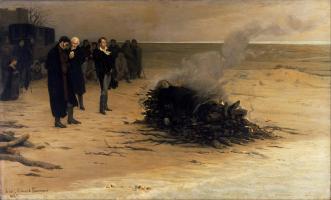

On 25th August 1842 Algernon Percy 4th Duke Northumberland [aged 49] and Eleanor Grosvenor Duchess Northumberland [aged 21] were married at St George's Church, Hanover Square. The difference in their ages was 27 years. She the daughter of Richard Grosvenor 2nd Marquess Westminster [aged 47] and Elizabeth Mary Leveson-Gower Marchioness Westminster [aged 45]. He the son of Hugh Percy 2nd Duke Northumberland and Frances Julia Burrell Duchess Northumberland. They were half fifth cousin once removed.
Thomas Bateman 1846. On the summit of Five Wells Hill [Map], near Taddington, is one of the most perfect examples now existing of the sepulchral architecture of the aboriginal inhabitants of Britain; it consists of two vaults situated in the centre of a cairn about thirty yards in diameter, each approached by a separate gallery or avenue, formed by large limestones standing edgeways, extending through the tumulus, respectively in a south-east and north-west direction. This structure appears to have been first discovered at the time of the inclosure of the moors, when a great part of the barrow was used in making the surrounding fences; at this time many bones were found in the vaults.
On the 25th of August, 1846, the two galleries were cleared out, in order to ascertain if any articles had been overlooked by the parties who first opened the barrow; but, with the exception of a flint arrow-point, and numerous bones, some calcined, nothing of primitive date was discovered. The quantity of bones of both sexes and of various ages indicate this tumulus to have been used as a burying-place for a considerable time; on this occasion the lower jaws of twelve different persons were collected.

After 25th August 1867. St John Lee Church, Hexham [Map]. Grave of Amos Dent of Hexham who was killed in an accident at Hexham Railway Station on 24 Aug 1867 dying the following day.
Archaeologia Cambrensis 1870 Page 365. 25th August 1870. Friday, August 25. Excursion.—The first halt was made at Llanynghenedl Church, one of the ordinary churches of the district; and, with the exception of the font, devoid of all interest. The font is assigned by the author of Mona Mediceva to the twelfth century; but from the view he has given of it, it has rather the appearance of the thirteenth century work.
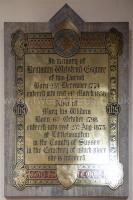
After 25th August 1873. Memorial at St Andrew's Church, Kimbolton [Map] to husband and wife Benjamin Welstead and Mary Rowley [deceased].
Benjamin Welstead: On 25th December 1774 he was born to Charles Marion Welstead and Ann Richards. On 10th July 1832 Benjamin Welstead and Mary Rowley were married at St Marylebone Church. The difference in their ages was 23 years. On 14th March 1858 Benjamin Welstead died.
Mary Rowley: In 6th October 1798 she was born. On 25th August 1873 she died at Littlehampston [Map].
On 25th August 1876 Thomas Lister 3rd Baron Ribblesdale [aged 48] committed suicide as a consequence of the loss of his wealth due to gambling. His son Thomas [aged 21] succeeded 4th Baron Ribblesdale of Gisburne Park in the West Riding of Yorkshire.
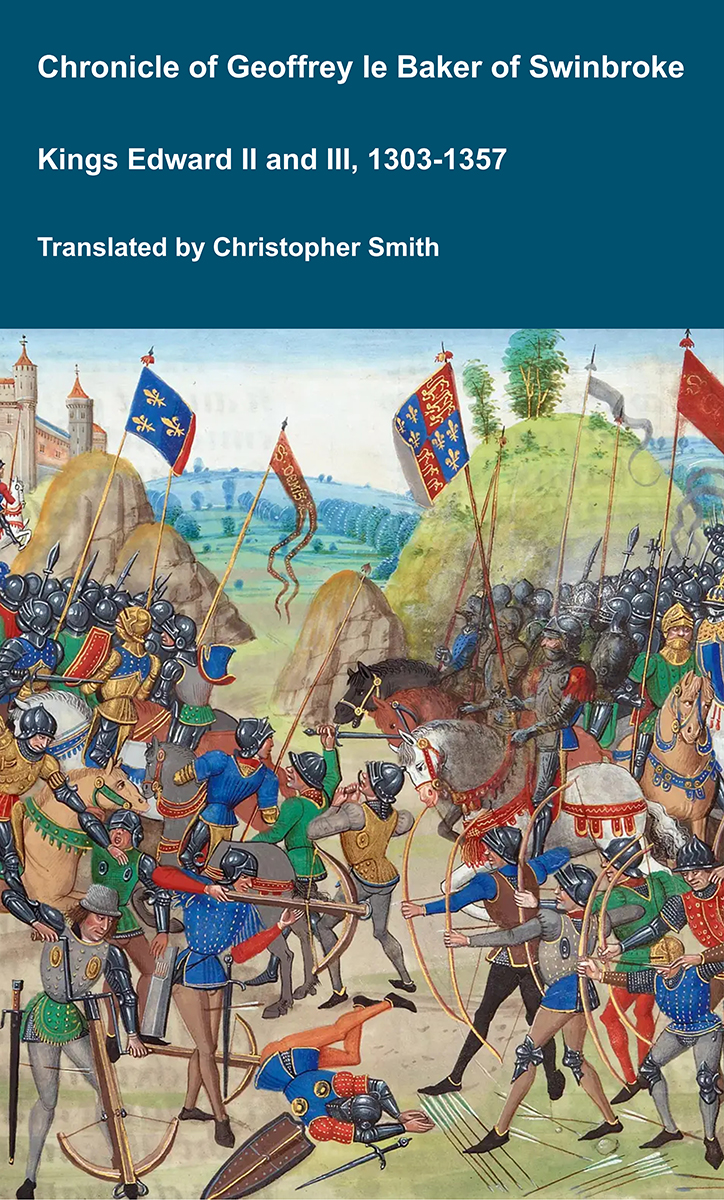
Chronicle of Geoffrey le Baker of Swinbroke
Baker was a secular clerk from Swinbroke, now Swinbrook, an Oxfordshire village two miles east of Burford. His Chronicle describes the events of the period 1303-1356: Gaveston, Bannockburn, Boroughbridge, the murder of King Edward II, the Scottish Wars, Sluys, Crécy, the Black Death, Winchelsea and Poitiers. To quote Herbert Bruce 'it possesses a vigorous and characteristic style, and its value for particular events between 1303 and 1356 has been recognised by its editor and by subsequent writers'. The book provides remarkable detail about the events it describes. Baker's text has been augmented with hundreds of notes, including extracts from other contemporary chronicles, such as the Annales Londonienses, Annales Paulini, Murimuth, Lanercost, Avesbury, Guisborough and Froissart to enrich the reader's understanding. The translation takes as its source the 'Chronicon Galfridi le Baker de Swynebroke' published in 1889, edited by Edward Maunde Thompson.
Available at Amazon in eBook and Paperback format.

On 25th August 1884 Odo Russell 1st Baron Ampthill [aged 55] died. He was buried at St Michael's Church, Chenies [Map]. His son Oliver [aged 15] succeeded 2nd Baron Ampthill of Ampthill in Bedfordshire.
Odo Russell 1st Baron Ampthill: On 20th February 1829 he was born to George Russell and Elizabeth Anne Rawdon. He a great x 4 grandson of King Charles II of England Scotland and Ireland. On 5th May 1868 Odo Russell 1st Baron Ampthill and Emily Theresa Villiers Baroness Ampthill were married. She the daughter of George William Villiers 4th Earl Clarendon and Katherine Grimston Countess Clarendon. They were fifth cousin once removed. He a great x 4 grandson of King Charles II of England Scotland and Ireland. In 1881 Odo Russell 1st Baron Ampthill was created 1st Baron Ampthill of Ampthill in Bedfordshire. Emily Theresa Villiers Baroness Ampthill by marriage Baroness Ampthill of Ampthill in Bedfordshire.

On 25th August 1885 Jessie Smither aka Denise Orme Duchess Leinster was born.

The London Gazette 26321. St. James's Palace, August 25, 1892.
The Queen [aged 73] has been pleased to make the following appointments in Her Majesty's Household:-
Charles Robert, Lord Carrington [aged 49], G.C.M.G., to be Lord Chamberlain of Her Majesty's Household, in the room of Edward, Earl of Lathom [aged 54], G.C.B., resigned.
The Honourable Charles Robert Spencer [aged 34], M.P., to be Vice Chamberlain of Her Majesty's Household, in the room of Henry George, Lord Burghley [aged 42], M.P., resigned.
George William Henry, Lord Vernon [aged 38], to be Captain of Her Majesty's Honourable Corps of Gentlemen-at-Arms, in the room of Charles Alfred Worsley, Earl of Yarborough [aged 33], resigned.
William, Lord Kensington [aged 57], to be Captain of Her Majesty's Guard of Yeoman of the Guard, in the room of William, Earl of Limerick [aged 52], K.P., resigned.
The London Gazette 26321. Master of the Horse's Office, Royal Mews, Pimlico, August 25, 1892.
HER Majesty has been graciously pleased to appoint the Right Honourable Thomas, Baron Ribblesdale [aged 37], to be Master of Her Majesty's Buckhounds, in the room of the Right Honourable George William, Earl of Coventry [aged 54], resigned.
On 25th August 1925 the Heywood War Memorial [Map] was unveiled by the Very Reverend The Dean of Manchester. The memorial was sculpted by Walter Marsden [aged 42].


25th August 1930. The Belfast Telegraph reports:
The New Duke's Heritage. The new Duke of Northumberland [aged 18] has come to his responsibilities at the age of 18, which is just twenty years younger than his father's age on succeeding to the dukedom. Henry George Alan Percy is the eldest of a family of four boys and two girls. He is an Anglo-Scot. The late Duke of Richmond and Gordon was his grandfather and the eighth Duke of Argyll his great grandfather. It may be predicted of the ninth Duke of Northumberland that he will follow his father in devotion to Northumberland. The late duke was an able manager of his own great heritage and gave royally of his time to the services of the county of which he was lord-lieutenant. Alnwick Castle is a home fit to inspire any young man with ideals of public service. Externally it is medieval fortress, with walls dating hark to about 1157. its outer ward 'defended by a striking 14th century gatehouse. Internally it is an Italian palace, reconstructed by the Duke in 1853. In the famous library at Alnwick is a household book which was first kept in 1502, which records that "The family rose at six, dined at ten, supped at four. The gates of the castle were shut at nine and thereafter no one was permitted to enter or leave the castle." Breakfast served at seven consisted of a loaf of bread, two manchets, a quart of beer, as much wine, two pieces of salt fish, six baconed herrings, four white ones and a dish of sprats. On "flesh" days half a chine of mutton or a chine of boiled beef was put on the breakfast table.

On 25th August 1942 the Dunbeath Air Crash at Eagle's Rock [Map] near Dunbeath killed 14 of 15 passengers and crew, including Prince George, Duke of Kent, who was on duty as an Air Commodore in the Royal Air Force on a mission to Reykjavik. A Royal Air Force Board of Inquiry determined that the crash was the result of a navigational error by the crew.
Prince George Windsor 1st Duke Kent [aged 39] died in a plane crashEdward Windsor 2nd Duke Kent [aged 6] succeeded 2nd Duke Kent.
Also killed were:
Lt. John Crowther, RNVR Private Secretary.
LAC. John Walter Holes, Batman.
Flt Lt. Frank McKenzie Goyen, 42057 RAF, Captain (Pilot).
Wg Cdr. Thomas Lawton Moseley, 33064 RAF, CO of 228 Squadron, 1st pilot.
Pilot Officer Sydney Wood Smith, 403961 RAAF, 2nd pilot.
Pilot Officer George Richard Saunders, 126975 RAFVR, Navigator.
Pilot Officer Michael Strutt [aged 28] J15062 RCAF, Air Gunner.
Flight Sargeant William Royston Jones 523047 RAF, Flight Mechanic Engineer / Air Gunner.
Flight Sargeant Charles Norman Lewis 517386 RAF, Airframe Fitter.
Flight Sargeant Ernest James Hewerdine 566884 RAF, Wireless Operator / Air Gunner.
Flight Sargeant Andrew Simpson Wilson Jack 970168 RAFVR, Air Gunner (Rear).
Sgt. Edward Francis Blacklock 405467 RNZAF, Wireless Operator / Air Gunner.
Sgt. Arthur Rowland Catt 1252994 RAFVR, Wireless Operator / Air Gunner.
Sgt. Leonard Edward Sweett 570678 RAF, Fitter.
On 25th August 1540 Catherine Grey Countess Hertford was born to Henry Grey 1st Duke of Suffolk [aged 23] and Frances Brandon Duchess of Suffolk [aged 23] at Bradgate Park, Leicestershire. She a great granddaughter of King Henry VII of England and Ireland. She married (1) her fourth cousin Henry Herbert 2nd Earl Pembroke, son of William Herbert 1st Earl Pembroke and Anne Parr Countess Pembroke (2) before 25th December 1560 her sixth cousin Edward Seymour 1st Earl Hertford, son of Edward Seymour 1st Duke of Somerset and Anne Stanhope Duchess Somerset, and had issue.
On 25th August 1573 Elizabeth Oldenburg was born to Frederick II King of Denmark [aged 39] and Sophie Mecklenburg-Schwerin Queen Consort Denmark [aged 15]. She married 19th April 1590 Henry Julius Duke of Brunswick-Lüneburg and had issue.
On 25th August 1654 Sophie Amalie Oldenburg was born to Ernest Günther Oldenburg I Duke Schleswig Holstein Sonderburg Augustenburg [aged 44] and Auguste Oldenburg Duchess Schleswig Holstein Sonderburg Augustenburg [aged 21]. Coefficient of inbreeding 6.27%. She died aged one in 1655.
On 25th August 1688 Frederick Louis Oldenburg was born to Frederick Louis Oldenburg I Duke Schleswig-Holstein-Sonderburg-Beck [aged 35] and Louise Charlotte Oldenburg Duchess Schleswig-Holstein-Sonderburg-Beck [aged 30]. Coefficient of inbreeding 7.82%. He died aged less than one years old.
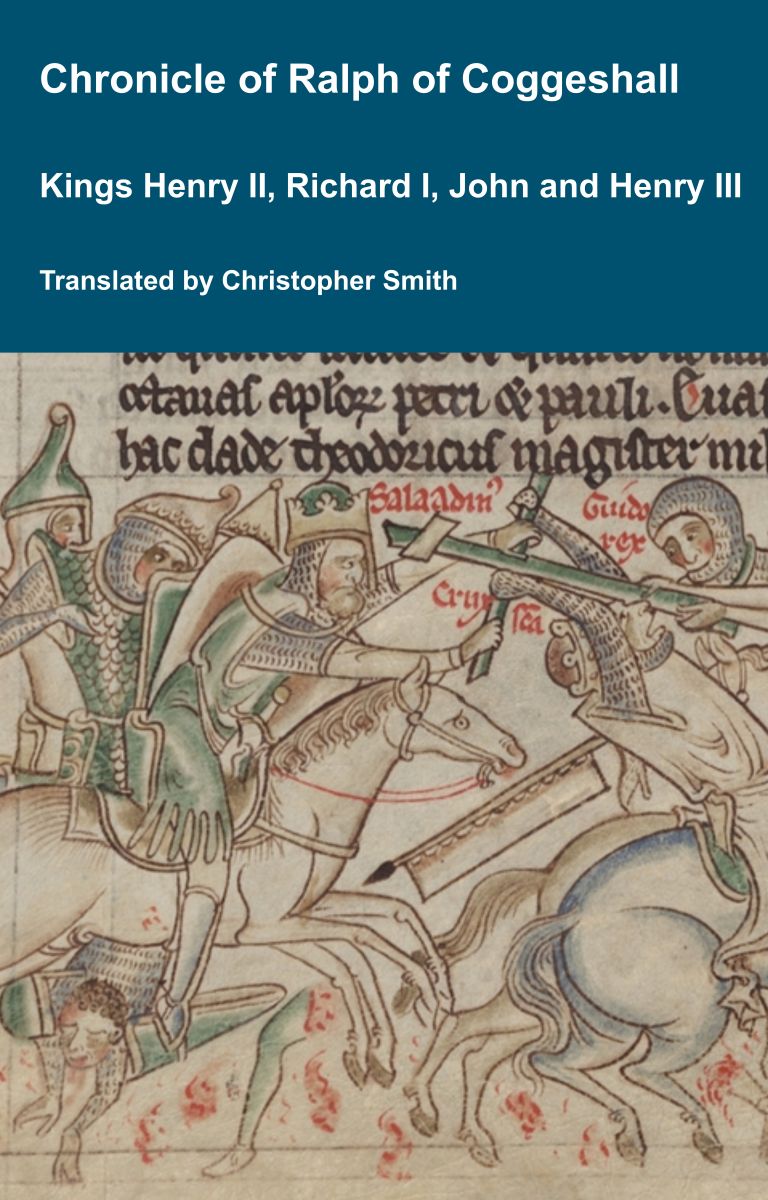
Chronicle of Abbot Ralph of Coggeshall
The Chronicle of Abbot Ralph of Coggeshall (Chronicon Anglicanum) is an indispensable medieval history that brings to life centuries of English and European affairs through the eyes of a learned Cistercian monk. Ralph of Coggeshall, abbot of the Abbey of Coggeshall in Essex in the early 13th century, continued and expanded his community’s chronicle, documenting events from the Norman Conquest of 1066 into the tumultuous reign of King Henry III. Blending eyewitness testimony, careful compilation, and the monastic commitment to record-keeping, this chronicle offers a rare narrative of political intrigue, royal power struggles, and social upheaval in England and beyond. Ralph’s work captures the reigns of pivotal figures such as Richard I and King John, providing invaluable insights into their characters, decisions, and the forces that shaped medieval rule. More than a simple annal, Chronicon Anglicanum conveys the texture of medieval life and governance, making it a rich source for scholars and readers fascinated by English history, monastic authorship, and the shaping of the medieval world.
Available at Amazon in eBook and Paperback format.
On 25th August 1695 John Trevor 3rd Baron Trevor was born to Thomas Trevor 1st Baron Trevor Bromham [aged 37] and Elizabeth Searle [aged 23].


On 25th August 1703 Thomas Lee was born to Edward Lee 1st Earl Lichfield [aged 40] and Charlotte Fitzroy Countess Lichfield [aged 38]. He a grandson of King Charles II of England Scotland and Ireland.
On 25th August 1706 Barbara Villiers Lady Blackett was born to William Villiers 2nd Earl Jersey [aged 24]. She married (1) 1725 William Blackett 2nd Baronet, son of William Blackett 1st Baronet and Julia Conyers (2) 13th March 1729 Bussy Mansel 4th Baron Mansel, son of Thomas Mansel 1st Baron Mansel and Martha Millington Baroness Mansel, and had issue.
On 25th August 1707 Louis I King Spain was born to Philippe V King Spain [aged 23] and Maria Luisa Savoy [aged 18]. He a great x 2 grandson of King Charles I of England, Scotland and Ireland. Coefficient of inbreeding 5.82%. He married 20th January 1722 his half first cousin once removed Louise Élisabeth Bourbon Queen Consort Spain, daughter of Philippe Bourbon II Duke Orléans and Françoise Marie Bourbon Duchess Orléans.
On 25th August 1708 Henry Every 6th Baronet was born to Reverend Simon Every 5th Baronet [aged 53].
On 25th August 1750 Gertrude Trevor Roper 19th Baroness Dacre of Gilsland was born to Charles Trevor Roper [aged 29] and Gertrude Trevor. She a great x 2 granddaughter of King Charles II of England Scotland and Ireland. She married 20th April 1771 her fourth cousin once removed Thomas Brand Baron Dacre and had issue.

On 25th August 1753 Henry Hood 2nd Viscount Hood was born to Admiral Samuel Hood 1st Viscount Hood [aged 28]. He married 10th September 1774 Jane Wheler Viscountess Hood and had issue.
On 25th August 1754 Charles Henry Coote 2nd Baron Castle Coote was born to Charles Coote [aged 41].
On 25th August 1782 Prince Carl Gustav Duke of Småland was born to Gustav III King Sweden [aged 36] and Queen Sophia of Sweden [aged 36]. He a great grandson of King George II of Great Britain and Ireland. Coefficient of inbreeding 2.75%. He died aged less than one years old.
On 25th August 1784 William Fowle Middleton 2nd Baronet was born to William Fowle Middleton 1st Baronet [aged 35]. He married before 2nd May 1860 Anne Cust Baroness Middleton, daughter of Brownlow Cust 1st Baron Brownlow and Frances Bankes Baroness Brownlow.
The True Chronicles of Jean le Bel Volume 1 Chapters 1-60 1307-1342
The True Chronicles of Jean le Bel offer one of the most vivid and immediate accounts of 14th-century Europe, written by a knight who lived through the events he describes, and experienced some of them first hand. Covering the early decades of the Hundred Years’ War, this remarkable chronicle follows the campaigns of Edward III of England, the politics of France and the Low Countries, and the shifting alliances that shaped medieval warfare. Unlike later historians, Jean le Bel writes with a strong sense of eyewitness authenticity, drawing on personal experience and the testimony of fellow soldiers. His narrative captures not only battles and sieges, but also the realities of military life, diplomacy, and the ideals of chivalry that governed noble society. A key source for Jean Froissart, Le Bel’s chronicle stands on its own as a compelling and insightful work, at once historical record and literary achievement. This translation builds on the 1905 edition published in French by Jules Viard, adding extensive translations from other sources Rymer's Fœdera, the Chronicles of Adam Murimuth, William Nangis, Walter of Guisborough, a Bourgeois of Valenciennes, Geoffrey le Baker of Swinbroke and Richard Lescot to enrich the original text and Viard's notes.
Available at Amazon in eBook and Paperback format.

On 25th August 1784 George Eden 1st Earl Auckland was born to William Eden 1st Baron Auckland [aged 39] and Eleanor Elliot.
On 25th August 1800 Henry Duncombe was born to Charles Duncombe 1st Baron Feversham [aged 35] and Charlotte Legge Baroness Feversham Duncombe Park [aged 25].

On 25th August 1804 Henry Pelham 3rd Earl Chichester was born to Thomas Pelham 2nd Earl Chichester [aged 48] and Mary Henrietta Juliana Osborne Countess Chichester [aged 27] at Stratton Street. He married 18th August 1828 his fifth cousin Mary Brudenell Countess Chichester, daughter of Robert Brudenell 6th Earl Cardigan and Penelope Cooke Countess Cardigan, and had issue.
On 25th August 1805 Robert Gore-Booth 4th Baronet was born to Robert Newcomen Gore-Booth 3rd Baronet.
On 25th August 1816 Archibald Kennedy 2nd Marquess of Ailsa was born to Archibald Kennedy [aged 22].
On 25th August 1834 William Henry Wellesley 2nd Earl Cowley was born to Henry Richard Charles Wellesley 1st Earl Cowley [aged 30]. He married 8th August 1863 Emily Gwendoline Williams Countess Cowley and had issue.
On 25th August 1857 Rosamund Catherine Petre Countess Bantry was born to Edmund George Petre [aged 28]. She married (1) 18th February 1886 William Henry Hare Hedges-White 4th Earl Bantry, son of William Henry Hare Hedges-White 3rd Earl Bantry (2) 7th December 1897 Arthur William Hill-Trevor 2nd Baron Trevor, son of Arthur Edwin Hill aka Hill-Trevor 1st Baron Trevor and Emily Mary Sutton, and had issue.
On 25th August 1857 Hugo Charteris 11th Earl of Wemyss was born to Francis Richard Charteris 10th Earl of Wemyss [aged 39] and Anne Frederica Anson Countess Wemyss [aged 34]. He married 1883 Mary Constance Wyndham Countess Wemyss and had issue.

On 25th August 1871 Alexandra Mary Elizabeth Wood was born to Charles Lindley Wood 2nd Viscount Halifax [aged 32] and Agnes Elizabeth Courtenay Viscountess Halifax [aged 33].
On 25th August 1875 Mathew Richard Henry Wilson 4th Baronet was born to Mathew Amcotts Wilson 3rd Baronet [aged 22]. He married 7th September 1905 Barbrara Lister, daughter of Thomas Lister 4th Baron Ribblesdale and Charlotte Monckton "Charty" Tennant, and had issue.
On 25th August 1885 Jessie Smither aka Denise Orme Duchess Leinster was born.
Abbot John Whethamstede’s Chronicle of the Abbey of St Albans
Abbot John Whethamstede's Register aka Chronicle of his second term at the Abbey of St Albans, 1451-1461, is a remarkable text that describes his first-hand experience of the beginning of the Wars of the Roses including the First and Second Battles of St Albans, 1455 and 1461, respectively, their cause, and their consequences, not least on the Abbey itself. His text also includes Loveday, Blore Heath, Northampton, the Act of Accord, Wakefield, and Towton, and ends with the Coronation of King Edward IV. In addition to the events of the Wars of the Roses, Abbot John, or his scribes who wrote the Chronicle, include details in the life of the Abbey such as charters, letters, land exchanges, visits by legates, and disputes, which provide a rich insight into the day-to-day life of the Abbey, and the challenges faced by its Abbot.
Available at Amazon in eBook and Paperback format.
On 25th August 1898 Ralph Stawell Dutton 8th Baron Sherborne was born to Henry John Dutton [aged 51] and Blanche Eleanor Cave [aged 32].
On 25th August 1900 Lois Sturt was born to Humphrey Napier Sturt 2nd Baron Alington [aged 41] and Feodorowna Yorke Baroness Alington [aged 36]. She married 1st April 1928 Evan Morgan 2nd Viscount Tredegar, son of Courtenay Morgan 1st Viscount Tredegar and Katherine Agnes Blanche Carnegie Viscountess Tredegar.


On 25th August 1929 Lawrence Williams 9th Baronet was born to Colonel Lawrence Williams [aged 53].
On 25th August 1938 Robert Jocelyn 10th Earl Roden was born to Robert Jocelyn 9th Earl Roden [aged 28].
On 25th August 1956 Charles Hardinge 6th Viscount Hardinge was born to Henry Hardinge 5th Viscount Hardinge [aged 27] and Zoe Ann Molson Countess Hardinge.
On 25th August 1969 Edward Guinness 4th Earl of Iveagh was born to Benjamin Guinness 3rd Earl of Iveagh [aged 32].
On 25th August 1476 John "Cicero" Hohenzollern Elector Brandenburg [aged 21] and Margaret of Thuringia [aged 27] were married. He the son of Albert "Achilles" Elector Brandenburg [aged 61]. They were second cousin twice removed.
On 25th August 1595 William Courtenay 3rd Earl Devon [aged 42] and Elizabeth Sydenham were married. He the son of William Courtenay 2nd Earl Devon and Elizabeth Paulett Countess Devon.
On 25th August 1627 Lewis Mansel 2nd Baronet [aged 33] and Elizabeth Montagu Lady Sebright and Mansel [aged 20] were married. She the daughter of Henry Montagu 1st Earl Manchester [aged 64] and Catherine Spencer.
On 25th August 1679 Charles Kirkoven 1st Earl Bellomont [aged 36] and Frances Willoughby Countess Bellomont [aged 36] were married. She by marriage Baroness Wotton. His paternal grandfather Thomas Wotton 2nd Baron Wotton had been the last of the previous creation of Baron Wotton. He the son of Jehan Lord of Heenvliet and Katherine Wotton Countess Chesterfield.
Abbot John Whethamstede’s Chronicle of the Abbey of St Albans
Abbot John Whethamstede's Register aka Chronicle of his second term at the Abbey of St Albans, 1451-1461, is a remarkable text that describes his first-hand experience of the beginning of the Wars of the Roses including the First and Second Battles of St Albans, 1455 and 1461, respectively, their cause, and their consequences, not least on the Abbey itself. His text also includes Loveday, Blore Heath, Northampton, the Act of Accord, Wakefield, and Towton, and ends with the Coronation of King Edward IV. In addition to the events of the Wars of the Roses, Abbot John, or his scribes who wrote the Chronicle, include details in the life of the Abbey such as charters, letters, land exchanges, visits by legates, and disputes, which provide a rich insight into the day-to-day life of the Abbey, and the challenges faced by its Abbot.
Available at Amazon in eBook and Paperback format.
On 25th August 1741 Francis Vincent 7th Baronet [aged 24] and Elizabeth Kilmaine were married.
On 25th August 1769 Clotworthy Upton 1st Baron Templetown [aged 48] and Elizabeth Boughton Baroness Templetown [aged 16] were married. The difference in their ages was 31 years.
On 25th August 1784 Henry Hoare 3rd Baronet [aged 22] and Maria Palmer Acland were married. They were second cousins.


On 25th August 1800 John Vesey 2nd Viscount Vesci [aged 29] and Frances Letitia Brownlow Viscountess Vesci were married. She by marriage Viscountess Vesci of Abbeyleix in Queen's County.
On 25th August 1802 George Charles Venables-Vernon 4th Baron Vernon [aged 22] and Frances Maria Warren Baroness Vernon [aged 18] were married.
On 25th August 1802 Charles John Cary 9th Viscount Falkland [aged 33] and Christiana Anton Viscountess Falkland were married at St Clement Danes Church, Westminster [Map]. She by marriage Viscountess Falkland.
On 25th August 1806 Edward Knatchbull 9th Baronet [aged 24] and Annabella Christiana Honywood were married. They were fifth cousin once removed.
On 28th August 1811 Percy Bysshe Shelley [aged 19] and Harriet Westbrook were married at Edinburgh having eloped on the 25th August 1811.
On 25th August 1831 Thomas Charles Hanbury-Tracy 2nd Baron Sudeley [aged 30] and Emma Elizabeth Alicia Dawkins-Pennant Baroness Sudeley were married.
On 25th August 1842 Algernon Percy 4th Duke Northumberland [aged 49] and Eleanor Grosvenor Duchess Northumberland [aged 21] were married at St George's Church, Hanover Square. The difference in their ages was 27 years. She the daughter of Richard Grosvenor 2nd Marquess Westminster [aged 47] and Elizabeth Mary Leveson-Gower Marchioness Westminster [aged 45]. He the son of Hugh Percy 2nd Duke Northumberland and Frances Julia Burrell Duchess Northumberland. They were half fifth cousin once removed.
The Deeds of the Dukes of Normandy
The Gesta Normannorum Ducum [The Deeds of the Dukes of Normandy] is a landmark medieval chronicle tracing the rise and fall of the Norman dynasty from its early roots through the pivotal events surrounding the Norman Conquest of England. Originally penned in Latin by the monk William of Jumièges shortly before 1060 and later expanded at the behest of William the Conqueror, the work chronicles the deeds, politics, battles, and leadership of the Norman dukes, especially William’s own claim to the English throne. The narrative combines earlier historical sources with firsthand information and oral testimony to present an authoritative account of Normandy’s transformation from a Viking settlement into one of medieval Europe’s most powerful realms. William’s history emphasizes the legitimacy, military prowess, and governance of the Norman line, framing their expansion, including the conquest of England, as both divinely sanctioned and noble in purpose. Later chroniclers such as Orderic Vitalis and Robert of Torigni continued the history, extending the coverage into the 12th century, providing broader context on ducal rule and its impact. Today this classic work remains a foundational source for understanding Norman identity, medieval statesmanship, and the historical forces that reshaped England and Western Europe between 800AD and 1100AD.
Available at Amazon in eBook and Paperback format.
On 25th August 1847 Henry Seymour Moore 3rd Marquess Drogheda [aged 22] and Mary Caroline Stuart-Wortley-Mackenzie Marchioness Drogheda [aged 20] were married. She by marriage Marchioness Drogheda. They were third cousins. He a great x 4 grandson of King Charles II of England Scotland and Ireland.
On 25th August 1864 Balthazar Walter Foster 1st Baron Ilkeston [aged 24] and Emily Martha Sargant were married.
On 25th August 1868 Walter Henry James 2nd Baron Northbourne [aged 22] and Edith Emeline Mary Lane Baroness Northbourne were married.
On 25th August 1868 Herbert Hay Langham 12th Baronet [aged 28] and Anna Maria Sandes were married.
On 25th August 1869 Francis Seymour 1st Baronet [aged 56] and Agnes Austin Wickham Lady Seymour [aged 26] were married. The difference in their ages was 29 years.
On 25th August 915 Reginar "Longneck" I Duke Lorraine [aged 65] died. Reginar II Reginarids II Count Hainaut [aged 23] was appointed II Count Hainaut. His son Gilbert [aged 25] succeeded I Duke Lorraine.
On 25th August 1192 Hugh III Duke Burgundy [aged 50] died. His son Odo [aged 26] succeeded III Duke Burgundy.
On 25th August 1270 Alphonse Brienne Count of Eu [aged 42] died. His son John [aged 24] succeeded I Count Eu.
On 25th August 1270 King Louis IX of France [aged 56] died. His son Philip [aged 25] succeeded III King France: Capet. Isabella Barcelona Queen Consort France [aged 22] by marriage Queen Consort France.
On 25th August 1282 Bishop Thomas Cantilupe [aged 64] died in Ferento, Orvieto. Monument in the North Transept of Hereford Cathedral [Map] in the form of a shrine-pedestal and consisting of an altar-tomb and open superstructure (Plate 134), altar-tomb possibly slightly earlier than the rest, tapering on plan and re-assembled, long sides with six bays and W. end with two bays of cinque-foiled arcading on attached shafts with foliated capitals and moulded bases, spandrels carved with varying naturalistic foliage; each bay filled with figure of knight (Plate 136) with long surcoat, heater-shaped shield and feet on lions and other beasts, faces all defaced; on slab, indent of brass figure of bishop with mitre and crozier and canopy; small brass figure of St. Ethelbert now in library; superstructure with six bays on long sides and two at W. end of open trefoiled arcading resting on shafts with moulded capitals and bases, spandrels carved with naturalistic foliage and winged beasts, moulded cornice at top and plain top slab; E. end of tomb, plain and not intended to be seen, with part of carved spandrel set in it.
On 25th August 1330 James "Black" Douglas [aged 44] was killed during the Battle of Teba at Teba whilst en route to the Holy Land with the heart of King Robert the Bruce I of Scotland.
On 25th August 1339 Henry Cobham 1st Baron Cobham [aged 79] died at Hache, Somerset. His son John [aged 54] succeeded 2nd Baron Cobham. Agnes Stone Baroness Cobham by marriage Baroness Cobham.
On 25th August 1390 Maurice Fitzgerald 4th Earl of Kildare [aged 72] died. His son Gerald succeeded 5th Earl Kildare.
On 25th August 1394 Mary Percy Baroness Ros of Helmsley [aged 27] died. Her late husband's brother John Ros 5th Baron Ros Helmsley received her dower lands which included Helmsley [Map].
On 25th August 1482 Margaret of Anjou Queen Consort England [aged 52] died at Chateau Dampierre-sur-Loire, Dampierre-sur-Loire, Saumur. She was buried at Angers Cathedral [Map].
On 25th August 1498 Giovanni de Gigli died in Rome, Italy [Map].
Chronicle of a Bourgeois of Valenciennes
Récits d’un bourgeois de Valenciennes aka The Chronicle of a Bourgeois of Valenciennes is a vivid 14th-century vernacular chronicle written by an anonymous urban chronicler from Valenciennes in the County of Hainaut. It survives in a manuscript that describes local and regional history from about 1253 to 1366, blending chronology, narrative episodes, and eyewitness-style accounts of political, military, and social events in medieval France, Flanders, and the Low Countries. The work begins with a chronological framework of events affecting Valenciennes and its region under rulers such as King Philip VI of France and the shifting allegiances of local nobility. It includes accounts of conflicts, sieges, diplomatic manoeuvres, and the impact of broader struggles like the Hundred Years’ War on urban life in Hainaut. Written from the perspective of a burgher (bourgeois) rather than a monastery or royal court, the chronicle offers a rare lay viewpoint on high politics and warfare, reflecting how merchants, townspeople, and civic institutions experienced the turbulence of the 13th and 14th centuries. Its narrative style combines straightforward reporting of events with moral and civic observations, making it a valuable source for readers interested in medieval urban society, regional politics, and the lived experience of war and governance in pre-modern Europe.
Available at Amazon in eBook and Paperback format.
On 25th August 1554 Thomas Howard 3rd Duke of Norfolk [aged 81] died at Kenninghall, Norfolk. He was buried at Church of St Michael the Archangel, Framlingham [Map]. His grandson Thomas [aged 18] succeeded 4th Duke Norfolk, 3rd Earl Surrey.
On 25th August 1580 the Irish forces ambushed the forces of Arthur Grey 14th Baron Grey of Wilton [aged 44] at the Battle of Glenmalure fought at Glenmalure, County Wicklow. Around 800 English soldiers, including, Peter Carew were killed.
On 25th August 1595 John Stewart 5th Earl Atholl [aged 32] died.
On 25th August 1665 Charles Seymour 2nd Baron Seymour of Trowbridge [aged 44] died, possibly of plague. His son Francis [aged 7] succeeded 3rd Baron Seymour of Trowbridge.
On 25th August 1686 James Douglas 10th Earl Morton died. His son James [aged 26] succeeded 11th Earl Morton.
On 25th August 1691 John Hotham 3rd Baronet [aged 36] died. His first cousin once removed Charles [aged 28] succeeded 4th Baronet Hotham of Scorborough in Yorkshire.
On 25th August 1699 Christian V King of Denmark and Norway [aged 53] died. His son Frederick [aged 27] succeeded IV King of Denmark and Norway. Louise of Mecklenburg Güstrow Queen Consort Denmark and Norway [aged 31] by marriage Queen Consort Denmark and Norway.

On 25th August 1711 Edward Villiers 1st Earl Jersey [aged 55] died. His son William [aged 29] succeeded 2nd Earl Jersey, 2nd Viscount Villiers, 2nd Baron Villiers.
On 25th August 1721 Anthony Thorold 6th Baronet [aged 11] died. His uncle John [aged 45] succeeded 7th Baronet Thorold of Marston in Lincolnshire.
On 25th August 1751 Sarah Cadogan Duchess Richmond [aged 45] died.
On 25th August 1805 William Henry Hanover 1st Duke Gloucester and Edinburgh [aged 61] died. His son William [aged 29] succeeded 2nd Duke Gloucester and Edinburgh, 2nd Earl Connaught.
On 25th August 1838 William Richard Annesley 3rd Earl Annesley [aged 66] died. His son William [aged 8] succeeded 4th Earl Annesley of Castlewellan in County Down, 5th Viscount Glerawly of County Fermanagh, 5th Baron Annesley of Castle Wellan in County Down.
Chronicle of Walter of Guisborough
A canon regular of the Augustinian Guisborough Priory, Yorkshire, formerly known as The Chronicle of Walter of Hemingburgh, describes the period from 1066 to 1346. Before 1274 the Chronicle is based on other works. Thereafter, the Chronicle is original, and a remarkable source for the events of the time. This book provides a translation of the Chronicle from that date. The Latin source for our translation is the 1849 work edited by Hans Claude Hamilton. Hamilton, in his preface, says: 'In the present work we behold perhaps one of the finest samples of our early chronicles, both as regards the value of the events recorded, and the correctness with which they are detailed; Nor will the pleasing style of composition be lightly passed over by those capable of seeing reflected from it the tokens of a vigorous and cultivated mind, and a favourable specimen of the learning and taste of the age in which it was framed.'
Available at Amazon in eBook and Paperback format.

On 25th August 1866 William Craven 2nd Earl Craven [aged 57] died. His son George [aged 25] succeeded 3rd Earl Craven in Yorkshire, 3rd Viscount Uffington, 9th Baron Craven of Hamstead Marshall in Berkshire.
On 25th August 1870 Richard Seymour-Conway 4th Marquess Hertford [aged 70] died in Paris [Map]. His second cousin Francis [aged 58] succeeded 5th Marquess Hertford, 5th Earl Hertford, 5th Earl of Yarmouth, 5th Viscount Beauchamp, 6th Baron Conway of Ragley in Warwickshire, 6th Baron Conway of Killultagh in Antrim. Frances Elizabeth Anson Marchioness Hertford [aged 60] by marriage Marchioness Hertford.
On 25th August 1876 Thomas Lister 3rd Baron Ribblesdale [aged 48] committed suicide as a consequence of the loss of his wealth due to gambling. His son Thomas [aged 21] succeeded 4th Baron Ribblesdale of Gisburne Park in the West Riding of Yorkshire.
On 25th August 1881 Katherine Frances Plunket Lady Coghill died.
On 25th August 1884 Odo Russell 1st Baron Ampthill [aged 55] died. He was buried at St Michael's Church, Chenies [Map]. His son Oliver [aged 15] succeeded 2nd Baron Ampthill of Ampthill in Bedfordshire.
Odo Russell 1st Baron Ampthill: On 20th February 1829 he was born to George Russell and Elizabeth Anne Rawdon. He a great x 4 grandson of King Charles II of England Scotland and Ireland. On 5th May 1868 Odo Russell 1st Baron Ampthill and Emily Theresa Villiers Baroness Ampthill were married. She the daughter of George William Villiers 4th Earl Clarendon and Katherine Grimston Countess Clarendon. They were fifth cousin once removed. He a great x 4 grandson of King Charles II of England Scotland and Ireland. In 1881 Odo Russell 1st Baron Ampthill was created 1st Baron Ampthill of Ampthill in Bedfordshire. Emily Theresa Villiers Baroness Ampthill by marriage Baroness Ampthill of Ampthill in Bedfordshire.
On 25th August 1889 George Arthur Hastings Forbes 7th Earl Granard [aged 56] died. His son Bernard [aged 14] succeeded 8th Earl Granard, 3rd Baron Granard of Castle Donnington in Leicestershire.
On 25th August 1906 Henry Dering 9th Baronet [aged 66] died. His son Henry [aged 40] succeeded 10th Baronet Dering of Surrenden Dering in Kent.
On 25th August 1931 Charles Buckworth-Herne-Soame 10th Baronet [aged 66] died. His son Charles [aged 36] succeeded 11th Baronet Buckworth-Herne-Soame of Sheen in Surrey.
On 25th August 1932 Constantine Phipps 3rd Marquess Normanby [aged 85] died. His son Oswald [aged 20] succeeded 4th Marquess Normanby, 5th Earl Mulgrave, 5th Viscount Normanby, 7th Baron Mulgrave of New Ross in Wexford and 5th Baron Mulgrave.
On 25th August 1942 the Dunbeath Air Crash at Eagle's Rock [Map] near Dunbeath killed 14 of 15 passengers and crew, including Prince George, Duke of Kent, who was on duty as an Air Commodore in the Royal Air Force on a mission to Reykjavik. A Royal Air Force Board of Inquiry determined that the crash was the result of a navigational error by the crew.
Prince George Windsor 1st Duke Kent [aged 39] died in a plane crashEdward Windsor 2nd Duke Kent [aged 6] succeeded 2nd Duke Kent.
Also killed were:
Lt. John Crowther, RNVR Private Secretary.
LAC. John Walter Holes, Batman.
Flt Lt. Frank McKenzie Goyen, 42057 RAF, Captain (Pilot).
Wg Cdr. Thomas Lawton Moseley, 33064 RAF, CO of 228 Squadron, 1st pilot.
Pilot Officer Sydney Wood Smith, 403961 RAAF, 2nd pilot.
Pilot Officer George Richard Saunders, 126975 RAFVR, Navigator.
Pilot Officer Michael Strutt [aged 28] J15062 RCAF, Air Gunner.
Flight Sargeant William Royston Jones 523047 RAF, Flight Mechanic Engineer / Air Gunner.
Flight Sargeant Charles Norman Lewis 517386 RAF, Airframe Fitter.
Flight Sargeant Ernest James Hewerdine 566884 RAF, Wireless Operator / Air Gunner.
Flight Sargeant Andrew Simpson Wilson Jack 970168 RAFVR, Air Gunner (Rear).
Sgt. Edward Francis Blacklock 405467 RNZAF, Wireless Operator / Air Gunner.
Sgt. Arthur Rowland Catt 1252994 RAFVR, Wireless Operator / Air Gunner.
Sgt. Leonard Edward Sweett 570678 RAF, Fitter.
On 25th August 1958 Joyce Christabel Kennaway Lady Wilbraham [aged 81] died.
On 25th August 1959 Henry Lovick Cooper 5th Baronet [aged 84] died. His first cousin once removed Patrick [aged 41] succeeded 6th Baronet Paston-Cooper of Gadebridge in Hertfordshire.
Abbot John Whethamstede’s Chronicle of the Abbey of St Albans
Abbot John Whethamstede's Register aka Chronicle of his second term at the Abbey of St Albans, 1451-1461, is a remarkable text that describes his first-hand experience of the beginning of the Wars of the Roses including the First and Second Battles of St Albans, 1455 and 1461, respectively, their cause, and their consequences, not least on the Abbey itself. His text also includes Loveday, Blore Heath, Northampton, the Act of Accord, Wakefield, and Towton, and ends with the Coronation of King Edward IV. In addition to the events of the Wars of the Roses, Abbot John, or his scribes who wrote the Chronicle, include details in the life of the Abbey such as charters, letters, land exchanges, visits by legates, and disputes, which provide a rich insight into the day-to-day life of the Abbey, and the challenges faced by its Abbot.
Available at Amazon in eBook and Paperback format.
On 25th August 1976 Brograve Beauchamp 2nd Baronet [aged 79] died. Baronet Beauchamp of Grosvenor Place in the City of Westminster extinct.
On 25th August 1999 George Petty-Fitzmaurice 8th Marquess of Lansdowne [aged 86] died. His son Charles [aged 58] succeeded 9th Marquess Lansdowne, 10th Earl Shelburne in County Wexford, 10th Earl Kerry.