

27 Oct is in October.
1326 Execution of the Despencers
1441 Trial and Punishment of Eleanor Cobham
1532 Henry VIII and Francis I meet at Calais
On 27th October 625 Pope Honorius I was appointed Pope.
On 27th October 939 King Æthelstan I of England [aged 45] died in Gloucester [Map]. His half brother Edmund [aged 18] succeeded King of England.
Annals of Ulster. 27th October 939. Athelstan [aged 45], king of the Saxons, pillar of the dignity of the western world, died an untroubled death.
Chronicle of Athelward Chapter 5. 27th October 939. Two years afterwards the venerated king Athelstan [aged 45] died.
Anglo-Saxon Chronicle. 1066. Then Earl Tosty [aged 39] and his wife [aged 32], and all they who acted with him, went south over sea with him to Earl Baldwin [aged 53]; who received them all: and they were there all the winter.
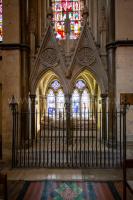
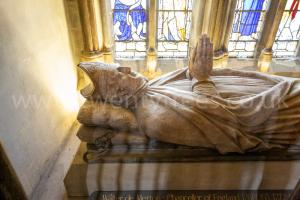
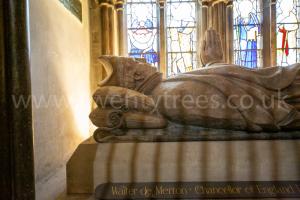
On 27th October 1277 Bishop Walter de Merton [aged 72] died. Monument in Rochester Cathedral [Map].
Bishop Walter de Merton: Around 1205 he was born.
On 27th October 1303 Beatrice Queen Consort Portugal [aged 61] died.
On 27th October 1312 John "Peaceful" Reginar II Duke Brabant [aged 37] died. His son John [aged 12] succeeded III Duke Brabant.
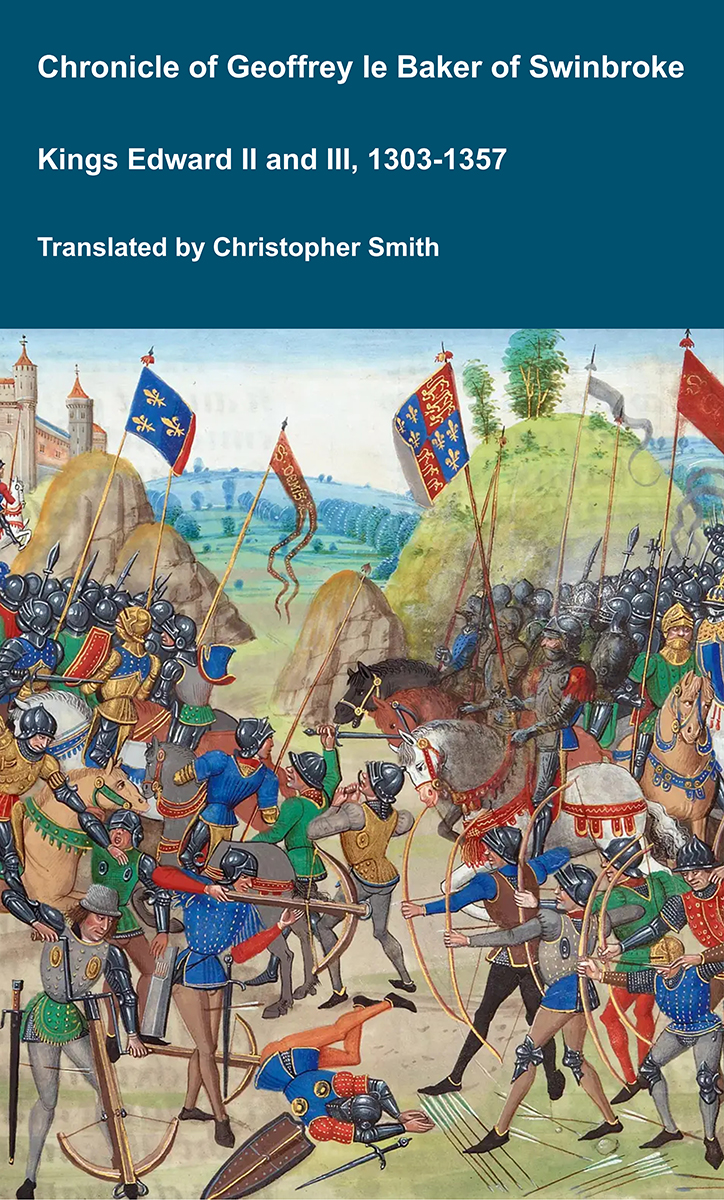 Chronicle of Geoffrey le Baker of Swinbroke. In the year 1321, around the feast of Saint Michael, when Queen Isabella [aged 26] was travelling and came to Leeds Castle in Kent,1 desiring to stay there for the night, her entry was stubbornly denied. The king, considering this rejection of the queen as an insult to himself, ordered the castle to be besieged by the local people, those from Essex, and some Londoners. The castle was held by Bartholomew de Badlesmere [aged 46], who had left behind his wife, children, and household retainers fit for its defence while he himself had gone with other barons to plunder the treasures of Hugh [Despenser]. The king pressed the siege fiercely, and as those inside despaired of holding the castle, the earls and barons who had been ravaging Hugh's lands, supported by a large retinue of armed men, arrived at Kingston on the eve [27th October 1321] of the feast of Saints Simon and Jude. They sent envoys to request the Archbishop of Canterbury, the Bishop of London, and the Earl of Pembroke to intercede with the king to lift the siege, promising to surrender the castle to him after the next parliament. However, the king, realizing that the castle's defenders could not hold out much longer and angered by their rebellion, refused to heed the barons' request. When the barons withdrew to other regions, the castle was eventually taken after considerable effort. Six of the strongest men2 found within were immediately hanged, and Bartholomew de Badlesmere's wife and children were sent to the Tower of London to be held in custody.
Anno MCCCXXJ domine regine Isabelle, circa festum sancti Michaelis itinerando venienti ad castrum de Ledes in Cancia et in eo volenti pernoctasse, fuerat ingressus pertinaciter denegatus. Regine repudium rex estimans in sui contemptum redundare, per populares vicinos et illos de Essexia atque nonnullos Londonienses iussit castrum obsideri. Castri firmamentum tenuit Bartholomeus de Baddesmere in quo uxore et filiis relictis cum vernaculis ad eius defensionem aptis, proficissebatur cum aliis baronibus ad demolicionem gazarum Hugonis. Obsidioni acriter insistente rege, inclusis desperantibus de castri tuicione, comites et barones Hugonis vastatores, armatorum suffulti magna comitiva, venerunt Kingestonam in vigilia apostolorum Simonis et Iude, rogantes per nuncios intermissos, dominos Cantuariensem et Londoniensem ac comitem Penbrochiensem, quod obsidionem rex amoveret, promittentes quod post proximum parliamentum castrum regi redditum subderent. Rex vero, perpendens castelanos non posse diu resistere et exasperatus rebellione inclusorum, peticiones baronum noluit exaudire; quibus in partes alias regressis, castro tandem labore non modico expungnato, VJ de forcioribus in ipso repertis indilate suspensis, uxorem Bartholomei de Baddesmere et filios eius misit turri Londoniarum custodiendos.
Note 1. The refusal to admit the queen into Leeds castle took place on the 13th October 1321. On the 16th the king's proclamation and summonses to the men of the southern counties were issued. Rymer's Fœdera, 2.458.
According to the Annales Paulini 298.
Note 2. Annales Paulini 299: "The wife and sister of Lord Bartholomew de Badlesmere were committed to custody at Dover Castle. On the next day, being All Souls' Day [2nd of November 1321], the said Walter Culpepper and twelve of his accomplices, all strong and able men, were condemned by judgment and hanged."
On 27th October 1326 Hugh "Elder" Despencer 1st Earl Winchester [aged 65] was hanged, drawn and quartered at Bristol, Gloucestershire [Map]. Earl Winchester, Baron Despencer forfeit as a result of attainder.
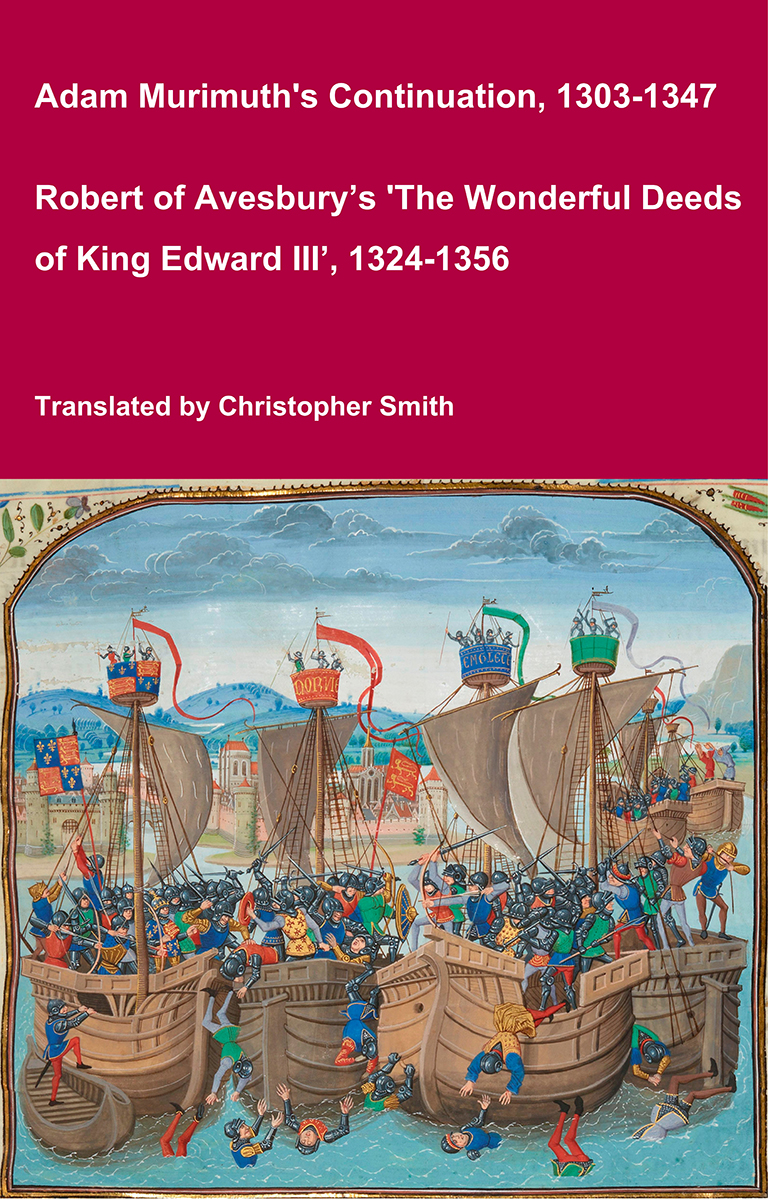 Adam Murimuth Continuation. The queen then went from Gloucester through Berkeley, where she restored the castle, which had previously been held by Hugh Despenser the younger, to Lord Thomas de Berkeley, heir of Lord Maurice de Berkeley, who had died shortly before at Wallingford in prison, together with all its appurtenances and movable goods belonging to the honour of Berkeley. After this the queen with her army besieged the town and castle of Bristol, which were quickly surrendered to her and to her son along with the town. On the day after her arrival, at the outcry of the crowd, Hugh Despenser the elder was drawn and hanged outside the town on the common gallows for thieves [on 27th October 1326]. Meanwhile the king was hiding with a few companions on the waters of the Severn, wishing, if he could, to pass into distant regions; but because of contrary winds he was unable to do so. He therefore landed in Glamorgan and went to the abbey and castle of Neath, where he hid, trusting in the promises of the Welsh.
Regina vero de Gloucestria transivit per Berkeley, ubi restituit castrum, prius a domino Hugone Despenser filio detentum, domino Thomæ de Berkeleye, qui fuit heres domini Mauricii de Berkeleye defuncti parum ante apud Walingfordiam in carcere, cum omnibus pertinentiis et rebus mobilibus ad honorem de Berkeleye pertinentibus quibuseumque. Ac pergens regina postmodum cum exercitu suo obsidebat villam et castrum de Bristollia, quod fuit cito redditum reginæ et filio suo una cum villa; et in crastino adventus ipsius, ad clamorem vulgi, fuit dominus Hugo Suspenditur pa. Dispensator pater tractus ibidem et suster Dispensator. pensus extra villam super communi furca latronum. Rex autem semper latitabat cum paucis in aqua: Sabrinæ, volens, si potuisset, ad partes transivisse remotas, sed propter ventum contrarium non valebat; unde applicuit in Glomorganet se transtulit usque ad abbatiam et castrum de Neth, et ibi, confisus de promissione Wallensiumlatitavit.
 Chronicle of Jean le Bel Volume 1. Then Sir Thomas Wake [aged 29], a good knight, wise and courteous, who was marshal of the host, rose and recounted all their deeds and actions in writing. He then turned to a knight who was present, that he might declare upon his oath what judgment should be rendered for such persons and such crimes. The knight took counsel with the other knights and barons and reported, by common assent, that they had well deserved death for several horrible deeds which they had heard recounted there and held to be true and manifest. By the gravity of their offenses, they had deserved to be punished in three manners: first drawn, then beheaded, and afterward hanged upon a gallows. In the very manner in which they were condemned, so were they executed before the castle of Bristol1, in the sight of the king and the said Sir Hugh the son, and of all those within, who bore great indignation and sorrow at it, as may well be understood. This was in the year of grace 1326, in the month of October.
Adoncques se leva messire Thomas Wage, bon chevalier, sage et courtois, qui estoit marescaus de l'ost, et leur raconta tous leurs faitz et leurs œuvres tout par escript, et tourna vers ung chevalier, qui là estoit, affin qu'il raportast sur sa feaulté que à faire avoit par jugement de telles personnes et de telz faits. Le chevalier se conseilla aux aultres chevaliers et barons, et raporta par la plaine syeute qu'ilz avoient bien mort deservi pour pluseurs horribles faitz, lesquelz ilx avoient ouy là recorder et les tenoient pour vrais et tout clers, et avoient deservi par la diversité de leurs faits à estre justicez en trois manieres; c'est assavoir: premierement, trahynez, aprez decolez et aprez pendus à ung gibet. Tout en la maniere qu'ilz furent condempnez, ilz furent exequtez pardevant le chastel de Bristo', voyant le roy et ledit messire Hue le fil et tous ceulx de layens, qui grand despit en avoient, ce pœut chascun sçavoir. Ce fut l'an de gracc mil IIIC et XXVI, au moys d'ottembre.
Note 1. Hugh Despenser the Elder was executed the day after the capture of Bristol on 27th October 1326. Edmund Fitzalan was not executed in Bristol on the same day. His execution took place at Hereford on 17th November 1326; Adam Murimuth Continuation: 'Lord Hugh Despenser the Younger, Robert de Baldock, and Simon of Reading were brought to the Queen, who was at Hereford. However, before their arrival, the Earl of Arundel, John Daniel, and Thomas de Micheldever were beheaded in Hereford through the agency of Lord Roger Mortimer, who harboured a deep hatred for them and whose advice the Queen followed in all matters.'
1. Hugues Spencer le vieux fut supplicié le lendemain de la prise de Bristol.
Jean de Waurin's Chronicle of England Volume 6 Books 3-6: The Wars of the Roses
Jean de Waurin was a French Chronicler, from the Artois region, who was born around 1400, and died around 1474. Waurin’s Chronicle of England, Volume 6, covering the period 1450 to 1471, from which we have selected and translated Chapters relating to the Wars of the Roses, provides a vivid, original, contemporary description of key events some of which he witnessed first-hand, some of which he was told by the key people involved with whom Waurin had a personal relationship.
Available at Amazon in eBook and Paperback format.
Life Charles VI by a Monk of St Denis [~1420]. Thus, with the public statutes having been proclaimed, on the twenty-seventh day of October [1396], King Charles, with his relatives and the company of four hundred knights and squires, as had been decreed, left Ardres like an arranged battle line, and immediately preceding him was his cousin, the Count of Harcourt, who bore the royal sword. When they had reached the tents, nearly in a line of arrows, except for the king and his relatives, they dismounted, and arriving at the ropes that held up the royal tent, they were then commanded to make a stationary position with their feet fixed on both sides. Lest they abandon their order, the king kindly admonished them, saying among other things: "Noble companions, let military discipline now be subject to the laws of obedience. You have heard the royal decrees, which we command you not to transgress, lest you incur the publicly proclaimed disgraceful penalty."
When the English had observed similar ceremonies, at one and the same hour, the king of France, receiving with a cheerful face the Dukes of Lancaster and Gloucester and the Count of Rutland sent to him by royal authority, after they had humbly offered him wine and refreshments, he sent them back adorned with three golden rings. According to royal customs, they had asked in what attire both princes should meet; but the Dukes of Bitturiae and Burgundy, having fulfilled the same legation, reported back that the king of England had responded that the terms of peace and friendship consisted in cordial affection, and that they did not need superfluous clothing. This word descended deeply into the hearts of all; and, after three hours past noon had passed, the king of France, in simple attire to the knees, carrying a folded horn in the manner of a garland, and the other likewise, although with a long tunic, went out of the tents, having with him Lord John of Holland and the Count of the Marshal, who were bearing a sword and a golden staff.
All held themselves on bent knees from both sides until they had touched the designated pallium; and with right hands extended and with the due greeting, embracing each other with a kiss of peace, the king of France received from the dukes of England and the other from the Dukes of Bitturiae and Burgundy cups filled with refreshments. Then, bestowing gifts of gold and gems, King Charles granted to the other king two vessels, namely a wine vessel and a water vessel, and he received in return from the same one an appropriate cup for drinking beer along with a water vessel, not without acts of gratitude. At the same hour, overcome by the strong prayers of their relatives, they vowed with an oath that in the place where they stood a church should be founded at common expenses, which would be called Our Lady of Peace in memory of their mutual peaceful vision, if from that place both kingdoms could be pacified. Then, after the knights on both sides were praised, having observed military discipline in obedience, they returned to the tent of the king of France adorned with golden drapes, under which they found two chairs similar to royal thrones, of which the left one was chosen by the king of England, while the other was repeatedly denied. They then entered into secret counsel with the Dukes of Bitturiae, Burgundy, Bourbon, Lancaster, and Gloucester, as well as the Counts of Rutland and Marshal, concerning which I certainly do not know. When this was done, after mutual cups signifying love, they again bestowed gifts on each other as before. Indeed, a golden ship of immense weight was generously offered to the future son, when the father had conducted him to the tent not without secret and unknown discussions to me, and having received from him a precious necklace adorned with gold and gems, then both returning to the pallium, they mutually said farewell with a kiss of peace.
Cum Anglici similes cerimonias servassent, una et eadem hora rex Francie, Lencastrie et Glocestrie duces et comitem Rotlandi sibi missos auctoritate regia leta fronte excipiens, cum eidem vinum et species humiliter obtulissent, eos ad suum remisit dominum tribus anulis aureis insignitos. Juxta observancias regales quesierant quo habitu ambo principes convenirent; sed Biturie et Burgundie duces, eadem legacione functi, redeuntes retulerunt ad hoc regem Anglie respondisse pacta pacis et amicicie in cordiali affectu consistere, nec superfluis vestibus indigere. Hoc verbum in pectoribus omnium descendit alcius; et, tribus horis post meridiem exactis, rex Francie in simplici habitu usque ad genua, cornetam plicatam in modum serti deferens, alter autem similiter, cum talari tamen tunica, pre se habens dominum Johannem de Hollandia et comitem Marescalli, qui ensem et aureum baculum deferebant, de tentoriis exierunt.
Sic statutis publice divulgatis, veneris die vicesima septima octobris, rex Karolus cum suis consanguineis, quadringentorum militum et scutiferorum comitatus, sicut decretum fuerat, de Ardre exivit velut acie ordinata, ipsumque immediate ejus consobrinus comes Haricurie precedebat, qui ensem regium deferebat. Hii omnes cum tentoria attigissent, fere per tractum sagitte, dumtaxat exceptis rege et suis consanguineis, equos abiciunt, pervenientesque ad cordas que regale tabernaculum sustentabant, tunc divisi ab utroque latere jussi sunt stacionem facere pede fixo. Ne suum ordinem desererent tunc rex pedester eos benigne monuit, inter cetera sic dicens: "Commilitones preclari, nunc militaris disciplina subjaceat obediencie legibus. Decreta regalia audivistis, que ne transgrediamini precipimus, ne promulgatam ignominiosam penam incurratis."
Omnes ex utraque parte se flexis genibus tenuerunt, donec pallum designatum attigissent; mutuoque dextris porrectis cum debito salutacionis affatu, seseque amplexando cum pacis osculo, rex Francie a ducibus Anglie et alter a Biturie et Burgundie ducibus cum speciebus pocula receperunt. Inde munera largientes ex auro et gemmis, duo vasa, scilicet vinarium et aquale, rex Karolus alteri regi concedens, is ab eodem vice versa unum cifum aptum ad eervisiam potandum cum vase eciam aquali non sine graciarum actionibus recepit. Ambo ipsa et eadem hora, vallidis precibus consanguineorum victi, cum juramento statuerunt quod in loco ubi stabant ecclesia communibus expensis fundaretur, que ad memoriam mutue visionis pacifice Nostra Domina de Pace vocaretur, si inde amborum regna pacificari valerent. Inde utrinque collaudatis militibus, cum disciplinam militarem obediendo servassent, regis Francie repecierunt tentorium palliis aureis adornatum, sub quibus duas cathedras thronis regiis similes repererunt, quarum sinistram elegit rex Anglie, alia pluries denegata. Cum Biturie, Burgundie, Borbonii, Lencastrie et Glocestrie ducibus necnon Rotlandi et Marescalf! comitibus tunc secretum inierunt consilium, super quibus michi utique non certum. Quo soluto, post mutua amoris designativa pocula, iterum sicut prius sibi invicem munera contulerunt. Ingentis namque ponderis navi aurea futuro filio liberaliter oblata, cum pater eum usque ad tentorium non sine secretis et michi ignotis colloquiis conduxisset, et ab eo monile preciosum auro et gemmis ornatum recepisset, tunc ambo ad pallum redeuntes, cum pacis osculo mutuo vale dixerunt.
On 27th October 1401 Catherine of Valois Queen Consort England was born to Charles "Beloved Mad" VI King France [aged 32] and Isabeau Wittelsbach Queen Consort France [aged 31] at the Hôtel Saint Pol, Paris [Map]. She married (1) 2nd June 1420 her half third cousin once removed King Henry V of England and had issue (2) 1430 her sixth cousin Owen Tudor and had issue.
On 27th October 1439 Albert Habsburg V Duke Austria [aged 42] died.
Before 27th October 1441 Eleanor Cobham Duchess of Gloucester [aged 41], wife of the heir presumptive Humphrey 1st Duke Gloucester [aged 51], brother of the deceased King Henry V of England, uncle of King Henry VI of England and II of France [aged 19], was tried for predicting the future of the King; in reality a veiled attack on her husband who had over-reached himself. She had consulted two astrologers Thomas Southwell and Roger Bolingbroke. All three were arrested, tried and found guilty. Eleanor denied most of the charges but confessd to obtaining potions from Margery Jourdemayne "The Witch of Eye" [aged 26]. She was sentenced to do public penance, divorce her husband and remain confined for the remainder of her life.
On 27th October 1441 Margery Jourdemayne "The Witch of Eye" [aged 26] was burned at the stake at Smithfield [Map].
Chronicle of Gregory. 27th October 1441. And on Syn Symon and Jude is eve was the wycche [aged 26] be syde Westemyster brent in Smethefylde [Map], and on the day of Symon and Jude [28th October 1441] the person [parson] of Syn Stevynnys in Walbroke, whyche that was one of the same fore said traytours [Thomas Southwell], deyde in the Toure [Map] for sorowe.
 Chronicle of England by William of Worcester. Another magical woman, commonly called Witch of Eye [Margery Jourdemayne "The Witch of Eye" [aged 26]], was captured near the town of Westminster on account of the aforementioned Eleanor and was burned at Smithfield [27th October 1441].
Alia mulier magica, vocata vulgariter Wyche of Eye, juxta villam Westmonasterii capta est pro prædicta Elianora, et apud Smythfeld cremata.
An English Chronicle. [27th October 1441]. And this same tyme was take a womman callid the wicche of Eye [Margery Jourdemayne "The Witch of Eye" [aged 26]], whooȝ sorcerie and wicchecraft the said dame Alienore [aged 41] hadde longe tyme vsid; and be suche medicineȝ and drynkis as the said wicche made, the said Alienore enforced the forsaid duke of Gloucestre to loue her and to wedde her. Wherfore, and also for cause of relaps, the same wicche was brend in Smythfeld, in the vigily of Saint Simon and Jude.
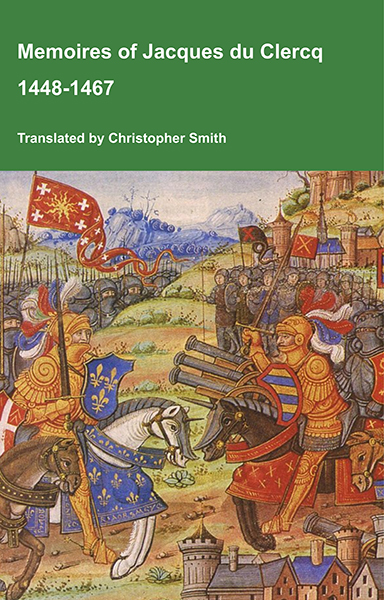 Memoires Jacques du Clercq. At that time, on the 27th day of October, Jelian de Frevillers and his brother, accompanied by twenty-six to twenty-eight men-at-arms fully armed, about midnight entered the house of Martelet de Brethencourt, dwelling at Treines on the Somme, and there found Jehan de Humières, nephew of the lord of Humières, knight of the Order of the Golden Fleece. This Jehan de Humières they seized and cut at their pleasure without killing him, giving him eight or ten wounds, and they thought they had nearly cut off one of his feet; and had it not been for the wife of the said Jehan de Humières, who was pregnant, and other women, they would have done him even worse. They left him as if dead. Then they took his servant, cut the sinews of his legs, and likewise wounded him. The cause, as was said, was that the said Jehan de Humières, or men acting on his behalf, had gone to the house of Jehan, lord of Mailly, with a great number of men-at-arms, and there had cruelly beaten and injured the brother of the said Frevillers and two others with him, solely because the said lord of Mailly had given a parish benefice to Collinet de Frevillers, whereas the lord of Humières wanted another priest to have it, who had previously held the cure. A lawsuit arose between the said priests, and the said Collinet won the benefice, and had the other priest removed by order of the king; and for costs caused all the goods of that priest to be sold. For this reason, as has been said, they went to the house of the said lord of Mailly and thus assaulted the said Frevillers, who was kin to the said lord of Mailly. Because of these acts, war arose between the said lord of Mailly and the lord of Humières, both among the greatest men of Picardy. When this conflict came to the knowledge of Philip, Duke of Burgundy, he forbade them to proceed to open violence. Before this, the said Jehan de Humières had been attacked; but the said lord of Mailly would never take responsibility for the brothers of Frevillers, who were in the king's army and service, and who, as has been said, carried out the aforesaid deed. After the matter was taken into the duke's hands, he was greatly angered and summoned the said lord of Mailly, who came very richly accompanied by his kinsmen, lords, and friends, and declared to the duke that he had not caused it to be done. And although the duke again forbade the said lords of Mailly and Humières to resort to violence, nevertheless the lord of Mailly guarded himself very strongly, kept a great number of men-at-arms with him, and greatly strengthened his castle of Mailly; and likewise Monsieur Hues de Mailly, his brother, fortified himself strongly in his fortress of Rossignol where he resided. And soon after, on the 21st day of November following, the said lord of Humières, knight of the Order of the Duke of Burgundy, died in the town of Mons in Hainaut, and was carried to be buried in the town of Humières.
En ce temps, le xxviije jour d'octobre, Jelian de Frevillers et son frere, accompagniés de xxvj a xxviij compagnons de guerre armés au clair, environ minuit entrerent en la maison de Martelet de Brethencourt, demourant a Treines sur Somme, et illecq trouverent Jehan de Humiers, nepveu du S de Humiers, chevallier, portant l'ordre du Toison, lequel Jehan de Humiers ils prindrent et decopperent a leur vollonté sans mort, et lui donnerent huict ou dix playes, et sy lui cuidoient avoir ecerné ung pied; et se ce n'euist la femme dudit Jehan de Humiers, laquelle estoit enchainte, et aultres femmes, ils euissent encoires pis fait audit Jehan, lequel ils laisserent comme mort, puis prindrent son varlet, et lui copperent les nerfs des jambes, et pareillement le deplayerent, et la cause fust, comme on disoit, pour ce que ledit Jehan de Huniers ou gens commis de par lui, avoient esté en la maison de Jehan St de Mailly avec grand nombre de gens de guerre, et illecq avoient villainement battu et affolé le frere du dessusdit de Frevillers et deux aultres avec lui, pour tant seulement que ledit Sr de Mailly avoit donné une cure a Collinet de Frevillers, et le Sr de Humiers voulloit que ung autre prestre le fust, lequel curé y demouroit. Sur quoi fust procés esmeu entre lesdits curés, et gagna ledit Collinet la cure, et feit l'autre curé widier de par le roy, et pour les despens feit vendre touts les biens dudit curé; telle fevre, telle vente; a laquelle vente faire y avoit des gens dudit Sr de Mailly; pour laquelle cause on alla, ainsy que dessus est dit, en la maison dudit St de Mailly, ainsi decopper ledit de Frevillers, lequel se disoit et estoit parent audit St de Mailly; pour lesquelles entreprises, guerre fut esmeue entre ledit Sr de Mailly et le St de Humiers, qui estoient touts deux des plus grands de Picardie; laquelle guerre venue a la cognoissance de Philippe, duc de Bourgogne, il leur deffendit la voye de fait. Auparavant ledit Jehan de Humiers fust descouppé; mais ledit Sr de Mailly ne se volt oncques faire fort des freres dudit de Frevillers, lesquels estoient en l'armée et ordonnance du roy, lesquels comme cy dessus est dit, feirent le fait dessusdit. Après la chose prinse en la main du duc, dont le duc fust moult courrouchié, et manda ledit St de Mailly, lequel y alla moult grandement accompagnié de ses parents Srs et amys, et dit au duc qu'il ne l'avoit point fait faire; et combien que le duc derechief deffendit aulxdits Srs de Mailly et Humiers la voye de fait, sy se gardoit moult fort le St de Mailly, et avoit grand nombre de gens de guerre avecq lui, et renforça moult fort son chasteau, de Mailly; et monsieur Hues de Mailly, frere, aussy se garda moult fort, et renforça sa fortresse du Rossignol ou il se tenoit, et assés tost après, le xxj de novembre ensuivant, ledit Sr de Humiers, chevallier, portant l'ordre du duc de Bourgogne, en la ville de Mons en Haynault, mourut et fust emporté enterrer en la ville de Humiers.
Memoires Jacques du Clercq. At this time, on the 27th day of October, between Lens and Vimy, two brothers, accompanied by three of their first cousins, attacked a man named Jennin le Guillebert, called 'Vicaire', whom they had been watching. And although he defended himself strongly and most valiantly, for he was strong and bold, being about twenty-seven years of age, they wounded and cut him so severely that they put him to death, and he died about a quarter of an hour afterwards. The reason for this was that the said Vicaire, about one or two years earlier, had killed in the town of Lille the brother of the said two brothers. The said Vicaire had also dishonoured their first cousin, and had long kept her and spent her means, and afterwards abandoned her.
En ce temps, le xxvije jour d'octobre, entre Lens et Vimy, deux compagnons freres, accompagniés de trois leurs cousins germains, ung compagnon nommé Jennin le Guillebert, dit Vicaire, lequel ils avoient espiés, ils assaillirent, et nonobstant qu'il se deffendist fort et moult valliamment, car il estoit fort et hardy en l'age de xxvij ans, ils le navrerent et descopperent tellement, qu'ils le meirent a mort, et mourut environ ung quart d'heure après; et la cause pourquoy ce feirent, fust qu'icelluy Vicaire avoit environ ung an ou deux paravant tué en la ville de Lille le frere d'iceulx deux freres; icelluy Vicaire avoit aussy desfloré sa cousine germaine, et tenu grand temps et despendu la chevanche de ladite fille, et après l'avoit abbandonnée.
On 27th October 1485 King Henry VII of England and Ireland [aged 28] and Robert Fitzroger 5th Baron Warkworth dined together at Lambeth Palace [Map].


Chronicle of Edward Hall [1496-1548]. [27th October 1532]. The Sunday at night, the French King supped with the King of England, in a chamber hanged with tissue, raised with silver, paned with cloth of silver, raised with gold, and the seams of the same were covered with broad wreaths, of goldsmiths work, full of stone and pearl. In this chamber was a cupboard of seven stages high all of plate of gold, and no gilt plate, beside that there hung in the said chamber ten branches of silver and gilt, ten branches all white silver, every branch hanging by a long chain of the same suit, bearing five lights of wax. To tell the riches of the clothes of estates, the basins and other vessels which was there occupied, I assure you my wit is insufficient, for there was nothing occupied that night, but all of gold. The French King was served three courses, and his meat dressed after the French fashion, and the King of England had like courses after the English fashion, the first course of every King was forty dishes, the second sixty, the third seventy which were costly and pleasant. After supper came in the Marchioness of Pembroke [aged 31], with seven ladies in masking apparel, of strange fashion, made of clothe of gold, compassed with crimson tinsel satin, owned with cloth of silver, lying loose and knit with laces of gold: these ladies were brought into the chamber, with four damsels apparelled in crimson satin, with tabards of fine cypress: the lady Marques took the French King, and the Countess of Derby [aged 21], took the King of Navarre, and every Lady took a Lord, and in dancing the King of England, took away the lady's visors, so that there the ladies beauties were shewed, and after they had danced a while they ceased, and the French King talked with the Marchioness of Pembroke a space, and then he took his leave of the ladies, and the King conveyed him to his lodging: the same night the Duke of Norfolk feasted all the nobles of France, being there in the castle of Calais, with many goodly sports and pastimes.


The Maner of the Triumphe at Caleys and Bulleyn. 27th October 1532. And vpon sondaye both the kynges herde masse in theyr lodgynges. And at after-noone the kynge of Englande went to Staple hall to the frensshe kynge and there was bothe bere baytynge and bulbayting tyll nyght. And at nyght the frensshe kynge souped with our kynge and there was greate bankettynge. And after souper1 there came in a maske my lady marques of Penbroke [aged 31] my lady Mary [aged 33] my lady Darby [aged 21] my lady Fitzwater [aged 26] my lady Rocheford [aged 27] my lady Lislie [aged 38] and my lady Wallop gorgyously apparayled with visers on theyr faces and so came and toke the frensshe kynge by the hande and other lordes of Fraunce and daunced a daunce or two. And after that the kynge toke of theyr visers and than they daunced with gentylmen of Fraunce an houre after. And than they departed to theyr lodgynges. And as for the apparayle of the frensshe lordes my tongue can not expresse it and in especyal the frensshe kyng his apparayle passed1 my penne to wryte for he had a dublet ouer set all with stones and rychc diamondes whiche was valued by discrete men at a hondred thousand pounde they passed ferre our lordes and knyghtes in apparayle and rychesse. They had greate chere in Caleys and louynge also and all at our kynges costes and charges. Also the same daye that the kynges came from Bulleyn the frensshe kynge made the duke of Norffolke [aged 59] and the duke of Suffolke [aged 48] of the ordre of saynt Mighill2.
Note 1. The Second Edition reads "passeth" for "passed."
Note 2. Saint Michael.


Henry Machyn's Diary. 27th October 1557. The xxvij day of October my lade was browth to the chyrche, with the byshope of London [aged 57] and Powlles qwyre and the master and clarkes of London, and then cam the corse with v baners of armes borne; then cam iiij harolds in ther cotes of armes, and bare iiij banars of emages at the iiij corners; and then cam the chyff mornars, my lade of Wossetur, and my lade Lumley [aged 20], and my lord North [aged 27], and ser Antony Selenger. [Then came a hundred mourners of men, and after as many ladies and gentlemen, all in black; and a great many poor women in black and rails, and] xxiiij pore men in blake beyryng of torchys, and mony of her servandes in blake cotes beyryng of torchys.
Note. P. 155. Funeral of the countess of Arundel. A full account of this funeral is preserved in the College of Arms, I. 15, ff. 266 et seq. The lady was previously countess of Sussex, and a letter written under that signature in 1537 has been published in Miss Wood's Letters of Royal and Illustrious Ladies, vol. ii. p. 306. "This Mary, doter of sir John Arundell of the West [and widow of Robert earl of Sussex, who died in 1542,] departed this lyff on Wensday the 20. of October 1557, in the 4. and 5. yeres of king Phelyp and quene Mary in the said erl of Arundelles place in St. Clementes parishe called the Danes withowt temple barre in London, and was beryed the xxviij. of October next folowinge." (MS. Harl. 897, f. 79.) The same authority supplies the following record of the earl of Arundel's former wife: "The lady Kateren Maltravers, doter of the lord marquis Dorset, departed owt of this world the fyrst day of May in the xxiiijth. yere of H. 8, (1532,) and lyeth beryed at St. Bartylmewes the lyttell within sir Gyles Capell('s) chapell." (p. 13b.)
William of Worcester's Chronicle of England
William of Worcester, born around 1415, and died around 1482 was secretary to John Fastolf, the renowned soldier of the Hundred Years War, during which time he collected documents, letters, and wrote a record of events. Following their return to England in 1440 William was witness to major events. Twice in his chronicle he uses the first person: 1. when writing about the murder of Thomas, 7th Baron Scales, in 1460, he writes '… and I saw him lying naked in the cemetery near the porch of the church of St. Mary Overie in Southwark …' and 2. describing King Edward IV's entry into London in 1461 he writes '… proclaimed that all the people themselves were to recognize and acknowledge Edward as king. I was present and heard this, and immediately went down with them into the city'. William’s Chronicle is rich in detail. It is the source of much information about the Wars of the Roses, including the term 'Diabolical Marriage' to describe the marriage of Queen Elizabeth Woodville’s brother John’s marriage to Katherine, Dowager Duchess of Norfolk, he aged twenty, she sixty-five or more, and the story about a paper crown being placed in mockery on the severed head of Richard, 3rd Duke of York.
Available at Amazon in eBook and Paperback format.
Henry Machyn's Diary. 27th October 1559. The xxvij day of October was cristened at sant Benettes at Powlles warff [Map] ser Thomas Chamburlayn's [aged 55] son, and the chyrche hangyd with cloth of arres, the godfathers names the prynche of Swaynthen [aged 21] one and my lord Robart Dudley [aged 27], and the godmoder was my lade of Northamtun [aged 33]; after the cristenyng waffers, spysbred, comfettes, and dyver odur bankettes, dysses [dishes], and epocras and muskadyll [in great] plente; the lade was the wyff of master Machyll, altherman and clothworker.


On 27th October 1597 Alfonso Este II Duke Ferrara [aged 63] died.
On 12th July 1627 George Villiers 1st Duke of Buckingham [aged 34] led an English force of 100 ships and 6,000 soldiers to capture the city of Saint-Martin-de-Ré on the Île de Ré.
In August 1627 more troops, including the newly promoted Lieutenant John Felton [aged 32], arrived.
On 3rd September 1627 two thousand Irish troops arrived under Ralph Bingley [aged 57]
On 27th October 1627 a final assault was attempted; it failed because the attackers' siege ladders were shorter than the walls of the fortress.
In November 1627 George Villiers 1st Duke of Buckingham retreated and returned to England having lost thousands of his men.


On 27th October 1644 Maurice Palatinate Simmern [aged 23] fought for the defeated Royalist army at the Second Battle of Newbury at Speen, Newbury [Map]. Thomas Wentworth 1st Earl Cleveland [aged 53] was captured. Edward St John [aged 27] was killed.
James Harington 3rd Baronet [aged 36], who had his horse shot from under him, commanded five regiments.
Mountjoy Blount 1st Earl Newport [aged 47] fought for the Royalist Army.
Anthony Mansel of Ischoed was killed fighting for the Royalists.


Samuel Pepys' Diary. 19th October 1662. Thence Tom waiting for me homewards towards my house, talking and scolding him for his folly, and telling him my mind plainly what he has to trust to if he goes this way to work, for he shall never have her upon the terms they demand of £50. He left me, and I to my uncle Wight, and there supped, and there was pretty Mistress Margt. Wight, whom I esteem very pretty, and love dearly to look upon her. We were very pleasant, I droning with my aunt and them, but I am sorry to hear that the news of the selling of Dunkirk1 is taken so generally ill, as I find it is among the merchants; and other things, as removal of officers at Court, good for worse; and all things else made much worse in their report among people than they are. And this night, I know not upon what ground, the gates of the City ordered to be kept shut, and double guards every where.
Note 1. A treaty was signed on the 27th October by which Dunkirk was sold to France for five million livres, two of which were to be paid immediately, and the remaining three by eight bills at dates varying from three months to two years; during which time the King [aged 32] of England was to contribute the aid of a naval force, if necessary, for defence against Spain. Subsequently the remaining three millions were reduced to 2,500,000 to be paid at Paris, and 254,000 in London. It is not known that Clarendon [aged 53] suggested the sale of Dunkirk, but it is certain that he adopted the measure with zeal. There is also no doubt that he got as much as France could be induced to give.-Lister's Life of Clarendon, ii. 173-4.


Samuel Pepys' Diary. 27th October 1662. After dinner he and I into another room over a pot of ale and talked. He showed me our commission, wherein the Duke of York [aged 29], Prince Rupert [aged 42], Duke of Albemarle [aged 53], Lord Peterborough [aged 40], Lord Sandwich [aged 37], Sir G. Carteret [aged 52], Sir William Compton [aged 37], Mr. Coventry [aged 34], Sir R. Ford [aged 48], Sir William Rider, Mr. Cholmley, Mr. Povy [aged 48], myself, and Captain Cuttance, in this order are joyned for the carrying on the service of Tangier [Map], which I take for a great honour to me.


Samuel Pepys' Diary. 27th October 1662. For Dunkirk; he wonders any wise people should be so troubled thereat, and scorns all their talk against it, for that he says it was not Dunkirk, but the other places, that did and would annoy us, though we had that, as much as if we had it not. He also took notice of the new Ministers of State, Sir H. Bennet [aged 44] and Sir Charles Barkeley [aged 32], their bringing in, and the high game that my Baroness Castlemaine's [aged 21] plays at Court (which I took occasion to mention as that that the people do take great notice of), all which he confessed.


Samuel Pepys' Diary. 27th October 1662. Thence to my Lord Sandwich [aged 37], who now-a-days calls me into his chamber, and alone did discourse with me about the jealousy that the Court have of people's rising; wherein he do much dislike my Lord Monk's [aged 53] being so eager against a company of poor wretches, dragging them up and down the street; but would have him rather to take some of the greatest ringleaders of them, and punish them; whereas this do but tell the world the King's fears and doubts.
Samuel Pepys' Diary. 27th October 1662. He told me what great faction there is at Court; and above all, what is whispered, that young Crofts [aged 13] is lawful son to the King [aged 32], the King being married to his mother1. How true this is, God knows; but I believe the Duke of York [aged 29] will not be fooled in this of three crowns.
Note 1. There has been much confusion as to the name and parentage of Charles's mistress. Lucy Walter was the daughter of William Walter of Roch Castle, co. Pembroke, and Mr. S. Steinman, in his "Althorp Memoirs" (privately printed, 1869), sets out her pedigree, which is a good one. Roch Castle was taken and burnt by the Parliamentary forces in 1644, and Lucy was in London in 1648, where she made the acquaintance of Colonel Algernon Sidney [aged 25]. She then fell into the possession of his brother, Colonel Robert Sidney2. In September of this same year she was taken up by Charles, Prince of Wales. Charles terminated his connection with her on October 30th, 1651, and she died in 1658, as appears by a document (administration entry in the Register of the Prerogative Court) met with by the late Colonel Chester. William Erskine, who had served Charles as cupbearer in his wanderings, and was appointed Master of the Charterhouse in December, 1677, had the care of Lucy Walter, and buried her in Paris. He declared that the King never had any intention of marrying her, and she did not deserve it. Thomas Ross, the tutor of her son, put the idea of this claim into his head, and asked Dr. Cosin to certify to a marriage. In consequence of this he was removed from his office, and Lord Crofts [aged 37] took his place (Steinman's "Althorp Memoirs"). Lucy Walter took the name of Barlow during her wanderings.
Note 2. Not clear who Colonel Robert Sidney is since Algernon Sidney didn't have a brother called Robert. Algernon's brothers were Philip Sidney 3rd Earl of Leicester [aged 43] and Henry Sidney 1st Earl Romney [aged 21].


Samuel Pepys' Diary. 27th October 1662. Afterwards he told me of poor Mr. Spong, that being with other people examined before the King [aged 32] and Council (they being laid up as suspected persons; and it seems Spong is so far thought guilty as that they intend to pitch upon him to put to the wracke or some other torture), he do take knowledge of my Lord Sandwich [aged 37], and said that he was well known to Mr. Pepys. But my Lord knows, and I told him, that it was only in matter of musique and pipes, but that I thought him to be a very innocent fellow; and indeed I am very sorry for him. After my Lord and I had done in private, we went out, and with Captain Cuttance and Bunn did look over their draught of a bridge for Tangier [Map], which will be brought by my desire to our office by them to-morrow.
Samuel Pepys' Diary. 27th October 1665. So to the 'Change [Map], and thence I by water to the Duke of Albemarle's [aged 56], and there much company, but I staid and dined, and he makes mighty much of me; and here he tells us the Dutch are gone, and have lost above 160 cables and anchors, through the last foule weather. Here he proposed to me from Mr. Coventry [aged 37], as I had desired of Mr. Coventry, that I should be Surveyor-Generall of the Victualling business, which I accepted. But, indeed, the terms in which Mr. Coventry proposes it for me are the most obliging that ever I could expect from any man, and more; it saying me to be the fittest man in England, and that he is sure, if I will undertake, I will perform it; and that it will be also a very desirable thing that I might have this encouragement, my encouragement in the Navy alone being in no wise proportionable to my pains or deserts.
Before 27th October 1666 John Kelyng [aged 59] prosecuted Frenchman Robert Hubert [aged 26] who confessed to setting the fire in the King's Bakehouse in Pudding Lane. Hubert was duly found guilty by the jury and hanged at Tyburn [Map] on 27th October 1666 by order of Kelynge, even though Kelynge told the King that he did not believe a word of the confession.
Samuel Pepys' Diary. 27th October 1666. Thence to talk about publique business; he tells me how the two Houses begin to be troublesome; the Lords to have quarrels one with another. My Lord Duke of Buckingham [aged 38] having said to the Chancellor [aged 57] (who is against the passing of the Bill for prohibiting the bringing over of Irish cattle), that whoever was against the Bill, was there led to it by an Irish interest, or an Irish understanding, which is as much as to say he is a Poole; this bred heat from my Chancellor, and something he [Buckingham] said did offend my Lord of Ossory [aged 32] my (Lord Duke of Ormond's [aged 56] son), and they two had hard words, upon which the latter sends a challenge to the former; of which the former complains to the House, and so the business is to be heard on Monday next. Then as to the Commons; some ugly knives, like poignards, to stab people with, about two or three hundred of them were brought in yesterday to the House, found in one of the house's rubbish that was burned, and said to be the house of a Catholique. This and several letters out of the country, saying how high the Catholiques are everywhere and bold in the owning their religion, have made the Commons mad, and they presently voted that the King [aged 36] be desired to put all Catholiques out of employment, and other high things; while the business of money hangs in the hedge. So that upon the whole, God knows we are in a sad condition like to be, there being the very beginnings of the late troubles.


Calendar of State Papers Charles II 27 Oct 1666. 27th October 1666. Whitehall. 62. H. Muddiman to Sir Edward Stradling, St. Donat's Castle [Map], Glamorganshire. The sickness is abating, 8 only have died of it at Plymouth, 8 at Sarum, decrease 17, one or two at Ipswich, and 8 at Norwich. The English are said to have been forced from the Canaries, leaving their estates in the hands of Spaniards. The Commissioners for payment of seamen daily pay off great numbers who are discharged from winter service, and bring their tickets with them, and the rest are ordered by beat of drum to repair aboard. The planting of hemp is much enconraged. The Commons have answered the Lords' reasons about importing French commodities, and are settling supplies. Sir Jeremy Smith has got as much credit by his late examination as his enemies wished him disgrace, the King [aged 36] and Duke of York [aged 33] being fully satisfied of his valour in the engagement. It appears that he had 147 men killed and wounded, while the most eminent of his accusers had but two or three. Peter Ceely of Cornwall, secured on suspicion of fanaticism, refused the liberty offered him if he would give security to the deputy lieutenants. The King has ordered a proclamation in Scotland for a convocation, which differs from a parliament in that it can levy money, but makes no laws. News from Germany, Brandenburg, Holland, and Munster. Sir Rich. Browne has brought into the House of Commons knives broad and sharp, able to pierce armour, of which 300 were found in the rubbish of a house where two Frenchmen lived; they can be guessed of no use but to massacre. A proclamation and other measures are proposed, for repressing the insolencies of the Papists. [8 pages.]


John Evelyn's Diary. 27th October 1675. Lord Berkeley [aged 47] coming into Council, fell down in the gallery at Whitehall [Map], in a fit of apoplexy, and being carried into my Lord Chamberlain's [aged 57] lodgings, several famous doctors were employed all that night, and with much ado he was at last recovered to some sense, by applying hot fire pans and spirit of amber to his head; but nothing was found so effectual as cupping him on the shoulders. It was almost a miraculous restoration. The next day he was carried to Berkeley House [Map]. This stopped his journey for the present, and caused my stay in town. He had put all his affairs and his whole estate in England into my hands during his intended absence, which though I was very unfit to undertake, in regard of many businesses which then took me up, yet, upon the great importunity of my lady [aged 23] and Mr. Godolphin [aged 30] (to whom I could refuse nothing) I did take it on me. It seems when he was Deputy in Ireland, not long before, he had been much wronged by one he left in trust with his affairs, and therefore wished for some unmercenary friend who would take that trouble on him; this was to receive his rents, look after his houses and tenants, solicit supplies from the Lord Treasurer [aged 43], and correspond weekly with him, more than enough to employ any drudge in England; but what will not friendship and love make one do?.

Henrici Quinti, Angliæ Regis, Gesta, is a first-hand account of the Agincourt Campaign, and subsequent events to his death in 1422. The author of the first part was a Chaplain in King Henry's retinue who was present from King Henry's departure at Southampton in 1415, at the siege of Harfleur, the battle of Agincourt, and the celebrations on King Henry's return to London. The second part, by another writer, relates the events that took place including the negotiations at Troye, Henry's marriage and his death in 1422.
Available at Amazon in eBook and Paperback format.
John Evelyn's Diary. 27th October 1684. I visited the Lord Chamberlaine [aged 66], where din'd the Hack Baron and Mons' Flamerin, who had so long ben banish'd France for a duel.
John Evelyn's Diary. 27th October 1685. I was invited to dine at Sir Ste. Fox's [aged 58] with my Lord Lieutenant, where was such a dinner for variety of all things as I had seldome seene, and it was so for the trial of a master cooke whom Sir Stephen had recommended to go with his Lordship Into Ireland; there were all ye dainties not onely of the season, but of what art could add, venison, plaine solid meate, fowle, bak'd and boil'd meates, banquet [desert], &c. in exceeding plenty and exquisitely dress'd. There also din'd my Lord Ossory [aged 20] and Lady (the Duke of Beaufort's daughter) [aged 21], my Lady Treasurer, Lord Cornbery [aged 23], &c.


On 27th October 1743 Michael Dahl [deceased] was buried in St James' Church, Piccadilly.
On 27th October 1757 John Drummond 5th Duke Perth [aged 77] died. His brother Edward succeeded 6th Duke Perth.
On 27th October 1777 Bishop Bowyer Sparke [aged 18] was admitted as a Pensioner to Pembroke College, Cambridge University. He matriculated in 1778, graduated BA in 1782 as Seventh Wrangler, second Member's Prize in 1784 and 1784, MA in 1785 and DD in 1803. In 1784 he became a Fellow of Pembroke College, Cambridge University.
On 27th October 1835 John Thomas Blight was born.
The London Gazette 20273. War-Office, 27th October 1843.
Ensign George Augustus Hamilton Chichester [aged 21] to be Lieutenant, by purchase, Nice Robertson. Dated 27th October 1843,
On 27th October 1858 Prince Valdemar Glücksburg was born to King Christian IX of Denmark [aged 40] and Queen Louise Hesse-Kassel of Denmark [aged 41]. He a great x 3 grandson of King George II of Great Britain and Ireland. Coefficient of inbreeding 2.85%. He married 20th October 1885 Princess Marie Orléans and had issue.
On 27th October 1866 Cyril Hunt was born to William Holman Hunt [aged 39] and Fanny Waugh [aged 33]. It is likely that this birth caused the death of his mother since she and William Holman-Hunt has only been married one year.


On 27th October 1868 Harriet Elizabeth Georgiana Howard Duchess Sutherland [aged 62] died.


William of Worcester's Chronicle of England
William of Worcester, born around 1415, and died around 1482 was secretary to John Fastolf, the renowned soldier of the Hundred Years War, during which time he collected documents, letters, and wrote a record of events. Following their return to England in 1440 William was witness to major events. Twice in his chronicle he uses the first person: 1. when writing about the murder of Thomas, 7th Baron Scales, in 1460, he writes '… and I saw him lying naked in the cemetery near the porch of the church of St. Mary Overie in Southwark …' and 2. describing King Edward IV's entry into London in 1461 he writes '… proclaimed that all the people themselves were to recognize and acknowledge Edward as king. I was present and heard this, and immediately went down with them into the city'. William’s Chronicle is rich in detail. It is the source of much information about the Wars of the Roses, including the term 'Diabolical Marriage' to describe the marriage of Queen Elizabeth Woodville’s brother John’s marriage to Katherine, Dowager Duchess of Norfolk, he aged twenty, she sixty-five or more, and the story about a paper crown being placed in mockery on the severed head of Richard, 3rd Duke of York.
Available at Amazon in eBook and Paperback format.
On 27th October 1868 Archbishop Charles Longley [aged 74] died.


On 27th October 1889 Constantine I King Greece [aged 21] and Sophia Hohenzollern Queen Consort Greece [aged 19] were married. She the daughter of Frederick III King Prussia and Victoria Empress Germany Queen Consort Prussia [aged 48]. He the son of George I King Greece [aged 43] and Olga Constantinovna Holstein Gottorp Romanov Queen Consort Greece [aged 38]. They were second cousin once removed. He a great x 4 grandson of King George II of Great Britain and Ireland. She a granddaughter of Queen Victoria of the United Kingdom.
On 27th October 1892 Edward Arthur Grosvenor was born to Hugh Lupus Grosvenor 1st Duke Westminster [aged 67] and Katherine Cavendish Duchess Westminster [aged 35]. He married 5th August 1914 his half fourth cousin twice removed Dorothy Margaret Browne, daughter of Valentine Charles Browne 5th Earl of Kenmare and Elizabeth Baring Countess Kenmare, and had issue.


The London Gazette 27208. The Royal Fusiliers (City of London Regiment). Captain Charles FitzClarence [aged 34]. On the 14th October, 1899, Captain FitzClarence went with his squadron of the Protectorate Regiment, consisting of only partially trained men, who had never been in action, to the assistance of an armoured train which had gone out from MafeKing. The enemy were in greatly superior numbers, and the squadron was for a time surrounded, and it looked as if nothing could save them from being shot down. Captain FitzClarence, however, by his personal coolness and courage inspired the greatest confidence in his men, and, by his bold and efficient handling of them, not only succeeded in relieving the armoured train, but inflicted a heavy defeat on the Boers, who lost 50 killed and a large number wounded, his own losses being 2 killed and 15 wounded. The moral effect of this blow had a very important bearing on subsequent encounters with the Boers.
On the 27th October, 1899, Captain FitzClarence led his squadron from MafeKing across the open, and made a night attack with the bayonet on one of the enemy's trenches. A hand-to-hand fight took place in the trench, while a heavy fire was concentrated on it from the rear. The enemy was driven out with heavy loss. Captain FitzClarence was the first man into the position and accounted-for four of the enemy with his sword. The British lost & killed and 9 wounded. Captain. FitzClarence was himself: slightly wounded. With reference to these two actions, Major General Baden-Powell states that had this Officer not shown an extraordinary spirit and fearlessness the attacks would have been failures, and we should have suffered heavy loss both in men and prestige.
On the 26th December, 1899, during the action at Game Tree, near MafeKing, Captain FitzClarence again distinguished himself by his coolness and courage, and was again wounded (severely through both legs).
On 27th October 1914 Prince Maurice of Battenburg aka Mountbatten [aged 23] was killed in action. at Zonnebeke in the Ypres Salient. The 1st Battalion war diary states "During the advance eastwards from the ridge the battalion came under terrific shell fire as well as rifle fire... Poor [Prince] Maurice was killed outright just on top of the ridge. He is buried in Ypres Town Cemetery. The battalion war diary notes that his funeral took place on 31 October 1914 and records that, "Denison, Gough, the Sgt Major, Sgt O'Leary and a few others went down to poor Maurice's funeral in Ypres".
Prince Maurice of Battenburg aka Mountbatten: On 3rd October 1891 he was born to Henry Mountbatten and Princess Beatrice. He a grandson of Queen Victoria of the United Kingdom.

On 27th October 1156 Raymond Count of Toulouse was born to Raymond Rouerge V Count Toulouse [aged 22] and Constance Capet Countess Boulogne and Toulouse [aged 28] at Saint Gilles. He married (1) Beatrice Beziers and had issue (2) October 1196 his third cousin once removed Joan Plantagenet Queen Consort Sicily, daughter of King Henry "Curtmantle" II of England and Eleanor of Aquitaine Queen Consort Franks and England, and had issue.
On 27th October 1351 William Zouche 3rd Baron Zouche Harringworth was born to William Zouche 2nd Baron Zouche Harringworth [aged 29] and Elizabeth Ros Baroness Zouche Harringworth at Harringworth, Northamptonshire [Map]. He married (1) in or before 1365 his second cousin once removed Agnes Greene Baroness Zouche Harringworth and had issue (2) before 4th May 1396 his third cousin once removed Elizabeth Despencer Baroness Zouche, Harringworth, Maltravers and Arundel, daughter of Edward Despencer 1st Baron Despencer, Baron Burghesh and Elizabeth Burghesh 3rd Baron Burghesh.
On 27th October 1387 Thomas Dacre 6th Baron Dacre Gilsland was born to William Dacre 5th Baron Dacre Gilsland, Baron Multon of Gilsand [aged 30] and Joan Douglas Baroness Dacre Gilsland at Naworth Castle [Map]. He married before 20th July 1399 Philippa Neville Baroness Dacre of Gilsland, daughter of Ralph Neville 1st Earl of Westmoreland and Margaret Stafford Baroness Neville Raby, and had issue.
On 27th October 1401 Catherine of Valois Queen Consort England was born to Charles "Beloved Mad" VI King France [aged 32] and Isabeau Wittelsbach Queen Consort France [aged 31] at the Hôtel Saint Pol, Paris [Map]. She married (1) 2nd June 1420 her half third cousin once removed King Henry V of England and had issue (2) 1430 her sixth cousin Owen Tudor and had issue.
On 27th October 1561 Mary Sidney Countess Pembroke was born to Henry Sidney [aged 32] and Mary Dudley [aged 31]. She married 21st April 1577 her sixth cousin Henry Herbert 2nd Earl Pembroke, son of William Herbert 1st Earl Pembroke and Anne Parr Countess Pembroke, and had issue.


On 13th October 1622 Ralph Delaval 1st Baronet was born to Robert Delaval of Seaton Delaval [aged 22] and Barbara Selby. He was baptised on 27th October 1622. He was educated at Queen's College, Oxford University; matriculated 15th June 1638. He was admitted to Lincoln's Inn on 28th November 1639. He married 2nd April 1646 Anne Leslie Lady Delaval, daughter of Alexander Leslie 1st Earl Leven, and had issue.
On 27th October 1731 Charlotte Elizabeth Boyle Marchioness Hartington was born to Richard Boyle 3rd Earl Burlington [aged 37] and Dorothy Savile Countess Burlington [aged 32]. She married before 1748 her fourth cousin once removed William Cavendish 4th Duke Devonshire, son of William Cavendish 3rd Duke Devonshire and Catherine Hoskins Duchess Devonshire, and had issue.


On 27th October 1749 William Byron was born to William Byron 5th Baron Byron [aged 26] and Elizabeth Shaw. He married before 22nd June 1776 his first cousin Juliana Elizabeth Byron.
Adam Murimuth's Continuation and Robert of Avesbury’s 'The Wonderful Deeds of King Edward III'
This volume brings together two of the most important contemporary chronicles for the reign of Edward III and the opening phases of the Hundred Years’ War. Written in Latin by English clerical observers, these texts provide a vivid and authoritative window into the political, diplomatic, and military history of fourteenth-century England and its continental ambitions. Adam Murimuth Continuatio's Chronicarum continues an earlier chronicle into the mid-fourteenth century, offering concise but valuable notices on royal policy, foreign relations, and ecclesiastical affairs. Its annalistic structure makes it especially useful for establishing chronology and tracing the development of events year by year. Complementing it, Robert of Avesbury’s De gestis mirabilibus regis Edwardi tertii is a rich documentary chronicle preserving letters, treaties, and official records alongside narrative passages. It is an indispensable source for understanding Edward III’s claim to the French crown, the conduct of war, and the mechanisms of medieval diplomacy. Together, these works offer scholars, students, and enthusiasts a reliable and unembellished account of a transformative period in English and European history. Essential for anyone interested in medieval chronicles, the Hundred Years’ War, or the reign of Edward III.
Available at Amazon in eBook and Paperback format.
On 27th October 1753 Robert John Buxton 1st Baronet was born to John Buxton. He married 22nd May 1777 Juliana Mary Beevor.
On 27th October 1758 John Hatton 9th Baronet was born to Thomas Hatton 8th Baronet [aged 30].
On 27th October 1761 Vice-Admiral Christopher Parker was born to Admiral Peter Parker 1st Baronet [aged 40]. He married before 17th April 1786 Augusta Barbara Charlotte Byron and had issue.

On 27th October 1763 George Fulke 2nd Baron Lyttelton was born to William Henry Lyttelton 1st Baron Lyttelton [aged 38].
On 27th October 1774 Alexander Baring 1st Baron Ashburton was born to Francis Baring 1st Baronet [aged 34] and Harriet Herring Lady Baring [aged 24]. He married 23rd August 1798 Ann Louisa Bingham Baroness Ashburton and had issue.
On 27th October 1788 Robert Jocelyn 3rd Earl Roden was born to Robert Jocelyn 2nd Earl Roden [aged 32]. He married 9th January 1813 Maria Frances Catherine Stapleton Countess Roden, daughter of Thomas Stapleton 12th Baron Despencer and Elizabeth Eliot Baroness Despencer, and had issue.

On 27th October 1788 William Waldegrave 8th Earl Waldegrave was born to George Waldegrave 4th Earl Waldegrave [aged 36] and Elizabeth Laura Waldegrave Countess Waldegrave [aged 28]. He a great x 3 grandson of King James II of England Scotland and Ireland. Coefficient of inbreeding 6.28%. He married in or before 1815 Elizabeth Whitbread and had issue.
On 27th October 1788 Henry Holland 1st Baronet was born.
On 27th October 1794 Clement Wolseley 5th Baronet was born to Major John Wolseley [aged 32].
On 27th October 1799 Cospatrick Alexander Douglas-Home 11th Earl of Home was born to Alexander Ramey Home 10th Earl of Home [aged 29] and Elizabeth Scott Countess Home at Dalkeith House, Dalkeith. He married before his first cousin Lucy Elizabeth Montagu Scott Countess Home, daughter of Henry James Montagu Scott 2nd Baron Montagu and Jane Margaret Douglas Baroness Montagu, and had issue.
The True Chronicles of Jean le Bel Volume 1 Chapters 1-60 1307-1342
The True Chronicles of Jean le Bel offer one of the most vivid and immediate accounts of 14th-century Europe, written by a knight who lived through the events he describes, and experienced some of them first hand. Covering the early decades of the Hundred Years’ War, this remarkable chronicle follows the campaigns of Edward III of England, the politics of France and the Low Countries, and the shifting alliances that shaped medieval warfare. Unlike later historians, Jean le Bel writes with a strong sense of eyewitness authenticity, drawing on personal experience and the testimony of fellow soldiers. His narrative captures not only battles and sieges, but also the realities of military life, diplomacy, and the ideals of chivalry that governed noble society. A key source for Jean Froissart, Le Bel’s chronicle stands on its own as a compelling and insightful work, at once historical record and literary achievement. This translation builds on the 1905 edition published in French by Jules Viard, adding extensive translations from other sources Rymer's Fœdera, the Chronicles of Adam Murimuth, William Nangis, Walter of Guisborough, a Bourgeois of Valenciennes, Geoffrey le Baker of Swinbroke and Richard Lescot to enrich the original text and Viard's notes.
Available at Amazon in eBook and Paperback format.
On 27th October 1800 Reverend Spencer Greswolde Gunning was born to George William Gunning 2nd Baronet [aged 37] and Elizabeth Diana Bridgeman.
On 27th October 1801 Richard Bootle-Wilbraham was born to Edward Bootle-Wilbraham 1st Baron Skelmersdale. He married 22nd May 1832 Jessy Brooke, daughter of Richard Brooke 6th Baronet and Harriet Cunliffe Lady Brooke, and had issue.

On 27th October 1809 Maria Elizabeth Tollemache Marchioness Ailesbury was born to Charles Manners aka Tollemache [aged 34]. She married 20th August 1833 Charles Brudenell 1st Marquess Ailesbury, son of Thomas Brudenell 1st Earl Ailesbury and Susanna Hoare Countess Ailesbury.
On 27th October 1814 Joseph Hawley 3rd Baronet was born to Henry Hawley 2nd Baronet [aged 38] and Catherine Elizabeth Shaw.
On 27th October 1818 Stafford Henry Northcote 1st Earl Iddesleigh was born to Henry Stafford Northcote [aged 26] at 23 Portland Place, Marylebone. He married 1843 Cecilia Frances Farrer Countess Iddesleigh and had issue.
On 27th October 1835 John Thomas Blight was born.
On 27th October 1836 Baldwin Leighton 8th Baronet was born to Baldwin Leighton 7th Baronet [aged 31] and Mary Parker Lady Leighton. He married 1864 Eleanor Warren Lady Leighton and had issue.
On 27th October 1842 Charles Lyttelton 8th Viscount Cobham was born to George William Lyttelton 4th Baron Lyttelton [aged 25] and Mary Glynne Lady Lyttelton [aged 29]. He married 1878 his third cousin once removed Mary Susan Cavendish Viscountess Cobham, daughter of William George Cavendish 2nd Baron Chesham and Henrietta Frances Lascelles Baroness Chesham, and had issue.
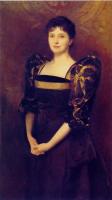
On 27th October 1844 Elizabeth Eberstadt Lady Lewis was born.
On 27th October 1858 Prince Valdemar Glücksburg was born to King Christian IX of Denmark [aged 40] and Queen Louise Hesse-Kassel of Denmark [aged 41]. He a great x 3 grandson of King George II of Great Britain and Ireland. Coefficient of inbreeding 2.85%. He married 20th October 1885 Princess Marie Orléans and had issue.
Chronicle of Geoffrey le Baker of Swinbroke
Baker was a secular clerk from Swinbroke, now Swinbrook, an Oxfordshire village two miles east of Burford. His Chronicle describes the events of the period 1303-1356: Gaveston, Bannockburn, Boroughbridge, the murder of King Edward II, the Scottish Wars, Sluys, Crécy, the Black Death, Winchelsea and Poitiers. To quote Herbert Bruce 'it possesses a vigorous and characteristic style, and its value for particular events between 1303 and 1356 has been recognised by its editor and by subsequent writers'. The book provides remarkable detail about the events it describes. Baker's text has been augmented with hundreds of notes, including extracts from other contemporary chronicles, such as the Annales Londonienses, Annales Paulini, Murimuth, Lanercost, Avesbury, Guisborough and Froissart to enrich the reader's understanding. The translation takes as its source the 'Chronicon Galfridi le Baker de Swynebroke' published in 1889, edited by Edward Maunde Thompson.
Available at Amazon in eBook and Paperback format.
On 27th October 1866 Cyril Hunt was born to William Holman Hunt [aged 39] and Fanny Waugh [aged 33]. It is likely that this birth caused the death of his mother since she and William Holman-Hunt has only been married one year.
On 27th October 1866 Herbet Merton Jessel 1st Baron Jessel was born to George Jessel [aged 42].
On 27th October 1869 Charles Cecil Orlando Weld-Forester was born to Cecil Weld-Forester 5th Baron Forester [aged 27].
On 27th October 1871 Robert Newman 1st Baron Mamhead was born to Lydston Newman 3rd Baronet [aged 47].
On 27th October 1876 William Cecil 5th Marquess Exeter was born to Brownlow Henry George Cecil 4th Marquess Exeter [aged 26] and Isabella Whichcote Marchioness of Exeter [aged 19]. He married 16th April 1901 Myra Rowena Sibell Orde-Powlett Marchioness of Exeter, daughter of William Thomas Orde-Powlett 4th Baron Bolton and Algitha Frederica Lumley Baroness Bolton, and had issue.
On 27th October 1881 Nora Cavendish was born to Henry Anson Cavendish 4th Baron Waterpark [aged 42] and Emily Stenning Baroness Waterpark [aged 35].
On 27th October 1892 Edward Arthur Grosvenor was born to Hugh Lupus Grosvenor 1st Duke Westminster [aged 67] and Katherine Cavendish Duchess Westminster [aged 35]. He married 5th August 1914 his half fourth cousin twice removed Dorothy Margaret Browne, daughter of Valentine Charles Browne 5th Earl of Kenmare and Elizabeth Baring Countess Kenmare, and had issue.
On 27th October 1896 Roger Grey 10th Earl Stamford 6th Earl Warrington was born to William Grey 9th Earl Stamford 5th Earl Warrington [aged 46] and Penelope Theobald Countess Stamford and Warrington in London.
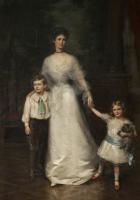

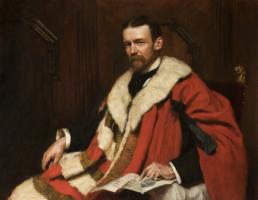
On 27th October 1905 Bryan Walter Guiness 2nd Baron Moyne was born to Walter Guiness 1st Baron Moyne [aged 25] and Evelyn Erskine Baroness Moyne [aged 22]. He married (1) 30th January 1929 Diana Mitford, daughter of David Freeman-Mitford 2nd Baron Redesdale and Sydney Bowles Baroness Redesdale, and had issue.
On 27th October 1920 Anthony Meyer 3rd Baronet was born to Frank Meyer 2nd Baronet [aged 34] and Marjorie Seeley Lady Meyer.


On 27th October 1939 Thady Wyndham-Quin 7th Earl of Dunraven and Mount-Earl was born to Richard Wyndham-Quin 6th Earl of Dunraven and Mount-Earl [aged 52] and Nancy Yuille Countess of Dunraven and Mount-Earl [aged 37].
Jean de Waurin's Chronicle of England Volume 6 Books 3-6: The Wars of the Roses
Jean de Waurin was a French Chronicler, from the Artois region, who was born around 1400, and died around 1474. Waurin’s Chronicle of England, Volume 6, covering the period 1450 to 1471, from which we have selected and translated Chapters relating to the Wars of the Roses, provides a vivid, original, contemporary description of key events some of which he witnessed first-hand, some of which he was told by the key people involved with whom Waurin had a personal relationship.
Available at Amazon in eBook and Paperback format.
On 27th October 1954 Thomas Arthur Hamish Liddell 9th Baron Ravensworth was born to Arthur Waller Liddell 8th Baron Ravensworth [aged 30].
On 27th October 1963 Charles John Spinney Hobhouse 7th Baronet was born to Charles Chisholm Hobhouse 6th Baronet [aged 56].
On 27th October 1380 Eberhard III Count of Württemberg [aged 16] and Antonia Visconti Countess of Württemberg [aged 26] were married. Her dowry, agreed upon at Milan on 1 July 1380, was 70,000 guilders, which included expensive garments, musical instruments, and books. They had three children together, including Eberhard IV, who succeeded his father as count.
On 27th October 1587 Robert Ker 1st Earl Roxburghe [aged 17] and Margaret Maitland were married.
On 27th October 1631 John Hotham 1st Baronet [aged 42] and Katherine Bamburgh were married.
On 27th October 1763 Henry St John-Mildmay 2nd Baronet [aged 26] and Dorothy Maria Tucker [aged 21] were married.
On 27th October 1825 Francis Shuckburgh 8th Baronet [aged 36] and Anna-Maria Draycott Denys were married.
On 27th October 1859 Henry George Paston-Bedingfeld 7th Baronet [aged 29] and Augusta Lucy Clavering Lady Paston-Bedingfield were married.
On 27th October 1865 Murray Finch-Hatton 7th Earl Nottingham 12th Earl Winchilsea [aged 14] and Edith Harcourt Countess Winchelsea and Nottingham [aged 9] were married. He the son of George Finch-Hatton 5th Earl Nottingham 10th Earl Winchilsea and Fanny Margaretta Rice Countess Nottingham Winchilsea.
On 27th October 1878 Henry Bruce Meux 3rd Baronet [aged 22] and Valerie Susan Langdon Lady Meux [aged 26] were married, possibly in secret. She by marriage Lady Meux of Theobald's Park in Hertfordshire. She was shunned by her husband's aristocratic family, in particular the Brudenell-Bruce clan on her mother-in-law's side. They had met at the Casino De Venise in Holborn where she was working as a banjo-playing waitress, or barmaid, or similar.


Henrici Quinti, Angliæ Regis, Gesta, is a first-hand account of the Agincourt Campaign, and subsequent events to his death in 1422. The author of the first part was a Chaplain in King Henry's retinue who was present from King Henry's departure at Southampton in 1415, at the siege of Harfleur, the battle of Agincourt, and the celebrations on King Henry's return to London. The second part, by another writer, relates the events that took place including the negotiations at Troye, Henry's marriage and his death in 1422.
Available at Amazon in eBook and Paperback format.
On 27th October 1883 William Palmer 2nd Earl Selborne [aged 24] and Beatrix Maud Gascoyne-Cecil Countess Selborne [aged 25] were married. She the daughter of Robert Gascoyne-Cecil 3rd Marquess Salisbury [aged 53] and Georgina Alderson Marchioness of Salisbury [aged 56]. He the son of Roundell Palmer 1st Earl Selborne [aged 70] and Laura Waldegrave Countess Selborne [aged 62].


On 27th October 1889 Constantine I King Greece [aged 21] and Sophia Hohenzollern Queen Consort Greece [aged 19] were married. She the daughter of Frederick III King Prussia and Victoria Empress Germany Queen Consort Prussia [aged 48]. He the son of George I King Greece [aged 43] and Olga Constantinovna Holstein Gottorp Romanov Queen Consort Greece [aged 38]. They were second cousin once removed. He a great x 4 grandson of King George II of Great Britain and Ireland. She a granddaughter of Queen Victoria of the United Kingdom.
On 27th October 1892 Henry Waldegrave 11th Earl Waldegrave [aged 38] and Anne Katherine Bastard Countess Waldegrave [aged 25] were married. They were second cousins. He a great x 5 grandson of King James II of England Scotland and Ireland.
On 27th October 1894 Rennell Rodd 1st Baron Rodd [aged 35] and Lilias Georgina Guthrie Baroness Rennell [aged 30] were married at St George's Church, Hanover Square.
On 27th October 1909 James Grimston 4th Earl of Verulam [aged 29] and Violet Constance Maitland Brabazon Countess Verulam [aged 23] were married. She the daughter of Reginald Brabazon 12th Earl of Meath [aged 68] and Mary Jane Maitland Countess Meath [aged 62]. He the son of James Walter Grimston 3rd Earl Verulam [aged 57] and Margaret Francis Graham Countess Verulam [aged 56].
On 27th October 1927 Henry Frederick Thynne 6th Marquess of Bath [aged 22] and Daphne Vivian Marchioness Bath [aged 23] were married. He the son of Thomas Henry Thynne 5th Marquess of Bath [aged 65] and Violet Caroline Mordaunt Marchioness Bath [aged 58].

On 27th October 1931 Frederick Archibald Charles 6th Baron Rendlesham [aged 63] and Doloroes Olga Salusbury-Trelawny Baroness Rendlesham [aged 48] were married. She by marriage Baroness Rendlesham of Rendlesham in Suffolk.
On 27th October 1945 John Wodehouse 4th Earl Kimberley [aged 21] and Diana Evelyn Legh Countess Kimberley [aged 21] were married. She by marriage Countess Kimberley. They were divorced in 1949. He the son of John Wodehouse 3rd Earl Kimberley and Frances Margaret Irby Countess Kimberley [aged 60]. They were fifth cousin once removed.
On 27th October 1987 John Francis Baring 7th Baron Ashburton [aged 58] and Sarah Cornelia Spencer-Churchill [aged 52] were married. They were fourth cousin once removed.
On 27th October 939 King Æthelstan I of England [aged 45] died in Gloucester [Map]. His half brother Edmund [aged 18] succeeded King of England.
On 27th October 1303 Beatrice Queen Consort Portugal [aged 61] died.
On 27th October 1312 John "Peaceful" Reginar II Duke Brabant [aged 37] died. His son John [aged 12] succeeded III Duke Brabant.
On 27th October 1326 Hugh "Elder" Despencer 1st Earl Winchester [aged 65] was hanged, drawn and quartered at Bristol, Gloucestershire [Map]. Earl Winchester, Baron Despencer forfeit as a result of attainder.
William of Worcester's Chronicle of England
William of Worcester, born around 1415, and died around 1482 was secretary to John Fastolf, the renowned soldier of the Hundred Years War, during which time he collected documents, letters, and wrote a record of events. Following their return to England in 1440 William was witness to major events. Twice in his chronicle he uses the first person: 1. when writing about the murder of Thomas, 7th Baron Scales, in 1460, he writes '… and I saw him lying naked in the cemetery near the porch of the church of St. Mary Overie in Southwark …' and 2. describing King Edward IV's entry into London in 1461 he writes '… proclaimed that all the people themselves were to recognize and acknowledge Edward as king. I was present and heard this, and immediately went down with them into the city'. William’s Chronicle is rich in detail. It is the source of much information about the Wars of the Roses, including the term 'Diabolical Marriage' to describe the marriage of Queen Elizabeth Woodville’s brother John’s marriage to Katherine, Dowager Duchess of Norfolk, he aged twenty, she sixty-five or more, and the story about a paper crown being placed in mockery on the severed head of Richard, 3rd Duke of York.
Available at Amazon in eBook and Paperback format.
On 27th October 1361 Thomas Berkeley 8th and 3rd Baron Berkeley [aged 65] died at Berkeley Castle [Map]. His son Maurice [aged 41] succeeded 9th Baron Berkeley Feudal, 4th Baron Berkeley.
On 27th October 1439 Albert Habsburg V Duke Austria [aged 42] died.
On 27th October 1510 Jean Stewart Countess Huntley [aged 49] died.
On 27th October 1513 George Manners 11th Baron Ros Helmsley [aged 43] died. He was buried in the St Leger Chantry, St George's Chapel, Windsor Castle [Map]. His son Thomas [aged 21] succeeded 12th Baron Ros Helmsley.
On 27th October 1597 Alfonso Este II Duke Ferrara [aged 63] died.
On 27th October 1644 Maurice Palatinate Simmern [aged 23] fought for the defeated Royalist army at the Second Battle of Newbury at Speen, Newbury [Map]. Thomas Wentworth 1st Earl Cleveland [aged 53] was captured. Edward St John [aged 27] was killed.
James Harington 3rd Baronet [aged 36], who had his horse shot from under him, commanded five regiments.
Mountjoy Blount 1st Earl Newport [aged 47] fought for the Royalist Army.
Anthony Mansel of Ischoed was killed fighting for the Royalists.
On 27th October 1661 Thomas Coventry 2nd Baron Coventry [aged 55] died at Lincoln's Inn Fields. He was buried at St Mary Magdalene's Church, Croome D'Abitot [Map]. His son George [aged 33] succeeded 3rd Baron Coventry.
On 27th October 1671 Sackville Crowe 1st Baronet [aged 75] died. His son Sackville [aged 34] succeeded 2nd Baronet Crowe of Llanherne in the Carmarthenshire.
On 27th October 1677 Alexander Seton 3rd Earl Dunfermline [aged 35] died. His brother James [aged 34] succeeded 4th Earl Dunfermline.
On 27th October 1703 Jane Digby Baroness Gerard [aged 66] died.
On 27th October 1719 Gilbert Coventry 4th Earl Coventry [aged 51] died. His half second cousin once removed William [aged 43] succeeded 5th Earl Coventry. Baron Coventry extinct.
Henrici Quinti, Angliæ Regis, Gesta, is a first-hand account of the Agincourt Campaign, and subsequent events to his death in 1422. The author of the first part was a Chaplain in King Henry's retinue who was present from King Henry's departure at Southampton in 1415, at the siege of Harfleur, the battle of Agincourt, and the celebrations on King Henry's return to London. The second part, by another writer, relates the events that took place including the negotiations at Troye, Henry's marriage and his death in 1422.
Available at Amazon in eBook and Paperback format.
On 27th October 1719 Anne Lumley Lady Anderson [aged 35] died.
On 27th October 1727 Lambert Blackwell 1st Baronet died. His son Charles [aged 27] succeeded 2nd Baronet Blackwell of Sprowston Hall in Norfolk. Anne Clayton Lady Blackwell by marriage Lady Blackwell of Sprowston Hall in Norfolk.
On 27th October 1731 Talbot Yelverton 1st Earl of Sussex [aged 41] died. His son George [aged 4] succeeded 2nd Earl of Sussex, 3rd Viscount Longueville, 17th Baron Grey of Ruthyn, 6th Baronet Yelverton of Easton Maudit in Northamptonshire.
On 27th October 1757 John Drummond 5th Duke Perth [aged 77] died. His brother Edward succeeded 6th Duke Perth.
On 27th October 1767 Charles Bennet 3rd Earl Tankerville [aged 51] died. His son Charles [aged 23] succeeded 4th Earl Tankerville, 5th Baron Ossulston of Ossulston in Middlesex.
On 27th October 1767 Hugh Briggs 5th Baronet [aged 83] died. Baronet Briggs of Haughton in Shropshire extinct.
On 27th October 1768 Mary Clare Tasbrough Lady Gerard [aged 43] died.
On 27th October 1775 Francis Whichcote 3rd Baronet [aged 83] died. His son Christopher [aged 37] succeeded 4th Baronet Whichcote of the Inner Temple in the City of London.
On 27th October 1816 William Blackett 5th Baronet [aged 57] died. His son Edward [aged 11] succeeded 6th Baronet Blackett of Newcastle in Northumberland.
On 27th October 1822 Stephen Moore 2nd Earl Mount Cashell [aged 52] died.
On 27th October 1830 George Ashburnham 3rd Earl Ashburnham [aged 69] died. His son Bertram [aged 32] succeeded 4th Earl Ashburham, 6th Baron Ashburnham of Ashburnham in Sussex.
The True Chronicles of Jean le Bel Volume 1 Chapters 1-60 1307-1342
The True Chronicles of Jean le Bel offer one of the most vivid and immediate accounts of 14th-century Europe, written by a knight who lived through the events he describes, and experienced some of them first hand. Covering the early decades of the Hundred Years’ War, this remarkable chronicle follows the campaigns of Edward III of England, the politics of France and the Low Countries, and the shifting alliances that shaped medieval warfare. Unlike later historians, Jean le Bel writes with a strong sense of eyewitness authenticity, drawing on personal experience and the testimony of fellow soldiers. His narrative captures not only battles and sieges, but also the realities of military life, diplomacy, and the ideals of chivalry that governed noble society. A key source for Jean Froissart, Le Bel’s chronicle stands on its own as a compelling and insightful work, at once historical record and literary achievement. This translation builds on the 1905 edition published in French by Jules Viard, adding extensive translations from other sources Rymer's Fœdera, the Chronicles of Adam Murimuth, William Nangis, Walter of Guisborough, a Bourgeois of Valenciennes, Geoffrey le Baker of Swinbroke and Richard Lescot to enrich the original text and Viard's notes.
Available at Amazon in eBook and Paperback format.

On 27th October 1860 Charles Herbert Pierrepont 2nd Earl Manvers [aged 82] died. He was buried at the Church of St Edmund, Holme Pierrepoint [Map].
On 27th October 1867 John Wrottesley 2nd Baron Wrottesley [aged 69] died. His son Arthur [aged 43] succeeded 3rd Baron Wrottesley of Wrottesley in Staffordshire, 11th Baronet Wrottesley of Wrottesley in Staffordshire. Augusta Elizabeth Denison Baroness Wrottesley [aged 34] by marriage Lady Wrottesley of Wrottesley in Staffordshire.
On 27th October 1868 Archbishop Charles Longley [aged 74] died.
On 27th October 1868 Harriet Elizabeth Georgiana Howard Duchess Sutherland [aged 62] died.
On 27th October 1872 Gustavus Hamilton 7th Viscont Boyne [aged 75] died. His son Gustavus [aged 42] succeeded 8th Viscount Boyne.
On 27th October 1872 Alexander Cornewall Duff-Gordon 3rd Baronet [aged 61] died. He was buried at St Dunstan's Church, Cheam. His son Maurice [aged 23] succeeded 4th Baronet Duff-Gordon of Halkin in Aberdeenshire.

On 27th October 1873 Henry Holland 1st Baronet [aged 85] died. His son Henry [aged 48] succeeded 2nd Baronet Holland of Sandlebridge.
On 27th October 1886 Robert Collier 1st Baron Monkswell [aged 69] died. His son Robert [aged 41] succeeded 2nd Baron Monkswell of Monkswell in Devon. Mary Josephine Hardcastle Baroness Monkswell [aged 36] by marriage Baroness Monkswell of Monkswell in Devon.
On 27th October 1892 Ella Dyson Lady Orde-Powlett died.
On 27th October 1929 Emily Georgina Kerr Countess Strafford [aged 82] died.
On 27th October 1945 Wilmot Lawrence Lancelot Palk 9th Baronet [aged 69] died. Baronet Palk of Haldon House in Devon extinct.
William of Worcester's Chronicle of England
William of Worcester, born around 1415, and died around 1482 was secretary to John Fastolf, the renowned soldier of the Hundred Years War, during which time he collected documents, letters, and wrote a record of events. Following their return to England in 1440 William was witness to major events. Twice in his chronicle he uses the first person: 1. when writing about the murder of Thomas, 7th Baron Scales, in 1460, he writes '… and I saw him lying naked in the cemetery near the porch of the church of St. Mary Overie in Southwark …' and 2. describing King Edward IV's entry into London in 1461 he writes '… proclaimed that all the people themselves were to recognize and acknowledge Edward as king. I was present and heard this, and immediately went down with them into the city'. William’s Chronicle is rich in detail. It is the source of much information about the Wars of the Roses, including the term 'Diabolical Marriage' to describe the marriage of Queen Elizabeth Woodville’s brother John’s marriage to Katherine, Dowager Duchess of Norfolk, he aged twenty, she sixty-five or more, and the story about a paper crown being placed in mockery on the severed head of Richard, 3rd Duke of York.
Available at Amazon in eBook and Paperback format.
On 27th October 1947 Henry Cubitt 2nd Baron Ashcombe [aged 80] died at Dorking, Surrey [Map]. His son Roland [aged 48] succeeded 3rd Baron Ashcombe of Dorking in Surrey and Bodiam Castle in Sussex.
On 27th October 1951 Lieutenant-Colonel Henry Grayson 1st Baronet [aged 86] died.
On 27th October 1971 William Lorenzo Parker 3rd Baronet [aged 82] died. His son William [aged 55] succeeded 4th Baronet Parker of Shenstone.

On 27th October 1973 Myra Rowena Sibell Orde-Powlett Marchioness of Exeter [aged 93] died.
On 27th October 1996 Leila Seely Viscountess Hampden [aged 96] died.