

Fellow of the Royal Society is in Royal Society.
In 1633 John Lucas 1st Baron Lucas Shenfield [aged 26] was elected Fellow of the Royal Society.
In 1655 William Howard 1st Viscount Stafford [aged 40] was appointed Fellow of the Royal Society.
On 28th November 1660 Paul Neale [aged 47] was elected Fellow of the Royal Society; one of the twelve founder members.
On 28th November 1660 Johnathan Goddard [aged 43] was elected Fellow of the Royal Society.
John Evelyn's Diary. 6th January 1661. I was now chosen (and nominated by his Majesty [aged 30] for one of the Council), by suffrage of the rest of the members, a Fellow of the Philosophic Society now meeting at Gresham College, where was an assembly of divers learned gentlemen. This being the first meeting since the King's return; but it had been begun some years before at Oxford, and was continued with interruption here in London during the Rebellion.
In 1662 Henry de Vic [aged 63] was elected Fellow of the Royal Society.
In 1662 John Brookes 1st Baronet [aged 25] was elected Fellow of the Royal Society; he was expelled in 1685.
In 1663 Henry Slingsby [aged 42] was elected Fellow of the Royal Society.

In 1663 Richard Jones 1st Earl Ranelagh [aged 21] was elected Fellow of the Royal Society.
In 1663 Bishop Thomas Sprat [aged 28] was elected Fellow of the Royal Society.
In 1663 Anthony Lowther of Marske Yorkshire [aged 22] was appointed Fellow of the Royal Society; one of the original Fellows.
On 22nd April 1663 Dudley Palmer was elected Fellow of the Royal Society.

On 23rd April 1663 Abraham Hill [aged 30] was appointed Fellow of the Royal Society; one of the founder members.
In May 1663 James Hayes [aged 26] was appointed Fellow of the Royal Society.
On 20th May 1663 Philip Packer [aged 44] was appointed Fellow of the Royal Society.
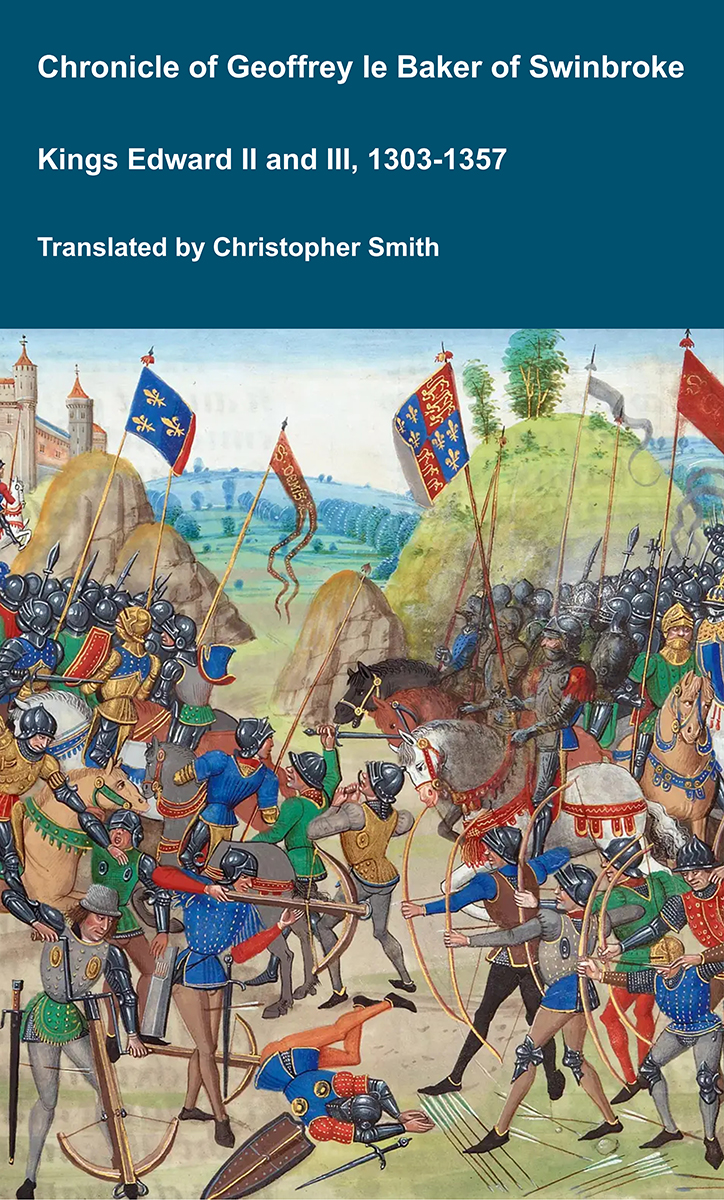
Chronicle of Geoffrey le Baker of Swinbroke
Baker was a secular clerk from Swinbroke, now Swinbrook, an Oxfordshire village two miles east of Burford. His Chronicle describes the events of the period 1303-1356: Gaveston, Bannockburn, Boroughbridge, the murder of King Edward II, the Scottish Wars, Sluys, Crécy, the Black Death, Winchelsea and Poitiers. To quote Herbert Bruce 'it possesses a vigorous and characteristic style, and its value for particular events between 1303 and 1356 has been recognised by its editor and by subsequent writers'. The book provides remarkable detail about the events it describes. Baker's text has been augmented with hundreds of notes, including extracts from other contemporary chronicles, such as the Annales Londonienses, Annales Paulini, Murimuth, Lanercost, Avesbury, Guisborough and Froissart to enrich the reader's understanding. The translation takes as its source the 'Chronicon Galfridi le Baker de Swynebroke' published in 1889, edited by Edward Maunde Thompson.
Available at Amazon in eBook and Paperback format.
On 20th May 1663 John Denham [aged 48] was elected Fellow of the Royal Society.
On 9th December 1663 Elias Leighton was appointed Fellow of the Royal Society.
In 1664 John Hervey [aged 47] was elected Fellow of the Royal Society.

In 1664 John Hay 1st Marquess Tweeddale [aged 38] was appointed Fellow of the Royal Society.
In 1664 Charles Boyle 3rd Baron Clifford [aged 24] was elected Fellow of the Royal Society.

On 23rd November 1664 Thomas Thynne 1st Viscount Weymouth [aged 24] was invested as a Fellow of the Royal Society.

In 1665 Richard Sackville 5th Earl Dorset [aged 42] was elected Fellow of the Royal Society.
In February 1665 Colonel Thomas Blount [aged 61] was elected Fellow of the Royal Society. He resigned in 1668.
On 8th February 1665 Thomas Povey [aged 51] proposed Samuel Pepys [aged 31] as a Fellow of the Royal Society.


In 1666 John Hay 2nd Marquess Tweeddale [aged 21] was elected Fellow of the Royal Society.
In 1666 Captain George Cock [aged 49] was elected Fellow of the Royal Society.

Anne Boleyn. Her Life as told by Lancelot de Carle's 1536 Letter.
In 1536, two weeks after the execution of Anne Boleyn, her brother George and four others, Lancelot du Carle, wrote an extraordinary letter that described Anne's life, and her trial and execution, to which he was a witness. This book presents a new translation of that letter, with additional material from other contemporary sources such as Letters, Hall's and Wriothesley's Chronicles, the pamphlets of Wynkyn the Worde, the Memorial of George Constantyne, the Portuguese Letter and the Baga de Secrets, all of which are provided in Appendices.
Available at Amazon in eBook and Paperback format.
In June 1666 Bishop Samuel Parker [aged 26] was elected Fellow of the Royal Society.
In 1667 Colonel Bullen Reymes [aged 53] was appointed Fellow of the Royal Society.

In 1668 John Banks 1st Baronet [aged 41] was elected Fellow of the Royal Society.
On 2nd January 1668 Edward Conway 1st Earl Conway [aged 45] was elected Fellow of the Royal Society.
In January 1669 Colonel Silius Titus [aged 46] was elected Fellow of the Royal Society.
In November 1671 Robert Reading 1st Baronet [aged 31] was elected Fellow of the Royal Society.

In 1672 Archbishop John Tillotson [aged 41] was elected Fellow of the Royal Society.
In 1672 Paul Whichcote 2nd Baronet [aged 29] was elected Fellow of the Royal Society.

In 1672 Isaac Newton [aged 29] was elected Fellow of the Royal Society.

In January 1672 Freschville Holles [aged 29] was elected Fellow of the Royal Society.
In 1673 Richard Ford [aged 59] was elected Fellow of the Royal Society.
The Deeds of the Dukes of Normandy
The Gesta Normannorum Ducum [The Deeds of the Dukes of Normandy] is a landmark medieval chronicle tracing the rise and fall of the Norman dynasty from its early roots through the pivotal events surrounding the Norman Conquest of England. Originally penned in Latin by the monk William of Jumièges shortly before 1060 and later expanded at the behest of William the Conqueror, the work chronicles the deeds, politics, battles, and leadership of the Norman dukes, especially William’s own claim to the English throne. The narrative combines earlier historical sources with firsthand information and oral testimony to present an authoritative account of Normandy’s transformation from a Viking settlement into one of medieval Europe’s most powerful realms. William’s history emphasizes the legitimacy, military prowess, and governance of the Norman line, framing their expansion, including the conquest of England, as both divinely sanctioned and noble in purpose. Later chroniclers such as Orderic Vitalis and Robert of Torigni continued the history, extending the coverage into the 12th century, providing broader context on ducal rule and its impact. Today this classic work remains a foundational source for understanding Norman identity, medieval statesmanship, and the historical forces that reshaped England and Western Europe between 800AD and 1100AD.
Available at Amazon in eBook and Paperback format.
In 1673 Francis Robartes [aged 22] was elected Fellow of the Royal Society.
In June 1673 Charles Somerset Marquess Worcester [aged 12] was appointed Fellow of the Royal Society.
In February 1676 John Flamsteed [aged 29] was appointed Fellow of the Royal Society.
In 1677 George Wheler [aged 25] was elected Fellow of the Royal Society. He was subsequently expelled in 1685.

In 1677 Thomas Gale [aged 42] was appointed Fellow of the Royal Society.
On 22nd April 1680 Andrew Clench was appoined Fellow of the Royal Society.
In 1682 Jean Chardin [aged 38] was elected Fellow of the Royal Society. He was living at Holland House at the time.

In 1685 John Vaughan 3rd Earl Carbery [aged 45] was elected Fellow of the Royal Society.
In 1693 Thomas Willoughby 1st Baron Middleton [aged 20] was elected Fellow of the Royal Society.

In 1694 James Brydges 1st Duke Chandos [aged 20] was elected Fellow of the Royal Society.
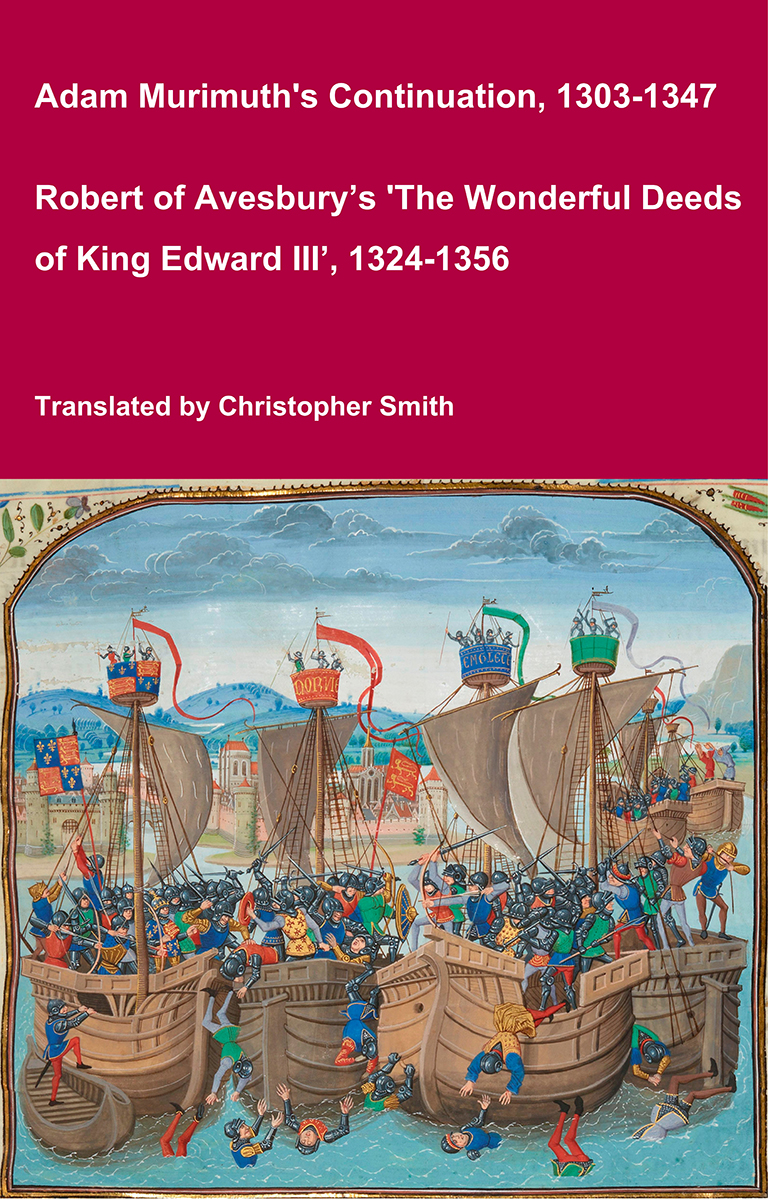
Adam Murimuth's Continuation and Robert of Avesbury’s 'The Wonderful Deeds of King Edward III'
This volume brings together two of the most important contemporary chronicles for the reign of Edward III and the opening phases of the Hundred Years’ War. Written in Latin by English clerical observers, these texts provide a vivid and authoritative window into the political, diplomatic, and military history of fourteenth-century England and its continental ambitions. Adam Murimuth Continuatio's Chronicarum continues an earlier chronicle into the mid-fourteenth century, offering concise but valuable notices on royal policy, foreign relations, and ecclesiastical affairs. Its annalistic structure makes it especially useful for establishing chronology and tracing the development of events year by year. Complementing it, Robert of Avesbury’s De gestis mirabilibus regis Edwardi tertii is a rich documentary chronicle preserving letters, treaties, and official records alongside narrative passages. It is an indispensable source for understanding Edward III’s claim to the French crown, the conduct of war, and the mechanisms of medieval diplomacy. Together, these works offer scholars, students, and enthusiasts a reliable and unembellished account of a transformative period in English and European history. Essential for anyone interested in medieval chronicles, the Hundred Years’ War, or the reign of Edward III.
Available at Amazon in eBook and Paperback format.
In 1696 Orlando Bridgeman 1st Baronet [aged 46] was elected Fellow of the Royal Society.
In 1696 Thomas Foley 1st Baron Foley [aged 22] was elected Fellow of the Royal Society.
In January 1699 Edward Worth [aged 21] was elected Fellow of the Royal Society.
In May 1702 James Vernon [aged 24] was elected Fellow of the Royal Society.

In 1707 Thomas Trevor 1st Baron Trevor Bromham [aged 48] was elected Fellow of the Royal Society.
In March 1707 Thomas Frankland 3rd Baronet [aged 22] was elected Fellow of the Royal Society.
In 1711 Marmaduke Wyvill 5th Baronet [aged 45] was elected Fellow of the Royal Society.
In 1713 Thomas Parker [aged 79] was appointed Fellow of the Royal Society.
In 1716 Thomas Cartwright of Aynho Park [aged 45] was elected Fellow of the Royal Society.
On 28th March 1717 Roger Gale [aged 44] was elected Fellow of the Royal Society.
In 1718 Wilfrid Lawson 3rd Baronet [aged 21] was elected Fellow of the Royal Society.
In March 1719 John Warburton [aged 37] was elected Fellow of the Royal Society.
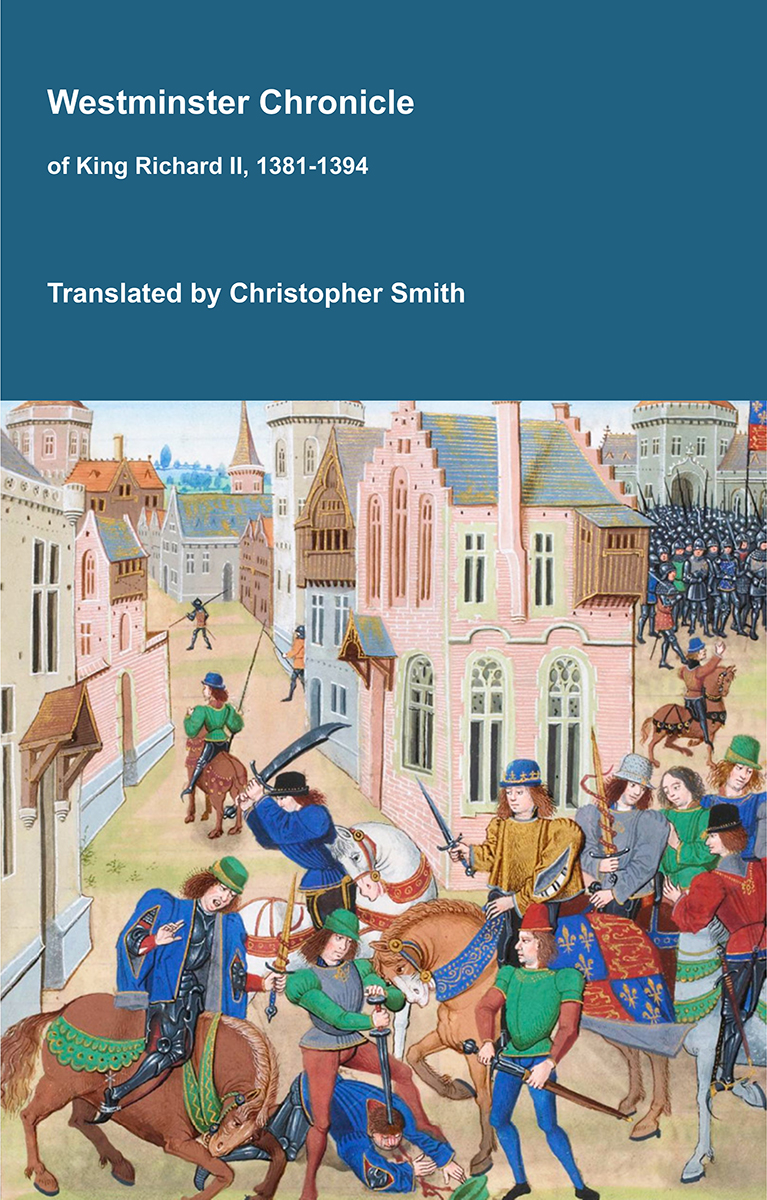
Westminster Chronicle of King Richard II, 1381-1394
The Westminster Chronicle is one of the most vivid and important narrative sources for the reign of Richard II. Written by an anonymous chronicler closely connected with Westminster Abbey, it covers the years 1381 to 1394, from the Peasants’ Revolt to the political tensions, court ceremonies, diplomatic negotiations, royal progresses, and public crises of Richard’s later reign. Rich in detail the chronicle records major events such as the conflicts between the King and Lords Appellant, King and the City of London, negotiations with France and Scotland, the death and funeral of Queen Anne of Bohemia, the illness of Charles VI of France, and the changing fortunes of leading nobles including John of Gaunt, Thomas of Gloucester, Robert de Vere, and the Earl of Arundel. The Chronicle offers readers a remarkable window into late fourteenth-century England, combining political observation, courtly spectacle, urban drama, ecclesiastical affairs, and moral judgement. It is an essential source for anyone interested in medieval monarchy, London, Westminster, and the troubled reign of Richard II.
Available at Amazon in eBook and Paperback format.
On 30th April 1719 James Hill was elected Fellow of the Royal Society.
In November 1721 George Savile 7th Baronet [aged 43] was elected Fellow of the Royal Society.

In 1722 George Parker 2nd Earl Macclesfield [aged 26] was appointed Fellow of the Royal Society.
In 1723 Robert Marsham 1st Baron Romney [aged 37] was elected Fellow of the Royal Society.
In January 1723 John Evelyn 1st Baronet [aged 40] was elected Fellow of the Royal Society.
In 1724 Smart Lethieullier [aged 22] was elected Fellow of the Royal Society.
On 12th March 1724 Francis Scott 2nd Duke Buccleuch [aged 29] was appointed Fellow of the Royal Society.
In 1726 Brook Bridges 1st Baronet [aged 46] was elected Fellow of the Royal Society.
In 1729 George Heathcote [aged 21] was elected a Fellow of the Royal Society.
In 1729 Thomas Osborne 4th Duke Leeds [aged 15] was elected Fellow of the Royal Society.
Jean de Waurin's Chronicle of England Volume 6 Books 3-6: The Wars of the Roses
Jean de Waurin was a French Chronicler, from the Artois region, who was born around 1400, and died around 1474. Waurin’s Chronicle of England, Volume 6, covering the period 1450 to 1471, from which we have selected and translated Chapters relating to the Wars of the Roses, provides a vivid, original, contemporary description of key events some of which he witnessed first-hand, some of which he was told by the key people involved with whom Waurin had a personal relationship.
Available at Amazon in eBook and Paperback format.
In 1730 Joseph Banks [aged 38] was elected Fellow of the Royal Society.
In 1732 John Robartes 4th Earl Radnor [aged 46] was elected Fellow of the Royal Society.
In 1733 John Smith 1st Baronet was elected Fellow of the Royal Society and Fellow of the Society of Antiquaries of London.
In 1735 Philip Stanhope 2nd Earl Stanhope [aged 20] was appointed Fellow of the Royal Society.
In 1735 Marmaduke Wyvill 6th Baronet [aged 43] was elected Fellow of the Royal Society.
In 1740 Thomas Foley 2nd Baron Foley [aged 37] was elected Fellow of the Royal Society.
In 1742 Francis Haskins Eyles-Stiles 3rd Baronet was elected Fellow of the Royal Society.
In January 1743 Charles Lyttelton [aged 29] was elected Fellow of the Royal Society.
On 15th December 1743 Henry Herbert 6th Earl Montgomery 9th Earl Pembroke [aged 50] was appointed Fellow of the Royal Society.

In 1744 George Lyttelton 1st Baron Lyttelton [aged 34] was elected Fellow of the Royal Society.
In 1747 Richard Fitzwilliam 6th Viscount Fitzwilliam [aged 35] was elected Fellow of the Royal Society.
In March 1750 Bishop Thomas Hayter [aged 48] was elected Fellow of the Royal Society.
In 1752 Arthur Pond [aged 47] was elected Fellow of the Royal Society.

In 1754 Anthony Ashley-Cooper 4th Earl Shaftesbury [aged 42] was elected Fellow of the Royal Society.
Jean de Waurin's Chronicle of England Volume 6 Books 3-6: The Wars of the Roses
Jean de Waurin was a French Chronicler, from the Artois region, who was born around 1400, and died around 1474. Waurin’s Chronicle of England, Volume 6, covering the period 1450 to 1471, from which we have selected and translated Chapters relating to the Wars of the Roses, provides a vivid, original, contemporary description of key events some of which he witnessed first-hand, some of which he was told by the key people involved with whom Waurin had a personal relationship.
Available at Amazon in eBook and Paperback format.

In 1757 Thomas Hollis [aged 36] was elected Fellow of the Royal Society.
In 1758 Bishop Robert Lamb [aged 55] was appointed Fellow of the Royal Society.

In 1758 Thomas Drury 1st Baronet [aged 45] was elected Fellow of the Royal Society.
In 1758 Ralph Verney 2nd Earl Verney [aged 43] was elected Fellow of the Royal Society.
In 1758 Francis Hastings 10th Earl Huntingdon [aged 28] was elected Fellow of the Royal Society.
In April 1758 James "Athenian" Stuart [aged 45] was elected Fellow of the Royal Society.
In 1762 George Baker 1st Baronet [aged 39] was appointed Fellow of the Royal Society.
In 1762 Owen Brereton aka Salusbury-Brereton [aged 47] was elected Fellow of the Royal Society.
In 1763 James Harris [aged 53] was elected Fellow of the Royal Society.
In 1766 Charles Marsham 1st Earl Romney [aged 21] was elected Fellow of the Royal Society.
On 17th December 1767 George Greville 2nd Earl Warwick and Brooke [aged 21] was elected Fellow of the Royal Society.
On 12th November 1772 Kenneth Mackenzie 1st Earl Seaforth [aged 28] was elected Fellow of the Royal Society.
Chronicle of Geoffrey le Baker of Swinbroke
Baker was a secular clerk from Swinbroke, now Swinbrook, an Oxfordshire village two miles east of Burford. His Chronicle describes the events of the period 1303-1356: Gaveston, Bannockburn, Boroughbridge, the murder of King Edward II, the Scottish Wars, Sluys, Crécy, the Black Death, Winchelsea and Poitiers. To quote Herbert Bruce 'it possesses a vigorous and characteristic style, and its value for particular events between 1303 and 1356 has been recognised by its editor and by subsequent writers'. The book provides remarkable detail about the events it describes. Baker's text has been augmented with hundreds of notes, including extracts from other contemporary chronicles, such as the Annales Londonienses, Annales Paulini, Murimuth, Lanercost, Avesbury, Guisborough and Froissart to enrich the reader's understanding. The translation takes as its source the 'Chronicon Galfridi le Baker de Swynebroke' published in 1889, edited by Edward Maunde Thompson.
Available at Amazon in eBook and Paperback format.
On 4th April 1774 John Wandesford 1st Earl Wandesford [aged 48] was elected Fellow of the Royal Society.
In 1776 George Finch-Hatton [aged 28] was elected Fellow of the Royal Society.
In 1777 Archdeacon Anthony Hamilton [aged 38] was elected Fellow of the Royal Society.

In 1777 Richard Grosvenor 1st Earl Grosvenor [aged 45] was elected Fellow of the Royal Society.

In 1778 Henry Charles Englefield 7th Baronet [aged 26] was elected Fellow of the Royal Society.
In 1779 John Henniker 1st Baron Henniker [aged 54] was elected Fellow of the Royal Society.
In November 1779 was elected Fellow of the Royal Society.

On 3rd May 1781 George Legge 3rd Earl Dartmouth [aged 25] was admitted a Fellow of the Royal Society.
On 8th November 1781 Francis Henry Egerton 8th Earl Bridgewater [aged 24] was elected Fellow of the Royal Society.
In 1783 Brownlow Cust 1st Baron Brownlow [aged 38] was elected Fellow of the Royal Society.


In 1783 John Baker Holroyd 1st Earl Sheffield [aged 47] was elected Fellow of the Royal Society.

The True Chronicles of Jean le Bel Volume 1 Chapters 1-60 1307-1342
The True Chronicles of Jean le Bel offer one of the most vivid and immediate accounts of 14th-century Europe, written by a knight who lived through the events he describes, and experienced some of them first hand. Covering the early decades of the Hundred Years’ War, this remarkable chronicle follows the campaigns of Edward III of England, the politics of France and the Low Countries, and the shifting alliances that shaped medieval warfare. Unlike later historians, Jean le Bel writes with a strong sense of eyewitness authenticity, drawing on personal experience and the testimony of fellow soldiers. His narrative captures not only battles and sieges, but also the realities of military life, diplomacy, and the ideals of chivalry that governed noble society. A key source for Jean Froissart, Le Bel’s chronicle stands on its own as a compelling and insightful work, at once historical record and literary achievement. This translation builds on the 1905 edition published in French by Jules Viard, adding extensive translations from other sources Rymer's Fœdera, the Chronicles of Adam Murimuth, William Nangis, Walter of Guisborough, a Bourgeois of Valenciennes, Geoffrey le Baker of Swinbroke and Richard Lescot to enrich the original text and Viard's notes.
Available at Amazon in eBook and Paperback format.
In 1785 Anthony Ashley-Cooper 5th Earl Shaftesbury [aged 23] was elected Fellow of the Royal Society.
On 15th December 1785 John Henniker-Major 2nd Baron Henniker [aged 33] was elected Fellow of the Royal Society.
In 1788 Reginald Pole aka Pole-Carew [aged 34] was elected Fellow of the Royal Society.
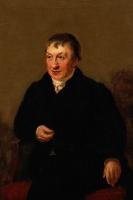
In 1788 Edward Jenner [aged 38] was elected Fellow of the Royal Society.
In March 1791 Charles Townley [aged 53] was elected Fellow of the Royal Society.

In 1792 Richard Colt Hoare 2nd Baronet [aged 33] was elected Fellow of the Royal Society and Fellow of the Society of Antiquaries of London.

In 1793 John Scott 1st Earl Eldon [aged 41] was elected Fellow of the Royal Society.
On 14th February 1793 Charles Abbot 1st Baron Colchester [aged 35] was elected Fellow of the Royal Society.


In 1794 Frederick North 5th Earl Guildford [aged 27] was elected Fellow of the Royal Society.
In July 1797 John Spalding [aged 34] was elected Fellow of the Royal Society.

On 12th December 1799 John Stuart 1st Marquis of the Isle of Bute [aged 55] was appointed Fellow of the Royal Society.

In 1805 Frederick William Hervey 1st Marquess of Bristol [aged 35] was elected Fellow of the Royal Society.
On 10th January 1805, the day after he died, Edward Winnington 2nd Baronet [deceased] was elected Fellow of the Royal Society.
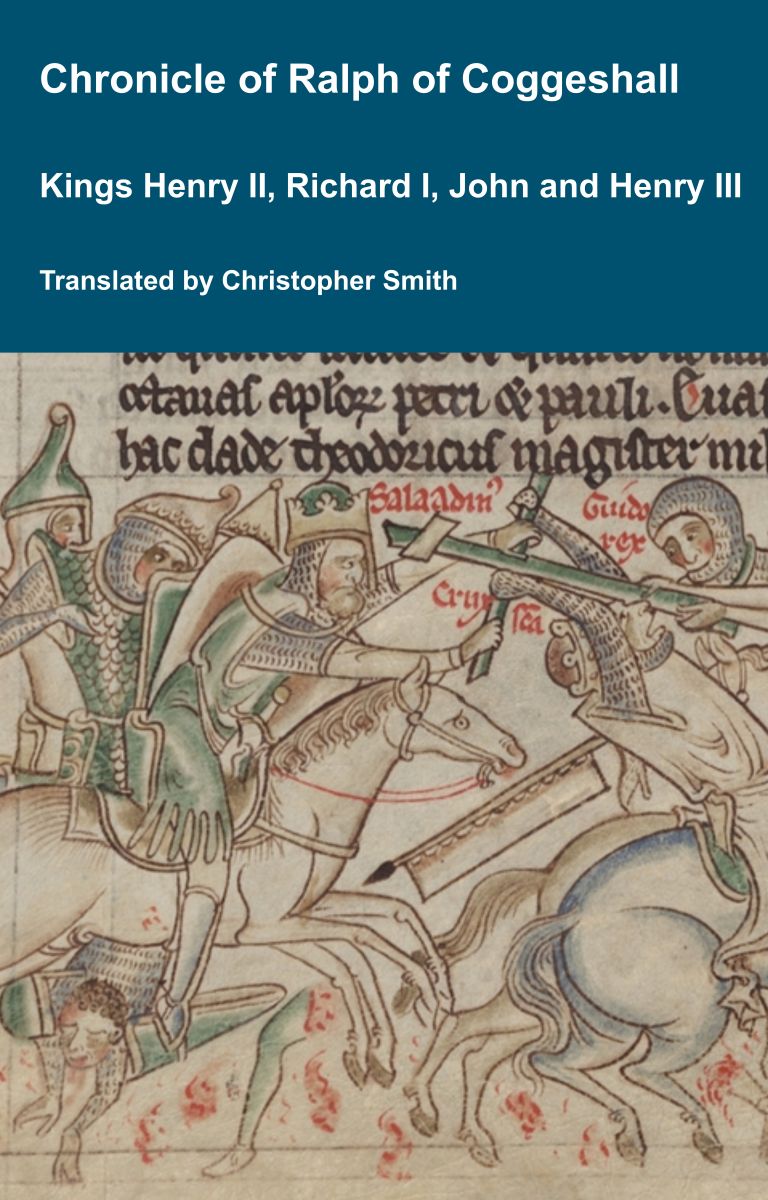
Chronicle of Abbot Ralph of Coggeshall
The Chronicle of Abbot Ralph of Coggeshall (Chronicon Anglicanum) is an indispensable medieval history that brings to life centuries of English and European affairs through the eyes of a learned Cistercian monk. Ralph of Coggeshall, abbot of the Abbey of Coggeshall in Essex in the early 13th century, continued and expanded his community’s chronicle, documenting events from the Norman Conquest of 1066 into the tumultuous reign of King Henry III. Blending eyewitness testimony, careful compilation, and the monastic commitment to record-keeping, this chronicle offers a rare narrative of political intrigue, royal power struggles, and social upheaval in England and beyond. Ralph’s work captures the reigns of pivotal figures such as Richard I and King John, providing invaluable insights into their characters, decisions, and the forces that shaped medieval rule. More than a simple annal, Chronicon Anglicanum conveys the texture of medieval life and governance, making it a rich source for scholars and readers fascinated by English history, monastic authorship, and the shaping of the medieval world.
Available at Amazon in eBook and Paperback format.
In 1806 Edward Moor [aged 35] was elected Fellow of the Royal Society.
In 1808 Thomas Tyrwhitt aka Tyrwhitt-Jones 1st Baronet [aged 42] was elected Fellow of the Royal Society.
Before 25th December 1809 Reverend Richard Kaye 6th Baronet [aged 73] was elected Fellow of the Royal Society and Fellow of the Society of Antiquaries of London.
In 1810 Bishop Bowyer Sparke [aged 50] was elected Fellow of the Royal Society.
In 1811 Bishop John Kaye [aged 27] was elected Fellow of the Royal Society.
In 1811 Frederick Baker 2nd Baronet [aged 38] was elected Fellow of the Royal Society and Fellow of the Society of Antiquaries of London.
In May 1811 Henry Ellis [aged 33] was elected Fellow of the Royal Society.
In 1813 Charles Chetwynd-Talbot 2nd Earl Talbot [aged 35] was elected Fellow of the Royal Society.


In 1814 Thomas Reynolds-Moreton 1st Earl Ducie [aged 37] was elected Fellow of the Royal Society.
In 1816 Charles Gould aka Morgan 1st Baronet was elected Fellow of the Royal Society in recognition of his investment in agricultural improvements.
In 1817 William Strutt [aged 61] was elected Fellow of the Royal Society.
In April 1818 Edward Sabine [aged 29] was elected Fellow of the Royal Society.
In 1819 Charles Alfred Stothard [aged 32] was elected Fellow of the Royal Society.
In March 1822 William John Bankes [aged 35] was elected Fellow of the Royal Society.
In 1824 Bishop Edward Maltby [aged 53] was elected Fellow of the Royal Society.
In 1829 John Lubbock 3rd Baronet [aged 25] became a Fellow of the Royal Society.
In 1831 Martin Archer Shee [aged 61] was elected Fellow of the Royal Society.
Jean de Waurin's Chronicle of England Volume 6 Books 3-6: The Wars of the Roses
Jean de Waurin was a French Chronicler, from the Artois region, who was born around 1400, and died around 1474. Waurin’s Chronicle of England, Volume 6, covering the period 1450 to 1471, from which we have selected and translated Chapters relating to the Wars of the Roses, provides a vivid, original, contemporary description of key events some of which he witnessed first-hand, some of which he was told by the key people involved with whom Waurin had a personal relationship.
Available at Amazon in eBook and Paperback format.
In 1832 Edward Ayshford Sanford [aged 37] was elected Fellow of the Royal Society.
In February 1834 Edward Cust 1st Baronet [aged 39] was elected Fellow of the Royal Society.
In January 1839 Beriah Botfield [aged 31] was elected Fellow of the Royal Society.
On 24th January 1839 Charles Darwin [aged 29] was elected Fellow of the Royal Society.

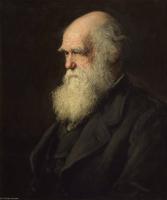

In 1841 Hussey Vivian 1st Baron Vivian [aged 65] was elected Fellow of the Royal Society.
In 1841 Henry John George Herbert 3rd Earl Carnarvon [aged 40] was elected Fellow of the Royal Society.
In 1843 John Peter Boileau 1st Baronet [aged 48] was elected Fellow of the Royal Society.
Before 22nd January 1843 Thomas Botfield [deceased] was elected Fellow of the Royal Society.

In 1847 John Dalton Hooker [aged 29] was elected Fellow of the Royal Society.
In 1849 Philip James Yorke [aged 49] was elected Fellow of the Royal Society.
Henrici Quinti, Angliæ Regis, Gesta, is a first-hand account of the Agincourt Campaign, and subsequent events to his death in 1422. The author of the first part was a Chaplain in King Henry's retinue who was present from King Henry's departure at Southampton in 1415, at the siege of Harfleur, the battle of Agincourt, and the celebrations on King Henry's return to London. The second part, by another writer, relates the events that took place including the negotiations at Troye, Henry's marriage and his death in 1422.
Available at Amazon in eBook and Paperback format.

In 1850 James Prescott Joule [aged 31] was elected Fellow of the Royal Society.
Before 10th February 1855 John Henry Vivian [aged 69] was elected Fellow of the Royal Society.
In 1859 Thomas Watson 1st Baronet [aged 67] was elected Fellow of the Royal Society.
In 1862 Andrew Crombie Ramsay [aged 47] was elected Fellow of the Royal Society.

In 1874 William Kingdon Clifford [aged 28] was elected Fellow of the Royal Society.
In 1875 Stafford Henry Northcote 1st Earl Iddesleigh [aged 56] was elected Fellow of the Royal Society.
In February 1878 William Henry Smith [aged 52] was elected Fellow of the Royal Society.
In 1934 Edgar Vincent 1st Viscount D'Abernon [aged 76] was elected Fellow of the Royal Society.


Edward Legge was elected Fellow of the Royal Society.
Webb John Seymour was appointed Fellow of the Royal Society.