

05 Oct is in October.
1338 French Raid on Southampton
1518 Betrothal of Mary Tudor and the Dauphin
1908 Assassination of King Carlos I of Portugal and his heir Prince Luís Filipe
On 5th October 851 Louis II King Italy Holy Roman Emperor [aged 26] and Engelberga Spoleto Holy Roman Empress were married. She by marriage Queen Consort Italy. He the son of Lothair Holy Roman Emperor [aged 56] and Ermengarde Tours Queen Consort Bavaria Queen Consort Middle Francia.
On 5th October 1056 Henry "Black Pious" Salian III Holy Roman Emperor [aged 38] died.
On 5th October 1214 Alfonso VIII King Castile [aged 58] died. He was buried at Abbey of Santa Maria la Real de Huelgas [Map]. His son Henry [aged 10] succeeded I King Castile.
 Annals of Six Kings of England by Nicholas Trivet. 1285. The king of England, setting out from Bristol for Canterbury, planned to cross over into France; but, hearing a report of his mother’s illness, he returned to Amesbury, sending messengers to excuse him before the king of France, to whose personal conference he had been specially invited. After the death of Pope Martin [on 28th March 1285], Honorius IV succeeded him, a Roman by birth, formerly called James of Savelli; an arthritic disease had almost deprived him of the use of his hands and feet, so that, sitting in a chair specially constructed for the purpose, he celebrated the solemnities of mass. Philip, king of the French, having gone into Aragon in order to acquire that kingdom for his son according to the papal grant, laid siege to the city of Girona. Peter, formerly king of Aragon, engaging in battle with certain French knights, among whom the chief were Raoul de Nesle, constable of France, and John of Harcourt, a most valiant Norman knight, was wounded; he withdrew with his men from the battle and shortly afterwards died. Philip, king of the French, having taken Girona and garrisoned it with his men, fell ill and withdrew as far as Perpignan, where, his illness increasing, he passed from this life [on 5th October 1285]. His flesh and entrails were buried in the church of Narbonne, his bones at Saint-Denis, and his heart in the choir of the Friars Preachers in Paris. He was succeeded by his son Philip, who was surnamed 'the Fair' on account of his remarkable beauty. The Aragonese seized the French ships in the harbour of Roses [Catalonia, Spain, 120km north-east of Barcelona] and carried them off; they also besieged the city of Girona and soon compelled it, together with the French left to defend it, to surrender. Alfonso, son of the late King Peter of Aragon, after his father’s death took up the government of that kingdom; and between him and Eleanor, daughter of the king of England, a betrothal had been arranged while his father was still alive. James, the younger son of Peter, crossing with his mother Constance into Sicily, had himself crowned king there.
1285. REx Angliæ, de Bristollia Cantuariam profectus, disposuit in Gallias transfretare; sed audito rumore de infirmitate matris, revertitur Ambresburiam, missis nuntiis qui se apud regem Franciæ, ad cujus colloquium speciale invitatus fuerat, excusarent. Mortuo papa Martino, succedit ei Honorius IV, natione Romanus, prius dictus Jacobus de Sabella, cui pedum ac manuum fere officium abstulerat arthritica ægritudo: unde sedendo in sella, ad hoc artificiose facta, missarum solemnia celebravit. Philippus rex Francorum in Aragoniam profectus, ut regnum illud juxta donationem papalem filio suo adquireret, civitatem Girundam obsedit. Petrus Aragoniæ quondam rex, inito cum quibusdam militibus Gallicis (inter quos principales erant Radulfus de Nigella, constabularius Franciæ, et Joannes de Haricuria, Normannus, miles strenuissimus,) conflictu, vulneratus, se cum suis subtraxit a prælio, et mortuus est in brevi. Philippus Francorum rex, capta Girunda hominibusque suis munita, incipiens infirmari discessit usque Perpeniacum; ubi invalescente ægritudine de præsenti luce migravit. Cujus carnes et viscera in ecclesia Narbonensi, ossa vero apud S. Dionysiam, cor vero in choro fratrum Prædicatorum Parisiis, sunt humata. Huic successit Philippus filius ejus, qui Pulcher agnominatus est ob corporis speciem excellentem. Aragonenses Gallicorum naves in portu Rosarum captas abducunt, urbem etiam Girundam obsidentes, ipsam et Gallicos ad ejus defensionem derelictos ad deditionem brevi tempore coegerunt. Alfonsus, filius Petri quondam Aragoniæ regis, patre defuncto, regnum illud gubernandam suscepit; inter quem et filiam regis Angliæ Alienoram sponsalia contracta fuerant, patre adhuc vivente. Jacobus autem, filius Petri junior, cum matre Constantia transiens in Siciliam, se fecit coronari in regem.
On 5th October 1285 King Philip III of France [aged 40] died of dysentery; see Annals of Dunstable. His son Philip [aged 17] succeeded IV King France: Capet. Joan Blois I Queen Navarre [aged 12] by marriage Queen Consort of France.
Annals of Dunstable. [5th October 1285] Philip [aged 40], king of France, during the siege of Girona, contracted dysentery and died. And his son Philip, cousin of Peter of Aragon, succeeded him.
Philippus, rex Franciæ, in obsidione de Gerundes incurrit dissentiriam et obiit. Et successit ei Philippus, filius ejus, consobrinus Petri de Aragun.
On 5th October 1338 a French fleet landed several thousand men at Southampton, Hampshire [Map] and assaulting it from both land and sea. The entire town was burned including churches and priories, thousands of pounds worth of goods and shipping back to France: 192 tuns of wine1, and 270 sarplars and 136 sacks of wool.2
Note 1. a tun of wine holds 252 gallons. 192 tuns = 48,384 gallons.
Note 2. A sarplar of wool is 2,240 lbs, a sack = 224 lbs. 2,240 * 270 = 604,800 lbs, 136 * 224 = 30,464 lbs. Total = 635,264 lbs i.e. 288 tons. The definition of a sarpler is subject to debate; it may be half or a quarter of this number.
 Chronicle of Geoffrey le Baker of Swinbroke. Moreover, on Friday after the feast of Saint Michael,1 fifty galleys, fully loaded with armed men, arrived around the ninth hour at the port of Southampton, and plundered the town, which at that time was unfortified. The locals fled in panic, and the pirates spent the night in the town.
Item, feria VJ proxima post festum sancti Michaelis, quinquaginta galee armatis bene stipate, circa horam nonam, ad portum Hamptonis applicuerunt, et villam, que tunc non fuit armata, depredaverunt; villanis pre vecordia fuge dilapsis, ipsi in villa pernoctarunt.
Note 1. Other sources describe the attack taking place on Monday 5th October 1338. See Adam Murimuth Continuation, Stow Annales 365, Knighton 2573 and Froissart 74.
Baker's 'feria sexta' appears to mean the same thing: the sixth day after the feast. He would thus place the event on the 5th October, a date followed by others. The son of the king of Sicily, who is here said to have been slain by the undiscriminating rustic, may have been a natural son of Robert of Anjou, king of Naples. As Minot says, p. 8:.
Sum was knokked on the hevyd
That the body thare bilevid;
Sum lay stareand on the sternes,
And sum lay knoked out thaire hernes.
Froissart Book 1: 1307-1340. [74] As soon as Sir Hugh Quieret and his companions, who were stationed at sea, learned that hostilities had been declared and war had broken out between France and England, they rejoiced greatly. They set out with their fleet, which included about twenty thousand fighters of various kinds, and sailed toward England. One Sunday morning1, while the people were at mass, they arrived at the harbor of Southampton. The said Normans and Genoese entered the town, seized it, looted it, and entirely robbed it. They killed many people, violated several women and maidens, which was a grievous wrong. They loaded their ships and vessels with the vast spoils they found in the town, which was full, prosperous, and well-supplied. Then they returned to their ships. When the tide came in, they lifted anchor and sailed quickly with the wind toward Normandy, and went to rest at Dieppe. There they divided their spoils and plunder. Now let us return to the King of England, who was staying at Mechelen and was preparing vigorously to march on Cambrai.
[74] Si tretost que messires Hues Kierés et si compagnon, qui se tenoient sus mer, entendirent que les deffiances estoient, et la guerre ouverte entre France et Engleterre, il en furent tout joiant; si se departirent avoecques leur armée, où il avoit bien vint mille combatans de toutes manières de gens, et singlèrent vers Engleterre, et vinrent un dimence au matin ou havene de Hantonne, entrues que les gens estoient à messe. Et entrèrent li dit Normant et Geneuois en le ville et le prisent et le pillièrent et robèrent tout entirement, et y tuèrent moult de gens, et violèrent pluiseurs dames et pucelles, dont ce fu damages; et chargièrent leurs naves et leurs vaissiaus dou grant pillage qu'il trouvèrent en le ville, qui estoit plainne et drue et bien garnie, et puis rentrèrent en leurs nefs. Et quant li flos de le mer fu revenus, il desancrèrent et singlèrent à l'esploit dou vent devers Normendie, et s'en vinrent rafrescir à Dièpe; et là departirent il leur butin et leur pillage. Or retourrons nous au roy englès, qui se tenoit à Malignes, et se apparilloit fort pour venir devant Cambray.
Note. The accepted date for the raid on Southampton is the 5th October 1338.
Chronicle of Geoffrey le Baker of Swinbroke
Baker was a secular clerk from Swinbroke, now Swinbrook, an Oxfordshire village two miles east of Burford. His Chronicle describes the events of the period 1303-1356: Gaveston, Bannockburn, Boroughbridge, the murder of King Edward II, the Scottish Wars, Sluys, Crécy, the Black Death, Winchelsea and Poitiers. To quote Herbert Bruce 'it possesses a vigorous and characteristic style, and its value for particular events between 1303 and 1356 has been recognised by its editor and by subsequent writers'. The book provides remarkable detail about the events it describes. Baker's text has been augmented with hundreds of notes, including extracts from other contemporary chronicles, such as the Annales Londonienses, Annales Paulini, Murimuth, Lanercost, Avesbury, Guisborough and Froissart to enrich the reader's understanding. The translation takes as its source the 'Chronicon Galfridi le Baker de Swynebroke' published in 1889, edited by Edward Maunde Thompson.
Available at Amazon in eBook and Paperback format.
 Adam Murimuth Continuation. And on Monday [5th October 1338] after the feast of Saint Michael, fifty galleys, full of armed men, arrived suddenly around the ninth hour (approximately 3 p.m.) at Southampton, and that day they plundered the town, carrying off everything they could to their galleys and ships. They remained in the town for the entire night, having either killed or driven off all who had been in the town. And on the following day, perceiving that the countryside was gathering against them, they set fire to five parts of the town and returned to their galleys.
Et die Lunæ post festum sancti Michaelis venerunt subito l. galeæ, plenæ hominibus armatis quasi hora nona, apud Suthamptonam, et illo die villam deprsedaverunt, et quicquid poterant ad galeas et naves suas portaverunt; et per un totam illam noctem in eadem villa manserunt, fugatis et interfectis omnibus qui in villa fuerunt. Et in crastino, percipientes quod se patria congregavit, posuerunt ignem in quinque locis ejusdem villæ et ad galeas redierunt.
Annales of England by John Stow. The fourth of October [1338]1 fiftie gallies, well manned and furnished, came to Southhampton about nine of the clocke, and sacked the towne, the townsmen running away for feare. By the break of the next day they which fled, by helpe of the countrey thereabout, came against the pyrats and fought with them, in the which skirmish were slaine to the number of three hundred pyrates, togither with their captaine, a young souldiour, the king of Sicils sonne. To this young man the French king had given whatsoever he got in the kingdome of England. But he, being beaten downe by a certaine man of the countrey, cryed "Rancon"; notwithstanding, the husbandman laid him on with his clubbe, till he had slaine him, speaking these words: "Yea (quoth he), I know well enough thou art a Francon, and therefore.shalt thou dye," for he understood not his speech, neither had he any skill to take gentlemen prisoners and to keepe them for ransome. Wherefore the residue of those Gennowayes, after they had set the towne a fire and burnt it up quite, fled to their galleyes, and in their flying certaine of them were drowned. And after this the inhabitants of the town compassed it about with a strong and great wall
Note 1. Other sources describe the Raid on Southampton taking place on Monday the 5th of October.
On 5th October 1361 Reginald Cobham 1st Baron Cobham [aged 66] died of plague at Lingfield, Surrey. He was buried at Lingfield, Surrey. His son Reginald [aged 13] succeeded 2nd Baron Cobham.
On 5th October 1376 Robert de Vere 1st Duke Ireland [aged 14] and Philippa Guines Duchess Ireland [aged 9] were married. She by marriage Countess of Oxford. She the daughter of Enguerrand de Coucy 1st Earl Bedford 1st Count Soissons [aged 36] and Isabella Countess Bedford and Soissons [aged 44]. He the son of Thomas de Vere 8th Earl of Oxford and Maud Ufford Countess of Oxford [aged 31]. They were half third cousin once removed. He a great x 3 grandson of King Henry III of England. She a granddaughter of King Edward III of England.
On 5th October 1377 King Louis of Naples was born to Louis Valois Anjou I Duke Anjou [aged 38] and Marie Chatillon Duchess Anjou [aged 32] at Toulouse. He a great x 4 grandson of King Henry III of England. Coefficient of inbreeding 2.61%. He married 1400 his first cousin once removed Yolande Barcelona Queen Consort Naples, daughter of King John I of Aragon and Yolande of Bar Queen Consort Aragon, and had issue.
On 5th October 1396 Archbishop Robert Waldby was appointed Archbishop of York.
 Memoires Jacques du Clercq. "And furthermore we command and expressly enjoin our well-beloved and faithful Chancellor, our well-beloved and faithful counsellors of our great council, those who shall hold our parliaments hereafter, the officers of our accounts and the generals of our finances, bailiffs, seneschals, and all our other officers and justices, or their lieutenants, and each of them as pertains to them, that they keep these our present letters and the contents thereof entirely, and carry them out in every point, and that they neither know nor suffer anything to be done to the contrary; and if anything be done to the contrary, that they restore and set it right immediately and without delay, to its first and proper state. And likewise that those of our parliament, of our accounts and of our finances verify and approve these present letters, and cause them to be published and registered wherever it shall be required, notwithstanding any ordinances made forbidding the alienation or removal from our hands of the domains of our said crown, and all restrictions, promises, and oaths that we or our officers may have made, whether in general or in particular, in any form of words by which one might seek to hinder the effect, execution, and observance of all that is contained in these present letters. Which ordinances, restrictions, promises, obligations, and oaths, for the sake of peace, we do not intend in this case to derogate from or prejudice the transfers and other matters aforesaid; and the said promises, oaths, and other instructions which our officers may have had towards us contrary to the aforesaid matters, we hold and consider by these present letters as discharged and satisfied in full by acting to the contrary of them. And because copies of these may be required in many places, we will that copies made under the royal seal shall have the same authority as the original. In witness whereof we have caused our great seal to be affixed to these present letters. Given at Paris on the 5th day of October in the year of grace 1465, and of our reign the fifth. Signed: By the King, the Count of Saint-Pol, Constable of France, the lord of Montauban, Admiral of France, the lord des Landes, Master Jean d'Auver, President of Toulouse, and others present, J. Bonore. And on the back: Read and published at Paris in Parliament on the 12th day of October in the year of Our Lord 1465, thus signed Cheneteau. Registered, the King's procurator being present and not opposing. Done in Parliament on the 17th day of October in the said year, thus signed Cheneteau".
Et en oultre mandons et expressement enjoingnons a nostre amé et feal chancellier, a nos amés et feaulx conseilliers les gens de nostre grand conseil, les gens qui tiendront nos parlements a venir, gens de nos comptes et generaulx de nos finanches, baillys, 1 seneschaulx et aultres nos officiers et justiciers, ou leurs lieutenants et chacun d'eulx, comme a eulx appartiendra, que ces nos presentes et le contenu en icelles, ils gardent entierement et accomplissent de poinct en poinct, et ne sçavent ne souffrent faire aulcune chose au contraire; et quant aulcune chose sera faite au contraire, ils reparent et remectent incontinent et sans delays, au premier estat et deu, et mesme lesdits de parlement, des comptes et des finanches, que cesdites presentes ils veriffient et approuvent, et les fassent publier et enregistrer partout ou il appartiendra, nonobstant quelconques ordonnances faites de non aliener ne mectre hors de nos mains les domaines de nostre dite courronne et toutes restrinctions, promesses et serments que nous ou nos officiers avons peu faire en general ou en particulier, sous quelques formes de parolles par lesquelles l'on polroit ou volroit empeschier l'effet, accomplissement et entretennement de tout le contenu en cesdites presentes; lesquelles ordonnances, restrinctions, promesses, obligations et serments, nous pour bien de paix, ne voullons quant au cas present derogier, ou prejudicier aulx transports et aultres choses dessusdites et lesdites promesses, serments et aultres instructions que nosdits officiers porroient avoir envers nous, au contraire des choses dessusdites, nous les tiendrons et tenons par ces presentes, et en accomplissant le contraire d'icelles, pour quittes et souffisamment deschargiés, et pour ce que d'icelles l'on polra avoir a faire en divers lieux et plusieurs, nous voullons que au vidimus d'icelles faites soubs scel royal, foy soit adjoustée comme a l'original; en temoing de ce nous avons fait mectre et apposer nostre grand scel a ces presentes. Donné a Paris le ve jour d'octobre l'an de grace milo iiijc lxv, et de nostre regne le cinquiesme: signé par le Roy, le comte de St Pol, connestable de Franche, le Sr de Montauban, admiral de Franche, le St des Landes, maitre Jehan d'Auvet, president de Toulouse, et aultres presents J. Bonore. Et in dorso: lecta et publicata Parisiis in Parlamento, xij die octobris anno Domini mo iiijc lxv, sic signatum Cheneteau. Registrata, presente procuratore Regis non contradicente. Actum in Parlamento, xvij die octobris anno Domini mo iiij clxv, sic signatum Cheneteau.
On 5th October 1518 Queen Mary I of England and Ireland [aged 2] and the Dauphin Francis Valois were betrothed at Greenwich, Kent [Map].
Bishop Cuthbert Tunstall [aged 44] delivered an oration in praise of matrimony.


On 5th October 1528 Bishop Richard Foxe [aged 80] died at Wolvesey Castle [Map]. He was buried at Winchester Cathedral [Map] where he has a Chantry Chapel.


On 5th October 1544 Richard Archer [aged 39] was executed. He was buried at St Mary Magdalene Church, Tanworth in Arden.

Henry Machyn's Diary. 5th October 1553. The v day of October the Qwuen('s) [aged 37] grace rod unto Westmynster chyrche, and ther her grace hard masse of the Holy-gost, and ther wher ij bysshopes; on delevered her the shepter and odur thyng. Her grace rod in her parlement robes, and all the trumpeters blohyng a-for them all; and so, after her grace had hard masse, they whent to the Parlement howsse all to-geyther, and the yerle of Devonshyre [aged 26] bare the sworde, and the yerle of Westmorland [aged 28] bare the cape of mayntenans.
Henry Machyn's Diary. 5th October 1554. The v day of October was the obsequy of the duke of Northfoke at sant Mare Overes [Map]; a hers [hearse] mad with tymber, and hangyd with blake, and with ys armes, and iiij goodly candlestyks gyldyd, and iiij grett tapurs, and with ys armes, and alle the qwyre hangyd with blake and armes; and durge and masse on the morowe. And my lord chanseler [aged 71] cheffe morner, and next master [controller,] and master Gorge Haward; at the durge my lord Montyguw [aged 25], my lord admerell [aged 44], and my lord Brugys, and divers others; and a xl in gownes and cotes in blake; and after to my lord['s place], and gret ryngyng ij days.


Chronicle of Walter of Guisborough
A canon regular of the Augustinian Guisborough Priory, Yorkshire, formerly known as The Chronicle of Walter of Hemingburgh, describes the period from 1066 to 1346. Before 1274 the Chronicle is based on other works. Thereafter, the Chronicle is original, and a remarkable source for the events of the time. This book provides a translation of the Chronicle from that date. The Latin source for our translation is the 1849 work edited by Hans Claude Hamilton. Hamilton, in his preface, says: 'In the present work we behold perhaps one of the finest samples of our early chronicles, both as regards the value of the events recorded, and the correctness with which they are detailed; Nor will the pleasing style of composition be lightly passed over by those capable of seeing reflected from it the tokens of a vigorous and cultivated mind, and a favourable specimen of the learning and taste of the age in which it was framed.'
Available at Amazon in eBook and Paperback format.
Henry Machyn's Diary. 5th October 1559. [The] v day of October cam to [London by Ald]gatt the prynse of Sweythen [aged 25], and [so to Leadenhall], and done [down] Gracyous-strett [Map] corner in a howse stod [the lord] marques of Northamtun [aged 47] and my lord Ambros Dudley [aged 29] [and other gentlemen and] lades; and my lord of Oxford [aged 43] browth (him) from Col[chester] [Map] and my lord Robart Dudley [aged 27], the master of the quen('s) horse; and trumpettes bloyng in dyvers places; and thay had [a great] nombur of gentyllmen ryd with cheynes a-for them, and after them a ij C [200] of yomen rydyng, and so rydyng over the bryge unto the bysshope of Wynchastur plasse [Map], for [it] was rychely hangyd with ryche cloth of arres, wrought with gold and sylver and sylke, and ther he remanyth.


Letters of the Court of James I 1618. [5th October 1618]. The treaty with Spain, about the match that is pretended, they say, is likely to proceed. Sir John Digby [aged 38] is to be employed anew in an embassy to that purpose, and is to stay there till he see a final issue; that either the infanta [aged 12] be to be brought over, or the business utterly quashed. Presently after Christmas he undertakes the voyage, but the king hath not declared him as yet. It is kept as a great secret in the interim, and so imparted unto me, who am offered the condition of the chaplain, if I should think fit to accept it. I shall take time to consider, and humbly entreat you to favour me with your advice. But whatsoever I have communicated touching this embassy, I beseech you bury it in your own bosom till his majesty's declaration open a vent.


Letters of the Court of James I 1618. [5th October 1618]. The current runs strong here, that Sir Fulk Greville [aged 64] shall be treasurer, but the grounds of that conjecture are not certain. An assured thing they say it is, that the Marquis of Buckingham [aged 26] hath gotten the survivance of the Admiralty granted him, in a joint patent with the lord admiral that is; and the same hath passed the seals already. Sir Robert Cary [aged 58] hath now perfected his suit concerning Killingworth [Map], and intends a new voyage thither soon after Allhallowtide. I have renewed my former motions concerning you, and he promises the accomplishment.


On 5th October 1625 Edward Palatinate Simmern was born to Frederick Palatinate Simmern V Elector Palatine Rhine [aged 29] and Princess Elizabeth Stewart Queen Bohemia [aged 29] at The Hague. He a grandson of King James I of England and Ireland and VI of Scotland. He married 24th April 1645 his fourth cousin twice removed Anne Marie Gonzaga, daughter of Charles Gonzaga I Duke Mantua.


On or before 5th October 1632, the date she was buried at Stow Minster [Map], Amy Dillington [aged 62] died.
Amy Dillington: Around 1570 she was born to Anthony Dillington of Knighton on the Isle of Wight. In or before 1582 Richard Burgh of Stow Hall and she were married. They had four sons and two daughters.
John Evelyn's Diary. 5th October 1649. Dined with Sir George Ratcliffe, the great favorite of the late Earl of Stratford, formerly Lord Deputy of Ireland, decapitated.


On 5th October 1658 Mary of Modena Queen Consort England Scotland and Ireland was born to Alfonso Este IV Duke Modena [aged 23] and Laura Martinozzi Duchess Modena [aged 19]. She married 20th September 1673 King James II of England Scotland and Ireland, son of King Charles I of England, Scotland and Ireland and Henrietta Maria Bourbon Queen Consort England, and had issue.


Samuel Pepys' Diary. 5th October 1663. Up with pain, and with Sir J. Minnes [aged 64] by coach to the Temple [Map], and then I to my brother's, and up and down on business, and so to the New Exchange, and there met Creed, and he and I walked two or three hours, talking of many businesses, especially about Tangier [Map], and my Lord Tiviot's bringing in of high accounts, and yet if they were higher are like to pass without exception, and then of my Lord Sandwich [aged 38] sending a messenger to know whether the King [aged 33] intends to come to Newmarket, Suffolk, as is talked, that he may be ready to entertain him at Hinchingbroke [Map].


Samuel Pepys' Diary. 5th October 1664. And thither anon come all the Gresham College, and a great deal of noble company: and the new instrument was brought called the Arched Viall1, where being tuned with lute-strings, and played on with kees like an organ, a piece of parchment is always kept moving; and the strings, which by the kees are pressed down upon it, are grated in imitation of a bow, by the parchment; and so it is intended to resemble several vyalls played on with one bow, but so basely and harshly, that it will never do. But after three hours' stay it could not be fixed in tune; and so they were fain to go to some other musique of instruments, which I am grown quite out of love with, and so I, after some good discourse with Mr. Spong, Hill, Grant [aged 44], and Dr. Whistler, and others by turns, I home to my office and there late, and so home, where I understand my wife has spoke to Jane and ended matters of difference between her and her, and she stays with us, which I am glad of; for her fault is nothing but sleepiness and forgetfulness, otherwise a good-natured, quiet, well-meaning, honest servant, and one that will do as she is bid, so one called upon her and will see her do it.
Note 1. "There seems to be a curious fate reigning over the instruments which have the word 'arch' prefixed to their name. They have no vitality, and somehow or other come to grief. Even the famous archlute, which was still a living thing in the time of Handel, has now disappeared from the concert room and joined Mr. Pepys's 'Arched Viall' in the limbo of things forgotten.... Mr. Pepys's verdict that it would never do... has been fully confirmed by the event, as his predictions usually were, being indeed always founded on calm judgment and close observation". B. (Hueffer's Italian and other Studies, 1883, p. 263).
Samuel Pepys' Diary. 5th October 1665. I abroad to the office and thence to the Duke of Albemarle [aged 56], all my way reading a book of Mr. Evelyn's [aged 44] translating and sending me as a present, about directions for gathering a Library1 but the book is above my reach, but his epistle to my Chancellor [aged 56] is a very fine piece.
Note 1. Instructions concerning erecting of a Library, presented to my Lord the President De Mesme by Gilbert Naudeus, and now interpreted by Jo. Evelyn, Esquire. London, 1661: This little book was dedicated to Lord Clarendon by the translator. It was printed while Evelyn was abroad, and is full of typographical errors; these are corrected in a copy mentioned in Evelyn's "Miscellaneous Writings", 1825, p. xii, where a letter to Dr. Godolphin [aged 30] on the subject is printed.


Samuel Pepys' Diary. 5th October 1665. Round about and next door on every side is the plague, but I did not value it, but there did what I would 'con elle', and so away to Mr. Evelyn's [aged 44] to discourse of our confounded business of prisoners, and sick and wounded seamen, wherein he and we are so much put out of order1. And here he showed me his gardens, which are for variety of evergreens, and hedge of holly, the finest things I ever saw in my life2.
Note 1. Each of the Commissioners for the Sick and Wounded was appointed to a particular district, and Evelyn's district was Kent and Sussex. On September 25th, 1665, Evelyn wrote in his Diary: "my Lord Admiral being come from ye fleete to Greenewich, I went thence with him to ye Cockpit [Map] to consult with the Duke of Albemarle [aged 56]. I was peremptory that unlesse we had £10,000 immediately, the prisoners would starve, and 'twas proposed it should be rais'd out of the E. India prizes now taken by Lord Sandwich [aged 40]. They being but two of ye Commission, and so not impower'd to determine, sent an expresse to his Majesty and Council to know what they should do".
Note 2. Evelyn purchased Sayes Court [Map], Deptford, in 1653, and laid out his gardens, walks, groves, enclosures, and plantations, which afterwards became famous for their beauty. When he took the place in hand it was nothing but an open field of one hundred acres, with scarcely a hedge in it.
Annals of the six Kings of England by Nicholas Trivet
Translation of the Annals of the Six Kings of England by that traces the rise and rule of the Angevin aka Plantagenet dynasty from the mid-12th to early 14th century. Written by the Dominican scholar Nicholas Trivet, the work offers a vivid account of English history from the reign of King Stephen through to the death of King Edward I, blending political narrative with moral reflection. Covering the reigns of six monarchs—from Stephen to Edward I—the chronicle explores royal authority, rebellion, war, and the shifting balance between crown, church, and nobility. Trivet provides detailed insight into defining moments such as baronial conflicts, Anglo-French rivalry, and the consolidation of royal power under Edward I, whose reign he describes with particular immediacy. The Annals combines careful year-by-year reporting with thoughtful interpretation, presenting history not merely as a sequence of events but as a moral and political lesson. Ideal for readers interested in medieval history, kingship, and the origins of the English state, this chronicle remains a valuable and accessible window into the turbulent world of the Plantagenet kings.
Available at Amazon in eBook and Paperback format.

Samuel Pepys' Diary. 5th October 1666. Up, and with my father talking awhile, then to the office, and there troubled with a message from Lord Peterborough [aged 44] about money; but I did give as kind answer as I could, though I hate him. Then to Sir G. Carteret [aged 56] to discourse about paying of part of the great ships come in, and so home again to compare the comparison of the two Dutch wars' charges for Sir W. Coventry [aged 38], and then by water (and saw old Mr. Michell digging like a painfull father for his son) to him, and find him at dinner.
Samuel Pepys' Diary. 5th October 1666. So I away from him, and met with the Vice-Chamberlain [aged 56], and I told him when I had this evening in coming hither met with Captain Cocke [aged 49], and he told me of a wild motion made in the House of Lords by the Duke of Buckingham [aged 38] for all men that had cheated the King [aged 36] to be declared traitors and felons, and that my Lord Sandwich [aged 41] was named. This put me into a great pain, so the Vice-Chamberlain, who had heard nothing of it, having been all day in the City, away with me to White Hall; and there come to me and told me that, upon Lord Ashly's [aged 45] asking their direction whether, being a peere, he should bring in his accounts to the Commons, which they did give way to, the Duke of Buckingham did move that, for the time to come, what I have written above might be declared by some fuller law than heretofore. Lord Ashly answered, that it was not the fault of the present laws, but want of proof; and so said the Chancellor [aged 57]. He answered, that a better law, he thought, might be made so the House laughing, did refer it to him to bring in a Bill to that purpose, and this was all.


Samuel Pepys' Diary. 5th October 1667. And so walked all up and down the house above, and then below into the scene-room, and there sat down, and she gave us fruit and here I read the questions to Knepp, while she answered me, through all her part of "Flora's Figary's", which was acted to-day. But, Lord! to see how they were both painted would make a man mad, and did make me loath them; and what base company of men comes among them, and how lewdly they talk! and how poor the men are in clothes, and yet what a shew they make on the stage by candle-light, is very observable. But to see how Nell [aged 17] cursed, for having so few people in the pit, was pretty; the other house carrying away all the people at the new play, and is said, now-a-days, to have generally most company, as being better players.


Samuel Pepys' Diary. 5th October 1667. Up, and to the Office; and there all the morning; none but my Lord Anglesey [aged 53] and myself; but much surprized with the news of the death of Sir W. Batten [aged 66], who died this morning, having been but two days sick. Sir W. Pen [aged 46] and I did dispatch a letter this morning to Sir W. Coventry [aged 39], to recommend Colonel Middleton, who we think a most honest and understanding man, and fit for that place. Sir G. Carteret [aged 57] did also come this morning, and walked with me in the garden; and concluded not to concern [himself] or have any advice made to Sir W. Coventry, in behalf of my Lord Sandwich's [aged 42] business; so I do rest satisfied, though I do think they are all mad, that they will judge Sir W. Coventry an enemy, when he is indeed no such man to any body, but is severe and just, as he ought to be, where he sees things ill done.

Samuel Pepys' Diary. 5th October 1667. At noon home, and by coach to Temple Bar to a India shop, and there bought a gown and sash, which cost me 26s., and so she [Mrs. Pepys] and Willet away to the 'Change [Map], and I to my Lord Crew [aged 69], and there met my Lord Hinchingbrooke [aged 19] and Lady Jemimah, and there dined with them and my Lord, where pretty merry, and after dinner my Lord Crew and Hinchingbroke [Map] and myself went aside to discourse about my Lord Sandwich's [aged 42] business, which is in a very ill state for want of money, and so parted, and I to my tailor's, and there took up my wife and Willet, who staid there for me, and to the Duke of York's playhouse, but the house so full, it being a new play, "The Coffe House", that we could not get in, and so to the King's house: and there, going in, met with Knepp, and she took us up into the tireing-rooms: and to the women's shift, where Nell [aged 17] was dressing herself, and was all unready, and is very pretty, prettier than I thought.
On 5th October 1676 James Drummond 1st Duke Perth [aged 28] and Lilias Drummond Countess Tullibardine and Perth were married. He the son of James Drummond 3rd Earl Perth and Anne Gordon. They were third cousins.
On 5th October 1698. Theophilus Hastings 7th Earl Huntingdon [aged 47] wrote to Grinling Gibbons [aged 50]: "I desire you to forbear the carving of the arms till you have finished the rest of the monument, and to not go about them till you first aquaint me".

Wardlow Barrow 1 Account. Full title: XC. An Account of a remarkable Monument found near Ashford in Derbyshire: In a Letter from the Reverend Mr. Evatt, of Afhford, to Mr . Whitehurft, of Derby. Communicated by Benjamin Franklin, LL.D. F. R. S.
Dear Sir, Ashford, October 5, 1761.
Read 13th May 1761.
The following is the best account I am able to give you of the curiosity I told you of, discovered some time ago in our neighbourhood; to which I have added, an imperfect drawing, that, I hope, Will, notwithstanding, give you a tolerable idea of it.
In the year 1759, as fome people were making a turnpike-road through the village of Wardlow, near this place, they thought proper to take out of an adjoining field, a heap of ftone, that had lain there time immemorial, and without any tradition, that I could find, why it was thrown together in that place, although it was manifeft it was a work of art. Here, to their great furprize, upoh removing the ftone, they found a monument [Map], to the memory of feventeen perfons, or more, who had been there interred, in the manner exprdled in the drawing annexed. [Vide Tab. XV.]
The bodies appeared to have been laid upon the furface of the ground, upon long flat ftones, and their heads and breafts protected from the incumbent weight of ftone, by fmall walls made round them, with a flat ftone over the top, as I have endeavoured to exprefs in the figures, excepting the two capital ones, marked a, a, which were walled up, and covered from head to foot, in the form of a long chest, with a stone cover over each.
On 5th October 1782 Corisande Armandine Sophie Léonie Hélène Gramont Countess Tankerville was born to Antoine 8th Duke Gramont [aged 27] and Aglae de Polignac "Guichette" Duchess Gramont [aged 14]. She married 28th July 1806 Charles Augustus Bennet 5th Earl Tankerville, son of Charles Bennet 4th Earl Tankerville and Emma Colebrooke Countess Tankerville, and had issue.


Wiltshire Archaeological Magazine 1955 V56 Page 4-11. The barrow was opened on Monday, October 5th, 1807, and the exceptionally large number of eight men was employed for ten days. During this time Hoare seems to have visited it only once. In the early part of the week he was exploring Roman remains near Marlborough, and on the 9th drove to Everley, where he met Cunnington (whom in the diary he calls his Magnus Apollo) and went riding with him in search of barrows and earthworks. On the 10th he drove to Marden and saw the work in progress; but a fall of sand when the floor was nearly uncovered interrupted it; and he records in his diary "I left Marden and ascended the chalk hills," and after visiting a number of earthworks, "returned to Everley, gratified and benefited as usual by my ride amongst the Britons."
Wiltshire Archaeological Magazine 1885 V22 Pages 234-238. "Monday, 5 October [1807]. Sessions opened. Walked with Rev. Mr. Francis, of Mildenhall, to a spot where several remarkable Roman antiquities have been discovered. This field is situated just beyond the first milestone, on the left of the road to London — it is a pasture land and has produced many skeletons — and Roman coins are daily found by the labourers employed in digging and sifting gravel. The field is called St. Margaret's Mead. The Rev. Mr. Francis showed me a great many coins of Diocletian, Antoninus, and others, found here — also fragments of black and red glazed Roman pottery, a small brass key, another article with a grotesque head of an animal — hollow, like a spout — also an interment or sacrifice of the bones of a cock and a cat — the leg with the spur attached to it of the former, and the jaw and teeth of the latter. A most singular vessel was found there about the year 1807, and the mutilated fragments are still preserved by Mr. Francis, who procured an exact drawing to be made of it immediately after its discovery. It was made of thick oak wood ribbed with iron hoops, had two iron handles and plated with thin brass on which are embossed various devices. An iron hollow bar goes across the two uprights A and B — it contained some burnt human bones, which seem to prove its having been formerly appropriated to sepulchral uses. Near it was found a perfect and beautiful little cup similar in design to the one lately discovered near Boreham, Warminster, and given by Mr. Cunnington to Miss Bennet, of that place — it varies however in having six instead of four indentations, and has a mixture of red with the black, resembling bronze Mr. Francis has kindly promised to send me more particular accounts in writing of the time when these discoveries were made. He has had a plan made of the grounds, one of which is called "Barrow Field" from a tumulus he remembered once there.
Chronicle of a Bourgeois of Valenciennes
Récits d’un bourgeois de Valenciennes aka The Chronicle of a Bourgeois of Valenciennes is a vivid 14th-century vernacular chronicle written by an anonymous urban chronicler from Valenciennes in the County of Hainaut. It survives in a manuscript that describes local and regional history from about 1253 to 1366, blending chronology, narrative episodes, and eyewitness-style accounts of political, military, and social events in medieval France, Flanders, and the Low Countries. The work begins with a chronological framework of events affecting Valenciennes and its region under rulers such as King Philip VI of France and the shifting allegiances of local nobility. It includes accounts of conflicts, sieges, diplomatic manoeuvres, and the impact of broader struggles like the Hundred Years’ War on urban life in Hainaut. Written from the perspective of a burgher (bourgeois) rather than a monastery or royal court, the chronicle offers a rare lay viewpoint on high politics and warfare, reflecting how merchants, townspeople, and civic institutions experienced the turbulence of the 13th and 14th centuries. Its narrative style combines straightforward reporting of events with moral and civic observations, making it a valuable source for readers interested in medieval urban society, regional politics, and the lived experience of war and governance in pre-modern Europe.
Available at Amazon in eBook and Paperback format.
On 5th October 1811 Adolf Ulrik Wertmüller [aged 60] died.
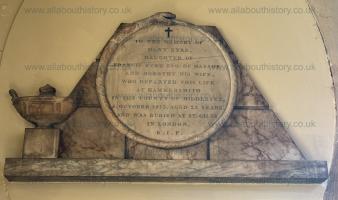
St Giles' Church, Great Longstone [Map]. To the memory of Mary Eyre, Daughter of Francis Eyre, Esq., of Hassop And Dorothy his wife, Who departed this life at Hammersmith, In the County of Middlesex, 5 October 1813, aged 23 years, and was buried at St. Giles in London. R.I.P.
On 5th October 1826 Enrique Fitz James Stuart was born to Carlos Miguel Fitz James Stuart 12th Duke Veragua 7th Duke Berwick 14th Duke Alba [aged 32] and Rosalía Ventimiglia Duchess Veragua Duchess Berwick Duchess Alba [aged 28].
On 5th October 1828 Frederick Montagu was born to George Montagu 6th Duke Manchester [aged 29] and Millicent Sparrow Duchess Manchester [aged 30] at Melchbourne, Bedfordshire.
On 5th October 1847 Henry Howard [aged 78] died.
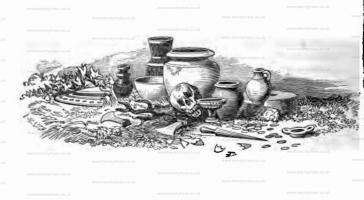
Thomas Bateman 1846. Upon reopening the remains of a barrow [Garratts Piece Barrow [Map]] upon Middleton Moor, explored by Dr. Pegge in 1788, on the 5th of October, 1847, a few small articles were recovered which indicate that the tumulus existed in times long anterior to the deposit of the very remarkable Saxon antiquities therein discovered and described in the earlier part of this section and which farther tend to strengthen the idea that in this part of the country there exist no barrows purely of Saxon origin. The articles with, the exception only of some fragments of light-coloured kiln-baked pottery, are of Celtic manufacture and usage, consisting of pieces of stags' horns, instruments of flint, amongst which was one of elongated shape very neatly chipped; and, lastly, remains of bone instruments, one of the latter presenting a very neat example of the lance-head of that material, being nicely worked into form out of the leg-bone of some small animal. Similar points are seen to some of the arrows brought from New Zealand.
Wiltshire Archaeological Magazine 1866 V10 Pages 209-216. Excavations at Avebury. Under the Direction of the Secretaries of the Wiltshire Archaeological and Natural History Society, September 29th,— October 5th, 1865.
Note. In preparing the following account, I have had the advantage of comparing the notes which Mr. King and Mr. Cunnington also took of our daily work as it proceeded, and from the three several accounts I have compiled this paper. Alfred Charles Smith.
On 5th October 1878 Francis Grant [aged 75] died.
On 5th October 1884 Glyn Philpot was born.
On 1st February 1908 King Carlos I of Portugal and his heir Prince Luís Filipe were assassinated by two members of a revolutionary society called the Carbonária. Prince Luís Filipe's younger brother succeeded as King Portugal; he was wounded in the attack. He reigned for two and a half years being deposed on 5th October 1910.
On 5th October 1908 Marmaduke Constable-Maxwell 11th Lord Herries [aged 71] died. His daughter Gwendolen [aged 31] succeeded 12th Lord Herries of Terregles.
This is a translation of the 'Memoires of Jacques du Clercq', published in 1823 in two volumes, edited by Frederic, Baron de Reissenberg. In his introduction Reissenberg writes: 'Jacques du Clercq tells us that he was born in 1424, and that he was a licentiate in law and a counsellor to Philip the Good, Duke of Burgundy, in the castellany of Douai, Lille, and Orchies. It appears that he established his residence at Arras. In 1446, he married the daughter of Baldwin de la Lacherie, a gentleman who lived in Lille. We read in the fifth book of his Memoirs that his father, also named Jacques du Clercq, had married a lady of the Le Camelin family, from Compiègne. His ancestors, always attached to the counts of Flanders, had constantly served them, whether in their councils or in their armies.' The Memoires cover a period of nineteen years beginning in in 1448, ending in in 1467. It appears that the author had intended to extend the Memoirs beyond that date; no doubt illness or death prevented him from carrying out this plan. As Reissenberg writes the 'merit of this work lies in the simplicity of its narrative, in its tone of good faith, and in a certain air of frankness which naturally wins the reader’s confidence.' Du Clercq ranges from events of national and international importance, including events of the Wars of the Roses in England, to simple, everyday local events such as marriages, robberies, murders, trials and deaths, including that of his own father in Book 5; one of his last entries.
Available at Amazon in eBook and Paperback format.
After 5th October 1916. St Bartholemew's Church, Sunderland Bridge [Map]. Grave of 13501 Private Herbert Bell of the Durham Light Infantry died 05 October 1916 aged twenty-seven. Son of the William and Margaret Bell. Born at Croxdale. Died of wounds at the East Leeds War Hospital, Beckett Park, Headingley.


On 5th October 1930 the airship R101 crashed in France during its maiden overseas voyage, killing 48 of the 54 people on board. Christopher Thomson 1st Baron Thomson [aged 55]died. Baron Thomson of Cardington in Bedfordshire extinct.
On 5th October 1936 the Jarrow March left Jarrow Town Hall, County Durham cheered on by most of the town and bearing banners announcing themselves as the "Jarrow Crusade". The marchers arrived at Marble Arch [Map], London on the 31st October 1936.
On 5th October 1377 King Louis of Naples was born to Louis Valois Anjou I Duke Anjou [aged 38] and Marie Chatillon Duchess Anjou [aged 32] at Toulouse. He a great x 4 grandson of King Henry III of England. Coefficient of inbreeding 2.61%. He married 1400 his first cousin once removed Yolande Barcelona Queen Consort Naples, daughter of King John I of Aragon and Yolande of Bar Queen Consort Aragon, and had issue.
On 5th October 1625 Edward Palatinate Simmern was born to Frederick Palatinate Simmern V Elector Palatine Rhine [aged 29] and Princess Elizabeth Stewart Queen Bohemia [aged 29] at The Hague. He a grandson of King James I of England and Ireland and VI of Scotland. He married 24th April 1645 his fourth cousin twice removed Anne Marie Gonzaga, daughter of Charles Gonzaga I Duke Mantua.
On 5th October 1658 Mary of Modena Queen Consort England Scotland and Ireland was born to Alfonso Este IV Duke Modena [aged 23] and Laura Martinozzi Duchess Modena [aged 19]. She married 20th September 1673 King James II of England Scotland and Ireland, son of King Charles I of England, Scotland and Ireland and Henrietta Maria Bourbon Queen Consort England, and had issue.
On 5th October 1694 Henry Bacon 7th Baronet was born to Edmund Bacon 4th Baronet [aged 22] and Philippa Bacon Lady Bacon.
On 5th October 1710 Francis Scott 2nd Earl Deloraine was born to Henry Scott 1st Earl Deloraine [aged 34] and Anne Duncombe Countess Deloraine. He a great grandson of King Charles II of England Scotland and Ireland. He married (1) 29th October 1732 Mary Lister Countess of Deloraine (2) 6th July 1737 Mary Scrope Countess of Deloraine.

On 5th October 1758 Seymour Dorothy Fleming was born to John Fleming 1st Baronet [aged 28]. She married 20th September 1775 Richard Worsley 7th Baronet, son of Thomas Worsley 6th Baronet.
On 5th October 1764 Robert Trefusis 17th Baron Clinton was born to Robert Cotton Trefusis and Anne St John [aged 12].
On 5th October 1765 Joseph Blake 1st Baron Wallscourt was born to Joseph Blake [aged 26] and Honoria Daly [aged 16]. He married 18th August 1784 Louisa Bermingham Baroness Wallscourt and had issue.
On 5th October 1767 Charles John Anderson 8th Baronet was born to Reverend William Anderson 6th Baronet [aged 45].
On 5th October 1774 Charlotte Legge Baroness Feversham Duncombe Park was born to William Legge 2nd Earl Dartmouth [aged 43] and Frances Catherine Gounter Nicoll Countess Dartmouth [aged 41]. She married 1795 Charles Duncombe 1st Baron Feversham and had issue.


On 5th October 1782 Corisande Armandine Sophie Léonie Hélène Gramont Countess Tankerville was born to Antoine 8th Duke Gramont [aged 27] and Aglae de Polignac "Guichette" Duchess Gramont [aged 14]. She married 28th July 1806 Charles Augustus Bennet 5th Earl Tankerville, son of Charles Bennet 4th Earl Tankerville and Emma Colebrooke Countess Tankerville, and had issue.
On 5th October 1783 Maria Rebecca Bouverie Baroness Heytesbury was born to William Henry Bouverie [aged 30] and Bridget Douglas [aged 25]. She married 3rd October 1808 William à Court 1st Baron Heytesbury, son of William Pierce Ashe à Court 1st Baronet and Laetitia Wyndham Lady à Court, and had issue.
Jean de Waurin's Chronicle of England Volume 6 Books 3-6: The Wars of the Roses
Jean de Waurin was a French Chronicler, from the Artois region, who was born around 1400, and died around 1474. Waurin’s Chronicle of England, Volume 6, covering the period 1450 to 1471, from which we have selected and translated Chapters relating to the Wars of the Roses, provides a vivid, original, contemporary description of key events some of which he witnessed first-hand, some of which he was told by the key people involved with whom Waurin had a personal relationship.
Available at Amazon in eBook and Paperback format.
On 5th October 1795 Wilfrid Wybergh aka Lawson 1st Baronet was born to Thomas Wybergh and Isabella Hartley. He married 1821 Caroline Graham Lady Lawson, daughter of James Graham 1st Baronet and Catherine Stewart Lady Graham, and had issue.
On 5th October 1798 Jane Cornwallis Baroness Braybrook was born to Charles Cornwallis 2nd Marquess Cornwallis [aged 23] and Louisa Gordon Marchioness Cornwallis [aged 21]. She married 13th May 1819 Richard Griffin 3rd Baron Braybrook, son of Richard Griffin 2nd Baron Braybrook and Catherine Granville, and had issue.
On 5th October 1806 John Bell William Mansel 11th Baronet was born to William Mansel 10th Baronet [aged 40] and Elizabeth Bell Lady Mansel [aged 36]. He married 31st July 1832 Mary Georgiana Dymoke and had issue.
On 5th October 1808 Byron Charles Ferdinand Plantagenet Cary was born to Charles John Cary 9th Viscount Falkland [aged 39] and Christiana Anton Viscountess Falkland.
On 5th October 1826 Enrique Fitz James Stuart was born to Carlos Miguel Fitz James Stuart 12th Duke Veragua 7th Duke Berwick 14th Duke Alba [aged 32] and Rosalía Ventimiglia Duchess Veragua Duchess Berwick Duchess Alba [aged 28].
On 5th October 1827 William Ridley Charles Cooke 9th Baronet was born to William Bryan Cooke 8th Baronet [aged 45] and Isabella Cecilia Middleton Lady Cooke. Coefficient of inbreeding 3.12%.
On 5th October 1828 Frederick Montagu was born to George Montagu 6th Duke Manchester [aged 29] and Millicent Sparrow Duchess Manchester [aged 30] at Melchbourne, Bedfordshire.
On 5th October 1836 William Henry Doyle aka North 11th Baron North was born to Colonel John Sydney North [aged 32] and Susan North 10th Baroness North [aged 39]. He married 12th January 1858 Frederica Cockerell Baroness North and had issue.
On 5th October 1840 St Andrew St John 16th Baron St John was born to Andrew St John 15th Baron St John [aged 28].
On 5th October 1844 James Butler 3rd Marquess Ormonde was born to John Butler 2nd Marquess Ormonde [aged 36] and Frances Paget Marchioness Ormonde [aged 27]. He married 2nd February 1876 Elizabeth Harriet Grosvenor Marchioness Ormonde, daughter of Hugh Lupus Grosvenor 1st Duke Westminster and Constance Leveson-Gower Duchess Westminster, and had issue.
On 5th October 1868 Alianore Chandos-Pole Lady Lethbridge was born to Edward Sacheverell Chandos-Pole [aged 42] and Anna Caroline Stanhope [aged 36]. She married (1) 22nd October 1892 Wroth Periam Christopher Lethbridge 5th Baronet, son of Wroth Acland Lethbridge 4th Baronet (2) 19th August 1913 her first cousin Walter Yarde-Buller.
On 5th October 1870 Maud Buckle Baroness Brownlow was born to Captain Samuel Buckle [aged 24] and Frances Elizabeth Robinson Greig [aged 21]. She married before 27th April 1899 Adelbert Salusbury Cockayne-Cust 5th Baron Brownlow and had issue.
On 5th October 1879 Una Mary Dawson 25th Baroness de Ros of Helmsley was born to Anthony Lucius Dawson 3rd Earl of Dartrey [aged 24] and Mary Fitzgerald De Ros 24th Baroness Ros of Helmsley [aged 25]. She married 30th July 1904 Arthur John Ross and had issue.
On 5th October 1884 Glyn Philpot was born.
Henrici Quinti, Angliæ Regis, Gesta, is a first-hand account of the Agincourt Campaign, and subsequent events to his death in 1422. The author of the first part was a Chaplain in King Henry's retinue who was present from King Henry's departure at Southampton in 1415, at the siege of Harfleur, the battle of Agincourt, and the celebrations on King Henry's return to London. The second part, by another writer, relates the events that took place including the negotiations at Troye, Henry's marriage and his death in 1422.
Available at Amazon in eBook and Paperback format.
On 5th October 1885 Dorothy Gough-Calthorpe Countess of Malmesbury was born to Augustus Gough-Calthorpe 6th Baron Calthorpe [aged 55] and Maud Augusta Louisa Duncombe [aged 35]. She married 27th April 1905 James Edward Harris 5th Earl Malmesbury, son of Edward Harris 4th Earl Malmesbury and Sylvia Georgina Stewart Countess of Malmesbury, and had issue.
On 5th October 1906 Charles Cooper 5th Baronet was born to William Cooper 4th Baronet [aged 28] and Lettice Margaret Long [aged 20].
On 5th October 1907 Charles Dudley Ross was born to Arthur John Ross and Una Mary Dawson 25th Baroness de Ros of Helmsley [aged 28]. He married 31st August 1940 Elizabeth Jocelyn, daughter of Robert Jocelyn 8th Earl Roden and Elinor Jessie Parr Countess Roden.

On 5th October 1908 William Edward Harcourt 2nd Viscount Harcourt was born to Lewis Vernon-Harcourt 1st Viscount Harcourt [aged 45] and Mary Burns Viscountess Harcourt [aged 34]. He married (1) 1st June 1931 Maud Elizabeth Grosvenor Viscountess Harcourt, daughter of Francis Egerton Grosvenor 4th Baron Ebury.
On 5th October 1911 Richard Harry David Williams-Bulkeley 13th Baronet was born to Richard Gerard Wellesley Williams-Bulkeley [aged 30] and Victoria Alexandrina Stella Legge [aged 26].
On 5th October 1915 Major Anthony John Percy Ashley-Cooper was born to Anthony Ashley-Cooper 9th Earl of Shaftesbury [aged 46] and Constance Grosvenor Countess of Shaftesbury [aged 40].
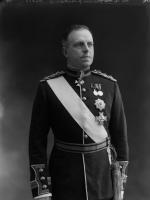
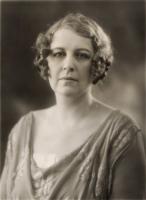
On 5th October 1916 Francis Hugh Peter Courtenay Wood was born to Edward Frederick Lindley Wood 1st Earl Halifax [aged 35] and Dorothy Evelyn Augusta Onslow Countess Halifax [aged 31].
On 5th October 1920 Richard Frederick Wood was born to Edward Frederick Lindley Wood 1st Earl Halifax [aged 39] and Dorothy Evelyn Augusta Onslow Countess Halifax [aged 35].
On 5th October 1938 Christopher Glyn 7th Baron Wolverton was born to John Patrick Riversdale Glyn 6th Baron Wolverton [aged 25].
On 5th October 1939 George William Coventry 13th Earl Coventry was born to Lt Cdr Cecil Dick Bluett Coventry [aged 34].
On 5th October 1949 Christopher George Ridley Nugent 6th Baronet was born to Robin George Colborne Nugent 5th Baronet [aged 24].
On 5th October 1950 Josslyn Henry Robert Gore-Booth 9th Baronet was born to Angus Josslyn Gore-Booth 8th Baronet [aged 30] and Rosemary Myra Vane.
On 5th October 1965 John Roper-Curzon 21st Baron Teynham was born to John Roper-Curzon 20th Baron Teynham [aged 36].
On 5th October 851 Louis II King Italy Holy Roman Emperor [aged 26] and Engelberga Spoleto Holy Roman Empress were married. She by marriage Queen Consort Italy. He the son of Lothair Holy Roman Emperor [aged 56] and Ermengarde Tours Queen Consort Bavaria Queen Consort Middle Francia.
Henrici Quinti, Angliæ Regis, Gesta, is a first-hand account of the Agincourt Campaign, and subsequent events to his death in 1422. The author of the first part was a Chaplain in King Henry's retinue who was present from King Henry's departure at Southampton in 1415, at the siege of Harfleur, the battle of Agincourt, and the celebrations on King Henry's return to London. The second part, by another writer, relates the events that took place including the negotiations at Troye, Henry's marriage and his death in 1422.
Available at Amazon in eBook and Paperback format.
On 5th October 1376 Robert de Vere 1st Duke Ireland [aged 14] and Philippa Guines Duchess Ireland [aged 9] were married. She by marriage Countess of Oxford. She the daughter of Enguerrand de Coucy 1st Earl Bedford 1st Count Soissons [aged 36] and Isabella Countess Bedford and Soissons [aged 44]. He the son of Thomas de Vere 8th Earl of Oxford and Maud Ufford Countess of Oxford [aged 31]. They were half third cousin once removed. He a great x 3 grandson of King Henry III of England. She a granddaughter of King Edward III of England.
On 5th October 1676 James Drummond 1st Duke Perth [aged 28] and Lilias Drummond Countess Tullibardine and Perth were married. He the son of James Drummond 3rd Earl Perth and Anne Gordon. They were third cousins.
On 5th October 1704 Lucius Carey 6th Viscount Falkland [aged 17] and Dorothy Molyneux Viscountess Falkland were married. She by marriage Viscountess Falkland.

On 5th October 1749 Charles Pratt 1st Earl Camden [aged 35] and Elizabeth Jeffreys [aged 24] were married.
On 5th October 1786 Samuel Fludyer 2nd Baronet [aged 26] and Maria Weston [aged 20] were married.
On 5th October 1805 Henry Maturin Farrington 3rd Baronet [aged 27] and Laura Maria Bromley were married.
On 5th October 1809 John Morris 2nd Baronet [aged 34] and Lucy Juliana Byng Lady Morris [aged 19] were married.
On 5th October 1811 George Byng 6th Viscount Torrington [aged 43] and Francis Harriet Barlow Viscountess Torrington [aged 25] were married.

On 5th October 1871 Charles Henry Wilson 1st Baron Nunburnholme [aged 38] and Florence Jane Helen Wellesley Baroness Nunburnholme [aged 18] were married.
On 5th October 1889 Hugh Gough 3rd Viscount Gough [aged 40] and Georgiana Pakenham Viscountess Gough [aged 26] were married. She the daughter of William Pakenham 4th Earl of Longford and Selina Rice Trevor Countess Longford [aged 53].
On 5th October 1056 Henry "Black Pious" Salian III Holy Roman Emperor [aged 38] died.
The History of William Marshal was commissioned by his son shortly after William’s death in 1219 to celebrate the Marshal’s remarkable life; it is an authentic, contemporary voice. The manuscript was discovered in 1861 by French historian Paul Meyer. Meyer published the manuscript in its original Anglo-French in 1891 in two books. This book is a line by line translation of the first of Meyer’s books; lines 1-10152. Book 1 of the History begins in 1139 and ends in 1194. It describes the events of the Anarchy, the role of William’s father John, John’s marriages, William’s childhood, his role as a hostage at the siege of Newbury, his injury and imprisonment in Poitou where he met Eleanor of Aquitaine and his life as a knight errant. It continues with the accusation against him of an improper relationship with Margaret, wife of Henry the Young King, his exile, and return, the death of Henry the Young King, the rebellion of Richard, the future King Richard I, war with France, the death of King Henry II, and the capture of King Richard, and the rebellion of John, the future King John. It ends with the release of King Richard and the death of John Marshal.
Available at Amazon in eBook and Paperback format.
On 5th October 1111 Robert II Count Flanders [aged 46] was killed. His son Baldwin [aged 18] succeeded VII Count Flanders.
On 5th October 1214 Alfonso VIII King Castile [aged 58] died. He was buried at Abbey of Santa Maria la Real de Huelgas [Map]. His son Henry [aged 10] succeeded I King Castile.
On 5th October 1285 King Philip III of France [aged 40] died of dysentery; see Annals of Dunstable. His son Philip [aged 17] succeeded IV King France: Capet. Joan Blois I Queen Navarre [aged 12] by marriage Queen Consort of France.
On 5th October 1305 Isabel Valence Baroness Bergavenny Baroness Hastings died.
On 5th October 1361 Reginald Cobham 1st Baron Cobham [aged 66] died of plague at Lingfield, Surrey. He was buried at Lingfield, Surrey. His son Reginald [aged 13] succeeded 2nd Baron Cobham.
On 5th October 1382 Isabella Countess Bedford and Soissons [aged 50] died.
On 5th October 1512 Sophia Jagiellon Margravine of Brandenburg-Ansbach [aged 48] died.
On 5th October 1528 Bishop Richard Foxe [aged 80] died at Wolvesey Castle [Map]. He was buried at Winchester Cathedral [Map] where he has a Chantry Chapel.
On 5th October 1644 George Hay 2nd Earl Kinnoull [aged 48] died. His son George [aged 22] succeeded 3rd Earl Kinnoull.
On 5th October 1659 Edward Seymour 2nd Baronet [aged 79] died. His son Edward [aged 49] succeeded 3rd Baronet Seymour of Berry Pomeroy.
On 5th October 1711 Paulet St John 3rd Earl Bolingbroke [aged 76] died unmarried. Earl Bolingbroke extinct. His second cousin twice removed Paulet succeeded 8th Baron St John of Bletso.
On 5th October 1732 George Cooke 3rd Baronet [aged 70] died. His son Bryan [aged 47] succeeded 4th Baronet Cooke of Wheatley Hall in Yorkshire.
William of Worcester's Chronicle of England
William of Worcester, born around 1415, and died around 1482 was secretary to John Fastolf, the renowned soldier of the Hundred Years War, during which time he collected documents, letters, and wrote a record of events. Following their return to England in 1440 William was witness to major events. Twice in his chronicle he uses the first person: 1. when writing about the murder of Thomas, 7th Baron Scales, in 1460, he writes '… and I saw him lying naked in the cemetery near the porch of the church of St. Mary Overie in Southwark …' and 2. describing King Edward IV's entry into London in 1461 he writes '… proclaimed that all the people themselves were to recognize and acknowledge Edward as king. I was present and heard this, and immediately went down with them into the city'. William’s Chronicle is rich in detail. It is the source of much information about the Wars of the Roses, including the term 'Diabolical Marriage' to describe the marriage of Queen Elizabeth Woodville’s brother John’s marriage to Katherine, Dowager Duchess of Norfolk, he aged twenty, she sixty-five or more, and the story about a paper crown being placed in mockery on the severed head of Richard, 3rd Duke of York.
Available at Amazon in eBook and Paperback format.
On 5th October 1754 Arthur Cole 1st Baron Ranelagh [aged 85] died without issue. Baron Ranelagh of Ranelagh in Wicklow and Baronet Cole of Newland extinct.
On 5th October 1760 Robert Brown 1st Baronet died. His nephew James [aged 39] succeeded 2nd Baronet Brown of the City and Liberty of Westminster.
On 5th October 1799 William Henry Ricketts [aged 62] died. Captain William Henry Ricketts aka Jervis [aged 34] and Edward Jervis Ricketts aka Jervis 2nd Viscount St Vincent [aged 32] jointly inherited the estate of Mount Ricketts in Jamaica with a deferral of twenty-one years, together with the estate of Canaan on that island.
On 5th October 1805 Charles Cornwallis 1st Marquess Cornwallis [aged 66] died at Gauspur, Ghazipur. His son Charles [aged 30] succeeded 2nd Marquess Cornwallis, 3rd Earl Cornwallis, 7th Baron Cornwallis. Louisa Gordon Marchioness Cornwallis [aged 28] by marriage Marchioness Cornwallis.


On 5th October 1811 James Ogilvy 7th Earl Findlater 4th Earl Seafield [aged 61] died without issue. Earl Findlater extinct. His first cousin James succeeded 5th Earl Seafield since he was the son of Margaret Ogilvy daughter of James Ogilvy 5th Earl Findlater 2nd Earl Seafield.
On 5th October 1811 Adolf Ulrik Wertmüller [aged 60] died.
On 5th October 1819 Barbara Webb Countess Shaftesbury [aged 57] died.
On 5th October 1839 Thomas Tyrwhitt-Jones 2nd Baronet [aged 46] died. His son Henry [aged 15] succeeded 3rd Baronet Tyrwhitt of Stanley Hall in Shropshire.
On 5th October 1844 George Chichester 2nd Marquess Donegal [aged 75] died at Ormeau, County Donegal. He was buried at St Nicholas' Church, Carrickfergus. He was buried at St Nicholas' Church, Carrickfergus, County Antrim. His son George [aged 47] succeeded 3rd Marquess Donegal, 3rd Baron Fisherwick of Fisherwick in Staffordshire. Harriet Anne Butler Marchioness Donegal [aged 45] by marriage Marchioness Donegal.
On 5th October 1845 William Weller Pepys 2nd Baronet [aged 67] died unmarried. His brother Charles [aged 64] succeeded 3rd Baronet Pepys of Wimpole Street.
On 5th October 1847 Henry Howard [aged 78] died.

On 5th October 1852 John Somers-Cocks 2nd Earl Somers [aged 64] died. His son Charles [aged 33] succeeded 3rd Earl Somers 3rd Viscount Eastnor of Eastor Castle in Herefordshire, 4th Baron Somers. Virginia Somers-Cocks Countess Somers [aged 25] by marriage Countess Somers.
On 5th October 1878 Francis Grant [aged 75] died.
Adam Murimuth's Continuation and Robert of Avesbury’s 'The Wonderful Deeds of King Edward III'
This volume brings together two of the most important contemporary chronicles for the reign of Edward III and the opening phases of the Hundred Years’ War. Written in Latin by English clerical observers, these texts provide a vivid and authoritative window into the political, diplomatic, and military history of fourteenth-century England and its continental ambitions. Adam Murimuth Continuatio's Chronicarum continues an earlier chronicle into the mid-fourteenth century, offering concise but valuable notices on royal policy, foreign relations, and ecclesiastical affairs. Its annalistic structure makes it especially useful for establishing chronology and tracing the development of events year by year. Complementing it, Robert of Avesbury’s De gestis mirabilibus regis Edwardi tertii is a rich documentary chronicle preserving letters, treaties, and official records alongside narrative passages. It is an indispensable source for understanding Edward III’s claim to the French crown, the conduct of war, and the mechanisms of medieval diplomacy. Together, these works offer scholars, students, and enthusiasts a reliable and unembellished account of a transformative period in English and European history. Essential for anyone interested in medieval chronicles, the Hundred Years’ War, or the reign of Edward III.
Available at Amazon in eBook and Paperback format.
On 5th October 1908 Marmaduke Constable-Maxwell 11th Lord Herries [aged 71] died. His daughter Gwendolen [aged 31] succeeded 12th Lord Herries of Terregles.
On 5th October 1910 Cecilia Catherine Gordon-Lennox Countess Lucan [aged 72] died.
On 5th October 1930 the airship R101 crashed in France during its maiden overseas voyage, killing 48 of the 54 people on board. Christopher Thomson 1st Baron Thomson [aged 55]died. Baron Thomson of Cardington in Bedfordshire extinct.
On 5th October 1933 Harold Pearson 2nd Viscount Cowdray [aged 51] died. His son Weetman [aged 23] succeeded 3rd Viscount Cowdray of Cowdray in Sussex.
On 5th October 1944 Arthur Southwell 5th Viscount Southwell [aged 71] died. His son Robert [aged 46] succeeded 6th Viscount Southwell of Castle Matress in Limerick, 8th Baron Southwell of Castle Mattress in Limerick, 9th Baronet Southwell of Castle Matress.
On 5th October 1975 Charles Kay-Shuttleworth 4th Baron Shuttleworth [aged 58] died. His son Charles [aged 27] succeeded 5th Baron Shuttleworth of Gawthorpe in Lancashire, 6th Baronet Kay-Shuttleworth of Gawthorpe Hall in Lancashire.
On 5th October 1989 Lawrence Dundas 3rd Marquess of Zetland [aged 80] died. His son Mark [aged 51] succeeded 4th Marquess Zetland, 4th Earl of Ronaldshay in Orkney, 6th Earl Zetland aka Shetland, 7th Baron Dundas, 8th Baronet Dundas of Kerse
On 5th October 2004 Francis à Court-Holmes 6th Baron Heytesbury [aged 72] died. His son James [aged 37] succeeded 7th Baron Heytesbury of Heytesbury in Wiltshire, 8th Baronet à Court.