

06 Jan is in January.
1066 Death of King Edward the Confessor
1066 Coronation of King Harold
1121 Marriage of King Henry I and Adeliza of Louvain
1387 Peter IV King Aragon Dies John I King Aragon Succeeds
1540 Marriage of Henry VIII and Anne of Cleves
1616 The Golden Age Restored Masque
Anglo-Saxon Chronicle. He [King Edward [aged 63]] died on the eve of twelfth-day; and he was buried on twelfth-day in the same minster; as it is hereafter said. Here Edward king86, of Angles lord, sent his stedfast soul to Christ. In the kingdom of God a holy spirit! He in the world here abode awhile, in the kingly throng of council sage. Four and twenty winters wielding the sceptre freely, wealth he dispensed. In the tide of health, the youthful monarch, offspring of Ethelred! ruled well his subjects; the Welsh and the Scots, and the Britons also, Angles and Saxons relations of old. So apprehend the first in rank, that to Edward all the noble king were firmly held high-seated men. Blithe-minded aye was the harmless king; though he long ere, of land bereft, abode in exile wide on the earth; when Knute o'ercame the kin of Ethelred, and the Danes wielded the dear kingdom of Engle-land. Eight and twenty winters' rounds they wealth dispensed. Then came forth free in his chambers, in royal array, good, pure, and mild, Edward the noble; by his country defended- by land and people. Until suddenly came the bitter Death and this king so dear snatched from the earth. Angels carried his soul sincere into the light of heaven. But the prudent king had settled the realm on high-born men on Harold [aged 44] himself, the noble earl; who in every season faithfully heard and obeyed his lord, in word and deed; nor gave to any what might be wanted by the nation's king.
Note 86. This threnodia on the death of Edward the Confessor will be found to correspond, both in metre and expression, with the poetical paraphrase of Genesis ascribed to Caedmon.
On 6th January 1066 King Harold II of England [aged 44] was crowned II King of England having been selected by the Witan at Westminster Abbey [Map]. Harold quick to be crowned the day after the death of Edward the Confessor.
Anglo-Saxon Chronicle. 6th January 1066. This year also was Earl Harold [aged 44] hallowed to king; but he enjoyed little tranquillity therein the while that he wielded the kingdom.
Chronicon ex Chronicis by Florence and John of Worcester. Henry I marries Alice of Louvaine.
Henry, king of England [aged 53], having been a widower for some time, that he might not in future lead a dissolute life, by the advice of Ralph, archbishop of Canterbury, and the barons of his realm, who assembled at London by his command on the feast of our Lord's Epiphany [6th January 1121], resolved to marry Alice [aged 18], daughter of Godfrey, duke of Lorraine [aged 61]1, a young maiden of great beauty and modesty. Envoys being sent over, they brought the future queen with signal honours from parts beyond the sea to Henry's court.
Note 1. Ducis Lotharingoe (or Lorraine), the reading in the text of all the printed editions of Florence. It is a mistake into which several of the English chroniclers have fallen, but Henry of Huntingdon and Roger of Wendover, as well as Ordericus Vitalis and William of Jumièges, describe Adelaide, or Alice, the second wife of Henry I., as daughter of Godfrey, duke of Lorraine.
On 6th January 1156 Matilda Plantagenet Duchess Saxony was born to King Henry "Curtmantle" II of England [aged 22] and Eleanor of Aquitaine Queen Consort Franks and England [aged 34] at Windsor Castle [Map] (probably) and named after her paternal grandmother Empress Matilda [aged 53]. She married 1st February 1168 her half third cousin twice removed Henry "Lion" Welf XII Duke Saxony III Duke Bavaria, son of Henry "Proud" Welf X Duke Bavaria and Gertrude Süpplingenburg Duchess Bavaria, and had issue.
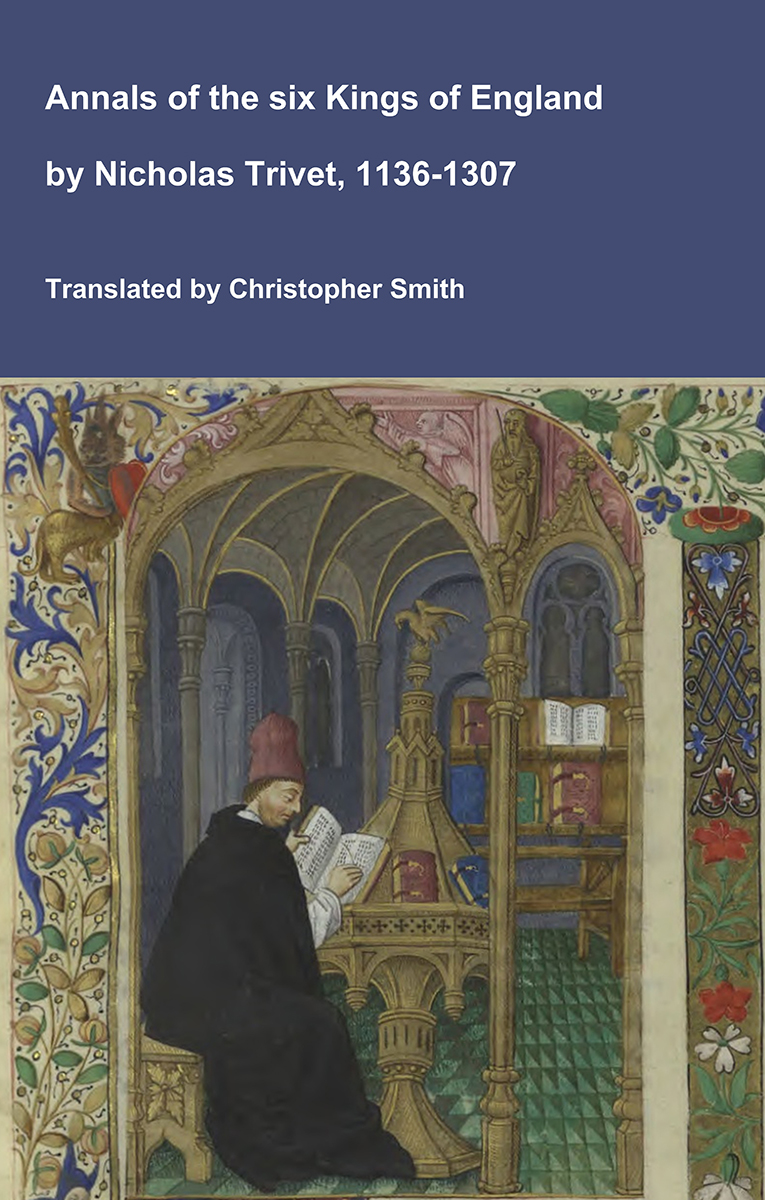 Annals of Six Kings of England by Nicholas Trivet. 1169. On the feast of the Epiphany of the Lord [6th January 1169] the kings of the Franks and the English were reconciled. Henry, the son of Henry, king of England, did homage to the king of the Franks for the county of Anjou; and the king granted that he should be seneschal of France, an office known to belong to the county of Anjou. This seneschalship, or, as it was formerly called, the major-domo of the royal household, had been given by Robert, king of the Franks, to Geoffrey Greymantle, count of Anjou, because of the assistance he had given him against Emperor Otto. He also granted him whatever he possessed in the bishopric of Anjou. Later, when Geoffrey, count of the Perche, and David, count of Maine, rebelled against the same king, the king, assisted by the count of Anjou, besieged and captured the castle of Mortagne, which belonged to the count of the Perche. And because David of Maine, when summoned by the king of the Franks, refused to come, the king granted to the aforesaid count of Anjou his homage, the city itself, and whatever he possessed in the bishopric of Le Mans. Henry, the son of the king of England, also did homage to Philip, the son of Louis, king of the Franks; and Geoffrey, son of the king of England, by his father's command did homage to his brother Henry for the duchy of Brittany.
1169. IN Epiphania Domini concordati sunt FrancoPeace conrum Anglorumque reges. Henricus, filius Hen-between rici Angliæ regis, regi Francorum fecit homagium England and pro Andegaviæ comitatu; et concessit ei rex ut esset seneschallus Franciæ, quod ad Andegavensem comitatum noscitur pertinere. Hanc seneschalliam, vel, ut antiquitus dicebatur, majoratum domus regiæ, Robertus, rex Franciæ, dedit Galfrido Grisagonella, comiti Andegavensi, propter adjutorium, quod ei impendit contra imperatorem Othonem: dedit etiam quicquid habebat in episcopatu Andegavensi. Postea vero, cum Galfridus Perticensis et David Cenomanensis comites contra eundem regem rebellarent, eodem comite Andegavense adjuvante, obsedit rex castrum Meritoniæ, quod erat comitis Perticensis, et cepit: et quia David Cenomanensis, evocatus ad regem Franciæ, venire contempsit, dedit rex præfato comiti Andegavensi homagium illius, et ipsam civitatem, et quicquid habebat in Cenomanensi episcopatu. Henricus etiam filius regis Anglorum fecit homagium Philippo, filio Lodovici regis Francorum; et Galfridus filius regis Angliæ, jubente patre, fecit homagium Henrico, fratri suo, de ducatu Britanniæ.
Annales Paulini. [1st January 1322] In the same year, on the Feast of the Circumcision of the Lord [1st January], in the church of Saint Paul in London, it was publicly declared by the Lord Archbishop of Canterbury that Lord Hugh Despenser the son had not been lawfully exiled. And on the Feast of the Epiphany [6th January] immediately following, the lord king had it proclaimed throughout the city of London that peace was restored to the said Lord Hugh Despenser. On the morrow of the Epiphany [7th January], one hundred foot soldiers from the county of Kent, strong, able-bodied, and well-armed, were marching to the king, who was then at Shrewsbury. But when they came near Chipping Norton, they were struck with fear and dread, and fled quickly all the way back to Oxford, and from there returned individually to their own homes. In the same year, on the feast of Saint Hilary (13th of January), Lord Rigaud, Bishop of Winchester, set out toward the Roman Curia on various matters concerning the kingdom of England. Also in that same year, shortly after Christmas, the lord king departed from Chichester toward Wales, and arriving at Shrewsbury before the start of Lent, the Lords Roger de Mortimer, both uncle and nephew, at the urging and assurance of peace given by the Earls of Richmond and Arundel and other good men, surrendered themselves to the peace of the said lord king. But afterward they were captured and imprisoned, and both were led to London and committed to the Tower as prisoners. Later, the lord king, departing from Shrewsbury and advancing northward with an army of 3,000 armed men, lingered for some time near the River Humber.
Eodem anno, die Circumecisionis Domini, in ecclesia Sancti Pauli Londoniis, pronunciatum fuit per dominum archiepiscopum Cantuariensem, quod dominus Hugo Despenser filius non rite fuit exulatus; et in festo Epiphaniæ proximo sequente, dominus rex fecit proclamare pacem dicti domini Hugonis Despenser per medium civitatis Londoniarum. In crastino Epiphaniæ centum homines pedites de comitatu Kantiæ fortes et wvalidi et bene armati, euntes versus regem, qui fuit apud Salopiam, sicut venerunt versus Chepinge Northone et deprope, perterriti et pavidi usque ad villam Oxoniæ celeriter fugerunt, et sic redierunt in patriam suam particulariter. Eodem anno, die Sancti Hillarii, dominus Rigaldus episcopus Wintoniensis arripuit iter versus curiam Romanam pro diversis negotiis regnum Angliæ tangentibus. Eodem anno, cito post Natale Domini, dominus rex amovit se de Cicestria versus Walliam, et veniens Salopiam ante tempus Quadragesiæ, ubi domini Rogerus de Mortuomari, avunculus et nepos, ad predictionem et promotionem pacis per comites de Richemund et Arundel et alios bonam formam pacis regis promittentium, ad pacem dicti domini regis se reddiderunt; qui postea capti et incarcerati, deinde ambo ducti Londonias, in turrim carcere sunt mancipati. Et postea dominus rex, de Salopia movens versus Boream, cum exercitu IIIml virorum armatorum, prope Humber aliquantulum morabatur.
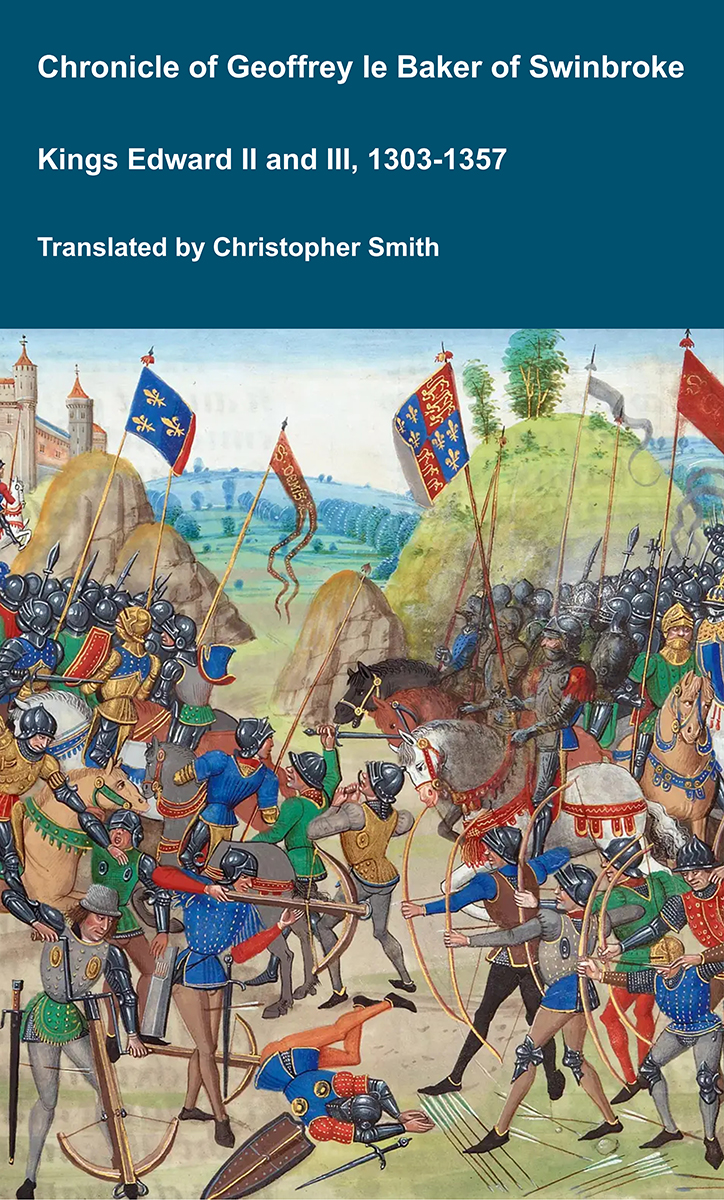 Chronicle of Geoffrey le Baker of Swinbroke. Shortly after Epiphany [6th January 1335], the tyrant of the French sent his envoys1 to the King of England, namely, the Bishop of Avranches and a certain baron, to negotiate peace on behalf of the Scots. These envoys remained in England until the Monday of mid-Lent. Then, at Nottingham, a truce was granted to last until the feast of Saint John [24th June] next following, so that in the meantime a parliament could be held concerning the matters of peace and the governance of the realms. In that parliament, held at York,2 it was resolved that the king should cross into Scotland with an army, beyond the Scottish Sea, which was shortly afterward carried out. But the Scots, unwilling to face a pitched battle, pretended to desire peace. Many came forward around the feast of Saint Michael [29th September], seeking peace, especially the Earl of Atholl, while others rejected it. Afterwards, the Earl of Moray3 was captured near Edinburgh and taken to England, where he was imprisoned. And Lord Richard Talbot was ransomed for 2,500 marks. The Earl of Atholl, wishing to prove his genuine conversion to the English cause, rode out against the Scots during the siege of a certain castle. But, riding with only a few horsemen, he fell into the hands of a much larger enemy force. Refusing to surrender and choosing to resist, he was killed along with 93 of his men shortly after the feast of Saint Michael. Meanwhile, the king remained continuously in the Scottish March, from which the envoys of the French king never departed. They remained, hoping for some peace or extended truce, not only useless but harmful to the English cause.
Cito post Epiphaniam tirannus Francorum misit regi Anglie suos nuncios, scilicet episcopum Abricensem et quemdam baronem, pro pace Scotorum; qui usque ad diem Lune medie Quadragesime in Anglia expectarunt. Et tunc apud Notingham concesse fuerunt treuge usque ad festum sancti Iohannis proximo tunc futurum, ut interim fieret parliamentum super causis tangentibus pacem et statum regnorum. In quo parliamento, apud Eboracum celebrato, extitit ordinatum quod rex cum exercitu Scociam ultra mare Scoticum transequitaret, quod cito postea fuit factum; set Scoti, campestre bellum nolentes expectare, finxerunt se velle pacem habere, ad quam circa festum sancti Michaelis multi venerunt, set precipue comes Dasceles, aliis pacem spernentibus. Unde postea comes de Morref apud Edeneborgh fuit captus et in Anglia carceri mancipatus, et dominus Ricardus Talbot pro duobus milibus et quingentis marcarum redemptus. Comes vero Dasceles volens ostendere quod ipse veraciter fuerat conversus, equitavit contra Scotos ad obsidionem unius castri, et cum paucis equitans incidit in hostes quam plures, quibus nolens se reddere set resistere, cum XCIIJ tironibus est occisus, post festum sancti Michaelis. Rex autem semper in illa marchia Scocie morabatur, a qua nuncii regis Francie nullatenus recesserunt, set aliquam pacem vel longam treugam, nedum inutilem set nocivam Anglicis, expectarunt.
Note 1. They were Jean Hautfrine, bishop of Avranches, and Pierre de Thierceleu. The king undertook to grant the truce by his letter to the ambassadors of the 4th April. Rymer's Fœdera 2.904.
Note 2. It sat from the 26th May to the 3rd June 1335.
Note 3. The earl of Moray was taken prisoner near the border when returning from escorting the count of Namur, who had been taken prisoner, to the English frontier. Gesta Edwardi III, 123.
A safe-conduct was granted to sir William Keith and others bringing Richard Talbot, prisoner in Scotland, to the English marches, 2nd April 1335. Rymer's Fœdera 2.904. Atholl was attacked and slain on his march to besiege the castle of Kildrummy, 29th November.
Chronicle of Geoffrey le Baker of Swinbroke. In the year of our Lord 1337, around the time of the Epiphany [6th January 1337], the king and the archbishop returned from Scotland for the burial of Lord John of Eltham,1 Earl of Cornwall and the king's brother, who had died of natural causes in the month of October at Berwick. They buried him at Westminster.
Anno Domini MCCCXXXVJ, circa Epiphaniam, rex et archiepiscopus de Scocia sunt reversi pro sepultura domini Ioannis Deltham comitis Cornubie, germani regis, qui in mense Octobris apud Berewyk morte communi obiit; et apud Westmonasterium ipsum sepelierunt.
Note 1. John of Eltham, Edward's younger brother, was born on the 15th August 1315; created earl of Cornwall, 1328; and died at Perth, October 1336.
Chronicle of Henry Knighton. After Epiphany [6th January 1338], the king caused the castle of Dunbar to be besieged by the earls of Arundel and Salisbury, but after a long stay in the siege there, the siege was abandoned, and they withdrew from there to their no small disgrace. At the same time, the bishop of Glasgow came from France with a great supply of arms, horses, gold, and silver, to aid in the war of Scotland by the provision of the king of France, to the value of fifteen thousand pounds. And all of it was captured at sea by Lord John Ros and brought to the port of Sandwich, and that same bishop soon afterwards died of grief.
Post Epiphaniam fecit rex obsidere castellum de Dounbarre per comites de Arundell et Salusbury, sed post longam moram in obsidione ibidem factam relicta obsidione recesserunt abinde in eorum opprobrium non modicum. In eodem tempore episcopus de Glascoue venit de Francia cum apparatu multo de armis, equis, auro et argento in auxilium guerræ Scotia ex providentia regis Franciæ ad valorem XV mille librarum. Et captum est totum super mare per dominum Johannem Ros, et ductum ad portum de Sondewiche, et idem episcopus cito post mortuus est præ dolore.
Froissart Book 7: 1367-1370. 560. Time passed as preparations were made for the prince and while they awaited the arrival of the Duke of Lancaster. During this time, my lady the princess went into labor and, by the grace of God, gave birth. It was a beautiful son, born on the Feast of the Epiphany [6th January 1367], which that year fell on a Wednesday. The child came into the world around the third hour [around 9 a.m.], to the great joy of the prince and the entire household. He was baptized that following Friday at the hour of none [around 3 p.m.] in the font of Saint Andrew's Church in the city of Bordeaux. The baptism was performed by the archbishop of that city, and the godfathers were the Bishop of Agen in Agenais and the King of Majorca. The child was named Richard, and he would later become King of England, as you will hear told later in this history.
560. Tant fu demenés li temps, en faisant les pourveances dou prince et en attendant la venue dou duch de Lancastre, que madame la princesse travilla d'enfant et en delivra par le grasce de Dieu. Ce fu uns biaus filz qui fu nés le jour de l'Apparition des trois Rois, que on eut adonc en ceste anée par un merkedi. Et vint cilz enfes sus terre, environ heure de tierce, de quoi li princes et tous li hosteulz furent grandement resjoy, et fu baptiziés le venredi ensiewant, à heure de haute nonne, ens ès saints-fons de l'eglise Saint Andrieu, en le cité de Bourdiaus. Et le baptisa li archevesques dou dit lieu, et le tinrent sus fons li evesques d'Agen en Aginois et li rois de Mayogres. Et eut à nom cilz enfes Richars, et fu depuis rois d'Engleterre, si com vous orés compter avant en l'ystore.


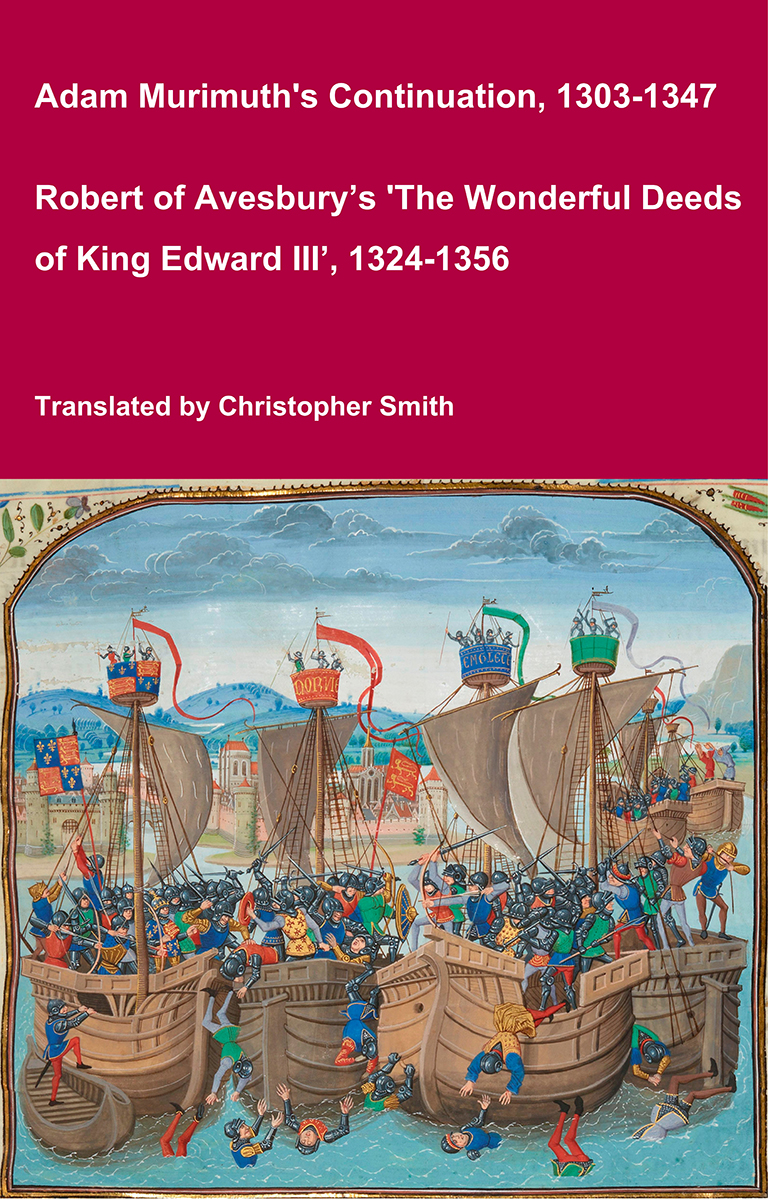
Adam Murimuth's Continuation and Robert of Avesbury’s 'The Wonderful Deeds of King Edward III'
This volume brings together two of the most important contemporary chronicles for the reign of Edward III and the opening phases of the Hundred Years’ War. Written in Latin by English clerical observers, these texts provide a vivid and authoritative window into the political, diplomatic, and military history of fourteenth-century England and its continental ambitions. Adam Murimuth Continuatio's Chronicarum continues an earlier chronicle into the mid-fourteenth century, offering concise but valuable notices on royal policy, foreign relations, and ecclesiastical affairs. Its annalistic structure makes it especially useful for establishing chronology and tracing the development of events year by year. Complementing it, Robert of Avesbury’s De gestis mirabilibus regis Edwardi tertii is a rich documentary chronicle preserving letters, treaties, and official records alongside narrative passages. It is an indispensable source for understanding Edward III’s claim to the French crown, the conduct of war, and the mechanisms of medieval diplomacy. Together, these works offer scholars, students, and enthusiasts a reliable and unembellished account of a transformative period in English and European history. Essential for anyone interested in medieval chronicles, the Hundred Years’ War, or the reign of Edward III.
Available at Amazon in eBook and Paperback format.
On 6th January 1367 King Richard II of England was born to Edward "Black Prince" [aged 36] and Joan "Fair Maid of Kent" Princess Wales [aged 38] at Bordeaux [Map]. He became the Heir to the Throne of England. See Froissart, 560. He a grandson of King Edward III of England. Coefficient of inbreeding 3.42%. He married (1) 20th January 1382 his fourth cousin Anne of Bohemia Queen Consort England, daughter of Charles IV King Bohemia Holy Roman Emperor Luxemburg and Elizabeth Pomerania Holy Roman Empress Luxemburg (2) 4th November 1396 his half third cousin Isabella Valois Queen Consort England.
On 6th January 1387 Peter IV King Aragon [aged 67] died. His son John [aged 36] succeeded I King Aragon.
On 6th January 1406 Archbishop Roger Walden died at Much Hadham, Hertfordshire.
On 6th January 1449 Christoph Duke Wittelsbach I Duke Bavaria was born to Albert Wittelsbach III Duke Bavaria [aged 47] and Anna Brunswick Grubenhagen Duchess Bavaria [aged 35].
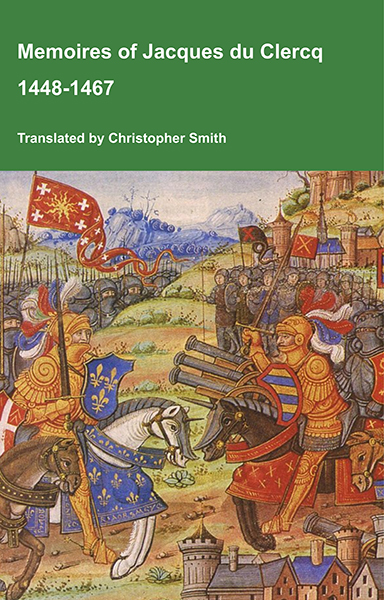 Memoires Jacques du Clercq. In the previous year, 1455, Henry, King of England, by the counsel of the Duke of Somerset, summoned all the lords of his kingdom to come to him in their ordinary state, in order, as he said, to deliberate on the high affairs of his realm. A great number of them came to London. The Duke of York intended to be present at this assembly, and indeed set out, departing from his land with a thousand fighting men, followed by four or five thousand more. The king and those in London were well informed of the first thousand, but not of the others who followed. The king and the Duke of Somerset, accompanied by the Earl of Northumberland and several other lords, gathered as many men as they could in London and resolved to go out to meet him and overthrow him. The king then took the field with his army and rode until he encountered the said duke; and immediately, without any parley, the two sides fell upon one another. There was fierce fighting, and many were killed on both sides; nevertheless, the victory fell to the Duke of York. There were slain the Duke of Somerset, the Earl of Northumberland, and many others, both lords and common men, to the number of four to five hundred. The king himself was wounded by an arrow through the neck and was in great danger of his life. The Duke of York took many prisoners, both lords and others, and brought them to London along with the king. There, some were released and others punished according to their merits; and from that time the king's government was overturned, and the Duke of York remained sole governor of the king and of the realm. At that time, the King of France took by force of arms from the Count of Armagnac most of his lands; and when he had lost everything, he withdrew into the kingdoms of Navarre and Aragon. Around the end of October in the year 1456, Philip, Duke of Burgundy, sent on embassy to the King of France Sir John of Croy, great bailiff of Hainaut, and Sir Simon of Lalaing, knight, and others, concerning the matter of the Dauphin of Vienne. They remained there until the feast of the Epiphany [6th January] following, and it could not be known what they accomplished. During this time, the king placed garrisons of men-at-arms at Compiègne, at Lyon, and along the frontiers of Burgundy, and all around the duke's lands. Likewise, upon their return, the Duke of Burgundy had it proclaimed throughout all his territories that all those accustomed to bear arms should be ready and armed whenever he should summon them, on pain of the rope. In that same year 1456, around Christmas, the Duke of Bourbon died, and his son, the Count of Clermont, son of the sister of the Duke of Burgundy, succeeded him in the duchy.
En l'an precedent mil iiija lv, Henry, roy d'Angleterre, par le conseil du duc de Sombreset, manda touts les seigneurs de son royaume venir vers lui, en leur simple estat, pour ordonner des haultes affaires de son royaume comme ils disoit, dont en vint une grande partie a Londres. Le duc d'Yore s'appensa qu'il se y trouveroit a la journée, et de fait se meit a chemin, et partist de son pays a tout mille combattants, et après lui quatre a cinq mille combattants. Le roy et ceulx de Londres feurent bien advertis de mille combattants, mais non pas des aultres qui venoient après; sy se libera le roy et le duc de Sombreset, accompagniés du comte de Nortombellant et plusieurs aultres sieurs avecq eulx, a tant de gens qu'ils peurent finer a Londres, de aller allencontre de lui et le ruer jus; sy se meit le roy sur les champs, lui et son ost, et chevaucha tellement qu'il rencontra icelluy duc, et incontinent sans quelque parlement, commencherent les parties a frapper les ungs sur les aultres, et la fust sy fort combattu qu'il y olt grande foison de morts d'ung costé et d'aultre. Toutesfois la journée de la victoire demoura au duc d'Yorc, et la fust tué le duc de Sombreset, le comte de Nortombellant et plusieurs aultres, tant sieurs que aultres jusques au nombre de quatre a cinq cens hommes, et mesmement fust le roy navré et blescié d'une fleche parmy le col, et fust en grande advanture de son corps, et print le duc d'Yorc plusieurs prisonmiers, tant sieurs, nobles que aultres, lesquels il mena a Londres avecq le roy, et la feurent les ungs deslivrés et les aultres punis selon leurs merites, et de ceste heure fust tout le gouvernement du roy renversé, et demoura le duc d'Yorc gouverneur du roy et du royaume, seul et pour le tout. En ce temps le roy de Franche tollit par forche d'armes au comte d'Armignac la pluspart de toutes ses terres, lequel, quant il olt tout perdu, se retraict au royaume de Navarre et d'Arragon. Environ la fin du mois d'octobre, l'an cinquante six, Philippe, duc de Bourgogne, envoya en ambassade devers le roy de Franche, messire Jehan de Croy, grand bailly de Haynault, et messire Symon de Lallaing, chevallier, et aultres pour le fait de monsieur le daulphin de Vianne, en laquelle ils feurent jusques au jour des trois Rois ensuivant, et ne peust sçavoir ce qu'ils avoient besoingnié; mais durant ce temps, le roy meit garnison de gens: darmes a Compiegne, a Lyon et sur les marches de Bourgogne, et partout environ le pays du duc; et pareillement eulx retournés, le duc de Bourgogne feit publier par touts ses pays, que touts ceulx qui se avoient accoustumés d'armer, feussent prez et en armes toutesfois qu'il les manderoit, sur la hart. Audit an cinquante six, environ le noel, il olt son dernier jour le duc de Bourbon, et succeda en la duchié son fils, comte de Clermont, fils de la soeur du duc de Bourgogne.
Memoires Jacques du Clercq. In the year 1462, on the 6th day of January, in the town and market place of Arras, the following were summoned by sound of trumpet, at the request of the king's procurator general and of Huguet Emery, called 'Patrenostre', who had been arrested as a Waldensian: Master Jehan Faulconier, bishop of Barut, Master Jacques du Bois, dean of Arras, Sir Pierre de Broussart, inquisitor of the faith, Master Jehan Boulengier, Master Jehan Paille, Sir Guillaume de Bery, lieutenant of Amiens, Jehan Fourme, Master Jehan Thiebault, Master Jehan Pon, Robert, bastard of Saneuses, Master Pierre du Hamel, and Master Gilles Flamengs, to appear before Parliament to answer to what might be demanded of them concerning the grievances and extortions which the said Huguet alleged they had committed against him and caused to be committed. On this matter an inquiry had been conducted at the request of the said Huguet by certain commissioners of Parliament, and when this inquiry had been examined by those of Parliament, they were summoned as has been said, namely the said Masters Pierre du Hamel and Gilles Flamengs to appear in person, and all the others summoned generally. And the warrant of this summons, which was read publicly in the market place, declared that the said Huguet, while a prisoner, had been subjected by the above-named persons, by torture and other means, to attempts to make him confess that he had been involved in the Waldensian sect, and that they had even said to him, 'Confess that you are a Waldensian, and name such and such persons who are also Waldensians and who have been with you.' These persons were not named in the said warrant, but they were named in the said inquiry, and it was said that among them were great lords and other rich and powerful men.
Audit an lxj, le vje jour de janvier, en la ville et bretecque d'Arras, feurent admonestes a son de trompe, a la requete du procureur general du roy, et de Huguet Emery, dit a Patrenostre, lequel Huguet avoit esté prins comme vauldois, maitre Jehan Faulconier, evesque de Barut, maitre Jacques du Bois, doyen d'Arras, messire Pierre de Broussart, inquisiteur de la foy, maitre Jehan Boulengier, maitre Jehan Paille, messire Guillaume de Bery, lieutenant d'Amiens, Jehan Fourme, maitre Jehan Thiebault, maitre Jehan Pon, Robert, bastard de Saneuses, maitre Pierre du Hamel, et maitre Gille Flamengs, a comparoir en parlement, pour respondre a ce qu'on leur vouldroit demander, touchant les griefs et extorsions que ledit Huguet disoit qu'ils lui avoient fait et fait faire, et dont certaine information avoit esté faite a la requete dudit Huguet, par aulcuns deputés de parlement; laquelle information veue par ceulx de parlement, ils feurent adjournés comme dit est; c'est a sçavoir, lesdits maitres Pierre du Hamel et Gilles Flamengs a comparoir en personnes, et touts les aultres adjournés simplement; et contenoit le mandement dudit adjournement, lequel mandement fust leu en pleine bretecque publiquement, que ledit Huguet estant prisonnier, les dessusdits, par gehenne et aultrement, lui avoient voullu faire cognoitre qu'il avoit esté en la vaulderie, et que mesme lui avoient dit: Cognois que tu es vauldois et se nomme tels et tels qui sont aussy vauldois, et qui ont esté avecq toy; lesquels tels et tels n'estoient point nommés audit mandement, mais ils estoient nommés en ladite information, et se disoit on qu'il y avoit des grands seigneurs et aultres gens riches et puissans.
Archaeologia Volume 47 1882 Section 16. The third castle, Alnwick, held out until Twelfth Day [6th January 1463]. On the eve of that day news suddenly arrived of the approach of a body of Scotsp under Pierre de Brezé, whose son, as we have seen, had been left with Lord Hungerford in garrison there.
Early next morning they drew up before the castle. Warwick and all his forces advanced to meet them, but, finding themselves outnumbered, declined action.q The besieged made a sortie, and young de Brezé, Hungerford, Sir Richard Tunstall, Robert de Whittingham, and others, joined the Scots, who withdrew unmolested. Wyrcestre says that if the Scots had only been bold and wise, they might have destroyed the English nobles.r The Frenchmen who remained in the castle were given quarter and, surrendering, were suffered to depart.
Note p. And Frenchmen, Brief Latin Chronicle, p. 176, followed by Stow, p. 417. Halle and Grafton inform as that the Scots were 13,000 strong, and were under the command of Sir George Douglas. The information may be correct; but, owing to these chroniclers having (as we shall see in the sequel) antedated the battle of Hexham by two years, it seems at first sight to refer to the second and final | capture of Alnwick by the Yorkists after that battle, in 1464.
Note q. "our forces did not dare to resist them," Brief Latin Chronicle. "The English looking on," Halle and Grafton. "seeing themselves outnumbered," Chronicle of England by William of Worcester.
Note r. Warkworth, p. 2, narrates this event in much the same way. He says de Brezé had 20,000 Scots with him, and that either party was afraid of the other. "Had the Scots come on boldly, they mighte have taken and distressed all the Lords and Commoners, for they had laid so long in the field, and were grieved with colde and rain, that they had no courage to fight." But these events are placed erroneously in 1 Edward IV. 1461.
Memoires Jacques du Clercq. In 1464, on the 6th day of January, two companions, mounted and armed with staves, on the road to Douai, about a league from Arras, seized a cattle merchant from Normandy, and after they had wounded him and nearly killed him, they led him into a valley, fairly near there, against a mound of stubble, and there stripped him and took from his doublet about seven francs in gold lions, and then cut the girths of his horse and left him there; and although one wished to kill him, the other would not permit it, the merchant, as best he could, came to Arras and complained to justice, showing how he was wounded; but for all that, justice did not stir.
Audit an lxiij, le vje jour de janvier, deux compagnons montés et embastonnés, sur le chemin de Douay, une lieue près d'Arras, prindrent ung marchand de boeufs de Normandie, et après qu'ils l'euirent navré et près tué, ils le menerent en une vallée, assés près d'illecq, contre ung moffle d'estoeul, et illecq le despouillerent et prindrent en son pourpoint environ vij frans en lions d'or, et puis copperent les cingles de son cheval, et le laisserent la; et combien que l'ung le volsit tuer, et l'aultre ne le voullut souffrir, le marchand au mieux qu'il peut vint Arras et se pleindit a justice, monstrant comment il estoit navré; mais encques pour ce justice ne se bougea.
On 6th January 1538 Jane Dormer Duchess Feria was born to William Dormer [aged 25] and Mary Sidney in Eythrope, Waddesdon. She married 29th December 1558 Gómez Suárez de Figueroa y Córdoba 1st Duke of Feria and had issue.


On 6th January 1540 Henry VIII [aged 48] and Anne of Cleves [aged 24] were married by Archbishop Thomas Cranmer [aged 50] at the Palace of Placentia, Greenwich [Map]. Anne of Cleves was crowned Queen Consort England. The difference in their ages was 24 years. She the daughter of John de la Marck III Duke Cleves and Maria Jülich Berg Duchess Cleves. He the son of King Henry VII of England and Ireland and Elizabeth York Queen Consort England. They were fifth cousin once removed.
Catherine Carey [aged 16] and Eleanor Paston Countess Rutland [aged 45] were appointed Lady in Waiting to Anne of Cleves Queen Consort England.


Chronicle of Edward Hall [1496-1548]. This the noble lady remained unmaried untill the tuesday folowing beyng the daie of the Epiphany [6th January 1540]: on whiche daie about viii. of the clocke in the mornyng, his grace beyng appareled in a gowne of clothe of gold, raised with great flowers of sylver, furred with blacke Jenettes, his cote Crimosyn sattyn all to cutte and enbraudered and tied with great Diamondes, and a ryche coller about his necke, came solemply with his Nobilitie into the galery next the closettes, and there paused.
On 6th January 1541 Bernard Van Orley [aged 54] died.
On 6th January 1605, Twelfth Night, the Ben Johnson [aged 33] Masque of Blackness was performed at the Banqueting House, Whitehall Palace [Map]. The performers included:
Anne of Denmark Queen Consort Scotland England and Ireland [aged 30] played Euphoris.
Lucy Harrington Countess Bedford [aged 25] played Aglaia.
Anne Lady Herbert [aged 22] played Diaphane.
Elizabeth Vere Countess Derby [aged 29] played Eucampse.
Catherine Knyvet Countess Suffolk [aged 41] played Kathare.
Penelope Devereux Countess Devonshire [aged 42] played Ocyte.
Frances Knyvet Lady Bevill [aged 39] played Notis.
Anne St John Lady Effingham [aged 30] played Psychrote.
Elizabeth Howard Countess Banbury [aged 22] played Glycyte.
Susan Vere Countess Montgomery [aged 17] played Malacia.
Mary Sidney Lady Wroth [aged 18] played Baryte.
Audrey Shelton Lady Walsingham [aged 36] played Periphere.


Anne Boleyn. Her Life as told by Lancelot de Carle's 1536 Letter.
In 1536, two weeks after the execution of Anne Boleyn, her brother George and four others, Lancelot du Carle, wrote an extraordinary letter that described Anne's life, and her trial and execution, to which he was a witness. This book presents a new translation of that letter, with additional material from other contemporary sources such as Letters, Hall's and Wriothesley's Chronicles, the pamphlets of Wynkyn the Worde, the Memorial of George Constantyne, the Portuguese Letter and the Baga de Secrets, all of which are provided in Appendices.
Available at Amazon in eBook and Paperback format.
Memorials of affairs of state in the reigns of Q Elizabeth and K James I Volume 2. At Night we had the Queen's Maske in the Banqueting-House [Map], or rather her Pagent. There was a great Engine at the lower end of the Room, which had Motion, and in it were the Images of Sea-Horses with other terrible Fishes, which were ridden by Moors: The Indecorum was, that there was all Fish and no Water. At the further end was a great Shell in form of a Skallop,wherein were four Seats; on the lowest sat the Queen [aged 30] with my Lady Bedford [aged 25]; on the left were placed the Ladies Suffolk [aged 41], Darby [aged 29], Rich [aged 42], Effingham [aged 30], Ann Herbert [aged 22], Susan Herbert [aged 17], Elizabeth Howard [aged 22], Walsingham [aged 36] and Bevil [aged 39]. Their Apparell was rich, but too light and Currizan-light for such great ones. Instead of Vizzards, their Faces, and Arms up to the Elbows, were painted black, which was Disguise sufficient, for they were hard to be known; but it became them nothing so well as their red and white, and you cannot imagine a more ugly Sight, then a Troop of lean-cheeked Moors. The Spanish and Venetian Ambassadors were both present, and sate by the King in State; at which Monsieur Beaumont quarrells so extreamly, that he saith the whole Court is Spanish. But by his Favour, he should fall out with none but himself, for they were all indifferently invited to come as private Men, to a private Sport; which he refusing, the Spanish Ambassador willingly accepted, and being there, feeing no Cause to the contrary, he put off Don Taxis, and took upon him El Senor Embaxadour, wherein he outstript our little Monsieur. He was privately at the first Mask, and fate amongst his Men disguised; at this he was taken out to dance, and footed it like a lusty old Gallant with his Country Woman. He took out the Queen, and forgot not to kiss her Hand, though there was Danger it would have left a Mark on his Lips. The Night's Work was concluded with a Banquet in the great Chamber, which was so furioufly assaulted, that down went Table and Tresses before one bit was touched. They say the Duke Holst will come upon us with an after reckoning, and that we shall see him on Candlemas Night in a Mask, as he hath shewed himself a lusty Reveller all this Christmas.
Memorials of affairs of state in the reigns of Q Elizabeth and K James I Volume 2. On Twelfth-Day we had the Creation of Duke Charles [aged 4] now Duke of York; the Interim was entertained with making Knights of the Bath, which was three Days Work. They were eleven in Number, besides the little Duke, all of the King's Choice; namely, the Lords Willoby, Compton, Chandois, and Norres; William Cecyll, Allen Percy, Thomas Somerset [aged 26], Francis Manners [aged 27], Clifford, young Howard, second Son of my Lord Chamberlaine, and Harrington. The Solemnity of the Creation was kept in the Hall, where first the Duke was brought in accompanyed with his Knights, then carried out againe, and brought back by Earles in their Robes of the Garter. My Lord Admiral bare him, two others went as Supporters, and six marched before with the Ornaments. The Patent was read by my Lord of Cranborne [aged 13], and drawn in most eloquent Law Latin by Mr. Attorney; but so, that we have a Duke of York in Title, but not in Substance. There was a publick Dinner in the great Chamber, where there was one Table for the Duke and his Earls Assistants, another for his Fellow Knights of the Bath.


Nugae Antiquitae Volume 1 Page 371. [6th January 1606]. Lord Harington [aged 66] to Sir John Harington, at Bathe.
Much respected Cosin,
Our great care and honourable charge, entrusted to us by the Kings Majesty, hath been matter of so much concern, that it almost effaced the attention to kyn or friend. With Gods assistance we hope to do our Lady Elizabeth [aged 9]1 such service as is due to her princely endowments and natural abilities; both which appear the sweet dawning of future comfort to her royal father. The late divilish conspiracy2 did much disturb this part. The King hath got at much truth from the mouths of the crew themselves; for guilt hath no peace, nor can there be guilt like theirs. One hath confessed that he had many meetings at Bathe about this hellish design; you will do his Majesty unspeakable kindness, to watch in your neighbourhood, and give such intelligence as may furnish inquiry. We know of some evil-minded catholics in the west, whom the prince of darkness hath in alliance; God ward them from such evil, or seeking it to others. Ancient history doth shew the heart of man in divers forms: we read of states overthrown by craft and subtilty; of Princes slain in field and closet; of strange machinations devised by the natural bent of evil hearts; but no page can tell such a horrid tale as this. Well doth the wise man say, that "the wicked imagineth mischeif in secret." What, dear cosin, coud be more secret or more wicked? A wise King and wise council of a nation at one blow destroyed in such wise as was now intended, is not matchable. It shameth Caligula, Erostratus, Nero, and Domitian, who were but each of them fly-killers to these wretches. Can it be said that religion did suggest these designs; did the spirit of truth work in these mens hearts? How much ia their guilt encreasd by such protesting! I cannot but mark the just appointment of Heaven in the punishing of these desperate men, who fled to our neighbourhood; you hear they sufferd themselves by the very means they had contrived for others. A barrel of gunpowder was set on fire during the time that the house was besieged, and killed two or three on the spot; so just is the vengeance of God! I have seen some of the chief [Robert Catesby and Thomas Percy], and think they bear an evil mark in their foreheads, for more terrible countenances never were looked upon. His Majesty did sometime desire to see these men, but said he felt himself sorely appaird at the thought, and so forbare. I am not yet recoverd from the fever occasioned by these disturbances. I went with Sir Fulk Grevile [aged 51]3 to alarm the neighbourhood, and surprize the villains, who came to Holbach; was out five days in peril of death, in fear for the great charge I left at home. Wynter4 hath confessed their design to surprize the Princess at my house, if their wickedness had taken place at London. Some of them say, she woud have been proclaimed Queen. Her Highness doth often say, "What a Queen shoud I have been by this means? I had rather have been with my royal father in the Parliament-house, than wear his crown on such condition." This poor lady hath not yet recoverd the surprize, and is very ili and troubled.
Note 1. Daughter of James I [aged 39], afterward Queen of Bohemia.
Note 2. The gunpowder-plot.
Note 3. Afterward Lord Brooke, who was "stabbed to death with a knife by his servant, Sept. 1, 1628." Smith's Obituary in Bibl. Sloan.
Note 4. There were two Winters concerned ip this conspiracy, Thomas and Robert [aged 38].


Diary of Anne Clifford. 6th January 1616. Upon the 6th being Twelfth day I supped with my Lady of Arundel [aged 31]1 and sat with her in the Ladyship's Box to see the Masque which was the second time it was presented before the King and Queen.
Note 1. Daughter of Gilbert Earl of Shrewsbury [aged 63]. Her portrait, in the same frame with her Lord [aged 30], in the Cartoon Gallery. (Now in Great Hall).

Diary of Anne Clifford. 6th January 1617. Upon the 6th being Twelfth Day I went about 4 o'clock to the Court with my Lord [aged 27]. I went up with my Lady Arundel and ate a scrambling supper with her and my Lady Pembroke at my Lord Duke's lodgings. We stood to see the Masque in the box with my Lady Ruthven.
On 6th January 1617 Dorothea Oldenburg Duchess Brunswick-Lüneburg [aged 70] died.
Pleasure Reconciled to Virtue Masque was a Masque by Ben Johnson [aged 46] first performed on Twelth Night 1618 ie 6th January 1618 in the Banqueting House at Whitehall Palace.
Diary of Anne Clifford. 6th January 1619. The 6th the Prince had the Masque [Pleasure Reconciled to Virtue Masque] at night in the Banqueting House [Map]. The King was there but the Queen was so ill she could not remove from Hampton Court all this Xmas, and it was generally thought she would have died.
On 6th January 1642 Toby Caulfeild 3rd Baron Caulfeild [aged 21] was shot and killed by Edmund Boy O'Hugh, foster-brother to Phelim O'Neill [aged 38]. His brother Robert succeeded 3rd Baron Caulfield.

On 6th January 1649 Thomas Pride, on behalf of Thomas Fairfax 3rd Lord Fairfax [aged 36] and Henry Ireton [aged 38], supported by two regiments, and Nathaniel Rich's [aged 24] Regiment of Horse, with Thomas Grey [aged 26], prevented MPs opposed to the trial of King Charles I [aged 48] from entering Parliament including...
James Herbert [aged 26].
Robert Pye [aged 29].
Denzil Holles 1st Baron Holles [aged 49].
John Spelman [aged 42].
Diary of John Nicoll. 6th January 1661. Upone the fex, fevint, nynt dayis of Januar foirfaid, these phanatik and rebellious crowell Inglifches, difpyleris of monarchy, did ryfe in feverall pairtes of the citie of Lundoun, of purpos to kill the Duke of York and Duke Albemarlie [aged 52]. They appeared fumtyme in fome fmall bodyes at the Royall Exchange, and at Sant Paullis; bot, being furprifed by the trayned bandis befoir thair number wes confiderable, eftir fum chaynge of fchott, quhairin fum fell upone both fydes, these blafphemeris and rebellis quicklie threw doun airmes, and fled feverall wayis, and findry takin priffoneris, and fcandalous treafonable paperis fund in thair pocketis.


John Evelyn's Diary. 6th January 1661. Dr. Allestree [aged 39] preached at the Abbey [Map], after which four Bishops were consecrated, Hereford [aged 51], Norwich [aged 61], ...
John Evelyn's Diary. 6th January 1662. This evening, according to custom, his Majesty [aged 31] opened the revels of that night by throwing the dice himself in the privy chamber, where was a table set on purpose, and lost his £100. (The year before he won £1,500.) The ladies also played very deep. I came away when the Duke of Ormond [aged 51] had won about £1,000, and left them still at passage, cards, etc. At other tables, both there and at the groom-porter's, observing the wicked folly and monstrous excess of passion among some losers; sorry am I that such a wretched custom as play to that excess should be countenanced in a Court, which ought to be an example of virtue to the rest of the Kingdom.


Samuel Pepys' Diary. 6th January 1663. So to my office, however, to set down my last three days' journall, and writing to my Lord Sandwich [aged 37] to give him an account of Sir J. Lawson's [aged 48] being come home, and to my father about my sending him some wine and things this week, for his making an entertainment of some friends in the country, and so home. This night making an end wholly of Christmas, with a mind fully satisfied with the great pleasures we have had by being abroad from home, and I do find my mind so apt to run to its old want of pleasures, that it is high time to betake myself to my late vows, which I will to-morrow, God willing, perfect and bind myself to, that so I may, for a great while, do my duty, as I have well begun, and increase my good name and esteem in the world, and get money, which sweetens all things, and whereof I have much need.


John Evelyn's Diary. 6th January 1665. To Dover, Kent [Map], where Colonel Stroode [aged 37], Lieutenant of the Castle, having received the letter I brought him from the Duke of Albemarle [aged 56], made me lodge in it, and I was splendidly treated, assisting me from place to place. Here I settled my first Deputy. The Mayor and officers of the Customs were very civil to me.

Samuel Pepys' Diary. 6th January 1666. Up betimes and by water to the Cockepitt [Map], there met Sir G. Carteret [aged 56] and, after discourse with the Duke [aged 32], all together, and there saw a letter wherein Sir W. Coventry [aged 38] did take notice to the Duke with a commendation of my paper about Pursers, I to walke in the Parke with the Vice-Chamberlain, and received his advice about my deportment about the advancing the credit of the Act; giving me caution to see that we do not misguide the King [aged 35] by making them believe greater matters from it than will be found. But I see that this arises from his great trouble to see the Act succeede, and to hear my name so much used and my letters shown at Court about goods served us in upon the credit of it. But I do make him believe that I do it with all respect to him and on his behalfe too, as indeed I do, as well as my owne, that it may not be said that he or I do not assist therein. He tells me that my Lord Sandwich [aged 40] do proceed on his journey with the greatest kindnesse that can be imagined from the King and Chancellor [aged 56], which was joyfull newes to me.


Adam Murimuth's Continuation and Robert of Avesbury’s 'The Wonderful Deeds of King Edward III'
This volume brings together two of the most important contemporary chronicles for the reign of Edward III and the opening phases of the Hundred Years’ War. Written in Latin by English clerical observers, these texts provide a vivid and authoritative window into the political, diplomatic, and military history of fourteenth-century England and its continental ambitions. Adam Murimuth Continuatio's Chronicarum continues an earlier chronicle into the mid-fourteenth century, offering concise but valuable notices on royal policy, foreign relations, and ecclesiastical affairs. Its annalistic structure makes it especially useful for establishing chronology and tracing the development of events year by year. Complementing it, Robert of Avesbury’s De gestis mirabilibus regis Edwardi tertii is a rich documentary chronicle preserving letters, treaties, and official records alongside narrative passages. It is an indispensable source for understanding Edward III’s claim to the French crown, the conduct of war, and the mechanisms of medieval diplomacy. Together, these works offer scholars, students, and enthusiasts a reliable and unembellished account of a transformative period in English and European history. Essential for anyone interested in medieval chronicles, the Hundred Years’ War, or the reign of Edward III.
Available at Amazon in eBook and Paperback format.
On 6th January 1667 Margaret Brooke Lady Denham [aged 27] died. She was rumoured to have been poisoned by her husband John Denham [aged 52] by giving her a poisoned cup of chocolate. In any case rumour named several other possible poisoners, including her former lover James [aged 33], his wife Anne Hyde [aged 29] and his sister-in-law, Lady Rochester [aged 21].


Samuel Pepys' Diary. 6th January 1668. Thence, after the play, stayed till Harris [aged 34] was undressed, there being acted "The Tempest", and so he withall, all by coach, home, where we find my house with good fires and candles ready, and our Office the like, and the two Mercers, and Betty Turner [aged 15], Pendleton, and W. Batelier. And so with much pleasure we into the house, and there fell to dancing, having extraordinary Musick, two viollins, and a base viollin, and theorbo, four hands, the Duke of Buckingham's [aged 39] musique, the best in towne, sent me by Greeting, and there we set in to dancing.


On 6th January 1668 Henry Caesar [aged 37] died of smallpox.
On 6th January 1669 Infanta Isabel Luísa of Portugal was born to Peter II King Portugal [aged 19] and Marie Françoise Élisabeth of Savoy Queen Consort of Portugal [aged 22].
Samuel Pepys' Diary. 6th January 1669. At noon comes Mrs. Turner [aged 46] and Dyke, and Mrs. Dickenson, and then comes The. [aged 17] and Betty Turner [aged 16], the latter of which is a very pretty girl; and then Creed and his wife, whom I sent for, by my coach. These were my guests, and Mrs. Turner's friend, whom I saw the other day, Mr. Wicken, and very merry we were at dinner, and so all the afternoon, talking, and looking up and down my house; and in the evening I did bring out my cake-a noble cake, and there cut it into pieces, with wine and good drink: and after a new fashion, to prevent spoiling the cake, did put so many titles into a hat, and so drew cuts; and I was the Queene [aged 59]; and The. Turner, King-Creed, Sir Martin Marr-all; and Betty, Mrs. Millicent: and so we were mighty merry till it was night; and then, being moonshine and fine frost, they went home, I lending some of them my coach to help to carry them, and so my wife and I spent the rest of the evening in talk and reading, and so with great pleasure to bed.


On 6th January 1673 James Brydges 1st Duke Chandos was born to James Brydges 8th Baron Chandos [aged 30] and Elizabeth Barnard Baroness Chandos [aged 30] at Dewsall, Herefordshire. He married (1) 2nd February 1695 Mary Lake and had issue (2) 4th August 1713 his half first cousin Cassandra Willoughby Duchess Chandos (3) 18th April 1736 Lydia Catherine Van Hatten Duchess Chandos.
John Evelyn's Diary. 6th January 1684. The river quite frozen.

John Evelyn's Diary. 6th January 1686. I din'd with ye Abp. of York [aged 61], where was Peter Walsh, that Romish Priest so well known for his moderation, professing the Church of England to be a true member of the Catholic Church; he is us'd to go to our publiq prayers without scruple, and did not acknowledge the Pope's infallibility, onely primacy of order.
John Evelyn's Diary. 6th January 1686. Passed the Privie Seale, amongst others, the creation of Mrs. Sedley J (concubine to) Countesse of Dorchester [aged 28], which the Queene took very grievously [aged 27], so as for two dinners, standing neere her I observed she hardly eate one morsel, nor spake one word to the King [aged 52], or to any about her, tho' at other times she us'd to be extreamly pleasant, full of discourse and good humour. The Roman Catholics were also very angry, because they had so long valu'd the sanctity of their religion and proselytes. Dryden [aged 54] the famous playwriter, and his two sonns, and Mrs. Nelly [aged 35] (Misse to ye late) were said to go to masse; such proselytes were no greate losse to the church. This night was burnt to the ground my Lord Mountague's palace in Bloomsbury, than wch for painting and furniture there was nothing more glorious in England. This happen'd by the negligence of a servant, airing, as they call it, some of the goods by the fire in a moist season; indeede so wet and mild a winter had scarce ben seene in man's memory. At this Seale there also pass'd the creation of Sr H. Walgrave [aged 25] to be a Peere. He had married one of the King's natural daughters [aged 19] by Mrs. Churchill. These two Seales my brother Commissioners pass'd in the morning before I came to towne, at. wch I was not displeas'd. We likewise pass'd Privy Seales for 5.2/6,000 upon severall accounts, pensions, guards, wardrobes, pri vie purse, &c. besides divers pardons, and one more wch I must not forget (and wch by Providence I was not present at) one Mr. Lytcott to be Secretary to the Ambassador to Rome. We being three Commissioners, any two were a quorum.
Roger Whitley's Diary. 6th January 1690. Monday, I dined at home with brother & daughters; in the evening Beversham came to see me; went in my coach to the end of Suffolk Streete; I went to Lord Macclesfeild [aged 31]; Thomson was with him; did not speake to me; went away; then Atwood came but stayd not; I stayd neare ½ houer; then went to Edisbury's lodging; his cosen, Sir John Wynne & another with him; I went then to Mr Halles of Lincolnes Inne; gave him my papers & 2 guineys; then went to the Nag's Head; there was Wood, Coling, Harris, Hales & 2 or 3 more & Mainwaring; parted past 9.
John Evelyn's Diary. 6th January 1692. At the funeral of Mr. Boyle, at St. Martin's [Map], Dr. Burnet [aged 48], Bishop of Salisbury, preached on Eccles. II 26. He concluded with an eulogy due to the deceased, who made God and religion the scope of all his excellent talents in the knowledge of nature, and who had arrived to so high a degree in it, accompanied with such zeal and extraordinary piety, which he showed in the whole course of his life, particularly in his exemplary charity on all occasions,-that he gave £1,000 yearly to the distressed refugees of France and Ireland; was at the charge of translating the Scriptures into the Irish and Indian tongues, and was now promoting a Turkish translation, as he had formerly done of Grotius "on the Truth of the Christian Religion" into Arabic, which he caused to be dispersed in the eastern countries; that he had settled a fund for preachers who should preach expressly against Atheists, Libertines, Socinians, and Jews; that he had in his will given £8,000 to charitable uses; but that his private charities were extraordinary. He dilated on his learning in Hebrew and Greek, his reading of the fathers, and solid knowledge in theology, once deliberating about taking Holy Orders, and that at the time of restoration of King Charles II, when he might have made a great figure in the nation as to secular honor and titles, his fear of not being able to discharge so weighty a duty as the first, made him decline that, and his humility the other. He spoke of his civility to strangers, the great good which he did by his experience in medicine and chemistry, and to what noble ends he applied himself to his darling studies; the works, both pious and useful, which he published; the exact life he led, and the happy end he made. Something was touched of his sister, the Lady Ranelagh, who died but a few days before him. And truly all this was but his due, without any grain of flattery.


The True Chronicles of Jean le Bel Volume 1 Chapters 1-60 1307-1342
The True Chronicles of Jean le Bel offer one of the most vivid and immediate accounts of 14th-century Europe, written by a knight who lived through the events he describes, and experienced some of them first hand. Covering the early decades of the Hundred Years’ War, this remarkable chronicle follows the campaigns of Edward III of England, the politics of France and the Low Countries, and the shifting alliances that shaped medieval warfare. Unlike later historians, Jean le Bel writes with a strong sense of eyewitness authenticity, drawing on personal experience and the testimony of fellow soldiers. His narrative captures not only battles and sieges, but also the realities of military life, diplomacy, and the ideals of chivalry that governed noble society. A key source for Jean Froissart, Le Bel’s chronicle stands on its own as a compelling and insightful work, at once historical record and literary achievement. This translation builds on the 1905 edition published in French by Jules Viard, adding extensive translations from other sources Rymer's Fœdera, the Chronicles of Adam Murimuth, William Nangis, Walter of Guisborough, a Bourgeois of Valenciennes, Geoffrey le Baker of Swinbroke and Richard Lescot to enrich the original text and Viard's notes.
Available at Amazon in eBook and Paperback format.
On 6th January 1703 George Oldenburg was born to Frederick IV King of Denmark and Norway [aged 31] and Louise of Mecklenburg Güstrow Queen Consort Denmark and Norway [aged 35]. He died aged one in 1704.
On 6th January 1782 Louisa Maria La Coast Hanover was born illegitimately to William Henry Hanover 1st Duke Gloucester and Edinburgh [aged 38] and Almeria Carpenter [aged 30] at Esher, Surrey. She a great granddaughter of King George II of Great Britain and Ireland.


On 6th January 1788 Henry Vane 2nd Duke Cleveland was born to William Henry Vane 1st Duke Cleveland [aged 21] and Catharine Margaret Powlett Countess Darlington [aged 22]. He a great x 3 grandson of King Charles II of England Scotland and Ireland. Coefficient of inbreeding 6.45%. He married 18th November 1809 Sophia Paulett Duchess of Cleveland, daughter of John Paulett 4th Earl Paulett and Sophia Pocock Countess Paulett.
On 6th January 1788 Francis Lorraine II Holy Roman Emperor [aged 19] and Duchess Elisabeth of Württemberg [aged 20] were married. They were fifth cousins. He a great x 5 grandson of King James I of England and Ireland and VI of Scotland. She a great x 5 granddaughter of King James I of England and Ireland and VI of Scotland.

On 6th January 1801 Francis Vernon-Harcourt was born to Archbishop Edward Venables-Vernon-Harcourt [aged 43] and Anne Leveson-Gower [aged 40]. He married 20th November 1837 Charlotte Jenkinson Countess Verulam, daughter of Charles Jenkinson 1st Earl Liverpool.
On 6th January 1808 Francis Lorraine II Holy Roman Emperor [aged 39] and Maria Ludovika of Austria-Este [aged 20] were married. They were first cousins. He a great x 5 grandson of King James I of England and Ireland and VI of Scotland. She a great x 5 granddaughter of King James I of England and Ireland and VI of Scotland.
On 6th January 1821 Gerald Fitzgerald was born to Augustus Fitzgerald 3rd Duke Leinster [aged 29] and Charlotte Augusta Stanhope Duchess Leinster [aged 27]. He a great x 4 grandson of King Charles II of England Scotland and Ireland. He married 9th June 1862 Anne Agnes Barker and had issue.

On 19th April 1827 Charles Robert Siddall was born to Charles Crooke Siddall [aged 26] and Elizabeth Eleanor Evans at 7 Charles Street, Hatton Garden. He was baptised 6th January 1829.
Charles Crooke Siddall: Around 1801 he was born.
On 6th January 1839 an enormous storm, known in Ireland as "Night of the Big Wind", the largest in three-hundred years, caused significant loss of life and damage in Ireland, particularly Dublin [Map] where one fifth of property was destroyed, and western Britain, particularly Liverpool [Map]. The next day a number of passenger ships were lost.

On 6th January 1840 Frances Burney [aged 87] died.
The Diary of George Price Boyce 1853. 6th January 1853. To Rossetti's [aged 24], Blackfriars Bridge. Met there W. Holman Hunt [aged 25], J. E. Millais [aged 23], J. P. Seddon [aged 25], Clayton [aged 25], Munro [aged 27], whose charming group of Francesca and her lover was in Rossetti's studio, Stephens, Blanchard, C. Lucy, a Scotchman and a foreigner. Millais somewhat egotistical and little real, his attention being easily distracted. He jerked out some good remarks. Spoke highly of Ruskin [aged 33] as a friend of Art; said that Mrs. R [aged 24]. was sitting for one of his pictures. Hunt struck me as a thoroughly genuine, humorous, good-hearted, straightforward English-like fellow. Said he was bound for Syria before long. Millais spoke highly of Charles Collins [aged 24] as a good religious man?
Anne Boleyn. Her Life as told by Lancelot de Carle's 1536 Letter.
In 1536, two weeks after the execution of Anne Boleyn, her brother George and four others, Lancelot du Carle, wrote an extraordinary letter that described Anne's life, and her trial and execution, to which he was a witness. This book presents a new translation of that letter, with additional material from other contemporary sources such as Letters, Hall's and Wriothesley's Chronicles, the pamphlets of Wynkyn the Worde, the Memorial of George Constantyne, the Portuguese Letter and the Baga de Secrets, all of which are provided in Appendices.
Available at Amazon in eBook and Paperback format.
On 6th January 1858 Luise Karoline Juliane Glücksburg was born to Friedrich Glücksburg Duke Schleswig Holstein Sonderburg Glücksburg [aged 43] and Adelheid Schasumburg Lippe Duchess Schleswig Holstein Sonderburg Glücksburg. She a great x 3 granddaughter of King George II of Great Britain and Ireland.
On 6th January 1885 James Percy was born to Henry George Percy 7th Duke Northumberland [aged 38] and Edith Campbell Duchess Northumberland [aged 35].
On 6th January 1901 John Beresford 7th Marquess of Waterford was born to Henry de la Poer Beresford 6th Marquess Waterford [aged 25] and Beatrix Petty-Fitzmaurice Duchess St Albans [aged 23].
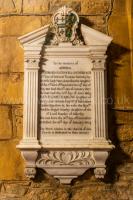
After 6th January 1902. Memorial to Admiral Edward Southwell Sotheby [deceased] at the Church of St Mary Magdalene, Ecton [Map].
Admiral Edward Southwell Sotheby: On 14th May 1813 he was born to Admiral Thomas Sotheby and Mary Anne Bourke. On 23rd June 1864 he and Lucy Elizabeth Adeane were married. On 6th January 1902 he died at 26 Green Street Mayfair. He was buried at Highgate Cemetery.
On 6th January 1924 Kate Terry [aged 79] died.

6th January 1932. The Sketch. Photograph of sisters Nancy Mitford [aged 27], Unity Valkyrie Mitford [aged 17], Jessica Lucy Freeman-Mitford [aged 14] and Diana Mitford [aged 21].
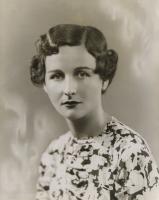


On 6th January 1156 Matilda Plantagenet Duchess Saxony was born to King Henry "Curtmantle" II of England [aged 22] and Eleanor of Aquitaine Queen Consort Franks and England [aged 34] at Windsor Castle [Map] (probably) and named after her paternal grandmother Empress Matilda [aged 53]. She married 1st February 1168 her half third cousin twice removed Henry "Lion" Welf XII Duke Saxony III Duke Bavaria, son of Henry "Proud" Welf X Duke Bavaria and Gertrude Süpplingenburg Duchess Bavaria, and had issue.
On 6th January 1303 John Willoughby 2nd Baron Willoughby was born to Robert Willoughby 1st Baron Willoughby [aged 32] and Margaret Deincourt Baroness Willoughby of Eresby [aged 33]. He married before 1323 Joan Roscelyn Baroness Willoughby and Latimer and had issue.
On 6th January 1321 William Greystoke 2nd Baron Greystoke was born to Ralph Greystoke 1st Baron Greystoke [aged 21] and Alice Audley Baroness Greystoke and Neville [aged 17] at Grimthorpe. He a great x 4 grandson of King Henry "Curtmantle" II of England. He married (1) after 14th July 1323 Lucy de Lucy Baroness Greystoke (2) before 18th October 1353 Joan Fitzhenry Baroness Greystoke and had issue.
On 6th January 1367 King Richard II of England was born to Edward "Black Prince" [aged 36] and Joan "Fair Maid of Kent" Princess Wales [aged 38] at Bordeaux [Map]. He became the Heir to the Throne of England. See Froissart, 560. He a grandson of King Edward III of England. Coefficient of inbreeding 3.42%. He married (1) 20th January 1382 his fourth cousin Anne of Bohemia Queen Consort England, daughter of Charles IV King Bohemia Holy Roman Emperor Luxemburg and Elizabeth Pomerania Holy Roman Empress Luxemburg (2) 4th November 1396 his half third cousin Isabella Valois Queen Consort England.
William of Worcester's Chronicle of England
William of Worcester, born around 1415, and died around 1482 was secretary to John Fastolf, the renowned soldier of the Hundred Years War, during which time he collected documents, letters, and wrote a record of events. Following their return to England in 1440 William was witness to major events. Twice in his chronicle he uses the first person: 1. when writing about the murder of Thomas, 7th Baron Scales, in 1460, he writes '… and I saw him lying naked in the cemetery near the porch of the church of St. Mary Overie in Southwark …' and 2. describing King Edward IV's entry into London in 1461 he writes '… proclaimed that all the people themselves were to recognize and acknowledge Edward as king. I was present and heard this, and immediately went down with them into the city'. William’s Chronicle is rich in detail. It is the source of much information about the Wars of the Roses, including the term 'Diabolical Marriage' to describe the marriage of Queen Elizabeth Woodville’s brother John’s marriage to Katherine, Dowager Duchess of Norfolk, he aged twenty, she sixty-five or more, and the story about a paper crown being placed in mockery on the severed head of Richard, 3rd Duke of York.
Available at Amazon in eBook and Paperback format.
On 6th January 1384 Edmund Holland 4th Earl Kent was born to Thomas Holland 2nd Earl Kent [aged 34] and Alice Fitzalan Countess Kent [aged 34]. He a great x 2 grandson of King Edward I of England. He married 24th January 1407 Lucia Visconti Countess Kent.
On 6th January 1412 John Hastings 9th Baron Hastings was born to Edward Hastings 8th Baron Hastings [aged 29] and Muriel Dynham Baroness Hastings at Elsing, Norfolk. He a great x 4 grandson of King Edward I of England. He married before 1437 his second cousin once removed Anne Morley Baroness Hastings, daughter of Thomas Morley 6th Baron Marshal 5th Baron Morley and Isabel Pole Baroness Marshal and Morley, and had issue.
On 6th January 1449 Christoph Duke Wittelsbach I Duke Bavaria was born to Albert Wittelsbach III Duke Bavaria [aged 47] and Anna Brunswick Grubenhagen Duchess Bavaria [aged 35].
On 6th January 1538 Jane Dormer Duchess Feria was born to William Dormer [aged 25] and Mary Sidney in Eythrope, Waddesdon. She married 29th December 1558 Gómez Suárez de Figueroa y Córdoba 1st Duke of Feria and had issue.
On 6th January 1588 Elizabeth Stanley Countess Huntingdon was born to Ferdinando Stanley 5th Earl of Derby [aged 29] and Alice Spencer Countess Derby [aged 38] at Knowsley, Lancashire. She a great x 3 granddaughter of King Henry VII of England and Ireland. She married 15th January 1601 her fourth cousin Henry Hastings 5th Earl Huntingdon and had issue.
On 6th January 1635 Charles Fane 3rd Earl of Westmoreland was born to Mildmay Fane 2nd Earl of Westmoreland [aged 32] and Grace Thornhurst Countess of Westmoreland [aged 31].
On 6th January 1662 Robert Sutton 2nd Baron Lexinton was born to Robert Sutton 1st Baron Lexinton [aged 67] and Mary St Leger Baroness Lexington [aged 22]. He married 14th September 1691 Margaret Hungerford Baroness Lexington and had issue.
On 6th January 1669 Infanta Isabel Luísa of Portugal was born to Peter II King Portugal [aged 19] and Marie Françoise Élisabeth of Savoy Queen Consort of Portugal [aged 22].
On 6th January 1673 James Brydges 1st Duke Chandos was born to James Brydges 8th Baron Chandos [aged 30] and Elizabeth Barnard Baroness Chandos [aged 30] at Dewsall, Herefordshire. He married (1) 2nd February 1695 Mary Lake and had issue (2) 4th August 1713 his half first cousin Cassandra Willoughby Duchess Chandos (3) 18th April 1736 Lydia Catherine Van Hatten Duchess Chandos.
On 6th January 1688 Rich Ingram 5th Viscount Irvine was born to Arthur Ingram 3rd Viscount Irvine [aged 21]. He married 1717 his fourth cousin Anne Howard Viscountess Irvine, daughter of Charles Howard 3rd Earl Carlisle and Anne Capell Countess Carlisle.


On 6th January 1703 George Oldenburg was born to Frederick IV King of Denmark and Norway [aged 31] and Louise of Mecklenburg Güstrow Queen Consort Denmark and Norway [aged 35]. He died aged one in 1704.
The Deeds of the Dukes of Normandy
The Gesta Normannorum Ducum [The Deeds of the Dukes of Normandy] is a landmark medieval chronicle tracing the rise and fall of the Norman dynasty from its early roots through the pivotal events surrounding the Norman Conquest of England. Originally penned in Latin by the monk William of Jumièges shortly before 1060 and later expanded at the behest of William the Conqueror, the work chronicles the deeds, politics, battles, and leadership of the Norman dukes, especially William’s own claim to the English throne. The narrative combines earlier historical sources with firsthand information and oral testimony to present an authoritative account of Normandy’s transformation from a Viking settlement into one of medieval Europe’s most powerful realms. William’s history emphasizes the legitimacy, military prowess, and governance of the Norman line, framing their expansion, including the conquest of England, as both divinely sanctioned and noble in purpose. Later chroniclers such as Orderic Vitalis and Robert of Torigni continued the history, extending the coverage into the 12th century, providing broader context on ducal rule and its impact. Today this classic work remains a foundational source for understanding Norman identity, medieval statesmanship, and the historical forces that reshaped England and Western Europe between 800AD and 1100AD.
Available at Amazon in eBook and Paperback format.
On 6th January 1717 Brian Broughton-Delves 4th Baronet was born to Brian Broughton 3rd Baronet [aged 39] and Elizabeth Delves [aged 38].
On 6th January 1718 William Gage 2nd Viscount Gage was born to Thomas Gage 1st Viscount Gage [aged 17] and Benedicta Maria Theresa Hall Viscountess Gage in New Brunswick New Jersey.
On 6th January 1768 George Fermor 3rd Earl Pomfret was born to George Fermor 2nd Earl Pomfret [aged 46] and Anna Maria Delagard Countess Pomfret [aged 32].
On 6th January 1773 Edward Digby 2nd Earl Digby was born to Henry Digby 1st Earl Digby [aged 41].
On 6th January 1782 Ann Louisa Bingham Baroness Ashburton was born to William Bingham [aged 29]. She married 23rd August 1798 Alexander Baring 1st Baron Ashburton, son of Francis Baring 1st Baronet and Harriet Herring Lady Baring, and had issue.
On 6th January 1782 Louisa Maria La Coast Hanover was born illegitimately to William Henry Hanover 1st Duke Gloucester and Edinburgh [aged 38] and Almeria Carpenter [aged 30] at Esher, Surrey. She a great granddaughter of King George II of Great Britain and Ireland.
On 6th January 1788 Henry Vane 2nd Duke Cleveland was born to William Henry Vane 1st Duke Cleveland [aged 21] and Catharine Margaret Powlett Countess Darlington [aged 22]. He a great x 3 grandson of King Charles II of England Scotland and Ireland. Coefficient of inbreeding 6.45%. He married 18th November 1809 Sophia Paulett Duchess of Cleveland, daughter of John Paulett 4th Earl Paulett and Sophia Pocock Countess Paulett.
On 6th January 1798 William Thellusson 3rd Baron Rendlesham was born to Peter Isaac Thellusson 1st Baron Rendlesham [aged 36]. He was a twin with his younger brother Frederick Thellusson 4th Baron Rendlesham.
On 6th January 1798 Frederick Thellusson 4th Baron Rendlesham was born to Peter Isaac Thellusson 1st Baron Rendlesham [aged 36]. He was a twin with his elder brother William Thellusson 3rd Baron Rendlesham.
On 6th January 1800 Richard Watson was born to Lewis Watson 2nd Baron Sondes [aged 45]. He married 21st December 1839 Lavinia Jane Quin and had issue.
On 6th January 1801 Francis Vernon-Harcourt was born to Archbishop Edward Venables-Vernon-Harcourt [aged 43] and Anne Leveson-Gower [aged 40]. He married 20th November 1837 Charlotte Jenkinson Countess Verulam, daughter of Charles Jenkinson 1st Earl Liverpool.
Chronicle of Geoffrey le Baker of Swinbroke
Baker was a secular clerk from Swinbroke, now Swinbrook, an Oxfordshire village two miles east of Burford. His Chronicle describes the events of the period 1303-1356: Gaveston, Bannockburn, Boroughbridge, the murder of King Edward II, the Scottish Wars, Sluys, Crécy, the Black Death, Winchelsea and Poitiers. To quote Herbert Bruce 'it possesses a vigorous and characteristic style, and its value for particular events between 1303 and 1356 has been recognised by its editor and by subsequent writers'. The book provides remarkable detail about the events it describes. Baker's text has been augmented with hundreds of notes, including extracts from other contemporary chronicles, such as the Annales Londonienses, Annales Paulini, Murimuth, Lanercost, Avesbury, Guisborough and Froissart to enrich the reader's understanding. The translation takes as its source the 'Chronicon Galfridi le Baker de Swynebroke' published in 1889, edited by Edward Maunde Thompson.
Available at Amazon in eBook and Paperback format.
On 6th January 1801 Reverend Edgell Wyatt-Edgell Baron Braye was born to Edgell Wyatt of Milton Place in Egham in Surrey. He married 24th September 1844 Henrietta Otway 4th Baroness Braye, daughter of Henry Otway of Castle Otway in Tipperary and Sarah Cave 3rd Baroness Braye, and had issue.
On 6th January 1818 John Savile 1st Baron Savile was born illegitimately to John Lumley-Savile 8th Earl Scarborough [aged 29].
On 6th January 1821 Gerald Fitzgerald was born to Augustus Fitzgerald 3rd Duke Leinster [aged 29] and Charlotte Augusta Stanhope Duchess Leinster [aged 27]. He a great x 4 grandson of King Charles II of England Scotland and Ireland. He married 9th June 1862 Anne Agnes Barker and had issue.
On 6th January 1825 Charles Edward Hobart-Hampden was born to Augustus Edward Hobart-Hampden 6th Earl Buckinghamshire [aged 31].
On 6th January 1830 William Brodrick 8th Viscount Midleton was born to William Brodrick [aged 31] and Harriet Brodrick. Coefficient of inbreeding 6.26%. He married 25th October 1853 Augusta Mary Fremantle, daughter of Thomas Fremantle 1st Baron Cottesloe and Louisa Elizabeth Nugent Baroness Cottesloe, and had issue.
On 6th January 1833 Gilbert Norman Grosvenor was born to Richard Grosvenor 2nd Marquess Westminster [aged 37] and Elizabeth Mary Leveson-Gower Marchioness Westminster [aged 36].
On 6th January 1839 Arthur Saunders Gore 5th Earl Arran was born to Philip Gore 4th Earl Arran [aged 37] and Elizabeth Marianne Napier Countess Arran [aged 19]. He married (1) 21st February 1865 Edith Jocelyn and had issue (2) 29th July 1889 Winifred Reilly Countess of Arran.
On 6th January 1842 Walter Farquhar was born to Walter Rockliffe Farquhar 3rd Baronet [aged 31] and Mary Octavia Somerset Lady Farquhar [aged 27]. He married 29th May 1877 his fifth cousin once removed Kathleen Mary Bateson, daughter of Thomas Bateson 1st Baron Deramore and Caroline Elizabeth Anne Rice Trevor Baroness Deramore, and had issue.
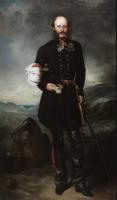
On 6th January 1847 Richard Bingham was born to George Charles Bingham 3rd Earl Lucan [aged 46] and Anne Brudenell Countess Lucan [aged 37]. He married 26th September 1877 Mary Elizabeth Cole.
On 6th January 1858 Luise Karoline Juliane Glücksburg was born to Friedrich Glücksburg Duke Schleswig Holstein Sonderburg Glücksburg [aged 43] and Adelheid Schasumburg Lippe Duchess Schleswig Holstein Sonderburg Glücksburg. She a great x 3 granddaughter of King George II of Great Britain and Ireland.
On 6th January 1883 George William Lyttelton was born to Charles Lyttelton 8th Viscount Cobham [aged 40] and Mary Susan Cavendish Viscountess Cobham [aged 29]. He married before 23rd May 1921 his fifth cousin Pamela Marie Adeane and had issue.
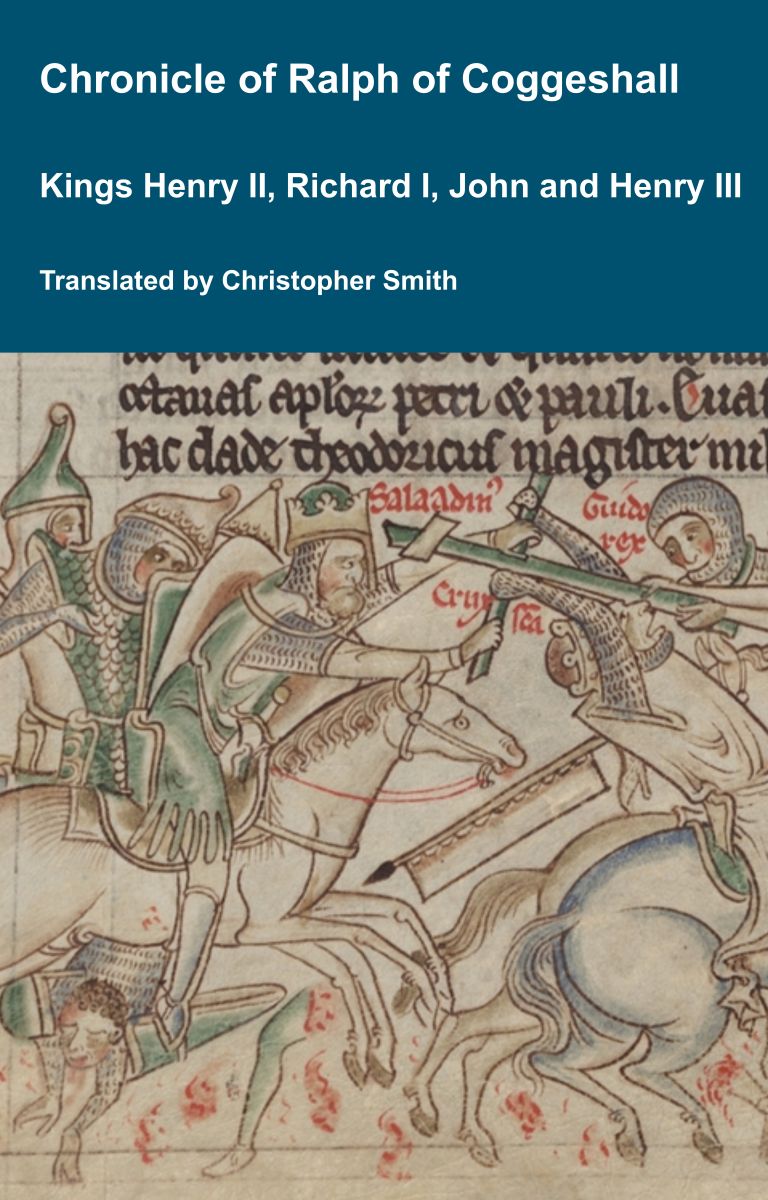
Chronicle of Abbot Ralph of Coggeshall
The Chronicle of Abbot Ralph of Coggeshall (Chronicon Anglicanum) is an indispensable medieval history that brings to life centuries of English and European affairs through the eyes of a learned Cistercian monk. Ralph of Coggeshall, abbot of the Abbey of Coggeshall in Essex in the early 13th century, continued and expanded his community’s chronicle, documenting events from the Norman Conquest of 1066 into the tumultuous reign of King Henry III. Blending eyewitness testimony, careful compilation, and the monastic commitment to record-keeping, this chronicle offers a rare narrative of political intrigue, royal power struggles, and social upheaval in England and beyond. Ralph’s work captures the reigns of pivotal figures such as Richard I and King John, providing invaluable insights into their characters, decisions, and the forces that shaped medieval rule. More than a simple annal, Chronicon Anglicanum conveys the texture of medieval life and governance, making it a rich source for scholars and readers fascinated by English history, monastic authorship, and the shaping of the medieval world.
Available at Amazon in eBook and Paperback format.
On 6th January 1885 James Percy was born to Henry George Percy 7th Duke Northumberland [aged 38] and Edith Campbell Duchess Northumberland [aged 35].
On 6th January 1891 Marie Henrietta Keppel Countess of Romney was born to Admiral Colin Keppel [aged 28]. She married 24th January 1918 Charles Marsham 6th Earl Romney, son of Charles Marsham 5th Earl Romney.
On 6th January 1895 George Josslyn L'Estrange Howard 11th Earl Carlisle was born to Charles James Stanley Howard 10th Earl Carlisle [aged 27] and Rhona Ankaret Estrange Countess Carlisle [aged 27]. He married 17th January 1918 Bridget Helen "Biddy" Ruthven Countess Carlisle and had issue.
On 6th January 1895 Alice Pearl Crake Baroness Montagu was born to Edward Barrington Crake and Clara Alice Woodroffe. She married (1) 10th August 1920 John Douglas-Scott-Montagu 2nd Baron Montagu of Beaulieu, son of Henry John Montagu-Douglas-Scott 1st Baron Montagu Beaulieu and Cecily Susan Stuart-Wortley-Mackenzie Baroness Montagu, and had issue (2) after 30th March 1929 Captain Edward Pleydell-Bouverie, son of Jacob Pleydell-Bouverie 6th Earl Radnor and Julian Eleanor Adelaide Balfour.
On 6th January 1901 John Beresford 7th Marquess of Waterford was born to Henry de la Poer Beresford 6th Marquess Waterford [aged 25] and Beatrix Petty-Fitzmaurice Duchess St Albans [aged 23].
On 6th January 1906 Verus Arundell Maunder St John-Mildmay 11th Baronet was born to Reverend Aubrey Neville St John-Mildmay 10th Baronet [aged 40] and Louisa Jane Maunder.
On 6th January 1973 Henry Benedict Charles Dillon 22nd Viscount Dillon was born to Charles Henry Robert Dillon 21st Viscount Dillon [aged 27].
On 6th January 1242 Walter Marshal 5th Earl Pembroke [aged 43] and Margaret Quincy 3rd Countess Lincoln and Pembroke [aged 36] were married. She by marriage Countess Pembroke. He by marriage Earl Lincoln. A dynastic marriage that brought together the Earldom's of Pembroke and Lincoln. She the daughter of Robert Quincy Earl Lincoln and Hawise Gernon 2nd Countess Lincoln. He the son of William Marshal 1st Earl Pembroke and Isabel Clare Countess Pembroke. They were third cousin once removed. She a great x 3 granddaughter of King Henry I "Beauclerc" England.
On 6th January 1474 William VIII Marquis of Montferrat [aged 53] and Bernarde de Brosse Marquis Monferrat were married. She by marriage Marchioness Montferrat. They were fifth cousins.
On 6th January 1540 Henry VIII [aged 48] and Anne of Cleves [aged 24] were married by Archbishop Thomas Cranmer [aged 50] at the Palace of Placentia, Greenwich [Map]. Anne of Cleves was crowned Queen Consort England. The difference in their ages was 24 years. She the daughter of John de la Marck III Duke Cleves and Maria Jülich Berg Duchess Cleves. He the son of King Henry VII of England and Ireland and Elizabeth York Queen Consort England. They were fifth cousin once removed.
Catherine Carey [aged 16] and Eleanor Paston Countess Rutland [aged 45] were appointed Lady in Waiting to Anne of Cleves Queen Consort England.
On 6th January 1579 Robert Stewart 1st Earl Lennox 1st Earl March [aged 57] and Elizabeth Stewart Countess Arran Countess Lennox and March [aged 30] were married. She by marriage Countess Lennox. The difference in their ages was 27 years. She the daughter of John Stewart 4th Earl Atholl and Elizabeth Gordon Countess Atholl. He the son of John Stewart 3rd Earl Lennox and Isabel or Elizabeth Stewart Countess Lennox. They were first cousin twice removed. He a great x 4 grandson of King Edward III of England.
Adam Murimuth's Continuation and Robert of Avesbury’s 'The Wonderful Deeds of King Edward III'
This volume brings together two of the most important contemporary chronicles for the reign of Edward III and the opening phases of the Hundred Years’ War. Written in Latin by English clerical observers, these texts provide a vivid and authoritative window into the political, diplomatic, and military history of fourteenth-century England and its continental ambitions. Adam Murimuth Continuatio's Chronicarum continues an earlier chronicle into the mid-fourteenth century, offering concise but valuable notices on royal policy, foreign relations, and ecclesiastical affairs. Its annalistic structure makes it especially useful for establishing chronology and tracing the development of events year by year. Complementing it, Robert of Avesbury’s De gestis mirabilibus regis Edwardi tertii is a rich documentary chronicle preserving letters, treaties, and official records alongside narrative passages. It is an indispensable source for understanding Edward III’s claim to the French crown, the conduct of war, and the mechanisms of medieval diplomacy. Together, these works offer scholars, students, and enthusiasts a reliable and unembellished account of a transformative period in English and European history. Essential for anyone interested in medieval chronicles, the Hundred Years’ War, or the reign of Edward III.
Available at Amazon in eBook and Paperback format.
On 6th January 1625 Thomas Francis of Savoy 1st Prince of Carignano [aged 28] and Marie Bourbon Condé Countess Soissons [aged 18] were married. She the daughter of Charles Bourbon Condé Count Soissons and Anne Montafié Countess Soissons [aged 47]. He the son of Charles Emmanuel Savoy I Duke Savoy [aged 62] and Catherine Habsburg Spain Duchess Savoy. They were fourth cousin once removed.
On 6th January 1702 Arthur Annesley 5th Earl Anglesey [aged 22] and Mary Thompson Countess Anglesey were married. He the son of James Annesley 2nd Earl Anglesey and Elizabeth Manners Countess Anglesey. They were first cousins.
On 6th January 1788 Francis Lorraine II Holy Roman Emperor [aged 19] and Duchess Elisabeth of Württemberg [aged 20] were married. They were fifth cousins. He a great x 5 grandson of King James I of England and Ireland and VI of Scotland. She a great x 5 granddaughter of King James I of England and Ireland and VI of Scotland.
On 6th January 1808 Francis Lorraine II Holy Roman Emperor [aged 39] and Maria Ludovika of Austria-Este [aged 20] were married. They were first cousins. He a great x 5 grandson of King James I of England and Ireland and VI of Scotland. She a great x 5 granddaughter of King James I of England and Ireland and VI of Scotland.
On 6th January 1814 John Chandos Reade 7th Baronet [aged 28] and Louisa Murray Lady Reade were married at St James' Church, Piccadilly. She by marriage Lady Reade of Barton in Berkshire. They had five children of whom four predeceased him. One, Emily, described as an imbecile, died 23rd November 1897.
On 6th January 1818 Edward Poore 2nd Baronet [aged 22] and Agnes Marjoribanks Lady Poore [aged 18] were married.
On 6th January 1148 William Warenne 3rd Earl of Surrey [aged 29] died. His daughter Isabella [aged 11] succeeded 4th Countess Surrey and inherited his estates including Conisbrough Castle [Map].
On 6th January 1148 Gilbert de Clare 1st Earl Pembroke [aged 48] died. His son Richard [aged 18] succeeded 2nd Earl Pembroke. Aoife ni Diarmait Macmurrough Countess Pembroke and Buckingham [aged 3] by marriage Countess Pembroke.
On 6th January 1327 Edmund Deincourt 1st Baron Deincourt [aged 77] died at Emley Wakefield. His nephew William [aged 26] succeeded 2nd Baron Deincourt. Millicent Zouche Baroness Deincourt by marriage Baroness Deincourt.
On 6th January 1338 James Butler 1st Earl Ormonde [aged 33] died. His son James [aged 6] succeeded 2nd Earl Ormonde.
Adam Murimuth's Continuation and Robert of Avesbury’s 'The Wonderful Deeds of King Edward III'
This volume brings together two of the most important contemporary chronicles for the reign of Edward III and the opening phases of the Hundred Years’ War. Written in Latin by English clerical observers, these texts provide a vivid and authoritative window into the political, diplomatic, and military history of fourteenth-century England and its continental ambitions. Adam Murimuth Continuatio's Chronicarum continues an earlier chronicle into the mid-fourteenth century, offering concise but valuable notices on royal policy, foreign relations, and ecclesiastical affairs. Its annalistic structure makes it especially useful for establishing chronology and tracing the development of events year by year. Complementing it, Robert of Avesbury’s De gestis mirabilibus regis Edwardi tertii is a rich documentary chronicle preserving letters, treaties, and official records alongside narrative passages. It is an indispensable source for understanding Edward III’s claim to the French crown, the conduct of war, and the mechanisms of medieval diplomacy. Together, these works offer scholars, students, and enthusiasts a reliable and unembellished account of a transformative period in English and European history. Essential for anyone interested in medieval chronicles, the Hundred Years’ War, or the reign of Edward III.
Available at Amazon in eBook and Paperback format.
On 6th January 1355 Bishop William Bateman [aged 57] died.
On 6th January 1387 Peter IV King Aragon [aged 67] died. His son John [aged 36] succeeded I King Aragon.
On 6th January 1406 Archbishop Roger Walden died at Much Hadham, Hertfordshire.
On 6th January 1437 Edward Hastings 8th Baron Hastings [aged 54] died at Marshalsea. His son John [aged 25] de jure 9th Baron Hastings. Anne Morley Baroness Hastings [aged 24] by marriage Baroness Hastings.
On 6th January 1478 John Bourbon VIII Count Vendôme [aged 50] died. His son Francis [aged 8] succeeded Count Vendôme.
On 6th January 1541 Bernard Van Orley [aged 54] died.
On 6th January 1617 Dorothea Oldenburg Duchess Brunswick-Lüneburg [aged 70] died.
On 6th January 1642 Toby Caulfeild 3rd Baron Caulfeild [aged 21] was shot and killed by Edmund Boy O'Hugh, foster-brother to Phelim O'Neill [aged 38]. His brother Robert succeeded 3rd Baron Caulfield.
On 6th January 1662 Francis Drake 2nd Baronet [aged 44] died. His nephew Francis [aged 19] succeeded 3rd Baronet Drake of Buckland in Devon.
On 6th January 1663 George Goring 1st Earl Norwich [aged 77] died. His son Charles [aged 48] succeeded 2nd Earl Norwich, 2nd Baron Goring. Alice Leman Countess Norwich by marriage Countess Norwich.
On 6th January 1667 Margaret Brooke Lady Denham [aged 27] died. She was rumoured to have been poisoned by her husband John Denham [aged 52] by giving her a poisoned cup of chocolate. In any case rumour named several other possible poisoners, including her former lover James [aged 33], his wife Anne Hyde [aged 29] and his sister-in-law, Lady Rochester [aged 21].
On 6th January 1670 Gilbert Gerard 1st Baronet [aged 82] died. His son Francis [aged 52] succeeded 2nd Baronet Gerard of Harrow on the Hill.

On 6th January 1691 Elizabeth Clifford Countess Burlington [aged 77] died. Her son Charles [aged 51] succeeded 3rd Baron Clifford.
On 6th January 1719 Charles Fairfax 7th Viscount Fairfax [aged 53] died. His first cousin once removed William succeeded 8th Viscount Fairfax of Emley in Tipperary.
The Deeds of the Dukes of Normandy
The Gesta Normannorum Ducum [The Deeds of the Dukes of Normandy] is a landmark medieval chronicle tracing the rise and fall of the Norman dynasty from its early roots through the pivotal events surrounding the Norman Conquest of England. Originally penned in Latin by the monk William of Jumièges shortly before 1060 and later expanded at the behest of William the Conqueror, the work chronicles the deeds, politics, battles, and leadership of the Norman dukes, especially William’s own claim to the English throne. The narrative combines earlier historical sources with firsthand information and oral testimony to present an authoritative account of Normandy’s transformation from a Viking settlement into one of medieval Europe’s most powerful realms. William’s history emphasizes the legitimacy, military prowess, and governance of the Norman line, framing their expansion, including the conquest of England, as both divinely sanctioned and noble in purpose. Later chroniclers such as Orderic Vitalis and Robert of Torigni continued the history, extending the coverage into the 12th century, providing broader context on ducal rule and its impact. Today this classic work remains a foundational source for understanding Norman identity, medieval statesmanship, and the historical forces that reshaped England and Western Europe between 800AD and 1100AD.
Available at Amazon in eBook and Paperback format.
On 6th January 1741 Catherine Harris Lady Knatchbull died.

On 6th January 1789 Noel Hill 1st Baron Berwick [aged 43] died at Portman Square Marylebone. On 20th January 1789 he was buried at St Eata's Church, Atcham. His son Thomas [aged 18] succeeded 2nd Baron Berwick of Attingham in Shropshire.
On 6th January 1800 Wilmot Vaughan 1st Earl Lisburne [aged 72] died. His son Wilmot [aged 44] succeeded 2nd Earl Lisburne, 3rd Viscount Lisburne. The second Earl Lisburne was incurably insane, and his estates were placed in the hands of trustees.
On 6th January 1802 William Flower 3rd Viscount Ashbrook [aged 34] died. His brother Henry [aged 25] succeeded 4th Viscount Ashbrook.
On 6th January 1806 Emilia Crowe Baroness Carbery died.
On 6th January 1815 Bysshe Shelley 1st Baronet [aged 83] died. His son Timothy [aged 61] succeeded 2nd Baronet Shelley of Castle Goring in Sussex.
On 6th January 1830 John Pakington 8th Baronet [aged 70] died. Baronet Pakington extinct. His John Somerset Russell aka Pakington 1st Baron Hampton [aged 30] inherited his estates and, a year later, changed his surname from Russell to Pakington by Royal Licence. The estate included Westwood House, Worcestershire and Pakington moved there with his first wife Mary, in 1832.
On 6th January 1835 Anne Courtenay Countess Mountnorris [aged 60] died.

On 6th January 1837 Charles Cockerell 1st Baronet [aged 81] died. His son Charles [aged 27] succeeded 2nd Baronet Cockerell of Sezincote in Gloucestershire. Cecilia Olivia Foley Lady Cockerell by marriage Lady Cockerell of Sezincote in Gloucestershire.
On 6th January 1840 Frances Burney [aged 87] died.
On 6th January 1840 Watkin Williams-Wynn 5th Baronet [aged 67] died. His son Watkin [aged 19] succeeded 6th Baronet Williams of Gray's Inn.
On 6th January 1849 Hyacinthe Mary Wellesley Baroness Hatherton [aged 59] died at Teddesley Hall, Penkridge.
On 6th January 1862 Reverend Hugh Henry Molesworth 9th Baronet [aged 43] died. His brother Paul [aged 40] succeeded 10th Baronet Molesworth of Pencarrow in Cornwall. Jane Frances Booker Lady Molesworth by marriage Lady Molesworth of Pencarrow in Cornwall.
On 6th January 1866 Astley Paston Cooper 2nd Baronet [aged 67] died. His son Astley [aged 41] succeeded 3rd Baronet Paston-Cooper of Gadebridge in Hertfordshire.
Jean de Waurin's Chronicle of England Volume 6 Books 3-6: The Wars of the Roses
Jean de Waurin was a French Chronicler, from the Artois region, who was born around 1400, and died around 1474. Waurin’s Chronicle of England, Volume 6, covering the period 1450 to 1471, from which we have selected and translated Chapters relating to the Wars of the Roses, provides a vivid, original, contemporary description of key events some of which he witnessed first-hand, some of which he was told by the key people involved with whom Waurin had a personal relationship.
Available at Amazon in eBook and Paperback format.
On 6th January 1874 William Fitzgerald De Ros 22nd Baron Ros Helmsley [aged 76] died at Old Court, Strangford, County Down. His son Dudley [aged 46] succeeded 23rd Baron Ros Helmsley. Elizabeth Egerton Baroness Ros of Helmsley [aged 41] by marriage Baroness Ros Helmsley.
On 6th January 1878 George William Frederick Brudenell 2nd Marquess Ailesbury [aged 73] died at Lockeridge House Savernake, Wiltshire. His brother Ernest [aged 66] succeeded 3rd Marquess Ailesbury, 9th Earl Cardigan, 4th Earl Ailesbury, 3rd Earl Bruce of Whorlton in Yorkshire, 3rd Viscount Savernake of Savernake Forest in Wiltshire, 9th Baron Brudenell of Stonton in Leicestershire. Louisa Elizabeth Horsley Beresford Marchioness Ailesbury [aged 63] by marriage Marchioness Ailesbury.
On 6th January 1901 Henry Wyndham 2nd Baron Leconfield [aged 70] died. His son Charles [aged 28] succeeded 3rd Baron Leconfield of Leconfield in the East Riding of Yorkshire.
On 6th January 1911 John Aird 1st Baronet [aged 77] died at his home Wilton Park. He was buried at St Anne's Church, Dropmore [Map]. His son John [aged 50] succeeded 2nd Baronet Aird of Hyde Park Terrace in Paddington in the County of London. Alicia Ellen Renton Lady Aird [aged 46] by marriage Lady Aird of Hyde Park Terrace in Paddington in the County of London.
On 6th January 1917 Juliana Ogilvy Lady Rycroft died.
On 6th January 1924 Kate Terry [aged 79] died.
On 6th January 1928 Ada Maria Tollemache Baroness Sudeley [aged 79] died.
On 6th January 1939 Mary Stuart Hamilton Baroness Tollemache [aged 87] died.
On 6th January 1944 Edith Harcourt Countess Winchelsea and Nottingham [aged 88] died.
On 6th January 1965 George Gordon 2nd Marquess of Aberdeen and Temair [aged 85] died. His brother Dudley [aged 81] succeeded 3rd Marquess of Aberdeen and Temair, 3rd Earl of Haddo in Aberdeenshire, 9th Earl Aberdeen.