

18 Nov is in November.
1278 Arrest of the Coin Clippers
1441 Trial and Punishment of Eleanor Cobham
On 18th November 1100 Archbishop Thomas of Bayeux died.
Anglo-Saxon Chronicle. [18th November 1100]. And the Archbishop Thomas of York soon hereafter died.
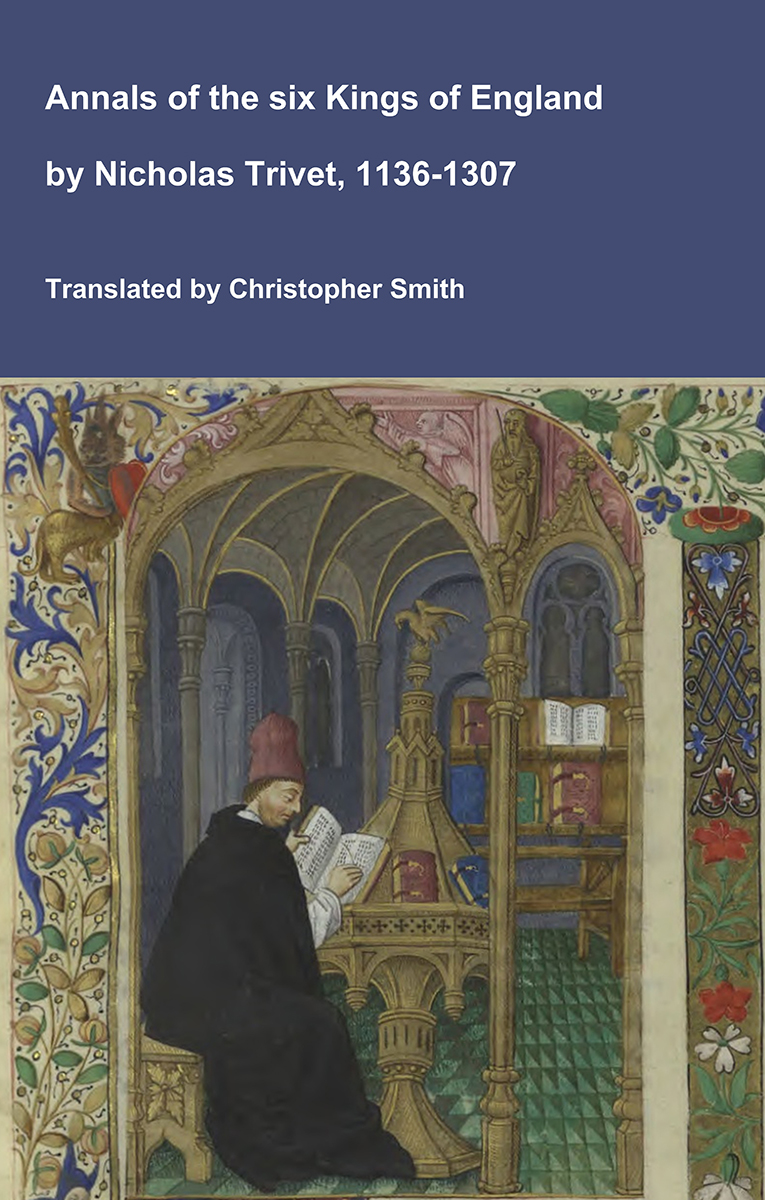 Annals of Six Kings of England by Nicholas Trivet. In this year Philip, Archbishop of Cologne, came to England, bringing with him the Count of Flanders, in order to pay the vows owed to blessed Thomas. The king of England, inviting them to London, received them with the greatest honour. Jocelin, bishop of Salisbury, died on the fourteenth day before the Kalends of December [18th November 1184]. Philip, archbishop of Cologne, leaving England, with all his power assisted the Count of Flanders against Baldwin, Count of Hainaut, the brother-in-law of that count and the father-in-law of the king of the French. William de Mandeville, Earl of Essex, also crossed the sea to help the Flemings.
Venit hoc anno in Angliam Philippus Coloniensis archiepiscopus, habens secum comitem Flandriæ, beato Thomæ vota debita soluturus; quos rex Angliæ Londoniam invitans, ipsos cum maximo honore suscepit. Jocelinus, episcopus Saresberiensis, moritur decimo quarto cal. Decembris. Philippus Coloniensis archiepiscopus Angliam exiens, cum tota potestate comitem Flandriæ juvit contra Baldewinum comitem Hanoniensium, sororium ipsius comitis, socerumque regis Francorum. Willelmus etiam de MagnaVilla, comes Essexiæ, in auxilium Flandrensium transfretavit.
Annals of Six Kings of England by Nicholas Trivet. On the octave of St Martin [18th November 1188], the kings met in conference near Bonsmoulins, through the mediation of Richard, count of Poitou. The king of France proposed that he would restore to the king of England the lands which he had taken after the taking of the cross, and that thereafter everything should remain in the same condition in which it had been before the cross had been taken. The king of England replied that it would be better for them to establish a firm peace between themselves with the counsel of both clergy and barons, rather than prolong a dispute that might prove harmful. But his son, Count Richard, opposed this, fearing that under such terms he would have to restore Cahors and the whole county, and many other possessions from his own domain, in return for holding the castle of Ralph as a fief, and also the castles of Issoudun and Graçay, which were not his demesne, although they were held of him. He also requested, through the mediation of the king of France, the hand of that king's sister in marriage, and that his lands should be confirmed to him, as heir, by oath. When his father refused to do this at that time, since it seemed to be done under compulsion, Count Richard did homage to the king of France for all the possessions of his father within that king's realm, saving the rights of his father while he lived and preserving the loyalty that he owed to him. Thus the conference ended, and the truce was prolonged until the feast of St Hilary [13th January].
In octavis S. Martini collocuti sunt reges prope Bonsmulins, procurante Ricardo comite Pictavensi; proposuitque rex Francorum, quod regi Anglorum restitueret ea quæ ceperat post crucem susceptam, et ex tunc manerent omnia in eodem statu, in quo ante crucem susceptam fuerunt. Cui cum respondisset rex Anglorum, melius esse inter se firmam pacem inire consilio tam cleri quam baronum, quam litem protrahere forte damnosam; contradixit filius comes Ricardus, timens quia hac servata conditione Caturcum redderet et totum comitatum, et alia plura de dominio suo pro feodo de castro Radulphi, et castrum Isolduni et Crasai, quæ sua non erant dominica, licet de eo essent tenenda. Petivit etiam, per mediationem regis Franciæ, sororem ejusdem in uxorem, et ut terram suam sibi, veluti heredi, faceret juramento firmari. Renuente autem patre hoc pro tunc facere, quia coactio videbatur, comes Ricardus regi Francorum homagium fecit de toto tenemento patris in regno suo; salvo jure patris sui dum viveret, et salva fide quam patri debebat. Sicque finitum est colloquium, prorogatis treugis usque ad festum S. Hilarii.
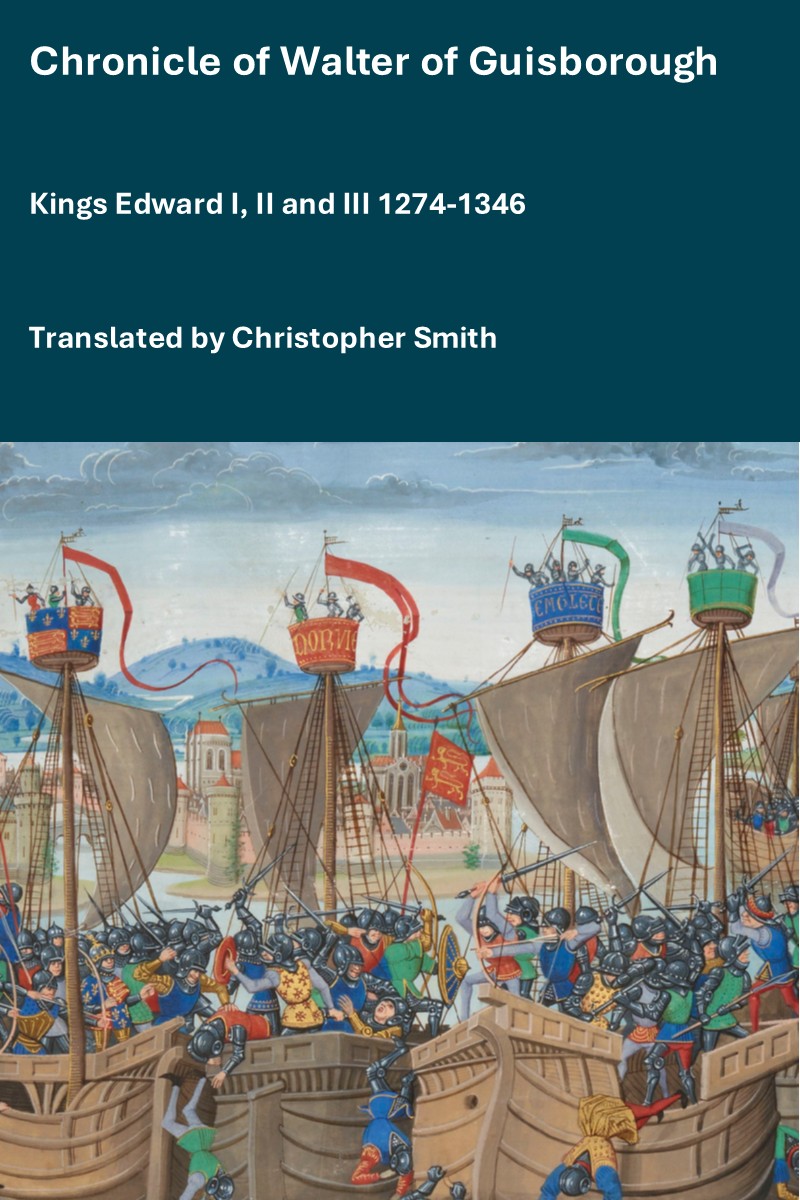 Chronicle of Walter of Guisborough. In the year of our Lord 1278, within the fortnight after the feast of Saint John the Baptist (around 8th July), the king held his parliament at Gloucester, and he issued the statutes known as the Statutes of Gloucester,1 containing fifteen chapters. And in the month of August, he went to Chester, where he issued the statute called Quo Warranto, and began an inquiry into landholding rights. A separate investigation was made concerning clipped coinage by the Jews, and on the 18th of November 1278, they were arrested throughout all of England. When the fraud was discovered, many of them were hanged.
Anno Domini MCCLXXVIII in quindena Sancti Johannis Baptistæ tenuit rex parliamentum suum apud Gloucestriam, fecitque statuta quæ dicuntur Statuta Gloucestriæ, continentia XV capitula; et in mense Augusti fecit cester, ibidem rex statutum Quo Warranto; et tractatum Warranto. est de moneta retonsa per Judæos, et capti sunt per totam Angliam XIV kalendas Decembris, et detecta maleficorum fraude plures eorum suspensi erant;
Note 1. This statute was given at Gloucester on the 2nd of August. "Done a Gloucester le demeine procheine apres la feste sein Pere a la goule de Aust" i.e. "Done at Gloucester the Sunday next after the feast of Saint Peter in Chains, at the beginning of August". Statutes of the Realm, 1.45-50. The old printed copies of the Statutes read "le quart jour de October" i.e. "the fourth day of October".
On 18th November 1313 Constance Burgundy Queen Consort Castile Queen Consort Leon [aged 23] died.
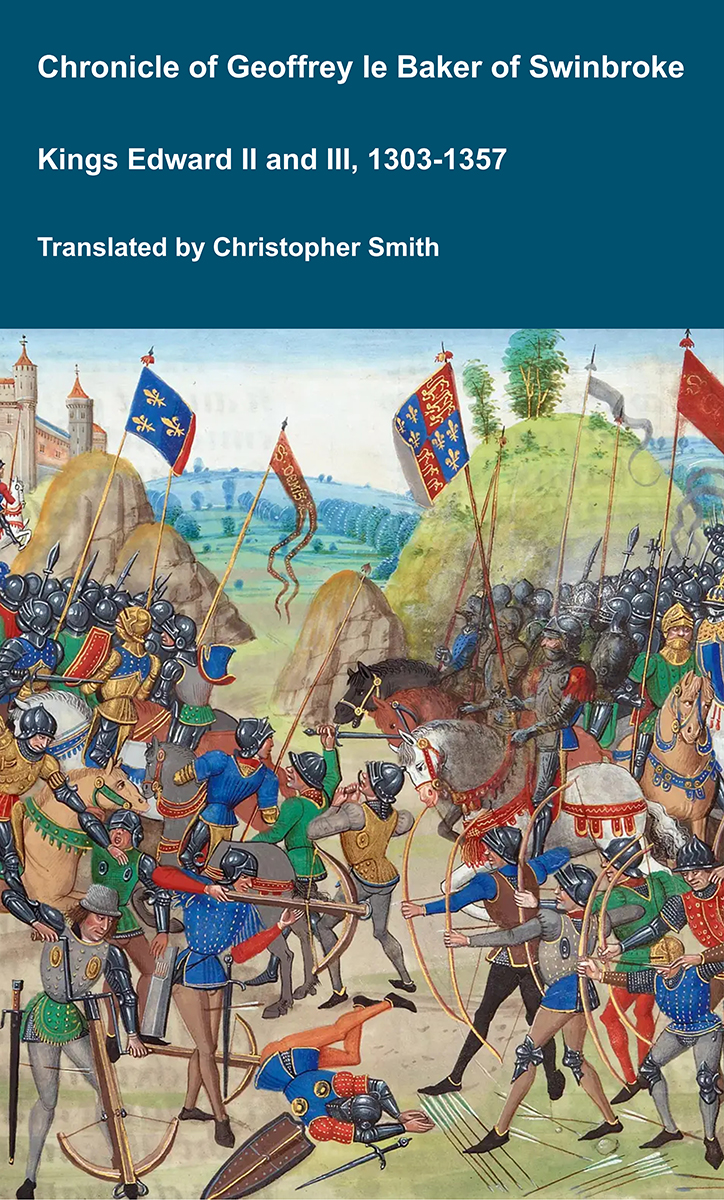 Chronicle of Geoffrey le Baker of Swinbroke. On Wednesday [18th November 1355], they passed by the castle of the Count of Foix, called Mounthaut, at the foot of which each knight, one after the other, crossed the great river Geronde with amazement from the local people. Throughout the entire year, boats are normally kept ready at that crossing for the use of the locals, but they had been removed at that time by nearby peasants from the town of North to hinder the army's passage. The river Geronde, however, was crossed by God's grace, for according to the castellan's report, no one could have crossed it after that day's rain had caused it to flood so this passage was rightly attributed to the power of God. The aforementioned town of North had been taken by assault, and after the surrender of its castle, the rearguard spent the night there.
Die Mercurii transierunt per castrum comitis Fluxensis, vocatum Mounthaut, ad cuius pedem equites singuli successive, cum stupore illorum de patria, transierunt aquam magnam de Geronde; ubi continue per totum annum sunt nacelle parate pro transitu indigenarum, que tunc ad exercitus impedimentum per villanos vicinos de North fuerant subtracte. Aquam de Geronde cum gracia Dei petransitam relacione castellanorum nullus potuisset pertransivisse post inundacionem pluvie diurne, unde eius transitus Dei virtuti iuste fuerat ascriptus. Prefata villa de North fuerat per insultum conquisita, in cuius castro reddito retro-custodia pernoctavit.
On 18th November 1416 Thomas Beaufort 1st Duke Exeter [aged 39] was created 1st Duke Exeter by King Henry V of England [aged 30] for the remainder of his natural life for 'his service to the king and the realm on both sides of the seas'. At the time the only other dukes were the King's brothers.

After 18th November 1434. St Mary's Church, Ewelme [Map]. Monument to Thomas Chaucer [deceased] and Maud Burghesh [aged 55].
The Arms in two rows left to right ...
Top Row:
2  York Arms. Possibly Cecily "Rose of Raby" Neville Duchess York impaled
  Neville Arms
3  Thomas Beaufort 1st Duke Exeter 1377 1426 Arms
4  Thomas of Brotherton 1st Earl Norfolk 1300 1338 Arms impaled Neville Arms
5 Thomas Beaufort 1st Duke Exeter 1377 1426 Arms (again?)
6  Stafford Arms impaled Neville Arms
7  Montacute and Monthermer Arms impaled
  Chaucer Modern Arms.
Bottom Row:
1  Beauchamp Arms quartered with
  Beaumont Arms; Earl Warwick reflecting the Beauchamp family having inherited the Earldom of Warwick through marriage to Isabel Maudit who was the sister of William Maudit 8th Earl Warwick who died without issue. Isabel Maudit and William Maudit 8th Earl Warwick were the children of William Maudit and Alice Beaumont. Alice Beaumont inherited the Earldom of Warwick when her half-niece Margaret Beaumont 7th Countess Warwick died.
2  Courtenay Arms impaled
  Beaufort Arms
3 Montacute and Monthermer Arms impaled  Mohun Arms
4 Montacute and Monthermer Arms quartered Neville Arms
5  De La Pole Arms quartered Chaucer Modern Arms
6  Despencer Arms impaled Chaucer Modern Arms
7 Mohun Arms impaled Chaucer Modern Arms. John Mohun 2nd Baron Mohun of Dunster and Joan Burghesh Baroness Dunster.
On 18th November 1441, Saturday, Roger Bolingbroke was hanged, drawn and quartered at Tyburn [Map].
 Chronicle of England by William of Worcester. And a certain very famous cleric, one of those in the whole world in astronomy and the art of necromancy, Master Roger Bolingbroke, was arrested. He was publicly placed in the cemetery of St. Paul's with his necromantic garments and waxen images, and as many other necromantic instruments as possible, sitting on a high throne so that all could see his work. Later, he was drawn, hanged, and quartered [on 18th November 1441], and his head was placed upon London Bridge. This Master Roger was one of the most notable clerics in the whole world, and he was accused because of the aforementioned Lady Eleanor, for whom he was a counsellor in the magical arts. After her death, many lamented excessively.
Et quidam clericus famosissimus, unus illorum in toto mundo in astronomia et arte nigromantica, magister Rogerus Bolyngbroke, arrestatus fuit, et in cœmiterio Sancti Pauli publice cum indumentis suis nigromanticis et imaginibus cereis, et quam pluribus aliis instrumentis nigromaticis, sedebat in quodam alto solio, ut ab omnibus viderentur opera ejus; postea tractus, suspensus, et quartarizatus erat, et caput ejus super pontem Londonias positum. Iste magister Rogerus erat notabilissimus clericus unus illorum in toto mundo, et accusatus est propter prædictam dominam Elianoram, cui conciliarius erat in arte magica, post cujus mortem multi lamentabantur valde nimis.
Chronicle of Gregory. 18th November 1441. And on the Satyrday next folowyng was Roger Bulbroke hanggyde, and drawe, and quarteryde at Tyburne.
An English Chronicle. [18th November 1441]. And the Satirday the xviij day of Nouembir next sewyng, maister Roger Boltyngbroke at Guyldehalle at Londoun befor the said lordis and justiceȝ was arreymed of the forsaid articleȝ of tresoun ayens the kyngis persone, and therof be xij men of Londoun he was founde gilty. Wherfore be the iugement of ser Johan Hody that tyme chief justice of the kyngis bench, he was drawe fro the tour of Londoun vnto Tyburne [Map]; and there he was hanged and leet doun half alive, and his bowellis take out and brent, and his hed smyte of and set on London brigge, and his body quartrid and sent to certayn tounes of Englond, that is to saye, Oxenford, Cambrigge, York and Hereforde. And whanne the said maister Roger sholde die, he confessid that he was nevir gilty of eny treson ayens the kyngis persone; but he presumed to fer in his konnyng, as he sayde, wherof he cride God mercy; and the justice that yaf on him iugement livid not longe aftir.
Chronicles of London Vitellius A XVI. [18th November 1441]. And aftyr Roger the clerk aforn sayd on the Setterday, that is to say the xviij day of nouembre, was brought to the yeld hall with Sir John horn, prest, and William Wodham, squyer; the wich Sir John and William had her charterys at that tyme; and the clerk whas dampned and the same day whas drawe ffro the Toure of london to Tybom, and ther hongid, hedid, and quartered; and the hed sett on london brygge, and his one quarter att hertford1, a nother att Oxenford, a nother at York, and the iiijte at Cambryg. And the lady [Eleanor Cobham Duchess of Gloucester [aged 41]] put in prison and aftyr sent to the Ile of Man2, ther to abyde while that sche levyd.
Note 1. Hereford, H.
Note 2. Chestre, H.
Annals of the six Kings of England by Nicholas Trivet
Translation of the Annals of the Six Kings of England by that traces the rise and rule of the Angevin aka Plantagenet dynasty from the mid-12th to early 14th century. Written by the Dominican scholar Nicholas Trivet, the work offers a vivid account of English history from the reign of King Stephen through to the death of King Edward I, blending political narrative with moral reflection. Covering the reigns of six monarchs—from Stephen to Edward I—the chronicle explores royal authority, rebellion, war, and the shifting balance between crown, church, and nobility. Trivet provides detailed insight into defining moments such as baronial conflicts, Anglo-French rivalry, and the consolidation of royal power under Edward I, whose reign he describes with particular immediacy. The Annals combines careful year-by-year reporting with thoughtful interpretation, presenting history not merely as a sequence of events but as a moral and political lesson. Ideal for readers interested in medieval history, kingship, and the origins of the English state, this chronicle remains a valuable and accessible window into the turbulent world of the Plantagenet kings.
Available at Amazon in eBook and Paperback format.
The Brut. [18th November 1441]. And the Seturday next, the xvij. day of Nouembre, Roger Bultyngbrok, Dame Alianore Cobhams Clerk of Nigromancy and sorcery, was brought to the Guyldhall of London, and there dampned for his fals treson, and for his fals tresoun, and sorcery and Nigromancy ayenst all holy Chirch; wherthurgh he was dampned to deth by landes lawe. And he was ledde to the Toure of London, and leyd vpon a hirdell, and drawen thurgh the Cite to Tybowrne galowes, and there hanged, and let downe ageyne all quyk, and his bowelles cutte out of his body, and brent afore hym. And then was his hede smyten of, and his body quartered; and oon sent to Oxenford, the secund sent to Cambrigge, the thridde to Bristowe, and the fourth to [ ]1; and his hede was set vpon London Brigge: and fus he ended his life in this world.
Note 1. Blank space left in MS.
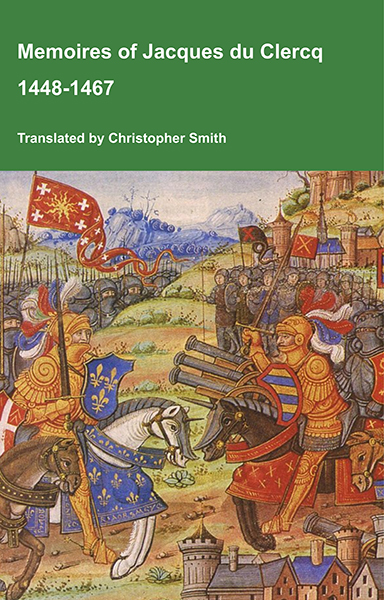 Memoires Jacques du Clercq. At that time, on the 18th day of November in the said year fifty-seven, in the city of Arras, before the hospital of Saint John in the Estrée, at daybreak, a man was found murdered, a red-bearded man, handsome, strong and well-built, about forty years of age. He was found in his shirt, his hose, and his doublet, with his robe thrown over his body; and no wounds could be seen on him, except that his thighs were torn as if he had been dragged, and his throat was all black, as if he had been strangled. The said body was carried to the market hall of Arras; and although it lay there for half a day or more, no one recognised him. It was supposed that he was a jeweler, and it was never discovered from where he had been dragged nor who had committed the murder.
En ce temps, le dix huictiesme jour de novembre audit an cinquante sept, en la ville d'Arras, devant l'hostel dieu de Saint Jean en l'Estrée, au poinct du jour fust trouvé ung homme meurdry, a barbe rousse, bel homme, fort et puissant, de l'age de quarante ans ou environ, et fust trouvé en sa chemise, ses chaulses et son pourpoinct, et sa robbe jettée sur son corps, et ne pooit on percevoir sur lui nulles playes, synon qu'il avoit les cuisses desquirées ainsy que on l'avoit traisné, et sy avoit le hatreau tout noir, ainsy s'il euist esté estranglé, et fust ledit mort porté en la halle d'Arras; et combien qu'iloy fust demy jour ou plus, sy ne fust il pas recognu de personne; mais on supposoit qu'il fust marchand de joillerie et ne peut on oncques sçavoir dont on le avoit atraisné, ne qui avoit fait le murdre.
Memoires Jacques du Clercq. And on the following Tuesday the said Philippamet le Camus was hanged between Lens and the road to La Bassée, upon a tree near Hulluch. He was a native of the city of Arras and of good family, but he was a murderer, a fighter, a thief, and a ravisher of women, and it was said that he had confessed to having murdered and strangled a jeweller, who had been dragged upon the steps of the hospital of Saint John in the suburb, and who was found dead in his shirt in the year 1462, on the 18th day of November, as has been said above.
Et le mardy ensuivant fust pendu ledit Philippamet le Camus, entre Lens et le chemin de la Bassée, a ung arbre emprés Hulluch; lequel estoit natif de cité d'Arras et de bonnes gens, mais il estoit meurdrier, combatteur, houillier, enforcheur de femmes, et se disoit on qu'il avoit confessé avoir esté meurdrir et estrangler ung joyllier, lequel on avoit attrainé sur les degrés de l'hospital Saint Jehan en l'Estrée; lequel fust trouvé mort en sa chemise, en l'an mil iiijc lxij, le xviij jour de novembre, comme chy dessus est dit.
On 18th November 1463 John Wittelsbach IV Duke Bavaria [aged 26] died of plague. His brother Sigismund [aged 24] succeeded Duke Bavaria.
Chronicles of London Vitellius A XVI. 18th November 1497. This yere the Saterday, beyng the xviijth day of Nouembre, the kyng came vnto his manoir of Shene after his long beyng at Excetir. And vpon the Weddensday folowyng he came by land to Lambhith, and there toke his Barge and came vnto Westm'., where the Mair, wt his Brethern, receyved hym in the paleis, wt dyuers of the Citesyns to the numbre of iiijxx, of euery ffeliship a certeyn assigned in their last lyuereys. At which Season the forsaid Persone Perkyn [aged 23] came also before the kyng, vpon whome the same season and other dayes folowyng was moch wonderyng, and many a Curse throwen at his hede.
Henry Machyn's Diary. 18th November 1554. The xviij day of November dyd pryche at Powlles crosse [Map] the nuw bysshope of Lynckolne, doctur White [aged 44], late the warden of Wynchaster.
The sam day was consecratyd nuw [bishops], on bysshope of Brystow [aged 59], and a-nodur byshope of Lycheffeld and Coventre [aged 50].
Henry Machyn's Diary. 18th November 1557. The xviij day of November cam tydynges from the yerle of Northumberland [aged 29] owt of Skottland that the [Scots] and our men mett and ther fowth, and ther was taken and ... of the Skotts, att a place callyd (blank).
Henry Machyn's Diary. 18th November 1557. [The xviij day of November died the lord Bray, within the Black-friars, near Ludgate]; the wyche he gatt ys deth [at St. Quintin's.]
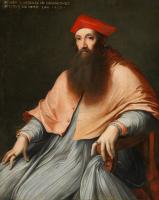
Wriothesley's Chronicle [1508-1562]. Fridaye the xviiith of November [1558] Dr. Reynolde Poole [deceased], Cardinall and Archbishopp of Canterburie, died at Lambeth, in the morninge, and was afterward buried at Canterburie, in Christes Churche.

On 18th November 1584 Gaspar de Crayer was born to Gaspard de Crayer the Elder and Christina van Abshoven in Antwerp [Map]. His father was a decorative painter, illuminator and art dealer.
On 18th November 1605 Bishop Lancelot Andrewes [aged 50] was installed Bishop of Chichester at Chichester Cathedral [Map].
On 18th November 1615 Gervase Helwys [aged 54], the gaoler Richard Weston, widow of a London doctor Mrs Anne Turner, and an apothecary James Franklin were found guilty as "accessories before the fact done" and sentenced to death.

The True Chronicles of Jean le Bel Volume 1 Chapters 1-60 1307-1342
The True Chronicles of Jean le Bel offer one of the most vivid and immediate accounts of 14th-century Europe, written by a knight who lived through the events he describes, and experienced some of them first hand. Covering the early decades of the Hundred Years’ War, this remarkable chronicle follows the campaigns of Edward III of England, the politics of France and the Low Countries, and the shifting alliances that shaped medieval warfare. Unlike later historians, Jean le Bel writes with a strong sense of eyewitness authenticity, drawing on personal experience and the testimony of fellow soldiers. His narrative captures not only battles and sieges, but also the realities of military life, diplomacy, and the ideals of chivalry that governed noble society. A key source for Jean Froissart, Le Bel’s chronicle stands on its own as a compelling and insightful work, at once historical record and literary achievement. This translation builds on the 1905 edition published in French by Jules Viard, adding extensive translations from other sources Rymer's Fœdera, the Chronicles of Adam Murimuth, William Nangis, Walter of Guisborough, a Bourgeois of Valenciennes, Geoffrey le Baker of Swinbroke and Richard Lescot to enrich the original text and Viard's notes.
Available at Amazon in eBook and Paperback format.
On 18th November 1616 or 19th November 1616 Thomas Chicheley of Wimpole [aged 38] died. He was buried in St Andrew's Church, Wimpole [Map]. Stuart Period. Two-stage altar tomb in alabaster and black marble with miniature effigies in the lower stage, inscription panels and shield of  Chicheley Arms impaled, supporting a recumbent effigy in armour. Tassets.
Thomas Chicheley of Wimpole: On 28th March 1578 he was born to Thomas Chicheley of Wimpole and Anne Bourne. He was baptised 15th April 1578. On 29th April 1607 Thomas Chicheley of Wimpole was knighted. On 18th June 1607 he and Dorothy Kempe were married.


On 18th November 1621 Archbishop William Laud [aged 48] was appointed Bishop of St David's.


On 18th November 1637 Ferdinand III Holy Roman Emperor [aged 29] succeeded III Holy Roman Emperor. Maria Anna of Spain Holy Roman Empress [aged 31] by marriage Holy Roman Empress.


John Evelyn's Diary. 18th November 1659. Mr. Gunning [aged 45] celebrated the wonted Fast, and preached on Phil. II 12, 13.

Samuel Pepys' Diary. 18th November 1662. Thence walked home, and my wife came home, having been abroad to-day, laying out above £12 in linen, and a copper, and a pot, and bedstead, and other household stuff, which troubles me also, so that my mind to-night is very heavy and divided. Late at my office, drawing up a letter to my Lord Treasurer [aged 55], which we have been long about, and so home, and, my mind troubled, to bed.
On 18th November 1662 Anne Élisabeth Bourbon was born to Louis "Sun King" XIV King France [aged 24] and Maria Theresa of Spain Queen Consort France [aged 24]. Coefficient of inbreeding 17.28%. She died aged less than one years old.


Samuel Pepys' Diary. 18th November 1663. At my office till late, and then came Mr. Hollyard [aged 54] so full of discourse and Latin that I think he hath got a cupp, but I do not know; but full of talke he is in defence of Calvin and Luther. He begun this night the fomentation to my wife, and I hope it will do well with her.
Samuel Pepys' Diary. 18th November 1663. He gone, I to the office again a little, and so to bed. This morning I sent Will with my great letter of reproof to my Lord Sandwich [aged 38], who did give it into his owne hand. I pray God give a blessing to it, but confess I am afeard what the consequence may be to me of good or bad, which is according to the ingenuity that he do receive it with. However, I am satisfied that it will do him good, and that he needs it: MY LORD, I do verily hope that neither the manner nor matter of this advice will be condemned by your Lordship, when for my defence in the first I shall allege my double attempt, since your return from Hinchinbroke, of doing it personally, in both of which your Lordship's occasions, no doubtfulnesse of mine, prevented me, and that being now fearful of a sudden summons to Portsmouth, Hampshire [Map], for the discharge of some ships there, I judge it very unbecoming the duty which every bit of bread I eat tells me I owe to your Lordship to expose the safety of your honour to the uncertainty of my return. For the matter, my Lord, it is such as could I in any measure think safe to conceal from, or likely to be discovered to you by any other hand, I should not have dared so far to owne what from my heart I believe is false, as to make myself but the relater of other's discourse; but, sir, your Lordship's honour being such as I ought to value it to be, and finding both in city and court that discourses pass to your prejudice, too generally for mine or any man's controllings but your Lordship's, I shall, my Lord, without the least greatening or lessening the matter, do my duty in laying it shortly before you. People of all conditions, my Lord, raise matter of wonder from your Lordship's so little appearance at Court: some concluding thence their disfavour thereby, to which purpose I have had questions asked me, and endeavouring to put off such insinuations by asserting the contrary, they have replied, that your Lordship's living so beneath your quality, out of the way, and declining of Court attendance, hath been more than once discoursed about the King [aged 33]. Others, my Lord, when the chief ministers of State, and those most active of the Council have been reckoned up, wherein your Lordship never used to want an eminent place, have said, touching your Lordship, that now your turn was served, and the King had given you a good estate, you left him to stand or fall as he would, and, particularly in that of the Navy, have enlarged upon your letting fall all service there. Another sort, and those the most, insist upon the bad report of the house wherein your Lordship, now observed in perfect health again, continues to sojourne, and by name have charged one of the daughters for a common courtizan, alleging both places and persons where and with whom she hath been too well known, and how much her wantonnesse occasions, though unjustly, scandal to your Lordship, and that as well to gratifying of some enemies as to the wounding of more friends I am not able to tell. Lastly, my Lord, I find a general coldness in all persons towards your Lordship, such as, from my first dependance on you, I never yet knew, wherein I shall not offer to interpose any thoughts or advice of mine, well knowing your Lordship needs not any. But with a most faithful assurance that no person nor papers under Heaven is privy to what I here write, besides myself and this, which I shall be careful to have put into your owne hands, I rest confident of your Lordship's just construction of my dutifull intents herein, and in all humility take leave, may it please your Lordship, Your Lordship's most obedient Servant, S. P.


Samuel Pepys' Diary. 18th November 1664. Up and to the office, and thence to the Committee of the Fishery at White Hall, where so poor simple doings about the business of the Lottery, that I was ashamed to see it, that a thing so low and base should have any thing to do with so noble an undertaking. But I had the advantage this day to hear Mr. Williamson [aged 31] discourse, who come to be a contractor with others for the Lotterys, and indeed I find he is a very logicall man and a good speaker. But it was so pleasant to see my Lord Craven [aged 56], the chaireman, before many persons of worth and grave, use this comparison in saying that certainly these that would contract for all the lotteries would not suffer us to set up the Virginia lottery for plate before them, "For", says he, "if I occupy a wench first, you may occupy her again your heart out you can never have her maidenhead after I have once had it", which he did more loosely, and yet as if he had fetched a most grave and worthy instance. They made mirth, but I and others were ashamed of it.
On 18th November 1668 Frederick William Oldenburg was born to Ernest Günther Oldenburg I Duke Schleswig Holstein Sonderburg Augustenburg [aged 59] and Auguste Oldenburg Duchess Schleswig Holstein Sonderburg Augustenburg [aged 35]. Coefficient of inbreeding 6.27%.
On 18th November 1668 Frederick William Oldenburg I Duke Schleswig Holstein Sonderburg Augustenburg was born to Ernest Günther Oldenburg I Duke Schleswig Holstein Sonderburg Augustenburg [aged 59] and Auguste Oldenburg Duchess Schleswig Holstein Sonderburg Augustenburg [aged 35]. Coefficient of inbreeding 6.27%.
John Evelyn's Diary. 18th November 1679. I dined at my Lord Mayor's [aged 50], being desired by the Countess of Sunderland [aged 33] to carry her thither on a solemn day, that she might see the pomp and ceremony of this Prince of Citizens, there never having been any, who for the stateliness of his palace, prodigious feasting, and magnificence, exceeded him. This Lord Mayor's acquaintance had been from the time of his being apprentice to one Mr. Abbot, his uncle [Note. His mother's brother], who being a scrivener, and an honest worthy man, one who was condemned to die at the beginning of the troubles forty years past, as concerned in the commission of array for King Charles I had escaped with his life; I often used his assistance in money matters. Robert Clayton, then a boy, his nephew, became, after his uncle Abbot's death, so prodigiously rich and opulent, that he was reckoned one of the wealthiest citizens. He married a free-hearted woman, who became his hospitable disposition; and having no children, with the accession of his partner and fellow apprentice, who also left him his estate, he grew excessively rich. He was a discreet magistrate, and though envied, I think without much cause. Some believed him guilty of hard dealing, especially with the Duke of Buckingham [aged 51], much of whose estate he had swallowed, but I never saw any ill by him, considering the trade he was of. The reputation and known integrity of his uncle, Abbot, brought all the royal party to him, by which he got not only great credit, but vast wealth, so as he passed this office with infinite magnificence and honor.


John Evelyn's Diary. 18th November 1688. It was now a very hard frost. The King [aged 55] goes to Salisbury to rendezvous the army, and return to London. Lord Delamere [aged 36] appears for the Prince [aged 38] in Cheshire. The nobility meet in Yorkshire. The Archbishop of Canterbury [aged 71] and some Bishops, and such Peers as were in London, address his Majesty to call a Parliament. The King invites all foreign nations to come over. The French take all the Palatinate, and alarm the Germans more than ever.


This is a translation of the 'Memoires of Jacques du Clercq', published in 1823 in two volumes, edited by Frederic, Baron de Reissenberg. In his introduction Reissenberg writes: 'Jacques du Clercq tells us that he was born in 1424, and that he was a licentiate in law and a counsellor to Philip the Good, Duke of Burgundy, in the castellany of Douai, Lille, and Orchies. It appears that he established his residence at Arras. In 1446, he married the daughter of Baldwin de la Lacherie, a gentleman who lived in Lille. We read in the fifth book of his Memoirs that his father, also named Jacques du Clercq, had married a lady of the Le Camelin family, from Compiègne. His ancestors, always attached to the counts of Flanders, had constantly served them, whether in their councils or in their armies.' The Memoires cover a period of nineteen years beginning in in 1448, ending in in 1467. It appears that the author had intended to extend the Memoirs beyond that date; no doubt illness or death prevented him from carrying out this plan. As Reissenberg writes the 'merit of this work lies in the simplicity of its narrative, in its tone of good faith, and in a certain air of frankness which naturally wins the reader’s confidence.' Du Clercq ranges from events of national and international importance, including events of the Wars of the Roses in England, to simple, everyday local events such as marriages, robberies, murders, trials and deaths, including that of his own father in Book 5; one of his last entries.
Available at Amazon in eBook and Paperback format.
On 18th November 1785 Louis Philippe "The Fat" Bourbon I Duke Orléans [aged 60] died. His son Louis [aged 38] succeeded II Duke Orléans.
On 18th November 1809 Henry Vane 2nd Duke Cleveland [aged 21] and Sophia Paulett Duchess of Cleveland [aged 24] were married at St George's Church, Hanover Square. She the daughter of John Paulett 4th Earl Paulett [aged 53] and Sophia Pocock Countess Paulett. He the son of William Henry Vane 1st Duke Cleveland [aged 43] and Catharine Margaret Powlett Countess Darlington.
On 18th November 1820 Luise Glücksburg was born to Friedrich Wilhelm Glücksburg Duke Schleswig Holstein Sonderburg Glücksburg [aged 35] and Louise Caroline Hesse-Kassel Duchess Schleswig Holstein Sonderburg Glücksburg [aged 31]. She a great x 2 granddaughter of King George II of Great Britain and Ireland.
After 18th November 1834. St Andrew's Church, Wimpole [Map]. Monument to Philip Yorke 3rd Earl of Hardwicke [deceased].
Altar tomb with shaped ends and recumbent effigy in Garter robes with Leg Garter, all in white marble; the ends of the tomb chest are carved with arms and heraldic emblems; signed 'R. WESTMACOTT, JUNR, A.R.A. [aged 35] 1844'.


After 18th November 1835 George Charles Venables-Vernon 4th Baron Vernon [deceased] was buried at All Saints Church, Sudbury [Map].
George Charles Venables-Vernon 4th Baron Vernon: On 4th December 1779 he was born to Henry Venables-Vernon 3rd Baron Vernon and Elizabeth Rebecca Anne Sedley. On 25th August 1802 George Charles Venables-Vernon 4th Baron Vernon and Frances Maria Warren Baroness Vernon were married. On 27th March 1829 Henry Venables-Vernon 3rd Baron Vernon died at Sudbury, Derbyshire [Map]. His son George succeeded 4th Baron Vernon of Kinderton in Cheshire. Frances Maria Warren Baroness Vernon by marriage Baroness Vernon of Kinderton in Cheshire. On 18th November 1835 George Charles Venables-Vernon 4th Baron Vernon died. His son George succeeded 5th Baron Vernon of Kinderton in Cheshire.
On 18th November 1851 Ernest Augustus King Hanover [aged 80] died. His son George [aged 32] succeeded V King Hanover, 2nd Duke Cumberland and Teviotdale. Marie Saxe Altenburg Queen Consort Hanover by marriage Queen Consort Hanover.
On 18th November 1852 Arthur Wellesley 1st Duke Wellington was buried at St Paul's Cathedral [Map].


On 18th November 1857 Stanhope Forbes was born to William Forbes and Juliette de Guise in Dublin. He married 1915 Maudie Palmer.
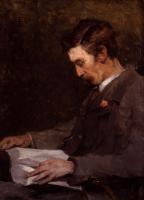
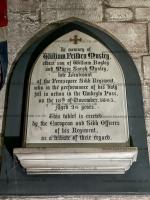
On 18th November 1863 Lieutenant William Feilden Mosley [aged 25] was killed in action at the Umbelya Pass during the campaign against the 'fanatics' at Malka, a colony of 'malcontents or bigoted muslims' in the Yusufzai country. Memorial at St Mary's Church, Rolleston on Dove [Map].
Lieutenant William Feilden Mosley: On 1st April 1838 he was born to William Bayley Mosley.
On 18th November 1865 Charles Henry Dillon 14th Viscount Dillon [aged 55] died. His brother Theobald [aged 54] succeeded 15th Viscount Dillon of Costello Gallen in Mayo.
Monument to Charles Henry Dillon 14th Viscount Dillon in All Saints Church, Spelsbury [Map] sculpted by Charles Francis Fuller [aged 36].
Charles Henry Dillon 14th Viscount Dillon: On 20th April 1810 he was born to Henry Augustus Dillon Lee 13th Viscount Dillon at Dublin [Map]. He a great x 4 grandson of King James II of England Scotland and Ireland.
Theobald Dominick Dillon 15th Viscount Dillon: In 1811 he was born to Henry Augustus Dillon Lee 13th Viscount Dillon. He a great x 4 grandson of King James II of England Scotland and Ireland. On 30th November 1879 Theobald Dominick Dillon 15th Viscount Dillon died. His brother Arthur succeeded 16th Viscount Dillon of Costello Gallen in Mayo.


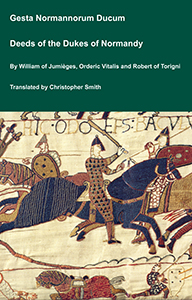
The Deeds of the Dukes of Normandy
The Gesta Normannorum Ducum [The Deeds of the Dukes of Normandy] is a landmark medieval chronicle tracing the rise and fall of the Norman dynasty from its early roots through the pivotal events surrounding the Norman Conquest of England. Originally penned in Latin by the monk William of Jumièges shortly before 1060 and later expanded at the behest of William the Conqueror, the work chronicles the deeds, politics, battles, and leadership of the Norman dukes, especially William’s own claim to the English throne. The narrative combines earlier historical sources with firsthand information and oral testimony to present an authoritative account of Normandy’s transformation from a Viking settlement into one of medieval Europe’s most powerful realms. William’s history emphasizes the legitimacy, military prowess, and governance of the Norman line, framing their expansion, including the conquest of England, as both divinely sanctioned and noble in purpose. Later chroniclers such as Orderic Vitalis and Robert of Torigni continued the history, extending the coverage into the 12th century, providing broader context on ducal rule and its impact. Today this classic work remains a foundational source for understanding Norman identity, medieval statesmanship, and the historical forces that reshaped England and Western Europe between 800AD and 1100AD.
Available at Amazon in eBook and Paperback format.
On 18th November 1873 John Yonge Akerman [aged 67] died.
On 18th November 1911 Alan Ian Percy 8th Duke Northumberland [aged 31] and Helen Gordon-Lennox Duchess Northumberland [aged 24] were married. She the daughter of Charles Gordon-Lennox 7th Duke Richmond [aged 65] and Isabel Sophie Craven. He the son of Henry George Percy 7th Duke Northumberland [aged 65] and Edith Campbell Duchess Northumberland [aged 62]. They were fifth cousins.


The London Gazette 30180. Downing Street, 12th July, 1917.
The King has been pleased to cause Letters Patent, dated 11th May, 1917, to be passed under the Great Seal of the United Kingdom, constituting the office of Governor-General and Commander-in-Chief of the Dominion of New Zealand, in substitution for Letters Patent dated 18th November, 1907, constituting the office of Governor and Commander-in-Chief of the said Dominion.
His Majesty has also been pleased to appoint the Right Honourable the Earl of Liverpool [aged 47], G.C.M.G., M.V.O., to be Governor-General and Commander-in-Chief of the Dominion of New Zealand
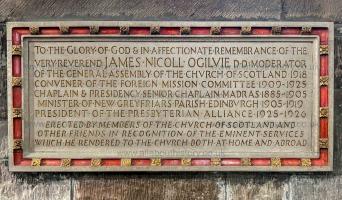
On 18th November 1917 Neil James Archibald Primrose [aged 34] died from wounds while leading his squadron of the 1/1st Royal Buckinghamshire Yeomanry against Turkish positions on the Abu Shusheh ridge during the Third Battle of Gaza. He was buried at the Ramleh Commonwealth War Graves Commission Cemetery at Ramla, in Israel. The inscription on his gravestone reads: He Lives By Love.
Memorial at the North Aisle, Edinburgh Cathedral [Map] commissioned by his father Archibald Philip Primrose 5th Earl Rosebery 1st Earl Midlothian [aged 70].
On 18th November 1926 Grace Bernal Duchess St Albans [aged 78] died.
On 18th November 1936 Alonso María Orléans Galliera [aged 24] died.
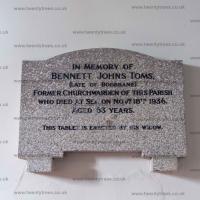
After 18th November 1936. St Cuby's Church, Duloe [Map]. Memorial to Bennett John Toms, Churchwarden, died at sea.
On 18th November 1954 Guy David Innes-Kerr 10th Duke Roxburghe was born to George Victor Robert John Innes-Kerr 9th Duke Roxburghe [aged 41] and Margaret Elizabeth Mcconnel Duchess Roxburghe [aged 35]. He married 10th September 1977 Jane Meriel Grosvenor Duchess Roxburghe, daughter of Robert George Grosvenor 5th Duke Westminster and Viola Maud Lyttelton Duchess Westminster.
On 18th November 1969 Joseph Patrick Kennedy [aged 81] died.
On 18th November 1584 Gaspar de Crayer was born to Gaspard de Crayer the Elder and Christina van Abshoven in Antwerp [Map]. His father was a decorative painter, illuminator and art dealer.
On 18th November 1662 Anne Élisabeth Bourbon was born to Louis "Sun King" XIV King France [aged 24] and Maria Theresa of Spain Queen Consort France [aged 24]. Coefficient of inbreeding 17.28%. She died aged less than one years old.
On 18th November 1668 Frederick William Oldenburg I Duke Schleswig Holstein Sonderburg Augustenburg was born to Ernest Günther Oldenburg I Duke Schleswig Holstein Sonderburg Augustenburg [aged 59] and Auguste Oldenburg Duchess Schleswig Holstein Sonderburg Augustenburg [aged 35]. Coefficient of inbreeding 6.27%.
On 18th November 1668 Frederick William Oldenburg was born to Ernest Günther Oldenburg I Duke Schleswig Holstein Sonderburg Augustenburg [aged 59] and Auguste Oldenburg Duchess Schleswig Holstein Sonderburg Augustenburg [aged 35]. Coefficient of inbreeding 6.27%.
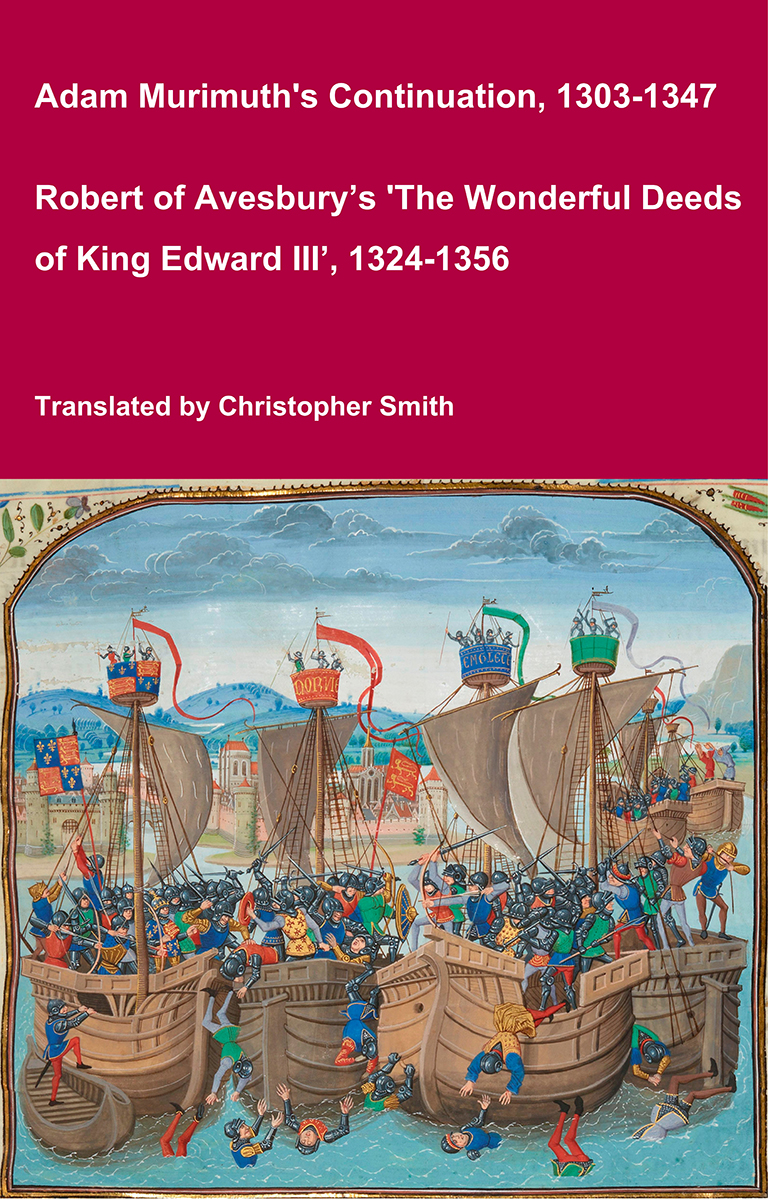
Adam Murimuth's Continuation and Robert of Avesbury’s 'The Wonderful Deeds of King Edward III'
This volume brings together two of the most important contemporary chronicles for the reign of Edward III and the opening phases of the Hundred Years’ War. Written in Latin by English clerical observers, these texts provide a vivid and authoritative window into the political, diplomatic, and military history of fourteenth-century England and its continental ambitions. Adam Murimuth Continuatio's Chronicarum continues an earlier chronicle into the mid-fourteenth century, offering concise but valuable notices on royal policy, foreign relations, and ecclesiastical affairs. Its annalistic structure makes it especially useful for establishing chronology and tracing the development of events year by year. Complementing it, Robert of Avesbury’s De gestis mirabilibus regis Edwardi tertii is a rich documentary chronicle preserving letters, treaties, and official records alongside narrative passages. It is an indispensable source for understanding Edward III’s claim to the French crown, the conduct of war, and the mechanisms of medieval diplomacy. Together, these works offer scholars, students, and enthusiasts a reliable and unembellished account of a transformative period in English and European history. Essential for anyone interested in medieval chronicles, the Hundred Years’ War, or the reign of Edward III.
Available at Amazon in eBook and Paperback format.

On 18th November 1709 Henry Loftus 1st Earl of Ely was born to Nicholas Loftus 1st Viscount Loftus [aged 22] and Anne Ponsonby. He married 1745 Frances Monroe Countess of Ely.

On 18th November 1745 Thomas Noel 2nd Viscount Wentworth was born to Edward Noel 1st Viscount Wentworth [aged 30]. He married 2nd February 1788 Mary Henley Countess Ligonier, daughter of Robert Henley 1st Earl Northington and Jane Huband.
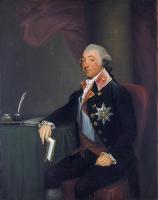
On 18th November 1757 Thomas Taylour 1st Marquess of Headfort was born to Thomas Taylour 1st Earl of Bective [aged 33] and Jane Rowley [aged 23]. He married 5th December 1778 Mary Quin Marchioness of Headfort and had issue.
On 18th November 1761 Frances Whichcote was born to Christopher Whichcote 4th Baronet [aged 23]. She married William Manners.
On 18th November 1769 Bishop William Carey was born.
On 18th November 1778 William Stuart was born to John Stuart 1st Marquis of the Isle of Bute [aged 34] and Charlotte Jane Windsor Marchioness Bute [aged 32].


On 18th November 1794 Lionel Tollemache 8th Earl Dysart was born to William Manners aka Tollemache 1st Baronet [aged 28] and Catherine Rebecca Gray Lady Manners [aged 28]. He married 1819 Maria Elizabeth Toone Countess Dysart and had issue.

On 18th November 1813 Cecil Brooke Boothby was born to William Boothby 8th Baronet [aged 31] and Frances Jenkinson Lady Boothby.
On 18th November 1820 Luise Glücksburg was born to Friedrich Wilhelm Glücksburg Duke Schleswig Holstein Sonderburg Glücksburg [aged 35] and Louise Caroline Hesse-Kassel Duchess Schleswig Holstein Sonderburg Glücksburg [aged 31]. She a great x 2 granddaughter of King George II of Great Britain and Ireland.
On 18th November 1835 Emma Harriet Wilson 12th Baroness Berners was born to Reverend Robert Wilson [aged 34] and Harriet Crump. Coefficient of inbreeding 6.25%. She married 3rd November 1853 Henry Thomas Tyrwhitt-Jones 3rd Baronet, son of Thomas Tyrwhitt-Jones 2nd Baronet, and had issue.
On 18th November 1846 Henry Northcote 1st Baron Northcote was born to Stafford Henry Northcote 1st Earl Iddesleigh [aged 28] and Cecilia Frances Farrer Countess Iddesleigh.
On 18th November 1857 Stanhope Forbes was born to William Forbes and Juliette de Guise in Dublin. He married 1915 Maudie Palmer.

On 18th November 1888 Richard Legh 3rd Baron Newton was born to Thomas Wodehouse Leigh 2nd Baron Newton [aged 31] and Evelyn Caroline Davenport Baroness Newton. He married 28th January 1914 Helen Meysey-Thompson Baroness Newton, daughter of Henry Meysey-Thompson 1st Baron Knaresborough and Ethel Adeline Pottinger Baroness Knaresborough, and had issue.
The History of William Marshal was commissioned by his son shortly after William’s death in 1219 to celebrate the Marshal’s remarkable life; it is an authentic, contemporary voice. The manuscript was discovered in 1861 by French historian Paul Meyer. Meyer published the manuscript in its original Anglo-French in 1891 in two books. This book is a line by line translation of the first of Meyer’s books; lines 1-10152. Book 1 of the History begins in 1139 and ends in 1194. It describes the events of the Anarchy, the role of William’s father John, John’s marriages, William’s childhood, his role as a hostage at the siege of Newbury, his injury and imprisonment in Poitou where he met Eleanor of Aquitaine and his life as a knight errant. It continues with the accusation against him of an improper relationship with Margaret, wife of Henry the Young King, his exile, and return, the death of Henry the Young King, the rebellion of Richard, the future King Richard I, war with France, the death of King Henry II, and the capture of King Richard, and the rebellion of John, the future King John. It ends with the release of King Richard and the death of John Marshal.
Available at Amazon in eBook and Paperback format.
On 18th November 1907 William James Harris 6th Earl Malmesbury was born to James Edward Harris 5th Earl Malmesbury [aged 34] and Dorothy Gough-Calthorpe Countess of Malmesbury [aged 22]. He married 7th July 1932 Diana Claudia Carleton Countess of Malmesbury, daughter of Dudley Pigott aka Carleton 2nd Baron Dorchester, and had issue.
On 18th November 1954 Guy David Innes-Kerr 10th Duke Roxburghe was born to George Victor Robert John Innes-Kerr 9th Duke Roxburghe [aged 41] and Margaret Elizabeth Mcconnel Duchess Roxburghe [aged 35]. He married 10th September 1977 Jane Meriel Grosvenor Duchess Roxburghe, daughter of Robert George Grosvenor 5th Duke Westminster and Viola Maud Lyttelton Duchess Westminster.
On 18th November 1955 William Henry Smith 5th Viscount Hambleden was born to William Smith 4th Viscount Hambleden [aged 25].
On 18th November 1964 Nicholas Timothy Knatchbull was born to John Knatchbull 7th Baron Brabourne [aged 40] and Patricia Mountbatten 2nd Countess Mountbatten of Burma [aged 40]. He a great x 3 grandson of Queen Victoria of the United Kingdom.
On 18th November 1356 Piers Mauley 4th Baron de Mauley [aged 25] and Elizabeth Meinhill Baroness Darcy Knayth and Haversham [aged 25] were married. She by marriage Baroness Haversham. They were second cousin once removed. He a great x 5 grandson of King Henry "Curtmantle" II of England.
On 18th November 1561 Thomas Wharton 1st Baron Wharton [aged 66] and Anne Talbot Baroness Braye and Wharton [aged 37] were married. She by marriage Baroness Wharton. The difference in their ages was 29 years. She the daughter of Francis Talbot 5th Earl of Shrewsbury and Mary Dacre.
On 18th November 1657 Thomas Belasyse 1st Earl Fauconberg [aged 30] and Mary Cromwell Countess Fauconberg [aged 20] were married. She by marriage Viscountess Faunconberg. She the daughter of Oliver Cromwell [aged 58] and Elizabeth Bourchier [aged 59].


On 18th November 1781 Heneage Finch 4th Earl Aylesford [aged 30] and Louisa Thynne Countess Aylesford [aged 21] were married. She by marriage Countess Aylesford. She the daughter of Thomas Thynne 1st Marquess of Bath [aged 47] and Elizabeth Bentinck Marchioness Bath [aged 46]. He the son of Heneage Finch 3rd Earl Aylesford and Charlotte Seymour Countess Aylesford [aged 51].
On 18th November 1794 Charles Grey 2nd Earl Grey [aged 30] and Mary Elizabeth Ponsonby Countess Grey [aged 18] were married. She the daughter of William Ponsonby 1st Baron Ponsonby of Imokilly in County Cork [aged 50] and Louisa Molesworth Countess Fitzwilliam [aged 45]. He the son of Charles Grey 1st Earl Grey [aged 65] and Elizabeth Grey Countess Grey [aged 50].


On 18th November 1798 Nathaniel Curzon 2nd Baron Scarsdale [aged 46] and Félicité Anne Josephe de Wattines Lady Scarsdale [aged 33] were married.


On 18th November 1809 Henry Vane 2nd Duke Cleveland [aged 21] and Sophia Paulett Duchess of Cleveland [aged 24] were married at St George's Church, Hanover Square. She the daughter of John Paulett 4th Earl Paulett [aged 53] and Sophia Pocock Countess Paulett. He the son of William Henry Vane 1st Duke Cleveland [aged 43] and Catharine Margaret Powlett Countess Darlington.
On 18th November 1826 Francis Dugdale Astley 2nd Baronet [aged 21] and Emma Dorothea Lethbridge Lady Astley were married.
On 18th November 1835 Colonel John Sydney North [aged 31] and Susan North 10th Baroness North [aged 38] were married. She the daughter of George Augustus North 3rd Earl Guildford and Susan Coutts Countess Guildford [aged 65].
On 18th November 1841 Francis Wheler 10th Baronet [aged 40] and Elizabeth Bishop Lady Wheler were married at Lucknow.
On 18th November 1863 William Tate 2nd Baronet [aged 21] and Caroline Glasgow Lady Tate were married.
On 18th November 1911 Alan Ian Percy 8th Duke Northumberland [aged 31] and Helen Gordon-Lennox Duchess Northumberland [aged 24] were married. She the daughter of Charles Gordon-Lennox 7th Duke Richmond [aged 65] and Isabel Sophie Craven. He the son of Henry George Percy 7th Duke Northumberland [aged 65] and Edith Campbell Duchess Northumberland [aged 62]. They were fifth cousins.
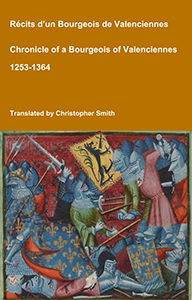
Chronicle of a Bourgeois of Valenciennes
Récits d’un bourgeois de Valenciennes aka The Chronicle of a Bourgeois of Valenciennes is a vivid 14th-century vernacular chronicle written by an anonymous urban chronicler from Valenciennes in the County of Hainaut. It survives in a manuscript that describes local and regional history from about 1253 to 1366, blending chronology, narrative episodes, and eyewitness-style accounts of political, military, and social events in medieval France, Flanders, and the Low Countries. The work begins with a chronological framework of events affecting Valenciennes and its region under rulers such as King Philip VI of France and the shifting allegiances of local nobility. It includes accounts of conflicts, sieges, diplomatic manoeuvres, and the impact of broader struggles like the Hundred Years’ War on urban life in Hainaut. Written from the perspective of a burgher (bourgeois) rather than a monastery or royal court, the chronicle offers a rare lay viewpoint on high politics and warfare, reflecting how merchants, townspeople, and civic institutions experienced the turbulence of the 13th and 14th centuries. Its narrative style combines straightforward reporting of events with moral and civic observations, making it a valuable source for readers interested in medieval urban society, regional politics, and the lived experience of war and governance in pre-modern Europe.
Available at Amazon in eBook and Paperback format.

On 18th November 1931 Albert Holden Illingworth 1st Baron Illingworth [aged 66] and Margaret Wilberforce Baroness Illingworth [aged 30] were married. She by marriage Baroness Illingworth of Denton in Yorkshire. The difference in their ages was 35 years.
On 18th November 1100 Archbishop Thomas of Bayeux died.
On 18th November 1184 Bishop Jocelin de Bohun [aged 73] died.
On 18th November 1305 John II Duke Brittany [aged 66] died. His son Arthur [aged 44] succeeded 3rd Duke Brittany 1221 Dreux.
On 18th November 1313 Constance Burgundy Queen Consort Castile Queen Consort Leon [aged 23] died.
On 18th November 1341 Eleanor Beauchamp Baroness Fitzwarin [aged 63] died at Thornbury, Gloucestershire.
On 18th November 1401 Thomas Ughtred 2nd Baron Ughtred [aged 76] died. His grandson Thomas [aged 17] succeeded 3rd Baron Ughtred.
On 18th November 1463 John Wittelsbach IV Duke Bavaria [aged 26] died of plague. His brother Sigismund [aged 24] succeeded Duke Bavaria.
On 18th November 1559 Bishop Cuthbert Tunstall [aged 85] died in Lambeth Palace [Map].
On 18th November 1559 Bishop Ralph Baines [aged 55] died.
On 18th November 1563 William Dacre 3rd Baron Dacre Gilsland 7th Baron Greystoke [aged 70] died. His son Thomas [aged 36] succeeded 4th Baron Dacre Gilsland, 8th Baron Greystoke.
Chronicle of Geoffrey le Baker of Swinbroke
Baker was a secular clerk from Swinbroke, now Swinbrook, an Oxfordshire village two miles east of Burford. His Chronicle describes the events of the period 1303-1356: Gaveston, Bannockburn, Boroughbridge, the murder of King Edward II, the Scottish Wars, Sluys, Crécy, the Black Death, Winchelsea and Poitiers. To quote Herbert Bruce 'it possesses a vigorous and characteristic style, and its value for particular events between 1303 and 1356 has been recognised by its editor and by subsequent writers'. The book provides remarkable detail about the events it describes. Baker's text has been augmented with hundreds of notes, including extracts from other contemporary chronicles, such as the Annales Londonienses, Annales Paulini, Murimuth, Lanercost, Avesbury, Guisborough and Froissart to enrich the reader's understanding. The translation takes as its source the 'Chronicon Galfridi le Baker de Swynebroke' published in 1889, edited by Edward Maunde Thompson.
Available at Amazon in eBook and Paperback format.
On 18th November 1590 George Talbot 6th Earl of Shrewsbury [aged 62] died. He was buried at Sheffield Cathedral [Map]. His son Gilbert [aged 37] succeeded 7th Earl of Shrewsbury, 7th Earl Waterford, 12th Baron Furnivall, 16th Baron Strange Blackmere, 13th Baron Talbot. Mary Cavendish Countess Shrewsbury and Waterford [aged 34] by marriage Countess of Shrewsbury Countess Waterford.


On 18th November 1591 Elizabeth Stewart 2nd Countess Moray [aged 26] died.
On 18th November 1601 Agnes Howard Marchioness Winchester [aged 66] died.
On 18th November 1627 Frances Meautys Countess of Sussex [aged 42] died.
On 18th November 1691 John Brookes 1st Baronet [aged 55] died. He was buried at St Martin le Grand Church, York [Map]. His son James [aged 16] succeeded 2nd Baronet Brookes of York in Yorkshire.
On 18th November 1706 William Thomas 1st Baronet [aged 65] died. Baronet Thomas of Folkington in Sussex extinct.
On 18th November 1719 Compton Felton 5th Baronet [aged 69] died. Baronet Felton of Playford in Suffolk extinct.
On 9th November 1731 Love Dring Lady Reade [aged 76] died. She was buried on 18th November 1731 in the Brocket Chapel at St Etheldreda's Church, Hatfield [Map]; see monument here [Map].
On 18th November 1732 Bridget Gage Viscountess Fauconberg [aged 57] died.
On 18th November 1777 Thomas Foley 1st Baron Foley [aged 61] died. His son Thomas [aged 35] succeeded 2nd Baron Foley of Kidderminster in Worcestershire. Henrietta Stanhope Baroness Foley [aged 21] by marriage Baroness Foley of Kidderminster in Worcestershire.
Chronicle of a Bourgeois of Valenciennes
Récits d’un bourgeois de Valenciennes aka The Chronicle of a Bourgeois of Valenciennes is a vivid 14th-century vernacular chronicle written by an anonymous urban chronicler from Valenciennes in the County of Hainaut. It survives in a manuscript that describes local and regional history from about 1253 to 1366, blending chronology, narrative episodes, and eyewitness-style accounts of political, military, and social events in medieval France, Flanders, and the Low Countries. The work begins with a chronological framework of events affecting Valenciennes and its region under rulers such as King Philip VI of France and the shifting allegiances of local nobility. It includes accounts of conflicts, sieges, diplomatic manoeuvres, and the impact of broader struggles like the Hundred Years’ War on urban life in Hainaut. Written from the perspective of a burgher (bourgeois) rather than a monastery or royal court, the chronicle offers a rare lay viewpoint on high politics and warfare, reflecting how merchants, townspeople, and civic institutions experienced the turbulence of the 13th and 14th centuries. Its narrative style combines straightforward reporting of events with moral and civic observations, making it a valuable source for readers interested in medieval urban society, regional politics, and the lived experience of war and governance in pre-modern Europe.
Available at Amazon in eBook and Paperback format.
On 18th November 1785 Louis Philippe "The Fat" Bourbon I Duke Orléans [aged 60] died. His son Louis [aged 38] succeeded II Duke Orléans.
On 18th November 1806 John Mordaunt 7th Baronet [aged 72] died. His son Charles [aged 35] succeeded 8th Baronet Mordaunt of Massingham Parva.
On 18th November 1822 Anne Brown Lady Trelawny died.
On 18th November 1834 Philip Yorke 3rd Earl of Hardwicke [aged 77] died. He was buried in St Andrew's Church, Wimpole [Map]. His nephew Charles [aged 35] succeeded 4th Earl Hardwicke, 4th Viscount Royston. Susan Liddell Countess Hardwicke [aged 24] by marriage Countess Hardwicke.
On 18th November 1835 Captain John Edmund George Parker 4th Baronet [aged 46] died. His brother Charles [aged 43] succeeded 5th Baronet Parker of Bassingbourn in Essex.

On 18th November 1835 George Charles Venables-Vernon 4th Baron Vernon [aged 55] died. His son George [aged 32] succeeded 5th Baron Vernon of Kinderton in Cheshire.
On 18th November 1839 Hans Blackwood 3rd Baron Dufferin and Claneboye of Ballyleidy and Killyleagh in County Down [aged 81] died. His son Price [aged 45] succeeded 4th Baron Dufferin and Claneboye of Ballyleidy and Killyleagh in County Down, 5th Baronet Blackwood of Killyleagh in County Down.
On 18th November 1851 Ernest Augustus King Hanover [aged 80] died. His son George [aged 32] succeeded V King Hanover, 2nd Duke Cumberland and Teviotdale. Marie Saxe Altenburg Queen Consort Hanover by marriage Queen Consort Hanover.
On 18th November 1851 John Cope 11th Baronet [aged 83] died without issue. His fifth cousin once removed William [aged 40] succeeded 12th Baronet Cope of Hanwell in Oxfordshire.
On 18th November 1852 Louisa Duncombe Countess Eldon [aged 45] died.
On 18th November 1858 Barbara Yelverton Marchioness Hastings [aged 48] died.
William of Worcester's Chronicle of England
William of Worcester, born around 1415, and died around 1482 was secretary to John Fastolf, the renowned soldier of the Hundred Years War, during which time he collected documents, letters, and wrote a record of events. Following their return to England in 1440 William was witness to major events. Twice in his chronicle he uses the first person: 1. when writing about the murder of Thomas, 7th Baron Scales, in 1460, he writes '… and I saw him lying naked in the cemetery near the porch of the church of St. Mary Overie in Southwark …' and 2. describing King Edward IV's entry into London in 1461 he writes '… proclaimed that all the people themselves were to recognize and acknowledge Edward as king. I was present and heard this, and immediately went down with them into the city'. William’s Chronicle is rich in detail. It is the source of much information about the Wars of the Roses, including the term 'Diabolical Marriage' to describe the marriage of Queen Elizabeth Woodville’s brother John’s marriage to Katherine, Dowager Duchess of Norfolk, he aged twenty, she sixty-five or more, and the story about a paper crown being placed in mockery on the severed head of Richard, 3rd Duke of York.
Available at Amazon in eBook and Paperback format.
On 18th November 1861 Charlotte Stuart Countess Canning [aged 44] died at Calcutta, India in the arms of her husband Charles Canning 1st Earl Canning [aged 48].


On 18th November 1864 Theodosia Harriett Elizabeth Vyner [aged 30] died.
On 18th November 1865 Charles Henry Dillon 14th Viscount Dillon [aged 55] died. His brother Theobald [aged 54] succeeded 15th Viscount Dillon of Costello Gallen in Mayo.
Monument to Charles Henry Dillon 14th Viscount Dillon in All Saints Church, Spelsbury [Map] sculpted by Charles Francis Fuller [aged 36].
Charles Henry Dillon 14th Viscount Dillon: On 20th April 1810 he was born to Henry Augustus Dillon Lee 13th Viscount Dillon at Dublin [Map]. He a great x 4 grandson of King James II of England Scotland and Ireland.
Theobald Dominick Dillon 15th Viscount Dillon: In 1811 he was born to Henry Augustus Dillon Lee 13th Viscount Dillon. He a great x 4 grandson of King James II of England Scotland and Ireland. On 30th November 1879 Theobald Dominick Dillon 15th Viscount Dillon died. His brother Arthur succeeded 16th Viscount Dillon of Costello Gallen in Mayo.
On 18th November 1873 John Yonge Akerman [aged 67] died.
On 18th November 1888 William Courtenay 11th Earl Devon [aged 81] died at Powderham Castle [Map]. His son Edward [aged 52] succeeded 12th Earl Devon.
On 18th November 1893 Robert Grosvenor 1st Baron Ebury [aged 92] died. His son Robert [aged 59] succeeded 2nd Baron Ebury.
On 18th or 30th November 1897 Dudley Wilmot Carleton 4th Baron Dorchester [aged 75] died. Baron Dorchester of Dorchester in Oxfordshire extinct.
On 18th November 1918 William Vavasour 3rd Baronet [aged 71] died. His son Leonard [aged 37] succeeded 4th Baronet Vavasour of Hazlewood in Yorkshire.
On 18th November 1923 Henry Cusack Hawyley 6th Baronet [aged 46] died. His nephew David [aged 10] succeeded 7th Baronet Hawley of Leybourne Grange in Kent.
On 18th November 1926 Grace Bernal Duchess St Albans [aged 78] died.

Anne Boleyn. Her Life as told by Lancelot de Carle's 1536 Letter.
In 1536, two weeks after the execution of Anne Boleyn, her brother George and four others, Lancelot du Carle, wrote an extraordinary letter that described Anne's life, and her trial and execution, to which he was a witness. This book presents a new translation of that letter, with additional material from other contemporary sources such as Letters, Hall's and Wriothesley's Chronicles, the pamphlets of Wynkyn the Worde, the Memorial of George Constantyne, the Portuguese Letter and the Baga de Secrets, all of which are provided in Appendices.
Available at Amazon in eBook and Paperback format.

On 18th November 1928 Pamela Wyndham Viscountess Grey [aged 57] died.
On 18th November 1960 Robert Southwell 6th Viscount Southwell [aged 62] died. His nephew Pyers [aged 30] succeeded 7th Viscount Southwell of Castle Matress in Limerick, 9th Baron Southwell of Castle Mattress in Limerick, 10th Baronet Southwell of Castle Matress.
On 18th November 1967 Henry Hotham 7th Baron Hotham [aged 68] died. His son Henry [aged 27] succeeded 8th Baron Hotham of South Dalton in Yorkshire, 18th Baronet Hotham of Scorborough in Yorkshire.
On 18th November 1969 Joseph Patrick Kennedy [aged 81] died.
On 18th November 1976 Christopher Addison 2nd Viscount Addison [aged 71] died. His brother Michael [aged 62] succeeded 3rd Viscount Addison of Stallingborough in Lincolnshire, 3rd Baron Addison of Stallingborough in Lincolnshire.
On 18th November 1985 George James Augustine Prévost 5th Baronet [aged 75] died. His son Christoper [aged 50] succeeded 6th Baronet Prevost of Belmont in Hampshire.
On 18th November 2015 John Henry Kilian Brunner 4th Baronet [aged 88] died in Melbourne, Victoria, Australia. His son Nicholas [aged 55] succeeded 5th Baronet Brunner of Druids Cross in Lancashire.