

20 Dec is in December.
On 20th December 910 Alfonso "Great" III King Asturias [aged 62] died. His son García [aged 39] succeeded I King Leon. His son Fruela [aged 35] succeeded II King Asturias. His son Ordoño [aged 37] succeeded II King Galicia.
Chronicle of William Nangis. On the thirteenth day before the Kalends of January [20th December 1118], in the first hour of the night, fiery lines appeared in the sky from the north toward the east; then, scattered across the whole sky, they were for a great part of the night a marvel and astonishment to those who saw them.
Tercio decimo kalendas januarii, prima hora noctis, igneae acies a septentrione in orientem in coelo apparuerunt; deinde per totum coelum sparsae, plurima noctis parte videntibus miraculo et stupori fuerunt.
Anglo-Saxon Chronicle. 20th December 1135, possibly 21st December. He [Stephen de Blois [aged 41]] came to London, and the people of London received him, and sent after the Archbishop William Curboil [aged 65], and hallowed him to king on midwinter day.
Chronicon ex Chronicis by Florence and John of Worcester. 20th December 1135 ... and Stephen [aged 41], his sister's son, being elected to the kingdom of England, was consecrated king, by William [aged 65], archbishop of Canterbury, on the thirteenth of the calends of January [20th December], at London, where he held his court, at Christmas, surrounded by the nobles of England, with great courtesy and royal pomp.
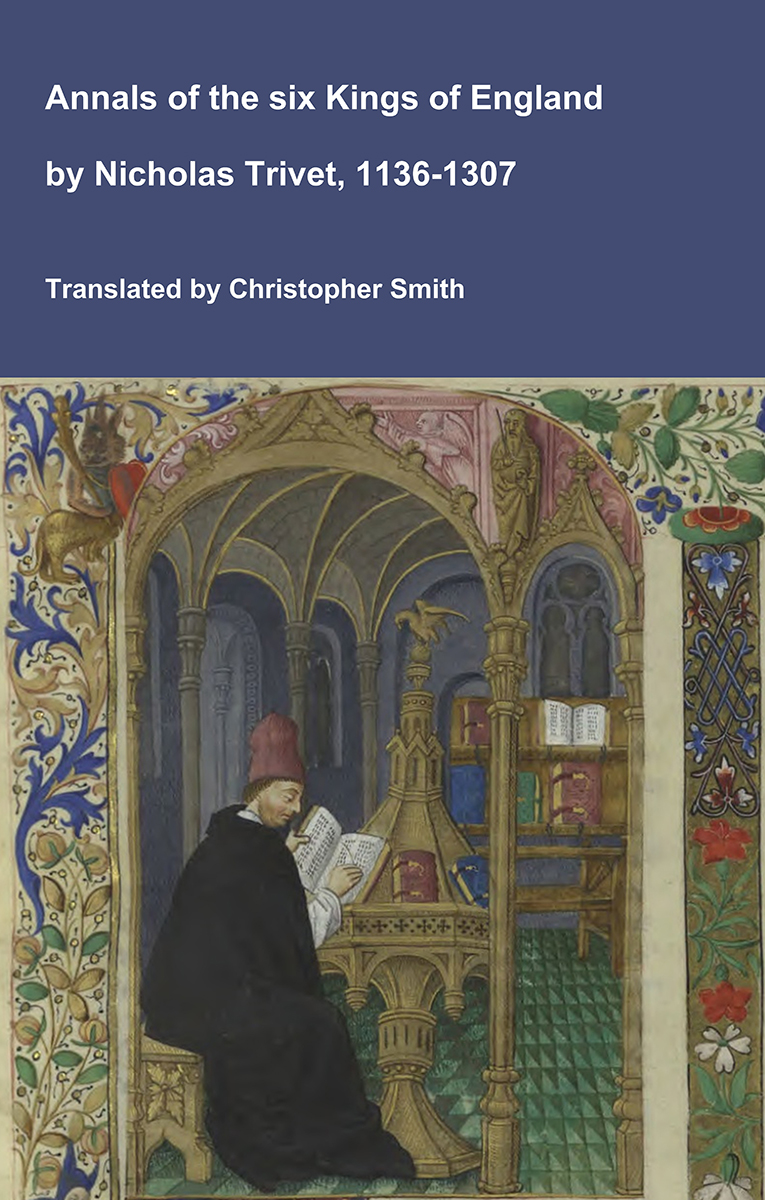 Annals of Six Kings of England by Nicholas Trivet. Meanwhile a ship for King Richard was prepared and all the necessities for his return were made ready. At that time he released ten of the more noble Turks in exchange for the ransom of William of Pratelles. On the feast of St Denis [9th October 1192] King Richard boarded his ships; and about the feast of St Martin [11th November], after a long tossing on the stormy sea and now weary of the voyage, he landed in the territory of the Byzantine Empire. But because he suspected the cunning of the emperor and of the Greeks, and did not wish to be recognized there, he made an agreement with some pirates whom he happened to find. After paying them the fare they demanded, he required them to carry him more quickly to a safer land. Leaving behind the royal fleet and changing his appearance so as to conceal that he was the king, he crossed with only four companions into Slavonia. From there, passing through Aquileia, he entered the land of Leopold, duke of Austria, and was captured in the city of Vienna on the thirteenth day before the Kalends of January [20th December 1192]. Duke Leopold, who hated him because of the death of the Marquis1, of which he suspected the king, threw him into prison. However, concerning that death, the prince of the Assassins, by whose men (as was mentioned above) the Marquis had been killed, cleared King Richard by a letter of the following kind.
Interea regis Ricardi navigium instruitur, et King omnia necessaria ad reditum præparantur. Tunc leaves the pro Willelmo de Pratellis redimendo, decem ex nobilioribus Turcis commutandos liberos dimisit. Die autem S. Dionysii Ricardus rex naves ascendit; et circa festum beati Martini ex diuturna tumultuantis pelagi jactatione, jam pertæsus navigationis, applicuit in terra imperii Constantinopolitani: verum quoniam suspectam habuit imperatoris et Græcorum suorum versutiam, nolens ibi videri, cum piratis forte inventis paciscens, dato quantum postulaverant naulo, exegit ab eis ut expeditius ipsum in terram commodiorem transveherent. Relicta igitur classe regia, habitu mutato se regem dissimulans, cum quatuor tantum sociis transvectus est Sclavoniam: inde pertransiens Aquileiam, cum intrasset terram Limpoldi ducis Austriæ, captus est in civitate Wienna decimotertio cal. Januarii; quem dux Limpoldus exosum habens pro morte Marchisi, de qua suspectum regem habebat, carceri mancipavit. hac tamen morte princeps Hassacenorum, a quibus (ut supra patuit) interfectus est Marchisus, regem Ricardum per litteras hujuscemodi excusavit:
Note 1. Namely, Conrad, marquis of Montferrat and prince of Tyre, whose cause Richard had espoused, the successful competitor for the throne of Jerusalem over Guy of Lusignan. The accusation alluded to in the text was preferred by the emperor, to whom Richard was sold for sixty thousand pounds of silver of Cologne weight; Roger of Wendover: 'King Richard remained a prisoner of the duke of Austria till that prince sold him to the Roman emperor for sixty thousand pounds of silver, Cologne weight, and then on the Tuesday after Palm Sunday he caused him to be carefully guarded; and that he might compel the king to pay an immoderate sum for his ransom, he ordered him to be imprisoned in Treves, from which prison no one who had entered there up to that time had ever come out again,... Into this place was the king put under a strong guard of soldiers and attendants, who accompanied him wherever he went with drawn swords, day and night, and even kept guard by turns round his couch, not allowing any of his own followers to remain with him at night. None of these circumstances could ever cloud the calm countenance of the king, but he always seemed cheerful and agreeable in his conversation, and brave and daring in his acts, as time, place, cause, or person required. To others I leave the relation of his jokes to his guards; how he made them drunk, and assaulted their huge persons by way of amusement.' The ruins of the castle of Tyernstein (now Dürrenstein) still exist as one of the most interesting features of the picturesque banks of the Danube, between Lintz and Vienna.
On 20th December 1292 King Edward I [aged 53] stayed at Horton Castle, Northumberland [Map] for one night when returning from adjudicating the claim to the Scottish throne. The landholder, Sir Guiscard de Charron, had used the occasion of Edwards's visit to ask for the necessary permission to fortify his manor house, that Edward was currently a guest in. The license to crenelate was granted one week later in Newcastle.
On 19 or 20th December 1327 Agnes Capet Duchess Burgundy [aged 67] died.
On 20th December 1340 John I Duke of Bavaria [aged 11] died.
On 20th December 1349 Archbishop Simon Islip was consecrated Archbishop of Canterbury.
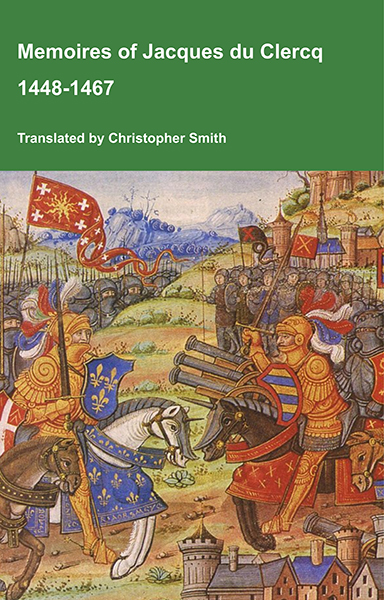 Memoires Jacques du Clercq. At that time, on the 20th day of December [1459], in the said town of Brussels, an ambassador sent by Charles, King of France, arrived before the Duke of Burgundy. The chief of this embassy was the Cardinal of Constance, together with others from the king's court. On the following day, the 21st the said month, the embassy had a public audience with the duke, and there the cardinal set forth what he had been charged to say before him. His address lasted a full two hours or more, in which, among other things, he told the duke that there were two reasons why the King of France was not well pleased with him, and was displeased. The first reason was that the duke had enticed his eldest son, named Louis, Dauphin of Vienne, to come to him, and that he was maintaining him in his lands against the will and consent of the king, although the king had several times requested that he be sent back to him. This greatly displeased the king.
En ce temps le xxe jour de decembre, en ladite ville de Bruxelles, arriva ung ambassadeur envoyé de par Charles roy de France, devers le duc de Bourgogne, dont estoit chef de ladite ambassade le cardinal de Constance et aultres gens de la cour du roy, et le lendemain xxje jour dudit mois olt ladite ambassade audience devers ledit duc publiquement, et illecq proposa ledit cardinal ce qu'il avoit de charge devant le duc, et dura sa proposition bien deux heures ou plus, en laquelle proposition entre aultres choses il dit au duc, qu'il y avoit deux choses, pourquoi le roy de France n'estoit pas du duc bien content, et lui en deplaisoit. La premiere chose estoit que le duc avoit seduit son aisné fils nommé Loys, daulphin de Vienne, de venir vers lui, lequel il soustenoit en ses pays contre le gré et la volonté du roy, jasoit ce que le roy lui olt plusieurs fois requeru qu'il lui renvoyat, laquelle chose deplaisoit moult au roy.
Annals of the six Kings of England by Nicholas Trivet
Translation of the Annals of the Six Kings of England by that traces the rise and rule of the Angevin aka Plantagenet dynasty from the mid-12th to early 14th century. Written by the Dominican scholar Nicholas Trivet, the work offers a vivid account of English history from the reign of King Stephen through to the death of King Edward I, blending political narrative with moral reflection. Covering the reigns of six monarchs—from Stephen to Edward I—the chronicle explores royal authority, rebellion, war, and the shifting balance between crown, church, and nobility. Trivet provides detailed insight into defining moments such as baronial conflicts, Anglo-French rivalry, and the consolidation of royal power under Edward I, whose reign he describes with particular immediacy. The Annals combines careful year-by-year reporting with thoughtful interpretation, presenting history not merely as a sequence of events but as a moral and political lesson. Ideal for readers interested in medieval history, kingship, and the origins of the English state, this chronicle remains a valuable and accessible window into the turbulent world of the Plantagenet kings.
Available at Amazon in eBook and Paperback format.
Memoires Jacques du Clercq. In the said year 1460, on Saturday the 20th day of December, in the town of Lille, Master Jean Chevrot, bishop of Tournai, died at the age of eighty years. He was a native of Burgundy and was one of the principal figures, together with the chancellor of Burgundy, serving as counsellor and governor to Philip, Duke of Burgundy. The said duke had long before made him bishop against the will of the King of France, who had caused the bishopric to be granted to a noble cleric surnamed de Harcourt, a native of Normandy and a relative of the Duke of Burgundy, who was already in possession of it. But the duke insisted that Chevrot should have it, although he was not of noble birth, and by force it was necessary for the said de Harcourt to leave Tournai and yield the bishopric to Chevrot, who held it for twenty-four years or more. After his death, his body, accompanied by more than two hundred horses, both of nobles and others, was carried in a litter covered with cloth of gold to the church of Notre-Dame of Tournai, where he was buried.
Audit an ive lx, par ung samedy xx jour de decembre, en la ville de Lille, mourut maitre Jehan Chevrot, evesque de Tournay, en l'age de iiijxx ans, natif de Bourgogne, lequel evesque estoit l'ung des principaux, avecq le chancellier de Bourgogne, conseiller et gouverneur de Philippe, duc de Bourgogne, et l'avoit icelluy duc, longtemps paravant fait evesque contre la volonté du roy de Franche, lequel roy avoit fait avoir l'evesquié a ung clercq noble homme surnommé de Harcourt, natif de Normandie et parent du duc de Bourgogne, et estoit en possession. Mais le duc voullut qu'icelluy Chevrot l'euist, combien qu'il ne fust pas noble, et convint par forche que ledit de Harcourt se partist de Tournay et laissa l'evesquié audit Chevrot, qui en fust xxiiije ou plus evesque, après la mort duquel son corps accompagnié de plus de deux cens chevaulx, tant de nobles que d'aultres, fust porté en une litiere, couverte de drap d'or, en l'eglise de Notre Dame de Tournay, et illecq fust mis en terre.
Diary of Edward VI. 20th December 1550. Ther was apointed a band of horsmen divided amongest the nobles1, an 100 to the duke of Somerset. 50 to my lord marcus. ... to th'erle of Warwic. ... North(ampton). Lord prevy seal. Lord ma(rquess) Dorset [aged 33]. Mr. Herbert. Erl of Wilt(shire). Mr. treasaurour. Lord Wentworth. (To the lord treasaurier, erased.) Lord admiral. Lord Paget. Mr. Sadelier. Mr. Darcy.
Note 1. On the 5th June following the council issued "a warraunt to (blank) to paie vC. li. to the duke of Somersett, the lord threasorer, the lord great master, the lord privie seale, the lord great chamberlayn, the lord wardein, and the master of t'horse,for the intertayne- ment of c. men at armes, due for one quarter's waieges at Midsomer next. And cc. li. a piece to th'erle of Huntington, th'erle of Rutlande, the lord admyrall, the lord chamberlayn, the lord Cobham, and the lord Pagett, for their quarter's entertaynement ended at Midsomer next. Whiche amounteth in th'ole to the some of vM1. li." So that the total cost of this "band of horsemen" was 20,000l. per annum.
Wriothesley's Chronicle [1508-1562]. 20th December 1551. The 20 of December, beinge Sonday, in the afternone Doctor Dunstall [aged 77], Bishop of Durham, which had lyen longe at his place by Coldharber, in Thames Streete, was had to the Tower of London [Map].
Chronicle of Greyfriars. 20th December 1551. Item the xxth day of December was sorne [sworn] the byshoppe of Ely lorde [chancellor of Engla]nd.
Item that same day was the muster of the dewke of Somersettes servanttes before [the king at] Totylle [Map] also.
Item the same day was comytted unto the tower [Map] the byshopp [of Dur]hame Cudberte Tunstalle [aged 77].
Henry Machyn's Diary. 20th December 1556. [The xx day of December the Queen [aged 40] rode in her chariot through the park from] Santt James unto the galere, and so [took] her barge unto Westmynster, and landyd [at the palace,] and so in-to the abbay, and ther her grace hard [even song], and my lord cardenalle [aged 56] and my lord Montyguw [aged 28], [and my] lord Darse of Essex [aged 59] dyd bere the sword a-for [her grace], and my lade Montyguw [aged 18] bare up the quen ['s train].



Henry Machyn's Diary. 20th December 1559. The xx day of Desember a-for non, was sant Thomas evyn, my lord of Canturbere [aged 55] whent to Bow chyrche and ther wher v nuw byshopes mad.1559 Return of the Marian Exiles
Note. P. 220. New bishops made. A tabular list of the new bishops will be found in Strype, Annals, i. 157.
Henry Machyn's Diary. 20th December 1561. The xx day of Desember my lade the contes of Bayth [deceased] ded at here plase at Nuwhyngtun, late the wyff of ser Thomas Kyttsun and to ser Recherd Longe and wyff to the yerle of Bayth latt dissessyd, and she had a vj baners-rolles and a gret baner of armes and a x dosen of skochyons and vj of sylke.
Henry Machyn's Diary. 20th December 1562. The xx day of Desember was bered my lord Gr[ey of Wilton] [deceased] knyght of the Garter, sum-tyme capten of Gynes, and bered [at] (blank) with a herse garnyssed with velvett and blake and armes, [with four] haroldes of armes, master Garter [aged 52] prensepalle, and master Norrey kyng at armes [aged 64], [Chest] ur harold [aged 27] and Ruge-dragon, and ther was a xx clark [es syng]yng all the way, furst ij porters in blake with blake sta[ffs and] in gownes, and then the standard borne, and then mo .... the grett baner of ys armes, and then the harold [bearing the] helmett and crest, and a-nodur the targett and the sword, and a-nodur [the coat armour;] then master Garter, and then the corse, with a ryche palle; and .... of ys men bayryng ytt; and iiij grett banar-rolles of m[arriages;] after the cheyffe mornars and after mony mornars, and th[ere did prea]che master (blank); and ther was iij dosen of bokeram skochyons of armes, and viij dosen of penselles to garnys the herse, and ... grett skochyons of pastyd paper, and the chyrche hangyd with blake and armes, and a viij dosen of skochyons of armes; and after a[ll done at] the berehyng all they when(t) bake agayne unto master de[an's] plase to dener, for ther was a nobull dener as [has] bene sene for venesun and wyld fulle.
Note. P. 297. Funeral of William lord Grey of Wilton, K.G. The circumstancial account of this ceremonial, drawn up by one of the attendant heralds, is appended to the "Commentarie of the Services" of this nobleman, in the volume edited for the Camden Society by Sir Philip Grey Egerton, Bart. The church (left blank in p. 298,) was Cheshunt, co. Hertford; the preacher was Michael Reniger; and in line 17, for "master de[an's] plase," read "master De[nny's] plase."

On 20th December 1583 Edward Arden [aged 50] was hanged, drawn and quartered at Smithfield [Map] for having plotted against Queen Elizabeth I of England and Ireland [aged 50] with his son-in-law John Somerville [deceased] who had implicated him during torture. He was tried by Christopher Wray [aged 59].
On 19th December 1583 John Somerville committed suicide by hanging himself in his cell.
The heads of John Somerville and Edward Arden were set on London Bridge [Map] next to the head of the Gerald Fitzgerald 14th Earl Desmond [deceased].
Annales by William Camden 1583. [20th December 1583] 20. On the other side some Papists bookes against the Queene and Princes excommunicate drew some which had the Popes power in great reverence for their obedience, and amongst others they so distracted one Somervill [deceased], a gentilman, that in haste he undertooke a journey privily to the Queenes Court, and breathing nothing but blood against the Protestants, he furiously set upon one or two by the way with his sword drawne. Being apprehended, hee professed that hee would have killed the Queene with his owne hands. Whereupon he, and by his appeachment Edward Ardern [aged 50] his wives father, a man of very ancient gentility in the County of Warwicke, Ardern's wife, their daughter Somervill, and Hall a Priest, as accessaries, were arrraigned and condemned. After three daies Somervill was found strangled in prison; Arderne, being condemned, was the next day after hanged and quartered; the woman and the Priest were spared. This woefull end of this gentleman, who was drawne in by the cunning of the Priest and cast by his own testimony, was commonly imputed to Leicesters [aged 51] malice. For certaine it is that hee had incurred Leicesters heavie displeasure, and not without cause, against whom hee had rashly opposed himselfe in all hee could, had reproached him as an adulterer, and detracted him as a new upstart.


On 20th December 1644 Albert IV Wettin IV Duke Saxe Weimar [aged 45] died at Eisenach. His brother Ernest [aged 42] succeeded I Duke Saxe Gotha.
On 20th December 1661 Bishop Nicholas Monck [deceased] was buried at the Chapel of St Edmund, Westminster Abbey [Map].
John Evelyn's Diary. 20th December 1661. The Bishop of Gloucester [aged 70] preached at the Abbey [Map] at the funeral of the Bishop of Hereford [deceased], brother to the Duke of Albemarle [aged 53]. It was a decent solemnity. There was a silver miter, with episcopal robes, borne by the herald before the hearse, which was followed by the Duke his brother, and all the bishops, with divers noblemen.


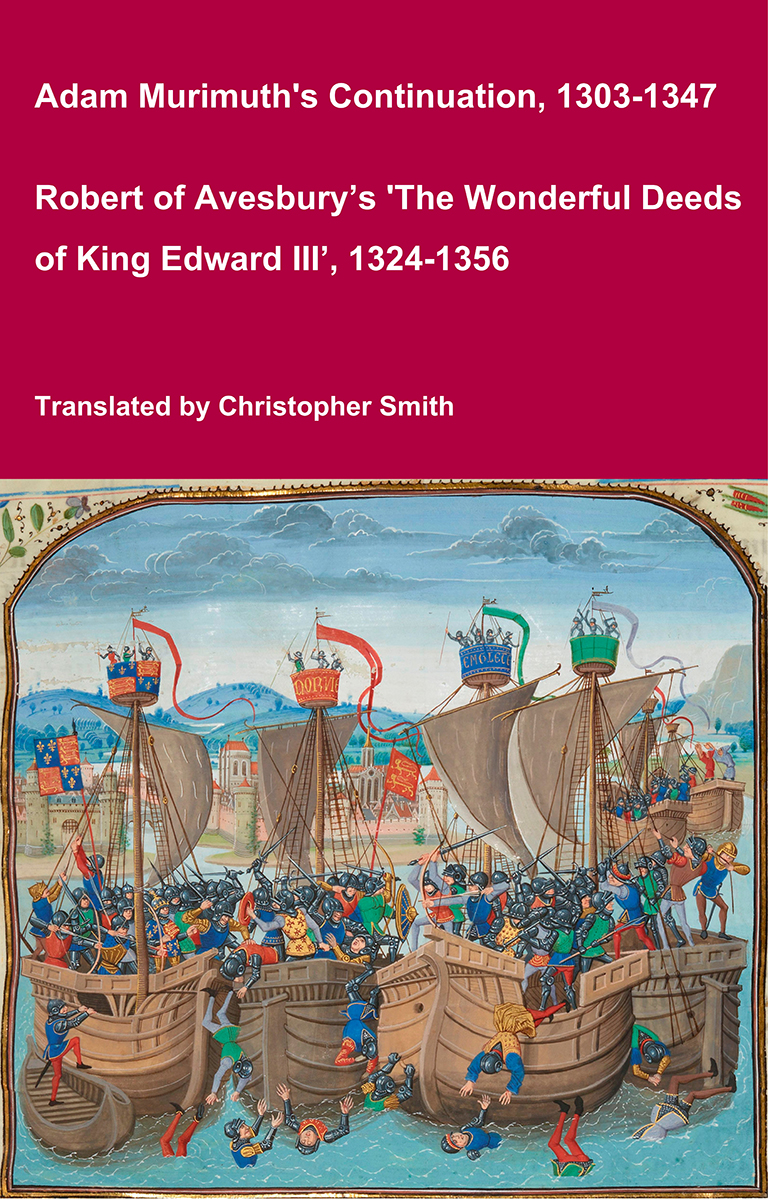
Adam Murimuth's Continuation and Robert of Avesbury’s 'The Wonderful Deeds of King Edward III'
This volume brings together two of the most important contemporary chronicles for the reign of Edward III and the opening phases of the Hundred Years’ War. Written in Latin by English clerical observers, these texts provide a vivid and authoritative window into the political, diplomatic, and military history of fourteenth-century England and its continental ambitions. Adam Murimuth Continuatio's Chronicarum continues an earlier chronicle into the mid-fourteenth century, offering concise but valuable notices on royal policy, foreign relations, and ecclesiastical affairs. Its annalistic structure makes it especially useful for establishing chronology and tracing the development of events year by year. Complementing it, Robert of Avesbury’s De gestis mirabilibus regis Edwardi tertii is a rich documentary chronicle preserving letters, treaties, and official records alongside narrative passages. It is an indispensable source for understanding Edward III’s claim to the French crown, the conduct of war, and the mechanisms of medieval diplomacy. Together, these works offer scholars, students, and enthusiasts a reliable and unembellished account of a transformative period in English and European history. Essential for anyone interested in medieval chronicles, the Hundred Years’ War, or the reign of Edward III.
Available at Amazon in eBook and Paperback format.
Samuel Pepys' Diary. 20th December 1662. So to the office, and thence with Mr. Coventry [aged 34] in his coach to St. James's, with great content and pride to see him treat me so friendly; and dined with him, and so to White Hall together; where we met upon the Tangier Commission, and discoursed many things thereon; but little will be done before my Lord Rutherford comes there, as to the fortification or Mole. That done, my Lord Sandwich [aged 37] and I walked together a good while in the Matted Gallery, he acquainting me with his late enquiries into the Wardrobe business to his content; and tells me how things stand. And that the first year was worth about £3000 to him, and the next about as much; so that at this day, if he were paid, it will be worth about £7000 to him. But it contents me above all things to see him trust me as his confidant: so I bid him good night, he being to go into the country, to keep his Christmas, on Monday next. So by coach home and to my office, being post night, and then home and to bed.


John Evelyn's Diary. 20th December 1664. To London, our last sitting, taking order for our personal visiting our several districts. I dined at Captain Cocke's (our treasurer), with that most ingenious gentleman, Matthew Wren [aged 35], son to the Bishop of Ely [aged 79], and Mr. Joseph Williamson, since Secretary of State.
Samuel Pepys' Diary. 20th December 1665. After dinner I to the Exchange [Map] to see whether my pretty seamstress be come again or no, and I find she is, so I to her, saluted her over her counter in the open Exchange [Map] above, and mightily joyed to see her, poor pretty woman! I must confess I think her a great beauty. After laying out a little money there for two pair of thread stockings, cost 8s., I to Lombard Street [Map] to see some business to-night there at the goldsmith's, among others paying in £1258 to Viner [aged 34] for my Lord Sandwich's [aged 40] use upon Cocke's [aged 48] account.

Samuel Pepys' Diary. 20th December 1665. So I away home, and was there sat up for to be spoken with my young Mrs. Daniel, to pray me to speake for her husband to be a Lieutenant. I had the opportunity here of kissing her again and again, and did answer that I would be very willing to do him any kindnesse, and so parted, and I to bed, exceedingly pleased in all my matters of money this month or two, it having pleased God to bless me with several opportunities of good sums, and that I have them in effect all very well paid, or in my power to have. But two things trouble me; one, the sicknesse is increased above 80 this weeke (though in my owne parish not one has died, though six the last weeke); the other, most of all, which is, that I have so complexed an account for these last two months for variety of layings out upon Tangier [Map], occasions and variety of gettings that I have not made even with myself now these 3 or 4 months, which do trouble me mightily, finding that I shall hardly ever come to understand them thoroughly again, as I used to do my accounts when I was at home.
Samuel Pepys' Diary. 20th December 1665. Up, and was trimmed, but not time enough to save my Lord Bruncker's [aged 45] coach or Sir J. Minnes's [aged 66], and so was fain to walk to Lambeth, Surrey [Map] on foot, but it was a very fine frosty walke, and great pleasure in it, but troublesome getting over the River for ice. I to the Duke of Albemarle [aged 57], whither my brethren were all come, but I was not too late. There we sat in discourse upon our Navy business an houre, and thence in my Lord Bruncker's coach alone, he walking before (while I staid awhile talking with Sir G. Downing [aged 40] about the Act, in which he is horrid troublesome) to the Old Exchange [Map].

Samuel Pepys' Diary. 20th December 1667. At noon home to dinner, where my poor wife in bed in mighty pain, her left cheek so swelled as that we feared it would break, and so were fain to send for Mr. Hollier [aged 58], who come, and seems doubtful of the defluxions of humours that may spoil her face, if not timely cured. He laid a poultice to it and other directions, and so away, and I to the office, where on the same accounts very late, and did come pretty near a settlement.

John Evelyn's Diary. 20th December 1668. I dined with my Lord Cornbury, at Clarendon House, now bravely furnished, especially with the pictures of most of our ancient and modern wits, poets, philosophers, famous and learned Englishmen; which collection of the Chancellor's I much commended, and gave his Lordship a catalogue of more to be added.
John Evelyn's Diary. 20th December 1677. Carried to my Lord Treasurer [aged 45] an account of the Earl of Bristol's Library, at Wimbledon, which my Lord thought of purchasing, till I acquainted him that it was a very broken collection, consisting much in books of judicial astrology, romances, and trifles.


On 20th December 1680 Elisabeth Sophie Saxe Altenburg Duchess Saxe Gotha [aged 61] died.

John Evelyn's Diary. 20th December 1685. Dr Turner [aged 40], brother to ye Bp. of Ely [aged 48], and sometime Tutor to my son, preach'd at Whitehall [Map] on 8 Mark 38, concerning ye submission of Christians to their persecutors, in were some passages indiscreete enough, considering ye time, and the rage of the inhumane French tyrant against the poore Protestants.
On 20th December 1690 Captain James Campbell [aged 30] and Mary Wharton [aged 13] marriage annulled by Act of Parliament following his trial at the Old Bailey at which he and John Johnston 3rd Baronet [aged 42] were found guilty of her abduction.
Adam Murimuth's Continuation and Robert of Avesbury’s 'The Wonderful Deeds of King Edward III'
This volume brings together two of the most important contemporary chronicles for the reign of Edward III and the opening phases of the Hundred Years’ War. Written in Latin by English clerical observers, these texts provide a vivid and authoritative window into the political, diplomatic, and military history of fourteenth-century England and its continental ambitions. Adam Murimuth Continuatio's Chronicarum continues an earlier chronicle into the mid-fourteenth century, offering concise but valuable notices on royal policy, foreign relations, and ecclesiastical affairs. Its annalistic structure makes it especially useful for establishing chronology and tracing the development of events year by year. Complementing it, Robert of Avesbury’s De gestis mirabilibus regis Edwardi tertii is a rich documentary chronicle preserving letters, treaties, and official records alongside narrative passages. It is an indispensable source for understanding Edward III’s claim to the French crown, the conduct of war, and the mechanisms of medieval diplomacy. Together, these works offer scholars, students, and enthusiasts a reliable and unembellished account of a transformative period in English and European history. Essential for anyone interested in medieval chronicles, the Hundred Years’ War, or the reign of Edward III.
Available at Amazon in eBook and Paperback format.
John Evelyn's Diary. 20th December 1690. Dr. Hough [aged 39], President of Magdalen College, Oxford, who was displaced with several of the Fellows for not taking the oath imposed by King James, now made a Bishop. Most of this month cold and frost. One Johnson [aged 42], a Knight, was executed at Tyburn [Map] for being an accomplice with Campbell [aged 30], brother to Lord Argyle [aged 32], in stealing a young heiress [aged 13].1
Note 1. This execution occurred on the 23rd December 1690.

On 20th December 1766 Lionel Copley [aged 57] died. He was buried at St Mary's Church, Sprotbrough [Map].
Lionel Copley: On 5th November 1709 he was born to Lionel Copley and Maria Wilson aka Burrill.

On 20th December 1786 Isabella Montagu Duchess Manchester [aged 80] died.

On 20th December 1790 Elizabeth Gunning Duchess Hamilton and Argyll [aged 57] died in Argyll House 211 King's Road King's Road. Her son Douglas [aged 34] succeeded 2nd Baron Hamilton of Hameldon in Leicestershire. Elizabeth Anne Burrell Duchess Hamilton Duchess Brandon [aged 33] by marriage Baroness Hamilton of Hameldon in Leicestershire.
On 20th December 1804 Edward Adolphus Seymour 12th Duke of Somerset was born to Edward Seymour 11th Duke of Somerset [aged 29] and Charlotte Hamilton Duchess Somerset [aged 32]. He was baptised on 16th February 1805 at St George's Church, Hanover Square. He married 10th June 1830 Jane Georgiana Sheridan Duchess Somerset and had issue.
On 20th December 1813 Phillis Buston [aged 22] died in childbirth. The child survived fifteen days.

After 20th December 1820. St Swithun's Church, Leadenham [Map]. Monument to William Reeve of Leadenham [deceased] and Millicent Mary King [aged 65].
William Reeve of Leadenham: Around 1751 he was born to William Reeve of Melton Mowbray. Before 28th July 1783 he and Millicent Mary King were married. On 20th December 1820 he died.
Millicent Mary King: Around 1755 she was born to John King of Ashby in Lincolnshire and Millicent Mary Unknown. On 23rd May 1836 she died.

St Michael's Church, Chenies [Map]. Memorial to father and son Edmund and Hervey Morris who died on 20th December 1826 and 28th December 1822 respectively.

On 20th December 1861 Countess Feodora Gleichen was born to Prince Victor of Hohenlohe Langenburg Count Gleichen [aged 28] and Princess Laura Williamina Seymour [aged 29].
On 20th December 1883 Victoria Marjorie Harriet Manners Marchioness Anglesey was born to Henry John Brinsley Manners 8th Duke Rutland [aged 31] and Violet Lindsay Duchess Rutland [aged 27]. She married 3rd August 1912 her fifth cousin Charles Henry Alexander Paget 6th Marquess Anglesey and had issue.
The Spectator Volume 1890 December 20th. 20th December 1890. Joseph Edgar Boehm 1st Baronet [deceased]
Since the premature death of Frank Holl, English art has certainly sustained no loss comparable in importance to that which it has just suffered in the death of Sir Edgar Boehm. The great sculptor was, it is true, a somewhat older man than the great painter, for he was born in 1834; but he was still in the full force of his genius when a death, awful in its suddenness, though blessed in its painlessness, struck him down in the midst of his works, and almost with his chisel in hia hand. Like most great artists, his works were of unequal merit, and in some branches he was probably surpassed by contemporaries. Good judges often thought his taste too realistic, and would have preferred a finer, a more classical, and a more idealising touch ; and his busts, admirable as they undoubtedly are, perhaps scarcely rise to the level of his statues. But no sculptor since the death of Foley has filled so large a place in English art, and very few sculptors in England have left works at once so various and so great. The noble statues of Carlyle and Darwin, so impressive in their massive dignity and intellectual power; the masculine, martial, and commanding figure of Lord Lawrence opposite the Athenaeum ; the exquisite delineation of the small, delicate, subtle, thoughtful features of Dean Stanley, on the monument in the Abbey ; and the not less exquisite grace and pathos of the tomb of Lady Waterford near Curraghmore,—are only a few of the many examples which might be given of his success in dealing with many different types. As an animal sculptor, and especially as a sculptor of horses, he ranks extremely high. An ardent Sportsman, passionately devoted to riding, he knew every motion and every attitude of his horse; and his wonderfully quick and accurate eye was trained by the most careful observation. He sometimes day after day stopped his horse when a troop of cavalry were passing, fixing his eye on each occasion on a single motion of the horses till he had thoroughly mastered it. Among the bronzes in the Sportsman's Exhibition at the Grosvenor Gallery, there were many admirable examples of his horses, but perhaps his greatest works in this department are those in the possession of the Duke of Westminster. A noble, life-sized horse, intended for a member of the Rothschild family, was one of the last works on which he was engaged, and only a few days before his death he expressed the keen pleasure which it was giving him.
No artist ever loved art more truly for its own sake, and was more free from sordid motives. A memorable instance of the spirit in which he worked was shown in his conduct about his first statue of Lord Lawrence. It had been duly accepted and placed ; but Boehm became more and more conscious that it was not worthy of the subject, and he accordingly undertook, at his own expense, to remove it from its pedestal, and to replace it by another statue. Like Mr. Watts, he had an especial pleasure in connecting his art with the men of highest intellect in his day. His statue of Carlyle was preeminently a labour of love, for a warm, deep, and cordial friendship subsisted between that great writer and himself. In the regular course of his work, it fell to his lot to make statues or busts of many of the most eminent Englishmen of his generation ; and in spite of an almost overwhelming press of work, he asked many others to sit to him for their busts, and he formed in this manner a collection which is likely to prove of great historic interest.
It was inevitable that the great number of public commissions that were given to a sculptor who was a Hungarian by birth and an Austrian by education should have excited some discontent, but there was certainly nothing in Boehm himself that could provoke any hostile feeling. It may be truly said of him that no artist was more entirely free from any tinge of artistic jealousy, more generous in his judgments of rivals, more modest in estimating his own works, more ready to recognise rising and struggling talent, more completely unspoiled by popularity and success. His nature was at once extremely sensitive and intensely amiable. His dislike, indeed, to anything approaching a quarrel sometimes degenerated into weakness, and in dealing with committees and public officials, he more than once allowed his judgment to be overborne in a manner which a stronger man would not have permitted. A conspicuous example of this was in the design of the new coinage. It is well known that in this matter he was completely overruled, and the result was a lamentable failure, which no one recognised more clearly than himself. The Wellington monument, though it has conspicuous merits, is not among his great successes ; but neither the site of the monument, nor the standing horse, nor the dress and attitude of the chief figure, were in accordance with his original suggestion.
It is impossible to close this short sketch without a few words on those personal characteristics which made Sir Edgar Boehm one of the most attractive men of his time. He had travelled much and read much, and was thoroughly conversant with art in many forms and in many ages and countries. His gift of conversation was very great, and with a keen love for England and English life, he combined that warm Southern nature which gives a pliancy and a charm very seldom found in our cold northern climate. He was at once eminently sympathetic and transparently genuine, and his total freedom from every kind of pretension and affectation made him a great favourite in every society in which he moved. One of the few topics on which his mind was a complete blank was politics. He scarcely ever opened a newspaper, and he knew nothing and cared nothing on the subject; but in mingled political society, where of late party-feeling ran very high, this fact often made him peculiarly acceptable. During the first Midlothian Campaign, be was the guest of Lord Rosebery, who had commissioned him to make a bust of Mr. Gladstone. He was duly taken to one of the great orations, but he afterwards frankly confessed that his chief interest in the performance was watching how, as the orator grew warmer and warmer, and as his head swayed to and fro in his excitement, the famous collar gradually drooped, till at last the neck was fully disclosed, which he at once proceeded to sketch. A remarkable illustration of his social position is to be found in the fact that he was a member, and a most popular member, of three small dining-clubs, which are probably the most select and exclusive in England,—Dr. Johnson's famous club, the Literary Society, and Grillon's. Only a few days before his death, he might have been seen at Grillon's side by side with Mr. Gladstone ; and it was interesting to watch the sympathy between the artist who never touched on politics, and the old statesman who has so rare a power of throwing of for a time all political cares. Boehm acknowledged to a friend that during the last weeks he had been considerably overworked, and some disquieting symptoms had lately appeared ; but few persons can have imagined that that bright, buoyant, and most attractive nature was doomed to so speedy and so lamentable an eclipse.

The True Chronicles of Jean le Bel Volume 1 Chapters 1-60 1307-1342
The True Chronicles of Jean le Bel offer one of the most vivid and immediate accounts of 14th-century Europe, written by a knight who lived through the events he describes, and experienced some of them first hand. Covering the early decades of the Hundred Years’ War, this remarkable chronicle follows the campaigns of Edward III of England, the politics of France and the Low Countries, and the shifting alliances that shaped medieval warfare. Unlike later historians, Jean le Bel writes with a strong sense of eyewitness authenticity, drawing on personal experience and the testimony of fellow soldiers. His narrative captures not only battles and sieges, but also the realities of military life, diplomacy, and the ideals of chivalry that governed noble society. A key source for Jean Froissart, Le Bel’s chronicle stands on its own as a compelling and insightful work, at once historical record and literary achievement. This translation builds on the 1905 edition published in French by Jules Viard, adding extensive translations from other sources Rymer's Fœdera, the Chronicles of Adam Murimuth, William Nangis, Walter of Guisborough, a Bourgeois of Valenciennes, Geoffrey le Baker of Swinbroke and Richard Lescot to enrich the original text and Viard's notes.
Available at Amazon in eBook and Paperback format.
On 20th December 1902 Prince George Windsor 1st Duke Kent was born to King George V of the United Kingdom [aged 37] and Victoria Mary Teck Queen Consort England [aged 35] at York Cottage, Sandringham Estate. Coefficient of inbreeding 1.86%. He married 29th November 1934 his second cousin Princess Marina Glücksburg Duchess Kent and had issue.


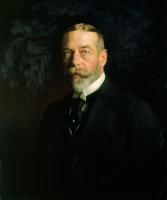


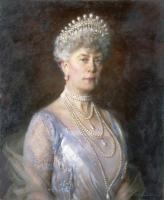


On 20th December 1904 Princess Alexandrine of Baden [aged 84] died.
On 20th December 1916 Henry Wallis [aged 86] died at 1 Walpole Road, Croydon.
On 20th December 1979 Tamara Katherine Grosvenor was born to Gerald Cavendish Grosvenor 6th Duke Westminster [aged 27] and Natalia Phillips Duchess of Westminster [aged 20]. She married 6th November 2004 Edward van Cutsem.
On 20th December 1532 John Günther Schwarzburg 1st Count of Schwarzburg Sondershausen was born.
On 20th December 1549 John Petre 1st Baron Petre was born to William Petre [aged 44] and Anne Browne [aged 54].
On 20th December 1553 Erasmus Dryden 1st Baronet was born to John Dryden of Canons Ashby [aged 28]. He married in or before 1580 Frances Wilkes and had issue.
On 20th December 1572 Edward Russell 3rd Earl Bedford was born to Francis Russell [aged 18] and Juliana or Eleanor Unknown. He married 12th December 1594 Lucy Harrington Countess Bedford, daughter of John Harington 1st Baron Harington and Anne Keilway Baroness Harington.
On 20th December 1652 Bishop Samuel Bradford was born to William Bradford of London in St. Anne's, Blackfriars.
On 20th December 1749 Gustavus Hamilton-Russell 5th Viscount Boyne was born to Richard Hamilton 4th Viscount Boyne [aged 25]. He married 1st April 1773 Martha Matilda Somerville Lady Webb, daughter of Quaile Somerville 2nd Baronet, and had issue.
William of Worcester's Chronicle of England
William of Worcester, born around 1415, and died around 1482 was secretary to John Fastolf, the renowned soldier of the Hundred Years War, during which time he collected documents, letters, and wrote a record of events. Following their return to England in 1440 William was witness to major events. Twice in his chronicle he uses the first person: 1. when writing about the murder of Thomas, 7th Baron Scales, in 1460, he writes '… and I saw him lying naked in the cemetery near the porch of the church of St. Mary Overie in Southwark …' and 2. describing King Edward IV's entry into London in 1461 he writes '… proclaimed that all the people themselves were to recognize and acknowledge Edward as king. I was present and heard this, and immediately went down with them into the city'. William’s Chronicle is rich in detail. It is the source of much information about the Wars of the Roses, including the term 'Diabolical Marriage' to describe the marriage of Queen Elizabeth Woodville’s brother John’s marriage to Katherine, Dowager Duchess of Norfolk, he aged twenty, she sixty-five or more, and the story about a paper crown being placed in mockery on the severed head of Richard, 3rd Duke of York.
Available at Amazon in eBook and Paperback format.
On 20th December 1765 Frederick St John was born to Frederick St John 3rd Viscount St John 2nd Viscount Bolingbroke [aged 32] and Diana Spencer Viscountess St John and Bolingbroke [aged 31]. He married (1) 8th December 1788 Mary Kerr, daughter of William John Kerr 5th Marquess Lothian and Elizabeth Fortescue 5th Marchioness Lothian, and had issue (2) 6th April 1793 Arabella Craven, daughter of William Craven 6th Baron Craven and Elizabeth Berkeley Margrave Brandenburg-Ansbach, and had issue (3) 14th November 1821 Caroline Parsons and had issue.
On 20th December 1781 Edward Knatchbull 9th Baronet was born to Edward Knatchbull 8th Baronet [aged 21]. He married (1) 25th August 1806 his fifth cousin once removed Annabella Christiana Honywood, daughter of John Honywood 4th Baronet and Frances Courtenay, and had issue (2) 24th October 1820 Fanny Catherine Knight Lady Knatchbull and had issue.
On 20th December 1792 Trevor Wheler 9th Baronet was born to Trevor Wheler 8th Baronet [aged 29] and Harriet Beresford [aged 21]. He married (1) 15th October 1817 Lucy Dandridge Lady Wheler (2) 14th December 1865 Frances Carus-Wilson.
On 20th December 1800 Charles Wood 1st Viscount Halifax was born to Francis Lindley Wood 2nd Baronet [aged 29] and Anne Buck Lady Wood. He married 29th July 1829 Mary Grey Viscountess Halifax, daughter of Charles Grey 2nd Earl Grey and Mary Elizabeth Ponsonby Countess Grey, and had issue.
On 20th December 1802 Ulick Burgh 1st Marquess Clanricarde was born to John Thomas Burgh 13th Earl Clanricarde [aged 58] at Belmont, Hampshire. He married 4th April 1825 Harriet Canning Marchioness Clanricarde, daughter of George Canning Prime Mininster and Joan Scott Viscountess Canning, and had issue.
On 20th December 1804 Edward Adolphus Seymour 12th Duke of Somerset was born to Edward Seymour 11th Duke of Somerset [aged 29] and Charlotte Hamilton Duchess Somerset [aged 32]. He was baptised on 16th February 1805 at St George's Church, Hanover Square. He married 10th June 1830 Jane Georgiana Sheridan Duchess Somerset and had issue.
On 20th December 1805 John Cæsar Hawkins was born to John Cæsar Hawkins 3rd Baronet [aged 23] and Charlotte Cassandra Surtees. He married 7th April 1836 Louisa Georgiana Letitia Ricketts and had issue.
On 20th December 1816 John William Hamilton Anson 2nd Baronet was born to William Anson 1st Baronet [aged 44] and Louisa Frances Mary Dickenson Lady Anson. He married 27th July 1842 Elizabeth Catherine Pack Lady Anson and had issue.
On 20th December 1817 William Bernard Petre 12th Baron Petre was born to William Henry Francis Petre 11th Baron Petre [aged 24] and Frances Charlotte Bedingfield [aged 21]. He married 26th September 1843 his third cousin once removed Mary Theresa Clifford and had issue.
On 20th December 1823 Reverend Henry Edward Browne ffolkes was born to William Browne ffolkes 2nd Baronet [aged 37] and Charlotte Philippa Browne [aged 25].
Abbot John Whethamstede’s Chronicle of the Abbey of St Albans
Abbot John Whethamstede's Register aka Chronicle of his second term at the Abbey of St Albans, 1451-1461, is a remarkable text that describes his first-hand experience of the beginning of the Wars of the Roses including the First and Second Battles of St Albans, 1455 and 1461, respectively, their cause, and their consequences, not least on the Abbey itself. His text also includes Loveday, Blore Heath, Northampton, the Act of Accord, Wakefield, and Towton, and ends with the Coronation of King Edward IV. In addition to the events of the Wars of the Roses, Abbot John, or his scribes who wrote the Chronicle, include details in the life of the Abbey such as charters, letters, land exchanges, visits by legates, and disputes, which provide a rich insight into the day-to-day life of the Abbey, and the challenges faced by its Abbot.
Available at Amazon in eBook and Paperback format.
On 20th December 1827 General Charles Johnson was born to Henry Allen Johnson 2nd Baronet [aged 42]. He married 4th January 1860 Jemima Martin and had issue.

On 20th December 1840 Bishop Adelbert John Robert Anson was born to Thomas William Anson 1st Earl Lichfield [aged 45] and Louisa Barbara Catherine Phillips Countess Lichfield [aged 40]. He was educated at Eton College [Map] and Christ Church College, Oxford University.
On 20th December 1842 Edward Ignatius Arundell was born to Henry Benedict Arundell 11th Baron Arundel [aged 38] and Theresa Stourton Baroness Arundel Wardour [aged 30].
On 20th December 1849 Brownlow Henry George Cecil 4th Marquess Exeter was born to William Alleyne Cecil 3rd Marquess Exeter [aged 24] and and Georgina Sophia Pakenham Marchioness Exeter [aged 22]. He married 7th September 1875 Isabella Whichcote Marchioness of Exeter, daughter of Thomas Whichcote 7th Baronet and Isabella Elizabeth Montgomery Lady Whichcote, and had issue.
On 20th December 1853 Richard Francis Sutton 5th Baronet was born to Richard Sutton 4th Baronet [aged 32]. He married before 26th April 1891 Constance Edith Corbet Lady Sutton, daughter of Vincent Rowland Corbet 3rd Baronet and Caroline Elizabeth Anne Bridgeman, and had issue.
On 20th December 1859 Edgar Clifford Arundell 14th Baron Arundel was born to Theodore Arundell and Louise Hussey. He married 28th November 1895 Ellen Elizabeth Thatcher Baroness Arundel Wardour.
On 20th December 1861 Countess Feodora Gleichen was born to Prince Victor of Hohenlohe Langenburg Count Gleichen [aged 28] and Princess Laura Williamina Seymour [aged 29].
On 20th December 1870 Bridget Louisa Harbord was born to Charles Harbord 5th Baron Suffield [aged 40] and Cecilia Annetta Baring Baroness Suffield [aged 36]. She married 20th June 1898 Derek William George Keppel, son of William Keppel 7th Earl Albermarle and Sophia Mary MacNab of Dundurn Castle.
On 20th December 1883 Victoria Marjorie Harriet Manners Marchioness Anglesey was born to Henry John Brinsley Manners 8th Duke Rutland [aged 31] and Violet Lindsay Duchess Rutland [aged 27]. She married 3rd August 1912 her fifth cousin Charles Henry Alexander Paget 6th Marquess Anglesey and had issue.
On 20th December 1886 Margery Spencer Viscountess Greenwood was born to Reverend Walter Spencer of Fownhope Court in Herefordshire. She married 23rd May 1911 Hamar Greenwood 1st Viscount Greenwood and had issue.
Henrici Quinti, Angliæ Regis, Gesta, is a first-hand account of the Agincourt Campaign, and subsequent events to his death in 1422. The author of the first part was a Chaplain in King Henry's retinue who was present from King Henry's departure at Southampton in 1415, at the siege of Harfleur, the battle of Agincourt, and the celebrations on King Henry's return to London. The second part, by another writer, relates the events that took place including the negotiations at Troye, Henry's marriage and his death in 1422.
Available at Amazon in eBook and Paperback format.
On 20th December 1887 Evelyn Frances Butler was born to James Arthur Wellington Foley Butler 4th Marquess Ormonde [aged 38] and Ellen Stager Marchioness Ormonde. She married 1920 Edmund Rupert Drummond.
On 20th December 1891 Rupert Carrington 5th Baron Carrington was born to Rupert Carrington 4th Baron Carrington [aged 39] and Edith Horsefall.

On 20th December 1896 Gerald Ralph Desmond Browne 7th Earl of Kenmare was born to Valentine Charles Browne 5th Earl of Kenmare [aged 36] and Elizabeth Baring Countess Kenmare [aged 29].
On 20th December 1902 Prince George Windsor 1st Duke Kent was born to King George V of the United Kingdom [aged 37] and Victoria Mary Teck Queen Consort England [aged 35] at York Cottage, Sandringham Estate. Coefficient of inbreeding 1.86%. He married 29th November 1934 his second cousin Princess Marina Glücksburg Duchess Kent and had issue.
On 20th December 1903 Charles Walter James Dormer 15th Baron Dormer was born to Charles Joseph Thaddeus Dormer 14th Baron Dormer [aged 39] and Caroline May Clifford Baroness Dormer. He married 19th February 1944 Maureen Therese Josephine Noel Baroness Dormer, daughter of Arthur Noel 4th Earl of Gainsborough and Alice Mary Eyre Countess Gainsborough.
On 20th December 1922 Dudley Ryder 7th Earl of Harrowby was born to Dudley Ryder 6th Earl of Harrowby [aged 30].
On 20th December 1938 Archibald Orr-Ewing 6th Baronet was born to Ronald Orr-Ewing 5th Baronet [aged 26] and Marion Hester Cameron Lady Orr-Ewing [aged 24].
On 20th December 1947 Malcolm Rory Colquhoun 9th Baronet was born to Ivar Iain Colquhoun 8th Baronet [aged 31].
On 20th December 1951 Charles Knowles 7th Baronet was born to Francis Knowles 6th Baronet [aged 36].
On 20th December 1962 Charles Hay 16th Earl of Kinnoull was born to William Hay 15th Earl of Kinnoull [aged 27].
On 20th December 1963 Nicholas Shakerley 7th Baronet was born to Geoffrey Adam Shakerley 6th Baronet [aged 31] and Virginia Maskell [aged 27].
Chronicle of Walter of Guisborough
A canon regular of the Augustinian Guisborough Priory, Yorkshire, formerly known as The Chronicle of Walter of Hemingburgh, describes the period from 1066 to 1346. Before 1274 the Chronicle is based on other works. Thereafter, the Chronicle is original, and a remarkable source for the events of the time. This book provides a translation of the Chronicle from that date. The Latin source for our translation is the 1849 work edited by Hans Claude Hamilton. Hamilton, in his preface, says: 'In the present work we behold perhaps one of the finest samples of our early chronicles, both as regards the value of the events recorded, and the correctness with which they are detailed; Nor will the pleasing style of composition be lightly passed over by those capable of seeing reflected from it the tokens of a vigorous and cultivated mind, and a favourable specimen of the learning and taste of the age in which it was framed.'
Available at Amazon in eBook and Paperback format.
On 20th December 1979 Tamara Katherine Grosvenor was born to Gerald Cavendish Grosvenor 6th Duke Westminster [aged 27] and Natalia Phillips Duchess of Westminster [aged 20]. She married 6th November 2004 Edward van Cutsem.
On 20th December 1576 John Carey 3rd Baron Hunsdon [aged 26] and Mary Hyde Baroness Hunsdon [aged 22] were married.
On 20th December 1605 Edward Noel 2nd Viscount Campden [aged 23] and Juliana Hicks Viscountess Campden [aged 19] were married.
On 20th December 1632 John Freke [aged 41] and Jane Shirley Baroness Holles were married.
On 20th December 1642 Edward Montagu 2nd Earl Manchester [aged 40] and Essex Cheeke Countess Manchester were married. She by marriage Countess Manchester. He the son of Henry Montagu 1st Earl Manchester [deceased] and Catherine Spencer.


On 20th December 1667 Charles Vermuyden [aged 29] and Mary Upton [aged 17] were married.
On 20th December 1755 John Spencer 1st Earl Spencer [aged 21] and Margaret Georgiana Poyntz Countess Spencer [aged 18] were married at Althorp House, Northamptonshire [Map]. He the son of John Spencer and Georgiana Caroline Carteret [aged 39].


On 20th December 1782 George Thomas 3rd Baronet [aged 42] and Sophia Montagu Lady Thomas were married. She by marriage Lady Thomas of Yapton in Sussex.
On 20th December 1831 John Montagu Burgoyne 9th Baronet [aged 35] and Mary Harriet Gore-Langton Lady Burgoyne [aged 25] were married. She by marriage Lady Burgoyne of Sutton in Bedfordshire.
On 20th December 1901 Balthazar Stephen Sargant Foster 2nd Baron Ilkeston [aged 34] and Mildred Charlotte Cobb were married.
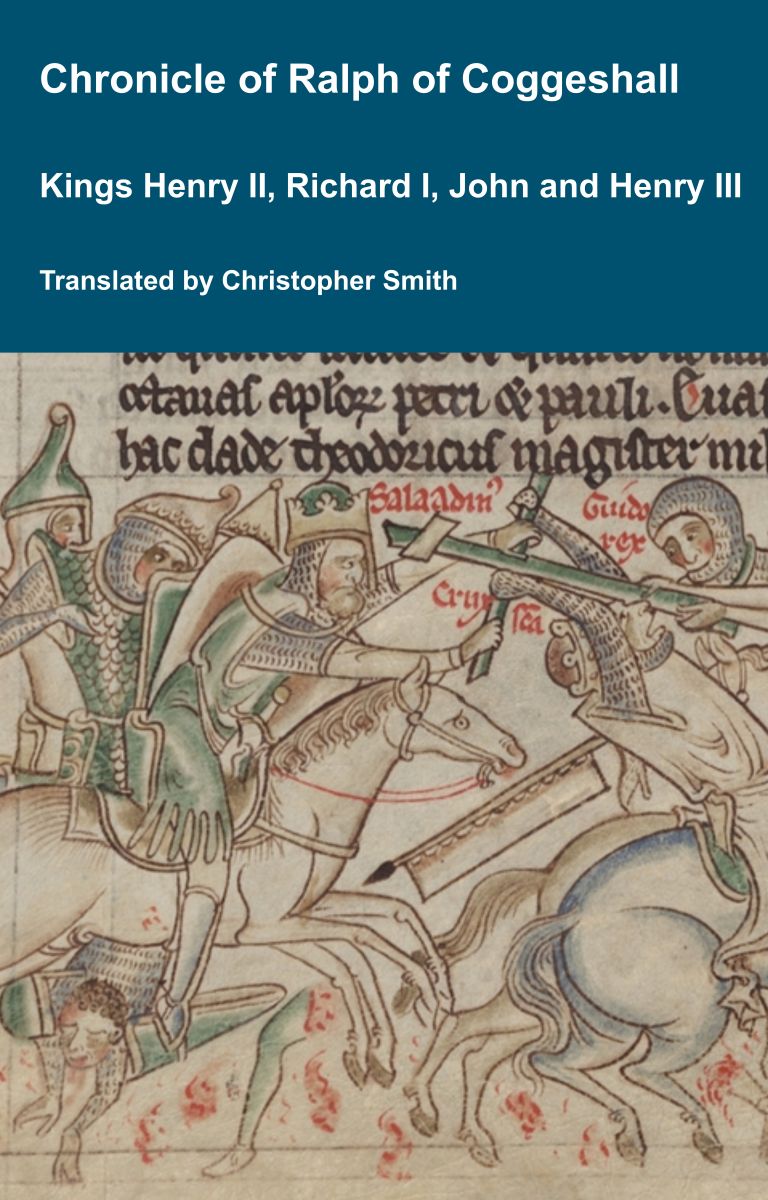
Chronicle of Abbot Ralph of Coggeshall
The Chronicle of Abbot Ralph of Coggeshall (Chronicon Anglicanum) is an indispensable medieval history that brings to life centuries of English and European affairs through the eyes of a learned Cistercian monk. Ralph of Coggeshall, abbot of the Abbey of Coggeshall in Essex in the early 13th century, continued and expanded his community’s chronicle, documenting events from the Norman Conquest of 1066 into the tumultuous reign of King Henry III. Blending eyewitness testimony, careful compilation, and the monastic commitment to record-keeping, this chronicle offers a rare narrative of political intrigue, royal power struggles, and social upheaval in England and beyond. Ralph’s work captures the reigns of pivotal figures such as Richard I and King John, providing invaluable insights into their characters, decisions, and the forces that shaped medieval rule. More than a simple annal, Chronicon Anglicanum conveys the texture of medieval life and governance, making it a rich source for scholars and readers fascinated by English history, monastic authorship, and the shaping of the medieval world.
Available at Amazon in eBook and Paperback format.
On 20th December 1922 John Lindsay Dashwood 10th Baronet [aged 26] and Helen Moira Eaton Lady Dashwood [aged 23] were married. She by marriage Lady Dashwood of West Wycombe in Buckinghamshire.


On 20th December 1927 Lieutenant-Colonel Henry Grayson 1st Baronet [aged 62] and Louise Mary Delany were married.
On 20th December 910 Alfonso "Great" III King Asturias [aged 62] died. His son García [aged 39] succeeded I King Leon. His son Fruela [aged 35] succeeded II King Asturias. His son Ordoño [aged 37] succeeded II King Galicia.
On 19 or 20th December 1327 Agnes Capet Duchess Burgundy [aged 67] died.
On 20th December 1340 John I Duke of Bavaria [aged 11] died.
On 20th December 1389 Isabeau Melun Countess Eu [aged 61] died.
On 20th December 1558 Bishop John Holyman [aged 63] died.
On 20th December 1620 Catherine Knollys Baroness Offaly [aged 61] died.
On 20th December 1622 Catherine Knyvet Baroness Geneville Beaudasert [aged 79] died.

On 20th December 1631 Thomas Mansel 1st Baronet [aged 75] died. His son Lewis [aged 37] succeeded 2nd Baronet Mansel of Margam. Elizabeth Montagu Lady Sebright and Mansel [aged 24] by marriage Lady Mansel of Margam.
Chronicle of Walter of Guisborough
A canon regular of the Augustinian Guisborough Priory, Yorkshire, formerly known as The Chronicle of Walter of Hemingburgh, describes the period from 1066 to 1346. Before 1274 the Chronicle is based on other works. Thereafter, the Chronicle is original, and a remarkable source for the events of the time. This book provides a translation of the Chronicle from that date. The Latin source for our translation is the 1849 work edited by Hans Claude Hamilton. Hamilton, in his preface, says: 'In the present work we behold perhaps one of the finest samples of our early chronicles, both as regards the value of the events recorded, and the correctness with which they are detailed; Nor will the pleasing style of composition be lightly passed over by those capable of seeing reflected from it the tokens of a vigorous and cultivated mind, and a favourable specimen of the learning and taste of the age in which it was framed.'
Available at Amazon in eBook and Paperback format.
On 20th December 1644 Albert IV Wettin IV Duke Saxe Weimar [aged 45] died at Eisenach. His brother Ernest [aged 42] succeeded I Duke Saxe Gotha.
On 20th December 1680 Elisabeth Sophie Saxe Altenburg Duchess Saxe Gotha [aged 61] died.
On 20th December 1697 Arthur Gore 1st Baronet [aged 68] died. His grandson Arthur [aged 12] succeeded 2nd Baronet Gore of Newtown in County Mayo.
On 5th December 1705 Martha Betteson Lady Bendish died. She was buried at St Mary's Church, Steeple Bumstead on 20th December 1705.
On 20th December 1714 Eleanor Lowther Lady Wandesford [aged 84] died.
On 20th December 1730 Elizabeth Bertie Baroness Fitzwalter [aged 55] died.
On 20th December 1773 John Rogers 3rd Baronet [aged 65] died. He was buried at St Michael's Church, Cornwood [Map]. His brother Frederick [aged 57] succeeded 4th Baronet Rogers of Wisdome in Devon.
On 20th December 1786 Isabella Montagu Duchess Manchester [aged 80] died.
On 20th December 1790 Elizabeth Gunning Duchess Hamilton and Argyll [aged 57] died in Argyll House 211 King's Road King's Road. Her son Douglas [aged 34] succeeded 2nd Baron Hamilton of Hameldon in Leicestershire. Elizabeth Anne Burrell Duchess Hamilton Duchess Brandon [aged 33] by marriage Baroness Hamilton of Hameldon in Leicestershire.
On 20th December 1802 Elizabeth Sambroke Viscountess Bateman [aged 77] died.
Henrici Quinti, Angliæ Regis, Gesta, is a first-hand account of the Agincourt Campaign, and subsequent events to his death in 1422. The author of the first part was a Chaplain in King Henry's retinue who was present from King Henry's departure at Southampton in 1415, at the siege of Harfleur, the battle of Agincourt, and the celebrations on King Henry's return to London. The second part, by another writer, relates the events that took place including the negotiations at Troye, Henry's marriage and his death in 1422.
Available at Amazon in eBook and Paperback format.
On 20th December 1812 George Carpenter 3rd Earl Tyrconnel [aged 24] died. His brother John [aged 22] succeeded 4th Earl Tyrconnel, 6th Baron Carpenter of Killaghy in County Tipperary. He had volunteered in the summer of 1812 to serve as an officer under Alexander I of Russia. While opposing the French forces of Napoleon he died of disease "from his zeal and excessive fatigue."
On 20th December 1814 Henry Edwin Stanhope 1st Baronet [aged 60] died. His son Edwyn [aged 21] succeeded 2nd Baronet Stanhope of Stanwell.
On 20th December 1824 Marianne Philpot Lady Harington died.
On 20th December 1862 Graham Hamond 2nd Baronet [aged 82] died. His son Andrew [aged 51] succeeded 3rd Baronet Hamond of Holly Grove in Berkshire.
On 20th December 1863 Richard Plumptre Glyn 2nd Baronet [aged 76] died unmarried. His nephew Richard [aged 32] succeeded 3rd Baronet Glyn of Gaunts in Dorset.
On 20th December 1864 John Pelly 2nd Baronet [aged 55] died. His son Henry [aged 20] succeeded 3rd Baronet Pelly of Upton in Essex.
On 20th December 1877 Henry Willoughby 8th Baron Middleton [aged 60] died at Birdsall House, Ryedale. His son Digby [aged 33] succeeded 9th Baron Middleton, 10th Baronet Willoughby of Wollaton.

On 20th December 1904 Isaac Lowthian Bell 1st Baronet died. His son Thomas [aged 60] succeeded 2nd Baronet Bell of Rounton Range and Washington Hall in County Durham. Florence Eveleen Eleanore Olliffe Lady Bell [aged 53] by marriage Lady Bell of Rounton Range and Washington Hall in County Durham.
On 20th December 1904 Princess Alexandrine of Baden [aged 84] died.
On 20th December 1910 Valerie Susan Langdon Lady Meux [aged 58] died. She left her estate, including Theobalds House, Hertfordshire, and a substantial interest in the Meux Brewery to Hedworth Lambton aka Meux [aged 54] on condition that he change his surname to Meux, which he duly did. She excluded her mother-in-law's family, the Brudenell-Bruces, from her will probably because they had shunned her socially.


Chronicle of a Bourgeois of Valenciennes
Récits d’un bourgeois de Valenciennes aka The Chronicle of a Bourgeois of Valenciennes is a vivid 14th-century vernacular chronicle written by an anonymous urban chronicler from Valenciennes in the County of Hainaut. It survives in a manuscript that describes local and regional history from about 1253 to 1366, blending chronology, narrative episodes, and eyewitness-style accounts of political, military, and social events in medieval France, Flanders, and the Low Countries. The work begins with a chronological framework of events affecting Valenciennes and its region under rulers such as King Philip VI of France and the shifting allegiances of local nobility. It includes accounts of conflicts, sieges, diplomatic manoeuvres, and the impact of broader struggles like the Hundred Years’ War on urban life in Hainaut. Written from the perspective of a burgher (bourgeois) rather than a monastery or royal court, the chronicle offers a rare lay viewpoint on high politics and warfare, reflecting how merchants, townspeople, and civic institutions experienced the turbulence of the 13th and 14th centuries. Its narrative style combines straightforward reporting of events with moral and civic observations, making it a valuable source for readers interested in medieval urban society, regional politics, and the lived experience of war and governance in pre-modern Europe.
Available at Amazon in eBook and Paperback format.
On 20th December 1910 Charles Scotter 1st Baronet [aged 75] died at his home in Kingston Upon Thames, Surrey [Map]. His son Frederick [aged 42] succeeded 2nd Baronet Scotter of Surbiton in Surrey.
From Christchurch Times - Saturday 24 December 1910 ...
His funeral took place at St Margaret's Church, Westminster [Map]. The only flowers placed on the coffin, in addition to those from members of the family, were sent by the children of the L. and S.W. Railway Servants' Orphanage at Woking. A pathetic circumstance in connection with this Orphanage is that Sir Charles, in his last conscious moments, expressed the wish that the Christmas dinner for the children should be provided this year as usual at his expense. Various branches of the railway service desired to send wreaths, but, in deference to the wishes of the family, the money subscribed was devoted instead to the children's orphanage at Woking. After the service the body was cremated at Golder's Green.
On 20th December 1916 Henry Wallis [aged 86] died at 1 Walpole Road, Croydon.
On 20th December 1921 Frederick Law Williams 7th Baronet [aged 58] died. His son William [aged 14] succeeded 8th Baronet Williams of Tregullow in Cornwall.
On 20th December 1939 Ughtred Kay-Shuttleworth 1st Baron Shuttleworth [aged 95] died. His grandson Richard [aged 26] succeeded 2nd Baron Shuttleworth of Gawthorpe in Lancashire, Richard Kay-Shuttleworth 2nd Baron Shuttleworth, 3rd Baronet Kay-Shuttleworth of Gawthorpe Hall in Lancashire.


On 20th December 1947 George Rous 3rd Earl of Stradbroke [aged 85] died. His son John [aged 44] succeeded 4th Earl Stradbroke, 4th Viscount Dunwich, 9th Baronet Stradbrooke of Henham in Suffolk.
On 20th December 1977 Michael Henley aka Eden 7th Baron Henley 5th Baron Northington [aged 63] died. His son Oliver [aged 24] succeeded 8th Baron Henley, 6th Baron Northington of Watford in Northamptonshire.
On 20th December 1995 John Assheton Eardley-Wilmot 5th Baronet [aged 78] died. His son Michael [aged 54] succeeded 6th Baronet Eardley-Wilmot of Berkswell Hall in Warwickshire.