

24 Mar is in March.
1338 French Raid on Portsmouth
1556 Salisbury Execution of Protestant Martyrs
1603 Death of Queen Elizabeth I Accession of James I
On 24th March 1188 Ferdinand Burgundy was born to Sancho "Populator" I King Portugal [aged 33] and Dulce Barcelona Queen Consort Portugal. He married January 1212 his third cousin once removed Joan I Countess Flanders, daughter of Baldwin IX Count Flanders VI Count Hainaut and Marie Blois Countess Flanders.
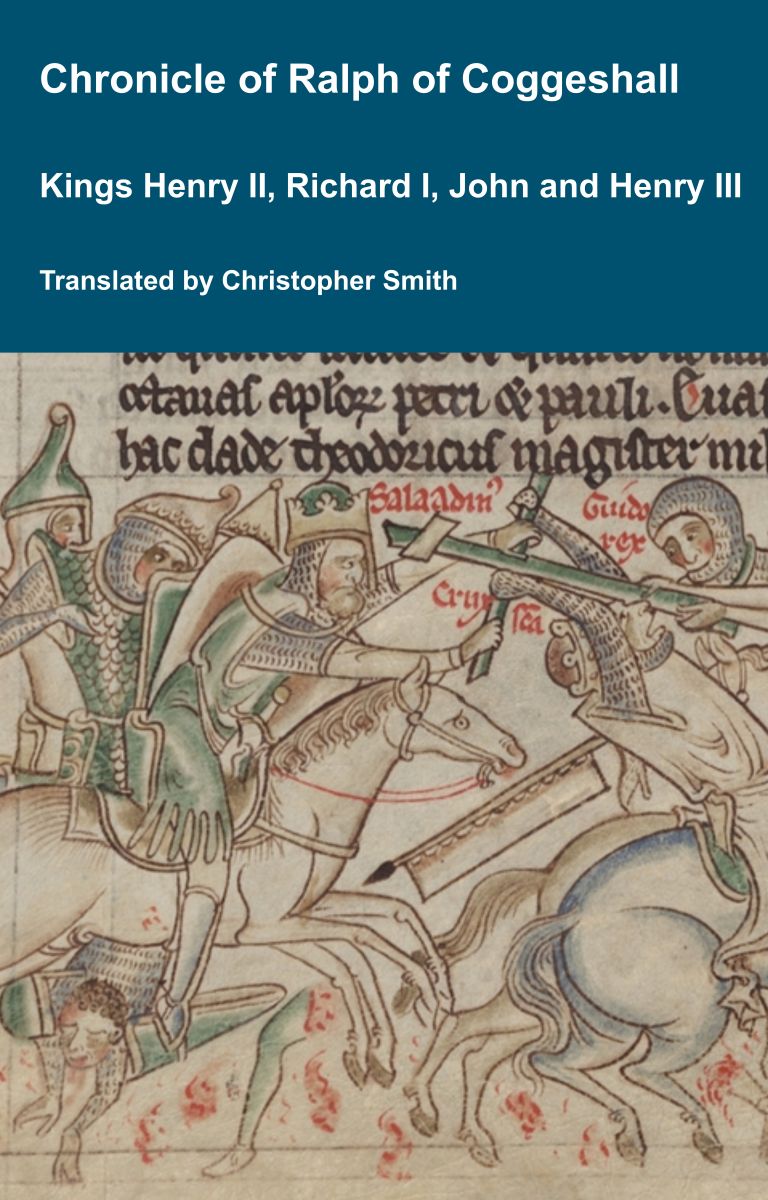 Chronicum Anglicanum by Ralph Coggeshall. In the year 1208, all England and Wales were placed under a general interdict. On the day before [24th March 1208] the Annunciation of the Blessed Mary, the lands, revenues, and movable goods of the clergy and of religious men were confiscated. The king of the English sent to Rome and promised that he would in all things make satisfaction to God, to holy Church, and to the lord pope; but he did not keep his word.
Anno MCVIII, tota Anglia et Wallia sub interdicto generali ponuntur. Pridie Annunciationis Beatæ Mariæ, prædia, redditus, ac mobilia cleri ac religiosorum confiscantur. Rex Anglorum misit Romam, et se satisfacturum per omnia Deo et sanctæ ecclesiæ ac domino papa spopondit; sed minime tenuit.
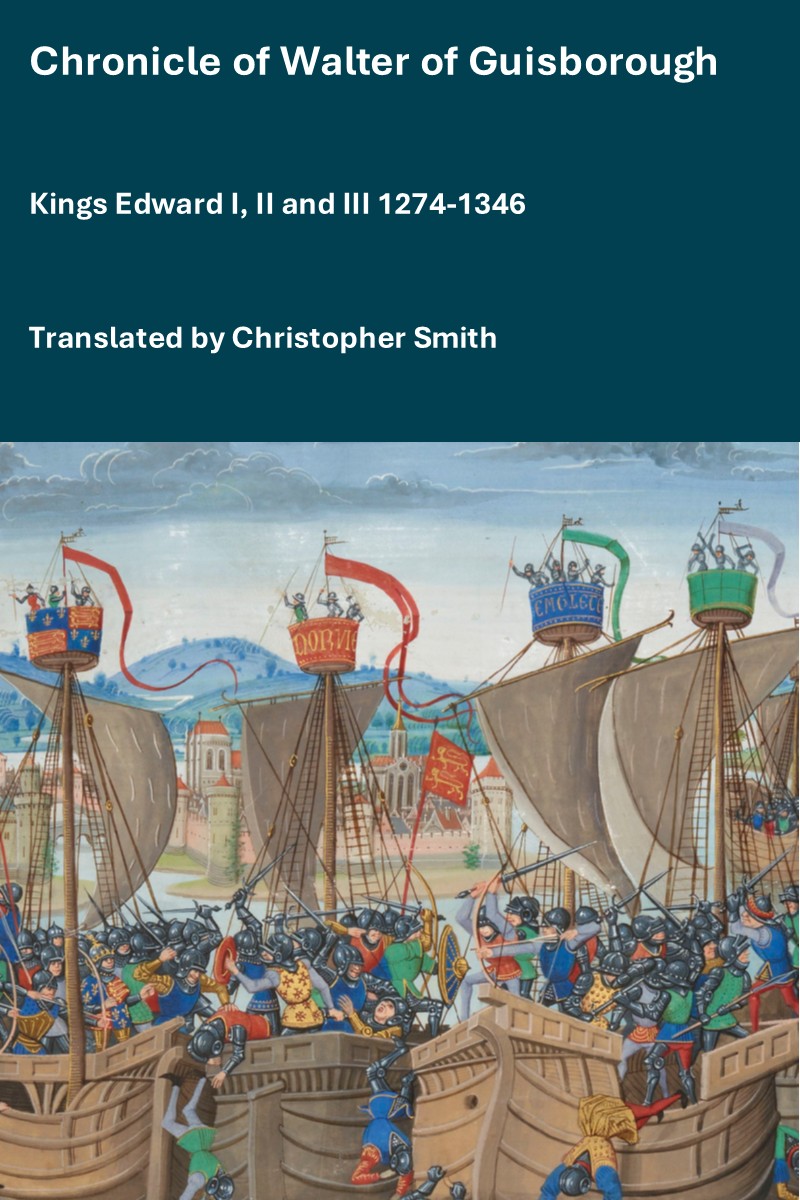 Chronicle of Walter of Guisborough. In this year, the earl of Salisbury and many nobles of England, on the fifth day before the Kalends of February [28th January 1338], laid siege to the castle of Dunbar; and, the siege lasting for nineteen weeks, they returned to England, having achieved nothing, after truces had been agreed to under certain conditions. This withdrawal and truce greatly displeased the magnates of England and even the gathered multitude, because the siege had been costly to the English, neither honourable nor secure, but useful and welcome to the Scots. In this same year, nearly completed1, namely in the month of March, in the town of Leighton near Huntingdon, six miles distant, a calf was born with two heads and eight feet. Certain galleys and ships, loaded with many armed men, on the eve of the Annunciation of the Blessed Mary [24th March 1338] landed at Portsmouth, burned almost the whole town, except for the parish church and the hospital, and returned unhurt to their ships with the plunder2.
Hoc anno comes Sarum et multi nobiles Angliæ quinto kalendas Februarii castrum de Dunbar obsident, et obsidione XIX septimanis durante, acceptis sub certis conditionibus treugis, nihil proficientes, Angliam redierunt. Quæ quidem dimissio et treuga majoribus Angliæ et etiam multitudini congregatis plurimum displicuit, quia obsidio ipsa fuerat Anglicis dispendiosa nec honorifica nec secura, sed Scotis utilis atque grata. Hoc anno quasi completo, mense scilicet Martii, in villa de Leghton juxta Huntingdoun ad sex milliaria natus est vitulus duo habens capita et VIII pedes. Quædam galeæ et naves plurimis armatis oneratæ, in antevigilia Annunciationis beatæ Mariæ apud Portismutham applicuerunt, villam quasi totaliter, præter ecclesiam parochialem et hospitalem, combusserunt, et illæsi cum spoliis ad naves sunt regressi.
Note 1. At the time the Chronicle was written the Julian Calendar year began on the 25th March, known as 'Lady Day', which commemorates the Annunciation i.e. the day when the Angel Gabriel told the Virgin Mary she would conceive Jesus Christ. In September 1752 England officially adopted the now current Gregorian Calendar.
Note 2. It was reported that the ships came from Normandy. See Walsingham, 136. King Edward, in consideration of the loss sustained by Portsmouth, directed, by letters-patent of the 9th of June, that the tenth which had been granted to him by the late parliament at Westminster for three years, should not be levied on the citizens. Rymer, Fœdera, 2.1042.
On 24th March 1338 a large fleet of small French coastal ships sailed across the Channel from Cales [Map] and into the Solent where they landed and burnt the town of Portsmouth, Hampshire [Map].
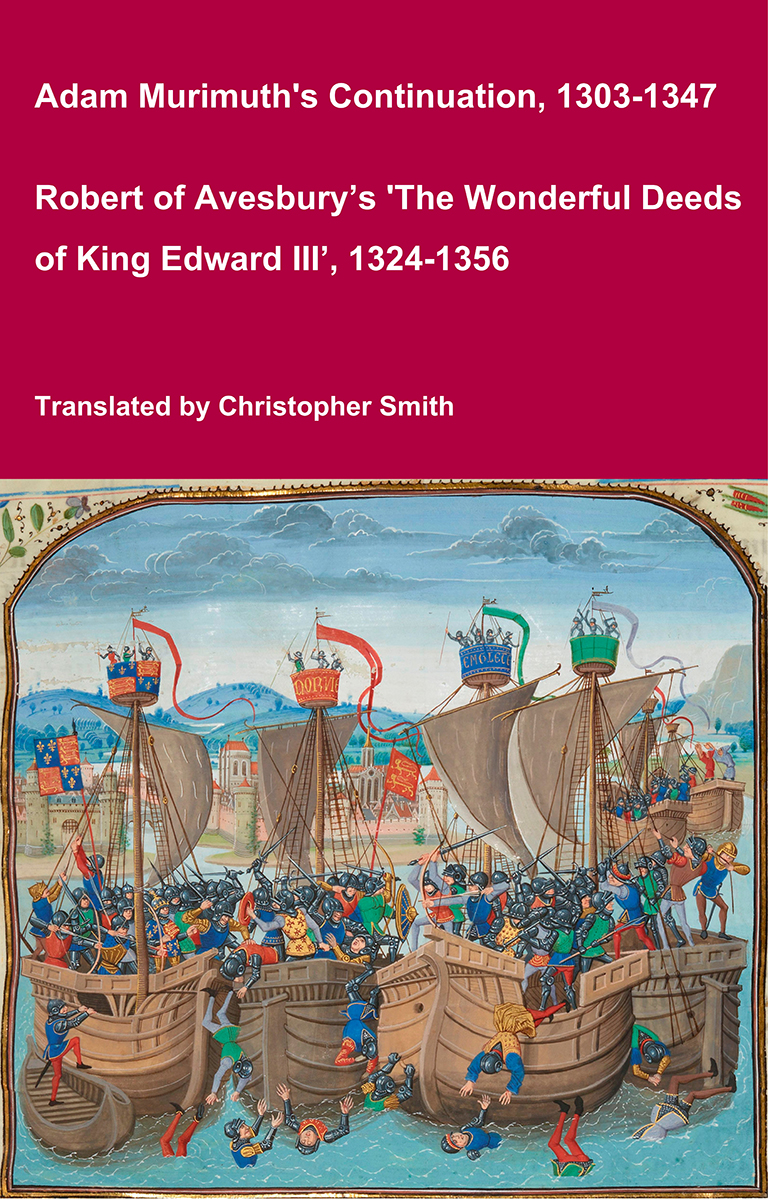 Adam Murimuth Continuation. Also in this year [1339], on the eve [24th March] of the Annunciation, eleven galleys came to Harwich and made an attack there, setting fire to three places; but the fire did little damage because the wind was against them. The local people quickly came together and resisted them bravely, and so they withdrew, having caused only slight damage.
Item, hoc anno, in vigilia Annunciationis, venerunt XJ galeæ ad Herewych, et dederunt insultum ibidem et posuerunt ignem in tribus locis; sed non multum nocuit ignis propter ventum qui contrarius fuit eis. Et patria cito occurrebat eis viriliter resistendo; et sic recesserunt, modico dampno dato.
On 24th March 1339 a French fleet raided Harwich, Essex [Map].
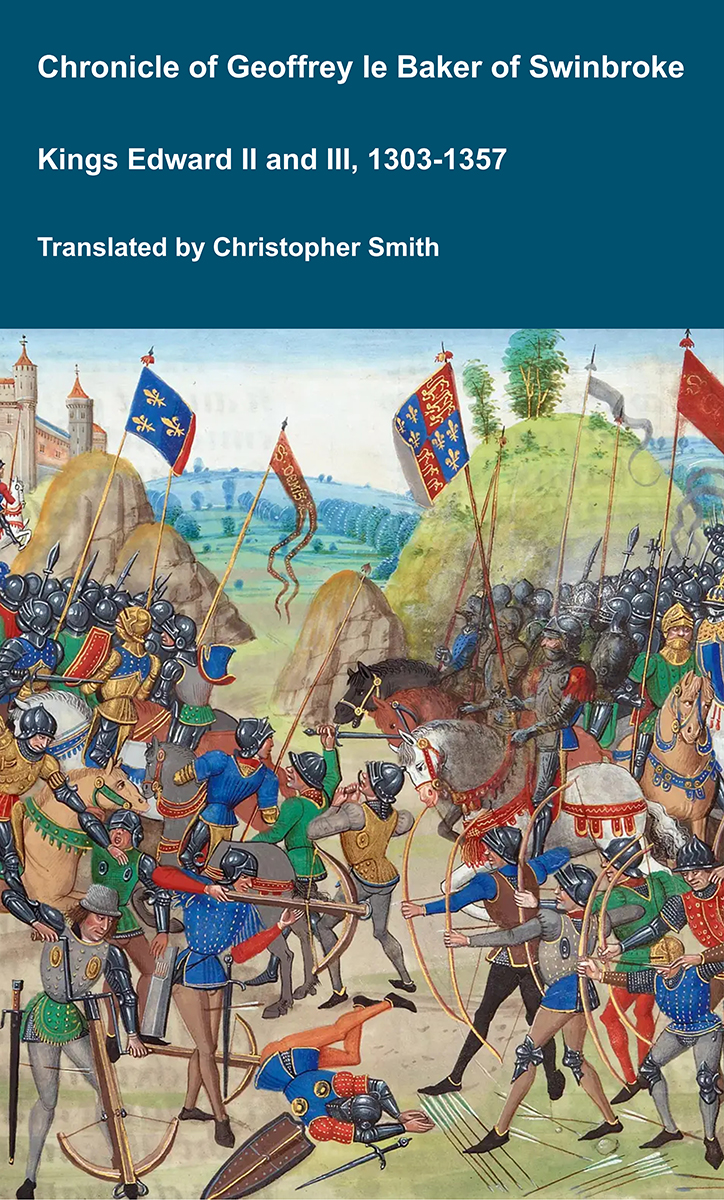 Chronicle of Geoffrey le Baker of Swinbroke. On the eve [24th March 1339] of the Annunciation,1 eleven galleys set fire to the town of Harwich, but the wind blowing contrary prevented the flames from spreading and causing greater harm. Later that year,2 around Pentecost, Norman and Genoese pirates, appearing again at sea near the port of Southampton in galleys and pinnaces, threatened to land through their messengers, whom they sent to scout the town's defences. And when they perceived the inhabitants to be ready for resistance, they turned instead to the Isle of Wight; but they did not enter it, deterred by the resistance of the locals. They then moved to other coastal places that were less well fortified, where, in the manner of robbers, they committed many crimes; and afterwards, on the feast of Corpus Christi, at Hastings,3 they burned some fishermen's huts and their boats, killing the people.
In vigilia Annunciacionis undecim galee immiserunt ignem ville de Herewych, cuius ardorem ventus contrarius proibuit crescere in nocumentum. Ulterius in anno, circa Pentecosten, pirate Normannici et Ianuenses, in galeys et spinaciis circa portum Hamptonis iterato in mari se ostendentes, se velle applicare comminati sunt per suos nuncios, quos jusserunt apparatum ville explorare. Et, quia paratos incolas ad resistendum perceperunt, ad insulam de Vecta migraverunt; set in illam non intrarunt, cedentes proibicioni incolarum; set se transtulerunt ad alia loca maritima minus bene munita, in quibus, more latrunculorum, multa mala commiserunt; et postea, in festo Corporis Christi, apud Hastinghe, quedam tuguria piscatorum combusserunt cum eorum scaphis, hominibus occisis.
Note 1. Stow Annales 366.
Note 2. Knighton 2573.
Note 3. According to Knighton 2573.
Annales of England by John Stow. On the even [24th March 1339] of the Annunciation of our Lady, eleven gallies approching to the towne of Harwich, they cast fire therein: the force whereof by a contrary wind was staied, so that no great harm was done thereby. Furthermore, in the same yeere, about the feast of Pentecost, certaine pyrats of Normandie and Genoa (shipped in gallyes and pinnaces) made a shew on the sea about South-hampton, as they would have come aland, and threatened sore to spoile the town againe, but, perceiving the townsmen ready to resist them, they returned to the He of Wight, but entred not, being put backe by the inhabitants: whereupon they sailed about the coasts, seeking to land in places lesse defended, and after came to Hastings, where they brent fishers cottages, with their boats, and slew many men. Also, they made great shewes many times against the Isle of Thanet, Dover, and Fulkestone, but in those places they did little harme, except to poore fishermen: thence they sailed about to the havens of Cornwall and Devonshire, doing in all places much harme to the fishermen, and such ships as they found unmanned they fiered. At length they entred Plimmouth Haven, where they brent certaine great ships and a great part of the towne. These were met by Hugh Courtney, earle of Devonshire, a knight of fourescore yeeres old, being accompanied with many souldiours of his countrey, who, having lost at the first front a fewe of his men which were slaine by the quarels of the French, joyned to fight with them hand to hand, and, slaying many of the pyrates upon drie land, chased the residue which fledde to take their gallyes, and, being not able to come nigh them by wading, they were drowned in the sea to the number of five hundred.
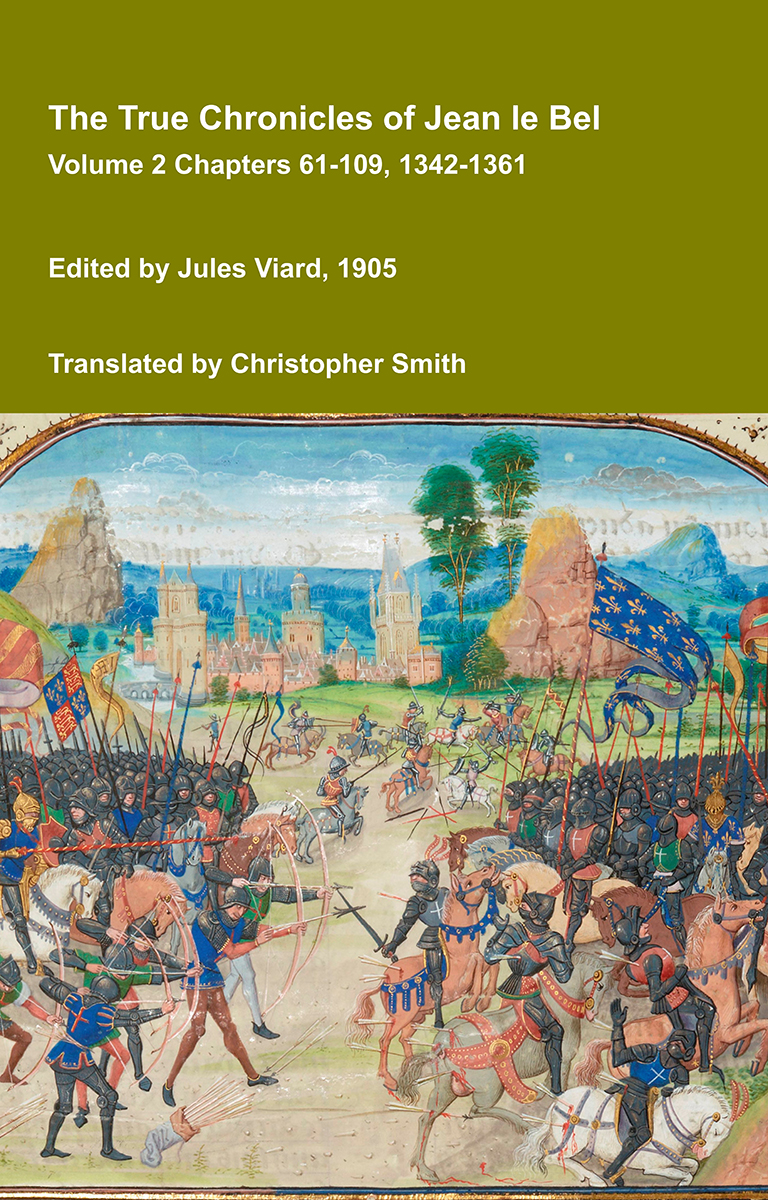 Chronicle of Jean le Bel Volume 2. It is now time to return to the history of the noble King Edward, of whom I have long been silent. He held King Jean of France and the greatest barons of France in prison, and allowed those pillagers of whom we have spoken to do as they wished and lay waste the whole kingdom, in the hope either of bringing the war to an end or of obtaining peace on his own terms. So it happened in the year 1359, around Pentecost, after the two cardinals whom the pope had sent to England to make peace between these two kings, by which all Christendom was tormented, had left England without accomplishing anything1, although they had stayed there for two years and more at their ease and at great expense, that the two kings met one day privately in the city of London. No one was there except the Prince of Wales, eldest son of King Edward, and the bold Earl of Lancaster. They made a certain agreement, sealed with their seals2, and sent it to the princes and barons of France and to all the communities, by the Chamberlain of Tancarville, the Count of Melun, and Sir Arnoul d’Audrehem3, who was held to be the bravest knight in France, all of whom were prisoners of King Edward.
Bien est heure de retourner à l'istoire du noble roy Edowart dont longuement me suys teu, lequel tenoit en prison le roy Jehan de France et les plus grands barons de France, et laissoit ces pilleurs dont nous avons parlé, faire et gaster tout le royaume soubs csperance ou d'avoir fin de guerre, ou d'avoir paix à sa volenté. Si avint l'an mil CCCLIX, environ la Penthecoste, aprez ce que II cardinaulx que le pape avoit envoyé en Angleterre pour faire paix entre ces deux roys, dont toute crestienté estoit tourmentée, estoient departis d'Angleterre sans riens faire, combien qu'ilz y eussent sejourné par l'espace de II ans et plus à leur aise, à grands despens, avint que les II rois se ent ung jour à part en la cité de Londres, et n'i avoit fors que le prince de Galles, aisné filz du roy Edowart, et le hardi conte de Lancaste, et firent ung certain acord seelé de leurs seaulx, et l'envoyerrent aux princes et barons de France et à tous les communaultés, par le chambellan de Tancarville et conte de Melun, et par messire Arnoul d'Amdehen qui estoit tenu le plus prœux chevalliler de France, qui tous il estoient prisonniers au roy Edowart.
Note 1. On 30th August 1358, Innocent VI wrote to the two cardinals, Talleyrand de Périgord and Nicolas Capocci, who were in England, instructing them to go to Charles the Bad and the Regent in order to reconcile them; Denifle. We see them arriving in Paris on the following 13th December to fulfil this mission; Grandes Chroniques. On 10th September, Edward III gave them letters of safe conduct to return to the papal court, as he also did to Cardinal Pierre de La Forest, who had often been in England during the course of that year; Rymer 3.406.
1. Le 30 août 1358, Innocent VI écrivit aux deux cardinaux Talleyrand de Périgord et Nicolas Capocci, qui étaient en Angleterre, de se rendre auprès de Charles le Mauvais et du régent pour les réconcilier (Denifle, op. cit., p. 347), et nous les voyons arriver à Paris le 13 décembre suivant pour rem plir cette mission. (Grandes chroniques, t. VI, p. 146. Le 10 septembre, Édouard III leur donna des lettres de sauf-conduit pour retourner à la cour pontificale, ainsi qu'au cardinal Pierre de La Forest, qui avait été souvent en Angleterre dans le courant de cette année. (Rymer op. cit., t. Ill, p. 406.)
Note 2. This draft treaty was dated at London, 24th March 1359.
2. Ce projet de traité était daté de Londres, le 24 mars 1359. On trouvera ce traité publié dans Froissart, éd. Kervyn de Lettenhove, 1. XVII, p. 413-433; ce n'est que la reproduction d'une publication antérieure faite par M. Lecointre-Dupont dans la Revue anglo-francaise (t. 1, p. 388-405). Un texte meilleur a été donné par Cosneau, dans les Grands traités de la guerre de Cent ans, p. 3 à 32.
Note 3. In addition to the Chamberlain of Tancarville and Arnoul d’Audrehem, the Grandes Chroniques also mention, among those who came to France, Guillaume de Melun, Archbishop of Sens and brother of the chamberlain, and the Count of Dammartin. The letters of safe conduct granted by Edward III to those whom he charged with carrying these peace proposals give the names of six persons; Rymer 3.425.
3. En plus du chambellar de Tancarville et dchroniques, 1. VI, p. 152, indiquent encore, comme étant venus en France, Guillaume de Melun, archevêque de Sens, frère du chambellan, et le comte de Dammartin. Les lettres de sauf-conduit accordées par Édouard III à ceux qu'il chargeait de porter ces propositions de paix donnent les noms de six personnes. (Rymer op. ci., 1. Ill, p.425.)
On 24th March 1394 Constance of Castile Duchess of Lancaster [aged 40] died at Leicester Castle [Map]. She was buried at Church of the Annunciation of our Lady of the Newark [Map].
The History of William Marshal was commissioned by his son shortly after William’s death in 1219 to celebrate the Marshal’s remarkable life; it is an authentic, contemporary voice. The manuscript was discovered in 1861 by French historian Paul Meyer. Meyer published the manuscript in its original Anglo-French in 1891 in two books. This book is a line by line translation of the first of Meyer’s books; lines 1-10152. Book 1 of the History begins in 1139 and ends in 1194. It describes the events of the Anarchy, the role of William’s father John, John’s marriages, William’s childhood, his role as a hostage at the siege of Newbury, his injury and imprisonment in Poitou where he met Eleanor of Aquitaine and his life as a knight errant. It continues with the accusation against him of an improper relationship with Margaret, wife of Henry the Young King, his exile, and return, the death of Henry the Young King, the rebellion of Richard, the future King Richard I, war with France, the death of King Henry II, and the capture of King Richard, and the rebellion of John, the future King John. It ends with the release of King Richard and the death of John Marshal.
Available at Amazon in eBook and Paperback format.
On 24th March 1399 Margaret Plantagenet 1st Duchess of Norfolk died. Duke Norfolk extinct since it was created for life only. She was buried in the choir of Christ Church, Greyfriars [Map]. Her grandson Thomas [aged 31] succeeded 3rd Earl Norfolk. Elizabeth Fitzalan Duchess Norfolk [aged 33] by marriage Countess Norfolk.
On 24th March 1433 Anne Beaufort was born to Edmund Beaufort 1st or 2nd Duke of Somerset [aged 27] and Eleanor Beauchamp Duchess Somerset [aged 24]. She a great x 2 granddaughter of King Edward III of England. She married before 1466 William Paston and had issue.
Patent Rolls. 24th March 1458. Westminster. Grant to Edmund de Hadham, earl of Richmond, and Jasper de Hathefeld [aged 26], earl of Pembroke, the king's uterine brothers, of the keeping of all possessions in the king's hands by the death of John, duke of Somerset, and by reason of the minority of Margaret [aged 14], his daughter and heir, with the marriage of the heir, to hold during her minority, and so from heir to heir. By ps. etc.
Note. Edmund Tudor 1st Earl Richmond and Margaret Beaufort Countess Richmond were married in 1455.


Diary of Edward VI. 24th March 1550. Peax4 concluded between Englaund, Fraunce, and Scoteland, by, on th' English side, Jhon erl of Bedford lord previ seal, lord Paget de Beaudesert, sir William Petre [aged 45] secretary, and sir Jhon Mason [aged 47]; on the French side, monsuir de Bochepot5, mons. Chastillon,1a Guillart de Mortier,2a and Bouchetel de Sarcy,3a upon condicions, that al titles, tributs and defensis shuld remaine; that the fault of on(e) man, except he be unpunished, shuld not breake the league; that the shippes of marchaundis shal passe to and froe, that pirats shall be called bake, and shippes of warre; that prisoners shal be deliverid of both sides; that we shal not warr with Scoteland, except new occasion be gieven; that Boulein, with the pecis of new conquest, and 2 basilicus,4a 2 demy canons, 3 culvrins, 2 dimy culvrins, 3 sacres, 6 faucons, 94 hagbutes a croke with wodden tayles,5a 21 iron peces; and Lodres1b and Dunglas, with, all th' ordonaunce, saving that that cam from Hadington [Map], shall, within six monthes after this peax proclaimed, be delivred, and for that the French to pay 200,000 scutes within three dayes after the delivery of Boullein, and 200,000 scutes on our Ladie day in harvest next ensuyng, and that if the Scottes raised Lodr. et [?]. we shuld raise Roxborough and Aymouth. For the performance of wich on the 7 of April shuld be deliveride at Guisnes and Ard thies hostagies:
2Marques de Means [aged 31].1c, My lord of Soutlifolke [aged 14].2c
Mons. Trimouille [aged 29].1d My lord of Hertford [aged 10].2d
Mons. d'Anguien [aged 21].3d My lord Talbot [aged 22].4d
Mons. Montmorency [aged 19].5d My lord Fizwarren [aged 21].6d
Mons. Henaudiere.7d My lord Matravers [aged 12].8d
Vicedam de Chartres [aged 28].9d My lord Straunge [aged 18].10d
Note 4. The commission issued by Henry H. King of France on the 20th Jan. to his four plenipotentiaries to treat for peace is printed in Rymer, Fœdera, xv. 202, and that to the same persons for its ratification, dated 31 March, ibid. p. 220. King Edward's instructions to his commissioners are printed by Burnet, History of the Eeformation, ii. Eecords, No 49, followed (No. 50) by other articles devised in answer to certain doubts moved on the 27th Feb. The original of the latter paper is in MS. Cotton. Caligula, E. IV. (not E. I. as Burnet gives the reference) fol. 270, preceded by other original instructions, also bearing the signatures of the King and council. The treaty itself is printed in Rymer's collection, xv. 211.
Note 5. François de Montmorency [aged 54], seigneur de la Rochepot, governor of the isle of France, and lieutenant-general in Picardy. He was younger brother to the constable Anne duc de Montmorency [aged 57]; and died in 1551. Auselme, Histoire Genealogique, iii. 603.
Note 1a. Gaspard de Coligny II. seigneur de Chatillon-sur-Loing, son of Gaspard de Coligny I. marshal of France, who died in 1541, and brother to Odet cardinal de Châtillon and François seigneur d'Andelot. He was born in 1516, and was now lieutenant-general of the Boulenois in the absence of the seigneur de la Rochepot. After the death of the seigneur d'Annebaut, in 1552, he was made admiral of France. He was afterwards still more distinguished as the chief of the Huguenots, and was one of the victims of the massacre of St. Bartholomew in 1572. Anselme, Histoire Geneal. vii. 152, 883.
Note 2a. André Guillart seigneur du Mortier, a privy councillor.
Note 3a. Guillerm Bochetel seigneur de Sassy, secretary of state and the finances, and greffier of the order of St. Michael.
Note 4a. The acquittance of the French commissioners on the receipt of the artillery and munitions here mentioned, dated the 24th March, is printed in Rymer, xv. 218. The list agrees very nearly with that given by King Edward: — "c'est assavoir, deux Gros Cannons qu'on appelle Bazehqs, deux Demys Canons, trois Coullevrines, deux Demyes Coulevrines, deux Sacres, six Faulcons, soixante quartorze Harquebuzes a crochet de bronze, quinze pieces de fer qu'on appelle Serpentines bons et mauvais, six Harquebuzes de fer a crocq, quatre barillz pouldre serpentine, septcens boulletz de fer pour demyz canons, quatre cens quatre vingtz boullets de fer pour coullevrines, quatre cens quatre vingtz douze boullets de fer pour demys coullevrines, et quatre vingtz douze boullets de fer pour sacres "Two of the "long French pieces called Basiliques" had been brought to Portsmouth, and are mentioned in a warrant addressed to sir Francis Flemming, April 2, 1550. (Council Book.)
Note 5a. The MS. is indistinct in the word "tayles" or "rayles;" but the figures are 94, instead of 74, according to the French receipt. "Hagbuttes of croke of yron" occur in an inventory of the royal artillery, 1 Edw. VI. printed in Meyrick's Critical Inquiry into Antient Armour, vol. iii. p. 11: and the croke is there explained as "the crooked part of the butt protected by iron." The hakbute, or harquebus, was "a short but heavy fire-arm whicli preceded the musket, and carried a ball of about three ounces. The stock of it greatly resembled that of a cross-bow." (Glossary in the same work.) I suspect the crook was really a rest to support it when discharged.
Note 1b. Lauder, in Scotland.
Note 2b. The French hostages were given as security for the payment of the sum of 200,000 crowns in the following August; the English as security for the restoration of the town of Boulogne to France. The custom of giving hostages during the period of a treaty for peace is one of very remote antiquity. "Jurisconsultis obsides dicuntur, qui dati sunt a populi Komani hostibus pro captivis redimendis, vel pro pace componenda." (Lexicon Antiq. Eoman.) The selection of the children of persons of high rank for this purpose may also be traced to the Roman times. Csesar mentions a resolution "Obsides nobilissimi cujusque liberos poscere." (De Bello Gall. i. 31. j The same custom may be traced existing at long intervals in subsequent ages. On the treaty with Scotland in 1139, David king of Scots gave as hostages to king Stephen the sons of five earls. (Ric. of Hexham, in Twysden's Decern Scriptores.) At the conclusion of peace between Edward II. and France in 1325, ten noble youths, who happened at the time to be wards of the Crown, were appointed to accompany the royal train. Their names were Edward de Monthermer, Bernard de la Bret, Jame le Botiller, Johan de Multon, Eobert de Ferrers, Johan Lestrange, Esteven Dabingdon, Hugh le Despenser, Donenald de Mar, and Eic. Tuyt. Each was to be attended either by a maistre or a compaignon. (Archasologia, xxxvi. 248.) On the present occasion the English hostages were all youths; but those of the French were of more advanced age. On the 28th of March the council directed "lettres to the duchesse of Suffolke to give order as the duke of Suffolke her son (being appointed to be a hostage in France) may be furnished and accompanied as to their honours and state belongeth; so as he may be beyond the seas by Easter day; and signifying his abode there not to be long, and his charges to be maintained by the Kinges Matie. The like letters to the duke of Somerset for th'earl of Hertford his son; to th'earl of Warwick for the lord Lisle [aged 23] his son; to th' earl of Shrewsbury [aged 50] for the lord Talbot; to the earl of Bedford for the lord Russell; to the earl of Derby for the lord Straunge; to the earl of Huntingdon for the lord Hastings; to the earl of Bath for the lord Fitzwarren; to the earl of Arundell for the lord Matravers. [Of these it will be perceived that three, the lords Lisle, Russell, and Hastings, were afterwards excused.] Letters to the lord Talbot for his speedy repayre hither by post for the same purpose. "On the 1st of April" the receiver of the Wards has warrant for CC markes to the duke of Suffolke towards his furniture into France." On the following day the Council issued a "warrant to mr. Ayleworth receiver of Devon and Cornwall for C li. to the lord Fitzwarren son to the earle of Bath, towards his furniture, being appointed one of the noblemen hostages to be sent into France. Also a warrant to mr. Wilhams for C li. to the lord Talbot, of the sales, for like purpose. Letters to the lord Cobham [aged 53], deputy of Calais, to provide carriage for the stuff and other necessaryes of the hostages, with lodging. Mr. Williams had warrant for M li. to Robert Beverley for the household of the hostages, imprest of the sales. Letter to the said Beverley to defray money upon the warrant of Richard Blunt; governour of the hostages. Warrant to (blanJc) for xl li. towards the furniture of the officers of the household of the hostages, as followeth, for the Pantry, Ewry, Buttrey, Cellar, Kitchen, Pastry, and ScuUery, viij in number, according to the bill." On the xiij April the council sent "lettres to mr. Dansell to have in readiness M'M' crownes of the sunne to be sent into France to the Kinges matie hostages there, whensoever mr. Richard Blount their governour, or in his absence he that shall have the chief charge of them, shall send for the same; wherein he [Dansell] shoulde be repayd according to the value of the money." On the vij May, "a warrant to (blank) for payment of CC marks by waie of his Matie gifte towards the charges of the furniture of the erle of Hertford, appointed one of the hostaiges lately sent into Fraunce." On the iiij July "a warrant to (blank) to paie CCxlvli. xvj s. iijd. to the duke of Somerset in recompense of his charges emploied on the erle of Hertford when he was sent hostaige."
Note 1c. Francois de Lorraine, marquis de Mayenne, eldest son of Claude first duc de Guise [aged 53], and brother to Mary queen of Scotland [aged 7]. His father died whilst he was in England on this occasion, on the 12th April, 1550. He became prince de Joinville in 1552, and grand-maitre of France in 1559. He was killed at the siege of Orleans in 1563. Anselme, Hist. Geneal. de France, iii. 486, viii. 387.
Note 2c. Charles Brandon, second duke of Suffolk (1545), who died of the sweating sickness in 1551. Two miniatures of him (one of which is incorrectly assigned to his brother) are engraved in Chamberlain's Holbein Heads. Other particulars respecting him are collected in a note to Machyn's Diary, p. 318.
Note 1d. Louis III. of the name, seigneur de la Tremouille, born in 1521. For his military services in Italy, and elsewhere, Charles IX. erected his vicomté of Thouars into a duchy in 1563. He died at the seige of Mesle in 1577. Anselme, iv. 170.
Note 2d. Edward Seymour, the Protector's [aged 50] heir apparent, by his second wife Anne Stanhope [aged 53]; restored to the dignity of earl of Hertford by queen Elizabeth in 1559, and died in 1621. Mr. Tytler, vol. i. p. 279, has printed a letter of the duke of Somerset to lord Cobham, deputy of Calais, thanking him for letters dated 13th April 1550, whereby "we be advertised of the good health of our son the earl of Hertford, and also of his behaviour towards the company where he cometh, gaining thereby much commendation, whereof we be right glad." The duke, though no longer Protector, retained the royal "We."
Note 3d. Jean de Bourbon, comte de Soissons et d'Enghien, brother to Anthony de Bourbon [aged 31] at this time duc de Vendosme and afterwards king of Navarre, and to the cardinal de Bourbon [aged 26]. He was bom in 1528, and died of a pistol-shot received at the battle of St. Quintin in 1557. Anselme, i. 330.
Note 4d. George Talbot, only son of the earl of Shrewsbury: he succeeded as ninth earl 1560, and died 1590.
Note 5d. François de Montmorency, eldest son of the constable Anne duc de Montmorency. He was born in 1530, and when duc de Montmorency was grand maitre and constable of France; he was elected a knight of the Garter in 1572, as his father had been in 1532. He died in 1579. Anselme, iii. 604.
Note 6d. John Bourchier, son and heir apparent of William [John] earl of Bath [aged 51]. He died in his father's life-time, leaving issue William, who succeeded his grandfather in 1560 [1561].
Note 7d. Jean III. seigneur d'Annebaut, only son of Claude d'Annebaut [aged 55], marshal and admiral of France, by Françoise de Toumemine, baronne de la Hunaudaye, whose title he now bore. He died of wounds received at the battle of Dreux in 1562, and was the last of his ancient family. Anselme, vii. 179.
Note 8d. Henry FitzAlan, only son of the earl of Arundel [aged 37], born in 1538. He also died during his father's life, in the year 1556, and the ancient earldom went in consequence to the Howards.
Note 9d. Francois de Vendome, vldame de Chartres, succeeded his father in 1526, and died in 1563, in his 38th year, or, according to other authorities, in 1560. Anselme, viii. 731.
Note 10d. Henry Stanley, son and heir apparent of the earl of Derby [aged 40]. He succeeded his father as the fourth earl in 1576 [1572?], and died in 1592 [1593].


Henry Machyn's Diary. 24th March 1554. The xxiiij day of Marche was delevered owt of the Towre [Map] and had the quen('s) [aged 38] pardon the lord marques of Northamtun [aged 42], my lord Cobham [aged 57], and ij of ys sunes, and dyvers odur mo.

On 24th March 1556 Protestant Martyrs Willam Coberley, John Maundrel and John Spicer were burned at the stake in Salisbury Marketplace, Wiltshire [Map].

Foxe's Book of Martyrs. 24th March 1556. Those articles thus answered, (for their articles were one, and their answers in manner like,) the chancellor read their condemnation, and so delivered them to the sheriff: Then spake John Spicer, saying; "O Master Sheriff, now must you be their butcher, that you may be guilty also with them of innocent blood before the Lord." This was the twenty-third day of March, anno 1556; and the twenty-fourth day of the same month they were carried out of the common gaol [Map] to a place betwixt Salisbury and Wilton, where were two posts set for them to be burnt at: which men coming to the place, kneeled down, and made their prayers secretly together; and then, being disclothed to their shirts, John Maundrel spake with a loud voice, "Not for all Salisbury;" which words men judged to be an answer to the sheriff, which offered him the queen's pardon if he would recant. And after that in like manner spake John Spicer, saying, "This is the joyfullest day that ever I saw." Thus were they three burnt at two stakes; where most constantly they gave their bodies to the fire, and their souls to the Lord, for testimony of his truth.
Note. Tradition suggests they were burned at the location of the Spike, indicating a stake or, subsequently, a gallows, indicated 'S' bottom left on John Speed's map of 1611.
Henry Machyn's Diary. 24th March 1560. The xxiiij day of Marche, was mydlent sonday, master Barlow [aged 62] byshope of sant Davys dyd pryche at the cowrtt, but the quen was not at yt; butt ther was mony pepull; and he was in ys rochet and ys chymmer, and at v of the cloke yt ended; and contenentt her chapell whent to evy[ning song,] and ther the crosse stood on the auter, and ij candylstykes and ij tapurs bornyng, and after done a goodly anteme song.
Henry Machyn's Diary. 24th March 1560. The xxiiij day of Marche, was mydlentt sonday, dyd pryche at Powlles [Map] [doctor] Sandes [aged 41] the nuw byshope of Wosseter, and ther was m[y lord mayor [aged 64]] and the althermen, and he prychyd in ys rochet [and chiminer,] and ther was my lord the erle of Bedford [aged 33], and dyvers g[entlemen] and grett audyens of pepull.
Diary of Anne Clifford. 24th March 1603. About 10 o'clock King James was proclaimed in Cheapside by all the Council with great joy and triumph.1 I went to see and hear. This peaceable coming-in of the King was unexpected of all sorts of people. Within two or three days we returned to Clerkenwell again. A little after this Queen Elizabeth's corpse came by night in a barge from Richmond to Whitehall, my Mother [aged 42] and a great company of ladies attending it, where it continued a great while standing in the Drawing Chamber, where it was watched all night by several lords and ladies, my Mother sitting up with it two or three nights, but my Lady would not give me leave to watch, by reason I was held too young. At this time we used to go very much to Whitehall, and walked much in the garden which was frequented by lords and ladies, my Mother being all full of hopes, every man expecting mountains and finding molehills, excepting Sir R. Cecil [aged 39] and the house of the Howards, who hated my Mother and did not much love my Aunt Warwick [aged 55]. About this time my Lord Southampton [aged 29] was enlarged of his imprisonment out of the Tower. When the corpse of Queen Elizabeth had continued at Whitehall as the Council had thought fit, it was carried with great solemnity to Westminster,2 the lords and ladies going on foot to attend it, my Mother and my Aunt of Warwick being mourners, but I was not allowed to be one, because I was not high enough, which did much trouble me then, but yet I stood in the church at Westminster to see the solemnities performed. A little after this my Lady and a great deal of other company as Mrs Eliz. Bridges [aged 25], Lady Newtin, and her daughter Lady Finch [aged 43] [?], went down with my Aunt Warwick to North Hall, and from thence we all went to Tibbalds to see the King who used my Mother and aunt very graciously, but we all saw a great change between the fashion of the Court as it is now and of that in the Queen's time, for we were all lousy by sitting in the chamber of Sir Thomas Erskine [aged 37]. As the King came out of Scotland, when he lay at York, there was a strife between my Father [aged 44] and Lord Burleigh3 (who was the President,) who should carry the sword, but it was adjudged on my Father's side because it was an office by inheritance and so it lineally descended to me. From Tibbalds the King went to Charterhouse, where Lord T. Howard [aged 41] was created Earl of Suffolk, and Lord Mountjoy [aged 40] Earl of Devonshire, and restored Lords Southampton and Essex [aged 12], who stood attainted, likewise he created many barons, among which my uncle Russell [aged 43] was made Lord Russell of Thorney, [sic] and for knights they were innumerable. All this spring I had my health very well. My Father used to come to us sometimes at Clerkenwell but not often, for he had at this time as it were wholly left my Mother, yet the house was kept still at his charge.
Note 1. The first time that King sent to the Lords in England, he gave command that the Earls of Northumberland [aged 38], Cumberland, Lord Thomas Howard, and Lord Mountjoy should be added to the Council.
Note 2. Queen Elizabeth's funeral was on Thursday, April the 8th.
Note 3. A dispute between George Earl of Cumberland, and the Lord Burleigh.


On 24th March 1603 Henry Frederick Stewart Prince of Wales [aged 9] was created Duke of Cornwall.


On 24th March 1603 Elizabeth I [aged 69] died at Richmond Palace [Map] around three in the morning. Her first cousin twice removed James [aged 36] succeeded I King England Scotland and Ireland.
Immediately following her death Robert Carey 1st Earl Monmouth [aged 43] started on horseback for Edinburgh to inform King James I of England and Ireland and VI of Scotland arriving at Holyrood Palace [Map] late on the 26 Mar 1603. His conduct met with general disapproval and merited censure as contrary to all decency, good manners and respect. George Carew and Thomas Lake [aged 35] were sent by the Council to formally inform James of her death.
Diary of Anne Clifford. 24th March 1603. The 20th [Note. A mistake for the 24th?] Mr Flocknall, my Aunt Warwick's [aged 55] man, brought us word from his Lady, that the Queen died about 2/3 o'clock in the morning.
This message was delivered to my Mother [aged 42] and me in the same chamber where afterwards I was married.
Note 1. I was at Queen Elizabeth's death thirteen years and two months old, and Mr Richard Sackville was fourteen years old, he being then at Dorset House with his grandfather and that great family.
At the death of this worthy Queen my mother and I lay at Austin Friars in the same chamber where afterwards I was married.

On 24th March 1611 Robert Carr 1st Earl Somerset [aged 24] was created 1st Viscount Rochester and admitted to the Privy Council. Robert Carr 1st Earl Somerset was now the Kings [aged 44] favourite.
Diary of Anne Clifford. 22nd March 1616. Upon the 22nd my Lady and I went in a coach to Whingfield and rode about the Park and saw all the woods.1
Note 1. Upon the 24th my Lady Somerset [aged 25] was sent by water from Blackfriars as Prisoner to the Tower.


On 24th March 1628 Sophie Amalie Hanover Queen Consort Denmark was born to George Hanover Duke Brunswick-Lüneburg [aged 46] and Anne Eleonore Hesse Darmstadt Duchess Brunswick-Lüneburg [aged 26]. She married 1643 her sixth cousin Frederick III King of Denmark and had issue.

Samuel Pepys' Diary. 24th March 1665. Thence to my Lady Sandwich's [aged 40], where my wife all this day, having kept Good Friday very strict with fasting. Here we supped, and talked very merry. My Lady alone with me, very earnest about Sir G. Carteret's [aged 55] son, with whom I perceive they do desire my Lady Jemimah may be matched.
William of Worcester's Chronicle of England
William of Worcester, born around 1415, and died around 1482 was secretary to John Fastolf, the renowned soldier of the Hundred Years War, during which time he collected documents, letters, and wrote a record of events. Following their return to England in 1440 William was witness to major events. Twice in his chronicle he uses the first person: 1. when writing about the murder of Thomas, 7th Baron Scales, in 1460, he writes '… and I saw him lying naked in the cemetery near the porch of the church of St. Mary Overie in Southwark …' and 2. describing King Edward IV's entry into London in 1461 he writes '… proclaimed that all the people themselves were to recognize and acknowledge Edward as king. I was present and heard this, and immediately went down with them into the city'. William’s Chronicle is rich in detail. It is the source of much information about the Wars of the Roses, including the term 'Diabolical Marriage' to describe the marriage of Queen Elizabeth Woodville’s brother John’s marriage to Katherine, Dowager Duchess of Norfolk, he aged twenty, she sixty-five or more, and the story about a paper crown being placed in mockery on the severed head of Richard, 3rd Duke of York.
Available at Amazon in eBook and Paperback format.

Samuel Pepys' Diary. 24th March 1666. After dinner I to White Hall to a Committee for Tangier, where the Duke of Yorke [aged 32] was, and I acquitted myself well in what I had to do. After the Committee up, I had occasion to follow the Duke into his lodgings, into a chamber where the Duchesse [aged 29] was sitting to have her picture drawn by Lilly [aged 47], who was there at work. But I was well pleased to see that there was nothing near so much resemblance of her face in his work, which is now the second, if not the third time, as there was of my wife's at the very first time. Nor do I think at last it can be like, the lines not being in proportion to those of her face.
Samuel Pepys' Diary. 24th March 1667. Lord's Day. With Sir W. Batten [aged 66] to White Hall, and there I to Sir G. Carteret [aged 57], who is mighty cheerful, which makes me think and by some discourse that there is expectation of a peace, but I did not ask (him). Here was Sir J. Minnes [aged 68] also: and they did talk of my Lord Bruncker [aged 47], whose father, it seems, did give Mr. Ashburnham [aged 63] and the present Lord Digby [aged 54] £1200 to be made an Irish lord, and swore the same day that he had not 12d. left to pay for his dinner: they make great mirth at this, my Lord Bruncker having lately given great matter of offence both to them and us all, that we are at present mightily displeased with him.


Samuel Pepys' Diary. 24th March 1667. By and by to the Duke of York [aged 33], where we all met, and there was the King [aged 36] also; and all our discourse was about fortifying of the Medway and Harwich, Essex [Map], which is to be entrenched quite round, and Portsmouth, Hampshire [Map]: and here they advised with Sir Godfry Lloyd and Sir Bernard de Gum, the two great engineers, and had the plates drawn before them; and indeed all their care they now take is to fortify themselves, and are not ashamed of it: for when by and by my Lord Arlington [aged 49] come in with letters, and seeing the King and Duke of York give us and the officers of the Ordnance directions in this matter, he did move that we might do it as privately as we could, that it might not come into the Dutch Gazette presently, as the King's and Duke of York's going down the other day to Sheerenesse [Map] was, the week after, in the Harlem Gazette. The King and Duke of York both laughed at it, and made no matter, but said, "Let us be safe, and let them talk, for there is nothing will trouble them more, nor will prevent their coming more, than to hear that we are fortifying ourselves". And the Duke of York said further, "What said Marshal Turenne, when some in vanity said that the enemies were afraid, for they entrenched themselves? 'Well,' says he, 'I would they were not afraid, for then they would not entrench themselves, and so we could deal with them the better.'"


Samuel Pepys' Diary. 24th March 1667. Away thence, and met with Sir H. Cholmly [aged 34], who tells me that he do believe the government of Tangier is bought by my Lord Allington [aged 27] for a sum of money to my Lord Arlington [aged 49], and something to Lord Bellasses [aged 52], who (he did tell me particularly how) is as very a false villain as ever was born, having received money of him here upon promise and confidence of his return, forcing him to pay it by advance here, and promising to ask no more there, when at the same time he was treating with my Lord Allington to sell his command to him, and yet told Sir H. Cholmly nothing of it, but when Sir H. Cholmly told him what he had heard, he confessed that my Lord Allington had spoken to him of it, but that he was a vain man to look after it, for he was nothing fit for it, and then goes presently to my Lord Allington and drives on the bargain, yet tells Lord Allington what he himself had said of him, as [though] Sir H. Cholmly had said them. I am glad I am informed hereof, and shall know him for a Lord, &c. Sir H. Cholmly tells me further that he is confident there will be a peace, and that a great man did tell him that my Lord Albemarle [aged 58] did tell him the other day at White Hall as a secret that we should have a peace if any thing the King of France [aged 28] can ask and our King can give will gain it, which he is it seems mad at.


Samuel Pepys' Diary. 24th March 1668. Thence up and down Westminster by Mrs. Burroughes her mother's shop, thinking to have seen her, but could not, and therefore back to White Hall, where great talk of the tumult at the other end of the town, about Moore-fields [Map], among the 'prentices, taking the liberty of these holydays to pull down bawdy-houses1. And, Lord! to see the apprehensions which this did give to all people at Court, that presently order was given for all the soldiers, horse and foot, to be in armes! and forthwith alarmes were beat by drum and Trumpet through Westminster, and all to their colours, and to horse, as if the French were coming into the town! So Creed, whom I met here, and I to Lincolne's Inn-fields, thinking to have gone into the fields to have seen the 'prentices; but here we found these fields full of soldiers all in a body, and my Lord Craven [aged 59] commanding of them, and riding up and down to give orders, like a madman. And some young men we saw brought by soldiers to the Guard at White Hall, and overheard others that stood by say, that it was only for pulling down the bawdy-houses; and none of the bystanders finding fault with them, but rather of the soldiers for hindering them. And we heard a justice of the Peace this morning say to the King [aged 37], that he had been endeavouring to suppress this tumult, but could not; and that, imprisoning some [of them] in the new prison at Clerkenwell, the rest did come and break open the prison and release them; and that they do give out that they are for pulling down the bawdy-houses, which is one of the greatest grievances of the nation. To which the King made a very poor, cold, insipid answer: "Why, why do they go to them, then?" and that was all, and had no mind to go on with the discourse. Mr. Creed and I to dinner to my Lord Crew [aged 70], where little discourse, there being none but us at the table, and my Lord and my Lady Jemimah, and so after dinner away, Creed and I to White Hall, expecting a Committee of Tangier, but come too late. So I to attend the Council, and by and by were called in with Lord Brouncker [aged 48] and Sir W. Pen [aged 46] to advise how to pay away a little money to most advantage to the men of the yards, to make them dispatch the ships going out, and there did make a little speech, which was well liked, and after all it was found most satisfactory to the men, and best for the King's dispatch, that what money we had should be paid weekly to the men for their week's work until a greater sum could be got to pay them their arrears and then discharge them. But, Lord! to see what shifts and what cares and thoughts there was employed in this matter how to do the King's work and please the men and stop clamours would make a man think the King should not eat a bit of good meat till he has got money to pay the men, but I do not see the least print of care or thoughts in him about it at all. Having done here, I out and there met Sir Fr. Hollis [aged 25], who do still tell me that, above all things in the world, he wishes he had my tongue in his mouth, meaning since my speech in Parliament. He took Lord Brouncker and me down to the guards, he and his company being upon the guards to-day; and there he did, in a handsome room to that purpose, make us drink, and did call for his bagpipes, which, with pipes of ebony, tipt with silver, he did play beyond anything of that kind that ever I heard in my life; and with great pains he must have obtained it, but with pains that the instrument do not deserve at all; for, at the best, it is mighty barbarous musick.
Note 1. It was customary for the apprentices of the metropolis to avail themselves of their holidays, especially on Shrove Tuesday, to search after women of ill fame, and to confine them during the season of Lent. See a "Satyre against Separatists", 1642. "Stand forth, Shrove Tuesday, one a' the silenc'st bricklayers; 'Tis in your charge to pull down bawdy-houses". Middleton's Inner Temple Masque, 1619, Works, ed. Bullen, vii., 209.


On 24th March 1675 Fredericka Saxe Coburg Altenburg was born to Frederick Saxe Coburg Altenburg I Duke Saxe Gotha Altenburg [aged 28] and Duchess Magdalena Sibylle of Saxe Gotha Altenburg [aged 26] at Gotha.
John Evelyn's Diary. 24th March 1676. Dr. Brideoake [aged 63], Bishop of Chichester, preached a mean discourse for a Bishop. I also heard Dr. Fleetwood [aged 72], Bishop of Worcester, on Matt. xxvi. 38, of the sorrows of Christ, a deadly sorrow caused by our sins; he was no great preacher.
John Evelyn's Diary. 24th March 1682. At the meeting of the Royal Society were exhibited some pieces of amber sent by the Duke of Brandenburg [aged 62], in one of which was a spider, in another a gnat, both very entire. There was a discourse of the tingeing of glass, especially with red, and the difficulty of finding any red color effectual to penetrate glass, among the glass-painters; that the most diaporous, as blue, yellow, etc., did not enter into the substance of what was ordinarily painted, more than very shallow, unless incorporated in the metal itself, other reds and whites not at all beyond the superfices.
On 24th March 1688 John Smibert was born to John Smibert in Edinburgh. He was the youngest of six children.

John Evelyn's Diary. 24th March 1688. There are many good pictures, especially of Vandyke's, in both these houses, and some few statues and small busts in the latter.

On 24th March 1707. St Oswald's Church, Ashbourne [Map]. Monument to William Boothby 1st Baronet [aged 69] and Hill Brooke.
Hill Brooke: Around 1636 she was born to William Brooke and Pembroke Lennard. On 6th April 1657 William Boothby 1st Baronet and she were married at Chiswick. On 14th May 1704 Hill Brooke died.
Adam Murimuth's Continuation and Robert of Avesbury’s 'The Wonderful Deeds of King Edward III'
This volume brings together two of the most important contemporary chronicles for the reign of Edward III and the opening phases of the Hundred Years’ War. Written in Latin by English clerical observers, these texts provide a vivid and authoritative window into the political, diplomatic, and military history of fourteenth-century England and its continental ambitions. Adam Murimuth Continuatio's Chronicarum continues an earlier chronicle into the mid-fourteenth century, offering concise but valuable notices on royal policy, foreign relations, and ecclesiastical affairs. Its annalistic structure makes it especially useful for establishing chronology and tracing the development of events year by year. Complementing it, Robert of Avesbury’s De gestis mirabilibus regis Edwardi tertii is a rich documentary chronicle preserving letters, treaties, and official records alongside narrative passages. It is an indispensable source for understanding Edward III’s claim to the French crown, the conduct of war, and the mechanisms of medieval diplomacy. Together, these works offer scholars, students, and enthusiasts a reliable and unembellished account of a transformative period in English and European history. Essential for anyone interested in medieval chronicles, the Hundred Years’ War, or the reign of Edward III.
Available at Amazon in eBook and Paperback format.

On 29th February 1720 Ulrika Eleonora Palatinate Zweibrücken Queen Consort Sweden [aged 32] abdicated King Sweden. On 24th March 1720 her husband Frederick I King Sweden [aged 43] was appointed I King Sweden.
On 24th March 1729 Henry Grey 1st Duke Kent [aged 58] and Sophia Bentinck Duchess Kent [aged 27] were married. She by marriage Duchess Kent. The difference in their ages was 30 years. She the daughter of William Bentinck 1st Earl of Portland and Jane Martha Temple Countess Portland [aged 57]. He the son of Anthony Grey 11th Earl Kent and Mary Lucas Countess Kent.

On 24th March 1734 Diana Spencer Viscountess St John and Bolingbroke was born to Charles Spencer 3rd Duke of Marlborough [aged 27] and Elizabeth Trevor Duchess of Marlborough [aged 21]. She married (1) 8th September 1757 Frederick St John 3rd Viscount St John 2nd Viscount Bolingbroke, son of John St John 2nd Viscount St John and Anne Furnese, and had issue (2) 12th March 1768 Topham Beauclerk and had issue.

On 24th March 1745 John Frederick Sackville 3rd Duke Dorset was born to John Sackville [aged 31] and Frances Leveson-Gower [aged 24]. He married 1790 his fourth cousin once removed Arabella Diana Cope 3rd Duchess Dorset, daughter of Charles Cope 2nd Baronet and Catherine Bishopp Countess Liverpool, and had issue.
In 24th March 1767 Christian Fredericke Zincke [aged 84] died at Lambeth, Surrey [Map].
In 1772 the original church of the site of Church of St Rumbold, Stoke Doyle [Map] was demolished. The first service in the current church was held on 24th March 1727, with funds largely provided by Edward Ward.
Edward Ward: he was born to Edward Ward and Elizabeth Papillon.
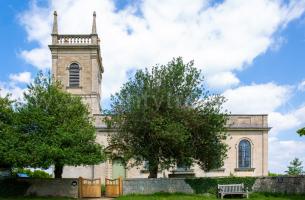
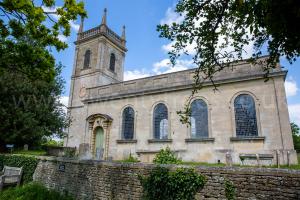

On 24th March 1780 Anne Sophia Grey [aged 50] died. Memorial panel on the monument to her father Henry Grey 1st Duke Kent at the De Grey Mausoleum, St John the Baptist Church, Flitton [Map].
Anne Sophia Grey: In or after 1730 she was born to Henry Grey 1st Duke Kent and Sophia Bentinck Duchess Kent. On 21st November 1748 Bishop John Egerton and she were married. She the daughter of Henry Grey 1st Duke Kent and Sophia Bentinck Duchess Kent. He the son of Bishop Henry Egerton and Elizabeth Adriana Bentinck. They were first cousins.
On 24th March 1801 William Beauclerk 9th Duke St Albans was born to William Beauclerk 8th Duke St Albans [aged 34] and Maria Janetta Nelthorpe Duchess St Albans. He a great x 3 grandson of King Charles II of England Scotland and Ireland. He married (1) 16th June 1827 Harriet Mellon Duchess St Albans (2) 29th May 1839 Elizabeth Catherine Gubbins Duchess St Albans and had issue.
On 24th March 1809 Jane Brown [aged 77] died. Memorial at Chapel of St John the Evangelist, Bolton [Map] commissioned by her daughters Eleanor Forster [aged 37] and Jane Forster [aged 31].
Jane Brown: Around 1732 she was born to Nicholas Brown of Bolton, Northumberland. On or before 1761 Matthew Forster and she were married.


Peacock's Memoirs of Shelley. [24th March 1814]. Shelley returned to London shortly before Christmas, then took a furnished house for two or three months at Windsor, visiting London occasionally. In March, 1814, he married Harriet a second time, according to the following certificate: —
Marriages in March 1814.
164. Percy Bysshe Shelley [aged 21] and Harriet Shelley (formerly Harriet Westbrook, Spinster, a Minor), both of this Parish, were remarried in this Church by Licence (the parties having been already married to each other according to the Rites and Ceremonies of the Church of Scotland), in order to obviate all doubts that have arisen, or shall or may arise, touching or concerning the validity of the aforesaid Marriage (by and with the consent of John Westbrook, the natural and lawful father of the said Minor), this Twenty-fourth day of March, in the Year 1814.
By me,
Edward Williams, Curate.
This Marriage was solemnized between us: Harriet Shelley, formerly Harriet Westbrook, Percy Bysshe Shelley.
In the presence of John Westbrook, John Stanley.
The above is a true extract from the Register Book of Marriages belonging to the Parish of Saint George, Hanover-square; extracted thence this eleventh day of April, 1859.— By me, H. Weightman, Curate.


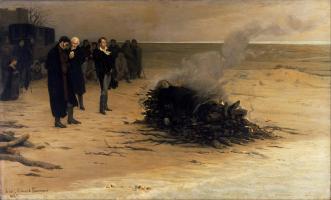

The True Chronicles of Jean le Bel Volume 1 Chapters 1-60 1307-1342
The True Chronicles of Jean le Bel offer one of the most vivid and immediate accounts of 14th-century Europe, written by a knight who lived through the events he describes, and experienced some of them first hand. Covering the early decades of the Hundred Years’ War, this remarkable chronicle follows the campaigns of Edward III of England, the politics of France and the Low Countries, and the shifting alliances that shaped medieval warfare. Unlike later historians, Jean le Bel writes with a strong sense of eyewitness authenticity, drawing on personal experience and the testimony of fellow soldiers. His narrative captures not only battles and sieges, but also the realities of military life, diplomacy, and the ideals of chivalry that governed noble society. A key source for Jean Froissart, Le Bel’s chronicle stands on its own as a compelling and insightful work, at once historical record and literary achievement. This translation builds on the 1905 edition published in French by Jules Viard, adding extensive translations from other sources Rymer's Fœdera, the Chronicles of Adam Murimuth, William Nangis, Walter of Guisborough, a Bourgeois of Valenciennes, Geoffrey le Baker of Swinbroke and Richard Lescot to enrich the original text and Viard's notes.
Available at Amazon in eBook and Paperback format.
On 24th March 1828 Wilhelmine Oldenburg was born to Christian August Oldenburg II Duke Schleswig Holstein Sonderburg Augustenburg [aged 29] and Louise Sophie Danneskiold Samsøe Duchess Schleswig Holstein Sonderburg Augustenburg. She a great x 3 granddaughter of King George II of Great Britain and Ireland. She died aged one in 1829.
On 24th March 1834 William Morris was born to William Morris [aged 36] and Emma Shelton [aged 30] at Elm House, Clay Hill. He married 26th April 1859 Jane Morris nee Burden and had issue.


Life of William Morris. William Morris, the eldest son and third child of William Morris [aged 36] and Emma Shelton, was born at Elm House, Clay Hill, Walthamstow, on the 24th of March, 1834. His ancestry was on neither side in any way remarkable, and family records in the undistinguished middle class, whether commercial or professional, to which both his parents belonged, are generally scanty in amount and do not go far back. Such fact's as have been preserved may be briefly set down, without laying any stress on what is known or what is unknown in the history of the family.
On 24th March 1843 Louisa Rous [aged 43] died of scarlet fever.
On 12th March 1854 Edith Katherine Manners was born to John Manners [aged 35] and Catherine Louise Georgina Marlay [aged 23]. Her mother died three weeks later. On 24th March 1854 Edith Katherine Manners died.


Letters of James Smetham's School. 24th March 1860. A Letter from Rossetti. He is coming to see us before long. He has some fine things at the Hogarth Club, to which he gave me a ticket. There is a man there, Edward Jones [aged 26], whose work you would like amazingly. There is a tall cabinet, seven feet high, designed and painted by him from Chaucer, the legend of the little boy whom the Jews murdered, but who would go on singing "Alma redemptoris, evermore," till some saint, or somebody, put a grain of wheat on his tongue. It might have been done by Giotto, only Giotto could not have done it near so well. Rossetti [aged 31] has Dante and Beatrice in Paradise1; a glorious thing. The sky is gilt, the name is put on scrolls ("Hortus Eden') in the sky, and the names are written near the heads. The background is a rich rose hedge, with birds of Paradise pecking roses, and nestling, and singing birds singing lustily. There is a floor of tall buttercups, hyacinths, and lilies, among which the five figures are treading ankle deep. Coloured calm, "above all pain, all passion, and all pride," reigns in the atmosphere. There they walk in knowledge, love, and beauty evermore.
Note 1. The reference painting appears to be a later work of the same subject.


On 13th March 1884 or 24th March 1884 William Charles Fuller was born at Laugharne [Map].

On 24th March 1906 Caroline Amelia Grosvenor Baroness Leigh [aged 77] died. Memorial at Church of the Virgin Mary, Stoneleigh [Map].
Caroline Amelia Grosvenor Baroness Leigh: On 14th June 1828 she was born to Richard Grosvenor 2nd Marquess Westminster and Elizabeth Mary Leveson-Gower Marchioness Westminster. She was baptised at St Mary's Church, Eccleston [Map] on 28th July 1828. On 22nd August 1848 William Henry Leigh 2nd Baron Leigh and Caroline Grosvenor were married. They had eight children. She the daughter of Richard Grosvenor 2nd Marquess Westminster and Elizabeth Mary Leveson-Gower Marchioness Westminster.

On 24th March 1908 Spencer Cavendish 8th Duke Devonshire [aged 74] died of pneumonia at Hotel Metropol. His nephew Victor [aged 39] succeeded 9th Duke Devonshire, 12th Earl Devonshire, 4th Earl Burlington, 12th Baron Cavendish Hardwick. On 28th March 1908 he was buried in the Cavendish Plot, St Peter's Church, Edensor [Map].

On 24th March 1921 Marcus Stone [aged 80] died.
Chronicle of Geoffrey le Baker of Swinbroke
Baker was a secular clerk from Swinbroke, now Swinbrook, an Oxfordshire village two miles east of Burford. His Chronicle describes the events of the period 1303-1356: Gaveston, Bannockburn, Boroughbridge, the murder of King Edward II, the Scottish Wars, Sluys, Crécy, the Black Death, Winchelsea and Poitiers. To quote Herbert Bruce 'it possesses a vigorous and characteristic style, and its value for particular events between 1303 and 1356 has been recognised by its editor and by subsequent writers'. The book provides remarkable detail about the events it describes. Baker's text has been augmented with hundreds of notes, including extracts from other contemporary chronicles, such as the Annales Londonienses, Annales Paulini, Murimuth, Lanercost, Avesbury, Guisborough and Froissart to enrich the reader's understanding. The translation takes as its source the 'Chronicon Galfridi le Baker de Swynebroke' published in 1889, edited by Edward Maunde Thompson.
Available at Amazon in eBook and Paperback format.

After 24th March 1946. St Mary's Churchyard, Chirk. Commonwealth War Grave of 1403645 Leading Aircraftman David Morris Williams Royal Air Force died 24 Mar 1946 aged twenty-four. Royal Air Force Volunteer Reserve. Attached to RAF North Witham, accidently drowned at Brampton. Son of David And Maria Ann Williams, of Chirk.
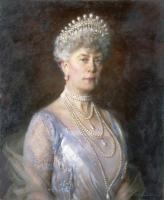
In 24th March 1953 Victoria Mary Teck Queen Consort England [aged 85] died.




On 24th March 1188 Ferdinand Burgundy was born to Sancho "Populator" I King Portugal [aged 33] and Dulce Barcelona Queen Consort Portugal. He married January 1212 his third cousin once removed Joan I Countess Flanders, daughter of Baldwin IX Count Flanders VI Count Hainaut and Marie Blois Countess Flanders.
On 24th March 1257 Yolande Lusignan was born to Hugh XII of Lusignan VII Count of La Marche III Count Angoulême [aged 22] and Jeanne Fougères Countess Lusignan Countess La Marche and Angoulême.
On 24th March 1330 William Latimer 4th Baron Latimer of Corby was born to William Latimer 3rd Baron Latimer of Corby [aged 30] and Elizabeth Botetort Baroness Latimer Corby at Scampston, Ryedale. He married before 1353 Elizabeth Fitzalan, daughter of Edmund Fitzalan 2nd or 9th Earl of Arundel and Alice Warenne Countess Arundel, and had issue.
On 24th March 1335 Edward Despencer 1st Baron Despencer, Baron Burghesh was born to Edward Despencer [aged 25] and Anne Ferrers [aged 36] at Essendine Ryall, Rutlandshire. He a great x 2 grandson of King Edward I of England. Coefficient of inbreeding 1.78%. He married before 1373 his half fourth cousin once removed Elizabeth Burghesh 3rd Baron Burghesh, daughter of Bartholomew "The Younger" Burghesh 2nd Baron Burghesh and Cecily Weyland, and had issue.
On 24th March 1433 Anne Beaufort was born to Edmund Beaufort 1st or 2nd Duke of Somerset [aged 27] and Eleanor Beauchamp Duchess Somerset [aged 24]. She a great x 2 granddaughter of King Edward III of England. She married before 1466 William Paston and had issue.
On 24th March 1493 William Cunningham 4th Earl Glencairn was born to Cuthbert Cunningham 3rd Earl Glencairn [aged 16]. He married in or before 1515 Catherine Borthwick and had issue.
On 24th March 1615 John St John was born to John St John 1st Baronet [aged 29] and Anne Leighton. He married Dorothy Ayloffe.

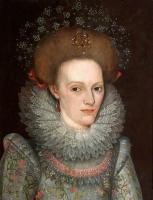
On 24th March 1628 Sophie Amalie Hanover Queen Consort Denmark was born to George Hanover Duke Brunswick-Lüneburg [aged 46] and Anne Eleonore Hesse Darmstadt Duchess Brunswick-Lüneburg [aged 26]. She married 1643 her sixth cousin Frederick III King of Denmark and had issue.
Henrici Quinti, Angliæ Regis, Gesta, is a first-hand account of the Agincourt Campaign, and subsequent events to his death in 1422. The author of the first part was a Chaplain in King Henry's retinue who was present from King Henry's departure at Southampton in 1415, at the siege of Harfleur, the battle of Agincourt, and the celebrations on King Henry's return to London. The second part, by another writer, relates the events that took place including the negotiations at Troye, Henry's marriage and his death in 1422.
Available at Amazon in eBook and Paperback format.

On 24th March 1650 Bishop Jonathan Trelawny 3rd Baronet was born to Jonathan Trelawny 2nd Baronet [aged 27] and Mary Seymour [aged 31]. Coefficient of inbreeding 3.12%. He married in or before 1688 Rebecca Hele Lady Trelawny and had issue.
On 24th March 1675 Fredericka Saxe Coburg Altenburg was born to Frederick Saxe Coburg Altenburg I Duke Saxe Gotha Altenburg [aged 28] and Duchess Magdalena Sibylle of Saxe Gotha Altenburg [aged 26] at Gotha.
On 24th March 1685 John Fane 7th Earl of Westmoreland was born to Vere Fane 4th Earl of Westmoreland [aged 40] and Rachel Bence Countess of Westmoreland. He married August 1716 his fourth cousin twice removed Mary Cavendish Countess of Westmoreland.
On 24th March 1688 John Smibert was born to John Smibert in Edinburgh. He was the youngest of six children.
On 24th March 1724 Richard Hamilton 4th Viscount Boyne was born to Gustavus Hamilton [aged 39] and Dorothea Bellew.
On 24th March 1730 Mary Wray was born to John Wray 12th Baronet [aged 40] and Frances Norcliffe Lady Wray [aged 29]. She married 19th April 1769 James Innes-Kerr 5th Duke Roxburghe.
On 24th March 1734 Diana Spencer Viscountess St John and Bolingbroke was born to Charles Spencer 3rd Duke of Marlborough [aged 27] and Elizabeth Trevor Duchess of Marlborough [aged 21]. She married (1) 8th September 1757 Frederick St John 3rd Viscount St John 2nd Viscount Bolingbroke, son of John St John 2nd Viscount St John and Anne Furnese, and had issue (2) 12th March 1768 Topham Beauclerk and had issue.
On 24th March 1745 Anne Fitzwilliam was born to William Fitzwilliam 1st and 3rd Earl Fitzwilliam [aged 25] and Anne Watson Wentworth Countess Fitzwilliam.
On 24th March 1745 John Frederick Sackville 3rd Duke Dorset was born to John Sackville [aged 31] and Frances Leveson-Gower [aged 24]. He married 1790 his fourth cousin once removed Arabella Diana Cope 3rd Duchess Dorset, daughter of Charles Cope 2nd Baronet and Catherine Bishopp Countess Liverpool, and had issue.
On 24th March 1753 Frances Manners Countess Tyrconnel was born to John Manners Marquess of Granby [aged 32] and Frances Seymour [aged 24]. She married 9th July 1772 George Carpenter 2nd Earl Tyrconnel, son of George Carpenter 1st Earl Tyrconnel and Frances Clifton Countess Tyrconnel.


Jean de Waurin's Chronicle of England Volume 6 Books 3-6: The Wars of the Roses
Jean de Waurin was a French Chronicler, from the Artois region, who was born around 1400, and died around 1474. Waurin’s Chronicle of England, Volume 6, covering the period 1450 to 1471, from which we have selected and translated Chapters relating to the Wars of the Roses, provides a vivid, original, contemporary description of key events some of which he witnessed first-hand, some of which he was told by the key people involved with whom Waurin had a personal relationship.
Available at Amazon in eBook and Paperback format.
On 24th March 1760 Charles Compton 1st Marquess Northampton was born to Spencer Compton 8th Earl of Northampton [aged 21] and Jane Lawton Countess Northampton. He married 18th August 1787 Maria Smith Marchioness Northampton.
On 24th March 1768 George Stewart 8th Earl Galloway was born to John Stewart 7th Earl Galloway [aged 32] and Anne Dashwood Countess Galloway [aged 25]. He married April 1797 Jane Paget Countess Galloway, daughter of Henry Bayly-Paget 1st Earl Uxbridge and Jane Champagné Countess Uxbridge, and had issue.


On 24th March 1800 Reverend John Culme-Seymour 2nd Baronet was born to Michael Seymour 1st Baronet [aged 31] and Jane Hawker.
On 24th March 1801 William Beauclerk 9th Duke St Albans was born to William Beauclerk 8th Duke St Albans [aged 34] and Maria Janetta Nelthorpe Duchess St Albans. He a great x 3 grandson of King Charles II of England Scotland and Ireland. He married (1) 16th June 1827 Harriet Mellon Duchess St Albans (2) 29th May 1839 Elizabeth Catherine Gubbins Duchess St Albans and had issue.
On 24th March 1806 Admiral Arthur Duncombe was born to Charles Duncombe 1st Baron Feversham [aged 41] and Charlotte Legge Baroness Feversham Duncombe Park [aged 31].
On 24th March 1822 Mary Stapleton Viscountess Falmouth 13th Baroness Despencer was born to Thomas Stapleton [aged 29] and Frances Woodley [aged 62]. She married 29th July 1845 Evelyn Boscawen 6th Viscount Falmouth and had issue.
On 24th March 1825 Delaval Loftus Astley 18th Baron Hastings was born to Jacob Astley 16th Baron Hastings [aged 27] and Georgiana Carolina Dashwood Lady Astley [aged 29]. He married before 1855 Frances Diana Manners-Sutton Baroness Hastings, daughter of Charles Manners-Sutton 1st Viscount Canterbury and Lucy Maria Denison, and had issue.


On 24th March 1828 Captain Robert Peel Floyd was born to Major-General Henry Floyd 2nd Baronet [aged 34].
On 24th March 1828 Wilhelmine Oldenburg was born to Christian August Oldenburg II Duke Schleswig Holstein Sonderburg Augustenburg [aged 29] and Louise Sophie Danneskiold Samsøe Duchess Schleswig Holstein Sonderburg Augustenburg. She a great x 3 granddaughter of King George II of Great Britain and Ireland. She died aged one in 1829.
On 24th March 1834 William Morris was born to William Morris [aged 36] and Emma Shelton [aged 30] at Elm House, Clay Hill. He married 26th April 1859 Jane Morris nee Burden and had issue.
The History of William Marshal was commissioned by his son shortly after William’s death in 1219 to celebrate the Marshal’s remarkable life; it is an authentic, contemporary voice. The manuscript was discovered in 1861 by French historian Paul Meyer. Meyer published the manuscript in its original Anglo-French in 1891 in two books. This book is a line by line translation of the first of Meyer’s books; lines 1-10152. Book 1 of the History begins in 1139 and ends in 1194. It describes the events of the Anarchy, the role of William’s father John, John’s marriages, William’s childhood, his role as a hostage at the siege of Newbury, his injury and imprisonment in Poitou where he met Eleanor of Aquitaine and his life as a knight errant. It continues with the accusation against him of an improper relationship with Margaret, wife of Henry the Young King, his exile, and return, the death of Henry the Young King, the rebellion of Richard, the future King Richard I, war with France, the death of King Henry II, and the capture of King Richard, and the rebellion of John, the future King John. It ends with the release of King Richard and the death of John Marshal.
Available at Amazon in eBook and Paperback format.
On 24th March 1841 Charles Adolphus Murray 7th Earl Dunmore was born to Alexander Murray 6th Earl Dunmore [aged 36] and Catherine Herbert Countess Dunmore [aged 26]. He married 5th April 1866 Gertrude Coke, daughter of Thomas Coke 2nd Earl of Leicester and Juliana Whitbread Countess Leicester, and had issue.
On 24th March 1843 Victoria Alexandrina Elizabeth Campbell was born to John Frederick Vaughan Campbell 2nd Earl Cawdor [aged 25] and Sarah Mary Compton Cavendish Countess Cawdor [aged 29].
On 24th March 1844 Julia Frances Somerville Lady Blackett was born to Kenelm Somerville [aged 56]. She married 23rd November 1871 Edward William Blackett 7th Baronet, son of Edward Blackett 6th Baronet and Julia Monck Lady Blackett, and had issue.
On 12th March 1854 Edith Katherine Manners was born to John Manners [aged 35] and Catherine Louise Georgina Marlay [aged 23]. Her mother died three weeks later. On 24th March 1854 Edith Katherine Manners died.
On 24th March 1859 Henry Lopes 1st Baron Roborough was born to Massey Lopes 3rd Baronet [aged 40] and Bertha Yarde-Buller Lady Lopes. He married 1891 his fifth cousin Alberta Louise Edgcumbe Baroness Roborough, daughter of William Henry Edgecumbe 4th Earl of Mount Edgcumbe and Katherine Elizabeth Hamilton Countess Mount Edgcumbe, and had issue.
On 24th March 1870 Herbert Charles Arthur Langham 13th Baronet was born to Herbert Hay Langham 12th Baronet [aged 29] and Anna Maria Sandes. He married 1st June 1893 Ethel Sarah Emerson-Tennent Lady Langham and had issue.
On 24th March 1873 Hugh Douglas Blackett 8th Baronet was born to Edward William Blackett 7th Baronet [aged 42] and Julia Frances Somerville Lady Blackett [aged 29]. He married 1903 Helen Katharine Lowther Lady Blackett and had issue.

On 24th March 1873 Richard Molyneux was born to William Molyneux 4th Earl Sefton [aged 37] and Cecil Emily Jolliffe Countess Sefton [aged 35].
On 24th March 1877 Florence Sibell Bridgeman was born to George Cecil Orlando Bridgeman 4th Earl Bradford [aged 32] and Ida Frances Annabella Lumley Countess Bradford [aged 28]. She married 10th February 1904 Ronald Collet Norman and had issue.
On 13th March 1884 or 24th March 1884 William Charles Fuller was born at Laugharne [Map].
William of Worcester's Chronicle of England
William of Worcester, born around 1415, and died around 1482 was secretary to John Fastolf, the renowned soldier of the Hundred Years War, during which time he collected documents, letters, and wrote a record of events. Following their return to England in 1440 William was witness to major events. Twice in his chronicle he uses the first person: 1. when writing about the murder of Thomas, 7th Baron Scales, in 1460, he writes '… and I saw him lying naked in the cemetery near the porch of the church of St. Mary Overie in Southwark …' and 2. describing King Edward IV's entry into London in 1461 he writes '… proclaimed that all the people themselves were to recognize and acknowledge Edward as king. I was present and heard this, and immediately went down with them into the city'. William’s Chronicle is rich in detail. It is the source of much information about the Wars of the Roses, including the term 'Diabolical Marriage' to describe the marriage of Queen Elizabeth Woodville’s brother John’s marriage to Katherine, Dowager Duchess of Norfolk, he aged twenty, she sixty-five or more, and the story about a paper crown being placed in mockery on the severed head of Richard, 3rd Duke of York.
Available at Amazon in eBook and Paperback format.
On 24th March 1937 Charles Gerald John Cadogan 8th Earl Cadogan was born to William Gerald Charles Cadogan 7th Earl Cadogan [aged 23] and Primrose Lilian Yarde-Buller Countess Cadogan [aged 19]. He married Philippa Dorothy Bluet Wallop, daughter of Gerard Wallop 9th Earl of Portsmouth.
On 24th March 1940 John Palmer 4th Earl of Selborne was born to Captain William Palmer [aged 27] and Priscilla Egerton-Warburton [aged 24]. He married 19th December 1969 Diana van Antwerp James Countess Selborne and had issue.
On 24th March 1946 Christopher Guy Dyke Acland 6th Baronet was born to Antony Guy Acland 5th Baronet [aged 29] and Margaret Joan Rooke Lady Acland.
On 24th March 1958 Alexandra Sitwell was born to Sacheverell Reresby Sitwell 7th Baronet [aged 30] and Penelope Forbes [aged 34].
On 24th March 1966 Jago Eliot was born to Peregrine Nicholas Eliot 10th Earl of St Germans [aged 25] and Jacquetta Lamspon Countess St Germans [aged 23].
On 24th March 1729 Henry Grey 1st Duke Kent [aged 58] and Sophia Bentinck Duchess Kent [aged 27] were married. She by marriage Duchess Kent. The difference in their ages was 30 years. She the daughter of William Bentinck 1st Earl of Portland and Jane Martha Temple Countess Portland [aged 57]. He the son of Anthony Grey 11th Earl Kent and Mary Lucas Countess Kent.
On 24th March 1798 John Trollope 6th Baronet [aged 32] and Anne Thorold were married.
On 24th March 1845 Cornwallis Maude 1st Earl Montalt [aged 27] and Clementina Elphinstone-Fleming Viscountess Hawarden [aged 22] were married.
On 24th March 1918 Archibald Montagu Stuart-Wortley-Mackenzie 3rd Earl of Wharncliffe [aged 25] and Maud Lillian Elfreda Mary Wentworth-Fitzwilliam [aged 19] were married. She the daughter of William Charles de Meuron "Billy" Wentworth-Fitzwilliam 7th and 5th Earl Fitzwilliam [aged 45] and Maud Frederica Elizabeth Dundas Countess Fitzwilliam [aged 40]. He the son of Francis Montagu Stuart-Wortley-Mackenzie 2nd Earl of Wharncliffe [aged 61] and Ellen Gallwey Countess of Wharncliffe [aged 55]. They were half fourth cousin twice removed.
On 24th March 1224 William Mowbray 6th Baron Thirsk [aged 51] died. Baron Thirsk extinct.
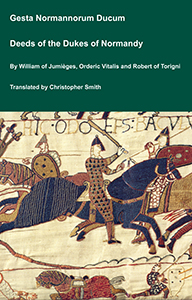
The Deeds of the Dukes of Normandy
The Gesta Normannorum Ducum [The Deeds of the Dukes of Normandy] is a landmark medieval chronicle tracing the rise and fall of the Norman dynasty from its early roots through the pivotal events surrounding the Norman Conquest of England. Originally penned in Latin by the monk William of Jumièges shortly before 1060 and later expanded at the behest of William the Conqueror, the work chronicles the deeds, politics, battles, and leadership of the Norman dukes, especially William’s own claim to the English throne. The narrative combines earlier historical sources with firsthand information and oral testimony to present an authoritative account of Normandy’s transformation from a Viking settlement into one of medieval Europe’s most powerful realms. William’s history emphasizes the legitimacy, military prowess, and governance of the Norman line, framing their expansion, including the conquest of England, as both divinely sanctioned and noble in purpose. Later chroniclers such as Orderic Vitalis and Robert of Torigni continued the history, extending the coverage into the 12th century, providing broader context on ducal rule and its impact. Today this classic work remains a foundational source for understanding Norman identity, medieval statesmanship, and the historical forces that reshaped England and Western Europe between 800AD and 1100AD.
Available at Amazon in eBook and Paperback format.
On 24th March 1316 Nicholas Audley 1st Baron Audley of Heighley [aged 26] died. His son James [aged 3] succeeded 2nd Baron Audley of Heighley in Staffordshire. Isabel Strange Baroness Audley Heighley by marriage Baroness Audley of Heighley in Staffordshire.
On 24th March 1386 John I Count of Auvergne died. His son John succeeded II Count Auvergne and Count Boulogne.
On 24th March 1390 Elizabeth Darcy Countess Ormonde [aged 57] died.
On 24th March 1394 Constance of Castile Duchess of Lancaster [aged 40] died at Leicester Castle [Map]. She was buried at Church of the Annunciation of our Lady of the Newark [Map].
On 24th March 1399 Margaret Plantagenet 1st Duchess of Norfolk died. Duke Norfolk extinct since it was created for life only. She was buried in the choir of Christ Church, Greyfriars [Map]. Her grandson Thomas [aged 31] succeeded 3rd Earl Norfolk. Elizabeth Fitzalan Duchess Norfolk [aged 33] by marriage Countess Norfolk.
On 24th March 1443 James "Gross" Douglas 7th Earl Douglas 1st Earl Avondale [aged 72] died. His son William [aged 18] succeeded 8th Earl Douglas, 2nd Earl Avondale. Margaret "Fair Lady of Galloway" Douglas Countess [aged 8] by marriage Countess Douglas, Countess Avondale.
On 24th March 1499 Edward Stafford 2nd Earl Wiltshire [aged 28] died at Drayton House, Northamptonshire [Map]. He was buried at St Peter's Church, Lowick [Map]. Earl Wiltshire extinct.
On 24th March 1522 Christopher Urswick [aged 74] died in Hackney. He was buried in St Augustine's Church, Hackney.
On 24th March 1545 George Hastings 1st Earl Huntingdon [aged 58] died. His son Francis [aged 31] succeeded 2nd Earl Huntingdon, 7th Baron Botreaux, 6th Baron Hungerford, 4th Baron Moleyns and 4th Baron Hastings. Catherine Pole Countess Huntingdon [aged 34] by marriage Countess Huntingdon.
On 24th March 1574 Henry Denny [aged 34] died.
On 24th March 1603 Elizabeth I [aged 69] died at Richmond Palace [Map] around three in the morning. Her first cousin twice removed James [aged 36] succeeded I King England Scotland and Ireland.
Immediately following her death Robert Carey 1st Earl Monmouth [aged 43] started on horseback for Edinburgh to inform King James I of England and Ireland and VI of Scotland arriving at Holyrood Palace [Map] late on the 26 Mar 1603. His conduct met with general disapproval and merited censure as contrary to all decency, good manners and respect. George Carew and Thomas Lake [aged 35] were sent by the Council to formally inform James of her death.
On 24th March 1605 Elizabeth Russell Countess Bath died.
On 24th March 1645 Thomas Aston 1st Baronet [aged 44] died. His son Willoughby [aged 4] succeeded 2nd Baronet Aston of Aston.
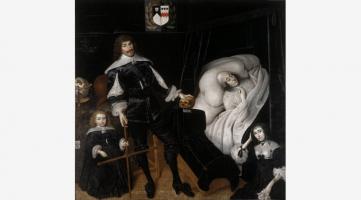

Chronicle of Abbot Ralph of Coggeshall
The Chronicle of Abbot Ralph of Coggeshall (Chronicon Anglicanum) is an indispensable medieval history that brings to life centuries of English and European affairs through the eyes of a learned Cistercian monk. Ralph of Coggeshall, abbot of the Abbey of Coggeshall in Essex in the early 13th century, continued and expanded his community’s chronicle, documenting events from the Norman Conquest of 1066 into the tumultuous reign of King Henry III. Blending eyewitness testimony, careful compilation, and the monastic commitment to record-keeping, this chronicle offers a rare narrative of political intrigue, royal power struggles, and social upheaval in England and beyond. Ralph’s work captures the reigns of pivotal figures such as Richard I and King John, providing invaluable insights into their characters, decisions, and the forces that shaped medieval rule. More than a simple annal, Chronicon Anglicanum conveys the texture of medieval life and governance, making it a rich source for scholars and readers fascinated by English history, monastic authorship, and the shaping of the medieval world.
Available at Amazon in eBook and Paperback format.

On 24th March 1657 Bridget Wray Countess Lindsey [aged 29] died. She was buried with her mother Elizabeth Norreys 3rd Baroness Norreys Rycote in Westminster Abbey. Her son James [aged 3] succeeded 5th Baron Norreys of Rycote.
On 24th March 1669 John Russell 3rd Baronet [aged 29] died. His son William [aged 5] succeeded 4th Baronet Russell of Chippenham in Wiltshire.
On 24th March 1676 Cicely Compton Baroness Arundel Wardour [aged 66] died.
On 24th March 1683 John Barrington 3rd Baronet [aged 78] died. His grandson John [aged 12] succeeded 4th Baronet Barrington of Barrington Hall.
On 24th March 1707 William Boothby 1st Baronet [aged 69] died at Ashbourne Hall, Derbyshire [Map]. His grandson Henry [aged 25] succeeded 2nd Baronet Boothby of Broadlow Ash in Derbyshire.
On 24th March 1741 Elizabeth Folkes Lady Hamner [aged 41] died.
On 24th March 1741 William Berkeley 4th Baron Berkeley [aged 78] died at Bruton, Somerset. His son John [aged 43] succeeded 5th Baron Berkeley of Stratton in Cornwall.
On 24th March 1744 Thomas Stourton 14th Baron Stourton [aged 76] died without issue. His nephew Charles [aged 42] succeeded 15th Baron Stourton. Catherine Walmesley Baroness Petre and Stourton by marriage Baroness Stourton.
On 24th March 1748 Coventry Carew 6th Baronet [aged 31] died without issue. Baronet Carew of Antony in Cornwall extinct. Some sources refer to a seventh and eighth Baronet although it is unclear who these are? Reginald Pole aka Pole-Carew inherited the manor of Antony, Cornwall and changed his surname from Pole to Pole-Carew.
On 24th March 1780 Catherine Dashwood Lady Jenkinson [aged 87] died.
Abbot John Whethamstede’s Chronicle of the Abbey of St Albans
Abbot John Whethamstede's Register aka Chronicle of his second term at the Abbey of St Albans, 1451-1461, is a remarkable text that describes his first-hand experience of the beginning of the Wars of the Roses including the First and Second Battles of St Albans, 1455 and 1461, respectively, their cause, and their consequences, not least on the Abbey itself. His text also includes Loveday, Blore Heath, Northampton, the Act of Accord, Wakefield, and Towton, and ends with the Coronation of King Edward IV. In addition to the events of the Wars of the Roses, Abbot John, or his scribes who wrote the Chronicle, include details in the life of the Abbey such as charters, letters, land exchanges, visits by legates, and disputes, which provide a rich insight into the day-to-day life of the Abbey, and the challenges faced by its Abbot.
Available at Amazon in eBook and Paperback format.
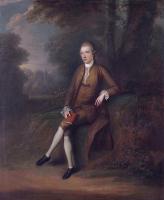
On 24th March 1796 Hercules Rowley 2nd Viscount Langford [aged 58] died unmarried. Viscount Langford of Longford Lodge extinct. Clotworthy Taylour aka Rowley 1st Baron Langford [aged 32] succeeded to the Rowley estates at which time he changed his surname from Taylour to Rowley.
On 24th March 1838 Abraham Hume 2nd Baronet [aged 89] died. Baronet Hume of Wormleybury in Hertfordshire extinct.
On 24th March 1846 Charles John Anderson 8th Baronet [aged 78] died. His son Charles [aged 41] succeeded 9th Baronet Anderson of Broughton in Lincolnshire.
On 24th March 1852 Jane Crawfurd Bruce died.

On 24th March 1860 William Browne ffolkes 2nd Baronet [aged 73] died. His grandson William [aged 12] succeeded 3rd Baronet ffolkes of Hillington Hall in Norfolk.
On 24th March 1869 George Chetwynd 3rd Baronet [aged 59] died. His son George [aged 19] succeeded 4th Baronet Chetwynd of Brocton Hall in Staffordshire.
On 24th March 1870 William Williams 1st Baronet [aged 78] died. His son Frederick [aged 40] succeeded 2nd Baronet Williams of Tregullow in Cornwall. Mary Christian Law Lady Williams by marriage Lady Williams of Tregullow in Cornwall
On 24th March 1874 Edward Henry Page-Turner 6th Baronet [aged 50] died. His second cousin Henry [aged 55] succeeded 7th Baronet Dryden of Ambrosden in Oxfordshire.
On 24th March 1906 Caroline Amelia Grosvenor Baroness Leigh [aged 77] died. Memorial at Church of the Virgin Mary, Stoneleigh [Map].
Caroline Amelia Grosvenor Baroness Leigh: On 14th June 1828 she was born to Richard Grosvenor 2nd Marquess Westminster and Elizabeth Mary Leveson-Gower Marchioness Westminster. She was baptised at St Mary's Church, Eccleston [Map] on 28th July 1828. On 22nd August 1848 William Henry Leigh 2nd Baron Leigh and Caroline Grosvenor were married. They had eight children. She the daughter of Richard Grosvenor 2nd Marquess Westminster and Elizabeth Mary Leveson-Gower Marchioness Westminster.
On 24th March 1908 Spencer Cavendish 8th Duke Devonshire [aged 74] died of pneumonia at Hotel Metropol. His nephew Victor [aged 39] succeeded 9th Duke Devonshire, 12th Earl Devonshire, 4th Earl Burlington, 12th Baron Cavendish Hardwick. On 28th March 1908 he was buried in the Cavendish Plot, St Peter's Church, Edensor [Map].
Chronicle of a Bourgeois of Valenciennes
Récits d’un bourgeois de Valenciennes aka The Chronicle of a Bourgeois of Valenciennes is a vivid 14th-century vernacular chronicle written by an anonymous urban chronicler from Valenciennes in the County of Hainaut. It survives in a manuscript that describes local and regional history from about 1253 to 1366, blending chronology, narrative episodes, and eyewitness-style accounts of political, military, and social events in medieval France, Flanders, and the Low Countries. The work begins with a chronological framework of events affecting Valenciennes and its region under rulers such as King Philip VI of France and the shifting allegiances of local nobility. It includes accounts of conflicts, sieges, diplomatic manoeuvres, and the impact of broader struggles like the Hundred Years’ War on urban life in Hainaut. Written from the perspective of a burgher (bourgeois) rather than a monastery or royal court, the chronicle offers a rare lay viewpoint on high politics and warfare, reflecting how merchants, townspeople, and civic institutions experienced the turbulence of the 13th and 14th centuries. Its narrative style combines straightforward reporting of events with moral and civic observations, making it a valuable source for readers interested in medieval urban society, regional politics, and the lived experience of war and governance in pre-modern Europe.
Available at Amazon in eBook and Paperback format.
On 24th March 1909 Dean Herbert Mortimer Luckock [aged 75] died. He was buried in the Cathedral Close at Lichfield Cathedral [Map].
On 24th March 1921 Marcus Stone [aged 80] died.

On 24th March 1932 George Canning Harris 4th Baron Harris [aged 81] died. His son George [aged 42] succeeded 5th Baron Harris of Seringapatam and Mysore and of Belmont in Kent. Dorothy Mary Crookes Lady Harris by marriage Baroness Harris of Seringapatam and Mysore and of Belmont in Kent.
On 24th March 1945 George Kemp 1st Baron Rochdale [aged 78] died. His son John [aged 38] succeeded 2nd Baron Rochdale of Rochdale in Lancashire.
On 24th March 1976 Field-Marshal Bernard Law Montgomery 1st Viscount Montgomery [aged 88] died. He was buried at St Margaret of Antioch's Church, East Wellow [Map]. His son David [aged 47] succeeded 2nd Viscount Montgomery of El Alamein.
On 24th March 1989 Edmund Stockdale 1st Baronet [aged 85] died. His son Thomas [aged 49] succeeded 2nd Baronet Hoddington in Hampshire.