

01 Oct is in October.
On 1st October 959 King Eadwig I of England died. He was buried at Winchester, Hampshire [Map]. His brother Edgar [aged 16] succeeded I King of England.
Anglo-Saxon Chronicle. 959. This year died King Edwy, on the calends of October; and Edgar [aged 16] his brother took to the government of the West-Saxons, Mercians, and Northumbrians. He was then sixteen years old. It was in this year he sent after St. Dunstan [aged 50], and gave him the bishopric of Worcester; and afterwards the bishopric of London. In his days it prosper'd well; and God him gave, that he dwelt in peace the while that he lived. Whate'er he did, whate'er he plan'd, he earn'd his thrift. He also rear'd God's glory wide, and God's law lov'd, with peace to man, above the kings that went before in man's remembrance. God so him sped, that kings and earls to all his claims submissive bow'd; and to his will without a blow he wielded all as pleased himself. Esteem'd he was both far and wide in distant lands; because he prized the name of God, and God's law traced, God's glory rear'd, both far and wide, on every side. Wisely he sought in council oft his people's good, before his God, before the world. One misdeed he did, too much however, that foreign tastes he loved too much; and heathen modes into this land he brought too fast; outlandish men hither enticed; and to this earth attracted crowds of vicious men. But God him grant, that his good deeds be weightier far than his misdeeds, to his soul's redemption on the judgment-day.
On 1st October 961 Archbishop Artald of Reims died.
On 1st October 1207 King Henry III of England was born to King John of England [aged 40] and Isabella of Angoulême Queen Consort England [aged 19] at Winchester Castle [Map]. He married 14th January 1236 his fourth cousin Eleanor of Provence Queen Consort England, daughter of Raymond IV Count Provence and Beatrice Savoy Countess Provence, and had issue.
 Annals of Six Kings of England by Nicholas Trivet. Otto IV, duke of Saxony, though elected king of the Romans in opposition, came to England to his uncle King John. To support him, the king of England took from clergy and laity a thirteenth part of their goods. Meanwhile Philip II of France, vigorously pursuing the disinheritance of the king of England, so that he who plundered might not himself be plundered, seized many of his strongholds in Aquitaine; some he destroyed, others he left in the hands of his marshal William des Roches. He also entered the lands of the viscount of Thouars, took Parthenay, and many other places. In the same year, at Winchester, on the feast of Saint Remigius [1st October 1207], a son was born to King John, whom he named Henry III of England, in memory of his father.
Otho, dux Saxoniæ, in regem Romanorum quamvis in discordia electus, in Angliam ad regem Joannem avunculum suum venit; pro cujus subsidio rex Angliæ a clericis et laicis tertiam decimam partem bonorum accepit. Philippus Francorum rex in exheredationem regis Angliæ non segniter agens, ne qui prædatur non prædaretur, multas ei in Aquitania munitiones abstulit; quarum quasdam evertit, quasdam in manu marescalli sui Willelmi de Rupibus dereliquit: terras etiam vicecomitis Toarcensis ingressus, Perteniacum cepit, et alia loca plura. Eodem anno apud Wintoniam, in die S. Remigii, Joanni regi natus est filius, quem vocavit Henricum, in memoriam patris sui.
On 1st October 1282 Bishop Richard de Swinfield was elected Bishop of Hereford.
 Chronicle of Walter of Guisborough. Pope Clement held his council at Vienne1 on the first day of October in the year of our Lord 1311. At this council there were three sessions. In the first session, after delivering a sermon, he set before the clergy three main articles for discussion and advice: On reforming the state of the universal Church, On the business of the Holy Land, how it might be recovered and defended, On the Order of the Templars, which was accounted as nothing. He ordered all the prelates and each person who had gathered to deliberate on these matters until the second session. In the second session there was a long debate on the Order of the Templars, whether it could continue to exist, or whether it ought to be abolished by law. Nearly all the prelates were in favour of the Templars, except for the prelates of France, who, because of their fear of the King of France (by whom, it was said, the whole scandal had been stirred up), did not dare to act otherwise. For at the whole council, which, in truth, did not deserve to be called a council, because the pope did everything on his own authority, with the sacred council neither replying nor consenting, there were about one hundred and thirty pastoral staffs. In the third session the pope sat as judge, with the King of France on one side of him and the King of Navarre, his son, on the other. A certain cleric rose and forbade, under penalty of major excommunication, anyone to speak a word in the council unless licensed or requested by the pope. After the proceedings against the Templars were read out, the pope added that although, from the previous legal process, he could not abolish the order by law, nevertheless, by the plenitude of his power he abolished the order, its name and habit, granting and uniting their lands and possessions to the Hospitallers. He also granted the King of France a tithe from the whole Church for six years, on condition that at the end of the sixth year he should personally go to the Holy Land, the sacred council neither giving its express consent nor offering open opposition. The prelates were given leave around Ascension Day, and returned to their own territories.
Dominus papa Clemens tenuit concilium suum Viennæ, anno Domini MCCCXI, primo die mensis Octobris. In quo quidem concilio tres Edward Edward II fecit sessiones. In prima sessione facto sermone exposuit clero tres articulos, super quibus erat principaliter tractandum et consulendum super statu universalis ecclesiæ reformando, super negotio Terræ Sanctæ, quomodo posset recuperari et tueri, et super ordine Templariorum qui pro nullo habebatur, præcepitque omnibus prælatis et singulis qui convenerant, quod super præmissis articulis usque ad secundam sessionem deliberarent. In secunda sessione facta est longa disputatio de ordine Templariorum, utrum stare posset vel deleri de jure deberet? Et erant pro ordine Templariorum prælati quasi omnes, præter prælatos Franciæ, qui, propter timorem regis Franciæ, per quem, ut dicebatur, totum illud scandalum fuerat, aliud facere non audebant. Erant enim in toto concilio (quod concilium dici non merebatur, quia ex capite proprio omnia fecit dominus papa, non respondente neque consentiente sacro concilio) baculi pastorales circiter quasi centumtriginta. In tertia sessione sedit dominus papa pro tribunali, et ab uno latere rex Franciæ, ab altero rex Naverniæ filius ejus, surrexitque quidam clericus, et inhibuit sub poena excommunicationis majoris, ne aliquis loqueretur verbum in concilio, nisi licentiatus vel requisitus a papa. Recitatoque processu Templariorum, adjecit papa quod licet ex processu præhabito ipsum ordinem de jure delere non posset, tamen ex plenitudine potestatis ordinem delevit, nomen et habitum, terras eorum et possessiones Hospitalariis conferendo, aggregando, et uniendo. Decimam etiam universalis ecclesiæ per sex annos regi Francorum contulit; ita quod in fine sexti anni Terram Sanctam personaliter adiret, sacro non consentiente concilio neque expresse contradicente. Licentiatique sunt prælati circa Ascensionem Dominicam, et ad partes suas reversi.
Note 1. This was the fifteenth general council of Vienne, the first session of which commenced on the 16th of October, 1311, the second on the 3rd of April, 1312, and the third on the 6th of May following.
 Adam Murimuth Continuation. In this year, on the twelfth day of the month of May, in the year of our Lord 1313, Archbishop Robert of Winchelsea [deceased] died, and Master Thomas de Cobham [aged 45], who was then in France on affairs of the kingdom, was unanimously elected in his place. Nevertheless, the king asked Pope Clement that Lord Walter Reynolds, bishop of Worcester, should be transferred to the church of Canterbury. This was done on the first day of October in the following year, namely in the year of our Lord 1313. Immediately afterwards he gave the bishopric of Worcester to Lord Walter de Maidstone, a man indeed widely spoken against in England for dishonourable conduct and life, and secretly familiar with the pope in an unseemly way. He remained in that bishopric only a short time. Later Pope John gave the bishopric of Worcester to the said Master Thomas de Cobham, who, because of the shame of his voluntary rejection from the church of Canterbury, remained for a long time at the Roman Curia, as will appear below.
Hoc anno, XIJ die mensis Maii, anno Domini MCCCXIII, obiit archiepiscopus Robertus de Wynchelse et fuit concorditer electus magister Thomas de Cobham, exsistens in Francia pro regni negotiis. Et tamen rex rogavit papam Clementem pro domino Waltero Reginaldi, episcopo W ygorniensi, ut ipsum transferret ad ecclesiam Cantuariensem; quod et factum fuit primo die Octobris in anno sequenti, scilicet anno Domini MCCCXIII, et statim dedit episcopatum Wygorniensem domino Waltero de Manestone, viro utique diffamato in Anglia de inhonesta conversatione et vita, et papæ ex inhonesta familiaritate secreto, qui modico tempore postmodum in episcopatu duravit Et postes papa Johannes dedit ipsum episcopatum Wygorniensem dicto magistro Thome de Cobham, qui propter verecundiam voluntariæ repulsionis suæ ab ecclesia Cantuariensi diu in Romana curia morabatur, sicut inferius apparebit.
 Chronicle of Geoffrey le Baker of Swinbroke. In this year, at a certain council convened by the Duke of Cornwall, who was acting as guardian of the realm, along with prelates and barons, the granting of the people's wool1 to the king was agreed upon by those who were present. Later, when the clergy, who had been absent, were gathered on the first day of October [1338], they granted the king a tenth for the third year to come, but they unanimously refused to agree to the payment in wool that the laypeople had provided.
Isto anno, in quodam concilio per ducem Cornubie regni custodem et prelatos et barones convocato, concessa fuit regi lana popularium per eos qui fuerunt ibi presentes. Iterumque, clero tunc absente coadunato ad primum diem mensis Octobris, concesserunt ecclesiastici unam decimam pro anno tercio tunc sequente, set solucionem lanarum, quam populares prebuerunt, ipsi unanimiter negaverunt.
Note 1. At the parliament of Northampton, 26th July-2nd August. See Adam Murimuth Continuation and Knighton 2571.
Chronicle of a Bourgeois of Valenciennes
Récits d’un bourgeois de Valenciennes aka The Chronicle of a Bourgeois of Valenciennes is a vivid 14th-century vernacular chronicle written by an anonymous urban chronicler from Valenciennes in the County of Hainaut. It survives in a manuscript that describes local and regional history from about 1253 to 1366, blending chronology, narrative episodes, and eyewitness-style accounts of political, military, and social events in medieval France, Flanders, and the Low Countries. The work begins with a chronological framework of events affecting Valenciennes and its region under rulers such as King Philip VI of France and the shifting allegiances of local nobility. It includes accounts of conflicts, sieges, diplomatic manoeuvres, and the impact of broader struggles like the Hundred Years’ War on urban life in Hainaut. Written from the perspective of a burgher (bourgeois) rather than a monastery or royal court, the chronicle offers a rare lay viewpoint on high politics and warfare, reflecting how merchants, townspeople, and civic institutions experienced the turbulence of the 13th and 14th centuries. Its narrative style combines straightforward reporting of events with moral and civic observations, making it a valuable source for readers interested in medieval urban society, regional politics, and the lived experience of war and governance in pre-modern Europe.
Available at Amazon in eBook and Paperback format.
Adam Murimuth Continuation. In this year, during a certain council or parliament held at Northampton by the Duke of Cornwall, then Guardian of England, together with many prelates and barons, a grant of wool was made to the lord king by those present, to the great burden of the people. However, since the clergy of the realm had not been summoned to that council, it was decided that they should be called. Therefore, a convocation was held in London on the first day of October, in the year of our Lord 1338, where the clergy granted the king one tenth for the third following year, in addition to the two tenths already promised. They also agreed that the tenth for the current year should be paid at earlier deadlines than previously arranged. However, they explicitly refused to pay the wool levy; this was nevertheless paid by the laity, again at great burden to them, since the value was twice that of a fifteenth, which they had already paid previously.
Hoc anno, in quodam concilio sive parliamento, tento apud Northamptoniam per ducem Cornubiæ, custodem Angliæ, et prælatos multos et barones, concessa fuit lana domino regi per eos qui fuerunt præsentes, ad gravissimum onus populi; sed, quia clerus regni ad illud concilium non fuit? vocatus ordinatum fuit quod vocaretur. Unde, facta convocatione Londoniis ad primum diem mensis Octobris, anno Domini MCCCXXXVIIL, clerus concessit regi unam decimam pro anno tertio tunc sequente, ultra duas decimas prius promissas; et quod decima anni tunc presentis solveretur terminis citerioribus quam prius fuerat ordinatum. Solutionem vero lanarum expresse negaverunt; quas tamen laici solverunt ad gravissimum onus ipsorum, quia ad duplum quintædecimæ prius solute per eos.
Archaeologia Volume 35 1853 XXXIII. Oct 1357. It appears, then, that at the beginning of October, when the Account opens, the Queen [aged 62] was residing at her Castle of Hertford [Map], having not very long before been at Rising. The first visitor we have mention of is the "Comitissa Garenniæ," who sups with her on the fourth. The lady thus designated was Joan [aged 61], daughter of Henry Earl of Barr [aged 98], and Eleanor, daughter of Edward I. of England; niece, therefore, to Queen Isabella. She was married to John Earl of Warren and Surrey, in the year 33 Edward I., but appears to have been divorced from her husband, on the plea, of a previous marriage on his part, in the year 1345; and, as Dugdale tells us, she had leave to go beyond sea, in the same year, on some special employment for the King. She was one of the ladies, according to Froissart, who accompanied Isabella to England when she sailed from Flanders to the English shore on the expedition so fatal to her husband; and the frequent mention of her in the Account shows that she was in the closest intimacy with Isabella at this time. She visited her constantly, and nursed her in her last illness.
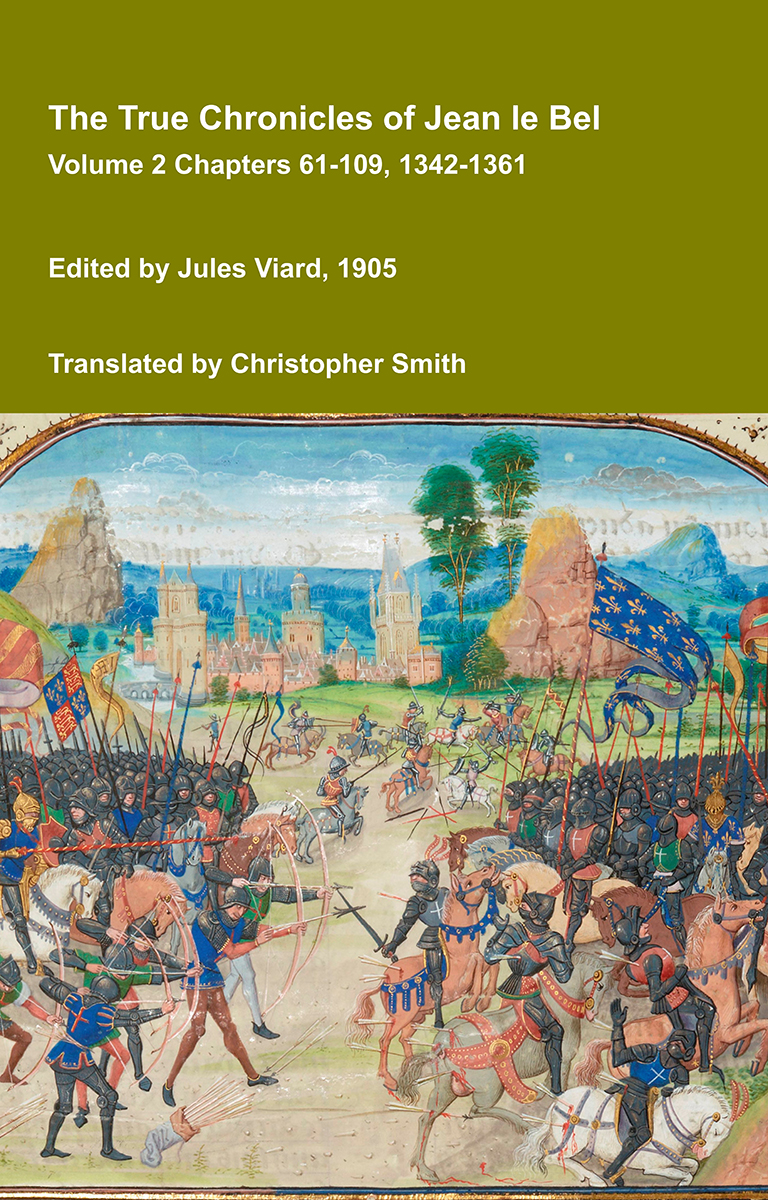 Chronicle of Jean le Bel Volume 2. The noble King Edward, who could not readily gather his men or his provisions as he wished, had well understood the great multitude of people who were waiting for him at Calais in order to receive favour and benefits from him, although he had not summoned a quarter of them, nor even a fifth part. Some had come of their own will in order to advance themselves in honour, and others in order to gain profit. He was afraid of what has been said, and so he wisely decided that he would send his cousin the Duke of Lancaster to Calais, to them, and would excuse himself before them. The said duke prepared himself with a large and strong company, and came to Calais1 with fully three hundred men in armour and two thousand Welsh archers. He was received there with great honour, and very courteously excused the noble King Edward for his delay to these lords, as one who well knew how to do so. He had his ships unloaded of horses and harness, then told these lords that staying there was of no use to them, and that it would be better to ride through France. He asked them to go with him, and he would give each a certain sum of money for his petty expenses. He gathered these lords together, and they left Calais in great splendour, and went as far as Saint-Omer in two days. They may well have been two thousand men in armour, not counting the archers and foot soldiers. The next day they went towards Béthune and the good town of Arras, then drew towards a noble abbey called Mont-Saint-Éloi. There they stayed for the space of four days to consider their position, for they found it well supplied, and they had great need of it, since they had neither eaten bread nor drunk wine for fully four days beforehand, but had endured many hardships, although they had laid waste and robbed towns and villages.
Le noble roy Edowart qui ne pœut avoir bonnement ses gens ne ses pourveances comme il voulsist, et avoit bien entendu la grand multitude de gens qui l'attendoient à Calais pour avoir grace et bienfaiz de luy, combien qu'il n'en eust pas mandé la quarte, non la cinquieme partie, ains estoient les aucuns venus de leur volenté pour leur avancier en honneur et les aultres pour gaagnier, il eut doubtance de ce que dit est; si s'avisa sagement qu'il envoyeroit son cousin le duc de Lencaste à Kalays vers eulx et s'excuseroit par devers eulx. Ledit duc s'aparcilla en grande et grosse compaigmnie, et vint à Kalays à tout IIIC armeures de fer et IIM archiers galoys. Il fut là grandement recheu, et moult courtoisement exeusa le noble roy Edowart de sa demourée envers ces seigneurs, comme cil qui bien faire le sçavoit; si fist deschargier ses nefs de chevaulx et de harnas, et puis dist à ces seigneurs que le sejourner là ne leur valoit riens, si estoit meilleur de chevauchier par France; si leur prya qu'ilz alassent avecques luy et il bailleroit à chascun certaine somme d'argent pour ses menus despens faire. Il assembla ces seigneurs, et se partirent de Calais à grande noblesse, et alerent jusques à Saint Omer en 11 jours, et pouoient bien estre IIM armeures de fer sans les archiers et sans les gens de pyé. Lendemain ilz s'en alerent par devers Bethune et par devers la bonne ville d'Arras, et puis se trayrent par devers une noble abbaye que on clame le Mont Saint Eloy°, et là sejournerent par l'espace de IIII jours pour eulx aviser, car ilz la trouvoient bien garnie, et aussy ilz en avoient bien besoing, comme ceulx lesquelz n'avoient mengé de pain ne but de vin bien IIII jours au devant, ains avoient enduré maintes imesaises, combien qu'ilz eussent gaslé et desrobé villes et villettes.
Note 1. The Duke of Lancaster landed at Calais around Saint Remigius’ Day, 1st October 1359; Luce' Froissart.
1. Le duc de Lancastre débarqua à Calais autour de la SaintRemi (1* octobre 1359). (Froissart, éd. Luce, t. V, p. 192; Knighton, op. eit., t. I, p. 106.)
 Chronicle of Jean le Bel Volume 1. The King of France also made fierce war1 throughout that winter against Sir John of Hainaut, in the year of grace 1339, because of all his enemies he was the nearest. He ordered several mounted raids to be carried out against him and against the land of Chimay by Sir John of Beaumont, Sir John de la Bove, Sir John de Moret, and many other knights and squires, with fully five hundred armed men. They burned the countryside around Chimay many times: Baileux, Robechies, Salles, Villers-la-Tour, Froid-Chapelle, and all the other small towns as far as the gallows of Chimay. Because of this, Count William, his nephew, was greatly angered. And since he was his nephew, and his uncle held the lands of Chimay and Beaumont from him in fief, it came to pass that he formally defied the King of France, his uncle, and aligned himself entirely with the other allies of the King of England. Thereafter he became the most bitter and the most difficult to negotiate with in the whole war. After he had defied the king, he raised a great force and went to take Abenton2 in Thiérache, burning it completely to the ground; it was a large town and the finest in all
Le roy de France fist aussy durement guerrier tout celluy yver messire Jehan de Haynau, qui fu l'an de grace mil CCC et XXXIX, pour tant que de tous les anemis il estoit le plus prez et fist pluseurs chevauchies faire sur luy et sur la terre de Chimay par messire Jehan de Beaumont, messire Jehan de la Bove, messire Jehan de Moret et pluseurs aultres chevaliers et escuiers, à tout mir ou VC armeures, et ardirent pluseurs foys le pays d'entour Chymay, Belleus, Robechyes, Salles, Viler, Froicapelle et toutes les aultres vilettes jusques au gibet de Chymay. De quoy le conte Willaume, son nepveu, fut moult grandement courouchié. Et pour tant qu'il estoit son nepveu et que son oncle tenoit de luy en fief la terre de Chimay et de Beaumont, dont il avint qu'il fit deffier le roy de France, son oncle, et se mit tout autrement avecques les aultres aliez au roy d'Angleterre, et fut puis aprez le plus aisgre et le plus malaisié à traictier de toute la guerre. Et aprez ce qu'il eust deffñié le roy, il fist une grande armée, et ala prendre Abenton en Terace et ardoir tout à net, qui estoit une grosse ville et la meilleur de tout le pays.
Note 1. Froissart, who, as we have said, gives more details about Philip VI’s attack on Hainaut, estimates that the booty taken during this campaign amounted to 12,000 sheep, 1,000 pigs, and 500 cows and oxen. These figures may not be exaggerated, for Érard de Lignol, bailiff of Vitry, who took part in the expedition (Chronographia, vol. II, p. 87) and served from 7th August 1399 to 1st October 1339 as captain on the frontier sector between Mézières (Ardennes) and Martigny (Aisne, Aubenton), sold, as his own share alone, 527 head of livestock taken from the king’s enemies. (Bibliothèque Nationale)
1. Froissart, qui, comme nous l'avons dit, donne plus de détails sur l'agression du Hainaut par Philippe VI, estime à 12,000 moutons, 1,000 porcs et 500 vaches et bœufs le butin fait dans cette campagne. Ces chiffres peuvent ne pas être exagérés, car Érard de Lignol, bailli de Vitry, qui prit part à cette expédition (Chronographia, t. Il, p. 87) et fut, du 7 août 1339 au 1er octobre 1340, capitaine sur les frontières de la partie comprise entre Mézières (Ardennes) et Martigny (Aisne, arr. de Vervins, cant. d'Aubenton), vendit, pour sa seule part, 527 bêtes prises sur les ennemis du roi. (Bibl. nat., ms. fr. nouv. acq. 9328, fol. 23 vo.)
Note 2. On the sack of Aubenton, Nangis: 'In this same year, those of the bishopric of Cambrai, together with those of Thérouanne, burned very many towns of the land of Lord John of Hainaut. And nevertheless, although by agreement with Lord John of Namur, who at that time was acting on behalf of the king of France, they were supposed to engage in battle on the Thursday of Holy Week [Maundy Thursday, 13th April 1340], when they themselves came to the place of battle, that same Lord John did not appear at all. Instead, he deceitfully turned aside to a village called Aubenton, whose men had gone out ready for battle, and he burned it and plundered it.'
And : 'In the same year, those from the bishopric of Cambrai and from Thérouanne burned very many villages in the land of Lord John of Hainaut. And whereas the said Lord John had, by agreement with Lord John of Vervins, his captain acting on behalf of the king of France, been bound to fight on Maundy Thursday, he did not appear on the appointed day; but instead, deceitfully turning aside in the opposite direction to a town called Aubenton, whose inhabitants had gone out to battle, he devastated it with plundering and fire.'
2. Sur le sac d'Aubenton, voy. Chronographia, t. 1, p. 105 et 106. Plusieurs dates sont proposées pour ce siège. Froissart (éd. Luce, 1.1, p. 201 et 495) la place au samedi des Brandons, 4 mars. Guillaume de Nangis (t. II, p. 166) et la Chronique de Richard Lescot (p. 50) disent que ce siège eut lieu le jeudi saint. Voy. aussi: Grandes Chroniques, t. V, p. 379. Le châtelain de Bar-le-Duc, Jacques d'Autriche, y fut pris. (J. Viard, les Journaux du Trésor de Philippe VI de Valois, no 5049.)
On 1st October 1402 Louis "Bearded" Wittelsbach VII Duke Bavaria [aged 34] and Anne Bourbon Duchess Bavaria [aged 22] were married. She by marriage Duchess Bavaria. She the daughter of Jean Bourbon I Count La Marche and Catherine Vendome. He the son of Stephen "Magnificient Fop" Wittelsbach III Duke Bavaria [aged 65] and Taddea Visconti Duchess Bavaria. They were fifth cousins.
After 1st October 1440. Monument to William Rhyther [deceased] and Sybil Aldeburgh at All Saints Church Harewood [Map]. Early Plate Bascinet and Gorget Period. Lancastrian Esses Collar. Crespine Headress.
William Rhyther: In 1379 he was born to William Rhyther and Sybil Aldeburgh at Tadcaster, Yorkshire [Map]. On 1st October 1440 he died at Harewood.
Sybil Aldeburgh: Around 1363 she was born to William Aldeburgh 1st Baron Aldeburgh Harewood and Elizabeth Lisle Baroness Ferrers Harewood at Harewood. Around 1379 William Rhyther and she were married. On 3rd September 1439 Sybil Aldeburgh died at Harewood.


 Memoires Jacques du Clercq. In the year 1455, the bishop of Utrecht, a great city situated between the lands of Holland and Frisia, died. After his death, the canons of that church elected as bishop the provost of the same church, who was brother to the Lord of Brederode. This lord bore the Order of the Duke Philip of Burgundy, that is to say the Order of the Golden Fleece, and was related to the duke. But before this election was made, the duke had already sent to request of the canons of the church of Utrecht, even before the bishop had died, that if the said bishop should die, they would choose as bishop David, his bastard son, bishop of Thérouanne. This they refused to grant. Therefore the duke sent to obtain the said bishopric for his son from the pope, who granted and confirmed the bishopric to the said David after the death of the bishop. And when, during that time, the bishop of Utrecht died, and after the duke had obtained this confirmation from the pope for David, he went into his land of Holland, to a town called The Hague, seeking by gentle means to persuade the people of Utrecht to accept his son as bishop. The duke arrived at The Hague around the feast of Saint Remigius [1st October] in the year 1455, and remained there until the feast of Saint John the Baptist in 1456 [24th June], without being able to reach agreement with the people of Utrecht. And when the duke saw that without force he would not place his son in that bishopric, he assembled his army near the city of Utrecht. After he had gathered his forces, the people of Utrecht came to terms with him, and a treaty was made between the duke and them on the condition that the said David would have the bishopric of Utrecht, with four thousand gold francs each year, and two thousand francs each year from the bishopric of Thérouanne, which made four thousand gold crowns.
En l'an mil iiije cinquante cinq, l'evesque d'Utrech, une grosse cité, située entre les pays de Hollande et le pays de Frise, mourut; après laquelle mort les chanoines de ladite eglise esleurent le presvot d'icelle eglise, lequel estoit frere du Sr de Brederode, lequel S de Brederode portoit l'ordre du duc Philippe de Bourgogne, qui estoit le Toison d'or, et estoit parent au duc; et ains ladite election faite, le duc envoya prier aulx chanoines de ladite eglise d'Utrech, et ains aussy que l'evesque fust mort, que se ledit evesque mouroit, qu'ils volsissent eslire a evesque David, son fils bastard, evesque de Therouanne, ce qu'ils ne voullurent accorder; pourquoy le duc envoya impetrer ledit evesquié pour son fils au pape, lequel confirma ledit evesquié audit David, après la mort de l'evesque; et comme ce temps pendant l'evesque d'Utrech mourut, après ce que le duc olt ladite confirmation du pape pour ledit David, il se transporta en son pays de Hollande, en une ville qu'on appelle La Haye en Hollande, contendant par doulce voye tant faire a ceulx d'Utrech, qu'ils receussent son fils a evesque; et arriva le duc a ladite Haye, environ le jour saint Remy, l'an mil iiije cinquante cinq, auquel lieu il sejourna jusques a la saint Jehan Baptiste, mil iiijo cinquante six ensuivant, sans qu'il sceut ne peult estre d'accord a ceulx d'Utrech; et quand le duc veit que sans forche il ne mectroit point son fils en ladite evesquié; sy assembla ses osts près de ladite ville d'Utrech; après ce qu'il ost assemblé ses osts, ceulx d'Utrech s'accorderent a lui, et fust le traictié fait entre le duc et ceulx d'Utrech, par telle condition que ledit David auroit l'evesquié d'Utrech, quatre mille frans d'or chacun an, et deux mille frans chacun an sur l'evesquié de Therouanne, qui font quatre mille courronnes d'or.
Letters and Papers Foreign and Domestic Henry VIII 1530. 1st October 1530. P. S. 6658. Anne Seyntleger [aged 75] and Margaret Boleyn [aged 76], Widows.
Livery of lands in Ireland as daughters and heirs of Thomas Earl of Ormond, deceased. Hampton Court [Map], 24 Sept. 22 Henry VIII. Del. Chelsea, 1 Oct.
Pat. 22 Henry VIII. p. 2, m. 8.
R.O. 2. Original patent of the preceding.
2nd October 1530 Vit. B. XIII. 87 b. B. M. 6659.
As the beast, whom his correspondent knows, takes no account of his duty, nor of his own nor the King's honor, having no fear of deceiving or imposing on any one, I suggest that, for revenge, you should write to me, begging for the remainder of the money, mentioning my promises and your deserts, which were the chief cause of gaining friends for the King at Padua, and of the Paduan instrument, which the King highly values. You must also praise Simonetus, saying that Ambrose would have done nothing without him; and, without abuse of the Bishop, bewail his shabbiness. I will attest everything to the King from the relations of others. You must write to me two letters; one copy I will show to the man himself, and thus compel him to perform his promises, not without interest. If he does not do so soon, will take care that the King reads the other letter. The consequences will be more than perhaps you hoped. You may be sure that I will do what I can, either by myself or through friends. Venice, 2 Oct.
On 1st October 1532 Jan Gossaert aka Mabuse [aged 54] died.
On 1st October 1553 Queen Mary I of England and Ireland [aged 37] was crowned I Queen of England and Ireland at Westminster Abbey [Map].
Edward Courtenay 1st Earl Devon [aged 26] carried the Sword of State.
John Gage [aged 73] bore the queen's train. Edward Dymoke [aged 45] attended as the Queen's Champion. James Blount 6th Baron Mountjoy [aged 20] and Henry Parker 12th Baron Marshal 11th Baron Morley [aged 20] were created Knight of the Bath. Thomas Hastings [aged 38] and John Leigh [aged 51] were knighted. Thomas Howard 3rd Duke of Norfolk [aged 80] and Henry Neville 5th Earl of Westmoreland [aged 28] attended.
Anne of Cleves Queen Consort England [aged 38] took part in the procession.


A Chronicle of the Coronations of the Queens Regnand of England. [1st October 1553] Then was her Highness brought again from her traverse, and then left her mantle, and was brought and laid upon the cushion before the altar. And then haying a pall holden over her by four Knights of the Garter, Viz., the Lord Paget, Sir Thomas Cheney, Sir John Gage, and Sir Anthony St. Leger, was anointed by the aboye-named Bishop of Winchester, with holy oil and cream [or chrism] saying unto her certain words, with divers oraisons and prayers, which thereunto appertaineth.
Then after her inunction the Bishop of Winchester [aged 70] did dry every place of the same with cotton or linen cloth, and after Mrs. Walgrave did lace again her Highness's apparel, putting on her hands a pair of linen gloves.
Then her Grace was conveyed again into her traverse, and there put on her rich robe of crimson velvet again.
And after her Grace was brought to the altar, whereat she offered up the sword that she was girt withal by the Bishop of Winchester, and after to redeem the same was given by the Earl of Arundel, Lord Steward, [blank left for sum of money] who did bear the same sword before her Grace naked on the left hand of the sword in the scabbard from the Church to Westminster Hall.
This done, her Grace was brought again to the chair, before the high altar, where the Bishop of Winchester and the Duke of Norfolk [aged 80] brought unto her Highness three crowns;— to wit, one King Edward's crown; the other the imperial crown of the realm of England; the third a very rich crown, purposely made for her Grace. Then the crowns were set one after another upon the Queen's head by the Bishop of Winchester; and betwixt the putting on of every crown the trumpets did blow.
Then immediately after, the quire sung and the organs did play "Te Deum." And in the mean season the same was singing, a ring of gold was put on her Grace's marrying finger by the Bishop of Winchester.
Then the Master of her Grace's jewel house brought her Grace's bracelets of gold and precious stones.
Then divers other things were delivered to her Grace, as
The sceptre, by the Earl of Arundel [aged 41].
Saint Edward's staff, by the Earl of Bath [aged 54].
The spurs, by the Earl of Pembroke [aged 52].
The ball of gold, by the Marquis of Winchester [aged 70].
The regal of gold, by the Bishop of Winchester.


A Chronicle of the Coronations of the Queens Regnand of England. [1st October 1553] First, there came riding in on two goodly coursers, the Earl of Derby [aged 44], High Steward of Englandb, and with him the Duke of Norfolk, Earl Marshal of England, with his rod, who were both richly apparelled, and their horses trapped according to their estate.
Then the Earl of Sussex [aged 46], sewarc.
Then the Earl of Worcester [aged 27], carver, received the said service, and gave the saie (assay).
Then after, the Queen's Majesty's service was brought unto her Highness's board, only the water brought for her Grace in this manner.
There went before the said basons of water divers Sergeants of Anns with their maces.
The Queen's Majesty washed, and after her Highness went unto her seat royal under the cloth of state to dinner.
The Earl of Shrewsbury [aged 53] standing by her Grace as assistant on the right hand, and the Bishop of Durham on the left hand.
Then sat on the right hand of the Queen's table the Bishop of Winchester, at her Highness's warde [command], and the Lady Elizabeth [aged 20], her Grace, and the Lady Anne of Cleves [aged 38], on the left handd, and had their service.
Then four swords, being holden before her Majesty all the dinner-time.
Then the first cup that the Queen's Majesty drunk was brought to her by Sir Giles Alington [aged 54], which he had for his fee, and thereby he held the lands of Argentine.
The table in the Hall furnished.
Imprimis, then was placed at the table in the middest the Hall, Ambassadors, Bishops, Justices, Knights, and Squires.
Item, there was placed at the table on the right hand of the same hall. Barons of the Cinq Ports, Councillors and Clerks of the Chancery.
Theen there was placed at the left hand of the said hall, the Mayor of London with his brethren the Aldermen, and other notable persons, and commoners, and others.
Note b. Noailles calls him High Constable, by mistake — Edward, third Earl of Derby, was one of the most magnificent noblemen of his day. He came to this coronation as High Steward of England, attended by a train of fourscore in velvet and upwards of two hundred in livery.
Note c. Strype says the young Earl of Surrey [aged 17] was doer (?) under the Duke of Norfolk his grandsire; the Lord Bergaveny chief lardiner; and the Lord Windsor served "in another great office."
Note d. Noailles says "assez loingtaines." i.e. "quite far off."
Chronicle of Geoffrey le Baker of Swinbroke
Baker was a secular clerk from Swinbroke, now Swinbrook, an Oxfordshire village two miles east of Burford. His Chronicle describes the events of the period 1303-1356: Gaveston, Bannockburn, Boroughbridge, the murder of King Edward II, the Scottish Wars, Sluys, Crécy, the Black Death, Winchelsea and Poitiers. To quote Herbert Bruce 'it possesses a vigorous and characteristic style, and its value for particular events between 1303 and 1356 has been recognised by its editor and by subsequent writers'. The book provides remarkable detail about the events it describes. Baker's text has been augmented with hundreds of notes, including extracts from other contemporary chronicles, such as the Annales Londonienses, Annales Paulini, Murimuth, Lanercost, Avesbury, Guisborough and Froissart to enrich the reader's understanding. The translation takes as its source the 'Chronicon Galfridi le Baker de Swynebroke' published in 1889, edited by Edward Maunde Thompson.
Available at Amazon in eBook and Paperback format.
A Chronicle of the Coronations of the Queens Regnand of England. [1st October 1553] Then at time convenient came in the second course in this manner.
Then at the end of the same came in, riding in complete harness, armed at all points, with harness, and of the Queen's charge, Sir Lionele Dymoke [aged 45], her Highness's champion, upon a courser richly trapped with cloth of gold, holding in his hand a mace, and on the either side of him, a page, one holding his spear, another his target, with a herald before him, and brought him to the upper end of the hall.
Then after he had made obeisance to the Queen's Highness, in bowing his head, he turned him a little aside, and with a loud voice, declared these words hereafter following, viz.
If there be any manner of man, of what estate, degree, or condition soever he be, that will say and maintidn that our Sovereign Lady, Queen Mary the First, this day here present, is not the rightful and undoubted inheritrix to the imperial crown of this realm of England, and that of right she ought not to be crowned Queen, 1 say he lieth like a false traitor, and that I am ready the same to maintain with him whilst I have breath in my body, either now at the time or at any other time, whensoever it shall please the Queen's Highness to appoint, and thereupon the same I cast him my gage."
And then he cast his gauntlet from him, the which no man would take up, till that a herald took it up, and gave it to him again.
Then he proceeded to another place, and did in this manner in three several places of the said hall.
Then he came up to the upper end, and the Queen's Majesty drank to him, and after sent him the cup, which he had for hb fee, and likewise the harness and trappers, and all the harness which he did wear.
Then he returned to the place from whence he came, and after that he was gone.
Note e. By the following entry, which I discovered in the vol. marked W. T. College of Arms, it appears that the Champion's name was Edward, and not Lionel: "These words were delivered by Chester, ' Haroald of Armes, att the coming in of Sir Edward Dimoke, Kt. the daie of the Coronation of Q. Mary, after the second course was served in to her Highness." [Here follows the challenge.] "The which Chester Karould had in reward of ye said Sir Edward Dymoke, iiij angells and a doublette of sattyn, according to the ancyent presidents for the same."
Chronicle of Queen Jane and Two Years of Queen Mary 1553. 1st October 1553. Note, she was ledde iiij. or v. tymes on the alter, with so many and sondery cerymonyes in anoynting, crowning, and other olde customes, that it was past iij. almost iiij. of the clocke at night or ever she cam from the church agayn. And as she cam homeward ther was borne before her iij. swordes shethed, and one naked. She was ledd likewise betwen the old bushope of Dyrom [aged 79]1 and (blank), having in hir hande a cepter of golde, and in hir other hande a ball of golde, which she twirled and tourned in hir hande as she came homewarde. She wore a chrymesyn vellvet gown, and a crown on hir hedd, every rely [erle?] and contesse following in crymesyn vellvet with crownets on ther hedds of gold. When she was enteryd in Westminster hall ther was ill scramble for the cloth and rayles; then was ther the wast meat cast out of the ketchen made under the pallaice wall with bordes, which was very muche of all kinde of meat. And when they had don casting out meat ther was no lesse scrambling for the ketchyn yt self, every man that wolde plucking downe the hordes therof, and carying yt away, that yt might welbe callyd a wast indedde.
Note 1. Cuthbert Tunstall, bishop of Durham.
Chronicle of Queen Jane and Two Years of Queen Mary 1553. 1st October 1553. Memorandum, the first dale of October, 1553, was quene Mary crowned1; that dale she cam first by water to the old palice and ther tarryed tyll about xj. of the clocke, and then went to the churche on foot apon blew clothe being rayled on every syde; she was in a gown of blew velvett, lyned with pouderyd armyn, having the same cyrclet on hir hedd with the whiche she cam thorough London the daye before. She was ledd betwen one bushope and (blank), and many bishopes in their myters and crosiars before hir.
Note 1. The ceremonial of queen Mary's coronation has been published at considerable length in Mr. Blanche's Regal Records, 1837. 12mo. A document respecting the claims made to perform services on this occasion, was printed in the Camden Society's volume of Rutland Papers, p. 118.
On 1st October 1615 Gervase Helwys [aged 54] was arrested and imprisoned at the Tower of London [Map].
After 1st October 1615 Gervase Helwys [aged 54], Thomas Monson 1st Baronet [aged 50], the gaoler Richard Weston, widow of a London doctor Mrs Anne Turner, and an apothecary James Franklin were tried for the murder of Thomas Overbury at the Guildhall [Map] by Edward Coke [aged 63] and Francis Bacon 1st Viscount St Alban [aged 54]. It was ruled that "poisons" had been "administered" in the form of "jellies" and "tarts" by Weston, Turner and Franklin at the direction of Frances Howard Countess Essex and Somerset [aged 25]. Frances Howard Countess Essex and Somerset admitted her guilt. Her husband Robert Carr 1st Earl Somerset [aged 28] maintained his innocence despite King James I of England and Ireland and VI of Scotland [aged 49] urging him to admit his guilt to avoid James being implicated. Frances Howard Countess Essex and Somerset and Robert Carr 1st Earl Somerset were found guilty and sentenced to death. King James I of England and Ireland and VI of Scotland commuted their sentence to life imprisonment. They, along with Monson, were subsequently pardoned.
The evidence for Gervase Helwys appeared to indicated he had attempted to undermine the plot to poison Thomas Overbury.
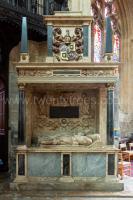
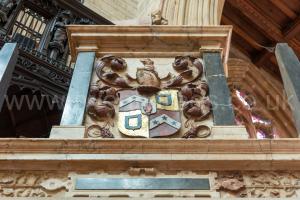
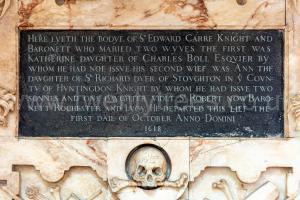
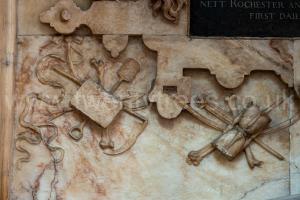
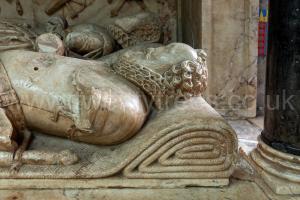
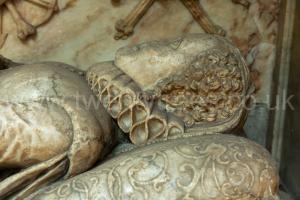
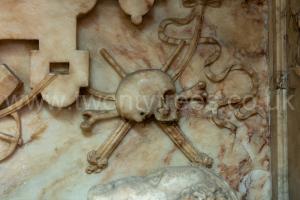
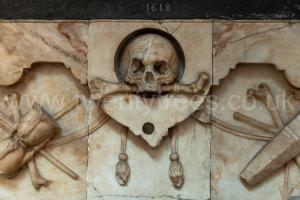
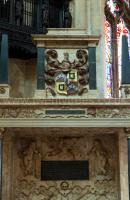
After 1st October 1618. Monument to Edward Carr 1st Baronet [deceased] at St Denys' Church, Sleaford [Map] sculpted by Maximilian Colt [aged 43].
John Evelyn's Diary. 1st October 1651. The Dean of Peterborough [aged 56] [Dr. Cosin] preached on Job xiii., verse 15, encouraging our trust in God on all events and extremities, and for establishing and comforting some ladies of great quality, who were then to be discharged from our Queen-Mother's [aged 50] service unless they would go over to the Romish Mass.


John Evelyn's Diary. 1st October 1651. The Dean [aged 56], dining this day at our house, told me the occasion of publishing those Offices, which among the Puritans were wont to be called Cosin's cozening Devotions, by way of derision. At the first coming of the Queen into England, she and her French ladies were often upbraiding our religion, that had neither appointed nor set forth any hours of prayer, or breveries, by which ladies and courtiers, who have much spare time, might edify and be in devotion, as they had. Our Protestant ladies, scandalized it seems at this, moved the matter to the King; whereupon his Majesty presently called Bishop White to him and asked his thoughts of it, and whether there might not be found some forms of prayer proper on such occasions, collected out of some already approved forms, that so the court ladies and others (who spent much time in trifling) might at least appear as devout, and be so too, as the new-come-over French ladies, who took occasion to reproach our want of zeal and religion. On which, the Bishop told his Majesty that it might be done easily, and was very necessary; whereupon the King commanded him to employ some person of the clergy to compile such a Work, and presently the Bishop naming Dr. Cosin, the King [aged 21] enjoined him to charge the Doctor in his name to set about it immediately. This the Dean told me he did; and three months after, bringing the book to the King, he commanded the Bishop of London to read it over, and make his report; this was so well liked, that (contrary to former custom of doing it by a chaplain) he would needs give it an imprimatur under his own hand. Upon this there were at first only 200 copies printed; nor, said he, was there anything in the whole book of my own composure, nor did I set any name as author to it, but those necessary prefaces, etc., out of the Fathers, touching the times and seasons of prayer; all the rest being entirely translated and collected out of an Office published by authority of Queen Elizabeth, anno 1560, and our own Liturgy. This I rather mention to justify that industrious and pious Dean, who had exceedingly suffered by it, as if he had done it of his own head to introduce Popery, from which no man was more averse, and one who in this time of temptation and apostacy held and confirmed many to our Church.
John Evelyn's Diary. 1st October 1661. On Thursday his Majesty [aged 31] sent one of the pages of the back stairs for me to wait on him with my papers, in his cabinet where was present only Sir Henry Bennett [aged 43] (Privy-Purse), when beginning to read to his Majesty what I had drawn up, by the time I had read half a page, came in Mr. Secretary Morice [aged 58] with a large paper, desiring to speak with his Majesty, who told him he was now very busy, and therefore ordered him to come again some other time; the Secretary replied that what he had in his hand was of extraordinary importance. So the King rose up, and, commanding me to stay, went aside to a corner of the room with the Secretary; after a while, the Secretary being dispatched, his Majesty returning to me at the table, a letter was brought him from Madame out of France;68 this he read and then bid me proceed from where I left off. This I did till I had ended all the narrative, to his Majesty's great satisfaction; and, after I had inserted one or two more clauses, in which his Majesty instructed me, commanded that it should that night be sent to the posthouse, directed to the Lord Ambassador at Paris (the Earl of St. Alban's), and then at leisure to prepare him a copy, which he would publish. This I did, and immediately sent my papers to the Secretary of State, with his Majesty's express command of dispatching them that night for France. Before I went out of the King's closet, he called me back to show me some ivory statues, and other curiosities that I had not seen before.


John Evelyn's Diary. 1st October 1661. I sailed this morning with his Majesty [aged 31] in one of his yachts (or pleasure boats), vessels not known among us till the Dutch East India Company presented that curious piece to the King; being very excellent sailing vessels. It was on a wager between his other new pleasure boat, built frigate-like, and one of the Duke of York's [aged 27]; the wager £100; the race from Greenwich, Kent [Map] to Gravesend, Kent [Map] and back. The King lost it going, the wind being contrary, but saved stakes in returning. There were divers noble persons and lords on board, his Majesty sometimes steering himself. His barge and kitchen boat attended. I brake fast this morning with the King at return in his smaller vessel, he being pleased to take me and only four more, who were noblemen, with him; but dined in his yacht, where we all ate together with his Majesty. In this passage he was pleased to discourse to me about my book inveighing against the nuisance of the smoke of London, and proposing expedients how, by removing those particulars I mentioned, it might be reformed; commanding me to prepare a Bill against the next session of Parliament, being, as he said, resolved to have something done in it. Then he discoursed to me of the improvement of gardens and buildings, now very rare in England comparatively to other countries. He then commanded me to draw up the matter of fact happening at the bloody encounter which then had newly happened between the French and Spanish Ambassadors near the Tower, contending for precedency, at the reception of the Swedish Ambassador; giving me orders to consult Sir William Compton [aged 36], Master of the Ordnance, to inform me of what he knew of it, and with his favorite, Sir Charles Berkeley [aged 31], captain of the Duke's life guard, then present with his troop and three foot companies; with some other reflections and instructions, to be prepared with a declaration to take off the reports which went about of his Majesty's partiality in the affairs, and of his officers' and spectators' rudeness while the conflict lasted. So I came home that night, and went next morning to London, where from the officers of the Tower [Map], Sir William Compton, Sir Charles Berkeley, and others who were attending at this meeting of the Ambassadors three days before, having collected what I could, I drew up a Narrative in vindication of his Majesty, and the carriage of his officers and standers-by.


Calendar of State Papers Charles II Oct 1667. October 1667. 102. Proposals by Sir Thomas Strickland [aged 45] to the Navy Comrs., to build three third-rate frigates in Foudray Pill, to be completed by 1 Aug. 1671, upon a similar contract to that of Mr. Baylie, of Bristol. [Adm. Paper.] Enclosing,.
102. i. Edward Tyldesley to Sam. Pepys [aged 34]. Robt. Withers [aged 49] and the writer have viewed Foudray Pill, where they proposed to build ships for the King's service. Sends a draft sketch thereof, leaving the rest of the business to be transacted by his partners, Sir Thomas Strickland and Mr. Withers. Has such timber as all England cannot show. Lodge in the Forest of Meirscough, 1st October 1667.
102. ii. Sketch of Walney Island, the pill, bar, &c., in coloured chalks.


This is a translation of the 'Memoires of Jacques du Clercq', published in 1823 in two volumes, edited by Frederic, Baron de Reissenberg. In his introduction Reissenberg writes: 'Jacques du Clercq tells us that he was born in 1424, and that he was a licentiate in law and a counsellor to Philip the Good, Duke of Burgundy, in the castellany of Douai, Lille, and Orchies. It appears that he established his residence at Arras. In 1446, he married the daughter of Baldwin de la Lacherie, a gentleman who lived in Lille. We read in the fifth book of his Memoirs that his father, also named Jacques du Clercq, had married a lady of the Le Camelin family, from Compiègne. His ancestors, always attached to the counts of Flanders, had constantly served them, whether in their councils or in their armies.' The Memoires cover a period of nineteen years beginning in in 1448, ending in in 1467. It appears that the author had intended to extend the Memoirs beyond that date; no doubt illness or death prevented him from carrying out this plan. As Reissenberg writes the 'merit of this work lies in the simplicity of its narrative, in its tone of good faith, and in a certain air of frankness which naturally wins the reader’s confidence.' Du Clercq ranges from events of national and international importance, including events of the Wars of the Roses in England, to simple, everyday local events such as marriages, robberies, murders, trials and deaths, including that of his own father in Book 5; one of his last entries.
Available at Amazon in eBook and Paperback format.
On 1st October 1674 George Fitzroy 1st Duke Northumberland [aged 8] was created 1st Earl of Northumberland, 1st Viscount Falmouth, 1st Baron Pontefract by King Charles II of England Scotland and Ireland [aged 44].


John Evelyn's Diary. 1st October 1678. The Parliament and the whole Nation were alarmed about a conspiracy of some eminent Papists for the destruction of the King [aged 48] and introduction of Popery, discovered by one Oates [aged 29] and Dr. Tongue, which last i knew, being the translator of the "Jesuits' Morals"; I went to see and converse with him at Whitehall, with Mr. Oates, one that was lately an apostate to the church of Rome, and now returned again with this discovery. He seemed to be a bold man, and, in my thoughts, furiously indiscreet; but everybody believed what he said; and it quite changed the genius and motions of the Parliament, growing now corrupt and interested with long sitting and court practices; but, with all this, Popery would not go down. This discovery turned them all as one man against it, and nothing was done but to find out the depth of this. Oates was encouraged, and everything he affirmed taken for gospel; the truth is, the Roman Catholics were exceedingly bold and busy everywhere, since the Duke [aged 27] forbore to go any longer to the chapel.


On 1st October 1678 John Churchill 1st Duke of Marlborough [aged 28] and Sarah Jennings Duchess of Marlborough [aged 18] were married.


On 1st October 1680 Johanna Saxe Coburg Altenburg was born to Frederick Saxe Coburg Altenburg I Duke Saxe Gotha Altenburg [aged 34] and Duchess Magdalena Sibylle of Saxe Gotha Altenburg [aged 32] at Gotha.
On 1st October 1685 Charles Habsburg Spain VI Holy Roman Emperor was born to Leopold Habsburg Spain I Holy Roman Emperor [aged 45] and Eleonore Magdalene of Neuburg [aged 30]. Coefficient of inbreeding 1.61%. He married 1st August 1708 Elisabeth of Brunswick-Wolfenbüttel Holy Roman Empress and had issue.


John Evelyn's Diary. 1st October 1705. Mr. Cowper [aged 40] made Lord Keeper. Observing how uncertain great officers are of continuing long in their places, he would not accept it, unless £2,000 a year were given him in reversion when he was put out, in consideration of his loss of practice. His predecessors, how little time soever they had the Seal, usually got £100,000 and made themselves Barons. A new Secretary of State. Lord Abington [aged 32], Lieutenant of the Tower, displaced, and General Churchill [aged 49], brother to the Duke of Marlborough [aged 55], put in. An indication of great unsteadiness somewhere, but thus the crafty Whig party (as called) begin to change the face of the Court, in opposition to the High Churchmen, which was another distinction of a party from the Low Churchmen. The Parliament chose one Mr. Smith, Speaker. There had never been so great an assembly of members on the first day of sitting, being more than 450. The votes both of the old, as well as the new, fell to those called Low Churchmen, contrary to all expectation.
On 1st October 1708 Francis Newport 1st Earl Bradford [deceased] was buried at St Andrew's Church, Wroxeter [Map].

On 1st October 1766 Gustav III King Sweden [aged 20] and Queen Sophia of Sweden [aged 20] were married. She the daughter of Frederick V King of Denmark and Norway and Louise Hanover Queen Consort Denmark and Norway. He the son of Adolph Frederick King Sweden [aged 56] and Louisa Ulrika of Prussia Queen Consort of Sweden [aged 46]. They were second cousins. He a great x 4 grandson of King James I of England and Ireland and VI of Scotland. She a granddaughter of King George II of Great Britain and Ireland.
On 1st October 1769 Bishop Shute Barrington [aged 35] was consecrated as Bishop of Llandaff at Lambeth Palace [Map] by Archbishop Frederick Cornwallis [aged 56].


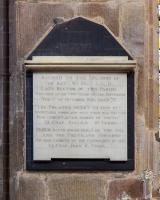
1st October 1819. St Oswald's Church, Brereton [Map]. Monument to Reverend W Fell, Rector of St Oswald's Church, Brereton [Map] from 1807 to 1819.
The Deeds of the Dukes of Normandy
The Gesta Normannorum Ducum [The Deeds of the Dukes of Normandy] is a landmark medieval chronicle tracing the rise and fall of the Norman dynasty from its early roots through the pivotal events surrounding the Norman Conquest of England. Originally penned in Latin by the monk William of Jumièges shortly before 1060 and later expanded at the behest of William the Conqueror, the work chronicles the deeds, politics, battles, and leadership of the Norman dukes, especially William’s own claim to the English throne. The narrative combines earlier historical sources with firsthand information and oral testimony to present an authoritative account of Normandy’s transformation from a Viking settlement into one of medieval Europe’s most powerful realms. William’s history emphasizes the legitimacy, military prowess, and governance of the Norman line, framing their expansion, including the conquest of England, as both divinely sanctioned and noble in purpose. Later chroniclers such as Orderic Vitalis and Robert of Torigni continued the history, extending the coverage into the 12th century, providing broader context on ducal rule and its impact. Today this classic work remains a foundational source for understanding Norman identity, medieval statesmanship, and the historical forces that reshaped England and Western Europe between 800AD and 1100AD.
Available at Amazon in eBook and Paperback format.
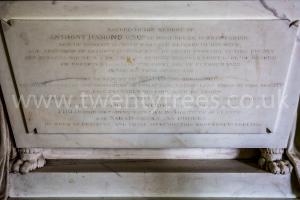
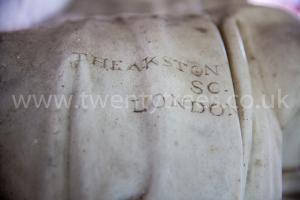
On 1st October 1822 Anthony Hamond of High House in West Acre [aged 80] died. On 21st December 1806 Sarah Case died. Memorial in All Saints Church, West Acre [Map] sculpted by Joseph Theakston [aged 50].
Anthony Hamond of High House in West Acre: In 1742 he was born to Robert Hamond. Before 21st December 1806 Anthony Hamond of High House in West Acre and Sarah Case were married.
Sarah Case: Around 1746 she was born to Philip Case of King's Lynn.
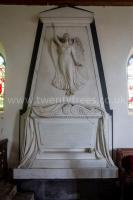
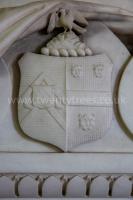
On 1st October 1830 Frederick Baker 2nd Baronet [aged 58] died in a windmill accident. His son George [aged 14] succeeded 3rd Baronet Baker of Loventor in Totnes in Devon.
Gentleman's Magazine. 1731. Page 469. Sir Frederick was showing his children the effect and operations of a windmill near Hastings, when, being very short sighted, he approached nearer than he had an idea of, and one of the flappers instantaneously striking him on the back part of the head, he shortly breathed his last.
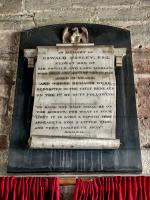
On 25th September 1856 Oswald Mosley [aged 51] died died without issue. He was buried at St Mary's Church, Rolleston on Dove [Map] on 1st October 1856.
Oswald Mosley: On 2nd December 1804 he was born to Oswald Mosley 2nd Baronet and Sophia Anne Every Lady Mosley.
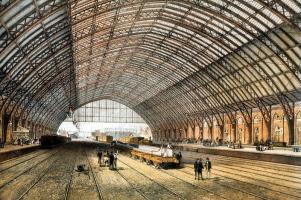
On 1st October 1868 the Midland Railway's St Pancras Station was officially opened to the public. The first service was an overnight mail train from Leeds. Designed by William Henry Barlow, its arched engine shed (the Barlow train shed) was, at the time of opening, the largest single-span roof in the world.
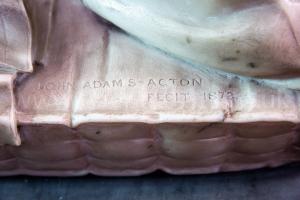
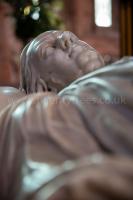
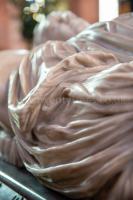
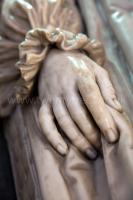
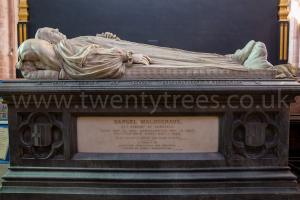
On 1st October 1869 Bishop Samuel Waldegrave [aged 50] died at his residence Rose Castle, Dalston [Map], Cumberland. Monument in Carlisle Cathedral [Map] sculpted by John Adams Acton [aged 38].
Bishop Samuel Waldegrave: On 13th September 1819 he was born to William Waldegrave 8th Earl Waldegrave in Cardington, Bedfordshire. He a great x 4 grandson of King James II of England Scotland and Ireland. In 1860 he was appointed Bishop of Carlisle.
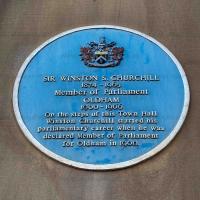
On 1st October 1900 Winston Churchill [aged 25] was declared MP Oldham at Oldham Town Hall.
On 1st October 1900 Frederick Lambton [aged 45] was elected MP South East Durham. He was re-elected in 1906 but lost the seat on 15th January 1910.
On 1st October 1909 Bianca Wallin was born.
On 1st October 1914 Alfred Jerome Vassalli [aged 33] died of pneumonia contracted while in camp at Slough (or possibly of wounds) at the King Edward VII Hospital, Windsor. He was buried at St Michael's Church, Muncaster [Map]. He was Corporal with the 2nd King Edward's Horse.
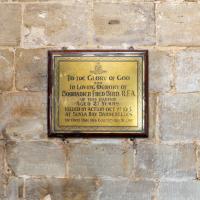
After 1st October 1915. St Peter and St Paul's Church, Rock [Map]. Memorial to Bombadier Frederick Charles Bird of the Royal Field Artillery who was killed during the landings at Sulva Bay.
Chronicle of a Bourgeois of Valenciennes
Récits d’un bourgeois de Valenciennes aka The Chronicle of a Bourgeois of Valenciennes is a vivid 14th-century vernacular chronicle written by an anonymous urban chronicler from Valenciennes in the County of Hainaut. It survives in a manuscript that describes local and regional history from about 1253 to 1366, blending chronology, narrative episodes, and eyewitness-style accounts of political, military, and social events in medieval France, Flanders, and the Low Countries. The work begins with a chronological framework of events affecting Valenciennes and its region under rulers such as King Philip VI of France and the shifting allegiances of local nobility. It includes accounts of conflicts, sieges, diplomatic manoeuvres, and the impact of broader struggles like the Hundred Years’ War on urban life in Hainaut. Written from the perspective of a burgher (bourgeois) rather than a monastery or royal court, the chronicle offers a rare lay viewpoint on high politics and warfare, reflecting how merchants, townspeople, and civic institutions experienced the turbulence of the 13th and 14th centuries. Its narrative style combines straightforward reporting of events with moral and civic observations, making it a valuable source for readers interested in medieval urban society, regional politics, and the lived experience of war and governance in pre-modern Europe.
Available at Amazon in eBook and Paperback format.
The London Gazette 31183. [1st October 1918] Awarded the Military Cross.
2nd Lt. Wilfred Edward Salter Owen [aged 25], 5th Bn., Manch. R., T.F., attd. 2nd Bn.
On 1st October 1918 Wilfred Owen [aged 25] led units of the Second Manchesters to storm a number of German strong points near the village of Joncourt. For his courage and leadership in the Joncourt action, he was awarded the Military Cross, an award he had always sought in order to justify himself as a war poet, but the award was not gazetted until 15 February 1919.
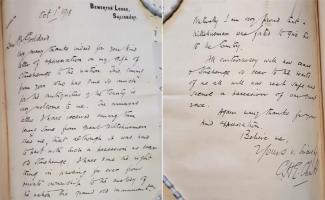
1st October 1918. Letter from Cecil Herbert Edward Chubb 1st Baronet [aged 42] to Mr Goddard.
Dear Mr Goddard
Very many thanks indeed for your kind latter of appreciation on my gift of Stonehenge to the nation. This, coming from you who has done so much for the antiquities of the County is very welcome to me. ...
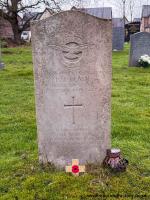
St Peter and St Paul's Church, Longhoughton [Map]. Grave of D8139599 Senior Aircraftman, D. J. Black, Royal Air Force, 1st October 1979 age 19.
Newcastle Evening Chronicle, Tuesday, 02/10/1979 reports: Airman dies in North crash: An airman from RAF Boulmer was killed and two colleagues were injured when their car hit a tree near Craster. The body of the driver, 19 year old Aircraftman David Black, had to be cut from the wreckage by firemen. Aircraftman David James, from Glasgow and Aircraftwoman Karen Barwick are recovering from minor injuries in Newcastle's R.V.I. today. The three, all from Boulmer air base, were in a Ford Cortina which crashed into the tree on the Craster-to-Littlemill road, just North of Howick, late last night. A spokesman at R.A.F. Boulmer said relatives of the dead man, who came from Cowdenbeath, were travelling to Alnwick for formal identification today.
On 1st October 1207 King Henry III of England was born to King John of England [aged 40] and Isabella of Angoulême Queen Consort England [aged 19] at Winchester Castle [Map]. He married 14th January 1236 his fourth cousin Eleanor of Provence Queen Consort England, daughter of Raymond IV Count Provence and Beatrice Savoy Countess Provence, and had issue.
On 1st October 1526 Dorothy Stafford was born to Henry Stafford 1st Baron Stafford [aged 25] and Ursula Pole [aged 22]. She married 1545 her third cousin once removed William Stafford and had issue.
On 1st October 1596 Michael Honywood was born to Robert Honywood [aged 51] and Elizabeth Browne [aged 35].
On 1st October 1678 Stephen Anderson 2nd Baronet was born to Stephen Anderson 1st Baronet [aged 34] and Judith Laurence Lady Anderson [aged 30]. He was baptised at St Helen's Church, Bishopsgate on the same day. He married before 1707 Anne Lumley Lady Anderson, daughter of Martin Lumley 3rd Baronet and Elizabeth Dawes.
On 1st October 1680 Johanna Saxe Coburg Altenburg was born to Frederick Saxe Coburg Altenburg I Duke Saxe Gotha Altenburg [aged 34] and Duchess Magdalena Sibylle of Saxe Gotha Altenburg [aged 32] at Gotha.
On 1st October 1685 Charles Habsburg Spain VI Holy Roman Emperor was born to Leopold Habsburg Spain I Holy Roman Emperor [aged 45] and Eleonore Magdalene of Neuburg [aged 30]. Coefficient of inbreeding 1.61%. He married 1st August 1708 Elisabeth of Brunswick-Wolfenbüttel Holy Roman Empress and had issue.
Chronicle of Abbot Ralph of Coggeshall
The Chronicle of Abbot Ralph of Coggeshall (Chronicon Anglicanum) is an indispensable medieval history that brings to life centuries of English and European affairs through the eyes of a learned Cistercian monk. Ralph of Coggeshall, abbot of the Abbey of Coggeshall in Essex in the early 13th century, continued and expanded his community’s chronicle, documenting events from the Norman Conquest of 1066 into the tumultuous reign of King Henry III. Blending eyewitness testimony, careful compilation, and the monastic commitment to record-keeping, this chronicle offers a rare narrative of political intrigue, royal power struggles, and social upheaval in England and beyond. Ralph’s work captures the reigns of pivotal figures such as Richard I and King John, providing invaluable insights into their characters, decisions, and the forces that shaped medieval rule. More than a simple annal, Chronicon Anglicanum conveys the texture of medieval life and governance, making it a rich source for scholars and readers fascinated by English history, monastic authorship, and the shaping of the medieval world.
Available at Amazon in eBook and Paperback format.
On 1st October 1707 George Byron was born to William Byron 4th Baron Byron [aged 37] and Frances Wilhelmina Bentinck Baroness Byron [aged 23]. He died aged eleven in 1719.
On 1st October 1719 John Bligh 3rd Earl Darnley was born to John Bligh 1st Earl Darnley [aged 32] and Theodosia Hyde [aged 23].
On 1st October 1737 George Grey 5th Earl Stamford 1st Earl Warrington was born to Henry Grey 4th Earl Stamford [aged 22] and Mary Booth Countess Stamford [aged 33]. He married 28th May 1763 Henrietta Bentinck Countess Stamford and Warrington, daughter of William Bentinck 2nd Duke Portland and Margaret Cavendish Harley 2nd Duchess Portland, and had issue.


On 1st October 1743 Caroline Scott was born to Francis Scott [aged 22] and Caroline Campbell 1st Baroness Greenwich [aged 25]. She a great x 3 granddaughter of King Charles II of England Scotland and Ireland. She died aged ten in 1753.

On 1st October 1756 Charles George Perceval 1st and 2nd Baron Arden was born to John Perceval 2nd Earl Egmont [aged 45] and Catherine Compton Countess Egmont [aged 25] at Charlton, Kent. He married 1st March 1787 Margaretta Elizabeth Wilson Baroness Arden, daughter of Thomas Spencer Wilson 6th Baronet, and had issue.
On 1st October 1762 Reverend Henry Wilson 10th Baron Berners was born to Henry William Wilson of Didlington and Ashwellthorpe in Norfolk [aged 34] and Mary Miller [aged 27].

On 1st October 1763 Elizabeth Lindsay Countess Hardwicke was born to James Lindsay 5th Earl Balcarres [aged 71] and Anne Dalrymple Countess Balcarres [aged 36]. She married 24th July 1782 Philip Yorke 3rd Earl of Hardwicke and had issue.
On 1st October 1769 Robert Graham 8th Baronet was born to William Graham 6th Baronet [aged 39] and Susannah Reeve. He married 25th April 1810 Elizabeth Young Lady Graham and had issue.
On 1st October 1792 Charles Abney-Hastings 2nd Baronet was born to Charles Hastings 1st Baronet [aged 40] and Parnel Abney.
On 1st October 1830 Gilbert Henry Heathcote Drummond Willoughby 1st Earl Ancaster was born to Gilbert John Heathcote 1st Baron Aveland [aged 35] and Clementina Drummond Willoughby 24th Baroness Willoughby of Eresby Baroness Aveland [aged 21]. He married 14th July 1863 Evelyn Elizabeth Gordon Countess Ancaster, daughter of Charles Gordon 10th Marquess Huntly and Maria Antoinetta Pegus Marchioness Huntly, and had issue.
Chronicle of Geoffrey le Baker of Swinbroke
Baker was a secular clerk from Swinbroke, now Swinbrook, an Oxfordshire village two miles east of Burford. His Chronicle describes the events of the period 1303-1356: Gaveston, Bannockburn, Boroughbridge, the murder of King Edward II, the Scottish Wars, Sluys, Crécy, the Black Death, Winchelsea and Poitiers. To quote Herbert Bruce 'it possesses a vigorous and characteristic style, and its value for particular events between 1303 and 1356 has been recognised by its editor and by subsequent writers'. The book provides remarkable detail about the events it describes. Baker's text has been augmented with hundreds of notes, including extracts from other contemporary chronicles, such as the Annales Londonienses, Annales Paulini, Murimuth, Lanercost, Avesbury, Guisborough and Froissart to enrich the reader's understanding. The translation takes as its source the 'Chronicon Galfridi le Baker de Swynebroke' published in 1889, edited by Edward Maunde Thompson.
Available at Amazon in eBook and Paperback format.
On 1st October 1855 John Brinsley Norton 5th Baron Grantley was born to Thomas Brinsley Norton 4th Baron Grantley [aged 23]. He married (1) 5th November 1879 Katharine Buckner McVickar Baroness Grantley and had issue (2) 16th September 1899 Alice Jones Baroness Grantley.

On 1st October 1857 Henry Conyngham 4th Marquess Conyngham was born to George Henry Conyngham 3rd Marquess Conyngham [aged 32] and Jane St Maur Blanche Stanhope Marchioness Conyngham [aged 24]. He married 21st March 1882 Frances Elizabeth Sarah Eveleigh-de-Moleyns Marchioness Conyngham and had issue.
On 1st October 1871 Henry Anthony Farrington 6th Baronet was born to William Hicks Farrington 5th Baronet [aged 33]. He married 25th July 1906 his second cousin Dorothy Maria Farrington and had issue.

On 1st October 1872 Katherine Mary "Kitty" Hare Marchioness Downshire was born to Hugh Henry Hare [aged 33]. She married (1) 22nd June 1893 Arthur Hill 6th Marquess of Downshire, son of Arthur Hill 5th Marquess Downshire and Georgiana Elizabeth Balfour (2) 19th November 1902 Joseph Frederick Laycock.
On 1st October 1879 Lieutenant Hugh Jeffery Middleton was born to Arthur Monck aka Middleton 7th Baronet [aged 41] and Constance Harriet Amherst Lady Monck [aged 36]. He married 22nd July 1905 Mary Katherine Long and had issue.
On 1st October 1886 Lieutenant Philip Wodehouse was born to John Wodehouse 2nd Earl Kimberley [aged 38] and Isabel Geraldine Stracey Countess Kimberley.
On 1st October 1893 Michael Claude Bowes-Lyon was born to Claude Bowes-Lyon 14th Earl Strathmore and Kinghorne [aged 38] and Cecilia Nina Cavendish-Bentinck Countess of Strathmore and Kinghorne [aged 31].


On 1st October 1905 Edward Fox-Strangways 7th Earl of Ilchester was born to Giles Fox-Strangways 6th Earl of Ilchester [aged 31] and Helen Vane-Tempest-Stewart Countess Ilchester [aged 29]. He married 27th April 1931 Helen Elizabeth Fox-Strangways Countess Ilchester.


On 1st October 1909 Bianca Wallin was born.
On 1st October 1915 Major Peter Stuart Bligh 10th Earl of Darnley was born to Esme Ivo Bligh 9th Earl of Darnley [aged 28] and Daphne Rachel Mulholland [aged 25].
Chronicle of a Bourgeois of Valenciennes
Récits d’un bourgeois de Valenciennes aka The Chronicle of a Bourgeois of Valenciennes is a vivid 14th-century vernacular chronicle written by an anonymous urban chronicler from Valenciennes in the County of Hainaut. It survives in a manuscript that describes local and regional history from about 1253 to 1366, blending chronology, narrative episodes, and eyewitness-style accounts of political, military, and social events in medieval France, Flanders, and the Low Countries. The work begins with a chronological framework of events affecting Valenciennes and its region under rulers such as King Philip VI of France and the shifting allegiances of local nobility. It includes accounts of conflicts, sieges, diplomatic manoeuvres, and the impact of broader struggles like the Hundred Years’ War on urban life in Hainaut. Written from the perspective of a burgher (bourgeois) rather than a monastery or royal court, the chronicle offers a rare lay viewpoint on high politics and warfare, reflecting how merchants, townspeople, and civic institutions experienced the turbulence of the 13th and 14th centuries. Its narrative style combines straightforward reporting of events with moral and civic observations, making it a valuable source for readers interested in medieval urban society, regional politics, and the lived experience of war and governance in pre-modern Europe.
Available at Amazon in eBook and Paperback format.
On 1st October 1964 Myles Christopher David Robertson 12th Baron Wharton was born to Henry MacLeod Robertson [aged 31] and Ziki Robertson 11th Baroness Wharton [aged 30].
On 1st October 1966 Isabella Rachel Stanhope Countess Cawdor was born to William Stanhope 11th Earl of Harrington [aged 44] and Priscilla Margaret Cubitt Countess Harrington [aged 25]. She married 21st October 1994 Colin Campbell 7th Earl Cawdor, son of Hugh Campbell 6th Earl Cawdor.
On 1st October 1402 Louis "Bearded" Wittelsbach VII Duke Bavaria [aged 34] and Anne Bourbon Duchess Bavaria [aged 22] were married. She by marriage Duchess Bavaria. She the daughter of Jean Bourbon I Count La Marche and Catherine Vendome. He the son of Stephen "Magnificient Fop" Wittelsbach III Duke Bavaria [aged 65] and Taddea Visconti Duchess Bavaria. They were fifth cousins.
On 1st October 1552 Edward Clinton 1st Earl Lincoln [aged 40] and Elizabeth "The Fair Geraldine" Fitzgerald Countess Lincoln [aged 25] were married. She the daughter of Gerald Fitzgerald 9th Earl of Kildare and Elizabeth Grey Countess Kildare. They were half fourth cousins. She a great x 5 granddaughter of King Edward III of England.


On 1st October 1642 Algernon Percy 10th Earl of Northumberland [aged 40] and Elizabeth Howard Countess Northumberland [aged 19] were married. She by marriage Countess of Northumberland. The difference in their ages was 20 years. She the daughter of Theophilus Howard 2nd Earl Suffolk and Elizabeth Home Countess Suffolk. He the son of Henry "Wizard Earl" Percy 9th Earl of Northumberland and Dorothy Devereux Countess Northumberland. They were fourth cousin once removed.


On 1st October 1660 Robert Greville 4th Baron Brooke [aged 21] and Ann Dodington Baroness Brooke [aged 18] were married. She by marriage Baroness Brooke of Beauchamps Court in Warwickshire.
On 1st October 1674 John Hay 12th Earl Erroll and Anne Drummond Countess Erroll were married. She by marriage Countess Erroll. She the daughter of James Drummond 3rd Earl Perth [aged 59] and Anne Gordon.
On 1st October 1678 John Churchill 1st Duke of Marlborough [aged 28] and Sarah Jennings Duchess of Marlborough [aged 18] were married.
On 1st October 1736 Paulet St John 1st Baronet [aged 32] and Mary Waters Lady Tynte were married.
On 1st October 1766 Gustav III King Sweden [aged 20] and Queen Sophia of Sweden [aged 20] were married. She the daughter of Frederick V King of Denmark and Norway and Louise Hanover Queen Consort Denmark and Norway. He the son of Adolph Frederick King Sweden [aged 56] and Louisa Ulrika of Prussia Queen Consort of Sweden [aged 46]. They were second cousins. He a great x 4 grandson of King James I of England and Ireland and VI of Scotland. She a granddaughter of King George II of Great Britain and Ireland.

On 1st October 1781 Foster Cunliffe 3rd Baronet [aged 26] and Harriet Kinloch Lady Cunliffe were married.
Henrici Quinti, Angliæ Regis, Gesta, is a first-hand account of the Agincourt Campaign, and subsequent events to his death in 1422. The author of the first part was a Chaplain in King Henry's retinue who was present from King Henry's departure at Southampton in 1415, at the siege of Harfleur, the battle of Agincourt, and the celebrations on King Henry's return to London. The second part, by another writer, relates the events that took place including the negotiations at Troye, Henry's marriage and his death in 1422.
Available at Amazon in eBook and Paperback format.
On 11th August 1801 or 1st October 1801 Marcus Somerville 4th Baronet and Mary Anne Gorges-Meredyth were married.
On 1st October 1808 Pownoll Bastard Pellew 2nd Viscount Exmouth [aged 22] and Eliza Harriet Barlow were married. They had two sons and one daughter.
On 1st October 1811 John Hayford Thorold 10th Baronet [aged 38] and Mary Kent Lady Thorold were married.
On 1st October 1817 John Carpenter 4th Earl of Tyrconnell [aged 26] and Sarah Crowe Countess Tyrconnell [aged 22] were married. She by marriage Countess Tyrconnel. They had one child, a daughter named Elizabeth Anne Carpenter, born and died on 19 February 1847.
On 1st October 1833 Thomas Robert Salusbury 2nd Baronet [aged 50] and Elizabeth Mary Salusbury were married. They were first cousins.
On 1st October 1930 John Charles Langham 14th Baronet [aged 36] and Rosamond Christabel Rashleigh [aged 27] were married. They were half first cousins.
On 1st October 1931 Major Thomas William Edward Coke 5th Earl of Leicester [aged 23] and Elizabeth Mary Yorke Countess of Leicester [aged 19] were married. She the daughter of Charles Yorke 8th Earl of Hardwicke [aged 61]. He the son of Thomas William Coke 4th Earl of Leicester [aged 51] and Marion Gertrude Trefusis Countess Leicester [aged 49].
On 1st October 1932 Edward O'Bryen Hoare 7th Baronet [aged 34] and Nina Mary Hope-Wallace Lady Hoare [aged 26] were married.
On 1st October 1997 Charles James Fitzroy 6th Baron Southampton [aged 69] and Alma Pasqual Slater Baroness Southampton were married. She by marriage Baroness Southampton.
On 1st October 959 King Eadwig I of England died. He was buried at Winchester, Hampshire [Map]. His brother Edgar [aged 16] succeeded I King of England.
On 1st October 961 Archbishop Artald of Reims died.
Chronicle of Walter of Guisborough
A canon regular of the Augustinian Guisborough Priory, Yorkshire, formerly known as The Chronicle of Walter of Hemingburgh, describes the period from 1066 to 1346. Before 1274 the Chronicle is based on other works. Thereafter, the Chronicle is original, and a remarkable source for the events of the time. This book provides a translation of the Chronicle from that date. The Latin source for our translation is the 1849 work edited by Hans Claude Hamilton. Hamilton, in his preface, says: 'In the present work we behold perhaps one of the finest samples of our early chronicles, both as regards the value of the events recorded, and the correctness with which they are detailed; Nor will the pleasing style of composition be lightly passed over by those capable of seeing reflected from it the tokens of a vigorous and cultivated mind, and a favourable specimen of the learning and taste of the age in which it was framed.'
Available at Amazon in eBook and Paperback format.
On 1st October 1211 Roger Lacy 6th Baron Pontefract 7th Baron Halton [aged 40] died in Pontefract [Map].
John Lacy Earl Lincoln [aged 19] succeeded 8th Baron Halton, 7th Baron Pontefract. Alice Aquila Baroness Bowland, Halton and Lacy by marriage Baroness Halton, Baroness Pontefract.
On 1st October 1260 Marie Lusignan Countess Eu [aged 37] died.
On 1st October 1391 William "Rich" Dampierre I Marquis Namur [aged 67] died.
On 1st October 1438 Maud Neville Baroness Haversham [aged 55] died.
On 1st October 1442 Joan Stafford Countess Kent [aged 64] died.
On 1st October 1482 Matilde Wittelsbach Countess of Württemberg [aged 63] died.
On 1st October 1500 Bishop John Alcock [aged 70] died. He was buried in the Alcock Chantry, Ely Cathedral.
On 1st October 1532 Jan Gossaert aka Mabuse [aged 54] died.

On 1st October 1615 Cicely Baker Countess Dorset [aged 80] died in Buckhurst.
On 1st October 1618 Edward Carr 1st Baronet [aged 75] died. His son Robert [aged 3] succeeded 2nd Baronet Carr of Sleaford in Lincolnshire.

Anne Boleyn. Her Life as told by Lancelot de Carle's 1536 Letter.
In 1536, two weeks after the execution of Anne Boleyn, her brother George and four others, Lancelot du Carle, wrote an extraordinary letter that described Anne's life, and her trial and execution, to which he was a witness. This book presents a new translation of that letter, with additional material from other contemporary sources such as Letters, Hall's and Wriothesley's Chronicles, the pamphlets of Wynkyn the Worde, the Memorial of George Constantyne, the Portuguese Letter and the Baga de Secrets, all of which are provided in Appendices.
Available at Amazon in eBook and Paperback format.

On 1st October 1631 William Brereton 1st Baron Brereton [aged 81] died. His grandson William [aged 20] succeeded 2nd Baron Brereton and inherited Brereton Hall, Cheshire [Map]. Elizabeth Goring Baroness Brereton by marriage Baroness Brereton.
On 1st October 1699 Robert Rich 2nd Baronet [aged 51] died. His son Charles [aged 19] succeeded 3rd Baronet Rich of London.
On 1st October 1727 Gertrude Pierrepont Marchioness Halifax died. She was buried with her husband George Savile 1st Marquess Halifax in the North Aisle of the King Henry VII Chapel, Westminster Abbey [Map].


On 1st October 1734 Donough MacCarty 4th Earl Clancarty [aged 66] died at Hamburg.
On 1st October 1778 Washington Shirley 5th Earl Ferrers [aged 56] died without issue. His brother Robert [aged 55] succeeded 6th Earl Ferrers, 12th Baronet Shirley of Staunton Harold in Leicestershire. Catherine Cotton Countess Ferrers [aged 59] by marriage Countess Ferrers.
On 1st October 1781 Henry Lawson 4th Baronet [aged 69] died. His son John [aged 37] succeeded 5th Baronet Lawson of Brough Hall in Yorkshire.

On 1st October 1783 Susanna Robinson Baroness Delaval [aged 53] died.
On 1st October 1796 Edward Trotter Bannerman 5th Baronet died. His second cousin Alexander [aged 54] succeeded 6th Baronet Bannerman of Elsick in Kincardineshire.
On 1st October 1822 Anthony Hamond of High House in West Acre [aged 80] died. On 21st December 1806 Sarah Case died. Memorial in All Saints Church, West Acre [Map] sculpted by Joseph Theakston [aged 50].
Anthony Hamond of High House in West Acre: In 1742 he was born to Robert Hamond. Before 21st December 1806 Anthony Hamond of High House in West Acre and Sarah Case were married.
Sarah Case: Around 1746 she was born to Philip Case of King's Lynn.
On 1st October 1827 Nelson Rycroft 2nd Baronet [aged 66] died. His son Richard [aged 33] succeeded 3rd Baronet Rycroft of Calton in Yorkshire.
Annals of the six Kings of England by Nicholas Trivet
Translation of the Annals of the Six Kings of England by that traces the rise and rule of the Angevin aka Plantagenet dynasty from the mid-12th to early 14th century. Written by the Dominican scholar Nicholas Trivet, the work offers a vivid account of English history from the reign of King Stephen through to the death of King Edward I, blending political narrative with moral reflection. Covering the reigns of six monarchs—from Stephen to Edward I—the chronicle explores royal authority, rebellion, war, and the shifting balance between crown, church, and nobility. Trivet provides detailed insight into defining moments such as baronial conflicts, Anglo-French rivalry, and the consolidation of royal power under Edward I, whose reign he describes with particular immediacy. The Annals combines careful year-by-year reporting with thoughtful interpretation, presenting history not merely as a sequence of events but as a moral and political lesson. Ideal for readers interested in medieval history, kingship, and the origins of the English state, this chronicle remains a valuable and accessible window into the turbulent world of the Plantagenet kings.
Available at Amazon in eBook and Paperback format.
On 1st October 1827 Catherine Bishopp Countess Liverpool [aged 82] died at her house in Hertford Street.
On 1st October 1830 Frederick Baker 2nd Baronet [aged 58] died in a windmill accident. His son George [aged 14] succeeded 3rd Baronet Baker of Loventor in Totnes in Devon.
Gentleman's Magazine. 1731. Page 469. Sir Frederick was showing his children the effect and operations of a windmill near Hastings, when, being very short sighted, he approached nearer than he had an idea of, and one of the flappers instantaneously striking him on the back part of the head, he shortly breathed his last.
On 1st October 1851 Henry St John 4th Viscount Bolingbroke 5th Viscount St John [aged 65] died. His son Henry [aged 31] succeeded 6th Viscount St John, 5th Viscount Bolingbroke, 9th Baronet St John Lydiard Tregoze in Wiltshire.
On 1st October 1869 Bishop Samuel Waldegrave [aged 50] died at his residence Rose Castle, Dalston [Map], Cumberland. Monument in Carlisle Cathedral [Map] sculpted by John Adams Acton [aged 38].
Bishop Samuel Waldegrave: On 13th September 1819 he was born to William Waldegrave 8th Earl Waldegrave in Cardington, Bedfordshire. He a great x 4 grandson of King James II of England Scotland and Ireland. In 1860 he was appointed Bishop of Carlisle.
On 1st October 1877 Octavia Haigh Lady Ramsay died.
On 1st October 1885 Anthony Ashley-Cooper 7th Earl Shaftesbury [aged 84] died. His son Anthony [aged 54] succeeded 8th Earl Shaftesbury, 8th Baron Ashley of Wimborne St Giles, 9th Baronet Cooper of Rockbourne in Southampton. Harriet Augusta Anna Seymourina Chichester Countess Shaftesbury by marriage Countess Shaftesbury.


On 1st October 1888 Mortimer Sackville-West 1st Baron Sackville [aged 68] died. His brother Lionel [aged 61] succeeded 2nd Baron Sackville of Knole in Kent.
On 1st October 1892 Allen Bathurst 6th Earl Bathurst [aged 59] died. His son Seymour [aged 28] succeeded 7th Earl Bathurst of Bathurst in Sussex, 7th Baron Bathurst.
On 1st October 1902 Alexander Entwisle Ramsay 4th Baronet [aged 65] died. His son Herbert [aged 34] succeeded 5th Baronet Ramsay of Balmain in Kincardineshire.
On 1st October 1906 Eveline Howard Herbert Countess Portsmouth [aged 71] died.
On 1st October 1907 George Milles-Lade 2nd Earl Sondes [aged 46] died without male issue. His brother Lewis [aged 41] succeeded 3rd Earl Sondes, 3rd Viscount Throwley, 7th Baron Sondes.
On 1st October 1913 Frederick William Williams 5th Baronet [aged 25] died unmarried. His brother Burton [aged 24] succeeded 6th Baronet Williams of Tregullow in Cornwall.
Chronicle of a Bourgeois of Valenciennes
Récits d’un bourgeois de Valenciennes aka The Chronicle of a Bourgeois of Valenciennes is a vivid 14th-century vernacular chronicle written by an anonymous urban chronicler from Valenciennes in the County of Hainaut. It survives in a manuscript that describes local and regional history from about 1253 to 1366, blending chronology, narrative episodes, and eyewitness-style accounts of political, military, and social events in medieval France, Flanders, and the Low Countries. The work begins with a chronological framework of events affecting Valenciennes and its region under rulers such as King Philip VI of France and the shifting allegiances of local nobility. It includes accounts of conflicts, sieges, diplomatic manoeuvres, and the impact of broader struggles like the Hundred Years’ War on urban life in Hainaut. Written from the perspective of a burgher (bourgeois) rather than a monastery or royal court, the chronicle offers a rare lay viewpoint on high politics and warfare, reflecting how merchants, townspeople, and civic institutions experienced the turbulence of the 13th and 14th centuries. Its narrative style combines straightforward reporting of events with moral and civic observations, making it a valuable source for readers interested in medieval urban society, regional politics, and the lived experience of war and governance in pre-modern Europe.
Available at Amazon in eBook and Paperback format.
On 1st October 1918 Evelyn Boscawen 7th Viscount Falmouth [aged 71] died. His son Evelyn [aged 31] succeeded 8th Viscount Falmouth, 15th Baron Despencer. Mary Margaret Desiree Meynell Viscountess Falmouth [aged 23] by marriage Viscountess Falmouth.
On 1st October 1943 Ivor Windsor-Clive 2nd Earl Plymouth [aged 54] died. His son Other [aged 19] succeeded 3rd Earl Plymouth in Devon.
On 1st October 1959 Olive Agnes Grace Baroness Greville [aged 83] died.
On 1st October 1988 Sacheverell Reresby Sitwell 6th Baronet [aged 90] died. His son Sacheverell [aged 61] succeeded 7th Baronet Sitwell of Renishaw Hall in Derbyshire.

On 1st October 1999 Seymour Egerton 7th Earl Wilton [aged 78] died. His fourth cousin Francis [aged 65] succeeded 8th Earl Wilton, 8th Viscount Grey de Wilton.
On 1st October 2022 Walter John Hugh St John-Mildmay 13th Baronet [aged 87] died. His brother Michael [aged 85] succeeded 14th Baronet St John-Mildmay of Farley in Southampton.