

04 Jan is in January.
On 4th January 871 King Æthelred of Wessex [aged 24] and Alfred the Great's [aged 22] army attacked, but were repulsed by, the Viking army at Battle of Reading. Æthelwulf Mercia Earldorman Berkshire [aged 46] was killed.
Anglo-Saxon Chronicle. 4th January 871. About four nights after this, King Ethered [aged 24] and Alfred [aged 22] his brother led their main army to Reading, where they fought with the enemy; and there was much slaughter on either hand, Alderman Ethelwulf [aged 46] being among the slain; but the Danes kept possession of the field.
Chronicon ex Chronicis by Florence and John of Worcester. 1120. Ralph, archbishop of Canterbury, retựrned to England on Sunday the second of the nones of January [4th January 1120]; and on Sunday the second of the nones of April [4th April 1120], at Westminster, he consecrated to the bishopric of Banger a venerable clerk named David, who was chosen by king Griffyth [aged 65] and the clergy and people of Wales. At this consecration he was assisted by Richard, bishop of London, Robert, bishop of Lincoln, Roger of Salisbury, and Urban of Glamorgan [aged 44].
Note. Bishop David the Scot was consecrated Bishop of Bangor.
On 4th January 1248 Sancho "Pious" II King Portugal [aged 38] died. His brother Alfonso [aged 37] succeeded III King Portugal.
On 4th January 1265 Archbishop Walter Giffard [aged 40] was consecrated as Bishop of Bath and Wells at Notre Dame de Paris Cathedral [Map].
Archaeologia Volume 29 Section XIII. On the 4th of January, being then at Ashridge [Map], the King addressed a very earnest, pious, and pathetic letter to the Abbot of Clugni, announcing the event, and entreating the prayers of himself and his order:— "Deus omnium Conditor et Creator, qui celestis profunditate consilii ordinat, vocat, disponit et revocat subjectas suze providentie creaturas, serenissimam consortem nostram Alianoram quondam Reginam Angliz, ex regali ortam progenie, quarto kalend, Decembris, de presenti seeculo, quod vobis non sine multa mentis amaritudine nunciamus, sicut sibi placuit, evocavit, [God, the Founder and Creator of all things, who orders the depth of the heavenly plan, he calls, arranges and recalls the subjects of?? providential creatures, our most serene consort Alianora, formerly Queen of England, sprung from royal descent, fourth kalend, December, of the present century, which we do not tell you without much bitterness of mind, as it pleased him, he summoned] &c. It is probable that similar letters were addressed to the heads of other religious houses, and to the Bishops.
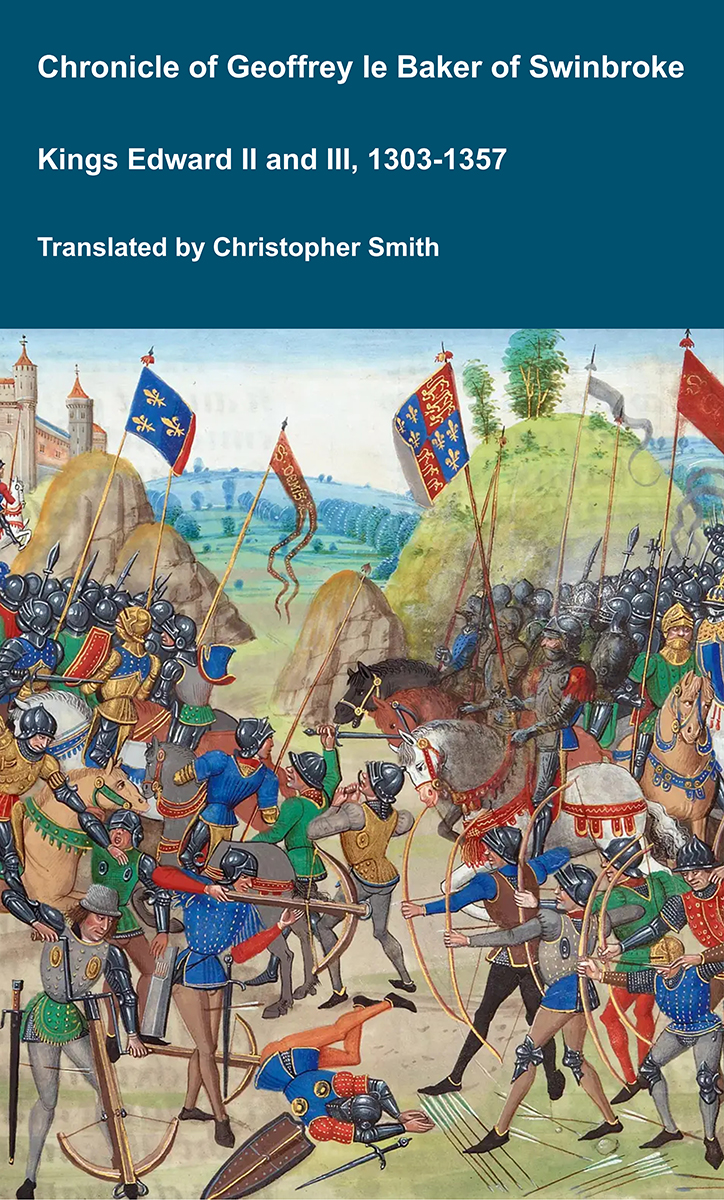 Chronicle of Geoffrey le Baker of Swinbroke. During the following Nativity of the Savior, the king, having celebrated Christmas at Cirencester, gathered an army and marched toward the Welsh Marches. On his way, he turned toward Gloucester, which had been occupied by certain barons prepared for rebellion. From there, he advanced through Worcester to Bridgnorth [Map],1 where the castle was defended for some time but was ultimately taken by the king through a vigorous assault. Some of the castellans were killed, while others fled and were outlawed, with their possessions confiscated wherever they were found within the king's domain. Afterward, as the king proceeded to Shrewsbury, both Roger Mortimers [Roger de Mortimer of Wigmore and his namesake] submitted themselves to the reverence and peace of the royal majesty, upon which the king had them sent to the custody of the Tower of London. Maurice de Berkeley and Hugo de Audley, who had also surrendered to the king in the same manner as the Mortimers, were imprisoned in Wallingford Castle. The Earl of Hereford, Gilbert Talbot, Roger Damory, and all their allies withdrew to the Earl of Lancaster, who was awaiting them in the northern region.
In sequenti Nativitate Salvatoris rex, Cirencestrie celebrato Natali, cum exercitu collecto tendens in marchiam Wallie, declinavit Gloverniam, per quosdam barones paratos rebellioni ocupatam, per Wigorniam ad Briggenorthe dirigens exercitum, ubi, castro per tempus aliquot defenso set tandem per regem viriliter expugnato, castellanorum quibusdam occisis, quosdam fugatos utlagiavit et eorum possessiones ubicumque in suo regno repertas confiscavit. Exinde Salopiam rege progresso, uterque Rogerus de Mortuo mari ad reverenciam et pacem regie magestatis se offerebat, quos turris Londoniarum custodie rex transmisit. Mauricium vero de Berkleye et Hugonem Daudeleye, ad instar illorum de Mortuo mari regi subiectos, castro Walingfordie destinavit. Comes Herefordie, Gilbertus Talbot, Rogerus Damori, et omnes alii eiis aderentes ad comitem Lancastrie, in plaga boriali ipsos expectantem, se transtulerunt.
Note 1. Edward was at Worcester on the 4th January 1322. Bridgnorth was burnt by the barons' party. The king reached Shrewsbury in the middle of the month.
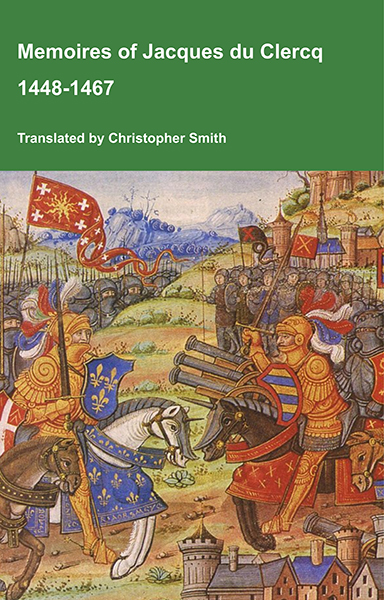 Memoires Jacques du Clercq. Soon after this surrender, which took place about the 4th day of January in the said year 1449, the king departed from Montivilliers and returned along the river Seine to an abbey called Jumièges, five leagues below Rouen. At that time the Count of Foix assembled a large army and had the siege laid, by the lord of Lautrec, his brother, bastard of Foix, before the castle of Guiche, which is a very strong fortress situated four leagues from Bayonne. When the English learned of this, they took the field to the number of about four thousand fighting men, whose leaders were the Constable of Navarre, the mayor of Bayonne, George Soliton, and several others. They embarked in vessels on a river that runs through the said place of Bayonne and came to land near the castle. When those who held the siege were informed of this, they departed secretly and came upon the English, who had already disembarked from their ships, and struck them so fiercely and violently that they defeated them and drove them in flight back toward their boats, where there were killed or taken about twelve hundred English. George Soliton, seeing this rout, feared he could not regain his ships, and therefore passed through the siege with sixty lances and for the moment took refuge within the barbican. But seeing that he could not be relieved, he departed by night with his men, intending to return toward Bayonne; yet the Bastard of Foix learned of it and pursued him so vigorously that the said George was taken there, along with most of his men. On the following day the castle surrendered, and likewise fifteen or sixteen places between Médoc, La Haye, and Bayonne; after which the men of the Count of Foix returned to their own lands.
Assés tost aprés icelle reddition, qui fust environ le iiije.de janvier an dessusdit, mil iiijc xljx, le roy parteit de Moustier et retourna sur la riviere de Saine a une abbaye nommée Immeuges, a cinq lieues au dessous de Rouan. En ce temps le comte de Foix feit assembler une grosse armée et feit mectre le siege par le sieur de Lautrec, son frere, bastard de Foix, devant le chastel de Guisant, qui cst tres fort chastel, assis a quatre lieues prés de Bayonne. Quant les Anglois le sceurent, ils sc meirent par les champs jusques environ quatre mille combattants, dont estoient chiefs, le connestable de Navarre, le maire de Bayonne, George Soliton, et pl usieurs aultrcs, lesquels se boutterent en vaisseaulx sur une riviere qui passe parmy ledit lieu dc Bayonne, et vindrent descendre prés du chastel; et quant ceulx qui tenoient le siege en feurent advertis, se partirent secretemcnt et vindrent au debvantdes Anglois, lesquels estoient ja descendus de leurs navires, et ferirent sy asprement et durement dessus eulx, qu'ils les desconfeirent et meirent en fuite jusques a leurs basteaulx, ec la feurent que morts que prins xijc Anglois. George Soliton, quant il veit celle destrousse, se doubta qu'il ne peult recouvrer ses navires, et par ce passa parmy le siege, a tout soixante lanches, et se saulva pour ceste heure dedans le boullovert, puis regarda qu'il ne pooit estre secouru, sy se partist de nuict, a tout ses gens, cuidant retourner au lieu de Bayonne; mais le bastard de Foix le sceut et le poursuivit tellement, qu'icelluy George fust la prins et la pluspart de ses gens; et le lendemain se rendit je Chastel et xv ou xvj entre Menet, Haye et Bayonne, puis s'en retournerent les geus du comte de Foix en leurs pays.
Memoires Jacques du Clercq. On the 4th day of January, in the year of the Incarnation of our Lord 1465, Charles [aged 70], Duke of Orléans, died at the age of about seventy. He left behind a son named Louis, aged three, and a daughter aged eight or nine. This Charles, in order to avenge the death of his father, the Duke of Orléans, who had been killed in Paris, began a war against John, Duke of Burgundy, father of Duke Philip. This war lasted more than thirty years, so that in many parts of the kingdom everything was laid waste; many villages, in countless number, remained uninhabited for more than thirty years, as is more fully recorded in the chronicles of the time. In his youth, this Duke Charles had been taken prisoner at the Battle of Rosières and remained captive in England for twenty-five years. He would never have returned had not Duke Philip of Burgundy ransomed him, paying his ransom and giving him his niece, the daughter of the Duke of Cleves, in marriage. By her he had the children mentioned above. Thereafter he returned to France, lived honourably and uprightly, served God devoutly, and never again did anything unbecoming a good prince. Every week, on Fridays, he gave dinner to thirteen poor people, serving them himself before he ate, and afterwards washing their feet as our Lord Jesus Christ did for his apostles. He died as a good Christian should, between Christmas and Lent.
Le iiije jour de janvier, en l'an de l'incarnation nostre Seigneur, mil iiije lxiiij, cloist son dernier jour, en l'age de lxx ans ou environ, Charles duc d'Orleans, lequel delaissa ung fils nommé Loys, de l'age de trois ans, et une fille de l'age de viij a ix ans. Icelluy Charles, pour vengier la mort du duc d'Orleans son pere, qui fust tué a Paris, commencha la guerre contre Jehan, duc de Bourgogne, pere du duc Philippe, laquelle dura plus de trente ans, et si longuement que en plusieurs lieux du royaume tout y fust destruit, que plusieurs villaiges, et tant que sans nombre, feurent plus de trente ans sans estre habités, comme es croniques de ce fait appert plus a plein. Icelluy Charles, duc d'Orleans, en son josne age fust prins en la bataille de Rousianville, et fust prisonnier en Angleterre, l'espace de vingt cinq ans, et jamais n'en fust retourné, se le duc Philippe de Bourgogne ne le eust rachepté, lequel paya sa ranchon, et lui baillia sa niepce, la filledu duc de Clefves, a marriage, de laquelle il olt les enfans chy dessus, depuis s'en retourna en Franche, fust de belle et honneste voye, et servit fort bien Dieu, et ne feit oncques puis chose que bon prince ne debvoit faire; toutes les semaines, le jour de venderdy, donnoit a treize pau, vres a disner et les servoit ly mesme ains qu'il mangeast, et après leur lavoit les pieds comme nostre Seigneur Jesus Christ feit a ses apostres: il mourut comme bon chrestien doibt faire, entre le Noel et caresme.
Henry Machyn's Diary. 4th January 1559. The iiij day of Feybruary was cared in a charett with vj banerrolles, and a-for a grett baner of armes, and iiij baners of santtes, alle in owlle [oil], and thos iiij borne by iiij haroldes of armes in ther cott armurs, with a vijxx horsse, toward Bassyng to be bered ther; and ther was a goodly herse of wax; my lade marques of Wynchester was the lade; and at evere towne had money and torchys, master Garter, master Somersett, master Rychmond, master Lanckoster, and Bluwmantyll, and viij dosen penselles and viij dosen of skochyons.... of armes and iij dosen of skochyons.
Note. P. 188. Funeral of the marchioness of Winchester. "Lady Elsabeth late wyff to the right noble and puissant prynce William marques of Wynchester erl of Wylshire knight of the garter and lord treasorer of England, dyed on Crystmas day the xxv. of December 1558, and was beryed at Basyng on Sonday the 5. of February next foloinge." (MS. Harl. 897, f. 80.) She was the daughter of sir William Capel.
The Deeds of the Dukes of Normandy
The Gesta Normannorum Ducum [The Deeds of the Dukes of Normandy] is a landmark medieval chronicle tracing the rise and fall of the Norman dynasty from its early roots through the pivotal events surrounding the Norman Conquest of England. Originally penned in Latin by the monk William of Jumièges shortly before 1060 and later expanded at the behest of William the Conqueror, the work chronicles the deeds, politics, battles, and leadership of the Norman dukes, especially William’s own claim to the English throne. The narrative combines earlier historical sources with firsthand information and oral testimony to present an authoritative account of Normandy’s transformation from a Viking settlement into one of medieval Europe’s most powerful realms. William’s history emphasizes the legitimacy, military prowess, and governance of the Norman line, framing their expansion, including the conquest of England, as both divinely sanctioned and noble in purpose. Later chroniclers such as Orderic Vitalis and Robert of Torigni continued the history, extending the coverage into the 12th century, providing broader context on ducal rule and its impact. Today this classic work remains a foundational source for understanding Norman identity, medieval statesmanship, and the historical forces that reshaped England and Western Europe between 800AD and 1100AD.
Available at Amazon in eBook and Paperback format.
Henry Machyn's Diary. 4th January 1560. The iiij day of January was bered in sant Donstons [Map] in the west latt byshope of Carlell doctur Hobbellthorpe, with alff a dosen skochyons of armes.
Note. P. 221. Funeral of the late bishop of Carlisle. Owen Oglethorpe, appointed 27 Oct. 1556, deprived June 1559.
Henry Machyn's Diary. On or after 4th January 1560. The (blank) day was bered doctur Bayne, late byshope of Lychfeld and Coventre, in sant Donstons in the west [Map].
Note. P. 221. Funeral of the late bishop of Lichfield and Coventry. Ralph Baynes, elected 10 Nov. 1554; also deprived 1559. He died some weeks before Dr. Oglethorpe, when his burial at St. Dunstan's, Fleet Street, was thus entered in the parish register: "1559, Nov. 24. Mr. Doctor Banes." Collectanea Topogr. et Geneal. vol. iv. p. 116.
Henry Machyn's Diary. 4th January 1562. The iiij day of January cam to the c[ourt the] yerle of Kyldare [aged 37], and browth the grett O'Nelle [aged 32] of Yrland, for he had the charge of hym [to bring] hym to the quen.
Note. P. 274. The great O'Neill of Ireland. This person, whom our Diarist in the next page takes the liberty to call "the wild Irishman," was John or Shane O'Neill, eldest son of Connac O'Neill, created earl of Tyrone by Henry VIII. in 1542. After a career the turbulence of which fully justifies Machyn's epithet, he was slain in the year 1567, by Alexander Oge MacConnell.
On 4th January 1599 Anna Eleonore Palatinate Simmern was born to Frederick IV Elector Palatine [aged 24] and Electress Louise Juliana of the Palatine Rhine [aged 22]. She died aged one in 1600.
On 4th January 1601 Archbishop William Laud [aged 27] was ordained Deacon.


On 4th January 1621 Charles Wilmot 1st Viscount Wilmot [aged 49] was created 1st Viscount Wilmot of Athlone by King Charles I [aged 20] as a reward for his activities in Ireland.


On 4th January 1635 Elisabeth Renata Lorraine Duchess Bavaria [aged 60] died.
The Manuscripts of His Grace the Duke of Rutland 1640. 4th January 1640. Savoy.
F. Lord Willoughby to his uncle, the Earl of Rutland [aged 60], at Belvoir Castle [Map].
When we ate your venison my wife and I drank your health and my Lady's and did not forget little Mr. George, whom, I am glad to hear, grows towards a man. "There hath beene a marriage at the court betweene one of my Lord of Corcke [aged 73] sonnse [aged 21] and my Lady Elizabeth Feelding, about which there is a greate stur, for it seemes he did not prove eoe rite as a man should be to goo about such a business. For the report goese that his manly part had lost something in his former serviocesse, and beside that he was soe full of severall disceases ... as that it was tould the Queene [aged 30], whoe sent for my Lady Elizabeth, and tould her that she must desier her not to lett her husband lye with her that night, whoe put of, modilestly making little answere, but she seemed so lothe to understand the Queene, as that she tould her she must command her not to come in a pair of sheets with him, and tould her the reasons; soe as that he is gone out of the way some say into France, others thinks he is in London under cower. It was discovered by his sister [aged 30] Mr. Goring's [aged 31] wife, to whom he had imparted his grevancess, and she had plotted it soe, to make an excuse for him, that he should falie downe stares that day, and she would come and take him up, and soe he should complane how he had breused himselfe and strained his back with the fale, that he should be soe ill he was not fitt to goe to bed to his wife that night. But could not keepe her counsel but must tell her husband Jorge Goring, and he presently ran and tould the Queene, and soe it was discovered and then it was presently in every buddy's mouth.".
My Lord Keeper is so ill that the physicians think he cannot recover. My Lord Chief Justice Bramstone is talked of to be Lord Keeper, and Bishop Wren [aged 54]. It is known to be between those two. My Lord Finch [aged 12] will be Chief Justice of the King's Bench and the Attorney General to be Chief Justice of the Common Pleas. Signet.


On 4th January 1642 King Charles I of England, Scotland and Ireland [aged 41] sent soldiers into Parliament to arrest a five MPs: Pym, John Hampden [aged 46], Hazlerigg, Holies and Strode [aged 44]. They had received warning and sought safety. After this Civil War was certain, and men began to choose their side.
On 4th January 1649 King Charles I of England, Scotland and Ireland [aged 48] was committed for trial by the Rump Parliament.
Samuel Pepys' Diary. 4th January 1660. Wednesday Early came Mr. Vanly to me for his half-year's rent, which I had not in the house, but took his man to the office and there paid him. Then I went down into the Hall [Map] and to Will's, where Hawly brought a piece of his Cheshire cheese, and we were merry with it. Then into the Hall [Map] again, where I met with the Clerk and Quarter Master of my Lord's [aged 34] troop, and took them to the Swan [Map] and gave them their morning's draft, they being just come to town. Mr. Jenkins shewed me two bills of exchange for money to receive upon my Lord's and my pay. It snowed hard all this morning, and was very cold, and my nose was much swelled with cold. Strange the difference of men's talk! Some say that Lambert must of necessity yield up; others, that he is very strong, and that the Fifth-monarchy-men [will] stick to him, if he declares for a free Parliament. Chillington was sent yesterday to him with the vote of pardon and indemnity from the Parliament.


Diary of John Nicoll. 4th January 1661. Upone Fryday the fourt of Januar, and the fourt day of the Parliament, they aggreyit that thair fould be Lordis [of] Articles, as in former Parliamentis. And furder, red a Declaration of his Majefteis will and command that the Erle of Montros his corps, his heid, legis, and airmes fould be gadderit togidder, quhilkis wer feparat from his body in Maij 1650, and collecit and brocht from all places and pairtes of the cuntrie, quhairunto thai wer fent by ordour of the Parliament than fitting, and put up in a coffin and honorablie bureyit upone the Kinges Majefteis expends; quhilk wes punctallie performit in maner following.
Henrici Quinti, Angliæ Regis, Gesta, is a first-hand account of the Agincourt Campaign, and subsequent events to his death in 1422. The author of the first part was a Chaplain in King Henry's retinue who was present from King Henry's departure at Southampton in 1415, at the siege of Harfleur, the battle of Agincourt, and the celebrations on King Henry's return to London. The second part, by another writer, relates the events that took place including the negotiations at Troye, Henry's marriage and his death in 1422.
Available at Amazon in eBook and Paperback format.
Samuel Pepys' Diary. 4th January 1664. After doing business here, I to my Lord's again, and there spoke with him, and he seems now almost friends again as he used to be. Here meeting Mr. Pierce, the chyrurgeon, he told me among other Court newes, how the Queene [aged 54] is very well again, and the King [aged 33] lay with her on Saturday night last; and that she speaks now very pretty English, and makes her sense out now and then with pretty phrazes: as among others this is mightily cried up; that, meaning to say that she did not like such a horse so well as the rest, he being too prancing and full of tricks, she said he did make too much vanity.
Samuel Pepys' Diary. 4th January 1664. Up betimes, and my wife being ready, and her mayd Besse and the girl, I carried them by coach and set them all down in Covent Garden [Map] and there left them, and I to my Lord Sandwich's [aged 38] lodgings, but he not being up, I to the Duke's [aged 30] chamber, and there by and by to his closett, where since his lady was ill, a little red bed of velvet is brought for him to lie alone, which is a very pretty one.

Samuel Pepys' Diary. 4th January 1665. Lay long, and then up and to my Lord of Oxford's [aged 37], but his Lordshipp was in bed at past ten o'clock: and, Lord helpe us! so rude a dirty family I never saw in my life. He sent me out word my business was not done, but should against the afternoon. I thence to the Coffee-house, there but little company, and so home to the 'Change [Map], where I hear of some more of our ships lost to the Northward.
So to Sir W. Batten's [aged 64], but he was set out before I got thither. I sat long talking with my lady, and then home to dinner.
Then come Mr. Moore to see me, and he and I to my Lord of Oxford's, but not finding him within Mr. Moore and I to "Love in a Tubb", which is very merry, but only so by gesture, not wit at all, which methinks is beneath the House.
So walked home, it being a very hard frost, and I find myself as heretofore in cold weather to begin to burn within and pimples and pricks all over my body, my pores with cold being shut up.
So home to supper and to cards and to bed.
Samuel Pepys' Diary. 4th January 1668. Up, and there to the office, where we sat all the morning; at noon home to dinner, where my clerks and Mr. Clerke the sollicitor with me, and dinner being done I to the office again, where all the afternoon till late busy, and then home with my mind pleased at the pleasure of despatching my business, and so to supper and to bed, my thoughts full, how to order our design of having some dancing at our house on Monday next, being Twelfth-day. It seems worth remembering that this day I did hear my Lord Anglesey [aged 53] at the table, speaking touching this new Act for Accounts, say that the House of Lords did pass it because it was a senseless, impracticable, ineffectual, and foolish Act; and that my Lord Ashly [aged 46] having shown this that it was so to the House of Lords, the Duke of Buckingham [aged 39] did stand up and told the Lords that they were beholden to my Lord Ashly, that having first commended them for a most grave and honourable assembly, he thought it fit for the House to pass this Act for Accounts because it was a foolish and simple Act: and it seems it was passed with but a few in the House, when it was intended to have met in a grand Committee upon it. And it seems that in itself it is not to be practiced till after this session of Parliament, by the very words of the Act, which nobody regarded, and therefore cannot come in force yet, unless the next meeting they do make a new Act for the bringing it into force sooner; which is a strange omission. But I perceive my Lord Anglesey do make a mere laughing-stock of this Act, as a thing that can do nothing considerable, for all its great noise.


Samuel Pepys' Diary. 4th January 1669. Thence up and down the house, and to the Duke of York's [aged 35] side, and there in the Duchess's [aged 31] presence; and was mightily complimented by my Lady Peterborough [aged 47], in my Lord Sandwich's [aged 43] presence, whom she engaged to thank me for my kindness to her and her Lord.


On 4th January 1675 Edward Hyde 1st Earl Clarendon was buried at Westminster Abbey [Map].


On 4th January 1682 Meinhart Schomberg 3rd Duke Schomberg [aged 40] and Karoline von der Pfalz [aged 22] were married. He the son of Frederick Schomberg 1st Duke Schomberg [aged 66].
John Evelyn's Diary. 4th January 1691. This week a PLOT was discovered for a general rising against the new Government, for which (Henry) Lord Clarendon and others were sent to the Tower [Map]. The next day, I went to see Lord Clarendon. The Bishop of Ely [aged 53] searched for. Trial of Lord Preston [aged 41], as not being an English Peer, hastened at the Old Bailey.


On 4th January 1692 Andrew Clench was murdered between nine and eleven o'clock by Henry Harrison to whose mistress Clench had lent money. Harrison was subequently convicted of the murder.
On 4th January 1698 Whitehall Palace [Map] was burned to the ground. The only remaining building was the Banqueting House, Whitehall Palace [Map].
The fire started on the afternoon of 4 January 1698, when a Dutch maidservant was drying linen sheets on a charcoal brazier in a bed chamber at Whitehall Palace. This was usual practice, but it was forbidden to leave braziers unattended. However, the maid left the room. It only took a second for the sheets to ignite, then to set fire to the bed hangings, and then the whole lodging was ablaze. As soon as the alarm had been raised, palace staff were mobilised to fight the flames. Pumps and buckets were used to pour water on the burning palace, with little effect. Massive explosions rocked the evening air as officials detonated gunpowder to create firebreaks, but this made things worse as chunks burning timber fell on other buildings and set them alight. All was chaos. As news of the fire spread, so did the realisation that palace riches were vulnerable. This brought out the worst in some people during the disaster. Servants who were desperately trying to remove the fabulous tapestries and works of art from the staterooms were shoved aside by looters who had climbed over the palace walls. Among the casualties were a guard burned to death, a gardener blown up, and the Dutch maid who started the blaze.
On 4th January 1717 Henrietta de Grey [aged 13] died. Monument at the De Grey Mausoleum, St John the Baptist Church, Flitton [Map].
Henrietta de Grey: On 20th October 1703 she was born to Henry Grey 1st Duke Kent and Jemima Crew Marchioness Kent.


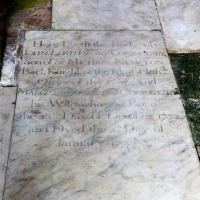
On 4th January 1733 John Newton died at Culverthorpe Hall [Map]. He is reported to have died when he was removed from his crib by a pet monkey who then dropped him from the roof of the house; there are variations of the story. He was buried at St Michael's Church, Heydour [Map].
John Newton: On 16th October 1732 he was born to Michael Newton 4th Baronet and Margaret Coningsby 2nd Countess Coningsby.
On 4th January 1742 James Graham 1st Duke Montrose [aged 59] died. His son William [aged 29] succeeded 2nd Duke Montrose.
The History of William Marshal was commissioned by his son shortly after William’s death in 1219 to celebrate the Marshal’s remarkable life; it is an authentic, contemporary voice. The manuscript was discovered in 1861 by French historian Paul Meyer. Meyer published the manuscript in its original Anglo-French in 1891 in two books. This book is a line by line translation of the first of Meyer’s books; lines 1-10152. Book 1 of the History begins in 1139 and ends in 1194. It describes the events of the Anarchy, the role of William’s father John, John’s marriages, William’s childhood, his role as a hostage at the siege of Newbury, his injury and imprisonment in Poitou where he met Eleanor of Aquitaine and his life as a knight errant. It continues with the accusation against him of an improper relationship with Margaret, wife of Henry the Young King, his exile, and return, the death of Henry the Young King, the rebellion of Richard, the future King Richard I, war with France, the death of King Henry II, and the capture of King Richard, and the rebellion of John, the future King John. It ends with the release of King Richard and the death of John Marshal.
Available at Amazon in eBook and Paperback format.
On 4th January 1785 Friedrich Wilhelm Glücksburg Duke Schleswig Holstein Sonderburg Glücksburg was born to Friedrich Karl Ludwig Oldenburg I Duke Schleswig-Holstein-Sonderburg-Beck [aged 27] and Friederike Schlieben Duchess Schleswig-Holstein-Sonderburg-Beck at Schleswig. He married 26th January 1810 Louise Caroline Hesse-Kassel Duchess Schleswig Holstein Sonderburg Glücksburg, daughter of Charles Hesse-Kassel and Louise Oldenburg, and had issue.
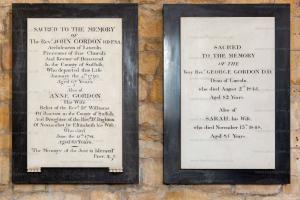
On 4th January 1793 Reverend John Gordon [aged 67] died. Memorial at Lincoln Cathedral [Map].
On 4th January 1793 William Charles Fitzgerald was born to William Robert Fitzgerald 2nd Duke Leinster [aged 43] and Emilia St George Duchess Leinster. He a great x 3 grandson of King Charles II of England Scotland and Ireland.

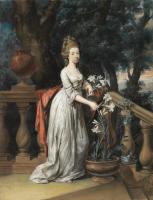
The London Gazette 13609. From Tuesday 31st December 1793 to Saturday 4th January 1794.
To the Right Honorable Arthur Viscount Valentia [aged 49], and the Heirs Male of his Body lawfully begotten, the Dignity of Earl Mountnorris, of Mountnorris Castle, in the County of Armagh.
To the Right Honorable Andrew Thomas Lord Castlestewart [aged 68], and the Heirs Male of his Body lawfully begotten, the Dignity of Viscount Castlestewart, in the County of Tyrone.
On 4th January 1798 Gavin Hamilton [aged 75] died in Rome, Italy [Map].
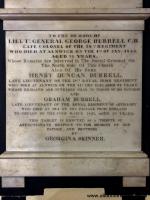
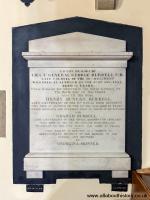
On 4th January 1853 Lieutenant-General George Burrell [aged 76] died. He was buried at St Peter and St Paul's Church, Longhoughton [Map].
Lieutenant-General George Burrell: Around 1777 he was born at Longhoughton, Northumberland.
On 4th January 1858 Elizabeth Sophia Hawkins Whitshed died from childbirth.

After 4th January 1863. Church of St John the Baptist, Ashley [Map]. Monument to Elizabeth Kinnersley sculpted by Peter Hollins [aged 62].

On 4th January 1878 Augustus John was born to Edwin William John and Augusta Smith [aged 30] at Tenby, Pembrokeshire on the Esplanade, now known as The Belgrave Hotel.
After 4th January 1883. Memorial to Joseph William Copley 4th Baronet [deceased] at St Mary's Church, Sprotbrough [Map].
Joseph William Copley 4th Baronet: On 26th July 1804 he was born to Joseph Copley 3rd Baronet and Cecil Hamilton Marchioness Abercorn. On 19th November 1831 Joseph William Copley 4th Baronet and Charlotte Anderson-Pelham Lady Copley were married. She the daughter of Charles Anderson-Pelham 1st Earl Yarborough. He the son of Joseph Copley 3rd Baronet and Cecil Hamilton Marchioness Abercorn. On 4th January 1883 Joseph William Copley 4th Baronet died without issue. Baronet Copley Sprotborough extinct. He was buried at Brompton Cemetery, Kensington.


On 4th January 1906 Richard Fitzherbert 5th Baronet [aged 59] died. His son Hugo [aged 33] succeeded 6th Baronet Fitzherbert of Tissington in Derbyshire.
Grave at St Mary's Church, Tissington [Map].
Richard Fitzherbert 5th Baronet: On 12th April 1846 he was born to William Fitzherbert 4th Baronet and Ann Alleyne Lady Fitzherbert. On 10th October 1871 Richard Fitzherbert 5th Baronet and Mary Anne Arkwright Lady Fitzherbert were married at St Mary's Church, Cromford [Map]. On 12th October 1896 William Fitzherbert 4th Baronet died. His son Richard succeeded 5th Baronet Fitzherbert of Tissington in Derbyshire. Mary Anne Arkwright Lady Fitzherbert by marriage Lady Fitzherbert of Tissington in Derbyshire.
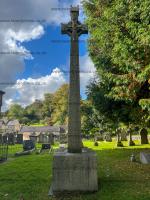
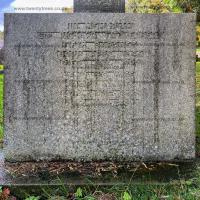
The London Gazette 29427. Whitehall. January 4, 1916.
Letters Patent have passed the Great Seal of the United Kingdom of Great Britain and Ireland containing the grant of the dignities of Earl and Marquess of the said United Kingdom unto the Right Honourable John Campbell [aged 68], Earl of Aberdeen, K.T., G.C.M.G., G.C.V.O., and the heirs male of his body law fully begotten, by the names, styles and titles of Earl of Haddo in the County of Aberdeen, and Marquess of Aberdeen and Temair in the said County of Aberdeen and in the County of Meath, and in the County of Argyll. [Isabel Majoribanks [aged 58] by marriage Marchioness of Aberdeen and Temair]
On 4th January 1927 Ambrose McEvoy [aged 49] died at Pimlico.
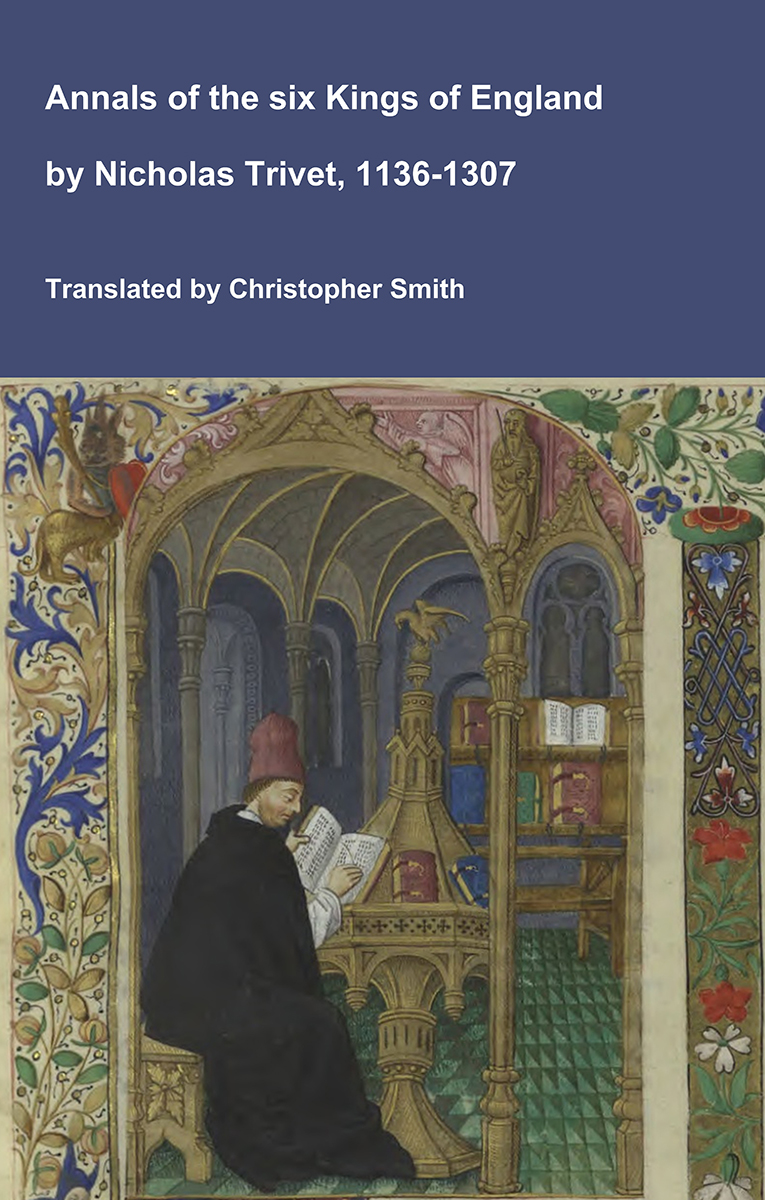
Annals of the six Kings of England by Nicholas Trivet
Translation of the Annals of the Six Kings of England by that traces the rise and rule of the Angevin aka Plantagenet dynasty from the mid-12th to early 14th century. Written by the Dominican scholar Nicholas Trivet, the work offers a vivid account of English history from the reign of King Stephen through to the death of King Edward I, blending political narrative with moral reflection. Covering the reigns of six monarchs—from Stephen to Edward I—the chronicle explores royal authority, rebellion, war, and the shifting balance between crown, church, and nobility. Trivet provides detailed insight into defining moments such as baronial conflicts, Anglo-French rivalry, and the consolidation of royal power under Edward I, whose reign he describes with particular immediacy. The Annals combines careful year-by-year reporting with thoughtful interpretation, presenting history not merely as a sequence of events but as a moral and political lesson. Ideal for readers interested in medieval history, kingship, and the origins of the English state, this chronicle remains a valuable and accessible window into the turbulent world of the Plantagenet kings.
Available at Amazon in eBook and Paperback format.

On 4th January 1931 Louise Windsor Duchess Fife [aged 63] died.
The Times. 5th January 1938. MR. J. NEVILL [aged 23] AND MISS HARRISON [aged 22].
The Duke [aged 37] and Duchess of Gloucester [aged 36] have sent a silver condiments set to Mr. John Nevill, Life Guards, elder son of Major [aged 54] and Mrs. Guy Larnach-Nevill [aged 47], of Uckfield House, and Miss Patricia Harrison, daughter of Major and the Hon. Mrs. J. F. Harrison, of Kings Walden Bury, Hitchin, whose marriage took place yesterday at St. Paul's, Knightsbridge. The Rev. G. S. Shackleford officiated, assisted by the Rev. E. C. Dunford. The bride, who was given away by her father, wore a gown of ivory-tinted panne velvet, embossed with sprays of silver flowers. The bodice was fashioned with a square neckline and long sleeves, slightly full at the shoulder, and the square train was lined with silver tissue. A headdress of silver-tipped doves' wings surmounted her long tulle veil, and she carried a spray of mixed white flowers. A retinue of six little girls and four pages folowed the bride. They were Penelope Harrison (sister of the bride), the Hon. Clare Beckett, Marye Pepys (niece of the bridegroom), Margaret Rosselli, Caroline Bury, Joanna Spencer, Hugh Lawson (cousin of the bride), David Myddelton (cousin of the bridegroom), Thomas Pilkington (nephew of the bride), and Charles Smith-Bingham. The pages wore replicas of the uniform of the Life Guards of the early nineteenth century, and the little girls wore long frocks of silver lame, the high-waisted bodices cut with short, puff sleeves, and square necks. They wore caps of silver lame, trimmed with white fur, and carried white fur muffs. Lord Roderic Pratt [aged 22], Life Guards, was best man, and there was a guard of honour from the same regiment. The Hon. Mrs. J. F. Harrison afterwards held a reception at 28, Grosvenor Square, W1. The honeymoon wil be spent in Switzerland.


On 4th January 1972 Gerald Wellesley 7th Duke Wellington [aged 86] died. His son Arthur [aged 56] succeeded 8th Duke Wellington, 12th Earl Mornington, 12th Viscount Wellesley of Dangan Castle, 8th Viscount Wellington of Talavera. Diana McConnel Duchess of Wellington [aged 49] by marriage Duchess Wellington.
On 4th January 1999 Charles John Robert Manners 10th Duke Rutland [aged 79] died. His son David [aged 39] succeeded 11th Duke Rutland, 11th Marquess Grandby, 19th Earl of Rutland, 11th Baron Manners of Haddon in Derbyshire, 5th Baron Roos of Belvoir in Leicestershire.
On 4th January 1578 Elizabeth Drury Countess Exeter was born to William Drury [aged 27] and Elizabeth Stafford [aged 32]. She married after 1591 her third cousin once removed William Cecil 2nd Earl Exeter, son of Thomas Cecil 1st Earl Exeter and Dorothy Neville Countess Exeter, and had issue.


On 4th January 1599 Anna Eleonore Palatinate Simmern was born to Frederick IV Elector Palatine [aged 24] and Electress Louise Juliana of the Palatine Rhine [aged 22]. She died aged one in 1600.
On 4th January 1639 Robert Greville 4th Baron Brooke was born to Robert Greville 2nd Baron Brooke [aged 31] and Catherine Russell Baroness Brooke. He married 1st October 1660 Ann Dodington Baroness Brooke and had issue.
On 4th January 1670 William Byron 4th Baron Byron was born to William Byron 3rd Baron Byron [aged 34] and Elizabeth Chaworth Baroness Byron [aged 37]. He married (1) 1703 Mary Egerton Baroness Byron, daughter of John Egerton 3rd Earl Bridgewater and Jane Paulet Countess Bridgewater (2) 19th December 1706 his fifth cousin once removed Frances Wilhelmina Bentinck Baroness Byron, daughter of William Bentinck 1st Earl of Portland and Anne Villiers Countess Portland, and had issue (3) 3rd December 1720 Frances Berkeley Baroness Byron, daughter of William Berkeley 4th Baron Berkeley and Frances Temple Baroness Berkeley, and had issue.
On 4th January 1684 Henry Coote 5th Earl of Mountrath was born to Charles Coote 3rd Earl of Mountrath [aged 29] and Isabella Dormer Countess Mountrath [aged 20].
On 4th January 1687 Charles Cockayne 4th Viscount Cullen was born to Charles Cockayne 3rd Viscount Cullen [aged 28] and Catherine Willoughby [aged 31].
The History of William Marshal was commissioned by his son shortly after William’s death in 1219 to celebrate the Marshal’s remarkable life; it is an authentic, contemporary voice. The manuscript was discovered in 1861 by French historian Paul Meyer. Meyer published the manuscript in its original Anglo-French in 1891 in two books. This book is a line by line translation of the first of Meyer’s books; lines 1-10152. Book 1 of the History begins in 1139 and ends in 1194. It describes the events of the Anarchy, the role of William’s father John, John’s marriages, William’s childhood, his role as a hostage at the siege of Newbury, his injury and imprisonment in Poitou where he met Eleanor of Aquitaine and his life as a knight errant. It continues with the accusation against him of an improper relationship with Margaret, wife of Henry the Young King, his exile, and return, the death of Henry the Young King, the rebellion of Richard, the future King Richard I, war with France, the death of King Henry II, and the capture of King Richard, and the rebellion of John, the future King John. It ends with the release of King Richard and the death of John Marshal.
Available at Amazon in eBook and Paperback format.
On 4th January 1728 Frances Bromley was born to Henry Bromley 1st Baron Montfort [aged 22] and Frances Wyndham [aged 23]. She married 30th May 1747 Charles Sloane Cadogan 1st Earl Cadogan, son of Charles Cadogan 2nd Baron Cadogan and Elizabeth Sloane Baroness Cadogan, and had issue.
On 4th January 1732 Anne Chaplin was born to John Chaplin 2nd Baronet and Elizabeth Morris. Her father had died some eight months before. She married before 1791 Arthur Gregory.
On 4th January 1780 Reverend Henry Palmer was born to John Palmer 5th Baronet [aged 44] and Charlotte Gough Lady Palmer.
On 4th January 1785 Friedrich Wilhelm Glücksburg Duke Schleswig Holstein Sonderburg Glücksburg was born to Friedrich Karl Ludwig Oldenburg I Duke Schleswig-Holstein-Sonderburg-Beck [aged 27] and Friederike Schlieben Duchess Schleswig-Holstein-Sonderburg-Beck at Schleswig. He married 26th January 1810 Louise Caroline Hesse-Kassel Duchess Schleswig Holstein Sonderburg Glücksburg, daughter of Charles Hesse-Kassel and Louise Oldenburg, and had issue.
On 4th January 1792 Charles Gordon 10th Marquess Huntly was born to George Gordon 9th Marquess Huntly [aged 30] and Catherine Anne Cope [aged 21] in Orton Longueville. He married (1) 2nd March 1826 Elizabeth Conyngham, daughter of Henry Conyngham 1st Marquess Conyngham and Elizabeth Denison Marchioness Conyngham (2) 2nd April 1844 Maria Antoinetta Pegus Marchioness Huntly, daughter of Reverend William Peter Pegus and Charlotte Layard Countess Lindsey, and had issue.
On 4th January 1793 William Charles Fitzgerald was born to William Robert Fitzgerald 2nd Duke Leinster [aged 43] and Emilia St George Duchess Leinster. He a great x 3 grandson of King Charles II of England Scotland and Ireland.
On 4th January 1797 Aldborough Brydges John Henniker was born to Brydges Trecothic Henniker 1st Baronet [aged 29] and Mary Press.
On 4th January 1800 Charles Wager Watson 2nd Baronet was born to Charles Watson 1st Baronet [aged 48] and Juliana Moyle aka Copley [aged 38]. He married 19th June 1827 Jemima Colleton Lady Watson and had issue.
On 4th January 1804 Western Wood was born to Matthew Wood 1st Baronet [aged 35] and Maria Page.
On 4th January 1817 Thomas Cholmondeley was born to Thomas Cholmondeley 1st Baron Delamere [aged 49] and Henrietta Elizabeth Williams-Wynn Baroness Delamere [aged 46]. He died aged less than one years old.
This is a translation of the 'Memoires of Jacques du Clercq', published in 1823 in two volumes, edited by Frederic, Baron de Reissenberg. In his introduction Reissenberg writes: 'Jacques du Clercq tells us that he was born in 1424, and that he was a licentiate in law and a counsellor to Philip the Good, Duke of Burgundy, in the castellany of Douai, Lille, and Orchies. It appears that he established his residence at Arras. In 1446, he married the daughter of Baldwin de la Lacherie, a gentleman who lived in Lille. We read in the fifth book of his Memoirs that his father, also named Jacques du Clercq, had married a lady of the Le Camelin family, from Compiègne. His ancestors, always attached to the counts of Flanders, had constantly served them, whether in their councils or in their armies.' The Memoires cover a period of nineteen years beginning in in 1448, ending in in 1467. It appears that the author had intended to extend the Memoirs beyond that date; no doubt illness or death prevented him from carrying out this plan. As Reissenberg writes the 'merit of this work lies in the simplicity of its narrative, in its tone of good faith, and in a certain air of frankness which naturally wins the reader’s confidence.' Du Clercq ranges from events of national and international importance, including events of the Wars of the Roses in England, to simple, everyday local events such as marriages, robberies, murders, trials and deaths, including that of his own father in Book 5; one of his last entries.
Available at Amazon in eBook and Paperback format.
On 4th January 1818 Archibald Orr-Ewing 1st Baronet was born.
On 4th January 1829 William Earle Welby-Gregory 4th Baronet was born to Glynne Earl Welby 3rd Baronet [aged 22] and Frances Cholmeley. He married 1863 Victoria Alexandrina Stuart-Wortley-Mackenzie and had issue.

On 4th January 1850 Robert Walter Craven was born to William Craven 2nd Earl Craven [aged 40] and Emily Mary Grimston Countess Craven [aged 33].
On 4th January 1861 Reverend Albany Bourchier Sherard Wrey 13th Baronet was born to Henry Bourchier Toke Wrey 10th Baronet [aged 31] and Marianne Sarah Sherard Lady Wrey [aged 25]. He married 5th August 1896 Isabel Fleet.
On 4th January 1865 Claud Lambton was born to George Frederick D'Arcy Lambton 2nd Earl Durham [aged 36] and Beatrix Frances Hamilton Countess Durham [aged 30].
On 4th January 1874 Robert Bromley 6th Baronet was born to Henry Bromley 5th Baronet [aged 24] and Adela Richards Lady Bromley.
On 4th January 1878 Augustus John was born to Edwin William John and Augusta Smith [aged 30] at Tenby, Pembrokeshire on the Esplanade, now known as The Belgrave Hotel.
On 4th January 1881 Norah Ida Emily Noel was born to Charles William Noel 3rd Earl Gainsborough [aged 30] and Mary Elizabeth Dease. She a great x 2 granddaughter of King William IV of the United Kingdom. She married 8th September 1915 Robert Charles Bentinck and had issue.
On 4th January 1885 Gladys Cecil Georgina Fellowes was born to William Henry Fellowes 2nd Baron de Ramsey of Ramsey Abbey [aged 36] and Rosamond Jane Frances Spencer-Churchill [aged 37]. She married 11th June 1907 her fifth cousin once removed Heneage Greville Finch, son of Charles Wightwick Finch 8th Earl of Aylesford, and had issue.

On 4th January 1893 Wilfrid Knutsford Holland-Hibbert was born to Arthur Holland 3rd Viscount Knutsford [aged 37] and Ellen Lawson Viscountess Knutsford.
On 4th January 1909 Captain Anthony Edmund Winn was born to Rowland Winn 2nd Baron St Oswald [aged 51] and Mabel Susan Forbes Baroness Winn.
On 4th January 1916 Ivar Iain Colquhoun 8th Baronet was born to Iain Colquhoun 7th Baronet [aged 28] and Geraldine Bryde Dinah Tennant Lady Colquhoun [aged 26].
Chronicle of Walter of Guisborough
A canon regular of the Augustinian Guisborough Priory, Yorkshire, formerly known as The Chronicle of Walter of Hemingburgh, describes the period from 1066 to 1346. Before 1274 the Chronicle is based on other works. Thereafter, the Chronicle is original, and a remarkable source for the events of the time. This book provides a translation of the Chronicle from that date. The Latin source for our translation is the 1849 work edited by Hans Claude Hamilton. Hamilton, in his preface, says: 'In the present work we behold perhaps one of the finest samples of our early chronicles, both as regards the value of the events recorded, and the correctness with which they are detailed; Nor will the pleasing style of composition be lightly passed over by those capable of seeing reflected from it the tokens of a vigorous and cultivated mind, and a favourable specimen of the learning and taste of the age in which it was framed.'
Available at Amazon in eBook and Paperback format.
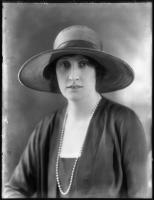
On 4th January 1921 Katharine Margaret Alice Ormsby-Gore was born to George Arthur Ormsby-Gore 4th Baron Harlech [aged 35] and Beatrice Edith Mildred Gascoyne-Cecil Baroness Harlech [aged 29]. She married 22nd August 1942 her half sixth cousin Maurice Victor Macmillan, son of Harold Macmillan 1st Earl Stockton and Dorothy Evelyn Cavendish, and had issue.
On 4th January 1925 George Herbert 7th Earl of Powis was born to Bishop Percy Herbert [aged 39] and Elaine Letitia Algitha Orde-Powlett [aged 29]. He married 26th July 1949 Katharine Odeyne de Grey Countess Powis, daughter of George de Grey 8th Baron Walsingham, and had issue.
On 4th January 1948 Philip Somers Cocks 9th Baron Somers was born to John Sebastian Cocks [aged 40].
On 4th January 1978 James Shuckburgh 14th Baronet was born to Rupert Shuckburgh 13th Baronet [aged 28].

On 4th January 1625 Richard Lennard 13th Baron Dacre Gilsland [aged 28] and Dorothy North Baroness Dacre of Gilsland [aged 20] were married. She by marriage Baroness Dacre Gilsland.
On 4th January 1682 Meinhart Schomberg 3rd Duke Schomberg [aged 40] and Karoline von der Pfalz [aged 22] were married. He the son of Frederick Schomberg 1st Duke Schomberg [aged 66].

On 4th January 1746 George Pitt 1st Baron Rivers [aged 24] and Penelope Atkins were married. Their marriage was notoriously unhappy and they were often estranged.
On 4th January 1793 William Cave-Browne-Cave 9th Baronet [aged 27] and Louisa Wilmot Lady Cave [aged 21] were married.
On 4th January 1938 John Henry Guy Neville 5th Marquess Abergavenny [aged 23] and Mary Patricia Harrison Marchioness Abergavenny [aged 22] were married. He the son of Guy Larnach Neville 4th Marquess Abergavenny [aged 54] and Isabel "Nellie" Larnach Marchioness Abergavenny [aged 47].
On 4th January 871 King Æthelred of Wessex [aged 24] and Alfred the Great's [aged 22] army attacked, but were repulsed by, the Viking army at Battle of Reading. Æthelwulf Mercia Earldorman Berkshire [aged 46] was killed.
On 4th January 1130 Clementia Aquitaine Countess Luxemburg [aged 82] died.
On 4th January 1235 Raoul "Good" Nesle I Count Soissons died. His son John succeeded II Count Soissons.
On 4th January 1248 Sancho "Pious" II King Portugal [aged 38] died. His brother Alfonso [aged 37] succeeded III King Portugal.
On 4th January 1344 Robert Lisle 1st Baron Lisle [aged 55] died. He was buried at Greyfriars Church Farringdon Within [Map]. His son John [aged 25] succeeded 2nd Baron Lisle of Rougemont. Maud Grey Baroness Lisle [aged 26] by marriage Baroness Lisle of Rougemont.
On 4th January 1456 Ralph Cromwell 3rd Baron Cromwell [aged 53] died at South Wingfield, Derbyshire [Map]. He was buried at the Collegiate Church, Tattershall. Baron Cromwell abeyant between his two nieces, daughters of his sister Maud Cromwell: Maud Stanhope 4th Baroness Cromwell Baroness Willoughby of Eresby and Joan Stanhope.
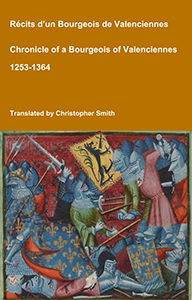
Chronicle of a Bourgeois of Valenciennes
Récits d’un bourgeois de Valenciennes aka The Chronicle of a Bourgeois of Valenciennes is a vivid 14th-century vernacular chronicle written by an anonymous urban chronicler from Valenciennes in the County of Hainaut. It survives in a manuscript that describes local and regional history from about 1253 to 1366, blending chronology, narrative episodes, and eyewitness-style accounts of political, military, and social events in medieval France, Flanders, and the Low Countries. The work begins with a chronological framework of events affecting Valenciennes and its region under rulers such as King Philip VI of France and the shifting allegiances of local nobility. It includes accounts of conflicts, sieges, diplomatic manoeuvres, and the impact of broader struggles like the Hundred Years’ War on urban life in Hainaut. Written from the perspective of a burgher (bourgeois) rather than a monastery or royal court, the chronicle offers a rare lay viewpoint on high politics and warfare, reflecting how merchants, townspeople, and civic institutions experienced the turbulence of the 13th and 14th centuries. Its narrative style combines straightforward reporting of events with moral and civic observations, making it a valuable source for readers interested in medieval urban society, regional politics, and the lived experience of war and governance in pre-modern Europe.
Available at Amazon in eBook and Paperback format.
On 4th January 1550 Christopher Barker died.
On 4th January 1635 Elisabeth Renata Lorraine Duchess Bavaria [aged 60] died.

On 4th January 1641 Francis Clifford 4th Earl of Cumberland [aged 82] died. His son Henry [aged 49] succeeded 5th Earl of Cumberland. Frances Cecil Countess Cumberland [aged 48] by marriage Countess of Cumberland.
On 4th January 1682 John Williams 3rd Baronet [aged 19] died. His brother Griffith [aged 16] succeeded 4th Baronet Williams of Penrhyn in Caernarfonshire.
On 4th January 1688 Henry Brouncker 3rd Viscount Brounckner [aged 61] died without issue at Sheen Priory, Richmond [Map]. He was buried in the Church of St Mary Magdalene, Richmond, Surrey. Viscount Brouckner of Lyons in Leinster extinct.
On 4th January 1703 Margaret Maccarthy Countess Fingall died. She was buried at the Chapel, Somerset House.
On 4th January 1735 James Lyon 7th Earl Strathmore and Kinghorne [aged 32] died without issue. His brother Thomas [aged 30] succeeded 8th Earl Strathmore and Kinghorne.
On 4th January 1738 George Douglas 13th Earl Morton [aged 76] died. His son James [aged 36] succeeded 14th Earl Morton.


On 4th January 1742 James Graham 1st Duke Montrose [aged 59] died. His son William [aged 29] succeeded 2nd Duke Montrose.
On 4th January 1744 Martha Morgan Countess of Oxford and Mortimer [aged 45] died.
On 4th January 1777 Elizabeth Abigail Cotton Lady Cotton [aged 64] died.
William of Worcester's Chronicle of England
William of Worcester, born around 1415, and died around 1482 was secretary to John Fastolf, the renowned soldier of the Hundred Years War, during which time he collected documents, letters, and wrote a record of events. Following their return to England in 1440 William was witness to major events. Twice in his chronicle he uses the first person: 1. when writing about the murder of Thomas, 7th Baron Scales, in 1460, he writes '… and I saw him lying naked in the cemetery near the porch of the church of St. Mary Overie in Southwark …' and 2. describing King Edward IV's entry into London in 1461 he writes '… proclaimed that all the people themselves were to recognize and acknowledge Edward as king. I was present and heard this, and immediately went down with them into the city'. William’s Chronicle is rich in detail. It is the source of much information about the Wars of the Roses, including the term 'Diabolical Marriage' to describe the marriage of Queen Elizabeth Woodville’s brother John’s marriage to Katherine, Dowager Duchess of Norfolk, he aged twenty, she sixty-five or more, and the story about a paper crown being placed in mockery on the severed head of Richard, 3rd Duke of York.
Available at Amazon in eBook and Paperback format.
On 4th January 1790 Anthony Brabazon 8th Earl Meath [aged 69] died. His son William [aged 20] succeeded 9th Earl Meath, 10th Baron Ardee.
On 4th January 1793 Reverend John Gordon [aged 67] died. Memorial at Lincoln Cathedral [Map].
On 4th January 1798 Gavin Hamilton [aged 75] died in Rome, Italy [Map].

On 4th January 1805 Gregory Page-Turner 3rd Baronet [aged 56] died. His son Gregory [aged 19] succeeded 4th Baronet Page-Turner of Ambrosden in Oxfordshire.
On 4th January 1815 William John Kerr 5th Marquess Lothian [aged 77] died. His son William [aged 51] succeeded 6th Marquess Lothian, 9th Earl Lothian, 7th Earl Lothian. Harriet Scott Marchioness Lothian [aged 34] by marriage Marchioness Lothian.

On 4th January 1831 Thomas Frankland 6th Baronet [aged 80] died at Thirkleby Hall, North Yorkshire. His son Robert [aged 47] succeeded 7th Baronet Frankland of Thirkleby in Yorkshire. Louisa Anne Murray Lady Thirkleby [aged 40] by marriage Lady Frankland of Thirkleby in Yorkshire.
On 4th January 1838 John Head 7th Baronet [aged 65] died. His son Edmund [aged 33] succeeded 8th Baronet Head of Hermitage in Kent.
On 4th January 1851 Henry Claude Loraine 8th Baronet [aged 37] died. His uncle William [aged 70] succeeded 9th Baronet Loraine of Kirkharle in Northumberland.
Newcastle Guardian and Tyne Mercury, 11 January 1851: "At Ramsey, in the Isle of Man, on the 4th inst. aged 38, Sir Henry Claude Loraine, bart., youngest son of the late Sir Charles Loraine, bart., of Kirkharle, Northumberland.".
On 4th January 1854 Richard Godin Simeon 2nd Baronet [aged 69] died. His son John [aged 38] succeeded 3rd Baronet Simeon of Grazeley in Berkshire. Jane Maria Baker Lady Simeon [aged 34] by marriage Lady Simeon of Grazeley in Berkshire.

On 4th January 1856 Charles Brudenell 1st Marquess Ailesbury [aged 82] died. His son George [aged 51] succeeded 2nd Marquess Ailesbury, 3rd Earl Ailesbury, 2nd Earl Bruce of Whorlton in Yorkshire, 2nd Viscount Savernake of Savernake Forest in Wiltshire. Mary Herbert Marchioness Ailesbury [aged 43] by marriage Marchioness Ailesbury.
William of Worcester's Chronicle of England
William of Worcester, born around 1415, and died around 1482 was secretary to John Fastolf, the renowned soldier of the Hundred Years War, during which time he collected documents, letters, and wrote a record of events. Following their return to England in 1440 William was witness to major events. Twice in his chronicle he uses the first person: 1. when writing about the murder of Thomas, 7th Baron Scales, in 1460, he writes '… and I saw him lying naked in the cemetery near the porch of the church of St. Mary Overie in Southwark …' and 2. describing King Edward IV's entry into London in 1461 he writes '… proclaimed that all the people themselves were to recognize and acknowledge Edward as king. I was present and heard this, and immediately went down with them into the city'. William’s Chronicle is rich in detail. It is the source of much information about the Wars of the Roses, including the term 'Diabolical Marriage' to describe the marriage of Queen Elizabeth Woodville’s brother John’s marriage to Katherine, Dowager Duchess of Norfolk, he aged twenty, she sixty-five or more, and the story about a paper crown being placed in mockery on the severed head of Richard, 3rd Duke of York.
Available at Amazon in eBook and Paperback format.
On 4th January 1862 Charles Merrik Burrell 3rd Baronet [aged 87] died. His son Percy [aged 49] succeeded 4th Baronet Burrell of Valentine House in Essex.
On 4th January 1868 Henry William Des Voeux 3rd Baronet [aged 61] died. His half brother Frederick [aged 20] succeeded 4th Baronet De Voeux of Indiaville in Queen's County.
On 4th January 1877 Florance George Henry Irby 5th Baron Boston [aged 39] died. His son George [aged 16] succeeded 6th Baron Boston, 7th Baronet Irby of Whaplode and Boston.
On 4th January 1883 Joseph William Copley 4th Baronet [aged 78] died without issue. Baronet Copley Sprotborough extinct. He was buried at Brompton Cemetery, Kensington.

On 4th January 1897 Henry St John Halford 3rd Baronet [aged 68] died. His brother John [aged 66] succeeded 4th Baronet Vaughan aka Halford of Wistow in Leicestershire; he died three months later.
On 4th January 1899 Mary Selina Wentworth-Fitzwilliam Viscountess Portman [aged 62] died.
On 4th January 1906 Richard Fitzherbert 5th Baronet [aged 59] died. His son Hugo [aged 33] succeeded 6th Baronet Fitzherbert of Tissington in Derbyshire.
Grave at St Mary's Church, Tissington [Map].
Richard Fitzherbert 5th Baronet: On 12th April 1846 he was born to William Fitzherbert 4th Baronet and Ann Alleyne Lady Fitzherbert. On 10th October 1871 Richard Fitzherbert 5th Baronet and Mary Anne Arkwright Lady Fitzherbert were married at St Mary's Church, Cromford [Map]. On 12th October 1896 William Fitzherbert 4th Baronet died. His son Richard succeeded 5th Baronet Fitzherbert of Tissington in Derbyshire. Mary Anne Arkwright Lady Fitzherbert by marriage Lady Fitzherbert of Tissington in Derbyshire.
On 4th January 1927 Ambrose McEvoy [aged 49] died at Pimlico.
On 4th January 1931 Louise Windsor Duchess Fife [aged 63] died.
On 4th January 1933 Courtenay Cecil Mansel 13th Baronet [aged 52] died. His son John [aged 23] succeeded 14th Baronet Mansel of Muddlescombe.
On 4th January 1937 Frederick Des Voeux 7th Baronet [aged 79] died. His brother Edward [aged 73] succeeded 8th Baronet De Voeux of Indiaville in Queen's County.
William of Worcester's Chronicle of England
William of Worcester, born around 1415, and died around 1482 was secretary to John Fastolf, the renowned soldier of the Hundred Years War, during which time he collected documents, letters, and wrote a record of events. Following their return to England in 1440 William was witness to major events. Twice in his chronicle he uses the first person: 1. when writing about the murder of Thomas, 7th Baron Scales, in 1460, he writes '… and I saw him lying naked in the cemetery near the porch of the church of St. Mary Overie in Southwark …' and 2. describing King Edward IV's entry into London in 1461 he writes '… proclaimed that all the people themselves were to recognize and acknowledge Edward as king. I was present and heard this, and immediately went down with them into the city'. William’s Chronicle is rich in detail. It is the source of much information about the Wars of the Roses, including the term 'Diabolical Marriage' to describe the marriage of Queen Elizabeth Woodville’s brother John’s marriage to Katherine, Dowager Duchess of Norfolk, he aged twenty, she sixty-five or more, and the story about a paper crown being placed in mockery on the severed head of Richard, 3rd Duke of York.
Available at Amazon in eBook and Paperback format.
On 4th January 1942 Arthur Robert Glyn 7th Baronet [aged 71] died unmarried. His half second cousin once removed Richard [aged 66] succeeded 8th Baronet Glyn of Ewell in Surrey.
On 4th January 1950 Frances Margaret Irby Countess Kimberley [aged 65] died.
On 4th January 1952 Balthazar Stephen Sargant Foster 2nd Baron Ilkeston [aged 84] died. Baron Ilkeston of Ilkeston in Derbyshire extinct.
On 4th January 1967 Joan Katherine Lambton Baroness Joicey [aged 73] died some twelve weeks after her husband Hugh Edward Joicey 3rd Baron.
On 4th January 1972 Gerald Wellesley 7th Duke Wellington [aged 86] died. His son Arthur [aged 56] succeeded 8th Duke Wellington, 12th Earl Mornington, 12th Viscount Wellesley of Dangan Castle, 8th Viscount Wellington of Talavera. Diana McConnel Duchess of Wellington [aged 49] by marriage Duchess Wellington.
On 4th January 1977 Cecil George Weld-Forester 7th Baron Forester [aged 77] died. His son George [aged 38] succeeded 8th Baron Forester of Willey Park in Shropshire.
On 4th January 1999 Charles John Robert Manners 10th Duke Rutland [aged 79] died. His son David [aged 39] succeeded 11th Duke Rutland, 11th Marquess Grandby, 19th Earl of Rutland, 11th Baron Manners of Haddon in Derbyshire, 5th Baron Roos of Belvoir in Leicestershire.
On 4th January 2002 Peter Griffiths aka Abney-Hastings Earl Loudon [aged 77] died.
On 4th January 2008 Anthony Brand 6th Viscount Hampden [aged 70] died. His son Francis [aged 38] succeeded 7th Viscount Hampden.
On 4th January 2023 Thomas Stonor 7th Baron Camoys [aged 82] died. His son Ralph [aged 48] succeeded 8th Baron Camoys.