

21 Nov is in November.
1499 Trial and Execution of Perkin Warbreck and Edward Earl of Warwick
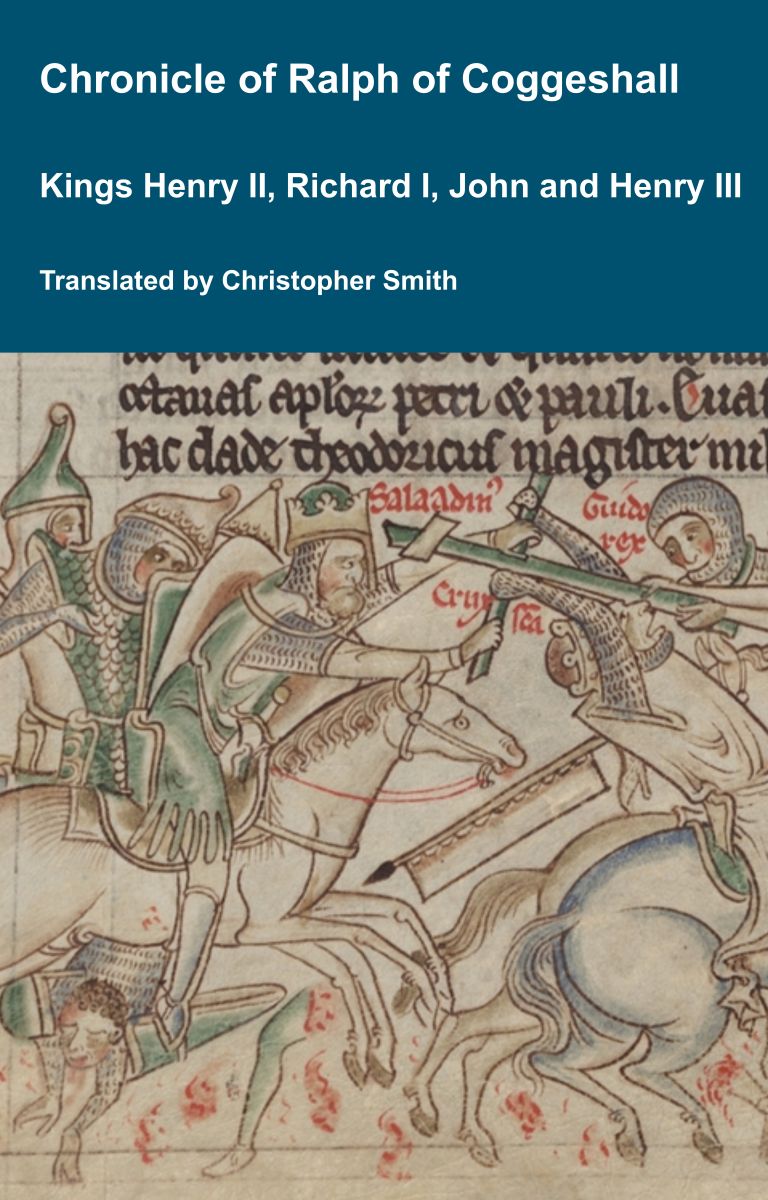 Chronicum Anglicanum by Ralph Coggeshall. In the same year, William [deceased]1, Archbishop of Canterbury, passed away, and Theobald succeeded him. Sartis Abbey2 was also founded.
Eodem anno obiit Willelmus archiepiscopus Cantuariensis, cui successit Teobaldus Facta est abbatia de Sartis.
Note 1. William of Corbeil died on the 21st November 1136. He has been appointed Archbishop of Canterbury in 1123.
Note 2. Wardon Abbey, Bedfordshire, was originally known as the abbey of St Mary de Sartis [Map]. It was a daughter house of Rievaulx and one of the senior Cistercian houses of England. It was dissolved in 1537.
On 21st November 1150 García "Restorer" IV King Navarre [aged 38] died. His son Sancho [aged 18] succeeded King Navarre.
On 21st November 1264 Maria Burgundy was born to Alfonso III King Portugal [aged 54] and Beatrice Queen Consort Portugal [aged 22]. She a great x 2 granddaughter of King Henry "Curtmantle" II of England. Coefficient of inbreeding 2.41%.
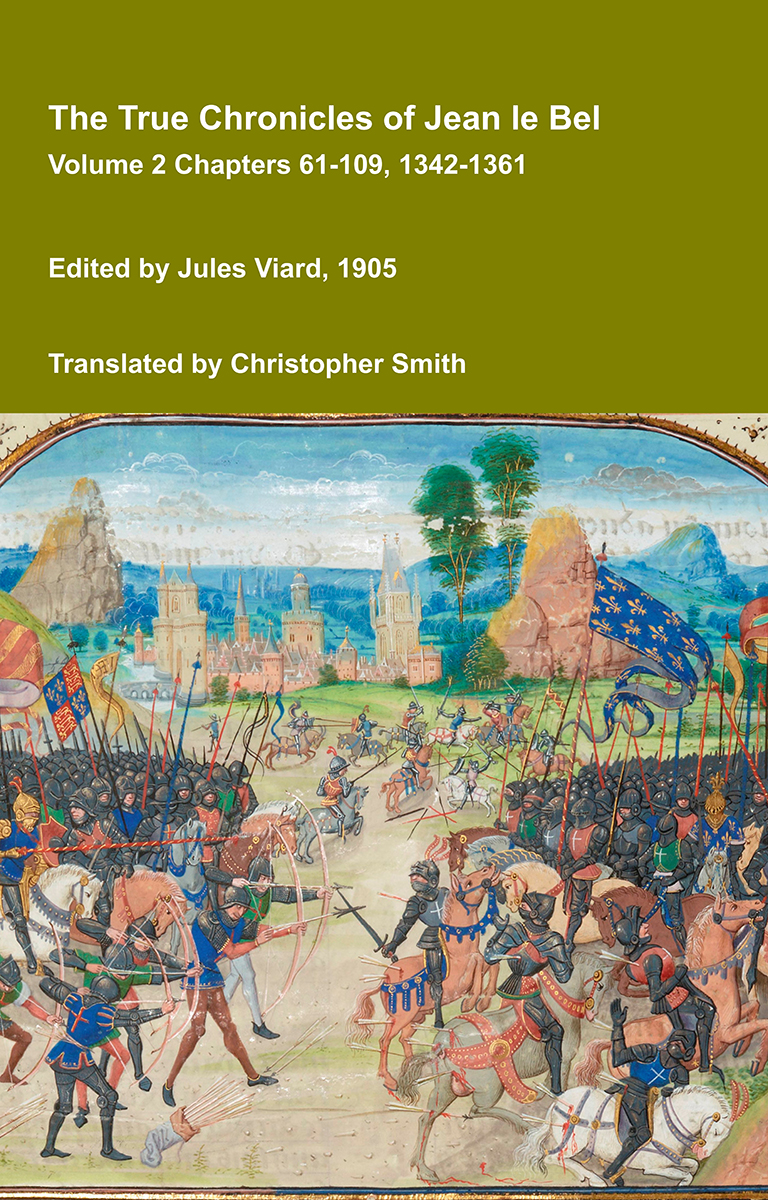 Chronicle of Jean le Bel Volume 2. The noble earl had it furnished as a place for his own defence and as his refuge, if need arose, and it seemed to him that he had never seen so fine a castle, nor one so well situated. He placed there as captain a very valiant knight called Sir John de Gombry. Afterwards, the noble earl took by force and assault the strong castle called Segrat1, and then the very strong town and castle of La Réole. There Sir Charles of Valois2, father of King Philip, had once stayed for a very long time. After he had taken the town and placed men within it according to his will, he went before Montpezat3, which is one of the strongest castles in the world, and took it, placing his garrison inside. Soon afterwards, he went before the town and strong castle of Mouron4, and they assaulted it fiercely, but they could not take it by assault. They won it the next day, however, through the judgement and stratagem of a gentleman from Gascony named Alexander, lord of Chaumont. The Earl of Derby broke camp from there and made a show of going elsewhere, leaving a small number of men before the town with the Earl of Oxford. When those of the town and the soldiers saw so few men before them, thinking that they would soon defeat them, they sallied out to fight them. When the English saw them coming, they drew back and pretended to flee, and the others chased them far away from the town. Then the Earl of Derby, who was in ambush, revealed himself, put himself between the men and the town, and entered the town by force.
Si le fist le gentil conte garnir comme pour son garde corps et son repaire, se besoing estoit, et luy sembloit bien que jamaiz n'avoit veu si beau chastel, ne qui seist si bien. Si y mist ung moult vaillant chevalier pour cappitaine, qu'on appelloit messire Jehan de Gombry. Aprez, le gentil conte conquist par force et par assault le fort chastel qu'on appelle Segrat, et aprez la trés forte ville et chastel de la Ryelle. Là messire Charles de Valoys', pere au roy Philippe, sey jadis moult longuement. Aprez, quant il eut pris la ville et mis gens à sa voulenté dedens, il ala par devant Montpesat, qui est ung des forts chasteaulx du monde, et le conquist, et y mit dedens sa garnison. Tantost aprez, il ala par devant la ville et fort chastel de Mouron, et l'assaillirent grandement, maiz ilz nele pœurent avoir pour assault, maiz ilz le gaagnerrent l'endemain par le sens et l'engin d'ung gentil homme du pays de Gascongne qu'on nommoit Alixandre, seigneur de Chaumont, car le conte Derby se desloga de là et fist semblant d'aler aultre part, et laissa ung petit de gens devant la ville avecques le conte d'Akenfort. Quant ceulx de la ville et les souldoiers veirent sy poy de gens devant eulx, cuidans que tantost les desconfissent, ilz saillirent dehors pour les combatre. Quant les Anglès les virent venir, ilz se trairent arriere et firent semblant de fuir, et les aultres les chasserrent loing au dessus de la ville, et adoncques le conte Derby, qui estoit en l'embusche, se descouvry et mit entre les gens et la ville et entra en la ville par force.
Note 1. Today Castelsagrat, Tarn-et-Garonne. The occupation of this town by the English, which took place between 21st November 1345 and 5th April 1346.
1. Aujourd'hui Castelsagrat, Tarn-et-Garonne, arr. de Moissac, cant, de Valence-d'Agen. Sur l'occupation de cette ville par les Anglais, qui eut lieu entre le 21 novembre 1345 et le 5 avril 1346, voy. Bertrandy, op. cit., p. 156 à 158. Cf. Froëssan, éd. Luce, t. III, p. xx, n. 4.
Note 2. Jean le Bel is alluding to the siege laid before this town in 1324 by Charles, Count of Valois.
2. Jean le Bel fait allusion au siège mis devant cette ville en 1324 par Charles, comte de Valois.
Note 3. Montpezat, Lot-et-Garonne. This town, under the influence of Raimfroid, its lord, must have surrendered to Derby without resistance.
3. Montpezat, Lot-et-Garonne, arr. d'Agen, cant. de Prayssas. Cette ville, sous l'influence de Raimfroid, son seigneur, dut se rendre sans résistance à Derby. (Froissart, éd. Luce, t. III, p. XXIII, n. 1.)
Note 4. Probably Castelmoron-sur-Lot, Lot-et-Garonne.
4. Probablement Castelmoron-sur-Lot, Lot-et-Garonne, arr. de Marmande, ch.-l. de cant. Sur la prise de cette ville, voy. Bertrandy, op. cit., p. 192 et 193, et Froissart, éd. Luce, t. IIl, p. XXIII, n. 2.
Vetera Monumenta Hibernorum et Scotorum DLXXIX. Clement, etc. To our venerable brother, [John] Bishop of Moray, greeting, etc. A petition on behalf of our beloved son a noble young man, John of Moray, and our beloved daughter in Christ, a noble woman, Margaret of Graham [aged 14], a damsel, daughter of our beloved son, a noble man, John of Graham, Earl of Menteith, who belong to your diocese and the diocese of Dunblane, has lately been laid before us, representing that the said John of Moray and Margaret desire to be united together in matrimony; but because through descent from the same family they happen to be related within the fourth degree of consanguinity, they cannot contract this marriage without obtaining our apostolic dispensation in the matter; wherefore, on their behalf, humble supplication has been made to us that we would vouchsafe to provide for them by the ready benefit of a dispensation: We, therefore, yielding to the supplications of our very dear daughter in Christ, [Joanna,] illustrious queen of Scotland [aged 27], humbly entreating us concerning this matter, and to those of John of Moray and Margaret foresaid, and for certain causes explained to us, do, by apostolic letters, command you, brother, that if it is so, you may, by our authority, grant a dispensation, so that notwithstanding the impediment which has arisen out of this consanguinity, the said John of Moray and Margaret may be free to contract marriage, and after it shall have been contracted, lawfully to abide therein; declaring that the offspring to he conceived of the said marriage shall be legitimate. Given at Avignon, the 21st November, in the seventh year of our pontificate (1348).
Epitropo Moravientl, ut cum Joanne de Moraria et Margareta de GrameOrm nuper matrimonio dispenset. Reg. An. VII. lib. V. par. 2. fol. 78.
Clemens episcopus etc. Venerabili fratri... Episcopo Moraviensi, salutem etc. Petitio pro parte dilecti filii nobilis viri Iohannis de Moravia domicelli, ot dilecte in Christo filie nobilis mulieris Margarete de Grame, nate dilecti filii nobilis viri Iohannis de Grame Comitis de Meneteth, domicelle tue et Dumblanensis diocesum nobis nuper exhibita continebat, quod ipsi Iohannes de Moravia et Margareta desiderant invicem matrimonialiter copulari: sed quia quarto consanguinitatis gradu descendentes ab eodem stipite se continguut, matrimonium huiusmodi contrahere nequeunt dispensatione super hoc apostolica non obtenta: quare pro parte ipsorum fuit nobis humiliter supplicatum, ut providere ipsis super hoc de oportuno dispensationis beneficio dignaremur. Nos igitur Carissime in Christo filie nostro... Regine Scocie Illustris nobis Buper hoc humiliter supplicantis, et Iohannis de Moravia et Margarete prodictorum supplicationibus inclinati, ot cx certis causis nobis expositis fraternitati tue per apostolica scripta mandamus, quatenus, si est ita, cum eisdem Iohanne de Moravia et Margareta, ut impedimento, quod ex huiusmodi consanguinitate provenit, nequaquam obstante, matrimonium invicem contrahere libere, et postquam contractum fuerit, in eo remanere licite valeant, auctoritate nostra dispensos, prolem suscipiendam ex eodem matrimonio legitimam nunciando. Datum Avinione xi. Kal. Decembris, Pontificatus nostri anno septimo.
On 21st November 1361 Philip I Duke Burgundy [aged 15] died. His great uncle John succeeded Count Auvergne.
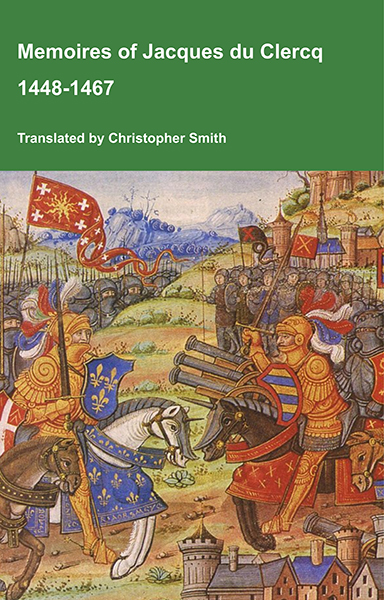 Memoires Jacques du Clercq. At that time, on the 27th day of October, Jelian de Frevillers and his brother, accompanied by twenty-six to twenty-eight men-at-arms fully armed, about midnight entered the house of Martelet de Brethencourt, dwelling at Treines on the Somme, and there found Jehan de Humières, nephew of the lord of Humières, knight of the Order of the Golden Fleece. This Jehan de Humières they seized and cut at their pleasure without killing him, giving him eight or ten wounds, and they thought they had nearly cut off one of his feet; and had it not been for the wife of the said Jehan de Humières, who was pregnant, and other women, they would have done him even worse. They left him as if dead. Then they took his servant, cut the sinews of his legs, and likewise wounded him. The cause, as was said, was that the said Jehan de Humières, or men acting on his behalf, had gone to the house of Jehan, lord of Mailly, with a great number of men-at-arms, and there had cruelly beaten and injured the brother of the said Frevillers and two others with him, solely because the said lord of Mailly had given a parish benefice to Collinet de Frevillers, whereas the lord of Humières wanted another priest to have it, who had previously held the cure. A lawsuit arose between the said priests, and the said Collinet won the benefice, and had the other priest removed by order of the king; and for costs caused all the goods of that priest to be sold. For this reason, as has been said, they went to the house of the said lord of Mailly and thus assaulted the said Frevillers, who was kin to the said lord of Mailly. Because of these acts, war arose between the said lord of Mailly and the lord of Humières, both among the greatest men of Picardy. When this conflict came to the knowledge of Philip, Duke of Burgundy, he forbade them to proceed to open violence. Before this, the said Jehan de Humières had been attacked; but the said lord of Mailly would never take responsibility for the brothers of Frevillers, who were in the king's army and service, and who, as has been said, carried out the aforesaid deed. After the matter was taken into the duke's hands, he was greatly angered and summoned the said lord of Mailly, who came very richly accompanied by his kinsmen, lords, and friends, and declared to the duke that he had not caused it to be done. And although the duke again forbade the said lords of Mailly and Humières to resort to violence, nevertheless the lord of Mailly guarded himself very strongly, kept a great number of men-at-arms with him, and greatly strengthened his castle of Mailly; and likewise Monsieur Hues de Mailly, his brother, fortified himself strongly in his fortress of Rossignol where he resided. And soon after, on the 21st day of November following, the said lord of Humières, knight of the Order of the Duke of Burgundy, died in the town of Mons in Hainaut, and was carried to be buried in the town of Humières.
En ce temps, le xxviije jour d'octobre, Jelian de Frevillers et son frere, accompagniés de xxvj a xxviij compagnons de guerre armés au clair, environ minuit entrerent en la maison de Martelet de Brethencourt, demourant a Treines sur Somme, et illecq trouverent Jehan de Humiers, nepveu du S de Humiers, chevallier, portant l'ordre du Toison, lequel Jehan de Humiers ils prindrent et decopperent a leur vollonté sans mort, et lui donnerent huict ou dix playes, et sy lui cuidoient avoir ecerné ung pied; et se ce n'euist la femme dudit Jehan de Humiers, laquelle estoit enchainte, et aultres femmes, ils euissent encoires pis fait audit Jehan, lequel ils laisserent comme mort, puis prindrent son varlet, et lui copperent les nerfs des jambes, et pareillement le deplayerent, et la cause fust, comme on disoit, pour ce que ledit Jehan de Huniers ou gens commis de par lui, avoient esté en la maison de Jehan St de Mailly avec grand nombre de gens de guerre, et illecq avoient villainement battu et affolé le frere du dessusdit de Frevillers et deux aultres avec lui, pour tant seulement que ledit Sr de Mailly avoit donné une cure a Collinet de Frevillers, et le Sr de Humiers voulloit que ung autre prestre le fust, lequel curé y demouroit. Sur quoi fust procés esmeu entre lesdits curés, et gagna ledit Collinet la cure, et feit l'autre curé widier de par le roy, et pour les despens feit vendre touts les biens dudit curé; telle fevre, telle vente; a laquelle vente faire y avoit des gens dudit Sr de Mailly; pour laquelle cause on alla, ainsy que dessus est dit, en la maison dudit St de Mailly, ainsi decopper ledit de Frevillers, lequel se disoit et estoit parent audit St de Mailly; pour lesquelles entreprises, guerre fut esmeue entre ledit Sr de Mailly et le St de Humiers, qui estoient touts deux des plus grands de Picardie; laquelle guerre venue a la cognoissance de Philippe, duc de Bourgogne, il leur deffendit la voye de fait. Auparavant ledit Jehan de Humiers fust descouppé; mais ledit Sr de Mailly ne se volt oncques faire fort des freres dudit de Frevillers, lesquels estoient en l'armée et ordonnance du roy, lesquels comme cy dessus est dit, feirent le fait dessusdit. Après la chose prinse en la main du duc, dont le duc fust moult courrouchié, et manda ledit St de Mailly, lequel y alla moult grandement accompagnié de ses parents Srs et amys, et dit au duc qu'il ne l'avoit point fait faire; et combien que le duc derechief deffendit aulxdits Srs de Mailly et Humiers la voye de fait, sy se gardoit moult fort le St de Mailly, et avoit grand nombre de gens de guerre avecq lui, et renforça moult fort son chasteau, de Mailly; et monsieur Hues de Mailly, frere, aussy se garda moult fort, et renforça sa fortresse du Rossignol ou il se tenoit, et assés tost après, le xxj de novembre ensuivant, ledit Sr de Humiers, chevallier, portant l'ordre du duc de Bourgogne, en la ville de Mons en Haynault, mourut et fust emporté enterrer en la ville de Humiers.
Memoires Jacques du Clercq. On the 21st day of the said month of November, about ten o'clock, there was an eclipse of the moon and a new weather change, both together and at the same hour. In that same year also, about the feast of Saint Catherine in winter, in the town of Brussels in Brabant, several jousts and entertainments were held at the coming of the Duchess of Bourbon, who had brought with her two of her daughters to be married, and one of them was with her daughter the Countess of Charolais, for whom the said entertainments were made. And there were present the Count of Charolais, the Duke of Cleves, the son of the Duke of Guelders, the Count of Étampes, the Count of Saint-Pol, Adolph of Cleves, the Bastard of Burgundy, four of the sons of the Duke of Bourbon, and others. And the duke himself was there on horseback, richly dressed, and in as great splendour as could be.
Le xxje jour dudit mois de novembre, environ dix heures, fust esclipse de lune et nouvel temps, tout ensemble et en une mesme heure. Audit an aussy, environ la sainte Catherine d'hyver, en la ville de Bruxelles en Braband, se feirent plusieurs joustes et esbattemens a la venue de la duchesse de Bourbon, laquelle avoit amené deux de ses filles a marier avecq elle, et s'en y avoit une avecq sa fille la comtesse de Charollois, pour lesquelles lesdits esbattemens se faisoient; et y estoient le comte de Charollois, le duc de Clefves, le fils du duc de Gueldres, le comte d'Estampes, le comte de Saint Pol, Adolphe de Clefves, le bastard de Bourgogne, ny oit quatre des fils du duc de Bourbon et aultres; et illecq estoit le duc a cheval aussy richement habillié et en aussy grand bruit qu'il pooit estre.
On 21st November 1499 John de Vere 13th Earl of Oxford [aged 57] presided at Westminster Hall [Map] during the trial of Perkin Warbreck [aged 25].
The History of Richard III Book 3. [21st November 1499] Now I will add to this tragedy of these Plantagenets one act more, and of the Earl of Oxford [aged 57], and worthy to be well regarded [for example's sake,] besides that here it also may make [somewhat for the cause] and for the innocency of the two young men, Edward, Earl of Warwick, and Richard, Duke of York. And this it is. [T]he Earl of Oxford, Sir John de Vere, who was much affected and devoted to this King Henry VII, as we have seen here by some good instances, was a great ene[my to] this Richard, alias Perkin, and I think the only [en]emy which he had of the greater nobility. And wheth[er his] evil will grew out of incredulity, or were it out of malice, or because he hated King Edward and all the House of York; or else because he applied himself very obsequiously [to o]bserve and to humour the king then reigning in everything - but [I] cannot determine whether of these. But this is certain, [th]at he was so vehement a persecutor of Perkin [aged 25] as that he and t[he Cardinal were] said to be the chief persuaders and procurers of the more hasty dispatching of Perkin out of the way and of his destruction. And this earl also [pronounced the] cruel [sentence against the] Earl of Warwick, son of the Duke of Clarence (for he was High Judge or Constable in that action), [whose dealing thus in those matters] was much misliked.
Chronicle of Walter of Guisborough
A canon regular of the Augustinian Guisborough Priory, Yorkshire, formerly known as The Chronicle of Walter of Hemingburgh, describes the period from 1066 to 1346. Before 1274 the Chronicle is based on other works. Thereafter, the Chronicle is original, and a remarkable source for the events of the time. This book provides a translation of the Chronicle from that date. The Latin source for our translation is the 1849 work edited by Hans Claude Hamilton. Hamilton, in his preface, says: 'In the present work we behold perhaps one of the finest samples of our early chronicles, both as regards the value of the events recorded, and the correctness with which they are detailed; Nor will the pleasing style of composition be lightly passed over by those capable of seeing reflected from it the tokens of a vigorous and cultivated mind, and a favourable specimen of the learning and taste of the age in which it was framed.'
Available at Amazon in eBook and Paperback format.
Letters and Papers Foreign and Domestic Henry VIII 1535. 21st November 1535 Vienna Archives. 862. Chapuys to [Granvelle].1
Received four days ago his letters of 26 Sept. Thanks him for certain hints about his personal enemies.
The King will become worse and worse till he is utterly ruined, from which the provision of harquebuses which he is making will not save him. Thinks he will get them from somewhere else than Flanders. His desire to procure them shows that he means to take some new step, wishing, on the one hand, to put his people in fear, and, on the other, to defend himself from invasion.
In answer to the question of M. Anthoine, the secretary, Cromwell is the son of a poor farrier, who lived in a little village a league and a half from here, and is buried in the parish graveyard. His uncle, father of the cousin whom he has already made rich, was cook (cousinier) of the late archbishop of Canterbury. Cromwell was illbehaved when young, and after an imprisonment was forced to leave the country. He went to Flanders, Rome, and elsewhere in Italy. When he returned he married the daughter of a shearman, and served in his house; he then became a solicitor. The cardinal of York, seeing his vigilance and diligence, his ability and promptitude, both in evil and good, took him into his service, and employed him principally in demolishing five or six good monasteries. At the Cardinal's fall no one behaved better to him than Cromwell. After the Cardinal's death Wallop attacked him with insults and threats, and for protection he procured an audience of the King, and promised to make him the richest king that ever was in England. The King immediately retained him on his Council but told no one for four months. Now he stands above every one but the Lady, and every one considers he has more credit with his master than Wolsey had— in whose time there were others who shared his credit, as Maistre Conton (Compton), the duke of Suffolk, and others, but now there is no one else who does anything. The Chancellor is only his minister. Cromwell would not accept the office hitherto, but it is thought that soon he will allow himself to be persuaded to take it. He speaks well in his own language, and tolerably in Latin, French, and Italian; is hospitable, liberal both with his property and with gracious words, magnificent in his household and in building.
Is surprised that Mons. de Praet has no acquaintance with him, for they were near neighbours in London.
Tuke (Brianturcq) lives 20 miles off in the country, and does not come to court. He is still treasurer, a servant acting for him. Understands that he would gladly be "hors berghe saulves."
Refers to his letter to the Emperor. London, xxxi. (sic.) Nov. 1535.
The person [aged 32] before mentioned has sent to say that, four or five days ago, the King, talking about the Princess, said that he should provide that soon she would not want any company, and that she would be an example to show that no one ought to disobey the laws, and he meant to fulfil what had been foretold of him,—that is, that at the beginning of his reign he would be gentle as a lamb, and at the end worse than a lion. He said also that he would despatch those at the Tower and some who were not there. Chapuys' informant begged him not to dissemble any longer with the ladies, but to inform them, so that they might take counsel, and send some one to the Emperor.
Thanks him for his attention to his interest, of which he has heard from the secretary Perrenot.
Fr., from a modern copy, pp. 4.
Note 1. Extracts from this letter are printed in translation by Froude in "the Pilgrim," p. 106, from a copy in the Brussels Archives.
Calendar of State Papers of Spain. 21st November 1535. Wien. Rep. P.C., Fasc. 229½, i. 137. Eustace Chapuys [aged 45] to the Emperor [aged 35].
Ever since I last wrote to Your Majesty, stating that Master Cromwell had spoken to me about this King's proposal of sending to Your Majesty a notable embassy, and had besides asked my advice about it, there has been no sign or indication whatever of the plan being carried into execution, from which I conclude, and, indeed, Your Majesty cannot fail to perceive, that the intention of these people is only to lull us with words and hopes, and thus gain time for their own political purposes and plans.
On Friday, the 12th inst., there was, by the King's command, the most solemn procession that ever took place in this kingdom, at least in the memory of man. It was composed of three bishops and four mitred abbots, dressed in pontifical robes, besides innumerable friars, priests, and other ecclesiastics most richly accoutred. As to people of all classes attending it, their number was incalculable, and in addition to that there were several bands of musicians playing on all manner of harmonious instruments. The very precious and most Holy Sacrament of the Altar was taken by the bishop of London through the streets of this capital, almost the whole length of it; all this being intended as a thanksgiving and praise to God for king Francis' convalescence. Many thought that the French ambassador himself and some of the lords of this court should have attended the ceremony; but there was nothing of the sort, and, I hear that, even before the procession was ordered and after, this King has shown disgust enough at king Francis' late doings; though upon the whole he has perhaps gladly seized the opportunity of gratifying the French nation on that score with so edifying and charitable a work, and at the same time making his subjects believe in the existence of a great friendship and brotherhood between the king of France and himself,—a belief which, under the circumstances, it is necessary for him to inculcate if he is to raise, without scruple or difficulty, the heavy taxes he has imposed on his people. The better to accomplish this end, and at the same time disseminate their perverse and damnable errors, a rumour has been secretly, though adroitly, circulated that the object of the procession is to praise and thank God for his Divine goodness in inspiring king Francis to follow the right path, and make him the chief of the Gallican Church.
The same personage who, as I had occasion to write on the 6th inst., sent me a message to the effect that the King had decided to rid himself of the Queen and Princess at this next session of Parliament, came yesterday to town in disguise, and called at this embassy for the purpose not only of confirming his former statement, but also to beg and entreat me, with the greatest possible speed, to write to Your Majesty, applying for a prompt and efficacious remedy to these many evils, adding that as the King noticed that some of those to whom he had resolutely told his determination respecting the Queen and Princess, shed tears, he began to say that the case was not one for crying and grimacing, for, though he should lose his crown through it, he would insist upon the said measures being carried at once into effect. The above is too strange and execrable a report for me to attach implicit faith to it, and yet, considering what has passed and is daily passing in this country, the persistence of the threats, and above all the wickedness of the concubine,—who for some time past has been attempting their lives,—I am afraid there must be some truth in it. For certainly the lady in question has for some time back thought of nothing short of putting the Queen and Princess to death. It is she who now rules over, and governs the nation; the King dares not contradict her. In short, the danger is imminent, and I very much doubt whether the King is not—as I have already written to Your Majesty—attempting to make the members of this Parliament take part in his mischievous designs, that they may thereby lose all call upon Your Majesty's clemency and commiseration, and thus be readier and more determined to defend themselves in the event of an invasion.
Tomorrow Master Briant will start post haste to visit king Francis in the name of this King; but I firmly believe that under the plea of a courteous visit, the ambassador has charge also to solicit the release of several English merchant vessels detained at Bourdeaux in virtue of certain ordinances promulgated about one year and a half ago, the copy of which I then forwarded to Your Majesty, and which not only concern the English, but also all other nations trading with France.
Out of the 12 English ships captured in Denmark by the king of Sweden, eight have been allowed to return here without any serious injury to their hulks or loss to their cargoes, except that the said King has thought proper to keep in, by way of a loan, some of their artillery and ammunition, as well as other necessary apparel. The rest of the ships being larger, strongly built, and more useful for warlike purposes, have been retained, not so much to make use of them in warfare, as to prevent the Lubeckers from employing them for hostile purposes. The merchandise that was on board of the Dantzig ships is still here under embargo. Some of the owners have told me that they were not in a hurry to apply for the release of the sequestered goods, inasmuch as they were quite sure of being by-and-by compensated in full, and obtaining perhaps the double of their capital and interest on it—London, 21 November, 1535.
Signed: "Eustace Chapuys."
Addressed: "To the Emperor."
French. Original, entirely ciphered. pp. 4.


Letters and Papers Foreign and Domestic Henry VIII 1535. 21st November 1535. 861. The personage who informed me of what I wrote to your Majesty on the 6th about the Queen and Princess, viz., that the King meant to have them dispatched at this next Parliament, came yesterday into this city in disguise to confirm what she had sent to me to say, and conjure me to warn your Majesty, and beg you most urgently to see to a remedy. She added that the King, seeing some of those to whom he used this language shed tears, said that tears and wry faces were of no avail, because even if he lost his crown he would not forbear to carry his purpose into effect. These are things too monstrous to be believed; but, considering what has passed and goes on daily,—the long continuance of these menaces—and moreover that the concubine [aged 34], who long ago conspired the death of the said ladies and thinks of nothing but getting rid of them, is the person who governs everything, and whom the King is unable to contradict,—the matter is very dangerous. The King would fain, as I have already written, make his Parliament participators and even authors of such crimes, in order that, losing all hope of the clemency of your Majesty, the whole people should be the more determined to defend themselves when necessary.


Henry Machyn's Diary. 21st November 1555. The xxj day of November at none be-gane the knyll for my lord chanseler [deceased], for then was the body browt to the chyrche of sant Mare Overes [Map], with grett compene of prestes and clarkes, and alle the bysshopes; and my lord of London [aged 55] dyd exsecute the offes, and ware ys myter; and ther wher ij goodly whyt branchys bornyng, and the harsse with armes and (tapers) bornyng, and iiij dosen of stayffes; and all the qwyre with blake, and ys armes; and afor the corse the kyng of haroldes with ys cot, and with v baners of ys armes, and iiij of emages wrothe with fyne gold and inowlle [enamel]; and the morowe-masse iij masse, one of the Trenete, on of owre Lade, and (the) iij of requiem for ys solle; and after to dener; and so he was put in a hersse tyll a day that he shall be taken up and cared unto Wynchaster to be bered ther.
Henry Machyn's Diary. 21st November 1557. The Sonday, the xxj day at November, the quen('s) [aged 41] grase [did] sett a crowne of master Norrey('s) [aged 47] hed kyng at armes, [and] created hym Clarenceux King of Arms, with a cup of [wine], at Sant James, her grace('s) place.
Note. P. 158. Coronation of Norroy king of arms. The instrument of the creation and coronation of Laurence Dalton to be Norroy king of arms, by letters patent dated 6 Sept. 1557, is printed in Rymer's Fœdera, vol. xv. p. 477; and that for William Harvey to be Clarenceux, dated the next day, in the following page.


oN 20th November 1559 or 21st November 1559 Frances Brandon Duchess of Suffolk [aged 42] died at Richmond, Surrey [Map].

On 21st November 1579 Thomas Gresham [aged 60] died of apoplexy. He was buried in St Helen's Church, Bishopsgate.
On 21st November 1582 Diego Prince of Asturias [aged 7] died.
On 21st November 1625 Maria Eugenia Habsburg Spain was born to Philip IV King Spain [aged 20] and Elisabeth Bourbon Queen Consort Spain [aged 22]. Coefficient of inbreeding 4.39%. He died aged one in 1627.


On 21st November 1627 Ferdinand III Holy Roman Emperor [aged 19] was crowned King Bohemia.


On 21st November 1639 Henry Grey 8th Earl Kent [aged 56] died without issue. He was buried at the De Grey Mausoleum, St John the Baptist Church, Flitton [Map]. His second cousin once removed Anthony [aged 82] succeeded 9th Earl Kent. His nephew Charles [aged 27] succeeded 12th Baron Grey of Ruthyn.
Charles Longueville 12th Baron Grey of Ruthyn: On or before 21st April 1612, the date he was baptised, he was born to Michael Longueville and Susan Grey. Before 14th June 1643 he and Frances Neville were married. On 14th June 1643 he died. His daughter Susan succeeded 13th Baroness Grey of Ruthyn.
In November 1660 King Charles II of England Scotland and Ireland [aged 30] rewarded of further tranche of those who supported his Restoration by awarding them Baronetcies...
On 8th November 1660 William Russell 1st Baronet was created 1st Baronet Russell of Laugherne in Carmarthenshire.
On 12th November 1660 John Cutler 1st Baronet [aged 57] was created 1st Baronet Cutler of London.
On 21st November 1660 John Clotworthy 1st Viscount Massereene was created 1st Viscount Massereene, 1st Baron Lough Neagh, in the Irish peerage, with remainder in default of male heirs to his son-in-law. See Viscountcies of England Created with a Special Remainder.
On 21st November 1660 Thomas Foote 1st Baronet [aged 62] was created 1st Baronet Foote of London with a special remainder for title to revert on his death to his son-in-law, Arthur Onslow of West Clandon [aged 36].
On 29th November 1660 John Wroth 1st Baronet [aged 33] was created 1st Baronet Wroth of Blenden Hall in Kent.


On 21st November 1664 Theophilus Wray [aged 40] drowned. He was buried at Winteringham, Lincolnshire.
William of Worcester's Chronicle of England
William of Worcester, born around 1415, and died around 1482 was secretary to John Fastolf, the renowned soldier of the Hundred Years War, during which time he collected documents, letters, and wrote a record of events. Following their return to England in 1440 William was witness to major events. Twice in his chronicle he uses the first person: 1. when writing about the murder of Thomas, 7th Baron Scales, in 1460, he writes '… and I saw him lying naked in the cemetery near the porch of the church of St. Mary Overie in Southwark …' and 2. describing King Edward IV's entry into London in 1461 he writes '… proclaimed that all the people themselves were to recognize and acknowledge Edward as king. I was present and heard this, and immediately went down with them into the city'. William’s Chronicle is rich in detail. It is the source of much information about the Wars of the Roses, including the term 'Diabolical Marriage' to describe the marriage of Queen Elizabeth Woodville’s brother John’s marriage to Katherine, Dowager Duchess of Norfolk, he aged twenty, she sixty-five or more, and the story about a paper crown being placed in mockery on the severed head of Richard, 3rd Duke of York.
Available at Amazon in eBook and Paperback format.
Samuel Pepys' Diary. 21st November 1664. And I had letters this afternoon, that three are brought into the Downes and Dover; so that the warr is begun: God give a good end to it! After dinner at home all the afternoon busy, and at night with Sir W. Batten [aged 63] and Sir J. Minnes [aged 65] looking over the business of stating the accounts of the navy charge to my Lord Treasurer [aged 57], where Sir J. Minnes's paper served us in no stead almost, but was all false, and after I had done it with great pains, he being by, I am confident he understands not one word in it. At it till 10 at night almost.


Samuel Pepys' Diary. 21st November 1664. I to the 'Change [Map] and there staid long doing business, and this day for certain newes is come that Teddiman hath brought in eighteen or twenty Dutchmen, merchants, their Bourdeaux fleete, and two men of wary to Portsmouth, Hampshire [Map]1.
Note 1. Captain Sir Thomas Captain Sir Thomas Teddiman (or Tyddiman) had been appointed Rear-Admiral of Lord Sandwich's [aged 39] squadron of the English fleet. In a letter from Sir William Coventry [aged 36] to Secretary Bennet [aged 46], dated November 13th, 1664, we read, "Rear Admiral Teddeman with four or five ships has gone to course in the Channel, and if he meet any refractory Dutchmen will teach them their duty" (Calendar of State Papers, Domestic, 1664.-65, p. 66).


Samuel Pepys' Diary. 21st November 1667. So that upon the Lords sending to the Commons, as I am told, to have a conference for them to give their answer to the Commons's Reasons, the Commons did desire a free conference: but the Lords do deny it; and the reason is, that they hold not the Commons any Court, but that themselves only are a Court, and the Chief Court of judicature, and therefore are not to dispute the laws and method of their own Court with them that are none, and so will not submit so much as to have their power disputed. And it is conceived that much of this eagerness among the Lords do arise from the fear some of them have, that they may be dealt with in the same manner themselves, and therefore do stand upon it now. It seems my Lord Clarendon [aged 58] hath, as is said and believed, had his horses several times in his coach, ready to carry him to the Tower, expecting a message to that purpose; but by this means his case is like to be laid by.


Samuel Pepys' Diary. 21st November 1667. Up, and to the office, where all the morning, and at noon home, where my wife not very well, but is to go to Mr. Mills's child's christening, where she is godmother, Sir J. Minnes [aged 68] and Sir R. Brookes [aged 30] her companions. I left her after dinner (my clerks dining with me) to go with Sir J. Minnes, and I to the office, where did much business till after candlelight, and then my eyes beginning to fail me, I out and took coach to Arundell House [Map], where the meeting of Gresham College was broke up; but there meeting Creed, I with him to the taverne in St. Clement's Churchyard, where was Deane Wilkins [aged 53], Dr. Whistler, Dr. Floyd [aged 40], a divine admitted, I perceive, this day, and other brave men; and there, among other things of news, I do hear, that upon the reading of the House of Commons's Reasons of the manner of their proceedings in the business of my Chancellor [aged 58], the Reasons were so bad, that my Lord Bristoll [aged 55] himself did declare that he would not stand to what he had, and did still, advise the Lords to concur to, upon any of the Reasons of the House of Commons; but if it was put to the question whether it should be done on their Reasons, he would be against them; and indeed it seems the Reasons-however they come to escape the House of Commons, which shews how slightly the greatest matters are done in this world, and even in Parliaments were none of them of strength, but the principle of them untrue; they saying, that where any man is brought before a judge, accused of Treason in general, without specifying the particular, the judge do there constantly and is obliged to commit him. Whereas the question being put by the Lords to my Lord Keeper, he said that quite the contrary was true: and then, in the Sixth Article (I will get a copy of them if I can) there are two or three things strangely asserted to the diminishing of the King's power, as is said, at least things that heretofore would not have been heard of. But then the question being put among the Lords, as my Lord Bristoll advised, whether, upon the whole matter and Reasons that had been laid before them, they would commit my Lord Clarendon, it was carried five to one against it; there being but three Bishops against him, of whom Cosens [aged 72] and Dr. Reynolds were two, and I know not the third. This made the opposite Lords, as Bristoll and Buckingham [aged 39], so mad, that they declared and protested against it, speaking very broad that there was mutiny and rebellion in the hearts of the Lords, and that they desired they might enter their dissents, which they did do, in great fury.


Samuel Pepys' Diary. 21st November 1667. From this we fell to other discourse, and very good; among the rest they discourse of a man that is a little frantic, that hath been a kind of minister, Dr. Wilkins [aged 53] saying that he hath read for him in his church, that is poor and a debauched man, that the College' have hired for 20s. to have some of the blood of a sheep let into his body; and it is to be done on Saturday next1. They purpose to let in about twelve ounces; which, they compute, is what will be let in in a minute's time by a watch. They differ in the opinion they have of the effects of it; some think it may have a good effect upon him as a frantic man by cooling his blood, others that it will not have any effect at all. But the man is a healthy man, and by this means will be able to give an account what alteration, if any, he do find in himself, and so may be usefull. On this occasion, Dr. Whistler told a pretty story related by Muffet, a good author, of Dr. Caius, that built Keys College; that, being very old, and living only at that time upon woman's milk, he, while he fed upon the milk of an angry, fretful woman, was so himself; and then, being advised to take it of a good-natured, patient woman, he did become so, beyond the common temper of his age. Thus much nutriment, they observed, might do. Their discourse was very fine; and if I should be put out of my office, I do take great content in the liberty I shall be at of frequenting these gentlemen's company. Broke up thence and home, and there to my wife in her chamber, who is not well (of those), and there she tells me great stories of the gossiping women of the parish-what this, and what that woman was; and, among the rest, how Mrs. Hollworthy is the veriest confident bragging gossip of them all, which I should not have believed; but that Sir R. Brookes [aged 30], her partner, was mighty civil to her, and taken with her, and what not. My eyes being bad I spent the evening with her in her chamber talking and inventing a cypher to put on a piece of plate, which I must give, better than ordinary, to the Parson's child, and so to bed, and through my wife's illness had a bad night of it, and she a worse, poor wretch!
Note 1. This was Arthur Coga, who had studied at Cambridge, and was said to be a bachelor of divinity. He was indigent, and "looked upon as a very freakish and extravagant man". Dr. King, in a letter to the Hon. Robert Boyle [aged 40], remarks "that Mr. Coga was about thirty-two years of age; that he spoke Latin well, when he was in company, which he liked, but that his brain was sometimes a little too warm". The experiment was performed on November 23rd, 1667, by Dr. King, at Arundel House, in the presence of many spectators of quality, and four or five physicians. Coga wrote a description of his own case in Latin, and when asked why he had not the blood of some other creature, instead of that of a sheep, transfused into him, answered, "Sanguis ovis symbolicam quandam facultatem habet cum sanguine Christi, quia Christus est agnus Dei" [Note. "Sheep's blood has some symbolic power, like the blood of Christ, for Christ is the Lamb of God."] (Birch's "History of the Royal Society", vol. ii., pp. 214-16). Coga was the first person in England to be experimented upon; previous experiments were made by the transfusion of the blood of one dog into another. See November 14th, 1666 (vol. vi., p. 64).
Samuel Pepys' Diary. 21st November 1668. Up, with great joy to my wife and me, and to the office, where W. Hewer [aged 26] did most honestly bring me back the part of my letter to Deb. wherein I called her whore, assuring me that he did not shew it her, and that he did only give her to understand that wherein I did declare my desire never to see her, and did give her the best Christian counsel he could, which was mighty well done of him. But by the grace of God, though I love the poor girl and wish her well, as having gone too far toward the undoing her, yet I will never enquire after or think of her more, my peace being certainly to do right to my wife. At the Office all the morning; and after dinner abroad with W. Hewer to my Lord Ashly's [aged 47], where my Lord Barkeley [aged 66] and Sir Thomas Ingram [aged 54] met upon Mr. Povy's [aged 54] account, where I was in great pain about that part of his account wherein I am concerned, above £150, I think; and Creed hath declared himself dissatisfied with it, so far as to desire to cut his "Examinatur" out of the paper, as the only condition in which he would be silent in it. This Povy had the wit to yield to; and so when it come to be inquired into, I did avouch the truth of the account as to that particular, of my own knowledge, and so it went over as a thing good and just-as, indeed, in the bottom of it, it is; though in strictness, perhaps, it would not so well be understood. This Committee rising, I, with my mind much satisfied herein, away by coach home, setting Creed into Southampton Buildings, and so home; and there ended my letters, and then home to my wife, where I find my house clean now, from top to bottom, so as I have not seen it many a day, and to the full satisfaction of my mind, that I am now at peace, as to my poor wife, as to the dirtiness of my house, and as to seeing an end, in a great measure, to my present great disbursements upon my house, and coach and horses.


John Evelyn's Diary. 21st November 1679. I dined at my Lord Mayor's [aged 50], to accompany my worthiest and generous friend, the Earl of Ossory [aged 45]; it was on a Friday, a private day, but the feast and entertainment might have become a King. Such an hospitable costume and splendid magistrature does no city in the world show, as I believe.
On 21st November 1682 George Louis of Hanover [aged 22] and Sophia Dorothea of Celle [aged 16] were married. The marriage had been arranged by their respective fathers Ernest Augustus Hanover Elector Brunswick-Lüneburg [aged 53] and George Wilhelm Hanover Duke Brunswick-Lüneburg [aged 58], and his mother Electress Sophia Palatinate Simmern [aged 52]. She the illegitmate daughter of George Wilhelm Hanover Duke Brunswick-Lüneburg and Eleonore Esmier D'Olbreuse Duchess Brunswick-Lüneburg. He the son of Ernest Augustus Hanover Elector Brunswick-Lüneburg and Electress Sophia Palatinate Simmern. They were first cousins. He a great grandson of King James I of England and Ireland and VI of Scotland.


On 21st November 1703 Karl Frederick Saxe Coburg Altenburg [aged 1] died of smallpox (possibly) at Gotha.

On 21st November 1747 Joseph Farington was born.
On 21st November 1751 Karl Wilhelm Ferdinand Saxe Coburg Gotha was born to Ernest Frederick Saxe Coburg Saalfeld Duke Saxe Coburg Saalfeld [aged 27] and Sophia Antonia Brunswick-Wolfenbüttel Duchess Saxe Coburg Saalfeld [aged 27] at Coburg. He died aged five in 1757.
On 21st November 1765 Bernard Howard 12th Duke of Norfolk was born to Henry Howard [aged 52] and Julia Molyneux [aged 22]. He married 23rd April 1789 Elizabeth Belasyse Duchess Norfolk, daughter of Henry Belasyse 2nd Earl Fauconberg and Charlotte Lamb Countess Fauconberg, and had issue.

Archaeologia Volume 12 Section I. Antiquities discovered in Derbyshire. In a Letter from Hayman Rooke [aged 70], Esq. F. S. A. to the Rev. Dr. Pegge [aged 89], F. S. A. Read November 21, 1793.
On 21st November 1823 Edward Granville Eliot 3rd Earl St Germans [aged 25] became the Secretary of Legation at Madrid.
On 21st November 1827 Elizabeth Montagu Duchess Buccleuch [aged 84] died. Monument in St Edmund's Church, Warkton [Map]. Sculpted by Thomas Campbell [aged 37]. Erected by her grandson Francis Scott 2nd Duke Buccleuch. The quotation upon her monument from Book of the Acts of the Apostles Chapter 10 Verses 31: "Thine alms are had in remembrance in the sight of God".
Elizabeth Montagu Duchess Buccleuch: On 29th May 1743 she was born to George Brudenell aka Montagu 1st Duke Montagu and Mary Montagu Duchess of Montagu. On 2nd May 1767 Henry Scott 3rd Duke Buccleuch and she were married at Montagu House Whitehall Palace. She by marriage Duchess Buccleuch. She the daughter of George Brudenell aka Montagu 1st Duke Montagu and Mary Montagu Duchess of Montagu. He the son of Francis Scott and Caroline Campbell 1st Baroness Greenwich. They were fourth cousins. He a great x 3 grandson of King Charles II of England Scotland and Ireland.


On 21st November 1836 Anthony Lechmere 1st Baronet [aged 70] was awarded compensation of £4089 10s 3d for 286 slaves on the Virgin Islands. His father-in-law Joseph Berwick had a mortgage over the plantation.
Chronicle of a Bourgeois of Valenciennes
Récits d’un bourgeois de Valenciennes aka The Chronicle of a Bourgeois of Valenciennes is a vivid 14th-century vernacular chronicle written by an anonymous urban chronicler from Valenciennes in the County of Hainaut. It survives in a manuscript that describes local and regional history from about 1253 to 1366, blending chronology, narrative episodes, and eyewitness-style accounts of political, military, and social events in medieval France, Flanders, and the Low Countries. The work begins with a chronological framework of events affecting Valenciennes and its region under rulers such as King Philip VI of France and the shifting allegiances of local nobility. It includes accounts of conflicts, sieges, diplomatic manoeuvres, and the impact of broader struggles like the Hundred Years’ War on urban life in Hainaut. Written from the perspective of a burgher (bourgeois) rather than a monastery or royal court, the chronicle offers a rare lay viewpoint on high politics and warfare, reflecting how merchants, townspeople, and civic institutions experienced the turbulence of the 13th and 14th centuries. Its narrative style combines straightforward reporting of events with moral and civic observations, making it a valuable source for readers interested in medieval urban society, regional politics, and the lived experience of war and governance in pre-modern Europe.
Available at Amazon in eBook and Paperback format.
On 21st November 1840 Victoria Empress Germany Queen Consort Prussia was born to Prince Albert Saxe Coburg Gotha [aged 21] and Queen Victoria of the United Kingdom [aged 21]. Coefficient of inbreeding 7.26%. She married 25th January 1858 her third cousin Frederick III King Prussia and had issue.
On 21st November 1843 Albert Leveson-Gower was born to George Sutherland Leveson-Gower 2nd Duke Sutherland [aged 57] and Harriet Elizabeth Georgiana Howard Duchess Sutherland [aged 37]. Coefficient of inbreeding 3.23%. He married 19th March 1872 Grace Emma Abdy, daughter of Thomas Neville Abdy 1st Baronet and Harriet Alston.


On 21st November 1848 Millicent Sparrow Duchess Manchester [aged 50] died at Kimbolton Castle [Map].
The Diary of George Price Boyce 1864. 21st November 1864. November 21. Nelly Smith called. She was not looking well. Has been sitting to Simeon Solomon [aged 24], Poynter, Stanhopé, Jones, Pinwell, and a man of the name of Linton? Sent 12 sketches and studies for Winter Exhibition at O.W.C. Gallery.


On 21st November 1872 Richard James Lane [aged 72] died.

21st November 1910. Bassano Ltd. Photograph of Betty Constance Manners [aged 21]
Betty Constance Manners: On 15th June 1889 she was born to John Manners-Sutton 3rd Baron Manners and Constance Hamlyn-Fane Baroness Manners. On 30th April 1918 Commander Arthur Asquith and she were married. He the son of Herbert Henry Asquith 1st Earl of Oxford and Asquith and Helen Kelsall Melland. On 12th September 1962 Betty Constance Manners died.
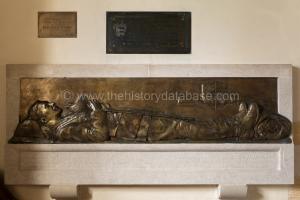
After 1917. St Barnabas Church, Stock Gaylard [Map]. Memorial to Captain Harry Farr Yeatman. Son of Harry Yeatman RN 1839-1884 whose memorial is above. Captain in the Dorsetshire Yeomanry. Killed 21st November 1917 in sight of Jerusalem. Buried Jerusalem.
Yeatman's Regiment, like the rest of the 6th Mounted Brigade, withdrew to Beit Ur al Fauqa where it received orders to advance towards Beitunia (Beituniye), nine miles north of Jerusalem and a few miles south-west of Bireh, on 21 November 1917. At about 11.30 hours the 6th Mounted Brigade, led by Yeatman's 1/1st Dorset Yeomanry, began to descend from the hills but found themselves held up once again by the western slopes of the Zeitun Ridge. The fighting here went on until late in the winter afternoon and involved several failed attempts to take the ridge. But at about 16.40 hours, Turkish reinforcements arrived and immediately counter-attacked, forcing the exhausted men of the Mounted Yeomanry Brigade, who had been holding an advanced position all day, to retire. During their withdrawal, Yeatman's Regiment lost seven officers and 44 ORs killed, wounded or missing and although its War Diary does not mention Yeatman by name, later reports confirm that when one of his men was wounded during the withdrawal, Yeatman went out to bring him in under heavy fire and was killed in action, aged 37. He is buried in Jerusalem War Cemetery, Grave E.56. His obituary in The Times says that at the time of his death, he was to be recommended for the MC. He left £3,762 13s 2d. The Zeitun Ridge was the scene of more fierce fighting and would not be taken until 27 December 1917.
Adelaide Mail 1925 November 21. 21st November 1925. Death of Queen Alexandra [deceased]
Peaceful End of a Good Woman
Universal Tributes Of Love And Esteem
Alexandra, Dowager Queen of England, who was 81 years of age, and has been in feeble health for the past three years, was seized with a heart attack on Thursday morning about 11 o'clock and passed away at 5.25 on Friday afternoon.
('The Sun" Cable Service) London. Today. A high authority states that the first seizure which Queen Alexandra suffered occurred at 11 a.m. on Thursday, before she had risen. The dangerous nature of the condition was immediately realized. Queen Alexandra had wonderful vitality and met the crisis with all her courage, but was handicapped by her advanced age, coupled with her weak health for the past three years, which enfeebled her. The seizure followed a slight attack last week, of which the public were not informed.
Oxygen Administered
Despite the repeated administration of oxygen to Queen Alexandra, at 4.15 p.m. yesterday she was rapidly losing her strength, but was fighting death gallantly. She had not then realised the worst. She spoke to the King and Queen.
Last Moments
Sandringham was shrouded in a thick fog, which darkened the windows, at the time of the Queen's death. The scene in the death chamber was tragically impressive. Their Majesties, the Queen of Norway [aged 55], Princess Victoria [aged 57], and the Princess Royal [aged 58] arrived dressed in black. Prince Henry sat silently waiting and speaking little, though repeatedly questioning the physicians and expressing a hope for improvement. Queen Alexandra was in a most serious condition at 1 o'clock, but she rallied and appeared to recognize the family grouped at her bedside. She smiled sweetly and then an expression charged with poignant meaning illuminated her pale face. She immediately sank into unconscious ness, in which she died.
Official Bulletin
An official bulletin states that the King [aged 60] and Queen [aged 58] and members of the family were at the bedside. Queen Alexandra died at 5.25 p.m.
Prince Delayed
The railway station master at Sandringham broke the news of Queen Alexandra's death to the Prince of Wales [aged 31] and the Duke of York [aged 29], who arrived there at 6.45 p.m. Fog delayed the train carrying the Prince of Wales and the Duke of York, who were stunned on learning the news in the station waiting room. Their faces showed the intensity of their grief. They entered a motor car, which crept slowly through the fog to Sandringham. Lady Charlote Knollys [aged 90], the lady in waiting; was lying ill in another; wing of the House, was among the first to be informed of Queen Alexandra's death.
Queen's Favorite Sister
Queen Alexandra's favorite sister the Dowager-Empress of Russia, is seriously ill at Hvidore, in Denmark. She has repeatedly expressed a wish to see Queen Alexandra.
Place of Burial
If is understood that Queen Alexandra will be buried in the vault alongside her husband and the Duke of Clarence in St. George's Chapel, Windsor, which has been the Boyal family's burial place' for 150 years.
The funeral arrangements have not yet fceen decided, pending the King's wishes but a state funeral in London is certain.
Lord Mayors Message
The King sent this message to the Lord Mayor:— 'I regret to inform you that my beloved mother has passed away." The Lord Mayor replied:— "On behalf of the London citizens I beg Your Majesty to accept our profound sympathy and condolences. The death of your illustrious mother removes a much revered and universally beloved public personality."
Great Press Tributes:
"According to 'The Westminster Gazette' the secret of the popular affection and esteem that Queen Alexandra enjoyed for 60 years was her personal charm and her devotion to her domestic and public duties. In any other walk of life she would have been known as an ideal mother. The extent of her private benefactions will never be known.
Her heavy personal sorrows were thrust bravely aside when public duty claimed her, and she was a gracious and majestic Queen Consort.
'The Daily News' says that Queen Alexandra leaves a memory of a gracious and winning personality, and a name that will always be held 'in honor among her adopted people.'
''The Dally Mail' says: — 'His people Empire-wide tender heartfelt sympathy to the King: in the hour of the greatest bereavement a man can know 'Queen Alexandra's life has been great and good, untouched by a breath of gossip or criticism. She was devoted to the welfare of her people, and was filled with affection and love for her own family and also for all sufferers. Queen Alexandra's wedding, as the first Royal marriage to evoke Empire-wide interest, was a landmark in Imperial history.'
The 'Daily Herald' says that the nation visualises Queen Alexandra as a good wife and good mother, whose most acute affliction was the death of her eldest son. Happily there was another to take his place.
Public Sorrow
Queen Alexandra's peaceful death was announced as Londoner were proceeding homeward along the streets. Immediately hushed expressions of sorrow were general. The news reached the Sandringham Rail way Station as the train was running in. Men removed their hats and women sobbed The Prince of Wales leaped on to the platform before the train stopped and vram followed by the Duke of York, who raised his hat slowly in response to the by standers' sympathy.
On 21st November 1933 Frederick Hollyer [aged 95] died.

On 21st November 1940 Violet Hermione Graham Duchess Montrose [aged 86] died.
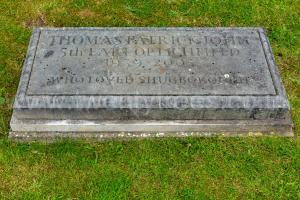
On 21st November 2005 Thomas Patrick John Anson 5th Earl Lichfield [deceased] was buried at St Michael and All Angels Church, Colwich [Map]. The Memorial Stone placed by his partner Annunziata Asquith [aged 57]. His sister Elizabeth Georgiana Anson Lady Shakerley [aged 64], his former wife Leonora Mary Grosvenor Countess Lichfield [aged 56], his son Thomas Anson 6th Earl of Lichfield [aged 27], and his two daughters Rose and Eloise attended.
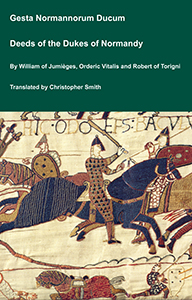
The Deeds of the Dukes of Normandy
The Gesta Normannorum Ducum [The Deeds of the Dukes of Normandy] is a landmark medieval chronicle tracing the rise and fall of the Norman dynasty from its early roots through the pivotal events surrounding the Norman Conquest of England. Originally penned in Latin by the monk William of Jumièges shortly before 1060 and later expanded at the behest of William the Conqueror, the work chronicles the deeds, politics, battles, and leadership of the Norman dukes, especially William’s own claim to the English throne. The narrative combines earlier historical sources with firsthand information and oral testimony to present an authoritative account of Normandy’s transformation from a Viking settlement into one of medieval Europe’s most powerful realms. William’s history emphasizes the legitimacy, military prowess, and governance of the Norman line, framing their expansion, including the conquest of England, as both divinely sanctioned and noble in purpose. Later chroniclers such as Orderic Vitalis and Robert of Torigni continued the history, extending the coverage into the 12th century, providing broader context on ducal rule and its impact. Today this classic work remains a foundational source for understanding Norman identity, medieval statesmanship, and the historical forces that reshaped England and Western Europe between 800AD and 1100AD.
Available at Amazon in eBook and Paperback format.
On 21st November 1264 Maria Burgundy was born to Alfonso III King Portugal [aged 54] and Beatrice Queen Consort Portugal [aged 22]. She a great x 2 granddaughter of King Henry "Curtmantle" II of England. Coefficient of inbreeding 2.41%.
On 21st November 1375 Philippa Mortimer Countess Pembroke, Arundel and Surrey was born to Edmund Mortimer 3rd Earl March, Earl of Ulster [aged 23] and Philippa Plantagenet Countess March 2nd Countess Ulster [aged 20]. She a great granddaughter of King Edward III of England. She married (1) 1388 her second cousin once removed John Hastings 3rd Earl Pembroke, son of John Hastings 2nd Earl Pembroke and Anne Manny Countess Pembroke (2) after 30th December 1389 her first cousin twice removed Richard Fitzalan 9th Earl of Surrey 4th or 11th Earl of Arundel, son of Richard Fitzalan 3rd or 10th Earl of Arundel 8th Earl of Surrey and Eleanor Plantagenet Countess Arundel and Surrey (3) April 1398 Thomas Poynings 5th Baron St John of Basing, son of Luke Poynings 4th Baron St John of Basing and Isabel St John 4th Baroness St John of Basing.
On 21st November 1625 Maria Eugenia Habsburg Spain was born to Philip IV King Spain [aged 20] and Elisabeth Bourbon Queen Consort Spain [aged 22]. Coefficient of inbreeding 4.39%. He died aged one in 1627.
On 12th November 1705 Mary Boscawen was born to Hugh Boscawen 1st Viscount Falmouth [aged 25] and Charlotte Godfrey Viscountess Falmouth. She was baptised on 21st November 1705 at St James' Church, Piccadilly. She married 17th August 1732 her first cousin John Evelyn 2nd Baronet, son of John Evelyn 1st Baronet and Anne Boscawen Lady Evelyn, and had issue.
On 21st November 1742 Edmund Boyle 7th Earl Cork was born to John Boyle 5th Earl Cork [aged 35] and Henrietta Hamilton Countess Cork.
On 21st November 1747 Joseph Farington was born.
On 21st November 1751 Karl Wilhelm Ferdinand Saxe Coburg Gotha was born to Ernest Frederick Saxe Coburg Saalfeld Duke Saxe Coburg Saalfeld [aged 27] and Sophia Antonia Brunswick-Wolfenbüttel Duchess Saxe Coburg Saalfeld [aged 27] at Coburg. He died aged five in 1757.
On 21st November 1758 Frances Beauchamp-Proctor was born to William Beauchamp-Proctor 1st Baronet [aged 36] and Jane Tower Lady Beauchamp-Proctor [aged 34]. She married 29th January 1778 John Custance and had issue.
On 21st November 1765 Bernard Howard 12th Duke of Norfolk was born to Henry Howard [aged 52] and Julia Molyneux [aged 22]. He married 23rd April 1789 Elizabeth Belasyse Duchess Norfolk, daughter of Henry Belasyse 2nd Earl Fauconberg and Charlotte Lamb Countess Fauconberg, and had issue.

On 21st November 1773 Henry Vassal-Fox 3rd Baron Holland was born to Stephen Fox 2nd Baron Holland [aged 28] and Mary Fitzpatrick [aged 23]. He a great x 3 grandson of King Charles II of England Scotland and Ireland.
On 21st November 1787 Samuel Cunard 1st Baronet was born.
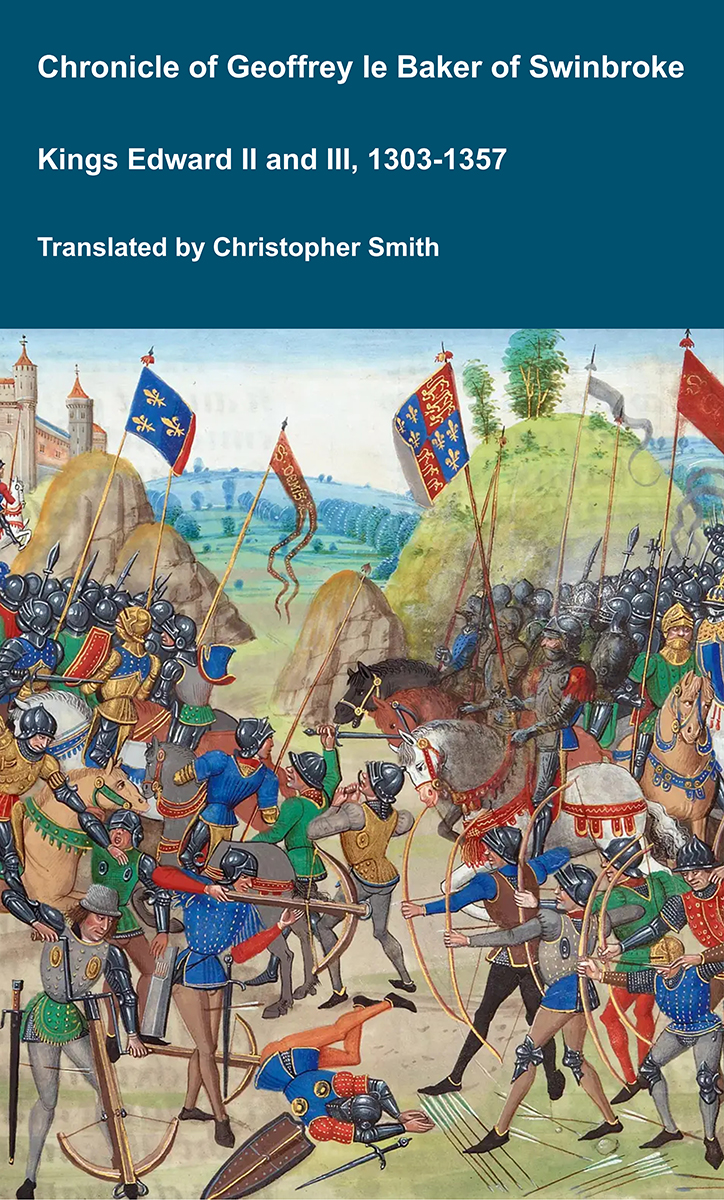
Chronicle of Geoffrey le Baker of Swinbroke
Baker was a secular clerk from Swinbroke, now Swinbrook, an Oxfordshire village two miles east of Burford. His Chronicle describes the events of the period 1303-1356: Gaveston, Bannockburn, Boroughbridge, the murder of King Edward II, the Scottish Wars, Sluys, Crécy, the Black Death, Winchelsea and Poitiers. To quote Herbert Bruce 'it possesses a vigorous and characteristic style, and its value for particular events between 1303 and 1356 has been recognised by its editor and by subsequent writers'. The book provides remarkable detail about the events it describes. Baker's text has been augmented with hundreds of notes, including extracts from other contemporary chronicles, such as the Annales Londonienses, Annales Paulini, Murimuth, Lanercost, Avesbury, Guisborough and Froissart to enrich the reader's understanding. The translation takes as its source the 'Chronicon Galfridi le Baker de Swynebroke' published in 1889, edited by Edward Maunde Thompson.
Available at Amazon in eBook and Paperback format.

On 21st November 1823 Gerald Normanby Dillon was born to Henry Augustus Dillon Lee 13th Viscount Dillon [aged 46]. He a great x 4 grandson of King James II of England Scotland and Ireland. He married 22nd May 1847 Louisa Eleanor Georgina Fitzgibbon, daughter of Richard Hobart Fitzgibbon 3rd Earl de Clare.
On 21st November 1840 Victoria Empress Germany Queen Consort Prussia was born to Prince Albert Saxe Coburg Gotha [aged 21] and Queen Victoria of the United Kingdom [aged 21]. Coefficient of inbreeding 7.26%. She married 25th January 1858 her third cousin Frederick III King Prussia and had issue.


On 21st November 1843 Albert Leveson-Gower was born to George Sutherland Leveson-Gower 2nd Duke Sutherland [aged 57] and Harriet Elizabeth Georgiana Howard Duchess Sutherland [aged 37]. Coefficient of inbreeding 3.23%. He married 19th March 1872 Grace Emma Abdy, daughter of Thomas Neville Abdy 1st Baronet and Harriet Alston.

On 21st November 1847 William ffolkes 3rd Baronet was born to Martin William Browne ffolkes.
On 21st November 1858 Mabel Harbord was born to Charles Harbord 5th Baron Suffield [aged 28] and Cecilia Annetta Baring Baroness Suffield [aged 24]. She died aged one in 1860.
On 21st November 1865 Frank Douglas-Pennant 5th Baron Penrhyn was born to Archibald Douglas-Pennant [aged 28] and Harriet Gifford [aged 18]. He married (1) 25th April 1892 Maud Eleonora Hardy (2) in or after 1903 Alice Nellie Cooper, daughter of William Charles Cooper 3rd Baronet Cooper, and had issue.
On 21st November 1888 Sidney Munroe Archibald Vernon 5th Baron Lyveden was born to Cecil Sydney Archibald Vernon [aged 26].
On 21st November 1890 Helen Alice Wyllington Ogilvy was born to David Ogilvy 11th Earl of Airlie [aged 34] and Mabell Gore Countess Airlie [aged 24]. She married (1) 25th November 1909 her first cousin Clement Freeman-Mitford, son of Algernon Freeman-Mitford 1st Baron Redesdale and Clementina Gertrude Helen Ogilvy (2) 11th July 1918 Henry Courtney Brocklehurst, son of Philip Lancaster Brocklehurst 1st Baronet, and had issue (3) 21st February 1933 Harold Bligh Nutting.


On 21st November 1892 Randolph Stewart 12th Earl Galloway was born to Randolph Stewart 11th Earl Galloway [aged 56] and Amy Mary Pauline Cliffe Countess Galloway. He married 14th October 1924 Philippa Fendall Wendell Countess of Galloway and had issue.
On 21st November 1905 Geoffrey Waldegrave 12th Earl Waldegrave was born to Henry Waldegrave 11th Earl Waldegrave [aged 51] and Anne Katherine Bastard Countess Waldegrave [aged 38]. He married 22nd October 1930 Mary Hermione Grenfell Countess Waldegrave and had issue.
On 21st November 1359 John II Count Armagnac [aged 26] and Jeanne Countess Armagnac were married. She the daughter of Roger Bernard Unknown Count Périgord. He the son of John I Count Armagnac [aged 48] and Beatrice Clermont Countess Armagnac [aged 49].
On 21st November 1682 George Louis of Hanover [aged 22] and Sophia Dorothea of Celle [aged 16] were married. The marriage had been arranged by their respective fathers Ernest Augustus Hanover Elector Brunswick-Lüneburg [aged 53] and George Wilhelm Hanover Duke Brunswick-Lüneburg [aged 58], and his mother Electress Sophia Palatinate Simmern [aged 52]. She the illegitmate daughter of George Wilhelm Hanover Duke Brunswick-Lüneburg and Eleonore Esmier D'Olbreuse Duchess Brunswick-Lüneburg. He the son of Ernest Augustus Hanover Elector Brunswick-Lüneburg and Electress Sophia Palatinate Simmern. They were first cousins. He a great grandson of King James I of England and Ireland and VI of Scotland.
On 21st November 1743 George Talbot 14th Earl of Shrewsbury [aged 24] and Elizabeth Dormer Countess Shrewsbury and Waterford [aged 19] were married. She by marriage Countess of Shrewsbury Countess Waterford.
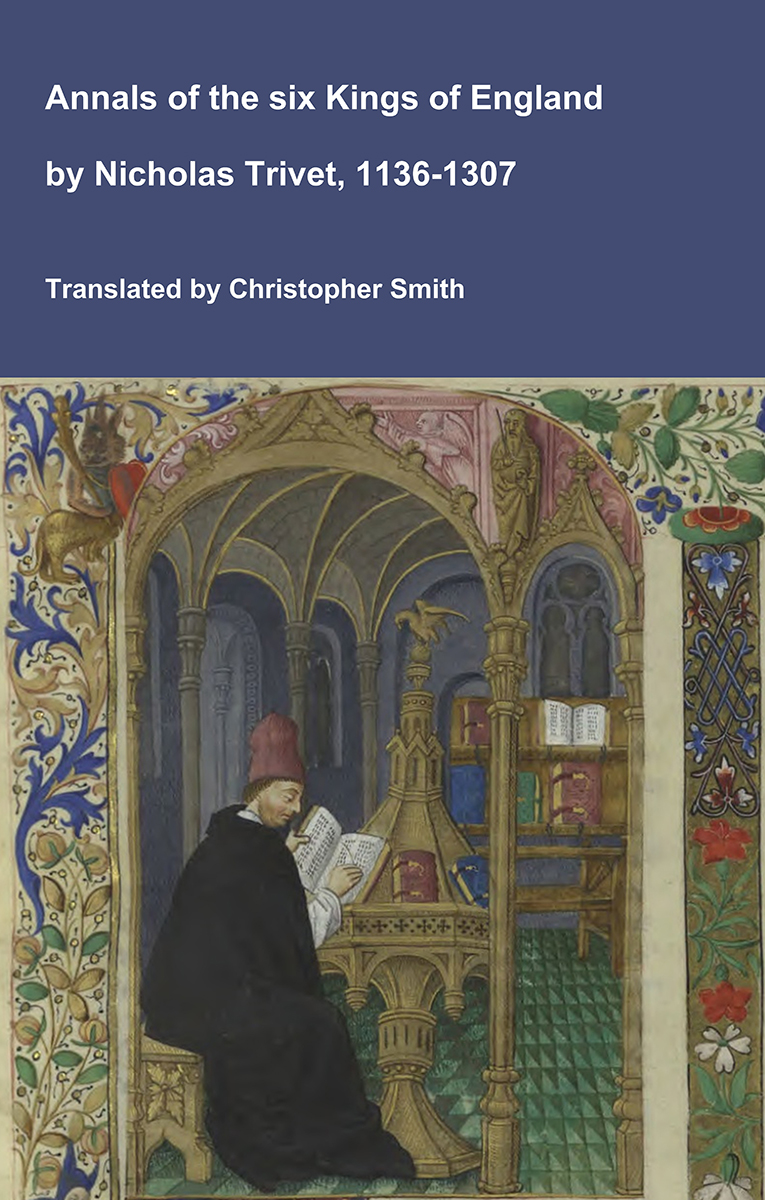
Annals of the six Kings of England by Nicholas Trivet
Translation of the Annals of the Six Kings of England by that traces the rise and rule of the Angevin aka Plantagenet dynasty from the mid-12th to early 14th century. Written by the Dominican scholar Nicholas Trivet, the work offers a vivid account of English history from the reign of King Stephen through to the death of King Edward I, blending political narrative with moral reflection. Covering the reigns of six monarchs—from Stephen to Edward I—the chronicle explores royal authority, rebellion, war, and the shifting balance between crown, church, and nobility. Trivet provides detailed insight into defining moments such as baronial conflicts, Anglo-French rivalry, and the consolidation of royal power under Edward I, whose reign he describes with particular immediacy. The Annals combines careful year-by-year reporting with thoughtful interpretation, presenting history not merely as a sequence of events but as a moral and political lesson. Ideal for readers interested in medieval history, kingship, and the origins of the English state, this chronicle remains a valuable and accessible window into the turbulent world of the Plantagenet kings.
Available at Amazon in eBook and Paperback format.
On 21st November 1748 Bishop John Egerton [aged 26] and Anne Sophia Grey [aged 18] were married. She the daughter of Henry Grey 1st Duke Kent and Sophia Bentinck Duchess Kent. He the son of Bishop Henry Egerton and Elizabeth Adriana Bentinck [aged 45]. They were first cousins.
On 21st November 1811 James Lindsay 7th Earl Balcarres 24th Earl of Crawford [aged 28] and Maria Pennington Countess Balcarres and Crawford [aged 27] were married at Muncaster Castle, Ravenglass [Map]. He the son of Alexander Lindsay 6th Earl Balcarres 23rd Earl Crawford [aged 59] and Elizabeth Bradshaigh Dalrymple Countess Balcarres.
On 21st November 1820 Guy Campbell 1st Baronet [aged 34] and Pamela Fitzgerald Lady Campbell [aged 24] were married. She by marriage Lady Campbell of St Cross Mede in Hampshire.
On 21st November 1865 William Ward 1st Earl of Dudley [aged 48] and Georgina Moncrieffe Countess Dudley [aged 19] were married. The difference in their ages was 29 years.


On 21st November 1908 Patrick Bowes-Lyon 15th Earl Strathmore and Kinghorne [aged 24] and Dorothy Beatrix Godolphin Osborne [aged 19] were married. She the daughter of George Godolphin Osborne 10th Duke Leeds [aged 46] and Katherine Frances Lambton Duchess Leeds [aged 46]. He the son of Claude Bowes-Lyon 14th Earl Strathmore and Kinghorne [aged 53] and Cecilia Nina Cavendish-Bentinck Countess of Strathmore and Kinghorne [aged 46]. They were fourth cousin once removed.
On 21st November 1945 Captain Gilbert Frederick Greenwood and Barbara Abney-Hastings 13th Countess of Loudoun [aged 26] were married. She the daughter of Reginald Mowbray Chichester Huddleston [aged 51] and Edith Maud Rawdon-Hastings 12th Countess Loudon [aged 62].
On 21st November 1945 William Hope Nelson 3rd Baronet [aged 31] and Elizabeth Anne Cary Lady Nelson [aged 18] were married.
On 21st November 1150 García "Restorer" IV King Navarre [aged 38] died. His son Sancho [aged 18] succeeded King Navarre.
On 21st November 1161 William III Count Nevers Count Auxerre and Tonnere [aged 54] died. His son William [aged 31] succeeded Count Nevers.
On 21st November 1297 Roger Mowbray 1st Baron Mowbray [aged 40] died. He was buried at Fountains Abbey, North Yorkshire [Map]. His son John [aged 11] succeeded 2nd Baron Mowbray.
On 21st November 1359 John Sutton 1st Baron Sutton [aged 49] died. His son John [aged 20] de jure 2nd Baron Sutton of Dudley although he was never summoned to Parliament.
On 21st November 1361 Philip I Duke Burgundy [aged 15] died. His great uncle John succeeded Count Auvergne.

The True Chronicles of Jean le Bel Volume 1 Chapters 1-60 1307-1342
The True Chronicles of Jean le Bel offer one of the most vivid and immediate accounts of 14th-century Europe, written by a knight who lived through the events he describes, and experienced some of them first hand. Covering the early decades of the Hundred Years’ War, this remarkable chronicle follows the campaigns of Edward III of England, the politics of France and the Low Countries, and the shifting alliances that shaped medieval warfare. Unlike later historians, Jean le Bel writes with a strong sense of eyewitness authenticity, drawing on personal experience and the testimony of fellow soldiers. His narrative captures not only battles and sieges, but also the realities of military life, diplomacy, and the ideals of chivalry that governed noble society. A key source for Jean Froissart, Le Bel’s chronicle stands on its own as a compelling and insightful work, at once historical record and literary achievement. This translation builds on the 1905 edition published in French by Jules Viard, adding extensive translations from other sources Rymer's Fœdera, the Chronicles of Adam Murimuth, William Nangis, Walter of Guisborough, a Bourgeois of Valenciennes, Geoffrey le Baker of Swinbroke and Richard Lescot to enrich the original text and Viard's notes.
Available at Amazon in eBook and Paperback format.
On 21st November 1506 Engelbert de la Marck Count Nevers [aged 44] died.
On 21st November 1582 Diego Prince of Asturias [aged 7] died.
On 21st November 1639 Henry Grey 8th Earl Kent [aged 56] died without issue. He was buried at the De Grey Mausoleum, St John the Baptist Church, Flitton [Map]. His second cousin once removed Anthony [aged 82] succeeded 9th Earl Kent. His nephew Charles [aged 27] succeeded 12th Baron Grey of Ruthyn.
Charles Longueville 12th Baron Grey of Ruthyn: On or before 21st April 1612, the date he was baptised, he was born to Michael Longueville and Susan Grey. Before 14th June 1643 he and Frances Neville were married. On 14th June 1643 he died. His daughter Susan succeeded 13th Baroness Grey of Ruthyn.
On 21st November 1670 Walter Yonge 2nd Baronet [aged 45] died. His son Walter [aged 17] succeeded 3rd Baronet Yonge of Colyton in Devon.
On 21st November 1676 Callaghan MacCarty 3rd Earl Clancarty died. His son Donough [aged 8] succeeded 4th Earl Clancarty.
On 21st November 1704 John Williams 2nd Baronet [aged 53] died. His brother Hopton [aged 41] succeeded 3rd Baronet Williams of Llangibby.
On 21st November 1710 Christopher Wray 10th Baronet [aged 38] died. His brother Cecil [aged 32] succeeded 11th Baronet Wray of Glentworth in Lincolnshire.
On 21st November 1736 Edward des Bouverie 2nd Baronet [aged 46] died at Aix in France. He was buried at St Peter's Church, Britford [Map]. His brother Jacob [aged 42] succeeded 3rd Baronet Bouverie of St Catherine Cree Church in London.
On 21st November 1784 Thomas Frankland 5th Baronet [aged 66] died at Bath, Somerset [Map]. His son Thomas [aged 34] succeeded 6th Baronet Frankland of Thirkleby in Yorkshire. Dorothy Smelt Lady Thirkleby [aged 34] by marriage Lady Frankland of Thirkleby in Yorkshire.
On 21st November 1786 Edward Wilmot 1st Baronet [aged 93] died at Herringston, Dorset. He was buried at Church of St Simon and St Jude, Winterbourne Monkton, Dorset. His son Robert [aged 55] succeeded 2nd Baronet Wilmot of Chaddesden in Derbyshire.

On 21st November 1789 Edward Knatchbull 7th Baronet [aged 84] died. His son Edward [aged 29] succeeded 8th Baronet Knatchbull of Mersham Hatch in Kent.
The True Chronicles of Jean le Bel Volume 1 Chapters 1-60 1307-1342
The True Chronicles of Jean le Bel offer one of the most vivid and immediate accounts of 14th-century Europe, written by a knight who lived through the events he describes, and experienced some of them first hand. Covering the early decades of the Hundred Years’ War, this remarkable chronicle follows the campaigns of Edward III of England, the politics of France and the Low Countries, and the shifting alliances that shaped medieval warfare. Unlike later historians, Jean le Bel writes with a strong sense of eyewitness authenticity, drawing on personal experience and the testimony of fellow soldiers. His narrative captures not only battles and sieges, but also the realities of military life, diplomacy, and the ideals of chivalry that governed noble society. A key source for Jean Froissart, Le Bel’s chronicle stands on its own as a compelling and insightful work, at once historical record and literary achievement. This translation builds on the 1905 edition published in French by Jules Viard, adding extensive translations from other sources Rymer's Fœdera, the Chronicles of Adam Murimuth, William Nangis, Walter of Guisborough, a Bourgeois of Valenciennes, Geoffrey le Baker of Swinbroke and Richard Lescot to enrich the original text and Viard's notes.
Available at Amazon in eBook and Paperback format.
On 21st November 1796 Edmund Head 6th Baronet [aged 63] died. His son John [aged 23] succeeded 7th Baronet Head of Hermitage in Kent.
On 21st November 1820 James Harris 1st Earl Malmesbury [aged 74] died. His son James [aged 42] succeeded 2nd Earl Malmesbury, 2nd Viscount Fitz-Harris of Hurn Court in Hampshire, 2nd Baron Malmesbury.
On 21st November 1827 Elizabeth Montagu Duchess Buccleuch [aged 84] died. Monument in St Edmund's Church, Warkton [Map]. Sculpted by Thomas Campbell [aged 37]. Erected by her grandson Francis Scott 2nd Duke Buccleuch. The quotation upon her monument from Book of the Acts of the Apostles Chapter 10 Verses 31: "Thine alms are had in remembrance in the sight of God".
Elizabeth Montagu Duchess Buccleuch: On 29th May 1743 she was born to George Brudenell aka Montagu 1st Duke Montagu and Mary Montagu Duchess of Montagu. On 2nd May 1767 Henry Scott 3rd Duke Buccleuch and she were married at Montagu House Whitehall Palace. She by marriage Duchess Buccleuch. She the daughter of George Brudenell aka Montagu 1st Duke Montagu and Mary Montagu Duchess of Montagu. He the son of Francis Scott and Caroline Campbell 1st Baroness Greenwich. They were fourth cousins. He a great x 3 grandson of King Charles II of England Scotland and Ireland.
On 21st November 1832 Francis Needham 1st Earl Kilmorley [aged 84] died. His son Francis [aged 44] succeeded 2nd Earl Kilmorley.
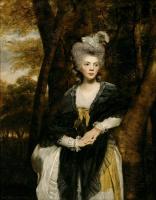
On 21st November 1838 Frances Finch Countess Dartmouth [aged 77] died.
On 21st November 1848 Millicent Sparrow Duchess Manchester [aged 50] died at Kimbolton Castle [Map].
On 21st November 1863 Francis Edward Scott 2nd and 3rd Baronet [aged 39] died. His son Edward [aged 8] succeeded 4th Baronet Scott of Great Barr in Staffordshire, 3rd Baronet Bateman of Hartington Hall in Derbyshire.
On 21st November 1872 Richard James Lane [aged 72] died.
On 21st November 1874 William Jardine 7th Baronet [aged 74] died. His son Alexander [aged 45] succeeded 8th Baronet Jardine of Applegirth in Dumfrieshire.
On 21st November 1889 Frederick Rogers 1st Baron Blachford [aged 78] died. Baron Blachford of Wisdome in Devon extinct. His brother John [aged 71] succeeded 9th Baronet Rogers of Wisdome in Devon.
The True Chronicles of Jean le Bel Volume 1 Chapters 1-60 1307-1342
The True Chronicles of Jean le Bel offer one of the most vivid and immediate accounts of 14th-century Europe, written by a knight who lived through the events he describes, and experienced some of them first hand. Covering the early decades of the Hundred Years’ War, this remarkable chronicle follows the campaigns of Edward III of England, the politics of France and the Low Countries, and the shifting alliances that shaped medieval warfare. Unlike later historians, Jean le Bel writes with a strong sense of eyewitness authenticity, drawing on personal experience and the testimony of fellow soldiers. His narrative captures not only battles and sieges, but also the realities of military life, diplomacy, and the ideals of chivalry that governed noble society. A key source for Jean Froissart, Le Bel’s chronicle stands on its own as a compelling and insightful work, at once historical record and literary achievement. This translation builds on the 1905 edition published in French by Jules Viard, adding extensive translations from other sources Rymer's Fœdera, the Chronicles of Adam Murimuth, William Nangis, Walter of Guisborough, a Bourgeois of Valenciennes, Geoffrey le Baker of Swinbroke and Richard Lescot to enrich the original text and Viard's notes.
Available at Amazon in eBook and Paperback format.
On 21st November 1918 Charles St Lo Malet 6th Baronet [aged 12] died. His uncle Harry [aged 45] succeeded 7th Baronet Malet of Wilbury in Wiltshire.
On 21st November 1920 Edward Tennant 1st Baron Glenconner [aged 61] died at 34 Queen Anne's Gate Marylebone following an operation ten days before. His son Christopher [aged 21] succeeded 2nd Baron Glenconner of The Glen in Peebles, 3rd Baronet Tennant of The Glen and St Rollox.
On 21st November 1933 Frederick Hollyer [aged 95] died.

On 21st November 1936 James Joicey 1st Baron Joicey [aged 90] died at Ford Castle [Map]. He was buried at St Michael's and All Angels Church, Ford [Map]. His son James [aged 56] succeeded 2nd Baron Joicey of Chester le Street in County Durham and 2nd Baronet Joicey of Longhurst and Ulgham in Northumberland. Georgiana Wharton Burdon Baroness Joicey [aged 56] by marriage Lady Joicey of Longhurst and Ulgham in Northumberland.
On 21st November 1940 Violet Hermione Graham Duchess Montrose [aged 86] died.
On 21st November 1989 Alexander Patrick Bannerman 14th Baronet [aged 56] died. His brother David [aged 54] succeeded 15th Baronet Bannerman of Elsick in Kincardineshire.
On 21st November 1992 Arthur Forbes 9th Earl of Granard [aged 77] died. His nephew Peter [aged 35] succeeded 10th Earl Granard, 5th Baron Granard of Castle Donnington in Leicestershire.