

26 Jan is in January.
On 26th January 946 Eadgyth Wessex Queen Consort Germany died.
On 26th January 1213 twins Alphonse Capet and John Capet were born to King Louis VIII of France [aged 25] and Blanche Ivrea Queen Consort France [aged 24]. Both died the same day. He a great grandson of King Henry "Curtmantle" II of England.
On 26th January 1282 Richard de Swinfield and John Peckham [aged 52] travelled to Rome to plead the case of his mentor Bishop Thomas Cantilupe [aged 64] who had been excommunicated by the Pope. Cantilupe died on the journey, and his remains were brought back to Hereford Cathedral by Swinfield.
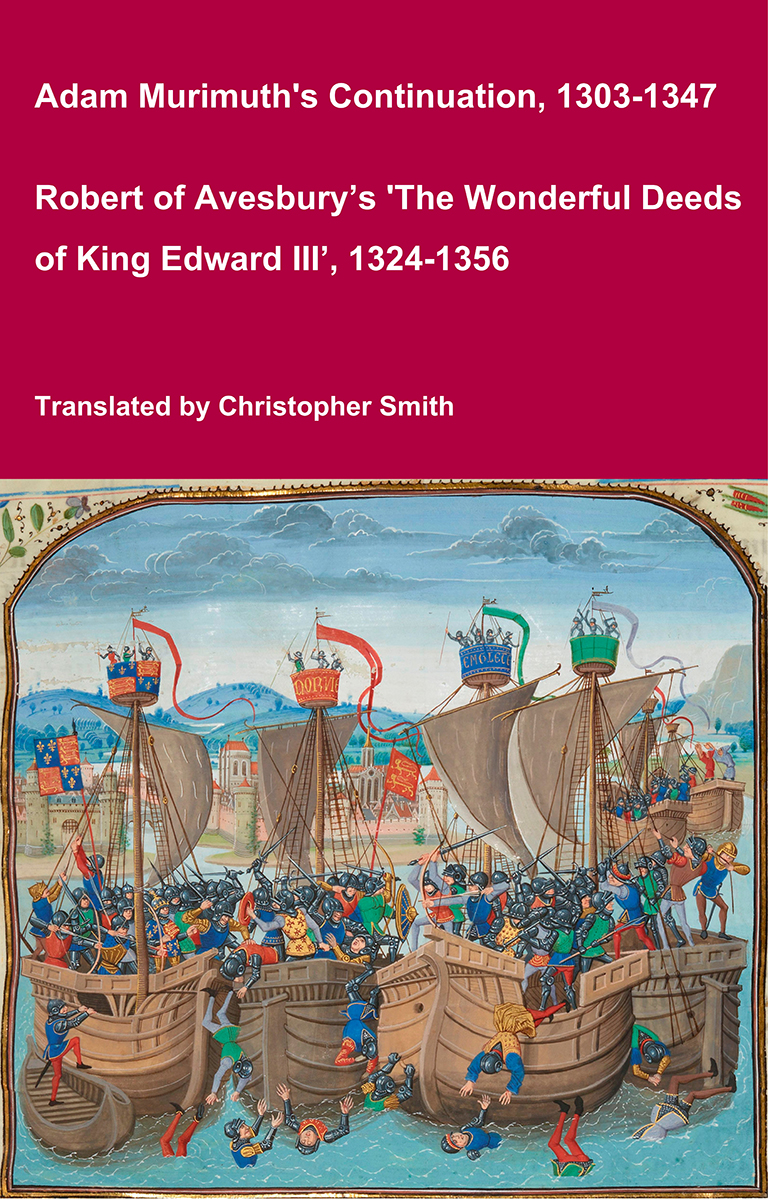 Adam Murimuth Continuation. In this year, on the feast of the Conception of the Blessed Virgin [8th December], in the year of the Lord 1339 and the thirteenth year of the reign of Edward III from the Conquest, Richard de Bynteworth, bishop of London, died and on the day after [26th January 1340] the Conversion of Saint Paul, Ralph de Stratford [aged 39] was elected [as Bishop of London]; he was consecrated at Canterbury on the first Sunday of Lent and enthroned on the third Sunday of Lent.
Hoc anno, in festo Conceptionis beatæ Mariæ, anno Domini millesimo CCCXXXIX, regni regis Edwardi tertii a conquæstu XIIJ, moritur Ricardus de Bynteworth, episcopus Londoniensis, et in crastino Conversionis sancti Pauli eligitur Radulphus de Streteford, Dominica prima: Quadragesimæ Cantuariæ consecratus, et Dominica IIJ Quadragesimæ inthronizatus.
On 26th January 1395 Ernest Wittelsbach I Duke Bavaria [aged 22] and Elisabetta Visconti Duchess Bavaria [aged 21] were married. She by marriage Duchess Bavaria. He the son of John Wittelsbach II Duke Bavaria [aged 54] and Catherine Gorizia Duchess Bavaria.
On 25 or 26th January 1431 Bishop Richard Fleming [aged 44] died. He was buried at Lincoln Cathedral [Map] where he has a Chantrey Chapel with an effigy above and cadaver beneath.
Bishop Richard Fleming: Around 1387 he was born to Robert Fleming of Woodhall. On 20th November 1419 Bishop Richard Fleming was nominated by papal provision to be Bishop of Lincoln. On 28th April 1420 Bishop Richard Fleming was consecrated Bishop of Lincoln by Martin V in Florence.


On 26th January 1436 Henry Beaufort 2nd or 3rd Duke of Somerset was born to Edmund Beaufort 1st or 2nd Duke of Somerset [aged 30] and Eleanor Beauchamp Duchess Somerset [aged 27]. He a great x 2 grandson of King Edward III of England.
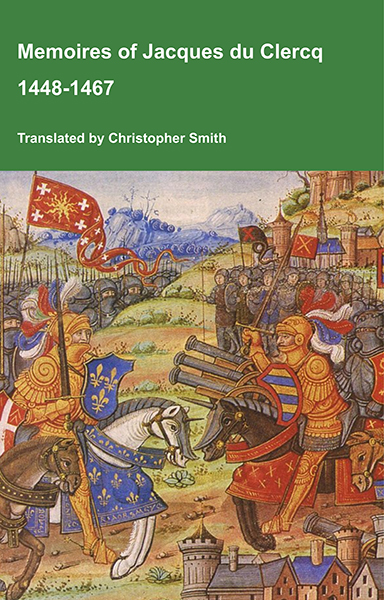 Memoires Jacques du Clercq. This done, and the treaty accepted and promised, peace was proclaimed throughout the host; and on the following Friday, the Count of Charolais, not far from Tongeren, in the presence of those of Liège who had come to him, drew up all his army in order and in battle array, in order to take leave of them and to thank them. Many from the land of Liège, both from Tongeren and the surrounding country, came to see this array, and marvelled greatly at the size of the army and the number of men the count had, which they had never imagined nor believed; for it was said at that time that there were some twenty-eight thousand horse, besides a great number of foot soldiers, and besides those who had already departed, whether by leave or otherwise, for want of pay and maintenance. The army being thus drawn up, the Count of Charolais rode along the whole line, thanking every captain and all those of the host, praying them that, if he had paid them poorly, they would excuse him, for he had truly not been able to do otherwise; but, with God's grace, another time he would pay them better, and would recompense them for what he owed them. He further said that if there were any among them who had been banished and had lost their lands in his father's dominions, they should come to him at Brussels, and he would do so much with his father that they would recover their lands. Then he took leave of them and went to Saint-Trond in Hesbaye, and each captain and his men returned to their homes. On the following Saturday and Sunday, men-at-arms passed continually through Saint-Trond, where the count was, on their way home. That Sunday, some of the townsmen of Saint-Trond, thinking that all the men-at-arms had passed, quarrelled with certain soldiers of the company of the Bastard of Burgundy, and killed two of them. They then caused the gate by which the men-at-arms entered to be shut, and guarded the others, intending perhaps to kill all those within the town. This was reported to the count, who at once sent the archers of the Bastard of Burgundy to the gate of Tongeren, by which the men-at-arms were returning. They seized it and allowed the men-at-arms to enter, and so many came in that they quickly went to the market-place with those already inside, and there formed in battle despite the townsmen who had gathered there. Of those of the town, about twenty were slain. The others fled and took refuge in houses, and some leapt over the walls of the town. Indeed, all those of the town, women and children, would have been killed had not the count arrived; and seeing that his men had the mastery, he ordered that all should cease from killing and plundering, though many had already entered houses, breaking doors and windows, plundering and taking what they found. The count commanded his men that each should withdraw, lodge themselves properly, and take goods from the households only in a reasonable manner. Some of the townsmen who had begun the fray withdrew into a strong house, where they were besieged and taken. This took place on the 26th day of January, in the said year 1466.
Ce fait et le traictié accepté et promis, la paix fust cryée par tout l'ost, et le lendemain jour de vendredy, le comte de Charollois assés près de Tongres, presents ceulx de Liege qui estoient venus devers ledit comte, feit tout son ost mectre en ordonnance et en bataille, adfin de prendre congié a eulx et les remerchier, laquelle bataille plusieurs du pays de Liege, tant de Tongres comme du pays allenviron, allerent veoir, et se donnerent de merveilles de la grande armée et du peuple que le comte avoit, et ne euissent jamais cuidé ne creu, car on disoit a ceste heure qu'il y avoit bien xxviij mille chevaulx sans les gens de pied, dont il y avoit grand nombre, et sans ceulx qui s'en estoient retournés tant par congié que aultrement par faulte d'argent et tenanche; icelle armée estant en bat ille, comme dit est, le comte de Charollois alla tout du long de ladite bataille, et remerchia chacun capitaine et touts ceulx de l'armée, eulx priant que s'il les avoit mal: payés, qu'ils le tenissent pour excusé, car bonnement ne le avoit peu faire; mais au plaisir de Dieu, une aultre fois il les payeroit mieulx, et sy les rescompenseroit de ce qu'il leur debvoit, et dit oultre que s'il y avoit nuls compagnons qui fuissent bannys et euissent perdu le pays de son pere, qu'ils venissent vers lui a Bruxelles, et il feroit tant vers son pere qu'ils raroient le pays; et a tant prist congié d'eulx, et s'en alla a Saint-Tron en Hasbain, et chacun capitaine et leurs gens retournerent en leurs maisons; et comme le samedy ensuivant et dimanche, gensdarmes ne faisoient que passer par Saint-Tron, ou estoit le comte, pour retourner en leurs maisons, icelluy dimanche aulcuns de la ville de Saint-Tron, cuidants que tout les gendarmes fuissent passés, prindrent parolles a aulcuns compagnons de guerre qui estoient de la compagnie du bastard de Bourgogne, et en occirent deux, puis feirent aller clorre la porte par ou les gensdarmes entroient, et garder les aultres en intention par advanture d'occire touts ceulx qui estoient en la ville. On alla ce dire au comte, lequel prestement envoya les archiers du bastard de Bourgogne a la porte de Tongres, par ou les gensdarmes venoient pour retourner en leurs marches, laquelle ils gagnerent et laisserent entrer les gensdarmes qui revenoient, et tant y entra qu'ils allerent prestement sur le marchié avecq ceulx qui estoient dedans, et illecq se ineirent en bataille malgré ceulx de la ville qui la s'estoient assemblés, desquels de la ville y feurent occis environ vingt. Les aultres s'enffuirent et se boutterent es maisons, et aulcuns saillirent par deseure les murs de la ville; et vrayment touts ceulx de la ville, femmes et enfants, euissent esté occis quant le comte y vint, lequel voyant que ses gens estoient maitres, deffendit que chacun cessat d'occire et de pillier, car plusieurs estoient ja entrés es maisons, rompants huys et fenestres, en pillants et prenant ce qu'ils trouverent. Le comte commanda a ses gens que chacun se retraisit et se logea très bien, et prensist des biens de l'hostel par raison. Aulcuns de la ville qui avoient esmeu la meslée se retirerent en une forte maison, en laquelle ils feurent assiegés et prins. Ce fust fait le xxvje jour de janvier l'an dessusdit lxv.
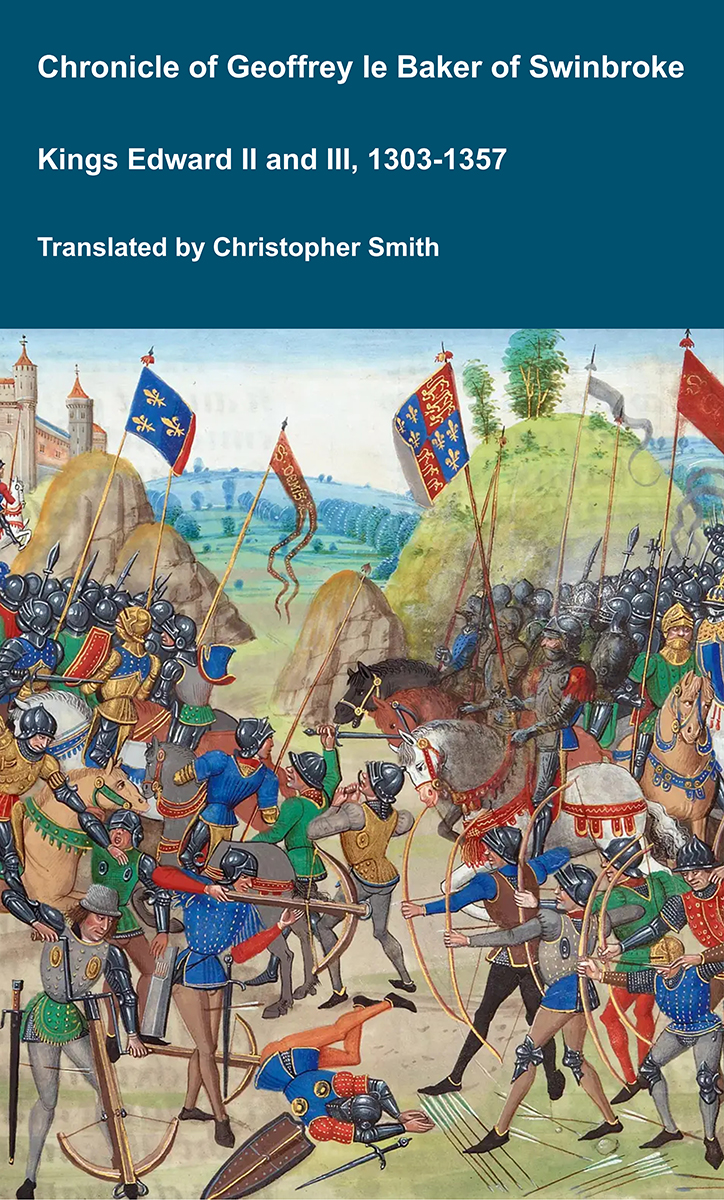
Chronicle of Geoffrey le Baker of Swinbroke
Baker was a secular clerk from Swinbroke, now Swinbrook, an Oxfordshire village two miles east of Burford. His Chronicle describes the events of the period 1303-1356: Gaveston, Bannockburn, Boroughbridge, the murder of King Edward II, the Scottish Wars, Sluys, Crécy, the Black Death, Winchelsea and Poitiers. To quote Herbert Bruce 'it possesses a vigorous and characteristic style, and its value for particular events between 1303 and 1356 has been recognised by its editor and by subsequent writers'. The book provides remarkable detail about the events it describes. Baker's text has been augmented with hundreds of notes, including extracts from other contemporary chronicles, such as the Annales Londonienses, Annales Paulini, Murimuth, Lanercost, Avesbury, Guisborough and Froissart to enrich the reader's understanding. The translation takes as its source the 'Chronicon Galfridi le Baker de Swynebroke' published in 1889, edited by Edward Maunde Thompson.
Available at Amazon in eBook and Paperback format.
On 26th January 1505 Thomas Wriothesley [aged 17] was appointed Garter King of Arms. Around this time he changed his surname from Writhe to Wriothesley as did his brother William Wriothesley [aged 16].
Letters and Papers Foreign and Domestic Henry VIII 1533. 26th January 1533. S. B. 74. For Anne, Marchioness Of Pembroke [aged 32].
Commission to George Tayler, John Smyth, and Wm. Brabazon to take possession, in her name, of the lands in North and South Wales, lately granted to Anne marchioness of Pembroke. Greenwich, 26 Jan. 24 Hen. VIII.


Letters and Papers Foreign and Domestic Henry VIII 1533. 26th January 1533. R. O. 80. John, Abbot of Peterborough, to Cromwell.
I have received your letter for granting a lease to John Rudde of our manor of Scottor, which I cannot do by reason of a promise made to a servant of Mr. Page three years ago, as I beg Rudde to inform you. He caused my lord of Wiltshire [aged 56] to write to me for the same farm a twelvemonth since. The promise of an honest man ought to be as sure as his seal. Let him move Mr. Page to stay his suit, and then I am discharged. If Mr. Page will release me of my promise, some other thing convenient shall be devised for his servant. Peterborough, 26 Jan.
Hol., p. 1. Add.: Of the Council. Sealed.
Letters and Papers Foreign and Domestic Henry VIII 1533. 26th January 1533. Close Roll, 24 Hen. VIII. m. 24 d., Rym. XIV. 446. 73. The Great Seal.
Memorandum that on the 26th Jan., "anno predicto," about 3 p.m., in a chamber near the oratory at East Greenwich, in presence of Thomas duke of Norfolk [aged 60], Thomas Cranmer [aged 43], elect of Canterbury, Thomas earl of Wiltshire [aged 56], Stephen bishop of Winchester, Sir Wm. Fitzwilliam [aged 43], treasurer of the Household, Sir Wm. Poulet, comptroller of the Household, Thomas Crumwell, Ralph Paxhall, John Croke, and John Judd, the King took the Great Seal from the custody of Thomas Audeley, and, after holding it a quarter of an hour, returned it to the custody of the same Thomas Audeley, appointing him Chancellor of England. Thereupon the said Chancellor sealed a subpœna upon one John Gilbert, in presence of the King and nobles, and returned the Great Seal into its bag, which he sealed with his own seal.


On 26th January 1546 John Spelman [aged 66] died. On 5th November 1556 Elizabeth Frowick died. They were buried at All Saints Church, Narborough [Map].
Elizabeth Frowick: John Coningsby of North Mimms and she were married. she was born to Henry Frowick of South Mimms and Anne Knollys. In 1498 John Spelman and she were married. They had thirteen sons and seven daughters.


Around 26th January 1554 Wyatt's Rebellion was a popular uprising against the marriage of Queen Mary I of England and Ireland [aged 37] and Philip "The Prudent" II King Spain [aged 26] led by Thomas Wyatt [aged 33] with the intention to replace them with Edward Courtenay 1st Earl Devon [aged 27] and Queen Elizabeth I of England and Ireland [aged 20]. George Brooke 9th Baron Cobham [aged 57] sided with the rebels. John Brydges 1st Baron Chandos [aged 61] suppressed the rebellion.
Queen Elizabeth I of England and Ireland was interrogated.
Henry Machyn's Diary. 26th January 1554. The xxvj day of January began wachyng at evere gatt in arness, for tydyngs cam the sam tym to the quen and her consell that ser Thomas Wyatt [aged 33], ser George Harper, ser Hare Ysseley [aged 54], master Cobam, and master Rudston [aged 39], and master Knevetts [aged 37], and dyvers odur gentyllmen and commons, wher up, and tha say because the prynche of Spayne [aged 26] commyng in to have owre quen [aged 37], for they kepe Rochaster castell [Map] and the bryge and odur plases.
Note. P. 52. Sir Thomas Wyatt. A copious narrative of Wyatt's rebellion, together with the letters written by the duke of Norfolk, lord Cobham, and others, to the Privy Council, on the occasion, (from the originals in the State Paper Office,) will be found in Cruden's History of Gravesend, 1842, 8vo. pp. 172 et seq.

Chronicle of Queen Jane and Two Years of Queen Mary 1554. 26th January 1554. The xxvjth day ther was [brought] into the Tower as prysoners the lord marques [aged 42]e and sir Edwarde Warner [aged 43] knight, in the mornyng. And the same nyght there went out certeyn of the garde and other agaynste the Kentish men. Item, the same day, in the mornyng, the cytey began to be kept with harnessyd men.
Note e. The marquess of Northampton.
Henry Machyn's Diary. 26th January 1557. [The xxvj day of January went to Cambridge, Watson [aged 42] bishop elect of Lincoln, Scot bishop of Chester, and Christopherson bishop elect of Chichester,] comyssyoners to the [lord cardinal, to the] chyrche of sant Mares [Map], and thay toke up on Martin [Bucer] that was bered ther, and Paulus Phagius [was] taken up at Sant Myghelle cherche that was [buried there,] and after brentt [burned] boyth.
On 26th January 1569 Mary Queen of Scots [aged 26] was moved to the custody of George Talbot 6th Earl of Shrewsbury [aged 41] and his wife Bess of Hardwick [aged 42] at Tutbury Castle, Staffordshire [Map].


On 26th January 1624 George Wilhelm Hanover Duke Brunswick-Lüneburg was born to George Hanover Duke Brunswick-Lüneburg [aged 41] and Anne Eleonore Hesse Darmstadt Duchess Brunswick-Lüneburg [aged 22]. He married 2nd April 1676 Eleonore Esmier D'Olbreuse Duchess Brunswick-Lüneburg and had issue.
This is a translation of the 'Memoires of Jacques du Clercq', published in 1823 in two volumes, edited by Frederic, Baron de Reissenberg. In his introduction Reissenberg writes: 'Jacques du Clercq tells us that he was born in 1424, and that he was a licentiate in law and a counsellor to Philip the Good, Duke of Burgundy, in the castellany of Douai, Lille, and Orchies. It appears that he established his residence at Arras. In 1446, he married the daughter of Baldwin de la Lacherie, a gentleman who lived in Lille. We read in the fifth book of his Memoirs that his father, also named Jacques du Clercq, had married a lady of the Le Camelin family, from Compiègne. His ancestors, always attached to the counts of Flanders, had constantly served them, whether in their councils or in their armies.' The Memoires cover a period of nineteen years beginning in in 1448, ending in in 1467. It appears that the author had intended to extend the Memoirs beyond that date; no doubt illness or death prevented him from carrying out this plan. As Reissenberg writes the 'merit of this work lies in the simplicity of its narrative, in its tone of good faith, and in a certain air of frankness which naturally wins the reader’s confidence.' Du Clercq ranges from events of national and international importance, including events of the Wars of the Roses in England, to simple, everyday local events such as marriages, robberies, murders, trials and deaths, including that of his own father in Book 5; one of his last entries.
Available at Amazon in eBook and Paperback format.
Samuel Pepys' Diary. 26th January 1660. To Lord's [aged 34] lodging again and sat by the great log, it being now a very good fire, with my wife, and ate a bit and so home.


Samuel Pepys' Diary. 26th January 1660. The news this day is a letter that speaks absolutely Monk's [aged 51] concurrence with this Parliament, and nothing else, which yet I hardly believe.


Samuel Pepys' Diary. 26th January 1660. Thursday. To my office for £20 to carry to Mr Downing [aged 35], which I did and back again. Then came Mr. Frost to pay Mr Downing his £500, and I went to him for the warrant and brought it Mr. Frost. Called for some papers at Whitehall for Mr Downing, one of which was an Order of the Council for £1800 per annum, to be paid monthly; and the other two, Orders to the Commissioners of Customs, to let his goods pass free. Home from my office to Lord's [aged 34] lodgings where my wife had got ready a very fine dinner-viz. a dish of marrow bones; a leg of mutton; a loin of veal; a dish of fowl, three pullets, and two dozen of larks all in a dish; a great tart, a neat's tongue, a dish of anchovies; a dish of prawns and cheese.

Samuel Pepys' Diary. 26th January 1663. Thence by coach to White Hall, and met upon the Tangier Commission, our greatest business the discoursing of getting things ready for my Lord Rutherford to go about the middle of March next, and a proposal of Sir J. Lawson's [aged 48] and Mr. Cholmely's [aged 30] concerning undertaking the Mole, which is referred to another time.
Samuel Pepys' Diary. 26th January 1663. Up and by water with Sir W. Batten [aged 62] to White Hall, drinking a glass of wormewood wine at the Stillyard [Map], and so up to the Duke, and with the rest of the officers did our common service; thence to my Lord Sandwich's [aged 37], but he was in bed, and had a bad fit last night, and so I went to, Westminster Hall [Map], it being Term time, it troubling me to think that I should have any business there to trouble myself and thoughts with. Here I met with Monsieur Raby, who is lately come from France. (he) tells me that my Lord Hinchingbroke [aged 15] and his brother do little improve there, and are much neglected in their habits and other things; but I do believe he hath a mind to go over as their tutour, and so I am not apt to believe what he says therein. But I had a great deal of very good discourse with him, concerning the difference between the French and the Pope, and the occasion, which he told me very particularly, and to my great content; and of most of the chief affairs of France, which I did enquire: and that the King [aged 32] is a most excellent Prince, doing all business himself; and that it is true he hath a mistress, Mademoiselle La Valiere [aged 18], one of the Princess Henriette's women, that he courts for his pleasure every other day, but not so as to make him neglect his publique affairs. He tells me how the King do carry himself nobly to the relations of the dead Cardinall1, and will not suffer one pasquill to come forth against him; and that he acts by what directions he received from him before his death.
Note 1. Cardinal Mazarin died March 9th, 1661.

Samuel Pepys' Diary. 26th January 1664. At noon to the 'Change [Map], after being at the Coffee-house, where I sat by Tom Killigrew [aged 51], who told us of a fire last night in my Baroness Castlemaine's [aged 23] lodging, where she bid £40 for one to adventure the fetching of a cabinet out, which at last was got to be done; and the fire at last quenched without doing much wrong.
Samuel Pepys' Diary. 26th January 1666. Thence to the Duke of Albemarle [aged 57], and there a meeting with all the officers of the Navy, where, Lord! to see how the Duke of Albemarle flatters himself with false hopes of money and victuals and all without reason. Then comes the Committee of Tangier to sit, and I there carry all before me very well.
On 26th January 1667 Elizabeth Percy Duchess Somerset was born to Josceline Percy 11th Earl of Northumberland [aged 22] and Elizabeth Wriothesley Countess Northumberland [aged 21]. She married (1) 27th March 1679 Henry Cavendish, son of Henry Cavendish 2nd Duke Newcastle upon Tyne and Frances Pierrepont Duchess Newcastle upon Tyne (2) 15th November 1681 Thomas "Tom of Ten Thousand" Thynne (3) 30th May 1682 her fifth cousin once removed Charles Seymour 6th Duke of Somerset, son of Charles Seymour 2nd Baron Seymour of Trowbridge and Eizabeth Alington 2nd Baroness Seymour Trowbridge, and had issue.


On 26th January 1671 John Gell 1st Baronet [aged 77] died. He was buried in St Mary's Church, Wirksworth [Map]. His son John [aged 58] succeeded 2nd Baronet Gell of Hopton in Derbyshire.
John Gell 2nd Baronet: In 1613 he was born to John Gell 1st Baronet and Elizabeth Willoughby Lady Gell. Before 8th February 1688 John Gell 2nd Baronet and Katherine Packer of Shelingford were married. On 8th February 1688 John Gell 2nd Baronet died. His son Philip succeeded 3rd Baronet Gell of Hopton in Derbyshire. Elizabeth Fagge Lady Gell by marriage Lady Gell of Hopton in Derbyshire.
On 26th January 1716 George Sackville aka Germain 1st Viscount Sackville was born to Lionel Cranfield Sackville 1st Duke Dorset [aged 28] and Elizabeth Colyear Duchess Dorset [aged 27]. His godfather King George I [aged 55] attended his baptism. He married 3rd September 1754 Diana Sambrooke and had issue.


The History of William Marshal was commissioned by his son shortly after William’s death in 1219 to celebrate the Marshal’s remarkable life; it is an authentic, contemporary voice. The manuscript was discovered in 1861 by French historian Paul Meyer. Meyer published the manuscript in its original Anglo-French in 1891 in two books. This book is a line by line translation of the first of Meyer’s books; lines 1-10152. Book 1 of the History begins in 1139 and ends in 1194. It describes the events of the Anarchy, the role of William’s father John, John’s marriages, William’s childhood, his role as a hostage at the siege of Newbury, his injury and imprisonment in Poitou where he met Eleanor of Aquitaine and his life as a knight errant. It continues with the accusation against him of an improper relationship with Margaret, wife of Henry the Young King, his exile, and return, the death of Henry the Young King, the rebellion of Richard, the future King Richard I, war with France, the death of King Henry II, and the capture of King Richard, and the rebellion of John, the future King John. It ends with the release of King Richard and the death of John Marshal.
Available at Amazon in eBook and Paperback format.
On 26th January 1739 George Spencer 4th Duke of Marlborough was born to Charles Spencer 3rd Duke of Marlborough [aged 32] and Elizabeth Trevor Duchess of Marlborough [aged 26]. He married 1762 his fourth cousin Caroline Russell Duchess of Marlborough, daughter of John Russell 4th Duke Bedford and Gertrude Leveson-Gower Duchess Bedford, and had issue.


On 26th January 1747 James Latham [aged 51] died in Dublin [Map].
On 26th January 1751 Catherine Gordon was born to Cosmo George Gordon 3rd Duke Gordon [aged 30] and Catherine Gordon Duchess Gordon [aged 33]. She married Thomas Booker and had issue.
On 26th January 1753 Elizabeth Hamilton Countess Derby was born to James Hamilton 6th Duke Hamilton 3rd Duke Brandon [aged 28] and Elizabeth Gunning Duchess Hamilton and Argyll [aged 19]. She married 23rd June 1774 Edward Smith-Stanley 12th Earl of Derby and had issue.


On 26th January 1779 Thomas Hudson [aged 78] died.
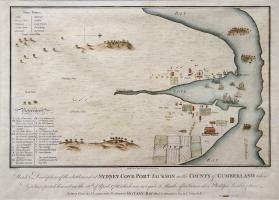
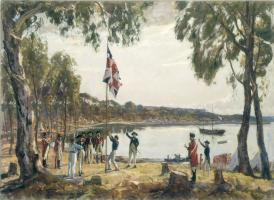
On 26th January 1788 the First Fleet landed at Sydney Cove, Australia, where the Union Jack was first raised, beginning the colonisation of Australia. The fleet was made up of 11 ships carrying convicts from Britain to Australia. The day is now the official day of Australia, known as 'Australia Day'.
1. Sydney Cove, Port Jackson in the County of Cumberland – from a drawing made by Francis Fowkes in 1788.
2. 'The Founding of Australia' by Captain Arthur Phillip. 1939 oil painting by Algernon Talmage.
On 26th January 1802 Augusta Paget Baroness Templemore was born to Henry William Paget 1st Marquess Anglesey [aged 33] and Caroline Elizabeth Villiers Duchess Argyll [aged 27]. She married 1820 Arthur Chichester 1st Baron Templemore and had issue.


On 26th January 1805 Captain William Henry Ricketts aka Jervis [aged 40] drowned at Brest when the four-oared gig in which he and Captain Patrick Campbell of the Doris had set off to attend Vice-Admiral Sir Charles Cotton [aged 47] aboard his flagship San Josef capsized. Campbell survived by clinging to an oar, but Jervis died despite the valiant efforts of his coxswain who stayed with his captain until he could no longer save him.
On 26th January 1810 Friedrich Wilhelm Glücksburg Duke Schleswig Holstein Sonderburg Glücksburg [aged 25] and Louise Caroline Hesse-Kassel Duchess Schleswig Holstein Sonderburg Glücksburg [aged 20] were married. He the son of Friedrich Karl Ludwig Oldenburg I Duke Schleswig-Holstein-Sonderburg-Beck [aged 52] and Friederike Schlieben Duchess Schleswig-Holstein-Sonderburg-Beck.
The Times. 1st February 1817. On Thursday at his seat at Blenheim, George Spencer, Duke of Marlborough, Marquis of Blandford [deceased], &c. His Grace was born the 26th January, 1739. He was found dead in his bed at 7 o'clock in the morning. He had for some time been in a very infirm state, though he had experienced very little severe indisposition. By his death there became vacant a blue riband of the Order of the Garter, the Lord Lieutenancy of Oxfordshire, the Rangership of Whichwood forest, and the High Stewardship of Oxford and Woodstock.
Memorials of Francis Chantrey RA in Hallamshire and Elsewhere Part V London Life and Works. On his return from the continent he modelled four of his finest busts, viz., those of Lord Castlereagh, Mr. Phillips the painter, Mr. Wordsworth, and Sir Walter Scott; the Wordsworth for Sir George Beaumont, the Sir Walter Scott for his own gratification, and from sincere respect for the worth and genius of Sir Walter. Chantrey [aged 37] never excelled this bust - it is his very best. The history of this admirable head ( which has been thought superior to anything in ancient or modern art ) is contained in the following letter, which, although it has been repeatedly printed, is too interesting to be omitted in this place:
TO THE RIGHT HON. SIR ROBERT PEEL, BART. Belgrave Place, Jan. 26, 1838.
DEAR SIR ROBERT, -I have much pleasure in complying with your request to note down such facts as remain on my memory concerning the bust of Sir Walter Scott, which you have done me the honour to place in your collection at Drayton Manor.
My admiration of Scott, as a poet and a man, induced me, in the year 1820, to ask him to sit to me for his bust, the only time I ever recollect having asked a similar favour from any one. He agreed, and I stipulated that he should breakfast with me always before his sittings, and never come alone, nor bring more than three friends at once, and that they should all be good talkers. That he fulfilled the latter condition you may guess, when I tell you that on one occasion he came with Mr. Croker, Mr. Heber, and the late Lord Lyttelton. The marble bust produced from these sittings was moulded, and about forty-five casts were disposed of among the poet's most ardent admirers. This was all I had to do with the plaster casts. The bust was pirated by Italians; and England and Scotland, and even the colonies, were supplied with unpermitted and bad casts to the extent of thousands, in spite of the terror of an act of parliament.
I made a copy in marble from this bust for the Duke of Wellington; it was sent to Apsley House in 1827, and it is the only duplicate of my bust of Sir Walter Scott that I ever executed in marble.
I now come to your bust of Scott. In the year 1828 I proposed to the poet to present the original marble as an heirloom to Abbotsford, on condition that he would allow me sittings sufficient to finish another marble from the life for studio. To this proposal he acceded, and the bust was sent to Abbotsford accordingly, with the following words inscribed on the back:-This bust of Sir Walter Scott was made in 1820 by Francis Chantrey, and presented by the Sculptor to the Poet, as a token of esteem, in 1828. '
In the months of May and June in the same year (1828) Sir Walter fulfilled his promise, and I finished from his face, the marble bust now at Drayton Manor - a better sanctuary than my studio, else I had not parted with it. The expression is more serious than in the two former busts, and the marks of age more than eight years deeper. ' I have now, I think, stated all that is worthy of remembering about the bust, except that there need be no fear of piracy, for it has never been moulded. "I have the honour to be, Dear Sir, "Your very sincere and faithful servant, "F. CHANTREY."1
Note 1. Alas! in the brief interval between the transcription of the above letter and the placing of it here in type, a sudden and fatal accident has deprived the country of a most accomplished, non factious, and noble-minded senator, and the fine arts of an equally intelligent and munificent patron. Sir Robert Peel died July 3, 1850, in consequence of injuries received when thrown from his horse two or three days before; and the intelligence of his death was probably received through the country with a more general and spontaneous expression of sorrow, than was ever caused by any similar event.
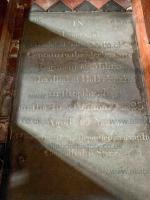
St Werburgh's Church, Hanbury [Map]. Grave slab of William Trevanion, Captain of the Derbyshire Militia who died at Hollybush in the parish of Hanbury 26th January 1823 aged 43.
Narrative of a Voyage Round the World. On the return of the commodore on the 24th, we were directed to proceed to Hongkong, and commence its survey. We landed on Monday, the 26th, at fifteen minutes past eight, and being the bona fide first possessors, her Majesty's health was drank with three cheers on Possession Mount.
On the 26th [January 1841], the squadron arrived; the marines were landed, the union hoisted on our post, and formal possession taken of the island, by Commodore Sir J. G. Bremer, accompanied by the other officers of the squadron, under a feu-de-joie from the marines, and a royal salute from the ships of war.
On the Cowloon Peninsula were situated two batteries, which might have commanded the anchorage, but which appeared at present to be but thinly manned ; these received due notice to withdraw their men and guns, as part of the late treaty.
The Diary of George Price Boyce 1853. 26th January 1853. January 26. Tom Seddon [aged 31] called on me and said he and Gabriel Rossetti [aged 24] had been speaking about me and thinking it would be good for me to try painting in oil.
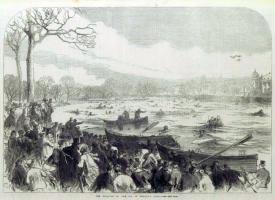
The Illustrated London News 1867. [26th January 1867] THE DISASTER ON THE ICE IN REGENT'S PARK. In our last publication we gave an account of the dreadful accident in Regent's Park on Tuesday week, when the ice of the lake or ornamental water, on which several hundred persons were skating or sliding, broke down so suddenly and unexpectedly that a great number of them were plunged into the water, by which more than forty were unhappily drowned. From a sketch made very soon afterwards by an eye-witness of the accident, we have prepared the Illustration engraved on the preceding page. The point of view is the bank opposite Sus-ex-terrace, looking across the broad part of the lake, with the largest island and the lawn belonging to a private honse called "The Holme" extending to the left-hand side. The scene was most distressing for many minutes after the breaking of the ice: a multitude of people, amongst whom were several women and children, were struggling in the water, and trying to save themselves by holding the pieces of ice, and most of them screaming in despair. Of those on shore, a few were able to give prompt assistance to the nearest sufferers and help them to scramble to land; but many were struck with horror and could do nothing but utter cries of lamentation. The icemen of the Royal Humane Society and the park-keepers, aided by some of the spectators, lost not a moment in bringing all their ropes, poles, ladders, and boats to the place, and endeavouring to rescre those who still remained above water, as is shown in our Engraving. Several remarkable incidents in the escape of those more fortunate persons were related last week. The total number of those who sank to rise no more proves considerably greater than was at first supposed, forty dead bodies having been recovered up to Saturday evening, when the adjourned inquest was resumed by Dr. Lankester, the Coroner, at the Marylebone Workhouse.
On 26th January 1876 Josceline Percy was born to Henry George Percy 7th Duke Northumberland [aged 29] and Edith Campbell Duchess Northumberland [aged 26].
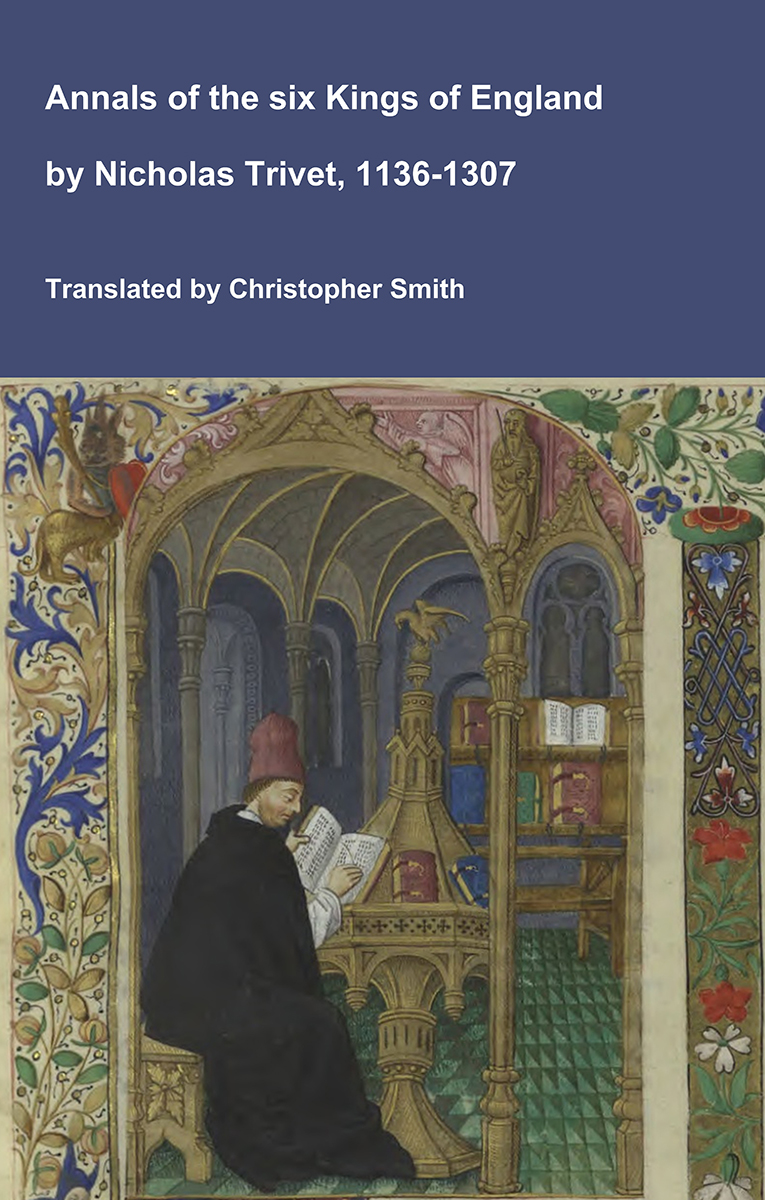
Annals of the six Kings of England by Nicholas Trivet
Translation of the Annals of the Six Kings of England by that traces the rise and rule of the Angevin aka Plantagenet dynasty from the mid-12th to early 14th century. Written by the Dominican scholar Nicholas Trivet, the work offers a vivid account of English history from the reign of King Stephen through to the death of King Edward I, blending political narrative with moral reflection. Covering the reigns of six monarchs—from Stephen to Edward I—the chronicle explores royal authority, rebellion, war, and the shifting balance between crown, church, and nobility. Trivet provides detailed insight into defining moments such as baronial conflicts, Anglo-French rivalry, and the consolidation of royal power under Edward I, whose reign he describes with particular immediacy. The Annals combines careful year-by-year reporting with thoughtful interpretation, presenting history not merely as a sequence of events but as a moral and political lesson. Ideal for readers interested in medieval history, kingship, and the origins of the English state, this chronicle remains a valuable and accessible window into the turbulent world of the Plantagenet kings.
Available at Amazon in eBook and Paperback format.

On 26th January 1879 Julia Margaret Cameron nee Pattle [aged 63] died.
On 26th January 1886 Henry Powell Ffoulkes [aged 71] died. He was buried at St Asaph Cathedral [Map] where he has a memorial.


On 23rd January 1889 Alexandre Cabanel [aged 65] died in his hotel at 14 rue Alfred de Vigny, in the 8th arrondissement of Paris. His funeral was on 26th January 1889 at the Saint-Philippe du Roule church. He was buried at Saint Lazaire Cemetery.
On 26th January 1899 Charles Henry Gordon-Lennox was born to Charles Gordon-Lennox 8th Duke Richmond [aged 28] and Hilda Madeline Brassey Duchess Richmond [aged 26].

On 26th January 1914 Jane Morris nee Burden [aged 74] died at 5 Brock Street, Bath. On 29th January 1914 she was buried at St George's Church, Kelmscott [Map] in the same grave as her husband William Morris. Her body was driven in a 'motor' from Bath to the manor house just before the service. Her coffin was 17th century style and in oak with brass furniture and a simple inscription of her name and date of death, and was carried into the church by six village men. The church was well attended by the villagers as well as familiar names from the world of art and literature including Marie Stillman [aged 69] whose wreath was noted in the papers. The hymn 'Now the labourer's task is o'er' was sung and the organist played the Dead March as the coffin was carried out to where William was already buried.
The Times. 27th January 1916. The death of Lady Ulrica Thynne [deceased] took place on Wednesday at 30, Grosvenor-gardens. She was the second daughter of the 12th Duke of Somerset and was born in 1833. She married, in 1858, Lord Henry Frederick Thynne, second son of the third Marquess of Bath, who was Treasurer of the Household to Queen Victoria and for over 25 years M.P. for South Wilts. There were four sons and two daughters of the marriage. The funeral will be at Findon, near Worthing, on Monday, at 1 o'clock.
After 26th January 1917. Memorial at St Peter's Church, Tawstock [Map] to Robert Bourchier Sherard Wrey 11th Baronet [deceased].
Robert Bourchier Sherard Wrey 11th Baronet: On 23rd May 1855 he was born to Henry Bourchier Toke Wrey 10th Baronet and Marianne Sarah Sherard Lady Wrey. On 10th March 1900 Henry Bourchier Toke Wrey 10th Baronet died at Ventnor, Isle of Wight. His son Robert succeeded 11th Baronet Wrey of Trebitch in Cornwall. On 26th January 1917 Robert Bourchier Sherard Wrey 11th Baronet died. His brother Philip succeeded 12th Baronet Wrey of Trebitch in Cornwall.
On 26th January 1919 John Byam Liston Shaw [aged 46] died.

The Press. The Press, Volume 56, Issue 16741, 26th January 1920. DUCHESS OF WESTMESTER, A SECRET MARRIAGE.
(By Cable—Press Associatior—Copyright.) (Australian and N.Z. Cable Association.) (Received January 25th. 5.5 p.m.)
LONDON. January 23. The Duchess of Westminster, whose divorce decree was made absolute on December 19th, was secretly married to Captain James Lewis, formerly of the Royal Air Force.
They met when Captain Lewis was undergoing treatment at the Duchess's hospital, in France. Lewis, prior to. the war, was in business at Lloyd’s. He is a sportsman, a billiard player, and an amateur actor. For some time he has been the Duchess’s private secretary. He is a few years her junior
[Constance Edwina [aged 42], C.B.E., Duchess of Westminster, is the youngest daughter of the late Mr W. C. Cornwallis-West. She was married in 1901 to the Duke of Westminster [aged 40], there being two daughters of the marriage. She obtained a deorce nisi from the Duke of! Westminster a few months ago on the grounds of adultory and desertion, the case causing considerable stir in London.]
John Fitzpatrick Lewis: On 14th January 1920, just over three weeks after her divorce from Hugh "Bendor" Grosvenor 2nd Duke Westminster, he and Constance Edwina "Shelagh" Cornwallis-West Duchess Westminster were married.


On 26th January 1921 an express and stopping train collided at Abermule, Newtown.
Seventeen people were killed including Herbert Lionel Henry Vane-Tempest [aged 58], a director of the railway.
"The driver of the down train was oiling his engine at the moment when the tablet holder was handed to his fireman by relief-stationmaster Lewis. It is clear that neither he nor the fireman could have examined the tablet before the train started from Abermule. It is also clear that neither Lewis, Jones, nor Thompson could have looked at the tablet instrument for the Abermule-Newtown section, otherwise they would have seen the indicator showed that a tablet had been withdrawn for an up train. After the down train had started (about 12.3 p.m.), presumably when he returned to the booking office to send the 'entering section' bell signal for the down train to Newtown, and the 'out of section' bell signal to Montgomery, the terrible mistake that had been made was discovered by Thompson, and Lewis realised that he had given the Montgomery - Abermule tablet to the down train. Lewis telephoned to Newtown to ask if the express had left, and was informed by Brock that it had left at 11.59 when he had sent the 'entering section' bell signal. A vain attempt was made to attract the attention of the enginemen of the down train, by lowering and raising the up distant signal, but probably by the time this was attempted, the train had passed the signal post, about 660 yards from the loop points..."
"When [fireman] Owen recovered, he found himself on the ground just behind the second vehicle (No. 310) of his train, which was lying across the railway on top of the first. He saw driver Jones on the opposite side just behind and underneath the third vehicle, which was leaning over towards the slope of the cutting. He got across the framing, and found Jones more seriously injured than himself, and anxiously enquiring whether they had the right tablet. He assured him on the point, but a little later, as his driver was still anxious, he went to look for the tablet and crept under the frame of No. 7730 for the purpose. After a little search he found both tablet holders lying on the ground to the left (north) of the track alongside the wreckage of the two engines. He picked them up and found that one of the tablets for the Montgomery-Abermule section had evidently been carried by the down train. He then returned and showed them to his driver to relieve his anxiety. He subsequently handed the tablet holders to traffic controller Morgan, who travelled in the down train. Morgan eventually passed them for custody to chief traffic inspector George. The latter, immediately after the accident, returned on foot to Abermule, where he arrived at 12.18 p.m. and arranged by telephone for the dispatch of medical and nursing assistance from Newtown."
Herbert Lionel Henry Vane-Tempest: On 6th July 1862 he was born to George Henry Vane-Tempest 5th Marquess Londonderry and Mary Cornelia Edwards Marchioness Londonderry. The Times. 2nd February 1905. The funeral of Lord Henry Vane-Tempest took place yesterday in the family vault in St. Peter's [Map], Montgomeryshire. The Bishop of Bangor, assisted by the Rev J. Williams, rector of the parish, and the Rev. S. J. Evans, officiated. The principal mourmers were the Marquis and Marchioness of Londonderry (brother and sister-in-law), Lord Herbert Vane-Tempest (brother), and Mr. Beaumont, M.P., and Lady Aline Beaumont (brother-in-law and sister). Continues. 9th February 1915. Times Newspaper Obituaries. The news of the death of the Marquess of Londonderry, which occurred at Wynyard, Stockton-on-Tees, yesterday morning, will be received with profound regret far beyond the circle of his personal friends or of the members of the Unionist Party. Lord Londonderry had not been entirely well for some little time past. For a fortnight, it seems, he had been suffering from sciatica. Last week he caught a chill, from which pneumonia developed. On Sunday his condition was seen to be critical. During the night he collapsed, and the end came at 9.30 yesterday morning. Lady Londonderry, who had been in constant attendance on him during his illness, was present at the last, as also were Lady Ilchester and Lord Herbert Vane-Tempest.


On 26th January 1926, John Logie Baird gave the first public demonstration of true television images for members of the Royal Institution and a reporter from The Times in his laboratory at 22 Frith Street, Soho, London.
On 26th January 1940 William Drogo Sturges Montagu [aged 31] was killed in action.

On 26th January 1947 Prince Gustaf Adolf Bernadotte [aged 40] died in a plane crash at Kastrup Airport, Copenhagen, Denmark. The prince, along with two companions, was returning to Stockholm from a hunting trip and visit to Princess Juliana and Prince Bernhard of the Netherlands. The delayed KLM flight from Amsterdam had landed at Copenhagen for a routine stop before continuing to Stockholm. Soon after the Douglas DC-3 aircraft took off, it climbed to an altitude of about 50 meters, stalled, and plummeted nose-first to the ground, where it exploded on impact. All 22 people aboard the plane (16 passengers and six crew members) were killed. Also aboard the ill-fated flight was American singer and actress Grace Moore and Danish actress Gerda Neumann. An investigation found that an inexperienced young employee had serviced the aircraft and, short of time, the plane's captain had failed to perform the final pre-flight check list properly. He took off not realizing that elevator locking pins were still in place.

On 26th January 1972 John Albert William Spencer-Churchill 10th Duke of Marlborough [aged 74] and Frances Laura Charteris Duchess of Marlborough [aged 56] were married. She by marriage Duchess Marlborough. He the son of Charles Richard John Spencer-Churchill 9th Duke of Marlborough and Consuelo Vanderbilt Duchess of Marlborough.
On 26th January 1993 John Pole-Carew 12th Baronet [aged 90] died. He was buried at St James' Church, Antony [Map]. His son Richard [aged 54] succeeded 13th Baronet Pole of Shute House in Devon. Mary Dawnay Lady Pole-Carew [aged 57] by marriage Lady Pole of Shute House in Devon.
Richard Pole-Carew 13th Baronet: On 2nd December 1938 he was born to John Pole-Carew 12th Baronet and Cynthia Mary Burns Lady Pole. In 1974 Richard Pole-Carew 13th Baronet and Mary Dawnay Lady Pole-Carew were married. They were fourth cousins.
Mary Dawnay Lady Pole-Carew: In 1936 she was born to Lieutenant-Colonel Ronald Dawnay and Elizabeth Katherine Grey.


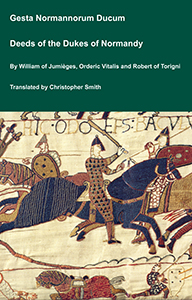
The Deeds of the Dukes of Normandy
The Gesta Normannorum Ducum [The Deeds of the Dukes of Normandy] is a landmark medieval chronicle tracing the rise and fall of the Norman dynasty from its early roots through the pivotal events surrounding the Norman Conquest of England. Originally penned in Latin by the monk William of Jumièges shortly before 1060 and later expanded at the behest of William the Conqueror, the work chronicles the deeds, politics, battles, and leadership of the Norman dukes, especially William’s own claim to the English throne. The narrative combines earlier historical sources with firsthand information and oral testimony to present an authoritative account of Normandy’s transformation from a Viking settlement into one of medieval Europe’s most powerful realms. William’s history emphasizes the legitimacy, military prowess, and governance of the Norman line, framing their expansion, including the conquest of England, as both divinely sanctioned and noble in purpose. Later chroniclers such as Orderic Vitalis and Robert of Torigni continued the history, extending the coverage into the 12th century, providing broader context on ducal rule and its impact. Today this classic work remains a foundational source for understanding Norman identity, medieval statesmanship, and the historical forces that reshaped England and Western Europe between 800AD and 1100AD.
Available at Amazon in eBook and Paperback format.
On 26th January 1213 twins Alphonse Capet and John Capet were born to King Louis VIII of France [aged 25] and Blanche Ivrea Queen Consort France [aged 24]. Both died the same day. He a great grandson of King Henry "Curtmantle" II of England.
On 26th January 1436 Henry Beaufort 2nd or 3rd Duke of Somerset was born to Edmund Beaufort 1st or 2nd Duke of Somerset [aged 30] and Eleanor Beauchamp Duchess Somerset [aged 27]. He a great x 2 grandson of King Edward III of England.
On 26th January 1551 Robert Dormer 1st Baron Dormer was born to William Dormer [aged 38] and Dorothy Catesby [aged 24]. He married in or before 1573 Elizabeth Browne Baroness Dormer, daughter of Anthony Browne 1st Viscount Montagu and Magdalen Dacre Viscountess Montague, and had issue.
On 26th January 1624 George Wilhelm Hanover Duke Brunswick-Lüneburg was born to George Hanover Duke Brunswick-Lüneburg [aged 41] and Anne Eleonore Hesse Darmstadt Duchess Brunswick-Lüneburg [aged 22]. He married 2nd April 1676 Eleonore Esmier D'Olbreuse Duchess Brunswick-Lüneburg and had issue.
On 26th January 1649 Greville Verney 17th Baron Latimer 9th Baron Willoughby was born to Greville Verney 16th Baron Latimer 8th Baron Willoughby and Elizabeth Wenman Baroness Latimer and Willoughby Broke. He married 29th August 1667 his fifth cousin once removed Diana Russell Baroness Latimer Willoughby Broke Alington, daughter of William Russell 1st Duke Bedford and Anne Carr Countess of Bedford, and had issue.

On 26th January 1657 Archbishop William Wake was born in Blandford Forum, Dorset [Map].
On 26th January 1667 Elizabeth Percy Duchess Somerset was born to Josceline Percy 11th Earl of Northumberland [aged 22] and Elizabeth Wriothesley Countess Northumberland [aged 21]. She married (1) 27th March 1679 Henry Cavendish, son of Henry Cavendish 2nd Duke Newcastle upon Tyne and Frances Pierrepont Duchess Newcastle upon Tyne (2) 15th November 1681 Thomas "Tom of Ten Thousand" Thynne (3) 30th May 1682 her fifth cousin once removed Charles Seymour 6th Duke of Somerset, son of Charles Seymour 2nd Baron Seymour of Trowbridge and Eizabeth Alington 2nd Baroness Seymour Trowbridge, and had issue.
On 26th January 1697 Hugh Acland 6th Baronet was born to John Acland [aged 23]. He married 9th May 1721 Cicely Wroth, daughter of Thomas Wroth 3rd Baronet, and had issue.
On 26th January 1716 George Sackville aka Germain 1st Viscount Sackville was born to Lionel Cranfield Sackville 1st Duke Dorset [aged 28] and Elizabeth Colyear Duchess Dorset [aged 27]. His godfather King George I [aged 55] attended his baptism. He married 3rd September 1754 Diana Sambrooke and had issue.
On 26th January 1725 Evelyn Leveson-Gower Countess Upper Ossory was born to John Leveson-Gower 1st Earl Gower [aged 30] and Evelyn Pierrepont Baroness Gower [aged 34]. She married (1) 29th June 1744 John Fitzpatrick 1st Earl Upper Ossory, son of Richard Fitzpatrick 1st Baron Gowran and Anne Robinson Baroness Gowran, and had issue (2) before August 1760 Richard Vernon and had issue.
William of Worcester's Chronicle of England
William of Worcester, born around 1415, and died around 1482 was secretary to John Fastolf, the renowned soldier of the Hundred Years War, during which time he collected documents, letters, and wrote a record of events. Following their return to England in 1440 William was witness to major events. Twice in his chronicle he uses the first person: 1. when writing about the murder of Thomas, 7th Baron Scales, in 1460, he writes '… and I saw him lying naked in the cemetery near the porch of the church of St. Mary Overie in Southwark …' and 2. describing King Edward IV's entry into London in 1461 he writes '… proclaimed that all the people themselves were to recognize and acknowledge Edward as king. I was present and heard this, and immediately went down with them into the city'. William’s Chronicle is rich in detail. It is the source of much information about the Wars of the Roses, including the term 'Diabolical Marriage' to describe the marriage of Queen Elizabeth Woodville’s brother John’s marriage to Katherine, Dowager Duchess of Norfolk, he aged twenty, she sixty-five or more, and the story about a paper crown being placed in mockery on the severed head of Richard, 3rd Duke of York.
Available at Amazon in eBook and Paperback format.
On 26th January 1734 Harbord Morden aka Harbord 1st Baron Suffield was born to William Morden aka Harbord 1st Baronet [aged 38] and Elizabeth Britiffe Lady Harbord at Harbord Morden Thorpe, Suffolk. He married 1760 Mary Assheton Baroness Suffield, daughter of Ralph Assheton 3rd Baronet, and had issue.
On 26th January 1739 George Spencer 4th Duke of Marlborough was born to Charles Spencer 3rd Duke of Marlborough [aged 32] and Elizabeth Trevor Duchess of Marlborough [aged 26]. He married 1762 his fourth cousin Caroline Russell Duchess of Marlborough, daughter of John Russell 4th Duke Bedford and Gertrude Leveson-Gower Duchess Bedford, and had issue.
On 26th January 1744 John Montagu 5th Earl Sandwich was born to John Montagu 4th Earl Sandwich [aged 25] and Dorothy Fane Countess Sandwich [aged 26]. He married (1) 1st March 1766 his fifth cousin once removed Elizabeth Montague-Dunk, daughter of George Montagu Dunk 2nd Earl Halifax, and had issue (2) 25th April 1772 Maria Henrietta Powlett, daughter of Harry Powlett 6th Duke Bolton and Katherine Lowther Duchess of Bolton, and had issue.


On 26th January 1751 Catherine Gordon was born to Cosmo George Gordon 3rd Duke Gordon [aged 30] and Catherine Gordon Duchess Gordon [aged 33]. She married Thomas Booker and had issue.
On 26th January 1753 Elizabeth Hamilton Countess Derby was born to James Hamilton 6th Duke Hamilton 3rd Duke Brandon [aged 28] and Elizabeth Gunning Duchess Hamilton and Argyll [aged 19]. She married 23rd June 1774 Edward Smith-Stanley 12th Earl of Derby and had issue.
On 26th January 1759 James Maitland 8th Earl Lauderdale was born to John Maitland 7th Earl Lauderdale [aged 41] and Mary Turner Lombe Countess Launderdale at Haltoun House, Ratho. He married 15th August 1782 Eleanor Todd Countess Lauderdale and had issue.
On 26th January 1775 William Wolseley 3rd Baronet was born to Richard Wolseley 2nd Baronet [aged 46].
On 26th January 1783 Augusta Maria Byron was born to John "Mad Jack" Byron [aged 26] and Amelia Darcy 12th Baroness Darcy 9th Baroness Conyers [aged 28].
On 26th January 1799 Charles Legge was born to George Legge 3rd Earl Dartmouth [aged 43] and Frances Finch Countess Dartmouth [aged 37].

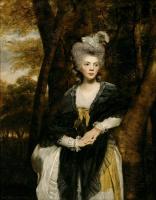
On 26th January 1802 Augusta Paget Baroness Templemore was born to Henry William Paget 1st Marquess Anglesey [aged 33] and Caroline Elizabeth Villiers Duchess Argyll [aged 27]. She married 1820 Arthur Chichester 1st Baron Templemore and had issue.
On 26th January 1817 George Edward Thicknesse-Touchet 21st Baron Audley 18th Baron Tuchet was born to George Thicknesse-Touchet 20th Baron Audley 17th Baron Tuchet [aged 34] and Anne-Jane Donnelly Baroness Audley. He married (1) 16th April 1857 Emily Mitchell Baroness Audley and had issue (2) 15th February 1868 Margaret Anne Hudson Baroness Audley.
Adam Murimuth's Continuation and Robert of Avesbury’s 'The Wonderful Deeds of King Edward III'
This volume brings together two of the most important contemporary chronicles for the reign of Edward III and the opening phases of the Hundred Years’ War. Written in Latin by English clerical observers, these texts provide a vivid and authoritative window into the political, diplomatic, and military history of fourteenth-century England and its continental ambitions. Adam Murimuth Continuatio's Chronicarum continues an earlier chronicle into the mid-fourteenth century, offering concise but valuable notices on royal policy, foreign relations, and ecclesiastical affairs. Its annalistic structure makes it especially useful for establishing chronology and tracing the development of events year by year. Complementing it, Robert of Avesbury’s De gestis mirabilibus regis Edwardi tertii is a rich documentary chronicle preserving letters, treaties, and official records alongside narrative passages. It is an indispensable source for understanding Edward III’s claim to the French crown, the conduct of war, and the mechanisms of medieval diplomacy. Together, these works offer scholars, students, and enthusiasts a reliable and unembellished account of a transformative period in English and European history. Essential for anyone interested in medieval chronicles, the Hundred Years’ War, or the reign of Edward III.
Available at Amazon in eBook and Paperback format.
On 26th January 1831 Lieutenant-Colonel Hugh Annesley 5th Earl Annesley was born to William Richard Annesley 3rd Earl Annesley [aged 58] and Priscilla Cecilia Moore Countess Annesley [aged 22]. He married (1) 4th July 1877 Mabel Markham Countess Annesley and had issue (2) 2nd July 1892 his first cousin Priscilla Cecilia Moore Countess Annesley.
On 26th January 1834 James Charlemagne Dormer was born to Joseph Thaddeus Dormer 11th Baron Dormer [aged 43] and Elizabeth Anne Tichborne Baroness Dormer.
On 26th January 1837 Thomas Fowell Buxton 3rd Baronet was born to Edward North Buxton 2nd Baronet [aged 24] and Catherine Gurney Lady Buxton [aged 23]. Coefficient of inbreeding 3.12%. He married 21st June 1862 Victoria Noel Lady Buxton, daughter of Charles Noel 1st Earl Gainsborough and Frances Jocelyn Countess Gainsborough, and had issue.
On 26th January 1838 William Hicks Farrington 5th Baronet was born to Henry Anthony Farrington 4th Baronet [aged 26].
On 26th January 1841 Geraldine Evelyn Stanhope was born to Leicester FitzGerald Charles Stanhope 5th Earl of Harrington [aged 56] and Elizabeth Green Countess Harrington [aged 32]. She a great x 4 granddaughter of King Charles II of England Scotland and Ireland. She married 1871 Edward Leeson 6th Earl of Milltown.
On 26th January 1845 George Barrington Baker Wilbraham 5th Baronet was born to George Baker 3rd Baronet [aged 28] and Mary Isabella Sutton Lady Baker. He married 4th April 1872 Katharine Frances Wilbraham Lady Wilbraham and had issue.
On 26th January 1855 Charles Mills 2nd Baron Hillingdon was born to Charles Mills 1st Baron Hillingdon [aged 24] and Louisa Isabella Lascelles Baroness Hillingdon [aged 25]. He married 1886 his half fourth cousin once removed Alice Marion Harbord Baroness Hillingdon, daughter of Charles Harbord 5th Baron Suffield and Cecilia Annetta Baring Baroness Suffield, and had issue.
On 26th January 1863 Herbert Poore was born to Edward Poore 3rd Baronet [aged 36].
On 26th January 1864 Hastings Hadley D'Oyly 11th Baronet was born to Warren Hastings D'Oyly 10th Baronet [aged 25] and Henrietta Mary Halliday Lady D'Oyly [aged 27].
On 26th January 1871 Arthur Du Cros 1st Baronet was born.
On 26th January 1876 Josceline Percy was born to Henry George Percy 7th Duke Northumberland [aged 29] and Edith Campbell Duchess Northumberland [aged 26].
Henrici Quinti, Angliæ Regis, Gesta, is a first-hand account of the Agincourt Campaign, and subsequent events to his death in 1422. The author of the first part was a Chaplain in King Henry's retinue who was present from King Henry's departure at Southampton in 1415, at the siege of Harfleur, the battle of Agincourt, and the celebrations on King Henry's return to London. The second part, by another writer, relates the events that took place including the negotiations at Troye, Henry's marriage and his death in 1422.
Available at Amazon in eBook and Paperback format.
On 26th January 1899 Roland Cubitt 3rd Baron Ashcombe was born to Henry Cubitt 2nd Baron Ashcombe [aged 31] and Maud Marianne Calvert [aged 33]. He married (1) 16th November 1920 Sonia Rosemary Keppel and had issue.
On 26th January 1899 Charles Henry Gordon-Lennox was born to Charles Gordon-Lennox 8th Duke Richmond [aged 28] and Hilda Madeline Brassey Duchess Richmond [aged 26].
On 26th January 1904 Cedric Brudenell-Bruce 7th Marquess of Ailesbury was born to George Brudenell-Bruce 6th Marquess of Ailesbury [aged 30].
On 26th January 1905 Henry Frederick Thynne 6th Marquess of Bath was born to Thomas Henry Thynne 5th Marquess of Bath [aged 42] and Violet Caroline Mordaunt Marchioness Bath [aged 35]. He married (1) 27th October 1927 Daphne Vivian Marchioness Bath, daughter of George Vivian 4th Baron Vivian and Barbara Cicely Fanning Baroness Vivian, and had issue.
On 26th January 1914 Nicholas Eliot 9th Earl of St Germans was born to Montague Eliot 8th Earl of St Germans [aged 43] at 2 Wyndham Place. He was educated at Eton College [Map]. He married (1) 25th April 1939 Helen Mary Villiers and had issue (2) 27th May 1948 Margaret Eleanor Wyndham.
On 26th January 1925 Bishop David Jenkins was born.
On 26th January 1945 Richard Bernard Cuthbert de Hoghton 14th Baronet was born to Cuthbert de Hoghton 12th Baronet [aged 64].
On 26th January 1395 Ernest Wittelsbach I Duke Bavaria [aged 22] and Elisabetta Visconti Duchess Bavaria [aged 21] were married. She by marriage Duchess Bavaria. He the son of John Wittelsbach II Duke Bavaria [aged 54] and Catherine Gorizia Duchess Bavaria.
On 26th January 1584 Alexander Livingston 1st Earl Linlithgow and Helen Hay were married. She the daughter of Andrew Hay 8th Earl Erroll [aged 53] and Jean Hay [aged 44]. They were fourth cousins.
On 26th January 1595 William Stanley 6th Earl of Derby [aged 34] and Elizabeth Vere Countess Derby [aged 19] were married. She by marriage Countess Derby. She the daughter of Edward de Vere 17th Earl of Oxford [aged 44] and Anne Cecil Countess of Oxford. He the son of Henry Stanley 4th Earl of Derby and Margaret Clifford Countess Derby [aged 55]. They were fifth cousins. He a great x 2 grandson of King Henry VII of England and Ireland.
Chronicle of Geoffrey le Baker of Swinbroke
Baker was a secular clerk from Swinbroke, now Swinbrook, an Oxfordshire village two miles east of Burford. His Chronicle describes the events of the period 1303-1356: Gaveston, Bannockburn, Boroughbridge, the murder of King Edward II, the Scottish Wars, Sluys, Crécy, the Black Death, Winchelsea and Poitiers. To quote Herbert Bruce 'it possesses a vigorous and characteristic style, and its value for particular events between 1303 and 1356 has been recognised by its editor and by subsequent writers'. The book provides remarkable detail about the events it describes. Baker's text has been augmented with hundreds of notes, including extracts from other contemporary chronicles, such as the Annales Londonienses, Annales Paulini, Murimuth, Lanercost, Avesbury, Guisborough and Froissart to enrich the reader's understanding. The translation takes as its source the 'Chronicon Galfridi le Baker de Swynebroke' published in 1889, edited by Edward Maunde Thompson.
Available at Amazon in eBook and Paperback format.
On 26th January 1688 Charles Boyle 2nd Earl Burlington [aged 20] and Juliana Noel Countess Burlington [aged 16] were married. She by marriage Countess Burlington. They were sixth cousins. He a great x 5 grandson of King Henry VII of England and Ireland.


On 26th January 1690 James Reade 2nd Baronet [aged 34] and Love Dring Lady Reade [aged 35] were married. She brought a dowry of £10,000. They had one son and five daughters.
On 26th January 1769 Edwin Sandys 2nd Baron Sandes [aged 42] and Anne Maria Colebrooke were married.
On 26th January 1810 Friedrich Wilhelm Glücksburg Duke Schleswig Holstein Sonderburg Glücksburg [aged 25] and Louise Caroline Hesse-Kassel Duchess Schleswig Holstein Sonderburg Glücksburg [aged 20] were married. He the son of Friedrich Karl Ludwig Oldenburg I Duke Schleswig-Holstein-Sonderburg-Beck [aged 52] and Friederike Schlieben Duchess Schleswig-Holstein-Sonderburg-Beck.
On 26th January 1815 William Anson 1st Baronet [aged 42] and Louisa Frances Mary Dickenson Lady Anson were married. They had four sons and three daughters.
On 26th January 1972 John Albert William Spencer-Churchill 10th Duke of Marlborough [aged 74] and Frances Laura Charteris Duchess of Marlborough [aged 56] were married. She by marriage Duchess Marlborough. He the son of Charles Richard John Spencer-Churchill 9th Duke of Marlborough and Consuelo Vanderbilt Duchess of Marlborough.
On 26th January 1974 Michael Charles James Willoughby 13th Baron Middleton [aged 25] and Lucy Corinna Agneta Sidney Baroness Middleton [aged 20] were married.
On 26th January 946 Eadgyth Wessex Queen Consort Germany died.
On 26th January 1057 Lesceline Countess Eu died.
On 26th January 1080 Amadeus Savoy II Count Savoy [aged 30] died. His son Humbert [aged 15] succeeded II Count Savoy.
On 26th January 1302 Godfrey Giffard Bishop of Worcester [aged 67] died.
The History of William Marshal was commissioned by his son shortly after William’s death in 1219 to celebrate the Marshal’s remarkable life; it is an authentic, contemporary voice. The manuscript was discovered in 1861 by French historian Paul Meyer. Meyer published the manuscript in its original Anglo-French in 1891 in two books. This book is a line by line translation of the first of Meyer’s books; lines 1-10152. Book 1 of the History begins in 1139 and ends in 1194. It describes the events of the Anarchy, the role of William’s father John, John’s marriages, William’s childhood, his role as a hostage at the siege of Newbury, his injury and imprisonment in Poitou where he met Eleanor of Aquitaine and his life as a knight errant. It continues with the accusation against him of an improper relationship with Margaret, wife of Henry the Young King, his exile, and return, the death of Henry the Young King, the rebellion of Richard, the future King Richard I, war with France, the death of King Henry II, and the capture of King Richard, and the rebellion of John, the future King John. It ends with the release of King Richard and the death of John Marshal.
Available at Amazon in eBook and Paperback format.
On 26th January 1330 John Dampierre I Marquis Namur [aged 63] died. His son John [aged 19] succeeded II Marquis Namur.
On 25 or 26th January 1431 Bishop Richard Fleming [aged 44] died. He was buried at Lincoln Cathedral [Map] where he has a Chantrey Chapel with an effigy above and cadaver beneath.
Bishop Richard Fleming: Around 1387 he was born to Robert Fleming of Woodhall. On 20th November 1419 Bishop Richard Fleming was nominated by papal provision to be Bishop of Lincoln. On 28th April 1420 Bishop Richard Fleming was consecrated Bishop of Lincoln by Martin V in Florence.
On 26th January 1568 Catherine Grey Countess Hertford [aged 27] died at Cockfield Hall, Suffolk; see Ellis' Letters. She was under house arrest at the time, in the custody of Owen Hopton [aged 49], who was at her deathbed. On 21st February 1567 she was buried at the Cockfield Chapel in St Peter's Church, Yoxford [Map] - see Gentleman's Magazine 1823. Her remains were later moved to Salisbury Cathedral [Map].


On 26th January 1664 Eleanor Needham Baroness Byron [aged 37] died.
On 26th January 1671 John Gell 1st Baronet [aged 77] died. He was buried in St Mary's Church, Wirksworth [Map]. His son John [aged 58] succeeded 2nd Baronet Gell of Hopton in Derbyshire.
John Gell 2nd Baronet: In 1613 he was born to John Gell 1st Baronet and Elizabeth Willoughby Lady Gell. Before 8th February 1688 John Gell 2nd Baronet and Katherine Packer of Shelingford were married. On 8th February 1688 John Gell 2nd Baronet died. His son Philip succeeded 3rd Baronet Gell of Hopton in Derbyshire. Elizabeth Fagge Lady Gell by marriage Lady Gell of Hopton in Derbyshire.
On 26th January 1674 Samuel Tuke 1st Baronet [aged 59] died. His son Charles [aged 3] succeeded 2nd Baronet Tuke of Cressing Temple.
On 26th January 1697 Anne Russell Countess Bristol [aged 77] died.
On 26th January 1713 Scrope Howe 1st Viscount Howe [aged 64] died. His son Emanuel [aged 13] succeeded 2nd Viscount Howe, 2nd Baron Glenawley.
On 26th January 1740 Dorothy Brudenell Viscountess Dunbar [aged 97] died.
On 26th January 1740 Francis Drake 4th Baronet [aged 46] died. His son Francis [aged 16] succeeded 5th Baronet Drake of Buckland in Devon.
On 26th January 1747 James Latham [aged 51] died in Dublin [Map].
William of Worcester's Chronicle of England
William of Worcester, born around 1415, and died around 1482 was secretary to John Fastolf, the renowned soldier of the Hundred Years War, during which time he collected documents, letters, and wrote a record of events. Following their return to England in 1440 William was witness to major events. Twice in his chronicle he uses the first person: 1. when writing about the murder of Thomas, 7th Baron Scales, in 1460, he writes '… and I saw him lying naked in the cemetery near the porch of the church of St. Mary Overie in Southwark …' and 2. describing King Edward IV's entry into London in 1461 he writes '… proclaimed that all the people themselves were to recognize and acknowledge Edward as king. I was present and heard this, and immediately went down with them into the city'. William’s Chronicle is rich in detail. It is the source of much information about the Wars of the Roses, including the term 'Diabolical Marriage' to describe the marriage of Queen Elizabeth Woodville’s brother John’s marriage to Katherine, Dowager Duchess of Norfolk, he aged twenty, she sixty-five or more, and the story about a paper crown being placed in mockery on the severed head of Richard, 3rd Duke of York.
Available at Amazon in eBook and Paperback format.
On 26th January 1762 Francis Haskins Eyles-Stiles 3rd Baronet died. at Naples [Map]. His son John [aged 20] succeeded 4th Baronet Eyles of London.
On 26th January 1770 John Brookes 3rd Baronet died unmarried. Baronet Brookes of York in Yorkshire extinct.
On 26th January 1779 Thomas Hudson [aged 78] died.

On 26th January 1782 John Campbell 3rd Earl Breadalbaine and Holland [aged 85] died. His third cousin John [aged 19] succeeded 4th Earl Breadalbaine and Holland.

On 26th January 1794 Henry Herbert 10th Earl Pembroke 7th Earl Montgomery [aged 59] died. His son George [aged 34] succeeded 11th Earl Pembroke8th Earl Montgomery.
On 26th January 1805 Captain William Henry Ricketts aka Jervis [aged 40] drowned at Brest when the four-oared gig in which he and Captain Patrick Campbell of the Doris had set off to attend Vice-Admiral Sir Charles Cotton [aged 47] aboard his flagship San Josef capsized. Campbell survived by clinging to an oar, but Jervis died despite the valiant efforts of his coxswain who stayed with his captain until he could no longer save him.
On 26th January 1813 Francis Augustus Eliott 2nd Baron Heathfield [aged 62] died. Baron Heathfield of Gibraltar extinct.
On 26th January 1817 Charlotte Paget Countess Enniskillen [aged 35] died.
On 26th January 1819 William Hay 17th Earl Erroll [aged 46] died. His son William [aged 17] succeeded 18th Earl Erroll.
On 26th January 1834 William Clayton 4th Baronet [aged 71] died. His son William [aged 47] succeeded 5th Baronet Clayton of Marden Park in Surrey.
Chronicle of Walter of Guisborough
A canon regular of the Augustinian Guisborough Priory, Yorkshire, formerly known as The Chronicle of Walter of Hemingburgh, describes the period from 1066 to 1346. Before 1274 the Chronicle is based on other works. Thereafter, the Chronicle is original, and a remarkable source for the events of the time. This book provides a translation of the Chronicle from that date. The Latin source for our translation is the 1849 work edited by Hans Claude Hamilton. Hamilton, in his preface, says: 'In the present work we behold perhaps one of the finest samples of our early chronicles, both as regards the value of the events recorded, and the correctness with which they are detailed; Nor will the pleasing style of composition be lightly passed over by those capable of seeing reflected from it the tokens of a vigorous and cultivated mind, and a favourable specimen of the learning and taste of the age in which it was framed.'
Available at Amazon in eBook and Paperback format.
On 26th January 1845 Howe Browne 2nd Marquess of Sligo [aged 56] died. His son George [aged 24] succeeded 3rd Marquess of Sligo.
On 26th January 1849 Guy Campbell 1st Baronet [aged 63] died. His son Edward [aged 26] succeeded 2nd Baronet Campbell of St Cross Mede in Hampshire.
On 26th January 1855 Thomas Gery Cullum 8th Baronet [aged 77] died. Baronet Cullum of Hastede in Suffolk extinct.
On 26th January 1857 William Henry Dawnay 7th Viscount Downe [aged 44] died. His son Hugh [aged 12] succeeded 8th Viscount Downe.
On 26th January 1867 Sarah Sophia Fane Countess Jersey [aged 81] died.
On 26th January 1879 Julia Margaret Cameron nee Pattle [aged 63] died.
On 26th January 1880 Augustus Duncombe [aged 65] died.
On 26th January 1885 Laura Russell Marchioness Normanby [aged 69] died.
On 26th January 1885 Mary Anne Astley Viscountess Torrington [aged 80] died.
On 23rd January 1889 Alexandre Cabanel [aged 65] died in his hotel at 14 rue Alfred de Vigny, in the 8th arrondissement of Paris. His funeral was on 26th January 1889 at the Saint-Philippe du Roule church. He was buried at Saint Lazaire Cemetery.
Annals of the six Kings of England by Nicholas Trivet
Translation of the Annals of the Six Kings of England by that traces the rise and rule of the Angevin aka Plantagenet dynasty from the mid-12th to early 14th century. Written by the Dominican scholar Nicholas Trivet, the work offers a vivid account of English history from the reign of King Stephen through to the death of King Edward I, blending political narrative with moral reflection. Covering the reigns of six monarchs—from Stephen to Edward I—the chronicle explores royal authority, rebellion, war, and the shifting balance between crown, church, and nobility. Trivet provides detailed insight into defining moments such as baronial conflicts, Anglo-French rivalry, and the consolidation of royal power under Edward I, whose reign he describes with particular immediacy. The Annals combines careful year-by-year reporting with thoughtful interpretation, presenting history not merely as a sequence of events but as a moral and political lesson. Ideal for readers interested in medieval history, kingship, and the origins of the English state, this chronicle remains a valuable and accessible window into the turbulent world of the Plantagenet kings.
Available at Amazon in eBook and Paperback format.
On 26th January 1890 Very Reverend John Wolseley 8th Baronet [aged 86] died without issue. His second cousin twice removed Capel [aged 19] succeeded 9th Baronet Wolseley of Mount Wolseley in County Carlow.
On 26th January 1894 Henry Thomas Tyrwhitt-Jones 3rd Baronet [aged 69] died. His son Raymond [aged 38] succeeded 4th Baronet Tyrwhitt of Stanley Hall in Shropshire.
On 26th January 1907 Mary Gertrude des Voeux Lady Stracey died.
On 26th January 1917 Robert Bourchier Sherard Wrey 11th Baronet [aged 61] died. His brother Philip [aged 58] succeeded 12th Baronet Wrey of Trebitch in Cornwall.
On 26th January 1917 Mary Emily Fitzgerald Lady Molyneux [aged 77] died.
On 26th January 1919 John Byam Liston Shaw [aged 46] died.
On 26th January 1922 John Harvey Blunt 8th Baronet [aged 83] died. His son John [aged 49] succeeded 9th Baronet Blunt of the City of London.
On 26th January 1948 Muriel Gladys Chapline Lady Jessel [aged 64] died.
On 26th January 1954 Lieutenant-Colonel George Edward Heneage 2nd Baron Heneage [aged 87] died unmarried. His brother Thomas [aged 76] succeeded 3rd Baron Heneage of Hainton in Lincolnshire.
On 26th January 1985 William David Ormsby-Gore 5th Baron Harlech [aged 66] died. His son Francis [aged 30] succeeded 6th Baron Harlech.
The Deeds of the Dukes of Normandy
The Gesta Normannorum Ducum [The Deeds of the Dukes of Normandy] is a landmark medieval chronicle tracing the rise and fall of the Norman dynasty from its early roots through the pivotal events surrounding the Norman Conquest of England. Originally penned in Latin by the monk William of Jumièges shortly before 1060 and later expanded at the behest of William the Conqueror, the work chronicles the deeds, politics, battles, and leadership of the Norman dukes, especially William’s own claim to the English throne. The narrative combines earlier historical sources with firsthand information and oral testimony to present an authoritative account of Normandy’s transformation from a Viking settlement into one of medieval Europe’s most powerful realms. William’s history emphasizes the legitimacy, military prowess, and governance of the Norman line, framing their expansion, including the conquest of England, as both divinely sanctioned and noble in purpose. Later chroniclers such as Orderic Vitalis and Robert of Torigni continued the history, extending the coverage into the 12th century, providing broader context on ducal rule and its impact. Today this classic work remains a foundational source for understanding Norman identity, medieval statesmanship, and the historical forces that reshaped England and Western Europe between 800AD and 1100AD.
Available at Amazon in eBook and Paperback format.
On 26th January 1993 John Pole-Carew 12th Baronet [aged 90] died. He was buried at St James' Church, Antony [Map]. His son Richard [aged 54] succeeded 13th Baronet Pole of Shute House in Devon. Mary Dawnay Lady Pole-Carew [aged 57] by marriage Lady Pole of Shute House in Devon.
Richard Pole-Carew 13th Baronet: On 2nd December 1938 he was born to John Pole-Carew 12th Baronet and Cynthia Mary Burns Lady Pole. In 1974 Richard Pole-Carew 13th Baronet and Mary Dawnay Lady Pole-Carew were married. They were fourth cousins.
Mary Dawnay Lady Pole-Carew: In 1936 she was born to Lieutenant-Colonel Ronald Dawnay and Elizabeth Katherine Grey.
On 26th January 1996 Angus Josslyn Gore-Booth 8th Baronet [aged 75] died. His son Josslyn [aged 45] succeeded 9th Baronet Gore-Booth of Artarman in County Sligo.