

07 Mar is in March.
1190 Attacks on the Jews in England
1461 King Edward IV leaves London
1623 Charles I's Trip to Spain
Images of Histories by Ralph Diceto. Many throughout England, hastening to set out for Jerusalem, resolved first to rise up against the Jews before attacking the Saracens. Thus, on the eighth day before the Ides of February [6th February 1190], all the Jews who were found in their own houses at Norwich were slaughtered; some found refuge in the castle. On the Nones of March [7th March 1190], at the time of the fair, many were killed at Stamford [Map].
Flowers of History by Roger of Wendover 1190. Of the massacre of the Jews in sundry places. In this same year, many persons throughout England who were about to journey to Jerusalem, determined previous to their departure, to cause a rising against the Jews. This first broke out at Norwich, where the Jews, as many as could be found, were slain in their own houses; some few, however, escaped, and took refuge in the castle at that place. After this, on the 7th of March [1190], many were slain at Stamford on market day; on the 18th day of March fifty-seven were said to have been slaughtered at St. Edmund's; thus, wherever the Jews were found they were slain by the hands of the crusaders, except those who were protected by the municipal officers. But we must not believe that such a massacre of the Jews was pleasing to wise men, since it is written, "Do not kill them, lest my people should forget."
On 7th March 1226 William Longespée Earl Salisbury [aged 50] died at Old Sarum [Map]. Roger of Wendover in his Flowers of History writes that some accused Hubert de Burgh Count Mortain 1st Earl Kent [aged 56] of having poisoned him.
Effigy at Salisbury Cathedral [Map].


 Annals of Six Kings of England by Nicholas Trivet. 1226. Pope Honorius died [on 18th March 1227] and was buried in the church of St Mary Major. He, having found the Emperor Frederick, whom he had crowned, to be rebellious against him and an adversary of the Roman Church, had excommunicated him and released the barons from their allegiance to him. He was succeeded by Hugolinus, Bishop of Ostia, elected at the Septizonium, and called Gregory IX. Louis, King of the French, died, and was succeeded by his son, Saint Louis, who was crowned king at the age of fourteen. William Longespée the elder also died1, who, being the illegitimate son of King Henry II, had, by the grant of King Richard, married Ela, daughter and heiress of William, Earl of Salisbury, by whom he had William Longespée the younger and Nicholas, afterwards Bishop of Salisbury. This William was buried in the church of Salisbury. In the same year the Bishop of Ely died, and was succeeded by the brother of Hubert de Burgh, the justiciar.
Note 1. William Longespée Earl Salisbury died on 7th March 1226. Roger of Wendover: 'When people saw the king's regard for Hubert [de Burgh] whom he had once so particularly favoured, changed into hatred, many of his enemies rose against him and accused him of many enormous crimes. Some accused him of having caused the death of the two nobles, William [Longespée] earl of Salisbury and William Marshal earl of Pembroke, by poison, and that he had killed Falcasius and Richard archbishop of Canterbury by the same wicked means. The citizens of London laid a complaint before the king that the said Hubert had hung their fellow citizen Constantine unjustly, and without any trial, for which crime they demanded justice; the king therefore issued a proclamation throughout London, calling on all who had any complaint against Hubert, for any injury to them soever, to come to him when they should have justice done them. When Hubert heard of this, he fled in alarm to the church at Merton, where he concealed himself amongst the canons.'
On 7th March 1314 Richardis Jülich Duchess Lower Bavaria was born to Gerhard Jülich V Count Jülich [aged 64] and Elisabeth Brabant Countess Jülich. She a great x 4 granddaughter of King Stephen I England. She married 1330 her fourth cousin Otto Wittelsbach IV Duke Lower Bavaria, son of Stephen Wittelsbach I Duke Bavaria and Jutta Jawor Duchess Bavaria.
On 7th March 1360 Richardis Jülich Duchess Lower Bavaria [aged 46] died.
 Chronicle of Jean le Bel Volume 2. In addition, the young Count of Montfort was to have the county of Montfort free and liege, and his share of the duchy of Brittany, as far as the kings mentioned above should say that he ought to have it by right, after the arguments of Sir Charles de Blois on the one side, and the arguments of the said count on the other, had been heard and carefully examined. He was to hold all this in fief from the King of France. Afterwards, when all this had been done, King Jean was to be brought peacefully back to Paris, together with only sixteen prisoners who had been taken with him, namely those upon whom the two kings could agree. And so that what had been said might be better accomplished, a truce was agreed, to last everywhere until Michaelmas1 in the following year. The French were to lead and conduct King Edward peacefully through France as far as Calais, as indeed they did.
Et avecq ce, le jœune conte de Montfort debvoit avoir la conté de Montfort quitte et lige, et sa part de la duchié de Bretaigne, si avant que les roys dessusdis diroient qu'il en debvoit avoir par droit, oyees et examinées diligenment les raisons de messire Charles de Bloys, d'une part, et les raisons dudit conte, d'aultre; et debvoit tout ce tenir en fief du roy de France. Et aprez, quant tout ce seroit fait, le roy Jehan debvoit estre ramené paisiblement à Paris, el XVI prisonniers seulement qui furent pris avecques luy. ceulx desquelz les II roys se pourroient acorder. Et affin qu'on pœut mielx accomplir ce qui est di une treve fut accordée, à durer partout jusques à la Saint Michiel, ung an aprez ensuivant; et debvoient les Françoys mener et conduire le roy Edowart parmi France jusques à Kalays paisiblement, ainsy qu'ilz firent.
Note 1. The text of these truces, which were concluded at Chartres on 7th March 1360, is found in Rymer 3.486.
1. Le texte de ces trêves, qui furent conclues à Chartres le 7 mai 1360, se trouve dans les Grandes chroniques, 1. VI, p.202 à 214, et dans Rymer op. eit., t. Ill, p. 486.
Life Charles VI by a Monk of St Denis [~1420]. [7th March 1395]. It is not surprising that nations laboring under irreconcilable mutual hatred dissent in their judgments. Hence the messengers reported that the prelates of the kingdom of England, rejecting the path of cession, had chosen the path of a general council, as being more expedient for extirpating the most heinous schism. The University of Oxford had reduced numerous reasons to firm the proposal in a certain letter; which when they offered to King Charles, he soon directed it to the University of Paris, concerning which he cared little, because the abyss of so many arguments and the multiplication of reasons concluded only in a display and appearance. The aforementioned letter has come into my hands; but since I consider the deeds of others should not be recounted, and in inserting this at length, it might perhaps bore the reader, and in summary harm what I always seek with diligence, I will place only the end and the beginning there. It was thus entitled: "To the most Christian prince and lord, Lord Richard, by the grace of God King of England and France and most valiant lord of Ireland, the University of the general study of Oxford, most blessed lover of unity and peace, sends the submission, reverence, and honour due to royal majesty, and seeks to procure the peace of the Church most gently." At the end, however, it was inserted: "God, the author of peace and lover, may always preserve in prosperity your royal majesty, for the healthy governance of both the kingdoms and the Church, in the concord of Catholic unity. — Given in our convocation, at the church of the Blessed Virgin of Oxford, specially celebrated by the consent of those ruling and not ruling, on the seventh day of the month of March, in the year of our Lord thirteen hundred ninety-five."
Non mirum est naciones inexpiabili odio mutuo laborantes in sentenciis dissentire. Unde nuncii retulerunt prelatos regni Anglie, viam cessionis reprobando, viam generalis consilii elegisse, velut expedienciorem ad 'extirpandum nephandissimum scisma. Multiplices raciones ad firmandum propositum in quadam epistola Universitas Oxonie redegerat; quam cum regi Karolo obtulissent, mox illam Universitati Parisiensi direxit, de qua modicum curavit, quia tot argumentorum abyssus et racionum multiplicacio non nisi ostentacionem et apparenciam concludebant. Ad manus meas pervenit prefata epistola; sed quia exterorum gesta non retexenda censeo, et hanc inserendo ad longum, forsitan lectorem attediaret, et compendio noceret, quod studiose semper quero, hujus solum finem et principium ibi ponam. Intitulata sic erat: "Christiarussimo principi et domino suo, domino Richardo Dei gracia regi Anglie et Francie ac domino Hybernie strenuissimo, Universitas stud generalis Oxonie, unitatis et pacis amatrix beatissima, subjectionem, reverenciam et honorem majestatis regie debitis, et pacem. Ecclesie mitissime procurare." In fine autem habebatur insertum: "Deus, auctor pacis et amator, semper conservet in prosperis vestram regiam majestatem, ad salubre regimen tam regnorum quam. Ecclesie, in concordancia catholice unitatis. — Data in convocacione nostra, apud ecclesiam beate Virginis Oxonensis, de consensu regencium et non regencium, ad hoc specialiter celebrata, septimo die mensis marcii, anno Domini millesimo trecentesimo nonagesimo quinto."
On 7th March 1419 Matilde Wittelsbach Countess of Württemberg was born to Louis Wittelsbach III Elector Palatine [aged 41] and Matilda of Savoy [aged 29]. She married (1) 1434 her fourth cousin once removed Ludwig I Count of Württemberg, son of Eberhard IV Count of Württemberg and Henriette Countess of Montbéliard, and had issue (2) 1452 her fourth cousin twice removed Albert VI Archduke of Austria, son of Ernest "The Iron" Habsburg I Duke Austria and Cymburgis Masovia Duchess Austria.
Chronicle of Abbot Ralph of Coggeshall
The Chronicle of Abbot Ralph of Coggeshall (Chronicon Anglicanum) is an indispensable medieval history that brings to life centuries of English and European affairs through the eyes of a learned Cistercian monk. Ralph of Coggeshall, abbot of the Abbey of Coggeshall in Essex in the early 13th century, continued and expanded his community’s chronicle, documenting events from the Norman Conquest of 1066 into the tumultuous reign of King Henry III. Blending eyewitness testimony, careful compilation, and the monastic commitment to record-keeping, this chronicle offers a rare narrative of political intrigue, royal power struggles, and social upheaval in England and beyond. Ralph’s work captures the reigns of pivotal figures such as Richard I and King John, providing invaluable insights into their characters, decisions, and the forces that shaped medieval rule. More than a simple annal, Chronicon Anglicanum conveys the texture of medieval life and governance, making it a rich source for scholars and readers fascinated by English history, monastic authorship, and the shaping of the medieval world.
Available at Amazon in eBook and Paperback format.
On 7th March 1443 William Neville 1st Earl Kent [aged 38] took custody of Roxburgh Castle, Roxburgh.
Chronicle of Robert Fabyan [-1512]. Then upon the Saterday folowynge, beynge the day of ....1 Marche, the erle of Warwyke with a great puyssauce of people, departyd out of London northwarde; and upon Wednysdaye [11th March 1461] folowynge ye kynges fotemen went towarde the same journey; & upon Fryday next folowynge [13th March 1461], the kynge toke his voyage throughe the cytie with a great bande of men, and so rode forth at Bysshoppysgate [Map].
Note. The 7th March 1461.
Letters and Papers Foreign and Domestic Henry VIII 1533. 7th March 1533. 7 March. Add. MS. 28,585, f. 229. B. M. 208. Mai to Cobos.
"Memorial de lo que pase con los Cardenales Franceses."
Visited the card. of Agramont (Grammont), who has been ill, and the cardinal of Tornon, who lodged near him. Was told by them that they were surprised to hear so much about war, and also at what was now newly published, that the kings of France and England would meet again (que se habian de ver otra vez los Reyes, &c.), for this was the greatest lie in the world. The Emperor should only believe what his Ambassador wrote. Assured them that the Emperor did not believe this, as he considered the French king as his good brother and ally, but there was cause for suspicion, which they could remedy. Referred to his former negotiation with the duke of Albany.
The Cardinals complained of their not having access to the Emperor, while his Ambassadors in France were always well treated. They complained also of Imperial influence in the election of Cardinals, and that the cardinal of Siguenca had said to them that the Emperor would not regard their wishes. They said they spoke in the matter of the Auditor of the Chamber, because they had orders from their King to treat the affairs of the king of England as his own.
Said they might have had a more honorable commission than that, supposing they meant the divorce. They replied they said nothing about that, and Francis did not wish to meddle in it, except that justice might be done; —that he had already endeavored to dissuade Henry, and would still dissuade him as far as possible, from marrying the Lady [aged 32], which it is to be feared he will do in fact. Does not believe them.
Endd.: Al Comendador Mayor—de Micer Mai, vij. Março de 1533. Sp., pp. 6. Modern copy.


On 6th March 1537 Thomas Moigne [aged 27] was tried for treason at Lincoln, Lincolnshire [Map]. and sentenced to be hanged, drawn and quartered the following day which sentence was duly carried out. He was attainted, and his estates forfeited. These were recovered by his younger brothers in 1544.
On 7th March 1537 Thomas Moigne [aged 27] was hanged, drawn and quartered.
On 7th March 1550 William Wittelsbach IV Duke Bavaria [aged 56] died. His son Albert [aged 22] succeeded V Duke Bavaria. His brother Louis succeeded X Duke Bavaria.
Henry Machyn's Diary. 7th March 1556. The vij day of Marche be-gane the blassyng [star] at nyght, and yt dyd shutt owt fyre to grett [wonder] and marvell to the pepull, and contynud serten [nights].
Note. The blasyng star. This is recorded by Stowe to have appeared on the 4th March, and continued for twelve days (Summarie 1566); but in his chronicle 1580 he limits its continuance to five nights from the 6th to the 10th of March.
Note. P. 101. The blazing star which is noticed in this page, and of which Stowe's account has been quoted in p. 348, was calculated by Halley to have been the same comet which had before appeared in the year 1264, and which, having completed its presumed revolution of two hundred and ninety-two years, may be expected to appear again in the present year, 1848. The learned Fabricius described the comet of 1556 as of a size equal to half that of the moon. Its beams were short and flickering, with a motion like that of the flame of a conflagration or of a torch waved by the wind. It alarmed the Emperor Charles the Fifth, who, believing his death at hand, is said to have exclaimed "His ergo indiciis me mea fata vocant." i.e. "Therefore, by these signs, my fate calls me". This warning, it is asserted, contributed to the determination which the monarch formed, and executed a few months later, of resigning the imperial crown to his brother Ferdinand.
On 7th March 1593 Anna Sabine Oldenburg was born to John "Younger" Oldenburg Duke Schleswig Holstein Sonderburg [aged 47] and Agnes Hedwig of Anhalt [aged 19].
On 7th March 1623 King Charles I of England, Scotland and Ireland [aged 22], accompanied by George Villiers 1st Duke of Buckingham [aged 30], Endymion Porter [aged 36] and Richard Wynn 2nd Baronet [aged 35], arrived in Madrid [Map], incognito, in an attempt to bring to a conclusion his betrothal to Maria Anna of Spain Holy Roman Empress [aged 16], much to the surprise of her brother Philip IV King Spain [aged 17] and the English ambassador John Digby 1st Earl Bristol [aged 43]. The negotiations ultimately failed.
Autobiography Simon D'Ewes. 17th February 1623. There happened on Monday, the 17th day of the month, so strange an accident as after ages will scarce believe it. For Charles Prince of Wales [aged 22] began his journey from London into Spain on Monday, the 17th day of February, with the beloved Marquis of Buckingham [aged 30], Sir Francis Cottington [aged 44], and Mr. Endimion Porter [aged 36], only in his campaign; who only, besides the King himself, were the alone men aquainted with the Prince's resolution. Their going was so secretly carried as none, I believe, knew of it in England till they were landed in France, through which kingdom they passed by posthorse into Spain.1 The journey was thought so dangerous, being above 1100 English miles by land, besides the crossing of the seas between Dover and Calais, as all men were generally ensaddened at the ad- venture, often wishing it had been better advised upon; although they knew the Spaniards durst do the Prince no harm, so long as his royal sister and her illustrious oflspring survived. Soon after followed the Lord Hays [aged 43], Earl of Carlisle, and passed into France to excuse to that King the Prince's sudden and secret passing through his kingdom without giving him a visit. All men now took it for granted, that the Prince's marriage with the Infanta Maria, the King of Spain's sister, was concluded on, and that he went over only to consummate it; no man imagining that he would take up such a resolution upon uncertainties, especially occasioning so vast and unnecessary expense at a time when the King's wants pressed him much. But God, whose decree binds princes as well as peasants, had otherwise disposed, so as our royal suitor, arriving at Madrid in Spain on Friday the 7th (or 17th) of March, about three weeks later his departure from London, and taking ship for his return to England on the 18th (or 28th) of September, then next ensuing, stayed in Spain about seven months; in all which time he seldom saw or spoke with the Spanish Princess, nor could ever receive a fair or sincere denial from her brother, although her marriage had been absolutely disposed of by her father's last will and testament; he bequeathing her to Ferdinand, son and heir of Ferdinand the Second, Emperor of Germany, who afterwards did accordingly espouse her.
Note 1. "And now behold a, strange adventure and enterprise! The Prince and the Marquis of Buckingham, accompanied with Cottington and Endimion Porter, post in disgiuse to Spain to accelerate the marriage. The 17th of February they went privately from Court, and the next day came to Dover, where they embarked for Boulogne, and from thence rode post to Paris, where they made some atop. The Prince, shadowed under a bushy peruque, beheld the splendour of that court, and had a full view of the Princess Henrietta Maria [aged 13], who was afterwards his royal consort. For, besides the great privacy of the journey, they had so laid the English ports, that none should follow or give the least advertisement, until they had got the start of intelligencers, and passed the bounds of France. Howbeit they escaped narrowly, and a swift intelligence sent to the King of Spain from Don Carlos Coloma was even at their heels before they arrived at Madrid. The Prince and Buckingham being in the territories of Spain, to make but little noise, rode post before their company.


Autobiography Simon D'Ewes. The 7th of March they arrived at Madrid, the royal residence, and were conveyed with much secrecy into the Earl of Bristol's [aged 43] house-Rushworth, i. p. 76. A fuller account of this extraordinary adventure will be found elsewhere.
On 7th March 1628 William Cavendish 1st Duke Newcastle upon Tyne [aged 35] was created 1st Earl Newcastle upon Tyne. Elizabeth Bassett Countess Newcastle upon Tyne [aged 36] by marriage Countess Newcastle upon Tyne.


On 7th March 1639 Charles Stewart 6th Duke Lennox 3rd Duke Richmond was born to George Stewart 9th Seigneur D'Aubigny [aged 20] and Catherine Howard Countess Newburgh. He married (1) after June 1659 Elizabeth Rogers Duchess Richmond (2) 31st March 1662 Margaret Banastre Duchess of Richmond (3) March 1667 Frances Teresa Stewart Duchess Lennox and Richmond.


John Evelyn's Diary. 7th March 1658. To London, to hear Dr. Taylor [aged 45] in a private house on Luke xiii. 23, 24. After the sermon, followed the blessed Communion, of which I participated. In the afternoon, Dr. Gunning [aged 44], at Exeter House [Map], expounding part of the Creed.
Samuel Pepys' Diary. 7th March 1662. Early to White Hall to the chappell, where by Mr. Blagrave's means I got into his pew, and heard Dr. Creeton, the great Scotchman, preach before the King [aged 31], and Duke [aged 28] and Duchess [aged 24], upon the words of Micah:-"Roule yourselves in dust". He made a most learned sermon upon the words; but, in his application, the most comical man that ever I heard in my life. Just such a man as Hugh Peters; saying that it had been better for the poor Cavalier never to have come with the King into England again; for he that hath the impudence to deny obedience to the lawful magistrate, and to swear to the oath of allegiance, &c., was better treated now-a-days in Newgate, than a poor Royalist, that hath suffered all his life for the King, is at White Hall among his friends. He discoursed much against a man's lying with his wife in Lent, saying that he might be as incontinent during that time with his own wife as at another time in another man's bed.


Chronicle of Geoffrey le Baker of Swinbroke
Baker was a secular clerk from Swinbroke, now Swinbrook, an Oxfordshire village two miles east of Burford. His Chronicle describes the events of the period 1303-1356: Gaveston, Bannockburn, Boroughbridge, the murder of King Edward II, the Scottish Wars, Sluys, Crécy, the Black Death, Winchelsea and Poitiers. To quote Herbert Bruce 'it possesses a vigorous and characteristic style, and its value for particular events between 1303 and 1356 has been recognised by its editor and by subsequent writers'. The book provides remarkable detail about the events it describes. Baker's text has been augmented with hundreds of notes, including extracts from other contemporary chronicles, such as the Annales Londonienses, Annales Paulini, Murimuth, Lanercost, Avesbury, Guisborough and Froissart to enrich the reader's understanding. The translation takes as its source the 'Chronicon Galfridi le Baker de Swynebroke' published in 1889, edited by Edward Maunde Thompson.
Available at Amazon in eBook and Paperback format.
Samuel Pepys' Diary. 7th March 1663. Thence to my Lord Sandwich [aged 37], who is gone to Sir W. Wheeler's [aged 52] for his more quiet being, where he slept well last night, and I took him very merry, playing at cards, and much company with him.


Samuel Pepys' Diary. 7th March 1663. So I left him, and Creed and I to Westminster Hall [Map], and there walked a good while. He told me how for some words of my Baroness Gerard's1 against my Baroness Castlemaine's [aged 22] to the Queen [aged 24], the King [aged 32] did the other day affront her in going out to dance with her at a ball, when she desired it as the ladies do, and is since forbid attending the Queen by the King; which is much talked of, my Lord her husband being a great favourite.
Note 1. Jane, wife of Lord Gerard [aged 45] (see ante, January 1st, 1662-63). The King had previously put a slight upon Baroness Gerard, probably at the instigation of Baroness Castlemaine's, as the two ladies were not friends. On the 4th of January of this same year Baroness Gerard had given a supper to the King and Queen, when the King withdrew from the party and proceeded to the house of Baroness Castlemaine's, and remained there throughout the evening (see Steinman's "Memoir of Barbara, Duchess of Cleveland", 1871, p. 47).


Samuel Pepys' Diary. 7th March 1664. Up betimes, and the Duke [aged 30] being gone abroad to-day, as we heard by a messenger, I spent the morning at my office writing fair my yesterday's work till almost 2 o'clock (only Sir G. Carteret [aged 54] coming I went down a little way by water towards Deptford, Kent [Map], but having more mind to have my business done I pretended business at the 'Change [Map], and so went into another boat), and then, eating a bit, my wife and I by coach to the Duke's house, where we saw "The Unfortunate Lovers" but I know not whether I am grown more curious than I was or no, but I was not much pleased with it, though I know not where to lay the fault, unless it was that the house was very empty, by reason of a new play at the other house. Yet here was my Baroness Castlemayne [aged 23] in a box, and it was pleasant to hear an ordinary lady hard by us, that it seems did not know her before, say, being told who she was, that "she was well enough".

Samuel Pepys' Diary. 7th March 1666. So I provoked my Lord to be gone, and he and I to Mr. Cottle's and met Mrs. Williams (without whom he cannot stir out of doors) and there took coach and away home. They carry me to London and set me down at the Temple [Map], where my mind changed and I home, and to writing and heare my boy play on the lute, and a turne with my wife pleasantly in the garden by moonshine, my heart being in great peace, and so home to supper and to bed. The King [aged 35] and Duke [aged 32] are to go to-morrow to Audly End [Map], in order to the seeing and buying of it of my Lord Suffolke [aged 47].
John Evelyn's Diary. 7th March 1666. Dr. Sancroft [aged 49], since Archbishop of Canterbury, preached before the King [aged 35] about the identity and immutability of God, on Psalm cii. 27.
Samuel Pepys' Diary. 7th March 1666. Up betimes, and to St. James's, thinking Mr. Coventry [aged 38] had lain there; but he do not, but at White Hall; so thither I went and had as good a time as heart could wish, and after an houre in his chamber about publique business he and I walked up, and the Duke being gone abroad we walked an houre in the Matted Gallery: he of himself begun to discourse of the unhappy differences between him and my Lord of Sandwich [aged 40], and from the beginning to the end did run through all passages wherein my Lord hath, at any time, gathered any dissatisfaction, and cleared himself to me most honourably; and in truth, I do believe he do as he says. I did afterwards purge myself of all partiality in the business of Sir G. Carteret [aged 56], (whose story Sir W. Coventry did also run over,) that I do mind the King's interest, notwithstanding my relation to him; all which he declares he firmly believes, and assures me he hath the same kindnesse and opinion of me as ever. And when I said I was jealous of myself, that having now come to such an income as I am, by his favour, I should not be found to do as much service as might deserve it; he did assure me, he thinks it not too much for me, but thinks I deserve it as much as any man in England.

Samuel Pepys' Diary. 7th March 1666. All this discourse did cheer my heart, and sets me right again, after a good deal of melancholy, out of fears of his disinclination to me, upon the differences with my Lord Sandwich [aged 40] and Sir G. Carteret [aged 56]; but I am satisfied throughly, and so went away quite another man, and by the grace of God will never lose it again by my folly in not visiting and writing to him, as I used heretofore to do.
Samuel Pepys' Diary. 7th March 1667. Thence home late, and find my wife hath dined, and she and Mrs. Hewer going to a play. Here was Creed, and he and I to Devonshire House, to a burial of a kinsman of Sir R. Viner's [aged 36]; and there I received a ring, and so away presently to Creed, who staid for me at an alehouse hard by, and thence to the Duke's playhouse, where he parted, and I in and find my wife and Mrs. Hewer, and sat by them and saw "The English Princesse, or Richard the Third"; a most sad, melancholy play, and pretty good; but nothing eminent in it, as some tragedys are; only little Mis. Davis did dance a jig after the end of the play, and there telling the next day's play; so that it come in by force only to please the company to see her dance in boy's 'clothes; and, the truth is, there is no comparison between Nell's [aged 17] dancing the other day at the King's house in boy's clothes and this, this being infinitely beyond the other. Mere was Mr. Clerke and Pierce, to whom one word only of "How do you", and so away home, Mrs. Hewer with us, and I to the office and so to Sir W. Batten's [aged 66], and there talked privately with him and Sir W. Pen [aged 45] about business of Carcasse against tomorrow, wherein I think I did give them proof enough of my ability as well as friendship to Sir W. Batten, and the honour of the office, in my sense of the rogue's business.


Samuel Pepys' Diary. 7th March 1669. So to my cozen Turner's, and there staid talking a little, and then back to Suffolk Street, where they not being yet come home I to White Hall, and there hear that there are letters come from Sir Thomas Allen [aged 36], that he hath made some kind of peace with Algiers; upon which the King [aged 38] and Duke of York [aged 35], being to go out of town to-morrow, are met at my Lord Arlington's [aged 51]: so I there, and by Mr. Wren [aged 40] was desired to stay to see if there were occasion for their speaking with me, which I did, walking without, with Charles Porter [aged 37]1, talking of a great many things: and I perceive all the world is against the Duke of Buckingham [aged 41] his acting thus high, and do prophesy nothing but ruin from it: But he do well observe that the church lands cannot certainly come to much, if the King shall [be] persuaded to take them; they being leased out for long leases.
Note 1. Charles Porter "was the son of a prebend in Norwich, and a 'prentice boy in the city in the rebellious times. When the committee house was blown up, he was very active in that rising, and after the soldiers came and dispersed the rout, he, as a rat among joint stools, shifted to and fro among the shambles, and had forty pistols shot at him by the troopers that rode after him to kill him 24th April, 1648. In that distress he had the presence of mind to catch up a little child that, during the rout, was frighted, and stood crying in the streets, and, unobserved by the troopers, ran away with it. The people opened a way for him, saying, 'Make room for the poor child.' Thus he got off, and while search was made for him in the market-place, got into the Yarmouth [Map] ferry, and at Yarmouth [Map] took ship and went to Holland.... In Holland he trailed a pike, and was in several actions as a common soldier. At length he kept a cavalier eating-house; but, his customers being needy, he soon broke, and came for England, and being a genteel youth, was taken in among the chancery clerks, and got to be under a master.... His industry was great; and he had an acquired dexterity and skill in the forms of the court; and although he was a bon companion, and followed much the bottle, yet he made such dispatches as satisfied his clients, especially the clerks, who knew where to find him. His person was florid, and speech prompt and articulate. But his vices, in the way of women and the bottle, were so ungoverned, as brought him to a morsel.... When the Lord Keeper North had the Seal, who from an early acquaintance had a kindness for him which was well known, and also that he was well heard, as they call it, business flowed in to him very fast, and yet he could scarce keep himself at liberty to follow his business.... At the Revolution, when his interest fell from, and his debts began to fall upon him, he was at his wits' end.... His character for fidelity, loyalty, and facetious conversation was without exception"-Roger North's Lives of the Norths (Lord Keeper Guilford), ed. Jessopp, vol. i., pp. 381-2. He was originally made Chancellor [aged 60] of Ireland in the reign of James II, during the viceroyalty of Lord Clarendon, 1686, when he was knighted. "He was", says Burnet, "a man of ready wit, and being poor was thought a person fit to be made a tool of. When Clarendon was recalled, Porter was also displaced, and Fitton was made Chancellor, a man who knew no other law than the King's pleasure" ("Own Time"). Sir Charles Porter was again made Chancellor of Ireland in 1690, and in this same year he acted as one of the Lords Justices. This note of Lord Braybrooke's is retained and added to, but the reference may after all be to another Charles Porter. See vol. iii., p. 122, and vol. vi., p. 98.


Samuel Pepys' Diary. 7th March 1669. Lord's Day. Up, and to the office, busy till church time, and then to church, where a dull sermon, and so home to dinner, all alone with my wife, and then to even my Journall to this day, and then to the Tower, to see Sir W. Coventry [aged 41], who had H. Jermin [aged 33] and a great many more with him, and more, while I was there, come in; so that I do hear that there was not less than sixty coaches there yesterday, and the other day; which I hear also that there is a great exception taken at, by the King [aged 38] and the Duke of Buckingham [aged 41], but it cannot be helped.
The Deeds of the Dukes of Normandy
The Gesta Normannorum Ducum [The Deeds of the Dukes of Normandy] is a landmark medieval chronicle tracing the rise and fall of the Norman dynasty from its early roots through the pivotal events surrounding the Norman Conquest of England. Originally penned in Latin by the monk William of Jumièges shortly before 1060 and later expanded at the behest of William the Conqueror, the work chronicles the deeds, politics, battles, and leadership of the Norman dukes, especially William’s own claim to the English throne. The narrative combines earlier historical sources with firsthand information and oral testimony to present an authoritative account of Normandy’s transformation from a Viking settlement into one of medieval Europe’s most powerful realms. William’s history emphasizes the legitimacy, military prowess, and governance of the Norman line, framing their expansion, including the conquest of England, as both divinely sanctioned and noble in purpose. Later chroniclers such as Orderic Vitalis and Robert of Torigni continued the history, extending the coverage into the 12th century, providing broader context on ducal rule and its impact. Today this classic work remains a foundational source for understanding Norman identity, medieval statesmanship, and the historical forces that reshaped England and Western Europe between 800AD and 1100AD.
Available at Amazon in eBook and Paperback format.
On 7th March 1680 Louis "Le Grand Dauphin" Bourbon Duke Burgundy [aged 18] and Maria Anna Victoria Wittelsbach Duchess Burgundy [aged 19] were married. She by marriage Duchess Burgundy. He the son of Louis "Sun King" XIV King France [aged 41] and Maria Theresa of Spain Queen Consort France [aged 41]. They were third cousins.
John Evelyn's Diary. 7th March 1684. Dr. Meggot, Deane of Winchester, preached an incomparable sermon, (the King [aged 53] being now gone to Newmarket,) on 12 Heb. 15. shewing and pathetically pressing the care we ought to have least we come short of the grace of God. Afterwards I went to visite Dr. Tenison [aged 47] at Kensington, whither he was retired to refresh after he had ben sick of the smallpox.
John Evelyn's Diary. 7th March 1685. Much I could enlarge on every period of this hasty account, but that I ease and discharge my overcoming passion for the present, so many things worthy an excellent Christian and dutifull child crowding upon me. Never can I say enough, oh deare, my deare child, whose memory is so precious to me! This deare child was born at Wotton [Map] in the same house and chamber in which I first drew my breath, my wife [aged 50] having retir'd to my brother there in the great sicknesse that yeare upon the first of that moneth, and neere the ve'ry houre that I was borne, upon the last: viz. October. 16 March. She was interr'd in the South-east end of the Church at Deptford, neere her grandmother and severall of my younger children and relations. My desire was she should have ben carried and layed among my own parents and relations at Wotton, where I desire to be interr'd myselfe, when God shall call me out of this uncertaine transitory life, but some circumstances did not permit it. Our vicar Dr. Holden preach'd her funeral sermon on 1 Phil. 21. "For to me to live is Christ and to die is gaine", upon which he made an apposite discourse, as those who heard it assur'd me (for griefe suffer'd me not to be present), concluding with a modest recital of her many virtues and signal piety, so as to draw both teares and admiration from the hearers. I was not altogether unwilling that something of this sort should be spoken, for the edification and encouragement of other young people. Divers noble persons honour'd her funeral, some in person, others sending their coaches, of wch there were six or seven with six horses, viz. the Countesse of Sunderland [aged 39], Earle of Clarendon, Lord Godolphin [aged 39], Sr Stephen Fox [aged 57], Sr Wm Godolphin, Viscount Falkland, and others. There were distributed amongst her friends about 60 rings. Thus liv'd, died, and was buried the joy of my life, and ornament of her sex and of my poore family! God Almighty of his infinite mercy grant me the grace thankfully to resigne myselfe and all I have, or had, to his Divine pleasure, and in his good time, restoring health and comfort to my family: "teach me so to number my days that I may apply my heart to wisdom", be prepar'd for my dissolution, and that into the hands of my blessed Saviour I may recommend my spirit! Amen!


John Evelyn's Diary. 7th March 1685. At London she tooke this fatal disease, and the occasion of her being there was this; my Lord Viscount Falkland's [aged 29] Lady having ben our neighbour (as he was Treasurer of the Navy), she tooke so greate an affection to my daughter, that when they went back in the autumn to the Citty, nothing would satisfie their incessant importunity but letting her accompany my Lady, and staying sometime with her; it was with ye greatest reluctance I complied. Whilst she was there, my Lord being musical, when I saw my Lady would not part with her till Christmas, I was not unwilling she should improve the opportunity of learning of Signr Pietro, who had an admirable way both of composure and teaching. It was the end of February before I could prevail with my Lady to part with her; but my Lord going into Oxfordshire to stand for Knight of the Shire there, she express'd her wish to come home, being tir'd of ye vain and empty conversation of the towne, ye theatres, the court, and trifling visites wch consum'd so much precious time, and made her sometimes misse of that regular course of piety that gave her ye greatest satisfaction. She was weary of this life, and I think went not thrice to Court all this time, except when her mother or I carried her. She did not affect shewing herselfe, she knew ye Court well, and pass'd one summer in it at Windsor with Lady Tuke one of the Queene's women of the bed chamber (a most virtuous relation of hers); she was not fond of that glittering scene, now become abominably licentious, though there was a designe of Lady Rochester [aged 39] and Lady Clarendon to have made her a maid of honour to the Queene as soon as there was a vacancy. But this she did not set her heart upon, nor in deede on any thing so much as the service of God, a quiet and regular life, and how she might improve herselfe in the most necessary accomplishments, and to wch she was ariv'd at so greate a measure. This is y° little history and imperfect character of my deare child, whose piety, virtue, and incomparable endowments deserve a Monument more durable than brasse and marble. Precious is the memorial of the just.
John Evelyn's Diary. 7th March 1690. I dined with Mr. Pepys [aged 57], late Secretary to the Admiralty, where was that excellent shipwright and seaman (for so he had been, and also a Commission of the Navy), Sir Anthony Deane [aged 56]. Among other discourse, and deploring the sad condition of our navy, as now governed by inexperienced men since this Revolution, he mentioned what exceeding advantage we of this nation had by being the first who built frigates, the first of which ever built was that vessel which was afterward called "The Constant Warwick", and was the work of Pett of Chatham, for a trial of making a vessel that would sail swiftly; it was built with low decks, the guns lying near the water, and was so light and swift of sailing, that in a short time he told us she had, ere the Dutch war was ended, taken as much money from privateers as would have laden her; and that more such being built, did in a year or two scour the Channel from those of Dunkirk and others which had exceedingly infested it. He added that it would be the best and only infallible expedient to be masters of the sea, and able to destroy the greatest navy of any enemy if, instead of building huge great ships and second and third rates, they would leave off building such high decks, which were for nothing but to gratify gentlemen-commanders, who must have all their effeminate accommodations, and for pomp; that it would be the ruin of our fleets, if such persons were continued in command, they neither having experience nor being capable of learning, because they would not submit to the fatigue and inconvenience which those who were bred seamen would undergo, in those so otherwise useful swift frigates. These being to encounter the greatest ships would be able to protect, set on, and bring off, those who should manage the fire ships, and the Prince who should first store himself with numbers of such fire ships, would, through the help and countenance of such frigates, be able to ruin the greatest force of such vast ships as could be sent to sea, by the dexterity of working those light, swift ships to guard the fire ships. He concluded there would shortly be no other method of seafight; and that great ships and men-of-war, however stored with guns and men, must submit to those who should encounter them with far less number. He represented to us the dreadful effect of these fire ships; that he continually observed in our late maritime war with the Dutch that, when an enemy's fire ship approached, the most valiant commander and common sailors were in such consternation, that though then, of all times, there was most need of the guns, bombs, etc., to keep the mischief off, they grew pale and astonished, as if of a quite other mean soul, that they slunk about, forsook their guns and work as if in despair, every one looking about to see which way they might get out of their ship, though sure to be drowned if they did so. This he said was likely to prove hereafter the method of seafight, likely to be the misfortune of England if they continued to put gentlemen-commanders over experienced seamen, on account of their ignorance, effeminacy, and insolence.


On 7th March 1728 Frederick Louis Oldenburg I Duke Schleswig-Holstein-Sonderburg-Beck [aged 74] died. His son Frederick [aged 40] succeeded William II Duke Schleswig-Holstein-Sonderburg-Beck.

Archaeologia Volume 3 Section XXIV. An historical Description of an ancient Picture in Windsor castle, representing the Interview between king Henry VIII. and the French king Francis I. between Guînes and Ardres, in the year 1520. By Sir Joseph Ayloffe [aged 63], Baronet, V. P. A. S. and F. R. S.
Read at the Society of ANTIQUARIES, March 29, 1770; and a second Time, by Order of the Society, March 7, 1771.
Joseph Ayloffe 6th Baronet: In 1708 he was born to Joseph Ayloffe. Archaeologia Volume 3 Section XLIII. An Account of the Body of King Edward the First, as it appeared on opening his Tomb in the Year 1774. By Sir Joseph Ayloffe, Bart. V. P. S. A. and F. R. S. Read at the Society of Antiquaries, May 12, 1774. On 19th April 1781 he died.

After 7th March 1779. St Peter's Church, Elford [Map]. Memorials to Henry Howard 12th Earl Suffolk 5th Earl Berkshire [deceased], Craven Howard and Henry Bowes Howard 4th Earl Berkshire 11th Earl Suffolk.
After 7th March 1796. St Martin's Church, Ancaster [Map]. Memorial to William and Elizabeth Roe, and John Roe sculpted by T King of Bath.


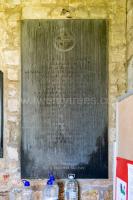
After 7th March 1807. Church of the Holy Trinity Embleton [Map]. Memorial to Elizabeth Ogle [deceased].
Elizabeth Ogle: On 29th June 1714 she was born to Nathaniel Ogle. On 14th June 1740 George Grey and she were married. On 7th March 1807 Elizabeth Ogle died.
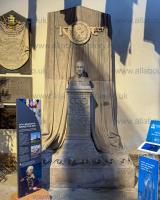
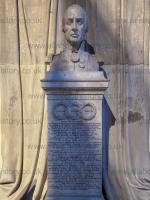
On 7th March 1810 Vice-Admiral Cuthbert Collingwood 1st Baron Collingwood [aged 61] died. Baron Collingwood of Caldbourne and Hethpoole in Northumberland extinct. Monument at the Cathedral Church St Nicholas, Newcastle upon Tyne [Map].
Vice-Admiral Cuthbert Collingwood 1st Baron Collingwood: On 26th September 1748 he was born to Cuthbert Collingwood of Newcastle upon Tyne. In 1791 Vice-Admiral Cuthbert Collingwood 1st Baron Collingwood and Sarah Blackett were married.
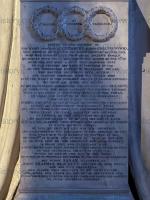

On 8th July 1810 the Bow Street police raided the White Swan on Vere Street in London that had been established as a molly-house in early 1810 by two men, James Cook and Yardley. Twenty-seven men were arrested, but the majority of them were released (perhaps as a result of bribe); eight were tried and convicted. On 27th September 1810 six men were pilloried at the Haymarket. On 7th March 1811 John Hepburn (46) and Thomas White (16), a drummer boy, were hanged at Newgate Prison, London [Map] for 'for the perpetration of an unnatural crime' against the 1533 Buggery Act despite not being present on the night of the raid.
Hampshire Telegraph and Sussex Chronicle, Portsmouth, Issue 596 7th March 1811: "White came out first; he seemed perfectly indifferent at his awful fate, and continued adjusting the frill of his shirt while he was viewing the surrounding popoulace. About two minutes after Hepburn made his appearance, but was immediately surrounded by the Clergyman, Jack Ketch [i.e. the hangman], his man, and others in attendance. The Executioner at the same time put the cap over Hepburn’s face, which of course prevented the people from having a view of him. White seemed to fix his eyes repeatedly on Hepburn. After a few minutes prayer, the miserable wretches were launched into eternity. Hepburn spoke to the Shieriff in a very firm and impressive manner, stating that the person who had sworn against him had perjured himself, and that every inta[?] that he (Hepburn) had said, to prove the perjury, was perfectly correct…"
Abbot John Whethamstede’s Chronicle of the Abbey of St Albans
Abbot John Whethamstede's Register aka Chronicle of his second term at the Abbey of St Albans, 1451-1461, is a remarkable text that describes his first-hand experience of the beginning of the Wars of the Roses including the First and Second Battles of St Albans, 1455 and 1461, respectively, their cause, and their consequences, not least on the Abbey itself. His text also includes Loveday, Blore Heath, Northampton, the Act of Accord, Wakefield, and Towton, and ends with the Coronation of King Edward IV. In addition to the events of the Wars of the Roses, Abbot John, or his scribes who wrote the Chronicle, include details in the life of the Abbey such as charters, letters, land exchanges, visits by legates, and disputes, which provide a rich insight into the day-to-day life of the Abbey, and the challenges faced by its Abbot.
Available at Amazon in eBook and Paperback format.
Letters and Journals of Lord Byron 07 March 1814. 7th March 1814. Rose at seven-ready by half past eight-went to Mr. Hanson's, Berkeley-square-went to church with his eldest daughter, Mary Anne1 (a good girl), and gave her away to the Earl of Portsmouth [aged 46]. Saw her fairly a countess-congratulated the family and groom (bride)-drank a bumper of wine (wholesome sherris) to their felicity, and all that,-and came home. Asked to stay to dinner, but could not. At three sat to Phillips for faces. Called on Lady M [aged 62].-I like her so well, that I always stay too long. (Mem. to mend of that)
Passed the evening with Hobbouse [aged 27], who has begun a Poem, which promises highly;-wish he would go on with it. Heard some curious extracts from a life of Morosini2, the blundering Venetian, who blew up the Acropolis at Athens with a bomb, and be d-d to him! Waxed sleepy-just come home-must go to bed, and am engaged to meet Sheridan [aged 62] to-morrow at Rogers's [aged 50].
Queer ceremony that same of marriage-saw many abroad, Greek and Catholic-one, at home, many years ago. There be some strange phrases in the prologue (the exhortation), which made me turn away, not to laugh in the face of the surpliceman. Made one blunder, when I joined the hands of the happy-rammed their left hands, by mistake, into one another. Corrected it-bustled back to the altar-rail, and said 'Amen.' Portsmouth responded as if he had got the whole by heart; and, if any thing, was rather before the priest. It is now midnight, and ******.
Note 1. Lord Portsmouth (see Letters, vol. i. p. 9, note 2 [Footnote 3 of Letter 3]), who had long known the Hansons, from whose house he married his first wife, married, March 7, 1814, Mary Anne, eldest daughter of John Hanson. A commission of lunacy was taken out by the brother and next heir, the Hon. Newton Fellowes; but Lord Chancellor Eldon decided that Lord Portsmouth was capable of entering into the marriage contract and managing his own affairs. The commission was, however, ultimately granted. Byron swore an affidavit on the first occasion.
Denman mentioned Lord Byron's affidavit about Lord Portsmouth as a proof of the influence of Hanson over him; Lord B. swearing that Lord P. had 'rather a superior mind than otherwise'" (Memoirs, etc., of Thomas Moore, vol. vi. p. 47).
The following is the note which Byron sent Hanson to embody in his affidavit:
I have been acquainted with Mr. Hanson and his family for many years. He is my solicitor. About the beginning of March last he sent to me to ask my opinion on the subject of Lord Portsmouth, who, as I understood from Mr. H., was paying great attention to his eldest daughter. He stated to me that Mr. Newton Fellowes (with whom I have no personal acquaintance) was particularly desirous that Lord Portsmouth should marry some 'elderly woman' of his (Mr. Fellowes's) selection-that the title and family estates might thereby devolve on Mr. F. or his children; but that Lord P. had expressed a dislike to old women, and a desire to choose for himself. I told Mr. Hanson that, if Miss Hanson's affections were not pre-engaged, and Lord Portsmouth appeared attached to her, there could be, in my opinion, no objection to the match. I think, but cannot be positive, that I saw Lord Portsmouth at Mr. Hanson's two or three times previous to the marriage; but I had no conversation with him upon it.
The night before the ceremony, I received an invitation from Mr. Hanson, requesting me, as a friend of the family, to be present at the marriage, which was to take place next morning. I went next morning to Bloomsbury Square, where I found the parties. Lady Portsmouth, with her brother and sister and another gentleman, went in the carriage to St. George's Church; Lord Portsmouth and myself walked, as the carriage was full, and the distance short. On my way Lord Portsmouth told me that he had been partial to Miss Hanson from her childhood, and that, since she grew up, and more particularly subsequent to the decease of the late Lady P., this partiality had become attachment, and that he thought her calculated to make him an excellent wife. I was present at the ceremony and gave away the bride. Lord Portsmouth's behaviour seemed to me perfectly calm and rational on the occasion. He seemed particularly attentive to the priest, and gave the responses audibly and very distinctly. I remarked this because, in ordinary conversation, his Lordship has a hesitation in his speech. After the ceremony, we returned to Mr. Hanson's, whence, I believe, they went into the country-where I did not accompany them. Since their return I have occasionally seen Lord and Lady Portsmouth in Bloomsbury Square. They appeared very happy. I have never been very intimate with his Lordship, and am therefore unqualified to give a decided opinion of his general conduct. But had I considered him insane, I should have advised Mr. Hanson, when he consulted me on the subject, not to permit the marriage. His preference of a young woman to an old one, and of his own wishes to those of a younger brother, seemed to me neither irrational nor extraordinary."
There is nothing in the note itself, or in the draft affidavit, to bear out Moore's report of Denman's statement.
Byron, according to the account given by Newton Hanson, is wrong in saying that Mrs. Hanson approved of the marriage. On the contrary, it was the cause of her death, a fortnight later. In 1828 the marriage was annulled, a jury having decided that Lord Portsmouth was non compos mentis when he contracted it.
Note 2. Francesco Morosini (1618-1694) occupied the Morea for Venice (1687), besieged Athens, and bombarded the Parthenon, which had been made a powder-magazine. He became Doge of Venice in 1688.


On 7th March 1827 Ellen Turner [aged 16] was abducted from Margaret Daulby's elite boarding school for girls in Liverpool by, Edward Thevenot, a servant of Edward Gibbon Wakefield [aged 30]. Edward Gibbon Wakefield and Ellen Turner were married at Gretna Green, Dumfrieshire, she believing she was marrying to protect her father from financial ruin. After the marriage they set out for France, another jurisdiction, where he intended they settle as man and wife. He was subsequently arrested, tried and imprisoned.
Ten Years' Digging. On the 7th of March, we opened a small barrow near Church Sterndale, mostly composed of earth, with a few stones on the level of the natural soil; without being able to find any interment.
On 7th March 1856 Violet Lindsay Duchess Rutland was born to Charles Hugh Lindsay [aged 39] and Emilia Anne Browne [aged 29]. She married 1882 Henry John Brinsley Manners 8th Duke Rutland, son of John Manners 7th Duke Rutland and Catherine Louise Georgina Marlay, and had issue.


On 7th March 1882 Henry Wellesley 3rd Duke Wellington [aged 35] and Evelyn Katrine Gwenfra Williams Duchess Wellington [aged 27] were married.
The London Gazette 31221. 7th March 1919. 3rd E. W. Fus.
Capt. N. G. C. McClellan is placed on the ret. list on .account of ill-health contracted on active service. 1919. 12th Mar. 1919.
Lt. (actg. Capt.) S. L. Sassoon [aged 32], M.C., relinquishes .his actg. rank, is placed on the ret. list on account of ill-health caused by wounds, 12th Mar. 1919, and is granted the rank of Capt.


The London Gazette 32250. Whitehall, March 7, 1921.
The King has been pleased, by Letters Patent under the Great Seal of the United Kingdom of Great Britain and Ireland, bearing date the 7th instant, to declare that Edith Maud, Countess of Loudoun, is and shall be Baroness Botreaux and Baroness Hastings; and to give, grant and confirm the Baronies of Botreaux and Hastings which fell into abeyance on the death of Charles Edward Hastings, Earl of Loudoun, on the 17th day of May, 1920, to the said Edith Maud [aged 37], Countess of Loudoun: To have and to hold the said Baronies, together with all the rights, privileges, pre-eminences, immunities and advantages, and the place and precedence due and (belonging thereto to her and to the heirs of her body lawfully begotten and to be begotten in as full and ample a manner as the said Charles Edward Hastings; Earl of Loudoun, or any of his ancestors held and enjoyed the same.
And also to declare that the said Edith Maud, Countess of Loudoun, is and shall be Baroness Stanley; and: to give, grant and confirm, the Barony of Stanley which, fell into abeyance on the death of Ferdinando, 5th Earl of Derby, in the year 1594, to the said Edith Maud, Countess of Loudoun: To have and to hold the said Barony, together with, all the rights, privileges, pre-eminences, immunities and advantages, and the place and precedence due and belonging thereto to her and to the heirs of her body lawfully (begotten and to be begotten in as full and ample a manner as the said Ferdinando, 5th Earl of Derby, or any of ihis ancestors held and enjoyed the same.
Note. Edith Maud Rawdon-Hastings 12th Countess Loudon abeyance terminated 23rd Baroness Botreaux, 7th Baroness Stanley and 20th Baroness Hastings. She and her sister Elizabeth Frances Abney-Hastings Viscountess St Davids [aged 36] had petitioned the Committee for Privileges for six titles Baron Strange Knockin, Baron Botreaux, Baron Hungerford, Baron Moleyns, Baron Stanley and Baron Hastings. The titles were shared three each between them.
On 7th March 1944 Rudolf Russell was born to John Ian Robert Russell 13th Duke Bedford [aged 26] and Clare Bridgman [aged 41].
On 7th March 1314 Richardis Jülich Duchess Lower Bavaria was born to Gerhard Jülich V Count Jülich [aged 64] and Elisabeth Brabant Countess Jülich. She a great x 4 granddaughter of King Stephen I England. She married 1330 her fourth cousin Otto Wittelsbach IV Duke Lower Bavaria, son of Stephen Wittelsbach I Duke Bavaria and Jutta Jawor Duchess Bavaria.
On 7th March 1419 Matilde Wittelsbach Countess of Württemberg was born to Louis Wittelsbach III Elector Palatine [aged 41] and Matilda of Savoy [aged 29]. She married (1) 1434 her fourth cousin once removed Ludwig I Count of Württemberg, son of Eberhard IV Count of Württemberg and Henriette Countess of Montbéliard, and had issue (2) 1452 her fourth cousin twice removed Albert VI Archduke of Austria, son of Ernest "The Iron" Habsburg I Duke Austria and Cymburgis Masovia Duchess Austria.
On 7th March 1504 Joan Neville was born to Richard Neville 2nd Baron Latimer of Snape [aged 36] and Anne Stafford Baroness Latimer [aged 33]. She a great x 4 granddaughter of King Edward III of England.
Henrici Quinti, Angliæ Regis, Gesta, is a first-hand account of the Agincourt Campaign, and subsequent events to his death in 1422. The author of the first part was a Chaplain in King Henry's retinue who was present from King Henry's departure at Southampton in 1415, at the siege of Harfleur, the battle of Agincourt, and the celebrations on King Henry's return to London. The second part, by another writer, relates the events that took place including the negotiations at Troye, Henry's marriage and his death in 1422.
Available at Amazon in eBook and Paperback format.
On 7th March 1593 Anna Sabine Oldenburg was born to John "Younger" Oldenburg Duke Schleswig Holstein Sonderburg [aged 47] and Agnes Hedwig of Anhalt [aged 19].
On 7th March 1639 Charles Stewart 6th Duke Lennox 3rd Duke Richmond was born to George Stewart 9th Seigneur D'Aubigny [aged 20] and Catherine Howard Countess Newburgh. He married (1) after June 1659 Elizabeth Rogers Duchess Richmond (2) 31st March 1662 Margaret Banastre Duchess of Richmond (3) March 1667 Frances Teresa Stewart Duchess Lennox and Richmond.
On 7th March 1693 Catherine Hervey was born to John Hervey 1st Earl Bristol [aged 27] and Isabella Carr. Her mother died in childbirth.


On 7th March 1735 Richard Hoare 1st Baronet was born to Richard Hoare [aged 26]. He married (1) before 1758 his first cousin Anne Hoare and had issue (2) after 1759 Frances Anne Acland and had issue.
On 7th March 1736 William Jerningham of Cossey Park 6th Baronet was born to George Jerningham 5th Baronet [aged 56] and Marie Françoise "Mary" Plowden. He married 16th June 1767 Frances Dillon, daughter of Henry Dillon 11th Viscount Dillon and Charlotte Lee Viscountess Dillon, and had issue.
On 7th March 1737 William John Kerr 5th Marquess Lothian was born to William Henry Kerr 4th Marquess Lothian [aged 27] and Caroline Darcy Marchioness Lothian. He a great x 4 grandson of King James I of England and Ireland and VI of Scotland. He married 15th July 1762 Elizabeth Fortescue 5th Marchioness Lothian and had issue.
On 7th March 1739 John Howard 15th Earl Suffolk 8th Earl Berkshire was born to Thomas Howard 14th Earl Suffolk 7th Earl Berkshire [aged 17].
On 7th March 1745 Thomas Gascoigne 8th Baronet was born to Edward Gascoigne 6th Baronet [aged 22] and Mary Hungate Lady Gascoigne. He married 4th November 1784 Mary Shuttleworth Lady Turner and Gascoigne and had issue.


On 7th March 1754 Edward Clive 1st Earl Powis was born to Robert Clive "Clive of India" [aged 28] and Margaret Maskelyne. He married 1784 Henrietta Antonia Herbert 3rd Countess Powis, daughter of Henry Herbert 1st Earl Powis and Barbara Herbert Countess Powis, and had issue.
On 7th March 1777 David William Murray 3rd Earl of Mansfield was born to David Murray 2nd Earl Mansfield [aged 49] and Louisa Cathcart 2nd Countess Mansfield [aged 19]. He married 16th September 1797 Frederica Markham Countess Mansfield, daughter of Archbishop William Markham, and had issue.
Annals of the six Kings of England by Nicholas Trivet
Translation of the Annals of the Six Kings of England by that traces the rise and rule of the Angevin aka Plantagenet dynasty from the mid-12th to early 14th century. Written by the Dominican scholar Nicholas Trivet, the work offers a vivid account of English history from the reign of King Stephen through to the death of King Edward I, blending political narrative with moral reflection. Covering the reigns of six monarchs—from Stephen to Edward I—the chronicle explores royal authority, rebellion, war, and the shifting balance between crown, church, and nobility. Trivet provides detailed insight into defining moments such as baronial conflicts, Anglo-French rivalry, and the consolidation of royal power under Edward I, whose reign he describes with particular immediacy. The Annals combines careful year-by-year reporting with thoughtful interpretation, presenting history not merely as a sequence of events but as a moral and political lesson. Ideal for readers interested in medieval history, kingship, and the origins of the English state, this chronicle remains a valuable and accessible window into the turbulent world of the Plantagenet kings.
Available at Amazon in eBook and Paperback format.
On 7th March 1804 Henry or Philip Sherard 9th Baron Sherard was born to Reverend Philip Castel Sherard [aged 36].
On 7th March 1810 Frances Matilda Irby was born to George Irby 3rd Baron Boston [aged 32] and Rachel Ives Drake Baroness Boston [aged 27].
On 7th March 1818 Frederick Dampier Rich was born to Charles Henry Rich 2nd Baronet [aged 33] and Francs-Maria Lethbridge Lady Rich. He married in or before 1859 his first cousin once removed Jacinthia Catherine Hesketh Lethbridge, daughter of John Hesketh Lethbridge 3rd Baronet and Harriet Rebecca Mytton, and had issue.
On 7th March 1830 Debonnaire John Monson 8th Baron Monson was born to William John Monson 6th Baron Monson [aged 33]. He married 25th December 1861 Augusta Louisa Caroline Ellis Baroness Monson and had issue.

On 7th March 1841 Charles Marsham 4th Earl Romney was born to Charles Marsham 3rd Earl Romney [aged 32] and Margaret Harriet Montagu Scott Countess Romney [aged 29]. He married 30th July 1863 his sixth cousin Frances Augusta Constance Muir Rawdon-Hastings Countess Romney, daughter of George Augustus Francis Rawdon-Hastings 2nd Marquess Hastings and Barbara Yelverton Marchioness Hastings, and had issue.

On 7th March 1853 William Onslow 4th Earl Onslow was born to George Augustus Cranley Onslow [aged 39] and Mary Harriet Anne Loftus at Old Alresford, Hampshire. He married 1875 Florence Coulston Gardner Countess Onslow, daughter of Alan Legge Gardner 3rd Baron Gardner, and had issue.
On 7th March 1856 Violet Lindsay Duchess Rutland was born to Charles Hugh Lindsay [aged 39] and Emilia Anne Browne [aged 29]. She married 1882 Henry John Brinsley Manners 8th Duke Rutland, son of John Manners 7th Duke Rutland and Catherine Louise Georgina Marlay, and had issue.
On 7th March 1859 Charles Henry Stuart Rich 4th Baronet was born to Charles Henry John Rich 3rd Baronet [aged 46].
On 7th March 1870 Henry Brassey 1st Baron Apethorpe was born to Henry Brassey [aged 29] and Harriet Stevenson. He married 1894 Violet Mary Gordon Lennox Baroness Brassey, daughter of Charles Gordon-Lennox 7th Duke Richmond and Amy Mary Ricardo, and had issue.
On 7th March 1874 Francis Dyke Acland 14th Baronet was born to Arthur Dyke Acland 13th Baronet [aged 26] and Alice Sophia Cunningham Lady Acland [aged 25].
Henrici Quinti, Angliæ Regis, Gesta, is a first-hand account of the Agincourt Campaign, and subsequent events to his death in 1422. The author of the first part was a Chaplain in King Henry's retinue who was present from King Henry's departure at Southampton in 1415, at the siege of Harfleur, the battle of Agincourt, and the celebrations on King Henry's return to London. The second part, by another writer, relates the events that took place including the negotiations at Troye, Henry's marriage and his death in 1422.
Available at Amazon in eBook and Paperback format.
On 7th March 1883 Bentley Tollemache 3rd Baron Tollemache was born to Lyonel Plantagenet Tollemache [aged 22] and Blanche Sybil King [aged 21]. He married (1) 1902 Wynford Rose Kemball (2) 1928 Lynette Pawson.
On 7th March 1887 Philip Brocklehurst 2nd Baronet was born to Philip Lancaster Brocklehurst 1st Baronet [aged 59] at Swythamley Hall, Staffordshire.
On 7th March 1890 Helen Cecil Douglas-Scott-Montagu was born to John Douglas-Scott-Montagu 2nd Baron Montagu of Beaulieu [aged 23] and Cecil Victoria Kerr Baroness Montagu of Beaulieu [aged 24]. Coefficient of inbreeding 6.33%.
On 7th March 1903 Trevor Lowther Brodrick 11th Viscount Midleton was born to William John Henry Brodrick [aged 29].
On 7th March 1917 Maureen Therese Josephine Noel Baroness Dormer was born to Arthur Noel 4th Earl of Gainsborough [aged 32] and Alice Mary Eyre Countess Gainsborough. She a great x 3 granddaughter of King William IV of the United Kingdom. She married 19th February 1944 Charles Walter James Dormer 15th Baron Dormer, son of Charles Joseph Thaddeus Dormer 14th Baron Dormer and Caroline May Clifford Baroness Dormer.
On 7th March 1920 Katharine Mary Coke was born to Thomas William Coke 4th Earl of Leicester [aged 39] and Marion Gertrude Trefusis Countess Leicester [aged 37].
On 7th March 1930 Antony Armstrong-Jones 1st Earl of Snowdon was born to Ronald Armstrong-Jones [aged 30] and Anne Messel [aged 28]. He married 6th May 1960 Princess Margaret and had issue.
On 7th March 1944 Rudolf Russell was born to John Ian Robert Russell 13th Duke Bedford [aged 26] and Clare Bridgman [aged 41].
On 7th March 1965 Thomas Joshua Best-Shaw 11th Baronet was born to John Michael Robert Best-Shaw 10th Baronet [aged 40].
On 7th March 1461 Gaston V Count Foix [aged 18] and Magdalena Valois Countess Foix [aged 17] were married. She by marriage Countess Foix. She the daughter of Charles "Victorious" VII King France [aged 58] and Marie Valois Anjou Queen Consort France [aged 56]. He the son of Gaston IV Count Foix [aged 38] and Eleanor Trastámara Queen Consort Navarre [aged 35]. They were third cousin once removed.
Adam Murimuth's Continuation and Robert of Avesbury’s 'The Wonderful Deeds of King Edward III'
This volume brings together two of the most important contemporary chronicles for the reign of Edward III and the opening phases of the Hundred Years’ War. Written in Latin by English clerical observers, these texts provide a vivid and authoritative window into the political, diplomatic, and military history of fourteenth-century England and its continental ambitions. Adam Murimuth Continuatio's Chronicarum continues an earlier chronicle into the mid-fourteenth century, offering concise but valuable notices on royal policy, foreign relations, and ecclesiastical affairs. Its annalistic structure makes it especially useful for establishing chronology and tracing the development of events year by year. Complementing it, Robert of Avesbury’s De gestis mirabilibus regis Edwardi tertii is a rich documentary chronicle preserving letters, treaties, and official records alongside narrative passages. It is an indispensable source for understanding Edward III’s claim to the French crown, the conduct of war, and the mechanisms of medieval diplomacy. Together, these works offer scholars, students, and enthusiasts a reliable and unembellished account of a transformative period in English and European history. Essential for anyone interested in medieval chronicles, the Hundred Years’ War, or the reign of Edward III.
Available at Amazon in eBook and Paperback format.
On 7th March 1626 Henry Howard 15th or 22nd Earl of Arundel 5th Earl of Surrey 2nd Earl Norfolk [aged 17] and Elizabeth Stewart Countess Arundel and Norfolk [aged 16] were married. She the daughter of Esmé Stewart 3rd Duke Lennox and Katherine Clifton Duchess Lennox [aged 34]. He the son of Thomas Howard 14th or 21st Earl of Arundel 4th Earl of Surrey 1st Earl Norfolk [aged 40] and Alethea Talbot Countess Arundel, Surrey and Norfolk [aged 41]. They were half fifth cousins.
On 7th March 1680 Louis "Le Grand Dauphin" Bourbon Duke Burgundy [aged 18] and Maria Anna Victoria Wittelsbach Duchess Burgundy [aged 19] were married. She by marriage Duchess Burgundy. He the son of Louis "Sun King" XIV King France [aged 41] and Maria Theresa of Spain Queen Consort France [aged 41]. They were third cousins.

On 7th March 1685 Charles Sackville 6th Earl Dorset 1st Earl Middlesex [aged 42] and Mary Compton Countess Dorset and Middlesex [aged 16] were married. She by marriage Countess Dorset, Countess Middlesex. The difference in their ages was 25 years. She the daughter of James Compton 3rd Earl of Northampton and Mary Noel Countess Northampton. He the son of Richard Sackville 5th Earl Dorset and Frances Cranfield Countess Dorset [aged 63]. They were sixth cousins.
On 7th March 1697 Michael Biddulph 2nd Baronet [aged 43] and Elizabeth D'Oyly were married.
On 7th March 1706 James Scudamore 3rd Viscount Scudamore [aged 21] and Frances Digby Viscountess Scudamore [aged 21] were married. She by marriage Viscountess Scudamore. They were fourth cousin once removed.
On 7th March 1709 Robert Fitzgerald 19th Earl of Kildare [aged 33] and Mary O'Brien Countess Kildare were married. She by marriage Countess Kildare. She the daughter of William O'Brien 3rd Earl Inchiquin [aged 47] and Mary Villiers Countess Inchiquin. They were second cousin once removed.
On 7th March 1770 Charles Style 5th Baronet and Isabella Wingfield were married.
On 7th March 1775 Thomas Frankland 6th Baronet [aged 24] and Dorothy Smelt Lady Thirkleby [aged 25] were married. They were third cousins.

On 7th March 1812 William Eliot 2nd Earl St Germans [aged 44] and Charlotte Robinson [aged 22] were married at Earl of Powis' House Mayfair. She died sixteen months later. The difference in their ages was 22 years.
On 7th March 1814 John Wallop 3rd Earl Portsmouth [aged 46] and Mary Anne Hanson Countess Portsmouth were married. The marriage had been arranged in secret by her father John Hanson who was one of John's trustees. George "Lord Byron" 6th Baron Byron [aged 26], another of John Hanson's clients, gave the bride away. She had an adulterous affair with William Alder with whom she had three children. In 1828 the marriage was annulled and the children declared illegitimate as a consequence of a de lunatico inquirendo instigated by his nephew Henry Arthur Wallop Fellowes [aged 14]. He the son of John Wallop 2nd Earl Portsmouth and Urania Fellowes.


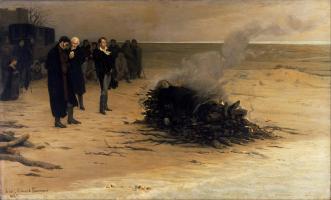
On 7th March 1822 George James Welbore Agar 1st Baron Dover [aged 25] and Georgiana Howard Lady Dover [aged 18] were married. She the daughter of George Howard 6th Earl Carlisle [aged 48] and Georgiana Cavendish Countess Carlisle [aged 38]. They were third cousins.


On 7th March 1829 George Byng 2nd Earl Strafford [aged 22] and Agnes Paget [aged 25] were married. She the daughter of Henry William Paget 1st Marquess Anglesey [aged 60] and Caroline Elizabeth Villiers Duchess Argyll [aged 54]. He the son of John Byng 1st Earl Strafford [aged 57] and Mary Stevens Mackenzie.
On 7th March 1871 Archibald Kennedy 3rd Marquess of Ailsa [aged 23] and Evelyn Stuart [aged 23] were married. He the son of Archibald Kennedy 2nd Marquess of Ailsa.
On 7th March 1882 Henry Wellesley 3rd Duke Wellington [aged 35] and Evelyn Katrine Gwenfra Williams Duchess Wellington [aged 27] were married.
Henrici Quinti, Angliæ Regis, Gesta, is a first-hand account of the Agincourt Campaign, and subsequent events to his death in 1422. The author of the first part was a Chaplain in King Henry's retinue who was present from King Henry's departure at Southampton in 1415, at the siege of Harfleur, the battle of Agincourt, and the celebrations on King Henry's return to London. The second part, by another writer, relates the events that took place including the negotiations at Troye, Henry's marriage and his death in 1422.
Available at Amazon in eBook and Paperback format.
On 7th March 1934 Richard Wyndham-Quin 6th Earl of Dunraven and Mount-Earl [aged 46] and Nancy Yuille Countess of Dunraven and Mount-Earl [aged 32] were married. He the son of Windham Wyndham-Quin 5th Earl of Dunraven and Mount Earl [aged 77].
On 7th March 1226 Ida Tosny Countess Norfolk [aged 70] died at Framlingham, Suffolk [Map].
On 7th March 1226 William Longespée Earl Salisbury [aged 50] died at Old Sarum [Map]. Roger of Wendover in his Flowers of History writes that some accused Hubert de Burgh Count Mortain 1st Earl Kent [aged 56] of having poisoned him.
Effigy at Salisbury Cathedral [Map].
On 7th March 1305 Guy Dampierre Count Flanders [aged 79] died. His son Robert [aged 56] succeeded III Count Flanders.
On 7th March 1352 Joan Valois Countess Zeeland Holland Avesnes and Hainaut [aged 58] died.
On 7th March 1360 Richardis Jülich Duchess Lower Bavaria [aged 46] died.
On 7th March 1369 Michael Poynings 1st Baron Poynings [aged 51] died. His son Thomas [aged 20] succeeded 2nd Baron Poynings.
On 7th March 1429 Thomas Poynings 5th Baron St John of Basing [aged 78] died at Old Basing, Hampshire [Map]. Baron St John of Basing extinct or dormant.
On 7th March 1527 Edward Fiennes 5th Baron Saye and Sele [aged 27] died at Broughton Castle, Oxfordshire. His son Richard [aged 6] succeeded 6th Baron Saye and Sele.
On 7th March 1550 William Wittelsbach IV Duke Bavaria [aged 56] died. His son Albert [aged 22] succeeded V Duke Bavaria. His brother Louis succeeded X Duke Bavaria.
Chronicle of a Bourgeois of Valenciennes
Récits d’un bourgeois de Valenciennes aka The Chronicle of a Bourgeois of Valenciennes is a vivid 14th-century vernacular chronicle written by an anonymous urban chronicler from Valenciennes in the County of Hainaut. It survives in a manuscript that describes local and regional history from about 1253 to 1366, blending chronology, narrative episodes, and eyewitness-style accounts of political, military, and social events in medieval France, Flanders, and the Low Countries. The work begins with a chronological framework of events affecting Valenciennes and its region under rulers such as King Philip VI of France and the shifting allegiances of local nobility. It includes accounts of conflicts, sieges, diplomatic manoeuvres, and the impact of broader struggles like the Hundred Years’ War on urban life in Hainaut. Written from the perspective of a burgher (bourgeois) rather than a monastery or royal court, the chronicle offers a rare lay viewpoint on high politics and warfare, reflecting how merchants, townspeople, and civic institutions experienced the turbulence of the 13th and 14th centuries. Its narrative style combines straightforward reporting of events with moral and civic observations, making it a valuable source for readers interested in medieval urban society, regional politics, and the lived experience of war and governance in pre-modern Europe.
Available at Amazon in eBook and Paperback format.
On 7th March 1578 Margaret Douglas Countess Lennox [aged 62] died.
On 7th March 1655 William Herbert 1st Baron Powis [aged 82] died. He was buried at St Mary and Christ Church, Hendon Barnet. His son Percy [aged 57] succeeded 2nd Baron Powis of Powis Castle in Powys. Elizabeth Craven Baroness Herbert [aged 55] by marriage Baroness Powis of Powis Castle in Powys.
On 7th March 1714 Robert Ridgeway 4th Earl Londonderry [aged 63] died. Earl Londonderry extinct.
On 7th March 1722 Catherine Manners Baroness Gower [aged 46] died.
On 7th March 1727 William Monson 4th Baronet [aged 73] died without issue. His nephew John [aged 34] succeeded 5th Baronet Monson of Carleton in Lincolnshire.
On 7th March 1728 Frederick Louis Oldenburg I Duke Schleswig-Holstein-Sonderburg-Beck [aged 74] died. His son Frederick [aged 40] succeeded William II Duke Schleswig-Holstein-Sonderburg-Beck.
On 7th March 1731 William Douglas 2nd Earl March [aged 34] died. His son William [aged 6] succeeded 3rd Earl March.
On 7th March 1733 Robert Furnese 2nd Baronet [aged 45] died. His son Robert [aged 17] succeeded 3rd Baronet Furnese of Waldershare in Kent.
On 7th March 1761 Charles Dormer 6th Baron Dormer died. His brother John [aged 69] succeeded 7th Baron Dormer of Wyng in Buckinghamshire, 7th Baronet Dormer of Wyng in Buckinghamshire.
On 7th March 1765 Charles Dalston 4th Baronet [aged 46] died. Baronet Dalston of Dalston extinct.

The True Chronicles of Jean le Bel Volume 1 Chapters 1-60 1307-1342
The True Chronicles of Jean le Bel offer one of the most vivid and immediate accounts of 14th-century Europe, written by a knight who lived through the events he describes, and experienced some of them first hand. Covering the early decades of the Hundred Years’ War, this remarkable chronicle follows the campaigns of Edward III of England, the politics of France and the Low Countries, and the shifting alliances that shaped medieval warfare. Unlike later historians, Jean le Bel writes with a strong sense of eyewitness authenticity, drawing on personal experience and the testimony of fellow soldiers. His narrative captures not only battles and sieges, but also the realities of military life, diplomacy, and the ideals of chivalry that governed noble society. A key source for Jean Froissart, Le Bel’s chronicle stands on its own as a compelling and insightful work, at once historical record and literary achievement. This translation builds on the 1905 edition published in French by Jules Viard, adding extensive translations from other sources Rymer's Fœdera, the Chronicles of Adam Murimuth, William Nangis, Walter of Guisborough, a Bourgeois of Valenciennes, Geoffrey le Baker of Swinbroke and Richard Lescot to enrich the original text and Viard's notes.
Available at Amazon in eBook and Paperback format.
On 7th March 1770 John Mordaunt Cope 8th Baronet [aged 39] died unmarried. His first cousin once removed Richard [aged 51] succeeded 9th Baronet Cope of Hanwell in Oxfordshire.
On 7th March 1772 Roger Twisden 5th Baronet [aged 66] died. His son Roger [aged 34] succeeded 6th Baronet Twisden of Bradbourne in Kent.
On 7th March 1776 John Lyon 9th Earl Strathmore and Kinghorne [aged 38] died. His son John [aged 6] succeeded 10th Earl Strathmore and Kinghorne.
On 7th March 1779 Henry Howard 12th Earl Suffolk 5th Earl Berkshire [aged 39] died at Bath, Somerset [Map]. He was buried at All Saints Church, Charlton-All-Saints [Map]. On 8th August 1779 his postumous son His son Henry succeeded 13th Earl Suffolk, 6th Earl Berkshire, 6th Viscount Andover in Hampshire, 6th Baron Howard of Charlton in Wiltshire although he died two days later.
On 7th March 1785 Arthur Brooke 1st Baronet [aged 59] died at Sackville Street Dublin. Baronet Brooke of Colebrooke in Fermanagh extinct.
On 7th March 1786 Philip Stanhope 2nd Earl Stanhope [aged 71] died. His son Charles [aged 32] succeeded 3rd Earl Stanhope.
On 7th March 1808 George Damer 2nd Earl Dorchester [aged 61] died unmarried in Park Lane. Earl Dorchester, Baron Milton of Shronehill in Tipperary, Baron Milton of Milton Abbey in Dorset extinct.
On 7th March 1810 Vice-Admiral Cuthbert Collingwood 1st Baron Collingwood [aged 61] died. Baron Collingwood of Caldbourne and Hethpoole in Northumberland extinct. Monument at the Cathedral Church St Nicholas, Newcastle upon Tyne [Map].
Vice-Admiral Cuthbert Collingwood 1st Baron Collingwood: On 26th September 1748 he was born to Cuthbert Collingwood of Newcastle upon Tyne. In 1791 Vice-Admiral Cuthbert Collingwood 1st Baron Collingwood and Sarah Blackett were married.
On 7th March 1818 Caroline Bennett Lady Wrottesley [aged 45] died.
On 7th March 1823 John Stratford 3rd Earl Aldborough [aged 83] died at Belan House, County Kildare. His brother Benjamin [aged 77] succeeded 4th Earl Aldborough, 4th Viscount Aldborough of Belan in Kildare, 4th Baron Baltinglass of Wicklow.
On 7th March 1824 Thomas Villiers 2nd Earl Clarendon [aged 70] died. His brother John [aged 66] succeeded 3rd Earl Clarendon, 3rd Baron Hyde of Hindon in Wiltshire 1756. Maria Forbes Countess Clarendon [aged 63] by marriage Countess Clarendon.
On 1st March 1851 William Loraine 9th Baronet [aged 70] died. He was buried at Jesmond Old Cemetery, Newcastle upon Tyne [Map] on 7th March 1851. His brother John [aged 66] succeeded 10th Baronet Loraine of Kirkharle in Northumberland.
Newcastle Journal 8th March 1851: "The remains of the late Sir William Loraine, Bart. were interred yesterday with masonic honours in the public cemetery at Jesmond. In consequence of the death of the venerable gentleman without heirs, the baronetcy of that ancient family has devolved on John Lambton Loraine, Esq. of this town. The deceased Baronet was a magistrate of this borough. He was the second son of Charles, the fifth baronet. The title descended to him through three nephews— William, Charles Vincent, and Henry Claude and fell upon him in the early part of the present year. It is remarkable that in twenty-two months there have been four different baronets in the family."
On 7th March 1851 Alexander Hood 2nd Baronet [aged 57] died. His son Alexander [aged 31] succeeded 3rd Baronet Hood of Tidlake in Surrey. Isabel Harriet Fuller-Palmer-Acland Lady Hood [aged 18] by marriage Lady Hood of Tidlake in Surrey.
William of Worcester's Chronicle of England
William of Worcester, born around 1415, and died around 1482 was secretary to John Fastolf, the renowned soldier of the Hundred Years War, during which time he collected documents, letters, and wrote a record of events. Following their return to England in 1440 William was witness to major events. Twice in his chronicle he uses the first person: 1. when writing about the murder of Thomas, 7th Baron Scales, in 1460, he writes '… and I saw him lying naked in the cemetery near the porch of the church of St. Mary Overie in Southwark …' and 2. describing King Edward IV's entry into London in 1461 he writes '… proclaimed that all the people themselves were to recognize and acknowledge Edward as king. I was present and heard this, and immediately went down with them into the city'. William’s Chronicle is rich in detail. It is the source of much information about the Wars of the Roses, including the term 'Diabolical Marriage' to describe the marriage of Queen Elizabeth Woodville’s brother John’s marriage to Katherine, Dowager Duchess of Norfolk, he aged twenty, she sixty-five or more, and the story about a paper crown being placed in mockery on the severed head of Richard, 3rd Duke of York.
Available at Amazon in eBook and Paperback format.
On 7th March 1855 Thomas Liddell 1st Baron Ravensworth [aged 80] died. His son Henry [aged 57] succeeded 2nd Baron Ravensworth of Ravensworth Castle in County Durham, 7th Baronet Liddell of Ravensworth Castle.
On 7th March 1873 Evelyn Denison 1st Viscount Ossington [aged 73] died without issue. Viscount Ossington of Ossington in Nottinghamshire extinct.
On 7th March 1882 Thomas Grosvenor 2nd Earl Wilton [aged 82] died. His son Arthur [aged 49] succeeded 3rd Earl Wilton, 3rd Viscount Grey de Wilton. Elizabeth Charlotte Louisa Craven Countess Wilton [aged 45] by marriage Countess Wilton.
On 7th March 1898 George Russell 4th Baronet [aged 69] died. His son George [aged 30] succeeded 5th Baronet Russell of Swallowfield in Berkshire.
On 7th March 1927 Hugh Amherst 4th Earl Amherst [aged 71] died. His son Jeffery [aged 30] succeeded 5th Earl Amherst, 6th Baron Amherst of Montreal in Kent.
On 7th March 1934 John Hamilton-Gordon 1st Marquess of Aberdeen and Temair [aged 86] died. His son George [aged 55] succeeded 2nd Marquess of Aberdeen and Temair, 2nd Earl of Haddo in Aberdeenshire, 8th Earl Aberdeen. Mary Florence Clixby Marchioness of Aberdeen and Temair [aged 77] by marriage Marchioness of Aberdeen and Temair.
On 7th March 1950 Christopher Finch-Hatton 10th Earl Nottingham 15th Earl Winchilsea [aged 38] died. His son Christopher [aged 13] succeeded 11th Earl Nottingham, 16th Earl Winchilsea, 16th Viscount Maidstone, 9th Baron Finch Daventry, 17th Baronet Finch of Eastwell in Kent.
On 7th March 1953 John Scott Horsbrugh-Porter 2nd Baronet [aged 81] died. His son Andrew [aged 45] succeeded 3rd Baronet Porter of Merrion Square in Dublin.
On 7th March 1966 William Waldorf Astor 3rd Viscount Astor [aged 58] died. His son William [aged 14] succeeded 4th Viscount Astor, 4th Baron Astor.
On 7th March 1977 Charles Athelstan Nightingale 16th Baronet [aged 74] died. His son Charles [aged 30] succeeded 17th Baronet Nightingale of Newport Pond in Essex.
On 7th March 1986 Julian Thurstan Holland-Hibbert 5th Viscount Knutsford [aged 65] died. His first cousin Michael [aged 59] succeeded 6th Viscount Knutsford of Knutsford in Cheshire, 6th Baron Knutsford of Knutsford in Cheshire, 7th Baronet Holland of Sandlebridge.
On 7th March 1993 Richard Fortescue 7th Earl Fortescue [aged 70] died. His son Charles [aged 41] succeeded 8th Earl Fortescue, 8th Viscount Ebrington of Ebrington in Gloucestershire, 10th Baron Fortescue of Castle Hill.
Jean de Waurin's Chronicle of England Volume 6 Books 3-6: The Wars of the Roses
Jean de Waurin was a French Chronicler, from the Artois region, who was born around 1400, and died around 1474. Waurin’s Chronicle of England, Volume 6, covering the period 1450 to 1471, from which we have selected and translated Chapters relating to the Wars of the Roses, provides a vivid, original, contemporary description of key events some of which he witnessed first-hand, some of which he was told by the key people involved with whom Waurin had a personal relationship.
Available at Amazon in eBook and Paperback format.
On 7th March 2018 Other Windsor-Clive 3rd Earl of Plymouth [aged 94] died. His son Ivor [aged 66] succeeded 4th Earl Plymouth in Devon.
On 7th March 2022 George Hugh Boscawen 9th Viscount Falmouth died. His son Evelyn [aged 66] succeeded 10th Viscount Falmouth, 17th Baron Despencer.