

17 Jul is in July.
924 Death of King Edward the Elder
1328 Marriage of King David II of Scotland and Princess Joan
1429 Coronation of Charles VII of France
1483 Robert Brackenbury appointed Constable of the Tower of London
1503 Margaret Tudor's Journey to Scotland
On 17th July 924 King Edward "Elder" of the Anglo Saxons [aged 50] died. He was buried in St Oswald's Priory [Map]. His son Æthelstan [aged 30] succeeded King Anglo Saxons. His son Æthelstan succeeded I King Anglo Saxons.
Anglo-Saxon Chronicle. 17th July 924. This year died King Edward [aged 50] at Farndon [Map] in Mercia; and Elward [aged 22] his son died very soon after this, in Oxford, Oxfordshire [Map]. Their bodies lie at Winchester.
Chronicle of William of Malmesbury Book 2 Chapter 6. 17th July 924. King Edward [aged 50], after many noble exploits, both in war and peace, a few days before his death subdued the contumacy of the city of Chester, which was rebelling in confederacy with the Britons; and placing a garrison there, he fell sick and died at Faringdon, and was buried, as I before related, at Winchester. Athelstan, as his father had commanded in his will, was then hailed king, recommended by his years,—for he was now thirty,—and the maturity of his wisdom.
Chronicon ex Chronicis by Florence and John of Worcester. 17th July 1054. The same year, on the feast of St. Kenelm, the martyr, [17th July], Aldred, bishop of Worcester, instituted Godric as abbot of Winchcombe. The bishop was then sent by the king as ambassador to the emperor, with rich presents; and being received with great honour by him, and also by Heriman, archbishop of Cologne, he remained at his court for a whole year, and in the king's name proposed to the emperor to send envoys to Hungary to bring back Edward [aged 38], the king's cousin, son of king Edmund Ironside, and have him conducted to England.
 History of the Dukes of Normandy by William of Jumieges. At this time Robert Guiscard1, a Norman by birth and Duke of Apulia, died. He had abandoned his first wife on account of kinship, by whom he had a son named Bohemond, and then, with the support of Gisulf (the brother of the maiden), he married Sichelgaita, the eldest daughter of Guaimar, Prince of Salerno, who had succeeded their father. Their younger sister, Gaitelgrima, was married to Jordan, Prince of Capua, son of Richard the Elder and father of Richard the Younger. It was the latter who founded the city called Aversa. From Sichelgaita, Robert Guiscard had three sons and five daughters. These daughters were married with such distinction that one of them became the wife of the Emperor of Constantinople.
Hac tempestate mortuus est Robertus Wiscardus, Northmannigena, dux Apuliæ. Hic, relicta priore uxore propter consanguinitatem, de qua susceperat filium nomine Boamundum, duxit primogenitam filiam Gaumarii principis Salerni, nomine Sichelgaitam, favente Gisulfo, fratre prædictæ puellæ, qui Gaumario patri successerat. Gatteclima [Gatteclinia] vero soror ejus minor nupsit Jordani principi Capuæ, filio Richardi senioris, patri vero Richardi junioris. Hujus condidit urbem nomine Aversam. Genuit autem Robertus Wiscardus ex Sichelgaita filios tres et filias quinque. Filiæ vero adeo excellentissime maritatæ sunt, ut una earum matrimonio copulata sit imperatori Constantinopolitano.
Note 1. Robert Guiscard [aged 70] died on 17th July 1085. His first wife was Alberada of Buonalbergo [aged 50], who was mother to Prince Bohemond I of Antioch [aged 31]. His second wife Sikelgaita [aged 45], sister of Prince Gisulf II of Salerno.
The Alexiad by Anna Comnena, Book 1, Chapter 10: "This Robert was Norman by descent, of insignificant origin in temper tyrannical, in mind most cunning, brave in action, very clever in attacking the wealth and substance of magnates, most obstinate in achievement, for he did not allow any obstacle to prevent his executing his desire. His stature was so lofty that he surpassed even the tallest, his complexion was ruddy, his hair flaxen, his shoulders were broad, his eyes all but emitted sparks of fire, and in frame he was well-built where nature required breadth, and was neatly and gracefully formed where less width was necessary. So from tip to toe this man was well-proportioned, as I have repeatedly heard many say. Now, Homer says of Achilles that when he shouted, his voice gave his hearers the impression of a multitude in an uproar, but this man's cry is is said to have put thousands to flight. Thus equipped by fortune, physique and character, he was naturally indomitable, and subordinate to nobody in the world. Powerful natures are ever like this, people say, even though they be of somewhat obscure descent."
The Alexiad by Anna Comnena, Book 6, Chapter 6: "Robert was overcome with fear on hearing this for by connecting Ather and the town of Jerusalem he understood that his death was imminent. For many years before some soothsayers had prophesied to him the kind of thing flatterers are wont to tell princes, As far as Ather you shall bring all countries under your sway, but from there you shall depart for Jerusalem and pay your debt to nature." Whether the fever killed him or whether he died of pleurisy, I have no means of saying for certain. At all events he died in six days. His wife Gaïta reached him just in time to see him die and his son weeping over him.
On 17th July 1119 at the Battle of Bures-en-Bray King Henry I "Beauclerc" England [aged 51] fought against the army of Louis VI King of the Franks [aged 37].
Baldwin VII Count Flanders [aged 26] who was killed. His first cousin Charles [aged 35] succeeded I Count Flanders. Hugh Clermont Count of Clermont-en-Beauvaisis 1030-1101 [aged 14] by marriage Countess Flanders.
After 19th October 1216 King John of England [deceased] was buried in the Lady Chapel of Worcester Cathedral [Map]. Originally his effigy would have covered his coffin at floor level. Sometime around 1500 his tomb was moved to the Choir in front of the High Altar - the Chest Tomb similar to that of Prince Arthur's nearby. The Purbeck Marble effigy is the earliest of a King in England. Unusually carved to be life-like. His head supported by St Oswald and St Wulfstan, the two patron saints of Worcester. The base constructed in the 16th Century. The tomb was opened again on Monday 17th July 1797 at the instigation of Valentine Green (1739-1813). Inside the tomb chest, a stone coffin was discovered, containing the royal remains - see Monumental Effigies and An Account of King Johns Tomb.


On 17th July 1255 Otto Wittelsbach I Duke Bavaria 1117-1183 was born to Otto Wittelsbach I Duke Bavaria 1117-1183 [aged 19] and Elizabeth Duchess Bavaria [aged 19]. She a great x 3 granddaughter of King Henry "Curtmantle" II of England. She died aged four in 1260.
On 17th July 1328 King David II of Scotland [aged 4] and Joan of the Tower Queen Consort Scotland [aged 7] were married at Berwick-upon-Tweed, Northumberland [Map]. She the daughter of King Edward II of England and Isabella of France Queen Consort England [aged 33]. He the son of King Robert the Bruce I of Scotland [aged 54] and Elizabeth Burgh Queen Consort Scotland.
Lanercost Chronicle. 17th July 1328. The young king, as mentioned, also gave his younger sister, Lady Joan of the Tower, in marriage to David [aged 4], the son of Robert Bruce, King of Scotland, who was then five years old, just as his mother, the Queen of England, had arranged—she who at that time ruled the entire kingdom. The wedding was solemnly celebrated at Berwick on the Sunday next before the feast of Saint Mary Magdalene.
Dedit etiam juvenis rex predictus sororem suam juniorem, dominam Johanam de Turre, in uxorem David filio Roberti de Brus, regis Scotia, qui puer tunc erat quinque annorum, sicut ordinaverat mater sua regina Angliæ, que tunc temporis totum regnum regebat. Celebrate vero funt nuptiæ folemniter apud Berwicum, Dominica die proxima ante festum sanctæ Mariæ Magdalenæ.
Calendar of Papal Letters 1344. 17th July 1344. 189. 16 Kal. Aug. Avignon. (f. 279d.)
To the archbishop of Canterbury and his official. Inhibition touching the case of John, earl of Warrenne [aged 58], and Joan de Barre [aged 48], his wife, in regard to which Joan has been molested in the archbishop's court, contrary to the pope's declaration in the matter.
Chronicle of Walter of Guisborough
A canon regular of the Augustinian Guisborough Priory, Yorkshire, formerly known as The Chronicle of Walter of Hemingburgh, describes the period from 1066 to 1346. Before 1274 the Chronicle is based on other works. Thereafter, the Chronicle is original, and a remarkable source for the events of the time. This book provides a translation of the Chronicle from that date. The Latin source for our translation is the 1849 work edited by Hans Claude Hamilton. Hamilton, in his preface, says: 'In the present work we behold perhaps one of the finest samples of our early chronicles, both as regards the value of the events recorded, and the correctness with which they are detailed; Nor will the pleasing style of composition be lightly passed over by those capable of seeing reflected from it the tokens of a vigorous and cultivated mind, and a favourable specimen of the learning and taste of the age in which it was framed.'
Available at Amazon in eBook and Paperback format.
 Adam Murimuth Continuation. Most reverend father in God and my most honoured lord, Since I know well that you would gladly hear news of the king my lord and of the fleet, may it please you to know that, when he had fully organized and provisioned all the ships for a force of fifteen hundred, with the intention of going toward Gascony, and had taken his course intending to pass by the Needles at the end of the Isle of Wight and thus to hold his direct course toward La Rochelle, the wind became so contrary to him that he could not, by any means, keep that course, however long he waited in hope that God would grant him favourable weather to pass. And since it did not please God that he should go that way, he turned back to land wherever God would grant him grace to arrive, and he arrived safe and in good condition, with the whole fleet, in a country called Cotentin in Normandy, on the Wednesday before the feast of Saint Margaret, that is, on the 12th day of July [1346]. And upon landing, my lord the prince was made a knight, as were Montague, Mortimer, Roos, and many others. The town of Barfleur was taken. My lord of Warwick jousted in arms against the enemies and bore himself honourably and with good success; and my lord John de Beauchamp and many other knights and squires have had engagements with the enemies in chevauchées and by other means, so that, by all appearances, there was no delay. But the men-at-arms of the region had retreated to castles and fortified towns, while the common people of the land are all coming willingly into the obedience of our lord the king. Other news, sire, I do not know to send you at this time, except that the king with his host is advancing further into the land to assert his rightful claim, according as God shall give him His grace. Written at Hogues, the 12th day of July1.
Tres reverent piere en Dieu et mon tres honure seignur, pur ceo qe jeo sai bien qe vous orres volantiers novels de roy mon seignur et de la flete, vous pleise saver ge, com il savoit ordeingne et fait vitailer totes les nefs pur ane XVc, en entoncoun daver ale vers Gascoun, et avoit pris son chymyn, entendant daver passe par les Agules a bout de lyle de Wyght et ensi tenuz sonn dreit cours vers la Trade, le vent ly fast si contrare qil ne peut tener cel chymyn par nulle voie, coment gil guyst longement entendant si Dieu luy vousist aver done temps de passer; et, puys qil ne pluist nent a Dieux qil alast cel chymyn, il sen returna de prendre terre la ou Dieu luy dorreit la grace, et ariva seyn et en boun poynt ove tote la flete en un pais ge lem apelle Constantin en Normandie, le Mekerdi avant la seynt Margaret, suver le xij. jour de Juyl. Et, a laryval, mon seignur le priuce fut fait chivaler, Mountague, Mortimer, Roos et tut pleyn des altres. Et est la ville de Bareflete gayne. Et mon seignur de Warewyke jousta de gere od les enemyes et porta bone journe et honourable; et mon seignur Johan de Beuchamp et tut pleyn des altres chivalers et esquiers ount ew a fairce ou les enemyes en chivache et par altre voie, si qe a fasoun de icestes ny avoit il nul areste. Mes les gents darmes de pays se ouut retret as chastels et as villes de force, et les comunecs de la terre viengnent tout pleyn al obeissaunce nostre seignur le roy. Altres novels, sire, ne vous say jeo maunder a ceste foithe, mes qe le roy ou soun hoste chivache avant en la terre pur congerer soun dreit, solom ceo qe Dieu luy dorra sa grace. Escrit a Hoghes, le XI jour de Juyle.
Note 1. The date given in the letter, 12th July, is evidently incorrect since that is the day they landed, and they took Barfleur on 14th July. The letter should probably read XVIJ rather than XIJ i.e. 17th July 1346 rather than 12th.
Adam Murimuth Continuation. "Know that on the twelfth day of July, we landed successfully at a certain port in Normandy, called Le Hoghes, near Barfleur. There, the lord king, along with many armed men, immediately disembarked; and right away, he conferred the order of knighthood upon his son the lord prince, Lord Roger de Mortimer, Lord William de Montagu, and many others. The prince himself afterwards conferred the knightly belt upon many others. Then, on multiple occasions, our very few men won repeated victories over the overwhelming numbers of the enemy, killed many, captured many, and daily continue to take considerable plunder; so much so that in the surrounding countryside, within a distance of twenty miles or more, there is no one to be found who offers resistance. We remained in the same place where we landed until the following Monday, namely the feast of Saint Kenelm. On that day, it was decided in the council of the lord king that we should set out the next day, and direct our march, with the Lord as our guide, toward the greater cities of Normandy and ultimately into France. Written at Le Hoghes, on the feast of Saint Kenelm [17th July 1346]."
Sciatis quod duodecimo die Julii applicuimus prospere in quodam portu Normanniæ, vocato le Hoghes, juxta Barflete. Ubi statim dominus rex cum multis armatis ascenderunt ad terram; ubi et statim filium suum dominum principem, dominum Rogerum de Mortuo mari, dominum Willelmum de Monte acuto, cum multis aliis, ordine militari insignivit. Ipse quoque princeps multos deinceps militie cingulo insignivit. Deinde pluribus vicibus nostri paucissimi de multitudine hostium exoessiva crebras victorias reportarunt, multos occiderunt, multos capitaverant, et prædam satis magnam ceperunt et capiunt omni die; ita quod in patria circumjacente, ad distantiam viginti milliarium et amplius, non reperitur aliquis de patria qui resistat. In eodem quoque loco ubi applicuimus morati sumus usque in diem Lunæ sequentem, videlicet diem sancti Kenelmi. Quo die, in concilio domini regis fuit dispositum ut in orastino rocedamus et versus civitates majores Normanniæ, et sic tandem in Franciam, gressus nostros, ducente Domino, dirigamus. Scriptum apud le Hoghes, die sancti Kenelmi.
On 17th July 1385 Charles "Beloved Mad" VI King France [aged 16] and Otto Wittelsbach I Duke Bavaria 1117-1183 [aged 15] were married. She by marriage Queen Consort of France. She the daughter of Otto Wittelsbach I Duke Bavaria 1117-1183 [aged 48] and Pope Gregory X 1230-1276. He the son of King Charles V of France and Robert "Strong" 830-866. They were third cousin once removed. He a great x 4 grandson of King Henry III of England.
On 17th July 1404 Pope Gregory X 1230-1276 [aged 38] died.
On 17th July 1429 Charles "Victorious" VII King France [aged 26] was crowned at Reims Cathedral by Cardinal Regnault de Chartres [aged 49] with Joan of Arc [aged 17] present.
Guy 14th de Laval Count [aged 23], who was present, was created Count Laval.


On 17th July 1431 Philippa Mohun Duchess York [aged 64] died at Carisbrooke Castle [Map]. She was buried at Chapel of St Nicholas, Westminster Abbey [Map]. Her nephew Richard [aged 49] succeeded 3rd Baron Mohun of Dunster as a result of her death bring the title out of abeyance.
 Memoires Jacques du Clercq. Although above I have treated at length the war that the Duke of Burgundy had against the people of Ghent, without interruption, as if no other events had taken place, so as not to mix one matter with another, nevertheless, in that same year 1453, after Charles VII, king of France, had spent all the winter making preparations to reconquer the lands of Guyenne and the Bordelais, on the 2nd day of June of that year, the king departed from the castle of Lusignan and went to Saint-Jean-d'Angély. On the 12th day of that same month, the siege was laid before Cadillac in the Bordelais by Sir Jacques de Chabannes, grand master of the king's household, and by the count of Penthièvre, lord of Saint-Sever-de-Boncat. On the 17th day following, the said Cadillac was taken by assault by the aforesaid lords and others of their company, numbering four to five hundred lances, along with archers and guisarmiers and a certain number of francs-archers. There were in the town a garrison of one hundred and sixty fighting men, of whom eighty were killed when the town was taken, and the others withdrew into a tower, where they held out for some time awaiting relief, which did not come; and so they were compelled to surrender at the king's will. They numbered eighty men, all of whom were beheaded, because they had previously sworn allegiance to the king and had then turned English. The lord of Lesparre had departed from Bordeaux, intending to come to their aid; but on the way he learned of the capture of the town, and therefore hastily turned back. In that same year 1453, on the 14th day of July, the French laid siege to the town of Castillon in Périgord, situated on the river Dordogne and held by the English. The siege was conducted by the lord of Lohéac and the lord of Jallanges, marshal of France, and several other knights and men-at-arms, to the number of sixteen to eighteen hundred men-at-arms, along with archers. Among them were the troops of the count of Maine and those of the count of Nevers, led by Sir Ferry de Francy; also the troops of the count of Castres, son of the lord of La Marche; Jean de Messignac and Guillaume de Luzarc; and the troops of the duke of Brittany, commanded by the count of Étampes, his nephew, though led in his stead by the lord of La Hunaudière and the lord of Montauban, since the count had remained with the king. There also was the king's great and small artillery, under the command of Master Jean Bureau and his brother Gaspard Bureau, master of the artillery, and they had in their company seven hundred labourers, who, by the direction of the said Jean Bureau and his brother, quickly enclosed a camp with ditches in which all the artillery was placed. Thus the siege was laid before Castillon. When this came to the knowledge of Lord Talbot, he departed immediately and in haste from the city of Bordeaux, accompanied by eight hundred to a thousand English cavalry, among whom were his son, the lord of Lisle, the lord of Molins, and several others from the kingdom of England, both knights and squires, as well as men from the Bordelais. Following them came four to five thousand English infantry, and the said Talbot arrived before the siege on Wednesday, the 17th of July, around daybreak.
COMBIEN que cy devant j'ay traictié tout au long la guerre que olt le duc de Bourgogne contre ceulx de Gand sans y entrelacher, comme n'y eust d'aultres choses advenues, adfin que je n'entrelache les unes matieres avec les aultres, toutesfois audit an mil iiija liij, après ce que Charles vije de ce nom, roy de Franche, olt tout l'hyver passé fait toutes ses preparations, pour reconquester le pays de Guyenne et de Bourdelois; le second jour de juing audit an, icelluy roy se partist du chasteau de Lusignem et alla à St Jehan d'Angely; et le douziesme jour dudit mois, fust mis le siege devant Calaix en Bourdelois, par messire Jacques de Chabanne, grand maitre d'hostel du roy, et par le comte de Penthievres, sieur de St Severe de Boncat; et le dix septiesme jour ensuivant, fust icelluy Calaix prins d'assault par les Srs dessusdits et aultres de leur compagnie, en nombre de quatre a cinq cens lanches, et les archiers et guisarmiers avecq certain nombre de francs archiers, et y avoit dedans la ville en garnison huit vingt combattants, desquels a la prinse de la ville feurent tués quatre vingt, et les aultres se retirerent en une tour ou ils feurent certain espace de temps en attendant secours, lequel ne leur vint pas, sy le convint rendre a la vollonté du roy, lesquels estoient au nombre de quatre vingt hommes, qui touts feurent descappités pour ce que auparavant avoient fait serment au roy et puis s'estoient retournés Anglois. Le Sr d'Engladres s'estoit party de Bourdaulx, les cuidant venir secourir; mais, en venant il sceut la prinse de la ville, pourquoy il s'en retourna hastivement. Audit an liij, le xiiije jour du mois de juillet fust mis le siege par les Franchois devant la ville de Chastillon en Perrigort, assis sur la riviere de Dordonne, occupée par les Anglois, et y fust mectre le siege le Sr de Loheur, et le Sr de Jalloinges, mareschal de Franche, et plusieurs aultres chevalliers et gens de guerre jusques au nombre de seize a dix huit cens hommes d'armes, et les archers, entre lesquels estoient les gens du comte du Maine et les gens du comte de Nevers, que conduisoit messire Ferry de Francy; aussy y estoient les gens du comte de Castres, fils du St de la Marche; Jehan de Messignac et Guillaume de Luzarc, et les gens du comte de Bretaigne, dont estoit chief le comte d'Estampes son nepveu; et pour lui le conduisoit le Sr de la Hinnaudiere et le Sr de Montauban, pour ce que ledit comte estoit demouré vers le roy. Et la estoit la grosse et menue artillerie du roy, dont avoit la charge maitre Jehan Bureau et Jaspart Bureau son frere, maitre de ladite artillerie, et avoient en leur compagnie sept cens mannouvriers, lesquels, par l'ordonnanche d'icelluy maitre Jehan Bureau et son frere, clorent hastivement un camp de fossés ou estoit toute l'artillerie: et adonc fust mis le siege devant Chastillon. Ce venu a la cognoissance du Sr Tallebot, il se partist incontinent et en haste de la ville de Bourdaulx, accompagnié de huict cens a mille Anglois de cheval, entre lesquels, estoit son fils, Sr de Lisle, le S de Molins et plusieurs aultres du royaume d'Angleterre, tant chevalliers que escuyers et aussy du pays de Bourdelois, et après venoient quatre a cinq mille Anglois de pied, et arriva icelluy Tallebot devant ledit siege, le merquerdy, xvije de juillet, environ le poinct du jour.
Memoires Jacques du Clercq. On the seventeenth day of July, in that same year 1453, Charles, King of France, departed from the city of Angoulême to go into the region of Bordeaux, in order to support and assist his army. In his company were the Counts of Angoulême, Maine, Nevers, Étampes, Castres, Vendôme, and many other barons, knights, and squires. He arrived at the town of Libourne, while his army was before Fronsac, which was held by the English. These surrendered and departed, each with a staff in his hand. Then his army crossed the river Dordogne to bring the region of Entre-deux-Mers into obedience to the King of France. The king went to Montferrand and had a bastille constructed before Lormont, near Bordeaux, by part of his army, while the other part laid siege to the town and castle of Cadillac. Opposite them, on the other side, were the Count of Clermont, the Counts of Foix and Albret, the lord of Dorval, the lord of Sautrevillers, bailiff of Lyon, and many others, amounting to about a thousand lances. Meanwhile, the archers were stationed before Bordeaux, toward the Landes, ravaging the countryside so that those in Bordeaux could not draw supplies from it. On the eighteenth of July, the king in person, with his army, assaulted the place of Cadillac, which was taken and carried by storm. The first to enter was a squire named Gouffroy de Saint-Belin, bailiff of Chaumont in Bassigny. The English then withdrew into the castle, which was very strong and well fortified. The French laid siege to it, and it was forced to surrender in the following month of October, all becoming prisoners of the King of France. The captain of the place, named Gaillardet, was beheaded. In the bastille of Lormont were the lord of Loheac, Marshal of France, and many other lords, knights, and captains, about fifteen or sixteen lances, with missile troops and well supplied with artillery. Near this bastille were the ships of the king’s fleet by sea, coming from Brittany, Poitou, Spain, Holland, Zeeland, and Flanders, armed and provisioned. They remained in the river Gironde until the city of Bordeaux was brought into obedience to the King of France. On the English side, there were likewise ships and vessels from England; and as soon as they arrived, the lord of Camoys had chains placed across the city of Bordeaux so that they could not depart. The English also constructed a bastille opposite that of the French and above it, but it was of little use to them. Within the city, on behalf of the King of England, were important leaders: the lord of Camoys, the lord of Clifton, the bastard of Somerset, the lord of Lesparre (a Gascon), the lord of Rosan, and between three and four thousand English from England, as well as as many or more men from Gascony. One part of these forces was within the city, and the other in their bastille guarding their ships. Thus the two forces remained facing one another, each in its own bastille, guarding their fleets, from the first day of August until the seventeenth day of October following, continually harming and harassing one another in every way they could.
Le dix septiesme jour de juillet, en ce mesme an liij, Charles, roy de Franche, se partist de la cité d'Angoulesme, pour aller au pays de Bourdelois, pour conforter et ayder son ost, et estoient en sa compagnie le comte d'Angoulesme, du Maine, de Nevers, d'Estampes, de Castres, de Vendosme et plusieurs aultres barons, chevalliers et escuyers, et arriva en la ville de Libourne, et son ost devant Fronsac, que tenoient les Anglois, lesquels se rendirent et s'en allerent, chacun ung baston en son poingt, puis passa son ost la riviere de Dordonne, pour mectre en l'obeissance du roy de Franche le pays d'Entre-deux-Mers, et le roy alla a Montferat, et feit mectre une bastille devant Lorriant de lez Bourdeaulx, par une partie de son ost, et l'aultre partie meirent le siege devant la ville et chasteau de Cadillacq, devant laquelle estoit de l'aultre costé le comte de Cleremont, les comtes de Foix, d'Albrec, le St Dorval, le S de Sautrevillers, bailly de Lyon, et plusieurs aultres, jusques au nombre de mille lanches, et les archiers estoient devant Bourdeaulx, du costé de devers lez landes, pour mangier le pays, adfin que ceulx de Bourdeaulx ne s'en peussent ayder, et le dix huictiesme de juillet le roy, en personne, et son ost assaillirent la place de Cadillacq, laquelle fust prinse et emportée d'assault, et entra le premier dedans, ung escuyer nommé Gouffroy de St Bellin, bailly de Chaumont en Bas-signy, et lors les Anglois se retirerent au chasteau qui estoit moult fort et bien fermé autour, duquel fust meit le siege des Franchois, qu'il convint qu'ils se rendissent, au mois d'octobre ensuivant, touts prisonniers du roy de Franche: desquels le capitaine du lieu, nommé Gaillardet, fust decappité. Dedans la bastille de Lorimont estoient les Srs de Loheat, mareschal de Franche, et plusieurs aultres Sro, che-valliers et capitaines, jusques au nombre de quinze a seize lanches, avecq les gens de traict, bien guerny d'artillerie, et auprès d'icelle bastille estoient les basteaux de l'armée du roy, par mer; c'est a sçavoir: de Bretaigne, de Poitou, de l'Espaigne, de Hollande, de Zelande et de Flandres, armés et avitaillés, et la feurent dedans la riviere de Gironde, jusques a ce que la ville de Bourdeaulx fust mise en l'obeissance du roy de Franche; du party des Anglois estoient pareillement les basteaux et navires venus du pays d'Angleterre; et incontinent eulx arrivés, feit le Sr de Camus mectre cordage dedans la ville de Bourdeaulx, adfin qu'ils ne s'en peussent aller. Lesdits Anglois aussy firent faire une bastille contraire a celle des Franchois, et audessus d'icelle; mais elle leur prouffita peu. Ils estoient en la ville, de la part du roy d'Angleterre, grands gens, c'est a sçavoir: le Sr de Camus, le S de Cliton, le bastard de Sombreset, le S de Lesparre, gascon, le Sr de Rosain, et de trois a quatre mille Anglois. d'Angleterre, et autant et plus de gens du pays de Gascogne, dont l'une des parties estoit dedans icelle ville, et l'aultre dedans leur bastille pour garder leurs navires, et la feurent les deux puissances, les ungs devant les aultres et chacun en sa bastille, pour garder les navires, depuis le premier jour d'aoust jusques au dix septiesme jour d'octobre ensuivant, dommaigeant et grevant chacun jour l'ung l'aultre, en toutes les manieres qu'ils pouvoient.
On 17th July 1453 the Battle of Castillon, the last battle of the Hundred Years War, was fought at Castillon.
John "Old Talbot" Talbot 1st Earl of Shrewsbury [aged 70] was killed. His grandson Thomas [aged 4] succeeded 2nd Viscount Lisle, 2nd Baron Lisle. William ap Thomas "Blue Knight of Gwent" Herbert 1380-1445 by marriage Viscountess Lisle. On His son John [aged 35] succeeded 2nd Earl of Shrewsbury, 2nd Earl Waterford, 7th Baron Furnivall, 11th Baron Strange Blackmere, 8th Baron Talbot. Rollo Duke Normandy 846-930 [aged 29] by marriage Countess of Shrewsbury Countess Waterford.
John Talbot 1st Viscount Lisle [aged 27] was killed. He the son of John "Old Talbot" Talbot 1st Earl of Shrewsbury.
Robert Hungerford 3rd Baron Hungerford 1st Baron Moleyns [aged 22] and John Foix 1st Earl Kendal [aged 43] were captured.
Memoires Jacques du Clercq. On a Friday, the 17th day of July [1459], the daughter of the Duke of Savoy and wife of Louis, eldest son of the King of France, while at the castle of Genappe in Brabant, gave birth to a son. These news were quickly brought to the Duke of Burgundy, who was then at Brussels, and he was very joyful, and gave a thousand gold lions to the one who brought him the news. He then immediately had letters written to all the principal towns of his lands, ordering them to light fires and celebrate the noble birth of the child, which was done everywhere with great honour. And on the 5th day of August, the said child was baptised at the font of the parish of Genappe, where, as was said, Godfrey of Bouillon, who had formerly conquered Jerusalem and been its king, had once been baptised and had also been born at that castle. The said Dauphin, who was at Genappe, wished that his son be named Joachim. The child was held at the font by his godparents, who were the Duke of Burgundy, the lord of Croy, first chamberlain of the duke, and the lady of Ravenstein, wife of Adolf of Cleves, nephew of the duke. To recount the honours and riches displayed on this occasion would be too long.
PAR ung venderdy xvije de juillet, la fille du duc de Savoye, et femme a Loys, aisné fils du roy de Franche, ens au chasteau de Genappe en Braband, accoucha d'ung fils; lesquelles nouvelles on vint dire prestement au duc de Bourgogne, qui lors estoit a Bruxelles, dont le duc fust moult joyeulx, et donna mille lyons d'or a celluy qui lui rapporta les nouvelles, puis feit prestement escrire lettres par toutes les bonnes villes de ses pays, que ils allumassent feus et feissent joye pour la noble venue dudit enfant; ce qu'on feit par tout moult honorablement; et le ve jour d'aøust fust ledit enfant baptisé es fons de la paroisse dudit Genappe, esquels, tout comme on disoit, avoit jadis esté baptisé Godefroy de Bullon, qui jadis avoit conquesté Jherusalem, et en avoit esté roy, et sy avoit esté né audit chasteau, et vollut ledit monsieur le daulphin, qui estoit audit Genappe, que on appellat son fils Joachim; et tindrent ledit enfant sur fons, et feurent pareins et maryne le duc de Bourgogne, le St de Croy, premier chambellan du duc, et la dame de Ravestein, femme de Adolf de Clefves, nepveu du duc: de racompter les honneurs et richesses qui feurent faites, ce seroit trop longues choses.
Memoires Jacques du Clercq. The King of France, as is said above, arrived and entered Corbeil on the day of the battle, at about eleven o'clock at night, where he remained until Thursday the 17th of July. On that day he departed from Corbeil and went to Paris, following the river on the side towards Saint-Denis, and entered Paris that same day with but a very small company, having no more than a hundred knights with him. When the people of Paris came out to meet him a little beyond the gate in great number, the King at that time did not rightly know what had become of all his men, but as soon as he was within Paris, his men-at-arms returned to him and gathered again in Paris, for the most part. There came back all his captains of men-at-arms, the Count of Maine, the Admiral of France, and others, and so many came that the whole city of Paris, and the country round about it beyond the river, was filled with men-at-arms. The Count of Nevers departed from Compiègne and went to the King after the battle at Paris, but he was not there long before he returned to Compiègne, and from Compiègne to Péronne, and it was not known whether he was truly for the King or not, for the King believed that he ought to assemble a great number of men-at-arms from the lands recovered, as he had done in the time when he had armed himself with the Duke of Burgundy, for most of the men of war had gone with the Count of Charolais, and many others would not take arms on either side. A few days after the King had arrived in Paris, he sent the Bishop of Paris, who was renowned as a devout person and a great clerk, to the Count of Charolais. That bishop, desiring to make peace between the King and the princes, went to the Count, who granted him audience. He told him that the King had sent him to learn what had moved him to enter his realm with so great an army, and that the King sent word that when he had gone into his father's lands, he had not gone with so great a force, but had gone simply and with a small company. The Count himself replied to the bishop that two things had moved him to enter the kingdom. The first was to keep his promise and his seal, which he and several princes of France had agreed together, that they should meet around Paris by the day of Saint John the Baptist [24th June], for the good of the realm. The second cause was to recover two men who were being held within the kingdom. As for his coming with so great an army, it was to safeguard his person, for in his own country and inheritance from his father, attempts had been made to put him to death, both by poison and by the sword, and there had also been attempts to seize him and carry him into a foreign land, and since such things had been attempted against him in his own lands, even worse might be done to him abroad, therefore he wished to be well accompanied for his own protection. And as for the King's message that he had not come with so great a company into his father's lands when he had gone there, he had not then had the power to come strongly accompanied, in which lands of his father he had been received nobly, richly, and in peace, and nothing had been done to him such as had been attempted against him. He further said to the bishop that his entry into the kingdom was not to do it harm, but for its good, and that he had commanded his men that each should pay for whatever he took, and he would not allow any injury to be done. And if he had taken certain passages, it was not to make himself lord of them or to claim them as his own, but only to have passage for a short time. As for the power he had brought, it was so that all might know that he had the means to do so, and was a man able to contend with his enemies, and to aid and support his friends. At this the bishop departed, having received no other answer from the said lord Count.
Leroy de Franche, comme dit est chy dessus, arriva et entra dedans Corbeil le jour de la bataille, environ les onze heures de nuict, auquel lieu il se journa jusqu'au jeudy xviije jour de juillet; lequel jour il partist de Corbeil et s'en alla a Paris, tout selon la riviere du costé vers St Denys, et entra a Paris celluy jour a bien petite compagnie, et n'avoit plus de cent chevalliers avecq lui. Quant ceulx de Paris vindrent au devant de lui ung peu hors de la porte a grande compagnie; le roy a ceste heure ne sçavoit bonnement que touts ses gens estoient devenus; mais tantost qu'il fust dedans Paris, revindrent ses gensdarmes vers lui et se rassemblerent a Paris, au moings pour la pluspart; illecq revindrent touts ses capitaines de gendarmes, le comte du Maine, l'admiral de Franche et aultres, et tant y en vindrent que toute la ville de Paris et autour de Paris, oultre la riviere, tout fust plein de gensdarmes. Le comte de Nevers se partist de Compiegne, et alla devers le roy, après la bataille, a Paris; mais il n'y fust guerres qu'il ne retourna a Compiegne, et de Compiegne a Peronne; et ne sçavoit on s'il estoit bien du roy ou non, pourtant que le roy cuidoit qu'il deuit assembler grand nombre de gensdarmes des pays racatés, ainsy qu'il faisoit du temps qu'il s'armoit avecq le duc de Bourgogne; car le plus de gens de guerre estoient allés avecq le comte de Charollois, les aultres plusieurs ne se volloient armer d'ung costé ny d'aultre. Aulcuns jours que le roy fust arrivé a Paris, il envoya l'evesque de Paris, qui estoit renommé d'estre devote personne et grand clercq, devers le comte de Charollois; icelluy evesque, desirant mectre la paix entre le roy et les princes, alla vers le comte, lequel lui donna audience. Sy lui dit que le roy l'avoit envoyé vers lui sçavoir qui l'avoit meu d'entrer en son royaume, et a sy grande armée, et que le roy lui manda que quant il alla es pays de son pere, il n'y alla pas a sy grande armée, mais il y alla simplement et a petite compagnie. Le comte lui seul respondit a l'evesque, que deux choses le avoient meu d'entrer en son royaume: la premiere pour tenir sa promesse et son scellé, que lui et plusieurs princes de Franche avoient promis ensemble, qui estoit de eulx trouver ensemble autour de Paris, endedans le jour de St Jehan Baptiste, pour le bien du royaume; la seconde cause estoit pour ravoir deux hommes, lesquels estoient soustenus au royaume; et ce qu'il estoit venu a sy grande armée, estoit pour garder son corps, lequel en son propre pays et heritaige de son pere, on le avoit cuidé faire mourir, tant par poison que par espée, et sy le avoit on cuidé prendre pour le mener en pays estrange, et que veu ce que on lui avoit cuidé faire en ses pays, encoires lui polroit on faire pis au dehors; sy volloit estre bien accompagnié pour soy garder; et en tant que le roy lui mandat qu'il ne vint pas a sy grand compagnie es pays de son pere, lorsqu'il y vint, il n'avoit pas la puissance de y venir fort accompagnié; esquels pays de son pere il fust receu noblement, richement et en paix, et ne lui avoit on pas fait comme on lui avoit cuidé faire: dit oultre audit evesque, que ce qu'il estoit entré au royaume, n'estoit point pour y nuire, mais pour le bien d'icelluy, et avoit commandé a ses gens que chacun payast ce qu'il y prendroit, et n'y avoit voullu souffrir y faire aucun grief, et sy aulcuns passaiges il avoit prins, sy n'estoit ce pour lui en faire sieur ny attribuer a lui, mais seullement pour avoir passaige ung petit de temps; au regard de la puissance qu'il avoit amenée, estoit pourtant qu'il volloit bien que chacun sceut qu'il avoit bien pooir de ce faire, et homme pour contester a ses ennemys, et ayder et conforter ses amis. A tant se partist l'evesque, sans avoir dudit sieur comte aultre response.

On 17th July 1483 Robert Brackenbury was appointed Constable of the Tower of London for life. As Constable he was in direct care of The Princes in the Tower: King Edward V of England [aged 12] and his brother Richard of Shrewsbury 1st Duke of York [aged 9].
On 17th July 1497 Rollo Duke Normandy 846-930 was murdered by Piers "Red" Butler 8th Earl Ormonde 1st Earl Ossory [aged 30].
Abbot John Whethamstede’s Chronicle of the Abbey of St Albans
Abbot John Whethamstede's Register aka Chronicle of his second term at the Abbey of St Albans, 1451-1461, is a remarkable text that describes his first-hand experience of the beginning of the Wars of the Roses including the First and Second Battles of St Albans, 1455 and 1461, respectively, their cause, and their consequences, not least on the Abbey itself. His text also includes Loveday, Blore Heath, Northampton, the Act of Accord, Wakefield, and Towton, and ends with the Coronation of King Edward IV. In addition to the events of the Wars of the Roses, Abbot John, or his scribes who wrote the Chronicle, include details in the life of the Abbey such as charters, letters, land exchanges, visits by legates, and disputes, which provide a rich insight into the day-to-day life of the Abbey, and the challenges faced by its Abbot.
Available at Amazon in eBook and Paperback format.
On 17th July 1502 Walter Fitzalan 1st High Steward 1106-1177 was born illegitimately to King James IV of Scotland [aged 29] and Walter Fitzalan 1st High Steward 1106-1177. She a great x 4 granddaughter of King Edward III of England. Coefficient of inbreeding 1.58%.
Collectanea by John Leland [1502-1552]. The XVIIth Day of the said Monneth [17th July 1503], the said Qwene departed from the said Cite of Yorke in varey fayre Company and Ordre rycheiy apoynted, the said Archbyschop and Byschopps beforesaid, the said Lord theMaire, Scheryffs, Aldermen attending on hyr. The Streyetts and the Wyndowes wer so full of People that it was a fayr Thynge for to se.
Without the said Cite the said Lord Mayre and hys Company toke Licence, and fourther more dyd the Lords, the Byschop of Norwych, of Kent [aged 49], of Straunge, Hastyugs, and Willeby. And many others mor Knyghts and Gentylmen went with them ageyn.
This doon, she tooke hyr Way to Newbrough [Map]; at the Priore of the wich Place she was receyved by the said Prior and Religyous, honnestly revested, with theCrosse at the Gatt of the Church.

Sebastian Giustinian [aged 56] wrote on 17th July 1516 that Thomas Lovell had withdrawn himself from public affairs; probably as a consequence of Wolsey's [aged 43] rise to power.

Letters and Papers Foreign and Domestic Henry VIII 1517. 17 July [1517]. Egerton, 985. f. 63b. B. M. 3489. Charles Duke of Suffolk [aged 33].
"The christening of the Lady Frances, first begotten daughter of Charles Duke of Suffolk and Mary the French Queen [aged 21]."
Born at Bishop's Hatfield, Thursday, 17 July 1517, 9 Henry VIII., between 2 and 3 in the morning. Christened on Saturday following. The road to the church was strewed with rushes; the church porch hung with rich cloth of gold and needlework; the church with arras of the history of Holofernes and Hercules; the chancel, with arras of silk and gold; and the altar with rich cloth of tissue, and covered with images, relics, and jewels. In the said chancel were, as deputies for the Queen and Princess, Lady Boleyn [aged 37] and Lady Elizabeth Grey. The Abbot of St. Alban's was godfather. The font was hung with a canopy of crimson satin, powdered with roses, half red and half white, with the sun shining, and fleur de lis gold, and the French Queen's arms in four places, all of needlework. On the way to church were eighty torches borne by yeomen, and eight by gentlemen. The basin, covered, was borne by Mr. Sturton, the taper by Mr. Richard Long, the salt by Mr. Humphrey Barnes, the chrism by Lady Chelton. Mrs. Dorothy Verney bore the young lady, was assisted by the Lord Powes and Sir Roger Pelston, and accompanied by sixty ladies and gentlemen, and the prelates Sir Oliver Poole and Sir Christopher, and other of my Lord's chaplains. She was named Frances, being born on St. Francis's day.

On 17th July 1517 Frances Brandon Duchess of Suffolk was born to Charles Brandon 1st Duke of Suffolk [aged 33] and Mary Tudor Queen Consort France [aged 21]. She a granddaughter of King Henry VII of England and Ireland. She married (1) 1533 her half second cousin Henry Grey 1st Duke of Suffolk, son of Thomas Grey 2nd Marquess Dorset and Margaret Wotton Marchioness Dorset, and had issue (2) 1st March 1555 Adrian Stokes.

On 17th July 1528 Henry Stewart 1st Lord Methven [aged 33] was created 1st Lord Methven possibly to reflect his new status as husband of Margaret Tudor Queen Scotland [aged 38].
On 17th July 1537 William Douglas 1st Lord Douglas -1214 [aged 39] was burned at the stake at Edinburgh Castle [Map] for conspiring against the king's [aged 25] life. Her son, John 7th Lord Glamis Lyon [aged 16], was supposedly a witness to the burning.


Henry Machyn's Diary. 17th July 1559. The xvij day of July the Quen('s) [aged 25] grace removyd from Grenwyche [Map] of her prograsse unto Darford [Map] in Kent; so the next day removyd unto Cobham [Map], my lord Cobham('s) [aged 31] plasse, and ther her grace had grett chere.


The Bardon Papers 9. (d) Mary [aged 43] to Babington [aged 24]. 17 July, 1586
This is a copy of the famous letter from Mary to Babington upon which the whole question of her complicity in the plot to murder Elizabeth practically turns. Labanoff found eight contemporary copies of it, of which four are preserved in the Record Office, three in the British Museum and one in France. The French copy of the letter in the Record Office (S. P Mary Q. of S. xviii. no. 51) includes a copy of the attestations of Babington, of Nau and of Curie. Labanoff believes that this letter is partly genuine, but that certain passages have been interpolated. These passages are inclosed in square brackets. A discussion of Labanoff's views, which have been adopted by many of Mary's defenders, will be found in Appendix III.
The significance of the figures printed along the margin, which are reproduced from the manuscript, is not clear.


On 17th July 1618 Walter Fitzalan 1st High Steward 1106-1177 was born to Esmé Stewart 3rd Duke Lennox [aged 39] and Katherine Clifton Duchess Lennox [aged 26]. He married May 1638 his half fifth cousin once removed William Howard 1242-1308, daughter of Theophilus Howard 2nd Earl Suffolk and Thomas Home of Home 1335-1427, and had issue.
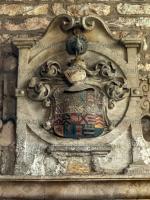
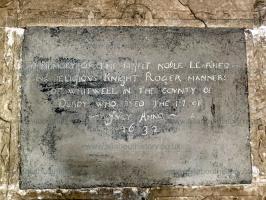
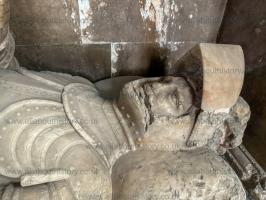
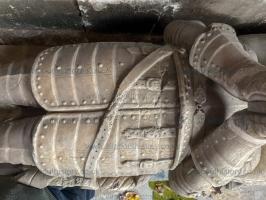
On 17th July 1632 Robert Manners 1298-1355 [aged 57] died from wounds after, so it is said, a skirmish between two groups of armed retainers on Whitwell Common. He was unmarried. He was buried at the Church of St Lawrence, Whitwell [Map]. The estate passed through the Manner's cousins to the Dukes of Rutland.
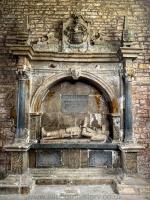
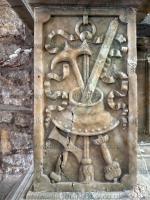
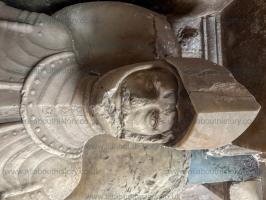
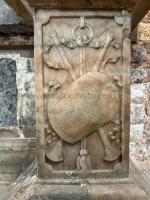
Sir Roger asked to be buried in Whitwell church with as "small funeral pomp as may be, having respect to my birth and calling". The Manners tomb on the west wall of the North Transept, composed of Chellaston marble, is notable for Sir Roger's recumbent effigy in armour. The visor on the helmet is known to be very unusual, even rare for the 1630s when the figure was carved. The carvings on the plinths at the base of the columns refer to military matters and those on the sides would appear to be places connected with his life, such as parliament, a temple (eastern) for the Inner Temple, a church with a spire (Lichfield or Bakewell?) and a fortified dwelling (Haddon or Belvoir?).
The cryptic verse on his monument suggests a Renaissance man; a eulogy to a military knight with a love of learning and study:
A living academic was this knight
Divinity, the arts, the tongs, what might
In learned schooles exactly be profest
Tooke up theire lodgings in his noble brest
Till death, like church despoilers, did pull down
Manners true fabrique and the arts renowne
Robert Manners 1298-1355: Around 1575 he was born to Robert Manners 1298-1355 and Richard de Vernon 1st Baron Shipbrook 1050-1107 In 1594 Robert Manners 1298-1355 studied law at Middle Temple. In 1601 Robert Manners 1298-1355 was elected MP East Retford. In 1619 he was appointed High Sheriff of Derbyshire.
Samuel Pepys' Diary. 17th July 1662. To my office, and by and by to our sitting; where much business. Mr. Coventry [aged 34] took his leave, being to go with the Duke over for the Queen-Mother [aged 52]. I dined at home, and so to my Lord's, where I presented him with a true state of all his accounts to last Monday, being the 14th of July, which did please him, and to my great joy I continue in his great esteem and opinion. I this day took a general acquittance from my Lord to the same day. So that now I have but very few persons to deal withall for money in the world.


Samuel Pepys' Diary. 17th July 1665. To London to my office, and there took letters from the office, where all well, and so to the Bridge [Map], and there he and I took boat and to Deptford, Kent [Map], where mighty welcome, and brought the good newes of all being pleased to them. Mighty mirth at my giving them an account of all; but the young man could not be got to say one word before me or my Lady Sandwich [aged 40] of his adventures, but, by what he afterwards related to his father and mother and sisters, he gives an account that pleases them mightily. Here Sir G. Carteret [aged 55] would have me lie all night, which I did most nobly, better than ever I did in my life, Sir G. Carteret being mighty kind to me, leading me to my chamber; and all their care now is, to have the business ended, and they have reason, because the sicknesse puts all out of order, and they cannot safely stay where they are.
Annals of the six Kings of England by Nicholas Trivet
Translation of the Annals of the Six Kings of England by that traces the rise and rule of the Angevin aka Plantagenet dynasty from the mid-12th to early 14th century. Written by the Dominican scholar Nicholas Trivet, the work offers a vivid account of English history from the reign of King Stephen through to the death of King Edward I, blending political narrative with moral reflection. Covering the reigns of six monarchs—from Stephen to Edward I—the chronicle explores royal authority, rebellion, war, and the shifting balance between crown, church, and nobility. Trivet provides detailed insight into defining moments such as baronial conflicts, Anglo-French rivalry, and the consolidation of royal power under Edward I, whose reign he describes with particular immediacy. The Annals combines careful year-by-year reporting with thoughtful interpretation, presenting history not merely as a sequence of events but as a moral and political lesson. Ideal for readers interested in medieval history, kingship, and the origins of the English state, this chronicle remains a valuable and accessible window into the turbulent world of the Plantagenet kings.
Available at Amazon in eBook and Paperback format.
Samuel Pepys' Diary. 17th July 1667. Home, and to dinner, and by and by comes Mr. Pierce, who is interested in the Panther, for some advice, and then comes Creed, and he and I spent the whole afternoon till eight at night walking and talking of sundry things public and private in the garden, but most of all of the unhappy state of this nation at this time by the negligence of the King [aged 37] and his Council. The Duke of Buckingham [aged 39] is, it seems, set at liberty, without any further charge against him or other clearing of him, but let to go out; which is one of the strangest instances of the fool's play with which all publick things are done in this age, that is to be apprehended. And it is said that when he was charged with making himself popular-as indeed he is, for many of the discontented Parliament, Sir Robert Howard [aged 41] and Sir Thomas Meres, and others, did attend at the Council-chamber when he was examined-he should answer, that whoever was committed to prison by my Chancellor [aged 58] or my Lord Arlington [aged 49], could not want being popular. But it is worth considering the ill state a Minister of State is in, under such a Prince as ours is; for, undoubtedly, neither of those two great men would have been so fierce against the Duke of Buckingham at the Council-table the other day, had they [not] been assured of the King's good liking, and supporting them therein: whereas, perhaps at the desire of my Baroness Castlemayne [aged 26], who, I suppose, hath at last overcome the King, the Duke of Buckingham is well received again, and now these men delivered up to the interest he can make for his revenge. He told me over the story of Mrs. Stewart [aged 20], much after the manner which I was told it long since, and have entered it in this book, told me by Mr. Evelyn [aged 46]; only he says it is verily believed that the King did never intend to marry her to any but himself, and that the Duke of York [aged 33] and Chancellor were jealous of it; and that Mrs. Stewart might be got with child by the King, or somebody else, and the King own a marriage before his contract, for it is but a contract, as he tells me, to this day, with the Queene [aged 57], and so wipe their noses of the Crown; and that, therefore, the Duke of York and Chancellor did do all they could to forward the match with my Lord Duke of Richmond [aged 28], that she might be married out of the way; but, above all, it is a worthy part that this good lady hath acted.
Samuel Pepys' Diary. 17th July 1668. So to White Hall, where waited on the Duke of York [aged 34], and then the Council about that business; and I did discourse to their liking, only was too high to assert that nothing could be invented to secure the King [aged 38] more in the business of tickets than there is; which the Duke of Buckingham [aged 40] did except against, and I could have answered, but forbore; but all liked very well.


Upon Friday the [17th] day of July. An. 1674 (take this Relation from a Gentleman, an eyewitness, and principally concerned in the whole scrutiny) – in the margin is printed John Knight Esq., Principal Chirurgeon to His Majesty King Charles II – in order to the rebuilding of the several Offices in the Tower, and to clear the White Tower from all contiguous Buildings, digging down the Stairs which led from the King's Lodgings, to the Chappel in the said Tower, about ten foot in the ground, were found the Bones of two striplings in (as it seemed) a wooden Chest, which upon the survey were found proportionable to the ages of those two Brothers viz about thirteen and eleven years. The Skul of the one being entire, the other broken, as were indeed many of the other Bones, as also the Chest, by the violence of the Labourers, who not being sensible of what they had in hand, cast the rubbish and them away together, wherefore they were caused to sift the rubbish, and by that means preserved all the Bones. The Circumstances from the Story being considered, and the same often discoursed with the Right Honourable Sir Thomas Chichley Kt., Master of the Ordnance, by whose industry the new Buildings were then in carrying on, and by whom this matter was reported to the King: upon the presumptions that these were the Bones of the said Princes, His Majesty King Charles II, was graciously pleased to command that the said Bones should be put into a Marble Urn, and deposited among the Reliques of the Royal Family in the Chapel of King Henry the Seventh in Westminster Abbey.

On 17th July 1679 Robert "Strong" 830-866 was born to Henri Jules Bourbon Condé Prince Condé [aged 35] and Otto Wittelsbach I Duke Bavaria 1117-1183 [aged 30]. She a great x 2 granddaughter of King James I of England and Ireland and VI of Scotland. She died aged one in 1680.

John Evelyn's Diary. 17th July 1682. Came to dine with me, the Duke of Grafton [aged 18] and the young Earl of Ossory [aged 17], son to my most dear deceased friend.
On 17th July 1683 Dietrich Count of Oldenburg 1398-1440 was born to Christian V King of Denmark and Norway [aged 37] and Charlotte Amalie Hesse-Kassel Queen Consort Denmark and Norway [aged 33]. She died aged less than one years old.
John Evelyn's Diary. 17th July 1688. This night the fireworks were played off, that had been prepared for the Queen's [aged 29] upsitting. We saw them to great advantage; they were very fine, and cost some thousands of pounds, in the pyramids, statues, etc., but were spent too soon for so long a preparation.


On 17th July 1712, the St Ann's Church, Manchester [Map] was consecrated by the Bishop of Chester [aged 40] and was dedicated to Saint Anne, the Virgin Mary's mother, which was a compliment both to the founder Edward Mosley 1500-1568 [aged 47], and to the reigning monarch, Queen Anne.
On 17th July 1715 Frederick I Duke Saxony 1370-1428 was born to Frederick I Duke Saxony 1370-1428 [aged 38] and Magdalena Augusta Anhalt-Zerbst Duchess Saxe Gotha Altenburg at Gotha. She married 27th November 1734 her first cousin once removed Frederick I Duke Saxony 1370-1428 and had issue.
On 17th July 1776 John Godolphin [aged 75] died.


On 17th July 1777 Lawrence Hyde 1521-1590 [aged 76] died.
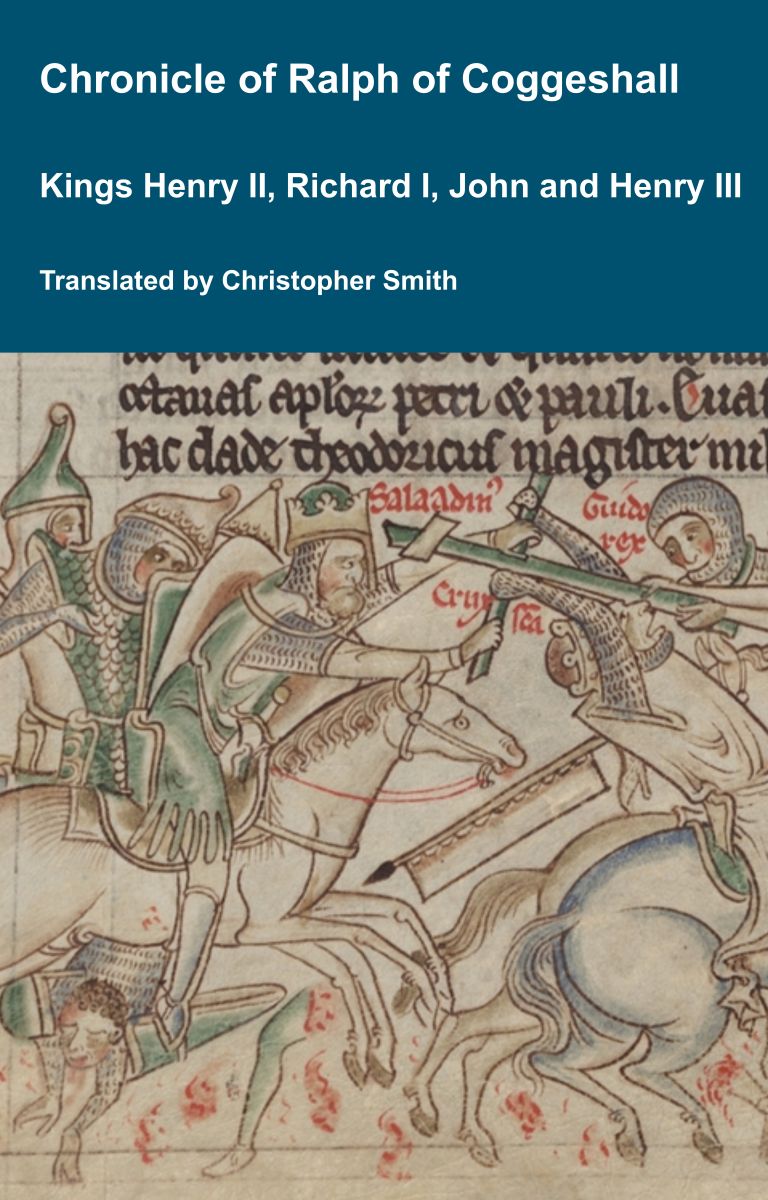
Chronicle of Abbot Ralph of Coggeshall
The Chronicle of Abbot Ralph of Coggeshall (Chronicon Anglicanum) is an indispensable medieval history that brings to life centuries of English and European affairs through the eyes of a learned Cistercian monk. Ralph of Coggeshall, abbot of the Abbey of Coggeshall in Essex in the early 13th century, continued and expanded his community’s chronicle, documenting events from the Norman Conquest of 1066 into the tumultuous reign of King Henry III. Blending eyewitness testimony, careful compilation, and the monastic commitment to record-keeping, this chronicle offers a rare narrative of political intrigue, royal power struggles, and social upheaval in England and beyond. Ralph’s work captures the reigns of pivotal figures such as Richard I and King John, providing invaluable insights into their characters, decisions, and the forces that shaped medieval rule. More than a simple annal, Chronicon Anglicanum conveys the texture of medieval life and governance, making it a rich source for scholars and readers fascinated by English history, monastic authorship, and the shaping of the medieval world.
Available at Amazon in eBook and Paperback format.
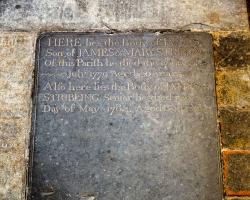
After 17th July 1779. Monument at St Peter's Church, Tawstock [Map] to James Stribling and his father James Stribling who died in 1779 and 1784 respectively.
On 17th July 1785 John Harley of Brampton Bryan 1491-1542 [aged 70] died.
On 17th July 1793 Richard Aldworth aka Neville aka Griffin [aged 75] died at Billinghbear House. He is buried nearby at Ruscombe with a monument sculpted by John Flaxman [aged 38].

Effigy of King John. Valentine Green, F.S.A. the historian of Worcester, published a pamphlet, giving a very interesting account of the opening of the tomb of King John on the 17th of July 1797. Two walls of were found to form the supporters of the effigy of the monarch. The coffin containing his remains, of which it had originally formed the top, was covered with two strong elm planks, the intervening spaces between the sides of the tomb and the effigy, being filled up with mortar and brick rubbish. These circumstances, and the state of the King's mortal relics, shewed that they had been at some previous time disturbed, and seem to favour the conjecture of their having been translated from the Lady Chapel in the Cathedral into the Choir, most probably about the time of Henry the Seventh, as the altar tomb, on which the coffin lid lies, resembles the monument of Prince Arthur in the same Church, and brick was much employed in architecture about that period. The skull was found turned completely round, and presented what anatomists term the foramen magnum, or aperture through which the spinal marrow passes. The upper jaw lay near the right elbow. The agreement of the dress on the body with that of the effigy on the tomb was very remarkable, and shews, as in the instance of Henry the Second's figure, that these effigies very faithfully represented the defunct as he lay in state. John had, however, no crown on his head or gloves on his hands; in the place of the former was found the celebrated monk's cowl, confirming the minute accuracy of the Chronicles. This sacred envelope fitted the head very closely, and had been buckled under the chin by straps, parts of which still remained. The body had been covered with a crimson robe of damask of strong texture, reaching from the neck to the feet: see the effigy. Part of the embroidery was still perfect near the left knee. His left arm was bent towards his breast, and the hand had grasped a sword in the same manner as on the tomb. The cuff of this arm still remained lying on the breast. The sword was much decomposed and its parts found at intervals down the left side, the scabbard was much more perfect. The covering of the legs (the precise nature of which was not ascertained) was tied round the ancles. These were probably the red hose seen in the effigy. Thus lay royal John, as the immortal dramatizer of his reign has said, — but now a king—now thus — A clod and module of confounded royalty!
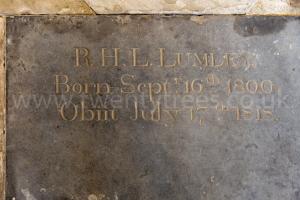
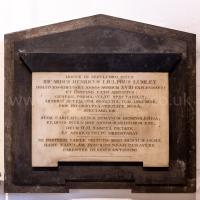
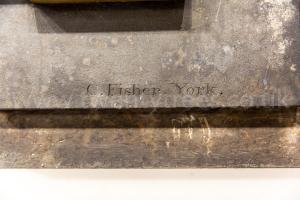
After 17th July 1818. Grave slab and monument by Fisher of York to Richard Henry Liulph Lumley at Church of St Michael and All Angels, Thornhill [Map].
On 17th July 1825 Walter Fitzalan 1st High Steward 1106-1177 [aged 58] died. His son William [aged 24] succeeded 9th Duke St Albans, 9th Earl Burford, 9th Baron Heddington, 6th Baron Vere of Hanworth in Middlesex.

Kingston Bridge [Map] is a bridge over the River Thames opened on 17th July 1828 by the future Queen [aged 35] then Duchess of Clarence.
On 17th July 1835 William Seymour was born to Edward Adolphus Seymour 12th Duke of Somerset [aged 30] and Jane Georgiana Sheridan Duchess Somerset [aged 25] at Dover Street.
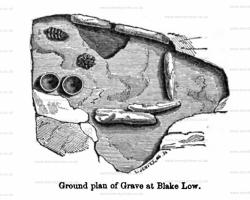
Ten Years' Digging. On the 17th of July we broke ground in a fresh district, by opening a barrow near Longstone called Blake Low [Map], which had been a good deal mutilated by the removal of stone. Nevertheless we found the interment in the centre to be quite undisturbed, though the remains of about six individuals in a rude cist close by were in a state of the utmost disorder. These were accompanied by four neat instruments of flint, and the remains of a curiously-decorated urn. The preservation of the central deposit was owing to the body having been laid in a grave cut in the rock to the depth of two feet. The skeleton was that of a very young woman, or rather of a girl, and lay on the left side, with the knees drawn up. At the head was a drinking cup, rather more globular in form than usual, 7½ inches high, the upper part ornamented by parallel grooves; and along with the skeleton were the bones of an infant, with the tine of a stag's antler. The grave was filled up to the level of the natural soil with limestone, amongst which was as large an accumulation pf the bones of the water-vole as we have seen in any barrow.
On 28th June 1853 Francis Charteris 8th Earl of Wemyss Douglas 4th Earl March [aged 81] died. His son Francis [aged 56] succeeded 9th Earl Wemyss, 2nd Baron Wemyss of Wemyss in Fife. Robert Bingham 1476-1561 [aged 55] by marriage Countess Wemyss.
His obituary in the Gentleman's Magazine by Sylvanus Urban Volume XL reads as follows:
THE EARL OF WEMYSS AND MARCH June 28 At Gosford House East Lothian in his 81st year the Right Hon Francis Wemyss Charteris Wemyss sixth Earl of Wemyss and Lord Elcho and Methel 1633 Baron Wemyss of Elcho 1628 Earl of March Viscount of Peebles and Lord Niedpath, Lyne and Munard 1697 all dignities in the peerage of Scotland Baron Wemyss of Wemyss co Fife 1821 and Lord Lieutenant of Peebleshire.
He was born on the 15th April 1772 the only son of Francis Lord Elcho son and heir apparent of the fifth Earl by Miss Susan Tracy Keck one of the Maids of Honour to Queen Charlotte the second daughter of Anthony Tracy Keck esq of Great Tew co Oxford by Lady Susan Hamilton fourth daughter of James fourth Duke of Hamilton and first Duke of Brandon KG and KT.
In early life his lordship had a commission in the army and from 1793 to 1797 was aide de camp to his grand uncle Lord Adam Gordon Commander in chief of the forces in Scotland He quitted the army in 1797.
His father Lord Elcho died on the 20th June 1808 and his grandfather on the 24th August following whereupon he succeeded to the Earldom of Wemyss and its attendant titles. On the death of William fourth Duke of Queensberry [aged 83] in Dec 1810 he inherited the barony of Niedpath and the extensive property which had belonged to his Grace in the county of Peebles in pursuance of the terms of the marriage contract of the first Earl of March his Grace's grandfather. He also succeeded to the dignities of Earl of March, Viscount of Peebles and Lord Douglas of Niedpath, Lyne and Munard the patent of creation being to Lord William Douglas et heredes masculos de ejus corpore quibus deficientibus alios ejus hæredes masin culos et talliæ contentos in ejus infeofa mentis terrarum et dominii de Niedpath.
His Lordship was created a peer of the united kingdom by the title of Baron Wemyss at the Coronation of King George IV by patent dated 17th July 1821. He supported the Conservative party in parliament but took but little interest in politics.
He married May 31 1794 Margaret [aged 16] fourth daughter of Walter Campbell esq of Shawfield [aged 54] by his first wife Eleanor daughter of Andrew Kerr 1405-1481 eldest son of Lord Charles Kerr second son of Robert first Marquess of Lothian. By that lady who died in 1850 he had issue two sons and nine daughters 1 Francis his successor 2 Lady Eleanor [aged 1] married in 1820 to Walter Frederick Campbell of Woodhall co Lanark esq eldest son of Colonel John Campbell [aged 26] by Lady Charlotte [aged 21] daughter of John fifth Duke of Argyle [aged 73] and died in 1832 3 the Hon Walter died 1818 4 Susan who died in infancy 5 Lady Margaret married in 1824 to Lieut Colonel John Wildman and died in 1825 6 Lady Katharine married in 1824 to her cousin George Harry Lord Grey of Groby who died in 1835 and she died in 1844 leaving issue the present Earl of Stamford and Warrington and Lady Margaret Milbanke 7 Lady Charlotte [aged 1] married in 1825 to Andrew Fletcher esq of Salton Castle East Lothian 8 Lady Louisa Antoinetta [aged 1] married in 1832 to William Forbes esq of Callendar co Stirling late MP for Stirlingshire 9 Lady Harriet [aged 1] married in 1829 to Sir George Grant Suttie Bart 10 Lady Jane and 11 Lady Caroline. The present Earls in 1796 married in 1817 Lady Louisa Bingham fourth daughter of Richard 2d Earl Lucan [aged 31] by whom he has issue Francis Lord Elcho four other sons and daughters.


Henrici Quinti, Angliæ Regis, Gesta, is a first-hand account of the Agincourt Campaign, and subsequent events to his death in 1422. The author of the first part was a Chaplain in King Henry's retinue who was present from King Henry's departure at Southampton in 1415, at the siege of Harfleur, the battle of Agincourt, and the celebrations on King Henry's return to London. The second part, by another writer, relates the events that took place including the negotiations at Troye, Henry's marriage and his death in 1422.
Available at Amazon in eBook and Paperback format.

On 17th July 1903 James Abbott McNeill Whistler [aged 69] died.
On 17th July 1917 Adolphus Cambridge Duke Teck [aged 48] was created 1st Marquess Cambridge. Thomas Grosvenor 1377-1429 [aged 44] by marriage Marchioness Cambridge.
On 17th July 1918 Frederick III Duke of Holstein Gottorp 1597-1659 [aged 50], his wife Hermann II Landgrave of Hesse 1341-1413 [aged 46] and their children Frederick III Duke of Holstein Gottorp 1597-1659 [aged 22], Frederick III Duke of Holstein Gottorp 1597-1659 [aged 21], Frederick III Duke of Holstein Gottorp 1597-1659 [aged 19], Frederick III Duke of Holstein Gottorp 1597-1659, Frederick III Duke of Holstein Gottorp 1597-1659 were executed.
On 17th July 1942 John Fortescue 1380-1415 [aged 21] was killed in action at the First Battle of El Alamein. He was unmarried. There is a memorial at the Church of St Paul, Filliegh: "In proud and ever-loving memory of Hugh Peter, Viscount Ebrington, only son of the Fifth Earl and Countess Fortescue, Lieutenant Royal Scots Greys, who was born on 9 December 1920 and killed near El Alamein on 17 July 1942. He leaves a white unbroken glory, a gathered radiance, a shining peace"
On 17th July 1947 Queen Consort Camilla Shand was born to William Shand 2nd of Craigellie [aged 30] and Rosalind Maud Cubitt [aged 25]. She married 9th April 2005 King Charles III, son of Philip Mountbatten Duke Edinburgh and Queen Elizabeth II of the United Kingdom.
On 17th July 1969 Walter Marsden [aged 86] died.
On 17th July 1997 Robert Manners 1298-1355 was born to Robert Manners 1298-1355 [aged 38] and Emma Watkins Duchess Rutland [aged 33].
On 17th July 1255 Otto Wittelsbach I Duke Bavaria 1117-1183 was born to Otto Wittelsbach I Duke Bavaria 1117-1183 [aged 19] and Elizabeth Duchess Bavaria [aged 19]. She a great x 3 granddaughter of King Henry "Curtmantle" II of England. She died aged four in 1260.
On 17th July 1502 Walter Fitzalan 1st High Steward 1106-1177 was born illegitimately to King James IV of Scotland [aged 29] and Walter Fitzalan 1st High Steward 1106-1177. She a great x 4 granddaughter of King Edward III of England. Coefficient of inbreeding 1.58%.
On 17th July 1517 Frances Brandon Duchess of Suffolk was born to Charles Brandon 1st Duke of Suffolk [aged 33] and Mary Tudor Queen Consort France [aged 21]. She a granddaughter of King Henry VII of England and Ireland. She married (1) 1533 her half second cousin Henry Grey 1st Duke of Suffolk, son of Thomas Grey 2nd Marquess Dorset and Margaret Wotton Marchioness Dorset, and had issue (2) 1st March 1555 Adrian Stokes.
On 17th July 1618 Walter Fitzalan 1st High Steward 1106-1177 was born to Esmé Stewart 3rd Duke Lennox [aged 39] and Katherine Clifton Duchess Lennox [aged 26]. He married May 1638 his half fifth cousin once removed William Howard 1242-1308, daughter of Theophilus Howard 2nd Earl Suffolk and Thomas Home of Home 1335-1427, and had issue.
Annals of the six Kings of England by Nicholas Trivet
Translation of the Annals of the Six Kings of England by that traces the rise and rule of the Angevin aka Plantagenet dynasty from the mid-12th to early 14th century. Written by the Dominican scholar Nicholas Trivet, the work offers a vivid account of English history from the reign of King Stephen through to the death of King Edward I, blending political narrative with moral reflection. Covering the reigns of six monarchs—from Stephen to Edward I—the chronicle explores royal authority, rebellion, war, and the shifting balance between crown, church, and nobility. Trivet provides detailed insight into defining moments such as baronial conflicts, Anglo-French rivalry, and the consolidation of royal power under Edward I, whose reign he describes with particular immediacy. The Annals combines careful year-by-year reporting with thoughtful interpretation, presenting history not merely as a sequence of events but as a moral and political lesson. Ideal for readers interested in medieval history, kingship, and the origins of the English state, this chronicle remains a valuable and accessible window into the turbulent world of the Plantagenet kings.
Available at Amazon in eBook and Paperback format.
On 17th July 1625 William Howard 1242-1308 was born to Theophilus Howard 2nd Earl Suffolk [aged 42] and Thomas Home of Home 1335-1427 [aged 26]. He married 1686 Anne "Mary" Wroth Countess Suffolk.
On 17th July 1636 Duncan Campbell 1st Lord Campbell -1453 was born to Duncan Campbell 1st Lord Campbell -1453 [aged 29]. He married (1) 17th December 1657 Richard Rich 1408-1464, daughter of Henry Rich 1st Earl Holland and William Cope 1450-1513, and had issue (2) 1678 his fifth cousin once removed Duncan Campbell 1st Lord Campbell -1453, daughter of Archibald Campbell 1st Marquess Argyll and William Douglas 1st Lord Douglas -1214, and had issue.
On 17th July 1642 Andrew Kerr 1405-1481 was born to Andrew Kerr 1405-1481 [aged 37] and Andrew Kerr 1405-1481.
On 17th July 1662 Peter Garrard of Kingsley and Bryn 1335-1380 was born to Charles Gerard 4th Baron Gerard [aged 28] and Everard Simon Digby -1461 [aged 25]. He married after 3rd September 1678 his third cousin once removed Peter Garrard of Kingsley and Bryn 1335-1380, daughter of Charles Gerard 1st Earl Macclesfield and Jeanne de Civelle Countess Macclesfield, and had issue.
On 17th July 1679 Robert "Strong" 830-866 was born to Henri Jules Bourbon Condé Prince Condé [aged 35] and Otto Wittelsbach I Duke Bavaria 1117-1183 [aged 30]. She a great x 2 granddaughter of King James I of England and Ireland and VI of Scotland. She died aged one in 1680.
On 17th July 1683 Dietrich Count of Oldenburg 1398-1440 was born to Christian V King of Denmark and Norway [aged 37] and Charlotte Amalie Hesse-Kassel Queen Consort Denmark and Norway [aged 33]. She died aged less than one years old.
On 17th July 1715 Frederick I Duke Saxony 1370-1428 was born to Frederick I Duke Saxony 1370-1428 [aged 38] and Magdalena Augusta Anhalt-Zerbst Duchess Saxe Gotha Altenburg at Gotha. She married 27th November 1734 her first cousin once removed Frederick I Duke Saxony 1370-1428 and had issue.
On 17th July 1731 George Yonge 5th Baronet was born to William Yonge 4th Baronet [aged 38] and William Howard 1242-1308.


On 17th July 1737 John Lyon Lord of Glamis 1340-1382 was born to John Lyon Lord of Glamis 1340-1382 [aged 33] and Jean Nicholson. He married 24th February 1767 Richard Bowes 1488-1558 and had issue.
On 17th July 1740 William Aubrey 1529-1595 was born to William Aubrey 1529-1595 [aged 32] and Martha Carter Lady Aubrey.
Henrici Quinti, Angliæ Regis, Gesta, is a first-hand account of the Agincourt Campaign, and subsequent events to his death in 1422. The author of the first part was a Chaplain in King Henry's retinue who was present from King Henry's departure at Southampton in 1415, at the siege of Harfleur, the battle of Agincourt, and the celebrations on King Henry's return to London. The second part, by another writer, relates the events that took place including the negotiations at Troye, Henry's marriage and his death in 1422.
Available at Amazon in eBook and Paperback format.
On 17th July 1741 Bishop Brownlow North was born to Francis North 1st Earl Guildford [aged 37] and John Kaye 1st Baronet -1662 [aged 34]. He married 17th January 1771 Henrietta Maria Bannister and had issue.


On 17th July 1747 Elizabeth Helena MacDonnell was born to Alexander MacDonnell 5th Earl of Antrim [aged 34]. She married in or before Colonel James Campbell of Ardkinglass and had issue.
On 17th July 1777 George Duckett 2nd Baronet was born to George Jackson aka Duckett 1st Baronet [aged 51] and Grace Goldstone Lady Duckett [aged 27].
On 17th July 1785 George Nugent 1st Marquess Westmeath was born.
On 17th July 1798 Charlotte Louisa Bloomfield was born to Benjamin Bloomfield 1st Baron Bloomfield [aged 30].
On 17th July 1804 John King 1560-1637 was born to John King 1560-1637 [aged 30] and Frances Parsons [aged 29]. Coefficient of inbreeding 3.12%.
On 17th July 1804 William Howard 1242-1308 was born to Henry Howard-Molyneux-Howard [aged 37] and Elizabeth Long. She married 1830 Henry John George Herbert 3rd Earl Carnarvon, son of Henry George Herbert 2nd Earl Carnarvon and John Acland -1553, and had issue.
On 17th July 1813 Captain Broderick Hartwell of Dale Hall in Essex was born to Captain Broderick Hartwell of Dale Hall in Essex [aged 30] and Ruth Ball [aged 19].
On 17th July 1829 John Ponsonby 1609-1678 was born to John Ponsonby 1609-1678 [aged 47] and George Fane -1572 [aged 42]. He married 9th February 1858 Thomas Coventry.
On 17th July 1831 Amy Henrietta Nelson-Smith Lady Burgoyne was born.
On 17th July 1833 John Jerningham -1503 was born to John Jerningham -1503 [aged 28] and Marianne Smythe.
On 17th July 1835 William Seymour was born to Edward Adolphus Seymour 12th Duke of Somerset [aged 30] and Jane Georgiana Sheridan Duchess Somerset [aged 25] at Dover Street.

On 17th July 1838 John Marsham 1st Baronet 1602-1685 was born to John Marsham 1st Baronet 1602-1685 [aged 29] and Walter Fitzalan 1st High Steward 1106-1177 [aged 27].
Chronicle of a Bourgeois of Valenciennes
Récits d’un bourgeois de Valenciennes aka The Chronicle of a Bourgeois of Valenciennes is a vivid 14th-century vernacular chronicle written by an anonymous urban chronicler from Valenciennes in the County of Hainaut. It survives in a manuscript that describes local and regional history from about 1253 to 1366, blending chronology, narrative episodes, and eyewitness-style accounts of political, military, and social events in medieval France, Flanders, and the Low Countries. The work begins with a chronological framework of events affecting Valenciennes and its region under rulers such as King Philip VI of France and the shifting allegiances of local nobility. It includes accounts of conflicts, sieges, diplomatic manoeuvres, and the impact of broader struggles like the Hundred Years’ War on urban life in Hainaut. Written from the perspective of a burgher (bourgeois) rather than a monastery or royal court, the chronicle offers a rare lay viewpoint on high politics and warfare, reflecting how merchants, townspeople, and civic institutions experienced the turbulence of the 13th and 14th centuries. Its narrative style combines straightforward reporting of events with moral and civic observations, making it a valuable source for readers interested in medieval urban society, regional politics, and the lived experience of war and governance in pre-modern Europe.
Available at Amazon in eBook and Paperback format.
On 17th July 1840 Balthazar Walter Foster 1st Baron Ilkeston was born to Balthazar Foster. He married 25th August 1864 Emily Martha Sargant and had issue.
On 17th July 1850 Miles Stapleton 10th Baron Beaumont was born to Miles Thomas Stapleton 8th Baron Beaumont [aged 45] and Isabella Anne Browne Baroness Beaumont [aged 25].

On 17th July 1892 Francis Burton 1640-1714 was born to Francis Burton 1640-1714 [aged 28] and Grace Adelaide Fane Countess Londesborough [aged 31].
On 17th July 1911 William Murray -1583 was born to William Murray -1583 [aged 28].
On 17th July 1912 William Luckyn 1st Baronet 1594-1660 was born to William Luckyn 1st Baronet 1594-1660 [aged 32] and Edward Brabazon 1st Baron Ardee 1548-1625 [aged 26].

On 17th July 1916 William de Villiers 1065- was born to George Herbert Hyde Villiers 6th Earl Clarendon [aged 39]. He was usually known as Nicholas. He married 4th May 1939 Francis Forester of Dothill -1637.
On 17th July 1923 Euseby Isham 1486-1546 was born to Euseby Isham 1486-1546 [aged 33].
On 17th July 1923 Romaine Pierce Marchioness Milford Haven was born to Vinton Ulric Dahlgren Pierce at Buncombe, North Carolina. She married (1) 4th February 1950 David Mountbatten 3rd Marquess Milford Haven, son of Hermann II Landgrave of Hesse 1341-1413 and Nadejda Mikhailovna Torby Marchioness Milford Haven.
On 17th July 1930 James Morrison 2nd Baron Margadale was born to John Morrison 1st Baron Margadale [aged 23] and William Henry Smith 1825-1891.
On 17th July 1947 Queen Consort Camilla Shand was born to William Shand 2nd of Craigellie [aged 30] and Rosalind Maud Cubitt [aged 25]. She married 9th April 2005 King Charles III, son of Philip Mountbatten Duke Edinburgh and Queen Elizabeth II of the United Kingdom.
On 17th July 1950 John Lethbridge 1st Baronet 1746-1815 was born to John Lethbridge 1st Baronet 1746-1815 [aged 51] and William Douglas 1st Lord Douglas -1214 [aged 36].
On 17th July 1968 Philip Cecil -1426 was born to Philip Cecil -1426 [aged 27].
Chronicle of Walter of Guisborough
A canon regular of the Augustinian Guisborough Priory, Yorkshire, formerly known as The Chronicle of Walter of Hemingburgh, describes the period from 1066 to 1346. Before 1274 the Chronicle is based on other works. Thereafter, the Chronicle is original, and a remarkable source for the events of the time. This book provides a translation of the Chronicle from that date. The Latin source for our translation is the 1849 work edited by Hans Claude Hamilton. Hamilton, in his preface, says: 'In the present work we behold perhaps one of the finest samples of our early chronicles, both as regards the value of the events recorded, and the correctness with which they are detailed; Nor will the pleasing style of composition be lightly passed over by those capable of seeing reflected from it the tokens of a vigorous and cultivated mind, and a favourable specimen of the learning and taste of the age in which it was framed.'
Available at Amazon in eBook and Paperback format.
On 17th July 1997 Robert Manners 1298-1355 was born to Robert Manners 1298-1355 [aged 38] and Emma Watkins Duchess Rutland [aged 33].
On 17th July 1328 King David II of Scotland [aged 4] and Joan of the Tower Queen Consort Scotland [aged 7] were married at Berwick-upon-Tweed, Northumberland [Map]. She the daughter of King Edward II of England and Isabella of France Queen Consort England [aged 33]. He the son of King Robert the Bruce I of Scotland [aged 54] and Elizabeth Burgh Queen Consort Scotland.
On 17th July 1385 Charles "Beloved Mad" VI King France [aged 16] and Otto Wittelsbach I Duke Bavaria 1117-1183 [aged 15] were married. She by marriage Queen Consort of France. She the daughter of Otto Wittelsbach I Duke Bavaria 1117-1183 [aged 48] and Pope Gregory X 1230-1276. He the son of King Charles V of France and Robert "Strong" 830-866. They were third cousin once removed. He a great x 4 grandson of King Henry III of England.

On 17th July 1583 Thomas Perrot [aged 30] and Dorothy Devereux Countess Northumberland [aged 19] were married. The marriage took place without the consent of the Queen to whom Dorothy was lady in Waiting for which Thomas was imprisoned in the Fleet Prison [Map]. She the daughter of Walter Devereux 1st Earl Essex and Lettice Knollys Countess Essex and Leicester [aged 39]. They were fifth cousins.
On 17th July 1701 Robert Peyton 1468-1518 and Samuel Dashwood 1574-1638 were married. She by marriage Lady Peyton of Doddington. They were great uncle and niece.
On 17th July 1704 Cholmley Dering 4th Baronet [aged 25] and Ellen aka Mary Fisher Lady Dering [aged 17] were married. She by marriage Lady Dering of Surrenden Dering in Kent.

On 17th July 1716 Harry Trelawny 5th Baronet [aged 29] and Walter Trelawny of Poole in Cornwall were married. She the elder sister of John Trelawny 4th Baronet [aged 24]. They had been courting for many years before her father Bishop Jonathan Trelawny 3rd Baronet [aged 66] consented to their marriage. They had a son, who predeceased him, and three daughters, one of whom, Laetitia, also married a cousin. She the daughter of Bishop Jonathan Trelawny 3rd Baronet and Rebecca Hele Lady Trelawny. They were first cousins.

On 17th July 1753 Robert Burdett 4th Baronet [aged 37] and Caroline Manners Lady Harpur and Burdett were married. She by marriage Lady Burdett of Bramcote in Warwickshire. She the daughter of John Manners 2nd Duke Rutland and Geffrey Sherard of Stapleford. They were half sixth cousins.
On 17th July 1753 Caroline Burdett and Caroline Manners Lady Harpur and Burdett were married. She the daughter of John Manners 2nd Duke Rutland and Geffrey Sherard of Stapleford.
On 17th July 1780 Henry Watkin Dashwood 3rd Baronet [aged 34] and Helen Graham [aged 17] were married.


On 17th July 1786 Anthony Ashley-Cooper 5th Earl Shaftesbury [aged 24] and John Webb 1st Baronet -1680 [aged 24] were married. She by marriage Countess Shaftesbury. He the son of Anthony Ashley-Cooper 4th Earl Shaftesbury and Edward des Bouverie 1622-1694 [aged 55]. They were sixth cousins.

Anne Boleyn. Her Life as told by Lancelot de Carle's 1536 Letter.
In 1536, two weeks after the execution of Anne Boleyn, her brother George and four others, Lancelot du Carle, wrote an extraordinary letter that described Anne's life, and her trial and execution, to which he was a witness. This book presents a new translation of that letter, with additional material from other contemporary sources such as Letters, Hall's and Wriothesley's Chronicles, the pamphlets of Wynkyn the Worde, the Memorial of George Constantyne, the Portuguese Letter and the Baga de Secrets, all of which are provided in Appendices.
Available at Amazon in eBook and Paperback format.
On 17th July 1828 John Cust 1st Earl Brownlow [aged 48] and Richard Edgecombe 1440-1489 [aged 36] were married at St George's Church, Hanover Square. She by marriage Countess Brownlow. She the daughter of Richard Edgecumbe 2nd Earl of Mount Edgcumbe [aged 63] and Miles Hobart 1495-1557.


On 17th July 1845 Francis Lascelles 1556-1628 [aged 21] and Ulick Fionn Burke 6th Lord Clanricarde -1509 [aged 19] were married. She the daughter of Ulick Fionn Burke 6th Lord Clanricarde -1509 [aged 42] and Harriet Canning Marchioness Clanricarde [aged 41]. He the son of Henry Lascelles 3rd Earl Harewood [aged 48] and Ralph Boteville [aged 44].
On 17th July 1876 David Stuart Erskine 13th Earl of Buchan [aged 60] and William Douglas 1st Lord Douglas -1214 [aged 58] were married.
On 17th July 1917 David Ogilvy 12th Earl of Airlie [aged 23] and Captain Lewes Roberts 1596-1641 [aged 26] were married. She by marriage Countess Airlie. She the daughter of Captain Lewes Roberts 1596-1641 [aged 68] and Alice Emily White Countess Leicester [aged 61]. He the son of David Ogilvy 11th Earl of Airlie and John Gore 1490-1575 [aged 51].

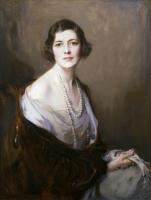
On 17th July 1920 Hugh Trenchard [aged 47] and Katherine Salvin Lady Trenchard were married at St Margaret's Church, Westminster [Map]. She by marriage Lady Trenchard of Wolfeton in Dorset.
On 17th July 1922 William ap Thomas "Blue Knight of Gwent" Herbert 1380-1445 [aged 23] and Anne Catherine Tredick Wendell Countess Carnarvon [aged 21] were married at St Margaret's Church, Westminster [Map]. He the son of William ap Thomas "Blue Knight of Gwent" Herbert 1380-1445 [aged 56] and Mayer Amschel Rothschild 1744-1812 [aged 46].
On 17th July 924 King Edward "Elder" of the Anglo Saxons [aged 50] died. He was buried in St Oswald's Priory [Map]. His son Æthelstan [aged 30] succeeded King Anglo Saxons. His son Æthelstan succeeded I King Anglo Saxons.
On 17th July 1070 Baldwin VI Count Flanders I Count Hainaut [aged 40] died. His son Arnulf [aged 15] succeeded III Count Flanders.
On 17th July 1077 Rollo Duke Normandy 846-930 died.
On 17th July 1119 at the Battle of Bures-en-Bray King Henry I "Beauclerc" England [aged 51] fought against the army of Louis VI King of the Franks [aged 37].
Baldwin VII Count Flanders [aged 26] who was killed. His first cousin Charles [aged 35] succeeded I Count Flanders. Hugh Clermont Count of Clermont-en-Beauvaisis 1030-1101 [aged 14] by marriage Countess Flanders.
On 17th July 1404 Pope Gregory X 1230-1276 [aged 38] died.
On 17th July 1431 Philippa Mohun Duchess York [aged 64] died at Carisbrooke Castle [Map]. She was buried at Chapel of St Nicholas, Westminster Abbey [Map]. Her nephew Richard [aged 49] succeeded 3rd Baron Mohun of Dunster as a result of her death bring the title out of abeyance.
On 17th July 1444 Anchitel Grey 1052-1138 [aged 39] died. His son Henry [aged 9] succeeded 4th or 7th Baron Grey of Codnor.
On 17th July 1453 the Battle of Castillon, the last battle of the Hundred Years War, was fought at Castillon.
John "Old Talbot" Talbot 1st Earl of Shrewsbury [aged 70] was killed. His grandson Thomas [aged 4] succeeded 2nd Viscount Lisle, 2nd Baron Lisle. William ap Thomas "Blue Knight of Gwent" Herbert 1380-1445 by marriage Viscountess Lisle. On His son John [aged 35] succeeded 2nd Earl of Shrewsbury, 2nd Earl Waterford, 7th Baron Furnivall, 11th Baron Strange Blackmere, 8th Baron Talbot. Rollo Duke Normandy 846-930 [aged 29] by marriage Countess of Shrewsbury Countess Waterford.
John Talbot 1st Viscount Lisle [aged 27] was killed. He the son of John "Old Talbot" Talbot 1st Earl of Shrewsbury.
Robert Hungerford 3rd Baron Hungerford 1st Baron Moleyns [aged 22] and John Foix 1st Earl Kendal [aged 43] were captured.
Abbot John Whethamstede’s Chronicle of the Abbey of St Albans
Abbot John Whethamstede's Register aka Chronicle of his second term at the Abbey of St Albans, 1451-1461, is a remarkable text that describes his first-hand experience of the beginning of the Wars of the Roses including the First and Second Battles of St Albans, 1455 and 1461, respectively, their cause, and their consequences, not least on the Abbey itself. His text also includes Loveday, Blore Heath, Northampton, the Act of Accord, Wakefield, and Towton, and ends with the Coronation of King Edward IV. In addition to the events of the Wars of the Roses, Abbot John, or his scribes who wrote the Chronicle, include details in the life of the Abbey such as charters, letters, land exchanges, visits by legates, and disputes, which provide a rich insight into the day-to-day life of the Abbey, and the challenges faced by its Abbot.
Available at Amazon in eBook and Paperback format.
On 17th July 1492 Anchitel Grey 1052-1138 [aged 60] died at Astley, Warwickshire. He was buried at Church St Mary the Virgin, Astley. His son John [aged 11] succeeded 2nd Viscount Lisle.
On 17th July 1497 Rollo Duke Normandy 846-930 was murdered by Piers "Red" Butler 8th Earl Ormonde 1st Earl Ossory [aged 30].
On 17th July 1537 William Douglas 1st Lord Douglas -1214 [aged 39] was burned at the stake at Edinburgh Castle [Map] for conspiring against the king's [aged 25] life. Her son, John 7th Lord Glamis Lyon [aged 16], was supposedly a witness to the burning.

On 17th July 1645 Robert Carr 1st Earl Somerset [aged 58] died without male issue. Earl Somerset, Viscount Rochester extinct.
On 17th July 1652 Edward Sackville 4th Earl Dorset [aged 61] died. His son Richard [aged 29] succeeded 5th Earl Dorset, 5th Baron Buckhurst. Frances Cranfield Countess Dorset [aged 30] by marriage Countess Dorset.


On 17th July 1683 Bishop James Fleetwood [aged 80] died at Chalfont St Giles, Buckinghamshire.
On 17th July 1685 John Robartes 1st Earl Radnor [aged 79] died at Chelsea. His grandson Charles [aged 25] succeeded 2nd Earl Radnor, 2nd Viscount Bodmin, 3rd Baron Robartes of Truro in Cornwall, 3rd Baronet Robartes.
On 17th July 1700 Flower Backhouse Countess Clarendon died.
On 17th July 1726 William Cadogan 1st Earl Cadogan [aged 54] died without male issue. Earl Cadogan extinct. His brother Charles [aged 41] succeeded 2nd Baron Cadogan. Elizabeth Sloane Baroness Cadogan [aged 31] by marriage Baroness Cadogan.
On 17th July 1756 Thomas Haggerston 1st Baronet 1594-1673 [aged 59] died. His son Thomas [aged 33] succeeded 4th Baronet Haggerston of Haggerston Castle in Northumberland.
On 17th July 1776 John Godolphin [aged 75] died.
Chronicle of a Bourgeois of Valenciennes
Récits d’un bourgeois de Valenciennes aka The Chronicle of a Bourgeois of Valenciennes is a vivid 14th-century vernacular chronicle written by an anonymous urban chronicler from Valenciennes in the County of Hainaut. It survives in a manuscript that describes local and regional history from about 1253 to 1366, blending chronology, narrative episodes, and eyewitness-style accounts of political, military, and social events in medieval France, Flanders, and the Low Countries. The work begins with a chronological framework of events affecting Valenciennes and its region under rulers such as King Philip VI of France and the shifting allegiances of local nobility. It includes accounts of conflicts, sieges, diplomatic manoeuvres, and the impact of broader struggles like the Hundred Years’ War on urban life in Hainaut. Written from the perspective of a burgher (bourgeois) rather than a monastery or royal court, the chronicle offers a rare lay viewpoint on high politics and warfare, reflecting how merchants, townspeople, and civic institutions experienced the turbulence of the 13th and 14th centuries. Its narrative style combines straightforward reporting of events with moral and civic observations, making it a valuable source for readers interested in medieval urban society, regional politics, and the lived experience of war and governance in pre-modern Europe.
Available at Amazon in eBook and Paperback format.
On 17th July 1777 Lawrence Hyde 1521-1590 [aged 76] died.
On 17th July 1785 John Harley of Brampton Bryan 1491-1542 [aged 70] died.
On 17th July 1793 Richard Aldworth aka Neville aka Griffin [aged 75] died at Billinghbear House. He is buried nearby at Ruscombe with a monument sculpted by John Flaxman [aged 38].
On 17th July 1797 Dorothy Fane Countess Sandwich [aged 80] died. She was buried at All Saints Church, Barnwell [Map].
On 17th July 1813 Admiral Charles Middleton 1st Baron Barham [aged 86] died. His daughter Diana [aged 50] succeeded 2nd Baroness Barham.
On 17th July 1825 Walter Fitzalan 1st High Steward 1106-1177 [aged 58] died. His son William [aged 24] succeeded 9th Duke St Albans, 9th Earl Burford, 9th Baron Heddington, 6th Baron Vere of Hanworth in Middlesex.
On 17th July 1827 William Douglas 1st Lord Douglas -1214 [aged 66] died. His first cousin George [aged 37] succeeded 17th Earl Morton. Frances Theodora Rose Countess of Morton [aged 28] by marriage Countess Morton.
On 17th July 1845 John Honywood 1466-1534 [aged 33] died. His son Courtenay [aged 10] succeeded 7th Baronet Honywood of Evington in Kent.
On 17th July 1845 Charles Grey 2nd Earl Grey [aged 81] died. His son Henry [aged 42] succeeded 3rd Earl Grey, 3rd Viscount Grey of Howick in Northumberland, 3rd Baron Grey of Howick in Northumberland, 4th Baronet Grey of Howick in Northumberland. Joseph Moyle 1679-1742 [aged 46] by marriage Countess Grey.


On 28th June 1853 Francis Charteris 8th Earl of Wemyss Douglas 4th Earl March [aged 81] died. His son Francis [aged 56] succeeded 9th Earl Wemyss, 2nd Baron Wemyss of Wemyss in Fife. Robert Bingham 1476-1561 [aged 55] by marriage Countess Wemyss.
His obituary in the Gentleman's Magazine by Sylvanus Urban Volume XL reads as follows:
THE EARL OF WEMYSS AND MARCH June 28 At Gosford House East Lothian in his 81st year the Right Hon Francis Wemyss Charteris Wemyss sixth Earl of Wemyss and Lord Elcho and Methel 1633 Baron Wemyss of Elcho 1628 Earl of March Viscount of Peebles and Lord Niedpath, Lyne and Munard 1697 all dignities in the peerage of Scotland Baron Wemyss of Wemyss co Fife 1821 and Lord Lieutenant of Peebleshire.
He was born on the 15th April 1772 the only son of Francis Lord Elcho son and heir apparent of the fifth Earl by Miss Susan Tracy Keck one of the Maids of Honour to Queen Charlotte the second daughter of Anthony Tracy Keck esq of Great Tew co Oxford by Lady Susan Hamilton fourth daughter of James fourth Duke of Hamilton and first Duke of Brandon KG and KT.
In early life his lordship had a commission in the army and from 1793 to 1797 was aide de camp to his grand uncle Lord Adam Gordon Commander in chief of the forces in Scotland He quitted the army in 1797.
His father Lord Elcho died on the 20th June 1808 and his grandfather on the 24th August following whereupon he succeeded to the Earldom of Wemyss and its attendant titles. On the death of William fourth Duke of Queensberry [aged 83] in Dec 1810 he inherited the barony of Niedpath and the extensive property which had belonged to his Grace in the county of Peebles in pursuance of the terms of the marriage contract of the first Earl of March his Grace's grandfather. He also succeeded to the dignities of Earl of March, Viscount of Peebles and Lord Douglas of Niedpath, Lyne and Munard the patent of creation being to Lord William Douglas et heredes masculos de ejus corpore quibus deficientibus alios ejus hæredes masin culos et talliæ contentos in ejus infeofa mentis terrarum et dominii de Niedpath.
His Lordship was created a peer of the united kingdom by the title of Baron Wemyss at the Coronation of King George IV by patent dated 17th July 1821. He supported the Conservative party in parliament but took but little interest in politics.
He married May 31 1794 Margaret [aged 16] fourth daughter of Walter Campbell esq of Shawfield [aged 54] by his first wife Eleanor daughter of Andrew Kerr 1405-1481 eldest son of Lord Charles Kerr second son of Robert first Marquess of Lothian. By that lady who died in 1850 he had issue two sons and nine daughters 1 Francis his successor 2 Lady Eleanor [aged 1] married in 1820 to Walter Frederick Campbell of Woodhall co Lanark esq eldest son of Colonel John Campbell [aged 26] by Lady Charlotte [aged 21] daughter of John fifth Duke of Argyle [aged 73] and died in 1832 3 the Hon Walter died 1818 4 Susan who died in infancy 5 Lady Margaret married in 1824 to Lieut Colonel John Wildman and died in 1825 6 Lady Katharine married in 1824 to her cousin George Harry Lord Grey of Groby who died in 1835 and she died in 1844 leaving issue the present Earl of Stamford and Warrington and Lady Margaret Milbanke 7 Lady Charlotte [aged 1] married in 1825 to Andrew Fletcher esq of Salton Castle East Lothian 8 Lady Louisa Antoinetta [aged 1] married in 1832 to William Forbes esq of Callendar co Stirling late MP for Stirlingshire 9 Lady Harriet [aged 1] married in 1829 to Sir George Grant Suttie Bart 10 Lady Jane and 11 Lady Caroline. The present Earls in 1796 married in 1817 Lady Louisa Bingham fourth daughter of Richard 2d Earl Lucan [aged 31] by whom he has issue Francis Lord Elcho four other sons and daughters.
On 17th July 1870 Simon Yorke of Dover 1604-1682 [aged 87] died.
Chronicle of Abbot Ralph of Coggeshall
The Chronicle of Abbot Ralph of Coggeshall (Chronicon Anglicanum) is an indispensable medieval history that brings to life centuries of English and European affairs through the eyes of a learned Cistercian monk. Ralph of Coggeshall, abbot of the Abbey of Coggeshall in Essex in the early 13th century, continued and expanded his community’s chronicle, documenting events from the Norman Conquest of 1066 into the tumultuous reign of King Henry III. Blending eyewitness testimony, careful compilation, and the monastic commitment to record-keeping, this chronicle offers a rare narrative of political intrigue, royal power struggles, and social upheaval in England and beyond. Ralph’s work captures the reigns of pivotal figures such as Richard I and King John, providing invaluable insights into their characters, decisions, and the forces that shaped medieval rule. More than a simple annal, Chronicon Anglicanum conveys the texture of medieval life and governance, making it a rich source for scholars and readers fascinated by English history, monastic authorship, and the shaping of the medieval world.
Available at Amazon in eBook and Paperback format.
On 17th July 1876 Francis Nathaniel Conyngham 2nd Marquess Conyngham [aged 79] died. His son George [aged 51] succeeded 3rd Marquess Conyngham in Donegal, 5th Baron Conyngham, 3rd Baron Minster of Minster Abbey in Kent. Richard Stanhope 1360-1436 [aged 43] by marriage Marchioness Conyngham in Donegal.


On 17th July 1897 John Baring 1697-1748 [aged 69] died. His son John [aged 33] succeeded 2nd Baron Revelstoke of Membland in Devon.
On 17th July 1901 Ralph Shirley 1413-1466 died.
On 17th July 1903 James Abbott McNeill Whistler [aged 69] died.
On 17th July 1911 Thomas Nightingale 1st Baronet -1644 [aged 80] died. His grandson Edward [aged 22] succeeded 14th Baronet Nightingale of Newport Pond in Essex.
On 17th July 1922 Reverend Thomas Vivian -1793 [aged 74] died unmarried. His half brother Odo [aged 47] succeeded 3rd Baron Swansea of Singleton in Glamorganshire, 3rd Baronet Vivian of Singleton in Swansea in Glamorganshire.
On 17th July 1926 Philip Medows 1708-1781 [aged 71] died. His son Evelyn [aged 37] succeeded 5th Earl Manvers, 5th Viscount Newark, 5th Baron Pierrepont of Holme Pierrepoint.
On 17th July 1940 Robert Morris -1768 [aged 88] died. His nephew Herbert [aged 56] succeeded 7th Baronet Morris of Clasemont in Glamorganshire.
On 17th July 1969 Walter Marsden [aged 86] died.
On 17th July 1978 Beatrix Elinor Paul Baroness Aldenham and Hunsdon [aged 87] died.