

21 Sep is in September.
1299 Edward I Creates New Barons
1397 Arrest and Execution of Richard Fitzalan 9th Earl of Surrey 11th Earl Arundel
On 21st September 1250 Joan Dammartin Queen Consort Castile and Leon [aged 30] succeeded Countess Ponthieu.
 Chronicle of Walter of Guisborough. In the same year, the king issued letters summoning to London the archbishops, bishops, deans of cathedral churches, and archdeacons to appear in person, along with two proctors from the clergy of each diocese, to assemble before him on the Feast of Saint Matthew the Apostle [21st September 1294]. When they were gathered there, the king addressed them as follows: "Most beloved lords, it is now well known, as you have heard, of that famous war which has arisen between the king of France and us. It did not begin through any fault of ours, as God himself knows, but rather took its start by accident, without any deceit or treachery on our part. It has continued up to now at extraordinary cost. Yet, so that we might not be accused or condemned for waging an unjust war, we first offered peace to him, and both of us at first embraced the terms of peace. But although we were ready to uphold it on our part, as had been agreed, he rejected and scorned it, and the more earnestly we sought peace, the further we found ourselves from it. At last, seeing that we were thus being mocked, we began this war, which, even if necessary, we shall continue unto death for the sake of justice. But because I am only one man, and but a poor custodian of your land of England, not only is that land of yours, but the whole English Church now unjustly oppressed and placed in great straits, we cannot continue what we have begun unless we receive help from your land. Therefore we now seek your prayers and implore your aid. And you ought, dearest lords, especially for this reason, to give aid: you see your earls, barons, and knights not only offering their goods, but even their very bodies for your sakes and for the sake of your land, not only unto the shedding of blood, but more often even unto death. Therefore, since you cannot risk your bodies, it is just and reasonable that you give support from your goods."
He [King Edward I], wishing to placate them, for he knew they were disturbed due to the violation of ecclesiastical immunity, added the following remarks: "Because two recent actions have caused you concern, we desire to reassure you and offer an explanation. First, we ordered that all the wool of the land be seized; this was not done without reason, for it was our will that the land itself might be preserved unharmed by means of its own goods. Second, we were informed that the coinage of our land was debased and falsified; and so, we commanded that the regulations concerning the coinage be strictly observed, suspecting nothing evil. But in this matter it turned out as it did among the Apostles of Jesus Christ, among the twelve there was one bad man who betrayed Christ. Likewise, in this matter, certain individuals exceeded the limits of our command and deceived us. Therefore, we are ready to make amends according to your own will." When the king finished speaking, Oliver, Bishop of Lincoln, replied: "Lord, this matter requires deliberation; therefore, let a day be granted for consultation with our brothers, and we will respond with their advice." A third day was granted. In the meantime, consultation was difficult: the See of Canterbury was vacant1, and thus its members, like a body without a head, were scattered and ineffective. John Romanus, Archbishop of York, out of fear of the king, because he owed him a large sum of money, chose to act as if indifferent. The Bishop of Durham had not yet returned from Germany.
Eodem anno vocavit rex per literas suas at London. archiepiscopos, episcopos, decanos ecclesiarum cathedralium, et archidiaconos, in propriis personis, clerumque uniuscujusque dioecesis per duos procuratores, ut in festo sancti Matthæi apostoli coram eo comparerent Londoniis. Quibus ibidem existentibus ait rex, "Domini carissimi, jam satis constat ut audistis de famosa ista guerra quæ inter regem Francourum et nos initium sumpsit; non nostra culpa, ut novit ipse Deus, sed absque ullo dolo vel fraude casualiter sumpsit initium, et usque in præsens sumptuosissime continuata est. Verum, ne ex injusto bello redargui possemus vel reprehendi, obtulimus ei primo pacem, et pacis formam uterque nostrum amplexatus est: quam cum ex parte nostra, ut convenit, servare parati essemus, ipse eam renuit et contempsit, et quanto magis pacem Edward I quæsivimus tanto magis eramus ab ea longius separati. Videntes autem nos finaliter sic illudi hanc guerram incepimus, etiam si necesse fuerit pro justitia nostra consequenda usque ad mortem continuandam; verum quia terræ vestræ Anglicanæ non sum nisi unus quasi malus custos, et non tantum ipsa terra vestra sed tota Anglicana ecclesia jam in arcto ponitur et movetur injuste, nec continuare possumus quod incepimus nisi de eadem terra vestra nobis auxilium tribuatur, idcirco orationes vestras in præsenti expetimus et vestrum auxilium implorantes. Et juste debetis, domini carissimi, et præcipue ista ratione impertiri auxilium, quoniam videtis comites, barones, et milites vestros, quod non solum bona, verum etiam corpora sua pro vobis exponunt et pro terra vestra non solum ad sanguinis effusionem, immo frequentius ad mortem. Et vos igitur, qui corpora vestra exponere non potestis, justum est et rationi consonum ut de bonis vestris subveniatis."
Adjecitque subsequentia, ut placaret eos; scivit enim eos esse motos pro immunitate ecclesiæ violata, et ait, "Quia recenter duo facta sunt in quibus admiramini, placare vobis volumus et in hac parte respondere. Præcepimus quod omnes lanæ terræ arestarentur, et hoc non sine causa fecimus, quia nostræ voluntatis fuit ut de bonis terræ ipsa terra conservaretur illæsa. Aliud est, datum fuit nobis intelligi quod moneta terræ nostræ corrupta fuit et falsata, unde præcepimus quod statutum monetæ in suo robore teneretur, nihil mali suspicantes; sed in hoc facto contigit sicut et accidit inter apostolos Jesu Christi, inter enim XII erat unus malus qui Christum tradidit, similiter et in hoc facto fines mandati nostri quidam egressi sunt et deceperunt nos, unde parati sumus emendas facere pro libito vestræ voluntatis." Cumque loquendi finem faceret, respondit Oliverus Lincolniensis episcopus: "Domine, istud negotium consilium requirit; detur igitur dies ad consulendum cum fratribus nostris et ex consilio respondendum:" Datusque est dies tertius; interim vero consulentes diversi diversa senserunt, vacabat enim Cantuariensis ecclesia et membra sine capite in consilio dispersa sunt; episcopus etiam Eborum Johannes Romanus regis timore perterritus, eo quod regi in magna pecuniæ summa tenebatur, quasi dissimulando constituit; Dunolmensis vero nondum reversus fuerat de Alemannia.
Note 1. Robert de Winchelsey [aged 49] was elected on the 13th of February, 1293, but did not receive consecration till September, 1294, about the time when this contribution was exacted.
On 6th February 1299 King Edward I of England [aged 59] created a number of new Barons by writ of summons to Edward's 44th Parliament...
John Ferrers 1st Baron Ferrers of Chartley [aged 27] was created 1st Baron Ferrers of Chartley.
John Lovell 1st Baron Lovel [aged 45] was created 1st Baron Lovel of Titchmarsh. Joan Ros Baroness Lovel [aged 39] by marriage Baroness Lovel of Titchmarsh.
William Ros 1st Baron Ros Helmsley [aged 44] was created 1st Baron Ros Helmsley. Maud Vaux Baroness Ros [aged 42] by marriage Baroness Ros Helmsley.
William Devereux 1st Baron Devereux Lyonshall [aged 55] was created 1st Baron Devereux Lyonshall. Lucy Burnell Baroness Devereux Lyonshall by marriage Baroness Devereux Lyonshall.
Adam Welles 1st Baron Welles [aged 50] was created 1st Baron Welles. Joan D'Engayne Baroness Welles and Ughtred by marriage Baroness Welles.
Robert Clinton 1st Baron Clinton [aged 41] was created 1st Baron Clinton. Ida Odingsells Baroness Clinton [aged 34] by marriage Baroness Clinton.
John Moels 1st Baron Moels [aged 30] was created 1st Baron Moels.
The next baronies may not have been created on 6th February 1299 but were created in 1299 possibly for Edward's 45th and 46th Parliaments on 10th April 1299 and 21st September 1299 respectively.
Edmund Deincourt 1st Baron Deincourt [aged 49] was created 1st Baron Deincourt.
John Strange 1st Baron Strange Knockin [aged 46] was created 1st Baron Strange Knockin. Maud Walton Baroness Strange Knockin by marriage Baroness Strange Knockin.
John St John 1st Baron St John Lagenham [aged 49] was created 1st Baron St John of Lagenham.
Robert Clifford 1st Baron Clifford [aged 24] was created 1st Baron de Clifford. Maud Clare Baroness Clifford Baroness Welles [aged 23] by marriage Baroness de Clifford.
Henry Grey 1st Baron Grey of Codnor [aged 44] was created 1st Baron Grey of Codnor. Eleanor Courtenay Baroness Grey Codnor by marriage Baroness Grey of Codnor.
John Mohun 1st Baron Dunster [aged 30] was created 1st Baron Mohun of Dunster. Ada Tiptoft Baroness Dunster [aged 24] by marriage Baroness Mohun of Dunster.
Roger Scales 1st Baron Scales was created 1st Baron Scales.
John St John 1st Baron St John of Basing [aged 25] was created 1st Baron St John of Basing.
John Beauchamp 1st Baron Beauchamp Somerset [aged 24] was created 1st Baron Beauchamp Somerset.
Alan Zouche 1st Baron Zouche Ashby [aged 31] was created 1st Baron Zouche Ashby.
Henry Percy 9th and 1st Baron Percy [aged 25] was created 1st Baron Percy of Alnwick. Eleanor Fitzalan Baroness Percy [aged 15] by marriage Baroness Percy of Alnwick.
William Grandison 1st Baron Grandison [aged 37] was created 1st Baron Grandison. Sibylla Tregoz Baroness Grandison by marriage Baroness Grandison. His brother was also created Baron Grandison on the same day.
Otto Grandison 1st Baron Grandison [aged 61] was created 1st Baron Grandison. His brother was also created Baron Grandison on the same day.
Thomas de Multon 1st Baron Multon was created 1st Baron Multon Egremont. Eleanor Burgh Baroness Multon Egremont [aged 17] by marriage Baroness Multon Egremont.
On 21st September 1305 Louis X King France I Navarre [aged 15] and Margaret of Burgundy Queen Consort France [aged 15] were married. She the daughter of Robert II Duke Burgundy [aged 57] and Agnes Capet Duchess Burgundy [aged 45]. He the son of King Philip IV of France [aged 37] and Joan Blois I Queen Navarre. They were first cousin once removed. He a great x 4 grandson of King Henry "Curtmantle" II of England. She a great x 3 granddaughter of King Henry "Curtmantle" II of England.
On 21st September 1327 King Edward II of England [aged 43] was murdered at Berkeley Castle [Map]. There is speculation as to the manner of his death, and as to whether he died at all. Some believe he may have lived the rest of his life in Europe - see Publications de la Société Archéologique de Montpellier 1877: Fieschi Letter.
The Brut. [21st September 1327]. Of þe deþ of Kyng Edward of Carnaruan, sometyme Kyng of Engeland.
Chronicle of Walter of Guisborough. After this, Edward II was moved from Kenilworth to Berkeley Castle, where, in the month of September, on the feast of Saint Matthew [21st September 1327], there was, so it was said, a horn inserted into his backside, and through it a red-hot iron spit was passed inwards, and in this way he was killed.
Post hæc Edwardus II de Kenylworth ad castrum de Berkeley est translatus, ubi in mense Septembri, die Sancti Matthæi, immisso per posteriora cornu veruque ferreo candente medium cornu usque ad interiora intromisso, ut ferebatur, fuit interfectus.
Note 1. Edward II is supposed to have been murdered in Berkeley Castle, by John Maltravers and Thomas de Gurney; the latter of whom being discovered at Burgos in 1331, was thrown into prison by Alfonso of Castile, who despatched Ferando Ivaynes de Greynoun to King Edward III, informing him of the arrest. Edward requested that the prisoner might be delivered up to the Seneschal of Gascony or his officers, and then examined by the magistrates of Burgos, in presence of Bernard Pelegrym (Pilgrim), as to the instigators and procurers of the murder, and by whom and in what manner it was perpetrated. Gurney was beheaded at sea on his way to England, on what account is not clearly known: according to Sir Thomas de la More, lest he might accuse those high persons who had set him to the work. T. de la More, 603, ed. Camden. Rymer, Fœdera, 2.819.
 Chronicle of Jean le Bel Volume 2. The next day they remained there all day, on the Monday [23rd July] they went to lodge on the river Geer1. Then they began to negotiate a peace, which was made and agreed on the following Saturday [28th] at Waroux2. It was a good and fair peace for the Bishop of Liège, this was not the counsel of the Duke of Brabant, who spoiled everything. So I shall say no more of this for now, and shall speak of another matter which I have left aside.
L'endemain on sejourna tout le jour; le lundy on ala logier sur la riviere de Gyere. Adoncq commença on à traittier de paix qui faitte fut et acordée le samedi après, à Warous, laquelle fut bonne et belle pour l'evesque de Liege; ce ne fut le conseil du duc de Brabant qui tous les gasla. Si m'en tairay à tant et parleray d'une aultre matere que j'ay laissié.
Note 1. The Geer, a river in Belgium, rises in the province of Liège, passes through Waremme, and flows into the Meuse at Maastricht.
1. La Geer, rivière de Belgique qui prend sa source dans la province de Liège, passe à Varemme et va se jeter dans la Meuse à Maestricht.
Note 2. On 21st September 1347, John III of Brabant concluded an alliance with the towns of Liège and Huy.
2. Le 21 septembre 1347, Jean Il de Brabant conclut une alliance avec les villes de Liège et de Huy. (Supplément au corps universel diplomatique du droit des gens, de Du Mont, & 11, 2 part., p. 162.)
Before 21st September 1349 Hugh Fitzhugh Fitzhenry [aged 15] died. Possibly by plague given the The Black Death occurring at this time.
On 21st September 1371 John of Gaunt 1st Duke Lancaster [aged 31] and Constance of Castile Duchess of Lancaster [aged 17] were married at Roquefort, Landes. She by marriage Duchess Lancaster. His younger brother Edmund of Langley 1st Duke of York [aged 30] married Constance's sister in July 1372. An example of Marriage of Two Sets of Siblings. She the illegitmate daughter of Peter "Cruel" I King Castile and Maria Padilla. He the son of King Edward III of England [aged 58] and Philippa of Hainaut Queen Consort England. They were half third cousin twice removed.
On 21st September 1371 Frederick I Elector Brandenburg was born to Frederick Hohenzollern V Burgrave Nuremburg [aged 38].
On 21st September 1397 Richard Fitzalan 9th Earl of Surrey 4th or 11th Earl of Arundel [aged 51] was tried at Westminster [Map].
He was beheaded at Tower Hill [Map] immediately thereafter. Earl Surrey and Earl Arundel forfeit.
The Deeds of the Dukes of Normandy
The Gesta Normannorum Ducum [The Deeds of the Dukes of Normandy] is a landmark medieval chronicle tracing the rise and fall of the Norman dynasty from its early roots through the pivotal events surrounding the Norman Conquest of England. Originally penned in Latin by the monk William of Jumièges shortly before 1060 and later expanded at the behest of William the Conqueror, the work chronicles the deeds, politics, battles, and leadership of the Norman dukes, especially William’s own claim to the English throne. The narrative combines earlier historical sources with firsthand information and oral testimony to present an authoritative account of Normandy’s transformation from a Viking settlement into one of medieval Europe’s most powerful realms. William’s history emphasizes the legitimacy, military prowess, and governance of the Norman line, framing their expansion, including the conquest of England, as both divinely sanctioned and noble in purpose. Later chroniclers such as Orderic Vitalis and Robert of Torigni continued the history, extending the coverage into the 12th century, providing broader context on ducal rule and its impact. Today this classic work remains a foundational source for understanding Norman identity, medieval statesmanship, and the historical forces that reshaped England and Western Europe between 800AD and 1100AD.
Available at Amazon in eBook and Paperback format.
Chronicle of Adam of Usk [~1352-1430]. [21st September 1397]. The king, out of respect for his blood, ordered that he only be beheaded. And his enemies, the Earl of Kent, his nephew, and others coveting his lands, carried him [Richard Fitzalan 9th Earl of Surrey 4th or 11th Earl of Arundel [aged 51]] off to the Tower Hill with the scourge of a wicked death, as will become clear below, and there they beheaded him. With whose soul I wish I might deserve to share, for I certainly do not doubt that he has been added to the company of the saints. His body, however, although at that time it was buried without reverence at the Augustinians in London, is now gloriously venerated with the highest reverence and with frequent offerings from the people.
Tune rex, ob reverenciam sanguinis sui, jussit eum tantum decollari. Et duxerunt eum emuli sui, comes Cancie, ipsius nepos, et alii terras suas sicientes, mala mortis peste, ut inferius liquebit, perempti, ad montem Turris, et ibi ipsum decollarunt. Cum cujus anima utinam me participem fieri mererer, quia pro certo ipsum sanctorum colegio non dubito aggregari. Corpus tamen suum, licet tunc irreverenter aput Augustinenses! Londonie tumulatum, modo cum summa reverencia et populi frequenti oblacione quam gloriose veneratum excistit.
Froissart Book 4 Chapter 92. [21st September 1397]. The duchess of Gloucester [aged 31], her son Humphrey [aged 16], and her two daughters, were sorely grieved when the body of the duke arrived. The duchess had double cause of affliction, for the earl of Arundel [aged 51], her uncle, had been publicly beheaded in Cheapside [Map] by orders of the king. No baron nor knight dared to interpose, nor advise the king to do otherwise, for he was himself present at the execution, which was performed by the earl's son-in-law, the earl-marshal [aged 29], who bandaged his eyes.
Chronicle of Adam of Usk [~1352-1430]. 21st September 1399. On Saint Matthew's day (21st September), just two years after the beheading of the earl of Arundel, I, the writer of this history, was in the Tower, wherein king Richard [aged 32] was a prisoner, and I was present while he dined, and I marked his mood and bearing, having been taken thither for that very purpose by sir William Beauchamp [aged 56]1. And there and then the king discoursed sorrowfully in these words: "My God!, a wonderful land is this, and a fickle; which hath exiled, slain, destroyed, or ruined so many kings, rulers, and great men, and is ever tainted and toileth with strife and variance and envy2"; and then he recounted the histories and names of sufferers from the earliest habitation of the kingdom. Perceiving then the trouble of his mind, and how that none of his own men, nor such as were wont to serve him, but strangers who were but spies upon him, were appointed to his service, and musing on his ancient and wonted glory and on the fickle fortune of the world, I departed thence much moved at heart.
Note 1. Sir William Beauchamp, distinguished as a soldier and sea-captain, became lord Bergavenny in 1392. He died in 1410 [1411].
Note 2. Shakespeare, Richard II, act III. sc. ij.
For God's sake, let us sit upon the ground
And tell sad stories of the death of kings:
How some have been deposed; some slain in war;
Some haunted by the ghosts they have deposed;
Some poison'd by their wives; some sleeping kill'd;
All murder'd."


 Chronicle of Jean le Bel Volume 1. On the octave of Pentecost following [4th June], the King of France issued another very great summons and sent the Duke of Normandy, his eldest son, together with his constable and his marshals, to besiege the castle of Thun1, which Sir Walter Manny and his men had taken from the Bishop of Cambrai when the King of England and his allies were before Cambrai2. And the Count of Hainaut believed that this great gathering was meant to come and lay waste his country, and to accomplish what had not been done the previous time. So the young count made such preparations as he could, and brought it about that the Duke of Brabant, whose daughter he had married, summoned all his forces to help him defend his land of Hainaut. Likewise, the Duke of Guelders, the Marquis of Jülich, and several others came at the request of the said Duke of Brabant. The Count of Hainaut then went to Liège in chapter and formally received back the whole county from my lord Adolphe, Bishop of Liège, there performing fealty and homage as he was bound to do, and he requested the said bishop to come and help defend his fief, as was his right.
A l'octave de la Penthecouste ensuivant, le roy de France fist ung aultre mandement moult grand et envoya le duc de Normendie, son aisné filz, à tout son connestable et ses mareschaulx assieger le chastel de Thun, lequel messire Watier de Manny et ses gens avoient gaagnié sur l'evesque de Cambray quant le roy des Anglois et ses aliez furent devant Cambray. Et pensoit le conte de Haynau que celle grande assemblée fust pour venir gaster son pays, et faire ce que fait n'avoient à l'aultre fois. Si se porvey le jœune conte ainsy qu'il pœut, et fist tant que le duc de Brabant, de cui il avoit la fille, manda tout son pouoir pour luy aidier à garder son pays de Haynau. Ainsy le duc de Guerles, le marquis de Juley et pluseurs aultres y vindrent à la requeste dudit duc du Brabant, et ledit conte de Haynau ala adoncques en chappitre au Liege relever toute la conté de monseigneur Adulphe, evesque de Liege, et luy fist là endroit feaulté et hommage, ainsy que faire debvoit, et requist audit evesque qu'il venist aidier à deffendre son fief, ainsy que droit en estoit.
Note 1. The siege of Thun-l’Évêque began immediately after the capture of Escaudœuvres. The latter town surrendered on 3rd June 1340 (Chronographia, vol. II, note 1), and by 14th June the French army was already before Thun. Philip VI, who was at Villers-Cotterêts on the 1st (Archives Nationales, JJ 72, no. 320), at Pierrefonds on the 4th, and at Noyon on the 10th, came in person to take part in the siege. He is recorded in the host before Thun on 22nd June and again on 23rd June. The date of 23rd June, given by Jean le Bel in Chapter 36 as that of the town’s capture, is correct, as is shown by the following entry: "Perrot Le Cousturier, on the 24th day of June, sent swiftly from Cambrai to Paris to carry letters to our said lords stating that the enemies had withdrawn, and that those of the castle of Thun had departed and set fire inside it, and carried off all the supplies, 30 sous." (Bibliothèque Nationale)
1. Le siège de Thun-l'Évêque commença immédiatement après la prise d'Escaudœuvres. Cette dernière ville se rendit en effet le 3 juin 1340 (Chronographia, t. II, note 1), et dès le 14 juin, l'armée française était déjà devant Thun. Philippe VI, qui était à Villers-Cotterets le 1er (Arch. nat., JJ 72, no 320), à Pierrefonds le 4 (Ibid JJ 72, no 319), à Noyon le 10 (Ibid 35 71, no 402), vint en personne prendre part à ce siège. Nous le trouvons en l'ost devant Thun les 22 (Ibid JJ 74, no 560) et 23 juin. (Lerres d'état enregistrées au Parlement sous le règne de Philippe VI de Valois, no 137.) Ce jour (23 juin) donné par Jean le Bel comme date de la prise de cette ville est exact, ainsi que le prouvent la mention suivante: «Perrot Le Cousturier, XXIIIIe jour de juing, envoié de Cambray à Paris bastivement porter lettres à nozdiz seigneurs faisanz mencion que les anemis s'estoient deslogiés, et que ceulz du chastel de Thun s'en estoient alez et bouté le feu dedens, et emporté toutes les garnisons, XXX s.» (Bibl. nat., ms. fr. nouv. acq. 9239, fol. 287 ro) et une lettre de Philippe VI, sans date de jour, mais donnée certainement entre le 23 et le 30 juin «en nos tentes après la prise du château de Thun.» (Arch. nat., 3373, no 137.) Le 30 juin, le roi de France était «lez le chastel de l'Escluse.» (Ordonnances, t. III, p. 167.)
Note 2. The castle of Thun-l’Évêque, which belonged to the Bishop of Cambrai, had been captured on 21st September 1399 by Walter Manny.
2. Le château de Thun-l'Évêque, qui appartenait à l'évêque de Cambrai, avait été pris le 21 septembre 1339 par Gautier de Masny. (Froissart, éd. Kervyn, t. XVII, p. 84. Cf. Froëssart, éd. Luce, t. I, p. 156, et Chronographia, t. II, p. 71.)
On 21st September 1411 Richard Plantagenet 3rd Duke of York was born to Richard of Conisbrough 1st Earl Cambridge [aged 26] and Anne Mortimer [aged 20]. His mother died shortly afterwards. He a great grandson of King Edward III of England. Coefficient of inbreeding 2.28%. He married October 1429 his second cousin Cecily "Rose of Raby" Neville Duchess York, daughter of Ralph Neville 1st Earl of Westmoreland and Joan Beaufort Countess of Westmoreland, and had issue.
On 21st September 1415 Frederick "Peaceful or Fat" Habsburg III Holy Roman Emperor was born to Ernest "The Iron" Habsburg I Duke Austria [aged 38] and Cymburgis Masovia Duchess Austria [aged 21]. He married 16th March 1452 Eleanor Aviz Holy Roman Empress, daughter of Edward "The Philosopher" I King Portugal and Eleanor Trastámara Queen Consort Portugal, and had issue.
On 21st September 1437 Bishop Thomas Brunce [aged 49] was collated to Bishop of Norwich.
 Memoires Jacques du Clercq. On the 21st day of the month of September, in the said year 1449, the Counts of Dunois, of Clermont, of Nevers, and several others in their companies laid siege before the castle of Ivry, which was surrendered by the English who were inside, and they departed with their persons and lives safe. This done, the French went before the town and castle of Argentan, where they laid siege; and then the English began to negotiate. And when the townspeople inside saw the English occupied in negotiations, knowing that their intention was to hold out, they secretly, without the English knowing, called to some of those on the other side with whom they were negotiating, and asked them for a standard or banner as a sign, telling them that wherever they placed the banner, they might safely enter the town; and so they did. When the English perceived them entering, they withdrew into the castle, and immediately a bombard from the French siege fired against the wall of the said castle and made a breach large enough for a cart to pass through. Then the French, seeing the wall thus broken, assaulted the castle and took it through the breach. The English inside withdrew into the keep, but soon surrendered for fear of being taken by assault, and departed carrying only a staff in their hands.
LE xxje jour du mois de septembre, I'an dessusdit xIjx, les comtes de Dunois, de Clermont de Neyers et plusieurs aultres en leur gompagnies, meirent le siege deyant le chastel d'leyre, lequel fust par les Anglois qui dedans estoient, rendu, et allerept leurs corps et leurs yies saulfs. Ce fait, les Franchois allerent deyant les ville et chastel d'Argeptan, ou ils le siege; et lors les Jpglois parlamenterent; et quant les bourgeois de dedans yeirent les Anglois amusés a parlamentec, cognoissants que leur vollonté estoit de tenir, contre la cognoissance des Anglois et sans leuc sceu, appellerent aulfuns de I'aultre costé dopt parlamentoit, et leur demanderent ung estendarty banniere epseigpe, leur disants, que la ou ils mecteroient l'epseigne, yenissent seurement. et les dedans place, et ainsy le feirent. Quant les Anglois les appercheurent entrer ens, ils se retournerent au chastel, et incontinent une bombarde du siege des Franchois tira contremont la muraille d'icelluy chastel, et y feit trou assés grand pour y passerune charette; lors les Franchois voyant le mur ainsy abbatu, ils assaillirent le chastel et le prindrent par le trou: les Anglois de dedans se boutterent au donjon; mais assés tost se rendirent de poeur d'estre prins d'assault et s'en allerent ung baston au poing tant sculement.
Memoires Jacques du Clercq. At that time, on Tuesday the 21st day of September, the Cardinal of Constance, the lord of Esternay, one of the generals of France, and one of the secretaries of King Charles of France, ambassadors of the said king sent to Philip, Duke of Burgundy, arrived at Brussels; and they were accompanied by the Bishop of Arras, named Jean, who had awaited them at Tournai by command of the said duke. And around All Saints' Day they departed again, and I could not learn the reasons why they had come, nor the answer that was given to them.
En ce temps, le mardy xxje de septembre, le cardinal de Constance, le St Desternay, l'un des généraulx de Franche, et ung des secretaires du roy de Franche Charles, ambassadeurs dudit roy de Franche, envoyés devers Philippe, duc de Bourgogne, arriverent à Bruxelles, et estoient accompagniés de l'evesque d'Arras, nommé Jehan, lequel les avoit attendu a Tournay au commandement dudit duc; et environ la Toussaint ils s'en retournerent, et ne peux je sçavoir les causes pourquoy ils estoient ver nus, ne la response qu'on leur feit.
Life of King Henry VII by Francis Bacon. 21st September 1485. About this time in autumn, towards the end of September, there began and reigned in the city, and other parts of the kingdom, a disease then new: which by the accidents and manner thereof they called the sweating sickness. This disease had a swift course, both in the sick body, and in the time and period of the lasting thereof; for they that were taken with it, upon four and twenty hours escaping, were thought almost assured. And as to the time of the malice and reign of the disease, ere it ceased; it began about the one and twentieth of September, and cleared up before the end of October, insomuch as it was no hindrance to the King's coronation, which was the last of October; nor, which was more, to the holding of the parliament, which began but seven days after. It was a pestilent fever, but, as it seemeth, not seated in the veins or humours, for there followed no carbuncle, no purple or livid spots, or the like the mass of the body being not tainted; only a malign vapour flew to the heart, and seized the vital spirits; which stirred nature to strive to send it forth by an extreme sweat. And it appeared by experience, that this disease was rather a surprise of nature than obstinate to remedies, if it were in time looked unto. For if the patient were kept in an equal temper, both for clothes, fire, and drink, moderately warm, with temperate cordials, whereby nature's work were neither irritated by heat, nor turned back by cold, he com monly recovered. But infinite persons died suddenly of it, before the manner of the cure and attendance was known. It was conceived not to be an epidemic disease, but to proceed from a malignity in the constitution of the air, gathered by the predispositions of seasons; and the speedy cessation declared as much.
Note. Two lord mayors (Thomas Hill and Sir William Stokker) and six aldermen died of this disease in one week in London (see Hall's Chronicle), and it is said that of those whom it attacked not more than one in a hundred escaped. The disease appeared afterwards in 1517, and occasioned also great mortality in Oxford in 1575.

On 21st September 1538 George Tailboys 9th Baron Kyme [aged 71] died. He was buried at Lincoln Cathedral [Map]. His grandson George [aged 15] de jure 10th Baron Kyme.
Wriothesley's Chronicle [1508-1562]. And the morrow, being Sainct Matthewes daie [21st September], all the parishe churches within the citie and the suburbes of the same, kept a solempne procession on their knees in English, with Te Deum after for the said victorie.

Henry Machyn's Diary. 21st September 1553. The xxj day of September was the obseqwe of the baron of Dudley ser John Dudley [aged 59] at Westmynster, the bake-syd of Sant Margatts; and ther was at ys beryng prestes and clarkes syngyng in Laten, the prest havyng a cope and the clarke havyng the halewater sprynkull in ys hand, and after a mornar baryng ys standard, and after a-nodur beyryng ys gret baner of armes gold and sylver, and a-nodur beyryng ys elmett, mantyll, and the crest a bluw lyon('s) hed standyng a-pon a crowne of gold, and after a-nodur mornar bayryng [his] targett, and a-nodur ys sword, and after cam master Somersett the harold bayryng ys cott armur of gold and selver, and then the corse covered with cloth of gold to the grond, and iiij of ys men beyryng hym, and ys armes hangyd a-pone the cloth of gold, and xij men of ys servands bayryng xij stayffs torchys bornyng to the chyrche; and in the qwer was a hersse mad of tymbur and covered with blake, and armes apon the blake, and after the mornars a grett compene; and a-for the durge began, the harold cam to the qwer dore and prayd for ys soll by ys stylle, and so began the durge song in Laten, all the lessons, and then the harold prayd for a for masse, and so the masse songe in Laten; and after ys helmet ofered, and cott and targatt, and after all was endyd offered the standard and the baner of armes; and so hom to dener, and ther was goodly ryngyng and a gret doll.
Note. P. 43. Funeral of John lord Dudley. This nobleman sold the castle of Dudley [Map] to his cousin John duke of Northumberland [deceased], and was never summoned to Parliament. (Nicolas's Synopsis of the Peerage.) His pecuniary distresses are noticed by Dugdale, Baronage, ii. 216; and it is added that he "was commonly called the Lord Quondam." [See this term used to bishop Latimer in p. 57 of this Diary.] His son and successor was restored to Dudley castle [Map], which was forfeited by the duke's attainder. See the funeral of the widowed baroness in p. 61.
Note. P. 44. Funeral of John lord Dadley. This is thus recorded in the register of St. Margaret's Westminster: "1553, September 18. Sir John Sutton knyght, Lorde Baron of Dudley." And that of his widow (see p. 61, and Note in p. 338) occurs under her maiden name: "1554, April 28. The Lady Cysslye Gray." The latter extraordinary circumstance is probably attributable only to the high rank of the Greys:—she was greataunt to the Lady Jane. His son, "The right honorable sir Edwarde Dudley knighte, Baron of Dudleye, the lord Dudleye," was buried in the same church on the 12th August, 1586; and his great-grandson, "Sir Ferdinando Sutton knight, Baro: Dudley," [but really the son and heir apparent of Edward then lord Dudley,] Nov. 23, 1621. Also in 1600, Mary lady Dudley, widow of the former Edward, and sister to Charles lord Howard of Effingham, lord admiral. She died Aug. 21, 1600, and a monument with her recumbent effigy, and a kneeling effigy of her second husband Richard Mompesson esquire, now remains near the south-east door of the church. See the History of St. Margaret's Church by the Rev. Mackenzie E. C. Walcott, M.A. 1847, 8vo. p. 19.
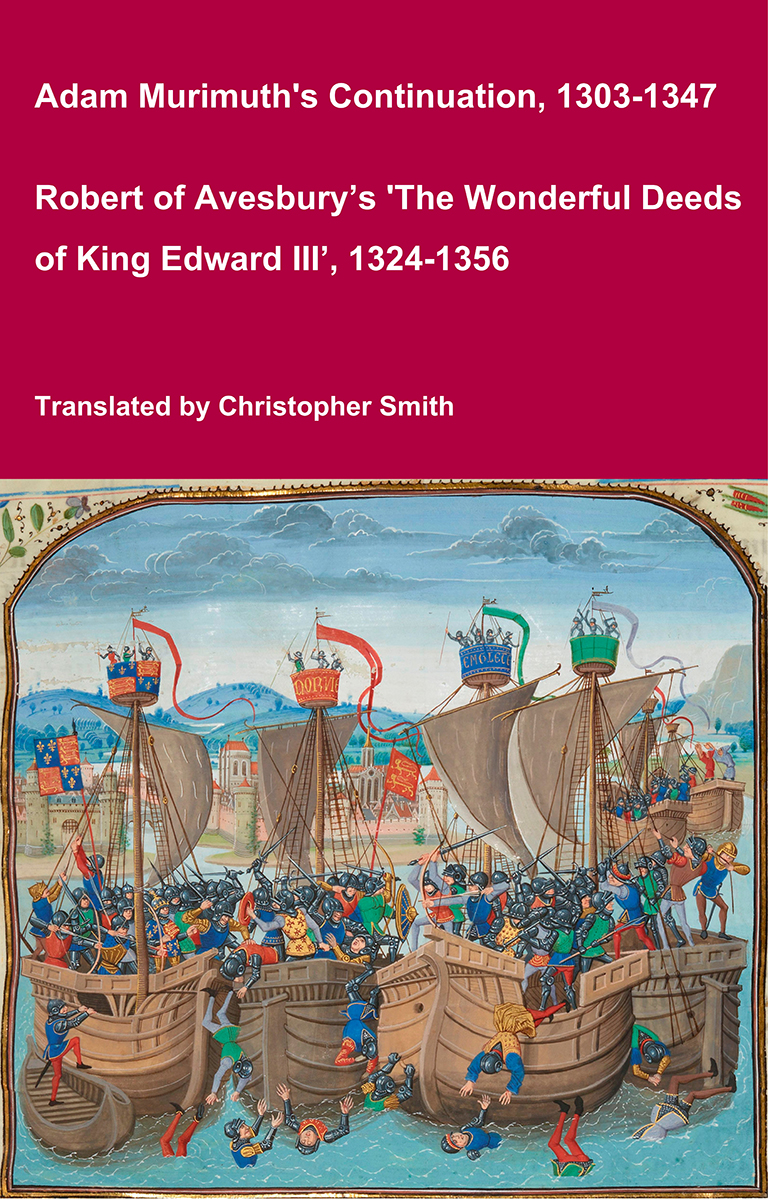
Adam Murimuth's Continuation and Robert of Avesbury’s 'The Wonderful Deeds of King Edward III'
This volume brings together two of the most important contemporary chronicles for the reign of Edward III and the opening phases of the Hundred Years’ War. Written in Latin by English clerical observers, these texts provide a vivid and authoritative window into the political, diplomatic, and military history of fourteenth-century England and its continental ambitions. Adam Murimuth Continuatio's Chronicarum continues an earlier chronicle into the mid-fourteenth century, offering concise but valuable notices on royal policy, foreign relations, and ecclesiastical affairs. Its annalistic structure makes it especially useful for establishing chronology and tracing the development of events year by year. Complementing it, Robert of Avesbury’s De gestis mirabilibus regis Edwardi tertii is a rich documentary chronicle preserving letters, treaties, and official records alongside narrative passages. It is an indispensable source for understanding Edward III’s claim to the French crown, the conduct of war, and the mechanisms of medieval diplomacy. Together, these works offer scholars, students, and enthusiasts a reliable and unembellished account of a transformative period in English and European history. Essential for anyone interested in medieval chronicles, the Hundred Years’ War, or the reign of Edward III.
Available at Amazon in eBook and Paperback format.
On 21st September 1558 Charles V Holy Roman Emperor [aged 58] died at the Monastery of Yuste [Map]. His son Philip [aged 31] succeeded II King Spain.


Henry Machyn's Diary. 21st September 1561. The xxj day of September was browth [to bed of] a sune my lade Katheryn Gray [aged 21], the dowther of the duke [of Suffolk] that was heded on the Towre hylle [Map], and ys brodur lord Thomas Gray the sam tyme.


On 21st September 1562 Vincenzo Gonzaga III Duke Mantua was born to William Gonzaga I Duke Mantua [aged 24] and Eleanor of Austria Duchess Mantua [aged 27]. He married 29th April 1584 his first cousin Eleanor de Medici Duchess Mantua, daughter of Francesco I de Medici Grand Duke of Tuscany and Joanna of Austria Grand Duchess Tuscany, and had issue.
On 21st September 1578 Robert Dudley 1st Earl of Leicester [aged 46] and Lettice Knollys Countess Essex and Leicester [aged 34] were married secretly much to the anguish of Queen Elizabeth I of England and Ireland [aged 45] who developed a deep hatred of Lettice Knollys Countess Essex and Leicester. She by marriage Countess of Leicester. Roger North 2nd Baron North [aged 48] was present. He the son of John Dudley 1st Duke Northumberland and Jane Guildford Duchess Northumberland. They were fifth cousins.
On 21st September 1586 Robert Gage was executed for his involvement in the Babington Plot.

Diary of Anne Clifford. 21st September 1619. The 21st. All this week I spent with my Sister Compton; and my Sister Sackville, being sad about an unkind letter from my Lord [aged 30].
On 21st September 1640 Philip Bourbon I Duke Orléans was born to Louis XIII King France [aged 38] and Anne of Austria Spain Queen Consort France [aged 38]. Coefficient of inbreeding 4.44%. He married (1) 31st March 1661 his first cousin Princess Henrietta Stewart Duchess Orléans, daughter of King Charles I of England, Scotland and Ireland and Henrietta Maria Bourbon Queen Consort England, and had issue (2) 16th November 1671 his half fourth cousin twice removed Elizabeth Charlotte Palatinate Simmern Duchess Orléans and had issue.


Archaeologia Cambrensis 1820 Page 464. Sept. 21. "The King [aged 44] passed through Mountgomeryshyre, and lay that night at Llan Fyllin. The next day, the 22d Sept., the King marched from Llan Fyllin by Brithdir, where he dined? and gave proclamation among his souldiers, that they should not plunder any thing in Denbyshire, and thence through Mochnant to Cevn hir Fynydd, and so along the tops of the mountains to Chirk Castle [Map]. The rest of the forces marched to Llan-Silin. The next day after, being Tuesday, the King advanced towards Chester.


Samuel Pepys' Diary. 21st September 1660. Office Day. There all the morning and afternoon till 4 o'clock. Hence to Whitehall, thinking to have put up my books at my Lord's, but am disappointed from want of a chest which I had at Mr. Bowyer's. Back by water about 8 o'clock, and upon the water saw the corpse of the Duke of Gloucester [deceased] brought down Somerset House stairs, to go by water to Westminster, to be buried to-night. I landed at the old Swan [Map] and went to the Hoop Tavern, and (by a former agreement) sent for Mr. Chaplin [aged 33], who with Nicholas Osborne and one Daniel came to us and we drank off two or three quarts of wine, which was very good; the drawing of our wine causing a great quarrel in the house between the two drawers which should draw us the best, which caused a great deal of noise and falling out till the master parted them, and came up to us and did give us a large account of the liberty that he gives his servants, all alike, to draw what wine they will to please his customers; and we did eat above 200 walnuts. About to o'clock we broke up and so home, and in my way I called in with them at Mr. Chaplin's, where Nicholas Osborne did give me a barrel of samphire1, and showed me the keys of Mardyke Fort2, which he that was commander of the fort sent him as a token when the fort was demolished, which I was mightily pleased to see, and will get them of him if I can. Home, where I found my boy (my maid's brother) come out of the country to-day, but was gone to bed and so I could not see him to-night. To bed.
Note 1. Samphire was formerly a favourite pickle; hence the "dangerous trade" of the samphire gatherer ("King Lear", act iv. sc. 6) who supplied the demand. It was sold in the streets, and one of the old London cries was "I ha' Rock Samphier, Rock Samphier!"
Note 2. A fort four miles east of Dunkirk, probably dismantled when that town was sold to Louis XIV.
On 21st September 1660 Henry Stewart 1st Duke Gloucester [deceased] was buried at south side of the King Henry VII Chapel, Westminster Abbey [Map].
Samuel Pepys' Diary. 21st September 1662. Thence to the Park, where by appointment I met my brother Tom [aged 28] and Mr. Cooke, and there spoke about Tom's business, and to good satisfaction. The Queen [aged 23] coming by in her coach, going to her chappell at St. James's' (the first time it hath been ready for her), I crowded after her, and I got up to the room where her closet is; and there stood and saw the fine altar, ornaments, and the fryers in their habits, and the priests come in with their fine copes and many other very fine things. I heard their musique too; which may be good, but it did not appear so to me, neither as to their manner of singing, nor was it good concord to my ears, whatever the matter was. The Queene [aged 52] very devout: but what pleased me best was to see my dear Baroness Castlemaine's [aged 21], who, tho' a Protestant, did wait upon the Queen to chappell.

Samuel Pepys' Diary. 21st September 1664. Up, and by coach to Mr. Povy's [aged 50], and there got him to signe the payment of Captain Tayler's bills for the remainder of freight for the Eagle, wherein I shall be gainer about £30, thence with him to Westminster by coach to Houseman's [aged 31] [Huysman] the great picture drawer, and saw again very fine pictures, and have his promise, for Mr. Povy's sake, to take pains in what picture I shall set him about, and I think to have my wife's. But it is a strange thing to observe and fit for me to remember that I am at no time so unwilling to part with money as when I am concerned in the getting of it most, as I thank God of late I have got more in this month, viz. near 250l, than ever I did in half a year before in my life, I think.
Jean de Waurin's Chronicle of England Volume 6 Books 3-6: The Wars of the Roses
Jean de Waurin was a French Chronicler, from the Artois region, who was born around 1400, and died around 1474. Waurin’s Chronicle of England, Volume 6, covering the period 1450 to 1471, from which we have selected and translated Chapters relating to the Wars of the Roses, provides a vivid, original, contemporary description of key events some of which he witnessed first-hand, some of which he was told by the key people involved with whom Waurin had a personal relationship.
Available at Amazon in eBook and Paperback format.
John Evelyn's Diary. 19th September 1667. This done 21st, I accompanied Mr. Howard [aged 39] to his villa at Albury, where I designed for him the plot of his canal and garden, with a crypt through the hill.


John Evelyn's Diary. 21st September 1674. I went to see the great loss that Lord Arlington [aged 56] had sustained by fire at Goring House [Map], this night consumed to the ground, with exceeding loss of hangings, plate, rare pictures, and cabinets; hardly anything was saved of the best and most princely furniture that any subject had in England. My lord and lady [aged 40] were both absent at the Bath, Somerset [Map].


On 21st September 1676 Robert Grierson 1st Baronet [aged 21] and Henrietta Douglas Lady Grierson [aged 19] were married at Drumlanrig Castle [Map] or Sanquhar Castle [Map]. She the sister of William Douglas 1st Duke Queensberry [aged 39]. She the daughter of James Douglas 2nd Earl Queensberry and Margaret Stewart Countess Queensberry.
John Evelyn's Diary. 21st September 1689. I went to visit the Archbishop of Canterbury [aged 72] since his suspension, and was received with great kindness. A dreadful fire happened in Southwark [Map].
On 21st September 1706 Polyxena Hesse Rotenburg Queen Consort Sardinia was born to Landgrave Ernest Leopold of Hesse-Rotenburg [aged 22]. She married 23rd July 1724 Charles Emmanuel III King Sardinia, son of Victor Amadeus King Sardinia and Anne Marie Bourbon Queen Consort Sardinia, and had issue.
On 21st September 1730 Charlotte Seymour Countess Aylesford was born to Charles Seymour 6th Duke of Somerset [aged 68] and Charlotte Finch Duchess Somerset [aged 37]. She married 1750 her second cousin Heneage Finch 3rd Earl Aylesford, son of Heneage Finch 2nd Earl Aylesford and Mary Fisher Countess Aylesford, and had issue.


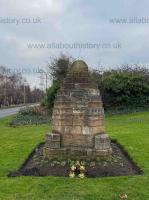
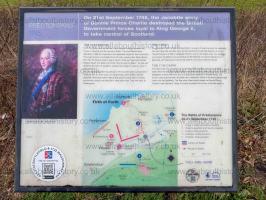
On 21st September 1745 the army of Charles Edward "Bonnie Prince Charlie" Stewart [aged 24] defeated the only government army in Scotland at the Battle of Prestonpans, led by General Sir John Cope [aged 57].
Colonel James Gardiner [aged 57] was killed in action. He was mortally wounded by the Highlanders after his dragoons had fled the field and he was attempting to rally some foot soldiers. He received a mortal blow whilst wounded on the ground and was stripped to the waist as his possessions were looted by the Highlanders. After the battle he was carried from the field by a servant to nearby Tranent where he soon died.
The Thorntree Monument [Map] marks the location of the last stand of Colonel James Gardiner [aged 57] during the Battle of Prestonpans on 21st September 1745.
Colonel James Gardiner: On 11th January 1688 he was born to William Gardiner. 1726 he and Frances Erskine were married. She the daughter of David Erskine 9th Earl Buchan and Frances Fairfax Countess Buchan.
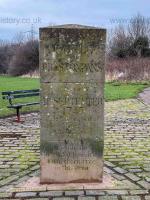
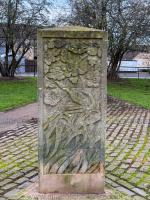
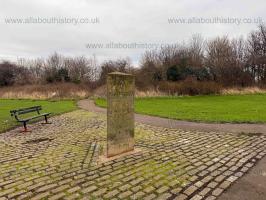
The 1745 Cairn [Map] marks the location of the Battle of Prestonpans fought on 21st September 1745.
On 21st September 1761 Archbishop John Moore [aged 31] was preferred to the fifth prebendal stall at Durham Cathedral [Map].
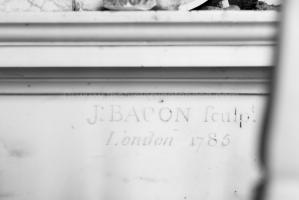
On 21st September 1761 John Bentley Ashley [aged 59] died. Monument to John Bentley Ashley in Saint Leodegarius Church, Ashby St Ledgers [Map]. Sculpted by John "The Elder" Bacon [aged 20]. Standing wall monument with two large allegorical figures flanking the inscription. Above them is a Sarcophagus on which is a Roman lamp on front of a black Obelisk. Also to James Ashley -1798. Simple Wall Monument with Urn and Obelisk. Also to Jane Pocock [aged 51] and by whose will the. Monument was erected.
John Bentley Ashley: he and Jane Pocock were married. Around 1702 he was born to Joseph Ashley of Great Broughton.
Jane Pocock: In 1710 she was born. On 13th June 1784 she died.




This is a translation of the 'Memoires of Jacques du Clercq', published in 1823 in two volumes, edited by Frederic, Baron de Reissenberg. In his introduction Reissenberg writes: 'Jacques du Clercq tells us that he was born in 1424, and that he was a licentiate in law and a counsellor to Philip the Good, Duke of Burgundy, in the castellany of Douai, Lille, and Orchies. It appears that he established his residence at Arras. In 1446, he married the daughter of Baldwin de la Lacherie, a gentleman who lived in Lille. We read in the fifth book of his Memoirs that his father, also named Jacques du Clercq, had married a lady of the Le Camelin family, from Compiègne. His ancestors, always attached to the counts of Flanders, had constantly served them, whether in their councils or in their armies.' The Memoires cover a period of nineteen years beginning in in 1448, ending in in 1467. It appears that the author had intended to extend the Memoirs beyond that date; no doubt illness or death prevented him from carrying out this plan. As Reissenberg writes the 'merit of this work lies in the simplicity of its narrative, in its tone of good faith, and in a certain air of frankness which naturally wins the reader’s confidence.' Du Clercq ranges from events of national and international importance, including events of the Wars of the Roses in England, to simple, everyday local events such as marriages, robberies, murders, trials and deaths, including that of his own father in Book 5; one of his last entries.
Available at Amazon in eBook and Paperback format.

A Tour in Scotland. 21st September 1769. Cross over the Eimot at Yeoma's bridge, and enter Westmoreland. At a small distance beyond the bridge near the road side is the circle called Arthur's round table, consisting of a high dike of earth, and a deep foss within surrounding an area twenty-nine yards in diameter. There are two entrances exactly opposite to each other; which interrupt the ditch, in those parts filled to a level with the middle. Some suppose this to have been designed for tilting matches, and that the champions entered at each opening. Perhaps that might have been the purpose of it; for the size forbids one to suppose it to be an encampment.
On 21st September 1788 Princess Wilhelmine Baden was born to Prince Charles Louis of Baden [aged 33] and Princess Amalie of Hesse-Darmstadt [aged 34]. Coefficient of inbreeding 3.12%. She married 19th June 1804 her first cousin Louis Hesse Darmstadt II Grand Duke and had issue.
On 21st September 1817 Jules 1st Duke of Polignac [aged 71] died.
On 21st September 1845 Ernest Augustus Hanover 3rd Duke Cumberland and Teviotdale was born to George V King Hanover [aged 26] and Marie Saxe Altenburg Queen Consort Hanover. He a great grandson of King George III of Great Britain and Ireland. He married 22nd December 1878 his fourth cousin Thyra Glücksburg Duchess Cumberland and Teviotdale, daughter of King Christian IX of Denmark and Queen Louise Hesse-Kassel of Denmark, and had issue.
On 21st September 1848 Walter William Ouless was born.
On 21st September 1850 Claude Graves was born to Henry Richard Graves [aged 32] and Henrietta Wellesley [aged 34].
21st September 1852 Edmund Blair Leighton was born.
Ten Years' Digging. By the invitation of the Rev. F. Norman, the writer went, on the 21st of September, to assist at the opening of two large barrows, situated on what was formerly called Saltby Heath, now an enclosed and cultivated tract of breezy upland, a few miles from Belvoir Castle. Near them is a long earthwork, consisting of a wide ditch running parallel with a vallum formed of the earth excavated from it, called King Lud's Intrenchment, which with another similar work in the immediate vicinity, named Foulding Dyke, and the two barrows in question, are laid down in a plan, engraved on plate 53, of vol. i, of Nichols' Leicestershire, page 305.
On 21st September 1864 Louise Emily Harford 9th Duchess Beaufort was born to William Henry Harford of Oldtown House in Almondsbury. She married 9th October 1895 Henry Adelbert Wellington Fitzroy 9th Duke Beaufort, son of Henry Charles Fitzroy Somerset 8th Duke Beaufort and Georgiana Charlotte Curzon Howe Duchess Beaufort, and had issue.
On 21st September 1888 Desmond Fitzgerald was born to Gerald Fitzgerald 5th Duke Leinster [aged 37] and Hermione Wilhelmina Duncombe Duchess Leinster [aged 24] at Carton House, Maynooth.


Archaeologia Cambrensis Series 6 Volume 15 1905 Stonehenge. 22nd September 1915. Sale of Stonehenge. — Great public interest was shown in the sale by auction at Salisbury yesterday [September 21st] of the Amesbury Abbey estate, including Stonehenge. Sir Howard Frank, of Messrs. Knight, Frank and Rutley, conducted the sale, and explained that the estate came into the market in consequence of the deaths of Sir Edmund Antrobus and of his only son [Edmund Antrobus], who was killed in action last October. The estate, which has many historical associations, comprises 6,420 acres, and has an estimated rental of £5,359. It was first submitted as a whole, but as no purchaser was forthcoming it was offered in lots, of which Amesbury Abbey and grounds formed the first. This was unsold. Farms and buildings in the town of Amesbury, however, sold at good prices, and most of the property changed hands. When Stonehenge was put up for sale Sir Howard Frank asked for an opening bid of £5,000. A bid for that amount was made at once, quickly followed by an advance of £100, and £6,000 was readied within a minute. Then there was a lull. The auctioneer said the price was a poor one for Stonehenge, which could not be valued, but if there were no further offers he would accept it. Bidding recommenced and mounted to £6,600, at which the property fell to a local landowner, Mr. C. H. E. Chubb [aged 39], of Bemerton Lodge, Salisbury. After the sale Mr. Chubb said that when he went into the sale room he had no intention whatever of buying the monument. "While I was there," he added, I thought a Salisbury man ought to buy it, and that is how it was done." Asked if he had any plans for the future of Stonehenge, Mr. Chubb said that, while he intended to preserve the monument, he would do nothing for some little time, as he had to consider the position. — Times, September 22nd, 1915.
Profits Of Stonehenge. — -Mr. Chubb, the new owner of Stonehenge, will not be given legal possession for some months. Meanwhile he has formulated no plan for the future, except that he is determined to take every step to see that the stones are preserved as heretofore.
The opinion expressed locally is that Mr. Chubb has made an excellent bargain, quite apart from the historic interest attaching to Stonehenge. As the purchase price was £6,600, and the net receipts from fees paid by visitors to the enclosure average £360 per annum, the transaction, regarded in a cold commercial light, represents an investment of over 5 per cent.Times, September 23rd, 1915.
Stonehenge: Its Recent Sale And Price.- The following letter appeared in "The Times of October 6th, 1915:— Sir, — The sale by auction a few days ago of Stonehenge for the comparatively small sum of £6600 will, I think, cause regret in many quarters that the opportunity was lost of vesting this most important national monument in some public body, and of restoring to the public the access to it, free of charge, which had been enjoyed for countless centuries. It will be recollected that fourteen years ago litigation was undertaken with this object. The claim was made that two well-worn ways leading up to, and through, the outer circle of stones were obstructed by the inclosure, which was erected partly with the object of guarding the stones, but mainly for the purpose of enforcing a charge of admission of Is. a head. Those of us who were engaged in this attempt were worsted in the suit and were heavily mulcted in costs. It was not generally known, however, and could not be stated at the hearing of the suit, that at an early stage of the proceedings we offered to purchase the monument and a few acres of Down land surrounding it for the sum of £10,000, with the purpose of placing the monument under the full protection of the Ancient Monuments Act. The effect of this would be that the Government would be charged with the duty and cost of guarding and preserving the stones, and that access of the public to them would be secured, free of charge, for ever. The then owner of the property did not object to a sale, but he said that his price was £50,000. For this sum he had already offered the monument to the Government, and when it was rejected, on the ground that it was altogether exorbitant, he threatened to sell the stones to an American millionaire, who would ship them across the Atlantic. The then Chancellor of the Exchequer, to whom the offer and threat were verbally made, very properly replied that if an attempt was made to remove the monument he would send a regiment from the camp on Salisbury Plain to prevent it. In spite of this rebuff, the excessive price was insisted upon, with the result that the suit was proceeded with. Since then the admission fees have been maintained, and I am informed that the visitors to Stonehenge have been only one-fourth in number of what they used to be. The net produce from the charge for admission has averaged the last three years £320, after deducting the cost of guarding and preserving it. The fees for admission during the last half-year have been greatly reduced in consequence of the war.
"When, a few weeks ago, the intended sale of the monument was announced, I would gladly have made an effort to raise a sum for its purchase, with the object of undoing the wrong which had been done in 1901. But I found that, in view of the many claims arising out of the war, it was impossible to raise by subscription even the moderate sum which appeared to be the full commercial value of the monument, based on the admission fees.
"There remained, however, the possibility that the monument might be purchased by some public body, such as the National Trust, who would maintain the charge for admission to it until more favourable times, when it would be possible to reduce or abolish that charge. In this view, the National Trust, at my suggestion, entered into a correspondence with Messrs. Knight, Frank and Rutley, the agents for the sale of the Amesbury estate. The society had no funds at its immediate disposal for such a purpose, but among its generous supporters there would probably have been found those who would advance the purchase-money on loan on the security of the admission fees. It was necessary, however, before applying to any such friends, to know the price demanded for the monument. The society was informed by the agents that the owner could not name a price, but was prepared to entertain any offer from the National Trust above the sum of £10,000 — a price evidently based upon the offer made for it fourteen years ago. The society replied to this that, after careful consideration, they had come to the conclusion that the minimum price named by the owner was altogether excessive, particularly in view of the exceptional conditions consequent on the war, and that they were unable to make an offer of that amount or above it.
"The reply of the agents to this, on September 17th, was 'that the vendor, who is a tenant for life of the property, would not be justified in selling Stonehenge previous to the auction except at a price which was considered by us (Messrs. Knight, Frank and Rutley) to be high.' They added — 'The reserve at the auction, however, is a low one, in our view, and is thousands of pounds below the amount mentioned in our previous letter,' namely, £10,000. They suggested that the National Trust should be represented at the auction. It was thus practically admitted that the price named by the owner in the previous letter was, in the opinion of the experienced agents who advised him, too high by some thousands. The letter was received by the National Trust on Saturday, September 18th, three days before the sale by auction. It was impossible, in this short interval, to make arrangements for finding the possible purchase-money. The society, therefore, was not represented at the auction, and made no bid. The monument was bought for S6600 by a gentleman resident in the neighbourhood, who has stated that he has bought it as an investment, but with the full intention of doing his best to preserve it a promise which I doubt not he will fulfil. Not the less, however, it is to be regretted that the monument has not become the property of some public body, with the prospect of the reduction or remission of the entrance fees. I may be permitted also to point out that the price obtained at the auction, while it confirms the opinion of the agents who conducted the sale, is also striking proof that the sum offered for the monument in 1901 was most generous, and such as, in the interest of the entailed estate and of the public, should have been accepted.
I am yours faithfully,
Eversley.
Abbotsworthy House, Winchester,
October 1st.


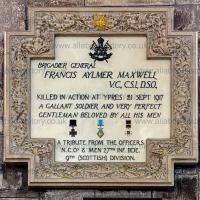
After 21st September 1917. North Aisle, Edinburgh Cathedral [Map]. Memorial to Brigadier-General Francis Aylmer Maxwell, killed in action at Ypres.
The Deeds of the Dukes of Normandy
The Gesta Normannorum Ducum [The Deeds of the Dukes of Normandy] is a landmark medieval chronicle tracing the rise and fall of the Norman dynasty from its early roots through the pivotal events surrounding the Norman Conquest of England. Originally penned in Latin by the monk William of Jumièges shortly before 1060 and later expanded at the behest of William the Conqueror, the work chronicles the deeds, politics, battles, and leadership of the Norman dukes, especially William’s own claim to the English throne. The narrative combines earlier historical sources with firsthand information and oral testimony to present an authoritative account of Normandy’s transformation from a Viking settlement into one of medieval Europe’s most powerful realms. William’s history emphasizes the legitimacy, military prowess, and governance of the Norman line, framing their expansion, including the conquest of England, as both divinely sanctioned and noble in purpose. Later chroniclers such as Orderic Vitalis and Robert of Torigni continued the history, extending the coverage into the 12th century, providing broader context on ducal rule and its impact. Today this classic work remains a foundational source for understanding Norman identity, medieval statesmanship, and the historical forces that reshaped England and Western Europe between 800AD and 1100AD.
Available at Amazon in eBook and Paperback format.
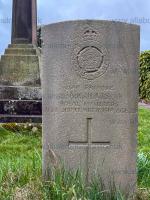
Private A. Collis. Royal Fusiliers. 21st September 1918. Aged 24. He was injured in a gas attack in 1917. Buried at St Peter's Church, Ellastone.
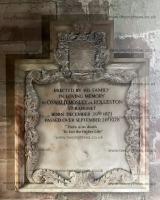
On 21st September 1928 Oswald Mosley 5th Baronet [aged 54] died. His son Oswald [aged 31] succeeded 6th Baronet Mosley of Ancoats. Cynthia Blanche Curzon Lady Ancoats [aged 30] by marriage Lady Mosley of Ancoats. Memorial at St Mary's Church, Rolleston on Dove [Map].
Oswald Mosley 5th Baronet: On 29th December 1873 he was born to Oswald Mosley 4th Baronet at Beaumaris, Anglesey. On 12th December 1895 Oswald Mosley 5th Baronet and Katharine Maud Edwards-Heathcote were married.
Cynthia Blanche Curzon Lady Ancoats: On 23rd August 1898 she was born to George Nathaniel Curzon 1st Marquess Kedleston and Mary Victoria Leiter Baroness Curzon Kedleston. On 16th May 1933 Cynthia Blanche Curzon Lady Ancoats died.

On 21st September 1929 Louise Victoria Marshall [aged 82] died at East Bolton, Northumberland [Map]. Memorial at the Chapel of St John the Evangelist, Bolton [Map].
Louise Victoria Marshall: In 1847 she was born. On 1st June 1878 Captain Arthur Gray and she were married at St Luke's Church, Paddington.
On 21st September 1957 Haakon VII King Norway [aged 85] died. His son Olav [aged 54] succeeded V King Norway.
On 21st September 2000 John Sutherland Egerton 6th Duke Sutherland [aged 85] died. His first cousin once removed Francis [aged 60] succeeded 7th Duke Sutherland, 7th Marquess Stafford, 6th Earl Ellesmere, 9th Earl Gower, 6th Viscount Brackley, 10th Baron Gower, 14th Baronet Gower of Stittenham in Yorkshire.
On 21st September 1371 Frederick I Elector Brandenburg was born to Frederick Hohenzollern V Burgrave Nuremburg [aged 38].
On 21st September 1375 William Stafford 4th Earl Stafford was born to Hugh Stafford 2nd Earl Stafford [aged 39] and Philippa Beauchamp Countess Stafford [aged 41]. He a great x 3 grandson of King Edward I of England.
On 21st September 1405 Margaret Deincourt Baroness Cromwell was born to John Deincourt 5th Baron Deincourt [aged 23] and Joan Grey 5th Baroness Grey [aged 19]. She married before 1433 Ralph Cromwell 3rd Baron Cromwell, son of Ralph Cromwell 2nd Baron Cromwell.
On 21st September 1411 Richard Plantagenet 3rd Duke of York was born to Richard of Conisbrough 1st Earl Cambridge [aged 26] and Anne Mortimer [aged 20]. His mother died shortly afterwards. He a great grandson of King Edward III of England. Coefficient of inbreeding 2.28%. He married October 1429 his second cousin Cecily "Rose of Raby" Neville Duchess York, daughter of Ralph Neville 1st Earl of Westmoreland and Joan Beaufort Countess of Westmoreland, and had issue.
On 21st September 1415 Frederick "Peaceful or Fat" Habsburg III Holy Roman Emperor was born to Ernest "The Iron" Habsburg I Duke Austria [aged 38] and Cymburgis Masovia Duchess Austria [aged 21]. He married 16th March 1452 Eleanor Aviz Holy Roman Empress, daughter of Edward "The Philosopher" I King Portugal and Eleanor Trastámara Queen Consort Portugal, and had issue.
On 21st September 1516 Matthew Stewart 4th Earl Lennox was born to John Stewart 3rd Earl Lennox [aged 26] and Isabel or Elizabeth Stewart Countess Lennox [aged 21] at Dumbarton Castle, Dunbarton. He a great x 4 grandson of King Edward III of England. He married 6th July 1544 his third cousin once removed Margaret Douglas Countess Lennox, daughter of Archibald Douglas 6th Earl Angus and Margaret Tudor Queen Scotland, and had issue.
This is a translation of the 'Memoires of Jacques du Clercq', published in 1823 in two volumes, edited by Frederic, Baron de Reissenberg. In his introduction Reissenberg writes: 'Jacques du Clercq tells us that he was born in 1424, and that he was a licentiate in law and a counsellor to Philip the Good, Duke of Burgundy, in the castellany of Douai, Lille, and Orchies. It appears that he established his residence at Arras. In 1446, he married the daughter of Baldwin de la Lacherie, a gentleman who lived in Lille. We read in the fifth book of his Memoirs that his father, also named Jacques du Clercq, had married a lady of the Le Camelin family, from Compiègne. His ancestors, always attached to the counts of Flanders, had constantly served them, whether in their councils or in their armies.' The Memoires cover a period of nineteen years beginning in in 1448, ending in in 1467. It appears that the author had intended to extend the Memoirs beyond that date; no doubt illness or death prevented him from carrying out this plan. As Reissenberg writes the 'merit of this work lies in the simplicity of its narrative, in its tone of good faith, and in a certain air of frankness which naturally wins the reader’s confidence.' Du Clercq ranges from events of national and international importance, including events of the Wars of the Roses in England, to simple, everyday local events such as marriages, robberies, murders, trials and deaths, including that of his own father in Book 5; one of his last entries.
Available at Amazon in eBook and Paperback format.
On 21st September 1538 Lewis Mordaunt 3rd Baron Mordaunt was born to John Mordaunt 2nd Baron Mordaunt [aged 30] and Ellen Fitzlewis [aged 16].
On 21st September 1561 Edward Seymour was born to Edward Seymour 1st Earl Hertford [aged 22] and Catherine Grey Countess Hertford [aged 21] at Tower of London [Map]. He a great x 2 grandson of King Henry VII of England and Ireland. He married Honora Rogers and had issue.
On 21st September 1562 Vincenzo Gonzaga III Duke Mantua was born to William Gonzaga I Duke Mantua [aged 24] and Eleanor of Austria Duchess Mantua [aged 27]. He married 29th April 1584 his first cousin Eleanor de Medici Duchess Mantua, daughter of Francesco I de Medici Grand Duke of Tuscany and Joanna of Austria Grand Duchess Tuscany, and had issue.
On 21st September 1585 Robert Clifford was born to George Clifford 3rd Earl of Cumberland [aged 27] and Margaret Russell Countess Cumberland [aged 25]. He died aged five in 1591.


On 21st September 1619 John Wray 3rd Baronet was born to John Wray 2nd Baronet [aged 32] and Grisilla Bethell Lady Glentworth [aged 30]. He married (1) 23rd January 1652 Elizabeth Willoughby Lady D'Ewes and Glentworth, daughter of Henry Willoughby 1st Baronet and Lettice Darcy (2) before 26th September 1662 Sarah Evelyn Viscountess Fanshawe and Castleton and had issue.
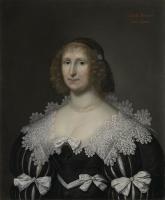
On 21st September 1623 John Bowyer 1st Baronet was born to William Bowyer [aged 35] and Hester Skeffington [aged 33].
On 21st September 1640 Philip Bourbon I Duke Orléans was born to Louis XIII King France [aged 38] and Anne of Austria Spain Queen Consort France [aged 38]. Coefficient of inbreeding 4.44%. He married (1) 31st March 1661 his first cousin Princess Henrietta Stewart Duchess Orléans, daughter of King Charles I of England, Scotland and Ireland and Henrietta Maria Bourbon Queen Consort England, and had issue (2) 16th November 1671 his half fourth cousin twice removed Elizabeth Charlotte Palatinate Simmern Duchess Orléans and had issue.
On 21st September 1655 Roger Cave 2nd Baronet was born to Thomas Cave 1st Baronet [aged 33] and Penelope Wenman Lady Cave. He married (1) 26th March 1676 Martha Browne Lady Cave and had issue (2) after 1691 Mary Bromley Lady Cave and had issue.
On 21st September 1701 George Byng 3rd Viscount Torrington was born to George Byng 1st Viscount Torrington [aged 38].


On 21st September 1706 Polyxena Hesse Rotenburg Queen Consort Sardinia was born to Landgrave Ernest Leopold of Hesse-Rotenburg [aged 22]. She married 23rd July 1724 Charles Emmanuel III King Sardinia, son of Victor Amadeus King Sardinia and Anne Marie Bourbon Queen Consort Sardinia, and had issue.
On 21st September 1725 Brownlow Cecil 9th Earl Exeter was born to Brownlow Cecil 8th Earl Exeter [aged 24]. He married (1) 24th July 1749 Laetitia Townshend Countess Exeter (2) 23rd April 1770 Anne Maria Cheatham Countess Exeter.
On 21st September 1730 Charlotte Seymour Countess Aylesford was born to Charles Seymour 6th Duke of Somerset [aged 68] and Charlotte Finch Duchess Somerset [aged 37]. She married 1750 her second cousin Heneage Finch 3rd Earl Aylesford, son of Heneage Finch 2nd Earl Aylesford and Mary Fisher Countess Aylesford, and had issue.
On 21st September 1756 Robert Shirley 7th Earl Ferrers was born to Robert Shirley 6th Earl Ferrers [aged 33] and Catherine Cotton Countess Ferrers [aged 37]. He married (1) 13th March 1778 Elizabeth Prentiss Countess Ferrers and had issue (2) 28th September 1799 Elizabeth Mundy Countess Ferrers.

On 21st September 1770 Thomas Noel-Hill 2nd Baron Berwick was born to Noel Hill 1st Baron Berwick [aged 25] and Anna Vernon [aged 22]. He married 8th February 1812 Sophia Dubochet.
Adam Murimuth's Continuation and Robert of Avesbury’s 'The Wonderful Deeds of King Edward III'
This volume brings together two of the most important contemporary chronicles for the reign of Edward III and the opening phases of the Hundred Years’ War. Written in Latin by English clerical observers, these texts provide a vivid and authoritative window into the political, diplomatic, and military history of fourteenth-century England and its continental ambitions. Adam Murimuth Continuatio's Chronicarum continues an earlier chronicle into the mid-fourteenth century, offering concise but valuable notices on royal policy, foreign relations, and ecclesiastical affairs. Its annalistic structure makes it especially useful for establishing chronology and tracing the development of events year by year. Complementing it, Robert of Avesbury’s De gestis mirabilibus regis Edwardi tertii is a rich documentary chronicle preserving letters, treaties, and official records alongside narrative passages. It is an indispensable source for understanding Edward III’s claim to the French crown, the conduct of war, and the mechanisms of medieval diplomacy. Together, these works offer scholars, students, and enthusiasts a reliable and unembellished account of a transformative period in English and European history. Essential for anyone interested in medieval chronicles, the Hundred Years’ War, or the reign of Edward III.
Available at Amazon in eBook and Paperback format.

On 21st September 1773 Isabella Elizabeth Byng Marchioness Bath was born to George Byng 4th Viscount Torrington [aged 32] and Lucy Boyle Viscountess Torrington. She married 14th April 1794 her fifth cousin Thomas Thynne 2nd Marquess of Bath, son of Thomas Thynne 1st Marquess of Bath and Elizabeth Bentinck Marchioness Bath, and had issue.
On 21st September 1783 Henry Leslie Pepys 3rd Baronet was born to Lucas Pepys 1st Baronet [aged 41] and Jane Elizabeth Leslie 12th Countess of Rothes [aged 33].
On 21st September 1788 Princess Wilhelmine Baden was born to Prince Charles Louis of Baden [aged 33] and Princess Amalie of Hesse-Darmstadt [aged 34]. Coefficient of inbreeding 3.12%. She married 19th June 1804 her first cousin Louis Hesse Darmstadt II Grand Duke and had issue.
On 21st September 1803 Thomas Vesey 3rd Viscount Vesci was born to John Vesey 2nd Viscount Vesci [aged 32] and Frances Letitia Brownlow Viscountess Vesci. He married 1839 Emma Herbert Viscountess Vesci, daughter of George Augustus Herbert 11th Earl Pembroke 8th Earl Montgomery and Yekaterina Semyonovna Vorontsova Countess Pembroke and Montgomery, and had issue.
On 21st September 1803 William Trench 3rd Earl of Clancarty was born to Richard Le Poer Trench 2nd Earl Clancarty [aged 36] and Henrietta Margaret Staples Countess Clancarty [aged 33]. He married 8th September 1832 Sarah Juliana Butler and had issue.
On 21st September 1811 Elizabeth St Lawrence Lady Borough was born to William St Lawrence 2nd Earl Howth [aged 58] and Margaret Burke Countess Howth. She married before 12th April 1863 Edward Richard Borough 2nd Baronet, son of Richard Borough 1st Baronet and Anna Maria Lake, and had issue.
On 21st September 1832 Isabel Harriet Fuller-Palmer-Acland Lady Hood was born to Peregrine Palmer Fuller-Palmer-Acland 2nd Baronet [aged 42]. She married 1849 Alexander Hood 3rd Baronet, son of Alexander Hood 2nd Baronet and Amelia Anne Bateman Lady Hood, and had issue.
On 21st September 1839 Henry Dering 9th Baronet was born to Edward Dering 8th Baronet [aged 31] and Jane Edwardes Lady Dering.
On 21st September 1845 Ernest Augustus Hanover 3rd Duke Cumberland and Teviotdale was born to George V King Hanover [aged 26] and Marie Saxe Altenburg Queen Consort Hanover. He a great grandson of King George III of Great Britain and Ireland. He married 22nd December 1878 his fourth cousin Thyra Glücksburg Duchess Cumberland and Teviotdale, daughter of King Christian IX of Denmark and Queen Louise Hesse-Kassel of Denmark, and had issue.
On 21st September 1846 Montagu Curzon was born to Richard William Penn Curzon Howe 1st Earl Howe [aged 49] and Anne Gore Countess Howe. He married 19th October 1886 Esmé Fitzroy and had issue.
The Deeds of the Dukes of Normandy
The Gesta Normannorum Ducum [The Deeds of the Dukes of Normandy] is a landmark medieval chronicle tracing the rise and fall of the Norman dynasty from its early roots through the pivotal events surrounding the Norman Conquest of England. Originally penned in Latin by the monk William of Jumièges shortly before 1060 and later expanded at the behest of William the Conqueror, the work chronicles the deeds, politics, battles, and leadership of the Norman dukes, especially William’s own claim to the English throne. The narrative combines earlier historical sources with firsthand information and oral testimony to present an authoritative account of Normandy’s transformation from a Viking settlement into one of medieval Europe’s most powerful realms. William’s history emphasizes the legitimacy, military prowess, and governance of the Norman line, framing their expansion, including the conquest of England, as both divinely sanctioned and noble in purpose. Later chroniclers such as Orderic Vitalis and Robert of Torigni continued the history, extending the coverage into the 12th century, providing broader context on ducal rule and its impact. Today this classic work remains a foundational source for understanding Norman identity, medieval statesmanship, and the historical forces that reshaped England and Western Europe between 800AD and 1100AD.
Available at Amazon in eBook and Paperback format.
On 21st September 1848 Walter William Ouless was born.
On 21st September 1850 Claude Graves was born to Henry Richard Graves [aged 32] and Henrietta Wellesley [aged 34].
On 21st September 1864 Louise Emily Harford 9th Duchess Beaufort was born to William Henry Harford of Oldtown House in Almondsbury. She married 9th October 1895 Henry Adelbert Wellington Fitzroy 9th Duke Beaufort, son of Henry Charles Fitzroy Somerset 8th Duke Beaufort and Georgiana Charlotte Curzon Howe Duchess Beaufort, and had issue.
On 21st September 1865 Charles Rushworth Watson 3rd Baronet was born to Arthur Townley Watson 2nd Baronet [aged 35] and Rosamund Rushworth Lady Watson.
On 21st September 1865 Edmund Arthur Lechmere 4th Baronet was born to Edmund Shirley 3rd Baronet [aged 38].
On 21st September 1873 Lieutenant-Colonel Harry St Lo Malet 7th Baronet was born to Captain William St Lo Malet [aged 29] and Helen Eden.

On 21st September 1873 Francis Hugh Lindley Wood was born to Charles Lindley Wood 2nd Viscount Halifax [aged 34] and Agnes Elizabeth Courtenay Viscountess Halifax [aged 35].
On 21st September 1874 William FitzHerbert 7th Baronet was born to Richard Fitzherbert 5th Baronet [aged 28] and Mary Anne Arkwright Lady Fitzherbert [aged 24]. He married 24th October 1889 Nora Maitland Lady Fitzherbert, daughter of Frederick Maitland 13th Earl of Lauderdale.
On 21st September 1879 Wilfred Charles William Egerton was born to Francis Egerton 3rd Earl Ellesmere [aged 32] and Katherine Louisa Phipps Countess Ellesmere [aged 29].
On 21st September 1885 Wyndham Knatchbull-Hugessen 3rd Baron Brabourne was born to Edward Knatchbull-Hugessen 2nd Baron Brabourne [aged 28] and Amy Virginia Beaumont [aged 26].
Chronicle of Geoffrey le Baker of Swinbroke
Baker was a secular clerk from Swinbroke, now Swinbrook, an Oxfordshire village two miles east of Burford. His Chronicle describes the events of the period 1303-1356: Gaveston, Bannockburn, Boroughbridge, the murder of King Edward II, the Scottish Wars, Sluys, Crécy, the Black Death, Winchelsea and Poitiers. To quote Herbert Bruce 'it possesses a vigorous and characteristic style, and its value for particular events between 1303 and 1356 has been recognised by its editor and by subsequent writers'. The book provides remarkable detail about the events it describes. Baker's text has been augmented with hundreds of notes, including extracts from other contemporary chronicles, such as the Annales Londonienses, Annales Paulini, Murimuth, Lanercost, Avesbury, Guisborough and Froissart to enrich the reader's understanding. The translation takes as its source the 'Chronicon Galfridi le Baker de Swynebroke' published in 1889, edited by Edward Maunde Thompson.
Available at Amazon in eBook and Paperback format.

On 21st September 1887 Captain Lawrence Ughtred Kay-Shuttleworth was born to Ughtred Kay-Shuttleworth 1st Baron Shuttleworth [aged 42]. He married 1st February 1913 Selina Adine Bridgeman and had issue.
On 21st September 1888 Desmond Fitzgerald was born to Gerald Fitzgerald 5th Duke Leinster [aged 37] and Hermione Wilhelmina Duncombe Duchess Leinster [aged 24] at Carton House, Maynooth.
On 21st September 1893 Joan Katherine Lambton Baroness Joicey was born to Frederick Lambton 4th Earl Durham [aged 38] and Beatrix Bulteel Countess Durham [aged 34]. Coefficient of inbreeding 1.57%. She married 1921 Hugh Edward Joicey 3rd Baron, son of James Joicey 1st Baron Joicey and Elizabeth Amy Robinson, and had issue.

On 21st September 1899 Charles Arthur Uryan Rhys 8th Baron Dynevor was born to Walter FitzUryan Rice 7th Baron Dynevor [aged 26] and Margaret Child-Villiers Baroness Dynevor [aged 24].
On 21st September 1903 William Ralph Seymour Bathurst was born to Seymour Bathurst 7th Earl Bathurst [aged 39] and Lilias Margaret Frances Borthwick Countess Bathurst Sussex [aged 32].
On 21st September 1913 Gilbert Simon Heathcote 9th Baronet was born to Robert Evelyn Manners Heathcote [aged 29].
On 21st September 1917 Berwick Hungerford Lechmere 6th Baronet was born to Ronald Lechmere 5th Baronet [aged 31] and Constance Marguerite Long [aged 27].
On 21st September 1923 Harry John Neville Vane 11th Baron Barnard was born to Christopher Vane 10th Baron Barnard [aged 34] and Sylvia Mary Straker Baroness Barnard [aged 25] at Raby Castle, County Durham [Map]. He married (1) 8th October 1952 his half second cousin once removed Davina Mary Cecil Baroness Barnard, daughter of David George Brownlow-Cecil 6th Marquess Exeter and Mary Theresa Montagu-Douglas-Scott, and had issue.
On 21st September 1971 Simon Nelson 10th Earl Nelson was born to Peter Nelson 9th Earl Nelson [aged 29].
On 21st September 1973 Peter Talbot Chetwynd 10th Baronet was born to Robin Chetwynd 9th Baronet [aged 32].
Adam Murimuth's Continuation and Robert of Avesbury’s 'The Wonderful Deeds of King Edward III'
This volume brings together two of the most important contemporary chronicles for the reign of Edward III and the opening phases of the Hundred Years’ War. Written in Latin by English clerical observers, these texts provide a vivid and authoritative window into the political, diplomatic, and military history of fourteenth-century England and its continental ambitions. Adam Murimuth Continuatio's Chronicarum continues an earlier chronicle into the mid-fourteenth century, offering concise but valuable notices on royal policy, foreign relations, and ecclesiastical affairs. Its annalistic structure makes it especially useful for establishing chronology and tracing the development of events year by year. Complementing it, Robert of Avesbury’s De gestis mirabilibus regis Edwardi tertii is a rich documentary chronicle preserving letters, treaties, and official records alongside narrative passages. It is an indispensable source for understanding Edward III’s claim to the French crown, the conduct of war, and the mechanisms of medieval diplomacy. Together, these works offer scholars, students, and enthusiasts a reliable and unembellished account of a transformative period in English and European history. Essential for anyone interested in medieval chronicles, the Hundred Years’ War, or the reign of Edward III.
Available at Amazon in eBook and Paperback format.
On 21st September 1305 Louis X King France I Navarre [aged 15] and Margaret of Burgundy Queen Consort France [aged 15] were married. She the daughter of Robert II Duke Burgundy [aged 57] and Agnes Capet Duchess Burgundy [aged 45]. He the son of King Philip IV of France [aged 37] and Joan Blois I Queen Navarre. They were first cousin once removed. He a great x 4 grandson of King Henry "Curtmantle" II of England. She a great x 3 granddaughter of King Henry "Curtmantle" II of England.
On 21st September 1371 John of Gaunt 1st Duke Lancaster [aged 31] and Constance of Castile Duchess of Lancaster [aged 17] were married at Roquefort, Landes. She by marriage Duchess Lancaster. His younger brother Edmund of Langley 1st Duke of York [aged 30] married Constance's sister in July 1372. An example of Marriage of Two Sets of Siblings. She the illegitmate daughter of Peter "Cruel" I King Castile and Maria Padilla. He the son of King Edward III of England [aged 58] and Philippa of Hainaut Queen Consort England. They were half third cousin twice removed.
On 21st September 1578 Robert Dudley 1st Earl of Leicester [aged 46] and Lettice Knollys Countess Essex and Leicester [aged 34] were married secretly much to the anguish of Queen Elizabeth I of England and Ireland [aged 45] who developed a deep hatred of Lettice Knollys Countess Essex and Leicester. She by marriage Countess of Leicester. Roger North 2nd Baron North [aged 48] was present. He the son of John Dudley 1st Duke Northumberland and Jane Guildford Duchess Northumberland. They were fifth cousins.
On 21st September 1585 Edward Montagu 1st Baron Montagu [aged 22] and Elizabeth Jeffrey [aged 17] were married at Weekley, Northamptonshire.
On 21st September 1676 Robert Grierson 1st Baronet [aged 21] and Henrietta Douglas Lady Grierson [aged 19] were married at Drumlanrig Castle [Map] or Sanquhar Castle [Map]. She the sister of William Douglas 1st Duke Queensberry [aged 39]. She the daughter of James Douglas 2nd Earl Queensberry and Margaret Stewart Countess Queensberry.
On 21st September 1691 John Lyon 4th Earl Strathmore and Kinghorne [aged 28] and Elizabeth Stanhope Countess Strathmore and Kinghorne [aged 28] were married. She the daughter of Philip Stanhope 2nd Earl Chesterfield [aged 57] and Elizabeth Butler Countess Chesterfield. He the son of Patrick Lyon 3rd Earl Strathmore and Kinghorne [aged 48] and Helen Middleton Countess Strathmore and Kinghorne [aged 46]. They were fourth cousin once removed.
On 21st September 1744 Richard Acton 5th Baronet [aged 33] and Anne Grey Lady Acton [aged 18] were married. She by marriage Lady Acton of Aldenham Hall. She the daughter of Henry Grey 3rd Earl Stamford and Dorothy Wright Countess Stamford.
On 21st September 1766 Walter Blount 6th Baronet [aged 41] and Mary Aston Lady Blount [aged 23] were married. She by marriage Lady Blount of Sodington. They were half third cousins.
On 21st September 1810 Thomas Bruce 11th Earl Kincardine 7th Earl Elgin [aged 44] and Elizabeth Oswald Countess Kincardine and Elgin [aged 20] were married. The difference in their ages was 23 years. He the son of Charles Bruce 9th Earl Kincardine 5th Earl Elgin.
On 21st September 1821 Edward Chichester 4th Marquess Donegal [aged 22] and Amelia Ogrady Marchioness County Donegal were married. He the son of George Chichester 2nd Marquess Donegal [aged 52].
William of Worcester's Chronicle of England
William of Worcester, born around 1415, and died around 1482 was secretary to John Fastolf, the renowned soldier of the Hundred Years War, during which time he collected documents, letters, and wrote a record of events. Following their return to England in 1440 William was witness to major events. Twice in his chronicle he uses the first person: 1. when writing about the murder of Thomas, 7th Baron Scales, in 1460, he writes '… and I saw him lying naked in the cemetery near the porch of the church of St. Mary Overie in Southwark …' and 2. describing King Edward IV's entry into London in 1461 he writes '… proclaimed that all the people themselves were to recognize and acknowledge Edward as king. I was present and heard this, and immediately went down with them into the city'. William’s Chronicle is rich in detail. It is the source of much information about the Wars of the Roses, including the term 'Diabolical Marriage' to describe the marriage of Queen Elizabeth Woodville’s brother John’s marriage to Katherine, Dowager Duchess of Norfolk, he aged twenty, she sixty-five or more, and the story about a paper crown being placed in mockery on the severed head of Richard, 3rd Duke of York.
Available at Amazon in eBook and Paperback format.
On 21st September 1841 Matthew White Ridley 4th Baronet [aged 34] and Cecilia Anne Parke Lady Ridley were married. She by marriage Lady Ridley of Blagdon in Northumberland.
On 21st September 1909 Edward Guiness 1st Earl Iveagh [aged 61] and Adelaide "Dodo" Guinness [aged 65] were married. They were half third cousins.
On 21st September 1909 Edward Frederick Lindley Wood 1st Earl Halifax [aged 28] and Dorothy Evelyn Augusta Onslow Countess Halifax [aged 24] were married. She the daughter of William Onslow 4th Earl Onslow [aged 56] and Florence Coulston Gardner Countess Onslow [aged 56].
On 21st September 1026 Otto William Ivrea I Count Burgundy [aged 66] died. His son Reginald [aged 40] succeeded I Count Burgundy. Alice Normandy Countess Burgundy [aged 24] by marriage Countess Burgundy.
On 21st September 1250 Marie Montgomery Countess Ponthieu [aged 51] died.
On 21st September 1327 King Edward II of England [aged 43] was murdered at Berkeley Castle [Map]. There is speculation as to the manner of his death, and as to whether he died at all. Some believe he may have lived the rest of his life in Europe - see Publications de la Société Archéologique de Montpellier 1877: Fieschi Letter.
On 21st September 1397 Richard Fitzalan 9th Earl of Surrey 4th or 11th Earl of Arundel [aged 51] was tried at Westminster [Map].
He was beheaded at Tower Hill [Map] immediately thereafter. Earl Surrey and Earl Arundel forfeit.
On 21st September 1417 Walter Tailboys 5th Baron Kyme [aged 67] died. His son Walter [aged 29] succeeded 6th Baron Kyme.
On 21st September 1480 Eleanor Poynings Countess Northumberland [aged 58] died at Raby Castle, County Durham [Map]. Her son Henry [aged 31] succeeded 6th Baron Poynings.
On 21st September 1523 Maurice Berkeley 4th Baron Berkeley [aged 56] died. His brother Thomas [aged 51] succeeded 5th Baron Berkeley. Eleanor Constable Baroness Berkeley by marriage Baroness Berkeley.
On 21st September 1532 William Preston 2nd Viscount Gormanston died. His son Jenico [aged 30] succeeded 2nd Viscount Gormanston, 5th Baron Gormanston.
On 21st September 1538 George Tailboys 9th Baron Kyme [aged 71] died. He was buried at Lincoln Cathedral [Map]. His grandson George [aged 15] de jure 10th Baron Kyme.
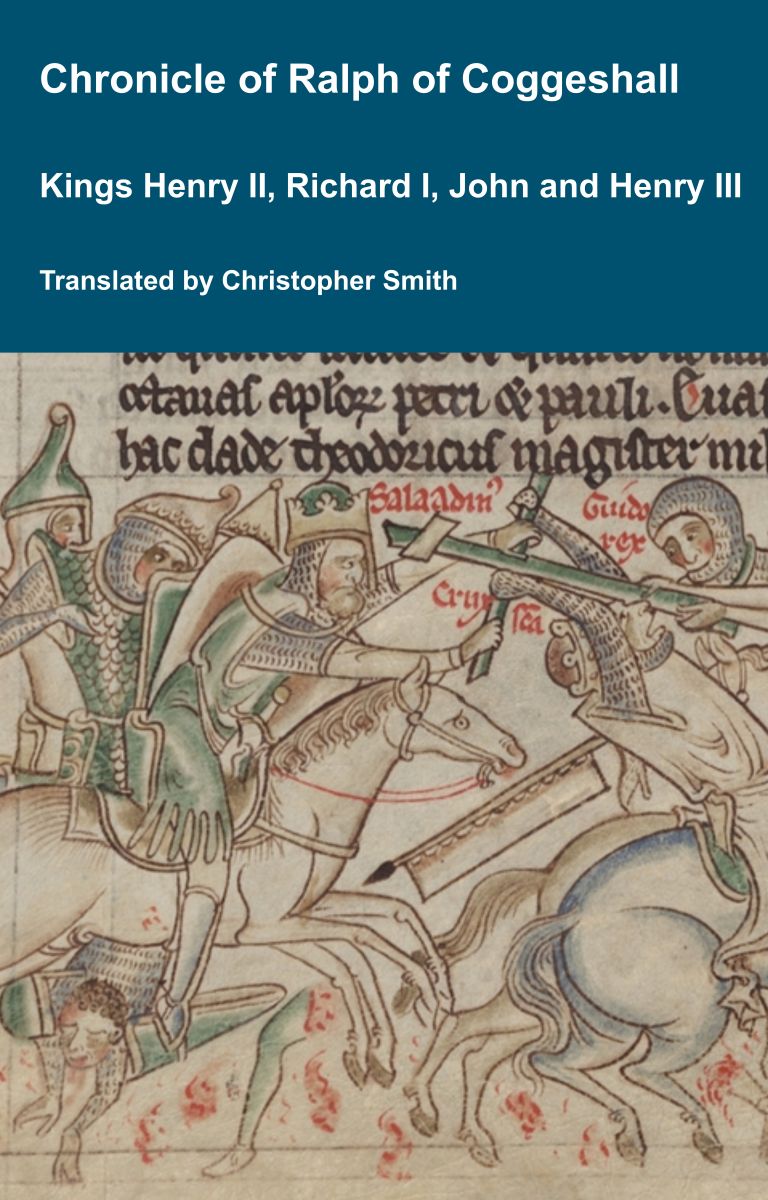
Chronicle of Abbot Ralph of Coggeshall
The Chronicle of Abbot Ralph of Coggeshall (Chronicon Anglicanum) is an indispensable medieval history that brings to life centuries of English and European affairs through the eyes of a learned Cistercian monk. Ralph of Coggeshall, abbot of the Abbey of Coggeshall in Essex in the early 13th century, continued and expanded his community’s chronicle, documenting events from the Norman Conquest of 1066 into the tumultuous reign of King Henry III. Blending eyewitness testimony, careful compilation, and the monastic commitment to record-keeping, this chronicle offers a rare narrative of political intrigue, royal power struggles, and social upheaval in England and beyond. Ralph’s work captures the reigns of pivotal figures such as Richard I and King John, providing invaluable insights into their characters, decisions, and the forces that shaped medieval rule. More than a simple annal, Chronicon Anglicanum conveys the texture of medieval life and governance, making it a rich source for scholars and readers fascinated by English history, monastic authorship, and the shaping of the medieval world.
Available at Amazon in eBook and Paperback format.
On 21st September 1557 Dorothy Melton Baroness Darcy [aged 51] died.
On 21st September 1558 Charles V Holy Roman Emperor [aged 58] died at the Monastery of Yuste [Map]. His son Philip [aged 31] succeeded II King Spain.
On 21st September 1637 Landgrave William V of Hesse-Kassel [aged 35] died. His son Wilhelm [aged 8] succeeded VI Landgrave Hesse Kassel.
On 21st September 1690 Wriothesley Baptist Noel 2nd Earl Gainsborough [aged 29] died. His half first cousin Baptist [aged 6] succeeded 3rd Earl Gainsborough, 6th Viscount Campden, 6th Baron Hicks of Ilmington in Warwickshire.
On 21st September 1711 James Rushout 3rd Baronet [aged 10] died. His uncle John [aged 26] succeeded 4th Baronet Rushout of Northwick Park in Worcestershire.


On 21st September 1744 William Neville 1st Baron Abergavenny [aged 49] died at Bath, Somerset [Map]. On 30th September 1744 he was buried at East Grinstead. His son George [aged 17] succeeded 2nd Baron Abergavenny.
On 21st September 1749 John Bingham 5th Baronet [aged 59] died. His son John [aged 20] succeeded 6th Baronet Bingham of Castlebar in County Mayo.
On 21st September 1759 Elizabeth Orde Lady Blackett died. She was buried on 28th September 1759 at the Cathedral Church St Nicholas, Newcastle upon Tyne [Map].
On 21st September 1761 John Bentley Ashley [aged 59] died. Monument to John Bentley Ashley in Saint Leodegarius Church, Ashby St Ledgers [Map]. Sculpted by John "The Elder" Bacon [aged 20]. Standing wall monument with two large allegorical figures flanking the inscription. Above them is a Sarcophagus on which is a Roman lamp on front of a black Obelisk. Also to James Ashley -1798. Simple Wall Monument with Urn and Obelisk. Also to Jane Pocock [aged 51] and by whose will the. Monument was erected.
John Bentley Ashley: he and Jane Pocock were married. Around 1702 he was born to Joseph Ashley of Great Broughton.
Jane Pocock: In 1710 she was born. On 13th June 1784 she died.
On 21st September 1774 William Graham 6th Baronet [aged 44] died. His son Charles [aged 10] succeeded 7th Baronet Graham of Esk in Cumberland
The Deeds of the Dukes of Normandy
The Gesta Normannorum Ducum [The Deeds of the Dukes of Normandy] is a landmark medieval chronicle tracing the rise and fall of the Norman dynasty from its early roots through the pivotal events surrounding the Norman Conquest of England. Originally penned in Latin by the monk William of Jumièges shortly before 1060 and later expanded at the behest of William the Conqueror, the work chronicles the deeds, politics, battles, and leadership of the Norman dukes, especially William’s own claim to the English throne. The narrative combines earlier historical sources with firsthand information and oral testimony to present an authoritative account of Normandy’s transformation from a Viking settlement into one of medieval Europe’s most powerful realms. William’s history emphasizes the legitimacy, military prowess, and governance of the Norman line, framing their expansion, including the conquest of England, as both divinely sanctioned and noble in purpose. Later chroniclers such as Orderic Vitalis and Robert of Torigni continued the history, extending the coverage into the 12th century, providing broader context on ducal rule and its impact. Today this classic work remains a foundational source for understanding Norman identity, medieval statesmanship, and the historical forces that reshaped England and Western Europe between 800AD and 1100AD.
Available at Amazon in eBook and Paperback format.
On 21st September 1812 Elizabeth Amcotts Lady Ingilby [aged 49] died.
On 21st September 1817 Jules 1st Duke of Polignac [aged 71] died.
On 21st September 1845 Charles D'Oyly 7th Baronet [aged 64] died without issue despite having been married twice. His brother John [aged 50] succeeded 8th Baronet D'Oyly of Shottisham in Suffolk.
On 21st September 1846 John Upton 2nd Baron Templetown [aged 74] died.

On 21st September 1848 George Frederick Cavendish-Scott-Bentinck [aged 46] died unmarried. He had left his father's home Welbeck Abbey, Nottinghamshire [Map] intending to walk the six miles to Thoresby Hall, Nottinghamshire to dine with Charles Herbert Pierrepont 2nd Earl Manvers [aged 70]. When he didn't arrive at Thoresby Hall, Nottinghamshire a search party was sent to look for him. They discovered his body at nine in the evening. He was buried in the family vault at St Marylebone Church.
On 21st September 1865 Reverend Brooke William Boothby 9th Baronet [aged 56] died. His son Brooke [aged 8] succeeded 10th Baronet Boothby of Broadlow Ash in Derbyshire.
On 21st September 1886 Sophia Anderson-Pelham Countess Eglinton [aged 46] died.
On 21st September 1895 Henry Bromley 4th Baronet [aged 78] died. His son Henry [aged 46] succeeded 5th Baronet Bromley of Nottingham and East Stoke in Nottinghamshire. His ninth cousin twice removed Adela succeeded Lady Bromley of Nottingham and East Stoke in Nottinghamshire.
On 21st September 1897 Charles Andrew Vanneck 3rd Baron Huntingfield [aged 79] died. His son Joshua [aged 55] succeeded 4th Baron Huntingfield of Heveningham Hall in Suffolk, 6th Baronet Vanneck of Putney.
On 21st September 1921 Ernset Cassel [aged 69] died. His granddaughter Edwina Ashley Countess Mountbatten Burma [aged 19] inherited a life interest in a Trust Fund created from a 25/64 share of her grandfather's residuary estate estimated at £1,600,000, and Brook House in London.


Anne Boleyn. Her Life as told by Lancelot de Carle's 1536 Letter.
In 1536, two weeks after the execution of Anne Boleyn, her brother George and four others, Lancelot du Carle, wrote an extraordinary letter that described Anne's life, and her trial and execution, to which he was a witness. This book presents a new translation of that letter, with additional material from other contemporary sources such as Letters, Hall's and Wriothesley's Chronicles, the pamphlets of Wynkyn the Worde, the Memorial of George Constantyne, the Portuguese Letter and the Baga de Secrets, all of which are provided in Appendices.
Available at Amazon in eBook and Paperback format.
On 21st September 1928 Oswald Mosley 5th Baronet [aged 54] died. His son Oswald [aged 31] succeeded 6th Baronet Mosley of Ancoats. Cynthia Blanche Curzon Lady Ancoats [aged 30] by marriage Lady Mosley of Ancoats. Memorial at St Mary's Church, Rolleston on Dove [Map].
Oswald Mosley 5th Baronet: On 29th December 1873 he was born to Oswald Mosley 4th Baronet at Beaumaris, Anglesey. On 12th December 1895 Oswald Mosley 5th Baronet and Katharine Maud Edwards-Heathcote were married.
Cynthia Blanche Curzon Lady Ancoats: On 23rd August 1898 she was born to George Nathaniel Curzon 1st Marquess Kedleston and Mary Victoria Leiter Baroness Curzon Kedleston. On 16th May 1933 Cynthia Blanche Curzon Lady Ancoats died.
On 21st September 1943 Seymour Bathurst 7th Earl Bathurst [aged 79] died. His grandson Henry [aged 16] succeeded 8th Earl Bathurst of Bathurst in Sussex, 8th Baron Bathurst.
On 21st September 1950 Rowland Hodge 1st Baronet [aged 91] died. His son John [aged 37] succeeded 2nd Baronet Hodge of Chipstead in Kent.
On 21st September 1955 Ralph Cockayne Assheton 1st Baronet [aged 95] died. His son Ralph [aged 54] succeeded 2nd Baronet Assheton of Downham in Lancaster.
On 21st September 1957 Haakon VII King Norway [aged 85] died. His son Olav [aged 54] succeeded V King Norway.
On 21st September 1981 George Nelson 8th Earl Nelson [aged 76] died. His nephew Peter [aged 39] succeeded 9th Earl Nelson of Trafalgar and Merson in Surrey, 9th Viscount Merton, 10th Baron Nelson of the Nile and Hillborough in Norfolk.
On 21st September 2000 John Sutherland Egerton 6th Duke Sutherland [aged 85] died. His first cousin once removed Francis [aged 60] succeeded 7th Duke Sutherland, 7th Marquess Stafford, 6th Earl Ellesmere, 9th Earl Gower, 6th Viscount Brackley, 10th Baron Gower, 14th Baronet Gower of Stittenham in Yorkshire.