

25 Jun is in June.
1460 June Yorkist Landing at Sandwich
1483 Execution of the Yorkists and their Affinity
1517 Sweating Sickness Outbreak
1528 Sweating Sickness Outbreak
1533 Death and Funeral of Mary Tudor
1603 The Entertainment at Althorp
On 25th June 841 Lambert Guideschi II Count Nantes fought at the Battle of Fontenoy.
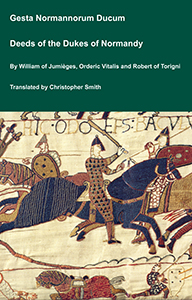 History of the Dukes of Normandy by William of Jumieges. This same Church flourished with strong vigour under many kings of the Franks, until, when the four sons of Emperor Louis the Pious1 fell into discord, from its great glory the kingdom of the Franks began to be shaken. So greatly, indeed, that when armies had been gathered from every side, in the territory of Auxerre, at the village of Fontenoy, two armies of Christians, stirred up by the devil, fought two against two [25th June 841], and by the most bloody slaughter of Christians upon Christians satisfied their most unhappy hatred. And so, deserting their homeland of nearly all military defense through the constant frequency of their battles, they left it weak and exposed to the invasion of barbarians or any hostile enemy. At that time the pagans, along with the son of King Lodbrok, named Björn Ironside, and with Hastein, the most wicked of all the pagans, leading their expedition, spewed forth from the Nordic or Danish regions and harassed the inhabitants of the maritime coasts with unceasing devastation, destroying cities and burning abbeys. Who this Lodbrok was, and from what lineage he sprang, we shall say further below. But for now let us first say a few things about the location of Dacia2.
Quæ videlicet ecclesia multis Francorum temporibus sub diversis regibus valida virtute pollens viguit, donec a pace quatuor Ludovici imperatoris filiis dissidentibus ex magna gloria regnum Francorum quati cœpit in tantum ut, collectis undequaque viribus, in territorio Autisiodorensi apud Fontaneticum vicum duo adversus duos diabolo instigante confligentes, cruentissima christianorum inter se cæde infelicissimo satisfacerent odio. Qui patriam pene omni munimine militum frequentia præliorum destituentes, invalidam et barbarorum seu cujuslibet hostis invasioni opportunam eam reliquerunt. Quo tempore pagani, cum Lothroci regis filio, nomine Bier, costa quidem ferreæ, procurante ejus expeditionem Hastingo omnium paganorum nequissimo, a Noricis seu Danicis finibus eructantes, maritima littora incolentes continuis cladibus vexaverunt, civitates diruentes, atque abbatias concremantes. Quis vero iste Lothrocus, vel ex cujus stirpe oriundus exstiterit, infra dicemus. Sed modo prius de situ Daciæ pauca dicamus.
Note 1. King Louis the Pious, 778-840, was a Carolingian King of the Franks, the son of Emperor Charlemagne. By his first wife Ermengarde of Hesbaye he had three sons: Lothair, 795–855, king of Middle Francia, Pepin I, 797–838, king of Aquitaine, Louis, c. 806–876, king of East Francia. By his second wife Judith of Bavaria he had one son Charles, 823-877, king of West Francia. The Battle of Fontenoy was fought between three sons and one grandson of King Louis. On one side, Lothair and Pepin II, and on the other side, Louis and Charles. Pepin II being the son of Pepin I who had died three years before the battle.
Note 2. Dacia is a region north of the Danube River near the Black Sea, in what is now Romania. Dudo of Saint-Quentin also, confusingly, referred to Denmark as Dacia, believing them to be related. We have used Denmark in the translation, where appropriate, sometimes also referring to parts of Sweden and Norway, to make the reading of the text clearer.
Anglo-Saxon Chronicle. [25th June 1016] A second battle he fought, after midsummer, at Sherston, Wiltshire [Map]; where much slaughter was made on either side, and the leaders themselves came together in the fight. Earldorman Eadric Streona and Aylmer the darling were assisting the army against King Edmund. Then collected he his force the third time, and went to London, all by north of the Thames, and so out through Clayhanger, and relieved the citizens, driving the enemy to their ships.
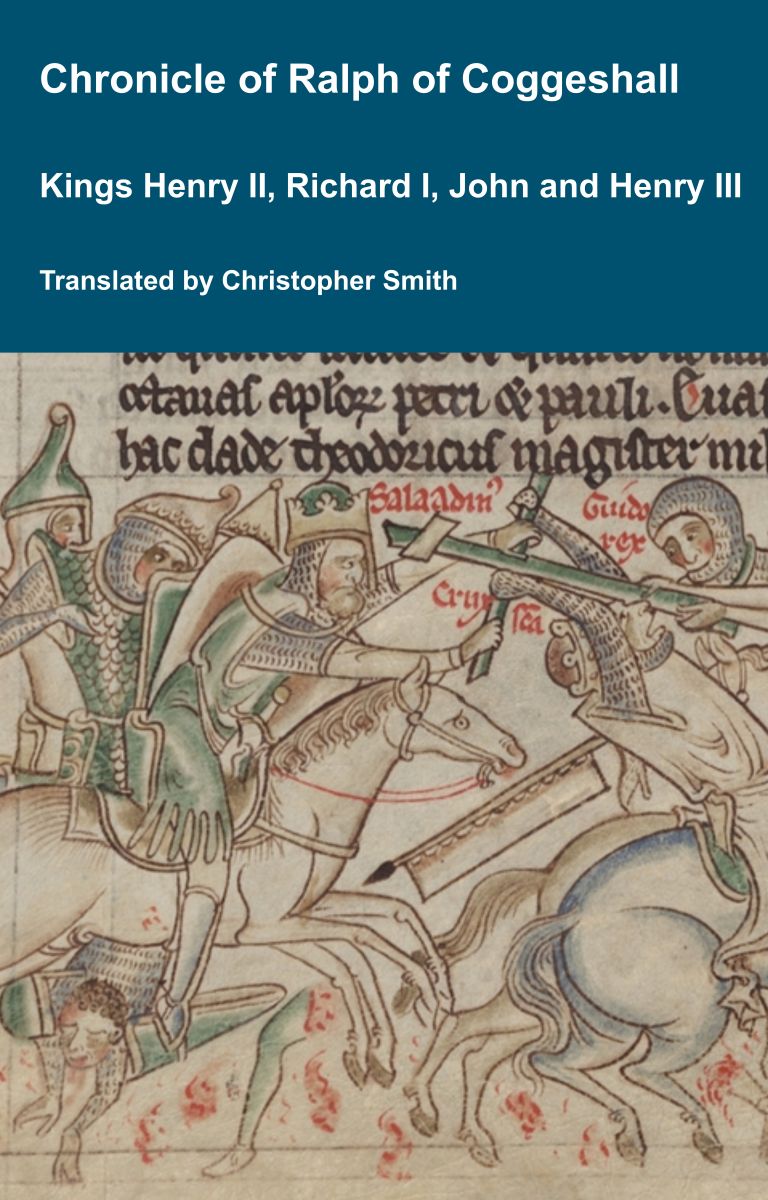 Chronicum Anglicanum by Ralph Coggeshall. On the morrow [25th June 1201] after the Nativity of St. John there arose a fierce storm of thunder, lightning, and hail, with heavy rain, which caused great destruction of men, animals, crops, the burning of houses, and the uprooting of trees in many places. And another storm again broke out after fifteen days, not unlike the former, so that meadows could not be mown, or, when mown, the hay was carried away by the swift rush of flooding waters. No small multitude of fish also perished through the corruption of the waters, which arose from the rotting of the hay. Likewise there came about a deluge of storms which struck in particular across various provinces, though not on the same day, so as to break bridges, scatter crops and hay, and even drown some people, so that many feared in that outpouring of rains that another Flood of God was at hand.
In crastino post Nativitatem Sancti Johannis suborta est sæva tempestas tonitruorum, fulminum, et grandinum, cum pluvia vehementi; quae magnam fecit stragem hominum, animalium, segetum, domorum incensionem, arborum evulsionem pluribus in locis. Aliaque tempestas iterum post xv. dies suborta est, priori non dissimilis, ut prata secari non possent, secata asportarentur a rapido aquarum inundantium cursu. Piscium non minima multitudo ex nimia aquæ corruptione quæ ex foeni putrefactione provenerat, mortua est. autem extitit nimborum inundatio quæ particulariter per diversas provincias contigebat, nec tamen sub una die, ut pontes effringeret, segetes, fœna dissiparet, aliquos etiam submergeret, ita ut nonnulli formidarent in illa pluviarum eruptione iterum instare Dei diluvium.
On 25th June 1218 Simon "Elder" Montfort 5th Earl of Leicester [aged 43] was killed at the Siege of Toulouse 1218. His son Amaury [aged 23] succeeded 6th Seigneur Montfort. His son Simon [aged 10] succeeded 6th Earl of Leicester.
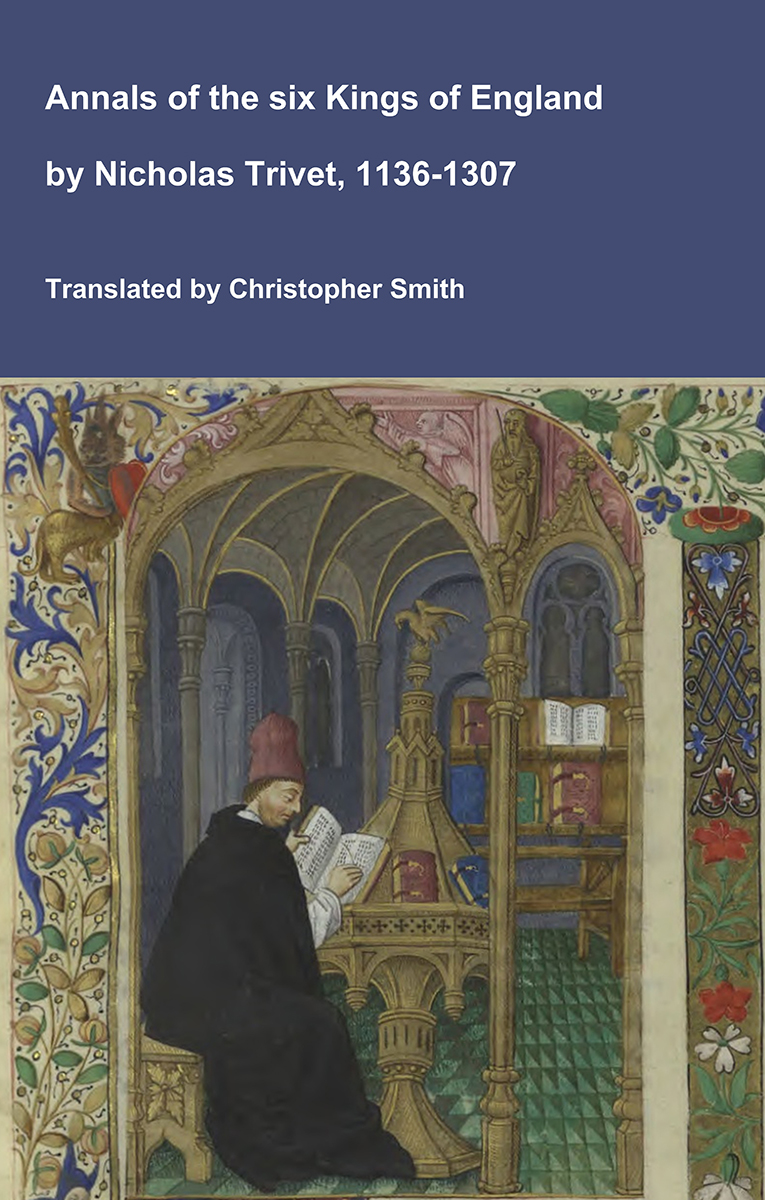 Annals of Six Kings of England by Nicholas Trivet. In the same year many of the disinherited entered the castle of Kenilworth and fortified it with provisions and arms, intending to defend it against the king. The king, hastening there, on the day [25th June 1266] after the feast of Saint John the Baptist laid siege to the castle. While the siege continued, the king caused twelve persons to be chosen, to whom he entrusted the task of providing for the peace of the king and the realm, and of moderating the sentence pronounced against the disinherited, swearing that he would in all things observe their ordinances. The persons thus chosen, meeting at Coventry, unanimously decreed that the disinherited should redeem their inheritances by a monetary penalty from those who had received them by the king’s grant; provided, however, that this redemption should not exceed seven years’ revenue of the lands, nor be less than one year’s revenue, but should be assessed within these limits according to the degree of the offence. From this redemption, however, the sons of Earl Simon and Robert, Earl of Derby, whose disinheritance they judged to be perpetual, were excluded. Those who were to be fined in this manner, if they could not pay the assessed redemption, were to leave their lands in the hands of the possessors until the redemption should be raised from the profits thereof. The castle of Kenilworth was surrendered to the king before Christmas, want of provisions compelling it, with life, limb, and necessary goods preserved to those who had held it.
Eodem anno multi de exheredatis castrum de Kenilworthe ingressi victualibus munierunt et armis, disponentes illud defendere contra regem Rex autem illuc properans, in crastino S. Joannis Baptistæ obsidionem posuit circa castram. Qua durante rex personas 'duodecim eligi fecit, quibus commisit ut providendæ paci regis et regni, latam in exheredatos sententiam moderarentur, jurejurando spondens se eorum ordinationes per omnia servaturum. Convenientes igitur personæ electæ apud Coventreiam unanimi decreverunt assensu, ut exheredati pœna pecuniaria suas hereditates redimerent ab his qui eas occupaverant dono regis; ita tamen quod hæc redemptio proventus hereditatum in septennium non excederet, nec unius anni proventibus minor esset; sed intra hos taxarent terminos secundum quantitatem delicti Ab hac tamen redemptione filii comitis Symonis et Robertus comes Derebeiæ, quorum exheredationem censuerunt fore perpetuam, excluduntur. Qui autem modo prætaxato multandi essent pecunia, si taxatam redemptionem solvere nequirent, terras suas in manibus possessorum relinquerent, quousque de earum fructibus redemptio levaretur. Castrum de Kenilworthe ante Natalem [Domini] regi redditum est, penuria victualium compellente, vita et membris ac supellectili necessaria his qui tenuerant illud salvis.
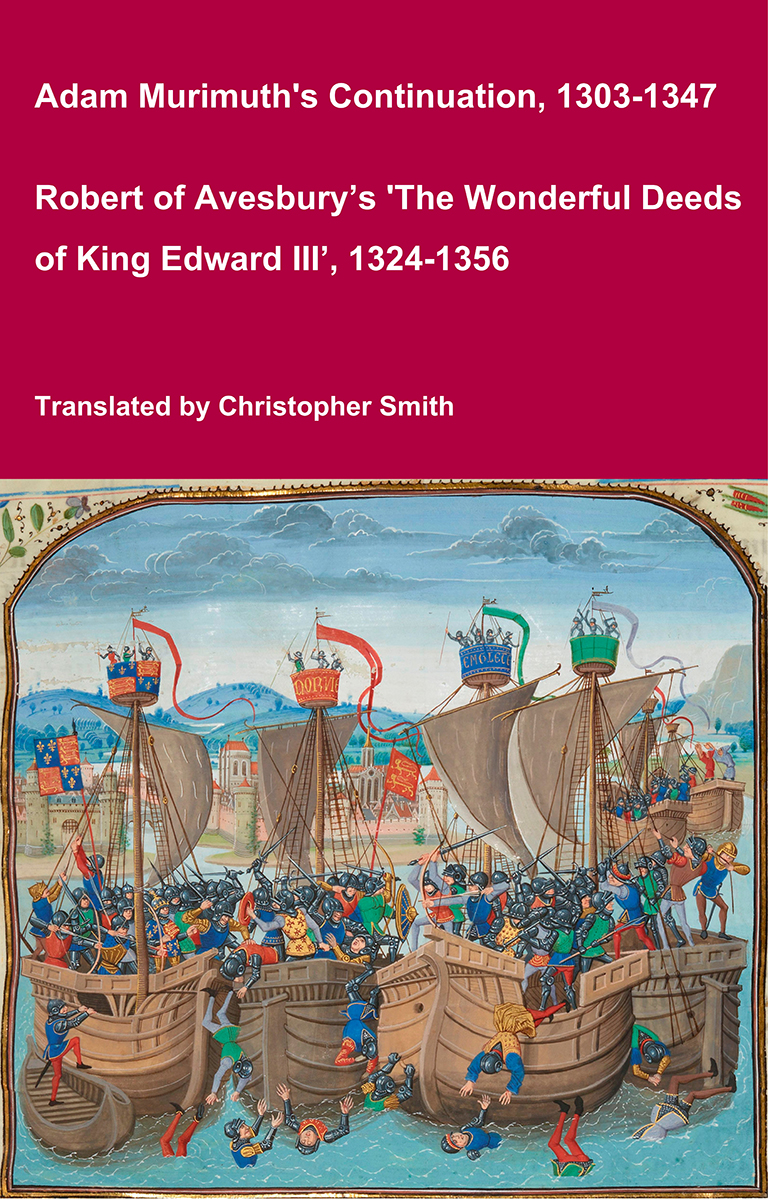 Adam Murimuth Continuation. On the day after [25th June 1340] the feast of Saint John, when it was learned that the said thirty ships had completely escaped during the night, the king sent forty well-equipped ships to pursue them; and he placed in command of those forty ships John Crabbe, whom he considered more skilled in naval warfare and in the knowledge of those coasts. What they accomplished, however, is not known.
In crastino autem dicti festi sancti Johannis intellecto quod dictæ XXX naves in nocte totaliter recesserunt, misit dominus rex XL naves bene munitas ad insequendum eas; et illis XL navibus præposuit Johannem Grabbe, quem peritiorem in arte navali et cognitione portuum illarum partium reputavit. Quid tamen facerent, ignoratur.
 Chronicle of Walter of Guisborough. For Louis, Duke of Bavaria, who occupied the kingdom of Germany, wrote to Edward, King of England, in this form: "Louis, by the grace of God, ever-August Emperor of the Romans, to Edward, King of England, our dearest brother, greeting and the affection of brotherly love. Although countless and weighty affairs press upon our shoulders and distract us in many and constant ways, yet the discord which has arisen between you and Philip, King of France, our beloved kinsman, presents itself to our view, and weighs especially upon our mind. Unless it is resolved, it could bring to you and your kingdom the loss of many persons and possessions in the future. This stirs and compels us to apply our study and effort toward removing it. Therefore we wish you to know that the aforesaid Philip, at our request, has granted us by his letters the authority to negotiate between you and himself concerning the discord that has arisen between you. We, believing that this would in many ways be advantageous to you and your kingdom, having carefully considered all your circumstances and those of your allies, urge you in friendship, and earnestly exhort you, to give your consent, so that we may recall you both to concord and arrange a treaty of peace between you. To this we are willing to devote ourselves with a willing heart and to expend labour in its burdensome pursuit. If you are willing, as we hope, to agree and consent to our counsel in this matter, please grant to us also by your letters the authority to negotiate the said concord, and to arrange truces for a year or two. Let it not trouble you that there is friendship between us and Philip, King of the French. For, since you accepted truces and fixed dates for negotiating concord with the said King of France without our knowledge, will, or consent, it seemed to the counsel of our princes, who know our treaties, pacts, and alliances, that we could, without dishonour to ourselves, make concord and friendship with the said King of France and unite with him; and we have revoked, for certain causes, the vicariate which we had granted to you. Know for certain that in our negotiations we will make such fraternal provision for you that, if you will yield to our counsel, your cause will, by our mediation, be brought to a good conclusion. To inform your friendship more fully of our intention in these matters, we are sending to you the religious man Brother Eberhard, lector of the Order of the Hermit Friars of Saint Augustine, and special chaplain of our court; we ask that you send him back promptly once these matters are concluded. Given at Frankfurt, in the seventeenth year of our reign as Emperor1."
Scripsit enim Ludovicus dux Bavariæ regnum Almanniæ occupans Angliæ regi Edwardo sub hac forma. "Ludovicus, Dei gratia, Romanorum imperii semper Augustus, Edwardo regi Angliæ, fratri suo carissimo, salutem, et fraternæ dilectionis affectum. Licet innumera grandiaque negotia nostris incumbant humeris, et circa illa multipliciter et assidue distrahamur, tamen cum discordia inter te et Philippum regem Franciæ, affinem nostrum prædilectum orta, tibi et tuo regno quamplurium personarum et rerum dispendia, ipsa non sedata, in futurum poterit generare, et nostris se repræsentat obtutibus, mentemque nostram specialiter angit, et excitat ut ad tollendam ipsam studium et operam nostræ sollicitudinis apponamus. Propter quod te scire volumus quod præfatus Philippus, ad requisitionem nostram, dedit nobis suis literis potestatem tractandi inter te et ipsum super discordia inter vos suscitata. Quam et tibi et tuo regno, pensatis diligenter omnibus conditionibus tuis et alligatorum tuorum, multipliciter expedire credentes, amicitiæ tuæ persuademus, teque cum diligentia hortamur, ut ad hoc tuum assensum præbeas, quod te et ipsum revocare possimus ad concordiam, et inter vos pacis fœdera ordinare, ad quæ libenti animo vacare volumus et impendere onerosa prosecutione labores. In quo si consiliis nostris consentire volueris et acquiescere, ut speramus, placeat et nobis tuis literis dare potestatem præmissam tractandi concordiam, et treugas ad annum vel biennium ordinandi. Nec te moveat amicitia inter nos et Philippum regem Francorum inita et contracta; nam ex quo in treugas et certos terminos ad tractandum de concordia inter te et prædictum regem Franciæ accepisti absque nostro scitu, voluntate et assensu, de consilio nostrorum principum, qui ligias, pacta, et uniones nostras noverunt, quibus visum fuit quod hoc, salvo honore nostro, facere possemus, concordiam et amicitiam cum dicto rege Franciæ contraximus, et unionem univimus; vicariatum, tibi per nos commissum, ex causis revocavimus Pro firmo sciturus quod in tractatibus nostris sic tibi fraterne providebimus, quod si nostris consiliis acquiescere volueris, causa tua ad finem bonum, mediante nostro consilio, perducetur. Super quibus tuam amicitiam de nostra intentione plenius informandam, religiosum virum fratrem Ebarhardum, lectorem ordinis Fratrum Heremitarum Sancti Augustini, specialem nostræ curia capellanum, tuæ fraternitati transmittimus; quem petimus, super præmissis, celeriter expeditum remitti. Datum Fraunchunfordiæ, etc., anno imperii nostri XVII.
Note 1. MS. Harl, 655. The copy of this document, printed in Rymer, is correctly dated: "Dat' Franchinfordiæ XXV die mensis Junii, anno regni nostri XXVI imperii vero XIV." i.e. "Given at Frankfurt on the 25th day of the month of June, in the 26th year of our reign [1341], and the 14th of our empire."
Rymer's Fœdera Volume 2. For Ralph de Stafford, concerning wages.
The king, to the collectors, etc. Since our beloved and faithful Ralph de Stafford has undertaken, before us and our council, to set out in our service to the regions of Brittany with fifty men-at-arms, of whom the said Ralph himself and two others shall be bannerets, sixteen knights, and thirty-one squires, and with fifty mounted archers, at our wages, each of them receiving per day, namely: each banneret, four shillings; each knight, two shillings; each squire, twelve pence; and each archer, six pence, for as long as they remain in our service there;
We, wishing the aforesaid Ralph to be satisfied, for himself and his aforesaid men, for such wages for one quarter of a year, which amount to four hundred and fifty-five pounds, have, by the advice of our said council, assigned to the same Ralph fifty-seven sacks of wool from our aforesaid wool, each sack valued at eight pounds;
Which fifty-seven sacks of wool, according to that valuation, amount to four hundred and fifty-six pounds, to be had and received through your hands toward his aforesaid wages.
And therefore we command you that you deliver to the same Ralph, or to his attorney in this matter, the said fifty-seven sacks of wool from our aforesaid wool, to be thus collected by you in the said county, by indenture to be made thereupon between you and him in due form, toward his aforesaid wages, as aforesaid;
And we shall cause due allowance to be made to you for this in your account.
Witness the king at Woodstock, on the twenty-fifth day of June [1342].
By bill of the treasury.
Pro Radulpho de Stafford, super vadiis.
REX, collectoribus, &c. Quia, dilectus & fidelis noster Radulphus de Stafford assumpsit, coram nobis & concilio nostro, proficisci, in obsequium nostrum, ad partes Britanniæ, cum quinquaginta hominibus ad arma, undè idem Radulphus ms duo alii baneretti, sexdecim milites, & triginta & unus seutiferi erunt, & quinquaginta sagittariis equitibus, ad vadia nostra, quolibet eorundem capiente per diem, videlicet, baneretto, quatuor solidos : milite, duos solidos : scutifero, duodecim denarios : & sagittario, sex denarios ; dum in obsequio nostro steterint idee:
Nos, volentes præfato Radulpho pro se, & hominibus suis prædictis, de vadiis suis hujusmodi per unum quarterium anni, quæ ad quadringentas, quinquaginta, & quinque libras, se extendunt satisfieri, de avisamento dicti concilii nostri assignavimus eidem Radulpho quinquaginta & septem saccos lanæ, de lanis nostris prædictis, quemlibet, videlicet, saceum in pretio octo librarum;
Qui quidem quinquaginta & septem sacci lanæ, juxta idem pretium, ad quadringentas, quinquaginta, & sex libras, se extendunt, habendos & percipiendos per manus vestras super vadiis suis prædictis;
Et ideò vobis mandamus quod eidem Radulpho, vel ejus in hâc parte attornato, dictos quinquaginta & septem saccos lanæ, de lanis nostris prædictis, per vos in dicto comitatu sic colligendis, per indenturam, indè inter vos & ipsum modo debito conficiendam, liberetis super vadiis suis prædictis, sicut prædictum est;
Et nos vobis indè, in compoto vestro, debitam allocationem habere faciemus.
Teste Rege apud Wodestok, XXV. die Junii.
Per billam thesaurariæ.
 Chronicle of Jean le Bel Volume 2. The noble king gave the lady a great feast and great honour, and so did all the other lords, because she defended herself so valiantly and pursued her husband's cause. Then the noble king, on the advice of Sir Robert d'Artois1, told her and promised her that before the truces had expired he would send such aid there that she would be supremely avenged upon her enemies, even if he had to leave all other business aside. And at once, without delay, the noble king urged the said Sir Robert d'Artois, the Earl of Salisbury, the Earl of Suffolk [aged 44]2, the Earl of Pembroke3, the Earl of Kent, the Baron Stafford4, and many other lords5, to take on enough soldiers to have up to four thousand men in armour, ten thousand footmen, and as many archers, and to prepare themselves to put to sea, and to spare nothing until they had restored the valiant countess to her inheritance despite all her enemies; and furthermore, if need be, he would go there himself with all his power.
Le noble roy fist à la dame grand feste et grand honnour, et aussy firent tous les aultres seigneurs pour tant qu'elle se deffendoit si vassaument et pourchassoit la besongne de son mary. Si luy dit le noble roy, par le conseil de messire R[obert] d'Artois, et luy promit que ainchois que les treves fussent faillies, il y envoyeroit Lel secours que elle seroit souverainement vengée de ses anemis, voire et deust il laisser toutes aultres besongnes. Et prya tantost le noble roy, sans delay, audit messire R[obert] d'Artoys, au conte de Salbry, au conte de Suflort, au conte de Pennebroch, au conte de Kenfort, au baron de Staflortt et à mains aulires seigneurs qu'ilz prissent de souldoiers tant qu'ilz eussent jusques à IIIIM armeures de fer, X mille hommes à pyé el autant d'archiers, et s'apareillassent d'entrer en mer, et n'espargnassent riens tant qu'ilz eussent remis la vaillant contesse en son heritage malgré tous ses anemis, et encores, se ille faloit, iliroit celle part à toute sa poissance.
Note 1. As early as 10th March, Robert d'Artois was preparing to cross over to Brittany. On that date, Edward gave him forty pounds from his own treasury. See Record Office, Liberate Rolls, no. 601, m. 10. By letters of 3rd July 1342, Edward III ordered his collectors to ensure the wages of Robert d'Artois, who was to cross to Brittany with four bannerets, twenty-nine knights, eighty-six squires, and one hundred and twenty archers. See Rymer 2.1201: 'For Robert d'Artois, about to set out for the regions of Brittany. The king, to the collectors and receivers of our wool in the county of Suffolk, according to the apportionment of ten thousand sacks of wool within our kingdom of England for the present year, greeting. Since, by the advice of our council, we have assigned to our beloved and faithful Robert d'Artois, who, with one hundred and twenty men-at-arms, of whom the said Robert and four others shall be bannerets, twenty-nine knights, and eighty-six squires, and with one hundred and twenty archers, is about to set out to the regions of Brittany in our service, according to the ordinance made thereupon, at our wages, one hundred and fifty-eight sacks of wool from our aforesaid wool to be collected by you in the aforesaid county, each sack valued at six pounds, for his loan and subsidy, beyond the custom of half a mark due thereon, to be received through your hands toward the wages of the said Robert and his aforesaid men: namely, the said Robert receiving eight shillings, and each of the others, that is, each banneret four shillings, each knight two shillings, each squire twelve pence, and each archer four pence, per day; We command you that you deliver without delay to the same Robert, or to his attorney in this matter, the said one hundred and fifty-eight sacks of wool from our aforesaid wool from the aforesaid county, each sack being of the weight of twenty-six stones, each stone containing fourteen pounds, by indenture to be made thereupon in due form, at the aforesaid weights, as aforesaid; and we shall cause due allowance to be made to you for this in your account. Witness the king at the Tower of London, on the third day of July. By bill of the treasury.'
1. Dès le 10 mars, Robert d'Artois s'apprétait à passer en Bretagne. A cette date, Édouard lui donnait sur son propre trésor quarante livres. (Record Office, Liberate Rolls, n° 601, m. 10.) Par lettres du 3 juillet 1342, Édouard II manda à ses col lecteurs d'assurer les gages de Robert d'Artois, qui devait passer en Bretagne avec quatre bannerets, vingt-neuf chevaliers, quatre-vingt-six écuyers et cent vingt archers. (Rymer t. II, IIe partie, p. 1201.)
Note 2. Edward III had given Robert d'Ufford, Earl of Suffolk, 500 marks as the price of his ransom. He had them paid to him in November 1342 to cover the heavy expenses he had had to incur for the expedition to Brittany. See Record Office, Privy Seals, file 287, no. 15163.
2. Édouard III avait donné à Robert d'Ufford, comte de Suffolk, 500 marcs pour prix de sa rançon. Il les lui ft solder en novembre 1342 pour le couvrir des grosses dépenses qu'il avait dû faire pour l'expédition de Bretagne. (Record Office, Privy Seals, file 287, n° 15163.)
Note 3. On 26th September 1342, the Earl of Pembroke had not yet left England. On that date, Edward III requested the chancellor, Robert Parvyng, to order Henry Peverel, Theobald de Monteny, Baldwin de Stapleton, and John de Bitterley to charter and equip all available ships for the passage of the aforesaid earl to Brittany, and to assemble the flotilla at the port of Dartmouth. See Record Office, Privy Seals, file 286, no. 15038.
3. Le 26 septembre 1342, le comte de Pembroke n'avait pas encore quitté l'Angleterre. A cette date, Édouard Ill priait le chancelier Robert Parvyng de donner ordre à Henri Peverel, Thiébaud de Monteny, Baudoin de Stapelton et Jean de Bitterlé de noliser et d'équiper tous les bateaux disponibles pour le passage du susdit comte en Bretagne, et de réunir la flottille au port de Dartmouth. (Record Office, Privy Seals, file 286, n° 15038.)
Note 4. By letters of 25th June 1342, Edward III ordered his collectors to ensure the wages of Ralph de Stafford, who was about to cross to Brittany with two bannerets, sixteen knights, thirty-one squires, and fifty mounted archers. See Rymer 2.1201: 'For Ralph de Stafford, concerning wages. The king, to the collectors, etc. Since our beloved and faithful Ralph de Stafford has undertaken, before us and our council, to set out in our service to the regions of Brittany with fifty men-at-arms, of whom the said Ralph himself and two others shall be bannerets, sixteen knights, and thirty-one squires, and with fifty mounted archers, at our wages, each of them receiving per day, namely: each banneret, four shillings; each knight, two shillings; each squire, twelve pence; and each archer, six pence, for as long as they remain in our service there; We, wishing the aforesaid Ralph to be satisfied, for himself and his aforesaid men, for such wages for one quarter of a year, which amount to four hundred and fifty-five pounds, have, by the advice of our said council, assigned to the same Ralph fifty-seven sacks of wool from our aforesaid wool, each sack valued at eight pounds; Which fifty-seven sacks of wool, according to that valuation, amount to four hundred and fifty-six pounds, to be had and received through your hands toward his aforesaid wages. And therefore we command you that you deliver to the same Ralph, or to his attorney in this matter, the said fifty-seven sacks of wool from our aforesaid wool, to be thus collected by you in the said county, by indenture to be made thereupon between you and him in due form, toward his aforesaid wages, as aforesaid; And we shall cause due allowance to be made to you for this in your account. Witness the king at Woodstock, on the twenty-fifth day of June [1342]. By bill of the treasury.' As early as April, the sheriff of the county of Kent had requisitioned bridges, hurdles, and empty barrels for the embarkation of Ralph's horses. See Record Office, Exchequer Accounts, Q. R. 21, 39.
4. Par leures du 25 juin 1342, Édouard III manda à ses collecteurs d'assurer les gages de Raoul de Stalford, qui était sur le point de passer en Bretagne avec deux bannerets, seize chevaliers, trente et un écuyers et cinquante archers à cheval. (Rymer LH, I° partie, p. 1201.) Le shériff du comté de Kent, dès le mois d'avril, avait réquisitionné des ponts, des claies, des tonneaux vides pour l'embarquement des chevaux de Raoul. (Record Office, Erchequer Accounts, Q. R. 21, 39.)
Note 5. On 20th June 1342, Edward III ordered that all the ships needed for the passage of the Earl of Northampton to Brittany with an army be assembled at Portsmouth; this crossing was to take place within the fortnight following the coming feast of Saint John the Baptist [24th June]. See Rymer 2.1201. On 3rd July, he arranged for the wages of William Kildesby, who was to cross to Brittany with ten knights, thirty-nine squires, and one hundred archers. See Rymer 2.1202. On the 13th of the same month, Edward arranged for the wages of Robert, Earl of Suffolk, who was taking with him one banneret, fourteen knights, thirty-five squires, and fifty mounted archers; of Reginald Cobham, with forty men-at-arms; of Philip de Weston, with twenty men-at-arms; of Thomas Hatfield, with twenty men-at-arms; of Thomas Beauchamp, Earl of Warwick, with eighty men-at-arms; of John de Vere, Earl of Oxford, with forty men-at-arms; of Michael de Poynings, with fifteen men-at-arms; of Thomas de Bradeston, with twenty men-at-arms; of Maurice de Berkeley, with twenty men-at-arms; of Hugh Courtenay, Earl of Devonshire, with fifty men-at-arms; and of Hugh Audley, Earl of Gloucester, with one hundred men-at-arms. See Rymer 2.1203.
5. Le 20 juin 1342, Édouard III manda de réunir à Portsmouth tous les navires nécessaires pour le passage du comte de Northampton en Bretagne avec une armée; ce passage devait avoir lieu dans la quinzaine de la prochaine fête de saint Jean-Baptiste. (Rymer t. II, Il° partie, p. 1201.) Le 3 juillet, il fait assurer les gages de Guillaume Kildesby, qui devait passer en Bretagne avec dix chevaliers, trente-neuf écuyers et cent archers. (Ibid., p. 1202.) Le 13 du même mois, Édouard fait assurer les gages de Robert, comte de Suffolk, qui emmène avec lui un banneret, quatorze chevaliers, trente-cinq écuyers et cinquante archers à cheval, de Regnault de Cobeham, avec quarante hommes d'armes, de Philippe de Weston, avec vingt hommes d'armes, de Thomas de Hatfeld, avec vingt hommes d'armes, de Thomas de Beauchamp, comte de Warwick, avec quatre-vingis hommes d'armes, de Jean de Veer, comte d'Oxford, avec quarante hommes d'armes, de Michel de Ponynges, avec quinze hommes d'armes, de Thomas de Bradeston, avec vingt hommes d'armes, de Maurice de Berkeley, avec vingt hommes d'armes, de Hugue de Courtenay, comte de Devonshire, avec cinquante hommes d'armes, de Hugue d'Audeley, comte de Glocester, avec cent hommes d'armes. (Ibid., p. 1203.)
On 25th June 1347 a English fleet commanded by William Bohun 1st Earl of Northampton [aged 37] and Laurence Hastings 1st Earl Pembroke [aged 28] defeated a French fleet that was intending to re-supply the besiege Calais precipitating the surrender of Calais two months later.
Deeds of King Edward III by Robert of Avesbury. Very dear sir, you should know that on the day [25th June 1347] after Saint John's Day the wind, which had been from the west, turned toward the east at the hour of tierce. Because of this the earls of Northampton [aged 37] and Pembroke [aged 28], and the lords Morley, Talbot, and Bradeston, together with the two admirals and a great number of archers from their retinues and from the commons, boarded their ships and sailed toward Boulogne and Crotoy in order to observe the enemies who had arranged to provision Calais. Thus, they encountered, on this side of Crotoy about the hour of vespers, the said enemies, who were counted within sight of our men as forty-four vessels: hulks, galleys, and victualling ships loaded with various supplies. Some of those enemies who were at the rear threw their provisions into the sea and swam toward England, while others made for the port of Crotoy. The ten galleys abandoned their boats and their cargo and put out to the high sea. One hulk and twelve victualling ships which were ahead were so vigorously pursued that they ran as close to the shore as they could, and all the men leapt into the sea and drowned so completely that not a single person remained alive in their vessels. But on the following night, at daybreak, two boats came out of the town into the open sea, and they were quickly noticed by a mariner named William Roke together with a man called Stephen Hikeman. One of the boats returned to the town with great difficulty, but the other was driven ashore. In that boat was captured a great master who was the commander of the Genoese galleys and the leader of the Genoese who are inside the town, and with him seventeen others of the same company and about forty letters. But the said commander, before he was taken, tied with an axe a letter which carried an important message and threw it into the sea. That letter and the axe were found on the shore when the sea had receded, of which you will find a copy enclosed within this. And what I have already sent you concerning this matter before this hour, know that it is true, for I heard it from a knight who was within the ships."
"Tres chier sire, voilletz savoir qe lendemain de seint; Johan le vent, qestoit vers le west, se tourna vers lorient a houre de tiercz, si qe lez countes de Northamtone et Penbrok et les seignurs de Morleye, Talbot, Bradston, et lez IJ amirals, od graunt foison darchiers de lor retenances et des comunes, qe entrerent noz niefs et siglerent vers Buloigne et Croteye, pur visiter lez enemys qount ordeigne de vitaller Caleys, si qils encountrerent decea Croteye environ heure de vespre lez dits enemys, qe fusrent acountez deinz la veue de noz gentz XLIIIJ vesseaux: des fluynes, galeyes, et vitaillers, chargetz des diverses vitailles. Dez queux enemys ascuns qestoient a derere dischargeront lor vitailles par meer et nagierent devers Engleterre, ascuns devers le porte de Oroteye. Lez X galeyes qe fusront gueperount lour bateux et lour charge, se mistrent al haut meer. Et un fluyne et XIJ vitaillers od lor vitailles qe fasront devaunt fusrent si fortement pursuiz qils se mistrent si pres de terre come ils poount, et saillerent trestoutz en meer et neierent si purement qe une soul persone ne remient en vie deinz lor vesseaux. Mais la nuyt suant, en laube de jour, al haut meer isserent hors de la ville IJ bateaux, qe fusrent bien tost aparceux par un mariner gest appelle William Roke, od une Hikeman Stephene, si ge lun batel retourna en la ville od graunt paine et lautre estoit chace a terre. En quele bateux estoit pris un grant maistre, qestoit patroun des galeyes de Gene et maistre de Geneuoys qe sount dedeinz la ville, et ovesqe luy XVIJ de mesmes lez persones et bien XL lettres. Mais le dit patroun, devaunt qil estoit pris, la a une hache une lettre ge portoit graunt charge, et le getta en meer; geles lettre et hache estoient treovetz a la retret de la meer, de qi vous troueretz a cople enclose dedeinz ceste. Et qoi jeo vous aay maunde devaunt ceste heure touchant ceste matiere, sachietz qe ceo est verite; car jeo lay oye dun chivaler ge fust dedeintz lez niefs."
On 25th June 1381 Bishop Henry Despencer [aged 40] brought the Peasant's Revolt to an end at North Walsham, Norfolk at the Battle of North Walsham.
On 25th June 1423 Reinald Jülich 4th Duke Guelders 3rd Duke Jülich [aged 58] died. Arnold Egmont Duke Guelders [aged 12] succeeded 3rd Duke Guelders.
The History of William Marshal was commissioned by his son shortly after William’s death in 1219 to celebrate the Marshal’s remarkable life; it is an authentic, contemporary voice. The manuscript was discovered in 1861 by French historian Paul Meyer. Meyer published the manuscript in its original Anglo-French in 1891 in two books. This book is a line by line translation of the first of Meyer’s books; lines 1-10152. Book 1 of the History begins in 1139 and ends in 1194. It describes the events of the Anarchy, the role of William’s father John, John’s marriages, William’s childhood, his role as a hostage at the siege of Newbury, his injury and imprisonment in Poitou where he met Eleanor of Aquitaine and his life as a knight errant. It continues with the accusation against him of an improper relationship with Margaret, wife of Henry the Young King, his exile, and return, the death of Henry the Young King, the rebellion of Richard, the future King Richard I, war with France, the death of King Henry II, and the capture of King Richard, and the rebellion of John, the future King John. It ends with the release of King Richard and the death of John Marshal.
Available at Amazon in eBook and Paperback format.
On 25th June 1436 King Louis XI of France [aged 12] and Margaret Stewart Dauphine of France [aged 11] were married at Tours Castle. They had met the day before. She by marriage Dauphine . She the daughter of King James I of Scotland [aged 41] and Joan Beaufort Queen Consort Scotland [aged 32]. He the son of Charles "Victorious" VII King France [aged 33] and Marie Valois Anjou Queen Consort France [aged 31]. They were half fourth cousin once removed. She a great x 2 granddaughter of King Edward III of England.
On 25th June 1456 John Trastámara was born to Ferdinand I King Naples [aged 33] and Isabella Clermont Queen Consort Naples [aged 32].
 Chronicle of England by William of Worcester. Also, on the same day of that month [25th June 1460], the Earls of March, Warwick, and Salisbury, along with the Lord Fauconberg and two thousand armed men, came to Sandwich. They then rode through Kent with the legate of the pope, and when they arrived at Blackheath, they had twenty thousand men with them. At that time, Lords Hungerford175 and Scales176, with the Sheriff of Kent, John Delamare of Berkshire, and many other armed men, entered the Tower of London. Also, the bishops namely, William Gray, Bishop of Ely, and George Neville, Bishop of Exeter, brother of the Earl of Warwick, with armed men, met the Earls of March, Warwick, and Salisbury in Southwark, and escorted them into the city of London over the bridge. However, on their way, thirteen of the strongest armed men among the bishops were suffocated, falling to the ground due to certain holes there, and they could not rise again due to the excessive crowd and the weight of their armour. On the following day, at the ninth hour, the Earls themselves entered the city, and in the presence of Archbishop Thomas Bourchier of Canterbury and the aforementioned two bishops, they swore upon the cross of St. Thomas of Canterbury that they had intention nothing disloyal against King Henry VI.
Item [....] die ejusdem mensis comites Marchiæ, Warwici, et Sarum, ac dominus de Fawcunbrigge, cum duobus millibus armatorum, venerunt ad Sandwycum, et sic per Kantiam equitaverunt cum domini papæ legato, et cum fuerint venti apud Blakehethe habuerunt viginti millia hominum. Tunc domini Hungreford et Scalys, cum vicecomite Kantiæ, Johanne Dalamare de comitatu Berkes, et plures alii armati, intraverunt Turrim Londoniæ. Ac etiam domini episcopi (scilicet Willelmus Gray, episcopus Elensis, et Georgius Nevyle, episcopus Excestre, frater ejusdem comitis Warrwici), cum gente armata obviaverunt dominis comitibus Marchiæ et Warrwici et Sarum in Sowthwerke, et introduxerunt eos in civitatem Londoniæ super pontem. Turn in eundo suffocati sunt, tredecim de fortioribus armatorum ipsorum episcoporum, cadentes in terram propter quædam ibi foramina, et non valuerunt surgere præ nimia multitudine populi et propter gravitatem ac ponderositatem armorum. Sequenti vero die, hora novena, intraverunt ipsi comites civitatem, et in ecclesia Sancti Pauli, in præsentia domini Thomæ Bonser, archiepiscopi Cantuariæ, et dictorum duorum episcoporum, juraverunt ipsi comites super crucem Sancti Thomæ Cantuariæ quod nihil intenderunt contra legentiam regis Henrici Sexti.
Note 1. Robert Hungerford, 1409-1459. Succeeded his father as 2nd Baron Hungerford in 1449.
Note 2. Thomas Scales, 1399-1460. Succeeded his brother as 7th Baron Scales in 1418. Murdered 20th July 1460 - see below.
On 25th June 1460 Osbert Mountfort and two of his associates were beheaded on the sands at the foot of the Rysbank Tower [Map] by Yorkist sailors.
A Brief Latin Chronicle. 25th June 1460. In the year of our Lord 1460, around the feast of the Nativity of Saint John the Baptist, the aforementioned three earls returned to England with a moderate retinue, and many, hearing of their arrival, joined them. They peacefully entered the city of London within the octave of the Apostles Peter and Paul, and, after some were beheaded in Cheapside for their crimes, two earls took the road towards the king.
Chronicle of England by William of Worcester. Not long after, Osbert Mountford, esquire, was sent with five hundred armed men to Guînes to aid the Duke of Somerset. And in the town of Sandwich, through the aforementioned John Dynham and others from Calais (namely, John Wenlock, entering the town of Sandwich), he was captured and brought to Calais, where he was beheaded on the twenty-fifth day of June [1460]. In this conflict at Sandwich, the said John Dynham was badly wounded in the leg by a bombard.
Non longe postea Osbertus Mountforthe, armiger, mittitur cum quingentis armatis versus Gynys ad auxiliandum ducem Somercet. Et in villa Sandwyci per prædictum Johannem Denham, et alios de Calisia (viz., Johannem Wenlok, intrantes villam Sandwici), captus est et Calisias adducitur atque ibidem decapitatur. xxv. die Junii; ad quern conflictum in Sandwico dictus Johannes Denham male vulneratur in crure cum bombardo.
On 25th June 1462 Catherine Valois Duchess Bavaria [aged 82] died.
On 25th June 1483 supporters of the Woodvilles were executed at Pontefract Castle [Map]..
Anthony Woodville 2nd Earl Rivers [aged 43] was beheaded. His brother Richard [aged 30] succeeded 3rd Earl Rivers, 3rd Baron Rivers.
Richard Grey [aged 26] and Thomas Vaughan [aged 73] were beheaded.
Croyland Chronicle 1483. [25th June 1483]. These multitudes of people, accordingly, making a descent from the north to the south, under the especial conduct and guidance of Sir Richard Ratcliffe [aged 53]; on their arrival at the town of Pomfret, by command of the said Richard Ratcliffe, and without any form of trial being observed, Antony, earl of Rivers [aged 43], Richard Grey [aged 26], his nephew, and Thomas Vaughan [aged 73], an aged knight, were, in presence of these people, beheaded. This was the second innocent blood which was shed on the occasion of this sudden change.
Collectanea by John Leland [1502-1552]. The Yeare of the Incarnation of our Lord God a Thousand Feyve hundreth and Three, the Twenty-feventh Day of Juyn [25th June 1503], was transported out of his Manayr of Richemont, the right high, ryght myghty, and right excellent and most Chryffyn Prynce, Henry by the Grace of God, King of Inglaund and of Fraunce, Lord of Irlaund, the Seavynth of his Name, and in the XVIIIth Yere of his Reyne, towards Coliweston, a Place of the right high and myghty Princesse my Lady his Mother [aged 60], accompanied, of the right excellent Princesse the sayd Margaret Quene of the Scotts, his first begotyn Daughter.


On 25th June 1507 Marie Jakobaea Baden Duchess Bavaria was born to Philip Baden 1st Margrave Baden [aged 27] and Elisabeth of the Palatinate [aged 23]. She married 1522 her second cousin once removed William Wittelsbach IV Duke Bavaria, son of Albert Wittelsbach IV Duke Bavaria and Kunigunde Habsburg Duchess Bavaria, and had issue.
Letters and Papers Foreign and Domestic Henry VIII 1517. 25th June 1517. Vit. B. III. 179*. B. M. 3399. A. CARDINAL OF ARRAGON to WOLSEY.
Had gone from Bruges to Calais for the purpose of visiting England, as he wrote a few days since; but hearing that the sickness was prevalent, resolved to change his mind and pass through France into Spain. Calais, 1517. Signed.
Lat., p. 1, mutilated. Add.
Letters and Papers Foreign and Domestic Henry VIII 1528. 25th June 1528. R. O. 4417. The Commissioners Of Kent To Wolsey.
This Thursday, the 25th, met at Deptford [Map], and were informed that Edmund Tebbe, in whose house they should have lodged, has had the new sickness, and is not yet recovered. Divers have been sick at Greenwich [Map] and at Eltham; of which towns great numbers would have appeared if the sessions had been held, with other prisoners from Southwark. As Baron Hales [aged 58] also has fallen ill at London, they have, "in a croft nigh unto the street of Deptford," adjourned the sessions to Monday next before the feast of SS. Simon and Jude. Deptford, 25 June. Signed: Richard Broke—Henry Guldeford—Edward Guldeford—Alex. Colepeper—Edward Wotton—T. Nevyle—Thomas Willughby—Christopher Hales. Scaled.
P. 1. Add. Endd. by Wolsey: Sir William Drury, Sir William Carent, Venerys (?) die doca Passionis, in domo Ichekoc.

On 25th June 1533 Mary Tudor Queen Consort France [aged 37] died at Westhorpe, Suffolk [Map]. She was buried at the monastery of St. Edmondsbury [Map] on 22nd July 1533. Her daughter Frances [aged 15] was Chief Mourner.

Wriothesley's Chronicle [1508-1562]. 25th June 1533. This yeare, on Midsommer eaven, died the French Queene [aged 37],a sister to the Kinge [aged 41], and wife to the Duke of Suffolke [aged 49], and was buried at Sainct Edmondesburie in Suffolke.
Note a. Mary, sister to Henry VIII and Queen Dowager of France, died at the manor of Westhorpe [Map], in Suffolk, on the 23rd June, and was buried (July 22) at the monastery of St. Edmondsbury [Map], where her corpse was found in a perfect state on September 6th, 1784, being 251 years after her interment.
The Deeds of the Dukes of Normandy
The Gesta Normannorum Ducum [The Deeds of the Dukes of Normandy] is a landmark medieval chronicle tracing the rise and fall of the Norman dynasty from its early roots through the pivotal events surrounding the Norman Conquest of England. Originally penned in Latin by the monk William of Jumièges shortly before 1060 and later expanded at the behest of William the Conqueror, the work chronicles the deeds, politics, battles, and leadership of the Norman dukes, especially William’s own claim to the English throne. The narrative combines earlier historical sources with firsthand information and oral testimony to present an authoritative account of Normandy’s transformation from a Viking settlement into one of medieval Europe’s most powerful realms. William’s history emphasizes the legitimacy, military prowess, and governance of the Norman line, framing their expansion, including the conquest of England, as both divinely sanctioned and noble in purpose. Later chroniclers such as Orderic Vitalis and Robert of Torigni continued the history, extending the coverage into the 12th century, providing broader context on ducal rule and its impact. Today this classic work remains a foundational source for understanding Norman identity, medieval statesmanship, and the historical forces that reshaped England and Western Europe between 800AD and 1100AD.
Available at Amazon in eBook and Paperback format.
On 25th June 1550 Marie Eleonore de la Marck was born to William de la Marck Duke of Jülich Cleves Berg [aged 33] and Maria Habsburg Spain Duchess Cleves [aged 19]. She married 1573 her second cousin once removed Albert Frederick Hohenzollern Duke Prussia, son of Albert "The Elder" Hohenzollern I Duke Prussia and Anna Maria Guelph Duchess Prussia, and had issue.
Henry Machyn's Diary. 25th June 1554. The sam day cam to Londun by water the prynche of Pymon [aged 25] with a grett compeny of Spaneards; sum had crosses, sum red, and sum gren, and sum whyt, and so to (unfinished).
Note. P. 66. Prince of Piedmont. Though our diarist mentions this prince twice in this page, some mistake may be suspected. The prince really arrived in December, as afterwards mentioned in p. 79. Probably the person who came in June was his ambassador.
Henry Machyn's Diary. 25th June 1559. The xxv day of June the sam May-gam whent unto [the palace?] at Grenwyche, playng a-for the Quen [aged 25] and the consell, and the ... thay whent by land, and cam (back by water?)


Memorials of the Montgomeries Volume 2. Decree of Divorce by the Minister and Elders of the Kirk of Edinburgh, of Hugh Earl of Eglingtoun [aged 31] from Jane Hammiltoun, his wife, 25th June 1562.
At Edinburght, the tuentie fyve day of Junii, the zeir of God IM Ve thre scoir and twa zeiris: The quhilk day, anent the actione and cans perseuit be Jane Hammiltoun, dochter to ane nobill and mychtie Lord and Prence, James Duke of Chattellarault, Erie of Arrane, Lord Hamiltoun. etc., makand mentione, that quhair in the zeir of God IM Ve fyfde four zeiris, the said Jayne was joynit and ouppillit in lauchfull matrimonye with Hew Erie of Eglingtoun, traisting to haif lenit with him in that holie band senoeirlie and purelie according to GDddis institutione, and that the said Jaync for hir pairt had sa behad hir self towart the said Erie, baith in boddie and in mynd, that the warld on that ane pairt can beir recoird that scho hes nocht offendit outwartlie to him; ewin likwayis hir conscience on that vther pairt accusis hir nocht of ony offence conmiittit be hir to the said Erie sen thair first joyning in the said iand: Nochttheless the said Erie, on that vther pairt, be the space of halff ane zeir immediatlie preceiding the ziii day of December, the zcir of Grod IM Ve. Ix, and thairthrow hes ceissit this lang tyme to be heid of the said Jayne, bot hes diuorceit him selff fra hir .... in manifest contempt of God and his woird, that he is becummin the member or seroand to ane harlat, and sa diuorceit him selff fra the said Jayne that scho ceissis and hes ceissit this lang tyme bipast, baytht of the law of God and man, to be ony mair flesche of his flesche, or member of his bodie, and being in this maner repudiat be him, and diuorceit in presens of God; zit becaus the said Jane wantit declaratour of the kirk, scho menit hir to the Loirdis of Secreit Coimsale to the effect scho niycht be declairit frei; and the saidis Loirdis considdering hir caice, gaif commissioun and command to the minister of Glasgow, senioris, and kirk thereof, to cognosce and decyd in the said cans, and to deceme and declair quhither the said Jayne wes frie or nocht; quha causit summond the saidis pairteis, and at the day of compeirance did na thing thairin, bot maid ane pretendit continewatione without compeirance of the pairtie aduersar, and the said minister of Glasgow depairtit in Ingland, and the elderis thairof gaif plane ansuer of refuis, that without his presence thai wauld do na thing; and in this tyme the said Jane wes haldin bound and hie frie, according to his pleisour (althocht syin be na libertie), to do quhat him lykit, and pas quhair he pleissit, and than intendit, lik as he did pas in France, to tak lairger rcinzeis to sin, and to hauld hir in greit boundage: Quhairfoir, sen the said Jane hes suttit the declaratour of the said actione within the diocic quhair bayth the saidis pairteis duellis, and could nocht haif it onlie throw the absence of the said minister, and vtheris occasionis notour to the saidis Loirdis, directit thair conunissioun to the minister and elderis of the kirk of Edinburght, quhair plentie of cunning men mycht be had, with Ttheris sax personis nominat in the said commissioun, or ony tua of thame, to be present with the saidis ministeris, elderis, and deaconeis, at all the substantial! deuteis of the said actione; committing thame power to call baytht the saidis pairteis befoir thame, and tak cognitione in the said mater, and to pronunce thair sentence thairintill, according to the ewangell and law of Otod\ as at mair lenth is contenit in the said conmiissioun, and Jaynis libellit precept gevin in befoir the sudis jugis thairvpoun: The said Jayne Hammiltoun compeirand personalie in jugment be Maister Dauid Boirthuik, hir procuratour, on that ane pairt, and the said Erie being lauchfullie vaimit be our souerane ladeis letteris to haif hard sentence pronuncit in the said cans, on that yther pairt, oftymeis callit, lauchfull tyme of the day biddin, and nocht compeirit; the rychtis, ressonis and allegationis of baytht the saidis pairteis hard, senc, considderit and vnderstand, to^dder with the depositionis of diuers famous witnessis, chosin, suome and admittit thairto, the said Minister and Elderis of the kirk of Edinburght, that is to say, Johne Knox, minister, Mr. Johne Spottiswod, superintendent of Louthiane, Maister Johne Spens, aduocat to oure soueranc ladie, Alexander Outhrie, Mr. Eichert Strang, Maister Johne Marioribankis, Maister Clement Littill, Maister Robert Glen, Alexander Park, Andro Sclaitter, Andro Armiestrang, Williamc Harlaw, Alexander Hoip, James Aikman, Eobert Johnestoun, Johne Freir, Johne Weir, Alexander Lyell and Johne Gaimis, Elderis and Dcaconeis of the said kirk; Maister James Makgill of Eankelour Nather, clerk of regester, and Dauid Forres, gennerall of the cunzehous, tua of the leirnit and nobill men appoyntit be the saidis loirdis of secreit counsall to be adioynit to the said minister and elderis at the principall dyettis of the said actione, being at lenth ryplie awysit with the haill proces led and deducit in the said caus, togidder with the depositionis of the haill witnessis rcssauit, suome, and admittit in the samyn; findis be cognitione talking, that the tyme abone writtin the said Jayne, as is notour, wes joynit in lauchfull matrimony with the said Hew Erie of Eglingtoun, traisting to hau leifit with him in that holie band according to Ooddis institutionc, and sen syn the said Jayne hes so behad hir selff towart the said Erie in hir bodie, that he, nether zit the warld, is abiU to imput to hir ony offence or cryme; Nochttheless the said Erie, be the space abone writtin, hes .... and thairthrow hes ceissit, baytht of the law of Ood and man, to be ony mair flesche of his flesche or member of his bodie: Heirfoir decernis and ordanis the said Jayne to haif bene sen the tyme foirsaid, and to be in all tymeis cuming, the frie pcrsone, als fre of the libertie grantit to hir of the woird of God to marie of new in the Loird quham scho pleisis, as that scho had neuer contractit manage with the said Erie of befoir; and separatis, diuoydis and diuorcis the said Jayne fra the said Erie, his bodie, cumpany, and bed, in all tymeis cuming, be ressone of the adultrie committit be him foirsaid, notoriuslie and planelic prowin be the saidis witnessis, and pronuncis the said Erie to hau bene sen the tyme foirsaid the filthie adulterar, lowing him alvayis for committing of the cryme foirsaid to the puneishment of the ciuil jugement, as is requirit of the law of God: Bccaus the said Jayne cleirlie prewit the said adulterie, as wes notorius to the saidis jugis: Extractit fiirth of the buik and regester of the kirk of Edinburght be me, Michael Marioribankis, clerk thairof, keipar of the regester of the samyn, witnessing heirto this my handwrit and signe manuall.
Mtchael Mabiorybankis.
The Bardon Papers 9. (a) Mary [aged 43] to Babington [aged 24]. June 25, 1586. This letter, reopening Mary's intercourse with Babington which had been interrupted some years before, appears to have been written at the suggestion of Thos. Morgan, Mary's agent in Paris (cf. Morgan to Mary 31 April/9 May 1586. Murdin p. 513). Claude Nau, Mary's secretary, declared that Morgan had actually dictated the terms of the letter (Labanoff, vii. p. 208). Four copies of this letter, one in French and three in English, are preserved in the Record Office (S. P. Mary Q. of S. xix. nos. 9-12). The French version contains also a copy of Babington's and Curie's attestation of the letter. There are other copies in the British Museum.


On 25th June 1596 Robert Devereux 2nd Earl Essex [aged 30] was present at Cádiz.


On 25th June 1601 Peregrine Bertie 13th Baron Willoughby [aged 45] died at Berwick-upon-Tweed, Northumberland [Map] where he was Governor. His son Robert [aged 18] succeeded 14th Baron Willoughby de Eresby. He was buried at St James' Church, Spilsby [Map].
On 15th February 1610 Catherine Bertie [aged 15] died in childbirth. She was buried at St James' Church, Spilsby [Map].
Monument Elizabethan Period. Tall Sideboard Tomb with reclining hooded figure of Lady Katherine, daughter of Peregrine, with Chrisom Child in the crib at her feet. Above a standing figure of Peregrine Bertie 13th Baron Willoughby in a niche, with strapwork embellishments, all supported on composite columns with a dentilated cornice. Possibly the work of Samuel Baldwin.
Catherine Bertie: Around 1595 she was born to Peregrine Bertie 13th Baron Willoughby and Mary Vere Baroness Willoughby of Eresby. Sources are confused about her birth year stating she was born in 1610 and that she married in 1609. Date adjusted to around 1595 on the assumption she was married around twenty years of age. Her son died at six days old on 09 Feb 1610. Her father died in 1601. Sources also refer to her as Baroness Rockingham whereas she died some eleven years before her husband was created Baron Rockingham. In 1609 Lewis Watson 1st Baron Rockingham and she were married.


On 25th June 1603 the Ben Johnson [aged 31] Masque The Entertainment at Althorp was performed at Althorp House, Northamptonshire [Map] to welcome the new Royal Family on their journey from Edinburgh to London following the death of Queen Elizabeth. The performance was attended by Anne of Denmark Queen Consort Scotland England and Ireland [aged 28] and her son Henry Frederick Stewart Prince of Wales [aged 9].


Diary of Anne Clifford. 25th June 1617. The 25th my Lord [aged 28] went up to London to christen Sir Thomas Howard's child with the Prince, my Lord being exceeding great with all them and so with my Brother Sackville, he hoping by their means to do me and my Child a great deal of hurt.
John Evelyn's Diary. 10th June 1640. London, and especially the Court, were at this period in frequent disorders, and great insolences were committed by the abused and too happy City: in particular, the Bishop of Canterbury's [aged 66] Palace [Map] at Lambeth was assaulted by a rude rabble from Southwark, Surrey [Map], my Lord Chamberlain [aged 55] imprisoned and many scandalous libels and invectives scattered about the streets, to the reproach of Government, and the fermentation of our since distractions: so that, upon the 25th of June, I was sent for to Wotton, Surrey [Map], and the 27th after, my father's [aged 53] indisposition augmenting, by advice of the physicians he repaired to the Bath, Somerset [Map].


In June 1660 King Charles II of England Scotland and Ireland [aged 30] rewarded those who supported his Restoration...
6th William Wray 1st Baronet [aged 35] and John Talbot of Lacock [aged 29] were knighted.
7th Geoffrey Palmer 1st Baronet [aged 62] was created 1st Baronet Palmer of Carlton in Northampton
7th Orlando Bridgeman 1st Baronet [aged 54] was created 1st Baronet Bridgeman of Great Lever in Lancashire.
7th John Langham 1st Baronet [aged 76] was created 1st Baronet Langham of Cottesbrooke in Northamptonshire.
11th Henry Wright 1st Baronet [aged 23] was created 1st Baronet Wright of Dagenham. Ann Crew Lady Wright by marriage Lady Wright of Dagenham.
13th Nicholas Gould 1st Baronet was created 1st Baronet Gould of the City of London.
14th Thomas Allen 1st Baronet [aged 27] was created 1st Baronet Allen of Totteridge in Middlesex.
18th Thomas Cullum 1st Baronet [aged 73] was created 1st Baronet Cullum of Hastede in Suffolk.
19th Thomas Darcy 1st Baronet [aged 28] was created 1st Baronet Darcy of St Osith's.
22nd Robert Cordell 1st Baronet was created 1st Baronet Cordell of Long Melford.
22nd John Robinson 1st Baronet [aged 45] was created 1st Baronet Robinson of London. Anne Whitmore Lady Robinson [aged 48] by marriage Lady Robinson of London.
25th William Bowyer 1st Baronet [aged 47] was created 1st Baronet Bowyer of Denham Court. Margaret Weld Lady Bowyer [aged 43] by marriage Lady Bowyer of Denham Court.
25th Thomas Stanley 1st Baronet [aged 63] was created 1st Baronet Stanley of Alderley in Cheshire.
26th Jacob Astley 1st Baronet [aged 21] was created 1st Baronet Astley of Hill Morton.
27th William Wray 1st Baronet was created 1st Baronet Wray of Ashby in Lincolnshire. Olympia Tufton Lady Ashby [aged 36] by marriage Lady Wray of Ashby in Lincolnshire.
28th Oliver St John 1st Baronet [aged 36] was created 1st Baronet St John of Woodford in Northamptonshire.
29th Ralph Delaval 1st Baronet [aged 37] was created 1st Baronet Delaval of Seaton in Northumberland. Anne Leslie Lady Delaval by marriage Lady Delaval of Seaton in Northumberland.
30th Andrew Henley 1st Baronet [aged 38] was created 1st Baronet Henley of Henley in Somerset.


Samuel Pepys' Diary. 25th June 1660. With my Lord at White Hall, all the morning. I spoke with Mr. Coventry about my business, who promised me all the assistance I could expect. Dined with young Mr. Powell, lately come from the Sound, being amused at our great changes here, and Mr. Southerne, now Clerk to Mr. Coventry, at the Leg in King-street. Thence to the Admiralty, where I met with Mr. Turner1 of the Navy-office, who did look after the place of Clerk of the Acts. He was very civil to me, and I to him, and shall be so. There came a letter from my Lady Monk [aged 41] to my Lord about it this evening, but he refused to come to her, but meeting in White Hall, with Sir Thomas Clarges, her brother, my Lord returned answer, that he could not desist in my business; and that he believed that General Monk [aged 51] would take it ill if my Lord should name the officers in his army; and therefore he desired to have the naming of one officer in the fleet. With my Lord by coach to Mr. Crew's [aged 62], and very merry by the way, discoursing of the late changes and his good fortune. Thence home, and then with my wife to Dorset House, to deliver a list of the names of the justices of the peace for Huntingdonshire. By coach, taking Mr. Fox part of the way with me, that was with us with the King on board the Nazeby, who I found to have married Mrs. Whittle, that lived at Mr. Geer's so long. A very civil gentleman. At Dorset House I met with Mr. Kipps, my old friend, with whom the world is well changed, he being now sealbearer to the Lord Chancellor, at which my wife and I are well pleased, he being a very good natured man. Home and late writing letters. Then to my Lord's lodging, this being the first night of his coming to Whitehall to lie since his coming from sea.
Note 1. Thomas Turner (or Tourner) was General Clerk at the Navy Office, and on June 30th he offered Pepys £150 to be made joint Clerk of the Acts with him. In a list of the Admiralty officers just before the King came in, preserved in the British Museum, there occur, Richard Hutchinson; Treasury of the Navy, salary £1500; Thomas Tourner, General Clerk, for himself and clerk, £100.


On 25th June 1660 Frances Cavendish was born to Henry Cavendish 2nd Duke Newcastle upon Tyne [aged 30] and Frances Pierrepont Duchess Newcastle upon Tyne [aged 29]. She married 1685 John Campbell 2nd Earl Breadalbaine and Holland, son of John Campbell 1st Earl Breadalbaine and Holland and Mary Rich.


Samuel Pepys' Diary. 25th June 1663. About this all the morning, only Mr. Bland came to me about some business of his, and told me the news, which holds to be true, that the Portuguese did let in the Spaniard by a plot, and they being in the midst of the country and we believing that they would have taken the whole country, they did all rise and kill the whole body, near 8,000 men, and Don John of Austria [aged 34] having two horses killed under him, was forced with one man to flee away. Sir George Carteret [aged 53] at the office (after dinner, and Creed being gone, for both now and yesterday I was afraid to have him seen by Sir G. Carteret with me, for fear that he should increase his doubt that I am of a plot with Creed in the business of his accounts) did tell us that upon Tuesday last, being with my Lord Treasurer [aged 56], he showed him a letter from Portugall speaking of the advance of the Spaniards into their country, and yet that the Portuguese were never more courageous than now; for by an old prophecy, from France, sent thither some years, though not many since, from the French King, it is foretold that the Spaniards should come into their country, and in such a valley they should be all killed, and then their country should be wholly delivered from the Spaniards. This was on Tuesday last, and yesterday came the very first news that in this very valley they had thus routed and killed the Spaniards, which is very strange but true.
Samuel Pepys' Diary. 25th June 1664. At noon to dinner, and then to my office busy, and by and by home with Deane [aged 30] to a lesson upon raising a Bend of Timbers1, and he being gone I to the office, and there came Captain Taylor, and he and I home, and I have done all very well with him as to the business of the last trouble, so that come what will come my name will be clear of any false dealing with him. So to my office again late, and then to bed.
Note 1. This seems to refer to knee timber, of which there was not a sufficient supply. A proposal was made to produce this bent wood artificially: "June 22, 1664. Sir William Petty [aged 41] intimated that it seemed by the scarcity and greater rate of knee timber that nature did not furnish crooked wood enough for building: wherefore he thought it would be fit to raise by art, so much of it in proportion, as to reduce it to an equal rate with strait timber" (Birch's "History of the Royal Society",).
Samuel Pepys' Diary. 25th June 1665. Being at White Hall, I visited Mr. Coventry [aged 37], who, among other talk, entered about the great question now in the House about the Duke's [aged 31] going to sea again; about which the whole House is divided. He did concur with me that, for the Duke's honour and safety, it were best, after so great a service and victory and danger, not to go again; and, above all, that the life of the Duke cannot but be a security to the Crowne; if he were away, it being more easy to attempt anything upon the King [aged 35]; but how the fleete will be governed without him, the Prince [aged 45] [Rupert] being a man of no government and severe in council, that no ordinary man can offer any advice against his; saying truly that it had been better he had gone to Guinny, and that were he away, it were easy to say how matters might be ordered, my Lord Sandwich [aged 39] being a man of temper and judgment as much as any man he ever knew, and that upon good observation he said this, and that his temper must correct the Prince's. But I perceive he is much troubled what will be the event of the question. And so I left him.


Samuel Pepys' Diary. 25th June 1665. At noon dined, and then I abroad by water, it raining hard, thinking to have gone down to Woolwich, Kent [Map], but I did not, but back through bridge to White Hall, where, after I had again visited Sir G. Carteret [aged 55], and received his (and now his Lady's [aged 63]) full content in my proposal, I went to my Lord Sandwich [aged 39], and having told him how Sir G. Carteret received it, he did direct me to return to Sir G. Carteret, and give him thanks for his kind reception of this offer, and that he would the next day be willing to enter discourse with him about the business. Which message I did presently do, and so left the business with great joy to both sides. My Lord, I perceive, intends to give £5000 with her, and expects about £800 per annum joynture.

On 25th June 1665 Admiral John Lawson [aged 50] died in Scarborough, North Yorkshire [Map] from wounds received at the Battle of Lowestoft. He was buried at St Dunstan's in the East Parish.
Samuel Pepys' Diary. 25th June 1667. Thence to White Hall, and with Sir W. Pen [aged 46], by chariot; and there in the Court met with my Lord Anglesey [aged 52]: and he to talk with Sir W. Pen, and told him of the masters of ships being with the Council yesterday, and that we were not in condition, though the men were willing, to furnish them with £200 of money, already due to them as earned by them the last year, to enable them to set out their ships again this year for the King [aged 37]: which he is amazed at; and when I told him, "my Lord, this is a sad instance of the condition we are in", he answered, that it was so indeed, and sighed: and so parted: and he up to the Council-chamber, where I perceive they sit every morning, and I to Westminster Hall [Map], where it is Term time. I met with none I knew, nor did desire it, but only past through the-Hall and so back again, and by coach home to dinner, being weary indeed of seeing the world, and thinking it high time for me to provide against the foul weather that is certainly coming upon us.

Samuel Pepys' Diary. 25th June 1667. Busy all the afternoon at the office. Towards night I with Mr. Kinaston to White Hall about a Tangier order, but lost our labour, only met Sir H. Cholmly [aged 34] there, and he tells me great newes; that this day in Council the King [aged 37] hath declared that he will call his Parliament in thirty days: which is the best newes I have heard a great while, and will, if any thing, save the Kingdom. How the King come to be advised to this, I know not; but he tells me that it was against the Duke of York's [aged 33] mind flatly, who did rather advise the King to raise money as he pleased; and against the Chancellor's [aged 58], who told the King that Queen Elizabeth did do all her business in eighty-eight without calling a Parliament, and so might he do, for anything he saw.


On 25th June 1674 John Maitland 1st Duke Lauderdale [aged 58] was created 1st Earl Guildford, 1st Baron Petersham. Elizabeth Murray Duchess Lauderdale [aged 47] by marriage Countess Guildford.


The True Chronicles of Jean le Bel Volume 1 Chapters 1-60 1307-1342
The True Chronicles of Jean le Bel offer one of the most vivid and immediate accounts of 14th-century Europe, written by a knight who lived through the events he describes, and experienced some of them first hand. Covering the early decades of the Hundred Years’ War, this remarkable chronicle follows the campaigns of Edward III of England, the politics of France and the Low Countries, and the shifting alliances that shaped medieval warfare. Unlike later historians, Jean le Bel writes with a strong sense of eyewitness authenticity, drawing on personal experience and the testimony of fellow soldiers. His narrative captures not only battles and sieges, but also the realities of military life, diplomacy, and the ideals of chivalry that governed noble society. A key source for Jean Froissart, Le Bel’s chronicle stands on its own as a compelling and insightful work, at once historical record and literary achievement. This translation builds on the 1905 edition published in French by Jules Viard, adding extensive translations from other sources Rymer's Fœdera, the Chronicles of Adam Murimuth, William Nangis, Walter of Guisborough, a Bourgeois of Valenciennes, Geoffrey le Baker of Swinbroke and Richard Lescot to enrich the original text and Viard's notes.
Available at Amazon in eBook and Paperback format.
John Evelyn's Diary. 25th June 1679. The new Commissioners of the Admiralty came to visit me, viz, Sir Henry Capell [aged 41], brother to the Earl of Essex [aged 47], Mr. Finch [aged 31], eldest son to the Lord Chancellor [aged 57], Sir Humphry Winch [aged 57], Sir Thomas Meeres [aged 45], Mr. Hales, with some of the Commissioners of the Navy. I went with them to London.


John Evelyn's Diary. 25th June 1686. Now his Ma* [aged 52], beginning with Dr Sharp [aged 41] and Tully, proceeded to silence and suspend divers excellent divines for preaching against Popery.


On 25th June 1704 Louis Bourbon Duke Brittany was born to Louis Bourbon Duke Burgundy [aged 21] and Maria Adelaide Savoy [aged 18]. He a great x 2 grandson of King Charles I of England, Scotland and Ireland. Coefficient of inbreeding 5.82%. He died aged less than one years old.
After 25th June 1727. St James the Apostle Church, Grafton Underwood, Northamptonshire [Map]. Monument to those contained in the vault: Richard Fitzpatrick 1st Baron Gowran and Anne Robinson Baroness Gowran, their son John Fitzpatrick 1st Earl Upper Ossory [aged 8] and his wife Evelyn Leveson-Gower Countess Upper Ossory [aged 2], their son John Fitzpatrick 2nd Earl Upper Ossory and Anne Liddell Duchess Grafton. Sculpted by Richard Westmacott.
Richard Fitzpatrick 1st Baron Gowran: On 27th April 1715 Richard Fitzpatrick 1st Baron Gowran was created 1st Baron Gowran of Bowran in County Kilkenny. In 1718 he and Anne Robinson Baroness Gowran were married. She by marriage Baroness Gowran of Bowran in County Kilkenny.
Anne Robinson Baroness Gowran: she was born to John Robinson. On 24th November 1744 she died.


On 25th June 1729 Peregrine Osborne 2nd Duke Leeds [aged 70] died. His son Peregrine [aged 37] succeeded 3rd Duke Leeds, 3rd Earl of Danby, 3rd Viscount Osborne, 3rd Viscount Latimer, 3rd Baron Osborne of Kinderton, 4th Baronet Osborne of Kiveton.
On 25th June 1730 George Beauclerk 3rd Duke St Albans was born to Charles Beauclerk 2nd Duke St Albans [aged 34] and Lucy Werden Duchess St Albans [aged 31]. He a great grandson of King Charles II of England Scotland and Ireland.
On 25th June 1744 Roger Gale [aged 71] died. He was buried at St Radegund's Church, Scruton with the stipulation that he be buried in such a manner that no one would know exactly where he was buried.

On 25th June 1766 Elizabeth Lygon [aged 24] died of consumption. She was buried at St Andrew's Church, Wimpole [Map]. White marble inscription scroll flanked by putti beneath a shaped cornice enriched with torches and an urn, and with apron framing a cartouche of arms
Elizabeth Lygon: Around 1742 she was born to Reginald Pyndar aka Lygon of Madresfield in Worcestershire and Susannah Hamner. In 1762 John Yorke and she were married. He the son of Philip Yorke 1st Earl of Hardwicke and Margaret Cocks Countess Hardwicke.
On 25th June 1828 Reverend Robert Behoe Radcliffe [aged 30] was instituted as Vicar of St Helen's Church Ashby-de-la-Zouch, Leicestershire [Map] which position he held until he died four years later in 1832. His appointment has been arranged by George Augustus Francis Rawdon-Hastings 2nd Marquess Hastings [aged 20] to whom he was formerley Tutor.
Ten Years' Digging. On the 25th of June, we were engaged upon a barrow on a hill facing Vincent Knoll, where we opened a barrow in 1849. Most of the elevation had been destroyed, and it was not easy to define Its original boundary, yet the grave, which was cut in the rock to the depth of four feet, could not be very far from the centre. In this, two bodies had been interred in the usual contracted position, one of them lying on its left side, the other on its right, each having the head in the opposite direction. That which lay on its right side was first uncovered, proving the skeleton of a slender young person, which had at the feet a large and good instrument of slightly burnt grey flint, the use of which is not obvious.
The other was the skeleton of a much more robust person, accompanied by two weapons of flint, neither of which was so fine as that found with the other body. They lay on the rocky floor of the grave, surrounded by snail shells, and imperfectly guarded by some large stones artlessly inclined over them.

On 25th June 1904 Frederick Sandes [aged 75] died.
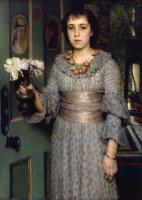
On 25th June 1912 Lawrence Alma-Tadema [aged 76] died at Kaiserhof Spa, Wiesbaden, Germany where he had travelled with his daughter Anne [aged 45] for treatment of his stomach ulcers. He was buried in the crypt of St Paul's Cathedral [Map].
Adam Murimuth's Continuation and Robert of Avesbury’s 'The Wonderful Deeds of King Edward III'
This volume brings together two of the most important contemporary chronicles for the reign of Edward III and the opening phases of the Hundred Years’ War. Written in Latin by English clerical observers, these texts provide a vivid and authoritative window into the political, diplomatic, and military history of fourteenth-century England and its continental ambitions. Adam Murimuth Continuatio's Chronicarum continues an earlier chronicle into the mid-fourteenth century, offering concise but valuable notices on royal policy, foreign relations, and ecclesiastical affairs. Its annalistic structure makes it especially useful for establishing chronology and tracing the development of events year by year. Complementing it, Robert of Avesbury’s De gestis mirabilibus regis Edwardi tertii is a rich documentary chronicle preserving letters, treaties, and official records alongside narrative passages. It is an indispensable source for understanding Edward III’s claim to the French crown, the conduct of war, and the mechanisms of medieval diplomacy. Together, these works offer scholars, students, and enthusiasts a reliable and unembellished account of a transformative period in English and European history. Essential for anyone interested in medieval chronicles, the Hundred Years’ War, or the reign of Edward III.
Available at Amazon in eBook and Paperback format.
On 25th June 1914 Georg II Duke of Saxe Meiningen [aged 88] died. His son Bernhard [aged 63] succeeded III Duke Saxe Meiningen.
On 25th June 1917 Bishop Lewis Clayton [aged 79] died. He was buried at Peterborough Cathedral [Map].


25th June 1918. Western Morning News. Page 2.
Port Eliot's Welcome. Homecoming Of Earl [aged 28] And Countess [aged 21] Of St. Germans.
The Earl of St. Germans, M.C., Capt. Royal Scots Greys, brought his bride home to Port Eliot last evening. The village from the railway to Port Eliot was decorated with flowers and flags. At the station, immediately over the carriage which awaited them, was the word "Welcome." Over the porchway of Port Eliot was "Welcome Home." The Earl and Countess (formerly Lady Blanche Somerset, elder daughter of the Duke and Duchess of Beaufort) travelled from London by an express which specially stopped for them at St. Germans. At the station the Volunteers, under Lt. G.C. Tucker, formed a guard of honour. The carriage was decorated with flowers and drawn by estate employees, with Mr. W.J. Prior, the coachman, in full dress, whip and all, on the box. Mr. Prior, an old and respected family servant, fulfilled the same ornamental duty when the late Earl brought his Countess to St. Germans, 34 years ago. In front of the carriage were the tenants and the school children of St. Germans and Tideford carrying flags and flowers. Among those present to receive the Earl and Countess were Lt.-Com. Montague Eliot and Mrs. Eliot, Mrs. C.R. Gott, and Col. and Mrs. Gill. The chairman of the Reception Committee, Mr. W.F. Creber, the oldest tenant on the estate, was unable to be present. Mr. R. Oliver took his place, accompanied by Mr. W. Paige (vice-chairman) and Mr. W.G. Broad, hon. sec. Other members of the committee were Rev. C.R. Gott (vicar), Eng.-Rear-Adml. Haddy, Mrs. Maybard, Mrs. J.E. Goard, Mrs. J. Southern, Messrs. J.E. Matthews, C.G. Tucker, E. Body, J.A. Bersey, G.H. Carpenter, R. Palmby, W.J. Prior, J. Scantlebury, A. Botterell, and T. Mayes.

St James' Church, Antony [Map]. 25th June 1921. Grave of Thomas Cornelius Mortimore. Stoker Petty Officer Royal Navy, HMS Vivid, who died at St Germans, Cornwall.
On 25th June 1922 Maxime Birley was born to Oswald Birley [aged 42] and Rhoda Vava Pike [aged 23] in West Dean, Sussex. Given the name 'Maxine' at birth she later changed it to 'Maxime' following her marriage to Alain Le Bailly de La Falaise in 1946. She married (1) 1946 Count Alain Le Bailly de La Falaise.
On 25th June 1259 Hugh XIII of Lusignan VIII Count of La Marche IV Count Angoulême was born to Hugh XII of Lusignan VII Count of La Marche III Count Angoulême [aged 24] and Jeanne Fougères Countess Lusignan Countess La Marche and Angoulême. He married 1st July 1276 Beatrice Burgundy Countess Lusignan, La Marche and Angoulême, daughter of Hugh IV Duke Burgundy.
On 25th June 1328 William Montagu 2nd Earl Salisbury was born to William Montagu 1st Earl Salisbury [aged 27] and Catherine Grandison Countess of Salisbury [aged 24]. He married (1) November 1340 Joan "Fair Maid of Kent" Princess Wales, daughter of Edmund of Woodstock 1st Earl Kent and Margaret Wake Countess Kent (2) after 7th August 1385 his half fifth cousin once removed Elizabeth Mohun Countess of Salisbury, daughter of John Mohun 2nd Baron Mohun of Dunster and Joan Burghesh Baroness Dunster, and had issue.
On 25th June 1441 Frederico Gonzaga Marquess Mantua was born to Ludovico III Marquis of Mantua [aged 29] and Barbara of Brandenburg Marquise of Mantua [aged 19] at Mantua. He married 1463 Margaret Wittelsbach, daughter of Albert Wittelsbach III Duke Bavaria and Anna Brunswick Grubenhagen Duchess Bavaria, and had issue.
On 25th June 1456 John Trastámara was born to Ferdinand I King Naples [aged 33] and Isabella Clermont Queen Consort Naples [aged 32].
On 25th June 1507 Marie Jakobaea Baden Duchess Bavaria was born to Philip Baden 1st Margrave Baden [aged 27] and Elisabeth of the Palatinate [aged 23]. She married 1522 her second cousin once removed William Wittelsbach IV Duke Bavaria, son of Albert Wittelsbach IV Duke Bavaria and Kunigunde Habsburg Duchess Bavaria, and had issue.

On 25th June 1526 Elisabeth Brooke Marchioness Northampton was born to George Brooke 9th Baron Cobham [aged 29] and Anne Braye Baroness Cobham [aged 25]. She married 1548 her fourth cousin William Parr 1st Marquess Northampton.
On 25th June 1539 Gregory Fiennes 10th Baron Dacre Gilsland was born to Thomas Fiennes 9th Baron Dacre Gilsland [aged 24] and Mary Neville Baroness Dacre of Gilsland [aged 15] at Herstmonceux Castle, East Sussex [Map]. He married 1565 his fifth cousin Anne Sackville Baroness Dacre of Gilsland, daughter of Richard Sackville and Winifred Brydges Marchioness Winchester, and had issue.


On 25th June 1550 Marie Eleonore de la Marck was born to William de la Marck Duke of Jülich Cleves Berg [aged 33] and Maria Habsburg Spain Duchess Cleves [aged 19]. She married 1573 her second cousin once removed Albert Frederick Hohenzollern Duke Prussia, son of Albert "The Elder" Hohenzollern I Duke Prussia and Anna Maria Guelph Duchess Prussia, and had issue.
The True Chronicles of Jean le Bel Volume 1 Chapters 1-60 1307-1342
The True Chronicles of Jean le Bel offer one of the most vivid and immediate accounts of 14th-century Europe, written by a knight who lived through the events he describes, and experienced some of them first hand. Covering the early decades of the Hundred Years’ War, this remarkable chronicle follows the campaigns of Edward III of England, the politics of France and the Low Countries, and the shifting alliances that shaped medieval warfare. Unlike later historians, Jean le Bel writes with a strong sense of eyewitness authenticity, drawing on personal experience and the testimony of fellow soldiers. His narrative captures not only battles and sieges, but also the realities of military life, diplomacy, and the ideals of chivalry that governed noble society. A key source for Jean Froissart, Le Bel’s chronicle stands on its own as a compelling and insightful work, at once historical record and literary achievement. This translation builds on the 1905 edition published in French by Jules Viard, adding extensive translations from other sources Rymer's Fœdera, the Chronicles of Adam Murimuth, William Nangis, Walter of Guisborough, a Bourgeois of Valenciennes, Geoffrey le Baker of Swinbroke and Richard Lescot to enrich the original text and Viard's notes.
Available at Amazon in eBook and Paperback format.
On 25th June 1652 Charles Dormer was born to Charles Dormer 2nd Earl Carnarvon [aged 19] and Elizabeth Capell Countess Carnarvon [aged 19].
On 25th June 1660 Frances Cavendish was born to Henry Cavendish 2nd Duke Newcastle upon Tyne [aged 30] and Frances Pierrepont Duchess Newcastle upon Tyne [aged 29]. She married 1685 John Campbell 2nd Earl Breadalbaine and Holland, son of John Campbell 1st Earl Breadalbaine and Holland and Mary Rich.

On 25th June 1689 Robert Burdett was born to Robert Burdett 3rd Baronet [aged 49] and Magdalen Aston. He married before 2nd January 1716 Elizabeth Tracy, daughter of William Tracy 4th Viscount Tracy and Frances Devereux, and had issue.
On 25th June 1704 Louis Bourbon Duke Brittany was born to Louis Bourbon Duke Burgundy [aged 21] and Maria Adelaide Savoy [aged 18]. He a great x 2 grandson of King Charles I of England, Scotland and Ireland. Coefficient of inbreeding 5.82%. He died aged less than one years old.
On 25th June 1722 St George Gore 5th Baronet was born to Ralph Gore 4th Baronet [aged 47] and Elizabeth Ashe [aged 38]. He married 22nd September 1743 Anne aka Alice Burton Lady Gore.
On 25th June 1730 George Beauclerk 3rd Duke St Albans was born to Charles Beauclerk 2nd Duke St Albans [aged 34] and Lucy Werden Duchess St Albans [aged 31]. He a great grandson of King Charles II of England Scotland and Ireland.

On 25th June 1737 Charles Fitzroy 1st Baron Southampton was born to Augustus Fitzroy [aged 20] and Elizabeth Cosby [aged 16]. He a great x 2 grandson of King Charles II of England Scotland and Ireland. He married 27th July 1758 Anne Warren Baroness Southampton and had issue.
On 25th June 1738 Mary Anastasia Grace Mordaunt 11th Baroness Mordaunt was born to Charles Mordaunt 4th Earl Peterborough 2nd Earl Monmouth [aged 30] and Mary Cox Countess Peterborough and Monmouth.
On 25th June 1744 William Flower 2nd Viscount Ashbrook was born to Henry Flower 1st Viscount Ashbrook [aged 24]. He married 9th March 1766 Elizabeth Ridge Viscountess Ashbrook and had issue.
On 25th June 1760 Elizabeth Compton Countess Burlington was born to Charles Compton 7th Earl of Northampton [aged 22] and Anne Somerset Countess Northampton [aged 19] in Compton Wynyates, Warwickshire [Map]. She married 27th February 1782 her fourth cousin George Augustus Henry Cavendish 1st Earl Burlington, son of William Cavendish 4th Duke Devonshire and Charlotte Elizabeth Boyle Marchioness Hartington, and had issue.


On 25th June 1783 Lieutenant-Colonel Cecil Bishopp was born to Cecil Bishopp 12th Baron Zouche [aged 30].
On 25th June 1784 Charles Winn-Allanson 2nd Baron Headley was born to George Winn aka Allanson-Winn 1st Baron Headley [aged 59] and Jane Blennerhassett.
On 25th June 1800 Arthur Charles Legge was born to George Legge 3rd Earl Dartmouth [aged 44] and Frances Finch Countess Dartmouth [aged 39]. He married 1st June 1827 Maria Josepha Holroyd Baroness Stanley Alderley, daughter of John Baker Holroyd 1st Earl Sheffield and Abigail Way Countess Sheffield.

On 25th June 1810 Charles Allanson-Winn 3rd Baron Headley was born to George Allanson-Winn [aged 24].
This is a translation of the 'Memoires of Jacques du Clercq', published in 1823 in two volumes, edited by Frederic, Baron de Reissenberg. In his introduction Reissenberg writes: 'Jacques du Clercq tells us that he was born in 1424, and that he was a licentiate in law and a counsellor to Philip the Good, Duke of Burgundy, in the castellany of Douai, Lille, and Orchies. It appears that he established his residence at Arras. In 1446, he married the daughter of Baldwin de la Lacherie, a gentleman who lived in Lille. We read in the fifth book of his Memoirs that his father, also named Jacques du Clercq, had married a lady of the Le Camelin family, from Compiègne. His ancestors, always attached to the counts of Flanders, had constantly served them, whether in their councils or in their armies.' The Memoires cover a period of nineteen years beginning in in 1448, ending in in 1467. It appears that the author had intended to extend the Memoirs beyond that date; no doubt illness or death prevented him from carrying out this plan. As Reissenberg writes the 'merit of this work lies in the simplicity of its narrative, in its tone of good faith, and in a certain air of frankness which naturally wins the reader’s confidence.' Du Clercq ranges from events of national and international importance, including events of the Wars of the Roses in England, to simple, everyday local events such as marriages, robberies, murders, trials and deaths, including that of his own father in Book 5; one of his last entries.
Available at Amazon in eBook and Paperback format.

On 25th June 1816 Alfred Hervey was born to Frederick William Hervey 1st Marquess of Bristol [aged 46] and Elizabeth Albana Upton [aged 41].
On 25th June 1818 Claude Champion de Crespigny 3rd Baronet was born to Augustus James Champion de Crespigny in Mayfair. He married 22nd August 1843 Mary Tyrell Lady Champion de Crespigny, daughter of John Tyssen Tyrell 2nd Baronet and Elizabeth Ann Pilkington, and had issue.
On 25th June 1826 William Blunt 7th Baronet was born to William Blunt [aged 45].
On 25th June 1827 Henry Reynolds-Moreton 3rd Earl of Ducie was born to Henry Reynolds-Moreton 2nd Earl Ducie [aged 25] and Elizabeth Dutton Countess Ducie [aged 20]. He married 24th May 1849 his first cousin Julia Langston Countess Ducie and had issue.
On 25th June 1857 Michael Henry Herbert was born to Sidney Herbert 1st Baron Herbert Lea [aged 46].
On 25th June 1867 Lancelot Edward Lowther 6th Earl Lonsdale was born to Henry Lowther 3rd Earl Lonsdale [aged 49]. He married 24th April 1889 Gwendoline Sheffield, daughter of Robert Sheffield 5th Baronet and Priscilla Isabella Laura Dumaresq, and had issue.
On 25th June 1872 Allen "Benjamin" Bathurst was born to Allen Bathurst 6th Earl Bathurst [aged 39] and Meriel Warren. He married 22nd April 1902 Augusta Ruby Spencer-Churchill and had issue.
On 25th June 1898 Victoria Alexandrina Fitzroy was born to Charles Fitzroy 4th Baron Southampton [aged 31] and Hilda Mary Dundas Baroness Southampton [aged 25].
On 25th June 1900 Louis Mountbatten 1st Earl Mountbatten of Burma was born to Prince Louis of Battenburg 1st Marquess Milford Haven [aged 46] and Victoria Hesse Darmstadt Marchioness Milford Haven [aged 37]. He a great grandson of Queen Victoria of the United Kingdom. Coefficient of inbreeding 3.61%. He married 18th July 1922 Edwina Ashley Countess Mountbatten Burma, daughter of Wilfred William Ashley 1st Baron Mount Temple and Amalia Mary Maud Cassel, and had issue.


On 25th June 1920 Angus Josslyn Gore-Booth 8th Baronet was born to Josslyn Augustus Richard Gore-Booth 6th Baronet [aged 51]. He married (1) 14th August 1948 Rosemary Myra Vane, daughter of Christopher Vane 10th Baron Barnard and Sylvia Mary Straker Baroness Barnard, and had issue.
On 25th June 1922 Maxime Birley was born to Oswald Birley [aged 42] and Rhoda Vava Pike [aged 23] in West Dean, Sussex. Given the name 'Maxine' at birth she later changed it to 'Maxime' following her marriage to Alain Le Bailly de La Falaise in 1946. She married (1) 1946 Count Alain Le Bailly de La Falaise.
Chronicle of Abbot Ralph of Coggeshall
The Chronicle of Abbot Ralph of Coggeshall (Chronicon Anglicanum) is an indispensable medieval history that brings to life centuries of English and European affairs through the eyes of a learned Cistercian monk. Ralph of Coggeshall, abbot of the Abbey of Coggeshall in Essex in the early 13th century, continued and expanded his community’s chronicle, documenting events from the Norman Conquest of 1066 into the tumultuous reign of King Henry III. Blending eyewitness testimony, careful compilation, and the monastic commitment to record-keeping, this chronicle offers a rare narrative of political intrigue, royal power struggles, and social upheaval in England and beyond. Ralph’s work captures the reigns of pivotal figures such as Richard I and King John, providing invaluable insights into their characters, decisions, and the forces that shaped medieval rule. More than a simple annal, Chronicon Anglicanum conveys the texture of medieval life and governance, making it a rich source for scholars and readers fascinated by English history, monastic authorship, and the shaping of the medieval world.
Available at Amazon in eBook and Paperback format.
On 25th June 1923 Nicholas Mosley 3rd Baron Ravensdale was born to Oswald Mosley 6th Baronet [aged 26] and Cynthia Blanche Curzon Lady Ancoats [aged 24].
On 25th June 1927 Sheila Constance Portman was born to Edward Claud Berkeley Portman 5th Viscount Portman [aged 29] and Sybil Mary Douglas-Pennant Viscountess Portman [aged 40]. She married 8th May 1951 Michael Holland-Hibbert 6th Viscount Knutsford.
On 25th June 1944 David Richard Harington 15th Baronet was born to John Charles Dundas Harington [aged 40] and Lavender Cecilia Denny.
On 25th June 1436 King Louis XI of France [aged 12] and Margaret Stewart Dauphine of France [aged 11] were married at Tours Castle. They had met the day before. She by marriage Dauphine . She the daughter of King James I of Scotland [aged 41] and Joan Beaufort Queen Consort Scotland [aged 32]. He the son of Charles "Victorious" VII King France [aged 33] and Marie Valois Anjou Queen Consort France [aged 31]. They were half fourth cousin once removed. She a great x 2 granddaughter of King Edward III of England.
On 25th June 1532 Francis Hastings 2nd Earl Huntingdon [aged 18] and Catherine Pole Countess Huntingdon [aged 21] were married. He the son of George Hastings 1st Earl Huntingdon [aged 45] and Anne Stafford Countess Huntingdon [aged 49]. They were second cousin once removed. He a great x 5 grandson of King Edward III of England. She a great x 5 granddaughter of King Edward III of England.
On 25th June 1562 Hugh Montgomerie 3rd Earl Eglinton [aged 31] and Jean Hamilton Countess Eglinton were divorced. See Memorials of the Montgomeries Pages 183-185.
On 25th June 1566 Francis Russell 2nd Earl Bedford [aged 39] and Bridget Hussey Countess Bedford [aged 40] were married. She by marriage Countess Bedford. He the son of John Russell 1st Earl Bedford and Anne Sapcote Countess Bedford.
On 25th June 1715 Gilbert Coventry 4th Earl Coventry [aged 47] and Anne Master Countess Coventry [aged 23] were married. She by marriage Countess Coventry. The difference in their ages was 23 years. He the son of Thomas Coventry 1st Earl Coventry and Winifred Edgecumbe.
On 25th June 1754 William Trelawny 6th Baronet [aged 32] and Laetitia Trelawny [aged 26] were married at Maker, Cornwall. They had a son and a daughter. They were first cousins.
On 25th June 1756 John Ashburnham 2nd Earl Ashburnham [aged 31] and Elizabeth Crowley Countess Ashburham were married. She by marriage Countess Ashburham. He the son of John Ashburnham 1st Earl Ashburnham and Jemima Grey Countess Ashburham.
On 25th June 1872 Henry Wodehouse [aged 38] and Mary Livingston "Minna" King Marchioness Anglesey [aged 17] were married. The difference in their ages was 20 years.
On 25th June 1883 Humphrey Napier Sturt 2nd Baron Alington [aged 23] and Feodorowna Yorke Baroness Alington [aged 19] were married. She the daughter of Charles Philip "Champagne Charlie" Yorke 5th Earl of Hardwicke [aged 47] and Sophia Georgiana Robertina Wellesley Countess Hardwicke [aged 43].
On 25th June 1884 Hallam Tennyson 2nd Baron Tennyson [aged 31] and Audrey Georgiana Florence Boyle Baroness Tennyson were married.
The History of William Marshal was commissioned by his son shortly after William’s death in 1219 to celebrate the Marshal’s remarkable life; it is an authentic, contemporary voice. The manuscript was discovered in 1861 by French historian Paul Meyer. Meyer published the manuscript in its original Anglo-French in 1891 in two books. This book is a line by line translation of the first of Meyer’s books; lines 1-10152. Book 1 of the History begins in 1139 and ends in 1194. It describes the events of the Anarchy, the role of William’s father John, John’s marriages, William’s childhood, his role as a hostage at the siege of Newbury, his injury and imprisonment in Poitou where he met Eleanor of Aquitaine and his life as a knight errant. It continues with the accusation against him of an improper relationship with Margaret, wife of Henry the Young King, his exile, and return, the death of Henry the Young King, the rebellion of Richard, the future King Richard I, war with France, the death of King Henry II, and the capture of King Richard, and the rebellion of John, the future King John. It ends with the release of King Richard and the death of John Marshal.
Available at Amazon in eBook and Paperback format.
On 25th June 1912 Esme Ivo Bligh 9th Earl of Darnley [aged 25] and Daphne Rachel Mulholland [aged 21] were married. He the son of Ivo Bligh 8th Earl Darnley [aged 53] and Florence Bligh Countess of Darnley [aged 52].
On 25th June 1983 Jamie Hope Nelson 4th Baronet [aged 33] and Maralynn Beverly Pyatt Hedge Lady Nelson were married.
On 25th June 2011 Charles Spencer 9th Earl Spencer [aged 47] and Karen Villeneuve Countess Spencer [aged 39] were married. She by marriage Countess Spencer. He the son of John Spencer 8th Earl Spencer and Frances Ruth Roche Countess Spencer.
On 25th June 1218 Simon "Elder" Montfort 5th Earl of Leicester [aged 43] was killed at the Siege of Toulouse 1218. His son Amaury [aged 23] succeeded 6th Seigneur Montfort. His son Simon [aged 10] succeeded 6th Earl of Leicester.
On 25th June 1423 Reinald Jülich 4th Duke Guelders 3rd Duke Jülich [aged 58] died. Arnold Egmont Duke Guelders [aged 12] succeeded 3rd Duke Guelders.
On 25th June 1433 Bishop Benedict Nichols died.
On 25th June 1462 Catherine Valois Duchess Bavaria [aged 82] died.
On 25th June 1483 supporters of the Woodvilles were executed at Pontefract Castle [Map]..
Anthony Woodville 2nd Earl Rivers [aged 43] was beheaded. His brother Richard [aged 30] succeeded 3rd Earl Rivers, 3rd Baron Rivers.
Richard Grey [aged 26] and Thomas Vaughan [aged 73] were beheaded.
On 25th June 1519 Bishop Hugh Oldham [aged 67] died.
On 25th June 1533 Mary Tudor Queen Consort France [aged 37] died at Westhorpe, Suffolk [Map]. She was buried at the monastery of St. Edmondsbury [Map] on 22nd July 1533. Her daughter Frances [aged 15] was Chief Mourner.
On 25th June 1601 Peregrine Bertie 13th Baron Willoughby [aged 45] died at Berwick-upon-Tweed, Northumberland [Map] where he was Governor. His son Robert [aged 18] succeeded 14th Baron Willoughby de Eresby. He was buried at St James' Church, Spilsby [Map].
On 15th February 1610 Catherine Bertie [aged 15] died in childbirth. She was buried at St James' Church, Spilsby [Map].
Monument Elizabethan Period. Tall Sideboard Tomb with reclining hooded figure of Lady Katherine, daughter of Peregrine, with Chrisom Child in the crib at her feet. Above a standing figure of Peregrine Bertie 13th Baron Willoughby in a niche, with strapwork embellishments, all supported on composite columns with a dentilated cornice. Possibly the work of Samuel Baldwin.
Catherine Bertie: Around 1595 she was born to Peregrine Bertie 13th Baron Willoughby and Mary Vere Baroness Willoughby of Eresby. Sources are confused about her birth year stating she was born in 1610 and that she married in 1609. Date adjusted to around 1595 on the assumption she was married around twenty years of age. Her son died at six days old on 09 Feb 1610. Her father died in 1601. Sources also refer to her as Baroness Rockingham whereas she died some eleven years before her husband was created Baron Rockingham. In 1609 Lewis Watson 1st Baron Rockingham and she were married.
On 25th June 1652 William Eure 5th Baron Eure died. His second cousin once removed William succeeded 6th Baron Eure.
On 25th June 1674 Orlando Bridgeman 1st Baronet [aged 68] died. His son John [aged 42] succeeded 2nd Baronet Bridgeman of Great Lever in Lancashire.
Abbot John Whethamstede’s Chronicle of the Abbey of St Albans
Abbot John Whethamstede's Register aka Chronicle of his second term at the Abbey of St Albans, 1451-1461, is a remarkable text that describes his first-hand experience of the beginning of the Wars of the Roses including the First and Second Battles of St Albans, 1455 and 1461, respectively, their cause, and their consequences, not least on the Abbey itself. His text also includes Loveday, Blore Heath, Northampton, the Act of Accord, Wakefield, and Towton, and ends with the Coronation of King Edward IV. In addition to the events of the Wars of the Roses, Abbot John, or his scribes who wrote the Chronicle, include details in the life of the Abbey such as charters, letters, land exchanges, visits by legates, and disputes, which provide a rich insight into the day-to-day life of the Abbey, and the challenges faced by its Abbot.
Available at Amazon in eBook and Paperback format.
On 25th June 1679 John Bernard 2nd Baronet [aged 48] died. There is some confusion over the date since his monument at St Mary Magdalene Church, Brampton [Map] states Jun 1671 although their is a faint 'x' above the last 'i' suggesting an error by the carver. He was buried at St Mary Magdalene Church, Brampton [Map]. His son Robert succeeded 3rd Baronet Bernard of Huntingdon.
On 25th June 1717 Henry Browne 5th Viscount Montagu died. His son Anthony [aged 31] succeeded 6th Viscount Montagu.
On 25th June 1729 Peregrine Osborne 2nd Duke Leeds [aged 70] died. His son Peregrine [aged 37] succeeded 3rd Duke Leeds, 3rd Earl of Danby, 3rd Viscount Osborne, 3rd Viscount Latimer, 3rd Baron Osborne of Kinderton, 4th Baronet Osborne of Kiveton.
On 25th June 1744 Roger Gale [aged 71] died. He was buried at St Radegund's Church, Scruton with the stipulation that he be buried in such a manner that no one would know exactly where he was buried.
On 25th June 1752 Thomas Reade 4th Baronet [aged 69] died. He was buried at St Mary the Virgin Church, Shipton-under-Wychwood. His son John [aged 31] succeeded 5th Baronet Reade of Barton in Berkshire.
On 25th June 1780 Thomas Gerard 8th Baronet [aged 57] died. He was buried at St Oswald's Church, Winwick [Map] on 7th July 1780. His brother Robert [aged 55] succeeded 9th Baronet Gerard of Bryn in Lancashire. Catherine Anderton Lady Gerard [aged 38] by marriage Lady Gerard of Bryn in Lancashire.
On 25th June 1819 John Morris 1st Baronet [aged 73] died. His son John [aged 43] succeeded 2nd Baronet Morris of Clasemont in Glamorganshire. Lucy Juliana Byng Lady Morris [aged 29] Bishop Benjamin Lany Baronet Morris of Clasemont in Glamorganshire.
On 25th June 1853 John Carpenter 4th Earl of Tyrconnell [aged 62] died. Earl Tyrconnel, Baron Carpenter of Killaghy in County Tipperary extinct.
On 25th June 1859 Charles Augustus Bennet 5th Earl Tankerville [aged 83] died. His son Charles [aged 49] succeeded 6th Earl Tankerville, 7th Baron Ossulston of Ossulston in Middlesex. Olivia Montagu Countess Tankerville [aged 28] by marriage Countess Tankerville.
On 25th June 1862 Catherine Sarah Elliot-Murray-Kynynmound Lady Boileau [aged 64] died.
On 25th June 1865 William Feilding 6th Earl Desmond 7th Earl Denbigh [aged 69] died. His son Rudolph [aged 42] succeeded 7th Earl Desmond, 8th Earl Denbigh, 8th Viscount Feilding, 8th Baron Feilding of Newnham Paddocks in Warwickshire, 7th Viscount Callan of Callan in Kilkenny, 7th Baron Feilding of Lecagh in Tipperary, 7th Baron St Liz.

Anne Boleyn. Her Life as told by Lancelot de Carle's 1536 Letter.
In 1536, two weeks after the execution of Anne Boleyn, her brother George and four others, Lancelot du Carle, wrote an extraordinary letter that described Anne's life, and her trial and execution, to which he was a witness. This book presents a new translation of that letter, with additional material from other contemporary sources such as Letters, Hall's and Wriothesley's Chronicles, the pamphlets of Wynkyn the Worde, the Memorial of George Constantyne, the Portuguese Letter and the Baga de Secrets, all of which are provided in Appendices.
Available at Amazon in eBook and Paperback format.
On 25th June 1870 George Baillie-Hamilton 10th Earl of Haddington [aged 68] died at Tyninghame House [Map].
On 25th June 1884 Philip Gore 4th Earl Arran [aged 82] died. His son Arthur [aged 45] succeeded 5th Earl Arran, 4th Viscount Sudley of Castle Gore in County Mayo, 4th Baron Saunders of Deeps in County Wexford, 7th Baronet Gore of Newtown in County Mayo.
On 25th June 1893 Frederick Gough-Calthorpe 5th Baron Calthorpe [aged 66] died unmarried at Grosvenor Square, Belgravia. His brother Augustus [aged 63] succeeded 6th Baron Calthorpe of Calthorpe in Norfolk, 7th Gough-Calthorpe of Edgbaston in Warwickshire.
On 25th June 1901 Lionel Milborne-Swinnerton-Pilkington 11th Baronet [aged 65] died. His son Thomas [aged 43] succeeded 12th Baronet Milborne-Swinnerton-Pilkington of Stanley in Yorkshire. Kathleen Mary Alexina Cuffe Lady Milborne-Swinnerton-Pilkington [aged 29] by marriage Lady Milborne-Swinnerton-Pilkington of Stanley in Yorkshire.
On 25th June 1904 Frederick Sandes [aged 75] died.
On 25th June 1912 Lawrence Alma-Tadema [aged 76] died at Kaiserhof Spa, Wiesbaden, Germany where he had travelled with his daughter Anne [aged 45] for treatment of his stomach ulcers. He was buried in the crypt of St Paul's Cathedral [Map].
On 25th June 1914 Georg II Duke of Saxe Meiningen [aged 88] died. His son Bernhard [aged 63] succeeded III Duke Saxe Meiningen.
On 25th June 1917 Bishop Lewis Clayton [aged 79] died. He was buried at Peterborough Cathedral [Map].
On 25th June 1926 John Robert Gladstone 3rd Baronet [aged 74] died. His first cousin John [aged 70] succeeded 4th Baronet Gladstone of Fasque and Balfour in Kincardineshire.
On 25th June 1953 William Leveson-Gower 4th Earl Granville [aged 72] died. His son Granville [aged 34] succeeded 5th Earl Granville, 5th Viscount Granville.
On 25th June 2022 John Manningham-Buller 2nd Viscount Dilhorne [aged 90] died. His son James [aged 66] succeeded 3rd Viscount Dilhorne of Greens Northon in Northamptonshire, 3rd Baron Dilhorne of Towcester in Northamptonshire, 6th Baronet Manningham-Buller of Dilhorne in Staffordshire.