

William of Worcester's Chronicle of England
William of Worcester, born around 1415, and died around 1482 was secretary to John Fastolf, the renowned soldier of the Hundred Years War, during which time he collected documents, letters, and wrote a record of events. Following their return to England in 1440 William was witness to major events. Twice in his chronicle he uses the first person: 1. when writing about the murder of Thomas, 7th Baron Scales, in 1460, he writes '… and I saw him lying naked in the cemetery near the porch of the church of St. Mary Overie in Southwark …' and 2. describing King Edward IV's entry into London in 1461 he writes '… proclaimed that all the people themselves were to recognize and acknowledge Edward as king. I was present and heard this, and immediately went down with them into the city'. William’s Chronicle is rich in detail. It is the source of much information about the Wars of the Roses, including the term 'Diabolical Marriage' to describe the marriage of Queen Elizabeth Woodville’s brother John’s marriage to Katherine, Dowager Duchess of Norfolk, he aged twenty, she sixty-five or more, and the story about a paper crown being placed in mockery on the severed head of Richard, 3rd Duke of York.
Available at Amazon in eBook and Paperback format.
Paternal Family Tree: Anjou aka Plantagenet
Maternal Family Tree: Katherine Swynford aka Roet Duchess Lancaster 1350-1403
Descendants Family Tree: George York 1st Duke of Clarence 1449-1478
In October 1429 [his father] Richard Plantagenet 3rd Duke of York [aged 18] and [his mother] Cecily "Rose of Raby" Neville Duchess York [aged 14] were married. She by marriage Duchess York. She was the youngest sister of Richard's brother-in-arms [his uncle] Richard Neville Earl Salisbury [aged 29]. She the daughter of [his grandfather] Ralph Neville 1st Earl of Westmoreland and [his grandmother] Joan Beaufort Countess of Westmoreland [aged 50]. He the son of Richard of Conisbrough 1st Earl Cambridge and Anne Mortimer. They were second cousins. He a great grandson of King Edward III of England. She a great granddaughter of King Edward III of England.
On 21st October 1449 George York 1st Duke of Clarence was born to Richard Plantagenet 3rd Duke of York [aged 38] and Cecily "Rose of Raby" Neville Duchess York [aged 34] at Dublin Castle, Dublin. He a great x 2 grandson of King Edward III of England. Coefficient of inbreeding 2.42%.
On 22nd May 1455 the Wars of the Roses commenced with the First Battle of St Albans. Richard Plantagenet 3rd Duke of York [aged 43] commanded with Richard "Kingmaker" Neville Earl Warwick, 6th Earl Salisbury [aged 26], Richard Neville Earl Salisbury [aged 55], Edward Brooke 6th Baron Cobham [aged 40] and Walter Strickland [aged 44].
The Lancastrians...
Edmund Beaufort 1st or 2nd Duke of Somerset [aged 49] was killed. His son Henry [aged 19] succeeded 2nd Duke Somerset, 2nd Marquess Dorset, 5th Earl Somerset, 2nd Earl Dorset. Note his father is frequently incorrectly referred to as the second Duke and Henry as the third Duke. His father's Dukedom, however, was a new creation.
Henry Percy 2nd Earl of Northumberland [aged 62] was killed. His son Henry [aged 33] succeeded 3rd Earl of Northumberland, 6th Baron Percy of Alnwick, 14th Baron Percy of Topcliffe. Eleanor Poynings Countess Northumberland [aged 33] by marriage Countess of Northumberland.
Thomas Clifford 8th Baron Clifford [aged 41] was killed. His son John [aged 20] succeeded 9th Baron de Clifford, 9th Lord Skipton. Margaret Bromflete Baroness Clifford [aged 21] by marriage Baroness de Clifford.
William Cotton [aged 45] and Richard Fortescue [aged 41] were killed.
Humphrey Stafford 1st Duke of Buckingham [aged 52] was wounded and captured.
King Henry VI of England and II of France [aged 33], John Sutton 1st Baron Dudley [aged 54] and Edmund Sutton [aged 30] were captured.
Henry Beaufort 2nd or 3rd Duke of Somerset was wounded. James Butler 1st Earl Wiltshire 5th Earl Ormonde [aged 34] and John Wenlock 1st Baron Wenlock [aged 55] fought.
Richard Cotton of Hampstall Ridware [aged 51] and his son William Cotton of Connington in Huntingdonshire [aged 27] were killed.
Before February 1458 [his brother-in-law] John de la Pole 2nd Duke of Suffolk [aged 15] and [his sister] Elizabeth York Duchess Suffolk [aged 13] were married. She by marriage Marchioness Suffolk. She the daughter of [his father] Richard Plantagenet 3rd Duke of York [aged 46] and [his mother] Cecily "Rose of Raby" Neville Duchess York [aged 42]. He the son of William "Jackanapes" de la Pole 1st Duke of Suffolk and Alice Chaucer Duchess Suffolk [aged 54]. They were half third cousins. He a great x 5 grandson of King Edward I of England. She a great x 2 granddaughter of King Edward III of England.
Chronicle of Gregory. 12th October 1459. Ande this same year there was a grete afray at Lodlowe by twyne the King [aged 37] and the [his father] Duke of Yorke [aged 48], the [his uncle] Erle of Salusbury [aged 59], the [his future father-in-law] Erle of Warwyke [aged 30], the [his brother] Erle of Marche [aged 17]. The Duke of Yorke lete make a grete depe dyche and fortefyde it with gonnys, cartys, and stakys, but his party was ovyr weke, for the kyng was mo then XXxM [Note. 3000] of harneysyd men, by-syde nakyd men that were compellyd for to come with the King. And thenne the duke fledde fro place to place in Walys, and breke downe the bryggys aftyr him that the kyngys mayny schulde not come aftyr hym. And he wente unto Monde. And there he taryd tylle the jornay was endyd at Northehampton. And he made newe grotys of a newe kune in Irlonde; in on syde of the grote was a crowne and in that othyr syde a crosse. And there he made many newe statutys, and his yong sonys [George York 1st Duke of Clarence [aged 9] and King Richard III of England [aged 7]] were sende by yende the see unto the Duke of Burgayne [aged 63].
On 10th July 1460 the Yorkist army led by the future [his brother] King Edward IV of England [aged 18] and including [his future father-in-law] Richard "Kingmaker" Neville Earl Warwick, 6th Earl Salisbury [aged 31], Archbishop George Neville [aged 28], [his uncle] William Neville 1st Earl Kent [aged 55], Edward Brooke 6th Baron Cobham [aged 45] and John Scrope 5th Baron Scrope of Bolton [aged 22] defeated the Lancastrian army at the 1460 Battle of Northampton.
Edmund Grey 1st Earl Kent [aged 43] had started the day as part of the Lancastrian army but did nothing to prevent the Yorkist army attacking.
King Henry VI of England and II of France [aged 38] was captured.
Humphrey Stafford 1st Duke of Buckingham [aged 57] was killed. His grandson Henry [aged 5] succeeded 2nd Duke of Buckingham, 7th Earl Stafford, 8th Baron Stafford.
John Talbot 2nd Earl of Shrewsbury [aged 42] was killed. His son John [aged 11] succeeded 3rd Earl of Shrewsbury, 3rd Earl Waterford, 8th Baron Furnivall, 12th Baron Strange Blackmere, 9th Baron Talbot.
Thomas Percy 1st Baron Egremont [aged 37] was killed. [Baron Egremont of Egremont Castle in Cumberland extinct. Some authoirities state, however, that he left a son, Sir John Percy, who never assumed the title.]
John Beaumont 1st Viscount Beaumont [aged 50] was killed. His son William [aged 22] succeeded 2nd Viscount Beaumont, 7th Baron Beaumont.
William Lucy [aged 56] was killed apparently by servants of a member of the Stafford family who wanted his wife Margaret Fitzlewis [aged 21].
Thomas Tresham [aged 40] fought.
William Beaumont 2nd Viscount Beaumont and William Norreys [aged 19] were knighted.
Thomas "Bastard of Exeter" Holland was executed following the battle.
The battle was fought south of the River Nene [Map] in the grounds of Delapré Abbey.
On 20th July 1460 Thomas Scales 7th Baron Scales [aged 63] was murdered by boatmen whilst travelling from the Tower of London [Map] to Sanctuary, Westminster Abbey [Map]. His daughter Elizabeth succeeded 8th Baroness Scales. She was, or had been married to, Henry Bourchier (the year of his death may been 1458). She was in 1466 married to Anthony Woodville 2nd Earl Rivers [aged 20], brother of King Edward IV's [aged 18] wife Elizabeth Woodville Queen Consort England [aged 23]; an example of the Woodville family marrying rich heiresses.
On 25th October 1460 Parliament enacted the Act of Accord by which [his father] Richard Plantagenet 3rd Duke of York [aged 49] was declared heir to King Henry VI of England and II of France [aged 38] disinheriting Edward of Westminster [aged 7]. At the same Parliament on 31st October 1460 Richard Plantagenet 3rd Duke of York was created Prince of Wales, 1st Duke of Cornwall. He was also appointed Lord Protector.
On 30th December 1460 the Lancastrian army took their revenge for the defeats of the First Battle of St Albans and the Battle of Northampton at the Battle of Wakefield near Sandal Castle [Map]. The Lancastrian army was commanded by [his brother-in-law] Henry Holland 3rd Duke Exeter [aged 30], Henry Beaufort 2nd or 3rd Duke of Somerset [aged 24] and Henry Percy 3rd Earl of Northumberland [aged 39], and included John Courtenay 7th or 15th Earl Devon [aged 25] and William Gascoigne XIII [aged 30], both knighted, and James Butler 1st Earl Wiltshire 5th Earl Ormonde [aged 40], John "Butcher" Clifford 9th Baron Clifford [aged 25], John Neville 1st Baron Neville of Raby [aged 50], Thomas Ros 9th Baron Ros Helmsley [aged 33], Henry Roos and Thomas St Leger [aged 20].
The Yorkist army was heavily defeated.
Richard Plantagenet 3rd Duke of York [aged 49] was killed. His son Edward [aged 18] succeeded 4th Duke York, 7th Earl March, 9th Earl of Ulster, 3rd Earl Cambridge, 9th Baron Mortimer of Wigmore.
Thomas Neville [aged 30], and Edward Bourchier were killed.
Father and son Thomas Harrington [aged 60] and John Harrington [aged 36] were killed, the former dying of his wounds the day after.
William Bonville 6th Baron Harington [aged 18] was killed. His daughter Cecily succeeded 7th Baroness Harington.
Thomas Parr [aged 53] fought in the Yorkist army.
Following the battle Richard Neville Earl Salisbury [aged 60] was beheaded by Thomas "Bastard of Exeter" Holland. William Bonville [aged 40] was executed.
Edmund York 1st Earl of Rutland [aged 17] was killed on Wakefield Bridge [Map] by John "Butcher" Clifford. Earl of Rutland extinct.
In or after 1461 George York 1st Duke of Clarence [aged 11] was created 1st Earl Richmond. The seventh creation was still extant being held by King Henry VII of England and Ireland [aged 3] which was not recognised by the House of York.

On 2nd February 1461 at the Battle of Mortimer's Cross at Mortimer's Cross, Herefordshire [Map] the future [his brother] King Edward IV of England [aged 18] commanded the Yorkist forces including William Hastings 1st Baron Hastings [aged 30], John Wenlock 1st Baron Wenlock [aged 61], John Tuchet 6th Baron Audley, 3rd Baron Tuchet [aged 35], John Savage [aged 17] and Roger Vaughan [aged 51].
In the Lancastrian army Owen Tudor [aged 61] (captured by Roger Vaughan) and his son Jasper Tudor 1st Duke Bedford [aged 29] fought as well as James Butler 1st Earl Wiltshire 5th Earl Ormonde [aged 40] and Henry Roos. Gruffydd ap Nicholas Deheubarth [aged 68] were killed. Watkin Vaughan [aged 66] and Henry Wogan [aged 59] were killed.
Monument to the Battle of Mortimer's Cross at Mortimer's Cross, Herefordshire [Map]. Note Edward IV described as Edward Mortimer. The monument was erected by subscription in 1799.
Gruffydd ap Nicholas Deheubarth: In 1393 he was born to Nicolas ap Philip Deheubarth and Jonet Unknown at Sheffield [Map].
Watkin Vaughan: Around 1395 he was born to Roger Vaughan of Bredwardine and Gwladys ferch Dafydd Gam "Star of Abergavenny" Brecon. Around 1435 Watkin Vaughan and Elinor Wogan were married. The date based on his age being around twenty. The difference in their ages was 29 years.
Henry Wogan: In 1402 he was born to John Wogan at Wiston.
On 29th March 1461 the Battle of Towton was a decisive victory for [his brother] King Edward IV of England [aged 18] bringing to an end the first war of the Wars of the Roses. Said to be the bloodiest battle on English soil 28000 were killed mainly during the rout that followed the battle.
The Yorkist army was commanded by King Edward IV of England with John Mowbray 3rd Duke of Norfolk [aged 45], [his uncle] William Neville 1st Earl Kent [aged 56], William Hastings 1st Baron Hastings [aged 30] (knighted), Walter Blount 1st Baron Mountjoy [aged 45], Henry Bourchier 2nd Count of Eu 1st Earl Essex [aged 57], John Scrope 5th Baron Scrope of Bolton [aged 23] and John Wenlock 1st Baron Wenlock [aged 61].
The Lancastrian army suffered significant casualties including Richard Percy [aged 35], Ralph Bigod Lord Morley [aged 50], John Bigod [aged 28], Robert Cromwell [aged 71], Ralph Eure [aged 49], John Neville 1st Baron Neville of Raby [aged 51], John Beaumont [aged 33], Thomas Dethick [aged 61], Everard Simon Digby, William Plumpton [aged 25] and William Welles [aged 51] who were killed.
Henry Percy 3rd Earl of Northumberland [aged 39] was killed. Earl of Northumberland, Baron Percy of Alnwick, Baron Percy of Topcliffe forfeit.
Ralph Dacre 1st Baron Dacre Gilsland [aged 49] was killed. He was buried at the nearby Saxton church where his chest tomb is extant. Baron Dacre Gilsland extinct.
Lionel Welles 6th Baron Welles [aged 55] was killed. His son Richard [aged 33] succeeded 7th Baron Welles.
The Lancastrian army was commanded by Henry Beaufort 2nd or 3rd Duke of Somerset [aged 25], [his brother-in-law] Henry Holland 3rd Duke Exeter [aged 30], Henry Percy 3rd Earl of Northumberland and Andrew Trollope.
Henry Holland 3rd Duke Exeter was attainted after the battle; Duke Exeter, Earl Huntingdon forfeit.
Those who fought for the Lancaster included William Tailboys 7th Baron Kyme [aged 46], William Plumpton, John Sutton 1st Baron Dudley [aged 60], William Norreys [aged 20], Thomas Grey 1st Baron Grey of Richemont [aged 43], Robert Hungerford 3rd Baron Hungerford 1st Baron Moleyns [aged 30], John Talbot 3rd Earl of Shrewsbury [aged 12], Richard Welles 7th Baron Welles, Baron Willoughby, Richard Woodville 1st Earl Rivers [aged 56], James Butler 1st Earl Wiltshire 5th Earl Ormonde [aged 40], John Butler 6th Earl Ormonde [aged 39], William Beaumont 2nd Viscount Beaumont [aged 22], Henry Roos and Thomas Tresham [aged 41]. Cardinal John Morton [aged 41] were captured.
John Heron of Ford Castle Northumberland [aged 45], Robert Dethick [aged 86], Andrew Trollope and his son David Trollope were killed.
In April 1461 [his brother] King Edward IV of England [aged 18] appointed new Garter Knights to replace William Bonville 1st Baron Bonville and Thomas Kyriell, both of whom had been created Garter Knights only two months before, and who had both been executed following the Second Battle of St Albans:
185th George York 1st Duke of Clarence [aged 11].
186th William Chamberlaine.
Around June 1461, the record is very vague, [his brother] King Edward IV [aged 19] and Eleanor Talbot [aged 25] were possibly secretly married by Bishop Robert Stillington [aged 41]. The marriage came to light after Edward's death. Bishop Robert Stillington provided the information to the future King Richard III of England [aged 8] in 1483; Richard used the information to justify his succeeding to be King since Edward IV's children with Elizabeth Woodville Queen Consort England [aged 24] were, therefore, illegitimate as a result of their marriage being bigamous and George Duke of Clarence's [aged 11] children were barred from the throne as a consequence of their father's attainder.
After 27th June 1461, the time of his coronation, King Edward IV of England [aged 19] created his brother George [aged 11] 1st Duke Clarence.
On 28th June 1461 [his brother] King Edward IV of England [aged 19] was crowned IV King of England. Duke York, Earl March, Earl of Ulster, Earl Cambridge, Baron Mortimer of Wigmore merged with the Crown. Cardinal Thomas Bourchier [aged 43] was assisted by Archbishop William Booth [aged 73] at Westminster Abbey [Map].
On 31st October 1461 King Edward IV of England [aged 19] created his brother Richard [aged 9] 1st Duke Gloucester. Henry Bourchier [aged 57] was created 1st Earl Essex. Isabel of York [aged 52] by marriage Countess Essex. William Neville [aged 56] was created 1st Earl Kent. Joan Fauconberg [aged 55] by marriage Countess Kent.
Warkworth's Chronicle [1461-1474]. [27th June 1461] As for alle thynges that folowe, referre them to my copey, in whyche is wretyn a remanente lyke to this forseyd werke: that is to wytt, that, at the coronacyone1 of the forseyde Edwarde, he create and made dukes his two brythir, the eldere George [aged 11] Duke of Clarence, and his yongere brothir Richard [aged 8] Duke of Gloucetre; and the Lord Montagu [aged 30]2, the Earl of Warwick [aged 32]'s brothere, the Earl of Northumberlonde; and one William Stafford squiere, Lord Stafforde of Southwyke; and Sere Herbard [aged 38], Lorde Herbard, and after Lorde Earl of Penbroke3; and so the seide Lorde Stafforde [aged 22] was made Earl of Devynschire4; the Lorde Gray Ryffyne [aged 44], Earl of Kent6; the Lorde Bourchyer [aged 57], Earl of Essex; the Lorde Jhon of Bokyngham [aged 33], the Earl of Wyltschyre5; Sere Thomas [Walter] Blount [aged 45]7, knyghte, Lord Mont[joy]; Sere Jhon Hawarde, Lorde Hawarde [aged 36]8; William Hastynges [aged 30] he made Lorde Hastynges and grete Chamberlayne; and the Lorde Ryvers; Denham squyere, Lorde Dynham; and worthy as is afore schewed; and othere of gentylmen and yomenne he made knyghtes and squyres, as they hade desserved.
Note. The Warkworth Chronicle, in Bernard's Catalogue of the Peterhouse manuscripts, taken from James's Eclogæ, is numbered - 230. It may be as well to observe that John Bagford mentions a contemporary Chronicle in English MS. of the events of the commencement of Edward's reign, in MS. Tann. Bodl. 453.
Note 1. At the coronacyone. King Edward was crowned in Westminster Abbey, on the 29th of June 1461. Warkworth's first passage is both imperfect and incorrect, and would form a very bad specimen of the value of the subsequent portions of his narrative; yet we find it transferred to the Chronicle of Stowe. It must, however, be regarded rather as a memorandum of the various creations to the peerage made during Edward's reign, than as a part of the chronicle. Not even the third peerage mentioned, the Earldom of Northumberland, was conferred at the Coronation, but by patent dated 27 May 1464: and the only two Earldoms bestowed in Edward's first year (and probably at the Coronation) were, the Earldom of Essex, conferred on Henry Viscount Bourchier, Earl of Eu in Normandy, who had married the King's aunt, the Princess Isabel of York; and the Earldom of Kent, conferred on William Neville, Lord Fauconberg, one of King Edward's generals at Towton. The former creation is mentioned by Warkworth lower down in his list; the latter is omitted altogether. - J.G.N.
Note 2. The Lord Montagu. And then Kyng Edward, concidering the greate feate doon by the said Lord Montagu, made hym Earl of Northumberlond; and in July next folowyng th'Earl of Warwyk, with th'ayde of the said Earl of Northumberland, gate agayn the castell of Bamborugh, wheryn was taken Sir Raaf Gray [aged 29], which said Ser Raaf was after behedid and quartred at York. Also, in this yere, the first day of May, the Kyng wedded Dame Elizabeth Gray [aged 24], late wif unto the lord Gray of Groby, and doughter to the Lord Ryvers." - The London Chronicle, MS. Cotton. Vitell. A. xvi. fol. 126, ro. The MS. of the London Chronicle, from which Sir Harris Nicolas printed his edition, does not contain this passage. It is almost unnecessary to remark the chronological incorrectness of the above, but it serves to show how carelessly these slight Chronicles were compiled. Cf. MS. Add. Mus. Brit. 6113, fol. 192, rº. and MS. Cotton. Otho, B. XIV. fol. 221, ro.
Note 3. Lord Earl of Pembroke. William Lord Herbert of Chepstow, the first of the long line of Herbert Earls of Pembroke, was so created the 27th May 1468. His decapitation by the Duke of Clarence at Northampton in 1469, is noticed by Warkworth in p. 7.-J.G.N.
Note 4. Earl of Devynschire. Humphery Stafford, created Baron Stafford of Southwick by patent 24th April 1464, was advanced to the Earldom of Devon 7th May 1469; but beheaded by the commons at Bridgwater before the close of the same year, as related by Warkworth, ubi supra. - J.G.N.
Note 5. Earl of Wyltschyre. John Stafford, created Earl of Wiltshire, 5th Jan. 1470; he died in 1473.—J.G.N.
Note 6."The Lorde Gray Ryffyne, Earl of Kent". The Earl of Kent, of the family of Neville, died without male issue, a few months after his elevation to that dignity; and it was conferred on the 30th May 1465, on Edmund Lord Grey de Ruthyn, on occasion of the Queen's coronation. He was cousin-german to Sir John Grey, of Groby, the Queen's first husband. On the same occasion the Queen's son Sir Thomas Grey [aged 6] was created Marquess of Dorset; her father Richard Wydevile [aged 56] lord Ryvers was advanced to the dignity of Earl Ryvers; and her brother Anthony [aged 21] married to the heiress of Scales, in whose right he was summoned to Parliament as a Baron. - J.G.N.
Note 7.Sere Thomas Blount. This should be Walter, created Lord Montjoy 20th June 1465; he died in 1474.-J.G.N.
Note 8. Sere Jhon Hawarde, Lord Hawarde. John Howard 1st Duke of Norfolk. This peerage dates its origin, by writ of summons to Parliament, during the short restoration of Henry VI. in 1470, a circumstance more remarkable as "evidence exists that he did not attach himself to the interest of that Prince, being constitued by Edward, in the same year, commander of his fleet." See Sir Harris Nicolas's memoir of this distinguished person (afterwards the first Duke of Norfolk) in Cartwright's History of the Rape of Bramber, p. 189.-J.G.N.
Chronicle of Robert Fabyan [-1512]. 27th June 1461. And upon the morne, beynge Sunday & seynt Peters daye, he was with great tryumphe, of the archebysshop of Cautorbury, crowned and enoyntyd before ye hygh aulter of seynt Peters churche of Westmynster. And after this solempnyzacion of the crownynge of the kynge, with also the sumptuous & honorable feest holden in Westmynster all1 was fynysshed, the kynge soone after creatyd George [aged 11] his brother duke of Clarence. And in the moneth of luly folowynge, at ye stadarde in Chepe, the hande of a seruaunt of the kynges, callyd lohn Dauy, was stryken of, for that he hadde stryken a man within the palays of Westmynster.
Note 1. Westminster hall. edit. 1542. 1559.
On 26th July 1461 William Hastings 1st Baron Hastings [aged 30] was created 1st Baron Hastings for supporting [his brother] King Edward IV of England [aged 19] in his claim to the throne.
Robert Ogle 1st Baron Ogle [aged 55] was created 1st Baron Ogle by King Edward IV of England for having been the principal Northumbrian gentleman to support the Yorkist cause.
On 9th September 1461 Baldwin Fulford [aged 46] was beheaded at Bristol, Gloucestershire [Map] on the orders of [his brother] King Edward IV of England [aged 19] for having supported King Henry VI of England and II of France [aged 39].
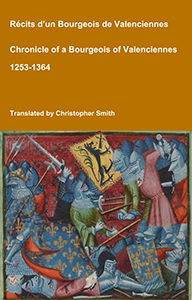
Chronicle of a Bourgeois of Valenciennes
Récits d’un bourgeois de Valenciennes aka The Chronicle of a Bourgeois of Valenciennes is a vivid 14th-century vernacular chronicle written by an anonymous urban chronicler from Valenciennes in the County of Hainaut. It survives in a manuscript that describes local and regional history from about 1253 to 1366, blending chronology, narrative episodes, and eyewitness-style accounts of political, military, and social events in medieval France, Flanders, and the Low Countries. The work begins with a chronological framework of events affecting Valenciennes and its region under rulers such as King Philip VI of France and the shifting allegiances of local nobility. It includes accounts of conflicts, sieges, diplomatic manoeuvres, and the impact of broader struggles like the Hundred Years’ War on urban life in Hainaut. Written from the perspective of a burgher (bourgeois) rather than a monastery or royal court, the chronicle offers a rare lay viewpoint on high politics and warfare, reflecting how merchants, townspeople, and civic institutions experienced the turbulence of the 13th and 14th centuries. Its narrative style combines straightforward reporting of events with moral and civic observations, making it a valuable source for readers interested in medieval urban society, regional politics, and the lived experience of war and governance in pre-modern Europe.
Available at Amazon in eBook and Paperback format.
On 28th February 1463 John Lovell 8th Baron Lovel 5th Baron Holand [aged 30] died. His son Francis [aged 7] succeeded 9th Baron Lovel of Titchmarsh, 6th Baron Holand at around eight years of age. He became a ward of [his brother] King Edward IV of England [aged 20] who gave his wardship to [his future father-in-law] Richard "Kingmaker" Neville Earl Warwick, 6th Earl Salisbury [aged 34] spending his childhood at Middleham Castle [Map] with the young (future) King Richard III of England [aged 10].
On 23rd March 1463 [his brother-in-law] John de la Pole 2nd Duke of Suffolk [aged 20] was restored 2nd Duke Suffolk. [his sister] Elizabeth York Duchess Suffolk [aged 18] by marriage Duchess Suffolk.
Patent Rolls. 23rd June 1463. Inspeximus and confirmation to the mayor, bailiffs and burgesses of Clyfton, Dertmuth and Hardenesse of (1) letters patent dated 14 December, 2 Richard II. inspecting and confirming a charter dated at the Tower of London, 14 April, 15 Edward III. [Charter Roll, 15 Edward III. No. 18,] and (2) a charter dated at Westminster, 5 November, 17 Richard II. [Charter Noll, 15-17 Richard II. No. 10]; and grant that the adjoining township of Southtouudertemouth shall henceforth be annexed to the said borough of Cliftondertemouth Hardenasse, in consideration of the fact that the burgesses keep watches against invaders on the confines of the township and beyond at a place called 'Galions Boure' but the inhabitants of the township contribute nothing because they do not enjoy the liberties of the borough. The mayor and bailiffs shall have return of writs and execution thereof within the said township and the liberty of the borough, saving always the right of the lord of the fee of the township, and all pleas real and personal and attachments and fines and amercements, and also view of frauk-pledge and all that peitains to it. And they may acquire, in mortmain, after inquisition, lands, tenements, rents and other possessions, not held in chief, to the value of 201. yearly. Witnesses: Th. archbishop of Canterbury [aged 45], W. archbishop of York [aged 75], G. Bishop of Exeter [aged 31], the chancellor, J. Bishop of Carlisle, the king's brothers George, duke of Clarence [aged 13], and Richard, duke of Gloucester [aged 10], the king's kinsmen Richard, Earl of Warwick [aged 34], and John, Earl of Worcester [aged 36], treasurer of England, Robert Styllyngton [aged 43], king's clerk, keeper of the privy seal, and William Hastynges of Hastynges [aged 32], the king's chamberlain, and John Wenlok of Wenlok [aged 63], knights.
On 1st May 1464 [his brother] King Edward IV of England [aged 22] and [his sister-in-law] Elizabeth Woodville Queen Consort England [aged 27] were married at Grafton Regis, Northamptonshire [Map]. Jacquetta of Luxemburg Duchess Bedford [aged 49], Elizabeth's mother, being the only witness. The date not certain. She the daughter of Richard Woodville 1st Earl Rivers [aged 59] and Jacquetta of Luxemburg Duchess Bedford. He the son of [his father] Richard Plantagenet 3rd Duke of York and Cecily "Rose of Raby" Neville Duchess York [aged 48]. They were sixth cousins. He a great x 2 grandson of King Edward III of England.
On 6th September 1465 Archbishop George Neville [aged 33] was enthroned as Archbishop of York at Cawood Castle, North Yorkshire [Map]. [his future wife] Isabel Neville Duchess Clarence [aged 14], [his future sister-in-law] Anne Neville Queen Consort England [aged 9] and [his brother] King Richard III of England [aged 12] were present.
After 1466 Thomas Burdett of Arrow in Warwickshire [aged 41] was in the service of John Beauchamp 1st Baron Beauchamp Powick [aged 57], Ralph Boteler 6th and 1st Baron Sudeley [aged 77] and George York 1st Duke of Clarence [aged 16].
Before March 1466 Richard Woodville 1st Earl Rivers [aged 61] was created 1st Earl Rivers by [his brother] King Edward IV of England [aged 23].
On 13th May 1467 [his nephew] John de la Pole Earl Lincoln 1st [aged 5] was created 1st Earl Lincoln by [his brother] King Edward IV of England [aged 25].
On 30th May 1467 George York 1st Duke of Clarence [aged 17] and John "Butcher of England" Tiptoft 1st Earl of Worcester [aged 40] visited Antoine "Bastard of Burgundy" [aged 46] at his lodgings in Chelsea.
In 1468 Thomas Fitzgerald 7th Earl Desmond and Thomas Fitzgerald 7th Earl of Kildare [aged 47] attended Parliament in Drogheda [Map] to answer charges of treason. Both were found guilty and attainted. Thomas Fitzgerald 7th Earl Desmond sought sanctuary in Drogheda Priory [Map] where he was captured by John "Butcher of England" Tiptoft 1st Earl of Worcester [aged 40]. On 14th February 1468 Thomas Fitzgerald 7th Earl Desmond was summarily beheaded. He was buried initially in St Peter's Church Drogheda [Map] then Christ Church Cathedral, Dublin [Map]. Some accounts claim John "Butcher of England" Tiptoft 1st Earl of Worcester also murdered two of his young sons. Thomas Fitzgerald 7th Earl of Kildare escaped and was subsequently pardoned and attainder reversed when King Edward IV found Ireland was ungovernable without him. In 1470 Thomas Fitzgerald 7th Earl of Kildare was appointed Lord Deputy of Ireland under George York 1st Duke of Clarence [aged 18] which position he held until the Duke's death in 1478.
On 17th January 1469 Warwick's supporters were executed in Salisbury Marketplace [Map] in the presence of [his brother] King Edward IV of England [aged 26]:
Thomas Hungerford was beheaded. His father Robert Hungerford 3rd Baron Hungerford 1st Baron Moleyns had been executed five years previously after the Battle of Hexham.
Henry Courtenay was beheaded.
On 11th July 1469 George York 1st Duke of Clarence [aged 19] and Isabel Neville Duchess Clarence [aged 17] were married by Archbishop George Neville [aged 37] at the Église Notre-Dame de Calais [Map] witnessed by Richard "Kingmaker" Neville Earl Warwick, 6th Earl Salisbury [aged 40]. She by marriage Duchess Clarence. She the daughter of Richard "Kingmaker" Neville Earl Warwick, 6th Earl Salisbury and Anne Beauchamp 16th Countess Warwick [aged 42]. He the son of Richard Plantagenet 3rd Duke of York and Cecily "Rose of Raby" Neville Duchess York [aged 54]. They were first cousin once removed. He a great x 2 grandson of King Edward III of England. She a great x 3 granddaughter of King Edward III of England.
Warkworth's Chronicle [1461-1474]. 11th July 1469. And in the ix. yere of the regne of Kynge Edwarde, at myssomere, the Duke of Clarence [aged 19] passede the see to Caleis to the [his father-in-law] Earl of Warwick [aged 40], and there weddede his [his wife] doughter [aged 17] by the ArcheBishop of Yorke [aged 37] the Earl of Warwick brothere, and afterwarde come overe ayene.
After 26th July 1469 King Edward IV of England [aged 27] was captured by his brother George [aged 19] at Olney, Buckinghamshire [Map] after the Battle of Edgecote Moor.
On 29th September 1469 brothers Humphrey Neville of Brancepeth [aged 30] and Charles Neville of Brancepeth were beheaded at York [Map] in the presence of King Edward IV of England [aged 27] and Richard "Kingmaker" Neville Earl Warwick, 6th Earl Salisbury [aged 40] bringing to an end the Neville-Neville feud that arose as a consequence of the senior line being dis-inherited.
Memoirs of Philip de Commines [1447-1511]. [1470] The Earl of Warwick finding himself too weak to oppose King Edward, having first given instructions to his private friends what they were to do in his absence, put to sea with the Duke of Clarence [aged 20], who had married his daughter1, and was then of his faction, notwithstanding that he was brother to the king; and carrying with them their wives and children, and a great number of forces, he appeared before Calais. There were at that time several of the earl's servants in the town, and one in the quality of his lieutenant, Lord Wenlock [aged 70]2, who, instead of receiving him, fired his great guns upon him.
Note 1. Isabella [aged 18], daughter of the Earl of Warwick [aged 41], and Anne Beauchamp [aged 43], his wife, was born at Warwick Castle [Map] on the 5th of September, 1451. She was married at Calais on the 11th of July, 1469.
Note 2. John, Lord Wenlock, Chief Butler of England, was appointed Lieutenant of Calais in 1470, and was killed at the battle of Tewkesbury on the 4th of May, 1471.
On 12th March 1470 [his brother] King Edward IV of England [aged 27] commanded at the Battle of Losecoat Field (Empingham).
Thomas Dymoke [aged 42] and Richard Welles 7th Baron Welles, Baron Willoughby [aged 42] were beheaded at Queen's Cross, Stamford before the battle1. His son Robert succeeded 8th Baron Welles.
The name 'Losecoat' not contemporary, and its meaning of men "losing their coats" may have been invented in the 19th Century. The name Losecoat appears to be first used in the 16th Century Hall's and Holinshed's Chronicles.
The 1475 attainder of Richard and Robert Welles refers to the battle having taken place "in a field called 'Hornefeld' in Empyngham",
Note 1. Some sources say on battlefield immediately prior to the battle, some after the batte
On 19th March 1470 Robert Welles 8th Baron Willoughby 8th Baron Welles was beheaded at Doncaster [Map]. He was buried at Whitefriars Doncaster [Map]. Baron Welles forfeit. His sister Joan succeeded 9th Baroness Willoughby de Eresby. Richard Hastings Baron Willoughby [aged 37] by marriage Baron Willoughby de Eresby. He, Hastings, a favourite of King Edward IV of England [aged 27], younger brother of Edward's great friend William Hastings 1st Baron Hastings [aged 39].
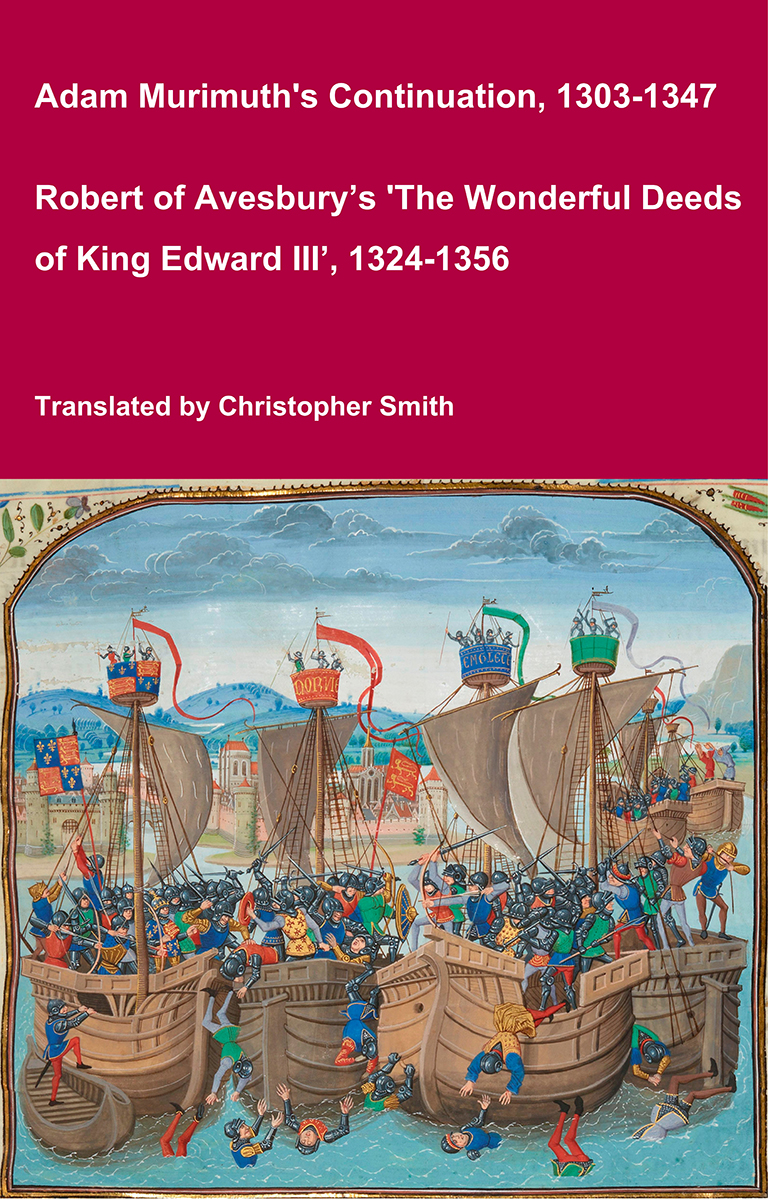
Adam Murimuth's Continuation and Robert of Avesbury’s 'The Wonderful Deeds of King Edward III'
This volume brings together two of the most important contemporary chronicles for the reign of Edward III and the opening phases of the Hundred Years’ War. Written in Latin by English clerical observers, these texts provide a vivid and authoritative window into the political, diplomatic, and military history of fourteenth-century England and its continental ambitions. Adam Murimuth Continuatio's Chronicarum continues an earlier chronicle into the mid-fourteenth century, offering concise but valuable notices on royal policy, foreign relations, and ecclesiastical affairs. Its annalistic structure makes it especially useful for establishing chronology and tracing the development of events year by year. Complementing it, Robert of Avesbury’s De gestis mirabilibus regis Edwardi tertii is a rich documentary chronicle preserving letters, treaties, and official records alongside narrative passages. It is an indispensable source for understanding Edward III’s claim to the French crown, the conduct of war, and the mechanisms of medieval diplomacy. Together, these works offer scholars, students, and enthusiasts a reliable and unembellished account of a transformative period in English and European history. Essential for anyone interested in medieval chronicles, the Hundred Years’ War, or the reign of Edward III.
Available at Amazon in eBook and Paperback format.
Warkworth's Chronicle [1461-1474]. February 1470. And in the x. yere1 of Kynge Edwardes regne, in the moneth of Marche, the Lorde Willowby [aged 42], the Lorde Welles his sonne2, Thomas Delalond knyght, and Sere Thomas Dymmoke [aged 42] knyght, the Kynges Champyon, droff oute of Lyncolneschyre Sere Thomas à Burghe, a knyght of the Kynges howse, and pullede downe his place, and toke alle his goodes and cataylle that they mighte fynde, and they gaderid alle the comons of the schyre to the nowmbre of xxx. M¹., and cryed "Kynge Herry," and refused Kynge Edwarde. And the Duke of Clarence and the [his father-in-law] Earl of Warwick [aged 41] causede alle this, lyke as they dyde Robyne of Riddesdale to ryse afore that at Banbury felde. And whenne Kynge Edwarde herde hereof, he made oute his commyssyons, and gaderyd a grete peple of menne, and sent his pardone to the Lorde Wyllowby, and a commaundement that they schuld come to hym, and so he dyd. And whenne the Kynge was sure of hym, he and alle his oste went towarde Lyncolneschyre, the Lord Welles, and alle the othere peple were gaderd togedere, and commawndede Lorde Wyllowby to sende a lettere to hys sonne and to alle the peple that he gaderyde, that they schulde yelde them to hym as to ther sovereyne Lorde, or ellys he made a woue3 that the Lorde Willowby schuld lese his hede; and he wrote and sent his lettere forthe, but therfor they wulde noʒt ceysse; wherfor the Kynge comawndyde the Lorde Wyllowhby hede for to be smytene of, notwithstondynge his pardone.
Note 1. And in the x. yere. It may be remarked that the regnal years of Edward IV. commence on the fourth of March, "quo die Rex Edwardus iiijtus. incepit regnare [On that day King Edward IV began to reign];" -MS. Magnus Rotulus Pipa, 1 Edw. IV, com. Cornub. Cf. MS. Bib. Geo. III. Mus. Brit. 52. fol. 33, rº.
Note 2. The Lorde Welles his sonne. See the Excerpta Historica, p. 282, for the confession of Sir Robert Welles, which throws very considerable light on this history. It appears that the Duke of Clarence [aged 20] took a much more active part in the conspiracy than is generally supposed; that the motive which actuated the multitude was chiefly the fear of the King's vengeance; that a servant of Clarence's was in the battle, and afforded Welles considerable assisttance; that when Lord Welles went to London pursuant to the King's commands, he desired his son, in the event of his hearing that he was in danger, to hasten to his assistance with as many followers as possible; that the real object of the rebellion was to place the crown on Clarence's head; and that both Clarence and Warwick had, for some time, been urging Lord Welles, and his son, to continue firm to their cause. See continuation of note below.
Note 3. Woue. So in MS. for vowe.
On 27th March 1470 George Neville 1st Duke Bedford [aged 9] was created 1st Duke Bedford by [his brother] King Edward IV of England [aged 27] in preparation for his marriage to [his niece] Elizabeth York Queen Consort England [aged 4] which didn't, in the end, take place. He, George, was nephew to [his father-in-law] Richard "Kingmaker" Neville Earl Warwick, 6th Earl Salisbury [aged 41] whose defection to the Lancastrian side may have caused the King to change his mind about his daughter's marriage.


Around 14th April 1470 [his daughter] Unamed Child was born to George York 1st Duke of Clarence [aged 20] and [his wife] Isabel Neville Duchess Clarence [aged 18]. The child died the same day, or shortly after. She a great x 3 granddaughter of King Edward III of England. Coefficient of inbreeding 5.41%.
Warkworth's Chronicle [1461-1474]. 8th September 1470. And in the same x. yere aforeseide, a lytelle before Michaelmesse, the Duke of Clarence [aged 20] and the [his father-in-law] Earl of Warwick [aged 41] londede in the west countre, and gadered there a grete peple.
On 13th September 1470 [his father-in-law] Warwick the Kingmaker [aged 41] and George, Duke of Clarence [aged 20] landed at Dartmouth, Devon and/or Plymouth, Devon [Map].
In November 1470 [his brother] King Edward IV of England [aged 28] was attainted. George York 1st Duke of Clarence [aged 21] was awarded the Duchy of York.
The Manuscripts of His Grace the Duke of Rutland Volume 1. 16th March 1471. The Duke of Clarence [aged 21] to Henry Vernon [aged 26].
[1471,] March 16. Wells [Map]. — Henry Vernon. We pray you to finde the meanes as secretly as ye can to have sure and trusti men in the North, or whersoevere therl of Northumberland bee, to espie of the guyding there, and as the cas shall requir and it shalbee expedient to certifie us, and alway whan oon is goon that another bee abiding, and in lyke wyse that ye have about therl of Shrovesbury and the Lord Stanley oon commyng to us and an other alway abiding there. We bee adcerteigned that it is said about London that K[ing] E[dward] is saylled by the coste of Northfolk toward Humbre. Wherfor we pray you to sende thidder to enquire and understande of the trouth, and to certifie us therof, and if he bee in thoos costes that alway ye have spies there to certifie us from tyme to tyme of the tidinges and the guyding, oon commyng to. us and an other alway abiding as in the other places, dooing your effectuell devoir herein as our veray truste is in you, nat sparing for any coste, for we woll allowe yon at your accomptes the uttermast of thexpenses that ye shall make in that behalve. Wylling and desiring you that bicause of thees tidinges ye doo the gretter devoir to arredie you with as many as ye can make in defensible array as well of our tenauntes as of yours to bee redy to comme to us within an houres warnying, lyke as we wrote to you but late by your servaunt. Writen at Welles the xvj day of March. (Signed : — ) Gr. Clarence. Signet.
The Manuscripts of His Grace the Duke of Rutland Volume 1. 30th March 1471. The Duke of Clarence [aged 21] to Henry Vernon [aged 26].
[1471,] March 30. Malmesbury. — Henry, We can you right goode thanke for the goode devoir that ye have doon in sending furth men to understand of the rule and guyding of E[dward]-late King, and thanke you for the writing that ye laste sent to us, wherby we understande the goode and lovyng disposiccion towardes us of our cousin of Shrovesbury (offering to do us service erased), wherof we bee right glad. Praying you that ye will haste you towardes us as soon as ye may, making the mor spede and gretter haste inasmuch as it is nedeful and expedient as ye may wele conceyve. Warnyng all our servauntes nigh you and by the way as ye shall comme, that thay spede thaim to us in all haste possible, doing your feythefull devoir herin at this tyme, as our special trust is in you. Writen at Malmesbury [Map] the xxx day of March. (Signed: — ) Gr. Clarence. Signet.
The Manuscripts of His Grace the Duke of Rutland Volume 1. 31st March 1471. George Duke of Clarence [aged 21] to Henry Vernon [aged 26].
[1471?] March 31. [Ciren]cester. — We have receyved your letter writen att Lych[field] the xxx day of this monneth, whereby ye reherse that ye conceyved by oon of [our] letters directed to you that we shuld be pleased or entende that ye shuld goo bak, which we never entended as fer as we can remember, but alway wrote unto you to come unto us without delay, as our trust is and hath been that ye wold, considering the trust and confidence that we have had and yit have in you. And if ye have any such letters as ye surmitte, that ye send unto us the same by the bearer hereof, and that or any other notwithstanding that ye faille not to come to us with all diligence as ye entende to please us. Signed. Signet.
N.Y. — Henry, I thank you that ye hail so dylygantley aieded my tenandes and sarwants wer ye be ofeser to atend on my .... comyng in to those partes, prayeng you that ye wyll send suer and trustie ... to espey wat pepell they ar and as far as they may honderston of their entent and por ... an be sartefeyed .... tan the xxvj day.
The Manuscripts of His Grace the Duke of Rutland Volume 1. 2nd April 1471. The Duke of Clarence [aged 21] to Henry Vernon [aged 26], squire.
[1471,] April 2. Burford [Map]. Right trusty and welbeloved we grete you wele, And desire and pray you that incontenent aftre the sight of these our lettres ye comme unto us with the people that ye have gadred in defensible array, keping the way toward us to Banbury warde, and that ye faile not herof as our special trust is in you. Yeven undre our signet at Burford the secunde day of Aprile. (Signed: — ) Gr. Clarence. Signet.
On 14th April 1471 Edward IV [aged 28] commanded at the Battle of Barnet supported by his brothers George [aged 21] and Richard [aged 18], John Babington [aged 48], Wiliam Hastings [aged 40] (commanded), Ralph Hastings, William Norreys [aged 30], William Parr [aged 37], John Savage [aged 49], William Bourchier Viscount Bourchier [aged 41], Thomas St Leger [aged 31], John Tuchet 6th Baron Audley, 3rd Baron Tuchet [aged 45], Thomas Burgh 1st Baron Burgh of Gainsborough [aged 40], John Scott [aged 48] and Thomas Strickland.
The Yorkists William Blount [aged 29], Humphrey Bourchier [aged 36], Henry Stafford [aged 46] and Thomas Parr were killed.
Humphrey Bourchier 1st Baron Cromwell [aged 40], was killed. Baron Cromwell extinct.
The Lancastrians...
Warwick the Kingmaker [aged 42] was killed. Earl Salisbury, Baron Montagu, Baron Montagu and Baron Monthermer forfeit on the assumption he was attainted either before or after his death; the date of his attainder is unknown. If not attainted the titles may have been abeyant between his two daughters Isabel Neville Duchess Clarence [aged 19] and Anne Neville Queen Consort England [aged 14].
John Neville 1st Marquess Montagu [aged 40] was killed. Marquess Montagu, Baron Montagu forfeit; unclear as to when he was attainted. He was buried at Bisham Abbey [Map].
William Tyrrell was killed.
William Fiennes 2nd Baron Saye and Sele [aged 43] was killed. His son Henry [aged 25] succeeded 3rd Baron Saye and Sele. Anne Harcourt Baroness Saye and Sele by marriage Baroness Saye and Sele.
Henry Holland 3rd Duke Exeter [aged 40] commanded the left flank, was badly wounded and left for dead, Henry Stafford and John Paston [aged 27] were wounded, John de Vere 13th Earl of Oxford [aged 28] commanded, and John Paston [aged 29] and William Beaumont 2nd Viscount Beaumont [aged 33] fought.
Robert Harleston [aged 36] was killed.
Thomas Hen Salusbury [aged 62] was killed.
Thomas Tresham [aged 51] escaped but was subsequently captured and executed on the 6th of May 1471.
On 4th May 1471 King Edward IV of England [aged 29] was victorious at the 4th May 1471 Battle of Tewkesbury. His brother Richard [aged 18], Richard Beauchamp 2nd Baron Beauchamp Powick [aged 36], John Howard 1st Duke of Norfolk [aged 46], George Neville 4th and 2nd Baron Abergavenny [aged 31], John Savage [aged 49], John Savage [aged 27], Thomas St Leger [aged 31], John Tuchet 6th Baron Audley, 3rd Baron Tuchet [aged 45], Thomas Burgh 1st Baron Burgh of Gainsborough [aged 40] fought. William Brandon [aged 46], George Browne [aged 31], Ralph Hastings, Richard Hastings Baron Willoughby [aged 38], James Tyrrell [aged 16], Roger Kynaston of Myddle and Hordley [aged 38] were knighted. William Hastings 1st Baron Hastings [aged 40] commanded.
Margaret of Anjou [aged 41] was captured. Her son Edward of Westminster Prince of Wales [aged 17] was killed. He was the last of the Lancastrian line excluding the illegitmate Charles Somerset 1st Earl of Worcester [aged 11] whose line continues to the present.
John Courtenay 7th or 15th Earl Devon [aged 36] was killed and attainted. Earl Devon forfeit. Some sources refer to these titles as being abeyant?
John Wenlock 1st Baron Wenlock [aged 71] was killed. Baron Wenlock extinct.
John Delves [aged 49], John Beaufort [aged 30], William Vaux of Harrowden [aged 35] and Robert Whittingham [aged 42] were killed.
Edmund Beaufort [aged 32], Humphrey Tuchet [aged 37] and Hugh Courtenay [aged 44] were captured.
Henry Roos fought and escaped to Tewkesbury Abbey [Map] where he sought sanctuary. He was subsequently pardoned.
William Carey [aged 34] was killed.
The Manuscripts of His Grace the Duke of Rutland Volume 1. 6th May 1471. The Duke of Clarence [aged 21] to Henry Vernon [aged 26].
[1471,] May 6. Tewkesbury. — Right trusti and welbeloved we grete you wele, gating you wite that my lord hath had goode spede nowe in his late journey to the subduyng of his enemyes, traitours and rebelles, of the which Edward late called Prince [deceased], the late Erl of Devon [deceased] with other estates, knightes, squiers, and gentilmen, were slayn in playn bataill, Edmund late Due of Somerset [aged 32] taken and put to execucion and other diverses estates, knightes, squiers, and gentilmen taken. And for soo muche as my said lord and we bee fully pourposed with the grace of our Lord to comme in all goodly haste into the north partyes for thestablishement of pease, tranquilhte and restfull rule and governance of the same, we desire and for your wele advyse you, and also in my said lordes name charge you, to dispose you to comme and attende upon us with so many men defensibly arrayed as ye can make, and that at ferthest ye bee with us at Coventre the xij day of this present moneth.
Yeven under our signet at Tewkesbury the vj day of May. (Signed : ) G. Clarence.
Polydore Vergil [1470-1555]. Two days later [6th May 1471] all these, save for Margaret and her son [deceased], paid with their heads in that same village. A little later Prince Edward, a very excellent young man, was taken to meet Edward, and was asked why he had dared invade his kingdom and trouble it with arms. He had the presence of mind to reply he had come to claim his ancestral realm. [his brother] Edward [aged 29] made no response this, he only waved the lad away, and immediately those who stood around him (these were Dukes George of Clarence [aged 21], Richard of Gloucester [aged 18], and William Hastings [aged 40]) cruelly butchered him. His body, together with those of the others who had been executed, was buried in a nearby Benedictine abbey.
English Historical Literature in the Fifteenth Century Appendix 13. On the 21st day of the same month of May [1471], King Edward [aged 29] returned to the City of London in noble triumph, having Margaret [aged 41], formerly queen, led before his army in a chariot. He rode through the middle of the city, with banners and standards unfurled, as though on a campaign or expedition undertaken against the aforementioned Kentish rebels. In his company at that time were: His brothers, the Dukes of Clarence [aged 21] and Gloucester [aged 18]; the Dukes of Norfolk [aged 46], Suffolk [aged 28], and Buckingham [aged 16]; the Earls of Northumberland [aged 22], Shrewsbury [aged 22], Rivers [aged 31], Essex [aged 67], Wiltshire [aged 43], and Pembroke [aged 20]. Among the barons and lords: Audley [aged 45], Stanley [aged 36], Grey of Ruthin [aged 17], the son and heir of the Earl of Kent [aged 54], Grey of Codnor [aged 36], Berners [aged 55], Cromwell1, Dacre2, Hastings [aged 59], Howard [aged 28]3, Dynham [aged 38], Cobham [aged 23], Mautravers [aged 21], the son and heir of Arundel [aged 53], Bourchier, Dudley [aged 70], Scrope [aged 33], and Ferrers [aged 16], along with many other nobles, knights, and esquires, and a greater number of mounted men than had ever been seen before.
Eodem mensis Maii die xxj rediit Rex Edwardus ad ciuitatem London, cum nobili triumpho, faciens secum adduci dictam Margaretam, olim reginam, in curru precedente exercitui. Et equitauit per medium ciuitatis, vexillis et standardis displicatis, tanquam in itinere et expedicione capta aduersus prefatos Kentenses, In cuius comitiva tune fuerunt duces de Clarence et Gloucester ipsius fratres; item duces de Northfolke et Southfolk, et de Bukyngham; item comites de Northumberland, de Shrovesbury, de Ryuers, de Essex, de Wyltshyre, de Pembroke; Barones, domini de Audeley, de Stanley, de Grey Ruthyn, films et heres de Comitis Cancie, de Grey Cotenor, de Barreners, de Cromwell, de Dacres, de Hastynges, de Howard, de Dynham, de Cobham, de Mautravers, filius et heres de Arundell, de Bourgcher, de Dudley, de Scrope, de Ferrers, cum aliis nobilibus, militibus et armigeris, ac multitudine equitum maiore quam ante sit visa.
Note 1. Unclear as to who this refers to since Ralph Cromwell 3rd Baron Cromwell died in 1456.
Note 2. Unclear as to who this refers to since Thomas Dacre 6th Baron Dacre Gilsland died in 1458, Ralph Dacre 1st Baron Dacre Gilsland died in 1461 and Humphrey Dacre 1st Baron Dacre Gilsland [aged 47] was created Baron Dacre in either 1473 or 1482.
Note 3. We take this to refer to Thomas Howard 2nd Duke of Norfolk, son of John Howard 1st Duke of Norfolk, referring to his subsiduary title.
In 1472 George York 1st Duke of Clarence [aged 22] was created 1st Earl Salisbury.
On 12th July 1472 [his brother] Richard Duke of Gloucester [aged 19] and [his sister-in-law] Anne Neville [aged 16] were married at St Stephen's Chapel, Westminster Palace [Map]. She by marriage Duchess Gloucester. She the daughter of [his father-in-law] Richard "Kingmaker" Neville Earl Warwick, 6th Earl Salisbury and [his mother-in-law] Anne Beauchamp 16th Countess Warwick [aged 45]. He the son of Richard Plantagenet 3rd Duke of York and Cecily "Rose of Raby" Neville Duchess York [aged 57]. They were first cousin once removed. He a great x 2 grandson of King Edward III of England. She a great x 3 granddaughter of King Edward III of England.
On 8th April 1473 (some sources state 1482) Humphrey Dacre 1st Baron Dacre Gilsland [aged 49] was created 1st Baron Dacre Gilsland by [his brother] King Edward IV of England [aged 30]. By letters patent he created Dacre Baron Dacre of Gilsland, declaring "that the said Humfrey Dacre, Knight, and the heirs male of the body of the said Thomas, late Lord Dacre, comyng, bee reputed, had, named and called the Lord Dacre of Gillesland". Mabel Parr Baroness Dacre of Gilsland by marriage Baroness Dacre Gilsland.

On 14th August 1473 [his daughter] Margaret York aka Pole Countess of Salisbury was born to George York 1st Duke of Clarence [aged 23] and [his wife] Isabel Neville Duchess Clarence [aged 21] at Farleigh Hungerford Castle [Map]. She a great x 3 granddaughter of King Edward III of England. Coefficient of inbreeding 5.41%. She married 1491 Richard Pole and had issue.
In 1474 [his brother-in-law] Thomas St Leger [aged 34] and [his sister] Anne York Duchess Exeter [aged 34] were married. She the daughter of [his father] Richard Plantagenet 3rd Duke of York and [his mother] Cecily "Rose of Raby" Neville Duchess York [aged 58]. They were fourth cousin twice removed. She a great x 2 granddaughter of King Edward III of England.
In 1474 Parliament declared [his mother-in-law] Anne Beauchamp 16th Countess Warwick [aged 47] legally dead (she lived until 1492) so that Edward IV's [aged 31] two younger brothers George [aged 24] and the Richard [aged 21], who had married Anne Beauchamp's daughters, Isabel [aged 22] and Anne [aged 17] respectively, could enjoy the significant Beauchamp inheritance after her husband Richard "Kingmaker" Neville Earl Warwick, 6th Earl Salisbury had been killed at the Battle of Barnet in 1471.
Some of the inhertance should have been given to George Neville 1st Duke Bedford [aged 13] but he was only thirteen at the time; his father John Neville 1st Marquess Montagu, younger brother of Warwick the Kingmaker, had also been killed at the Battle of Barnet. He, George Neville 1st Duke Bedford, died in 1483 aged twenty-one somewhat conveniently after the death of King Edward IV of England and before King Richard III of England acceded to the throne. Curiously the Act of Parliament described King Richard III of England enjoying the inheritance as long as there were Neville living heirs male. Upon the death of George Neville 1st Duke Bedford the Neville heir male was Richard Neville 2nd Baron Latimer of Snape [aged 6] born 1468 whose wardship was held by Cardinal Thomas Bourchier [aged 56].
Parliamentary Rolls Edward IV. 6th June 1474. Westminster Palace [Map]. Exemplification at the request of [his brother] Richard Duke of Gloucester [aged 21], of the tenour of an act (English) in the Parliament summoned at Westminster [Map], 6 October, 12 Edward IV, and continued to 9 May, 14 Edward IV, ordaining that George Duke Clarence [aged 24], and Isabel [aged 22] his wife and Richard Duke of Gloucester, and Anne [aged 17] his wife, daughters and heirs to Richard Nevyle, late Earl of Warwick, and daughters and heirs apparent to Anne Beauchamp [aged 47], his wife should possess and enjoy as in the right of the said wives all possessions belonging to the said Countess as though she were naturally dead and that she should be barred and excluded therefrom, that they should make partition of the premises and the same partition should be good in law, that the said Dukes should enjoy for life all the possessions of their wives if they should outlive the latter, that the said George and Isabel should not make any alienation, grant, fine or recovery of any of the premises to the hurt of the said Richard and Anne or the latter to the hurt of the former, that if the said Richard and Anne be divorced and afterwards married this Act should hold good, that if they be divorced and he do his effectual diligence to be married to her and during her life be not wedded to any other woman he should enjoy as much of the premises as should appertain to her during his life, and that notwithstanding the restraint of alienation or recovery above specified the lordship, manor and wappentake of Chesterfield, Derbyshire [Map] and Scarvesdale with the appurtenances and all the lands and tenements in Chesterfield, Derbyshire [Map] and Scarvesdale sometime of Ales, late Countess of Salisbury, might be given to the King and his heirs in exchange for other lands and tenements, which shall however be subject of this Act.
Abbot John Whethamstede’s Chronicle of the Abbey of St Albans
Abbot John Whethamstede's Register aka Chronicle of his second term at the Abbey of St Albans, 1451-1461, is a remarkable text that describes his first-hand experience of the beginning of the Wars of the Roses including the First and Second Battles of St Albans, 1455 and 1461, respectively, their cause, and their consequences, not least on the Abbey itself. His text also includes Loveday, Blore Heath, Northampton, the Act of Accord, Wakefield, and Towton, and ends with the Coronation of King Edward IV. In addition to the events of the Wars of the Roses, Abbot John, or his scribes who wrote the Chronicle, include details in the life of the Abbey such as charters, letters, land exchanges, visits by legates, and disputes, which provide a rich insight into the day-to-day life of the Abbey, and the challenges faced by its Abbot.
Available at Amazon in eBook and Paperback format.
On 25th February 1475 [his son] Edward "Last Plantagenet" York 17th Earl Warwick was born to George York 1st Duke of Clarence [aged 25] and [his wife] Isabel Neville Duchess Clarence [aged 23] at Warwick Castle [Map]. He a great x 3 grandson of King Edward III of England. Coefficient of inbreeding 5.41%.
In September 1475 [his brother-in-law] Henry Holland 3rd Duke Exeter [aged 45] drowned on his return from France having probably been thrown over-board on the orders of King Edward IV of England [aged 33].

On 12th June 1476 [his nephew] Richard of Shrewsbury 1st Duke of York [aged 2] was created 1st Earl Nottingham by [his brother] King Edward IV of England [aged 34].
On 29th July 1476 Edward I's paternal grand-father Edward of York, [his father] Richard of York and his younger brother Edmund were reburied at St Mary and All Saints in Fotheringhay [Map] in a ceremony attended by King Edward IV of England [aged 34], George York 1st Duke of Clarence [aged 26], Thomas Grey 1st Marquess Dorset [aged 21], William Hastings 1st Baron Hastings [aged 45], Anthony Woodville 2nd Earl Rivers [aged 36].
Thomas Whiting, Chester Harald wrote:
On 24 July [1476] the bodies were exhumed, that of the Duke, garbed in an ermine furred mantle and cap of maintenance, covered with a cloth of gold lay in state under a hearse blazing with candles, guarded by an angel of silver, bearing a crown of gold as a reminder that by right the Duke had been a king. On its journey, Richard, Duke of Gloucester, with other lords and officers of arms, all dressed in mourning, followed the funeral chariot, drawn by six horses, with trappings of black, charged with the arms of France and England and preceded by a knight bearing the banner of the ducal arms. Fotheringhay was reached on 29 July, where members of the college and other ecclesiastics went forth to meet the cortege. At the entrance to the churchyard, King Edward waited, together with the Duke of Clarence, the Marquis of Dorset, Earl Rivers, Lord Hastings and other noblemen. Upon its arrival the King made obeisance to the body right humbly and put his hand on the body and kissed it, crying all the time. The procession moved into the church where two hearses were waiting, one in the choir for the body of the Duke and one in the Lady Chapel for that of the Earl of Rutland, and after the King had retired to his closet and the princes and officers of arms had stationed themselves around the hearses, masses were sung and the King's chamberlain offered for him seven pieces of cloth of gold which were laid in a cross on the body. The next day three masses were sung, the Bishop of Lincoln preached a very noble sermon and offerings were made by the Duke of Gloucester and other lords, of The Duke of York's coat of arms, of his shield, his sword, his helmet and his coursers on which rode Lord Ferrers in full armour, holding in his hand an axe reversed. When the funeral was over, the people were admitted into the church and it is said that before the coffins were placed in the vault which had been built under the chancel, five thousand persons came to receive the alms, while four times that number partook of the dinner, served partly in the castle and partly in the King's tents and pavilions. The menu included capons, cygnets, herons, rabbits and so many good things that the bills for it amounted to more than three hundred pounds.
On 6th October 1476 [his son] Richard York was born to George York 1st Duke of Clarence [aged 26] and [his wife] Isabel Neville Duchess Clarence [aged 25] at Tewkesbury Abbey [Map]. He a great x 3 grandson of King Edward III of England. Coefficient of inbreeding 5.41%. He died aged less than one years old.
On 22nd December 1476 [his wife] Isabel Neville Duchess Clarence [aged 25] died from childbirth at Warwick Castle [Map]. The cause of death uncertain but likely a consequence of the birth of her fourth child Richard in early October. She was buried in Tewkesbury Abbey [Map]. The Founders Book of Tewkesbury Abbey Folio 39v records her death. George York 1st Duke of Clarence [aged 27] believed she had been murdered by Ankarette Hawkeston aka Twynyho. See Trial and Execution of Ankarette Twynyho.


On 1st January 1477 [his son] Richard York died at Warwick Castle [Map]. He was buried at Warwick Castle [Map].
On 12th April 1477 Ankarette Hawkeston aka Twynyho was arrested at Keyford, Somerset and taken to Bath, Somerset [Map]. George York 1st Duke of Clarence [aged 27] believed she had murdered his wife Isabel Neville Duchess Clarence who had died four months before.
11th May 1477 two servants of George York 1st Duke of Clarence [aged 27] were hanged at Tyburn [Map] for being sorcerers and planning the murder of Richard Beauchamp 2nd Baron Beauchamp Powick [aged 42].
John Stacy and Thomas Burdett of Arrow in Warwickshire [aged 52] were hanged.
Croyland Chronicle 1478. Before 18th February 1478. The indignation of the duke [aged 28] was probably still further increased by this; and now each began to look upon the other with no very fraternal eyes. You might then have seen, (as such men are generally to be found in the courts of all princes), flatterers running to and fro, from the one side to the other, and carrying backwards and forwards the words which had fallen from the two brothers, even if they had happened to be spoken in the most secret closet. The arrest of the duke for the purpose of compelling him to answer the charges brought against him, happened under the following circumstances. One Master John Stacy, a person who was called an astronomer, when in reality he was rather a great sorcerer, formed a plot in conjunction with one Burdet, an esquire, and one of the said duke's household; upon which, he was accused, among numerous other charges, of having made leaden images and other things to procure thereby the death of Richard, lord Beauchamp [aged 43], at the request of his adulterous wife [aged 43]1. Upon being questioned in a very severe examination as to his practice of damnable arts of this nature, he made confession of many matters, which told both against himself and the said Thomas Burdet. The consequence was, that Thomas was arrested as well; and at last judgment of death was pronounced upon them both, at Westminster, from the Bench of our lord the king, the judges being there seated, together with nearly all the lords temporal of the kingdom. Being drawn to the gallows at Tyburn [Map], they were permitted briefly to say what they thought fit before being put to death; upon which, they protested their innocence, Stacy indeed but faintly; while, on the other hand, Burdet spoke at great length, and with much spirit, and, as his last words, exclaimed with Susanna28, 'Behold! I must die; whereas I never did such things as these."
Note 28. History of Susanna, verse. 43.
In 1478 [his nephew] George York 1st Duke Bedford was created 1st Duke Bedford by [his brother] King Edward IV of England [aged 35].
Act of Attainder against George, Duke of Clarence
The original act doesn't contain a date. Parliament opened on 16th January 1478. On 7th February 1478 Henry Stafford 2nd Duke of Buckingham [aged 23] was appointed [Patent Rolls] Steward of England for the purpose of effecting the exection. George York 1st Duke of Clarence [aged 28] was attainted by Parliament. Duke Clarence. Earl Salisbury forfeit.
The [his brother] Kyng [aged 35], oure Sovereigne Lorde, hath called to his Remembraunce the manyfold grete Conspiracies, malicious and heynous Tresons, that hertofore hath be compassed by dyverse persones his unnaturall Subgetts, Rebelles and Traytoures, wherby Commocions and Insurrections have been made within this his Royaulme, for entent and purpose to have destroyed his moost Roiall persone, and with that to have subverted the state, wele publique and politic of all his said Royaulme; ne had so been, that by th'elp of Almyghty God, with the grete laboures and diligences and uttermost explette of his persone by Chevalrye and Werr, he had mightly and graciously repressed the same. Wherthrogh grete nowmbre of the said his Rebelles and Traytours he hath at dyverse tymes punysshed, as well by swerd as other punysshments, in exemple to others to have been ware of suche attempting hereafter. And yet as a benigne and a gracious Prince moeved unto pitie, after his grete Victories sent hym by God, not oonly he hath spared the multitudes in theire feldes and assembles overcomen, but thaym and certeyn other, the grete movers, sturters and executours of suche haynous Tresons, at the reverence of God, he hath taken to his mercy and clerly pardoned, as may not be unknowen to all the Worlde.
This notwithstondyng, it is comen nowe of late to his knowlage, howe that agaynst his mooste Royall persone, and agaynst the persones of the blessed Princesse oure alther soveraigne and Liege Lady the Quene, of my Lorde the Prince theire son and Heire, and of all the other of thaire moost noble issue, and also against the grete parte of the Noble of this Lande, the good rule, politike and wele publique of the same, hath been conspired, compassed and purposed a moch higher, moch more malicious, more unnaturall and lothely Treason than atte eny tyme hertoforn hath been compassed, purposed and conspired, from the Kyng's first Reigne hiderto; which Treason is, and must be called, so moche and more henyous, unnaturell and lothely, for that not oonly it hath proceded of the moost extreme purpensed malice, incomparably excedyng eny other that hath been aforn, but also for that it hath been contryved, imagined and conspired, by the persone that of all erthely creatures, beside the dutie of ligeaunce, by nature, by benefette, by gratitude, and by yeftes and grauntes of Goodes and Possessions, hath been moost bounden and behalden to have dradde, loved, honoured, and evere thanked the kyng more largely, than evere was eny other bounden or beholden, whom to name it gretely aggruggeth the hert of oure said Sovereigne Lorde, sauf oonly that he is of necessite compelled, for the suertie, wele and tranquillite of hym and all this Royaulme, which were full neer the poynt of perdicion, ne were the help and grace of Almyghty God:
He sheweth you therefore, that all this hath been entended by his Brother, George, the Duke of Clarence. Wherein it is to be remembered that the Kynges Highnesse, of tendre youthe unto now of late, hath evere loved and cherysshed hym, as tenderly and as kynderly, as eny creature myght his naturell Brother, as well it may be declared, by that he beyng right yonge, not borne to have eny lifelode, butt oonly of the Kynges grace he yave hym soo large porcion of Possessions that noo memorie is of, or seldom hath been seen, that eny Kyng of Englande hertoforn within his Royaulme yave soo largely to eny his Brothers. And not oonly that, butt above that, he furnyssed hym plenteously of all manere stuff, that to a right grete Prynce myght well suffice; so that aftre the Kynges, his lifelode and richesse notably exceded any other within his Lande at thatt tyme.
And yet the kyng, not herewith content, butt beyng ryght desirous to make hym of myght and puissance excedyng others, caused the greate parte of all the Nobles of this Lande to be assured unto hym next his Highnesse; trustyng that not oonly by the bond of nature, butt also by the bondes of soo grete benefitt, he shulde be more than others loving, helping, assisting and obeissaunt to all the Kyngs good pleasures and commaundments, and to all that myght be to the politik wele of his Lande.
All this notwithstondyng, it is to remember, the large grace and foryevnesse that he yave hym uppon, and for that at dyverse tyme sith he gretely offended the Kyng, as in jupartyng the Kyngs Royall estate, persone and life, in straite warde, puttyng hym thereby from all his libertie, aftre procuryng grete Commocions, and sith the voydaunce oute of his Royaulme, assistyng yevyng to his enemies mortall, the usurpers, laboryng also by Parlement to exclude hym and all his from the Regalie, and enabling hymself to the same, and by dyverse weyes otherwyse attemptyng; which all the Kyng, by nature and love moeved, utterly foryave, entendyng to have putte all in perpetuell oblivion.
The said Duke, nathelesse for all this, noo love encreasyng, but growyng daily in more and more malice, hath not left to consedre and conspire newe Treasons, more haynous and lothely than ever aforn, how that the said Duke falsly and traitrously entended, and puposed fermely, th'extreme distruction and disherityng of the Kyng and his Issue, and to subverte all the polityk rule of this Royaulme, by myght to be goten as well outewarde as inward, which false purpose the rather to brynge aboute, he cast and compassed the moyans to enduce the Kynges naturell Subgetts to withdrawe theire herts, loves and affections from the Kyng, theire naturell Sovereigne Lorde, by many subtill, contryved weyes, as in causyng dyverse his Servauntes, suche as he coude imagyne moste apte to sowe sedicion and aggrugge amonge the People, to goo into diverse parties of this Royaulme, and to laboure to enforme the People largely in every place where they shulde come, that Thomas Burdett, his Servaunte, which was lawefully and truly atteynted of Treason, was wrongefully putte to Deth; to some his Servauntes of suche like disposicion, he yave large Money, Veneson, therewith to assemble the Kynges Subgects to Feste theym and chere theym, and by theire policies and resonyng, enduce hem to beleve that the said Burdett was wrongfully executed, and so to putte it in noyse and herts of the People; he saide and laboured also to be noysed by such his Servauntez apte for that werk, that the Kyng, oure Sovereigne Lorde, wroght by Nygromancye, and used Crafte to poyson his Subgettes, suche as hym pleased; to th'entent to desclaundre the Kyng in the moost haynous wyse he couth in the sight and conceipt of his Subgetts, and thefore to encorage theym to hate, despice and aggrugge theire herts agaynst hym, thynkyng that he ne lived ne dealid with his Subgettes as a Christien Prynce.
And overe this, the said duke beyng in full purpose to exalte hymself and his Heires to the Regallye and Corone of Englande, and clerely in opinion to putte aside from the same for ever the said Corone from the Kyng and his Heirez, uppon oon the falsest and moost unnaturall coloured pretense that man myght imagine, falsely and untruely noysed, published and saide, that the Kyng oure Sovereigne Lorde was a Bastard, and not begottone to reigne uppon us; and to contynue and procede ferther in this his moost malicious and traytorous purpose, after this lothely, false and sedicious langage shewed and declared amonge the People, he enduced dyverse of the Kynges naturall Subgetts to be sworne uppon the blessed Sacrament to be true to hym and his heires, noon exception reserved of theire liegeaunce; and after the same Othe soo made, he shewed to many other, and to certayn persones, that suche Othe had made, that the Kyng had taken his lifelode from hym and his men, and disheryed theym, and he wolde utterly endevoire hym to gete hem theire enheritaunce as he wolde doo for his owen.
He shewed also that the Kyng entended to consume hym in like wyse as a Candell consumeth in brennyng, wherof he wolde in brief tyme quyte hym. And overe this, the said Duke continuyng ín his false purpose, opteyned and gate an exemplificacion undre the Grete Seall of Herry the Sexte, late in dede and not in right Kyng of this Lande, wherin were conteyned alle suche appoyntements as late was made betwene the said Duke and Margaret, callyng herself Quene of this Lande, and other; amonges whiche it was conteyned, that if the said Herry, and Edward, his first begoton Son, died withoute Issue Male of theire Bodye, that the seid Duke and his Heires shulde be Kyng of this Lande; which exemplificacion the said Duke hath kepyd with hymself secrete, not doyng the Kyng to have eny knowlegge therof, therby to have abused the Kynges true Subgetts for the rather execucion of his said false purpose.
And also, the same Duke purposyng to accomplisse his said false and untrue entent, and to inquiete and trouble the Kynge, oure said Sovereigne Lorde, his Leige People and this his Royaulme, nowe of late willed and desired the Abbot of Tweybury, Mayster John Tapton, Clerk, and Roger Harewell Esquier, to cause a straunge childe to have be brought into his Castell of Warwyk, and there to have beputte and kept in likelinesse of his Sonne and Heire, and that they shulde have conveyed and sent his said Sonne and Heire into Ireland, or into Flaundres, oute of this Lande, whereby he myght have goten hym assistaunce and favoure agaynst oure said Sovereigne Lorde; and for the execucion of the same, sent oon John Taylour, his Servaunte, to have had delyveraunce of his said Sonne and Heire, for to have conveyed hym; the whiche Mayster John Tapton and Roger Harewell denyed the delyveraunce of the said Childe, and soo by Goddes grace his said false and untrue entent was lette and undoon.
The Kyng, remembryng over, that to side the neernesse of Blode, howe be nature he myght be kynde to his Brother; the tendre love also, whiche of youthe he bare unto hym, couthe have founden in his hert, uppon due submission, to have yet foryeven hym estsones, ne were, furst that his said Brother by his former dedes, and nowe by this conspiracye, sheweth hymself to be incorrigible, and in noo wyse reducible to that by bonde of nature, and of the grete benefices aforn reherced, he were moost soveraynly beholden of all Creature: Secondly, ne were the grete juparty of effusion of Christien blode, which most likkely shulde therof ensue: And thridenly and principally, the bond of his Conscience, wherby and by solempne Othe, he is bounden anenst God, uppon the peryll of everlastyng dampnacion, to provyde and defende, first the suertie of hymself and his moste Royall Issue, secondly, the tranquilite of Goddes Churche within this, his Royaulme, and after that, the wele publique, peas and tranquilite of all his Lordez, Noblemen, Comens and others of every degree and condicion, whiche all shulde necessarily stande in extreme jupartie, yf Justice and due punyshement of soo lothely offencez shulde be pardoned; in pernicious example to all mysdoers, theves, traytours, rebelles and all other suche as lightly wolde therby bee encoraged and enbolded to spare noo manner of wikkednesse.
Wherfore thof all [sic] the Kynges Highnesse be right sory to determyne hymself to the contrarie, yet consideryng that Justice is a vertue excellently pleasyng Almyghty God, wherby Reaulmes stande, Kynges and Pryncez reign and governe, all goode rule, polyce and publique wele is mayteigned; and that this vertue standeth not oonly in retribucion and rewarde for goode dedes, butt also in correccion and punysshement of evil doers, after the qualitees of theire mysdoyngs. For whiche premissez and causez the Kyng, by the avyse and assent of his Lordes Speretuell and Temporell, and by the Commons, in this present parliament assembled, and by the auctorite of the same, ordeyneth, enacteth and establith that the said George, Duke of Clarence, be convicte and atteyntit of Heigh Treason commyttet and doon agaynst the Kynges moost Royall persone; and that the same Duke, by the said auctorite, forfett from hym and his heyres for ever the Honoure, Estate, Dignite and name of Duke1. And also that the same Duke, by the said auctorite, forfett from hym and his heyres for ever, all Castelles, Honoures, Maners, Landes, Tenements, Rents, Advousons, Hereditaments and Possessions that the same Duke nowe hath by eny of the Kynges Lettrez Patents to his owen use, or that any other persone nowe hath to the use of the same Duke by eny of the Kynges Letterez Patents, or that passed to hym fro the Kyng by the same: And that all Lettrez Patents made by the kyng to the said Duke bee from henseforthe utterly voyde and of noon effecte.
And that it be also ordeigned by the same auctorite that noo Castelles, Honoures, Maners, Landez, Tenementz, Rents, Advousons, Hereditaments or Possessions that the same duke nowe hath joyntly with other, or sole to hymself, to the use of eny other persone, be forfett, nor conteyned by or in this present Acte; but that by the said auctoritee, every other persone to whose use the said Duke is sole seised in eny Castelles, Honoures, Maners, Landez, Tenements, Rents, Advousons, Hereditaments and Possessions, otherwyse than by the Kyngs Lettres Patents, have power and auctorite by this present Acte lawefully to entre into theym, and theym to have and holde after the entent and trust that the said Duke nowe hath theryn. And also where the same Duke is joyntly seased with any other persone in any Castells, Maners, Landez, Tenementz, Rents, Hereditaments or Possessions to the use of eny other persone, otherwyse than by the Kyngs Lettrez Patents: that by the said auctorite, the said joynt feffez stonde and be feoffez to the same use and entent as they nowe arre and be; and that suche right, interest and title as the same Duke nowe hath with theym in the same premyssez, by the said auctorite, be in his cofeffez to the same entent as the same Duke nowe ys: Savyng to every of the Kynges Liege people, other than the said Duke and his Heyrez, and all other persone and persones that clayme or have eny tytell of interest in eny of the premyssez by the same Duke, suche right, tytle and interest as they owe or shulde have in eny of the premyssez, as if this Acte had never been made.
A cest Bille les Comunez sont assentuz.
Le Roy le voet.
Note 1. It is interesting that he forfeits the title of Duke rather than the usual attainted in the blood which may have debarred his children from inheriting the crown.
On 18th February 1478 George York 1st Duke of Clarence [aged 28] was drowned in a butt of wine (Malmsey) wine in the Bowyer Tower in the Tower of London [Map]. "in a butt of Malmsey wine" may refer to 1. a butt full of Malmsey wine or 2. a butt that once contained Malmsey wine that was subsequently re-used for another purpose such as washing or bathing.
William Hussey [aged 35] conducted the impeachment of the Duke of Clarence for treason.
[his brother] Richard, Duke of Gloucester [aged 25] succeeded 2nd Earl Richmond.
The only other person known to have been executed, or ritually killed, by drowning in a butt of wine is Muirchertach mac Muiredaig High King of Ireland (as reported by the Annals of Ulster) in his case at Newgrange Passage Tomb [Map].
Patent Rolls. 7th February 1478. Appointment of the king's kinsman Henry, duke of Buckingham [aged 23], to the Parliament office of steward of England for the execution of the judgment on George, duke of Clarence [aged 28], attainted of high treason by authority of Parliament. By K.
Croyland Chronicle 1478. The circumstances that happened in the ensuing Parliament my mind quite shudders to enlarge upon, for then was to be witnessed a sad strife carried on before these two brethren of such high estate.29 For not a single person uttered a word against the duke [aged 28], except the king [aged 35]; not one individual made answer to the king except the duke. Some parties were introduced, however, as to whom it was greatly doubted by many, whether they filled the office of accusers rather, or of witnesses: these two offices not being exactly suited to the same person in the same cause. The duke met all the charges made against him with a denial, and offered, if he could only obtain a hearing, to defend his cause with his own hand. But why delay in using many words? Parliament, being of opinion that the informations which they had heard were established, passed sentence upon him of condemnation, the same being pronounced by the mouth of Henry, duke of Buckingham [aged 23], who was appointed Seneschal of England for the occasion. After this, execution was delayed for a considerable time; until the Speaker of the Commons, coming to the upper house with his fellows, made a fresh request that the matter might be brought to a conclusion. In consequence of this, in a few days after, the execution, whatever its nature may have been, took place, (and would that it had ended these troubles!) in the Tower of London [Map], it being the year of our Lord, 1478, and the eighteenth of the reign of king Edward.
Note 29. One would think that "tantae himanitatis," can hardly mean "of such humanity," when applied to such persons as Edward the Fourth and his brother Clarence.
Chronicle of Jean Molinet Chapter 94. [18th February 1478]. His brother, the Duke of Clarence [aged 28], rebelled against his mother-in-law, and was defeated by trial, and sentenced to die, except by the grace of this king who would not grant him any other mercy, except to choose his preferred method of death; he prayed to die by drowning in a butt2 of Malvasia wine, and so it happened.
Son frère, le duc de Clarence, querella contre sa marastre, et fut vaincu par procès, et jugé à mourir, saulf la grâce d'icelui roy qui ne lui voulut faire aullre miséricorde, sinon de choisir telle mort qu'il lui plairoit; et pria qu'il peut mourir en une pippe plaine de malvoisie, et ainsi en advint.
Note 1. "marastre". Typically step-mother, or bad-mother. In this context this appears to refer to his mother-in-law Anne Neville who had been declared legally dead so that George could enjoy the benfit of the estates and wealth of the Earldom of Warwick.
Note 2. A French "pipe" or is an English "butt", which holds 108 gallons, around, 500 litres, half a Tun. Typicially around 1.25m high.

The True Chronicles of Jean le Bel Volume 1 Chapters 1-60 1307-1342
The True Chronicles of Jean le Bel offer one of the most vivid and immediate accounts of 14th-century Europe, written by a knight who lived through the events he describes, and experienced some of them first hand. Covering the early decades of the Hundred Years’ War, this remarkable chronicle follows the campaigns of Edward III of England, the politics of France and the Low Countries, and the shifting alliances that shaped medieval warfare. Unlike later historians, Jean le Bel writes with a strong sense of eyewitness authenticity, drawing on personal experience and the testimony of fellow soldiers. His narrative captures not only battles and sieges, but also the realities of military life, diplomacy, and the ideals of chivalry that governed noble society. A key source for Jean Froissart, Le Bel’s chronicle stands on its own as a compelling and insightful work, at once historical record and literary achievement. This translation builds on the 1905 edition published in French by Jules Viard, adding extensive translations from other sources Rymer's Fœdera, the Chronicles of Adam Murimuth, William Nangis, Walter of Guisborough, a Bourgeois of Valenciennes, Geoffrey le Baker of Swinbroke and Richard Lescot to enrich the original text and Viard's notes.
Available at Amazon in eBook and Paperback format.
The History of King Richard the Third by Thomas More. [18th February 1478] George, Duke of Clarence [aged 28], was a goodly noble prince, and at all points fortunate, if either his own ambition had not set him against his brother [aged 35], or the envy of his enemies had not set his brother against him. For were it by the Queen [aged 41] and the lords of her blood, who highly maligned the King's kindred (as women commonly, not of malice but of nature, hate them whom their husbands love), or were it a proud appetite of the Duke himself intending to be king, in any case, heinous treason was there laid to his charge, and, finally, were he faulty or were he faultless, attainted was he by Parliament and judged to the death, and thereupon hastily drowned in a butt of malmesey, whose death, King Edward (although he commanded it), when he knew it was done, piteously bewailed and sorrowfully repented.
Chronicle of Robert Fabyan [-1512]. This yere, that is to meane ye xviii. daye of February [1478], the Duke of Clarence [aged 28] and....2brother to the King, thanne being prysoner in ye Tower [Map], was secretely put to deth and drowned in a barell of maluesye within the said Tower. And this mayer this yere pursued also the reparacyon of the wallys, but nat so dylygently as his predccessour dyd, wherfore it was nat spedde as it might haue been, and also he was a syke and a feble man, and hadde not so sharpe and quycke mynde as that other hadde. And one other cause was, whiche ensuythe of a generaltie, that for the more partie one mayer wyll nat fynesshe that thing whiche that other begynneth, for then they thynke, be the dede neuer so good and profitable, that the honoure therof shalbe ascribed to the begynner, and nat to the fynyssher, whiche lacke of charytie and deSire of veingiory causeth many good actes and dedys to dye and growe out of minde, to the great decaye of the cōmon weale of the cytie.
Note 2. second brother. edit. 1542. 1559.
Chronicle of Napoli by Giacomo. On the 7th day of March, 1478, the Most Serene King Edward, King of England, caused his brother [George York 1st Duke of Clarence [deceased]] to die inside a vat of hot Greek wine, and then he made him bleed from certain veins, and it was because he wanted to remove him from the state. And in the month of April of the same year, Lord Carlo de Monfreda, Lord of Faenza, arrived in Naples and stayed at the house of Baptista Vaxallo.
Adi vii de marzo. 1478. lo Serenissimo Re Aduardo Re de Inghilterra fe morire el fratello dentro vna bocte de greco caldo et depo lo fe sanguinare dacerte vene et fo per causa delo stato li voleua leuare et del mese de aprile eiusdem anni venne innapoli lo Signore Carllo de monfreda Signore de faenza et allogio alle case de baptista vaxallo:
Patent Rolls. 14th February 1478. Appointment of Thomas Vaughan, knight, treasurer of the king's Westminster, chamber and chamberlain of the king's son the prince, John Say, knight, under treasurer of England, John Elryngton, knight, treasurer of the household, Robert Wyngfeld, Wyngfeld, knight, controller of the household, and Henry Boteler, recorder of Coventry, to examine the accounts of John Hewyke, one of the auditors of a parcel of the lands of George, late duke of Clarence [aged 28], and Peter Beaupe, one of the clerks of the green cloth, to whom the king ordered the said John to deliver the books and accounts, and of other auditors, receivers or bailiffs concerning the lands and possessions of the said duke and to certify thereon to the king.
Patent Rolls. 17th February 1478. Grant for life to Richard Ferrers of the off of steward of lordship Westminster, of Fawnhope, co. Hereford, in the king's hands by reason of the minority of Edward [aged 2] son of George, late duke of Clarence [aged 28], with the accustomed fees. By p.s.
Note. The date here somewhat confusing since George York 1st Duke of Clarence wasn't executed until a day later on 18 Feb 1478.
Croyland Chronicle 1478. Before 18th February 1478. On the following day, the duke of Clarence [aged 28] came to the council-chamber at Westminster, bringing with him a famous Doctor of the order of Minorites, Master William Goddard by name, in order that he might read the confession and declaration of innocence above-mentioned before the lords in the said council assembled; which he accordingly did, and then withdrew. The king [aged 35] was then at Windsor, but when he was informed of this circumstance, he was greatly displeased thereat, and recalling to mind the information formerly laid against his brother, and which he had long kept treasured up in his breast, he summoned the duke to appear on a certain day in the royal palace of Westminster: upon which, in presence of the Mayor and aldermen of the city of London, the king began, with his own lips, amongst other matters, to inveigh against the conduct of the before-named duke, as being derogatory to the laws of the realm, and most dangerous to judges and jurors throughout the kingdom. But why enlarge? The duke was placed in custody, and from that day up to the time of his death never was known to have regained his liberty.
Croyland Chronicle 1478. [After 18th February 1478]. After the perpetration of this deed, many persons left king Edward, fully persuaded that he would be able to lord it over the whole kingdom at his will and pleasure, all those idols being now removed, towards the faces of whom the eyes of the multitude, ever desirous of change, had been in the habit of turning in times past. They regarded as idols of this description, the earl of Warwick, the duke of Clarence [deceased], and any other great person there might then happen to be in the kingdom, who had withdrawn himself from the king's intimacy. The king however, although, as I really believe, he inwardly repented very often of this act, after this period, performed the duties of his office with such a high hand, that he appeared to be dreaded by all his subjects, while he himself stood in fear of no one. For, as he had taken care to distribute the most trustworthy of his servants throughout all parts of the kingdom, as keepers of castles, manors, forests, and parks, no attempt whatever could be made in any part of the kingdom by any person, however shrewd he might be, but what he was immediately charged with the same to his face.
Patent Rolls. 21st February 1478. Grant for life to Robert Pemberton [aged 34], one of the ushers of the king's Westminster chamber, of the office of steward of the lordship of Neuport Paynell [Map], in the king's hands by the forfeiture of George, late duke of Clarence [deceased], receiving the accustomed fees from the issues of the lordship, with all other profits. By K.
Patent Rolls. 2nd March 1478. Grant for life to the king's counsellor John Audeley, lord Audeley [aged 52], of the office of steward of all lordships, manors and lands in the county of Dorset late of George, late duke of Clarence [deceased], and in the king's hands by his forfeiture, with 20 marks yearly from the issues of the lordship of Halisbere, co. Dorset; grant to him, during minority, of the office of steward of all lordships, manors and lands in the said county in the king's hands by reason of the minority of Edward [aged 3], son of the said George, with 10 marks yearly from the issues of the premises; and grant to him for life of the office of constable and the custody of the castle of Warden and the office of constable and the custody of the castle of Corffe, with the accustomed fees from the issues of the king's lordships there and all other profits. By p.s.
Patent Rolls. 3rd March 1478. Grant to the king's servant Thomas Patyngeham, one of the yeomen of the king's chamber, of the offices of bailiff of the king's lordships of Walsale, Perybarre and Patyngeham and the custody of the park of Walsale in the counties of Stafford and Warwick during the minority of Edward [aged 3], son and heir of George, late duke of Clarence [deceased], with the accustomed fees from the issues of the lordships and all other profits. By p.s.
Before 6th March 1478 Bishop Robert Stillington [aged 58] was imprisoned as a result of an unknown association with George York 1st Duke of Clarence [deceased] but speculated to be about [his brother] King Edward IV's [aged 35] pre-contract with Eleanor Butler. See Stonor Letters.
The History of King Richard the Third by Thomas More. Some wise men also think that his plan-covertly conveyed-lacked not in helping his brother Clarence to his death, which he resisted openly, although somewhat (as men judged) more faintly than one who was heartily concerned for his welfare. And they who thus judged, they think he for a long time during King Edward's life forethought to be king in case the King his brother (whose life he looked to, so that evil diet should shorten it) should happen to die (as indeed he did) while his children were young. And they judged that for this reason: he was glad of his brother's death, that Duke of Clarence, whose life must needs have hindered his plans, whether the same Duke of Clarence had kept himself true to his nephew the young King, or enterprised to be king himself. But of all this point, is there no certainty, and whosoever divines upon conjectures may as well shoot too far as too short. However, this have I by credible information learned, that the same night in which King Edward died, one Mistlebrook, long before morning, came in great haste to the house of one Potter, dwelling in Redcross Street without Cripplegate [Map], and when he was with hasty rapping quickly let in, he revealed unto Potter that King Edward was departed. "By my truth man," said Potter, "then will my master the Duke of Gloucester be king." What cause he had so to think it is hard to say: whether he, being well disposed toward him, knew anything about such a thing the Duke had purposed, or otherwise he had any inkling thereof, for he was not ever likely to speak of it.
The History of King Richard the Third by Thomas More. [his father] Richard, Duke of York, a noble man and a mighty, had begun not by war but by law to challenge the crown, putting his claim into the Parliament. There his cause was either for right or favour so far forth advanced that King Henry (although he had a goodly prince utterly rejected his own blood; the crown was by authority of Parliament entailed unto the Duke of York, and his male issue in remainder, immediately after the death of King Henry. But the Duke, not enduring so long to tarry, but intending under pretext of dissension and debate arising in the realm, to reign before his time and to take upon him the rule in King Henry's life, was with many nobles of the realm at Wakefield slain, leaving three sons - [his brother] Edward, George, and Richard.
All three, as they were great states of birth, so were they great and stately of stomach, greedy and ambitious of authority, and impatient of partners. Edward, revenging his father's death, deprived King Henry and attained the crown.
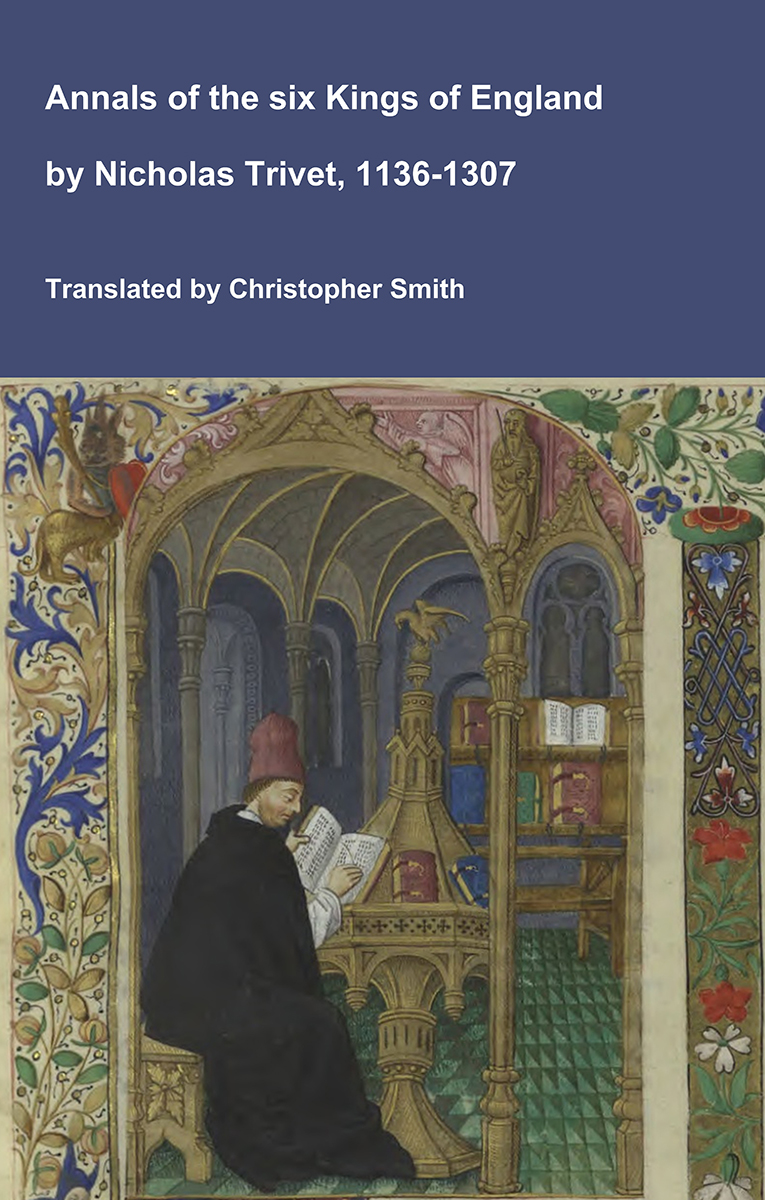
Annals of the six Kings of England by Nicholas Trivet
Translation of the Annals of the Six Kings of England by that traces the rise and rule of the Angevin aka Plantagenet dynasty from the mid-12th to early 14th century. Written by the Dominican scholar Nicholas Trivet, the work offers a vivid account of English history from the reign of King Stephen through to the death of King Edward I, blending political narrative with moral reflection. Covering the reigns of six monarchs—from Stephen to Edward I—the chronicle explores royal authority, rebellion, war, and the shifting balance between crown, church, and nobility. Trivet provides detailed insight into defining moments such as baronial conflicts, Anglo-French rivalry, and the consolidation of royal power under Edward I, whose reign he describes with particular immediacy. The Annals combines careful year-by-year reporting with thoughtful interpretation, presenting history not merely as a sequence of events but as a moral and political lesson. Ideal for readers interested in medieval history, kingship, and the origins of the English state, this chronicle remains a valuable and accessible window into the turbulent world of the Plantagenet kings.
Available at Amazon in eBook and Paperback format.
The Huntingdon Peerage Chapter IX Ferdinando Sixth Earl of Huntingdon. The loss of two sons, it may be conceived, was sufficiently distressing to a parent's feelings, but a still severer trial was reserved for them. Little more than two years after, on the 24th of June, 1649, Lord Henry, the eldest son, just in the flower of youth, and the love and admiration of all who knew him, was also cut off. He died of the small-pox, in his twentieth year, under the additional grief to his parents of his being then an only son, and, for a climax of affliction, on the very eve of his nuptials. The premature death of is amiable young nobleman, who, to the sweetest disposition and the most polished manners, added great proficiency in literature and a promise of uncommon talents, was a subject of universal lamentation and sympathy. Several of the most distinguished characters of that period, whether for worth, abilities, or elevated rank, joined the homage of their regrets, and paid "the meed of a melodious tear" to his Lordship's memory. Nearly an hundred elegiac poems were composed on the melancholy occasion, and afterwards published under the title of "Lachrymae Musarum; the Tears of the Muses; expressed in Elegies written by divers Persona of Nobility and Worth, upon the Death of the most hopeful Henry, Lord Hastings, only Son of the Right Honourable Ferdinando Earl of Huntingdon, Heir-general to the high-born Prince George, Duke of Clarence, Brother to King Edward the Fourth: collected and set forth by R. B. 1649". Among the eminent names, contributors to this collection, we find Lord Falkland, Dryden, Marvel, Herrick, Denham, the Honourable Ralph Montagu, and many others who emulated each other in celebrating the virtues of the deceased, and enshrining his character in immortal verse. A few select flowers, transplanted from this funereal garland of the Muses, cannot be deemed exotics here.
The following epitaphs were proposed:
Here lies the age's paramount, the store Of Albion's shame, because it mourns no more, And since the fate is so, if for his fall We cannot weep enough, our children shall. J. Rossz.
Tread off, profaner feet! forbear To press this hallowed mould, where lies Firm virtue's and high honour's heir, The darling of the courteous skies, Who, by rare parts, the flight of fame In life outwent; in death his name. Thomas Bancroft.
Three royal Henries, sprung from Huntingdon, We saw alive: the first and last are gone Bright saints to heaven, above all fancy'd spheres. To meet their sovereign in that House of Peers. The third God's hand by wonder hath preserved. In whom their honour trebly is reserved. So Sybil's books consumed, the last contains Their precious truths, and treble value gains. Howe'er we sadly mourn, his nephew's fate Makes widowed England still more desolate. Oh, never such a son to parent's mind! Oh, never subject loyaller inclined! Oh, none more pious, none more man, so soon Ripe for his set, ere raised to half his noon. That mightier hand that stopped the mighty sun. Canst thou his circle sooner make him run? A varied fever had surprised his head. And death ensued when royal blood he bled; Bodies live not when head and heart decays. Where all their veins are right Basilicas; The fountain dried, how should the channel run? Good night to stars when darkened is the sun. Thus royal, loyal, leam'd, lov'd Hastings lies, All good men's loss, to saints a glorious prize." Thomas Pestellus, filius.
Upon the Death of Lord Hastings, by Dryden. Must noble Hastings immaturely die, The honour of his ancient family. Beauty and learning thus together meet. To bring a winding for a wedding sheet? Must virtue prove death's harbinger? must she. With him expiring, feel mortality? Is death, sin's wages, grace's now? shall art Make us more learned, only to depart? If merit be disease; if virtue death; To be good, not to be; who'd then bequeath Himself to discipline? who'd not esteem Labour a crime? study self-murther deem?Our noble youth.now have pretence to be Dunces securely, ignorant heathily. Rare linguist whose worth speaks itself whose praise Though not his own, all tongues besides do raise: Than whom great Alexander miay seem less; Who conquer'd mens but not their languages. In his mouth nations spake; his tongue might be Interpreter to Greece, France, Italy. His native soil Was the four parts o' the earth; All Europe was too narrow for his birth. A young apostle; and, with reverence may I speak't inspir'd with gift of tongues, as they. Nature gave him, a child, what men in vain Oft strive, by art though furthered, to obtain. His body was an orb, his sublime soul Did move on virtue's and on learning's pole: Whose regular motions better to our view. Than Archimedes' sphere, the heavens did shew. Graces and virtues, languages and arts. Beauty and learning, fill'd up all the parts. Heaven's gifts, which do like falling stars appear Scatter'd in others; all, as in their sphere. Were fix'd, conglobate in his soul: and thence Shone through his body, with sweet influence; Letting their glories so on each limb fall. The whole frame rendered was celestial. Come, learned Ptolemy, and trial make. If thou this hero's altitude cans't take: But that transcends thy skill; thrice happy all. Could we but prove thus astronomical. Liv'd Tycho now, struck with this ray, which shone More bright i' the morn', than others beam at noon, He'd take his astrolabe, and seek out here What new star 'twas did gild our hemisphere. Replenish'd then with such rare gifts as these. Where was room left for such a foul disease? The nation's sin hath drawn that veil, which shrouds Our day-spring in so sad benighting clouds. Heaven would no longer trust its pledge; but thus Recall'd it; rapt its Ganymede from us. Was there no milder way but the small-pox, The very filthiness of Pandora's box? So many spots, like næves on Venus* soil. One jewel set off with so many a foil; Blisters with pride swell'd, which through's flesh did sprout Like rose-buds, stuck i' the lilly skin about. Each little pimple had a tear in it, To wail the fault its rising did commit: Which, rebel like, with its own lord at strife, Thus made an insurrection 'gainst his life. Or were these gems sent to adorn his skin. The cabinet of a richer soul within? No comet need foretel his change drew on. Whose corpse might seem a constellation. O! had he died of old, how great a strife Had been, who from his death should draw their life? Who should, by one rich draught, become whate'er Seneca, Cato, Numa, Csesar, were? Learn'd, virtuous, pious, great; and have by this An universal metempsychosis. Must all these aged sires in one funeral Expire? all die in one so young, so small? Who, had he liv'd his life out, his great fame Had swol'n 'bove any Greek or Roman name. But hasty winter, with one blast, hath brought The hopes of autumn, summer, spring, to nought Thus fades the oak i' the sprig, i' the blade the corn. Thus without young, this Phoenix dies, new bom. Must then old three-legg'd grey-beards with their gout, Catarrhs, rheums, aches, live three ages out? Time's offals, only fit for the hospital! Or to hang antiquaries' rooms withal! Must drunkards, lechers, spent with sinning, live With such helps as broths, possets, physic give? None live, but such as should die? shall we meet With none but ghostly fathers in the street? Grief makes me rail; sorrow will force its way; And show'rs of tears tempestuous sighs best lay. The tongue may fail; but overflowing eyes Will weep out lasting streams of elegies.
But thou, O virgin-widow, left alone Now thy belov'd, heaven-ravish'd spouse is gone, Whose skilful sire in vain strove to apply Med'cines, when thy balm was no remedy. With greater than Platonic love, O wed His soul, though not his body, to thy bed: Let that make thee a mother; bring thou forth The ideas of his virtue, knowledge, worth; Transcribe the original in new copies; give Hastings o' the better part: so shall he live In's nobler half; and the great grandsire be Of an heroic divine progeny: An issue, which to eternity shall last, Yet but the irradiations which he cast. Erect no mausoleums: for his best Monument is his spouse's marble breast.


King Edward III of England 1312-1377
John of Gaunt 1st Duke Lancaster 1340-1399
Ralph Neville 1st Earl of Westmoreland 1364-1425
Cecily "Rose of Raby" Neville Duchess York 1415-1495
George York 1st Duke of Clarence 1449-1478
Joan Beaufort Countess of Westmoreland 1379-1440
John Neville 3rd Baron Neville of Raby 1337-1388
Maud Percy Baroness Neville Raby
Eleanor Plantagenet Countess Arundel and Surrey 1318-1372
Richard Fitzalan 3rd or 10th Earl of Arundel 8th Earl of Surrey 1306-1376
Thomas Holland 2nd Earl Kent 1350-1397
Richard Plantagenet 3rd Duke of York 1411-1460
Joan "Fair Maid of Kent" Princess Wales 1328-1385
Kings Wessex: Great x 12 Grand Son of King Edmund "Ironside" I of England
Kings Gwynedd: Great x 9 Grand Son of Owain "Great" King Gwynedd
Kings Seisyllwg: Great x 15 Grand Son of Hywel "Dda aka Good" King Seisyllwg King Deheubarth
Kings Powys: Great x 10 Grand Son of Maredudd ap Bleddyn King Powys
Kings Godwinson: Great x 12 Grand Son of King Harold II of England
Kings England: Great x 2 Grand Son of King Edward III of England
Kings Scotland: Great x 10 Grand Son of King Malcolm III of Scotland
Kings France: Great x 4 Grand Son of King Philip IV of France
Kings Duke Aquitaine: Great x 16 Grand Son of Ranulf I Duke Aquitaine
Kings Spain: Great x 8 Grand Son of Alfonso VII King Castile VII King Leon
Great x 4 Grandfather: King Edward I of England  Son of King Henry III of England
Great x 3 Grandfather: King Edward II of England Son of King Edward I of England
Great x 4 Grandmother: Eleanor of Castile Queen Consort England 2 x Great Grand Daughter of Alfonso VII King Castile VII King Leon
Great x 2 Grandfather: King Edward III of England Son of King Edward II of England
Great x 4 Grandfather: King Philip IV of France  Son of King Philip III of France
Great x 3 Grandmother: Isabella of France Queen Consort England Daughter of King Philip IV of France
Great x 4 Grandmother: Joan Blois I Queen Navarre  Great Grand Daughter of King Louis VIII of France
Great x 1 Grandfather: Edmund of Langley 1st Duke of York  Son of King Edward III of England
Great x 4 Grandfather: John of Avesnes II Count Hainaut II Count Holland 3 x Great Grand Son of King Stephen I England
Great x 3 Grandfather: William of Avesnes I Count Hainaut III Count Avesnes III Count Holland II Count Zeeland 4 x Great Grand Son of King Stephen I England
Great x 4 Grandmother: Philippa Luxemburg Countess Hainaut and Holland  5 x Great Grand Daughter of King William "Conqueror" I of England
Great x 2 Grandmother: Philippa of Hainaut Queen Consort England Great Grand Daughter of King Philip III of France
Great x 4 Grandfather: Charles Valois I Count Valois Son of King Philip III of France
Great x 3 Grandmother: Joan Valois Countess Zeeland Holland Avesnes and Hainaut Grand Daughter of King Philip III of France
Great x 4 Grandmother: Margaret Capet Countess Valois Great Grand Daughter of King Louis VIII of France
GrandFather: Richard of Conisbrough 1st Earl Cambridge Grand Son of King Edward III of England
Great x 4 Grandfather: Ferdinand IV King Castile IV King Leon  3 x Great Grand Son of Alfonso II King Aragon
Great x 3 Grandfather: Alfonso "Avenger" XI King Castile 4 x Great Grand Son of Alfonso II King Aragon
Great x 4 Grandmother: Constance Burgundy Queen Consort Castile Queen Consort Leon  3 x Great Grand Daughter of King Henry "Curtmantle" II of England
Great x 2 Grandfather: Peter "Cruel" I King Castile 5 x Great Grand Son of Alfonso II King Aragon
Great x 4 Grandfather: Alfonso "Brave" IV King Portugal 3 x Great Grand Son of King Henry "Curtmantle" II of England
Great x 3 Grandmother: Maria Burgundy Queen Consort Castile 4 x Great Grand Daughter of King Henry "Curtmantle" II of England
Great x 4 Grandmother: Beatrice Ivrea Queen Consort Portugal 3 x Great Grand Daughter of Alfonso II King Aragon
Great x 1 Grandmother: Isabella of Castile Duchess York 6 x Great Grand Daughter of Alfonso II King Aragon
Great x 4 Grandfather: Garcia Padilla
Great x 3 Grandfather: Juan García Padilla 1st Lord Villagera
Great x 2 Grandmother: Maria Padilla
Great x 4 Grandfather: Fernán González Henestrosa
Great x 3 Grandmother: María González Henestrosa Lady Villagera
Father: Richard Plantagenet 3rd Duke of York Great Grand Son of King Edward III of England
Great x 4 Grandfather: Edmund Mortimer  4 x Great Grand Son of King John of England
Great x 3 Grandfather: Roger Mortimer 2nd Earl March 5 x Great Grand Son of King Henry "Curtmantle" II of England
Great x 4 Grandmother: Elizabeth Badlesmere Countess Northampton  4 x Great Grand Daughter of King Henry "Curtmantle" II of England
Great x 2 Grandfather: Edmund Mortimer 3rd Earl March, Earl of Ulster 6 x Great Grand Son of King Henry "Curtmantle" II of England
Great x 4 Grandfather: William Montagu 1st Earl Salisbury  10 x Great Grand Son of Hugh I King of the Franks
Great x 3 Grandmother: Philippa Montagu Countess March 11 x Great Grand Daughter of Hugh I King of the Franks
Great x 4 Grandmother: Catherine Grandison Countess of Salisbury
Great x 1 Grandfather: Roger Mortimer 4th Earl March 3rd Earl of Ulster Great Grand Son of King Edward III of England
Great x 4 Grandfather: King Edward III of England Son of King Edward II of England
Great x 3 Grandfather: Lionel of Antwerp 1st Duke of Clarence  Son of King Edward III of England
Great x 4 Grandmother: Philippa of Hainaut Queen Consort England Great Grand Daughter of King Philip III of France
Great x 2 Grandmother: Philippa Plantagenet Countess March 2nd Countess Ulster Grand Daughter of King Edward III of England
Great x 4 Grandfather: William Donn Burgh 3rd Earl of Ulster  Great Grand Son of King Edward I of England
Great x 3 Grandmother: Elizabeth Burgh Duchess of Clarence 2 x Great Grand Daughter of King Henry III of England
Great x 4 Grandmother: Maud Plantagenet Countess Ulster  Great Grand Daughter of King Henry III of England
GrandMother: Anne Mortimer 2 x Great Grand Daughter of King Edward III of England
Great x 4 Grandfather: Robert Holland 1st Baron Holand 
Great x 3 Grandfather: Thomas Holland 1st Earl Kent 4 x Great Grand Son of King Henry "Curtmantle" II of England
Great x 4 Grandmother: Maud Zouche Baroness Holand  3 x Great Grand Daughter of King Henry "Curtmantle" II of England
Great x 2 Grandfather: Thomas Holland 2nd Earl Kent Great Grand Son of King Edward I of England
Great x 4 Grandfather: Edmund of Woodstock 1st Earl Kent Son of King Edward I of England
Great x 3 Grandmother: Joan "Fair Maid of Kent" Princess Wales Grand Daughter of King Edward I of England
Great x 4 Grandmother: Margaret Wake Countess Kent  3 x Great Grand Daughter of King John of England
Great x 1 Grandmother: Eleanor Holland Countess March and Ulster 2 x Great Grand Daughter of King Edward I of England
Great x 4 Grandfather: Edmund Fitzalan 2nd or 9th Earl of Arundel  4 x Great Grand Son of King John of England
Great x 3 Grandfather: Richard Fitzalan 3rd or 10th Earl of Arundel 8th Earl of Surrey 5 x Great Grand Son of King John of England
Great x 4 Grandmother: Alice Warenne Countess Arundel 8 x Great Grand Daughter of Hugh I King of the Franks
Great x 2 Grandmother: Alice Fitzalan Countess Kent 2 x Great Grand Daughter of King Henry III of England
Great x 4 Grandfather: Henry Plantagenet 3rd Earl of Leicester 3rd Earl Lancaster Grand Son of King Henry III of England
Great x 3 Grandmother: Eleanor Plantagenet Countess Arundel and Surrey Great Grand Daughter of King Henry III of England
Great x 4 Grandmother: Maud Chaworth  9 x Great Grand Daughter of Hugh I King of the Franks
George York 1st Duke of Clarence 2 x Great Grand Son of King Edward III of England
Great x 4 Grandfather: Robert Neville 
Great x 3 Grandfather: Ralph Neville 1st Baron Neville of Raby
Great x 2 Grandfather: Ralph Neville 2nd Baron Neville of Raby 6 x Great Grand Son of King David I of Scotland
Great x 4 Grandfather: Robert Fitzroger 5th Baron Warkworth  12 x Great Grand Son of King Edward "Elder" of the Anglo Saxons
Great x 3 Grandmother: Euphemia Clavering Baroness Neville Raby  5 x Great Grand Daughter of King David I of Scotland
Great x 4 Grandmother: Margaret Zouche Baroness Warkworth 4 x Great Grand Daughter of King David I of Scotland
Great x 1 Grandfather: John Neville 3rd Baron Neville of Raby 4 x Great Grand Son of King Henry "Curtmantle" II of England
Great x 4 Grandfather: James Audley 
Great x 3 Grandfather: Hugh Audley 1st Baron Audley of Stratton Audley 2 x Great Grand Son of King Henry "Curtmantle" II of England
Great x 4 Grandmother: Ela Longespée Great Grand Daughter of King Henry "Curtmantle" II of England
Great x 2 Grandmother: Alice Audley Baroness Greystoke and Neville 3 x Great Grand Daughter of King Henry "Curtmantle" II of England
Great x 4 Grandfather: Edmund Mortimer 2nd Baron Mortimer of Wigmore 2 x Great Grand Son of King John of England
Great x 3 Grandmother: Iseult Mortimer 3 x Great Grand Daughter of King John of England
Great x 4 Grandmother: Margaret Fiennes  4 x Great Grand Daughter of King Henry "Curtmantle" II of England
GrandFather: Ralph Neville 1st Earl of Westmoreland 5 x Great Grand Son of King Henry "Curtmantle" II of England
Great x 4 Grandfather: Henry Percy 7th Baron Percy Topcliffe 9 x Great Grand Son of King Edward "Elder" of the Anglo Saxons
Great x 3 Grandfather: Henry Percy 9th and 1st Baron Percy 8 x Great Grand Son of Hugh I King of the Franks
Great x 4 Grandmother: Eleanor Warenne Baroness Percy Topcliffe 7 x Great Grand Daughter of Hugh I King of the Franks
Great x 2 Grandfather: Henry Percy 10th and 2nd Baron Percy 5 x Great Grand Son of King John of England
Great x 4 Grandfather: Richard Fitzalan 1st or 8th Earl of Arundel 3 x Great Grand Son of King John of England
Great x 3 Grandmother: Eleanor Fitzalan Baroness Percy 4 x Great Grand Daughter of King John of England
Great x 4 Grandmother: Alice Saluzzo Countess Arundel  6 x Great Grand Daughter of King William "Conqueror" I of England
Great x 1 Grandmother: Maud Percy Baroness Neville Raby 5 x Great Grand Daughter of King Henry "Curtmantle" II of England
Great x 4 Grandfather: Roger Clifford  11 x Great Grand Son of King Edward "Elder" of the Anglo Saxons
Great x 3 Grandfather: Robert Clifford 1st Baron Clifford 6 x Great Grand Son of King Henry I "Beauclerc" England
Great x 4 Grandmother: Isabella Vipont 5 x Great Grand Daughter of King Henry I "Beauclerc" England
Great x 2 Grandmother: Idonia Clifford Baroness Percy 4 x Great Grand Daughter of King Henry "Curtmantle" II of England
Great x 4 Grandfather: Thomas de Clare  4 x Great Grand Son of King Henry I "Beauclerc" England
Great x 3 Grandmother: Maud Clare Baroness Clifford Baroness Welles 3 x Great Grand Daughter of King Henry "Curtmantle" II of England
Great x 4 Grandmother: Juliana Fitzgerald  2 x Great Grand Daughter of King Henry "Curtmantle" II of England
Mother: Cecily "Rose of Raby" Neville Duchess York Great Grand Daughter of King Edward III of England
Great x 4 Grandfather: King Edward I of England Son of King Henry III of England
Great x 3 Grandfather: King Edward II of England Son of King Edward I of England
Great x 4 Grandmother: Eleanor of Castile Queen Consort England 2 x Great Grand Daughter of Alfonso VII King Castile VII King Leon
Great x 2 Grandfather: King Edward III of England Son of King Edward II of England
Great x 4 Grandfather: King Philip IV of France Son of King Philip III of France
Great x 3 Grandmother: Isabella of France Queen Consort England Daughter of King Philip IV of France
Great x 4 Grandmother: Joan Blois I Queen Navarre Great Grand Daughter of King Louis VIII of France
Great x 1 Grandfather: John of Gaunt 1st Duke Lancaster Son of King Edward III of England
Great x 4 Grandfather: John of Avesnes II Count Hainaut II Count Holland 3 x Great Grand Son of King Stephen I England
Great x 3 Grandfather: William of Avesnes I Count Hainaut III Count Avesnes III Count Holland II Count Zeeland 4 x Great Grand Son of King Stephen I England
Great x 4 Grandmother: Philippa Luxemburg Countess Hainaut and Holland 5 x Great Grand Daughter of King William "Conqueror" I of England
Great x 2 Grandmother: Philippa of Hainaut Queen Consort England Great Grand Daughter of King Philip III of France
Great x 4 Grandfather: Charles Valois I Count Valois Son of King Philip III of France
Great x 3 Grandmother: Joan Valois Countess Zeeland Holland Avesnes and Hainaut Grand Daughter of King Philip III of France
Great x 4 Grandmother: Margaret Capet Countess Valois Great Grand Daughter of King Louis VIII of France
GrandMother: Joan Beaufort Countess of Westmoreland  Grand Daughter of King Edward III of England
Great x 2 Grandfather: Giles "Payne" Roet 
Great x 1 Grandmother: Katherine Swynford aka Roet Duchess Lancaster
