

02 Jan is in January.
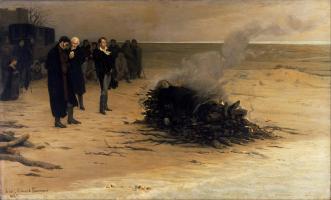
1315 Funeral of Piers Gaveston
1539 Anne of Cleves Journey to England
1644 Trial and Execution of the Hothams
1661 Charles II Continues to Reward those who Supported His Restoration
1861 Frederick William IV King Prussia Dies William I King Prussia Succeeds
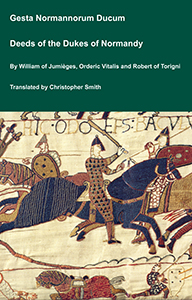 History of the Dukes of Normandy by William of Jumieges. When the sons of discord had been overthrown, as said above, the innocent around Sées were able for a time to breathe in peace. The noble Bishop Ivo hastened to roof the church, and on the 4th of the Nones of January [2nd January 1049] he dedicated it again. But because the walls had been weakened by the force of the flames, in that same year, before Lent, they collapsed.
Prostratis, ut supra dictum est, filiis discordiæ, simplicibus in pace circa Sagium licuit aliquantulum respirare. Nobilis Ivo præsul ecclesiam cooperire sategit et iv Nonas Januarii iterum dedicavit. Sed quia maceriæ virtute flammarum læsæ fuerant, ipso anno ante Quadragesimam corruerunt.
On 2nd January 1315 Piers Gaveston 1st Earl Cornwall was buried at King's Langley Priory, Hertfordshire [Map] some two and a half years after his murder. The ceremony was attended by King Edward II of England [aged 30] and his wife Isabella of France Queen Consort England [aged 20] as well as Humphrey Bohun 4th Earl Hereford 3rd Earl Essex [aged 39], Aymer de Valence 2nd Earl Pembroke [aged 40], Thomas of Brotherton 1st Earl Norfolk [aged 14], Bartholomew Badlesmere 1st Baron Badlesmere [aged 39], Hugh Despencer 1st Baron Despencer [aged 7] and his son Hugh "Younger" Despencer 1st Baron Despencer [aged 29].
Annales Paulini. 2nd January 1329. On the second day of January, the Archbishop of Canterbury, the Bishop of Winchester, the Earls of Lancaster, Norfolk, and Kent, Thomas de Wake, and many other magnates gathered and formed an alliance at St Paul's Church in London regarding certain ordinances for the benefit of the king and the kingdom of England. From the earls, envoys were sent to the king to restore peace, namely, the Archbishop, the Bishop of London, and the Earls Marshal and of Kent. And soon after, the Earl of Lancaster and the others submitted themselves to the king's grace at Bedford.
Secundo die Januarii mensis predicti archiepiscopus Cantuariensis, Wyntoniensis episcopus, comites Lancastriæ, Norfolkiæ et Cantim, ac T. de Wake, et alii plures magnates in ecclesia Sancti Pauli Londoniis congregati et confœderati super quibusdam ordinationibus ad commodum regis et regni Angliæ; et missi sunt ex parte comitum ad regem pro pace reformanda archiepiscopus, episcopus Londoniensis, comites Marescallus et Cantim. Et cito post reddidit se comes Lancastriæ et alii gratiæ domini regis apud Bedeforde.
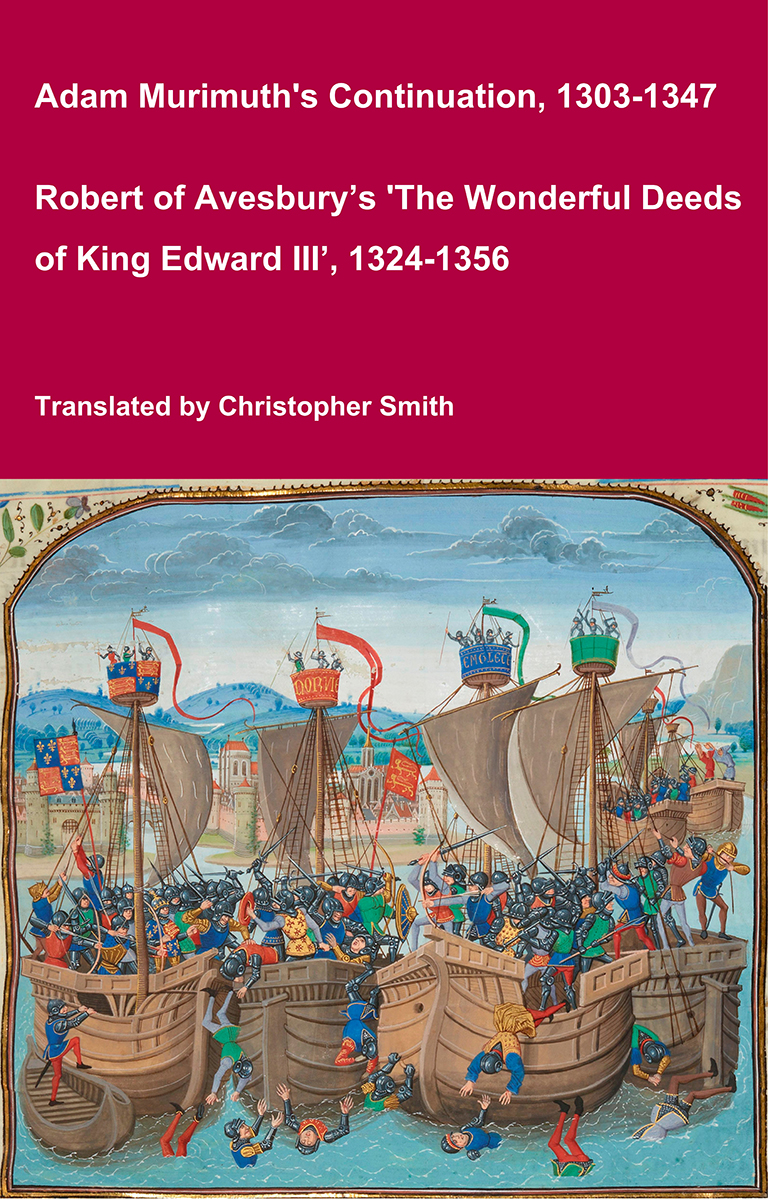 Adam Murimuth Continuation. Moreover, news came from Scotland, sent by the archbishop of York to the king of England's council at London, namely that, on the vigil of Saint Luke the Evangelist [18th October], David Bruce, with the whole power of Scotland, entered the parts of England nearest to him, having been stirred up by Philip of Valois, and believing also that all the military force had left England with King Edward. Advancing as far as a place called Neville's Cross, near Durham, within one mile, he proceeded with plundering, killing, and burning. To meet him came the archbishop of York, the lord Percy, and lord Ralph Neville, with all the forces they could then gather; and engaging together, they fought a fierce battle in a certain place near Durham, so that, by the grace of God, victory fell to the English, the Scots being slain and put to flight. In this battle were killed: the earl Patrick, the earl of Moray, the earl of Ross, the steward of Scotland, together with five thousand men-at-arms and seven thousand other common soldiers. In the rout were captured: David Bruce, who calls himself king of Scotland, the earl of Menteith, the earl of Strathearn, the earl of Fife, who was called the earl of Wigtown, another William Douglas, Sir William Menteith, Sir David of Cludesdale, and certain others, besides those killed in the flight. Of all these things letters were swiftly sent to the king by his council in London. Afterwards, before the feast of the Nativity of the Lord, the said prisoners were sent to London; but the lord David Bruce could not be sent at that time, because of two wounds he had in the head, having been struck by two arrows. But on the second day of January [1347] he was brought to London, and from Westminster through the middle of the city, in the sight of all the people, he was led to the Tower and lodged in the "Black Hall" of the said Tower under the custody of the constable, until it should be otherwise decided by the king and his council concerning him and the other prisoners.
Venerunt præterea nova de Scocia per archiepiscopum Eboracensem ad concilium regis Angliæ Londoniis destinata, videlicet quod, in vigilia sancti Lucæ evangelistæ, David le Bruys, cum tota potentia sua Scociæ, partes Angliæ sibi vicinas intravit, per Philippum de Valoys excitatus credens ctiam totam potentiam armatorum cum rege Edwardo Anglia exivisse, et usque ad locum qui dicitur Nevilles Crouche, prope Dunelmiam infra unum milliare, deprædando, occidendo et comburendo, pervenit. Cui obviaverunt archiepiscopus Eboracensis, dominus de Percy, dominus Radulphus de Neville, cum tota potentia quam ipsi tune poterant congregare; et congressi grave prœlium conserunt in quodam loco prope Dunelmiam, ita quod per Dei gratiam victoria exstitit Anglicorum, Scotis interfectis et in fugam conversis. In quo prœlio comes Patrik, comes Moraviæ, comes de Roos, senescallus Scociæ, interfecti fuerunt, una cum v. millibus armatorum et VIJ millibus popularium aliorum. In qua fuga capti fuerunt David le Bruys, qui se dicit regem Scociæ, comes de Mentyf, comes de Stradernes, comes de Fyf, qui dicebatur comes de Wygtone, item quidam alius Willelmus Duglas, dominus Willelmus Mentebray, dominus David de Cludesle, et quidam alii, præter occisos in fuga; de quibus omnibus missæ fuerunt literæ ad regem per concillum suum de Londoniis festinanter. Postea vero, ante festum Nativitatis Domini, misei fuerunt dicti captivi Londonias; sed dominus David le Bruys mitti non potuit, propter duas plagas quas habuit in capite, cum duabus sagittis percussus. Sed, IJ die Januarii, Londonias est adductus, et a Westmonasterio per medium civitatis ad turrim, vidente toto populo, adductus, et in nigra aula dictæ turris sub custodia constabularii hospitatus, quousque per dominum regem et conciliumsuum de ipso et de aliis captivis prædictis fuerit: aliter ordinatum.
Deeds of King Edward III by Robert of Avesbury. In the year of our Lord 1349, while a certain Genoese served as captain of the castle of Calais under the King of England, Sir Geoffroy de Charny, a knight and a native of Picardy, who was one of the principal counsellors of King Philip of Valois, plotted and conspired to seize the castle of Calais deceitfully and secretly since he could not take it by open assault. Having held a secret discussion with the said Genoese, Charny promised him many thousands of florins if he would agree and lend his effort to help carry out the scheme in secret. However, the Genoese, unwilling to betray the King of England, his lord, whose bread he ate and who placed great trust in him, wanted nonetheless to pocket the promised gold. So, speaking peacefully with Sir Geoffroy de Charny, he feigned agreement, cleverly pretending to go along with the plan. On the appointed day, namely on the morrow [2nd January 1350] of the Feast of the Circumcision of the Lord, the said Sir Geoffroy arrived before Calais with a large force of armed men. He paid a substantial portion of the promised gold to the Genoese. Then the Genoese, leaving his own son as a hostage with the French to guarantee their security, took the money and, accompanied by some men sent by Charny to scout whether the entry into the castle could be safely managed, returned to the castle. These scouts carefully inspected every part of the castle, repeatedly examining it with diligent scrutiny. They found nothing that seemed dangerous or suspicious and reported this back to Sir Geoffroy just as they had found it.
Dicto vero anno Domini millesimo CCCXLIX, quodam Genuensi sub rege Anglorum tunc exsistente capitaneo castri de Caleys, dominus Galfridus Charny, miles, Picardus natione, de consiliariis dicti domini Philippi de Valesio quasi principalis exsistens, machinans et conspirans dictum castrum subdole et furtive, cum palam non posset, ingredi et tenere, præhabita locutione secretiori cum dicto Genuensi, multa millia florenorum promisit eidem, si sibi consentire et ad præmissa clanculo facienda suam operosam solicitudinem dare vellet. Dictus vero Genuensis, nolens prodere regem Anglorum, dominum suum, cujus panes edebat, et qui de ipso plurimum confidebat, aurum tamen sibi promissum cupiens inbursare, cum eodem domino Galfrido pacifice loquens, in dolo suis suasionibus callidis adquievit. In statuto igitur die, videlicet in crastino Circumeisionis Domini, anno prædicto, præfatus dominus Galfridus, cum hominibus armorum et aliis armatis in multitudine numerosa, ante castrum de Caleys veniens, portionem auri dicto Genuensi promissi non modicam solvebat eidem. Tunc idem Genuensis, filio suo proprio in obsidem pro securitate Francorum penes ipsos dimisso, dictum aurum secum portans, cum quibusdam per dictum dominum Galfridum missis ad explorandum si accessus in dictum castrum tutus posset haberi, ad illud idem castrum reversus est. Exploratores vero sic missi singula loca dicti castri repetitis vicibus cum diligenti serutinio visitantes, nihil quod posset ipsis Francigenis nocere quomodolibet invenerunt; et, ad dictum dominum Galfridum redeuntes, sibi, prout invenerant, nunciarunt.
Engravings of Sepulchral Brasses Volume 1. Plate XIII. Sir Nicholas Dagworth, at Blickling [Map], 1401.
Blomefield's Norf. vi. 384. Gough's Sepulch. Monum. ii. 5: At the east end of the south aisle of Blickling Church, is a brass figure, armed cap-a-pie; under his head lie his helmet and crest, a griffin's head erased. About him are four shields; at the first corner, Ermine, on a fess Gules 3 Bezants, Dagworth: at the fourth, Gules, a fess between six martlets or, Rosale; 2 and 3, the same arms impaled. Round the slab was this inscription:
"Here lies Nicholas of Dagworth, knight, formerly lord of Blickling, who died on the [?] day of the month of January, in the year of our Lord 1401. May God be merciful to his soul. Amen."
"Hic jacet Nicholaus de Dagworth, miles, quondam dominus de Blickling, qui obiit die mensis Januarii, anno domini Millessimo cccc. primo, cujus anime propicietur Deus. Amen."
"In 1364, Sir Nicholas Dagworth, Knt. afterwards Lord of Blickling, was commander in Acquitaine; in 1373 he was employed by King Edward III. in a secret negotiation with John Fastolff and others, in France. In 1376 he was sent by the King and council into Ireland, to examine into Sir William de Windsor's carriage there: but, at the motion of Dame Alice Perers, he was stopped, she declaring him Sir William's enemy, and that it was unjust to appoint one enemy to judge another; but the next year he was sent with full commission to reform the state of that kingdom. He was in as great esteem of King Richard II. as he had always been with Edward IIL., for in 1380 he, Sir John Haukewood, and Walter Skirlawe, doctor of the decrees, and dean of St. Martin's le Grand, London, were sent into France to treat with the dukes and lords of Italy; and the same year, being one of the privy chamber to the King, he, with Bernard Vansedles, Simon de Burley the chamberlain, Robert Braybrook, licentiate in the laws, and Walter Skirlawe, had like powers to treat with the German princes; the next year, he and Skirlawe went as ambassadors to Pope Urban VI., and had power to treat with the King of Naples.
In 1384, he, John Baam and Sir John Haukewood, went ambassadors to the Pope, and to treat with Charles, King of Jerusalem and Sicily: and, notwithstanding his being so much in favour, in the 11th of Richard IJ. he was one of those impeached in parliament, and was imprisoned in Rochester castle in Kent; but being honourably discharged, was next year appointed a commissioner to treat with the French King, and with the Earl of Flanders; .in the 13th of Richard II. he was made one of the commissioners to take the oath of the King of Scotland, to the treaty then concluded, and afterwards demanded satisfaction of the Scots for infringing that treaty, and also the money for redemption of Robert Bruce.
He retired to his house at Blickling in Norfolk, and died without issue in January 1401.
[He appears to have made his will in December 1396, wherein, however, he ordered his body to be buried in the church of St. Bennett, near Paul's wharf, London. To Eleanor, his wife, who was the daughter of Walter, and sister and co-heir of Sir John Rosale, of Shropshire, he bequeathed one third part of his goods "to be quiet." (Testamenta Vetusta.) She was only twenty-six years old at his decease (Esch. 5 Hen.IV), and afterwards married John Mortimer, and was living in the 10th Hen. IV. Dugdale says of Sir Nicholas Dagworth that "with thirteen horse he fought with sixty French near to Flaveny; and by the means of certain chariots, which he made use of for his defence, (being placed in a circle whereunto he could enter at pleasure,) utterly vanquished them." Baronage, ii. 148. N.]
[In this brass appears the first approach towards pauldrons, in the overlapping epaulieres, which are considerably extended in front. The plates under the genouillieres occur likewise here, covering the upper edge of the greaves. See Meyrick's Armour, ii.92. The cord which attaches the camail to the bascinet is also covered, a protection rendered necessary, as it was so often hewn down by the cut of the sword, and this is probably the earliest instance. S. R. M.]
Nicholas Dagworth of Blickling: he was born to Nicholas Dagworth. Around 1395 he and Eleanor Rossall were married. On 2nd January 1402 he died without issue. His widow Eleanor Rossall sold her third of the Blickling, Norfolk estates to John Erpingham. Around 1409 married a second time John Mortimer.
After 2nd January 1402. St Andrew's Church, Blickling [Map]. Memorial brass to Nicholas Dagworth of Blickling.
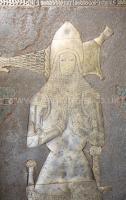
On 2nd January 1414 Cardinal Regnault de Chartres [aged 34] was elected Archbishop of Reims taking office on 16th July 1429, the day before he crowned Charles "Victorious" VII King France [aged 10] King of France.
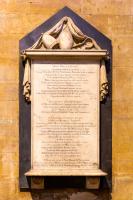
On 2nd January 1514 Bishop William Smyth [aged 54] died at the Bishop of Lincoln's Palace, Buckden [Map]. He was buried at Lincoln Cathedral [Map].

Letters and Papers Foreign and Domestic Henry VIII 1539. 2nd January 1539. Anne of Cleves [aged 23],
"The coming of the lady Anne's Grace from Dissildorf, in the land of Venberghe (von Berg?), to Calise."
Setting forth the stages between Düsseldorf and Antwerp, where she was met by the English merchants four miles outside the town, in 50 velvet coats with chains of gold, and received inside the town, with 80 torches burning in the daylight, and brought to the English lodging, where they kept open household one day for her and her train. Next day, the English merchants brought her on her way to Stekyn (the first stage on the way to Gravelines) and gave her a gift.
ii. The stages from Antwerp to Gravelines, where she was received by the captain with a shot of guns. Next morning, 11 Dec. 31 Henry VIII., she arrived within the English pale at Calais between 7 and 8 a.m., and was received by the lord Deputy, the lieutenant of the Castle, the Knight Porter, and the marshal of Calais, Sir George Carow, captain of Resbanke, and the captain of the Spears, well appointed with great horses, and with them the men of arms, in velvet coats and gold chains, and all the archers in the King's livery well appointed; "and so brought her towards Calais, a gentleman of arms of the King's and another of hers riding together." Within a mile of Calais she was received by the earl of Southampton, lord Admiral, with the lord Wm. Howard, Sir Fras. Brian, the lord Grey of Wilton, the lord Hastings, lord Clifford, lord Herbert, lord Tailbush, Sir Thos. Seymour, Sir Henry Knyvett, Mr. Gregory Cromwell, with "xxiiij" (qu. four score?) gentlemen in coats of satin damask and velvet, besides the said lords, who wore three collars of cloth of gold and purple velvet and chains of gold, and 200 yeomen, &c., in the King's colours, red and blue cloth. "Then the King's ships of (i.e. off) Newland as she came by them let 200 shots of guns," after which the town of Calais shot 300 pieces of ordnance. When she came to the Lantern Gate she stayed and viewed the King's ships, the Lion and the Sweepstake, decked with 100 banners of silk and gold, wherein were 200 master gunners and mariners and 31 trumpets, "and a double drum that was never seen in England before"; and so her Grace entered into Calais. At her entry, 150 pieces of ordnance let out of the said two ships made such a smoke that one of her train could not see another. "Where stood in order on both sides the streets, like a lane, with 500 soldiers in the King's livery of the retinue of Calais, and the mayor of Calais with his brethren, and the commons of Calais, and the merchants of the Staple, stood in like manner in array, and made a lane wherethrough she passed to her lodging." There the mayor and his brethren came to her and gave her 50 sovereigns of gold, and the mayor of the Staple, 60. Next morning "she had a gun shot, justing and all other royalty that could be devised in the King's garrison;" and kept open household there for the 15 days that she remained. On 27 Dec., St. John's Day, she took ship, and landed at the Downs, between 6 and 7 p.m., where she was met by the duke and duchess of Suffolk, who, with their train, accompanied her to Deal Castle. There she banquetted, and proceeded to Dover, where she tarried till Monday, and then set forth to Canterbury, where she was received by the Archbishop with other bishops and the gentlemen of Kent. On Tuesday she went to Sittingborne, and the "other" day, being New Year's Even, to Rochester, where she was received by the duke of Norfolk, accompanied by lord Dacres of the South, lord Mountjoy, the barons of the Exchequer, Sir Roger Towneshend, Sir Edw. Beningfield, Sir John Jermy, Sir Edm. Knyvett, Sir Edw. Wyndham, Sir Thos. Jermyn, Sir Jas. Bullyn, Sir Wm. Paston, Sir Fras. Lovill, Sir Th. Straunge, Sir John Clere, Sir Wm. Conysby, Mr. Ric. Southwell, Mr. Philip Calthrope, Mr. Robt. Townesend, H. Hubbert, Thos. Gibbon, Thos. Thursby, Erasmus Paston, Edm. Lumner, Thos. Tyndale, and Ralph Symons. There she remained New Year's Day; on which day the King, only with certain of his Privy Council, came and banquetted with her, and departed again to Greenwich. On Friday she removed to Dartford, and on Saturday, 3 Jan., she marched forwards to the Blackheath till she came to Shots hill (a misreading of Shoters hill), at the foot whereof was a very gorgeous tent or pavilion, "and there her Grace entered and shifted her, and tarried a certain space banquetting." Whereof hearing, the King marched through the park to meet her, in this manner:—First the trumpets blowing, then His Grace's chaplains, two and two in order, then the counsellors learned with other his counsel at large, as the Attorney, Solicitor, and Receiver of the Duchy of Lancaster, Dr. Peter, Mr. Peter Van, Sir John Williams, Sir Ric. Weston, Sir Wm. Essex, Sir John Dancy, Sir Brian Tuke, the Treasurer of the Tenths, Mr. Ric. Pollard, the Treasurer, Solicitor, Attorney, and Chancellor of the Augmentations, Mr. Wriothesley, Mr. Amnor (Almoner), and Comptroller of the Household. Then the King's privy chamber, the grooms first, and then Philip Hobby, Maurice Bercley, Th. Paston, Ric. Morison, Rauf Sadler, Ant. Knyvet, Peter Mutus, Ric. Crumwell, John Wellisborne, Thos. Culpeper, Ant. Deny, Sir Ant. Selenger, Sir Ric. Long, and Sir Thos. Henage. Then barons, bishops, earls, and dukes in their degrees, as the mayor of London and my lord Parr, the lords St. John and Hongerford, Mordaunt and Borough, Wentworth and Windsor, Tailbush and Sturton, Clynton and Ferrers, Morley and Delaware, Cliffe (qu. Clifford?) and Nevill, Bulbecke and Maltravers; the bishops of St. Asse and St. David's, Hereford and Lincoln, Durham and Winchester; the earl of Essex, the earls of Arundel and Surrey, of Hertford and Sussex, lord Russel, lord Sands and the earl of Oxford, the lord Crumwell and the lord Chancellor, the earl of Southampton and the duke Philip, the ambassadors of France and of the Emperor. Then the lord marquis Dorset bearing the sword before the King. The King. Next, the Master of the Horse leading the horse of estate, next the children of honour, and then the captain of the Guard, with the Guard following.
Whifflers appointed for order keeping: Sir Giles Stranguish, Sir Wm. Parr, Sir John Horsey, Sir Auth. Hongerford, Sir Wm. Barington, Sir John Brudge, Sir John Gifford, Sir Humph Foster, Sir John Sentlow, Sir John Villers, Sir Nic. Poyniz, Sir John Marcam, Edm. Littleton and Chas. Wingfeld.
Names of esquires and knights, but first, the 50 "gentlemen called Pensioners, which all stood from the park pale upon the heath to the meeting places (sic) after their degrees, &c., the King passing through, &c." Pensioners:—Sir Ric. Page, lieutenant, Sir Humph. Ratclif, Sir Osborn Ychingham, Sir John Nevill, Edw. Hastings, H. Stranguish, John Wingfeld, Edm. Brudges, John Chamborne, W. Long, Th. Morgan, W. Blount, W. Herbert, Ric. Breme, John Banester, Fras. Knollis, Henr. Jeringham, Gawen Carow, John Zowtche, Peter Carow, Edm. Skipwith, Palmer of Gloucester, Ric. Freston, Thos. Mantill, John Candish, Th. Ashley, W. Stafford, John Dramer, Th. Horne, W. Pelham, Giles Pole, Hen. Markeham, And. Flamoke, John Gresham, W. Calawey, T. Sacvile, Ric. Fremingham, Edw. Gruston, W. Skipwith, Edw. Vaughan, Ed. Bellingham, T. Bollis, T. Palmer, Rauf Vane, W. Ellerker, J. Portnare, Chr. Ludcote, Nic. Arnolds, Edm. Harvy, George Zoweche.
Knights:—Sirs Humph. Forster, John Gadge, Thos. Speyke, Hugh Poullet, Hen. Long, John Sent John, Th. Rotheram, Wm. Wyndisor, Robt. Dormer, Rauf Verney, T. Lonvile, Ant. Lee, John Nores, Th. Arundell, Ed. Willoughbie, T. Poynings, Giles Capell, Wm. Newenham, John Rainsford, T. Darcy, Clement Hurleston, Ed. Tame, John Seneclere, T. Toye, John Mordaunt, John Welsh, John Hurleston, Walter Denys, Hen. Parker, Griffith Doone, Philip Butler, Nich. Sterley, T. Tresham, Walter Stoner, T. Griffith, Robt. Kyrkham, John Byron, John Harcote, George Darcy, Ric. Padge, John Danet, Ric. Shurley, Wm. Ganinge, Arth. Hopton, Humph. Wingfield, Wm. Walgrave, Th. Parmeston, John Willoughbie, George Somerset, John Jernyngham, Thos. Lysle, Wm. Barcley, Peter Philpot, Wm. Gifford, Mich. Lister, Ant. Windisor, Edm. Gorge, Hen. Capell, John Newton, John Fulford, Walter Smith, Humph. Ferreis, John Russell, Edm. Walsingham, Edw. Brey, Percival Hert, Ric. Manering, T. Trenchard, Giles Alington, Robt. Payton, W. Gastoigme (sic), Wm. Fitzwilliam, W. Drewry, Th. Germyn, Th. Eliot, John Brown, John Hampden, John Rogers, W. Weste, Ri. Chameley, Fras. Dawtry, W. Fylding, Geo. Throgmerton, Humph. Browne.
Esquires:—Ant. Kyngston, Geo. Harper, Robt. Tyrwit, Leonard Rede, Robt. Drewry, T. Gifford, Rauf Lane, Edm. Knightley, Geo. Gifford, T. Edgare, Fras. Pigot, Robt. Cheynie, Edm. Fetiplace, T. Essex, W. Hide, Ric. Brudges, Alex. Humpton, Reynold Williams, Ed. Fabian, T. Vachell, Chr. Ashton, J. Yate, John Winchcombe [aged 50], Roger Sturton, J. Zowtche, Robt. Coker, Robt. Byngham, George Troublefeld, John Wentwurth, John Tyrell, John Brown, Edw. Grene, Robt. Mordant, J. Christynmas, Ant. Coke, J. Becwit, Fras. Clovil, Edw. Tyrell, Hen. Appleton, W. Ayelif, Humph. Tyrell, Guy Crafford, Ric. Higham, J. Pontis, Nic. Wekis, T. Tame, Robt. Wyttney, T. Whyttyngton, Jas. Clifford, George Baneham, Arth. Porter, Ric. Tracy, Rauf Norwood, John Prout, J. Newdigate, J. Denton, John Haryngton, J. Damester, J. Skynner, J. Morrel, J. Shelley, J. Bracket, J. More, T. Nevill, Robt. Cheseman, Ant. Catesby, Ric. Catisby, Ant. Cope, F. Brudnell, T. Cave, Leonard Chamberlain, T. Carter, T. Waneman, Humph. Ashfeld, Ed. Sapcots, Ant. Colley, Leonard Brown, Chr. More, T. Heron, Oliver Sent John, J. Sacvile, J. Palmer, J Covert, J. Tetcher, J. Parker, J. Harman, John Pollet, J. Kingsmill, J. Spring, J. Sands, Nic. Gainisford, Roger Bellingham, Robt. Oxinbridge, T. Ashbury, T. Darell, Ant. Pelham, Ant. Rouse, Robt. Crane, Lionel Talmach, Robt. Garnesh, Ric. Candish, T. Sands, Nic. Titchborne, Nic. Uppeton, Robt. Puttyngham, Ric. Pexsale, J. Stowell, J. Rodeney, W. Wroughton, T. Yorke, Ed. Montpeson, J. Erneley, Robt. Long, J. Boneham, J. Chabe, T. Aprice, J. Pie, W. Lucye, J. Gascoigne, W. Willington, Fowlke Grevill, J. Grevill, Ed. Conway, Raignold Digby, Robt. Acton, T. Acton, — Chawmond, Young Wigeston, Ant. Sowthwell, H. Wyngfeld, G. Morgan, young Ferres, young Selenger, Robt. Markeham, — Basset, — Johnson, and Robt. Throgmerton.
In a modern hand, pp. 11.
The History of William Marshal was commissioned by his son shortly after William’s death in 1219 to celebrate the Marshal’s remarkable life; it is an authentic, contemporary voice. The manuscript was discovered in 1861 by French historian Paul Meyer. Meyer published the manuscript in its original Anglo-French in 1891 in two books. This book is a line by line translation of the first of Meyer’s books; lines 1-10152. Book 1 of the History begins in 1139 and ends in 1194. It describes the events of the Anarchy, the role of William’s father John, John’s marriages, William’s childhood, his role as a hostage at the siege of Newbury, his injury and imprisonment in Poitou where he met Eleanor of Aquitaine and his life as a knight errant. It continues with the accusation against him of an improper relationship with Margaret, wife of Henry the Young King, his exile, and return, the death of Henry the Young King, the rebellion of Richard, the future King Richard I, war with France, the death of King Henry II, and the capture of King Richard, and the rebellion of John, the future King John. It ends with the release of King Richard and the death of John Marshal.
Available at Amazon in eBook and Paperback format.

Henry Machyn's Diary. 2nd January 1554. [The ij day of January the king of Spain's ambassadors landed at Tower wharf. During whose landing there was great shooting of the guns. The lord] Wylliam Haward dyd saff-gard them; and so rod to-gether, and in Fanchyrche stret my lord of Devonshire [aged 27] and dyvers odur mett them, and rod with them unto Durram Plasse, and ther they dyd a-lyght.
Note. Ibid. P. 50. The king of Spain's ambassadors. These were ambassadors from the emperor Charles [aged 53], father of Philip [aged 26], to conclude a treaty for the queen's [aged 37] marriage namely, the count d'Egmont, Charles count de Laing, Jehan de Montmorancy sieur de Corriers, Philip Negri, and Simon Renard: see Strype, Mem. iii. 58, and the marriage treaty in Rymer, vol. xv. p. 393. An extract from their Instructions may be seen in Burgon's Life of Gresham, i. 145.
On 2nd January 1572 John Donne was born.
Memorials of affairs of state in the reigns of Q Elizabeth and K James I Volume 2. The next Day the King plaid in the Presence, and as good or ill Luck seldom comes alone, the Bridegroom [aged 20], that threw for the King, had the good Fortune to win £1000 which he had for his Pains; the greatest part was lost by my Lord of Cranborne [aged 13].


Diary of Anne Clifford. 2nd January 1619. The 2-3-4-5th I sat up and had many ladies come to see me, and much other company, and so I passed the time.
My Lord [aged 29] went often to the Court abroad and on Twelfth Eve lost 400 pieces playing with the King.
In December 1644 Parliament decided to execute the Hothams, father and son, John Hotham 1st Baronet [aged 55] and John Hotham [aged 34].
On 1st January 1645 John Hotham was beheaded for treason by Parliamentarians at Tower Hill [Map]. His father was executed the next day.
On 2nd January 1645 John Hotham 1st Baronet was beheaded for treason by Parliamentarians; his son having been executed the previous day. His grandson John [aged 12] succeeded 2nd Baronet Hotham of Scorborough in Yorkshire.
Diary of Isabella Twysden 1645. 2nd January 1645. The 2 of Janu Sr Jo: hothum [aged 55] (father to Mr hothum) was beheaded on tower hill [Map].
Between September 1651 and November 1651 a rebellion against the Royalist leader of the Isle of Man James Stanley 7th Earl of Derby [aged 44] who had been captured at the Battle of Worcester. His wife Charlotte Thouars Countess Derby [aged 51] resisted the rebels with the aid of Philip Musgrave 2nd Baronet [aged 44] and Illiam Dhone (her husband's Receiver General). The Countess eventually surrendered after hearing of her husband's death. Illiam Dhone changed sides and worked with Parliamentarian soldiers to achieve a bloodless coup. Illiam Dhone was eventually arrested by the Earl's son Charles Stanley 8th Earl of Derby [aged 23] and executed by firing squad at Hango Hill on 2nd January 1663.


On 24th December 1660 Mary Stewart Princess Orange [aged 29] died of smallpox. Her brother Henry Stewart 1st Duke Gloucester had also died of smallpox a few weeks before; she was buried in the same vault in the King Henry VII Chapel, Westminster Abbey [Map] on 2nd January 1661.


In early 1661 King Charles II of England Scotland and Ireland [aged 30] rewarded of further tranche of those who supported his Restoration...
On 2nd January 1661 Henry Bedingfield 1st Baronet [aged 46] was created 1st Baronet Bedingfield of Oxburgh in Norfolk.
On 10th January 1661 Andrew Rutherford 1st Earl Teviot was created 1st Baron Rutherford with special remainder to his heirs and assignees whatsoever, and that under what provisions, restrictions, and conditions the said Lord Rutherford should think fit.
On 23rd January 1661 John Cole 1st Baronet [aged 41] was created Baronet Cole of Newland.
On 23rd February 1661 Edward Smythe 1st Baronet [aged 41] was created 1st Baronet Smythe.
On 4th March 1661 Compton Reade 1st Baronet [aged 36] was created 1st Baronet Reade of Barton in Berkshire. Mary Cornwall Lady Reade [aged 31] by marriage Lady Reade of Barton in Berkshire.
On 10th March 1661 Brian Broughton 1st Baronet [aged 42] was created 1st Baronet Broughton of Broughton in Staffordshire.
On 20th March 1661 Thomas Rich 1st Baronet [aged 60] was created 1st Baronet Rich of Sonning in Berkshire.
On 29th March 1661 Robert Cholmondeley 1st Viscount Cholmondeley [aged 21] was created 1st Viscount Cholmondeley of Kells in County Meath.
On 30th March 1661 James Butler 1st Duke Ormonde [aged 50] was created 1st Duke Ormonde by King Charles II of England Scotland and Ireland. Elizabeth Preston Duchess Ormonde [aged 45] by marriage Duchess Ormonde.
On 30th March 1661 John Fettiplace 1st Baronet [aged 35] was created 1st Baronet Fettiplace of Childrey in Berkshire. Anne Wenman Lady Fettiplace [aged 31] by marriage Lady Fettiplace of Childrey in Berkshire.


John Evelyn's Diary. 2nd January 1661. The Queen-Mother [aged 51], with the Princess Henrietta [aged 16], began her journey to Portsmouth, Hampshire [Map], in order to her return into France.


Samuel Pepys' Diary. 2nd January 1661. This day I lent Sir W. Batten [aged 60] and Captn. Rider my chine of beef for to serve at dinner tomorrow at Trinity House, Deptford [Map], the Duke of Albemarle [aged 52] being to be there and all the rest of the Brethren, it being a great day for the reading over of their new Charter, which the King hath newly given them.


Samuel Pepys' Diary. 2nd January 1662. An invitation sent us before we were up from my Lady Sandwich's [aged 37], to come and dine with her: so at the office all the morning, and at noon thither to dinner, where there was a good and great dinner, and the company, Mr. William Montagu [aged 44] and his Lady (but she seemed so far from the beauty that I expected her from my Lady's talk to be, that it put me into an ill humour all the day, to find my expectation so lost), Mr. Rurttball and Townsend and their wives.
On 2nd January 1667 Marie Thérèse Bourbon was born to Louis "Sun King" XIV King France [aged 28] and Maria Theresa of Spain Queen Consort France [aged 28]. Coefficient of inbreeding 17.28%. She died aged five in 1672.


Samuel Pepys' Diary. 2nd January 1667. After them, I, with several people, among others Mr. George Montagu [aged 44], whom I have not seen long, he mighty kind. He tells me all is like to go ill, the King [aged 36] displeasing the House of Commons by evading their Bill for examining Accounts, and putting it into a Commission, though therein he hath left out Coventry [aged 39] and I and named all the rest the Parliament named, and all country Lords, not one Courtier: this do not please them. He tells me he finds the enmity almost over for my Lord Sandwich [aged 41], and that now all is upon the Vice-Chamberlain [aged 57], who bears up well and stands upon his vindication, which he seems to like well, and the others do construe well also.


Samuel Pepys' Diary. 2nd January 1668. Up, and with Sir J. Minnes [aged 68] by coach to White Hall, and there attended the King [aged 37] and the Duke of York [aged 34] in the Duke of York's lodgings, with the rest of the Officers and many of the Commanders of the fleete, and some of our master shipwrights, to discourse the business of having the topmasts of ships made to lower abaft of the mainmast; a business I understand not, and so can give no good account; but I do see that by how much greater the Council, and the number of Counsellors is, the more confused the issue is of their councils; so that little was said to the purpose regularly, and but little use was made of it, they coming to a very broken conclusion upon it, to make trial in a ship or two. From this they fell to other talk about the fleete's fighting this late war, and how the King's ships have been shattered; though the King said that the world would not have it that about ten or twenty ships in any fight did do any service, and that this hath been told so to him himself, by ignorant people. The Prince [aged 48], who was there, was mightily surprised at it, and seemed troubled: but the King told him that it was only discourse of the world. But Mr. Wren [aged 39] whispered me in the eare, and said that the Duke of Albemarle [aged 59] had put it into his Narrative for the House, that not above twenty-five ships fought in the engagement wherein he was, but that he was advised to leave it out; but this he did write from sea, I am sure, or words to that effect: and did displease many commanders, among others, Captain Batts, who the Duke of York said was a very stout man, all the world knew; and that another was brought into his ship that had been turned out of his place when he was a boatswain, not long before, for being a drunkard. This the Prince took notice of, and would have been angry, I think, but they let their discourse fall: but the Duke of York was earnest in it. And the Prince said to me, standing by me, "God damn me, if they will turn out every man that will be drunk, they must turn out all the commanders in the fleete. What is the matter if he be drunk, so when he comes to fight he do his work? At least, let him be punished for his drunkenness, and not put out of his command presently". This he spoke, very much concerned for this idle fellow, one Greene. After this the King began to tell stories of the cowardice of the Spaniards in Flanders, when he was there, at the siege of Mardike and Dunkirke; which was very pretty, though he tells them but meanly.

On 2nd January 1668 Edward Conway 1st Earl Conway [aged 45] was elected Fellow of the Royal Society.
Abbot John Whethamstede’s Chronicle of the Abbey of St Albans
Abbot John Whethamstede's Register aka Chronicle of his second term at the Abbey of St Albans, 1451-1461, is a remarkable text that describes his first-hand experience of the beginning of the Wars of the Roses including the First and Second Battles of St Albans, 1455 and 1461, respectively, their cause, and their consequences, not least on the Abbey itself. His text also includes Loveday, Blore Heath, Northampton, the Act of Accord, Wakefield, and Towton, and ends with the Coronation of King Edward IV. In addition to the events of the Wars of the Roses, Abbot John, or his scribes who wrote the Chronicle, include details in the life of the Abbey such as charters, letters, land exchanges, visits by legates, and disputes, which provide a rich insight into the day-to-day life of the Abbey, and the challenges faced by its Abbot.
Available at Amazon in eBook and Paperback format.
On 2nd January 1704 Frederick William I Duke Mecklenburg-Schwerin [aged 28] and Sophie Charlotte Hesse-Kassel Duchess Mecklenburg-Schwerin [aged 25] were married. She by marriage Duchess Mecklenburg Schwerin. She the daughter of Charles I Landgrave Hesse-Kassel [aged 49] and Maria Amalia of Courland Landgravine Hesse-Kassel [aged 50]. They were fourth cousins.
On 2nd January 1717 Edward Seymour 9th Duke of Somerset was born to Edward Seymour 8th Duke of Somerset [aged 21] and Mary Webb Duchess Somerset [aged 20].
On 2nd January 1721 John Manners Marquess of Granby was born to John Manners 3rd Duke Rutland [aged 24] and Bridget Sutton Duchess Rutland [aged 21]. He married 3rd September 1750 his fifth cousin Frances Seymour, daughter of Charles Seymour 6th Duke of Somerset and Charlotte Finch Duchess Somerset, and had issue.


On 2nd January 1723 Francis Josias Saxe Coburg Saalfeld Duke Saxe Coburg Saalfeld [aged 25] and Duchess Anna Sophie Of Saxe-Coburg-Saalfeld [aged 22] were married. She by marriage Duchess Saxe Coburg Saalfeld. He the son of John Ernest Saxe Coburg Saalfeld IV Duke Saxe Coburg Saalfeld [aged 64] and Charlotte Johanna Waldeck Wildungen Duchess Saxe Coburg Saalfeld. They were first cousin once removed.
On 2nd January 1740 Elizabeth "Lady Betty" Hastings was buried at All Saints Church, Ledsham [Map]. Marble monument by Peter Scheemakers [aged 49] with statues of her half-sisters Anna Hastings and Frances Hastings either side representing Piety and Prudence.
Anna Hastings: she was born to Theophilus Hastings 7th Earl Huntingdon and Mary Frances Fowler Countess Huntingdon. On 4th July 1750 Anna Hastings died.
Frances Hastings: she was born to Theophilus Hastings 7th Earl Huntingdon and Mary Frances Fowler Countess Huntingdon. On 10th February 1750 Frances Hastings died.


On 2nd January 1755 Ludwig Karl Frederick Saxe Coburg Gotha was born to Ernest Frederick Saxe Coburg Saalfeld Duke Saxe Coburg Saalfeld [aged 30] and Sophia Antonia Brunswick-Wolfenbüttel Duchess Saxe Coburg Saalfeld [aged 30] at Coburg.

On 2nd January 1766 Henry Somerset 5th Duke Beaufort [aged 21] and Elizabeth Boscawen Duchess Beaufort [aged 18] were married. She by marriage Duchess Beaufort. He the son of Charles Noel Somerset 4th Duke Beaufort and Elizabeth Berkeley Duchess Beaufort [aged 53]. They were fifth cousin once removed.
On 2nd January 1769 Brownlow Bertie 5th Duke Ancaster and Kesteven [aged 39] and Mary Anne Layard [aged 36] were married. He the son of Peregrine Bertie 2nd Duke Ancaster and Kesteven and Jane Brownlow Duchess Ancaster and Kesteven.

On 2nd January 1772 William Fitzherbert [aged 60] committed suicide due to pecuniary troubles. Memorial at St Mary's Church, Tissington [Map] where he was buried.
On 2nd January 1784 Ernest Saxe Coburg Gotha I Duke Saxe Coburg Gotha was born to Francis Saxe Coburg Gotha I Duke Saxe Coburg Gotha [aged 33] and Augusta Reuss Duchess Saxe Coburg Gotha [aged 26]. He married (1) 3rd July 1817 his second cousin once removed Duchess Louise Dorothea of Saxe Coburg Altenburg, daughter of Duke Augustus of Saxe Coburg Altenburg and Louise Charlotte Mecklenburg-Schwerin, and had issue (2) 23rd December 1832 his niece Marie Württemberg Duchess Saxe Coburg Gotha, daughter of Alexander Württemberg Duke Württemberg and Antoinette Ernestine Amalie Saxe Coburg Gotha Duchess Württemberg.


Adam Murimuth's Continuation and Robert of Avesbury’s 'The Wonderful Deeds of King Edward III'
This volume brings together two of the most important contemporary chronicles for the reign of Edward III and the opening phases of the Hundred Years’ War. Written in Latin by English clerical observers, these texts provide a vivid and authoritative window into the political, diplomatic, and military history of fourteenth-century England and its continental ambitions. Adam Murimuth Continuatio's Chronicarum continues an earlier chronicle into the mid-fourteenth century, offering concise but valuable notices on royal policy, foreign relations, and ecclesiastical affairs. Its annalistic structure makes it especially useful for establishing chronology and tracing the development of events year by year. Complementing it, Robert of Avesbury’s De gestis mirabilibus regis Edwardi tertii is a rich documentary chronicle preserving letters, treaties, and official records alongside narrative passages. It is an indispensable source for understanding Edward III’s claim to the French crown, the conduct of war, and the mechanisms of medieval diplomacy. Together, these works offer scholars, students, and enthusiasts a reliable and unembellished account of a transformative period in English and European history. Essential for anyone interested in medieval chronicles, the Hundred Years’ War, or the reign of Edward III.
Available at Amazon in eBook and Paperback format.
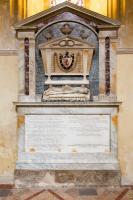
On 2nd January 1789 Charles Wolfram Cornwall [aged 53] died. Memorial in the Church of the Holy Cross, Winchester [Map] sculpted by John Francis Moore [aged 44].
Charles Wolfram Cornwall: On 15th June 1735 he was born. In 1789 he was appointed Speaker of the House of Commons which position he held until his death in 1789.

On 2nd January 1792 Edward Seymour 9th Duke of Somerset [aged 75] died. His brother Webb [aged 73] succeeded 10th Duke Somerset, 8th Baronet Seymour of Berry Pomeroy.
On 2nd January 1798 George Henry Montagu Scott was born to Charles Scott 4th Duke Buccleuch 6th Duke Queensberry [aged 25] and Harriet Katherine Townshend Duchess Buccleuch Duchess Queensbury [aged 24]. Coefficient of inbreeding 1.60%. He died aged ten in 1808.
Four Years' Service in India. [2nd January 1849] The enemy kept up a steady fire all night, from the fort, and our mortar batteries continued sending a few shells. They all came over us as they took their flight into the fort. The only thing remarkable during the night, was one of our patrols firing into the other, in mistake for the enemy. One man was killed, and one wounded. Our loss altogether, in taking the place, was 360, killed and wounded. As daylight broke, we could see the breach at the Delhi gate, which we had stormed, and it was well examined. No blame could be attached to the engineer officer for reporting it practicable, for, from the place where he stood to make his observations, it did look so. The distance between him and the wall was at least 400 yards, and he could not see that the ground near the wall fell into a regular trench, ten or twelve feet deep in the centre, a small mud wall running along the top, which parted the road and the ditch. This was about three or four feet high; so that while our batteries had been playing at the bottom of the wall as they supposed, they had been aiming at a part not more than half-way down ; and at the distance the batteries were away it did look as if the ground were level. The left breach was a very good one. The ground went with a gradual slope up to it, and a whole company could enter in in line. The discontent was very great in my brigade, for we ought to have stormed the other breach. Our artillery had made it, and the Bombay artillery had been at this.
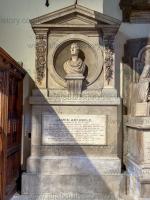
After 2nd January 1849. Monument to James Archbold [deceased] at the Cathedral Church St Nicholas, Newcastle upon Tyne [Map] commissioned by his sister Jane Archbold.
James Archbold: In 1781 he was born. In 1840 James Archbold was elected High Sheriff of Newcastle upon Tyne. In 1846 James Archbold was elected Mayor of Newcastle upon Tyne. On 2nd January 1849 he died. He was buried at the churchyard of St Andrew's Church, Newcastle upon Tyne [Map].
On 2nd January 1861 Frederick William IV King Prussia [aged 65] died. His brother William [aged 63] succeeded I King Prussia.
Letters of Dante Gabriel Rossetti 1863. 2nd January 1863. Friday. 16 Cheyne Walk, Chelsea.
My dear Rose [aged 43]
I have asked Whistler to dinner Thursday next at 6. Will you meet him?
Your
D G Rossetti [aged 34]
Next Wednesday will do well for the Deed of Partnership


On 2nd January 1899 Algernon George Percy 6th Duke Northumberland [aged 88] died. He was buried at Northumberland Vault, Crypt, Westminster Abbey. His son Henry [aged 52] succeeded 7th Duke Northumberland, 4th Earl Beverley, 10th Baronet Smithson of Stanwick in Yorkshire. Edith Campbell Duchess Northumberland [aged 49] by marriage Duchess Northumberland.
On 2nd January 1920 Andrew Cavendish 11th Duke Devonshire was born to Edward William Spencer Cavendish 10th Duke Devonshire [aged 24] and Mary Alice Gascoyne-Cecil Duchess Devonshire [aged 24]. He married 19th April 1941 Deborah Vivien Mitford Duchess Devonshire, daughter of David Freeman-Mitford 2nd Baron Redesdale and Sydney Bowles Baroness Redesdale, and had issue.
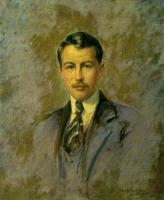
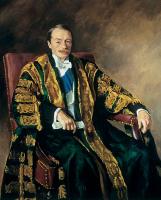
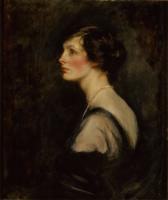
In 1921 Charles Richard John Spencer-Churchill 9th Duke of Marlborough [aged 49] and Gladys Marie Deacon Duchess of Marlborough [aged 39] were married; she had previoiusly been his mistress. She by marriage Duchess Marlborough. He the son of George Charles Spencer-Churchill 8th Duke of Marlborough and Albertha Frances Anne Hamilton Duchess of Marlborough [aged 74].


On 2nd January 1572 John Donne was born.
On 2nd January 1602 Thomas Twisden 1st Baronet was born to William Twysden 1st Baronet [aged 36] and Anne Finch Lady Twysden [aged 27]. He married in or before 12th October 1640 Jane Tomlinson Lady Twysden and had issue.
Adam Murimuth's Continuation and Robert of Avesbury’s 'The Wonderful Deeds of King Edward III'
This volume brings together two of the most important contemporary chronicles for the reign of Edward III and the opening phases of the Hundred Years’ War. Written in Latin by English clerical observers, these texts provide a vivid and authoritative window into the political, diplomatic, and military history of fourteenth-century England and its continental ambitions. Adam Murimuth Continuatio's Chronicarum continues an earlier chronicle into the mid-fourteenth century, offering concise but valuable notices on royal policy, foreign relations, and ecclesiastical affairs. Its annalistic structure makes it especially useful for establishing chronology and tracing the development of events year by year. Complementing it, Robert of Avesbury’s De gestis mirabilibus regis Edwardi tertii is a rich documentary chronicle preserving letters, treaties, and official records alongside narrative passages. It is an indispensable source for understanding Edward III’s claim to the French crown, the conduct of war, and the mechanisms of medieval diplomacy. Together, these works offer scholars, students, and enthusiasts a reliable and unembellished account of a transformative period in English and European history. Essential for anyone interested in medieval chronicles, the Hundred Years’ War, or the reign of Edward III.
Available at Amazon in eBook and Paperback format.

On 2nd January 1652 Gilbert Heathcote 1st Baronet was born to Gilbert Heathcote and Ann Dickens [aged 22] at Chesterfield, Derbyshire [Map].
On 2nd January 1667 Marie Thérèse Bourbon was born to Louis "Sun King" XIV King France [aged 28] and Maria Theresa of Spain Queen Consort France [aged 28]. Coefficient of inbreeding 17.28%. She died aged five in 1672.
On 2nd January 1688 John Chichester 4th Baronet was born to Arthur Chichester 3rd Baronet [aged 29] and Elizabeth Drewe. He married (1) before 1718 Anne Leigh and had issue (2) 1733 Frances Quicke.
On 2nd January 1695 Robert Salusbury Cotton 3rd Baronet was born to Thomas Cotton 2nd Baronet [aged 23] and Philadelphia Lynch Lady Cotton [aged 19]. He married before 16th August 1745 Elizabeth Tollemache, daughter of Lionel Tollemache 3rd Earl Dysart and Grace Wilbraham Countess Dysart.

On 2nd January 1700 Fitzroy Henry Lee was born to Edward Lee 1st Earl Lichfield [aged 36] and Charlotte Fitzroy Countess Lichfield [aged 35]. He a grandson of King Charles II of England Scotland and Ireland.
On 2nd January 1703 George Cholmondeley 3rd Earl Cholmondeley was born to George Cholmondeley 2nd Earl Cholmondeley [aged 37] and Elisabeth van Ruytenburgh Baroness Newborough and Newburgh [aged 23]. He married 14th September 1723 Mary Walpole, daughter of Robert Walpole 1st Earl Orford, and had issue.
On 2nd January 1717 Edward Seymour 9th Duke of Somerset was born to Edward Seymour 8th Duke of Somerset [aged 21] and Mary Webb Duchess Somerset [aged 20].
On 2nd January 1721 John Manners Marquess of Granby was born to John Manners 3rd Duke Rutland [aged 24] and Bridget Sutton Duchess Rutland [aged 21]. He married 3rd September 1750 his fifth cousin Frances Seymour, daughter of Charles Seymour 6th Duke of Somerset and Charlotte Finch Duchess Somerset, and had issue.
On 2nd January 1722 Charlotte Elizabeth Abdy was born to William Abdy 4th Baronet [aged 32]. She married 11th April 1752 Thomas Rutherforth and had issue.
On 2nd January 1736 Raby Vane was born to Henry Vane 1st Earl Darlington [aged 31] and Grace Fitzroy Countess Darlington [aged 38]. He a great grandson of King Charles II of England Scotland and Ireland.
On 2nd January 1755 Ludwig Karl Frederick Saxe Coburg Gotha was born to Ernest Frederick Saxe Coburg Saalfeld Duke Saxe Coburg Saalfeld [aged 30] and Sophia Antonia Brunswick-Wolfenbüttel Duchess Saxe Coburg Saalfeld [aged 30] at Coburg.
Henrici Quinti, Angliæ Regis, Gesta, is a first-hand account of the Agincourt Campaign, and subsequent events to his death in 1422. The author of the first part was a Chaplain in King Henry's retinue who was present from King Henry's departure at Southampton in 1415, at the siege of Harfleur, the battle of Agincourt, and the celebrations on King Henry's return to London. The second part, by another writer, relates the events that took place including the negotiations at Troye, Henry's marriage and his death in 1422.
Available at Amazon in eBook and Paperback format.
On 2nd January 1760 Charles Long 1st Baron Farnborough was born.

On 2nd January 1775 Charles Manners aka Tollemache was born to John Manners [aged 44] and Louisa Tollemache 7th Countess Dysart [aged 29].
On 2nd January 1775 Henry Tufton 11th Earl of Thanet was born to Sackville Tufton 8th Earl of Thanet [aged 42] and Mary Sackville Countess Thanet [aged 28].
On 2nd January 1777 Richard Charles Blunt was born to Charles William Blunt 3rd Baronet [aged 46] and Elizabeth Peers Lady Blunt.

On 2nd January 1780 Berkeley Thomas Paget was born to Henry Bayly-Paget 1st Earl Uxbridge [aged 35] and Jane Champagné Countess Uxbridge [aged 38]. He married before 1809 Sophia Askell Bucknall and had issue.
On 2nd January 1784 Ernest Saxe Coburg Gotha I Duke Saxe Coburg Gotha was born to Francis Saxe Coburg Gotha I Duke Saxe Coburg Gotha [aged 33] and Augusta Reuss Duchess Saxe Coburg Gotha [aged 26]. He married (1) 3rd July 1817 his second cousin once removed Duchess Louise Dorothea of Saxe Coburg Altenburg, daughter of Duke Augustus of Saxe Coburg Altenburg and Louise Charlotte Mecklenburg-Schwerin, and had issue (2) 23rd December 1832 his niece Marie Württemberg Duchess Saxe Coburg Gotha, daughter of Alexander Württemberg Duke Württemberg and Antoinette Ernestine Amalie Saxe Coburg Gotha Duchess Württemberg.

On 2nd January 1790 Spencer Compton 2nd Marquess Northampton was born to Charles Compton 1st Marquess Northampton [aged 29]. He married 24th June 1815 Margaret Douglas-Maclean-Clephane Marchioness Northampton and had issue.
On 2nd January 1798 George Henry Montagu Scott was born to Charles Scott 4th Duke Buccleuch 6th Duke Queensberry [aged 25] and Harriet Katherine Townshend Duchess Buccleuch Duchess Queensbury [aged 24]. Coefficient of inbreeding 1.60%. He died aged ten in 1808.
On 2nd January 1818 Andrew Agnew 8th Baronet was born to Andrew Agnew 7th Baronet [aged 24]. He married 20th August 1846 Mary Arabella Louisa Noel, daughter of Charles Noel 1st Earl Gainsborough and Arabella Hamlyn-Williams, and had issue.
On 2nd January 1821 Edward Kerrison 2nd Baronet was born to Edward Kerrison 1st Baronet [aged 44] and Mary Martha Ellice at Wick House, Brighton. He married 23rd July 1844 Caroline Margaret Fox-Strangways Lady Kerrison, daughter of Henry Fox-Strangways 3rd Earl of Ilchester and Caroline Leonora Murray Countess Ilchester.
On 2nd January 1825 Charles Parry Hobhouse 3rd Baronet was born to Henry William Hobhouse [aged 33]. He married (1) 15th January 1855 Edith Lucy Turton, daughter of Thomas Edward Michell Turton 2nd Baronet, and had issue (2) 9th September 1868 Anna Maria Sawers Lady Hobhouse and had issue.
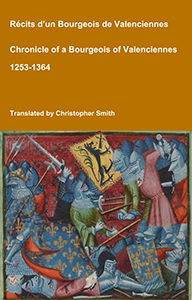
Chronicle of a Bourgeois of Valenciennes
Récits d’un bourgeois de Valenciennes aka The Chronicle of a Bourgeois of Valenciennes is a vivid 14th-century vernacular chronicle written by an anonymous urban chronicler from Valenciennes in the County of Hainaut. It survives in a manuscript that describes local and regional history from about 1253 to 1366, blending chronology, narrative episodes, and eyewitness-style accounts of political, military, and social events in medieval France, Flanders, and the Low Countries. The work begins with a chronological framework of events affecting Valenciennes and its region under rulers such as King Philip VI of France and the shifting allegiances of local nobility. It includes accounts of conflicts, sieges, diplomatic manoeuvres, and the impact of broader struggles like the Hundred Years’ War on urban life in Hainaut. Written from the perspective of a burgher (bourgeois) rather than a monastery or royal court, the chronicle offers a rare lay viewpoint on high politics and warfare, reflecting how merchants, townspeople, and civic institutions experienced the turbulence of the 13th and 14th centuries. Its narrative style combines straightforward reporting of events with moral and civic observations, making it a valuable source for readers interested in medieval urban society, regional politics, and the lived experience of war and governance in pre-modern Europe.
Available at Amazon in eBook and Paperback format.

On 2nd January 1828 Arabella Fermor Lady Hesketh was born to Thomas Fermor 4th Earl Pomfret [aged 57] and Amabel Borough [aged 28]. She married 1846 Thomas Fermor-Hesketh 5th Baronet, son of Thomas Hesketh 4th Baronet and Annette Maria Bomford Lady Hesketh, and had issue.
On 2nd January 1830 Charles Harbord 5th Baron Suffield was born to Edward Harbord 3rd Baron Suffield [aged 48] and Emily Harriey Shirley Baroness Suffield. He married 4th May 1854 Cecilia Annetta Baring Baroness Suffield and had issue.

On 2nd January 1831 Wroth Acland Lethbridge 4th Baronet was born to John Hesketh Lethbridge 3rd Baronet [aged 33] and Julia Hoare.
On 2nd January 1853 Mathew Amcotts Wilson 3rd Baronet was born to Mathew Wharton Wilson 2nd Baronet [aged 26].
On 2nd January 1885 Cuthbert Patrick Blake 6th Baronet was born to Patrick James Graham Blake 5th Baronet [aged 23]. He married 23rd July 1916 Florence Wilhelmina Lidiard "Kitty" Apps Lady Blake.

On 2nd January 1894 Vera Edyth Griffith-Boscawen Lady Boughton was born.

On 2nd January 1908 Helen Pleydell-Bouverie was born to Jacob Pleydell-Bouverie 6th Earl Radnor [aged 39] and Julian Eleanor Adelaide Balfour. She married 22nd July 1931 her half fifth cousin once removed David John Smith, son of Frederick Smith 2nd Viscount Hambleden and Esther Georgiana Caroline Gore Viscountess Hambleden.
On 2nd January 1909 Major Thomas Freeman-Mitford was born to David Freeman-Mitford 2nd Baron Redesdale [aged 30] and Sydney Bowles Baroness Redesdale [aged 29] at 1 Graham Street, London.
On 2nd January 1917 John Assheton Eardley-Wilmot 5th Baronet was born to Commander Frederick Neville Eardley-Wilmot [aged 31].
On 2nd January 1920 Andrew Cavendish 11th Duke Devonshire was born to Edward William Spencer Cavendish 10th Duke Devonshire [aged 24] and Mary Alice Gascoyne-Cecil Duchess Devonshire [aged 24]. He married 19th April 1941 Deborah Vivien Mitford Duchess Devonshire, daughter of David Freeman-Mitford 2nd Baron Redesdale and Sydney Bowles Baroness Redesdale, and had issue.
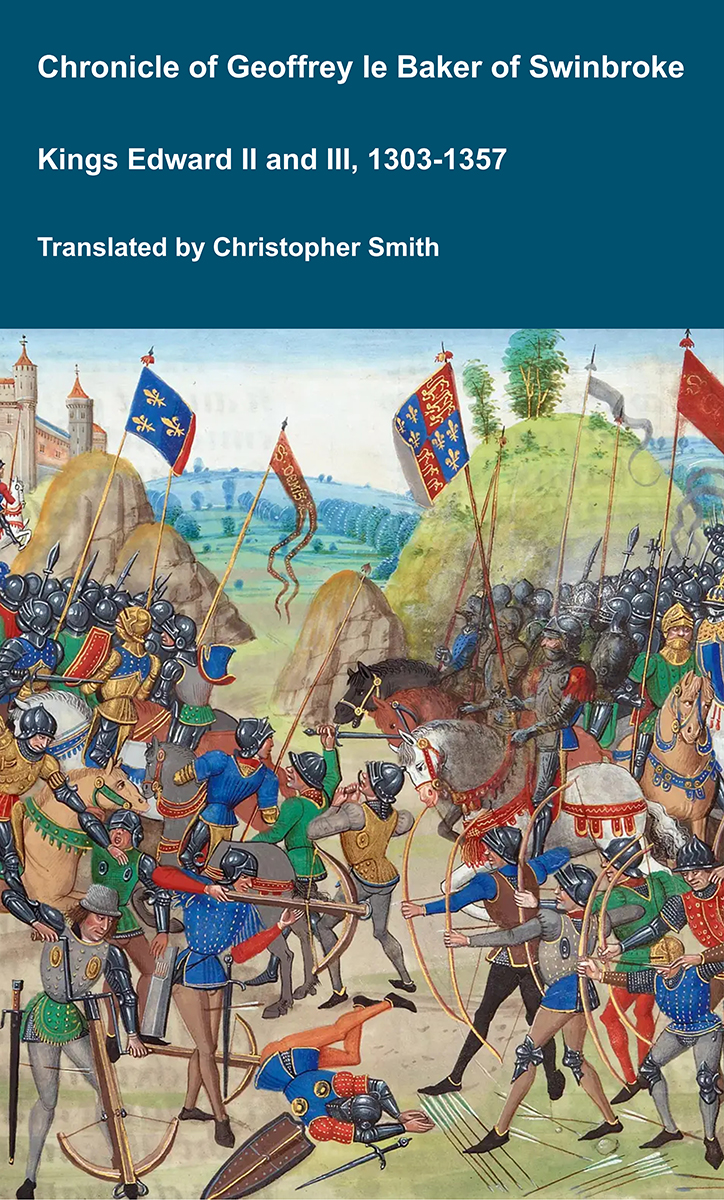
Chronicle of Geoffrey le Baker of Swinbroke
Baker was a secular clerk from Swinbroke, now Swinbrook, an Oxfordshire village two miles east of Burford. His Chronicle describes the events of the period 1303-1356: Gaveston, Bannockburn, Boroughbridge, the murder of King Edward II, the Scottish Wars, Sluys, Crécy, the Black Death, Winchelsea and Poitiers. To quote Herbert Bruce 'it possesses a vigorous and characteristic style, and its value for particular events between 1303 and 1356 has been recognised by its editor and by subsequent writers'. The book provides remarkable detail about the events it describes. Baker's text has been augmented with hundreds of notes, including extracts from other contemporary chronicles, such as the Annales Londonienses, Annales Paulini, Murimuth, Lanercost, Avesbury, Guisborough and Froissart to enrich the reader's understanding. The translation takes as its source the 'Chronicon Galfridi le Baker de Swynebroke' published in 1889, edited by Edward Maunde Thompson.
Available at Amazon in eBook and Paperback format.
On 2nd January 1941 Peregrine Nicholas Eliot 10th Earl of St Germans was born to Nicholas Eliot 9th Earl of St Germans [aged 26] and Helen Mary Villiers [aged 25]. He married 9th October 1964 Jacquetta Lamspon Countess St Germans, daughter of Miles Lampson 1st Baron Killearn, and had issue.
On 2nd January 1640 John Reade 1st Baronet [aged 24] and Susanna Style Lady Reade were married.
On 2nd January 1655 Thomas Leventhorpe 4th Baronet [aged 19] and Mary Bedell [aged 20] were married. They were fifth cousins.
On 2nd January 1694 James Scott [aged 19] and Henrietta Hyde Countess Dalkeith [aged 17] were married. She by marriage Countess Dalkeith. She the daughter of Lawrence Hyde 1st Earl Rochester [aged 51] and Henrietta Boyle Countess Rochester. He the son of James Scott 1st Duke Monmouth 1st Duke Buccleuch and Anne Scott Duchess Monmouth and Buccleuch [aged 42].
On 2nd January 1699 Benedict Calvert 4th Baron Baltimore [aged 19] and Charlotte Lee Baroness Baltimore [aged 19] were married. She by marriage Baroness Baltimore of Longford in Leinster. She the daughter of Edward Lee 1st Earl Lichfield [aged 35] and Charlotte Fitzroy Countess Lichfield [aged 34].
On 2nd January 1704 Frederick William I Duke Mecklenburg-Schwerin [aged 28] and Sophie Charlotte Hesse-Kassel Duchess Mecklenburg-Schwerin [aged 25] were married. She by marriage Duchess Mecklenburg Schwerin. She the daughter of Charles I Landgrave Hesse-Kassel [aged 49] and Maria Amalia of Courland Landgravine Hesse-Kassel [aged 50]. They were fourth cousins.
On 2nd January 1723 Francis Josias Saxe Coburg Saalfeld Duke Saxe Coburg Saalfeld [aged 25] and Duchess Anna Sophie Of Saxe-Coburg-Saalfeld [aged 22] were married. She by marriage Duchess Saxe Coburg Saalfeld. He the son of John Ernest Saxe Coburg Saalfeld IV Duke Saxe Coburg Saalfeld [aged 64] and Charlotte Johanna Waldeck Wildungen Duchess Saxe Coburg Saalfeld. They were first cousin once removed.

On 2nd January 1757 Robert Nugent 1st Earl Nugent [aged 48] and Elizabeth Drax Countess Berkeley and Nugent [aged 37] were married.
On 2nd January 1766 Henry Somerset 5th Duke Beaufort [aged 21] and Elizabeth Boscawen Duchess Beaufort [aged 18] were married. She by marriage Duchess Beaufort. He the son of Charles Noel Somerset 4th Duke Beaufort and Elizabeth Berkeley Duchess Beaufort [aged 53]. They were fifth cousin once removed.
On 2nd January 1769 Brownlow Bertie 5th Duke Ancaster and Kesteven [aged 39] and Mary Anne Layard [aged 36] were married. He the son of Peregrine Bertie 2nd Duke Ancaster and Kesteven and Jane Brownlow Duchess Ancaster and Kesteven.
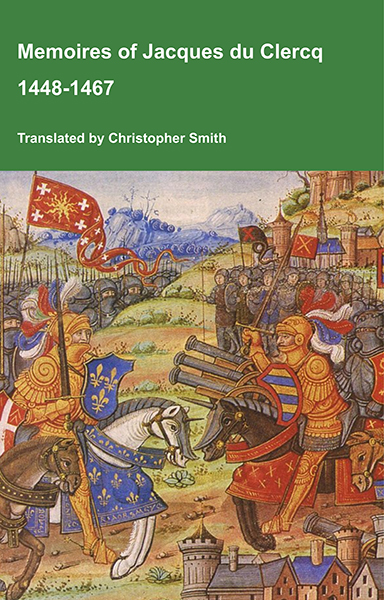
This is a translation of the 'Memoires of Jacques du Clercq', published in 1823 in two volumes, edited by Frederic, Baron de Reissenberg. In his introduction Reissenberg writes: 'Jacques du Clercq tells us that he was born in 1424, and that he was a licentiate in law and a counsellor to Philip the Good, Duke of Burgundy, in the castellany of Douai, Lille, and Orchies. It appears that he established his residence at Arras. In 1446, he married the daughter of Baldwin de la Lacherie, a gentleman who lived in Lille. We read in the fifth book of his Memoirs that his father, also named Jacques du Clercq, had married a lady of the Le Camelin family, from Compiègne. His ancestors, always attached to the counts of Flanders, had constantly served them, whether in their councils or in their armies.' The Memoires cover a period of nineteen years beginning in in 1448, ending in in 1467. It appears that the author had intended to extend the Memoirs beyond that date; no doubt illness or death prevented him from carrying out this plan. As Reissenberg writes the 'merit of this work lies in the simplicity of its narrative, in its tone of good faith, and in a certain air of frankness which naturally wins the reader’s confidence.' Du Clercq ranges from events of national and international importance, including events of the Wars of the Roses in England, to simple, everyday local events such as marriages, robberies, murders, trials and deaths, including that of his own father in Book 5; one of his last entries.
Available at Amazon in eBook and Paperback format.
On 2nd January 1815 George "Lord Byron" 6th Baron Byron [aged 26] and Anne Isabella Noel Baroness Byron 11th Baroness Wentworth [aged 22] were married at Seaham Hall, County Durham. The officiating clergyman was her cousin, the Reverend Thomas Noel [aged 41] of Kirkby Mallory, Leicestershire, illegitimate son of her uncle, Viscount Wentworth [aged 69]. She by marriage Baroness Byron of Rochdale in Lancashire.


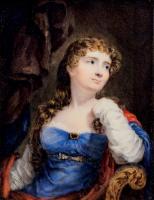
On 2nd January 1840 Philip Rose 1st Baronet [aged 23] and Margaretta Ranking Lady Rose [aged 24] were married at St Clement's Church, Hastings.
On 2nd January 1867 George Grimston Craven 3rd Earl Craven [aged 25] and Evelyn Laura Barrington Countess Craven [aged 18] were married. She by marriage Countess Craven in Yorkshire. He the son of William Craven 2nd Earl Craven and Emily Mary Grimston Countess Craven [aged 50]. They were fifth cousins. He a great x 5 grandson of King Charles II of England Scotland and Ireland. She a great x 5 granddaughter of King Charles II of England Scotland and Ireland.
On 2nd January 1917 George Nathaniel Curzon 1st Marquess Kedleston [aged 57] and Grace Elvina Hinds Marchioness Curzon Kedleston [aged 31] were married. She by marriage Baroness Ravensdale of Ravensdale in Derbyshire, Baroness Scarsdale. The difference in their ages was 26 years.


On 2nd January 1938 Pownoll Pellew 9th Viscount Exmouth [aged 30] and Maria Luisa Urquilo were married.
On 2nd January 1449 Joan Saveuse Countess Eu died.
On 2nd January 1514 Bishop William Smyth [aged 54] died at the Bishop of Lincoln's Palace, Buckden [Map]. He was buried at Lincoln Cathedral [Map].
On 2nd January 1565 Joan Fitzgerald Countess Ormonde and Ossory [aged 56] died.
On 2nd January 1658 William Armine 2nd Baronet [aged 35] died. His brother Michael [aged 33] succeeded 3rd Baronet Armine of Osgodby South Kesteven Lincolnshire.
On 24th December 1660 Mary Stewart Princess Orange [aged 29] died of smallpox. Her brother Henry Stewart 1st Duke Gloucester had also died of smallpox a few weeks before; she was buried in the same vault in the King Henry VII Chapel, Westminster Abbey [Map] on 2nd January 1661.
William of Worcester's Chronicle of England
William of Worcester, born around 1415, and died around 1482 was secretary to John Fastolf, the renowned soldier of the Hundred Years War, during which time he collected documents, letters, and wrote a record of events. Following their return to England in 1440 William was witness to major events. Twice in his chronicle he uses the first person: 1. when writing about the murder of Thomas, 7th Baron Scales, in 1460, he writes '… and I saw him lying naked in the cemetery near the porch of the church of St. Mary Overie in Southwark …' and 2. describing King Edward IV's entry into London in 1461 he writes '… proclaimed that all the people themselves were to recognize and acknowledge Edward as king. I was present and heard this, and immediately went down with them into the city'. William’s Chronicle is rich in detail. It is the source of much information about the Wars of the Roses, including the term 'Diabolical Marriage' to describe the marriage of Queen Elizabeth Woodville’s brother John’s marriage to Katherine, Dowager Duchess of Norfolk, he aged twenty, she sixty-five or more, and the story about a paper crown being placed in mockery on the severed head of Richard, 3rd Duke of York.
Available at Amazon in eBook and Paperback format.
On 2nd January 1666 John Holles 2nd Earl de Clare [aged 70] died. His son Gilbert [aged 32] succeeded 3rd Earl Clare, 3rd Baron Haughton. Grace Pierrepont Countess de Clare [aged 33] by marriage Countess Clare
On 2nd January 1683 Thomas Twisden 1st Baronet [aged 81] died. His son Roger [aged 42] succeeded 2nd Baronet Twisden of Bradbourne in Kent. Margaret Marsham Lady Twisden by marriage Lady Twisden of Bradbourne in Kent.
On 2nd January 1685 Harbottle Grimston 2nd Baronet [aged 81] died. His son Samuel [aged 41] succeeded 3rd Baronet Grimston of Bradfield. Anne Tufton Lady Grimston [aged 31] by marriage Lady Grimston of Bradfield.


On 2nd January 1694 Henry Booth 1st Earl Warrington [aged 41] died. He was buried at Church of St Mary the Virgin, Bowdon [Map]. His son George [aged 18] succeeded 2nd Earl Warrington, 3rd Baron Delamer, 4th Baronet Booth of Dunham Massey.
The inscription of his monument:
"Beneath lieth the body of the right hon'ble Henry Booth, earl of Warrington, and baron Delamer of Dunham Massey, a person of unblemished honour, impartial justice, strict integrity, an illustrious example of steady and unalterable adherence to the liberties and properties of his country in the worst of times, rejecting all offers to allure, and despising all dangers to deter him therefrom, for which he was thrice committed close prisoner to the Tower of London, and at length tried for his life upon a false accusation of high treason, from which he was unanimously acquitted by his peers, on 14 January, MDCLXXX V/VI which day he afterwards annually commemorated by acts of devotion and charity: in the year MDCLXXXVIII he greatly signalised himself at the Revolution, on behalf of the protestant religion and the rights of the nation, without mixture of self-interest, preferring the good of his country to the favour of the prince who then ascended the throne; and having served his generation according to the will of God was gathered to his fathers in peace, on the 2d of January, 169¾, in the XLIId year of his age, whose mortal part was here entombed on the same memorable day on which eight years before his trial had been."
"Also rest by him the earthly remains of the r. hon'ble Mary countess of Warrington, his wife, sole daughter and heir of sir James Langham, of Cottesbrooke, in the county of Northamptom, [sic] knt. and bart. a lady of ingenious parts, singular discretion, consummate judgement, great humility, meek and compassionate temper, extensive charity, exemplary and unaffected piety, perfect resignation to God's will, lowly in prosperity and patient in adversity, prudent in her affairs, and endowed with all other virtuous qualities, a conscientious discharger of her duty in all relations, being a faithful, affectionate, and observant, wife, alleviating the cares and afflictions of her husband by willingly sharing with him therein; a tender, indulgent, and careful mother, a dutiful and respectful daughter, gentle and kind to her servants, courteous and beneficent to her neighbours, a sincere friend, a lover and valuer of all good people, justly beloved and admired by all who knew her, who having perfected holiness in the fear of God, was by him received to an early and eternal rest from her labours, on 23 March 1690/1, in the XXXVIIth year of her age, calmly and composedly meeting and desiring death with joyful hope and steadfastness of faith, a lively draught of real worth and goodness, and a pattern deserving imitation, of whom the world was not worthy. Heb. XI. 38."


On 2nd January 1696 Anne Wentworth Baroness Rockingham [aged 66] died.
On 2nd January 1710 Nathaniel Fiennes 4th Viscount Saye and Sele [aged 33] died. His first cousin once removed Lawrence succeeded 5th Viscount Saye and Sele.

On 2nd January 1730 David Colyear 1st Earl Portmore [aged 74] died. His son Charles [aged 29] succeeded 2nd Earl Portmore.

On 2nd January 1741 Edward Littleton 3rd Baronet died. His half first cousin Edward [aged 14] succeeded 4th Baronet Littleton of Pillaton Hall.
On 2nd January 1746 Elizabeth Delves [aged 67] died. Her son Brian Broughton-Delves 4th Baronet inherited Doddington Hall, Cheshire [Map].
On 2nd January 1759 Rowland Alston 4th Baronet [aged 79] died. His son Thomas [aged 34] succeeded 5th Baronet Alston of Odell in Bedfordshire.

On 2nd January 1763 John Carteret 2nd Earl Granville [aged 72] died at Arlington Street. His son Robert [aged 42] succeeded 3rd Earl Granville, 3rd Baron Carteret of Hawnes, 4th Baronet Carteret of Metesches in Jersey.
On 2nd January 1772 Frederick Hamilton 3rd Viscount Boyne [aged 53] died. His brother Richard [aged 47] succeeded 4th Viscount Boyne.
On 2nd January 1775 St George Ussher aka St George 1st Baron Saint George [aged 60] died. Baron Saint George of Hatley St George extinct.
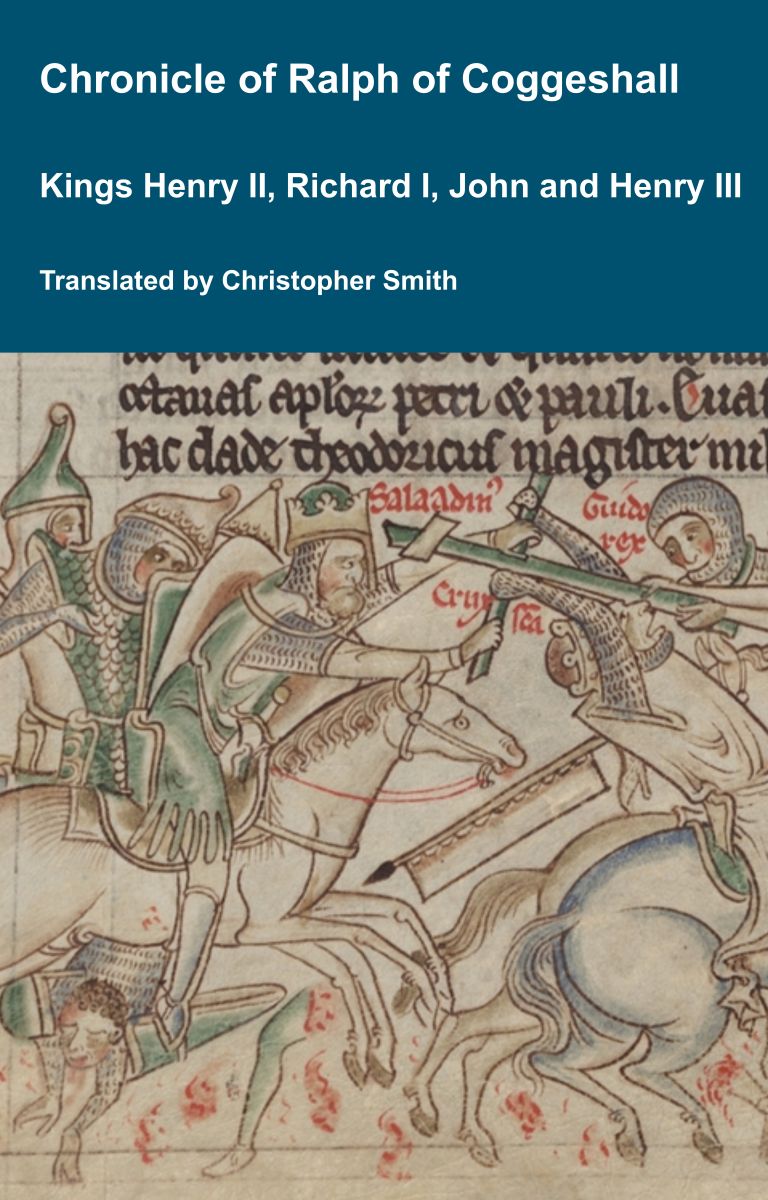
Chronicle of Abbot Ralph of Coggeshall
The Chronicle of Abbot Ralph of Coggeshall (Chronicon Anglicanum) is an indispensable medieval history that brings to life centuries of English and European affairs through the eyes of a learned Cistercian monk. Ralph of Coggeshall, abbot of the Abbey of Coggeshall in Essex in the early 13th century, continued and expanded his community’s chronicle, documenting events from the Norman Conquest of 1066 into the tumultuous reign of King Henry III. Blending eyewitness testimony, careful compilation, and the monastic commitment to record-keeping, this chronicle offers a rare narrative of political intrigue, royal power struggles, and social upheaval in England and beyond. Ralph’s work captures the reigns of pivotal figures such as Richard I and King John, providing invaluable insights into their characters, decisions, and the forces that shaped medieval rule. More than a simple annal, Chronicon Anglicanum conveys the texture of medieval life and governance, making it a rich source for scholars and readers fascinated by English history, monastic authorship, and the shaping of the medieval world.
Available at Amazon in eBook and Paperback format.
On 2nd January 1781 Henrietta Stanhope Baroness Foley [aged 25] died.
On 2nd January 1787 James Radclyffe 4th Earl of Newburgh [aged 61] died. His son Anthony [aged 29] succeeded 5th Earl of Newburgh, 5th Viscount of Kinnaird.
On 2nd January 1789 Charles Wolfram Cornwall [aged 53] died. Memorial in the Church of the Holy Cross, Winchester [Map] sculpted by John Francis Moore [aged 44].
Charles Wolfram Cornwall: On 15th June 1735 he was born. In 1789 he was appointed Speaker of the House of Commons which position he held until his death in 1789.
On 2nd January 1792 Edward Seymour 9th Duke of Somerset [aged 75] died. His brother Webb [aged 73] succeeded 10th Duke Somerset, 8th Baronet Seymour of Berry Pomeroy.
On 2nd January 1801 Edward Stratford 2nd Earl Aldborough [aged 65] died at Belan House. He was buried at St Thomas' Church, Dublin. His brother John [aged 61] succeeded 3rd Earl Aldborough, 3rd Viscount Aldborough of Belan in Kildare, 3rd Baron Baltinglass of Wicklow. Elizabeth Hamilton Countess Aldborough [aged 44] by marriage Countess Aldborough.
On 2nd January 1802 George Rodney 2nd Baron Rodney [aged 48] died. His son George [aged 19] succeeded 3rd Baron Rodney of Rodney Stoke in Somerset.
On 2nd January 1809 John Denis Browne 1st Marquess of Sligo [aged 52] died. His son Howe [aged 20] succeeded 2nd Marquess of Sligo.
On 2nd January 1828 Henrietta Vernon Countess Grosvenor [aged 92] died.
On 2nd January 1838 Frances Jenkinson Lady Boothby died at Ashbourne Hall, Derbyshire [Map].
On 2nd January 1842 General Lionel Smith 1st Baronet [aged 63] died. His wife died three days later. His son Lionel [aged 8] succeeded 2nd Baronet Smith of Jamaica.
On 2nd January 1861 Frederick William IV King Prussia [aged 65] died. His brother William [aged 63] succeeded I King Prussia.
This is a translation of the 'Memoires of Jacques du Clercq', published in 1823 in two volumes, edited by Frederic, Baron de Reissenberg. In his introduction Reissenberg writes: 'Jacques du Clercq tells us that he was born in 1424, and that he was a licentiate in law and a counsellor to Philip the Good, Duke of Burgundy, in the castellany of Douai, Lille, and Orchies. It appears that he established his residence at Arras. In 1446, he married the daughter of Baldwin de la Lacherie, a gentleman who lived in Lille. We read in the fifth book of his Memoirs that his father, also named Jacques du Clercq, had married a lady of the Le Camelin family, from Compiègne. His ancestors, always attached to the counts of Flanders, had constantly served them, whether in their councils or in their armies.' The Memoires cover a period of nineteen years beginning in in 1448, ending in in 1467. It appears that the author had intended to extend the Memoirs beyond that date; no doubt illness or death prevented him from carrying out this plan. As Reissenberg writes the 'merit of this work lies in the simplicity of its narrative, in its tone of good faith, and in a certain air of frankness which naturally wins the reader’s confidence.' Du Clercq ranges from events of national and international importance, including events of the Wars of the Roses in England, to simple, everyday local events such as marriages, robberies, murders, trials and deaths, including that of his own father in Book 5; one of his last entries.
Available at Amazon in eBook and Paperback format.

On 2nd January 1883 George Grey 7th Earl Stamford 3rd Earl Warrington [aged 55] died. His second cousin once removed Harry [aged 70] succeeded 8th Earl Stamford, 10th Baron Grey of Groby. Earl Warrington and Baron Delamer extinct, along with an immense fortune of of £8,000 per annum.
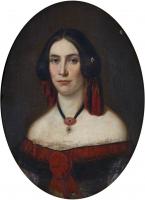
On 2nd January 1891 Marianne Dora Spalding Lady Malet [aged 81] died.

On 2nd January 1892 Harriet Baring Marchioness Bath [aged 87] died.
On 2nd January 1899 Algernon George Percy 6th Duke Northumberland [aged 88] died. He was buried at Northumberland Vault, Crypt, Westminster Abbey. His son Henry [aged 52] succeeded 7th Duke Northumberland, 4th Earl Beverley, 10th Baronet Smithson of Stanwick in Yorkshire. Edith Campbell Duchess Northumberland [aged 49] by marriage Duchess Northumberland.
On 2nd January 1912 Mary Frances Grosvenor Countess Macclesfield [aged 90] died.
On 2nd January 1920 Frederick Dutton 5th Baron Sherborne [aged 79] died. His nephew James [aged 46] succeeded 6th Baron Sherborne.
On 2nd January 1938 Montague Peregrine Albemarle Bertie 12th Earl Lindsey [aged 76] died. His half fifth cousin three times removed Montagu [aged 50] succeeded 13th Earl Lindsey.
On 2nd January 1945 George James Ernest Lewis 3rd Baronet [aged 34] died. Baronet Lewis of Portland Place in Marylebone extinct.
On 2nd January 1963 John Hampden Mercer-Henderson 8th Earl Buckinghamshire [aged 56] died unmarried at Edward VII's Royal Hospital, Marylebone. His second cousin Vere [aged 61] succeeded 9th Earl Buckinghamshire, 9th Baron Hobart, 13th Baronet Hobart of Intwood in Norfolk.