

08 Jun is in June.
1376 Death of the Black Prince
1467 Tournament Bastard of Burgundy
1532 Coronation of Anne Boleyn
On 19th April 626 Eanflæd Queen Consort Bernicia was born to King Edwin of Northumbria [aged 40] and Æthelburh Oiscingas Queen Consort Northumbria [aged 21]. She was baptised on 8th June 626. She married 645 her half first cousin King Oswiu of Northumbria, son of Æthelfrith King Northumbrians and Acha Queen Consort Northumbria, and had issue.
Anglo-Saxon Chronicle. 1023. This year returned King Knute [aged 28] to England; and Thurkyll and he were reconciled. He committed Denmark and his son to the care of Thurkyll, whilst he took Thurkyll's son with him to England. This year died Archbishop Wulfstan; and Elfric succeeded him; and Archbishop Egelnoth blessed him in Canterbury. This year King Knute in London, in St. Paul's minster [Map], gave full leave60 to Archbishop Ethelnoth, Bishop Britwine, and all God's servants that were with them, that they might take up from the grave the archbishop, Saint Elphege. And they did so, on the sixth day [8th June 1023] before the ides of June; and the illustrious king, and the archbishop, and the diocesan bishops, and the earls, and very many others, both clergy and laity, carried by ship his holy corpse over the Thames to Southwark [Map]. And there they committed the holy martyr to the archbishop and his companions; and they with worthy pomp and sprightly joy carried him to Rochester. There on the third day came the Lady Emma [aged 38] with her royal son Hardacnute [aged 5]; and they all with much majesty, and bliss, and songs of praise, carried the holy archbishop into Canterbury Cathedral [Map], and so brought him gloriously into the church, on the third day [11th June 1023] before the ides of June. Afterwards, on the eighth day, the seventeenth [15th June 1023] before the calends of July, Archbishop Ethelnoth, and Bishop Elfsy, and Bishop Britwine, and all they that were with them, lodged the holy corpse of Saint Elphege on the north side of the altar of Christ; to the praise of God, and to the glory of the holy archbishop, and to the everlasting salvation of all those who there his holy body daily seek with earnest heart and all humility. May God Almighty have mercy on all Christian men through the holy intercession of Elphege!
Note 60. Matthew of Westminster says the king took up the body with his own hands.
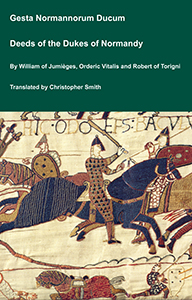 History of the Dukes of Normandy by William of Jumieges. Meanwhile his brother Alfred took with him soldiers of no small number and made for the port of Wissant, and crossing from there came to Canterbury. Then, advancing into the interior of the kingdom, he encountered Earl Godwin. The earl received him under his protection, but that same night played the part of the traitor Judas. For after giving him the kiss of peace and sharing food with him, in the middle of the night he had him bound with his hands behind his back, and sent him to King Harold in London along with several of his men. His soldiers he in part scattered throughout the regions of England, and who in part slew with dishonour. When Harold saw Alfred, he immediately ordered his companions to be beheaded, and Alfred himself to be taken to Ely and there deprived of his eyes1. Thus the most noble and excellent man Alfred perished, unjustly put to death. But Harold did not long survive; he died, and was succeeded by his brother Harthacnut, who came from Denmark, born of Emma, Edward's mother. After a short while, when he was securely established in the height of the kingdom, he recalled his [half] brother Edward [the Confessor] from Normandy and caused him to live with him. But he [Harthacnut [aged 24]] himself, not lasting two full years, ended his life [on 8th June 1042], and left Edward heir of the whole realm2.
Interea frater ejus Aluredus milites non parvi numeri assumpsit, portumque Wisanti petiit et hac transfretans Doroberniam venit. Inde siquidem interiora penetrans regni, Goduinum comitem obvium habuit. Quem idem comes in sua fide suscepit, sed in illo sub eadem nocte traditoris Judæ vicem implevit. Nam libato pacis osculo et cum eo percepto cibo, medio intempesta noctis, manibus post tergum ligatis illum Heraldo regi apud Lundoniam cum suorum nonnullis destinavit. Milites autem suos partim per Anglorum regionem distraxit, partim cum dedecore peremit. Heraldus ut Aluredum vidit, statim ejus socios truncari capitibus jussit, et ipsum ad Hely duci, ibique oculis privari. Sic nobilissimus et optimus vir Aluredus occubuit, injuste peremptus. Heraldus vero non multo post superstes obiit mortem, cui successit frater ejus Hardechunutus a Dacia egressus, ex Emma Edwardi matre natus. Qui post paululum confirmatus in culmine regni, fratrem suum Edwardum a Northmannia revocavit, ac secum cohabitare fecit. Ipse autem non plenis duobus annis existens, exivit hominem, et Edwardum totius regni reliquit hæredem.
Note 1. Economium Emmae Reginae, Book 3, Chapter 6: "Since we have now briefly recounted the struggles of his soldiers, it remains that we should also narrate the martyrdom of their leader, the glorious Alfred; yet let us shorten our speech, lest perchance, if we were to describe in detail all that was done to him, we should multiply the sorrow of many, and most of all, of you, lady queen. Therefore I beg you, lady, do not ask to hear more than what, out of pity for your grief, we shall relate briefly. For much might be said, were we not sparing your sorrow; for truly there is no greater pain for a mother than to see, or even to hear of, the death of her most beloved son. The royal youth was therefore seized secretly in his lodging, and led away into the island called Ely, where he was first mocked by a most wicked soldier. Then were chosen men of yet baser sort, that by their cruelty the lamented youth might be condemned. And these judges decreed that, in contempt, his two eyes should be torn out. When they prepared to carry out the deed, two men were set upon his arms, to hold them, and one upon his breast, another upon his legs, that the punishment might thus be inflicted the more easily. Why do I linger amid such pain? My pen itself trembles as I write, for I shudder to recall what that most blessed youth endured. Let me therefore pass swiftly over the misery of so great a calamity, and touch but briefly upon the end of his martyrdom. For he was held fast by the impious, and, his eyes cruelly gouged out, was slain with utmost wickedness. When the murder was done, they left his lifeless body, which the faithful servants of Christ, the monks of that same island of Ely, took up and buried honourably. At the place of his burial many miracles occur, as some affirm, indeed, those who often say they themselves have seen them. And rightly so: for, being innocently martyred, it is fitting that through him the power of innocence should be exercised. Let therefore Queen Emma rejoice in so great an intercessor, for she who once had a son upon earth now has in heaven a patron."
Chronicon ex Chronicis, Page 141: "At the same time he dispersed some of his attendants, others he put in fetters and afterwards deprived of their sight, some he scalped and tortured, amputated their hands and feet and heavily mulcted [extracted money]: many he ordered to be sold, and put to death six hundred of them at Guildford, Surrey with various torments: but we trust that the souls of those, who, guilty of no crime, had their bodies so cruelly slaughtered in the fields, are now rejoicing with the saints in paradise. On hearing of this, queen Elgiva sent back her son Edward, who had remained with her, in all haste to Normandy. Then, by order of Godwin and others, Alfred was conducted, heavily chained, to the Isle of Ely; but as soon as the ship touched the land, his eyes were most barbarously plucked out while he was on board, and in this state he was taken to the monastery and handed over to the custody of the monks. There he shortly afterwards died, and his body was buried, with due honours, in the south porch at the west end of the church; but his spirit is in the enjoyment of the delights of paradise."
Note 2. Chronicon ex Chronicis, Page 144: "Hardicanute, king of England, while he was present at a joyous feast given at a place called Lambeth, Surrey, by Osgod Clapa, a man of great wealth, on occasion of his giving the hand of his daughter Githa in marriage to Tovi, named Prudan, a noble and powerful Dane, and carousing, full of health and merriment, with the bride and some others, fell down, by a sad mischance, while in the act of drinking, and continued speechless until Tuesday the sixth of the Ides [the 8th] of June, when he expired. He was carried to Winchester and buried near his father Canute. His [half] brother Edward was proclaimed king at London, chiefly by the exertions of earl Godwin, and Living, bishop of Worcester."
On 8th June 1042 King Harthacnut of Denmark and England [aged 24] died. His half brother Edward [aged 39] succeeded King of England.
Anglo-Saxon Chronicle. 8th June 1042. This year died King Hardacnute [aged 24] at Lambeth, as he stood drinking: he fell suddenly to the earth with a tremendous struggle; but those who were nigh at hand took him up; and he spoke not a word afterwards, but expired on the sixth day before the ides of June. He was king over all England two years wanting ten nights; and he is buried in the old minster at Winchester with King Knute his father. And his mother for his soul gave to the new minster the head of St. Valentine the Martyr: and ere he was buried all people chose Edward [aged 39] for king in London. And they received him as their king, as was natural; and he reigned as long as God granted him. All that year was the season very severe in many and various respects: both from the inclemency of the weather, and the loss of the fruits of the earth. More cattle died this year than any man ever remembered, either from various diseases, or from the severity of the weather. At this same time died Elfsinus, Abbot of Peterborough; and they chose Arnwy, a monk, for their abbot; because he was a very good and benevolent man.
Chronicon ex Chronicis by Florence and John of Worcester. 1042. Hardicanute [aged 24], king of England, while he was present at a joyous feast given at a place called Lambeth, Surrey [Map], by Osgod Clapa, a man of great wealth, on occasion of his giving the hand of his daughter Githa in marriage to Tovi, surnamed Prudan, a noble and powerful Dane,—and carousing, full of health and merriment, with the bride and some others, fell down, by a sad mischance, while in the act of drinking, and continued speechless until Tuesday the sixth of the ides [the 8th] of June, when he expired. He was carried to Winchester and buried near his father Canute. His brother Edward [aged 39] was proclaimed king at London, chiefly by the exertions of earl Godwin [aged 41], and Living, bishop of Worcester. Edward was the son of Ethelred, who was the son of Edgar, who was the son of Edmund, who was the son of Edward the Elder, who was the son of Alfred.
On 8th June 1191 King Richard "Lionheart" I of England [aged 33] landed at Acre [Map].
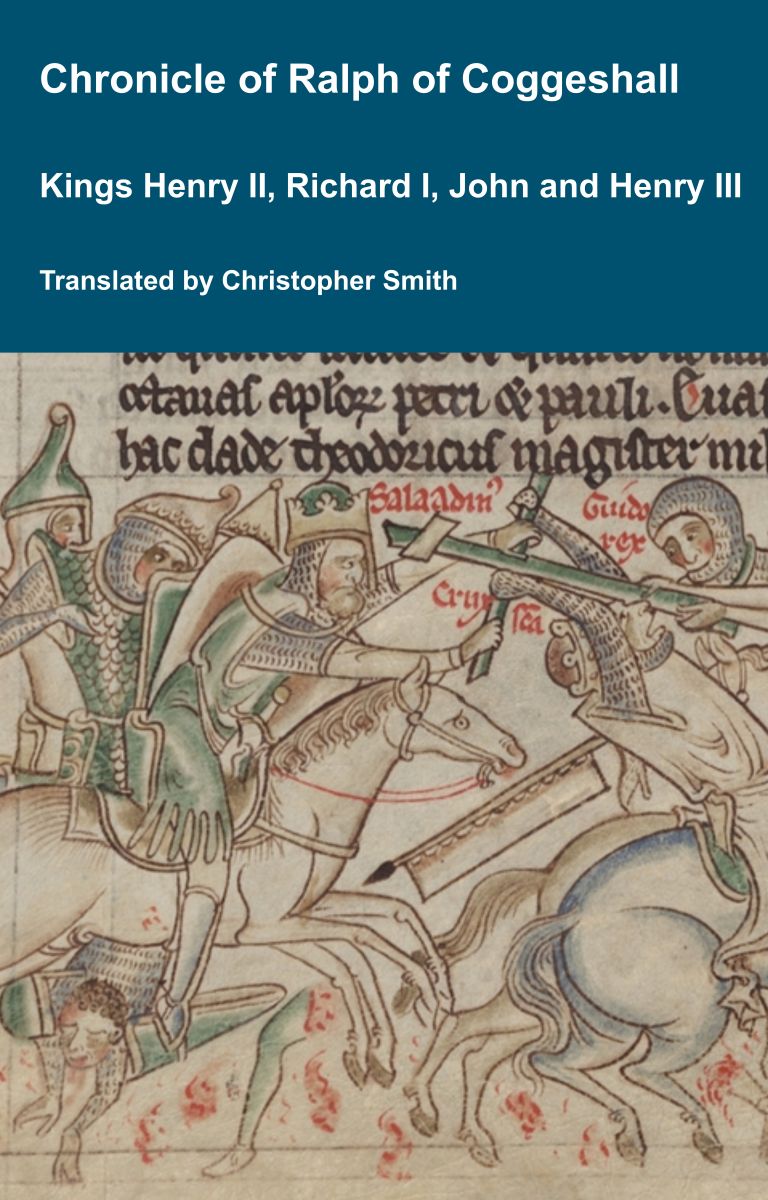 Chronicum Anglicanum by Ralph Coggeshall. [8th June 1191] When therefore King Richard heard that the army of the Lord at Acre was suffering from a great famine, so that a bushel of grain was being sold for sixty marks, he hastened to relieve so great a calamity, gathering from every side a supply of provisions out of the island of Cyprus which he had subdued. And so, with ships laden with a great abundance of food, he himself, with all his equipment and his army, made for Acre.
Audiens igitur rex Ricardus exercitum Domini apud Ptolomaidam maxima famis inedia laborare, ita ut sexa rius frumenti sexaginta marcis venundaretur, ex Cypro insula quam subegerat victualium copiam undique aggregans, tantæ calamitati succurrere festinavit. Onustis itaque alimentorum copia navibus, ipse cum universo apparatu et exercitu suo Ptolomaidam tendit.
Chronica Majora by Matthew Paris. 8th June 1236. In the same year, Peter de Rivaulx and Stephen Segrave [aged 65], of whom we have made mention above, were received into favour by the king. In this year, too, on the eighth of June, the nobles of England assembled at Winchester in presence of the king, when the latter endeavoured, by a warrant from the pope, to annul some grants which he had made to some of them before he had contracted his marriage, as though he was unable of himself, mthout the connivance of the pope, to whom, as he said, the giving of rights in the kingdom belonged. Many were astonished at this, and said that the king was endeavouring much more than became him, or was his duty, to place his kingdom in slavery, and to reduce it to its last extremity.
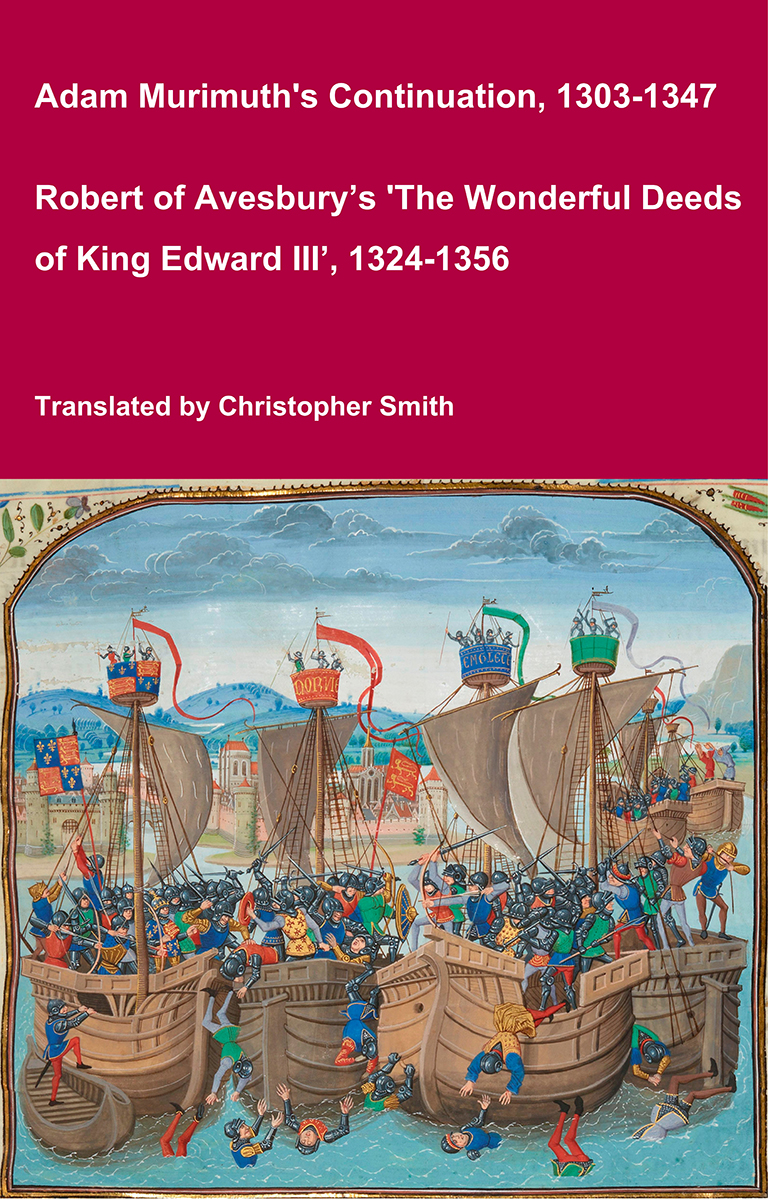 Deeds of King Edward III by Robert of Avesbury. During the said siege of Calais, on the eighth day of June in the morning, in the year of the Lord 1347, John of France, the firstborn son of Philip of Valois, came with a very large French army to the town of Cassel on the frontier of Flanders. There were present only Flemings with many English archers. The French made a continuous assault from morning until midday, but, by the Lord's favour, the French were confounded and driven back, many of them being wounded, killed, or captured. On the side of the Flemings no one was killed nor mortally wounded; only a few were slightly injured, the Lord protecting them. In this encounter the archers behaved bravely, and therefore the Flemings praised them greatly. Thus, John of France, deprived of his purpose and as though defeated in battle, returned empty-handed to the place from which he had come.
Item, dicta obsidione de Caleys durante, viijye die Junii, mane, anno Domini millesimo cccmoxz vIrmo, dominus Johannes de Francia, dicti domini Philippi de Valesio primogenitus, cum infinito exercitu Gallicorum, venit ad villam de Casseles, in confinio Flandriæ, in qua erant tantum Flemengi cum Anglicis sagittariis bene multis et, facto per Gallicos insultu continuo de mane usque meridiem, propitio Domino, forti et potenti in prœlio confutati sunt Gallici et repulsi, multis ex eis vulneratis, occisis, et captis. Ex parte vero Flandrensium nullus fuit occisus neque vulneratus mortaliter, sed pauci solummodo leviter, Domino protegente. In quo congressu -sagittarii viriliter se habebant, et ideo Flandrenses ipsos non modicum commendabant. Sicque dictus dominus Johannes de Francia, proposito suo fraudatus, quasi in bello devictus, vacuus rediit unde venit.
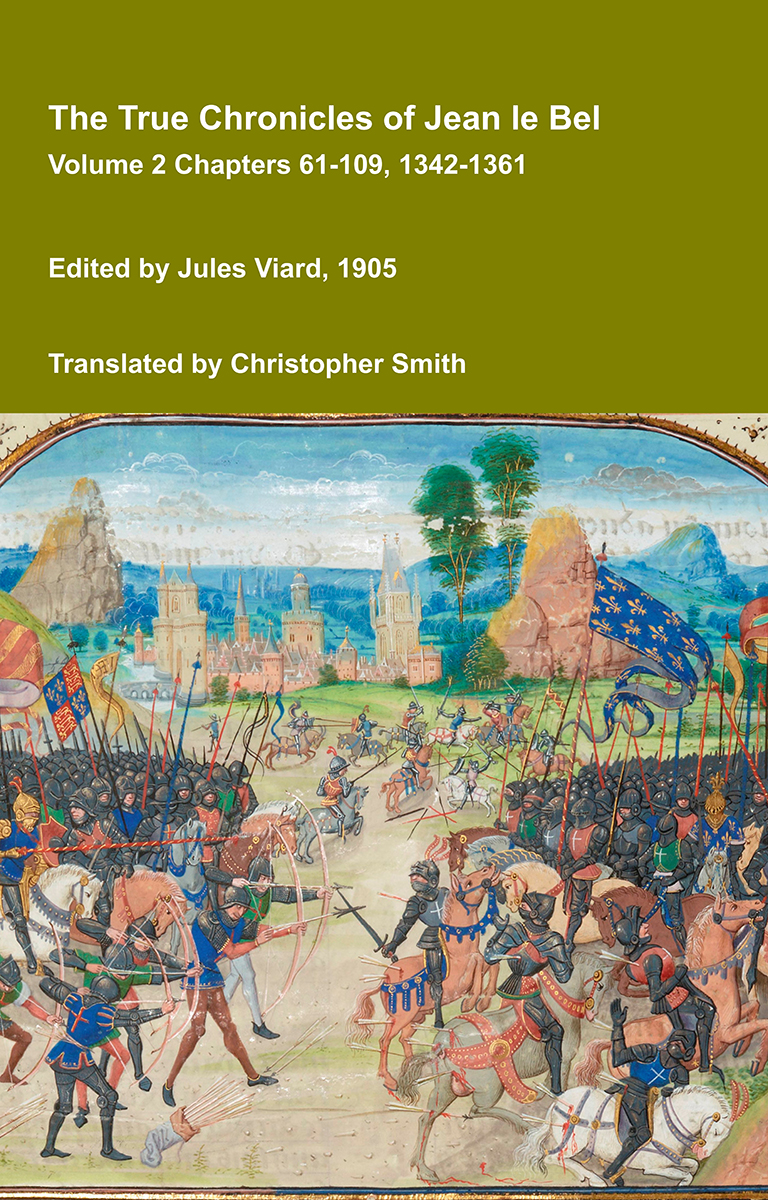 Chronicle of Jean le Bel Volume 2. This was the measure by which those in the town were more severely pressed. Afterwards, he so worked upon the Flemings that they rose and went towards Cassel1, Aire, and Saint-Omer, burning and laying waste the country. So the King of France had to go towards Arras, and to send the greater part of his men towards Saint-Omer and Aire. They had great clashes with the Flemings, some to their loss and some to their gain. In the end, the Flemings were sharply driven back, and the French completely laid waste the country called Laleu. While King Philip was at Arras and his men were occupied in making war on the Flemings, messengers came to him from his men who were inside Calais, asking that he should come to their aid in haste, for provisions were failing them2. Inside the town there was a captain on behalf of King Philip named Sir Jean de Vienne3, and another companion of his called Sir Jean de Fiennes, and Sir Arnoul d’Audrehem, valiant and bold knights, and one of the most valiant men in France. There was also the Lord of Beaulo4, and several good knights whom I cannot name5, and Sir Baldwin d’Auberchicourt was there too, and died there, so he should not be omitted.
Ce fut l'advis par quoy ceulx de la ville furent plus grevez. Aprez, il fist tant aux Flamencs qu'iz se leverent et s'en alerent par devers Cassel et Aire, et Saint Omer, ardans et gastars pays. Si convint le roy de France aler par devers Arras, et envoyer le plus de ses gens par devers Saint Omer et Aire qui eurent grands hustins aux Flamencs, pluseurs à leur perte et pluseurs à leur gaagne; et au derrain les Flamenes furent durement reboutez, et gasterrent les Françoys entierement le pays qu'on dit La Loye. Ainsy que le roy Philippe estoit à Arras et ses gens entendoient à guerrier les Flamencs, messages luy vinrent de par ses gens qui estoient dedens Calais, comment il les voulsist hastivement secourir, car vitaille leur faloil Dedens la ville estoit ung chappitaine de par le roy Philippe nommé messire Jean de Vyane, et ung aultre son compaignon qu'on clamoit messire Jehan de Faerye, et messire Arnoul d'Endehen, vaillans chevaliers et hardis, et ung des plus prœux de France. Et sy y estoit le sire de Beaulot et pluseurs bons chevaliers que je ne sçay nommer, et si y fut messire Baulduyn d'Obrecicourt qui mort y fut, sy ne le doibt on pas [obmettre].
Note 1. Cassel, Nord. On 8th June, the French were repulsed in an attack which they had directed against the town of Cassel; Deeds of King Edward III by Robert of Avesbury: 'During the said siege of Calais, on the eighth day of June in the morning, in the year of the Lord 1347, John of France, the firstborn son of Philip of Valois, came with a very large French army to the town of Cassel on the frontier of Flanders. There were present only Flemings with many English archers. The French made a continuous assault from morning until midday, but, by the Lord's favour, the French were confounded and driven back, many of them being wounded, killed, or captured. On the side of the Flemings no one was killed nor mortally wounded; only a few were slightly injured, the Lord protecting them. In this encounter the archers behaved bravely, and therefore the Flemings praised them greatly. Thus, John of France, deprived of his purpose and as though defeated in battle, returned empty-handed to the place from which he had come.'
1. Cassel, Nord, arr. d'Hazæbrouck, ch.-l. de cant. Le 8 juin, les Français furent repoussés dans une altaque qu'ils avaient dirigée contre la ville de Cassel. (Robert d'Avesbury, op. cit. p. 384, et Gilles lé Muisis, éd. de Smet, p. 270.)
Note 2. Deeds of King Edward III by Robert of Avesbury, published a letter, intercepted by the English, in which Jean de Vienne informed Philip of Valois of the extreme scarcity from which the town of Calais was suffering: 'Right dear and dread lord, I recommend me unto you with all my might, as one who much desireth to know that you are in good estate, whom may our Lord ever keep in happiness by His grace. And, if it please you to know the estate of our town of Calais, be certified that, when these present letters were written, we were all well and of good cheer and right willing to serve you and to do whatever might be your honour and profit. Bot, right dear and dread lord, know that, although the people be all well and of good cheer, yet the town is in sore need of corn, wine, and meat. For know that there is nothing therein which hath not been eaten, both dogs and cats and horses, so that victuals we can no more find in the town, except we eat men's flesh. For formerly you wrote that I should hold the town so long as there should be food. And now we are at that point that we have not wherewithal to live. So we have resolved amongst us that, if we have not succour quickly, we shall all sally forth from the town into the open field, to fight for life or death.'
2. Robert d'Avesbury (op. cit., p. 386) a publié une leure, interceptée par les Anglais, dans laquelle Jean de Vienne faisait connaître à Philippe de Valois l'extrême disette dont souffrait la ville de Calais. Voy. aussi sur la famine des Calaisiens Chronographia regum francorum, t. M, p. 245, n. 1.
Note 3. According to Luce's Froissart one should read Jean de Surie. The same chronicler says that Jean de Vienne entered Calais after the town had been invested by the English, following the strand from Wissant. An entry which we find in the Journaux du Trésor de Philippe VI de Valois, would seem, however, to suggest that Jean de Vienne had been in this town since 4th September 1346, that is, from the beginning of the siege.
3. D'après Froissart, éd. Luce, t. 1V, p. 203, c'est Jean de Surie qu'il faut lire. Le même chroniqueur dit que Jean de Vienne entra dans Calais aprés l'investissement de la ville par les Anglais en suivant la grève depuis Wissant, Une mention que nous relevons dans les Journaur du Trésor de Philippe VI de Valois, n° 893, semblerait cependant faire comprendre que Jean de Vienne fût dans cette ville depuis le 4 septembre 1346, c'est-à-dire depuis le commencement du siège.
Note 4. Enguerrand de Beaulo was captain of Calais well before the siege, we already find him appearing with this title in the Journaux du Trésor as early as 6th June 1345.
4. Enguerran de Beaulo était capitaine de Calais bien avant le siège, nous le voyons déjà figurer avec ce titre dans les Journaux du Trésor, n° 854, dès le 6 juin 1345. Voy. aussi Ibid, n°* 4176, 5025.
Note 5. Luce's Froissart also gives the names of a few defenders of Calais, Baldwin de Bellebrune, Geoffrey de la Motte, Pépin de Were, and Gérard de Werière. The name of the Lord of Grigny is also found in the Chronique Normande. But it is above all the Journaux du Trésor which provide us with the greatest number of names of the defenders of this town. Among those who had crossbowmen or squires under their orders we find Jean Nicaise, Jacques Rosquart, Robert Paumier, Jean Roger, Guillaume Zémine, Jean le Grand, Florent de Maunmes, Guillaume de Ferranville, Tassard de Gournai, a good number of Genoese, and so on.
5. Froissart, éd. Luce, 1. IV, p. 203, donne encore les noms de quelques défenseurs de Calais, Baudouin de Bellebrune, Geoffroy de la Motte, Pépin de Were, Gérard de Werière. On relève encore dans la Chronique Normande, p. 83, et dans la Chronographia, &. M, p. 240, le nom du sire de Grigny. Mais ce sont surtout les Journaur du Trésor qui nous fournissenten plus grand nombre les noms des défenseurs de cette ville. Nous relevons parmi ceux qui avaient sous leurs ordres des arbalétriers ou des écuyers Jean Nicaise, Jacques Rosquart (n° 893), Robert Paumier [n° 1331], Jean Roger, Guillaume Zémine, Jean le Grand (n° 661 à 663), Florent de Maunmes (n° 2302, 2913), Guillaume de Ferranville, Tassard de Gournai (n° 5025), un bon nombre de Génois (n 2239 à 22492), etc., ete.
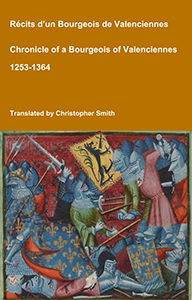 Bourgeois de Valenciennes. It happened on a Wednesday [8th June] at Pentecost in the year 1351 that Sir John de Beauchamp [aged 35] and his company, about six hundred men, set out from Calais. They advanced so swiftly that at dawn they were near Saint-Omer, and they rode up to the Boulogne gate, seized livestock and plunder, and drove it off. The alarm was raised in Saint-Omer, and when the Marshal of France heard the news, he armed himself quickly and had all those with him at Saint-Omer arm themselves as well. He mounted his horse, and with a fine company rode out of the town. With him were the Viscount of Narbonne, Sir Guy of Poitiers, Sir Guichard of Beaujeu and his brother, the Bastard of Bourbon, Sir Oudart of Renty, Sir Baudart of Cuvillier, and many others. They pursued the English and overtook them near Ardres. The English drew up in battle array, but they sent the plunder on ahead to Calais with two hundred men. The French approached, and there was a ditch between the two forces. Then Edward of Beaujeu [aged 35], in great eagerness, took his spear and attempted to leap across the ditch. As he was leaping, an Englishman thrust a spear upward from below and struck him in the body, casting him down mortally wounded. At this his men, greatly angered, leapt across the ditch one after another and charged into the English ranks, and fierce fighting began. The English fought so stoutly that they captured five French knights and held them as prisoners, and would have defeated the rest. But foot soldiers from Saint-Omer who had followed the pursuit, about eight hundred in number, arrived on the field and attacked the English. Those who had been captured broke free and rejoined the fight. A fierce and remarkable battle followed. Sir Guichard of Beaujeu, brother of the slain marshal, was grievously wounded, as was Sir Baudart of Cuvillier. In the end the English were defeated, and Sir John de Beauchamp and the best of his company were taken prisoner and brought to Saint-Omer. Sir Guichard of Beaujeu was carried back on a litter and arranged for his brother’s body to be taken to their homeland in Burgundy, which was done. He was buried at Belleville in the abbey called Saint-Martin. The lands around Belleville belonged to the lord of Beaujeu who was slain near Ardres, Marshal of France, while defending the realm for King John of Valois.
Sy avint que par ung merquedy de le Pentecouste, l'an mil CCCLI, que monseigneur Jehan de Beauchamp et sa routte, environ VIc hommes, se partirent de la ville de Calais, et esploitèrent tant que droit au point du jour de ce merquedy, ils furent environ Saint-Omer et coururent jusques à la porte de BouUongne et eslevèrent la proye et l'emmenè rent. Lors s'esleva la voix et le cry en Saint-Omer; et quant le mareschal de France entendy les nouvelles, il s'arma moult hastivement et fist armer tous ceulx qui avoec luy estoient à Saint-Omer, comme saudoyers, pour le tamps d'adont. Sy monta à cheval et fist monter ses hommes, et yssit de la ville à belle compaignie. Et avoec luy estoient le visconte de Nerbonne, monseigneur Guy de Poitiers, monseigneur Guichart de Beaugeu et son frère, le bastart de Bourbon, monseigneur Oudart de Renty, monseigneur Baudart de Cuvillier et moult d'aultres. Sy siévyrent tant les Englecqs et leur routte, qu'ils les rataindirent assez près d'Ardre; et se misrent les Englecqs en bataille, mais ils envolèrent la proye par CC compaignons à Calais. Et les François les approchèrent, et y avoit ung fosset entre deux. Adont Edouart de Beaugeu, par grant ayr, print son glave et s'esquoella au sallir oultre le fosset; et ainsy qu'il salloit, ung Englès luy puisa ung glave par dessoubs et luy boutta au corps; sy l'abaty là navret à mort. Et alors ses gens moult courouchiës sallirent le fosset, qui mieulx mieulx, et entrèrent ens es Englecqs, et se comba tirent entre eulx. Et se portèrent les Englecqs sy bien qu'ils retinrent V de leurs chevaliers, et les tenoient comme prisonniers, et eussent desconfi les aultres; mais les brigans qui s'estoient partis de Saint-Omer en siévant les gens, vinrent là, et estoient bien VIIIc. Sy assallirent les Englecqs; et ceulx qui prins estoient, rompirent leur prison et se misrent à deffence. Lors comraencha la bataille forte et mervilleuse, et y fut fort navrés monseigneur Guichart de Beaugeu, frère au seigneur de Beaugeu, qui tués estoit, et monseigneur Baudart de Cuviller durement navrés ossy; mais en la fin les Englecqs furent desconfis, et y fut prins monseigneur Jehan de Beauchamp et les milleurs de sa routte et amenés à Saint-Omer. Et fut raportés monseigneur Guichart de Beaugeu en une litière, lequel ordonna de reporter le corps de son frère en son pays en Bourgongne, ainsy comme on fist; et fut ensevely en Belleville en une abbaye qu'on appelloit Saint-Martin. La terre d'environ Belleville estoit au seigneur de Beaugeu qui trespassa dalez Ardre, mareschal de France, en deffendant le royalme pour le roy Jehan de Valois.
On 8th June 1376 Edward "Black Prince" [aged 45] died of dysentery at Westminster Palace [Map]. He was buried in Canterbury Cathedral [Map]. His son Richard [aged 9] succeeded as heir to his grandfather King Edward III of England [aged 63] who died a year later.


Chronicle of Abbot Ralph of Coggeshall
The Chronicle of Abbot Ralph of Coggeshall (Chronicon Anglicanum) is an indispensable medieval history that brings to life centuries of English and European affairs through the eyes of a learned Cistercian monk. Ralph of Coggeshall, abbot of the Abbey of Coggeshall in Essex in the early 13th century, continued and expanded his community’s chronicle, documenting events from the Norman Conquest of 1066 into the tumultuous reign of King Henry III. Blending eyewitness testimony, careful compilation, and the monastic commitment to record-keeping, this chronicle offers a rare narrative of political intrigue, royal power struggles, and social upheaval in England and beyond. Ralph’s work captures the reigns of pivotal figures such as Richard I and King John, providing invaluable insights into their characters, decisions, and the forces that shaped medieval rule. More than a simple annal, Chronicon Anglicanum conveys the texture of medieval life and governance, making it a rich source for scholars and readers fascinated by English history, monastic authorship, and the shaping of the medieval world.
Available at Amazon in eBook and Paperback format.
Archaeologia Volume 22 Section XVI. A Chapter of the Princes death.s
About the same tyme upon the feaste of the Holy Trinnitie which happened the sixt ides of Junii, or the 8 day of Junii [1376], died the most invincible defender of the citie, Prince Edward of Woodstock, the first begotten sonne of Kynge Edward, after the conquest the third, whose noble mynd, as it was alwaies stronge agaynst hys enemyes in battel, so was it fortified agaynst deathe, for being ready to depart the world, he went not as one which should die but making his supplication to the most blessed Trinitie, as one which, after his pilgrimage should return to his contrey, from death to be translated to life, from servitude to glory. O holy Trinite (sayed he) blessed be thou for ever more, whose name upon earthe I have alwaies worshipped, whose honor I have studied to enlarge, in whose faith (although otherwise a wicked man & a synner) I have alwaies lyved, I hartely pray the that as I have magnified this thy feast upon earthe, and for thy honor have called the people together to celebrate the same feast with me, deliver thou me from this deathe, and vouchsafe to call me to that most delectable feast that is kept this day with the in heaven; whose prayers (as we may thynke) were heard of the Lord God, for the very same day about 3 of the clocke he departed this life. After the tyme he had begonne this preface he lay intending only to praiers, to almes deedes, and other worke of mercy; and not only did God gave him the tyme of repentance, but also for the space of five years & more continually was he visited with a great & incommodious dissease of his body; for all that tyme, commonly every month, he suffered the flux both of sede & of blud, which two infirmities made him many tymes so feeble, that his servante took him very often for dead; notwithstanding he bare all these thinges with such patience, that he never seemed to offer unto God one mutinous word. And before his death he dystributed large gyfts as well to hys housholde servantes as to others of what station or condicion soever, and he humbly requested the kynge hys father, that he wolde ratifie hys gyftes, and wolde cherishe & favour those his servantes and frendes, for that, sayed he, they have deserved to have many other thynges both of your gyfte and myne, and that he wolde suffer hys debtes spedely to be payed of hys own proper goodes, which thynge the kynge promysed agayne, and granted his third petition, that ys to say, that he wolde favor his ssone, and gyve hym hys councell & helpe. After this, callynge hys sonne unto hym (altho' but a little one) he commanded hym upon payne of hys curse he sholde never chaunge or taike away the gyftes that he att hys deathe gave unto hys servantes. Yt chaunced in the same houre, that the forenamed Syr Rychard Stery came to see hym, for the prince had commanded that hys doore sholde be shutt to none, nor to the leaste boy [page], wherfor the sayed Rychard entered more boldly. The prince now prostrate, and in the panges of deathe, liftynge upp hys eyes as well as he myght, seynge that sayme Rychard, he sayed, come hither Rychard, come near & beholde that which thou haste long desyred to see; & when he affirmed wyth an othe that he never desyred the syght of hys deathe, yt ys otherwise, sayed he, thou wast afeared of thy owne skynne, thy conscyence tellynge thee that in tyme to come I wolde not suffer thy excesses [outrages], or the evil counsell thou suggested to the kynge, unpunished; and truly so it wolde have chaunced, yf God had granted me lyfe, and thou wolde have found that to have been true evil councell ys worste to the councellor; but now I goe whither God calls me, whom I humbly beseache (yf thou escape the hands of men) that he wyll make an ende of thy evill deedes. And when he wepte & prayed hym of pardon, God that ys juste, sayed he, rewarde the accordynge to thy deserts; I will not thou trouble me any longer; depart forthe of my syghte, not here after to see my face agayne. After hys departure he began vehemently to faynt and so to loose hys streangth, that scarce any breathe remained in hym, which the Bishopp of Bangor,t whoe then was present, percevynge, he came unto hym & sayed, now, without doubt, deathe is at hande, and he ys to goe whither God hath appoynted, therefor I councell you, my lorde, now to forgive all those that have offended you, and for that yt ys manyfest that you have offended both God and many men, therfor, fyrste, aske God forgeveness; and secondly, all men whom of sett purpose or ignorantly you have willingly offended. To whom he answeared, I will; and the bishopp sayed yt suffyceth not to say only I will, but when you have powre, declarynge the same by wordes, you ought to aske pardon; but he answeared nothynge els, but only "I will;" and when he had oftentymes done thys, the bishopp sayed, I suppose some evil sprytes to be here present that let thys tongue, whereby he cannot expresse hys mynde with wordes, &, takynge the sprincle, he caste holy water by the four corners of the chamber where he lay, and beholde, sodenly the prynce with joyned handes and eyes lifted up to heaven, sayed, I gyve the thankes, O God, for all thy benefyts, and with all the paienes of my soule I humbly beseache thy mercye to gyve me remission of those synnes which I have wickedly comytted agaynst the, & of all mortall men, whom willingly or ignorantly I have offended, with all my harte I desyre forgevenes. When he had spoken these wordes [in the full catholicke faith] he gave upp the goste to goe, as we beleave, to hys bankett, whose feaste he then worshipped in earthe, whoe departynge, all hoope of Englishe men departed, for he beynge present they feared not the incursions of any enemys, nor the forcesible meetynge in baittayle, he beynge present they never suffered any rebuke for that they had done evil or forsaiken the field, & as yt ys sayed of Alexander the Greate, he never went agynste any countrye which he wone not, he never beseiged any citye which he tooke not. Thys doth testyfye the battayle att Cressy, the siege of Cales, the battayle of Poyters, where the Kynge of France was taken, the battaile of Spayne, where Henry Bastarde, the invader [usurper] of that kyngdome was dryven away, & Don Peter, the right kynge of that realme, restored to hys dominion, & lastly, that greatest siege of the cytye of Leovicense,u where, although with the multitude so pressed that he was scarce able to sytt on hys horse, yet at that houre he so encouraged hys souldyers, that they supposed yt unpossible for any cytye to resyste there force. His body was brought to Canterbury to be buryed accordynge as in his lyfe he had commanded. O untymely deathe that causest sorrow in the whoole realme of England, in that thou taikest away hym that seemed to be the ayde and helpe of Englishe men. O how sorrowfull leavest. thou the oulde kynge hys father, taikynge from hym not onely his desire, but the delyte of the whoole people, that ys to say, in taikynge from hym hys fyrste begotten soñe that sholde sytt in hys throne after hym, & sholde judge the people in equitye. O how greate & what sorrowes gyvest thou to the countrye that in hys absence beleavethe her selffe to be voyde of a protectoure. What synckes of sorrow gevest thou to citizens, depryved of such a prince; what tryumphynge joyes to enemies, the feare of such a defender being taken away. Truly, unless God (who defended hym in battayle & hath now taiken hym from thys worlde, perchaunce that we sholde putt our truste more confidently in God) holde, under hys blessed hande, least the miserable Englishmen be trodden down yt ys to [be] feared that our enemies who compasse us on every syde will rage uppon us even unto our utter destruction, & will taike our place & country. Arise, Lorde, helpe us, & defende us for thy names sake.
Note s. Hearne, in a long note on the anonymous history of Edward the Third, printed in the second volume of his edition of Hemingford, p. 444, has referred to a MS. chirurgical work, then in the possession of Dr. Mead, written by John Ardern in the year of the prince's death, of which it contained some notices. Of Ardern and his works an account will be found in Tanner's Bibliotheca Britannico-Hibernica, p. 47.
Note t. The Bishop of Bangor, again noticed in a subsequent chapter, was John Swafham, who, according to Bishop Godwin, had been nominated to his see by Pope Gregory propter crebra cum Wiclevistis certamina." ["because of frequent disputes with the Wycliffites"] De Præsul. Angl. p. 623, edit. 1722.
Note u. Limoges.
Archaeologia Volume 22 Section XVI. What the Duke dyd after the Prince's death.
[After 8th June 1376] Prynce Edwarde beynge deade as we have sayed while the Parlement yett endured, the desperate knyghtes of the countyes began to be hautye & proud, & in the meane tyme the Duke with hys malefactours comynge in amongst the knyghtes with an oration earnestly desyred them, that yett whyle the Parlement endured wherein the matters of the realme were handled, the knyghtes, associated with the Lordes & Barons, wolde delyberate whoe after the deathe of the king & the prynce's sonne oughte to inherite the realme of Englande; furthermore he requested that after the example of France they wolde maike a law that no woman sholde be heire of the kyngdome, for he consydered the old age of the kynge, whom deathe expected in the gates, & the youthe of the prynce's sonne whom, (as yt was sayed) he purposed to poyson yf he colde no otherwayse come by the kyngedome; for if these tow were taiken away & such a law established in the generall parlement he was to be the next heire of the realme; for there was no heire maile in the realme nearer than he; but then yt was in every man's mouth, that Edmunde Mortimer [aged 24] Earle of March had maryed the Lorde Lovellex hys brother's daughter [Philippa Plantagenet Countess March 2nd Countess Ulster [aged 20]], whoe was elder than he, to whom by righte of hys wyfe the inheritance of this realme perteined; yf the only sonne of the prynce sholde depart without an heire, whom the Duke greatly feared, knowynge hym to be a good & juste man, & therfor he laboured all that he colde, that the inheritance of this realme sholde not come to hym. Havynge begune therfor [to] consulte together, yt was answeared hym to be neadles to labour about such thynges, seying that they had other greate & weightier matters in there handes, that had neade to be largely handeled, & especially (sayed they) for that the kynge ys yett sounde & in healthe, & for hys age may lyve longer than any of us, but be yt granted the kynge sholde depart yet we want not an heire; the prynce's sonne (now ten years olde) lyves and is now lyvyng there ys no neade to labour about such matters. With these wordes the Duke confounded herewith departed.
On 8th June 1405 before a great crowd at York [Map]..
Archbishop Richard Scrope [aged 55] was beheaded.
Thomas Mowbray 4th Earl Norfolk 2nd Earl Nottingham [aged 19] was beheaded. His brother John [aged 13] succeeded 5th Earl Norfolk, 3rd Earl Nottingham, 8th Baron Mowbray, 9th Baron Segrave.
Chronicle of Gregory. 8th June 1405. Alle so the same year Syr Richard Schroppe, Archebyschoppe of Yorke [aged 55], and the Lord Mowbray [aged 19], were be-heddyd at Yorke.
Chronicle of Gregory. [7th June 1450] And yn the fowarde, as they wolde have folowyde the captayne, was slayn Syr Umfray Stafforde [aged 50] and Wylliam Stafford [aged 30], squyer, one the mannylste man of alle this realme of Engelonde, whythe many moo othyr of mene personys at Sevenocke [Map], in Kentt, in her oute ragyng fro her oste of our sovereign lordys the kyng, Harry the vjte. And the kyng [aged 28] loggyd that nyght at Grenewyche [Map], and son aftyr every lord whythe his retynewe rood home in to her contraye.
Note. The date sometimes given as the 8th June 1450 and 18th June 1850.
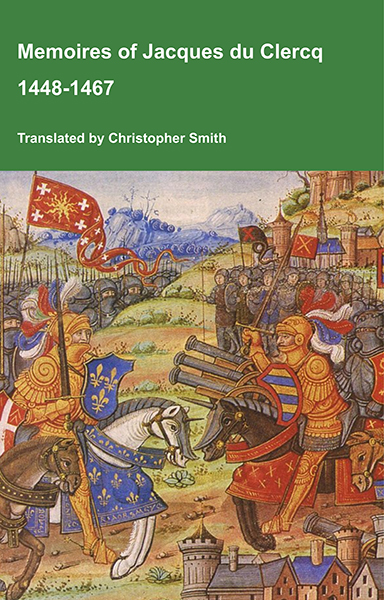 Memoires Jacques du Clercq. On the 5th day of April following, in the town of Lille, Master Thomas Mallet, a master of the Chamber of Accounts, while at work there and unaware of the Duke of Burgundy, was seized by the provost of Lille, by order of the Count of Charolais, in the very chamber where he was working. The provost immediately handed him over to fourteen archers of the said count, who quickly set him on horseback and carried him off to a castle called Beaurevoir. Despite his request, they would not allow him to go first to his house in Lille. This Master Thomas had once been a clerk to Guy Guillebault, a man of humble beginnings; but by this time he had become extraordinarily rich, and had married several of his daughters very advantageously to knights. He had risen under the patronage of the Lord of Croy, and was exceedingly greedy and wealthy. Soon after Master Thomas had been imprisoned, his brother Hutin Mallet was also arrested in the same town of Lille and taken to the castle of Lille. On the 8th day of June following, this Hutin was beheaded. Hutin was reputed to be deceitful, litigious, and quarrelsome. He had had two wives: the first, who was beautiful and good, he beat so severely out of jealousy that she died; the second, whom he married for her wealth and who was about sixty years old or more, he treated so badly through beatings and ill-usage that she also died. Yet, because of the influence his brother held, his opponents could not obtain justice against him. Nevertheless, these were not the causes of his arrest. Rather, it was certain insulting words he had spoken about the Count of Charolais after learning that his brother had been imprisoned. Once he himself was arrested, numerous complaints were brought forward, which led to his execution. Four or five months later, Master Thomas Mallet, through great efforts on his own behalf, was released from prison and restored to his office.
Le ve jour d'avril ensuivant, en la ville de Lille, maitre Thomas Mallet, maitre de la chambre des comptes ou il besoingnoit, ne s'en donnant garde du duc de Bourgogne, par le prevost de Lille, par le command du comte de Charollois, fust prins en la propre chambre des comptes, ou il besoingnoit ne se donnant garde; lequel prevost le livra prestement a xiiij archiers dudit comte, lesquels prestement le feirent monter a cheval, et le menerent en ung chastel nommé Beaurevoir, et pour requette que ledit maitre Thomas feit, ne le voullurent laisser aller jusques a sa maison, en icelle ville de Lille. Icelluy maitre Thomas avoit esté clercq a Guy Guillebault, pauvre enfant; mais pour ce jour il estoit tant riche que a merveille, et avoit marrié plusieurs de ses filles très grandement a plusieurs chevalliers. Il avoit esté elevé soubs le St de Croy, et estoit convoiteulx merveilleusement et riche. Assés tost après que icelluy maitre Thomas fust prisonnier, fust prins en ladite ville de Lille Hutin Mallet son frere, et mené au chastel de Lille, et le viij jour de juing ensuivant fust descapité icelluy Hutin, lequel Hutin estoit renommé d'estre hocqueleur, faulx, plain de procés et questions, et avoit eu deux femmes, la premiere qui estoit belle et bonne, il avoit tant battu par sa jalousie qu'elle en mourut; la seconde qu'il prist riche, et agiée de soixante ans ou plus, il lui avoit mené si malle vie par battre et fourmener, qu'elle en mourut aussy; mais par l'audience que son frere avoit, ses parties contraires ne pooient avoir raison: toutesfois toutes ces choses ne feurent point la cause de sa prinse, mais aulcunes injurieuses parollesqu'il avoit dit du comte de Charollois, après qu'il sceut que son frere estoit prisonnier, et lui prins, vindrent ces plaintes en grand nombre, qui feurent cause de sa mort, et quatre ou cinq mois après, ledit Thomas Mallet son frere, par le grand pourchas qu'il olt, fust deslivré de prison et restitué en son office.
On 8th June 1467 King Edward IV of England [aged 25] and John "Butcher of England" Tiptoft 1st Earl of Worcester [aged 40] went to Whitehall Palace [Map] to retrieve the Great Seal from Archbishop George Neville [aged 35]. Considered as a slight against the Neville family to whom King Edward IV of England was increasingly distant.
On 8th June 1476 Archbishop George Neville [aged 44] died.
Wriothesley's Chronicle [1508-1562]. 8th June 1492. The Queenes [aged 26] mother [aged 55]l deceased, and the Lowersm set upon Guylde Hall [Map].
Note l. Elizabeth Woodville, widow of Edward IV.
Note m. Towers.
On 8th June 1492 Elizabeth Woodville Queen Consort England [aged 55] died at Bermondsey Abbey [Map]. She was buried in the Chantry Chapel next to the Altar, St George's Chapel [Map] with her husband King Edward IV of England.
The Noble Triumphant Coronacyon of Quene Anne. 8th June 1532. Also the sonday after Whytsonday beyng trynyte sonday and the eighth daye of June was made at Grenewyche these knyghtes followynge.
Sir Johan Dawne
Sir Richarde Haughton.
Sir Thomas Langton.
Sir Edwarde Bowton.
Sir Henry Capell.
Sir Christofer Cowen.
Sir Geffray Mydelton.
Sir Hugh Treuyneon.
Sir George West.
Sir Clement Herleston.
Sir Humfrey Feryes.
Letters and Papers. 8th June 1536. Poli Epist., 455. 1093. Pole to Card. Contarini.
The person whom he sent with his book to the King has returned with letters from the King to the effect that he is not displeased with what Pole has written, but as their opinions differ in many points, or rather, in everything, he desires him to return, that he may communicate with him. Cromwell writes, urging him to do so as soon as possible. Answers to this by a plain refusal, unless the King first returns to the Church. What was said about the favour in which Tunstal and "Balsoriensis Episcopus" were with the King is not true. Cromwell is the sole governor. Some good things are said about the new bride [aged 27]. Despairs of England. Expects to hear again from England as soon as the King knows he will not return. Venice, 8 June.
Lat.


Letters and Papers. 8th June 1536. Statute Roll. 1087. Parliament.
Begun at Westminster 8 June 28 Henry VIII., Acts concerning:—
1. The attainder of Thomas Fitzgerald and his five uncles [c. 18].
2. Assurance of the manor of Southwark to the King [c. 19].
3. Jointure of Dame Grace, wife of Sir Henry Parker, son and heir to Henry lord Morley [c. 20].
4. Exchange between the King and the prior of St. Johns [c. 21].
5. Lands belonging to the earldom of Warwick [c. 22].
6. Pension to Robert Shurborn late Bishop of Chichester [c. 23].
7. Attainder of lord Thomas Howard [c. 24].
8. Assurance of lands to Viscount Beauchamp [aged 36] [c. 25].
9. Assurance of lands in Kew to Viscount Beauchamp and lady Anne [aged 39] his wife [c. 26].
10. Church of Elsingspittle to be the parish church of St. Alphes, Cripplegate [c. 27].
11. Moiety of Ricard's Castle assured to John Onley [c. 28].
12. Exchange with the Abbot of Westminster for Covent Garden [c. 29].
13. Purchase of Stanton Barry from Thomas Pope [c. 30].
14. Enlargement of St. Margaret's churchyard, Southwark [c. 31].
15. Lands at Westminster conveyed to the King by the churchwardens of St. Martin's and St. Margaret's [c. 32].
16. Durham Place conveyed to the King by exchange [c. 33].
17. Baynard's Castle assured to the Duke of Richmond [aged 16] [c. 34].
18. Exchange with lord Sandes [c. 35].
19. Award between Sir Adrian Fortescue and Sir Walter Stoner [c. 36].
20. Jointure of Dorothy, daughter to the Earl of Huntingdon, to be married to Richard Devereux, son of lord Ferrers [c. 37].
20a. Assurance of Paris Garden, &c. to the Queen [c. 38].
21. Earldom of March [c. 39].
22. Lands assured to Edward North [c. 40].
23. Manor of Birmingham assured to the King [c. 41].
24. Exchange with the Abbot of Abingdon [c. 42].
25. Lands assured to Thomas Jermyn [c. 43].
26. Manor of Haselyngfeld assured to the Charter House [c. 44].
27. The Queen's [aged 27] jointure [c. 45].
28. Lands assured to Thomas Hatclyff, clerk of the Green Cloth [c. 46].
29. Lands assured to John Gostwyke [c. 47].
30. Concerning a marriage to be had between Lord Bulbeke [aged 20], son and heir apparent to the Earl of Oxford [aged 65], and Dorothy, eldest daughter of the Earl of Westmoreland [aged 38] [c. 48].
31. Exchange of Covent Garden with the abbot and convent of Westmoreland [c. 49].
32. Exchange between the King, the archbishop of Canterbury, and Cromwell (Wimbledon, Mortlake, &c.) [c. 50].
33. Jointure of Catharine Duchess of Suffolk [aged 17] [c. 51].
34. Lands of Lord Rochford [deceased], Norris [deceased], and others [c. 52].
35. Benefit of clergy restricted [c. 1].
36. Against servants embezzling [c. 2].
37. Power to allot townships in Wales [c. 3].
38. Repeal of statute for dowlas and lokerams [c. 4].
39. For prentices [c. 5].
40. For continuing the Statute of Beggars and other Acts [c. 6].
41. The Succession [c. 7].
42. For continuing statutes against exportation of copper, &c. [c. 8].
43. For continuing statutes against perjury and others [c. 9].
44. For extinguishing the authority of the Bishop of Rome [c. 10].
45. For restitution of first-fruits during vacancies to next incumbent [c. 11].
46. Declaring the limits of the King's palace of Westminster [c. 12].
47. Against non-residence of spiritual persons [c. 13].
48. Prices of wines [c. 14].
49. Punishment of pirates [c. 15].
50. Dispensations from Rome [c. 16].
51. The King's successors when 24 years of age to have power to annul Acts of Parliament made during their minority [c. 51].
Letters and Papers. 8th June 1536. Otho. C. x. 280. B. M. Hearne's Sylloge. 149. 1083. Princess Mary [aged 20] to [Henry VIII.]
Begs his daily blessing. Though she understands, to her inestimable comfort, that he has forgiven all her offences and withdrawn his displeasure long time conceived against her, her joy will not be full till she is allowed to come to his presence. Begs pardon for her continual suit and rude writing, for nature will suffer her to do no otherwise. Hopes God will preserve him and the Queen [aged 27], and send them a prince. Hownsdon [Map], 8 June.
Hol. Mutilated.


On 8th June 1547 James Stewart of Beath [aged 41] was murdered at Dunblane, Perth.

Anne Boleyn. Her Life as told by Lancelot de Carle's 1536 Letter.
In 1536, two weeks after the execution of Anne Boleyn, her brother George and four others, Lancelot du Carle, wrote an extraordinary letter that described Anne's life, and her trial and execution, to which he was a witness. This book presents a new translation of that letter, with additional material from other contemporary sources such as Letters, Hall's and Wriothesley's Chronicles, the pamphlets of Wynkyn the Worde, the Memorial of George Constantyne, the Portuguese Letter and the Baga de Secrets, all of which are provided in Appendices.
Available at Amazon in eBook and Paperback format.

Diary of Edward VI. 8th June 1550. Also the vicedam [aged 28]1 made a great souper to the duke of Somerset [aged 50] and the marquis of Northampton [aged 38], with divers masques and other conceites.
Note 1. The vidame of Chartres seems to have signalised himself among the French visitors by his hospitality. On the 4th of June the council sent "a letter to the customers of London to suffer the visdame to take and lande xliij tonnes of Gascon wine for his own provision without oustome-paying." Again on the 7th Jan. 1550-1, xxv or xxvj tonne.

Diary of Edward VI. 8th June 1550. It was agreed that the tow hundred that were with me, and 200 with mr. Herbert [aged 49], shuld be sent into Irland. Also that the mint1 shuld be set awork that it might wine2 24,000 pounds a yeare, and so beare all my chargis and3 Irland for this yere, and tene thousand poiuids to my cofers.
Note 1. "June xxvij. Upon divers good consideracions it was agreed that the Kinges majestie shulde erect a mynte in Irelande, and that Lexe and Ofale, being the cuntreys late Oconor's and Omore's (see before, p. 221), shulde be lett out to the King's subjects at convenient rents, to the intent it may both be inhabited, and also a more streingth for the Kinges majestie."
"July viij. Forasmuch as the King's majesties continuall chardges in Irelande did drawe the coyne of the reahne awaie, considering moreover that without erecting a mynte there those chardges might ill be borne, it was not only agreed that the mynte shulde be sett up againe, but also that it shulde be lett out to ferme for xij moneths at these condicions following:
"First. That the King's majestie shulde be at no manner of charge, great nor small.
"Item. That the King's highness shall have xiijs iiijd cleere of every pound wieght that shall be coyned.
"Item. That they shall coyne no manner of bullion, either of this realms or of Ireland, but to provide it in other cuntreys.
"Item. That they shall advance at the least by this meane the summe of xxuijMl li. to the King's majestie within these xij moneths.
"Item. That the King shall. appoinct a master of the sales and a comptroller, to be paid at the fermors' chardges."
Note 2. i.e. win, so much profit; not "coin," as printed by Burnet.
Note 3. So the MS., but probably an error for "in."
Memorials of the Montgomeries Volume 2. Contract of Marriage between Hugh third Earl of Eglintoun [aged 31], and Dame Agnes Drummond [aged 39], sister (uterine) of George fourth Earl of Huntlie [aged 48], 8th June 1562.
At Innerpreffre, the aucht day of Junii, the zere of God IM Ve threscoir tua zeris: It is appunctuat, finally concordit and contrackit betuix ane nobill and mychty lord, George Erie of Huntlie, Dame Mergret Stewart, Lady Gordoun, and Dame Agnes Drummond, Lady Lowdoun, sister to the said Erie and dochtir to the said Dame Mergret, on that ane part, and ane nobil and potent lord, Hew Erie of Eglintoun and Lord Muntgumry, vpoun that wther part, in maner folloving; that is to say, the said Hew Erie of Eglintoun sail, Godwilling, mary and tak to his wyfe solempnatlie, in face of halie kirk lauchfullie, the said Dame Agnes, betuix and the Natanite of Sanct Johnne callit Mydsomer nixtocum: For the quhilk manage to be compleitit as said is, the said George Erie of Huntlie, Dame Mergrat Stewart, Lady Gt)rdoun, and the said Dame Agnes, bindis and oblisis thame, thair airis, executouris and assignais, coniunctlie and seueralie, to content, deliuer and pay to the said Hew Erie of Eglinton, his airis, executouris, or assignais, the sovme of sax thousand merkis Tsuale money of this realme, in name of tochir. . And als the said Dame Agnes sail releif wyth her leving the said Hew Erie of Eglintoun of the sovme of sax hundreth merkis money to be payit to Dame Jehane Hammyltoun, dochtir to my Lord Duik, ay and quhill the payment of the sovme abone writing to be payit to the said Hew, Erie, in maner as said is: And howbeit thare be na impedimentis of consanguinite or affinitie knawin presentlie betuix the saidis parteis, bot that thai may compleit the said band of matrimony lauchfullie as said is; and giff thair salhappin heireftir ony impedimentis of consanguinite or affinite in tyme cummyng to be knavin betuix the said parteis, quhairby thai may nocht remane in lauchfull matrimony; than and in that cace the said Hew, Erie forsaid, bindis and oblisis him and his forsaidis, to bring hame fra the court of Rome sufficient dispensationis contenand confirmatioun, or to obtene the sammyn at ony handis haueand power thairof, to dispens with sic impedimentis that salhappin to be knavin or proponit, vpoun the said Hew Erlis expensis: And gif it salhappin the said Hew, Erie forsaid (as God forbeid), to move ony cans of diuorce aganis the said Dame Agnes in ony tyme to cum, than and in that cace the said Hew Erie bindis and oblisis him and his airis, to refund, content and pay to the said Dame Agnes, the sovme aboun writing, or at the leist samekle thairof as beis ressauit be him fra the said Dame Agnes; and by the said sovme, the said Dame Agnes sail bruik all landis in the quhilkis scho beis infeft in be the said Hew, Erie forsaid, induring hir lyftyme: And siclyk, gif it salhappin the said Dame Agnes to move ony cans of diuorce aganis the said Hew Erie in ony tyme to cum, than and in that cace the said Dame Agnes, now as than and than as now, renuncis and ourgevis all and sindry landis pertenyng to the said Hew Erie, in the quhilkis scho happinnis to be infeft in, with all rycht, titill of rycht and clame scho may haue to the samyn, and exoneris quytclamis and dischargis the said Hew, Erie forsaid, of all sowmes of money, guidis and geir, quhilkis scho may ask or craif fra the said Erie, gevin to him for the completing of the said mariagc: And for sure payment of foure thousand merkis money of the said sax thousand merkis money, Robert Craufurd of Clolyane ar becumin cautionaris and souerteis, comunctly and scueraly, with the saidis George Erie of Huntle, Dame Mergret and Dame Agnes, to be payit at the tennis forsaid. .... And for fulfilling, keping and observing of all and sindry thir premisis, the saidis parteis and cautionar ar content that this present contract be insert and registrat in the buikis of our souerane Ladvis counsall, and the Lordis decreit and authorite thairintill to be interponit .... In vitnes of the quhilk thing the saidis parteis and cautionar forsaid hes subscrivit this present oontraot with thair handis, day, zere and place forsaid, befoir thir vitnes, honorable men, Maister James Gordoun, Chancellar of Murray, Mathow Campbell of Lowdoun, knycht, schiref of Air, James Cheishohne of Cnimleikis, Williame Maister of Eglintoun, Johne Stewart of Bowhous, and Maister Robert Herbertsoun, vicair of Abruthtwen.
On 8th June 1587 the English fleet commanded by Francis Drake [aged 47] sighted a Portuguese carrack, the São Filipe, twenty leagues from the Island of São Miguel, returning from the Indies laden with treasure. After a brief exchange of fire it was captured, the first ship to be so on the return run from the Indies. Its enormous fortune of gold, spices, and silk was valued at £108,000 (of which 10% was to go to Francis Drake); the fleet returned to England, arriving on 06 July 1587. The expedition led by Francis Drake was a resounding military success: over one hundred Spanish vessels of different tonnages were destroyed or captured during the expedition. Economic and material losses caused to the Spanish fleet by the English attack ensured that Spanish plans for the invasion of England had to be postponed for over a year. It was not until August 1588 that the Armada was ready to leave for the British Isles.


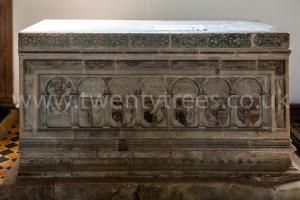
On 8th June 1606 Edward Clere [aged 69] died. Chest tomb in St Andrew's Church, Blickling [Map].

Letters of John Chamberlain Volume 2.243. [8th June 1616] The Countesse of Salisberie [aged 26] hath brought a sonne wherto the King is invited somtime the next weeke to be Godfather. The King dines this day in towne at Alderman Coquins [aged 55] invited thether by the companie of the new marchants, where I heare they mean to present him with a bason of gold of £1000 value, and the Prince with halfe so much. Two dayes since I receved both your letters of the 24th and 30th of the last moneth. Presently after your going hence I inquired whether Sir Henry Wotton had signed the letter for Gregorio, and found he had don his part, but nothing comes of yt, and yet I furthered yt then what I might, and divers times since, I assure I you, as occasion was offered, or any mention made of him; but yt is surdo canere [singing to a deaf person], so that not long since I told him the poore man meant to come over and solicit for himself; yet in these bare times I wold not wish him to adventure yt without better assurance then I can geve him, for I see no man intends any thing in publike that doth not some way concern himself. Yesterday I cast out a word of your going to the Spaa, and what necessitie there is of yt, but he wold not be acknowne [admit] that he had heard any thing of yt, or that you had written to him about yt. Phill Lytton goes ydling up and down and knowes not what to do with himself. His brother [aged 29] as lasilie hunts after meanes to place him about the Lord Chamberlain [aged 36], which yf yt fayle he makes reconing to go with the Lord Rosse [aged 26] into Spaine. In conclusion I have no opinion of his industrie, or that he cares to employ himself virtuosamente. So with all due remembrance to my Lady I commend you to the protection of the Almighty. From London this 8th of June 1616.
Your Lordships to commaund
John Chamberlain [aged 63].
To the right honorable Sir Dudley Carleton knight Lord Ambassador for his Majestie with the States of the United Provinces at the Hagh.

Diary of Anne Clifford. 8th June 1616. Upon the 8th being Saturday Rivers and Mr Burridge were sent down into Westmoreland with letters from the Council for restoring the possession of Appleby Castle [Map] as it was at my Lady's decease1.
At this time my Lord [aged 27] desired to have me pass my rights of the lands of Westmoreland to him and my Child, and to this end he brought my Lord William Howard to persuade me and then my Lord told me I should go presently to Knole, and so I was sent away upon half an hour's warning leaving my Coz. Cecily Neville and Willoughby behind me at London and so went down alone with Kath. Buxton about 8 o'clock at night so as it was 12 before we came to Knole.
Note 1. About this time came Lady Cavendish [aged 66], Sir R.Yately, Mr Watson to see me and comfort me after the loss of my Mother and persuaded me much to consent to the Agreement.
Letters of John Chamberlain Volume 2.243. 243. To Sir Dudley Carleton [aged 43]. [S. P. Dom., Jac. I, lxxxvii, 51.] London, June 8, 1616.
My very goode Lord: When I wrote last I left the earle of Somerset [aged 29] pleading for his life, but that he saide for himself was so litle that he was found guilty by all his peeres: which did so litle appall him that when he was asked what he could say why sentence shold not be pronounced, he stoode still upon his innocence, and could hardly be brought to refer himself to the Kinges mercie: upon which termes he stands still, and having leave to write to the King, hath only required that his judgement of hanging shold be chaunged to heading, and that his daughter might have such of his lands as the King doth not resume and reserve in his owne handes. The Lady Knolles [aged 33] and some other frends have had accesse to the Lady [aged 26] divers times since her conviction, and caried her younge daughter to her twise or thrise; but I heare not of any that comes at him. He hath ben much urged and fayre offered to confesse the offence both before his arraignment and since, but he stands firme in denial: though by all circumstances and most pregnant, (yea almost infallible) probabilities he be more faulty and fowle then any of the companie, which makes the King marvayle that all the rest that have gon before having so franckly confessed the matter after theyre condemnation, he only shold continue so confident. Whether this or any other reason be the cause of stay of execution I know not, but they live yet and for ought I can learne so are like to do many a day. Sir Thomas Mounsons [aged 51] arraignment which shold have ben yesterday, was then put of again till the Tewsday after the terme, which procrastination from time to time makes the world thincke we shall heare no more of this busines, the rather for that the Lord Cooke [aged 64] of late is fallen (I know not how) into disfavor, so far foorth that the King hath ben very bitter to him, both in privat and publike, as upon Thursday last when all the Judges were called before the King at Whitehall, to geve a reason of theyre proceeding in the exchecquer chamber to argue a case of commendams contrarie to his commaundment by expresse message, and sending a letter subscribed by them all, not so respectively and reverently written as might become them, they all stoode upon the very words and termes of law and statutes and upon the strictnes of theyre oath: but the heaviest burthen lighted on him, wherin he behaved and caried himself so well and confidently, that the matter goes on, and they argue yt again this day, contrarie to the expectation and hope of all the bishops. But the worst is that the Lord Chauncellor [aged 76], the atturny [aged 55] and sollicitor [aged 49] prosecute him implacablie, and have won so much ground upon him, that there is a commission graunted to the Lord Archbishop, the Lord Knollis [aged 72], Sir Thomas Lake [aged 48] and Sir Fulke Grivell to call him before them and examine him upon articles and points touching the premunire: and withall, the whole course of his life is like to be ript up and looked into which yf yt be severely followed many men feare yt may be his utter overthrow. But he holdes up his head, and geves no way, which makes his frends thincke he will passe over this storme and tempest well enough. Our goode frend [aged 53] stands only firme to him in what he may, which many marvayle at, and sticke not to say he is corrupted, which I thincke is as far from the one as the other: but howsoever, I could wish he shold not presume so much on the strength of his shoulders, as to thincke he alone were able to beare up the ruines of a building that is falling: and to say truth in many such cases I observe he hath more courage then needs, not weighing his owne strength, nor that yt is soma d'altri homeri [the burden of other men], for I perceve he hath litle appoggio [support, baking] to the maine piller [aged 23] that now stands upright.

John Evelyn's Diary. 8th June 1654.. my wife [aged 19] and I set out in a coach and four horses, in our way to visit relations of hers in Wiltshire, and other parts, where we resolved to spend some months. We dined at Windsor [Map], saw the Castle and Chapel of St. George, where they have laid our blessed Martyr, King Charles, in the vault just before the alter. The church and workmanship in stone is admirable. The Castle itself is large in circumference; but the rooms melancholy, and of ancient magnificence. The keep, or mount, hath, besides its incomparable prospect, a very profound well; and the terrace toward Eton, with the park, meandering Thames, and sweet meadows, yield one of the most delightful prospects. That night, we lay at Reading. Saw my Lord Craven's [aged 46] house at Causam [Caversham], now in ruins, his goodly woods felling by the Rebels.
John Evelyn's Diary. 8th June 1658. That excellent preacher and holy man, Dr. Hewer, was martyred for having intelligence with his Majesty [aged 28], through the Lord Marquis of Ormond [aged 47].


On 8th June 1658 Henry Slingsby 1st Baronet [aged 56] was beheaded on Tower Hill [Map] for being a Royalist. His son Thomas [aged 21] succeeded 2nd Baronet Slingsby Scriven.
John Evelyn's Diary. 4th June 1660. Addressing myself to the Duke [aged 26], I was carried to his Majesty [aged 30], when very few noblemen were with him, and kissed his hands, being very graciously received. I then returned home, to meet Sir Richard Browne [aged 55], who came not till the 8th, after nineteen years exile, during all which time he kept up in his chapel the Liturgy and Offices of the Church of England, to his no small honor, and in a time when it was so low, and as many thought utterly lost, that in various controversies both with Papists and Sectaries, our divines used to argue for the visibility of the Church, from his chapel and congregation.


Samuel Pepys' Diary. 8th June 1665. VICTORY OVER THE DUTCH, JUNE 3RD, 1665.
This day they engaged; the Dutch neglecting greatly the opportunity of the wind they had of us, by which they lost the benefit of their fire-ships. The Earl of Falmouth [deceased], Muskerry, and Mr. Richard Boyle killed on board the Duke's ship, the Royall Charles, with one shot: their blood and brains flying in the Duke's [aged 31] face; and the head of Mr. Boyle striking down the Duke, as some say. Earle of Marlborough [deceased], Portland [deceased], Rear-Admirall Sansum (to Prince Rupert [aged 45]) killed, and Capt. Kirby and Ableson. Sir John Lawson [aged 50] wounded on the knee; hath had some bones taken out, and is likely to be well again. Upon receiving the hurt, he sent to the Duke for another to command the Royall Oake. The Duke sent Jordan1 out of the St. George, who did brave things in her. Capt. Jer. Smith of the Mary was second to the Duke, and stepped between him and Captain Seaton of the Urania (76 guns and 400 men), who had sworn to board the Duke; killed him, 200 men, and took the ship; himself losing 99 men, and never an officer saved but himself and lieutenant. His master indeed is saved, with his leg cut off: Admirall Opdam blown up, Trump killed, and said by Holmes; all the rest of their admiralls, as they say, but Everson (whom they dare not trust for his affection to the Prince of Orange), are killed: we having taken and sunk, as is believed, about 24 of their best ships; killed and taken near 8 or 10,000 men, and lost, we think, not above 700. A great[er] victory never known in the world. They are all fled, some 43 got into the Texell, and others elsewhere, and we in pursuit of the rest.
Note 1. Afterwards Sir Joseph Jordan, commander of the "Royal Sovereign", and Vice-Admiral of the Red, 1672. He was knighted on July 1st, 1665. B.
John Evelyn's Diary. 8th June 1665. Came news of his highness's [aged 35] victory, which indeed might have been a complete one, and at once ended the war, had it been pursued, but the cowardice of some, or treachery, or both, frustrated that. We had, however, bonfires, bells, and rejoicing in the city. Next day, the 9th, I had instant orders to repair to the Downs, so as I got to Rochester, Kent [Map] this evening. Next day I lay at Deal, Kent [Map], where I found all in readiness: but, the fleet being hindered by contrary winds, I came away on the 12th, and went to Dover, Kent [Map], and returned to Deal, Kent [Map]; and on the 13th, hearing the fleet was at Solbay, I went homeward, and lay at Chatham, Kent [Map], and on the 14th, I got home. On the 15th, came the eldest son of the present Secretary of State to the French King, with much other company, to dine with me. After dinner, I went with him to London, to speak to my Lord General for more guards, and gave his Majesty an account of my journey to the coasts under my inspection. I also waited on his Royal Highness [aged 31], now come triumphant from the fleet, gotten into repair. See the whole history of this conflict in my "History of the Dutch War"..
Samuel Pepys' Diary. 8th June 1665. I to my Lord Treasurer's [aged 58] by appointment of Sir Thomas Ingram's [aged 50], to meet the Goldsmiths; where I met with the great news at last newly come, brought by Bab May [aged 37] from the Duke of Yorke [aged 31], that we have totally routed the Dutch; that the Duke himself, the Prince [aged 45], my Lord Sandwich [aged 39], and Mr. Coventry [aged 37] are all well: which did put me into such joy, that I forgot almost all other thoughts. The particulars I shall set down by and by.


Henrici Quinti, Angliæ Regis, Gesta, is a first-hand account of the Agincourt Campaign, and subsequent events to his death in 1422. The author of the first part was a Chaplain in King Henry's retinue who was present from King Henry's departure at Southampton in 1415, at the siege of Harfleur, the battle of Agincourt, and the celebrations on King Henry's return to London. The second part, by another writer, relates the events that took place including the negotiations at Troye, Henry's marriage and his death in 1422.
Available at Amazon in eBook and Paperback format.
Samuel Pepys' Diary. 8th June 1665. So home to bed, with my heart at great rest and quiett, saving that the consideration of the victory is too great for me presently to comprehend1.
Note 1. Mrs. Ady (Julia Cartwright), in her fascinating life of Henrietta, Duchess of Orléans, gives an account of the receipt of the news of the great sea-fight in Paris, and quotes a letter of Charles II to his sister, dated, "Whitehall, June 8th, 1665" The first report that reached Paris was that "the Duke of York's [aged 31] ship had been blown up, and he himself had been drowned". "The shock was too much for Madame... she was seized with convulsions, and became so dangerously ill that Lord Hollis [aged 65] wrote to the King [aged 35], 'If things had gone ill at sea I really believe Madame would have died.'" Charles wrote: "I thanke God we have now the certayne newes of a very considerable victory over the Duch; you will see most of the particulars by the relation my Lord Hopis will shew you, though I have had as great a losse as 'tis possible in a good frinde, poore C. Barckely [deceased]. It troubles me so much, as I hope you will excuse the shortnesse of this letter, haveing receaved the newes of it but two houres agoe" ("Madame", 1894, pp. 215, 216).
Samuel Pepys' Diary. 8th June 1665. Thence with great joy to the Cocke-pitt [Map]; where the Duke of Albemarle [aged 56], like a man out of himself with content, new-told me all; and by and by comes a letter from Mr. Coventry's [aged 37] own hand to him, which he never opened (which was a strange thing), but did give it me to open and read, and consider what was fit for our office to do in it, and leave the letter with Sir W. Clerke; which upon such a time and occasion was a strange piece of indifference, hardly pardonable. I copied out the letter, and did also take minutes out of Sir W. Clerke's other letters; and the sum of the newes is:


Samuel Pepys' Diary. 8th June 1665. By and by comes Alderman Maynell and Mr. Viner [aged 34], and there my Lord Treasurer [aged 58] did intreat them to furnish me with money upon my tallys, Sir Philip Warwicke [aged 55] before my Lord declaring the King's changing of the hand from Mr. Povy [aged 51] to me, whom he called a very sober person, and one whom the Lord Treasurer would owne in all things that I should concern myself with them in the business of money. They did at present declare they could not part with money at present. My Lord did press them very hard, and I hope upon their considering we shall get some of them.


Samuel Pepys' Diary. 8th June 1665. Alone at home to dinner, my wife, mother, and Mercer dining at W. Joyce's; I giving her a caution to go round by the Half Moone [Map] to his house, because of the plague.
Samuel Pepys' Diary. 8th June 1666. After dinner Balty [aged 26] and I to my office, and there talked a great deal of this fight; and I am mightily pleased in him and have great content in, and hopes of his doing well.
John Evelyn's Diary. 8th June 1667. To London, alarmed by the Dutch, who were fallen on our fleet at Chatham, Kent [Map], by a most audacious enterprise, entering the very river with part of their fleet, doing us not only disgrace, but incredible mischief in burning several of our best men-of-war lying at anchor and moored there, and all this through our unaccountable negligence in not setting out our fleet in due time. This alarm caused me, fearing the enemy might venture up the Thames even to London (which they might have done with ease, and fired all the vessels in the river, too), to send away my best goods, plate, etc., from my house to another place. The alarm was so great that it put both country and city into fear, panic, and consternation, such as I hope I shall never see more; everybody was flying, none knew why or whither. Now, there were land forces dispatched with the Duke of Albemarle [aged 58], Lord Middleton [aged 59], Prince Rupert [aged 47], and the Duke [aged 33], to hinder the Dutch coming to Chatham, Kent [Map], fortifying Upnor Castle, Kent [Map], and laying chains and bombs; but the resolute enemy broke through all, and set fire on our ships, and retreated in spite, stopping up the Thames, the rest of the fleet lying before the mouth of it.
Samuel Pepys' Diary. 8th June 1667. Up, and to the office, where all the news this morning is, that the Dutch are come with a fleete of eighty sail to Harwich, Essex [Map], and that guns were heard plain by Sir W. Rider's people at Bednallgreene, all yesterday even.

Samuel Pepys' Diary. 8th June 1667. After dinner to the office again, where busy till night, and then home and to read a little and then to bed. The news is confirmed that the Dutch are off of Harwich, Essex [Map], but had done nothing last night. The King [aged 37] hath sent down my Lord of Oxford [aged 40] to raise the countries there; and all the Westerne barges are taken up to make a bridge over the River, about the Hope, for horse to cross the River, if there be occasion.
On 8th June 1671 Edgar Stewart 1st Duke Cambridge [aged 3] died. Duke Cambridge extinct.
John Evelyn's Diary. 8th June 1688. This day, the Archbishop of Canterbury [aged 71], with the Bishops of Ely [aged 50], Chichester [aged 64], St. Asaph [aged 60], Bristol [aged 38], Peterborough [aged 60], and Bath and Wells [aged 50], were sent from the Privy Council prisoners to the Tower [Map], for refusing to give bail for their appearance, on their not reading the Declaration for liberty of conscience; they refused to give bail, as it would have prejudiced their peerage. The concern of the people for them was wonderful, infinite crowds on their knees begging their blessing, and praying for them, as they passed out of the barge along the Tower wharf.


Roger Whitley's Diary. 8th June 1690. Sonday, (Whitsonday) his Majesty [aged 39] went from Peele to Chester; (Portland [aged 40], Scarborough [aged 40] & Warrington [aged 38] in the coach with him interl); I, Bidolph & one of his servants followed the Guards, &c.( the Mayor, Aldermen met him at Boughton, the Livery & Bearers in the streete interl); he went directly to the Cathedral [Map], sate in the Bishops seate; the Bishop [aged 57] attended him as Clarke of the Closet; then preached; after sermon took coach immediately at the church doore, soe to dinner at Geaton, &c. I had 2 pockets picked in the church & severall others besides myselfe; the Mayor invited me but I refused him; I, Bidolph & G.Mainwaring [aged 47] dined with Streete; severall came here to us; Bellot & I went thence to visit Sir Thomas Delves [aged 37], &c. I left Bellot there; went to Jacksons; there were Bidolph, Streete, G.Mainwaring, my 2 sons, Warburton, Wright, Governor (but he stayd not), Colonel Harman, another officer,&c. I and Bidolph & Roger left them past 7; came home neare 9; found Mr Offley there, he stayd all night.


John Evelyn's Diary. 8th June 1698. I went to congratulate the marriage of Mr. Godolphin [aged 19] with the Earl of Marlborough's [aged 48] daughter [aged 16].


On 5th April 1713 Richard Welby [aged 55] died. Monument at St Andrew's Church, Denton [Map]. Sculpted by Thomas Green of Camberwell [aged 54]. The fully wigged standing life sized figure of the deceased stands in an arched surround flanked by fluted Pilasters with acanthus scrolls and broken segmental pediment contaning a cherub and putti leaning down from heaven holding a metal coronet, surmounted by an achievement. Beneath is he inscription panel and to either side putti holding memento mori, and mourning, one with tears.
The inscription reads:
M.S.
Here are deposited the Remains of
Richard Welby of Denton Esqr
Lord of the Mannours of Welby Streglethorp Saperton and
Swinsted and High Sheriff of the County of Lincoln 1705
A Gentleman of an ancient & Virtuous Family, a good Christian
a Loyal Subject, a true lover of the Church
a sincere Respector of its Clergy and
a daily Frequentor of its Worship
In His private Character, Modest, Humble and Courteous
of great Probity and universal Charity
The Poor lost in him a liberal and silent Benefactor
his Tenants, a forbearing Landlord;
his Servants, a kind and prudent master;
his Relations, an invaluable Friend;
his Children, a most indulgent Father and
his Mournfull Wife ye Best of Husbands.
He marry'd Mary Daughter & Sole Heiress of John Towers of
the Isle of Ely Esqr, by whom he had Issue;
Mary Interred here, Selina, William and John twins, Eleanor & Richard
After a tedious Sickness, which he bore with exemplary patience
and resignation, he dyed on Easter day 1713
In hopes of a Joyfull Resurrection; & lament his loss
the Righteous shall be had in everlasting Remembrance
MARY his once happy Wife now Sorrowfull Relict
??????? her own Affection
Erected this Monument Dec 10 1714.
Mary Welby
Ob June 8 1759
Ae 74
Richard Welby: In 1658 he was born. Before 1713 he and Mary Towers were married.



On 8th June 1723 Harriet Fitzroy was born to Charles Fitzroy 2nd Duke Grafton [aged 39] and Henrietta Somerset Duchess Grafton [aged 32]. She a great granddaughter of King Charles II of England Scotland and Ireland.

Stonehenge by William Stukeley. Table XXV. The Approach to Radfyn [Map] fronting the Avenue of Stonehenge. 8 Jun 1724. A. the avenue [Map]. B. the old Kings Barrows. C. the new Kings barrows. D. Vespasians camp [Map]. E. the beginnings of the avenue.

On 8th June 1795 Louis XVII King France [aged 10] died. His uncle Louis [aged 39] de jure XVIII King France: Capet Valois Bourbon.
On 8th June 1829 John Everett Millais 1st Baronet was born to John William Millais and Emily Mary Evermy [aged 40] at Southampton, Hampshire [Map]. Most of his early childhood was spent in Jersey. He married 3rd July 1855 Euphemia "Effie" Gray Lady Millais and had issue.


On 8th June 1842 Henry Parnell 1st Baron Congleton [aged 65] committed suicide by hanging having suffered for some time from ill-health and melancholy. His son John [aged 36] succeeded 2nd Baron Congleton of Congleton in Cheshire, 5th Baronet Parnell of Rathleague Queen's County.

Archaeologia Volume 33 Section XIII. Account of a Gold Torquis found in Needwood Forest in Staffordshire, in a Letter to the Viscount Mahon, President, from Sir HENRY ELLIS, K.H. Secretary. Read June 8th, 1848.
Chronicle of a Bourgeois of Valenciennes
Récits d’un bourgeois de Valenciennes aka The Chronicle of a Bourgeois of Valenciennes is a vivid 14th-century vernacular chronicle written by an anonymous urban chronicler from Valenciennes in the County of Hainaut. It survives in a manuscript that describes local and regional history from about 1253 to 1366, blending chronology, narrative episodes, and eyewitness-style accounts of political, military, and social events in medieval France, Flanders, and the Low Countries. The work begins with a chronological framework of events affecting Valenciennes and its region under rulers such as King Philip VI of France and the shifting allegiances of local nobility. It includes accounts of conflicts, sieges, diplomatic manoeuvres, and the impact of broader struggles like the Hundred Years’ War on urban life in Hainaut. Written from the perspective of a burgher (bourgeois) rather than a monastery or royal court, the chronicle offers a rare lay viewpoint on high politics and warfare, reflecting how merchants, townspeople, and civic institutions experienced the turbulence of the 13th and 14th centuries. Its narrative style combines straightforward reporting of events with moral and civic observations, making it a valuable source for readers interested in medieval urban society, regional politics, and the lived experience of war and governance in pre-modern Europe.
Available at Amazon in eBook and Paperback format.

Ten Years' Digging. Several unsuccessful attempts to open the barrow at Longlow [Map], near Wetton, are noticed in the preceding pages, which failed from a great part of the mound being surrounded by mine hillocks, imder which it extended much further than was at first anticipated, in fact, a shaft had been sunk very near the centre of the tumulus. From a careful measurement of part of the barrow still remaining in its original condition, it appears to have had a circumference of ninety yards. It is chiefly composed of flat stones, many of which are large, and set on end, inclining towards each other at the top, by which mode of construction many vacancies are occasioned. Near the surface and at the edge the stones are smaller, and the interstices are filled with gravel and earth; the depth in the highest part was more than seven feet. Convinced that we had not yet found the principal interment, and as the presumed centre had been examined down to the rock, we excavated the S.E. side of the mound in the month of March of the present year, without finding more than detached pieces of human bone, and lumps of flint amongst a quantity of charcoal near the surface; and laying bare at the bottom, a low wall of square stones, altogether about four feet long and eight inches high. At length, on the 8th of June, after having expended part of the preceding day in excavation, we had the satisfaction of discovering a very large cist, or chamber, the first indication of which were two large stones lying parallel to each other in an inclined direction. They had originally constituted one stone only, forming one end of the cist which had been displaced, and each was seven feet long by five broad. At the foot of these appeared the end of another stone of almost equal size placed on edge, which proved to be one side of the sepulchral chamber; It was seven Inches thick. The opposite side was formed by a stone equally long, but about a foot narrower, and eleven inches in thickness. The stone forming the end inclined Inwards, having given way; it was five feet broad by six feet long, thus rendering the chamber, as originally constructed, six feet long, five wide, and about four deep. Excepting at a little vacancy at the end first discovered, where human remains were seen scattered amongst the stones, the chamber was filled In the upper part with earth and stones, below with stones only, which being removed, exposed a well-paved floor, covered from end to end with human bones, which lying altogether in the primitive contracted position, appeared to be in great confusion, though not so in reality. Two skulls lay close together, in contact with the side of the cist, beneath another skull (shortly to be described; In the middle lay the leg bones of one skeleton and the arms of another. One skeleton was situated rather higher up amongst the stones. Bones of the ox, hog, deer, and dog; also three very finely chipped arrow-heads, and many other pieces of calcined flint accompanied the human remains, which, as well as we could ascertain, represented at least thirteen individuals, ranging from infancy to old age, and including several females.
On 8th June 1856 Victoria Susan Chetwynd-Talbot [aged 25] died at Naples [Map]. Monument at St Mary the Virgin Church, Ingestre [Map] sculpted by Ernesto Cali [aged 35].
Victoria Susan Chetwynd-Talbot: On 27th February 1831 she was born to Henry John Chetwynd-Talbot 3rd Earl Talbot 18th Earl of Shrewsbury and Sarah Elizabeth Beresford Countess Talbot Shrewsbury Waterford. Adeline Horsey Recollections. Lady Victoria Talbot, who was staying at Gopsall, was very much in love with Lord Anson, and was always trying to make a sketch of him. I got tired of seeing impressions of the Anson profile, full face, three-quarter face, lying about as thick as leaves in Vallambrosa; but Lady Victoria went on blissfully sketching, until one morning her mother discovered the work of the love-smitten amateur artist. "Who did these .'" she demanded, thinking somebody was Anson mad. Lady Victoria apparently dreaded confession, for the Countess seemed by her manner to consider sketching young men rather a fast proceeding. Lady Victoria cast an appealing glance at me - "Miss de Horsey did them, mamma!" I accepted the lie, and after that the Anson sketching mania died a natural death.
Ernesto Cali: In 1821 he was born.


After 8th June 1865. St Peter's Church, Edensor [Map]. Memorial and grave of Joseph Paxton [deceased].
Joseph Paxton: Around 1785 Edensor, Chatsworth, Derbyshire William Cavendish 6th Duke Devonshire, working with Joseph Paxton relocated Edensor, Chatsworth, Derbyshire, possibly so that it could no longer be seen from Chatsworth House, Derbyshire [Map]. One the east of the original village one house was left in situ being occupied by an elderly retainer Anthony Holmes. It was walled around to protect it against deer and cattle. Six houses were left in-situ although they were modified to include ornamental chimneys. The new village was provided with allotments, a small prison and a mortuary. On 3rd August 1803 he was born at Milton Bryant, Bedfordshire. In 1827 he and Sarah Bown were married. On 8th June 1865 he died at Rockhills House, Sydenham. He was buried at St Peter's Church, Edensor [Map].


On 8th June 1875 Constance Blanche Godolphin Godolphin Osborne was born to George Godolphin Osborne 9th Duke Leeds [aged 46] and Fanny Georgiana Pitt-Rivers Duchess Leeds [aged 38]. Coefficient of inbreeding 3.94%. She married Ernest Frederick George Hatch.
On 8th June 1893 Charles Gordon-Lennox 8th Duke Richmond [aged 22] and Hilda Madeline Brassey Duchess Richmond [aged 20] were married. He the son of Charles Gordon-Lennox 7th Duke Richmond [aged 47] and Amy Mary Ricardo.
The London Gazette 26747. Whitehall, June 8, 1896. THE Queen has been pleased, by Writ under the Great Seal of the United Kingdom of Great Britain and Ireland, dated the 6th June, 1896, to summon Henry John Brinsley Manners [aged 44], Esq. (commonly called Marquess of Granby), to the House of Peers, by the name, style, and title of Baron Manners, of Haddon, in the county-of Derby

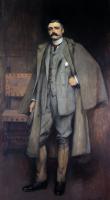

On 8th June 1900 Henry Wellesley 3rd Duke Wellington [aged 54] died at Stratfield Saye House [Map] without issue. His brother Arthur [aged 51] succeeded 4th Duke Wellington, 8th Earl Mornington, 8th Viscount Wellesley of Dangan Castle, 4th Viscount Wellington of Talavera. Kathleen Emily Bulkeley Williams Duchess Wellington [aged 51] by marriage Duchess Wellington.

Christ Church, Port Sunlight [Map] was built between 1902 and 1904, and was designed by William and Segar Owen. The church was paid for by William Lever [aged 52]. It was opened on 8th June 1904. In 1914 the Lever family vault was added as a memorial to the memory of Lady Lever [aged 53].


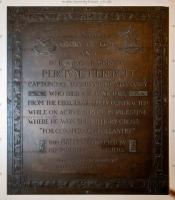
After 8th June 1918. Church of St Deiniol, Hawarden, Flintshire. Memorial to Captain Percival Hurlbutt of the Montgomeryshire Yeomanry.
On 8th June 1961 Edward Windsor 2nd Duke Kent [aged 25] and Katharine Worsley Duchess of Kent [aged 28] were married at York Minster [Map]. She by marriage Duchess Kent. He the son of Prince George Windsor 1st Duke Kent and Princess Marina Glücksburg Duchess Kent [aged 54].
Edward Beckett 5th Baron Grimthorpe [aged 6] served as a Page.
Abbot John Whethamstede’s Chronicle of the Abbey of St Albans
Abbot John Whethamstede's Register aka Chronicle of his second term at the Abbey of St Albans, 1451-1461, is a remarkable text that describes his first-hand experience of the beginning of the Wars of the Roses including the First and Second Battles of St Albans, 1455 and 1461, respectively, their cause, and their consequences, not least on the Abbey itself. His text also includes Loveday, Blore Heath, Northampton, the Act of Accord, Wakefield, and Towton, and ends with the Coronation of King Edward IV. In addition to the events of the Wars of the Roses, Abbot John, or his scribes who wrote the Chronicle, include details in the life of the Abbey such as charters, letters, land exchanges, visits by legates, and disputes, which provide a rich insight into the day-to-day life of the Abbey, and the challenges faced by its Abbot.
Available at Amazon in eBook and Paperback format.
On 23rd April 1981 Lady Gabriella Windsor was born to Prince Michael of Kent [aged 38] and Princess Marie von Reibnitz [aged 36] at St Mary's Hospital, London. She was baptised on 8th June 1981 at the Chapel Royal, St James's Palace. Her godparents were Constantine II King Hellenes [aged 40], Mariano Hugo, Prince of Windisch-Graetz; Marina Ogilvy [aged 14]; Princess Antonia, Marchioness of Douro [aged 25]; and Lady Elizabeth Shakerley [aged 39]. She a great granddaughter of King George V of the United Kingdom. She married 18th May 2019 Thomas Kingston.
On 19th April 626 Eanflæd Queen Consort Bernicia was born to King Edwin of Northumbria [aged 40] and Æthelburh Oiscingas Queen Consort Northumbria [aged 21]. She was baptised on 8th June 626. She married 645 her half first cousin King Oswiu of Northumbria, son of Æthelfrith King Northumbrians and Acha Queen Consort Northumbria, and had issue.
On 8th June 1348 Reginald Cobham 2nd Baron Cobham was born to Reginald Cobham 1st Baron Cobham [aged 53] and Joan Berkeley Baroness Cobham Sternborough [aged 18]. He married (1) 1368 his third cousin Elizabeth Stafford Baroness Cobham, Ferrers and Strange, daughter of Ralph Stafford 1st Earl Stafford and Margaret Audley Countess Stafford (2) 1380 his second cousin Eleanor Maltravers 2nd Baroness Maltravers Baroness Arundel and Cobham and had issue.
On 8th June 1575 Elizabeth Spencer Countess Northampton was born to John Spencer. She married 1599 William Compton 1st Earl of Northampton, son of Henry Compton 1st Baron Compton and Frances Hastings Baroness Compton, and had issue.
On 8th June 1576 Frances Drury Lady Glentworth was born to William Drury [aged 26] and Elizabeth Stafford [aged 30]. She married (1) in or before 1595 Nicholas Clifford of Bobbing Kent (2) before May 1601 William Wray 1st Baronet, son of Christopher Wray and Anne Girlington, and had issue.


On 8th June 1607 Catherine Weston was born to Richard Weston 1st Earl of Portland [aged 30] and Frances Waldegrave Countess Portland [aged 30]. She married Richard Whyte.
On 8th June 1626 William Wentworth 2nd Earl Strafford was born to Thomas Wentworth 1st Earl Strafford [aged 33] and Arabella Holles at Wentworth. He married 27th February 1654 his fourth cousin Henriette Stanley Countess Strafford, daughter of James Stanley 7th Earl of Derby and Charlotte Thouars Countess Derby.


On 8th June 1663 William Lowther 1st Baronet was born to William Lowther [aged 23]. He married 1691 Annabella Maynard Lady Lowther, daughter of Banastre Maynard 3rd Baron Maynard and Elizabeth Grey Baroness Maynard, and had issue.
On 8th June 1684 Langham Booth was born to Henry Booth 1st Earl Warrington [aged 32] and Mary Langham Countess Warrington [aged 32] at Mere Hall, Cheshire.


On 8th June 1691 James Cecil 5th Earl Salisbury was born to James Cecil 4th Earl Salisbury [aged 25] and Frances Bennett Countess of Salisbury [aged 20]. He married 12th February 1709 his fourth cousin Anne Tufton Countess of Salisbury, daughter of Thomas Tufton 6th Earl of Thanet and Catherine Cavendish Countess Isle Thanet, and had issue.
Jean de Waurin's Chronicle of England Volume 6 Books 3-6: The Wars of the Roses
Jean de Waurin was a French Chronicler, from the Artois region, who was born around 1400, and died around 1474. Waurin’s Chronicle of England, Volume 6, covering the period 1450 to 1471, from which we have selected and translated Chapters relating to the Wars of the Roses, provides a vivid, original, contemporary description of key events some of which he witnessed first-hand, some of which he was told by the key people involved with whom Waurin had a personal relationship.
Available at Amazon in eBook and Paperback format.
On 8th June 1714 Henry Reginald Courtenay was born to William Courtenay 6th Earl Devon [aged 38] and Anne Bertie Countess Devon. He married 14th April 1737 his third cousin twice removed Catherine Bathurst and had issue.
On 8th June 1723 Harriet Fitzroy was born to Charles Fitzroy 2nd Duke Grafton [aged 39] and Henrietta Somerset Duchess Grafton [aged 32]. She a great granddaughter of King Charles II of England Scotland and Ireland.
On 8th June 1731 Robert Gunning 1st Baronet was born to Robert Gunning [aged 34]. He married (1) 27th March 1752 Elizabeth Harrison (2) 1757 Anne Sutton and had issue.
On 26th May 1742 Lucas Pepys 1st Baronet was born to William Pepys [aged 43]. He was baptised on 8th June 1742 at St Mary Woolnoth Church. He married (1) 31st October 1772 Jane Elizabeth Leslie 12th Countess of Rothes, daughter of John Leslie 10th Earl Rothes and Hannah Cole Countess Rothes, and had issue (2) 29th June 1813 Deborah Askew.
On 8th June 1792 Harriet Douglas Countess Aberdeen was born to John Douglas [aged 35] and Frances Lascelles [aged 29]. She married (1) 25th November 1809 James Hamilton, son of John Hamilton 1st Marquess Abercorn and Catherine Moyle Marchioness Abercorn, and had issue (2) 8th July 1815 George Hamilton-Gordon 4th Earl Aberdeen and had issue.
On 8th June 1797 Henry William Powlett 3rd Baron Bayning was born to Charles Townshend 1st Baron Bayning [aged 67] and Annabella Smith-Powlett [aged 42]. He was educated at Eton College [Map] and St John's College, Cambridge University [Map]. Coefficient of inbreeding 3.24%.
On 8th June 1800 Henry John George Herbert 3rd Earl Carnarvon was born to Henry George Herbert 2nd Earl Carnarvon [aged 28] and Elizabeth Kitty Acland Countess Carnarvon [aged 27]. He married 1830 Henrietta Anna Howard-Molyneux-Howard Countess Carnarvon and had issue.
On 8th June 1803 Henry Villiers Stuart was born to Henry Crichton-Stuart [aged 26] and Gertrude Amelia Mason Villiers [aged 31]. He a great x 4 grandson of King Charles II of England Scotland and Ireland. He married 12th January 1826 Theresia Pauline Ott and had issue.

On 8th June 1805 Frederick George Howard was born to George Howard 6th Earl Carlisle [aged 31] and Georgiana Cavendish Countess Carlisle [aged 21].
On 8th June 1806 George Byng 2nd Earl Strafford was born to John Byng 1st Earl Strafford [aged 34] and Mary Stevens Mackenzie. He married (1) 7th March 1829 Agnes Paget, daughter of Henry William Paget 1st Marquess Anglesey and Caroline Elizabeth Villiers Duchess Argyll, and had issue (2) 16th March 1848 Harriet Cavendish Countess Strafford, daughter of Charles Compton Cavendish 1st Baron Chesham and Catherine Susan Gordon Baroness Chesham, and had issue.
This is a translation of the 'Memoires of Jacques du Clercq', published in 1823 in two volumes, edited by Frederic, Baron de Reissenberg. In his introduction Reissenberg writes: 'Jacques du Clercq tells us that he was born in 1424, and that he was a licentiate in law and a counsellor to Philip the Good, Duke of Burgundy, in the castellany of Douai, Lille, and Orchies. It appears that he established his residence at Arras. In 1446, he married the daughter of Baldwin de la Lacherie, a gentleman who lived in Lille. We read in the fifth book of his Memoirs that his father, also named Jacques du Clercq, had married a lady of the Le Camelin family, from Compiègne. His ancestors, always attached to the counts of Flanders, had constantly served them, whether in their councils or in their armies.' The Memoires cover a period of nineteen years beginning in in 1448, ending in in 1467. It appears that the author had intended to extend the Memoirs beyond that date; no doubt illness or death prevented him from carrying out this plan. As Reissenberg writes the 'merit of this work lies in the simplicity of its narrative, in its tone of good faith, and in a certain air of frankness which naturally wins the reader’s confidence.' Du Clercq ranges from events of national and international importance, including events of the Wars of the Roses in England, to simple, everyday local events such as marriages, robberies, murders, trials and deaths, including that of his own father in Book 5; one of his last entries.
Available at Amazon in eBook and Paperback format.

On 8th June 1813 John Lowry Cole was born to John Cole 2nd Earl Enniskillen [aged 45] and Charlotte Paget Countess Enniskillen [aged 31].
On 8th June 1821 John Rolle Paulett was born to John Paulett 5th Earl Paulett [aged 37] and Charlotte Fanny Portman Countess Paulett.
On 8th June 1829 John Charles Kenward Shaw 7th Baronet was born to Captain Charles Shaw [deceased] and Frances Anne Hawley posthumously. He was the elder of twins his younger brother being Reverend Charles John Kenward Shaw.
On 8th June 1829 John Everett Millais 1st Baronet was born to John William Millais and Emily Mary Evermy [aged 40] at Southampton, Hampshire [Map]. Most of his early childhood was spent in Jersey. He married 3rd July 1855 Euphemia "Effie" Gray Lady Millais and had issue.
On 8th June 1829 Reverend Charles John Kenward Shaw was born to Captain Charles Shaw [deceased] and Frances Anne Hawley posthumously. He was the younger of twins his elder brother being John Charles Kenward Shaw 7th Baronet.
On 8th June 1831 William Milborne-Swinnerton-Pilkington 10th Baronet was born to William Pilkington 8th Baronet [aged 55].
On 8th June 1838 Bishop Lewis Clayton was born.
On 8th June 1847 Clarence Graves 4th Baron Graves was born to William Thomas Graves 3rd Baron Graves [aged 43].
On 8th June 1863 George William Thomas Brudenell 4th Marquess Ailesbury was born to George John Brudenell [aged 24] and Evelyn Mary Craven [aged 23]. He married 6th May 1884 Dorothy Julia "Dolly Tester" Haseley Marchioness Ailesbury.
On 8th June 1875 Constance Blanche Godolphin Godolphin Osborne was born to George Godolphin Osborne 9th Duke Leeds [aged 46] and Fanny Georgiana Pitt-Rivers Duchess Leeds [aged 38]. Coefficient of inbreeding 3.94%. She married Ernest Frederick George Hatch.
Anne Boleyn. Her Life as told by Lancelot de Carle's 1536 Letter.
In 1536, two weeks after the execution of Anne Boleyn, her brother George and four others, Lancelot du Carle, wrote an extraordinary letter that described Anne's life, and her trial and execution, to which he was a witness. This book presents a new translation of that letter, with additional material from other contemporary sources such as Letters, Hall's and Wriothesley's Chronicles, the pamphlets of Wynkyn the Worde, the Memorial of George Constantyne, the Portuguese Letter and the Baga de Secrets, all of which are provided in Appendices.
Available at Amazon in eBook and Paperback format.
On 8th June 1875 Ralph Henry Sacheverell Wilmot 6th Baronet was born to Reverend Arthur Alfred Wilmot [aged 30] and Harriet Cecilia FitzHerbert [aged 26].
On 8th June 1882 Francis Henry Biddulph 9th Baronet was born to Walter John Biddulph [aged 55].
On 8th June 1890 Hubert Acland 4th Baronet was born to Admiral William Alison Dyke Acland 2nd Baronet [aged 42] and Emily Anna Smith Lady Acland [aged 31]. He married 21st August 1915 his second cousin Lalage Mary Kathleen Acland and had issue.
On 8th June 1891 Captain Ralph Frederick Vane was born to Henry de Vere Vane 9th Baron Barnard [aged 37] and Catherine Sarah Cecil Baroness Barnard [aged 30].
On 8th June 1891 George Henry James Duckworth-King 6th Baronet was born to Dudley Gordon Alan Duckworth-King 5th Baronet [aged 39].
On 8th June 1897 Robert Villiers Grimston 1st Baron Grimston was born to Robert Grimston [aged 37] and Gertrude Mary Amelia Villiers. He married 24th October 1923 Sybil Rose Neumann Baroness Grimston, daughter of Sigmund Neumann 1st Baronet and Anna Allegra Hakim Lady Neumann, and had issue.
On 8th June 1907 Aline Emily Partington was born to Oswald Partington 2nd Baron Doverdale [aged 35] and Clara Isabel Murray Baroness Doverdale [aged 26]. She married 11th June 1936 Kenneth Weir Hogg 6th Baronet.
On 8th June 1928 John Russell 27th Baron de Clifford was born to Edward Russell 26th Baron de Clifford [aged 21].
On 8th June 1929 Robert Cave-Browne-Cave 16th Baronet was born to Clement Charles Cave-Browne-Cave 15th Baronet [aged 32].
On 8th June 1929 Robert Shirley 13th Earl Ferrers was born to Robert Shirley 12th Earl Ferrers [aged 34].
On 23rd April 1981 Lady Gabriella Windsor was born to Prince Michael of Kent [aged 38] and Princess Marie von Reibnitz [aged 36] at St Mary's Hospital, London. She was baptised on 8th June 1981 at the Chapel Royal, St James's Palace. Her godparents were Constantine II King Hellenes [aged 40], Mariano Hugo, Prince of Windisch-Graetz; Marina Ogilvy [aged 14]; Princess Antonia, Marchioness of Douro [aged 25]; and Lady Elizabeth Shakerley [aged 39]. She a great granddaughter of King George V of the United Kingdom. She married 18th May 2019 Thomas Kingston.
The History of William Marshal was commissioned by his son shortly after William’s death in 1219 to celebrate the Marshal’s remarkable life; it is an authentic, contemporary voice. The manuscript was discovered in 1861 by French historian Paul Meyer. Meyer published the manuscript in its original Anglo-French in 1891 in two books. This book is a line by line translation of the first of Meyer’s books; lines 1-10152. Book 1 of the History begins in 1139 and ends in 1194. It describes the events of the Anarchy, the role of William’s father John, John’s marriages, William’s childhood, his role as a hostage at the siege of Newbury, his injury and imprisonment in Poitou where he met Eleanor of Aquitaine and his life as a knight errant. It continues with the accusation against him of an improper relationship with Margaret, wife of Henry the Young King, his exile, and return, the death of Henry the Young King, the rebellion of Richard, the future King Richard I, war with France, the death of King Henry II, and the capture of King Richard, and the rebellion of John, the future King John. It ends with the release of King Richard and the death of John Marshal.
Available at Amazon in eBook and Paperback format.
On 8th June 1653 William Wyndham 1st Baronet [aged 21] and Frances Hungerford [aged 18] were married.
On 8th June 1693 Charles Mildmay 18th Baron Fitzwalter [aged 23] and Elizabeth Bertie Baroness Fitzwalter [aged 17] were married. She by marriage Baroness Fitzwalter.
On 8th June 1738 James Barry 5th Earl Barrymore [aged 21] and Margaret Davys Countess Barrymore were married. He the son of James Barry 4th Earl Barrymore [aged 71] and Anne Chichester Countess Barrymore. They were third cousins.

On 8th June 1751 John Hely-Hutchinson [aged 27] and Christiana Nixon 1st Baroness Donoughmore [aged 19] were married. They had ten children.
On 8th June 1775 Algernon Percy 1st Earl Beverley [aged 25] and Isabella Susan Burrell Countess Beverley [aged 24] were married at Syon House [Map]. He the son of Hugh Percy 1st Duke Northumberland [aged 59] and Elizabeth Seymour Duchess Northumberland [aged 58].
On 8th June 1805 Robert Haldane-Duncan 1st Earl of Camperdown [aged 20] and Janet Dalrymple [aged 22] were married.
On 8th June 1819 Chandos Leigh 1st Baron Leigh [aged 27] and Margaret Willes [aged 21] were married.
On 8th June 1859 Francis Edmund Cecil Byng 5th Earl Strafford [aged 24] and Florence Louisa Miles [aged 19] were married. He the son of George Byng 2nd Earl Strafford [aged 53] and Agnes Paget.
On 8th June 1893 Charles Gordon-Lennox 8th Duke Richmond [aged 22] and Hilda Madeline Brassey Duchess Richmond [aged 20] were married. He the son of Charles Gordon-Lennox 7th Duke Richmond [aged 47] and Amy Mary Ricardo.
On 8th June 1940 William Philip Sidney 1st Viscount de l'Isle [aged 31] and Jacqueline Vereker Countess de l'Isle [aged 25] were married.
Henrici Quinti, Angliæ Regis, Gesta, is a first-hand account of the Agincourt Campaign, and subsequent events to his death in 1422. The author of the first part was a Chaplain in King Henry's retinue who was present from King Henry's departure at Southampton in 1415, at the siege of Harfleur, the battle of Agincourt, and the celebrations on King Henry's return to London. The second part, by another writer, relates the events that took place including the negotiations at Troye, Henry's marriage and his death in 1422.
Available at Amazon in eBook and Paperback format.
On 8th June 1961 Edward Windsor 2nd Duke Kent [aged 25] and Katharine Worsley Duchess of Kent [aged 28] were married at York Minster [Map]. She by marriage Duchess Kent. He the son of Prince George Windsor 1st Duke Kent and Princess Marina Glücksburg Duchess Kent [aged 54].
Edward Beckett 5th Baron Grimthorpe [aged 6] served as a Page.
On 8th June 1042 King Harthacnut of Denmark and England [aged 24] died. His half brother Edward [aged 39] succeeded King of England.
On 8th June 1368 Maurice Berkeley 9th and 4th Baron Berkeley [aged 48] died. His son Thomas [aged 16] succeeded 10th Baron Berkeley Feudal, 5th Baron Berkeley.
On 8th June 1376 Edward "Black Prince" [aged 45] died of dysentery at Westminster Palace [Map]. He was buried in Canterbury Cathedral [Map]. His son Richard [aged 9] succeeded as heir to his grandfather King Edward III of England [aged 63] who died a year later.
On 8th June 1384 Thomas Ros 4th Baron Ros Helmsley [aged 49] died at Uffington. He was buried at Rievaulx Abbey, Yorkshire [Map]. His son John [aged 15] succeeded 5th Baron Ros Helmsley and inherited Belvoir Castle [Map].
On 8th June 1405 before a great crowd at York [Map]..
Archbishop Richard Scrope [aged 55] was beheaded.
Thomas Mowbray 4th Earl Norfolk 2nd Earl Nottingham [aged 19] was beheaded. His brother John [aged 13] succeeded 5th Earl Norfolk, 3rd Earl Nottingham, 8th Baron Mowbray, 9th Baron Segrave.
On 8th June 1476 Archbishop George Neville [aged 44] died.
On 8th June 1492 Elizabeth Woodville Queen Consort England [aged 55] died at Bermondsey Abbey [Map]. She was buried in the Chantry Chapel next to the Altar, St George's Chapel [Map] with her husband King Edward IV of England.
On 8th June 1501 George Gordon 2nd Earl Huntley [aged 46] died. His son Alexander succeeded 3rd Earl Huntley. Jean Stewart Countess Huntley [aged 40] by marriage Countess Huntley.
On 8th June 1521 Alice Keble Baroness Mountjoy died.
On 8th June 1529 James Fitzgerald 10th Earl Desmond [aged 34] died at Dingle. He was buried at Tralee. His uncle Thomas [aged 75] succeeded 11th Earl Desmond.
On 8th June 1658 Henry Slingsby 1st Baronet [aged 56] was beheaded on Tower Hill [Map] for being a Royalist. His son Thomas [aged 21] succeeded 2nd Baronet Slingsby Scriven.
On 8th June 1671 Edgar Stewart 1st Duke Cambridge [aged 3] died. Duke Cambridge extinct.
Adam Murimuth's Continuation and Robert of Avesbury’s 'The Wonderful Deeds of King Edward III'
This volume brings together two of the most important contemporary chronicles for the reign of Edward III and the opening phases of the Hundred Years’ War. Written in Latin by English clerical observers, these texts provide a vivid and authoritative window into the political, diplomatic, and military history of fourteenth-century England and its continental ambitions. Adam Murimuth Continuatio's Chronicarum continues an earlier chronicle into the mid-fourteenth century, offering concise but valuable notices on royal policy, foreign relations, and ecclesiastical affairs. Its annalistic structure makes it especially useful for establishing chronology and tracing the development of events year by year. Complementing it, Robert of Avesbury’s De gestis mirabilibus regis Edwardi tertii is a rich documentary chronicle preserving letters, treaties, and official records alongside narrative passages. It is an indispensable source for understanding Edward III’s claim to the French crown, the conduct of war, and the mechanisms of medieval diplomacy. Together, these works offer scholars, students, and enthusiasts a reliable and unembellished account of a transformative period in English and European history. Essential for anyone interested in medieval chronicles, the Hundred Years’ War, or the reign of Edward III.
Available at Amazon in eBook and Paperback format.
On 8th June 1671 Henry Goring 2nd Baronet [aged 44] died. His son William [aged 12] succeeded 3rd Baronet Goring of Burton in Sussex.
On 8th June 1701 Thomas Cookes 2nd Baronet [aged 53] died. Baronet Cookes of Norgrove in Worcestershire extinct.


On 5th April 1713 Richard Welby [aged 55] died. Monument at St Andrew's Church, Denton [Map]. Sculpted by Thomas Green of Camberwell [aged 54]. The fully wigged standing life sized figure of the deceased stands in an arched surround flanked by fluted Pilasters with acanthus scrolls and broken segmental pediment contaning a cherub and putti leaning down from heaven holding a metal coronet, surmounted by an achievement. Beneath is he inscription panel and to either side putti holding memento mori, and mourning, one with tears.
The inscription reads:
M.S.
Here are deposited the Remains of
Richard Welby of Denton Esqr
Lord of the Mannours of Welby Streglethorp Saperton and
Swinsted and High Sheriff of the County of Lincoln 1705
A Gentleman of an ancient & Virtuous Family, a good Christian
a Loyal Subject, a true lover of the Church
a sincere Respector of its Clergy and
a daily Frequentor of its Worship
In His private Character, Modest, Humble and Courteous
of great Probity and universal Charity
The Poor lost in him a liberal and silent Benefactor
his Tenants, a forbearing Landlord;
his Servants, a kind and prudent master;
his Relations, an invaluable Friend;
his Children, a most indulgent Father and
his Mournfull Wife ye Best of Husbands.
He marry'd Mary Daughter & Sole Heiress of John Towers of
the Isle of Ely Esqr, by whom he had Issue;
Mary Interred here, Selina, William and John twins, Eleanor & Richard
After a tedious Sickness, which he bore with exemplary patience
and resignation, he dyed on Easter day 1713
In hopes of a Joyfull Resurrection; & lament his loss
the Righteous shall be had in everlasting Remembrance
MARY his once happy Wife now Sorrowfull Relict
??????? her own Affection
Erected this Monument Dec 10 1714.
Mary Welby
Ob June 8 1759
Ae 74
Richard Welby: In 1658 he was born. Before 1713 he and Mary Towers were married.
On 8th June 1735 Robert Rous 4th Baronet [aged 48] died. His son John [aged 8] succeeded 5th Baronet Stradbrooke of Henham in Suffolk.
On 8th June 1738 Thomas Windsor 1st Viscount Windsor [aged 68] died. His son Herbert succeeded 2nd Viscount Windsor, 2nd Baron Mountjoy. Alice Clavering Viscountess Windsor by marriage Viscountess Windsor.
On 8th June 1747 Alan Brodrick 2nd Viscount Midleton [aged 45] died. His son George [aged 16] succeeded 3rd Viscount Midleton of Midleton in Cork, 3rd Baron Brodrick of Midleton in Cork.
On 8th June 1748 William Honywood 2nd Baronet [aged 94] died. His grandson John [aged 38] succeeded 3rd Baronet Honywood of Evington in Kent.
On 8th June 1771 George Montagu Dunk 2nd Earl Halifax [aged 54] died. Earl Halifax, Baron Halifax extinct.


On 8th June 1774 Henry Gough 1st Baronet [aged 66] died. His son Henry [aged 25] succeeded 2nd Gough-Calthorpe of Edgbaston in Warwickshire.
On 8th June 1795 Louis XVII King France [aged 10] died. His uncle Louis [aged 39] de jure XVIII King France: Capet Valois Bourbon.
Adam Murimuth's Continuation and Robert of Avesbury’s 'The Wonderful Deeds of King Edward III'
This volume brings together two of the most important contemporary chronicles for the reign of Edward III and the opening phases of the Hundred Years’ War. Written in Latin by English clerical observers, these texts provide a vivid and authoritative window into the political, diplomatic, and military history of fourteenth-century England and its continental ambitions. Adam Murimuth Continuatio's Chronicarum continues an earlier chronicle into the mid-fourteenth century, offering concise but valuable notices on royal policy, foreign relations, and ecclesiastical affairs. Its annalistic structure makes it especially useful for establishing chronology and tracing the development of events year by year. Complementing it, Robert of Avesbury’s De gestis mirabilibus regis Edwardi tertii is a rich documentary chronicle preserving letters, treaties, and official records alongside narrative passages. It is an indispensable source for understanding Edward III’s claim to the French crown, the conduct of war, and the mechanisms of medieval diplomacy. Together, these works offer scholars, students, and enthusiasts a reliable and unembellished account of a transformative period in English and European history. Essential for anyone interested in medieval chronicles, the Hundred Years’ War, or the reign of Edward III.
Available at Amazon in eBook and Paperback format.
On 8th June 1800 Emily Fitzroy Baroness Bagot [aged 29] died.
On 8th June 1804 Ferdinando Poole 4th Baronet died. His second cousin Henry [aged 60] succeeded 5th Baronet Poole of Poole in Cheshire.
On 8th June 1842 Henry Parnell 1st Baron Congleton [aged 65] committed suicide by hanging having suffered for some time from ill-health and melancholy. His son John [aged 36] succeeded 2nd Baron Congleton of Congleton in Cheshire, 5th Baronet Parnell of Rathleague Queen's County.
On 8th June 1856 Maria Theresa Talbot Countess Shrewsbury and Waterford died.
On 8th June 1859 Sophia Anne Every Lady Mosley died.
On 8th June 1867 George William Fermor 5th Earl Pomfret [aged 42] died unmarried. Earl Pomfret aka Pontefract, Baron Leominster, Baronet Fermor of Easton Neston in Northamptonshire extinct.
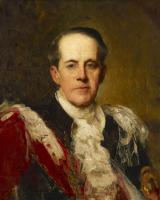
On 8th June 1873 Henry Cadogan 4th Earl Cadogan [aged 61] died at Woodrising, Norfolk. His son George [aged 33] succeeded 5th Earl Cadogan, 5th Viscount Chelsea, 7th Baron Cadogan. Beatrix Jane Craven Countess Cadogan [aged 28] by marriage Countess Cadogan.
On 8th June 1879 Katherine Grace O'Grady Lady Grove died.
On 8th June 1882 George Howland Beaumont 9th Baronet [aged 53] died. His son George [aged 31] succeeded 10th Baronet Beaumont of Stoughton Grange in Leicestershire.
On 8th June 1900 Henry Wellesley 3rd Duke Wellington [aged 54] died at Stratfield Saye House [Map] without issue. His brother Arthur [aged 51] succeeded 4th Duke Wellington, 8th Earl Mornington, 8th Viscount Wellesley of Dangan Castle, 4th Viscount Wellington of Talavera. Kathleen Emily Bulkeley Williams Duchess Wellington [aged 51] by marriage Duchess Wellington.
Chronicle of Abbot Ralph of Coggeshall
The Chronicle of Abbot Ralph of Coggeshall (Chronicon Anglicanum) is an indispensable medieval history that brings to life centuries of English and European affairs through the eyes of a learned Cistercian monk. Ralph of Coggeshall, abbot of the Abbey of Coggeshall in Essex in the early 13th century, continued and expanded his community’s chronicle, documenting events from the Norman Conquest of 1066 into the tumultuous reign of King Henry III. Blending eyewitness testimony, careful compilation, and the monastic commitment to record-keeping, this chronicle offers a rare narrative of political intrigue, royal power struggles, and social upheaval in England and beyond. Ralph’s work captures the reigns of pivotal figures such as Richard I and King John, providing invaluable insights into their characters, decisions, and the forces that shaped medieval rule. More than a simple annal, Chronicon Anglicanum conveys the texture of medieval life and governance, making it a rich source for scholars and readers fascinated by English history, monastic authorship, and the shaping of the medieval world.
Available at Amazon in eBook and Paperback format.

On 8th June 1911 Arthur Rice 6th Baron Dynevor [aged 75] died at Dynevor Castle [Map]. His son Walter [aged 37] succeeded 7th Baron Dynevor of Dynevor in Camarthenshire.
On 8th June 1912 Arthur John Otway 3rd Baronet [aged 89] died at 34 Eaton Square, Belgravia. Baronet Otway of Brighthelmstone in Sussex extinct.
On 8th June 1916 John Horace Savile 5th Earl Mexborough [aged 73] died. His half brother John [aged 48] succeeded 6th Earl Mexborough of Lifford in County Donegal.
On 8th June 1923 Francis Money-Coutts 5th Baron Latymer [aged 70] died. His son Hugh [aged 46] succeeded 6th Baron Latimer of Snape.
On 8th June 1931 Frederick George Milner 7th Baronet [aged 81] died. His son William [aged 37] succeeded 8th Baronet Milner of Nun Appleton Hall in Yorkshire.
On 8th June 1941 Agatha Manners Tollemache Baroness Westbury [aged 84] died.
On 8th June 1954 Auckland Geddes 1st Baron Geddes [aged 74] died. His son Ross [aged 47] succeeded 2nd Baron Geddes Rolvenden in Kent.
On 8th June 1956 Walter FitzUryan Rice 7th Baron Dynevor [aged 82] died. His son Charles [aged 56] succeeded 8th Baron Dynevor of Dynevor in Camarthenshire.
On 8th June 1970 Louise Violet Beatrice Montagu-Stuart-Wortley [aged 76] died.
On 8th June 2000 Kenneth Alston Cradock-Hartopp 10th Baronet [aged 82] died. Baronet Cradock-Hartopp extinct.