

13 Mar is in March.
Chronicon ex Chronicis by Florence and John of Worcester. 13th March 1121. After this, the archbishop, having accompanied the king [aged 53] to Abingdon [Map], consecrated on Sunday the third of the ides [the 13th] of March, Robert, before named, as bishop of Chester, there being present and assisting at this sacrament William, bishop of Winchester, William, bishop of Exeter, and the Welsh bishops, Urban [aged 45] and Bernard.
 Annals of Six Kings of England by Nicholas Trivet. 1194. King Richard, having paid the ransom money, was released on the fourth day before the Nones of February [2nd February 1194]. From Mainz he went to Cologne, having been most earnestly invited by the archbishop of that city. There he attended Mass in the cathedral church, the archbishop himself performing the office of cantor and solemnly beginning the chant Nunc scio vere. Then, hastening to England, he landed at Sandwich on the third day before the Ides of March [13th March 1194]. Immediately he went to London, and from there to Winchester, where, in the presence of William, king of the Scots, he bore the royal crown1.
1194. RICARDUS rex quarto nonas Februarii pecunia redemptionis soluta liberatus, a Maguntia tetendit in Coloniam, ab archiepiscopo civitatis illius instantissime invitatus; a quo in ecclesia cathedrali receptus missam audivit, ipso archiepiscopo cantoris officium supplente, et officium illud, Nunc scio vere, celebriter inchoante. Deinde accelerans in Angliam, tertio idus Martii apud Sandwycum applicuit, statimque Londonias accessit; et inde Wintoniam, ubi præsente Willelmo Scotorum rege regiam portavit coronam.
Note 1. Namely, on his second coronation. From this it seems probable that Richard actually had resigned his crown into the hands of the emperor, which Dr. Lingard appears to doubt
Chronicle of Gervase of Canterbury. 13th March 1194. There was, however, murmuring among the people and on the lips of those who had come with the king, that the King of France had set an ambush at sea for the King of England, either to capture or to defeat him. On the third Ides of March (March 13), the king arrived at Canterbury, where he was received by the community of Saint Augustine's and led directly into the procession of the community of the mother church. Thus, he was escorted by both communities into Christ Church. For he did not wish to enter any church until he had visited his mother church, the Canterbury Cathedral, through which he had been deemed worthy to receive the crown of the kingdom.
Erat autem murmur in populo et in ore orum qui cum rege venerunt, quod rex Francis regi Anglorum ad mare preeparasset insidias, ut eum vel saperet vel debellaret. IIItio idus Martii venit rex Cantuariam, et a conventu Sancti Augustini susceptus n directum ad processionem conventus matricis eccleii, sicque ab utroque conventu in ecclesiam Christi leductus est. Noluit enim aliquam ecclesiam ingredi lonec matrem suam Cantuariensem ecclesiam, per quam coronam regni meruit accipere, visitasset.
On 13th March 1271 Queen Judith of Bohemia and Poland was born to Rudolph I King Romans [aged 52] and Gertrude Hohenburg [aged 46]. She married 24th January 1285 King Wenceslaus II of Bohemia and Poland and had issue.
On 13th March 1271 Henry "Almain" Cornwall [aged 35] was murdered while attending mass at the Chiesa di San Silvestro, Viterbo by his cousins Simon "Younger" Montfort and Guy Montfort Count Nola [aged 27] in revenge for the deaths of their father Simon and older brother Henry at the Battle of Evesham.
The murder was carried out in the presence of the Cardinals, who were conducting a papal Election, King Philip III of France [aged 25], and King Charles of Sicily [aged 43]. The Montfort brothers were excommunicated.
Henry "Almain" Cornwall was buried in Hailes Abbey [Map].
The deed is mentioned by Dante Alighieri some forty years after in the Divine Comedy who placed Guy de Montfort in the seventh circle of hell.
New Chronicle by Villani Chapter 39. 13th March 1271. And now we return to our chief subject — how was slain Count Henry, earl of Cornwall [aged 35], brother [cousin] of King Edward, in revenge for this, as we said before. The court was greatly disturbed, giving much blame therefor to King Charles, who ought not to have suffered this if he knew thereof, and if he did not know it he ought not to have let it go unavenged. But the said Count Guy [aged 27], being provided with a company of men-at-arms on horse and on foot, was not content only with having done the said murder; forasmuch as a cavalier asked him what he had done, and he replied, "J'ai fait ma vangeance," [I took my revenge] and that cavalier said, "Comment? Votre père fut trainé;" [How? Your father was dragged] and immediately he returned to the church, and took Henry by the hair, and dead as he was, he dragged him vilely without the church; and when he had done the said sacrilege and homicide, he departed from Viterbo, and came safe and sound into Maremma to the lands of Count Rosso, his father-in-law. By reason of the death of the said Henry, Edward, his brother, very wrathful and indignant against King Charles, departed from Viterbo, and came with his followers through Tuscany, and abode in Florence, and knighted many citizens, giving them horses and all knightly accoutrements very nobly, and then he came into England, and set the heart of his said brother in a golden cup upon a pillar at the head of London Bridge over the river Thames, to keep the English in mind of the outrage sustained. For the which thing, Edward, after he became king, was never friendly towards King Charles, nor to his folk. After like manner, Philip, king of France, departed with his folk, and came and dwelt many days in Florence; and when he was come into France, he buried the body of the good King Louis, his father with great honour, and had himself crowned with great solemnity at Rheims.
Annals of Six Kings of England by Nicholas Trivet. The Sultan of Babylon, who had begun to besiege the city of Acre, withdrew with his army to his own lands, his hopes disappointed. Henry, the son of Richard, formerly King of the Romans, passing through Tuscany, while he was present at the celebration of Mass at Viterbo, was slain1 [on 13th March 1271] in the church of Saint Lawrence by Guy de Montfort. Boniface, Archbishop of Canterbury, departed this life; and in his place the prior of the monks was elected as his successor.
Soldanus Babyloniæ, qui civitatem Achon cœperat oppugnare, cum exercitu ad propria revertitur, spe fraudatus. Henricus, filius Ricardi quondam regis Romanorum, transiens per Tusciam, cum apud Viterbium missarum solemniis interesset, in ecclesia sancti Laurentii a Guidone de Monte-forti occiditur. Bonifacius, archiepiscopus Cantuariensis, migravit ad Dominum; cujus in successorem prior eligitur monachorum.
Note 1. On 13th March 1271 Henry "Almain" Cornwall was murdered while attending mass at the Chiesa di San Silvestro, Viterbo by his cousins Simon "Younger" Montfort and Guy Montfort Count Nola in revenge for the deaths of their father Simon and older brother Henry at the Battle of Evesham. The murder was carried out in the presence of Cardinals, who were conducting a papal Election, King Philip III of France, and King Charles of Sicily. The Montfort brothers were excommunicated. The deed is mentioned by Dante Alighieri some forty years after in the Divine Comedy who placed Guy de Montfort in the seventh circle of hell: 'Then I turned me to the Poet, and he said, "Let him now be first, and I second." A little further on the Centaur stopped above some folk who far as the throat were seen to issue from that boiling stream. He showed to us at one side a solitary shade, and said, "He cleft, in the bosom of God, the heart that still is honoured on the Thames". Then I saw folk, who out of the stream held their head, and even all their chest; and of these I recognized many. Thus ever more and more shallow became that blood, until it cooked only the feet: and here was our passage of the foss.' 'the heart that still is honoured on the Thames' is described by Villani in his New Chronicle: 'and then he [King Charles] came into England, and set the heart of his said brother [Henry] in a golden cup upon a pillar at the head of London Bridge over the river Thames, to keep the English in mind of the outrage sustained'.
 Bourgeois de Valenciennes. It happened that while the King of England was holding the siege before Calais, Louis, Count of Flanders, by the counsel and with the consent of his good towns, came into Flanders as lord of the country. He was received on condition that he should govern and rule them according to the usages and customs of the good Count Guy, his predecessor. The great and the small did him great honour, as was fitting, and as to their rightful and true lord. He remained in the land graciously and courteously, and followed the counsel of his people and of his good towns, who instructed him in sound policies. He remained in this state from Martinmas through the winter until after Easter, when the good men of Flanders, wishing to secure the best outcome, proposed and arranged the marriage between him and the eldest daughter of the King of England, so that they might be stronger in the land. They worked so effectively that they brought him to the King of England before Calais, and all ill will was pardoned on both sides. By the will of the said count, the marriage was agreed between Count Louis of Flanders [aged 16] and Isabel [aged 14], eldest daughter of King Edward of England, and they were betrothed without any deceit. The betrothal was performed by the Abbot of the Dunes at Bergues in Flanders, in the church of the abbey of Saint-Winoc. Present at the betrothal were the king [aged 34] and queen [aged 36], the Marquis of Jülich [aged 48], the Earl of Warwick [aged 34], the Duke of Guelders [aged 13] and the duchess, and many others, on the Wednesday after Mid-Lent, in the year of grace 13461. The agreements on both sides were settled, and a great feast was held. Afterwards, the Count of Flanders returned to the town of Male in Flanders. Meanwhile, while the King of England was at Bergues-Saint-Winoc, twenty ships laden with supplies came into the harbour of Calais, which greatly pleased those within the town.
Il advint qu'entandis que le roy d'Engleterre tenoit siège devant Callais, que Loys, conte de Flandres, par le conseil de ses bonnes villes et leur volenté, vint dedens Flandres, comme seigneur du pays, et fut rechups par ainsy qu'il les debvoit tenir et mener aux us et aux coustumes du bon conte Guion, son antécesseur. Sy luy firent grant honneur les grans et les petis, sycomme droit estoit, et comme à leur droiturier et vrai seigneur, et demeura au pays bellement et courtoisement, et crut le conseil de ses gens et de ses bonnes villes qui luy ensaingnoient les bons poins. Et fut en cel estât de le Saint-Martin en yver jusques après Pasques, que les bonnes gens de Flandres, pour le mieulx fait que laissiet, luy acointèrent et pourcachèrent le mariage de luy et de l'aisnée fille du roy d'Engleterre, par quoy ils fussent plus fors au pays. Et tant fisrent qu'ils l'emmenèrent au roy d'Engleterre devant Callais, et tous mautalens fussent pardonnes les ungs aux aultres, et que, par la volenté dudit conte, mariage se fist entre le conte Loys de Flandres et de Ysabel, aisnëe fille du roy Édouart d'Engleterre, et furent fianchiés sans nulle maise fraude. Sy les fiança l'abbé des Dunes à Bergues en Flandres, en l'église de l'abbaye Saint-Winoch, et furent au fianchier le roy et la royne, le marquis de Jullers, le conte de Wervich, le duc de Guéries et la ducesse et pluseurs aultres, le merquedy après le my-quaresme, l'an de grâce mil CCC et XLVI et furent les convenances de l'une partye et de l'autre prinses, et y fist-on grant feste; puis s'en râla le conte de Flandres en la ville de Malle en Flandres. Et entandis que le roy d'Engleterre estoit à Bergues-Saint-Winoch, vindrent au havre de Callais XX nefs chargies de pourvéances, dont ceulx de Callais furent moult aises.
Note 1. The betrothal of the Count of Flanders was celebrated on 13th March 1347. The marriage contract had been signed at Dunkirk ten days earlier. Edward III granted as dowry to his daughter the county of Ponthieu and the town of Montreuil, or twenty-five thousand livres in land revenue. Numerous documents relating to the negotiations that took place at that time between the King of England and the Count of Flanders have been preserved. The marriage didn't take place. He fled to France where he quickly married, on 1st July 1347, Margaret of Brabant [aged 24], daughter of the French King's ally John, Duke of Brabant [aged 47]; see next History.
On 13th March 1372 Charles Bohemia was born to Charles IV King Bohemia Holy Roman Emperor Luxemburg [aged 55] and Elizabeth Pomerania Holy Roman Empress Luxemburg [aged 25]. On 24th July 1373 Charles Bohemia died.
On 13th March 1372 Louis Valois I Duke Orléans was born to King Charles V of France [aged 33] and Joanna Bourbon Queen Consort France [aged 34]. He a great x 4 grandson of King Henry III of England. Coefficient of inbreeding 3.60%. He married (1) 1374 his third cousin once removed Catherine Hungary (2) 1389 his first cousin Valentina Visconti Duchess of Orleans, daughter of Gian Galeazzo Visconti 1st Duke Milan and Isabelle Valois, and had issue.
Chronicle of Robert Fabyan [-1512]. Then upon the Saterday folowynge, beynge the day of ....1 Marche, the erle of Warwyke with a great puyssauce of people, departyd out of London northwarde; and upon Wednysdaye [11th March 1461] folowynge ye kynges fotemen went towarde the same journey; & upon Fryday next folowynge [13th March 1461], the kynge toke his voyage throughe the cytie with a great bande of men, and so rode forth at Bysshoppysgate [Map].
Note. The 7th March 1461.
Chronicle of Geoffrey le Baker of Swinbroke
Baker was a secular clerk from Swinbroke, now Swinbrook, an Oxfordshire village two miles east of Burford. His Chronicle describes the events of the period 1303-1356: Gaveston, Bannockburn, Boroughbridge, the murder of King Edward II, the Scottish Wars, Sluys, Crécy, the Black Death, Winchelsea and Poitiers. To quote Herbert Bruce 'it possesses a vigorous and characteristic style, and its value for particular events between 1303 and 1356 has been recognised by its editor and by subsequent writers'. The book provides remarkable detail about the events it describes. Baker's text has been augmented with hundreds of notes, including extracts from other contemporary chronicles, such as the Annales Londonienses, Annales Paulini, Murimuth, Lanercost, Avesbury, Guisborough and Froissart to enrich the reader's understanding. The translation takes as its source the 'Chronicon Galfridi le Baker de Swynebroke' published in 1889, edited by Edward Maunde Thompson.
Available at Amazon in eBook and Paperback format.
Chronicle of Gregory. The xiij day of Marche [1461] the King, owre newe King Edwarde [aged 18], toke his jornaye unto the Northe, and the Duke of Northefolke [aged 45] with hym. The Erle of Warwycke [aged 32] and the Lord Fauconbrygge [aged 32], with many knyghtes, squyers, and comyns, to the nombyr of iic Mlmen.
Chronicle of Robert Fabyan [-1512]. In whiche selfe same daye, which was the xii. [12] day of Marche [1461]1, a grocer of London, named Walter Walker, for offence by hym done agayne the kynge, was behedyd in Smythfelde; but his wyfe, which after was maryed to lohn Norlande, grocer, and lastlye alderman, had suche frendys about the kynge, that hir goodys were not forfeyted to the kynges vse.
Note 1. If the 'selfe same daye' is the 'Fryday next folowynge' referred to in the previous paragraph then this is Friday 13th of March 1461.
Patent Rolls. 13th March 1463. Westminster Palace [Map]. Commission to James Strangways, knight, Thomas Witham [aged 43], chancellor of the Exchequer, Thomas Mouutford, esquire, John Laton, esquire, and Ralph Assheton, esquire, to enquire by oath of good men of the county of York whether Joan Faucombregge, late Countess of Kent [aged 56], is an idiot and incapable of the government of herself and her possessions, whether she has alienated any of her lands, and who is her next heir.
 Memoires Jacques du Clercq. "My most redoubted and sovereign lord, I humbly commend myself to your good grace, and I ask that you be pleased to know that I have received the letters which it pleased you to write to me in your own hand, delivered by Josselin du Bois, bearer of this, and I have heard in full the message he conveyed to me on your behalf. In essence, you informed me that, as you were recently departing on your pilgrimage to Notre-Dame du Pont, you learned that my lord of Berry, your brother, had gone off with Odelf to Brittany without your knowledge; and because you have great and singular trust in me, you request that I immediately set out to come to you, leaving my brother, the Bastard of Bourbon, to raise one hundred lances in my lands to follow after. My most redoubted and sovereign lord, for the goodwill and trust you place in me, I thank you as humbly as I can. But to inform you fully of the causes and reasons, both for the secret departure of my lord of Berry and for the present matters now widely known throughout your realm and beyond: these things have long been considered and deliberated upon by the princes of your blood and lineage who hold lands within your kingdom. They have taken into account the manner in which justice, governance, and administration have been conducted, and especially the extreme and excessive burdens placed upon the poor people, who have long suffered grievous oppression. Many times since your accession to the crown, both we and our subjects have made representations to you, both generally and individually, and to those whom it has pleased you to raise near your person and entrust with governance. These complaints have been worthy of being heard and remedied for the good of the realm. Yet until now, it has not been your pleasure to listen, nor to provide order, reform, or reasonable governance, as is evident from the present condition of your kingdom, which was formerly so prosperous in justice, tranquillity, and good order. For this reason, the princes and lords, moved by pity for the poor people whose suffering has reached their ears, and seeing that private remonstrances have failed, have resolved, by common agreement and formal act, to assemble together to make these matters known to you, and to seek proper remedy according to God, reason, and justice. We hope, with God's help, to bring about a result that will be beneficial to you, to your crown, and to the common good of your kingdom, and honourable to the princes of your blood. As to your request that I come to you: it seems to me, from the tone of your letters, that you are not fully informed of these matters. At present, the situation does not permit me to come, nor would it please the princes of your blood that I should do so. It is greatly regrettable that, for lack of timely remedy, the affairs of your kingdom have come to such disturbance and necessity. Yet this could still easily be remedied, if it pleased you to reflect upon the state in which you found your kingdom and the condition in which it now stands. It may be that you are not fully informed, and that many things have been done around you, and within your kingdom, by force and by improper means, without your knowledge. These matters will be presented to you so clearly that you will recognise that what the princes are doing is for just and rightful cause, and that no blame can fall upon them before God, your crown, or justice. Therefore, my most honoured and sovereign lord, I humbly beseech you, for the love of God, to consider these matters and to provide timely remedy, so that it may not be said that disorders arose in your kingdom through failure to act when it was required. Be assured, my lord, that this undertaking is not directed against your person nor against the welfare of your kingdom, but solely to restore good order, to your honour and to the benefit of you and your subjects, and for the relief of the poor, who are most deserving of care. I trust in your wisdom to provide for these matters as is fitting. My most redoubted and sovereign lord, I pray the blessed Son of God grant you a long and good life. Written at Moulins, the 13th day of March [1465]."
"Mon très redoubté et souverain seigneur, je me recommande humblement en vostre bonne grace, et vous plaise sçavoir, mon très redoubté et souverain seigneur, que j'ay receu vos lettres, qu'il vous a plut moy rescripre de votre main, par Josselin du Bois, porteur de ceste, et oy bien au long la creance que sur icelles il m'a dit, contenant en effet comme naguerres en allant en vostre voyage de Nostre Dame du Pont, avez sceu comme monsieur de Berry, vostre frere, s'en estoit allé avecq Odelf derriere en Bretaigne sans ' vostre sceu, et pour ce que avez grande et singuliere confiance en moy, requerés que incontinent volsisse partir pour aller devers vous et laisser mon frere le bastard de Bourbon pour mectre sups cent lanches en mon pays pour tirer après, et faire ce qu'il seroit advisé, dont mon très redoubté et souverain sieur, du bon voulloir et fiance que avez en moy, je vous remerchie tant et sy humblement que faire je puisse, et pour vous advertir et faire sçavoir tout a plein, mon très redoubté et souverain sieur, les motifs, causes et raisons, tant de l'allée incogneue de mondit St de Berry, comme des aultres choses presentes qui sont a ceste heure, comme je crois, divulguées, tant en plusieurs parties de vostre royaume comme dehors, par loing temps ont esté considerées et posées, et generalement par touts les sieurs, princes de vostre sang et lignaige, qui ont terres, seigneuries es pays de vostre dit royaume, auquel ils ont bonne part chacun en son endroit, les fachons qui ont esté trouvées tant au fait de la justice, pollice et gouvernement d'icelluy, que aulx grandes extremités et excessivės charges du povre peuple; lequel, oultre nous princes et sieurs dessusdits, chacun en droit soy, avons veu et cognu plaindre, douloir et souffrir, et soustenir charges, vexations et molestes importables, et par sups toute ordre et fachon deue et accoustumée, dont plusieurs fois, depuis vostre advenement a la courronne, par plusieurs d'entre nous et nos subjets, tant en general que en particulier, vous ont esté faites des remonstrances, et a ceulx qu'il vous a pleut elever et approcher entre vous, ayant le maniement et conduite desdites choses; lesquelles remonstrances, requettes et complaintes estoient, ont esté et sont dignes d'estre ouyes, et que provision y fust donnée, pour le bien, l'utilité et conservation de la chose publique et vostre royaume, et aussy pour l'estat desdits sieurs et princes de vostre sang, aulxquelles choses jusques a present n'a esté vostre plaisir aulcunement entendre, donner oreille ny provision, ordre ny pollice raisonnable, comme ce et aultres choses, lesquelles ont esté par cydevant faites et conduites par vostre plaisir, vollonté et tollerance, au moyen d'aulcuns qui sont entour vous, qui par cydevant ne ont guerres cognu, comme il appert le fait et l'estat de vostre dit royaume, lequel a esté sy longuement prosperant en bonne justice, tranquillité et pollice ordinaire, qui ont esté toutes claires et manifestes, tant en vostre royaume que aillieurs; pourquoy, mon très redoubté sieur, lesdits princes et sieurs touts ensemble, d'une voix commune et consentement, de pitié et compassion du pauvre peuple a eulx subjet, la clameur et oppression duquel, en touts les estats, est parvenue a leurs oreilles; après ce que veu et cognu, que par remonstrances particulieres, ne requettes que ont vous ait sur ce faites, n'avez voullu donner ordre, remede ne provision convenable, ont conclud, desliberé et par seing et scellés autentiques, tels qu'il appartient en tel cas de eulx trouver et mectre ensemble, pour vous remonstrer et donner a cognoistre par une voix telle que Dieu, raison et equité leur enseigne les choses dessusdites, pour y donner doresnavant bonne ordre et provision, aultre qu'il n'y a eu depuis que la courronne de Franche est en vostre main; et en quoy esperons touts a l'ayde de Dieu, nostre createur, qui cognoist et sçait toutes intentions, faire oeuvre, qui a vous, vostre dite courronne, et a toute la chose publique de vostre dit royaume sera prouffitable et utile, et aulx princes et sieurs de vostre sang honorable et digne de recommandation et mesmoire perpetuelle; et quant ad ce, mon très redoubté et souverain sieur, que m'escripvés que j'aille vers vous, en quoy me semble, par la fache de vos lettres, que estes non adverti de ces choses que vous escript, le cas a present ne le requiert, ne ne le puis, et desplaict a touts les sieurs princes de vostre sang qu'il faille que, par faulte de donner ordre de bonne heure aulxdites choses, le fait de vostre royaume vienne a telle commotion et necessité, laquelle se polroit y legierement appaiser quant il vous plaira, considerant en vous mesme l'estat et prosperité en quoy vous avez trouvé vostre dit royaume, et quel il est de present: mais il peult estre, mon très redoubté et souverain sieur, que n'estes point du tout adverti, et que plusieurs choses sont mal faites par cydevant, tant entour vous, que vostre dit royaume, par puissance, forche et violence, et aultres voyes non accoustumées qui ne sont pas venues a vostre notice et cognoissance, et dont on vous informera tellement et si deuement, que vous polriez et debvriez dire que ce qui se fait par lesdits princes et sieurs, se fait a bonne et juste cause, et en quoy nul qui s'en mesle en peult avoir blasme, ne reproche envers Dieu, vostre courronne, ne justice; pourquoy je vous supplie, mon très honoré et souverain sieur, je vous supplie très humblement que, attendu et consideré ce que dit est, et aultres choses que sçaurez bien considerer, et que ne puisse rescripre, dont plainement ay parlé audit Gosselin, vous plaise m'avoir pour excusé de ce que ne voy devers vous, car je suis deliberé avecq les aultres princes et sieurs de cette allianche et vollonté, pour le bien de vous et de vostre dit royaume, d'entendre a vous faire lesdites remonstrances et y donner ordre, vous suppliant très humblement, mon très redoubté et souverain sieur, pour l'amour de Dieu, qu'il vous plaise a y avoir advis, et y donner de bonne heure provision, telle que on ne puist dire que de votre temps sont advenus inconvenients en vostre royaume, par faulte de y voulloir remedier, comme il appartient par raison; en vous assurant, mon très redoubté et souverain sieur, que ceste besoingne n'est pas emprinse, ne ne se conduit contre vostre personne ne le bien de vostre royaume, mais seullement pour remectre les choses en ordre a vostre honneur, et au bien de vous et de vos subjets, relefvement et confort du pauvre, qui sont de toute droite et de bonne raison, dignes de preference et de recommandation, et ou y eschiet prompte et convenable provision, comme vostre bonne discretion, envers laquelle, tant comme je puisse et doibs m'en acquitter par cestes lettres, pourveoira pour le mieux s'il lui plaict adviser. Mon très redoubté et souverain sieur, je supplie le benoist fils de Dieu, qu'il vous donne bonne vie et longue. Escript a Molins le xiije jour de mars".
On 13th March 1516 Vladislaus II King Hungary [aged 60] died.
On 13th March 1519 Thomas Babington of Dethick [aged 70] died at Ashover, Derbyshire [Map]. He was buried at All Saints Church, Ashover, Derbyshire [Map].
Monument to Thomas Babington of Dethick and Edith Fitzherbert. Excellent painted alabaster monument of the Fluted Period with the colours much refreshed. Carved by Harpur and Moorecock of Burton on Trent. Chest with Angels with Rounded Wings. The monument was probably erected shortly after Edith died. Thomas's will requests the tomb not be disturbed when he dies: "I will my body be buryed in my parish church of Ashover, nere by wif Edith, it is fortune me to deceas within xx. myles of the same. And ells in such place as shalbe thought by them that shalbe wt me at the tyme of my diceas; But I will not that the Tombe which I have made in the Church of Ashover be broken or hurt for my carkas, but that it be leyde nere the same, and over that place that I shall lye in, a stone with a scripture after myne executors and supervisour myndis or the more parte of them to be leyde."
Thomas Babington of Dethick: Around 1449 he was born to John Babington and Isabel Bradbourne. Before 1476 Thomas Babington of Dethick and Edith Fitzherbert were married.
Edith Fitzherbert: Around 1457 she was born to Ralph Fitzherbert and Elizabeth Marshall at Norbury, Derbyshire [Map]. In 1511 Edith Fitzherbert died at Ashover, Staffordshire.

Dogs chewing at her dress suggests Harpur and Moorecock of Burton on Trent carved the monument.

The chest tomb of exceptional quality with the fifteen weepers under crocketed canopies broadly undamaged. The weepers on the sides are believed to represent Thomas and Editha's children, possibly fourteen, and their respective spouses. The chest tomb now abuts the south wall of the chancel meaning only three sides visible.

Thomas Babington of Dethick and Edith Fitzherbert with Saints Catherine and Thomas of Canterbury in the centre.


 Babington Arms impaled
  Fitzherbert Arms.
On 13th March 1569 Louis Bourbon Prince Condé [aged 38] was killed after surrendering at the Battle of Jarnac. His son Henri [aged 16] succeeded Prince Condé. His son Charles [aged 2] succeeded Count Soissons.
Annales of England by John Stow. The 13 of March [1601], sir Gilley Merike Knight, and Henry Cuffe [aged 38] Gentleman, were drawne to Tiborne, the one from the Tower, the other from Newgate, and there hanged, boweled, and quartered, as being actors with the late earle of Essex.
Calendar of the Carew Manuscripts. [13th March 1601]. But Merick and Cuff [aged 38], the one a principal actor, the other a chief plotter and inducer of the were yesterday executed at Tyburne.

On 13th March 1635 Richard Weston 1st Earl of Portland [aged 58] died. He was buried at Winchester Cathedral [Map] where he has a monument. The marble elments sculpted by Isaac Besnier, Sculptor in Ordinary and Keeper of the Statues to Charles I until 1643, when he was superseded by his son Peter; the bronze elements perhaps cast by Hubert le Sueur. His son Jerome [aged 29] succeeded 2nd Earl of Portland, 2nd Baron Weston of Nayland in Suffolk. Frances Stewart Countess Portland [aged 18] by marriage Countess of Portland.
Jerome Weston 2nd Earl of Portland: On 16th December 1605 he was born to Richard Weston 1st Earl of Portland and Frances Waldegrave Countess Portland. On 10th June 1632 he and Frances Stewart Countess Portland were married. She the daughter of Esmé Stewart 3rd Duke Lennox and Katherine Clifton Duchess Lennox. He the son of Richard Weston 1st Earl of Portland and Frances Waldegrave Countess Portland. On 17th March 1663 he died. His son Charles succeeded 3rd Earl of Portland, 3rd Baron Weston of Nayland in Suffolk.
Frances Stewart Countess Portland: In 1617 she was born to Esmé Stewart 3rd Duke Lennox and Katherine Clifton Duchess Lennox. In 1694 Frances Stewart Countess Portland died.

John Evelyn's Diary. 13th March 1650. Saw a triumph in Monsieur del Camp's Academy, where divers of the French and English noblesse, especially my Lord of Ossory, and Richard, sons to the Marquis of Ormond [aged 39] (afterward Duke), did their exercises on horseback in noble equipage, before a world of spectators and great persons, men and ladies. It ended in a collation.


John Evelyn's Diary. 13th March 1661. I went to Lambeth, with Sir R. Browne's [aged 56] pretense to the Wardenship of Merton College, Oxford, to which, as having been about forty years before a student of that house, he was elected by the votes of every Fellow except one; but the statutes of the house being so that, unless every Fellow agree, the election devolves to the Visitor, who is the Archbishop of Canterbury (Dr. Juxon [aged 79]), his Grace gave his nomination to Sir T. Clayton, resident there, and the Physic Professor: for which I was not at all displeased, because, though Sir Richard missed it by much ingratitude and wrong of the Archbishop (Clayton being no Fellow), yet it would have hindered Sir Richard from attending at Court to settle his greater concerns, and so have prejudiced me, though he was much inclined to have passed his time in a collegiate life, very unfit for him at that time, for many reasons. So I took leave of his Grace, who was formerly Lord Treasurer in the reign of Charles I.
John Evelyn's Diary. 13th March 1661. This afternoon, Prince Rupert [aged 41] showed me, with his own hands, the new way of graving, called mezzo tinto, which afterward, by his permission, I published in my "History of Chalcography"; this set so many artists on work, that they soon arrived to the perfection it is since come to, emulating the tenderest miniatures.


Samuel Pepys' Diary. 13th March 1665. This day I saw my Lord Castlemayne [aged 31] at St. James's, lately come from France.
Samuel Pepys' Diary. 13th March 1666. At noon to dinner, and then to the office again, where mighty business, doing a great deale till midnight and then home to supper and to bed. The plague encreased this week 29 from 28, though the total fallen from 238 to 207, which do never a whit please me.
Jean de Waurin's Chronicle of England Volume 6 Books 3-6: The Wars of the Roses
Jean de Waurin was a French Chronicler, from the Artois region, who was born around 1400, and died around 1474. Waurin’s Chronicle of England, Volume 6, covering the period 1450 to 1471, from which we have selected and translated Chapters relating to the Wars of the Roses, provides a vivid, original, contemporary description of key events some of which he witnessed first-hand, some of which he was told by the key people involved with whom Waurin had a personal relationship.
Available at Amazon in eBook and Paperback format.

Samuel Pepys' Diary. 13th March 1667. By and by coach, set down Mr. Holliard [aged 58] near his house at Hatton Garden [Map] and myself to Lord Treasurer's [aged 60], and sent my wife to the New Exchange. I staid not here, but to Westminster Hall [Map], and thence to Martin's, where he and she both within, and with them the little widow that was once there with her when I was there, that dissembled so well to be grieved at hearing a tune that her, late husband liked, but there being so much company, I had no pleasure here, and so away to the Hall again, and there met Doll Lane coming out, and 'par contrat did hazer bargain para aller to the cabaret de vin', called the Rose, and 'ibi' I staid two hours, 'sed' she did not 'venir', 'lequel' troubled me, and so away by coach and took up my wife, and away home, and so to Sir W. Batten's [aged 66], where I am told that it is intended by Mr. Carcasse to pray me to be godfather with Lord Bruncker [aged 47] to-morrow to his child, which I suppose they tell me in mirth, but if he should ask me I know not whether I should refuse it or no.
Samuel Pepys' Diary. 13th March 1667. Late at my office preparing a speech against to-morrow morning, before the King [aged 36], at my Lord Treasurer's [aged 60], and the truth is it run in my head all night.
Samuel Pepys' Diary. 13th March 1667. So home to supper and to bed. The Duke of Buckingham [aged 39] is concluded gone over sea, and, it is thought, to France.


Samuel Pepys' Diary. 13th March 1667. So home by water, and stepped into Michell's, and there did baiser my Betty, 'que aegrotat' [unwell] a little. At home find Mr. Holliard [aged 58], and made him eat a bit of victuals. Here I find Mr. Greeten, who teaches my wife on the flageolet, and I think she will come to something on it. Mr. Holliard advises me to have my father come up to town, for he doubts else in the country he will never find ease, for, poor man, his grief is now grown so great upon him that he is never at ease, so I will have him up at Easter.
Samuel Pepys' Diary. 13th March 1668. Thence with our company to the King's playhouse, where I left them, and I, my head being full of to-morrow's dinner, I to my Lord Crew's [aged 70], there to invite Sir Thomas Crew [aged 44]; and there met with my Lord Hinchingbrooke [aged 20] and his lady, the first time I spoke to her. I saluted her; and she mighty civil and; with my Lady Jemimah, do all resolve to be very merry to-morrow at my house. My Lady Hinchingbroke [Note. Probably a reference to Elizabeth Wilmot Countess Sandwich the future Lady Hinchinbroke.] I cannot say is a beauty, nor ugly; but is altogether a comely lady enough, and seems very good-humoured, and I mighty glad of the occasion of seeing her before to-morrow.


On 13th March 1716 Princess Philippine Charlotte of Prussia was born to Frederick William "Soldier King" I King Prussia [aged 27] and Sophia Dorothea Hanover Queen Consort Prussia [aged 28]. She a great x 3 granddaughter of King James I of England and Ireland and VI of Scotland. Coefficient of inbreeding 8.32%.
On 13th March 1733 Johan Joseph Zoffany was born.
On 13th March 1743 Catherine Darnley Duchess Buckingham and Normandby [aged 63] died.

On 12th March 1749 or 13th March 1749 William Robert Fitzgerald 2nd Duke Leinster was born to James Fitzgerald 1st Duke Leinster [aged 27] and Emilia Mary Lennox Duchess Leinster [aged 17] at Arlington Place. He a great x 2 grandson of King Charles II of England Scotland and Ireland. He married 4th November 1775 his sixth cousin Emilia St George Duchess Leinster, daughter of St George Ussher aka St George 1st Baron Saint George, and had issue.
On 13th March 1779 Mary Cavendish-Bentinck was born to William Cavendish-Bentinck 3rd Duke Portland [aged 40] and Dorothy Cavendish 3rd Duchess Portland [aged 28].


Chronicle of Walter of Guisborough
A canon regular of the Augustinian Guisborough Priory, Yorkshire, formerly known as The Chronicle of Walter of Hemingburgh, describes the period from 1066 to 1346. Before 1274 the Chronicle is based on other works. Thereafter, the Chronicle is original, and a remarkable source for the events of the time. This book provides a translation of the Chronicle from that date. The Latin source for our translation is the 1849 work edited by Hans Claude Hamilton. Hamilton, in his preface, says: 'In the present work we behold perhaps one of the finest samples of our early chronicles, both as regards the value of the events recorded, and the correctness with which they are detailed; Nor will the pleasing style of composition be lightly passed over by those capable of seeing reflected from it the tokens of a vigorous and cultivated mind, and a favourable specimen of the learning and taste of the age in which it was framed.'
Available at Amazon in eBook and Paperback format.

On 13th March 1785 Robert Murray was born to John Murray 4th Duke Atholl [aged 29]. He died aged seven in 1793.
On 13th March 1808 Christian VII King of Denmark and Norway [aged 59] died. His son Frederick [aged 40] succeeded VI King of Denmark and Norway. Marie Sophie Hesse-Kassel Queen Consort Denmark and Norway [aged 40] by marriage Queen Consort Denmark and Norway.
On 13th March 1825 the inquest concluded "That the deceased, Mr. Wm. Owen [aged 56], Esq,. died from taking a large quantity of Barclays drops; the bottle containing that liquid having been negligently and incautiously labelled, by the person who prepared the medicine as an opening draught, such as the said Mr. Owen had been in the habit of taking and that we understand the above lamented mistake took place at the house of Mr. Smith, a chymist and druggist in the Haymarket."
On 13th March 1834 Charles Philip Yorke [aged 70] died without issue one day after his seventieth birthday. On 10th May 1854 Harriet Manningham [aged 70] died. Both buried at St Andrew's Church, Wimpole [Map].
Framed inscription panel with achievement of arms, supported by consoles and surmounted by a sarcophagus, in various marbles, signed by Thomas Denman [aged 44].
The quote 'Et Nos Aliquod' appears to refer to Vergils Aeneid Paragraph 57 Sentence 4 "et nos aliquod nomenque decusque gessimus." meaning "I also had some name and respect".
Charles Philip Yorke: On 12th March 1764 he was born to Charles Yorke and Agneta Johnson. On 1st July 1790 Charles Philip Yorke and Harriet Manningham were married.
Harriet Manningham: On 21st June 1763 she was born to Charles Manningham of Thorpe in Surrey.


The Diary of George Price Boyce 1854. 13th March 1854. To Rossetti's [aged 25]. Found him at home but unwell; he sleeps little at nights. A young man of the name of Hughes [aged 22] was painting a picture of Orlando inscribing his mistress' name on a tree. Parts nicely painted. Rossetti showed me an exquisite drawing of his from the Vita Nuova, Dante receiving visitors on the anniversary of Beatrice's death. He showed me too a little unfinished drawing of Dante, Beatrice, and two others, in Paradise, he promised to finish for me, as I liked it, and would like some work in exchange. On the wall he has pen and ink outlines by J. E. Millais [aged 24], W. H. Hunt [aged 26], Deverell, and W. B. Scott, pencil design by Woolner, chalk study by F. M. Brown [aged 32]. A lovely hasty rub in of a cornfield against a deep blue sky, by W. H. Hunt. We read a long critique of the National Exhibition in the Daily News by Coventry Patmore; intensive praise of my small drawing, finding fault with the others. Rossetti came round to Russell St. and took ten of the drawings I showed him. He liked the long Sunset, Moel Siabod—Autumn Study, Thought the 3 greatest men in art were Giotto, Durer, Hogarth.


On 13th March 1867 Louise Caroline Hesse-Kassel Duchess Schleswig Holstein Sonderburg Glücksburg [aged 77] died.
On 13th March 1879 Prince Arthur Windsor 1st Duke Connaught and Strathearn [aged 28] and Luise Margarete Hohenzollern Duchess Connaught [aged 18] were married at St George's Chapel, Windsor Castle [Map]. He the son of Prince Albert Saxe Coburg Gotha and Queen Victoria of the United Kingdom [aged 59]. They were third cousin once removed.


On 13th March 1881 Tsar Alexander II of Russia [aged 62] was assassinated. He died at the Winter's Palace, St Petersburg. His son Alexander [aged 36] succeeded III Tsar Russia. Dagmar aka Maria Feodrovna Glücksburg [aged 33] by marriage Tsarina Russia.
As he was known to do every Sunday for many years, the emperor went to the Mikhailovsky Manège for the military roll call. A young member of the Narodnaya Volya ("People's Will") movement, Nikolai Rysakov, threw a bomb which explosion Alexander survived. A second young member of the Narodnaya Volya, Ignacy Hryniewiecki, threw a second bomb killing the Tsar.
On 13th March 1884 or 24th March 1884 William Charles Fuller was born at Laugharne [Map].
On 13th March 1892 Prince Louis Hesse Darmstadt IV Grand Duke [aged 54] died.

The London Gazette 26496. St. James's Palace, March 13, 1894.
The Queen [aged 74] has been pleased to appoint Edwyn Francis, Earl of Chesterfield [aged 39], to be Captain of Her Majesty's Honourable Corps of Gentlemen-at-Arms, in the room of George William Henry, Lord Vernon [aged 40], resigned.
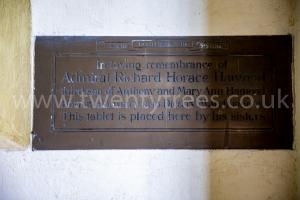
On 13th March 1906 Admiral Richard Horace Hamond [aged 63] died. Memorial in All Saints Church, West Acre [Map].
Admiral Richard Horace Hamond: On 17th January 1843 he was born to Anthony Hamond and Mary Anne Musters.
Annals of the six Kings of England by Nicholas Trivet
Translation of the Annals of the Six Kings of England by that traces the rise and rule of the Angevin aka Plantagenet dynasty from the mid-12th to early 14th century. Written by the Dominican scholar Nicholas Trivet, the work offers a vivid account of English history from the reign of King Stephen through to the death of King Edward I, blending political narrative with moral reflection. Covering the reigns of six monarchs—from Stephen to Edward I—the chronicle explores royal authority, rebellion, war, and the shifting balance between crown, church, and nobility. Trivet provides detailed insight into defining moments such as baronial conflicts, Anglo-French rivalry, and the consolidation of royal power under Edward I, whose reign he describes with particular immediacy. The Annals combines careful year-by-year reporting with thoughtful interpretation, presenting history not merely as a sequence of events but as a moral and political lesson. Ideal for readers interested in medieval history, kingship, and the origins of the English state, this chronicle remains a valuable and accessible window into the turbulent world of the Plantagenet kings.
Available at Amazon in eBook and Paperback format.
13th March 1918. The Sketch.
Engaged to the Earl of St. Germans [aged 27]: Lady Blanche Somerset [aged 20].
The engagement of Lady Blanche Somerset, elder daughter of the Duke and Duchess of Beaufort, and the Earl of St. Germans, M.C., Dragoons, was announced on March 6. Lady Blanche, who was born in 1897, is a daughter of the ninth Duke. Lord St. Germans is the sixth Earl, and succeeded to the title in 1911. He was born in 1890, and is a Captain of Dragoons. He has served in the war ever since 1914, and has been wounded, mentioned in despatches, and awarded the Military Cross.

On 13th March 1929 Henry Scott Tuke [aged 70] died at his cottage overlooking Swanpool in Falmouth, Cornwall. His sister Maria Tuke aka Sainsbury [aged 68] was present.
On 13th March 1937 Gaetano Trentanove [aged 79] died.
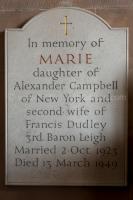
On 13th March 1949 Marie Campbell Baroness Leigh died. Memorial at Church of the Virgin Mary, Stoneleigh [Map].
Marie Campbell Baroness Leigh: On 2nd October 1923 Francis Dudley Leigh 3rd Baron Leigh and she were married. She by marriage Baroness Leigh of Stoneleigh in Warwickshire.
On 13th March 1271 Queen Judith of Bohemia and Poland was born to Rudolph I King Romans [aged 52] and Gertrude Hohenburg [aged 46]. She married 24th January 1285 King Wenceslaus II of Bohemia and Poland and had issue.
On 13th March 1372 Louis Valois I Duke Orléans was born to King Charles V of France [aged 33] and Joanna Bourbon Queen Consort France [aged 34]. He a great x 4 grandson of King Henry III of England. Coefficient of inbreeding 3.60%. He married (1) 1374 his third cousin once removed Catherine Hungary (2) 1389 his first cousin Valentina Visconti Duchess of Orleans, daughter of Gian Galeazzo Visconti 1st Duke Milan and Isabelle Valois, and had issue.
On 13th March 1372 Charles Bohemia was born to Charles IV King Bohemia Holy Roman Emperor Luxemburg [aged 55] and Elizabeth Pomerania Holy Roman Empress Luxemburg [aged 25]. On 24th July 1373 Charles Bohemia died.
On 13th March 1539 John Gresham was born to John Gresham [aged 44] and Mary Ipswell [aged 44]. He married 17th July 1553 Elizabeth Dormer.

On 13th March 1674 James Bertie was born to James Bertie 1st Earl of Abingdon [aged 20] and Eleanor Lee Countess Abingdon. He married before 28th October 1692 Elizabeth Willoughby, daughter of George Willoughby 7th Baron Willoughby of Parham and Elizabeth Clinton Baroness De La Warr, and had issue.

On 13th March 1679 Charlotte Lee Baroness Baltimore was born to Edward Lee 1st Earl Lichfield [aged 16] and Charlotte Fitzroy Countess Lichfield [aged 14] at St James' Park [Map]. She a granddaughter of King Charles II of England Scotland and Ireland. She married (1) 2nd January 1699 Benedict Calvert 4th Baron Baltimore, son of Charles Calvert 3rd Baron Baltimore and Jane Lowe Baroness Baltimore, and had issue (2) before 10th December 1719 Christopher Crowe and had issue.

The True Chronicles of Jean le Bel Volume 1 Chapters 1-60 1307-1342
The True Chronicles of Jean le Bel offer one of the most vivid and immediate accounts of 14th-century Europe, written by a knight who lived through the events he describes, and experienced some of them first hand. Covering the early decades of the Hundred Years’ War, this remarkable chronicle follows the campaigns of Edward III of England, the politics of France and the Low Countries, and the shifting alliances that shaped medieval warfare. Unlike later historians, Jean le Bel writes with a strong sense of eyewitness authenticity, drawing on personal experience and the testimony of fellow soldiers. His narrative captures not only battles and sieges, but also the realities of military life, diplomacy, and the ideals of chivalry that governed noble society. A key source for Jean Froissart, Le Bel’s chronicle stands on its own as a compelling and insightful work, at once historical record and literary achievement. This translation builds on the 1905 edition published in French by Jules Viard, adding extensive translations from other sources Rymer's Fœdera, the Chronicles of Adam Murimuth, William Nangis, Walter of Guisborough, a Bourgeois of Valenciennes, Geoffrey le Baker of Swinbroke and Richard Lescot to enrich the original text and Viard's notes.
Available at Amazon in eBook and Paperback format.
On 13th March 1687 John Ashburnham 1st Earl Ashburnham was born to John Ashburnham 1st Baron Ashburnham [aged 31] and Bridget Vaughan Baroness Ashburnham. He married (1) 21st October 1710 Mary Butler Baroness Ashburnham, daughter of James Butler 2nd Duke Ormonde and Mary Somerset Duchess Ormonde (2) 24th July 1714 his half sixth cousin Henrietta Stanley Countess Anglesey, daughter of William Stanley 9th Earl of Derby and Elizabeth Butler Countess Derby, and had issue (3) before 30th October 1724 Jemima Grey Countess Ashburham, daughter of Henry Grey 1st Duke Kent and Jemima Crew Marchioness Kent, and had issue.
On 13th March 1716 Princess Philippine Charlotte of Prussia was born to Frederick William "Soldier King" I King Prussia [aged 27] and Sophia Dorothea Hanover Queen Consort Prussia [aged 28]. She a great x 3 granddaughter of King James I of England and Ireland and VI of Scotland. Coefficient of inbreeding 8.32%.

On 13th March 1719 John Whitwell aka Griffin 4th Baron Howard Walden 1st Baron Braybrooke was born to William Whitwell and Anne Griffin. He married (1) 1749 Anna Maria Schutz (2) 1765 Catherine Clayton Baroness Howard de Walden.
On 13th March 1729 Francis Hastings 10th Earl Huntingdon was born to Theophilus Hastings 9th Earl Huntingdon [aged 32] and Selina Shirley Countess Huntingdon [aged 22].


On 13th March 1733 Johan Joseph Zoffany was born.
On 13th March 1736 John Stewart 7th Earl Galloway was born to Alexander Stewart 6th Earl Galloway [aged 42] and Catherine Cochrane Countess Galloway [aged 27]. He married (1) 14th August 1762 his half fifth cousin once removed Charlotte Mary Greville, daughter of Francis Greville 1st Earl Brooke Warwick Castle 1st Earl Warwick and Elizabeth Hamilton Countess Brooke Warwick Castle and Warwick (2) 13th June 1764 Anne Dashwood Countess Galloway, daughter of James Dashwood 2nd Baronet and Elizabeth Spencer Lady Dashwood, and had issue.
On 12th March 1749 or 13th March 1749 William Robert Fitzgerald 2nd Duke Leinster was born to James Fitzgerald 1st Duke Leinster [aged 27] and Emilia Mary Lennox Duchess Leinster [aged 17] at Arlington Place. He a great x 2 grandson of King Charles II of England Scotland and Ireland. He married 4th November 1775 his sixth cousin Emilia St George Duchess Leinster, daughter of St George Ussher aka St George 1st Baron Saint George, and had issue.
On 13th March 1764 Charles Grey 2nd Earl Grey was born to Charles Grey 1st Earl Grey [aged 34] and Elizabeth Grey Countess Grey [aged 20]. He married 18th November 1794 Mary Elizabeth Ponsonby Countess Grey, daughter of William Ponsonby 1st Baron Ponsonby of Imokilly in County Cork and Louisa Molesworth Countess Fitzwilliam, and had issue.


On 13th March 1768 Anne Wellesley was born to Garrett Wellesley 1st Earl Mornington [aged 32] and Anne Hill Countess Mornington [aged 25]. She married (1) 7th January 1790 Henry Fitzroy, son of Charles Fitzroy 1st Baron Southampton and Anne Warren Baroness Southampton, and had issue (2) 2nd August 1799 Charles Culling Smith and had issue.
On 13th March 1770 Cecil Hamilton Marchioness Abercorn was born to George Hamilton [aged 51]. She married (1) 4th March 1792 her first cousin John Hamilton 1st Marquess Abercorn and had issue (2) 23rd May 1799 Joseph Copley 3rd Baronet, son of Joseph Moyle aka Copley 1st Baronet and Mary Buller Lady Copley, and had issue.
On 13th March 1772 William Feilden 1st Baronet was born.
Chronicle of Geoffrey le Baker of Swinbroke
Baker was a secular clerk from Swinbroke, now Swinbrook, an Oxfordshire village two miles east of Burford. His Chronicle describes the events of the period 1303-1356: Gaveston, Bannockburn, Boroughbridge, the murder of King Edward II, the Scottish Wars, Sluys, Crécy, the Black Death, Winchelsea and Poitiers. To quote Herbert Bruce 'it possesses a vigorous and characteristic style, and its value for particular events between 1303 and 1356 has been recognised by its editor and by subsequent writers'. The book provides remarkable detail about the events it describes. Baker's text has been augmented with hundreds of notes, including extracts from other contemporary chronicles, such as the Annales Londonienses, Annales Paulini, Murimuth, Lanercost, Avesbury, Guisborough and Froissart to enrich the reader's understanding. The translation takes as its source the 'Chronicon Galfridi le Baker de Swynebroke' published in 1889, edited by Edward Maunde Thompson.
Available at Amazon in eBook and Paperback format.
On 13th March 1779 Mary Cavendish-Bentinck was born to William Cavendish-Bentinck 3rd Duke Portland [aged 40] and Dorothy Cavendish 3rd Duchess Portland [aged 28].
On 13th March 1782 Robert Bateson 1st Baronet was born.
On 13th March 1785 Robert Murray was born to John Murray 4th Duke Atholl [aged 29]. He died aged seven in 1793.
On 13th March 1786 Charles Henry Maynard 3rd Viscount Maynard was born to Henry Maynard.
On 13th March 1792 Elizabeth Cavendish was born to George Augustus Henry Cavendish 1st Earl Burlington [aged 37] and Elizabeth Compton Countess Burlington [aged 31]. She died aged two in 1794.
On 13th March 1793 Priscilla Anne Wellesley-Pole Countess of Westmoreland was born to William Wellesley aka Wellesley-Pole 3rd Earl Mornington [aged 29] and Katherine Forbes Countess Mornington [aged 32]. She married 26th June 1811 John Fane 11th Earl of Westmoreland, son of John Fane 10th Earl of Westmoreland and Sarah Anne Child Countess of Westmoreland, and had issue.


On 13th March 1826 Tatton Sykes 5th Baronet was born to Tatton Sykes 4th Baronet [aged 54] and Mary Anne Foulis. He married 3rd August 1874 Christina Anne Jessica Cavendish-Bentinck and had issue.
On 13th March 1829 Robert Jacob Buxton 3rd Baronet was born to John Jacob Buxton 2nd Baronet [aged 40] and Elizabeth Cholmeley.
On 13th March 1833 Frederick Hervey-Bathurst 4th Baronet was born to Frederick Hervey-Bathurst 3rd Baronet [aged 25] and Clare Emily Brooke.
On 13th March 1833 Anthony Francis Henry Ashley-Cooper was born to Anthony Ashley-Cooper 7th Earl Shaftesbury [aged 31] and Emily Caroline Catherine Frances Cowper Countess Shaftesbury.


On 13th March 1836 Michael Culme-Seymour 3rd Baronet was born to Reverend John Culme-Seymour 2nd Baronet [aged 35]. He married 16th October 1866 Mary Georgina Watson Lady Culme-Seymour and had issue.
Annals of the six Kings of England by Nicholas Trivet
Translation of the Annals of the Six Kings of England by that traces the rise and rule of the Angevin aka Plantagenet dynasty from the mid-12th to early 14th century. Written by the Dominican scholar Nicholas Trivet, the work offers a vivid account of English history from the reign of King Stephen through to the death of King Edward I, blending political narrative with moral reflection. Covering the reigns of six monarchs—from Stephen to Edward I—the chronicle explores royal authority, rebellion, war, and the shifting balance between crown, church, and nobility. Trivet provides detailed insight into defining moments such as baronial conflicts, Anglo-French rivalry, and the consolidation of royal power under Edward I, whose reign he describes with particular immediacy. The Annals combines careful year-by-year reporting with thoughtful interpretation, presenting history not merely as a sequence of events but as a moral and political lesson. Ideal for readers interested in medieval history, kingship, and the origins of the English state, this chronicle remains a valuable and accessible window into the turbulent world of the Plantagenet kings.
Available at Amazon in eBook and Paperback format.
On 13th March 1846 Lancelot Aubrey-Fletcher 5th Baronet was born to Henry Fletcher 3rd Baronet [aged 38] and Emily Maria Browne Lady Fletcher. He married (1) in or before 1876 Gertrude Isabella Howell (2) 18th April 1882 Emily Harriet Wade Lady Fletcher and had issue.
On 13th March 1849 Colonel Simon Macdonald Lockhart was born to Norman Macdonald Lockhart 3rd Baronet [aged 46]. He married 14th December 1898 his first cousin twice removed Hilda Maoreton Macdonald.

On 13th March 1857 Herbert Plumer 1st Viscount Plumer was born.
On 13th March 1878 David Freeman-Mitford 2nd Baron Redesdale was born to Algernon Freeman-Mitford 1st Baron Redesdale [aged 41] and Clementina Gertrude Helen Ogilvy [aged 23]. He married February 1904 Sydney Bowles Baroness Redesdale and had issue.
On 13th March 1884 or 24th March 1884 William Charles Fuller was born at Laugharne [Map].

On 13th March 1887 Charles Thomas Mills was born to Charles Mills 2nd Baron Hillingdon [aged 32] and Alice Marion Harbord Baroness Hillingdon [aged 29].
On 13th March 1912 Violet Pakenham was born to Thomas Pakenham 5th Earl of Longford [aged 47] and Mary Julia Child-Villiers Countess Longford [aged 35]. She married 1st December 1934 Anthony Powell and had issue.
On 13th March 1924 Frederick William Conyngham 7th Marquess Conyngham was born to Frederick William Conyngham 6th Marquess Conyngham [aged 33].
On 13th March 1949 Andrew Clyde Stewart 14th Earl of Galloway was born to Alexander David Stewart [aged 34].
On 13th March 1954 Francis David Ormsby-Gore 6th Baron Harlech was born to William David Ormsby-Gore 5th Baron Harlech [aged 35] and Sylvia Thomas Baroness Harlech.
The True Chronicles of Jean le Bel Volume 1 Chapters 1-60 1307-1342
The True Chronicles of Jean le Bel offer one of the most vivid and immediate accounts of 14th-century Europe, written by a knight who lived through the events he describes, and experienced some of them first hand. Covering the early decades of the Hundred Years’ War, this remarkable chronicle follows the campaigns of Edward III of England, the politics of France and the Low Countries, and the shifting alliances that shaped medieval warfare. Unlike later historians, Jean le Bel writes with a strong sense of eyewitness authenticity, drawing on personal experience and the testimony of fellow soldiers. His narrative captures not only battles and sieges, but also the realities of military life, diplomacy, and the ideals of chivalry that governed noble society. A key source for Jean Froissart, Le Bel’s chronicle stands on its own as a compelling and insightful work, at once historical record and literary achievement. This translation builds on the 1905 edition published in French by Jules Viard, adding extensive translations from other sources Rymer's Fœdera, the Chronicles of Adam Murimuth, William Nangis, Walter of Guisborough, a Bourgeois of Valenciennes, Geoffrey le Baker of Swinbroke and Richard Lescot to enrich the original text and Viard's notes.
Available at Amazon in eBook and Paperback format.
On 13th March 1954 Francis Fitzherbert 15th Baron Stafford was born to Basil Fitzherbert 14th Baron Stafford [aged 27].
On 13th March 1957 Dominic Nelson 5th Baronet was born to William Hope Nelson 3rd Baronet [aged 42] and Elizabeth Anne Cary Lady Nelson [aged 29].
On 13th March 1961 Ralph Douglas Scott-Montagu 4th Baron Montagu of Beaulieu was born to Edward Douglas-Scott-Montagu 3rd Baron Montagu [aged 34] and Belinda Crossley Baroness Montagu [aged 29].
On 13th March 1712 John Leveson-Gower 1st Earl Gower [aged 17] and Evelyn Pierrepont Baroness Gower [aged 21] were married. She by marriage Baroness Gower. She the daughter of Evelyn Pierrepont 1st Duke Kingston upon Hull [aged 57] and Mary Fielding Countess Kingston upon Hull. They were fourth cousins.
On 13th March 1723 Francis Poole 2nd Baronet [aged 41] and Frances Pelham Lady Poole were married. She by marriage Lady Poole of Poole in Cheshire.
On 13th March 1729 Bussy Mansel 4th Baron Mansel [aged 8] and Barbara Villiers Lady Blackett [aged 22] were married. She the daughter of William Villiers 2nd Earl Jersey.
On 13th March 1746 Francis Vincent 7th Baronet [aged 29] and Mary Howard Lady Vincent [aged 24] were married.
On 13th March 1778 Robert Shirley 7th Earl Ferrers [aged 21] and Elizabeth Prentiss Countess Ferrers were married at St Leonard's Church, Shoreditch. He the son of Robert Shirley 6th Earl Ferrers [aged 54] and Catherine Cotton Countess Ferrers [aged 59].
On 13th March 1879 Prince Arthur Windsor 1st Duke Connaught and Strathearn [aged 28] and Luise Margarete Hohenzollern Duchess Connaught [aged 18] were married at St George's Chapel, Windsor Castle [Map]. He the son of Prince Albert Saxe Coburg Gotha and Queen Victoria of the United Kingdom [aged 59]. They were third cousin once removed.
On 13th March 1181 Simon "Chauve" Montfort 4th Count Évreux [aged 53] died at Évreux, Haute Normandie. His son Amaury succeeded 5th Count Évreux, 5th Seigneur Montfort.
On 13th March 1271 Henry "Almain" Cornwall [aged 35] was murdered while attending mass at the Chiesa di San Silvestro, Viterbo by his cousins Simon "Younger" Montfort and Guy Montfort Count Nola [aged 27] in revenge for the deaths of their father Simon and older brother Henry at the Battle of Evesham.
The murder was carried out in the presence of the Cardinals, who were conducting a papal Election, King Philip III of France [aged 25], and King Charles of Sicily [aged 43]. The Montfort brothers were excommunicated.
Henry "Almain" Cornwall was buried in Hailes Abbey [Map].
The deed is mentioned by Dante Alighieri some forty years after in the Divine Comedy who placed Guy de Montfort in the seventh circle of hell.
On 13th March 1375 Maria de la Cerda Y Lara Countess Alençon [aged 56] died.
On 13th March 1385 Katherine Clivedon Baroness Berkeley [aged 75] died.

Anne Boleyn. Her Life as told by Lancelot de Carle's 1536 Letter.
In 1536, two weeks after the execution of Anne Boleyn, her brother George and four others, Lancelot du Carle, wrote an extraordinary letter that described Anne's life, and her trial and execution, to which he was a witness. This book presents a new translation of that letter, with additional material from other contemporary sources such as Letters, Hall's and Wriothesley's Chronicles, the pamphlets of Wynkyn the Worde, the Memorial of George Constantyne, the Portuguese Letter and the Baga de Secrets, all of which are provided in Appendices.
Available at Amazon in eBook and Paperback format.
On 13th March 1422 John Clifford 7th Baron Clifford [aged 33] died. His son Thomas [aged 7] succeeded 8th Baron de Clifford, 8th Lord Skipton.
On 13th March 1516 Vladislaus II King Hungary [aged 60] died.
On 13th March 1540 Henry Bourchier 2nd Earl Essex 3rd Count of Eu died. Earl Essex, Viscount Bourchier extinct. His daughter Anne [aged 23] succeeded 7th Baroness Bourchier. His second cousin once removed John [aged 41] succeeded 2nd Count Eu. Neither he or his descendants used the title.
On 13th March 1569 Louis Bourbon Prince Condé [aged 38] was killed after surrendering at the Battle of Jarnac. His son Henri [aged 16] succeeded Prince Condé. His son Charles [aged 2] succeeded Count Soissons.
On 11th March 1620 Bishop Martin Fortherby [aged 60] died. On 13th March 1620 he was buried at All Hallows Staining Church Langbourn Ward.
On 13th March 1635 Richard Weston 1st Earl of Portland [aged 58] died. He was buried at Winchester Cathedral [Map] where he has a monument. The marble elments sculpted by Isaac Besnier, Sculptor in Ordinary and Keeper of the Statues to Charles I until 1643, when he was superseded by his son Peter; the bronze elements perhaps cast by Hubert le Sueur. His son Jerome [aged 29] succeeded 2nd Earl of Portland, 2nd Baron Weston of Nayland in Suffolk. Frances Stewart Countess Portland [aged 18] by marriage Countess of Portland.
Jerome Weston 2nd Earl of Portland: On 16th December 1605 he was born to Richard Weston 1st Earl of Portland and Frances Waldegrave Countess Portland. On 10th June 1632 he and Frances Stewart Countess Portland were married. She the daughter of Esmé Stewart 3rd Duke Lennox and Katherine Clifton Duchess Lennox. He the son of Richard Weston 1st Earl of Portland and Frances Waldegrave Countess Portland. On 17th March 1663 he died. His son Charles succeeded 3rd Earl of Portland, 3rd Baron Weston of Nayland in Suffolk.
Frances Stewart Countess Portland: In 1617 she was born to Esmé Stewart 3rd Duke Lennox and Katherine Clifton Duchess Lennox. In 1694 Frances Stewart Countess Portland died.
On 13th March 1698 Frances Ward Lady Noel [aged 60] died.

On 13th March 1708 John Pole 3rd Baronet [aged 58] died. His son William [aged 30] succeeded 4th Baronet Pole of Shute House in Devon.
On 4th March 1739 John Shaw 3rd Baronet [aged 52] died. He was buried on 13th March 1739 at the Church of Holy Trinity, Eltham. His son John [aged 10] succeeded 4th Baronet Shaw of Eltham in Kent.

On 13th March 1741 Elizabeth Shirley Countess Northampton [aged 46] died. Baron Ferrers of Chartley abeyant.
On 13th March 1743 Catherine Darnley Duchess Buckingham and Normandby [aged 63] died.
On 13th March 1753 Charles Bennet 2nd Earl Tankerville [aged 55] died. His son Charles [aged 36] succeeded 3rd Earl Tankerville, 4th Baron Ossulston of Ossulston in Middlesex. Alice Astley Countess Tankerville [aged 36] by marriage Countess Tankerville.
On 13th March 1768 Compton Domvile 2nd Baronet [aged 72] died. Baronet Domvile of Templeogue extinct. Charles Pocklington aka Domvile [aged 28] inherited his estates and adopted the surname Domvile.
On 13th March 1771 Charles Knollys 5th Earl Banbury [aged 67] died. He was buried on 19th March 1771 at St John the Baptist Church, Burford. His son William [aged 44] de jure 6th Earl Banbury, 6th Viscount Wallingford, 6th Baron Knollys.
On 13th March 1782 Charles Holte 6th Baronet [aged 60] died. Baronet Holte of Aston in Warwickshire extinct. His daughter Mary Elizabeth Holte [aged 26] and her husband Abraham Bracebridge inheritedBrereton Hall, Cheshire [Map]. The inheritance complicated since Lister Holte, 5th Baronet, appears to have bequeathed Heneage Legge a lifetime's interest in the Hall.
On 13th March 1808 Christian VII King of Denmark and Norway [aged 59] died. His son Frederick [aged 40] succeeded VI King of Denmark and Norway. Marie Sophie Hesse-Kassel Queen Consort Denmark and Norway [aged 40] by marriage Queen Consort Denmark and Norway.
On 13th March 1812 Henry Bayly-Paget 1st Earl Uxbridge [aged 67] died. He was buried at Lichfield Cathedral [Map]. His son Henry [aged 43] succeeded 2nd Earl Uxbridge, 10th Baron Paget Beaudasert, 4th Baronet Bayly of Plas Newydd in Anglesey.


On 13th March 1823 John Jervis 1st Earl St Vincent [aged 88] died. Earl of St Vincent and Baron Jervis of Medsford in Staffordshire extinct. His nephew Edward [aged 55] succeeded 2nd Viscount St Vincent of Meaford in Staffordshire.
On 13th March 1834 Charles Philip Yorke [aged 70] died without issue one day after his seventieth birthday. On 10th May 1854 Harriet Manningham [aged 70] died. Both buried at St Andrew's Church, Wimpole [Map].
Framed inscription panel with achievement of arms, supported by consoles and surmounted by a sarcophagus, in various marbles, signed by Thomas Denman [aged 44].
The quote 'Et Nos Aliquod' appears to refer to Vergils Aeneid Paragraph 57 Sentence 4 "et nos aliquod nomenque decusque gessimus." meaning "I also had some name and respect".
Charles Philip Yorke: On 12th March 1764 he was born to Charles Yorke and Agneta Johnson. On 1st July 1790 Charles Philip Yorke and Harriet Manningham were married.
Harriet Manningham: On 21st June 1763 she was born to Charles Manningham of Thorpe in Surrey.
Annals of the six Kings of England by Nicholas Trivet
Translation of the Annals of the Six Kings of England by that traces the rise and rule of the Angevin aka Plantagenet dynasty from the mid-12th to early 14th century. Written by the Dominican scholar Nicholas Trivet, the work offers a vivid account of English history from the reign of King Stephen through to the death of King Edward I, blending political narrative with moral reflection. Covering the reigns of six monarchs—from Stephen to Edward I—the chronicle explores royal authority, rebellion, war, and the shifting balance between crown, church, and nobility. Trivet provides detailed insight into defining moments such as baronial conflicts, Anglo-French rivalry, and the consolidation of royal power under Edward I, whose reign he describes with particular immediacy. The Annals combines careful year-by-year reporting with thoughtful interpretation, presenting history not merely as a sequence of events but as a moral and political lesson. Ideal for readers interested in medieval history, kingship, and the origins of the English state, this chronicle remains a valuable and accessible window into the turbulent world of the Plantagenet kings.
Available at Amazon in eBook and Paperback format.

On 13th March 1857 William Pitt Amherst 1st Earl Amherst [aged 84] died at Knole House, Sevenoaks. His son William [aged 51] succeeded 2nd Earl Amherst, 3rd Baron Amherst of Montreal in Kent. Gertrude Percy Countess Amherst [aged 42] by marriage Countess Amherst.
On 13th March 1858 Richard Griffin 3rd Baron Braybrook [aged 74] died at Audley End House, Saffron Walden [Map]. His son Richard [aged 37] succeeded 4th Baron Braybrooke of Braybrooke in Northamptonshire.
On 13th March 1859 Washington Sewallis Shirley 9th Earl Ferrers [aged 37] died at Staunton Harold, Leicestershire [Map]. He was buried at Holy Trinity Church Staunton Harold, Leicestershire [Map]. His son Sewallis [aged 12] succeeded 10th Earl Ferrers, 16th Baronet Shirley of Staunton Harold in Leicestershire.
On 13th March 1867 Louise Caroline Hesse-Kassel Duchess Schleswig Holstein Sonderburg Glücksburg [aged 77] died.
On 13th March 1869 Admiral Charles Christopher Parker 5th Baronet [aged 76] died. Baronet Parker of Bassingbourn in Essex extinct.
On 13th March 1892 Prince Louis Hesse Darmstadt IV Grand Duke [aged 54] died.
On 13th March 1898 Eleanor Sophia Leigh Lady Cunliffe [aged 50] died.
On 13th March 1909 John Manners Yorke 7th Earl of Hardwicke [aged 68] died. His son Charles [aged 39] succeeded 8th Earl Hardwicke, 8th Viscount Royston.
On 13th March 1929 Henry Scott Tuke [aged 70] died at his cottage overlooking Swanpool in Falmouth, Cornwall. His sister Maria Tuke aka Sainsbury [aged 68] was present.
On 13th March 1930 George Coventry 9th Earl Coventry [aged 91] died.
Jean de Waurin's Chronicle of England Volume 6 Books 3-6: The Wars of the Roses
Jean de Waurin was a French Chronicler, from the Artois region, who was born around 1400, and died around 1474. Waurin’s Chronicle of England, Volume 6, covering the period 1450 to 1471, from which we have selected and translated Chapters relating to the Wars of the Roses, provides a vivid, original, contemporary description of key events some of which he witnessed first-hand, some of which he was told by the key people involved with whom Waurin had a personal relationship.
Available at Amazon in eBook and Paperback format.
On 13th March 1933 Charles Marsham 5th Earl Romney [aged 68] died. His son Charles [aged 41] succeeded 6th Earl Romney, 6th Viscount Marsham, 8th Baron Romney, 12th Baronet Marsham of Cuckston in Kent. Marie Henrietta Keppel Countess of Romney [aged 42] by marriage Countess Romney.
On 13th March 1937 Gaetano Trentanove [aged 79] died.
On 13th March 1937 Arthur Walsh 3rd Baron Ormathwaite [aged 77] died. His brother George [aged 74] succeeded 4th Baron Ormathwaite of Ormathwaite in Cumberland.
On 13th March 1949 Marie Campbell Baroness Leigh died. Memorial at Church of the Virgin Mary, Stoneleigh [Map].
Marie Campbell Baroness Leigh: On 2nd October 1923 Francis Dudley Leigh 3rd Baron Leigh and she were married. She by marriage Baroness Leigh of Stoneleigh in Warwickshire.

On 13th March 1967 Margaret Etrenne Hannah "Peggy" Primrose Marchioness Crewe [aged 86] died.
On 13th March 1969 Robert Foljambe 4th Earl of Liverpool [aged 81] died. His great nephew Edward [aged 24] succeeded 5th Earl Liverpool.
On 13th March 1990 Hugh Cholmondeley 6th Marquess of Cholmondeley [aged 70] died. His son David [aged 29] succeeded 7th Marquess Cholmondeley, 10th Earl Cholmondeley in Cheshire, 7th Earl Rocksavage of Cheshire, 11th Viscount Cholmondeley of Kells in County Meath, 10th Viscount Malpas in Cheshire, 10th Baron Cholmondeley Nampwich in Cheshire, 9th Baron Newburgh of Newburgh in Anglesey, 9th Baron Newborough of Newborough in County Wexford.


