

20 Aug is in August.
Anglo-Saxon Chronicle. 651. This year King Oswin was slain, on the twentieth day of August; and within twelve nights afterwards died Bishop Aidan, on the thirty-first of August.
On 20th August 651 King Oswine of Deira was killed at Gilling East, North Yorkshire. He was buried at Tynemouth Priory [Map].
On 20th August 1119 at the Battle of Bremule at Gaillardbois Cressenville King Henry I "Beauclerc" England [aged 51] and his son William Adelin Duke Normandy [aged 16] defeated the army of Louis VI King of the Franks [aged 37] who had invaded Normandy in support of William Clito Count Flanders [aged 16] who claimed the Duchy of Normandy.
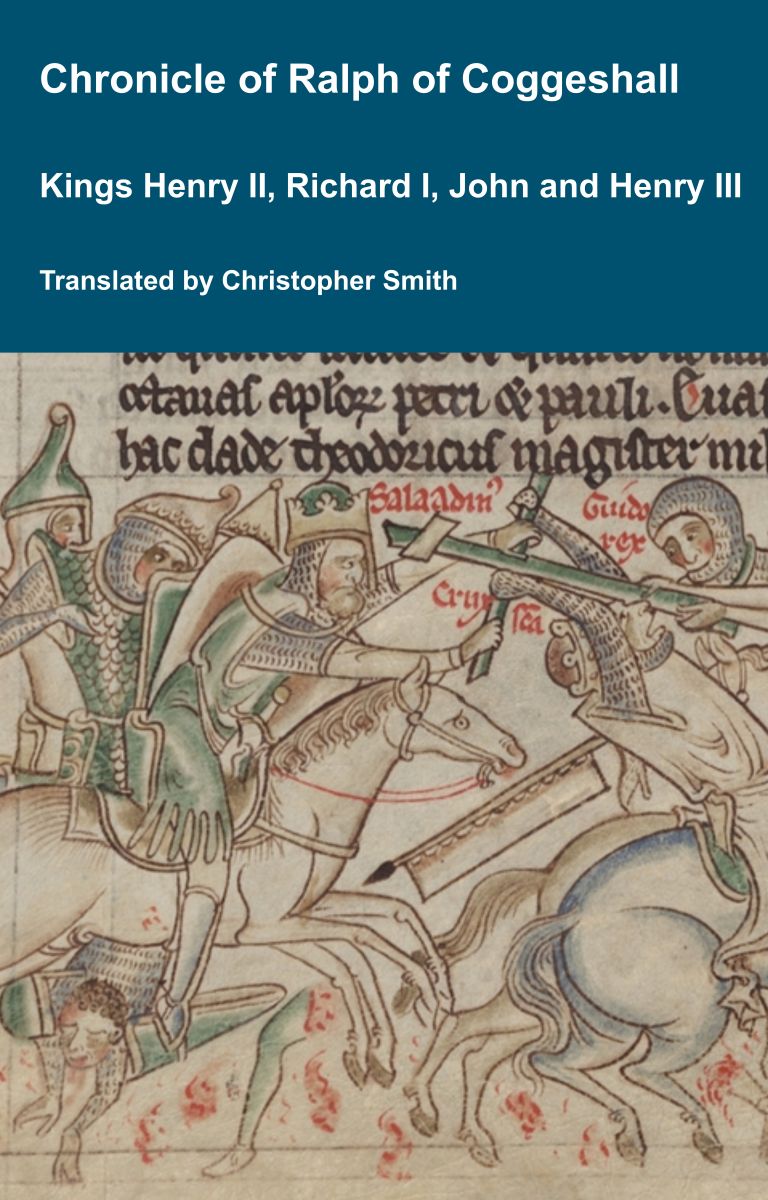 Chronicum Anglicanum by Ralph Coggeshall. 1153. Blessed Bernard, first abbot of the monastery of Clairvaux, father also of more than one hundred and sixty other monasteries, when he had completed about sixty-three years, on the 13th day before the Kalends of September [20th August], fell asleep in the Lord in the hands of his sons. This was in the same year in which Blessed Pope Eugenius III, the son in holy life of that same holy father, departed from this light to the true Light; his successor Anastasius was presiding over the Roman Church, while in the empire of the Romans the illustrious Frederick reigned, and in the kingdom of the Franks the most pious Louis, son of Louis.
MCLIII. Beatus Bernardus, Claræ-vallis cœnobii primus abbas, aliorum quoque amplius quam centum et sexaginta monasteriorum pater, annis circiter sexaginta tribus expletis, tertio decimo calendas Septembris, inter filiorum manus obdormivit in Domino; eodem videlicet anno quo beatus papa Eugenius tertius, ejusdem patris sancti in sancta conversatione filius, ab hac luce migravit ad veram lucem; successore ejus Anastasio Romanæ ecclesiæ præsidente, regnantibus autem in Romanorum imperio Friderico illustri, in Francorum regno piissimo Ludovico, Ludovici filio.
Gesta Regis Henrici by Benedict of Peterborough. 20th August 1189. Meanwhile, Geoffrey, Bishop of Ely, died at Winchester on the 13th day before the Kalends of September and was buried at Ely [Map]."
Interim Gaufridus1 Eliensis episcopus obiit Wintonize, xiiio, kalendas Septembris, et sepultus est apud Hely.
Note 1. Gaufridus Riddell, bishop 1174-1189.
Chronicum Anglicanum by Ralph Coggeshall. Geoffrey Ridel1, bishop of Ely, died.
Obiit Galfridus Ridel, episcopus Elyensis.
Note 1. Bishop Geoffrey Ridel appointed Lord Chancellor 1162, consecrated Bishop of Ely 1164, died 20th August 1189.
On 20th August 1222 Eleanor Fair Maid of Brittany [aged 38] was moved to Marlborough Castle [Map] where she remained until 9th October 1223.
On 20th August 1255 Louis Capet [aged 11] was betrothed to Berengaria Ivrea [aged 2] daughter of Alfonso X King Castile X King Leon [aged 33] and, for a brief time, was heir to the throne of Castile. The marriage didn't take place since he died in 1260.
On 20th August 1270 King Edward I of England [aged 31] and Eleanor of Castile Queen Consort England [aged 29] sailed from Dover, Kent [Map] to Tunis [Map] via Sicily [Map]. On arrival at Sicily [Map] King Charles Capet of Sicily [aged 43], brother of the recently deceased King Louis IX of France [aged 56], had signed a treaty with the Emir so Edward returned to Sicily [Map].
On 20th August 1297 the Battle of Furnes was a battle between French led by Robert Artois II Count Artois [aged 46], and Flemish forces led by Guy Dampierre Count Flanders [aged 71]; the French were victorious.
Philip Artois [aged 29] was wounded during the Battle of Furnes. He died a year later as a consequence of his wounds.
Walram Jülich [aged 54] died four days after the battle.
Chronicle of Abbot Ralph of Coggeshall
The Chronicle of Abbot Ralph of Coggeshall (Chronicon Anglicanum) is an indispensable medieval history that brings to life centuries of English and European affairs through the eyes of a learned Cistercian monk. Ralph of Coggeshall, abbot of the Abbey of Coggeshall in Essex in the early 13th century, continued and expanded his community’s chronicle, documenting events from the Norman Conquest of 1066 into the tumultuous reign of King Henry III. Blending eyewitness testimony, careful compilation, and the monastic commitment to record-keeping, this chronicle offers a rare narrative of political intrigue, royal power struggles, and social upheaval in England and beyond. Ralph’s work captures the reigns of pivotal figures such as Richard I and King John, providing invaluable insights into their characters, decisions, and the forces that shaped medieval rule. More than a simple annal, Chronicon Anglicanum conveys the texture of medieval life and governance, making it a rich source for scholars and readers fascinated by English history, monastic authorship, and the shaping of the medieval world.
Available at Amazon in eBook and Paperback format.
 Bourgeois de Valenciennes. When the Count of Blankenberghe and Sir John of Gavre and Walram of Jülich [aged 54] learned that Lord Charles of Valois and Count Robert of Artois were before Furnes [on 20th August 1297] with so great a host of men-at-arms, and that they had begun to set fires and kill their people, the alarm was raised, and they sallied out of the town against the French. They were fully sixteen thousand men, both Germans and others. They attacked and struck the French vigorously, and the French did the same to them. There was a great and fierce battle and much slaughter on both sides, and it lasted a long time; and there the son1 of the Lord of Artois was taken by Sir John of Gavre. And there was such great slaughter and such a great battle that it was a matter of great pity. There the Count of Blankenberghe was killed, and Lord Walram of Jülich was mortally wounded, and he was taken and led prisoner to Saint-Omer, where he lived no more than four days. And Lord John of Gavre remained with the Germans and performed many feats of arms that day; and he might have escaped from the battle that day if he had wished, but he said that, if it pleased God, the arms he bore would never proclaim that he had turned back from his enemies. And so he threw himself again into the fight with the Germans who remained. And there was a great, cruel, and perilous battle, and John of Gavre was grievously wounded there and struck down from his horse and surrounded on all sides, stabbed, pierced, cut, and hurled to the ground. He rose again quickly and still defended himself; then he was struck down again and defended himself on his knees for a long while. In the end he was hemmed in and pressed hard among his enemies, but he would never agree to surrender, and there he was killed; and the remainder of his men turned to flight. And thus Lord Charles and the Count of Artois and the French won the town of Furnes, but it cost them dearly, and they lost many men there, for there were indeed more than twenty thousand dead, on both sides alike.
Quant le conte de Blans-Mons et messire Jehan [de Gavres] et Guillame de Jullers sceurent que monseigneur Charles de Valois et le conte Robert d'Artois estoient devant Furnes à tout sy grans gens d’armes et qu’ils commenchoient à bouter les feux et à tuer leurs gens, on cria alarme, et widèrent hors de la ville contre les Franchois. Ils estoient bien XVI mille hommes, que Allemans, que aultres gens. Sy assallirent et se férirent ès Franchois vigoreusement, et les Franchois à eulx. Sy y eult grande bataille et forte, et grande ochision d’une partye et d'aultre, et longuement dura, et là fut prins le fils monseigneur d’Artois de monseigneur Jehan de Gavres. Et là eult sy grant murdre et sy grande bataille que ce fut ung grant pité. Et là fut le conte de Blans-Mons ochis et monseigneur Guillame de Jullers navres à mort, et fut prins et menés en prison à Saint-Omer où il ne vesqui que IIII jours. Et monseigneur Jehan de Gavres demoura avoec les Allemans et y fit moult d'armes celle journée, et fusist eschappés de la bataille celle journée s’il volsist, mais il dit que, se Dieu plaisoit, les armes qu’il portoit, ne dénonchoient mye qu'il reculast envers ses ennemis, etadont se reférist-il en une bataille avec les Allemans, qui demourés estoient. Et là eult grande bataille cruele et perilleuse, et moult y fut navres Jehan de Gavres et jus de son ceval abatu et de toutes pars avironné, lanchies, perchiés, trenchiés et à la terre trébuchiés. Sy se releva légièrement, et toudis se deffendoit, puis fut rebatu et se deffendist à genoux une grant pièche. En la fin fut-il enclos et apressés entre ses ennemis, mais onques ne se volut rendre et là fut-il ochis, et le remanant de ses gens tournèrent en fuitte. Et aussy gaingnèrent monseigneur Charles et le conte d’Artois et les Franchois la ville de Furnes, mais moult leur cousta, et moult y perdirent, car il y eult bien mors, que d’une part, que d'aultre, plus de XX mille hommes.
Note 1. Philip of Artois, 1269-1298, son of Robert, II Count of Artois. He was captured, possibly released, but died of his wounds soon after. History and Chronicles of Flanders, Volume 1, Page 241-242: "And the Germans and the Flemings who were in Furnes came out against them, and the battle was joined at a small hamlet called Bullecamp. At that battle the Count of Jülich was in command, who was the son of the daughter of the Count of Flanders, and he had with him the Count of Mons and a great multitude of Germans and Flemings. There was the Lord of Gavre, who was very valiant and bold. On that day the Count of Jülich gave his banner to a knight called Baldwin Ruffin to carry, and at the joining of the battle he cast his banner down and withdrew toward the castellan of Bergues, who was with the French. There the Flemings and Germans were defeated, and there was a great number of dead. There the Count of Jülich was taken and sent to Saint-Omer, but he was so badly wounded that he lived only three days thereafter. The Count of Blanmont and the Count of Mons escaped from the battle and went to Ypres. The Lord of Gavre was killed in that battle: on that day he fought against Philip of Artois and took him prisoner, but he was rescued; nevertheless he was so grievously injured that he never bore arms again, but died very soon afterward."
 Chronicle of Jean le Bel Volume 1. Before we reached York, all the English had already departed and gone back to their homes and lands, except for certain knights who had remained to keep the king company. We stayed in the city six full days after our return. Sir John of Hainaut, the noble knight, and all those of his company were highly feasted and honoured by the king, the kingdom, the queen, and by everyone in general, and especially by the ladies who were there. Each man then made a reckoning of his horses, dead and alive, and of his expenses. The king acknowledged his debt1 to the said Sir John, and Sir John in turn bound himself to all his companions, for the king could not so quickly raise the money to cover the value of the horses. However, enough money was given to us for our return to our own country, and afterward, within the year, we were all fully paid for what our horses had been worth.
Ainchoys que nous parvenissions à Eurwik, tous les Anglès s'estoient departis et ralez vers leurs maisons et leurs pays, fors aucuns chevaliers, lesquelz estoient demourez pour luy faire compaignie, et nous demourasmes en la cité bien vI jours aprez nostre revenue, Si furent haultement festiez et honnourez messire Jehan de Haynau, le gentil chevalier, et tous ceulx de sa compaignie, du roy, du royaume, de la royne et de tous generalment, et mesmement des dames lesquelles là estoient, et fist chascun somme de ses chevaulx morts et vifs et de ses fraitz. Si en fist le roy sa debte! envers ledit messire Jehan, et ledit messire Jehan s'en obliga envers tous ses compaignons, car le roy ne pouoit si tost recouvrer argent tant que les chevaulx montoient, Maiz on nous delivra assez argent par raison pour revenir en no pays, et puis aprez fusmes nous dedens l'année tous payez de ce que nos chevaulx montoient.
Note 1. By letters dated 20th August 1327 issued at York, Edward III of England acknowledged that he owed John of Hainaut the sum of 4,000 pounds for war expenses, and ordered his treasurer to pay it to him; and if he did not have that amount available, he was instructed to pawn the king's jewels in order to obtain it. By other letters of the same date, the king charged Jean de l'Isle to escort John of Hainaut back to Dover; Rymer 2.713. In other letters dated 25th May 1329, Edward III made known that merchants of the Florentine banking company of the Bardi had undertaken to pay 7,000 pounds, in his name, to John of Hainaut and to the other men of Hainaut who had come to his aid in the war of Scotland; Rymer 2.764. Indeed, in letters dated 28th June 1327, issued at York, it appears that Edward III then paid only 7,000 pounds out of the 14,000 he owed to John of Hainaut and to his men who had assisted him in the Scottish war. (Ibid 2.708.)
1. Par lettres du 20 août 1327, datées d'York, Édouard III reconnaît devoir à Jean de Hainaut 4,000 livres pour frais de guerre et mande à son trésorier de les lui payer, et s'il n'a pas cette somme, de mettre ses joyaux en gage pour se la procurer. Il charge, par d'autres lettres du même jour, Jean de l'Isle de reconduire Jean de Hainaut à Douvres. (Rymer Fœdera, t. II, IIe partie, p. 713.) Dans d'autres lettres du 25 mai 1329, Édouard Ill fait savoir que des marchands de la société des Bardi de Florence se sont chargés de payer 7,000 livres, en son nom, à Jean de Hainaut et aux autres hommes de Hainaut qui vinrent à son secours dans la guerre d'Ecosse. (Ibid p. 764.) On voit en eflet dans des lettres du 28 juin 1327, datées d'York, qu'Édouard Ill ne paya alors que 7,000 livres sur les 14,000 qu'il devait à Jean de Hainaut et à ses hommes venus à son aide pour la guerre d'Écosse. (Ibid p. 708.)
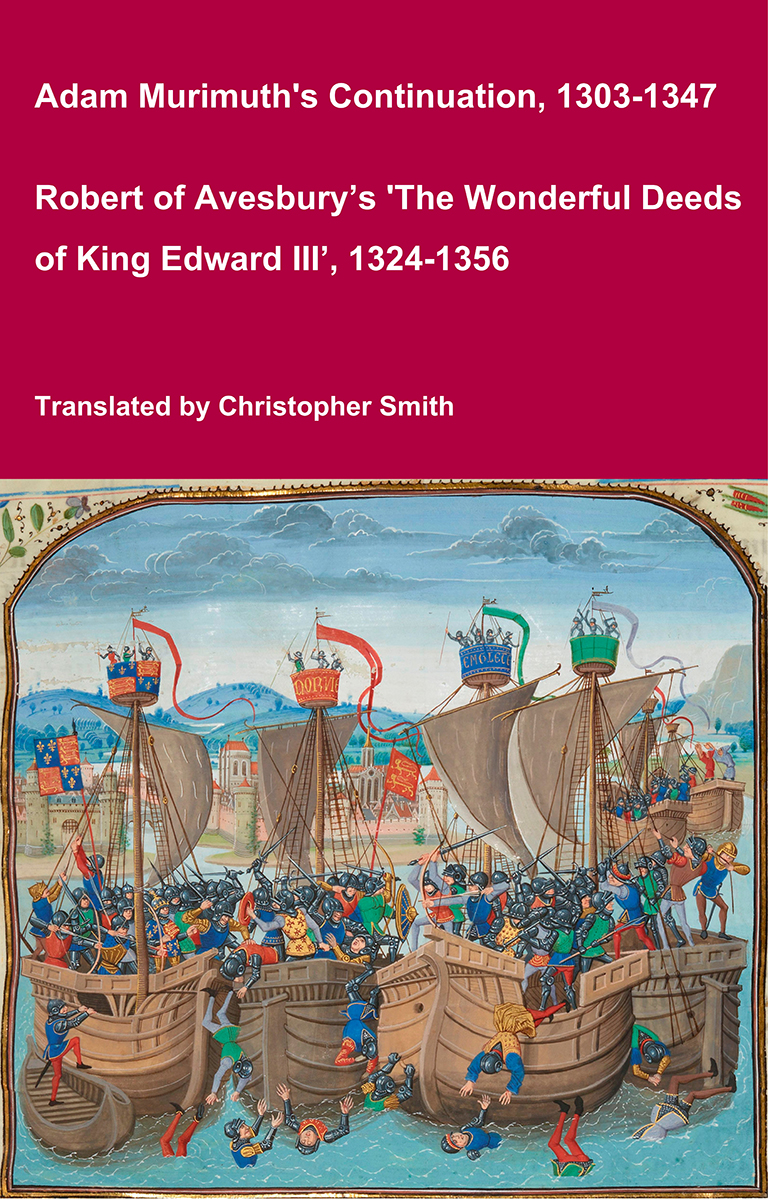 Adam Murimuth Continuation. In these times news came from Gascony that, on the twentieth day of August [1346], Lord John of France, with his army, secretly withdrew from the siege of the town of Aiguillon, leaving behind his tents and all other things, except horses and arms. And immediately our men, who were in the town of Aiguillon, seized everything thus abandoned. And soon after, the French who were besieging the town of Nontron likewise withdrew. Those who held the town, sallying out, killed most of them and put the rest to flight. When these things were heard, four great towns, namely Sainte-Foy, Sauveterre, Castelmoron, Villereal, and Clairac, surrendered themselves willingly to the king of England. The earl of Lancaster, moreover, with his forces, began to ride toward the regions of Saintonge and Poitou. In his company, the lord of Albret and other Gascon barons had offered themselves ready to serve the king of England at their own expense for one month.
His temporibus venerunt nova de Vasconia quod, vicesima die Augusti, dominus Johannes de Francia cum suo exercitu ab obsidione ville de Aguylona clam recessit, dimissis tentoriis et omnibus aliis, exceptis equis et armis. Et statim nostri, qui fuerunt in villa de Aguylona, omnia sic dimissa ceperunt. Et cito postea Gallici, qui villam de Nantrona obsiderunt, similiter recesserunt. Ii vero qui villam tenuerunt, exeuntes, ipsos occiderunt pro majori parte et ceteros fugaverunt. Quibus auditis, IIIJ grossæ villæ, videlicet Seinte Fey, Salveterre, Chastel Moroun, Ville Roial, et Clarake, se sponte regi Angliæ reddiderunt. Comes vero Lancastræ cum potentia sua Versus partes Xanctonenses ot Pictavenses equitare incepit. In cujus comitiva dominus de la Brette et alii barones Vasconenses propriis expensis per unum mensem servire regi Angliæ optulerant se paratos.
On 20th August 1348 Robert Bourchier 1st Baron Bourchier died of plague whilst escorting King Edward III's daughter Joan [aged 14] [who died a fortnight later] to Spain to marry Peter, the future King Peter of Castile. His son John [aged 19] succeeded 2nd Baron Bourchier.
Archaeologia Volume 35 1853 XXXIII. On the 20th [Aug 1358], the Countess of Ulster [aged 26] (heiress of William de Burgh, Earl of Ulster, and wife of Lionel [aged 19], son of Edward III.) arrived to supper.
Chronicle of Gregory. 20th August 1422. Ande that same yere, the XX day of Auguste, deyde the Byschoppe of London, Clyfforde, and thenne was made byschoppe Mayster John Kempe [aged 42], whos bonys, the viij day of Novembyr next folowyng, worthely at Westmynyster were interyde.
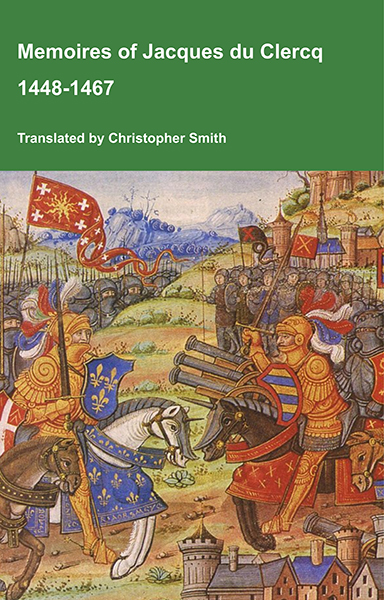 Memoires Jacques du Clercq. On Friday the 20th day of the said month of August, a little after sunrise, when the day was fair and clear and the weather very fine, there was seen in the sky by those in the king's host, and also by the English within Bayonne, a white cross, which was publicly visible for the space of half an hour. Then those of the town, who on the previous day had surrendered and made their agreements, and whose banners and pennons bore red crosses, said that it was God's will that they should be French and that they should all bear white crosses. And on that day, at about two o'clock, the Sieur de la Bessière entered the town, together with the archbishop of the place, to take possession of it and of the castle; and there the king's banners were raised atop the tower of the said castle by the king's heralds, each of them crying "Montjoie!" And at that same hour the ship of the Biscayans entered the port of Bayonne, which was a fine sight to behold.
Le vendredy xx jour dudit mois d'aoust, ung peu après soleil levant, que le jour fust bel et clair, et qu'il faisoit moult beau temps, fust veue au ciel par ceulx qui estoient en l'ost du roy, et mesmement par les Anglois, estant dedans Bayonne, une croix blanche, laquelle fust veue publiquement l'espace de demie heure, et lors ceulx de la ville qui s'estoient le jour de devant rendus et avoient fait leurs compositions, desquels estoient bannieres et pennons aulx croix rouges, dirent que c'estoit le plaisir de Dieu qu'ils fuissent Franchois et qu'ils portassent touts croix blanches; et ce jour entra dedans la ville a l'heure de deux heures, avecq l'archevesque d'icelle ville pour prendre possession d'icelle et du chasteau, le Sr de la Bessiere, et la feurent portées les bannieres du roy, au haut de la tour d'icelluy chasteau, par les heraulx du roy, chacun d'eulx criant Montjoie et a ceste heure arriva la navire des Biscayens, dedans le port de Bayonne, laquelle chose il faisoit beau veoir.

On 20th August 1503 Margaret Tudor Queen Scotland [aged 13] attended mass at St Giles' Cathedral, Edinburgh.
Letters and Papers Foreign and Domestic Henry VIII 1517. 20th August 1517. R.O. 3608. SPINELLY to BRIAN TUKE.
Wrote yesterday with a packet for the Bp. of Helna, &c., and of a bill refused him by Galterotte on account of the sickness. Is in great favour there, and in a condition to do Wolsey effectual service. The wind is S.W. All things are aboard ready for a fair wind, which is expected about the opposition of this new moon. Begs he will see his patent sealed. Chievres told him the French had resolved to send Albany to Scotland, and he will take his passage by Brittany. In Chievres' absence the Lord Montayny will write to the Bp. of Helna. The Prince Palatine has left in disgrace because he presumed to write a letter to the Lady Eleanora, the King's sister, without the knowledge of the King, desiring her to marry him. The letter got abroad, and, though it was very honest, Chievres prevailed to have him punished for his presumption. The Prince is still there. News has come from Rome. The Lord of Nassau has killed divers Almains in the service of the Duke of Gueldres lying in the villages. Is to advertise Wolsey of the news, except touching the Lady Eleanora. Begs he will send him the man he spoke of. Middelburg, 20 Aug. 1517.
Hol., pp. 3. Add.
Letters and Papers Foreign and Domestic Henry VIII 1528. Love Letters 7. 4648. Henry VIII to Anne Boleyn.
Has got her a lodging by my Lord Cardinal's means, such as could not have been found hereabouts "for all causes," as the bearer will explain. Nothing more can be done in our other affairs, nor can all dangers be better provided against, so that I trust it will be hereafter to both our comforts; but I defer particulars, which would be too long to write, and not fit to trust to a messenger till your repair hither. I trust it will not be long "to-fore" I have caused my lord your father [aged 51] to make his provisions with speed.
Note. The full content of this letter may be found in the The Love Letters of Henry VIII to Anne Boleyn.
Henry Machyn's Diary. 20th August 1558. The xx day of August whent from London unto Fullam to be bered my lord of London('s) [aged 39] crossear [crozier], master Mortun, on of the gray ames [amices] of Powlles, with (unfinished)
Note. P. 171. Funeral of master Morton. Thomas Moreton, bachelor of law, was collated to the sinecure rectory of Fulham Sept. 23, 1554, and to the prebend of Bromesbury in the cathedral church of Saint Paul's Aug. 9, 1555. (Newcourt's Repertorium Londinense, vol. i. p. 118.) It appears, then, that those called the "grey amices" of St. Paul's were the prebendaries.

On 20th August 1571 Charles Guise I Duke Guise was born to Henry 1st Duke Guise [aged 20] and Catherine of Cleves [aged 23]. Coefficient of inbreeding 2.44%.
On 20th August 1592 William "Younger" Welf Duke Brunswick-Lüneburg [aged 57] died.
Henrici Quinti, Angliæ Regis, Gesta, is a first-hand account of the Agincourt Campaign, and subsequent events to his death in 1422. The author of the first part was a Chaplain in King Henry's retinue who was present from King Henry's departure at Southampton in 1415, at the siege of Harfleur, the battle of Agincourt, and the celebrations on King Henry's return to London. The second part, by another writer, relates the events that took place including the negotiations at Troye, Henry's marriage and his death in 1422.
Available at Amazon in eBook and Paperback format.
Letters of the Court of James I 1618. [20th August 1618]. While the court was at Bewley, a Scottishman stabbed and killed a servant of Humfrey's, that discovered the pot aux roses touching the courses of the Lord [aged 56] and Lady Suffolk [aged 54]. The fellow is to suffer for it, if he be not hanged already at the court gate. Sir John Bingley is, like enough, for aught I hear, to pass well through his business, and so may the Lord of Suffolk2, seeing there pass many letters 'twixt the king and him; which some think to be about the parting with Audley End [Map], for the which he is to have £ 2000 land a-year; and as much more as the grounds or lands about it came to.
Note 1. "discover the pot aux roses" i.e. to discover a secret.
Note 2. Accused of corruption in his post of lord treasurer, and many other misdemeanors.


Letters of the Court of James I 1618. [20th August 1618]. We talk still of a new treasurer, and the Lord Coke [aged 66] is in some consideration. But the most general and likely voice goeth with the lord chamberlain [aged 38], who seems nothing fond of it; unless he might leave his place to his brother Montgomery [aged 33]. But he hath two strong competitors, the Marquis Hamilton, and the Viscount Doncaster [aged 38], the one for favour, and the other per ragion di stato, like to over-sway him, if they could agree between themselves. Sir Lionel Cranfield [aged 43] is not yet master of the wardrobe, nor like to be, unless he give a viaticum to the Lord Hay, who, they say, stands upon £ 9000.


On 20th August 1628 Charles Morrison 1st Baronet [aged 41] died. Baronet Morrison of Cashiobury extinct. He was buried at St Marys Church, Watford where he has a monument by Nicholas Stone [aged 41]. Cassiobury House, Watford was inherited by his daughter Elizabeth Morrison Baroness Capell Hadham [aged 17] and her husband Arthur Capell 1st Baron Capell Hadham [aged 20].

John Evelyn's Diary. 20th August 1641. I purposely changed my lodgings, being desirous to converse with the sectaries that swarmed in this city, out of whose spawn came those almost innumerable broods in England afterwards. It was at a Brownist's house, where we had an extraordinary good table. There was in pension with us my Lord Keeper, Finch [aged 19], and one Sir J. Fotherbee. Here I also found an English Carmelite, who was going through Germany with an Irish gentleman. I now went to see the Weesehouse, a foundation like our Charterhouse, for the education of decayed persons, orphans, and poor children, where they are taught several occupations. The girls are so well brought up to housewifery, that men of good worth, who seek that chiefly in a woman, frequently take their wives from this hospital. Thence to the Hasphouse, where the lusty knaves are compelled to work; and the rasping of brasil and logwood for the dyers is very hard labour. To the Doolhouse, for madmen and fools. But none did I so much admire, as an hospital for their lame and decrepit soldiers and seamen, where the accommodations are very great, the building answerable; and, indeed, for the like public charities the provisions are admirable in this country, where, as no idle vagabonds are suffered (as in England they are), there is hardly a child of four or five years old, but they find some employment for it.

John Evelyn's Diary. 20th August 1656. Was a confused election of Parliament called by the Usurper [aged 57].
Samuel Pepys' Diary. 20th August 1660. In the evening I went all alone to drink at Mr. Harper's, where I found Mrs. Crisp's daughter, with whom and her friends I staid and drank, and so with W. Hewer [aged 18] by coach to Worcester House, where I light, sending him home with the £100 that I received to-day. Here I staid, and saw my Lord Chancellor [aged 51] come into his Great Hall, where wonderful how much company there was to expect him at a Seal. Before he would begin any business, he took my papers of the state of the debts of the Fleet, and there viewed them before all the people, and did give me his advice privately how to order things, to get as much money as we can of the Parliament. That being done, I went home, where I found all my things come home from sea (sent by desire by Mr. Dun), of which I was glad, though many of my things are quite spoilt with mould by reason of lying so long a shipboard, and my cabin being not tight. I spent much time to dispose of them tonight, and so to bed.


Samuel Pepys' Diary. 20th August 1660. Office Day. As Sir W. Pen [aged 39] and I were walking in the garden, a messenger came to me from the Duke of York [aged 26] to fetch me to the Lord Chancellor [aged 51]. So (Mrs. Turner [aged 37] with her daughter The. being come to my house to speak with me about a friend of hers to send to sea) I went with her in her coach as far as Worcester House, but my Lord Chancellor being gone to the House of Lords, I went thither, and (there being a law case before them this day) got in, and there staid all the morning, seeing their manner of sitting on woolpacks1, &c., which I never did before.
Note 1. It is said that these woolpacks were placed in the House of Lords for the judges to sit on, so that the fact that wool was a main source of our national wealth might be kept in the popular mind. The Lord Chancellor's seat is now called the Woolsack.

On 20th August 1660 William Cavendish 3rd Earl Devonshire [aged 42] was re-appointed Lord Lieutenant of Derbyshire.


Samuel Pepys' Diary. 20th August 1662. By and by comes my Lord Peterborough [aged 40] in, with whom we talked a good while, and he is going tomorrow towards Tangier [Map] again. I perceive there is yet good hopes of peace with Guyland1, which is of great concernment to Tangier [Map]. And many other things I heard which yet I understand not, and so cannot remember. My Lord and Lord Peterborough going out to the Solicitor General about the drawing up of this Commission, I went to Westminster Hall [Map] with Mr. Moore, and there meeting Mr. Townsend, he would needs take me to Fleet Street, to one Mr. Barwell, squire sadler to the King, and there we and several other Wardrobe-men dined. We had a venison pasty, and other good plain and handsome dishes; the mistress of the house a pretty, well-carriaged woman, and a fine hand she hath; and her maid a pretty brown lass. But I do find my nature ready to run back to my old course of drinking wine and staying from my business, and yet, thank God, I was not fully contented with it, but did stay at little ease, and after dinner hastened home by water, and so to my office till late at night.
Note 1. A Moorish usurper, who had put himself at the head of an army for the purpose of attacking Tangier [Map]. B.
Samuel Pepys' Diary. 20th August 1662. By and by comes in Mr. Coventry [aged 34] to us, whom my Lord tells that he is also put into the commission, and that I am there, of which he said he was glad; and did tell my Lord that I was indeed the life of this office, and much more to my commendation beyond measure. And that, whereas before he did bear me respect for his sake, he do do it now much more for my own; which is a great blessing to me. Sir G. Carteret [aged 52] having told me what he did yesterday concerning his speaking to my Lord Chancellor [aged 53] about me. So that on all hands, by God's blessing, I find myself a very rising man.

The History of William Marshal was commissioned by his son shortly after William’s death in 1219 to celebrate the Marshal’s remarkable life; it is an authentic, contemporary voice. The manuscript was discovered in 1861 by French historian Paul Meyer. Meyer published the manuscript in its original Anglo-French in 1891 in two books. This book is a line by line translation of the first of Meyer’s books; lines 1-10152. Book 1 of the History begins in 1139 and ends in 1194. It describes the events of the Anarchy, the role of William’s father John, John’s marriages, William’s childhood, his role as a hostage at the siege of Newbury, his injury and imprisonment in Poitou where he met Eleanor of Aquitaine and his life as a knight errant. It continues with the accusation against him of an improper relationship with Margaret, wife of Henry the Young King, his exile, and return, the death of Henry the Young King, the rebellion of Richard, the future King Richard I, war with France, the death of King Henry II, and the capture of King Richard, and the rebellion of John, the future King John. It ends with the release of King Richard and the death of John Marshal.
Available at Amazon in eBook and Paperback format.
Samuel Pepys' Diary. 20th August 1662. Up early, and to my office, and thence to my Lord Sandwich [aged 37], whom I found in bed, and he sent for me in. Among other talk, he do tell me that he hath put me into commission with a great many great persons in the business of Tangier [Map], which is a very great honour to me, and may be of good concernment to me.

John Evelyn's Diary. 20th August 1662. There were strong guards in the city this day, apprehending some tumults, many of the Presbyterian ministers not conforming. I dined with the Vice-Chamberlain, and then went to see the Queen-Mother [aged 52], who was pleased to give me many thanks for the entertainment she received at my house, when she recounted to me many observable stories of the sagacity of some dogs she formerly had.


John Evelyn's Diary. 20th August 1663. I dined at the Comptroller's [of the Household] with the Earl of Oxford [aged 36] and Mr. Ashburnham; it was said it should be the last of the public diets, or tables, at Court, it being determined to put down the old hospitality, at which was great murmuring, considering his Majesty's [aged 33] vast revenue and the plenty of the nation. Hence, I went to sit in a Committee, to consider about the regulation of the Mint at the Tower [Map]; in which some small progress was made.
Samuel Pepys' Diary. 20th August 1664. Thence I walked to Cheapside, there to see the effect of a fire there this morning, since four o'clock; which I find in the house of Mr. Bois, that married Dr. Fuller's [aged 56] niece, who are both out of towne, leaving only a mayde and man in towne. It begun in their house, and hath burned much and many houses backward, though none forward; and that in the great uniform pile of buildings in the middle of Cheapside. I am very sorry for them, for the Doctor's sake.

Samuel Pepys' Diary. 20th August 1665. Lord's Day. Sir G. Carteret [aged 55] come and walked by my bedside half an houre, talking and telling me how my Lord is in this unblameable in all this ill-successe, he having followed orders; and that all ought to be imputed to the falsenesse of the King [aged 35] of Denmarke, who, he told me as a secret, had promised to deliver up the Dutch ships to us, and we expected no less; and swears it will, and will easily, be the ruine of him and his kingdom, if we fall out with him, as we must in honour do; but that all that can be, must be to get the fleete out again to intercept De Witt, who certainly will be coming home with the East India ships, he being gone thither. He being gone, I up and with Fenn, being ready to walk forth to see the place; and I find it to be a very noble seat in a noble forest, with the noblest prospect towards Windsor, and round about over many countys, that can be desired; but otherwise a very melancholy place, and little variety save only trees. I had thoughts of going home by water, and of seeing Windsor Chappell [Map] and Castle [Map], but finding at my coming in that Sir G. Carteret did prevent me in speaking for my sudden return to look after business, I did presently eat a bit off the spit about 10 o'clock, and so took horse for Stanes, and thence to Brainford to Mr. Povy's [aged 51], the weather being very pleasant to ride in. Mr. Povy not being at home I lost my labour, only eat and drank there with his lady, and told my bad newes, and hear the plague is round about them there. So away to Brainford [Map]; and there at the inn that goes down to the water-side, I 'light and paid off my post-horses, and so slipped on my shoes, and laid my things by, the tide not serving, and to church, where a dull sermon, and many Londoners. After church to my inn, and eat and drank, and so about seven o'clock by water, and got between nine and ten to Queenhive, very dark. And I could not get my waterman to go elsewhere for fear of the plague.
John Evelyn's Diary. 20th August 1670. At Windsor, Berkshire [Map] I supped with the Duke of Monmouth [aged 21]; and, the next day, invited by Lord Arlington [aged 52], dined with the same Duke and divers Lords. After dinner my Lord and I had a conference of more than an hour alone in his bedchamber, to engage me in the History. I showed him something that I had drawn up, to his great satisfaction, and he desired me to show it to the Treasurer [aged 40].


On 20th August 1695 Marie Louise Élisabeth Bourbon Duchess Berry was born to Philippe Bourbon II Duke Orléans [aged 21] and Françoise Marie Bourbon Duchess Orléans [aged 18]. She a great x 3 granddaughter of King James I of England and Ireland and VI of Scotland. Coefficient of inbreeding 7.39%. She married 6th July 1710 her half first cousin Charles Bourbon Duke Berry, Alençon and Angoulême, son of Louis "Le Grand Dauphin" Bourbon Duke Burgundy and Maria Anna Victoria Wittelsbach Duchess Burgundy.
On 20th August 1698 Henry Hobart 4th Baronet [aged 41] died from wounds he had received in a duel with Oliver le Neve [aged 36] at Cawston Heath, Norfolk. His son John [aged 4] succeeded 5th Baronet Hobart of Intwood in Norfolk.
On 20th August 1702 William Bowes of Streatlam [aged 45] was elected MP Durham during the Parliament 1702.
On 20th August 1711 Richard Thornhill was murdered at Turnham Green Chiswick by two men who, as they killed him, allegedly invoked the name of Cholmley Dering 4th Baronet, who Thornhill had killed in a duel three months before.
On 20th August 1715 James Butler 2nd Duke Ormonde [aged 50] was attainted for having supported the Jacobite cause. His estates and honours were forfeit. His banner as a Garter Knight was removed from St George's Chapel, Windsor Castle [Map].
On 20th August 1755 Robert Ker 2nd Duke Roxburghe [aged 46] died. His son John [aged 15] succeeded 3rd Duke Roxburghe.
On 20th August 1757 Friedrich Karl Ludwig Oldenburg I Duke Schleswig-Holstein-Sonderburg-Beck was born to Karl Anton Oldenburg I Duke Schleswig-Holstein-Sonderburg-Beck and Frederica Charlotte Dohna Schlodien Duchess Schleswig-Holstein-Sonderburg-Beck at Königsberg. He married 9th March 1780 Friederike Schlieben Duchess Schleswig-Holstein-Sonderburg-Beck and had issue.
Jean de Waurin's Chronicle of England Volume 6 Books 3-6: The Wars of the Roses
Jean de Waurin was a French Chronicler, from the Artois region, who was born around 1400, and died around 1474. Waurin’s Chronicle of England, Volume 6, covering the period 1450 to 1471, from which we have selected and translated Chapters relating to the Wars of the Roses, provides a vivid, original, contemporary description of key events some of which he witnessed first-hand, some of which he was told by the key people involved with whom Waurin had a personal relationship.
Available at Amazon in eBook and Paperback format.

After 20th August 1790. Monmument to Richard Young died and his parents Robert and Mary Young. St Andrew's Church, Brympton d'Evercy [Map].

On 20th August 1813 George John Frederick Manners was born to John Henry Manners 5th Duke Rutland [aged 35] and Elizabeth Howard Duchess Rutland [aged 32]. He died aged less than one years old.
On 20th August 1859 Charles Fitzgerald was born to Charles William Fitzgerald Fitzgerald 4th Duke Leinster [aged 40] and Caroline Leveson-Gower Duchess Leinster [aged 32]. He married 21st November 1887 Alice Sidonia Claudius.
Ten Years' Digging. On the 20th of August, after repeated disappointments from the unusual wetness of the summer, we opened a barrow [Haddon Field Barrow [Map]] on Haddon Field, near Bakewell; for access to which we were indebted to the kindness of the Rev, Frederick, and Lady Adeliza Norman, who also attended during the opening. The mound was of a regular convex form, about 16 yards diameter and not more than 4 feet high. A cutting through the centre passed downwards through about 12 inches of earth, succeeded by large limestones disposed without regularity or any apparent design, although their removal disclosed the only interment that was found: this, owing to a natural rise in the land about the middle of the barrow, was not more than 2 feet 6 inches from the surface. The skeleton lay on its left side in the usual contracted attitude, upon a thin bed of charred wood strewed on the natural level of the land a few inches only above the rock; the head pointed west south-west; the elbows were bent so as to allow the hands to be brought in front of the face; and near the lower part of the back was a small earthen drinking cup, 6½ inches high, very neatly ornamented with a vandyked pattern; close beneath which were three useful implements, an arrow head of flint that had acquired an opaque grey tint from partial calcination, a mesh rule for netting or else a potter's modelling tool, 6¼ inches long, rounded at the ends, cut from a horn of the red deer, and a very small brazen awl, which, when found, showed slight but distinct traces of its wooden handle. These objects would seem more appropriately to have accompanied a female than a male corpse, yet the size and general appearance of the bones indicate the latter as the sex of the deceased. The measurements of the long bones are -
Femur 18½in
Tibia 14¼in
Humerus 13in
The skull (see No. 237 of the list) is that of a man of upwards of forty years of age; it is a characteristic example of the ancient British type, and being more fully described in the list, calls for no further remark in this place than to observe that it possesses a peculiar flattening of the hinder part, extending from the upper edge of the occipital bone to those of the parietals adjoining the lamdoidal suture, a feature by no means uncommon in crania from barrows of the same remote antiquity, and which may be attributed to some prevailing method of nursing during infancy.
One or two teeth of animals and the least possible trace of rats' bones, with one small bit of primitive earthenware, were found in the digging, but no indication of other interments could be seen, although much of the centre of the mound was cut away in the hope of making some further discovery.
On 20th August 1868 the Irish Mail train collided with goods wagons. The force of the collision derailed the engine, its tender and the leading guard's van. Two runaway wagons next to the brake van, which carried 50 wooden barrels, holding about 1,700 gallons of paraffin oil caught fire. The engine, tender, guard's van and the first three-passenger carriages were instantly enveloped in dense smoke and flames, which soon spread to the fourth carriage and the front of the leading post office van. This prevented any immediate attempt to rescue the occupants of the first four carriages, who all died.
Henry Maxwell 7th Baron Farnham [aged 69] and his wife Anna Frances Esther Stapleton [aged 63] were killed.
On 20th August 1872 Thomas Fermor-Hesketh 5th Baronet [aged 47] died. His son Thomas [aged 25] succeeded 6th Baronet Fermor-Hesketh of Rufford in Lancashire. Monument at St Mary The Virgin Church, Rufford [Map] by Matthew Noble [aged 55].
Thomas Henry Fermor-Hesketh 6th Baronet: In 1847 he was born to Thomas Fermor-Hesketh 5th Baronet and Arabella Fermor Lady Hesketh. In 1876 Thomas Henry Fermor-Hesketh 6th Baronet died unmarried. His brother Thomas succeeded 7th Baronet Fermor-Hesketh of Rufford in Lancashire.


On 20th August 1872 William de Meuron's birth was registered in Thunder Bay, Ontario.
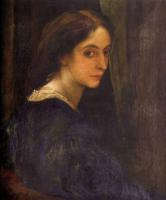
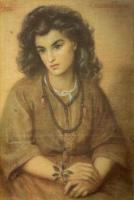
On 20th August 1906 Aglaïa Coronio née Ionides [aged 71] committed suicide the day after the death of her daughter Calliope 'Opie' Coronio [deceased].
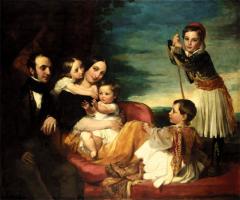
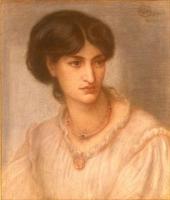
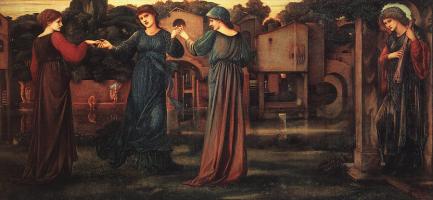
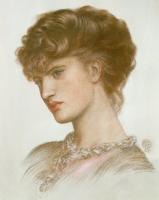
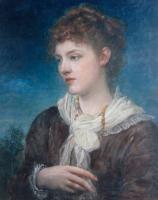
On 20th August 1909 Anne Cavendish Countess Sandwich was born to Victor Christian William Cavendish 9th Duke Devonshire [aged 41] and Evelyn Emily Mary Petty-Fitzmaurice Duchess Devonshire [aged 38]. She married (1) 28th November 1928 Henry Philip Hunloke and had issue (2) 7th June 1962 Victor Montagu 10th Earl Sandwich, son of George Charles Montagu 9th Earl Sandwich and Alberta Sturges Countess Sandwich.
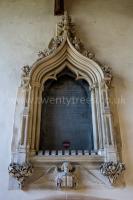
On 20th August 1914 Reverend Edmund Thomas Daubeney [aged 74] died. On 30th March 1926 Mary Castle [aged 74] died. They were buried in churchyard of Church of St George, South Acre [Map].
Reverend Edmund Thomas Daubeney: On 14th July 1840 he was born to Edmund Joseph Daubeney. Before 20th August 1914 he and Mary Castle were married.
Mary Castle: Around 1840 she was born.

On 20th August 1926 Michael Temple Canfield was born illegitimately to Prince George Windsor 1st Duke Kent [aged 23] and Alice "Kiki" Preston aka Gwynne [aged 28]. He a grandson of King George V of the United Kingdom.
The Deeds of the Dukes of Normandy
The Gesta Normannorum Ducum [The Deeds of the Dukes of Normandy] is a landmark medieval chronicle tracing the rise and fall of the Norman dynasty from its early roots through the pivotal events surrounding the Norman Conquest of England. Originally penned in Latin by the monk William of Jumièges shortly before 1060 and later expanded at the behest of William the Conqueror, the work chronicles the deeds, politics, battles, and leadership of the Norman dukes, especially William’s own claim to the English throne. The narrative combines earlier historical sources with firsthand information and oral testimony to present an authoritative account of Normandy’s transformation from a Viking settlement into one of medieval Europe’s most powerful realms. William’s history emphasizes the legitimacy, military prowess, and governance of the Norman line, framing their expansion, including the conquest of England, as both divinely sanctioned and noble in purpose. Later chroniclers such as Orderic Vitalis and Robert of Torigni continued the history, extending the coverage into the 12th century, providing broader context on ducal rule and its impact. Today this classic work remains a foundational source for understanding Norman identity, medieval statesmanship, and the historical forces that reshaped England and Western Europe between 800AD and 1100AD.
Available at Amazon in eBook and Paperback format.

On 20th August 1933 Tonman Mosley 1st Baron Anslow [aged 83] died without surviving male issue; Baron Anslow of Iver in Buckinghamshire extinct. Memorial at St Mary's Church, Rolleston on Dove [Map].
Tonman Mosley 1st Baron Anslow: On 16th January 1850 he was born to Tonman Mosley 3rd Baronet at East Lodge, Anslow, Burton-upon-Trent. He was baptised at Rolleston on Dove, Staffordshire. On 2nd February 1881 Tonman Mosley 1st Baron Anslow and Hilda Rose Montgomerie Baroness Anslow were married at St Peter's Church, Eaton Square. She the daughter of Archibald William Montgomerie 13th Earl Eglinton.

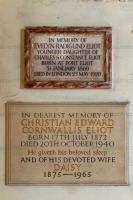
On 20th August 1940 Lieutenant-Colonel Christian Edward Cornwallis Eliot [aged 68] died. Memorial at St Germans Priory [Map].
Lieutenant-Colonel Christian Edward Cornwallis Eliot: On 17th July 1872 he was born to Charles George Cornwallis Eliot and Constance Rhiannon Guest. On 3rd July 1897 Lieutenant-Colonel Christian Edward Cornwallis Eliot and Laura Grey Chetwode were married.

On 20th August 1949 Niall Campbell 10th Duke Argyll [aged 77] died. His first cousin once removed Ian [aged 46] succeeded 11th Duke Argyll, 8th Baron Hamilton of Hameldon in Leicestershire. Louise Clews Duchess of Argyll [aged 44] by marriage Duchess Argyll.
On 20th August 1955 Millicent Fanny St Clair-Erskine Duchess of Sutherland [aged 87] died.


On 20th August 1571 Charles Guise I Duke Guise was born to Henry 1st Duke Guise [aged 20] and Catherine of Cleves [aged 23]. Coefficient of inbreeding 2.44%.
On 20th August 1661 Catherine Montagu was born to Edward Montagu 1st Earl Sandwich [aged 36] and Jemima Crew Countess Sandwich [aged 36]. She married (1) 1676 Nicholas Bacon of Shrubland (2) 1740 Balthazar Gardeman.


On 20th August 1679 Mary Bentinck Countess Essex was born to William Bentinck 1st Earl of Portland [aged 30] and Anne Villiers Countess Portland [aged 28]. She married 28th February 1692 her third cousin Algernon Capell 2nd Earl Essex, son of Arthur Capell 1st Earl Essex and Elizabeth Percy Countess Essex, and had issue.
On 20th August 1695 Marie Louise Élisabeth Bourbon Duchess Berry was born to Philippe Bourbon II Duke Orléans [aged 21] and Françoise Marie Bourbon Duchess Orléans [aged 18]. She a great x 3 granddaughter of King James I of England and Ireland and VI of Scotland. Coefficient of inbreeding 7.39%. She married 6th July 1710 her half first cousin Charles Bourbon Duke Berry, Alençon and Angoulême, son of Louis "Le Grand Dauphin" Bourbon Duke Burgundy and Maria Anna Victoria Wittelsbach Duchess Burgundy.
On 20th August 1705 Henry Bromley 1st Baron Montfort was born to John Bromley [aged 23] and Mercy Bromley. He married 18th March 1728 Frances Wyndham and had issue.
On 20th August 1719 Anna-Maria Roper was born to Henry Roper 8th Baron Teynham [aged 43] and Anne Lennard 16th Baroness Dacre of Gilsland Baroness Teynham [aged 35]. She a great granddaughter of King Charles II of England Scotland and Ireland. She married in or before 1754 Captain Peter Tyler and had issue.
On 20th August 1741 Henry Herbert 1st Earl Carnarvon was born to William Herbert [aged 45] and Catherine Elizabeth Tewes. He married 5th July 1771 Elizabeth Alicia Maria Wyndham Countess Carnarvon, daughter of Charles Wyndham 2nd Earl Egremont and Alicia Carpenter Countess Egremont, and had issue.
On 20th August 1757 Friedrich Karl Ludwig Oldenburg I Duke Schleswig-Holstein-Sonderburg-Beck was born to Karl Anton Oldenburg I Duke Schleswig-Holstein-Sonderburg-Beck and Frederica Charlotte Dohna Schlodien Duchess Schleswig-Holstein-Sonderburg-Beck at Königsberg. He married 9th March 1780 Friederike Schlieben Duchess Schleswig-Holstein-Sonderburg-Beck and had issue.
Chronicle of Walter of Guisborough
A canon regular of the Augustinian Guisborough Priory, Yorkshire, formerly known as The Chronicle of Walter of Hemingburgh, describes the period from 1066 to 1346. Before 1274 the Chronicle is based on other works. Thereafter, the Chronicle is original, and a remarkable source for the events of the time. This book provides a translation of the Chronicle from that date. The Latin source for our translation is the 1849 work edited by Hans Claude Hamilton. Hamilton, in his preface, says: 'In the present work we behold perhaps one of the finest samples of our early chronicles, both as regards the value of the events recorded, and the correctness with which they are detailed; Nor will the pleasing style of composition be lightly passed over by those capable of seeing reflected from it the tokens of a vigorous and cultivated mind, and a favourable specimen of the learning and taste of the age in which it was framed.'
Available at Amazon in eBook and Paperback format.
On 20th August 1766 Elisabeth Beauclerk was born to Topham Beauclerk [aged 26] and Diana Spencer Viscountess St John and Bolingbroke [aged 32]. She was a twin with Mary Day Beauclerk. She a great x 2 granddaughter of King Charles II of England Scotland and Ireland. She married 8th April 1787 her first cousin George Augustus Herbert 11th Earl Pembroke 8th Earl Montgomery, son of Henry Herbert 10th Earl Pembroke 7th Earl Montgomery and Elizabeth Spencer Countess Pembroke and Montgomery, and had issue.
On 20th August 1766 Mary Day Beauclerk was born to Topham Beauclerk [aged 26] and Diana Spencer Viscountess St John and Bolingbroke [aged 32]. She was a twin with Elisabeth Beauclerk. She a great x 2 granddaughter of King Charles II of England Scotland and Ireland.
On 20th August 1771 Mark Masterman-Sykes 3rd Baronet was born to Christopher Sykes 2nd Baronet [aged 22] and Elizabeth Tatton [aged 23]. He married 2nd August 1814 his half first cousin Mary Elizabeth Egerton Lady Sledmere.


On 20th August 1777 Maria Carleton Baroness Bolton was born to Guy Carleton 1st Baron Dorchester and Maria Howard Baroness Dorchester. She married 8th May 1810 William Orde-Powlett 2nd Baron Bolton, son of Thomas Orde-Powlett 1st Baron Bolton and Jean Mary Browne Powlett Baroness Bolton.
On 20th August 1790 Georgina Elizabeth Moncrieffe Countess Bradford was born to Thomas Moncrieffe 5th Baronet [aged 32]. She married 5th March 1818 George Bridgeman 2nd Earl Bradford, son of Orlando Bridgeman 1st Earl Bradford and Lucy Elizabeth Byng Countess Bradford, and had issue.
On 20th August 1806 Archibald Acheson 3rd Earl Gosford was born to Archibald Acheson 2nd Earl Gosford [aged 30] and Mary Sparrow Countess Gosford [aged 29]. He married 22nd June 1832 Theodosia Brabazon Countess Gosford, daughter of John Brabazon 10th Earl Meath, and had issue.
On 20th August 1808 Bishop Arthur Hervey was born to Frederick William Hervey 1st Marquess of Bristol [aged 38] and Elizabeth Albana Upton [aged 33].


On 20th August 1813 George John Frederick Manners was born to John Henry Manners 5th Duke Rutland [aged 35] and Elizabeth Howard Duchess Rutland [aged 32]. He died aged less than one years old.
On 20th August 1822 Vere Paulett was born to John Paulett 5th Earl Paulett [aged 39].

On 20th August 1824 Edward Keppel Coke was born to Thomas Coke 1st Earl of Leicester [aged 70] and Anne Amelia Keppel Countess Leicester [aged 21]. He a great x 4 grandson of King Charles II of England Scotland and Ireland. He married 5th August 1851 Diana Mary Blanche Georgiana Agar-Ellis, daughter of George James Welbore Agar 1st Baron Dover and Georgiana Howard Lady Dover.
Annals of the six Kings of England by Nicholas Trivet
Translation of the Annals of the Six Kings of England by that traces the rise and rule of the Angevin aka Plantagenet dynasty from the mid-12th to early 14th century. Written by the Dominican scholar Nicholas Trivet, the work offers a vivid account of English history from the reign of King Stephen through to the death of King Edward I, blending political narrative with moral reflection. Covering the reigns of six monarchs—from Stephen to Edward I—the chronicle explores royal authority, rebellion, war, and the shifting balance between crown, church, and nobility. Trivet provides detailed insight into defining moments such as baronial conflicts, Anglo-French rivalry, and the consolidation of royal power under Edward I, whose reign he describes with particular immediacy. The Annals combines careful year-by-year reporting with thoughtful interpretation, presenting history not merely as a sequence of events but as a moral and political lesson. Ideal for readers interested in medieval history, kingship, and the origins of the English state, this chronicle remains a valuable and accessible window into the turbulent world of the Plantagenet kings.
Available at Amazon in eBook and Paperback format.
On 20th August 1838 Major-General Peter Ewart 1st Baronet was born.
On 20th August 1843 John Gage Saunders 9th Baronet was born to Thomas Gage Saunders Sebright 8th Baronet [aged 41].
On 20th August 1845 Graham Hamond-Graeme 4th Baronet was born to Andrew Snape Hamond-Graeme 3rd Baronet [aged 33].
On 20th August 1859 Charles Fitzgerald was born to Charles William Fitzgerald Fitzgerald 4th Duke Leinster [aged 40] and Caroline Leveson-Gower Duchess Leinster [aged 32]. He married 21st November 1887 Alice Sidonia Claudius.
On 20th August 1859 Humphrey Napier Sturt 2nd Baron Alington was born to Henry Gerard Sturt 1st Baron Alington [aged 34] and Augusta Bingham Baroness Alington [aged 27]. Coefficient of inbreeding 6.25%. He married 25th June 1883 Feodorowna Yorke Baroness Alington, daughter of Charles Philip "Champagne Charlie" Yorke 5th Earl of Hardwicke and Sophia Georgiana Robertina Wellesley Countess Hardwicke, and had issue.
On 20th August 1871 Sybil Mary St Clair-Erskine Countess of Westmorland was born to Robert St Clair-Erskine 4th Earl of Rosslyn [aged 38] and Blanche Adeliza Fitzroy [aged 31]. She married 28th May 1892 Anthony Fane 13th Earl of Westmoreland, son of Francis William Henry Fane 12th Earl of Westmoreland and Adelaide Ida Curzon Howe Countess of Westmoreland, and had issue.


On 20th August 1876 Richard Coke was born to Thomas Coke 2nd Earl of Leicester [aged 53] and Georgina Caroline Cavendish Countess Leicester [aged 24].
On 20th August 1909 Anne Cavendish Countess Sandwich was born to Victor Christian William Cavendish 9th Duke Devonshire [aged 41] and Evelyn Emily Mary Petty-Fitzmaurice Duchess Devonshire [aged 38]. She married (1) 28th November 1928 Henry Philip Hunloke and had issue (2) 7th June 1962 Victor Montagu 10th Earl Sandwich, son of George Charles Montagu 9th Earl Sandwich and Alberta Sturges Countess Sandwich.
On 20th August 1916 Michael Henry Croft 2nd Baron Croft was born to Henry Page Croft 1st Baron Croft [aged 35] and Nancy Beatrice Borwick Baroness Croft [aged 31]. He married 31st October 1948 Antoinette Fredericka Conyngham Baroness Croft, daughter of Frederick William Conyngham 6th Marquess Conyngham, and had issue.


On 20th August 1926 Bridget Assheton Lady Worsley was born to Ralph Assheton 1st Baron Clitheroe [aged 25] and Sylvia Benita Frances Hotham Baroness Clitheroe. She married 10th December 1955 William Marcus Worsley 5th Baronet, son of William Arthington Worsley 4th Baronet and Joyce Morgan Brunner Lady Worsley, and had issue.
Chronicle of Abbot Ralph of Coggeshall
The Chronicle of Abbot Ralph of Coggeshall (Chronicon Anglicanum) is an indispensable medieval history that brings to life centuries of English and European affairs through the eyes of a learned Cistercian monk. Ralph of Coggeshall, abbot of the Abbey of Coggeshall in Essex in the early 13th century, continued and expanded his community’s chronicle, documenting events from the Norman Conquest of 1066 into the tumultuous reign of King Henry III. Blending eyewitness testimony, careful compilation, and the monastic commitment to record-keeping, this chronicle offers a rare narrative of political intrigue, royal power struggles, and social upheaval in England and beyond. Ralph’s work captures the reigns of pivotal figures such as Richard I and King John, providing invaluable insights into their characters, decisions, and the forces that shaped medieval rule. More than a simple annal, Chronicon Anglicanum conveys the texture of medieval life and governance, making it a rich source for scholars and readers fascinated by English history, monastic authorship, and the shaping of the medieval world.
Available at Amazon in eBook and Paperback format.
On 20th August 1926 Michael Temple Canfield was born illegitimately to Prince George Windsor 1st Duke Kent [aged 23] and Alice "Kiki" Preston aka Gwynne [aged 28]. He a grandson of King George V of the United Kingdom.
On 20th August 1927 Elizabeth Anne Cary Lady Nelson was born to Lucius Cary 14th Viscount Falkland [aged 22]. She married 21st November 1945 William Hope Nelson 3rd Baronet and had issue.
On 20th August 1195 William Montgomery IV Count Ponthieu [aged 16] and Alys Capet Countess Ponthieu [aged 34] were married. She by marriage Countess Ponthieu. She the daughter of Louis VII King of the Franks and Constance of Castile Queen of the Franks. He the son of John Montgomery I Count Ponthieu and Beatrice St Pol Countess Ponthieu [aged 50]. They were third cousin once removed.
On 20th August 1547 William Cunningham 6th Earl Glencairn [aged 17] and Janet Gordon Countess of Glencairn were married. He the son of Alexander Cunningham 5th Earl Glencairn and Janet Hamilton Countess Glencairn [aged 32].
On 20th August 1547 William Cavendish [aged 42] and Bess of Hardwick [aged 20] were married. The difference in their ages was 22 years.


On 20th August 1559 William Willoughby 1st Baron Willoughby of Parham [aged 44] and Margaret Garneys Viscountess Hereford [aged 39] were married. She by marriage Baroness Willoughby Parham.
On 20th August 1593 Robert Carey 1st Earl Monmouth [aged 33] and Elizabeth Trevannion Countess Monmouth [aged 30] were married.
On 20th August 1660 John Burgoyne 2nd Baronet [aged 42] and Anne Robinson Lady Burgoyne were married. She by marriage Lady Burgoyne of Sutton in Bedfordshire.

On 20th August 1673 Edward Herbert 3rd Baron Herbert of Cherbury [aged 40] and Elizabeth Brydges Countess Inchiquin [aged 22] were married. She by marriage Baroness Herbert of Cherbury. They were second cousins. He a great x 5 grandson of King Henry VII of England and Ireland. She a great x 5 granddaughter of King Henry VII of England and Ireland.
On 20th August 1760 William Bagot 1st Baron Bagot [aged 32] and Elizabeth St John Baroness Bagot were married.
Annals of the six Kings of England by Nicholas Trivet
Translation of the Annals of the Six Kings of England by that traces the rise and rule of the Angevin aka Plantagenet dynasty from the mid-12th to early 14th century. Written by the Dominican scholar Nicholas Trivet, the work offers a vivid account of English history from the reign of King Stephen through to the death of King Edward I, blending political narrative with moral reflection. Covering the reigns of six monarchs—from Stephen to Edward I—the chronicle explores royal authority, rebellion, war, and the shifting balance between crown, church, and nobility. Trivet provides detailed insight into defining moments such as baronial conflicts, Anglo-French rivalry, and the consolidation of royal power under Edward I, whose reign he describes with particular immediacy. The Annals combines careful year-by-year reporting with thoughtful interpretation, presenting history not merely as a sequence of events but as a moral and political lesson. Ideal for readers interested in medieval history, kingship, and the origins of the English state, this chronicle remains a valuable and accessible window into the turbulent world of the Plantagenet kings.
Available at Amazon in eBook and Paperback format.

On 20th August 1772 Henry Thomas Fox-Strangways 2nd Earl of Ilchester [aged 25] and Mary Theresa O'Grady Countess of Ilchester [aged 17] were married. He the son of Stephen Fox-Strangways 1st Earl of Ilchester [aged 67] and Elizabeth Strangways-Horner Countess Ilchester [aged 50].
On 20th August 1777 Philip Stanhope 5th Earl Chesterfield [aged 21] and Anne Thistlethwayte Countess Chesterfield were married. She by marriage Countess Chesterfield.


On 20th August 1794 Henry Thomas Fox-Strangways 2nd Earl of Ilchester [aged 47] and Maria Digby Countess Ilchester were married. She by marriage Countess Ilchester. He the son of Stephen Fox-Strangways 1st Earl of Ilchester and Elizabeth Strangways-Horner Countess Ilchester. They were first cousin once removed.
On 20th August 1795 William Langham 8th Baronet [aged 24] and Henrietta Elizabeth Frederica Vane Lady Langham were married. She by marriage Lady Langham of Cottesbrooke in Northamptonshire.
On 20th August 1798 Philip Bouverie-Pusey [aged 51] and Lucy Sherard Lady Cave [aged 28] were married. The difference in their ages was 23 years. She the daughter of Robert Sherard 4th Earl Harborough [aged 85].
On 20th August 1822 John Russell [aged 26] and Sophia Coussmaker 22nd Baroness Clifford [aged 30] were married at St George's Church, Hanover Square. They were sixth cousins. He a great x 3 grandson of King Charles II of England Scotland and Ireland.
On 20th August 1833 Charles Brudenell 1st Marquess Ailesbury [aged 60] and Maria Elizabeth Tollemache Marchioness Ailesbury [aged 23] were married at Ham House, Richmond, Surrey. She by marriage Marchioness Ailesbury. The difference in their ages was 36 years. He the son of Thomas Brudenell 1st Earl Ailesbury and Susanna Hoare Countess Ailesbury.


On 20th August 1846 Andrew Agnew 8th Baronet [aged 28] and Mary Arabella Louisa Noel were married. She the daughter of Charles Noel 1st Earl Gainsborough [aged 64] and Arabella Hamlyn-Williams.
On 20th August 1861 John Alexander Thynne 4th Marquess of Bath [aged 30] and Frances Isabella Catherine Vesey Marchioness Bath were married. She by marriage Marchioness of Bath. He the son of Henry Frederick Thynne 3rd Marquess of Bath and Harriet Baring Marchioness Bath [aged 57].
On 20th August 1877 Clement Martin Le Breton and Alice Jones Baroness Grantley [aged 12] were married at St Peter's Church, Pimlico.
On 20th August 1927 Thomas Palk Carew 10th Baronet [aged 37] and Phyllis Evelyn Mayman Lady Carew were married.
On 20th August 651 King Oswine of Deira was killed at Gilling East, North Yorkshire. He was buried at Tynemouth Priory [Map].
On 20th August 1179 William of Blois 1st Earl Albemarle 1st Earl York [aged 78] died. His daughter Hawise succeeded 2nd Countess Albemarle. Earl York extinct. The succession of the Earldom of York is somewhat unclear; it may have been created for life only, or for male succession only.
On 20th August 1297 the Battle of Furnes was a battle between French led by Robert Artois II Count Artois [aged 46], and Flemish forces led by Guy Dampierre Count Flanders [aged 71]; the French were victorious.
Philip Artois [aged 29] was wounded during the Battle of Furnes. He died a year later as a consequence of his wounds.
Walram Jülich [aged 54] died four days after the battle.
On 20th August 1348 Laurence Hastings 1st Earl Pembroke [aged 29] died at Abergavenny Castle [Map]. He was buried at Abergavenny Priory [Map]. His son John succeeded 2nd Earl Pembroke, 4th Baron Hastings, 15th Baron Abergavenny Feudal Creation.
On 20th August 1348 Robert Bourchier 1st Baron Bourchier died of plague whilst escorting King Edward III's daughter Joan [aged 14] [who died a fortnight later] to Spain to marry Peter, the future King Peter of Castile. His son John [aged 19] succeeded 2nd Baron Bourchier.
Chronicle of Walter of Guisborough
A canon regular of the Augustinian Guisborough Priory, Yorkshire, formerly known as The Chronicle of Walter of Hemingburgh, describes the period from 1066 to 1346. Before 1274 the Chronicle is based on other works. Thereafter, the Chronicle is original, and a remarkable source for the events of the time. This book provides a translation of the Chronicle from that date. The Latin source for our translation is the 1849 work edited by Hans Claude Hamilton. Hamilton, in his preface, says: 'In the present work we behold perhaps one of the finest samples of our early chronicles, both as regards the value of the events recorded, and the correctness with which they are detailed; Nor will the pleasing style of composition be lightly passed over by those capable of seeing reflected from it the tokens of a vigorous and cultivated mind, and a favourable specimen of the learning and taste of the age in which it was framed.'
Available at Amazon in eBook and Paperback format.
On 20th August 1391 William Aldeburgh 2nd Baron Aldeburgh Harewood [aged 43] died at Harewood. Baron Aldeburgh Harewood extinct.
On 20th August 1421 Bishop Richard Clifford died.
On 20th August 1528 Edward Burgh [aged 65] died. His son Thomas [aged 40] succeeded 5th Baron Strabolgi. Agnes Tyrwhitt Baroness Cobham, Strabolgi and Burgh [aged 47] by marriage Baroness Strabolgi.
On 20th August 1558 William Windsor 2nd Baron Windsor [aged 59] died. His son Edward [aged 26] succeeded 3rd Baron Windsor of Stanwell in Buckinghamshire.
On 20th August 1592 William "Younger" Welf Duke Brunswick-Lüneburg [aged 57] died.
On 20th August 1595 William Vaux 3rd Baron Vaux Harrowden [aged 60] died. His grandson Edward [aged 6] succeeded 4th Baron Vaux Harrowden.
On 20th August 1628 Charles Morrison 1st Baronet [aged 41] died. Baronet Morrison of Cashiobury extinct. He was buried at St Marys Church, Watford where he has a monument by Nicholas Stone [aged 41]. Cassiobury House, Watford was inherited by his daughter Elizabeth Morrison Baroness Capell Hadham [aged 17] and her husband Arthur Capell 1st Baron Capell Hadham [aged 20].
On 20th August 1630 Richard Lennard 13th Baron Dacre Gilsland [aged 34] died. He was buried at Herstmonceux. His son Francis [aged 11] succeeded 14th Baron Dacre Gilsland, 14th Baron Multon of Gilsland.
On 20th August 1632 Dorothy St John Countess Bath died. She was buried on 21st August 1632 at St Peter's Church, Tawstock [Map]. There are letters from her husband Edward Bourchier 4th Earl Bath [aged 42] and from the Earl of Bedford, both dat. 26 May 1633, referring to "the fresh sense he hath of the loss of so noble a wife," and to his unwillingness on that account to marry "Mistress Dorothy Seymour," as suggested by the King.
On 20th August 1647 Robert Kemp 1st Baronet died. His son Robert [aged 19] succeeded 2nd Baronet Kemp of Gissing in Norfolk.
On 20th August 1659 Dorothy Percy Countess Leicester [aged 61] died.
The Deeds of the Dukes of Normandy
The Gesta Normannorum Ducum [The Deeds of the Dukes of Normandy] is a landmark medieval chronicle tracing the rise and fall of the Norman dynasty from its early roots through the pivotal events surrounding the Norman Conquest of England. Originally penned in Latin by the monk William of Jumièges shortly before 1060 and later expanded at the behest of William the Conqueror, the work chronicles the deeds, politics, battles, and leadership of the Norman dukes, especially William’s own claim to the English throne. The narrative combines earlier historical sources with firsthand information and oral testimony to present an authoritative account of Normandy’s transformation from a Viking settlement into one of medieval Europe’s most powerful realms. William’s history emphasizes the legitimacy, military prowess, and governance of the Norman line, framing their expansion, including the conquest of England, as both divinely sanctioned and noble in purpose. Later chroniclers such as Orderic Vitalis and Robert of Torigni continued the history, extending the coverage into the 12th century, providing broader context on ducal rule and its impact. Today this classic work remains a foundational source for understanding Norman identity, medieval statesmanship, and the historical forces that reshaped England and Western Europe between 800AD and 1100AD.
Available at Amazon in eBook and Paperback format.
On 20th August 1663 Nicholas Barnewall 1st Viscount Barnewell [aged 71] died. His son Henry succeeded 2nd Viscount Barnewall, 2nd Baron Turvey.
On 20th August 1666 Anne Walmesley Lady Osborne [aged 66] died.

On 20th August 1681 Elizabeth Malet Countess Rochester [aged 30] died.
On 20th August 1698 Henry Hobart 4th Baronet [aged 41] died from wounds he had received in a duel with Oliver le Neve [aged 36] at Cawston Heath, Norfolk. His son John [aged 4] succeeded 5th Baronet Hobart of Intwood in Norfolk.
On 20th August 1700 Margaret Leslie 8th Countess Rothes and Haddington died. Her son John [aged 21] succeeded 9th Earl Haddington.
On 20th August 1701 Charles Sedley 5th Baronet [aged 62] died. Baronet Sedley of Ailesford in Kent extinct.
On 20th August 1711 Richard Thornhill was murdered at Turnham Green Chiswick by two men who, as they killed him, allegedly invoked the name of Cholmley Dering 4th Baronet, who Thornhill had killed in a duel three months before.
On 20th August 1726 Mary Bentinck Countess Essex [aged 47] died.
On 20th August 1751 William Twysden 5th Baronet [aged 74] died. His son William [aged 21] succeeded 6th Baronet Twysden of Roydon in Kent.
On 20th August 1755 Robert Ker 2nd Duke Roxburghe [aged 46] died. His son John [aged 15] succeeded 3rd Duke Roxburghe.
Chronicle of Geoffrey le Baker of Swinbroke
Baker was a secular clerk from Swinbroke, now Swinbrook, an Oxfordshire village two miles east of Burford. His Chronicle describes the events of the period 1303-1356: Gaveston, Bannockburn, Boroughbridge, the murder of King Edward II, the Scottish Wars, Sluys, Crécy, the Black Death, Winchelsea and Poitiers. To quote Herbert Bruce 'it possesses a vigorous and characteristic style, and its value for particular events between 1303 and 1356 has been recognised by its editor and by subsequent writers'. The book provides remarkable detail about the events it describes. Baker's text has been augmented with hundreds of notes, including extracts from other contemporary chronicles, such as the Annales Londonienses, Annales Paulini, Murimuth, Lanercost, Avesbury, Guisborough and Froissart to enrich the reader's understanding. The translation takes as its source the 'Chronicon Galfridi le Baker de Swynebroke' published in 1889, edited by Edward Maunde Thompson.
Available at Amazon in eBook and Paperback format.
On 20th August 1756 Thomas Dyke 2nd Baronet [aged 60] died. His son John [aged 23] succeeded 3rd Baronet Dyke of Horeham in Sussex.
On 20th August 1776 Michael D'Anvers 5th Baronet [aged 37] died unmarried. Baronet D'Anvers of Culworth in Northamptonshire extinct.
On 20th August 1794 Bishop Joseph Bourke 3rd Earl of Mayo [aged 58] died at Kilbeggan.
On 20th August 1824 Thomas Hampden-Trevor 2nd Viscount Hampden [aged 78] died. His brother John [aged 76] succeeded 3rd Viscount Hampden, 6th Baron Trevor Bromham although he died three weeks later.

On 20th August 1825 William Waldegrave 1st Baron Radstock [aged 72] died. His son Granville [aged 38] succeeded 2nd Baron Radstock of Castletown in the Queen's County.
On 20th August 1830 Harriet Maria Amyand Countess Malmesbury [aged 69] died.
On 20th August 1837 Eleanor Villiers Lady Lechmere died. She was buried at St Mary's Church, Hanley Castle [Map].
On 20th August 1840 Bishop William Otter [aged 71] died.
On 20th August 1841 Thomas Stanley-Massey-Stanley 9th Baronet [aged 59] died. His son Thomas [aged 34] succeeded 10th Baronet Stanley-Massey-Stanley of Hooton in Cheshire.
On 20th August 1842 Hussey Vivian 1st Baron Vivian [aged 67] died. His son Charles [aged 33] succeeded 2nd Baron Vivian of Glynn and Truro in Cornwall, 2nd Baronet Vivian of Truro.
The Deeds of the Dukes of Normandy
The Gesta Normannorum Ducum [The Deeds of the Dukes of Normandy] is a landmark medieval chronicle tracing the rise and fall of the Norman dynasty from its early roots through the pivotal events surrounding the Norman Conquest of England. Originally penned in Latin by the monk William of Jumièges shortly before 1060 and later expanded at the behest of William the Conqueror, the work chronicles the deeds, politics, battles, and leadership of the Norman dukes, especially William’s own claim to the English throne. The narrative combines earlier historical sources with firsthand information and oral testimony to present an authoritative account of Normandy’s transformation from a Viking settlement into one of medieval Europe’s most powerful realms. William’s history emphasizes the legitimacy, military prowess, and governance of the Norman line, framing their expansion, including the conquest of England, as both divinely sanctioned and noble in purpose. Later chroniclers such as Orderic Vitalis and Robert of Torigni continued the history, extending the coverage into the 12th century, providing broader context on ducal rule and its impact. Today this classic work remains a foundational source for understanding Norman identity, medieval statesmanship, and the historical forces that reshaped England and Western Europe between 800AD and 1100AD.
Available at Amazon in eBook and Paperback format.
On 20th August 1850 Anna Maria Denison Baroness Wenlock [aged 79] died.
On 20th August 1872 Thomas Fermor-Hesketh 5th Baronet [aged 47] died. His son Thomas [aged 25] succeeded 6th Baronet Fermor-Hesketh of Rufford in Lancashire. Monument at St Mary The Virgin Church, Rufford [Map] by Matthew Noble [aged 55].
Thomas Henry Fermor-Hesketh 6th Baronet: In 1847 he was born to Thomas Fermor-Hesketh 5th Baronet and Arabella Fermor Lady Hesketh. In 1876 Thomas Henry Fermor-Hesketh 6th Baronet died unmarried. His brother Thomas succeeded 7th Baronet Fermor-Hesketh of Rufford in Lancashire.

On 20th August 1879 Louisa Barbara Catherine Phillips Countess Lichfield [aged 79] died in Hill Street.
On 20th August 1903 William Orr-Ewing 2nd Baronet [aged 55] died. His brother Archibald [aged 50] succeeded 3rd Baronet Orr-Ewing of Ballikinrain in Stirlingshire and Lennoxbank in Dumbartonshire. Mabel Addington Lady Orr-Ewing by marriage Lady Orr-Ewing of Ballikinrain in Stirlingshire and Lennoxbank in Dumbartonshire.
On 20th August 1911 Mary Catherine Curzon Baroness Trevor [aged 73] died.
On 20th August 1933 Tonman Mosley 1st Baron Anslow [aged 83] died without surviving male issue; Baron Anslow of Iver in Buckinghamshire extinct. Memorial at St Mary's Church, Rolleston on Dove [Map].
Tonman Mosley 1st Baron Anslow: On 16th January 1850 he was born to Tonman Mosley 3rd Baronet at East Lodge, Anslow, Burton-upon-Trent. He was baptised at Rolleston on Dove, Staffordshire. On 2nd February 1881 Tonman Mosley 1st Baron Anslow and Hilda Rose Montgomerie Baroness Anslow were married at St Peter's Church, Eaton Square. She the daughter of Archibald William Montgomerie 13th Earl Eglinton.
On 20th August 1949 Niall Campbell 10th Duke Argyll [aged 77] died. His first cousin once removed Ian [aged 46] succeeded 11th Duke Argyll, 8th Baron Hamilton of Hameldon in Leicestershire. Louise Clews Duchess of Argyll [aged 44] by marriage Duchess Argyll.
On 20th August 1955 Millicent Fanny St Clair-Erskine Duchess of Sutherland [aged 87] died.
On 20th August 2006 Richard de Yarburgh-Bateson 6th Baron Deramore [aged 95] died. Baron Deramore of Belvoir in County Down, Baronet Bateson of Belvoir Park in County Down extinct.
On 20th August 2010 Caroline Elizabeth Thellusson Lady Goring [aged 69] died.