

26 Aug is in August.
 History of the Dukes of Normandy by William of Jumieges. Some time after the dedication had passed, the venerable Father Herluin began to lose entirely the use of all his limbs, and long before the turn of a year from that day he obtained what he had desired. For in the next month, August, on the thirteenth day before the Kalends of September [20th August 1078], on a Sunday, he took to his bed completely. When Vespers had been finished by the brothers, at the end of the day and of the daily office, he completed the course of human life with a blessed passing, in the night now drawing on which was to dawn into Sunday, on the seventh day before the Kalends of September [26th August 1078]. A monument was established for him in the chapter house, an eternal remembrance of good works for his sons. By the rule according to which they gather to speak on spiritual matters, his memory is recalled, he who, from a man of war, became a religious, from one very much of the world, became wholly spiritual, the first founder and abbot of that place and order.
Aliquando vero temporis post dedicationem exacto venerandus Pater Herluinus omni membrorum officio destitui penitus cœpit, et longe ante diei ipsius annuam revolutionem quod optaverat, obtinuit. Nam proximo subsecuto mense Augusto, xiii Kal. septembris, die Dominica, ex toto lecto decubuit. Vespertina a fratribus peracta sinaxi, cum diei ac diurni officiifine, vitæ humanæ stadium felici cursu peregit, nocte jam proxima, quæ in Dominicam illucescebat, VII Kal. Septembris. Actum est in capitulo illi monumentum, bonorum actuum æternum filiis monimentum. Jure quo de spiritualibus locuturi studiis conveniunt, illius præsentatur memoria, qui ex tyranno religiosus, ex multum sæculari omnino spiritualis, loci illius atque ordinis primus exstitit fundator et abbas.
On 26th August 1278 Ottokar "Iron King" II King Bohemia [aged 45] died. His son Wenceslaus [aged 6] succeeded II King Bohemia.
On 26th August 1279 Archbishop John Derlington was consecrated Archbishop of Dublin by Archbishop John Peckham [aged 49] at Waltham Abbey, Essex [Map].
On 26th or 27th August 1285 Archbishop William de Wickwane died at Pontigny Abbey in Burgundy while on his way to the papal curia to plead his case against the monks of Durham. He was buried at the Cistercian abbey there in Pontigny; see Annals of Dunstable.
On 26th August 1346 the army of King Edward III of England [aged 33] defeated the French army at the Battle of Crécy. The English army was commanded by King Edward III of England, his son Edward "Black Prince" [aged 16], Thomas Beauchamp 11th Earl Warwick [aged 33], William Bohun 1st Earl of Northampton [aged 36] and John Beauchamp 1st Baron Beauchamp Warwick [aged 30].
The English army was included: Bishop Thomas of Hatfield [aged 36], Hugh Despencer 1st Baron Despencer [aged 38], Bernard Brocas [aged 16], Thomas Felton [aged 16], James Audley [aged 28], Robert Bourchier 1st Baron Bourchier, Bartholomew "The Elder" Burghesh 1st Baron Burghesh [aged 59], Bartholomew "The Younger" Burghesh 2nd Baron Burghesh [aged 18], Reginald Cobham 1st Baron Cobham [aged 51], John Darcy 1st Baron Darcy of Knayth [aged 66], Robert Ferrers 3rd Baron Ferrers of Chartley [aged 37], Richard Scrope 1st Baron Scrope of Bolton [aged 19], William Scrope [aged 21], Stephen Scrope [aged 21], William Latimer 4th Baron Latimer of Corby [aged 16], John Lisle 2nd Baron Lisle [aged 28], Gerard Lisle 1st Baron Lisle [aged 42], Nicholas Longford [aged 61], Edward Montagu 1st Baron Montagu, Walter Paveley 4th Baron Burghesh [aged 27], Michael Poynings 1st Baron Poynings [aged 28], Robert Ufford 1st Earl Suffolk [aged 48], John de Vere 7th Earl of Oxford [aged 34], Thomas West [aged 34], John Willoughby 2nd Baron Willoughby [aged 43], John Wingfield [aged 26], Henry Percy 11th and 3rd Baron Percy [aged 25], Hugh Courtenay 2nd or 10th Earl Devon [aged 43] (possibly), Walter "Elder" Devereux [aged 37], John Devereux [aged 44], Enion Sais Brecon, John Chandos [aged 26], Richard Pembridge [aged 26] and John Sully [aged 63].
The French army suffered significant casualties. King Philip "Fortunate" VI of France [aged 52] was wounded. William de Coucy [aged 60] and his son Enguerrand 6th Lord de Coucy [aged 33] and were killed.
Charles II Count Alençon [aged 49] was killed. His son Charles [aged 9] succeeded Count Alençon.
Louis Chatillon II Count Blois I Count Chatillon was killed. His son Louis succeeded III Count Blois.
Louis Dampierre II Count Nevers I Count Flanders [aged 42] was killed. His son Louis [aged 15] succeeded III Count Nevers, II Count Flanders.
King John I of Bohemia [aged 50] was killed. His son Charles [aged 30] succeeded IV King Bohemia, Holy Roman Emperor Luxemburg. Blanche Valois Holy Roman Empress Luxemburg [aged 29] by marriage Holy Roman Empress Luxemburg.
Rudolph "Valiant" Metz I Duke Lorraine [aged 26] was killed. His son John succeeded I Duke Lorraine.
Jean IV de Harcourt [aged 39] was killed.
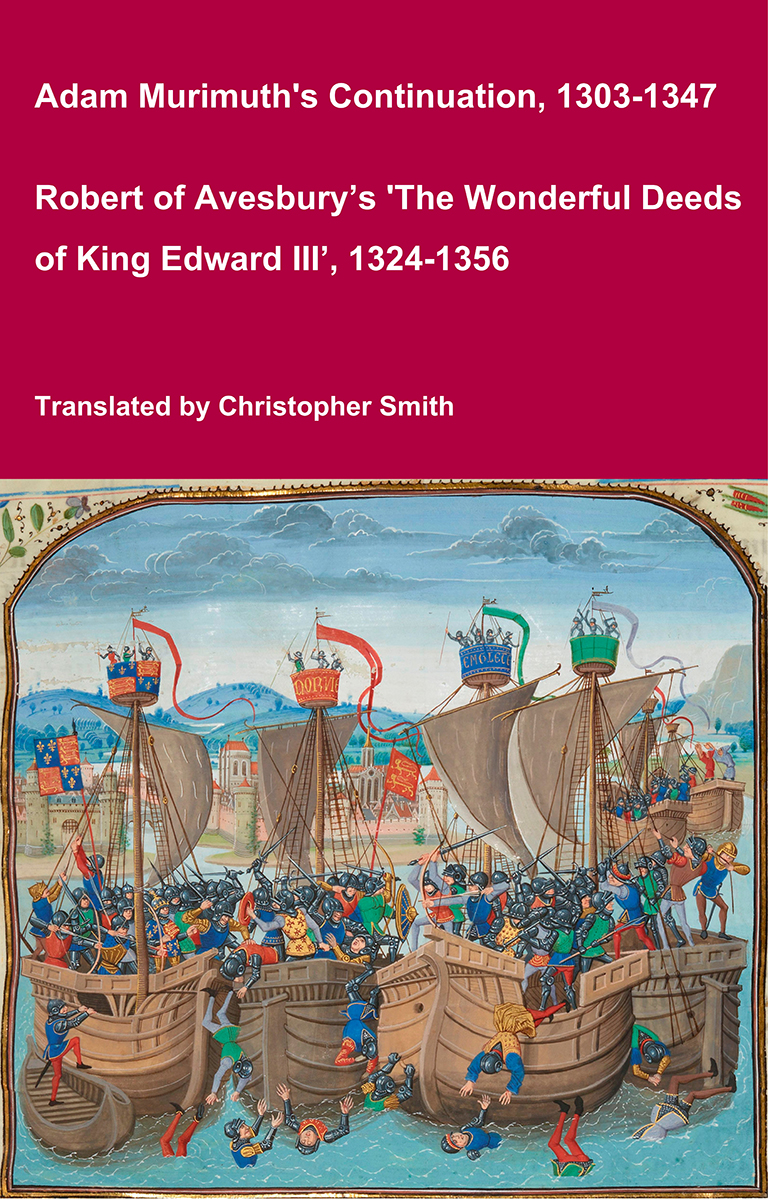 Deeds of King Edward III by Robert of Avesbury. "And on the Saturday [26th August 1346], in the morning, he moved towards Crécy; and the scouts of our lord the king spied out the king of France, who was coming against us in four great battles, and they perceived there their enemy. And, by the will of God, a little before the hour of vespers his power gathered against ours in open field1; and the battle was very stubborn, and endured a long while, for the enemy bore themselves right nobly. But, praised be God, there were our enemies discomfited, the king our adversary took to flight; and there were slain the king of Bohemia, the duke of Lorraine, the count of Alençon, the count of Flanders, the count of Blois, the count of Harcourt and his two sons, the count of Aumarle, the count of Nauvers and his brother the lord of Trouard, the archbishop of Nimes, the archbishop of Sens, the grand prior of the Hospital of France, the count of Savoy, the lord of Moreuil, the lord of Guyes, the lord of Saint Venant, the lord of Rosenberg, six counts of Germany, and great numbers of other counts and barons and other men and lords whose names cannot yet be known. And Philip of Valois and the marquis who is called the elect of the Romans escaped wounded, as they say. The full number of the good men of arms which were slain in the field on that day, without reckoning the commons and foot soldiers, amounteth to fifteen hundred and forty and two, all told. And the same night the king of England with all his host abode in arms on the field where was the discomfiture."
"Et ln Samady a matin se remus devers Cressy, et lez descoverers nostre seignur le roi discovererent le roy de Fraunce, qe vint devers nous en iiIJ grosses batailles, et entenderont illesqes lor enemys. Et, a la volente de Dieu, un poy avaunt le heure de vespre sa poair assembla a nostre en plain champ; et le bataille estoit tres fort et endura longement, car lez enemys se porterount mult noblement. Mais, loiez soit Dieux, illesqes farent noz enemys descomfitz, le roy nostre adversarie se mist a fayte; et fusrent mortz le roy de Bealme, le duc de Loreigne, le counte Dalesoun, le counte de Flaundrez, le counte de Bloys, le counte de Harecourt et sez IJ filtz, le counte Damarle, le counte de Nauvers et son frere le seignur de Trouard, lercevesqe de Niemes, lercevesqe de Saunz, le haut priour de lospitel de Fraunce, le counte de Savoie, le seignur de Morles, le seignur de Guyes, le sire de Seint Vinaunt, le seignur de Rosingbergh, vj. countes Dalmaigne, et tut plein dez autres countes et barons et anltres gentz et seignurs dount homme ne peot unquore savoir lez nouns. Et Phelip de Valoise et le markys qest appelle le elitz du Romeyns eschaperent naufrez, a ceo qe homme dist. La summe dez bones gentz darmes qe fusrent mortz en la champ a ceste jour, saunz comunes et pedailles, amounte a mil DXLIJ acountez. Et mesme la nuyt, le roy Dengleterre od tout son host demurra en la champ armez, od la disconfiture fuist."
Note 1. Bourgeois de Valenciennes: "When the hosts of the two kings had drawn so near that they were ready to strike together, my lord Odo Doria and his Genoese began to sound their trumpets and horns, and to make such a great noise with all their instruments before the army of the King of France that one could scarcely hear anything. At the same time it rained, thundered, and lightning flashed fiercely; hail rattled down, and the weather was dreadful indeed. At that moment they began to fight one another, and the battle lasted, perilous, murderous, without pity, cruel and most horrible, from about midday until near nightfall. There the Prince of Wales had so much to endure that he was brought to his knees twice; and my lord Richard Fitz-Simon, who bore his banner, took the banner and placed it beneath his feet, stepping over it in order to guard it and to rescue his lord. Then he seized his sword in both hands and began to defend the prince, crying: 'Edward! Saint George! To the King’s son!' At this rescue came the Bishop of Durham and many valiant knights, who saved the prince; and there my lord Richard raised his banner again. At that gathering occurred the great and deadly rout, and the battle was so fierce, so hot, and so terrible that the arrows of the archers flew even as far as the King of France. The horse of my lord John of Hainaut was killed beneath him, and many others of his company were wounded, injured, slain, beaten down, maimed, and crushed."
Chronicle of Geoffrey le Baker of Swinbroke: "So confident were the French nobles in the size of their army that each one laid claim to an English prisoner to keep in his dungeons. The King of Majorca asked for the King of England himself to be given to him; others asked for the prince, or for the Earl of Northampton, or for other English lords, according to who seemed most noble. But the cunning tyrant [King Philip VI], fearing that in the scramble to capture high-born prisoners for ransom his men would become too preoccupied and thus slacken in their pursuit of victory, commanded that the banner known as the 'Oriflamme' be unfurled. Once this banner was raised, it was forbidden, on pain of death, for anyone to take a prisoner and spare his life. This banner, called the Oriflamme, symbolized the 'mercy of the French' being so enflamed that it was impossible to spare any mortal life just as flaming oil cannot spare anything combustible. This banner was positioned to the right of the royal French standard, bearing golden fleurs-de-lis with golden threads trailing from its edges, hanging as though in mid-air. In response, the King of England ordered his own standard to be raised, on which a dragon clothed in his arms was depicted; and from this it was called the Dragon, signifying that the gentleness of the lilies had been turned into the dragon's cruelty, and the ferocity of the leopard was now ready to be unleashed. The battle lines, thus arranged, remained in position on the field from the first hour of the day until evening, while the burdensome multitude of the French was constantly swelled by fresh arrivals. At last, around sunset, after much posturing and martial skirmishing between the two armies, the first engagement began. With trumpets blaring, drums, kettledrums, and clarions sounding, and the French shouting so loudly it seemed like thunder, the Genoese crossbowmen initiated the fight. Yet their bolts struck none of the English, but fell far short in front of them. Roused by the overwhelming din of the crossbowmen, the English archers shot volleys into them, cutting them down, so that the rain of quarrels was overwhelmed by a hail of arrows."
On 26th August 1349 Archbishop Thomas Bradwardine [aged 49] died of plague.
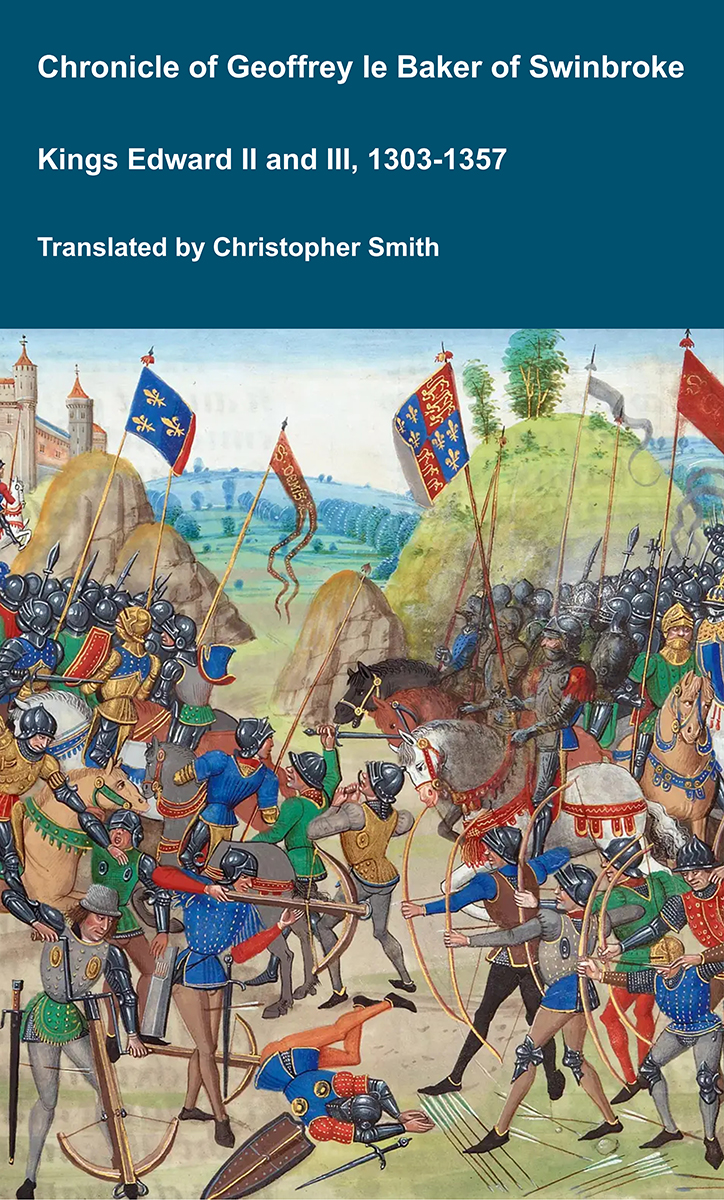 Chronicle of Geoffrey le Baker of Swinbroke. Likewise, Master Thomas Bradwardine [aged 49], Archbishop of Canterbury, died1 before being enthroned, and Master Simon of Islip was elected as his successor.
Item, magister Thomas Bradewardyn, archiepiscopus Cantuariensis nondum intronizatus, obiit, et magister Symon de Islep in eius succes sorem fuerat electus.
Note 1. Archbishop Thomas Bradwardine died on 26th August 1349, probably of plague, following his return from Avignon where he had received confirmation from the Pope. He was buried at Canterbury Cathedral.
On 26th August 1377 Enguerrand de Coucy 1st Earl Bedford 1st Count Soissons [aged 37] renounced his title Earl Bedford following the accession of King Richard II of England [aged 10].


On 26th August 1438 Ernest Wittelsbach was born to Albert Wittelsbach III Duke Bavaria [aged 37] and Anna Brunswick Grubenhagen Duchess Bavaria [aged 24].
The Deeds of the Dukes of Normandy
The Gesta Normannorum Ducum [The Deeds of the Dukes of Normandy] is a landmark medieval chronicle tracing the rise and fall of the Norman dynasty from its early roots through the pivotal events surrounding the Norman Conquest of England. Originally penned in Latin by the monk William of Jumièges shortly before 1060 and later expanded at the behest of William the Conqueror, the work chronicles the deeds, politics, battles, and leadership of the Norman dukes, especially William’s own claim to the English throne. The narrative combines earlier historical sources with firsthand information and oral testimony to present an authoritative account of Normandy’s transformation from a Viking settlement into one of medieval Europe’s most powerful realms. William’s history emphasizes the legitimacy, military prowess, and governance of the Norman line, framing their expansion, including the conquest of England, as both divinely sanctioned and noble in purpose. Later chroniclers such as Orderic Vitalis and Robert of Torigni continued the history, extending the coverage into the 12th century, providing broader context on ducal rule and its impact. Today this classic work remains a foundational source for understanding Norman identity, medieval statesmanship, and the historical forces that reshaped England and Western Europe between 800AD and 1100AD.
Available at Amazon in eBook and Paperback format.
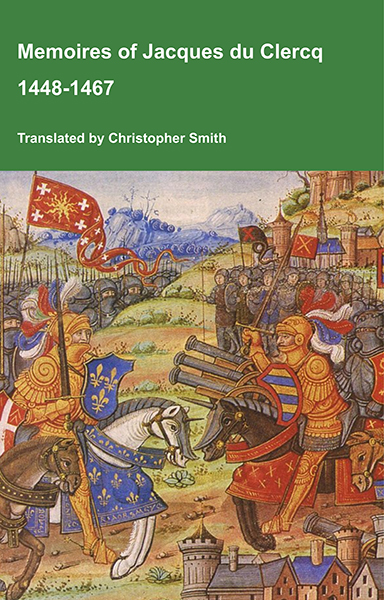 Memoires Jacques du Clercq. On the following day, those within Bayonne abandoned the suburbs of Saint-Léon on the side where the Count of Foix was, which were very strong and enclosed with ditches and stout palisades; but the great number of heavy culverins, serpentines, and ribauldequins, which shattered the defences and struck the men who came out to defend them, forced them to abandon and leave the said suburbs. Then they set fire to the churches within and to the houses in particular, when they saw those of the siege preparing to assault them; and the attackers entered straight into those suburbs and pursued them so fiercely that, had they been a hundred men together, they would have entered the town along with those within. After this, the attackers lodged themselves in those suburbs and spread the fire among the churches and houses, and the Count of Foix lodged at the Augustinians. And on the following day, from the side of Bordeaux came the Sieur d'Albret and the Viscount of Tartas, his brother, who lodged at Saint-Esprit, at the end of the wooden bridge, which bridge was broken the following night by the men of the said Sieur d'Albret, who had in his company two hundred lances with archers and three thousand crossbowmen. The next day, those of the town of Bayonne made a sortie by a boulevard on the seaward side; and then Messire Bernard de Biarne and his men came to skirmish with them and drove them back into the town; and as he returned from the skirmish, the said Sir Bernard was struck by a culverin shot, which pierced his thigh between the two bones, but it was afterward drawn out, and he was so well treated by the surgeons that he was saved from the danger of infection. And the next morning a strong church, enclosed with ditches and stakes, was taken by the men of the said Messire Bernard, partly by assault and partly by surprise. When those within Bayonne saw the great approaches being made to batter the walls, and that the heavy bombards had not yet even arrived, though they were drawing near, on the 26th day of the said month of August they began to parley with the Counts of Foix and Dunois and certain members of the King of France's council, who, after many discussions, came to terms in the manner that follows.
Le lendemain qui fust le vje jour dudit mois, ceulx de. dans Bayonne desemparerent les faulxbourgs de St Leon, du costel ou estoit le comte de Foix, lesquels estoient très forts et fermés de fossés et de gros pouchons; mais la grande multitude des grosses coullevrines, serpentines et ribaudequins qui rompoient les palais, et tiroient les gens de guerre qui issoient a la deffence, leur feirent abandonner et laisser lesdits faulxbourgs, et adonques boutterent le feu es eglises qui estoient dedans, et es maisons par especial, quant ils appercheurent ceulx qui tenoient le siege, qui se mectoient a point pour eulx assaillir; et adoncques entrerent iceulx assaillants a fil dedans iceulx faulxbourgs, et les poursuivirent sy rudement que sils euissent esté cent hommes ensemble, ils fuissent entrés en la ville avecq ceulx de dedans. Après ce fait, se logerent les assaillants en iceulx faulxbourgs, et estendirent le feu estant es eglises et maisons, et se logea le comte de Foix es Augustins. Et le vje jour ensuivant, du costel de Bourdeaulx vint le Sr dAlbreth et le vicomte de Tartas son frere, et se logerent au St Esprit, au bout du pont de Bois, lequel pont fust rompu la nuict ensuivant par les gens du S dAlbreth, lequel avoit en sa compagnie deux cens lanches avecq les archiers, trois mille arbalestriers. Et le lendemain saillirent hors ceulx de la ville de Bayonne par ung boullovert du costel de la mer; et lors messire Bernard de Bierne et ses gens vindrent a lescarmouche, et les reboutterent jusques dedans la ville, et en retournant de lescarmouche ledit St Bernard fust frappé dune coullevrine, et percha son panois et entra le plein dedans sa jambe entre les deux os, qui depuis fust tiré hors et sy bien gouverné par les chirurgiens que le peril du feu en fust hors. Et le lendemain matin fust prinse une eglise forte qui estoit fermée de fosses et de pieulx, par les gens dicelluy messire Bernard, moitié dassault moitié demblée. Quant ceulx de dedans Bayonne veirent les grands approchements de tirer contre la muraille, et sy nestoient point encoires venues les grosses bombardes, lesquelles approchoient fort, le xxvje jour dudit mois daoust, ils commencherent a parlamanter aulx comtes de Foix et de Dunois, et aulcuns du conseil du roy de Franche, lesquels après plusieurs choses pourparlées traicterent en la maniere qui sensuit.
Memoires Jacques du Clercq. First, there entered into the city twelve carts adorned with the king's arms, and the horses likewise, except for the first cart, which bore the arms of the king's grand master of the household. After them followed twelve pack animals also bearing the king's arms, and each carter and servant dressed in red. After the pack animals came the lesser officers of the king, all armed in brigandines and wearing white coats bearing the king's device, about fifty in number, led by two ushers of arms. After them came sixty crossbowmen, well mounted and armed in full white armour, each carrying his crossbow and all its equipment, their sallets well fitted and a white surcoat beneath, bearing the king's device and richly adorned with goldsmith's work. Then came the king's archers, well equipped, except that instead of white armour they wore brigandines; their sallets were made in such a way that they had scarcely two fingers' breadth of visor, and they numbered from eighty to a hundred. After them came the lords unarmed: the Duke of Orléans, the Count of Angoulême his brother, and others; then two kings of arms or heralds, followed by four trumpeters, then three more kings of arms or heralds. After them rode the squire of the stables on a courser, bearing the king's sword and sash; and after him came the king, wearing a cuirass and over it a crimson pleated robe, with a hat adorned with a very rich jewel, and wide boots, seated on a fairly large bay horse whose saddle was richly ornamented with gold. Following him came my lord Charles of France, the king's second son, armed and dressed like the king; and after him followed the king's guard, numbering one hundred and twenty lances, composed both of those of the guard and of other princes and noblemen of his household, all very well equipped and armed except for their heads, and before them rode their pages together. And on the 26th day of the said month of August, Charles, King of France, in the city of Vendôme, both for the matter of the Duke of Alençon and for other business concerning his realm, held his lit de justice. For this session all twelve peers of France were to be present, whose names follow: first, the dean of the peers, the Duke of Burgundy; then the Duke of Bourbon and the Duke of Anjou, these were the three lay peers of France; then the Count of Flanders, the Duke of Alençon, and the Count of La Marche, these likewise were peers; the other six peers were the Archbishop of Reims, the Archbishop of Langres, the Bishop of Laon, and the Bishop of Noyon. And because from these peerages the kings had long before drawn back the county of Champagne into the crown of France, the king created there, of his own will, two new peers, namely the Count of Foix and the Count of Eu. To describe how the king was seated: the king sat as he would at the Parlement in Paris, except that he was seated four steps higher than there, with the first president at his right; two steps below sat his son Charles, and below him, one step lower, at his right hand, the Duke of Orléans, who did not approach within four feet. Next, on that side, were Charles, brother of the Duke of Anjou, the Count of Vendôme, the son of the Duke of Savoy, and others. At the king's feet, two steps below on the left, sat the Bastard of Orléans, Count of Dunois, and the Chancellor of France at his left. The said Count of Dunois sat there as lieutenant of the Constable of France, because as soon as the king had taken his seat, the Constable, who was Duke of Brittany, came before him and, in the presence of the council, requested that he not be present for the judgment of the Duke of Alençon, since the said duke was his kinsman and nephew; which request the king granted and accepted as a proper excuse. On the left side were seated the other six peers of France, archbishops and bishops; beyond them, in the same row, were the bishops of Paris, Constance, and many others, and the abbot of Saint-Denis at the end; after them came those of the Parlement, presidents, councillors, masters of requests, treasurers, and before them sat various lords, whose names I omit for brevity. After they were seated, the chancellor spoke in the king's name and ordered the ushers to call and see whether the Duke of Burgundy, the Duke of Anjou, the Duke of Bourbon, and the Count of La Marche, who were peers, were present; none of them were there in person. The ushers went out with the chancellor and two councillors to inquire whether anyone was present on their behalf; and as soon as they had gone out, they found, in great state, on behalf of Philip, Duke of Burgundy, Sir Jean de Croy, lord of Chimay, Sir Simon de Lallaing, knights, Master Jean l'Orfèvre, president of Luxembourg and councillor of the said duke, and Toison d'Or, king of arms, accompanied in great number. These four entered the chamber where the king was, and there were likewise embassies for the other peers. When the ambassadors of the Duke of Burgundy had entered, they greeted the king and excused the duke for not being present, for the reasons already declared and others; to which the king, through his chancellor, replied that he would have wished that the duke had been there if he could have come, and likewise the others. After this, the ambassadors of the Duke of Burgundy asked to be heard to deliver the message entrusted to them by their lord; which the king granted. Then Master Jean l'Orfèvre began to speak on behalf of them all; the speech I did not hear, but it was afterward given to me in writing, and I believe that the said Master Jean also gave it in writing to the court; and this writing was copied, and I received a copy, which follows.
Premierement, entrerent en la ville douze chars armoyés des armes du roy et les chevaulx pareillement, reservé le premier char, qui estoit armoyé des armes du grand maitre d'hostel du roy; après suivirent douze sommiers aussy chargiés des armes du roy, et chacun charton et varlet vestus de rouge; après les sommiers entrerent les menus officiers du roy touts armés de brigandines et chargiés de houches blanches a la devise du roy, et estoient environ cinquante, lesquels estoient conduits par deux huissiers d'armes; après entrerent soixante crennequiniers bien montés et armés de blanc harnois, chacun son crenequin en sa main et ce qu'il y appartient, et leurs salades bien garnies et ung houchel dessous couvert de houches blanches a la devise du roy, chargiés d'orfeverie bien largement; après entrerent les archiers du roy bien habilliés, saulf qu'en lieu de harnois blanc ils avoient brigandines, et estoient leurs salades a ceste fachon qu'elles ne avoient point deux doigts de visiere, et estoient en nombre de quatre vingt a cent; après alloient les sieurs non armés, c'est a sçavoir: le duc d'Or leans, le comte d'Angoulesme, son frere et aultres, et puis après deux roys d'armes ou heraulx, et puis quatre trompettes, et puis aultres trois roysou heraulx; après alloit l'escuyer de l'escurie sur ung coursier, portant l'espée et l'escharpe du roy, et après alloit le roy armé d'ung corset, vestu dessus d'une robbe sanguine a plois, et ung chapeau ou il y avoit une moult riche bague, et avoit houseaux larges, et seoit sur ung cheval bay assés grand, dont la selle estoit fort garnie d'or; après suivoit monsieur Charles de Franche, second fils du roy, et estoit armé et vestu comme roy; et suivoit la garde du roy, ou il y avoit cent a six vingt lanches, tant de ceulx de la garde comme des aultres princes et nobles hommes de son hostel, touts lesdits de cent a six vingt hommes d'armes très bien en poinct et bien armés, saulf la teste, et avoient devant eulx leurs pages touts ensemble. Et le vingt sixiesme dudit mois d'aoust ensuivant, Charles, roy de Franche, en la ville de Vendosme, tant pour le fait du duc d'Allenchon, comme pour aultre besoingne touchant son royaume, tint son lit de justice, pour lequel lit tenir touts les douze pairs y debvoient estre, dont la desclaration s'ensuit: Premier, le doyen des pairs, duc de Bourgogne, le duc de Bourbon, le duc d'Anjou, ceulx feurent les trois pairs de Franche; après, le comte de Flandres, le duc d'Allenchon et le comte de la Marche, ceulx cy sont les trois pairs de Franche; les aultres six pairs de Franche sont l'archevesque de Rheims, l'archevesque de Langres, l'evesque de Laon et l'evesque de Noyon; et pour ce que des dessusdites pairies, les roys avoient retraict de pieça a la courronne de Franche la comté de Champagne, le roy feit illecq de sa propre vollonté deux nouveaux pairs de Franche, c'est a sçavoir: le comte de Foix et le comte d'Eu. Et pour desclarer les sieurs qui estoient en la compagnie du roy, et comment le roy estoit assis pour tenir son lit de justice: premier, estoit assis le roy en tel lieu et semblablement comme est assis au palais, a Paris: le premier president, reservé qu'il estoit assis quatre marches plus haultes que icelluy de Paris, a son costé dextre; a deux marches au dessous, monsieur Charles son fils, et dessous la dextre, ung degré plus bas du rang, son fils a main dextre, le duc d'Orleans, lequel n'approchoit point près a quatre pieds; après estoient du costé dudit duc d'Orleans, les sieurs du nom que s'ensuit, c'est a sçavoir: Charles, frere du duc d'Anjou, le comte de Vendosme, le fils du duc de Savoye et aultres; et aulx pieds du roy, a deux marches dessous, a main senestre, estoit le bastard d'Orleans, comte de Dunois, et le chancellier de Franche a la main senestre; du costé estoit ledit comte de Dunois, assis comme lieutenant du connestable de Franche, pour ce que incontinent que le roy fust assis, icelluy connestable, lequel estoit duc de Bretaigne, vint devers lui, et en la presence de son conseil lui requit, qu'il ne fust pas a rendre la sentence du duc d'Allenchon, pour ce que ledit duc estoit son parent et son nepveu, laquelle requette lui accorda le roy et le tint bien pour excusé; du costé senestre estoient assis les aultres six pairs de Franche, archevesques et evesques; et après de leur costé, tout d'un rang, estoient les evesques de Paris, Constances et plusieurs aultres, et l'abbé de St Denis pour le dernier dudit rang; et après ceulx de la cour du parlement, les presidents et conseillers de plusieurs sieurs, c'est a sçavoir: les maitres des requettes, les tresoriers, et par devant eulx estoient assis les sieurs de la Tour d'Espernay et plusieurs aultres dont je me tairay, car ce seroit trop longue chose a racompter. Après ce qu'ils feurent assis pour besoingner, le chancellier parla pour et au nom du roy, et commanda aulx huissiers que on allat appeller et sçavoir sy le duc de Bourgogne, le duc d'Anjou, le duc de Bourbon et comte de la Marche, lesquels estoient pairs de Franche, n'estoient point venus, desquels n'y avoit nuls en personne: lesquels huissiers issirent hors la chambre du conseil eulx trois avecq le chancellier, maitre Guillaume Devis et Jacques Cambion, conseillers du roy en parlement, et allerent scavoir s'il n'y avoit nuls pour les dessusdits pairs a le sens; mais sitost qu'ils feurent issus, ils trouverent en moult grand estat, de par le duc Philippe de Bourgogne, messire Jehan de Croy, Sr de Chimay, messire Symon de Lallaing, chevalliers, maitre Jean l'Orfebvre, president de Luxembourg et conseiller dudit duc Philippe, et Thoison d'Or, roy d'armes dudit duc, moult grandement accompagnié; lesquels quatre dessusdits nommés sans plus, entrerent en la chambre ou estoit ledit roy, comme dit est, et pareillement y avoit aussy pour les aultres pairs, Anjou, Bourbon et la Marche, pour chacun une ambassade. Tant que ladite ambassade dudit duc de Bourgogne fust entrée ens, sy saluerent le roy et excuserent le duc de Bourgogne de non estre illecq venu pour les causes cy dessus desclarées et aultres; auxquels par la bouche de son chancellier feit respondre, qu'il euist bien voullu que le duc y euist esté, se faire se euist peu, et semblablement aulx aultres, Anjou, Bourbon et La Marche. Après laquelle response les ambassadeurs du duc de Bourgogne demanderent au roy d'avoir audience, de dire ce qu'ils avoient de charge de par le duc de Bourgogne, leur S et maitre, ce que le roy leur octroya; lors commencha a parler ledit maitre Jehan l'Orfebvre, pour eulx touts, laquelle proposition je ne ouye pas; mais elle me fust depuis balliée par escript, et crois aussy que ledit maitre Jehan l'Orfebvre la ballia aussy par escript a la cour; lequel escript fust copié et me vint de ceste copie, comme on me certiffia; laquelle copie s'ensuit:
Memoires Jacques du Clercq. In that year, on the 26th day of August, in the town of Amiens, a man and a woman, brother and sister, who were of noble birth, were executed by justice. They had had carnal relations with one another for the space of seven years, and confessed to having killed a child whom they had had together, without baptism, along with several other crimes. For these offences, the man was hanged at the gallows of Amiens, and the woman was burned.
Audit an le xxvje jour d'aoust, en la ville d'Amiens, furent executés par justice ung homme, une femme, frere et sœur, lesquels estoient de noble sang, et avoient esté carnellement ensemble l'espace de sept ans, et confesserent avoir occis ung enfant, qu'ils avoient eu de l'ung l'aultre sans avoir baptesme, avecq plusieurs aultres crimes, pour les quels le homme fust pendu au gibbet d'Amiens et la femme fust ardse.
Memoires Jacques du Clercq. In the year 1460, on the 26th day of August, in the town of Mantes, a man named Noel Ferre, a native of Amiens, as he said, aged twenty-eight, was burned, his body reduced to ashes, and the ashes, by judgement, scattered to the wind. He confessed to being a sorcerer and to having committed several murders, thefts, and frauds, and moreover to having been on four occasions at the said Waldensian assemblies. At these assemblies he confessed that he had worshipped the devil in the form of a goat and had given him both body and soul. He named the places where he had been at these assemblies, namely once at Étampes, another time near Péronne, another in a place between Corbie and Beauvais, and another in the wood of Mofflaines near Arras. At these gatherings he said he had seen many people, among whom he named the 'abbot of little sense', mentioned above, who, as he confessed, received the oaths made to the devil and spoke on behalf of the devil. He also named others, from the towns of Arras, Amiens, Paris, Blois, and other places. The said Noel was ragged and ragamuffin-like, begging for alms, and he travelled with his wife, whom he also accused of having been at the said assemblies.
L'AN mil iiije lx, le xxvje jour d'aoust, en la ville de Mantes fust ards et son corps ramené en pouldre et la pouldre par jugement jettée au vent, ung nommé Noel Ferre, natif d'Amiens, comme il disoit, de l'age de xxviij ans, lequel confessa d'estre sorcier et avoir commis plusieurs meurdres, larchins et pipperies, et avecq ce d'avoir esté par quatre fois en vaulderie, en laquelle vaulderie il avoit adoré le diable en forme de boucq, et lui donné corps et ame, et nomma les plaches ou il avoit esté en ladite vaulderie, c'est assçavoir une fois a Estampes, une aultre fois emprez Peronne, une aultre fois en ung lieu entre Corbie et Beauvais, et l'aultre fois au bois de Mofflaines lez Arras, esquelles assemblées de vaulderie il confessa d'avoir veu plusieurs gens entre lesquels il nomma l'abbé de peu de sens, chy dessus nommé, lequel abbé, comme il confessa, recepvoit les sermens faits au diable, et parloit pour le diable. Il en nomma aussi d'aultres tant de la ville d'Arras, d'Amiens, de Paris, de Blois, comme d'aultres lieux, et estoit ledit Noel raiemant et brimbeux, demandant l'aumosne et menoit avecq lui sa femme, laquelle il accusa aussi d'avoir esté en ladite vaulderie.
Memoires Jacques du Clercq. Likewise, at that time, on the 26th day of August, there arose so great a storm in the town of Béthune, where a fair was being held, that most of the merchants' goods were scattered through the streets. In particular, the jewellers suffered great losses of their wares and jewels, and in several towns around Béthune the storm caused much damage, and many people were killed.
Pareillement audit temps le xxvje d'aoust, feit si grande orage en la ville de Bethune, en laquelle il estoit la feste, que la pluspart des marchandises des marchands furent esparses parmy les rues, et par especial y perdirent beaucoup les jouliers de leurs vaisselles et joyaux, et en aulcunes villes autour dudit Bethune, l'orage y feit moult dommaige et y olt plusieurs gens morts.
Memoires Jacques du Clercq. In the said month of August, on the 26th day, in the town of Boulogne-sur-Mer, there were arrested the castellan and the sergeant of the castle, who had sold the town and the castle to the English of Calais and of Guînes, who were to enter on the 27th day. The said men were to set fire to the lower town of Boulogne, and while people went to deal with the fire, they were to admit the said English into the castle and the town, and to kill all, except those whom the said castellan and sergeant had spared. This treason was revealed by another sergeant, to whom they had disclosed it after he had sworn to join them, but who repented and reported the plot to the mayor of the town, who took such measures that the said castellan and sergeant were arrested. They confessed their treason, and for this they were, on the second day of September, beheaded, and their bodies were hanged on the gallows. Those who were executed were the very same who had brought about the departure of the son of the lord of Croy from the castle, of which he had been captain, and had admitted there, at the beginning of the last Lent, the men of the Count of Charolais, who had given to the said castellan and sergeant all the goods in the castle belonging to the said lord of Croy, and had shown them much favour, and intended to do more.
Audit mois d'aoust, le xxvje jour, en la ville de Boullogne sur la mer, feurent prins le chastelain et le sergeant du chastel, lesquels avoient vendu la ville et le chastel aulx Anglois de Calaix et de Guisnes qui y debvoient entrer le xxviije jour, et debvoient les dessusdits boutter le feu en la basse Boullogne, et entretant que on olt allé au feu, ils debvoient mectre lesdits Anglois au chastel et en la ville, et tuer tout, reservé ceulx que ledit chastelain et sergeant avoient exceptés: de laquelle trahison ils se descouvroient a un aultre sergeant qui leur avoit fait serment d'estre des leurs, lequel sergeant se repentist et dict la trahison au mayeur de la ville, lequel y pourveut tellement que lesdits chastelain et sergeant feurent prins, lesquels confesserent leur trahisou; pourquoy ils feurent le ije jour de septembre descapités, et leurs corps pendus au gibbet. Iceulx executés estoient ceulx propres qui avoient tant fait que le fils du sieur de Croy s'estoit parti du chastel, dont il estoit capitaine, et y avoient fait entrer, au commenchement de caresme dernier passé, les gens du comte de Charollois, lequel comte avoit donné aulxdits chastelain et sergeant touts les biens estant au chastel, appartenants audit sieur de Croy, et moult de biens leur avoit fait et avoit intention de faire.
On 26th August 1469 Ferdinand II King Naples was born to Alfonso II King Naples [aged 20] and Ippolita Maria Sforza [aged 23]. He married 1496 his aunt Joanna Trastámara Queen Consort Naples, daughter of Ferdinand I King Naples and Joanna of Aragon Queen Consort Naples.

Wriothesley's Chronicle [1508-1562]. 26th August 1537. This yeare, on Soundaie the 26th daie of August, the Lord Crumwell [aged 52] was made Knight of the Garter and stlled at Wyndsore.
On 26th August 1540 Magnus Oldenburg was born to Christian III King of Denmark [aged 37] and Dorothea of Saxe Lauenburg Queen Consort Denmark and Norway [aged 29]..
Henry Machyn's Diary. 26th August 1552. The xxvjth day of August ded ser Clementt Smyth [aged 45] knyght, and unkull unto owre soverayn lord and kyng Edward the vjth, the wyche ser Clement mared qwyne Jane('s) syster [aged 36]; and he ded in Essex, at a plasse callyd Badow.
Note. Death of sir Clement Smith. Sir Clement married Dorothy Seymour, sister of queen Jane, and of Edward duke of Somerset. King Edward, in his Diary, under the 24th March 1550–1, records his being "chidden" for having a year before heard mass.


William of Worcester's Chronicle of England
William of Worcester, born around 1415, and died around 1482 was secretary to John Fastolf, the renowned soldier of the Hundred Years War, during which time he collected documents, letters, and wrote a record of events. Following their return to England in 1440 William was witness to major events. Twice in his chronicle he uses the first person: 1. when writing about the murder of Thomas, 7th Baron Scales, in 1460, he writes '… and I saw him lying naked in the cemetery near the porch of the church of St. Mary Overie in Southwark …' and 2. describing King Edward IV's entry into London in 1461 he writes '… proclaimed that all the people themselves were to recognize and acknowledge Edward as king. I was present and heard this, and immediately went down with them into the city'. William’s Chronicle is rich in detail. It is the source of much information about the Wars of the Roses, including the term 'Diabolical Marriage' to describe the marriage of Queen Elizabeth Woodville’s brother John’s marriage to Katherine, Dowager Duchess of Norfolk, he aged twenty, she sixty-five or more, and the story about a paper crown being placed in mockery on the severed head of Richard, 3rd Duke of York.
Available at Amazon in eBook and Paperback format.
26th August 1555. George Tankerfield was burned at the stake. See Foxe's Book of Martyrs Volume 11 306 George Tankerfield.
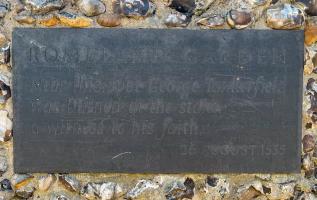
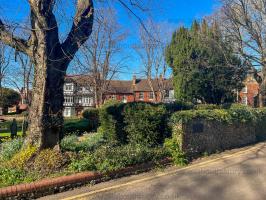
Henry Machyn's Diary. 26th August 1555. The xxvj day of August cam from Westmynster, rydyng thrugh London unto Towrs-warff, the Kyng [aged 28] and the Quen [aged 39], and ther thay toke ther barge unto Grenwyche [Map], and landyd at the long bryge, and reseyvyd by my lord chanseler [aged 72], and my lord of Ely [aged 49], and my lord vycont Montyguw [aged 26], master comtroller, master Sowthwell [aged 52], and dyvers mo, and the gard, and dyvers holdyn torchys bornynge, and up to the Frers, and ther thare graces mad ther praers, and at her grace('s) landyng received ix or x suplycasyon(s), and so bake agayn to the court with a c. torchys bornyng.
On 1st August 1584 Emanuel Scrope 1st Earl of Sunderland was born to Thomas Scrope 10th Baron Scrope of Bolton [aged 17] and Philadelphia Carey Baroness Scrope Bolton. He was baptised at St Dunstan's Church, Hunsdon on the 26th August 1584 with Queen Elizabeth I of England and Ireland [aged 50] as his Godmother.


On 26th August 1596 Frederick Palatinate Simmern V Elector Palatine Rhine was born to Frederick IV Elector Palatine [aged 22] and Electress Louise Juliana of the Palatine Rhine [aged 20]. He married 14th February 1613 his fourth cousin once removed Princess Elizabeth Stewart Queen Bohemia, daughter of King James I of England and Ireland and VI of Scotland and Anne of Denmark Queen Consort Scotland England and Ireland, and had issue.


Letters of the Court of James I 1613. 26th August 1613. London. Reverend Thomas Lorkin to Thomas Puckering 1st Baronet [aged 21].
Queen Margaret [aged 60]1, I hear, is very sick, they say, out of conceit; for that it hath been told her, that the almanac doth foretel that this month one of the greatest women of Christendom shall die. The world would laugh, if so great a woman as she is (saith mine author) should have so little wit, as to be put to death by an almanac. The Prince of Conde [aged 24], having overheated his body lately in hunting of the stag, fell into a burning ague, and was in some danger for four or five days; but now the violence of the disease being spent, there is a good hope conceived of his recovery.
The Duke d'Espernon [aged 59], pretending to live in great fear of his life by reason of the mortal hatred, which divers of his enemies bear him, hath obtained of the queen, for better security, a guard of twenty men taken out of the regiment des gardes who accompany him up and down, wherever he goes; which is offensive to many, who think it strange that the public guard should be employed in the maintaining of his particular factions.
One Recion, a printer of the Religion, having long since reprinted the book of "Novus Homo," (which was published here in England before against the present Pope) was condemned by the Judge of the Chatelet to make an amende honorable before the court, and another before the Nuncio; the further sentence was, that the book should be burned at the Nuncio's gates; and the printer himself banished for ever out of Paris. From which sentence he appealing to the Court of Parliament, they have remitted all his other punishments, save banishment, and that they have restrained only to two years.
Those of the Religion having begun to build a college at Charenton, for the instruction of their youth, the lieutenant-civil adjourned the deputies-general to appear before him, to answer the matter; but they sent him word they were responsible to none but the chancellor, and do not let to go forward with the building; being confident they are sufficiently warranted thereunto by the grants and license of the last king. Richeome, the Jesuit, hath newly set forth at Bordeaux an answer of "Anti-Coton" and La Martaliere's Plea against the Jesuits, and I understand that Suarez2, the Jesuit, hath newly set forth a great book in quarto at Coimbra, in answer to his majesty's apology. The quarrel between the King of Denmark and the States' is now at length happily compounded. My Lord Harrington [deceased] and his lady [aged 59] are, by this, I suppose, arrived in England, having left the Palatine's court above a fortnight since. Sir John is gone to meet them at Calais; otherwise, I suppose, your letter should ere now have received answer. Some time next week, if not the latter end of this, his majesty is expected here in London.
Note 1. The first wife of Henry IV of France, from whom she was divorced. She died 27th March, 1615.
Note 2. Francis Saurez, a Spanish theologian, who attacked James in a work written in defence of Catholicism, to which the king thought proper to reply by the hands of the hangman; a functionary who seems to have been much troabled at this period with the writings of zealoas controversialists. Saarez pablished twenty-three folio volumes, and died at Lisbon in 1613.


Diary of Anne Clifford. 26th August 1616. Upon the 26th came my Coz. Clifford to Appleby but with a far less train than my Lord [aged 27].
Samuel Pepys' Diary. 26th August 1661. At night at home I found a letter from my Lord Sandwich [aged 36], who is now very well again of his feaver, but not yet gone from Alicante, where he lay sick, and was twice let blood. This letter dated the 22nd July last, which puts me out of doubt of his being ill. In my coming home I called in at the Crane tavern at the Stocks by appointment, and there met and took leave of Mr. Fanshaw, who goes to-morrow and Captain Isham [aged 33] toward their voyage to Portugal. Here we drank a great deal of wine, I too much and Mr. Fanshaw till he could hardly go. So we took leave one of another.


Samuel Pepys' Diary. 26th August 1664. Thence to the Dockyarde, and there saw the new ship in very great forwardness, and so by water to Deptford, Kent [Map] a little, and so home and shifting myself, to the 'Change [Map], and there did business, and thence down by water to White Hall, by the way, at the Three Cranes, putting into an alehouse and eat a bit of bread and cheese. There I could not get into the Parke, and so was fain to stay in the gallery over the gate to look to the passage into the Parke, into which the King [aged 34] hath forbid of late anybody's coming, to watch his coming that had appointed me to come, which he did by and by with his lady and went to Guardener's Lane, and there instead of meeting with one that was handsome and could play well, as they told me, she is the ugliest beast and plays so basely as I never heard anybody, so that I should loathe her being in my house. However, she took us by and by and showed us indeed some pictures at one Hiseman's [aged 31], a picture drawer, a Dutchman, which is said to exceed Lilly [aged 45], and indeed there is both of the Queenes [aged 54] and Mayds of Honour (particularly Mrs. Stewart's [aged 17] in a buff doublet like a soldier) as good pictures, I think, as ever I saw. The Queene is drawn in one like a shepherdess, in the other like St. Katharin, most like and most admirably. I was mightily pleased with this sight indeed, and so back again to their lodgings, where I left them, but before I went this mare that carried me, whose name I know not but that they call him Sir John, a pitiful fellow, whose face I have long known but upon what score I know not, but he could have the confidence to ask me to lay down money for him to renew the lease of his house, which I did give eare to there because I was there receiving a civility from him, but shall not part with my money.


Samuel Pepys' Diary. 26th August 1666. After dinner we parted, and I to my office, whither I sent for Mr. Lewes and instructed myself fully in the business of the Victualling, to enable me to answer in the matter; and then Sir W. Pen [aged 45] and I by coach to White Hall, and there staid till the King [aged 36] and Cabinet were met in the Green Chamber, and then we were called in; and there the King begun with me, to hear how the victualls of the fleete stood. I did in a long discourse tell him and the rest (the Duke of Yorke [aged 32], Chancellor [aged 57], Lord Treasurer [aged 59], both the Secretarys, Sir G. Carteret [aged 56], and Sir W. Coventry [aged 38],) how it stood, wherein they seemed satisfied, but press mightily for more supplies; and the letter of the Generalls, which was read, did lay their not going or too soon returning from the Dutch coast, this next bout, to the want of victuals. They then proceeded to the enquiry after the fireships; and did all very superficially, and without any severity at all.


Samuel Pepys' Diary. 26th August 1666. Thence to discourse of the times; and he tells me he believes both my Lord Arlington [aged 48] and Sir W. Coventry [aged 38], as well as my Lord Sandwich [aged 41] and Sir G. Carteret [aged 56], have reason to fear, and are afeard of this Parliament now coming on. He tells me that Bristoll's [aged 53] faction is getting ground apace against my Chancellor [aged 57]. He told me that my old Lord Coventry was a cunning, crafty man, and did make as many bad decrees in Chancery as any man; and that in one case, that occasioned many years' dispute, at last when the King [aged 36] come in, it was hoped by the party grieved, to get my Chancellor to reverse a decree of his. Sir W. Coventry took the opportunity of the business between the Duke of Yorke [aged 32] and the Duchesse [aged 29], and said to my Chancellor, that he had rather be drawn up Holborne to be hanged, than live to see his father pissed upon (in these very terms) and any decree of his reversed. And so the Chancellor did not think fit to do it, but it still stands, to the undoing of one Norton, a printer, about his right to the printing of the Bible, and Grammar, &c.
Samuel Pepys' Diary. 26th August 1666. But, however, I was in pain, after we come out, to know how I had done; and hear well enough. But, however, it shall be a caution to me to prepare myself against a day of inquisition. Being come out, I met with Mr. Moore, and he and I an houre together in the Gallery, telling me how far they are gone in getting my Lord [Sandwich's] pardon, so as the Chancellor [aged 57] is prepared in it; and Sir H. Bennet [aged 48] do promote it, and the warrant for the King's signing is drawn. The business between my Lord Hinchingbrooke [aged 18] and Mrs. Mallett [aged 15] is quite broke off; he attending her at Tunbridge [Map], and she declaring her affections to be settled; and he not being fully pleased with the vanity and liberty of her carriage. He told me how my Lord has drawn a bill of exchange from Spayne of £1200, and would have me supply him with £500 of it, but I avoyded it, being not willing to embarke myself in money there, where I see things going to ruine.


John Evelyn's Diary. 26th August 1666. The contagion still continuing, we had the Church service at home.
Abbot John Whethamstede’s Chronicle of the Abbey of St Albans
Abbot John Whethamstede's Register aka Chronicle of his second term at the Abbey of St Albans, 1451-1461, is a remarkable text that describes his first-hand experience of the beginning of the Wars of the Roses including the First and Second Battles of St Albans, 1455 and 1461, respectively, their cause, and their consequences, not least on the Abbey itself. His text also includes Loveday, Blore Heath, Northampton, the Act of Accord, Wakefield, and Towton, and ends with the Coronation of King Edward IV. In addition to the events of the Wars of the Roses, Abbot John, or his scribes who wrote the Chronicle, include details in the life of the Abbey such as charters, letters, land exchanges, visits by legates, and disputes, which provide a rich insight into the day-to-day life of the Abbey, and the challenges faced by its Abbot.
Available at Amazon in eBook and Paperback format.
Samuel Pepys' Diary. 26th August 1667. Then to the office, where we sat upon a particular business all the morning: and my Lord Anglesey [aged 53] with us: who, and my Lord Bruncker [aged 47], do bring us news how my Chancellor's [aged 58] seal is to be taken away from him to-day. The thing is so great and sudden to me, that it put me into a very great admiration what should be the meaning of it; and they do not own that they know what it should be: but this is certain, that the King [aged 37] did resolve it on Saturday, and did yesterday send the Duke of Albemarle [aged 58], the only man fit for those works, to him for his purse: to which the Chancellor answered, that he received it from the King, and would deliver it to the King's own hand, and so civilly returned the Duke of Albemarle without it; and this morning my Chancellor is to be with the King, to come to an end in the business. After sitting, we rose, and my wife being gone abroad with Mrs. Turner [aged 44] to her washing at the whitster's, I dined at Sir W. Batten's [aged 66], where Mr. Boreman was, who come from White Hall; who tells us that he saw my Chancellor come in his coach with some of his men, without his Seal, to White Hall to his chamber; and thither the King and Duke of York [aged 33] come and staid together alone, an hour or more: and it is said that the King do say that he will have the Parliament meet, and that it will prevent much trouble by having of him out of their enmity, by his place being taken away; for that all their enmity will be at him. It is said also that my Chancellor answers, that he desires he may be brought to his trial, if he have done any thing to lose his office; and that he will be willing, and is most desirous, to lose that, and his head both together. Upon what terms they parted nobody knows but the Chancellor looked sad, he says. Then in comes Sir Richard Ford [aged 53], and says he hears that there is nobody more presses to reconcile the King and Chancellor than the Duke of Albemarle and Duke of Buckingham [aged 39]: the latter of which is very strange, not only that he who was so lately his enemy should do it, but that this man, that but the other day was in danger of losing his own head, should so soon come to be a mediator for others: it shows a wise Government. They all say that he [Clarendon] is but a poor man, not worth above £3000 a-year in land; but this I cannot believe: and all do blame him for having built so great a house, till he had got a better estate. Having dined, Sir J. Minnes [aged 68] and I to White Hall, where we could be informed in no more than we were told before, nobody knowing the result of the meeting, but that the matter is suspended. So I walked to the King's playhouse, there to meet Sir W. Pen [aged 46], and saw "The Surprizall", a very mean play, I thought: or else it was because I was out of humour, and but very little company in the house. But there Sir W. Pen and I had a great deal of discourse with Moll; who tells us that Nell [aged 17] is already left by my Lord Buckhurst [aged 24], and that he makes sport of her, and swears she hath had all she could get of him; and Hart1, her great admirer, now hates her; and that she is very poor, and hath lost my Baroness Castlemayne [aged 26], who was her great friend also but she is come to the House, but is neglected by them all2. Thence with Sir W. Pen home, and I to the office, where late about business, and then home to supper, and so to bed.
Note 1. Charles Hart, great-nephew of Shakespeare, a favourite actor. He is credited with being Nell Gwyn's first lover (or Charles I, as the wits put it), and with having brought her on the stage. He died of stone, and was buried at Stanmore Magna, Middlesex, where he had a country house.
Note 2. Lord Buckhurst's liaison with Nell Gwyn probably came to an end about this time. We learn from Pepys that in January, 1667-68, the King sent several times for Nelly (see January 11th, 1667-68). Nell's eldest son by Charles II, Charles Beauclerc, was not born till May 8th, 1670. He was created Earl of Burford in 1676 and Duke of St. Albans in 1684.
John Evelyn's Diary. 26th August 1676. I dined at the Admiralty with Secretary Pepys [aged 43], and supped at the Lord Chamberlain's [aged 58]. Here was Captain Baker, who had been lately on the attempt of the Northwest passage. He reported prodigious depth of ice, blue as a sapphire, and as transparent. The thick mists were their chief impediment, and cause of their return.


On 26th August 1699 Léopold Lorraine was born to Leopold Duke of Lorraine [aged 19] and Élisabeth Charlotte Bourbon Duchess Lorraine [aged 22]. He a great x 3 grandson of King James I of England and Ireland and VI of Scotland. He died aged less than one years old.
On 26th August 1728 Anne Marie Bourbon Queen Consort Sardinia [aged 58] died.
On 26th August 1749 John Crewe of Crewe [aged 68] died. Monument at St Bertoline's Church, Barthomley [Map] commissioned by his wife Sarah Price [aged 67].
John Crewe of Crewe: Around 1681 he was born to John Offley of Madely in Staffordshire and Anne Crewe. In or before 1709 John Crewe of Crewe and Sarah Price were married.
Sarah Price: Around 1682 she was born. On 8th May 1751 she died.


On 26th August 1754 Charles Powlett 3rd Duke Bolton [aged 68] died. His brother Harry [aged 63] succeeded 4th Duke Bolton, 9th Marquess Winchester, 9th Earl Wiltshire, 9th Baron St John.

On 26th August 1785 George Sackville aka Germain 1st Viscount Sackville [aged 69] died. His son Charles [aged 17] succeeded 2nd Viscount Sackville of Drayton in Sussex and 2nd Baron Bolebrooke in Sussex.
On 26th August 1788 Elizabeth Chudleigh Duchess Kingston upon Hull [aged 67] died. Her estates, and those of her former husband Evelyn Pierrepont 2nd Duke Kingston upon Hull, passed to his sister Frances' [aged 75] son Charles Medows aka Pierrepont 1st Earl Manvers [aged 50].
On 26th August 1819 Prince Albert Saxe Coburg Gotha was born to Ernest Saxe Coburg Gotha I Duke Saxe Coburg Gotha [aged 35] and Duchess Louise Dorothea of Saxe Coburg Altenburg [aged 18]. He married 10th February 1840 his first cousin Queen Victoria of the United Kingdom, daughter of Edward Augustus Hanover 1st Duke Kent and Strathearn and Marie Luise Victoria Saxe Coburg Gotha Duchess Kent and Strathearn, and had issue.


On 26th August 1828 Susan Gordon Duchess Manchester died.

On 26th August 1836 Louisa Jane Hamilton Duchess Buccleuch and Queensbury was born to James Hamilton 1st Duke of Abercorn [aged 25] and Louisa Jane Russell Duchess Abercorn [aged 24]. She a great x 4 granddaughter of King Charles II of England Scotland and Ireland. She married 22nd November 1859 her fifth cousin William Scott 6th Duke Buccleuch 8th Duke Queensberry, son of Walter Scott 5th Duke Buccleuch 7th Duke Queensberry and Charlotte Anne Thynne Duchess Buccleuch Duchess Queensbury, and had issue.
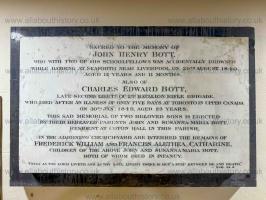
Memorial at St Werburgh's Church, Hanbury [Map] to John Henry Bott who, with two of his schoolfellows, drowned while bathing at Seaforth near Liverpool on 26th August 1840, and to 2nd Lieutenant Charles Edward Bott, died after an illness at Toronto, Canada, 30th January 1849. Both children of John and Susanna Maria Bott who resided at Coton Hall, Hanley. Also to their two children Frederick and Frances who died young.
The History of William Marshal was commissioned by his son shortly after William’s death in 1219 to celebrate the Marshal’s remarkable life; it is an authentic, contemporary voice. The manuscript was discovered in 1861 by French historian Paul Meyer. Meyer published the manuscript in its original Anglo-French in 1891 in two books. This book is a line by line translation of the first of Meyer’s books; lines 1-10152. Book 1 of the History begins in 1139 and ends in 1194. It describes the events of the Anarchy, the role of William’s father John, John’s marriages, William’s childhood, his role as a hostage at the siege of Newbury, his injury and imprisonment in Poitou where he met Eleanor of Aquitaine and his life as a knight errant. It continues with the accusation against him of an improper relationship with Margaret, wife of Henry the Young King, his exile, and return, the death of Henry the Young King, the rebellion of Richard, the future King Richard I, war with France, the death of King Henry II, and the capture of King Richard, and the rebellion of John, the future King John. It ends with the release of King Richard and the death of John Marshal.
Available at Amazon in eBook and Paperback format.
On 26th August 1850 King Louis Philippe I of France [aged 76] died.

Historic Avebury. 26th August 1939. Denis Grant King's Diary Pages 97 and 98.
Saturday, August 26th 1939
Beautiful sunny weather that must remind the older folk of August 1914. It is difficult to believe in the reality of the international crisis, or indeed that the human race lacks the intelligence and good will to compose its differences without recourse to war. Still, the forces which lead nations to war gather momentum in fair weather and in foul; and every intelligent person who has lived and observed events during the past twenty years would be unduly sanguine if he had not expected another holocaust sometime. The question is, when?
No doubt statesmen will try to put it off as long as possible, that is, as far as delay is consistent with imperial interests. Churchill suggested that the zero hour would occur in August.
Anyway, Alexander Keiller [aged 49] believes that war is imminent and has asked us all to continue work on Saturday afternoon to reveal the "Z arrangement" as much as possible, and complete the records, before the Government calls up all the men.
Another reminder of 1914 came in the person of Commander Gould, R.N., who fought at the Battle of Jutland. He was then on his to way to Bath to take up duties under the Admiralty and called in at the caravan, where Alexander Keiller introduced him to me. He is a six foot man, 18 stone, so he says, clean shaven and grey hair; also very friendly and talkative, giving an account of various talks he had broadcast from the B.B.C., mostly, I understood, of an informative character on a variety of topics.
His object in calling was to leave certain manuscripts of value to be deposited in the Museum, which he considered to be a place of comparative safety. L.V. Grinsell also sent us some of his MMS [manuscripts] for safe keeping.
After Commander Gould said good-bye, Alexander Keiller told me a little about him. It appears that after the War was over, his wife left him, and his distress affected him mentally, so much so that he lost his job and sank into very low water. He then spent ten years perfecting the Harrison chronometer and making it work (which apparently it never did before), for which service the government rewarded him with the paltry sum of £100. One should see his work in the Greenwich Naval Museum. A queer story. One would not have thought that such an immense robust fellow could have been so upset by a little bit of fluff; but that is life!"
On 26th August 1941 Richard Hanbury-Tracy 6th Baron Sudeley [aged 30] died at sea at Norway, on active service. His first cousin once removed Merlin [aged 2] succeeded 7th Baron Sudeley of Toddington in Gloucestershire.
On 26th August 1944 Richard Alexander Walter Windsor 2nd Duke Gloucester was born to Henry Windsor 1st Duke Gloucester [aged 44] and Alice Christabel Montagu-Douglas-Scott Duchess Gloucester [aged 42]. He a grandson of King George V of the United Kingdom.


On 26th August 1438 Ernest Wittelsbach was born to Albert Wittelsbach III Duke Bavaria [aged 37] and Anna Brunswick Grubenhagen Duchess Bavaria [aged 24].
On 26th August 1469 Ferdinand II King Naples was born to Alfonso II King Naples [aged 20] and Ippolita Maria Sforza [aged 23]. He married 1496 his aunt Joanna Trastámara Queen Consort Naples, daughter of Ferdinand I King Naples and Joanna of Aragon Queen Consort Naples.
On 26th August 1540 Magnus Oldenburg was born to Christian III King of Denmark [aged 37] and Dorothea of Saxe Lauenburg Queen Consort Denmark and Norway [aged 29]..
On 1st August 1584 Emanuel Scrope 1st Earl of Sunderland was born to Thomas Scrope 10th Baron Scrope of Bolton [aged 17] and Philadelphia Carey Baroness Scrope Bolton. He was baptised at St Dunstan's Church, Hunsdon on the 26th August 1584 with Queen Elizabeth I of England and Ireland [aged 50] as his Godmother.
On 26th August 1596 Frederick Palatinate Simmern V Elector Palatine Rhine was born to Frederick IV Elector Palatine [aged 22] and Electress Louise Juliana of the Palatine Rhine [aged 20]. He married 14th February 1613 his fourth cousin once removed Princess Elizabeth Stewart Queen Bohemia, daughter of King James I of England and Ireland and VI of Scotland and Anne of Denmark Queen Consort Scotland England and Ireland, and had issue.
On 26th August 1676 Robert Walpole 1st Earl Orford was born to Colonel Robert Walpole [aged 25] at Houghton, Norfolk. He married (1) 1700 Catherine Shorter and had issue (2) 3rd March 1738 Maria Skerritt and had issue.


On 26th August 1683 Henrietta Greville Lady Long was born to Fulke Greville 5th Baron Brooke [aged 40] and Sarah Dashwood Baroness Brooke [aged 37]. She married 6th June 1702 James Long 5th Baronet and had issue.
The Deeds of the Dukes of Normandy
The Gesta Normannorum Ducum [The Deeds of the Dukes of Normandy] is a landmark medieval chronicle tracing the rise and fall of the Norman dynasty from its early roots through the pivotal events surrounding the Norman Conquest of England. Originally penned in Latin by the monk William of Jumièges shortly before 1060 and later expanded at the behest of William the Conqueror, the work chronicles the deeds, politics, battles, and leadership of the Norman dukes, especially William’s own claim to the English throne. The narrative combines earlier historical sources with firsthand information and oral testimony to present an authoritative account of Normandy’s transformation from a Viking settlement into one of medieval Europe’s most powerful realms. William’s history emphasizes the legitimacy, military prowess, and governance of the Norman line, framing their expansion, including the conquest of England, as both divinely sanctioned and noble in purpose. Later chroniclers such as Orderic Vitalis and Robert of Torigni continued the history, extending the coverage into the 12th century, providing broader context on ducal rule and its impact. Today this classic work remains a foundational source for understanding Norman identity, medieval statesmanship, and the historical forces that reshaped England and Western Europe between 800AD and 1100AD.
Available at Amazon in eBook and Paperback format.
On 26th August 1699 Léopold Lorraine was born to Leopold Duke of Lorraine [aged 19] and Élisabeth Charlotte Bourbon Duchess Lorraine [aged 22]. He a great x 3 grandson of King James I of England and Ireland and VI of Scotland. He died aged less than one years old.
On 26th August 1723 George Carpenter 1st Earl Tyrconnel was born to George Carpenter 2nd Baron Carpenter [aged 28] and Elizabeth Petty Baroness Carpenter. He married March 1748 Frances Clifton Countess Tyrconnel, daughter of Robert Clifton 5th Baronet and Frances Coote Lady Clifton, and had issue.
On 26th August 1738 George Nassau Clavering-Cowper 3rd Earl Cowper was born to William Clavering-Cowper 2nd Earl Cowper [aged 29] and Henrietta Nassau 2nd Countess Cowper [aged 25]. He married 1775 Hannah Anna Gore 3rd Countess Cowper and had issue.


On 26th August 1745 Sophia Carteret Countess Shelburne was born to John Carteret 2nd Earl Granville [aged 55] and Sophia Fermor Countess Granville. She married 3rd February 1765 William Petty 1st Marquess Lansdowne, son of John Petty-Fitzmaurice 1st Earl Shelburne and Mary Fitzmaurice Countess Shelburne, and had issue.
On 26th August 1774 John Lubbock 2nd Baronet was born to William Lubbock [aged 28] and Anne Woodrow. He married 3rd August 1799 Mary Entwistle and had issue.
On 26th August 1797 Robert Sherard 6th Earl Harborough was born to Philip Sherard 5th Earl Harborough [aged 30]. He married 27th November 1843 Mary Eliza Temple Countess Harborough.
On 26th August 1819 Prince Albert Saxe Coburg Gotha was born to Ernest Saxe Coburg Gotha I Duke Saxe Coburg Gotha [aged 35] and Duchess Louise Dorothea of Saxe Coburg Altenburg [aged 18]. He married 10th February 1840 his first cousin Queen Victoria of the United Kingdom, daughter of Edward Augustus Hanover 1st Duke Kent and Strathearn and Marie Luise Victoria Saxe Coburg Gotha Duchess Kent and Strathearn, and had issue.
On 26th August 1827 Elizabeth Frances Milles was born to George John Milles 4th Baron Sondes of Lees Court [aged 33] and Eleanor Knatchbull.
On 26th August 1828 Archbishop William Plunket 4th Baron Plunket was born to John Span Plunket 3rd Baron Plunket [aged 35] and Charlotte Bushe. He married 11th June 1863 Anne Lee Guiness Baroness Plunket, daughter of Benjamin Lee Guiness 1st Baronet and Elizabeth Guiness, and had issue.
On 26th August 1836 Louisa Jane Hamilton Duchess Buccleuch and Queensbury was born to James Hamilton 1st Duke of Abercorn [aged 25] and Louisa Jane Russell Duchess Abercorn [aged 24]. She a great x 4 granddaughter of King Charles II of England Scotland and Ireland. She married 22nd November 1859 her fifth cousin William Scott 6th Duke Buccleuch 8th Duke Queensberry, son of Walter Scott 5th Duke Buccleuch 7th Duke Queensberry and Charlotte Anne Thynne Duchess Buccleuch Duchess Queensbury, and had issue.
On 26th August 1844 William Lewis Salusbury-Trelawny 10th Baronet was born to John Salusbury Salusbury-Trelawny 9th Baronet [aged 28] and Harriet Jane Tremayne Lady Salusbury-Trelawny [aged 23]. He married 14th July 1868 Jessy Rose Murray and had issue.
On 26th August 1850 Mary Anne Arkwright Lady Fitzherbert was born to Edward Arkwright and Charlotte Wilmot-Sitwell [aged 28]. She married 10th October 1871 Richard Fitzherbert 5th Baronet, son of William Fitzherbert 4th Baronet and Ann Alleyne Lady Fitzherbert, and had issue.
This is a translation of the 'Memoires of Jacques du Clercq', published in 1823 in two volumes, edited by Frederic, Baron de Reissenberg. In his introduction Reissenberg writes: 'Jacques du Clercq tells us that he was born in 1424, and that he was a licentiate in law and a counsellor to Philip the Good, Duke of Burgundy, in the castellany of Douai, Lille, and Orchies. It appears that he established his residence at Arras. In 1446, he married the daughter of Baldwin de la Lacherie, a gentleman who lived in Lille. We read in the fifth book of his Memoirs that his father, also named Jacques du Clercq, had married a lady of the Le Camelin family, from Compiègne. His ancestors, always attached to the counts of Flanders, had constantly served them, whether in their councils or in their armies.' The Memoires cover a period of nineteen years beginning in in 1448, ending in in 1467. It appears that the author had intended to extend the Memoirs beyond that date; no doubt illness or death prevented him from carrying out this plan. As Reissenberg writes the 'merit of this work lies in the simplicity of its narrative, in its tone of good faith, and in a certain air of frankness which naturally wins the reader’s confidence.' Du Clercq ranges from events of national and international importance, including events of the Wars of the Roses in England, to simple, everyday local events such as marriages, robberies, murders, trials and deaths, including that of his own father in Book 5; one of his last entries.
Available at Amazon in eBook and Paperback format.
On 26th August 1864 Evelyn Clementina Heathcote-Willoughby-Drummond Lady Ewart was born to Gilbert Henry Heathcote Drummond Willoughby 1st Earl Ancaster [aged 33] and Evelyn Elizabeth Gordon Countess Ancaster [aged 18]. She married 3rd November 1888 Major-General Peter Ewart 1st Baronet and had issue.
On 26th August 1883 Lionel Dawson-Damer 6th Earl of Portarlington was born to Lionel Dawson-Damer 5th Earl of Portarlington [aged 25] and Emma Kennedy Countess Portarlington [aged 21].
On 26th August 1898 Sylvia Mary Straker Baroness Barnard was born to Hubert Straker. She married 14th October 1920 Christopher Vane 10th Baron Barnard, son of Henry de Vere Vane 9th Baron Barnard and Catherine Sarah Cecil Baroness Barnard, and had issue.
On 26th August 1898 Hector Wroth Lethbridge 6th Baronet was born to Wroth Periam Christopher Lethbridge 5th Baronet [aged 34]. He married 13th April 1946 Evelyn Diana Noel Lady Lethbridge and had issue.

On 26th August 1915 Pamela Louisa Dillon Baroness Onslow was born to Brigadier Eric FitzGerald Dillon 19th Viscount Dillon [aged 34] and Nora Juanita Muriel Beckett Viscountess Dillon. She married 4th August 1936 William Onslow 6th Earl of Onslow, son of Richard William Alan Onslow 5th Earl Onslow and Violet Marcia Bampfylde Countess Onslow, and had issue.
On 26th August 1941 Shane Hugh Maryon Gough 5th Viscount Gough was born to Hugh Gough 4th Viscount Gough [aged 49].
On 26th August 1944 Richard Alexander Walter Windsor 2nd Duke Gloucester was born to Henry Windsor 1st Duke Gloucester [aged 44] and Alice Christabel Montagu-Douglas-Scott Duchess Gloucester [aged 42]. He a grandson of King George V of the United Kingdom.
On 26th August 1171 Richard "Strongbow" Clare 2nd Earl Pembroke [aged 41] and Aoife ni Diarmait Macmurrough Countess Pembroke and Buckingham [aged 26] were married in Reginald's Tower, Waterford, County Waterford. He the son of Gilbert de Clare 1st Earl Pembroke and Isabel Beaumont Countess Pembroke.
On 26th August 1630 Nicholas L'Estrange 1st Baronet [aged 26] and Anne Lewknor Lady Strange [aged 18] were married. She by marriage Lady Strange of Hunstanton in Norfolk.
On 26th August 1649 William Armine 2nd Baronet [aged 27] and Anne Crane [aged 18] were married.

On 26th August 1661 Philip Wharton 4th Baron Wharton [aged 48] and Ann Kerr Baroness Wharton [aged 38] were married. She by marriage Baroness Wharton.
On 26th August 1722 George Carpenter 2nd Baron Carpenter [aged 27] and Elizabeth Petty Baroness Carpenter were married at Leyton, Essex.
On 26th August 1746 William Irby 1st Baron Boston [aged 39] and Albania Selwyn Baroness Boston [aged 27] were married.
On 26th August 1799 John Barrow 1st Baronet [aged 35] and Anna Maria Truter Lady Barrow [aged 22] were married. They had four sons and two daughters.
Chronicle of Walter of Guisborough
A canon regular of the Augustinian Guisborough Priory, Yorkshire, formerly known as The Chronicle of Walter of Hemingburgh, describes the period from 1066 to 1346. Before 1274 the Chronicle is based on other works. Thereafter, the Chronicle is original, and a remarkable source for the events of the time. This book provides a translation of the Chronicle from that date. The Latin source for our translation is the 1849 work edited by Hans Claude Hamilton. Hamilton, in his preface, says: 'In the present work we behold perhaps one of the finest samples of our early chronicles, both as regards the value of the events recorded, and the correctness with which they are detailed; Nor will the pleasing style of composition be lightly passed over by those capable of seeing reflected from it the tokens of a vigorous and cultivated mind, and a favourable specimen of the learning and taste of the age in which it was framed.'
Available at Amazon in eBook and Paperback format.
On 26th August 1856 Percy Burrell 4th Baronet [aged 44] and Henrietta Katherine Brooke-Pechell were married at St George's Church, Hanover Square. There was no issue from the marriage.
On 26th August 1875 Thomas Coke 2nd Earl of Leicester [aged 52] and Georgina Caroline Cavendish Countess Leicester [aged 23] were married. She by marriage Countess of Leicester. The difference in their ages was 29 years. He the son of Thomas Coke 1st Earl of Leicester and Anne Amelia Keppel Countess Leicester.
On 26th August 1884 Herbert Lloyd Watkin Williams-Wynn 7th Baronet [aged 24] and Louisa Alexandra Williams-Wynn Lady Williams-Wynn [aged 19] were married. They divorced in 1898 having had three children. They were first cousins.
On 26th August 1273 Roger Somery 2nd Baron Dudley [aged 83] died at Dudley Castle [Map]. His son Roger [aged 18] succeeded 3rd Baron Dudley of Somery. Agnes Unknown Baroness Dudley by marriage Baroness Dudley of Somery.
On 26th August 1278 Ottokar "Iron King" II King Bohemia [aged 45] died. His son Wenceslaus [aged 6] succeeded II King Bohemia.
On 26th or 27th August 1285 Archbishop William de Wickwane died at Pontigny Abbey in Burgundy while on his way to the papal curia to plead his case against the monks of Durham. He was buried at the Cistercian abbey there in Pontigny; see Annals of Dunstable.
On 26th August 1308 Edmund Stafford 1st Baron Stafford [aged 36] died. His son Ralph [aged 6] succeeded 2nd Baron Stafford.
On 26th August 1346 the army of King Edward III of England [aged 33] defeated the French army at the Battle of Crécy. The English army was commanded by King Edward III of England, his son Edward "Black Prince" [aged 16], Thomas Beauchamp 11th Earl Warwick [aged 33], William Bohun 1st Earl of Northampton [aged 36] and John Beauchamp 1st Baron Beauchamp Warwick [aged 30].
The English army was included: Bishop Thomas of Hatfield [aged 36], Hugh Despencer 1st Baron Despencer [aged 38], Bernard Brocas [aged 16], Thomas Felton [aged 16], James Audley [aged 28], Robert Bourchier 1st Baron Bourchier, Bartholomew "The Elder" Burghesh 1st Baron Burghesh [aged 59], Bartholomew "The Younger" Burghesh 2nd Baron Burghesh [aged 18], Reginald Cobham 1st Baron Cobham [aged 51], John Darcy 1st Baron Darcy of Knayth [aged 66], Robert Ferrers 3rd Baron Ferrers of Chartley [aged 37], Richard Scrope 1st Baron Scrope of Bolton [aged 19], William Scrope [aged 21], Stephen Scrope [aged 21], William Latimer 4th Baron Latimer of Corby [aged 16], John Lisle 2nd Baron Lisle [aged 28], Gerard Lisle 1st Baron Lisle [aged 42], Nicholas Longford [aged 61], Edward Montagu 1st Baron Montagu, Walter Paveley 4th Baron Burghesh [aged 27], Michael Poynings 1st Baron Poynings [aged 28], Robert Ufford 1st Earl Suffolk [aged 48], John de Vere 7th Earl of Oxford [aged 34], Thomas West [aged 34], John Willoughby 2nd Baron Willoughby [aged 43], John Wingfield [aged 26], Henry Percy 11th and 3rd Baron Percy [aged 25], Hugh Courtenay 2nd or 10th Earl Devon [aged 43] (possibly), Walter "Elder" Devereux [aged 37], John Devereux [aged 44], Enion Sais Brecon, John Chandos [aged 26], Richard Pembridge [aged 26] and John Sully [aged 63].
The French army suffered significant casualties. King Philip "Fortunate" VI of France [aged 52] was wounded. William de Coucy [aged 60] and his son Enguerrand 6th Lord de Coucy [aged 33] and were killed.
Charles II Count Alençon [aged 49] was killed. His son Charles [aged 9] succeeded Count Alençon.
Louis Chatillon II Count Blois I Count Chatillon was killed. His son Louis succeeded III Count Blois.
Louis Dampierre II Count Nevers I Count Flanders [aged 42] was killed. His son Louis [aged 15] succeeded III Count Nevers, II Count Flanders.
King John I of Bohemia [aged 50] was killed. His son Charles [aged 30] succeeded IV King Bohemia, Holy Roman Emperor Luxemburg. Blanche Valois Holy Roman Empress Luxemburg [aged 29] by marriage Holy Roman Empress Luxemburg.
Rudolph "Valiant" Metz I Duke Lorraine [aged 26] was killed. His son John succeeded I Duke Lorraine.
Jean IV de Harcourt [aged 39] was killed.
On 26th August 1349 Archbishop Thomas Bradwardine [aged 49] died of plague.
On 26th August 1382 Roger Strange 5th Baron Strange Knockin [aged 56] died. His son John [aged 31] succeeded 6th Baron Strange Knockin.
On 26th August 1421 Eudo Welles [aged 34] died at Welles, Grimsby. His son Lionel [aged 15] succeeded 6th Baron Welles.
On 26th August 1421 John Welles 5th Baron Welles [aged 69] died at Welles, Grimsby.
On 26th August 1466 Maud Clifford Countess Cambridge [aged 77] died.

Anne Boleyn. Her Life as told by Lancelot de Carle's 1536 Letter.
In 1536, two weeks after the execution of Anne Boleyn, her brother George and four others, Lancelot du Carle, wrote an extraordinary letter that described Anne's life, and her trial and execution, to which he was a witness. This book presents a new translation of that letter, with additional material from other contemporary sources such as Letters, Hall's and Wriothesley's Chronicles, the pamphlets of Wynkyn the Worde, the Memorial of George Constantyne, the Portuguese Letter and the Baga de Secrets, all of which are provided in Appendices.
Available at Amazon in eBook and Paperback format.

On 26th August 1539 Piers "Red" Butler 8th Earl Ormonde 1st Earl Ossory [aged 72] died. His son James [aged 38] succeeded 9th Earl Ormonde, 2nd Earl Ossory. Joan Fitzgerald Countess Ormonde and Ossory [aged 30] by marriage Countess Ormonde, Countess Ossory.
On 26th August 1601 James Douglas 5th Earl Buchan [aged 21] died. His daughter Mary succeeded 6th Countess Buchan.
On 26th August 1632 Marion Boyd Countess Abercorn [aged 49] died.
On 26th August 1663 John Yonge 1st Baronet [aged 59] died. His son Walter [aged 38] succeeded 2nd Baronet Yonge of Colyton in Devon.
On 26th August 1678 John Berkeley 1st Baron Berkeley [aged 76] died. His son Charles succeeded 2nd Baron Berkeley of Stratton in Cornwall.
On 26th August 1691 Henry Belasyse 2nd Baron Belasyse [aged 24] died. Baron Belasyse of Worlaby in Lincolnshire extinct.
On 26th August 1712 Bishop Edward Fowler [aged 80] died.
On 26th August 1728 Anne Marie Bourbon Queen Consort Sardinia [aged 58] died.
On 26th August 1740 Charles Knollys 4th Earl Banbury [aged 78] died at Dunkirk. His son Charles [aged 37] de jure 5th Earl Banbury, 5th Viscount Wallingford, 5th Baron Knollys.
On 26th August 1754 Charles Powlett 3rd Duke Bolton [aged 68] died. His brother Harry [aged 63] succeeded 4th Duke Bolton, 9th Marquess Winchester, 9th Earl Wiltshire, 9th Baron St John.
On 26th August 1762 John Fane 7th Earl of Westmoreland [aged 77] died without issue. Baron Despencer, Baron Abergavenny, Baron Abergavenny, Baron Burghesh in Suffolk abeyant. His second cousin once removed Thomas [aged 61] succeeded 8th Earl of Westmoreland. Elizabeth Swymmer Countess Westmoreland by marriage Countess of Westmoreland.
This is a translation of the 'Memoires of Jacques du Clercq', published in 1823 in two volumes, edited by Frederic, Baron de Reissenberg. In his introduction Reissenberg writes: 'Jacques du Clercq tells us that he was born in 1424, and that he was a licentiate in law and a counsellor to Philip the Good, Duke of Burgundy, in the castellany of Douai, Lille, and Orchies. It appears that he established his residence at Arras. In 1446, he married the daughter of Baldwin de la Lacherie, a gentleman who lived in Lille. We read in the fifth book of his Memoirs that his father, also named Jacques du Clercq, had married a lady of the Le Camelin family, from Compiègne. His ancestors, always attached to the counts of Flanders, had constantly served them, whether in their councils or in their armies.' The Memoires cover a period of nineteen years beginning in in 1448, ending in in 1467. It appears that the author had intended to extend the Memoirs beyond that date; no doubt illness or death prevented him from carrying out this plan. As Reissenberg writes the 'merit of this work lies in the simplicity of its narrative, in its tone of good faith, and in a certain air of frankness which naturally wins the reader’s confidence.' Du Clercq ranges from events of national and international importance, including events of the Wars of the Roses in England, to simple, everyday local events such as marriages, robberies, murders, trials and deaths, including that of his own father in Book 5; one of his last entries.
Available at Amazon in eBook and Paperback format.
On 26th August 1785 George Sackville aka Germain 1st Viscount Sackville [aged 69] died. His son Charles [aged 17] succeeded 2nd Viscount Sackville of Drayton in Sussex and 2nd Baron Bolebrooke in Sussex.
On 26th August 1788 Elizabeth Chudleigh Duchess Kingston upon Hull [aged 67] died. Her estates, and those of her former husband Evelyn Pierrepont 2nd Duke Kingston upon Hull, passed to his sister Frances' [aged 75] son Charles Medows aka Pierrepont 1st Earl Manvers [aged 50].
On 26th August 1791 Robert Clifton Gerard 10th Baronet [aged 19] died. His brother William [aged 18] succeeded 11th Baronet Gerard of Bryn in Lancashire.
On 26th August 1808 Bishop James Yorke [aged 78] died.
On 26th August 1809 Andrew Thomas Stewart 1st Earl Castle Stewart [aged 83] died. His son Robert [aged 25] succeeded 2nd Earl Castle Stewart in Tyrone, 2nd Viscount Castle Stewart in Tyrone, 10th Baron Castle Stuart of County Tyrone.
On 26th August 1819 George Amyand aka Cornewall 2nd Baronet [aged 70] died. His son George [aged 45] succeeded 3rd Baronet Amyand aka Cornewall of Moccas Court in Herefordshire. Jane Naper Lady Cornewall by marriage Lady Amyand aka Cornewall of Moccas Court in Herefordshire.
On 26th August 1828 Susan Gordon Duchess Manchester died.
On 26th August 1833 Harriet Douglas Countess Aberdeen [aged 41] died.
On 26th August 1844 Charles Watson 1st Baronet [aged 93] died. His son Charles [aged 44] succeeded 2nd Baronet Watson of Fulmer in Buckinghamshire. Jemima Colleton Lady Watson [aged 36] by marriage Lady Watson of Fulmer in Buckinghamshire.
On 26th August 1850 King Louis Philippe I of France [aged 76] died.
William of Worcester's Chronicle of England
William of Worcester, born around 1415, and died around 1482 was secretary to John Fastolf, the renowned soldier of the Hundred Years War, during which time he collected documents, letters, and wrote a record of events. Following their return to England in 1440 William was witness to major events. Twice in his chronicle he uses the first person: 1. when writing about the murder of Thomas, 7th Baron Scales, in 1460, he writes '… and I saw him lying naked in the cemetery near the porch of the church of St. Mary Overie in Southwark …' and 2. describing King Edward IV's entry into London in 1461 he writes '… proclaimed that all the people themselves were to recognize and acknowledge Edward as king. I was present and heard this, and immediately went down with them into the city'. William’s Chronicle is rich in detail. It is the source of much information about the Wars of the Roses, including the term 'Diabolical Marriage' to describe the marriage of Queen Elizabeth Woodville’s brother John’s marriage to Katherine, Dowager Duchess of Norfolk, he aged twenty, she sixty-five or more, and the story about a paper crown being placed in mockery on the severed head of Richard, 3rd Duke of York.
Available at Amazon in eBook and Paperback format.
On 26th August 1870 Almeric Drummond Willoughby 23rd Baron Willoughby 3rd Baron Gwydyr [aged 49] died. He was buried at Church of St Michael and All Angels, Edenham [Map]. His sister Clementina [aged 60] succeeded 24th Baroness Willoughby de Eresby. Gilbert John Heathcote 1st Baron Aveland by marriage Baron Willoughby de Eresby. His first cousin Peter [aged 60] succeeded 4th Baron Gwydyr of Cwydyr in Carnarfonshire.
On 26th August 1887 Francis Somerville Head 2nd Baronet [aged 70] died. His son Robert [aged 42] succeeded 3rd Baronet Head of Rochester in Kent.
On 26th August 1903 Frances Paget Marchioness Ormonde [aged 86] died.
On 26th August 1906 Margaret Jean Trevelyan Lady Holland [aged 70] died.
On 26th August 1911 Harry Yelverton Goring 11th Baronet [aged 71] died. His son Forster [aged 35] succeeded 12th Baronet Bowyer aka Goring of Highden in Sussex.
On 26th August 1912 Edmund Reginald Talbot de la Pole 10th Baronet [aged 68] died. His brother Frederick [aged 51] succeeded 11th Baronet Pole of Shute House in Devon.
On 26th August 1914 Edith Hargreaves Viscountess Exmouth [aged 54] died.
On 26th August 1933 Maurice Levy 1st Baronet died. His son Ewart [aged 36] succeeded 2nd Baronet Levy of Humberstone Hall in Leicestershire.
On 26th August 1941 Richard Hanbury-Tracy 6th Baron Sudeley [aged 30] died at sea at Norway, on active service. His first cousin once removed Merlin [aged 2] succeeded 7th Baron Sudeley of Toddington in Gloucestershire.
On 26th August 1953 Edward Manners Nightingale 14th Baronet [aged 64] died. His third cousin Geoffrey [aged 48] succeeded 15th Baronet Nightingale of Newport Pond in Essex.
The Deeds of the Dukes of Normandy
The Gesta Normannorum Ducum [The Deeds of the Dukes of Normandy] is a landmark medieval chronicle tracing the rise and fall of the Norman dynasty from its early roots through the pivotal events surrounding the Norman Conquest of England. Originally penned in Latin by the monk William of Jumièges shortly before 1060 and later expanded at the behest of William the Conqueror, the work chronicles the deeds, politics, battles, and leadership of the Norman dukes, especially William’s own claim to the English throne. The narrative combines earlier historical sources with firsthand information and oral testimony to present an authoritative account of Normandy’s transformation from a Viking settlement into one of medieval Europe’s most powerful realms. William’s history emphasizes the legitimacy, military prowess, and governance of the Norman line, framing their expansion, including the conquest of England, as both divinely sanctioned and noble in purpose. Later chroniclers such as Orderic Vitalis and Robert of Torigni continued the history, extending the coverage into the 12th century, providing broader context on ducal rule and its impact. Today this classic work remains a foundational source for understanding Norman identity, medieval statesmanship, and the historical forces that reshaped England and Western Europe between 800AD and 1100AD.
Available at Amazon in eBook and Paperback format.
On 26th August 1965 Rachel Beatrice Lyttelton Lady Riddell [aged 73] died.
On 26th August 1975 George Fitz-Clarence 5th Earl Munster [aged 69] died. His second cousin Edward [aged 75] succeeded 6th Earl Munster, 6th Viscount Fitzclarence, 6th Baron Tewkesbury.