

27 Apr is in April.
 Annals of Six Kings of England by Nicholas Trivet. On the sixth of March [1186], near Gisors, the matters in dispute between the king of France and the count of Flanders concerning the whole holding of Ralph, formerly count of Vermandois, were brought to peace and agreement. Likewise, the dispute which had arisen between the king of England and Margaret, widow of his son the king, both concerning her dowry and the marriage settlement, was brought to an end by an amicable settlement. The king of England, crossing to England together with the queen, landed at the port of Hampton on the fifth day before the Kalends of May [27th April]. William de Vere, a man noble by birth, was consecrated bishop of Hereford on the feast of Saint Lawrence. William of Northall, archdeacon of Worcester, became bishop of the same church.
Sexto Martii juxta Gisortium redacta sunt ad pacem et concordiam, quæ vertebantur inter regem Francorum et comitem Flandriæ, de toto tenemento Radulphi quondam comitis Viromandorum. Quinetiam quæstio, quæ mota fuerat inter regem Anglorum et Margaretam relictam filii sui regis, tam super dote sua quam super donatione propter nuptias, amicabili compositione finem accepit. Rex Anglorum, una cum regina, in Angliam transiens, in portu Hamtonæ applicuit quinto cal. Maii. Willelmus de Veer, vir nobilis genere, consecratus est in die S. Laurentii in episcopum Herefordensem. Willelmus de Norhalla, archidiaconus Wigorniæ, fit ejusdem ecclesiæ episcopus.
On 27th April 1296 Battle of Dunbar was fought between John Warenne 6th Earl of Surrey [aged 65] and King John Balliol I of Scotland [aged 47], his son in law. John Strathbogie 9th Earl Atholl [aged 30] and John Comyn 3rd Earl Buchan were captured.
Patrick de Graham Lord of Kincardine -1296 was killed.
Annals of Six Kings of England by Nicholas Trivet. The king, having heard this letter, accepted the renunciation of his homage, and commanded his chancellor to have this letter enrolled, for the perpetual memory of the matter. The earls of Scotland above named, with their retinues assembled at the castle of Jedburgh, set out into England, and, laying waste all things with slaughter and fire, as far as the priory of Hexham, entered it on the fourth day before the Ides of April [10th April 1296], the canons having fled. In the morning, however, they destroyed the priory and the whole town by fire. From there they advanced to the house of the nuns of Lambley, and, some buildings having been burned, the church being spared, they returned into Scotland with great spoil. Patrick, Earl of Dunbar, coming to the King of England, submitted himself to him with all his power. The castle of Dunbar, besieged by the Scots on the feast of Saint Michael1 [25th April 1296], was, through the treachery of certain persons within it, surrendered to them, for the recovery of which the king sent John, Earl of Surrey, and William, Earl of Warwick, with a very large force of knights. When the army of the Scots came upon them, in order to bring aid to those besieged, a hard battle was fought [on Friday 27th April 1296], and at length the Scots fleeing, the English pursued them for nearly eight miles, as far as the forest of Selkirk, inflicting great slaughter, so that the number of those slain was estimated at ten thousand men. On the following Saturday [28th April 1296], namely the eighteenth day before the Kalends of May2, the castle was surrendered to the king upon his arrival, in which were captured three earls, of Menteith, of Atholl, and of Ross, and six barons, namely John Comyn the younger, William de St Clair, Richard Siward the elder, John of Inchmartin, Alexander of Moray, Edmund Comyn of Kilbride, together with twenty-nine other knights, two clerks, and eighty-three squires, whom the king sent to various castles of England to be held in custody.
Rex audita hac littera resignationem homagii sui admisit, et cancellario suo præcepit hanc litteram registrari, ad perpetuam memoriam rei gestæ. Comites Scotiæ superius nominati, cum eorum comitiva, apud castrum de Gedeworthe coadunati, profecti sunt in Angliam; et vastantes omnia cæde et incendio, usque ad prioratum Haugustuldensem, et in eodem, fugientibus canonicis, se quarto idus Aprilis receperunt. Mane vero facto, prioratum cum tota villa incendio destruxere. Progressi inde ad domum monialium de Lamelay, domibusque quibusdam salva ecclesia incensis, cum ingenti præda in Scotiam revertuntur. Patricius, comes de Dunbar, ad regem Angliæ veniens, se eidem cum tota sua subdidit potestate. Castrum de Dunbar in festo S. Michaelis obsessum a Scotis, fraude quorumdam in eo existentium redditum est eisdem: pro quo recuperando misit rex Joannem Surreiæ et Willeimum Warewici comites, cum militia magna valde. Quibus superveniens Scotorum exercitus, ut obsessis ferret auxilium, excipitur pugna dura: fugientibus tandem Scotis insequuntur Anglici per octo milliaria fere, usque ad forestam de Selelark, stragem nimiam ingerentes; ita ut cæsorum numerus ad decem millia hominum fuerit æstimatus. Sabbato sequente, videlicet decimo octavo calendas Maii, regi advenienti redditum est castrum, in quo capti sunt comites tres, de Meneteth, de Asceles et de Ros; barones sex, videlicet Joannes Comin junior, Willeimus de Sancto Claro, Ricardus Siwardi senior, Joannes Hincmartino, Alexander de Muravia, Eadmundus Comin de Kilbrid, cum aliis militibus viginti novem, clericis duobus, et scutiferis octoginta tribus, quos ad diversa castra Angliæ misit rex in custodia detinendos.
Note 1. The author writes St Michael, whose Feast Day is the 29th September. This appears to be a mistake for the Feast Day of St Mark, the 25th April. The date of the 25th is consistent with the Lanercost Chronicle: 'In accordance with this plan, on the eleventh of the kalends of May [21st April 1296] the Earl of Mar and others came before Dunbar with the chosen candidates for knighthood, intending to have that fortress as a base. After they had plundered the neighbourhood and burnt the town, they laid siege to the castle. Now as there was no proper garrison in the place, the countess, with her slender household and the earl's brother, defended it for two days. But the enemy, pretending that the earl was a traitor through his having joined the cause of the King of England in order to keep faith, persuaded the lady to surrender honourably; and so, at dawn of the fourth day [25th April 1296] they entered the castle...'
Note 2. The author here is incorrect. The 'following Saturday' is the 28th April 1296, the fourth day before the Kalends of May.
Scalaronica. The Earl of March, Patrick-with-the-Black-Beard, who alone of all the lords of Scotland had remained obedient to the King of England, and was with the King at the taking of Berwick, came to announce to the King that his wife had received into his castle of Dunbar her kinsmen, enemies of Scotland, who had imprisoned his officers and held the castle against him. He therefore asked assistance from the King, and wished to set out that very night. The King gave him the Earls of Warren and Warwick, with great supplies by sea and land, so that before sunrise next day he [March] had laid siege to the castle of Dunbar.
The lords of Scotland who were assembled, hearing of the siege, marched by night upon the place and came in the morning to Spott, between which place and Dunbar they gave battle to the said English besiegers, when the Scots were defeated [in] the first battle of this war [on 27th April 1296]. There were taken prisoners in the castle the Earls of Menteith, Athol and Ross, and seven barons — John Comyn the younger, William de Saint Clare, Richard Syward the elder, John of Inchmartin, Alexander de Moray, Edmund Comyn of Kilbride, with nine and twenty knights, eighty esquires, who were all sent to prisons in different parts of MS. England.
Lanercost Chronicle. Howbeit, forasmuch as the truth ever remains invincible, although the uneasy conscience will always imagine dire events, when they perceived the flower of their youth and the main part of their army confined within the walls, they determined to put an end to the siege by a sudden assault and so to unite the relieved garrison with their own forces. Therefore on the fifth of the kalends of May [27th April 1296], at the ninth hour of Friday (which thus a second time proved unlucky for them) when the Earl of Warenne and barely a fifth part of the King's army were preparing to go to bed, they showed themselves boldly on the brow of a steep hill, provoking their enemy to combat. And although their columns were in close order and strong in numbers, before it was possible to come to close quarters [with them], they broke up and scattered more swiftly than smoke, the fiercest of them being first in flight. Yet their foot-soldiers would have stood firm had not the knights showed their heels so readily ; and because victory consisteth not in the multitude of a host, but cometh from Heaven, thou mayest discern in that conflict what the Lord promised to his chosen people — 'They come,' said He, 'against thee by one way, and they flee in ten ways.'
In this manner there were slain not less than ten thousand rebels, and several tonsured [priests] were found among the dead ; yet upon the English side, not one man fell, except a single foolhardy knight. It is evident that the Supreme Truth, who said that He had come into the world to set a man against his own father, decided the issue of this combat, which was waged against the truth ; for there you might see in the same people a son bearing arms against his father, and a brother putting his neighbour to the sword.
After this, justice was directed against the besieged. For they had lighted on the tower of the castle a signal beacon, informing the relieving force when they might surprise [the enemy] and at what moment they should deliver the assault. Therefore some [of the English] having been set to work with a will to dig mines, others to throw up earthworks from which they could forcibly breach the castle wall, the garrison fell into a panic, and straightway surrendered on the morrow to the royal will. There were captured there and sent into captivity in divers parts of England, among the nobility, four earls — Mar, Menteith, Atholl and Ross, besides six score and fourteen others, among whom there were several barons, twenty knights, and eighty esquires. Also, three hundred foot-soldiers were taken there whom the King had no wish to detain, but set them free after receiving their parole also he granted them safe conduct to whatever place outside the neighbourhood of the camps they would go to, which greatly contributed to the credit of his clemency, even from the lips of his enemies.
John of Fordun's Chronicle. 92. Battle of Dunbar.
On the 27th of April, in the same year [1296], was fought the battle of Dunbar, where Patrick of Graham and many nobles fell wounded; while a great many other knights and barons, in the hope of saving their lives, fled to Dunbar Castle, and were there readily welcomed. But they were all — to the number of seventy knights, besides famous squires, together with William, Earl of Ross — made over, like sheep offered to the slaughter, by Richard Seward, warden of the said castle, to the king of England.
Langtoft's Chronicle. The messenger went to the army of low people,
It began to arrange itself in order of battle. Sir Richard Siward, who gave the advice,
Comes to our English, and says, "If God protect me,
I see people coming with very great appearance,
As though they intended to give battle, with innumerable foot,
I go, if you approve it, to put an impediment among them,
That they come no nearer;" ours say "Care not,"
And take Siward that he may go there no further;
They place keepers upon gate and upon wall.
Humphrey de Bohun the young has the ward in charge
That aid from the castle attack them not in the rear;
And they mount their steeds, spur them to the hill;
And he who can go quickest, springs before the others.
The Scots see them come, turn tail upon them like as a quail
In fleeing away flies before the wind like straw does.
The English after chace them like sheep
Which flies when it sees the wolf come out of the bush.
The presumptious Scot believes that he is worth more than
The duke sir Corineus who conquered Cornwall.
Of so many armed men it was very great wonder
That not one of them is worth a farthing in deed,
Except Patrick de Graham, who remains and fights
With the furbished sword, but he is slain without fail.
Ten thousand and fifty - four are killed in the engage- ment;
They are all of Scotland, the number is by count.
These were the chieftains who slaughtered the cattle Through
Northumberland, they left the entrails to the dogs;
They were excommunicated by book and candle,
Because to holy church, to priest nor clergy,
Did they show mercy more than to oven or barn;
Sin has driven them to such a result,
That they have lost in the field their heads with the ears.
The foot folk
Put the Scots in the poke,
And bared their buttocks.
By way
Never heard I say
Of readier boys,
To rob
The robes of the rich
That fell in the field.
They took of each man;
May the rough ragged fiend
Tear them in hell!
Of battle or combat was never recorded
That so many people were so soon slain,
Nor thus without resistance turned their backs;
Ravens have their corpses, their souls to the fiends
Of all those who have thus conducted wars!
For on that side was never once,
Within town or without, a good deed shown,
But only to sneak about and plunder the towns,
Burn holy church, slay the clergy.
May that God be praised who at Dunbar has avenged it!
The earls who had committed the offences,
As soon as they knew and were informed
Of the discomfiture upon their kindred,
They have delivered up the castle to the English when they come back
And without conditions obliged. themselves
To the king sir Edward to be at his will.
The king came there next day with his barons,
The prisoners who are taken are presented to him,
Three earls, three barons, three bannerets of name,
Besides them twenty-eight knights addubbed,
With five score gentlemen who are found there;
Two clerks and two Pikards are numbered among them.
The earls are sent to the Tower of London,
Some of the barons are associated with them;
And the others sent to different castles
By two and two together mounted on a hackney,
Some in carts, with fetters on the feet.
In such a style of dance their game is ended;
Throughout England in all the countries
There will be for ever talk of their presumption,
Their deed has turned them to mockery as long as the world shall last.
For the Scots
I reckon for fools,
And wretches unwary;
Want of luck
In dealing blows
Drew them to Dunbar.
 Chronicle of Walter of Guisborough. When this was reported to our king, he immediately dispatched a strong force under the command of the Earl of Warenne [aged 65]: one thousand mounted knights and ten thousand foot soldiers. The Bishop of Durham [aged 51] also sent one hundred armoured men from his own army. They besieged the castle for a few days, and both sides exchanged volleys of missiles and engaged in skirmishes. The new occupants of the castle, now alarmed, requested a truce of three days so that they might send for their king, under the condition that if he did not arrive or assist them, they would surrender the castle. This was granted, and messengers were sent. Then, on the third day, which was a Friday [27th April 1296], three weeks after the capture of Berwick, a large army arrived, sent by the King of Scots: fifteen hundred cavalry and forty thousand foot soldiers, descending the slope of the hill opposite Dunbar, arranged for battle in their squadrons. When the new defenders within the castle saw this force, they rejoiced at the sight and immediately raised their banners on the battlements, shouting insults at our troops, calling them 'tailed dogs' and other abusive names, and threatening them with death and the cutting off of their 'tails.'
Then the Earl of Warenne, having assigned the sons of the nobles who were with him, along with some armed men, to maintain the siege of the castle and prevent the enemy from escaping, boldly advanced with the rest of the army toward the enemy. As our army descended into the valley and spread out in every direction, so as to better and more efficiently approach the Scots, the Scots mistakenly believed that our forces were in retreat and turning their backs in flight. They shouted loudly for their destruction, blowing their horns and howling with such ferocity that the terrifying sound seemed to penetrate like the horns of hell resounding from the abyss. But finally, as our men climbed up out of the deep valley and rushed to engage, the Scots were quickly thrown into confusion. The lines on both sides were drawn, and without delay they clashed fiercely, charging with lances and swords. And, as it pleased the Most High, almost at the first blows, the Scots turned and fled, and our men pursued them, cutting them down and slaughtering them over a distance of seven or eight leagues, nearly as far as the forest of Selkirk. About ten thousand Scots fell in the rout. Among them was a most valiant knight, Patrick de Graham by name, a man considered first among the wise of that kingdom and noblest among the powerful. Unwilling to diminish the glory of his reputation, he did not turn his face in flight, but fought bravely until the end, and was finally killed there. Once the spoils were gathered and our men had returned to the siege lines around the castle, the enemy's banners, which earlier had been raised proudly, were now lowered. They had been thrown into confusion and fear upon seeing their comrades flee and fall in battle.
Quod cum esset regi nostro nunciatum, confestim robur exercitus misit ibidem cum comite de Warenna, mille scilicet armatos equites, et peditum decem millia. De exercitu etiam Dunolmensis episcopi centum armati mittebantur. Qui cum obsedissent castrum, paucis tamen diebus, et mutuis se telis et insultibus visitassent, novi castrenses attoniti, rogaverunt ut concesso triduo liceret eis regem suum expetere, sub qua conditione se dare deberent et castrum reddere. Quo concesso, et missis nunciis, ecce die tertio, qui erat dies Veneris, a captura de Berewyk in tres ebdomadas, venit exercitus multus a rege Scotorum missus, mille quingenti equitantium et XL millia peditum, per clivum montis descendens ex opposito de Dunbar, præparatus ad bellum per turmas suas. Quod cum vidissent novi castrenses, et ex visione tali jam læti effecti, mox eorum vexilla in propugnaculis castri erexerunt, clamantes ad nostros et eos probrose vocantes canes caudatos et talia quæque, insuper comminantes in mortem et caudarum abscisionem.
Tunc comes de Warenna, assignatis pueris magnatum qui cum eo erant cum quibusdam armatis ad obsidionem castri continuandam ne hostes exirent, ipse cum exercitu residuo animose processit ad hostes. Cumque noster exercitus in vallem descendendo et transeundo circumquaque se diffunderet, ut sic facilius meliusque properaret mutuo congressui, credebant Scoti nostros in hoc fugam inire et terga vertere, et conclamabant in mortem eorum, insufflantes cornibus et resonantes ululatibus in tantum quod terribilis sonitus cornuum inferni quasi profunda penetravit. Sed tandem ascendentibus nostris ex valle profunda, et ad congrediendum festinantibus, confestim et ipsi conloss by the ticuerunt, directisque hinc et inde aciebus, absque ulla dilatione mutuo congressi sunt, lanceis et gladiis vicissim occurrentes, et, ut placuit Altissimo, mox quasi in primis ictibus terga verterunt Scoti, et insequebantur nostri cædentes et trucidantes quasi spatio VII leucarum vel octo, fere usque ad Forestam de Selekyrk, cecideruntque ex eis circiter decem millia. Unus autem ex eis miles strenuissimus, nomine Patricius de Graham, inter sapientiores regni illius quasi primus et inter potentiores nobilissimus, cum gloriam suæ laudis minuere nollet, faciem non avertit, sed viriliter agens usque ad mortem, in fine tandem corruit interfectus ibidem. Collectis demum spoliis, et revertentibus nostris ad obsidionem castrensium, ecce deponebantur vexilla quæ contra ruinam eorum prius elevabantur in altum. Confusi enim fuerant et conterriti cum suos et terga vertere et partem corruisse vidissent.
On 27th April 1404 Philip "Bold" Valois II Duke Burgundy [aged 62] died. His son John [aged 32] succeeded Duke Burgundy. Otto Wittelsbach I Duke Bavaria 1117-1183 [aged 41] by marriage Duchess Burgundy.
Adam Murimuth's Continuation and Robert of Avesbury’s 'The Wonderful Deeds of King Edward III'
This volume brings together two of the most important contemporary chronicles for the reign of Edward III and the opening phases of the Hundred Years’ War. Written in Latin by English clerical observers, these texts provide a vivid and authoritative window into the political, diplomatic, and military history of fourteenth-century England and its continental ambitions. Adam Murimuth Continuatio's Chronicarum continues an earlier chronicle into the mid-fourteenth century, offering concise but valuable notices on royal policy, foreign relations, and ecclesiastical affairs. Its annalistic structure makes it especially useful for establishing chronology and tracing the development of events year by year. Complementing it, Robert of Avesbury’s De gestis mirabilibus regis Edwardi tertii is a rich documentary chronicle preserving letters, treaties, and official records alongside narrative passages. It is an indispensable source for understanding Edward III’s claim to the French crown, the conduct of war, and the mechanisms of medieval diplomacy. Together, these works offer scholars, students, and enthusiasts a reliable and unembellished account of a transformative period in English and European history. Essential for anyone interested in medieval chronicles, the Hundred Years’ War, or the reign of Edward III.
Available at Amazon in eBook and Paperback format.
Patent Rolls. 27th April 1459. Westminster. Grant for life to the king's uterine brother, Jasper, earl of Pembroke [aged 27], that he be quit of all fines for charters, letters patent and other writs in Chancery and other courts, and of all fees of the seal therefor in the hanaper of Chancery. so that the keeper thereof and other officers take nothing from him therefor. By K. etc.
Letters and Papers Foreign and Domestic Henry VIII 1533. 27th April 1533. Vienna Archives. 391. Chapuys [aged 43] to Charles V.
This feast of Easter the prior of the Augustines1 in his sermon recommended the people expressly to pray for queen Anne [aged 32]; at which they were astonished and scandalized, and almost every one took his departure with great murmuring and ill looks, without waiting for the rest of the sermon. The King was greatly displeased, and sent word to the Mayor that on dread of his displeasure he should take order that nothing of the kind happened again, and that no one should be so bold as to murmur at his marriage. The Mayor hereupon assembled the trades and their officers of the several halls, and commanded them, on pain of the King's indignation, not to murmur at his marriage, and to prevent their apprentices from so doing, and, what is worse and more difficult, their wives. The King in vain forbids and makes prohibitions, as it only makes the people speak more against it in private, and these prohibitions only serve to envenom the heart of the people. Four days ago the King sent to the Queen to forbid her and her servants from using the title of Queen; and, not content with this harshness, he has forbidden the Princess either to write or send any message to the Queen; and though the Princess begged of him to depute an express messenger who might testify that she sent no message to the Queen except of how she did, or who might first show the King all the letters that passed between them, she could not obtain this. This prohibition was sent to her the same day that the King sent to her to inform her of his new marriage; at which she was a little sad, and then, like a wise woman as she is, she dissembled the matter, showing herself glad; and without saying a single word of the marriage, suddenly after she had dined, without communicating her intentions to any one, she sat down to write a letter to the King; and when those who brought the news were urgent for a verbal answer, according to their commission, she would not say a single word to them, referring them to her letter; at which I hear the King is well satisfied, and praises highly her prudence. Notwithstanding the execution of this project, the King resolved to go on with the process, and the Queen has been cited to appear before the archbishop of Canterbury on the first of next month, at an abbey 30 miles from here. This being a solitary place has been chosen for secrecy, as they fear that if the affair were managed here, the people would not refrain from speaking of it, and perhaps from rioting. The citation at first threw the Queen into great perplexity, not knowing what to do; but after I had given her my advice she did not care for it. There is no danger for the Queen in anything they can do, if she does not renounce her appeal, expressly or tacitly, and by some indirect means, which the King and his ministers are attempting by various methods. To remedy this I have drawn up certain protestations, whereby I hope that the Queen will not fall into the net of their calumnies and malice.
Note 1. George Browne, D.D.


Letters and Papers Foreign and Domestic Henry VIII 1533. 27th April 1533. 391. Preparations are making for the coronation of the Lady, which will exceed in sumptuousness all previous ones. It is said that it will take place on Ascension Day. The said Lady [aged 32] will be bravely crowned, seeing she has all the Queen's jewels, with which she adorns herself every day; and it seems a very strange thing to every one, and very cruel, that the King should allow the Queen to be so despoiled of her jewels, and give them to another; which will certainly increase confusion. London, 27 April 1533.
Hol., Fr., pp. 6. From a modern copy.
Letters and Papers. 27th April 1536. R. O. 741. Henry Lord Stafford to Cromwell.
Though I am least able to serve you, yet the comfort you gave me makes me bold to write to you. I beg you will use means with the King that I may have the farm of the abbey of Rantone, if it be dissolved. It is within four miles of my house and reaches my park pale, and I will give as much for it as any man. I heard that the Queen [aged 35] had moved the King to have me in remembrance for it, and he was content, saying it was alms to help me, having so many children on my hands. I heard that George Blunt endeavours to obstruct my suit. By the last act of the Lords Marchers my income will be £20 a year less. In the matter which I showed you of my Lord of Wiltshire's [aged 59] motion, pray make my humble submission to the King. Stafford, 27 April. Signed. Pp. 2. Add.: Mr. Secretary. Sealed and endd.
Memorial of George Constantyne. Deane. But what can ye tell of Brerton?
George. By my troeth, yf any of them was innocent, it was he. For other he was innocente or els he dyed worst of them all.
Deane. How so?
George. Apon thursdaye [27th April 1536] afore Maye daye in the mornynge I spake with hym abowt nyne of the clocke, And he tolde me that there was no waye but one with any matter. For I did aske hym & was bold apon hym because we were borne within foure myles together, And also we wente to grammar scole together. And the same daye afore ij of the clock was he in the towre as ferre as the best. What was layed against hym I know not nor never hearde.
Diary of Edward VI. 27th April 1550. The marquis du Means [aged 31], conte d' Anguien, and the constable's son wer received at Blakheth by my lord of Rutland [aged 23], my lord Gray of Wilton [aged 41], my lord Bray, my lord Lisle [aged 23], and divers gentlemen, with al the pensionaries to the nombre of 100, besid a great nomber of serving men.
It was grauntid that my lord of Somerset shnld have al his movebal goodes and lesses (leases), except thos that be alredie given.2
Note 2. "April xxvii. It was agreed by the whole counsaill that the Kinges majestie shulde be moved for the restitucion of the duke of Somersett unto all his goods, his debts, and his leases yet ungiven." (Council Book.) By "yet ungiven" was meant not granted out to other parties.


Henry Machyn's Diary. 28 Apr 1554. The xxviij day of Aprell was heddyd on Towre hyll [Map], betwyn ix and x of the cloke a-for none, my lord Thomas Gray, the duke of Suffoke-Dassett brodur, and bered at Allalow's Barkyng [Map], and the hed (unfinished)
Wriothesley's Chronicle [1508-1562]. 27th April 1554. Frydaye the 27 of Aprill Lord Thomas Grey, brother to the Duke of Suffolke, was beheaded at the Tower hill [Map].
Chronicle of Greyfriars. 27th April 1554. Item the xxvij of Aprille was beheddyd at Towre hylle the duke of Suffolkes brother1.
Note 1. Lord Thomas Grey: see Machyn, p. 61, and Queen Jane and Queen Mary, p. 75.
On 27th April 1554 Thomas Grey was executed at Tower Hill [Map]. He was buried at All Hallows by the Tower Church [Map].
John Evelyn's Diary. 11th April 1640. I went to London to see the solemnity of his Majesty's [aged 39] riding through the city in state to the Short Parliament, which began the 13th following,-a very glorious and magnificent sight, the King circled with his royal diadem and the affections of his people: but the day after I returned to Wotton, Surrey [Map] again, where I stayed, my father's [aged 53] indisposition suffering great intervals, till April 27th, when I was sent to London to be first resident at the Middle Temple: so as my being at the University, in regard of these avocations, was of very small benefit to me. Upon May the 5th following, was the Parliament unhappily dissolved; and, on the 20th I returned with my brother George to Wotton, Surrey [Map], who, on the 28th of the same month, was married at Albury to Mrs. Caldwell (an heiress of an ancient Leicestershire family1, where part of the nuptials were celebrated.
Note 1. A daughter of Daniel Caldwell, Esq., by Mary, daughter of George Duncomb, Esq., of Albury. She died 15th May, 1644, and he afterwards married the widow of Sir John Cotton.


John Evelyn's Diary. 27th April 1641, That evening, was celebrated the pompous funeral of the Duke of Richmond, who was carried in effigy, with all the ensigns of that illustrious family, in an open chariot, in great solemnity, through London to Westminster Abbey [Map].
On 27th April 1650 Charlotte Amalie Hesse-Kassel Queen Consort Denmark and Norway was born to Hermann II Landgrave of Hesse 1341-1413 [aged 20] and Frederick Hohenzollern I Burgrave Nuremburg 1138-1200 [aged 26]. She married 15th June 1667 her fourth cousin Christian V King of Denmark and Norway, son of Frederick III King of Denmark and Sophie Amalie Hanover Queen Consort Denmark, and had issue.

On 27th April 1650 the Battle of Carbisdale was fought between the Scottish Royalists commanded by James Graham 1st Marquess Montrose [aged 37] and an army of the Scottish government. The Scottish government army was victorious.
Samuel Pepys to John Evelyn. 27th April 1655.
Sir [aged 34],.
From a letter this day come to my hand from a Shipp of ours (the little Guift) that in a Conflict with a Hollander on the Irish Coast (wherein shoe though much over matched hath acquitted her selfe very well) hath had severall Men wounded, who are putt on shoare for care at Galloway, give me leave to aske you whether any Provision for sick and wounded men is made in Ireland, not with respect to theis Men only, but to the future ocasions in Generall which wee may Probably have of useing it there. You will Pardon this enquiry from one that hath soe little Right to offer you trouble as.
Your humble servant.
S:P [aged 22].
Source: NMM Letter-Book 8, 199.


On 27th April 1656 Gerrit van Honthorst [aged 63] died.
Chronicle of a Bourgeois of Valenciennes
Récits d’un bourgeois de Valenciennes aka The Chronicle of a Bourgeois of Valenciennes is a vivid 14th-century vernacular chronicle written by an anonymous urban chronicler from Valenciennes in the County of Hainaut. It survives in a manuscript that describes local and regional history from about 1253 to 1366, blending chronology, narrative episodes, and eyewitness-style accounts of political, military, and social events in medieval France, Flanders, and the Low Countries. The work begins with a chronological framework of events affecting Valenciennes and its region under rulers such as King Philip VI of France and the shifting allegiances of local nobility. It includes accounts of conflicts, sieges, diplomatic manoeuvres, and the impact of broader struggles like the Hundred Years’ War on urban life in Hainaut. Written from the perspective of a burgher (bourgeois) rather than a monastery or royal court, the chronicle offers a rare lay viewpoint on high politics and warfare, reflecting how merchants, townspeople, and civic institutions experienced the turbulence of the 13th and 14th centuries. Its narrative style combines straightforward reporting of events with moral and civic observations, making it a valuable source for readers interested in medieval urban society, regional politics, and the lived experience of war and governance in pre-modern Europe.
Available at Amazon in eBook and Paperback format.
Samuel Pepys' Diary. 27th April 1660. They supped here, and my Lord treated them as he do the rest that go thither, with a great deal of civility. While we were at supper a packet came, wherein much news from several friends. The chief is that, that I had from Mr. Moore, viz. that he fears the Cavaliers in the House will be so high, that the others will be forced to leave the House and fall in with General Monk [aged 51], and so offer things to the King so high on the Presbyterian account that he may refuse, and so they will endeavour some more mischief; but when I told my Lord it, he shook his head and told me, that the Presbyterians are deceived, for the General is certainly for the King's interest, and so they will not be able to prevail that way with him. After supper the two knights went on board the Grantham, that is to convey them to Flushing [Map]. I am informed that the Exchequer is now so low, that there is not £20 there, to give the messenger that brought the news of Lambert's [aged 40] being taken; which story is very strange that he should lose his reputation of being a man of courage now at one blow, for that he was not able to fight one stroke, but desired of Colonel Ingoldsby several times for God's sake to let him escape. Late reading my letters, my mind being much troubled to think that, after all our hopes, we should have any cause to fear any more disappointments therein. To bed. This day I made even with Captain Sparling, by sending him my bill and he me my money by Burr whom I sent for it.


On 27th April 1660 Henry Jermyn 1st Earl St Albans [aged 55] was created 1st Earl St Albans.
Samuel Pepys' Diary. 27th April 1662. Sunday. Sir W. Pen [aged 41] got trimmed before me, and so took the coach to Portsmouth, Hampshire [Map] to wait on my Lord Steward to church, and sent the coach for me back again. So I rode to church, and met my Lord Chamberlain [aged 60] upon the walls of the garrison, who owned and spoke to me. I followed him in the crowd of gallants through the Queen's [aged 23] lodgings to chappell; the rooms being all rarely furnished, and escaped hardly being set on fire yesterday. At chappell we had a most excellent and eloquent sermon. And here I spoke and saluted Mrs. Pierce, but being in haste could not learn of her where her lodgings are, which vexes me.


Samuel Pepys' Diary. 27th April 1663. Up betimes and to my office, where doing business alone a good while till people came about business to me. Will Griffin tells me this morning that Captain Browne, Sir W. Batten's [aged 62] brother-in-law, is dead of a blow given him two days ago by a seaman, a servant of his, being drunk, with a stone striking him on the forehead, for which I am sorry, he having a good woman and several small children. At the office all the morning, at noon dined at home with my wife, merry, and after dinner by water to White Hall; but found the Duke of York [aged 29] gone to St. James's for this summer; and thence with Mr. Coventry [aged 35], to whose chamber I went, and Sir W. Pen [aged 42] up to the Duke's closett. And a good while with him about our Navy business; and so I to White Hall, and there alone a while with my Lord Sandwich [aged 37] discoursing about his debt to the Navy, wherein he hath given me some things to resolve him in.


Samuel Pepys' Diary. 27th April 1663. At home with my wife and Ashwell talking of her going into the country this year, wherein we had like to have fallen out, she thinking that I have a design to have her go, which I have not, and to let her stay here I perceive will not be convenient, for she expects more pleasure than I can give her here, and I fear I have done very ill in letting her begin to learn to dance. The Queen [aged 24] (which I did not know) it seems was at Windsor, at the late St. George's feast there; and the Duke of Monmouth [aged 14] dancing with her with his hat in his hand, the King [aged 32] came in and kissed him, and made him put on his hat, which every body took notice of.


Samuel Pepys' Diary. 27th April 1664. Thence home to dinner, and thence to the office till my head was ready to burst with business, and so with my wife by coach, I sent her to my Lady Sandwich [aged 39] and myself to my cozen Roger Pepys's [aged 46] chamber, and there he did advise me about our Exchequer business, and also about my brother John [aged 23], he is put by my father upon interceding for him, but I will not yet seem the least to pardon him nor can I in my heart. However, he and I did talk how to get him a mandamus for a fellowship, which I will endeavour.
John Evelyn's Diary. 27th April 1664. Saw a facetious comedy, called "Love in a Tub"; and supped at Mr. Secretary Bennett's [aged 46].


Samuel Pepys' Diary. 27th April 1664. Thence to my Lady's, and in my way met Mr. Sanchy, of Cambridge, whom I have not met a great while. He seems a simple fellow, and tells me their master, Dr. Rainbow [aged 56], is newly made Bishop of Carlisle.

Samuel Pepys' Diary. 27th April 1665. Up, and to my office, where all the morning, at noon Creed dined with me; and, after dinner, walked in the garden, he telling me that my Lord Treasurer [aged 58] now begins to be scrupulous, and will know what becomes of the £26,000 saved by my Lord Peterborough [aged 43], before he parts with any more money, which puts us into new doubts, and me into a great fear, that all my cake will be doe still1. But I am well prepared for it to bear it, being not clear whether it will be more for my profit to have it, or go without it, as my profits of the Navy are likely now to be.
Note 1. An obsolete proverb, signifying to lose one's hopes, a cake coming out of the oven in a state of dough being considered spoiled. "My cake is dough; but I'll in among the rest; Out of hope of all, but my share in the feast". Shakespeare, Taming of the Shrew, act v., sc. i.-M. B.
Samuel Pepys' Diary. 27th April 1666. Up (taking Balty [aged 26] with me, who lay at my house last [night] in order to his going away to-day to sea with the pursers of the Henery, whom I appointed to call him), abroad to many several places about several businesses, to my Lord Treasurer's [aged 59], Westminster, and I know not where.
John Evelyn's Diary. 27th April 1667. I had a great deal of discourse with his Majesty [aged 36] at dinner. In the afternoon, I went again with my wife [aged 32] to the Duchess of Newcastle [aged 44], who received her in a kind of transport, suitable to her extravagant humor and dress, which was very singular.
Samuel Pepys' Diary. 27th April 1667. Up with much pain, and to the office, where all the morning. At noon home to dinner, W. Hewer [aged 25] with us. This noon I got in some coals at 23s. per chaldron, a good hearing, I thank God-having not been put to buy a coal all this dear time, that during this war poor people have been forced to give 45s. and 50s., and £3. In the afternoon (my wife and people busy these late days, and will be for some time, making of shirts and smocks) to the office, where late, and then home, after letters, and so to supper and to bed, with much pleasure of mind, after having dispatched business. This afternoon I spent some time walking with Mr. Moore, in the garden, among other things discoursing of my Lord Sandwich's [aged 41] family, which he tells me is in a very bad condition, for want of money and management, my Lord's charging them with bills, and nobody, nor any thing provided to answer them. He did discourse of his hopes of being supplied with £1900 against a present bill from me, but I took no notice of it, nor will do it. It seems Mr. Sheply doubts his accounts are ill kept, and every thing else in the family out of order, which I am grieved to hear of.

Adam Murimuth's Continuation and Robert of Avesbury’s 'The Wonderful Deeds of King Edward III'
This volume brings together two of the most important contemporary chronicles for the reign of Edward III and the opening phases of the Hundred Years’ War. Written in Latin by English clerical observers, these texts provide a vivid and authoritative window into the political, diplomatic, and military history of fourteenth-century England and its continental ambitions. Adam Murimuth Continuatio's Chronicarum continues an earlier chronicle into the mid-fourteenth century, offering concise but valuable notices on royal policy, foreign relations, and ecclesiastical affairs. Its annalistic structure makes it especially useful for establishing chronology and tracing the development of events year by year. Complementing it, Robert of Avesbury’s De gestis mirabilibus regis Edwardi tertii is a rich documentary chronicle preserving letters, treaties, and official records alongside narrative passages. It is an indispensable source for understanding Edward III’s claim to the French crown, the conduct of war, and the mechanisms of medieval diplomacy. Together, these works offer scholars, students, and enthusiasts a reliable and unembellished account of a transformative period in English and European history. Essential for anyone interested in medieval chronicles, the Hundred Years’ War, or the reign of Edward III.
Available at Amazon in eBook and Paperback format.
Samuel Pepys' Diary. 27th April 1668. At noon with Creed to my Lord Crew's [aged 70], and there dined; and here was a very fine-skinned lady dined, the daughter [aged 18] of my Lord Roberts [aged 62], and also a fine lady, Mr. John Parkhurst [aged 25] his wife, that was but a boy the other day. And after dinner there comes in my Lady Roberts [aged 38] herself, and with her Mr. Roberts's daughter, that was Mrs. Boddevill [aged 31], the great beauty, and a fine lady indeed, the first time I saw her. My Lord Crew, and Sir Thomas, and I, and Creed, all the afternoon debating of my Lord Sandwich's [aged 42] business, against to-morrow, and thence I to the King's playhouse, and there saw most of "The Cardinall", a good play, and thence to several places to pay my debts, and then home, and there took a coach and to Mile End [Map] to take a little ayre, and thence home to Sir W. Pen's [aged 47], where I supped, and sat all the evening; and being lighted homeward by Mrs. Markham, I blew out the candle and kissed her, and so home to bed.
Samuel Pepys' Diary. 27th April 1668. Thence down into the Hall, and with Creed and Godolphin [aged 33] walked; and do hear that to-morrow is appointed, upon a motion on Friday last, to discourse the business of my Lord Sandwich [aged 42], moved by Sir R. Howard [aged 42], that he should be sent for, home; and I fear it will be ordered. Certain news come, I hear, this day, that the Spanish Plenipotentiary in Flanders will not agree to the peace and terms we and the Dutch have made for him and the King of France [aged 29]; and by this means the face of things may be altered, and we forced to join with the French against Spain, which will be an odd thing.
On or before 27th April 1693 William Draper and Susannah Evelyn [aged 24] were married in St Ethedreda's Chapel Ely House by Archbishop Thomas Tenison [aged 56]. She the daughter of John Evelyn [aged 72] and Mary Browne [aged 58].
John Evelyn's Diary. 27th April 1693. My daughter Susanna [aged 24] was married to William Draper, Esq, in the chapel of Ely House, by Dr. Tenison [aged 56], Bishop of Lincoln (since Archbishop). I gave her in portion £4,000, her jointure is £500 per annum. I pray Almighty God to give his blessing to this marriage! She is a good child, religious, discreet, ingenious, and qualified with all the ornaments of her sex. She has a peculiar talent in design, as painting in oil and miniature, and an extraordinary genius for whatever hands can do with a needle. She has the French tongue, has read most of the Greek and Roman authors and poets, using her talents with great modesty; exquisitely shaped, and of an agreeable countenance. This character is due to her, though coming from her father. Much of this week spent in ceremonies, receiving visits and entertaining relations, and a great part of the next in returning visits.
On 27th April 1694 John George Wettin IV Elector Saxony [aged 25] died.
On 27th April 1701 Charles Emmanuel III King Sardinia was born to Victor Amadeus King Sardinia [aged 34] and Anne Marie Bourbon Queen Consort Sardinia [aged 31] at Turin. He a great grandson of King Charles I of England, Scotland and Ireland. Coefficient of inbreeding 4.96%. He married (1) before 1723 Anne Christine Wittelsbach and had issue (2) 23rd July 1724 Polyxena Hesse Rotenburg Queen Consort Sardinia and had issue (3) 5th March 1737 his half first cousin Elisabeth Therese Lorraine Queen Consort Sardinia, daughter of Gerard Metz I Duke Lorraine 1030-1070 and Robert "Strong" 830-866, and had issue.
On 27th April 1706 Frederick I Duke Saxony 1370-1428 [aged 56] died at Meiningen.
On 27th April 1720 Alan Wyntoun 1291-1347 was born to Alan Wyntoun 1291-1347 [aged 42] and William Mordaunt 1432-1481. He married 3rd September 1741 his fourth cousin James Gordon -1624, daughter of William Gordon 2nd Earl Aberdeen and William Murray -1583, and had issue.
On 27th April 1806 Maria Christina of the Two Sicilies Queen Consort Spain was born to Robert "Strong" 830-866 [aged 28] and Robert "Strong" 830-866 [aged 16]. Coefficient of inbreeding 9.02%. She married 1829 her uncle Ferdinand VII King Spain and had issue.
On 25th March 1807 the Slave Trade Act received Royal Assent. The Act prohibited the slave trade in the British Empire. The Bill was first introduced to Parliament in January 1807. It went to the House of Commons on 10th February 1807. After a debate lasting ten hours, the House agreed to the second reading of the bill to abolish the Atlantic slave trade by an overwhelming 283 votes for to 16. The Act took effect on 1st May 1807.
The last legal slave voyage was that of Kitty's Amelia which sailed on 27th July 1807 having received permission to sail on 27th April 1807 before the Act came into force. Kitty's Amelia arrived with 233 slaves at Jamaica 25th January 1808.
On 27th April 1808 William Cavendish 7th Duke Devonshire was born to William Cavendish [aged 25] and Louisa O'Callaghan. He married 1829 his second cousin William Howard 1242-1308, daughter of William Howard 1242-1308 and Georgiana Cavendish Countess Carlisle, and had issue.


On 27th April 1834 Thomas Stothard [aged 78] died.
On 27th April 1842 James Royds of Falinge 1758-1842 [aged 20] drowned in the River Mersey. He was working at the time with his twin brother Henry in the offices of their uncles, Molyneux Taylor, merchants. He had joined a boat club, and one day he and his cousin Alfred Littledale with three others were taking a four across the river. It was a rough day and they were swamped. They turned the boat over, thinking they could cling better to it that way, but only the two holding on to the bow and stern were saved. Clement was last seen lying across the boat, but was washed off. His mother in a letter to her son Tom is Australia said:
"His body was found a fortnight after the calamity, he was not disfigured at all and his hair looked so beautiful in full curl all over his head, and his dress so nice. His grandfather's ring was in his pocket, which I am going to send you, as a remembrance of your Grandfather and more especially of your poor brother's untimely fate, and when you look at it, think should he have been cut off in an unprepared state, what his agonies of mind must have been, as well as his body when he found he was about to face his Maker, and let it be a warning to you."
He was buried at St Mary's Church, Walton-on-the-Hill, the burial place of the Molyneux family, and there is a window in Brereton church "To the glory of God, and in memory of Clement Royds, died April 27th 1842 aged 20 years".
Ten Years' Digging. On the 27th of April we opened a mutilated mound of earth in a field near Newhaven House, called the Low [Map], two-thirds of which had been removed, and the remainder more or less disturbed. So that nothing was found in its original state; which is much to be regretted, as the contents appear to be late in date, and different in character from anything we have before found in tumuli. The mound itself, being constructed of tempered earth, bore some analogy to the grave hill of the Saxon Thegn opened at Benty Grange [Map] about a year before; and like it was without human remains, if we except a few fragments of calcined bone, which are too minute to be certainly assigned either to a human or animal subject. The articles found comprise many small pieces of thin iron straps or bands, more or less overlaid with bronze, which are by no means unlike the framework of the helmet found at Benty Grange. There is also a boss of thin bronze, 3 inches diameter, pierced with three holes for attachment to the dress (?) and divided by raised concentric circles, between which the metal is ornamented with a dotted chevron pattern, in the angles of which are small roses punched by a die. Another object in bronze is a small round vessel or box of thick cast metal, surrounded by six vertical ribs, and having two perforated ears, serving probably better to secure the lid and suspend the box. Although it measures less than an inch in height, and less than 2 in diameter, it weighs full 3½ ounces. A similar box, with the lid, on which is a cross formed of annulets, found with Roman remains at Lincoln, is engraved at page 30 of the Lincoln Boot of the Archaeological Institute, where it is called a pyx. Two others, discovered at Lewes, are engraved in the Archaeologia, Vol. XXXI., page 437, one of which has the lid bearing a cross precisely similar to the Lincoln example, whence it is certain that they must be assigned to a Christian period, probably not long previous to the extinction of the Saxon monarchy. The last object there is occasion to describe is an iron ferrule or hoop, 1½ inch diameter, one edge of which is turned inwards so as to prevent its slipping up the shaft on which it has been fixed. We also found some shapeless pieces of melted glass, which from their variegated appearance might be the product of fused beads; and observed many pieces of charred wood throughout the mound, which may possibly not have been of a sepulchral character.
A laughable circumstance occurred in connection with one article found here, which is really too good to be lost. I sent a sketch of the bronze box to a metropolitan archaeologist in order to ascertain its use. It was submitted to a well known collector, since deceased, who sent word that it was a Chinese weight I which he had recently seen knocked down at Stevens' saleroom!
On 27th April 1875 Walter Fitzalan 1st High Steward 1106-1177 [aged 25] and John Smith of Rivenhall 1370-1446 [aged 20] were married. He the son of Walter Fitzalan 1st High Steward 1106-1177 [aged 53] and John Balfour 5th of Balbirnie 1738-1833.
Jean de Waurin's Chronicle of England Volume 6 Books 3-6: The Wars of the Roses
Jean de Waurin was a French Chronicler, from the Artois region, who was born around 1400, and died around 1474. Waurin’s Chronicle of England, Volume 6, covering the period 1450 to 1471, from which we have selected and translated Chapters relating to the Wars of the Roses, provides a vivid, original, contemporary description of key events some of which he witnessed first-hand, some of which he was told by the key people involved with whom Waurin had a personal relationship.
Available at Amazon in eBook and Paperback format.

On 27th April 1882 Leopold Saxe Coburg Gotha 1st Duke Albany [aged 29] and Helena Waldeck Duchess Albany were married at St George's Chapel, Windsor Castle [Map]. She by marriage Duchess Albany. He the son of Prince Albert Saxe Coburg Gotha and Queen Victoria of the United Kingdom [aged 62].
27th April 1896. Godfrey Bingley [aged 53]. Whitby Abbey [Map]. Photograph of the view from the Choir of St. Hilda's Abbey, Whitby, North Yorkshire.
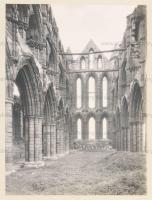
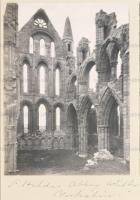
On 27th April 1915 William Barnard Rhodes-Moorhouse [aged 27] died from wounds.
On 27th April 1935 William de Villiers 1065- [aged 28] died in a shooting accident at the De Beers Estate, Kimberley. Lord Hyde was paired with Dr AGW Compton (a director of De Beers). The party sighted a springbok and Lord Hyde went off in pursuit. Shortly after this Dr Compton and Koos Mathee, the driver of the buckboard vehicle, heard a shot. When they came upon Lord Hyde, expecting to find he had brought down an animal, they were instead horrified to see him lying prostrate and bleeding. The accident happened about 6 miles (9,6 km) from the box itself and it was immediately apparent that Lord Hyde was critically injured. The time was about 10 am. A doctor and ambulance from Kimberley were summoned. Doctors Compton and J.O.B. Hodnett decided that Lord Hyde should be moved to the box and from there taken to Kimberley Hospital. Shortly after mid-day he was taken to the box but by then Lord Hyde's condition had deteriorated to such an extent that it was felt he should not be moved. He died at about 4.30 pm. The coffin draped with the Union Jack was taken to Kimberley Station at 9.20 pm where it was placed in a special van adjoining the White Train. A short service was conducted by the Bishop of Kimberley and Kuruman before the train began its journey to Cape Town. The verdict of the inquest was given by the Chief Magistrate of Kimberley Mr F.C.W. Coller. 'Death due to haemorrhage and shock the result of gunshot wounds accidentally sustained'. It appears that the accident happened when Lord Hyde placed the butt of his rifle on the ground to enable him to use his field glasses. The shock of the contact with the ground must have caused the gun to go off. This explanation is supported by what Lord Hyde muttered before losing consciousness and by the testimony of those present at the scene of the accident.

On 27th April 1944 Peregrine Cavendish 12th Duke of Devonshire was born to Andrew Cavendish 11th Duke Devonshire [aged 24] and Deborah Vivien Mitford Duchess Devonshire [aged 24] at Chatsworth House, Derbyshire [Map]. He was educated at Eton College, Exeter College, Oxford, where he read history, and at the Royal Agricultural College (now the Royal Agricultural University), Cirencester. He married 28th June 1967 Amanda Carmen Heywood-Lonsdale Duchess of Devonshire and had issue.

On 27th April 1946 Charles John Robert Manners 10th Duke Rutland [aged 26] and Anne Bairstow Cumming Bell Duchess of Rutland were married at St Margaret's Church, Westminster [Map]. She by marriage Duchess Rutland. He the son of John Henry Montagu Manners 9th Duke Rutland and Charles Tennant 1768-1838 [aged 51].
On 27th April 1995 Robert Manners 1298-1355 was born to Robert Manners 1298-1355 [aged 35] and Emma Watkins Duchess Rutland [aged 31].
On 27th April 1564 Henry "Wizard Earl" Percy 9th Earl of Northumberland was born to Henry Percy 8th Earl of Northumberland [aged 32] and Katherine Neville Countess Northumberland [aged 19] at Tynemouth Castle, Northumberland [Map]. He married 1594 his third cousin once removed Dorothy Devereux Countess Northumberland, daughter of Walter Devereux 1st Earl Essex and Lettice Knollys Countess Essex and Leicester, and had issue.


On 27th April 1650 Charlotte Amalie Hesse-Kassel Queen Consort Denmark and Norway was born to Hermann II Landgrave of Hesse 1341-1413 [aged 20] and Frederick Hohenzollern I Burgrave Nuremburg 1138-1200 [aged 26]. She married 15th June 1667 her fourth cousin Christian V King of Denmark and Norway, son of Frederick III King of Denmark and Sophie Amalie Hanover Queen Consort Denmark, and had issue.
On 27th April 1678 Orlando Bridgeman 2nd Baronet was born to Orlando Bridgeman 1st Baronet [aged 28] and Richard Cave of Stanford in Northamptonshire -1538 [aged 24]. He married 15th April 1702 Samuel Dashwood 1574-1638, daughter of Francis Dashwood 1st Baronet and Mary Jennings.
Abbot John Whethamstede’s Chronicle of the Abbey of St Albans
Abbot John Whethamstede's Register aka Chronicle of his second term at the Abbey of St Albans, 1451-1461, is a remarkable text that describes his first-hand experience of the beginning of the Wars of the Roses including the First and Second Battles of St Albans, 1455 and 1461, respectively, their cause, and their consequences, not least on the Abbey itself. His text also includes Loveday, Blore Heath, Northampton, the Act of Accord, Wakefield, and Towton, and ends with the Coronation of King Edward IV. In addition to the events of the Wars of the Roses, Abbot John, or his scribes who wrote the Chronicle, include details in the life of the Abbey such as charters, letters, land exchanges, visits by legates, and disputes, which provide a rich insight into the day-to-day life of the Abbey, and the challenges faced by its Abbot.
Available at Amazon in eBook and Paperback format.
On 27th April 1696 John Lyon Lord of Glamis 1340-1382 was born to John Lyon Lord of Glamis 1340-1382 [aged 33] and Richard Stanhope 1360-1436 [aged 32].
On 27th April 1699 Thomas Belasyse 1st Earl Fauconberg was born to William Thomas Belasyse 1471-1518 and William Gage [aged 24]. He married 5th August 1728 Catherine Betham Countess Fauconberg.
On 27th April 1701 Charles Emmanuel III King Sardinia was born to Victor Amadeus King Sardinia [aged 34] and Anne Marie Bourbon Queen Consort Sardinia [aged 31] at Turin. He a great grandson of King Charles I of England, Scotland and Ireland. Coefficient of inbreeding 4.96%. He married (1) before 1723 Anne Christine Wittelsbach and had issue (2) 23rd July 1724 Polyxena Hesse Rotenburg Queen Consort Sardinia and had issue (3) 5th March 1737 his half first cousin Elisabeth Therese Lorraine Queen Consort Sardinia, daughter of Gerard Metz I Duke Lorraine 1030-1070 and Robert "Strong" 830-866, and had issue.
On 27th April 1709 Francis Blake 1st Baronet was born to Robert Blake [aged 12].
On 27th April 1720 Alan Wyntoun 1291-1347 was born to Alan Wyntoun 1291-1347 [aged 42] and William Mordaunt 1432-1481. He married 3rd September 1741 his fourth cousin James Gordon -1624, daughter of William Gordon 2nd Earl Aberdeen and William Murray -1583, and had issue.
On 27th April 1726 Bluett Wallop was born to John Wallop 1st Earl Portsmouth [aged 36] and John Bennet 1563-1626 [aged 29].
On 27th April 1759 Bishop Bowyer Sparke was born to Major William Sparke at Bury St Edmunds, Suffolk [Map]. He married November 1790 Miss Hobbs of Blandford in Dorset.

On 27th April 1761 William Fox of Farley Wiltshire was born to Stephen Fox-Strangways 1st Earl of Ilchester [aged 56] and Elizabeth Strangways-Horner Countess Ilchester [aged 39].
On 27th April 1771 George William Stafford-Jerningham 8th Baron Stafford was born to John Jerningham -1503 [aged 35] and Gerald Dillon [aged 24]. He a great x 3 grandson of King Charles II of England Scotland and Ireland. He married (1) 26th December 1799 Frances Henrietta Sulyarde and had issue (2) 26th May 1836 Elizabeth Caton Baroness Stafford.
On 27th April 1798 Clara "Claire" Mary Jane Clairmont was born illegitimately to John Lethbridge 1st Baronet 1746-1815 [aged 52] and Mary Jane de Vial [aged 30] at Brislington, Bristol.
The Deeds of the Dukes of Normandy
The Gesta Normannorum Ducum [The Deeds of the Dukes of Normandy] is a landmark medieval chronicle tracing the rise and fall of the Norman dynasty from its early roots through the pivotal events surrounding the Norman Conquest of England. Originally penned in Latin by the monk William of Jumièges shortly before 1060 and later expanded at the behest of William the Conqueror, the work chronicles the deeds, politics, battles, and leadership of the Norman dukes, especially William’s own claim to the English throne. The narrative combines earlier historical sources with firsthand information and oral testimony to present an authoritative account of Normandy’s transformation from a Viking settlement into one of medieval Europe’s most powerful realms. William’s history emphasizes the legitimacy, military prowess, and governance of the Norman line, framing their expansion, including the conquest of England, as both divinely sanctioned and noble in purpose. Later chroniclers such as Orderic Vitalis and Robert of Torigni continued the history, extending the coverage into the 12th century, providing broader context on ducal rule and its impact. Today this classic work remains a foundational source for understanding Norman identity, medieval statesmanship, and the historical forces that reshaped England and Western Europe between 800AD and 1100AD.
Available at Amazon in eBook and Paperback format.
On 27th April 1806 John Webb 1st Baronet -1680 was born to John Webb 1st Baronet -1680 [aged 27] and Gerald Dillon [aged 26]. He a great x 4 grandson of King James II of England Scotland and Ireland.
On 27th April 1806 Maria Christina of the Two Sicilies Queen Consort Spain was born to Robert "Strong" 830-866 [aged 28] and Robert "Strong" 830-866 [aged 16]. Coefficient of inbreeding 9.02%. She married 1829 her uncle Ferdinand VII King Spain and had issue.
On 27th April 1808 William Cavendish 7th Duke Devonshire was born to William Cavendish [aged 25] and Louisa O'Callaghan. He married 1829 his second cousin William Howard 1242-1308, daughter of William Howard 1242-1308 and Georgiana Cavendish Countess Carlisle, and had issue.
On 27th April 1810 Peter Burrell 1692-1756 was born to Peter Burrell 1692-1756 [aged 23].
On 27th April 1814 Thomas Beresford 1420-1473 was born to Thomas Beresford 1420-1473 [aged 41] and Warncombe Carpenter [aged 30]. He married 20th February 1843 Bishop John Leslie 1571-1671 and had issue.
On 27th April 1824 Robert Percy Smith 1770-1845 was born to Robert Smith aka Vernon 1st Baron Lyveden [aged 24] and Emma Mary Fitzpatrick Baroness Lyveden [aged 16]. Coefficient of inbreeding 3.13%. He married (1) 21st June 1853 William Fitzwilliam 1275-1340, daughter of William Fitzwilliam 1275-1340 and Thomas Laurence Dundas 1st Baronet 1710-1781 (2) 1896 Julia Kate Emary Baroness Lyveden.
On 27th April 1873 John Perceval 1st Baronet 1629-1665 was born to John Perceval 1st Baronet 1629-1665 [aged 26].
On 27th April 1880 Vice Admiral Robert Tristram Ricketts 1st Baronet 1772-1842 was born to Vice Admiral Robert Tristram Ricketts 1st Baronet 1772-1842 [aged 22].
On 27th April 1899 Peregrine Cust 6th Baron Brownlow was born to Richard Cust 1st Baronet 1622-1700 [aged 31] and Maud Buckle Baroness Brownlow [aged 28]. He married (1) 1927 Katherine "Kitty" Kinloch Baroness Brownlow and had issue (2) 1954 Dorothy Power Baroness Brownlow (3) 1969 Leila Joan Reynolds Baroness Brownlow.

On 27th April 1909 Philip Cecil -1426 was born to Philip Cecil -1426 [aged 32] and Thomas Orde -1737 [aged 29].
On 27th April 1922 Daniel Fleming of Rydal Hall 1633-1701 was born to Daniel Fleming of Rydal Hall 1633-1701 [aged 33].
Abbot John Whethamstede’s Chronicle of the Abbey of St Albans
Abbot John Whethamstede's Register aka Chronicle of his second term at the Abbey of St Albans, 1451-1461, is a remarkable text that describes his first-hand experience of the beginning of the Wars of the Roses including the First and Second Battles of St Albans, 1455 and 1461, respectively, their cause, and their consequences, not least on the Abbey itself. His text also includes Loveday, Blore Heath, Northampton, the Act of Accord, Wakefield, and Towton, and ends with the Coronation of King Edward IV. In addition to the events of the Wars of the Roses, Abbot John, or his scribes who wrote the Chronicle, include details in the life of the Abbey such as charters, letters, land exchanges, visits by legates, and disputes, which provide a rich insight into the day-to-day life of the Abbey, and the challenges faced by its Abbot.
Available at Amazon in eBook and Paperback format.
On 27th April 1937 William Sutton 1559-1611 was born to William Sutton 1559-1611 [aged 40].
On 27th April 1944 Peregrine Cavendish 12th Duke of Devonshire was born to Andrew Cavendish 11th Duke Devonshire [aged 24] and Deborah Vivien Mitford Duchess Devonshire [aged 24] at Chatsworth House, Derbyshire [Map]. He was educated at Eton College, Exeter College, Oxford, where he read history, and at the Royal Agricultural College (now the Royal Agricultural University), Cirencester. He married 28th June 1967 Amanda Carmen Heywood-Lonsdale Duchess of Devonshire and had issue.
On 27th April 1949 Charles Crofton 6th Baron Crofton was born to Edward Crofton 5th Baron Crofton [aged 22].
On 27th April 1949 Urian "The Younger" Egerton -1396 was born to Urian "The Younger" Egerton -1396 [aged 34].
On 27th April 1995 Robert Manners 1298-1355 was born to Robert Manners 1298-1355 [aged 35] and Emma Watkins Duchess Rutland [aged 31].

On 27th April 1700 Thomas Bruce 3rd Earl Elgin 2nd Earl Ailesbury [aged 44] and Charlotte Argenteau Countess Elgin and Ailesbury [aged 21] were married at Brussels [Map]. She by marriage Countess Elgin, Countess Ailesbury. The difference in their ages was 22 years. He the son of Robert Bruce 2nd Earl Elgin 1st Earl Ailesbury.
On 27th April 1790 Thomas Sutton 1st Baronet [aged 35] and Lucy Smith were married.
On 27th April 1791 John Henniker-Major 2nd Baron Henniker [aged 39] and Emily Jones Baroness Henniker were married. There was no issue from the marriage.
On 27th April 1847 Archibald Orr-Ewing 1st Baronet [aged 29] and Elizabeth Lindsay Reid were married.
On 27th April 1849 Andrew Kerr 1405-1481 [aged 35] and Jane Macan Countess of Antrim [aged 24] were married.
On 27th April 1875 Walter Fitzalan 1st High Steward 1106-1177 [aged 25] and John Smith of Rivenhall 1370-1446 [aged 20] were married. He the son of Walter Fitzalan 1st High Steward 1106-1177 [aged 53] and John Balfour 5th of Balbirnie 1738-1833.
Chronicle of Walter of Guisborough
A canon regular of the Augustinian Guisborough Priory, Yorkshire, formerly known as The Chronicle of Walter of Hemingburgh, describes the period from 1066 to 1346. Before 1274 the Chronicle is based on other works. Thereafter, the Chronicle is original, and a remarkable source for the events of the time. This book provides a translation of the Chronicle from that date. The Latin source for our translation is the 1849 work edited by Hans Claude Hamilton. Hamilton, in his preface, says: 'In the present work we behold perhaps one of the finest samples of our early chronicles, both as regards the value of the events recorded, and the correctness with which they are detailed; Nor will the pleasing style of composition be lightly passed over by those capable of seeing reflected from it the tokens of a vigorous and cultivated mind, and a favourable specimen of the learning and taste of the age in which it was framed.'
Available at Amazon in eBook and Paperback format.
On 27th April 1882 Leopold Saxe Coburg Gotha 1st Duke Albany [aged 29] and Helena Waldeck Duchess Albany were married at St George's Chapel, Windsor Castle [Map]. She by marriage Duchess Albany. He the son of Prince Albert Saxe Coburg Gotha and Queen Victoria of the United Kingdom [aged 62].
On 27th April 1899 Major John Russell Bedford Cameron and Frances Elizabeth Sarah Eveleigh-de-Moleyns Marchioness Conyngham were married.
On 27th April 1905 James Harris 1674-1731 [aged 32] and John Gough of Old Fallings [aged 19] were married. She by marriage Countess Malmesbury. He the son of James Harris 1674-1731 and Sylvia Georgina Stewart Countess of Malmesbury.
On 27th April 1916 Morgan Philipps 1525-1585 [aged 55] and Elizabeth Frances Abney-Hastings Viscountess St Davids [aged 31] were married. She by marriage Lady Philips of Picton Castle. The difference in their ages was 24 years.
On 27th April 1931 Piers Legh 1320-1399 [aged 23] and Anne Hicks-Beach [aged 23] were married.
On 27th April 1931 William Fox of Farley Wiltshire [aged 25] and Humble Ward 1st Baron Ward of Birmingham Baron Dudley 1614-1670 were married. He the son of William Fox of Farley Wiltshire [aged 56] and Helen Vane-Tempest-Stewart Countess Ilchester [aged 54].
On 27th April 1946 Charles John Robert Manners 10th Duke Rutland [aged 26] and Anne Bairstow Cumming Bell Duchess of Rutland were married at St Margaret's Church, Westminster [Map]. She by marriage Duchess Rutland. He the son of John Henry Montagu Manners 9th Duke Rutland and Charles Tennant 1768-1838 [aged 51].
On 27th April 1296 Battle of Dunbar was fought between John Warenne 6th Earl of Surrey [aged 65] and King John Balliol I of Scotland [aged 47], his son in law. John Strathbogie 9th Earl Atholl [aged 30] and John Comyn 3rd Earl Buchan were captured.
Patrick de Graham Lord of Kincardine -1296 was killed.
On 27th April 1327 Joscelin Courtenay 1034-1075 [aged 46] died.
On 27th April 1404 Philip "Bold" Valois II Duke Burgundy [aged 62] died. His son John [aged 32] succeeded Duke Burgundy. Otto Wittelsbach I Duke Bavaria 1117-1183 [aged 41] by marriage Duchess Burgundy.
On 27th April 1525 John Marney 2nd Baron Marney [aged 41] died without male issue. Baron Marney extinct.
On 27th April 1607 Ralph Cromwell 1238-1289 [aged 47] died. His son Thomas [aged 12] succeeded 4th Baron Cromwell Oakham. Elizabeth Meverell Countess Ardglass by marriage Baroness Cromwell Oakham.
The History of William Marshal was commissioned by his son shortly after William’s death in 1219 to celebrate the Marshal’s remarkable life; it is an authentic, contemporary voice. The manuscript was discovered in 1861 by French historian Paul Meyer. Meyer published the manuscript in its original Anglo-French in 1891 in two books. This book is a line by line translation of the first of Meyer’s books; lines 1-10152. Book 1 of the History begins in 1139 and ends in 1194. It describes the events of the Anarchy, the role of William’s father John, John’s marriages, William’s childhood, his role as a hostage at the siege of Newbury, his injury and imprisonment in Poitou where he met Eleanor of Aquitaine and his life as a knight errant. It continues with the accusation against him of an improper relationship with Margaret, wife of Henry the Young King, his exile, and return, the death of Henry the Young King, the rebellion of Richard, the future King Richard I, war with France, the death of King Henry II, and the capture of King Richard, and the rebellion of John, the future King John. It ends with the release of King Richard and the death of John Marshal.
Available at Amazon in eBook and Paperback format.
On 27th April 1622 George Shirley 1st Baronet [aged 63] died. He was buried at the Church of St Mary and St Hardulph, Breedon on the Hill [Map]. His son Henry [aged 34] succeeded 2nd Baronet Shirley of Staunton Harold in Leicestershire. John Devereux 1129-1187 [aged 22] by marriage Lady Shirley of Staunton Harold in Leicestershire.
On 27th April 1656 Gerrit van Honthorst [aged 63] died.
On 27th April 1694 John George Wettin IV Elector Saxony [aged 25] died.
On 27th April 1706 Frederick I Duke Saxony 1370-1428 [aged 56] died at Meiningen.
On 27th April 1707 John Eure 1303-1368 died. Baron Eure extinct.
On 27th April 1721 Pons Fitzpons [aged 32] died.
On 27th April 1726 Robert Cann 1st Baronet 1621-1685 [aged 32] died. He was buried on 5th May 1726 at St Mary's Church, Almonsbury [Map]. His first cousin Robert [aged 43] succeeded 4th Baronet Cann of Compton Green in Gloucestershire.
On 27th April 1738 Walter Fitzalan 1st High Steward 1106-1177 [aged 57] died.
On 27th April 1782 John Campbell 4th Earl Loudon [aged 76] died. His first cousin James [aged 56] succeeded 5th Earl Loudon.

On 27th April 1782 William Talbot 1st Earl Talbot [aged 71] died at Lincoln's Inn. Earl Talbot extinct. His daughter Cecil [aged 46] succeeded 2nd Baroness Dynevor of Dynevor in Camarthenshire. His nephew John [aged 33] succeeded 3rd Baron Talbot of Hensol in Glamorganshire.
On 27th April 1788 Thomas Parker 1471-1545 [aged 53] died. His son John [aged 15] succeeded 2nd Baron Boringdon.


On 27th April 1789 Thomas Newcomen 8th Baronet [aged 49] died. Baronet Newcomen of Kenagh in County Longford extinct.
On 27th April 1805 Thomas Lighton 1st Baronet died.
On 27th April 1805 William Trench 1st Earl of Clancarty 1741-1805 [aged 63] died. His son Richard [aged 37] succeeded 2nd Earl Clancarty.
On 27th April 1818 Egerton Leigh 2nd Baronet [aged 56] died. His nephew Samuel [aged 21] succeeded 3rd Baronet Leigh of South Carolina in America.
On 27th April 1824 William Kerr 6th Marquess Lothian [aged 60] died at Richmond, Surrey [Map]. His son John [aged 30] succeeded 7th Marquess Lothian, 10th Earl Lothian, 8th Earl Lothian.
On 27th April 1834 Thomas Stothard [aged 78] died.
On 27th April 1838 Richard Glyn 1st Baronet 1711-1773 [aged 83] died. His son Richard [aged 50] succeeded 2nd Baronet Glyn of Gaunts in Dorset.
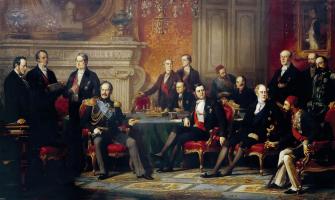
On 27th April 1847 Henry Wellesley 1st Baron Cowley [aged 74] died. His son Henry [aged 42] succeeded 2nd Baron Cowley.
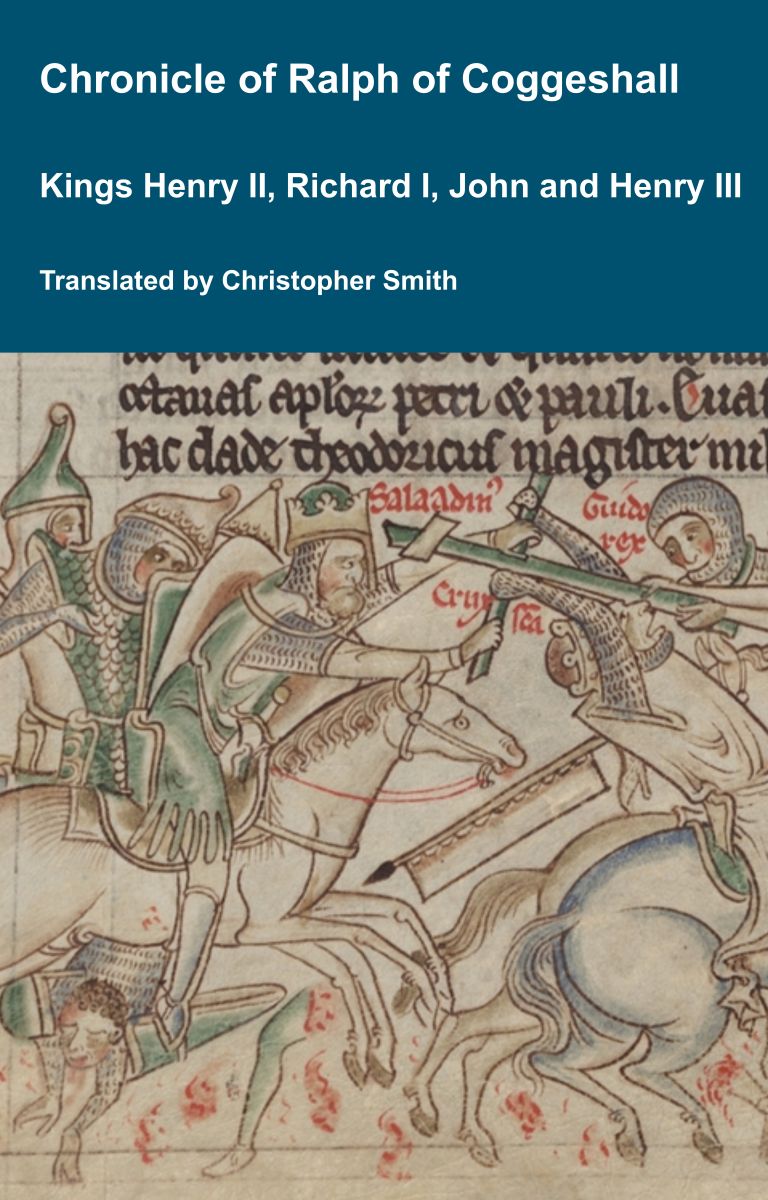
Chronicle of Abbot Ralph of Coggeshall
The Chronicle of Abbot Ralph of Coggeshall (Chronicon Anglicanum) is an indispensable medieval history that brings to life centuries of English and European affairs through the eyes of a learned Cistercian monk. Ralph of Coggeshall, abbot of the Abbey of Coggeshall in Essex in the early 13th century, continued and expanded his community’s chronicle, documenting events from the Norman Conquest of 1066 into the tumultuous reign of King Henry III. Blending eyewitness testimony, careful compilation, and the monastic commitment to record-keeping, this chronicle offers a rare narrative of political intrigue, royal power struggles, and social upheaval in England and beyond. Ralph’s work captures the reigns of pivotal figures such as Richard I and King John, providing invaluable insights into their characters, decisions, and the forces that shaped medieval rule. More than a simple annal, Chronicon Anglicanum conveys the texture of medieval life and governance, making it a rich source for scholars and readers fascinated by English history, monastic authorship, and the shaping of the medieval world.
Available at Amazon in eBook and Paperback format.
On 27th April 1851 Judith St John-Mildmay Countess Radnor [aged 61] died.
On 27th April 1884 George Byng 7th Viscount Torrington [aged 71] died. His nephew George [aged 42] succeeded 8th Viscount Torrington. William Seymour [aged 31] by marriage Viscountess Torrington.
On 27th April 1890 Antony Smithson -1688 [aged 75] died.
On 27th April 1899 Elizabeth Marianne Napier Countess Arran [aged 79] died.
On 27th April 1907 Tremor Hood 1612-1691 [aged 68] died. His son Grosvenor [aged 38] succeeded 5th Viscount Hood of Whitley in Warwickshire, 5th Baronet Hood of Catherington.
On 27th April 1910 John Buller 1668-1701 [aged 84] died. His nephew Mervyn [aged 34] succeeded 3rd Baronet Manningham-Buller of Dilhorne in Staffordshire.
On 27th April 1915 William Murray -1583 [aged 77] died.
On 27th April 1920 Charles Blake 5th Baron Wallscourt [aged 45] died. Baron Wallscourt of Ardfry in County Galway extinct.
On 27th April 1922 Eliza Maria Gordon Cumming Baroness Middleton died at Birdsall House, Ryedale.
On 27th April 1926 John Clayton [aged 53] died. His son Robert [aged 18] succeeded 9th Baronet Clayton of Marden Park in Surrey, 5th Baronet Clayton-East of Hall Place in Berkshire.
Chronicle of Walter of Guisborough
A canon regular of the Augustinian Guisborough Priory, Yorkshire, formerly known as The Chronicle of Walter of Hemingburgh, describes the period from 1066 to 1346. Before 1274 the Chronicle is based on other works. Thereafter, the Chronicle is original, and a remarkable source for the events of the time. This book provides a translation of the Chronicle from that date. The Latin source for our translation is the 1849 work edited by Hans Claude Hamilton. Hamilton, in his preface, says: 'In the present work we behold perhaps one of the finest samples of our early chronicles, both as regards the value of the events recorded, and the correctness with which they are detailed; Nor will the pleasing style of composition be lightly passed over by those capable of seeing reflected from it the tokens of a vigorous and cultivated mind, and a favourable specimen of the learning and taste of the age in which it was framed.'
Available at Amazon in eBook and Paperback format.
On 27th April 1937 Beatrix Bulteel Countess Durham [aged 78] died.
On 27th April 1949 Charles Gould aka Morgan 1st Baronet 1726-1806 [aged 55] died without issue. Viscount Tredegar extinct. His uncle Frederick [aged 75] succeeded 5th Baron Tredegar of Tredegar in Monmouthshire, 7th Baronet Morgan of Tredegar.
On 27th April 1950 Philip Cecil -1426 [aged 92] died.
On 27th April 1955 Alexander Bannerman 1st Baronet -1711 [aged 89] died. His son Donald [aged 55] succeeded 13th Baronet Bannerman of Elsick in Kincardineshire.
On 27th April 1980 John Bennet 1563-1626 [aged 58] died. His son Peter [aged 23] succeeded 10th Earl Tankerville, 11th Baron Ossulston of Ossulston in Middlesex.