

03 Dec is in December.
1660 December Creation of Baronets and Peerages
1680 Trial and Execution of William Howard 1st Viscount Stafford
Chronicon ex Chronicis by Florence and John of Worcester. 3rd December 1139. King Stephen at Worcester and Hereford. After these events, the king, with a large army, marched from Oxford to Worcester; and, having before his eyes what he had before heard of its disaster, he mourned over it. Halting there for three or four days, he conferred the dignity of constable, of which he had deprived Milo of Gloucester, on William [aged 34], the son of Walter de Beauchamp, sheriff of Worcestershire.1 Here a report reached the king that his enemies, having violated their sworn promises of peace, had assaulted Hereford, and forced an entrance into the monastery of St. Ethelbert [Map], king and martyr, as if it had been a fortified castle. The king, therefore, put himself in march, and encamped at Little Hereford, or Leominster, where some of the inhabitants, taking counsel, swore fealty to him; while others refusing, sent him this message: "Although we will not swear, the king may, if he pleases, trust to the truth of our words." The holy days of Advent being close at hand [3rd December], a truce was agreed on between them, and the king returned to Worcester, where a certain clerk of eminent piety, Maurice by name, who had been elected by the clergy and people to the church of Bangor, was presented to the king at the castle, by Robert, bishop of Hereford, and Sigefrid, bishop of Chichester, who, bearing him company, attested his canonical election and fitness for the office of bishop; and the king confirmed the appointment. But being urged by the bishops to do homage to the king, he replied that he could in no wise do "There is," he said, "among us a man of great piety, whom I consider as my spiritual father, and who was archdeacon to my predecessor David, and he forbade me to take this oath." To which they made answer, "Reason requires that you should do we have done." Whereupon he said, "If you, who are men of high authority, have done this, I will not further hesitate to do the same." He therefore swore fealty to the king.
Note 1. See the preceding note. We are unable to account for this act of favour on the part of king Stephen to one of a family who were the most strenuous adherents of Henry I., his daughter the empress, and Henry III.; under all whom they held the offices of steward, sheriff of Worcestershire and Warwickshire, and constable. William de Beauchamp, fourth in descent from Walter, married Isabel, the heiress of William Mauduit, earl of Warwick; acquired that title in her right, and became the ancester of the powerful family of Beauchamp of Warwick. The earls Beauchamp of the present day are descended from Walter, of Powick, a younger son of William and Isabel.
On 3rd December 1157 Malfada Savoy Queen Consort Portugal [aged 32] died.
Rymer's Fœdera Volume 2. Concerning the capture of John Mautravers and others.
The King, to the Sheriff of Northampton, greeting.
Because we have learned that John Mautravers [aged 40], Thomas de Gurney, John Wyard, and William of Exeter, lately constable of the castle of Wallingford, John Deveroill, and William of Ocle, indicted for various crimes committed by them in our realm, intend on that account to leave the realm secretly; through whose malice diverse evils may arise, unless we quickly set our hand to this:
We strictly order you that you cause all seaports and other places within your bailiwick, both within liberties and without, where ships come in or where there is passage of ships, to be so guarded, under the peril that lies upon you, that the said John, Thomas, John, William, John, and William may in no way within the said bailiwick pass out of the realm. And moreover you are to seize them within the said bailiwick, whether they be within liberties or without, and also cause them to be seized by your officers, and have them brought before us, wherever we shall be, to undergo what by our council shall be ordained.
And you shall set such guard in every place in the said bailiwick, along the coast and the aforesaid places, that they may in no way escape from the realm. And you shall do the premises with such diligence that, if such escape should occur, which God forbid, the blame may not fall upon you, whereby we should have to take heavy action against you.
Witness the King at Westminster, the third day of December [1330].
By the King himself and the council.
In the same manner mandate is given to each of the sheriffs throughout England.
De capiendo Johannem Mautravers & alios.
Rex, Vicecomiti Nort', salutem. Quia accepimus quod Johannes Mautravers, Thomas de Gurneye, Johannes Wyard, & Willielmus de Exon', nuper constabular' castri de Walyngford', Johannes Deveroill', Willielmus de Ocle, de diversis facinoribus per ipsos in regno nostro perpetratis, rectati, eâ occasione extra idem regnum clandestinè egredi proponunt; per quorum maliciam diversa mala poterunt evenire, nisi celeriùs ad hoc apponeremus manum nostram;
Tibi præcipimus firmiter injungentes, quod omnes portus maris & alia loca infra ballivam tuam, tam infra libertates quam extra, ubi naves applicant, seu passagium navium existit, taliter custodiri facias, sub periculo quod incumbit, quod dicti Johannes, Thomas, Johannes, Willielmus, Johannes, & Willielmus alicubi infra ballivam prædictam nullatenus transeant extra idem regnum; et insuper eos in ballivâ prædictâ, sive fuerint infra libertates sive extra, capias, & eciam per ministros tuos capi facias, & eos, ubicumque fuerimus, ad nos duci facias, ibidem, quod de consilio nostro ordinari contigerit receptur';
Et talem custodiam in singulis locis in ballivâ prædictâ, super costeram & loca prædicta apponas, quod ipsi ab eodem regno nullo modo evadant:
Et præmissa cum tantâ diligenciâ facias, quod dicta evasio si eveniat, quod absit, tibi impingi non valeat, per quod ad te graviter capere debeamus.
T. R. apud Westm', tercio die Dec'.
Per ipsum Regem & cons'.
Eodem modo mandatum est singulis vicecomitibus per Angľ.
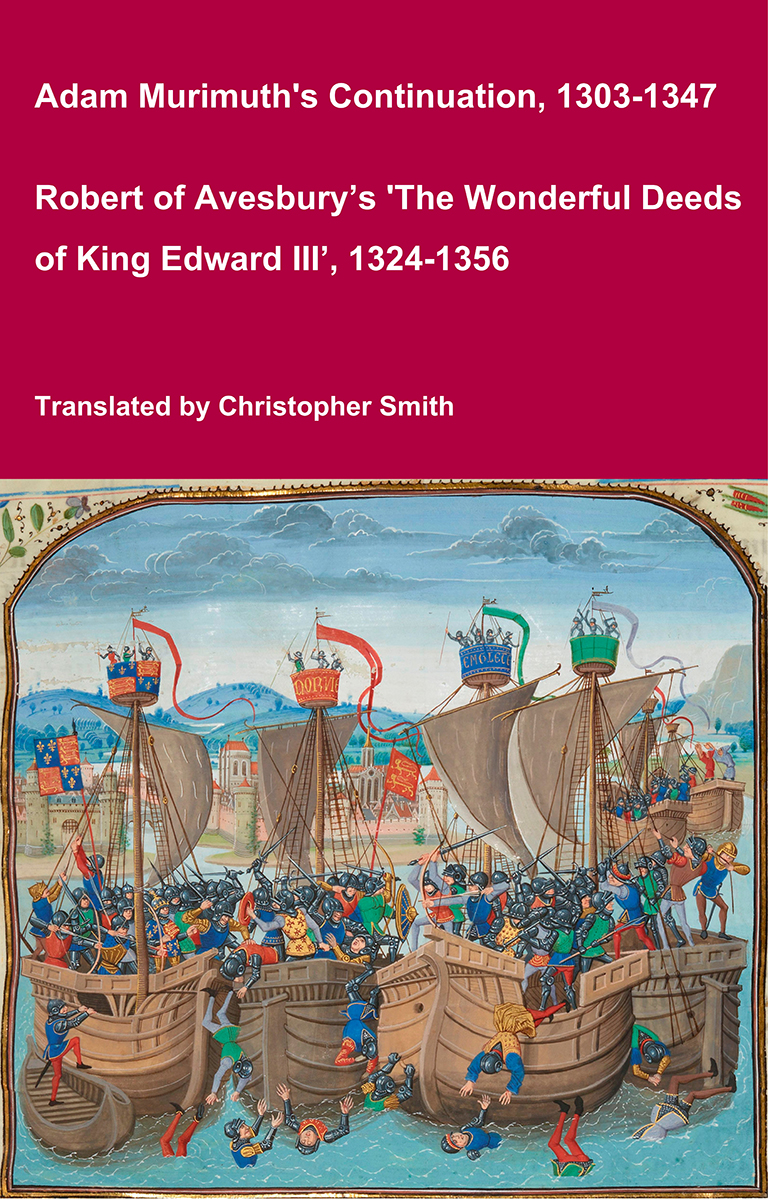 Adam Murimuth Continuation. Afterwards, on the third day before the Nones of December [3rd December 1343], Master Andrew de Ufford set out again toward the Roman Curia and France, to obtain from both courts letters of safe-conduct for six persons and their households, namely, for the earls of Derby, Warwick, Huntingdon, and Suffolk, and for Sir Bartholomew de Burghersh, knight, and Master John de Ufford, archdeacon of Ely, who were to be sent to the Curia around Easter to conduct negotiations for peace before the pope concerning the wars and disputes that had arisen between the aforesaid kings. But whether he brought back any reply or excuse concerning the matters contained in the said apostolic letters, the present writer does not know.
Postea vero, tertio nonas Decembris, rediit, magister Andreas de Offord versus curiam Romanam et Franciam, ad quærendum de utraque curia literas de conductu pro sex personis et familiis earundem, videlicet pro Derbyæ, Warewykiæ, Huntyngdoniæ, et Suthfolchiæ comitibus et domino Bartholomæo de Boroways, milite, et magistro Johanne de Offord, archidiacono Eliensi, mittendis ad curiam, circa, Pascha, pro tractatu pacis habendo coram papa super guerris et controversiis motis inter reges predictos. Sed utrum responsionem vel excusationem super contentis in dictis literis apostolicis reportavit præsens scriptor ignorat.
Chronicle of Henry Knighton. And upon this, Henry, Duke of Lancaster, traveled to Prussia with many of the higher nobles of the realm in his retinue. And when he arrived in Upper Germany, he was arrested along with many of his companions, and he paid a ransom for himself and his men of 3,000 gold écus. On this journey, Lord le Roos [aged 22] died [on 3rd December 1351].
Et super hoc Henricus dux Lancastriæ transivit versus le! Sprusiam cum multis viris in sua comitiva de majoribus regni. Et cum pervenisset in altam Almaniam arestatus est cum aliis multis de sociis suis, et fecit redemptionem pro se et suis de iij mille scutis auri In hoc itinere mortuus est dominus le Ros.
On 3rd December 1368 Charles "Beloved Mad" VI King France was born to King Charles V of France [aged 30] and Joanna Bourbon Queen Consort France [aged 30]. He a great x 4 grandson of King Henry III of England. Coefficient of inbreeding 3.60%. He married 17th July 1385 his third cousin once removed Isabeau Wittelsbach Queen Consort France, daughter of Stephen "Magnificient Fop" Wittelsbach III Duke Bavaria and Taddea Visconti Duchess Bavaria, and had issue.
Life of Charles VI by a Monk of St Denis. Relying on this hope, and taking my beginning from his illustrious lineageENDNOTE1ENDNOTE, he, springing as a shoot from a sweet-fruit-bearing tree from the noble lady Joanna, daughter of the illustrious duke of Bourbon, while not yet twelve years old already gave forth the fragrant flowers of the highest nobility of character, seeming to foreshadow the industry of his father, and by hereditary right succeeded to him, while the affairs of the kingdom, in peace and in war, were then proceeding fairly prosperously. Yet lest the wealthy people remain in the beauty of peace and the repose of temporal prosperity, the long-standing hatred of the English stood in the way, conceived, as it is believed, from the loss of their possessions. Since they knew these to be irrecoverable, anger stirring their fury, they aspired to the destruction of the kingdom. For often scorning the treaties of peace, bursting forth from their maritime home at the farthest corner of the world, they now harassed Aquitaine, now the Gallic coasts; they broke into the suburbs and, after taking peasants captive and driving off flocks and herds, burned with fires set upon them the crops, some already gathered on the threshing floors, others collected in sheaves across the fields, or still standing in the soil. The illustrious dukes of Anjou, Berry, BurgundyENDNOTE2ENDNOTE, and BourbonENDNOTE3ENDNOTE had undertaken with their forces to repel such dreadful raids, before their brother King Charles at last took to the bed of illness. But when they received the sad news that, suffering at the end and with little hope, he was drawing his last breath, they were recalled as it were from greater concerns and, with the change of circumstances altering their plan, they left Aquitaine and returned to Paris. As they surpassed all the dukes of the house of France in authority, industry, and eloquence, so they took particular care that vigilant attention should be given, as was fitting, to the royal son who had reached the years of youth, and that the public affairs of the kingdom should be governed with diligent guidance.
Qua spe fretus, a preclara ejus stirpe sumens exordium, is ex illustris ducis Borboniensis filia domina Johanna, velut ex arboredulciflua surculus egrediens, et qui, nondum duodenis, morales summe ingenuitatis flores odoriferos emittens, patris industriam videbatur portendere, eidem jure hereditario successit, regni rebus pace belloque gestis tunc satis prospere succedentibus. Ne tamen in pulchritudine pacis et requie temporalium opulenta plebs maneret Anglicorum inveteratum obstabat odium, ex amissis prediis conceptum, ut creditur; que cum irrecuperabilia scirent, indignacione administrante furorem, ad dissipacionem regni aspirabant. Pacis namque federa sepius aspernati, de sinu suo marino, orbis extremo angulo, erumpentes, et nunc Ácquitaniam infestantes, nunc Gallicana littora, effringebant suburbia, et captivatis colonis, abductis quoque gregibus et armentis, fruges partim in areis jam congestas, partim per agros manipulatim collectas, vel solo adhuc herentes, superpositis ignibus, incendebant. Tam diras discursiones illustres Andegavie, Biturie, Burgundie et Borboniensis duces viribus arcendas susceperant, priusquam frater eorum rex Karolus novissime lecto egritudinis decubaret; qui tamen, accepto tristi nuncio, quod in extremis laborans in exigua spe trahebat animam, velut a majoribus curis revocati, et cum vicissitudine rerum mutantes propositum, relicta Acquitania, Parisius redierunt. Sicut de domo Francie, auctoritate, industria et facundia cunctis ducibus precellebant, sic eis studiosior cura fuit ut regio filio inter annos puberes constituto vigilem curam, quantum conveniebat, impenderent, atque regni negocia publica industrie moderamine regerentur.
Note 1. King Charles VI was born in Paris on 3rd December 1368 to King Charles V of France and and Joanna Bourbon Queen Consort France.
Note 2. Louis II, Duke of Bourbon, was born on 4 August 1337, from the marriage of Peter, Duke of Bourbon, who was killed at the Battle of Poitiers, and Isabella, sister of Philip of Valois. He was the maternal uncle of Charles VI. His sisters were Jeanne of Bourbon, Queen of France; Blanche of Bourbon, Queen of Castile; Bonne of Bourbon, Countess of Savoy; Catherine of Bourbon, Countess of Harcourt; Marguerite, Lady of Albret; Isabelle of Bourbon, unmarried; and Marie of Bourbon, called de Clermont, a nun of Poissy.
Louis II, duc de Bourbon, né le 4 août 1337, du mariage de Pierre, duc de Bourbon, tué à la bataille de Poitiers, et d’Isabelle sœur de Philippe de Valois; oncle maternel de Charles VI. Il eut pour sœurs Jeanne de Bourbon, reine de France; Blanche de Bourbon, reine de Castille; Bonne de Bourbon, comtesse de Savoie ; Catherine de Bourbon, comtesse de Harcourt; Marguerite, dame d’Albret; Isabelle de Bourbon , non mariée; Marie de Bourbon, dite de Clermont, religieuse de Poissy.
Note 3. King Charles V had, by an ordinance of 1374, designated a council of guardianship composed of the archbishops of Reims and Sens; the bishops of Laon, Paris, Auxerre, and Amiens; the abbots of Saint-Denis and Saint-Maixent; the chamberlain of France; the constable, the butler, the pantler, the two marshals, the grand master of the household, keeper of the Oriflamme; Pierre d’Aumont and Philippe de Savoisy, chamberlains; the Count of Brienne, the Lord of Coucy, the Lord of Clisson, Arnaud de Corbie and Étienne de la Grange, presidents in the Parlement; Nicolas Dubois and Évrard Tramagon, counsellors; Philibert l’Espinasse, Thomas Boudenay, and Jean de Rye, knights; Nicolas Braque, Jean Pastourel, Jean Bernier, Bertrand Duclos, Philippe d’Augier, and Pierre Duchâtel, masters of accounts; the dean of Besançon; Jean le Mercier, general of the aides; Jean d’Ay, advocate; and six bourgeois of Paris, chosen by the princes. It was not this council that was assembled and to which recourse was had to decide the quarrels of the princes. (Le Laboureur, Introduction to the History of Charles VI.)
Le roi Charles V avait, par une ordonnance de 1374, désigné un conseil de tutelle formé des archevêques de Reims et de Sens; des évêques de Laon, de Paris, d'Auxerre et d'Amiens; des abbés de Saint-Denys et de Saint Maixent; du chambellan de France; du connétable, du bouteiller, du panetier, des deux maréchaux, du grand-maître de la maison, garde de l’orilamme; de Pierre d’Aumont et Philippe de Savoisy, chambellans; du comte de Brienne, du sire de Coucy, du sire de Clisson, d’Arnaud de Corbie et Étienne de la Grange , présidents au Parlement; de Nicolas Dubois et Evrard Tramagon , conseillers; de Philibert l’Espinasse, Thomas Boudenay et Jean de Rye, chevaliers; de Nicolas Braque, Jean Pastourel, ‘ Jean Bernier, Bertrand Duclos, Philippe d’Augier et Pierre Duchâtel, maîtres des comptes ; du doyen de Besancon, de Jean le Mercier, général des aides; de Jean d’Ay, avocat , et de six bourgeois de Paris, au choix des princes. Ce ne fut point ce conseil qu’on rassembla et auquel on eut recours pour décider les querelles des princes. ( Le Laboureur, Introd, à l'Hist. de Charles VI.)
Chronicle of Gregory. 3rd December 1431. Ande that year the kyng [aged 9] passyde the see in to Fraunce, and wente unto Parysse [Map]; and he come thedyr the thyrde day of Decembyr.
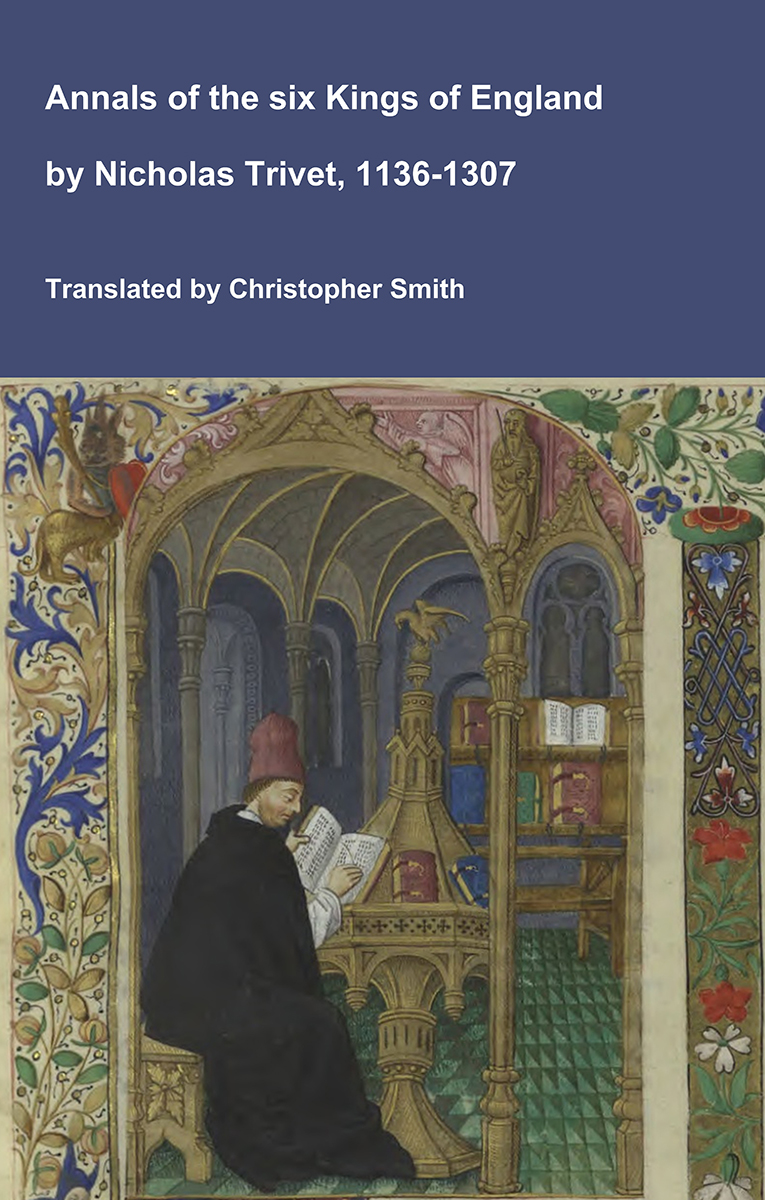
Annals of the six Kings of England by Nicholas Trivet
Translation of the Annals of the Six Kings of England by that traces the rise and rule of the Angevin aka Plantagenet dynasty from the mid-12th to early 14th century. Written by the Dominican scholar Nicholas Trivet, the work offers a vivid account of English history from the reign of King Stephen through to the death of King Edward I, blending political narrative with moral reflection. Covering the reigns of six monarchs—from Stephen to Edward I—the chronicle explores royal authority, rebellion, war, and the shifting balance between crown, church, and nobility. Trivet provides detailed insight into defining moments such as baronial conflicts, Anglo-French rivalry, and the consolidation of royal power under Edward I, whose reign he describes with particular immediacy. The Annals combines careful year-by-year reporting with thoughtful interpretation, presenting history not merely as a sequence of events but as a moral and political lesson. Ideal for readers interested in medieval history, kingship, and the origins of the English state, this chronicle remains a valuable and accessible window into the turbulent world of the Plantagenet kings.
Available at Amazon in eBook and Paperback format.
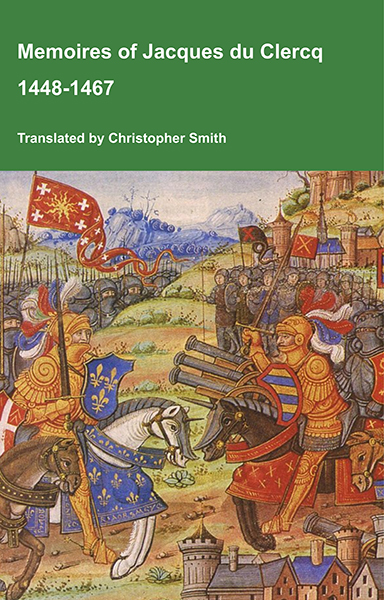 Memoires Jacques du Clercq. In the aforesaid year 1456, on the 3rd day of December, about three hours before dawn, there arose a great earthquake in the regions of Naples, Apulia, and Calabria, so terrible that no man could imagine it unless he had seen it himself. From this earthquake followed countless disasters. A city in that kingdom called Arnans was completely destroyed, and 8,000 people died there. Another town of about 3,000 inhabitants likewise perished entirely, with no survivors. Another place called Bechery was so utterly ruined that no one would ever have known that there had once been a city, town, castle, or fortress there, unless they had seen it before its destruction. The earthquake also ruined half of a city called Troye, where many people died, and it destroyed a great part of the town and castle of Canossa. The cities of Astoly, Saint Agatha, Aury, and many others were likewise devastated. In the county of Molise, the city of Campobasso, the castle of Saint Loy, and the castles of Castune and La Rippe collapsed into the earth, along with many lands in the county of Altenate, where 28,000 people died.
Ou dessusdit an mil iiij cinquante six, le riije jour de decembre, environ trois heures devant le jour, se meut ung crollement de terre es contrées de Naples, de Puille et de Calabre, si cruel qu'il n'est homme qu'il le peust penser, s'il ne le avoit veu; duquel crollement s'ensuivirent grands maulx et innumerables, car une cité audit royaume nommée Arnans, en fust fondue et perie: et en icelle moururent huict mille personnes; et encoires une aultre cité ou demouroient trois mille personnes, qui tous y moururent sans nuls eschapper; et encoires une aultre terre nommée Bechery, en telle maniere qu'il n'est homme qui oneques euist veu aulxdits lieux, cité, ville, ny chasteaux ny fortresses, excepté ceulx qui les avoient veu paravant qu'elles feussent fondues et peries; car icelluy crollement encoires alla a ruiner la moitié d'une cité nommée Troye, en laquelle mourut grand peuple, et sy alla par terre grande partie du chasteau et ville de Canosse, et les cités d'Astoly et de Ste Agathe le Channes, Aury et plusieurs aultres, et en la comté de Mollesse fondirent en abisme la cité de Campobassa, le chasteau de saint Loy, les chasteaux de Castune et de la Rippe, et aussy plusieurs terres de la comté d'Altenate, fondues comme dessus, esquelles sont morts vingt huict mille personnes.
On 3rd December 1458 Archbishop George Neville [aged 26] was consecrated as Bishop of Exeter.
Patent Rolls. 3rd December 1461. Westminster Palace [Map]. Appointment of the king's [aged 19] kinsman Richard, Earl of Warwick [aged 33], to execute the office of steward of England at the trial of Henry VI and other rebels who murdered the King's father Richard, duke of York, at Wakefield.
Henry Machyn's Diary. 3rd December 1556. The iij day of Desember cam rydyng from her plasse my lade Elizabeth('s) [aged 23] grace, from Somersett place downe Fletstreet, and thrugh Old Bayle, and thrugh Smyth-field, with a grett compene; and her servandes alle in red gardyd with velvett; and so her grace toke her way toward Bysshope Atfeld plasse.


On 3rd December 1614 brothers John Sheffield, Edmund Sheffield [aged 25] and Philip Sheffield [aged 21] were drowned whilst attempting to cross the flooded River Ouse at the Whitgift Ferry, East Yorkshire [Map].

John Evelyn's Diary. 3rd December 1651. Sir Lewis Dives [aged 52] dined with us, who relating some of his adventures, showed me divers pieces of broad gold, which, being in his pocket in a fight, preserved his life by receiving a musket bullet on them, which deadened its violence, so that it went no further; but made such a stroke on the gold as fixed the impressions upon one another, battering and bending several of them; the bullet itself was flatted, and retained on it the color of the gold. He assured us that of a hundred of them, which it seems he then had in his pocket, not one escaped without some blemish. He affirmed that his being protected by a Neapolitan Prince, who connived at his bringing some horses into France, contrary to the order of the Viceroy, by assistance of some banditti, was the occasion of a difference between those great men, and consequently of the late civil war in that kingdom, the Viceroy having killed the Prince standing on his defence at his own castle. He told me that the second time of the Scots coming into England, the King was six times their number, and might easily have beaten them; but was betrayed, as were all other his designs and counsels, by some, even of his bedchamber, meaning M. Hamilton, who copied Montrose's letters from time to time when his Majesty was asleep.

John Evelyn's Diary. 3rd December 1657. Mr. Gunning [aged 43] preached on John iii. 3, against the Anabaptists, showing the effect and necessity of the sacrament of baptism. This sect was now wonderfully spread.
In December 1660 King Charles II of England Scotland and Ireland [aged 30] rewarded of further tranche of those who supported his Restoration by awarding them Baronetcies...
On 3rd December 1660 George Winn 1st Baronet [aged 53] was created 1st Baronet Winn of Nostel in Yorkshire.
On 22nd December 1660 John Keyt 1st Baronet [aged 44] was created 1st Baronet Keyt of Ebrington in Gloucestershire for having raised a troop of horse to fight in the Royalist cause.
On 24th December 1660 William Frankland 1st Baronet [aged 20] was created 1st Baronet Frankland of Thirkleby in Yorkshire.


John Evelyn's Diary. 3rd December 1661. By universal suffrage of our philosophic assembly, an order was made and registered that I should receive their public thanks for the honorable mention I made of them by the name of Royal Society, in my Epistle dedicatory to the Lord Chancellor [aged 52], before my Traduction of Naudæus. Too great an honor for a trifle.


Samuel Pepys' Diary. 3rd December 1664. Up, and at the office all the morning, and at noon to Mr. Cutler's, and there dined with Sir W. Rider and him, and thence Sir W. Rider and I by coach to White Hall to a Committee of the Fishery; there only to hear Edward Ford's [aged 59] proposal about farthings, wherein, O God! to see almost every body interested for him; only my Lord Annesly [aged 43], who is a grave, serious man. My Lord Barkeley [aged 62] was there, but is the most hot, fiery man in discourse, without any cause, that ever I saw, even to breach of civility to my Lord Anglesey [aged 50], in his discourse opposing to my Lord's. At last, though without much satisfaction to me, it was voted that it should be requested of the King [aged 34], and that Edward Ford's proposal is the best yet made.


Samuel Pepys' Diary. 3rd December 1665. It being Lord's day, up and dressed and to church, thinking to have sat with Sir James Bunce to hear his daughter and her husband sing, that are so much commended, but was prevented by being invited into Coll. Cleggatt's pew. However, there I sat, near Mr. Laneare, with whom I spoke, and in sight, by chance, and very near my fat brown beauty of our Parish, the rich merchant's lady, a very noble woman, and Madame Pierce. A good sermon of Mr. Plume's [aged 35], and so to Captain Cocke's [aged 48], and there dined with him, and Colonell Wyndham, a worthy gentleman, whose wife was nurse to the present King, and one that while she lived governed him and every thing else, as Cocke says, as a minister of state; the old King putting mighty weight and trust upon her. They talked much of matters of State and persons, and particularly how my Lord Barkeley [aged 63] hath all along been a fortunate, though a passionate and but weak man as to policy; but as a kinsman brought in and promoted by my Lord of St. Alban's [aged 60], and one that is the greatest vapourer in the world, this Colonell Wyndham says; and one to whom only, with Jacke Asheburnel [aged 62] and Colonel Legg, the King's removal to the Isle of Wight from Hampton Court [Map] was communicated; and (though betrayed by their knavery, or at best by their ignorance, insomuch that they have all solemnly charged one another with their failures therein, and have been at daggers-drawing publickly about it), yet now none greater friends in the world.
Samuel Pepys' Diary. 3rd December 1666. So to bed, and with more cheerfulness than I have done a good while, to hear that for certain the Scott rebells are all routed; they having been so bold as to come within three miles of Edinburgh, and there given two or three repulses to the King's forces, but at last were mastered. Three or four hundred killed or taken, among which their leader, one Wallis, and seven ministers, they having all taken the Covenant a few days before, and sworn to live and die in it, as they did; and so all is likely to be there quiet again. There is also the very good newes come of four New-England ships come home safe to Falmouth, Cornwall with masts for the King [aged 36]; which is a blessing mighty unexpected, and without which, if for nothing else, we must have failed the next year. But God be praised for thus much good fortune, and send us the continuance of his favour in other things! So to bed.
Samuel Pepys' Diary. 3rd December 1666. Up, and, among a great many people that come to speak with me, one was my Lord Peterborough's [aged 45] gentleman, who comes to me to dun me to get some money advanced for my Lord; and I demanding what newes, he tells me that at Court they begin to fear the business of Scotland more and more; and that the Duke of York [aged 33] intends to go to the North to raise an army, and that the King [aged 36] would have some of the Nobility and others to go and assist; but they were so served the last year, among others his Lord, in raising forces at their own charge, for fear of the French invading us, that they will not be got out now, without money advanced to them by the King, and this is like to be the King's case for certain, if ever he comes to have need of any army. He and others gone, I by water to Westminster, and there to the Exchequer, and put my tallys in a way of doing for the last quarter. But my not following it the last week has occasioned the clerks some trouble, which I am sorry for, and they are mad at.

Samuel Pepys' Diary. 3rd December 1666. Thence at noon home, and there find Kate Joyce, who dined with me: Her husband and she are weary of their new life of being an Innkeeper, and will leave it, and would fain get some office; but I know none the foole is fit for, but would be glad to help them, if I could, though they have enough to live on, God be thanked! though their loss hath been to the value of £3000 W. Joyce now has all the trade, she says, the trade being come to that end of the towne. She dined with me, my wife being ill of her months in bed. I left her with my wife, and away myself to Westminster Hall [Map] by appointment and there found out Burroughs, and I took her by coach as far as the Lord Treasurer's [aged 59] and called at the cake house by Hales's [aged 66], and there in the coach eat and drank and then carried her home.... So having set her down in the palace I to the Swan [Map], and there did the first time 'baiser' the little sister of Sarah that is come into her place, and so away by coach home, where to my vyall and supper and then to bed, being weary of the following of my pleasure and sorry for my omitting (though with a true salvo to my vowes) the stating my last month's accounts in time, as I should, but resolve to settle, and clear all my business before me this month, that I may begin afresh the next yeare, and enjoy some little pleasure freely at Christmasse.
Abbot John Whethamstede’s Chronicle of the Abbey of St Albans
Abbot John Whethamstede's Register aka Chronicle of his second term at the Abbey of St Albans, 1451-1461, is a remarkable text that describes his first-hand experience of the beginning of the Wars of the Roses including the First and Second Battles of St Albans, 1455 and 1461, respectively, their cause, and their consequences, not least on the Abbey itself. His text also includes Loveday, Blore Heath, Northampton, the Act of Accord, Wakefield, and Towton, and ends with the Coronation of King Edward IV. In addition to the events of the Wars of the Roses, Abbot John, or his scribes who wrote the Chronicle, include details in the life of the Abbey such as charters, letters, land exchanges, visits by legates, and disputes, which provide a rich insight into the day-to-day life of the Abbey, and the challenges faced by its Abbot.
Available at Amazon in eBook and Paperback format.
On 3rd December 1666 James Stewart 1st Duke Cambridge [aged 3] was created 1st Duke Cambridge by James, Duke of York [aged 33]. See Samuel Pepys' Diary 1666 December 06.
Those present included King Charles II of England Scotland and Ireland [aged 36], James, Duke of York, Prince Rupert Palatinate Simmern 1st Duke Cumberland [aged 46], William Cecil 2nd Earl Salisbury [aged 75], George Monck 1st Duke Albemarle [aged 57], Thomas Howard 1st Earl Berkshire [aged 79], Charles Stewart 6th Duke Lennox 3rd Duke Richmond [aged 27], Edward Montagu 2nd Earl Manchester [aged 64], James Scott 1st Duke Monmouth 1st Duke Buccleuch [aged 17].
Samuel Pepys' Diary. 3rd December 1667. Up, by candlelight, the only time I think I have done so this winter, and a coach being got over night, I to Sir W. Coventry's [aged 39], the first time I have seen him at his new house since he come to lodge there. He tells me of the vote for none of the House to be of the Commission for the Bill of Accounts; which he thinks is so great a disappointment to Birch [aged 52] and others that expected to be of it, that he thinks, could it have been [fore]seen, there would not have been any Bill at all. We hope it will be the better for all that are to account; it being likely that the men, being few, and not of the House, will hear reason. The main business I went about was about. Gilsthrop, Sir W. Batten's clerk; who, being upon his death-bed, and now dead, hath offered to make discoveries of the disorders of the Navy and of £65,000 damage to the King [aged 37]: which made mighty noise in the Commons' House; and members appointed to go to him, which they did; but nothing to the purpose got from him, but complaints of false musters, and ships being refitted with victuals and stores at Plymouth, Devon [Map], after they come fitted from other ports; but all this to no purpose, nor more than we know, and will owne. But the best is, that this loggerhead should say this, that understands nothing of the Navy, nor ever would; and hath particularly blemished his master by name among us. I told Sir W. Coventry of my letter to Sir R. Brookes [aged 30], and his answer to me. He advises me, in what I write to him, to be as short as I can, and obscure, saving in things fully plain; for all that he do is to make mischief; and that the greatest wisdom in dealing with the Parliament in the world is to say little, and let them get out what they can by force: which I shall observe. He declared to me much of his mind to be ruled by his own measures, and not to go so far as many would have him to the ruin of my Chancellor [aged 58], and for which they do endeavour to do what they can against Sir W. Coventry. "But", says he, "I have done my do in helping to get him out of the administration of things, for which he is not fit; but for his life or estate I will have nothing to say to it: besides that, my duty to my master the Duke of York [aged 34] is such, that I will perish before I will do any thing to displease or disoblige him, where the very necessity of the Kingdom do not in my judgment call me". Thence I home and to the office, where my Lord Anglesey [aged 53], and all the discourse was yesterday's vote in the Commons, wherein he told us that, should the Lords yield to what the Commons would have in this matter, it were to make them worse than any justice of Peace (whereas they are the highest Court in the Kingdom) that they cannot be judges whether an offender be to be committed or bailed, which every justice of Peace do do, and then he showed me precedents plain in their defence.


Samuel Pepys' Diary. 3rd December 1667. By and by to Sir W. Pen's [aged 46], where Sir R. Ford [aged 53] and he and I met, with Mr. Young and Lewes, about our accounts with my Lady Batten, which prove troublesome, and I doubt will prove to our loss. But here I hear the whole that my Chancellor [aged 58] is gone, and left a paper behind him for the House of Lords, telling them the reason of him retiring, complaining of a design for his ruin. But the paper I must get: only the thing at present is great, and will put the King [aged 37] and Commons to some new counsels certainly.
Samuel Pepys' Diary. 3rd December 1667. At noon home to dinner, and busy all the afternoon, and at night home, and there met W. Batelier, who tells me the first great news that my Chancellor [aged 58] is fled this day.
Samuel Pepys' Diary. 3rd December 1668. Up betimes, and by water with W. Hewer [aged 26] to White Hall, and there to Mr. Wren [aged 39], who gives me but small hopes of the favour I hoped for Mr. Steventon, Will's uncle, of having leave, being upon the point of death, to surrender his place, which do trouble me, but I will do what I can. So back again to the Office, Sir Jer. Smith with me; who is a silly, prating, talking man; but he tells me what he hears, that Holmes and Spragg now rule all with the Duke of Buckingham [aged 40], as to seabusiness, and will be great men: but he do prophesy what will be the fruit of it; so I do.


On 3rd December 1678 Edward Coleman [aged 42] was hanged, drawn and quartered on a charge of treason having been implicated by Titus Oates [aged 29].
John Evelyn's Diary. 15th November 1678. The Queen's [aged 39] birthday. I never saw the Court more brave, nor the nation in more apprehension and consternation. Coleman [aged 42] and one Staly had now been tried, condemned, and executed. On this, Oates grew so presumptuous as to accuse the Queen of intending to poison the King [aged 48]; which certainly that pious and virtuous lady abhorred the thoughts of, and Oates's circumstances made it utterly unlikely in my opinion. He probably thought to gratify some who would have been glad his Majesty should have married a fruitful lady; but the King was too kind a husband to let any of these make impression on him. However, divers of the Popish peers were sent to the Tower of London [Map], accused by Oates; and all the Roman Catholic lords were by a new Act forever excluded the Parliament; which was a mighty blow. the King's, Queen's, and Duke's servants, were banished, and a test to be taken by everybody who pretended to enjoy any office of public trust, and who would not be suspected of Popery. I went with Sir William Godolphin [aged 38], a member of the Commons' House, to the Bishop of Ely (Dr. Peter Gunning [aged 64]), to be resolved whether masses were idolatry, as the text expressed it, which was so worded, that several good Protestants scrupled, and Sir William, though a learned man and excellent divine himself, had some doubts about it. The Bishop's opinion was that he might take it, though he wished it had been otherwise worded in the text.
John Evelyn's Diary. 3rd December 1680. The depositions of my Lord's [aged 66] witnesses were taken, to invalidate the King's [aged 50] witnesses; they were very slight persons, but, being fifteen or sixteen, they took up all that day, and in truth they rather did my Lord more injury than service.
John Evelyn's Diary. 3rd December 1693. Mr. Bentley preached at the Tabernacle, near Golden Square. I gave my voice for him to proceed on his former subject the following year in Mr. Boyle's lecture, in which he had been interrupted by the importunity of Sir J. Rotheram that the Bishop of Chichester [aged 59] might be chosen the year before, to the great dissatisfaction of the Bishop of Lincoln [aged 57] and myself. We chose Mr. Bentley again. The Duchess of Grafton's [aged 25] appeal to the House of Lords for the Prothonotary's place given to the late Duke and to her son by King Charles II, now challenged by the Lord Chief Justice. The judges were severely reproved on something they said.


On 3rd December 1705 Roger Gale [aged 32] was elected MP Northallerton in a by-election which seat he held until 1713 when he didn't stand.
On 3rd December 1718 Webb Seymour 10th Duke of Somerset was born to Edward Seymour 8th Duke of Somerset [aged 23] and Mary Webb Duchess Somerset [aged 21]. He married 15th December 1769 Anne Maria Bonnell Duchess Somerset and had issue.
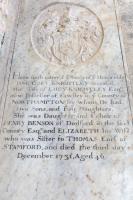
On 3rd December 1731 Jane Grey Benson [aged 47] died. Monument in St Mary's Church, Fawsley [Map].
Jane Grey Benson: After 1651 Lucius Knightley and she were married. The difference in their ages was 33 years. In 1684 she was born to Henry Benson of Dodford and Elizabeth Grey.
Jean de Waurin's Chronicle of England Volume 6 Books 3-6: The Wars of the Roses
Jean de Waurin was a French Chronicler, from the Artois region, who was born around 1400, and died around 1474. Waurin’s Chronicle of England, Volume 6, covering the period 1450 to 1471, from which we have selected and translated Chapters relating to the Wars of the Roses, provides a vivid, original, contemporary description of key events some of which he witnessed first-hand, some of which he was told by the key people involved with whom Waurin had a personal relationship.
Available at Amazon in eBook and Paperback format.
On 3rd December 1749 Charles Henry Sloane 2nd Earl Cadogan was baptised at St George's Church, Hanover Square.
On 3rd December 1755 Gilbert Stuart was born.
On 3rd December 1782 Henry William Pickersgill was born.

On 3rd December 1794 Charles Spencer-Churchill was born to George Spencer-Churchill 5th Duke of Marlborough [aged 28] and Susan Stewart Duchess of Marlborough [aged 27]. He married 1827 Etheldred Bennett and had issue.
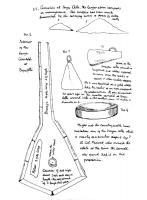
Ten Days Tour through Anglesey by John Skinner. 3rd December 1802. Accompanied by a young farmer who procured a lanthorn for the purpose we walked nearly a mile to the south east of the church to the spot where in Mr. Rowlands' time there were two carnedds [Bryn Celli Ddu Burial Mound [Map]] remaining having two rude stone pillars placed between them but these stones have been employed for the purpose of building a wall near this place as well as a great part (fol. 45.) of the western carnedd which is nearly destroyed for the same purpose about twenty years ago when the labourers when digging towards the center discovered a flat pan about ten inches over-turned bottom upwards and under it a wedge of gold as they pretend the size of the heater of an iron with a piece of wire passing through the smaller end of it. The father of the young man who was with us happened to be one of the workmen employed at the time, but as what they found was immediately taken by Colonel Peacock the proprietor of the ground the man could give no further account of the circumstance. I should imagine that what they called the wedge of gold was no other than one of the brazen celts or sacrificial instruments used in former times which have been discovered in great numbers in Cornwall and (fol. 46) other parts of the kingdom. Whilst a farmer was removing some of the stones from the north east side of the larger carnedd to employ them in his repairs he came to the mouth of a passage covered with a square stone similar to that at Plas Newydd, anxious to reap the fruits of his discovery he procured a light and crept forward on his hands and knees along the dreary vault, when lo! in a chamber at the further end a figure in white seemed to forbid his approach. The poor man had scarcely power sufficient to crawl backwards out of this den of spirits as he imagined however in the course of a few days instigated by the hopes of riches and the presence of many assistants he made his second entré into the cavern and finding the white gentleman did not offer to stir he boldly went (fol. 46a) forward and discovered the object of his apprehensions was no other than a stone pillar about six feet in height standing in the centre of the chamber. His former consternation could now only be exceeded by his eagerness to see what was contained beneath the stone which he shortly overturned but treasure there was none, some large human bones lying near the pillar sufficiently testifying the purpose for which the structure was intended. This is the substance of the account we received fromn the younger man whose father was one of Colonel Peacock's labourers and on the premises at the time of the discovery. The superstition of the common people still suppose this to be the habitation of spirits.
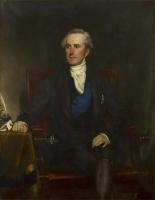
On 3rd December 1813 Charles Pelham Pelham-Clinton was born to Henry Pelham-Clinton 4th Duke Newcastle-under-Lyne [aged 28] and Georgiana Elizabeth Mundy Duchess Newcastle under Lyne [aged 24]. He a great x 4 grandson of King Charles II of England Scotland and Ireland.

On 3rd December 1830 Frederick Leighton 1st Baron Leighton was born to Frederic Leighton [aged 31] and Augusta Susan Nash [aged 25]. at Scarborough, North Yorkshire [Map].
On 3rd December 1838 Princess Louise of Prussia was born to William I King Prussia [aged 41]. She married 20th September 1856 her fourth cousin Frederick Grand Duke of Baden, son of Leopold Grand Duke of Baden and Princess Sophie of Sweden, and had issue.
On 3rd December 1839 Frederick VI King of Denmark and Norway [aged 71] died.
On 3rd December 1849 Marie Hanover was born to George V King Hanover [aged 30] and Marie Saxe Altenburg Queen Consort Hanover. She a great granddaughter of King George III of Great Britain and Ireland.
On 3rd December 1882 Bernhard II Duke of Saxe Meiningen [aged 81] died. His son Georg [aged 56] succeeded II Duke Saxe Meiningen.
On 3rd December 1888 Dorothy Beatrix Godolphin Osborne was born to George Godolphin Osborne 10th Duke Leeds [aged 26] and Katherine Frances Lambton Duchess Leeds [aged 26]. She married 21st November 1908 her fourth cousin once removed Patrick Bowes-Lyon 15th Earl Strathmore and Kinghorne, son of Claude Bowes-Lyon 14th Earl Strathmore and Kinghorne and Cecilia Nina Cavendish-Bentinck Countess of Strathmore and Kinghorne, and had issue.
On 3rd December 1915 Algernon Hanbury-Tracy [aged 44] died from wounds. He was buried at the Church of St Peter Petersham, Surrey. The inscription on his grave reads: "Sacred to the memory of Algernon Henry Charles Hanbury-Tracy CMG. Major Royal Horse Guards 2nd son of the 4th Baron Sudely and grandson of the Honourable Frederick Tollemache. Died Dec 3 1915 aged 44 years. Served his country with distinction in East Africa 1897-1899, South Africa 1899-1900, Somaliland 1901."
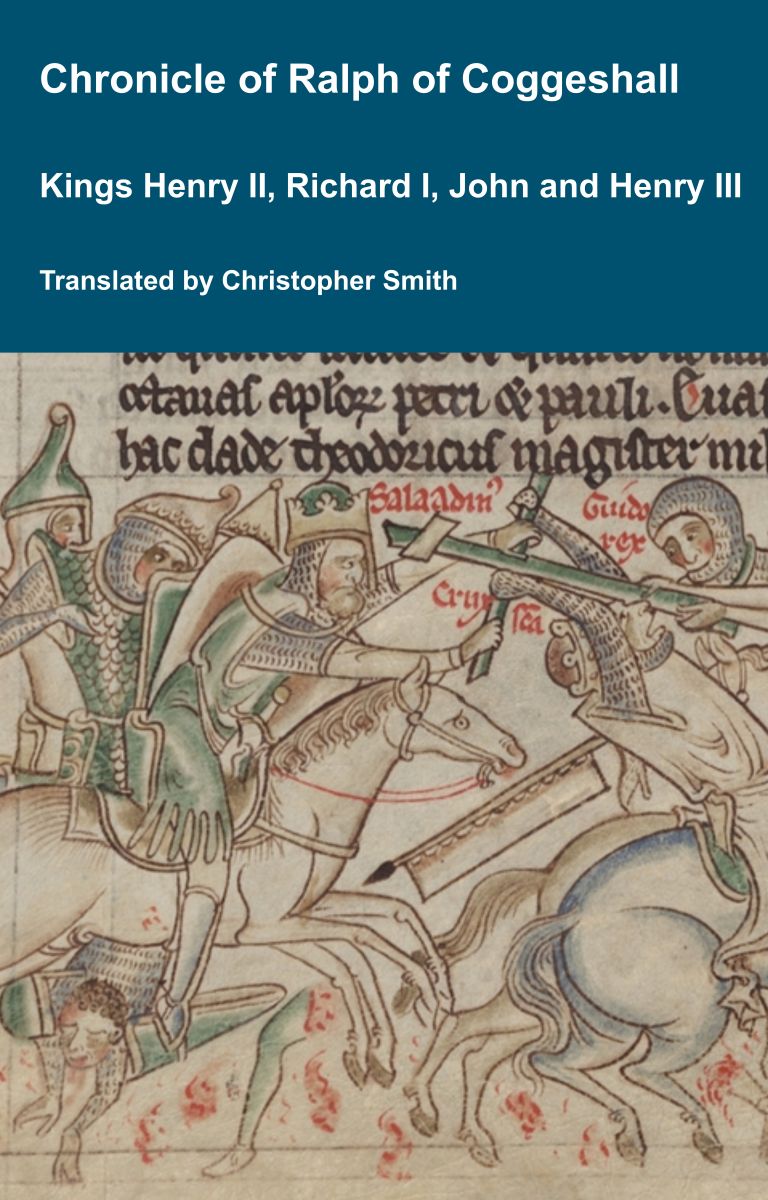
Chronicle of Abbot Ralph of Coggeshall
The Chronicle of Abbot Ralph of Coggeshall (Chronicon Anglicanum) is an indispensable medieval history that brings to life centuries of English and European affairs through the eyes of a learned Cistercian monk. Ralph of Coggeshall, abbot of the Abbey of Coggeshall in Essex in the early 13th century, continued and expanded his community’s chronicle, documenting events from the Norman Conquest of 1066 into the tumultuous reign of King Henry III. Blending eyewitness testimony, careful compilation, and the monastic commitment to record-keeping, this chronicle offers a rare narrative of political intrigue, royal power struggles, and social upheaval in England and beyond. Ralph’s work captures the reigns of pivotal figures such as Richard I and King John, providing invaluable insights into their characters, decisions, and the forces that shaped medieval rule. More than a simple annal, Chronicon Anglicanum conveys the texture of medieval life and governance, making it a rich source for scholars and readers fascinated by English history, monastic authorship, and the shaping of the medieval world.
Available at Amazon in eBook and Paperback format.
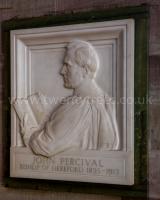
On 3rd December 1918 Bishop John Percival [aged 84] died. Monument sculpted by Allan Gairdner Wyon [aged 36] in the Choir of Hereford Cathedral [Map].
Bishop John Percival: On 27th September 1834 he was born in Brough Sowerby Kirkby Stephen. In January 1895 Bishop John Percival was elected Bishop of Hereford by Archibald Philip Primrose 5th Earl Rosebery 1st Earl Midlothian.

On 3rd December 1939 Princess Louise Caroline Alberta Windsor Duchess Argyll [aged 91] died.
On 3rd December 1946 Robert George Grosvenor 5th Duke Westminster [aged 36] and Viola Maud Lyttelton Duchess Westminster [aged 34] were married. They were second cousins.
On 3rd December 1946 Richard Hugh Barlow 6th Baronet [aged 42] died in a plane crash near Quito, Ecuador. His son Christopher [aged 17] succeeded 7th Baronet Barlow of Fort William in Bengal.

3rd December 1955. Nature. Obituaries. Source
Mr. Alexander Keiller.
ALEXANDER KEILLER, who died at the end of September at the age of sixty-five, was one of the long line of distinguished amateur British archæologists which goes back to Aubrey and Stukeley. Of these perhaps the greatest was Pitt-Rivers, on whom Keiller, like him with leisure and abundant means at his disposal, admittedly modelled his own work.
While still in his early thirties, Keiller carried out a systematic survey of stone circles and allied monuments in north-east Scotland, making accurate plans and detailed descriptions of each site. A summary account of this work was presented as a paper to the British Association at its Aberdeen meeting in 1934.
In 1925, however, he embarked on the programme of excavation and field-work with which his name will be inseparably associated. He acquired and began excavations on Windmill Hill, near Avebury in north Wiltshire, and continued these annually until 1929, revealing in detail the first extensive Neolithic settlement to be explored in Britain. The material was housed in a museum in his London house, where it was at the disposal of students, and as a result the earliest Neolithic culture of southern Britain, taking its name from the type-site, was defined and clarified.
From Windmill Hill to the Avebury monuments themselves was an inevitable step, and in 1933 Keiller began a systematic excavation programme with the oxarnination of the northern part of the West Kennet Circle itself. Avenue, continuing until 1938 within the Great Circle itself. He moved his residence to Avebury Manor, and re-housed his museum within its grounds, making it and the excavated portions of the monument available to the public. He adopted a policy of imaginative but judicious conservation and, restoration of the Avebury monuments, and systematically purchased land to preserve these and their surroundings; as a result it was eventually possible for the whole area to be acquired by the National Trust and the Ancient Monuments Department of the Ministry of Works.
Keiller's outstanding contribution to contemporary British archreology was his insistence on high standards of discipline and accuracy in excavation and field-work, and his realization from the first of the value of scientific techniques as applied to archreo logical material. He early appreciated the potential ities of air photography, collaborating with Crawford in the "Wessex from the Air" survey, and even discussing with Eckener the possibility of using the Graf Zeppelin for a similar but even more ambitious scheme. At Windmill Hill he insisted on a full study of the faunal and floral remains in their archreological context. But above all it is to Keiller that we owe the inception of the systematic study of British prehistoric stone artefacts by petrographical means, which, following his lead, is now yielding information of the highest importance on manufacture and trade in the early second millennium B.C. Alec Keiller was an enthusiast in the best sense; full of ideas, stimulating and highly individual. Archæology, like other academic disciplines, can only benefit from the impact of such men.
STUART PIGGOTT [aged 45]
On 3rd December 2024 Channel Five broadcast "Princes in the Tower: A Damning Discovery" in which historian Tracey Borman and actor Jason Watkins presented Professor Tim Thornton's discovery of the will of Margaret Arudell, sister of the Anne, wife of James Tyrrell [who Thomas More and others describe as arranging the murder of the Princes], which includes "Also, I bequeath to my son, Sir Giles, his father's chain which was young King Edward the V's".
Curiously the "Discovery" the programme reveals i.e. the Will of Margaret Capell, was previously shared in Testamenta Vetusta in 1826 and the Transactions of the Essex Archaeological Society in 1852.
Further, the programme, unfortunately, doesn't cite the sources that it refers to. The following list attempts to address that short-coming, with times at which the refences were used:
19:13. Describing James Tyrrell as "was a man of right goodly personage .... an high hart" from Grafton's Chronicle.
22:02. Describing the Richard, Duke of Gloucester's role in the death of King Henry VI: "A number of authorities".
Memoirs of Philip de Commines Book 3 Chapter VII.
24:10. Describing how the Princes were declared illegitimate author Nathen Amin quotes Mancini's "The Usurpation of King Richard III".
30:34. Report from John Argentine as to King Edward V's state of mind "as if a victim prepared for sacrifice" being The Usurpation of Richard III by Mancini [originally in Latin].
31:28. Describing how Edward and his brother "being withdrawn into the inner apartments of the Tower proper"; the programme assumes the Tower proper is the White Tower i.e. Keep . Also The Usurpation of Richard III by Mancini [originally in Latin]. Mancini makes no mention of a "24 hour guard" being placed over them. However, the Croyland Chronicle has: "In the meantime, and while these things were going on, the two sons of king Edward before-named remained in the Tower of London, in the custody of certain persons appointed for that purpose."
36:00. Discovery of bones in the White Tower: "Witnesses reported there was velvet in the chest". Alison Weir states "the bones were discovered with pieces of rag and velvet about them" but doesn't quote a source. The programme then refers to an entry for the 17th of August 1481 in the The Wardrobe Accounts of King Edward IV in which "velvet" is provided for the Princes.
37:00. Bones analysis. No sources found. Analysis based on 'average', 'typical'. Programme refers to the Prince's father King Edward IV being "very tall". See Chronicle of Jean Molinet Chapter 94: "a very elegant figure, tall and upright". But then his brother King Richard III wasn't?
43:55. The History of King Richard the Third by Thomas More: "that within a while, smothered and stifled, their breath failing, they gave up to God their innocent souls into the joys of heaven".
50:31. Tyrrell's Confession. The History of King Richard the Third by Thomas More: "both Dighton and he were examined and confessed the murder in manner above written, but to where the bodies were removed, they could nothing tell".
51:12. King Henry VII's and Queen Elizabeth's movements in 1502. "at the Tower 27th April to 2nd May". Chamber Books:
Item the 29 day of May to Lewes Waltier for conveyeng the Queen in her Barge with 21 Rowers from Greenwich to the Tower the 27 day of April
Item the 2 day of May conveyeng the Queen from the Tower to Greenwich with 21 Rowers.
52:30. Queen Elizabeth visits her sister. Chamber Books1: "Item the 3rd day of May to the Queen's purse by the hands of Henry Pole at Greenwich 10s. Item to John Williams, Thomas Nelmes, Hugh Dolbyn, Edward Davy and John Fitzwilliams to every of them 3s 4d in Reward for geuyng attendance at the house of the duchess of Suffolk at Stebenhith [Stepney] 16s 8d Elysabeth". [Note. Queen Elizabeth's aunt Elizabeth, Duchess Suffolk, 1444-1503, sister of Kings Edward IV and Richard III.]
55:39. Professor Tim Thornton. Letter from Thomas More. See The English Correspondence of Sir Thomas More:
13. Knight, More, Wilsher, Sampson, Hannibal, Hewsten to Wolsey. Bruges, 1 October 1515: "sent unto your Grace by M. Forest,"
77. To Wolsey. Woking, 5 July [1519] To My Lord Legate's Grace: "that yesternight the King's Grace commanded me to deliver unto your servant Forest".
57.32. Will of Margaret Capell nee Arundel, sister of James Tyrrell's wife Anne Arundel: "also I bequeath to son Sir Giles his father's chain which was young King Edward V's".
Note 1. The Chamber Books also contain numerous references to Sir William Capell including "Item to Sir William Capell knight for money by him lent to the Queen's grace £100".
On 3rd December 1368 Charles "Beloved Mad" VI King France was born to King Charles V of France [aged 30] and Joanna Bourbon Queen Consort France [aged 30]. He a great x 4 grandson of King Henry III of England. Coefficient of inbreeding 3.60%. He married 17th July 1385 his third cousin once removed Isabeau Wittelsbach Queen Consort France, daughter of Stephen "Magnificient Fop" Wittelsbach III Duke Bavaria and Taddea Visconti Duchess Bavaria, and had issue.
On 3rd December 1382 Robert Poynings 4th Baron Poynings was born to Richard Poynings 3rd Baron Poynings [aged 23] and Isabel Grey Baroness Poynings at Okeford Fitzpaine, Dorset. He married (1) before 22nd October 1397 his half sixth cousin Eleanor Grey Baroness Poynings, daughter of Reginald Grey 3rd Baron Grey Ruthyn and Margaret Ros Baroness Grey Ruthyn, and had issue (2) June 1434 Margaret Squery Baroness Poynings and had issue.
On 3rd December 1572 Edward Fitton 1st Baronet was born to Edward Fitton [aged 24] and Alice Holcroft [aged 32]. He married before 1594 Anne Barratt and had issue.
On 3rd December 1585 Bishop Matthew Wren was born.
On 3rd December 1595 Henry Ley 2nd Earl of Marlborough was born to James Ley 1st Earl of Marlborough [aged 43] and Mary Pettie. He married before 28th January 1618 Mary Capell.
On 3rd December 1674 Elizabeth Cromwell was born to Vere Essex Cromwell 4th Earl Ardglass [aged 49]. She married in or before 1705 Edward Southwell and had issue.
On 3rd December 1693 Richard Francis Shireburn was born to Nicholas Shireburn 1st Baronet [aged 35]. He died aged eight in 1702.

On 3rd December 1704 John Lee was born to Edward Lee 1st Earl Lichfield [aged 41] and Charlotte Fitzroy Countess Lichfield [aged 40]. He a grandson of King Charles II of England Scotland and Ireland.
Henrici Quinti, Angliæ Regis, Gesta, is a first-hand account of the Agincourt Campaign, and subsequent events to his death in 1422. The author of the first part was a Chaplain in King Henry's retinue who was present from King Henry's departure at Southampton in 1415, at the siege of Harfleur, the battle of Agincourt, and the celebrations on King Henry's return to London. The second part, by another writer, relates the events that took place including the negotiations at Troye, Henry's marriage and his death in 1422.
Available at Amazon in eBook and Paperback format.
On 3rd December 1718 Webb Seymour 10th Duke of Somerset was born to Edward Seymour 8th Duke of Somerset [aged 23] and Mary Webb Duchess Somerset [aged 21]. He married 15th December 1769 Anne Maria Bonnell Duchess Somerset and had issue.
On 3rd December 1744 Brownlow Cust 1st Baron Brownlow was born to John Cust 3rd Baronet [aged 26] and Etheldreda Payne Lady Cust [aged 24]. He married (1) 16th October 1770 Jocosa Drury Lady Cust, daughter of Thomas Drury 1st Baronet and Martha Tyrrell Lady Drury, and had issue (2) 1775 Frances Bankes Baroness Brownlow and had issue.


On 3rd December 1745 John Toler 1st Earl of Norbury was born to Daniel Toler and Letitia Otway at Beechwood, Nenagh. He married 1778 Grace Graham and had issue.
On 3rd December 1755 Gilbert Stuart was born.
On 3rd December 1771 Henry Augustus Seymour was born illegitimately to Francis Ingram Seymour-Conway 2nd Marquess Hertford [aged 28]. He a great x 3 grandson of King Charles II of England Scotland and Ireland.
On 3rd December 1772 John Osborn 5th Baronet was born to George Osborn 4th Baronet [aged 30] and Elizabeth Bannister [aged 26]. He married in or before 1813 Frederica Louisa Davers, daughter of Charles Davers 6th Baronet, and had issue.
On 3rd December 1778 Louisa Martha Stratford was born to John Stratford 3rd Earl Aldborough [aged 38] and Elizabeth Hamilton Countess Aldborough [aged 21]. She married 19th October 1799 John Rodney, son of George Brydges Rodney 1st Baron Rodney.
On 3rd December 1782 Henry William Pickersgill was born.
On 3rd December 1794 Berkeley Octavius Noel was born to Gerard Edwardes aka Noel 2nd Baronet [aged 35] and Diana Middleton 2nd Baroness Barham [aged 32]. He married 22nd June 1820 Letitia Penelope Adderley and had issue.
On 3rd December 1794 Charles Spencer-Churchill was born to George Spencer-Churchill 5th Duke of Marlborough [aged 28] and Susan Stewart Duchess of Marlborough [aged 27]. He married 1827 Etheldred Bennett and had issue.
On 3rd December 1813 Charles Pelham Pelham-Clinton was born to Henry Pelham-Clinton 4th Duke Newcastle-under-Lyne [aged 28] and Georgiana Elizabeth Mundy Duchess Newcastle under Lyne [aged 24]. He a great x 4 grandson of King Charles II of England Scotland and Ireland.
On 3rd December 1817 Gwendoline Catherine Talbot was born to John Talbot 16th Earl of Shrewsbury [aged 26] and Maria Theresa Talbot Countess Shrewsbury and Waterford at Cheltenham, Gloucestershire.
Adam Murimuth's Continuation and Robert of Avesbury’s 'The Wonderful Deeds of King Edward III'
This volume brings together two of the most important contemporary chronicles for the reign of Edward III and the opening phases of the Hundred Years’ War. Written in Latin by English clerical observers, these texts provide a vivid and authoritative window into the political, diplomatic, and military history of fourteenth-century England and its continental ambitions. Adam Murimuth Continuatio's Chronicarum continues an earlier chronicle into the mid-fourteenth century, offering concise but valuable notices on royal policy, foreign relations, and ecclesiastical affairs. Its annalistic structure makes it especially useful for establishing chronology and tracing the development of events year by year. Complementing it, Robert of Avesbury’s De gestis mirabilibus regis Edwardi tertii is a rich documentary chronicle preserving letters, treaties, and official records alongside narrative passages. It is an indispensable source for understanding Edward III’s claim to the French crown, the conduct of war, and the mechanisms of medieval diplomacy. Together, these works offer scholars, students, and enthusiasts a reliable and unembellished account of a transformative period in English and European history. Essential for anyone interested in medieval chronicles, the Hundred Years’ War, or the reign of Edward III.
Available at Amazon in eBook and Paperback format.
On 3rd December 1820 John Duke Coleridge 1st Baron Coleridge was born to John Taylor Coleridge [aged 30] and Mary Buchanan [aged 32]. He married (1) 11th August 1846 Jane Fortescue Seymour Baroness Coleridge and had issue (2) 13th August 1885 Amy Augusta Jackson Lawford Baroness Coleridge.
On 3rd December 1824 George William Fermor 5th Earl Pomfret was born to Thomas Fermor 4th Earl Pomfret [aged 54] and Amabel Borough [aged 24].
On 3rd December 1830 Frederick Leighton 1st Baron Leighton was born to Frederic Leighton [aged 31] and Augusta Susan Nash [aged 25]. at Scarborough, North Yorkshire [Map].
On 3rd December 1833 John Aird 1st Baronet was born to John Aird Mason [aged 27]. He married 6th September 1855 Sarah Smith of Lewisham Lady Aird and had issue.
On 3rd December 1838 Edward Henry Gervase Stracey 6th Baronet was born to Henry Josias Stracey 5th Baronet [aged 36]. He married 28th April 1870 Mary Gertrude des Voeux Lady Stracey, daughter of Charles Des Voeux 2nd Baronet and Christina Hird, and had issue.
On 3rd December 1838 Princess Louise of Prussia was born to William I King Prussia [aged 41]. She married 20th September 1856 her fourth cousin Frederick Grand Duke of Baden, son of Leopold Grand Duke of Baden and Princess Sophie of Sweden, and had issue.
On 3rd December 1841 Archibald Montgomerie 14th Earl of Eglinton was born to Archibald William Montgomerie 13th Earl Eglinton [aged 29] and Theresa Howe Newcomen [aged 32]. He married 6th December 1862 Sophia Anderson-Pelham Countess Eglinton, daughter of Charles Anderson-Pelham 2nd Earl Yarborough and Maria Adelaide Maude Countess Yarborough.
On 3rd December 1849 Marie Hanover was born to George V King Hanover [aged 30] and Marie Saxe Altenburg Queen Consort Hanover. She a great granddaughter of King George III of Great Britain and Ireland.
On 3rd December 1859 Ronald Jervis 6th Viscount St Vincent was born to Carnegie Jervis 3rd Viscount St Vincent [aged 34].
On 3rd December 1863 Dudley McGarel-Hogg 3rd Baron Magheramorne was born to James McGarel-Hogg 1st Baron Magheramorne [aged 40] and Caroline Elizabeth Emma Douglas-Pennant.
On 3rd December 1865 Maurice Colborne Boileau 3rd Baronet was born to Francis George Manningham Boileau 2nd Baronet [aged 35] and Lucy Henrietta Nugent Lady Boileau.
On 3rd December 1878 Edith Chaplin Marchioness Londonderry was born to Henry Chaplin 1st Viscount Chaplin [aged 37] and Florence Sutherland Leveson-Gower [aged 23]. She married 28th November 1899 Charles Vane-Tempest-Stewart 7th Marquess of Londonderry, son of Charles Stewart Vane-Tempest-Stewart 6th Marquess Londonderry and Theresa Susey Helen Chetwynd-Talbot Marchioness Londonderry, and had issue.


On 3rd December 1883 Claud Lambton was born to Frederick Lambton 4th Earl Durham [aged 28] and Beatrix Bulteel Countess Durham [aged 24]. Coefficient of inbreeding 1.57%.
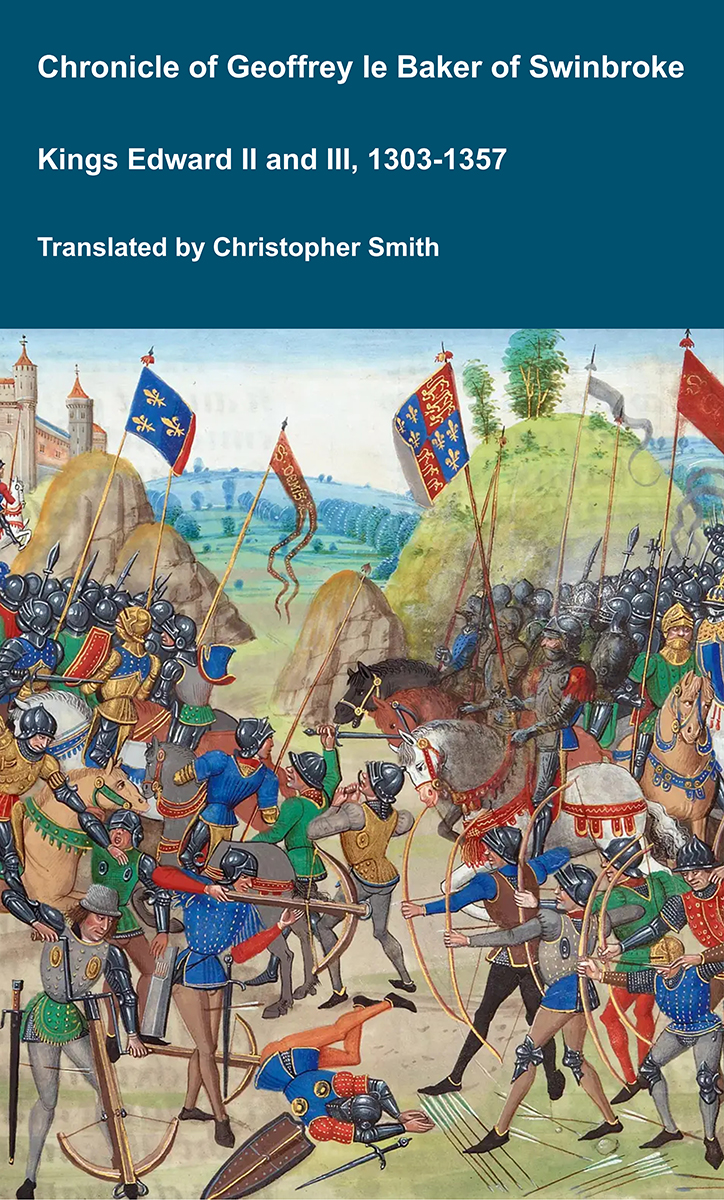
Chronicle of Geoffrey le Baker of Swinbroke
Baker was a secular clerk from Swinbroke, now Swinbrook, an Oxfordshire village two miles east of Burford. His Chronicle describes the events of the period 1303-1356: Gaveston, Bannockburn, Boroughbridge, the murder of King Edward II, the Scottish Wars, Sluys, Crécy, the Black Death, Winchelsea and Poitiers. To quote Herbert Bruce 'it possesses a vigorous and characteristic style, and its value for particular events between 1303 and 1356 has been recognised by its editor and by subsequent writers'. The book provides remarkable detail about the events it describes. Baker's text has been augmented with hundreds of notes, including extracts from other contemporary chronicles, such as the Annales Londonienses, Annales Paulini, Murimuth, Lanercost, Avesbury, Guisborough and Froissart to enrich the reader's understanding. The translation takes as its source the 'Chronicon Galfridi le Baker de Swynebroke' published in 1889, edited by Edward Maunde Thompson.
Available at Amazon in eBook and Paperback format.
On 3rd December 1888 Dorothy Beatrix Godolphin Osborne was born to George Godolphin Osborne 10th Duke Leeds [aged 26] and Katherine Frances Lambton Duchess Leeds [aged 26]. She married 21st November 1908 her fourth cousin once removed Patrick Bowes-Lyon 15th Earl Strathmore and Kinghorne, son of Claude Bowes-Lyon 14th Earl Strathmore and Kinghorne and Cecilia Nina Cavendish-Bentinck Countess of Strathmore and Kinghorne, and had issue.
On 3rd December 1908 Ismay Hilda Margaret Fitzroy was born to Charles Fitzroy 4th Baron Southampton [aged 41] and Hilda Mary Dundas Baroness Southampton [aged 36].
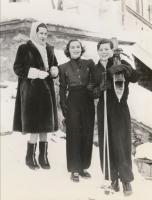
On 3rd December 1925 Robin Plunket 8th Baron Plunket was born to Terence Plunket 6th Baron Plunket [aged 26] and Dorothé Mabel Lewis [aged 25]. He married 8th November 1951 Jennifer Southwell.
On 3rd December 1949 Anthony Robert Hugo Gerard 5th Baron Gerard was born to Major Rupert Charles Frederick Gerard.
On 3rd December 1953 Charles Anthony Assheton Harbord-Hamond 12th Baron Suffield was born to Anthony Philip Harbord-Hamond 11th Baron Suffield [aged 31]. He married 1999 Emma Williams Baroness Suffield.

On 3rd December 1720 William Byron 4th Baron Byron [aged 50] and Frances Berkeley Baroness Byron [aged 17] were married. She by marriage Baroness Byron of Rochdale in Lancashire. His third marriage. Arranged by her father William Berkeley 4th Baron Berkeley [aged 57] who described the age difference as being "disproportionate". The difference in their ages was 33 years.
On 3rd December 1779 Thomas Hanmer 2nd Baronet [aged 32] and Margaret Kenyon Lady Hanmer were married.
On 3rd December 1794 Thomas Baring 2nd Baronet [aged 22] and Mary Ursula Sealy Lady Baring [aged 20] were married in Calcutta, India.
On 3rd December 1827 John Gerard 12th Baronet [aged 22] and Monica Strickland-Standish [aged 22] were married. She by marriage Lady Gerard of Bryn in Lancashire.
On 3rd December 1946 Robert George Grosvenor 5th Duke Westminster [aged 36] and Viola Maud Lyttelton Duchess Westminster [aged 34] were married. They were second cousins.
Chronicle of Abbot Ralph of Coggeshall
The Chronicle of Abbot Ralph of Coggeshall (Chronicon Anglicanum) is an indispensable medieval history that brings to life centuries of English and European affairs through the eyes of a learned Cistercian monk. Ralph of Coggeshall, abbot of the Abbey of Coggeshall in Essex in the early 13th century, continued and expanded his community’s chronicle, documenting events from the Norman Conquest of 1066 into the tumultuous reign of King Henry III. Blending eyewitness testimony, careful compilation, and the monastic commitment to record-keeping, this chronicle offers a rare narrative of political intrigue, royal power struggles, and social upheaval in England and beyond. Ralph’s work captures the reigns of pivotal figures such as Richard I and King John, providing invaluable insights into their characters, decisions, and the forces that shaped medieval rule. More than a simple annal, Chronicon Anglicanum conveys the texture of medieval life and governance, making it a rich source for scholars and readers fascinated by English history, monastic authorship, and the shaping of the medieval world.
Available at Amazon in eBook and Paperback format.
On 3rd December 1997 Charles Spencer 9th Earl Spencer [aged 33] and Catherine Lockwood Countess Spencer [aged 32] were divorced.
On 3rd December 649 or 3rd December 650 Bishop Birinus of Dorchester died.
On 3rd December 1099 Bishop Osmund 1st Earl Dorset died. Earl Dorset extinct. He was buried at Old Sarum [Map].
On 3rd December 1157 Malfada Savoy Queen Consort Portugal [aged 32] died.
On 3rd December 1351 William Ros 3rd Baron Ros Helmsley [aged 22] died. His brother Thomas [aged 16] succeeded 4th Baron Ros Helmsley and inherited Belvoir Castle [Map]. Beatrice Stafford Countess Desmond [aged 10] by marriage Baroness Ros Helmsley.
On 3rd December 1403 Roger Scrope 2nd Baron Scrope of Bolton [aged 34] died at Bolton, Lancashire. He was buried at Easby Abbey, Yorkshire [Map]. His son Richard [aged 10] succeeded 3rd Baron Scrope of Bolton. Margaret Neville Baroness Scrope Bolton by marriage Baroness Scrope of Bolton.
On 3rd December 1600 Roger North 2nd Baron North [aged 70] died. His grandson Dudley [aged 18] succeeded 3rd Baron North.

On 3rd December 1668 William Cecil 2nd Earl Salisbury [aged 77] died. His grandson James [aged 20] succeeded 3rd Earl Salisbury. Margaret Manners Countess of Salisbury by marriage Countess Salisbury.
On 3rd December 1691 Katherine Boyle Viscountess Ranelagh [aged 76] died.

On 3rd December 1737 Mary Wilbraham Countess Bradford [aged 76] died in High Ercall, Shropshire. She was buried in Weston Park, Staffordshire.
On 3rd December 1749 Charles Carrington Hungate 6th Baronet [aged 63] died at Blacksburg, Montgomery County. Baronet Hungate of Saxton in Yorkshire extinct.

On 3rd December 1800 George de la Poer Beresford 1st Marquess Waterford [aged 65] died. His son Henry [aged 28] succeeded 2nd Marquess Waterford.
Abbot John Whethamstede’s Chronicle of the Abbey of St Albans
Abbot John Whethamstede's Register aka Chronicle of his second term at the Abbey of St Albans, 1451-1461, is a remarkable text that describes his first-hand experience of the beginning of the Wars of the Roses including the First and Second Battles of St Albans, 1455 and 1461, respectively, their cause, and their consequences, not least on the Abbey itself. His text also includes Loveday, Blore Heath, Northampton, the Act of Accord, Wakefield, and Towton, and ends with the Coronation of King Edward IV. In addition to the events of the Wars of the Roses, Abbot John, or his scribes who wrote the Chronicle, include details in the life of the Abbey such as charters, letters, land exchanges, visits by legates, and disputes, which provide a rich insight into the day-to-day life of the Abbey, and the challenges faced by its Abbot.
Available at Amazon in eBook and Paperback format.
On 3rd December 1820 Mary Berwick Lady Lechmere died. She was buried at St Mary's Church, Hanley Castle [Map] on 11th December 1820.
On 3rd December 1831 Carnaby Haggerston 5th Baronet [aged 75] died. His nephew Thomas [aged 46] succeeded 6th Baronet Haggerston of Haggerston Castle in Northumberland.
On 3rd December 1833 Pownoll Bastard Pellew 2nd Viscount Exmouth [aged 47] died. His son Edward [aged 22] succeeded 3rd Viscount Exmouth, 3rd Baron Exmouth of Canonteign, 3rd Baronet Pellew of Treverry in Cornwall.
On 3rd December 1837 Charles Douglas 6th Marquess Queensberry [aged 60] died. His brother John [aged 58] succeeded 7th Marquess Queensberry, 9th Earl Queensberry, 8th Lord Douglas Hawick, 6th Lord Drumlanrig, 6th Baronet Kelhead. Sarah Douglas Marchioness Queensbury by marriage Marchioness Queensberry.
On 3rd December 1839 Frederick VI King of Denmark and Norway [aged 71] died.
On 3rd December 1842 Mary Wyndham Countess Munster [aged 50] died.
On 3rd December 1847 Frances Margaret Hughes Baroness Gardner [aged 33] died.
On 3rd December 1875 Guy Carleton 3rd Baron Dorchester [aged 64] died. His first cousin Dudley [aged 53] succeeded 4th Baron Dorchester of Dorchester in Oxfordshire. Charlotte Hobhouse Baroness Dorchester1831-1914 [aged 44] by marriage Baroness Dorchester of Dorchester in Oxfordshire.
On 3rd December 1882 Bernhard II Duke of Saxe Meiningen [aged 81] died. His son Georg [aged 56] succeeded II Duke Saxe Meiningen.
On 3rd December 1883 Matthew Blakiston 4th Baronet [aged 72] died unmarried at Sandybrook Cottage, Ashbourne. His nephew Horace [aged 22] succeeded 5th Baronet Blakiston of the City of London.
Henrici Quinti, Angliæ Regis, Gesta, is a first-hand account of the Agincourt Campaign, and subsequent events to his death in 1422. The author of the first part was a Chaplain in King Henry's retinue who was present from King Henry's departure at Southampton in 1415, at the siege of Harfleur, the battle of Agincourt, and the celebrations on King Henry's return to London. The second part, by another writer, relates the events that took place including the negotiations at Troye, Henry's marriage and his death in 1422.
Available at Amazon in eBook and Paperback format.
On 3rd December 1890 Thomas Fremantle 1st Baron Cottesloe [aged 92] died. His son Thomas [aged 60] succeeded 2nd Baron Cottesloe of Swanbourne and Hardwick in Buckinghamshire, 2nd Baronet Fremantle of Swanborne in Buckinghamshire. Augusta Scott by marriage Augusta Henrietta Scott Baroness Cottesloe.
On 3rd December 1891 William Harry Hay 19th Earl Erroll [aged 68] died. His son Charles [aged 39] succeeded 20th Earl Erroll. Mary Caroline L'Estrange Countess of Erroll by marriage Countess Erroll.
On 3rd December 1898 David Stuart Erskine 13th Earl of Buchan [aged 83] died. His son Shipley [aged 48] succeeded 14th Earl Buchan.
On 3rd December 1901 George Bannerman 10th Baronet [aged 74] died. His son Alexander [aged 29] succeeded 11th Baronet Bannerman of Elsick in Kincardineshire.
On 3rd December 1903 John Dalrymple 10th Earl of Stair [aged 84] died. His son John [aged 55] succeeded 11th Earl of Stair.
On 3rd December 1916 Sophia Hobhouse Countess Roden died.
On 3rd December 1918 Bishop John Percival [aged 84] died. Monument sculpted by Allan Gairdner Wyon [aged 36] in the Choir of Hereford Cathedral [Map].
Bishop John Percival: On 27th September 1834 he was born in Brough Sowerby Kirkby Stephen. In January 1895 Bishop John Percival was elected Bishop of Hereford by Archibald Philip Primrose 5th Earl Rosebery 1st Earl Midlothian.
On 3rd December 1919 Thomas Grey 6th Baron Walsingham [aged 76] died. His half brother John [aged 70] succeeded 7th Baron Walsingham of Walsingham in Norfolk.
On 3rd December 1935 Grace Ellen Burton Lady Denys died.
On 3rd December 1939 Princess Louise Caroline Alberta Windsor Duchess Argyll [aged 91] died.
Adam Murimuth's Continuation and Robert of Avesbury’s 'The Wonderful Deeds of King Edward III'
This volume brings together two of the most important contemporary chronicles for the reign of Edward III and the opening phases of the Hundred Years’ War. Written in Latin by English clerical observers, these texts provide a vivid and authoritative window into the political, diplomatic, and military history of fourteenth-century England and its continental ambitions. Adam Murimuth Continuatio's Chronicarum continues an earlier chronicle into the mid-fourteenth century, offering concise but valuable notices on royal policy, foreign relations, and ecclesiastical affairs. Its annalistic structure makes it especially useful for establishing chronology and tracing the development of events year by year. Complementing it, Robert of Avesbury’s De gestis mirabilibus regis Edwardi tertii is a rich documentary chronicle preserving letters, treaties, and official records alongside narrative passages. It is an indispensable source for understanding Edward III’s claim to the French crown, the conduct of war, and the mechanisms of medieval diplomacy. Together, these works offer scholars, students, and enthusiasts a reliable and unembellished account of a transformative period in English and European history. Essential for anyone interested in medieval chronicles, the Hundred Years’ War, or the reign of Edward III.
Available at Amazon in eBook and Paperback format.
On 3rd December 1945 Selina Louise Grace Dundas Lady Harington [aged 71] died.
On 3rd December 1946 Richard Hugh Barlow 6th Baronet [aged 42] died in a plane crash near Quito, Ecuador. His son Christopher [aged 17] succeeded 7th Baronet Barlow of Fort William in Bengal.
On 3rd December 1966 Edward Knollys 2nd Viscount Knollys [aged 71] died. His son David [aged 35] succeeded 3rd Viscount Knollys of Caversham in Oxfordshire, 3rd Baron Knollys of Caversham in Oxfordshire.
On 3rd December 1980 Oswald Mosley 6th Baronet [aged 84] died. His son Nicholas [aged 57] succeeded 7th Baronet Mosley of Ancoats.
On 3rd December 2012 Geoffrey Adam Shakerley 6th Baronet [aged 79] died. His son Nicholas [aged 48] succeeded 7th Baronet Shakerley of Somerford-Park in Cheshire.