

04 Jul is in July.
1360 Release of King John II of France
1455 First Battle of St Albans
1528 Sweating Sickness Outbreak
1535 Execution of Bishop Fisher and Thomas More
1551 Sweating Sickness Outbreak
On 4th July 673 King Ecgberht I of Kent died. His son Eadric succeeded King of Kent.
Anglo-Saxon Chronicle. 1060. This year was a great earthquake on the Translation of St. Martin, and King Henry [aged 52] died in France. Kinsey, Archbishop of York, died on the eleventh before the calends of January; and he lies at Peterboorugh [Map]. Bishop Aldred succeeded to the see, and Walter to that of Herefordshire. Dudoc also died, who was Bishop of Somersetshire; and Gisa the priest was appointed in his stead.
Chronicle of William Nangis. In festo beati Martini æstivalis (2), dum Fulco rex Jerosolymitanus venatum iret et leporem sequeretur, equo cespitante ruens mortuus est per miraculum rupto collo. Ipse enim, [ut tradunt aliqui], antequam esset rex Jerusalem, quamdiu comitatum Andegavensem tenuit, ecclesiam beati Martini [Turonensis] in quantum potuit infestavit. Quo ita mortuo, Balduinus tercius (3), íìlius ejus, cum matre [Milisande regina] regnavit. MCXLIV.
On the feast of Saint Martin [4th July 1143] in summer, while Fulk, king of Jerusalem, was going hunting and pursuing a hare, his horse stumbled and he fell and died, his neck being broken by a miraculous accident. For he, as some relate, before he became king of Jerusalem, while he held the county of Anjou, had troubled the church of Saint Martin of Tours as much as he could. After he had thus died, Baldwin III, his son, reigned with his mother, Queen Melisende.
On 4th July 1187 the Battle of Hattin took place on 4 July 1187, between the Crusader states of the Levant and the forces of the Ayyubid sultan Saladin. The Muslim armies captured or killed the majority of the Crusader forces resulting in the Muslims once again becoming the pre-eminent military power in the Holy Land, re-capturing Jerusalem and most of the other Crusader-held cities and castles.
Raynald of Châtillon [aged 63] was captured during the battle and personally beheaded by Saladin after he refused to convert to Islam.
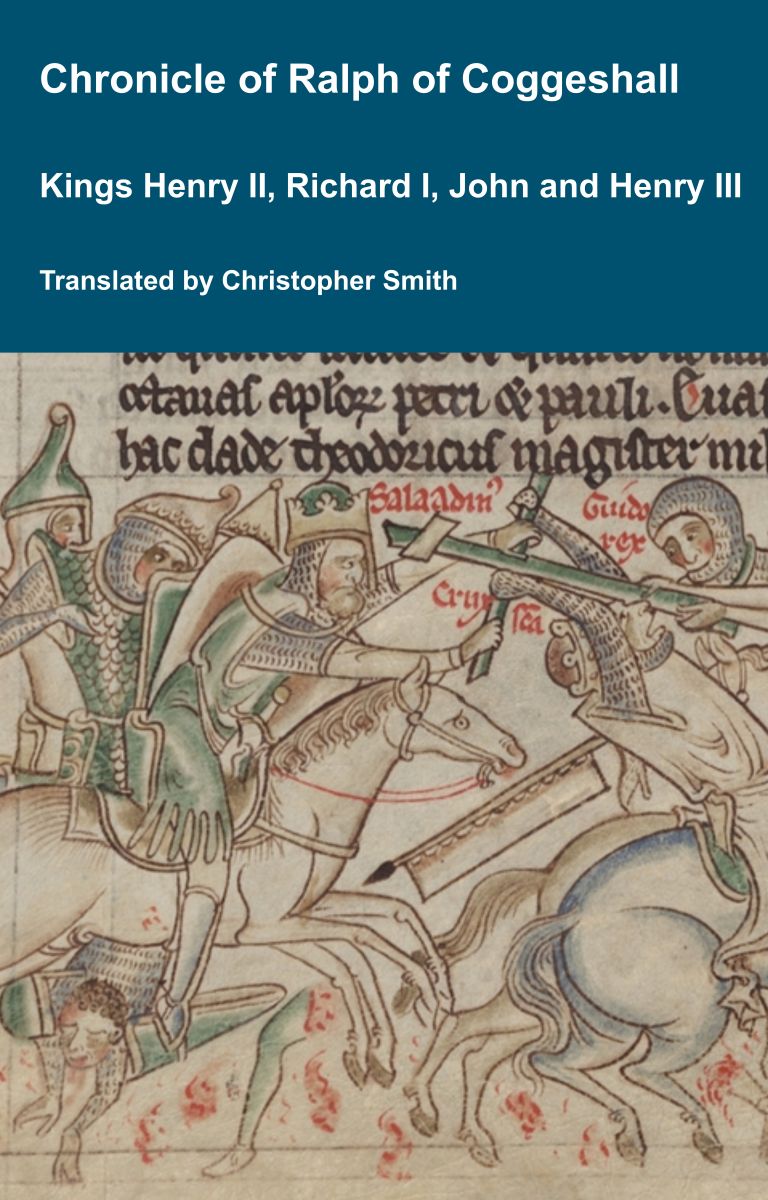 Chronicum Anglicanum by Ralph Coggeshall. In this year [4th July 1187] Saladin attacked the army of the Christians, which, worn out by a laborious march and weighed down by the excessive heat, with water entirely lacking, he defeated in a place called Marescaucie, which is three miles distant from the city of Tiberias. Then six of King Guy's knights fled to Saladin and informed him of everything and of the plans of the Christians. Whereupon Saladin, who had previously doubted the outcome of the battle, regained confidence, and with an innumerable multitude of warriors he attacked the Christians with every form of combat and defeated them. At last Taqi al-Din, nephew of Saladin, captured King Guy of Jerusalem as he attempted to flee, together with the Cross of the Lord's wood, after Rufinus, bishop of Acre, who against custom had carried it while clad in armour, was killed. And this by the just judgment of God, because he had placed his confidence more in earthly arms than in heavenly. Prince Reynald [of Châtillon] was killed there; Roger de Mowbray and Hugh de Beauchamp were captured, with many nobles besides; and almost the whole Christian army was shattered, captured, and slaughtered by the Saracens. But the count of Tripoli with a few others escaped unharmed by flight.
Hoc anno Saláádini exercitus Christianorum exercitum, laborioso itinere confectum et nimio caloris æstu prægravatum, aqua omnino deficiente, expugnavit in loco qui dicitur Marescaucie, qui locus distat a civitate Tyberiadis tribus millibus. Tunc sex ex militibus regis Guidonis ad Saláádinum confugerunt, et de omni re et proposito Christianorum eum instruxerunt. Unde Saláádinus, qui antea de discrimine belli dubitabat, resumpsit vires, et cum infinita multitudine bellatorum Christianos omni genere pugnandi invasit et expugnavit. Tandem Tekedinus, nepos Saláádini, Guidonem regem Hierusalem fugam arripientem cepit cum Cruce Dominici ligni, interfecto Rufino episcopo de Achon, qui eam, contra consuetudinem, loricatus portavit, et hoc digno Dei judicio, quia magis in armis terrenis quam in cœlestibus confidentiam habuit. Princeps Reginaldus ibidem interfectus est; Rogerus de Mumbrai, Hugo de Bellocampo capti sunt, et plures nobilium cum eis; et fere universus exercitus Christianorum a Sarracenis confractus, captus et trucidatus est; sed comes Tripolitanus cum quibusdam aliis per fugam illæsus evasit.
 Bourgeois de Valenciennes. In the year 1253, Lord Guy of Flanders [aged 27], son of Countess Margaret, went against the Count of Holland with great effort, and he led there a very fine company of knights and men-at-arms. But he was captured and held in a battle1, and there his heel was cut off2, and all his host was defeated. And the Count of Bar [aged 32]3 and the Count of Guines4 and the greater part of the Flemings were taken or drowned, and the remainder fled in pitch-stained breeches.
En l'an mil IIc LIII alla monseigneur Guy de Flandres fils de la contesse Marguerite sur le conte de Holande à grant effort et y mena moult belle compaignie de cheva liers et de gens d’armes; mais il fut prins et retenus en une bataille, et y eult le talon coppe, et tout son ost des confit. Et le conte de Bar et le conte de Guines et la plus grande partye des Flamens furent prins ou noyés, et le remanant s’en fuy à braies de poix.
Note 1. The Battle of Walcheren was fought on 4th July 1253.
Note 2. The expression 'his heel was cut off' suggests that Guy was severely injured in the battle i.e. he could no longer stand and fight. Similarly, the expression 'pitch-stained breeches' suggests probably mean soiled breeches.
Note 3. Theobald, around 1221-1291, II Count of Bar. Married 1 in 1243 Jeanne of Dampierre, no issue, 2 in 1266 to Jeanne de Toucy, with whom he had a number of children.
Note 4. Guy of Dampierre, around 1226-1305. Brother-in-law of Theobald of Bar. Married 1 in 1246 Mathilde of Béthune, 2 Isabelle of Luxembourg. Issue from both marriages.
Chronicum Anglicanum by Ralph Coggeshall. A comet appeared for fifteen days in the month of November, prodigiously foreshadowing, as they say, the death of King Richard, just as did the dreadful winter thunder which was heard on the morrow [4th July 1298] of Saint Thomas the Apostle.
Cometa per quindecim dies mense Novembri per diem apparuit, interitum regis Ricardi prodigialiter, ut aiunt, præfigurans, sicut et hyemalia horrenda tonitrua, quæ in crastino Sancti Thomæ apostoli audita sunt.
On 4th July 1307 Rudolph Habsburg III Duke Austria [aged 25] died.
On 4th July 1336 Elisabeth Barcelona Queen Consort Portugal [aged 65] died.
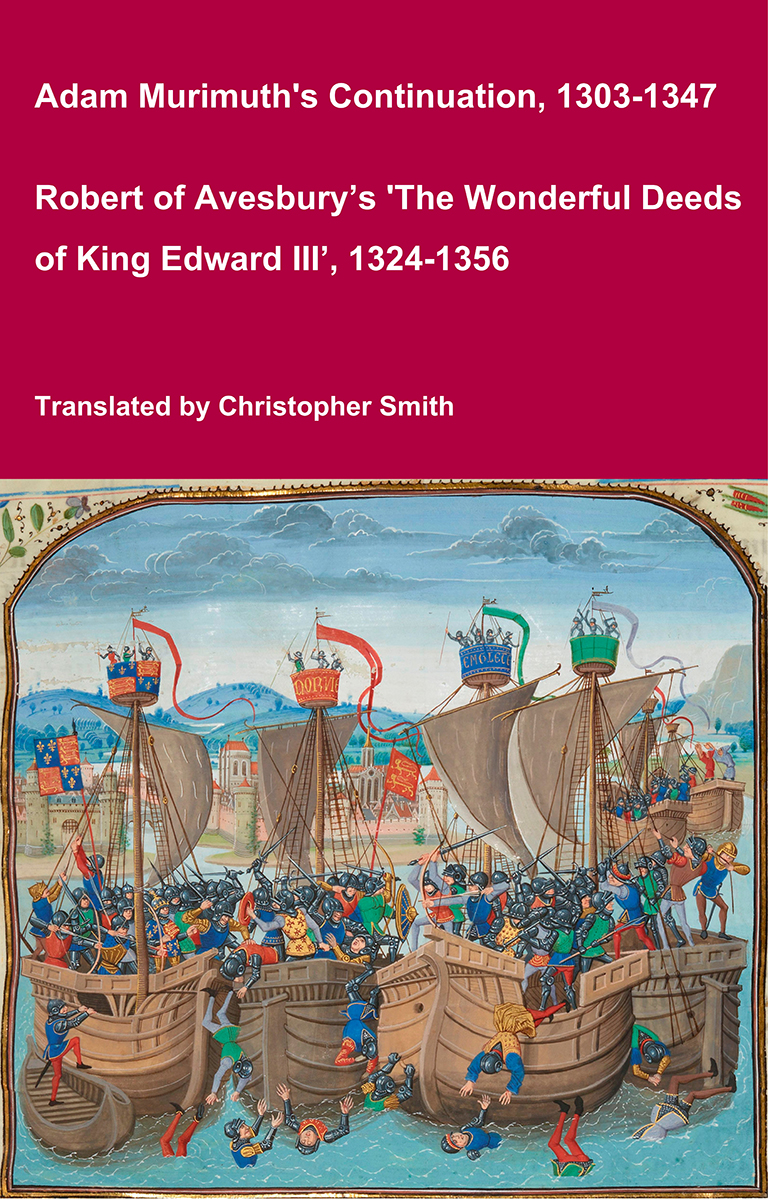 Adam Murimuth Continuation. Afterwards, on the fourth day of the month of July [1345], the king began to sail successfully with his whole fleet. And he had in his company, according to estimation, the number of 1,080 men-at-arms and many thousands of foot soldiers and archers. And he caused it to be written throughout the whole realm that processions and other works of piety should be carried out for the success of his expedition, under the tenor written below:
Postes vero, quarto die mensis Julii, incepit rex cum tota classe sua feliciter navigare. Et habuitin comitiva, secundum æstimationem, numerum MLXXX hominum armatorum et millium peditum et sagittariorum. Et fecit scribi per totum regnum quod flerent processiones et alia opera pietatis pro sua expeditione felici sub infrascripto tenore:
On 30th June 1360 King John "The Good" II of France [aged 41] left the Tower of London [Map] and proceeded to Eltham Palace, Kent [Map] where Queen Philippa [aged 50] had prepared a great farewell entertainment. Passing the night at Dartford, Kent [Map], he continued towards Dover, Kent [Map], stopping at the Maison Dieu of St Mary at Ospringe, and paying homage at the shrine of St Thomas Becket at Canterbury [Map] on 4th July 1360. He dined with the Black Prince [aged 30] at Dover Castle [Map], and reached English-held Calais [Map] on 8th July 1360.
Life of Charles VI by a Monk of St Denis. On the fourth day of July [1387], the Lord Peter of Luxembourg, a young man of the highest nobility, being the brother of the illustrious Count of Saint-Pol, Enguerrand VII of Coucy, who, though only recently in his eighteenth year, had been raised to the cardinalate by Pope Clement VII, his kinsman, departed this world and, as is believed, was translated to the seat of the heavenly and eternal kingdom. This is shown by the frequency of miracles which the Lord wrought through him for many years. For those to whom it was entrusted to commit such things to writing report that the blind, the lame, and the paralysed, and indeed countless others afflicted with various illnesses, came to his tomb, and, after completing a novena, departed restored to health. To speak briefly, he is rightly to be exalted with titles of praise. For he not only restrained the impulses of youth within his noble heart by continence, despising the wanderings of a frail age, but also, if one were to recount worthily how devout, chaste, and temperate he was, how generous in almsgiving and how watchful in devoted prayer he remained for as long as he lived in this world, one would without doubt judge him, though set upon the earth, to have already partaken, as it were, of heavenly things.
Mensis jullii quarta die, Dominus Petrus de Lucemburgo, summe ingenuitatis juvenis, ut pote frater egregii comitis sancti Pauli Enguerranni, qui quidem nuper octavum decimum annum agens a Papa Clemente, ejus consanguineo, ad cardinalatum assumptus fuerat, mundum deserens, ad celestis et eterni regni sedem, ut creditur, translatus est. Hoc probat miraculorum frequencia, que per eum multis annis Dominus operatus est. Nam quibus injunctum erat illa scriptis redigere, cecos, claudos et aridos, innumerabiles quoque variis egritudinibus detentos, refferunt ad ejus sepulcrum accessisse, et peracto novendio incolumes recessisse. Breviloquio quoque utens, is preconiorum titulis merito est extollendus. Nam non solum ab illicitis motibus juvenile pectus nobili repressit continencia, spretis imbecilis etatule discursibus, verum et, si quis digne recenseat quantum pius, castus et sobrius, quantumve in elemosinis largus et pervigil in oracionibus devotis extiterit, quamdiu in mundo mansit, eum in terris positum et quasi jam celestia habstantem procul dubio judicabit.
Life Charles VI by a Monk of St Denis [~1420]. [4th July 1415]. But on the day of Thursday, which was the fourth of July, the envoys from the king of England, after the sign of reverence was paid with knees bent, as soon as the Bourges archbishop made a word regarding the way of justice, without delay, the archbishop of Bourges, the count of Vindocini, and the baron of Yvriaco, as they had received in their mandates, in the presence of the archbishop of Canterbury, his chancellor, the bishops of Norwich, Chester, the duke of York, the counts of Hotinton, Marchie, and many other illustrious men, offered the letters of credence of the king of France. When this credential was presented to the king, he listened sweetly:
Die vero Jovis, que fuit quarta jullii, a rege Anglie nuncii evocati, post impensum reverencie flexis genibus signum, mox ut super via justicie verbum fecit, sine cunctacione Bituricensis archiepiscopus, comes Vindocini-et baro de Yvriaco, ut acceperant in mandatis, in presencia Cantuariensis archiepiscopi, cancellarii sui, episcoporum de Norwich, de Chestre, ducis Eboracensis, comitum de Hotinton, Marchie et multorum aliorum illustrium, litteras credencie regis Francie obtulerunt. Quam credenciam cum rex siscitaretur dulciter:
On 4th July 1450 James Fiennes 1st Baron Saye and Sele [aged 55] was beheaded at the Standard in Cheapside [Map]. His son William [aged 22] succeeded 2nd Baron Saye and Sele and inherited his estates including Hever Castle, Kent [Map] and Herstmonceux Castle, East Sussex [Map].
His son in law William Cromer [aged 34] was also beheaded.
Chronicle of Gregory. 4th July 1450. Ande in the morne he come yn a-gayne, that sory and sympylle and rebellyus captayne why the his mayny; that was Satyrday, and it was also a Synt Martyn is day1, the dedycacyon of Synt Martynys in the Vyntry [Map], the iiij day of Juylle. And thenne dyvers questys were i-sompnyd at the Gylhalle [Map]; and ther Robert Home beynge alderman was a-restyde and brought in to Newegate. And that same day Wylliam Crowemere [aged 34], squyer, and Scheryffe of Kentt, was be-heddyde in the fylde whythe out Algate at the mylys ende be-syde Clopton is Place. And a nothyr man that was namyde John Bayle was be-heddyd at the Whytte Chapylle. And the same day aftyr-non was be-heddyd in Cheppe a-fore the Standard [Map], Syr Jamys Fynes [aged 55], beyng that tyme the lord Saye and Grrette Treserer of Ingelonde, the whyche was brought oute of the Toure of London [Map] unto the Gylde Halle [Map], and there of dyvers tresons he was exampnyd, of whyche he knowlachyd of the dethe of that notabylle and famos prynce the Duke of Glouceter. And thenne they brought him unto the Standard in Cheppe [Map], and there he ressayvyd his jewys and his dethe. And so forthe alle the iij [3] heddys that day smetyn of were sette uppon the Brygge of London [Map], and the ij othyr heddys takyn downe that stode a-pon the London Brygge by-fore. And at the comyng of the camptayne yn to Sowtheworke, he lete smyte of the hedde of a strong theff that was namyd Haywardyn.
Note 1. The Translation of St. Martin of Tours.
William of Worcester's Chronicle of England
William of Worcester, born around 1415, and died around 1482 was secretary to John Fastolf, the renowned soldier of the Hundred Years War, during which time he collected documents, letters, and wrote a record of events. Following their return to England in 1440 William was witness to major events. Twice in his chronicle he uses the first person: 1. when writing about the murder of Thomas, 7th Baron Scales, in 1460, he writes '… and I saw him lying naked in the cemetery near the porch of the church of St. Mary Overie in Southwark …' and 2. describing King Edward IV's entry into London in 1461 he writes '… proclaimed that all the people themselves were to recognize and acknowledge Edward as king. I was present and heard this, and immediately went down with them into the city'. William’s Chronicle is rich in detail. It is the source of much information about the Wars of the Roses, including the term 'Diabolical Marriage' to describe the marriage of Queen Elizabeth Woodville’s brother John’s marriage to Katherine, Dowager Duchess of Norfolk, he aged twenty, she sixty-five or more, and the story about a paper crown being placed in mockery on the severed head of Richard, 3rd Duke of York.
Available at Amazon in eBook and Paperback format.
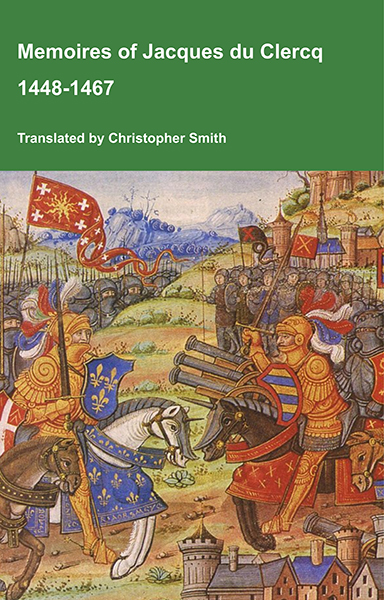 Memoires Jacques du Clercq. In the year 1450, one named John Cade, who was an apostate, stirred up a part of the commons of Kent, to the number of twenty thousand fighting men, of whom he was made captain, and it was not well known from where he came. This company, with their captain, went to encamp about ten miles from London, which is about five leagues. Against them the King of England set out from London to fight them; but when he was informed that they were common people and men of low condition, he was advised not to engage them, and sent the Duke of Buckingham to tell them that the king commanded all his loyal subjects to depart from the camp. As soon as this proclamation was made, the captain replied that he was one of them, and withdrew; and as he went, he encountered Sir Humphrey Stafford and William Stafford, his brother, whom he fought and killed. After this, the king returned to London and withdrew into the castle of Wallingford. Then the said captain went to the city of London and entered it freely on the 4th day of July; he robbed a merchant named Philip Malpas and lodged that night outside London in the great street called Southwark. The next day he entered London, dressed in a robe of velvet, with a sword in his hand, had the Lord Say brought out of the Tower of London, and had him taken to the Guildhall, where he was immediately judged to die, and at once his head was struck off in the principal street of London called Cheapside; and his head was set upon a lance, together with the head of his son-in-law and the others who had been killed, as has been said, and his body was drawn in pieces at the tails of two horses. After this, the said captain returned to his lodging and remained there the following day, and had a great thief named Hol Bardin beheaded; then the said captain took counsel how he might plunder those of the city of London. Of this intent the Londoners were warned, and they appointed the Lord Scales and Matthew Gough as captains, with a great number of men, to seize him suddenly. The captain, being informed of this, set guards around his lodging; and these guards cried alarm at the coming of the Lord Scales and Matthew Gough. The said lord was driven back toward the hill nearest London; but in the end the Lord Scales forced the captain to retreat to the far side of the bridge. Meanwhile Matthew Gough entered a house to sleep, thinking the enemy had been fully driven back; but the captain drove them back again as before, and when the said Matthew had slept a little, he came out crying his banner, thinking to find his men, and there he was slain by the captain's followers. When the captain saw that those of London were gathering in great numbers, he had the bridge below set on fire so that none might approach; but the archers did not cease to attack them all night until the next day, when the Archbishop of Canterbury and the Archbishop of York brought it about that the captain's men withdrew to their country, and the captain remained alone in hiding; and then he fled into the land of Sussex. But those of London sent after him to take him, and as he sat at dinner, a Welshman entered the house to seize him; as soon as he saw him, he fled into a garden, where the said Welshman struck him a blow from which he died. His body was brought to the city of London, and his head was set upon London Bridge. Soon after, King Henry of England inflicted great punishment upon all the principal men who had been with that captain and had consented to what he had done.
Ex l'an mil iiije cinquante, ung nommé Jean Cadée, lequel estoit apostat, esmeut une partie de la commune de Treulx, et jusques au nombre de vingt mille combattants, desquels il fust fait capitaine, et ne sçavoit on bonnement d'ou il estoit; laquelle communauté, avecq leur capitaine, allerent tenir ung camp, ainsi que a dix milles près de Londres, qui font environ cinq lieues, allencontre desquels le roy d'Angleterre wida de Londres pour les combattre; mais quant il fust adverti que c'estoient gens populaires et meschants gens, il fust conseillé de ne les combattre, et y envoya le duc de Belingam pour leur dire que le roy leur mandoit, que touts ses loyaulx subjets widassent du camp; et incontinent que le cry fust fait, le capitaine respondit qu'il estoit l'ung d'iceulx, et se partist; et en allant, il rencontra messire Hamffroy Staffort et Guillaume Staffort, son frere, lesquels il combattit et les tua; ce faict, le roy retourna a Londres et se boutta au chasteau de Wallungfort; et après ce, alla ledit capitaine en la ville de Londres, et y entra franchement le iiije jour de juillet; il desrobba ung marchand appellé Philippe Malpas, et se logea la nuict hors Londres, en la grande rue appellée Sortswerbe, et le lendemain il entra en Londres, vestu d'une robbe de velour a tout une espée en sa main, feit tirer le St de Seay hors de la tour de Londres, et le feit mener en la halle, ou il fust incontinent jugé a mourir, et incontinent on lui trencha la teste en la principale rue de Londres, appellée Cepe, et la teste fust mise en une lanche, avecq la teste de son beaufrere et les aultres qui feurent tués, comme dict est, et son corps fust mis en detrais a la queux de deux chevaux: après ce, ralla ledit capitaine en son logis, et la se tint le jour ensuivant, et feit decoller ung grand larron nommé Hol Bardin; puis print conseil icelluy capitaine comment il pourroit desrobber ceulx de la ville de Londres, duquel fourfaict ceulx de Londres feurent advertis, sy ordonnerent le St Destalles et Mathieu Gelbghe, capitaines, avecq grand nombre de gens pour les prendre subitement; de quoi icelluy capitaine fust adverti, et feit guet autour de son hostel; lequel guet cria allarmes a la venue du Sª Destalles et Mathieu Gelbghe; et fust icelluy Sr recullé jusques au plus près du mont qui est au plus près de Londres; mais enfin le St Destalles feit le capitaine reculler jusques a l'aultre pied du pont, et en ce faisant, Mathieu Gelbghe entra en une maison pour dormir, cuidant avoir recullé ses adversaires du tout; mais ledit capitaine les reculla derechief comme debvant; et comme ledit Mathieu eust ung peu dormi, il issit dehors, criant son enseigne, cuidant estre avecq ses gens, et la fust tué par les gens du capitaine. Quant le capitaine veit que ceulx de Londres estoient multipliés, il feit ardoir le pont qui y avalle, adfin que nulluy approchat; mais les archiers ne laisserent a les assaillir toute la nuict jusqu'au lendemain, que l'archevesque de Cantorbery et l'archevesque d'Yorck feirent tant, que les gens du capitaine s'en rallerent en leur pays, et demoura le capitaine seul a privé, mais et lors s'enffuit en la terre de Touet; mais ceulx de Londres envoyerent après pour le prendre, et ainsi qu'il estoit assis au disner, un Gallois entra en la maison pour le prendre, lequel, si tost qu'il le veit, entra en ung jardin, auquel jardin ledit Gallois lui donna ung coulp dont il mourut, et fust son corps porté en la ville de Londres, et la teste mise sur le pont de Londres. Et assés tost après, le roy Henry d'Angleterre print grande punition de touts les plus grands qui estoient avecq icelluy capitaine, et qui auroient esté consentants de faire ce qu'il avoit fait.
Calendar of State Papers of Milan 1455. July 4. Potenze, Estere. Roma: Milan Archives. 22. The Bishop of Novara, Milanese Ambassador at Rome, to Francesco Sforza, Duke of Milan.
From England we have the news which you will see by the enclosed copy. Although it is not good for those who are dead, yet it cannot fail to favour our proceedings, because it will make the French a little more cautious, as during these differences between the English, they had become great and daily became greater.
Rome, the 4th July, 1455.
[Italian.]
Enclosure.
23. Copy of part of a letter written from Bruges to the Archbishop of Ravenna.
We left London on the 27th May and at that time there was nothing new; my lord of Somerset ruled as usual. Subsequently I learned here yesterday, by letters which came straight from Sandwich to Dunkirk, that fresh disturbances broke out in England a few days after my departure. A great part of the nobles have been in conflict [First Battle of St Albans], and the Duke of Somerset, the Earl of Northumberland and my lord of Clifford are slain, with many other lords and knights on both sides. The Duke of Somerset's son, who presented the collars of the king, was mortally wounded; my lord of Buckingham and his son are hurt. The Duke of York has done this, with his followers. On the 24th de entered London and made a solemn procession to St. Pauls. They say he has demanded pardon from the king for himself and his men, and will have it. He will take up the government again, and some think that the affairs of that kingdom will now take a turn for the better. If that be the case, we can put up with this inconvenience.
No one comes from Calais as the passages are guarded. We should hear further particulars from merchants, messengers and those who come. I send your lordship these particulars, as you will be glad to hear them even though the news seems unpleasant.
Bruges, the last day of May, 1455.
Postscript on the 3rd of June.—I have further news of the battle in England brought by one who came here from Calais. They say that on the 21st of May the king left Westminster with many lords, including the Duke of Somerset, to hold a council at Leicester (a le cestre), eight miles (sic) from London. They went armed because they suspected that the Duke of York would also go there with men at arms. That day they travelled twenty miles to the abbey of St. Albans. On the 22nd the king set out to continue his journey, but when they were outside the town they were immediately attacked by York's men, and many perished on both sides. The Duke of Somerset was taken and forthwith beheaded. With his death the battle ceased at once and, without loss of time, the Duke of York went to kneel before the king and ask pardon for himself and his followers, as they had not done this in order to inflict any hurt upon his Majesty, but in order to have Somerset. Accordingly the king pardoned them, and on the 23rd the king and York and all returned to London. On the 24th they made the solemn procession, and now peace reigns. The king has forbidden any one to speak about it upon pain of death (il Re ha mandato Bando a pena di vita, non se ne parli). The Duke of York has the government, and the people are very pleased at this (il duca de Jorlz ha il governo et li popoli se ne tengono molto contenti).
[Italian.]
On 4th July 1473 Mathilde Hesse Duchess Cleves was born to Margrave Henry III of Upper Hesse [aged 32]. She married 1490 John "Babymaker" de la Marck II Duke Cleves, son of John de la Marck I Duke Cleves and Elizabeth Valois Duchess Cleves, and had issue.
Ellis' Letters. Sir Thomas Boleyn [aged 42] to King Henry the Eighth [aged 28], announcing the Election of the Emperor Charles the Fifth. 4th July 1519.
[MS. COTTON. CALIG. D. vii. fol. 140. Orig.]
Pleasith yt your Grace to understand that the first day of this moneth I wrote my last Lettres to your Grace, and as yet the King is nat retomed from Melun, there as he hath been almost thes fortenyght a huntyng. But hither is come Lettres with great dylygence to the King Catholiques Ambassadour from Frankford, and from my lady of Savoye, specefieng how the King his master the xxviij. day of the last moneth, at x. of the clocke afore noon, by th'assent and hoole voyce of all the Electours was chosen Emperor. And bicause there is yet noo lettres commen out of Almayn to the King nor my Lady here of this matier my Lady marvayleth moch, and sayth she feryth that Monsr. L'admiral is letted or evyll intreatyd bicause she hath no word from hym, or elles their Post with lettres is taken or stopped by the way. Neverthelesse my Lady sayth yf this be trew seyng the King her sonne may nat be Emperor she is ryght glad that the King Catholique is chosen. Sayeng that though the Kyng her sonne is nat Emperor, yet it is a comfort to her that the King her sonnes son in lawe is Emperor. How be it the trouth is that both the King and my Lady, and all this Contre had rather any other had been chosen Emperor than the King Catholique. My Lady tellyth me that she is assured it hath cost hym a greyt good to atteyn to this Empire; in so moch she sayth she knoweth for a trouth oon of the Electours hath had of hym two hundreth thowsand crownes, and namyng hym of Coloigne. She sayth also that the Electours amongs them all hath not had of the King her sonne past a hundreth thowsand Crownes, and moch she ma... and fereth lest the Admirall be nat well, and sayth that the Letter that she had from hym was wrytten the xx vj. day of the last moneth, wherein by his wryting he had as great trust that the King here shuld be Emperor as ever he had. And now Monsr. le Bastard and they of the Counsell here say yt is a good torne for the King here, and a great weale for his reaulme that he is not Emperor, for they say yf he had been it shuld have putt hym to an infante busyness, and impoverychyd and undoone his subgietts. Here is also of late a new Ordenaunce made by the King and his Counsell, and gyven to all them that have any horses for Posts or Currorsa, both here at the Cort and at Parys, that payn of their lyves they delyver no horse nor horses to any man, ambassador or other, except at the Court he have a bill from Robertet in Parys from the first President there. I have been, too, assuryd by my Lady that this is nat doon for any Lett of L.... that goyth in to England, but as farre as I can knowe that resortyth in and owt of Spayn, and my lady hath... whan so ever I woll depeche any lettres by Post. I shall stre.. a Bill of Robertett and of the first President of Parys... whan I woll.
Besechyng the holy Trinite long to preserve your Grace from Poyssy this iiij th day of July.
Yours
T....
Note a. Couriers.
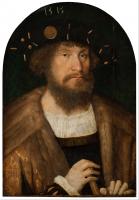
On 4th July 1519 Philip Ferdinand Oldenburg was born to Christian II King of Denmark II King Norway [aged 38] and Isabella of Austria Queen Consort Denmark and Norway [aged 17]. He died aged less than one years old.
On 4th July 1519 Maximilian Oldenburg was born to Christian II King of Denmark II King Norway [aged 38] and Isabella of Austria Queen Consort Denmark and Norway [aged 17]. He died aged less than one years old.
Letters and Papers Foreign and Domestic Henry VIII 1528. 4th July 1528. R. O. 4464. Clerk And Taylor To Wolsey.
Wrote on the 1st. Hear that the lanceknights have not gone to Genoa, but are at Lodi. The King is hunting at Fontainebleau, and will stay there all this month. My Lady is at St. Germain's; the Council at Paris. Much rain has fallen, and destroyed the corn and the vines. It is to be feared that a universal decay and dearth will prevail through the whole of France. We are told the plague is very bad in England. Paris, 4 July. Signed.
On 4th July 1530 King Francis I of France [aged 35] and Eleanor of Austria Queen Consort France Queen Consort Portugal [aged 31] were married. She by marriage Queen Consort of France. She the daughter of Philip "Handsome Fair" King Castile and Joanna "The Mad" Trastámara Queen Castile [aged 51]. He the son of Charles Valois Orléans Count Angoulême and Louise of Savoy Countess Angoulême [aged 53]. They were second cousin once removed. She a great x 4 granddaughter of King Edward III of England.


Letters and Papers Foreign and Domestic Henry VIII 1535. 4th July 1535. 985. Francis also spoke three days ago of the new Queen of England [aged 34], how little virtuously she has always lived and now lives, and how she and her brother [aged 32] and adherents suspect the Duke of Norfolk [aged 62] of wishing to make his son King, and marry him to the King's legitimate daughter, though they are near relations. It seems to him there can be little friendship between the two kingdoms.
The King spoke of the marriage of the king of Scotland with the duke of Vendome's daughter as certain, but said the king of England was displeased at it, and now would wish to give him his eldest daughter. His inconstancy was incredible. Sends the copy of a proclamation issued in England.
Ital., pp. 11, modern copy. Headed; Al S. Mons. Ambrogio, ali 4 di Luglio, data alla Fiera.


Letters and Papers Foreign and Domestic Henry VIII 1535. 4th July 1535. Add. MS. 8,715, f. 84b, B. M. 985. Bishop of Faenza to M. Ambrosio.
Wrote from Amiens on the 25th about the fears for Fisher [deceased]. The King's impiety has gone so far that on the 22nd ult. he had him beheaded publicly at the Tower, and his body left there all day for a public show. Hears that "Gramuel" went to him in prison, and told him that the bishop of Rome had created him one of his companions, and the King had sent him to know what was his opinion about it. He replied that honor was not in his thoughts now, and he thought only of the mercy of God, whose his soul was, though his body was in the King's power, who could do what he liked with it, but he would not change his opinion, believing that it was right. "Gramuel" then announced to him the day of his death. He was conducted on a mule, wearing a black cloth vest and cap tied under his chin, to the square (piazza), where he had to wait for an hour because the scaffold was not in order. And although, as the Admiral says, from age and suffering he was more like a shadow than a man, he spoke to the people boldly, telling them to be loving and obedient to their King, who was good by nature, but had been deceived in this matter; that he was led to death for wishing to preserve the honor of God and the Holy See; at which he did not grieve, but was content, for it was the will of God. Hears now from the English ambassador that he only said, that being of flesh, which naturally feared death, and knowing that Peter three times denied Christ through fear of death, and having always had the mind to die, if necessary, for the love of Christ and his Holy Church, now that he was come to it, he begged all present to pray to God to grant constancy and firmness to his fragile flesh to suffer cheerfully his approaching punishment. The Admiral had heard that he was quartered according to the sentence; but the English ambassador says that he was merely beheaded, "per grandissima gratia ottenuta dal furore infinito in questo di quel Re;" who finally was content that his body should be buried in the evening. The cause of his death is rumoured in England to have been his writing evil of the King to Thomas More [aged 57], who was also in prison. And they had caused it to be said to his face by one of his chaplains that he had written to More against the King on a bit of wood with a needle, having neither paper nor ink. More is thought to be already executed, or, at least, condemned to death with perhaps thirty other virtuous persons, religious and secular; so that we now see clearly that the tragedy will go far, and that there is no hope of good from the King.


On 4th July 1535 William "Younger" Welf Duke Brunswick-Lüneburg was born to Ernest I Duke of Brunswick-Lüneburg [aged 38] and Sophie of Mecklenburg [aged 27]. He married 12th October 1561 his half sixth cousin Dorothea Oldenburg Duchess Brunswick-Lüneburg.
On 4th July 1539 Louis VI Elector Palatine was born to Frederick III Elector Palatine [aged 24]. He married 8th July 1560 Elizabeth Hesse Electress Palatine, daughter of Landgrave Philip I of Hesse and Christine of Saxony.
On 4th July 1546 Albert V Wittelsbach V Duke Bavaria [aged 18] and Anna Habsburg Spain Duchess Bavaria [aged 17] were married. She by marriage Duchess Bavaria. She the daughter of Ferdinand I Holy Roman Emperor [aged 43] and Anne Jagiellon [aged 42]. He the son of William Wittelsbach IV Duke Bavaria [aged 52] and Marie Jakobaea Baden Duchess Bavaria [aged 39]. They were second cousin once removed. He a great x 5 grandson of King Edward III of England. She a great x 5 granddaughter of King Edward III of England.
On 4th July 1551 Gregory Cromwell 1st Baron Cromwell Oakham [aged 31] died of sweating sickness. His son Henry [aged 13] succeeded 2nd Baron Cromwell Oakham.
On 4th July 1552 Maximiliana Maria Wittelsbach was born to Albert V Wittelsbach V Duke Bavaria [aged 24] and Anna Habsburg Spain Duchess Bavaria [aged 23]. Coefficient of inbreeding 1.58%.
On 4th July 1563 Mary Dacre was born to Thomas Dacre 4th Baron Dacre Gilsland 8th Baron Greystoke [aged 36] and Elizabeth Leybourne Duchess Norfolk [aged 27]. She married before 1572 her half third cousin once removed Thomas Howard 1st Earl Suffolk, son of Thomas Howard 4th Duke of Norfolk and Margaret Audley Duchess Norfolk.
On 4th July 1587 Magdalene Wittelsbach was born to William Wittelsbach V Duke Bavaria [aged 38] and Renata Lorraine Duchess Bavaria [aged 43]. Coefficient of inbreeding 2.86%.

The True Chronicles of Jean le Bel Volume 1 Chapters 1-60 1307-1342
The True Chronicles of Jean le Bel offer one of the most vivid and immediate accounts of 14th-century Europe, written by a knight who lived through the events he describes, and experienced some of them first hand. Covering the early decades of the Hundred Years’ War, this remarkable chronicle follows the campaigns of Edward III of England, the politics of France and the Low Countries, and the shifting alliances that shaped medieval warfare. Unlike later historians, Jean le Bel writes with a strong sense of eyewitness authenticity, drawing on personal experience and the testimony of fellow soldiers. His narrative captures not only battles and sieges, but also the realities of military life, diplomacy, and the ideals of chivalry that governed noble society. A key source for Jean Froissart, Le Bel’s chronicle stands on its own as a compelling and insightful work, at once historical record and literary achievement. This translation builds on the 1905 edition published in French by Jules Viard, adding extensive translations from other sources Rymer's Fœdera, the Chronicles of Adam Murimuth, William Nangis, Walter of Guisborough, a Bourgeois of Valenciennes, Geoffrey le Baker of Swinbroke and Richard Lescot to enrich the original text and Viard's notes.
Available at Amazon in eBook and Paperback format.
On 4th July 1610 Anne of Denmark Queen Consort Scotland England and Ireland [aged 35] gave Dorothy Bulstrode [aged 18] a gown of ash-colour taffeta.


Diary of Anne Clifford. 4th July 1619. The 4th Mr Chantrell preached at Sevenoaks, my Lord [aged 30] having sent for him purposely for that end.
In July 1660 King Charles II of England Scotland and Ireland [aged 30] rewarded those who supported his Restoration...
2nd. Maurice Berkeley 3rd Viscount Fitzhardinge [aged 32] was created 1st Baronet Berkeley of Bruton in Somerset. Anne Lee Viscountess Fitzhardinge [aged 37] by marriage Lady Berkeley of Bruton in Somerset.
4th. Thomas Myddelton 1st Baronet [aged 35] was created 1st Baronet Myddelton of Chirk Castle.
6th. Varney Noel 1st Baronet was created 1st Baronet Noel.
7th. George Monck 1st Duke Albemarle [aged 51] was created 1st Duke Albemarle, 1st Earl Torrington in Devon. Anne Clarges Duchess Albermarle [aged 41] by marriage Duchess Albemarle.
12th. Robert Hales 1st Baronet [aged 50] was created 1st Baronet Hales of Beakesbourne in Kent.
12th. Edward Montagu 1st Earl Sandwich [aged 34] was created 1st Earl Sandwich. Jemima Crew Countess Sandwich [aged 35] by marriage Countess Sandwich.
14th. Elizabeth Feilding Countess Guildford was created 1st Countess Guildford by King Charles II of England Scotland and Ireland. The peerage for life.
18th. Samuel Morland 1st Baronet [aged 35] was created 1st Baronet Morland of Sulhamstead Banister. Susanne de Milleville Lady Morland by marriage Lady Morland of Sulhamstead Banister.
23rd. Henry Vernon 1st Baronet [aged 55] was created 1st Baronet Vernon of Hodnet in Shropshire.
23rd. John Aubrey 1st Baronet [aged 54] was created 1st Baronet Aubrey of Llantrithyd in Glamorganshire.
Samuel Pepys' Diary. 4th July 1663. Thence with Creed to the King's Head ordinary; but, coming late, dined at the second table very well for 12d.; and a pretty gentleman in our company, who confirms my Baroness Castlemaine's [aged 22] being gone from Court, but knows not the reason; he told us of one wipe the Queen [aged 24] a little while ago did give her, when she came in and found the Queen under the dresser's hands, and had been so long:


Samuel Pepys' Diary. 4th July 1663. Thence with Creed to hire a coach to carry us to Hide Park, to-day there being a general muster of the King's Guards, horse and foot: but they demand so high, that I, spying Mr. Cutler the merchant, did take notice of him, and he going into his coach, and telling me that he was going to shew a couple of Swedish strangers the muster, I asked and went along with him; where a goodly sight to see so many fine horses and officers, and the King [aged 33], Duke [aged 29], and others come by a-horseback, and the two Queens [aged 24] in the Queen-Mother's [aged 53] coach, my Baroness Castlemaine's [aged 22] not being there.And after long being there, I 'light, and walked to the place where the King, Duke, &c., did stand to see the horse and foot march by and discharge their guns, to show a French Marquisse (for whom this muster was caused) the goodness of our firemen; which indeed was very good, though not without a slip now and then; and one broadside close to our coach we had going out of the Park, even to the nearness as to be ready to burn our hairs. Yet methought all these gay men are not the soldiers that must do the King's business, it being such as these that lost the old King all he had, and were beat by the most ordinary fellows that could be.
Samuel Pepys' Diary. 4th July 1663. Thence with much ado out of the Park, and I 'lighted and through St. James's down the waterside over, to Lambeth, to see the Archbishop's [deceased] corps (who is to be carried away to Oxford on Monday), but came too late, and so walked over the fields and bridge home (calling by the way at old George's), but find that he is dead, and there wrote several letters, and so home to supper and to bed.
John Evelyn's Diary. 4th July 1663. I saw his Majesty's [aged 33] Guards, being of horse and foot 4,000, led by the General, the Duke of Albemarle [aged 54], in extraordinary equipage and gallantry, consisting of gentlemen of quality and veteran soldiers, excellently clad, mounted, and ordered, drawn up in battalia before their Majesties in Hyde Park [Map], where the old Earl of Cleveland [aged 72] trailed a pike, and led the right-hand file in a foot company, commanded by the Lord Wentworth [aged 51], his son; a worthy spectacle and example, being both of them old and valiant soldiers. This was to show the French Ambassador, Monsieur Comminges; there being a great assembly of coaches, etc., in the park.
Samuel Pepys' Diary. 4th July 1663. The Duke [aged 29] being ready, we retired with him, and there fell upon Mr. Creed's business, where the Treasurer [aged 56] did, like a mad coxcomb, without reason or method run over a great many things against the account, and so did Sir J. Minnes [aged 64] and Sir W. Batten [aged 62], which the Duke himself and Mr. Coventry [aged 35] and my Lord Barkely [aged 61] and myself did remove, and Creed being called in did answer all with great method and excellently to the purpose (myself I am a little conscious did not speak so well as I purposed and do think I used to do, that is, not so intelligibly and persuasively, as I well hoped I should), not that what I said was not well taken, and did carry the business with what was urged and answered by Creed and Mr. Coventry, till the Duke himself did declare that he was satisfied, and my Lord Barkely offered to lay £100 that the King [aged 33] would receive no wrong in the account, and the two last knights held their tongues, or at least by not understanding it did say what made for Mr. Creed, and so Sir G. Carteret [aged 53] was left alone, but yet persisted to say that the account was not good, but full of corruption and foul dealing. And so we broke up to his shame, but I do fear to the loss of his friendship to me a good while, which I am heartily troubled for.


Samuel Pepys' Diary. 4th July 1663. So to St. James's by water with Sir J. Minnes [aged 64] and Sir W. Batten [aged 62], I giving occasion to a wager about the tide, that it did flow through bridge, by which Sir W. Batten won 5s. of Sir J. Minnes. At St. James's we staid while the Duke [aged 29] made himself ready. Among other things Sir Allen Apsley [aged 47] showed the Duke the Lisbon Gazette in Spanish, where the late victory is set down particularly, and to the great honour of the English beyond measure. They have since taken back Evora, which was lost to the Spaniards, the English making the assault, and lost not more than three men. Here I learnt that the English foot are highly esteemed all over the world, but the horse not so much, which yet we count among ourselves the best; but they abroad have had no great knowledge of our horse, it seems.
Samuel Pepys' Diary. 4th July 1664. After dinner I walked homeward, still doing business by the way, and at home find my wife this day of her owne accord to have lain out 25s. upon a pair of pendantes for her eares, which did vex me and brought both me and her to very high and very foule words from her to me, such as trouble me to think she should have in her mouth, and reflecting upon our old differences, which I hate to have remembered. I vowed to breake them, or that she should go and get what she could for them again. I went with that resolution out of doors; the poor wretch afterwards in a little while did send out to change them for her money again. I followed Besse her messenger at the 'Change [Map], and there did consult and sent her back; I would not have them changed, being satisfied that she yielded. So went home, and friends again as to that business; but the words I could not get out of my mind, and so went to bed at night discontented, and she came to bed to me, but all would not make me friends, but sleep and rise in the morning angry. This day the King [aged 34] and the Queene [aged 54] went to visit my Lord Sandwich [aged 38] and the fleete, going forth in the Hope1.
Note 1. "Their Majesties were treated at Tilbury Hope by the Earl of Sandwich, returning the same day, abundantly satisfied both with the dutiful respects of that honourable person and with the excellent condition of all matters committed to his charge" ("The Newes", July 7th, 1664). B.


Samuel Pepys' Diary. 4th July 1665. This morning I did a good piece of work with Sir W. Warren, ending the business of the lotterys, wherein honestly I think I shall get above £100. Bankert, it seems, is come home with the little fleete he hath been abroad with, without doing any thing, so that there is nobody of an enemy at sea. We are in great hopes of meeting with the Dutch East India fleete, which is mighty rich, or with De Ruyter [aged 58], who is so also. Sir Richard Ford [aged 51] told me this day, at table, a fine account, how the Dutch were like to have been mastered by the present Prince of Orange1 [aged 14] his father to be besieged in Amsterdam, having drawn an army of foot into the towne, and horse near to the towne by night, within three miles of the towne, and they never knew of it; but by chance the Hamburgh post in the night fell among the horse, and heard their design, and knowing the way, it being very dark and rainy, better than they, went from them, and did give notice to the towne before the others could reach the towne, and so were saved. It seems this De Witt and another family, the Beckarts, were among the chief of the familys that were enemys to the Prince, and were afterwards suppressed by the Prince, and continued so till he was, as they say, poysoned; and then they turned all again, as it was, against the young Prince, and have so carried it to this day, it being about 12 and 14 years, and De Witt in the head of them.
Note 1. The period alluded to is 1650, when the States-General disbanded part of the forces which the Prince of Orange (William) wished to retain. The prince attempted, but unsuccessfully, to possess himself of Amsterdam. In the same year he died, at the early age of twenty-four; some say of the small-pox; others, with Sir Richard Ford, say of poison. B.


On 4th July 1666 Charles Stewart 1st Duke Kendal was born to James Duke of York [aged 32] and Anne Hyde Duchess of York [aged 29] at St James's Palace [Map]. He died aged less than one years old.


John Evelyn's Diary. 4th July 1666. The solemn Fast-day. Dr. Meggot preached an excellent discourse before the King [aged 36] on the terrors of God's judgments. After sermon, I waited on my Lord Archbishop of Canterbury [aged 49] and Bishop of Winchester [aged 47], where the Dean of Westminster [aged 31] spoke to me about putting into my hands the disposal of fifty pounds, which the charitable people of Oxford had sent to be distributed among the sick and wounded seamen since the battle. Hence, I went to the Lord Chancellor's [aged 57] to joy him of his Royal Highness's [aged 32] second son, now born at St. James's [Map]; and to desire the use of the Star-chamber for our Commissioners to meet in, Painters' Hall, Queenhithe not being so convenient.

Samuel Pepys' Diary. 4th July 1666. Thence home and dined, and then to the office, where busy all day, and in the evening Sir W. Pen [aged 45] come to me, and we walked together, and talked of the late fight. I find him very plain, that the whole conduct of the late fight was ill, and that that of truth's all, and he tells me that it is not he, but two-thirds of the commanders of the whole fleete have told him so: they all saying, that they durst not oppose it at the Council of War, for fear of being called cowards, though it was wholly against their judgement to fight that day with the disproportion of force, and then we not being able to use one gun of our lower tier, which was a greater disproportion than the other. Besides, we might very well have staid in the Downs without fighting, or any where else, till the Prince [aged 46] could have come up to them; or at least till the weather was fair, that we might have the benefit of our whole force in the ships that we had. He says three things must [be] remedied, or else we shall be undone by this fleete.
Note 1. That we must fight in a line, whereas we fight promiscuously, to our utter and demonstrable ruine; the Dutch fighting otherwise; and we, whenever we beat them.
Note 2. We must not desert ships of our own in distress, as we did, for that makes a captain desperate, and he will fling away his ship, when there is no hopes left him of succour.
Note 3. That ships, when they are a little shattered, must not take the liberty to come in of themselves, but refit themselves the best they can, and stay out-many of our ships coming in with very small disablenesses.
Abbot John Whethamstede’s Chronicle of the Abbey of St Albans
Abbot John Whethamstede's Register aka Chronicle of his second term at the Abbey of St Albans, 1451-1461, is a remarkable text that describes his first-hand experience of the beginning of the Wars of the Roses including the First and Second Battles of St Albans, 1455 and 1461, respectively, their cause, and their consequences, not least on the Abbey itself. His text also includes Loveday, Blore Heath, Northampton, the Act of Accord, Wakefield, and Towton, and ends with the Coronation of King Edward IV. In addition to the events of the Wars of the Roses, Abbot John, or his scribes who wrote the Chronicle, include details in the life of the Abbey such as charters, letters, land exchanges, visits by legates, and disputes, which provide a rich insight into the day-to-day life of the Abbey, and the challenges faced by its Abbot.
Available at Amazon in eBook and Paperback format.

On 4th July 1668 Mary Stewart Countess Arran [aged 16] died. Her first cousin Charles [aged 29] succeeded 6th Baron Clifton of Leighton Bromswold in Huntingdonshire.
Samuel Pepys' Diary. 4th July 1668. Up, and to see Sir W. Coventry [aged 40], and give him account of my doings yesterday, which he well liked of, and was told thereof by my Lord Halifax [aged 34] before; but I do perceive he is much concerned for this business. Gives me advice to write a smart letter to the Duke of York [aged 34] about the want of money in the Navy, and desire him to communicate it to the Commissioners of the Treasury; for he tells me he hath hot work sometimes to contend with the rest for the Navy, they being all concerned for some other part of the King's expenses, which they would prefer to this, of the Navy. He shewed me his closet, with his round table, for him to sit in the middle, very convenient; and I borrowed several books of him, to collect things out of the Navy, which I have not, and so home, and there busy sitting all the morning, and at noon dined, and then all the afternoon busy, till night, and then to Mile-End with my wife and girl, and there drank and eat a joie of Salmon, at the Rose and Crown, our old house; and so home to bed.


On 4th July 1689 Christopher Monck 2nd Duke Albemarle was buried at Westminster Abbey [Map].
John Evelyn's Diary. 4th July 1696. Note that my Lord Godolphin [aged 51] was the first of the Members who paid any money to this noble fabric.
On 4th July 1721 Percy Seymour [aged 25] died of smallpox.
On 4th July 1726 Henry Bentinck 1st Duke Portland [aged 44] died in Spanish Town Jamaica. His body was returned to England. On 03 Nov 1726 he was buried in the Duke of Ormonde Vault, King Henry VII Chapel, Westminster Abbey. His son William [aged 17] succeeded 2nd Duke Portland, 3rd Earl of Portland.
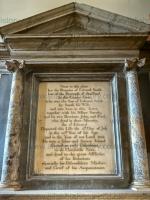
St Mary's Church, Uttoxeter [Map]. Memorial to Edward Smith, died 4th July 1751.
On 4th July 1773 Samuel William Reynolds was born.
After 4th July 1824. Monument to Caroline Fludyer Countess Brownlow [deceased] in St Peter and St Paul Church, Belton [Map].
Caroline Fludyer Countess Brownlow: On 5th June 1794 she was born to George Fludyer and Mary Fane. Before 1819 John Cust 1st Earl Brownlow and she were married. She by marriage Countess Brownlow. On 4th July 1824 she died.


On 4th July 1829 Thomas Capron [aged 81] died. On 24th February 1832 Elizabeth Lucas [aged 77] died. Memorial in Church of St Rumbold, Stoke Doyle [Map] sculpted by Henry Hopper [aged 62].
Thomas Capron: he and Elizabeth Lucas were married. Around 1748 he was born.
Elizabeth Lucas: Around 1752 she was born to John Lucas of Nortoft Manor.


The Deeds of the Dukes of Normandy
The Gesta Normannorum Ducum [The Deeds of the Dukes of Normandy] is a landmark medieval chronicle tracing the rise and fall of the Norman dynasty from its early roots through the pivotal events surrounding the Norman Conquest of England. Originally penned in Latin by the monk William of Jumièges shortly before 1060 and later expanded at the behest of William the Conqueror, the work chronicles the deeds, politics, battles, and leadership of the Norman dukes, especially William’s own claim to the English throne. The narrative combines earlier historical sources with firsthand information and oral testimony to present an authoritative account of Normandy’s transformation from a Viking settlement into one of medieval Europe’s most powerful realms. William’s history emphasizes the legitimacy, military prowess, and governance of the Norman line, framing their expansion, including the conquest of England, as both divinely sanctioned and noble in purpose. Later chroniclers such as Orderic Vitalis and Robert of Torigni continued the history, extending the coverage into the 12th century, providing broader context on ducal rule and its impact. Today this classic work remains a foundational source for understanding Norman identity, medieval statesmanship, and the historical forces that reshaped England and Western Europe between 800AD and 1100AD.
Available at Amazon in eBook and Paperback format.
On 4th July 1833 Alexander Württemberg Duke Württemberg [aged 62] died. His son Alexander [aged 29] succeeded Duke Württemberg.
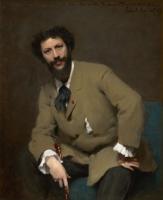
On 4th July 1837 Charles Auguste Émile Durand "Carolus Duran" was born.
On 4th July 1840 Marcus Stone was born.
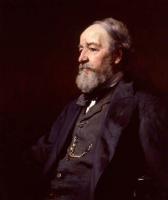
On 4th July 1845 Francis "Frank" Holl was born to Francis Holl [aged 30].
Ten Years' Digging. July 4th [1848], spent another unsuccessfull day at Grindon in opening another barrow, eighteen yards in diameter, by two trenches, each two feet deep, intersecting the centre. In all parts were scattered pieces of human bone, some calcined pieces of earthenware, and flints.
Silbury Hill by C Tucker. On the 4th July [1849] the Secretary of the Institute visited Silbury, and in conjunction with Mr. Blandford and Mr. Falkner decided on the spot at which the opening should be made.
Ten Years' Digging. In the afternoon, we made four trenches in another barrow, situated on a neighbouring eminence, called Anthony Hill [Map]. It measures about fourteen yards across, and is not more than a foot in height, having been removed to within a few inches of the natural soil. Many fragments of human bone, and a boar's tusk, were found just under the turf, but no depression in the natural level being observed, it became evident that all the interments were destroyed from not having been buried deeper.
Ten Years' Digging. On the morning of the 4th of July, we examined an artificial mound [Ladman Low Barrow [Map]] composed of sandstone, on the top of the hill behind Ladmanlow Wharf, near Buxton, and found it to cover a small excavation in the gritstone rock, which contained no interment, although bits of flint had been observed bom the first.
Letters of Dante Gabriel Rossetti 1855. 4th July 1855. London. To William Allingham [aged 31].
I had to break off in the above, and go on with it to-day, instead of beginning afresh, to prove that I was not waiting for you to write, as I remembered well owing you two or three, though one of mine had been lost for some time. Yours was very welcome on Monday. Going on about The Music Master, I see the sentence already written looks very iniquitous, and perhaps is ; but one can only speak of one's own needs and cravings : and I must confess to a need, in narrative dramatic poetry (unless so simple in structure as Auld Robin Gray, for instance), of something rather "exciting," and indeed I believe something of the "romantic" l element, to rouse my mind to anything like the moods produced by personal emotion in my own life. That sentence is shockingly ill worded, but Keats's narratives would be of the kind I mean. Not that I would place the expressions of pure love and life, or of any calm, gradual feeling or experience, one step below their place, — the very highest ; but I think them better conveyed at less length, and chiefly as from oneself Were I speaking to any one else, I might instance (as indeed I often do) the best of your own lyrics as examples ; and these will always have for me much more attraction than The Music Master. The latter, I think, by its calm subject and course during a longish reading, chiefly awakens contemplation, like a walk on a fine day with a churchyard in it, instead of rousing one like a part of one's own life, and leaving one to walk it off as one might live it off. The only part where I remember being much affected was at the old woman's narrative of Milly's gradual decline. Of course the poem has artistic beauties constantly, though I think it flags a little at some of its joints, and am not sure that its turning-point would not, have turned, in vain for me at first reading, if I had not in time remembered your account of the story one day on a walk. After all, I fancy its chief want is that it should accompany a few more stories of deeper incident and passion from the same hand, when what seem to me its shortcomings might, I believe, as a leavening of the mass, become des qualith. As I have stated them, too, they are merely matters of feeling, and those who felt differently (as Patmore, who thinks the poems perfect) might probably be at the higher point of view. P. was here last night with Cayley and one or two more. We sat all the evening on my balcony, and had ice and strawberries there, and I wished for you many times, and meanwhile put in your book as a substitute (having, you may be sure, torn out that thing of Dalziel's).
I have propagated you a little — among other cases, to a man named Dallas the other day, who has just come to settle in London, having written a book called Poetics, and being a great chum of A. Smith — i.e., the Smith — and Dobell. After reading him much of you I enunciated opinions of a decisive kind as to the relative positions of our rising geniuses, and was rather sorry for argument's sake to find him not unsympathising.
I'm glad you've heard from Ruskin, and hope that you may find time in your week to arrange somehow a meeting with him. He has been into the country, and unwell part of the time, but is now set up again and very hard at work. I have no more valued friend than he, and shall have much to say of him. Of other friends, you'll find Woolner (27, Rutland St., Hampstead Road, his house; 64, Margaret St., Cavendish Sq., his study). Patmore, and Hannay get-at-able, besides Munro [aged 29] and Hughes, with whom you've been en rapport. My rapports you ask of with that "stunner" stopped some months ago, after a long stay away from Chatham Place, partly from a wish to narrow the circle of flirtations, in which she had begun to figure a little ; but I often find myself sighing after her, now that "roast beef, roast mutton, gooseberry tart," have faded into the light of common day. "O what is gone from them I fancied theirs?"
Have you seen Eustace Conyers? It is admirable in all Hannay's qualities, and a decided advance on Fontenoy. I congratulate you on your change of place, and myself on the prospect of your going farther, i.e., London, so soon for a while, and I trust not faring worse. Mind, I have nothing to show worth showing. Ruskin has been reading those translations since you, and says he could wish no better than to ink your pencil-marks as his criticisms. He sent here, the other day, a stunner, called the Marchioness of Waterford [aged 37], who had expressed a wish to see me paint in watercolours, it seems, she herself being really first-rate as a designer in that medium. I think I am going to call on her this afternoon. There, sir! R. has asked to be introduced to my sister, who accordingly, will accompany Miss S. and myself to dinner there on Friday.
That building you saw at Dublin is the one. I must have met Woodward, the architect of it, at Oxford (where he is doing the new museum), and talked of you to him, just at the time you were in Dublin, as I heard immediately after, and therefore did not send on to you his full directions how you should find him (or his partner, if he were away) and see all his doings there, which, however, can come off another time. He is a particularly nice fellow, and very desirous to meet you. Miss S. made several lovely designs for him, but Ruskin thought them too good for his workmen at Dublin to carve. One, however, was done (how I know not), and is there ; it represents an angel with some children and all manner of other things, and is, I believe, close to a design by Millais of mice eating corn. Perhaps though they were carved after your visit.
I haven't seen Owen Meredith, and don't feel the least curiosity about him. There is an interestingish article on the three "Bells" in Tail this month, where Wtithering Heights is placed above Currer for dramatic individuality, and it seems C. B. herself quite thought so.
I'll say no more, as I hope so soon to see you, but am ever your affectionate friend,
D. G. R.
Note. Rossetti had been at Clevedon with Miss Siddal, who had gone there for the sake of her health. Writing to his mother he said : — " The junction of the Severn with the Bristol Channel is there, so that the water is hardly brackish, but looks like sea, and you can see across to Wales, only eight miles off, I think. Arthur Hallam, on whom Tennyson wrote In Memoriam, is buried at Clevedon, and we visited his grave."
"That 'stunner'" was clearly the "Belle pas Sauvage" of Letters VII and IX. In my undergraduate days at Oxford when not unfrequently I was in Rossetti's company, I one day heard him maintain that a beautiful young woman, who was on her trial on a charge of murdering her lover, ought not to be hanged, even if found guilty, as she was "such a stunner." When I ventured to assert that I would have her hanged, beautiful or ugly, there was a general outcry of the artistic set. One of them, now famous as a painter, cried out, "Oh, Hill, you would never hang a stunner!"
"O what is gone from them I fancied theirs?" is borrowed with a slight change from the last line of Æolian Harp in the second series of Allingham's Day and Night Songs.
"Gift books have rather poured in on me lately," wrote Rossetti to his mother a few days after the date of this letter; "Hannay's new novel, Eustace Conyers, very first-rate in Hannay's qualities, and a decided advance on Fontenoy."
A little earlier he had written to her: — "An astounding event is to come off to-morrow. The Marchioness of Waterford has expressed a wish to Ruskin to see me paint in water-colour, as she says my method is inscrutable to her. She is herself an excellent artist, and would have been really great, I believe, if not born such a swell and such a stunner."
Mr. Holman Hunt gives the following account of a visit he received from her : — " With The Light of the TJ^orM standing nearly complete upon the easel, I was surprised one morning by the sound of carriage wheels driven up to the side door, a very loud knocking, and the names of Lady Canning and the Countess of Waterford preluding the ascent of the ladies. I think they said that Mr. Ruskin had assured them that they might call to see the picture. My room, with windows free, overlooking the river, was as cheerful as any to be found in London ; but I had not made any effort to remove traces of the pinching suffered till the previous month or so, and to find chairs with perfect seats to them was not easy. But the beautiful sisters were supremely superior to giving trace of any surprise. It might have seemed that they had always lived with broken furniture by preference." An account of the sisters has been lately written by Mr. Augustus J. C. Hare under the title of The Story of Two Noble Lives. There is no mention of these visits to the two painters.


On 4th July 1858 Augustus Robert Spencer-Churchill was born to John Winston Spencer-Churchill 7th Duke of Marlborough [aged 36] and Frances Anne Emily Vane Duchess of Marlborough [aged 36]. She died aged less than one years old.
On 4th July 1865 Sarah Isabella Augusta Spencer-Churchill was born to John Winston Spencer-Churchill 7th Duke of Marlborough [aged 43] and Frances Anne Emily Vane Duchess of Marlborough [aged 43]. She married 21st November 1891 Gordon Chesney Wilson.
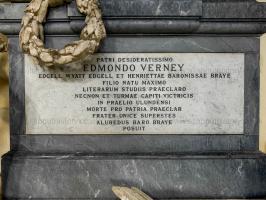
On 4th July 1879 Captain Edmund Verney Wyatt-Edgell [aged 33] was killed in action at Ulundi, KwaZulu-Natal, South Africa. His remains were returned to England and buried at St Nicholas' Church, Stanford-on-Avon [Map]. The inscription on this monument: "To a Most Beloved Father Edmund Verney, eldest son of Edgell Wyatt Edgell [aged 78] and Henrietta, Baroness Braye [aged 70], outstanding in the study of letters, and also leader of a victorious troop in the Battle of Ulundi, glorious in death for his country. His only surviving brother, Alured, Baron Braye [aged 4], set this up."
Mackinnon, J P., ed. The South African Campaign, 1879:
The Hon. Edmund Verney Wyatt Edgell Captain 17th Lancers.
Captain Edmund Verney Wyatt Edgell, who was killed in action at Ulundi on the 4th of July 1879, was the eldest son of the Rev Edgell Wyatt Edgell, by his marriage with Henrietta, fourth Baroness Braye, was grandson of Mr Wyatt Edgell formerly of Milton Place, Egham and of Great Missenden, was heir apparent to the barony of Braye and represented in his own person the ancient and political family of the Earls Verney (this earldom is extinct) and also the elder branch of the Caves of Stanford Hall, Leicestershire. He was born on the 16th of August 1845 and was educated at Eton and Christ Church, Oxford. He entered the army in 1866 being gazetted cornet in the 17th Lancers; became lieutenant by purchase in 1868 and obtained his troop in 1873. Captain Wyatt Edgell spent much of his leisure time in study, especially of the Latin classics, of which he read even the most obscure, and he was considered one of the best French as well as Latin scholars in the army. During a winter's leave he rode through the whole length of Persia and spent some time at Teheran; he completed his journey in safety, though quite unattended. On a vacancy occurring in the representation of the northern division of Northamptonshire in 1877, through the death of Mr Vard Hunt, he contested the seat in the Liberal interest, being opposed by Lord Burghley, who was returned. In February 1879 he entered the Staff College, where however he was only destined to spend a fortnight.
Captain Wyatt Edgell embarked with the 17th Lancers for Natal in the last days of the same February, shortly after the news of the disaster at Isandhlwana reached England. He landed at Durban soon after the battle of Ginghilovo and the evacuation of Etshowe, and on the return of Lord Chelmsford with the relieving column to Natal proceeded with the Lancers into the interior. With the right wing of the regiment under Colonel Drury Lowe, he joined General Newdigate's division, then in course of formation at Conference Hill on the 11th of May and subsequently served with his troop through the whole of the reconnoitring and other important duties on which it was employed during the advance of that force into the enemy's country.
On the morning of the 4th of July, the 17th Lancers covered the rear and flanks of the advancing column and on the force being attacked by the enemy, passed into the hollow square in which it was formed. When the fire of the enemy slackened Colonel Drury Lowe received orders to take out the regiment to strike the then wavering line. Passing through the rear face of the square the regiment rode towards the Nodwengo Kraal dispersing and killing those who had not time to reach its shelter, then wheeling to the right. The regiment charged through the remainder who in full flight were endeavouring to reach the lower slopes of the mountains beyond. Numbers of the enemy in this direction who had not taken part in the actual attack were now firing and momentarily strengthened by those retreating, were enabled to pour in a considerable fusillade on the advancing Lancers below them. It was at this moment that Captain Wyatt Edgell gallantly leading his troop was shot through the head.
"The country has lost a very gallant officer" — such were the words of the Secretary of State for War when he announced to the House of Commons the victory at Ulundi — and the feeling which they expressed has found an echo in the hearts of all to whom Wyatt Edgell was known. "A more gallant leader" wrote Colonel Drury Lowe in his official account of the engagement, "never rode in a charge." He will long be remembered in the 17th Lancers for his genial kindness and manly bearing, and the wide circle of friends to whom he had endeared himself will be slow to forget the pleasantness of his ways.
Captain Wyatt Edgell was by no means the first of his race who has met a soldier's death. At the battle of Edge Hill one of his ancestors Sir Edmund Verney, standard bearer to Charles I, was killed and so firmly did he grasp the staff in death that the hand had to be amputated before the flag could be released. John, second Lord Braye, fought at the battle of St Quintin and died aged thirty three, in 1557, from the wounds and exhaustion he had sustained. He was buried with much ceremony in Chelsea Church where the tomb is still shown. Captain Wyatt Edgell had he survived five months would have succeeded to the barony of Braye as fifth Lord, his mother dying on the 14th of November 1879.
Captain Edmund Verney Wyatt-Edgell: On 16th August 1845 he was born to Reverend Edgell Wyatt-Edgell Baron Braye and Henrietta Otway 4th Baroness Braye.
Adrian Verney Verney-Cave 6th Baron Braye: On 11th October 1874 he was born to Alfred Wyatt-Edgell 5th Baron Braye. On 28th August 1900 he and Ethel Mary Bouverie-Pusey Baroness Braye were married. On 1st July 1928 Alfred Wyatt-Edgell 5th Baron Braye died. His son Adrian succeeded 6th Baron Braye. Ethel Mary Bouverie-Pusey Baroness Braye by marriage Baroness Braye.
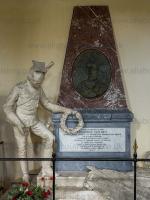
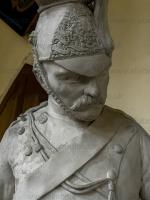
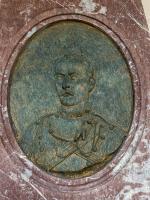
On 4th July 1885 Christian Hanover was born to Ernest Augustus Hanover 3rd Duke Cumberland and Teviotdale [aged 39] and Thyra Glücksburg Duchess Cumberland and Teviotdale [aged 31]. He a great x 2 grandson of King George III of Great Britain and Ireland.
On 4th July 1889 Ferdinand Cavendish-Bentinck 8th Duke of Portland was born to William George Frederick Cavendish-Bentinck [aged 33] and Ruth Mary St Maur [aged 21].
On 4th July 1921 Jacques Balsan [aged 52] and Consuelo Vanderbilt Duchess of Marlborough [aged 44] were married.
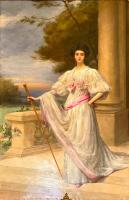


On 4th July 1934 James Hamilton 5th Duke of Abercorn was born to James Edward Hamilton 4th Duke of Abercorn [aged 30] and Kathleen Hamilton Duchess of Abercorn [aged 28]. He married 20th October 1966 Alexandra Phillips Duchess of Abercorn.
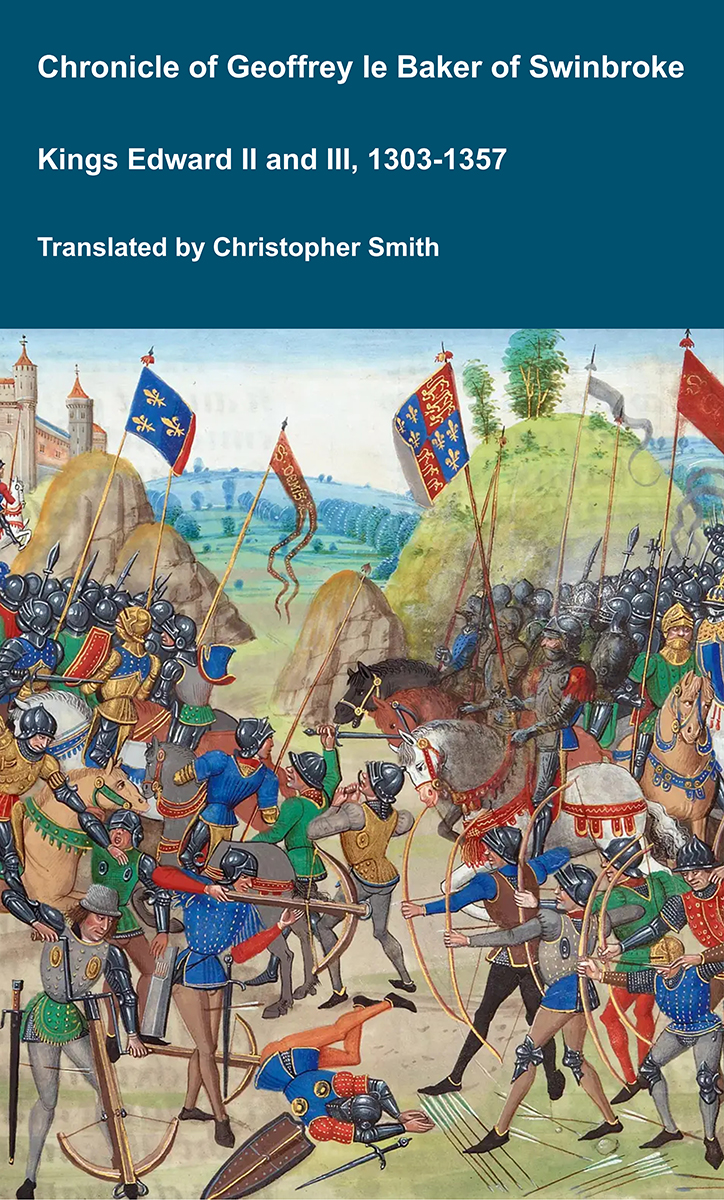
Chronicle of Geoffrey le Baker of Swinbroke
Baker was a secular clerk from Swinbroke, now Swinbrook, an Oxfordshire village two miles east of Burford. His Chronicle describes the events of the period 1303-1356: Gaveston, Bannockburn, Boroughbridge, the murder of King Edward II, the Scottish Wars, Sluys, Crécy, the Black Death, Winchelsea and Poitiers. To quote Herbert Bruce 'it possesses a vigorous and characteristic style, and its value for particular events between 1303 and 1356 has been recognised by its editor and by subsequent writers'. The book provides remarkable detail about the events it describes. Baker's text has been augmented with hundreds of notes, including extracts from other contemporary chronicles, such as the Annales Londonienses, Annales Paulini, Murimuth, Lanercost, Avesbury, Guisborough and Froissart to enrich the reader's understanding. The translation takes as its source the 'Chronicon Galfridi le Baker de Swynebroke' published in 1889, edited by Edward Maunde Thompson.
Available at Amazon in eBook and Paperback format.
On 4th July 1942 Prince Michael of Kent was born to Prince George Windsor 1st Duke Kent [aged 39] and Princess Marina Glücksburg Duchess Kent [aged 35]. He a grandson of King George V of the United Kingdom. Coefficient of inbreeding 2.04%. He married 30th June 1978 Princess Marie von Reibnitz and had issue.


On 4th July 1949 Miles Stapleton Fitzalan Howard 17th Duke of Norfolk [aged 33] and Anne Constable-Maxwell Duchess Norfolk [aged 21] were married.
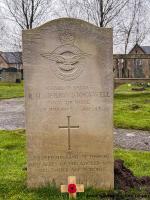
St Peter and St Paul's Church, Longhoughton [Map]. Grave of Squadron Leader R.H. (Jerry) Stockwell, Royal Air Force, 4th July 1963 age 47.
Raymond Howard Stockwell was born on 28 July 1915. His service number was 131727 and he was based at RAF Boulmer.
Newcastle Evening Chronicle Thursday, 04/07/1963 reported:
Officer dies in fog crash: An RAF officer died early today when his Singer Gazelle car crashed and overturned in thick fog on the A1 North of Felton. Squadron Leader Raymond Howard Stockwell, of Bader Crescent, Longhoughton, near Alnwick, was travelling south. The car was wrecked with the roof almost completely ripped off. No other vehicle was involved. It is believed that S/Ldr Stockwell, a married man stationed at RAF Boulmer, was travelling south to a conference when the accident occurred. Morpeth police have appealed for witnesses of the accident which happened at approximately 6am on the A1 half a mile north of Felton.
On 4th July 1466 William I Landgrave of Hesse was born to Louis II Landgrave of Hesse [aged 27].
On 4th July 1473 Mathilde Hesse Duchess Cleves was born to Margrave Henry III of Upper Hesse [aged 32]. She married 1490 John "Babymaker" de la Marck II Duke Cleves, son of John de la Marck I Duke Cleves and Elizabeth Valois Duchess Cleves, and had issue.
On 4th July 1519 Philip Ferdinand Oldenburg was born to Christian II King of Denmark II King Norway [aged 38] and Isabella of Austria Queen Consort Denmark and Norway [aged 17]. He died aged less than one years old.
On 4th July 1519 Maximilian Oldenburg was born to Christian II King of Denmark II King Norway [aged 38] and Isabella of Austria Queen Consort Denmark and Norway [aged 17]. He died aged less than one years old.
On 4th July 1535 William "Younger" Welf Duke Brunswick-Lüneburg was born to Ernest I Duke of Brunswick-Lüneburg [aged 38] and Sophie of Mecklenburg [aged 27]. He married 12th October 1561 his half sixth cousin Dorothea Oldenburg Duchess Brunswick-Lüneburg.
On 4th July 1539 Louis VI Elector Palatine was born to Frederick III Elector Palatine [aged 24]. He married 8th July 1560 Elizabeth Hesse Electress Palatine, daughter of Landgrave Philip I of Hesse and Christine of Saxony.
On 4th July 1552 Maximiliana Maria Wittelsbach was born to Albert V Wittelsbach V Duke Bavaria [aged 24] and Anna Habsburg Spain Duchess Bavaria [aged 23]. Coefficient of inbreeding 1.58%.
On 4th July 1563 Mary Dacre was born to Thomas Dacre 4th Baron Dacre Gilsland 8th Baron Greystoke [aged 36] and Elizabeth Leybourne Duchess Norfolk [aged 27]. She married before 1572 her half third cousin once removed Thomas Howard 1st Earl Suffolk, son of Thomas Howard 4th Duke of Norfolk and Margaret Audley Duchess Norfolk.
On 4th July 1587 Magdalene Wittelsbach was born to William Wittelsbach V Duke Bavaria [aged 38] and Renata Lorraine Duchess Bavaria [aged 43]. Coefficient of inbreeding 2.86%.
Chronicle of Geoffrey le Baker of Swinbroke
Baker was a secular clerk from Swinbroke, now Swinbrook, an Oxfordshire village two miles east of Burford. His Chronicle describes the events of the period 1303-1356: Gaveston, Bannockburn, Boroughbridge, the murder of King Edward II, the Scottish Wars, Sluys, Crécy, the Black Death, Winchelsea and Poitiers. To quote Herbert Bruce 'it possesses a vigorous and characteristic style, and its value for particular events between 1303 and 1356 has been recognised by its editor and by subsequent writers'. The book provides remarkable detail about the events it describes. Baker's text has been augmented with hundreds of notes, including extracts from other contemporary chronicles, such as the Annales Londonienses, Annales Paulini, Murimuth, Lanercost, Avesbury, Guisborough and Froissart to enrich the reader's understanding. The translation takes as its source the 'Chronicon Galfridi le Baker de Swynebroke' published in 1889, edited by Edward Maunde Thompson.
Available at Amazon in eBook and Paperback format.
On 4th July 1602 Charles Cockayne 1st Viscount Cullen was born to William Cockayne [aged 41] and Mary Morris Countess Dover [aged 37]. He married 24th June 1627 Mary O'Brien Viscountess Cullen, daughter of Henry O'Brien 5th Earl Thomond and Mary Brereton Countess Thomond, and had issue.
On 4th July 1644 Josceline Percy 11th Earl of Northumberland was born to Algernon Percy 10th Earl of Northumberland [aged 41] and Elizabeth Howard Countess Northumberland [aged 21]. He was educated at the Inner Temple. He married 23rd December 1662 his third cousin Elizabeth Wriothesley Countess Northumberland, daughter of Thomas Wriothesley 4th Earl of Southampton 2nd Earl Chichester and Elizabeth Leigh Countess Southampton, and had issue.


On 4th July 1653 Walter Clarges 1st Baronet was born to Thomas Clarges [aged 35] in Kingsey, Buckinghamshire. He married before 25th July 1688 Jane Herbert and had issue.
On 4th July 1666 Charles Stewart 1st Duke Kendal was born to James Duke of York [aged 32] and Anne Hyde Duchess of York [aged 29] at St James's Palace [Map]. He died aged less than one years old.
On 4th July 1710 Thomas Hay 9th Earl Kinnoul was born to George Henry Hay 8th Earl Kinnoull [aged 21] and Abigail Harley Countess Kinnoul [aged 21].


On 4th July 1751 Heneage Finch 4th Earl Aylesford was born to Heneage Finch 3rd Earl Aylesford [aged 35] and Charlotte Seymour Countess Aylesford [aged 20]. He married 18th November 1781 Louisa Thynne Countess Aylesford, daughter of Thomas Thynne 1st Marquess of Bath and Elizabeth Bentinck Marchioness Bath, and had issue.

On 4th July 1752 Robert Monckton-Arundell 4th Viscount Galway was born to William Monckton aka Monckton-Arundell 2nd Viscount Galway [aged 27] and Elizabeth Villareal Viscountess Galway.
On 4th July 1773 Samuel William Reynolds was born.
On 4th July 1781 William Lewis Trelawny aka Salusbury-Trelawny 8th Baronet was born to Harry Trelawny 7th Baronet [aged 25] and Anne Brown Lady Trelawny. He married 24th August 1807 Patience Christian Carpenter Lady Trelawny and had issue.
On 4th July 1799 Frederick Twisleton-Wykeham-Fiennes 10th or 16th Baron Saye and Sele was born to Thomas James Twisleton [aged 28]. He married (1) 4th June 1827 Emily Wingfield, daughter of Richard Wingfield 4th Viscount Powerscourt, and had issue (2) 18th August 1857 his first cousin once removed Caroline Eliza Leigh Baroness Saye and Sele, daughter of Chandos Leigh 1st Baron Leigh.
This is a translation of the 'Memoires of Jacques du Clercq', published in 1823 in two volumes, edited by Frederic, Baron de Reissenberg. In his introduction Reissenberg writes: 'Jacques du Clercq tells us that he was born in 1424, and that he was a licentiate in law and a counsellor to Philip the Good, Duke of Burgundy, in the castellany of Douai, Lille, and Orchies. It appears that he established his residence at Arras. In 1446, he married the daughter of Baldwin de la Lacherie, a gentleman who lived in Lille. We read in the fifth book of his Memoirs that his father, also named Jacques du Clercq, had married a lady of the Le Camelin family, from Compiègne. His ancestors, always attached to the counts of Flanders, had constantly served them, whether in their councils or in their armies.' The Memoires cover a period of nineteen years beginning in in 1448, ending in in 1467. It appears that the author had intended to extend the Memoirs beyond that date; no doubt illness or death prevented him from carrying out this plan. As Reissenberg writes the 'merit of this work lies in the simplicity of its narrative, in its tone of good faith, and in a certain air of frankness which naturally wins the reader’s confidence.' Du Clercq ranges from events of national and international importance, including events of the Wars of the Roses in England, to simple, everyday local events such as marriages, robberies, murders, trials and deaths, including that of his own father in Book 5; one of his last entries.
Available at Amazon in eBook and Paperback format.
On 4th July 1806 Mary Brudenell Countess Chichester was born to Robert Brudenell 6th Earl Cardigan [aged 37] and Penelope Cooke Countess Cardigan [aged 36]. She married 18th August 1828 her fifth cousin Henry Pelham 3rd Earl Chichester, son of Thomas Pelham 2nd Earl Chichester and Mary Henrietta Juliana Osborne Countess Chichester, and had issue.
On 4th July 1820 William Tollemache was born to Lionel Tollemache 8th Earl Dysart [aged 25] and Maria Elizabeth Toone Countess Dysart. He married 26th September 1851 his first cousin Katherine Elizabeth Camilla Burke and had issue.
On 4th July 1832 Wilbraham Tollemache 2nd Baron Tollemache was born to John Jervis Tollemache 1st Baron Tollemache [aged 26] and Georgiana Louisa Best [aged 23]. Coefficient of inbreeding 6.25%. He married (1) 2nd December 1858 his sixth cousin Emma Georgiana Stewart, daughter of Randolph Stewart 9th Earl Galloway and Harriet Blanche Somerset Countess Galloway, and had issue (2) 2nd October 1878 Mary Stuart Hamilton Baroness Tollemache.
On 4th July 1837 Charles Auguste Émile Durand "Carolus Duran" was born.
On 4th July 1838 Francis Wheler Hood 4th Viscount Hood was born to Samuel Hood aka Hood-Tibbits 3rd Viscount Hood [aged 30]. He married 18th July 1865 Edith Lydia Drummond Ward Viscountess Hood and had issue.
On 4th July 1840 Marcus Stone was born.
On 4th July 1840 Caroline Rachel Cholmondeley was born to William Cholmondeley 3rd Marquess Cholmondeley [aged 40] and Marcia Emma Georgiana Arbuthnot Marchioness Cholmondeley [aged 36].
On 4th July 1845 Francis "Frank" Holl was born to Francis Holl [aged 30].
On 4th July 1853 Rachel Anne Georgina Campbell was born to John Frederick Vaughan Campbell 2nd Earl Cawdor [aged 36] and Sarah Mary Compton Cavendish Countess Cawdor [aged 39]. She married 1876 Stafford Howard-Molyneux-Howard.
On 4th July 1858 Augustus Robert Spencer-Churchill was born to John Winston Spencer-Churchill 7th Duke of Marlborough [aged 36] and Frances Anne Emily Vane Duchess of Marlborough [aged 36]. She died aged less than one years old.
On 4th July 1859 John William Beaumont Pease 1st Baron Wardington was born.
The History of William Marshal was commissioned by his son shortly after William’s death in 1219 to celebrate the Marshal’s remarkable life; it is an authentic, contemporary voice. The manuscript was discovered in 1861 by French historian Paul Meyer. Meyer published the manuscript in its original Anglo-French in 1891 in two books. This book is a line by line translation of the first of Meyer’s books; lines 1-10152. Book 1 of the History begins in 1139 and ends in 1194. It describes the events of the Anarchy, the role of William’s father John, John’s marriages, William’s childhood, his role as a hostage at the siege of Newbury, his injury and imprisonment in Poitou where he met Eleanor of Aquitaine and his life as a knight errant. It continues with the accusation against him of an improper relationship with Margaret, wife of Henry the Young King, his exile, and return, the death of Henry the Young King, the rebellion of Richard, the future King Richard I, war with France, the death of King Henry II, and the capture of King Richard, and the rebellion of John, the future King John. It ends with the release of King Richard and the death of John Marshal.
Available at Amazon in eBook and Paperback format.
On 4th July 1865 Sarah Isabella Augusta Spencer-Churchill was born to John Winston Spencer-Churchill 7th Duke of Marlborough [aged 43] and Frances Anne Emily Vane Duchess of Marlborough [aged 43]. She married 21st November 1891 Gordon Chesney Wilson.
On 4th July 1884 Herbert Edward Morris 7th Baronet was born to Herbert Morris [aged 26].
On 4th July 1885 Christian Hanover was born to Ernest Augustus Hanover 3rd Duke Cumberland and Teviotdale [aged 39] and Thyra Glücksburg Duchess Cumberland and Teviotdale [aged 31]. He a great x 2 grandson of King George III of Great Britain and Ireland.
On 4th July 1889 Ferdinand Cavendish-Bentinck 8th Duke of Portland was born to William George Frederick Cavendish-Bentinck [aged 33] and Ruth Mary St Maur [aged 21].
On 4th July 1890 Irene Denison Marchioness Carisbrooke was born to William Henry Francis Denison 2nd Earl Londesborough [aged 26] and Grace Adelaide Fane Countess Londesborough [aged 29]. She married 1917 Alexander Mountbatten 1st Marquess Carisbrooke and had issue.


On 4th July 1920 Geoffrey Washington Trevelyan 5th Baronet was born to Charles Trevelyan 3rd Baronet [aged 49] and Mary "Molly" Katherine Bell Lady Trevelyan [aged 38].
On 4th July 1934 James Hamilton 5th Duke of Abercorn was born to James Edward Hamilton 4th Duke of Abercorn [aged 30] and Kathleen Hamilton Duchess of Abercorn [aged 28]. He married 20th October 1966 Alexandra Phillips Duchess of Abercorn.
On 4th July 1942 Prince Michael of Kent was born to Prince George Windsor 1st Duke Kent [aged 39] and Princess Marina Glücksburg Duchess Kent [aged 35]. He a grandson of King George V of the United Kingdom. Coefficient of inbreeding 2.04%. He married 30th June 1978 Princess Marie von Reibnitz and had issue.
On 4th July 1530 King Francis I of France [aged 35] and Eleanor of Austria Queen Consort France Queen Consort Portugal [aged 31] were married. She by marriage Queen Consort of France. She the daughter of Philip "Handsome Fair" King Castile and Joanna "The Mad" Trastámara Queen Castile [aged 51]. He the son of Charles Valois Orléans Count Angoulême and Louise of Savoy Countess Angoulême [aged 53]. They were second cousin once removed. She a great x 4 granddaughter of King Edward III of England.
On 4th July 1546 Albert V Wittelsbach V Duke Bavaria [aged 18] and Anna Habsburg Spain Duchess Bavaria [aged 17] were married. She by marriage Duchess Bavaria. She the daughter of Ferdinand I Holy Roman Emperor [aged 43] and Anne Jagiellon [aged 42]. He the son of William Wittelsbach IV Duke Bavaria [aged 52] and Marie Jakobaea Baden Duchess Bavaria [aged 39]. They were second cousin once removed. He a great x 5 grandson of King Edward III of England. She a great x 5 granddaughter of King Edward III of England.

On 4th July 1622 Thomas Bruce 1st Earl Elgin [aged 23] and Anne Chichester [aged 17] were married at Holy Trinity Church, Minories [Map].
Abbot John Whethamstede’s Chronicle of the Abbey of St Albans
Abbot John Whethamstede's Register aka Chronicle of his second term at the Abbey of St Albans, 1451-1461, is a remarkable text that describes his first-hand experience of the beginning of the Wars of the Roses including the First and Second Battles of St Albans, 1455 and 1461, respectively, their cause, and their consequences, not least on the Abbey itself. His text also includes Loveday, Blore Heath, Northampton, the Act of Accord, Wakefield, and Towton, and ends with the Coronation of King Edward IV. In addition to the events of the Wars of the Roses, Abbot John, or his scribes who wrote the Chronicle, include details in the life of the Abbey such as charters, letters, land exchanges, visits by legates, and disputes, which provide a rich insight into the day-to-day life of the Abbey, and the challenges faced by its Abbot.
Available at Amazon in eBook and Paperback format.
On 4th July 1785 Thomas Dyke Acland 9th Baronet [aged 33] and Henrietta Anne Hoare [aged 22] were married. They were half second cousins.
On 4th July 1791 Philip Sherard 5th Earl Harborough [aged 24] and Eleanor Monckton [aged 19] were married. He the son of Robert Sherard 4th Earl Harborough [aged 78].
On 4th July 1808 Charles Merrik Burrell 3rd Baronet [aged 34] and Frances Wyndham Lady Burrell [aged 19] were married at St George's Church, Hanover Square. She by marriage Lady Raymond of Valentine House in Essex. She the illegitmate daughter of George O'Brien Wyndham 3rd Earl Egremont [aged 56] and Elizabeth Ilive Countess Egremont [aged 39].


On 4th July 1817 Hugh Fortescue 2nd Earl Fortescue [aged 34] and Susan Ryder [aged 21] were married. She the daughter of Dudley Ryder 1st Earl of Harrowby [aged 54] and Susanna Leveson-Gower Countess Harrowby Lincolnshire [aged 44]. He the son of Hugh Fortescue 1st Earl Fortescue [aged 64] and Hester Granville Countess Fortescue [aged 51]. They were fourth cousins.
On 4th July 1877 Lieutenant-Colonel Hugh Annesley 5th Earl Annesley [aged 46] and Mabel Markham Countess Annesley [aged 19] were married. She by marriage Countess Annesley of Castlewellan in County Down. The difference in their ages was 27 years. He the son of William Richard Annesley 3rd Earl Annesley and Priscilla Cecilia Moore Countess Annesley [aged 68].
On 4th July 1883 Edward Wheler 12th Baronet [aged 25] and Mary Leontine Wood Lady Wheler were married at St James' Church, Piccadilly.
On 4th July 1921 Jacques Balsan [aged 52] and Consuelo Vanderbilt Duchess of Marlborough [aged 44] were married.
On 4th July 1947 Roland Cubitt 3rd Baron Ashcombe [aged 48] and Sonia Rosemary Keppel [aged 47] were divorced.
On 4th July 1949 Miles Stapleton Fitzalan Howard 17th Duke of Norfolk [aged 33] and Anne Constable-Maxwell Duchess Norfolk [aged 21] were married.
On 4th July 673 King Ecgberht I of Kent died. His son Eadric succeeded King of Kent.
Abbot John Whethamstede’s Chronicle of the Abbey of St Albans
Abbot John Whethamstede's Register aka Chronicle of his second term at the Abbey of St Albans, 1451-1461, is a remarkable text that describes his first-hand experience of the beginning of the Wars of the Roses including the First and Second Battles of St Albans, 1455 and 1461, respectively, their cause, and their consequences, not least on the Abbey itself. His text also includes Loveday, Blore Heath, Northampton, the Act of Accord, Wakefield, and Towton, and ends with the Coronation of King Edward IV. In addition to the events of the Wars of the Roses, Abbot John, or his scribes who wrote the Chronicle, include details in the life of the Abbey such as charters, letters, land exchanges, visits by legates, and disputes, which provide a rich insight into the day-to-day life of the Abbey, and the challenges faced by its Abbot.
Available at Amazon in eBook and Paperback format.
On 4th July 1307 Rudolph Habsburg III Duke Austria [aged 25] died.
On 4th July 1336 Elisabeth Barcelona Queen Consort Portugal [aged 65] died.
On 4th July 1392 Thomas Stafford 3rd Earl Stafford [aged 24] died at Westminster [Map]. His brother William [aged 16] succeeded 4th Earl Stafford, 5th Baron Stafford.
On 4th July 1450 James Fiennes 1st Baron Saye and Sele [aged 55] was beheaded at the Standard in Cheapside [Map]. His son William [aged 22] succeeded 2nd Baron Saye and Sele and inherited his estates including Hever Castle, Kent [Map] and Herstmonceux Castle, East Sussex [Map].
His son in law William Cromer [aged 34] was also beheaded.
On 4th July 1551 Gregory Cromwell 1st Baron Cromwell Oakham [aged 31] died of sweating sickness. His son Henry [aged 13] succeeded 2nd Baron Cromwell Oakham.
On 4th July 1611 Elizabeth Morrison Countess Lincoln died.
On 4th July 1668 Mary Stewart Countess Arran [aged 16] died. Her first cousin Charles [aged 29] succeeded 6th Baron Clifton of Leighton Bromswold in Huntingdonshire.
On 4th July 1681 Elizabeth Booth Countess Conway died.
On 4th July 1708 Henry Hare 2nd Baron Coleraine [aged 72] died. His grandson Henry [aged 15] succeeded 3rd Baron Coleraine.

On 4th July 1719 Edwyn Sadleir 2nd Baronet [aged 63] died without issue. Baronet Sadleir of Temple Disney in Hertfordshire extinct.
On 4th July 1722 Rowland St John 10th Baron St John [aged 35] died. His brother John [aged 34] succeeded 11th Baron St John of Bletso, 8th Baronet St John of Woodford in Northamptonshire.
On 4th July 1726 Henry Bentinck 1st Duke Portland [aged 44] died in Spanish Town Jamaica. His body was returned to England. On 03 Nov 1726 he was buried in the Duke of Ormonde Vault, King Henry VII Chapel, Westminster Abbey. His son William [aged 17] succeeded 2nd Duke Portland, 3rd Earl of Portland.
On 4th July 1744 Charles Fane 1st Viscount Fane [aged 68] died. His son Charles [aged 36] succeeded 2nd Viscount Fane, 2nd Baron Fane of Loughguyre in the County of Limerick.

On 4th July 1758 Brabazon Ponsonby 1st Earl Bessborough [aged 79] died. His son William [aged 54] succeeded 2nd Earl Bessborough, 3rd Viscount Duncannon of Duncannon in Wexford, 3rd Baron Bessborough of Bessborough in Kilkenny. Caroline Cavendish Countess Bessborough [aged 39] by marriage Countess Bessborough.
The True Chronicles of Jean le Bel Volume 1 Chapters 1-60 1307-1342
The True Chronicles of Jean le Bel offer one of the most vivid and immediate accounts of 14th-century Europe, written by a knight who lived through the events he describes, and experienced some of them first hand. Covering the early decades of the Hundred Years’ War, this remarkable chronicle follows the campaigns of Edward III of England, the politics of France and the Low Countries, and the shifting alliances that shaped medieval warfare. Unlike later historians, Jean le Bel writes with a strong sense of eyewitness authenticity, drawing on personal experience and the testimony of fellow soldiers. His narrative captures not only battles and sieges, but also the realities of military life, diplomacy, and the ideals of chivalry that governed noble society. A key source for Jean Froissart, Le Bel’s chronicle stands on its own as a compelling and insightful work, at once historical record and literary achievement. This translation builds on the 1905 edition published in French by Jules Viard, adding extensive translations from other sources Rymer's Fœdera, the Chronicles of Adam Murimuth, William Nangis, Walter of Guisborough, a Bourgeois of Valenciennes, Geoffrey le Baker of Swinbroke and Richard Lescot to enrich the original text and Viard's notes.
Available at Amazon in eBook and Paperback format.
On 4th July 1770 Frances Norcliffe Lady Wray [aged 69] died. She was buried at Ripon Cathedral [Map].
On 4th July 1799 John Anstruther 2nd Baronet [aged 80] died.
On 4th July 1816 Arthur Annesley 1st Earl Mountnorris [aged 71] died. His son George [aged 45] succeeded 2nd Earl Mountnorris of Mountnorris Castle in Armagh, 9th Viscount Valentia, 7th Baron Altham.
On 4th July 1818 Francis Thomas-Fitzmaurice 3rd Earl Kerry [aged 77] died. He was buried in Westminster Abbey [Map] in the same tomb as his wife Anastasia Daly Countess Kerry. His first cousin once removed Henry [aged 38] succeeded 4th Earl Kerry.
On 4th July 1824 Caroline Fludyer Countess Brownlow [aged 30] died.

On 4th July 1826 Thomas Pelham 2nd Earl Chichester [aged 70] died. His son Henry [aged 21] succeeded 3rd Earl Chichester, 4th Baron Pelham of Stanmer in Sussex and 8th Baronet Pelham of Laughton.
On 4th July 1829 Thomas Capron [aged 81] died. On 24th February 1832 Elizabeth Lucas [aged 77] died. Memorial in Church of St Rumbold, Stoke Doyle [Map] sculpted by Henry Hopper [aged 62].
Thomas Capron: he and Elizabeth Lucas were married. Around 1748 he was born.
Elizabeth Lucas: Around 1752 she was born to John Lucas of Nortoft Manor.
On 4th July 1833 Alexander Württemberg Duke Württemberg [aged 62] died. His son Alexander [aged 29] succeeded Duke Württemberg.
On 4th July 1879 Captain Edmund Verney Wyatt-Edgell [aged 33] was killed in action at Ulundi, KwaZulu-Natal, South Africa. His remains were returned to England and buried at St Nicholas' Church, Stanford-on-Avon [Map]. The inscription on this monument: "To a Most Beloved Father Edmund Verney, eldest son of Edgell Wyatt Edgell [aged 78] and Henrietta, Baroness Braye [aged 70], outstanding in the study of letters, and also leader of a victorious troop in the Battle of Ulundi, glorious in death for his country. His only surviving brother, Alured, Baron Braye [aged 4], set this up."
Mackinnon, J P., ed. The South African Campaign, 1879:
The Hon. Edmund Verney Wyatt Edgell Captain 17th Lancers.
Captain Edmund Verney Wyatt Edgell, who was killed in action at Ulundi on the 4th of July 1879, was the eldest son of the Rev Edgell Wyatt Edgell, by his marriage with Henrietta, fourth Baroness Braye, was grandson of Mr Wyatt Edgell formerly of Milton Place, Egham and of Great Missenden, was heir apparent to the barony of Braye and represented in his own person the ancient and political family of the Earls Verney (this earldom is extinct) and also the elder branch of the Caves of Stanford Hall, Leicestershire. He was born on the 16th of August 1845 and was educated at Eton and Christ Church, Oxford. He entered the army in 1866 being gazetted cornet in the 17th Lancers; became lieutenant by purchase in 1868 and obtained his troop in 1873. Captain Wyatt Edgell spent much of his leisure time in study, especially of the Latin classics, of which he read even the most obscure, and he was considered one of the best French as well as Latin scholars in the army. During a winter's leave he rode through the whole length of Persia and spent some time at Teheran; he completed his journey in safety, though quite unattended. On a vacancy occurring in the representation of the northern division of Northamptonshire in 1877, through the death of Mr Vard Hunt, he contested the seat in the Liberal interest, being opposed by Lord Burghley, who was returned. In February 1879 he entered the Staff College, where however he was only destined to spend a fortnight.
Captain Wyatt Edgell embarked with the 17th Lancers for Natal in the last days of the same February, shortly after the news of the disaster at Isandhlwana reached England. He landed at Durban soon after the battle of Ginghilovo and the evacuation of Etshowe, and on the return of Lord Chelmsford with the relieving column to Natal proceeded with the Lancers into the interior. With the right wing of the regiment under Colonel Drury Lowe, he joined General Newdigate's division, then in course of formation at Conference Hill on the 11th of May and subsequently served with his troop through the whole of the reconnoitring and other important duties on which it was employed during the advance of that force into the enemy's country.
On the morning of the 4th of July, the 17th Lancers covered the rear and flanks of the advancing column and on the force being attacked by the enemy, passed into the hollow square in which it was formed. When the fire of the enemy slackened Colonel Drury Lowe received orders to take out the regiment to strike the then wavering line. Passing through the rear face of the square the regiment rode towards the Nodwengo Kraal dispersing and killing those who had not time to reach its shelter, then wheeling to the right. The regiment charged through the remainder who in full flight were endeavouring to reach the lower slopes of the mountains beyond. Numbers of the enemy in this direction who had not taken part in the actual attack were now firing and momentarily strengthened by those retreating, were enabled to pour in a considerable fusillade on the advancing Lancers below them. It was at this moment that Captain Wyatt Edgell gallantly leading his troop was shot through the head.
"The country has lost a very gallant officer" — such were the words of the Secretary of State for War when he announced to the House of Commons the victory at Ulundi — and the feeling which they expressed has found an echo in the hearts of all to whom Wyatt Edgell was known. "A more gallant leader" wrote Colonel Drury Lowe in his official account of the engagement, "never rode in a charge." He will long be remembered in the 17th Lancers for his genial kindness and manly bearing, and the wide circle of friends to whom he had endeared himself will be slow to forget the pleasantness of his ways.
Captain Wyatt Edgell was by no means the first of his race who has met a soldier's death. At the battle of Edge Hill one of his ancestors Sir Edmund Verney, standard bearer to Charles I, was killed and so firmly did he grasp the staff in death that the hand had to be amputated before the flag could be released. John, second Lord Braye, fought at the battle of St Quintin and died aged thirty three, in 1557, from the wounds and exhaustion he had sustained. He was buried with much ceremony in Chelsea Church where the tomb is still shown. Captain Wyatt Edgell had he survived five months would have succeeded to the barony of Braye as fifth Lord, his mother dying on the 14th of November 1879.
Captain Edmund Verney Wyatt-Edgell: On 16th August 1845 he was born to Reverend Edgell Wyatt-Edgell Baron Braye and Henrietta Otway 4th Baroness Braye.
Adrian Verney Verney-Cave 6th Baron Braye: On 11th October 1874 he was born to Alfred Wyatt-Edgell 5th Baron Braye. On 28th August 1900 he and Ethel Mary Bouverie-Pusey Baroness Braye were married. On 1st July 1928 Alfred Wyatt-Edgell 5th Baron Braye died. His son Adrian succeeded 6th Baron Braye. Ethel Mary Bouverie-Pusey Baroness Braye by marriage Baroness Braye.
On 4th July 1881 Cospatrick Alexander Douglas-Home 11th Earl of Home [aged 81] died. His son Charles [aged 47] succeeded 12th Earl of Home. Maria Gray Countess of Home [aged 32] by marriage Countess of Home.
Chronicle of Geoffrey le Baker of Swinbroke
Baker was a secular clerk from Swinbroke, now Swinbrook, an Oxfordshire village two miles east of Burford. His Chronicle describes the events of the period 1303-1356: Gaveston, Bannockburn, Boroughbridge, the murder of King Edward II, the Scottish Wars, Sluys, Crécy, the Black Death, Winchelsea and Poitiers. To quote Herbert Bruce 'it possesses a vigorous and characteristic style, and its value for particular events between 1303 and 1356 has been recognised by its editor and by subsequent writers'. The book provides remarkable detail about the events it describes. Baker's text has been augmented with hundreds of notes, including extracts from other contemporary chronicles, such as the Annales Londonienses, Annales Paulini, Murimuth, Lanercost, Avesbury, Guisborough and Froissart to enrich the reader's understanding. The translation takes as its source the 'Chronicon Galfridi le Baker de Swynebroke' published in 1889, edited by Edward Maunde Thompson.
Available at Amazon in eBook and Paperback format.
On 4th July 1883 Elizabeth Anne Tichborne Baroness Dormer died.
On 4th July 1884 William Bernard Petre 12th Baron Petre [aged 66] died. His son William [aged 37] succeeded 13th Baron Petre.
On 4th July 1887 John Paulet 14th Marquess Winchester [aged 86] died. His son Augustus [aged 29] succeeded 15th Marquess Winchester, 15th Earl Wiltshire, 15th Baron St John.
On 4th July 1911 Marguerite Smyles Drever Baroness Joicey [aged 58] died.

On 4th July 1919 Agnes Elizabeth Courtenay Viscountess Halifax [aged 81] died.
On 4th July 1930 Reginald Ambrose Cave-Browne-Cave 13th Baronet [aged 70] died. His brother Rowland [aged 65] succeeded 14th Baronet Cave of Stanford in Northamptonshire.
On 4th July 1930 George Young 3rd Baronet [aged 92] died. His son George [aged 57] succeeded 4th Baronet Young of Formosa Place in Berkshire.
On 4th July 1937 Philip Grey Egerton 12th Baronet [aged 73] died. His first cousin once removed Brooke [aged 91] succeeded 13th Baronet Egerton and Oulton.
On 4th July 1944 Courtenay John Honywood 9th Baronet [aged 64] died. His brother William [aged 53] succeeded 10th Baronet Honywood of Evington in Kent.
On 4th July 1959 Lionel Dawson-Damer 6th Earl of Portarlington [aged 75] died. His grandson George [aged 20] succeeded 7th Earl Portarlington.
On 4th July 1962 Viola le Sueur Lady Waller died.
On 4th July 1965 Edward Sackville-West 5th Baron Sackville [aged 63] died. His first cousin Lionel [aged 52] succeeded 6th Baron Sackville of Knole in Kent.
Chronicle of a Bourgeois of Valenciennes
Récits d’un bourgeois de Valenciennes aka The Chronicle of a Bourgeois of Valenciennes is a vivid 14th-century vernacular chronicle written by an anonymous urban chronicler from Valenciennes in the County of Hainaut. It survives in a manuscript that describes local and regional history from about 1253 to 1366, blending chronology, narrative episodes, and eyewitness-style accounts of political, military, and social events in medieval France, Flanders, and the Low Countries. The work begins with a chronological framework of events affecting Valenciennes and its region under rulers such as King Philip VI of France and the shifting allegiances of local nobility. It includes accounts of conflicts, sieges, diplomatic manoeuvres, and the impact of broader struggles like the Hundred Years’ War on urban life in Hainaut. Written from the perspective of a burgher (bourgeois) rather than a monastery or royal court, the chronicle offers a rare lay viewpoint on high politics and warfare, reflecting how merchants, townspeople, and civic institutions experienced the turbulence of the 13th and 14th centuries. Its narrative style combines straightforward reporting of events with moral and civic observations, making it a valuable source for readers interested in medieval urban society, regional politics, and the lived experience of war and governance in pre-modern Europe.
Available at Amazon in eBook and Paperback format.
On 4th July 1997 William Gerald Charles Cadogan 7th Earl Cadogan [aged 83] died. His son Charles [aged 60] succeeded 8th Earl Cadogan, 8th Viscount Chelsea, 10th Baron Cadogan.
On 4th July 1999 Nancy Ruth Cobbs Countess Lowther died.
On 4th July 2000 Philip Lever 3rd Viscount Leverhulme [aged 85] died. Viscount Leverhulme of the Western Isles, Baron Leverhulme of Bolton le Moors in Lancashire, Baronet Lever of Thornton Manor in Cheshire extinct.
On 4th July 2009 George Frederick Laurence Hyde Villiers 7th Earl Clarendon [aged 76] died. His son George [aged 33] succeeded 8th Earl Clarendon, 8th Baron Hyde of Hindon in Wiltshire 1756.
On 4th July 2012 Rosamund Jane Winkley Marchioness of Ailesbury [aged 63] died.