

10 Sep is in September.
1087 Death of King William "The Conqueror"
1299 Marriage of King Edward I and Margaret of France
1419 Murder of John the Fearless
1533 Birth and Christening of Elizabeth I
1535 Sweating Sickness Outbreak
On 10th September 954 Louis "Overseas" IV King West Francia [aged 34] died. His son Lothair [aged 13] succeeded III King West Francia.
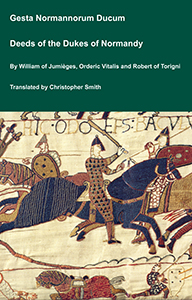 History of the Dukes of Normandy by William of Jumieges. When, therefore the same victorious king, after many wars and after many campaigns in Normandy, in England, in Lesser Brittany, and also in Maine were brought to a fortunate conclusion, attacked a certain town called Mantes, belonging to Philip, King of the Franks, who at that time was aiding Duke Robert in the war he was raising against his father (for the cause of this discord was that King William would not allow his son to do as he pleased with the duchy of Normandy, though he had appointed him heir after himself), when, therefore, King William set fire to the town of Mantes in vengeance, by the weight of his armour and the strain of shouting as he urged on his men, the fat of his internal organs, as is said, was melted, and he began to fall seriously ill. And although he lived for some time afterward, he did not enjoy his former health. At last, after arranging his affairs and granting the kingdom of England to his son William, he ended1 this present life in Normandy at Rouen on the fourth day before the Ides of September [10th September 1087]. His body was carried, as he had ordered, to Caen, and was royally buried before the high altar in the church of Saint Stephen, which he himself had built from the foundations. Only one of his sons, Henry, followed his father's funeral, he alone being worthy in time to hold his father's inheritance entire, which his brothers had possessed only in parts after their father's death. This same king died at nearly sixty years of age, in the 52nd year of his duchy of Normandy, in the 20th year of his reign in England, in the year of the Lord's Incarnation 1087. Reigning now is our same Lord Jesus Christ with the eternal Father, in the unity of the Holy Spirit, through all ages of ages. Amen.
Cum ergo idem rex victoriosus post plurima bella, post multiplices expeditiones tam in Northmannia. quam in Anglia et in minore Britannia, seu etiam in Cenomannia prospero exitu consummatas, oppidum quoddam Medanta nomine proprium Philippi regis Francorum, qui tunc temporis partes Roberti ducis bellum patri inferentis juvabat (causa autem hujusmodi discordiæ erat, quod eidem filio suo rex Willelmus non permittebat facere voluntatem suam de ducatu Northmanniæ, licet eum ipse post se fecisset hæredem): cum igitur Willelmus rex oppidum Medanta assiliens flammis ultricibus tradidisset, pondere armarum et labore clamoris, quo suos exhortabatur, ut fertur, arvina intestinorum ejus liquefacta, infirmari non modice cœpit. Et licet aliquandiu postea vixerit, non tamen solita valetudine usus est. Dispositis tandem rebus suis et regno Angliæ concesso Willelmo filio suo, vitam præsentem finivit in Northmannia apud Rothomagum 4 Idus septembris. Translatum est corpus ejus sicut ordinaverat, Cadomum et in ecclesia Sancti Stephani, quam ipse a fundamentis ædificaverat, ante majus altare regaliter tumulatum. Solus autem filiorum suorum Henricus exsequias patris persecutus est, dignus qui paternam hæreditatem aliquando solus obtineret, quam fratres sui particulatim post mortem patris sui possederunt. Decessit autem idem rex fere sexagenarius, anno ducatus, in Northmannia 52, porro regni sui in Anglia 20, Incarnationis autem Domini 1087. Regnante eodem Domino nostro Jesu Christo cum eterno Patre in unitate Spiritus sancti per omnia sæcula sæculorum. Amen.
Note 1. Orderic Vitalis, Book 7, Chapter 16: "However, when the corpse was lowered into the stone coffin, they were obliged to use some violence in forcing it in, because through the negligence of the masons it had been made too short, so that, as the king was very corpulent, the bowels burst, and an intolerable stench affected the by-standers and the rest of the crowd. The smoke of incense and other aromatics ascended in clouds, but failed to purify the tainted atmosphere. The priests therefore hurried the conclusion of the funeral service and retired as soon as possible, in great alarm, to their respective abodes."
Chronicum Anglicanum by Ralph Coggeshall: "In the year 1087 King William came into France with an army and burned the town called Mantes, including its churches, where two anchorites were also burned. From there, he returned to Normandy, suffering from severe internal pain. Before his death, he bestowed the kingdom of England upon his son William. He passed away on the 9th September 1087 and was buried at Caen1, having ruled over the English people for twenty years, ten months, and twenty-eight days. His son William II succeeded him as King of England, while his eldest son, Robert Curthose, inherited the Duchy of Normandy."
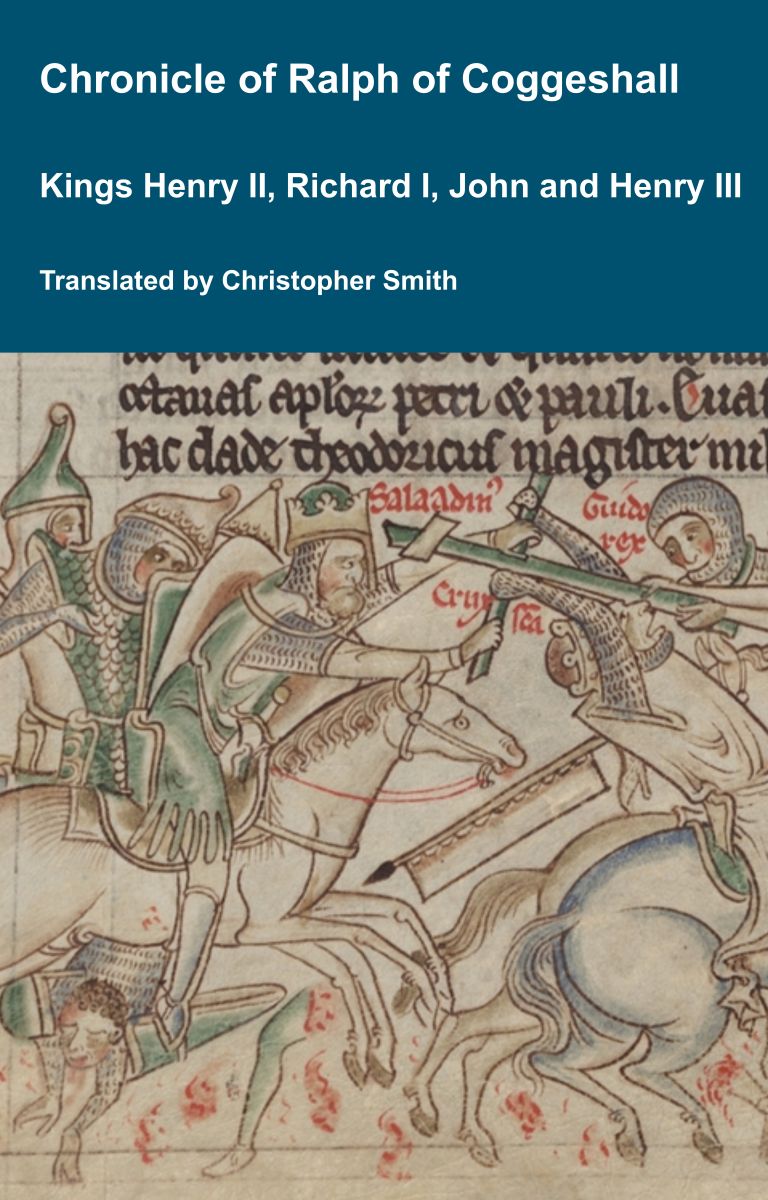 Chronicum Anglicanum by Ralph Coggeshall. 1167. The Empress, mother of King Henry II, died1. At Coggeshall [Map] the great altar was dedicated in honour of the glorious Virgin Mary and Saint John the Baptist, on the Feast of the Assumption of Blessed Mary, by the venerable Gilbert Foliot, bishop of London, who on that same day solemnly celebrated Mass upon that altar, while Lord Simon de Toni was abbot of the same place.
MCLXVII. Obiit imperatrix, mater Henrici Secundi regis. Apud Cogeshalam dedicatum est altare magnum in honore gloriosæ Virginis Mariæ et Sancti Johannis Baptista, die Assumptionis beatæ Mariæ, a venerabili Gileberto Foliot, Londoniensi episcopo, qui eadem die super illud altare missam solemniter celebravit, domno Simone de Toni abbate ejusdem loci existente.
Note 1. Empress Matilda died on 10th September 1167. She was buried under the high alter at Bec Abbey during a service performed by Rotrou Newburgh, Archbishop of Rouen. Her tomb's epitaph reads "Great by birth, greater by marriage, greatest in her offspring: here lies Matilda, the daughter, wife, and mother of Henry."
On 10th September 1167 Empress Matilda [aged 65] died. She was buried under the high alter at Bec Abbey [Map] during a service performed by Archbishop Rotrou. Her tomb's epitaph reads 'Great by birth, greater by marriage, greatest in her offspring: here lies Matilda, the daughter, wife, and mother of Henry'.
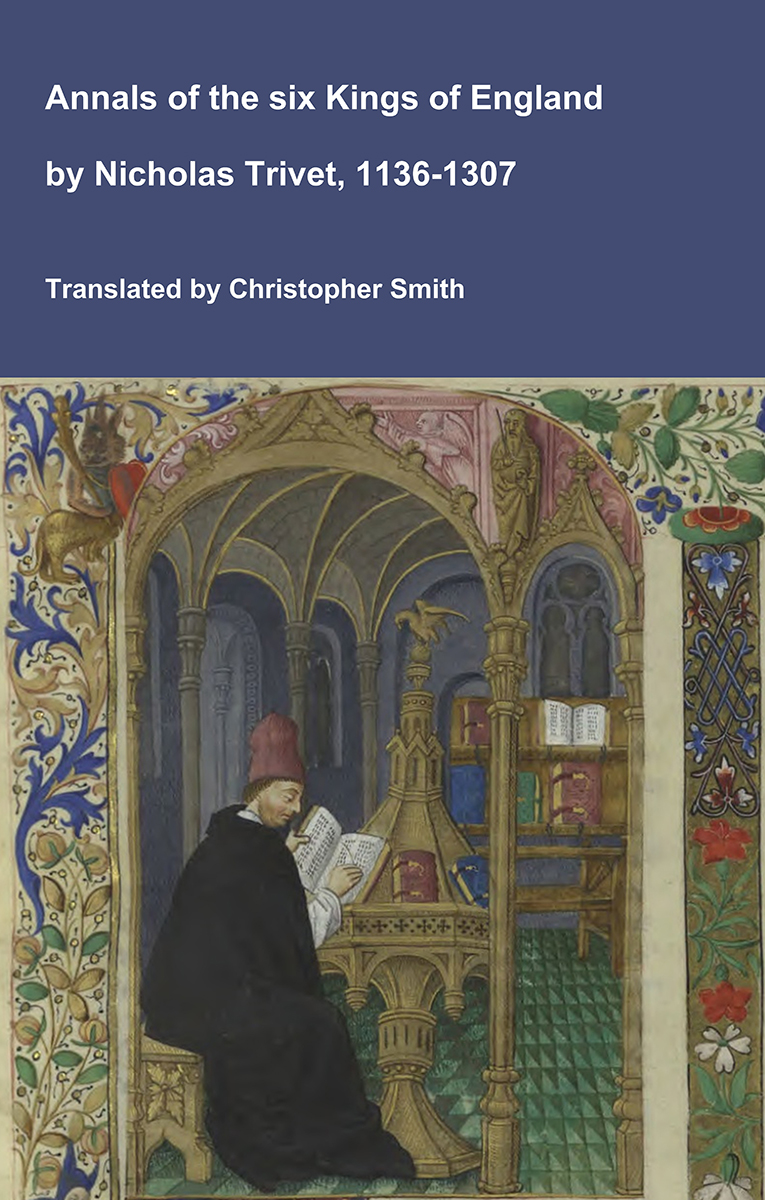 Annals of Six Kings of England by Nicholas Trivet. The Empress Matilda, mother of the king of the English, died at Rouen on the fourth day before the Ides of September [10th September 1167], while King Henry was still staying in Brittany. She was buried in the monastery of Bec, her son distributing many treasures on her behalf to churches, monasteries, and for the use of the poor. This empress was greatly devoted to God and founded many monasteries of religious in Normandy. Joscius, archbishop of Tours, was reconciled with the king of the English. Queen Eleanor, crossing into England, gave birth to a son, whom she named John, on the vigil of the Nativity of the Lord [24th December 1167]. On that night two stars of fiery color appeared in the west, one large and the other small, at first joined together, but afterward separated from one another by a great distance. Robert, bishop of Hereford, and Robert, bishop of Lincoln, died.
Matildis imperatrix, mater regis Anglorum, decessit Rothomagi, quarto idus Septembris, rege Henrico adhuc in Britannia commorante; quæ in monasterio Beccensi sepulta est, filio ejus plurimos pro ea distribuente thesauros ecclesiis, monasteriis, et in usus pauperum diversorum. Fuit hæc imperatrix multum Deo devota, plurimaque in Normannia monasteria religiosorum fundavit. Regi Anglorum reconciliatur Jocius archiepiscopus Turonensis. Regina Alienora in Angliam transiens filium peperit, quem Joannem vocavit, in vigilia Nativitatis Dominicæ, in qua apparuerunt in occidente duæ stellæ ignei coloris; una magna, et altera parva; primo conjunctæ, sed postmodum ab invicem longo spatio sunt distinctæ. Robertus Herefordensis 'et Robertus Lincolniensis episcopi obierunt.
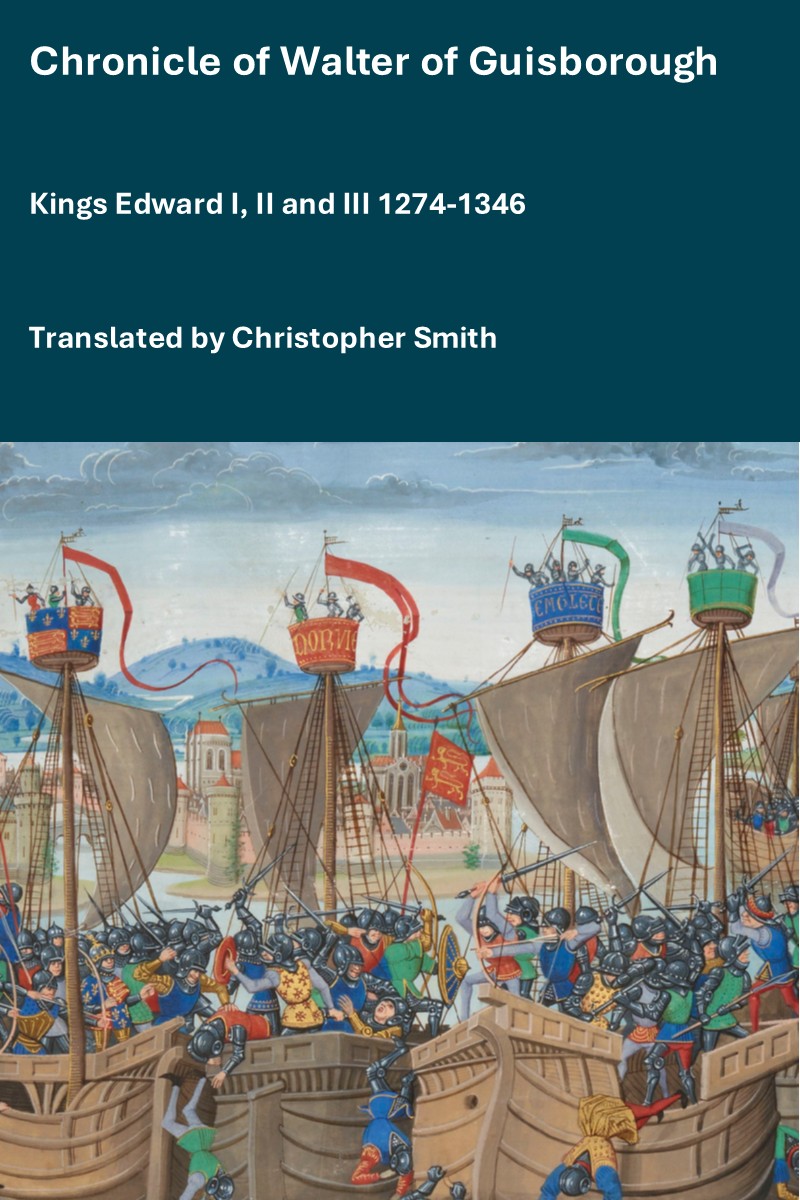 Chronicle of Walter of Guisborough. When this was granted to them, they came again, on the fourth day before the Ides of September [10th September 1297], and gave a definite reply that they could not justify their people. However, they promised that the next day they would come to the aid of our forces with sixty armed horsemen. Our men believed them and let them go. But that evening, during their departure, when they encountered some of our men returning from a foraging expedition, the Earl of Lennox made an assault upon them and pierced the neck of one foot soldier with his sword. When this was reported in our camp, they immediately ran to arms and brought the wounded, bleeding man before the Earl of Warenne, demanding vengeance that very night, crying out that treachery had been committed and the truce broken. To this the earl replied, "Wait this night, so that if they do not fulfil their promises on the morrow, we may exact greater vengeance for this deed." He nevertheless ordered that all be ready the next day to cross the bridge of Stirling.
Quomodo decepti sunt nostri et devicti apud Stryvelyn.
Quod cum eis esset concessum, iterato venientes, quarto scilicet idus Septembris, responderunt præcise quod eos justificare non poterant, promittentes tamen quod in auxilium nostrorum venirent die crastina cum LX equis armatis. Credideruntque eis, et dimiserunt eos. In recessu, autem eorum in vesperis, cum quibusdam ex nostris a foragio revertentibus obviassent, insultum fecit in eos ille comes de Leuenax, et collum unius peditis perforavit gladio. Quod cum in exercitu nostro nunciatum esset, mox cucurrerunt ad arma, et vulneratum sanguinolentum comiti de Warenna præsentarunt, expetentes vindictam fieri etiam ipsa nocte, conclamantes et dicentes seditionem fieri et fidem fractam esse. Ad hæc comes, "Sustinete," inquit, "nocte hac, ut si in crastinum promissa non compleverint, majorem etiam in hoc facto ultionem expetamus." Præcepit tamen ut omnes essent parati in crastinum ad transeundum pontem de Strivelyn.
Annals of Six Kings of England by Nicholas Trivet. At the end of the month of August the Earl of Warenne, seeing that the promise made by the Scots concerning hostages had come to nothing, and that William Wallace was stirring up the people, and that the magnates were allowing this under pretence, set out from Berwick towards Stirling with an assembled army. There came to the Earl of Warenne the Steward of Scotland and the Earl of Lennox, asking him to remain at rest while they attempted to bring the Scottish people back to the king’s peace. When, however, they made no progress, they returned on the fourth day before the Ides of September [10th September 1297], promising that on the following day they would return to the earl’s aid with forty horse.
On 10th September 1299 King Edward I of England [aged 60] and Margaret of France Queen Consort England [aged 20] were married at Canterbury Cathedral [Map]. She by marriage Queen Consort England. The difference in their ages was 39 years. She the daughter of King Philip III of France and Maria of Brabant Queen Consort France [aged 43]. He the son of King Henry III of England and Eleanor of Provence Queen Consort England. They were first cousin once removed. She a great x 3 granddaughter of King Henry "Curtmantle" II of England.
Guy Beauchamp 10th Earl Warwick [aged 27] was present.
Annals of Six Kings of England by Nicholas Trivet. The King of England, on the Nativity of the Blessed Virgin [8th September 1299], at Canterbury espoused Margaret1, sister of the King of France.
Rex Angliæ in Nativitate Virginis gloriosæ apud Cantuariam Margaretam, sororem regis Franciæ, desponsavit.
Note 1. Other sources describe Margaret arriving on 8th September 1299 and being married on Thursday 10th September 1299. Annals of Worcester: 'On the sixth day before the Ides of September [8th September 1299], Margaret, the sister of Philip, King of France, arrived in England at Dover. Through her arrival, our captives were freely released from French custody. On the fourth day before the Ides of the same month [10th September 1299], very early in the morning, King Edward took her as his wife and consort in Canterbury Church; and Robert, the archbishop, fulfilled what pertained to the ecclesiastical office.' Matthew Paris: 'In that year, Lady Margaret, sister of Lord Philip, King of France, arrived at Dover around the Nativity of the Blessed Mary, and two days later [10th September 1299], Lord Edward, King of England, joined her to himself in marriage at Canterbury by the authority of the Pope.'
Chronicle of Walter of Guisborough. And the wedding ceremony1 itself took place in London, on the Thursday within the octave of the Nativity of the Blessed Virgin Mary [10th September 1299], with all the nobles rejoicing and the people of both realms celebrating in gladness.
Factaque est ipsa matrimonialis solemnitas Londoniis1, in ipso die Jovis infra octavas Nativitatis Beatæ Virginis, congaudentibus optimatibus cunctis et lætante populo utriusque terræ.
Note 1. Margaret, Philip's sister, arrived at Dover September 8, and was married two days after to King Edward at Canterbury. Matthew of Westminster, Flores Historium, 432: "In that year, Lady Margaret, sister of Lord Philip, King of France, arrived at Dover around the Nativity of the Blessed Mary [8th September 1299], and two days later, Lord Edward, King of England, joined her to himself in marriage at Canterbury by the authority of the Pope." Amadeus Duke of Savoy had been appointed proxy to contract the espousals, as appears by the instrument dated on the 12th of May. Rot. Alemann. 27 Edward I m. 11. in Turr. Lond.; Rymer, Fœdera, 1.904.
Henrici Quinti, Angliæ Regis, Gesta, is a first-hand account of the Agincourt Campaign, and subsequent events to his death in 1422. The author of the first part was a Chaplain in King Henry's retinue who was present from King Henry's departure at Southampton in 1415, at the siege of Harfleur, the battle of Agincourt, and the celebrations on King Henry's return to London. The second part, by another writer, relates the events that took place including the negotiations at Troye, Henry's marriage and his death in 1422.
Available at Amazon in eBook and Paperback format.
Flowers of History. In that year, Lady Margaret [aged 20], sister of Lord Philip, King of France, arrived at Dover around the Nativity of the Blessed Mary, and two days later [10th September 1299], Lord Edward, King of England [aged 60], joined her to himself in marriage at Canterbury by the authority of the Pope.
Quo anno domina Margareta, soror domini Philippi regis Franciæ, Doveriæ applicuit circa nativitatem beatæ Mariæ, quam post biduum dominus Edwardus rex Angliæ auctoritate Pape Cantuariæ in uxorem sibi copulavit.
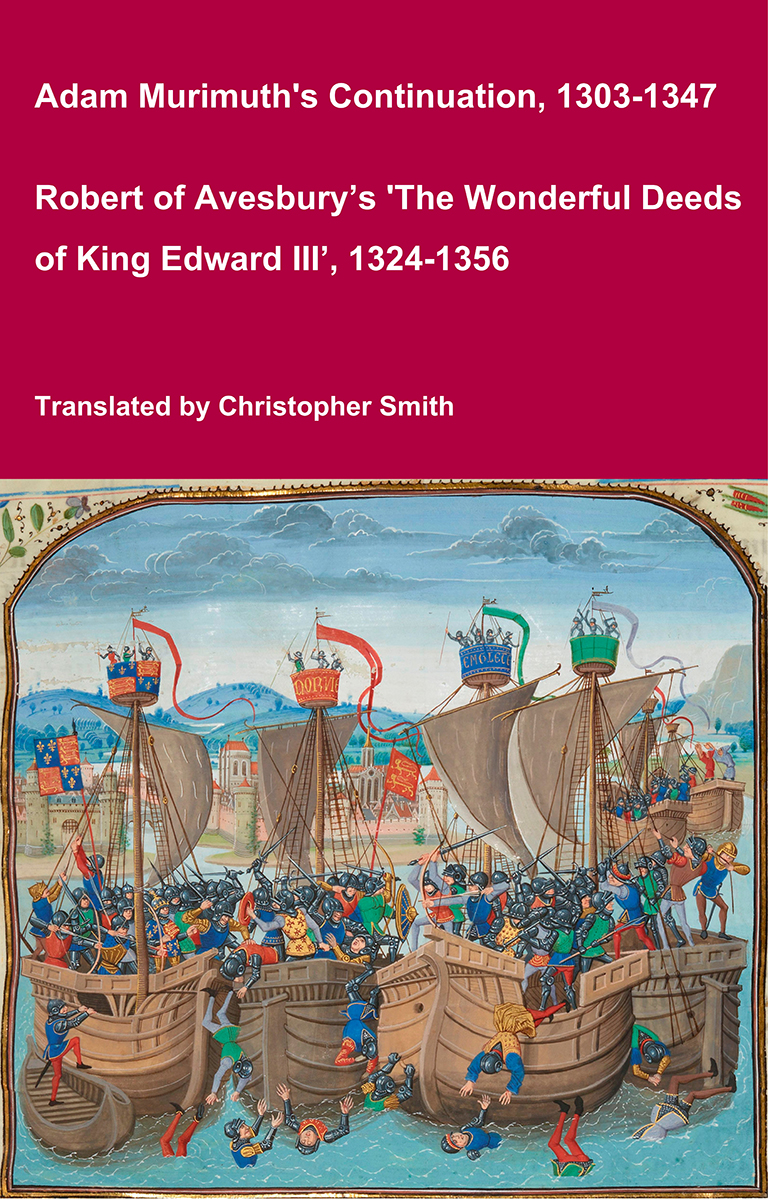 Adam Murimuth Continuation. In the year of the Lord 1341, in the seventh year of Pope Benedict XII and the fifteenth year of the reign of King Edward III since the Conquest, after the feast of Saint Luke [10th September], the Archbishop of Canterbury held a provincial council in the church of Saint Paul in London, with eight suffragan bishops, the others excusing themselves. To this council abbots, priors, and the clergy had not been formally summoned, but only if they thought it concerned them. In this council many matters were discussed for the preservation of ecclesiastical liberty and the reform of morals; which, because they could not then be concluded, were deferred until another council.
Anno Domini MCCCXLI, pontificatus Benedicti papæ XII anno VIJ et regni regis Edwardi tertii a conquæstu XV post festum sancti Lucæ habuit archiepiscopus Cantuariensis concillum provinciale in ecclesia Sancti Pauuli Londoniarum, cum octo suffraganeis, ceteris se excusantibus; ad quod abbates, priores, et clerus non fuerant vocati præcise, sed si sua crederent interesse. In quo concilio multa traclata faerant pro libertatis ecclesiasticæ conservatione et morum reformatione, quæ, quis tunc non poterant terminari, usque ad aliud concilium fuerant prorogata.
Patent Rolls. 10th September 1379. Westminster. Pardon, at the supplication of the countess of Norfolk, to John Rysele, clerk, for the death of John Quynteyn, 'coteler,' on St. Bartholomew's day [24th August], 2 Richard I. By p.s.
On 10th September 1382 Louis I King Hungary King Poland [aged 56] died. His daughter Mary [aged 11] succeeded I Queen Hungary.
On 10th September 1419 Charles "Victorious" VII King France [aged 16] and John "Fearless" Valois Duke Burgundy [aged 48] met on the bridge at Montereau to progress their peace negotiations. During the course of the discussions John "Fearless" Valois Duke Burgundy was assassinated. His son Philip [aged 23] succeeded III Duke Burgundy. Michelle Valois Duchess Burgundy [aged 24] by marriage Duchess Burgundy.
On 10th September 1454 René Valois Anjou I Duke Anjou [aged 45] and Jeanne Laval Duchess Anjou [aged 20] were married at Abbey St Nicholas, Angers. She by marriage Duchess Anjou. The difference in their ages was 24 years. He the son of King Louis of Naples and Yolande Barcelona Queen Consort Naples. They were second cousin twice removed. He a great x 5 grandson of King Henry III of England. She a great x 5 granddaughter of King Henry III of England.
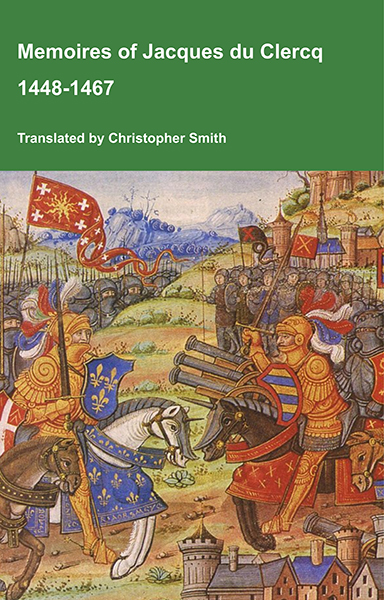 Memoires Jacques du Clercq. In 1462, because of the crimes that were continually being committed in the city of Arras and in the county of Artois, the Duke of Burgundy sent to the lord of Crèvecœur, bailiff of Amiens, chamberlain and principal governor of Jehan, Count of Étampes, captain of Picardy, a warrant by which he ordered him to go throughout all Picardy and Artois and to do justice upon malefactors of whatever condition they might be, even those of his own blood, if any such there were, whether knights, squires, or even his own archers of his body or of other princes. Upon receiving this warrant, the said bailiff assembled the archers of the Count of Étampes and other companions, together with the bailiff of Cambrésis, Sir Estienne de Nouvelle, and the bailiff of Orchies, Sir Pierre de Raisse, knight, to the number of fifty or sixty. On a Friday, the tenth day of September, they arrived secretly in Arras, two here, three there, and lodged in fifteen or twenty houses, having had their weapons and armour brought in a cart so that no one might notice. And that same night they gathered together and went through all the places where they thought they might find those whom they sought, concerning whom certain information had been made by the king's procurator about a month earlier. But most, indeed almost all, of those whom they sought had been warned and had fled, and that night they captured only three companions named Philippamet le Camus, Willemet Morlet, and the other Pollet, who claimed to belong to the household of the Habart family.
AUDIT an lxije, pour les crimes qui continuellement se faisoient en la ville d'Arras, et en la comté d'Artois, le duc de Bourgogne envoya au Sr de Crevecoeur, bailly d'Amiens, chambellan et principal gouverneur de Jehan comte d'Estampes, capitaine de Picardie, un mandement par lequel lui mandoit qu'il allat par toute Picardie et Artois, et feit justice des malfaiteurs quels qu'ils fuissent, mesme ceulx de son sang, sy aulcun en y avoit, chevalliers, escuyers et ses propres archiers de son corps ou d'aultres princes. Ce mandement venu audit bailly, il assembla les archiers du comte d'Estampes et aultres compagnons, avecq le bailly de Cambresis, nommé messire Estienne de Nouvelle, et le bailly d'Orchies, nommé messire Pierre de Raisse, chevallier, jusques au nombre de cinquante a soixante; lesquels par ung venderdy xe jour de septembre, arriverent a Arras secretement chy deux, chy trois, et se logerent en quinze ou vingt hostels, et avoient fait amener leurs bastons et armures sur ung car, adfin qu'on ne s'en percheut; et ceste nuict propre s'assemblerent et allerent par touts les lieux ou ils cuidoient trouver ceulx qu'ils queroient, dont certaine information avoit esté faite par le procureur du roy environ un mois devant; mais la pluspart et près touts ceux qu'ils queroient, en furent advertis et se sauverent, et ne prindrent celle nuict que trois compagnons nommés Phliippamet le Ca mus, Willemet Morlet, et l'aultre Pollet, lesquels se disoient aulx enfants de Habart.
On 10th September 1469 King Edward IV of England [aged 27] was released by Richard "Kingmaker" Neville Earl Warwick, 6th Earl Salisbury [aged 40] afer Warwick realised he didn't have sufficient support for an alternative regime.
Polydore Vergil [1470-1555]. Around 10th September 1497. Hearing the news, the king [aged 40] was no slower in leading an army to Exeter, Devon [Map] than the situation required. He sent ahead a goodly number of light horse to let everyone know of his approach. For meanwhile, under the leadership of Edward Courteney Earl of Devonshire [aged 38] and his son William [aged 22], an excellent and very brave young man, every noble hastened to come to the aid of Exeter, Devon [Map] with a great company of soldiers. Among these were Thomas Trenchard, Edmund Carew, Thomas Fulford, William Courteney, John Halliwell, John Croker, Walter Courteney, Peter Edgercombe [aged 28], and William St. Maurice. When these things came to Peter's [aged 23] ears, he abandoned the siege and removed to Taunton, Somerset [Map], the nearest town. There he reviewed his army and drew it up for the coming battle, although it later came to light that he had no great trust in that army. A goodly part were armed only with swords, otherwise unarmed, and ignorant of how to fight.


On 10th September 1501 Louis Amboise Bishop Albi [aged 22] resigned as Bishop Albi.
On 10th September 1504 Philibert "Handsome Good" Savoy 2nd Duke Savoy [aged 24] died. His half brother Charles [aged 17] succeeded 3rd Duke Savoy.

On 10th September 1515 Cardinal Thomas Wolsey [aged 42] was appointed Cardinal by Pope Leo X [aged 39].
Original Letters relative to the English Reformation 256. [10th September 1531] Health. Whether she [Anne Boleyn [aged 30]] has children by the king, I do not know. She has not any acknowledged as such1: they may probably be brought up in private, (which, if I am not mistaken, I have heard more than once,) though there are those who positively deny that the king has any intercourse with her, which in my opinion is not at all likely. But she is young, good looking, of a rather dark complexion, and likely enough to have children; and he himself is in the vigour of his age: indeed you never saw a taller or more noble looking personage.
Note 1. These slanderous imputations upon Anne Boleyn's character have been fully and effectually refuted by Sharon Turner, Hist, of Henry VIII. Vol. ii. p. 200-206. Ed. 1828. See also Burnet, i. 60, &c. ; Soames, i. 380. The report in the text seems to have been utterly false, and was never in any way authenticated or confirmed.


On 10th September 1533 the future Elizabeth I was christened at the Palace of Placentia, Greenwich [Map].
Gertrude Blount Marchioness of Exeter [aged 30], Archbishop Thomas Cranmer [aged 44] and Margaret Wotton Marchioness Dorset [aged 46] were Godparents.
Henry Bourchier 2nd Earl Essex 3rd Count of Eu carried the covered gilt basin. Charles Brandon 1st Duke of Suffolk [aged 49] escorted the Dowager Duchess of Norfolk [aged 56]. Henry Grey 1st Duke of Suffolk [aged 16] carried the Salt. Elizabeth Stafford Duchess Norfolk [aged 36] carried the Chrisom. Agnes Tilney Duchess Norfolk carried Queen Elizabeth I of England and Ireland. Henry Courtenay 1st Marquess Exeter [aged 37] carried a taper of virgin wax.
Edward Stanley 3rd Earl of Derby [aged 24], Thomas Boleyn 1st Earl Wiltshire and Ormonde [aged 56], Henry Grey 4th Earl Kent [aged 38] and George Boleyn Viscount Rochford [aged 30] supported the train of the mantle.
Thomas Howard 3rd Duke of Norfolk [aged 60], William Howard 1st Baron Howard [aged 23], Thomas Howard [aged 22] and John Hussey 1st Baron Hussey of Sleaford [aged 68] carried the canopy.
Adam Murimuth's Continuation and Robert of Avesbury’s 'The Wonderful Deeds of King Edward III'
This volume brings together two of the most important contemporary chronicles for the reign of Edward III and the opening phases of the Hundred Years’ War. Written in Latin by English clerical observers, these texts provide a vivid and authoritative window into the political, diplomatic, and military history of fourteenth-century England and its continental ambitions. Adam Murimuth Continuatio's Chronicarum continues an earlier chronicle into the mid-fourteenth century, offering concise but valuable notices on royal policy, foreign relations, and ecclesiastical affairs. Its annalistic structure makes it especially useful for establishing chronology and tracing the development of events year by year. Complementing it, Robert of Avesbury’s De gestis mirabilibus regis Edwardi tertii is a rich documentary chronicle preserving letters, treaties, and official records alongside narrative passages. It is an indispensable source for understanding Edward III’s claim to the French crown, the conduct of war, and the mechanisms of medieval diplomacy. Together, these works offer scholars, students, and enthusiasts a reliable and unembellished account of a transformative period in English and European history. Essential for anyone interested in medieval chronicles, the Hundred Years’ War, or the reign of Edward III.
Available at Amazon in eBook and Paperback format.
Wriothesley's Chronicle [1508-1562]. 10th September 1533. And the Wednesdaie next followinge,a the most honorable yonge ladie was christened at Greenewychb in the Friers Church, all the noble lordes and ladies doing service about the christening in their Elizabeth. offices after their degrees, which was a goodlie sight to see, and their shee had geaven her to name Elizabeth; my Lord Thomas Cranmer [aged 44], Archbishopp of Canterberie, godfather; the old Dutchesse of Northfolke [aged 56],c wydowe, my Ladie Marques of Dorcett [aged 46], widowe, godmothers at the fonte, and my Ladie Marques of Exceter [aged 30] godmother at the bishoppinge;d and the morrowe after their was fiers made in London, and at everie fire a vessell of wyne for people to drinke for the said solempnitie.
Note a. September 10.
Note b. Compare this with the accomit of the maimer of the chrifltening "of the Lady Elisabeth" in MS. Harleian. Cod. 643, fol. 128-80.
Note c. The Dowager Duchess of Norfolk carried the infant, in a mantle of purple velvet, with a long train furred with ermine. Hall's "Chronicle" ed. 1809, p. 806.
Note d. Immediately after the christening the Archbishop confirmed the infant princess, the Marchioness of Exeter being godmother.
Letters and Papers Foreign and Domestic Henry VIII 1533. 10 Sept [1533]. Vienna Archives. 1112. Chapuys [aged 43] to Charles V.
Will not write at length, having only been informed of this courier at the moment of his departure; besides there is nothing important since his last. Has only to mention that on Sunday last, the eve of Our Lady (7 Sept.), about 3 p.m., the King's mistress (amie) [Queen Anne Boleyn of England [aged 32]] was delivered of a daughter, to the great regret both of him and the lady, and to the great reproach of the physicians, astrologers, sorcerers, and sorceresses, who affirmed that it would be a male child. But the people are doubly glad that it is a daughter rather than a son, and delight to mock those who put faith in such divinations, and to see them so full of shame. The mayor, aldermen, masters of trades, and others of the city, are called to be present this afternoon at the christening. The French ambassadors are also summoned. The christening is to be at Greenwich. The godmothers are to be the mother-in-law of the duke of Norfolk and the marchioness of Exeter. The archbishop of Canterbury is to be godfather. The bishop of London is to officiate. She is to be called Mary, like the Princess; which title, I hear in many quarters, will be taken from the true princess and given to her. If it be so. Misfortune manages well; and God has forgotten him entirely, hardening him in his obstinacy to punish and ruin him; of which there is the greatest probability in the world, seeing the indignation of the people, both small and great, which grows every day, and nothing could better augment it than defrauding the said Princess of her title; for she is, as she ought to be, adored by everybody. But the said indignation, like other things, may grow cool in time, so that it should be used in season; yet I think it so rooted and so just that the people will not forget it, or change, at least the most part of them.
It is appointed for me to be at Court tomorrow morning with the King's Council to take resolution about the restitution of the goods seized by the Lubeckers from the Spaniards. London, 10 Sept. 1533.
Fr., from a modern copy, pp. 4.
Letters and Papers Foreign and Domestic Henry VIII 1535. 10th September 1535. R. O. St. P. ii. 278. 331. William Brabazon to Cromwell.
Since Thomas Fitzgerald's departure, his followers and all his uncles are returned home. If the traitor ever comes back, the King's cost is wasted. His advice is "to discharge this land of all the sect of them." The Deputy is going to Dungarvan Castle, and before him have gone the Lord Treasurer, lord Leonard's company, and Sir John Seyntlaw with his retinue. They will be at the castle on Monday next, and make a running assault. Hears that Seyntlaw has been sent for to England. The King can evil spare him here, though it is more to his profit to be in England. Lord Leonard should come speedily, for the good ordering of the army.
Rides with the Chief Justice about the King's lands, which are most wasted. Advises the banishment of the Tooles, the Burnes, the Cavenaghs, and McMargho and his sect.
The present Lord Deputy is a good man of war, but not quick enough for this country, and somewhat covetous. Advises his recall. Does not think the Lord Chancellor of Ireland, who is now with Cromwell, fit for the office. The lord of Kilmenen would be the best man. Divers abbots and priors in England have great revenues of spiritualties here, which should be put to houses of religion, and the King to have temporal lands for them. Reminds Cromwell that the King should have the temporalities of the bishop of Dublin, who can have spiritual lands for them. By this means and attainders, the King will have 4,000 marks a year more. Thinks the commonalty here to be very true people and conformable to all good order. The Deputy intends to hinder the Chief Justice and Master of the Rolls of Ireland by writing to his friends in England; which were pity, seeing the pains they take in the King's affairs here. Does not now think 500 kerne necessary, but retained them for a time, that they might not be enemies. The captains are all in good health, notwithstanding the plague. Hears my lady of Kildare [aged 38] has a book of the late earl of Kildare's lands. Cromwell should get it and send it hither. 10 Sept. Signed.
Add.: Mr. Secretary. Endd.
Tudor Tracts Chapter 4. [10th September 1547]. We came on speedily a both sides; neither, as yet, one whit ware [aware] of [the] other's intent" but the Scots indeed at a rounder pace.
Between the two hillocks betwixt us and the Church, they mustered somewhat brim [exposed] in our eyes: at whom, as they stayed there awhile, our galley shot off, and slew the Master of Greym [Graham] with a five and twenty near by him" and therewith so scared the four thousand Irish archers brought by the Earl of Argyle [aged 40]: that where, as it was said, they should have been a wing to the Foreward, they could never after be made to come forward.
Hereupon, did their army hastily remove; and from thence, declining southward, took their direct way towards Fauxside Bray.
On 10th September 1547 an English army commanded by Edward Seymour 1st Duke of Somerset [aged 47] defeated a Scottish army commanded by James Hamilton 2nd Earl Arran [aged 31] and Archibald Douglas 6th Earl Angus [aged 58] at the Battle of Pinkie Cleugh at Musselburgh.
The English army included John Dudley 1st Duke Northumberland [aged 43], Francis Talbot 5th Earl of Shrewsbury [aged 47], Miles Partridge and Thomas Wentworth 2nd Baron Wentworth [aged 22]. John Thynne [aged 32] and Edmund Brydges 2nd Baron Chandos [aged 25] were knighted.
William Cecil 1st Baron Burghley [aged 26] accompanied Edward Seymour 1st Duke of Somerset.
Edward Shelley of Worminghurst Park [aged 44] was killed.
John Forbes 6th Lord Forbes [aged 82], Christopher Coningsby [aged 31] and Edward Clere were killed.
John Thynne was knighted after the battle.
George Sandes [aged 29] was killed.
The Scottish army included John Gordon 11th Earl Sutherland [aged 22] who commanded the Rearguard and Gilbert Kennedy 3rd Earl Cassilis [aged 32]. John Stewart, Robert Douglas [aged 41], John Livingston, Thomas Hamilton of Priestfield and Hugh Montgomerie were killed. John Hay 4th Lord Hay was captured but soon released.
Malcolm Fleming 3rd Lord Fleming [aged 53] was killed. His son James [aged 13] succeeded 4th Lord Fleming. Barbara Hamilton Lady Fleming by marriage Lord Fleming.
Robert Graham Master of Montrose and James Gordon of Lochinvar were killed.


Tudor Tracts Chapter 4. Battle of Pinkie Cleugh.
Saturday the 10th of September [1547]1. This day morning somewhat before eight o'clock, our camp dislodged and our host march straight towards the church of Underesk [Map], as well for intent to have camped nigh the same, as for placing our ordnance, and other considerations afore remembered.
The Scots, I know not whether more for fear of our departing or hope of our spoiling, were out of their camp" coming towards us, passed the river, gathered in array, and well nigh at this Church ere we were half way to it.
They had quite disappointed our purpose" and this, at the first, was so strange in our eyes, that we could not devise what to make of their meaning" and so much the stranger, as it was quite beside our expectation or doubt, that they would ever forsake their strength [strong position], to meet us in field. But we, after, understood that they did not only thus purpose to do" but also to have assailed us in our camp, as we lay, if he had not been stirring the timelier.
And to the intent, at this time, that as well none of their soldiers should lurk behind them in their camps, as also that none of their captains should be able to flee from their enterprise" they had first caused all their tents to be let flat down to the ground ere they came out" and they that had horses (as well nobles as others, a few expected), that were not horsemen, appointed to leave their horses behind them, and march on with their soldiers afoot.
Note 1. This day was long after known in Scotland as "Black Saturday"" and the battle then fought, was the last conflict between the Scotch and the English, as separate nations. E. A.
Wriothesley's Chronicle [1508-1562]. This yeare also the Lord Protectors Grace [aged 47] went into Scotlande with an armie riall in the beginning of September, and the 20th daie of September [Note. Mistake for 10th September 1547] he had battell with the Scottes within fower miles of Edenboroughe, where, by the power of God, he had the victorie, and there was slaine of the Scottes fiftene thousande, and tow thousand taken prisoners. The Erle of Huntley [aged 33], Chauncelor of the Scottes, was one, the Earl of Cassells slaine [Note. Gilbert Kennedy 3rd Earl Cassilis [aged 32] was captured.], and the Lord Fleeming [aged 53]. And of Englishemen their were not slaine above an hundred persons in all. The Scottes were numbred above fortie thousande, and the Englishmen not above sixteene thousande; and also they tooke there shipps and all their ordinance, with all the spoile of the fielde, and certeyne castells were yelded to him.
Holinshed's Chronicle [1525-1582]. [10th September 1547]. The Scots either for feare of the Englishmens departing, or hope of their spoiling, were out of their campe comming toward them, passed the riuer, gathered in araie, and well néere at this church [St Michal's Church, Inveresk [Map]], yer the Englishmen were halfe waie to it, so quite disappointing the Englishmens purpose. Which at the first séemed verie strange in their eies, as altogither beside their expectation, as they that thought they would never haue forsaken their strength, to méet them in the field. But after it was knowne that they did not onelie thus purpose to doo, but also to haue assailed them in their campe, as they laie if they had not béene stirring the timelier, and hauing caused all their tents to be let flat downe to the ground, yer they came out, bicause none should lie lurking behind them in their campe, and as well the nobles as other, leauing their horsses behind them (except such as were appointed to serue on horssebacke) marched on with their souldiors on foot.
On 10th September 1559 James Hamilton 3rd Earl Arran [aged 27] met his father James Hamilton 2nd Earl Arran [aged 43] at Hamilton Palace, Hamilton.

On 10th September 1591 Richard Grenville [aged 49] died from wounds received at the Battle of Flores whilst serving on the The Revenge.
John Evelyn's Diary. 10th September 1641. I took waggon for Dort, to be present at the reception of the Queen-mother, Marie de Medicis [aged 66], Dowager of France, widow of Henry the Great, and mother to the French King, Louis XIII [aged 39], and the Queen of England [aged 31], whence she newly arrived, tossed to and fro by the various fortune of her life. From this city, she designed for Cologne, conducted by the Earl of Arundel [aged 14] and the Herr Van Bredrod. At this interview, I saw the Princess of Orange [aged 39], and the lady her daughter [aged 13], afterwards married to the House of Brandenburgh. There was little remarkable in this reception befitting the greatness of her person; but an universal discontent, which accompanied that unlucky woman wherever she went.


John Evelyn's Diary. 10th September 1647. Being called into England, to settle my affairs after an absence of four years, I took leave of the Prince [aged 17] and Queen [aged 37], leaving my wife [aged 12], yet very young, under the care of an excellent lady and prudent mother [aged 37].
On 10th September 1649 Bernhard Saxe Gotha I Duke Saxe Meiningen was born to Ernest "The Pious" Saxe Gotha I Duke Saxe Gotha [aged 47] and Elisabeth Sophie Saxe Altenburg Duchess Saxe Gotha [aged 29] at Gotha. Coefficient of inbreeding 3.17%.
In September 1660 King Charles II of England Scotland and Ireland [aged 30] rewarded a further tranche of those who supported his Restoration...
On 4th September 1660 John King 1st Baron Kingston was created 1st Baron Kingston of Kingston in Dublin.
On 5th September 1660 Roger Boyle 1st Earl Orrery [aged 39] was created 1st Earl Orrery. Margaret Howard Countess Orrery [aged 38] by marriage Countess Orrery.
On 5th September 1660 Oliver St George 1st Baronet was created 1st Baronet St George of Carrickdrumrusk in Leitrim in the Peerage of England.
On 6th September 1660 Francis Boyle 1st Viscount Shannon [aged 37] was created 1st Viscount Shannon. Elizabeth Killigrew Viscountess Shannon [aged 38] by marriage Viscountess Shannon.
On 6th September 1660 Richard Coote 1st Baron Coote [aged 40] was created 1st Baron Coote.
On 10th September 1660 Charles Gordon 1st Earl Aboyne [aged 22] was created 1st Earl Aboyne.
Samuel Pepys' Diary. 10th September 1665. But before I come out there happened newes to come to the by an expresse from Mr. Coventry [aged 37], telling me the most happy news of my Lord Sandwich's [aged 40] meeting with part of the Dutch; his taking two of their East India ships, and six or seven others, and very good prizes and that he is in search of the rest of the fleet, which he hopes to find upon the Wellbancke, with the loss only of the Hector, poor Captain Cuttle. This newes do so overjoy me that I know not what to say enough to express it, but the better to do it I did walk to Greenwich, Kent [Map], and there sending away Mr. Andrews [aged 33], I to Captain Cocke's [aged 48], where I find my Lord Bruncker [aged 45] and his mistress, and Sir J. Minnes [aged 66]. Where we supped (there was also Sir W. Doyly [aged 51] and Mr. Evelyn [aged 44]); but the receipt of this newes did put us all into such an extacy of joy, that it inspired into Sir J. Minnes and Mr. Evelyn such a spirit of mirth, that in all my life I never met with so merry a two hours as our company this night was. Among other humours, Mr. Evelyn's repeating of some verses made up of nothing but the various acceptations of may and can, and doing it so aptly upon occasion of something of that nature, and so fast, did make us all die almost with laughing, and did so stop the mouth of Sir J. Minnes in the middle of all his mirth (and in a thing agreeing with his own manner of genius), that I never saw any man so out-done in all my life; and Sir J. Minnes's mirth too to see himself out-done, was the crown of all our mirth. In this humour we sat till about ten at night, and so my Lord and his mistress home, and we to bed, it being one of the times of my life wherein I was the fullest of true sense of joy.


Chronicle of Walter of Guisborough
A canon regular of the Augustinian Guisborough Priory, Yorkshire, formerly known as The Chronicle of Walter of Hemingburgh, describes the period from 1066 to 1346. Before 1274 the Chronicle is based on other works. Thereafter, the Chronicle is original, and a remarkable source for the events of the time. This book provides a translation of the Chronicle from that date. The Latin source for our translation is the 1849 work edited by Hans Claude Hamilton. Hamilton, in his preface, says: 'In the present work we behold perhaps one of the finest samples of our early chronicles, both as regards the value of the events recorded, and the correctness with which they are detailed; Nor will the pleasing style of composition be lightly passed over by those capable of seeing reflected from it the tokens of a vigorous and cultivated mind, and a favourable specimen of the learning and taste of the age in which it was framed.'
Available at Amazon in eBook and Paperback format.
Samuel Pepys' Diary. 10th September 1667. Thence I into St. James's Park, and there met Mr. Povy [aged 53]; and he and I to walk an hour or more in the Pell Mell [Map], talking of the times. He tells me, among other things, that this business of the Chancellor [aged 58] do breed a kind of inward distance between the King [aged 37] and the Duke of York [aged 33], and that it cannot be avoided; for though the latter did at first move it through his folly, yet he is made to see that he is wounded by it, and is become much a less man than he was, and so will be: but he tells me that they are, and have always been, great dissemblers one towards another; and that their parting heretofore in France is never to be thoroughly reconciled between them. He tells me that he believes there is no such thing like to be, as a composition with my Baroness Castlemayne [aged 26], and that she shall be got out of the way before the Parliament comes; for he says she is as high as ever she was, though he believes the King is as weary of her as is possible, and would give any thing to remove her, but he is so weak in his passion that he dare not do it; that he do believe that my Chancellor will be doing some acts in the Parliament which shall render him popular; and that there are many people now do speak kindly of him that did not before; but that, if he do do this, it must provoke the King, and that party that removed him. He seems to doubt what the King of France [aged 29] will do, in case an accommodation shall be made between Spain and him for Flanders, for then he will have nothing more easy to do with his army than to subdue us. Parted with him at White Hall, and, there I took coach and took up my wife and Mercer, and so home and I to the office, where ended my letters, and then to my chamber with my boy to lay up some papers and things that lay out of order against to-morrow, to make it clear against the feast that I am to have. Here Mr. Pelling come to sit with us, and talked of musique and the musicians of the town, and so to bed, after supper.
On 10th September 1669 Henrietta Maria Bourbon Queen Consort England [aged 59] died at the Château de Colombes [Map]. She was buried at the Basilica of St Denis [Map].
John Evelyn's Diary. 10th September 1675. I was casually shown the Duchess of Portsmouth's [aged 26] splendid apartment at Whitehall [Map], luxuriously furnished, and with ten times the richness and glory beyond the Queen's [aged 36]; such massy pieces of plate, whole tables, and stands of incredible icon.


John Evelyn's Diary. 10th September 1676. Dined with me Mr. Flamsted [aged 30], the learned astrologer [Note. Astronomer] and mathematician, whom his Majesty [aged 46] had established in the new Observatory in Greenwich Park, furnished with the choicest instruments. An honest, sincere man.
John Evelyn's Diary. 10th September 1677. To divert me, my Lord [aged 59] would needs carry me to see Ipswich, Suffolk [Map], when we dined with one Mr. Mann by the way, who was Recorder of the town. There were in our company my Lord Huntingtower [aged 28], son to the Duchess of Lauderdale [aged 50], Sir Edward Bacon, a learned gentleman of the family of the great Chancellor Verulam, and Sir John Felton, with some other knights and gentlemen. After dinner came the bailiff and magistrates in their formalities with their maces to compliment my Lord, and invite him to the town-house, where they presented us a collation of dried sweetmeats and wine, the bells ringing, etc. Then, we went to see the town, and first, the Lord Viscount Hereford's [aged 3] house, which stands in a park near the town, like that at Brussels, in Flanders; the house not great, yet pretty, especially the hall. The stews for fish succeeded one another, and feed one the other, all paved at bottom. There is a good picture of the blessed virgin in one of the parlors, seeming to be of Holbein, or some good master. Then we saw the Haven, seven miles from Harwich, Essex [Map]. The tide runs out every day, but the bedding being soft mud, it is safe for shipping and a station. The trade of Ipswich, Suffolk [Map] is for the most part Newcastle upon Tyne, Northumberland [Map] coals, with which they supply London; but it was formerly a clothing town. There is not any beggar asks alms in the whole place, a thing very extraordinary, so ordered by the prudence of the magistrates. It has in it fourteen or fifteen beautiful churches: in a word, it is for building, cleanness, and good order, one of the best towns in England. Cardinal Wolsey was a butcher's son of Ipswich, but there is little of that magnificent Prelate's foundation here, besides a school and I think a library, which I did not see. His intentions were to build some great thing. We returned late to Euston, Suffolk, having traveled about fifty miles this day.


John Evelyn's Diary. 10th September 1677. His lady [aged 43] (being one of the Brederode's daughters, grandchild to a natural son of Henry Frederick, Prince of Orange) [Note. Evelyn confused here. Elisabeth Nassau Beverweert Countess Arlington was the daughter of Louis Nassau Beverweert who was the illegitimate son of Prince Maurice I of Orange. Frederick Henry Orange Nassau II Prince Orange was the younger brother of Prince Maurice I of Orange.] is a good-natured and obliging woman. They love fine things, and to live easily, pompously, and hospitably; but, with so vast expense, as plunges my Lord [aged 59] into debts exceedingly. My Lord himself is given into no expensive vice but building, and to have all things rich, polite, and princely. He never plays, but reads much, having the Latin, French, and Spanish tongues in perfection. He has traveled much, and is the best bred and courtly person his Majesty [aged 47] has about him, so as the public Ministers more frequent him than any of the rest of the nobility. While he was Secretary of State and Prime Minister, he had gotten vastly, but spent it as hastily, even before he had established a fund to maintain his greatness; and now beginning to decline in favour (the Duke being no great friend of his), he knows not how to retrench. He was son of a Doctor of Laws, whom I have seen, and, being sent from Westminster School [Map] to Oxford, with intention to be a divine, and parson of Arlington, a village near Brentford, when Master of Arts the Rebellion falling out, he followed the King's Army, and receiving an HONORABLE WOUND IN THE FACE, grew into favor, and was advanced from a mean fortune, at his Majesty's Restoration, to be an Earl and Knight of the Garter, Lord Chamberlain of the Household, and first favorite for a long time, during which the King married his natural son, the Duke of Grafton [aged 13], to his only daughter [aged 9] and heiress, as before mentioned, worthy for her beauty and virtue of the greatest prince in Christendom. My Lord is, besides this, a prudent and understanding person in business, and speaks well; unfortunate yet in those he has advanced, most of them proving ungrateful. The many obligations and civilities I have received from this noble gentleman, extracts from me this character, and I am sorry he is in no better circumstances.


John Evelyn's Diary. 10th September 1677. The canal running under my Lady's [aged 43] dressing room chamber window, is full of carps and fowl, which come and are fed there. The cascade at the end of the canal turns a cornmill that provides the family, and raises water for the fountains and offices. To pass this canal into the opposite meadows, Sir Samuel Morland [aged 52] has invented a screw bridge, which, being turned with a key, lands you fifty feet distant at the entrance of an ascending walk of trees, a mile in length,-as it is also on the front into the park,-of four rows of ash trees, and reaches to the park pale, which is nine miles in compass, and the best for riding and meeting the game that I ever saw. There were now of red and fallow deer almost a thousand, with good covert, but the soil barren and flying sand, in which nothing will grow kindly. The tufts of fir, and much of the other wood, were planted by my direction some years before. This seat is admirably placed for field sports, hawking, hunting, or racing. The Mutton is small, but sweet. The stables hold thirty horses and four coaches. The out-offices make two large quadrangles, so as servants never lived with more ease and convenience; never master more civil. Strangers are attended and accommodated as at their home, in pretty apartments furnished with all manner of conveniences and privacy.

On 10th September 1687 Willem Wissing [aged 31] died at Burghley House. He was buried at St Martin's Church, Stamford [Map].
On 10th September 1689 John Belasyse 1st Baron Belasyse [aged 75] died. His grandson Henry [aged 22] succeeded 2nd Baron Belasyse of Worlaby in Lincolnshire. Anne Brudenell Duchess Richmond [aged 18] by marriage Viscountess Ipswich.


On 10th September 1698 Theophilus Hastings 7th Earl Huntingdon [aged 47] wrote to Laurence Cromp of the Herald's Office about his own monument. In the letter he says: "I have now made a perfect agreement, with Mr Gibbons [aged 50] the Carver, in Bow Street for the monument which if made according to the modell, I shall like very well; I therefore desire you, to doe me the kindness to Call on him to see in what forwardnesse it is in, and what your judgement is of itt; particularly as to the armes ....". The Earl then talks about the Hastings Crest Bull's Head. The Earl's own monument does not include a Bull's Head so the letter does not appear to be about this. The wall monument does have a Bull's Head as part of the Hastings coat of arms so it could be this monument which the letter is about. However, the wall monument is similar in style to the chest tomb and so would appear to be of the same date. This would leave unresolved the question of why the Earl wrote at such length about the design of the Bull's Head. It also raises the issue of why there are two monuments to the 2nd Earl considering that the family were heavily in debt at the time. (Richard Parker was paid £20, equivalent to £16,600 today, for a similar chest tomb for the 1st Earl of Rutland). Source Church Monuments Society.
On 10th September 1790 Matthew Forster [aged 64] died. Memorial at Chapel of St John the Evangelist, Bolton [Map] sculpted by Robert Blore [aged 10] commissioned by his daughters Eleanor Forster [aged 19] and Jane Forster [aged 13].
Matthew Forster: Around 1726 he was born. On or before 1761 he and Jane Brown were married.


On 10th September 1792 Henry Vane 2nd Earl Darlington [aged 65] died at Raby Castle, County Durham [Map]. He was buried at Raby Castle, County Durham [Map]. His son William [aged 26] succeeded 3rd Earl Darlington, 3rd Viscount Barnard, 5th Baron Barnard. Catharine Margaret Powlett Countess Darlington [aged 26] by marriage Countess Darlington.
Monument to Henry Vane 2nd Earl Darlington at St Mary's Church, Staindrop [Map] sculpted by Richard Cooke.
The armorial being  Vane Arms impaled with
  Lowther Arms.
Catharine Margaret Powlett Countess Darlington: In 1766 she was born to Harry Powlett 6th Duke Bolton and Katherine Lowther Duchess of Bolton. On 17th September 1787 William Henry Vane 1st Duke Cleveland and she were married at her father's seat Hackwood Park, Hampshire. She the daughter of Harry Powlett 6th Duke Bolton and Katherine Lowther Duchess of Bolton. He the son of Henry Vane 2nd Earl Darlington and Margaret Lowther Countess Darlington. They were first cousins. He a great x 2 grandson of King Charles II of England Scotland and Ireland. On 17th June 1807 Catharine Margaret Powlett Countess Darlington died at Cleveland House.


On 10th September 1797 Mary Wollstonecraft [aged 38] died from childbirth eleven days after the birth of Mary Godwin aka Shelley.


On 10th September 1800 Margaret Lowther Countess Darlington [aged 72] died. She has a monument sculpted by Richard Cooke at St Mary's Church, Staindrop [Map] commissioned by her son William Henry Vane 1st Duke Cleveland [aged 34].
Margaret Lowther Countess Darlington: In 1728 she was born to Robert Lowther and Katherine Pennington. On 19th March 1757 Henry Vane 2nd Earl Darlington and she were married at London. He the son of Henry Vane 1st Earl Darlington and Grace Fitzroy Countess Darlington. On 6th March 1758 Henry Vane 1st Earl Darlington died. His son Henry succeeded 2nd Earl Darlington, 2nd Viscount Barnard, 4th Baron Barnard. She by marriage Countess Darlington.


The Deeds of the Dukes of Normandy
The Gesta Normannorum Ducum [The Deeds of the Dukes of Normandy] is a landmark medieval chronicle tracing the rise and fall of the Norman dynasty from its early roots through the pivotal events surrounding the Norman Conquest of England. Originally penned in Latin by the monk William of Jumièges shortly before 1060 and later expanded at the behest of William the Conqueror, the work chronicles the deeds, politics, battles, and leadership of the Norman dukes, especially William’s own claim to the English throne. The narrative combines earlier historical sources with firsthand information and oral testimony to present an authoritative account of Normandy’s transformation from a Viking settlement into one of medieval Europe’s most powerful realms. William’s history emphasizes the legitimacy, military prowess, and governance of the Norman line, framing their expansion, including the conquest of England, as both divinely sanctioned and noble in purpose. Later chroniclers such as Orderic Vitalis and Robert of Torigni continued the history, extending the coverage into the 12th century, providing broader context on ducal rule and its impact. Today this classic work remains a foundational source for understanding Norman identity, medieval statesmanship, and the historical forces that reshaped England and Western Europe between 800AD and 1100AD.
Available at Amazon in eBook and Paperback format.

On 10th September 1823 Richard Temple-Nugent-Brydges-Chandos-Grenville 3rd Duke of Buckingham and Chandos was born to Richard Temple-Nugent-Brydges-Chandos-Grenville 2nd Duke of Buckingham and Chandos [aged 26] and Mary Campbell Duchess Buckingham and Chandos [aged 28]. He married 1885 Alice Graham-Montgomery Duchess Buckingham and Chandos.

On 10th September 1826 Thomas George Anson 2nd Earl Lichfield [aged 1] was baptised at St Michael and All Angels Church, Colwich [Map].

Egloshayle Church [Map]. After 10th September 1845. Memorial to James Bruce Carstairs [aged 75], commissioned by his daughter of Andalusia Carstairs Lady Molesworth [aged 35], wife of William Molesworth 8th Baronet [aged 35]. The reference to him being the last Baronet of Kinross would appear to be a mistake although the last Baronet John Bruce 2nd Baronet had a sister Anne Bruce who married a John Carstairs of Kilconquhar?
On 10th September 1847 Henry Graves 5th Baron Graves was born to Henry Richard Graves [aged 29] and Henrietta Wellesley [aged 31].

On 10th September 1854 Violet Hermione Graham Duchess Montrose was born to Frederick Ulric Graham 3rd Baronet [aged 34] and Jane Hermione Seymour Lady Graham [aged 22]. Coefficient of inbreeding 3.57%. She married 24th July 1876 her third cousin once removed Douglas Graham 5th Duke Montrose, son of James Graham 4th Duke Montrose and Caroline Agnes Horsley Beresford "Mr Manton" Duchess Montrose, and had issue.
On 10th September 1859 John Hay-Williams 2nd Baronet [aged 65] died. Memorial at St Asaph Cathedral [Map] signed in Greek by L Droses of Athens, 1873. His brother Hugh [aged 57] succeeded 3rd Baronet Williams of Bodelwyddan in Flintshire.
John Hay-Williams 2nd Baronet: On 9th January 1794 he was born to John Williams 1st Baronet and Margaret Williams Lady Williams. In 1842 he and Sarah Elizabeth Amherst were married. She the daughter of William Pitt Amherst 1st Earl Amherst and Sarah Archer Countess Plymouth and Amherst.


After 10th September 1863. Church of St Mary, East Raynham [Map]. Memorial to John Townshend 4th Marquess Townshend [deceased] sculpted by George Gammon Adams [aged 42].
On 10th September 1873 Mary Caroline Berkeley Duchess Grafton [aged 78] died.
On 10th September 1898 Empress Elisabeth of Austria [aged 60] was assassinated being fatally stabbed in the heart by an Italian anarchist named Luigi Lucheni.


On 10th September 1922 John Martin Manners was born to John Henry Montagu Manners 9th Duke Rutland [aged 36] and Kathleen Tennant Duchess Rutland [aged 27].
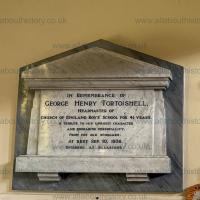
St Mary's Church, Uttoxeter [Map]. Memorial to George Henry Tortoishell. Headmaster of England Boys School for 41 years. Died 10th September 1938. Buried at St Peter's Church, Ellastone.
This is a translation of the 'Memoires of Jacques du Clercq', published in 1823 in two volumes, edited by Frederic, Baron de Reissenberg. In his introduction Reissenberg writes: 'Jacques du Clercq tells us that he was born in 1424, and that he was a licentiate in law and a counsellor to Philip the Good, Duke of Burgundy, in the castellany of Douai, Lille, and Orchies. It appears that he established his residence at Arras. In 1446, he married the daughter of Baldwin de la Lacherie, a gentleman who lived in Lille. We read in the fifth book of his Memoirs that his father, also named Jacques du Clercq, had married a lady of the Le Camelin family, from Compiègne. His ancestors, always attached to the counts of Flanders, had constantly served them, whether in their councils or in their armies.' The Memoires cover a period of nineteen years beginning in in 1448, ending in in 1467. It appears that the author had intended to extend the Memoirs beyond that date; no doubt illness or death prevented him from carrying out this plan. As Reissenberg writes the 'merit of this work lies in the simplicity of its narrative, in its tone of good faith, and in a certain air of frankness which naturally wins the reader’s confidence.' Du Clercq ranges from events of national and international importance, including events of the Wars of the Roses in England, to simple, everyday local events such as marriages, robberies, murders, trials and deaths, including that of his own father in Book 5; one of his last entries.
Available at Amazon in eBook and Paperback format.
On 10th September 1977 Guy David Innes-Kerr 10th Duke Roxburghe [aged 22] and Jane Meriel Grosvenor Duchess Roxburghe [aged 24] were married. She by marriage Duchess Roxburghe. She the daughter of Robert George Grosvenor 5th Duke Westminster [aged 67] and Viola Maud Lyttelton Duchess Westminster [aged 65]. He the son of George Victor Robert John Innes-Kerr 9th Duke Roxburghe and Margaret Elizabeth Mcconnel Duchess Roxburghe [aged 58].
On 10th September 1503 Elisabeth of Hesse was born to William I Landgrave of Hesse [aged 37]. She married 1525 Louis II Count Palatine of Zweibrücken and had issue.
On 10th September 1547 Landgrave George I of Hesse Darmstadt was born to Landgrave Philip I of Hesse [aged 42] and Christine of Saxony [aged 41].
On 10th September 1610 Edward Seymour 3rd Baronet was born to Edward Seymour 2nd Baronet [aged 30] and Dorothy Killigrew Baroness Seymour. He married 1630 Anne Portman Baroness Seymour, daughter of John Portman 1st Baronet, and had issue.
On 10th September 1649 Bernhard Saxe Gotha I Duke Saxe Meiningen was born to Ernest "The Pious" Saxe Gotha I Duke Saxe Gotha [aged 47] and Elisabeth Sophie Saxe Altenburg Duchess Saxe Gotha [aged 29] at Gotha. Coefficient of inbreeding 3.17%.

On 10th September 1692 Francis Henry Fitzroy Lee was born to Edward Lee 1st Earl Lichfield [aged 29] and Charlotte Fitzroy Countess Lichfield [aged 28]. He a grandson of King Charles II of England Scotland and Ireland.

On 10th September 1740 Henry Cornwallis was born to Charles Cornwallis 1st Earl Cornwallis [aged 40] and Elizabeth Townshend Countess Cornwallis.
On 10th September 1740 Marmaduke Asty Wyvill 7th Baronet was born to Christopher Wyvill.
On 10th September 1756 Robert Salusbury 1st Baronet was born to Robert Salusbury [aged 33] and Gwenilian Davis. He married 16th May 1780 Catherine Vanne of Llanwern and had issue.

On 10th September 1759 George Augustus Herbert 11th Earl Pembroke 8th Earl Montgomery was born to Henry Herbert 10th Earl Pembroke 7th Earl Montgomery [aged 25] and Elizabeth Spencer Countess Pembroke and Montgomery [aged 22] at Wilton House. He married (1) 8th April 1787 his first cousin Elisabeth Beauclerk, daughter of Topham Beauclerk and Diana Spencer Viscountess St John and Bolingbroke, and had issue (2) 25th January 1808 Yekaterina Semyonovna Vorontsova Countess Pembroke and Montgomery and had issue.
Chronicle of Walter of Guisborough
A canon regular of the Augustinian Guisborough Priory, Yorkshire, formerly known as The Chronicle of Walter of Hemingburgh, describes the period from 1066 to 1346. Before 1274 the Chronicle is based on other works. Thereafter, the Chronicle is original, and a remarkable source for the events of the time. This book provides a translation of the Chronicle from that date. The Latin source for our translation is the 1849 work edited by Hans Claude Hamilton. Hamilton, in his preface, says: 'In the present work we behold perhaps one of the finest samples of our early chronicles, both as regards the value of the events recorded, and the correctness with which they are detailed; Nor will the pleasing style of composition be lightly passed over by those capable of seeing reflected from it the tokens of a vigorous and cultivated mind, and a favourable specimen of the learning and taste of the age in which it was framed.'
Available at Amazon in eBook and Paperback format.
On 10th September 1770 Charles Tufton 10th Earl of Thanet was born to Sackville Tufton 8th Earl of Thanet [aged 37] and Mary Sackville Countess Thanet [aged 24].
On 10th September 1788 Ralph Franco aka Lopes 2nd Baronet was born to Abraham Franco [aged 23] and Esther Lopes [aged 22].
On 10th September 1804 Richard Wellesley Barlow was born to George Hilaro Barlow 1st Baronet [aged 41] and Elizabeth Smith.
On 10th September 1812 Louisa Lascelles was born to Henry Lascelles 2nd Earl Harewood [aged 44] and Henrietta Sebright Countess Harewood. She married 4th July 1835 George Henry Cavendish and had issue.
On 10th September 1818 Louisa Anne Adams Baroness Aldenham was born to William Adams aka Cockayne of Dummer Grange and Mary Anne Cockayne [aged 37]. She married before 23rd April 1846 Henry Hucks Gibbs 1st Baron Aldenham and had issue.
On 10th September 1823 Richard Temple-Nugent-Brydges-Chandos-Grenville 3rd Duke of Buckingham and Chandos was born to Richard Temple-Nugent-Brydges-Chandos-Grenville 2nd Duke of Buckingham and Chandos [aged 26] and Mary Campbell Duchess Buckingham and Chandos [aged 28]. He married 1885 Alice Graham-Montgomery Duchess Buckingham and Chandos.
On 17th January 1824 William Henry Leigh 2nd Baron Leigh was born to Chandos Leigh 1st Baron Leigh [aged 32] and Margarette Willes Baroness Leigh [aged 25]. He was baptised at St Mary Magdalene's Church, Adlestrop, and for a second time, at Church of the Virgin Mary, Stoneleigh [Map] on 10th September 1824. He was educated at Harrow School then Trinity College, Cambridge University [Map]. He married 22nd August 1848 Caroline Amelia Grosvenor Baroness Leigh, daughter of Richard Grosvenor 2nd Marquess Westminster and Elizabeth Mary Leveson-Gower Marchioness Westminster, and had issue.
On 10th September 1826 William Beckett-Denison was born to Edmund Beckett aka Denison 4th Baronet [aged 39] and Maria Beverley Lady Beckett [aged 31]. He married 1855 Helen Duncombe, daughter of William Duncombe 2nd Baron Feversham and Louisa Stewart Baroness Feversham Duncombe Park, and had issue.
On 10th September 1833 Henry Charles Howard 18th Earl Suffolk 11th Earl Berkshire was born to Charles Howard 17th Earl Suffolk 10th Earl Berkshire [aged 27] and Isabella Catherine Mary Howard-Molyneux-Howard Countess Suffolk and Berkshire [aged 26]. He married 1868 Mary Eleanor Coventry Countess Suffolk and Berkshire and had issue.
On 10th September 1847 Henry Graves 5th Baron Graves was born to Henry Richard Graves [aged 29] and Henrietta Wellesley [aged 31].
Adam Murimuth's Continuation and Robert of Avesbury’s 'The Wonderful Deeds of King Edward III'
This volume brings together two of the most important contemporary chronicles for the reign of Edward III and the opening phases of the Hundred Years’ War. Written in Latin by English clerical observers, these texts provide a vivid and authoritative window into the political, diplomatic, and military history of fourteenth-century England and its continental ambitions. Adam Murimuth Continuatio's Chronicarum continues an earlier chronicle into the mid-fourteenth century, offering concise but valuable notices on royal policy, foreign relations, and ecclesiastical affairs. Its annalistic structure makes it especially useful for establishing chronology and tracing the development of events year by year. Complementing it, Robert of Avesbury’s De gestis mirabilibus regis Edwardi tertii is a rich documentary chronicle preserving letters, treaties, and official records alongside narrative passages. It is an indispensable source for understanding Edward III’s claim to the French crown, the conduct of war, and the mechanisms of medieval diplomacy. Together, these works offer scholars, students, and enthusiasts a reliable and unembellished account of a transformative period in English and European history. Essential for anyone interested in medieval chronicles, the Hundred Years’ War, or the reign of Edward III.
Available at Amazon in eBook and Paperback format.
On 10th September 1854 Violet Hermione Graham Duchess Montrose was born to Frederick Ulric Graham 3rd Baronet [aged 34] and Jane Hermione Seymour Lady Graham [aged 22]. Coefficient of inbreeding 3.57%. She married 24th July 1876 her third cousin once removed Douglas Graham 5th Duke Montrose, son of James Graham 4th Duke Montrose and Caroline Agnes Horsley Beresford "Mr Manton" Duchess Montrose, and had issue.
On 10th September 1876 Thomas Henry Frederick Egerton was born to Francis Egerton 3rd Earl Ellesmere [aged 29] and Katherine Louisa Phipps Countess Ellesmere [aged 26]. He married his fifth cousin once removed Bertha Anson, daughter of Thomas Francis Anson 3rd Earl Lichfield and Mildred Coke Countess Lichfield.
On 10th September 1876 John Henry Cole 5th Earl of Enniskillen was born to Lowry Cole 4th Earl Enniskillen [aged 30] and Charlotte Marion Baird Countess of Enniskillen [aged 24].


On 10th September 1878 Enid Edith Wilson Countess Chesterfield was born to Charles Henry Wilson 1st Baron Nunburnholme [aged 45] and Florence Jane Helen Wellesley Baroness Nunburnholme [aged 25]. She married 15th February 1900 Edwyn Scudamore Stanhope 10th Earl of Chesterfield, son of Henry Edwyn Chandos Scudamore Stanhope 9th Earl of Chesterfield and Dorothea Hay Countess Chesterfield.


On 10th September 1882 Leopold Guy Greville 6th Earl Warwick 6th Earl Brooke was born to Francis Greville 5th Earl Warwick 5th Earl Brooke [aged 29] and Frances Evelyn "Daisy" Maynard Countess Warwick [aged 20]. He married 29th April 1909 Elfrida Marjorie Eden Countess Warwick and Brooke, daughter of William Eden 7th and 5th Baronet and Sybil Frances Grey Lady Eden, and had issue.


On 10th September 1883 Katherine Millicent Howard was born to Henry Charles Howard 18th Earl Suffolk 11th Earl Berkshire [aged 50] and Mary Eleanor Coventry Countess Suffolk and Berkshire [aged 35].
On 10th September 1883 Major John Delves Broughton 11th Baronet was born to Delves Louis Broughton 10th Baronet [aged 26] and Rosamond Broughton [aged 21] at Doddington Hall, Cheshire [Map]. He married (1) 8th July 1913 Vera Edyth Griffith-Boscawen Lady Boughton and had issue (2) 5th November 1940 Diana Caldwell Baroness Delamere.
On 10th September 1886 George Master Byng 9th Viscount Torrington was born to George Stanley Byng 8th Viscount Torrington [aged 45] and Emily Gertrude Seymour Viscountess Tottington [aged 33]. He married (1) 1910 Eleanor "Nellie" Souray Viscountess Torrington (2) 1st September 1923 Norah Elizabeth Wood-Pottle Viscountess Torrington.
On 10th September 1887 Henry Aubrey-Fletcher 6th Baronet was born to Lancelot Aubrey-Fletcher 5th Baronet [aged 41] and Emily Harriet Wade Lady Fletcher. He married (1) 1911 Mary Augusta Chilton Lady Fletcher and had issue (2) 1965 Nancy Cecil Bull Lady Fletcher.

On 10th September 1899 Captain Edward Pleydell-Bouverie was born to Jacob Pleydell-Bouverie 6th Earl Radnor [aged 31] and Julian Eleanor Adelaide Balfour. He married after 30th March 1929 Alice Pearl Crake Baroness Montagu.
On 10th September 1900 George Coventry 10th Earl Coventry was born to George William Coventry.
Jean de Waurin's Chronicle of England Volume 6 Books 3-6: The Wars of the Roses
Jean de Waurin was a French Chronicler, from the Artois region, who was born around 1400, and died around 1474. Waurin’s Chronicle of England, Volume 6, covering the period 1450 to 1471, from which we have selected and translated Chapters relating to the Wars of the Roses, provides a vivid, original, contemporary description of key events some of which he witnessed first-hand, some of which he was told by the key people involved with whom Waurin had a personal relationship.
Available at Amazon in eBook and Paperback format.
On 10th September 1918 David Lowry Cole 6th Earl of Enniskillen was born to Galbraith Lowry Egerton Cole [aged 37] and Eleanor Balfour [aged 28].
On 10th September 1922 John Martin Manners was born to John Henry Montagu Manners 9th Duke Rutland [aged 36] and Kathleen Tennant Duchess Rutland [aged 27].
On 10th September 1937 Caroline Victoria Wood was born to Charles Ingram Courtenay Wood 2nd Earl Halifax [aged 24] and Ruth Alice Hannah Mary Primrose Countess Halifax [aged 21].
On 10th September 1959 Fergus Leveson-Gower 6th Earl Granville was born to Granville James Leveson-Gower 5th Earl Granville [aged 40] and Doon Aileen Plunket.
On 10th September 1974 Ralph Stonor 8th Baron Camoys was born to Thomas Stonor 7th Baron Camoys [aged 34] and Elizabeth Mary Hyde-Parker [aged 35].
On 10th September 1299 King Edward I of England [aged 60] and Margaret of France Queen Consort England [aged 20] were married at Canterbury Cathedral [Map]. She by marriage Queen Consort England. The difference in their ages was 39 years. She the daughter of King Philip III of France and Maria of Brabant Queen Consort France [aged 43]. He the son of King Henry III of England and Eleanor of Provence Queen Consort England. They were first cousin once removed. She a great x 3 granddaughter of King Henry "Curtmantle" II of England.
Guy Beauchamp 10th Earl Warwick [aged 27] was present.
On 10th September 1454 René Valois Anjou I Duke Anjou [aged 45] and Jeanne Laval Duchess Anjou [aged 20] were married at Abbey St Nicholas, Angers. She by marriage Duchess Anjou. The difference in their ages was 24 years. He the son of King Louis of Naples and Yolande Barcelona Queen Consort Naples. They were second cousin twice removed. He a great x 5 grandson of King Henry III of England. She a great x 5 granddaughter of King Henry III of England.
On 10th September 1774 Henry Hood 2nd Viscount Hood [aged 21] and Jane Wheler Viscountess Hood [aged 20] were married.
On 10th September 1838 William Thomas Wentworth-Fitzwilliam 6th and 4th Earl Fitzwilliam [aged 22] and Frances Harriet Douglas Countess Fitzwilliam [aged 18] were married. She the daughter of George Sholto Douglas 17th Earl Morton [aged 48] and Frances Theodora Rose Countess of Morton [aged 39]. He the son of Charles Wentworth-Fitzwilliam 5th and 3rd Earl Fitzwilliam [aged 52] and Mary Dundas.
On 10th September 1853 Henry Gerard Sturt 1st Baron Alington [aged 28] and Augusta Bingham Baroness Alington [aged 21] were married. She the daughter of George Charles Bingham 3rd Earl Lucan [aged 53] and Anne Brudenell Countess Lucan [aged 44]. They were first cousins.

On 10th September 1904 James Arthur Joicey 2nd Baron Joicey [aged 24] and Georgiana Wharton Burdon Baroness Joicey [aged 24] were married at St Cuthbert's Church, Bedlington [Map].
Annals of the six Kings of England by Nicholas Trivet
Translation of the Annals of the Six Kings of England by that traces the rise and rule of the Angevin aka Plantagenet dynasty from the mid-12th to early 14th century. Written by the Dominican scholar Nicholas Trivet, the work offers a vivid account of English history from the reign of King Stephen through to the death of King Edward I, blending political narrative with moral reflection. Covering the reigns of six monarchs—from Stephen to Edward I—the chronicle explores royal authority, rebellion, war, and the shifting balance between crown, church, and nobility. Trivet provides detailed insight into defining moments such as baronial conflicts, Anglo-French rivalry, and the consolidation of royal power under Edward I, whose reign he describes with particular immediacy. The Annals combines careful year-by-year reporting with thoughtful interpretation, presenting history not merely as a sequence of events but as a moral and political lesson. Ideal for readers interested in medieval history, kingship, and the origins of the English state, this chronicle remains a valuable and accessible window into the turbulent world of the Plantagenet kings.
Available at Amazon in eBook and Paperback format.
On 10th September 1928 Christopher Addison 2nd Viscount Addison [aged 23] and Brigit Williams Viscountess Addison were married.
On 10th September 1962 Erskine William Gladstone 7th Baronet [aged 36] and Alexandra Hambro Lady Gladstone were married.
On 10th September 1977 Guy David Innes-Kerr 10th Duke Roxburghe [aged 22] and Jane Meriel Grosvenor Duchess Roxburghe [aged 24] were married. She by marriage Duchess Roxburghe. She the daughter of Robert George Grosvenor 5th Duke Westminster [aged 67] and Viola Maud Lyttelton Duchess Westminster [aged 65]. He the son of George Victor Robert John Innes-Kerr 9th Duke Roxburghe and Margaret Elizabeth Mcconnel Duchess Roxburghe [aged 58].
On 10th September 918 Baldwin "Bald" II Margrave Flanders [aged 52] died. His son Arnulf [aged 28] succeeded I Count Flanders.
On 10th September 954 Louis "Overseas" IV King West Francia [aged 34] died. His son Lothair [aged 13] succeeded III King West Francia.
On 10th September 1167 Empress Matilda [aged 65] died. She was buried under the high alter at Bec Abbey [Map] during a service performed by Archbishop Rotrou. Her tomb's epitaph reads 'Great by birth, greater by marriage, greatest in her offspring: here lies Matilda, the daughter, wife, and mother of Henry'.
On 10th September 1197 Henry Blois II Count Champagne [aged 31] died.
On 10th September 1198 Bishop Richard Fitzneal [aged 68] died.
On 10th September 1217 William Redvers 5th Earl Devon died. His grandson Baldwin succeeded 6th Earl Devon.
On 10th September 1316 John Fitzgerald 1st Earl of Kildare [aged 66] died. His son Thomas succeeded 2nd Earl Kildare.
On 10th September 1382 Louis I King Hungary King Poland [aged 56] died. His daughter Mary [aged 11] succeeded I Queen Hungary.
On 10th September 1384 Joan "Lame" Capet Countess Penthièvre [aged 65] died.
On 10th September 1419 Charles "Victorious" VII King France [aged 16] and John "Fearless" Valois Duke Burgundy [aged 48] met on the bridge at Montereau to progress their peace negotiations. During the course of the discussions John "Fearless" Valois Duke Burgundy was assassinated. His son Philip [aged 23] succeeded III Duke Burgundy. Michelle Valois Duchess Burgundy [aged 24] by marriage Duchess Burgundy.
William of Worcester's Chronicle of England
William of Worcester, born around 1415, and died around 1482 was secretary to John Fastolf, the renowned soldier of the Hundred Years War, during which time he collected documents, letters, and wrote a record of events. Following their return to England in 1440 William was witness to major events. Twice in his chronicle he uses the first person: 1. when writing about the murder of Thomas, 7th Baron Scales, in 1460, he writes '… and I saw him lying naked in the cemetery near the porch of the church of St. Mary Overie in Southwark …' and 2. describing King Edward IV's entry into London in 1461 he writes '… proclaimed that all the people themselves were to recognize and acknowledge Edward as king. I was present and heard this, and immediately went down with them into the city'. William’s Chronicle is rich in detail. It is the source of much information about the Wars of the Roses, including the term 'Diabolical Marriage' to describe the marriage of Queen Elizabeth Woodville’s brother John’s marriage to Katherine, Dowager Duchess of Norfolk, he aged twenty, she sixty-five or more, and the story about a paper crown being placed in mockery on the severed head of Richard, 3rd Duke of York.
Available at Amazon in eBook and Paperback format.
On 10th September 1497 Anne Fiennes Marchioness Berkeley died. She was buried at St George's Chapel, Windsor Castle [Map].
On 10th September 1504 Philibert "Handsome Good" Savoy 2nd Duke Savoy [aged 24] died. His half brother Charles [aged 17] succeeded 3rd Duke Savoy.
On 10th September 1510 Henry Ughtred 6th Baron Ughtred died. His son Robert succeeded 7th Baron Ughtred.
On 10th September 1547 William Parr 1st Baron Parr of Horton [aged 64] died. He was buried at Horton, Northamptonshire. Baron Parr of Horton extinct.
On 10th September 1547 an English army commanded by Edward Seymour 1st Duke of Somerset [aged 47] defeated a Scottish army commanded by James Hamilton 2nd Earl Arran [aged 31] and Archibald Douglas 6th Earl Angus [aged 58] at the Battle of Pinkie Cleugh at Musselburgh.
The English army included John Dudley 1st Duke Northumberland [aged 43], Francis Talbot 5th Earl of Shrewsbury [aged 47], Miles Partridge and Thomas Wentworth 2nd Baron Wentworth [aged 22]. John Thynne [aged 32] and Edmund Brydges 2nd Baron Chandos [aged 25] were knighted.
William Cecil 1st Baron Burghley [aged 26] accompanied Edward Seymour 1st Duke of Somerset.
Edward Shelley of Worminghurst Park [aged 44] was killed.
John Forbes 6th Lord Forbes [aged 82], Christopher Coningsby [aged 31] and Edward Clere were killed.
John Thynne was knighted after the battle.
George Sandes [aged 29] was killed.
The Scottish army included John Gordon 11th Earl Sutherland [aged 22] who commanded the Rearguard and Gilbert Kennedy 3rd Earl Cassilis [aged 32]. John Stewart, Robert Douglas [aged 41], John Livingston, Thomas Hamilton of Priestfield and Hugh Montgomerie were killed. John Hay 4th Lord Hay was captured but soon released.
Malcolm Fleming 3rd Lord Fleming [aged 53] was killed. His son James [aged 13] succeeded 4th Lord Fleming. Barbara Hamilton Lady Fleming by marriage Lord Fleming.
Robert Graham Master of Montrose and James Gordon of Lochinvar were killed.
On 10th September 1558 David Lindsay 9th Earl Crawford [aged 55] died. He had disinherited his own sons. His third cousin once removed David [aged 31] succeeded 10th Earl Crawford.
On 10th September 1569 Bishop Gilbert Bourne died.
On 10th September 1584 William Burgh 8th Baron Cobham 6th Baron Strabolgi 2nd Baron Burgh [aged 51] died. His son Thomas [aged 26] succeeded 9th Baron Cobham, 7th Baron Strabolgi, 3rd Baron Burgh.
On 10th September 1605 Bishop Anthony Watson died.
On 10th September 1640 Anthony Abdy [aged 60] died. Thomas Abdy 1st Baronet [aged 28] inherited Felix Hall, Essex.
On 10th September 1669 Henrietta Maria Bourbon Queen Consort England [aged 59] died at the Château de Colombes [Map]. She was buried at the Basilica of St Denis [Map].
Annals of the six Kings of England by Nicholas Trivet
Translation of the Annals of the Six Kings of England by that traces the rise and rule of the Angevin aka Plantagenet dynasty from the mid-12th to early 14th century. Written by the Dominican scholar Nicholas Trivet, the work offers a vivid account of English history from the reign of King Stephen through to the death of King Edward I, blending political narrative with moral reflection. Covering the reigns of six monarchs—from Stephen to Edward I—the chronicle explores royal authority, rebellion, war, and the shifting balance between crown, church, and nobility. Trivet provides detailed insight into defining moments such as baronial conflicts, Anglo-French rivalry, and the consolidation of royal power under Edward I, whose reign he describes with particular immediacy. The Annals combines careful year-by-year reporting with thoughtful interpretation, presenting history not merely as a sequence of events but as a moral and political lesson. Ideal for readers interested in medieval history, kingship, and the origins of the English state, this chronicle remains a valuable and accessible window into the turbulent world of the Plantagenet kings.
Available at Amazon in eBook and Paperback format.
On 10th September 1687 Willem Wissing [aged 31] died at Burghley House. He was buried at St Martin's Church, Stamford [Map].
On 10th September 1689 John Belasyse 1st Baron Belasyse [aged 75] died. His grandson Henry [aged 22] succeeded 2nd Baron Belasyse of Worlaby in Lincolnshire. Anne Brudenell Duchess Richmond [aged 18] by marriage Viscountess Ipswich.

On 10th September 1747 Juliana Alington Viscountess Howe [aged 98] died.
On 10th September 1772 Henry Herbert 1st Earl Powis [aged 69] died at Bath, Somerset [Map]. He was buried at St Mary's Church, Welshpool. His son George [aged 17] succeeded 2nd Earl Powis.


On 10th September 1790 Matthew Forster [aged 64] died. Memorial at Chapel of St John the Evangelist, Bolton [Map] sculpted by Robert Blore [aged 10] commissioned by his daughters Eleanor Forster [aged 19] and Jane Forster [aged 13].
Matthew Forster: Around 1726 he was born. On or before 1761 he and Jane Brown were married.
On 10th September 1792 Henry Vane 2nd Earl Darlington [aged 65] died at Raby Castle, County Durham [Map]. He was buried at Raby Castle, County Durham [Map]. His son William [aged 26] succeeded 3rd Earl Darlington, 3rd Viscount Barnard, 5th Baron Barnard. Catharine Margaret Powlett Countess Darlington [aged 26] by marriage Countess Darlington.
Monument to Henry Vane 2nd Earl Darlington at St Mary's Church, Staindrop [Map] sculpted by Richard Cooke.
The armorial being Vane Arms impaled with Lowther Arms.
Catharine Margaret Powlett Countess Darlington: In 1766 she was born to Harry Powlett 6th Duke Bolton and Katherine Lowther Duchess of Bolton. On 17th September 1787 William Henry Vane 1st Duke Cleveland and she were married at her father's seat Hackwood Park, Hampshire. She the daughter of Harry Powlett 6th Duke Bolton and Katherine Lowther Duchess of Bolton. He the son of Henry Vane 2nd Earl Darlington and Margaret Lowther Countess Darlington. They were first cousins. He a great x 2 grandson of King Charles II of England Scotland and Ireland. On 17th June 1807 Catharine Margaret Powlett Countess Darlington died at Cleveland House.
On 10th September 1800 Margaret Lowther Countess Darlington [aged 72] died. She has a monument sculpted by Richard Cooke at St Mary's Church, Staindrop [Map] commissioned by her son William Henry Vane 1st Duke Cleveland [aged 34].
Margaret Lowther Countess Darlington: In 1728 she was born to Robert Lowther and Katherine Pennington. On 19th March 1757 Henry Vane 2nd Earl Darlington and she were married at London. He the son of Henry Vane 1st Earl Darlington and Grace Fitzroy Countess Darlington. On 6th March 1758 Henry Vane 1st Earl Darlington died. His son Henry succeeded 2nd Earl Darlington, 2nd Viscount Barnard, 4th Baron Barnard. She by marriage Countess Darlington.
On 10th September 1831 Anne Hill Countess Mornington [aged 89] died at Henrietta Street Covent Garden. She was buried at Grosvenor Chapel, Mayfair.
On 10th September 1839 James Maitland 8th Earl Lauderdale [aged 80] died at Thirlestane Castle, Lauder. His son James [aged 55] succeeded 9th Earl Lauderdale, 9th Viscount Maitland, 9th Viscount Lauderdale, 2nd Baron Lauderdale of Thirlestane in Berwickshire, 5th Baronet Maitland of Ravelrig in Nova Scotia.
On 10th September 1841 James Edward Harris 2nd Earl Malmesbury [aged 63] died. His son James [aged 34] succeeded 3rd Earl Malmesbury, 3rd Viscount Fitz-Harris of Hurn Court in Hampshire, 3rd Baron Malmesbury.
On 10th September 1851 Archdeacon Anthony Hamilton [aged 73] died.
On 10th September 1859 Robert Henry Cunliffe 4th Baronet [aged 74] died. His grandson Robert [aged 20] succeeded 5th Baronet Cunliffe of Liverpool in Lancaster.
Abbot John Whethamstede’s Chronicle of the Abbey of St Albans
Abbot John Whethamstede's Register aka Chronicle of his second term at the Abbey of St Albans, 1451-1461, is a remarkable text that describes his first-hand experience of the beginning of the Wars of the Roses including the First and Second Battles of St Albans, 1455 and 1461, respectively, their cause, and their consequences, not least on the Abbey itself. His text also includes Loveday, Blore Heath, Northampton, the Act of Accord, Wakefield, and Towton, and ends with the Coronation of King Edward IV. In addition to the events of the Wars of the Roses, Abbot John, or his scribes who wrote the Chronicle, include details in the life of the Abbey such as charters, letters, land exchanges, visits by legates, and disputes, which provide a rich insight into the day-to-day life of the Abbey, and the challenges faced by its Abbot.
Available at Amazon in eBook and Paperback format.
On 10th September 1859 John Hay-Williams 2nd Baronet [aged 65] died. Memorial at St Asaph Cathedral [Map] signed in Greek by L Droses of Athens, 1873. His brother Hugh [aged 57] succeeded 3rd Baronet Williams of Bodelwyddan in Flintshire.
John Hay-Williams 2nd Baronet: On 9th January 1794 he was born to John Williams 1st Baronet and Margaret Williams Lady Williams. In 1842 he and Sarah Elizabeth Amherst were married. She the daughter of William Pitt Amherst 1st Earl Amherst and Sarah Archer Countess Plymouth and Amherst.
On 10th September 1860 Francis Blake 3rd Baronet [aged 86] died. Baronet Blake of Twizel Castle in County Durham extinct.
On 10th September 1863 John Townshend 4th Marquess Townshend [aged 65] died at Raynham Hall, Norfolk. He was buried at the Church of All Saints, Hertford. His son John [aged 32] succeeded 5th Marquess Townshend, 8th Viscount Townsend, 8th Baron Townshend of Lynn Regis in Norfolk, 10th Baronet Townshend.
On 10th September 1873 Mary Caroline Berkeley Duchess Grafton [aged 78] died.
On 10th September 1894 George Milles 1st Earl Sondes [aged 69] died. His son George [aged 33] succeeded 2nd Earl Sondes, 2nd Viscount Throwley, 6th Baron Sondes.
On 10th September 1897 William Cayley Worsley 2nd Baronet [aged 68] died. His nephew William [aged 36] succeeded 3rd Baronet Worsley of Hovingham Hall.
On 10th September 1899 Leopold George Agar-Ellis 5th Viscount Clifden [aged 70] died. His half second cousin Thomas [aged 55] succeeded 6th Viscount Clifden of Gowran in County Kilkenny, 6th Baron Mendip of Mendip in Somerset. Baron Dover extinct. Mary Dickinson Viscountess Clifden by marriage Viscountess Clifden of Gowran in County Kilkenny.
On 10th September 1948 Bernard Forbes 8th Earl of Granard [aged 73] died. His son Arthur [aged 33] succeeded 9th Earl Granard, 4th Baron Granard of Castle Donnington in Leicestershire.
On 10th September 1948 Hamar Greenwood 1st Viscount Greenwood [aged 78] died. His son David [aged 34] succeeded 2nd Viscount Greenwood of Holbourne in London, 2nd Baron Greenwood of Llanbister in Radnorshire and 2nd Baronet Greenwood of Onslow Gardens in Kensington.
On 10th September 1995 Davidema Katharine Bulwer-Lytton Countess Erne [aged 86] died.
On 10th September 2013 Richard Fleming Grey 6th Earl Grey [aged 74] died. His brother Philip [aged 73] succeeded 7th Earl Grey, 7th Viscount Grey of Howick in Northumberland, 7th Baron Grey of Howick in Northumberland, 8th Baronet Grey of Howick in Northumberland.