

11 Oct is in October.
1517 Sweating Sickness Outbreak
1532 Henry VIII and Francis I meet at Calais
1551 Edward VI's 14th Birthday
1603 Prince Henry's Welcome at Winchester
On 11th October 965 Bruno Saxon Ottonian Archbishop Cologne [aged 40] died.
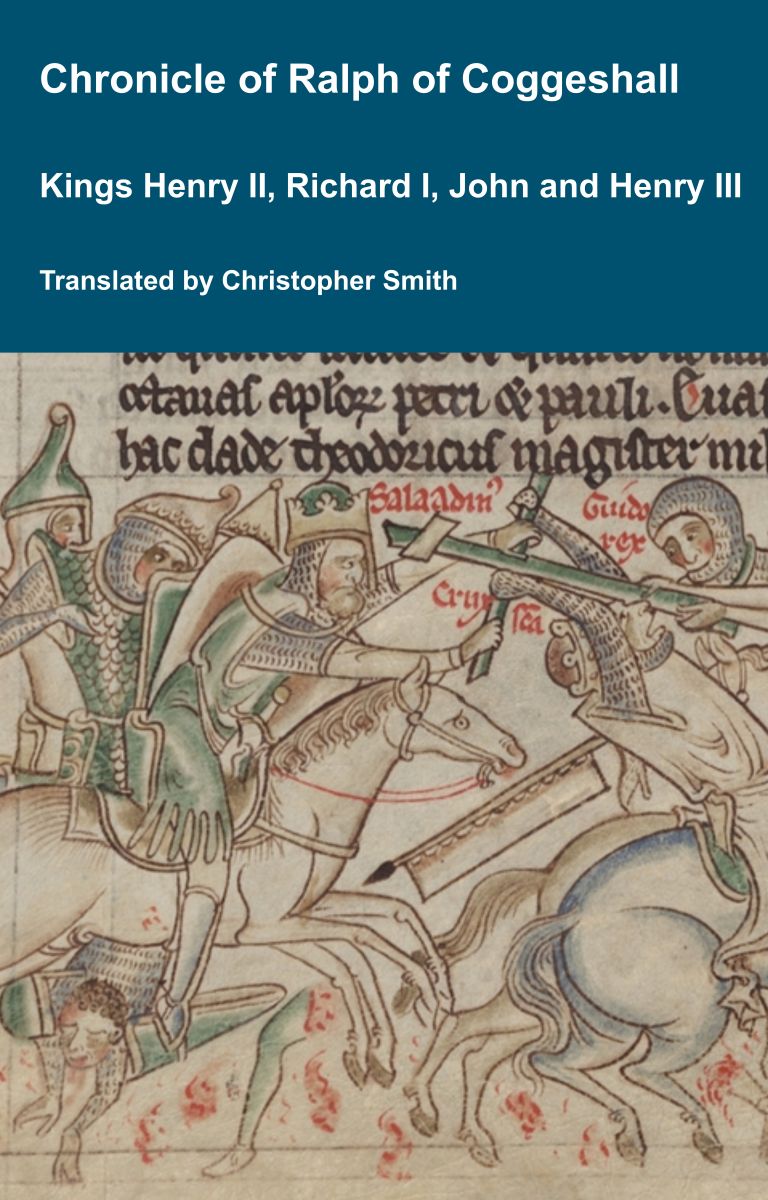 Chronicum Anglicanum by Ralph Coggeshall. The king, having again replenished his forces of armed men, on the 11th of October, a Sunday, unexpectedly seized the city of Rochester and entered it, and laid siege1 to the castle, harassing the besieged with many kinds of engines. Now in the castle were especially William de Albini, and Reginald de Cornhill, William de Amesford, and many other nobles with more than a hundred knights and squires, and very many stout crossbowmen; and the siege lasted for almost two months. In this siege the king spent more than sixty thousand marks on mercenaries, and he cruelly wasted all Kent; and even in the episcopal seat of Rochester, in the church and cloisters and the monks' offices, even beside the holy altar and the shrines of Saint Paulinus, the first archbishop of York, and of blessed Ithamar, once bishop of Rochester, they stabled their horses, and held feasts and drunken revels, and even lay in wantonness, with no regard for the holy place and the saints. But those who were within the castle defended themselves most skilfully and with the greatest discipline, killing countless foes outside. At last, however, when the walls had been battered and undermined, and food supplies had run out for the besieged, they surrendered themselves into the king's hands, committing themselves and their possessions to the king's mercy.
Rex iterum refectis copiis armatorum, V idus Octobris, die Dominica, Roffensem civitatem improvisus occupavit et ingressus castellum obsedit, machinis multimodis obsessos infestans. Erant autem in castello præcipui Willelmus de Albegni, et Reginaldus de Cornhulle, Willelmus de Amesforde, et alii plures nobiles cum plus quam centum militibus et servientibus, ac balistariis strenuis quamplurimis, tractaque est obsidio fere per duos menses. In qua obsidione rex expendit in stipendariis plus quam lx. millia marcarum, totamque Cantiam crudeliter populatus est, ipsamque sedem episcopalem Roffensem, ecclesiam et claustra ac officinas monachorum, etiam juxta sanctum altare et thecas sanctorum Paulini Eboracensis archiepiscopi primi, et beati Ythamar Roffensis quondam antistitis, stabiliverunt equos suos, et commessationes et ebrietates, necnon cubilia et impudicitias, nullo respectu habito loci sancti et sanctorum, inibi exercuerunt. Qui vero intra castellum erant, industrie satis et disciplinatissime se defenderunt, infinitos forinsecus occidentes. Tandem vero muribus conquassatis et suffossis, cum jam victualia defecissent obsessis, manus regi dederunt, se et sua regiæ misericordiæ committentes.
Note 1. Walter of Coventry: "Meanwhile, the besieged at Rochester were pressed ever harder, and as the king pushed on the assault, they were given no rest: five great siege engines hurled stones at them without ceasing, by day or by night. When all the outer works had been broken down, only the keep remained standing; and because of the antiquity and solid strength of its construction, it was little harmed by the stones that struck it. Then the miners were set to work, and when half of the keep had collapsed, those within still bravely defended themselves from the other half that remained, for the structure of the tower was such that one portion was divided from the fallen part by a very strong wall. No age, indeed, in our time remembers any siege pressed so urgently, nor any so manfully defended. For since they were given no respite for many days in succession, they suffered most grievously from famine, being confined within the narrow walls of the keep. When all else had failed them, they sustained themselves only with horseflesh and water, which was a hard thing for men who had been bred in luxury. At length, therefore, they were brought to the last extremity. First they expelled those among them who were least warlike, some of whom the king caused to have their hands or feet cut off. Soon after this, all the rest were taken captive; and except for those who claimed to be clerics, they were cast into prison. The king kept the knights and men of rank for himself, while he handed over the lesser ones to others. Only one man he commanded to be hanged, a crossbowman whom, it was said, he had raised from childhood, though it was thought, in the greatness of his wrath, that he would deliver all of them at once to a bitter death. When this was heard, the rest were thrown into terror; and all who remained, struck with fear, either fled to London or hid themselves in religious houses. Few there were who still trusted in their fortifications."
On 11th October 1272 Archbishop Robert Kilwardby was elected Archbishop of Canterbury.
 Bourgeois de Valenciennes. And when he entered Rome, fully armed in the arms of the King of France, he went straight to the palace and asked where that cleric was who called himself pope; and he entered his chamber. There he found the pope clothed in the arms of Our Lord. And Guillaume de Nogaret threw him to the ground and beat him so violently in the name of the King of France that he grievously injured and mutilated him, trampling upon his body and his face, beating and crushing him in such a manner that after this mutilation he was never again able to support himself, stand upright, help himself, nor walk upon his feet or limbs. And after this cruel beating and harsh affliction, he was put into a tower where he died1 in a very pitiful condition, for which there was great sorrow, since he was widely held to be a good and holy man. And before he died, he cursed Guillaume de Nogaret, King Philip of France called the Fair, and all their lineage unto the seventh degree. And thereafter Christendom remained without a pope for a great space of time, until the King of France caused another to be made on this side of the mountains, who was called Pope John.
Et quant il entra en Rome tout armé des armes du roy de France, il s’en alla tout droit vers le pallais et demanda où ce clercq estoit, qui se disoit pappe; et entra en sa chambre. Sy trouva le pappe revestu des armes de Nostre-Seigneur. Et Guillame Loncgeret le jetta par terre et le baty tant au nom du roy de France qu’il le travilla et mutila moult, et passa sur son ventre et sur son visage, et foulla et pestela tant sur luy et en tele manière qu’il ne se peult depuis ce mutilage onques puis soustenir, dreschier, aidier, ne aller sur pieds, ne sur membres qu’il eust. Et puis après celle griefve bature et dure affollure, on le mist en une tour où il morut assez desguiséement, dont ce fut pité, car moult estoit tenut à bon et saint preudhomme. Et avant qu’il morust, il maudit Guillame de Loncgeret, le roy Philippe de France le Bel et toutte leur géniture jusques au VII degré. Et adont fut la crestienneté sans pappe une grande espasse de tamps jusques à ce que le roy de France en refist ung dechà les mons, qui eult nom pappe Jehan.
Note 1. Pope Boniface VIII died 11th October 1303. Villani’s Chronicle: "In this pain, shame and torment the great Pope Boniface abode prisoner among his enemies for three days; but, like as Christ rose on the third day, so it pleased Him that Pope Boniface should be set free; for without entreaty or other effort, save the Divine aid, the people of Anagna beholding their error, and issuing from their blind ingratitude, suddenly rose in arms, crying: "Long live the Pope and his household, and death to the traitors"; and running through the city they drove out Sciarra della Colonna and his followers, with loss to them of prisoners and slain, and freed the Pope and his household. Pope Boniface, seeing himself free, and his enemies driven away, did not therefore rejoice in any wise, forasmuch as the pain of his adversity had so entered into his heart and clotted there; wherefore he departed straightway from Anagna, with all his court, and came to Rome to S. Peter’s to hold a council, purposing to take the heaviest vengeance for his injury and that of Holy Church against the king of France, and whosoever had offended him; but, as it pleased God, the grief which had hardened in the heart of Pope Boniface, by reason of the injury which he had received, produced in him, after he was come to Rome, a strange malady so that he gnawed at himself as if he were mad, and in this state he passed from this life on the 12th day of October in the year of Christ 1303, and in the church of S. Peter, near the entrance of the doors, in a rich chapel which was built in his lifetime, he was honourably buried."
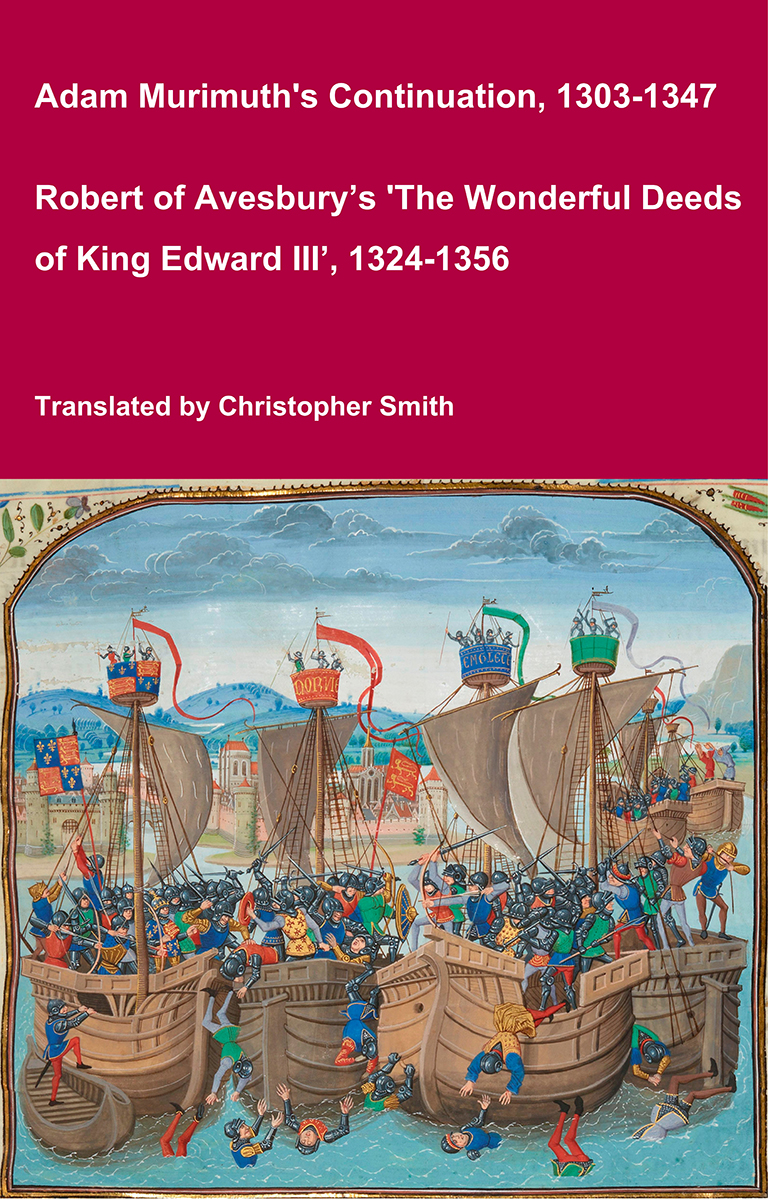 Adam Murimuth Continuation. In the year of our Lord 1304, while the ninth year of Boniface VIII was still running, and in the thirty-second year of the reign of the aforesaid King Edward, beginning from the feast of Saint Michael [29th September], on the fifth day before the Ides of October [11th October 1303] Boniface VIII died at Rome, and was buried there in the church of Saint Peter, in an elaborate and splendid tomb which, while still alive, he had caused to be made there in the ninth year of his pontificate. He was succeeded by Pope Benedict XI, a Lombard by nation, from the city of Treviso, who was elected at Rome on the eleventh day before the Kalends of November [22nd October 1303], and crowned on the following Sunday. Formerly he had belonged to the Order of Preachers, in which he held many ranks of honour, and afterwards he became cardinal bishop of Ostia, and finally father of fathers. This pope excommunicated and publicly declared excommunicate all those who had consented to the capture of Boniface, and certain men by name, namely William of Nogaret and Sciarra Colonna. He restored, however, Peter and James Colonna to the dignity of the cardinalate, though he assigned them no titles, from which Boniface had previously deprived them when he stripped them of rank of cardinal. He also restored the king of France to the privileges which he had previously held from the Apostolic See, and of which Pope Boniface had deprived him as an ungrateful son. And in the week of Pentecost he absolved that same king, though the king did not ask it, from the sentence of excommunication by which he was bound on account of the matters mentioned above or for other causes. And afterwards, on the Nones [7th] of July [1304], he died at Perugia, and was buried there before the altar of the Preachers.
Anno Domini millesimo CCCIV, Bonifacii octavi anno IX, adbuc durante, regni vero dicti regis Edwardi XXXIJ, a festo sancti Michaelis inchoando, V idus Octobris obiit Romæ Bonifacius papa octavus, et sepultus fuit Romæ in ecclesia sancti Petri ibidem, in curioso sepulcro et nobili, quod superstes fieri fecit ibidem pontificatus sui anno nono. Cui successit Benedictus papa undecimus, natione Lumbardus, de civitate Trivisina, qui XJ kalendas Novembris Romæ fuit electus, et die Dominica sequenti coronatus; qui prius fuit de ordine Prædicatorum, in quo habuit multos gradus honoris, et postea cardinalis Ostiensis, et finaliter pater patrum. Hic papa excommunicavit et excommunicatos denunciavit omnes qui captioni Bonifacii consenserant, et quosdam nominatim, scilicet Willeemum de Negareto et Scharram de Columpna; Petrum tamen et Jacobum de ColumpnaS restituit ad cardinalatus honorem, sed nullos eis titulos assignavit, quos prius Bonifacius papa privavit cardinalatus honore. Item restituit regem Franciæ ad privilegia quæ habuit prius a sede apostolica, quibus papa Bonifacius ipsum sicut filium ingratum privavit; et ipsum regem, non petentem, a sententia, excommunicationum, ex præmissis vel aliis causis vinctum, absolvit in hebdomada Pentecostes. Et postea, nonis Julii, in Perusio obiit, et ante altare Prædicatoram est sepultus ibidem.
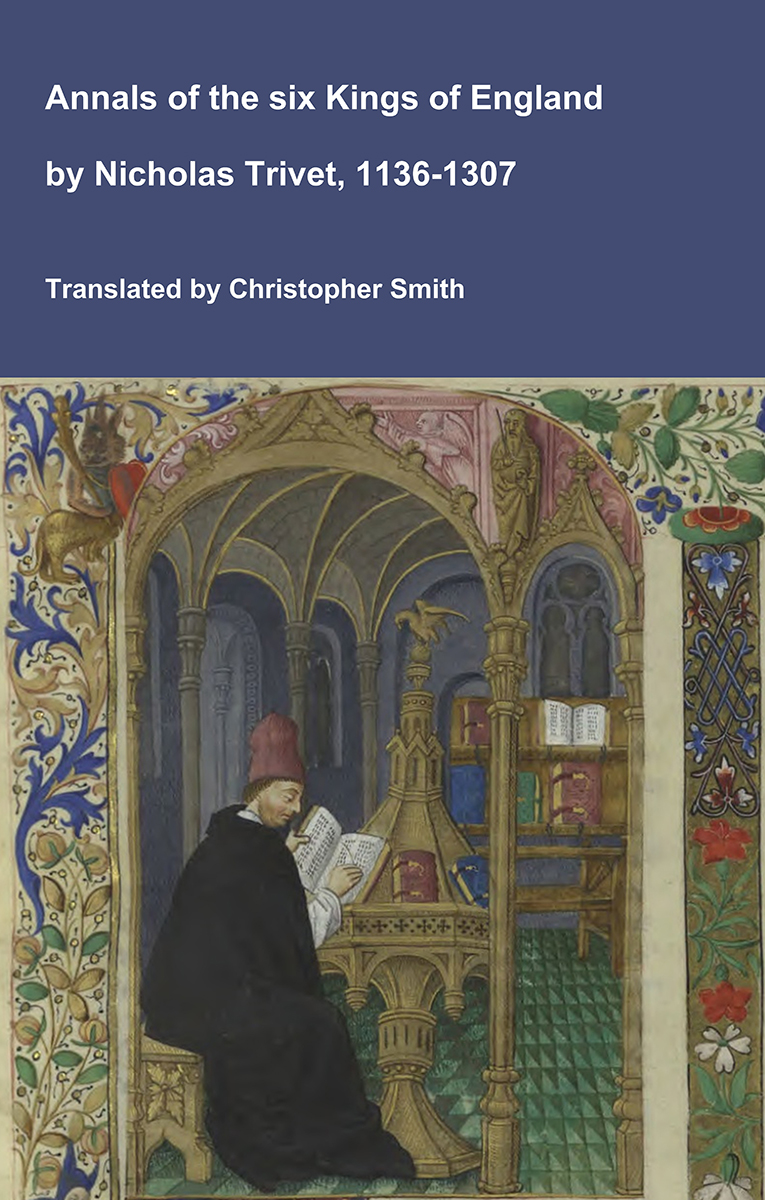 Annals of Six Kings of England by Nicholas Trivet. Philip, son of the Count of Flanders, having gathered many mercenaries from Germany, entered France and laid siege to the castle of Saint-Omer; but, since he achieved nothing, he withdrew and burned the town of the Morini. Philip, King of the French, advancing into Flanders with an army, having accepted truces, returned ingloriously. Pope Boniface, coming to Anagni, the city of his birth, placed himself under the protection of its citizens; where he was seized by supporters of the King of France, whose captain was William of Nogaret, and was compelled to come to Rome. Having stayed at the Castle of Saint Angelo, through the distress which in many ways troubled his mind, he fell into sickness; and this increasing, after a few days he died [on 11th October 1303]. He was immediately succeeded by Benedict the Eleventh, elected by the cardinals, a Lombard by nation, whom Pope Boniface, from the Order of Preachers, of which he had been master, had raised to the bishopric of Ostia. Guy, Count of Flanders, and his son Robert, having been released from custody by the King of France, were sent into Flanders to bring the Flemings back to the king’s peace; but, achieving nothing, and keeping the fealty due, they returned to their places of custody. The Colonna family, after the death of Pope Boniface, coming out from their hiding places, went to Pope Benedict, imploring mercy; whom he received kindly, absolved, and restored to them the possession of their goods, but did not decide to restore them so quickly to the rank of cardinal.
Philippus filius comitis Flandriæ, coadunatis multis Teutoniæ stipendiariis, Franciam ingressus, castrum S. Audomari obsedit; sed, cum nihil proficeret, discedens urbem Morinorum incendit. Philippus Francorum rex, versus Flandriam cum exercitu progressus, acceptis treugis, inglorius est reversus. Bonifacius papa, Anagniam originis suæ urbem veniens, sub tutela civium se recepit; ubi a fautoribus regis Francorum, quorum capitaneus erat Willelmus de Ungareto, captus est, et Romam venire coactus. Commoratus autem apud castrum S. Angeli ex anxietate, quæ multipliciter mentem ejus occupaverat, decidit in languorem; quo invalescente, post dies aliquot exspiravit. Successit ei statim a cardinalibus electus Benedictus undecimus, Lumbardus natione, quem papa Bonifacius de ordine fratrum Prædicatorum, cujus magister erat, assumptum fecerat episcopum Ostiensem. Guido comes Flandriæ et filius ejus Robertus, a custodia per regem Franciæ soluti, ut Flandrenses ad pacem regis reducerent, in Flandriam transmittantur; sed nihil proficientes, fidelitate debita servata, ad loca custodiæ revertuntur. Columnenses, mortuo papa Bonifacio, de suis egressi latibulis, ad papam Benedictum venerunt, misericordiam implorantes: quos ille benigne suscipiens absolvit, ac bonorum suorum tribuit eis facultatem; sed eos ad gradum cardinalatus tam subito restituere non decrevit.
 Chronicle of Jean le Bel Volume 1. In the year of grace 1345, Emperor Louis of Bavaria passed away1, and immediately after him the most noble king who was the King of Bohemia laboured so that Sir Charles, his eldest son, was elected2 by the greater part of the electors of the King of Germany, with the consent of Pope Clement VI and of the whole court of Rome. But afterward he had much to do and met with adverse fortune, after the death of his said father, the King of Bohemia, who died at the battle that was fought at Blanche Tache, near Crécy in Ponthieu, where the noble King Edward defeated, with few men, King Philip of France with all his great power. And there were slain the noble king, the Count of Alençon, brother german to the King of France, the Count of Blois, son of his sister, the Count of Flanders, the Duke of Lorraine, and many other great lords and barons, of whom you shall hear spoken in this history, if there be one who completes it.
L'an de grace mil CCCXLV trespassa l'empereur Loys de Baviere, et tantost pourchassa aprez luy le plus noble roy qui fut le roy de Boheme, par son sens que messire Charles, son aisné filx, fut eslut par la plus grande partie des esliseurs du roy d'Alemaigne, et par le consentement du pape Clement VI et par toute la court de Romme; mais il eust depuis assez à faire et de contraire fortune, aprez la mort de sondit pere, le roy de Boheme, qui moru à la bataille qui fut à la Blanche Tache, assez prez de Crecy en Pontieu, là où le noble roy Edowart desconfit, à petit de gens, le roy Philippe de France, à tout son grand pouoir; et là fut tué le gentil roy, le conte d'Alenchon, frere au roy de France germain, le conte de Bloys, filz de sa seur, le conte de Flandres, le duc de Lorraine et pluseurs aultres grands seigneurs et barons desquelz vous orrez parler en ceste hystoire, s'il est qui le parface.
Note 1. Louis of Bavaria died on 11th October 1347.
1. Louis de Bavière mourut le II octobre 1347. (Voy. C. Muller, Der Kampf Ludwigs des Baiïern mit der rômischen Curie, t. II, p. 225.)
Note 2. Charles was elected King of the Romans on 19th July 1346, during the lifetime of Louis of Bavaria, whom Clement VI had deposed by a bull dated 13th April 1346.
2. Charles fut élu roi des Romains le 19 juillet 1346, du vivant de Louis de Bavière que Clément VI avait déposé par une bulle du 13 avril 1346.
On 11th October 1347 Louis Wittelsbach IV Holy Roman Emperor [aged 65] died. His son Stephen [aged 28] succeeded II Duke Bavaria. Elisabeth Barcelona Duchess Bavaria [aged 37] by marriage Duchess Bavaria. His son Albert [aged 11] succeeded I Duke Lower Bavaria.
On 11th October 1377 Peter IV King Aragon [aged 58] and Sibia Fortia Queen Consort Aragon were married. She by marriage Queen Consort Aragon. He the son of Alfonso IV King Aragon and Teresa Enteca Queen Consort Aragon.
William of Worcester's Chronicle of England
William of Worcester, born around 1415, and died around 1482 was secretary to John Fastolf, the renowned soldier of the Hundred Years War, during which time he collected documents, letters, and wrote a record of events. Following their return to England in 1440 William was witness to major events. Twice in his chronicle he uses the first person: 1. when writing about the murder of Thomas, 7th Baron Scales, in 1460, he writes '… and I saw him lying naked in the cemetery near the porch of the church of St. Mary Overie in Southwark …' and 2. describing King Edward IV's entry into London in 1461 he writes '… proclaimed that all the people themselves were to recognize and acknowledge Edward as king. I was present and heard this, and immediately went down with them into the city'. William’s Chronicle is rich in detail. It is the source of much information about the Wars of the Roses, including the term 'Diabolical Marriage' to describe the marriage of Queen Elizabeth Woodville’s brother John’s marriage to Katherine, Dowager Duchess of Norfolk, he aged twenty, she sixty-five or more, and the story about a paper crown being placed in mockery on the severed head of Richard, 3rd Duke of York.
Available at Amazon in eBook and Paperback format.
Patent Rolls. 11th October 1387. Inspeximus and confirmation to John de Beauchamp of Holt [aged 68] of a writing of even date, of Robert de Veer [aged 25], duke of Ireland, granting, with the king's consent and licence, to the said John, for life, a yearly rent of £100 from the manors of Bovytracy and Holdesworthy, co. Devon, and Blakedon and Ludeford, co. Somerset, and all other his lands in the last named county. Witnessed by Alexander [aged 46], archbishop of York, Michael de la Pole [aged 57], Earl of Suffolk, Nicholas Slake, Richard Clifford, and Richard Felde. And further grant that in case the said Robert die in the lifetìme of the said John, the latter shall receive the said yearly rent for the term of his life, and if the said manors and lands are recovered out of the king's hand, he shall receive it at the Exchequer. By p.s.
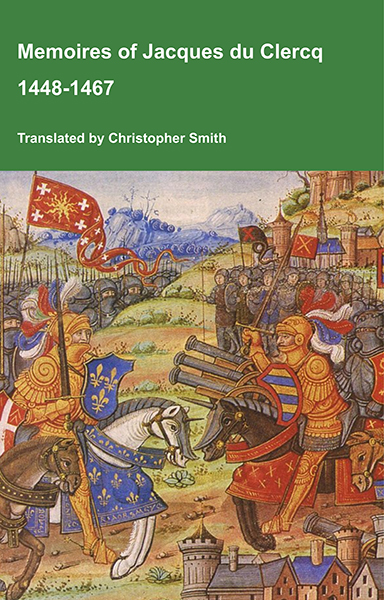 Memoires Jacques du Clercq. In the said year 1458, on the 11th day of October, a squire named Collart du Bois Huon, lord of Vys in Artois, who had married the bastard daughter of Philip, lord of Saneuses, because of which the said lord of Saneuses, seeing that the said Collart was frivolous and of foolish behaviour, had placed him under guardianship by order of the king, and kept him in his castle of Bailleulmont, in a tower, to correct him, this same Collart du Bois Huon, in despair, hanged and strangled himself with a basket in which fruit had been brought to him. In the said year, on the 12th day of October, as three bourgeois women of Arras, very notable and of good reputation, one the wife of Jehan Sacquespée, another the wife of Jacques Hatoy, and the third the wife of Pierre Lame, together with Remy Caullier, brother of the said woman, Jacques Hatoy, and other men and women, their servants, were returning from Saint-Bertelle, which is at Mareuil near Arras, from a pilgrimage; near the gate of Baudimont, as they were returning in the evening, a cart passed before them, upon which was a young man, son of Jacques Gaillard, a farmer of Caucourt, aged about nineteen or twenty, to whom the cart belonged. This young man dropped one of his pattens. The bourgeois women called after the driver to pick up his patten, and the carter got down to retrieve it. A young boy, not of their company but passing by chance, son of one called Gillot the butcher, had picked it up and would not return it unless the carter gave him a coin, which the carter refused, but instead took it back by force. Seeing this, the boy went to tell the women that the carter had spoken many insulting words about them. Because of this, the said Remy Caullier, at the request of some of them, especially the wife of Pierre Lame, went back to beat the carter, caught up with him, and as he was beating him, the young man who had been on the cart came down to tell them that it was enough and ill done. But as soon as he approached them, he received from the servant and from the wife of Pierre Lame a blow with a staff, which is a stick used for support but containing a sharp iron blade inside, and with this blow they pierced the young man through the flank and the entrails, so that on the seventh day following he died. And all the said bourgeois women and those of their company were in great danger, and were required to obtain pardon from the king at their own expense.
Oudit an lviij, le xje d'octobre, ung escuyer nommé Collart du Bois Huon, sieur de Vys en Artois, lequel avoit espousé la fille bastarde de Philippe, Sr de Saneuses, et a ceste cause, ledit Sr de Saneuses, pour tant que ledit Collart estoit folatre et de folle maniere, il avoit mis ledit Collart en tutelle par un mandement du roy, et le faisoit tenir le Sr de Saneuses en son chastel de Bailleulmont, en une tour, pour le corriger, icelluy Collart du Bois Huon, par desespoir, se pendit et estrangla avecq une besaighe en quoi on lui avoit apporté du fruit. Oudit an, le xije d'octobre, comme trois bourgeoises d'Arras, très notables et bien famées et renommées; l'une femme de Jehan Sacquespée, l'autre femme de Jacques Hatoy, l'aultre femme de Pierre Lame, avecq elles Remy Caullier, frère de ladite femme, Jacques Hatoy et aultres hommes et femmes leurs serviteurs s'en revenoient de St Bertelle, qui est a Mareuil assés près d'Arras, de pelerinage; assés près de la porte de Baudimont, ainsy qu'elles ' revenoient sur le soir, un char passoit par devant elles, sur lequel avoit ung josne compagnon, fils de Jacques Gaillard, censier de Caucourt, de l'age de xix a xx ans, a qui le char estoit, lequel josne compagnon laissa cheir un de ses patins; lesquelles bourgeoises crierent après lui qui menoit le chariot, qu'il recueillat son patin, lequel charton descendit et alla pour requerir ledit patin; lequel patin, un josne garchon, non pas de la compagnie desdites bourgeoises, mais qui d'adventure passoit, fils d'ung appellé Gillot le Bouchier, l'avoit recueilli et ne lui voulloit rendre sans que ledit charton ne lui donnat un denier, ce que ledit charton ne voullut faire, ains reprint par forche le patin; ce voyant le garchon il alla dire aulx bourgeoises que ledit char ton avoit dit plusieurs villaines parolles d'elles; pour laquelle cause le dessusdit Genin Caullier, a la requette d'aulcunes d'elles, par especial de la femme de Pierre Lame, retourna pour battre ledit charton, et le ratteint, et ainsy qu'il le battoit, le josne fils qui estoit sur le char, descendit de son char pour aller dire a ceulx qui le battoient, que c'estoit assés et que cestoit mal a propos, lequel sitost qu'il approcha d'eulx, receupt du varlet et de la femme de Pierre Lame, un coup d'une fuste, qui est ung baston comme pour s'appuyer, mais il y a dedans une espée de fer agut, duquel coup il percha audit josne fils l'oing et les boyaulx, tellement que au viije jour ensuivant il mourut, et feurent en grand dangier toutes lesdites bourgeoises et touts ceulx de leur com pagnie, et debvoient obtenir pardon du roy a leurs despens.
Memoires Jacques du Clercq. On the 11th day of October 1460, there returned to the city of Arras, from the Duke of Burgundy, Sir Guillaume de Berry, lieutenant of the bailiff of Amiens, and Master Mathieu du Hamel, secretary of the bishop of Arras, who had carried the proceedings of four prisoners concerning the matter of Waldensianism. With them also returned, sent by the duke, Master Adrien Collin, president of the duke's chamber, which sat at Ypres. After their return, the said prisoners were once again interrogated on the matter of Waldensianism in the presence of the said president. This done, the vicars again assembled all the clerics of the town and city of Arras. Present there were the said president, the bishops of Salubrie and Barut, the dean of Arras and his brother Master Jean du Bois, bachelor of theology and canon of Arras, Dom Jean Barré, monk of Saint-Vaast and doctor of theology, Master Gilles Flameng, Master Mathieu Paille, Master Jean Mauville, advocate in the bishop's court, Master Simon of Saint-Vaast, licentiate in law and canon of Arras, Master Jean Boullengier, doctor of theology, and many other clerics, both in theology and in law, canon law, and the arts. To these clerics were shown the four sets of proceedings, which I shall mention below, and after they had examined them and given their opinions, on the 22nd day of the said month of October, the bishop's vicars delivered the sentences in these four cases, namely those of the Lord of Beaufort, Jean Tacquet, Pierrotin du Carieulx, and the said Huguet Aubry. For although the clerics were assembled and gave their opinions, it was the said vicars who pronounced the sentences, and the clerics themselves did not judge.
LE xije jour d'octobre mil iiij lx, revindrent en la cité d'Arras, de devers le duc de Bourgogne, messire Guillaume de Berry, lieutenantdu bailly d'Amiens, et maitre Mathieu du Hamel, secretaire de l'evesque d'Arras, lesquels avoient porté le procés de quatre prisonniers pour le fait de vaulderie, et revint avecq eulx, que le duc y envoya, maitre Andrien Collin, president de la chambre du duc, laquelle chambre se tenoit a Ypre, et eulx revenus furent derechief interroguiés lesdits prisonniers sur le fait de vaulderie en la presence dudit president; ce fait, les vicaires rassemblerent encoires touts les clercqs de la ville et de lacité d'Arras, ou estoient lesdits president, l'evesque de Salubrie et de Barut; le doyen d'Arras et son frere maitre Jehan du Bois, bachelier en theologie et canoine d'Arras, damp Jehan Barré, moisne de St Vaast et docteur en theologie; maitre Gilles Flameng; maitre Mathieu Paille; maitre Jehan Mauville, advocat en la cour de l'evesque; maitre Simon de St Vaast, licentié es loix, canoine d'Arras; maitre Jehan Boulengier, docteur en theologie, et plusieurs aultres clercqs, tant en theologie comme en loix, decrets et es arts, aulxquels les quatre procés furent monstrés, dont chy après feray mention, et après ce qu'ils olrent veus lesdits procés et leurs opinions dites, les vicaires de l'evesque le xxije jour dudit mois d'octobre, rendirent la sentence desdits quatre procés, c'est assçavoir, du St de Beauffort, Jehan Tacquet, Pierrotin du Carieulx et dudit Huguet Aubry, car combien qu'on assemblat les clercqs, et dissent leurs opinions, sy rendoient la sentence lesdits vicaires, et ne les jugoient point les clercqs.
Memoires Jacques du Clercq. At this same time also, on the 11th day of October, on a Sunday, the town of Encre in Artois was entirely burned by a sudden and disastrous fire, and scarcely anything remained. It was said that the fire began no one knew how, yet in less than half a quarter of an hour the whole town was ablaze on every side, and it seemed as though it were a divine punishment, and there were burned the parish church, the priory, and all that was within the said town.
En ce temps aussy, le xje jour d'octobre, par ung dimanche, fust la ville d'Encre, en Artois, tout ardse par feu de meschief et n'y demoura comme rien, et se disoit on que le feu se prist ne sçait on comment, toutesfois en moins de demy quart d'heure fust toute la ville de toute part en feu et sembloit que ce fust punition divine, et s'y feurent ardses l'eglise parroissialle, la prioré et tout ce qu'il y avoit dedans ladite ville.
On 11th October 1492 Charles Valois was born to Charles VIII King France [aged 22] and Anne of Brittany Queen Consort France [aged 15]. Coefficient of inbreeding 2.27%. He died aged three in 1495.


Chronicle of Robert Fabyan [-1512]. 11th October 1517. And upon the eleventh day of October next following, then being the sweating sickness of new begun, died the said Thomas Hall then of London mayor, and for him was chosen as mayor Sir William Stocker knight and draper, which died also of the said sikeness shortly after; and then John Ward, grocer, was chosen mayor, which so continued till the Feast of Simon and Jude following.

Archives of Venice. Oct. 11. [1529] Sanuto Diaries, v. lii. p. 153.
515. Lodovico Falier to the Signory.
Narrates conversations held with Cardinal Wolsey, and Cardinal Campeggio, late Legate in England, who has departed on his way to Rome.
King Henry has sent two ambassadors to the Emperor1, and two ambassadors to the King of France2, with congratulations on the peace made; and he has also sent an ambassador to the Pope.
London, 11th October. Registered, by Sanuto 9th November.
[Italian.]
Note 1. Qu., Sir Nicholas Carew [aged 33] and Dr. Richard Sampson,
Note 2. Qu., George Boleyn [aged 26] and Dr. John Stokesley [aged 54].
Calais in the Hands of the English. [11th October 1532]. The xj. day of Octobar Henry the Eighth kynge of England landyd at Caleis, with the duke of Richemond his bastard sonne, the duke of Norfolke lord tresorar of England, the duke of Suffolke, the bysshope of Wynchestar [aged 49], the bysshope of London [aged 57], the bysshope of Lyncolne [aged 59], the bysshope of Bathe, the marques of Exceter [aged 36], the erle of Derbye [aged 23], the erle of Arundell [aged 56], the erle of Oxenforde [aged 61], the erle of Surrey [aged 16], the erle of Rutland [aged 40], the vicount Lisle [aged 68] kynge Edward the Fowrthes bastard sone, the lorde Matrevers, the lord Sands lord chambarlen of the kyng's howse, the lord William Howard, the lorde Braye, the lorde Montague, the lord Cobham, the lord Mordante, the lord Dawbney, the lorde Greye, the lorde Clinton, the lorde Vauxe, the lorde Mountegle, the lorde Rocheforde, with dyvars other lords, ser William Fitzwilliam tresurar of the kyng's howse, ser William Pallett comptrowlar of the kyng's howse, ser William Kyngston capitayne of the garde, ser John Page, ser James Boleyne, ser Anthony Browne, ser Edward Nevell knight herberjur, ser Thomas Cheny, ser John Russell, ser Richard Page, ser Raffe Eldercare, ser Edward Baynton, ser Edward Santener, ser Griffethe Doon, ser John Dudley, ser John Semer, ser Henry Longe, ser Anthony Hungarford, ser John Bruges, ser Arthur Hopton, ser Anthony Wyngfilde, ser William Paston, ser Edmond Bedingfeld, ser Thomas Strange, ser William Hawte, ser Edward Wotton, ser William Askughe, ser John Markam, ser William Baryngton, ser William Essex, ser Gyles Strangweis, ser Edward Chamberleyne, ser Giles Caple, ser John Seint John, ser Waltar Hungarford, ser William Gascoyne, ser Lionell Norreis, ser Edward Boleyne, ser Thomas Lisle, ser John Assheton, ser Thomas Palmar, ser William Boleyne, ser William Finche, ser William Pellam, ser Thomas Rotherham, ser John Norton, ser Richard Sands, ser John Nevell, and xxx. esquyers de quyrry and many gentlemen; every duke had x1. men, every marques XXXv. men, every erle xxiiij., every vicount xx., every bysshope xxiiij., every baron and lorde xij., every knight x., the treswrar of the kyng's hows, xx., the comptrowlar of the kyng's howse hathe xx. men, every counselar x. men, the clarke of the citchen x. men, every doctor viij. men, every esquier for the body viij. men, every sewar to the kynge vj. men, every gentleman usshar iiij. men, the clerke of the grene clothe xij. men, the clerke comptrowlar hathe vj. men, the cofferer viij. men, the clerke of the citchen j--the clerke of the spicery vj., the clerke of the ewrye iiij., the second clerke iij., every sargiant at armes on man, and every sargiant of cvery office in the kyng's howse one man, the yeman of the comptinghows hath one grome, and every one of the iiij. officers of the bake howse iiij. men, the officers of the pantrye, buttrye, and sellar have xxxiij. men, the officers of the pitcherhowse hathe xij. men, the officers of the waffers and condutis v. men, the officers of the chandry x. men, officer of the confectionary have vij. men, the officers of the lawndrye have viij. men, the officers of the kechen have xx. men and xv. servants, the officers of the lardar have Xvj. men, officers of the boylinge hows have v. men, officers of the pultrye have xiij. men, officers of the sqwllerye have xx. men, officers of the scaldynghows viij. men, officers of the pasterye are xiiij., the officers of the woodyarde are xx. men, officers of the halle are ix. men, the officers of the herbengers are x. men, besyds othar officers.


Annales of England by John Stow. 11th October 1532. The eleuenth of October King Henrie landed at Calleis, with the Duke of Richemonde [aged 13] hys bastarde sonne, the Duke of Norffolke [aged 59] Lord Treasurer of England, the Duke of Suffolke [aged 48], the Marquesse of Excester [aged 36], the Erles of Darby [aged 23], Arundale [aged 56], Oxforde, Surrey and Rutlande [aged 40], the Vicount Lisle [aged 68] King Edwarde the fourth his bastarde sonne, the Lord Matrauers, the Lord Sands Lorde Chamberlaine of the Kings house, the Lorde William Hawarde, the Lorde Bray, the Lorde Montague, the Lorde Cobham, the Lorde Mordant, the Lorde Dawbney, the Lorde Grey, the Lord Clinton, the Lorde Vaux, the Lorde Mountegle, the Lorde Rocheford [aged 29], wyth diuers other Lordes: the hishoppes of Winchester, London, Lincolne, and Bathe: sir William Fitz William treasourer of the kings house, sir William Pawlet Comptroller, sir William Kingstone Capitaine of the Guarde, sir Iohn Page, sir Iames Boleine, sir Anthony Browne, sir Edwarde Neuell, sir Thomas Cheyney, sir Iohn Russell, sir Richard Page, sir Ralph Eldercare, sir Edward Baynton, sir Edwarde Santener, sir Griffyth Deene, sir Iohn Dudley, sir Iohn Femer, sir Henry Long, sir Anthony Hungerforde, sir Iohn Brudges, sir Arthur Hoptō, sir Anthony Wingfielde, sir William Paston, sir Edmonde Bedingfielde, sir Thomas Strange, sir William Hawte, sir Edwarde Wotton, sir William Askewe, sir Iohn Marleant, sir William Barington, sir William Essex, sir Giles Strangweis, sir Edwarde Chamberlaine, sir Giles Caple, sir Iohn Sent-Iohn, sir Walter Hungerforde, sir William Gascoine, sir Lionel Norrice, sir Edwarde Boloine, sir Thomas Lisle, sir Iohn Ashton, sir Thomas Palmer, sir William Boloine, sir William Finche, sir William Pellam, sir Thomas Rotherham, sir Iohn Norton, sir Richarde Sandes, sir Iohn Neuell, and thyrtie Esquiers, with manye Gentlemenne, and all theyr traines.


The Maner of the Triumphe at Caleys and Bulleyn. 11th October 1532. I1 will certyfye you of our newes in the partyes of Calais. Fyrst the xj. day of October whiche was Fryday in the mornyng at. v. of the clocke the kynges grace toke his Shyppe called the Swallowe and so came to Caleys by. x. of the clocke. And there he was receyved with processyon and with the mayre and the lorde delite and all the speres [knights] and the sowdyours in araye with a greate peale of gonnes and laye in Caleys tyll the Sondaye seuenyght after. And on the. xvj. day of October my lorde of Norffolke [aged 59] accompanyed with my lord of Darby [aged 23] and a great nombre of gentilmen besydes mette with the great mayster of Fraunce vj. myles fro Calays at the englysshe pale the sayd great mayster hauynge two greate lordes in his company of theyr ordre and a hondred gentylmen attendynge vpon them. And there my lorde of Norffolke and the greate mayster deuysed the place where the two kynges sholde mete whiche was at Sandyngfelde. And that done they wente bothe to Caleys with theyr companyes. And the sayd greate mayster with dyuerse other straungers dyned that daye with ye Kynge. And after dyner my lorde of Norffolke brought them forth on theyr way a myle or two and so departed for that tyme.
Note 1. In the Second Edition, the text begins with:
The names of the noble men of Fraunce.
Fyrst the frensshe Kynge.
The kynge of Nauerne [Henry d'Albret, King of Navarre [aged 29]]
The Dolphyn Duke of Brytayne Frauncys [aged 14].
The duke of Orlyaunce Henry [aged 13].
The duke of Angoulesme Charles [aged 10].
The duke of Vendosme Charles [aged 43].
The duke of Guyse [aged 35].
The duke of Longouille [aged 22].
The cardynall of Burbon.
The cardynall of Lorrayne [aged 34]
The Legate and cardynall chaunceler of Fraunce Antony de prayt [aged 69].
The cardynal tournon.
The cardynal gramond [aged 46].
The marques of Lorayne de pont.
The marques of Rochelyne.
The two sonnes of the duke of Vendosme.
The sone of the duke of Guyse conte damualle. [D'Aumale]
The conte of saynt Poule Frauncys ile Burbon.
The conte of Neuers.
The conute [sic] Loys de Neuers conte danseore.
The lorde marshal! seigneur de Floraynge.
The lorde myrepois marshall de la foy. [A descendant of Guy de Lews, -who -was elected marshall of the Crusaders "who marched against the jilbigenses; hence his successors -were all called Marec/iaux de la Foi. He received the lands of Afire foix, in Languedoc, in return for hit services. The family became very illustrious, and tve refer readers ivho have the time and patience to study a very curious piece of family history, to the turnings of Carrier and Lognac.]
The conte de porsean.
The conte de bresne.
The conte de tonnore. [The Comte de Tonnerre.]
The conte de sensare.
The conte de grant pre.
The conte d'apremont.
The lorde greate mayster Anne de Momerancy [aged 39].
The lorde admarald Philyp Schabbot [aged 40].
The lorde grand esquyer Galliot.
The prynce of molse.
The conte de tande. [This is undoubtedly Honorat, son of Pillars, Comte de Tende, natural son of Philip, duke of Sairoy. Villars had been killed at Pavia in 1525. Honorat's daughter married the great duke de Mayenne.]
The conte de villars. [Andre de Brancas, contte de Villars.]
The conte de estampes Johan de la berre. [Jean de Berri, ccmte d'Etampes,]
The conte de chambre. [Chambery?]
The lorde canamples.
The lorde barbeluiez.
The lorde hummeres. [Probably Henry de Cre'vant d'Humieres, ancestor of the celebrated marechal d' Humiercs.]
The lorde roche piot.
The lorde of saynt Andrews.
The lorde montigeu.
The lorde roche guyon.
The lorde piennes.
The lorde pontremy.
Monsieur de longe.
Monsieur de belley. Probably Martin du Bel/ay, prince a" T-vetot.
The archebysshop of Roan.
The archebysshop of Vienne.
The bysshop of Lyseures.
The bysshop of Langres.
The bysshop of Charttres.
The bysshop of Lymoges.
The bysshop of beauuoys.
The bysshop of Auuergne.
The bysshop of Macon.
The bysshop of Castres.
The bysshop of Paris.
The bysshop of Angoulesme.
And as concernynge the nobles and ryall states of this realme it necleth not to expresse by name.


Archives of Venice. Oct. 31 [1532]. Sanuto Diaries v. lvii. p. 266. 822. Zuam Antonio Venier to the Signory.
All the ambassadors being here [at Abbeville] on the 18th, I wrote from Montreuil, that on the 17th the Papal Nuncio and the Imperial Ambassador caused us to remain here at Abbeville an insult to the powers we represent, we being put to cost and in confinement whilst the former ambassadors are sent for to Montreuil and Boulogne, and while others are allowed to attend the congress, which shows they are treating against our princes.1
On the 11th instant the English King crossed the Channel, and landed at Calais with from 1,500 to 2,000 horse. He brought with him the Marchioness Boleyn [aged 31], his favourite, with some twenty maids of honour (damigelle). The most Christian King remained hunting in the neighbourhood of Boulogne until the 19th, when he entered the town. On the 20th he went to Marquise, and on the afternoon of the 21st proceeded towards Calais, and midway met the English King, and both their Majesties, with mutual goodwill and respect, embraced, calling each other "brother;" and coming to Boulogne, the most Christian King placed the King of England on his right hand; and passing through Marquise they refreshed themselves, the reception being as pompous and costly as possible, there being great plenty of everything requisite.
Proceeding on their way, they met the Dauphin and the Dukes of Orleans and Angouleme, and the most Christian King said to the English King, "Sire, those are the Dauphin and my other sons, who wish, and are bound, to pay their respects to your Majesty;" and he then drew a little aside, not choosing to take part in the reception. Whereupon the English King not only embraced but kissed them all three on the mouth; and the Dauphin and Orleans thanked him for what he had done, and for having released their father from captivity, declaring that their lives and their entire substance would at all times be at the disposal of his Majesty and his kingdom. Angouleme, who had not the same subject of discourse, addressed him in another form, but so sweetly and sagely, according to report, that he spoke like an angel; so that the English King again embraced him alone, kissing him several times; after which the most Christian King resumed his place beside King Henry, thanking him for his gracious reception of his sons. They were then met in succession by five cardinals, namely, the Legate [Chancellor Duprat [aged 69]], Bourbon, Lorraine, Tournon, and Grammont, and by a great number of archbishops, bishops, and prelates, and by many princes and barons, all of whom were embraced by the English King, which being a tedious and fatiguing ceremony, was considered a mark of great gracious-ness on the part of his Majesty; there being, in addition to these, the 200 gentlemen of his most Christian Majesty's household, in rich and noble array, and the 400 archers, and the 100 Switzers, all in very costly liveries of silk and gold, so that the abundance of silk, gold, pearls, and jewels on the part of France was considered inestimable, most especially on account of the embroideries and brocades (brocature) now in fashion there; but on the side of England there were many cloths of silk, and gold chains without number, but not such boundless expense.
On entering Boulogne, although the English King remonstrated against it, his most Christian Majesty accompanied him to his chamber; and on the following day sent him, as a present, a coat (iuppone) a doublet (soio) and a gown (roba) such as he himself purposed wearing on that day, which apparel was embroidered with pearls and precious stones, so that it is said to be marvellous. And the various games, entertainments, and pageants were most splendid and endless; and the extreme graciousness of both the Kings was remarkable, for the most Christian King always banqueted the Englishmen, King Henry doing the like by the Frenchmen. On the 13th the most Christian King gave the English King a suit of bed furniture, wrought throughout with pearls on crimson velvet, which he purchased lately in Paris of an Italian merchant for 10,000 golden crowns; and the other day he gave him six coursers of his own breed, the handsomest he had in his stable.
It is said that on the evening of the 23rd the two Kings held a long secret conference, there being present on the part of France the Lord Chancellor Legate, the Lord Steward, and the Admiral2, and on the part of England the Dukes of Norfolk and Suffolk, and the Bishop of Winchester.
The result of this conference is understood to be that the most Christian King sends the Cardinals Tournon and Grammont to the Pope about the Emperor entering Italy, and will send a personage to said Emperor (a esso Cesare) and he has despatched an ambassador to Scotland to offer his daughter to the King there, according to the request made by the Scottish ambassador, who had returned to his King without any decision. But his most Christian Majesty will give him his daughter on condition that he do forthwith form a league and understanding with his Majesty and the English King, which will be difficult.
It is said that the English King having made the Marchioness cross the Channel with him for the purpose of marrying her, with the intervention of King Francis, (per sposarla con intervento dil Re Xmo.) his most Christian Majesty apparently modified this project at the consultation held between them; and such is the belief of the French and English.
The Reverend (sic) Casal3 arrived lately, having ridden post from Rome, where he was negotiating for the English King. No farther change was caused by his coming.
On the morning of the 25th the most Christian King gave the collar of his order of St. Michael to the Dukes of Norfolk and Suffolk, and went to Calais with the English King; and on the road, and on entering that town, the same compliments were paid as on entering Boulogne, every loving and honourable demonstration being made towards the French; nor was there less magnificence; games and pageants being exchanged for wild fowl and venison, and, moreover, for English ladies.4 Then the English King gave his most Christian Majesty a vesture (uno vestido) and six coursers, and six hobbies (chinee); and it is said, though this I do not know for certain, that he remitted and gave to the three French princes the entire debt due from their father, amounting to about 300,000 crowns. He also gave his Order of St. George to the Lord Steward and to the Admiral5; and finally gave, as servant to the most Christian King, his natural son, who is about 13 years old.
On the 29th the English King, accompanied by the most Christian King, went a distance of three leagues beyond Calais; there they took leave of each other with many mutual embraces and caresses.
It is reported that these two nations, which are by nature hostile to each other, exchanged greater marks of honour and goodwill than were expected.
Two days hence the most Christian King will go to Amiens, there to consult about the mission of these two Cardinals. It is said that these two Kings have agreed for the Cardinals to insist on the Pope's not leaguing with the Emperor, and should he make a fresh agreement with him, they will no longer allow the collation of the benefices of France and England to be referred to Rome, but will separate their clergy from the Roman See. (Si dice questi Rè kanno convenuto che li Cardinali insista ch'el Papa non conseguisca il vincolo con Cesare; et facendo nova, intelligentia non voter più che la erpeditione di Franca et Anglia vadino a Roma, ma divider il suo clero dalla Sede Romana). But this interview (vista) and conference have been a superfluous expenditure,—entertainments and pageants, and nothing else.
Abbeville6, 31st October. Registered by Sanuto, 29th November.
[Italian.]
Note 1. "Ritrovandosi tutti li Oratori quì alli 18, scrissi da Montreuil che adi 17 il Nontio Pontificio et Orator Cesareo concluseno questo atto di fame star quì apartati, e via (eon pocha consideration, et per far grande iniuria a li Principi de chi semo Oratori, li quali è sta fati venir a Montarol e Bologna), e spender, confiuandone, e a cadaun altro è sta leeito andar a vedcr i congressi."
Note 2. Philippe Chabot, Seigneur de Brion.
Note 3. Query Sir Gregory Casal. (See State Papers, vol. vii. part 5, p. 380.)
Note 4. "e non furono inferiori di splendidezza, suplendo nelli jochi spetaculi, de animali silvestri e di più dille dame Englese." See also Hall, p. 795. "I assure you he [Francis I] and his trayne, were requited at Caleis for [by?] the plentie of wylde foule, venison," etc., etc.
Note 5. Montmorency and Chabot.
Note 6. In the original "Bovilla," but see letter dated Montreuil, 17th October.


11th October 1551, the day before his fourteenth birthday, King Edward VI [aged 13] celebrated at Hampton Court Palace [Map] by rewarding his guardians; it may have been a case of his guardians rewarding themselves.
John Dudley 1st Duke Northumberland [aged 47] was created 1st Duke Northumberland. Jane Guildford Duchess Northumberland [aged 42] by marriage Duchess Northumberland. His son Henry Dudley [aged 25] was knighted.
Henry Grey 1st Duke of Suffolk [aged 34] was created 1st Duke Suffolk for having married King Edward VI's first cousin Frances Brandon Duchess of Suffolk [aged 34]. Frances Brandon Duchess of Suffolk by marriage Duchess Suffolk.
William Paulet [aged 68] was created 1st Marquess Winchester. Elizabeth Capell Marchioness Winchester by marriage Marchioness Winchester.
His guardian William Herbert [aged 50] was created 1st Earl Pembroke. Anne Parr Countess Pembroke [aged 36] by marriage Countess Pembroke.
Edward Seymour 1st Duke of Somerset [aged 51], the King's uncle attended.
Henry Dudley was knighted at Hampton Court Palace, Richmond [Map].


Henry Machyn's Diary. 11th October 1551. The xj day of October wher creatyd [at Hampton [Map]] curtte my lord marqwes Dorsett duke of Suffolk [aged 34]; the yerle of Warwyke duke of Northumburland [aged 47]; [the earl] of Wyllshere [aged 68] created the marqwes of Wyncha[ster; sir] Wylliam Harbard [aged 50] made lord of Cardyff, and after the yerle of Penbroke; and knyghtes mad the sam time, sir William Syssyll [aged 31], secretery, knyght, and M. Hare Nevylle knyght, [sir William] Sydney knyght, and M. Cheke, the kynges scollmaster.
Note. Creation of new peerages. The intended creation of the dukes of Northumberland and Suffolk, the marquess of Winchester, and the earl of Pembroke, was made known to the Privy Council on the 4th Oct. 1551, as thus recorded in their minutes: "This daye the lord chamberlen together wth the lord chamberlen (sic), beinge sente from the kinge to the lordes, declared on his majesties behalfe, that, for asmuch as the lord marques of Dorset hath lately opened to his highness the occasyones of his inhabilletie to serve in the place of generall warden of the marches towardes Scotlande, and therefore besought his majestie to call him from that place; his majestie, thinkinge the same lord marques' suite reasonable, and mindinge not to leave such a rowme of importance unfurneshed of an able personage, hath resolved both to revoke the said marques from that offyce, and to appointe the earle of Warwicke in his steed, who for his greate experience, and namly in those partes, his highnes taketh to be moste meeteste for that rowme. And hath further determyned, as well to th'ende that the said earle of Warwicke may the rather be had in the estymacione he deserveth for his digneties sake, as for that also his majestie thinketh necessarye, the noble houses of this his realme being of late much decayed, to erect other in their stead by rewardinge such as have alredye well served, and maye be therby the rather encowraged to contynewe the same, to call both his lordship and other noble personages to hier estates and digneties; and therfore hath appointed to advaunce firste the said earle of Warwicke to the degree of a duke; the lorde marques Dorsett, as well for his service sacke as for that he is lyke by waye of maryage to have claime to the tytle of duke of Suffolke, his highnes is pleased to call to that degree; the lord treasuror nowe earl of Wiltesheir to the degree of a marques; the master of the horse [sir William Herbert] to the degree of an earle; which his majesties mynd and determenacion his highnes pleasure is shalbe gon through with all, and these personages to be created on Sondaye nexte; to the assistance whereof his majestie willeth that such of the lordes and nobles as shalbe thought needfull, to be presente," &c. (MS. Harl. 352, f. 188b.)
Note. The three new knights. Mr. Sidney [aged 69] and Mr. Neville [aged 31] had been made gentlemen of the privy chamber on the 18th April 1550, and Mr. Cheke held the same appointment. (King Edward's Diary.) Sir Henry Neville was the first settler at Billingbere of his name and family. He married Frances [aged 9], only daughter and heir of sir John Gresham [aged 33], and died July 13, 1593.


Prince Henry's Welcome at Winchester was a masque produced by Anne of Denmark and performed in 1603 at Winchester on a day between 11 and 17 October.
On 11th October 1651 Frederick Oldenburg was born to Frederick III King of Denmark [aged 42] and Sophie Amalie Hanover Queen Consort Denmark [aged 23]. He died aged less than one years old.
On 11th October 1653 John Stansfield Evelyn was born to John Evelyn [aged 32] and Mary Browne [aged 18]. He died aged less than one years old.


John Evelyn's Diary. 11th October 1660. The regicides who sat on the life of our late King, were brought to trial in the Old Bailey, before a commission of oyer and terminer.
On 11th October 1663 Dorothea Louise Oldenburg was born to Ernest Günther Oldenburg I Duke Schleswig Holstein Sonderburg Augustenburg [aged 53] and Auguste Oldenburg Duchess Schleswig Holstein Sonderburg Augustenburg [aged 30]. Coefficient of inbreeding 6.27%.
Samuel Pepys' Diary. 11th October 1664. So home and to my office, and then to supper and then to my office again till late, and so home, with my head and heart full of business, and so to bed. My wife tells me the sad news of my Baroness Castlemayne's [aged 23] being now become so decayed, that one would not know her; at least far from a beauty, which I am sorry for.


The True Chronicles of Jean le Bel Volume 1 Chapters 1-60 1307-1342
The True Chronicles of Jean le Bel offer one of the most vivid and immediate accounts of 14th-century Europe, written by a knight who lived through the events he describes, and experienced some of them first hand. Covering the early decades of the Hundred Years’ War, this remarkable chronicle follows the campaigns of Edward III of England, the politics of France and the Low Countries, and the shifting alliances that shaped medieval warfare. Unlike later historians, Jean le Bel writes with a strong sense of eyewitness authenticity, drawing on personal experience and the testimony of fellow soldiers. His narrative captures not only battles and sieges, but also the realities of military life, diplomacy, and the ideals of chivalry that governed noble society. A key source for Jean Froissart, Le Bel’s chronicle stands on its own as a compelling and insightful work, at once historical record and literary achievement. This translation builds on the 1905 edition published in French by Jules Viard, adding extensive translations from other sources Rymer's Fœdera, the Chronicles of Adam Murimuth, William Nangis, Walter of Guisborough, a Bourgeois of Valenciennes, Geoffrey le Baker of Swinbroke and Richard Lescot to enrich the original text and Viard's notes.
Available at Amazon in eBook and Paperback format.

Samuel Pepys' Diary. 11th October 1664. Up and to the office, where we sat all the morning. My wife this morning went, being invited, to my Lady Sandwich [aged 39], and I alone at home at dinner, till by and by Luellin comes and dines with me. He tells me what a bawdy loose play this "Parson's Wedding" is, that is acted by nothing but women at the King's house, and I am glad of it.
Samuel Pepys' Diary. 11th October 1665. By and by comes Cocke [aged 48] to tell me that Fisher and his fellow were last night mightily satisfied and promised all friendship, but this morning he finds them to have new tricks and shall be troubled with them. So he being to go down to Erith, Kent with them this afternoon about giving security, I advised him to let them go by land, and so he and I (having eat something at his house) by water to Erith, Kent, but they got thither before us, and there we met Mr. Seymour [aged 32], one of the Commissioners for Prizes, and a Parliament-man, and he was mighty high, and had now seized our goods on their behalf; and he mighty imperiously would have all forfeited, and I know not what. I thought I was in the right in a thing I said and spoke somewhat earnestly, so we took up one another very smartly, for which I was sorry afterwards, shewing thereby myself too much concerned, but nothing passed that I valued at all. But I could not but think [it odd] that a Parliament-man, in a serious discourse before such persons as we and my Lord Bruncker [aged 45], and Sir John Minnes [aged 66], should quote Hudibras, as being the book I doubt he hath read most. They I doubt will stand hard for high security, and Cocke would have had me bound with him for his appearing, but I did stagger at it, besides Seymour do stop the doing it at all till he has been with the Duke of Albemarle [aged 56].


John Evelyn's Diary. 11th October 1665. To London, and went through the whole city, having occasion to alight out of the coach in several places about business of money, when I was environed with multitudes of poor, pestiferous creatures begging alms; the shops universally shut up, a dreadful prospect! I dined with my Lord General [aged 56]; was to receive £10,000, and had guards to convey both myself and it, and so returned home, through God's infinite mercy.
Samuel Pepys' Diary. 11th October 1665. This night is kept in lieu of yesterday, for my wedding day of ten years; for which God be praised! being now in an extreme good condition of health and estate and honour, and a way of getting more money, though at this houre under some discomposure, rather than damage, about some prize goods that I have bought off the fleete, in partnership with Captain Cocke [aged 48]; and for the discourse about the world concerning my Lord Sandwich [aged 40], that he hath done a thing so bad; and indeed it must needs have been a very rash act; and the rather because of a Parliament now newly met to give money, and will have some account of what hath already been spent, besides the precedent for a General to take what prizes he pleases, and the giving a pretence to take away much more than he intended, and all will lie upon him; and not giving to all the Commanders, as well as the Flaggs, he displeases all them, and offends even some of them, thinking others to be better served than themselves; and lastly, puts himself out of a power of begging anything again a great while of the King [aged 35].


John Evelyn's Diary. 11th October 1667. I went to see Lord Clarendon, late Lord Chancellor and greatest officer in England, in continual apprehension what the Parliament would determine concerning him.
Samuel Pepys' Diary. 11th October 1667. And so having the last night wrote to my Lady Sandwich [aged 42] to lend me John Bowles to go along with me my journey, not telling her the reason, that it was only to secure my gold, we to breakfast, and then about ten o'clock took coach, my wife and I, and Willet, and W. Hewer [aged 25], and Murford and Bowles (whom my Lady lent me), and my brother John [aged 26] on horseback; and with these four I thought myself pretty safe. But, before we went out, the Huntingdon [Map] musick come to me and played, and it was better than that of Cambridge. Here I took leave of my father, and did give my sister 20s. She cried at my going; but whether it was at her unwillingness for my going, or any unkindness of my wife's, or no, I know not; but, God forgive me! I take her to be so cunning and ill-natured, that I have no great love for her; but only [she] is my sister, and must be provided for. My gold I put into a basket, and set under one of the seats; and so my work every quarter of an hour was to look to see whether all was well; and I did ride in great fear all the day, but it was a pleasant day, and good company, and I mightily contented. Mr. Shepley saw me beyond St. Neots, and there parted, and we straight to Stevenage, Hertfordshire, through Bald Lanes, which are already very bad; and at Stevenage, Hertfordshire we come well before night, and all sat, and there with great care I got the gold up to the chamber, my wife carrying one bag, and the girl another, and W. Hewer the rest in the basket, and set it all under a bed in our chamber; and then sat down to talk, and were very pleasant, satisfying myself, among other things, from John Bowles, in some terms of hunting, and about deere, bucks, and does. And so anon to supper, and very merry we were, and a good supper, and after supper to bed. Brecocke alive still, and the best host I know almost.

On 11th October 1675 Maria Josepha Clementina Habsburg Spain was born to Leopold Habsburg Spain I Holy Roman Emperor [aged 35] and Claudia Felicitas of Holy Roman Empress [aged 22]. On 11th July 1676 Maria Josepha Clementina Habsburg Spain died. Coefficient of inbreeding 5.35%.


John Evelyn's Diary. 11th October 1681. To Fulham [Map], to visit the Bishop of London [aged 49], in whose garden I first saw the Sedum arborescens in flower, which was exceedingly beautiful.
On 11th October 1694 Catherine Grey Baroness North and Grey of Rolleston [aged 63] died at sea on a voyage from Barbados.
On 11th October 1727 John Hobart 1st Earl Buckinghamshire [aged 34] was created 1st Baron Hobart at Westminster Abbey [Map] during the Coronation of George II.

On 11th October 1731 John Russell 4th Duke Bedford [aged 21] and Diana Spencer Duchess Bedford [aged 21] were married. She the daughter of Charles Spencer 3rd Earl of Sunderland and Anne Churchill Countess Sunderland. He the son of Wriothesley Russell 2nd Duke Bedford and Elizabeth Howland Duchess Bedford. They were third cousins.
On 11th October 1753 Prince Frederick Oldenburg was born to Frederick V King of Denmark and Norway [aged 30] and Juliana Maria Welf Queen Consort Denmark and Norway [aged 24] at Christiansborg Castle. He married 21st October 1774 his fourth cousin once removed Duchess Sophia Frederica of Mecklenburg-Schwerin and had issue.
Chronicle of Abbot Ralph of Coggeshall
The Chronicle of Abbot Ralph of Coggeshall (Chronicon Anglicanum) is an indispensable medieval history that brings to life centuries of English and European affairs through the eyes of a learned Cistercian monk. Ralph of Coggeshall, abbot of the Abbey of Coggeshall in Essex in the early 13th century, continued and expanded his community’s chronicle, documenting events from the Norman Conquest of 1066 into the tumultuous reign of King Henry III. Blending eyewitness testimony, careful compilation, and the monastic commitment to record-keeping, this chronicle offers a rare narrative of political intrigue, royal power struggles, and social upheaval in England and beyond. Ralph’s work captures the reigns of pivotal figures such as Richard I and King John, providing invaluable insights into their characters, decisions, and the forces that shaped medieval rule. More than a simple annal, Chronicon Anglicanum conveys the texture of medieval life and governance, making it a rich source for scholars and readers fascinated by English history, monastic authorship, and the shaping of the medieval world.
Available at Amazon in eBook and Paperback format.
On 11th October 1761 Charlotte Maria Waldegrave was born to James Waldegrave 2nd Earl Waldegrave [aged 46] and Maria Walpole Duchess Gloucester and Edinburgh [aged 25]. She a great x 2 granddaughter of King James II of England Scotland and Ireland. She married 16th November 1784 her fourth cousin once removed George Henry Fitzroy 4th Duke Grafton, son of Augustus Henry Fitzroy 3rd Duke Grafton and Anne Liddell Duchess Grafton, and had issue.


On 11th October 1787 Richard Hoare 1st Baronet [aged 52] died. His son Richard [aged 28] succeeded 2nd Baronet Hoare of Barn Elms in Surrey.


On 11th October 1797 Adam Duncan 1st Viscount Duncan [aged 66] was victorious at the Battle of Camperdown. A complete victory for the British, who captured eleven Dutch ships without losing any of their own.


On 11th October 1803 Henry Somerset 5th Duke Beaufort [aged 58] died. He was buried at St Michael and all Angels Church, Badminton. His son Henry [aged 36] succeeded 6th Duke Beaufort, 8th Marquess Worcester, 12th Earl Worcester, 14th Baron Herbert of Raglan, 6th Baron Botetort. Charlotte Sophia Leveson-Gower Duchess Beaufort [aged 32] by marriage Duchess Beaufort.
On 11th October 1843 Bishop James Bowstead [aged 42] died from a fall from a horse. Monument at Holy Trinity Church, Eccleshall [Map].


Ten Years' Digging. On the 11th of October we examined the remains of a large barrow between Parwich and Pike Hall, Derbyshire, consisting of a segment about eight yards wide, crossed by a wall. The original circle was plainly discernible, measuring nearly thirty yards across. We found an imperfect human skull, a piece of flint, and some other bones, about two feet deep in the imdisturbed part. When the mound was destroyed a few years before, several skeletons being foimd, it was considered by the natives as the burial place of those who had fallen in Oliver Cromwell's wars, the finder stating that one of the skulls had a slice cut '* clean " off the side by the stroke of a sword, and that he found a brass plate from the hat of one of the soldiers. The latter was unfortunately lost before our visit.

On 11th October 1856 Elizabeth Harriet Grosvenor Marchioness Ormonde was born to Hugh Lupus Grosvenor 1st Duke Westminster [aged 30] and Constance Leveson-Gower Duchess Westminster [aged 22]. Coefficient of inbreeding 7.06%. She married 2nd February 1876 James Butler 3rd Marquess Ormonde, son of John Butler 2nd Marquess Ormonde and Frances Paget Marchioness Ormonde, and had issue.
On 11th October 1879 Marie Louise Hanover was born to Ernest Augustus Hanover 3rd Duke Cumberland and Teviotdale [aged 34] and Thyra Glücksburg Duchess Cumberland and Teviotdale [aged 26]. She a great x 2 granddaughter of King George III of Great Britain and Ireland.
Illustrated London News, October 11th 1879. Sepulchral Remains In Cornwall. Mr. W. C. Borlase [aged 31], F.S.A., has recently been making some interesting discoveries in the parish of St. Just-in-Penwith, in Cornwall, one of the most fertile districts for pre-historic antiquities in England. Some of the tumuli have been found to contain very remarkable structural characteristics, such as one dome of dry masonry encasing another, as in the topes of Afghanistan. In one instance, two fine sepulchral chambers were discovered in a mound which had been surmounted by an ancient Christian oratory. The plan and section which our Engraving presents are those of a tumulus at Tregascal [Map], in which the large sepulchral urn shown in the accompanying Illustration was found. The mound was oval, 36 ft. long and 32 ft. broad, with an extreme height of 9 ft. in the centre. It contained a massively constructed chamber, with walls and roof formed of unhewn blocks of granite, 11 ft. 9 in. long, 4 ft. wide, and 3 ft. 2 in. high. It lay in the direction of north-west to south-east ; at the north-west end was a raised platform of stone. The floor of this chamber was strewn with a layer of calcined human bone, among which were ashes, flints, fragments of pottery, and a perforated sandstone implement, perhaps a charm (see fig. 1). At G was taken up the bottom of a small urn of reddish pottery. On the top of the central roofing-stone, at H, was a curious natural excrescence on the face of the granite, a peculiarity which had probably caused the stone to be selected. Outside the north-west wall of the chamber, and resting, mouth downwards, on the surface of a large flat rock, was the urn (see fig. 2), the largest perfect one yet found in Cornwall. It measures 21 in. in height, by 16 in. in diameter at the mouth. The whole of the upper rim is ornamented with a pattern arranged in zigzag form, made by the impression of some instrument, or by that of twisted grass, while the clay was wet. A band of ornamentation, in diamond form, runs round the vessel, on a level with the handles, which are likewise ornamented, and are no less than 5 in. wide. Owing to the roofing stone of the little cist, which had been built up round it, having fallen in, the bottom of the vessel was broken down into it; but this, on being taken out for restoration, was found to be adorned with a cross, champered and raised in bold relief, on the inside. The arms are of equal length, and do not extend to the edge of the vessel, which measures here only 6 in. in diameter. A few other instances of raised crosses on the inside of the bottoms of urns have occurred in Wilts and Dorset. A careful drawing has been made of this one, which is subjoined. The cist which contained the vessel was of very rade construction, and small stones had been set around to wedge it in. The pottery is half an inch thick, and coarsely made. The interior was filled with ashes and minute portions of calcined bone. The mound was surrounded by a ring of upright stones, forming a basement; and there were also traces of an inner wall on the west side. For the plan, section, and drawings we are indebted to Mr. J. W. Trounson, C.E., of Penzance. PHOTOS/PREHISTORY/ViIjmZsp.jpg
On 11th October 1887 Charles d'Orville Pilkington Jackson was born.
On 11th October 1893 Henry John Cockayne-Cust [aged 32] and Emmeline "Nina" Welby-Gregory [aged 26] were married.
Annals of the six Kings of England by Nicholas Trivet
Translation of the Annals of the Six Kings of England by that traces the rise and rule of the Angevin aka Plantagenet dynasty from the mid-12th to early 14th century. Written by the Dominican scholar Nicholas Trivet, the work offers a vivid account of English history from the reign of King Stephen through to the death of King Edward I, blending political narrative with moral reflection. Covering the reigns of six monarchs—from Stephen to Edward I—the chronicle explores royal authority, rebellion, war, and the shifting balance between crown, church, and nobility. Trivet provides detailed insight into defining moments such as baronial conflicts, Anglo-French rivalry, and the consolidation of royal power under Edward I, whose reign he describes with particular immediacy. The Annals combines careful year-by-year reporting with thoughtful interpretation, presenting history not merely as a sequence of events but as a moral and political lesson. Ideal for readers interested in medieval history, kingship, and the origins of the English state, this chronicle remains a valuable and accessible window into the turbulent world of the Plantagenet kings.
Available at Amazon in eBook and Paperback format.
On 11th October 1895 George Cambridge 2nd Marquess Cambridge was born to Adolphus Cambridge Duke Teck [aged 27] and Margaret Evelyn Grosvenor Duchess Teck [aged 22] at Grosvenor House Park Lane. He a great x 2 grandson of King George III of Great Britain and Ireland. He married 10th April 1923 Dorothy Hastings Marchioness Cambridge and had issue.

On 11th October 1896 Archbishop Edward White Benson [aged 67] died at Hawarden Castle [Map].
On 11th October 1905 Archibald John Stuart-Wortley [aged 56] died at Uxbridge.
On 11th October 1916 Second Lieutenant William Walter Vernon [aged 26] was killed in action at Contalmaison whilst serving with the Royal Engineers 90th Field Coy. He was buried at Contalmaison Chateau Cemetery.
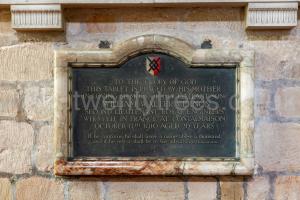
After 11th October 1916. Memorial to Second Lieutenant William Walter Vernon [deceased] placed by his mother Louisa Frost [aged 55] at All Saints Church, Sudbury [Map].
Second Lieutenant William Walter Vernon: On 22nd April 1890 he was born to William Frederick Cuthbert Vernon and Louisa Frost at St Louis, MIssouri. On 11th October 1916 Second Lieutenant William Walter Vernon was killed in action at Contalmaison whilst serving with the Royal Engineers 90th Field Coy. He was buried at Contalmaison Chateau Cemetery.
Louisa Frost: Around 1861 she was born to Brigadier-General Daniel Martin Frost and Lily Graham. Before 22nd April 1890 William Frederick Cuthbert Vernon and she were married. On 12th March 1940 she died.
On 11th October 1945 Louise Emily Harford 9th Duchess Beaufort [aged 81] died.
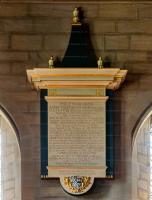
On 11th October 1957 Philip Wilbraham Baker Wilbraham 6th Baronet [aged 82] died. Memorial at All Saints Church, Old Rode. His son Randle [aged 51] succeeded 7th Baronet Wilbraham of Loventor in Totnes in Devon. Betty Ann Torrens Lady Wilbraham [aged 50] by marriage Lady Wilbraham of Loventor in Totnes in Devon.
Philip Wilbraham Baker Wilbraham 6th Baronet: On 17th September 1875 he was born to George Barrington Baker Wilbraham 5th Baronet and Katharine Frances Wilbraham Lady Wilbraham. On 8th August 1901 Philip Wilbraham Baker Wilbraham 6th Baronet and Joyce Christabel Kennaway Lady Wilbraham were married.
Randle John Baker Wilbraham 7th Baronet: On 31st March 1906 he was born to Philip Wilbraham Baker Wilbraham 6th Baronet and Joyce Christabel Kennaway Lady Wilbraham. On 26th February 1930 Randle John Baker Wilbraham 7th Baronet and Betty Ann Torrens Lady Wilbraham were married.
Betty Ann Torrens Lady Wilbraham: On 12th December 1906 she was born to William Matt Torrens of Hayes in Kent.
On 11th October 1988 Hugh Algernon Percy 10th Duke Northumberland [aged 74] died. His son Henry [aged 35] succeeded 11th Duke Northumberland, 8th Earl Beverley, 10th Baron Percy, 14th Baronet Smithson of Stanwick in Yorkshire.
Source University of Bristol
Understanding Avebury
11 October 2007
A survey conducted for the Arts and Humanities Research Council by PricewaterhouseCoopers has shown the real economic impact of archaeological research undertaken by a Bristol academic.
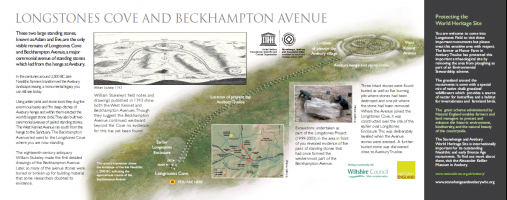
The AHRC-funded Longstones Project has shed important new light upon the remarkable group of structures at Avebury. It revealed wholly new prehistoric monuments, such as the Longstones enclosure, and confirmed the existence of others long thought lost such as the Beckhampton Avenue, a curving 1.5 kilometre strip of paired standing stones which runs broadly south west from Avebury towards the Longstones [Map] at Beckhampton. Although the stones are now gone, excavations in 2000 revealed the parallel rows of holes that held them. A 120 metre section of the avenue was uncovered, indicating that it consisted of a double row of stones placed at 15 metre intervals.
These discoveries alone served to effectively double the area known to be covered by the monument complex. The research also enhanced understanding of the chronology of monument building from the erection of the individual stones that make up the Avebury circles (the largest stone circle in Europe) to the group of monuments that collectively make this landscape so extraordinary.
The results of the project have already informed a significant new published history of the site: Avebury by Mark Gillings and Joshua Pollard, published by Duckworth, 2004.
Detailed results of the AHRC-funded work are to be published as a monograph entitled Landscape of the Megaliths (Oxbow Books) in Spring 2008.
The project was awarded £149,362 under the AHRC Research Grants Scheme (2000-2004). This funding supported the majority of the research activity and facilitated substantial excavation, survey and the provision of equipment and other research costs for the project.
The Longstones Project has not only added to our academic understanding of the monument complex. A survey conducted by PricewaterhouseCoopers estimates that research projects conducted at Avebury collectively could have generated an additional £13 million of visitor expenditure in the period 1986-2006. Details are available on the AHRC website
New sign at the Longstones:
On 11th October 1492 Charles Valois was born to Charles VIII King France [aged 22] and Anne of Brittany Queen Consort France [aged 15]. Coefficient of inbreeding 2.27%. He died aged three in 1495.
Henrici Quinti, Angliæ Regis, Gesta, is a first-hand account of the Agincourt Campaign, and subsequent events to his death in 1422. The author of the first part was a Chaplain in King Henry's retinue who was present from King Henry's departure at Southampton in 1415, at the siege of Harfleur, the battle of Agincourt, and the celebrations on King Henry's return to London. The second part, by another writer, relates the events that took place including the negotiations at Troye, Henry's marriage and his death in 1422.
Available at Amazon in eBook and Paperback format.
On 11th October 1584 John Lennard was born to Samson Lennard Baron Dacre Gilsland [aged 40] and Margaret Fiennes 11th Baroness Dacre of Gilsland [aged 43].
On 11th October 1643 Joseph Seymour was born to Edward Seymour 2nd Baronet [aged 63] and Dorothy Killigrew Baroness Seymour. He married his half fourth cousin once removed Bridget Anderson.
On 11th October 1651 Frederick Oldenburg was born to Frederick III King of Denmark [aged 42] and Sophie Amalie Hanover Queen Consort Denmark [aged 23]. He died aged less than one years old.
On 11th October 1653 John Stansfield Evelyn was born to John Evelyn [aged 32] and Mary Browne [aged 18]. He died aged less than one years old.
On 11th October 1663 Dorothea Louise Oldenburg was born to Ernest Günther Oldenburg I Duke Schleswig Holstein Sonderburg Augustenburg [aged 53] and Auguste Oldenburg Duchess Schleswig Holstein Sonderburg Augustenburg [aged 30]. Coefficient of inbreeding 6.27%.
On 11th October 1675 Maria Josepha Clementina Habsburg Spain was born to Leopold Habsburg Spain I Holy Roman Emperor [aged 35] and Claudia Felicitas of Holy Roman Empress [aged 22]. On 11th July 1676 Maria Josepha Clementina Habsburg Spain died. Coefficient of inbreeding 5.35%.
On 11th October 1693 John Hobart 1st Earl Buckinghamshire was born to Henry Hobart 4th Baronet [aged 36] and Elizabeth Maynard Lady Hobart. He married (1) 1717 Judith Britiffe and had issue (2) 10th February 1728 Elizabeth Bristow Countess Buckinghamshire and had issue.
On 11th October 1725 Rebecca Alleyne Viscountess Folkestone was born to John Alleyne [aged 29]. She married 5th September 1751 William Pleydell-Bouverie 1st Earl Radnor, son of Jacob Bouverie 1st Viscount Folkestone and Mary Clarke, and had issue.
On 11th October 1733 Egerton Leigh 1st Baronet was born.

On 11th October 1740 George Byng 4th Viscount Torrington was born to George Byng 3rd Viscount Torrington [aged 39]. He married 20th July 1765 Lucy Boyle Viscountess Torrington, daughter of John Boyle 5th Earl Cork, and had issue.
On 11th October 1748 Charles Molyneux 1st Earl Sefton was born to Thomas Molyneux and Maria Levey. He married 27th November 1768 his fourth cousin twice removed Isabella Stanhope Countess Sefton, daughter of William Stanhope 2nd Earl of Harrington and Caroline Fitzroy Countess Harrington, and had issue.

Anne Boleyn. Her Life as told by Lancelot de Carle's 1536 Letter.
In 1536, two weeks after the execution of Anne Boleyn, her brother George and four others, Lancelot du Carle, wrote an extraordinary letter that described Anne's life, and her trial and execution, to which he was a witness. This book presents a new translation of that letter, with additional material from other contemporary sources such as Letters, Hall's and Wriothesley's Chronicles, the pamphlets of Wynkyn the Worde, the Memorial of George Constantyne, the Portuguese Letter and the Baga de Secrets, all of which are provided in Appendices.
Available at Amazon in eBook and Paperback format.
On 11th October 1748 Edward Crofton 2nd Baronet was born to Marcus Lowther-Crofton 1st Baronet and Catherine Crofton. He married before 23rd October 1778 Anne Croker 1st Baroness Crofton and had issue.
On 11th October 1753 Prince Frederick Oldenburg was born to Frederick V King of Denmark and Norway [aged 30] and Juliana Maria Welf Queen Consort Denmark and Norway [aged 24] at Christiansborg Castle. He married 21st October 1774 his fourth cousin once removed Duchess Sophia Frederica of Mecklenburg-Schwerin and had issue.
On 11th October 1761 Charlotte Maria Waldegrave was born to James Waldegrave 2nd Earl Waldegrave [aged 46] and Maria Walpole Duchess Gloucester and Edinburgh [aged 25]. She a great x 2 granddaughter of King James II of England Scotland and Ireland. She married 16th November 1784 her fourth cousin once removed George Henry Fitzroy 4th Duke Grafton, son of Augustus Henry Fitzroy 3rd Duke Grafton and Anne Liddell Duchess Grafton, and had issue.
On 11th October 1767 Mary York was born to Bishop James Yorke [aged 37] and Mary Maddox.
On 11th October 1784 Mary Laetitia Eyre Countess Manvers was born to Anthony Hardoplh Eyre [aged 27] and Francisca Alicia Wilbraham-Bootle. She married 1804 Charles Herbert Pierrepont 2nd Earl Manvers, son of Charles Medows aka Pierrepont 1st Earl Manvers and Anne Mills Countess Manvers, and had issue.
On 11th October 1794 William Jervis was born to Edward Jervis Ricketts aka Jervis 2nd Viscount St Vincent [aged 27] and Mary Cassandra Twisleton [aged 20].
On 11th October 1799 Reverend Augustus Philip Clayton was born to William Clayton 4th Baronet [aged 37] and Mary East Lady Clayton [aged 34]. He married 4th September 1828 Georgiana Elizabeth Talbot and had issue.
On 11th October 1819 Francis John Robert Child-Villiers was born to George Child-Villiers 5th Earl Jersey [aged 46] and Sarah Sophia Fane Countess Jersey [aged 34].
On 11th October 1827 Georgina Sophia Pakenham Marchioness Exeter was born to Thomas Pakenham 2nd Earl Longford [aged 53] and Georgiana Lygon Countess Longford [aged 29]. She married 17th October 1848 William Alleyne Cecil 3rd Marquess Exeter, son of Brownlow Cecil 2nd Marquess Exeter and Frances Isabella Selina Poyntz Marchioness of Exeter.

On 11th October 1845 James Henry Hamilton-Gordon was born to George John Hamilton-Gordon 5th Earl Aberdeen [aged 29] and Mary Bailie-Hamilton Countess Aberdeen [aged 31] at the Ranger's House Blackheath, Greenwich.
On 11th October 1851 Douglas William Cope Gordon was born to Charles Gordon 10th Marquess Huntly [aged 59] and Maria Antoinetta Pegus Marchioness Huntly [aged 30].
The Deeds of the Dukes of Normandy
The Gesta Normannorum Ducum [The Deeds of the Dukes of Normandy] is a landmark medieval chronicle tracing the rise and fall of the Norman dynasty from its early roots through the pivotal events surrounding the Norman Conquest of England. Originally penned in Latin by the monk William of Jumièges shortly before 1060 and later expanded at the behest of William the Conqueror, the work chronicles the deeds, politics, battles, and leadership of the Norman dukes, especially William’s own claim to the English throne. The narrative combines earlier historical sources with firsthand information and oral testimony to present an authoritative account of Normandy’s transformation from a Viking settlement into one of medieval Europe’s most powerful realms. William’s history emphasizes the legitimacy, military prowess, and governance of the Norman line, framing their expansion, including the conquest of England, as both divinely sanctioned and noble in purpose. Later chroniclers such as Orderic Vitalis and Robert of Torigni continued the history, extending the coverage into the 12th century, providing broader context on ducal rule and its impact. Today this classic work remains a foundational source for understanding Norman identity, medieval statesmanship, and the historical forces that reshaped England and Western Europe between 800AD and 1100AD.
Available at Amazon in eBook and Paperback format.
On 11th October 1856 Elizabeth Harriet Grosvenor Marchioness Ormonde was born to Hugh Lupus Grosvenor 1st Duke Westminster [aged 30] and Constance Leveson-Gower Duchess Westminster [aged 22]. Coefficient of inbreeding 7.06%. She married 2nd February 1876 James Butler 3rd Marquess Ormonde, son of John Butler 2nd Marquess Ormonde and Frances Paget Marchioness Ormonde, and had issue.
On 11th October 1871 Rachel Gough-Calthorpe Lady Anstruther-Gough-Calthorpe was born to Augustus Gough-Calthorpe 6th Baron Calthorpe [aged 41] and Maud Augusta Louisa Duncombe [aged 21]. She married 11th October 1898 her second cousin once removed Fitzroy Anstruther-Gough-Calthorpe 1st Baronet and had issue.
On 11th October 1872 Richard George Musgrave 12th Baronet was born to Richard Courtenay Musgrave 11th Baronet [aged 34] and Adora Frances Olga Wells Lady Musgrave and Baroness Brougham [aged 23]. He married before 1896 Eleanor Harbord Lady Musgrave, daughter of Charles Harbord 5th Baron Suffield and Cecilia Annetta Baring Baroness Suffield, and had issue.
On 11th October 1874 Adrian Verney Verney-Cave 6th Baron Braye was born to Alfred Wyatt-Edgell 5th Baron Braye [aged 25]. He married 28th August 1900 Ethel Mary Bouverie-Pusey Baroness Braye and had issue.
On 11th October 1879 Marie Louise Hanover was born to Ernest Augustus Hanover 3rd Duke Cumberland and Teviotdale [aged 34] and Thyra Glücksburg Duchess Cumberland and Teviotdale [aged 26]. She a great x 2 granddaughter of King George III of Great Britain and Ireland.
On 11th October 1886 Esme Ivo Bligh 9th Earl of Darnley was born to Ivo Bligh 8th Earl Darnley [aged 27] and Florence Bligh Countess of Darnley [aged 26]. He married (1) 25th June 1912 Daphne Rachel Mulholland and had issue (2) 11th October 1923 Nancy Ellinor Kidston Countess Darnely and had issue (3) 30th November 1940 Rosemary Potter Countess Darnley and had issue.
On 11th October 1887 Charles d'Orville Pilkington Jackson was born.
On 11th October 1892 Dudley Ryder 6th Earl of Harrowby was born to John Ryder 5th Earl of Harrowby [aged 28].
On 11th October 1895 George Cambridge 2nd Marquess Cambridge was born to Adolphus Cambridge Duke Teck [aged 27] and Margaret Evelyn Grosvenor Duchess Teck [aged 22] at Grosvenor House Park Lane. He a great x 2 grandson of King George III of Great Britain and Ireland. He married 10th April 1923 Dorothy Hastings Marchioness Cambridge and had issue.
On 11th October 1910 James Grimston 5th Earl of Verulam was born to James Grimston 4th Earl of Verulam [aged 30] and Violet Constance Maitland Brabazon Countess Verulam [aged 24].
Chronicle of a Bourgeois of Valenciennes
Récits d’un bourgeois de Valenciennes aka The Chronicle of a Bourgeois of Valenciennes is a vivid 14th-century vernacular chronicle written by an anonymous urban chronicler from Valenciennes in the County of Hainaut. It survives in a manuscript that describes local and regional history from about 1253 to 1366, blending chronology, narrative episodes, and eyewitness-style accounts of political, military, and social events in medieval France, Flanders, and the Low Countries. The work begins with a chronological framework of events affecting Valenciennes and its region under rulers such as King Philip VI of France and the shifting allegiances of local nobility. It includes accounts of conflicts, sieges, diplomatic manoeuvres, and the impact of broader struggles like the Hundred Years’ War on urban life in Hainaut. Written from the perspective of a burgher (bourgeois) rather than a monastery or royal court, the chronicle offers a rare lay viewpoint on high politics and warfare, reflecting how merchants, townspeople, and civic institutions experienced the turbulence of the 13th and 14th centuries. Its narrative style combines straightforward reporting of events with moral and civic observations, making it a valuable source for readers interested in medieval urban society, regional politics, and the lived experience of war and governance in pre-modern Europe.
Available at Amazon in eBook and Paperback format.
On 11th October 1920 John O'Brien Marsham Cockayne was born to Brien Ibrican Cokayne 1st Baron Cullen [aged 56].
On 11th October 1936 Timothy William Lycett Milner 10th Baronet was born to George Edward Mordaunt Milner 9th Baronet [aged 25].
On 11th October 1938 Clarissa Duncombe was born to Charles Duncombe 3rd Earl Feversham [aged 31] and Anne Dorothy Wood Countess Feversham [aged 28].
On 11th October 1983 Mark John Pepys 9th Earl of Cottenham was born to Kenelm Charles Pepys 8th Earl of Cottenham [aged 34].
On 11th October 1377 Peter IV King Aragon [aged 58] and Sibia Fortia Queen Consort Aragon were married. She by marriage Queen Consort Aragon. He the son of Alfonso IV King Aragon and Teresa Enteca Queen Consort Aragon.
On 11th October 1607 Edward Carr 1st Baronet [aged 64] and Anne Dyer Lady Carr were married.
On 11th October 1637 William Howard 1st Viscount Stafford [aged 22] and Mary Stafford Countess Stafford [aged 17] were married. He the son of Thomas Howard 14th or 21st Earl of Arundel 4th Earl of Surrey 1st Earl Norfolk [aged 52] and Alethea Talbot Countess Arundel, Surrey and Norfolk [aged 52]. They were half fourth cousin once removed.
On 11th October 1731 John Russell 4th Duke Bedford [aged 21] and Diana Spencer Duchess Bedford [aged 21] were married. She the daughter of Charles Spencer 3rd Earl of Sunderland and Anne Churchill Countess Sunderland. He the son of Wriothesley Russell 2nd Duke Bedford and Elizabeth Howland Duchess Bedford. They were third cousins.
On 11th October 1737 Thomas Drury 1st Baronet [aged 24] and Martha Tyrrell Lady Drury [aged 20] were married at Chapel, Somerset House.


On 11th October 1749 William Stourton 16th Baron Stourton [aged 45] and Winifrede Howard Baroness Stourton [aged 23] were married. The difference in their ages was 22 years. They were fourth cousins.
The True Chronicles of Jean le Bel Volume 1 Chapters 1-60 1307-1342
The True Chronicles of Jean le Bel offer one of the most vivid and immediate accounts of 14th-century Europe, written by a knight who lived through the events he describes, and experienced some of them first hand. Covering the early decades of the Hundred Years’ War, this remarkable chronicle follows the campaigns of Edward III of England, the politics of France and the Low Countries, and the shifting alliances that shaped medieval warfare. Unlike later historians, Jean le Bel writes with a strong sense of eyewitness authenticity, drawing on personal experience and the testimony of fellow soldiers. His narrative captures not only battles and sieges, but also the realities of military life, diplomacy, and the ideals of chivalry that governed noble society. A key source for Jean Froissart, Le Bel’s chronicle stands on its own as a compelling and insightful work, at once historical record and literary achievement. This translation builds on the 1905 edition published in French by Jules Viard, adding extensive translations from other sources Rymer's Fœdera, the Chronicles of Adam Murimuth, William Nangis, Walter of Guisborough, a Bourgeois of Valenciennes, Geoffrey le Baker of Swinbroke and Richard Lescot to enrich the original text and Viard's notes.
Available at Amazon in eBook and Paperback format.
On 11th October 1836 Richard White 2nd Earl Bantry [aged 35] and Mary O'Brien Countess Bantry were married at St George's Church, Hanover Square. She the daughter of William O'Brien 2nd Marquess Thomond [aged 71] and Rebecca Trotter Marchioness Thomond [aged 61]. He the son of Richard White 1st Earl Bantry [aged 69] and Margaret Anne Hare Countess Bantry.
On 11th October 1842 George Samuel Brooke-Pechell 5th Baronet [aged 23] and May Robertson Bremner were married at Darwhar, India.
On 11th October 1870 William John Pepys 3rd Earl of Cottenham [aged 45] and Theodesia Selina Dallas Countess Cottenham [aged 25] were married at St Paul's Church, Knightsbridge. She by marriage Countess of Cottenham. He the son of Charles Christopher Pepys 1st Earl of Cottenham and Charlotte Maria Wingfield.
On 11th October 1871 Richard Henry Fitzroy Somerset 2nd Baron Raglan [aged 54] and Mary Blanche Farquhar Baroness Raglan [aged 27] were married. She by marriage Baroness Raglan. The difference in their ages was 27 years. They were first cousin once removed.
On 11th October 1893 Henry John Cockayne-Cust [aged 32] and Emmeline "Nina" Welby-Gregory [aged 26] were married.
On 11th October 1898 Fitzroy Anstruther-Gough-Calthorpe 1st Baronet [aged 26] and Rachel Gough-Calthorpe Lady Anstruther-Gough-Calthorpe [aged 27] were married. They were second cousin once removed.
On 11th October 1899 Gerald Wellesley Liddell 6th Baron Ravensworth [aged 30] and Isolda Blanche Prideaux-Brune Baroness Ravensworth [aged 34] were married.
On 11th October 1911 Bishop John William Wand [aged 26] and Amy Agnes Wiggins [aged 28] were married.
On 11th October 1920 Hubert William Ponsonby 5th Baron de Mauley [aged 42] and Elgiva Margaret Dundas Baroness de Mauley [aged 22] were married. They were fourth cousins.
On 11th October 1923 Esme Ivo Bligh 9th Earl of Darnley [aged 37] and Nancy Ellinor Kidston Countess Darnely [aged 22] were married. She by marriage Countess Darnley. He the son of Ivo Bligh 8th Earl Darnley [aged 64] and Florence Bligh Countess of Darnley [aged 63].
On 11th October 1928 Edward Knollys 2nd Viscount Knollys [aged 33] and Margaret Coats Viscountess Knollys [aged 27] were married. She by marriage Viscountess Knollys of Caversham in Oxfordshire.
On 11th October 965 Bruno Saxon Ottonian Archbishop Cologne [aged 40] died.
Anne Boleyn. Her Life as told by Lancelot de Carle's 1536 Letter.
In 1536, two weeks after the execution of Anne Boleyn, her brother George and four others, Lancelot du Carle, wrote an extraordinary letter that described Anne's life, and her trial and execution, to which he was a witness. This book presents a new translation of that letter, with additional material from other contemporary sources such as Letters, Hall's and Wriothesley's Chronicles, the pamphlets of Wynkyn the Worde, the Memorial of George Constantyne, the Portuguese Letter and the Baga de Secrets, all of which are provided in Appendices.
Available at Amazon in eBook and Paperback format.
On 11th October 1188 Robert "Great" Capet I Count Dreux [aged 65] died. His son Robert [aged 34] succeeded II Count Dreux.
On 11th October 1190 John Fitzrichard 6th Baron Halton [aged 46] died at Tyre. His son Roger [aged 19] succeeded 7th Baron Halton. Maud Clere Baroness Lacy Baroness Warkworth by marriage Baroness Halton.
On 11th October 1291 Roger Somery 3rd Baron Dudley [aged 36] died at Dudley Castle [Map]. His son John [aged 12] succeeded 4th Baron Dudley of Somery.
On 11th October 1307 Catherine Courtenay Countess Valois [aged 32] died.
On 11th October 1347 Louis Wittelsbach IV Holy Roman Emperor [aged 65] died. His son Stephen [aged 28] succeeded II Duke Bavaria. Elisabeth Barcelona Duchess Bavaria [aged 37] by marriage Duchess Bavaria. His son Albert [aged 11] succeeded I Duke Lower Bavaria.
On 11th October 1361 John Welles 4th Baron Welles [aged 27] died. His son John [aged 9] succeeded 5th Baron Welles. Eleanor Mowbray Countess Rockingham by marriage Countess Rockingham.
On 11th October 1432 Constance Blount Baroness Sutton Dudley [aged 52] died.
On 11th October 1525 Thomas West 8th Baron De La Warr 5th Baron West [aged 68] died. He was buried at St Mary's Church Broadwater. His son Thomas [aged 50] succeeded 9th Baron De La Warr, 6th Baron West. Elizabeth Bonville Baroness De La Warr and West [aged 51] by marriage Baroness De La Warr, Baroness West.
On 11th October 1613 John Petre 1st Baron Petre [aged 63] died at West Horndon, Essex and was buried in St Edmund and St Mary's Church Ingatestone, Blackmore. His son William [aged 38] succeeded 2nd Baron Petre.
On 11th October 1663 William Cholmley 2nd Baronet [aged 37] died. His son Hugh [aged 1] succeeded 3rd Baronet Cholmley of Whitby in Yorkshire.
On 11th October 1678 Peter Leicester 1st Baronet [aged 64] died. His son Robert [aged 35] succeeded 2nd Baronet Leicester of Tabley in Cheshire.
On 11th October 1685 John Tufton 2nd Baronet [aged 62] died. Baronet Tufton of The Mote in Kent extinct.
Chronicle of Geoffrey le Baker of Swinbroke
Baker was a secular clerk from Swinbroke, now Swinbrook, an Oxfordshire village two miles east of Burford. His Chronicle describes the events of the period 1303-1356: Gaveston, Bannockburn, Boroughbridge, the murder of King Edward II, the Scottish Wars, Sluys, Crécy, the Black Death, Winchelsea and Poitiers. To quote Herbert Bruce 'it possesses a vigorous and characteristic style, and its value for particular events between 1303 and 1356 has been recognised by its editor and by subsequent writers'. The book provides remarkable detail about the events it describes. Baker's text has been augmented with hundreds of notes, including extracts from other contemporary chronicles, such as the Annales Londonienses, Annales Paulini, Murimuth, Lanercost, Avesbury, Guisborough and Froissart to enrich the reader's understanding. The translation takes as its source the 'Chronicon Galfridi le Baker de Swynebroke' published in 1889, edited by Edward Maunde Thompson.
Available at Amazon in eBook and Paperback format.
On 11th October 1686 James Tuchet 3rd Earl Castlehaven [aged 69] died at Kilcash Castle, County Tipperary. His brother Mervyn succeeded 4th Earl Castlehaven, 14th Baron Audley of Heighley in Staffordshire, 11th Baron Tuchet, 4th Baron Audley of Orier in England, 2nd Baron Audley of Hely in Ireland but only for three weeks. He died on 2nd November 1686. Mary Talbot Countess Castlehaven by marriage Countess Castlehaven.
On 11th October 1694 Catherine Grey Baroness North and Grey of Rolleston [aged 63] died at sea on a voyage from Barbados.
On 11th October 1703 Roger Cave 2nd Baronet [aged 48] died. His son Thomas [aged 22] succeeded 3rd Baronet Cave of Stanford in Northamptonshire. Margaret Verney Lady Cave by marriage Lady Cave of Stanford in Northamptonshire.
On 11th October 1720 William St John 9th Baron St John [aged 34] died. His brother Rowland [aged 33] succeeded 10th Baron St John of Bletso, 7th Baronet St John of Woodford in Northamptonshire.
On 11th October 1724 Henrietta Butler Countess Grantham died.
On 11th October 1787 Richard Hoare 1st Baronet [aged 52] died. His son Richard [aged 28] succeeded 2nd Baronet Hoare of Barn Elms in Surrey.
On 11th October 1790 Edward Harley 4th Earl of Oxford and Earl Mortomer [aged 64] died at Brampton Bryan Hall without issue. His nephew Edward [aged 17] succeeded 5th Earl of Oxford and Earl Mortimer.
On 11th October 1791 William Gage 2nd Viscount Gage [aged 73] died without issue. His nephew Henry [aged 30] succeeded 3rd Viscount Gage of Castle Island in County Kerry, 3rd Baron Gage of Castlebar in County Mayo, 2nd Baron Gage of Highmeadow, 10th Baronet Gage of Firley in Sussex. Baron Gage of Firle in Sussex extinct.
On 11th October 1803 Henry Somerset 5th Duke Beaufort [aged 58] died. He was buried at St Michael and all Angels Church, Badminton. His son Henry [aged 36] succeeded 6th Duke Beaufort, 8th Marquess Worcester, 12th Earl Worcester, 14th Baron Herbert of Raglan, 6th Baron Botetort. Charlotte Sophia Leveson-Gower Duchess Beaufort [aged 32] by marriage Duchess Beaufort.
On 11th October 1804 William Robert Kemp 9th Baronet [aged 59] died. His son William [aged 12] succeeded 10th Baronet Kemp of Gissing in Norfolk.
The Deeds of the Dukes of Normandy
The Gesta Normannorum Ducum [The Deeds of the Dukes of Normandy] is a landmark medieval chronicle tracing the rise and fall of the Norman dynasty from its early roots through the pivotal events surrounding the Norman Conquest of England. Originally penned in Latin by the monk William of Jumièges shortly before 1060 and later expanded at the behest of William the Conqueror, the work chronicles the deeds, politics, battles, and leadership of the Norman dukes, especially William’s own claim to the English throne. The narrative combines earlier historical sources with firsthand information and oral testimony to present an authoritative account of Normandy’s transformation from a Viking settlement into one of medieval Europe’s most powerful realms. William’s history emphasizes the legitimacy, military prowess, and governance of the Norman line, framing their expansion, including the conquest of England, as both divinely sanctioned and noble in purpose. Later chroniclers such as Orderic Vitalis and Robert of Torigni continued the history, extending the coverage into the 12th century, providing broader context on ducal rule and its impact. Today this classic work remains a foundational source for understanding Norman identity, medieval statesmanship, and the historical forces that reshaped England and Western Europe between 800AD and 1100AD.
Available at Amazon in eBook and Paperback format.
On 11th October 1816 Joseph Henry Blake 2nd Baron Wallscourt [aged 21] died. His first cousin Joseph [aged 19] succeeded 3rd Baron Wallscourt of Ardfry in County Galway.
On 11th October 1831 Amelia Stratford Viscountess Powerscourt died.
On 11th October 1843 Bishop James Bowstead [aged 42] died from a fall from a horse. Monument at Holy Trinity Church, Eccleshall [Map].
On 11th October 1847 Juliana Cooper Baroness Waterpark [aged 80] died.

On 11th October 1861 Elizabeth Denison Marchioness Conyngham [aged 92] died.
On 11th October 1896 Archbishop Edward White Benson [aged 67] died at Hawarden Castle [Map].
On 11th October 1901 Julia Louisa Bosville Baroness Middleton [aged 77] died at Settrington.
On 11th October 1905 Archibald John Stuart-Wortley [aged 56] died at Uxbridge.
On 11th October 1919 Blanche Vere Guest Countess Bessborough [aged 72] died.
On 11th October 1920 Michael Culme-Seymour 3rd Baronet [aged 84] died. His son Michael [aged 53] succeeded 4th Baronet Seymour of High Mount in Cork and Friery Park in Devon.
This is a translation of the 'Memoires of Jacques du Clercq', published in 1823 in two volumes, edited by Frederic, Baron de Reissenberg. In his introduction Reissenberg writes: 'Jacques du Clercq tells us that he was born in 1424, and that he was a licentiate in law and a counsellor to Philip the Good, Duke of Burgundy, in the castellany of Douai, Lille, and Orchies. It appears that he established his residence at Arras. In 1446, he married the daughter of Baldwin de la Lacherie, a gentleman who lived in Lille. We read in the fifth book of his Memoirs that his father, also named Jacques du Clercq, had married a lady of the Le Camelin family, from Compiègne. His ancestors, always attached to the counts of Flanders, had constantly served them, whether in their councils or in their armies.' The Memoires cover a period of nineteen years beginning in in 1448, ending in in 1467. It appears that the author had intended to extend the Memoirs beyond that date; no doubt illness or death prevented him from carrying out this plan. As Reissenberg writes the 'merit of this work lies in the simplicity of its narrative, in its tone of good faith, and in a certain air of frankness which naturally wins the reader’s confidence.' Du Clercq ranges from events of national and international importance, including events of the Wars of the Roses in England, to simple, everyday local events such as marriages, robberies, murders, trials and deaths, including that of his own father in Book 5; one of his last entries.
Available at Amazon in eBook and Paperback format.

On 11th October 1929 Reginald Brabazon 12th Earl of Meath [aged 88] died. He was buried at Delgany Church, County Wicklow. His son Reginald [aged 59] succeeded 13th Earl Meath, 14th Baron Ardee, 4th Baron Chaworth of Eaton Hall in Herefordshire.

On 11th October 1932 Cora Smith Countess Strafford [aged 72] died.
On 11th October 1945 Louise Emily Harford 9th Duchess Beaufort [aged 81] died.
On 11th October 1946 Ralph Francis Forward Howard 7th Earl Wicklow [aged 68] died.
On 11th October 1949 Mildred Rose Evelyn Eveleigh-de-Moleyns Baroness St Audries died.
On 11th October 1954 Robert Shirley 12th Earl Ferrers [aged 60] died. His son Robert [aged 25] succeeded 13th Earl Ferrers, 19th Baronet Shirley of Staunton Harold in Leicestershire.
On 11th October 1957 Philip Wilbraham Baker Wilbraham 6th Baronet [aged 82] died. Memorial at All Saints Church, Old Rode. His son Randle [aged 51] succeeded 7th Baronet Wilbraham of Loventor in Totnes in Devon. Betty Ann Torrens Lady Wilbraham [aged 50] by marriage Lady Wilbraham of Loventor in Totnes in Devon.
Philip Wilbraham Baker Wilbraham 6th Baronet: On 17th September 1875 he was born to George Barrington Baker Wilbraham 5th Baronet and Katharine Frances Wilbraham Lady Wilbraham. On 8th August 1901 Philip Wilbraham Baker Wilbraham 6th Baronet and Joyce Christabel Kennaway Lady Wilbraham were married.
Randle John Baker Wilbraham 7th Baronet: On 31st March 1906 he was born to Philip Wilbraham Baker Wilbraham 6th Baronet and Joyce Christabel Kennaway Lady Wilbraham. On 26th February 1930 Randle John Baker Wilbraham 7th Baronet and Betty Ann Torrens Lady Wilbraham were married.
Betty Ann Torrens Lady Wilbraham: On 12th December 1906 she was born to William Matt Torrens of Hayes in Kent.
On 11th October 1975 Philip Harvey du Cros 2nd Baronet [aged 77] died. His son Claude [aged 52] succeeded 3rd Baronet Du Cros of Canons in Middlesex.
On 11th October 1988 Hugh Algernon Percy 10th Duke Northumberland [aged 74] died. His son Henry [aged 35] succeeded 11th Duke Northumberland, 8th Earl Beverley, 10th Baron Percy, 14th Baronet Smithson of Stanwick in Yorkshire.
On 11th October 2004 Peter Francis Walter Kerr 12th Marquess Lothian [aged 82] died. His son Michael [aged 59] succeeded 13th Marquess Lothian, 14th Earl Lothian, 12th Earl Lothian.