

23 Aug is in August.
30BC Death of Antony and Cleopatra
1305 Capture and Execution of William Wallace
1346 Crossing of the Somme at Blanchetaque
1554 Creation of Garter Knights
1628 Murder of the Duke of Buckingham
On 23rd August 30BC Marcus Antonius aka Antyllus 47BC 30BC [aged 17] was beheaded following the suicide of his father Mark Antony 83BC 30BC [deceased] and stepmother Cleopatra VII Philopator 69BC 30BC [deceased].
On 23rd August 963 Richard "Good" Normandy II Duke Normandy was born to BB/History/g1/Norman-Paternal-Family-TreeRichard "Fearless" Normandy I Duke Normandy [aged 30] and Gunnora Countess Ponthieu. He married (1) 1000 BB/History/l2/Vannes-Paternal-Family-TreeJudith Penthièvre Duchess Normandy, daughter of BB/History/l2/Vannes-Paternal-Family-TreeConan "Crooked" Penthièvre III Duke Brittany and BB/History/o6/Ingelger-Paternal-Family-TreeErmengarde Gerberga Ingelger Duchess Brittany, and had issue (2) before 1019 Poppa Envermeu Unknown Duchess Normandy and had issue.
On 23rd August 1106 BB/History/h6/Billung-Paternal-Family-TreeMagnus Billung Duke Saxony [aged 61] died.
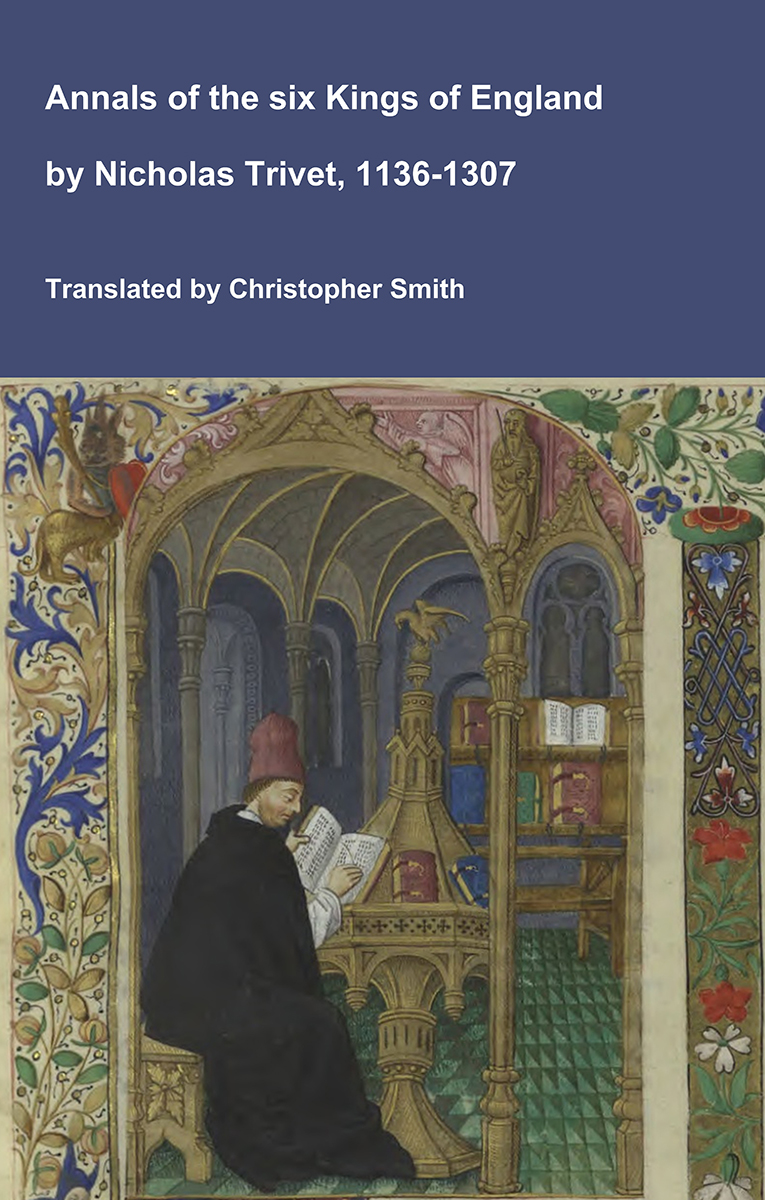 Annals of Six Kings of England by Nicholas Trivet. Master Peter Lombard, who compiled the book of the Sentences and wrote glosses on the Psalter and the Epistles of Paul, was made bishop of Paris in this year. On the vigil of Saint Bartholomew [23rd August 1159] Pope Adrian died, after having sat four years, eight months, and nine days; the see remained vacant for nine days, and he was buried in the Vatican near the body of Pope Eugenius. He had built a castle near the lake of Saint Christina and had acquired many possessions from the counts. On the Kalends [1st] of September Roland the chancellor, cardinal priest of the title of Saint Mark, a Tuscan by nation and a native of Siena, was elected pope and was called Alexander III. Octavian was also elected by some of the cardinals, cardinal priest of the title of Saint Mary in Cosmedin, who had himself called Victor III and seized the papacy through the power of his relatives, thus raising a schism.
Magister Petrus Lombardus, qui Sententiarum librum compilavit, et Psalterium ac Epistolas Pauli glossavit, hoc anno factus est episcopus Parisiensis. In vigilia S. Bartholomæi obiit Adrianus papa, cum sedisset annis quatuor, mensibus octo et diebus novem, et vacavit sedes diebus novem; sepultusque est in Vaticano juxta corpus Eugenii papæ. Hic castrum contra lacum sanctæ Cristinæ, et multas possessiones a comitibus comparavit. Cal. Septembris Rolandus cancellarius, tituli sancti Marci presbyter cardinalis, natione Tuscus, patria Senensis, in papam eligitur, et vocatus est Alexander III. Electus est ab aliquibus cardinalibus Octavianus, tituli S. Mariæ in Cosmodyn presbyter cardinalis, qui se vocari fecit Victorem tertium, et potestate parentum invasit papatum, suscitavitque schisma.
Annals of Six Kings of England by Nicholas Trivet. Conrad, grandson of the former Emperor Frederick through his son Conrad, after the death of his uncle Manfred, aspiring to the kingdom of Sicily with the aid of the Germans, joined also by many Lombards and Tuscans, came as far as Rome; where, having been received with imperial ceremony, and having associated with himself Henry, brother of the King of Castile, who was senator of the city, and many Romans, he entered Apulia with a strong force against King Charles. But after a hard-fought battle [on 23rd August 1268] in the open field, Conrad, as his men turned to flight, was captured, and, together with many nobles of his blood, was beheaded by order of King Charles. Henry, brother of the King of Castile, fled from the battle to the castle of Cassino; afterwards, being surrendered to Charles, he was committed to prison.
Conradinus, nepos Frederici olim imperatoris ex filio Conrado, patruo suo Manfredo mortuo, aspirans ad regnum Siciliæ auxilio Teutonicorum, adjunctis eis quamplurimis Lumbardis et Tuscis, Romam usque pervenit: ubi cum imperiali more solemniter fuisset receptus, associato sibi senatore urbis Henrico fratre regis Castellæ, et Romanis quamplurimis, contra regem Carolum in manu forti Apuliam intravit; sed post durum campestre bellum, Conradinus cum suis terga vertentibus capitur, et cum multis de sanguine suo nobilibus, jussu regis Caroli, decollatur. Henricus autem frater regis Castellæ de prælio ad castrum fugit Cassinum; qui postea Carolo redditus carceri mancipatur.
Annals of Six Kings of England by Nicholas Trivet. Therefore on the tenth day before the Kalends of September [23rd August 1297], the king having embarked on his ships, his fleet sailing in close formation across the sea, on the sixth day before the Kalends of September [27th August 1297] landed in Flanders, and was received in a certain town near the port which is called Sluys. The sailors of Portsmouth and Yarmouth, burning with mutual hatred, having cleared the ships of those belonging to the soldiers, engaged in a fierce fight with one another, and the men of Yarmouth being overcome, twenty-five of their ships were consumed by fire. The King of England, coming to Bruges, sought the assent of the townsmen to the terms agreed between himself and the count, offering on his part and on that of the count to bear half the cost of fortifying and surrounding the town with a ditch. When the townsmen refused, he perceived that they had withdrawn from his allegiance and were inclined to surrender the town to the French, and, judging it dangerous to remain among traitors, he departed with his army and directed his march towards the town of Ghent, where, while the king was staying, a quarrel arose at the town of Damme between the townsmen and the English, who, immediately taking up arms, plundered the town, many having been slain, to the great displeasure of the king. The King of France, having heard of the arrival of the King of England in Flanders, being greatly alarmed, withdrew himself for the space of a day’s journey.
Igitur decimo calendas Septembris rex naves ingressus, indissoluta classe sulcato mari, sexto calendas Septembris applicuit in Flandriam, receptus in quadam villa juxta portum qui vocatur Exclusa. Nautæ Portuenses et Gernemuthenses mutuo flagrantes odio, evacuatis navibus ab his quæ militum erant, conserunt ad invicem gravem pugnam; succumbentibusque Gernemuthensibus de navibus eorum viginti quinque incendio consumuntur. Rex Angliæ, Brugiam veniens, assensum villanorum in conditiones, inter ipsum et comitem initas, petivit ex parte sua et comitis, medietatem expensarumofferens ad muniendam cingendamque villam fossato. Quæ cum villani renuerent, comperit eos a suo alienatos dominio, et ad reddendam villam Gallicis inclinatos; reputansque periculosum moram facere inter proditores, armato exercitu discedens, versus villam [Gandavensem dirigit iter suum; ubi dum moraretur rex, suborta est apud villam] Damonem discordia inter villanos et Anglicos, qui statim armati villam ipsam multis interfectis deprædati sunt in displicentiam magnam regis. Rex Francorum, audito adventu regis Anglorum in Flandriam, vehementer consternatus, ad unius dietæ spatium se subtraxit.
On 23rd August 1305 William Wallace was hanged, drawn and quartered at the Elms in Smithfield [Map]. His head being displayed on London Bridge [Map].
On 8th April 1956 a plaque was unveiled on the wall of St Bartholomew's Hospital near to the site of his execution the text of which reads...
To the immortal memory of Sir William Wallace Scottish patriot born at Elderslie Renfrewshire circa 1270 A.D. Who from the year 1296 fought dauntlessly in defence of his country's liberty and independence in the face of fearful odds and great hardship being eventually betrayed and captured brought to London and put to death near this spot on the 23rd August 1305.
His example heroism and devotion inspired those who came after him to win victory from defeat and his memory remains for all time a source of pride, honour and inspiration to his Countrymen.
"Dico tibi verum libertas optima rerum nunquam servili sub nexu vivito fili"
Translation: I tell you the truth, son, freedom is the best condition, never live like a slave
"Bas Agus Buaidh" aka Death and Victory, a traditional Scottish battle cry.
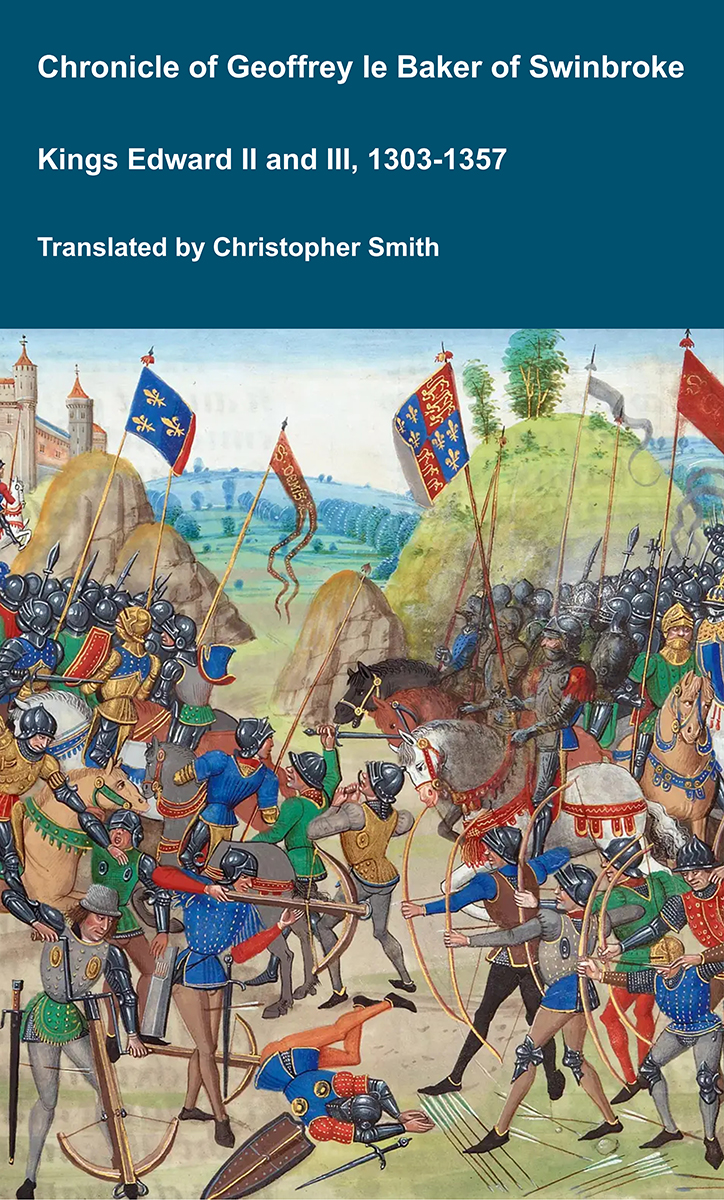 Chronicle of Geoffrey le Baker of Swinbroke. In this year [23rd August 1305], William Wallace of Wales was drawn, hanged, and beheaded1 at London, having previously committed many crimes against the English in Scotland and the surrounding regions.
Hoc anno fuit subtractus, suspensus, et decapitatus Willelmus of William Wallace. Waleys apud Londonias, qui prius contra Anglicos in Scocia et partibus finitimis multa facinora perpetravit.
Note 1. In the Annales Londonienses (printed in Chronicles of the Reigns of Edward I and Edward II, Stubbs, Rolls Series, 1882, p. 139) It is also printed in Documents illustrative of Sir William Wallace, ed. Stevenson for the Maitland Club, 1841; and Stow incorporated a translation of it in his Annals. Wallace was executed on the 23rd August 1305.
John of Fordun's Chronicle. 116. Death of William Wallace
In the year 1305, William Wallace was craftily and treacherously taken by John of Menteith [aged 30], who handed him over to the king of England [aged 66]; and he was, in London, torn limb from limb, and, as a reproach to the Scots, his limbs were hung on towers in sundry places throughout England and Scotland.
Lanercost Chronicle. [23rd August 1305] William Wallace was captured by a certain Scot, to wit, Sir John de Menteith, and was taken to London to the King, and it was adjudged that he should be drawn and hanged, beheaded, disembowelled, and dismembered, and that his entrails should be burnt; which was done. And his head was exposed upon London Bridge, his right arm on the bridge of Newcastle-upon-Tyne, his left arm at Berwick, his right foot at Perth, and his left foot at Aberdeen.
The vilest doom is fittest for thy crimes,
Justice demands that thou shouldst die three times.
Thou pillager of many a sacred shrine,
Butcher of thousands, threefold death be thine!
So shall the English from thee gain relief,
Scotland! be wise, and choose a nobler chief.
Documents Illustrative of the Life of William Wallace Chapter 28. 23rd August 1305. It is adjudged that the aforesaid William [William Wallace], for the manifest sedition which he committed against his lord the king by feloniously plotting to kill him, by carrying the banner against his liege lord in mortal battle, and by attempting the annulment and overthrow of his crown and royal dignity, shall be drawn from the palace at Westminster to the Tower of London, and from the Tower to Aldgate, and thus through the middle of the city to Smithfield (Elmes), and for the robberies, murders, and felonies which he committed in the kingdom of England and the land of Scotland, he shall be hanged there, and afterwards cut down. And because he was outlawed, and was never restored to the king's peace, he shall be beheaded and decapitated. And afterwards, for the immense vileness he committed against God and Holy Church by burning churches, vessels, and reliquaries in which the body of Christ and the bodies and relics of the saints were placed, his heart, liver, lungs, and all his internal organs, from which such perverse thoughts proceeded, shall be cast into the fire and burned. And also, because he committed the aforesaid sedition, depredations, arsons, murders, and felonies not only against his lord the king but against all the people of England and Scotland, the body of the said William shall be cut and divided into four quarters, and his head thus severed shall be set upon London Bridge in view of those passing by both by land and by water, and one quarter shall be hung on the gibbet at Newcastle upon Tyne, another quarter at Berwick, a third quarter at Stirling, and the fourth quarter at St. John's Town (Perth), as a warning and punishment to all who pass by and see them, etc.
Consideratum est quod prædictus Willelmus pro manifesta seditione quam ipsi domino regi secerat felonice machinando, in mortem ejus perpetrando, annulationem et enervationem coronæ et regiæ dignitatis suæ vexillum contra dominum suum ligium in bello mortali deferendo, detrahatur a palatio Westmonasterii ussque Turrim London, et a Turri usque Allegate, et sic per medium civitatis usque Elmes, et pro roberiis et homicidiis et feloniis, quas in regno Angliæ et terra Scotia fecit, ibidem sufsendatur et poftea devaletur. Et quia utlagatus fuit, nec postea ad pacem domini regis restitutus, decolletur et decapitetur. Et postea pro immensa vilitate, quam Deo et sacrosanctæ ecclesiæ fecit comburendo ecclesias, vasa et feretra, in quibus corpus Christi et corpora sanctorum et reliquiæ eorundem collocabantur, cor, epar, et pulmo et omnia interiora ipsius Willelmi, a quibus tam perversæ cogitationes processerunt, in ignem mittantur et comburentur. Et etiam, quia non solum ipsi domino regi, sed toti plebi Angliæ et Scotiæ, prædicta seditionem, deprædationes, incendia, et homicidia et felonias fecerat, corpus illius Willelmi in quatuor quarteria scindatur et dividatur, et caput sic abscissum assedatur super pontem London, in conspectu tam per terram quam per aquam transeuntium, et unum quarterium suspendatur in gibetto apud Novum Castrum super Tynam, aliud quarterium apud Berewyk, tertium quarterium apud Stryvelyn, et quartum quarterium apud Villam Sancti Johannis, in metum et castigationem omnium prætereuntium et ea conspicientium, & c.
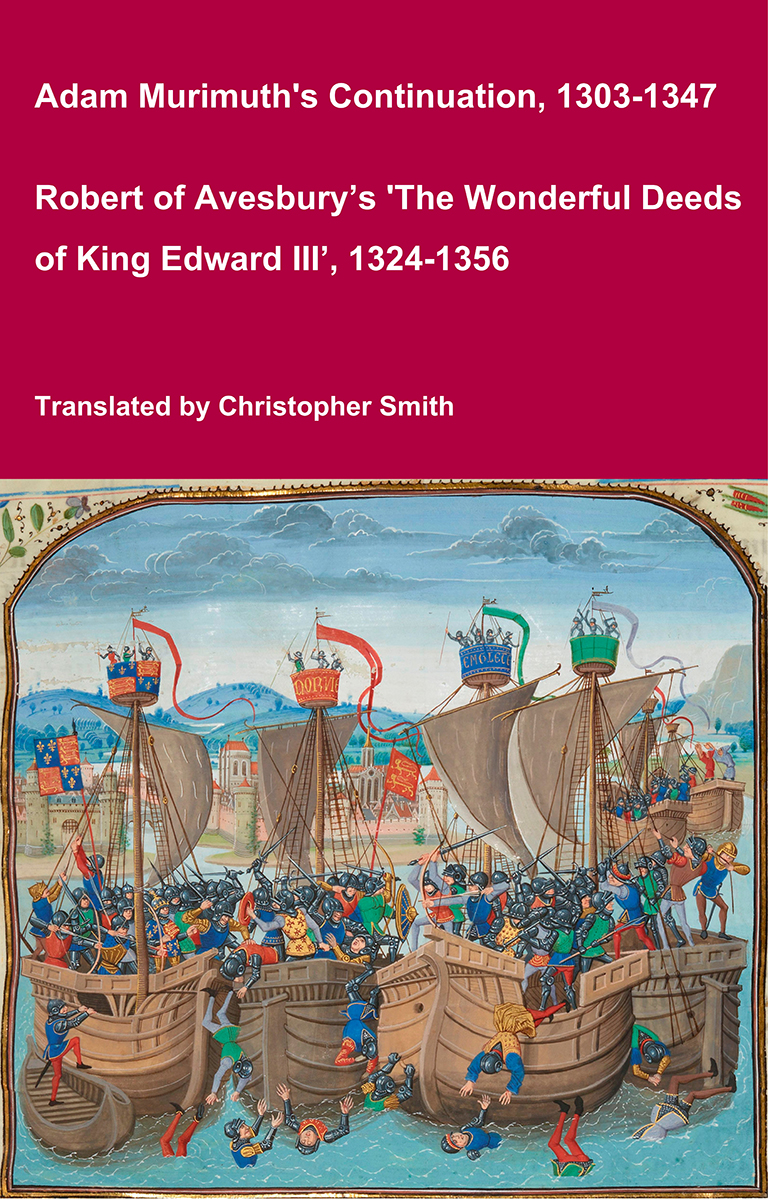 Adam Murimuth Continuation. In this year William Wallace was drawn, hanged, and beheaded1 at London, who had previously committed many acts of violence against the English in Scotland and the neighbouring regions.
Hoc anno fuit tractus suspensus, et decapitatus Wlillelmus Waleys apud Londonias, qui prius contra Anglicos in Scocia et partibus finitimis multa facinora perpetravit.
Note 1. William Wallace was executed on 23rd August 1305. Langtoft's Chronicle:
Of William Wallace, the master of thieves;
Sir John de Meneteith followed him at his heels,
Took him in hiding by the side of his concubine;
Carried him to London in shackles and bonds,
Where he was judged on the following conditions:
In the first place to the gallows he was drawn for treasons,
Hanged for robberies and slaughters;
And because he had annihilated by burnings,
Towns and churches and monasteries,
He is taken down from the gallows, his belly opened,
His heart and his bowels burnt to cinders,
And his head cut off for such treasons as follow:
Because he had by his assumptions of authority
Maintained the war, given protections,
Seized into his subjection the lordship
Of another's kingdom by his usurpations.
His body was cut into four parts;
Each one hangs by itself, in memory of his name,
In place of his banner these are his gonfanons [i.e. pennants].
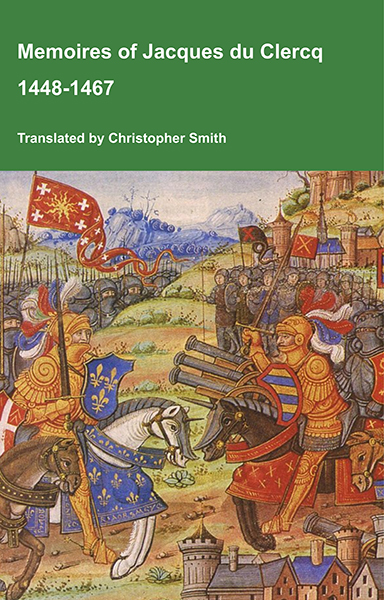
This is a translation of the 'Memoires of Jacques du Clercq', published in 1823 in two volumes, edited by Frederic, Baron de Reissenberg. In his introduction Reissenberg writes: 'Jacques du Clercq tells us that he was born in 1424, and that he was a licentiate in law and a counsellor to Philip the Good, Duke of Burgundy, in the castellany of Douai, Lille, and Orchies. It appears that he established his residence at Arras. In 1446, he married the daughter of Baldwin de la Lacherie, a gentleman who lived in Lille. We read in the fifth book of his Memoirs that his father, also named Jacques du Clercq, had married a lady of the Le Camelin family, from Compiègne. His ancestors, always attached to the counts of Flanders, had constantly served them, whether in their councils or in their armies.' The Memoires cover a period of nineteen years beginning in in 1448, ending in in 1467. It appears that the author had intended to extend the Memoirs beyond that date; no doubt illness or death prevented him from carrying out this plan. As Reissenberg writes the 'merit of this work lies in the simplicity of its narrative, in its tone of good faith, and in a certain air of frankness which naturally wins the reader’s confidence.' Du Clercq ranges from events of national and international importance, including events of the Wars of the Roses in England, to simple, everyday local events such as marriages, robberies, murders, trials and deaths, including that of his own father in Book 5; one of his last entries.
Available at Amazon in eBook and Paperback format.
Langtoft's Chronicle. [23rd August 1305] We have heard news, among companions,
Of William Wallace, the master of thieves;
Sir John de Meneteith followed him at his heels,
Took him in hiding by the side of his concubine;
Carried him to London in shackles and bonds,
Where he was judged on the following conditions:
In the first place to the gallows he was drawn for treasons,
Hanged for robberies and slaughters;
And because he had annihilated by burnings,
Towns and churches and monasteries,
He is taken down from the gallows, his belly opened,
His heart and his bowels burnt to cinders,
And his head cut off for such treasons as follow:
Because he had by his assumptions of authority
Maintained the war, given protections,
Seized into his subjection the lordship
Of another's kingdom by his usurpations.
His body was cut into four parts;
Each one hangs by itself, in memory of his name,
In place of his banner these are his gonfanons.1
Note 1. 'gonfanons' i.e. 'pennants'. The poem is suggesting his body parts are his banners.
 Chronicle of Jean le Bel Volume 1. Soon after King Philip VI of France was crowned, he summoned his princes, his barons, and all his men-at-arms, and with all his power went to encamp in the valley of Cassel to make war upon the Flemings, especially those of Bruges, Ypres, and the Franc of Bruges, who would not obey their lord the Count of Flanders, [but had driven him out so that he could no longer remain anywhere in his own land]1 except at Ghent, and even there not all were of one accord with him. The king defeated in battle sixteen thousand men who were stationed in garrison upon the Mount of Cassel, at the command and pay of their towns, to guard the frontiers there. And I shall tell you how these Flemings once sought to overthrow the king and all his host. They departed from Cassel at suppertime, very quietly and without any noise, and had arranged themselves into three divisions. One went straight toward the king's tents and very nearly took him and all his people at supper. The second division went directly against the noble John of Bohemia, and found him almost unprepared. The third went against the noble Count of Hainaut and nearly surprised him and Sir John his brother as well, so that their men were armed only with great difficulty. They came so secretly that all the lords might have been slain, had not God aided them as by a miracle. But by the grace and will of God, each lord defeated the division that attacked him, all at one time and in one moment, so completely that of all those sixteen thousand Flemings not one thousand remained. None of those fifteen thousand Flemings who were slain retreated; not a single one withdrew, and all were struck down in three great heaps without leaving the ground where each division had first engaged. This occurred in the year of grace 1328, in the month of August2.
Assez tost aprez que cil roy Philippe fut couronné, il semonni ses princes, ses barons et toutes ses gens d'armes, et ala à tout son pouoir gesir et logier ou val de Cassel pour guerrier les Flamens, mesmement ceulx de Bruges, ceulx d'Ypre et ceulx de Franck, qui ne vouloient obeir à leur seigneur le conte de Flandres [mais l'avoient decaciet et ne pooit adonc nulle part demorer en son pays], fors que à Gand, qui n'estoient pas de son accord trestous, et desconfit bien par bataille XVIM hommes, lesquelz se tenoient en garnison sur le mont de Cassel, au commandement et aux gaages de leurs villes pour garder les frontieres là endroit. Et vous diray comment ces Flamens vouldrent ung jour desconfire le roy et tout son ost. Si se partirent de Cassel sur heure de souper! tout paisiblement, sans point de noise, et avoient entre eulx ordonné trois batailles, desquelles l'une ala droit aux tentes du roy, et à paine qu'ilz ne prirent le roy à souper et toutes ses gens; l'aultre bataille s'en ala droit au gentil roy de Boheme, et le trouverrent prez que en ce point; et la lierce s'en ala au gentil conte de Haynau, et l'eurent à painne si souspris et messire Jehan son frere aussy, que à grand paine furent leurs gens armez; et vinrent si couverlement que tous les seiyneurs eussent esté mors, se Dieu ne leur eust aydé comme par miracle. Maiz, par la grace et voulenté de Dieu, chascun desconfit sa bataille, et tous à une heure et ung point, si entierement que de tous ces XVIM Flamens Wen demoura mil, Et si ne sceut nul de ces seigneurs le ung nouvelles de l'aultre jusques à ce que tout fut fait, ne oncques des XVM Flamens qui mors y demourerent, n'en recula ung tout seul, et tous furent abatus en rois monchcaulx sans issir de la place où chascune bataille commencha. Ce fut l'an de grace M CCC et XXVIII ou moys d'aoust.
Note 1. The words placed within brackets are missing in the manuscript of Jean le Bel; we have restored them according to the text of Froissart.
1. Les mots placés entre crochets manquent dans le ms. de Jean le Bel, nous les avons rétablis d'après le texte de Froissart.
Note 2. The Battle of Cassel took place on the eve of Saint Bartholomew's Day, 23rd August 1328, and not on 24th August, Saint Bartholomew's Day itself, as Froissart states. See Bourgeois de Valenciennes: 'And when Tuesday came, the night [eve] of Saint Bartholomew in August 1328, the Flemings who were assembled upon Mount Cassel, from Bergues and the neighbouring towns, descended from the mountain, without any captain, in three divisions, intending to make straight for the king’s tents. Such was their purpose. Silently and quietly they began to pass and to enter the camp, without speaking, making noise, or committing any disorder, boldly and subtly, until they reached the place where wine and food were being sold. Then the said sellers of provisions perceived that these were Flemings coming thick and close together, with their goedendags and pikes upon their shoulders. At once the camp began to stir on all sides and to cry, "To arms!" Then the Flemings stood firm and began the battle fiercely and bitterly, striking, killing, and cutting down with axes and goedendags. The men of Hainaut and of Bar defended themselves, the French came to their aid, and knights and men-at-arms issued from their tents and ran boldly upon the Flemings. Then all manner of men, French and others, rushed upon them. There was such a great battle and such heavy slaughter in many places, and such a great uproar, that it was a marvel. The Flemings, who were without a captain, began to lose their order and to gather themselves as best they could; but it availed them little. For as they sought to withdraw back toward the mountain, the battle line of Count William of Hainaut came before them and blocked their passage. There was fought a great battle and great slaughter. There the Count of Hainaut and his brother and their men had much to do, and on the other side the Count of Bar and his men. The Count of Hainaut was sorely battered in his legs and feet by blows of goedendags and other staves, and there was fierce fighting around him, for nearly two-thirds of the Flemings were pressing upon his division. There was great slaughter, and his horse was killed beneath him by pikes and goedendags, and he himself was grievously wounded. But his men rescued him and remounted him bravely and vigorously. Then the battle began again more fiercely than before in many places, and it lasted long. In that battle the One-Eyed of Robersart was struck by a pike above his left eye beneath his bascinet, from which wound he never afterward spoke, and that was a great loss, for he was a good squire and had been in many worthy enterprises. There the men of the king, the men of Bar, and the men of Hainaut bore themselves well. In the end the Flemings were defeated and all slain, and scarcely any escaped, of well fifteen thousand Flemings, not counting the French, Hainaut, and Bar men who were killed there. The battle lasted from noon until evening, when the king’s banners and the banners of the Count of Hainaut entered and were set up in Cassel, and fire was set within the town, which was entirely burned.'
2. La bataille de Cassel eut lieu la veille de la Saint-Barthélemy, le 23 août 1328 (voy. Chronographia Regum Francorum, t. II, p. 9. Chronique parisienne anonyme, dans Mémoires de la Soc. de T'Hist. de Paris et de l'Ile-de-France, t. XI, p. 118. E. Petit, les Ducs de Bourgogne, t. VII, p. 114), et non le 24 août, jour de la Saint-Barthélemy, comme le dit Froissart.
 Bourgeois de Valenciennes. And when Tuesday came, the night [23rd] of Saint Bartholomew in August 1328, the Flemings who were assembled upon Mount Cassel, from Bergues and the neighbouring towns, descended from the mountain, without any captain, in three divisions, intending to make straight for the king’s tents. Such was their purpose. Silently and quietly they began to pass and to enter the camp, without speaking, making noise, or committing any disorder, boldly and subtly, until they reached the place where wine and food were being sold. Then the said sellers of provisions perceived that these were Flemings coming thick and close together, with their goedendags1 and pikes upon their shoulders. At once the camp began to stir on all sides and to cry, "To arms!" Then the Flemings stood firm and began the battle fiercely and bitterly, striking, killing, and cutting down with axes and goedendags. The men of Hainaut and of Bar defended themselves, the French came to their aid, and knights and men-at-arms issued from their tents and ran boldly upon the Flemings. Then all manner of men, French and others, rushed upon them.
Et quant ce vint le mardy qui fut la nuit Saint-Bertelemieu en aoust mil et III et XXVIII, les Flamens qui estoient assemblés sur le mont de Cassel, de Bergues et des villes voisines, descendirent de celuy mont, sans nul capitaine, en trois batailles pour eulx adreschier droit aux tentes du roy. Ainsy estoit leur pourpos. Et tout quoit taisant commenchèrent à passer et à entrer en l’ost, sans parler, ne faire noise, ne sans rien fourfaire, hardiement et soubtillement jusque là où on vendoit le vin et les viandes. Et adont se perchurent les dis vendeurs de denrées, que estoient Flamens qui ainsy venoient espès et drus, ces goudendas et ces picques à leurs cols. Et adont se commencha l’ost à esmouvoir de toutes pars et à cryer: "À l’arme!" Dont se commenchèrent les Flamens à tenir quois, et commenchèrent la bataille bien et asprement, et à férir et à tuer et à décopper de haches et goudendas, et Hainnuiers et Barois à eulx deffendre, et Francois à sourvenir, et chevaliers et gens d’armes à yssir de leur tentes et courir sus aux Flamens hardyement. Adont leur coururent sus toutes manières de gens, François et aultres.
Note 1. Goedendag. A weapon particular to Flanders being a combination of club and spear, between 0.9m and 1.5m long, wider at one end at which there was a sharp spike.
Bourgeois de Valenciennes. In the end, Sir Godemar du Fay fled, and his men were defeated, the greater part of them taken or killed, fully three thousand. The Lady of Aumale was captured and delivered to Sir Godfrey of Harcourt, who was her uncle; but she was soon released by the counsel of the King of England, and her town of Noyelles was spared from burning. Be certain that the King of England and his men greatly needed to make haste in crossing, for the King of France and his forces were following them very closely, and that day had ridden more than thirteen leagues fully armed in order to enclose the English. They arrived at Blanchetaque soon after the King of England had departed. Even then, the rearguard crossed with great difficulty, for the water1 was beginning to rise again; and there were some wounded, killed, and drowned. This took place on Thursday, the eve of Saint Bartholomew [23rd August], in the year 1346.
En la fin monseigneur Godemars du Fay s'enfuy et furent ses gens desconfîs, prins et tués la plus grande partye, bien III mille, et madame d'Aumarle prise et rendue à monseigneur Godef froy de Harcourt qui estoit son oncle; mais tost fut délivrée par le conseil du roy d'Engleterre, et sa ville de Noielle respitée d'ardoir. Et soyez certains que le roy d'Engleterre et ses gens avoient bien besoing qu'ils se hastas sent de passer, car le roy de France et ses gens les siévoient moult près et avoient bien chevauchiet celle journée plus de XIII lieues tous armés pour les Englecqs enclore. Et vinrent assez tost à le Blancque-Tacque après ce que le roy d'Engleterre s'en fut partis. Et encore passoit le queue à grant meschief, car l'eawe coramenchoit à engrossier; sy en eult de navrés et de tués et de noyés. Ce fut par le jour du joeudy la nuit de Saint-Bertolomei l'an mil IIIc XLVI.
Note 1. King Edward in a letter to Thomas Lucy, written at Calais on 3rd September 1346: "We passed the bridge with our host and, to draw our enemy further into battle, we turned toward Picardy, where our men had several fine encounters with the enemy. When we came to the River Somme, we found the bridges destroyed, so we headed toward Saint-Valery to cross at a ford, where the sea ebbs and flows. Upon our arrival there, a great number of armed men and local forces met us to defend the crossing. But we forced our way through and, by God's grace, a thousand men crossed at the ford, where before barely three or four at a time could pass. Our whole host crossed safely within one day, and our enemies were defeated. Many were captured, and a great number slain, while we lost none of our men. That same day, soon after we had crossed, our said adversary suddenly appeared on the far side of the water with a great host of men. It was so sudden that we were scarcely prepared. Therefore, we stayed where we were, took position, and waited all that day and the next until the evening. At last, when we saw he would not cross there, but turned toward Abbeville, we marched to Crécy to confront him on the other side of the forest."
Chronicle of Geoffrey le Baker of Swinbroke: "After lodging at Acheux, on Thursday they came to Noyelle-sur-Mer, a ford of the river Somme at the Port, where the tides of the sea ebb and flow. Opposite this ford, the French came from the city of Abbeville1 and the surrounding region with very proud shouting, intending to prevent the crossing, arranged in three formidable battles. Against them, the English engaged in a fierce battle, Lord Hugh Despenser first launching the attack. But, by the grace of God, the far bank was taken despite resistance, and more than two thousand of the enemy were slain. That same night, the town of Le Crotoy was captured and burned, and over three hundred Genoese mercenaries, after a brave but dangerous defence, were slain."
Froissart Book 3: 1342-1346. [23rd August 1346] [268] Then there was a servant, called Gobin Agace, who stepped forward to speak, for he knew the passage of the Blanchetaque better than any other, for he was born and raised nearby, and had crossed and recrossed it several times that year. So he said to the king: 'Yes, in the name of God. I promise you, upon the forfeit of my head, that I shall lead you well to such a ford, where you and your host may pass the river Somme without peril. And there are certain limits of the passage where twelve men may well cross abreast, twice between night and day, and the water will come no higher than the knees. For when the tide of the sea is rising, it flows back into the river so strongly that no one could pass it. But when that tide, which comes twice between night and day, has fully ebbed, the river remains there so shallow that one may cross easily, on foot and on horseback. This cannot be done anywhere else save at the bridge at Abbeville, which is a strong and great town, well furnished with men-at-arms. And at this passage, my lord, which I name to you, there is gravel of white marl, hard and firm, on which carts may safely travel; and for this reason the ford is called the Blanchetaque.'
When the king of England heard the words of the servant, he was not so glad as if someone had given him twenty thousand écus. And he said to him: 'Companion, if I find true that which you tell us, I will release you from your prison, and all your companions as well, for love of you, and I will have a hundred nobles given to you.' And Gobin Agace replied: 'Sire, yes, upon peril of my head. But arrange this, that you be there upon the riverbank before the sun rises.' Said the king: 'Willingly.' Then he caused it to be proclaimed throughout his host that each man should be armed and made ready at the sound of the trumpet, to march forth and depart thence, to go elsewhere.
Là eut un varlet, que on clamoit Gobin Agace,qui s'avança de parler, car il cognissoit le passage de le Blanke Take mieulz que nulz aultres, car il estoit nés et nouris de là priés, et l'avoit passet et rapasset en ceste anée par pluiseurs fois. Si dist au roy: "Oil, en nom Dieu. Je vous prommeth, sus l'abandon dema tieste, que je vous menrai bien à tel pas, où vous passerés le rivière de Somme, et vostre host, sans peril. Et y a certainnes mètes de passage, où douze hommes le passeroient bien de front, deux fois entre nuit et jour, et n'aroient de l'aigue plus avant quejusques as genoulz. Car quant li fluns de le mer est en venant, il regorge le rivière si contremont que nuls ne le poroit passer. Mais quant cilz fluns, qui vient deux fois entre nuit et jour, s'en est tous ralés, la rivière demeure là endroit si petite que on y passe bien aise, à piet et à cheval. Ce ne poet on faire aultre part que là, fors au pont à Abbeville, qui estforte ville et grande, et bien garnie de gens d'armes. Et au dit passage, monsigneur, que je vous nomme, a gravier de blanke marle, forte et dure, sur quoi on poet seurement chariier, et pour ce appelle on ce pas le Blanke Take."
Quant li rois d'Engleterre oy les parolles dou varlet, il n'euist mies estet si liés qui li euist donné vingt mil escus, et li dist: "Compains, si je trueve en vrai ce que tu nous dis, je te quitterai ta prison et tous tes compagnons, pour l'amour de ti, et te feraidelivrer cent nobles." Et Gobins Agace respondi: "Sire, oil, en peril de ma tieste. Mais ordenés vous sur ce, pour estre là sur la rive devant soleil levant." Dist li rois: "Volentiers." Puis fist savoir par tout son host que cescuns fust armés etappareilliés au son de le trompète, pour mouvoir et partir de là pour aler ailleurs.
Chronicle of Geoffrey le Baker of Swinbroke. In this year, Master John Stratford [aged 73], Archbishop of Canterbury, died on the 23rd day of August [1348] and on the 19th day of September he was buried at Canterbury. Afterwards, Master Thomas Bradwardine [aged 48], a doctor of theology, was elected Archbishop; but by papal provision, Master John Ufford, the king's chancellor, was appointed to that dignity, though he died before being consecrated. Then, in the following year, the aforesaid Master Thomas Bradwardine was elected again, consecrated at the Roman Curia, and died in the same year.
Isto anno magister Iohannes Stretford, archiepiscopus Cantuariensis, XXIII die Augusti obiit, et XIX die Septembris fuit Cantuarie traditus sepulture. Postea fuit electus in archiepiscopum magister Thomas Bradewardin, doctor in theologia; set provisione pape fuit ad istam dignitatem ordinatus magister lohannes Ufford, regis cancellarius, qui non consecratus moriebatur. Deinde, anno sequent!, prefatus magister Thomas Bradewardin l iterum electus fuit, in curia Romana consecratus, et eodem anno mortuus.
On the night of Sunday 22nd and Monday 23rd August 1350 King Philip "Fortunate" VI of France [aged 56] died. His son John [aged 31] succeeded II King France: Capet Valois.
Chronicle of Geoffrey le Baker of Swinbroke. While these things were happening by land and sea,1 after the Duke of Lancaster had returned from Prussia, Otto, son of the Duke of Brunswick, a German and stipendiary of the King of France, sent him a letter in which he accused the Duke. He claimed that the Duke, while returning through Cologne from Prussia, had maliciously informed the citizens of Cologne that Otto had attempted to secretly abduct him in order to deliver him as a captive to the King of France. Otto added that, because he had never conceived such a plot, he was prepared to defend his honour by single combat, but only in the court of the King of France, and to prove the Duke a liar in that matter. However, the letter containing this accusation was not sealed, and so, to avoid being seen as taking a foolish note seriously, especially one delivered by a servant of low rank, the Duke sent two knights to Otto, to inquire about the accusation and to request that Otto issue a proper letter bearing an authentic seal. After the knights completed their mission and returned quickly from Germany, the Duke of Lancaster requested safe conduct from the King of France for himself and his followers. At length, with great difficulty, the necessary permission was granted, and the Duke travelled to Paris, where, in the presence of: the King of France, the King of Navarre, the Duke of Burgundy, and many other peers and nobles of France, the Duke mounted his warhorse with proper decorum, bearing no sign of hesitation, and fully ready for the desired duel. He awaited his opponent's appearance, the herald's summons, and the formal pledge of mutual oath to accept the verdict and abide by the law. But on the other side, the said Otto, struggling to mount his horse, which resisted him and reared up, could barely be helped into the saddle. Once mounted, he could not properly fit his helmet or shield, nor raise his lance, and feigned madness or incapacity. Thus, with Otto's incapacity revealed before the king and all present, the King of France immediately declared that the matter of the duel would henceforth be reserved for his own judgment. Otto was then ordered to leave the field, while the Duke remained in the lists. Afterward, at the king's command, Otto swore an oath that he would never again accuse the Duke of Lancaster on that matter. And so the Duke of Lancaster returned to England via Zeeland.
Dum hec in mari et terris gerebantur, duci Lancastrie a Sprucia reverso misit literas Otto, filius ducis Brunnuswici Teutonici et stipendiarius coronati Francorum, quibus ipsum ducem calumpniabatur, asserens quod dux, per Coloniam de Sprucia revertens, informavit maliciose Colonienses de eo quod prefatus Otto nitebatur ipsum ducem furtive rapuisse coronato Francorum ut captivum presentandum, subdens quod, quia talem raptum numquam excogitavit, paratus fuerat in declaracionem sue fame per monomachiam, in curia dumtaxat regis Francie, ducem Lancastrie de prestito articulo mendacem comprobare. Litere, quibus ista continebantur, non fuerunt sigillate; et ideo, ne stultam visus fuisset cedule fidem adibuisse, presertim per famulum status abiecti presentate, misit Ottoni duos milites inquisituros causam calumnie et petituros eius super illa literas patentes per sigillum autenticum muniendas. Quibus, itineris impleto negocio, ab Alemannia festinanter reversis, misit dux coronato Francorum pro securo conductu sui atque suorum optinendo. Cum magna tandem difficultate petita et optenta licencia regis, Parisium adivit; ubi in ligaticiis, presentibus coronato Francorum, rege eciam Navarre et duce Burgundie atque plurimis paribus et aliis de regno Francie, dux dextrarium decenter conscendit, omni signo sine defectu duello desiderato. Omnino paratus expectavit adversarii preparacionem et vocem preconis atque caucionem communis iuramenti de fide dictorum et parendo iuri. E contra predictum Ottonem vix auxilio sublevancium equus recalcitrans recepit invitus, a quo evectus non potuit cassidem set neque scutum decenter aptare, aut lanceam erigere, aut se non posse vecorditer finxit Itaque statim coronato atque regi aliisque presentibus comperta Ottonis impotencia, coronatus Francorum causam monomachie pertractandam sibi continuo reservavit. Unde Otto primitus iussus a loco abscessit et in area dux expectavit. Post hec, precepto coronati Francorum, Otto iuravit quod numquam ex tunc de predicto articulo ducem Lancastrie calumpniaret; et abinde dux per Selandiam repatriavit.
Note 1. Stow Annales 397.
Knighton has a very full account of the quarrel, and gives the text of Otho's challenge. Lancaster had licence to leave England, to meet his adversary, on the 23rd August (Rymer's Fœdera 3.248), and crossed over to Calais with a retinue of fifty knights. He was met on French territory early in December ('in quindena ante Natale Domini' i.e. 'in the fortnight before the Nativity of the Lord') by the marshal Jean de Clermont and conducted in great state to Paris. Otho of Brunswick was the son of Henry II duke of Brunswick-Grubenhagen, and afterwards married queen Jane of Naples. He cut a very sorry figure in the lists:
After the submission of Otho, Knighton 2604.
It is remarkable that Froissart does not mention the quarrel, which would have provided ample material for a picturesque description.
On 23rd August 1415 Wartislaw Griffins 8th Duke Pomerania died. His nephew Wartislaw succeeded 9th Duke Pomerania.
On 23rd August 1498 BB/History/d7/Capet-Paternal-Family-TreeMiguel Aviz was born to Manuel "Fortunate" I King Portugal [aged 29] and Isabella Trastámara Queen Consort Portugal. He a great x 4 grandson of King Edward III of England. Coefficient of inbreeding 8.38%. He died aged one in 1500.

On 23rd August 1499 Bishop John Blythe [aged 39] died. He was buried at Salisbury Cathedral [Map]. Monument bottom middle.
On 23rd August 1517 BB/History/f8/Metx-Paternal-Family-TreeFrancis Lorraine I Duke Lorraine was born to BB/History/f8/Metx-Paternal-Family-TreeAntoine Lorraine II Duke Lorraine [aged 28] and BB/History/d7/Capet-Paternal-Family-TreeRenée Bourbon Duchess Lorraine [aged 23] at Nancy. He married before 1543 his third cousin Christina Oldenburg Duchess Lorraine, daughter of Christian II King of Denmark II King Norway and Isabella of Austria Queen Consort Denmark and Norway, and had issue.

On 23rd August 1524 Bishop Edmund Tuchet [aged 81] died. He was buried in Salisbury Cathedral [Map]. Finely carved monument. Similar in style to Prince Arthur's Chantry [Map] in Worcester Cathedral [Map].
Henry Machyn's Diary. 23rd August 1551. The xxiij day of August ded the bysshope of Lynckolne [deceased], - the v yer of Kyng Edward the vjt.
Henry Machyn's Diary. 23rd August 1551. The xxiij day [of] August the Kynges [aged 13] grace went from Amton courte [Map] unto Wyndsore [Map], and ther was stallyd the Frenche Kyng [aged 32] of the nobull order of the garter, with a grett baner of armes inbrodered with flowrs delusys of gold bosted, the mantylls of tysshuw, and the elmett clene gylt and ys sword; and the goodly gere was.
Note. The French king installed at Windsor. This was of course by deputy. He had been elected of the Garter on the St. George's day preceding, and the marquess of Northampton [aged 39] had conveyed the insignia to France. See various documents relating to his election described by Strype, Memorials, 1721, ii. 512.


On 23rd August 1554 Queen Mary I of England and Ireland [aged 38] created her new husband [aged 27] and the Earl of Sussex Garter Knights:
331st Philip "The Prudent" II King Spain.
332nd Henry Radclyffe 2nd Earl of Sussex [aged 47].


Jean de Waurin's Chronicle of England Volume 6 Books 3-6: The Wars of the Roses
Jean de Waurin was a French Chronicler, from the Artois region, who was born around 1400, and died around 1474. Waurin’s Chronicle of England, Volume 6, covering the period 1450 to 1471, from which we have selected and translated Chapters relating to the Wars of the Roses, provides a vivid, original, contemporary description of key events some of which he witnessed first-hand, some of which he was told by the key people involved with whom Waurin had a personal relationship.
Available at Amazon in eBook and Paperback format.
Henry Machyn's Diary. 23rd August 1557. The xxiij day of August was the hers of the kyng [of Denmark] at Powlles taken downe by master Garter, and serten of the lord tressorer('s) servandes, and the waxchandlers and carpynters.
On 23rd August 1628 George Villiers 1st Duke of Buckingham [aged 35] was murdered at Greyhound Pub, Portsmouth by a disgruntled soldier John Felton [aged 33]. He was buried at Westminster Abbey [Map]. His son George succeeded 2nd Duke of Buckingham, 2nd Marquess of Buckingham, 2nd Earl Buckingham.
Felton was considered a hero by many who blamed Buckingham for the failures of the 1625 Cádiz Expedition and 1627 Siege of Saint-Martin-de-Ré. Felton was subsequently hanged.


Universal Review. Long as we could linger upon other parts of this volume, and much as we should like to quote a passage from the letter of the "head and fellows of Trinity college, Cambria, to Lord Burghley, to borrow the robes in the Tower of London, to wear in a tragedy to be acted by them," — we find it must not be: but as this volume contains many curious particulars relating to James I., the two Charleses, and James II., we are quite sure that it cannot fail to be as acceptable as its companions. There is a letter of "Dudley Lord Carleton to the queen, announcing the assassination of the Duke of Buckingham," which we give a brief extract: premising (in the language of the editor of the truth of which it has been our good fortune to have had ocular demonstration) that "the paper, which was found in Felton's hat," and by which he was identified as the assassin of the Duke of Buckingham, is STILL PRESERVED. It was recently found among the Evelyn papery at Wotton in Surrey; and is now in the possession of Mr. Upcott, of the London Institution. The pedigree of this singular sip of paper is satisfactorily given by Mr. Ellis. The passage from Carleton's letter to the queen, relating to the assassination of Buckingham, is as follows:
23rd August 1628.
"This day, betwixt nine and ten of the clock in the morning, the Duke of Buckingham, then coming out of a parlour, into a hall, to go to his coach, and so to the king, (who was four miles off) having about him divers lords, colonels, and Captains, and many of his own servants, was, by one Felton, (once a lieutenant of this our army) slain at one blow with a dagger knife. In his staggering, he turned about, uttering only this word 'villaine!' and never spake more: but presently, plucking out the knife from himself, before he fell to the ground, he made towards the traitor two or three paces, and then fell ainst a table, although he were upheld by divers that were near him, that (through the villain's close carriage in the act) could not perceive him hurt at all, but guessed him to be suddenly mare with some apoplexy, 'till they saw the blood come gushing from his mouth and the wound so fast, that life and breath at once left his begored body."
We have taken the liberty to modernise the spelling of this very curious description, in order to meet the tastes of the greater number of readers.
On 23rd August 1641 BB/History/n6/Leslie-Paternal-Family-TreeJohn Leslie 6th Earl Rothes [aged 41] died. His son John [aged 11] succeeded 7th Earl Rothes.
On 15th August 1642 Henry Bourchier 5th Earl Bath [aged 55] rejected a summons from the House of Lords which required his attendance at Parliament. On 23rd August 1642 his arrest was ordered. On 28th September 1642 he was arrested at Tawstock Court, Devon and imprisoned at the Tower of London [Map].
John Evelyn's Diary. 23rd August 1660. Came Duke Hamilton [aged 25], Lord Lothian [aged 55], and several Scottish Lords, to see my garden.
Samuel Pepys' Diary. 23rd August 1662. So we parted, and Mr. Creed by appointment being come, he and I went out together, and at an ordinary in Lombard Street [Map] dined together, and so walked down to the Styllyard [Map], and so all along Thames-street, but could not get a boat: I offered eight shillings for a boat to attend me this afternoon, and they would not, it being the day of the Queen's [aged 23] coming to town from Hampton Court [Map].
Samuel Pepys' Diary. 23rd August 1662. Anon come the King [aged 32] and Queen [aged 23] in a barge under a canopy with 10,000 barges and boats, I think, for we could see no water for them, nor discern the King nor Queen. And so they landed at White Hall Bridge, and the great guns on the other side went off: But that which pleased me best was, that my Baroness Castlemaine's [aged 21] stood over against us upon a piece of White Hall, where I glutted myself with looking on her. But methought it was strange to see her Lord [aged 28] and her upon the same place walking up and down without taking notice one of another, only at first entry he put off his hat, and she made him a very civil salute, but afterwards took no notice one of another; but both of them now and then would take their child, which the nurse held in her armes, and dandle it.


Samuel Pepys' Diary. 23rd August 1665. After he was gone comes by a pretence of mine yesterday old Delks the waterman, with his daughter Robins, and several times to and again, he leaving her with me, about the getting of his son Robins off, who was pressed yesterday again.... All the afternoon at my office mighty busy writing letters, and received a very kind and good one from my Lord Sandwich [aged 40] of his arrival with the fleete at Solebay [Map], and the joy he has at my last newes he met with, of the marriage of my Lady Jemimah; and he tells me more, the good newes that all our ships, which were in such danger that nobody would insure upon them, from the Eastland1, were all safe arrived, which I am sure is a great piece of good luck, being in much more danger than those of Hambrough which were lost, and their value much greater at this time to us.
Note 1. Eastland was a name given to the eastern countries of Europe. The Eastland Company, or Company of Merchants trading to the East Country, was incorporated in Queen [aged 26] Elizabeth's reign (anno 21), and the charter was confirmed 13 Car. II They were also called "The Merchants of Elbing"..


Samuel Pepys' Diary. 23rd August 1667. So being all dusty, we put into the Castle tavern, by the Savoy, and there brushed ourselves, and then to White Hall with our fellows to attend the Council, by order upon some proposition of my Lord Anglesey [aged 53], we were called in.

John Evelyn's Diary. 23rd August 1669. I went to visit my most excellent and worthy neighbour, the Lord Bishop of Rochester [aged 44], at Bromley, which he was now repairing, after the delapidations of the late Rebellion.
On 23rd August 1676 BB/History/f7/Russell-Paternal-Family-TreeCatherine Russell Duchess Rutland was born to William Russell [aged 36] and BB/History/p3/Wriothesley-Paternal-Family-TreeRachel Wriothesley [aged 40]. She married before 21st October 1696 her sixth cousin John Manners 2nd Duke Rutland, son of John Manners 1st Duke Rutland and Catherine Noel Duchess Rutland, and had issue.


Anne Boleyn. Her Life as told by Lancelot de Carle's 1536 Letter.
In 1536, two weeks after the execution of Anne Boleyn, her brother George and four others, Lancelot du Carle, wrote an extraordinary letter that described Anne's life, and her trial and execution, to which he was a witness. This book presents a new translation of that letter, with additional material from other contemporary sources such as Letters, Hall's and Wriothesley's Chronicles, the pamphlets of Wynkyn the Worde, the Memorial of George Constantyne, the Portuguese Letter and the Baga de Secrets, all of which are provided in Appendices.
Available at Amazon in eBook and Paperback format.
John Evelyn's Diary. 23rd August 1678. Upon Sir Robert Reading's [aged 38] importunity, I went to visit the Duke of Norfolk [aged 50], at his new palace at Weybridge, where he has laid out in building near £10,000, on a copyhold, and in a miserable, barren, sandy place by the street side; never in my life had I seen such expense to so small purpose. The rooms are wainscotted, and some of them richly pargeted with cedar, yew, cypress, etc. There are some good pictures, especially that incomparable painting of Holbein's, where the Duke of Norfolk, Charles Brandon and Henry VIII., are dancing with the three ladies, with most amorous countenances, and sprightly motion exquisitely expressed. It is a thousand pities (as I told my Lord of Arundel [aged 23], his son), that that jewel should be given away.


John Evelyn's Diary. 23rd August 1688. Dr. Sprat [aged 53], Bishop of Rochester, wrote a very honest and handsome letter to the Commissioners Ecclesiastical, excusing himself from sitting any longer among them, he by no means approving of their prosecuting the Clergy who refused to read the Declaration for liberty of conscience, in prejudice of the Church of England.
On 23rd August 1693 BB/History/a1/Murray-Paternal-Family-TreeGeorge Murray was born to John Murray 1st Duke Atholl [aged 33] and BB/History/k8/Douglas-Paternal-Family-TreeCatherine Hamilton Duchess Atholl [aged 31]. He died aged less than one years old.
On 23rd August 1712 BB/History/a4/Wettin-Paternal-Family-TreeSophie Saxe Coburg Altenburg was born to BB/History/a4/Wettin-Paternal-Family-TreeFrederick Saxe Coburg Altenburg II Duke Saxe Gotha Altenburg [aged 36] and Magdalena Augusta Anhalt-Zerbst Duchess Saxe Gotha Altenburg at Altenburg. She died aged less than one years old.
On 23rd August 1746, Saturday, Robert Rochfort 1st Earl of Belvedere [aged 38] and BB/History/f3/Herbert-Paternal-Family-TreeRichard Herbert [aged 42] engaged in a duel over a long-standing debt of honour at the fields between Tottenham Court Road and Marylebone. Robert Rochfort 1st Earl of Belvedere was badly wounded. BB/History/f3/Herbert-Paternal-Family-TreeRichard Herbert received a ball in the eye which came out at the back of the skull. He survived albeit with mentaal impairment.

On 23rd August 1748 Elizabeth Andrews died. Memorial at St Germans Priory [Map]. Inscription:
To the Mem: of Elizabeth Glanvill The faithful and affectionate wife The sincere and Bosom friend The kind and equal partner In all the cares of her afflicted Husband John Glanville Esq. She lived (as much as in her lay) with a Conscience void of offence towards God And towards man and died praising God August 23 1748.
While faithful Earth does thy cold Relics keep
And soft as was thy nature is thy sleep,
Let here this pious marble fix'd above
Witness the Husband's grief, the Husband's love
Grief that no rolling years can ere efface
And love that only with himself must cease
And let it bear for thee this heartfelt boast
T'was He who knew thee best that lov'd thee most.
John Glanville their only child died Jan. 7th 1750-1 in the 21 year of his age.
Elizabeth Andrews: Before 1727 John Glanville of Catchfrench and she were married.
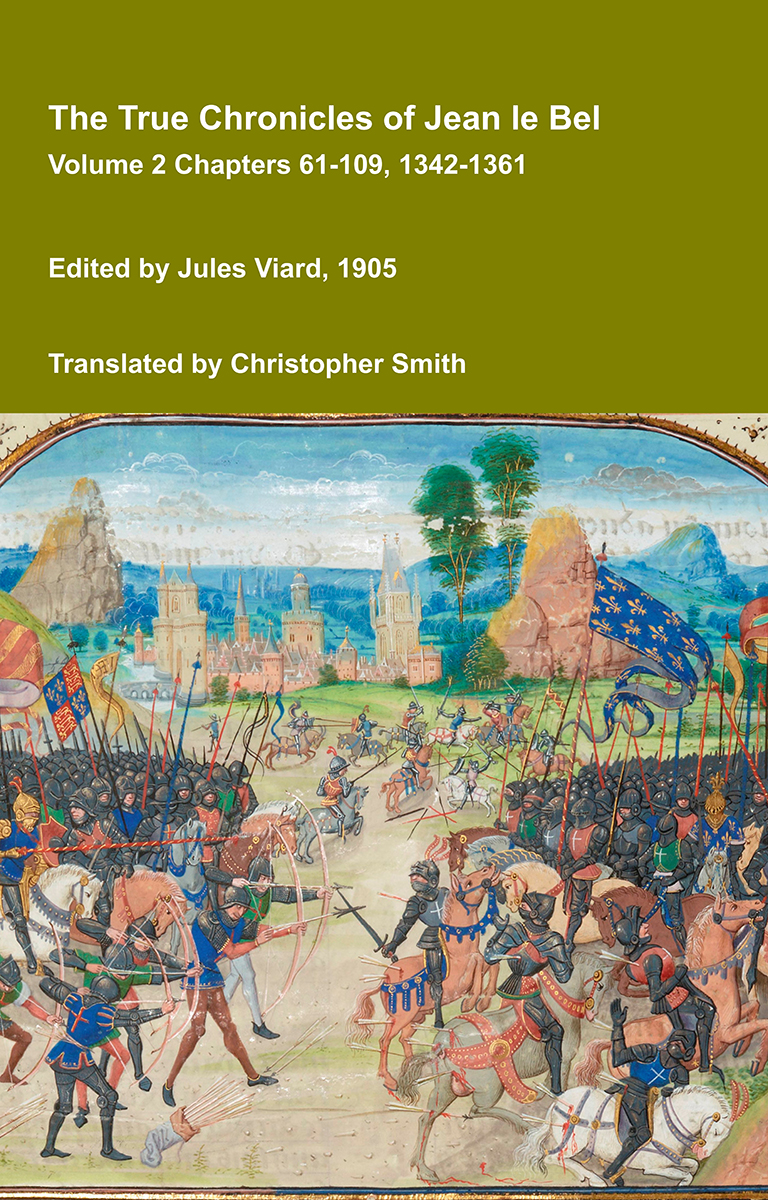 Chronicle of Jean le Bel Volume 2. In the year of grace 1350, King Philip of France died1, and his son, the Duke of Normandy, was crowned at Reims2. He was called King John of France, and he immediately debased the coinage out of greed3, and had new écus made which were called 'Johannes', of which the third part was copper.
L'an de grace mil CCCL, trespassa le roy Philippe de France', et fut couronné son filz le duc de Normendye à Rains. Si fut appellé le roy Jehan de France, et empira tantost les monnoyes par convoitise, et fit faire nouveaulx escus qu'on nommoit Johannes, dont la tierce partie estoit cuivre.
Note 1. Philip VI died in the night from Sunday 22nd to Monday 23rd August, as Gilles li Muisis indicates,, although he makes an error in saying that the night of Saint Bartholomew, that is, the 23rd, was a Sunday. This error is repeated by the Grandes Chroniques, which say that Philip of Valois died on Sunday 23rd August. But 23rd August was a Monday. The Chronique de Richard Lescot 22nd August. All these errors and divergences are very well explained by the fact that he died in the night of 22nd to 23rd August, the eve of Saint Bartholomew. Although the Grandes Chroniques and Richard Lescot say that he died at Nogent-le-Roi, Eure-et-Loir, Luce's Froissart, relying on the fact that the castle of Nogent-le-Roi belonged to the King of Navarre, says that Philip VI must rather have died at the abbey of Coulombs, situated one kilometre from Nogent. His opinion is confirmed by Gilles li Muisis, who says that he died 'in the monastery of Sainte-Colombe, of the order of Saint Benedict, which is situated near the city of Chartres'. According to the Grandes Chroniques, Philip VI’s body was brought to Notre-Dame of Paris on Thursday 26th August, and on Saturday 28th August his funeral took place. He was buried at Saint-Denis 'on the left side of the high altar'. His entrails were taken to the Jacobins in Paris, and his heart to Bourgfontaine in Valois.
1. Philippe VI mourut dans la nuit du dimanche 22 au lundi 23 août, comme l'indique Gilles li Muisis (op. cé P400), qui, cependant, commet une erreur en disant que la nuit de la Saint-Barthélemy (soit le 23) était un dimanche. Cette erreur est reproduite par les Grandes chroniques, t. V, p495, qui disent que Philippe de Valois mourut le dimanche 23 août. Or, le 23 août est un lundi. La Chronique de Richard Lescot (p. 88), place sa mort le 22 août. Toutes ces erreurs et ces divergences s'expliquent très bien par ce fait qu'il mourut dans la nuit du 22 au 23 (veille de la Saint-Barthélemy). Bien que les Grandes chroniques et Richard Lescot disent qu'il mourut à Nogent-le-Roi (Eure-et-Loir, arr. de Dreux, ch-l. de cant.), M. Luce, dans son édition de Froissart, t. LV, p. x1, n.2, s'appuyant sur ce que le château de Nogent-le-Roi appartenait au roi de Navarre, dit que Philippe VI dut plutôt mourir à l'abbaye de Coulombs, située à un kilomètre de Nogent. Son opirion est confirmée par Gilles li Muisis, qui dit qu'il mourut "in monasterio S. Columbæ ordinis Sancti Benedicti quod est situm prope eivitatem Carnotensem". D'après les Grandes chroniques, le corps de Philippe VI fut apporté à Notre-Dame de Paris le jeudi 26 août et le samedi 28 août eurent lieu ses obsèques, et il fut enterré à Saint-Denis "au costé senestre du grant autel". Ses entrailles furent portées aux Jacobins, à Paris, et son cœur à Bourgfontainc en Valois. Voy. aussi Guillaume de Nangis, éd. Géraud, t. Il, p. 221 et 222, et le compte des obsèques de ce roi publiées dans les Archives historiques, artistiques et linéraires, t. Il, p. 49 et suiv.
Note 2. The coronation of John the Good took place at Reims on Sunday 26th September 1350.
2. Le couronnement de Jean le Bon eut lieu à Reims le dimanche 26 septembre 1350. (Froissart, éd. Luce, t. IV, p400, et Grandes Chroniques, t. VI, p. 1.)
Note 3. Already Philip of Valois, by an ordinance of 21st August 1350, had debased the coinage. John the Good, who had to put this into effect, himself ordered a further debasement on 19th March and 14th May 1351.
3. Déjà Philippe de Valois, par ordonnance du 21 août 1350, avait affaibli la monnaie, (Ord., t. XII, p. 95.) Jean le Bon, qui avait dà la mettre à exécution, ordonna lui-même un nouvel affaiblissement le 19 mars et le 14 mai 1351. (Ord., t I, p. 389 et 428.)
On 23rd August 1754 Louis XVI King France was born to BB/History/d7/Capet-Paternal-Family-TreeDauphin Louis Bourbon [aged 24] and BB/History/a4/Wettin-Paternal-Family-TreeDauphine Maria Josepha of France [aged 22]. He a great x 4 grandson of King Charles I of England, Scotland and Ireland. He married 16th May 1770 his second cousin once removed Queen Marie Antoinette of France, daughter of Francis I Holy Roman Emperor and Maria Theresa Habsburg Spain Holy Roman Empress, and had issue.


On 23rd August 1792 Joshua Reynolds [aged 69] died at his home in Leicester Fields. He was buried in St Paul's Cathedral [Map]. He bequesthed his niece Mary Palmer Marchioness Thomond [aged 42] £100,000 in his will.


On 23rd August 1799 BB/History/j4/Hanover-Paternal-Family-TreeMajor George Seymour Crole was born to King George IV of Great Britain and Ireland [aged 37] and Elizabeth Ilive Countess Egremont [aged 30]


On 23rd August 1800 BB/History/i6/Oldenburg-Paternal-Family-TreeFrederick Emil Oldenburg was born to BB/History/i6/Oldenburg-Paternal-Family-TreeFrederick Christian Oldenburg II Duke Schleswig Holstein Sonderburg Augustenburg [aged 34] and BB/History/i6/Oldenburg-Paternal-Family-TreeLouise Auguste Oldenburg Duchess Schleswig Holstein Sonderburg Augustenburg [aged 29] . At Kiel. He a great x 2 grandson of King George II of Great Britain and Ireland. He married 1829 Henriette Danneskjold Samsøe Danneskiold Samsøe and had issue.
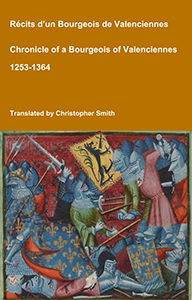
Chronicle of a Bourgeois of Valenciennes
Récits d’un bourgeois de Valenciennes aka The Chronicle of a Bourgeois of Valenciennes is a vivid 14th-century vernacular chronicle written by an anonymous urban chronicler from Valenciennes in the County of Hainaut. It survives in a manuscript that describes local and regional history from about 1253 to 1366, blending chronology, narrative episodes, and eyewitness-style accounts of political, military, and social events in medieval France, Flanders, and the Low Countries. The work begins with a chronological framework of events affecting Valenciennes and its region under rulers such as King Philip VI of France and the shifting allegiances of local nobility. It includes accounts of conflicts, sieges, diplomatic manoeuvres, and the impact of broader struggles like the Hundred Years’ War on urban life in Hainaut. Written from the perspective of a burgher (bourgeois) rather than a monastery or royal court, the chronicle offers a rare lay viewpoint on high politics and warfare, reflecting how merchants, townspeople, and civic institutions experienced the turbulence of the 13th and 14th centuries. Its narrative style combines straightforward reporting of events with moral and civic observations, making it a valuable source for readers interested in medieval urban society, regional politics, and the lived experience of war and governance in pre-modern Europe.
Available at Amazon in eBook and Paperback format.

On 25th July 1829 Elizabeth Siddal was born to Charles Crooke Siddall [aged 28] and Elizabeth Eleanor Evans at 7 Charles Street, Hatton Garden. She was baptised 23rd August 1830 at St Andrew's Church, Holborn [Map]. She married 23rd May 1860 Dante Gabriel Rossetti and had issue.
Charles Crooke Siddall: Around 1801 he was born.
Vestiges of the Antiquities of Derbyshire. August 23d, 1843, the large and well-known barrow upon the summit of Wolfscote Hill [Map], near Biggin [Map], was opened by cutting a wide trench from the south side towards the central depression. Shortly before arriving at this point, a cist, built of large limestones, was discovered immediately across the cutting and on the level of the natural ground. This vault, having no cover, was filled with earth and stones, which had settled down into it. On these being cleared out, the contents of the cist were found to be the remains of two young children, accompanied by an urn of sun-dried clay, rather neatly ornamented. This, owing to the settling of the mound, was crushed to pieces, and lay on one side on the floor of the cist, which was covered with rats' bones. On reaching the centre of the tumulus, it became very apparent that that part had been opened previously and the contents destroyed, the only remains now found being fragments of two urns, the bones of a similar number of human skeletons, and a variety of animal remains, all which had been taken out and thrown in again with the soil at the time of the prior opening of this barrow.
Thomas Bateman 1846. Upon a more complete investigation of this barrow (on the 23d of August, 1847) another interment was discovered in a similar cist on the opposite side of the mound, as was anticipated on the previous occasion. The mode of burial was in each case similar both bodies having been laid at a depth of nine feet from the summit, and covered with numerous large stones. In this instance the skeleton lay on the left side, in a contracted position, with one aim beneath the head, and near the thigh-bones were found a neatly-chipped spear-head of gray flint, and a small bronze pin, which had been inserted into a wooden handle.
Nothing else worthy of notice occurred in the progress of the excavation.

Diary of a Dean by Merewether. 23rd August 1849. 21st, — Whilst the men were commencing their work at the large barrows on the preceding day, a shepherd stated that one of the boys had told him that he had "hooked" up out of a little barrow on Bye Down Hill a crock, but he knocked it to bits with the stick. On visiting the spot, about a mile north-east, it appeared to be a very small barrow, without any trench round it, and very little elevated; the turf on this part of the down is much broken. At the top of the barrow were evidently the remains of an urn, of a pottery apparently more compact than those recently discovered; and from the holes in the turf, in different directions, various fragments might be collected (H). Almost at the verge of the barrow was a trackway, having a trench on either side; but it was not easy to trace it for more than two miles, in consequence of the cultivation of the hills; it runs nearly east and west; traversing in the easterly direction from this spot the down called "Temple" Down, on which, near its course, is a hut designated by the grandiloquent title of "Glorian."1
Note 1. "Gloria Tanaris." as suggested by the site, as connected with the worship of Mr Bowes, from the possilble sanctity of that deity.

On 23rd August 1861 BB/History/i4/Hamond-Paternal-Family-TreePhilip Hamond [aged 22] died from sun stroke in India. Memorial in All Saints Church, West Acre [Map].
BB/History/i4/Hamond-Paternal-Family-TreePhilip Hamond: Around 1839 he was born to BB/History/i4/Hamond-Paternal-Family-TreeAnthony Hamond and Mary Anne Musters.
On 23rd August 1891 BB/History/i6/Oldenburg-Paternal-Family-TreeWilhelm Friedrich Christian Glücksburg Duke Schleswig Holstein Sonderburg Glücksburg was born to BB/History/i6/Oldenburg-Paternal-Family-TreeFriedrich Ferdinand Glücksburg Duke Schleswig Holstein Sonderburg Glücksburg [aged 35] and BB/History/i6/Oldenburg-Paternal-Family-TreeVictoria Friederike Oldenburg Duchess Schleswig Holstein Sonderburg Glücksburg [aged 31]. He a great x 4 grandson of King George II of Great Britain and Ireland. He married 5th February 1916 his fifth cousin Marie Melita Hohenlohe Langenburg Duchess Schleswig Holstein Sonderburg Glücksburg and had issue.
On 23rd August 1914 Prince Friedrich of Saxe Meiningen [aged 52] was killed in action.
On 23rd August 1930 Alan Ian Percy 8th Duke Northumberland [aged 50] died. His son Henry [aged 18] succeeded 9th Duke Northumberland, 6th Earl Beverley, 12th Baronet Smithson of Stanwick in Yorkshire.
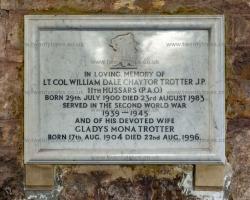
On 23rd August 1933 Lieutenant-Colonel William Dale Chaytor Trotter [aged 33] died. He has a memorial at St Mary's Church, Staindrop [Map].
Lieutenant-Colonel William Dale Chaytor Trotter: On 29th July 1900 he was born.
On 23rd August 1944 a United States Army Air Forces (USAAF) Consolidated B-24 Liberator crashed during a test flight into the centre of the village of Freckleton, Lancashire, England, killing all three crewmen aboard the aircraft and 58 individuals on the ground, including 38 children aged four to six.
On approach from, the pilot First Lieutenant John Bloemendal reported to the control tower that he was aborting landing at the last moment and would perform a go-around. Shortly afterwards, and out of sight of the second aircraft, the aircraft hit the village of Freckleton, just east of the airfield.
Already flying very low to the ground and with wings near vertical, the B-24's right wing tip hit a tree-top and was ripped away as it impacted with the corner of a building. The rest of the wing continued, ploughing along the ground and through a hedge. The fuselage partly demolished three houses and the Sad Sack Snack Bar that catered specifically for American servicemen from the airbase, before crossing Lytham Road and bursting into flames.
After part of the aircraft hit the infants' wing of Freckleton Holy Trinity School, fuel from the ruptured tanks ignited and produced another sea of flames.
52 people (the three crew members on the B-24, 34 children, one teacher, six American servicemen, one RAF airman and seven Snack Bar staff) died instantly, with nine others (four children, one teacher, an American serviceman and three RAF airmen) later dying in hospital from their injuries.


On 23rd August 963 Richard "Good" Normandy II Duke Normandy was born to BB/History/g1/Norman-Paternal-Family-TreeRichard "Fearless" Normandy I Duke Normandy [aged 30] and Gunnora Countess Ponthieu. He married (1) 1000 BB/History/l2/Vannes-Paternal-Family-TreeJudith Penthièvre Duchess Normandy, daughter of BB/History/l2/Vannes-Paternal-Family-TreeConan "Crooked" Penthièvre III Duke Brittany and BB/History/o6/Ingelger-Paternal-Family-TreeErmengarde Gerberga Ingelger Duchess Brittany, and had issue (2) before 1019 Poppa Envermeu Unknown Duchess Normandy and had issue.
Abbot John Whethamstede’s Chronicle of the Abbey of St Albans
Abbot John Whethamstede's Register aka Chronicle of his second term at the Abbey of St Albans, 1451-1461, is a remarkable text that describes his first-hand experience of the beginning of the Wars of the Roses including the First and Second Battles of St Albans, 1455 and 1461, respectively, their cause, and their consequences, not least on the Abbey itself. His text also includes Loveday, Blore Heath, Northampton, the Act of Accord, Wakefield, and Towton, and ends with the Coronation of King Edward IV. In addition to the events of the Wars of the Roses, Abbot John, or his scribes who wrote the Chronicle, include details in the life of the Abbey such as charters, letters, land exchanges, visits by legates, and disputes, which provide a rich insight into the day-to-day life of the Abbey, and the challenges faced by its Abbot.
Available at Amazon in eBook and Paperback format.
On 23rd August 1276 Hugh Neville 1st Baron Neville Essex was born to John Neville [aged 36]. He married (1) 1290 Eleanor Weyland and had issue (2) before 21st October 1309 his fifth cousin once removed BB/History/g1/Norman-Paternal-Family-TreeIda Fitzwalter Baroness Neville Essex, daughter of Robert Fitzwalter 1st Baron Fitzwalter and BB/History/l7/Ferrers-Paternal-Family-TreeEleanor Ferrers Baroness Fitzwalter.
On 23rd August 1326 BB/History/i1/Furnival-Paternal-Family-TreeWilliam Furnival 4th Baron Furnivall was born to BB/History/i1/Furnival-Paternal-Family-TreeThomas Furnival 2nd Baron Furnivall and BB/History/g1/Norman-Paternal-Family-TreeJoan Verdun Baroness Furnivall [aged 23].
On 23rd August 1334 BB/History/a1/Welles-Paternal-Family-TreeJohn Welles 4th Baron Welles was born to BB/History/a1/Welles-Paternal-Family-TreeAdam Welles 3rd Baron Welles [aged 30] and BB/History/k7/Bardolf-Paternal-Family-TreeMargaret Bardolf Baroness Welles [aged 22]. He married 1345 BB/History/a6/Ros-Paternal-Family-TreeMaud Ros Baroness Welles, daughter of William Ros 2nd Baron Ros Helmsley and Margery Badlesmere Baroness Ros of Helmsley, and had issue.
On 23rd August 1498 BB/History/d7/Capet-Paternal-Family-TreeMiguel Aviz was born to Manuel "Fortunate" I King Portugal [aged 29] and Isabella Trastámara Queen Consort Portugal. He a great x 4 grandson of King Edward III of England. Coefficient of inbreeding 8.38%. He died aged one in 1500.
On 23rd August 1517 BB/History/f8/Metx-Paternal-Family-TreeFrancis Lorraine I Duke Lorraine was born to BB/History/f8/Metx-Paternal-Family-TreeAntoine Lorraine II Duke Lorraine [aged 28] and BB/History/d7/Capet-Paternal-Family-TreeRenée Bourbon Duchess Lorraine [aged 23] at Nancy. He married before 1543 his third cousin Christina Oldenburg Duchess Lorraine, daughter of Christian II King of Denmark II King Norway and Isabella of Austria Queen Consort Denmark and Norway, and had issue.
On 23rd August 1602 BB/History/f5/Marsham-Paternal-Family-TreeJohn Marsham 1st Baronet was born.

On 23rd August 1637 Bishop Francis Turner was born to Dean Thomas Turner [aged 46] and Margaret Windebank.
On 23rd August 1676 BB/History/f7/Russell-Paternal-Family-TreeCatherine Russell Duchess Rutland was born to William Russell [aged 36] and BB/History/p3/Wriothesley-Paternal-Family-TreeRachel Wriothesley [aged 40]. She married before 21st October 1696 her sixth cousin John Manners 2nd Duke Rutland, son of John Manners 1st Duke Rutland and Catherine Noel Duchess Rutland, and had issue.
On 23rd August 1693 BB/History/a1/Murray-Paternal-Family-TreeGeorge Murray was born to John Murray 1st Duke Atholl [aged 33] and BB/History/k8/Douglas-Paternal-Family-TreeCatherine Hamilton Duchess Atholl [aged 31]. He died aged less than one years old.
On 23rd August 1712 BB/History/a4/Wettin-Paternal-Family-TreeSophie Saxe Coburg Altenburg was born to BB/History/a4/Wettin-Paternal-Family-TreeFrederick Saxe Coburg Altenburg II Duke Saxe Gotha Altenburg [aged 36] and Magdalena Augusta Anhalt-Zerbst Duchess Saxe Gotha Altenburg at Altenburg. She died aged less than one years old.
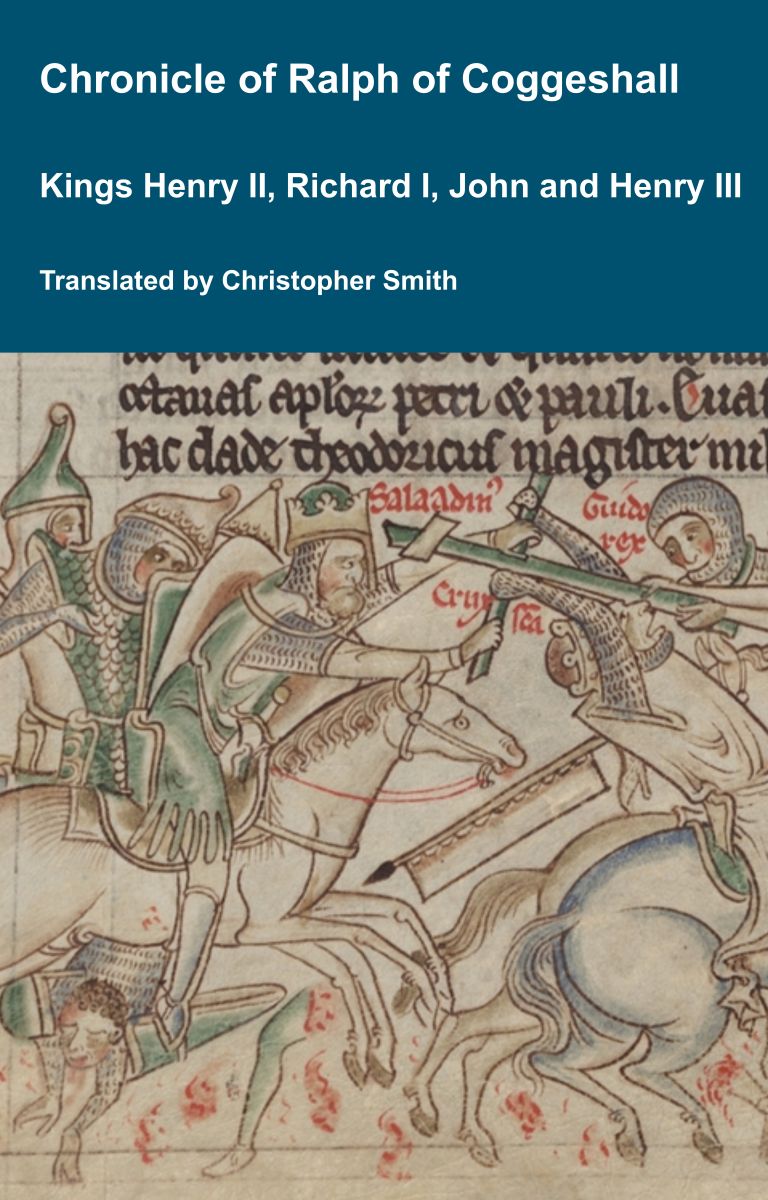
Chronicle of Abbot Ralph of Coggeshall
The Chronicle of Abbot Ralph of Coggeshall (Chronicon Anglicanum) is an indispensable medieval history that brings to life centuries of English and European affairs through the eyes of a learned Cistercian monk. Ralph of Coggeshall, abbot of the Abbey of Coggeshall in Essex in the early 13th century, continued and expanded his community’s chronicle, documenting events from the Norman Conquest of 1066 into the tumultuous reign of King Henry III. Blending eyewitness testimony, careful compilation, and the monastic commitment to record-keeping, this chronicle offers a rare narrative of political intrigue, royal power struggles, and social upheaval in England and beyond. Ralph’s work captures the reigns of pivotal figures such as Richard I and King John, providing invaluable insights into their characters, decisions, and the forces that shaped medieval rule. More than a simple annal, Chronicon Anglicanum conveys the texture of medieval life and governance, making it a rich source for scholars and readers fascinated by English history, monastic authorship, and the shaping of the medieval world.
Available at Amazon in eBook and Paperback format.
On 23rd August 1725 BB/History/k4/Radclyffe-Paternal-Family-TreeJames Radclyffe 4th Earl of Newburgh was born to BB/History/k4/Radclyffe-Paternal-Family-TreeCharles Radclyffe Earl Newburgh [aged 31] and Charlotte Livingstone 3rd Countess Newburgh [aged 31]. He a great grandson of King Charles II of England Scotland and Ireland. He married 11th November 1749 his third cousin Barbara Kemp Countess Newburgh and had issue.
On 23rd August 1730 BB/History/f5/Hamilton-of-Clanbrassil-Paternal-Family-TreeJames Hamilton 2nd Earl Clanbrassil was born to BB/History/f5/Hamilton-of-Clanbrassil-Paternal-Family-TreeJames Hamilton 1st Earl Clanbrassil [aged 36] and BB/History/k1/Bentinck-Paternal-Family-TreeHarriet Bentinck Countess Clanbrassil [aged 24]. He married 21st May 1744 BB/History/e4/Foley-Paternal-Family-TreeGrace Foley Countess Clanbrassil, daughter of BB/History/e4/Foley-Paternal-Family-TreeThomas Foley 1st Baron Foley and BB/History/k9/Grenville-Paternal-Family-TreeGrace Granville.
On 23rd August 1737 Anne Thomas was born to Bishop John Thomas [aged 41]. She married 19th April 1762 Bishop William Buller and had issue.
On 23rd August 1741 BB/History/a3/Hope-Paternal-Family-TreeJames Hope Johnstone 3rd Earl Hopetoun was born to BB/History/a3/Hope-Paternal-Family-TreeJohn Hope 2nd Earl Hopetoun [aged 36] and BB/History/d9/Ogilvy-Paternal-Family-TreeAnne Ogilvy Countess Hopetoun [aged 31].
On 23rd August 1744 BB/History/d7/Dawson-Paternal-Family-TreeJohn Dawson 1st Earl Portarlington was born to BB/History/d7/Dawson-Paternal-Family-TreeWilliam Henry Dawson 1st Viscount Carlow [aged 31]. He married before 1781 BB/History/a1/Stewart-Paternal-Family-TreeCaroline Stuart Countess Portarlington, daughter of John Stuart 3rd Earl Bute and Mary Wortley-Montagu Countess Bute, and had issue.
On 23rd August 1751 BB/History/m1/Schuckburgh-Paternal-Family-TreeGeorge Shuckburgh-Evelyn 6th Baronet was born to BB/History/m1/Schuckburgh-Paternal-Family-TreeRichard Schuckburgh [aged 28]. He married (1) 1782 Sarah Johanna Darker (2) 6th October 1785 BB/History/j5/Evelyn-Paternal-Family-TreeJulia Annabella Evelyn and had issue.
On 23rd August 1754 Louis XVI King France was born to BB/History/d7/Capet-Paternal-Family-TreeDauphin Louis Bourbon [aged 24] and BB/History/a4/Wettin-Paternal-Family-TreeDauphine Maria Josepha of France [aged 22]. He a great x 4 grandson of King Charles I of England, Scotland and Ireland. He married 16th May 1770 his second cousin once removed Queen Marie Antoinette of France, daughter of Francis I Holy Roman Emperor and Maria Theresa Habsburg Spain Holy Roman Empress, and had issue.
On 23rd August 1760 BB/History/j5/Cholmeley-Paternal-Family-TreeHenrietta Cholmley Lady Strickland was born to BB/History/j5/Cholmeley-Paternal-Family-TreeNathaniel Cholmley [aged 38] and Henrietta-Katharina Croft. She married 15th April 1778 her sixth cousin BB/History/m7/Strickland-Paternal-Family-TreeWilliam Strickland 6th Baronet, son of BB/History/m7/Strickland-Paternal-Family-TreeGeorge Strickland 5th Baronet, and had issue.
On 23rd August 1767 BB/History/g2/Bedingfield-Paternal-Family-TreeRichard Bedingfeld 5th Baronet was born to BB/History/g2/Bedingfield-Paternal-Family-TreeRichard Henry Bedingfield 4th Baronet [aged 46] and BB/History/f9/Browne-Paternal-Family-TreeMary Browne [aged 45] at Bath, Somerset [Map]. He married 16th June 1795 his third cousin twice removed BB/History/g8/Jerningham-Paternal-Family-TreeCharlotte Georgiana Jerningam, daughter of BB/History/g8/Jerningham-Paternal-Family-TreeWilliam Jerningham of Cossey Park 6th Baronet and BB/History/i1/Dillon-Paternal-Family-TreeFrances Dillon, and had issue.
On 23rd August 1768 BB/History/d7/Cooper-of-Gadebridge-Paternal-Family-TreeAstley Paston Cooper 1st Baronet was born to BB/History/d7/Cooper-of-Gadebridge-Paternal-Family-TreeReverend Samuel Cooper [aged 28] and Maria Susanna Bransby [aged 31] at Brooke Hall, Norfolk. He was baptised on 9th September 1768 at St Peter's Church, Brooke [Map].
Jean de Waurin's Chronicle of England Volume 6 Books 3-6: The Wars of the Roses
Jean de Waurin was a French Chronicler, from the Artois region, who was born around 1400, and died around 1474. Waurin’s Chronicle of England, Volume 6, covering the period 1450 to 1471, from which we have selected and translated Chapters relating to the Wars of the Roses, provides a vivid, original, contemporary description of key events some of which he witnessed first-hand, some of which he was told by the key people involved with whom Waurin had a personal relationship.
Available at Amazon in eBook and Paperback format.
On 23rd August 1770 BB/History/h8/Moore-Paternal-Family-TreeEdward Moore 2nd Marquess Drogheda was born to BB/History/h8/Moore-Paternal-Family-TreeCharles Moore 1st Marquess Drogheda [aged 40] and BB/History/l1/Seymour-Paternal-Family-TreeAnne Seymour-Conway Countess Drogheda [aged 26]. He a great x 3 grandson of King Charles II of England Scotland and Ireland.
On 23rd August 1783 BB/History/d8/Hay-of-Locherworth-Paternal-Family-TreeHenrietta Hay-Drummond was born to BB/History/d8/Hay-of-Locherworth-Paternal-Family-TreeRobert Hay-Drummond 10th Earl Kinnoul [aged 32] and BB/History/e9/Harley-Paternal-Family-TreeSarah Harley Countess Kinnoul. She married before 20th February 1860 Henry Drummond and had issue.
On 23rd August 1787 BB/History/g7/Yorke-Paternal-Family-TreeCharles Yorke was born to Philip Yorke 3rd Earl of Hardwicke [aged 30] and BB/History/n3/Lindsay-Paternal-Family-TreeElizabeth Lindsay Countess Hardwicke [aged 23]. He died aged four in 1791.


On 23rd August 1794 Rebecca Alton Lady Alleyne was born to John Alton. She married 20th September 1810 Reynold Abel Alleyne 2nd Baronet, son of John Gay Alleyn 1st Baronet, and had issue.
On 23rd August 1799 BB/History/j4/Hanover-Paternal-Family-TreeMajor George Seymour Crole was born to King George IV of Great Britain and Ireland [aged 37] and Elizabeth Ilive Countess Egremont [aged 30]
On 23rd August 1800 BB/History/i6/Oldenburg-Paternal-Family-TreeFrederick Emil Oldenburg was born to BB/History/i6/Oldenburg-Paternal-Family-TreeFrederick Christian Oldenburg II Duke Schleswig Holstein Sonderburg Augustenburg [aged 34] and BB/History/i6/Oldenburg-Paternal-Family-TreeLouise Auguste Oldenburg Duchess Schleswig Holstein Sonderburg Augustenburg [aged 29] . At Kiel. He a great x 2 grandson of King George II of Great Britain and Ireland. He married 1829 Henriette Danneskjold Samsøe Danneskiold Samsøe and had issue.
On 23rd August 1805 BB/History/l1/Grey-Paternal-Family-TreeAdmiral Frederick William Grey was born to Charles Grey 2nd Earl Grey [aged 41] and BB/History/d7/Ponsonby-Paternal-Family-TreeMary Elizabeth Ponsonby Countess Grey [aged 29]. He married 20th July 1846 Barbara Sullivan.


On 23rd August 1806 BB/History/p2/Howard-Paternal-Family-TreeHenry Howard 2nd Earl of Effingham was born to Kenneth Alexander Howard 1st Earl of Effingham [aged 38] and BB/History/a9/Primrose-Paternal-Family-TreeCharlotte Primrose Countess Effingham [aged 30]. Coefficient of inbreeding 3.12%. He married 1832 Eliza Drummond Baroness Howard and had issue.
On 23rd August 1810 BB/History/e7/Naper-Paternal-Family-TreeJohn Thomas Dutton was born to BB/History/e7/Naper-Paternal-Family-TreeJohn Dutton 2nd Baron Sherborne [aged 31]. He married 19th July 1836 BB/History/n1/Parker-of-Devon-Paternal-Family-TreeLavinia Parker, daughter of BB/History/n1/Parker-of-Devon-Paternal-Family-TreeThomas Parker 5th Earl Macclesfield and Eliza Wolstenholme Countess Macclesfield, and had issue.

On 23rd August 1815 BB/History/a8/Acland-Paternal-Family-TreeHenry Wentworth Acland 1st Baronet was born to BB/History/a8/Acland-Paternal-Family-TreeThomas Dyke Acland 10th Baronet [aged 28] and BB/History/h2/Hoare-Paternal-Family-TreeElizabeth Hoare [aged 28]. He married 14th July 1846 Sarah Cotton and had issue.
On 23rd August 1827 BB/History/d8/Hay-of-Locherworth-Paternal-Family-TreeAdmiral John Hay was born to BB/History/d8/Hay-of-Locherworth-Paternal-Family-TreeGeorge Hay 8th Marquess Tweedale [aged 40] and BB/History/k1/Montagu-Paternal-Family-TreeSusan Montagu Marchioness Tweddale [aged 26].
The True Chronicles of Jean le Bel Volume 1 Chapters 1-60 1307-1342
The True Chronicles of Jean le Bel offer one of the most vivid and immediate accounts of 14th-century Europe, written by a knight who lived through the events he describes, and experienced some of them first hand. Covering the early decades of the Hundred Years’ War, this remarkable chronicle follows the campaigns of Edward III of England, the politics of France and the Low Countries, and the shifting alliances that shaped medieval warfare. Unlike later historians, Jean le Bel writes with a strong sense of eyewitness authenticity, drawing on personal experience and the testimony of fellow soldiers. His narrative captures not only battles and sieges, but also the realities of military life, diplomacy, and the ideals of chivalry that governed noble society. A key source for Jean Froissart, Le Bel’s chronicle stands on its own as a compelling and insightful work, at once historical record and literary achievement. This translation builds on the 1905 edition published in French by Jules Viard, adding extensive translations from other sources Rymer's Fœdera, the Chronicles of Adam Murimuth, William Nangis, Walter of Guisborough, a Bourgeois of Valenciennes, Geoffrey le Baker of Swinbroke and Richard Lescot to enrich the original text and Viard's notes.
Available at Amazon in eBook and Paperback format.
On 23rd August 1828 George Russell 4th Baronet was born to Henry Russell 2nd Baronet [aged 45]. He married 1871 BB/History/a1/Stewart-Paternal-Family-TreeConstance Charlotte Lennox and had issue.
On 23rd August 1847 Charles Rose 1st Baronet was born to John Rose 1st Baronet [aged 27].

On 23rd August 1876 BB/History/g9/Onslow-Paternal-Family-TreeRichard William Alan Onslow 5th Earl Onslow was born to William Onslow 4th Earl Onslow [aged 23] and BB/History/b5/Gardner-Paternal-Family-TreeFlorence Coulston Gardner Countess Onslow [aged 23]. He married 22nd February 1906 BB/History/h5/Bamfylde-Paternal-Family-TreeViolet Marcia Bampfylde Countess Onslow, daughter of BB/History/h5/Bamfylde-Paternal-Family-TreeCoplestone Richard Bampfylde 3rd Baron Poltimore and Margaret Harriet Beaumont Baroness Poltimore, and had issue.
On 23rd August 1886 BB/History/m8/Finch-Paternal-Family-TreeCharles Daniel Finch-Knightley 10th Earl of Aylesford was born to BB/History/m8/Finch-Paternal-Family-TreeCharles Wightwick Finch 8th Earl of Aylesford [aged 35].
On 23rd August 1891 BB/History/i6/Oldenburg-Paternal-Family-TreeWilhelm Friedrich Christian Glücksburg Duke Schleswig Holstein Sonderburg Glücksburg was born to BB/History/i6/Oldenburg-Paternal-Family-TreeFriedrich Ferdinand Glücksburg Duke Schleswig Holstein Sonderburg Glücksburg [aged 35] and BB/History/i6/Oldenburg-Paternal-Family-TreeVictoria Friederike Oldenburg Duchess Schleswig Holstein Sonderburg Glücksburg [aged 31]. He a great x 4 grandson of King George II of Great Britain and Ireland. He married 5th February 1916 his fifth cousin Marie Melita Hohenlohe Langenburg Duchess Schleswig Holstein Sonderburg Glücksburg and had issue.
On 23rd August 1898 BB/History/j7/Curzon-Paternal-Family-TreeCynthia Blanche Curzon Lady Ancoats was born to George Nathaniel Curzon 1st Marquess Kedleston [aged 39] and Mary Victoria Leiter Baroness Curzon Kedleston [aged 28]. She married 11th May 1920 Oswald Mosley 6th Baronet, son of BB/History/b3/Mosley-Paternal-Family-TreeOswald Mosley 5th Baronet and Katharine Maud Edwards-Heathcote, and had issue.


On 23rd August 1900 BB/History/o1/Glyn-Paternal-Family-TreeMarion Feodorovna Louise Glyn was born to BB/History/o1/Glyn-Paternal-Family-TreeFrederic Glyn 4th Baron Wolverton [aged 35] and BB/History/n3/Ward-Paternal-Family-TreeEdith Amelia Ward Baroness Wolverton [aged 27]. She married 18th April 1932 BB/History/c2/Villiers-Paternal-Family-TreeGeorge Herbert Arthur Edward Hyde Villiers, son of George Herbert Hyde Villiers 6th Earl Clarendon, and had issue.
On 23rd August 1904 Thelma Morgan Viscountess Furness was born to Harry Hays Morgan Senior. She was an identical twin with her sister Gloria aka Maria Mercedes Morgan. She married (1) 27th June 1926 Marmaduke Furness 1st Viscount Furness, son of Christopher Furness 1st Baron Furness and Jane Annette Suggitt Baroness Furness, and had issue.
On 23rd August 1904 Gloria aka Maria Mercedes Morgan was born to Harry Hays Morgan Senior. She was an identical twin with her sister Thelma Morgan Viscountess Furness. She married 6th March 1923 BB/History/g2/Vanderbilt-Paternal-Family-TreeReginald Claypoole Vanderbilt.
On 23rd August 1909 BB/History/d9/Wyntoun-aka-Seton-Paternal-Family-TreeBarbara Susan Montgomerie was born to BB/History/d9/Wyntoun-aka-Seton-Paternal-Family-TreeArchibald Montgomerie 16th Earl of Eglinton [aged 29] and BB/History/o8/Dalrymple-Paternal-Family-TreeBeatrice Susan Dalrymple Countess Eglinton. She married 4th February 1930 BB/History/b9/Gore-Paternal-Family-TreeChristopher Gerald Gore and had issue.
On 23rd August 1918 BB/History/d9/St-John-Paternal-Family-TreeAndrew St John 21st Baron St John of Bletso was born to BB/History/d9/St-John-Paternal-Family-TreeRowland Tudor St John.
On 23rd August 1944 Anthony Meyer 4th Baronet was born to Anthony Meyer 3rd Baronet [aged 23].
Henrici Quinti, Angliæ Regis, Gesta, is a first-hand account of the Agincourt Campaign, and subsequent events to his death in 1422. The author of the first part was a Chaplain in King Henry's retinue who was present from King Henry's departure at Southampton in 1415, at the siege of Harfleur, the battle of Agincourt, and the celebrations on King Henry's return to London. The second part, by another writer, relates the events that took place including the negotiations at Troye, Henry's marriage and his death in 1422.
Available at Amazon in eBook and Paperback format.
On 23rd August 1945 BB/History/i5/Hardinge-Paternal-Family-TreeJulian Hardinge 4th Baron Hardinge was born to BB/History/i5/Hardinge-Paternal-Family-TreeGeorge Hardinge 3rd Baron Hardinge [aged 23] and BB/History/f4/Balfour-Paternal-Family-TreeJanet Balfour Baroness Hardinge [aged 22].
On 23rd August 1605 BB/History/k7/Fitzwilliam-of-Ireland-Paternal-Family-TreeThomas Fitzwilliam 1st Viscount Fitzwilliam [aged 24] and BB/History/k4/Plunkett-of-Louth-Paternal-Family-TreeMargaret Plunkett were married.
On 23rd August 1662 BB/History/n9/Lyon-Paternal-Family-TreePatrick Lyon 3rd Earl Strathmore and Kinghorne [aged 19] and Helen Middleton Countess Strathmore and Kinghorne [aged 17] were married. She by marriage Countess Strathmore and Kinghorne. She the daughter of John Middleton 1st Earl Middleton [aged 54] and Grizel Durham Countess Middleton. He the son of BB/History/n9/Lyon-Paternal-Family-TreeJohn Lyon 2nd Earl Kinghorne and Elizabeth Maule Countess Kinghorne and Linlithgow.
On 23rd August 1798 Alexander Baring 1st Baron Ashburton [aged 23] and Ann Louisa Bingham Baroness Ashburton [aged 16] were married.
On 23rd August 1837 BB/History/m5/Hill-Paternal-Family-TreeArthur Hill 4th Marquess Downshire [aged 25] and BB/History/l2/De-Cotton-Paternal-Family-TreeCaroline Stapleton-Cotton Marchioness Downshire [aged 22] were married. He the son of BB/History/m5/Hill-Paternal-Family-TreeArthur Blundell Sandys Trumbull Hill 3rd Marquess Downshire [aged 48] and BB/History/h4/Hickman-aka-Windsor-Paternal-Family-TreeMaria Windsor Marchioness Downshire [aged 47]. They were fifth cousin once removed.
On 23rd August 1106 BB/History/h6/Billung-Paternal-Family-TreeMagnus Billung Duke Saxony [aged 61] died.
On 23rd August 1348 Archbishop John de Stratford [aged 73] died.
On 23rd August 1383 BB/History/l2/Strange-Paternal-Family-TreeElizabeth Strange Countess Nottingham [aged 21] died. Her sister Ankaret [aged 22] succeeded 7th Baroness Strange Blackmere. BB/History/i8/Talbot-Paternal-Family-TreeRichard Talbot 7th Baron Strange Blackmere 4th Baron Talbot [aged 22] by marriage Baron Strange Blackmere.
On 23rd August 1415 Wartislaw Griffins 8th Duke Pomerania died. His nephew Wartislaw succeeded 9th Duke Pomerania.
On 23rd August 1452 James "White Earl" Butler 4th Earl Ormonde [aged 59] died at Dublin [Map]. He was buried at St Mary's Abbey, Dublin. His son James [aged 31] succeeded 5th Earl Ormonde.
Chronicle of Abbot Ralph of Coggeshall
The Chronicle of Abbot Ralph of Coggeshall (Chronicon Anglicanum) is an indispensable medieval history that brings to life centuries of English and European affairs through the eyes of a learned Cistercian monk. Ralph of Coggeshall, abbot of the Abbey of Coggeshall in Essex in the early 13th century, continued and expanded his community’s chronicle, documenting events from the Norman Conquest of 1066 into the tumultuous reign of King Henry III. Blending eyewitness testimony, careful compilation, and the monastic commitment to record-keeping, this chronicle offers a rare narrative of political intrigue, royal power struggles, and social upheaval in England and beyond. Ralph’s work captures the reigns of pivotal figures such as Richard I and King John, providing invaluable insights into their characters, decisions, and the forces that shaped medieval rule. More than a simple annal, Chronicon Anglicanum conveys the texture of medieval life and governance, making it a rich source for scholars and readers fascinated by English history, monastic authorship, and the shaping of the medieval world.
Available at Amazon in eBook and Paperback format.
On 23rd August 1499 Bishop John Blythe [aged 39] died. He was buried at Salisbury Cathedral [Map]. Monument bottom middle.
On 23rd August 1502 Robert Willoughby 1st Baron Willoughby 9th Baron Latimer [aged 50] died. His son Robert [aged 30] succeeded 2nd Baron Willoughby Broke, 10th Baron Latimer of Corby. BB/History/d9/Beauchamp-Paternal-Family-TreeElizabeth Beauchamp Baroness Willoughby of Broke [aged 34] by marriage Baroness Willoughby Broke, Baroness Latimer of Corby.
On 23rd August 1524 Bishop Edmund Tuchet [aged 81] died. He was buried in Salisbury Cathedral [Map]. Finely carved monument. Similar in style to Prince Arthur's Chantry [Map] in Worcester Cathedral [Map].
On 23rd August 1568 Thomas Wharton 1st Baron Wharton [aged 73] died. His son Thomas [aged 48] succeeded 2nd Baron Wharton.

On 23rd August 1613 John Harington 1st Baron Harington [aged 73] died. His son John [aged 21] succeeded 2nd Baron Harington of Exton.
On 23rd August 1628 George Villiers 1st Duke of Buckingham [aged 35] was murdered at Greyhound Pub, Portsmouth by a disgruntled soldier John Felton [aged 33]. He was buried at Westminster Abbey [Map]. His son George succeeded 2nd Duke of Buckingham, 2nd Marquess of Buckingham, 2nd Earl Buckingham.
Felton was considered a hero by many who blamed Buckingham for the failures of the 1625 Cádiz Expedition and 1627 Siege of Saint-Martin-de-Ré. Felton was subsequently hanged.
On 23rd August 1632 Frances Howard Countess Essex and Somerset [aged 42] died.


On 23rd August 1638 BB/History/l9/Mordaunt-Paternal-Family-TreeRobert Mordaunt 2nd Baronet died. His son Charles succeeded 3rd Baronet Mordaunt of Massingham Parva.
On 23rd August 1641 BB/History/n6/Leslie-Paternal-Family-TreeJohn Leslie 6th Earl Rothes [aged 41] died. His son John [aged 11] succeeded 7th Earl Rothes.

On 23rd August 1652 John Byron 1st Baron Byron [aged 53] died at Paris [Map]. His brother Richard [aged 46] succeeded 2nd Baron Byron of Rochdale in Lancashire.
On 23rd August 1668 Bishop George Hall [aged 55] died from a wound inflicted by a knife in his pocket when he chanced to fall in his garden at Wigan.
On 23rd August 1683 BB/History/f3/Verney-Warwickshire-Paternal-Family-TreeWilliam Verney 18th Baron Latimer 10th Baron Willoughby [aged 15] died. He was buried at Compton Verney Chapel [Map]. His great uncle Richard [aged 62] succeeded 19th Baron Latimer of Corby, 11th Baron Willoughby Broke.
This is a translation of the 'Memoires of Jacques du Clercq', published in 1823 in two volumes, edited by Frederic, Baron de Reissenberg. In his introduction Reissenberg writes: 'Jacques du Clercq tells us that he was born in 1424, and that he was a licentiate in law and a counsellor to Philip the Good, Duke of Burgundy, in the castellany of Douai, Lille, and Orchies. It appears that he established his residence at Arras. In 1446, he married the daughter of Baldwin de la Lacherie, a gentleman who lived in Lille. We read in the fifth book of his Memoirs that his father, also named Jacques du Clercq, had married a lady of the Le Camelin family, from Compiègne. His ancestors, always attached to the counts of Flanders, had constantly served them, whether in their councils or in their armies.' The Memoires cover a period of nineteen years beginning in in 1448, ending in in 1467. It appears that the author had intended to extend the Memoirs beyond that date; no doubt illness or death prevented him from carrying out this plan. As Reissenberg writes the 'merit of this work lies in the simplicity of its narrative, in its tone of good faith, and in a certain air of frankness which naturally wins the reader’s confidence.' Du Clercq ranges from events of national and international importance, including events of the Wars of the Roses in England, to simple, everyday local events such as marriages, robberies, murders, trials and deaths, including that of his own father in Book 5; one of his last entries.
Available at Amazon in eBook and Paperback format.
On 23rd August 1685 BB/History/a3/Feilding-Paternal-Family-TreeWilliam Feilding 2nd Earl Desmond 3rd Earl Denbigh [aged 44] died. His son Basil [aged 17] succeeded 3rd Earl Desmond, 4th Earl Denbigh, 4th Viscount Feilding, 4th Baron Feilding of Newnham Paddocks in Warwickshire, 3rd Viscount Callan of Callan in Kilkenny, 3rd Baron Feilding of Lecagh in Tipperary, 3rd Baron St Liz.
On 23rd August 1690 Margaret Peake Lady Shaw died. She was buried 29th August 1690 at Church of Holy Trinity, Eltham.
On 23rd August 1749 Gilfrid Lawson 6th Baronet [aged 74] died unmarried. His brother Alfred [aged 73] succeeded 7th Baronet Lawson of Isel Hall in Cumbria.
On 23rd August 1751 Mary Edwards Lady Wrey died.
On 23rd August 1765 Rowland Winn 4th Baronet [aged 59] died. His son Rowland [aged 26] succeeded 5th Baronet Winn of Nostel in Yorkshire.

On 23rd August 1778 BB/History/i2/Sedley-Paternal-Family-TreeCharles Sedley 2nd Baronet [aged 57] died unmarried. Baronet Sedley of Southfleet in Kent extinct.
On 23rd August 1792 Joshua Reynolds [aged 69] died at his home in Leicester Fields. He was buried in St Paul's Cathedral [Map]. He bequesthed his niece Mary Palmer Marchioness Thomond [aged 42] £100,000 in his will.
On 23rd August 1803 Cornwallis Maude 1st Viscount Hawarden [aged 73] died. His son Thomas [aged 36] succeeded 2nd Viscount Hawarden, 2nd Baron Montalt of Hawarden in Tipperary, 4th Baronet of Dundrum in Tipperary. BB/History/g1/Agar-Paternal-Family-TreeFrances Anne Agar Viscountess Hawarden by marriage Viscountess Hawarden.
On 23rd August 1812 BB/History/h8/Eden-Paternal-Family-TreeJohn Eden 4th Baronet [aged 71] died. His son Robert [aged 37] succeeded 5th Baronet Eden of West Auckland.
On 23rd August 1828 BB/History/k7/Foster-aka-Skeffington-Paternal-Family-TreeJohn Foster 1st Baron Oriel [aged 88] died. His son Thomas [aged 56] succeeded 2nd Baron Oriel of Ferrand in Louth.
On 23rd August 1829 BB/History/l4/Whichcote-Paternal-Family-TreeThomas Whichcote 6th Baronet [aged 42] died. His son Thomas [aged 16] succeeded 7th Baronet Whichcote of the Inner Temple in the City of London.
On 23rd August 1850 BB/History/d4/Pierrepoint-Medows-Paternal-Family-TreeCharles Evelyn Pierrepont [aged 44] died at Torquay, Devon. He was buried at the Church of St Edmund, Holme Pierrepoint [Map]. His brother Sydney [aged 25] succeeded 3rd Earl Manvers, 3rd Viscount Newark, 3rd Baron Pierrepont of Holme Pierrepoint.
Abbot John Whethamstede’s Chronicle of the Abbey of St Albans
Abbot John Whethamstede's Register aka Chronicle of his second term at the Abbey of St Albans, 1451-1461, is a remarkable text that describes his first-hand experience of the beginning of the Wars of the Roses including the First and Second Battles of St Albans, 1455 and 1461, respectively, their cause, and their consequences, not least on the Abbey itself. His text also includes Loveday, Blore Heath, Northampton, the Act of Accord, Wakefield, and Towton, and ends with the Coronation of King Edward IV. In addition to the events of the Wars of the Roses, Abbot John, or his scribes who wrote the Chronicle, include details in the life of the Abbey such as charters, letters, land exchanges, visits by legates, and disputes, which provide a rich insight into the day-to-day life of the Abbey, and the challenges faced by its Abbot.
Available at Amazon in eBook and Paperback format.
On 23rd August 1875 BB/History/n7/Welby-Paternal-Family-TreeGlynne Earl Welby 3rd Baronet [aged 69] died. His son William [aged 46] succeeded 4th Baronet Welby of Denton Manor in Lincolnshire.
On 23rd August 1885 BB/History/b1/Stourton-Paternal-Family-TreeEdward Marmaduke Joseph Vavavsour 2nd Baronet [aged 70] died. His nephew William [aged 38] succeeded 3rd Baronet Vavasour of Hazlewood in Yorkshire.
On 23rd August 1921 Bishop Francis Jayne [aged 76] died at his home The Quarry, Oswestry.
On 23rd August 1930 Alan Ian Percy 8th Duke Northumberland [aged 50] died. His son Henry [aged 18] succeeded 9th Duke Northumberland, 6th Earl Beverley, 12th Baronet Smithson of Stanwick in Yorkshire.
On 23rd August 1932 BB/History/c7/Lascelles-Paternal-Family-TreeConstance Mary Lascelles Baroness Wenlock [aged 80] died.
On 23rd August 1940 Ellen Palmer Morewood Countess Shrewsbury Waterford Talbot [aged 84] died.
On 23rd August 1949 BB/History/e7/Stracey-Paternal-Family-TreeEdward Paulet Stracey 7th Baronet [aged 78] died. His son Michael [aged 38] succeeded 8th Baronet Stracey of Rackheath in Norfolk.