

04 Dec is in December.
1259 Treaty of Paris aka Abbeville
1290 Death of Queen Eleanor of Castile
1529 Henry VIII Creates New Peerages
1680 Trial and Execution of William Howard 1st Viscount Stafford
On 4th December 811 Charles "Younger" King of the Franks [aged 39] died at Bavaria.
Chronicon ex Chronicis by Florence and John of Worcester. Nearly all the bishops of England being assembled, with Thomas, archbishop of York, the primate, they consecrated Anselm [aged 60], abbot of Bec, as archbishop [of Canterbury], on the day before the nones of December [4th December 1093].
Chronicon ex Chronicis by Florence and John of Worcester. 4th December 1139. Roger, bishop of Salisbury, a great builder of castles and fortified mansions, being worn to death with grief and vexation, died at his episcopal seat on the second of the nones [the 4th] of December, and was buried in that church, leaving in his castles immense sums of money, which fell not into the hands of God, but of king Stephen. There are those who say that more than forty thousand silver marks were found there, and that he had likewise hoarded a vast amount of gold, and a variety of ornaments, and knew not for whom he had gathered them. He enriched the church dedicated to St. Mary, mother of God, with magnificent ornaments.
Note 1. For the character of Roger, bishop of Salisbury, see Stephani," p. 370, and William of Malmesbury, p. 507.
On 4th December 1214 King William I of Scotland [aged 71] died at Stirling [Map]. He was buried at Arbroath Abbey. His son Alexander [aged 16] succeeded II King Scotland.
On 12th July 1240 or 4th December 1240 Blanche Capet was born to King Louis IX of France [aged 26] and Margaret Provence Queen Consort France [aged 19] at Jaffa. She a great x 2 granddaughter of King Henry "Curtmantle" II of England. She died aged three in 1244.
On 4th December 1259 King Henry III of England [aged 52] and King Louis IX of France [aged 45] signed the Treaty of Paris aka Abbeville. The Treaty Under the treaty, Henry acknowledged the loss of the Duchy of Normandy. Henry agreed to renounce control of Maine, Anjou, Touraine and Poitou, which had also been lost under the reign of King John, but Henry remained Duke of Aquitaine as a vassal to Louis. In exchange, Louis withdrew his support for English rebels.
On 04 or 5th December 1270 Theobald "Young" II King Navarre [aged 30] died at Trapani returning from the Eighth Crusade. His brother Henry [aged 26] succeeded I King Navarre, III Count Champagne. Blanche Capet Queen Navarre [aged 22] by marriage Queen Navarre, Countess Champagne.
On 4th December 1290 Eleanor of Castile Queen Consort England [deceased] body rested at Grantham [Map].
 Chronicle of Walter of Guisborough. In the same year, Archbishop Thomas of York died in the month of September, namely, on the ninth day before the Kalends of October [23rd September 1304], and was buried at Southwell [Map] on the sixth day before the Kalends of October [26th September 1304]. He was succeeded by Master William de Greenfield, elected on the Friday before the feast of Saint Nicholas [4th December 1304], and confirmed at Lyon by Pope Clement XII in the following year. King Edward troubled Archbishop Thomas in a new way. Although custom had it that, because of the baronies which archbishops and bishops held from him, the king had custody of them during vacancies, and could grant the prebends and churches belonging to those baronies if they fell vacant in that time, still, the pope was accustomed to grant the prebends and dignities that fell vacant because of the confirmation and consecration of bishops-elect in the Roman Curia. So it happened that the pope granted the prebend of Stillingfleet of Archbishop Thomas. The archbishop had also obtained from the Curia the right, upon his return, to give the chapel of the Holy Sepulchre in York Minster to whomever he wished; and he gave it to one James Segrave. But the king, moved by counsel from I know not whom, began to claim such vacancies for himself, and granted it instead to one of his clerks, John Busse. He sent letters to the archbishop ordering him to admit Busse and give him corporal possession. The archbishop replied that the matter had been dealt with by the pope, and that he neither could nor should do anything. The king immediately had him summoned before his justices, to answer for contempt by a writ Quare non admisit ["Why he did not admit [him]"]. There was no one in the king's council, nor any of the lawyers, who could or dared to defend him; and so the archbishop himself, in his own person, like one of the common people, bareheaded before all the people, made his answer, for the courtiers did not love him. When he would not change his answer, but repeated that it was an act of the pope, they declared him undefended, and seized his barony into the king's hand. He went away sorrowful, and sorrow was followed by illness, and illness by death. When he was dead, the king carried out the same procedure against the dean and chapter. But they, fearing the king's harshness, because he intended to seize all their temporalities, placated him in part, and admitted the said clerk to the same chapel, putting the prebend, as a favour to the king, into suspension.
Eodem anno obiit Thomas archiepiscopus Eborum, mense Septembri scilicet nono kalendas Octobris, et sepultus est apud Sutwell, sexto kalendas Octobris. Cui successit magister Willelmus de Grenefelde, die Veneris ante William festum Sancti Nicholai electus, et Lugduno a papa Clemente XII confirmatus in sequenti anno. Dominus rex inquietavit archiepiscopum Thomam novo modo; licet consuetudo se habeat sic, quod dominus rex, ratione baroniarum quas tenent de eo archiepiscopi et episcopi, habeat custodias earundem tempore vacationis, et præbendas et ecclesias ad advocationes earundem spectantes vacantes medio tempore conferat; tamen præbendas et dignitates per confirmationem et consecrationem electorum in curia Romana vacantes, dominus papa conferre consuevit; tical affairs. et sic contulit præbendam istius Thomæ de Styvelington. Ipse etiam archiepiscopus impetravit in curia, quod capellam Sancti Sepulchri in ecclesia Eborum conferre posset in reditu suo cui vellet, et dedit eam cuidam Jacobo Segrave. Modo dominus rex, nescio quo ductus consilio, cœpit vendicare taliter vacantes, et eam" contulit cuidam clerico suo Johanni Busse, misitque literas suas domino archiepiscopo ut eum admitteret, et in possessionem duceret corporalem. Qui respondit, hoc esse factum domini papæ, nec se posse quicquam facere seu debere; statimque rex eum vocari fecit coram justitiariis suis de contemptu responsurus per breve, Quare non admisit. Nec fuit aliquis de consilio suo seu aliquis narratorum omnium qui posset vel auderet respondere pro eo; immo ipsemet in propria persona, quasi unus de populo et coram omni populo, discooperto capite respondebat, non enim eum amabant curiales. Cumque nollet suum mutare responsum, sed factum domini papæ iterabat, pronunciaverunt eum indefensum, et baroniam suam in manum domini regis seisierunt. Recessitque tristis, et tristitia successit infirmitas, et infirmitati mors extrema sociatur. Quo mortuo, fecit dominus rex eundem processum contra decanum et capitulum. At illi timentes sævitiam regis, eo quod dominus rex omnia temporalia sua seisisse voluerat, placaverunt eum in parte, et prædictum clericum admiserunt ad capellam eandem, ponentes præbendam ex gratia regis in suspenso.
On 4th December 1304 Archbishop William Greenfield was elected Archbishop of York.
Adam Murimuth's Continuation and Robert of Avesbury’s 'The Wonderful Deeds of King Edward III'
This volume brings together two of the most important contemporary chronicles for the reign of Edward III and the opening phases of the Hundred Years’ War. Written in Latin by English clerical observers, these texts provide a vivid and authoritative window into the political, diplomatic, and military history of fourteenth-century England and its continental ambitions. Adam Murimuth Continuatio's Chronicarum continues an earlier chronicle into the mid-fourteenth century, offering concise but valuable notices on royal policy, foreign relations, and ecclesiastical affairs. Its annalistic structure makes it especially useful for establishing chronology and tracing the development of events year by year. Complementing it, Robert of Avesbury’s De gestis mirabilibus regis Edwardi tertii is a rich documentary chronicle preserving letters, treaties, and official records alongside narrative passages. It is an indispensable source for understanding Edward III’s claim to the French crown, the conduct of war, and the mechanisms of medieval diplomacy. Together, these works offer scholars, students, and enthusiasts a reliable and unembellished account of a transformative period in English and European history. Essential for anyone interested in medieval chronicles, the Hundred Years’ War, or the reign of Edward III.
Available at Amazon in eBook and Paperback format.
 Chronicle of Geoffrey le Baker of Swinbroke. In this same year [1334], on the fourth day of December, Pope John XXII died in his palace at Avignon; and on the twentieth day of the same month, Benedict XII was elected pope and was crowned on the Sunday following the Epiphany.
Isto eciam anno, quarto die Decembris, obiit Iohannes papa Johannes in suo pallacio Avinione; et XX die eiusdem mensis fuit electus Benedictus papa xij et die Dominica post Epiphaniam sequentem coronatus.
 Bourgeois de Valenciennes. In the year 1333 Pope John died1, and after him was placed upon the holy apostolic see Pope Benedict, who was the one hundred and eighty-second pope, in the year 1334.
En l'an mil IIIc et XXXIII morut le pappe Jehan, et fut après lui mis au saint siège apostolicque pappe Benedic qui fut le C. IIIIxx et IIe pappe en l'an mil IIIc et XXXIIII.
Note 1. John XXII died on 4th December 1334. Benedict XII succeeded him a few days later.
Adam Murimuth Continuation. In this year, around the feast of the Nativity1 of Saint John the Baptist [24th June], there died at Ghent Lord Geoffrey Scrope, justice, and Lord Henry, bishop of Lincoln, principal councillors of the king; to whom Master Thomas de Beek succeeded, by provision of Pope Clement VI.
Hoc anno, circa festum Nativitatis sancti Johannis baptistæ, obiit in Gandavo dominus Galfridus Scrope, justiciarius, et dominus Henricus episcopus Lincolniensis, principales consiliarii regis, cui successit Henrico magister Thomas de Beek, per provisionem Clementis papæ sexti.
Note 1. Geoffrey Scrope [aged 55] died on 2nd December 1340. Bishop Henry Burghesh [aged 48] died on 4th December 1340. It appears the author is referring to the Feast of the Nativity rather than the Feast of the Nativity of Saint John the Baptist [24th June].
Chronicle of Geoffrey le Baker of Swinbroke. In this year, around the Feast of the Nativity of the Lord, Henry [aged 48],1 Bishop of Lincoln, and Sir Geoffrey Scrope [deceased], the king's chief justice and one of his principal counsellors, died in Ghent.
Hoc anno, circa Nativitatem Domini, Henricus episcopus Lin-colniensis et dominus Galfridus Scroup, iusticiarius, regis principales conciliarii, in Gandavo obierunt.
Note 1. On 4th December 1340 and 2nd December 1340 respectively.
On 4th December 1344 Pope John XII died.
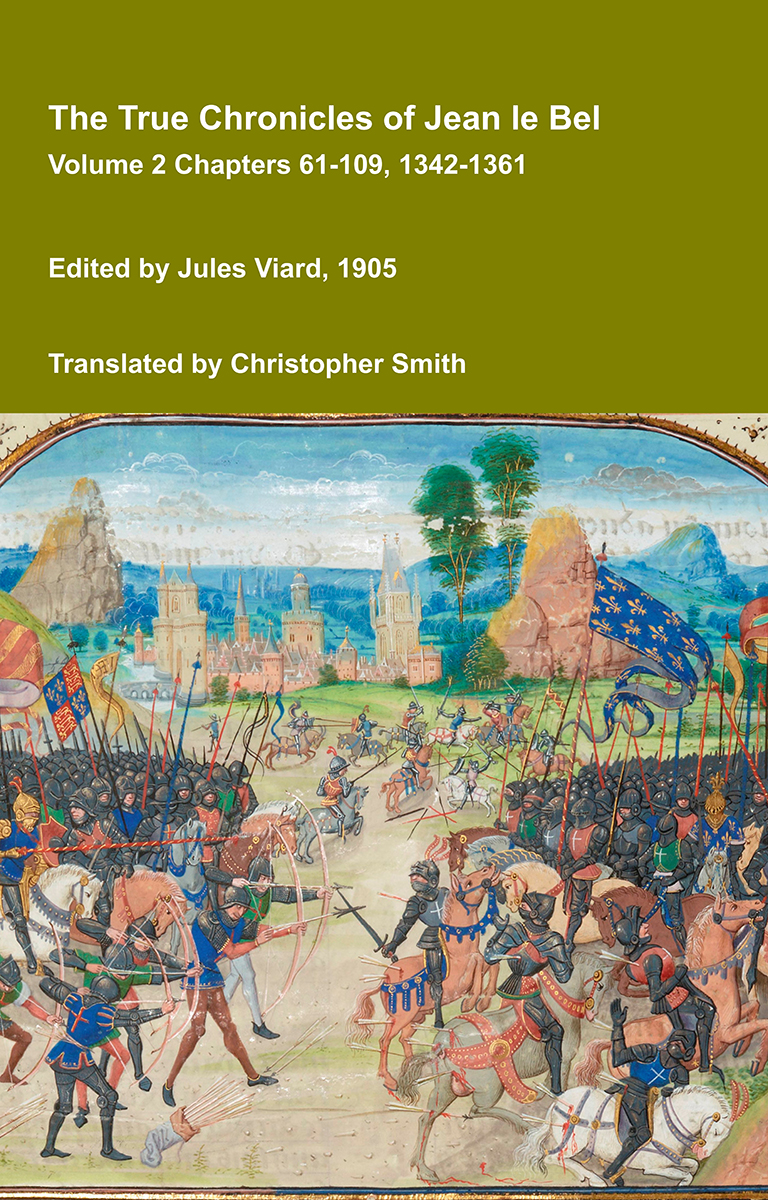 Chronicle of Jean le Bel Volume 2. King Edward rode on until he came near Cambrai. There he found the country a little richer, and so he let his men stay there for four or five days. Then he set out on the road towards Saint-Quentin, and passed through the whole Vermandois in ordered formation, as I have described to you. He crossed the river Somme, the river Oise and the river Aisne, and came to lodge in the march of the city of Reims, namely at Saint-Thierry, Pontfaverger and thereabouts. He remained in that country from the feast of Saint Andrew1 [30th November 1359] until five weeks after Christmas, which should be counted as the year of the Incarnation 1360. It rained continually all the while, and his men were always riding here and there, wherever they thought they might gain something, such as in the county of Rethel, as far as Warcq, Mézières, Donchery and Mouzon. They lodged in the country for three or four days at a time, robbing everything and laying it waste. But King Edward had commanded, on pain of hanging, that no one should burn in a town except one house or two, so that the rest might be ransomed more profitably. His men took Attigny by force, though it was strongly fortified, and found plenty of wine inside, with which they refreshed themselves at their pleasure, and distributed some to the lords of the army. Their captain was a very valiant knight of Hainaut, named Sir Eustace d’Aubrecicourt, who was captain of all those who raided through the county of Rethel. They had taken the town of Rethel up to the castle, and the town of Le Chesne. Those who rode towards Laon and Soissons had taken the town of Cormicy up to the castle. The noble king and his children lay quietly in their camp, and did not move, and went hunting on the river every day when it pleased them. Nor did they ever keep watch by night, however far they went.
Tant chevaucha le noble [roy] Edowart qu'il vint enprez Cambray; sy y trouva le pays ung petit plus gras; pour quoy il y laissa sejourner ses gens IIII ou V jours, el puis se mist au chemin par devers Saint Quentin et passa tout le Vermendoys ordonnéement, ainsy que devisé vous ay, et passa la riviere de Somme, la riviere d'Oise, la riviere d'Ayne, et fist tant qu'il se vint logier en la marche de la cité de Rains; c'est assavoir à Saint Thierry, au Pont Favregié et là entour, et demoura en celluy pays de la feste Saint Andryeu jusques à v septmaines aprez Noël, que on debvoit compter l'an de l'incarnation mil CCCLX. El tousjours plouvoit continuellement, et tousjours chevauchoïent ses gens de costé et d'aultre, par où ilz cuidoient gaagnier, comme en la conté de Rethés, jusques à Warck', à Masieres, à Donchery, à Moison, et se logoyent ou pays par III ou III jours, et desroboyent tout et gastoient. Mais le roy Edowart avoit commandé sur la hart que nul n’ardist en une ville, fors une maison ou II, pour les aultres mielx raenchonner. Ces gens gaagnierent par force Athegny, durement renforcié, si trouverrent [à] foison vin dedens, dont ilz s’aiserrent à leur poste, et en departirent aux seigneurs de l’ost. Et en fut cappitaine ung moult vaillant chevalier de Haynau, nommé messire Eustace d’Obrechicourt, qui estoit cappitaine de tous ceulx qui couroient par la conté de Rethés; et avoient gaagnié la ville de Rethés jusques au chastel et la ville de Chayne Poullieux, et les aultres qui chevauchoient vers Laon et Soissons avoient gaagnié la ville de Cormessy jusques au chastel. Et le noble roy et ses enfans gisoient en leur ost tous coys, et ne se mouvoient, et aloient à chasse en sur (sic) riviere tous les jours, quant il leur plaisoit, ne oncques ne firent guettier par nuit, combien que loing alassent.
Note 1. Edward III arrived before Reims on 4th December 1359 and remained there until 11th January 1360. Knighton: 'By chance, as two of the divisions were passing by, they met the king at a little village ten leagues from Reims in Champagne. There the king held a great council with the Duke of Lancaster and his other magnates on the eve of Saint Andrew [29th October 1359] and on the following day. From there they took their road towards Reims in three divisions, as they had done before, yet in such a way that each could know where the others were. Nor did any of their armies suffer any adversity or loss, nor was it ever challenged by the enemy during this whole march. Everything turned out prosperously for them, except that on 26th November a certain Baldwin Bartyn came with sixty adventurous men upon the Earl of Stafford, who was lodged in a small village near the prince, and challenged him. But the earl came out, and at the first attack killed one man and threw another to the ground. Thus they were all captured or killed, and not one escaped. Baldwin himself was taken. And it should be noted that in that whole expedition none of our men perished or suffered loss, except that Lord Thomas de Morreus was struck in the body by a gun. On 18th December 1359, the king came with all his men to the town of Reims, and they took lodgings on every side of the town, and rested peacefully, doing no one harm or injury. Each lord feasted with another as though they had been on their own soil in England. On the night of the feast of Saint Thomas of Canterbury 29th December 1359, the Duke of Lancaster, the Earl of Richmond, the Earl of March, and Lord John Chandos, who was held to be the most renowned knight in those days, went out to scale the town of Cernay-en-Dormois, which was a very strong town, fortified with a double ditch and a great wall, full of towers and furnished with armed men. The next day, before they had come within a league of the town, those inside perceived them and raised the alarm against them.'
@@ 1. Édouard III arriva devant Reims le 4 décembre 1359 et resta jusqu'au 11 janvier 1360. Sur la résistance de cette ville et les opératiors de l'armée anglaise pendant ce siège, voy. Varin, Arch. adnin. de Reims, 1.U, p. 156 à 159; Moranvillé, le Siège de Reins, dans Bibl. de l'École des chartes, &. AVI, p. 90 à 98. Voy. aussi, pour l'emplacement occupé par les Anglais autour de Reims, les Grandes chroniques, t. VI, p. 165 et 166. (Cf. Knighton, op. ait., 1. 11, p. 106 à 108; Denifle, op. cit., p. 340 à 343, et le D' A. Lapierre, la Guerre de Cent ans dans l'Argonne et le Rethelois, p. 15 à 22.)
On 4th December 1370 the Battle of Pontvallain was a French army under Bertrand du Guesclin [aged 50] heavily defeated an English force at Pontvallain which had broken away from an army commanded by Robert Knollys [aged 45].
Thomas Grandison 4th Baron Grandison [aged 31] commanded.
Philip Courtenay [aged 15] and Hugh Despencer [aged 32] were captured.
Alan Buxhull [aged 47] fought.
On 4th December 1371 Reginald II Duke Guelders [aged 38] died without issue. The Duke Guelders title passed to his sisters and their husband's resulting in a war of succession with William Jülich 3rd Duke Guelders 3rd Duke Jülich [aged 7], son of his sister Marie Guelders Duchess Jülich eventually succeeding.
On 4th December 1393 Frederick Wittelsbach Duke Bavaria [aged 54] died. His son Henry [aged 7] succeeded XVI Duke Bavaria.
On 4th December 1406 Margaret Valois was born to Louis Valois I Duke Orléans [aged 34] and Valentina Visconti Duchess of Orleans [aged 35]. Coefficient of inbreeding 7.39%. She married 1423 her second cousin Richard Montfort, son of John Montfort V Duke Brittany and Joanna of Navarre Queen Consort England, and had issue.
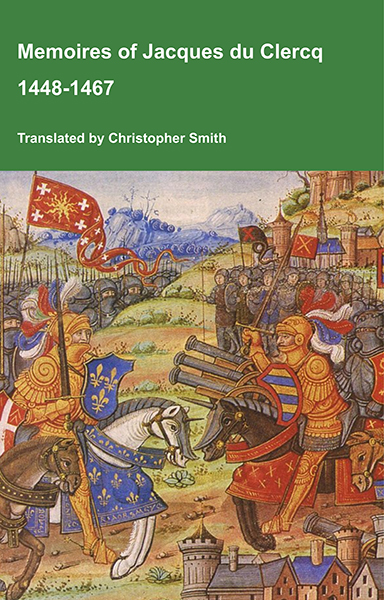 Memoires Jacques du Clercq. The city of Naples itself suffered great damage, especially to its churches. The earthquake lasted three days, and in some places longer, from the 4th to the 7th of December. During this time, it was said that 100,000 people died, according to reports from witnesses across various regions. In a single night, the castles of Sangine, Presole, and the rock of Cappra were entirely destroyed, leaving not a wall standing. Half of the city of Sermone was ruined, as well as the castle of Oliveto, where 500 people died, and the castle of Pessoly, where 600 perished. At the castle of Choco, the lord and all inhabitants were killed. The earthquake also damaged the walls of Ancona, particularly near the gate of Limonte, and caused great destruction in Cappra, Adversa, Benineut, and the castle of Lusano, events difficult to believe for those who did not witness them. These events were reported in writing to the Marquis of Ferrara by his brother, Sir Hercules, who was in the Kingdom of Naples with the King of Aragon. These letters were written at Roggia, and included in this chronicle so that the event would be known throughout the world. As for whether all the details are true, the author says he cannot be certain, except that the earthquake did indeed occur and caused great destruction, with many deaths and the collapse of numerous cities, castles, churches, houses, and buildings.
En la cité de Naples olt grand dommaige aussy par icelluy crollement de terre, par especial plus aulx eglises que aulx edifices de la cité, et dura icelluy crollement l'espace de trois jours, et en aulcunes parties plus longuement, c'est a sçavoir: depuis le iiije jour dudit mois jusques au septiesme inclus, durant lesquels jours moururent cent mille personnes comme il a esté relaté par gens de diverses contrées qui disoient la chose et sçavoient estre vraye; par icelluy crollement de terre feurent encoires mis en ruine, en une nuict, le chasteau de Sangine, le chasteau de Presole et la roche de Cappra, et n'y est demouré muraille ne maison. Par icelluy crollement de terre a esté mis en ruine la moitié de la cité de Sermone, et le chasteau de Oliveto, esquels sont morts cinq cens personnes, et au chasteau de Pessoly six cens, et pareillement au chasteau de Choco moururent le seigneur et toutes les personnes qui estoient dedans; encoires en fust mise en ruine la reprinse du mur d'Anconne devers la porte de Limonte, et se y olt grand dommaige es edifices de Cappra, de Adversa et de Benineut et le chasteau de Lusano, qui sont choses bien difficiles a croire, qui ne les auroit veues; ceste grande et merveilleuse perte fust encoires au marquis de Ferrare, en escript par messire Hercule son frere, qui estoit au royaume de Naples avecq le roy d'Arragon, et fust escript a Rogea; et pour tant qu'il fust sceu et cognu par tout le monde que ledit crollement fust audit pays en decembre, l'an mil iiije lvj, par lequel plusieurs chasteaux, eglises et maisons et aultres edifices fondirent. J'ay le contenu de la copie des lettres au marquis de Ferrare envoyées par son frere, mises en ce present livre; sy tout est vray ce qu'elles contiennent je n'en sçay rien, outre ce que ledit crollement fust, et qu'il feit, comme dessus est dit, plusieurs dommaiges dont plusieurs personnes moururent, et fondirent plusieurs chasteaux, eglises, maisons et aultres edifices.
On 4th December 1456 Charles Bourbon I Duke Bourbon [aged 55] died. His son John [aged 30] succeeded II Duke Bourbon.
Memoires Jacques du Clercq. In that same year also, on the 4th day of December, around nine o'clock in the evening, Jacotin Braquet, a burgher of Arras and unmarried, was killed and put to death between the Little Market, stabbed with pointed knives, in the city of Arras, by three companions named Jacotin Depré, Jennin, son of Fremin the goldsmith, called Biset, and Gufret, who claimed to belong to the lord of Habare; and one of them had been present at the killing of the said Jacotin, who was slain as has been said above. The said Jacotin was about thirty-nine years of age, and earlier in his life, some eighteen or twenty years before his death, he had been suspected of having killed, with others, in the said city of Arras, a sergeant of that town named Perard; but through money and the help of friends he cleared himself by denying the deed, and afterward the said Jacotin had spent the greater part of his substance. And although he came of respectable people in the said city of Arras, because of the quarrels and disputes he had, although he could not shoot a bow, he was a good man-at-arms, a good jouster, and a cunning man; but he led a wicked life.
En cest an aussy, le iiije jour de decembre, environ noeuf heures du vespres, Jacotin Braquet, bourgeois d'Arras, et a marrier, fust occis et mis a mort entre le petit marchié a cousteaulx a pointes, en la ville d'Arras, par trois compagnons, nommés Jacotin Depré, Jennin, fils de Fremin, orphevre, dit Biset, et Gufret, lesquels se disoient au Sr de Habare, et avoit l'ung d'eulx esté a tuer ledit Jacotin, qui avoit esté tué comme cy dessus est dit; lequel Jacotin estoit agé de xxxix ans ou environ, lequel en son advenement, environ dix huict ou vingt ans devant sa mort, avoit esté soubçonné de avoir occis avecq aultres, en ladite ville d'Arras, ung sergeant Habarcq, etc. d'icelle ville nommé Perard; mais par forche d'argent et d'amis il s'en purgea de fait nié, et depuis avoit ledit Jacotin dependé la pluspart de sa chevance; et jasoit ce que ledit Jacotin fust de bonnes gens, en ladite ville d'Arras, pour les debats et les noises que avoit; jasoit ce qu'il ne sceut tirer en ung arcq, sy estoit il bon homme d'armes, bon jouster et subtil homme; mais il estoit de mechante vie.
Chronicle of Abbot Ralph of Coggeshall
The Chronicle of Abbot Ralph of Coggeshall (Chronicon Anglicanum) is an indispensable medieval history that brings to life centuries of English and European affairs through the eyes of a learned Cistercian monk. Ralph of Coggeshall, abbot of the Abbey of Coggeshall in Essex in the early 13th century, continued and expanded his community’s chronicle, documenting events from the Norman Conquest of 1066 into the tumultuous reign of King Henry III. Blending eyewitness testimony, careful compilation, and the monastic commitment to record-keeping, this chronicle offers a rare narrative of political intrigue, royal power struggles, and social upheaval in England and beyond. Ralph’s work captures the reigns of pivotal figures such as Richard I and King John, providing invaluable insights into their characters, decisions, and the forces that shaped medieval rule. More than a simple annal, Chronicon Anglicanum conveys the texture of medieval life and governance, making it a rich source for scholars and readers fascinated by English history, monastic authorship, and the shaping of the medieval world.
Available at Amazon in eBook and Paperback format.
On 4th December 1466 Louis Valois was born to King Louis XI of France [aged 43] and Queen Charlotte of Savoy [aged 25]. Coefficient of inbreeding 2.69%. He died aged less than one years old.
On 4th December 1467 Francis I King Navarre was born to Gaston V Count Foix [aged 24] and Magdalena Valois Countess Foix [aged 24].
On 4th December 1483 George Browne [aged 43] was beheaded at Tower Hill [Map].
Chronicle of Robert Fabyan [-1512]. [4th December 1483]. And soon after in Kent were taken sir George Browne [aged 43], knyght, & Robert Clifforde, esquyer, & brought unto the Tower of London. And upon the daye .... of Octobre the sayd sir George & Robert were drawen from Westmynster unto the Tower Hill, and there behedyd.
Historie of Great Britain by John Speed Book 9 Chapter 36. [4th December 1483]. An other Commotion at the same time was in Kent, where George Browne [aged 43] and John Gilford Knights, Foge, Scot, Clifford, and Boating, with five thousand men attempted great matters at Crouch end, but hearing of the Duke of Buckinghams surprise, dispersed themselves for that time. But when King Richard perceived how hee was every where beset, he sent one Thomas Hutton unto Francis Duke of Britaine, with proffers of gold to circumvent and imprison Earle Henry, who as hee feared was too well friended in those forraine parts, which thing indeed this Hutton well perceived, and so to the King reported, that the Duke was nothing forward to bite at this baite, whereupon, those that lately fled England, were indited of treason, and other of Henries factions beheaded, whereof Sir George Browne, and Sir Roger Clifford Knights with foure others were beheaded at London, ...
Wriothesley's Chronicle [1508-1562]. 4th December 1514. This yeare on Monday, the 4th of December, Richarde Hunn, taylor, of London, was hanged in the Lowlardes Tower at Powles [Map]. He was made an heretique for suinge a Præmunire against Dr. Fitz-James, Bishopp of London, and Dr. Horsey, his Chauncellor; and they saide he hanged himselfe, but it was fownde contrarie. His bodie was burnt in Smithfeilde [Map], on the even of St. Thomas th' Apostle next followinge.g
Note g. Arnold's version is as follows: "This yere, in Octobre, one Richard Hoone, dwellyng in the parysh of Saynt Margaret in Brydge Stret, was appeached of heresy, and put into the Lollar's Tower, at Powles, and therin was founde hangyd in prison, whereupon grete exclamacyon was amonge people, how, by whom, or by what meane, he was hangyd; the dowt was denyd by the temporall lawe, and was sayd that one Kok Charls, a sumner, and the Bell Rynge of Powles, sholde, in a nyght, hang the sayd Hoone; howe be it, aftyr he was hanged, he was jugyd an herctyck by the spirituall lawe, and brnyed in Smythfeld."

On 4th December 1522 Thomas Howard 3rd Duke of Norfolk [aged 49] was appointed Lord Treasurer.
In early December 1529 King Henry VIII of England and Ireland [aged 38] created five Baronies...
On 1st December 1529...
Andrew Windsor 1st Baron Windsor [aged 62] was created 1st Baron Windsor of Stanwell in Buckinghamshire. Elizabeth Blount Baroness Windsor [aged 60] by marriage Baroness Windsor of Stanwell in Buckinghamshire.
John Hussey 1st Baron Hussey of Sleaford [aged 64] was created 1st Baron Hussey of Sleaford. Anne Grey Baroness Hussey Sleaford [aged 39] by marriage Baroness Hussey of Sleaford.
On 2nd December 1529...
Thomas Wentworth 1st Baron Wentworth [aged 28] was created 1st Baron Wentworth. Margaret Fortescue Baroness Wentworth [aged 27] by marriage Baroness Wentworth.
Thomas Burgh 7th Baron Cobham 5th Baron Strabolgi 1st Baron Burgh [aged 41] was created 1st Baron Burgh. Agnes Tyrwhitt Baroness Cobham, Strabolgi and Burgh [aged 48] by marriage Baroness Burgh. This is regarded as a new creation rather than a continuation of the previous creation Baron Burgh since Thomas's father was never summoned to Parliament due to his insanity. Some sources refer to Thomas as the 3rd Baron Burgh.
On 4th December 1529 Edmund Braye 1st Baron Braye [aged 45] was created 1st Baron Braye by writ, which means that it can descend through both male and female lines.


On 4th December 1571 Ferdinand King Asturias was born to Philip "The Prudent" II King Spain [aged 44] and Anna of Austria Queen Consort Spain [aged 22]. Coefficient of inbreeding 21.27%. He died aged six in 1578.


On 4th December 1611 Matthias I Holy Roman Emperor [aged 54] and Anna of Austria Holy Roman Empress [aged 26] were married. She by marriage Holy Roman Empress. The difference in their ages was 28 years. He the son of Maximilian Habsburg Spain II Holy Roman Emperor and Maria of Spain Holy Roman Empress. They were first cousins.


On or after 4th December 1641 Thomas Winniffe was nominated Bishop of Lincoln.
On 4th December 1649 John Egerton 1st Earl Bridgewater [aged 70] died. Monument at HR9JMi1fSt Peter and St Paul Church, Little Gaddesden. His son John [aged 26] succeeded 2nd Earl Bridgewater, 3rd Viscount Brackley, 3rd Baron Ellesmere. Elizabeth Cavendish Countess Bridgewater [aged 22] by marriage Countess Bridgewater.
The monument has three panels. Panel 1 a dedication to Elizabeth Cavendish Countess Bridgewater, Panel 2 a dedication to Frances Stanley Countess Bridgewater.
The third panel has an inscription to the Earl: "Here rests (till the last trump awakens his dust), the Right Honourable and truly noble Sir John Egerton, knt. one of the honourable Order of the Bath, Earle of Bridgewater, Viscount Brackley; and Baron of Elesmere, &c. He was son to that renowned patriot Sir Thomas Egerton, Baron of Elesmere, Viscount Brackley, and Lord Chancellor of England, and was sole heire both of his estate and virtues. He married the Right Honourable the Lady Frances Stanley, second daughter and one of the co-heires of Ferdinando, Earle of Derby, &c. a wife worthy such a husband, by whom he was blessed with a numerous and virtuous offspring, foure sonnes and eleven daughters. Three of his sonnes died before him, viz. James Viscount Brackley, his eldest, and Charles Viscount Brackley, his second sonne, who both died in their infancy; and Mr. Thomas Egerton, his fourth son, who lies here interred, dying unmarried in the 23d yeare of his age; and three of his daughters, viz. the Lady Cecila Egerton, Mrs. Alice Egerton, and the Lady Ann Egerton. His third and only surviving sonne and heire, John Viscount Brackley, he saw happily married to the Right Honourable the Lady Elizabeth Cavendyshe second daughter to the Right Honourable William Marquesse of Newcastle, &c. Seven of his daughters he likewise saw well and honourably married, viz. the Lady Frances, the Lady Arabella, the Lady Elizabeth, the Lady Mary, the Lady Penelope, the Lady Katharine, the Lady Magdalene; and left only his eleventh daughter, the Lady Alice Egerton, unmarried. He was endued with incomparable parts, both natural and acquired, so that both Art and Nature did seem to strive which should contribute most towards the making him a most accomplished gentleman; he had an active body, and a vigorous soule; his deportment was gracefull, his discourse excellent whether extemporary or premeditate, serious or jocular; so that he seldome spake, but he did either instruct or delight those that heard him; he was a profound scholar, an able statesman, and a good Christian; he was a dutiful! son to his mother the Church of England in her persecution, as well as in her greatest splendor; a loyall subject to his Sovereigne in those worst of times, when it was accounted treason not to be a traitor. As he lived 70 years a patterne of virtue; so he died an example of patience and piety, the fourth of December, in the year of our Lord 1649. Proverb x. 7. The memory of the Just is blessed."
Elizabeth Cavendish Countess Bridgewater: In 1627 she was born to William Cavendish 1st Duke Newcastle upon Tyne and Elizabeth Bassett Countess Newcastle upon Tyne. In 1641 John Egerton 2nd Earl Bridgewater and she were married. She the daughter of William Cavendish 1st Duke Newcastle upon Tyne and Elizabeth Bassett Countess Newcastle upon Tyne. He the son of John Egerton 1st Earl Bridgewater and Frances Stanley Countess Bridgewater. They were fourth cousins. He a great x 4 grandson of King Henry VII of England and Ireland. She a great x 5 granddaughter of King Edward IV of England. On 14th June 1663 Elizabeth Cavendish Countess Bridgewater died. She is commemorated on the Great Monument at St Peter and St Paul Church, Little Gaddesden on which is the inscription: "To the sacred memory of the late transcendently vertuous Lady, now glorious Saint, the Right Honourable Elizabeth Countesse of Bridgewater. She was second daughter to the Right Honourable William Marquesse of Newcastte, &c. and wife to the Right Honourable John Earle of Bridgewater, &c. and whose family she hath enriched with a hopeful issue, six sonnes, viz. John Viscount Brackley her eldest, Sir William Egerton second sonne, both Knights of the honourable Order of the Bath, Mr. Thomas Egerton her third, Mr. Charles Egerton her fourth, Mr. Henry Egerton her fifth, Mr. Steward Egerton her sixth sonne, and three daughters, viz. Mrs. Frances Egerton her eldest, the Lady Elizabeth Egerton her second, and the Lady Katherine Egerton her third daughter; of all which children, three, viz. Mr. Henry Egerton her fifth sonne, Mrs. Frances Egerton, her eldest, and the Lady Katherine Egerton her third daughter, lye here interred, dying in their infancy; the rest are still the living pictures of their deceased mother, and the only remaining comforts of their disconsolate father. She was a Lady in whom all the accomplishments both of body and mind did concurre to make her the glory of the present, and example of future ages. Her beauty was so unparallelled, that it is as much beyond the art of the most elegant pen, as it surpassed the skill of several of the most exquisite pencills (that attempted it) to describe, and not to disparage it. She had a winning and attractive behaviour, a charming discourse, a most obliging conversation: she was so courteous and affable to all persons, that she gained their love; yet, not so familiar to expose herselfe to contempt: she was of a noble and generous soule), yet, of so meeke and humble a disposition, that never any woman, of her quality, was greater in the world's opinion, and lesse in her owne: the rich at her table daily tasted her hospitality; the poore at her gate her charity: her devotion was most exemplary, if not inimitable; witnesse (besides several other occasional! meditations and prayers, full of all the holy transports and raptures of a sanctifyed soule), her divine meditations upon every partictular chapter in the Bible, written with her owne hand, and never (till since her death), seene by any eye but her owne, and her then dear but now sorrowful husband, to the admiration both, of her eminent piety in composing and of her modesty in concealing them. She was a most affectionate and observant wife to her husband, a most tender and indulgent mother to her children, a most kind and bountifull mistresse to her family. In a word, she was so superlatively good, that language is too narrow to expresse her deserved character: 11er death was as religious as her life was vertuous. On the 14th day of June, in the yeare of our Lord 1663; of her own age the 37th, she exchanged her earthly coronet for an heavenly crowne. Prov. xxxi; 28, 29. Her children rise up and call her blessed, her husband also, and he praiseth her. Many daughters have done virtuously, but thou excellest them all."


The History of William Marshal was commissioned by his son shortly after William’s death in 1219 to celebrate the Marshal’s remarkable life; it is an authentic, contemporary voice. The manuscript was discovered in 1861 by French historian Paul Meyer. Meyer published the manuscript in its original Anglo-French in 1891 in two books. This book is a line by line translation of the first of Meyer’s books; lines 1-10152. Book 1 of the History begins in 1139 and ends in 1194. It describes the events of the Anarchy, the role of William’s father John, John’s marriages, William’s childhood, his role as a hostage at the siege of Newbury, his injury and imprisonment in Poitou where he met Eleanor of Aquitaine and his life as a knight errant. It continues with the accusation against him of an improper relationship with Margaret, wife of Henry the Young King, his exile, and return, the death of Henry the Young King, the rebellion of Richard, the future King Richard I, war with France, the death of King Henry II, and the capture of King Richard, and the rebellion of John, the future King John. It ends with the release of King Richard and the death of John Marshal.
Available at Amazon in eBook and Paperback format.

After 4th December 1654. Church of St Peter and St Paul, Easton Maudit [Map]. Monument to Christopher Yelverton 1st Baronet [deceased].
Samuel Pepys' Diary. 4th December 1660. From thence I to my Lord's, and dined with him and told him what we had done to-day. Sir Tho. Crew [aged 36] dined with my Lord to-day, and we were very merry with Mrs. Borfett, who dined there still as she has always done lately. After dinner Sir Tho. and my Lady to the Playhouse [Map] to see "The Silent Woman". I home by water, and with Mr. Hater in my chamber all alone he and I did put this morning's design into order, which being done I did carry it to Sir W. Batten [aged 59], where I found some gentlemen with him (Sir W. Pen [aged 39] among the rest pretty merry with drink) playing at cards, and there I staid looking upon them till one o'clock in the morning, and so Sir W. Pen and I went away, and I to bed. This day the Parliament voted that the bodies of Oliver, Ireton, Bradshaw, &c., should be taken up out of their graves in the Abbey, and drawn to the gallows, and there hanged and buried under it: which (methinks) do trouble me that a man of so great courage as he was, should have that dishonour, though otherwise he might deserve it enough.


John Evelyn's Diary. 4th December 1661. I had much discourse with the Duke of York [aged 28], concerning strange cures he affirmed of a woman who swallowed a whole ear of barley, which worked out at her side. I told him of the KNIFE SWALLOWED and the pins.


On 4th December 1661 James Annesley 2nd Earl Anglesey [aged 16] was educated at Christ Church College.
Samuel Pepys' Diary. 4th December 1665. Upon the 'Change [Map] to-day Colvill tells me, from Oxford, that the King [aged 35] in person hath justified my Lord Sandwich [aged 40] to the highest degree; and is right in his favour to the uttermost.

Samuel Pepys' Diary. 4th December 1665. So out and by water to London and to the 'Change [Map], and up and down about several businesses, and after the observing (God forgive me!) one or two of my neighbour Jason's women come to towne, which did please me very well, home to my house at the office, where my wife had got a dinner for me: and it was a joyfull thing for us to meet here, for which God be praised! Here was her brother come to see her, and speake with me about business. It seems my recommending of him hath not only obtained his presently being admitted into the Duke of Albemarle's [aged 56] guards, and present pay, but also by the Duke's and Sir Philip Howard's [aged 34] direction, to be put as a right-hand man, and other marks of special respect, at which I am very glad, partly for him, and partly to see that I am reckoned something in my recommendations, but wish he may carry himself that I may receive no disgrace by him.


Samuel Pepys' Diary. 4th December 1667. At the office all the morning. At noon to dinner, and presently with my wife abroad, whom and her girle I leave at Unthanke's, and so to White Hall in expectation of waiting on the Duke of York [aged 34] to-day, but was prevented therein, only at Mr. Wren's chamber there I hear that the House of Lords did send down the paper which my Chancellor [aged 58] left behind him, directed to the Lords, to be seditious and scandalous; and the Commons have voted that it be burned by the hands of the hangman, and that the King [aged 37] be desired to agree to it. I do hear, also, that they have desired the King to use means to stop his escape out of the nation. Here I also heard Mr. Jermin [aged 31], who was there in the chamber upon occasion of Sir Thomas Harvy's [aged 42] telling him of his brother's [aged 34] having a child, and thereby taking away his hopes (that is, Mr. Jermin's) of £2000 a year. He swore, God damn him, he did not desire to have any more wealth than he had in the world, which indeed is a great estate, having all his uncle's, my Lord St. Alban's [aged 62], and my Lord hath all the Queen-Mother's [aged 58]. But when Sir Thos. Harvy told him that "hereafter you will wish it more";-"By God", answers he, "I won't promise what I shall do hereafter". Thence into the House, and there spied a pretty woman with spots on her face, well clad, who was enquiring for the guard chamber; I followed her, and there she went up, and turned into the turning towards the chapel, and I after her, and upon the stairs there met her coming up again, and there kissed her twice, and her business was to enquire for Sir Edward Bishop, one of the serjeants at armes. I believe she was a woman of pleasure, but was shy enough to me, and so I saw her go out afterwards, and I took a Hackney coach, and away. I to Westminster Hall [Map], and there walked, and thence towards White Hall by coach, and spying Mrs. Burroughs in a shop did stop and 'light and speak to her; and so to White Hall, where I 'light and went and met her coming towards White Hall, but was upon business, and I could not get her to go any whither and so parted, and I home with my wife and girle (my wife not being very well, of a great looseness day and night for these two days).


John Evelyn's Diary. 4th December 1676. I saw the great ball danced by all the gallants and ladies at the Duchess of York's [aged 18].


John Evelyn's Diary. 4th December 1679. I dined, together with Lord Ossory [aged 45] and the Earl of Chesterfield [aged 45], at the Portugal Ambassador's [aged 53], now newly come, at Cleveland House, a noble palace, too good for that infamous.... [Note. Probably a reference to Barbara Villiers 1st Duchess of Cleveland [aged 39]] The staircase is sumptuous, and the gallery and garden; but, above all, the costly furniture belonging to the Ambassador, especially the rich Japan cabinets, of which I think there were a dozen. There was a billiard table, with as many more hazards as ours commonly have; the game being only to prosecute the ball till hazarded, without passing the port, or touching the pin; if one miss hitting the ball every time, the game is lost, or if hazarded. It is more difficult to hazard a ball, though so many, than in our table, by reason the bound is made so exactly even, and the edges not stuffed; the balls are also bigger, and they for the most part use the sharp and small end of the billiard stick, which is shod with brass, or silver. The entertainment was exceedingly civil; but, besides a good olio, the dishes were trifling, hashed and condited after their way, not at all fit for an English stomach, which is for solid meat. There was yet good fowls, but roasted to coal, nor were the sweetmeats good.


John Evelyn's Diary. 4th December 1680. Came other witnesses of the Commons to corroborate the King's [aged 50], some being Peers, some Commons, with others of good quality, who took off all the former day's objections, and set the King's witnesses recti in curiâ.
John Evelyn's Diary. 4th December 1685. Lord Sunderland [aged 44] was declar'd President of ye Counsel, and yet to hold his Secretarie's place. The forces dispos'd into severall quarters thro' ye kingdome are very insolent, on wch are greate complaints. Lord Brandon [aged 67] tried for the late conspiracy, was condemn'd and pardon'd; so was Lord Grey [aged 30], his accuser and witnesse.
On 4th December 1706 Robert "Beau Handsome" Fielding [aged 56] was found guilty of bigamy. The marriage between him and Barbara Villiers 1st Duchess of Cleveland [aged 66] was annulled. He escaped sentence by producing a letter from Queen Anne of England Scotland and Ireland [aged 41] suspending his sentences. He lived out his days with Mary Wadsworth.
On 4th December 1711 Barbara Queen Consort Spain was born to John V King Portugal [aged 22]. She married Ferdinand VI King Spain, son of Philippe V King Spain and Maria Luisa Savoy.
On 4th December 1717 Henry Grey [aged 21] died. He was buried at the De Grey Mausoleum, St John the Baptist Church, Flitton [Map].
Henry Grey: Around 1696 he was born to Henry Grey 1st Duke Kent and Jemima Crew Marchioness Kent.


On 4th December 1719 Charles Lennox 2nd Duke Richmond [aged 18] and Sarah Cadogan Duchess Richmond [aged 14] were married at The Hague. He was, apparently, forced into the marriage to pay off his, or his father's debts since she brought a considerable dowry. She the daughter of William Cadogan 1st Earl Cadogan [aged 47] and Margaret Cecilia Munter Countess Cadogan. He the son of Charles Lennox 1st Duke Richmond [aged 47] and Anne Brudenell Duchess Richmond [aged 48].

After 4th December 1760. St Mary's Church, Sprotbrough [Map]. Memorial to William Wrightson of Cusworth [deceased].
On 4th December 1776 Mary Roddam [aged 76] died.
Mary Roddam: In 1700 she was born to John Roddam of Roddam and Chirton. On 29th May 1731 Edward Collingwood of Byker and Dissington and she were married at All Saints Church, Newcastle upon Tyne [Map].
Adam Murimuth's Continuation and Robert of Avesbury’s 'The Wonderful Deeds of King Edward III'
This volume brings together two of the most important contemporary chronicles for the reign of Edward III and the opening phases of the Hundred Years’ War. Written in Latin by English clerical observers, these texts provide a vivid and authoritative window into the political, diplomatic, and military history of fourteenth-century England and its continental ambitions. Adam Murimuth Continuatio's Chronicarum continues an earlier chronicle into the mid-fourteenth century, offering concise but valuable notices on royal policy, foreign relations, and ecclesiastical affairs. Its annalistic structure makes it especially useful for establishing chronology and tracing the development of events year by year. Complementing it, Robert of Avesbury’s De gestis mirabilibus regis Edwardi tertii is a rich documentary chronicle preserving letters, treaties, and official records alongside narrative passages. It is an indispensable source for understanding Edward III’s claim to the French crown, the conduct of war, and the mechanisms of medieval diplomacy. Together, these works offer scholars, students, and enthusiasts a reliable and unembellished account of a transformative period in English and European history. Essential for anyone interested in medieval chronicles, the Hundred Years’ War, or the reign of Edward III.
Available at Amazon in eBook and Paperback format.
On 4th December 1782 John Opie [aged 21] and Mary Bunn were married at St Martin in the Fields Church [Map].
Dictionary of National Biography: Opie's first cares in his new prosperity were to surround his mother with comfort, and to provide himself with a wife. On 4 December 1782 he married Mary Bunn at the church of St. Martin-in-the-Fields. She was a daughter of Benjamin Bunn of St. Botolpn's, Aldgate, who combined the business of a solicitor with that of a money-lender. The match was unhappy. In 1795 the lady eloped with one John Edwards, and in the following year Opie obtained a divorce.
On 4th December 1803 Katherine Frances Montagu Scott was born to Charles Scott 4th Duke Buccleuch 6th Duke Queensberry [aged 31] and Harriet Katherine Townshend Duchess Buccleuch Duchess Queensbury [aged 30]. Coefficient of inbreeding 1.60%. She died aged ten in 1814.
Greville Memoirs. 4th December 1831. Dined with Talleyrand yesterday. He complained to me of Durham's return, and of 'sa funeste influence sur Lord Grey:' that because he had been at Brussels and at Paris, he fancied nobody but himself knew anything of foreign affairs; he praised Palmerston highly. In the evening to Lady Harrowby [aged 59], who told me John Russell had been with her, all moderation and candour, and evidently for the purpose of keeping alive the amicable relations which had been begun by Wharncliffe's [aged 55] negotiation. When Lady Harrowby said it was over, he replied, 'For the present,' said how glad he should be of a compromise, hinted that Sandon might be instrumental, that he might move an amendment in the House of Commons; abused Macaulay's violent speech—in short, was all mild and doucereux—all which proves that they do wish to compromise if they could manage it conveniently. Lord John Russell [aged 39] told her that there was no going on with Durham, that he never left Lord Grey, tormented his heart out, and made him so ill and irritable that he could not sleep. Durham wanted to be Minister for Foreign Affairs.


On 4th December 1836 Philip Richard Morris was born in Devonport, Devon into a family of iron founders.


On 4th December 1849 Carlos María Fitz James Stuart 16th Duke Alba 14th Duke Veragua 9th Duke Berwick was born to Jacopo Fitz James Stuart 15th Duke Alba 13th Duke Veragua 8th Duke Berwick [aged 28] at Madrid [Map].

On 4th December 1866 Evelina de Rothschild [aged 27] died in childbirth after giving birth to their first child, a stillborn son.
On 4th December 1905 Henry Hugh Armstead [aged 77] died at 52 Circus Road, St John's Wood [Map]. He was buried at Highgate Cemetery West in a family grave.
On 4th December 1918 Augustus Charles Lennox Fitzroy 7th Duke Grafton [aged 97] died in Wakefield Lodge, Pottersbury. His son Alfred [aged 68] succeeded 8th Duke Grafton, 8th Earl Euston, 8th Viscount Ipswich, 8th Baron Sudbury, 9th Earl Arlington, 9th Viscount Thetford, 9th Baron Arlington of Arlington in Middlesex and 9th Baron Arlington of Arlington in Middlesex. Susanna Mary Mctaggart Stewart Duchess Grafton by marriage Duchess Grafton.
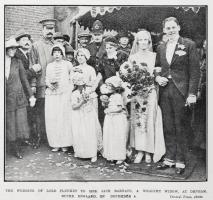
On 4th December 1922 Terence Plunket 6th Baron Plunket [aged 23] and Dorothé Mabel Lewis [aged 22] were married at Denham, Buckinghamshire. She the illegitmate daughter of Charles Vane-Tempest-Stewart 7th Marquess of Londonderry [aged 44] and Fanny Ward aka Buchanan [aged 50].
Auckland Weekly News; Central Press
Terence Plunket 6th Baron Plunket: On 12th July 1899 he was born to William Plunket 5th Baron Plunket and Victoria Hamilton-Temple-Blackwood Baroness Plunket. On 24th January 1920 William Plunket 5th Baron Plunket died. His son Terence succeeded 6th Baron Plunket of Newtown in County Cork. On 24th February 1938 husband and wife Terence Plunket 6th Baron Plunket and Dorothé Mabel Lewis died in a plane crash. They were bound for the Hearst ranch at San Simeon, now known as Hearst Castle. In the coastal fog surrounding the airstrip on the ranch, the pilot overshot the field by nearly a mile and a half. One wing struck the ground, causing the plane to burst into flames and crash. James Lawrence was the only survivor, having been thrown clear of the plane. He suffered burns and a broken ankle. Her son Patrick succeeded 7th Baron Plunket of Newtown in County Cork. Their children were subsequently were raised by Lord Plunket's sister, The Helen Rhodes, and her husband, Arthur Rhodes.
Dorothé Mabel Lewis: In 1900 she was born illegitimately to Charles Vane-Tempest-Stewart 7th Marquess of Londonderry and Fanny Ward aka Buchanan.
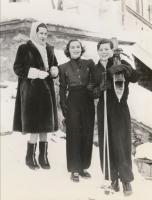
On 4th December 1928 Archbishop Cosmo Gordon Lang [aged 64] was enthroned Archbishop of Canterbury.
On 4th December 1934 Paul-Albert Besnard [aged 85] died.
Chronicle of Abbot Ralph of Coggeshall
The Chronicle of Abbot Ralph of Coggeshall (Chronicon Anglicanum) is an indispensable medieval history that brings to life centuries of English and European affairs through the eyes of a learned Cistercian monk. Ralph of Coggeshall, abbot of the Abbey of Coggeshall in Essex in the early 13th century, continued and expanded his community’s chronicle, documenting events from the Norman Conquest of 1066 into the tumultuous reign of King Henry III. Blending eyewitness testimony, careful compilation, and the monastic commitment to record-keeping, this chronicle offers a rare narrative of political intrigue, royal power struggles, and social upheaval in England and beyond. Ralph’s work captures the reigns of pivotal figures such as Richard I and King John, providing invaluable insights into their characters, decisions, and the forces that shaped medieval rule. More than a simple annal, Chronicon Anglicanum conveys the texture of medieval life and governance, making it a rich source for scholars and readers fascinated by English history, monastic authorship, and the shaping of the medieval world.
Available at Amazon in eBook and Paperback format.
On 12th July 1240 or 4th December 1240 Blanche Capet was born to King Louis IX of France [aged 26] and Margaret Provence Queen Consort France [aged 19] at Jaffa. She a great x 2 granddaughter of King Henry "Curtmantle" II of England. She died aged three in 1244.
On 4th December 1406 Margaret Valois was born to Louis Valois I Duke Orléans [aged 34] and Valentina Visconti Duchess of Orleans [aged 35]. Coefficient of inbreeding 7.39%. She married 1423 her second cousin Richard Montfort, son of John Montfort V Duke Brittany and Joanna of Navarre Queen Consort England, and had issue.
On 4th December 1466 Louis Valois was born to King Louis XI of France [aged 43] and Queen Charlotte of Savoy [aged 25]. Coefficient of inbreeding 2.69%. He died aged less than one years old.
On 4th December 1467 Francis I King Navarre was born to Gaston V Count Foix [aged 24] and Magdalena Valois Countess Foix [aged 24].
On 4th December 1506 Thomas Darcy 1st Baron Darcy was born to Roger Darcy [aged 28] and Elizabeth Wentworth Countess Bath [aged 36]. He married (1) September 1521 Audrey Raynsford and had issue (2) in or after 1527 Elizabeth Vere Baroness Darcy Chiche, daughter of John de Vere 15th Earl of Oxford and Elizabeth Trussell Countess of Oxford, and had issue.
On 4th December 1571 Ferdinand King Asturias was born to Philip "The Prudent" II King Spain [aged 44] and Anna of Austria Queen Consort Spain [aged 22]. Coefficient of inbreeding 21.27%. He died aged six in 1578.
On 28th November 1586 Thomas Bowyer 1st Baronet was born to Thomas Bowyer of Leighthorne, Sussex and Jane Birch. He was baptised on 4th December 1586 at Church of St Stephen, North Mudham.
On 4th December 1607 John Freschville 1st Baron Frescheville was born to Peter Freschville [aged 36] and Joyce Fleetwood. He married (1) before 10th April 1629 Bruce Nichols (2) April 1630 Sarah Harrington and had issue (3) December 1666 Anna Charlotte De Vic.
On 4th December 1644 Pope Danvers 2nd Baronet was born to Samuel Danvers 1st Baronet [aged 33] and Anne Pope Lady D'Anvers [aged 28].
On 4th December 1660 Simon Biddulph was born to Theophilus Biddulph 1st Baronet [aged 48].
On 4th December 1691 Henry Grey 1st Baronet was born to John Grey [aged 25] and Margaret Person [aged 22]. He married in or before 1722 Hannah Wood and had issue.
On 4th December 1711 Barbara Queen Consort Spain was born to John V King Portugal [aged 22]. She married Ferdinand VI King Spain, son of Philippe V King Spain and Maria Luisa Savoy.
Abbot John Whethamstede’s Chronicle of the Abbey of St Albans
Abbot John Whethamstede's Register aka Chronicle of his second term at the Abbey of St Albans, 1451-1461, is a remarkable text that describes his first-hand experience of the beginning of the Wars of the Roses including the First and Second Battles of St Albans, 1455 and 1461, respectively, their cause, and their consequences, not least on the Abbey itself. His text also includes Loveday, Blore Heath, Northampton, the Act of Accord, Wakefield, and Towton, and ends with the Coronation of King Edward IV. In addition to the events of the Wars of the Roses, Abbot John, or his scribes who wrote the Chronicle, include details in the life of the Abbey such as charters, letters, land exchanges, visits by legates, and disputes, which provide a rich insight into the day-to-day life of the Abbey, and the challenges faced by its Abbot.
Available at Amazon in eBook and Paperback format.
On 4th December 1739 Henry Temple 2nd Viscount Palmerston was born to Henry Temple and Jane Barnard. He married (1) 6th October 1767 Frances Poole Viscountess Palmerston, daughter of Francis Poole 2nd Baronet and Frances Pelham Lady Poole (2) 5th January 1783 Mary Mee Viscountess Palmerston and had issue.
On 4th December 1743 Mary Beauclerk was born to Vere Beauclerk 1st Baron de Vere [aged 44] and Mary Chambers Baroness Spencer [aged 29]. She a great granddaughter of King Charles II of England Scotland and Ireland. She married 2nd October 1762 Charles Spencer, son of Charles Spencer 3rd Duke of Marlborough and Elizabeth Trevor Duchess of Marlborough, and had issue.
On 4th December 1750 Louisa Bayly was born to Nicholas Bayly 2nd Baronet Bayly of Plas Newydd in Anglesey [aged 41] and Caroline Paget Lady Plas Newydd Anglesey [aged 43]. She married 6th April 1769 Thomas Poplett.


On 4th December 1762 Thomas Hugh Clifford aka Constable 1st Baronet was born to Thomas Henry Clifford [aged 30] and Barbara Aston [aged 18].
On 4th December 1764 Richard Bingham 2nd Earl Lucan was born to Charles Bingham 1st Earl Lucan [aged 29] and Margaret Smith Countess Lucan [aged 24]. He married 26th May 1794 Elizabeth Belasyse Duchess Norfolk, daughter of Henry Belasyse 2nd Earl Fauconberg and Charlotte Lamb Countess Fauconberg, and had issue.
On 4th December 1770 George Annesley 2nd Earl Mountnorris was born to Arthur Annesley 1st Earl Mountnorris [aged 26] and Lucy Lyttelton Baronet. He married 3rd September 1790 Anne Courtenay Countess Mountnorris, daughter of William Courtenay 8th Earl Devon and Frances Clack Countess Devon.

On 4th December 1779 George Charles Venables-Vernon 4th Baron Vernon was born to Henry Venables-Vernon 3rd Baron Vernon [aged 32] and Elizabeth Rebecca Anne Sedley [aged 22]. He married 25th August 1802 Frances Maria Warren Baroness Vernon, daughter of Admiral John Borlase Warren 1st Baronet and Caroline Clavering Lady Warren, and had issue.
On 4th December 1795 Edward Poore 2nd Baronet was born to Edward Poore [aged 22] and Martha Anne Wolff. He married 6th January 1818 Agnes Marjoribanks Lady Poore, daughter of John Marjoribanks 1st Baronet, and had issue.
On 4th December 1803 John Barker aka Barker-Mill 1st Baronet was born to John Barker of Wareham. He married 14th August 1828 Jane Swinburne Lady Barker-Mill.
On 4th December 1803 Katherine Frances Montagu Scott was born to Charles Scott 4th Duke Buccleuch 6th Duke Queensberry [aged 31] and Harriet Katherine Townshend Duchess Buccleuch Duchess Queensbury [aged 30]. Coefficient of inbreeding 1.60%. She died aged ten in 1814.
Abbot John Whethamstede’s Chronicle of the Abbey of St Albans
Abbot John Whethamstede's Register aka Chronicle of his second term at the Abbey of St Albans, 1451-1461, is a remarkable text that describes his first-hand experience of the beginning of the Wars of the Roses including the First and Second Battles of St Albans, 1455 and 1461, respectively, their cause, and their consequences, not least on the Abbey itself. His text also includes Loveday, Blore Heath, Northampton, the Act of Accord, Wakefield, and Towton, and ends with the Coronation of King Edward IV. In addition to the events of the Wars of the Roses, Abbot John, or his scribes who wrote the Chronicle, include details in the life of the Abbey such as charters, letters, land exchanges, visits by legates, and disputes, which provide a rich insight into the day-to-day life of the Abbey, and the challenges faced by its Abbot.
Available at Amazon in eBook and Paperback format.
On 4th December 1829 Spencer Maryon Wilson 10th Baronet was born to John Maryon Wilson 9th Baronet [aged 26].
On 4th December 1836 Philip Richard Morris was born in Devonport, Devon into a family of iron founders.
On 4th December 1841 Francis Power Plantagenet Hastings 14th Earl Huntingdon was born to Francis Theophilus Henry Hastings 13th Earl Huntingdon [aged 33]. He married 15th August 1867 Mary Anne Westenra Countess Huntingdon and had issue.
On 4th December 1842 Osbert Mordaunt was born to John Mordaunt 9th Baronet [aged 34].
On 4th December 1844 Beauchamp St John 17th Baron St John was born to Andrew St John 15th Baron St John [aged 33].
On 4th December 1845 Charles Allanson-Winn 4th Baron Headley was born to Charles Allanson-Winn 3rd Baron Headley [aged 35].

On 4th December 1845 Henry Augustus Stanhope was born to Philip Stanhope 5th Earl Stanhope [aged 40] and Emily Harriet Countess Stanhope. He married 2nd November 1878 Mildred Venables-Vernon, daughter of Augustus Henry Vernon 6th Baron Vernon and Harriet Frances Maria Anson Baroness Vernon.
On 4th December 1849 Carlos María Fitz James Stuart 16th Duke Alba 14th Duke Veragua 9th Duke Berwick was born to Jacopo Fitz James Stuart 15th Duke Alba 13th Duke Veragua 8th Duke Berwick [aged 28] at Madrid [Map].
On 4th December 1850 Henry Thomas Foley 5th Baron Foley was born to Thomas Henry Foley 4th Baron Foley [aged 41] and Mary Charlotte Fitzalan Baroness Foley [aged 28].

On 4th December 1850 Elizabeth Ellen Hulme Lady Lever was born.
Chronicle of Walter of Guisborough
A canon regular of the Augustinian Guisborough Priory, Yorkshire, formerly known as The Chronicle of Walter of Hemingburgh, describes the period from 1066 to 1346. Before 1274 the Chronicle is based on other works. Thereafter, the Chronicle is original, and a remarkable source for the events of the time. This book provides a translation of the Chronicle from that date. The Latin source for our translation is the 1849 work edited by Hans Claude Hamilton. Hamilton, in his preface, says: 'In the present work we behold perhaps one of the finest samples of our early chronicles, both as regards the value of the events recorded, and the correctness with which they are detailed; Nor will the pleasing style of composition be lightly passed over by those capable of seeing reflected from it the tokens of a vigorous and cultivated mind, and a favourable specimen of the learning and taste of the age in which it was framed.'
Available at Amazon in eBook and Paperback format.
On 4th December 1857 Grey Neville was born to Latimer Neville 6th Baron Braybrooke [aged 30].
On 4th December 1862 Richard Henry Williams-Bulkeley 12th Baronet was born to Richard Williams Bulkeley 11th Baronet [aged 29] and Margaret Elizabeth Williams [aged 24].
On 4th December 1863 William Lambton was born to George Frederick D'Arcy Lambton 2nd Earl Durham [aged 35] and Beatrix Frances Hamilton Countess Durham [aged 28]. He married 22nd April 1921 his fifth cousin Katherine De Vere Beauclerk, daughter of William Amelius Aubrey Beauclerk 10th Duke St Albans and Grace Bernal Duchess St Albans.

On 4th December 1872 Millicent Florence Eleanor Wilson Countess Cowley was born to Charles Henry Wilson 1st Baron Nunburnholme [aged 39] and Florence Jane Helen Wellesley Baroness Nunburnholme [aged 19]. She married (1) 10th June 1895 Charles Edward Cradock-Hartopp 5th Baronet, son of John William Cradock-Hartopp 4th Baronet and Charlotte Frances Howard Lady Cradock-Hartopp (2) 14th December 1905 her third cousin Henry Arthur Mornington Wellesley 3rd Earl Cowley, son of William Henry Wellesley 2nd Earl Cowley and Emily Gwendoline Williams Countess Cowley, and had issue.
On 4th December 1874 Francis William George Egerton was born to Francis Egerton 3rd Earl Ellesmere [aged 27] and Katherine Louisa Phipps Countess Ellesmere [aged 24].
On 4th December 1878 Sholto Douglas was born to Sholto Douglas 19th Earl of Morton [aged 34] and Helen Geraldine Ponsonby Countess of Morton [aged 26]. He married 5th June 1905 Minnie Hay and had issue.
On 4th December 1879 Charles Stewart Reginald Vane-Tempest-Stewart was born to Charles Stewart Vane-Tempest-Stewart 6th Marquess Londonderry [aged 27] and Theresa Susey Helen Chetwynd-Talbot Marchioness Londonderry [aged 23].


On 4th December 1880 Frederick Villiers Laud Robinson 10th Baronet was born to Frederick Laud Robinson 9th Baronet [aged 37].
On 4th December 1883 Eric Spencer Wentworth-Fitzwilliam 9th and 7th Earl Fitzwilliam was born to William Charles Wentworth-Fitzwilliam [aged 35] and Constance Anne Brocklehurst.
On 4th December 1884 Grey Humberstone d'Estoteville 11th Baronet was born to Peyton d'Estoteville Skipwith 10th Baronet [aged 27].
Annals of the six Kings of England by Nicholas Trivet
Translation of the Annals of the Six Kings of England by that traces the rise and rule of the Angevin aka Plantagenet dynasty from the mid-12th to early 14th century. Written by the Dominican scholar Nicholas Trivet, the work offers a vivid account of English history from the reign of King Stephen through to the death of King Edward I, blending political narrative with moral reflection. Covering the reigns of six monarchs—from Stephen to Edward I—the chronicle explores royal authority, rebellion, war, and the shifting balance between crown, church, and nobility. Trivet provides detailed insight into defining moments such as baronial conflicts, Anglo-French rivalry, and the consolidation of royal power under Edward I, whose reign he describes with particular immediacy. The Annals combines careful year-by-year reporting with thoughtful interpretation, presenting history not merely as a sequence of events but as a moral and political lesson. Ideal for readers interested in medieval history, kingship, and the origins of the English state, this chronicle remains a valuable and accessible window into the turbulent world of the Plantagenet kings.
Available at Amazon in eBook and Paperback format.
On 4th December 1888 Philip Albert Gustave David Sassoon 3rd Baronet was born to Edward Albert Sassoon 2nd Baronet [aged 32] and Aline Caroline de Rothschild [aged 21].


On 4th December 1898 Sybil Mary Hardinge Countess Fortescue was born to Henry Charles Hardinge 3rd Viscount Hardinge [aged 41] and Mary Frances Neville Marchioness Abergavenny [aged 29]. She married (1) 25th April 1922 Hugh Napier Douglas-Pennant 4th Baron Penrhyn, son of Edward Sholto Douglas-Pennant 3rd Baron Penrhyn and Blanche Georgiana Fitzroy Baroness Penrhyn (2) 8th August 1941 Denzil George Fortescue 6th Earl Fortescue, son of Hugh Fortescue 4th Earl Fortescue and Emily Ormsby-Gore Countess Fortescue.
On 4th December 1900 Henry Marmaduke Strickland-Constable 10th Baronet was born to Frederick Charles Strickland-Constable [aged 40].
On 4th December 1909 Robert Jocelyn 9th Earl Roden was born to Robert Jocelyn 8th Earl Roden [aged 26] and Elinor Jessie Parr Countess Roden.
On 4th December 1915 David Arthur Coke was born to Thomas William Coke 4th Earl of Leicester [aged 35] and Marion Gertrude Trefusis Countess Leicester [aged 33]. His godfather was King Edward VIII of the United Kingdom [aged 21]. He was educated at Eton College [Map] and graduated from Trinity College, Cambridge University [Map].
On 4th December 1924 Derek Hart Dyke 9th Baronet was born to Oliver Hart Dyke 8th Baronet [aged 39].
On 4th December 1933 Michael Annesley 12th Earl Annesley was born to Robert Annesley 9th Earl Annesley [aged 33].
On 4th December 1968 Andrew Rowland Hodge 3rd Baronet was born to John Rowland Hodge 2nd Baronet [aged 55].
On 4th December 1548 a double wedding of a father and son, and a mother and daughter, was celebrated at Hengrave Hall, Bury St Edmunds.
John Bourchier 2nd Earl Bath [aged 49] and Margaret Donnington Countess Bath [aged 39] were married. She by marriage Countess Bath. He the son of John Bourchier 1st Earl Bath and Cecily Daubeney Baroness Fitzwarin.
John Bourchier [aged 19] and Frances Kitson were married. She the daughter of Thomas Kitson and Margaret Donnington Countess Bath. He the son of John Bourchier 2nd Earl Bath and Eleanor Manners Countess Bath.
On 4th December 1592 Robert Sackville 2nd Earl Dorset [aged 31] and Anne Spencer Countess Dorset were married. He the son of Thomas Sackville 1st Earl Dorset [aged 56] and Cicely Baker Countess Dorset [aged 57].
On 4th December 1606 Charles Morrison 1st Baronet [aged 19] and Mary Hicks Lady Cooper and Morrison were married at Low Leyton, Essex.
On 4th December 1611 Matthias I Holy Roman Emperor [aged 54] and Anna of Austria Holy Roman Empress [aged 26] were married. She by marriage Holy Roman Empress. The difference in their ages was 28 years. He the son of Maximilian Habsburg Spain II Holy Roman Emperor and Maria of Spain Holy Roman Empress. They were first cousins.
Chronicle of Walter of Guisborough
A canon regular of the Augustinian Guisborough Priory, Yorkshire, formerly known as The Chronicle of Walter of Hemingburgh, describes the period from 1066 to 1346. Before 1274 the Chronicle is based on other works. Thereafter, the Chronicle is original, and a remarkable source for the events of the time. This book provides a translation of the Chronicle from that date. The Latin source for our translation is the 1849 work edited by Hans Claude Hamilton. Hamilton, in his preface, says: 'In the present work we behold perhaps one of the finest samples of our early chronicles, both as regards the value of the events recorded, and the correctness with which they are detailed; Nor will the pleasing style of composition be lightly passed over by those capable of seeing reflected from it the tokens of a vigorous and cultivated mind, and a favourable specimen of the learning and taste of the age in which it was framed.'
Available at Amazon in eBook and Paperback format.
On 4th December 1637 John Borlase 1st Baronet [aged 18] and Alice Bankes Lady Borlase were married at St Giles' in the Fields Church [Map]. His brother William Borlase [aged 17] married her sister Joanna Bankes.
On 4th December 1659 John Brereton 4th Baron Brereton and Mary Tipping Baroness Brereton [aged 4] were married at St Paul's Church, Covent Garden. She by marriage Baroness Brereton.
On 4th December 1719 Charles Lennox 2nd Duke Richmond [aged 18] and Sarah Cadogan Duchess Richmond [aged 14] were married at The Hague. He was, apparently, forced into the marriage to pay off his, or his father's debts since she brought a considerable dowry. She the daughter of William Cadogan 1st Earl Cadogan [aged 47] and Margaret Cecilia Munter Countess Cadogan. He the son of Charles Lennox 1st Duke Richmond [aged 47] and Anne Brudenell Duchess Richmond [aged 48].
On 4th December 1778 George Brodrick 4th Viscount Midleton [aged 24] and Anne Pelham were married. She by marriage Viscountess Midleton of Midleton in Cork. She the daughter of Thomas Pelham 1st Earl Chichester [aged 50] and Anne Frankland Countess Chichester [aged 43]. They were third cousin once removed.
On 4th December 1782 John Opie [aged 21] and Mary Bunn were married at St Martin in the Fields Church [Map].
Dictionary of National Biography: Opie's first cares in his new prosperity were to surround his mother with comfort, and to provide himself with a wife. On 4 December 1782 he married Mary Bunn at the church of St. Martin-in-the-Fields. She was a daughter of Benjamin Bunn of St. Botolpn's, Aldgate, who combined the business of a solicitor with that of a money-lender. The match was unhappy. In 1795 the lady eloped with one John Edwards, and in the following year Opie obtained a divorce.
On 4th December 1809 Richard Brooke 6th Baronet [aged 24] and Harriet Cunliffe Lady Brooke were married. She by marriage Lady Brooke of Norton Priory in Cheshire. They were first cousins.
On 4th December 1879 Samuel George Brooke-Pechell 6th Baronet [aged 27] and Constance Louisa Chawner were married.
On 4th December 1902 George Lawson Johnston 1st Baron Luke [aged 29] and Edith Laura St John Baroness Luke [aged 23] were married.


On 4th December 1922 Terence Plunket 6th Baron Plunket [aged 23] and Dorothé Mabel Lewis [aged 22] were married at Denham, Buckinghamshire. She the illegitmate daughter of Charles Vane-Tempest-Stewart 7th Marquess of Londonderry [aged 44] and Fanny Ward aka Buchanan [aged 50].
Auckland Weekly News; Central Press
Terence Plunket 6th Baron Plunket: On 12th July 1899 he was born to William Plunket 5th Baron Plunket and Victoria Hamilton-Temple-Blackwood Baroness Plunket. On 24th January 1920 William Plunket 5th Baron Plunket died. His son Terence succeeded 6th Baron Plunket of Newtown in County Cork. On 24th February 1938 husband and wife Terence Plunket 6th Baron Plunket and Dorothé Mabel Lewis died in a plane crash. They were bound for the Hearst ranch at San Simeon, now known as Hearst Castle. In the coastal fog surrounding the airstrip on the ranch, the pilot overshot the field by nearly a mile and a half. One wing struck the ground, causing the plane to burst into flames and crash. James Lawrence was the only survivor, having been thrown clear of the plane. He suffered burns and a broken ankle. Her son Patrick succeeded 7th Baron Plunket of Newtown in County Cork. Their children were subsequently were raised by Lord Plunket's sister, The Helen Rhodes, and her husband, Arthur Rhodes.
Dorothé Mabel Lewis: In 1900 she was born illegitimately to Charles Vane-Tempest-Stewart 7th Marquess of Londonderry and Fanny Ward aka Buchanan.
On 4th December 1939 Lieutenant-Colonel Michael Eric Dillon 20th Viscount Dillon [aged 28] and Irène Marie France Merandon du Plessis Viscountess Dillon were married.
On 4th December 1975 James Lowther 7th Earl Londsdale [aged 53] and Caroline Sheila Ley Countess Lowther [aged 32] were married. She by marriage Countess Lonsdale. The difference in their ages was 20 years.
Chronicle of Abbot Ralph of Coggeshall
The Chronicle of Abbot Ralph of Coggeshall (Chronicon Anglicanum) is an indispensable medieval history that brings to life centuries of English and European affairs through the eyes of a learned Cistercian monk. Ralph of Coggeshall, abbot of the Abbey of Coggeshall in Essex in the early 13th century, continued and expanded his community’s chronicle, documenting events from the Norman Conquest of 1066 into the tumultuous reign of King Henry III. Blending eyewitness testimony, careful compilation, and the monastic commitment to record-keeping, this chronicle offers a rare narrative of political intrigue, royal power struggles, and social upheaval in England and beyond. Ralph’s work captures the reigns of pivotal figures such as Richard I and King John, providing invaluable insights into their characters, decisions, and the forces that shaped medieval rule. More than a simple annal, Chronicon Anglicanum conveys the texture of medieval life and governance, making it a rich source for scholars and readers fascinated by English history, monastic authorship, and the shaping of the medieval world.
Available at Amazon in eBook and Paperback format.
On 4th December 811 Charles "Younger" King of the Franks [aged 39] died at Bavaria.
On 4th December 1214 King William I of Scotland [aged 71] died at Stirling [Map]. He was buried at Arbroath Abbey. His son Alexander [aged 16] succeeded II King Scotland.
On 04 or 5th December 1270 Theobald "Young" II King Navarre [aged 30] died at Trapani returning from the Eighth Crusade. His brother Henry [aged 26] succeeded I King Navarre, III Count Champagne. Blanche Capet Queen Navarre [aged 22] by marriage Queen Navarre, Countess Champagne.
On 4th December 1274 Bishop William Bitton died.
On 4th or 5th December 1304 Bishop John of Pontoise died.
On 4th December 1340 Bishop Henry Burghesh [aged 48] died at Ghent [Map]. He was buried in the St Catherine Chantry at Lincoln Cathedral [Map].
On 4th December 1344 Pope John XII died.
On 4th December 1371 Reginald II Duke Guelders [aged 38] died without issue. The Duke Guelders title passed to his sisters and their husband's resulting in a war of succession with William Jülich 3rd Duke Guelders 3rd Duke Jülich [aged 7], son of his sister Marie Guelders Duchess Jülich eventually succeeding.
On 4th December 1393 Frederick Wittelsbach Duke Bavaria [aged 54] died. His son Henry [aged 7] succeeded XVI Duke Bavaria.
On 4th December 1409 William Willoughby 5th Baron Willoughby [aged 39] died at Edgefield, Norfolk. He was buried at St James' Church, Spilsby [Map]. His son Robert [aged 24] succeeded 6th Baron Willoughby de Eresby.
On 4th December 1456 Charles Bourbon I Duke Bourbon [aged 55] died. His son John [aged 30] succeeded II Duke Bourbon.
This is a translation of the 'Memoires of Jacques du Clercq', published in 1823 in two volumes, edited by Frederic, Baron de Reissenberg. In his introduction Reissenberg writes: 'Jacques du Clercq tells us that he was born in 1424, and that he was a licentiate in law and a counsellor to Philip the Good, Duke of Burgundy, in the castellany of Douai, Lille, and Orchies. It appears that he established his residence at Arras. In 1446, he married the daughter of Baldwin de la Lacherie, a gentleman who lived in Lille. We read in the fifth book of his Memoirs that his father, also named Jacques du Clercq, had married a lady of the Le Camelin family, from Compiègne. His ancestors, always attached to the counts of Flanders, had constantly served them, whether in their councils or in their armies.' The Memoires cover a period of nineteen years beginning in in 1448, ending in in 1467. It appears that the author had intended to extend the Memoirs beyond that date; no doubt illness or death prevented him from carrying out this plan. As Reissenberg writes the 'merit of this work lies in the simplicity of its narrative, in its tone of good faith, and in a certain air of frankness which naturally wins the reader’s confidence.' Du Clercq ranges from events of national and international importance, including events of the Wars of the Roses in England, to simple, everyday local events such as marriages, robberies, murders, trials and deaths, including that of his own father in Book 5; one of his last entries.
Available at Amazon in eBook and Paperback format.
On 4th December 1540 William Sandys 1st Baron Sandys of the Vyne [aged 70] died at Calais [Map]. His son Thomas [aged 44] succeeded 2nd Baron Sandys of The Vyne in Hampshire. Elizabeth Manners Baroness Sandys Vyne by marriage Baroness Sandys of The Vyne in Hampshire.
On 4th December 1649 John Egerton 1st Earl Bridgewater [aged 70] died. Monument at HR9JMi1fSt Peter and St Paul Church, Little Gaddesden. His son John [aged 26] succeeded 2nd Earl Bridgewater, 3rd Viscount Brackley, 3rd Baron Ellesmere. Elizabeth Cavendish Countess Bridgewater [aged 22] by marriage Countess Bridgewater.
The monument has three panels. Panel 1 a dedication to Elizabeth Cavendish Countess Bridgewater, Panel 2 a dedication to Frances Stanley Countess Bridgewater.
The third panel has an inscription to the Earl: "Here rests (till the last trump awakens his dust), the Right Honourable and truly noble Sir John Egerton, knt. one of the honourable Order of the Bath, Earle of Bridgewater, Viscount Brackley; and Baron of Elesmere, &c. He was son to that renowned patriot Sir Thomas Egerton, Baron of Elesmere, Viscount Brackley, and Lord Chancellor of England, and was sole heire both of his estate and virtues. He married the Right Honourable the Lady Frances Stanley, second daughter and one of the co-heires of Ferdinando, Earle of Derby, &c. a wife worthy such a husband, by whom he was blessed with a numerous and virtuous offspring, foure sonnes and eleven daughters. Three of his sonnes died before him, viz. James Viscount Brackley, his eldest, and Charles Viscount Brackley, his second sonne, who both died in their infancy; and Mr. Thomas Egerton, his fourth son, who lies here interred, dying unmarried in the 23d yeare of his age; and three of his daughters, viz. the Lady Cecila Egerton, Mrs. Alice Egerton, and the Lady Ann Egerton. His third and only surviving sonne and heire, John Viscount Brackley, he saw happily married to the Right Honourable the Lady Elizabeth Cavendyshe second daughter to the Right Honourable William Marquesse of Newcastle, &c. Seven of his daughters he likewise saw well and honourably married, viz. the Lady Frances, the Lady Arabella, the Lady Elizabeth, the Lady Mary, the Lady Penelope, the Lady Katharine, the Lady Magdalene; and left only his eleventh daughter, the Lady Alice Egerton, unmarried. He was endued with incomparable parts, both natural and acquired, so that both Art and Nature did seem to strive which should contribute most towards the making him a most accomplished gentleman; he had an active body, and a vigorous soule; his deportment was gracefull, his discourse excellent whether extemporary or premeditate, serious or jocular; so that he seldome spake, but he did either instruct or delight those that heard him; he was a profound scholar, an able statesman, and a good Christian; he was a dutiful! son to his mother the Church of England in her persecution, as well as in her greatest splendor; a loyall subject to his Sovereigne in those worst of times, when it was accounted treason not to be a traitor. As he lived 70 years a patterne of virtue; so he died an example of patience and piety, the fourth of December, in the year of our Lord 1649. Proverb x. 7. The memory of the Just is blessed."
Elizabeth Cavendish Countess Bridgewater: In 1627 she was born to William Cavendish 1st Duke Newcastle upon Tyne and Elizabeth Bassett Countess Newcastle upon Tyne. In 1641 John Egerton 2nd Earl Bridgewater and she were married. She the daughter of William Cavendish 1st Duke Newcastle upon Tyne and Elizabeth Bassett Countess Newcastle upon Tyne. He the son of John Egerton 1st Earl Bridgewater and Frances Stanley Countess Bridgewater. They were fourth cousins. He a great x 4 grandson of King Henry VII of England and Ireland. She a great x 5 granddaughter of King Edward IV of England. On 14th June 1663 Elizabeth Cavendish Countess Bridgewater died. She is commemorated on the Great Monument at St Peter and St Paul Church, Little Gaddesden on which is the inscription: "To the sacred memory of the late transcendently vertuous Lady, now glorious Saint, the Right Honourable Elizabeth Countesse of Bridgewater. She was second daughter to the Right Honourable William Marquesse of Newcastte, &c. and wife to the Right Honourable John Earle of Bridgewater, &c. and whose family she hath enriched with a hopeful issue, six sonnes, viz. John Viscount Brackley her eldest, Sir William Egerton second sonne, both Knights of the honourable Order of the Bath, Mr. Thomas Egerton her third, Mr. Charles Egerton her fourth, Mr. Henry Egerton her fifth, Mr. Steward Egerton her sixth sonne, and three daughters, viz. Mrs. Frances Egerton her eldest, the Lady Elizabeth Egerton her second, and the Lady Katherine Egerton her third daughter; of all which children, three, viz. Mr. Henry Egerton her fifth sonne, Mrs. Frances Egerton, her eldest, and the Lady Katherine Egerton her third daughter, lye here interred, dying in their infancy; the rest are still the living pictures of their deceased mother, and the only remaining comforts of their disconsolate father. She was a Lady in whom all the accomplishments both of body and mind did concurre to make her the glory of the present, and example of future ages. Her beauty was so unparallelled, that it is as much beyond the art of the most elegant pen, as it surpassed the skill of several of the most exquisite pencills (that attempted it) to describe, and not to disparage it. She had a winning and attractive behaviour, a charming discourse, a most obliging conversation: she was so courteous and affable to all persons, that she gained their love; yet, not so familiar to expose herselfe to contempt: she was of a noble and generous soule), yet, of so meeke and humble a disposition, that never any woman, of her quality, was greater in the world's opinion, and lesse in her owne: the rich at her table daily tasted her hospitality; the poore at her gate her charity: her devotion was most exemplary, if not inimitable; witnesse (besides several other occasional! meditations and prayers, full of all the holy transports and raptures of a sanctifyed soule), her divine meditations upon every partictular chapter in the Bible, written with her owne hand, and never (till since her death), seene by any eye but her owne, and her then dear but now sorrowful husband, to the admiration both, of her eminent piety in composing and of her modesty in concealing them. She was a most affectionate and observant wife to her husband, a most tender and indulgent mother to her children, a most kind and bountifull mistresse to her family. In a word, she was so superlatively good, that language is too narrow to expresse her deserved character: 11er death was as religious as her life was vertuous. On the 14th day of June, in the yeare of our Lord 1663; of her own age the 37th, she exchanged her earthly coronet for an heavenly crowne. Prov. xxxi; 28, 29. Her children rise up and call her blessed, her husband also, and he praiseth her. Many daughters have done virtuously, but thou excellest them all."
On 4th December 1654 Christopher Yelverton 1st Baronet [aged 52] died. He was buried at the Church of St Peter and St Paul, Easton Maudit [Map]. His son Henry [aged 21] succeeded 2nd Baronet Yelverton of Easton Maudit in Northamptonshire.
On 4th December 1667 Francis Lee 4th Baronet [aged 28] died. His son Edward [aged 4] succeeded 5th Baronet Lee of Quarrendon in Buckinghamshire.
On 4th December 1670 James Livingston 1st Earl Newburgh [aged 48] died. His son Charles succeeded 2nd Earl of Newburgh, 2nd Viscount of Kinnaird, 2nd Viscount of Newburgh.
On 4th December 1682 John Twisleton 1st Baronet [aged 68] died. He was buried at Holy Trinity Church, Dartford where he has a monument on which is inscribed:
Near this place lieth interred the body of John Twisleton, of Horsman's Place, in this Parish, Esq; son and heir of John Twisleton of Drax in the county of York, Esq. who was uncle and heir of Sir George Twisleton of Barley in the said county, Bart. the ancient and paternal seat of the family. This John had four wives: the first, Elizabeth, daughter and heir of Augustin Skinner of Tolsham in this county, Esq; the second, Lucy, fifth daughter of Samuel Dunch, of Baddesley in the county of Berks, Esq; who also lyeth buried near this place; the third, Elisabeth, eldest daughter and coheir of the right honourable James, Viscount, and Baron Say and Seale, by whom he had issue two sons and a daughter, who died soon after they were born, and lye buried here, and also a daughter now living; his fourth wife was Anne, daughter and heir of John-Christopher Meyern, a German, which survived him. He departed this life, the 4th day of December, in the year of our Lord mdclxxxii, in the lxixth [69th] year of his age.
"Vir bonus, pius, & justus. [A good, pious, and just man.]"
On 4th December 1688 Edward Seymour 3rd Baronet [aged 78] died. His son Edward [aged 55] succeeded 4th Baronet Seymour of Berry Pomeroy. Letitia Popham Baroness Seymour by marriage Lady Seymour of Berry Pomeroy.
On 4th December 1729 Katherine Tatton Baroness Abergavenny died.

On 4th December 1753 Sackville Tufton 7th Earl of Thanet [aged 65] died. His son Sackville [aged 20] succeeded 8th Earl of Thanet, 8th Baron Tufton, 9th Baronet Tufton of Hothfield.

On 4th December 1753 Richard Boyle 3rd Earl Burlington [aged 59] died. Earl Burlington, Viscount Boyle of Kinalmeaky extinct. His daughter Charlotte [aged 22] succeeded 6th Baroness Clifford.
On 4th December 1769 John Head 5th Baronet [aged 67] died. His second cousin once removed Edmund [aged 36] succeeded 6th Baronet Head of Hermitage in Kent.
Annals of the six Kings of England by Nicholas Trivet
Translation of the Annals of the Six Kings of England by that traces the rise and rule of the Angevin aka Plantagenet dynasty from the mid-12th to early 14th century. Written by the Dominican scholar Nicholas Trivet, the work offers a vivid account of English history from the reign of King Stephen through to the death of King Edward I, blending political narrative with moral reflection. Covering the reigns of six monarchs—from Stephen to Edward I—the chronicle explores royal authority, rebellion, war, and the shifting balance between crown, church, and nobility. Trivet provides detailed insight into defining moments such as baronial conflicts, Anglo-French rivalry, and the consolidation of royal power under Edward I, whose reign he describes with particular immediacy. The Annals combines careful year-by-year reporting with thoughtful interpretation, presenting history not merely as a sequence of events but as a moral and political lesson. Ideal for readers interested in medieval history, kingship, and the origins of the English state, this chronicle remains a valuable and accessible window into the turbulent world of the Plantagenet kings.
Available at Amazon in eBook and Paperback format.

On 4th December 1770 John Perceval 2nd Earl Egmont [aged 59] died at Pall Mall [Map]. His son John [aged 32] succeeded 3rd Earl Egmont, 3rd Viscount Perceval of Kanturk in County Cork, 3rd Baron Perceval of Burton in County Cork, 7th Baronet Perceval of Kanturk in County Cork, 2nd Baron Lovel and Holland of Enmore in Somerset. Isabella Powlett Countess Egmont by marriage Countess Egmont.
On 4th December 1797 John Croft 4th Baronet [aged 62] died. His first cousin once removed Herbert [aged 46] succeeded 5th Baronet Croft of Croft Castle in Herefordshire although he didn't inherit the estates.
On 4th December 1804 Edward Nightingale 10th Baronet [aged 44] died. His son Charles [aged 20] succeeded 11th Baronet Nightingale of Newport Pond in Essex.
On 04 or 5th December 1821 John Henniker-Major 2nd Baron Henniker [aged 69] died. His nephew John [aged 44] succeeded 3rd Baron Henniker of Stratford upon Slaney in County Wicklow, 4th Baronet Major of Worlingsworth Hall in Suffolk.

On 4th December 1828 Robert Jenkinson 2nd Earl Liverpool [aged 58] died. His half brother Charles [aged 44] succeeded 3rd Earl Liverpool, 3rd Baron Hawkesbury of Hawkesbury in Gloucestershire, 9th Baronet Jenkinson of Walcot in Oxfordshire and of Hawkesbury in Gloucestershire.

On 4th December 1835 John Crewe 2nd Baron Crewe [aged 63] died. His son Hungerford [aged 23] succeeded 3rd Baron Crewe of Crewe in Cheshire.
On 4th December 1846 William Joseph Stourton 18th Baron Stourton [aged 70] died. His son Charles [aged 44] succeeded 19th Baron Stourton. Mary Lucy Clifford Baroness Stourton [aged 47] by marriage Baroness Stourton.
On 4th December 1851 Thomas Howard 16th Earl Suffolk 9th Earl Berkshire [aged 75] died. His son Charles [aged 46] succeeded 17th Earl Suffolk, 10th Earl Berkshire, 10th Viscount Andover in Hampshire, 10th Baron Howard of Charlton in Wiltshire. Isabella Catherine Mary Howard-Molyneux-Howard Countess Suffolk and Berkshire [aged 45] by marriage Countess Suffolk, Countess Berkshire.
On 4th December 1877 Eliza Harriet Elliot Marchioness Northampton [aged 57] died.
On 4th December 1893 Robert Dillon 3rd Baron Clonbrook [aged 86] died.
Chronicle of Walter of Guisborough
A canon regular of the Augustinian Guisborough Priory, Yorkshire, formerly known as The Chronicle of Walter of Hemingburgh, describes the period from 1066 to 1346. Before 1274 the Chronicle is based on other works. Thereafter, the Chronicle is original, and a remarkable source for the events of the time. This book provides a translation of the Chronicle from that date. The Latin source for our translation is the 1849 work edited by Hans Claude Hamilton. Hamilton, in his preface, says: 'In the present work we behold perhaps one of the finest samples of our early chronicles, both as regards the value of the events recorded, and the correctness with which they are detailed; Nor will the pleasing style of composition be lightly passed over by those capable of seeing reflected from it the tokens of a vigorous and cultivated mind, and a favourable specimen of the learning and taste of the age in which it was framed.'
Available at Amazon in eBook and Paperback format.
On 4th December 1905 Henry Hugh Armstead [aged 77] died at 52 Circus Road, St John's Wood [Map]. He was buried at Highgate Cemetery West in a family grave.
On 4th December 1917 Newton Wallop 6th Earl of Portsmouth [aged 61] died. His brother John [aged 57] succeeded 7th Earl Portsmouth, 7th Viscount Lymington, 7th Baron Wallop of Farley Wallop Hampshire.
On 4th December 1918 Augustus Charles Lennox Fitzroy 7th Duke Grafton [aged 97] died in Wakefield Lodge, Pottersbury. His son Alfred [aged 68] succeeded 8th Duke Grafton, 8th Earl Euston, 8th Viscount Ipswich, 8th Baron Sudbury, 9th Earl Arlington, 9th Viscount Thetford, 9th Baron Arlington of Arlington in Middlesex and 9th Baron Arlington of Arlington in Middlesex. Susanna Mary Mctaggart Stewart Duchess Grafton by marriage Duchess Grafton.
On 4th December 1928 Edmund Charles Nugent 3rd Baronet [aged 89] died. His grandson George [aged 36] succeeded 4th Baronet Nugent of Waddesdon in Berkshire.
On 4th December 1934 Paul-Albert Besnard [aged 85] died.
On 4th December 1946 Florence Anita Coote Countess Northbrook [aged 85] died.
On 4th December 1951 Hugh Gough 4th Viscount Gough [aged 59] died. His son Shane [aged 10] succeeded 5th Viscount Gough of Goojerat in the Punjab and of the City of Limerick, 5th Baron Gough of Chin-Kang-Foo in China and of Maharajpore and the Sutlej in the East Indies, 5th Baronet Gough of Synone and Drangan in County Tipperary.
On 4th December 1964 Eva Mary FitzHardinge Milman 16th Baroness Berkeley [aged 89] died. Baron Berkeley abeyant between her two daughters Mary Lalle Foley 17th Baroness Berkeley [aged 59] and Cynthia Ella Foley [aged 55].
On 4th December 1969 Edward O'Bryen Hoare 7th Baronet [aged 71] died. His son Timothy [aged 35] succeeded 8th Baronet Hoare of Annabella in County Cork.
On 4th December 1970 William Acland 3rd Baronet [aged 82] died. His brother Hubert [aged 80] succeeded 4th Baronet Acland of St Mary Magdalen in Oxford.
On 4th December 1973 William Arthington Worsley 4th Baronet [aged 83] died. His son William [aged 48] succeeded 5th Baronet Worsley of Hovingham Hall. Bridget Assheton Lady Worsley [aged 47] by marriage Lady Worsley of Hovingham Hall.

Anne Boleyn. Her Life as told by Lancelot de Carle's 1536 Letter.
In 1536, two weeks after the execution of Anne Boleyn, her brother George and four others, Lancelot du Carle, wrote an extraordinary letter that described Anne's life, and her trial and execution, to which he was a witness. This book presents a new translation of that letter, with additional material from other contemporary sources such as Letters, Hall's and Wriothesley's Chronicles, the pamphlets of Wynkyn the Worde, the Memorial of George Constantyne, the Portuguese Letter and the Baga de Secrets, all of which are provided in Appendices.
Available at Amazon in eBook and Paperback format.
On 4th December 2000 Colin Cowdrey 1st Baron Cowdrey [aged 67] died. Baron Cowdrey of Tonbridge in Kent extinct since the creation was for life only. See Gazette.
On 4th December 2013 Henry Edward Cubitt 4th Baron Ashcombe [aged 89] died. His first cousin once removed Mark [aged 49] succeeded 5th Baron Ashcombe of Dorking in Surrey and Bodiam Castle in Sussex.