

11 Aug is in August.
1306 Imprisonment and Execution of Scottish Prisoners
1503 Marriage of James IV of Scotland and Margaret Tudor
Anglo-Saxon Chronicle. 11th August 991. This year was Ipswich, Suffolk [Map] plundered; and very soon afterwards was Alderman Britnoth47 slain at Maldon, Essex [Map]. In this same year it was resolved that tribute should be given, for the first time, to the Danes, for the great terror they occasioned by the sea-coast. That was first 10,000 pounds. The first who advised this measure was Archbishop Siric.
Note 47. Vid. "Hist. Eliens." ii. 6. He was a great benefactor to the church of Ely.
Anglo-Saxon Chronicle. 11th August 991. This year came Anlaf with three and ninety ships to Staines, which he plundered without, and went thence to Sandwich, Kent [Map]. Thence to Ipswich, Suffolk [Map], which he laid waste; and so to Maldon, Essex [Map], where Alderman Britnoth came against him with his force, and fought with him; and there they slew the alderman, and gained the field of battle; whereupon peace was made with him, and the king received him afterwards at episcopal hands by the advice of Siric, Bishop of Canterbury, and Elfeah of Winchester [aged 38].
On 11th August 991 Alderman Britnoth was killed at the Battle of Maldon.
On 11th August 1081 (possibly 1086) Henry V Holy Roman Emperor was born to Henry Holy Roman Emperor [aged 30] and Humbert "White Handed" Savoy I Count Savoy 980-1042 [aged 29]. He married 7th January 1114 his fourth cousin once removed Empress Matilda, daughter of King Henry I "Beauclerc" England and Edith aka Matilda Dunkeld Queen Consort England.
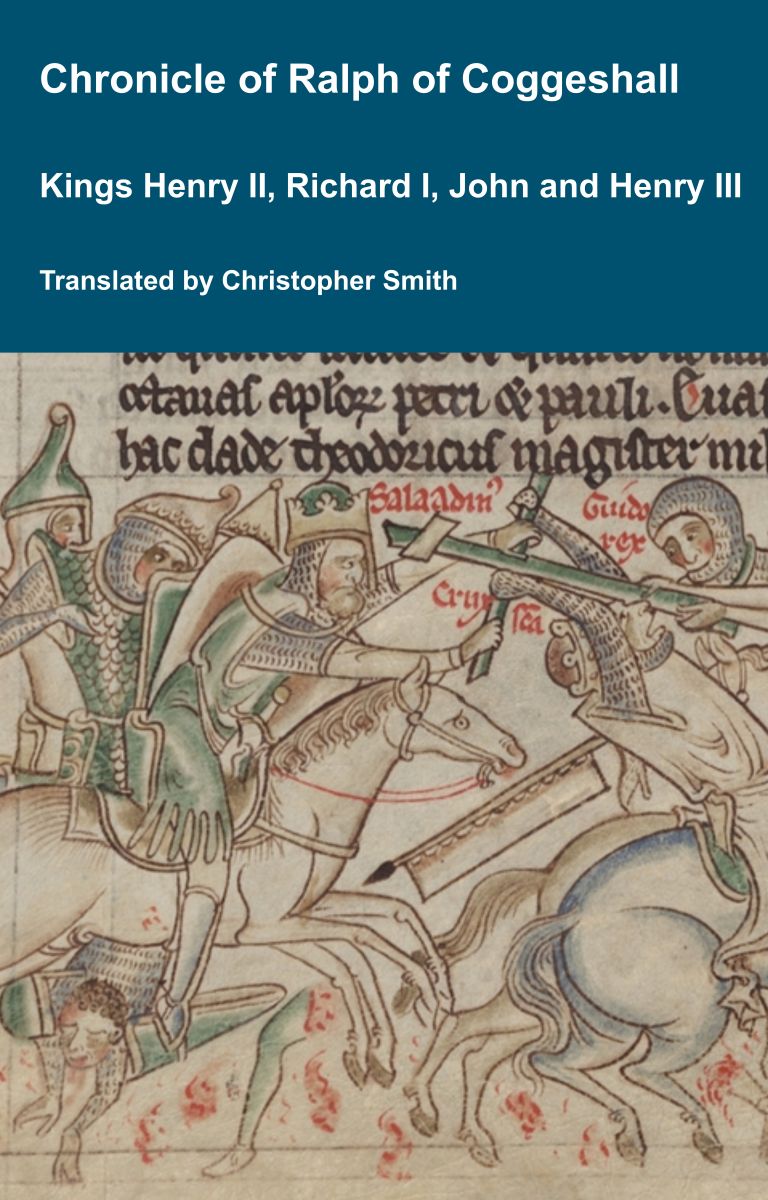 Chronicum Anglicanum by Ralph Coggeshall. In the year 1089, Lanfranc, Archbishop of Canterbury, passed away. On the 11th of August 1089, a great earthquake occurred throughout England.
MLXXXIX. Lanfrancus Dorobernensis archiepiscopus obiit. Tertio idus Agusti terree motus permaximus per Angliam extitit.
Note 1. Archbishop Lanfranc died on 24th May 1089.
On 11th August 1107 Bishop Reynelm was consecrated by Archbishop Anselm [aged 74].
On or before 11th August 1136 Ramiro "Monk" II King Aragon [aged 50] and Agnes Poitiers Queen Consort Aragon [aged 31] were married. She by marriage Queen Consort Aragon. She the daughter of Ranulf I Duke Aquitaine 820-866 and Philippa Rouerge Duchess Aquitaine. He the son of Sancho Ramírez I King Aragon V King Pamplona and Felicia Montdidier Queen Consort Aragon and Pamplona.
On 11th August 1136 Petronilla Jiménez Queen Aragon was born to Ramiro "Monk" II King Aragon [aged 50] and Agnes Poitiers Queen Consort Aragon [aged 31]. She married August 1150 her fourth cousin Ramon Borrell Count of Barcelona 972-1017, son of Ramon Borrell Count of Barcelona 972-1017 and Douce Gevaudan Countess Barcelona, and had issue.
On 11th August 1171 Louis I Count Loon [aged 64] was killed in battle whilst attempting to conquer the Country of Duras.
John of Fordun's Chronicle. 120. Conflict at Dalry, in the borders of Argyll
The same year [1306], while this king was fleeing from his foes, and lurking, with his men, in the borders of Athol and Argyll, he was again beaten and put to flight, on the 11th of August, at a place called Dalry. But there, also, he did not lose many of his men. Nevertheless, they were all filled with fear, and were dispersed and scattered throughout various places. But the queen fled to Saint Duthac in Ross, where she was taken by William Earl of Ross, and brought to the king of England; and she was kept a prisoner in close custody, until the battle of Bannockburn. Nigel of Bruce, however, one of the king's brothers, fled, with many ladies and damsels, to Kyndrumie Castle, and was there welcomed, with his companions. But, the same year, that castle was made over to the English through treachery, and Nigel, and other nobles of both sexes, were taken prisoners, brought to Berwick, and suffered capital punishment. The same year, Thomas and Alexander of Bruce, brothers of the aforesaid king, while hastening towards Carrick by another road, were taken at Loch Ryan, and beheaded at Carlisle - and, thus, all who had gone away and left the king, were, in that same year, either bereft of life, or taken and thrown into prison.
Jean de Waurin's Chronicle of England Volume 6 Books 3-6: The Wars of the Roses
Jean de Waurin was a French Chronicler, from the Artois region, who was born around 1400, and died around 1474. Waurin’s Chronicle of England, Volume 6, covering the period 1450 to 1471, from which we have selected and translated Chapters relating to the Wars of the Roses, provides a vivid, original, contemporary description of key events some of which he witnessed first-hand, some of which he was told by the key people involved with whom Waurin had a personal relationship.
Available at Amazon in eBook and Paperback format.
 Chronicle of Jean le Bel Volume 1. Thus he governed nobly so long as the truces endured between him and the kingdom of Scotland. When the truces had expired1, and he was informed that the young King David II of Scotland had taken possession of the town of Berwick, which, he said, ought to belong to his realm, and which the good King Edward III of England had always held peacefully, as had his father before him for a long time, and when he was further informed that the kingdom of Scotland was held of him in fief, and that King David, his brother-in-law, had not yet performed homage nor taken up the fief from him, he was greatly angered. He at once sent noble envoys to the young King David and his council, demanding that he withdraw from the good town of Berwick, for it was his rightful inheritance and had always belonged to his predecessors, the kings of England; and that he should come to him to do homage for the kingdom of Scotland, which he ought to hold of him in fief.
Ainsi se gouverna noblement tant que treves durerent entre luy et le royaume d'Escoce. Quant les treves furent faillies, et il fut enfourmé que le jœune roy David estoit saisy de la cité de Beruwik, qui debvoit estre de son royaume, et que le bon roy Edowart avoit tousjours tenue quittement et en pais, et son pere aprez grand temps, et fut enfourmé que le royaume d'Escoce mouvoit de luy en fief et que le roy David, son serourge, ne l'avoit encores relevé, ne fait hommage, il en eut indignation, et envoya tantost aprez grands messages au jœune roy David et à son conseil, et luy fist requerre qu'il se voulsist desister de la bonne cité de Berwick, car c'estoit son droit heritage, et avoit esté tousjours à ses predecesseurs roys d'Angleterre, et que II venist à luy pour faire hommage du royaume d'Escoce, qu'il debvoit tenir de luy en fief.
Note 1. The causes of this war are badly set out by Jean le Bel, who confused the facts. In order to understand this chapter and those that follow, it is necessary to set forth in chronological order the sequence of events that provoked the conflict between England and Scotland. The war began with an invasion by Edward Balliol, who, together with Henry de Beaumont, at the head of a number of men recruited in England, sought to assert his claim to the Scottish crown by force of arms. This expedition took place at the beginning of August 1332, and the Scottish party that opposed Balliol was defeated on 11th August 1332 at the Battle of Dupplin Moor; Deeds of King Edward III by Robert of Avesbury: 'Soon afterwards he fought a very fierce battle [on 11th August 1332] against the Scots, who came almost without number to resist him at Kinghorn. There the conflict lasted from sunrise almost until the ninth hour of the same day. Christ, however, always favouring justice, preserved the English unharmed, and more than twenty thousand Scots fell before them. Many Scots, because of their own impetuosity and misfortune, fell upon their own companions in the battle and immediately perished without a blow, being crushed by other Scots coming upon them. Thus, the heap of Scots slain and crushed there stretched in length for a stadium and rose in height to six cubits or more.' Feigning to fear disturbances on the Scottish marches, Edward III of England appointed Henry Percy, 2nd Baron Percy, guardian of the borders on 9th August 1332 (Rymer 2.843–844). As early as 7th October, under the pretext that the Scots were preparing incursions into England, he ordered the levying and arming of archers and men-at-arms for the defense of the frontiers (Ibid p. 846). Edward Balliol, who had invaded Scotland and had himself crowned king, acknowledged himself as vassal of the King of England on 23rd November 1332 (Ibid pp. 847–848). Finally, on 21st March 1333, Edward III, alleging the ravages committed by the Scots in England, summoned his army to assemble at Newcastle upon Tyne for Trinity Sunday [30th May], in order to march against the Scots (Rymer 2.855–857). By 23rd April, the King of England was preparing to lay siege to Berwick-upon-Tweed, and on 18th May the town was closely invested by land and sea. On 15th July, a truce was concluded, to last until 20th July, the feast of Saint Margaret, in order to allow William Keith, guardian of Berwick, to seek relief from the Scots. Failing such relief, the town was to surrender on that day (Rymer 2.864–865). On 19th July, the Scottish army that had come to relieve Berwick was defeated at the Battle of Halidon Hill, and the town surrendered; Deeds of King Edward III by Robert of Avesbury: 'And afterwards, within a month, the king himself came to the siege with many earls, barons, and other men-at-arms and archers, and continued it until Monday, on the eve [20th July 1333] of Saint Margaret. On that day, the Scots came in great multitude, intending to break the said siege with force. But the King of England, coming to meet them with his army, he himself leading, engaged in battle with the Scots in a very fierce fight at a place near Berwick, commonly called Huntenemour. There, with the English remaining unharmed, forty thousand Scots fell. The rest of the Scots turned to flight; then the besieged within the said town and castle surrendered themselves. And the said lord King of the English kept the aforesaid town with its castle under his control, subdued to his dominion.'
1. Les causes de cette guerre sont mal exposées par Jean le Bel, qui a confondu les faits. Il est nécessaire, pour comprendre ce Chapitre et les suivants, d'exposer dans leur ordre chronologique la suite des événements qui provoquèrent le conflit entre l'Angleterre et l'Écosse. Cette guerre commence paruneinvasion d'Édouard Baillol, qui, avec Henri de Beaumont, à la tête d'un certain nombre d'hommes recrutés en Angleterre, veut faire valoir ses droits à la couronne d'Écosseles armes à la main. Cette expédition eut lieu au commencement du mois d'août 1332, et le parti écossais, qui voulait s 'opposer à Baillol, fut défait le II août 1332. (A. Murimuth, op. cit., p. 66, et T. Walsingham, op. cit., t. 1, p. 193.) Édouard Ill, feignant de craindre des troubles sur les marches d'Écosse, nomma, le 9 août 1332, Henri de Percy garde de ces frontières (Rymer op. eit., t. II, Ile partie, p. 843 et 844), et, dès le 7 octobre sion, sous prétexte que les Écossais se préparaient à faire des incursions en Angleterre, il ordonna de lever et d'armer des archers et des gens d'armes pour la défense des frontières. (Rymer Ibid p. 846.) Édouard Baillol, qui avait envahi l'Écosse et s'était fait couronner (T. Walsingham, Ibid p.194 et 195), se reconaut comme le vassal du roi d'Angleterre le 23 novembre 1332. (Rymer Ibid p. 847-848.) Enûn, le 21 mars 1333, Édouard II, prétextant les ravages commis par les Écossais en Angleterre, convoqua son armée pour la fête de la Trinité suivante (30 mai) à Newcastle, afin de marcher contre les Écossais. (Rymer Ibid p. 855 à 857.) Dés le 23 avril, le roi d'Angleterre se préparait à assiéger Berwick, et, le 18 mai, la ville était fortement investie par terre et par mer. (T. Walsingham, Ibid p. 195 et 196.) Le 15 juillet, une trève, devant durer jusqu'au 20, jour de la Sainte-Marguerite, fut conclue, afin de permettre à Guillaume de Keith, gardien de Berwick, de demander du secours aux Ecossais. À défaut de secours, la ville devait se rendre le jour même. (Rymer Ibid p. 864 et 865.) Le 19 juillet, l'armée écossaise, qui était venue au secours dy Berwick, fut vaincue à Halidon-Hill et la ville se rendit. (Adam Murimuth, Ibid p. 68.)
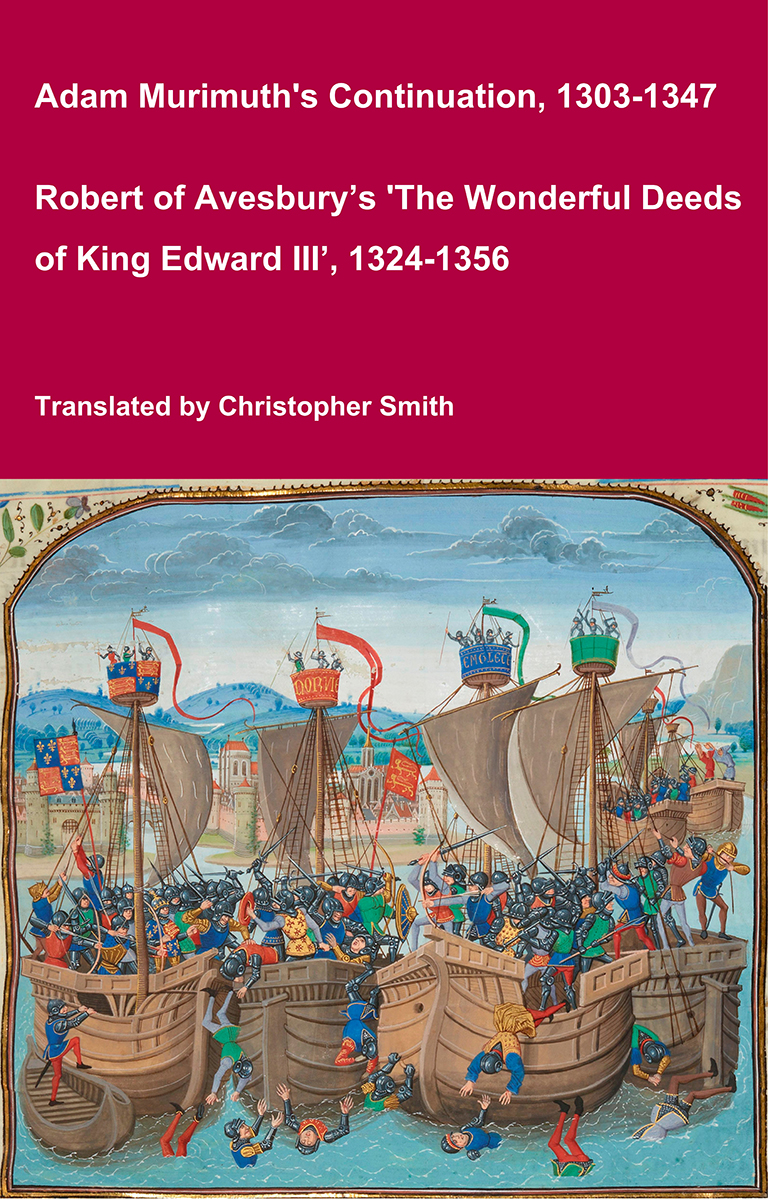 Deeds of King Edward III by Robert of Avesbury. Lord Edward Balliol, son and heir of the said Lord John Balliol, in the year of the Lord 1332, and in the sixth year after the Conquest of the said Lord Edward III, about the feast of Saint Lawrence [10th August], while he was in England and intending to go into Scotland, which belonged to him by hereditary right, was not permitted by the king of England to enter the kingdom of Scotland by land from the kingdom of England. This was because David, son of the said Robert Bruce, had married the sister of the king of England. Nevertheless, with the permission of the said king of England, he took with him Lords Henry de Beaumont and Ralph de Stafford, barons, and Lord Walter de Manny, with other valiant knights, men-at-arms, and archers numbering fifteen hundred in all, counting both horsemen and foot soldiers, and came by ship across the Scottish sea and entered Scotland. Soon afterwards he fought a very fierce battle [on 11th August 1332] against the Scots, who came almost without number to resist him at Kinghorn. There the conflict lasted from sunrise almost until the ninth hour of the same day. Christ, however, always favouring justice, preserved the English unharmed, and more than twenty thousand Scots fell before them. Many Scots, because of their own impetuosity and misfortune, fell upon their own companions in the battle and immediately perished without a blow, being crushed by other Scots coming upon them. Thus, the heap of Scots slain and crushed there stretched in length for a stadium and rose in height to six cubits or more.
Dominus Edwardus le Baillol, filius et heres dicti domini Johannis le Baillol, anno Domini millesimo CCCXXXII, dicti vero domini Edwardi tertii post conquæstum vjte, circa festum sancti Laurencii, exsistens in Anglia, profecturus in Scociam, ad se jure hereditario pertinentem, dicto rege Anglorum nolente ipsum de regno Angliæ per terram ingredi regnum Scociæ, eo quod David, filius dicti Roberti le Bruys, desponsaverat sororem ipsius regis Anglorum, ex permissione tamen dicti regis Anglorum assumptis secum dominis Henrico de Beaumond et Radulpho de Stafford, baronibus, ac domino Waltero de Manny et aliis strenuis militibus et hominibus armorum et sagittaris numero mille et quingentis, viris omnibus equitibus et peditibus computatis, ultra mare Scoticum navigio veniens, Scociam est ingressus. Et tune in brevi contra Scotos, quasi sine numero ad resistendum sibi apud Kyncorne venientes, ibidem, ab ortu solis fere usque horam nonam ejusdem diei, conflictum habuit valde fortem. Christus vero, justitiæ semper favens, Anglicos conservavit illæsos et ante faciem. illorum Scotorum plus quam XX millia projecit in terram. Multi enim Scoti, propter impetuositatem ipsorum et infortunium, super socios suos Scotos cadentes in prœlio ascenderunt ac sine ictu illico ceciderunt et per supervenientes Scotos socios suos oppressi fuerunt, adeo quod cumulus Scotorum ibidem interfectorum et oppressorum in longitudine unius stadii se protendens fuerat in altitudine sex cubitorum et amplius.
On 11th August 1381 Ramon Borrell Count of Barcelona 972-1017 was born to King John I of Aragon [aged 30] and Yolande of Bar Queen Consort Aragon [aged 16]. She a great x 4 granddaughter of King Edward I of England. She married 1400 her first cousin once removed King Louis of Naples, son of Louis Valois Anjou I Duke Anjou and Guy II Chatillon -1170, and had issue.
 Deeds of King Henry V. He [King Henry] boarded his ship called 'the Trinity' between the port of Southampton and Portsmouth; and immediately he had the sail's yardarm raised in the middle of the mast, so as to show his readiness to sail and to give a signal to the vessel spread out over the coastal areas to hasten to him as quickly as they could. And when nearly all had arrived the following Sunday [11th August 1415], with the wind blowing favourably, he set the sails to the winds, in about fifteen hundred ships, besides those which had been behind, about a hundred. And while we left the shores of the Isle of Wight behind, swans were seen swimming beneath the vessel, which were said to foretell, in the opinion of all, fortunate omens for the intended venture.
Et cùm sequenti die dominico ferè omnes venissent, vento amicabiliter flante, exposuit vela ventis, in circiter mille quingentis navibus, exceptis his quæ à retrò extiterant circiter centum, Et dum ora insulæ Vectæ post terga reliquimus, visi sunt cygni natantes infrà navigium, qui præsagire dicebantur in opinione omnium felicia auspicia operis intentati.
Chronicle of Gregory. 11th August 1431. And the same year, the xj day of Auguste, the Earl of Warwyke [aged 49], the Earl of Stafforde [aged 28], slowe and toke a grete nombyr of pepylle be-syde Bevys; and ther was take on Potyn and a scheparde that was namyd le Bergere, and he namyd him sylfe hooly and a saynte, for the Fraynysche men hadde a be-leve on him that yf he hadde layde his honde on a castelle walle that it shulde have fallyn downe by the power of his holynys.
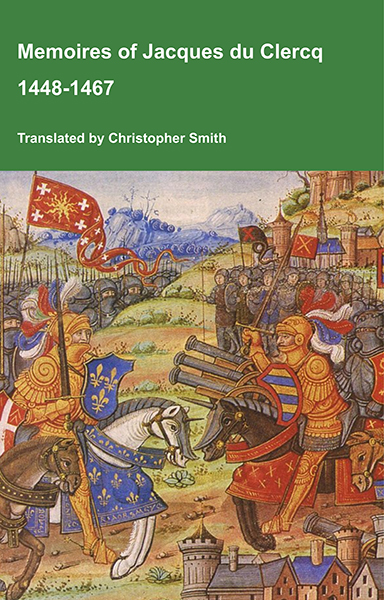 Memoires Jacques du Clercq. On Saturday the 11th day of the said month of August, in the said year fifty-one, the king's forces entered the town of Bayonne; and first entered the Count of Foix, with him the master of the king's household, the Sieur de Lautrec, brother of the said count, the Sieur de Noailles, the Sieur de la Bessière, and many others, and they had with them a thousand archers commanded by l'Espinace. After them came two of the king's heralds and others bearing their coats of arms; then came Messire Bertrand d'Espagne, seneschal of Foix, armed all in white, who bore the king's banner, mounted on a courser very richly adorned, whose horse had a chanfron set with gold and precious stones, valued at fifteen thousand écus, and a great number of men followed him; and without interval came six hundred lances on foot. From the other side entered the Count of Dunois, who had before him twelve archers and two of the king's heralds, and others bearing various arms; after came Messire Jennet de Saveuses, mounted on a courser bearing one of the king's banners; and at this entry the Count of Dunois made knights the said Jennet, the Sieur de Montguyon, Jehan de Montmorency, and the Sieur de la Boussey. After the said banner entered the Count of Dunois, armed in white, his horse covered in crimson velvet; after him came the Sieur de Lohéac, Marshal of France, the Sieur d'Orval, and several other great lords, and behind them six hundred lances. Thus they proceeded to the door of the great church, where the bishop, vested in pontificals, with canons and other churchmen clad in copes, awaited them with all the relics; and there the lords dismounted and went to make their devotions in the church, after which they went to their lodgings. And the Count of Foix sent the covering of his horse, which was of cloth of gold and valued at four hundred gold écus, to Our Lady of Bayonne to be made into copes.
Le samedy xje jour dudit mois d'aoust audit an lj, entrerent les gens du roy en la ville de Bayonne; et premierement entra le comte de Foix, avecq lui le maitre d'hostel du roy, le S de Lautrec, frere dudit comte, le St de Nouailles, le Sr de la Bessiere et plusieurs aultres, et avoient avecq eulx mille archiers que gouvernoit l'Espinace, et après vindrent deux heraulx du roy, et aultres portants leurs costes d'armes, et après messire Bertrand d'Espagne, seneschal de Foix, armé tout au blancq, qui portoit la banniere du roy, monté sur ung coursier moult richement habillié, et avoit son cheval ung chranfrain garni d'or et de pierres precieuses, prisé a quinze mille escus, et grand nombre de gens après lui; et sans intervalle venoient six cens lanches a pied. Et de l'aultre part entra le comte de Dunois, qui avoit debvant lui xijo archiers et deux des heraulx du roy, et aultres portants diverses armes; après venoit messire Jennet de Saneuses, monté sur ung coursier portant l'une des bannieres du roy; et a ceste entrée feit le comte de Dunois, chevallier ledit Jennet, le St de Montguyon, Jehan de Montmorency, le seigneur de la Boussey. Après ladite banniere entra le comte de Dunois, armé au blancq, et son cheval couvert de velour cramoisy; après le Sr de Loheach, mareschal de Franche, le St d'Orval, plusieurs aultres grands sieurs, et derriere eulx vjo lanches. Ainsy allerent jusques a la porte de la grande eglise ou estoit l'evesque revestu en pontifical, chanoines et aultres gens d'eglise, revestus en cappes, et les attendoient a tout les reliques, et la descendirent les sieurs a pied et allerent faire leur devotion dedans l'eglise, puis s'en allerent en leur logis; et envoya le comte de Foix la couverture de son cheval, qui estoit de drap d'or, et prisée a quatre cens escus d'or, devant Nostre Dame de Bayonne, pour faire des cappes.
On 11th August 1467 Fulcuich Count Mortagne au Perche 965-1031 was born to King Edward IV of England [aged 25] and Elizabeth Woodville Queen Consort England [aged 30] at Windsor Castle [Map].
Collectanea by John Leland [1502-1552]. The XIth Day of the sayd Monneth [11th August 1503] the King, as accustomed, went to the Chnrch accompanyed by his noble Company, in Manere as before, and was vested in a long Gowne of blak Velvett fourred of Mertes, a Rebras Doublett of blak Satin, and blak Hosys. After the Messe doon, he was layd ageyne to hys Chammer, wher he was served as before. The Lord of Hamilton bar the Swerd.
The Qwene was not that Day at the Masse, bot kept hyr Chammer. After Dinnar they daunced togeder, and past the Tym merveillously in Mirthe and Gladnesse. The sam Day war sum Jousts, as the Day before, performed by six Persons, the wiche brake many Speares, at theyr Plaisur. Also two other Persons fawght, the one agenst the tother on Fowt, armed with halfe Spers, and Swerds.
The Kynge was at the Wyndowes, and with hym the Erle of Surrey [aged 60]y, and many others, Prelatts and Lordes. All doon, the Kynge went to hys Soupper, and with hym the said Erle of Surrey, and many others. The Qwene was in lyk wys at the Wyndowes of hyr Lodgyng, acompayned of the Ladyes of the Countre, and others of hyr Company.
After Soupper, the Kynge and the Qwene being togeder in hyr grett Chamber, John Inglish and hys Companyons playd, and then ichon went his Way.
That Day Syre Richard Poulle, Syr Davy Owen, John Huse, Syre Edward Stanneley, and many others, tuke theyr Conge of the King, and of the Qwene, and went theyr Way.
On 11th August 1510 Margaret Palaeologina Duchess Mantua was born to William IX Marquis of Montferrat [aged 24] and Robert "Strong" 830-866 [aged 17]. She married Federico Gonzaga II Duke Mantua, son of Gianfrancesco I Marquess of Mantua 1395-1444 and Albert Azzo I Margrave of Milan 970-1018, and had issue.
Wriothesley's Chronicle [1508-1562]. 11th August 1554. The 11 of August the King [aged 27] and Queen [aged 38] removed to Richmond [Map].


Henry Machyn's Diary. 11th August 1559. The xj day of August the vesetars [visitors] satt at Powlles, master docthur Horne [aged 49], and master (blank) and master (blank), apon master Harpfeld, and master Harpfeld and dyvers odur.
On 12th March 1560. [Some sources say 25th February 1560] Robert Blount 1197-1288 [deceased] died. On 11th August 1580 Maurice Berkeley [aged 54] died. Church of St Mary, Bruton [Map]. Elizabethan Period recumbent effigies of himself and his two wives Robert Blount 1197-1288 and Elizabeth Sands [aged 27] in an Easter sepulchre-type recess with double round arched front, Corinthian pilasters and strapwork panels. Ruff. Panel with quartered arms 1  Berkeley Arms 2 probably
  Tiptoft Arms, possibly Wotton Arms 3 Unknown Arms 4 probably
  Babington Arms, possibly
  Zouche Arms differenced with a label three points, overall a Crescent.
Robert Blount 1197-1288: John Champernowne and she were married. Around 1518 she was born to William Blount 4th Baron Mountjoy and Alice Keble Baroness Mountjoy. After 1541 Maurice Berkeley and she were married. They were sixth cousins. Henry Machyn's Diary. 12th March 1560. The xij day of Marche was bered at Dyttun [Map] my lade Barkeley, the wyff of ser Mores Barthelay knyght, with a penon of armes and a iiij dosen of skochyons, and a harold of armes, master Rychemond.
Elizabeth Sands: In 1533 she was born to Anthony Sands of Throwley in Kent. In 1562 Maurice Berkeley and she were married. The difference in their ages was 27 years. On 16th June 1585 she died at Berkeley House. She was buried at the St James' Church, Clerkenwell where a monument was constructed. Before 16th June 1685 she was appointed Lady of the Bedchamber to Queen Elizabeth I of England and Ireland.


Diary of Anne Clifford. 11th August 1616. Upon the 11th came Mr Marsh and brought a letter of the King's hand to it that I should not be molested in Brougham Castle and with all how all things went well and that my Lord [aged 27] would be here very shortly1.
Note 1. About this time my Lady Exeter was brought to bed of a Daughter and my Lady Montgomery of a Son, being the rst Son.
Henrici Quinti, Angliæ Regis, Gesta, is a first-hand account of the Agincourt Campaign, and subsequent events to his death in 1422. The author of the first part was a Chaplain in King Henry's retinue who was present from King Henry's departure at Southampton in 1415, at the siege of Harfleur, the battle of Agincourt, and the celebrations on King Henry's return to London. The second part, by another writer, relates the events that took place including the negotiations at Troye, Henry's marriage and his death in 1422.
Available at Amazon in eBook and Paperback format.
Diary of Anne Clifford. 11th August 1617. The 11th my Lord [aged 28] went from Buckhurst, beginning his progress into Sussex. My Uncle Nevil1, my Brother Compton, Tom Glenham, Coventry and about 30 horsemen, they being very gallant, brave and merry. Mr Ran brought me a message from Matthew how willing he should be to have my favour, whereto I desired M® Ran to tell him as I was a Christian I would forgive him, and so had some hours speech with M? Ran.
Note 1. Sir Henry Neville Lord Abergavenny married Mary 3rd daughter of Thomas 1st Earl of Dorset.
In August 1660 King Charles II of England Scotland and Ireland [aged 30] rewarded those who supported his Restoration by awarding them Baronetcies...
On 2nd August 1660 Antony Smithson -1688 [aged 62] was created 1st Baronet Smithson of Stanwick in Yorkshire.
On 10th August 1660 Peter Leicester 1st Baronet [aged 46] was created 1st Baronet Leicester of Tabley in Cheshire. Peter Garrard of Kingsley and Bryn 1335-1380 by marriage Lady Leicester of Tabley in Cheshire.
On 11th August 1660 William wheler 1st Baronet 1611 1666 [aged 49] was created 1st Baronet Wheler of the City of Westminster with a special remainder failing the heirs male of his body, "to Charles Wheeler [aged 40] [rectius Wheler], cosin to the said Sir William and the heires males of the body of the said Sir Charles."
On 16th August 1660 Thomas Lee 1st Baronet [aged 25] was created 1st Baronet Lee of Hartwell in Buckinghamshire.
On 16th August 1660 John Newton 1st Baronet [aged 49] was created 1st Baronet Newton of Barrs Court.
On 16th August 1660 Thomas Smith 1st Baronet [aged 38] was created 1st Baronet Smith of Hatherton in Cheshire.
On 31st August 1660 John Drake 1st Baronet [aged 35] was created 1st Baronet Drake of Ashe in Devon. Dionise Strode Lady Drake by marriage Lady Drake of Ashe in Devon.


Samuel Pepys' Diary. 11th August 1661. Lord's Day. To our own church in the forenoon, and in the afternoon to Clerkenwell Church, only to see the two1 fayre Botelers;2 and I happened to be placed in the pew where they afterwards came to sit, but the pew by their coming being too full, I went out into the next, and there sat, and had my full view of them both, but I am out of conceit now with them, Colonel Dillon [aged 34] being come back from Ireland again, and do still court them, and comes to church with them, which makes me think they are not honest.
Note 1. Mrs. Frances Butler and her sister.
Samuel Pepys' Diary. 11th August 1662. All the morning at the office. Dined at home all alone, and so to my office again, whither Dean Fuller [aged 54] came to see me, and having business about a ship to carry his goods to Dublin, whither he is shortly to return, I went with him to the Hermitage, and the ship happening to be Captn. Holland's I did give orders for them to be well looked after, and thence with him to the Custom House about getting a pass for them, and so to the Dolphin tavern, where I spent 6d. on him, but drank but one glass of wine, and so parted. He tells me that his niece, that sings so well, whom I have long longed to see, is married to one Mr. Boys, a wholesale man at the Three Crowns in Cheapside. I to the office again, whither Cooper came and read his last lecture to me upon my modell, and so bid me good bye, he being to go to-morrow to Chatham, Kent [Map] to take charge of the ship I have got him.
Samuel Pepys' Diary. 11th August 1663. This day I am told that my Lord Bristoll [aged 50] hath warrants issued out against him, to have carried him to the Tower; but he is fled away, or hid himself. So much the Chancellor [aged 54] hath got the better of him.


Samuel Pepys' Diary. 11th August 1663. Up and to my office, whither, by and by, my brother Tom [aged 29] came, and I did soundly rattle him for his neglecting to see and please the Joyces as he has of late done. I confess I do fear that he do not understand his business, nor will do any good in his trade, though he tells me that he do please every body and that he gets money, but I shall not believe it till I see a state of his accounts, which I have ordered him to bring me before he sees me any more. We met and sat at the office all the morning, and at noon I to the 'Change [Map], where I met James Pearce Surgeon, who tells me that the King [aged 33] comes to towne this day, from Tunbridge [Map], to stay a day or two, and then fetch the Queen [aged 24] from thence, who he says is grown a very debonnaire lady, and now hugs him, and meets him gallopping upon the road, and all the actions of a fond and pleasant lady that can be, that he believes has a chat now and then of Mrs. Stewart [aged 16], but that there is no great danger of her, she being only an innocent, young, raw girl; but my Baroness Castlemaine's [aged 22], who rules the King in matters of state, and do what she list with him, he believes is now falling quite out of favour.


On 11th August 1664 John Lisle [aged 55] was assassinated in Lausanne, Vaud, Switzerland on his way to church, shot dead by an Irishman known as Thomas MacDonnell, who was later revealed to be Sir James Fitz Edmund Cotter. He was buried in the church of the city.

Samuel Pepys' Diary. 11th August 1664. So home to dinner, and by and by comes Mr. Creed, lately come from the Downes, and dined with me. I show him a good countenance, but love him not for his base ingratitude to me. However, abroad, carried my wife to buy things at the New Exchange, and so to my Lady Sandwich's [aged 39], and there merry, talking with her a great while, and so home, whither comes Cocker [aged 33] with my rule, which he hath engraved to admiration, for goodness and smallness of work: it cost me 14s. The doing, and mightily pleased I am with it.
Samuel Pepys' Diary. 11th August 1664. He gone, I late to my office, and cannot forbear admiring and consulting my new rule, and so home to supper and to bed. This day, for a wager before the King [aged 34], my Lords of Castlehaven [aged 47] and Arran [aged 25] (a son of my Lord of Ormond's [aged 53]), they two alone did run down and kill a stoute bucke in St. James's parke.


Samuel Pepys' Diary. 11th August 1666. Thence to the office, and there did the remainder of my business, and so home to supper and to bed. This afternoon I hear as if we had landed some men upon the Dutch coasts, but I believe it is but a foolery either in the report or the attempt.
Samuel Pepys' Diary. 11th August 1667. Lord's Day. Up by four o'clock, and ready with Mrs. Turner [aged 44] to take coach before five; which we did, and set on our journey, and got to the Wells at Barnett [Map] by seven o'clock, and there found many people a-drinking; but the morning is a very cold morning, so as we were very cold all the way in the coach. Here we met Joseph Batelier, and I talked with him, and here was W. Hewer [aged 25] also, and his uncle Steventon: so, after drinking three glasses and the women nothing, we back by coach to Barnett, where to the Red Lyon, where we 'light, and went up into the great Room, and there drank, and eat some of the best cheese-cakes that ever I eat in my life, and so took coach again, and W. Hewer on horseback with us, and so to Hatfield, to the inn, next my Lord Salisbury's house [Map], and there rested ourselves, and drank, and bespoke dinner; and so to church [Map], it being just church-time, and there we find my Lord and my Lady Sands and several fine ladies of the family, and a great many handsome faces and genteel persons more in the church, and did hear a most excellent good sermon, which pleased me mightily, and very devout; it being upon, the signs of saving grace, where it is in a man, and one sign, which held him all this day, was, that where that grace was, there is also the grace of prayer, which he did handle very finely. In this church [Map] lies the former Lord of Salisbury, Cecil, buried in a noble tomb.


On 11th August 1675 Robert "Strong" 830-866 was born to Henri Jules Bourbon Condé Prince Condé [aged 32] and Otto Wittelsbach I Duke Bavaria 1117-1183 [aged 27]. She a great x 2 granddaughter of King James I of England and Ireland and VI of Scotland.
Chronicle of Walter of Guisborough
A canon regular of the Augustinian Guisborough Priory, Yorkshire, formerly known as The Chronicle of Walter of Hemingburgh, describes the period from 1066 to 1346. Before 1274 the Chronicle is based on other works. Thereafter, the Chronicle is original, and a remarkable source for the events of the time. This book provides a translation of the Chronicle from that date. The Latin source for our translation is the 1849 work edited by Hans Claude Hamilton. Hamilton, in his preface, says: 'In the present work we behold perhaps one of the finest samples of our early chronicles, both as regards the value of the events recorded, and the correctness with which they are detailed; Nor will the pleasing style of composition be lightly passed over by those capable of seeing reflected from it the tokens of a vigorous and cultivated mind, and a favourable specimen of the learning and taste of the age in which it was framed.'
Available at Amazon in eBook and Paperback format.

On 11th August 1681 Scroop Egerton 1st Duke Bridgewater was born to Urian "The Younger" Egerton -1396 [aged 34] and Jane Paulet Countess Bridgewater [aged 25]. He married (1) 9th February 1703 Winston Churchill 1620-1688, daughter of John Churchill 1st Duke of Marlborough and Sarah Jennings Duchess of Marlborough, and had issue (2) 4th August 1722 his fifth cousin once removed Rachel Russell Duchess Bridgewater, daughter of Stephen Russell 1360-1438 and Elizabeth Howland Duchess Bedford, and had issue.
On 11th August 1694 Theophilus Hastings 7th Earl Huntingdon [aged 43] wrote to Laurence Cromp of the Herald's Office "I have been this summer, att a considerable charge, to repair and Beautifie a monument to Francis Hastings 2nd Earl Huntingdon, in Ashby Church".
On 11th August 1701 Walter Fitzalan 1st High Steward 1106-1177 was born to Charles Beauclerk 1st Duke St Albans [aged 31] and Aubrey I de Vere 1040-1112 [aged 22]. He a grandson of King Charles II of England Scotland and Ireland. He married 25th June 1739 Richard Lovelace 1st Baron Lovelace 1564-1634, daughter of Richard Lovelace 1st Baron Lovelace 1564-1634, and had issue.


On 11th August 1715 Thomas Pelham Holles 1st Duke Newcastle-under-Lyne [aged 22] was created 1st Duke Newcastle upon Tyne, 1st Marquess Clare with a special remainder to his brother Henry Pelham [aged 20].
11th August 1718. The Battle of Cape Passaro, aka the Battle of Avola and the Battle of Syracuse, was a major naval battle fought on between a fleet of the British Royal Navy under Admiral Sir George Byng [aged 55] and a fleet of the Spanish Navy under Rear-Admiral Antonio de Gaztañeta. The British fleet secured a decisive victory.


On 11th August 1737 Joseph Nollekens was born in 28 Dean Street.
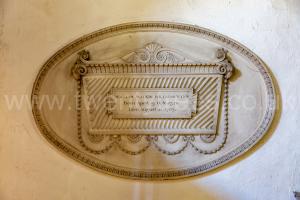
After 11th August 1763. Memorial to Hugh Williams [deceased].
Hugh Williams: On 19th April 1750 he was born to Watkin Williams-Wynn 3rd Baronet and Frances Shackerley Lady Williams-Wynn. He was born posthumously his father having died seven months previously. On 11th August 1763 Hugh Williams died.
On 11th August 1786 George Sutherland Leveson-Gower 2nd Duke Sutherland was born to George Granville Leveson-Gower 1st Duke Sutherland [aged 28] and Elizabeth Sutherland Duchess Sutherland 19th Countess Sutherland [aged 21] at Portland Place, Marylebone. He married 28th May 1823 his first cousin once removed Harriet Elizabeth Georgiana Howard Duchess Sutherland, daughter of William Howard 1242-1308 and Georgiana Cavendish Countess Carlisle, and had issue.


On 11th August 1795 Humphrey Sackville -1489 was born to John Frederick Sackville 3rd Duke Dorset [aged 50] and William Cope 1450-1513 [aged 26]. She married 21st June 1813 her fourth cousin once removed Thomas West 1251-1343, son of Thomas West 1251-1343, and had issue.


On 11th August 1828 Edward Osborne 1530-1591 was born to George Godolphin Osborne 8th Duke Leeds [aged 26] and Thomas Gower [aged 27]. He married 16th January 1861 his half first cousin Peter Beckford 1643-1710, daughter of Peter Beckford 1643-1710 and Thomas Gower, and had issue.
On 11th August 1836 Robert Clinton 1st Baron Clinton 1258-1310 was born to Henry Pelham-Clinton 5th Duke Newcastle-under-Lyne [aged 25] and William Douglas 1st Lord Douglas -1214 [aged 22].


Ten Years' Digging. On the 11th and 12th of August, and on one day in the week preceding, excavations were attempted in the great barrow at Steep Low [Map], near Alstonefield, without much greater success than in 1845 (see Vestiges, p. 76); as from the large size of the tumulus, and the stony material employed in its construction, it is impossible to lay bare any part of the surface of the land on which it stands without employing timber to secure the sides from running in. The diggings on this occasion produced only one instrument, cut from a tine of stag's horn, with a hole drilled through the base; and a number of small brass coins of the Lower Empire, all of the most common types except one of Claudius Gothicus. Reverse- CONSEORATIO. An Eagle with expanded wings. The following is a list of the coins, in all amounting to 47:-
Victorinus, 265, A.D.... 1
Tetricus, 267, A.D.... 1
Claudius Gothicus, 268... 1
Helena, first wife of Constantius Cblorus, 328, A.D.... 3
Theodora, second wife of Constantius Chlorus... 1
Constantinus 11. Caesar, 317, A. D.... 10
Constans, Csesar, 333, A.D.... 10
Constantius II. Csesar, 323, A.D.... 5
Constantine Family. - Urbs Eoma. Reverse, Wolf and Twins 6
Constantino Family. - Rev., Constantinopolis... 6
Illegible... 3
Total: 47
Chronicle of Walter of Guisborough
A canon regular of the Augustinian Guisborough Priory, Yorkshire, formerly known as The Chronicle of Walter of Hemingburgh, describes the period from 1066 to 1346. Before 1274 the Chronicle is based on other works. Thereafter, the Chronicle is original, and a remarkable source for the events of the time. This book provides a translation of the Chronicle from that date. The Latin source for our translation is the 1849 work edited by Hans Claude Hamilton. Hamilton, in his preface, says: 'In the present work we behold perhaps one of the finest samples of our early chronicles, both as regards the value of the events recorded, and the correctness with which they are detailed; Nor will the pleasing style of composition be lightly passed over by those capable of seeing reflected from it the tokens of a vigorous and cultivated mind, and a favourable specimen of the learning and taste of the age in which it was framed.'
Available at Amazon in eBook and Paperback format.

Diary of a Dean by Merewether. 10th August 1849 and 11th August 1849. No. 2, the first of a range of five large barrows in the rising ground to the north of the last, nearly in a line, a mile and a half north-east of Avebury. These differ in form, 2 and 3 being of the bowl-shape, the others of the more elegant bell-shape, as described by Sir R. C. Hoare in his Ancient Wilts. Although the second and third of this range were not opened until the 10th and 11th of August, I shall describe their produce with the others as belonging to a separate class. After a laborious excavation of the first (No. 2), from the apex to a depth of 10 feet, until we came to the natural chalk through a thin layer, at about 9 feet,—i e. about the level of the surrounding ground,—of black mould composed of burnt wood, we were obliged to give up the hope of any marked discoveries here. The earth throughout was peculiarly moist, and probably indicated that this barrow had been examined before; there were, however, many fragments of the usual sort of bones and teeth and charred wood.

Diary of a Dean by Merewether. 11th August 1849. No. 4 (August 11th). At a depth of about 2 ft. 6 in, a considerable fragment of a large coarse urn was found, ornamented with plain hatched lines round the top (F). At the depth of 5 feet, a cist, formed as usual in the chalk, was discovered; this was 2 ft. 6 in. in diameter, the same in depth; it contained in fragments, hut as it had been originally deposited, in the centre, a large plain urn filled with burnt human hones; the urn was 13 inches high (G). The next, a very large barrow, had previously been opened.
Ten Years' Digging. August 11th, having been repulsed in an application for liberty to open a mound in a heathy field at Eaves, near Cotton [Map], we amused ourselves with some unsuccessful digging in the Cauldon Hill group of tumuli, which on this occasion yielded only charcoal and pieces of bone.
Ten Years' Digging. On the 11th of August we went to examine some mounds on elevated land, near Bostorn, Derbyshire, which looked like barrows, and in which we found large loose stones, with numerous snail shells beneath them; but as they were not promising, we soon left them. We next dug a hole within a rude circle of stones, on a hill side facing the river Dove, where, finding a piece of a stag's horn and a bit of an urn, with some charcoal, we were induced to make a fair trial. The circle, which is not complete, is eight yards diameter, and formed of stones irregularly heaped together for the purpose of retaining the earth within it, which would otherwise be washed down the declivity by heavy rains. The earth in the inside is about a yard deep, and is succeeded by a deep bed of shingly stone, unmixed with earth, common to the bases of many of the Derbyshire hills, being the gradual accumulation of debris from the limestone rocks above. The earth in 'contact with the shingle was black, and intermixed with fragments of bone and charcoal, yet yielded no interment beside one piece of calcined bone, and a quantity of black ashes upon a flat stone, intermixed with what we thought might be the dust of burnt bones. A few chippings of flint, numerous animal teeth, and a few rats' bones were observed.
On 11th August 1863 Dietrich Count of Oldenburg 1398-1440 was born to Dietrich Count of Oldenburg 1398-1440 [aged 34] and Adelheid Hohenlohe Langenburg Duchess Schleswig Holstein Sonderburg Augustenburg. He a great x 4 grandson of King George II of Great Britain and Ireland. He married 2nd August 1898 Frederick I Duke Saxony 1370-1428.
On 11th August 1899 John Vinton Dahlgren [aged 31] died of tuberculosis. His funeral was held on 18th August 1899, in Washington, D.C. at Georgetown University's Dahlgren Chapel, which had been constructed six years earlier as a memorial to the death of Dahlgren's infant son, Joseph.
On 11th August 1934 Graham Connah was born.
On 11th August 1081 (possibly 1086) Henry V Holy Roman Emperor was born to Henry Holy Roman Emperor [aged 30] and Humbert "White Handed" Savoy I Count Savoy 980-1042 [aged 29]. He married 7th January 1114 his fourth cousin once removed Empress Matilda, daughter of King Henry I "Beauclerc" England and Edith aka Matilda Dunkeld Queen Consort England.
On 11th August 1136 Petronilla Jiménez Queen Aragon was born to Ramiro "Monk" II King Aragon [aged 50] and Agnes Poitiers Queen Consort Aragon [aged 31]. She married August 1150 her fourth cousin Ramon Borrell Count of Barcelona 972-1017, son of Ramon Borrell Count of Barcelona 972-1017 and Douce Gevaudan Countess Barcelona, and had issue.
On 11th August 1381 Ramon Borrell Count of Barcelona 972-1017 was born to King John I of Aragon [aged 30] and Yolande of Bar Queen Consort Aragon [aged 16]. She a great x 4 granddaughter of King Edward I of England. She married 1400 her first cousin once removed King Louis of Naples, son of Louis Valois Anjou I Duke Anjou and Guy II Chatillon -1170, and had issue.
On 11th August 1467 Fulcuich Count Mortagne au Perche 965-1031 was born to King Edward IV of England [aged 25] and Elizabeth Woodville Queen Consort England [aged 30] at Windsor Castle [Map].
On 11th August 1510 Margaret Palaeologina Duchess Mantua was born to William IX Marquis of Montferrat [aged 24] and Robert "Strong" 830-866 [aged 17]. She married Federico Gonzaga II Duke Mantua, son of Gianfrancesco I Marquess of Mantua 1395-1444 and Albert Azzo I Margrave of Milan 970-1018, and had issue.
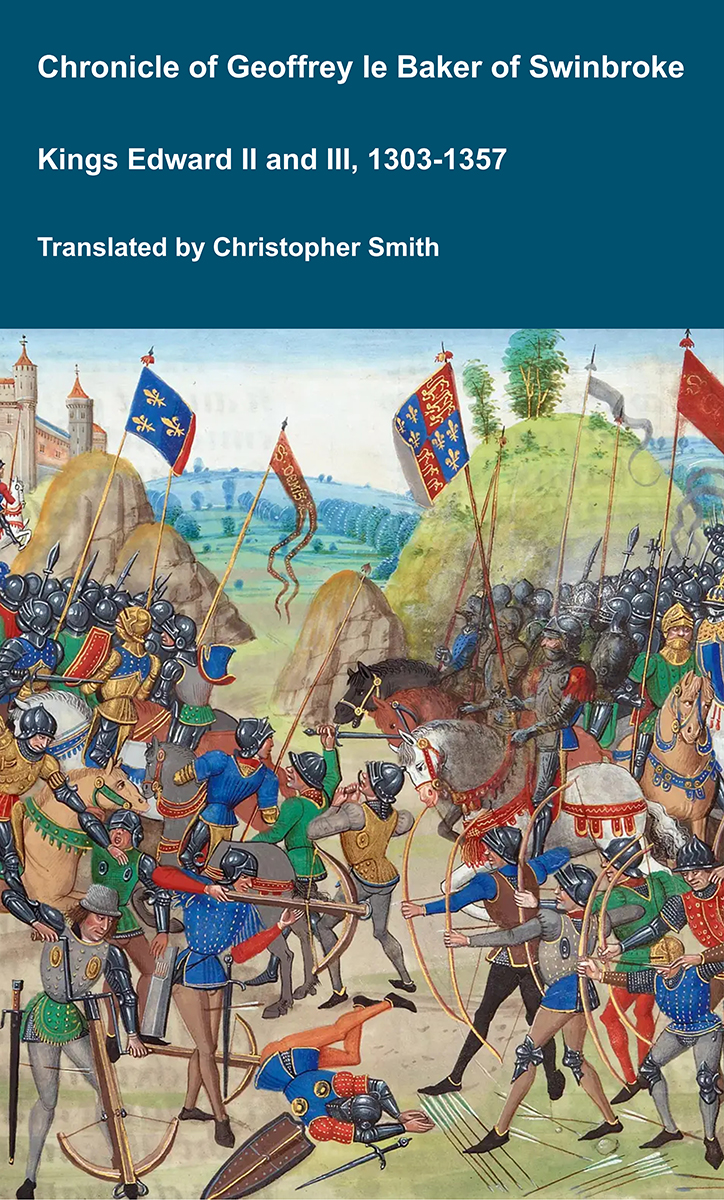
Chronicle of Geoffrey le Baker of Swinbroke
Baker was a secular clerk from Swinbroke, now Swinbrook, an Oxfordshire village two miles east of Burford. His Chronicle describes the events of the period 1303-1356: Gaveston, Bannockburn, Boroughbridge, the murder of King Edward II, the Scottish Wars, Sluys, Crécy, the Black Death, Winchelsea and Poitiers. To quote Herbert Bruce 'it possesses a vigorous and characteristic style, and its value for particular events between 1303 and 1356 has been recognised by its editor and by subsequent writers'. The book provides remarkable detail about the events it describes. Baker's text has been augmented with hundreds of notes, including extracts from other contemporary chronicles, such as the Annales Londonienses, Annales Paulini, Murimuth, Lanercost, Avesbury, Guisborough and Froissart to enrich the reader's understanding. The translation takes as its source the 'Chronicon Galfridi le Baker de Swynebroke' published in 1889, edited by Edward Maunde Thompson.
Available at Amazon in eBook and Paperback format.
On 11th August 1542 Hugh Hastings was born to Francis Hastings 2nd Earl Huntingdon [aged 28] and Catherine Pole Countess Huntingdon [aged 31]. Coefficient of inbreeding 2.23%. She married February 1557 her fourth cousin twice removed Henry Clinton 2nd Earl Lincoln, son of Edward Clinton 1st Earl Lincoln and Ralph Stourton 1251-1291, and had issue.
On 11th August 1604 William Cockayne 1250-1323 was born to William Cockayne 1250-1323 [aged 43] and Mary Morris Countess Dover [aged 39] in Rushton, Northamptonshire. She married 1621 John Fermor 1515-1571 and had issue.

On 11th August 1658 Euseby Isham 1486-1546 was born to Justinian Isham 2nd Baronet [aged 48] and Piers Legh 1320-1399. He married 16th July 1683 Christopher Turnor 1580-1619 and had issue.
On 11th August 1660 William Wentworth 1283-1333 was born to Thomas Wentworth 5th Baron Wentworth [aged 48] and Robert Carey -1431.
On 28th July 1674 Edward Mosley 1500-1568 was born to Edward Mosley 1500-1568 [aged 34] and Mary Yates [aged 21]. He was baptised on 11th August 1674 at the Collegiate Church of St Mary, St Denys and St George, Manchester [Map]. He married 4th February 1702 Elizabeth Thornhaugh Lady Mosley and had issue.
On 11th August 1675 Robert "Strong" 830-866 was born to Henri Jules Bourbon Condé Prince Condé [aged 32] and Otto Wittelsbach I Duke Bavaria 1117-1183 [aged 27]. She a great x 2 granddaughter of King James I of England and Ireland and VI of Scotland.
On 11th August 1681 Scroop Egerton 1st Duke Bridgewater was born to Urian "The Younger" Egerton -1396 [aged 34] and Jane Paulet Countess Bridgewater [aged 25]. He married (1) 9th February 1703 Winston Churchill 1620-1688, daughter of John Churchill 1st Duke of Marlborough and Sarah Jennings Duchess of Marlborough, and had issue (2) 4th August 1722 his fifth cousin once removed Rachel Russell Duchess Bridgewater, daughter of Stephen Russell 1360-1438 and Elizabeth Howland Duchess Bedford, and had issue.
On 11th August 1701 Walter Fitzalan 1st High Steward 1106-1177 was born to Charles Beauclerk 1st Duke St Albans [aged 31] and Aubrey I de Vere 1040-1112 [aged 22]. He a grandson of King Charles II of England Scotland and Ireland. He married 25th June 1739 Richard Lovelace 1st Baron Lovelace 1564-1634, daughter of Richard Lovelace 1st Baron Lovelace 1564-1634, and had issue.
On 11th August 1702 Walter Fitzalan 1st High Steward 1106-1177 was born to Walter Fitzalan 1st High Steward 1106-1177 [aged 43] and John Maxwell 3rd Lord Maxwell -1484 [aged 31]. Coefficient of inbreeding 1.83%. She married before 27th October 1757 her third cousin David Drummond 2nd Lord Drummond 1515-1571, son of James Drummond 1st Duke Perth.
On 11th August 1718 James Hamilton 1396-1440 was born to James Hamilton 1396-1440 [aged 32] and Anne Plumer Countess Abercorn [aged 28].
Henrici Quinti, Angliæ Regis, Gesta, is a first-hand account of the Agincourt Campaign, and subsequent events to his death in 1422. The author of the first part was a Chaplain in King Henry's retinue who was present from King Henry's departure at Southampton in 1415, at the siege of Harfleur, the battle of Agincourt, and the celebrations on King Henry's return to London. The second part, by another writer, relates the events that took place including the negotiations at Troye, Henry's marriage and his death in 1422.
Available at Amazon in eBook and Paperback format.
On 11th August 1736 Reverend Richard Kaye 6th Baronet was born to John Kaye 1st Baronet -1662 [aged 38]. He married before 25th December 1809 Ellen Fenton.
On 11th August 1737 Joseph Nollekens was born in 28 Dean Street.
On 11th August 1772 Rowland Hill of Hawkestone 1593-1644 was born to Rowland Hill of Hawkestone 1593-1644 [aged 32].

On 11th August 1778 Charles Herbert Pierrepont 2nd Earl Manvers was born to Charles Medows aka Pierrepont 1st Earl Manvers [aged 40] and Anne Mills Countess Manvers [aged 31]. He married 1804 Robert Eyre 1276- and had issue.
On 11th August 1786 George Sutherland Leveson-Gower 2nd Duke Sutherland was born to George Granville Leveson-Gower 1st Duke Sutherland [aged 28] and Elizabeth Sutherland Duchess Sutherland 19th Countess Sutherland [aged 21] at Portland Place, Marylebone. He married 28th May 1823 his first cousin once removed Harriet Elizabeth Georgiana Howard Duchess Sutherland, daughter of William Howard 1242-1308 and Georgiana Cavendish Countess Carlisle, and had issue.
On 11th August 1795 Humphrey Sackville -1489 was born to John Frederick Sackville 3rd Duke Dorset [aged 50] and William Cope 1450-1513 [aged 26]. She married 21st June 1813 her fourth cousin once removed Thomas West 1251-1343, son of Thomas West 1251-1343, and had issue.
On 11th August 1810 Robert Bertie -1502 was born to Robert Bertie -1502 [aged 26] and William Gage. She married 31st July 1830 George Bathurst 1589-1651, son of Henry Bathurst 3rd Earl Bathurst and Georgiana Lennox Countess Bathurst.
On 11th August 1821 Andrew Corbet 1st Baronet 1766-1835 was born to Andrew Corbet 1st Baronet 1766-1835 [aged 21] and Rowland Hill of Hawkestone 1593-1644 [aged 22] at Sidmouth, Devon. He married 9th May 1854 Edward Bridgeman and had issue.
On 11th August 1826 John Peter Boileau was born to John Peter Boileau 1st Baronet [aged 31] and Gilbert Elliot 1st Baronet 1650-1718 [aged 28]. She married 8th September 1852 Joseph Gurney 1691-1750.
On 11th August 1828 Edward Osborne 1530-1591 was born to George Godolphin Osborne 8th Duke Leeds [aged 26] and Thomas Gower [aged 27]. He married 16th January 1861 his half first cousin Peter Beckford 1643-1710, daughter of Peter Beckford 1643-1710 and Thomas Gower, and had issue.
Chronicle of a Bourgeois of Valenciennes
Récits d’un bourgeois de Valenciennes aka The Chronicle of a Bourgeois of Valenciennes is a vivid 14th-century vernacular chronicle written by an anonymous urban chronicler from Valenciennes in the County of Hainaut. It survives in a manuscript that describes local and regional history from about 1253 to 1366, blending chronology, narrative episodes, and eyewitness-style accounts of political, military, and social events in medieval France, Flanders, and the Low Countries. The work begins with a chronological framework of events affecting Valenciennes and its region under rulers such as King Philip VI of France and the shifting allegiances of local nobility. It includes accounts of conflicts, sieges, diplomatic manoeuvres, and the impact of broader struggles like the Hundred Years’ War on urban life in Hainaut. Written from the perspective of a burgher (bourgeois) rather than a monastery or royal court, the chronicle offers a rare lay viewpoint on high politics and warfare, reflecting how merchants, townspeople, and civic institutions experienced the turbulence of the 13th and 14th centuries. Its narrative style combines straightforward reporting of events with moral and civic observations, making it a valuable source for readers interested in medieval urban society, regional politics, and the lived experience of war and governance in pre-modern Europe.
Available at Amazon in eBook and Paperback format.
On 11th August 1833 Charles Seely 1st Baronet was born.
On 11th August 1834 Dean William Clavell Ingram was born to Reverend George Ingram.
On 11th August 1836 Robert Clinton 1st Baron Clinton 1258-1310 was born to Henry Pelham-Clinton 5th Duke Newcastle-under-Lyne [aged 25] and William Douglas 1st Lord Douglas -1214 [aged 22].
On 11th August 1837 Andrew Kerr 1405-1481 was born to Andrew Kerr 1405-1481 [aged 43] and Richard Talbot 1050-1086 [aged 29]. He married William Howard 1242-1308, daughter of William Howard 1242-1308 and Augusta Mary Minna Catherine Lyons Duchess Norfolk, and had issue.
On 11th August 1848 Henry Stapleton 9th Baron Beaumont was born to Miles Thomas Stapleton 8th Baron Beaumont [aged 43] and Isabella Anne Browne Baroness Beaumont [aged 23].
On 11th August 1852 Ralph Tennyson 1692-1735 was born to Alfred Tennyson 1st Baron Tennyson [aged 43] and Emily Sellwood Baroness Tennyson [aged 39]. He married (1) 25th June 1884 Richard Boyle 1st Earl Cork 1566-1643 and had issue (2) 27th July 1918 May Prinsep Baroness Tennyson.


On 11th August 1859 Robert Bertie -1502 was born to Robert Bertie -1502 [aged 23] and Richard Towneley 1689-1735 [aged 21]. She married 5th August 1879 her half second cousin once removed William Howard 1242-1308, son of William Howard 1242-1308 and Augusta Mary Minna Catherine Lyons Duchess Norfolk, and had issue.
On 11th August 1862 Francis Barrow 4th Baonet was born to John Croker Barrow 3rd Baronet [aged 29].
On 11th August 1863 Dietrich Count of Oldenburg 1398-1440 was born to Dietrich Count of Oldenburg 1398-1440 [aged 34] and Adelheid Hohenlohe Langenburg Duchess Schleswig Holstein Sonderburg Augustenburg. He a great x 4 grandson of King George II of Great Britain and Ireland. He married 2nd August 1898 Frederick I Duke Saxony 1370-1428.
On 11th August 1865 John Devereux 1129-1187 was born to John Devereux 1129-1187 [aged 22] and Charles Gould aka Morgan 1st Baronet 1726-1806.
On 11th August 1865 William Earle Welby 1st Baronet 1734-1815 was born to William Earle Welby 1st Baronet 1734-1815 [aged 36] and Walter Fitzalan 1st High Steward 1106-1177 [aged 28]. He married 1887 his second cousin William Hervey 1587-1660.

On 11th August 1867 Francis Burton 1640-1714 was born to William Henry Forester Denison 1st Earl Londesborough [aged 33] and Edith Somerset Countess Londesborough [aged 29].
Henrici Quinti, Angliæ Regis, Gesta, is a first-hand account of the Agincourt Campaign, and subsequent events to his death in 1422. The author of the first part was a Chaplain in King Henry's retinue who was present from King Henry's departure at Southampton in 1415, at the siege of Harfleur, the battle of Agincourt, and the celebrations on King Henry's return to London. The second part, by another writer, relates the events that took place including the negotiations at Troye, Henry's marriage and his death in 1422.
Available at Amazon in eBook and Paperback format.
On 11th August 1888 Antony Gibbs 1756-1815 was born to Antony Gibbs 1756-1815 [aged 34] and Anna Maria Gibbs Baroness Hunsdon [aged 56]. He married 6th November 1919 Beatrix Elinor Paul Baroness Aldenham and Hunsdon and had issue.
On 11th August 1889 John Meynell Alleyne 4th Baronet was born to Reynold Henry Newton Alleyne [aged 37].
On 11th August 1891 John Baring 1697-1748 was born to John Baring 1697-1748 [aged 25] and Tremor Hood 1612-1691 [aged 25]. She married 10th January 1917 John Balfour 5th of Balbirnie 1738-1833.
On 11th August 1893 Francis Edward Colquhoun Blake 2nd Baronet was born to Francis Douglas Blake 1st Baronet [aged 37].
On 11th August 1921 Rosalind Maud Cubitt was born to Thomas Cubitt 1788-1855 [aged 22] and Oswald Keppel [aged 21]. She married 2nd January 1946 William Shand 2nd of Craigellie and had issue.
On 11th August 1932 William Stewart of Ballylawn in County Donegal was born to William Stewart of Ballylawn in County Donegal [aged 29] and Romaine Combe Marchioness of Londonderry [aged 28].
On 11th August 1934 Graham Connah was born.
On 11th August 1975 John Devereux 1129-1187 was born to John Devereux 1129-1187 [aged 42].
On 11th August 1325 Hugh Courtenay 2nd or 10th Earl Devon [aged 22] and Humphrey "Bearded" Bohun 1040-1113 [aged 14] were married. She the daughter of Humphrey Bohun 4th Earl Hereford 3rd Earl Essex and Fulcuich Count Mortagne au Perche 965-1031. He the son of Hugh Courtenay 1st or 9th Earl Devon [aged 48] and Robert St John 1200-1266 [aged 50]. They were fifth cousin once removed. She a granddaughter of King Edward I of England.
On 11th August 1646 George Berkeley 1st Earl Berkeley [aged 18] and Elizabeth Massingberd Couness Berkeley were married.
William of Worcester's Chronicle of England
William of Worcester, born around 1415, and died around 1482 was secretary to John Fastolf, the renowned soldier of the Hundred Years War, during which time he collected documents, letters, and wrote a record of events. Following their return to England in 1440 William was witness to major events. Twice in his chronicle he uses the first person: 1. when writing about the murder of Thomas, 7th Baron Scales, in 1460, he writes '… and I saw him lying naked in the cemetery near the porch of the church of St. Mary Overie in Southwark …' and 2. describing King Edward IV's entry into London in 1461 he writes '… proclaimed that all the people themselves were to recognize and acknowledge Edward as king. I was present and heard this, and immediately went down with them into the city'. William’s Chronicle is rich in detail. It is the source of much information about the Wars of the Roses, including the term 'Diabolical Marriage' to describe the marriage of Queen Elizabeth Woodville’s brother John’s marriage to Katherine, Dowager Duchess of Norfolk, he aged twenty, she sixty-five or more, and the story about a paper crown being placed in mockery on the severed head of Richard, 3rd Duke of York.
Available at Amazon in eBook and Paperback format.
On 11th August 1659 Alan Wyntoun 1291-1347 [aged 25] and Jean Wemyss Countess Sutherland were married. She the daughter of David Wemyss 2nd Earl of Wemyss [aged 48] and Anna Balfour. He the son of Alan Wyntoun 1291-1347 [aged 50].
On 11th August 1685 William Seymour [aged 24] and Alexander Popham of Huntworth in Somerset [aged 25] were married. She by marriage Lady Seymour of Berry Pomeroy.
On 11th August 1722 Robert Blount 1197-1288 [aged 20] and John Throckmorton of Fladbury 1382-1445 [aged 18] were married.
On 11th August 1746 Richard Stanhope 1360-1436 [aged 26] and Caroline Fitzroy Countess Harrington [aged 24] were married. She the daughter of Charles Fitzroy 2nd Duke Grafton [aged 62] and Fulcuich Count Mortagne au Perche 965-1031. He the son of Richard Stanhope 1360-1436 [aged 63] and Anne Griffith.
On 11th August 1750 Other Lewis Windsor 4th Earl Plymouth [aged 19] and Simon Archer 1581-1662 [aged 14] were married. She by marriage Countess Plymouth. He the son of Anthony Hickman 1510-1573.
On 11th August 1777 Nathaniel Curzon 2nd Baron Scarsdale [aged 24] and Thomas Noel 1440- were married.


On 11th August 1801 or 1st October 1801 James Somerville 1st Baronet 1698-1748 and Mary Anne Gorges-Meredyth were married.
On 11th August 1804 Cæsar Hawkins 1688-1752 [aged 22] and Charlotte Cassandra Surtees were married.
On 11th August 1846 John Duke Coleridge 1st Baron Coleridge [aged 25] and Jane Fortescue Seymour Baroness Coleridge [aged 21] were married.
On 11th August 1858 Arthur Egerton 3rd Earl Wilton [aged 25] and Elizabeth Charlotte Louisa Craven Countess Wilton [aged 22] were married. There was no issue from the marriage. She the daughter of William Craven 2nd Earl Craven [aged 48] and William Luckyn 1st Baronet 1594-1660 [aged 42]. He the son of Thomas Grosvenor 2nd Earl Wilton [aged 58] and Adam Stanley [aged 57].
On 11th August 1865 Edward Scott 5th Baronet [aged 23] and Emilie Packe Lady Scott were married at St Mary's Church, Mitford.
On 11th August 1875 Thomas Boyd 5th of Kilmarnock 1405-1439 [aged 23] and Mary Caroline L'Estrange Countess of Erroll were married. He the son of Thomas Boyd 5th of Kilmarnock 1405-1439 [aged 52] and John Gore 1490-1575 [aged 46].

Anne Boleyn. Her Life as told by Lancelot de Carle's 1536 Letter.
In 1536, two weeks after the execution of Anne Boleyn, her brother George and four others, Lancelot du Carle, wrote an extraordinary letter that described Anne's life, and her trial and execution, to which he was a witness. This book presents a new translation of that letter, with additional material from other contemporary sources such as Letters, Hall's and Wriothesley's Chronicles, the pamphlets of Wynkyn the Worde, the Memorial of George Constantyne, the Portuguese Letter and the Baga de Secrets, all of which are provided in Appendices.
Available at Amazon in eBook and Paperback format.

On 11th August 1887 Francis Burton 1640-1714 [aged 23] and Grace Adelaide Fane Countess Londesborough [aged 26] were married. She the daughter of Francis William Henry Fane 12th Earl of Westmoreland [aged 61] and Adelaide Ida Curzon Howe Countess of Westmoreland [aged 52]. He the son of William Henry Forester Denison 1st Earl Londesborough [aged 53] and Edith Somerset Countess Londesborough [aged 49]. They were third cousins.
On 11th August 1300 Aubrey I de Vere 1040-1112 [aged 78] died at Okehampton, Devon. She was buried at Exeter Cathedral [Map].
On 11th August 1486 Bishop William Waynflete [aged 88] died. He was buried at Winchester Cathedral [Map] where he has a Chantry Chapel.
On 11th August 1518 Fulcuich Count Mortagne au Perche 965-1031 [aged 85] died.
On 11th August 1556 Bishop John Bell died.

On 11th August 1672 Elizabeth Spencer Baroness Craven [aged 55] died.
On 11th August 1676 Thomas Beaumont 1st Baronet died. He was buried at the Church of St Mary and All Saints, Stoughton [Map]. His son Henry [aged 38] succeeded 2nd Baronet Beaumont of Stoughton Grange in Leicestershire.
On 11th August 1683 Edward Conway 1st Earl Conway [aged 60] died. He was buried in the Church of the Holy Trinity Arrow, Warwickshire [Map]. Earl Conway, Baron Conway of Ragley in Warwickshire extinct.
He bequeathed his estates to his cousin's son William Seymour [aged 8] with the condition he should change his name to Seymour-Conway and adopt the Conway Arms.
On 11th August 1697 John Hay 1st Marquess Tweeddale [aged 71] died at Edinburgh. His son John [aged 52] succeeded 2nd Marquess Tweeddale, 3rd Earl Tweeddale. Richard Maitland of Lethington 1496-1586 by marriage Marchioness Tweeddale.


On 11th August 1697 John Sutton [aged 86] died. Her son Edward [aged 66] succeeded 7th Baron Dudley.
On 11th August 1706 Katherine O'Brien [aged 43] died at New York. She was buried at Trinity Church, New York. Her son Edward succeeded 9th Baron Clifton of Leighton Bromswold in Huntingdonshire.
On 11th August 1744 Thomas Broughton -1648 [aged 27] died. His son Brian [aged 4] succeeded 5th Baronet Broughton of Broughton in Staffordshire.
On 11th August 1752 Richard Verney 1403-1489 [aged 59] died. His nephew John [aged 14] succeeded 22nd Baron Latimer of Corby, 14th Baron Willoughby Broke.
William of Worcester's Chronicle of England
William of Worcester, born around 1415, and died around 1482 was secretary to John Fastolf, the renowned soldier of the Hundred Years War, during which time he collected documents, letters, and wrote a record of events. Following their return to England in 1440 William was witness to major events. Twice in his chronicle he uses the first person: 1. when writing about the murder of Thomas, 7th Baron Scales, in 1460, he writes '… and I saw him lying naked in the cemetery near the porch of the church of St. Mary Overie in Southwark …' and 2. describing King Edward IV's entry into London in 1461 he writes '… proclaimed that all the people themselves were to recognize and acknowledge Edward as king. I was present and heard this, and immediately went down with them into the city'. William’s Chronicle is rich in detail. It is the source of much information about the Wars of the Roses, including the term 'Diabolical Marriage' to describe the marriage of Queen Elizabeth Woodville’s brother John’s marriage to Katherine, Dowager Duchess of Norfolk, he aged twenty, she sixty-five or more, and the story about a paper crown being placed in mockery on the severed head of Richard, 3rd Duke of York.
Available at Amazon in eBook and Paperback format.
On 11th August 1778 Frederick PIlkington [aged 71] died unmarried. His brother Michael [aged 63] succeeded 6th Baronet Pilkington of Stanley in Yorkshire.
On 11th August 1804 Richard Shuckburgh 1598-1656 [aged 52] died. His brother Stewkley [aged 52] succeeded 7th Baronet Schuckburgh of Schuckburgh in Warwickshire.
On 11th August 1809 Geoffrey Dormer of Thame 1408-1503 [aged 85] died. She was buried at Bath Abbey [Map].
On 11th August 1844 John Wingfield 1275-1327 [aged 29] died. His son Mervyn [aged 7] succeeded 7th Viscount Powerscourt. Captain Lewes Roberts 1596-1641 by marriage Viscountess Powerscourt.
On 11th August 1862 Robert Hill 1537- [aged 63] died. Viscount Dungannon extinct. Arthur Edwin Hill aka Hill-Trevor 1st Baron Trevor [aged 42] inherited his estates including those at Brynkinalt, and changed his surname from Hill to Hill-Trevor.
On 11th August 1868 Claude Champion de Crespigny 3rd Baronet [aged 50] died. His son Claude [aged 21] succeeded 4th Baronet Champion de Crespigny of Champion Lodge in Surrey.
On 11th August 1885 Robert Milnes -1771 [aged 76] died. His son Robert [aged 27] succeeded 2nd Baron Houghton of Great Houghton in the West Riding of Yorkshire. Fergus Graham of Plump in Kirkandrews-upon-Esk in Cumberland [aged 28] by marriage Baroness Houghton of Great Houghton in the West Riding of Yorkshire.
On 11th August 1911 Joseph Gurney 1691-1750 [aged 97] died.