

27 Jul is in July.
24th July 1469 Battle of Edgecote Moor aka Danes Moor aka Banbury
1528 Sweating Sickness Outbreak
Anglo-Saxon Chronicle. 27th July 1054. This year went Earl Siward [aged 44] with a large army against Scotland, consisting both of marines and landforces; and engaging with the Scots, he put to flight the King Macbeth [aged 49]; slew all the best in the land; and led thence much spoil, such as no man before obtained. Many fell also on his side, both Danish and English; even his own son, Osborn, and his sister's son, Sihward: and many of his house-carls, and also of the king's, were there slain that day, which was that of the Seven Sleepers.
Chronicon ex Chronicis by Florence and John of Worcester. 27th July 1054. Siward [aged 44], the stout earl of Northumbria, by order of the king [aged 51] entered Scotland, with a large body of cavalry and a powerful fleet, and fought a battle with Macbeth [aged 49], king of the Scots, in which the king was defeated with the loss of many thousands both of the Scots and of the Normans before mentioned; he then, as the king had commanded, raised to the throne Malcolm [aged 23], son of the king of the Cumbrians. However, his own son and many English and Danes fell in that battle.
Anglo-Saxon Chronicle. All this year was the King Henry [aged 60] in Normandy, on account of the hostility that was between him and his nephew [aged 25], the Earl of Flanders [aged 29]. But the earl [William] was wounded in a fight1 by a swain; and so wounded he went to the monastery of St. Bertin; where he soon became a monk, lived five days afterwards, then died, and was there buried. God honour his soul. That was on the sixth day before the calends of August [27th July 1128].
Note 1. The Battle of Axspoele was fought on 21st June 1128.
Chronicon ex Chronicis by Florence and John of Worcester. William [aged 25], count of Flanders, surnamed The Sad, falling into an ambush, was wounded by his enemies, and, his sufferings increasing, died, amidst universal lamentations, on the sixth of the calends of August [27th July 1128], and was buried at St. Bertin.
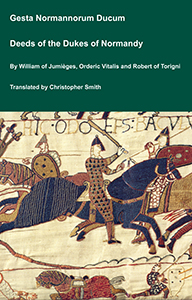 History of the Dukes of Normandy by William of Jumieges. So then, to the aforementioned Robert, Count of Flanders, Henry, king of the Saxons and emperor of the Romans, granted the County of Cambrai, and Robert did homage to him for it. This Robert begot two sons, Robert and Philip. Robert, who was called the Jerusalemite because he was present when Jerusalem was taken by the Christians, begot Baldwin, who succeeded him. But Baldwin died from a wound that he had received in a certain battle near the castle of Auc in Normandy. After him, Charles his kinsman succeeded. And when this Charles was treacherously killed, as has already been said, William [aged 25], the son of Robert, Duke of Normandy, received the county of Flanders, as stated above. But he lived only a short time afterward, for while assaulting a certain town he was struck by a mortal wound. He died on the sixth day before the Kalends of August [27th July], in the year of the Lord 11281. He was buried in the church of Saint Bertin the Confessor, and Thierry [aged 29] of Alsace, a kinsman of the preceding counts, succeeded him. To this Thierry, Henry, king of the English, gave in marriage the sister [Sibylla2] of Geoffrey Martel, Count of Anjou.
Igitur prædicto Roberto comiti Flandriæ Henricus rex Saxonum et imperator Romanorum, dedit comiD talum Cameracensem et ipse fecit ei inde fidelitatem. Genuit autem idem Robertus duos filios, Robertum et Philippum. Robertus vero Hierosolymitanus cognominatus, quia interfuit, dum Hierusalem a Christianis caperetur, genuit Balduinum qui ei successit. Eodem vero Balduino mortuo ex vulnere, quod in conflicta quodam apud Aucum castrum quoddam Northmanniæ acceperat, Carolus cognatus ipsius ei successit Quo per traditionem occiso, sicut jam dictum est, cumdem comitatum Flandriæ, sicut superius diximus, Willelmus filius Roberti ducis Northmanniæ habuit. Sed parvo tempore supervixit, in cujusdam oppidi assultu appetitus lethali vulnere. Decessit vero 6 Kal. Aug. anno ab incarnatione Domini 1188. Sepultus est autem in ecclesia Sancti Bertini confessoris et successit ei Terricus de Avseis, congnatus præcedentium comitum. Huic Henricus rex Anglorum copulavit sororem Gaufridi Martelli comitis Andegavorum.
Note 1. The manuscript here has erroneously 1188.
Note 2. Sibylla [aged 16], around 1112-1165, daughter of Fulk of Anjou and Ermengarde de la Flèche. Her brother was Geoffrey, Count of Anjou, father of King Henry II of England; he is not known to have been given the nickname 'Martel' i.e. 'Hammer' although he is referred to as such in this text. Her uncle Geoffrey, Count of Anjou, who was known as 'Martel'. She married 1 in 1123 William "Clito", annulled 1124, and 2 in 1134 Thierry, Count of Flanders.
On 27th July 1214 the last battle of the Anglo-French War of 1213-1214. Philip Augustus II King France 1165-1223's army defeated the combined forces of England, Flanders and the Holy Roman Empire. Thomas St Valery [aged 59] fought.
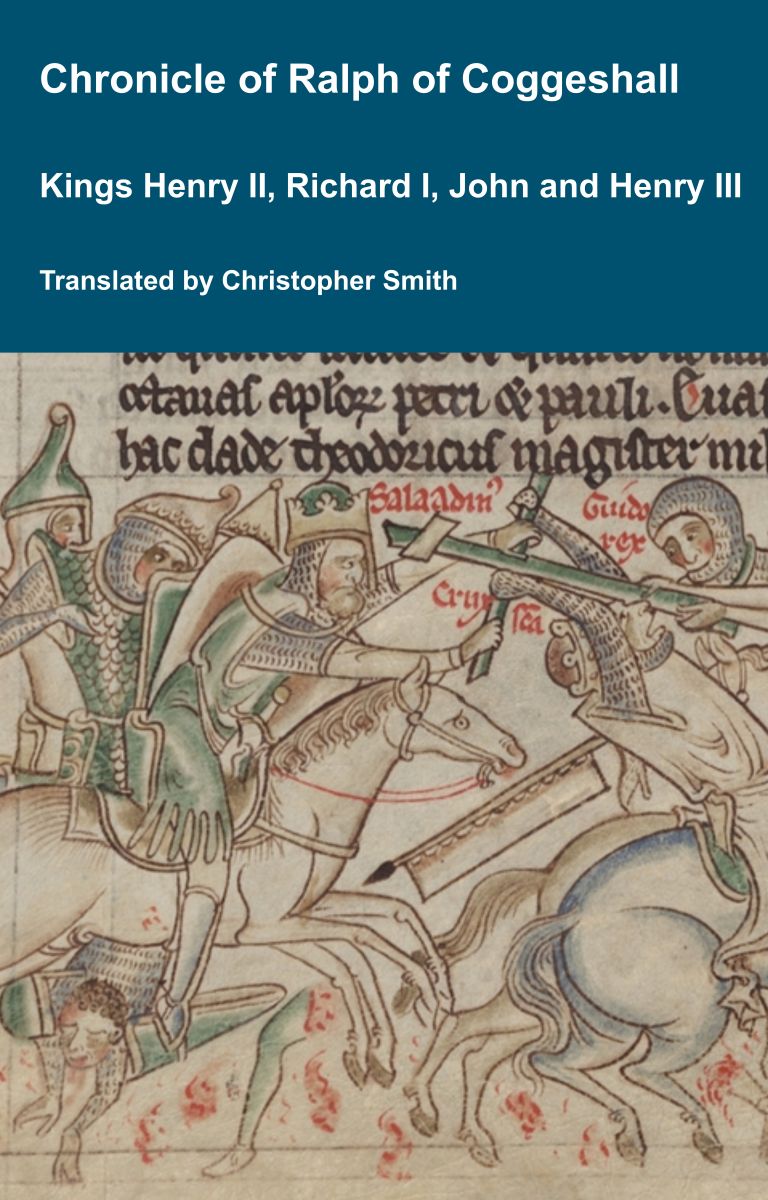 Chronicum Anglicanum by Ralph Coggeshall. A battle1 was fought between the king of France and the aforesaid count of Flanders with his allies, and the camps of the Flemings were overthrown by the French, and were captured the count of Flanders, and the count of Boulogne, and the earl of Salisbury, the illegitimate brother of the king of England, and a very great multitude of knights of lesser rank. This battle was fought on the thirteenth day before the Kalends of August [20th July], on a Sunday, near Douai.
Commissum est prælium inter regem Francorum et comitem Flandriæ prædictum cum complicibus suis, et cæsa sunt castra Flandrensium a Francis, et capti sunt comes Flandriæ, et comes Boloniæ, et comes Salesberiæ, frater regis Angliæ nothus, et maxima multitudo militum gradus inferioris. Actum est autem hoc prælium XIII kalendas Augusti, die Dominica, juxta Duay.
Note 1. The battle of Bouvines was fought on Sunday, 27th July 1214 rather than the 20th of July. William the Breton: "When the king and the barons had returned to their tents, that very evening he had brought before him the noble men who had been taken in the battle. They numbered thirty in all, each of such high nobility that every one had borne his own banner in the fight, besides the other prisoners of lesser rank. And when all were before him, he granted life to them all, according to the gentleness and great mercy of his heart, though all those who were of his own realm and his liege men, who had conspired against him, sworn to his death, and done all in their power to slay him, were guilty and deserving of death, according to the laws and customs of the land. They were bound in irons and chains and loaded upon carts, to be taken to prisons in various places. .... On the very day of the battle, William Longsword, Count of Salisbury, was delivered into the keeping of Count Robert of Dreux, with the intention that he should be given in exchange to King John of England, his brother, for the king's son whom Philip held prisoner, as we have said above. But King John, who bore hatred toward his own flesh and blood, as one who had slain his nephew Arthur and kept Eleanor, that same Arthur's sister, imprisoned for twenty years, would not consent to release a stranger in exchange for his own brother. Some of the other prisoners were confined in the Châtelet of the Grand-Pont and the Petit-Pont [the two great prisons of medieval Paris], and the rest were sent throughout the kingdom to various places of imprisonment."
On 27th July 1276 James I King Aragon [aged 68] died. His son Peter [aged 36] succeeded III King Aragon.
Chancery Rolls Supplementary: Close Rolls, Welsh Rolls, Scutage Rolls. 27th July 1282. Rhuddlan. To Thomas, bishop of St. Davids [aged 38]. Order to cause the passes through the woods (nemora) in the parts of West Wales in his bishopric and in the fee of his church to be cleared of trees (succindi) and widened by the counsel of William de Valencia, the king's uncle, wherever it shall seem necessary and expedient to the bishop, as it is expedient that the passes in those parts shall be enlarged and widened, so that those traversing the passes may liave a safer and more secure way (accessiis).
Like order to the said William to cause the passe? through the woods in all places in those parts where it shall aoem neoessarv and expedient to be enlarged and widened.
To Robert Tibbetot, justice of West Wales. Order to be intendent, counselling and aiding to the bishop and William in this matter.
 Deeds of King Edward III by Robert of Avesbury. "Philip of Valois, for a long time we have pursued you through messengers and by every other means that we know to be reasonable, in order that you might render to us our right, the inheritance of France, which you have long detained from us and wrongfully occupied. And because we see clearly that you intend to persevere in this wrongful detention without doing us justice concerning our claim, we have entered the land of Flanders as sovereign lord of it and have passed through the country. And we signify to you that, trusting in the help of our Lord Jesus Christ and in our right, with the power of that land and with our people and allies, considering the right which we have to the inheritance that you withhold from us and your injustice, we are advancing toward you to bring a swift end to our rightful claim, if you are willing to approach. And because so great a number of people assembled, who come on our side and whom we believe you will bring on yours, could not remain together for long without causing great destruction to the people and the country, which every Christian ought to avoid, and especially princes and others who hold themselves to be governors of peoples, we greatly desire that a brief decision should be taken. Therefore, in order to avoid the death of Christians, since the dispute is evident between us and you, we propose that the determination of our claim be made between our two persons in combat, to which we offer ourselves for the reasons aforesaid, well knowing the great nobility of your body and also your sense and judgment. But if you do not wish to take that course, then let our challenge be settled by battle between yourself with one hundred of the most suitable persons on your side and ourselves with as many of our liege men. And if you wish neither the one nor the other, then we appoint for you a certain day before the town of Tournai, to fight power against power, within ten days next after the date of this letter. And we wish that these offers of ours be known throughout the world as our desire, not through pride or presumption, but for the reasons stated above, so that, if the will of our Lord Jesus Christ be shown between us, peace may more and more exist among Christians, the power of the enemies of God may be resisted, and Christendom may be set free. And concerning the course you wish to take among the offers aforesaid, we ask that you signify it to us by the bearer of this letter and by your own letters, giving him a speedy reply. Given under our great seal at Chin, in the fields of Leez, on the twenty-seventh day of the month of July [1340]."
"Phelipe de Valois, ge long temps avoms pursui devers vous par messages et toutz aultres voies qe nous savoms resonables, a fin qe vous nous vousistez avoir rendu nostre droit, heritage de Fraunce, le quele vous nous avetz long temps detenu & graunt tort et occupe. Et, pur ceo ge nous veoms bien ge vous estes en entente de perseverer en vostre injuriouse detenue, sauntz nous feare reson de nostre demaunde, sumez nous entrez en la terre de Flaundres, come seignur soveraign de cele, et passez parmi le pais. Et vous signefioms ge, pris ovesge laide nostre Seignur Jesu Crist et nostre droit, ovesqe le poar du dit pais et ovesge noz gentz et alliez, regarde le droit qe nous avomps à leritage ge vous nous detenez & vostre tort, nous treioms vers vous, pur mettre brief fin sour mostre droiturele chalange, si vous vuilletz aproscher. Et, pur ceo qe si graunt poar dez gentz assemblez, qe viegnent de nostre part, et ge bien quidoms qe vous amesnetz de vostre part, ne se purroient mye longment tenir ensemble sauntz faire graunt destruccion al people et al paisla quele chose chescun Crestien doit escheure, et especialment princes et aultres qe se tiegnent governours de gentzsi desirroms moult qo brief point se preist, et, pur escheure mortalite de Crestiens, ensi come la querele est apparent a nous et a vous, qe la discucion de nostre chalange se feseit entre noz ij. corps; à la quele chose nous vous offroms pur lez causes susditz, content qe nous puissoms bien veer la graunt noblesse de vostre corps, vostre sen auxint et avisement. Et, en cas qe vous ne vorroiez cele voie, adonges soit mys nostre chalange pur affiner icelle bataille de vous mesmes od c. persones dez plus suffisauntz de vostre part, et nous mesmes od aultres tauntz de noz gentz ligez. Et, si vous ne voilletz lune voie ne lautre, ge vous nous assignez certein jour devaunt la ville de Tourneye, pur combatre poar encountre poar, dedeinz X jours proscheins apres la date du ceste lettre. Et noz offrez dezsusditz voloms par tut le mounde estre conutz qest nostre desir, ne mye pur orguille ne pur surquidance, meas qe par lez causes susdites, a fin ge, la volente nostre Seignur Jesu Christ mons tre entre nous, repos poet de pluis en pluis estre entre Crestiens, ge le poar dez enemys Dieux feussent resistez et Crestiente enfraunchie. Et la voie sour ceo gellisre voil letz des offrez dessusdites nous voilletz signefier par le portour du cestes lettres et par lez vostres, a lui fesant hastive deliverance. Done soutz nostre graunt seal, a Ohyn, es champs de Leez, le XXVIJ jour du moys de Juyl."
Adam Murimuth Continuation. "Philip of Valois, for long have we made suit before you by embassies and all other ways which we knew to be reasonable, to the end that you should be willing to have restored unto us our right, our heritage of France, which you have long kept back and most wrongfully occupied. And for that we see well that you are minded to continue in your wrongful with. holding, without doing us right in our demand, we have entered into the land of Flanders, as sovereign lord thereof, and have passed through the country. And we make known unto you that, by the help of our Lord Jesus Christ and our right, together with the power of the said land and with our people and allies, in regard to the right which we have in the heritage which you do wrongfully withhold from us, we are drawing nigh unto you to make an end of our rightful challenge, if you will come near. And for that so great a power of assembled men which come on our side and which we think you are leading on your side would never long be able to hold together without doing grievous hurt to the people and to the country which thing every good Christian ought to eschew, and especially princes and others who think themselves worthy to rule nations so do we greatly desire that despatch be made, and, for the avoiding the death of Christians, seeing that the quarrel is manifestly ours and yours, that the trial of our challenge be made between our two bodies; where unto we offer ourself for the reason aforesaid, albeit that we con sider well the great nobility of your person, your prudence also and discretion. And in case that you would not choose this way, then should our challenge be laid to make an end thereof by battle between yourself with one hundred of the fittest men of your side and ourself with so many others of our liegemen. And, if you will neither the one nor the other way, that you assign unto us certain day before the city of Tournay to fight, power against power, within ten days next after the date of this letter. And as to our offers aforesaid we wish it to be known through all the world that this is our desire, not from pride nor presumption, but for the reasons abovesaid, to the end that, the will of our Lord Jesus Christ being shown between us, peace may grow more and more among Christians, and thereby the power of the enemies of God be resisted and Christendom set free. And the way, touching which of the offers aforesaid you choose, make you known unto us by the bearer of these letters and by your own, causing thereof a speedy delivery. Given under our great seal at Chin, in the fields near Tournay, the 27th day of the month of July, the year of our Lord 1340."
"Philippe de Valoys, par longe temps avomus pursui par devers vous par messages et toutes autres voies qe nous saviomus resonables, a fin qe vous mous vousissez aver rendue nostre dreit, heritage de Frannce, liquel vous nous avetz longe temps detenue et a grant tort occupo. Et, pur cco qe nous veomus bien qe vous estes en entente de pcerscverer en vostre injuriouse detenue, saunz nous faire resoun de nostre demaunde, sumus nous entres en la terre de Flaundres, com seignur goverayn do icelle, et passez par my lo pays. Et vous signifiomus qe, pris ovesqe Inide nostre Seignur Jesu Crist et nostre droit, ovesqe le ponir du dit pays et ovesqe nos gentz et allietz, regardez le droit qe nous avomus al heritage qe vous nous dctenez a vostre tort, nous nous troiomus vers vous, pur mettre fin sour nostre dreiturel chalange, si vous voiletz aprocher. Et, pur ceo de si grant poair do gontz assemblez qe vient de nostre part et qe quidomus ge vous amenez de vostre part ne se purreient mye longement tener ensemble saunz faire greff destruccoun au poeple et au paisla quele chose chescun boun Cristene deit ceschieure, et espccialment prince et autre qe se deinent governer de gentzsi desiromus mult qe breff poynt se preist, et, pur eschicure mortalite des Cristiens, ensi com la quercle est apparent a nous et vous, ue la discussion de nostre chalange se fesist entre nos deux corps; a la quele chose nous nous offremus pur les causes susdlites, coment qe nous pensons bien la grant noblesse de vostre corps, vostre sens aussi et avisement. Et, en cas de vous ne vourroietz celle voie, adonqes fust mys nostro chalange pur affinier icelle par bataille de vous mesmes ove cent persones de plus suffisauntz de vostre part et nous mesmes ove autres tauntz de nos gentz leges. Et, si vous ne voillietz lune voie ne lautre, qe vous nous assignez certayne journe devaunt la cite de Turneye pur combatire, poair countre poair, dedeins diz jours procheyns apres lu date de ceste lettre. Et nos offros desusditz volomus par tut le mundo estre conues qest nostre desire, ne mye par orguille ne sourquindance, mes de par les causes susdites, afin qe, la volunte nostre Scignur Jesu Crist monstre entre nous, repos puit de pluis en pluis estre entre Cristicns, et qe par ce le poair des enemys Dieux fuissent resistez et Cristiente enfrannche. Et la voye sour cco qe cslire vollez des offres susditez nous volez singnifier par le portour de cestes lettres et par les vostres, en bien fesaunt hastive deliverance. Done suz nostre grant seal a Chyn suz les champs de les Torney, le XXVIJ jour de moys de Juyl, lan nostre Seignur mille CCCXL."
Deeds of King Edward III by Robert of Avesbury. On the twenty-seventh day of July in the year of the Lord 1347, while Edward, king of England, was besieging the town of Calais, Philip of Valois came there with a very large army intending to raise the siege. He pitched his tents on the crest of a certain hill near the marsh of Calais. On the same day the reverend fathers Annibaldus, bishop of Tusculum, and Stephen, the aforesaid cardinal priest, came to the end of the causeway of Calais. After speaking there with certain nobles of the English kingdom, they promised and caused it to be conveyed to the king of England by those nobles that, if negotiations for peace could be undertaken between the parties, Philip would offer him acceptable terms of peace. When this was reported to the king of England, who always desired a reasonable peace, he graciously agreed that negotiations should take place. Certain nobles of both sides therefore met at the end of the causeway in pavilions erected there for that purpose and negotiated for several days. But when those nobles were unable to agree upon a way of peace acceptable to the king of England, Philip of Valois, in the evening of the last day of the said month of July, which fell on a Tuesday, caused it to be offered through certain nobles of the kingdom of France that whenever, from that hour until the hour of vespers on the following Friday, the king of England wished to come outside the place of siege, he would immediately find battle ready in a field suitable for both parties. The field was to be chosen by four knights from one side and four from the other, experienced in arms and sworn upon the holy Gospels. The king of England, having taken counsel with the nobles of his army concerning this offer, accepted it at once on the following day, Wednesday, like a valiant knight. Letters of safe conduct were drawn up for the four knights of the opposing party, and his acceptance of the offer together with the issuing of those letters was made known to Philip. But when Philip heard the determined intention of the king of England, he did not wish to await the outcome of battle. Instead, during the night before the following Thursday he set fire to his tents, left almost all his baggage there, sought concealment, and secretly withdrew, vanishing cunningly from the sight of the English.
Vicesimo septimo die Julii, anno Domini millesimo cocmexLviimmo, dicto domino Edwardo rege Anglorum obsidente villam de Caleys, prefatus dominus Philippus de Valesio, veniens ibidem cum exercitu magno valde et dictam obsidionem removere proponens, in supercilio cujusdam montis prope mariscum de Caleys tentoria sua fixit. Et eodem die reverendi patres, Ambaldus episcopus Tusculanus et Stephanus presbyter cardinalis supradicti, ad finem calceti de Caleys venientes, habito per ipsos colloquio cum certis nobilibus regni Anglis, promiserunt et dicto domino regi Anglorum per eosdem nobiles supplicando intimari fecerunt quod, si tractatus pacis inter dictas partes posset baberi, dictus dominus Philippus offerret domino regi Anglorum acceptabiles vias pacis. Quibus domino regi Ánglorum relatis, idem dominus rex, rationabilem pacem semper affectans, quod fieret pacis tractatus benigne concessit. Tunc vero certi nobiles utriusque partis ad finem dicti calceti in papilionibus, propter hoc ibidem factis, per aliquos dies tractabant. Sed, ipsis nobilibus ad viam pacis domino regi Anglorum acceptabilem condescendere nequeuntibus, præfatus dominus Philippus, hora vesperarum ultimæ diei dicti mensis Julii, contingentis die Martis, per certos nobiles regni Franciæ fecit offerri quod, quandocumque ab illa hora usque horam vesperarum diei Veneris proximo tunc sequentis dominus rex Anglorum vellet extra locum obsidionis venire, in campo ad prœliandum utrique parti congruo, per IIIJ milites ex una parte et alios IIIJ milites ex alia parte, circumaspectos in armis, super hoc ad sancta Dei evangelia juratos, electo, bellum contra se paratum protinus inveniret. Dominus vero rex Anglorum, cum nobilibus sui exercitus super dictam oblationem deliberatione præhabita, statim in crastino, videlicet die Mercurii, dictam oblationem, sicut miles strenuus, acceptavit, et, literis de conductu pro hujusmodi iiijor militibus partis adversæ factis sufficientibus, dictam suam acceptationem prædictarumque literarum factionem ad notitiam dicti domini Philippi fecit deduci. Tunc præfatus dominus Philippus, magnamini regis Anglorum audiens voluntatem, eventum belli noluit exspectare, sed de nocte ante diem Jovis proximo tune sequentem, tentoriis suis in incendium positis et ibidem quasi omnibus suis sarcinolis derelictis, quærens subterfugia, clam recessit et subtiliter evanuit ab oculis Anglicorum.
On 27th July 1365 Rudolph Habsburg IV Duke Austria [aged 25] died. His brother Frederick succeeded III Duke Austria.
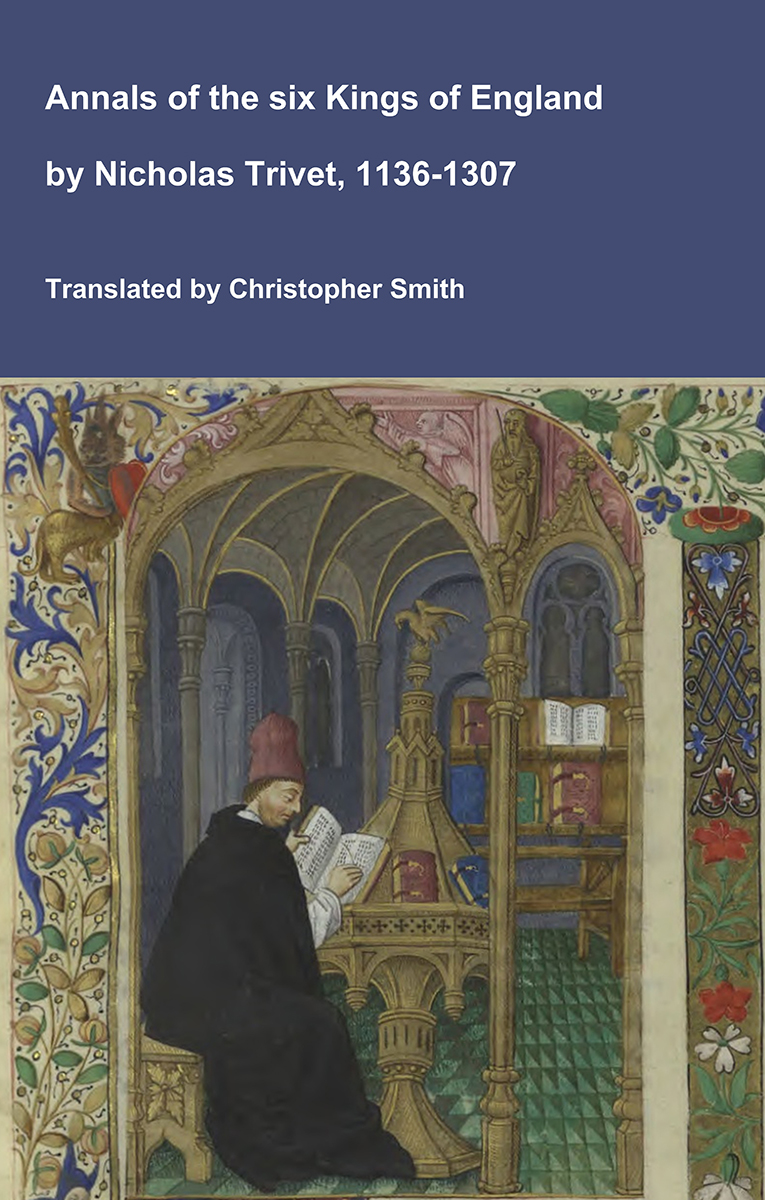
Annals of the six Kings of England by Nicholas Trivet
Translation of the Annals of the Six Kings of England by that traces the rise and rule of the Angevin aka Plantagenet dynasty from the mid-12th to early 14th century. Written by the Dominican scholar Nicholas Trivet, the work offers a vivid account of English history from the reign of King Stephen through to the death of King Edward I, blending political narrative with moral reflection. Covering the reigns of six monarchs—from Stephen to Edward I—the chronicle explores royal authority, rebellion, war, and the shifting balance between crown, church, and nobility. Trivet provides detailed insight into defining moments such as baronial conflicts, Anglo-French rivalry, and the consolidation of royal power under Edward I, whose reign he describes with particular immediacy. The Annals combines careful year-by-year reporting with thoughtful interpretation, presenting history not merely as a sequence of events but as a moral and political lesson. Ideal for readers interested in medieval history, kingship, and the origins of the English state, this chronicle remains a valuable and accessible window into the turbulent world of the Plantagenet kings.
Available at Amazon in eBook and Paperback format.
On 27th July 1420 Holy Roman Emperor Sigismund [aged 52] was crowned I King Bohemia at Prague.
On 27th July 1452 Ludovico Sforza Duke Milan was born to Francesco Sforza I Duke Milan [aged 51] and Bianca Maria Visconti [aged 27]. He married Beatrice Este, daughter of Ercole Este I Duke Ferrara.
By 27th July 1453, says Griffiths, the situation in the north had deteriorated so badly that the crown effectively abrogated its authority in the region, by writing directly to the two earls [Note Henry Percy 2nd Earl of Northumberland [aged 60] and Richard Neville Earl Salisbury [aged 53]], laying responsibility for ending the dispute on them, and instructing them to keep their sons in order. It was at this point too, that the commission of oyer and terminer of 12 July was re-issued.
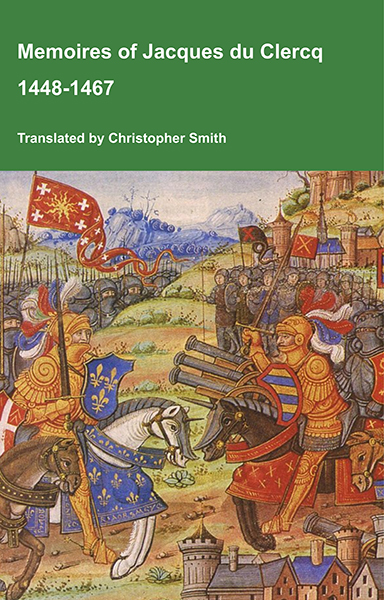 Memoires Jacques du Clercq. The bishop of Arras, named Jean Godefroy, who in his time was made a cardinal, obtained indulgences from Rome for a period of fifty years, beginning in the year 1456, whereby each day that one visited the shrine and during the octaves of Our Lady, one would gain fifteen years and fifteen quarantines of indulgences, in addition to those already granted for visiting the said church and giving alms. At that time, on the 27th day of July in the said year 1456, around ten o'clock in the evening, after supper, in the city of Arras, Martin le Josne, who the previous year had been provost of Beauquesne, was killed and put to death by one named Collard le Vasseur, the younger son of Collard, who was a tavern keeper; and the cause was certain words that the said Collard had spoken to Martin while they were supping together.
L'evesque d'Arras, nommé Jehan Godefroy, en son temps cardinal, impetra pardons de Rome pour l'espace de cinquante ans, commenchant la manne mil iiije cinquante six, de chacun jour qui visiteroit la manne seant et les octaves de Nostre Dame auroit quinze ans et quinze quarantaines de pardons, avecq les pardons qui estoient paravant, de visiter ladite eglise et donner des biens. En ce temps, le vingt septiesme de juillet, audit an cinquante six, environ dix heures du vespre, après soupper, en la cité d'Arras, Martin le Josne, l'année precedente prevost de Beauquesne, fust occis et mis a mort par ung nommé Collard le Vasseur, le josne fils de Collard, lequel estoit tavernier, et la cause fust pour aulcunes parolles que ledit Collard avoit dit audit Martin, eulx souppans ensemble.
Memoires Jacques du Clercq. And on the 27th day of the said month of July, for the said charge, Jacotin d'Athies, son of a burgess of Arras, was arrested. He was associated with the said Martin Cornille and was related to his wife, and, like the others, was taken into the city to the bishop's prison.
Et le xxvije jour dudit mois de juillet, prins pour ledit cas Jacotin d'Athies, fils de bourgeois d'Arras, lequel se tenoit avecq ledit Martin Cornille et estoit parent de sa femme, et comme les aultres fut mené en cité en la prison de l'eveque.
Memoires Jacques du Clercq. In the said year 1466, on the 27th day of July, in the town of Arras, about nine or ten o'clock in the evening, in a public house of women called the New Baths, two men killed a young barber, soon to be married, named Vincent Manfel, son of a canon of Lille, who was a very skilful youth and had advanced well in his trade. He was killed because he sought to make peace between those who killed him and another whom they wished to beat, and he received a knife wound in the chest, from which he died quickly, without confession; and the perpetrators were neither taken nor summoned, because their names could not be discovered.
Audit an lxvj, le xxvije jour de juillet, en la ville d'Arras, environ noeuf ou dix heures du vespres, en ung lieu publique de femmes, nommé les Noeuves Estuves, deux compagnons tuerent ung josne compagnon barbier a marrier, nommé Vincent Manfel, fils d'ung canoine de Lille, lequel estoit très habille enfant et avoit eslevé son mestier; il fust tué par ce qu'il cuida mectre l'accord entre ceulx qui le tuerent et ung qu'ils voulloient battre, et eut ung coulp de cousteau en la poitrine, duquel il mourut prestement sans confession; et ne feurent les fac teurs prins ne semons parce qu'on ne peult sçavoir leurs noms.
On 27th July 1469 William Herbert 1st Earl Pembroke [aged 46] was executed following his capture at the Battle of Edgecote Moor. His son William [aged 18] succeeded 2nd Earl Pembroke, 2nd Baron Herbert of Raglan. Mary Woodville Countess Pembroke and Huntingdon [aged 13] by marriage Countess Pembroke.
Poems of Guto'r Glyn. 24. Elegy for William Herbert of Raglan, first earl of Pembroke
Written after the execution of William Herbert [deceased] on 27th July 1469 following his capture at the Battle of Edgecote Moor
| Dawns o Bowls! Doe'n ysbeiliwyd, | A dance of Death! Yesterday, the raid struck, |
| Dwyn yr holl dynion i'r rhwyd. | All the men were dragged into the snare. |
| Dawns gwŷr Dinas y Garrai, | The dance of the men of Doncaster moves, |
| Dawns yr ieirll: daw'n nes i rai! | The earls' dance — it draws near to some! |
| Duw Llun y bu waed a lladd, | O God, Monday was blood and killing, |
| Dydd amliw, diwedd ymladd. | A many-hued day — the end of the fighting. |
| Duw a ddug y dydd dduw Iau | God took away on Thursday |
| Iarll Dwywent a'r holl Deau. | The Earl of Gwent and all the South. |
| Marchog a las dduw Merchyr, | A knight was slain on Wednesday, |
| Mwy ei ladd no mil o wŷr: | His death more costly than a thousand men. |
| Syr Rhisiart, ni syr Iesu | Sir Richard — not the Lord Jesus — |
| Wrthaw er lladd North a'r llu. | By him were the North and his host brought down. |
| Duwmawrth gwae ni am Domas: | O God Tuesday — woe to us for Thomas: |
| Duw Llun gyda'i frawd y'i llas. | On God's Monday he was slain with his brother. |
| Dwyn yr iarll a'i bedwarllu, | The earl was seized with all his fourfold host, |
| Dydd Farn ar anrhydedd fu. | A Judgment Day upon the honour that was. |
| Arglwydd difwynswydd Defnsir | A lord without honour from Devonshire |
| A ffoes – ni chafas oes hir! | Fled — and did not live long! |
| Bradwyr a droes brwydr a drwg | Traitors turned the battle to evil, |
| Banbri i'r iarll o Benbrwg. | Banbury was ruin to the Earl of Pembroke. |
| Cad drycin am y drin draw, | A storm of battle raged in that far fight, |
| Carliaid a wnaeth y curlaw. | Carls unleashed the blood-rain's blight. |
| Ymladd tost am laddiad hwn | Fierce was the fight that led to his doom, |
| A wna'r hynt yn Norhantwn. | And his path ends at Northampton's gloom. |
| Awn oll i ddial ein iaith | Let us all rise to avenge our tongue, |
| Ar ddannedd y Nordd unwaith | On the teeth of the North, ere long! |
| A dyludwn hyd Lydaw | Let us march as far as fair Brittany, |
| Dan draed y cyffredin draw. | To crush the common foe beneath our feet. |
| Ef â'r gwŷr a fu ar gam | He and the men who dealt in wrong |
| Oll i ddiawl, yn lladd Wiliam. | All to the devil — for slaying William. |
| O rhoed, lle bu anrhydedd, | Alas that, where once honor stood, |
| Ar fwnwgl iarll arf neu gledd, | A blade or weapon struck the earl's proud throat. |
| Och Fair, cnodach fu arwain | O Mary! Harsh was the leading forth |
| Aerwy mawr o aur a main. | Of a great collar of gold and stone to death. |
| Doe 'dd aeth dan y blaned ddu | Yesterday he passed beneath the darkened star, |
| Drwy'r fâl draw i ryfelu. | Through the mist beyond, to make his war. |
| Och finnau – uwch yw f'anun – | Alas for me — higher is my soul's own pain — |
| Nad arhôi 'n ei dir ei hun. | That he found no rest in his native plain. |
| Ymddiried i'r dynged wan | He trusted in frail, false fate — |
| A'i twyllodd o Went allan. | And it betrayed him out of Gwent. |
| Tair merched, tair tynged ton | Three women — three tidal fates — |
| Y sy'n dwyn oes ein dynion: | Who bear the lives of all our men: |
| Un a gynnail cogeilyn, | One who gathers mocking kin, |
| Arall a nydd dydd pob dyn, | Another spins each mortal's day, |
| Trydedd yn torri edau | The third cuts the thread — and so they slew |
| Er lladd iarll a'r llu dduw Iau. | The earl and all his host on Thursday too. |
| Mynnwn fy mod ymannos | Would that I stood, sword in hand, |
| Yn torri pen Atropos. | To strike off Atropos's head! |
| Nid rhan i'r tair a henwais | No right have those three whom I named |
| Nyddu oes hir yn nydd Sais. | To spin long life on an English day. |
| Os gwir i blant Alis gau, | If it's true that Alice's lying sons — |
| Draeturiaid, dorri tyrau, | Traitor-born — have broken towers down, |
| Ni ddôi'r iangwyr, ni ddringynt | Then let no young men come nor climb |
| I dai'r gŵr na'i dyrau gynt. | The house or halls of that good man's line. |
| Gwinllan fu Raglan i'r iaith, | Raglan was a vineyard for our tongue, |
| Gwae ni wŷl ei gwin eilwaith! | Woe — we shall not taste its wine again! |
| Gwae a weles ar Galan | Woe was the sight I saw at Calan, |
| Gynnal gwledd ar ganol glan! | A feast held high on a bloodied plain. |
| Gwae a geisio rhodio rhawg | Woe to him who walks too proud, |
| Gwent dlawd oedd gynt oludawg! | Gwent — once rich — lies poor and bowed. |
| Ei farw oedd well i fardd iach | Better dead to a sound-minded bard, |
| Heb ei bwyll, no byw bellach. | Than living now, so lost and marred. |
| Merddin Wyllt am ei urddas, | Merddin the Wild, for honor's sake, |
| Amhorfryn, aeth i'r glyn glas. | To shadowed glen his leave did take. |
| Af yn wyllt o fewn elltydd | So I go mad among the trees, |
| I eiste rhwng clustiau'r hydd. | To sit between the wild stag's ears. |
| Ef a'm llas, mi a'm nasiwn, | He killed me — and my nation too — |
| Yr awr y llas yr iarll hwn, | The hour this earl was struck and slew. |
| Cymro oedd yn ffrwyno Ffrainc, | A Welshman once who reined in France, |
| Camreol Cymry ieuainc. | Now misrules the youth of Cymru's chance. |
| Ofn i bawb tra fu 'n y byd, | He was feared by all while in the world, |
| Yn iach ofn oni chyfyd! | A wholesome fear — unless it stirs! |
| Ymgyrchu i Gymru a gân', | Let songs now march into Cymru's heart, |
| Ymsaethu 'm Mhowys weithian. | Let Powys rise and fire its darts! |
| Doed aliwns, nis didolir, | Let the alliance come — it won't be turned, |
| O dôn', pwy a'u lludd i dir? | From the wave, who can drive them to ground? |
| Llusgent wŷr, llosgent eu tai, | They dragged our men, burned down their homes, |
| Lladdwyd y gŵr a'u lluddiai. | And slew the man who held them down. |
| Traws eto rhag trais atyn' | May a path still turn from force toward us, |
| Tra ater Syr Rhosier ynn. | While Sir Roger stands to answer fate. |
| Trimaib iarll, os trwm y byd, | Three sons of the earl — though the world be grim — |
| Tri a ostwng ein tristyd. | Three who may lower our sorrow's weight. |
| Un o'i hil yn Neheuwlad | One of his line in the southern land |
| A gyrredd dwyn gradd ei dad. | Strives to reclaim his father's stand. |
| Iarll oedd, Cymru oll eiddo, | He was an earl — all Wales his due — |
| Iarll o'i fab arall a fo! | An earl his son shall be anew! |
On 27th July 1473 Archbishop Lawrence Booth [aged 53] was appointed Lord Chancellor serving until May 1474.
Letters and Papers Foreign and Domestic Henry VIII 1528. 27th July 1528. R. O. 4560. John Chekyng To Cromwell.
His son Gregory [aged 8] is not now at Cambridge, but in the country, where he works and plays alternately. He is rather slow, but diligent. He had been badly tutored, and could hardly conjugate three verbs when committed to Chekyng's care, though he repeated the rules by rote. If this is Palgrave's style of teaching, does not believe he will ever make a scholar. Will have to unteach him nearly all he has learned. He is now studying the things most conducive to the reading of authors, and spends the rest of the day in forming letters. The plague, happily, is abating. Pembroke Hall, 27 July.
Hol., Lat., pp. 2. Add.: Clarissimo viro et domino suo optimo, D. Crumwello in ædibus Remi (Wolsey). Ex Cantabrigia.
Henry Machyn's Diary. 27th July 1551. The xxvij day of July was the nuw bisshope of W [aged 37] ... was devorsyd from the bucher wyff with shame enog[h.]
Note. The xxvij of July was the new bishop of W—divorced from the butcher wife with shame enough. Though the name is burnt, this appears to belong to John Ponet, bishop of Winchester, who had been translated to that see on the 23d March preceding. He had published "A Defence of the Marriage of Priests" in 1549, which is noticed in Strype, Memorials, Book ii. chap. 18. And it seems that he married again very shortly after this divorce, the following entry occurring in the register of Croydon: "1551, Oct. 25. Reverendus pater Johannes episcopus Wynton' duxit Mariam Haymond generosam in ista ecclesia coram multitudine parochianorum, presente reverendissimo patre Thoma Cantuar' archiepiscopo cum multis." (Collectanea Topogr. et Geneal. iv. 91.)
Henry Machyn's Diary. 27th July 1553. The xxvij day of July the duke of Suffoke [aged 36], maister [Cheke] [aged 39] the kynges scolmaster, maister Coke, (and) ser John Yorke [aged 43], to the Towre [Map].
Note. Sir John Yorke had been under-treasurer of the mint. Together with other officers of the same he had a pardon for all manner of trangressions, &c. July 21, 1552. (Strype.)
On 27th July 1555 Marie Habsburg Spain was born to Maximilian Habsburg Spain II Holy Roman Emperor [aged 27] and Maria of Spain Holy Roman Empress [aged 27]. Coefficient of inbreeding 10.03%. She died aged less than one years old.



The Deeds of the Dukes of Normandy
The Gesta Normannorum Ducum [The Deeds of the Dukes of Normandy] is a landmark medieval chronicle tracing the rise and fall of the Norman dynasty from its early roots through the pivotal events surrounding the Norman Conquest of England. Originally penned in Latin by the monk William of Jumièges shortly before 1060 and later expanded at the behest of William the Conqueror, the work chronicles the deeds, politics, battles, and leadership of the Norman dukes, especially William’s own claim to the English throne. The narrative combines earlier historical sources with firsthand information and oral testimony to present an authoritative account of Normandy’s transformation from a Viking settlement into one of medieval Europe’s most powerful realms. William’s history emphasizes the legitimacy, military prowess, and governance of the Norman line, framing their expansion, including the conquest of England, as both divinely sanctioned and noble in purpose. Later chroniclers such as Orderic Vitalis and Robert of Torigni continued the history, extending the coverage into the 12th century, providing broader context on ducal rule and its impact. Today this classic work remains a foundational source for understanding Norman identity, medieval statesmanship, and the historical forces that reshaped England and Western Europe between 800AD and 1100AD.
Available at Amazon in eBook and Paperback format.

On 27th July 1571 Francis Shirley [aged 56] died at Staunton Harold, Leicestershire [Map]. He was buried in the Church of St Mary and St Hardulph, Breedon on the Hill [Map]. Elizabethan Period. Chest with Weepers holding Shields. Helm with Folds. Richard and Gabriel Royley of Burton-upon-Trent.
Francis Shirley: Francis Shirley and Dorothy Giffard were married. The difference in their ages was 24 years; she, unusually, being older than him. Around 26th January 1515 he was born to Ralph Shirley at Staunton Harold, Leicestershire [Map].
On 27th July 1578 Bishop Richard Howand [aged 37], in his capacity as Vice-Chancellor, waited on the Queen [aged 44] on her visit to Audley End House, Saffron Walden [Map], and presented her with a Greek Testament and a pair of gloves, making a suitable oration.

On 27th July 1578 Frances Howard Duchess Lennox and Richmond was born to Thomas Howard 1st Viscount Howard Bindon [aged 58] and Mabel Burton Viscountess Howard Bindon [aged 38] at Lychett, Dorset. She married (1) March 1592 Henry Prannell (2) 27th May 1601 her half third cousin Edward Seymour 1st Earl Hertford, son of Edward Seymour 1st Duke of Somerset and Anne Stanhope Duchess Somerset (3) 16th June 1621 her fifth cousin once removed Ludovic Stewart 2nd Duke Lennox 1st Duke Richmond, son of Esme Stewart 1st Duke Lennox and Catherine Balsac Duchess Lennox.
On 27th July 1599 Albert IV Wettin IV Duke Saxe Weimar was born to Johann Wettin II Duke Saxe Weimar [aged 29] and Dorothea Maria Anhalt at Altenburg.
On 25th July 1603 King James I of England and Ireland and VI of Scotland [aged 37] was crowned I King England Scotland and Ireland at Westminster Abbey [Map].
Charles Howard 1st Earl Nottingham [aged 67] was appointed Lord High Steward.
On 26th July 1603 Thomas Bennett [aged 60] and Thomas Cambell [aged 67] were knighted.
On 27th July 1603 William Wrey 1st Baronet was knighted at Whitehall Palace [Map].
On 30th July 1603 Richard Preston 1st Earl Desmond was knighted at Whitehall Palace [Map].
Bishop Thomas Bilson [aged 56] gave the sermon. While the wording conceded something to the divine right of kings, it also included a caveat about lawful resistance to a monarch.


Diary of Anne Clifford. 27th July 1619. The 27th about this time my Lady Bedford [aged 39] had the smallpox and had them in that extremity that she lost one of her eyes. About this time my Coz. Cilifford's wife was brought to bed at Lanesboro of a son, which lived not seven hours and was christened Francis and was buried there. The same day Lord Rutland and Lady Kath. Manners came and dined here from the Wells and in the evening went to London.
Note. This Sunday my Coz. Oldworth was true and shewed those remembrances me which are to be set up at Cheyneys for my Great Grand Father of Bedford and my Grand Father of Bedford and my Aunt Warwick. About this time my Lady Law was married to Secretary Maunton.
All this Summer Lady Penniston [aged 24] was at the Wells near Tunbridge drinking the waters. This coming hither of Lady Penniston's was much talked of abroad and my Lord [aged 30] was condemned for it.


On 27th July 1643 Robert Pierrepont 1st Earl Kingston [deceased] was buried at Church of St Edmund, Holme Pierrepoint [Map].
Samuel Pepys' Diary. 27th July 1661. From thence to Westminster Hall [Map], where it was expected that the Parliament was to have been adjourned for two or three months, but something hinders it for a day or two. In the lobby I spoke with Mr. George Montagu [aged 38], and advised about a ship to carry my Lord Hinchingbroke and the rest of the young gentlemen to France, and they have resolved of going in a hired vessell from Rye [Map], and not in a man of war. He told me in discourse that my Lord Chancellor [aged 52] is much envied, and that many great men, such as the Duke of Buckingham [aged 33] and my Lord of Bristoll [aged 48], do endeavour to undermine him, and that he believes it will not be done; for that the King (though he loves him not in the way of a companion, as he do these young gallants that can answer him in his pleasures), yet cannot be without him, for his policy and service.


Samuel Pepys' Diary. 27th July 1662. Lord's Day. At church alone in the pew in the morning. In the afternoon by water I carried my wife to Westminster, where she went to take leave of her father1, and I to walk in the Park, which is now every day more and more pleasant, by the new works upon it. Here meeting with Laud Crispe, I took him to the farther end, and sat under a tree in a corner, and there sung some songs, he singing well, but no skill, and so would sing false sometimes.
Note 1. Mrs. Pepys's father was Alexander Marchant, Sieur de St. Michel, a scion of a good family in Anjou. Having turned Huguenot at the age of twenty-one, his father disinherited him, and he was left penniless. He came over in the retinue of Henrietta Maria [aged 52], on her marriage with Charles I, as one of her Majesty's gentlemen carvers, but the Queen dismissed him on finding out he was a Protestant and did not go to mass. He described himself as being captain and major of English troops in Italy and Flanders.-Wheatley's Pepys and the World he lived in, pp. 6, 250. He was full of schemes; see September 22nd, 1663, for account of his patent for curing smoky chimneys.


Samuel Pepys' Diary. 27th July 1663. So he concluded, that for the better proceeding of justice he did think fit to make this a Session, and to prorogue them to the 16th of March next. His speech was very plain, nothing at all of spirit in it, nor spoke with any; but rather on the contrary imperfectly, repeating many times his words though he read all which I was sorry to see, it having not been hard for him to have got all the speech without book. So they all went away, the King [aged 33] out of the House at the upper end, he being by and by to go to Tunbridge [Map] to the Queen [aged 24]; and I in the Painted Chamber [Map] spoke with my Lord Sandwich [aged 38] while he was putting off his robes, who tells me he will now hasten down into the country, as soon as he can get some money settled on the Wardrobe.


Samuel Pepys' Diary. 27th July 1663. So to White Hall and by water to the Bridge [Map], and so home to bed, weary and well pleased with my journey in all respects. Only it cost me about 20s., but it was for my health, and I hope will prove so, only I do find by my riding a little swelling to rise just by my anus. I had the same the last time I rode, and then it fell again, and now it is up again about the bigness of the bag of a silkworm, makes me fearful of a rupture. But I will speak to Mr. Hollyard [aged 54] about it, and I am glad to find it now, that I may prevent it before it goes too far.
Samuel Pepys' Diary. 27th July 1665. At home met the weekly Bill, where above 1000 encreased in the Bill, and of them, in all about 1,700 of the plague, which hath made the officers this day resolve of sitting at Deptford, Kent [Map], which puts me to some consideration what to do.
Samuel Pepys' Diary. 27th July 1665. Thence, with mighty pleasure, with Sir G. Carteret [aged 55] by coach, with great discourse of kindnesse with him to my Lord Sandwich [aged 40], and to me also; and I every day see more good by the alliance.
Samuel Pepys' Diary. 27th July 1665. So dispatched all my business, having assurance of continuance of all hearty love from Sir W. Coventry [aged 37], and so we staid and saw the King [aged 35] and Queene [aged 55] set out toward Salisbury, and after them the Duke [aged 31] and Duchesse [aged 28], whose hands I did kiss. And it was the first time I did ever, or did see any body else, kiss her hand, and it was a most fine white and fat hand. But it was pretty to see the young pretty ladies dressed like men, in velvet coats, caps with ribbands, and with laced bands, just like men. Only the Duchesse herself it did not become.


Samuel Pepys' Diary. 27th July 1666. He gone, I away by water from the Old Swan [Map] to White Hall. The waterman tells me that newes is come that our ship Resolution is burnt, and that we had sunke four or five of the enemy's ships. When I come to White Hall I met with Creed, and he tells me the same news, and walking with him to the Park I to Sir W. Coventry's [aged 38] lodging, and there he showed me Captain Talbot's letter, wherein he says that the fight begun on the 25th; that our White squadron begun with one of the Dutch squadrons, and then the Red with another so hot that we put them both to giving way, and so they continued in pursuit all the day, and as long as he stayed with them: that the Blue fell to the Zealand squadron; and after a long dispute, he against two or three great ships, he received eight or nine dangerous shots, and so come away; and says, he saw The Resolution burned by one of their fire-ships, and four or five of the enemy's. But says that two or three of our great ships were in danger of being fired by our owne fire-ships, which Sir W. Coventry, nor I, cannot understand. But upon the whole, he and I walked two or three turns in the Parke under the great trees, and do doubt that this gallant is come away a little too soon, having lost never a mast nor sayle. And then we did begin to discourse of the young gentlemen captains, which he was very free with me in speaking his mind of the unruliness of them; and what a losse the King [aged 36] hath of his old men, and now of this Hannam, of The Resolution, if he be dead, and that there is but few old sober men in the fleete, and if these few of the Flags that are so should die, he fears some other gentlemen captains will get in, and then what a council we shall have, God knows. He told me how he is disturbed to hear the commanders at sea called cowards here on shore, and that he was yesterday concerned publiquely at a dinner to defend them, against somebody that said that not above twenty of them fought as they should do, and indeed it is derived from the Duke of Albemarle [aged 57] himself, who wrote so to the King and Duke [aged 32], and that he told them how they fought four days, two of them with great disadvantage. The Count de Guiche, who was on board De Ruyter [aged 59], writing his narrative home in French of the fight, do lay all the honour that may be upon the English courage above the Dutch, and that he himself [Sir W. Coventry] was sent down from the King and Duke of Yorke after the fight, to pray them to spare none that they thought had not done their parts, and that they had removed but four, whereof Du Tell is one, of whom he would say nothing; but, it seems, the Duke of Yorke hath been much displeased at his removal, and hath now taken him into his service, which is a plain affront to the Duke of Albemarle; and two of the others, Sir W. Coventry did speake very slenderly of their faults. Only the last, which was old Teddiman, he says, is in fault, and hath little to excuse himself with; and that, therefore, we should not be forward in condemning men of want of courage, when the Generalls, who are both men of metal, and hate cowards, and had the sense of our ill successe upon them (and by the way must either let the world thinke it was the miscarriage of the Captains or their owne conduct), have thought fit to remove no more of them, when desired by the King and Duke of Yorke to do it, without respect to any favour any of them can pretend to in either of them.


Samuel Pepys' Diary. 27th July 1667. He tells me that the King [aged 37] and Court were never in the world so bad as they are now for gaming, swearing, whoring, and drinking, and the most abominable vices that ever were in the world; so that all must come to nought. He told me that Sir G. Carteret [aged 57] was at this end of the town; so I went to visit him in Broad Street; and there he and I together: and he is mightily pleased with my Lady Jem's having a son; and a mighty glad man he is. He [Sir George Carteret] tells me, as to news, that the peace is now confirmed, and all that over. He says it was a very unhappy motion in the House the other day about the land-army; for, whether the King hath a mind of his own to do the thing desired or no, his doing it will be looked upon as a thing done only in fear of the Parliament. He says that the Duke of York [aged 33] is suspected to be the great man that is for raising of this army, and bringing things to be commanded by an army; but he believes that he is wronged, and says that he do know that he is wronged therein. He do say that the Court is in a way to ruin all for their pleasures; and says that he himself hath once taken the liberty to tell the King the necessity of having, at least, a show of religion in the Government, and sobriety; and that it was that, that did set up and keep up Oliver, though he was the greatest rogue in the world, and that it is so fixed in the nature of the common Englishman that it will not out of him. He tells me that while all should be labouring to settle the Kingdom, they are at Court all in factions, some for and others against my Chancellor [aged 58], and another for and against another man, and the King adheres to no man, but this day delivers himself up to this, and the next to that, to the ruin of himself and business; that he is at the command of any woman like a slave, though he be the best man to the Queene [aged 57] in the world, with so much respect, and never lies a night from her: but yet cannot command himself in the presence of a woman he likes. Having had this discourse, I parted, and home to dinner, and thence to the office all the afternoon to my great content very busy. It raining this day all day to our great joy, it having not rained, I think, this month before, so as the ground was everywhere so burned and dry as could be; and no travelling in the road or streets in London, for dust. At night late home to supper and to bed.
Samuel Pepys' Diary. 27th July 1667. At the office all the morning; and at noon to the 'Change [Map], where I met Fenn; and he tells me that Sir John Coventry [aged 31] do bring the confirmation of the peace; but I do not find the 'Change [Map] at all glad of it, but rather the worse, they looking upon it as a peace made only to preserve the King [aged 37] for a time in his lusts and ease, and to sacrifice trade and his kingdoms only to his own pleasures: so that the hearts of merchants are quite down. He tells me that the King and my Baroness Castlemayne [aged 26] are quite broke off, and she is gone away, and is with child, and swears the King shall own it; and she will have it christened in the Chapel at White Hall so, and owned for the King's, as other Kings have done; or she will bring it into White Hall gallery, and dash the brains of it out before the King's face1.
Note 1. Charles owned only four children by Baroness Castlemaine's - Anne, Countess of Sussex [aged 6], and the Dukes of Southampton [aged 5], Grafton [aged 3], and Northumberland [aged 1]. The last of these was born in 1665. The paternity of all her other children was certainly doubtful. See pp. 50,52.


Samuel Pepys' Diary. 27th July 1668. Thence to Cooper's [aged 59], where my wife's picture almost done, and mighty fine indeed. So over the water with my wife, and Deb., and Mercer, to Spring-Garden, and there eat and walked; and observe how rude some of the young gallants of the town are become, to go into people's arbours where there are not men, and almost force the women; which troubled me, to see the confidence of the vice of the age: and so we away by water, with much pleasure home. This day my plate-maker comes with my four little plates of the four Yards, cost me £5, which troubles me, but yet do please me also.
On 27th July 1689 James Seton 4th Earl Dunfermline [aged 46] fought at Killiecrankie during the Battle of Killiecrankie.
Chronicle of Abbot Ralph of Coggeshall
The Chronicle of Abbot Ralph of Coggeshall (Chronicon Anglicanum) is an indispensable medieval history that brings to life centuries of English and European affairs through the eyes of a learned Cistercian monk. Ralph of Coggeshall, abbot of the Abbey of Coggeshall in Essex in the early 13th century, continued and expanded his community’s chronicle, documenting events from the Norman Conquest of 1066 into the tumultuous reign of King Henry III. Blending eyewitness testimony, careful compilation, and the monastic commitment to record-keeping, this chronicle offers a rare narrative of political intrigue, royal power struggles, and social upheaval in England and beyond. Ralph’s work captures the reigns of pivotal figures such as Richard I and King John, providing invaluable insights into their characters, decisions, and the forces that shaped medieval rule. More than a simple annal, Chronicon Anglicanum conveys the texture of medieval life and governance, making it a rich source for scholars and readers fascinated by English history, monastic authorship, and the shaping of the medieval world.
Available at Amazon in eBook and Paperback format.

On 27th July 1725 Charles Egerton was born to Scroop Egerton 1st Duke Bridgewater [aged 43] and Rachel Russell Duchess Bridgewater [aged 18]. He died aged five in 1731.

On 27th July 1728 Jemima Crew Marchioness Kent [aged 53] died. Memorial on her husband's monument at the De Grey Mausoleum, St John the Baptist Church, Flitton [Map].

After 27th July 1746. Church of St Mary, Narford [Map]. Monument to Elizabeth Clent [deceased] and her grandmother Sarah Chicheley. An urn and inscription panel. Inscribed chest with a heavy plinth, surmounted by a sarcophagus and an obelisk with an urn finial and heraldic achievement with motto of the Fountaine family vix ea nostra voco.
Elizabeth Clent: Captain William Price and she were married. She inherited Narford Hall when her mother Elizabeth Fountaine died. In 1706 she was born to Colonel Edward Clent of Knightwick in Worcestershire and Elizabeth Fountaine. On 27th July 1746 she died. Her son Brigg Price inherited Narford Hall.
Sarah Chicheley: she was born to Thomas Chicheley of Wimpole and Sarah Russell. On or after 29th April 1672 Andrew Fountaine and she were married. In 1710 Andrew Fountaine was gravely ill at his London townhouse. Johnathan Swift wrote ... Sir Andrew's mother and sister are come above a hundred miles to see him before he died. I knew the mother; she is the greatest Overdo upon earth; and the sister, they say, is worse; the poor man will relapse again among them. Here was the scoundrel brother [Note. Probably brother-in-law Colonel Edward Clent of Knightwick in Worcestershire] always crying in the other room till Sir Andrew was in danger; and the dog was to have all his estate if he died.


On 27th July 1751 Charles Beauclerk 2nd Duke St Albans [aged 55] died. He was buried at Westminster Abbey [Map]. His son George [aged 21] succeeded 3rd Duke St Albans, 3rd Earl Burford, 3rd Baron Heddington.
Letters of Horace Walpole. 27th July 1752. Arlington Street. To Horace Mann 1st Baronet [aged 45].
What will you say to me after a silence of two months? I should be ashamed, if I were answerable for the whole world, who will do nothing worth repeating. Newspapers have horse-races, and can invent casualties, but I can't have the confidence to stuff a letter with either. The only casualty that is of dignity enough to send you, is a great fire at Lincoln's Inn, which is likely to afford new work for the lawyers, in consequence of the number of deeds and writings it has consumed. The Duke of Kingston [aged 63] has lost many of his: he is unlucky with fires: Thoresby, his seat, was burnt a few years ago, and in it a whole room of valuable letters and manuscripts. There has been a Very considerable loss of that kind at this fire: Mr. Yorke, the Chancellor's son, had a great collection of Lord Somers's papers, many relating to the assassination plot; and by which, I am told, it appeared that the Duke of Marlborough was deep in the schemes of St. Germain's [Meaning the court of the exiled James II].





Letters of Horace Walpole. 27th July 1752. There are great civil wars in the neighbourhood of Strawberry Hill: Princess Emily [aged 41], who succeeded my brother in the rangership of Richmond Park, has imitated her brother William's [aged 31] unpopularity, and disobliged the whole country, by refusal of tickets and liberties, that had always been allowed. They are at law with her, and have printed in the Evening Post a strong Memorial, which she had refused to receive-.322 The High Sheriff of Surrey, to whom she had denied a ticket, but on better thought had sent one, refused it, and said he had taken his part. Lord Brooke [aged 32]323 who had applied for one, was told he could not have one-and to add to the affront, it was signified. that the Princess had refused one to my Lord Chancellor-your old nobility don't understand such comparisons! But the most remarkable event happened to her about three weeks ago. One Mr. Bird, a rich gentleman near the park, was applied to by the late Queen for a piece of ground that lay convenient for a walk she was making: he replied, it was not proper for him to pretend to make a Queen a present; but if she would do what she pleased with the ground, he would be content with the acknowledgment of a key and two bucks a-year. This was religiously observed till the era of her Royal Highness's reign; the bucks were denied, and he himself once shut out, on pretence it was fence-month (the breeding-time, when tickets used to be excluded, keys never.) The Princess soon after was going through his grounds to town; she found a padlock on his gate; she ordered it to be broke open: Mr. Shaw, her deputy, begged a respite, till he could go for the key. He found Mr. Bird at home-"Lord, Sir! here is a strange mistake; the Princess is at the gate, and it is padlocked!" "Mistake! no mistake at all - I made the road: the ground is my own property: her Royal Highness has thought fit to break the agreement which her Royal Mother made with me: nobody goes through my grounds but those I choose should. Translate this to your Florentinese; try if you can make them conceive how pleasant it is to treat blood royal thus!
There are dissensions of more consequence in the same neighbourhood. The tutorhood at Kew is split into factions: the Bishop of Norwich [aged 50] and Lord Harcourt [aged 38] openly at war with Stone [aged 49] and Scott, who are supported by Cresset [aged 38], and countenanced by the Princess and Murray-so my Lord Bolinbroke dead, will govern, which he never could living! It is believed that the Bishop will be banished into the rich bishopric of Durham, which is just vacant-how pleasant to be punished, after teaching the boys a year, with as much as he could have got if he had taught them twenty! Will they ever expect a peaceable prelate, if untractableness is thus punished?
Note 322. The memorial will be found in the Gentleman's Magazine for this year. In December the park was opened by the King's order.-E.
Note 323. Francis Greville, Earl Brooke.


Letters of Horace Walpole. 27th July 1752. Your painter Astley [aged 28] is arrived: I have missed seeing him by being constantly at Strawberry Hill, but I intend to serve him to the utmost of my power, as you will easily believe, since he has your recommendation.
Letters of Horace Walpole. 27th July 1752. Our beauties are travelling Paris-ward: Lady Caroline Petersham [aged 30] and Lady Coventry [aged 19] are just gone thither. It will scarce be possible for the latter to make as much noise there as she and her sister [aged 18] have in England. It is literally true that a shoemaker in Worcester got two guineas and a half by showing a shoo that he was making for the Countess, at a penny a piece. I can't say her genius is equal to her beauty: she every day says some new sproposito [Note. blunder]. She has taken a turn of vast fondness for her lord [aged 30]: Lord Downe [aged 25] met them at Calais, and offered her a tent-bed, for fear of bugs in the inns. "Oh!" said she, "I had rather be bit to death, than lie one night from my dear Cov.!" I can conceive my Lady Caroline making a good deal of noise even at Paris; her beauty is set off by a genius for the extraordinary, and for strokes that will make a figure in any country. Mr. Churchill [aged 38] and my sister [aged 29] [Note. Half-sister] are just arrived from France; you know my passion for the writing of the younger Crebillon [aged 45]324 you shall hear how I have been mortified by the discovery of the greatest meanness in him; and you will judge how much one must be humbled to have one's favourite author convicted of mere mercenariness! I had desired Lady Mary to lay out thirty guineas for me with Liotard [aged 49], and wished, if I could, to have the portraits of Crebillon and Marivaux [aged 64]325 for my cabinet. Mr. Churchill wrote me word that Liotard's326 price was sixteen guineas; that Marivaux was intimate with him, and would certainly sit, and that he believed he could get Crebillon to sit too. The latter, who is retired into the provinces with an English wife [aged 40]327, was just then at Paris for a month: Mr. Churchill went to him, told him that a gentleman in England, who was making a collection of portraits of famous people, would be happy to have his, etc. Crebillon was humble, "unworthy," obliged; and sat: the picture was just finished, when, behold! he sent Mr. Churchill word, that he expected to have a copy of the picture given him-neither more nor less than asking sixteen guineas for sitting! Mr. Churchill answered that he could not tell what he should do, were it his own case, but that this was a limited commission, and he could not possibly lay out double; and was now so near his return, that he could not have time to write to England and receive an answer. Crebillon said, then he would keep the picture himself-it was excessively like. I am still sentimental enough to flatter myself, that a man who could beg sixteen gineas will not give them, and so I may still have the picture.
Note 324. Claude Prosper Jolyot de Crebillon, son of the tragic poet of that name, and author of many licentious novels, which are now but little read. He was born in 1707, and died in 1777.-D. ["The taste for his writings," says the Edinburgh Reviewers, "passed away very rapidly and completely in France; and long before his death, the author of the Sopha, and Les Egaremens du Coeur et de l'Esprit, had the mortification to be utterly forgotten by the public." Vol. xxi. p. 284.]
Note 325. Pierre Carlet de Chamblain de Marivaux, the author of numerous plays and novels, some of which possess considerable merit. The peculiar affectation of his style occasioned the invention of the word marivaudage, to express the way of writing of him and his imitators. He was born in 1688, and died in 1763.-D.
Note 326. Walpole, in his Anecdotes of Painting, states Liotard to have been an admirable miniature and enamel painter. At Rome he was taken notice of by the Earl of Sandwich, and by Lord Besborough, then Lord Duncannon. See Museum Florentinum, vol. x.; where the name of the last mentioned nobleman is spelled Milord D'un Canon.-E.
Note 327. She was a Miss Strafford. The perusal of Crebillon's works inspired her with such a passion for the author, that she ran away from her friends, went to Paris, married him, and nursed and attended him with exemplary tenderness and affection to his dying day. In reference to this marriage, Lord Byron, in his Observations on Bowles's Strictures upon Pope, makes the following remark:-"For my own part, I am of the opinion of Pausanias, that success in love depends upon fortune. Grimm has an observation of the same kind, on the different destinies of the younger Crebillon and Rousseau. The former writes a licentious novel, and a young English girl of some fortune runs away, and crosses the sea to marry him; while Rousseau, the most tender and passionate of lovers, is obliged to espouse his chambermaid."-E.


Letters of Horace Walpole. 27th July 1752. I am going to trouble you with a commission, my dear Sir, that will not subject me to any such humiliations. You may have heard that I am always piddling about ornaments and improvements for Strawberry Hill-I am now doing a great deal to the house-stay, I don't want Genoa damask!328 What I shall trouble you to buy is for the garden: there is a small recess, for which I should be glad to have an antique Roman sepulchral altar, of the kind of the pedestal to my eagle; but as it will stand out of doors, I should not desire to have it a fine one: a moderate one, I imagine, might be picked up easily at Rome at a moderate price: if you could order any body to buy such an one, I should be much obliged to you.
We have had an article in our papers that the Empress-queen [aged 35] had desired the King of France [aged 42] to let her have Mesdames de Craon [aged 66] and de la Calmette, ladies of great piety and birth, to form an academy for the young Archduchesses-is there any truth in this? is the Princess to triumph thus at last over Richcourt? I should be glad. What a comical genealogy in education! The mistress and mother of twenty children to Duke Leopold, being the pious tutoress to his grand-daughters! How the old Duchess of Lorrain will shiver in her coffin at the thoughts of it? Who is la Calmette? Adieu! my dear child! You see my spirit of justice: when I have not writ to you for two months, I punish you with a reparation of six pages!-had not I better write one line every fortnight?
Note 328. Lord Cholmondoley [aged 49] borrowed great sums of money of various people, under the pretence of a quantity of Genoa damask being arrived for him, and that his banker was out of town, and he must pay for it immediately. Four persons comparing notes, produced four letters from him in a coffeehouse, in the very same words.


On 27th July 1766 William Henry Vane 1st Duke Cleveland was born to Henry Vane 2nd Earl Darlington [aged 39] and Margaret Lowther Countess Darlington [aged 38]. William Henry Vane 1st Duke Cleveland was christened at the Chapel Royal, St James's Palace. His given names were William Harry which he later changed to William Henry. He a great x 2 grandson of King Charles II of England Scotland and Ireland. He married 17th September 1787 his first cousin Catharine Margaret Powlett Countess Darlington, daughter of Harry Powlett 6th Duke Bolton and Katherine Lowther Duchess of Bolton, and had issue.

On 27th July 1777 Thomas Campbell was born on High Street Glasgow.
On 27th July 1778 at the First Battle of Ushant a French fleet commanded by Comtes d'Orvilliers and de Guichen defeated an English fleet commanded by Augustus Keppel 1st Viscount Keppel [aged 53] and Hugh Palliser 1st Baronet [aged 56], 160km west of Ushant, Brittany [Map] as part of the American Revolutionary War.


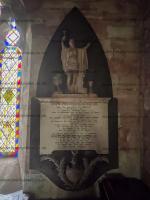
On 27th July 1789 Oswald Mosley [aged 28] died. He was buried at St Mary's Church, Rolleston on Dove [Map].
Oswald Mosley: On 17th March 1761 he was born to John Parker Mosley 1st Baronet. On 3rd February 1784 Oswald Mosley and Elizabeth Tonman were married at St Oswald's, Chester. They had four children between 1785 and 1789.
On 25th March 1807 the Slave Trade Act received Royal Assent. The Act prohibited the slave trade in the British Empire. The Bill was first introduced to Parliament in January 1807. It went to the House of Commons on 10th February 1807. After a debate lasting ten hours, the House agreed to the second reading of the bill to abolish the Atlantic slave trade by an overwhelming 283 votes for to 16. The Act took effect on 1st May 1807.
The last legal slave voyage was that of Kitty's Amelia which sailed on 27th July 1807 having received permission to sail on 27th April 1807 before the Act came into force. Kitty's Amelia arrived with 233 slaves at Jamaica 25th January 1808.
Between 27th July 1809 and 28th July 1809 the Battle of Talavera, part of the Peninsular War, was fought between an Anglo Spanish army commanded by Arthur Wellesley 1st Duke Wellington [aged 40] against the French. The French army withdrew at night after several of its attacks had been repulsed. Following the battle Arthur Wellesley 1st Duke Wellington was created 1st Viscount Wellington of Talavera.
Hugh Gough 1st Viscount Gough [aged 29] commanded the 2nd Battalion of the 87th (Royal Irish Fusiliers) Regiment of Foot.
General Henry Fane [aged 30] commanded the 3rd Prince of Wales Dragoon Guards, 4th Queen's Own Dragoons.
Charles Henry Farrington 2nd Baronet [aged 14] fought.


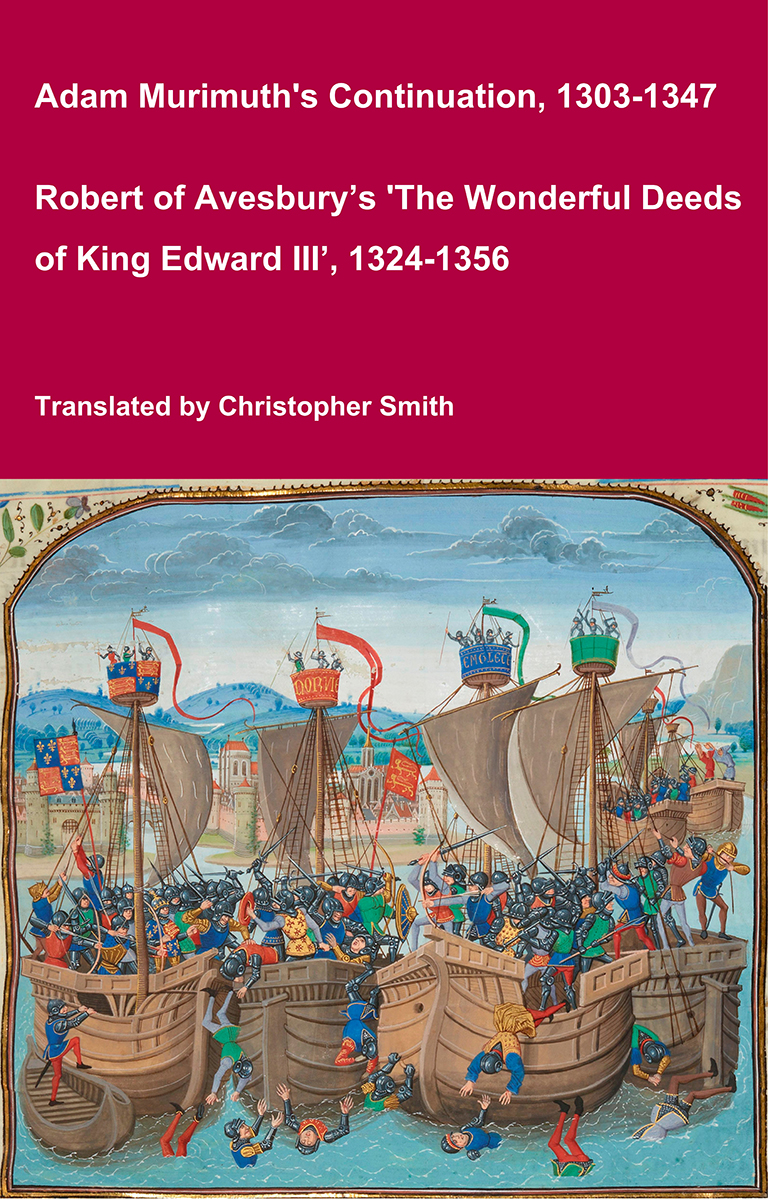
Adam Murimuth's Continuation and Robert of Avesbury’s 'The Wonderful Deeds of King Edward III'
This volume brings together two of the most important contemporary chronicles for the reign of Edward III and the opening phases of the Hundred Years’ War. Written in Latin by English clerical observers, these texts provide a vivid and authoritative window into the political, diplomatic, and military history of fourteenth-century England and its continental ambitions. Adam Murimuth Continuatio's Chronicarum continues an earlier chronicle into the mid-fourteenth century, offering concise but valuable notices on royal policy, foreign relations, and ecclesiastical affairs. Its annalistic structure makes it especially useful for establishing chronology and tracing the development of events year by year. Complementing it, Robert of Avesbury’s De gestis mirabilibus regis Edwardi tertii is a rich documentary chronicle preserving letters, treaties, and official records alongside narrative passages. It is an indispensable source for understanding Edward III’s claim to the French crown, the conduct of war, and the mechanisms of medieval diplomacy. Together, these works offer scholars, students, and enthusiasts a reliable and unembellished account of a transformative period in English and European history. Essential for anyone interested in medieval chronicles, the Hundred Years’ War, or the reign of Edward III.
Available at Amazon in eBook and Paperback format.
On 27th July 1809 Edward Methuen Irby [aged 21] was killed at the Battle of Talavera.
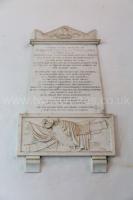
After 27th July 1809. Monument to Edward Methuen Irby [deceased] at St Nicholas Church, Whiston [Map]
Edward Methuen Irby: On 21st March 1788 he was born to Frederick Irby 2nd Baron Boston and Christian Methuen. On 27th July 1809 Edward Methuen Irby was killed at the Battle of Talavera.
On 27th July 1817 Samuel Woodford [aged 54] died.
Greville Memoirs. 27th July 1830. I have been employed in settling half a dozen disputes of different sorts, but generally without success, trifling matters, foolish or violent people, not worth remembering any of them. The Chancellor, who does not know his own business, has made an attack on my office about the proclamations, but I have vindicated it in a letter to Lord Bathurst [aged 68].
Ten Years' Digging. On the 27th of July, excavating as near the centre of the earthy barrow [Map] [Rockhurst Barrow [Map]] as possible, we raised three or four ponderous flat stones, beneath which the earth exhibited a crystalized appearance, resulting from its having been tempered with liquid; cutting down through it we arrived at the natural surface at the depth of rather more than 4 feet, and found that the mound had been raised over the site of the funeral pile, as it remained when burnt out. The scattered human bones had not been collected, but lay strewed upon the earth accompanied by some good flints, part of a bone implement, and a bronze dagger of the most archaic form, having holes for thongs and no rivets, all of which had been burnt along with their owner. The dagger is singularly contorted by the heat, and affords the first instance of a weapon of bronze having been burnt, and the second in which we have found one associated with calcined bones, the first being at Moot Low [Map], in 1844 (Vestiges p. 51). But perhaps the most important conclusion to be drawn from the discovery is the corroboration of the opinion entertained in favour of the high antiquity of the cairns or stone barrows, and other megalithic remains of primitive industry, as we here find a mound containing an interment accompanied by weapons indicating a very remote period, and itself differing both in material and structure, occupying a position in relation to the cairn, which affords positive proof of its more recent origin.
On 27th July 1852 Edward Onslow Ford was born to Edward Ford and Martha Lydia Gardner.
After 27th July 1856. St Mary's Church, Fawsley [Map]. Monument to Selina Mary Hervey Lady Knightley sculpted by John Gibson [aged 66].
Selina Mary Hervey Lady Knightley: she was born to Felton Hervey. On 24th August 1813 Charles Knightley 2nd Baronet and she were married. She by marriage Lady Knightley of Fawsley. On 27th July 1856 Selina Mary Hervey Lady Knightley died.
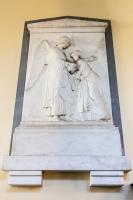
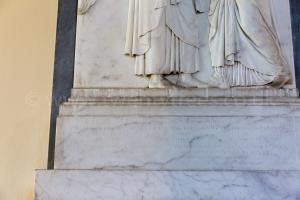
On 27th July 1866 Charlotte Herbert Duchess Northumberland [aged 78] died at Twickenham, Richmond. She was buried at Westminster Abbey [Map].

On 27th July 1888 Oskar Hohenzollern was born to Wilhelm Hohenzollern [aged 29] and Empress Auguste Viktoria Oldenburg [aged 29]. He a great grandson of Queen Victoria of the United Kingdom. He married Ina Marie von Bassewitz and had issue.

On 27th July 1889 Alexander Duff 1st Duke Fife [aged 39] and Louise Windsor Duchess Fife [aged 22] were married. She the daughter of King Edward VII of the United Kingdom [aged 47] and Alexandra of Denmark Queen Consort England [aged 44]. He the son of James Duff 5th Earl Fife and Agnes Georgiana Elizabeth Hay Countess Fife. They were half third cousins. He a great grandson of King William IV of the United Kingdom.

Anne Boleyn. Her Life as told by Lancelot de Carle's 1536 Letter.
In 1536, two weeks after the execution of Anne Boleyn, her brother George and four others, Lancelot du Carle, wrote an extraordinary letter that described Anne's life, and her trial and execution, to which he was a witness. This book presents a new translation of that letter, with additional material from other contemporary sources such as Letters, Hall's and Wriothesley's Chronicles, the pamphlets of Wynkyn the Worde, the Memorial of George Constantyne, the Portuguese Letter and the Baga de Secrets, all of which are provided in Appendices.
Available at Amazon in eBook and Paperback format.
On 29th April 1890 Hermit [aged 26] died at Blankney Hall. His skeleton was given to the Royal College of Vetinary Surgeons. A hoof was presented to the Prince of Wales who had it fashioned into an ink-stand, writing:
Marlborough House,
July 27/90.
My Dear Harry [aged 49] — How kind of you to have sent me the hoof of dear old! so prettily mounted, which I shall always greatly value and constantly use as an inkstand.
I am also very much touched by the kind expressions in your letter wishing me good luck with my racehorses. Though I can never expect to have the good fortune which attended the Dukes of Portland and Westminster, still I hope with patience to win one or more of the classic races with a horse bred by myself. I sincerely hope you may yet be able to come to Goodwood for a part of the time, at any rate.
Thanking you again for your kind remembrance of me and giving me so interesting a souvenir of your "best friend"
From yours very sincerely,
Albert Edward [aged 48].
P.S.—I shall always take the shoe about with me.
On 27th July 1900 Francis Morven Dallas Cavendish-Bentinck was born to William Cavendish-Bentinck 6th Duke Portland [aged 42] and Winifred Anna Dallas-Yorke Duchess Portland [aged 36].


The London Gazette 29684. 2nd Lt. Siegfried Lorraine Sassoon [aged 29], 3rd (attd. 1st) Bn., R. W. Fus. For conspicuous gallantry during a raid on the enemy's trenches. He remained for 1½ hours under rifle and bomb fire collecting and bringing, in our wounded. Owing to his courage and determination all the killed and wounded were brought in.


After 27th July 1960. Church of St Michael and All Angels, Edenham [Map]. Monument to Cecilie Heathcote-Willoughby-Drummond [deceased].
Cecilie Heathcote-Willoughby-Drummond: On 24th June 1874 she was born to Gilbert Henry Heathcote Drummond Willoughby 1st Earl Ancaster and Evelyn Elizabeth Gordon Countess Ancaster. On 27th July 1960 Cecilie Heathcote-Willoughby-Drummond died.
On 27th July 1452 Ludovico Sforza Duke Milan was born to Francesco Sforza I Duke Milan [aged 51] and Bianca Maria Visconti [aged 27]. He married Beatrice Este, daughter of Ercole Este I Duke Ferrara.
On 27th July 1485 Anne Percy Countess Arundel was born to Henry Percy 4th Earl of Northumberland [aged 36] and Maud Herbert Countess Northumberland [aged 27]. She a great x 4 granddaughter of King Edward III of England. She married 15th February 1510 her half second cousin William Fitzalan 11th or 18th Earl of Arundel, son of Thomas Fitzalan 10th or 17th Earl of Arundel and Margaret Woodville Countess Arundel, and had issue.
On 27th July 1531 John Hastings 15th Baron Hastings was born to Hugh Hastings 14th Baron Hastings [aged 26] and Katherine le Strange Baroness Hastings [aged 32]. He died aged ten in 1542.
On 27th July 1555 Marie Habsburg Spain was born to Maximilian Habsburg Spain II Holy Roman Emperor [aged 27] and Maria of Spain Holy Roman Empress [aged 27]. Coefficient of inbreeding 10.03%. She died aged less than one years old.
On 27th July 1578 Frances Howard Duchess Lennox and Richmond was born to Thomas Howard 1st Viscount Howard Bindon [aged 58] and Mabel Burton Viscountess Howard Bindon [aged 38] at Lychett, Dorset. She married (1) March 1592 Henry Prannell (2) 27th May 1601 her half third cousin Edward Seymour 1st Earl Hertford, son of Edward Seymour 1st Duke of Somerset and Anne Stanhope Duchess Somerset (3) 16th June 1621 her fifth cousin once removed Ludovic Stewart 2nd Duke Lennox 1st Duke Richmond, son of Esme Stewart 1st Duke Lennox and Catherine Balsac Duchess Lennox.
On 27th July 1582 John Isham 1st Baronet was born to Thomas Isham of Langport in Northamptonshire [aged 26].
Adam Murimuth's Continuation and Robert of Avesbury’s 'The Wonderful Deeds of King Edward III'
This volume brings together two of the most important contemporary chronicles for the reign of Edward III and the opening phases of the Hundred Years’ War. Written in Latin by English clerical observers, these texts provide a vivid and authoritative window into the political, diplomatic, and military history of fourteenth-century England and its continental ambitions. Adam Murimuth Continuatio's Chronicarum continues an earlier chronicle into the mid-fourteenth century, offering concise but valuable notices on royal policy, foreign relations, and ecclesiastical affairs. Its annalistic structure makes it especially useful for establishing chronology and tracing the development of events year by year. Complementing it, Robert of Avesbury’s De gestis mirabilibus regis Edwardi tertii is a rich documentary chronicle preserving letters, treaties, and official records alongside narrative passages. It is an indispensable source for understanding Edward III’s claim to the French crown, the conduct of war, and the mechanisms of medieval diplomacy. Together, these works offer scholars, students, and enthusiasts a reliable and unembellished account of a transformative period in English and European history. Essential for anyone interested in medieval chronicles, the Hundred Years’ War, or the reign of Edward III.
Available at Amazon in eBook and Paperback format.
On 27th July 1599 Albert IV Wettin IV Duke Saxe Weimar was born to Johann Wettin II Duke Saxe Weimar [aged 29] and Dorothea Maria Anhalt at Altenburg.
On 27th July 1619 Henry Felton 2nd Baronet was born to Henry Felton 1st Baronet and Dorothy Gawdy. He married 19th December 1637 his fifth cousin Susanna Tollemache Lady Felton, daughter of Lionel Tollemache 2nd Baronet and Elizabeth Stanhope Lady Talmash, and had issue.
On 27th July 1625 Edward Montagu 1st Earl Sandwich was born to Sidney Montagu [aged 44] and Paulina Pepys [aged 43]. He married 7th November 1642 Jemima Crew Countess Sandwich, daughter of John Crew 1st Baron Crew and Jemima Waldegrave Baroness Crew, and had issue.
On 27th July 1690 Charles Tracy 5th Viscount Tracy was born to William Tracy 4th Viscount Tracy [aged 33] and Jane Leigh Viscountess Tracy [aged 25]. Coefficient of inbreeding 6.26%. He married (1) 27th December 1712 Elizabeth Keyt (2) 1722 Frances Pakington, daughter of John Pakington 4th Baronet, and had issue.
On 27th July 1697 Bishop Isaac Maddox was born to Edward Maddox of London.
On 27th July 1705 John Eliott 4th Baronet was born to Gilbert Eliott 3rd Baronet [aged 25].
On 27th July 1725 Charles Egerton was born to Scroop Egerton 1st Duke Bridgewater [aged 43] and Rachel Russell Duchess Bridgewater [aged 18]. He died aged five in 1731.
On 27th July 1727 George Augustus Yelverton 2nd Earl of Sussex was born to Talbot Yelverton 1st Earl of Sussex [aged 37] and Lucy Pelham Countess Sussex.
On 27th July 1753 John Courtenay Throckmorton 5th Baronet was born to George Throckmorton [aged 32].
On 27th July 1766 William Henry Vane 1st Duke Cleveland was born to Henry Vane 2nd Earl Darlington [aged 39] and Margaret Lowther Countess Darlington [aged 38]. William Henry Vane 1st Duke Cleveland was christened at the Chapel Royal, St James's Palace. His given names were William Harry which he later changed to William Henry. He a great x 2 grandson of King Charles II of England Scotland and Ireland. He married 17th September 1787 his first cousin Catharine Margaret Powlett Countess Darlington, daughter of Harry Powlett 6th Duke Bolton and Katherine Lowther Duchess of Bolton, and had issue.
Henrici Quinti, Angliæ Regis, Gesta, is a first-hand account of the Agincourt Campaign, and subsequent events to his death in 1422. The author of the first part was a Chaplain in King Henry's retinue who was present from King Henry's departure at Southampton in 1415, at the siege of Harfleur, the battle of Agincourt, and the celebrations on King Henry's return to London. The second part, by another writer, relates the events that took place including the negotiations at Troye, Henry's marriage and his death in 1422.
Available at Amazon in eBook and Paperback format.
On 27th July 1777 Thomas Campbell was born on High Street Glasgow.
On 27th July 1777 General Henry Otway Trevor 21st Baron Dacre 20th Baron Multon was born to Thomas Brand Baron Dacre [aged 27] and Gertrude Trevor Roper 19th Baroness Dacre of Gilsland [aged 26]. He a great x 3 grandson of King Charles II of England Scotland and Ireland. He married 24th July 1806 Pyne Crosbie Lady of the Bedchamber and had issue.

On 27th July 1790 Henry Cecil Lowther was born to William Lowther 1st Earl Lonsdale [aged 32] and Augusta Fane Countess Lonsdale [aged 28] at Lowther Castle Lowther. He married 19th May 1817 Lucy Eleanor Sherard, daughter of Philip Sherard 5th Earl Harborough, and had issue.

On 27th July 1799 Caroline Georgina Eliot was born to William Eliot 2nd Earl St Germans [aged 32] and Georgiana Augusta Leveson-Gower [aged 30].

On 27th July 1811 Jane Anne Louisa Florence Cole was born to John Cole 2nd Earl Enniskillen [aged 43] and Charlotte Paget Countess Enniskillen [aged 29].
On 27th July 1812 James Alexander 3rd Earl Caledon was born to Du Pre Alexander 2nd Earl Caledon [aged 34] and Catherine Yorke Countess Caledon [aged 26].
On 27th July 1813 Claud Hamilton was born to James Hamilton [aged 26] and Harriet Douglas Countess Aberdeen [aged 21]. He married 7th August 1844 Emma Elizabeth Proby and had issue.
On 27th July 1828 Courtenay John Vernon was born to Robert Smith aka Vernon 1st Baron Lyveden [aged 28] and Emma Mary Fitzpatrick Baroness Lyveden [aged 20]. Coefficient of inbreeding 3.13%.
On 27th July 1839 William Wentworth-Fitzwilliam was born to William Thomas Wentworth-Fitzwilliam 6th and 4th Earl Fitzwilliam [aged 23] and Frances Harriet Douglas Countess Fitzwilliam [aged 19]. He married 10th August 1867 his third cousin Laura Maria Theresa Beauclerk and had issue.
On 27th July 1845 Sophia Strutt Lady Le Marchant was born to Edward Strutt 1st Baron Belper [aged 43] and Amelia Harriet Otter Baroness Belper [aged 28]. She married 7th September 1869 Henry Denis Le Marchant 2nd Baronet, son of Denis Le Marchant 1st Baronet, and had issue.
Adam Murimuth's Continuation and Robert of Avesbury’s 'The Wonderful Deeds of King Edward III'
This volume brings together two of the most important contemporary chronicles for the reign of Edward III and the opening phases of the Hundred Years’ War. Written in Latin by English clerical observers, these texts provide a vivid and authoritative window into the political, diplomatic, and military history of fourteenth-century England and its continental ambitions. Adam Murimuth Continuatio's Chronicarum continues an earlier chronicle into the mid-fourteenth century, offering concise but valuable notices on royal policy, foreign relations, and ecclesiastical affairs. Its annalistic structure makes it especially useful for establishing chronology and tracing the development of events year by year. Complementing it, Robert of Avesbury’s De gestis mirabilibus regis Edwardi tertii is a rich documentary chronicle preserving letters, treaties, and official records alongside narrative passages. It is an indispensable source for understanding Edward III’s claim to the French crown, the conduct of war, and the mechanisms of medieval diplomacy. Together, these works offer scholars, students, and enthusiasts a reliable and unembellished account of a transformative period in English and European history. Essential for anyone interested in medieval chronicles, the Hundred Years’ War, or the reign of Edward III.
Available at Amazon in eBook and Paperback format.
On 27th July 1848 Robert Armine Morris 4th Baronet was born to John Armine Morris 3rd Baronet [aged 35].

On 27th July 1851 Hannah Rothschild Countess of Rosebery was born to Mayer Amschel Rothschild [aged 33]. She married 20th March 1878 Archibald Philip Primrose 5th Earl Rosebery 1st Earl Midlothian, son of Archibald John Primrose and Catherine Lucy Wilhelmina Stanhope Duchess of Cleveland, and had issue.
On 27th July 1852 Edward Onslow Ford was born to Edward Ford and Martha Lydia Gardner.
On 27th July 1855 Ernest Hay Stonhouse 16th and 13th Baronet was born to Henry Vansittart Stonhouse 15th and 12th Baronet [aged 28].
On 27th July 1888 Oskar Hohenzollern was born to Wilhelm Hohenzollern [aged 29] and Empress Auguste Viktoria Oldenburg [aged 29]. He a great grandson of Queen Victoria of the United Kingdom. He married Ina Marie von Bassewitz and had issue.
On 27th July 1888 Hubert Guy Maryon Maryon-Wilson 13th Baronet was born to George Maryon Wilson [aged 54].
On 27th July 1896 Roger Lumley 11th Earl of Scarbrough was born to Osbert Victor George Atheling Lumley [aged 38] and Constance Ellinor Wilson-Patten [aged 24]. He married 12th July 1922 Katherine Isobel McEwen Countess Scarborough and had issue.
On 27th July 1896 Bridget Helen "Biddy" Ruthven Countess Carlisle was born to Walter Hore Ruthven 10th Lord Ruthven of Freeland [aged 26] and Jean Leslie Lampson [aged 19]. She married 17th January 1918 George Josslyn L'Estrange Howard 11th Earl Carlisle, son of Charles James Stanley Howard 10th Earl Carlisle and Rhona Ankaret Estrange Countess Carlisle, and had issue.
On 27th July 1900 Francis Morven Dallas Cavendish-Bentinck was born to William Cavendish-Bentinck 6th Duke Portland [aged 42] and Winifred Anna Dallas-Yorke Duchess Portland [aged 36].
On 27th July 1905 Beatrice Helen Beckett was born to William Gervase Beckett 1st Baronet [aged 39] and Mabel Theresa Duncombe [aged 26]. Coefficient of inbreeding 3.32%. She married (1) 5th November 1923 Robert Anthony Eden 1st Earl Avon, son of William Eden 7th and 5th Baronet and Sybil Frances Grey Lady Eden, and had issue.
Chronicle of Abbot Ralph of Coggeshall
The Chronicle of Abbot Ralph of Coggeshall (Chronicon Anglicanum) is an indispensable medieval history that brings to life centuries of English and European affairs through the eyes of a learned Cistercian monk. Ralph of Coggeshall, abbot of the Abbey of Coggeshall in Essex in the early 13th century, continued and expanded his community’s chronicle, documenting events from the Norman Conquest of 1066 into the tumultuous reign of King Henry III. Blending eyewitness testimony, careful compilation, and the monastic commitment to record-keeping, this chronicle offers a rare narrative of political intrigue, royal power struggles, and social upheaval in England and beyond. Ralph’s work captures the reigns of pivotal figures such as Richard I and King John, providing invaluable insights into their characters, decisions, and the forces that shaped medieval rule. More than a simple annal, Chronicon Anglicanum conveys the texture of medieval life and governance, making it a rich source for scholars and readers fascinated by English history, monastic authorship, and the shaping of the medieval world.
Available at Amazon in eBook and Paperback format.
On 27th July 1917 John Stanier Waller 7th Baronet was born to Stanier Edmund William Waller [aged 35]. He married 1974 Anne Eileen Mileham.
On 27th July 1919 Rose Mary Primrose Paget was born to Charles Henry Alexander Paget 6th Marquess Anglesey [aged 34] and Victoria Marjorie Harriet Manners Marchioness Anglesey [aged 35]. She married John Francis Mclaren.


On 27th July 1960 James FitzRoy Newdegate 4th Viscount Daventry was born to Francis Fitztroy Newdegate 3rd Viscount Daventry [aged 38].
On 27th July 1365 Enguerrand de Coucy 1st Earl Bedford 1st Count Soissons [aged 25] and Isabella Countess Bedford and Soissons [aged 33] were married at Windsor Castle [Map]. She the daughter of King Edward III of England [aged 52] and Philippa of Hainaut Queen Consort England [aged 55]. They were fourth cousin once removed.
On 27th July 1411 Richard Beauchamp 1st Earl of Worcester [aged 15] and Isabel Despencer Countess Warwick and Worcester [aged 11] were married. She the daughter of Thomas Despencer 1st Earl Gloucester and Constance York Countess Gloucester [aged 37]. They were half fourth cousins. He a great x 3 grandson of King Edward I of England. She a great granddaughter of King Edward III of England.
On 27th July 1698 Thomas Powell 1st Baronet [aged 33] and Judith Herbert Lady Powell were married. She by marriage Lady Powell of Broadway in Carmarthenshire.
On 27th July 1712 Henry Oxenden 4th Baronet [aged 22] and Anne Holloway Lady Oxenden were married. She by marriage Lady Oxenden of Dene in Kent.
On 27th July 1721 Thomas L'Estrange 5th Baronet [aged 32] and Anne Calthorpe Lady Strange were married. They were second cousin once removed.

On 27th July 1724 Walter Wagstaffe Bagot 5th Baronet [aged 21] and Barbara Legge Baroness Bagot [aged 15] were married. She by marriage Lady Bagot of Blithfield Hall. They had eight sons and eight daughters. She the daughter of William Legge 1st Earl Dartmouth [aged 51] and Anne Finch Countess Dartmouth.
On 27th July 1742 Joseph Damer 1st Earl Dorchester [aged 24] and Caroline Sackville Lady Milton were married. She the daughter of Lionel Cranfield Sackville 1st Duke Dorset [aged 54] and Elizabeth Colyear Duchess Dorset [aged 53].

On 27th July 1758 Charles Fitzroy 1st Baron Southampton [aged 21] and Anne Warren Baroness Southampton [aged 20] were married.
Henrici Quinti, Angliæ Regis, Gesta, is a first-hand account of the Agincourt Campaign, and subsequent events to his death in 1422. The author of the first part was a Chaplain in King Henry's retinue who was present from King Henry's departure at Southampton in 1415, at the siege of Harfleur, the battle of Agincourt, and the celebrations on King Henry's return to London. The second part, by another writer, relates the events that took place including the negotiations at Troye, Henry's marriage and his death in 1422.
Available at Amazon in eBook and Paperback format.
On 27th July 1842 John William Hamilton Anson 2nd Baronet [aged 25] and Elizabeth Catherine Pack Lady Anson [aged 21] were married.
On 27th July 1854 Dudley Wilmot Carleton 4th Baron Dorchester [aged 31] and Charlotte Hobhouse Baroness Dorchester1831-1914 [aged 23] were married.
On 27th July 1858 Nelson Rycroft 4th Baronet [aged 27] and Juliana Ogilvy Lady Rycroft were married.
On 27th July 1858 Augustus Frederick Bampfylde 2nd Baron Poltimore [aged 21] and Florence Sarah Wilhelmine Sheridan Baroness Poltimore were married.
On 27th July 1889 Alexander Duff 1st Duke Fife [aged 39] and Louise Windsor Duchess Fife [aged 22] were married. She the daughter of King Edward VII of the United Kingdom [aged 47] and Alexandra of Denmark Queen Consort England [aged 44]. He the son of James Duff 5th Earl Fife and Agnes Georgiana Elizabeth Hay Countess Fife. They were half third cousins. He a great grandson of King William IV of the United Kingdom.
On 27th July 1897 Arthur Foljambe 2nd Earl of Liverpool [aged 27] and Annette Louise Monck Countess Liverpool [aged 22] were married. He the son of Cecil George Savile Foljambe 1st Earl Liverpool [aged 50] and Louise Blanche Howard.
On 27th July 1918 George St Vincent Harris 5th Baron Harris [aged 28] and Dorothy Mary Crookes Lady Harris were married.
On 27th July 1918 Hallam Tennyson 2nd Baron Tennyson [aged 65] and May Prinsep Baroness Tennyson [aged 64] were married. She by marriage Baroness Tennyson of Aldworth in Sussex and of Freshwater in the Isle of Wight.


On 27th July 1927 Charles Edward Hill-Trevor 3rd Baron Trevor [aged 63] and Phyllis May Sims Baroness Trevor [aged 24] were married. She by marriage Baroness Trevor of Brynkinalt in Denbighshire. The difference in their ages was 39 years.
On 27th July 1933 Gilbert James Heathcote-Willoughby-Drummond 3rd Earl Ancaster [aged 25] and Nancy Phyllis Louise Astor Countess Astor [aged 24] were married. He the son of Gilbert Heathcote-Willoughby-Drummond 2nd Earl Ancaster [aged 65] and Eloise Lawrence Breese Countess Ancaster [aged 51].
Adam Murimuth's Continuation and Robert of Avesbury’s 'The Wonderful Deeds of King Edward III'
This volume brings together two of the most important contemporary chronicles for the reign of Edward III and the opening phases of the Hundred Years’ War. Written in Latin by English clerical observers, these texts provide a vivid and authoritative window into the political, diplomatic, and military history of fourteenth-century England and its continental ambitions. Adam Murimuth Continuatio's Chronicarum continues an earlier chronicle into the mid-fourteenth century, offering concise but valuable notices on royal policy, foreign relations, and ecclesiastical affairs. Its annalistic structure makes it especially useful for establishing chronology and tracing the development of events year by year. Complementing it, Robert of Avesbury’s De gestis mirabilibus regis Edwardi tertii is a rich documentary chronicle preserving letters, treaties, and official records alongside narrative passages. It is an indispensable source for understanding Edward III’s claim to the French crown, the conduct of war, and the mechanisms of medieval diplomacy. Together, these works offer scholars, students, and enthusiasts a reliable and unembellished account of a transformative period in English and European history. Essential for anyone interested in medieval chronicles, the Hundred Years’ War, or the reign of Edward III.
Available at Amazon in eBook and Paperback format.
On 27th July 1934 Victor Montagu 10th Earl Sandwich [aged 28] and Maud Rosemary Peto [aged 18] were married. He the son of George Charles Montagu 9th Earl Sandwich [aged 59] and Alberta Sturges Countess Sandwich [aged 56].
On 27th July 1936 Sidney Herbert 16th Earl of Pembroke, 13th Earl of Montgomery [aged 30] and Mary Dorothea Hope Countess Pembroke and Montgomery were married. She the daughter of John Hope 1st Marquess Linlithgow. He the son of Reginald Herbert 15th Earl Pembroke 12th Earl Montgomery [aged 55] and Beatrice Eleanor Paget Countess Pembroke and Montgomery [aged 53].
On 27th July 1937 Ailwyn Fellowes 3rd Baron de Ramsey [aged 27] and Lilah Labouchere were married. They were fifth cousins.
On 27th July 1972 Geoffrey Adam Shakerley 6th Baronet [aged 39] and Elizabeth Georgiana Anson Lady Shakerley [aged 31] were married. She by marriage Lady Shakerley of Somerford-Park in Cheshire.
On 27th July 1101 Hugh of Avranches 1st Earl Chester [aged 54] died.
On 27th July 1276 James I King Aragon [aged 68] died. His son Peter [aged 36] succeeded III King Aragon.
On 27th July 1365 Rudolph Habsburg IV Duke Austria [aged 25] died. His brother Frederick succeeded III Duke Austria.
On 27th July 1382 John Saye 4th Baron Say [aged 9] died. His sister Elizabeth [aged 15] succeeded 5th Baroness Say.
On 27th July 1398 John la Warr 4th Baron de la Warr [aged 54] died without issue. His brother Thomas [aged 46] succeeded 5th Baron De La Warr.
On 27th July 1469 William Herbert 1st Earl Pembroke [aged 46] was executed following his capture at the Battle of Edgecote Moor. His son William [aged 18] succeeded 2nd Earl Pembroke, 2nd Baron Herbert of Raglan. Mary Woodville Countess Pembroke and Huntingdon [aged 13] by marriage Countess Pembroke.
On 27th July 1485 Maud Herbert Countess Northumberland [aged 27] died.
Annals of the six Kings of England by Nicholas Trivet
Translation of the Annals of the Six Kings of England by that traces the rise and rule of the Angevin aka Plantagenet dynasty from the mid-12th to early 14th century. Written by the Dominican scholar Nicholas Trivet, the work offers a vivid account of English history from the reign of King Stephen through to the death of King Edward I, blending political narrative with moral reflection. Covering the reigns of six monarchs—from Stephen to Edward I—the chronicle explores royal authority, rebellion, war, and the shifting balance between crown, church, and nobility. Trivet provides detailed insight into defining moments such as baronial conflicts, Anglo-French rivalry, and the consolidation of royal power under Edward I, whose reign he describes with particular immediacy. The Annals combines careful year-by-year reporting with thoughtful interpretation, presenting history not merely as a sequence of events but as a moral and political lesson. Ideal for readers interested in medieval history, kingship, and the origins of the English state, this chronicle remains a valuable and accessible window into the turbulent world of the Plantagenet kings.
Available at Amazon in eBook and Paperback format.
On 27th July 1559 Bishop Edmund Allen [aged 40] died.
On 27th July 1578 Jane Fitzalan Baroness Lumley [aged 41] died. She was buried at Lumley Chapel Cheam, Surrey.
On 27th July 1622 Thomas Knyvet 1st Baron Knyvet [aged 77] died. He was buried at Church of St Mary the Virgin, Stanwell. Baron Knyvet of Escrick extinct.
On 27th July 1679 Thomas Leventhorpe 4th Baronet [aged 43] died at Elvaston, Derbyshire [Map] having been kicked by a horse. His uncle Charles [aged 84] succeeded 5th Baronet Leventhorpe of Shingey Hall in Hertfordshire.
On 27th July 1689 Hender Molesworth 1st Baronet [aged 51] died. His brother John [aged 54] succeeded 2nd Baronet Molesworth of Pencarrow in Cornwall.
On 27th July 1721 Alice Sherard Baroness Brownlow [aged 62] died.


On 27th July 1728 Jemima Crew Marchioness Kent [aged 53] died. Memorial on her husband's monument at the De Grey Mausoleum, St John the Baptist Church, Flitton [Map].
On 27th July 1735 Charles Tyrrell 4th Baronet [aged 10] died. His brother John [aged 7] succeeded 5th Baronet Tyrrell of Springfield.
On 27th July 1742 Frances Spencer Countess Carlisle [aged 46] died.
On 27th July 1751 Charles Beauclerk 2nd Duke St Albans [aged 55] died. He was buried at Westminster Abbey [Map]. His son George [aged 21] succeeded 3rd Duke St Albans, 3rd Earl Burford, 3rd Baron Heddington.
Anne Boleyn. Her Life as told by Lancelot de Carle's 1536 Letter.
In 1536, two weeks after the execution of Anne Boleyn, her brother George and four others, Lancelot du Carle, wrote an extraordinary letter that described Anne's life, and her trial and execution, to which he was a witness. This book presents a new translation of that letter, with additional material from other contemporary sources such as Letters, Hall's and Wriothesley's Chronicles, the pamphlets of Wynkyn the Worde, the Memorial of George Constantyne, the Portuguese Letter and the Baga de Secrets, all of which are provided in Appendices.
Available at Amazon in eBook and Paperback format.

On 27th July 1768 William Dalrymple Crichton 5th Earl Dumfries 4th Earl of Stair [aged 69] died. Patrick Mcdouall Crichton 6th Earl Dumfries [aged 41] succeeded 6th Earl Dumfries. His first cousin John [aged 48] succeeded 4th Earl of Stair.
On 27th July 1769 Catherine Power Countess Tyrone [aged 67] died.
On 27th July 1804 Robert Clements 1st Earl Leitrim [aged 71] died. His son Nathaniel [aged 36] succeeded 2nd Earl Leitrim.
On 27th July 1808 John Thomas Burgh 13th Earl Clanricarde [aged 63] died.
On 27th July 1811 George Townshend 2nd Marquess Townshend [aged 58] died. His son George [aged 32] succeeded 3rd Marquess Townshend, 2nd Earl of Leicester, 6th Viscount Townsend, 6th Baron Townshend of Lynn Regis in Norfolk, 8th Baronet Townshend, 18th Baron Ferrers of Chartley, 9th Baron Compton of Compton in Warwickshire. Sarah Dunn-Gardner Marchioness Townshend by marriage Marchioness Townshend.
On 27th July 1811 John Lawson 5th Baronet [aged 67] died. His brother Henry [aged 60] succeeded 6th Baronet Lawson of Brough Hall in Yorkshire.
On 27th July 1817 Samuel Woodford [aged 54] died.
On 27th July 1831 John Toler 1st Earl of Norbury [aged 85] died at his home 3 Great Denmark Street, Dublin. His son Hector [aged 50] succeeded 2nd Earl of Norbury, 2nd Viscount Glandine.
On 27th July 1834 Henry Bathurst 3rd Earl Bathurst [aged 72] died. His son Henry [aged 44] succeeded 4th Earl Bathurst of Bathurst in Sussex, 4th Baron Bathurst.

On 27th July 1842 Thomas Dalrymple Hesketh 3rd Baronet [aged 65] died. He was buried at St Mary The Virgin Church, Rufford [Map]. His son Thomas [aged 43] succeeded 4th Baronet Hesketh of Rufford in Lancashire. Annette Maria Bomford Lady Hesketh [aged 43] by marriage Lady Hesketh of Rufford in Lancashire.
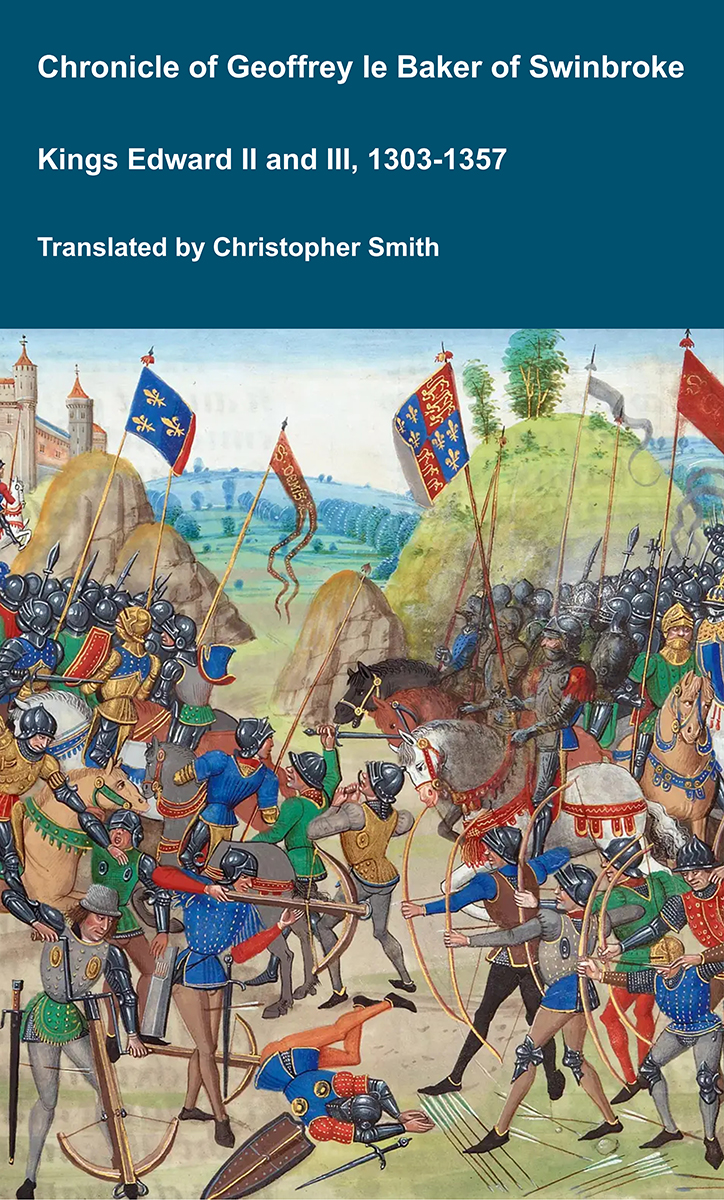
Chronicle of Geoffrey le Baker of Swinbroke
Baker was a secular clerk from Swinbroke, now Swinbrook, an Oxfordshire village two miles east of Burford. His Chronicle describes the events of the period 1303-1356: Gaveston, Bannockburn, Boroughbridge, the murder of King Edward II, the Scottish Wars, Sluys, Crécy, the Black Death, Winchelsea and Poitiers. To quote Herbert Bruce 'it possesses a vigorous and characteristic style, and its value for particular events between 1303 and 1356 has been recognised by its editor and by subsequent writers'. The book provides remarkable detail about the events it describes. Baker's text has been augmented with hundreds of notes, including extracts from other contemporary chronicles, such as the Annales Londonienses, Annales Paulini, Murimuth, Lanercost, Avesbury, Guisborough and Froissart to enrich the reader's understanding. The translation takes as its source the 'Chronicon Galfridi le Baker de Swynebroke' published in 1889, edited by Edward Maunde Thompson.
Available at Amazon in eBook and Paperback format.
On 27th July 1856 Selina Mary Hervey Lady Knightley died.
On 27th July 1863 Cecilia Olivia Geraldine Fitzgerald Baroness Foley [aged 77] died.
On 27th July 1866 Charlotte Herbert Duchess Northumberland [aged 78] died at Twickenham, Richmond. She was buried at Westminster Abbey [Map].

On 27th July 1885 Anne Weld-Forester Countess Chesterfield [aged 82] died.
On 29th April 1890 Hermit [aged 26] died at Blankney Hall. His skeleton was given to the Royal College of Vetinary Surgeons. A hoof was presented to the Prince of Wales who had it fashioned into an ink-stand, writing:
Marlborough House,
July 27/90.
My Dear Harry [aged 49] — How kind of you to have sent me the hoof of dear old! so prettily mounted, which I shall always greatly value and constantly use as an inkstand.
I am also very much touched by the kind expressions in your letter wishing me good luck with my racehorses. Though I can never expect to have the good fortune which attended the Dukes of Portland and Westminster, still I hope with patience to win one or more of the classic races with a horse bred by myself. I sincerely hope you may yet be able to come to Goodwood for a part of the time, at any rate.
Thanking you again for your kind remembrance of me and giving me so interesting a souvenir of your "best friend"
From yours very sincerely,
Albert Edward [aged 48].
P.S.—I shall always take the shoe about with me.
On 27th July 1895 James Walter Grimston 2nd Earl Verulam [aged 86] died. His son James [aged 43] succeeded 3rd Earl Verulam, 3rd Viscount Grimston, 6th Viscount Grimston, 4th Baron Verulam of Gorhambury in Hertfordshire, 10th Baronet Grimston of Little Waltham in Essex. Margaret Francis Graham Countess Verulam [aged 41] by marriage Countess Verulam.
On 22nd January 1899 William Henry Paulett 6th Earl Paulett [aged 71] died. His son William [aged 15] succeeded 7th Earl Poulett, 10th Baron Poulett.
The sixth earl's eldest son William Turnour Thomas Poulett [aged 53] claimed the title. On 27th July 1903 the House of Lords determined the dispute in favour of William John Lydston Poulett 7th Earl Poulett somewhat contrary to the principle that the child of a woman born in wedlock was the child of her husband.
Report made from the Committee of Privileges:
That the Petitioner, William Turnour Thomas Poulett, claiming to be Viscount Hinton of Hinton St. George and Earl Poulett, both in the Peerage of England, hath not made out his claim to the dignities, titles, and honours of Viscount Hinton of Hinton St. George and Earl Poulett.
That the Petitioner, Rosa Countess Poulett, formerly the wife and now the widow of William Henry, sixth Earl Poulett, as a testamentary guardian of her infant son William John Lydston, claiming to be Viscount Hinton of Hinton St. George, in the county of Somerset, and seventh Earl Poulett, both in the Peerage of England, hath made out her claim that the said William John Lydston Poulett should be declared to be by right entitled to the dignities, titles, and honours of Viscount Hinton of Hinton St. George and Earl Poulett.
Read, and agreed to; and resolved and adjudged accordingly; and Resolution and Judgment to be laid before His Majesty by the Lords with White Staves.
On 27th July 1910 Henry Alfred Doughty-Tichborne 12th Baronet [aged 44] died. His son Joseph [aged 20] succeeded 13th Baronet Doughty-Tichborne of Tichborne in Hampshire.
On 27th July 1930 Edith Mary Oswald Countess of Hardwicke died.

On 27th July 1931 Sydney Holland 2nd Viscount Knutsford [aged 76] died. His brother Arthur [aged 76] succeeded 3rd Viscount Knutsford of Knutsford in Cheshire, 3rd Baron Knutsford of Knutsford in Cheshire, 4th Baronet Holland of Sandlebridge. Ellen Lawson Viscountess Knutsford by marriage Viscountess Knutsford of Knutsford in Cheshire.
William of Worcester's Chronicle of England
William of Worcester, born around 1415, and died around 1482 was secretary to John Fastolf, the renowned soldier of the Hundred Years War, during which time he collected documents, letters, and wrote a record of events. Following their return to England in 1440 William was witness to major events. Twice in his chronicle he uses the first person: 1. when writing about the murder of Thomas, 7th Baron Scales, in 1460, he writes '… and I saw him lying naked in the cemetery near the porch of the church of St. Mary Overie in Southwark …' and 2. describing King Edward IV's entry into London in 1461 he writes '… proclaimed that all the people themselves were to recognize and acknowledge Edward as king. I was present and heard this, and immediately went down with them into the city'. William’s Chronicle is rich in detail. It is the source of much information about the Wars of the Roses, including the term 'Diabolical Marriage' to describe the marriage of Queen Elizabeth Woodville’s brother John’s marriage to Katherine, Dowager Duchess of Norfolk, he aged twenty, she sixty-five or more, and the story about a paper crown being placed in mockery on the severed head of Richard, 3rd Duke of York.
Available at Amazon in eBook and Paperback format.
On 27th July 1965 James Ernest Thorold 14th Baronet [aged 88] died. His son Anthony [aged 61] succeeded 15th Baronet Thorold of Marston in Lincolnshire.